Český Krumlov ~Part 2

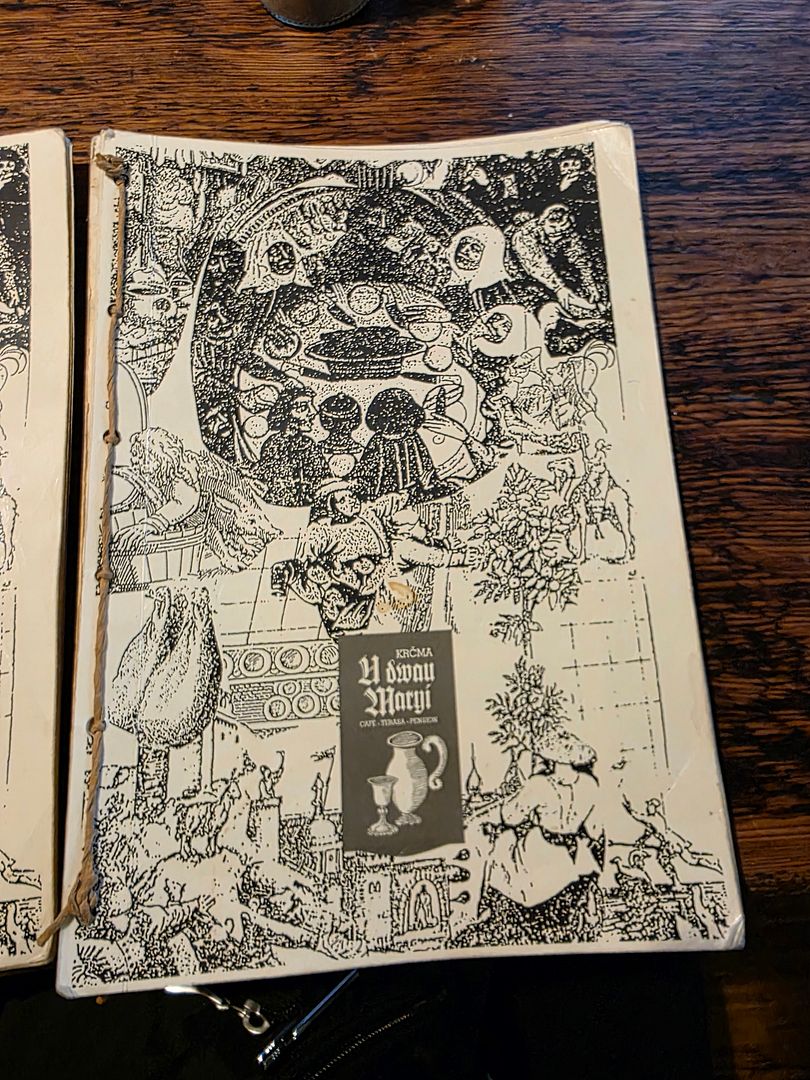
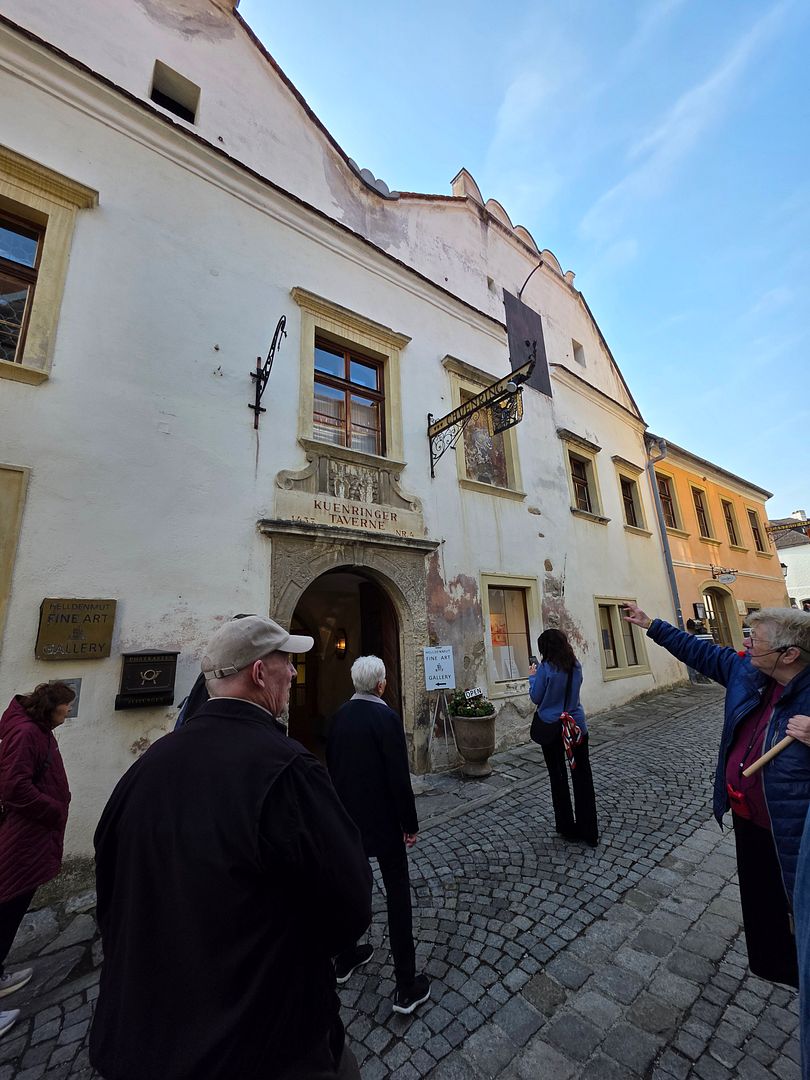
Continuing our time in Český Krumlov on Wednesday March 4th, after we broke off from our tour group we made our way to the Tavern of Two Maries.

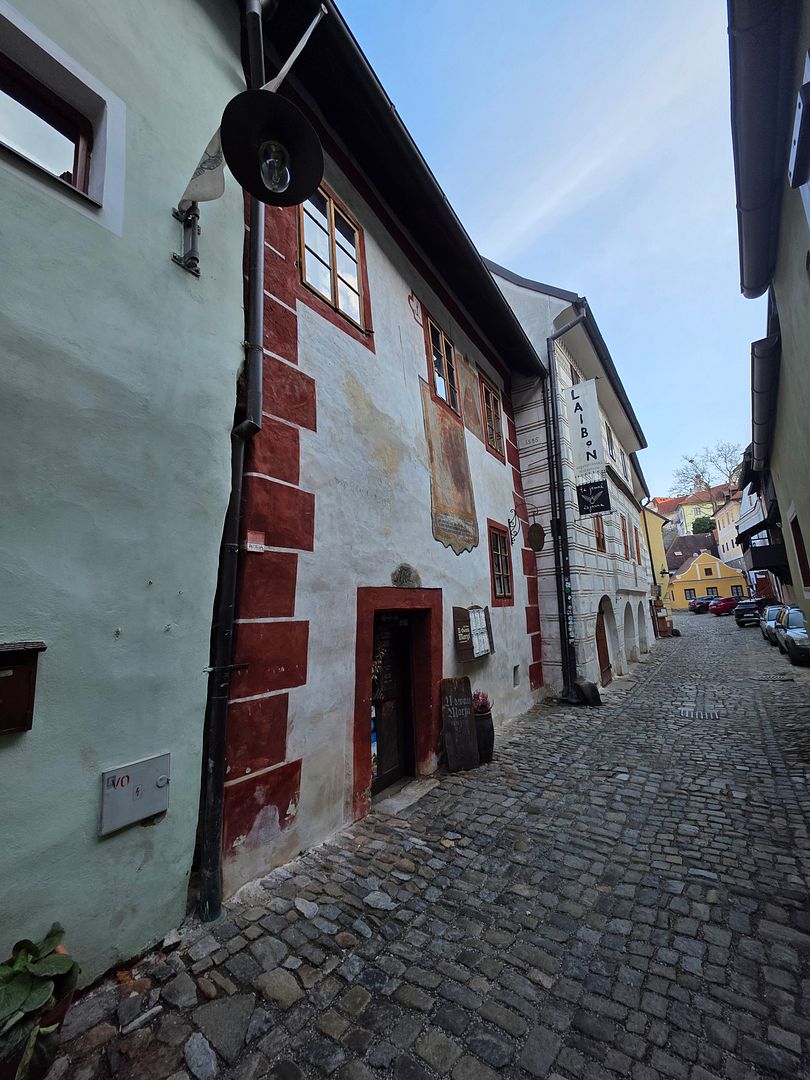
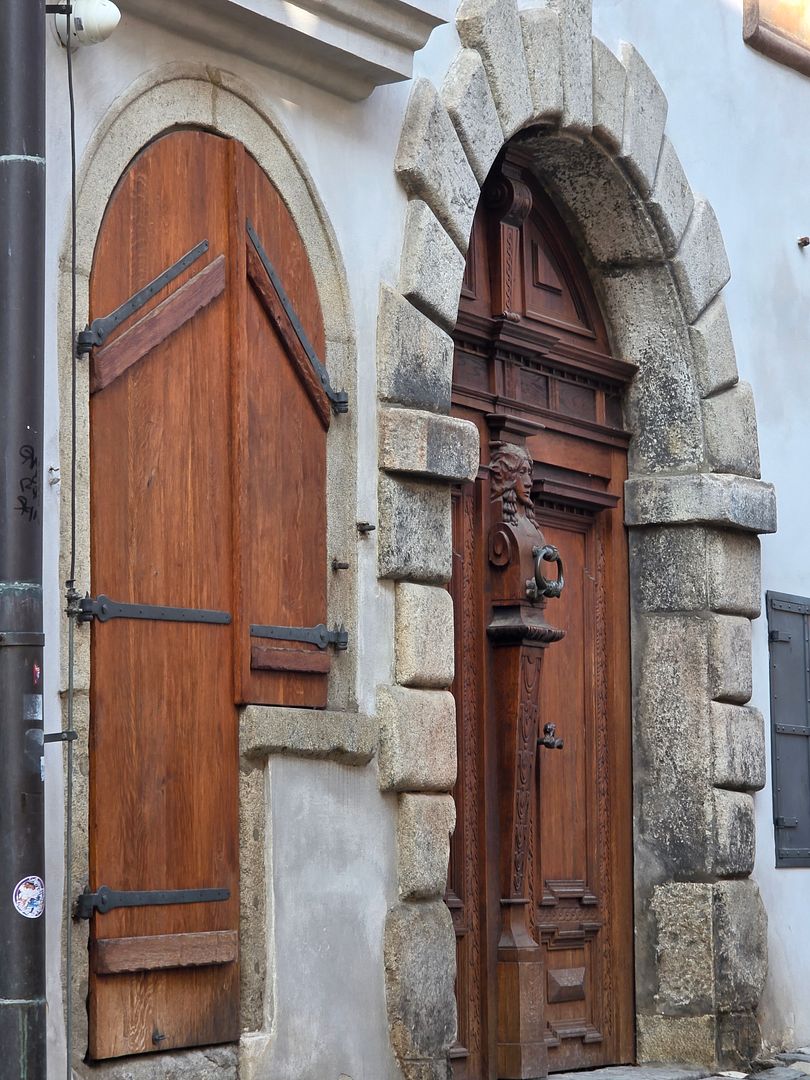
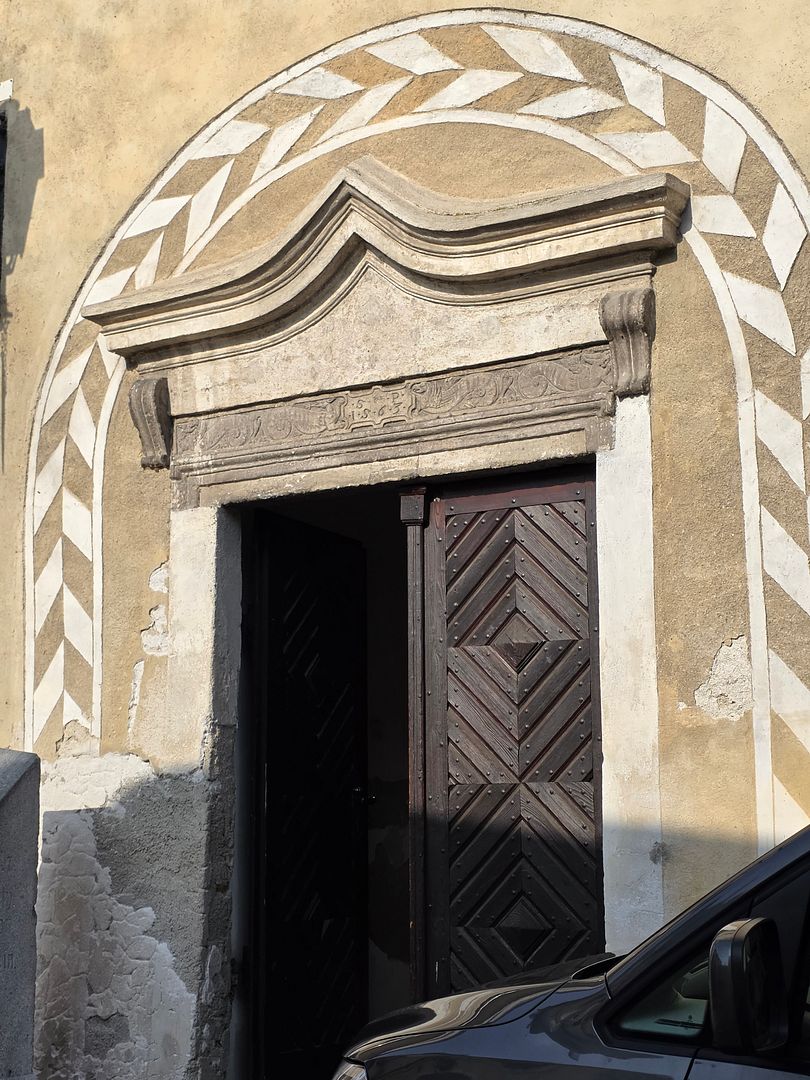
This short door on the left side was the entrance to the Tavern. We opened the door hesitantly.

There was no welcome party as we entered, in fact we wondered if they were open. As we considered which way to turn a tall woman appeared and pointed us upstairs, upstairs. We went all the way to the top and then she caught us and pointed downstairs. We had gone up one floor too many.

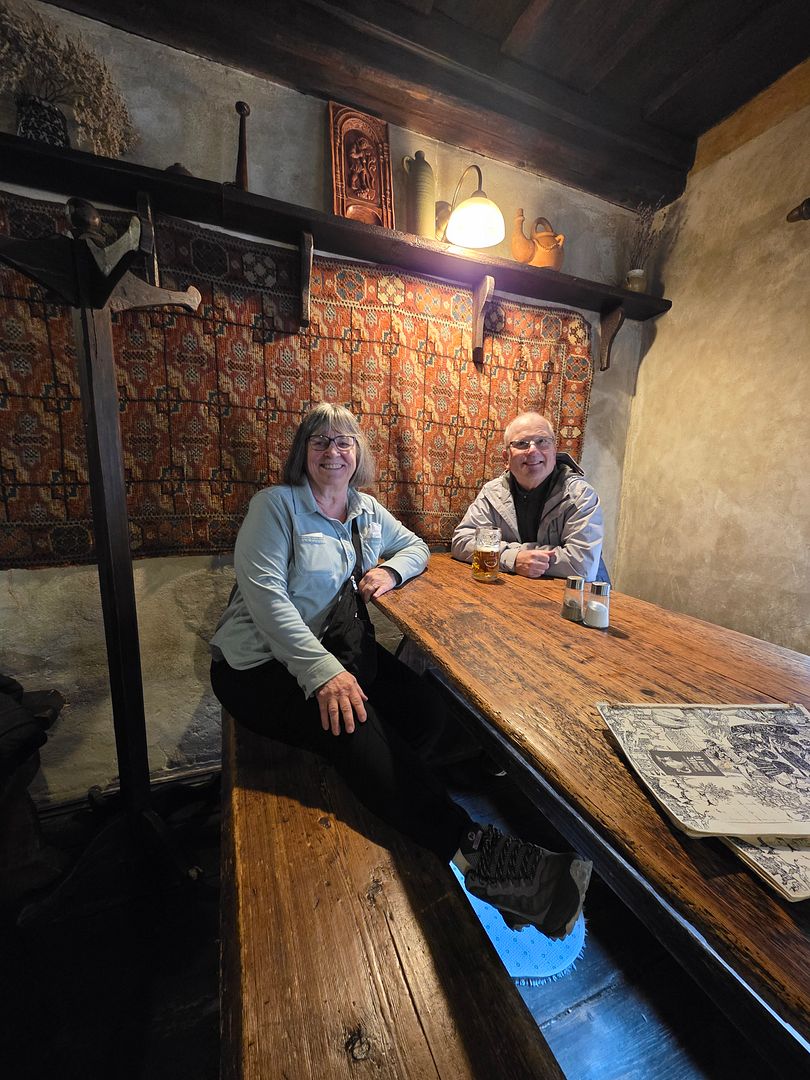
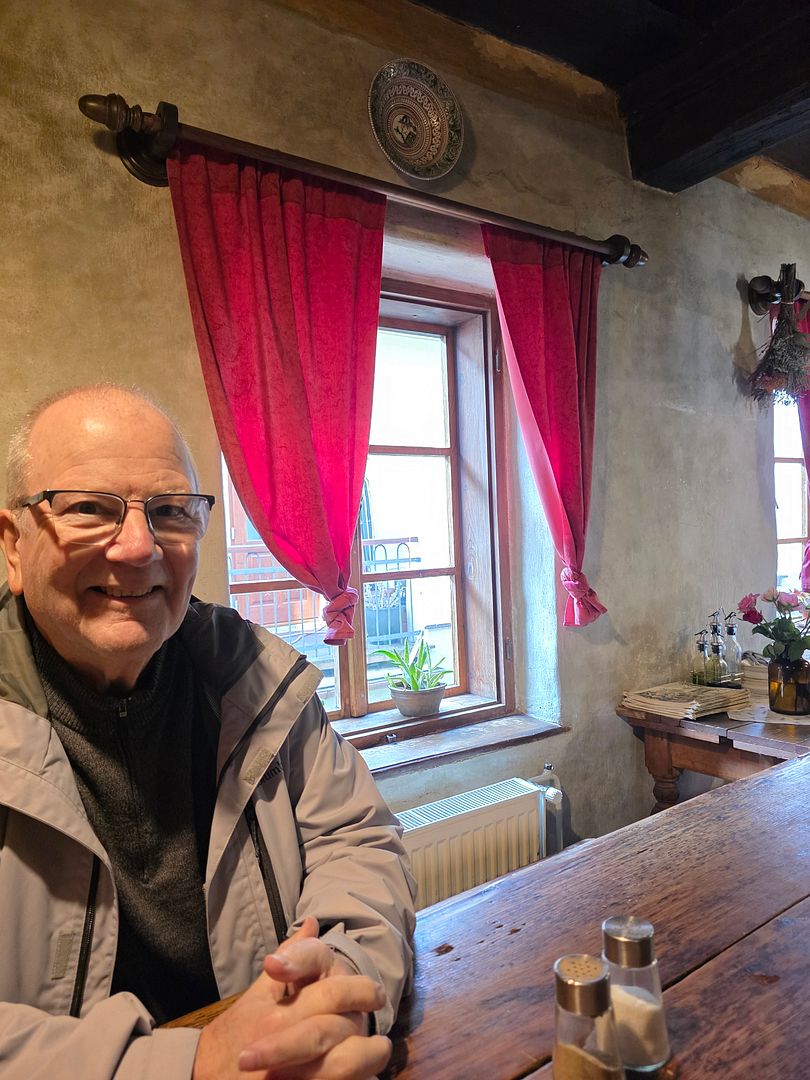
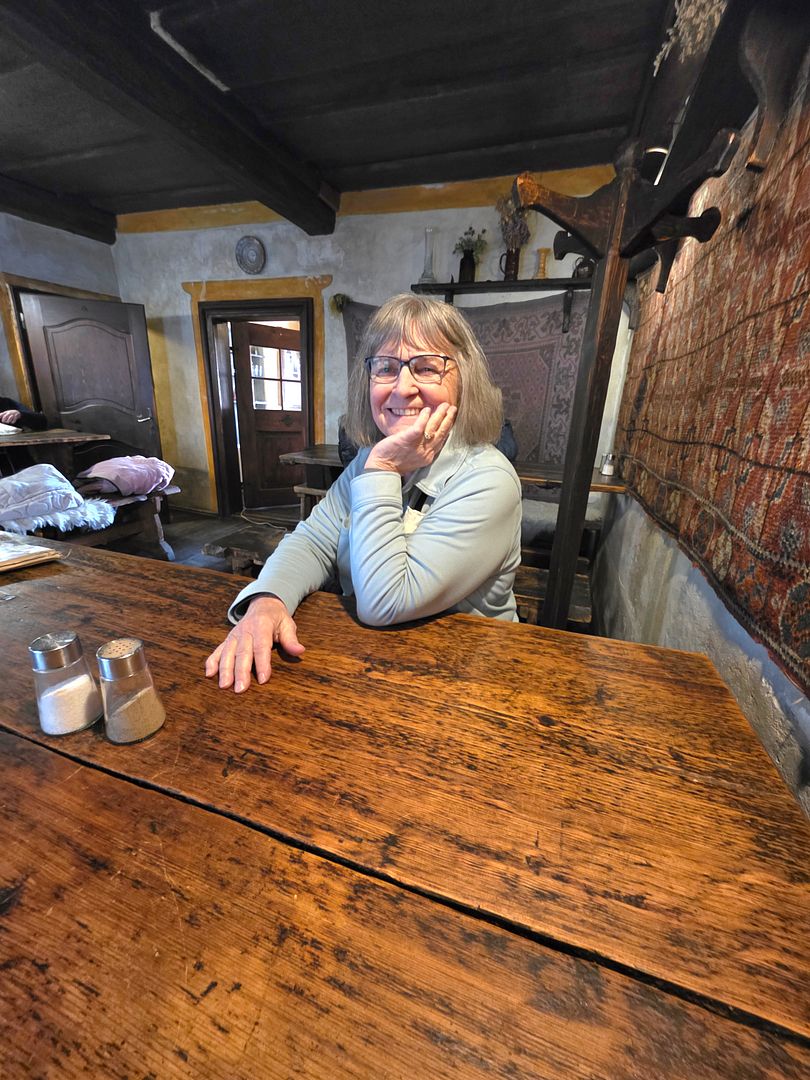
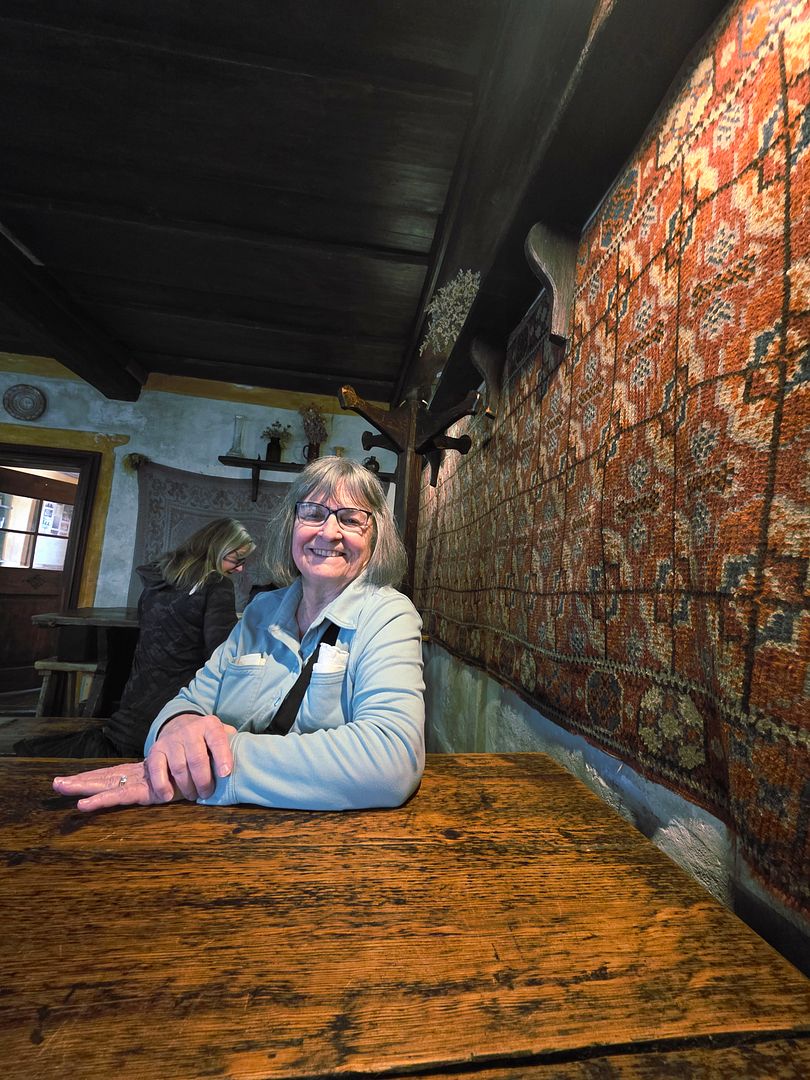
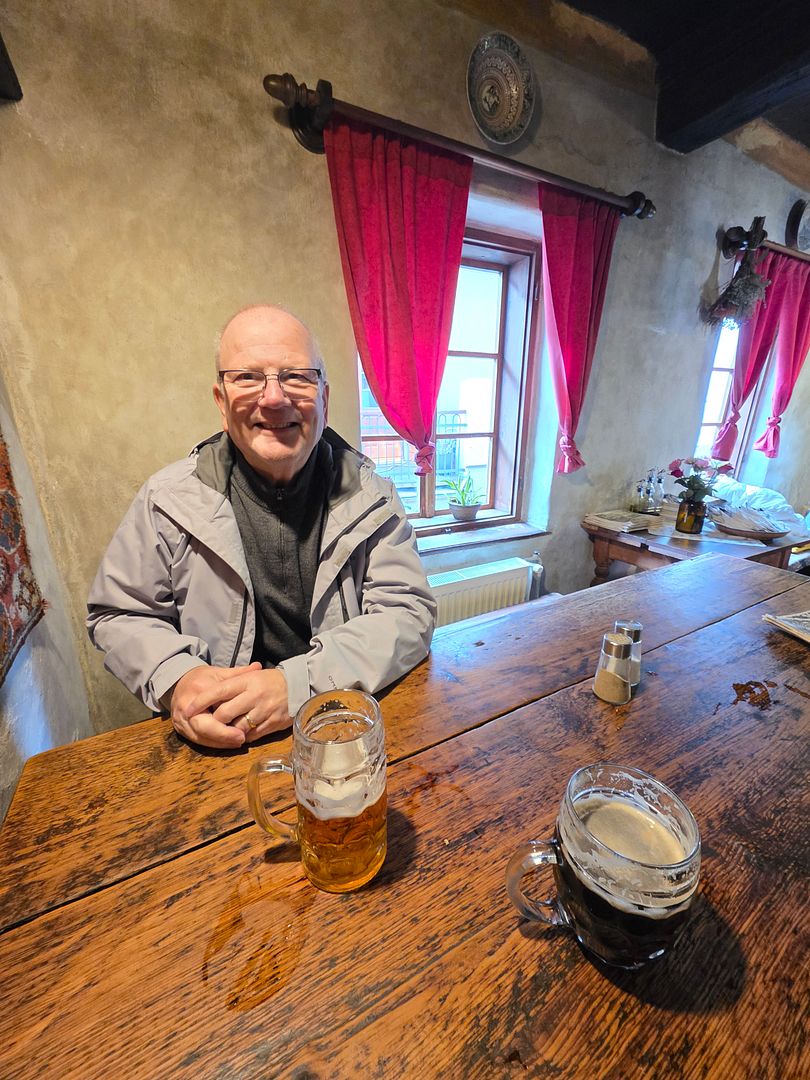
Whew! We made it into the wall of tapestries dining room.

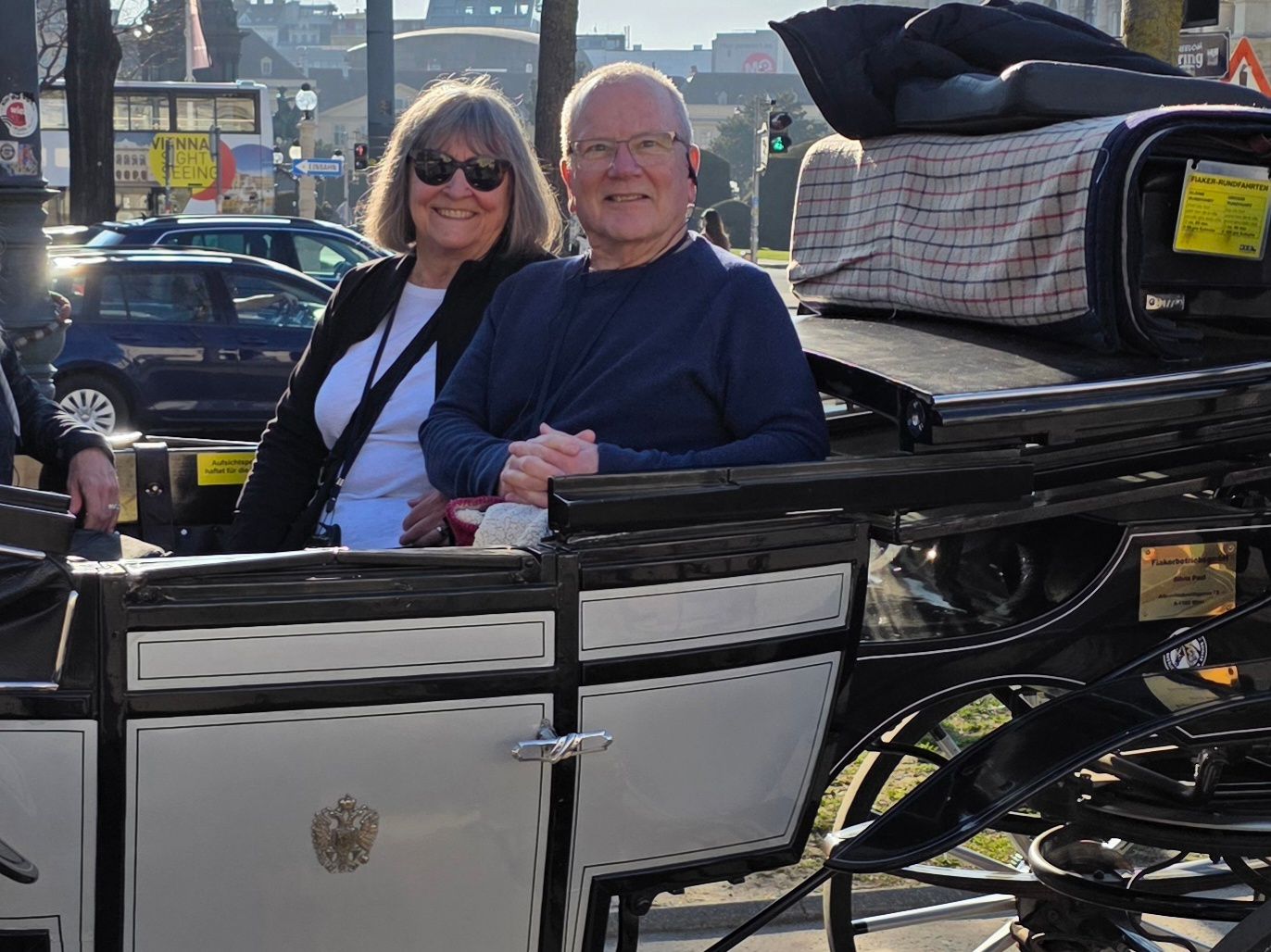
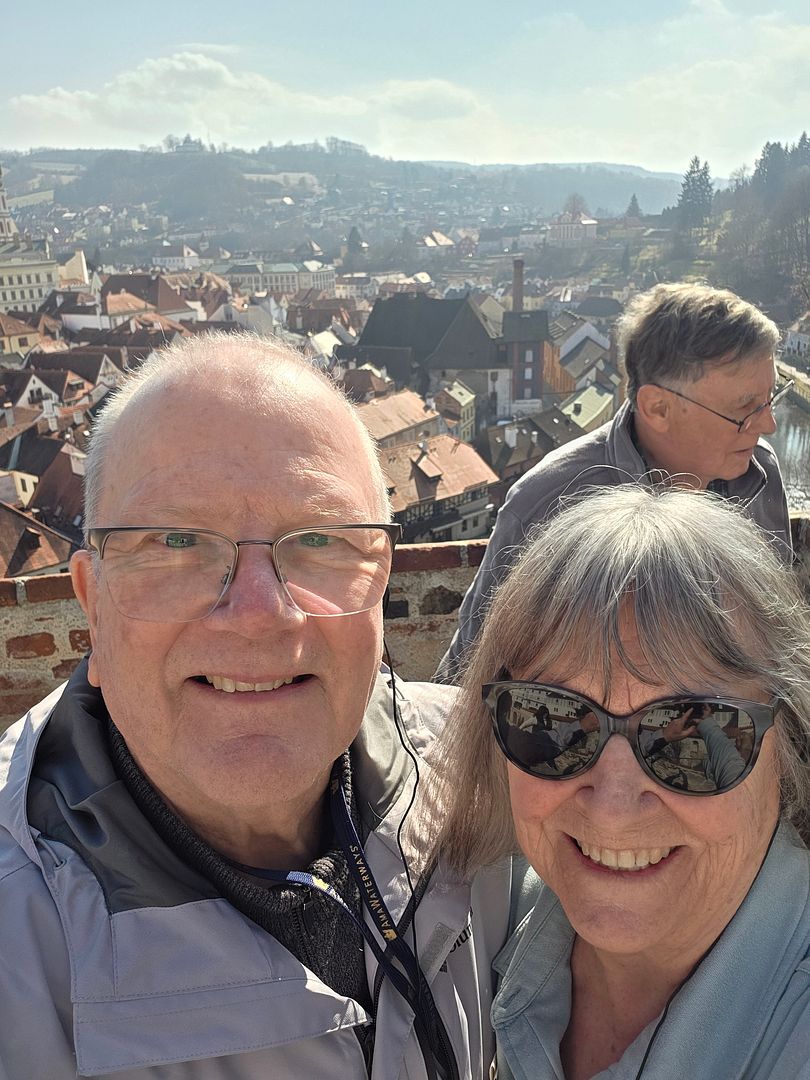
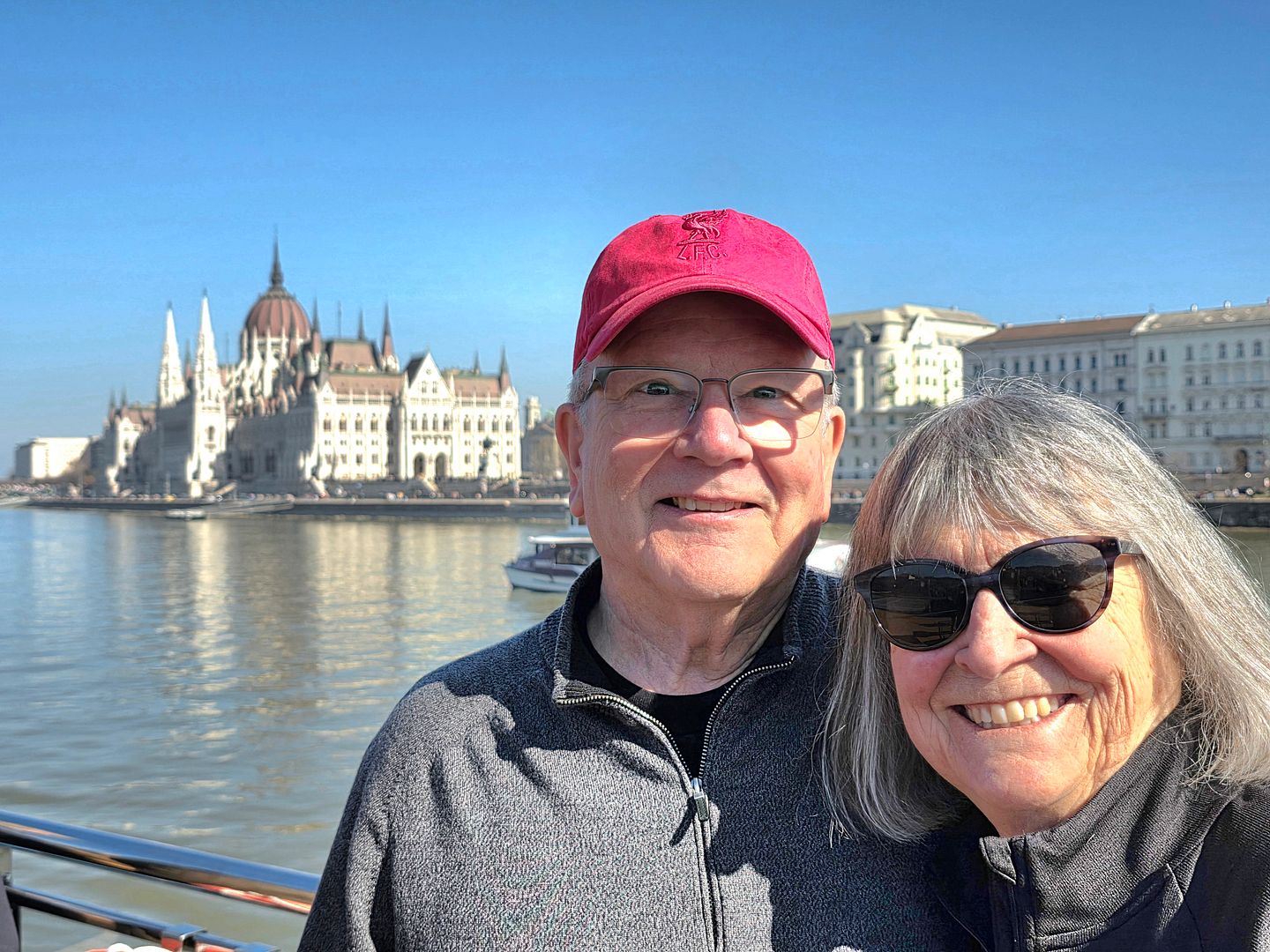
I’m never quite sure what to do with my hands when posing for a photo.

The two gals sitting behind us were also from our cruise and this encounter was the beginning of a few more where we would look at each other and say, “Great minds think alike.” We found out over lunch that these two were friends from their youth. Their mom’s were best friends and their moms had taken this cruise in the past and they decided to join up and do this very cruise in honor of their moms who since were both deceased. What a sweet journey they were on. One of them lives in Oklahoma and the other in Colorado.

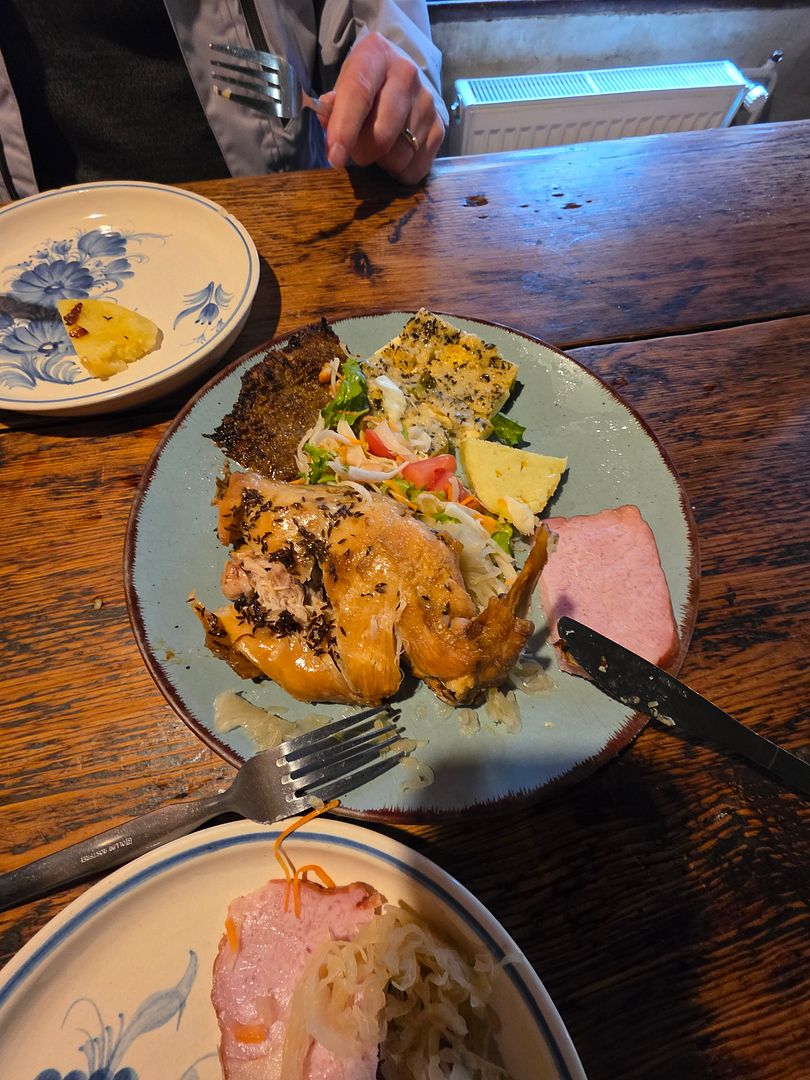
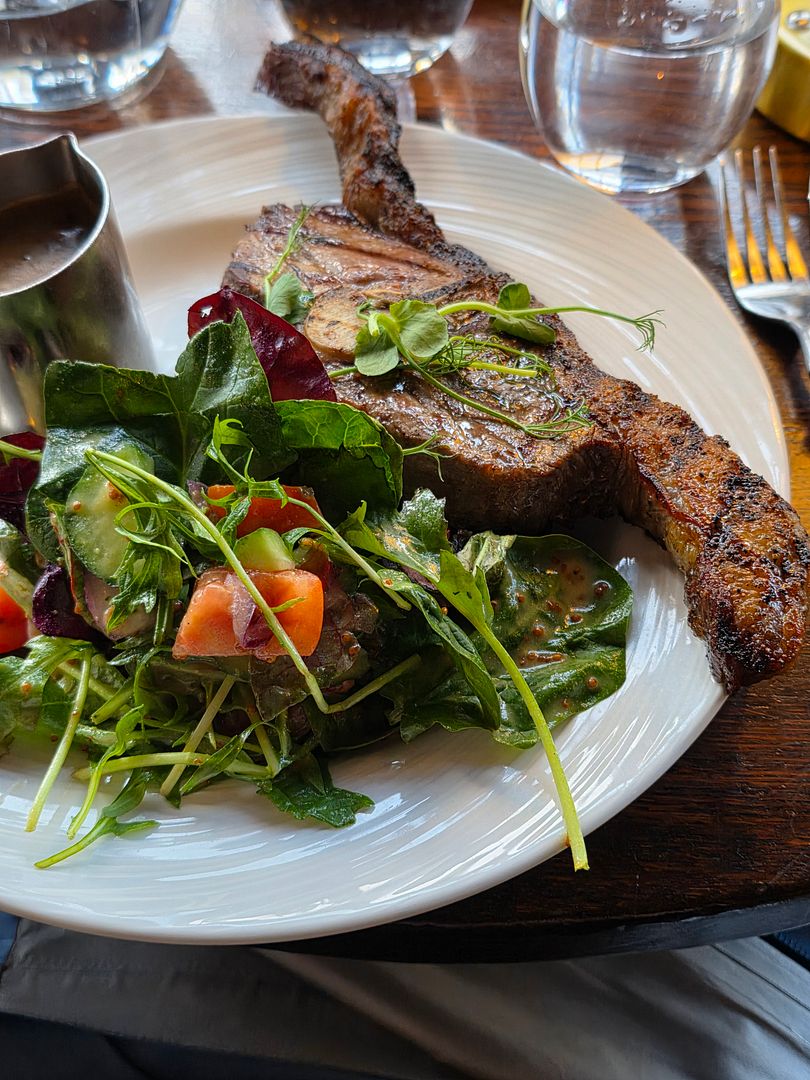
Our tour guide suggested ordering the Feast but to make sure we only ordered one and it would be plenty to share. We ordered the Old Bohemian Feast for one with rabbit meat.

Two house beers, a light draft and dark draft.

After lunch we first headed to the main square to get our bearings for where we would meet up with the tour group again for our departure.

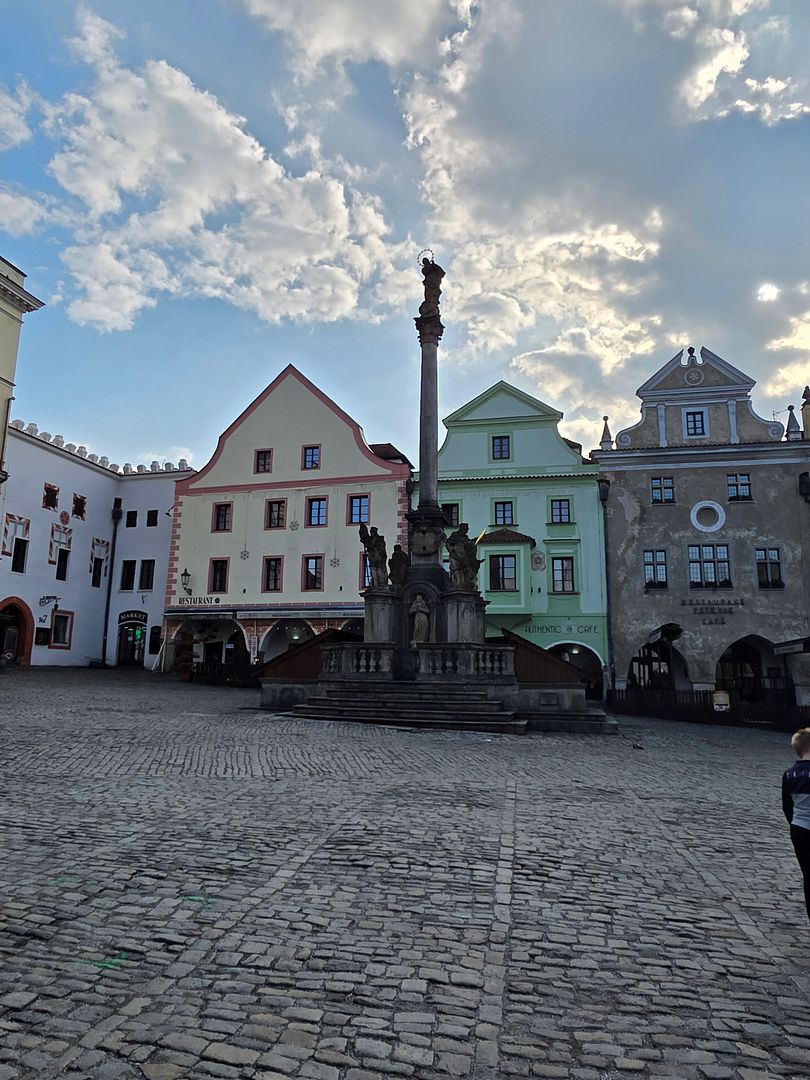
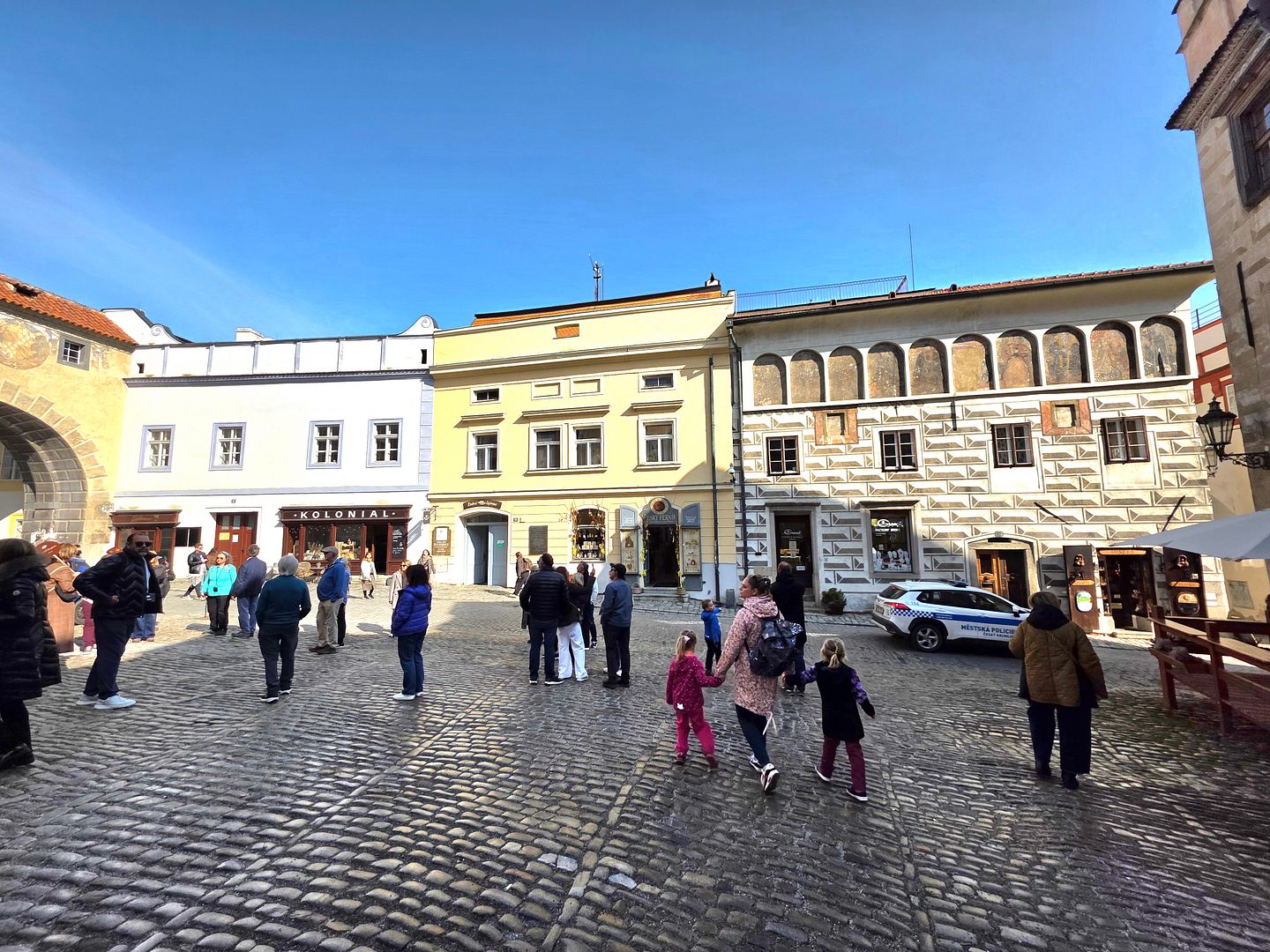
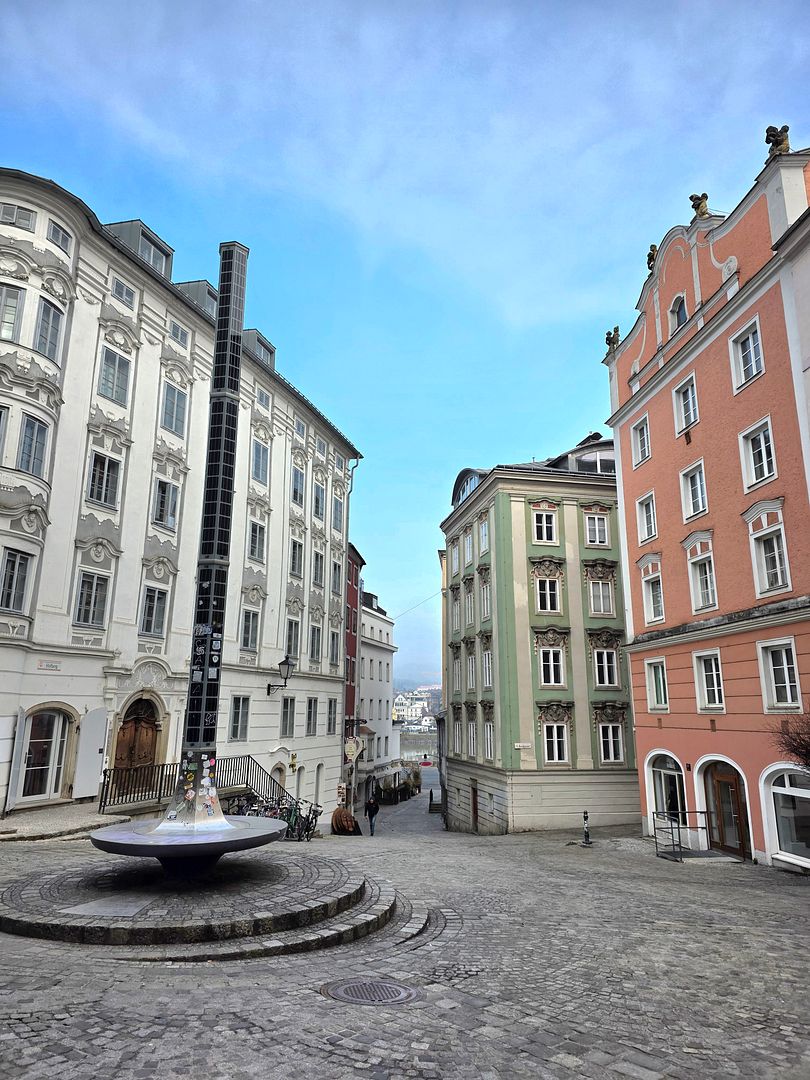
Just as we imagined, it was not difficult to find the main square, Svornosti, in old town.

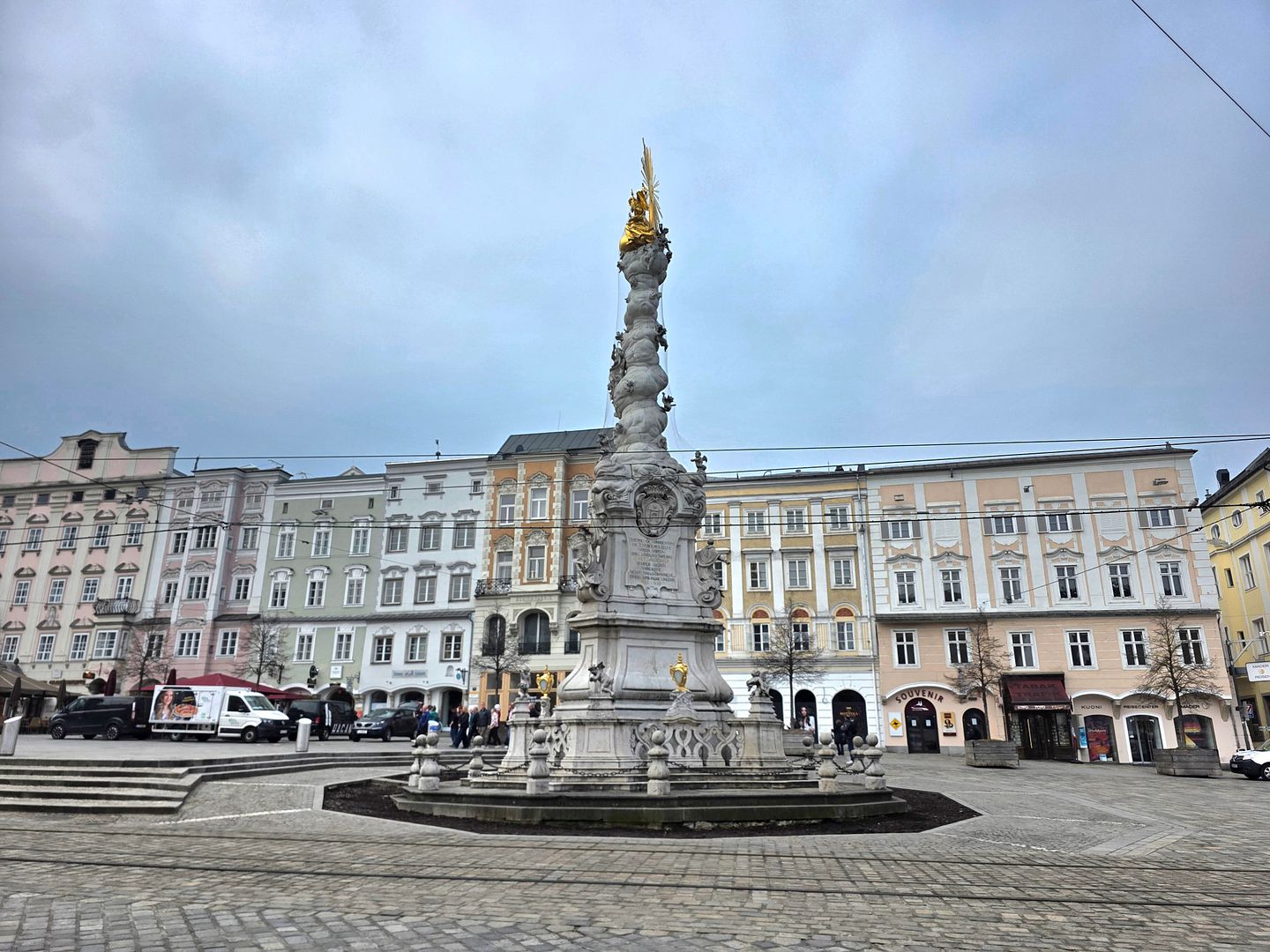
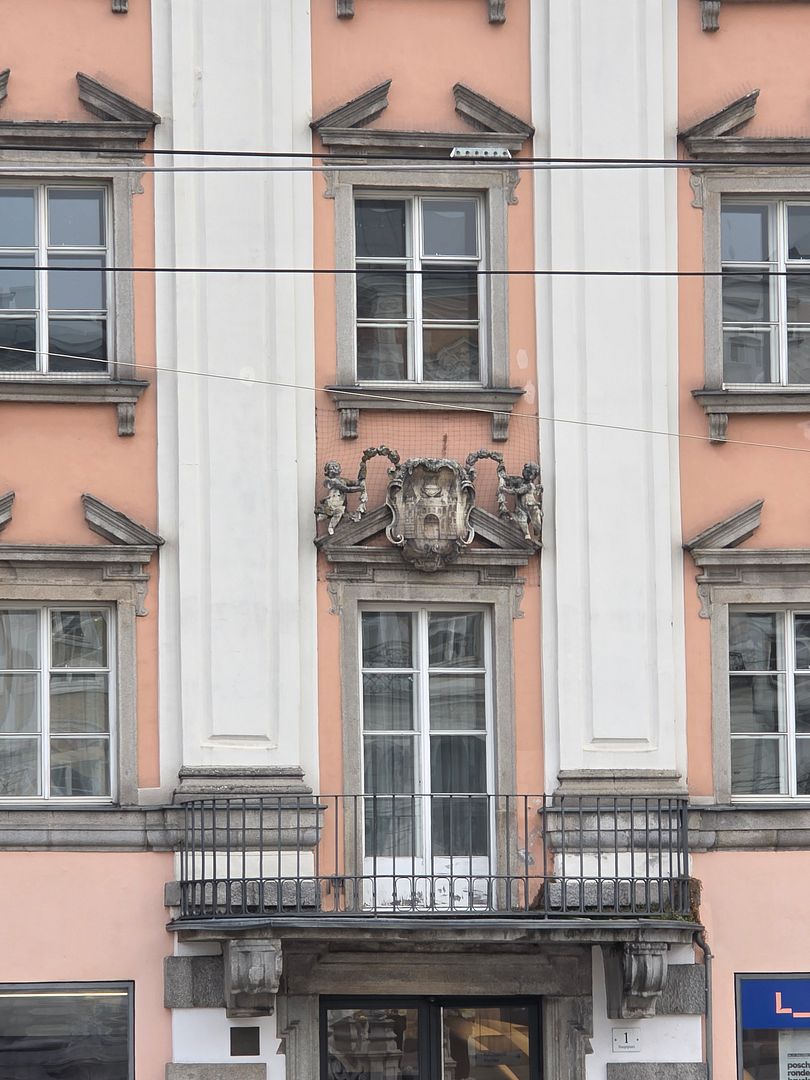
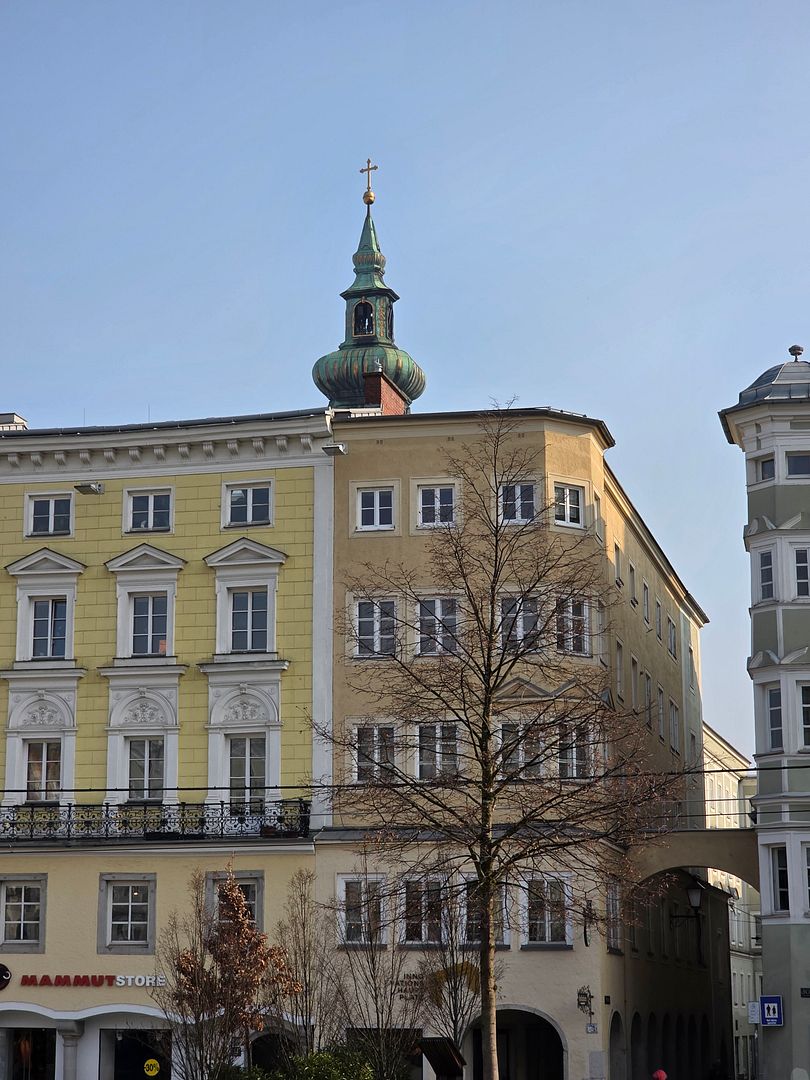
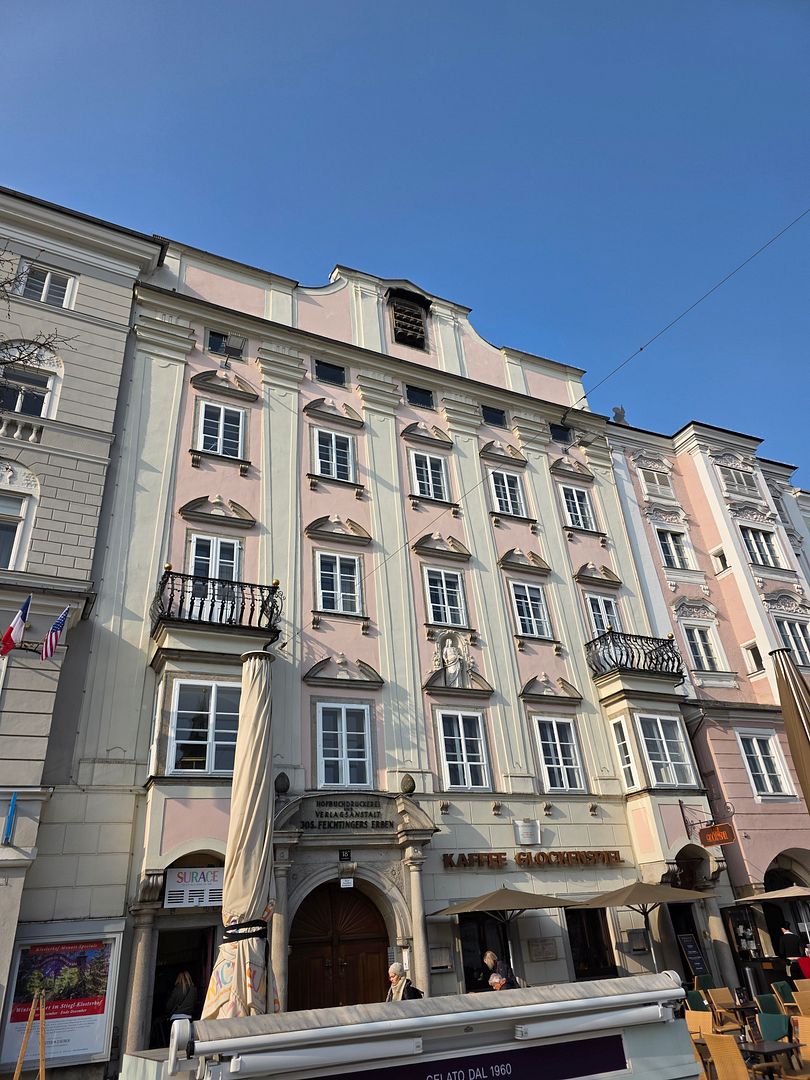
At the heart of the Old Town is the main square, lined with a mix of Renaissance and Baroque homes of burghers (all built on 12th-century Gothic foundations). Lékárna, with a fine red Baroque facade on the lower corner of the square, is still a pharmacy, as it has been since 1620.

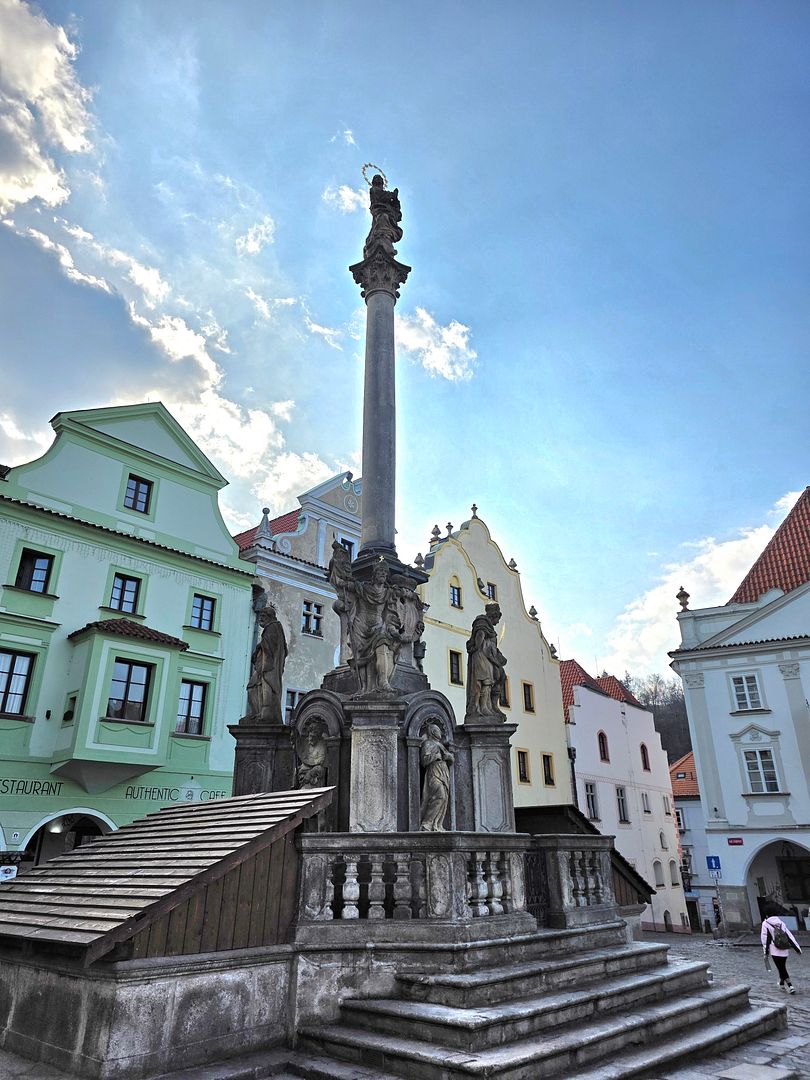
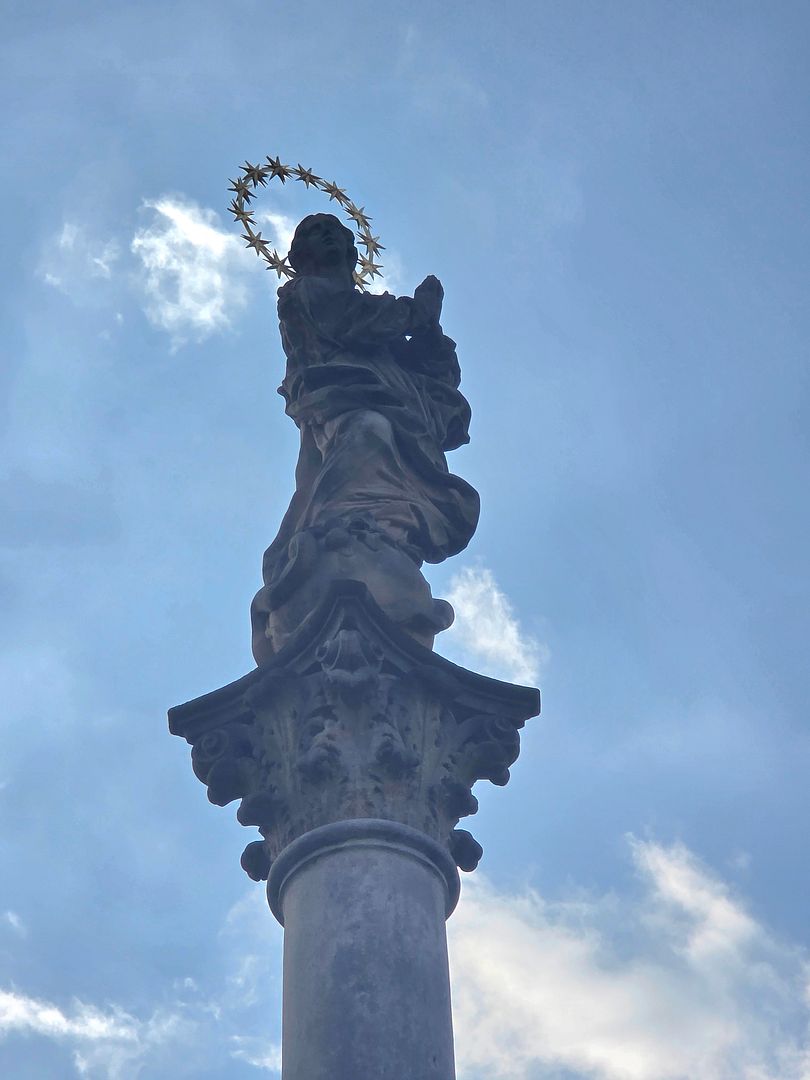
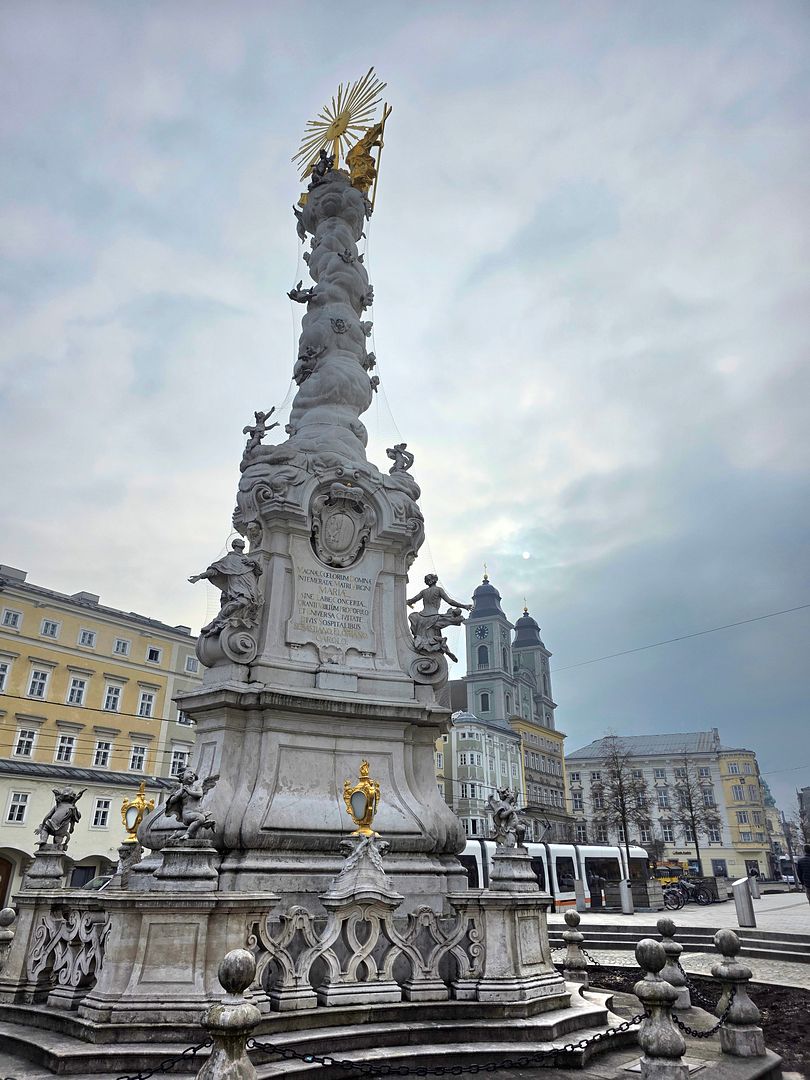
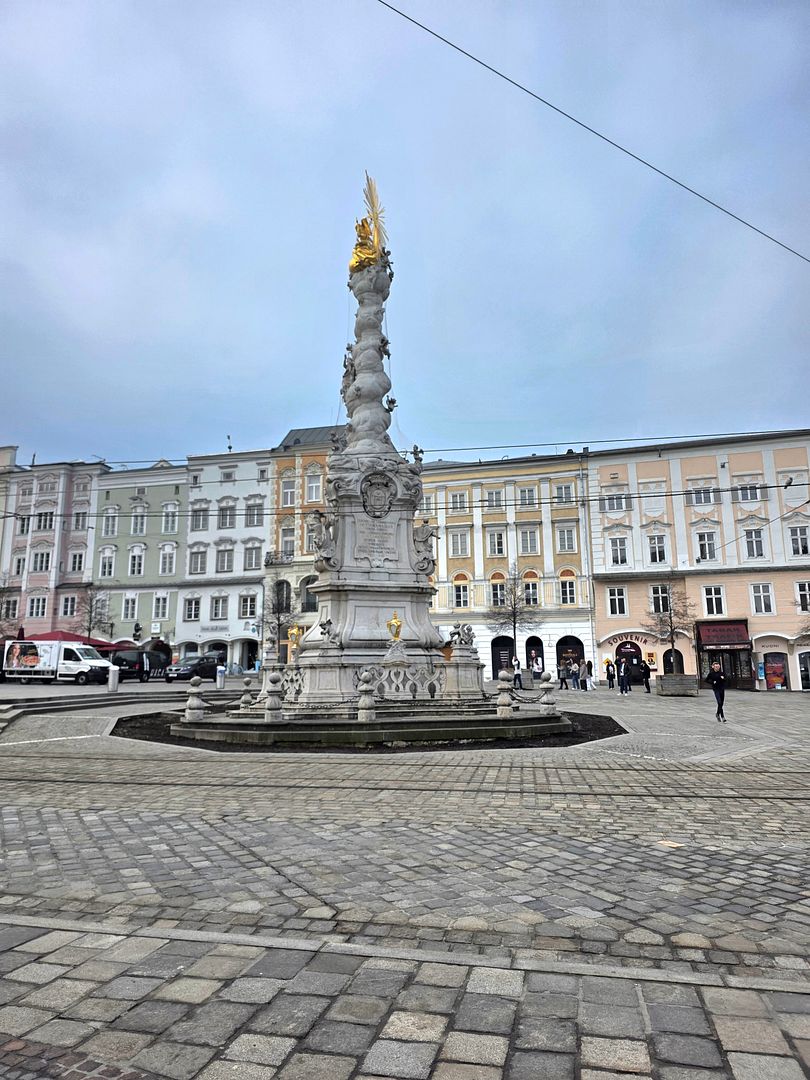
The main artistic landmark of the square is the plague column topped with the statue of the Virgin Mary and eight saints, the patron saints of the town and believed protectors against plague. In the upper row there are statues of St. Wenceslas, St. Vitus, St. John Evangelist, St. Judas Thaddeus, and in the lower row St. Francis Xavier, St. Sebastian, St. Gaetano and St. Rochus.

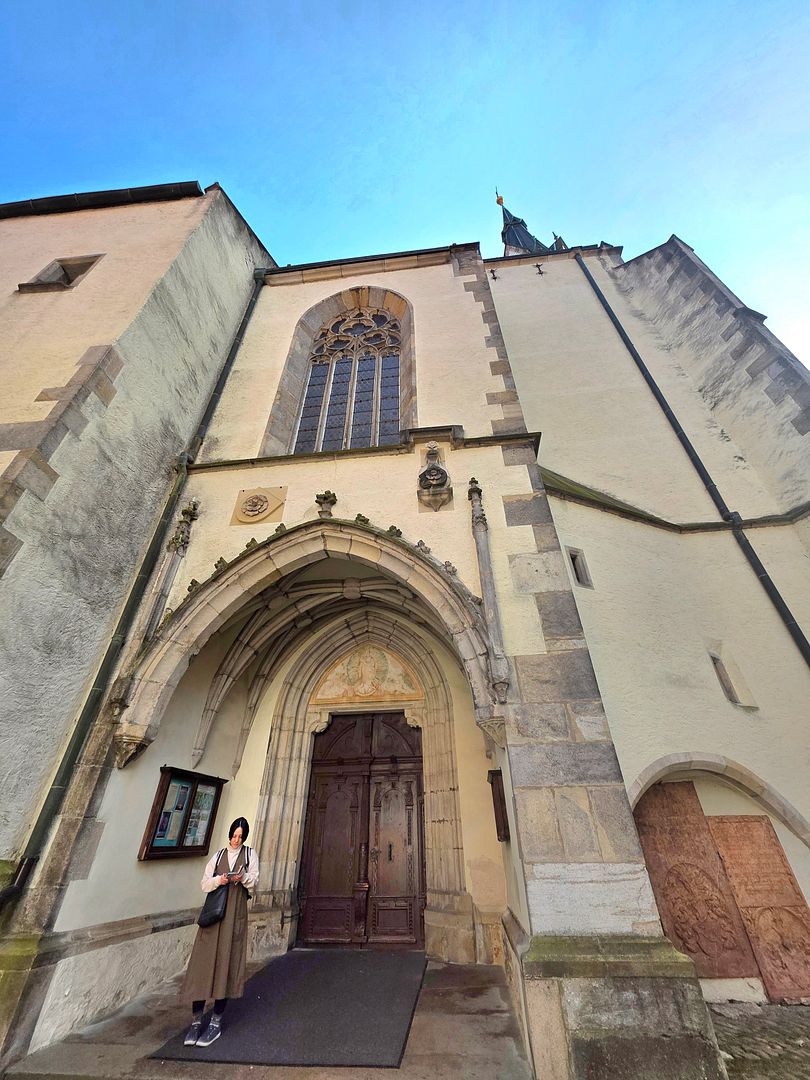
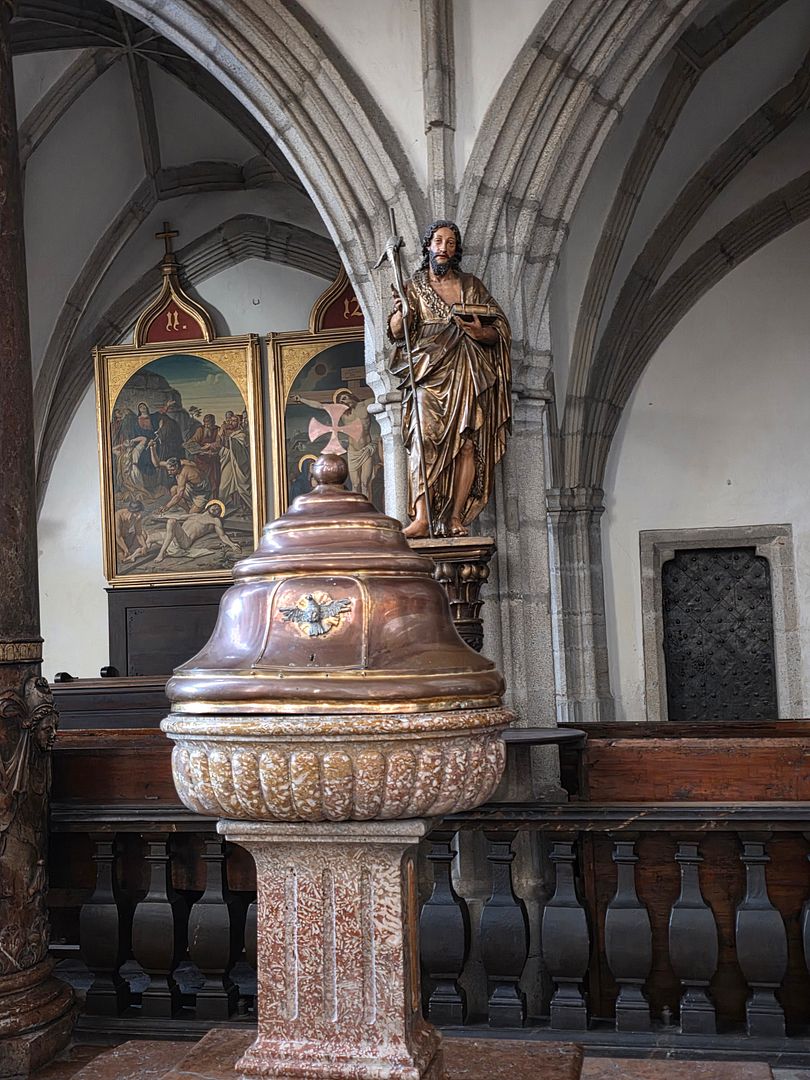
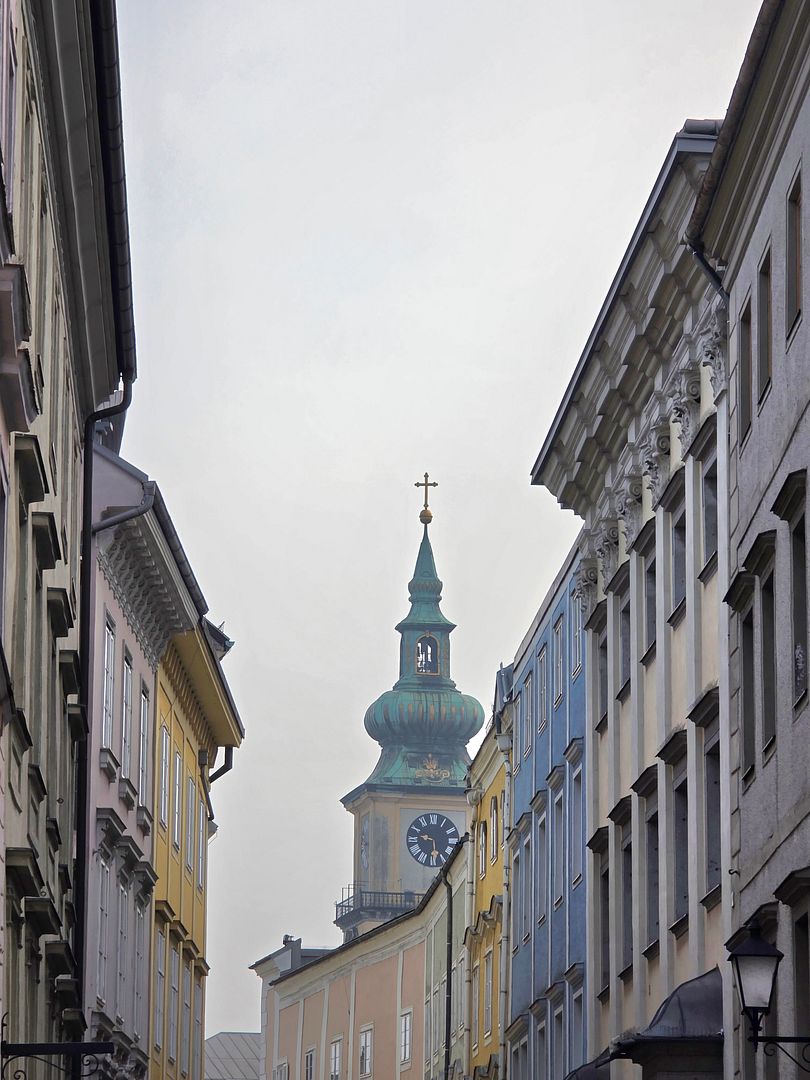
The wind aided temps at this point to drop and we decided to try to find someplace for warmth and a hot drink. We ended up at a counter service for sweets and decided on hot chocolate for our drink and a couple sweets for the road. Heading back to the square we saw St. Vitus church and decided to climb up the stairs for a visit.

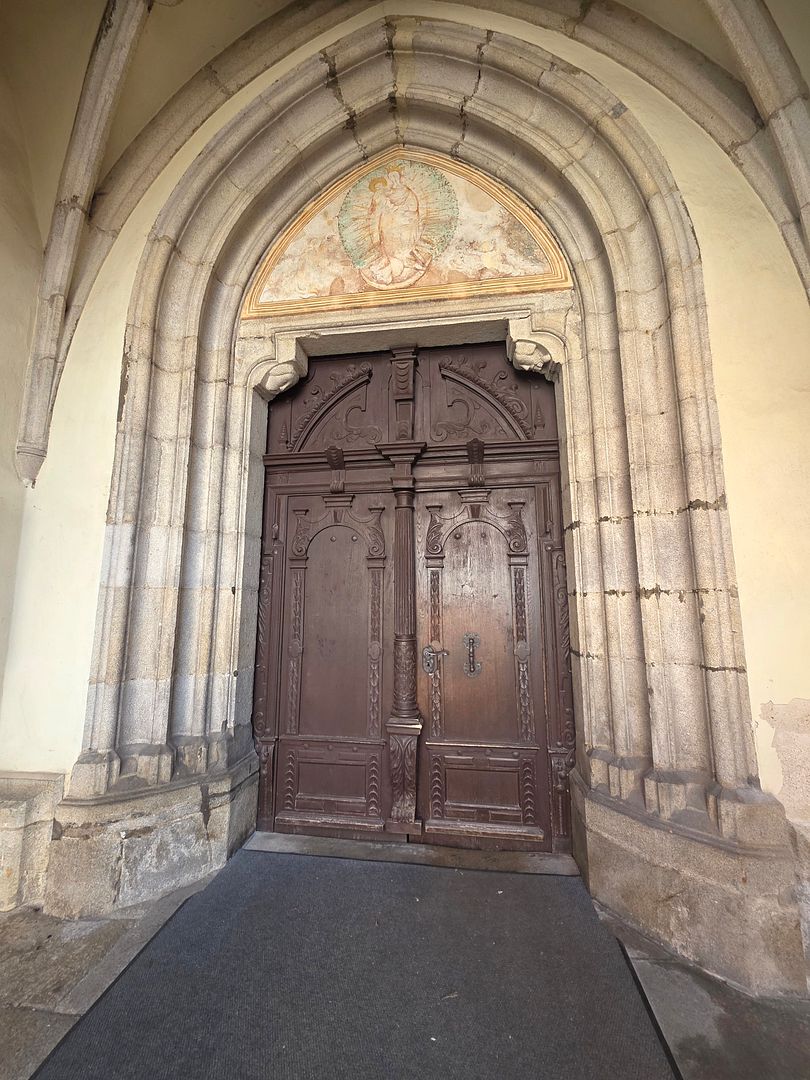
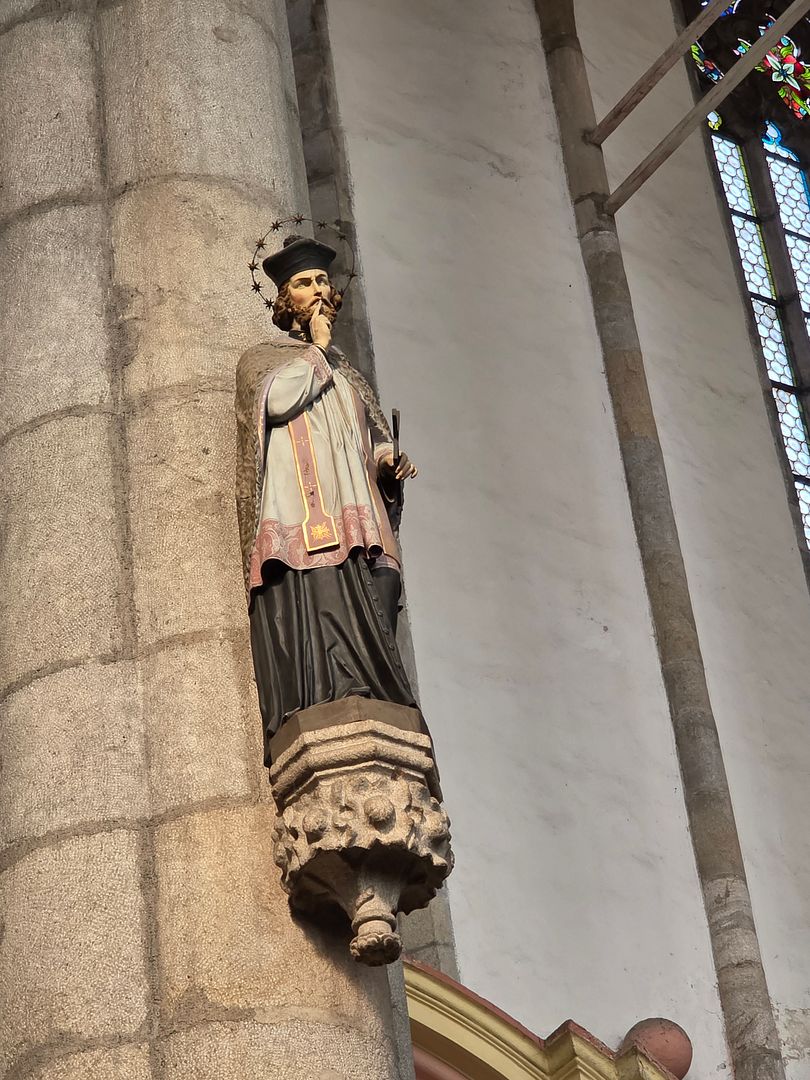
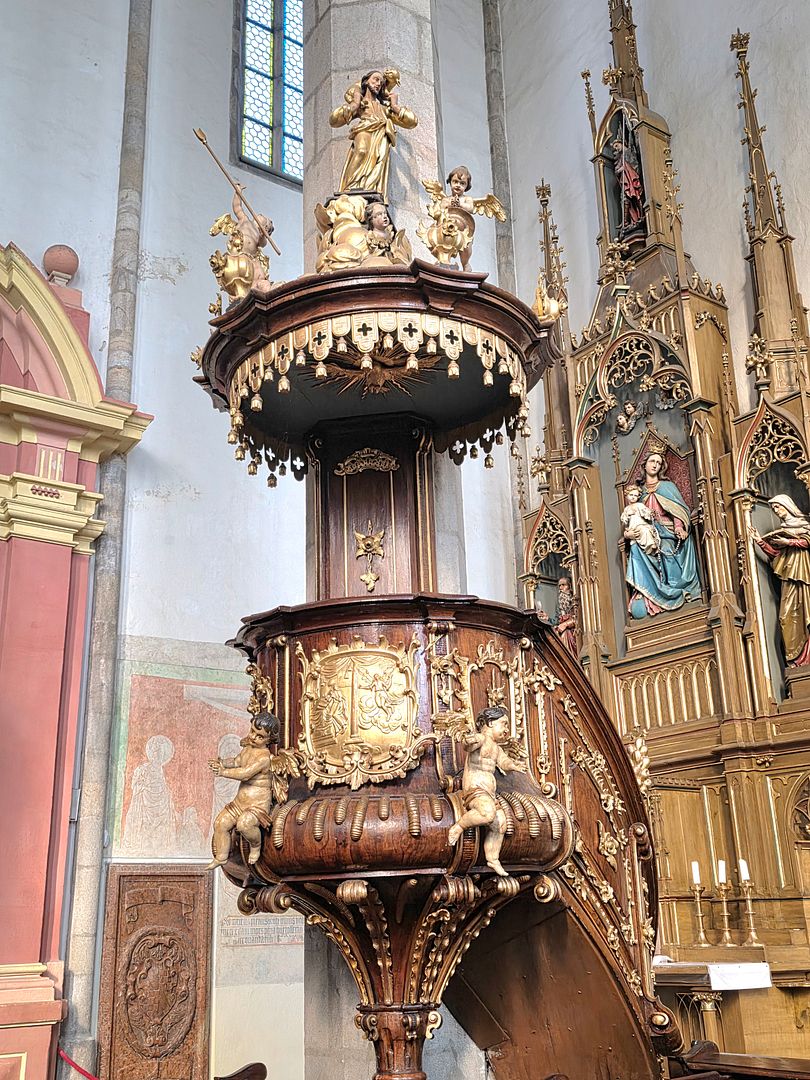
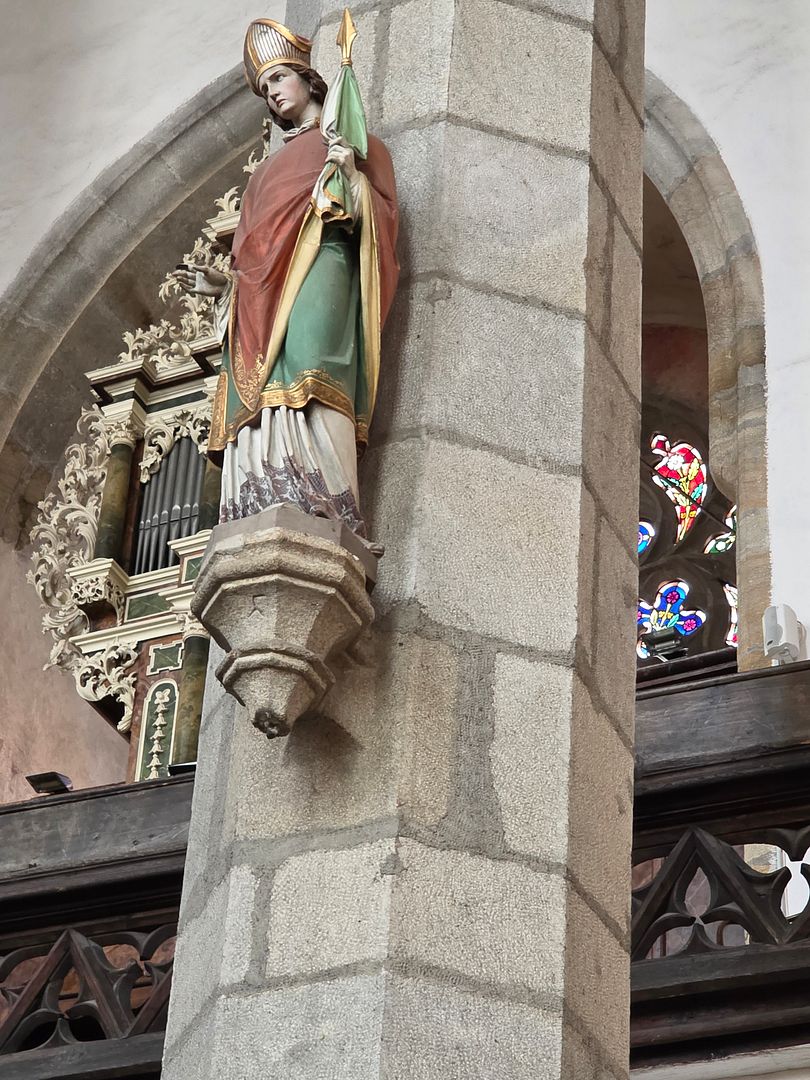
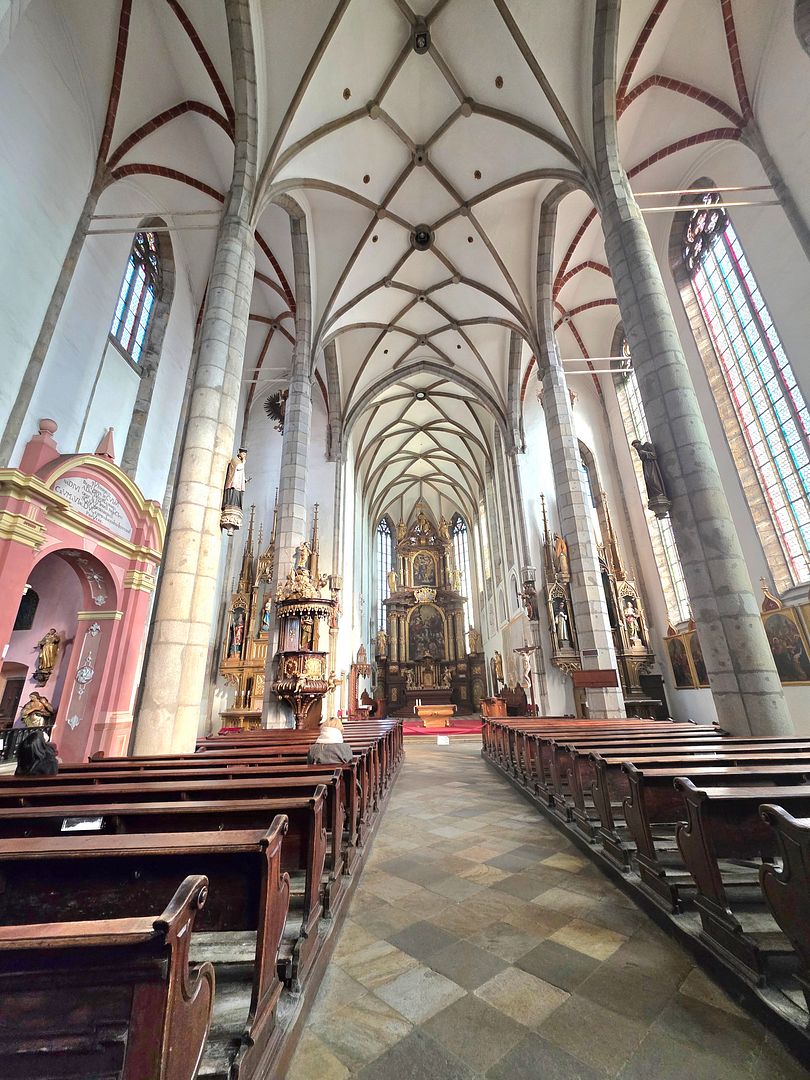
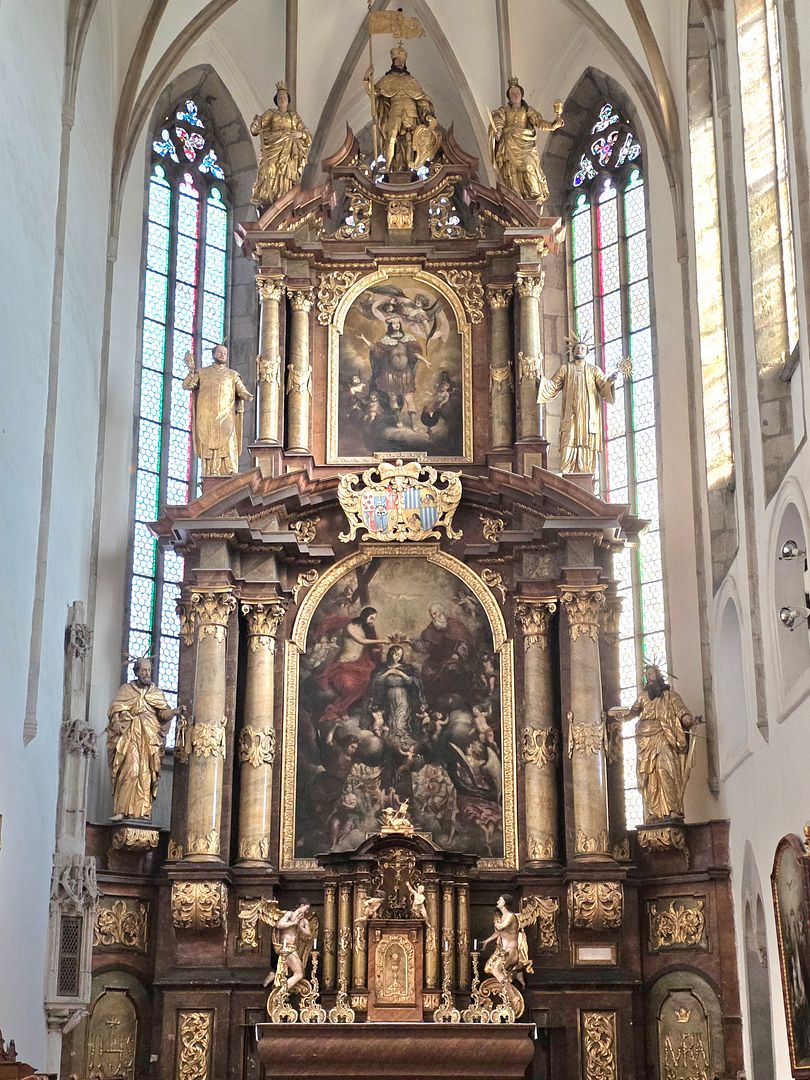
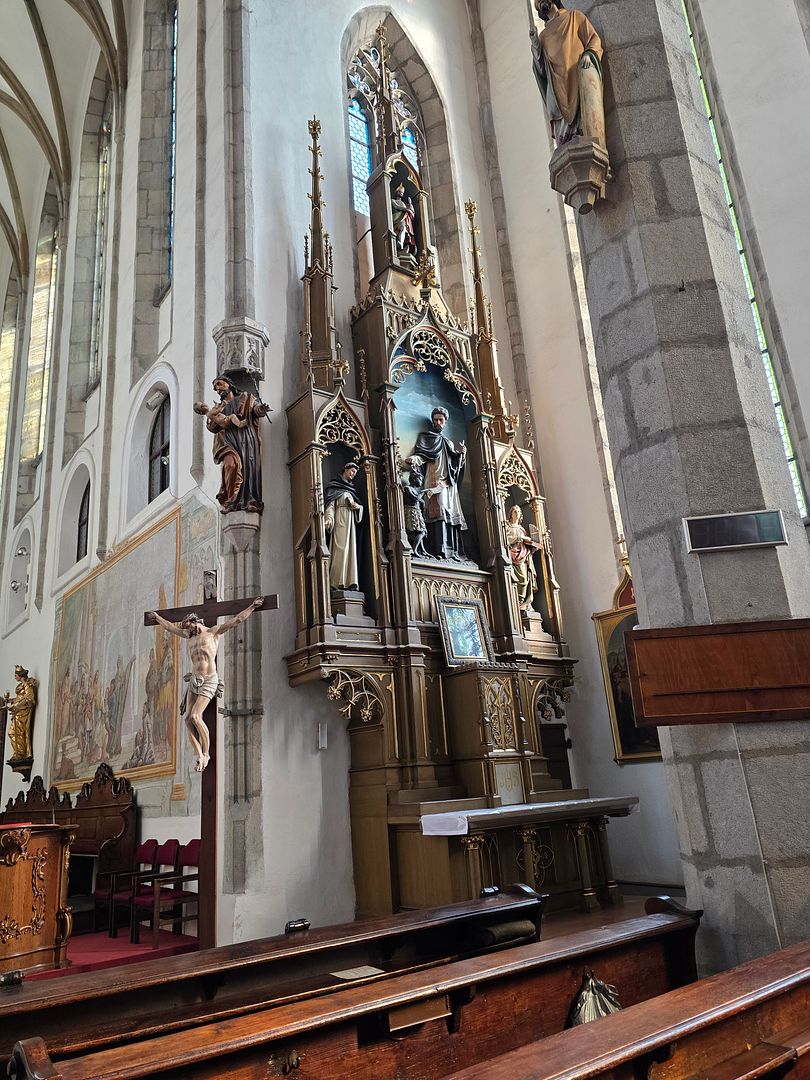
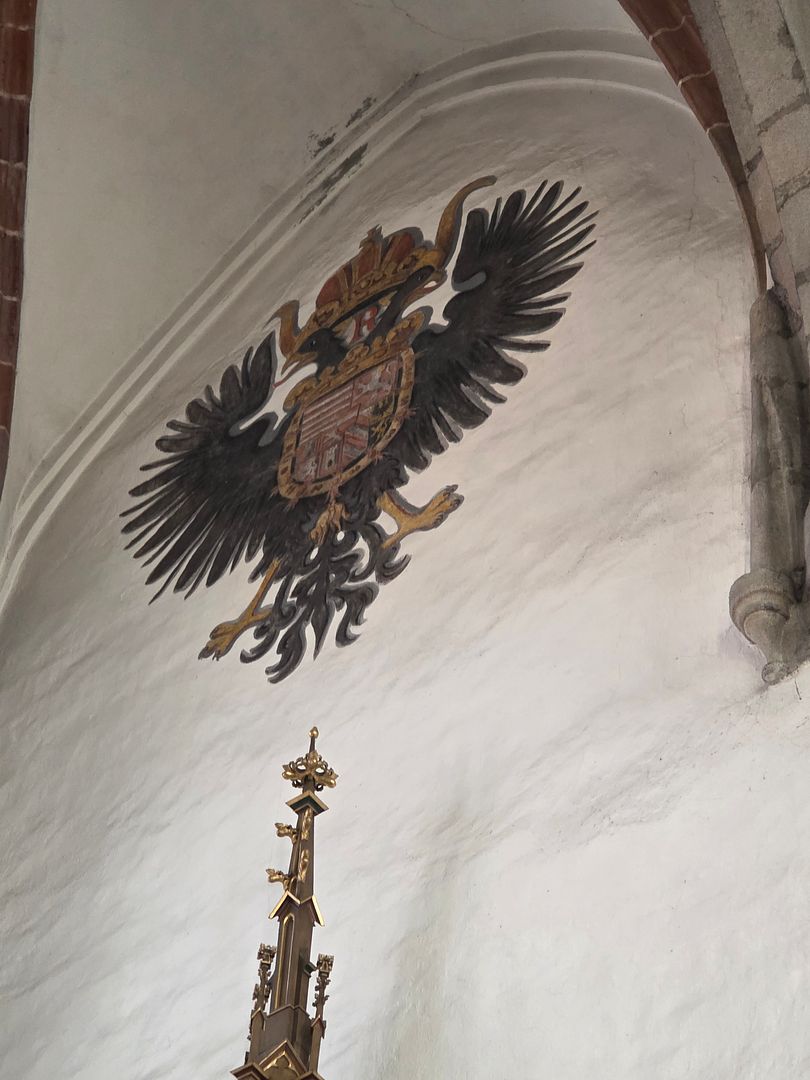
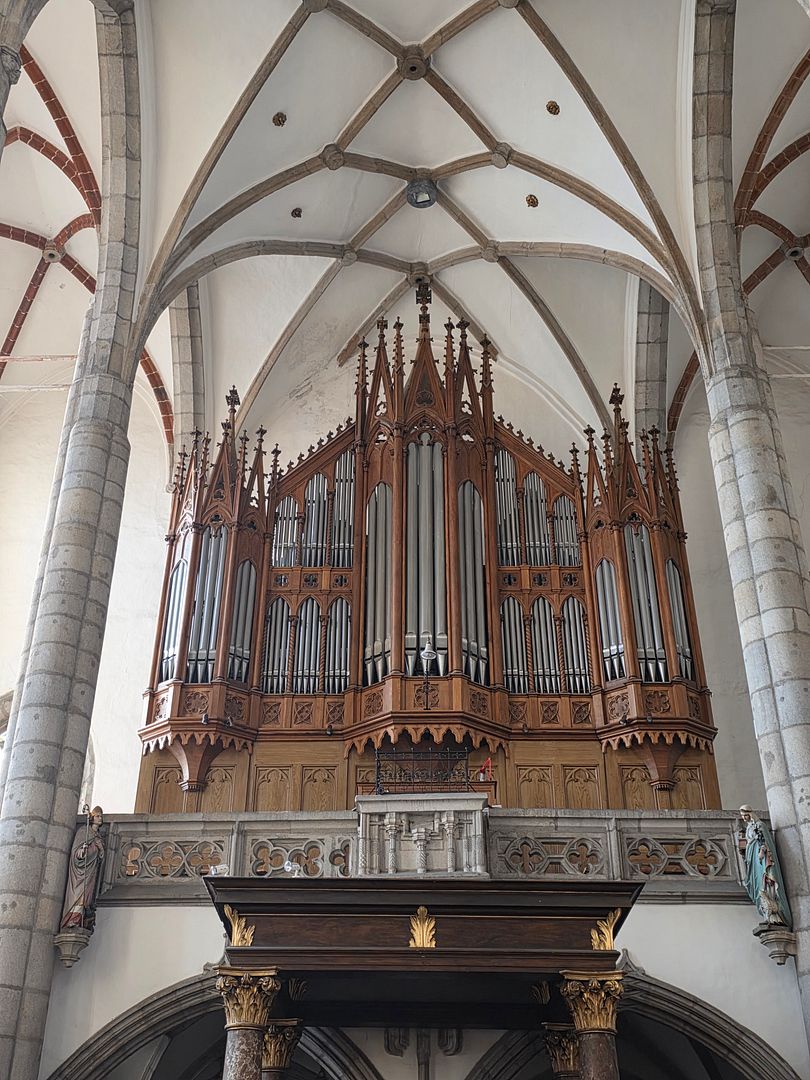
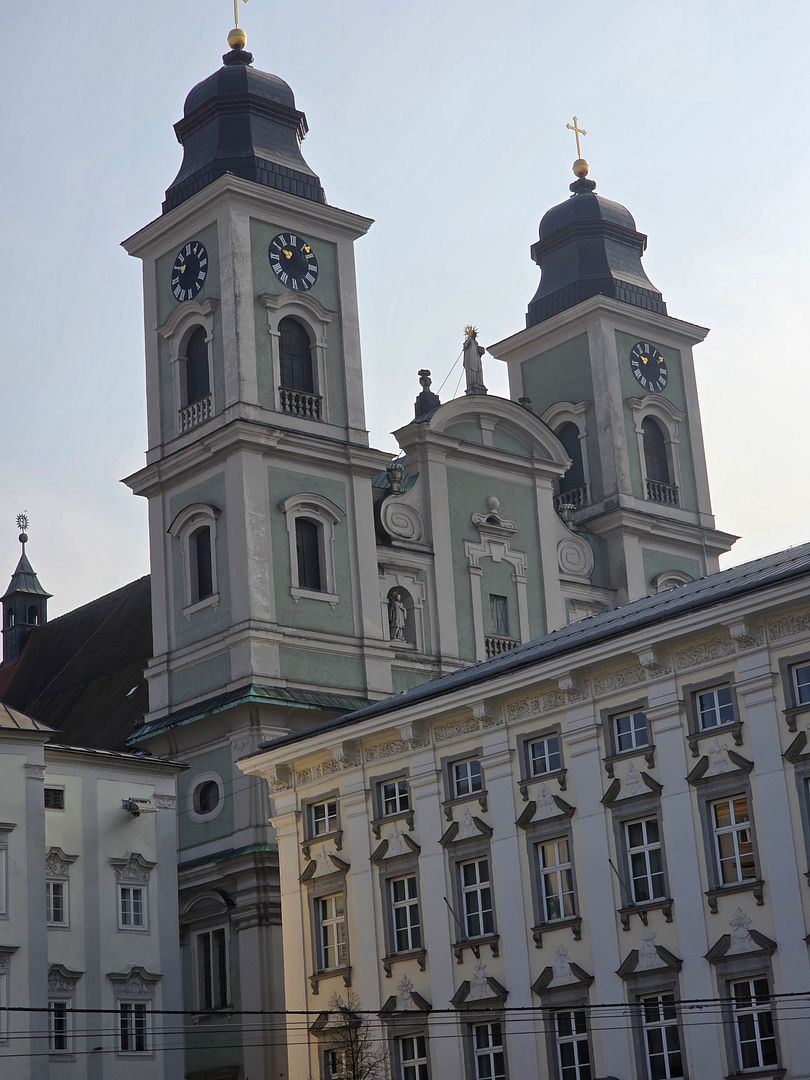
Church of Saint Vitus is a Roman Catholic church in Český Krumlov, Czech Republic. It is dedicated to Saint Vitus. It is an important late-Gothic monument built in 1407–1438, with later modifications. In 1995, it was declared a national cultural monument.

In our travels we visit lots of churches and I share photos from them. I can appreciate the history and the art but to be clear, although I love my Roman Catholic friends, my Christian faith differs in practice and beliefs with regards to assurance of salvation, authority of scripture, communion, prayer, intercessors, Mary, Saints, authority of the Pope, etc.

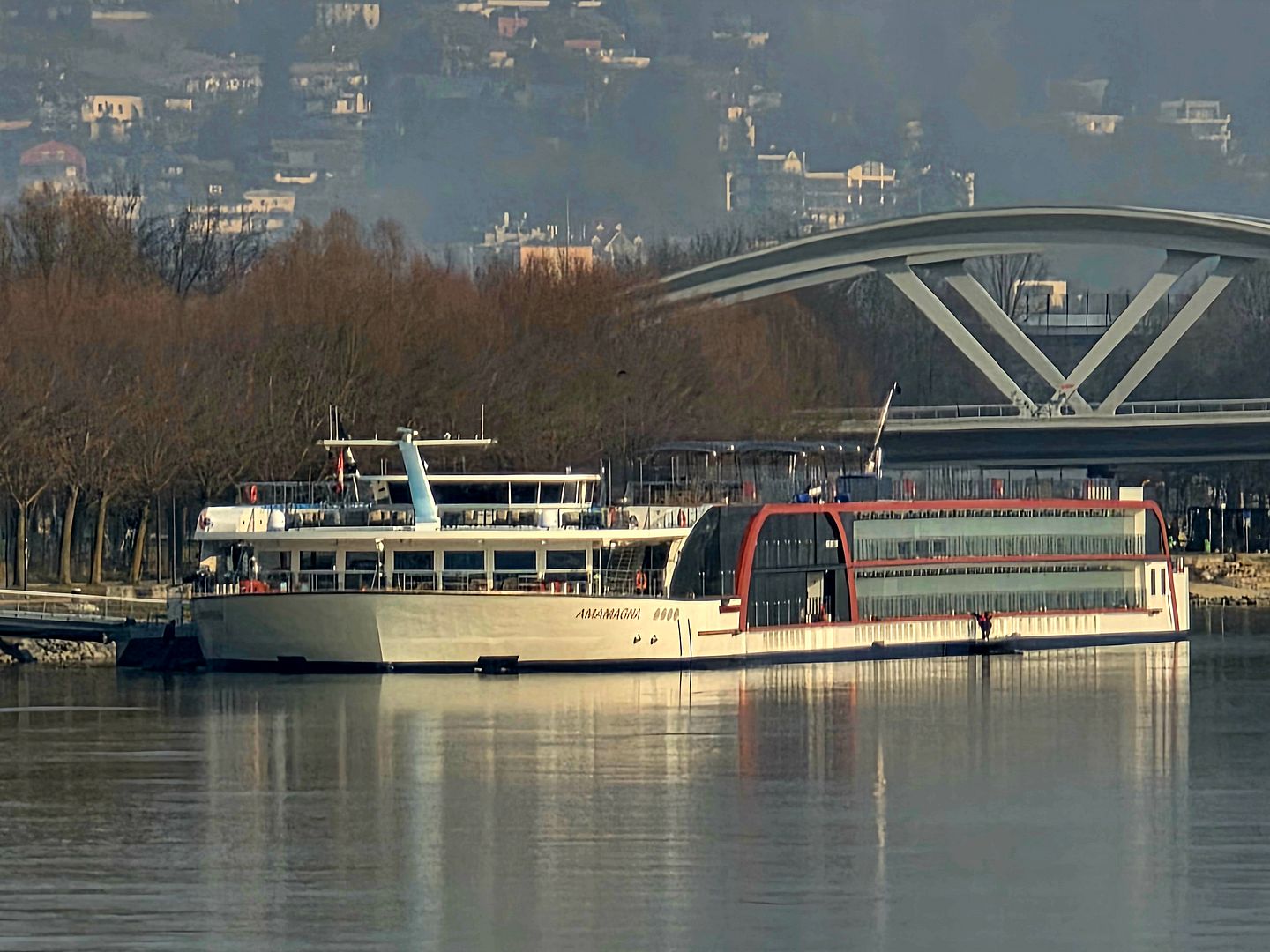
After our walk through this church we made it to the old town square to meet up with our guide and walk back to the bus for our journey back to the Danube (Grein) and dinner on the boat. Before dinner we gathered in the Lark Bar and Lounge for a briefing on our time in Vienna. The AmaMagna would leave this port for Vienna at 9:15 PM. Our arrival in Vienna would be at approximately 2pm on Thursday the 5th of March.

Český Krumlov Part 1

On Wednesday, March 4th, we had a full day excursion to the charming mountain town of Český Krumlov just over the Czech-Austrian border. This was after our short morning tour of Krems.

Our guide grew up in this region and shared his memories of growing up under communism. On our way to our stop, we saw some areas where housing high rises from the past were everywhere.  Current residents were making them more colorful and personal.

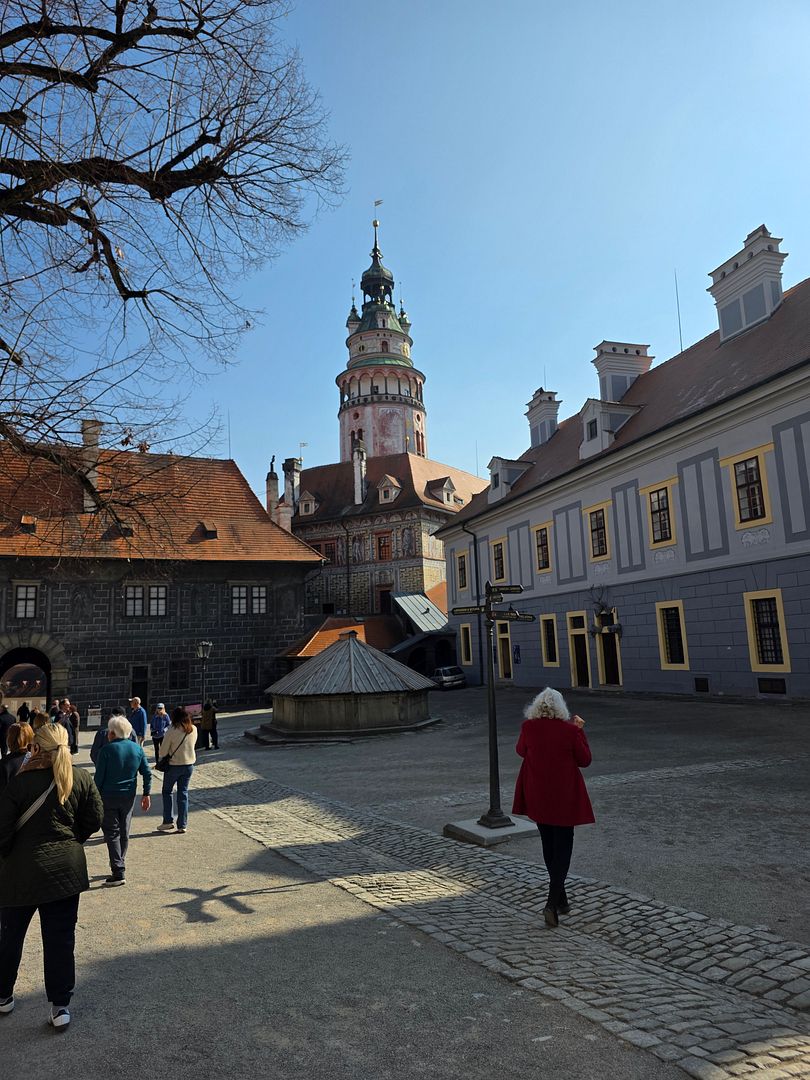
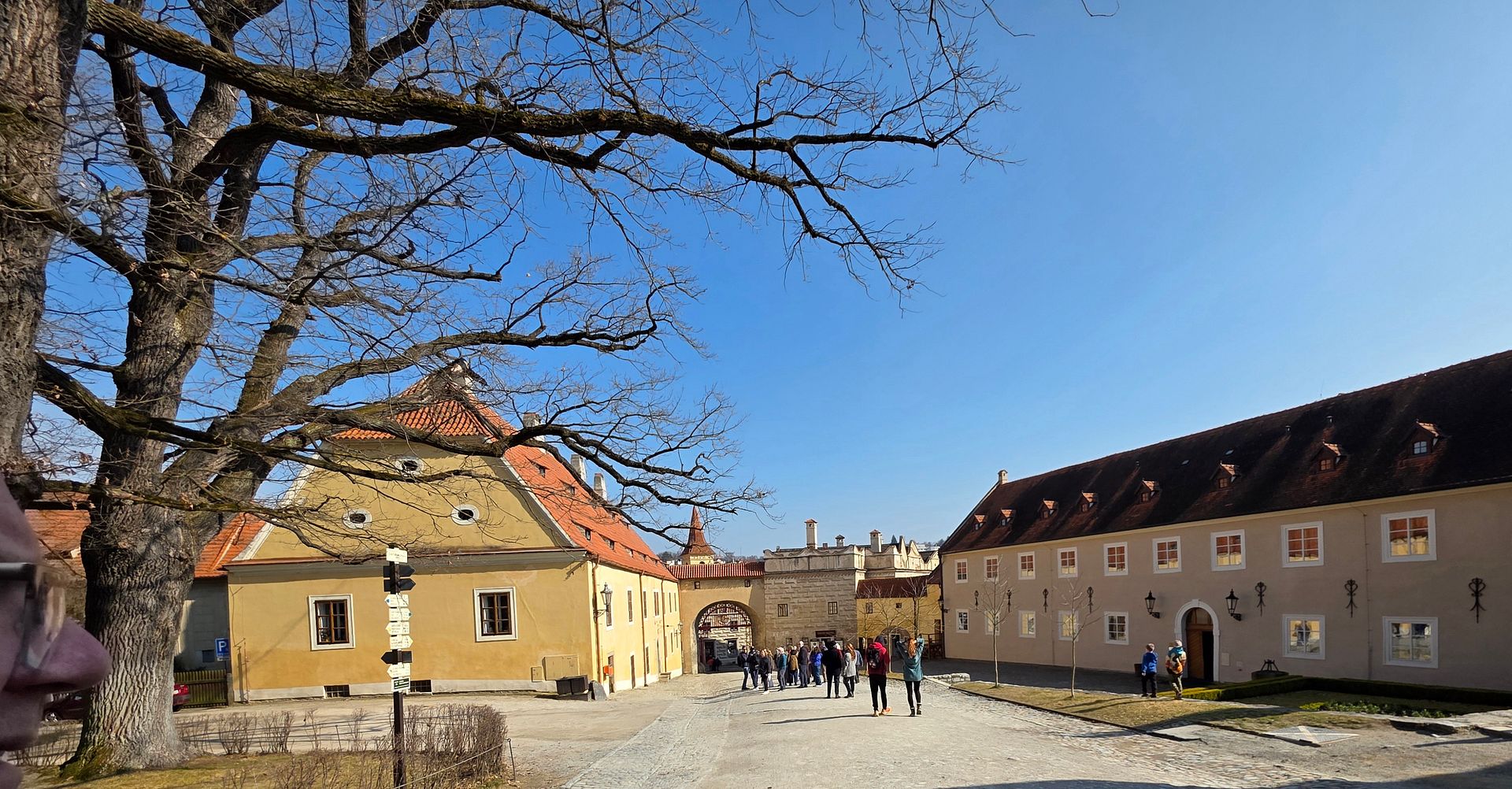
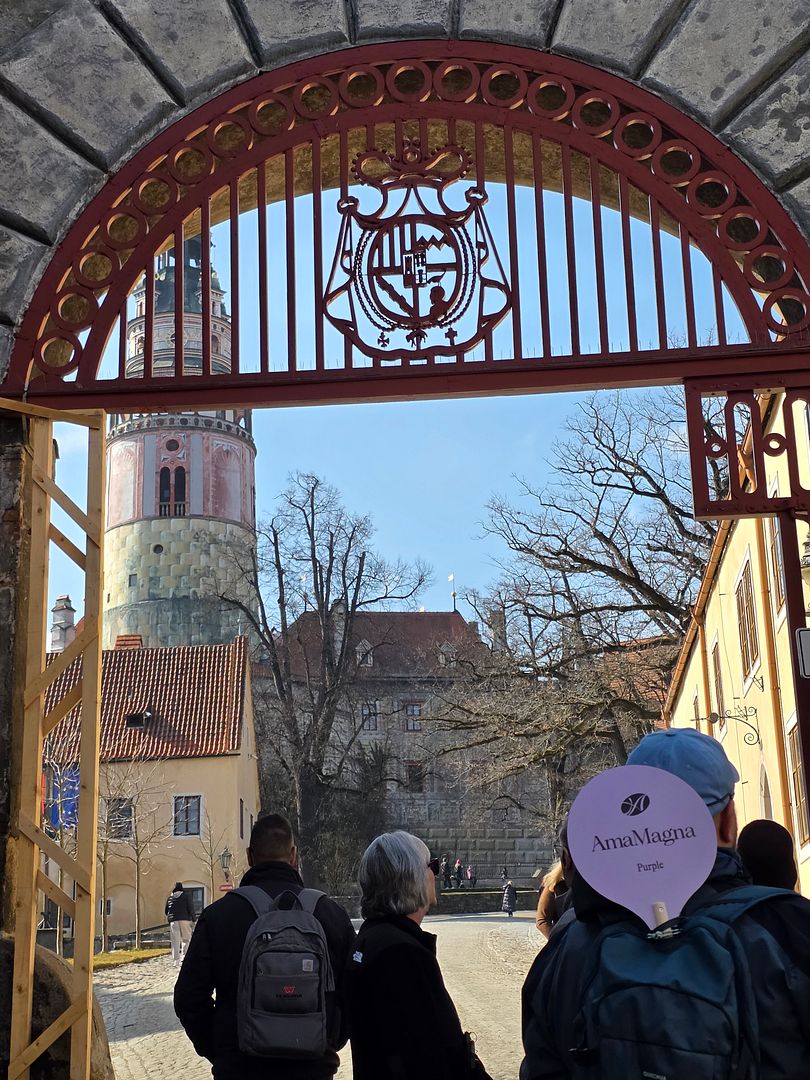
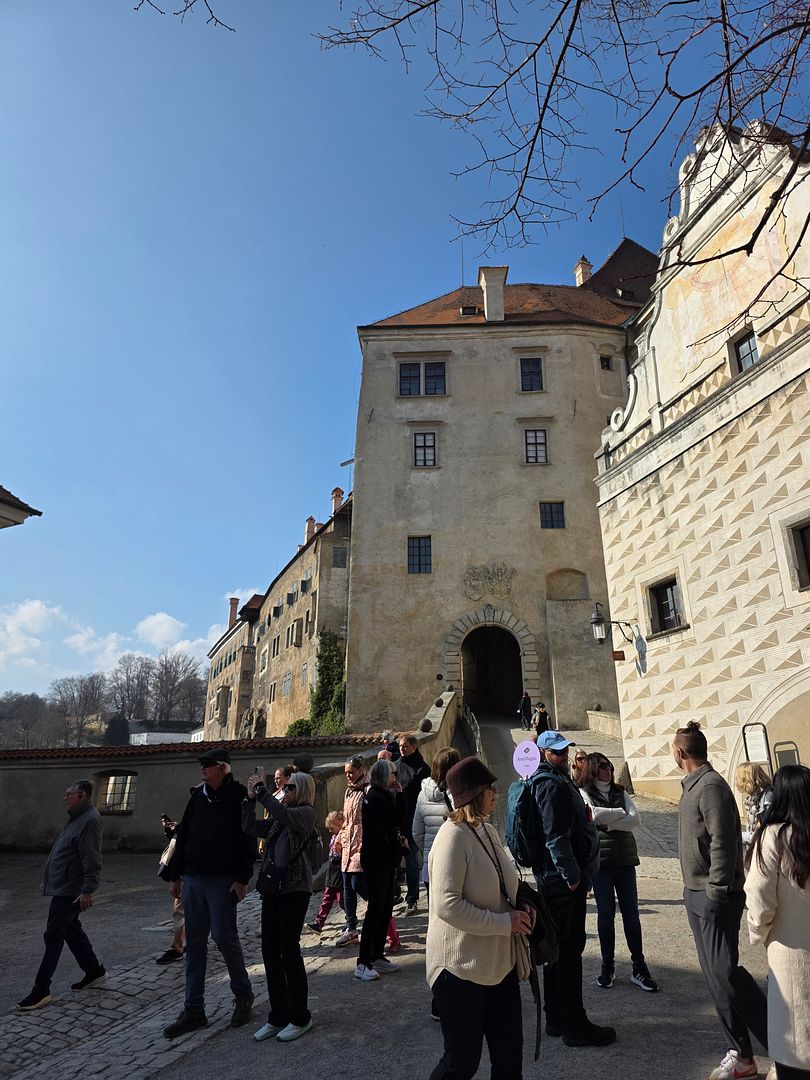
We finally reached our destination. From the bus parking lot, the walk to the castle was all uphill and I’m not going to lie, it was a huff and a puff to get there. Thankfully that would be the only uphill trek on this day!

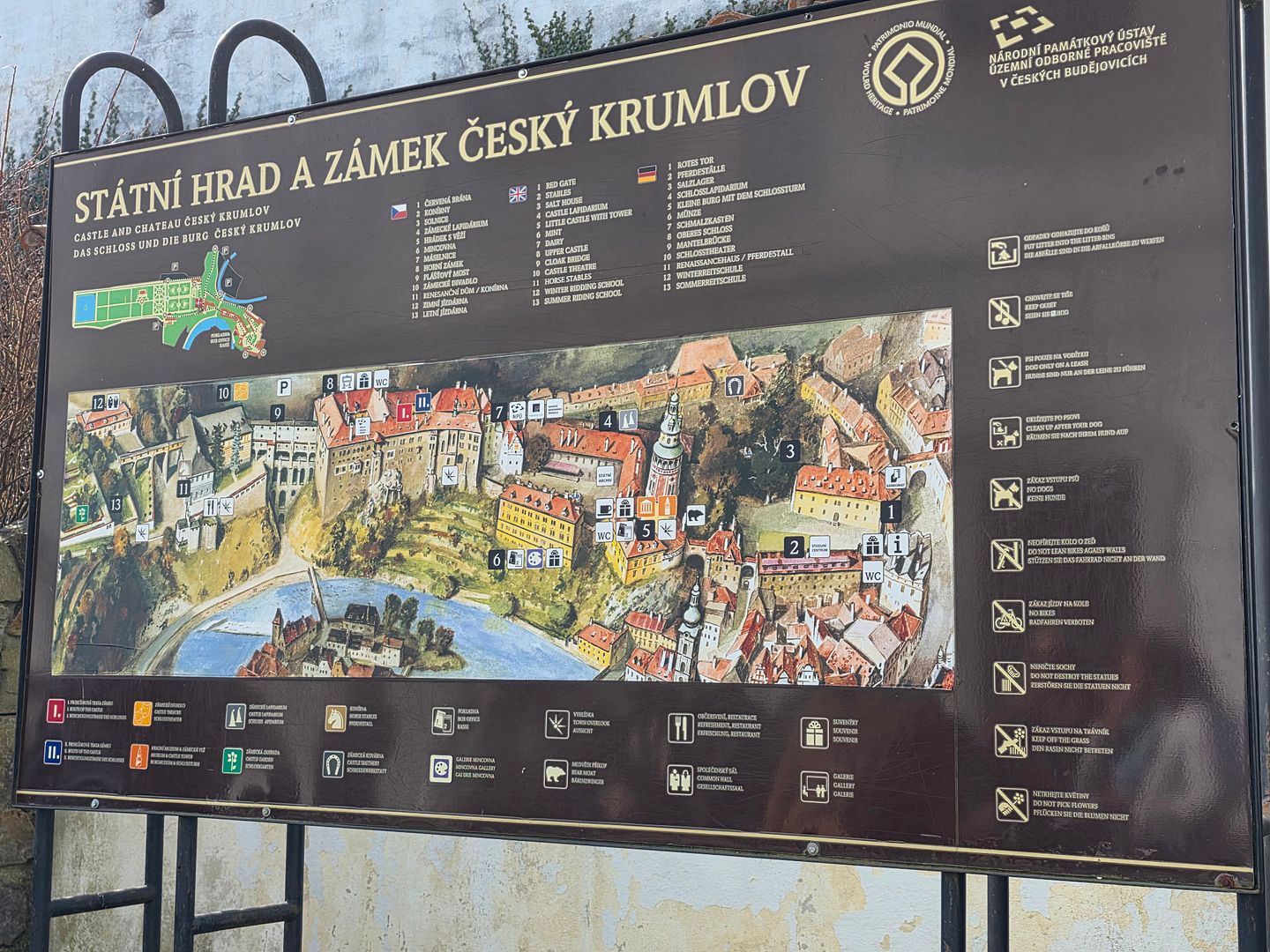
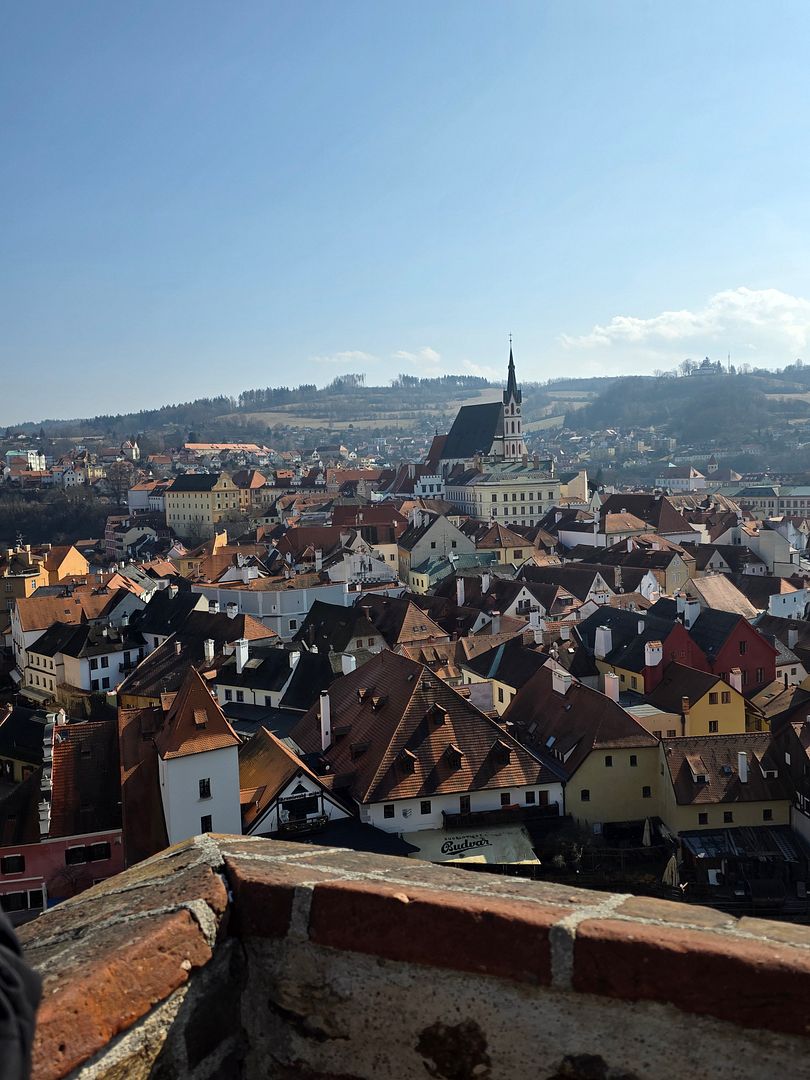
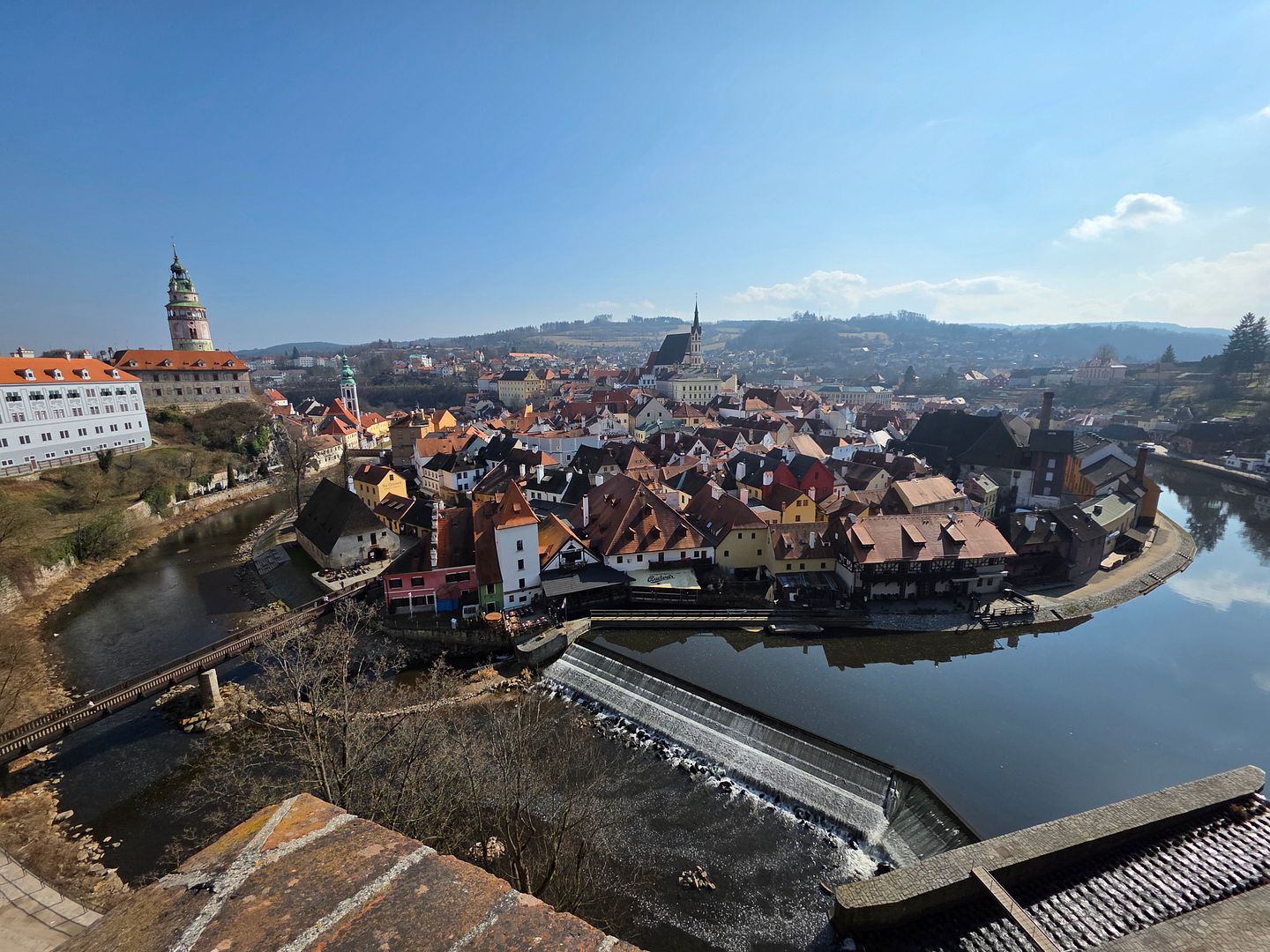
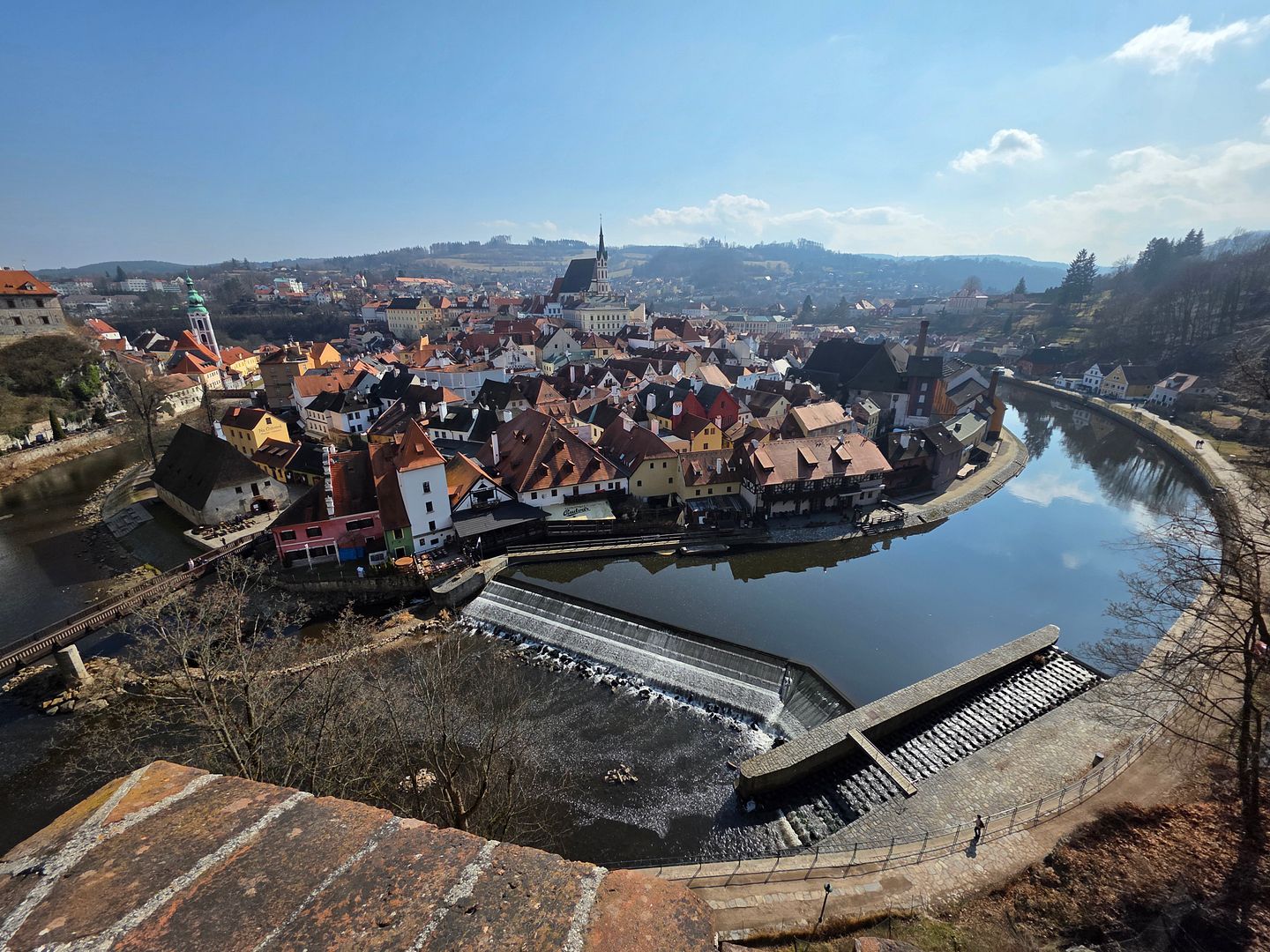
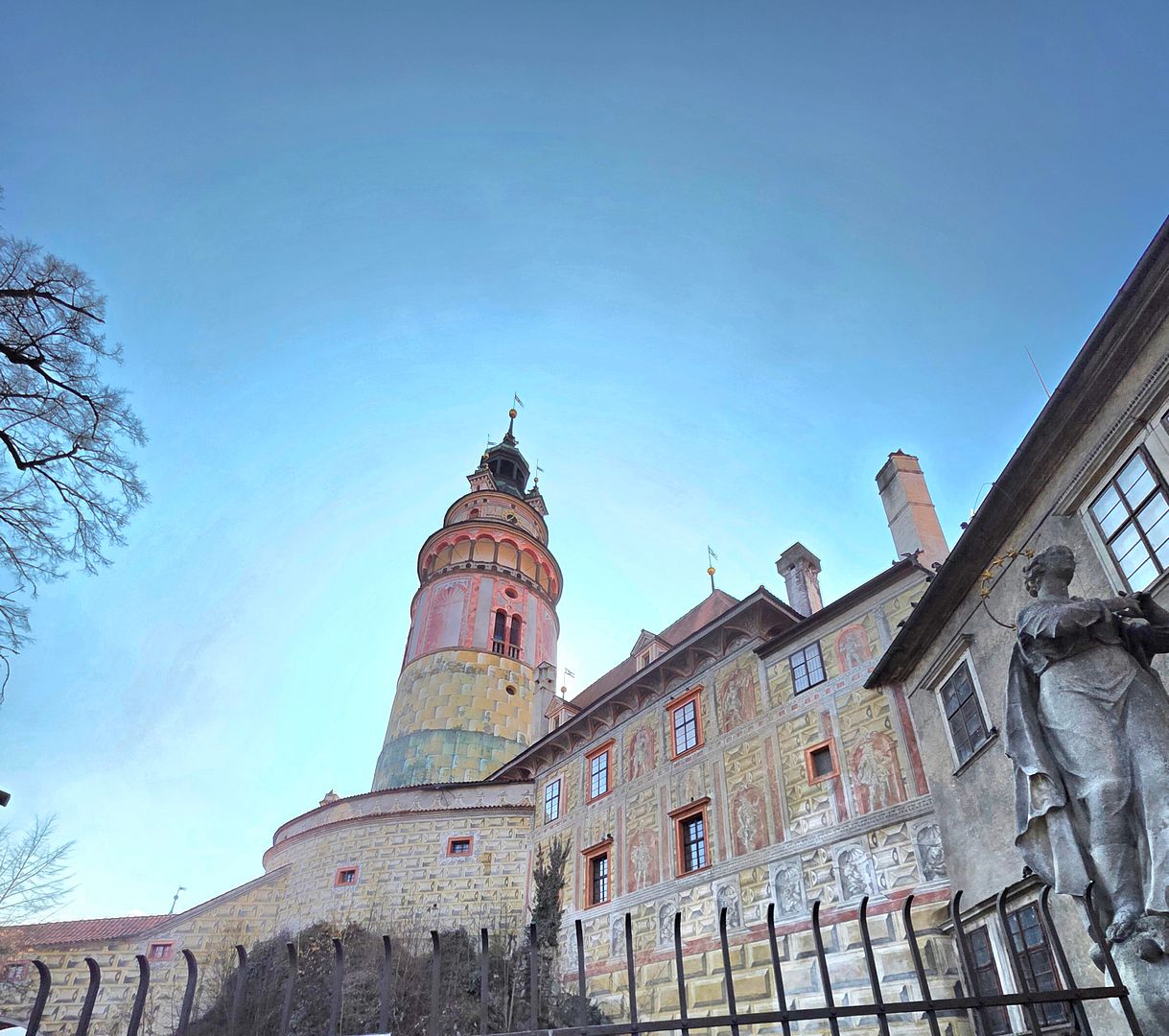
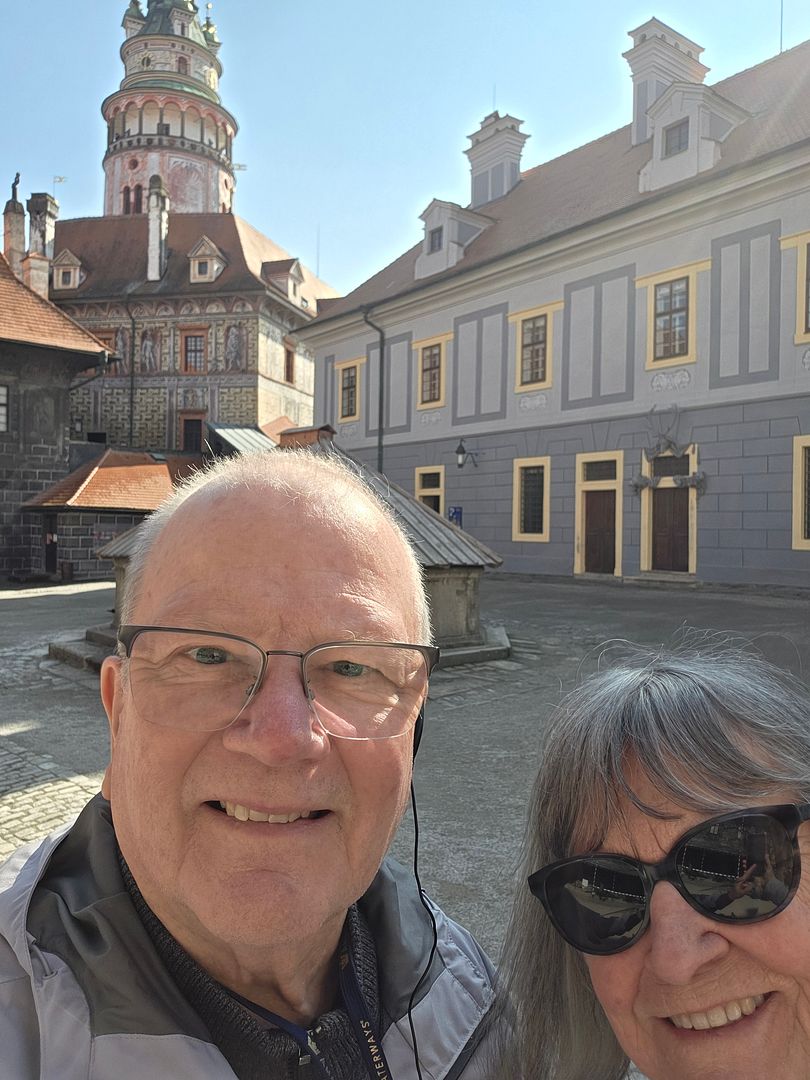
Český Krumlov is a city in the South Bohemia region of the Czech Republic. It’s bisected by the Vltava River, and dominated by its 13th-century castle. The castle has Gothic, Renaissance and baroque elements, an 11-hectare garden and an original 17th-century baroque theater. There are panoramic views of the old town and the river from the top of its round belltower.

We were here in the winter months so the garden wasn’t visited.

Český Krumlov, a UNESCO World Heritage site since 1992. It flourished under the Rosenbergs as a Renaissance hub, transitioning to Baroque under the Eggenbergs and Schwarzenbergs, maintaining its medieval layout largely due to slow industrialization in the 19th century.  In 1938, it was annexed by Nazi Germany and after the Second World War, it was part of Communist Czechoslovakia. In 1992, after the Velvet Revolution, Czech Republic was born, and Český Krumlov is one of its crown jewels in the Bohemian region.

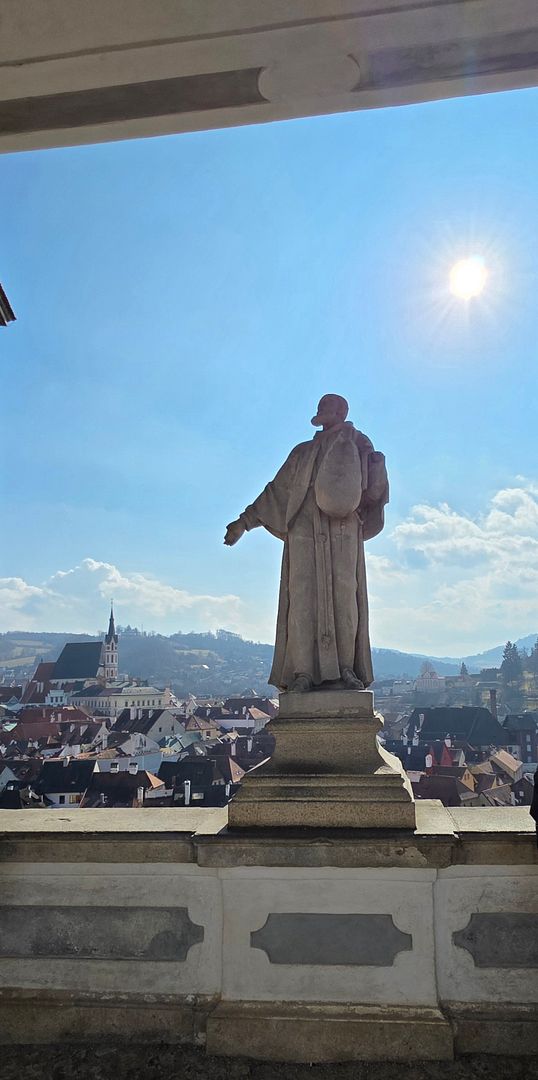
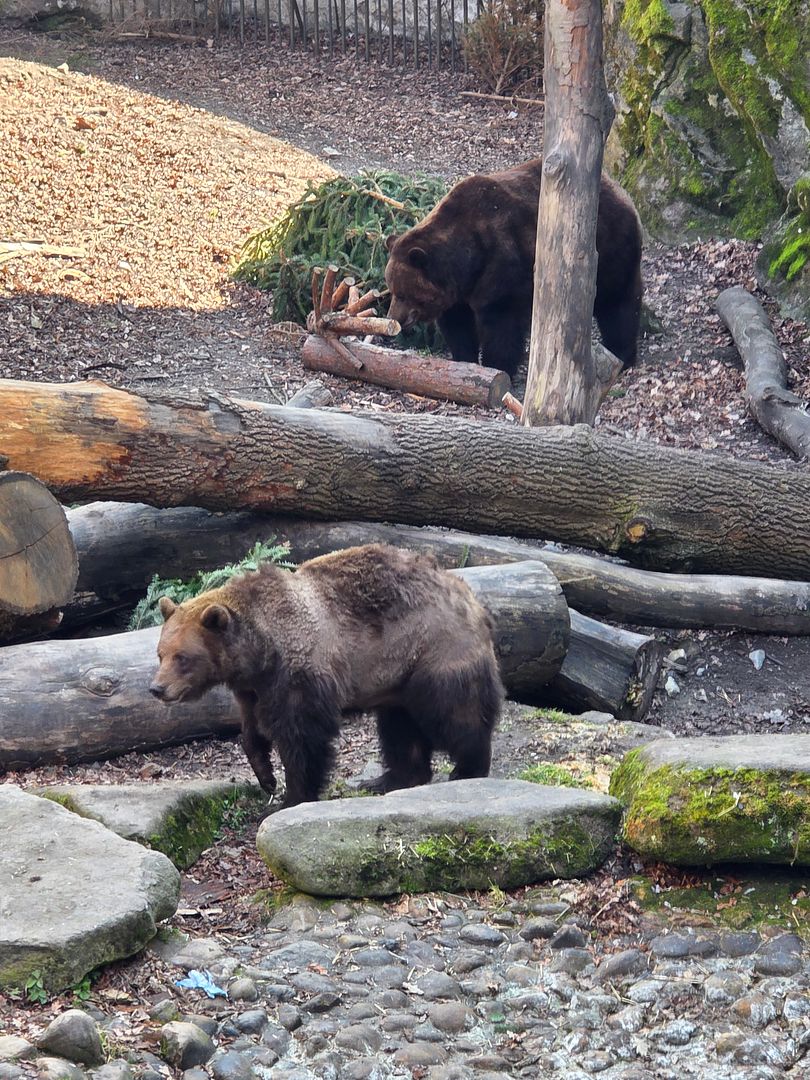
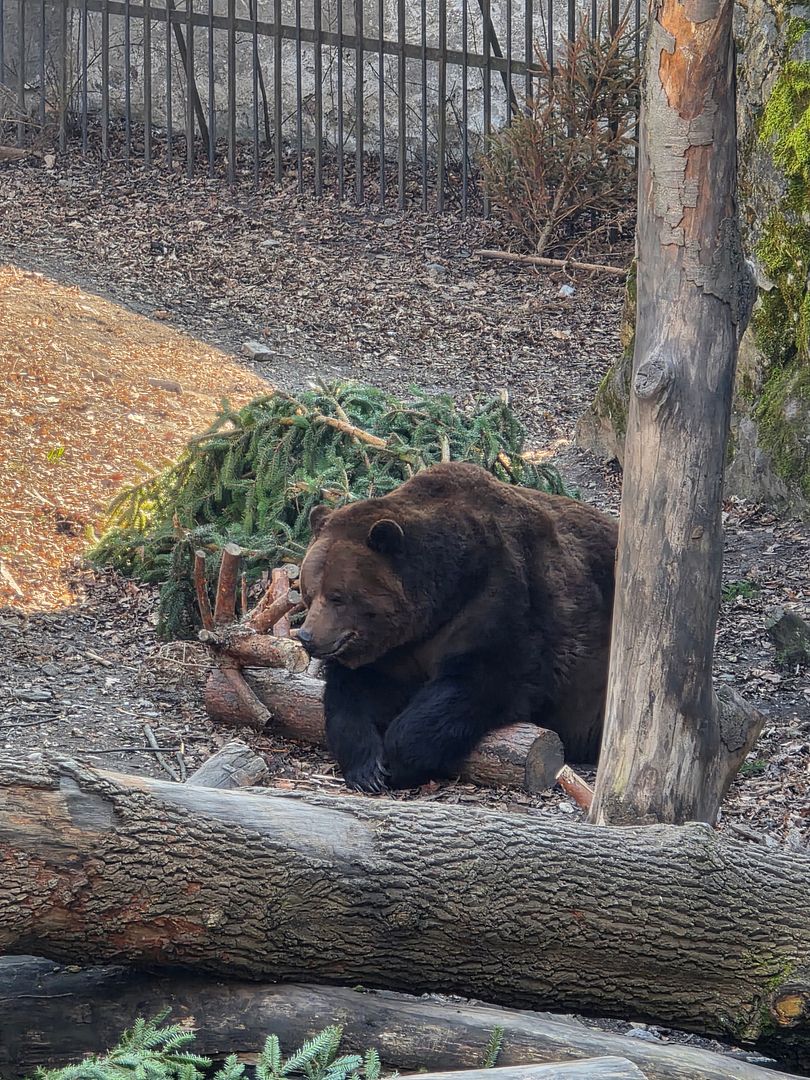
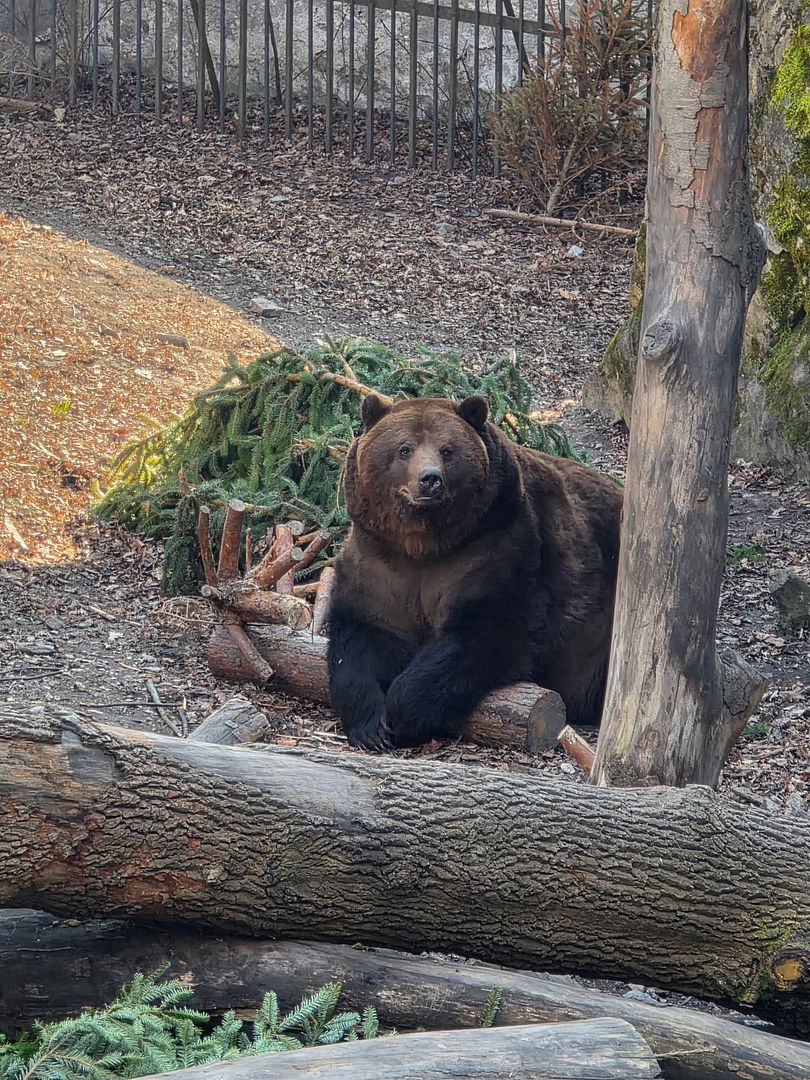
The village below is where we would be spending more time visiting and enjoying lunch on our own. But first, we would enjoy the castle and the castle moat with bears!

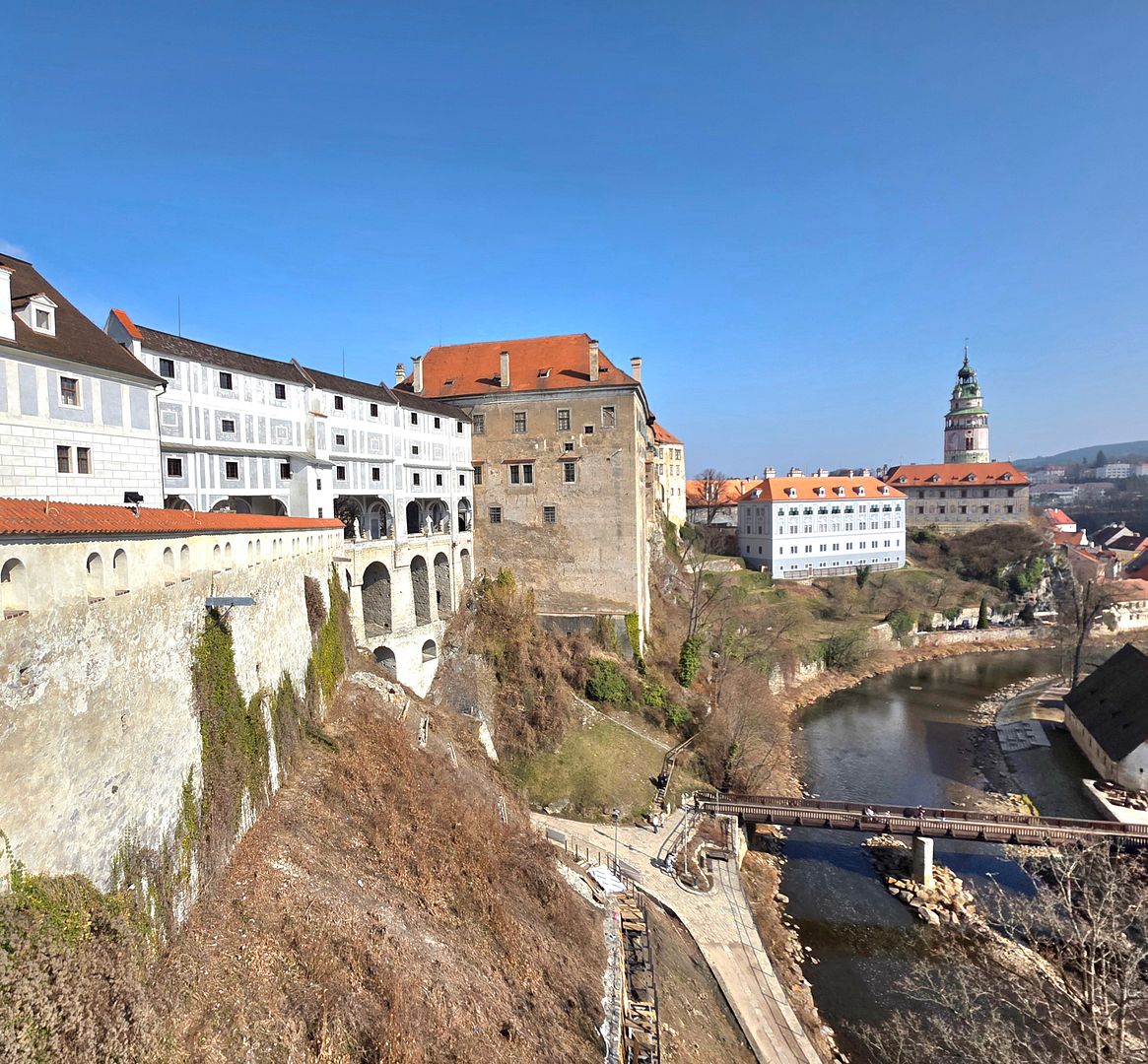
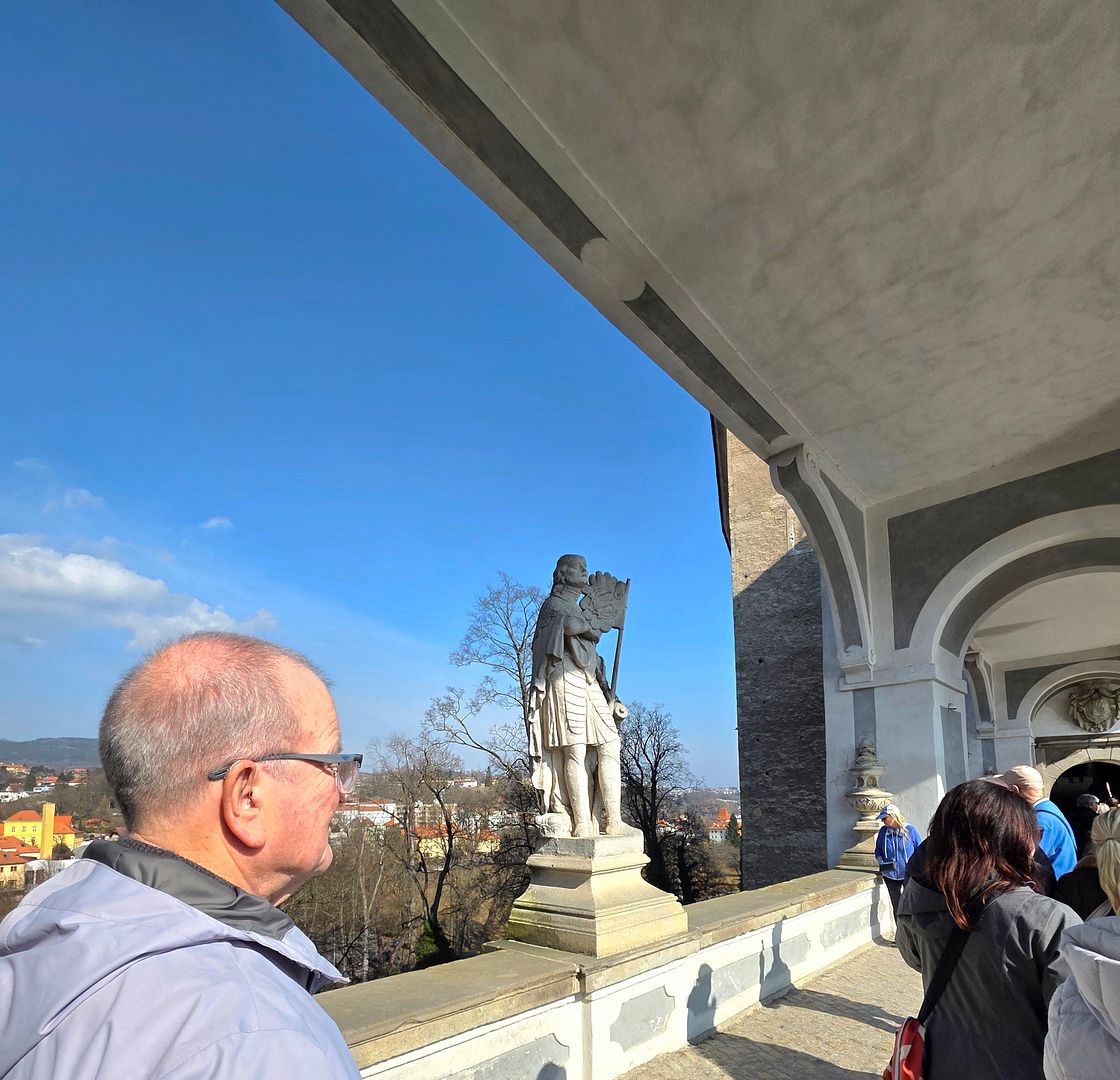
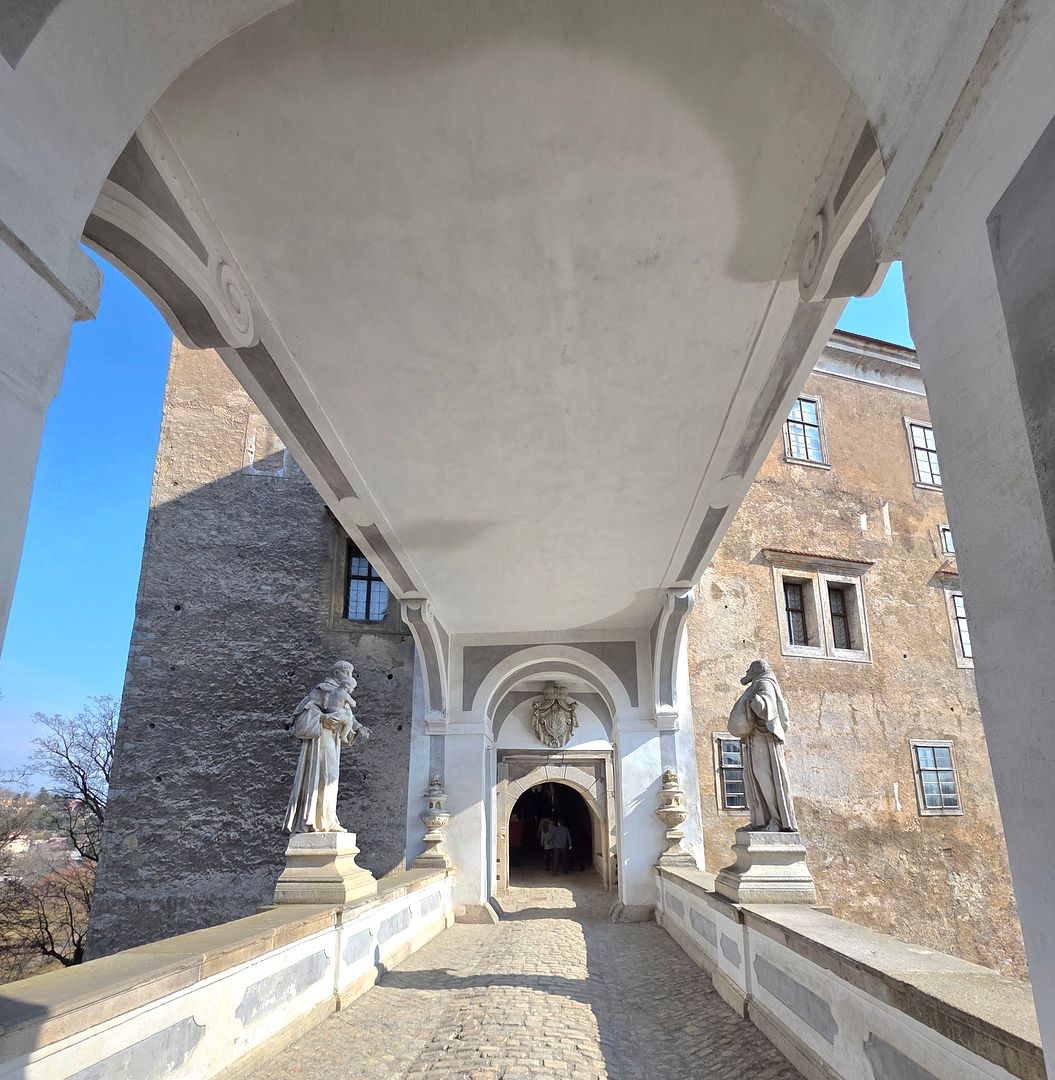
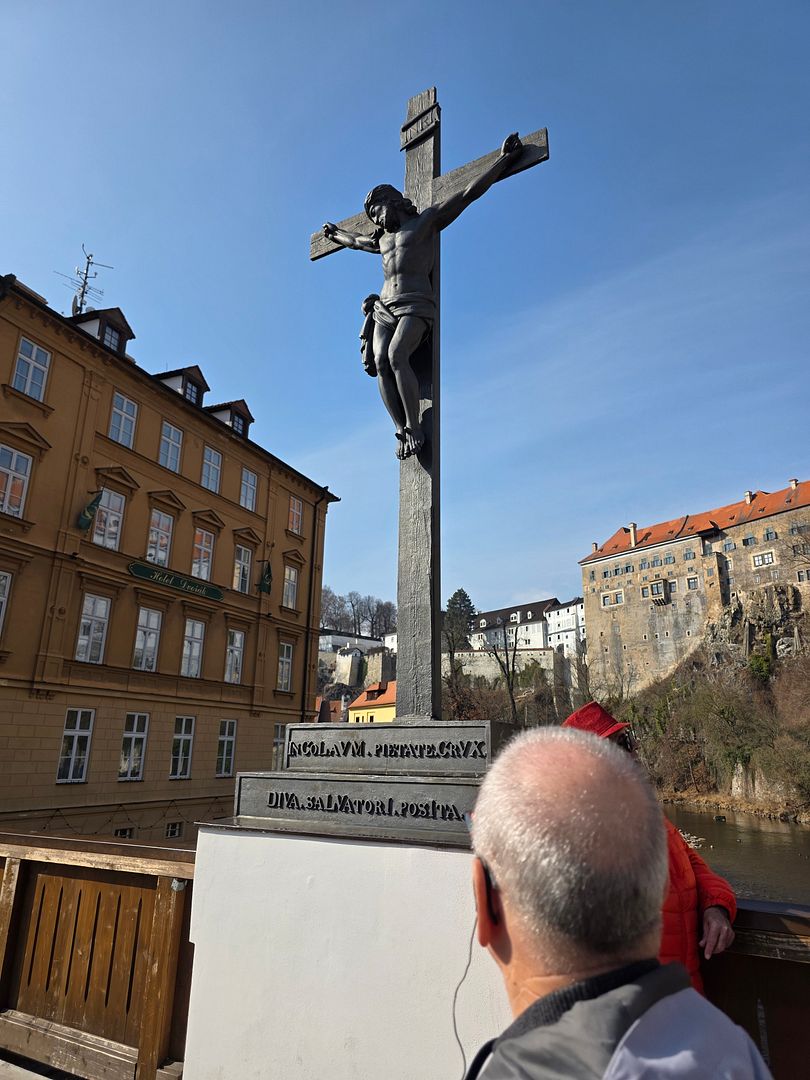
Plastovy Bridge or Cloak Bridge.

I know I’ve talked about it before, we were blessed with such great weather on the duration of our cruise!

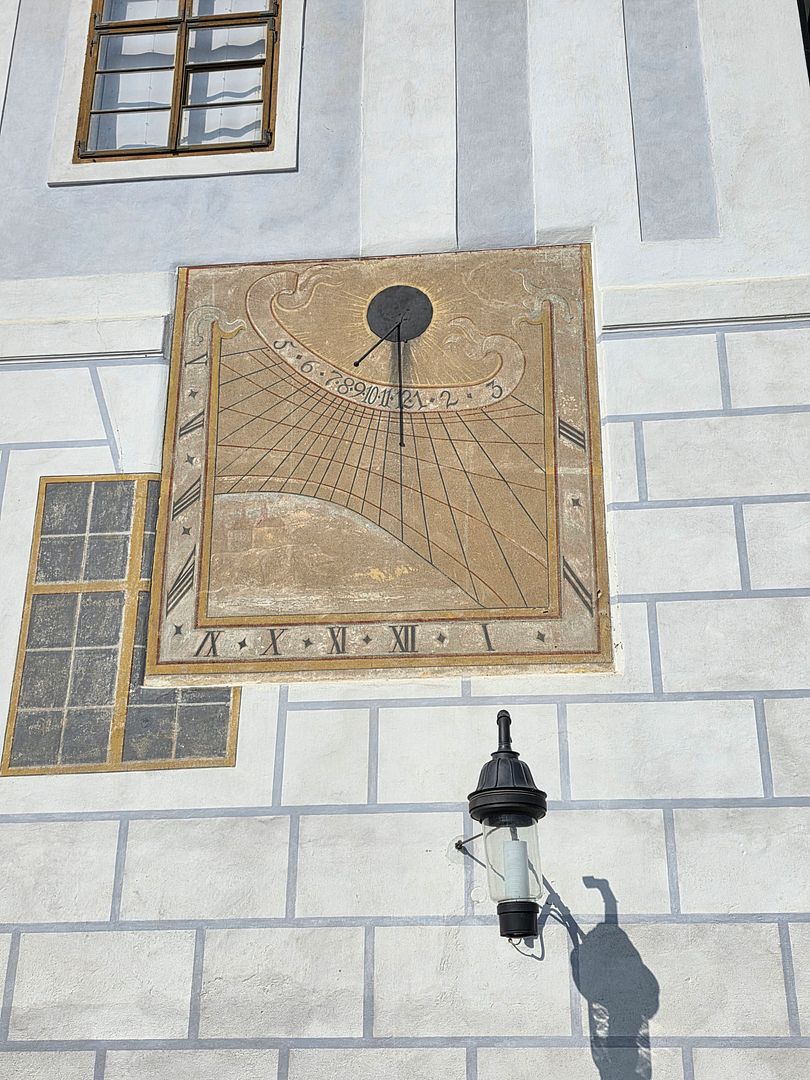
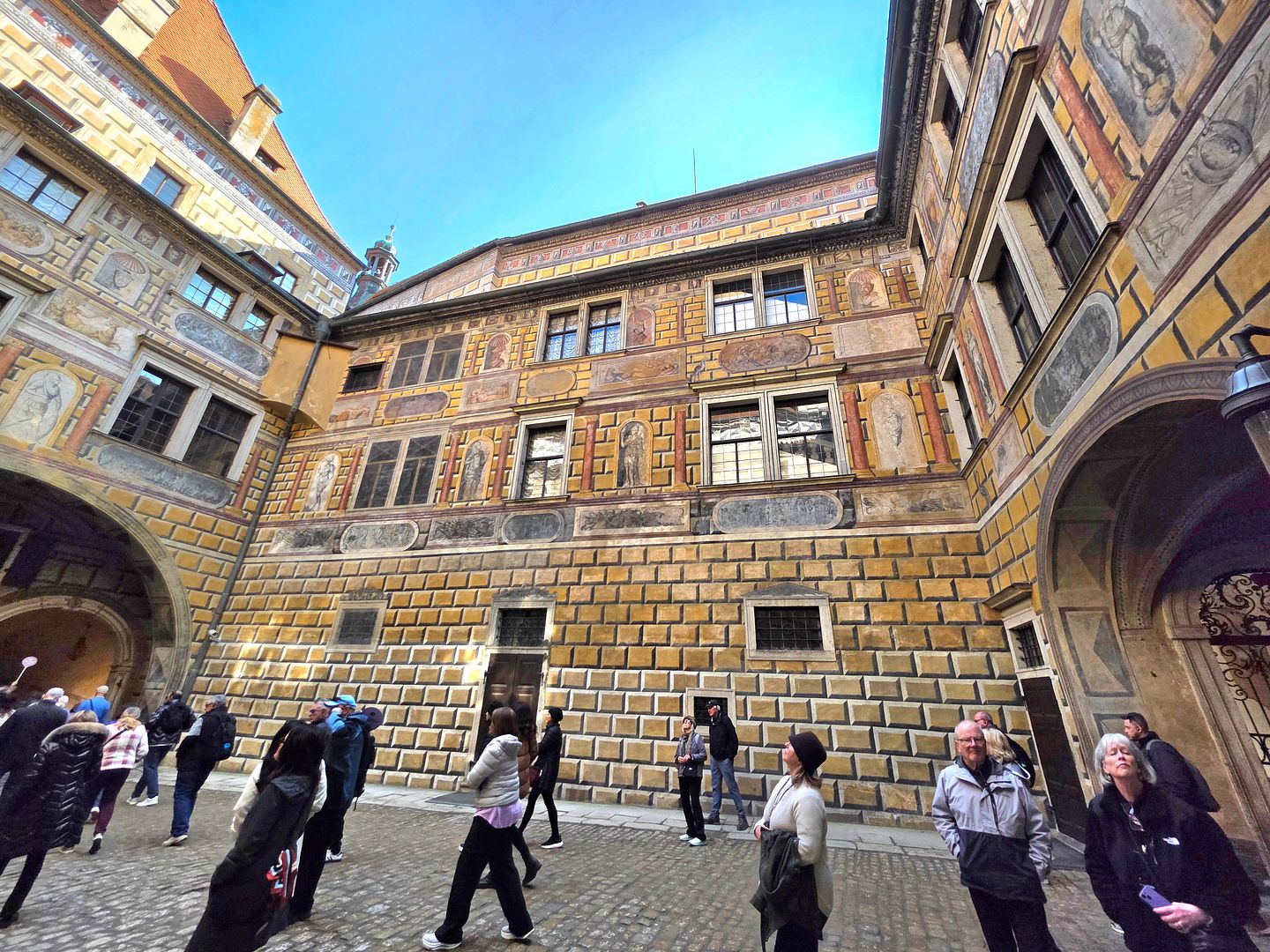
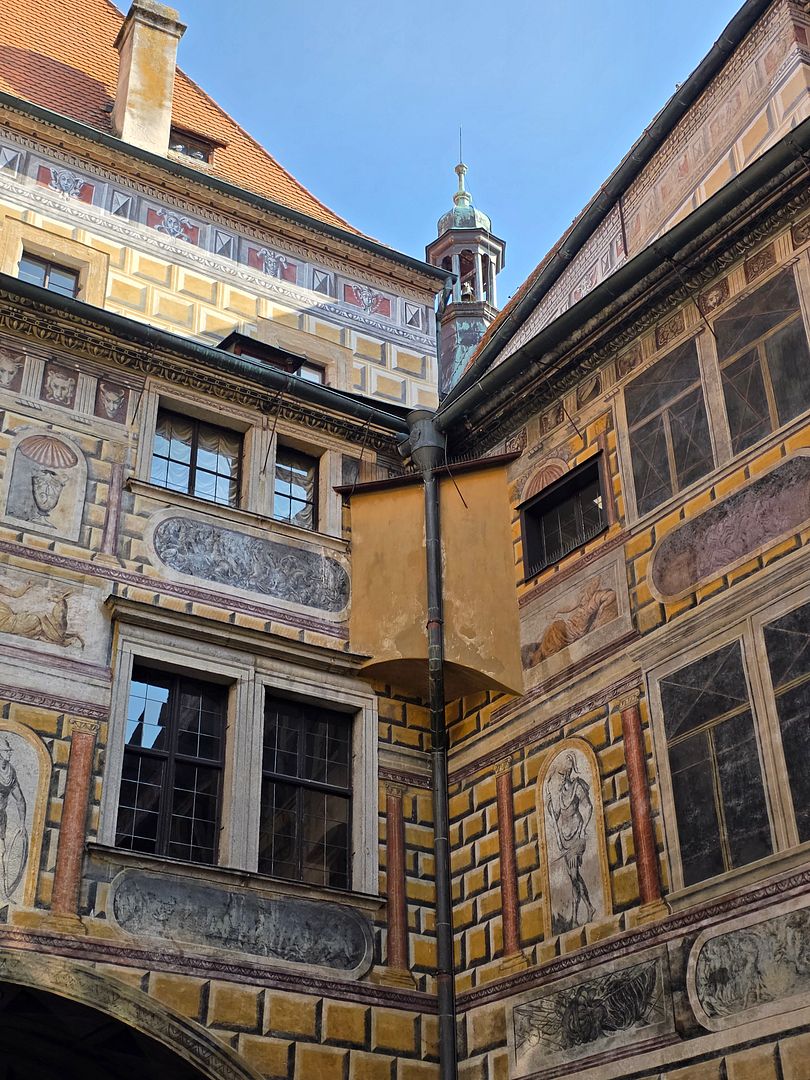
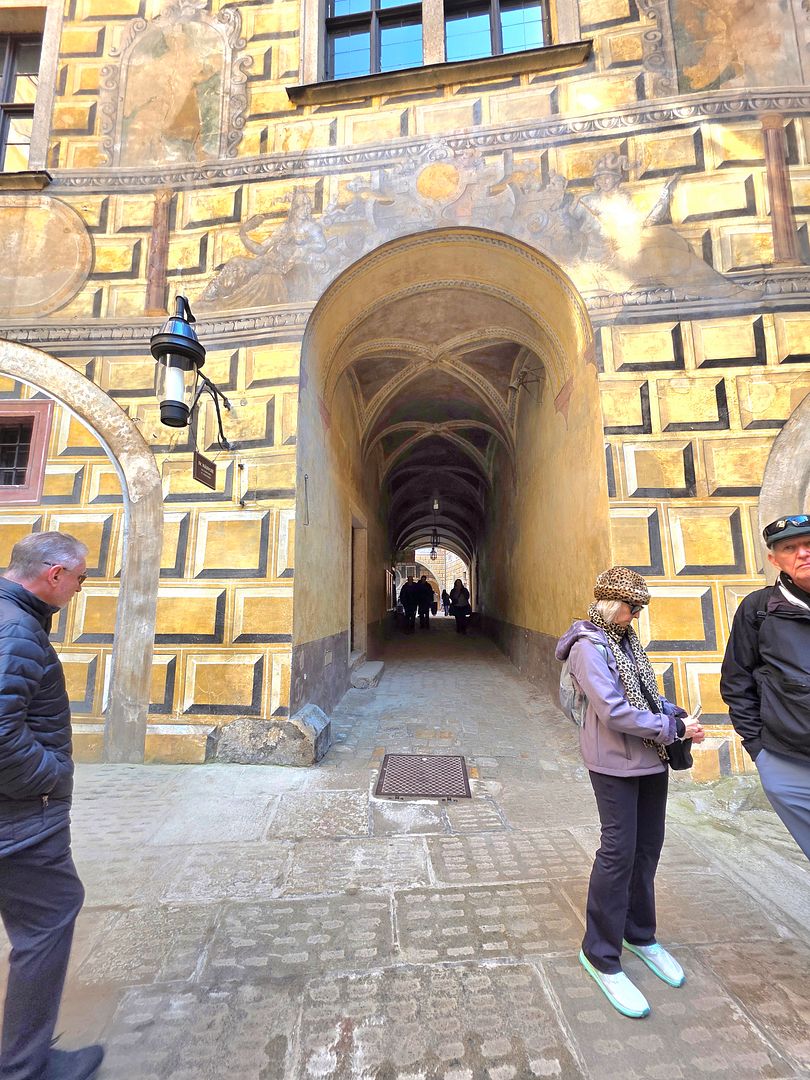
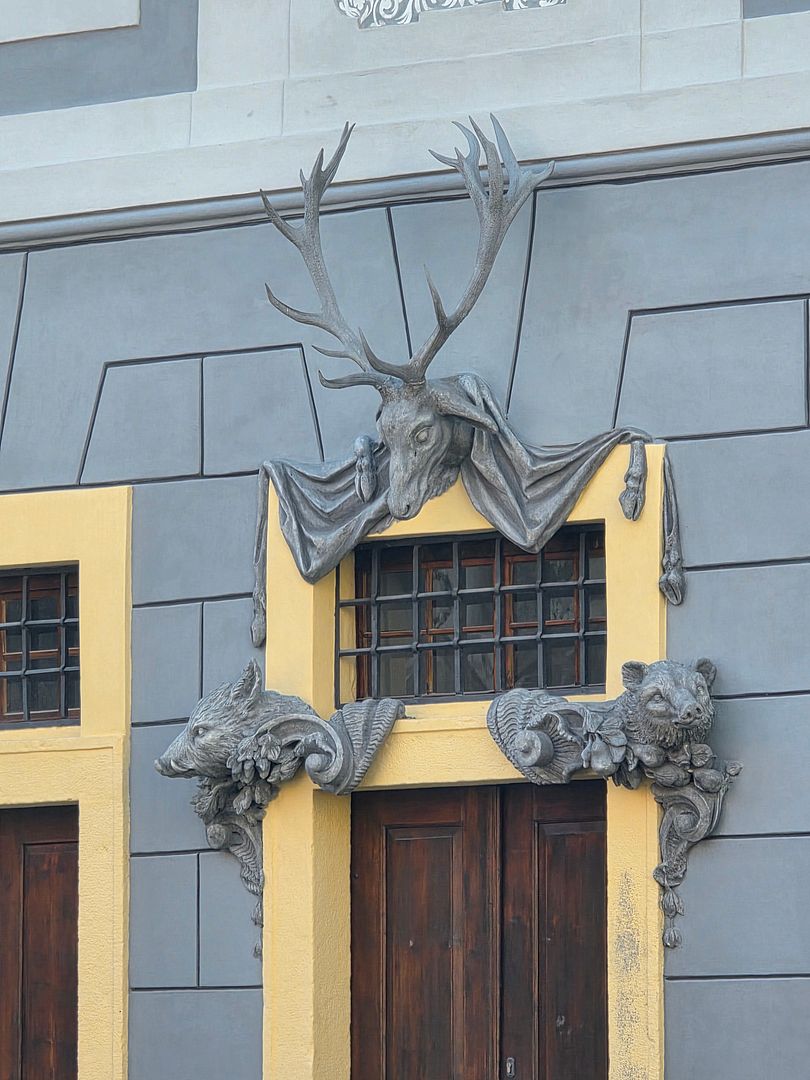
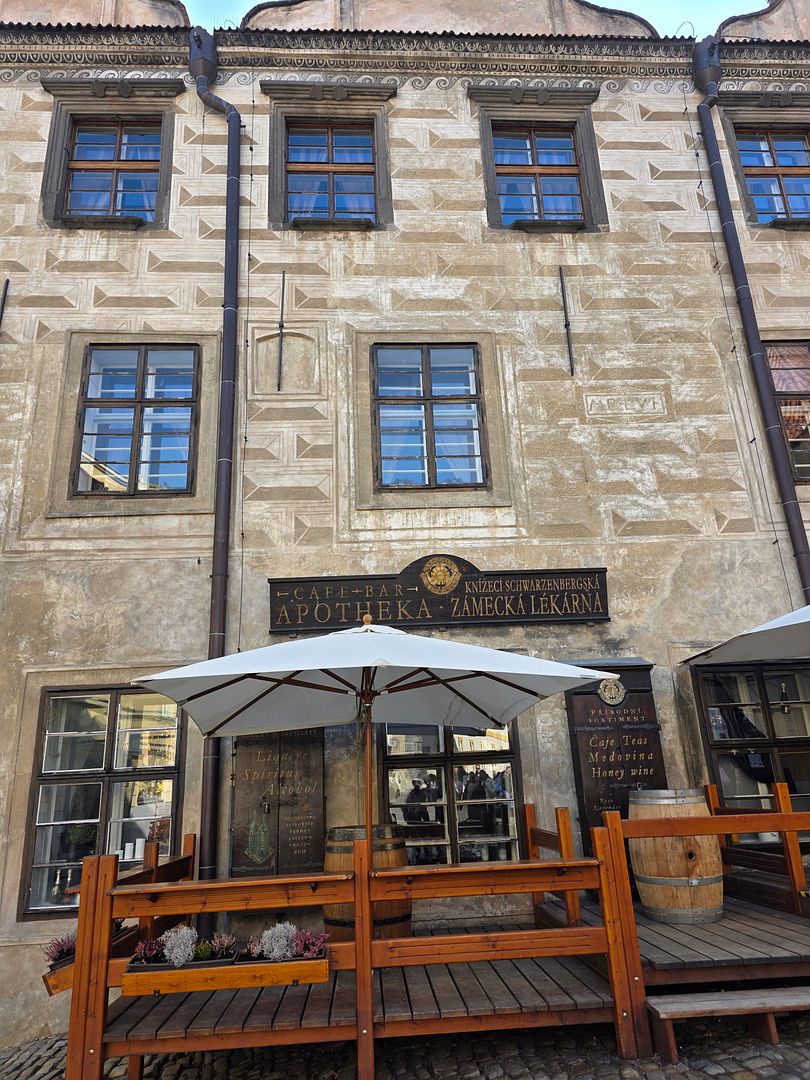
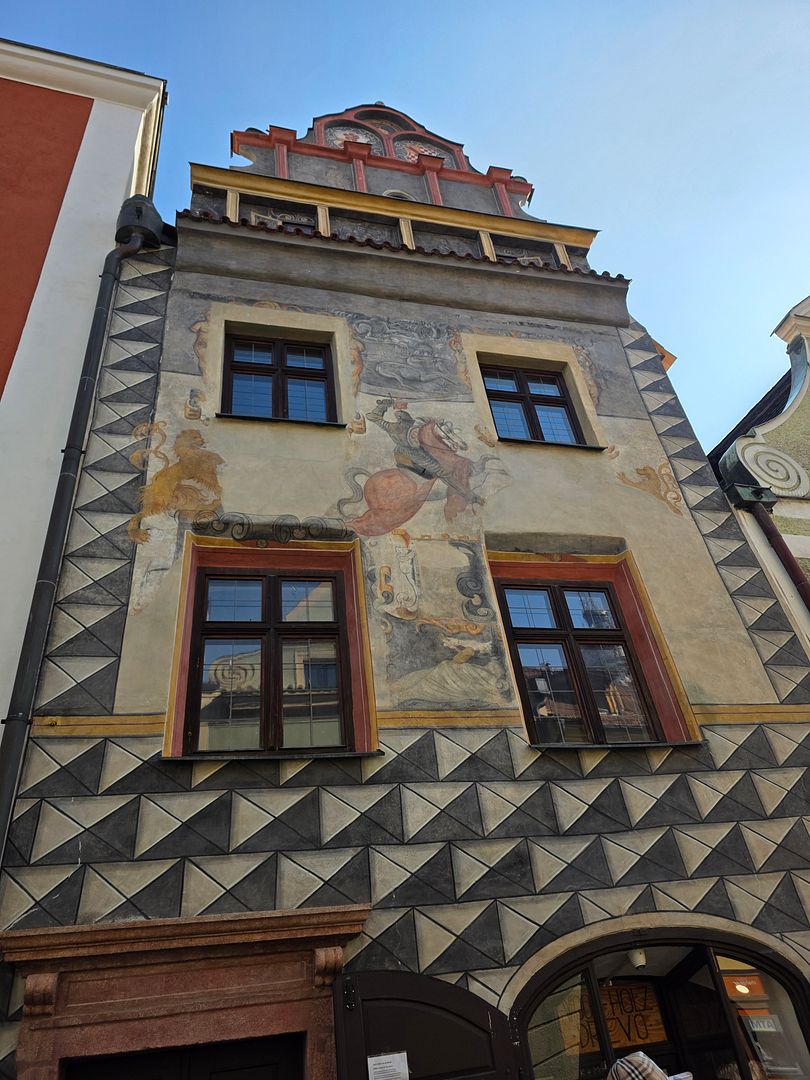
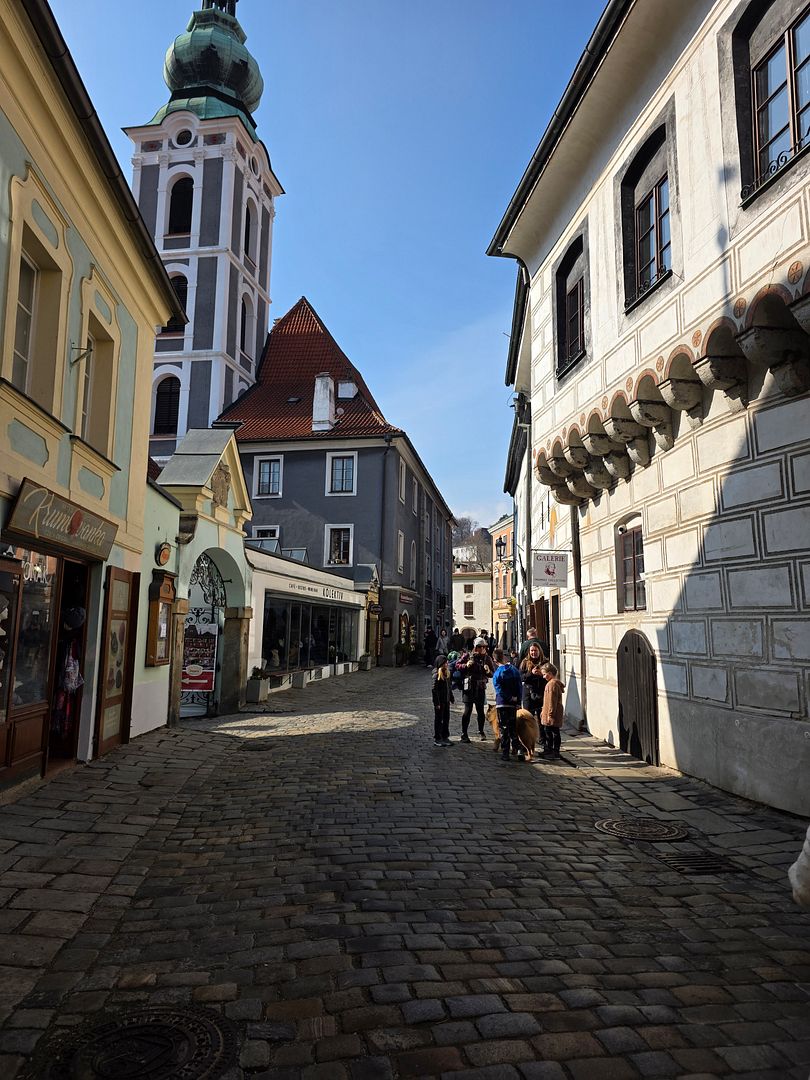
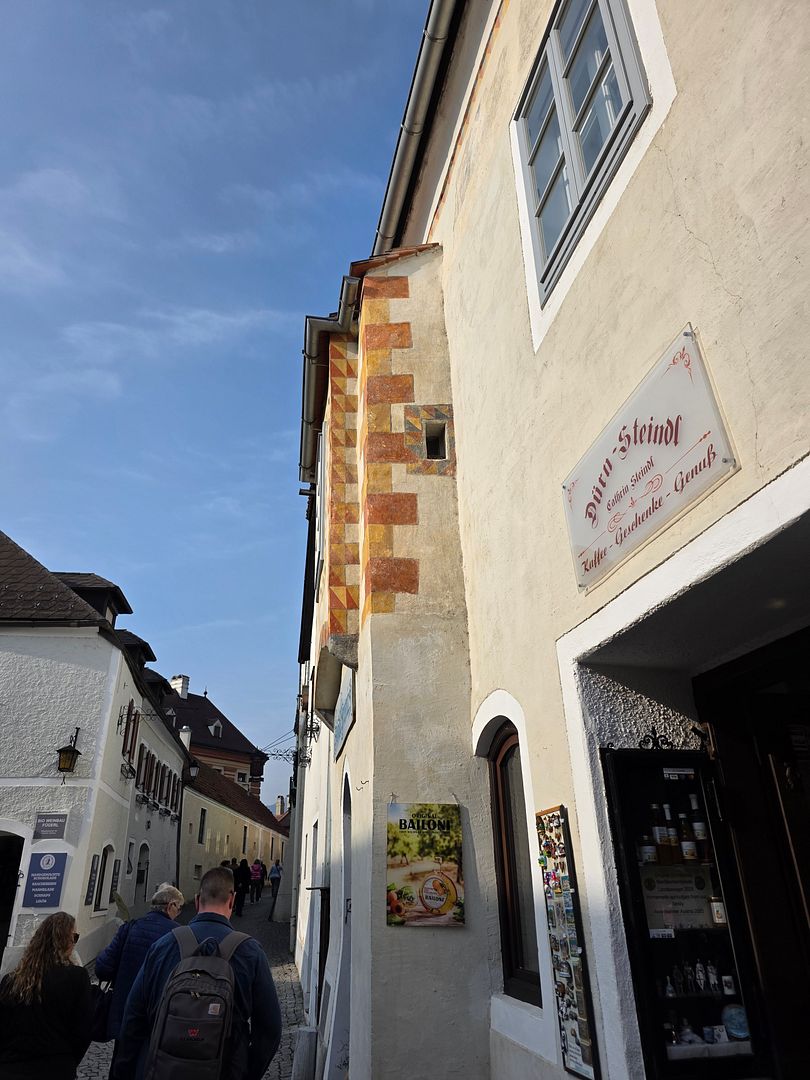
Architecture and figural paintings relating to mythology and Roman history can be seen on the facades covered with colored sgraffito (geometrical or other motives scratched into wet parquet). We would see many types of sgraffito on buildings as we walked into Old Town, too.

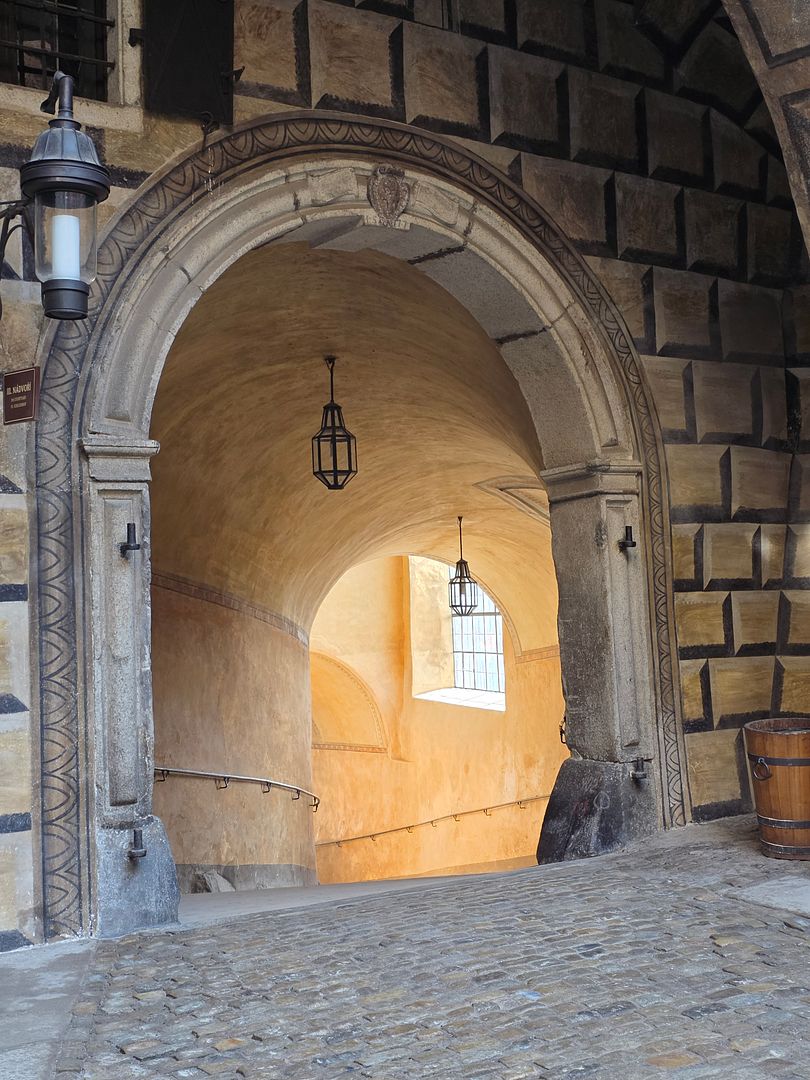
Time to move downward to the outer courts.

You can read more about the history of bear keeping at the castle here.

These days we were told they only bring in old bears that have no where else to be cared for. They are cared for well, here.

We didn’t climb the belltower but it was an option.

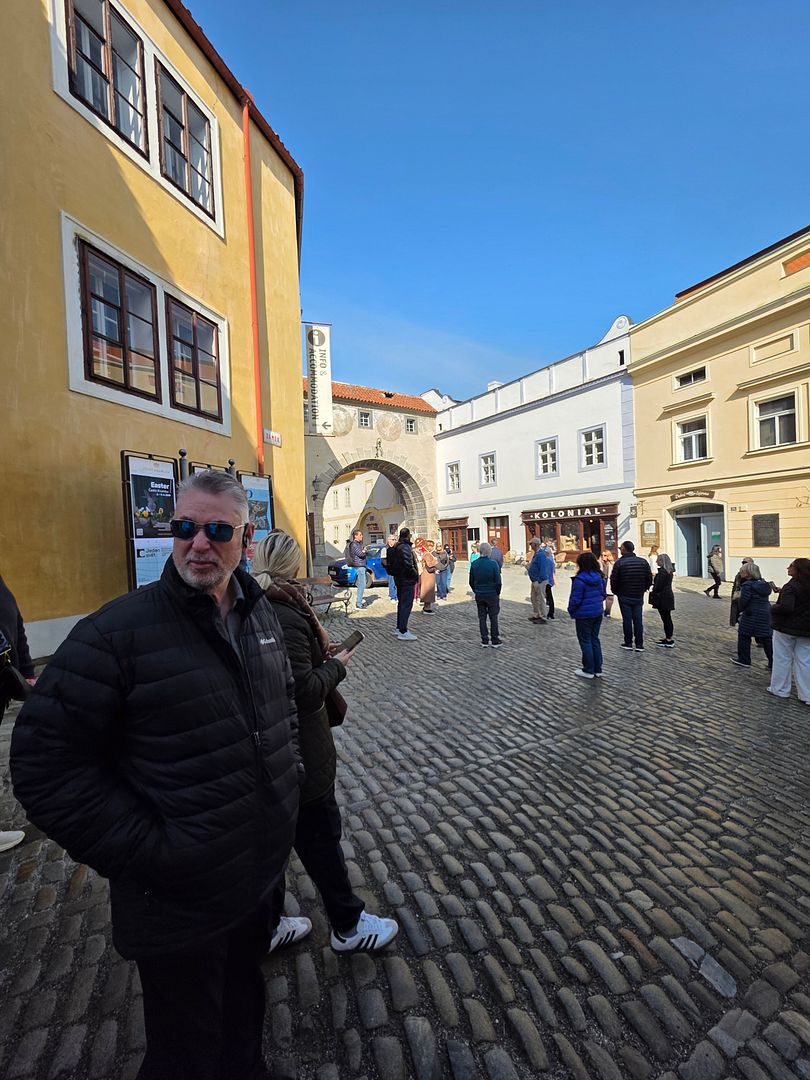
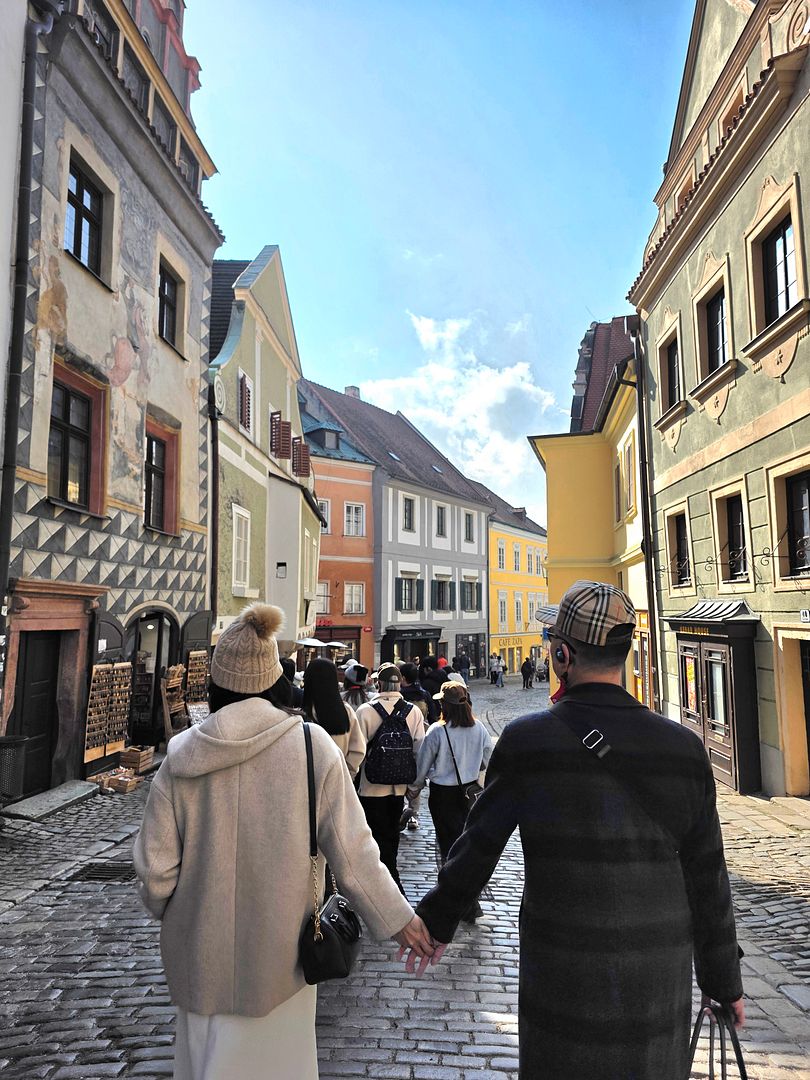
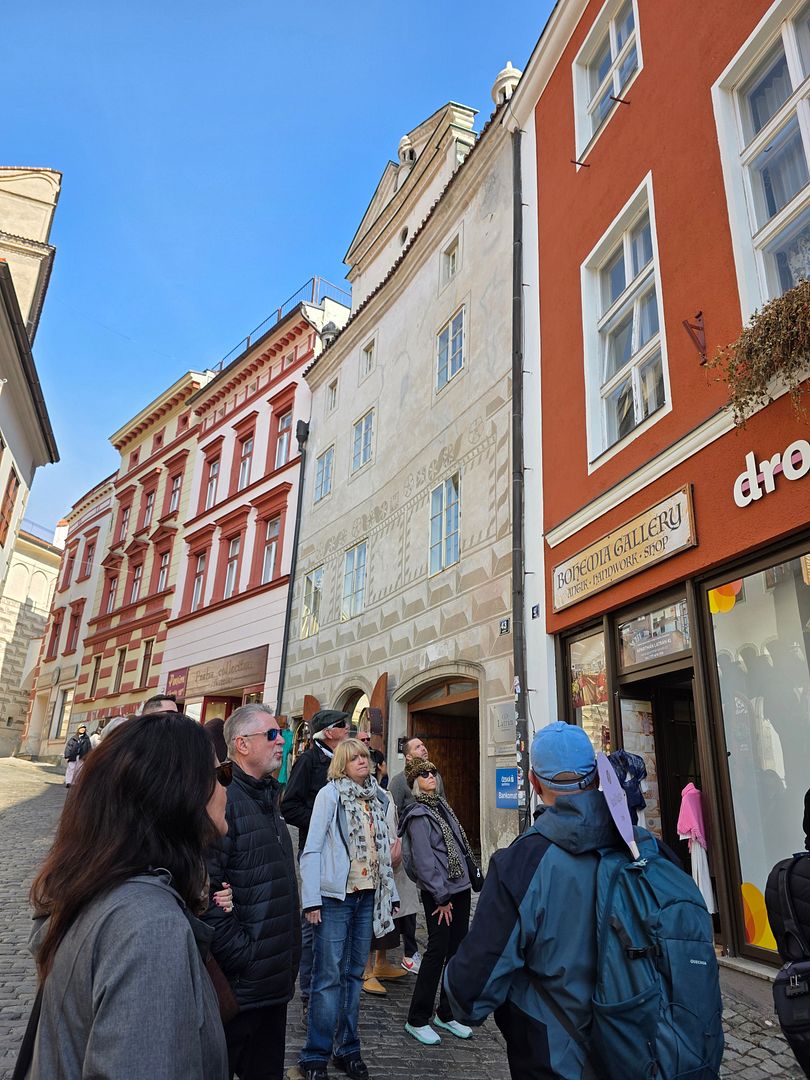
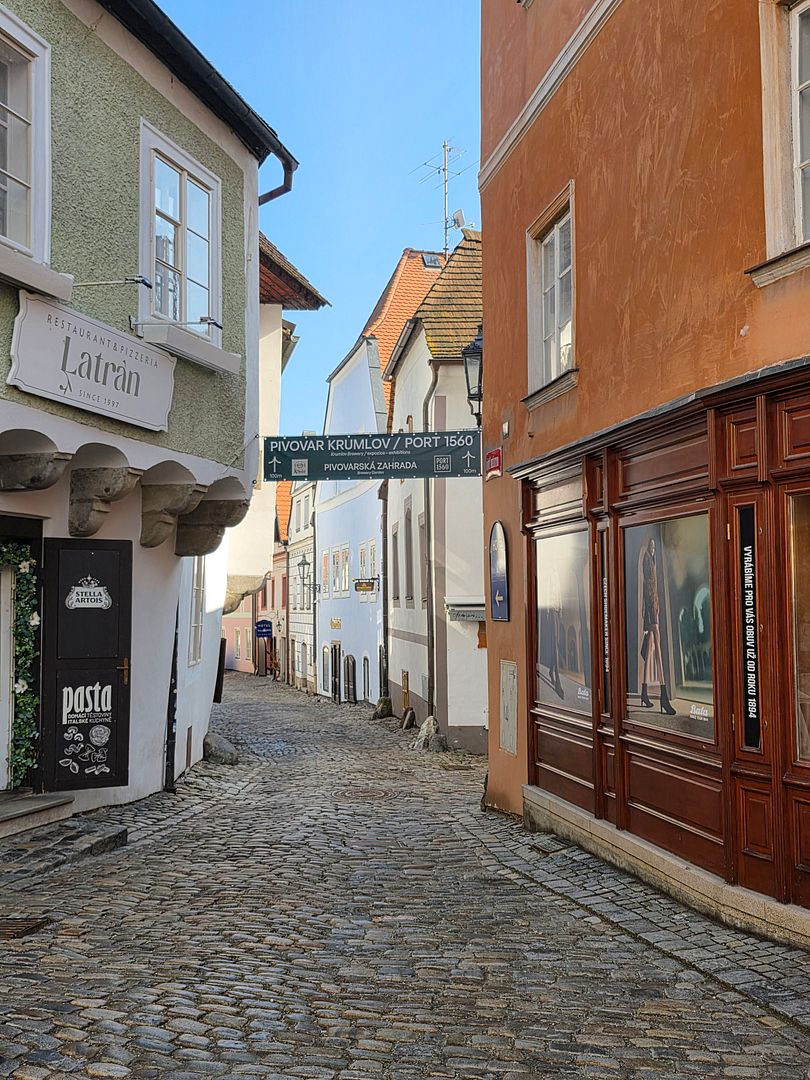
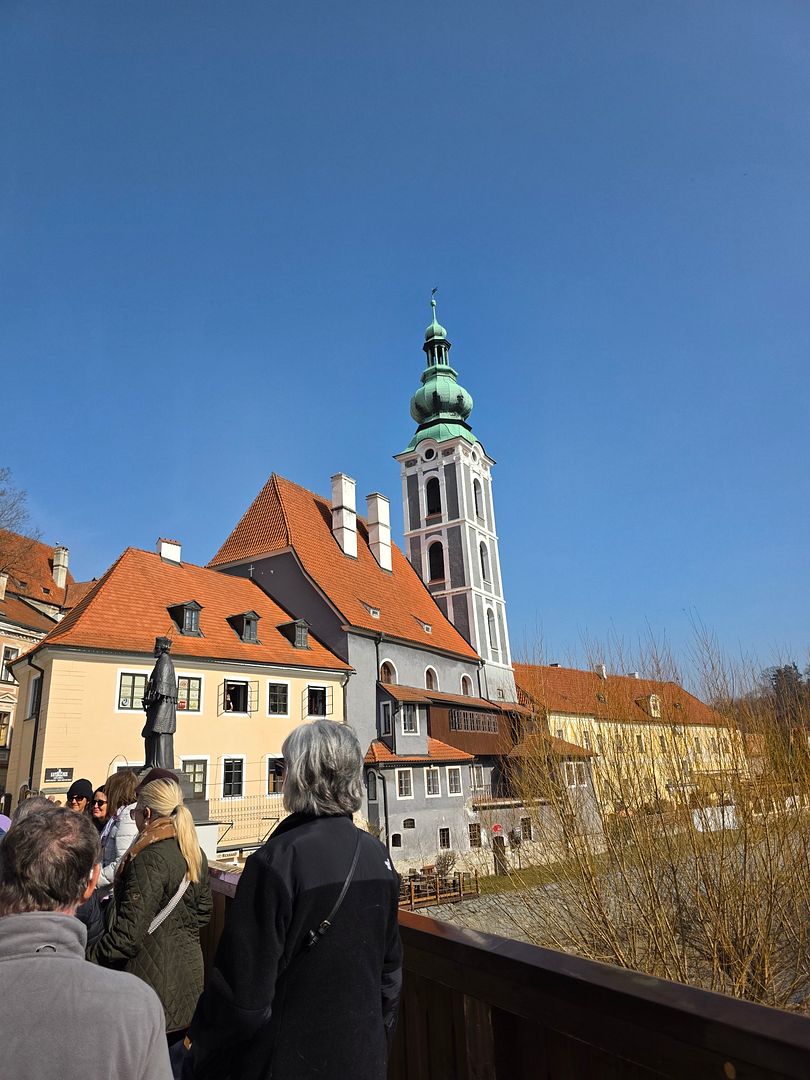
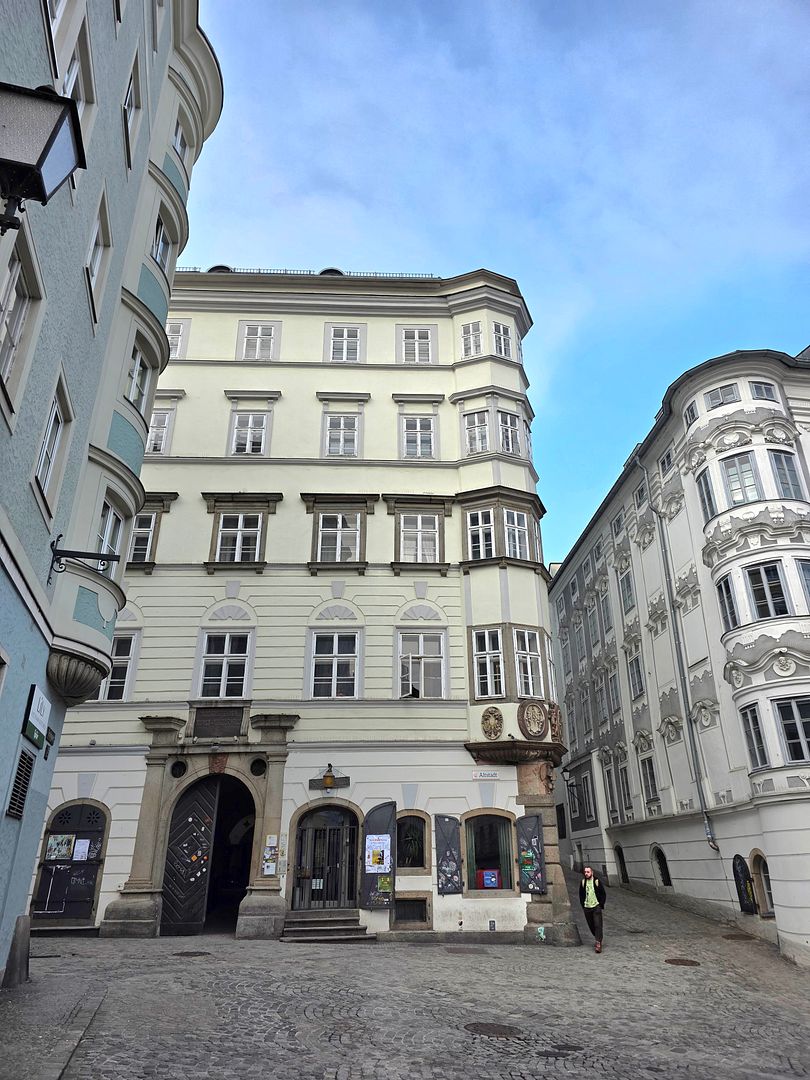
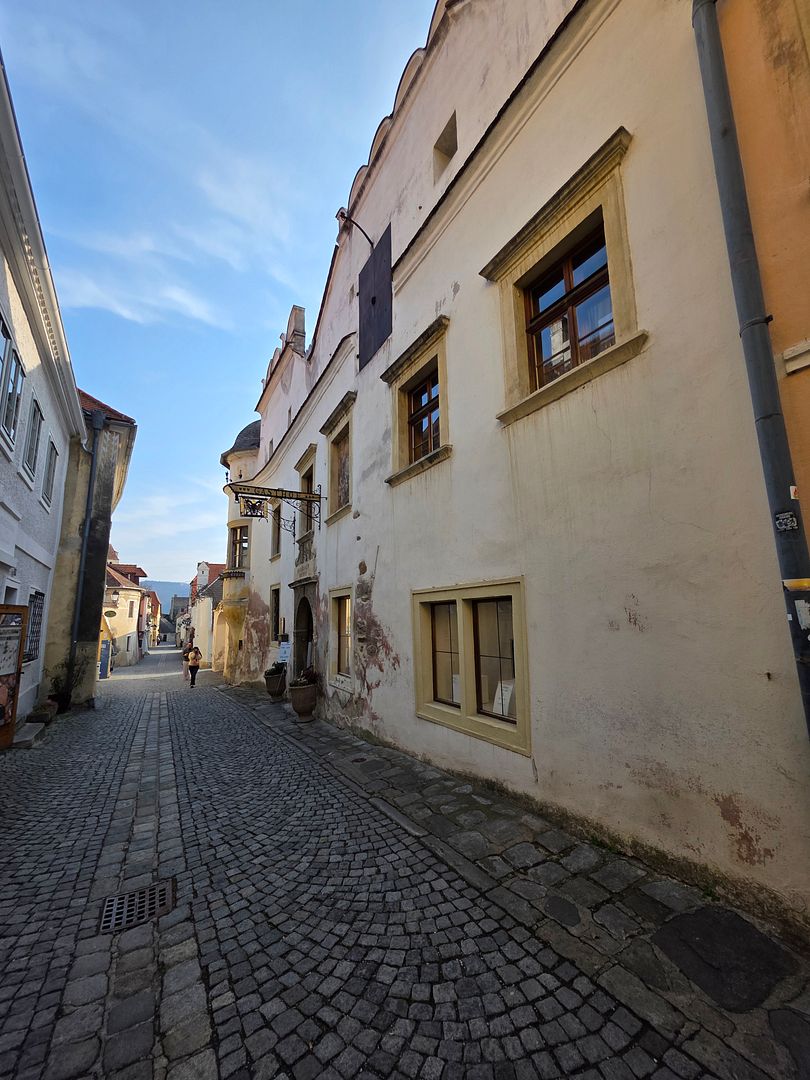
From the castle we journeyed on cobbled streets to get to Old Town.

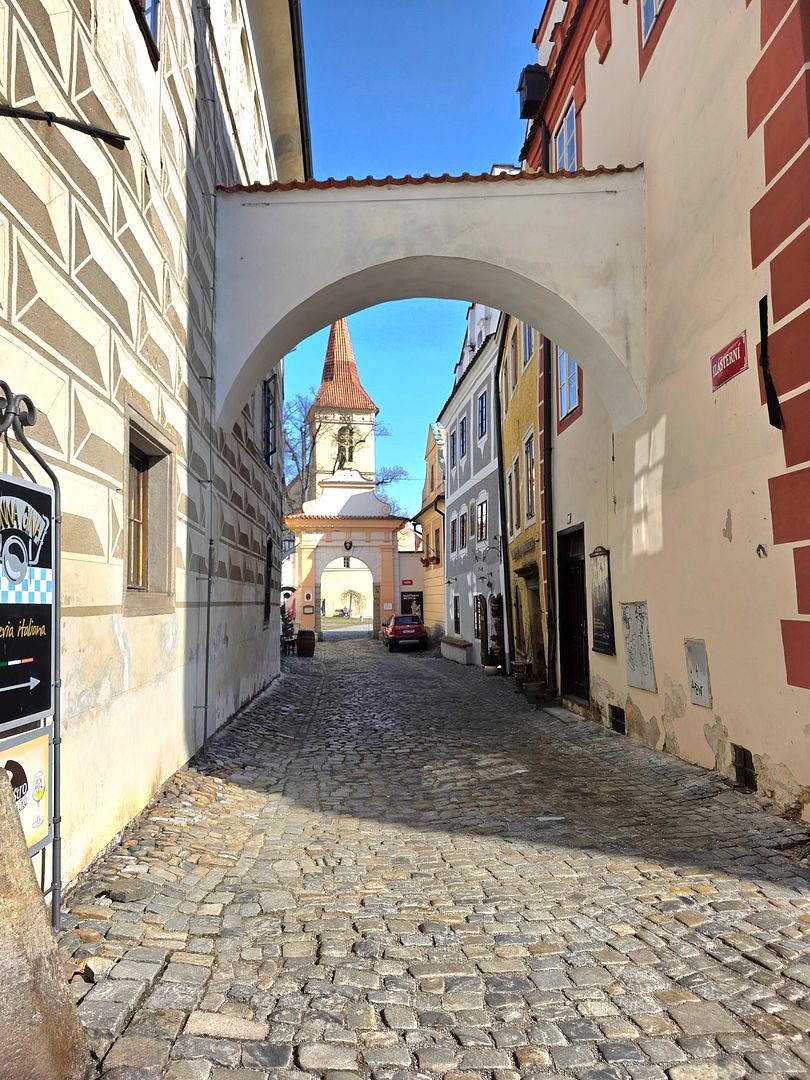
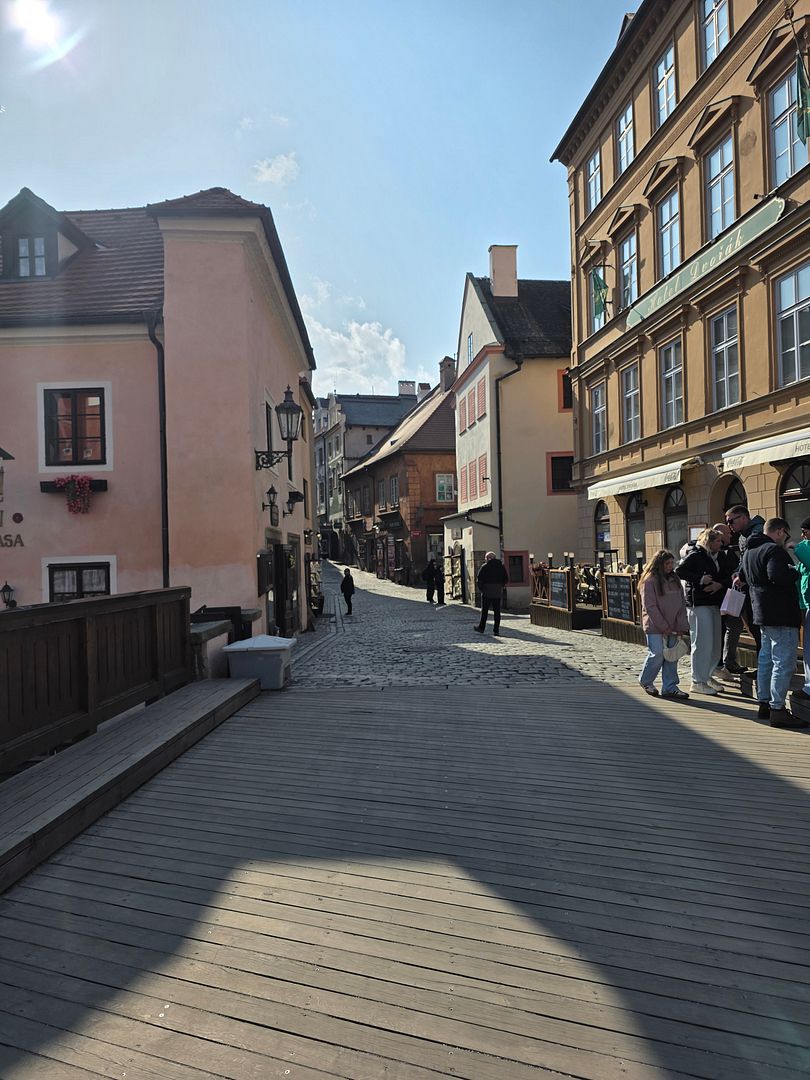
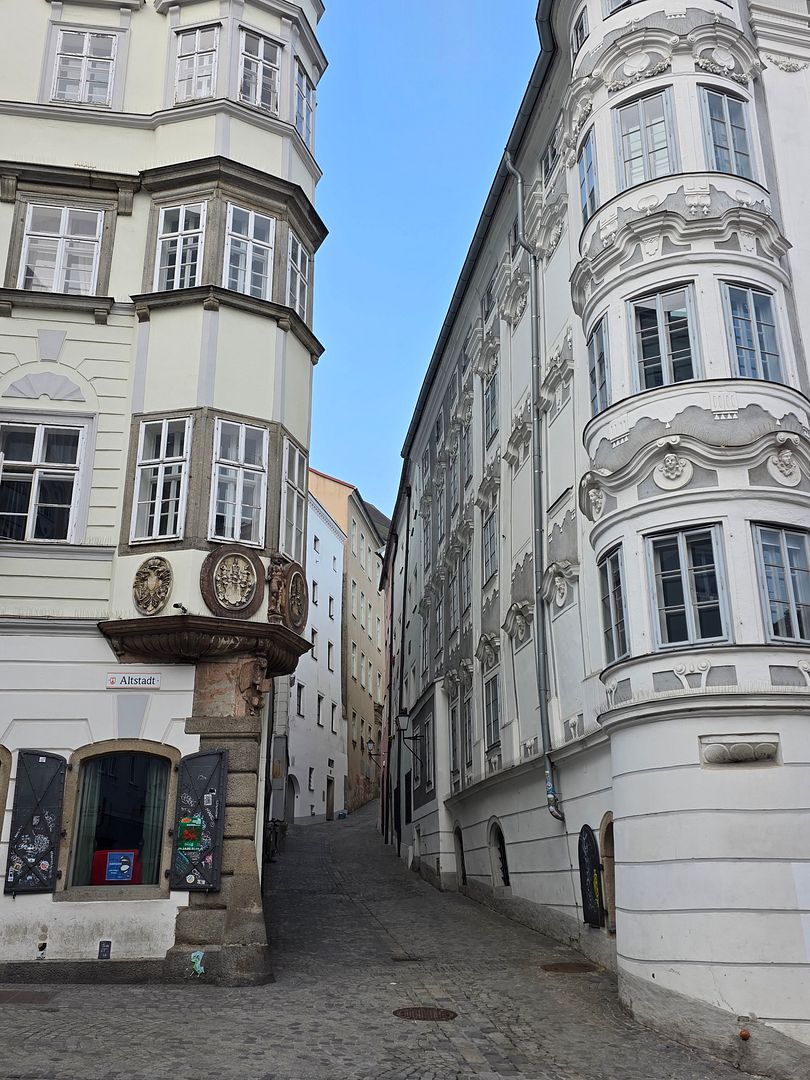
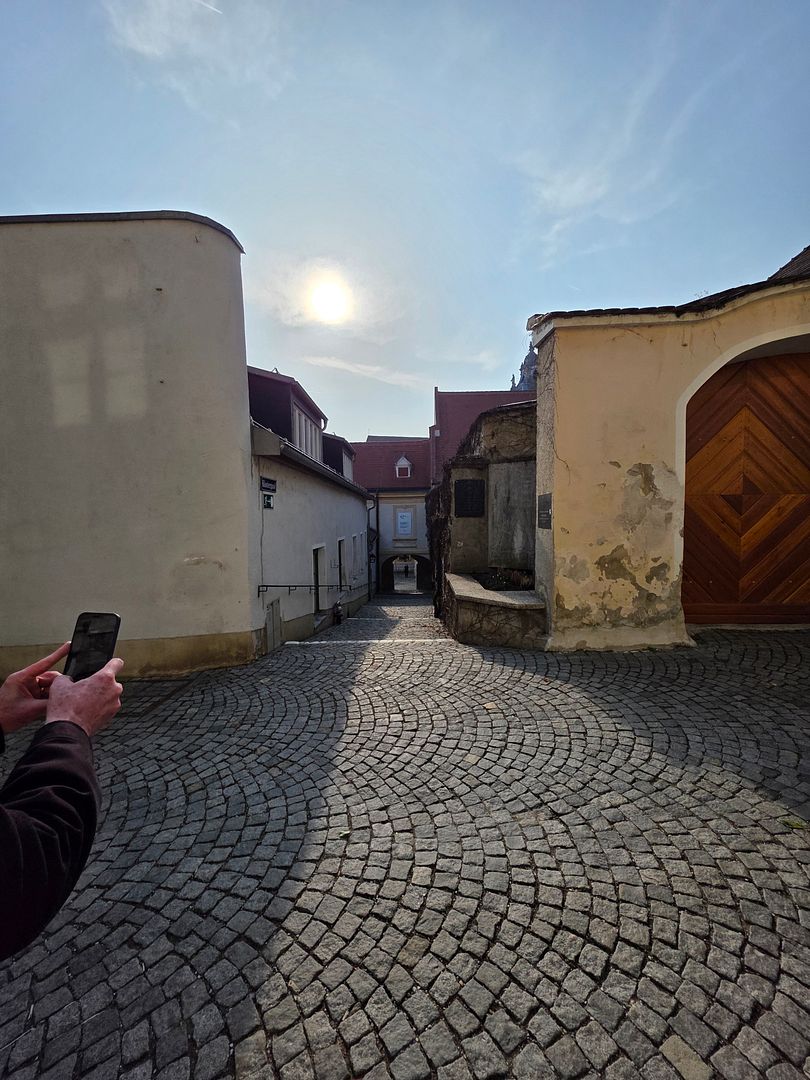
Cobbled streets and narrower alleyways.

After being part of the Austro-Hungarian Empire, it became part of Czechoslovakia in 1918. The town suffered minimal damage in the 20th century, preserving its unique, intact medieval and Renaissance architecture.

By this time, I kept looking at my watch thinking it is lunch time. My brain had enough of tour talk and my ears were tired of the ear pieces. You might feel the same way about this post but I’m not done yet, nor was our guide. 🙂

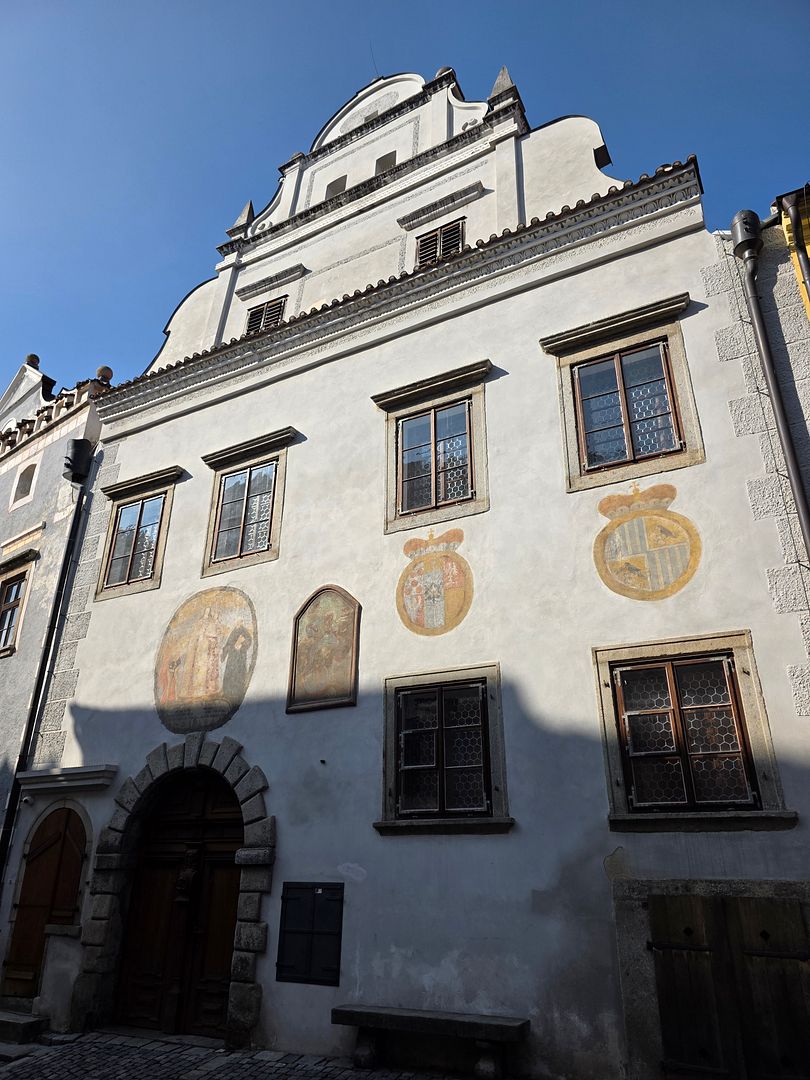
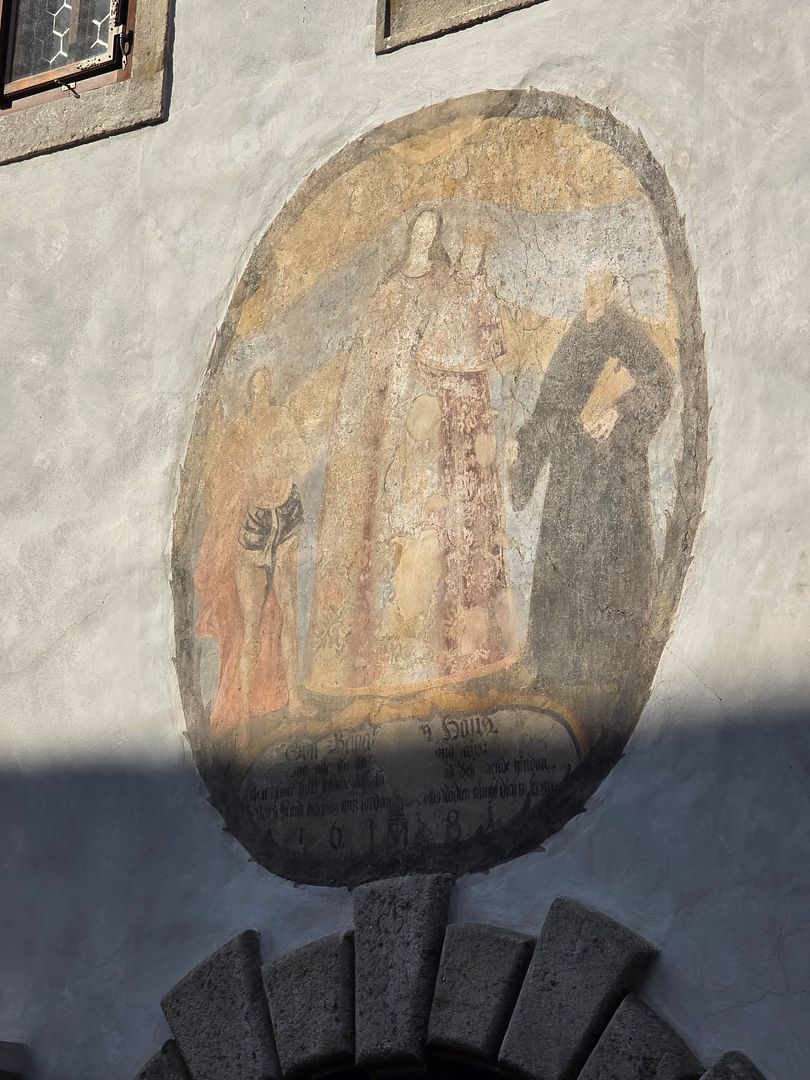
Many precious Gothic and Renaissance frescoes were whitewashed in Baroque times, when the colorful trimmings of earlier periods were out of style. Some of these frescoes are being rediscovered and restored.

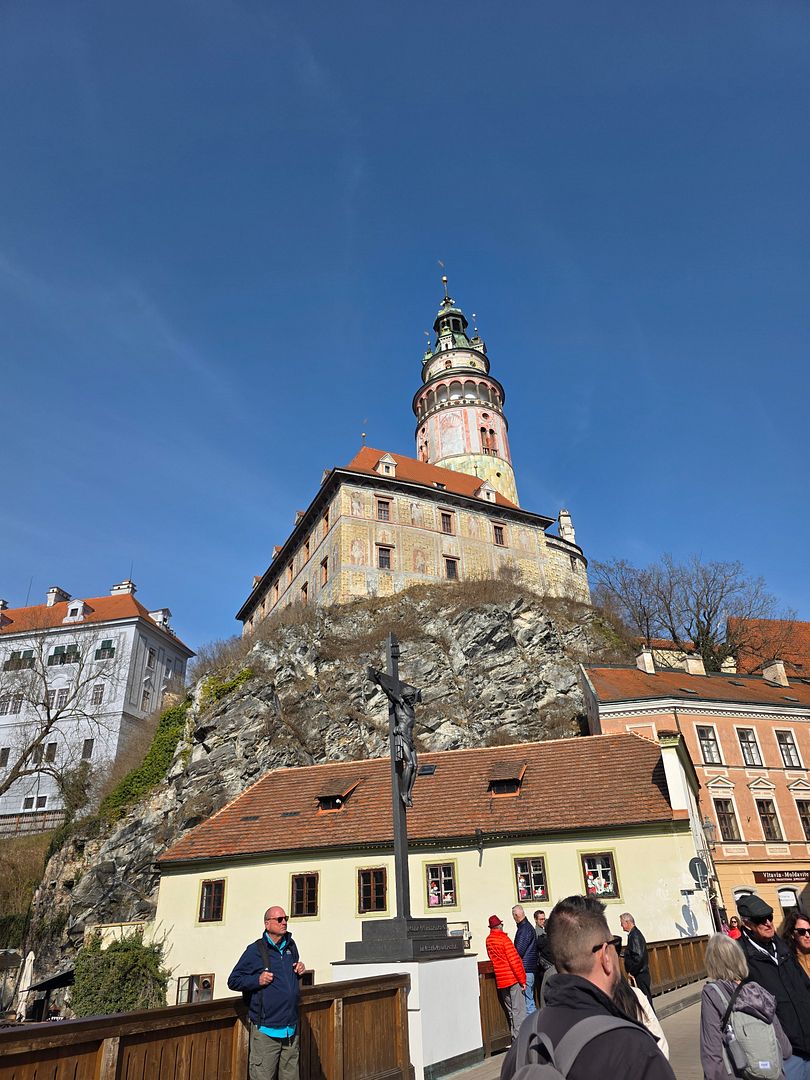
Looking up and back at the round bell tower at the Castle from the bridge over the river. This river circles the town.

Finally at the bridge we saw the spot we were interested in for our lunch meal. Our guide wasn’t winding down yet and he was going to keep going all the way to the square in the middle of town. That would be the spot to meet up with him again after our few hours in town by ourselves. We knew we’d be able to find the square with no problem. My feet were saying, “why go all the way to the center of town and then have to double back to this very spot for lunch?” NYET!

We broke away with thoughts of that good lunch and a nice sit down to rest our feet.

I’ll leave it here and give you a break, too. Part deux (french) or dva (czech) coming soon.

Krems, Austria

It is a good thing that I take a lot of photos because seven weeks later I had a hard time figuring out when we had a quick tour of Krems. When I looked back at the photos I saw that the guide we had in Krems was the same guide for Český Krumlov.  Our Wednesday March 4th was a full travel day starting in Austria and moving on by bus to the Czech Republic.

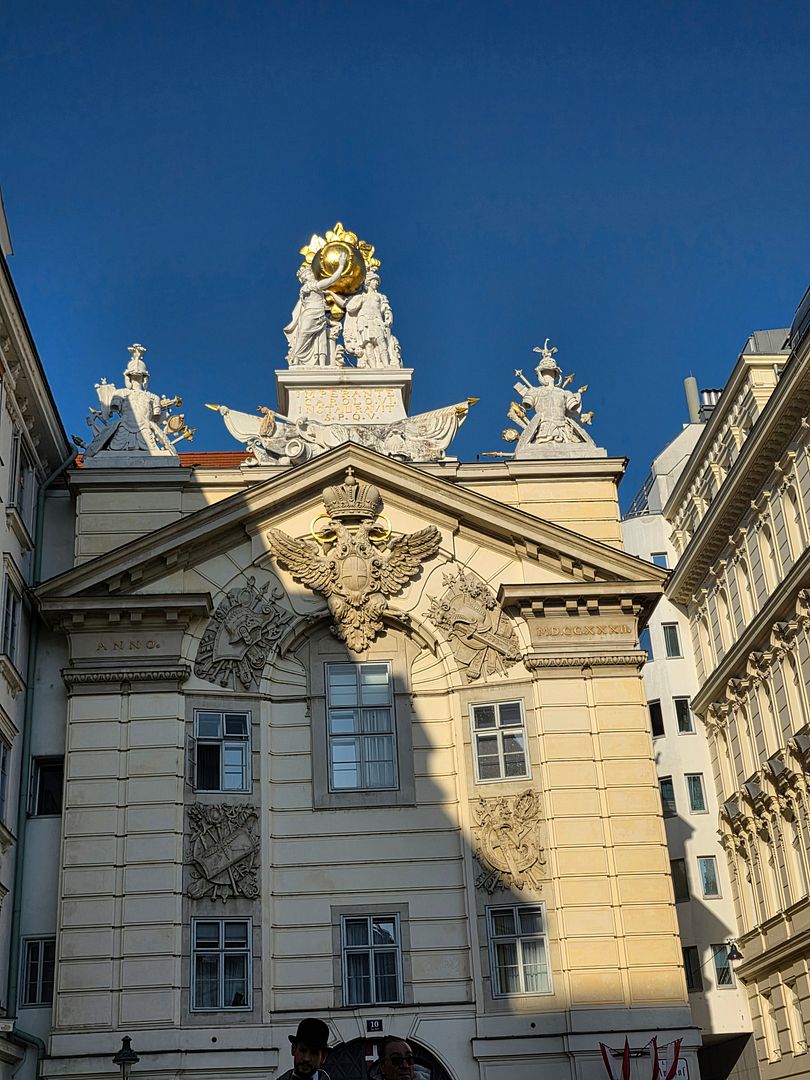
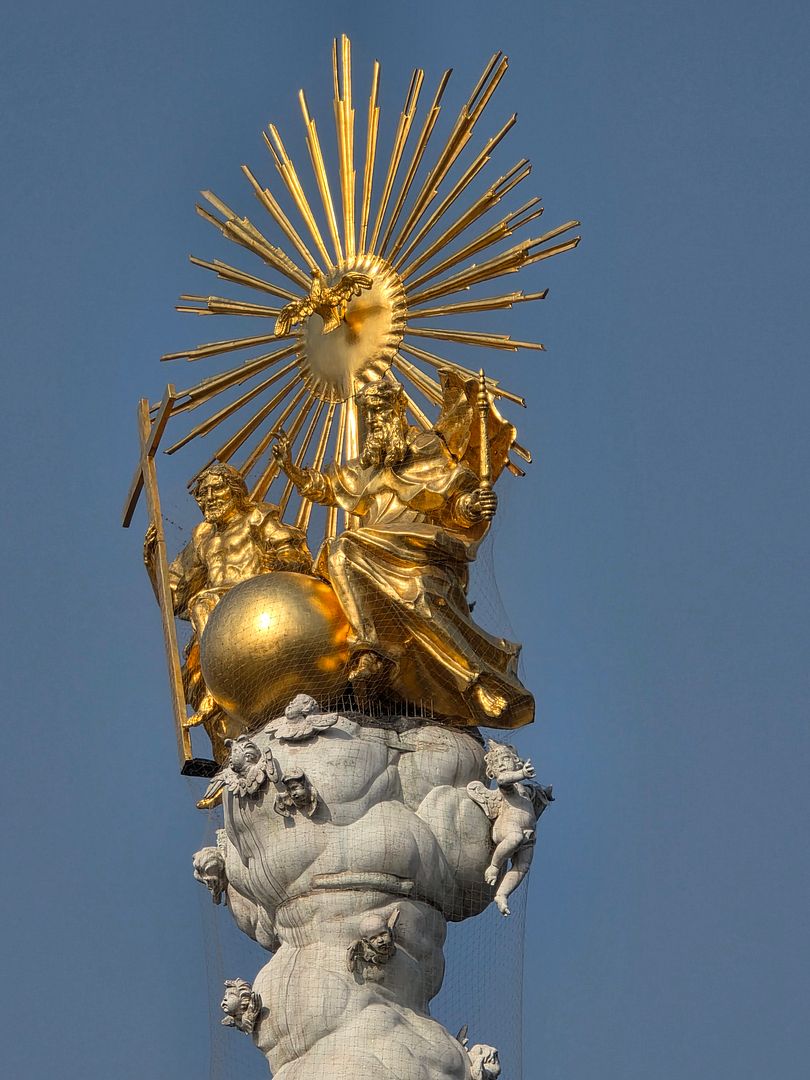
The Trinity Column was erected between 1680 and 1683 as an expression of gratitude for surviving various calamities including war, plague, and fire. The column was commissioned by Johann Franz von Prücklstein und Tobitschau, who served as governor during this period. He wanted to express his thankfulness towards God for ending these disasters which had plagued Krems an der Donau.

This type of monument is commonly found across Central Europe but each one carries its own unique story related to local events or traditions. In case of Dreifaltigkeitssäule in Krems an der Donau it represents deliverance from three major threats: Turkish invasion represented by Ottoman soldiers at base level; Plague depicted through St Sebastian & St Rochus figures; Fire symbolized by St Florian statue.

We started in the town square and one of the first things we learned was that Hitler gave a speech in 1939 on this very balcony. Not a fact that the town is proud of.

Krems an der Donau is the eastern gateway to the Wachau Valley, one of Europe’s loveliest river landscapes. It is also one of the oldest cities in the land. This history extending back more than a thousand years is evident everywhere – in the streets and squares, in the old monasteries and churches, in the town houses and fortifications.

The clock confirms it was in the morning that we visited.

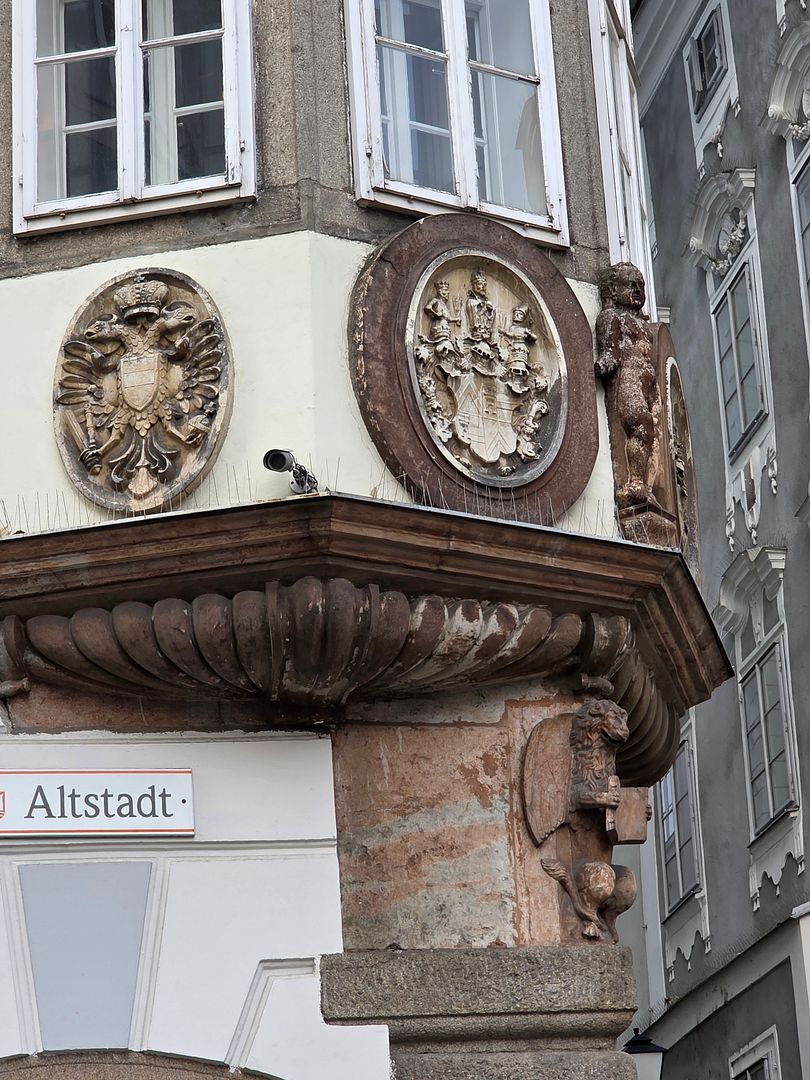
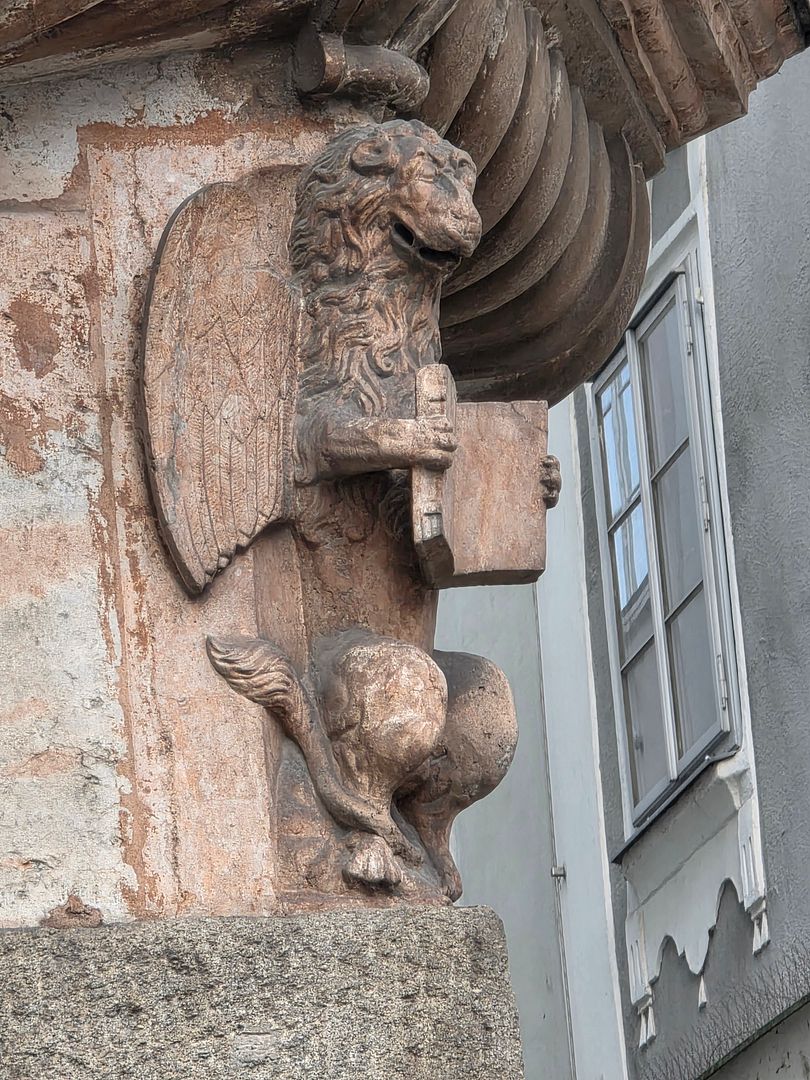
This lion with wings and an open book caught my interest so I zoomed in.

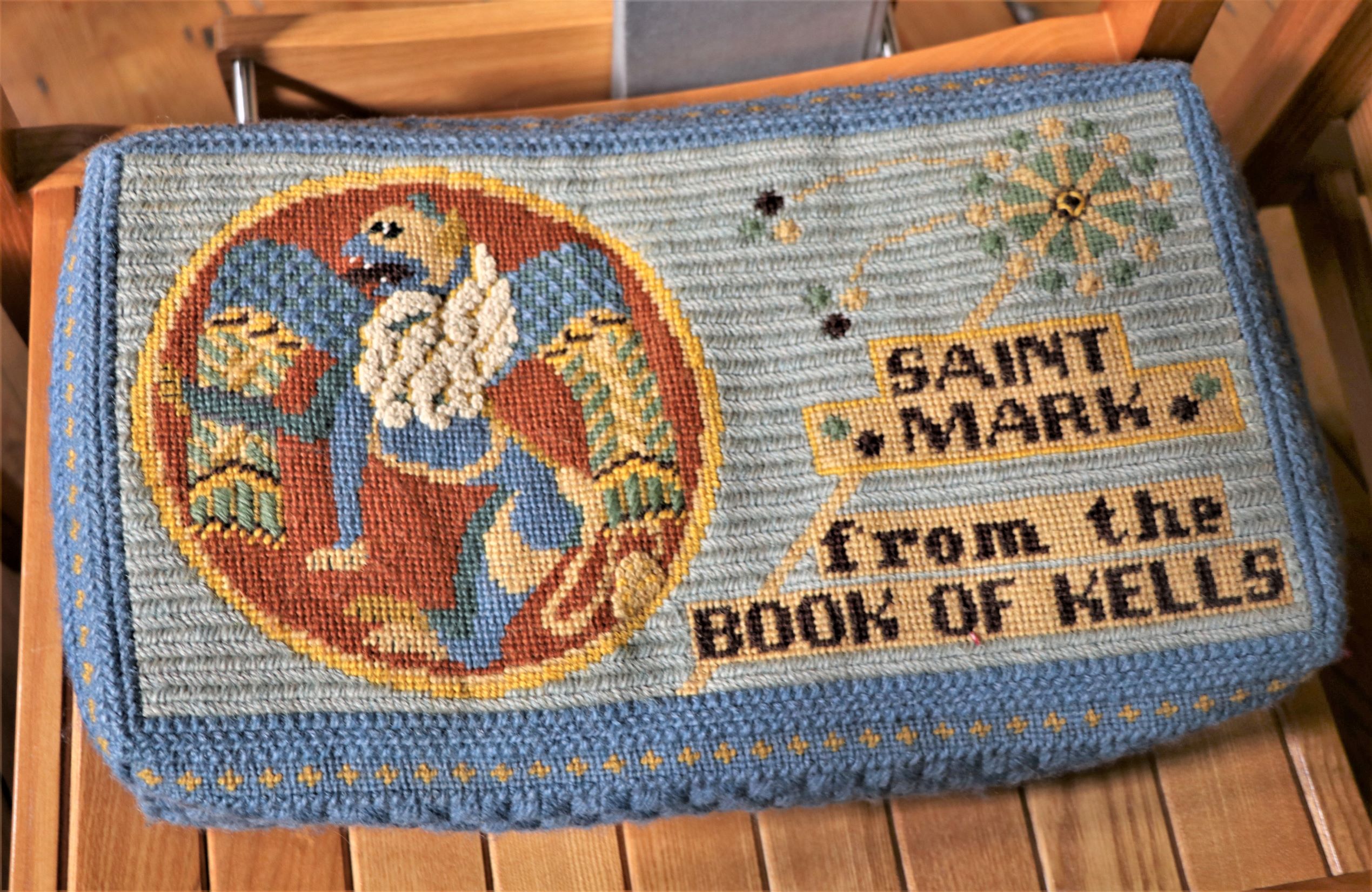
In looking up statues of lions with wings and an open book, it seems this figure is attributed to St. Mark of the Bible. When we were in Woodstock England a few years ago, we saw this kneeler and 3 other kneelers for the 4 Gospels in the Bible as represented in the Book of Kells.

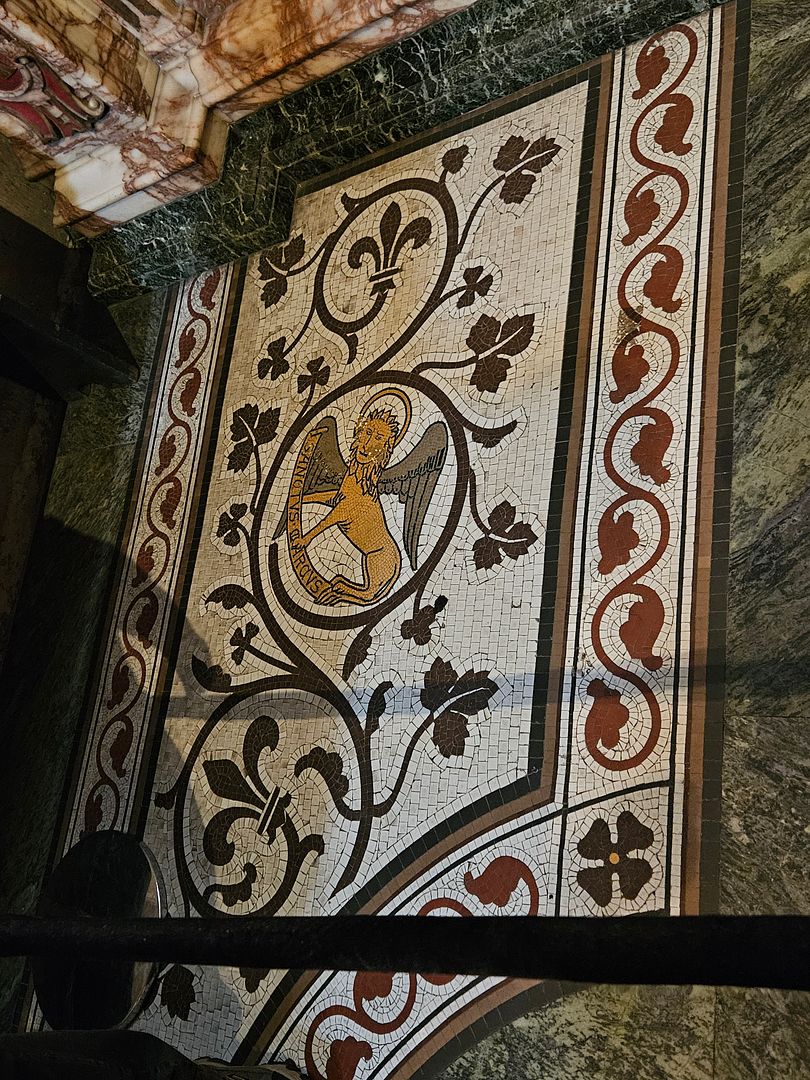
We also saw tile work of the 4 gospels in St. Giles Cathedral in Edinburgh with St. Mark depicted as a lion.

The historical center of Krems is one of the most beautiful in Europe. Over the centuries, builders and architects have created a unique cityscape here that has been lovingly cared for and preserved. These efforts have not gone unnoticed. In 1975 Krems was singled out as a “Model City for Historical Preservation” and in 2000 it was added to the UNESCO World Heritage List.

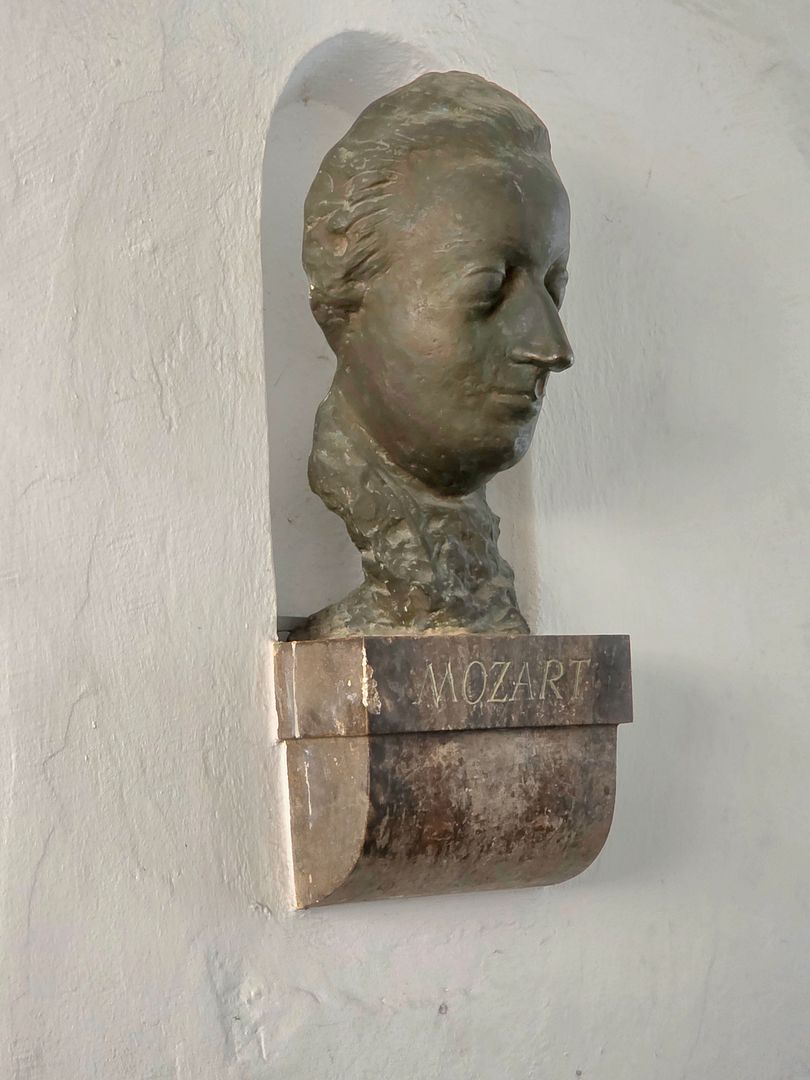
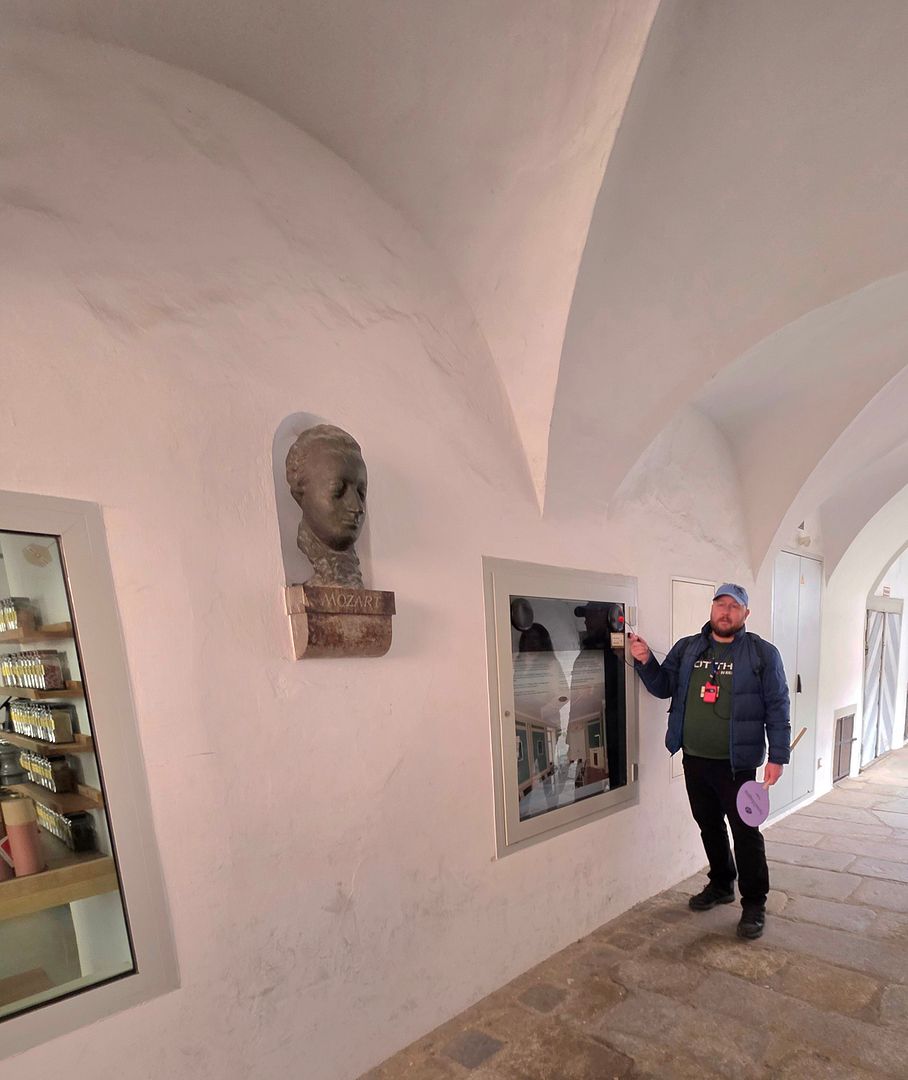
Our guide took us into this walkway where he showed us this nod to Mozart. The story goes that Mozart spent the night in Krems.

You can click on a button to hear one of his pieces in this courtyard entrance.

It would have been nice to have time to have a snack in one of the cafes in this charming town.

When we got back to the square where we began our walk, I zoomed in to the top of the Trinity Column.

 The column features intricate carvings and statues representing various biblical figures and scenes.

We boarded our bus for the two hour trip to the Český Krumlov. That will be my next Danube River Cruise post.

Our Extravagant Creator


We’ve been working on our own personal part of earth for earth day. God was extravagant when he created earth and all it contains for us to enjoy.

Another Wednesday on this earth and Joyce has a fresh set of questions for us. This is Wednesday Hodgepodge.

1. April 22nd is Earth Day…what’s the most ‘out of this world’ place on earth you’ve ever visited? Tell us something about it. 

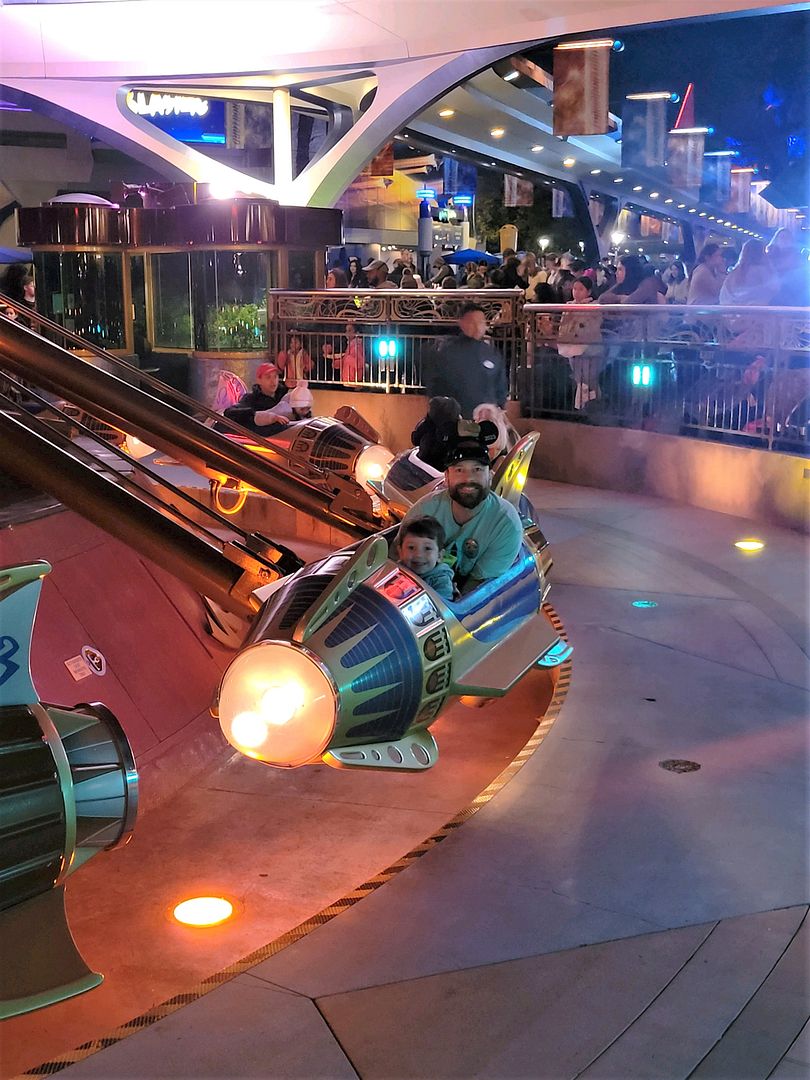
Greg said, ” When I was ten it was Disneyland.”

yellowstone day one 174

In our adult years I’m going to say Yellowstone or Badlands.

2. A favorite quote, verse, or song lyric with the word earth in it? 

3. What’s the most trivial thing about which you have a strong opinion? 

Where to park at Wal-Mart.

4. What’s your most commonly used kitchen utensil or tool? What’s the last thing you made using that tool? 

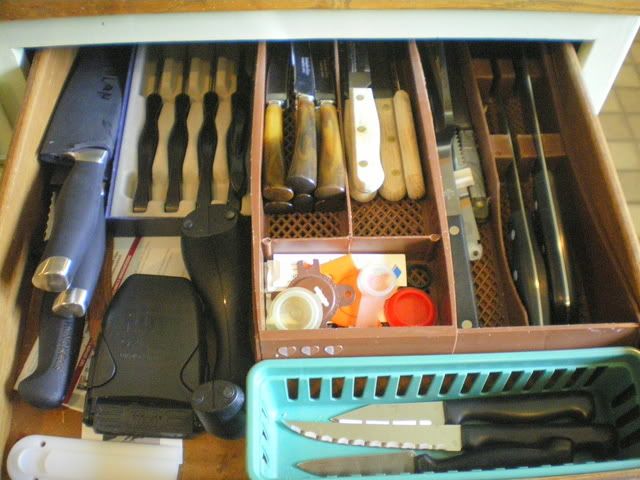
I’m going to say my Chefs Knife. I made roasted vegetables for our family meal last Friday and the onions and potatoes and carrots needed to be cut. I also used it to cut ham to throw into our breakfast egg scramble on Saturday. I love a good sharp Chefs knife! I like all sorts of knives.

5. Marilyn (Memphis Bridges) gave me a great book of 3000 questions, and I’m going to try to use one in our Hodgepodge every week. Here is today’s – 

What is your greatest extravagance? 

Our trips lately have been extravagant. Extravagance to me is something above and beyond and luxurious. These days I don’t like to penny pinch when we are traveling.

Nice hotels and nice restaurants are my choice. That is not to say we don’t enjoy a nice pub or cafe mixed in during travel. There was a time when we penny pinched and stayed in some sleazy motels and I have stories to tell.

I also am quite happy to be extravagant with our family.

6. Insert your own random thought here. 

Speaking of the beauty of our earth. I’ll be getting back to our daily travel spots during our Danube River Cruise on Thursday, Lord willing.

Looking forward to your answers this week.

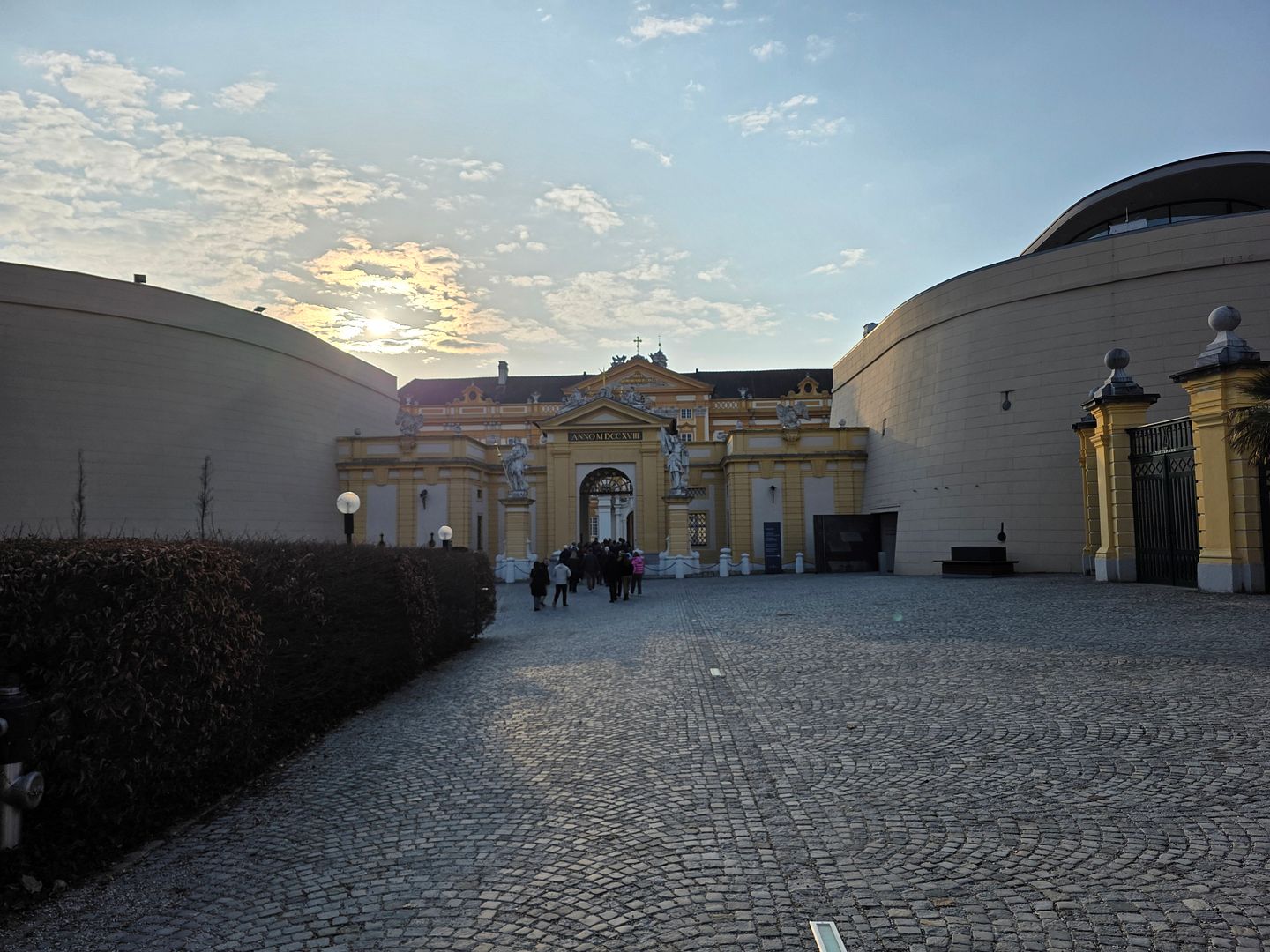
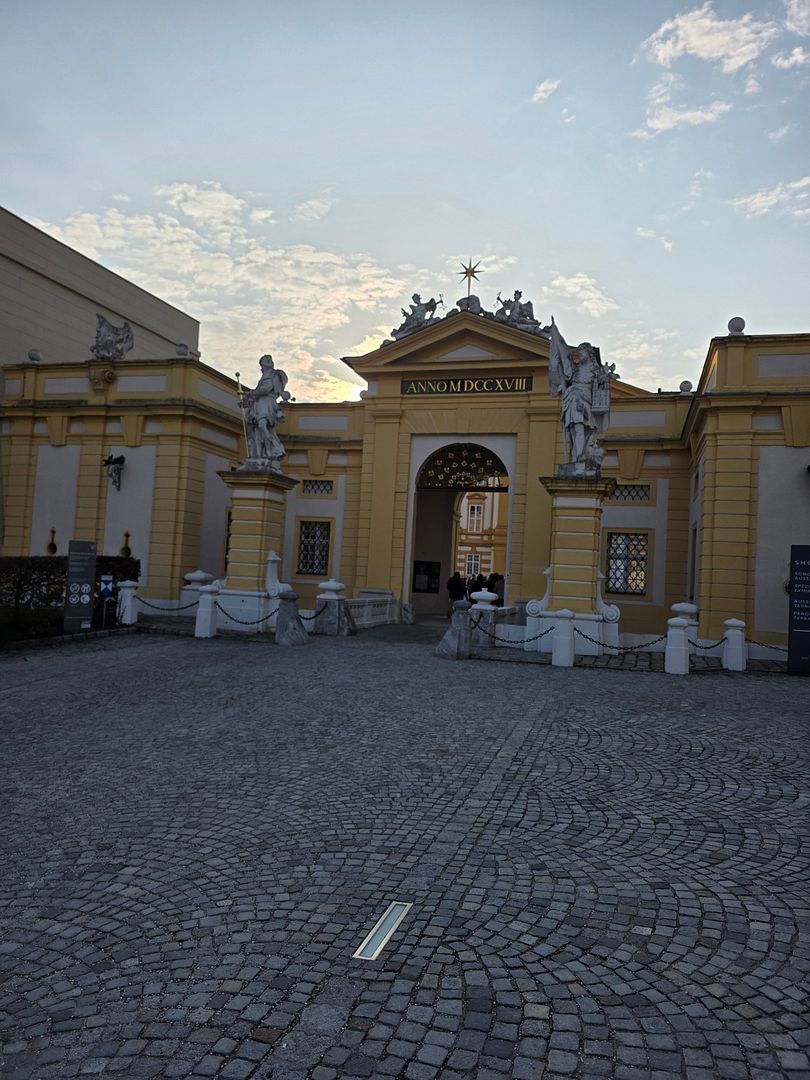
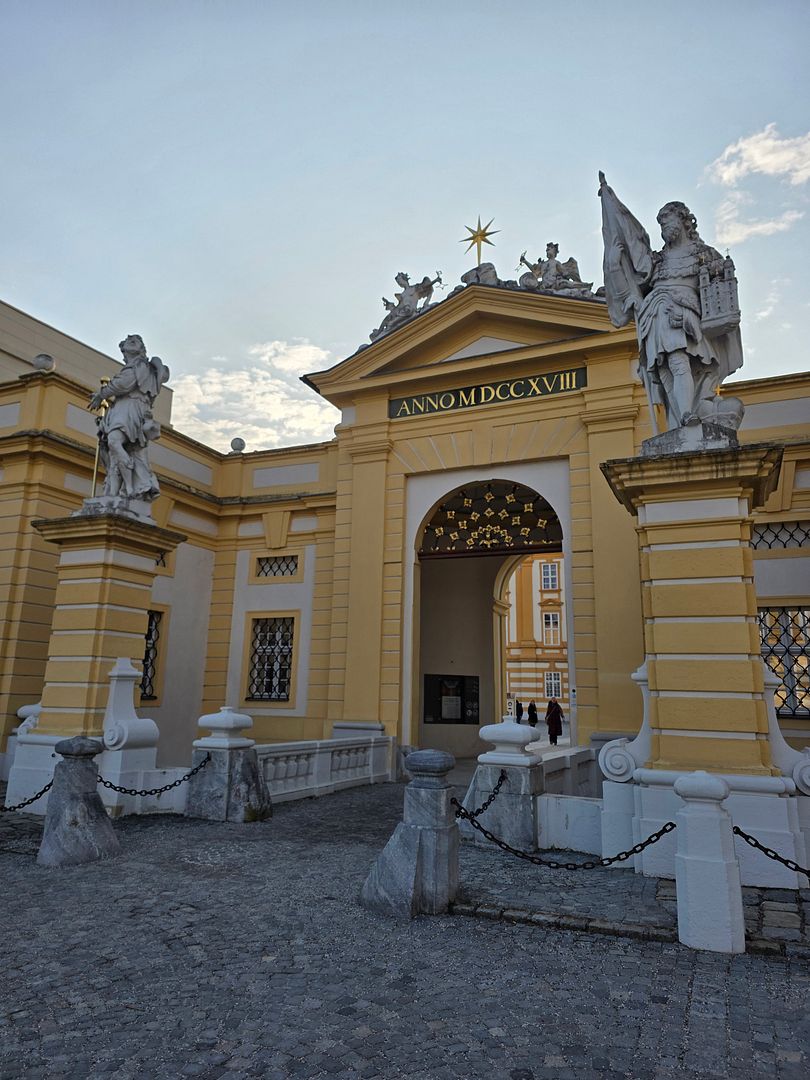
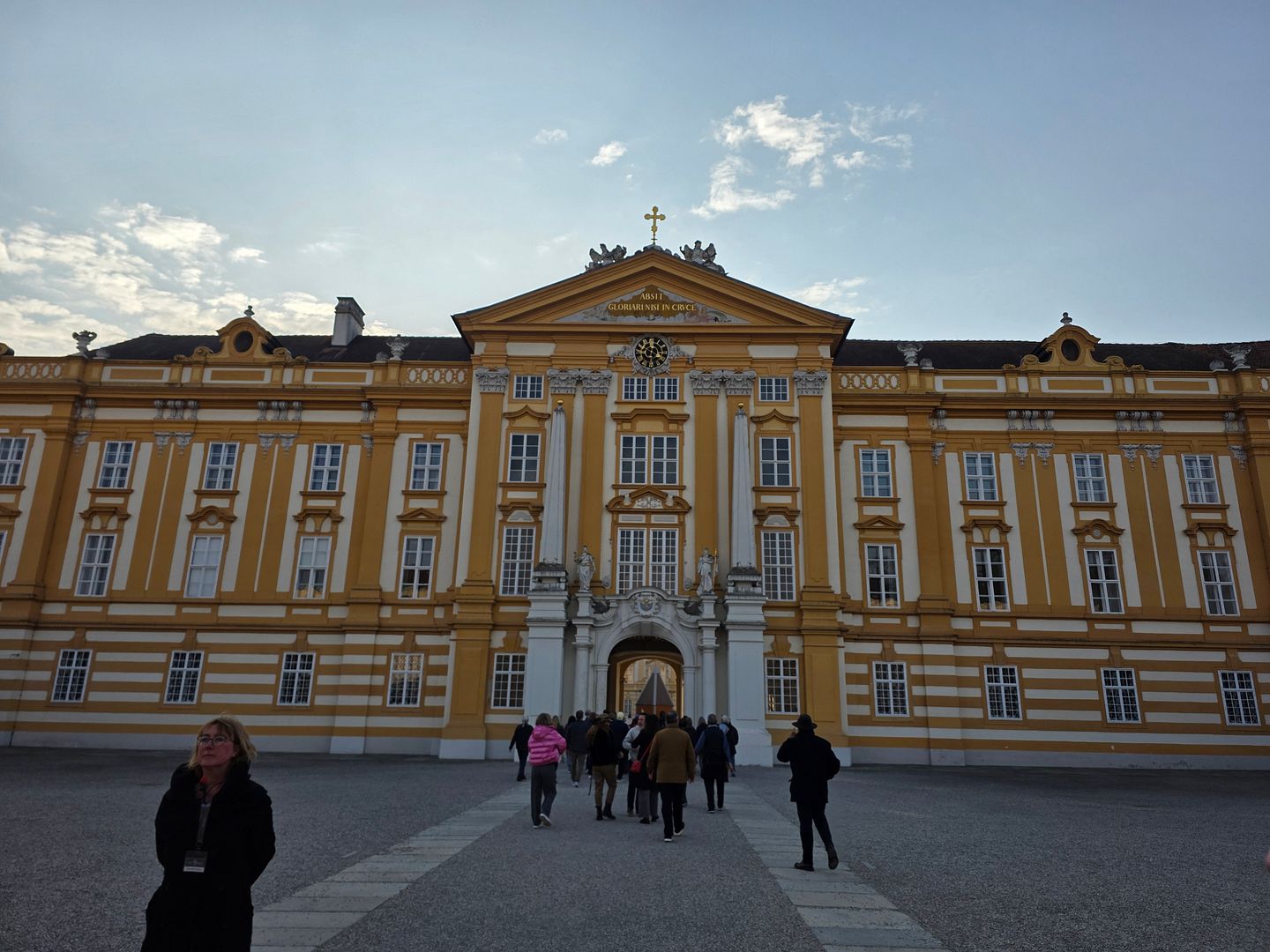
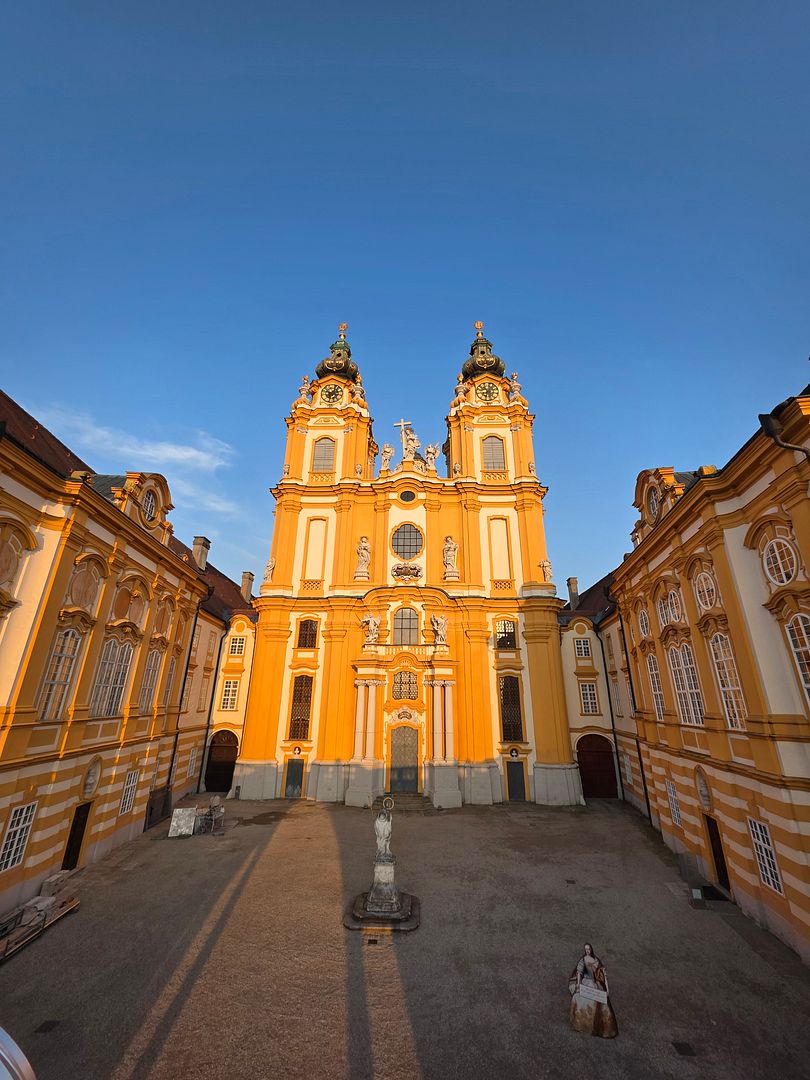
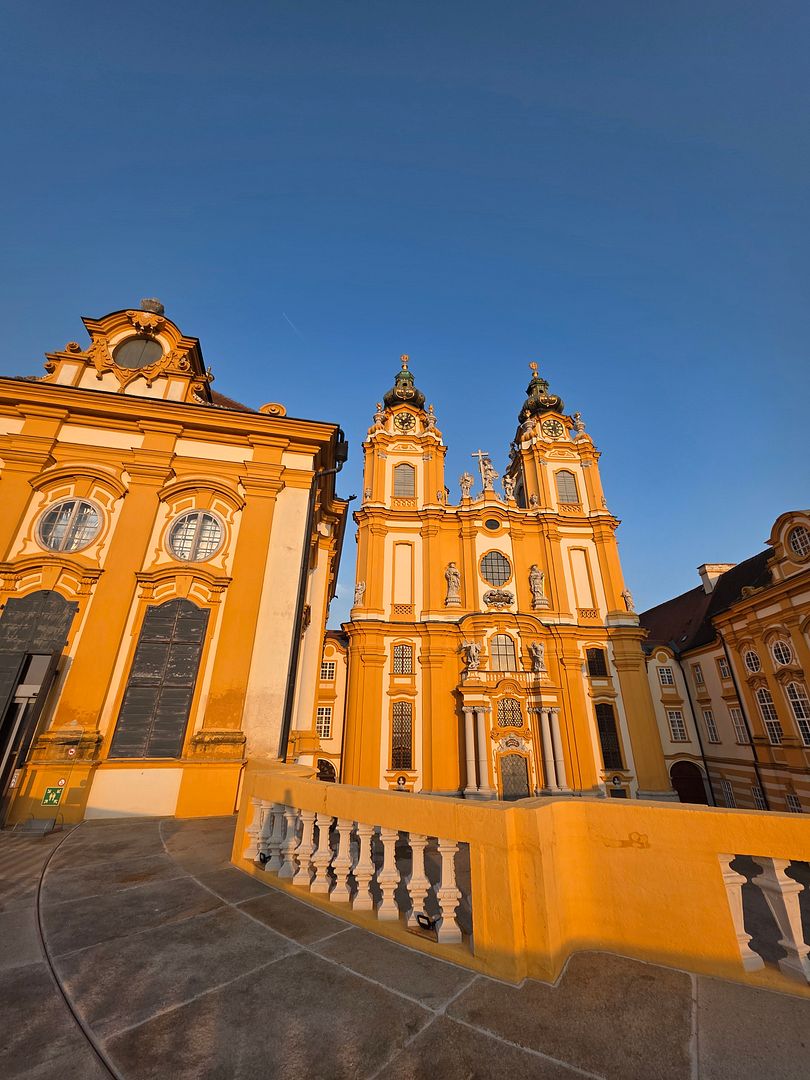
Melk Abbey

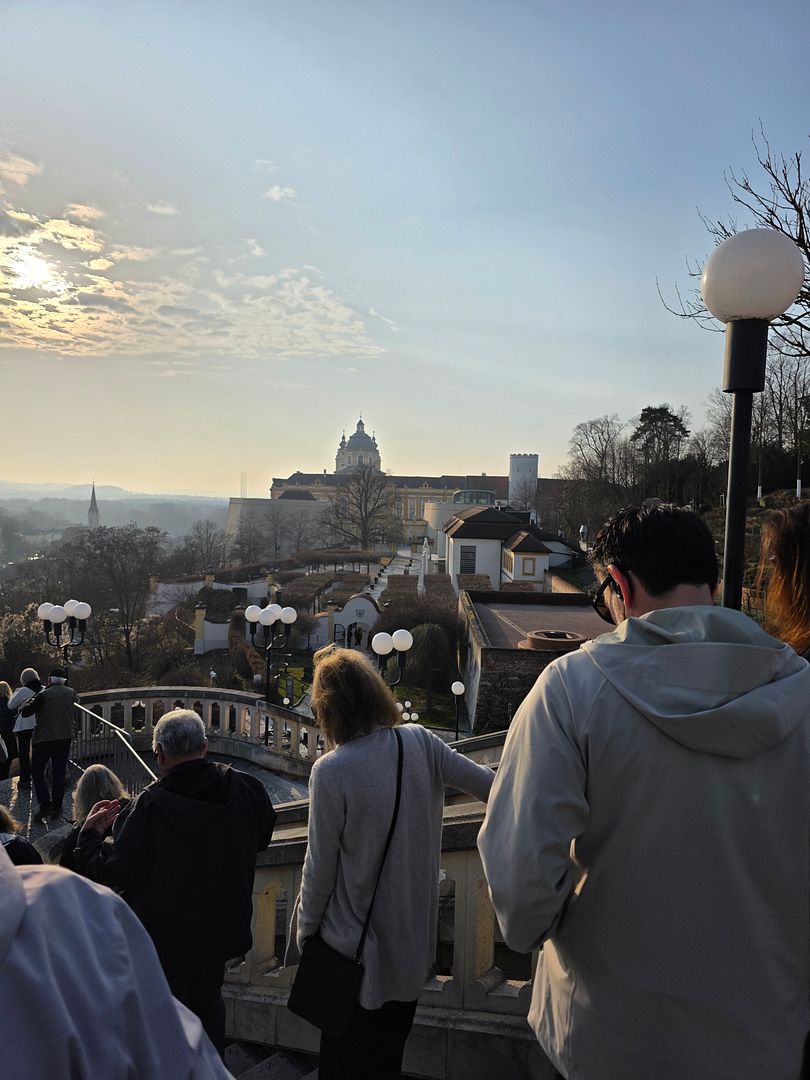
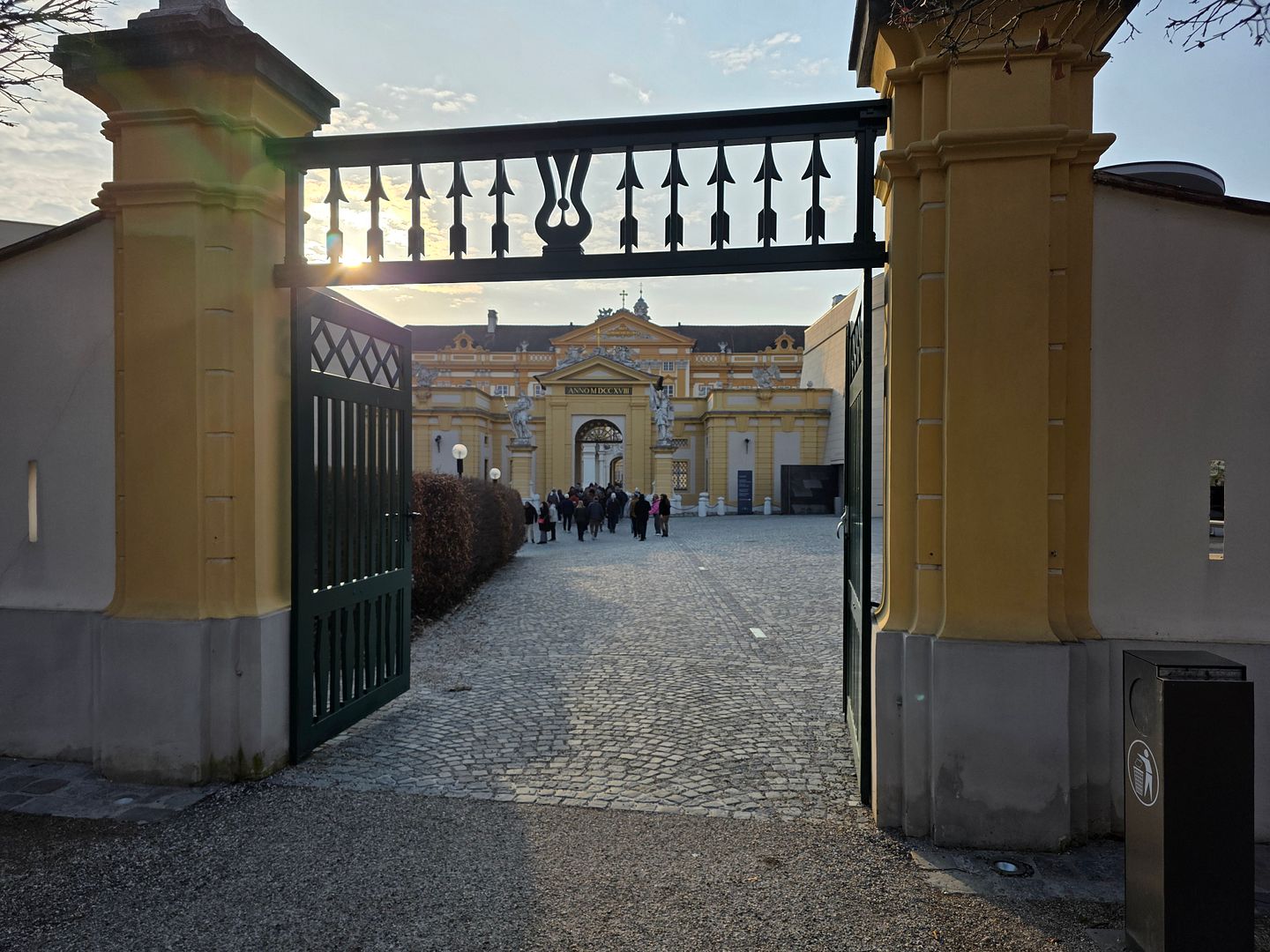
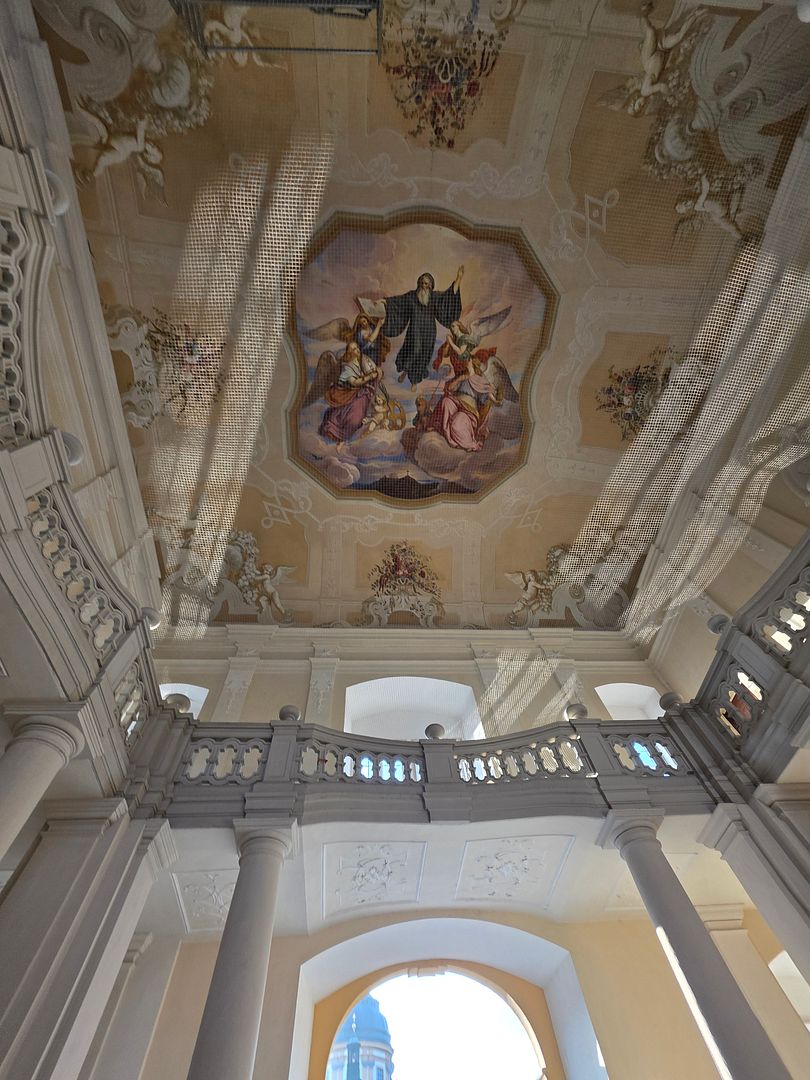
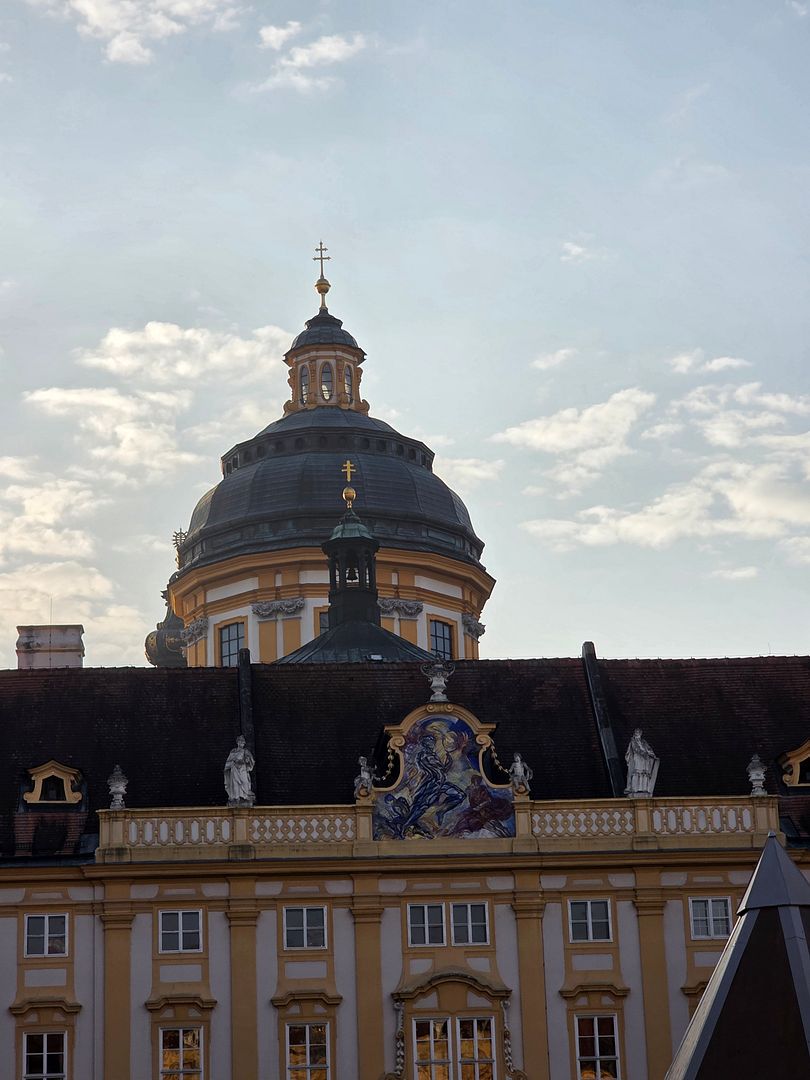
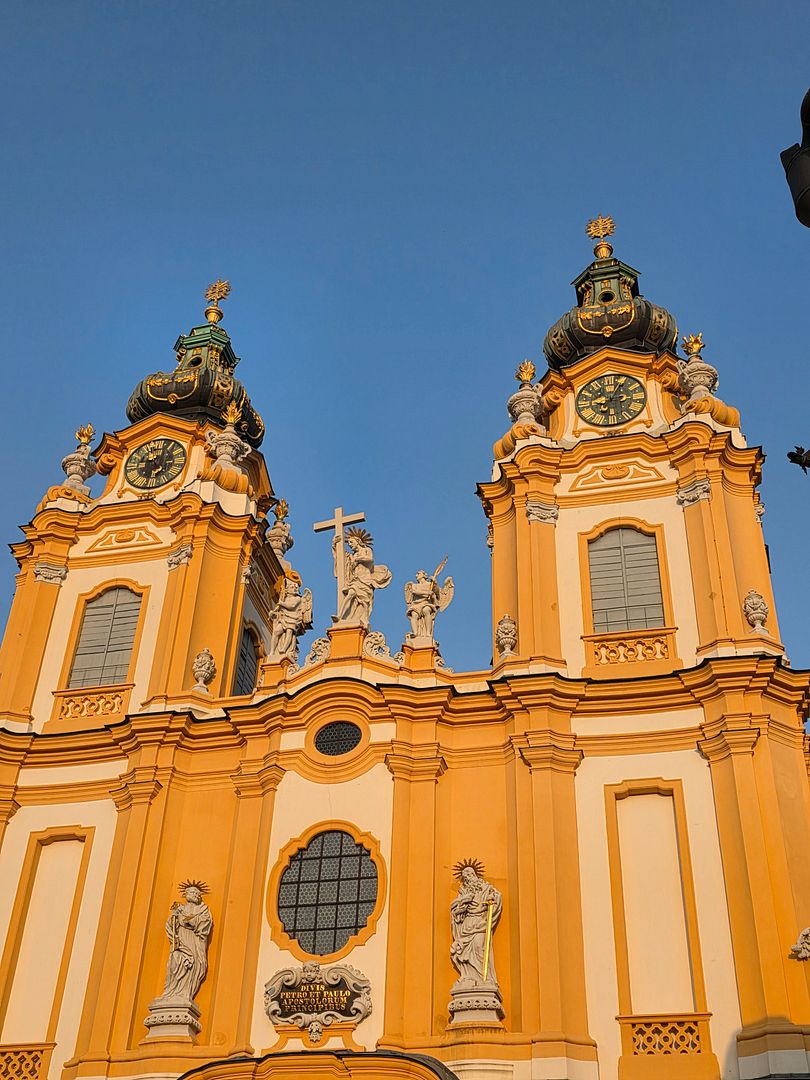
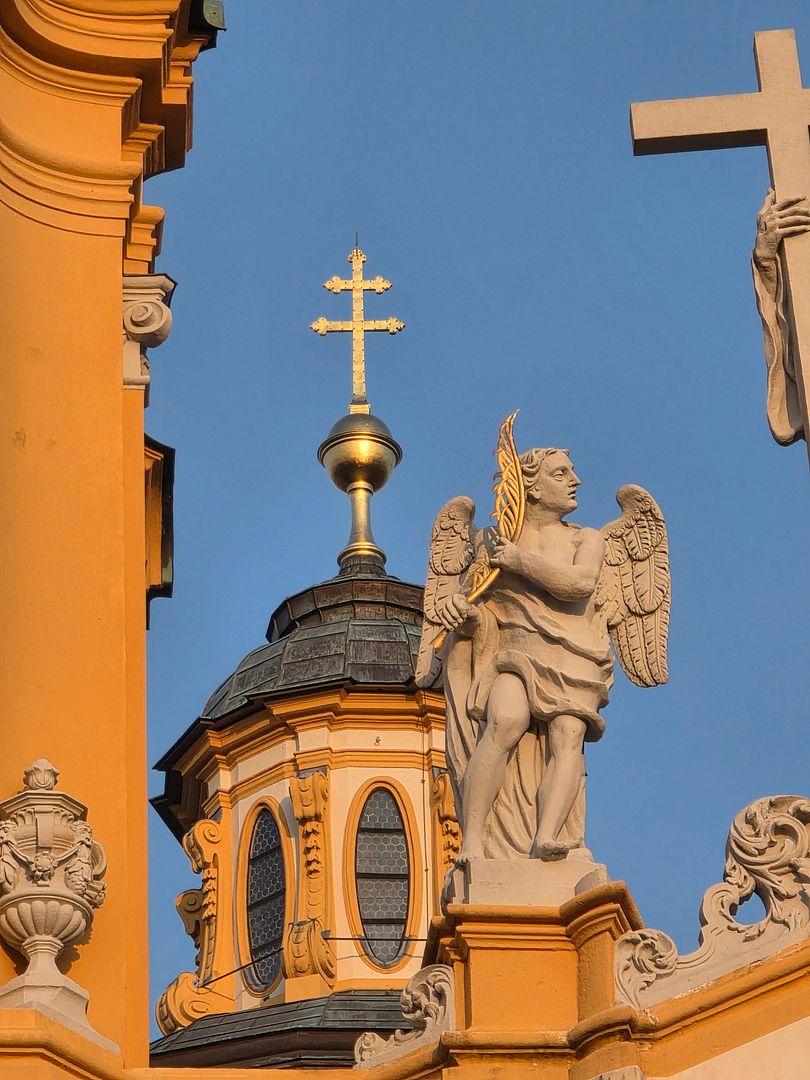
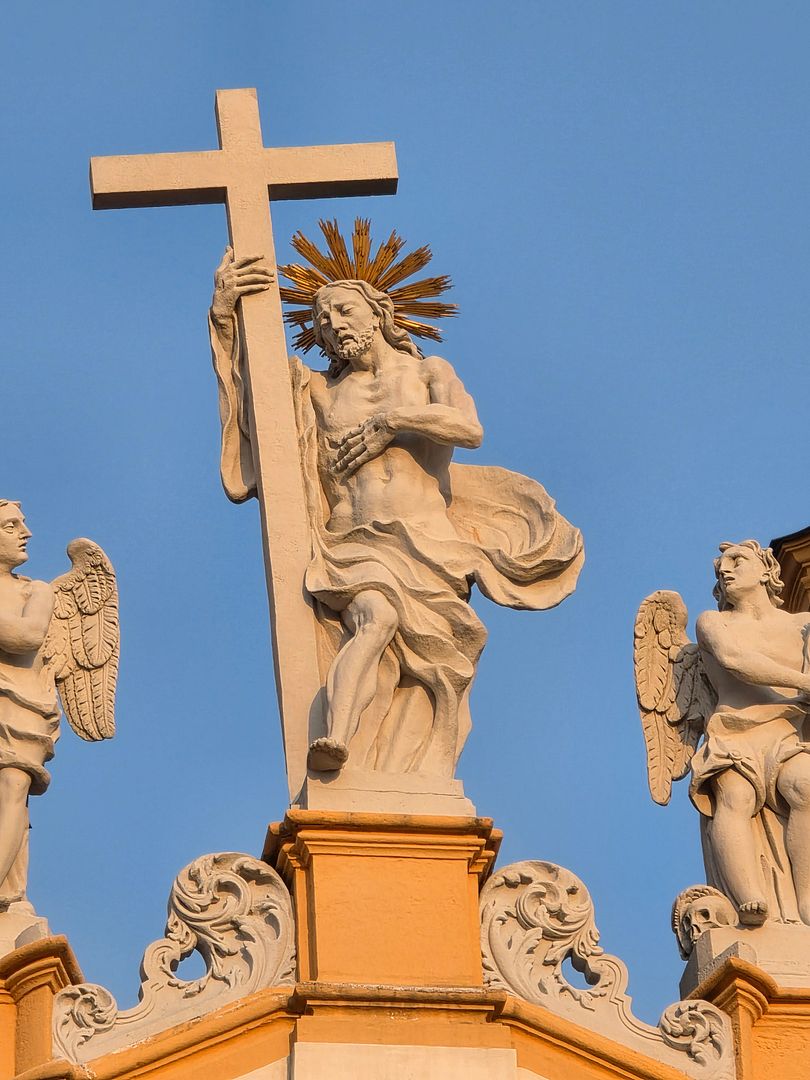
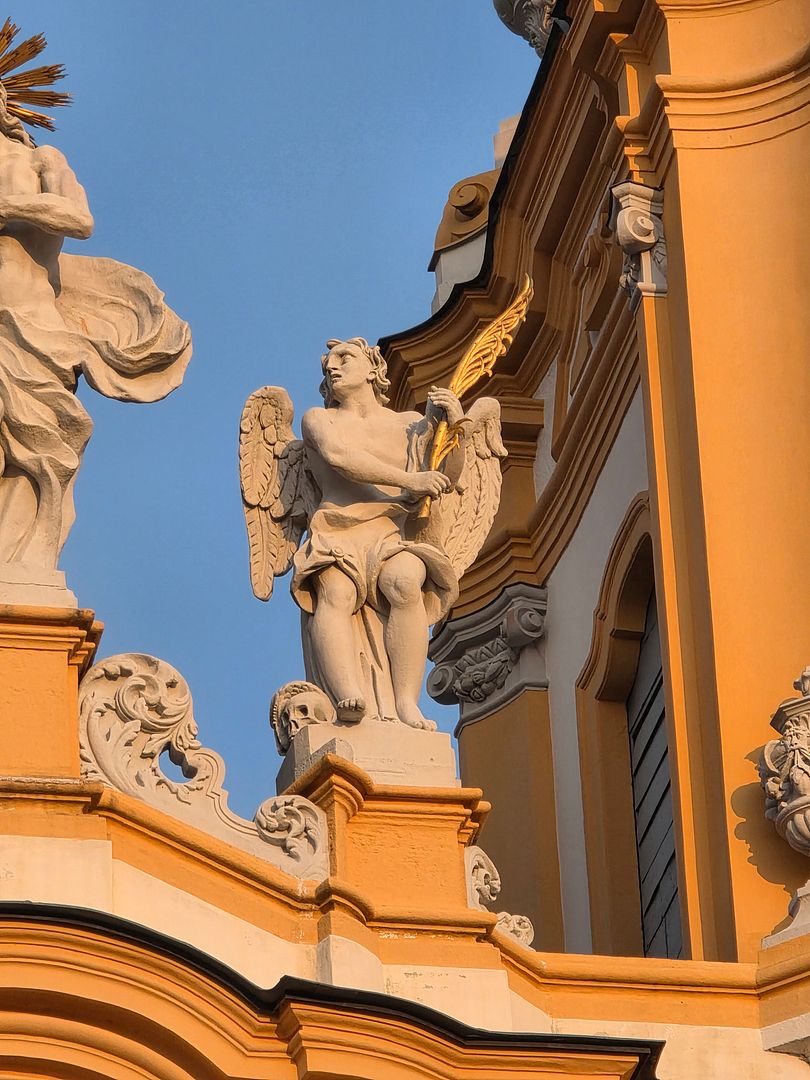
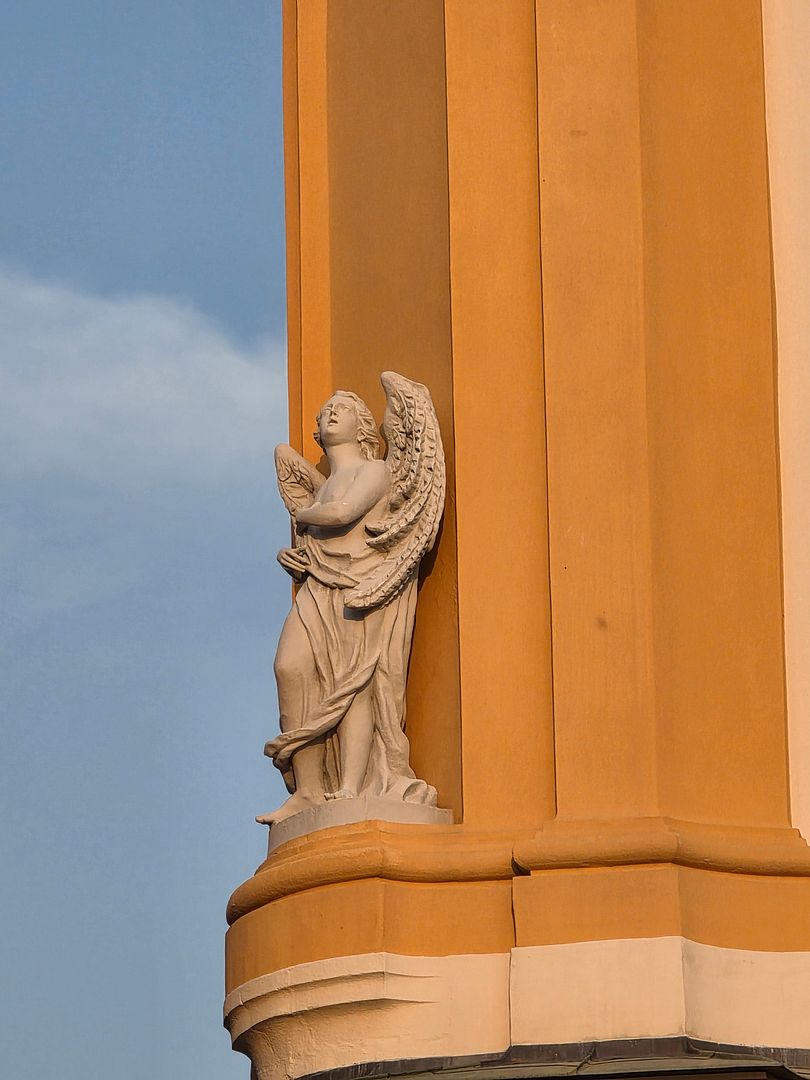
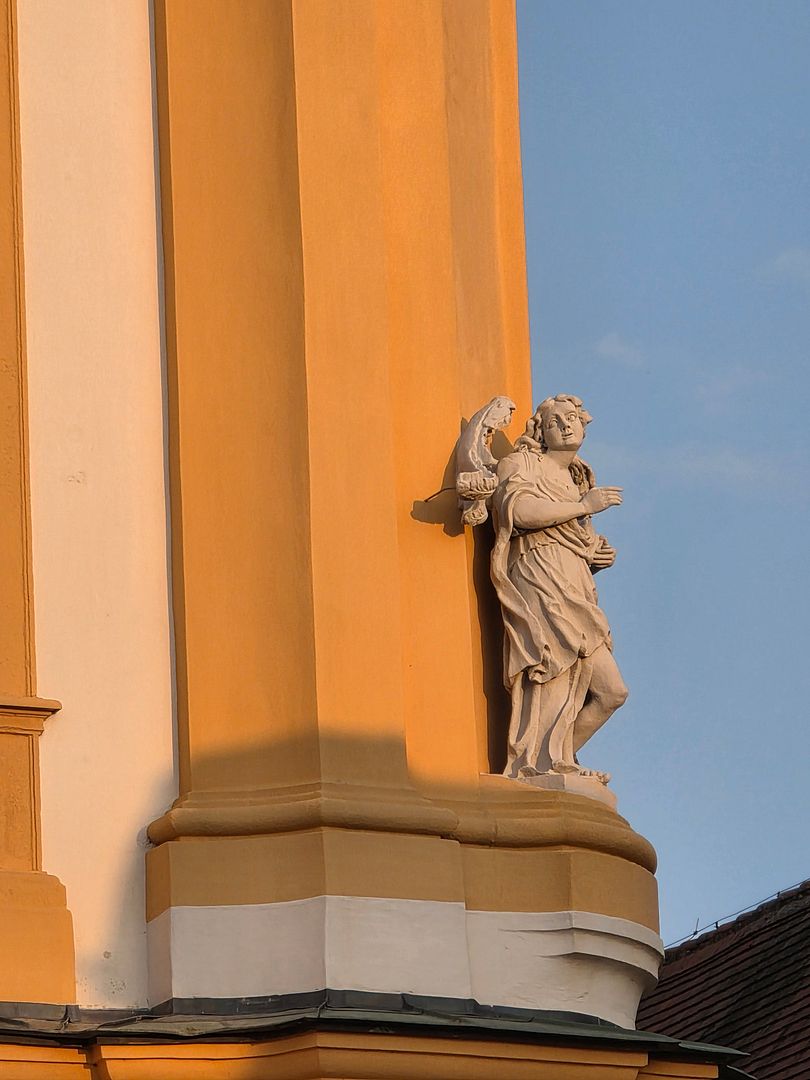
All my photos are from the outside areas of the abbey. We did tour several indoor rooms as well as the library and church. No photos were allowed inside the museum, library or church.

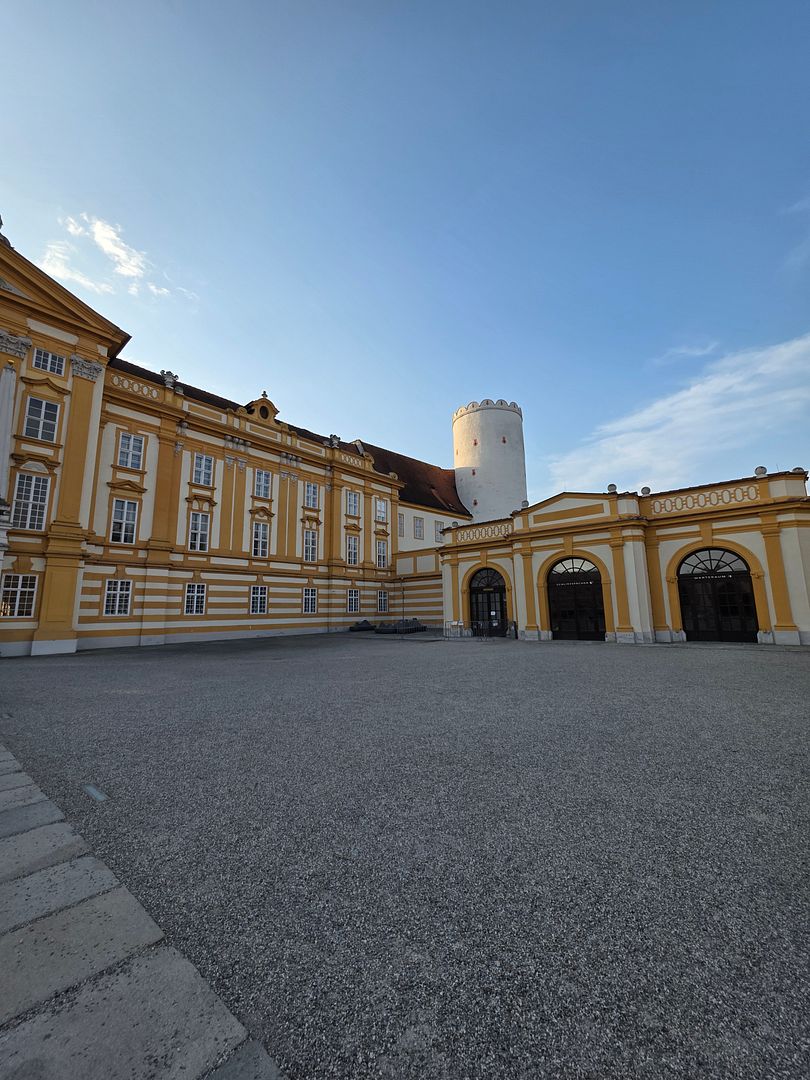
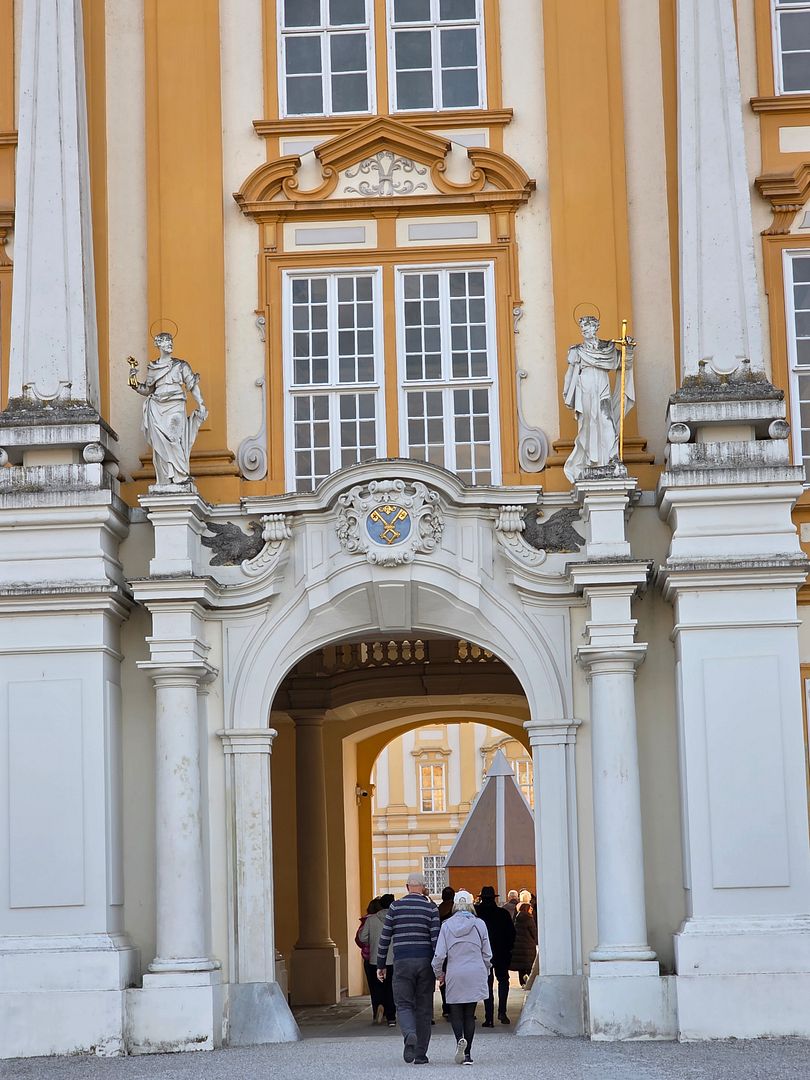
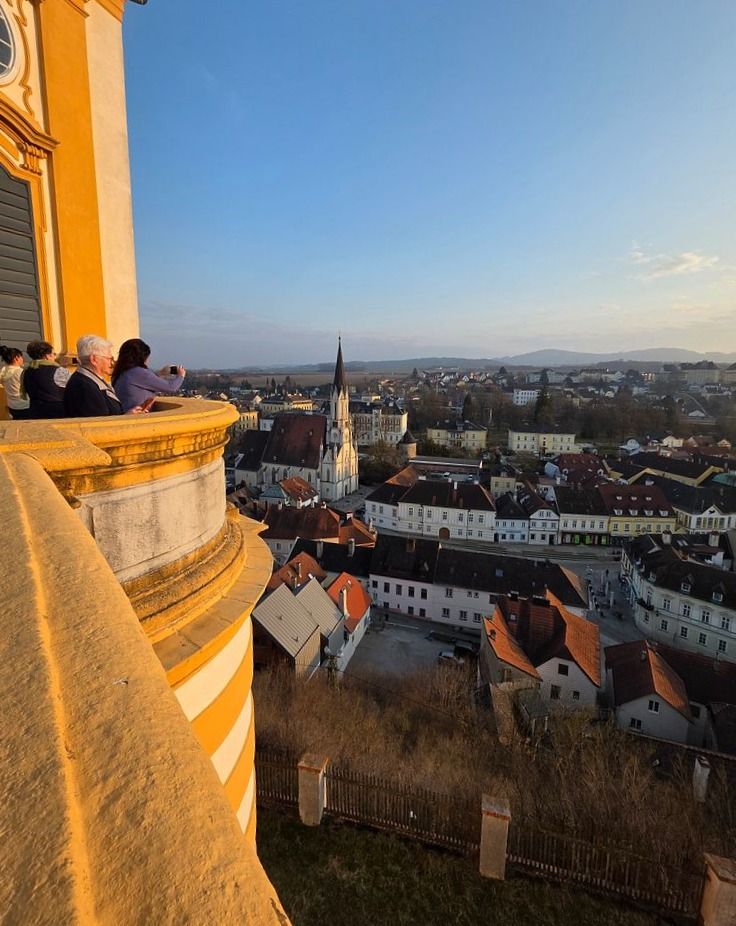
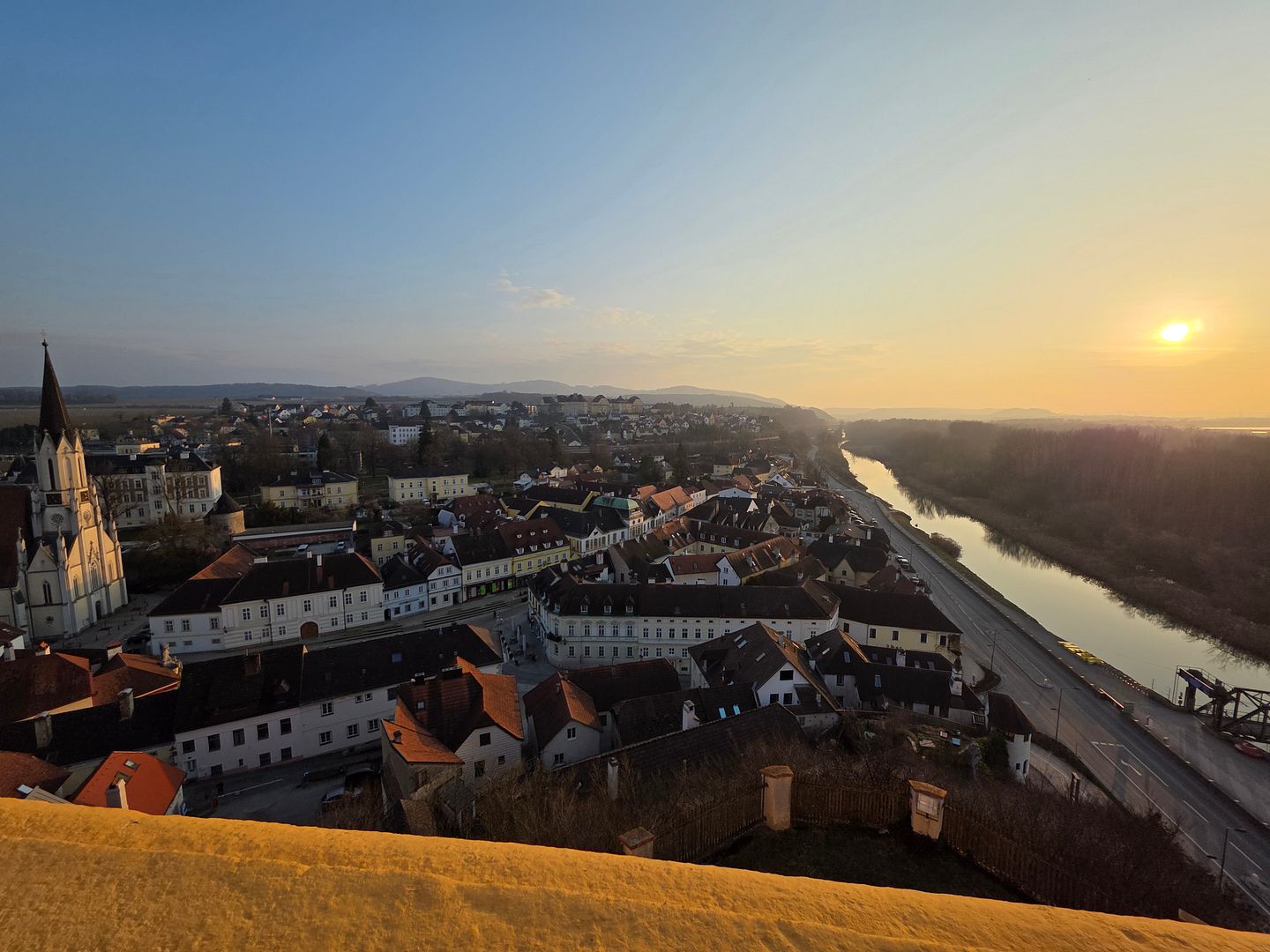
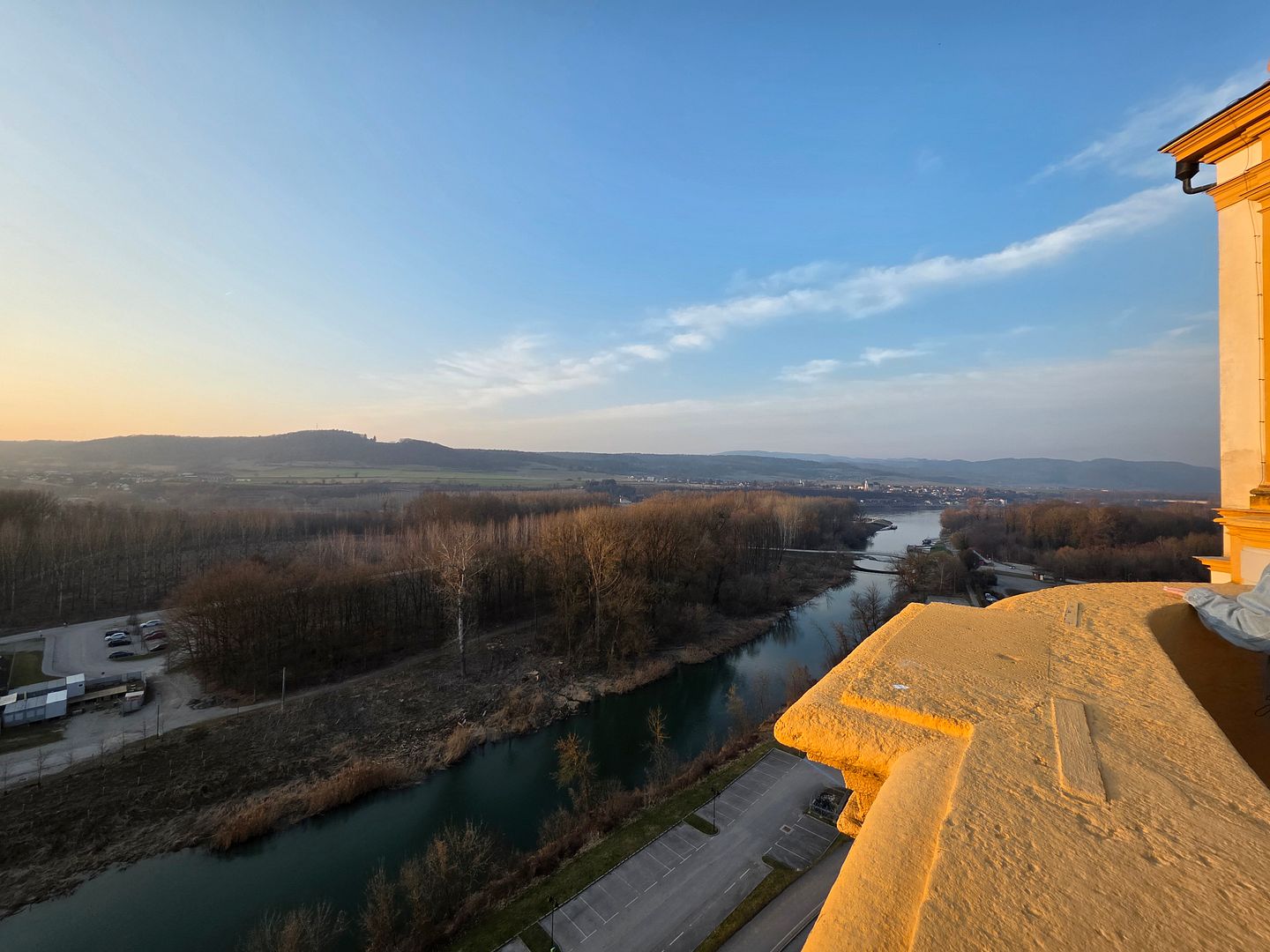
Stift Melk (Melk Abbey) is a renowned Benedictine monastery in Austria, located on a rocky outcrop overlooking the Danube River. Founded in 1089, it is a significant, UNESCO-listed Baroque architectural masterpiece that operates as an active monastery, school, and cultural center. The term Stift means abbey or foundation, and it represents a major center of faith and history.

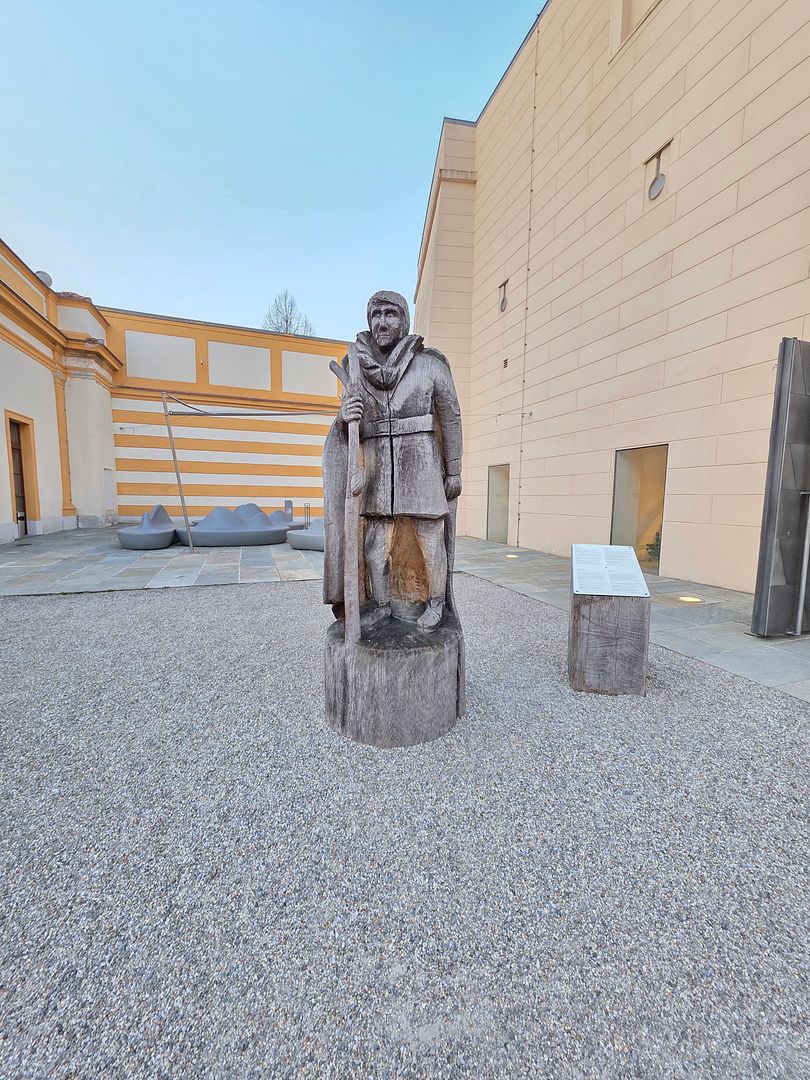
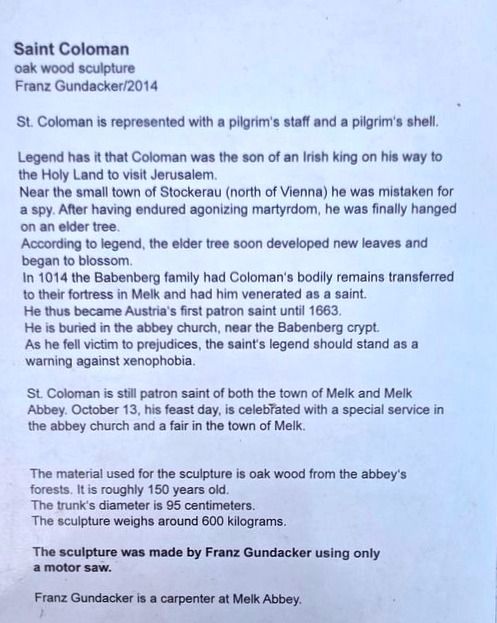
The history of Austria is closely connected with the history of Melk Abbey. Some of the first rulers of Austria, the margraves Heinrich, Adalbert and Ernst are buried in the collegiate church. Also buried there is the first patron saint of the Babenbergs, St. Koloman, who was the patron saint of the country until the 17th century.

Melk Abbey is one of the most beautiful and largest unified Baroque ensembles in Europe. Its magnificent architecture is known worldwide and is a UNESCO World Heritage Site. The baroque building (1702 – 1739) on a rock above the Danube is one of the most visited art-historical sites in Austria.

Known for its active Benedictine community following the motto of Ora et Labora et Lege (pray, work, and learn).

The italicized parts of my posts are information from the Melk Abbey website.

Our group from the river cruise were divided into two groups and we were the only folk at the Abbey at this point in the late afternoon. Our group went through the Abbey last and our tour guide locked up each room as we exited the room.

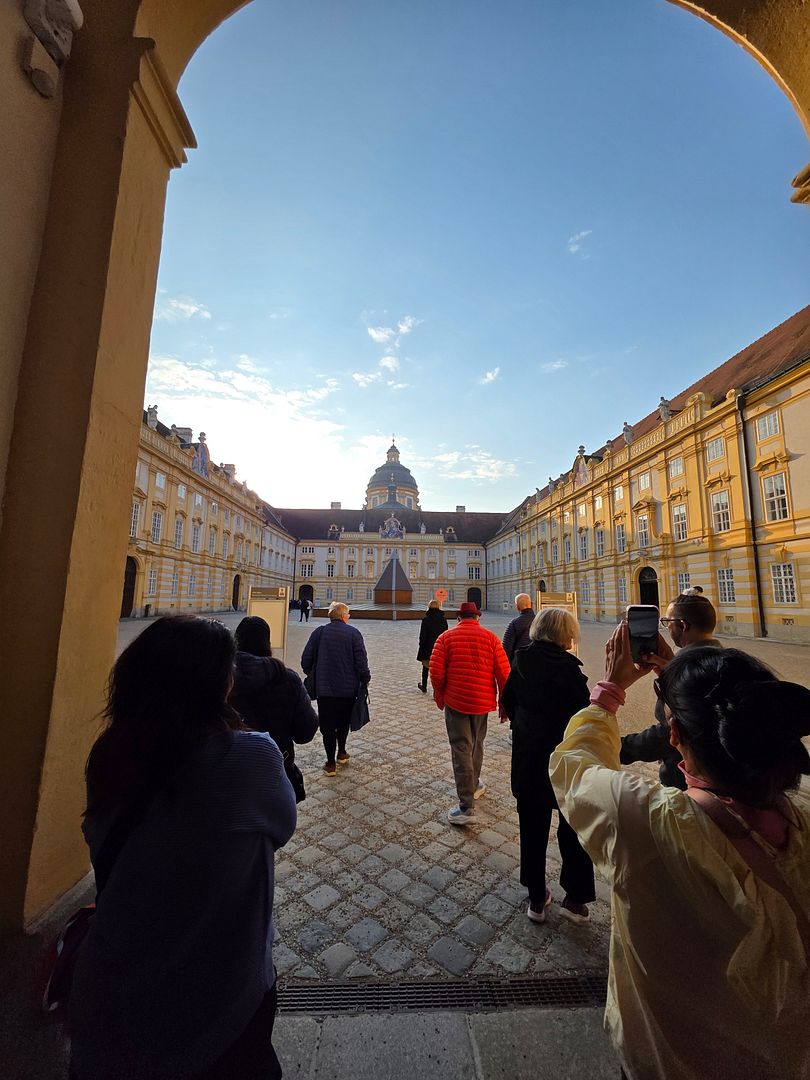
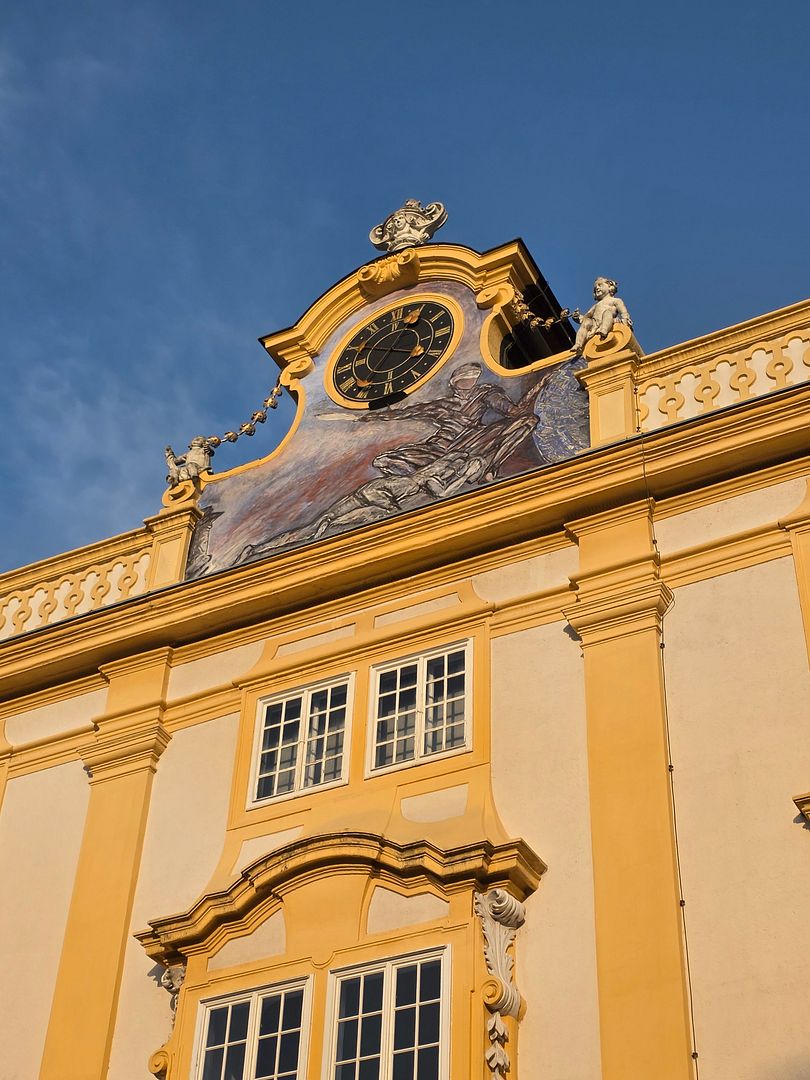
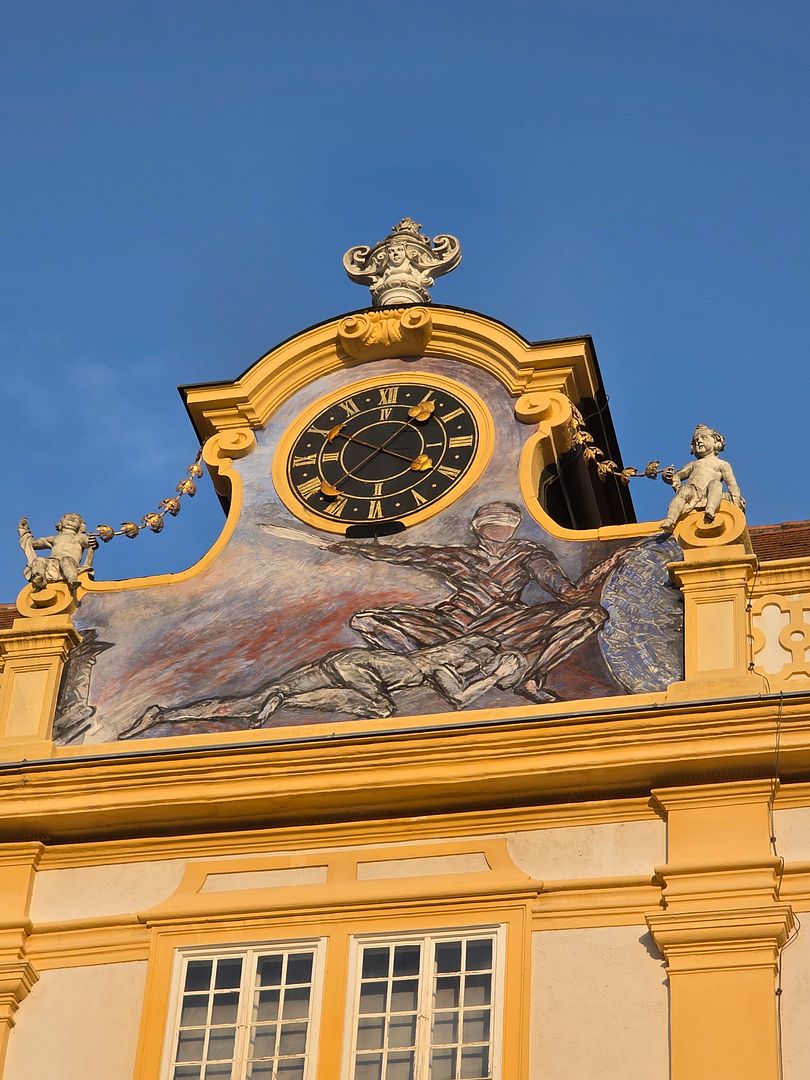
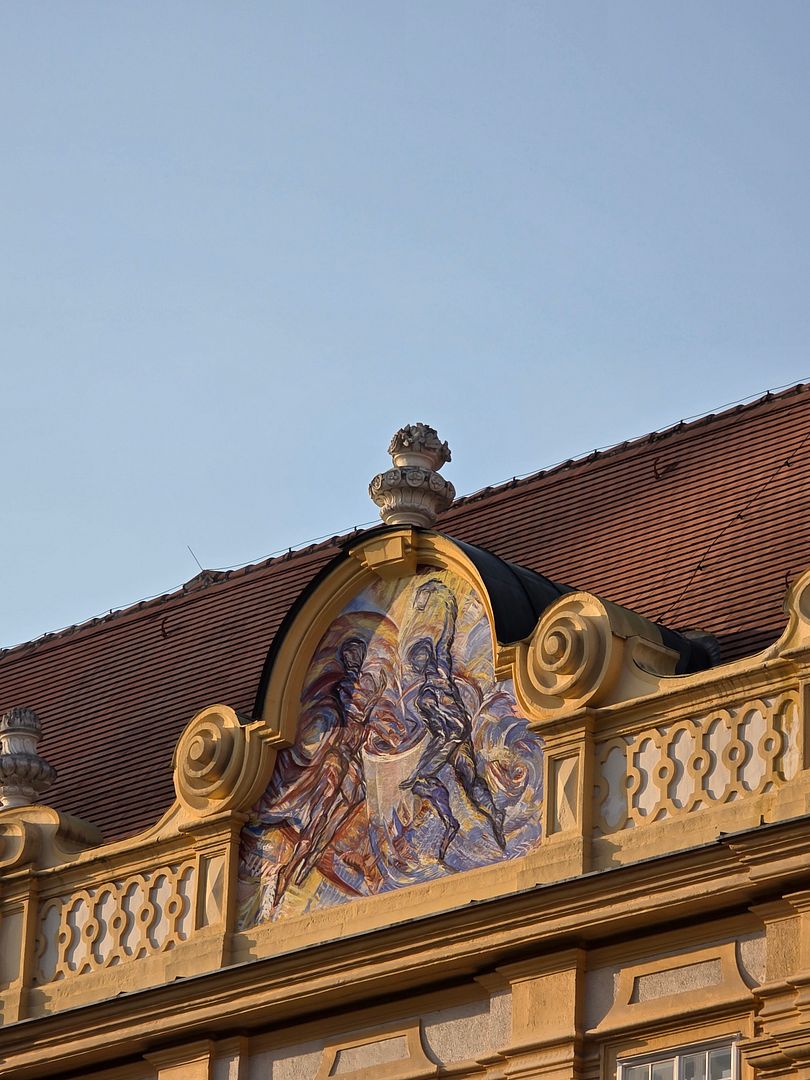
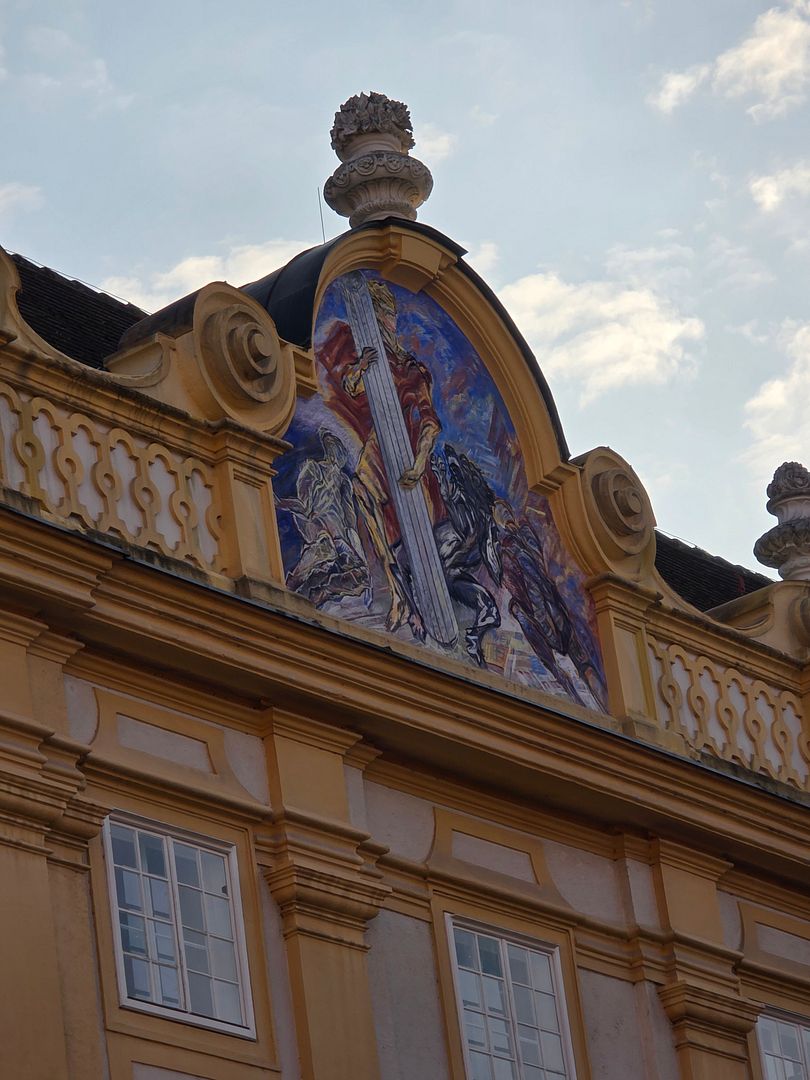
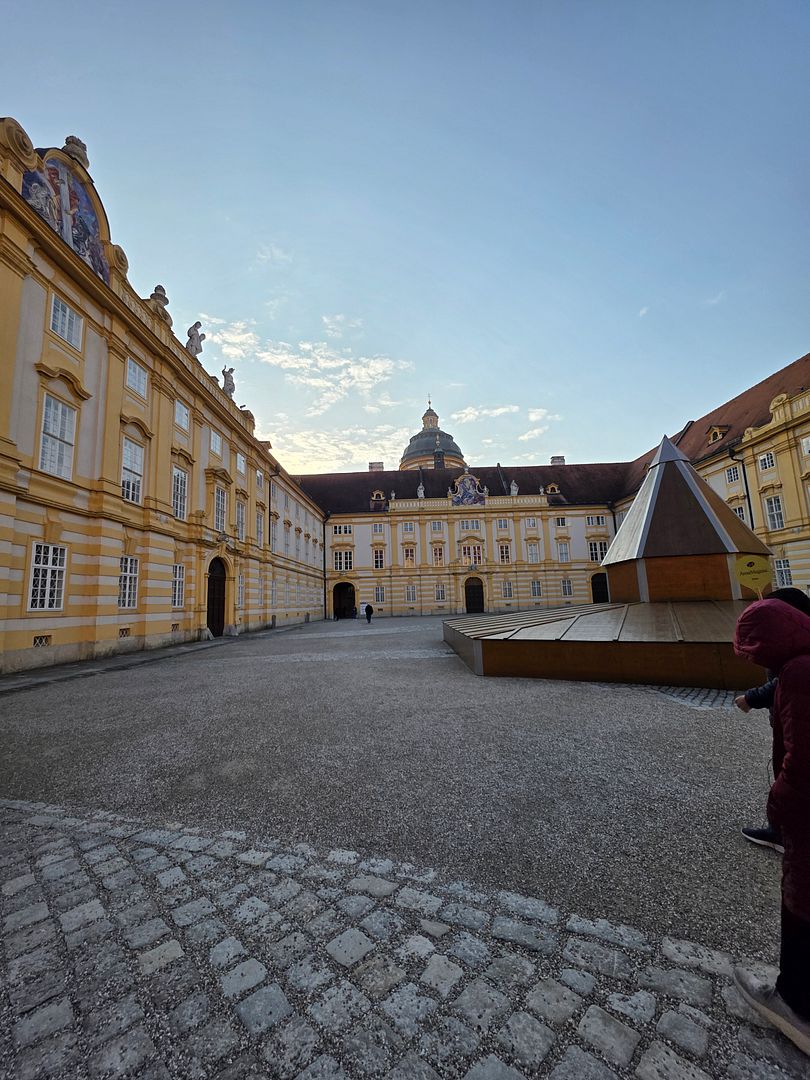
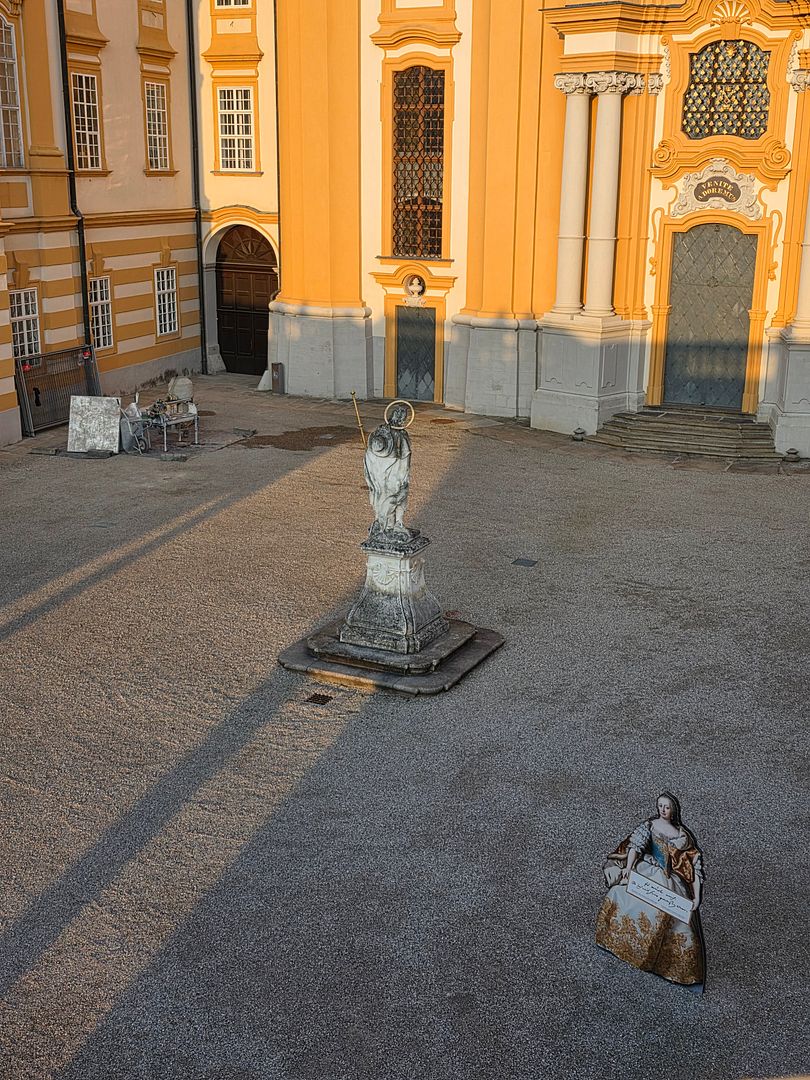
The Prelate’s Courtyard forms a trapezoid, 275 ft. long and 138 ft. wide. On the cornices on each of the four sides are statues of apostles and prophets. In the center of each cornice is an area framed by a round arch. These originally contained Baroque frescos by Franz Rosenstingl but, unable to be restored, were replaced recently (1988) with more contemporary forms by Peter Bischof and Helmut Krumpel.

The four murals in the courtyard represent four virtues: Prudence, Justice, Fortitude, and Temperance.

The four murals in the courtyard represent four virtues: Prudence, Justice, Fortitude, and Temperance.

Time to walk up all those stairs to our bus that would take us back to the AmaMagna for dinner. We turned right at the stairs and took the elevator instead.

This was the night we were slated for a smaller dinner group in the Al Fresco Restaurant and I’ll share that dinner event in another post.

Dürnstein, Austria

On Tuesday March 3rd we had a one hour walking tour of the little town of Durnstein before we continued by bus to Melk Abbey. I’m breaking up the posts on this day because of photo overload.

You could tell our tour guide has been doing this tour for a long time. Her younger sister was also another tour guide.

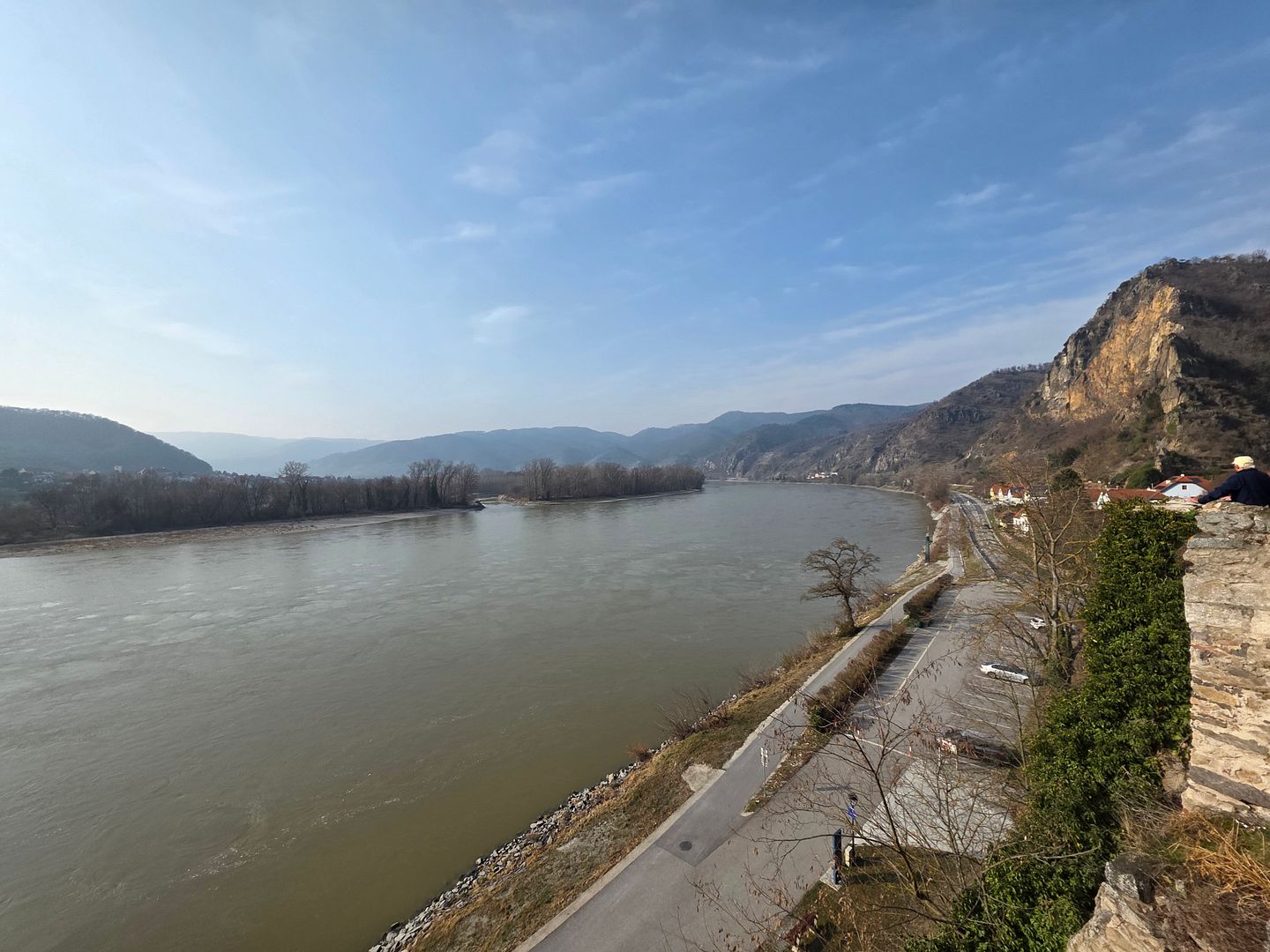
Dürnstein (German pronunciation: [ˈdʏʁnˌʃtaɪ̯n]) is a small town on the Danube river in the Krems-Land district, in the Austrian state of Lower Austria. It is one of the most-visited tourist destinations in the Wachau region and also a well-known wine growing area

The town gained its name from the medieval Dürnstein castle, which overlooked it. The castle’s name derived from the German duerr/dürr, meaning “dry”, and Stein, “stone”. The stone castle was dry because it was located on a rocky hill, high above the damp conditions of the Danube at the base of the hill. The modern town stands between the castle and the river.

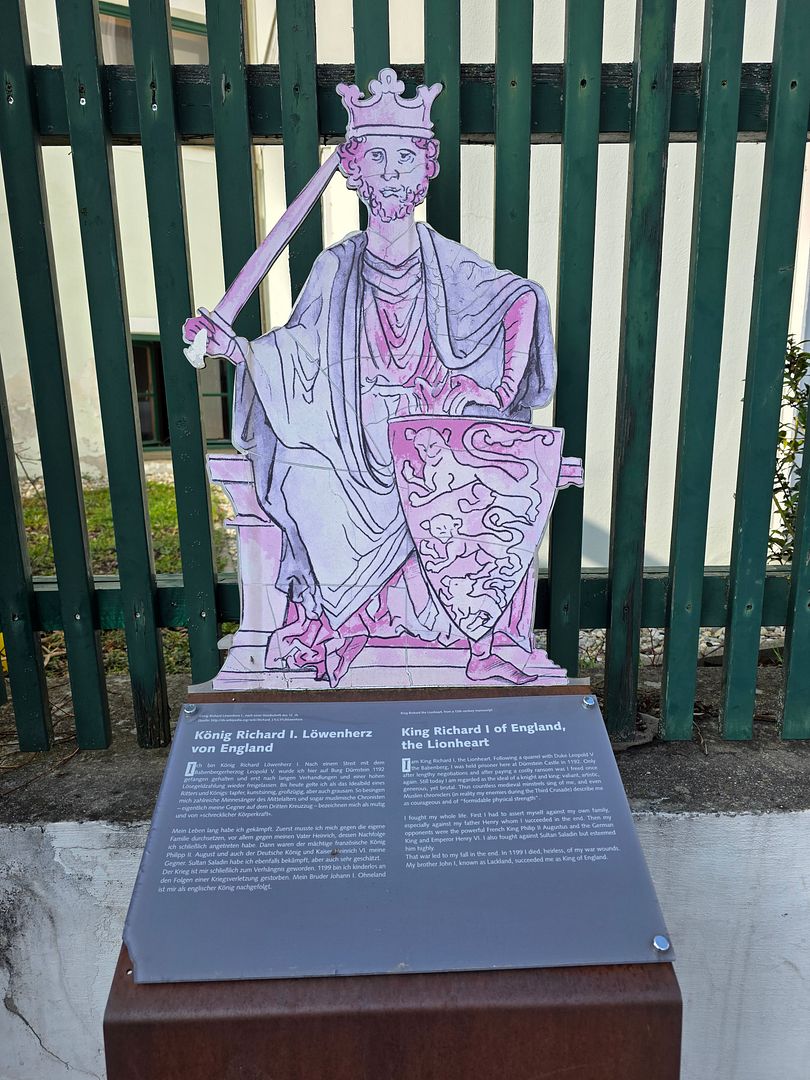
Dürnstein was first mentioned in 1192 when, in the castle above the town, King Richard I of England was held captive by Leopold V, Duke of Austria, after their dispute during the Third Crusade. Richard the Lionheart had offended Leopold the Virtuous by casting down his standard from the walls at the Battle of Acre, and the duke suspected that King Richard ordered the murder of his cousin Conrad of Montferrat in Jerusalem. In consequence Pope Celestine III excommunicated Leopold for capturing a fellow crusader. The duke finally gave custody of the king to Henry VI, Holy Roman Emperor, who imprisoned Richard at Trifels Castle.


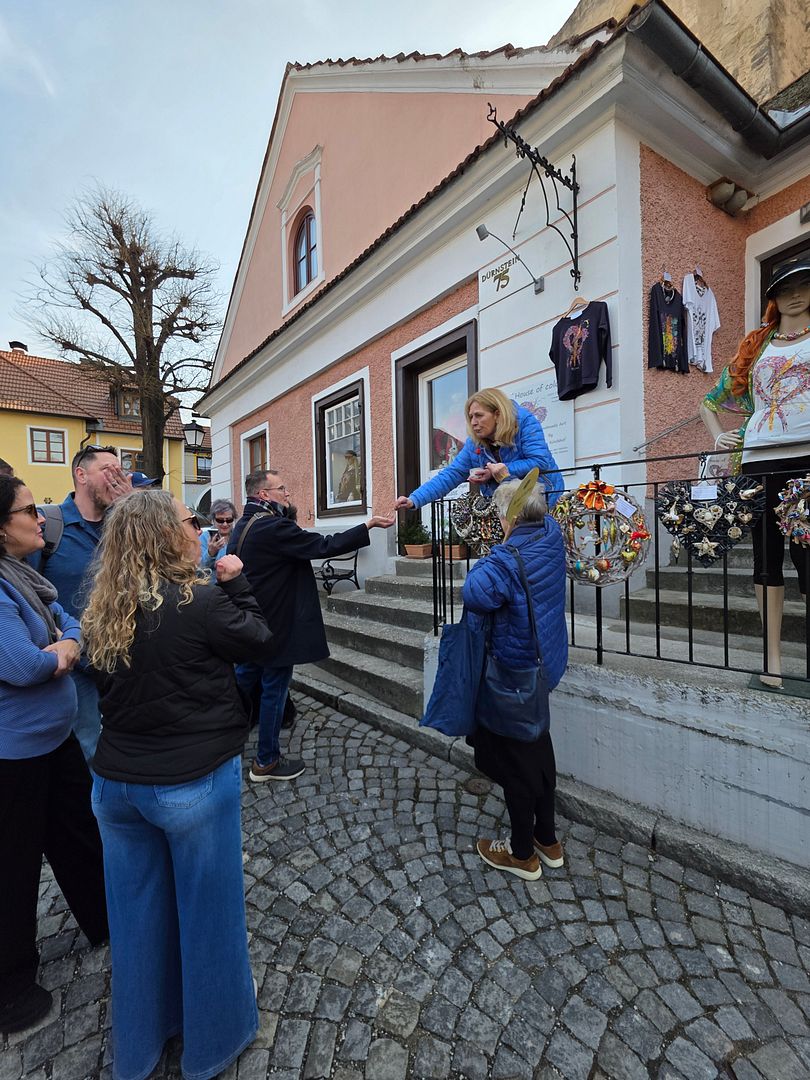
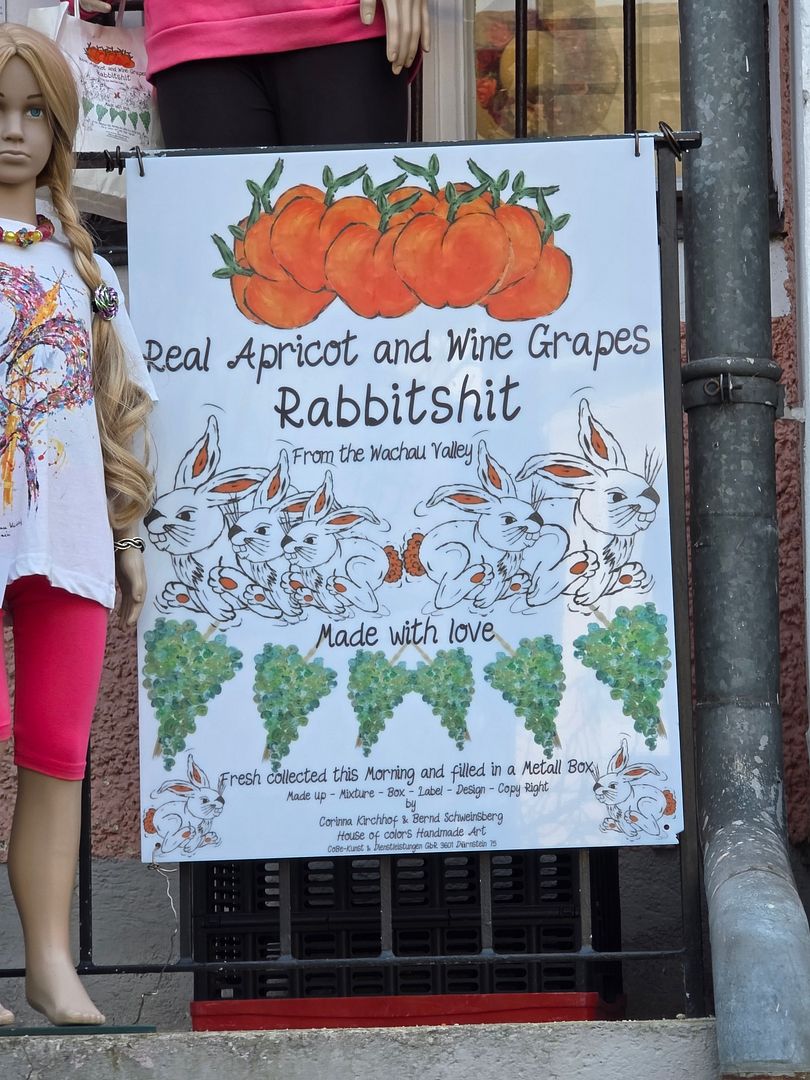
I don’t know if this is the kind of Copy Right I would want to market with. The chocolate covered treats and the apricot bits were good, though.

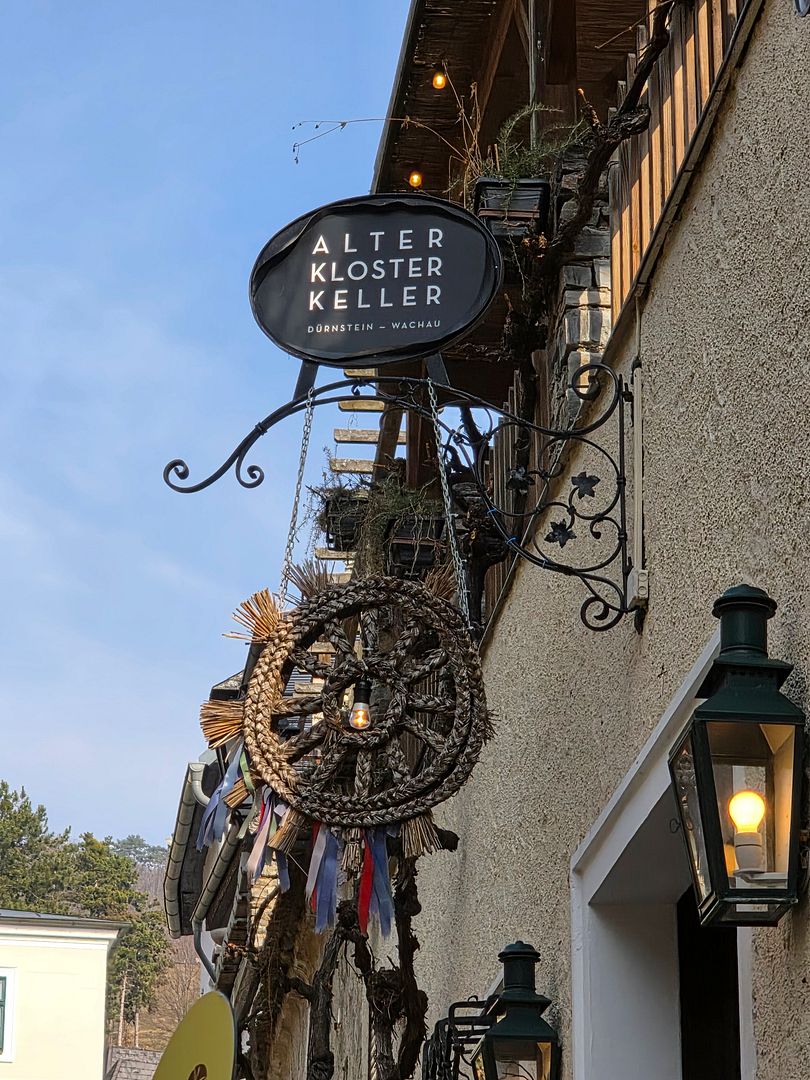
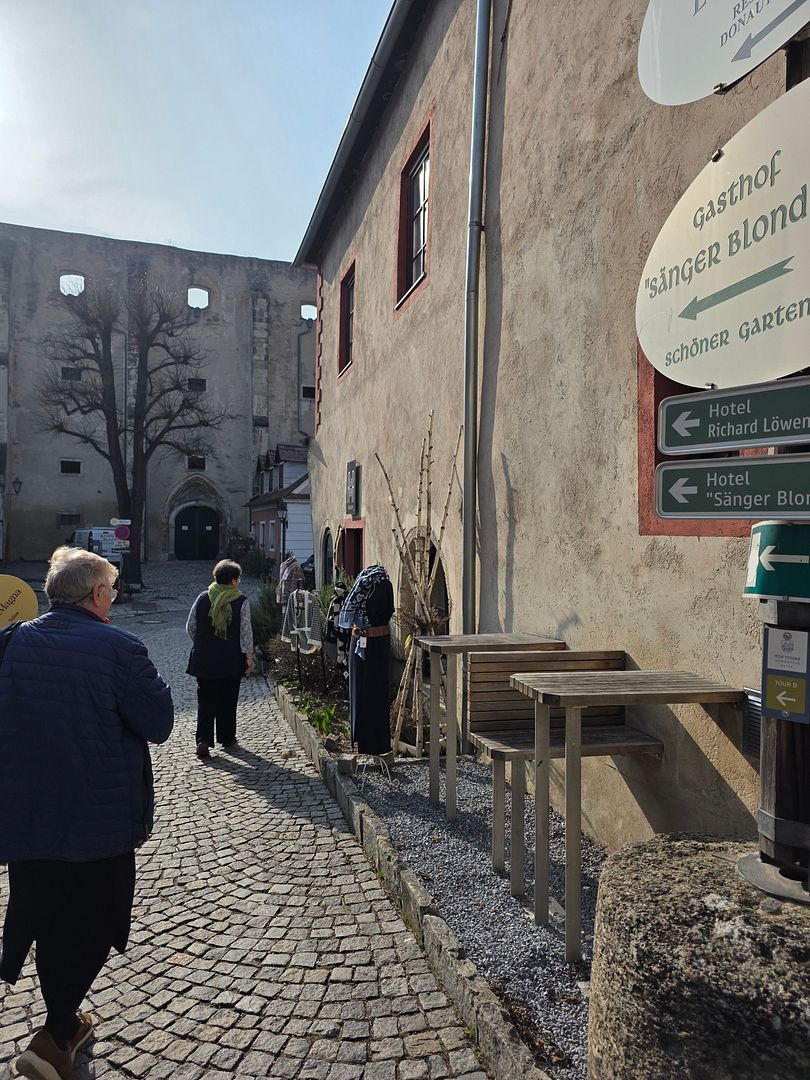
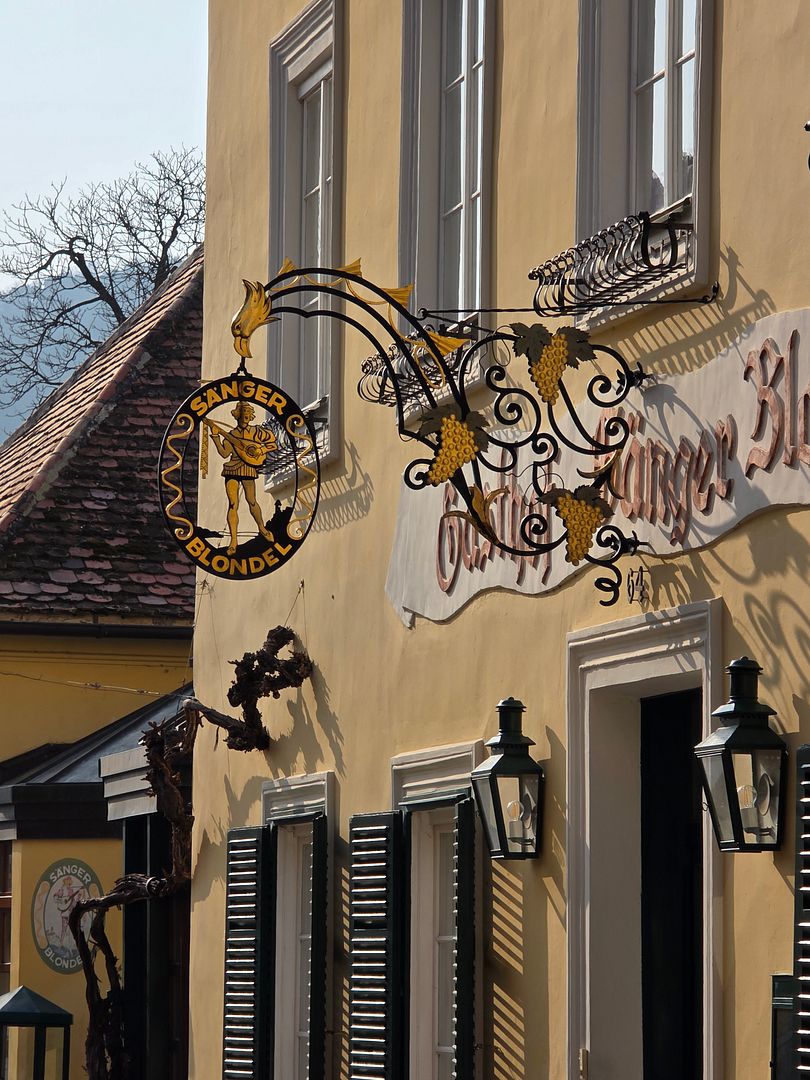
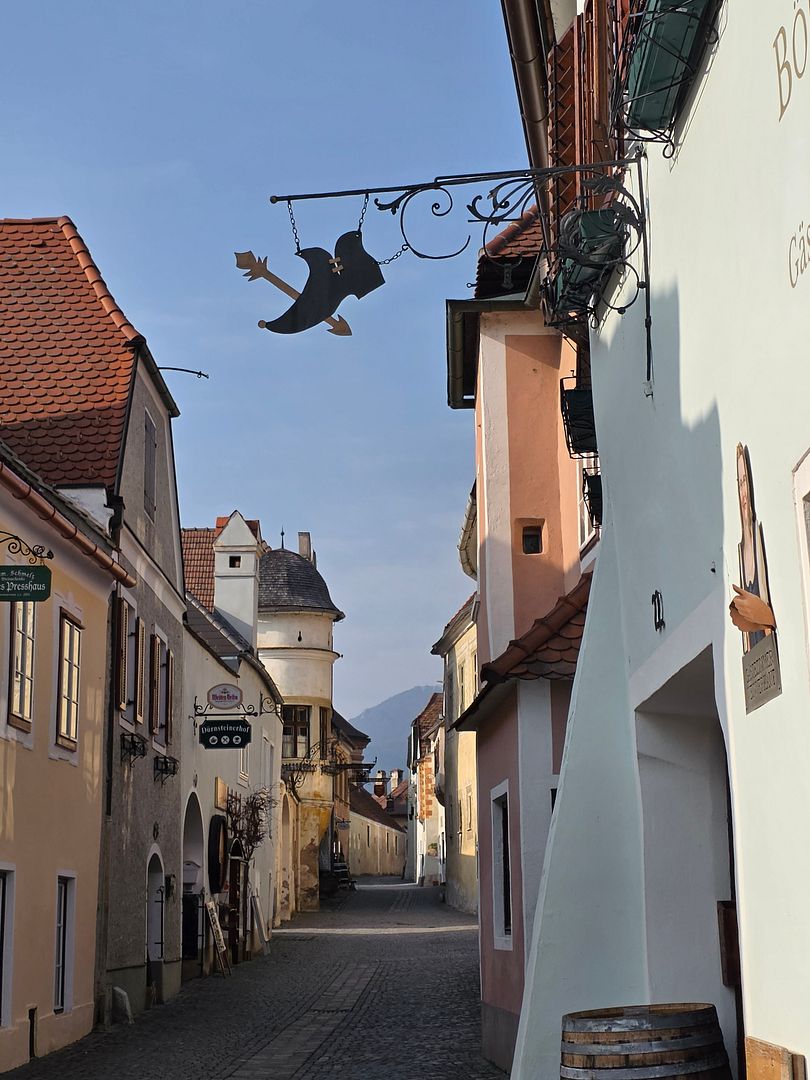
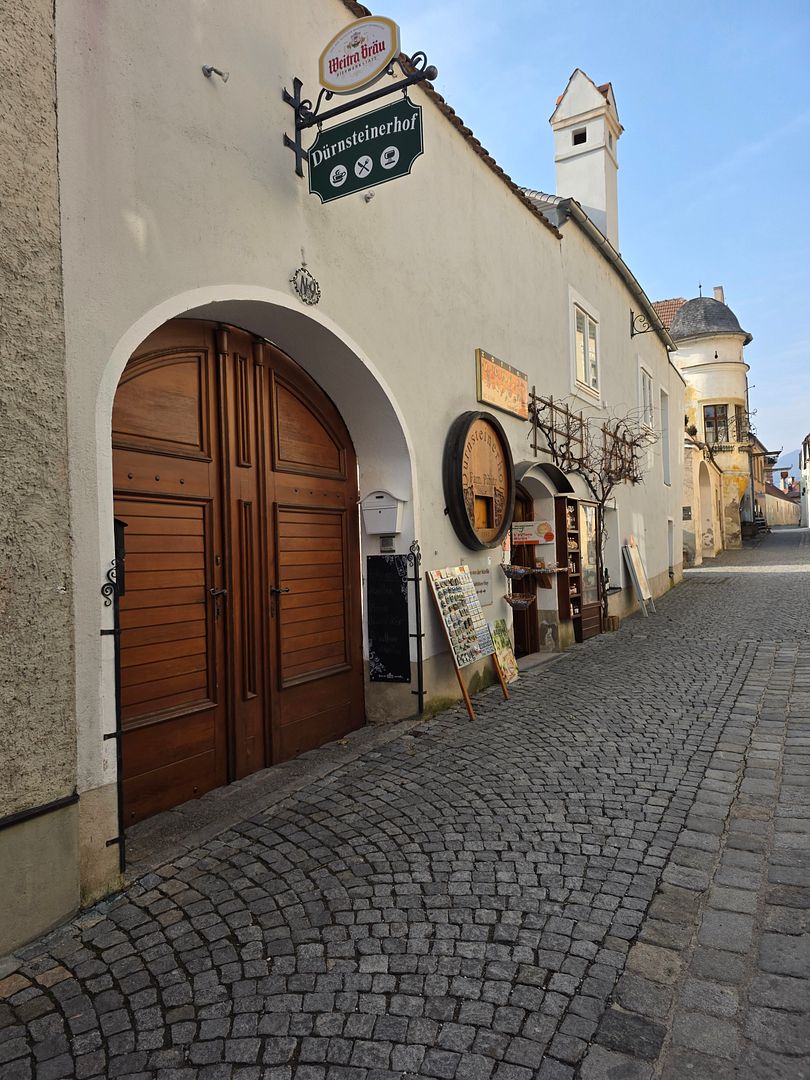
I enjoyed the signs for the shops and restaurants.

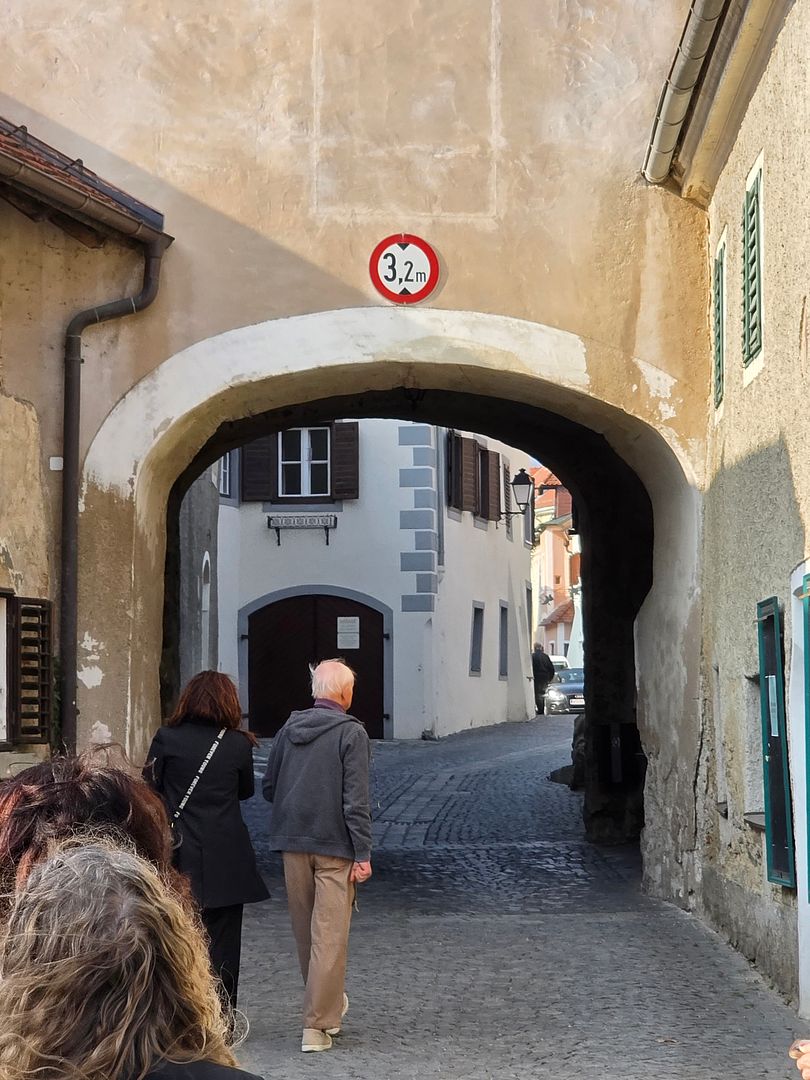
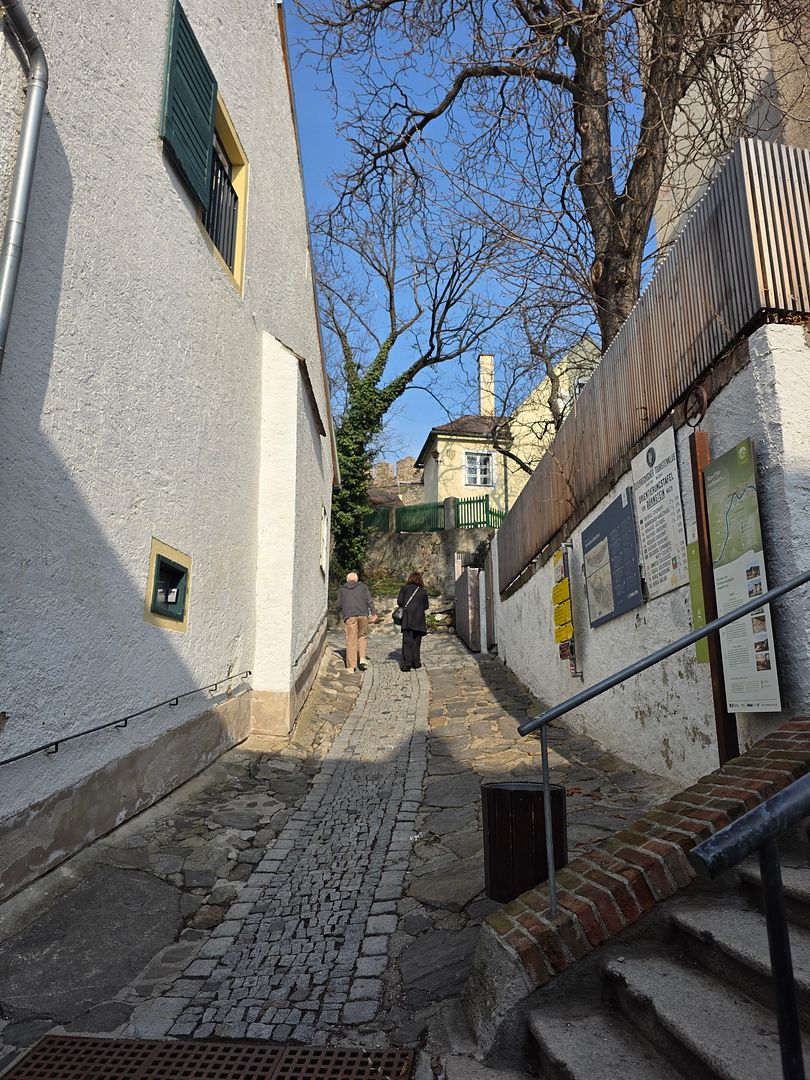
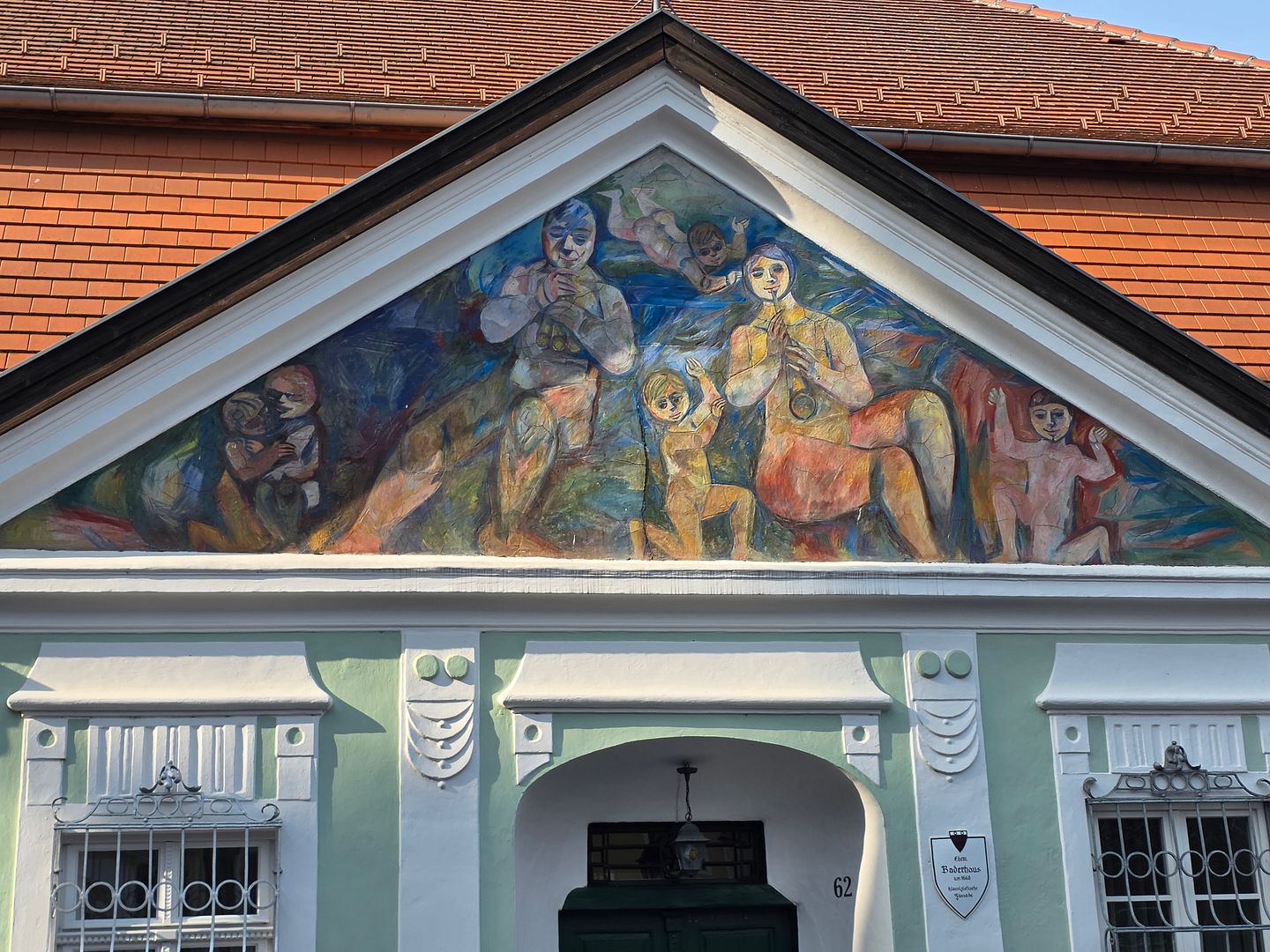
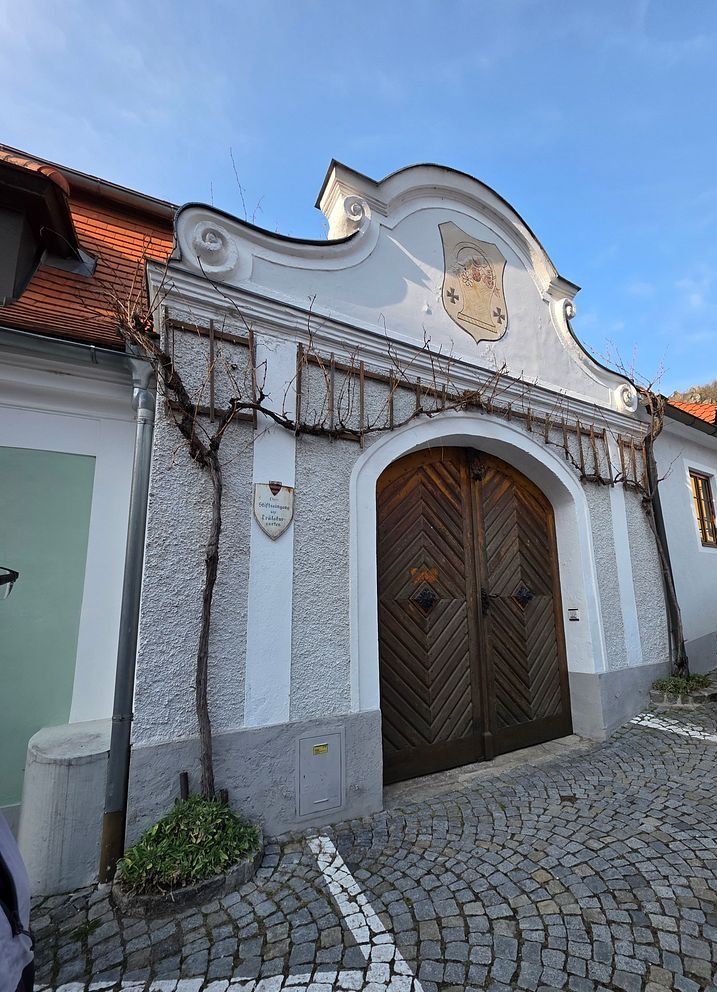
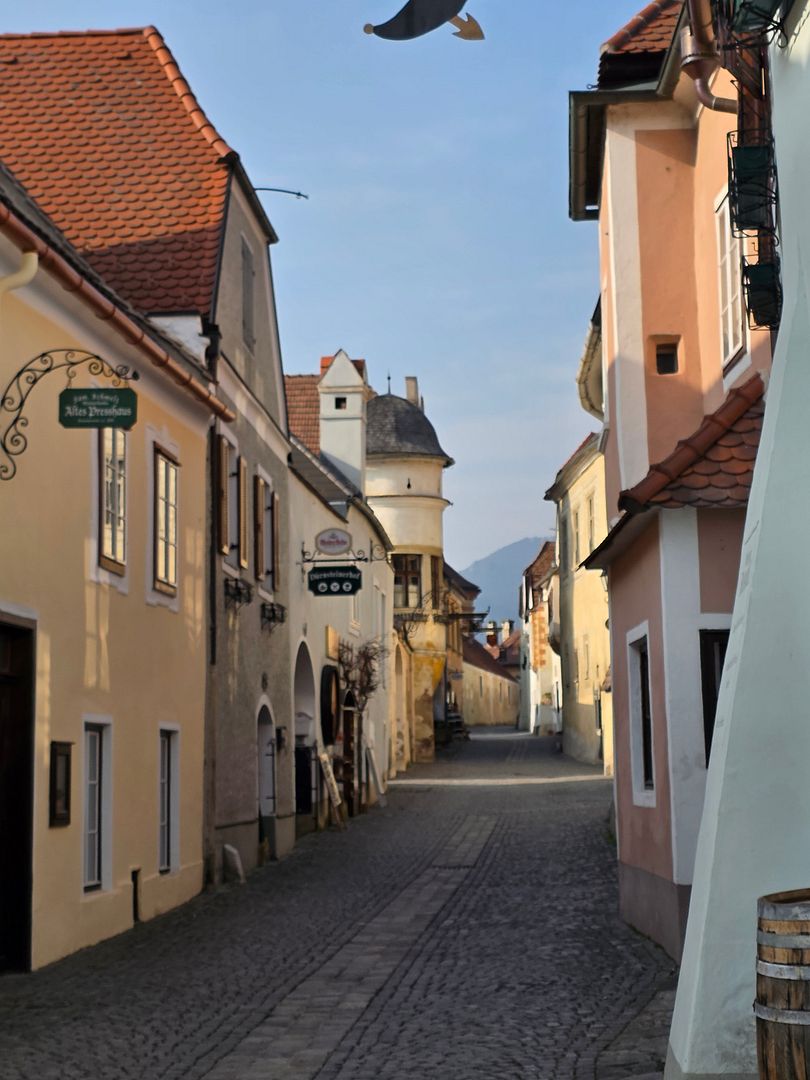
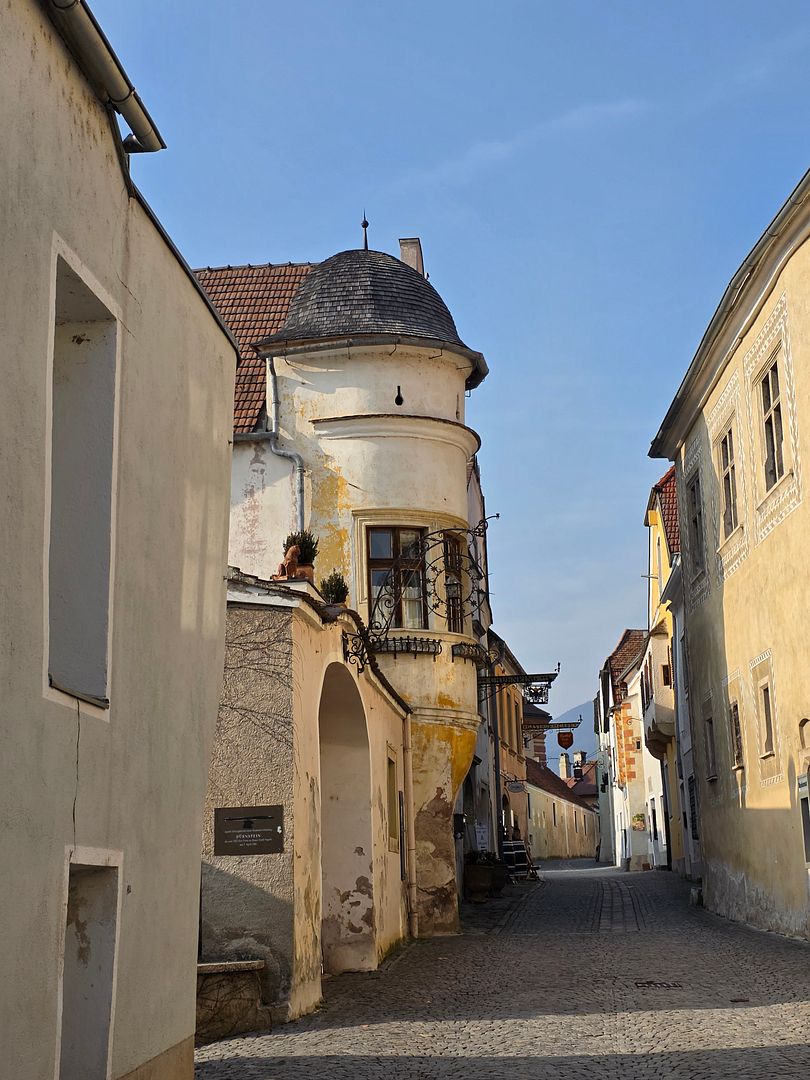
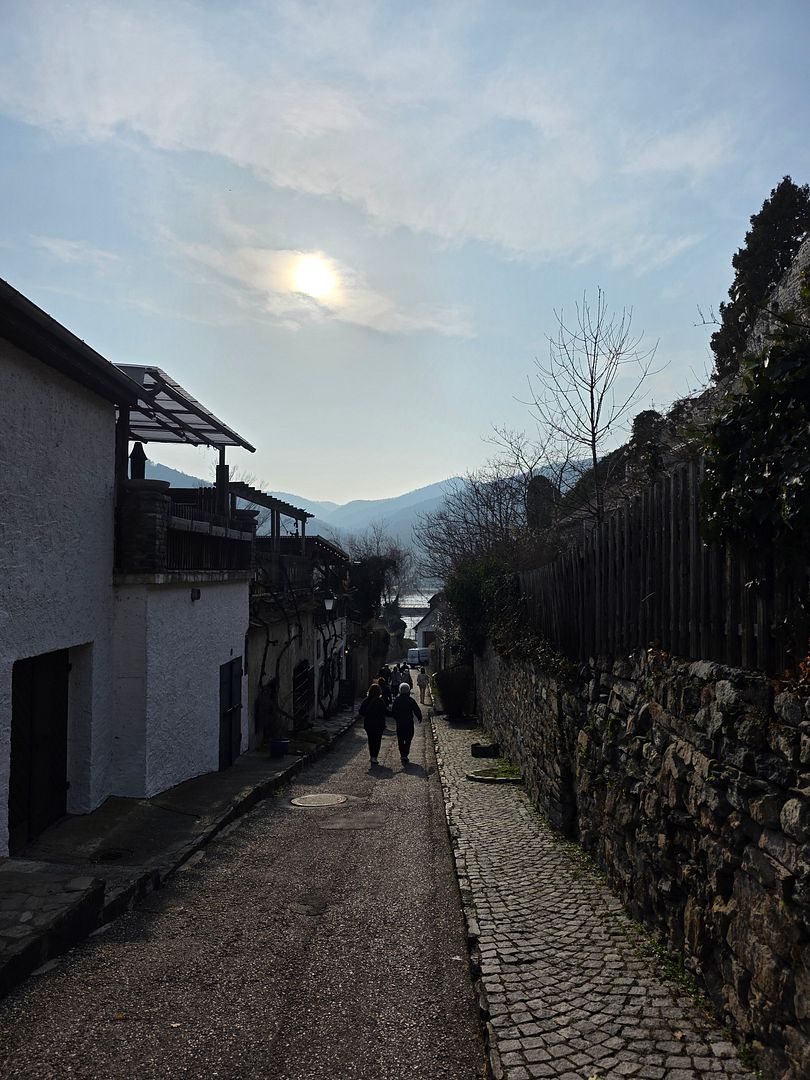
Interesting architecture and the cobbled streets were distinct.

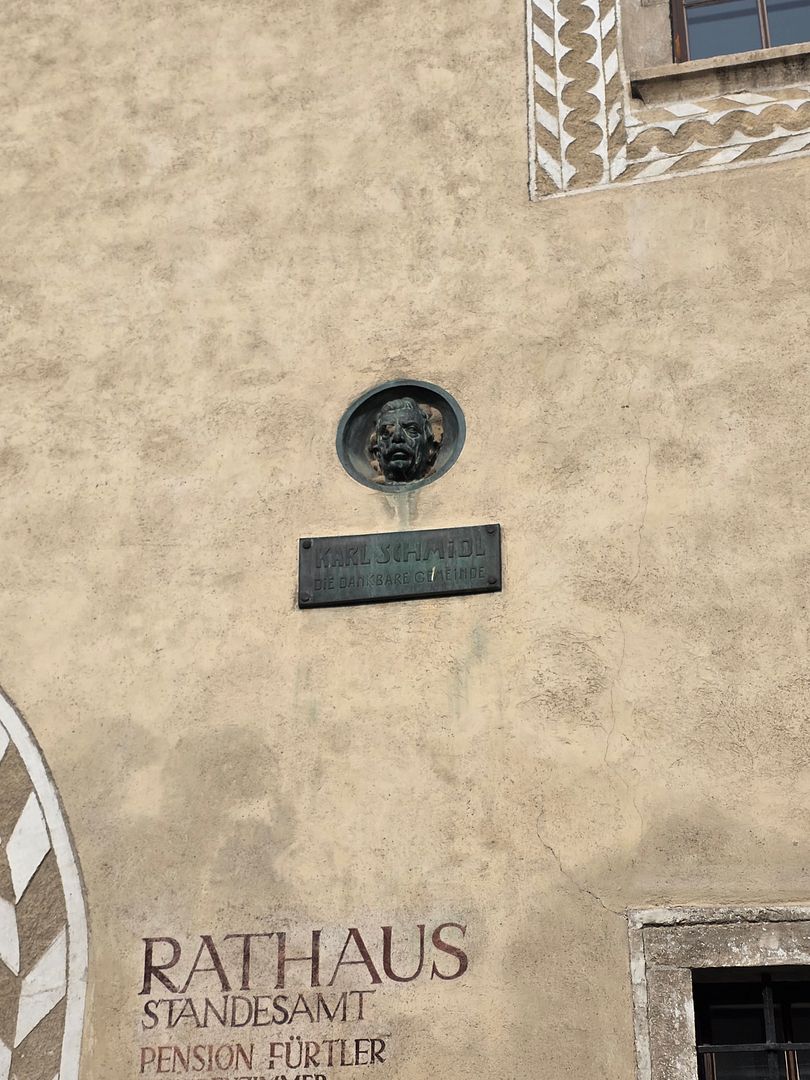
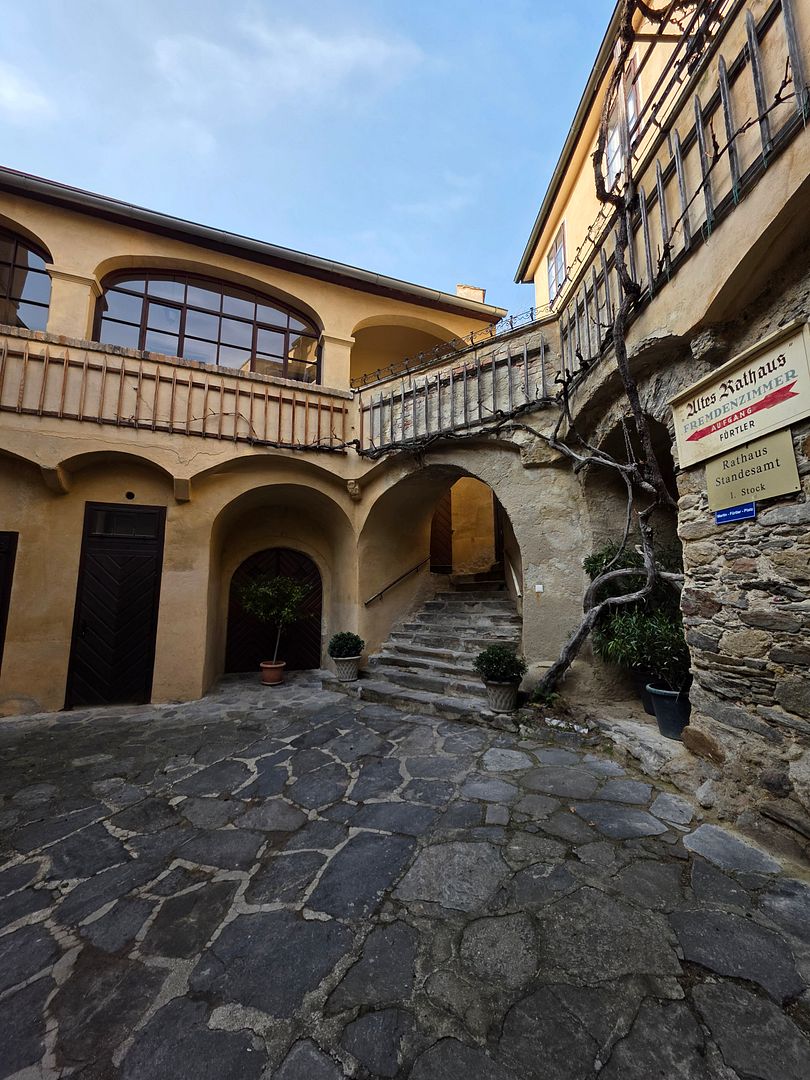
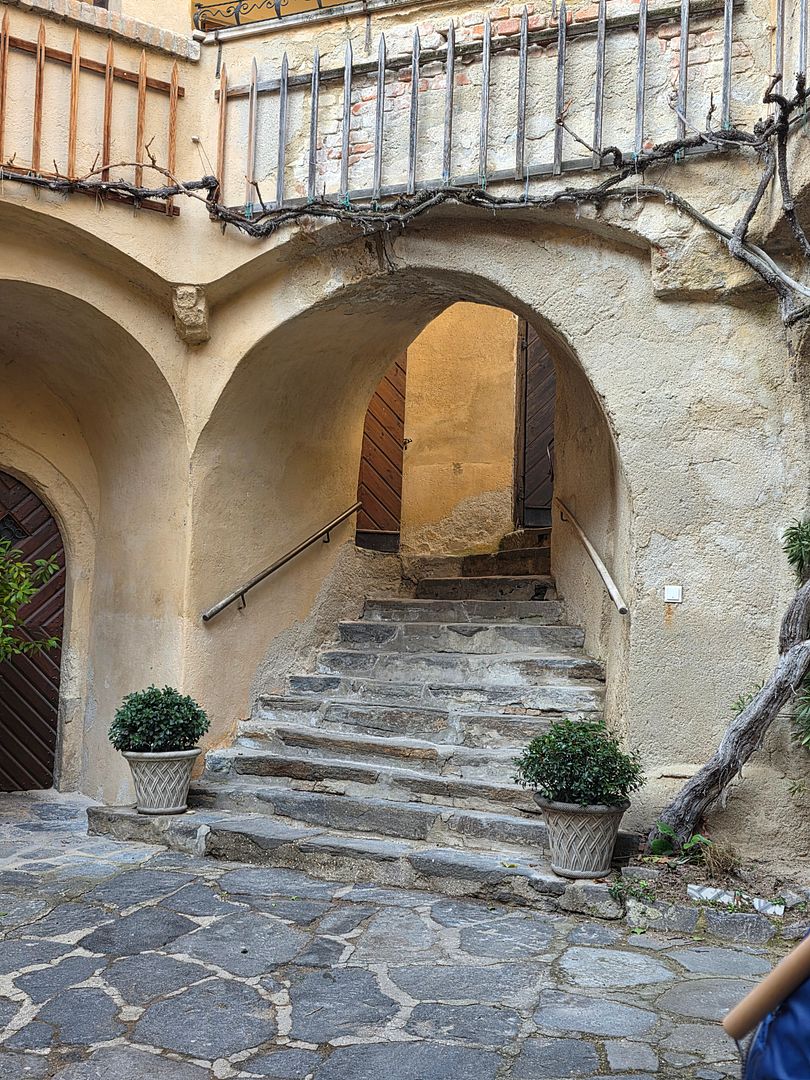
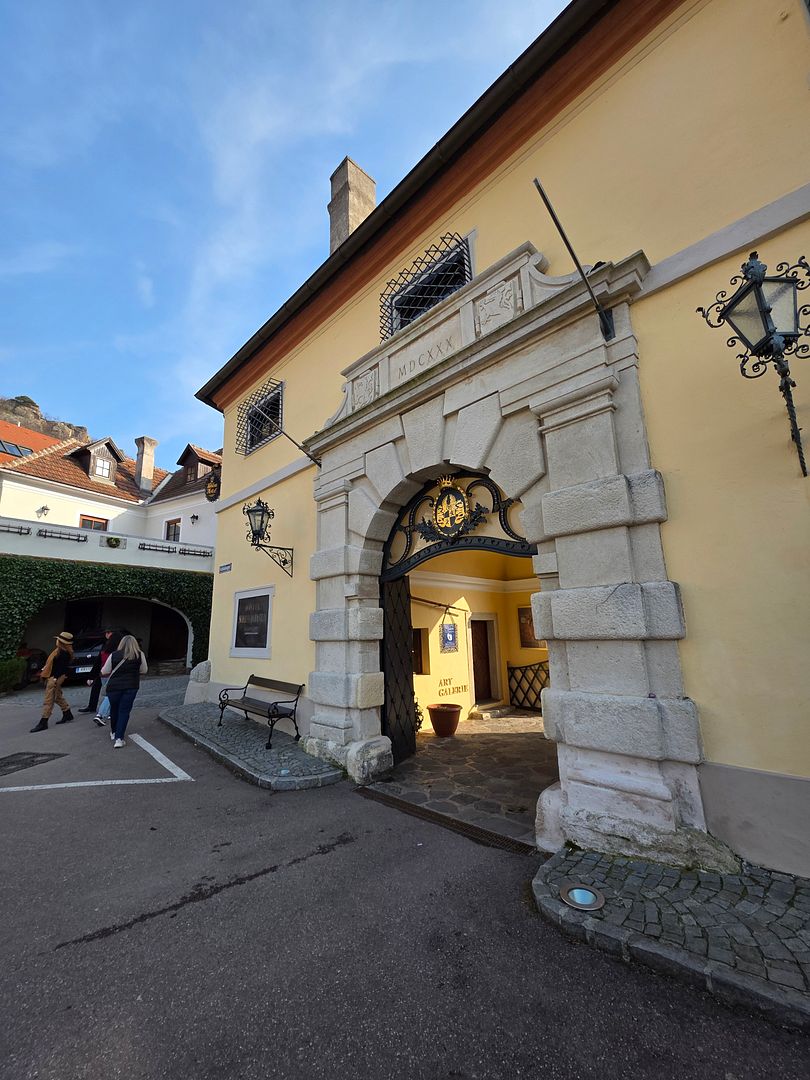
In the vibrant heart of Dürnstein, our estate stands proudly, nestled beside the historic town hall and set against the tranquil backdrop of the lightly traveled village street. A charming courtyard leads you up a stone staircase into the embrace of an ancient gem, built in 1453. On the first floor, you will find cozy guest rooms with private bathrooms and modern TVs, as well as direct access to a dreamy garden paradise. Here, after an eventful day, you can unwind in an oasis of tranquility or lose track of time while savoring a fine glass of wine.

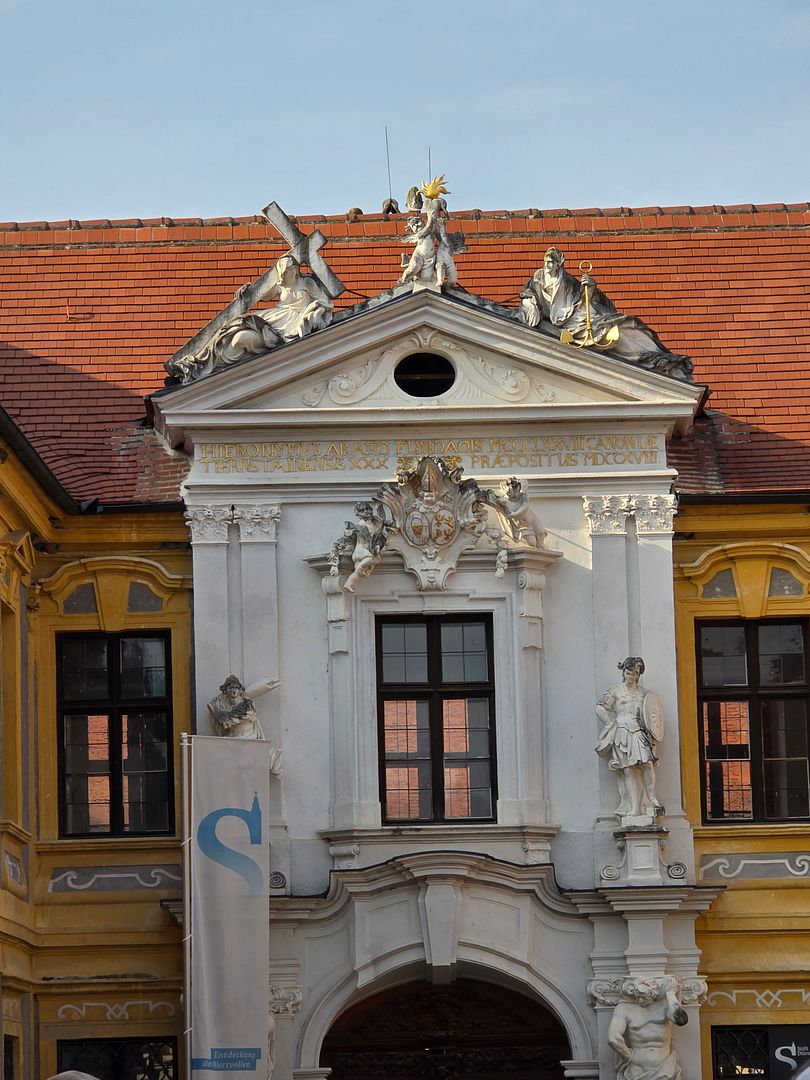
This little town boasts a 5 star hotel, Hotel Schloss Durnstein. Entrance to the courtyard above.

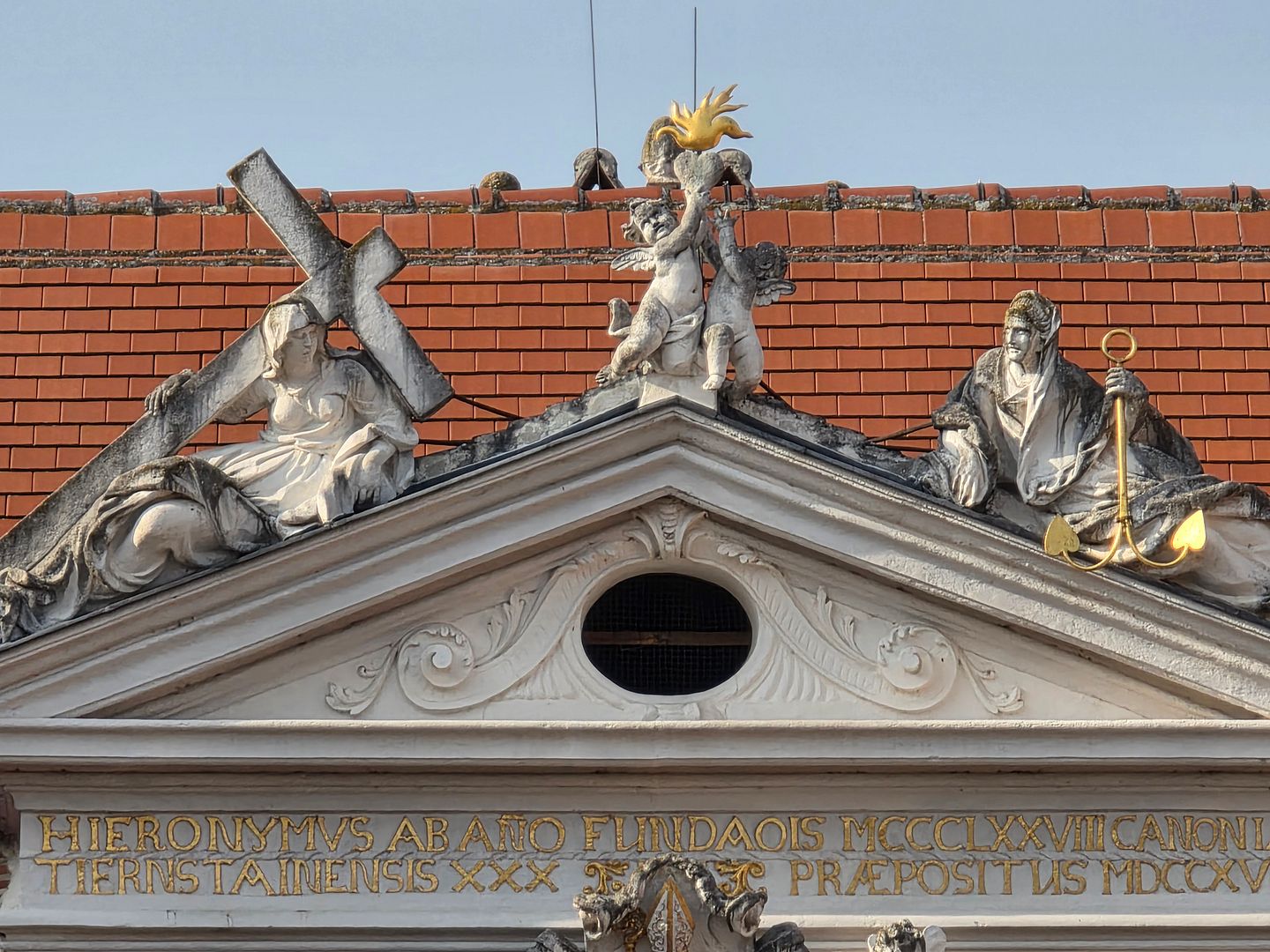
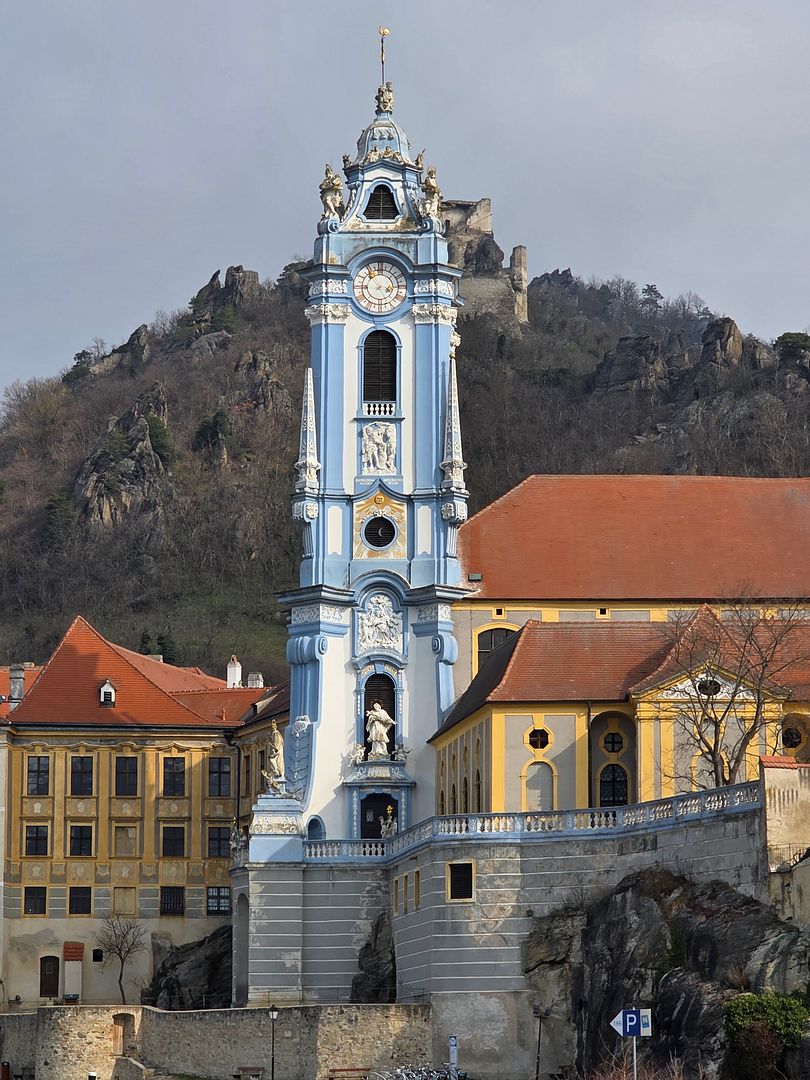
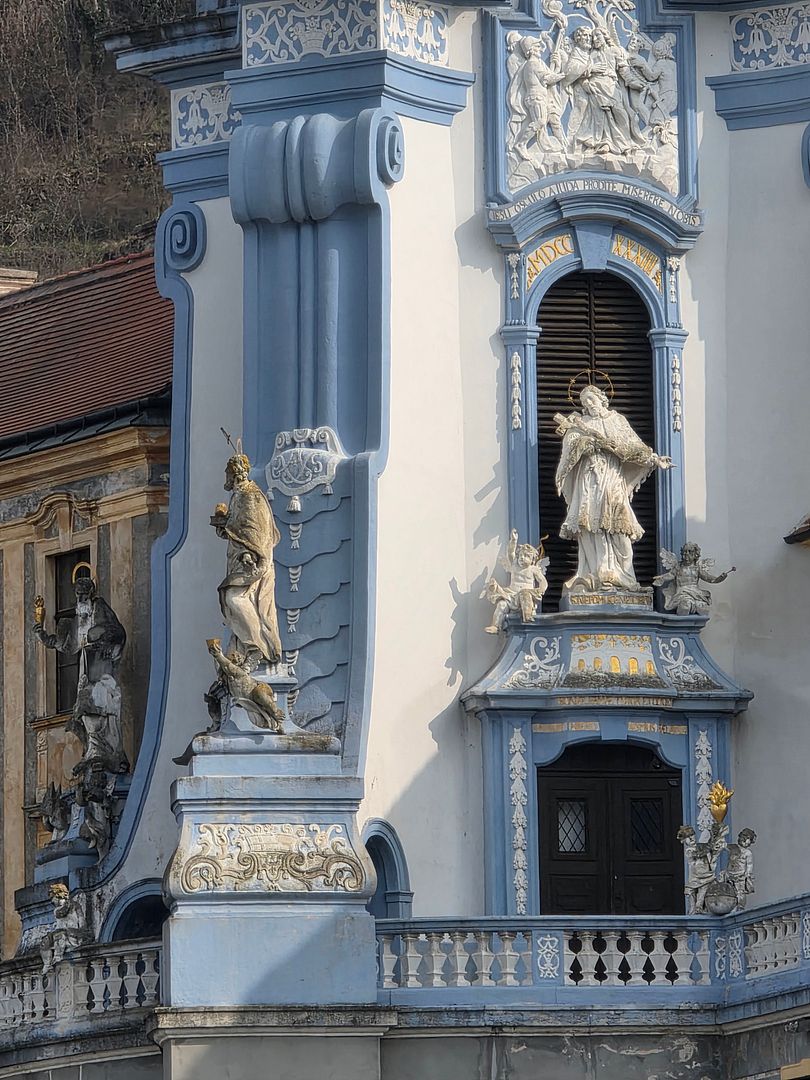
I posted several photos in another post of this blue tower when we passed it earlier on this day. While we were in Durnstein we didn’t walk to this former monastery but after the fact we realized it was a big part of historic Durnstein.

History of Stift Dürnstein

Stift Dürnstein was founded in 1410 as an Augustinian Canons monastery. It was part of a larger spiritual and religious network that played a significant role in the medieval region. However, Dürnstein was already famous by the 11th century, particularly due to the imprisonment of Richard the Lionheart, who was held captive in the nearby castle of Dürnstein.

The monastery experienced its golden age in the 18th century when it was rebuilt in the Baroque style. Under the direction of renowned Baroque architects Jakob Prandtauer and Joseph Munggenast, the monastery was transformed into the magnificent structure seen today. The distinctive blue-and-white church tower, visible from afar, has become one of the iconic landmarks of the Wachau Valley.

In 1788, the monastery was secularized, and the Augustinian Canons left. Today, the monastery serves as a venue for cultural events and is a popular destination for visitors eager to explore its rich history and Baroque splendor.

We headed back to the bus for our trip to Melk Abbey Visit. After our visit to Melk we would be bused to the AmaMagna that was now docked in Melk. We would reach the boat in time for dinner and on this night we were scheduled to enjoy the Chef’s Table.

Leaving Budapest

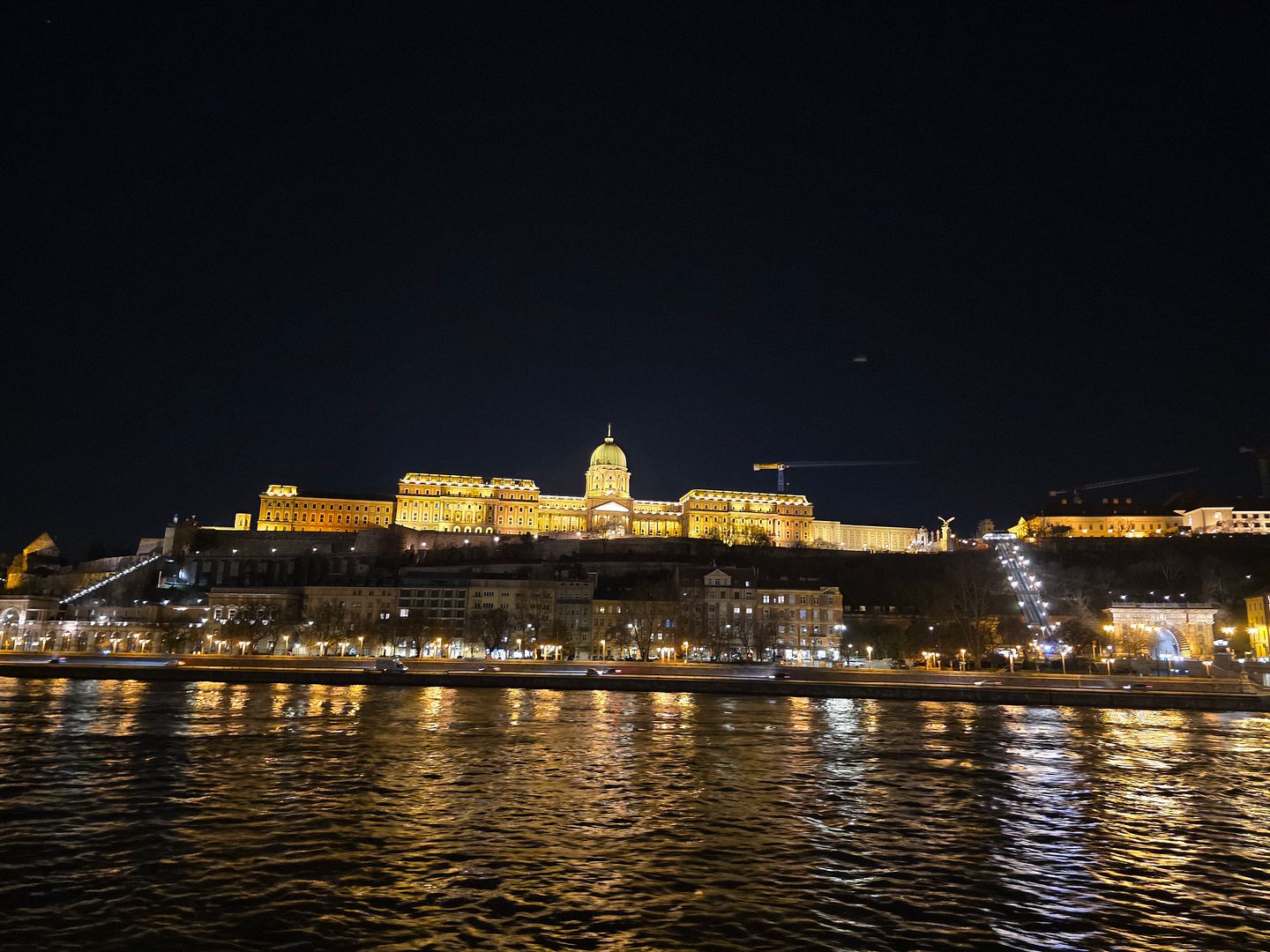
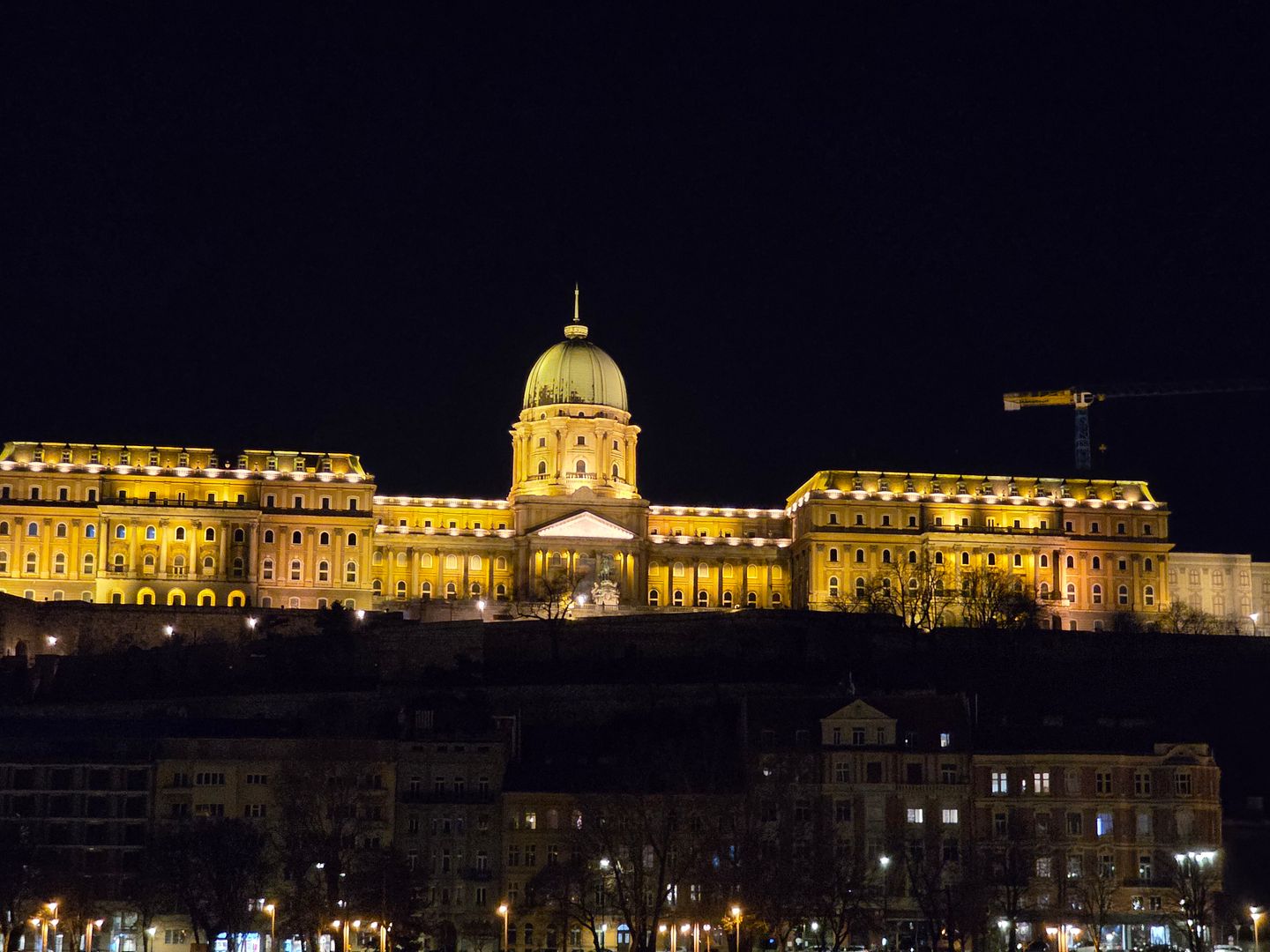
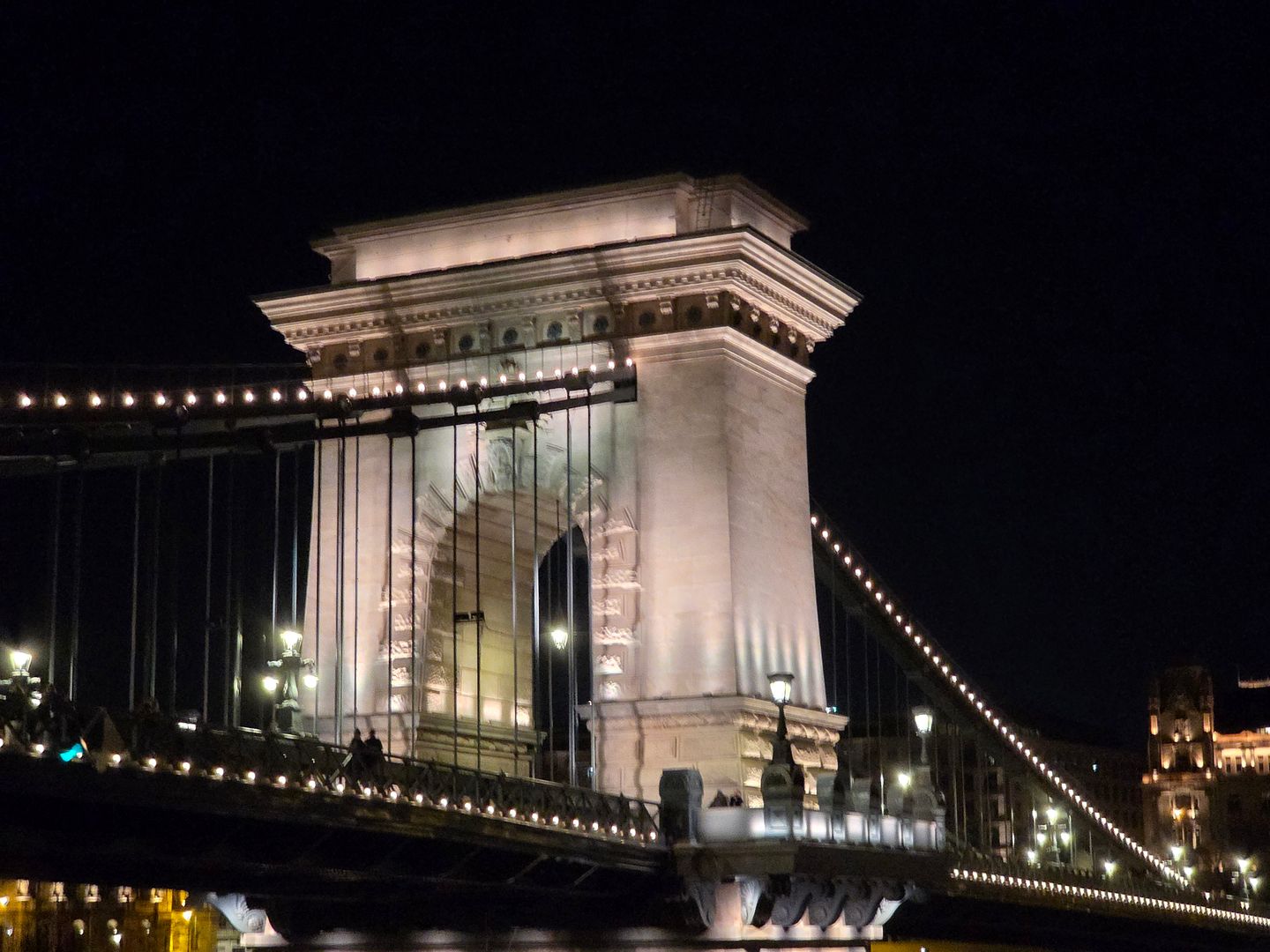
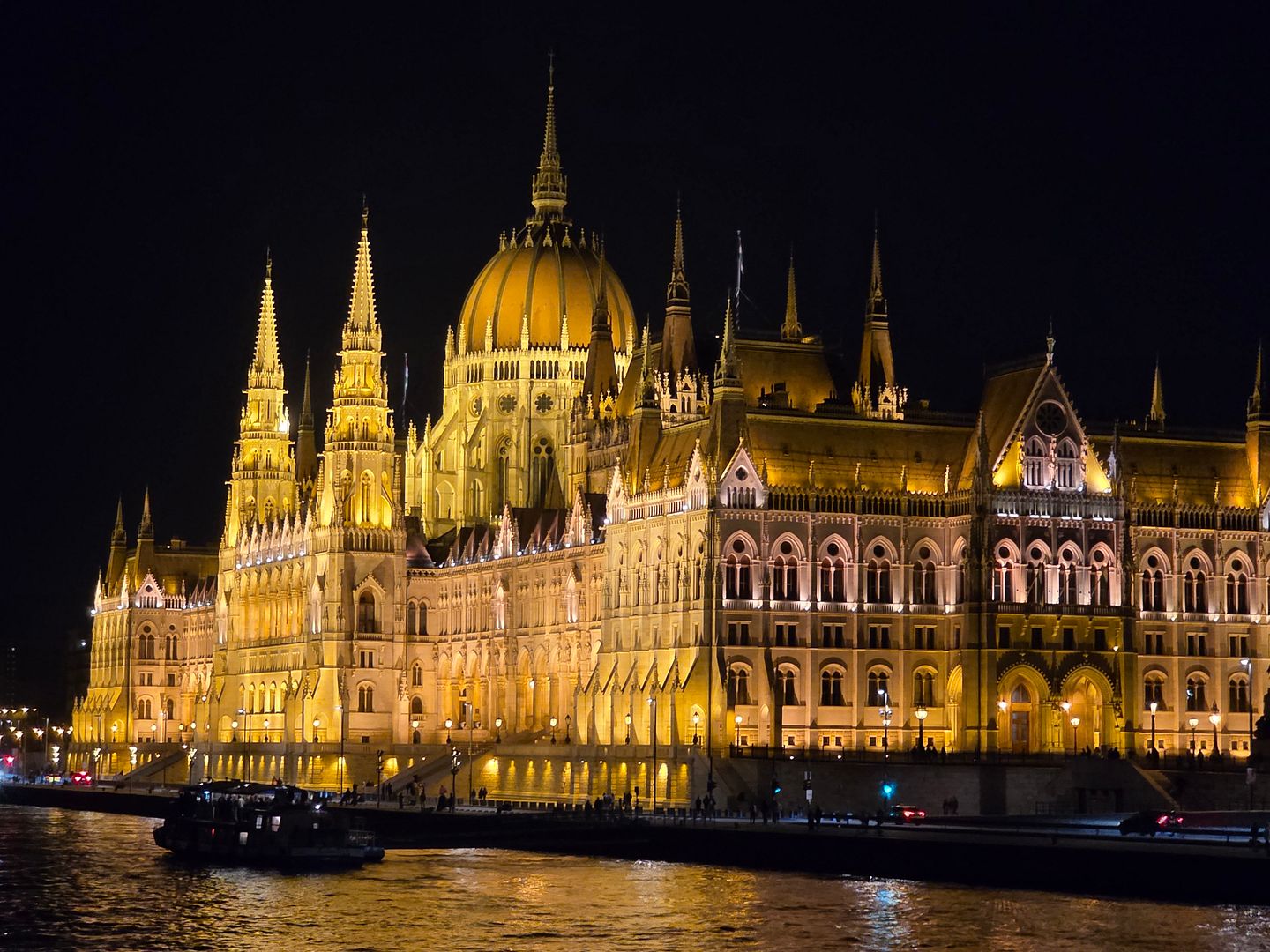
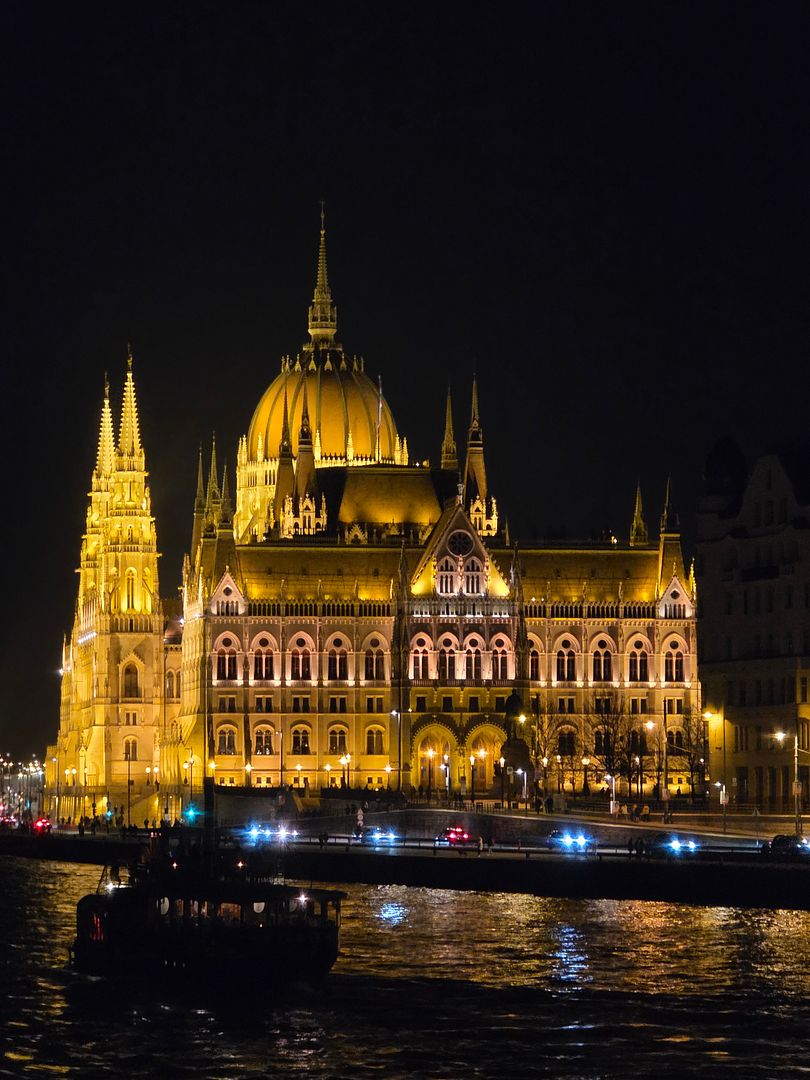
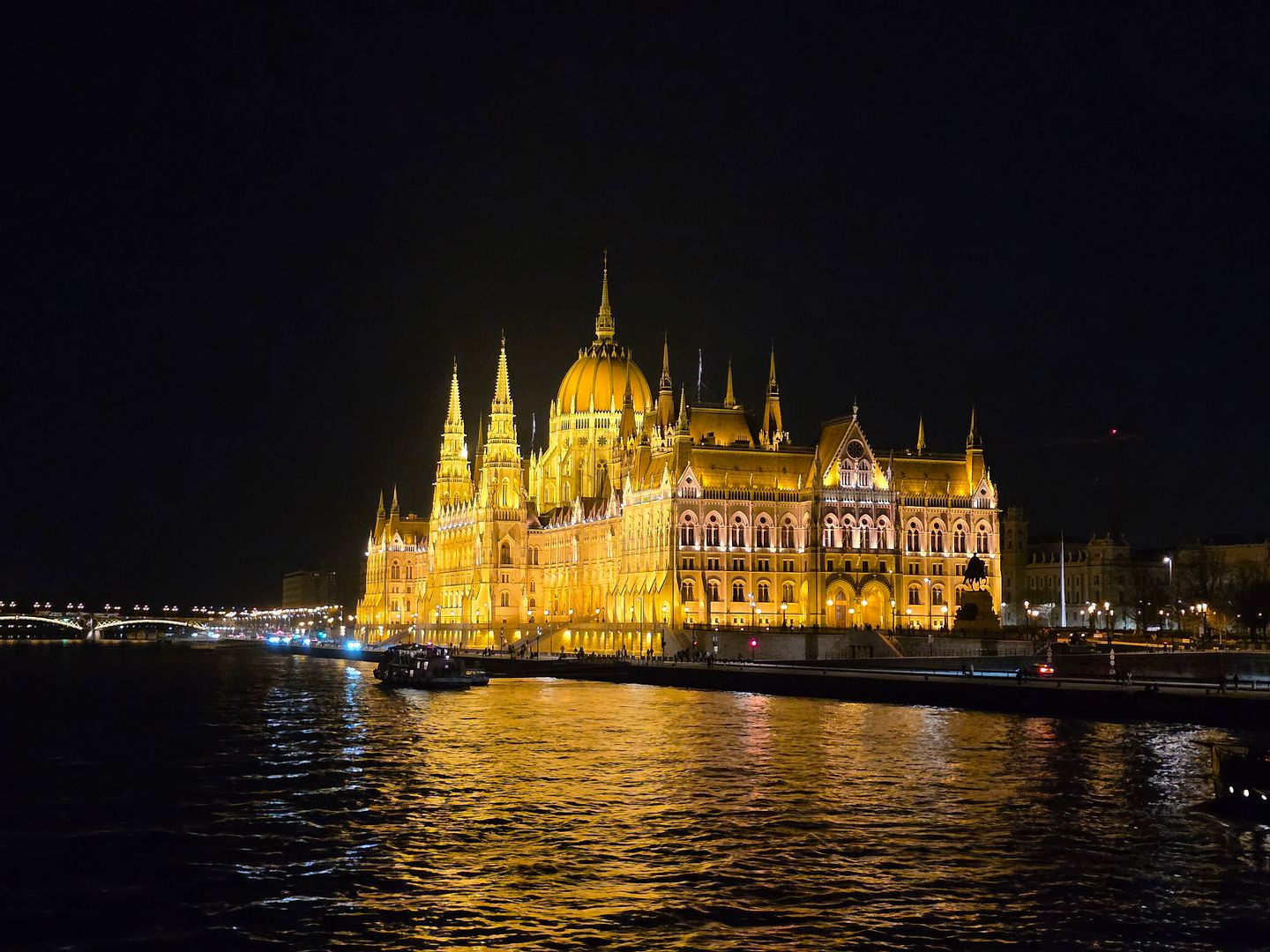
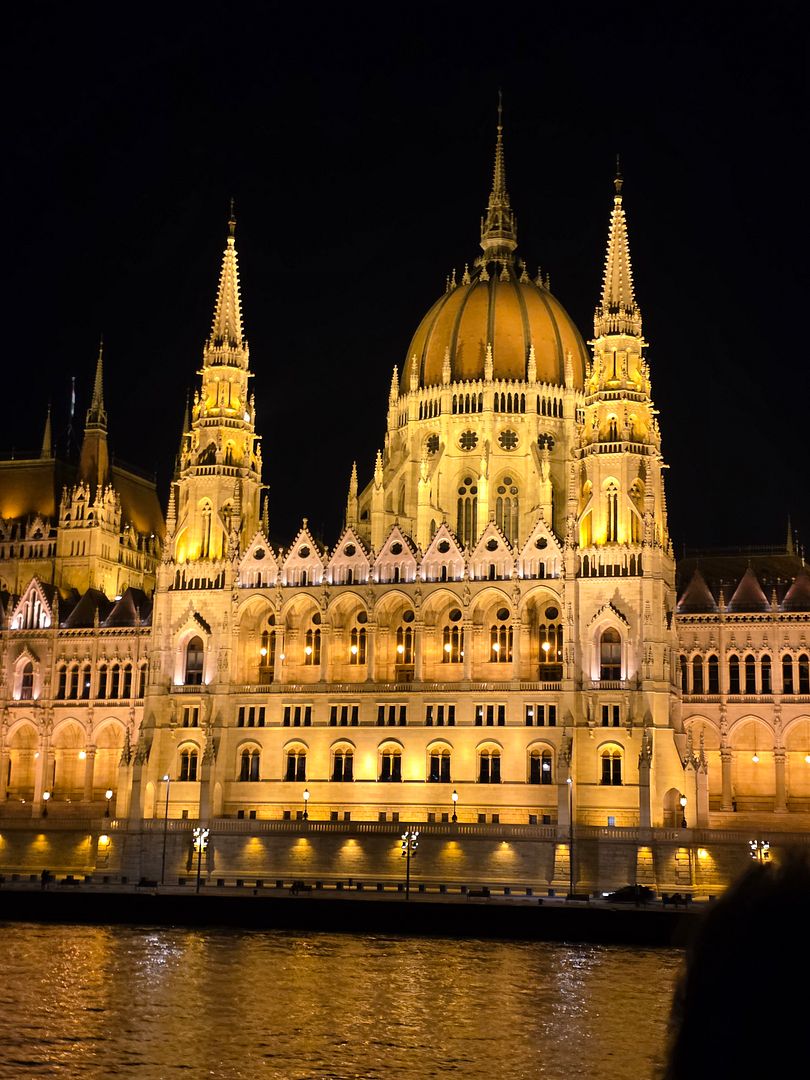
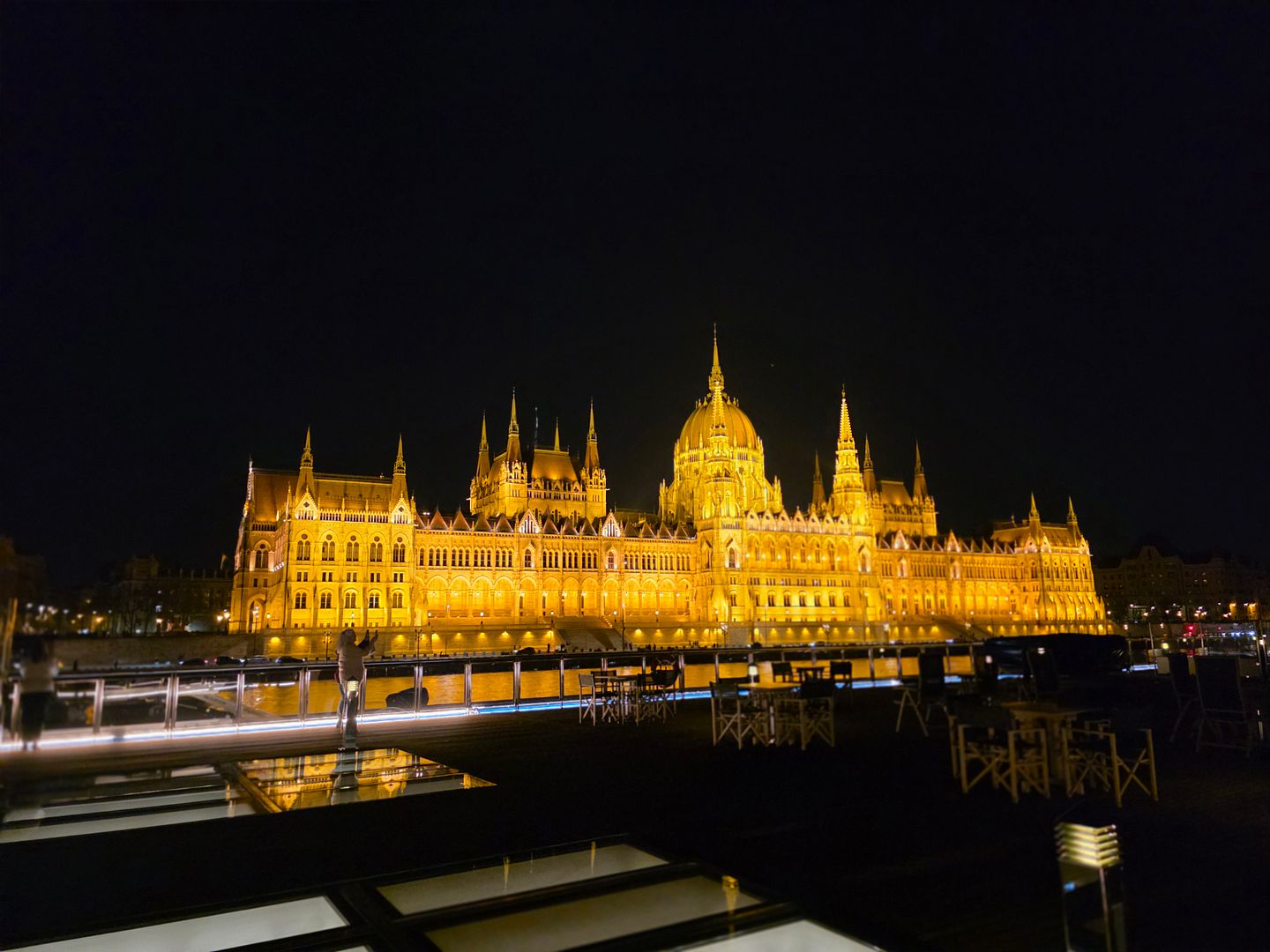
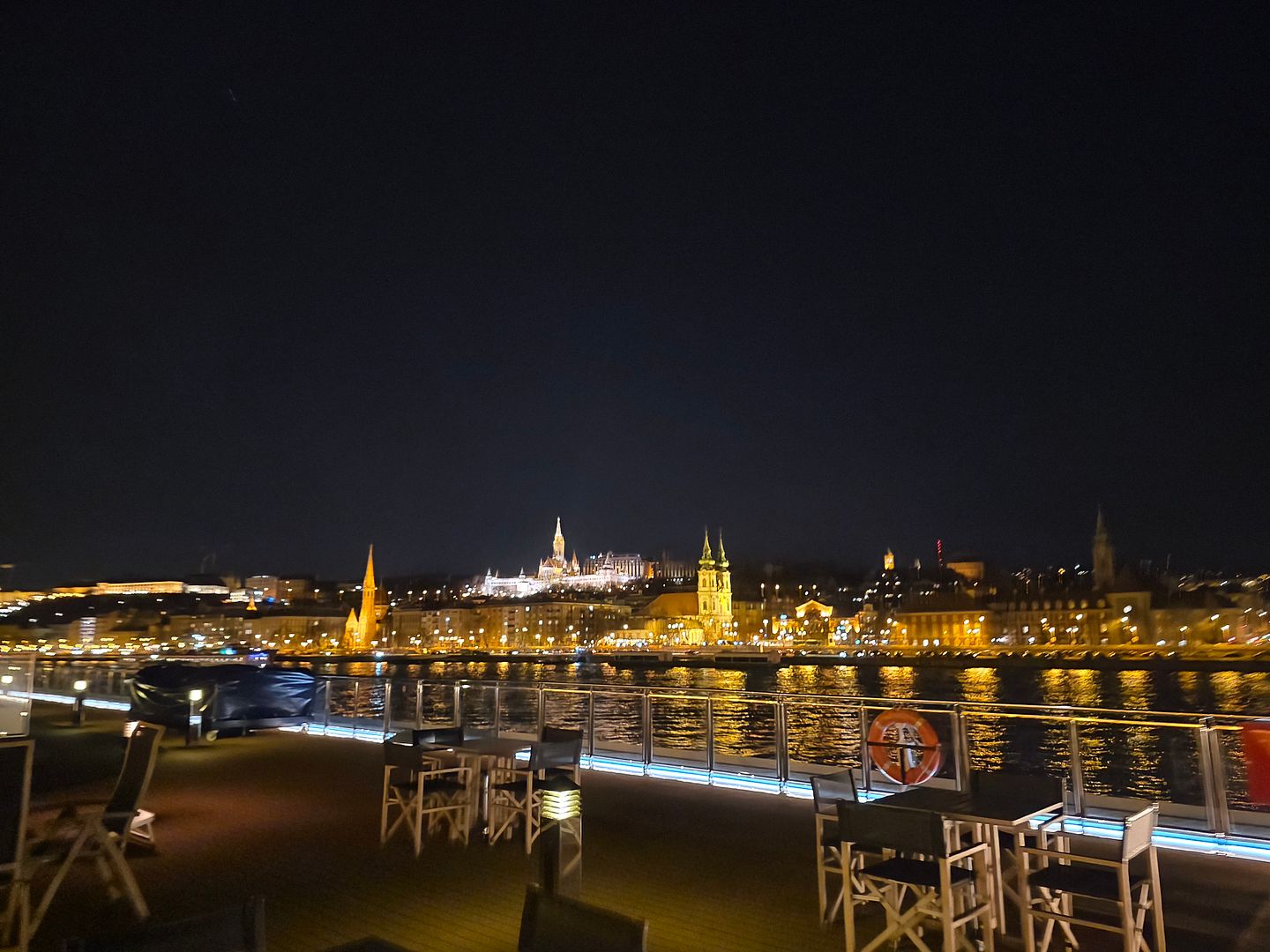
Our boat set on it’s cruising course on the evening of Sunday March 1st. The captain let us know when we would be traveling past the Parliament building so we could get the night time photos. It was during our dinner that we sailed past.

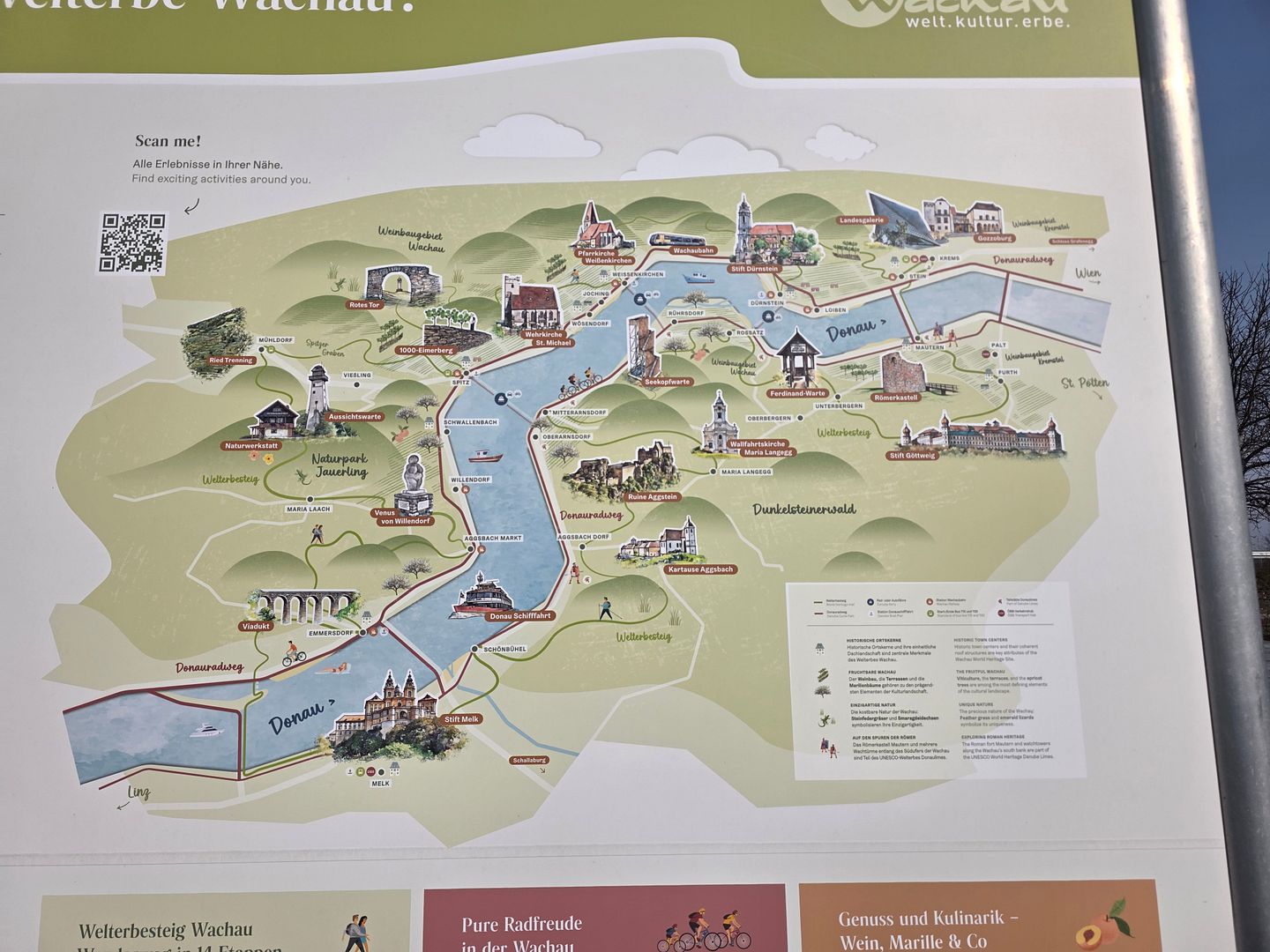
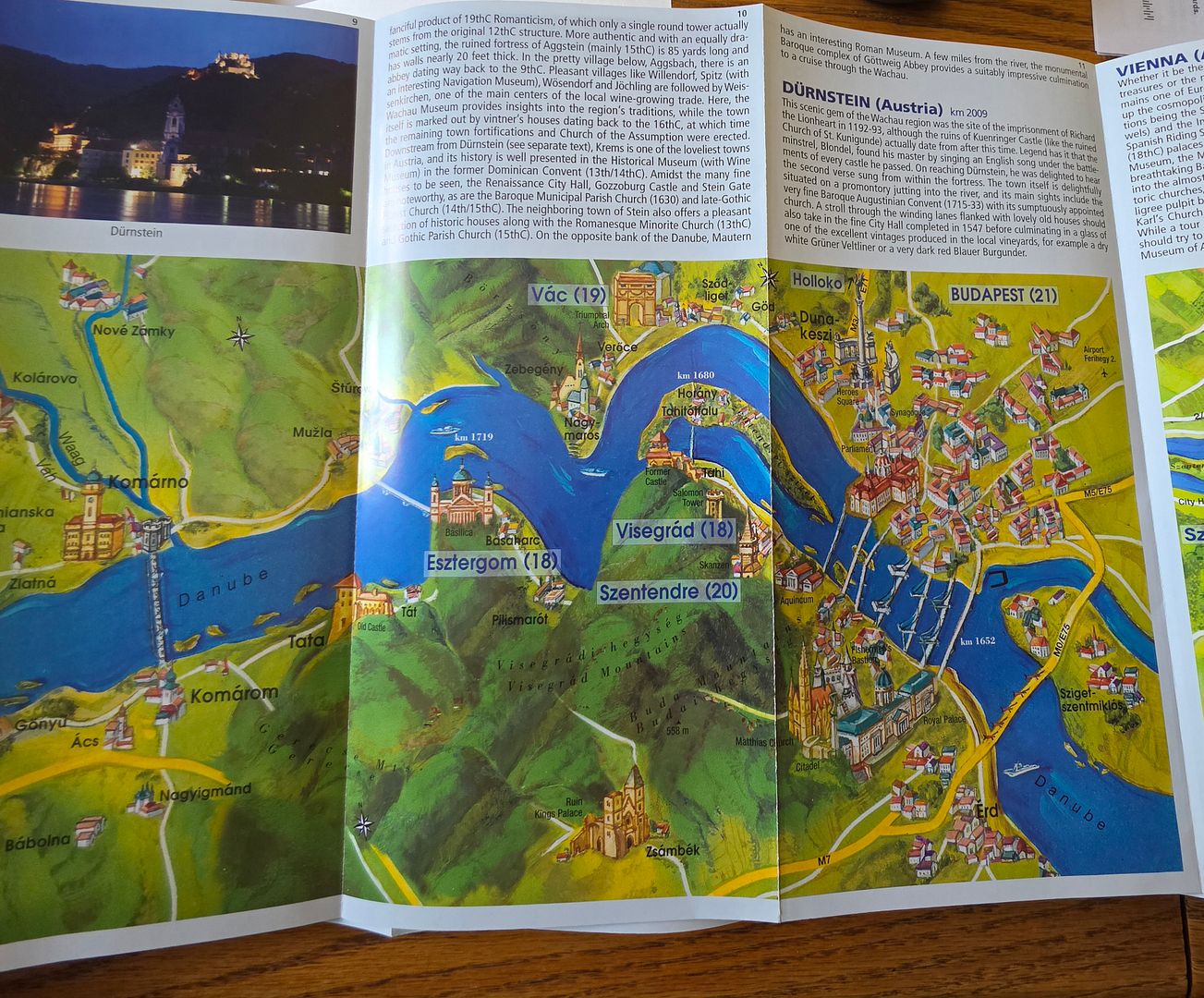
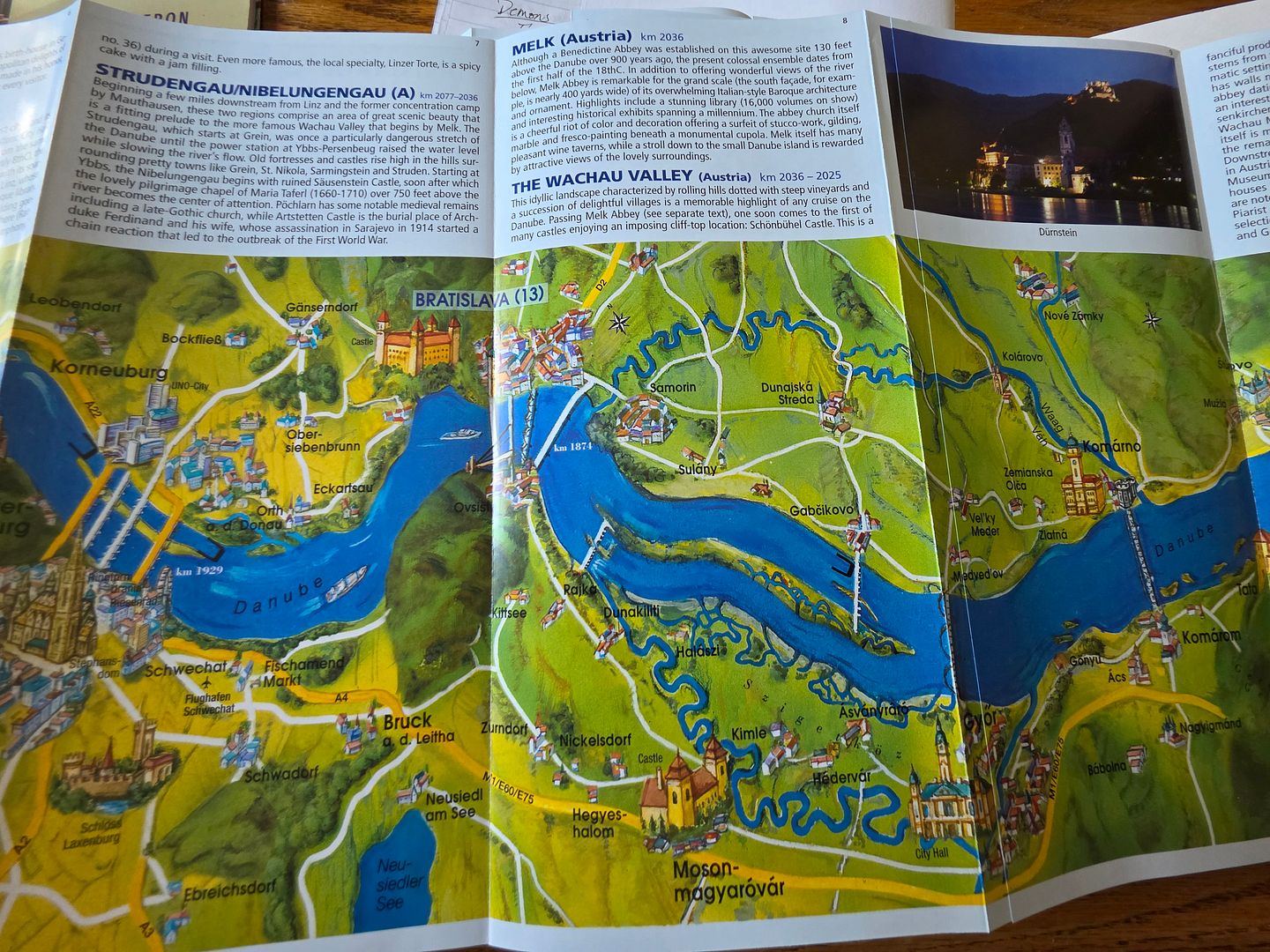
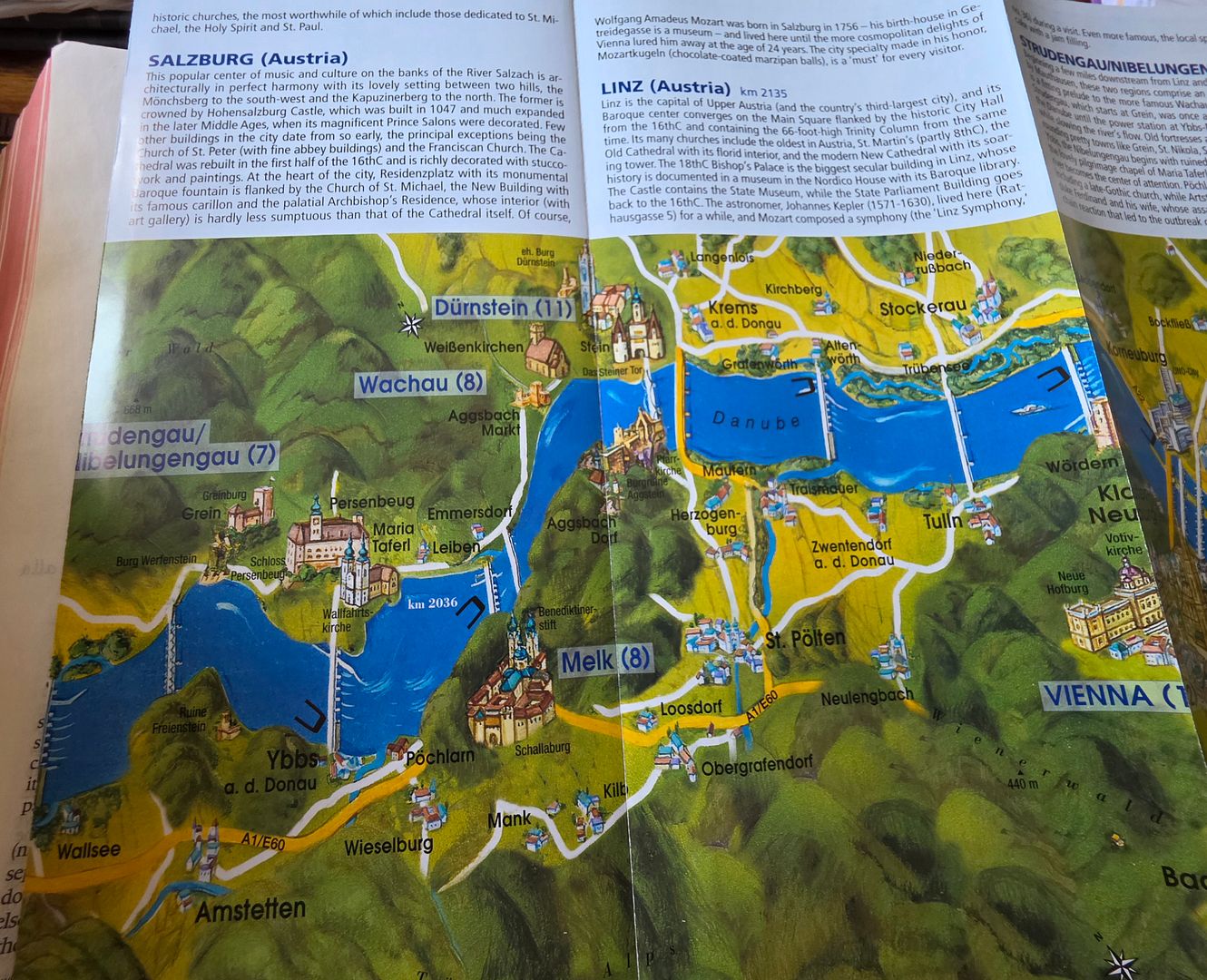
Below is a fold out map of the parts of the Danube that we would be traveling on.

Our first stop would be at Bratislava, Slovakia.

We would then cruise beyond Vienna to Melk, Linz and Grein returning to Vienna for a two night stay before we returned to Budapest.

On this first evening on board we had a welcome cocktail with the captain of the ship for his mandatory safety briefing.

For our cruise the heads of the departments were from Spain, Romania, Indonesia, Serbia, Bulgaria, Poland, and the Philippines. During our briefing we met some of the heads.

Dinner on the first night was open seating and we sat at a table of eight and enjoyed learning about the different people we ate with.

Most days breakfast was from 7:30 – 9:30 with a bistro option from 6:30am-10:30am for early or late risers.

Lunch was served from 12:30 until 2:00

Dinner was from 7:00-8:30 (some evenings dinner started later when excursions were longer)

There was a sip and sail cocktail hour every evening and after dinner entertainment, too.

Late night snacks were available each evening.

On this first night of our journey I woke and looked at my phone to see what time it was. It was 2am and I noticed a message from our credit card company about possible fraud on my card. After a call to the credit card company to verify that I did not make the charge, I was advised to destroy my card and they would issue me a new one. What a bother that was so early into our trip. Thankfully we would still be able to use Greg’s card. Next time we travel I’ll take a back up card, too. Oye! Needless to say there was no going back to sleep for me and when I made the call to our credit card company Greg was up, too. After a couple hours we ended up going in search of coffee. Coffee pods were available in our room but we preferred going to the machines on board that were available 24 hours a day.

Next river cruise post will be about Bratislava, Slovakia.

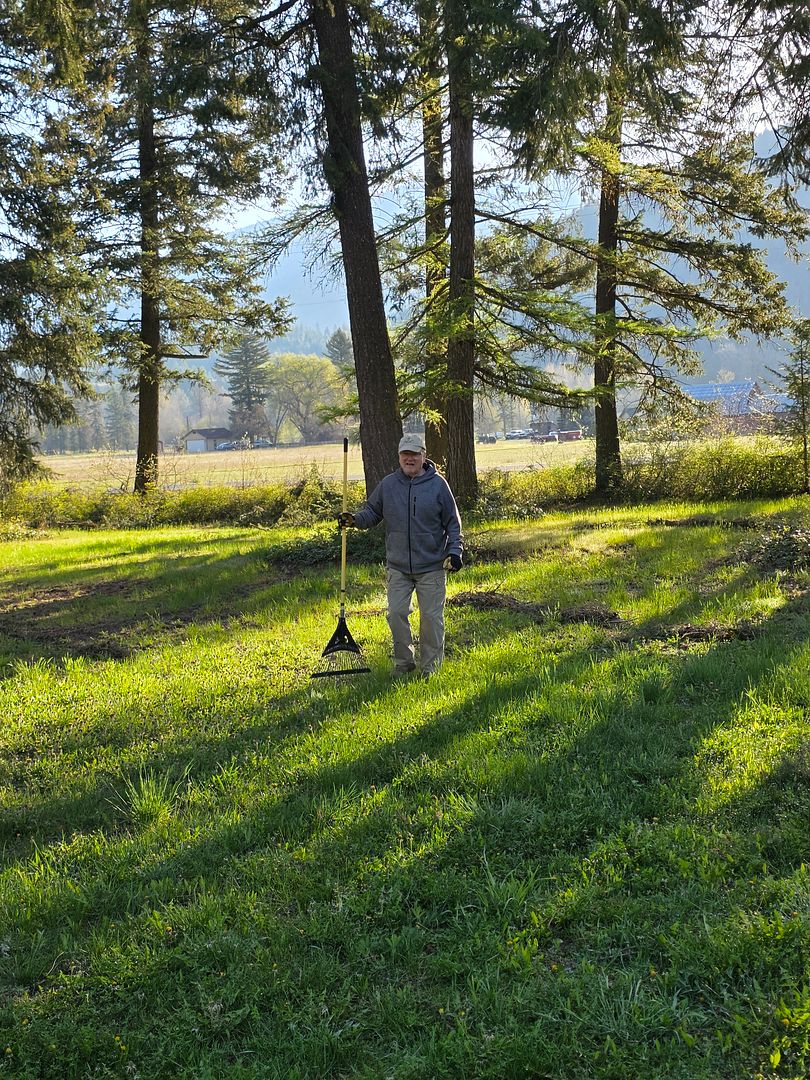
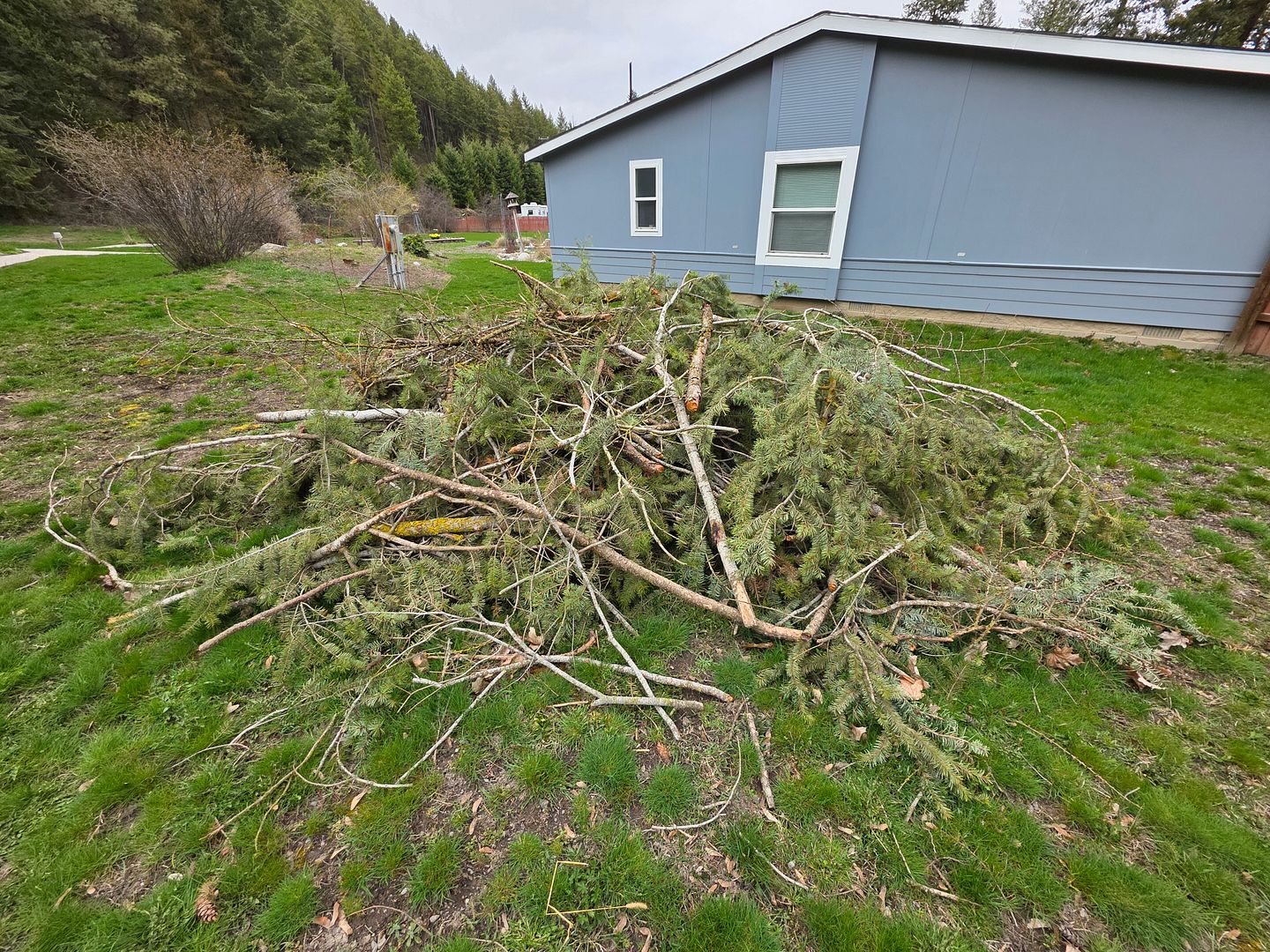
Back to the present: What beautiful weather we have been enjoying since Saturday. The highs are reaching 60 and beyond with lots of sunshine and blue skies. We even got outside to clear some of the thousands of branches that are strewn across our yard from the major wind storm that developed while we were away.

Our kids gathered the largest branches while we were gone but there are many more smaller branches that still need gathering.

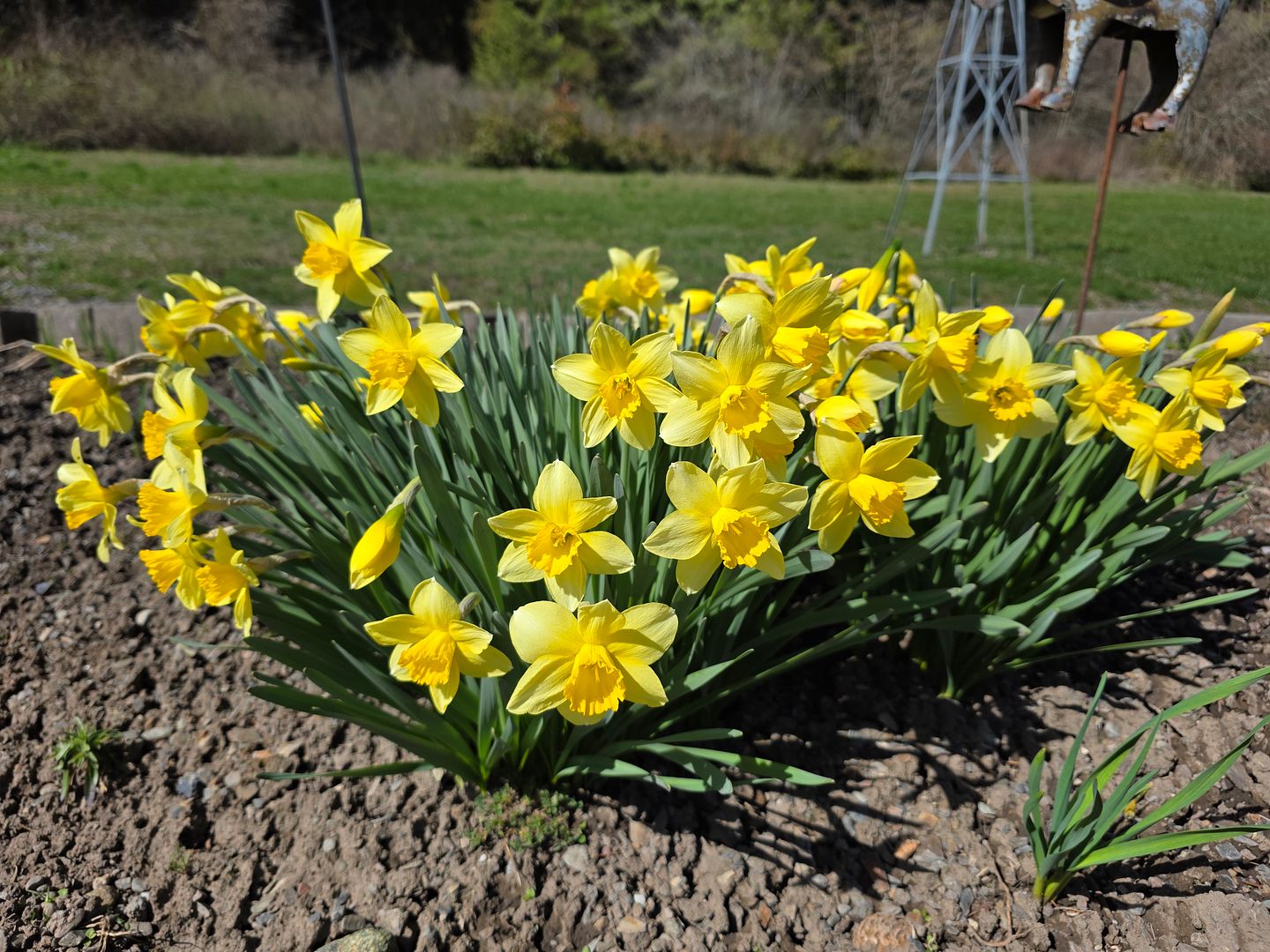
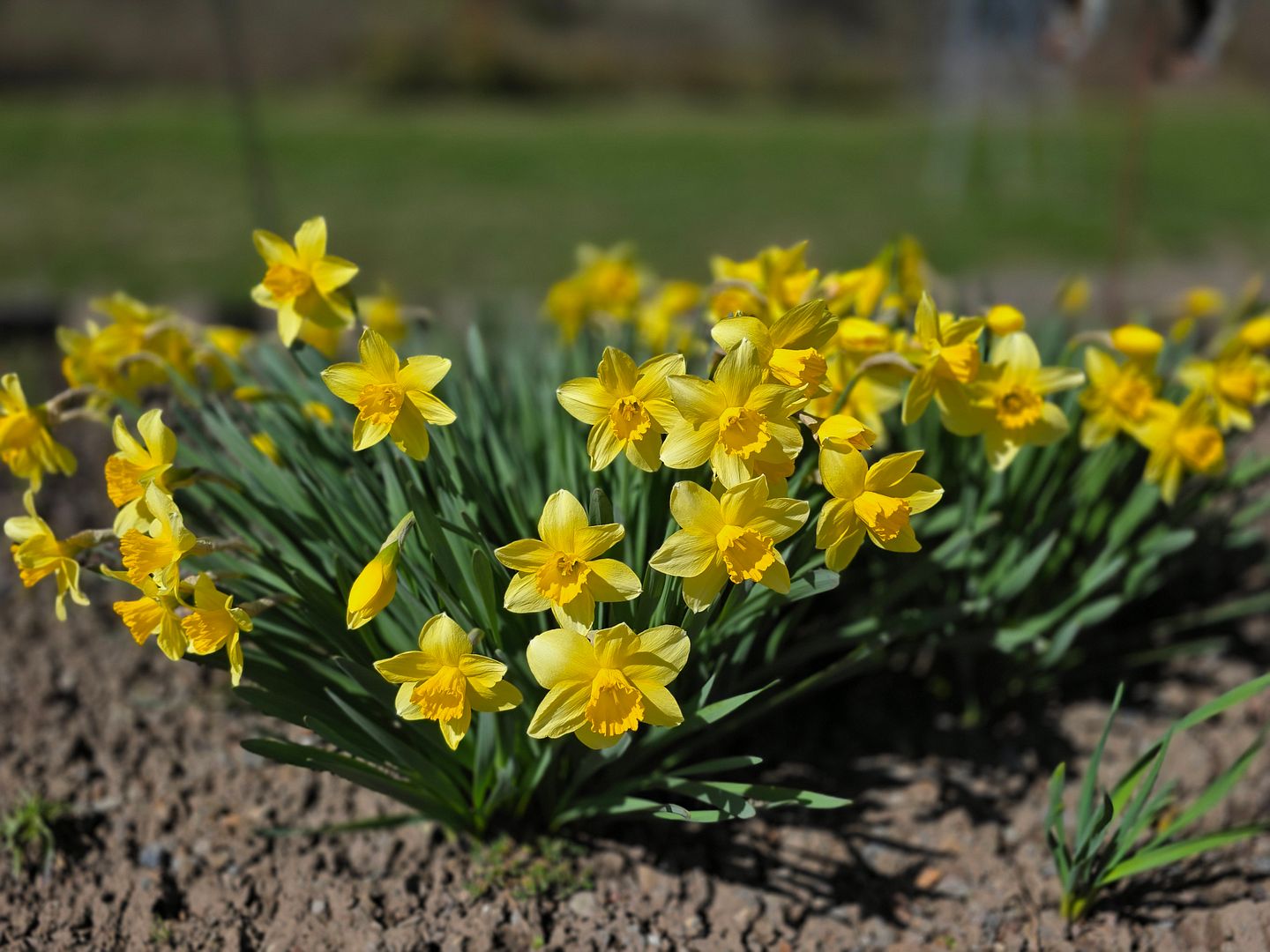
Our unprotected daffodils finally opened up on Easter.

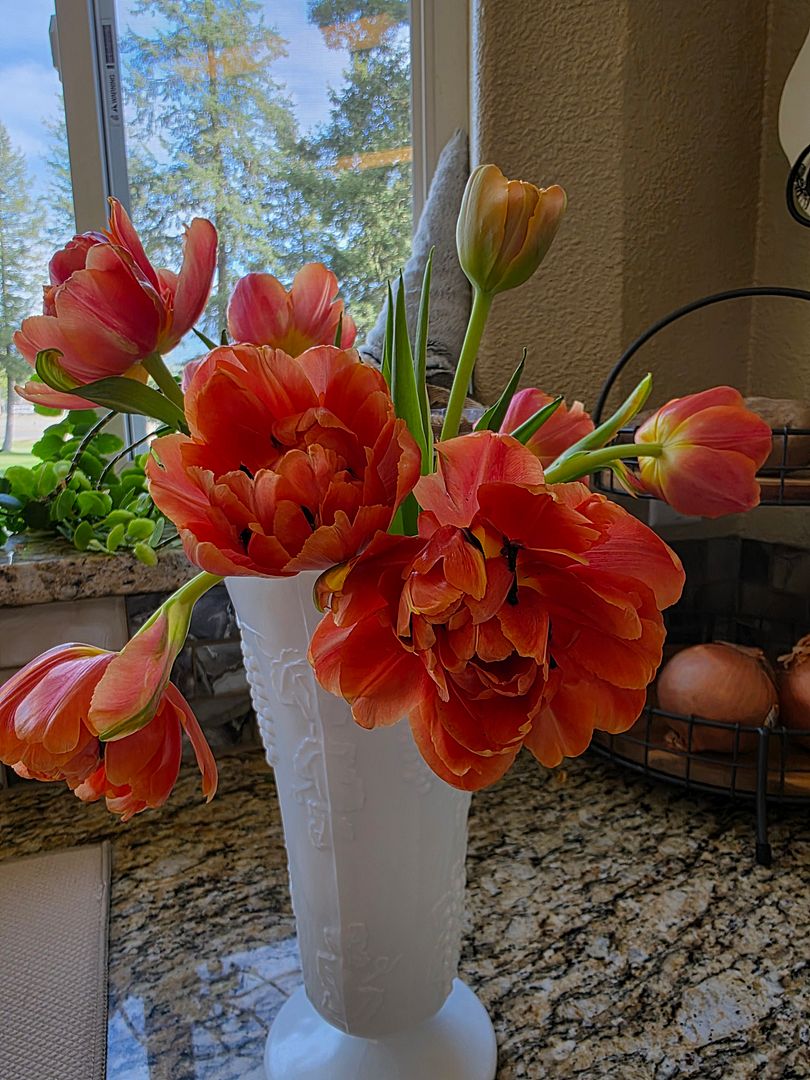
These tulips that we bought at Trader Joe’s this past Saturday are Peony Tulips. They make me smile.

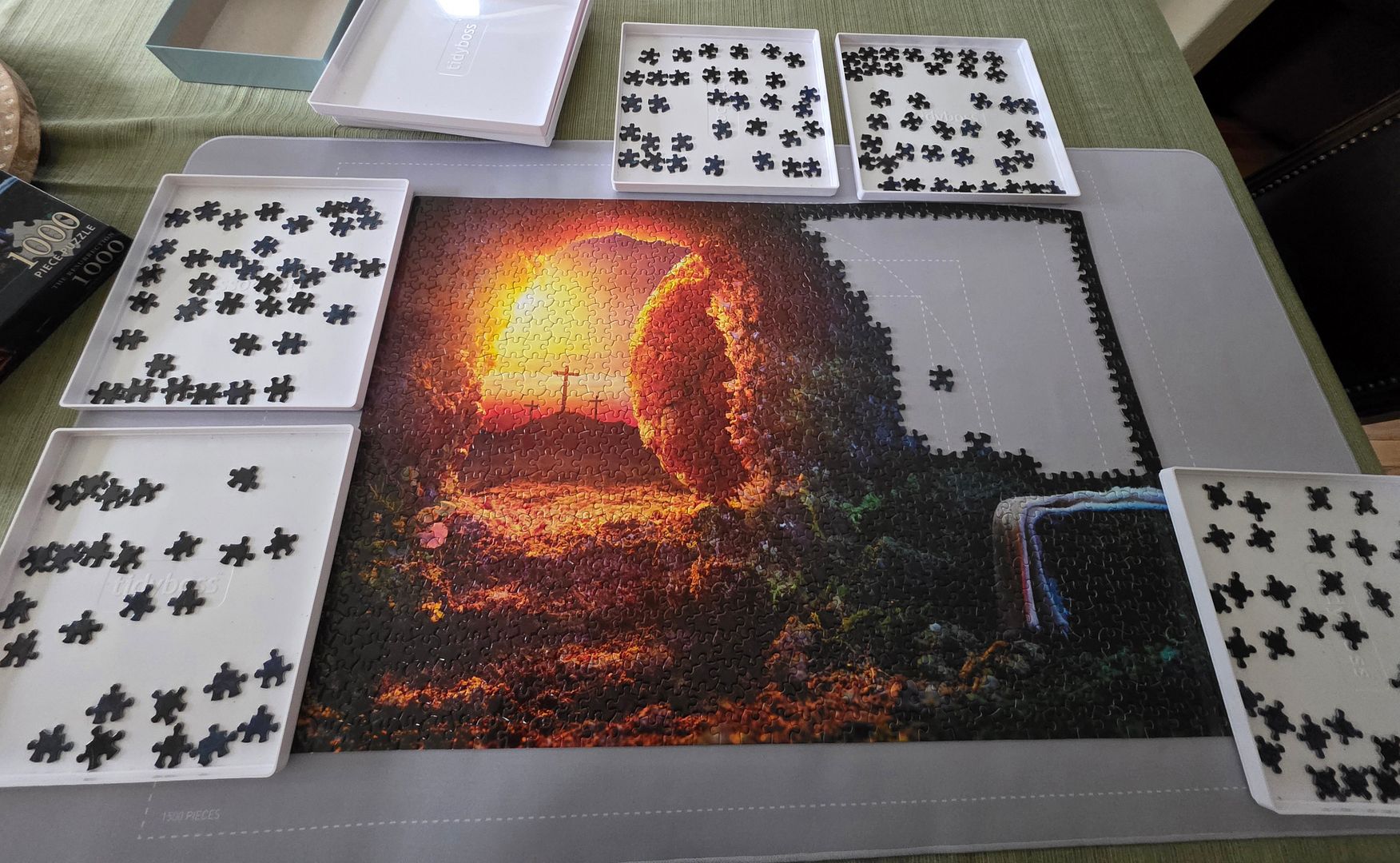
I’ve made good progress on my Easter puzzle and only have the very hardest dark part left.

That is all the up to the minute news from our house to yours. Hope all is well in your corner.

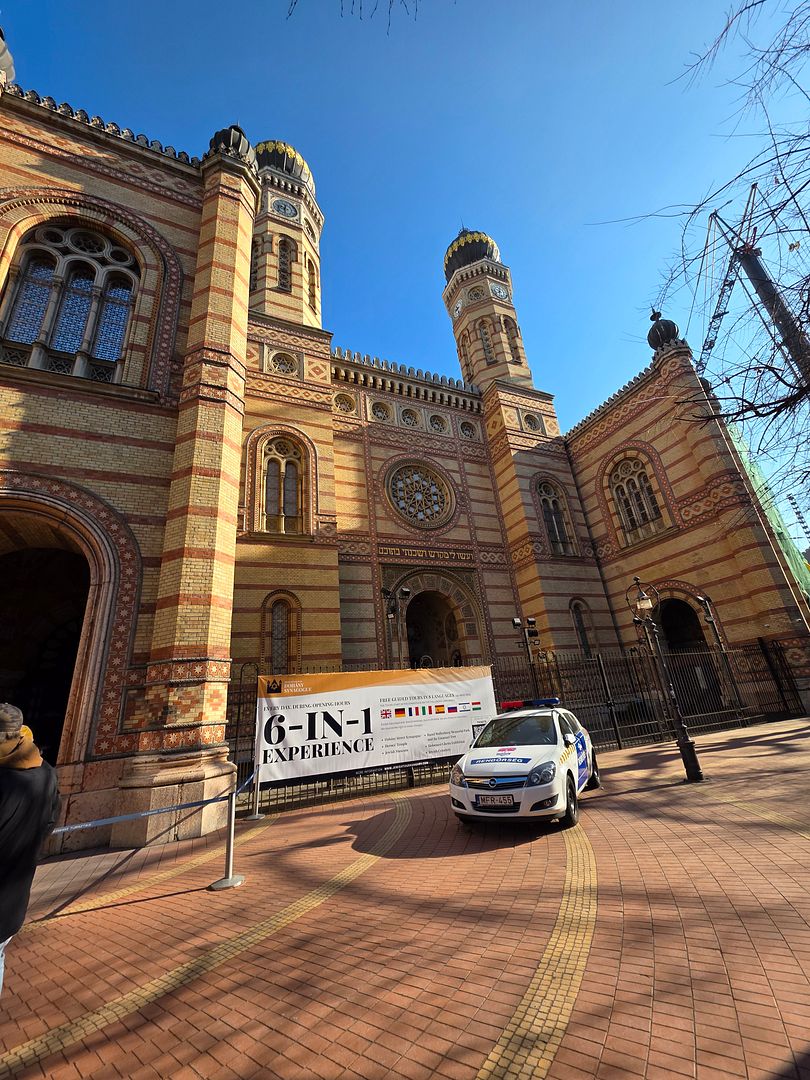
Dohany Street Synagogue

On Sunday, March 1st, after another delicious breakfast at our hotel, The Matilde Palace, we packed up our belongings and left our suitcases outside our hotel room door to be collected by AmaWaterways. They would be curried to the boat and deposited in our room onboard. We would board AmaMagna later on this Sunday for the beginning of our cruise on the Danube.
But first, we had another walk ahead of us to the Jewish District in Budapest to visit the Dohany Street Synagogue.
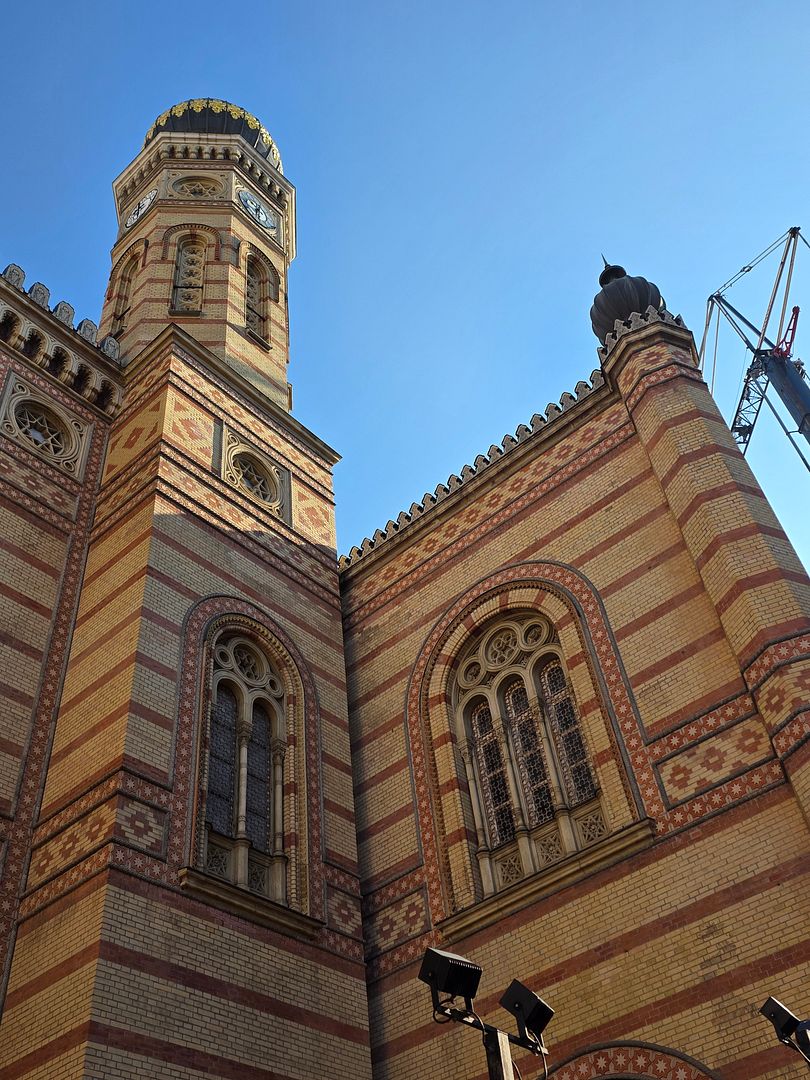
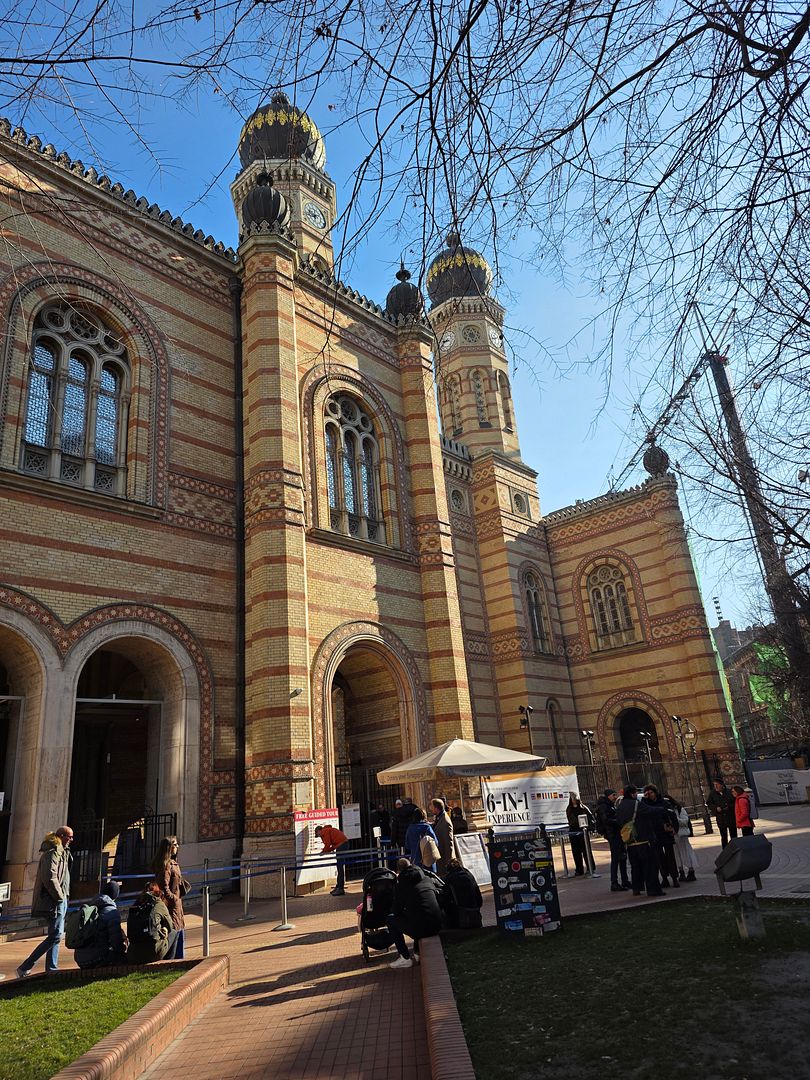
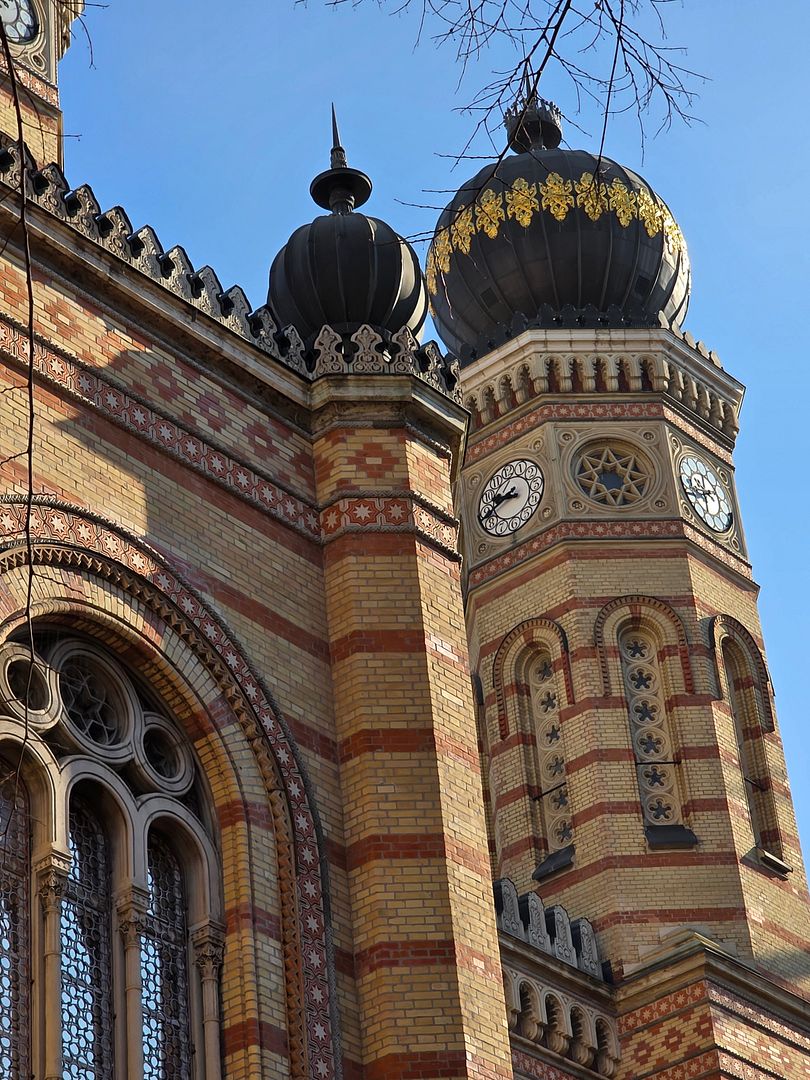
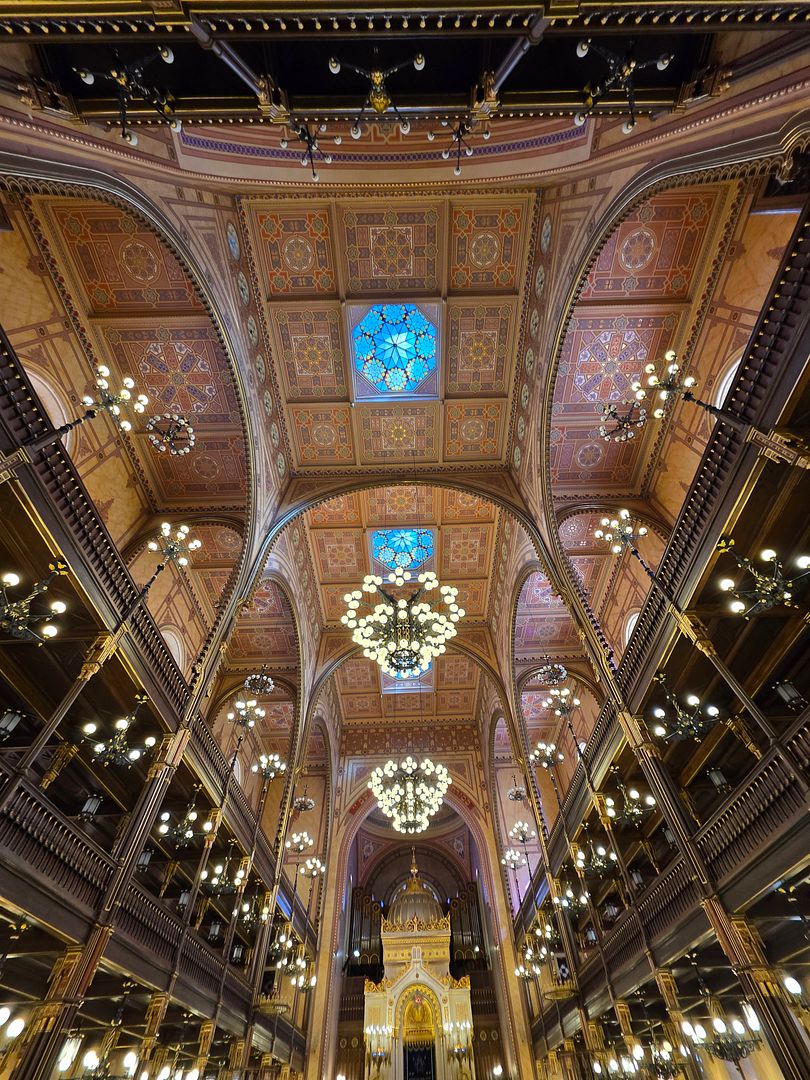
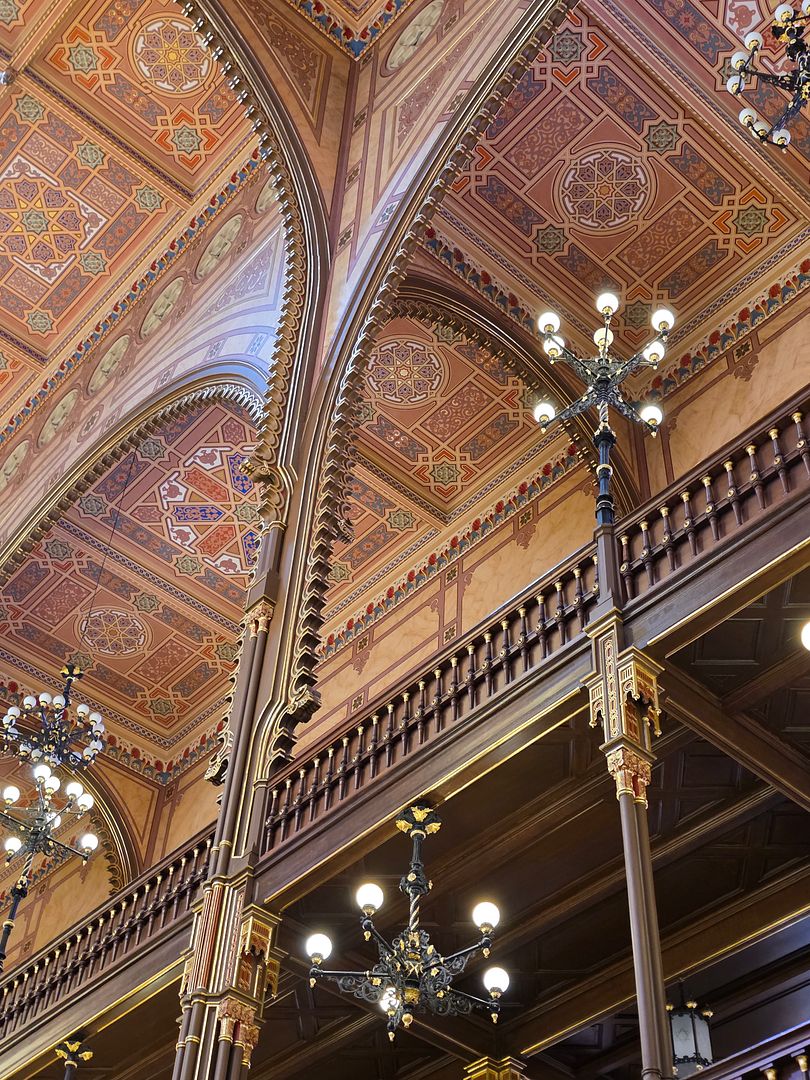
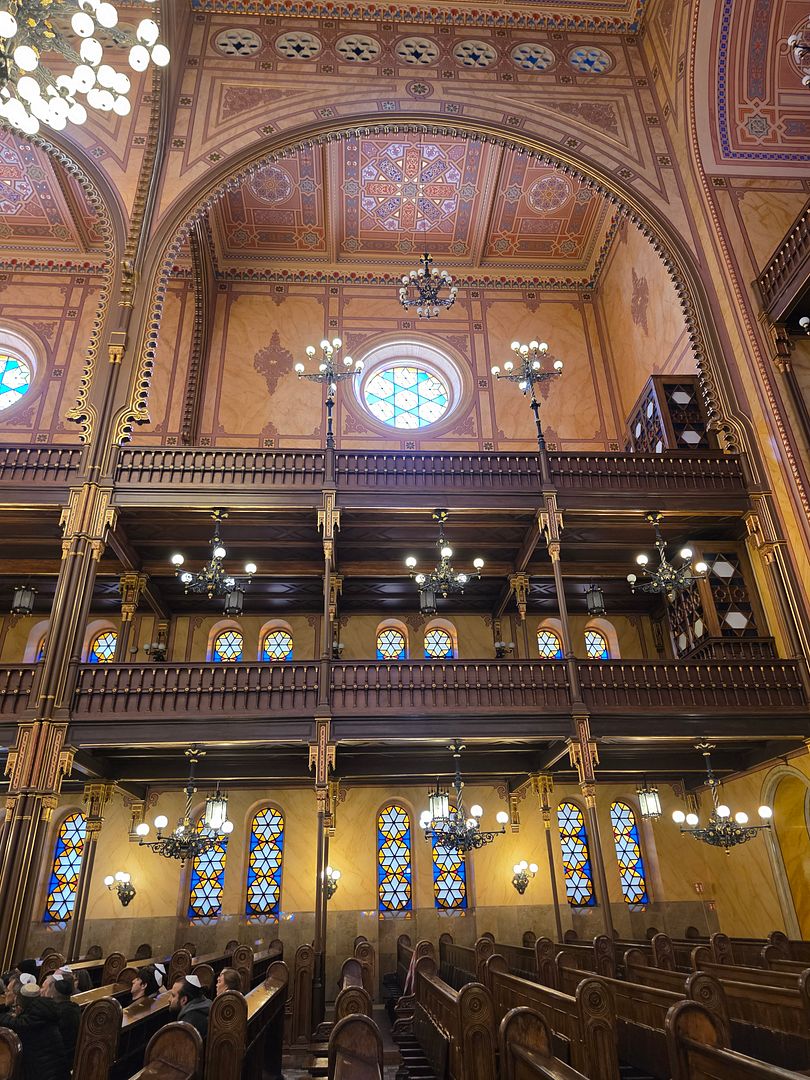
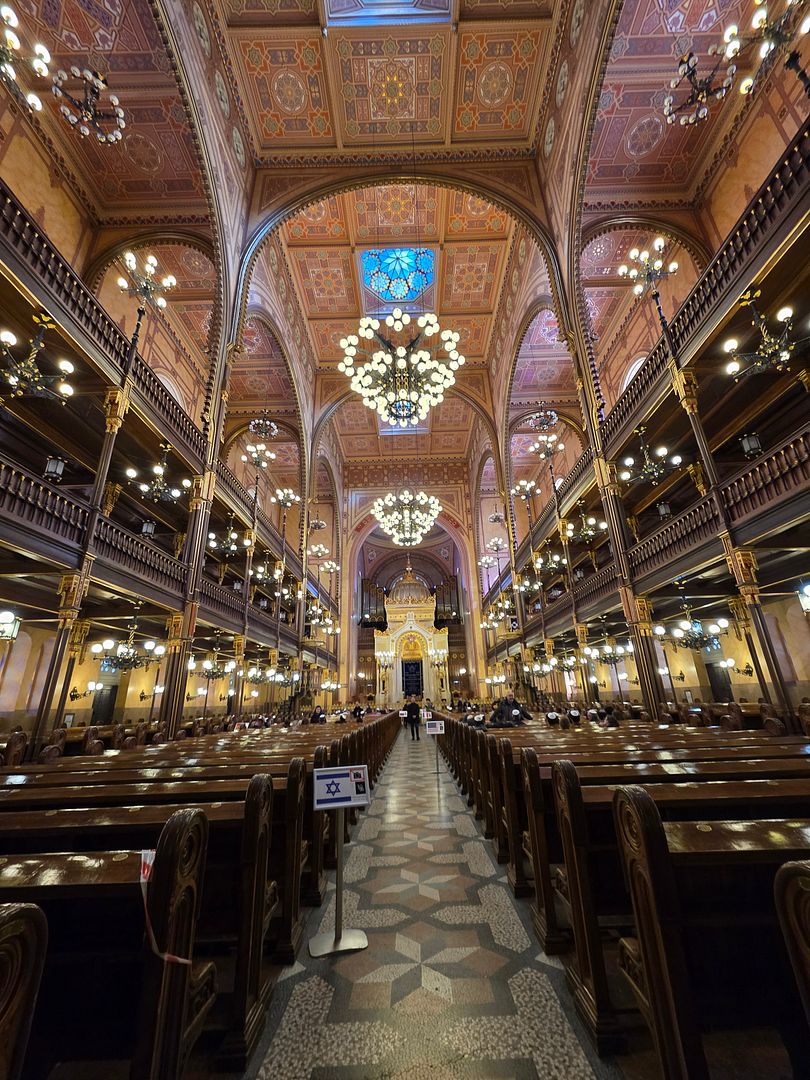
The Dohány Street synagogue is one of Budapest’s touristic highlights as it is the largest synagogue in Europe and the second largest in the world. The synagogue was built in 1859 in the Moorish style and it can seat 3000 people. Its huge size demonstrates the significance and the high economic and cultural standards of the Budapest Jewry of the age.
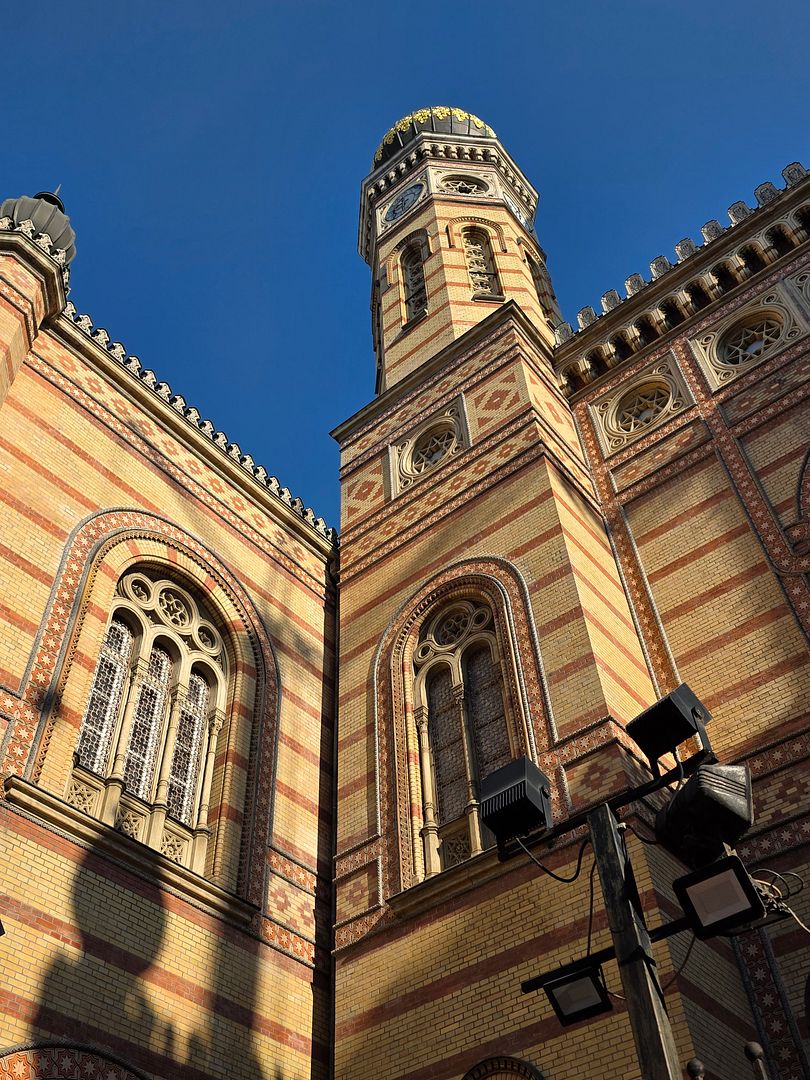
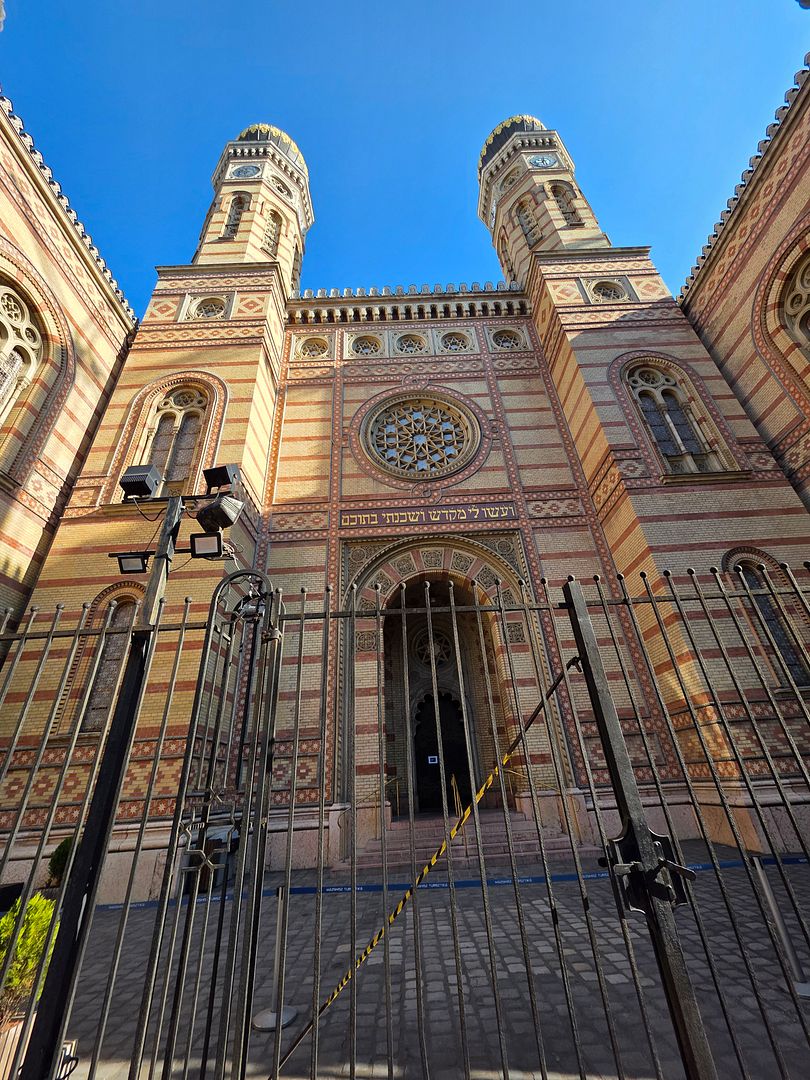
It was another beautiful winter day in Budapest.
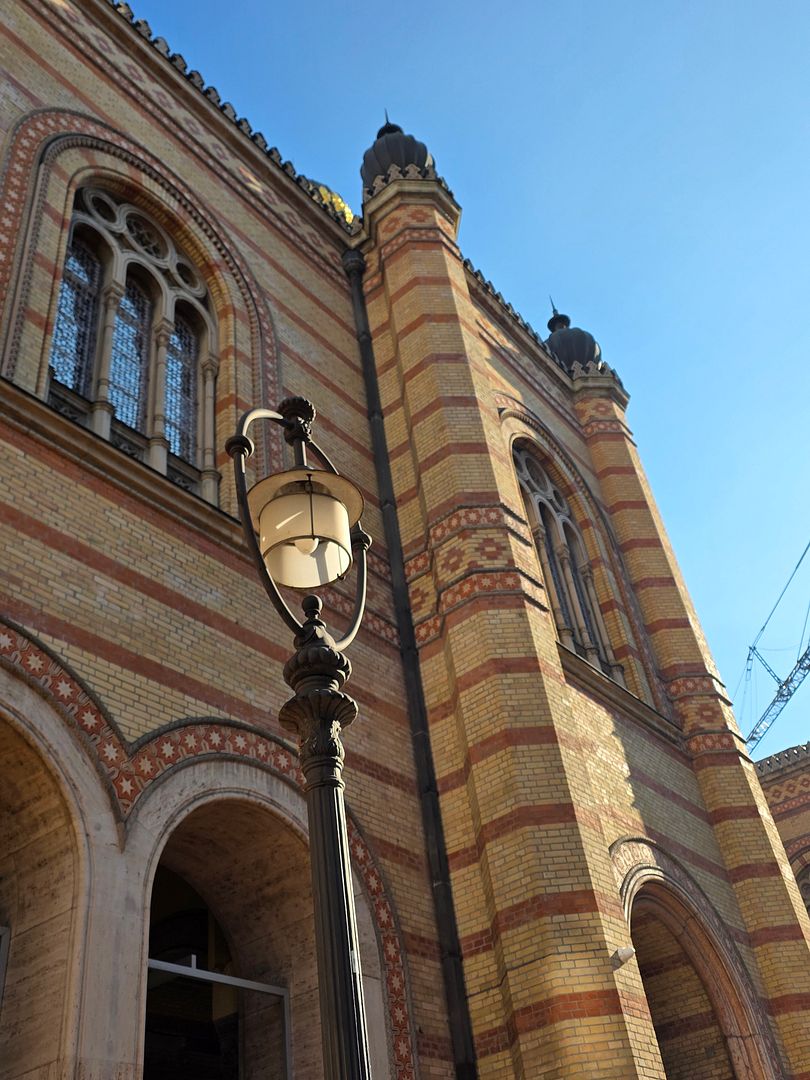
After we purchased our tickets for entry we had to go through security. This was the only place we visited on our entire time in Europe and England where we had to do this. I wasn’t surprised of this added security as the history of antisemitism around the world seems to be continuous.
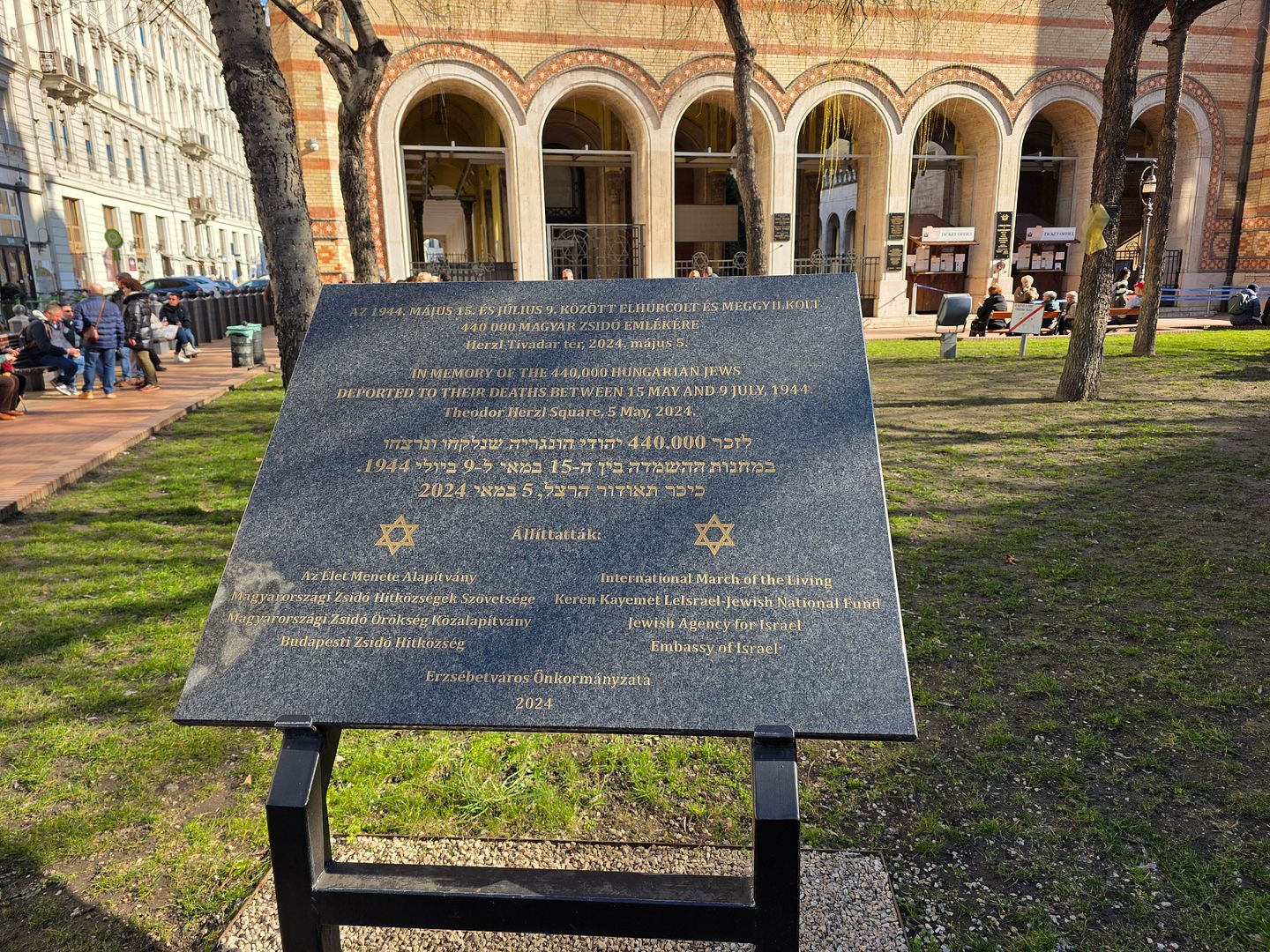
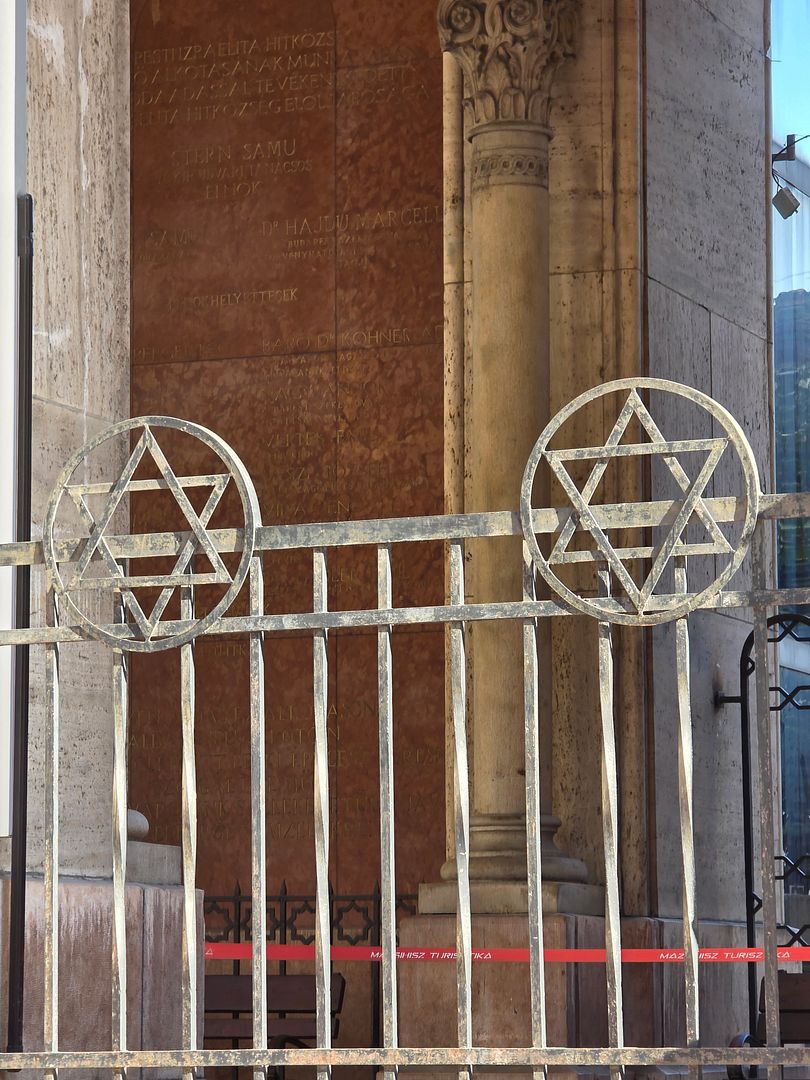
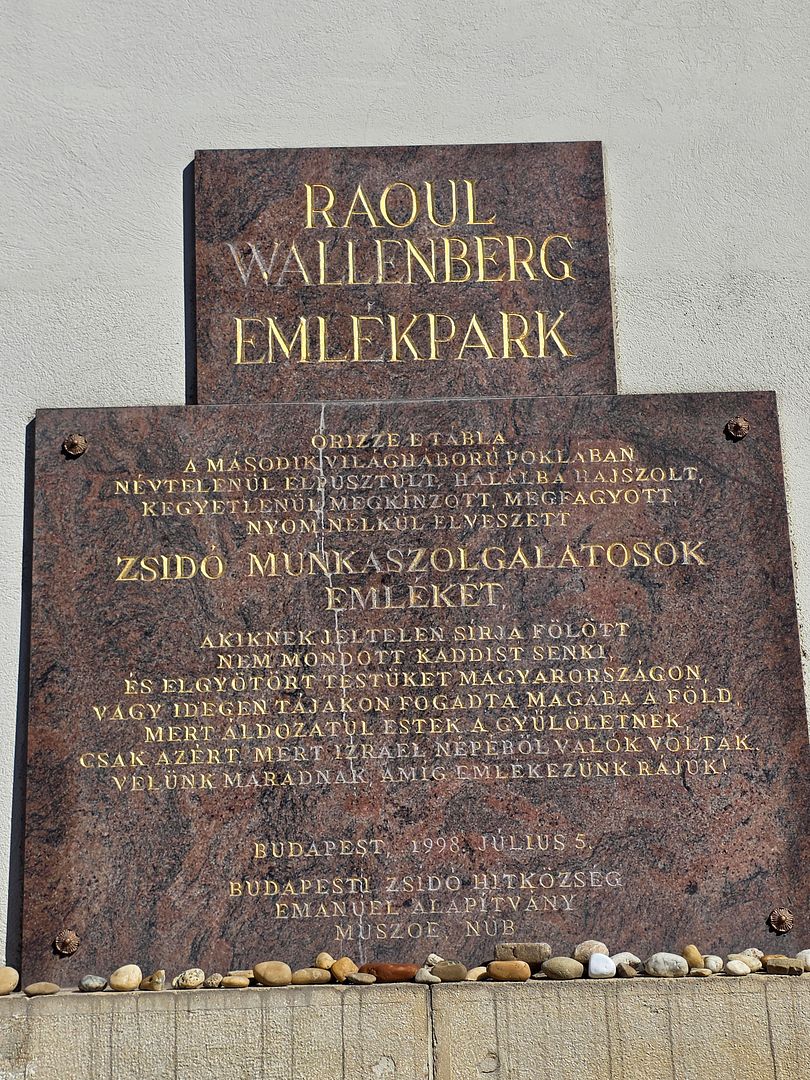
The plaque and memorial reads; In memory of the 440,000 Hungarian Jews deported to their deaths between 15th May and 9th July 1944. Theodor Herzel Square, 5 May, 2024.

That is sobering and brings such sadness.

We got to the synagogue early and waited for it to open to visitors.
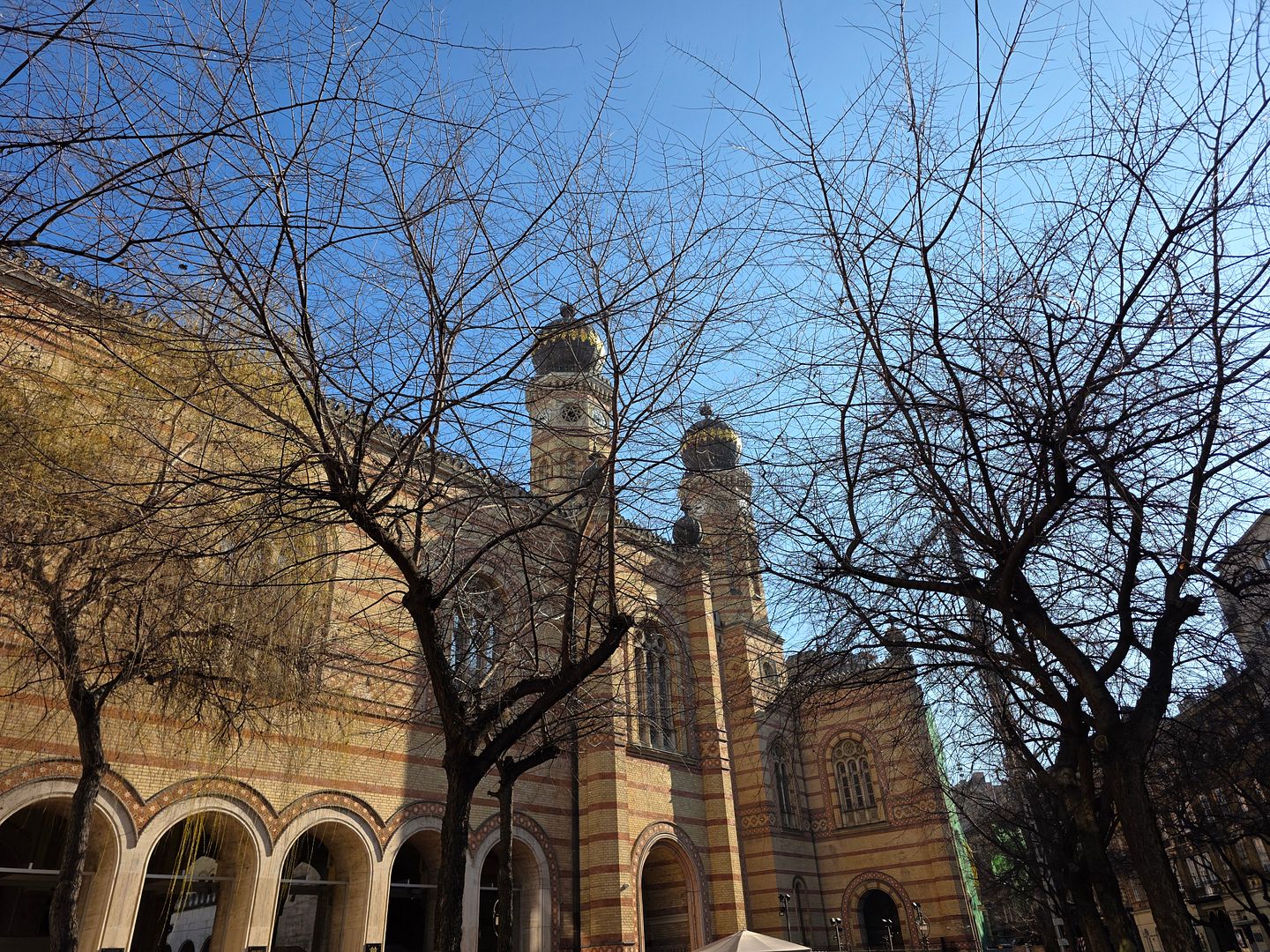
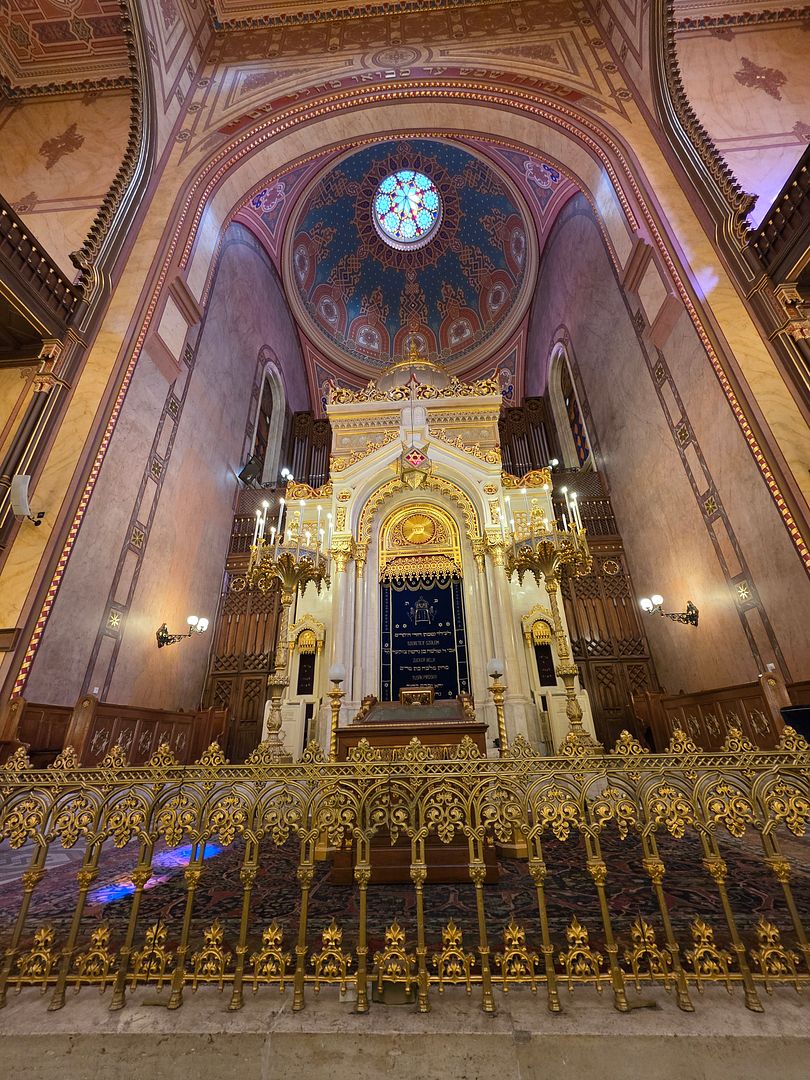
The temple was designed by Ludwig Förster (1797-1863), a German architect, professor of the Vienna Academy. The clerk of works was the architect Ignác Wechselmann (1828-1903) who later bequeathed his entire wealth to the Institute of the Blind. After Förster left, Frigyes Feszl, the famous architect of the Budapest Vigadó designed the temple’s inner sanctum. The official consecration of the synagogue took place on 6 September 1859. 
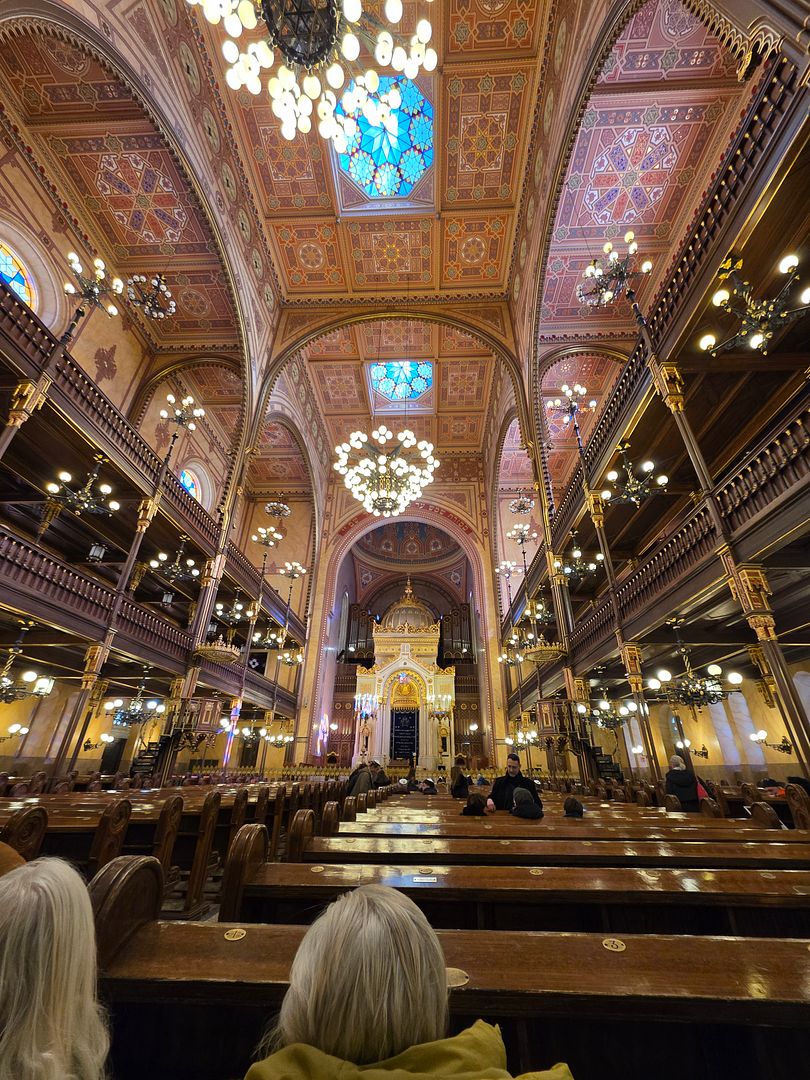
The interior of the synagogue is 1200 square metres, the towers are 44 metres high. There are 1497 seats for men downstairs and 1472 for women in the galleries, altogether the seating capacity of the flat-ceilinged inner space is nearly 3000 people.
The Synagogue is the temple of the Neolog Jewry. It was built in Budapest’s former Jewish quarter where many people of the Jewish faith still reside today.
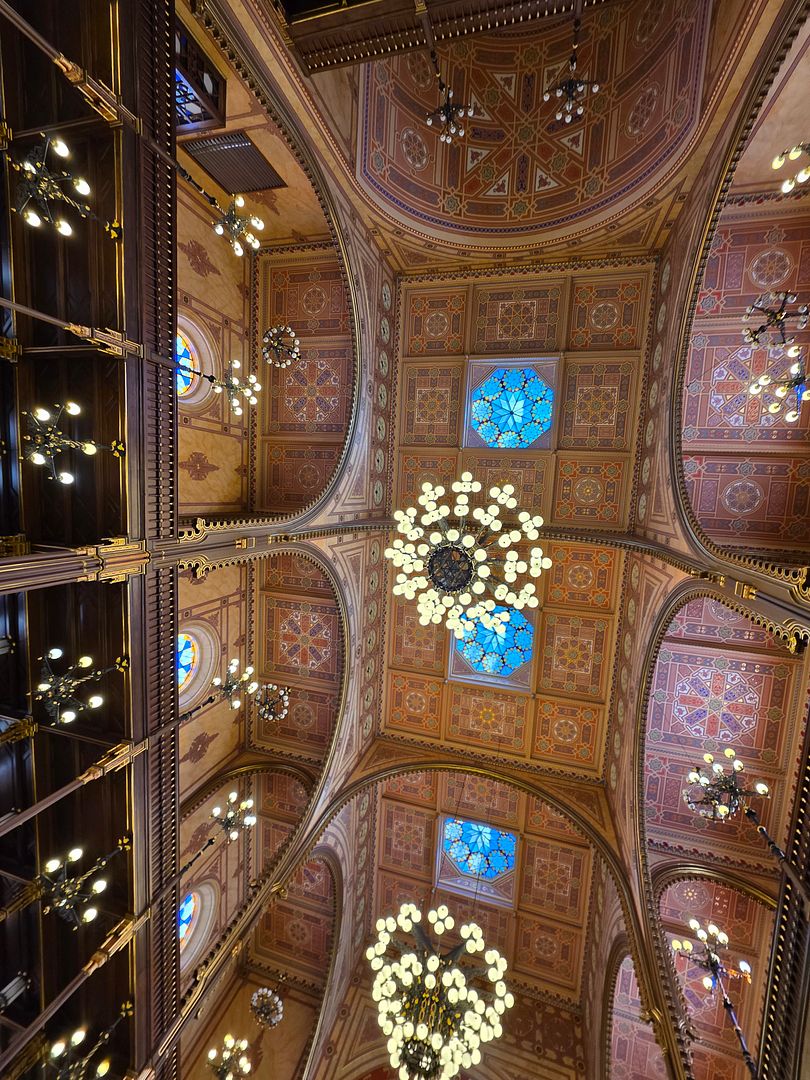
The building is a holy place!

  • The building and the cemetery are holy places. Please comport yourself accordingly.
  • Men are forbidden to enter the synagogue without covering their heads. If you have a hat or cap, please put it on. After ticket validation you will be given a kippah at the entrance that you have to wear in the complex at all times.
  • Entry will be denied if you wear clothes inappropriate for a temple (e.g. sleeveless tops, short skirts or shorts). In such cases the ticket inspectors of the Synagogue will not grant you entry. Tickets are valid for 2 days. Clothing items can be purchased from the ticket inspectors.
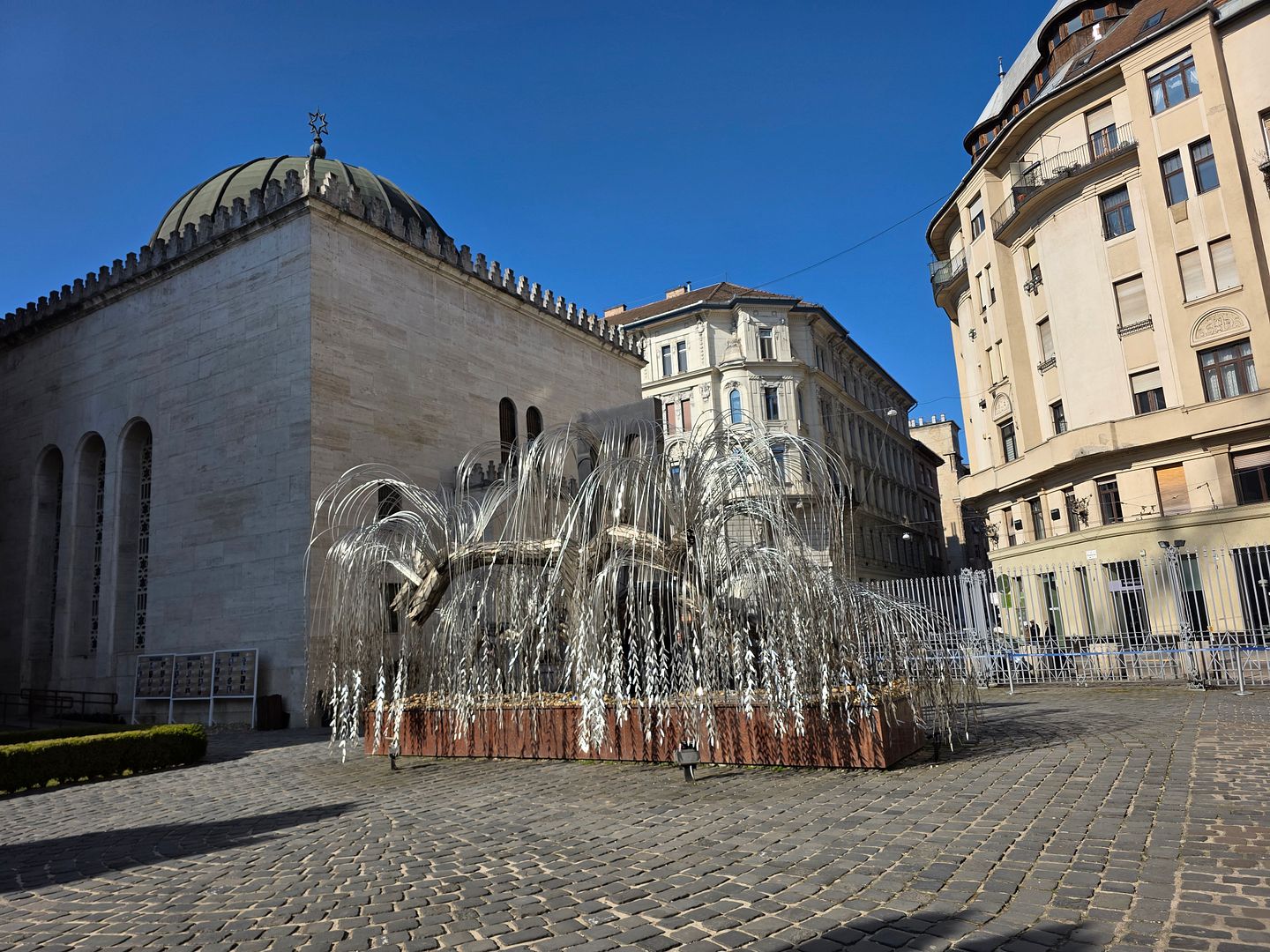
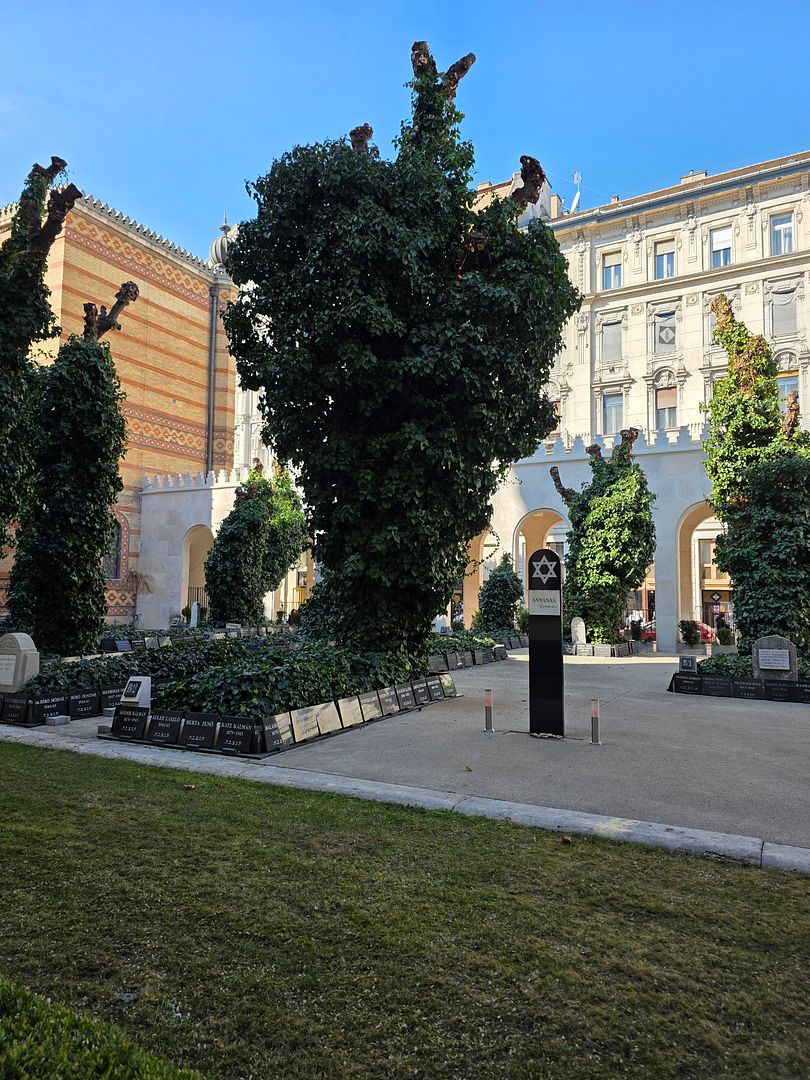
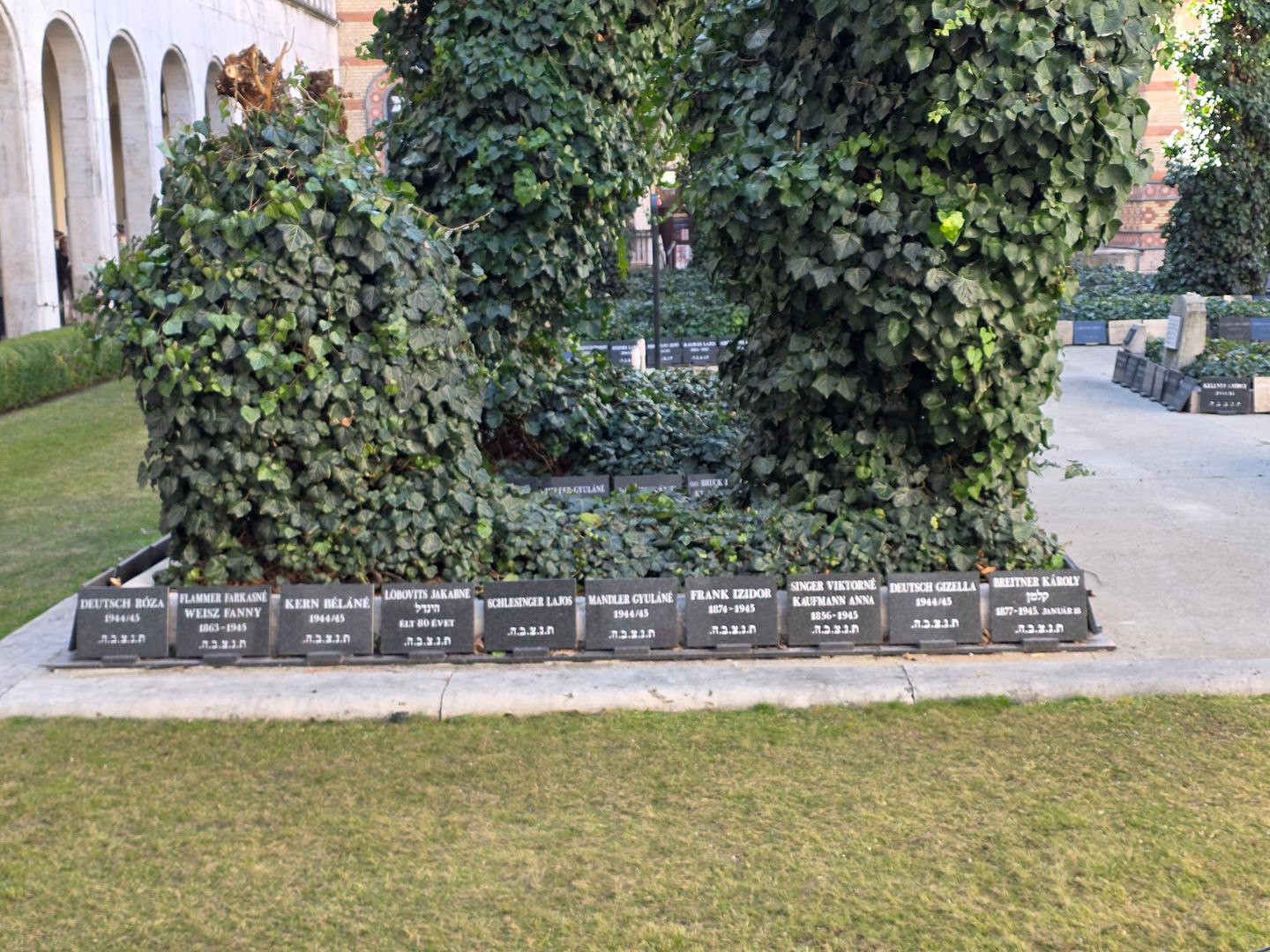
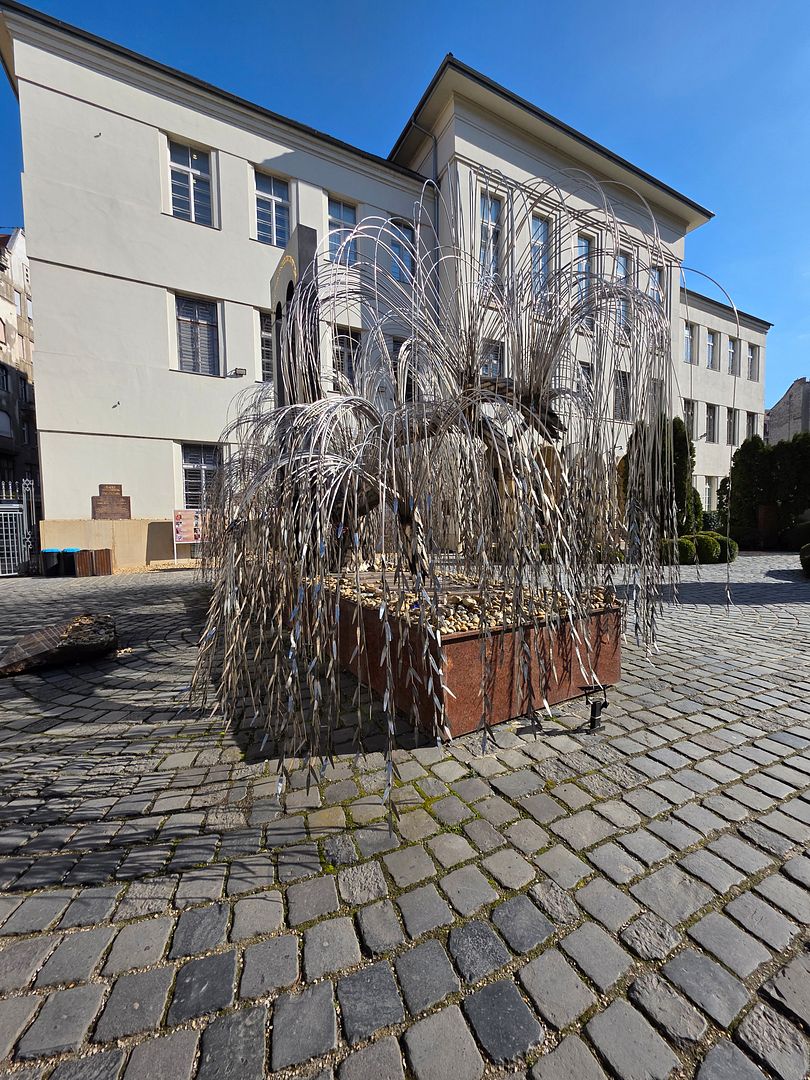
The memory of the Holocaust is strongly connected to the old Jewish quarter where the Synagogue is situated. Dohány Street constituted the border to the ghetto during World War II. The area which was planned as a garden is the burial place of nearly 2600 Jewish people who perished during the Holocaust. 
Raoul Wallenberg was a Swedish architect, businessman, diplomat, and humanitarian. He saved thousands of Jews in German-occupied Hungary during the Holocaust from German Nazis and Hungarian fascists during the later stages of World War II.

According to Jewish tradition it is our duty to remember. To remember our martyrs and those non-Jewish people who did not fear for their lives but helped Jews during the holocaust, saving theirs.
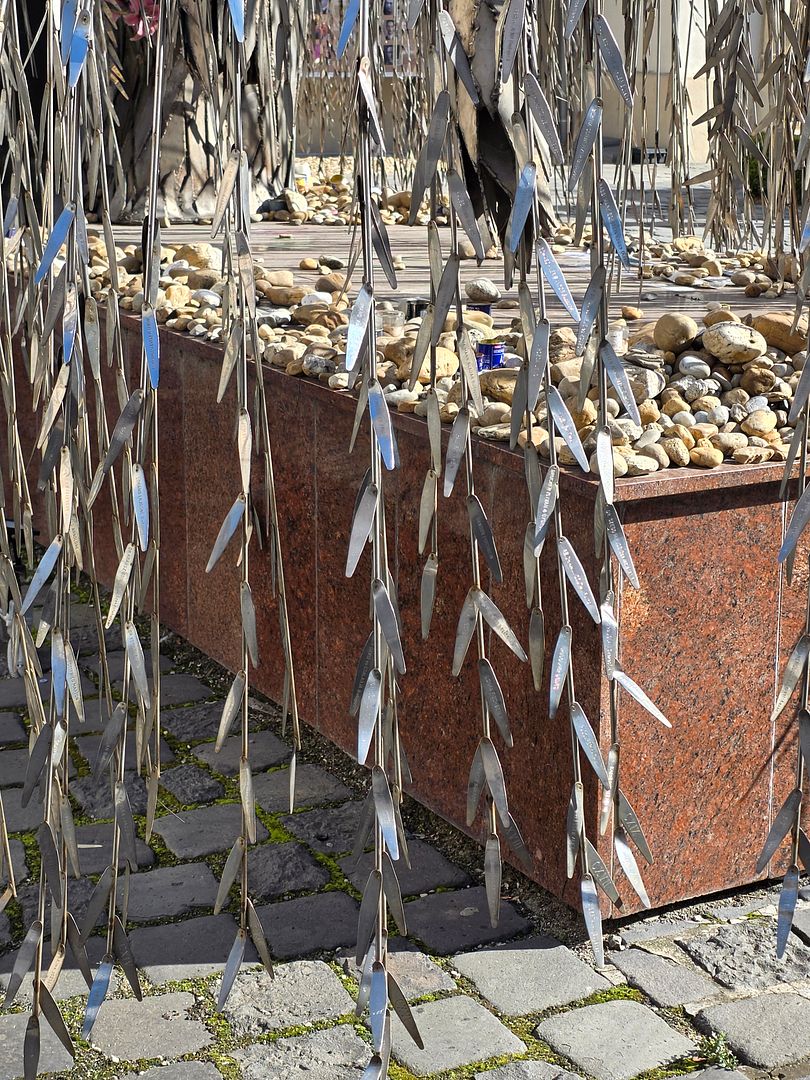
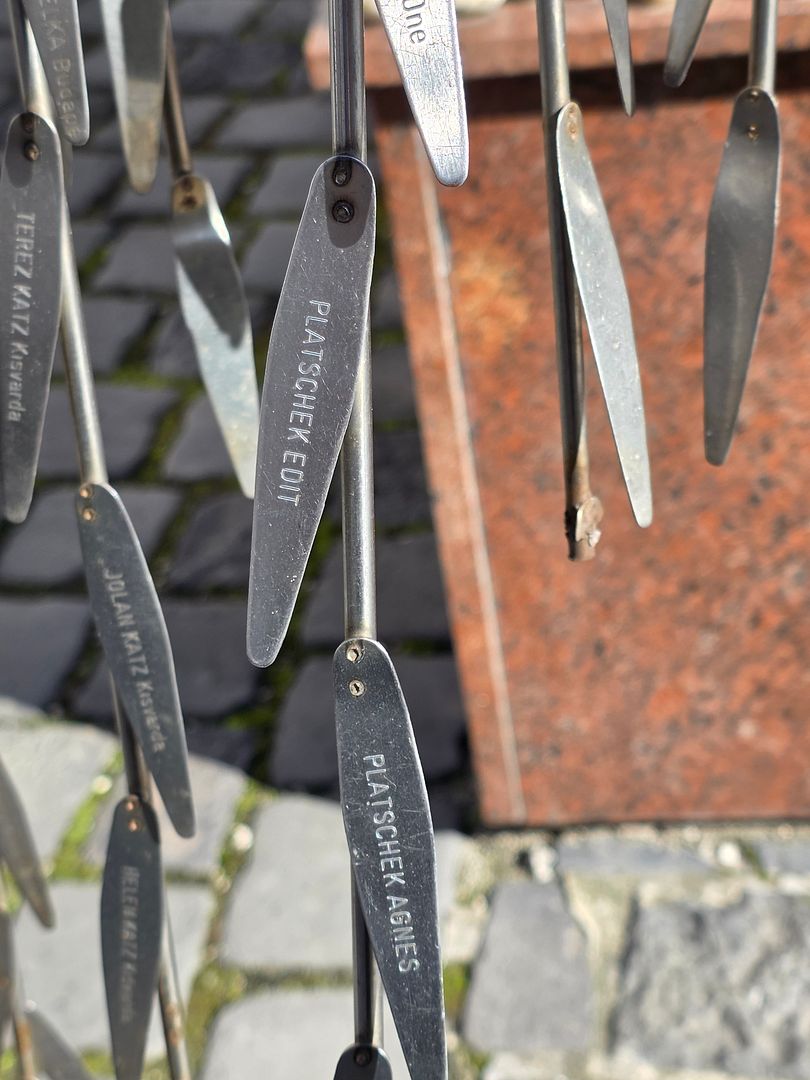
The Emmanuel memorial tree was envisioned by Tony Curtis and completed by the sculptor Imre Varga. You can find memorial plaques of Hungarian and other nationality rescuers of Jewish people in the memorial park.
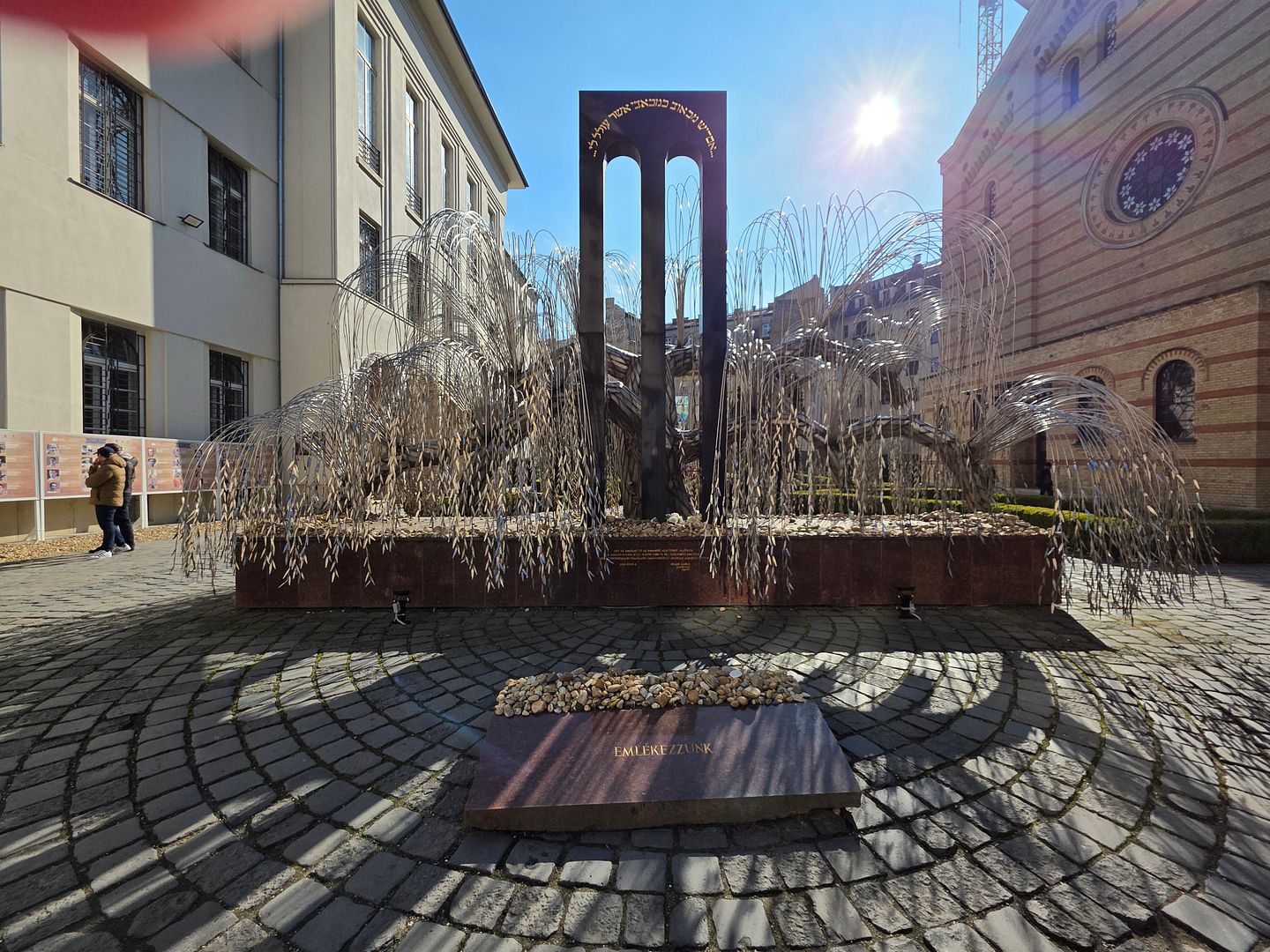
The cemetery in the synagogue’s yard is of particular significance as it is not usual in Jewish customs to situate cemeteries next to synagogues. The cemetery overlooking Wesselényi Street, however, was created during World War II, out of necessity.
When the ghetto was liberated on 18 January 1945, thousands of unburied corpses were lying in the streets, more than 3000 dead bodies were found on Klauzál Square alone. 1140 known and 1170 unknown martyrs were buried in 24 common graves in the yard of the Synagogue.
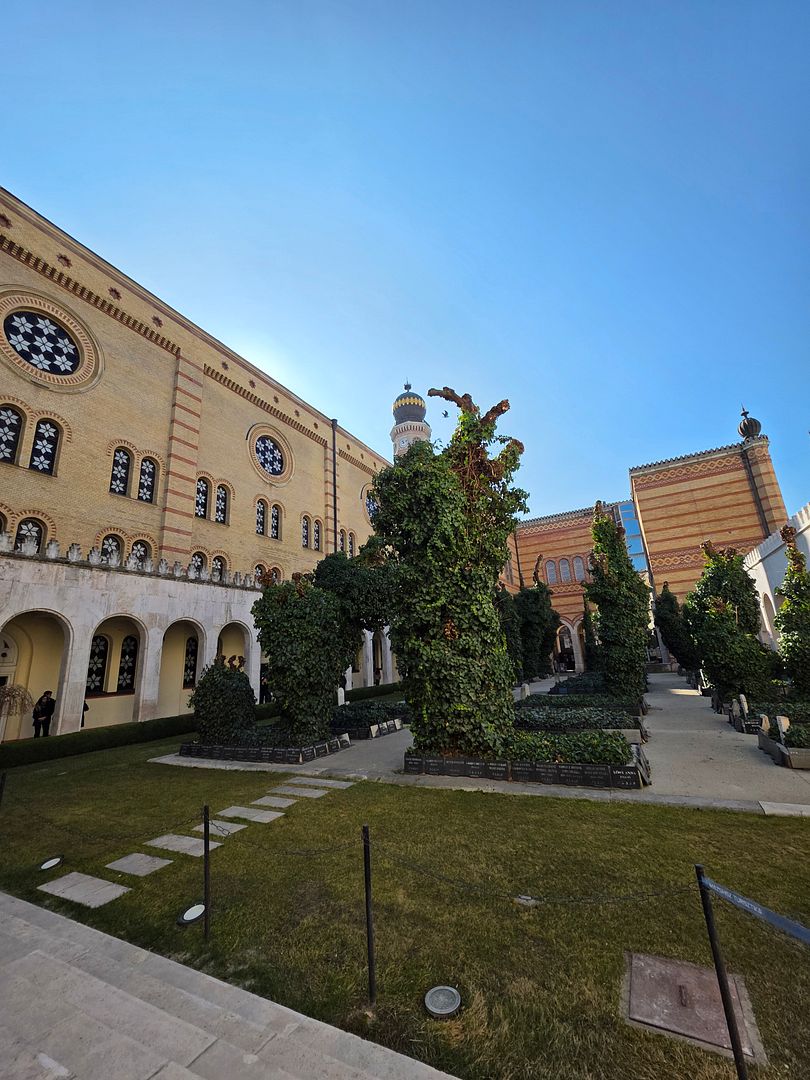
My information comes from the Synagogues website and from our Tour guide who was a practicing Jew from this Temple.

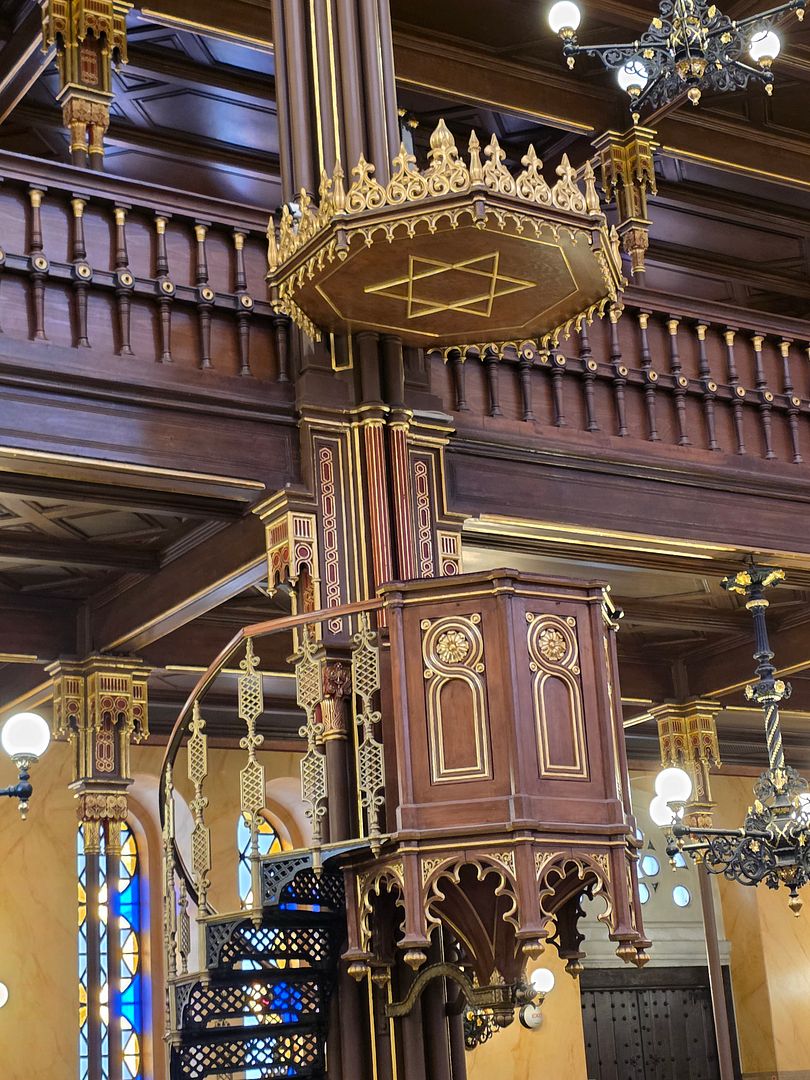
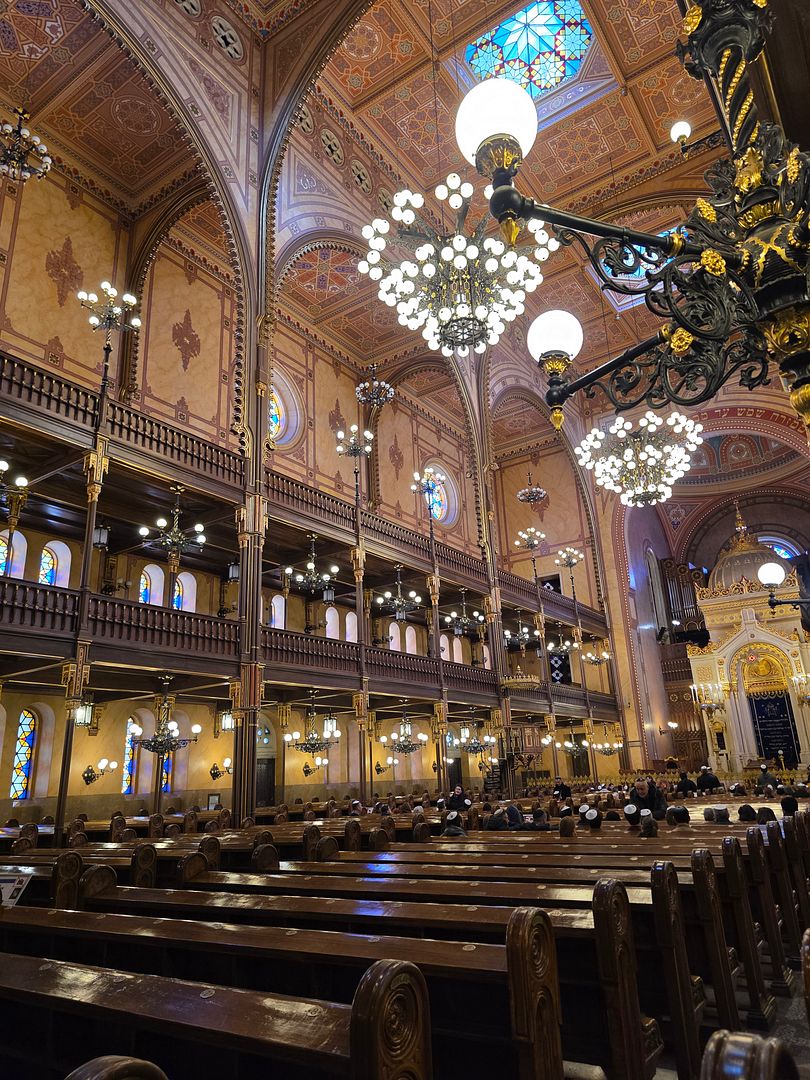
I was surprised by the interior of the Temple and especially the presence of an organ.

Unlike traditional, intimate synagogues, the Dohány is vast and longitudinal, resembling a Christian cathedral. It features a large, decorated ark and a massive organ designed to be played by non-Jews on the Sabbath.
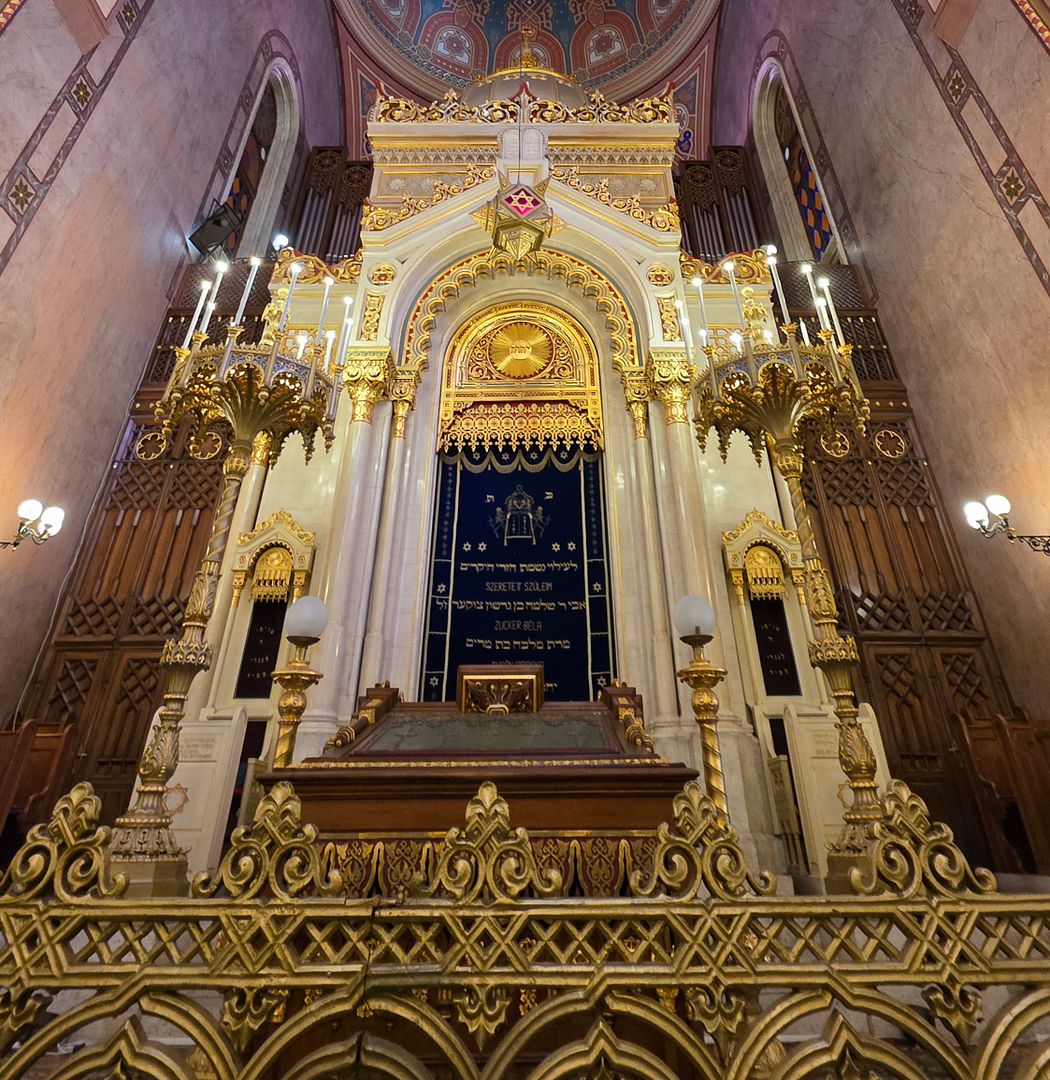
I will save the Jewish Museum and the Heroes Temple for another post.

Back to the Present:

We are still experiencing freezing temps in the early hours. More blooms have opened up on our daffodils.
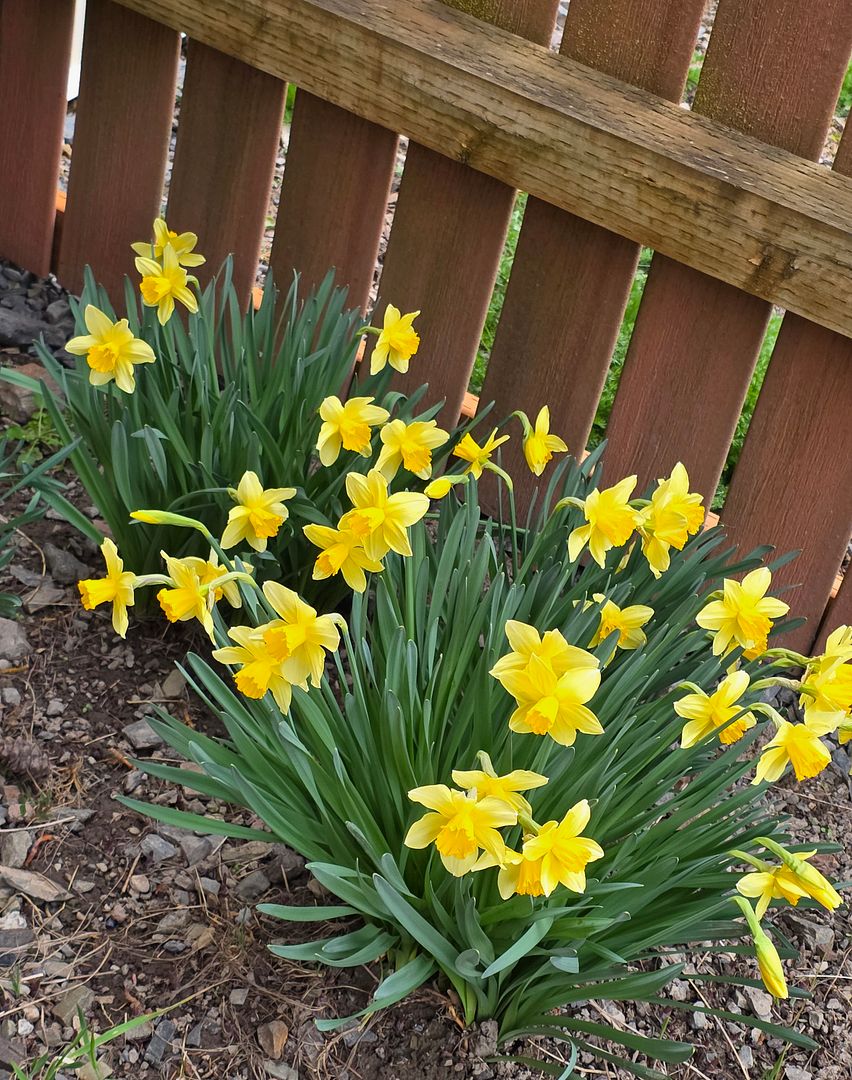
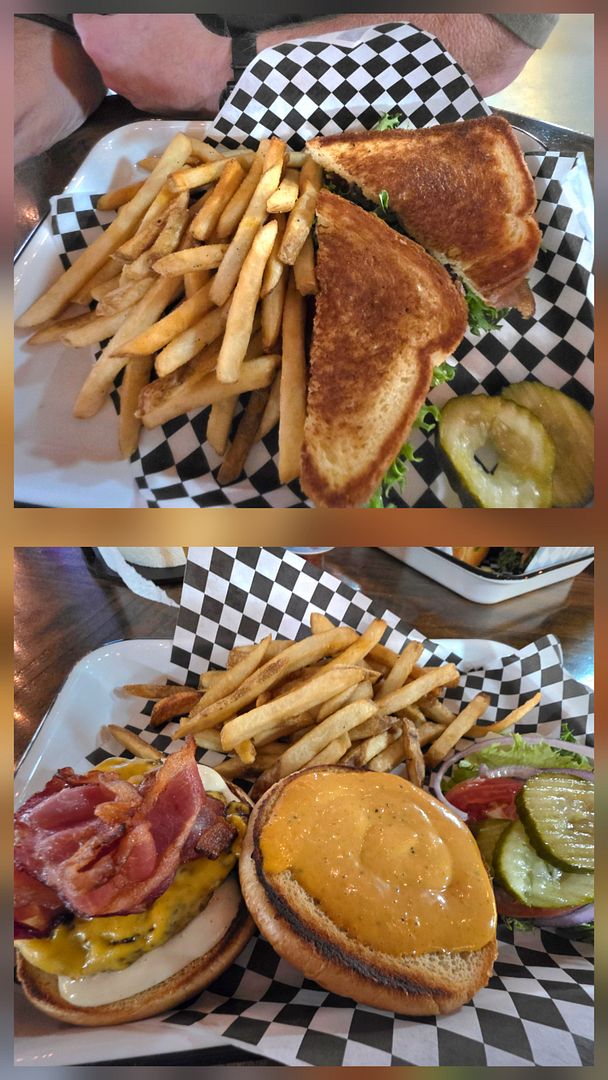
In our neck of the woods it is always a treat to have a new eatery open up. This month Buck 25 Roadhouse in Kettle Falls opened up. We decided to try lunch there after our church workday this past Saturday. We were pleased with the atmosphere and the light and friendly new spot to enjoy good food.

Yesterday was Palm Sunday and our service was good with a sermon from 1st John. This is the beginning of Holy Week culminating with Resurrection Sunday. It is a special week for Christians around the world. We are looking forward to our Good Friday Service and Resurrection Sunday service. Easter preparations are commencing here.
Panorama Look-Out, St. Stephens Basilica

To get to the panorama views of St. Stephen’s Basilica and Budapest, there was an elevator option and stairs. We took the elevator up but when it was time to go down again we chose the stairs. Thankfully there were good railings and it was an open airy space so we didn’t get claustrophobic.

Saturday February 28th was a beautiful sunny day. We were so thankful.

This view is of the square in front of the Basilica with the pedestrian street beyond that takes you to the Danube. Looking beyond small slice of the Danube you can see the Buda side of Budapest.
On our way down to exit the Basilica we stopped at the Treasury. This painting of Peter and the Rooster caught my eye,  “the rooster will not crow till you have denied me three times“. This experience of Peter makes me emotionally as I consider times that I’ve denied or not stood up for my Lord and Savior.

The “Holy Family” was painted by Murillo (1682).

An artistic depiction of Jesus and the Samaritan Woman at the well.

Not quite busts but these circular heads of all the apostles were on an arched ceiling as we left the Treasury.


It was a narrower exit and walkway and I wasn’t able to get photos of all the apostles because of other people pressing in.

We exited the Basilica and found our way to the Jewish District for our lunch meal at Mazel-Tov. I wrote about our eating experience in Budapest and this restaurant in an earlier post.

This was a day that we were up on our feet and walking for the majority of the day. I was thankful that my Plantar Fasciitis was not an issue for me during this trip. I thanked the LORD several times. I did manage to get a nasty blister on my baby toe, though, that I had to doctor and pamper the next few days!

St. Stephen’s Basilica

On Saturday the 28th of February we broke away from our excursion group to buy tickets to visit the inside of St. Stephen’s Basilica situated centrally in the Pest side of Budapest. This is a photo heavy post!

St. Stephen’s Basilica is a Roman Catholic basilica in Budapest, Hungary. It is named in honor of Stephen, the first King of Hungary, whose right hand is housed in the reliquary.

It was awe-inspiring to see this finished work of art.


It is one of the grandest buildings we have been in.

This is kind of creepy to me. This is the right hand relic of King Stephen of Hungary. King Stephen died in August of 1038.
Not being Catholic, this Basilica was not a point of worship for me and in fact holds some areas of veneration that are against my beliefs. I did appreciate the beauty and the grandeur of the building. The way the architecture and artwork draws your eyes upward is appreciated, too. It is an amazing collection of artwork and treasures but not something to be worshipped in itself.

I’ll share the views from the panorama look-out in another post since this post is already photo heavy.

It is going to take a while to share much of our Danube River and Cambridge adventures.