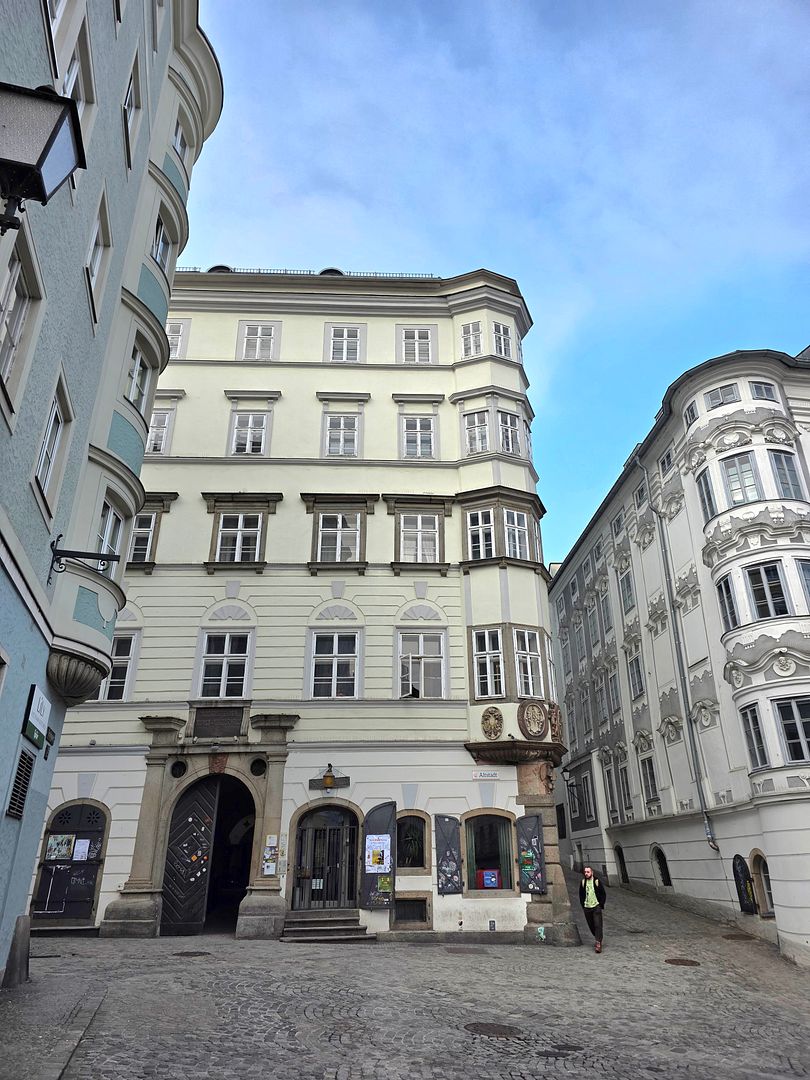
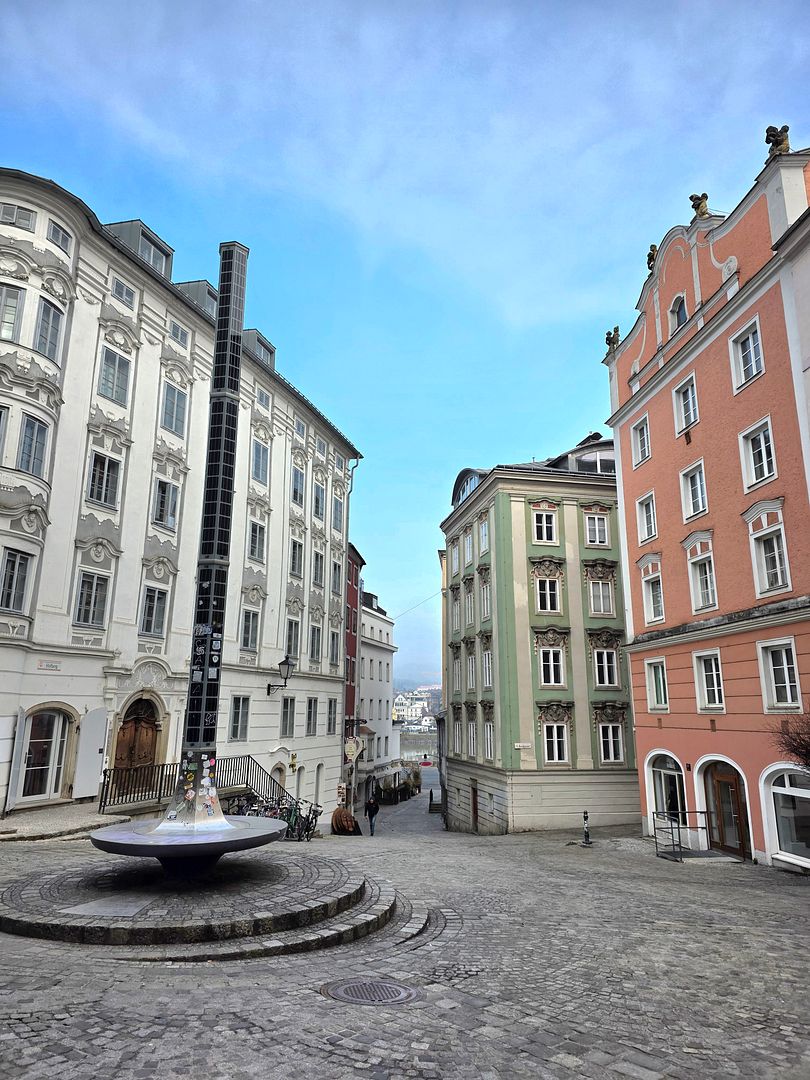
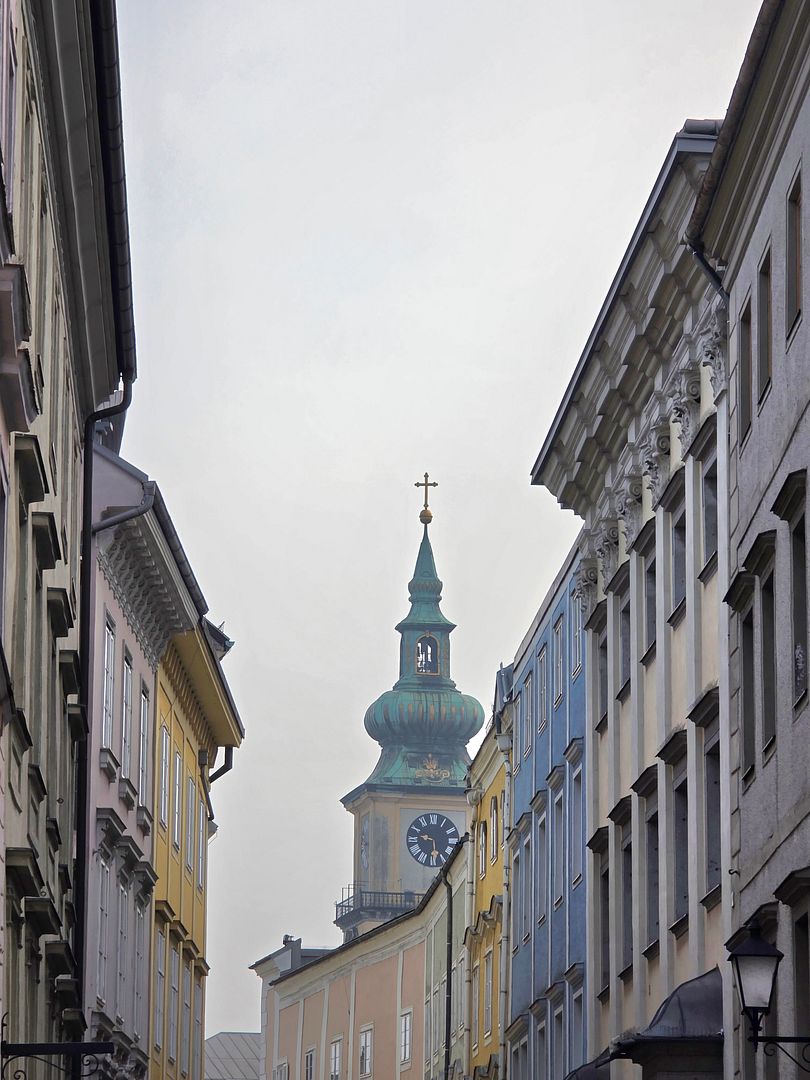
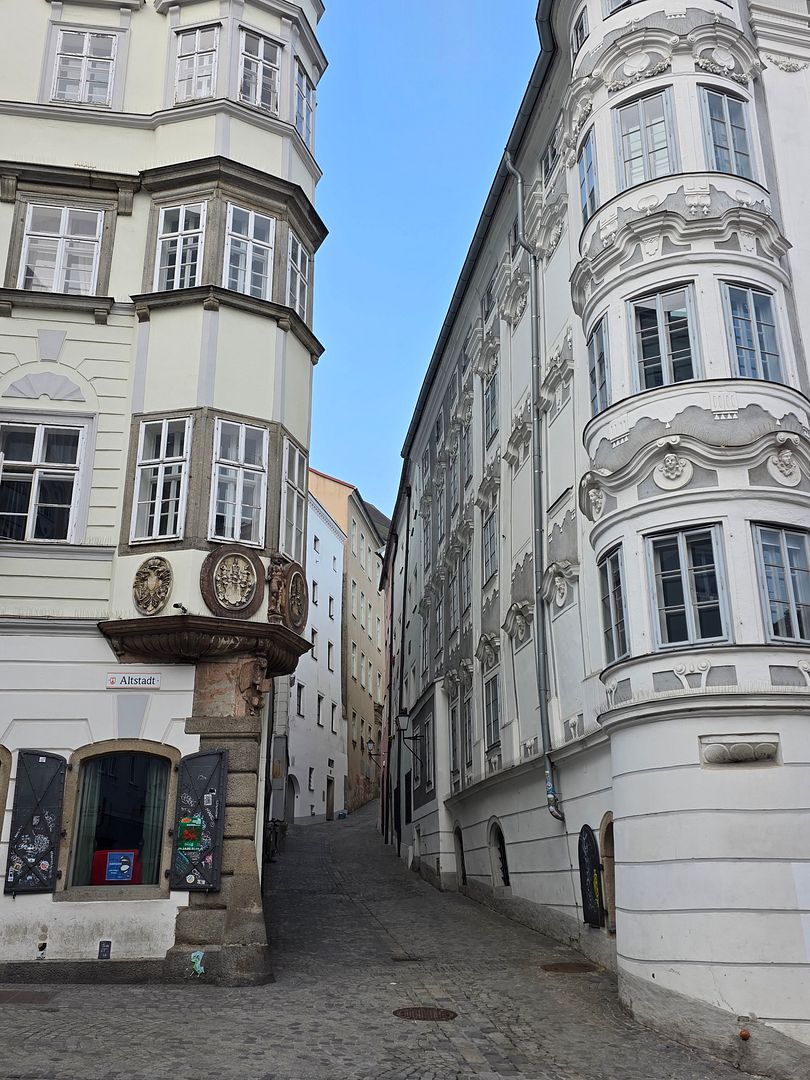
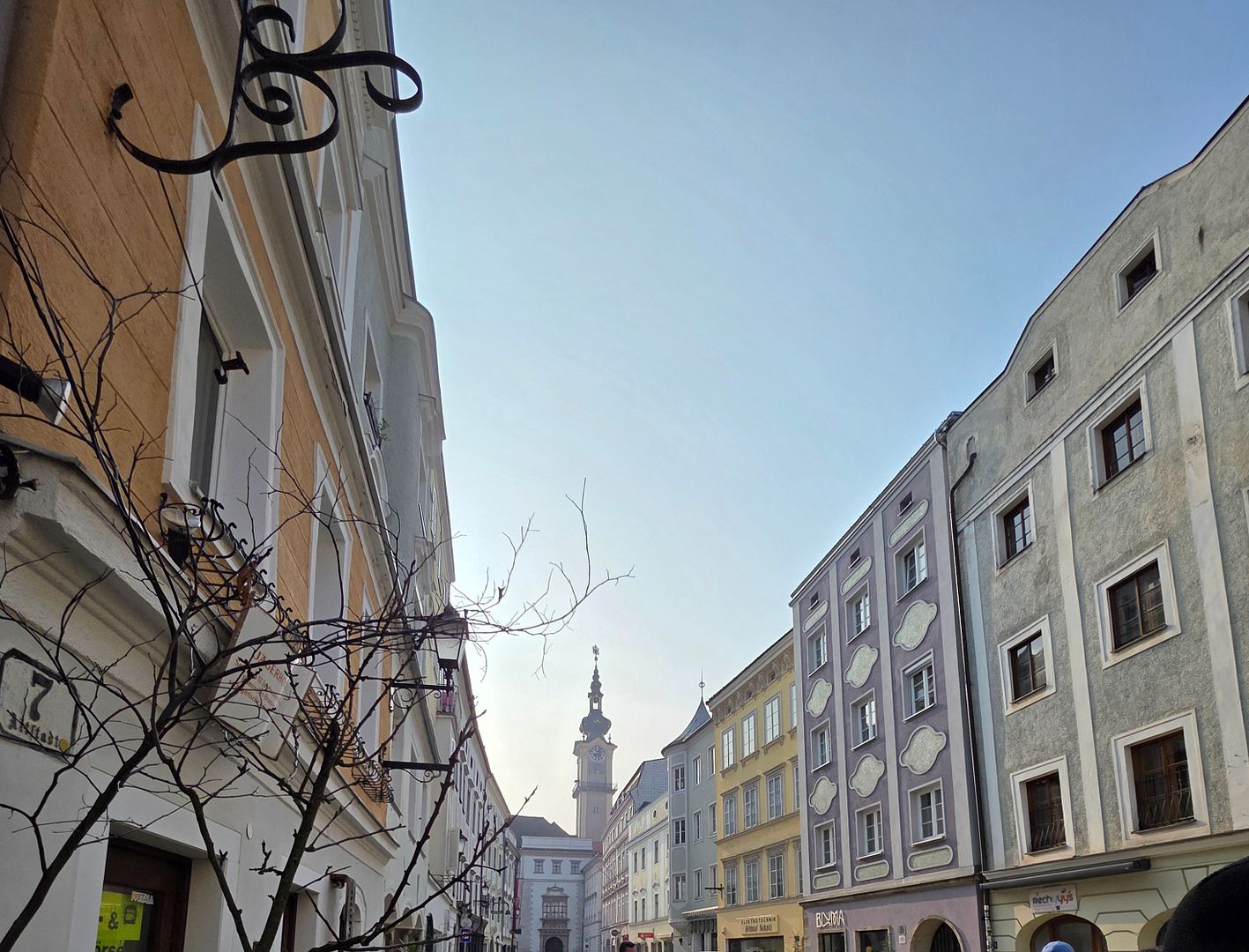
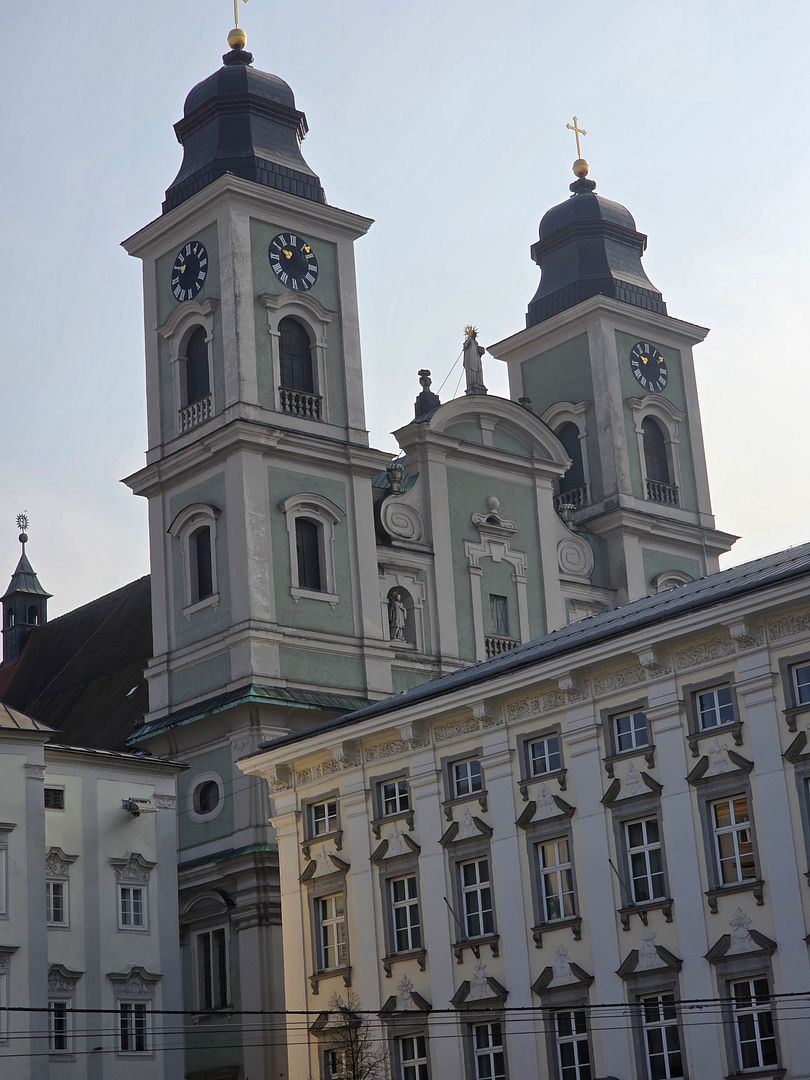
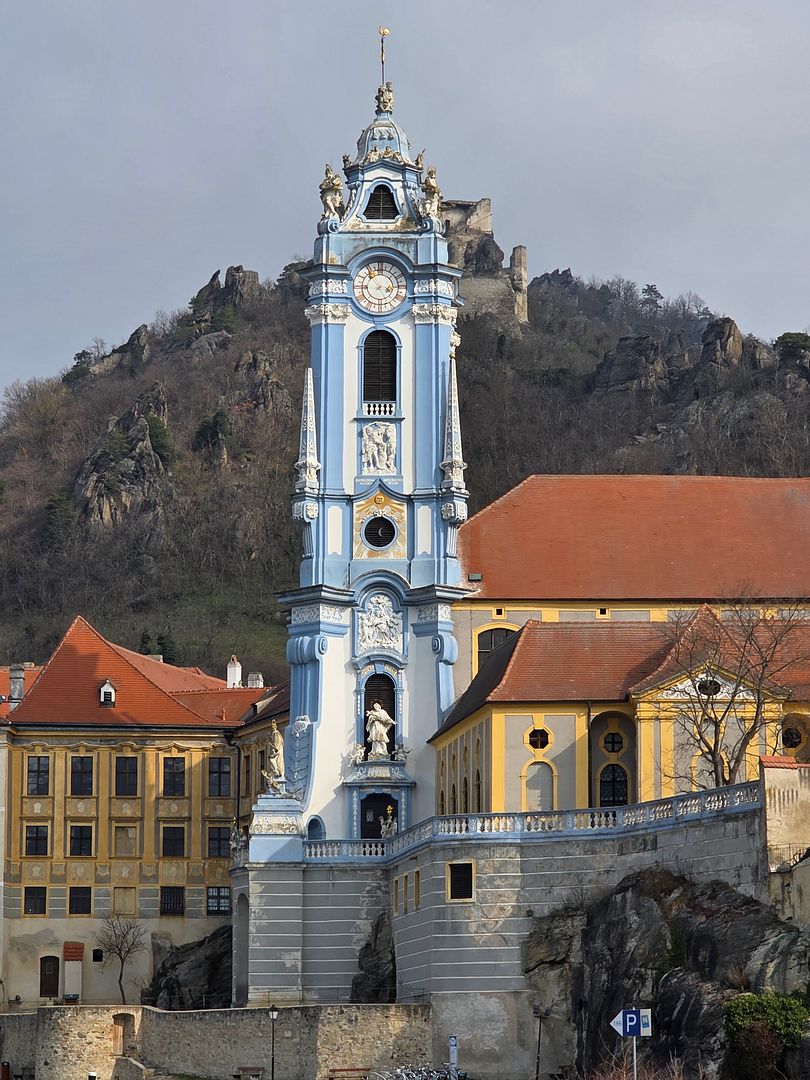
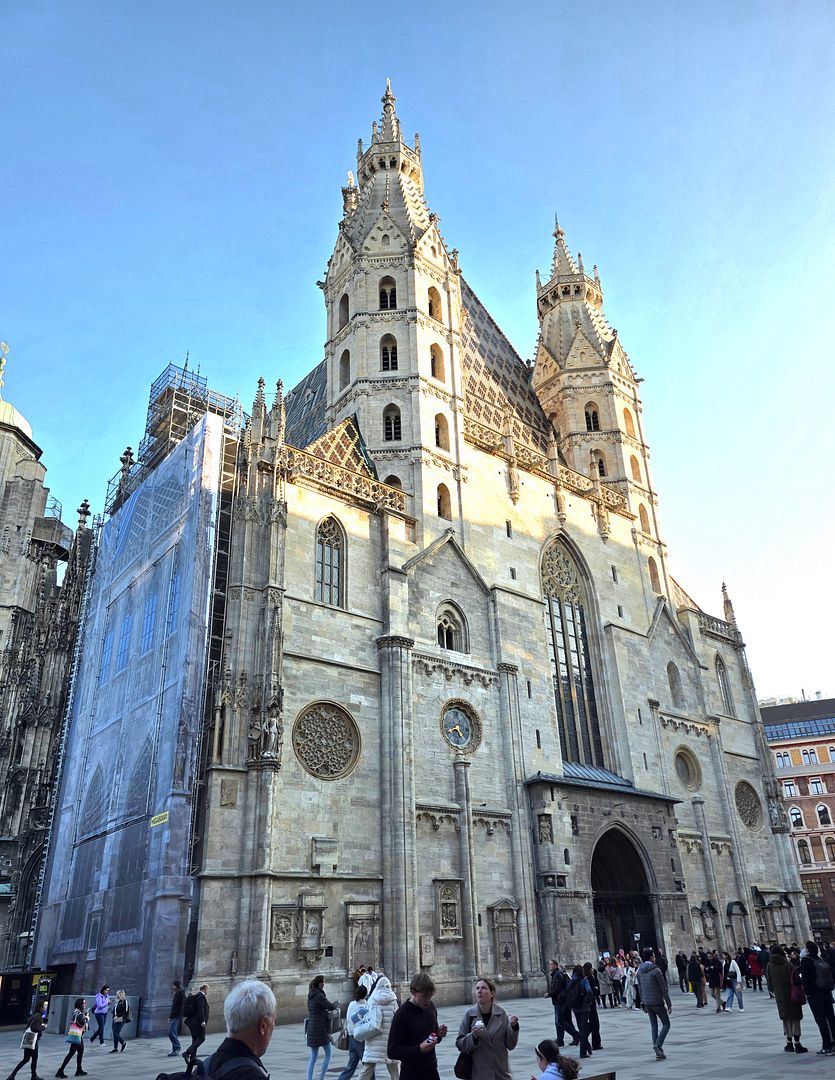
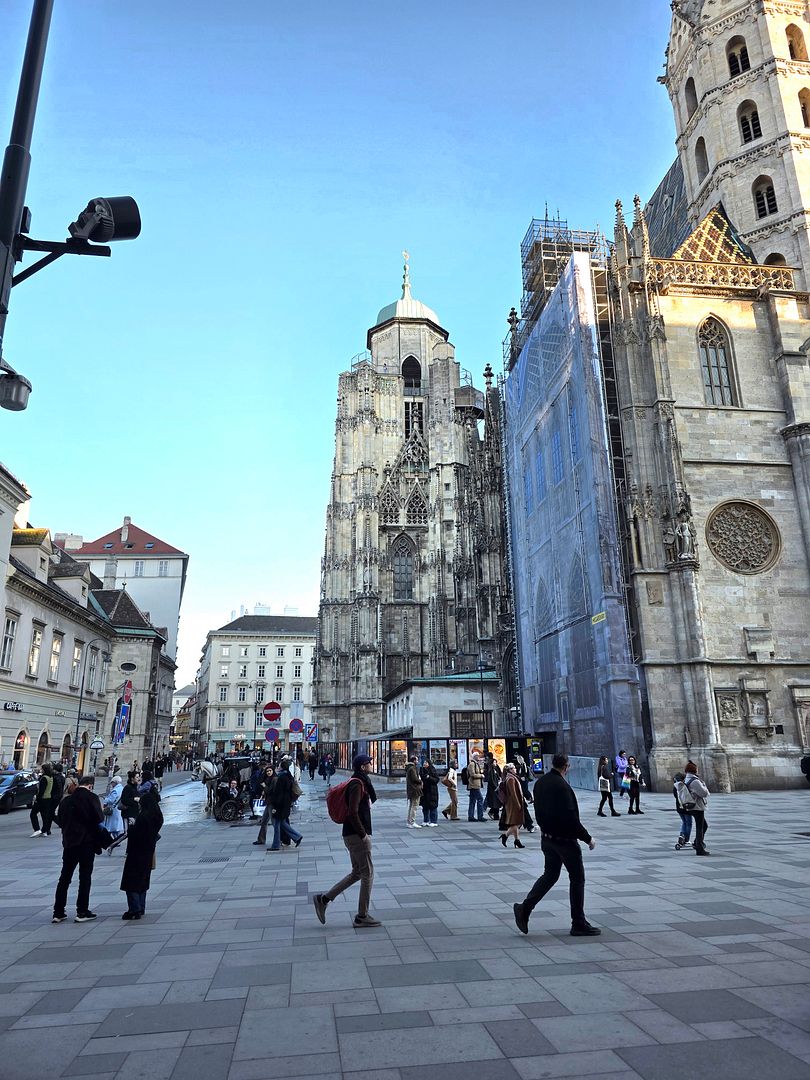
After our carriage ride on Thursday March 5th we followed our tour guide to the center of the city ending our tour with St. Stephen’s Cathedral. In the first photos below you can see the steeple of the church.
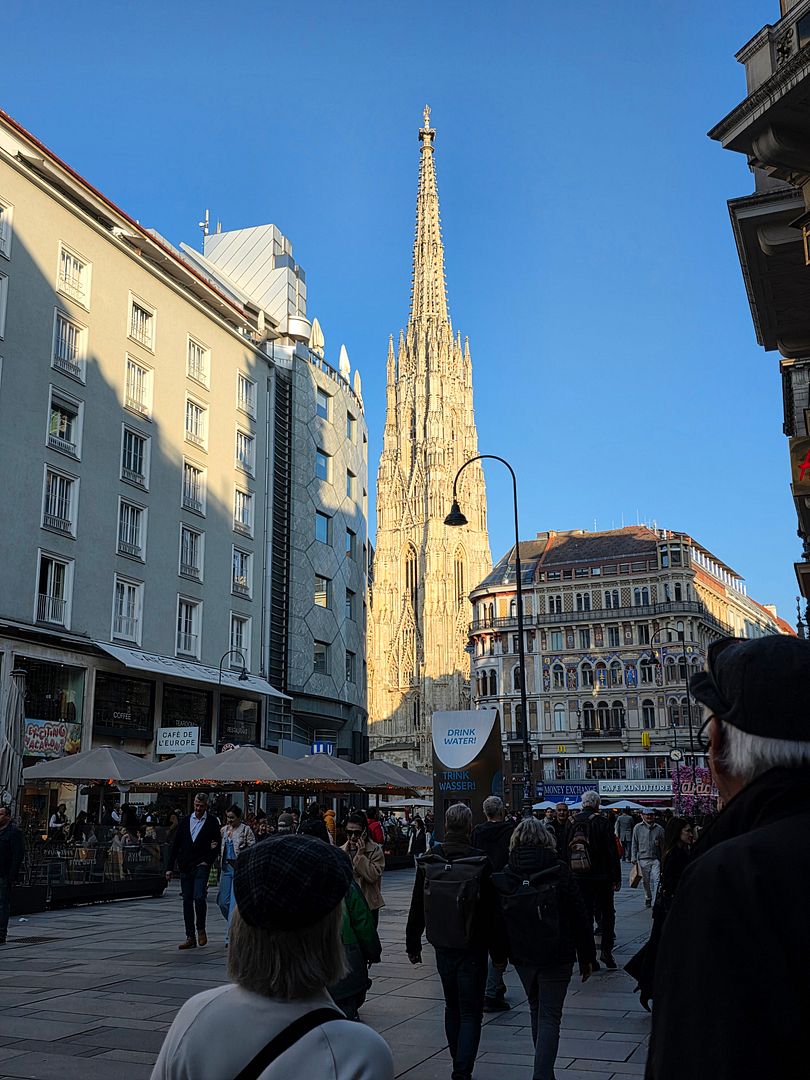
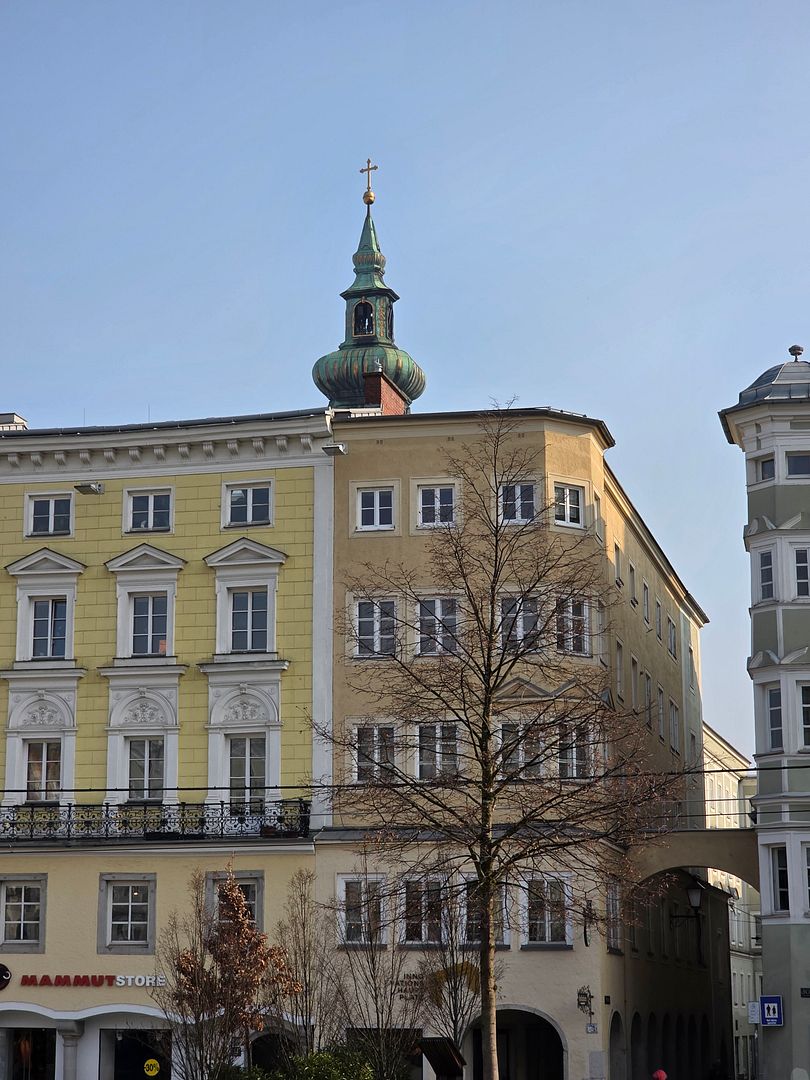
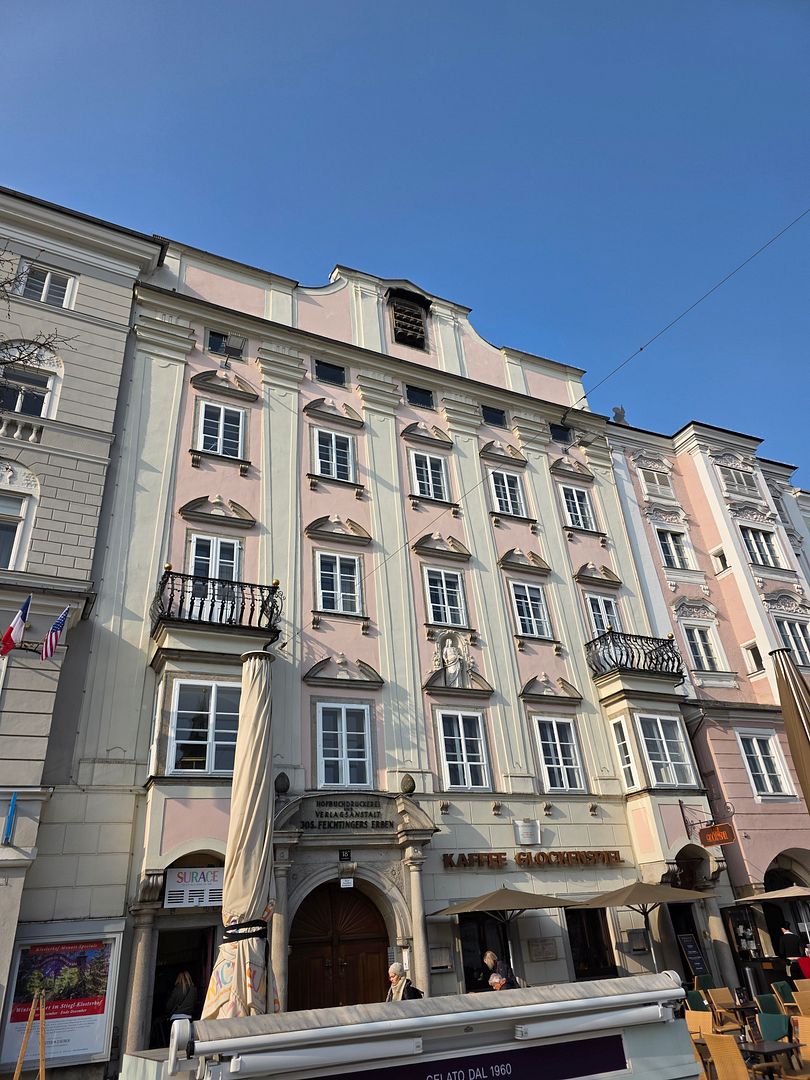
This was a very busy central section of Vienna with shops and restaurants and cafes.
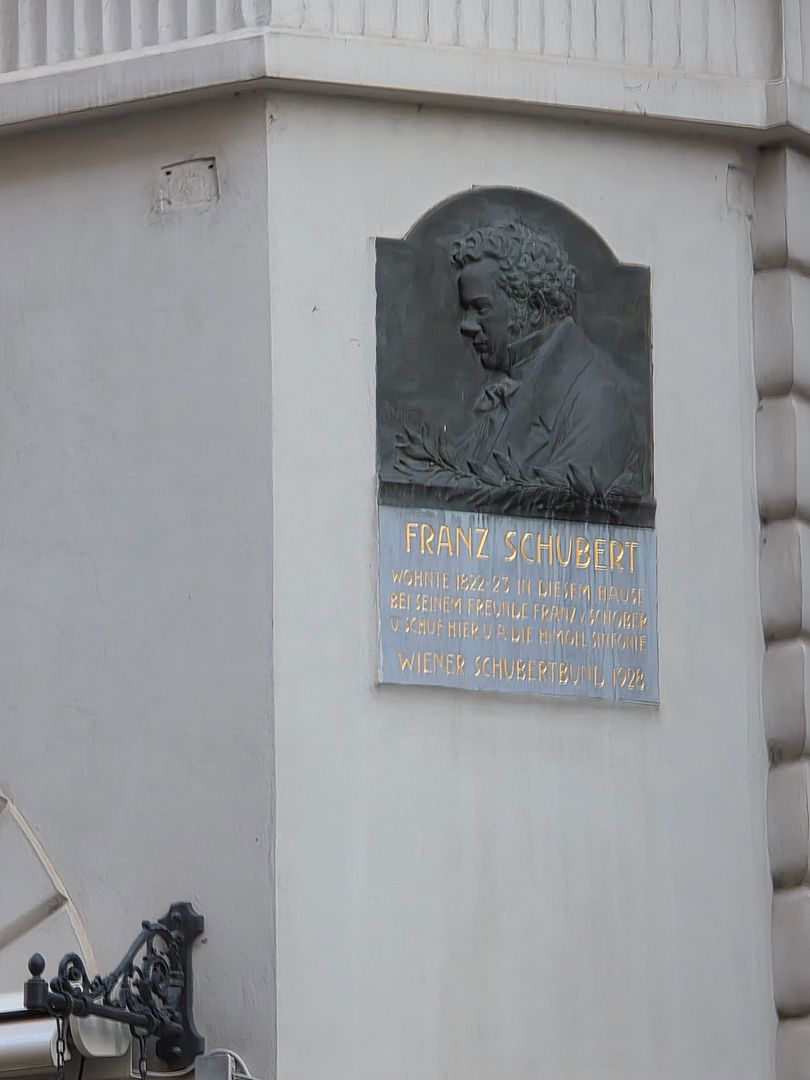
A different reminder of what Austria and Vienna are famous for. Later in the evening of this day we would be attending a concert at the House of Strauss.
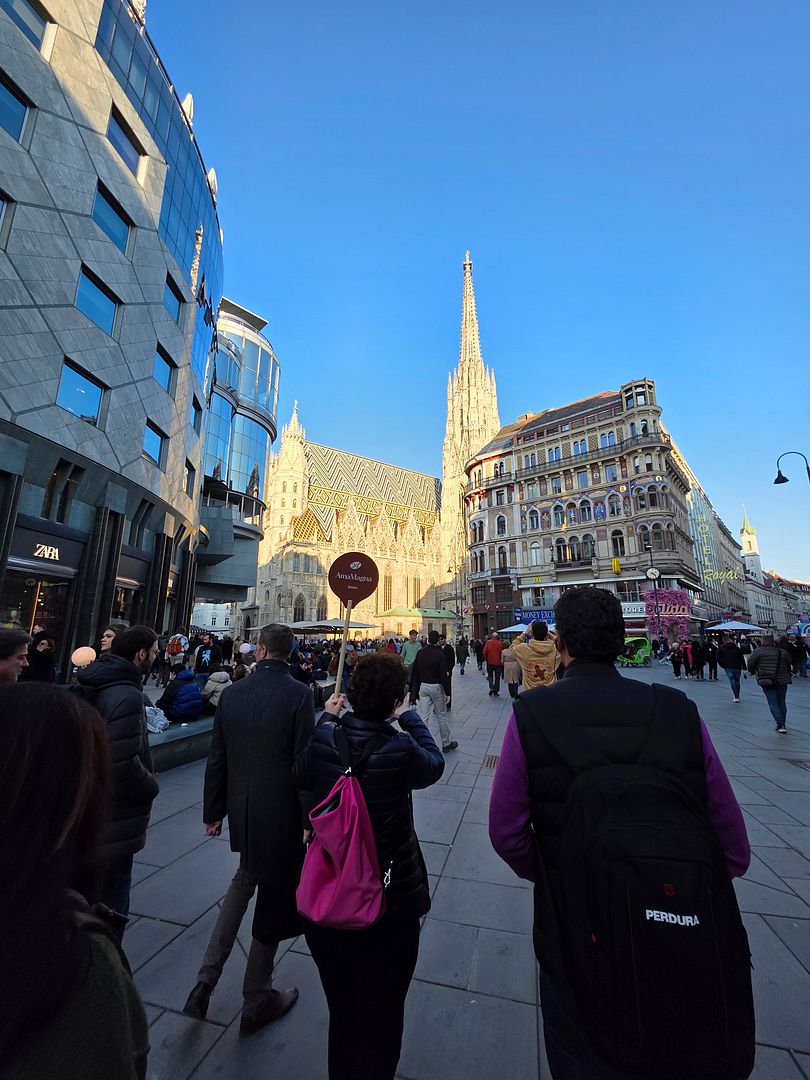
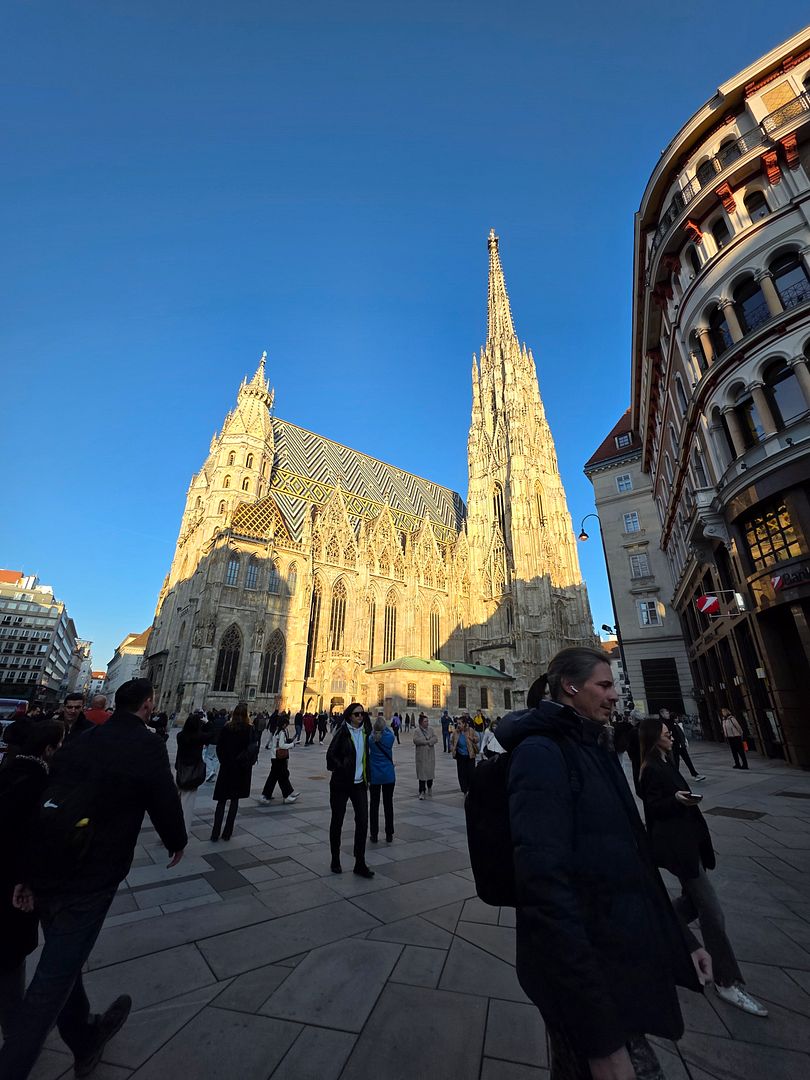
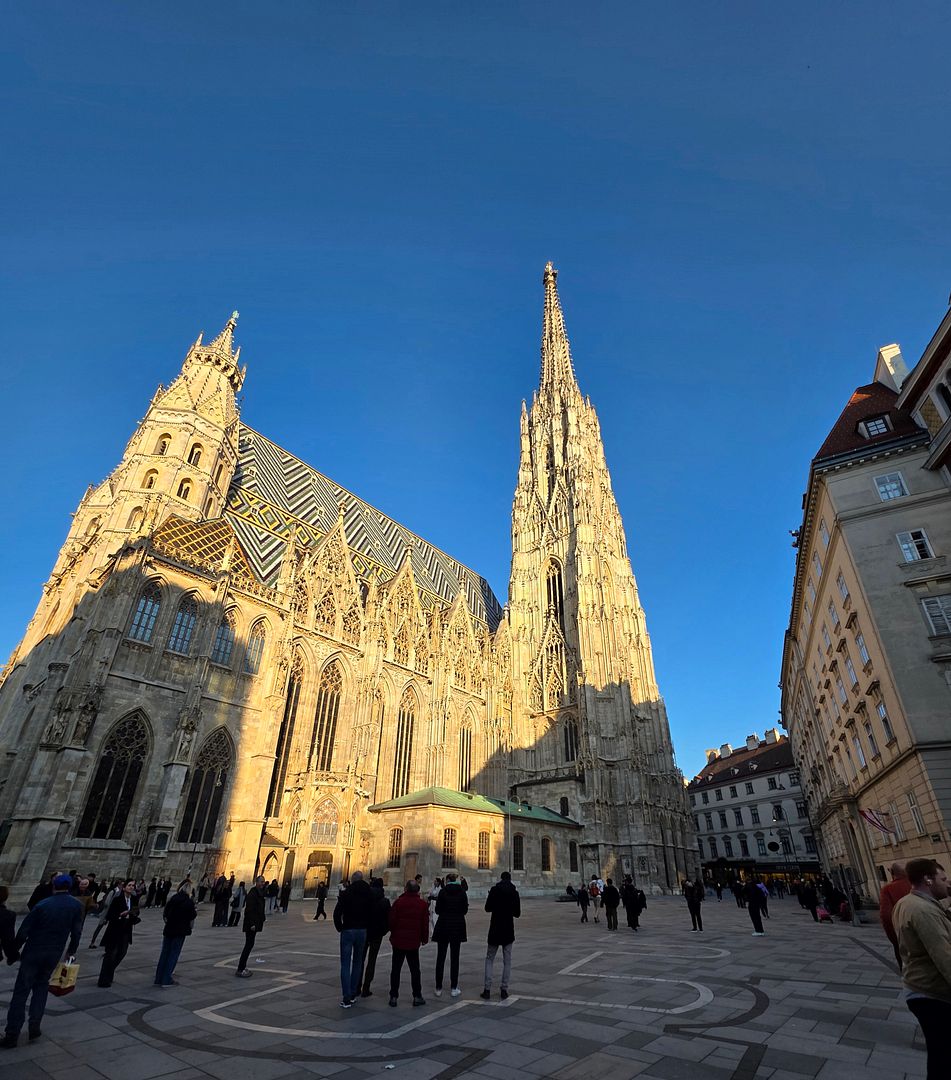
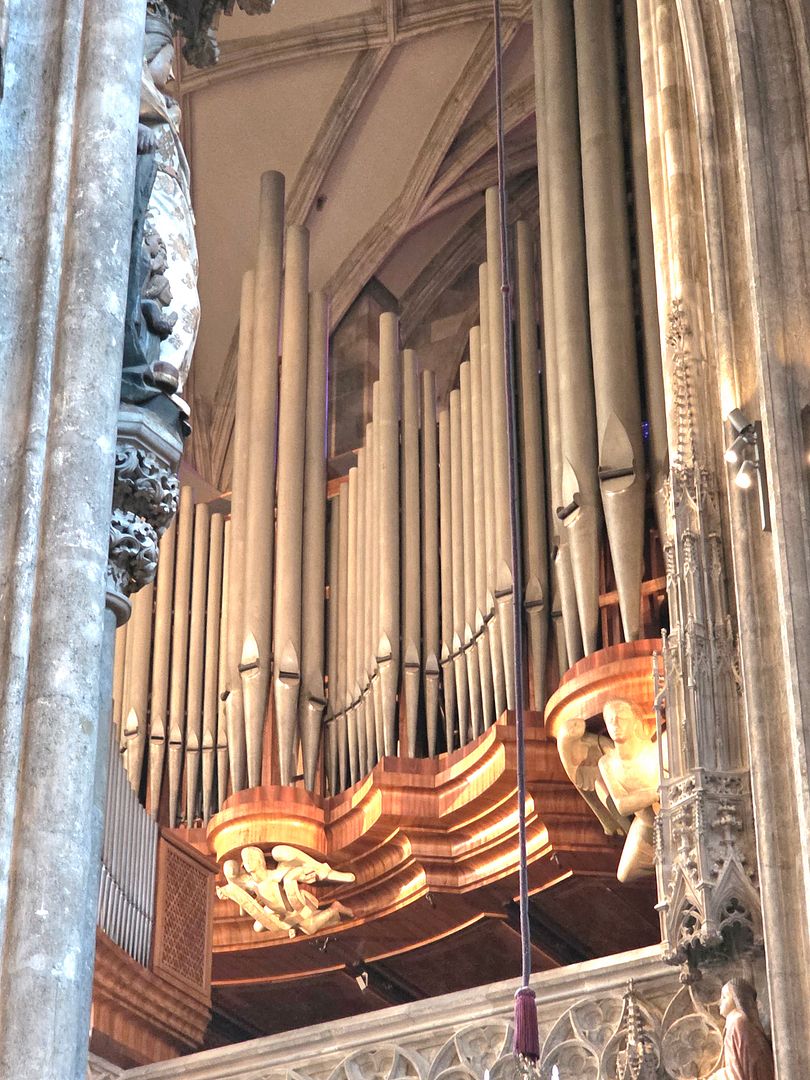
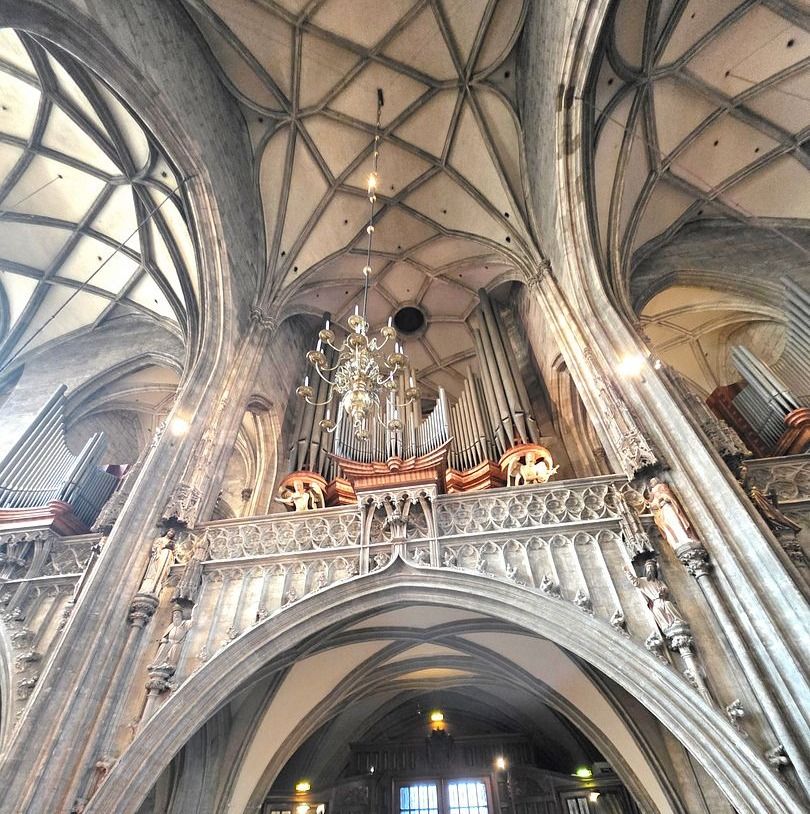
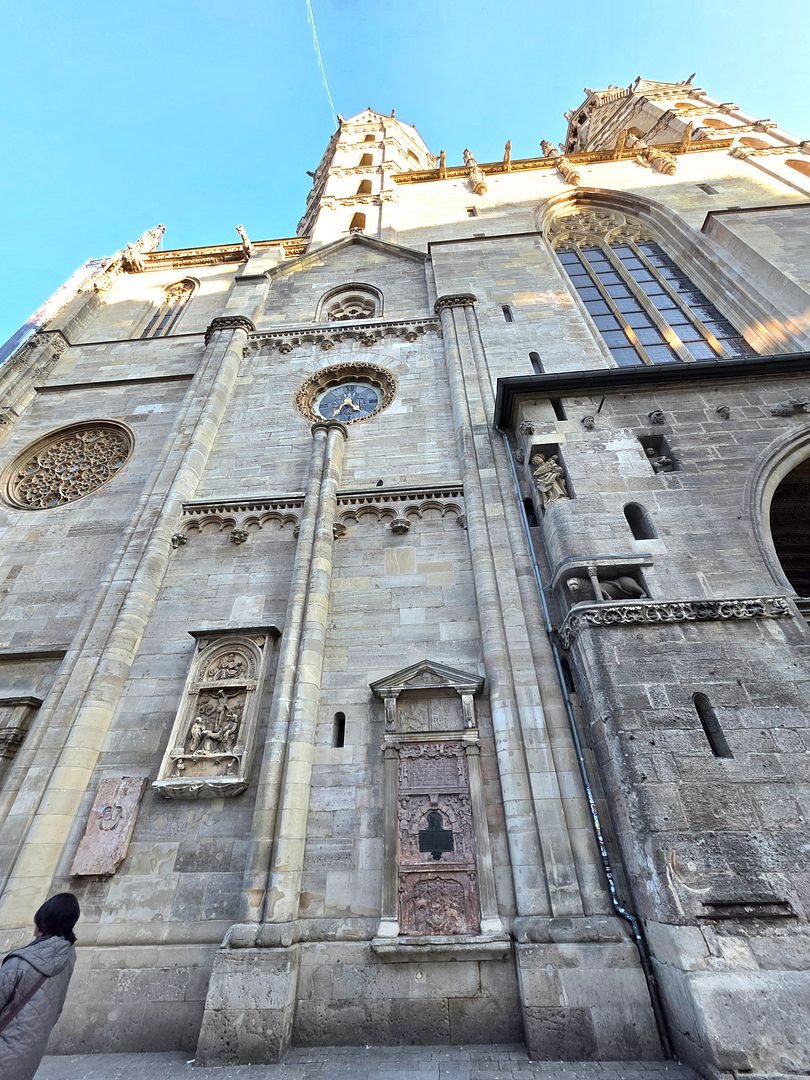
St. Stephen’s Cathedral is not only Austria’s most important Gothic building. The Steffl, as it is affectionately known in Vienna, is much more than that. It is a landmark, a symbol of identity and synonymous with the reconstruction of the Republic after the Second World War. Construction of St. Stephen’s Cathedral began in the 12th century and its interior changed repeatedly over the centuries until it was finally given its current Baroque appearance. The tallest of its four towers is the south tower at 136 meters. The tower room, from which there is a gigantic view across Vienna, is reached via 343 steps. A total of 13 bells hang here. However, the best known of them, the Pummerin, hangs in the 68 meter-tall north tower. It is the second-biggest free-swinging chimed church bell in Europe.
I added a link to the details on the roof.
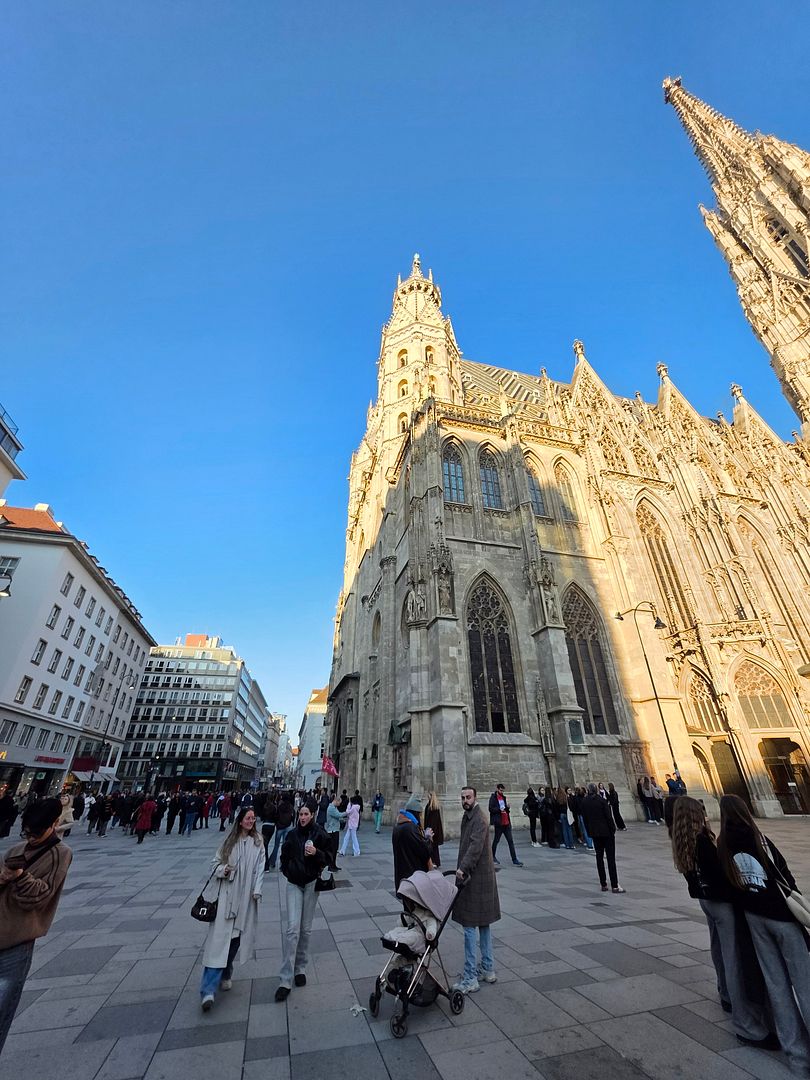
At this point our guide left us on our own for a time before she would return and meet us to take us back to our bus stop for the return to the boat.
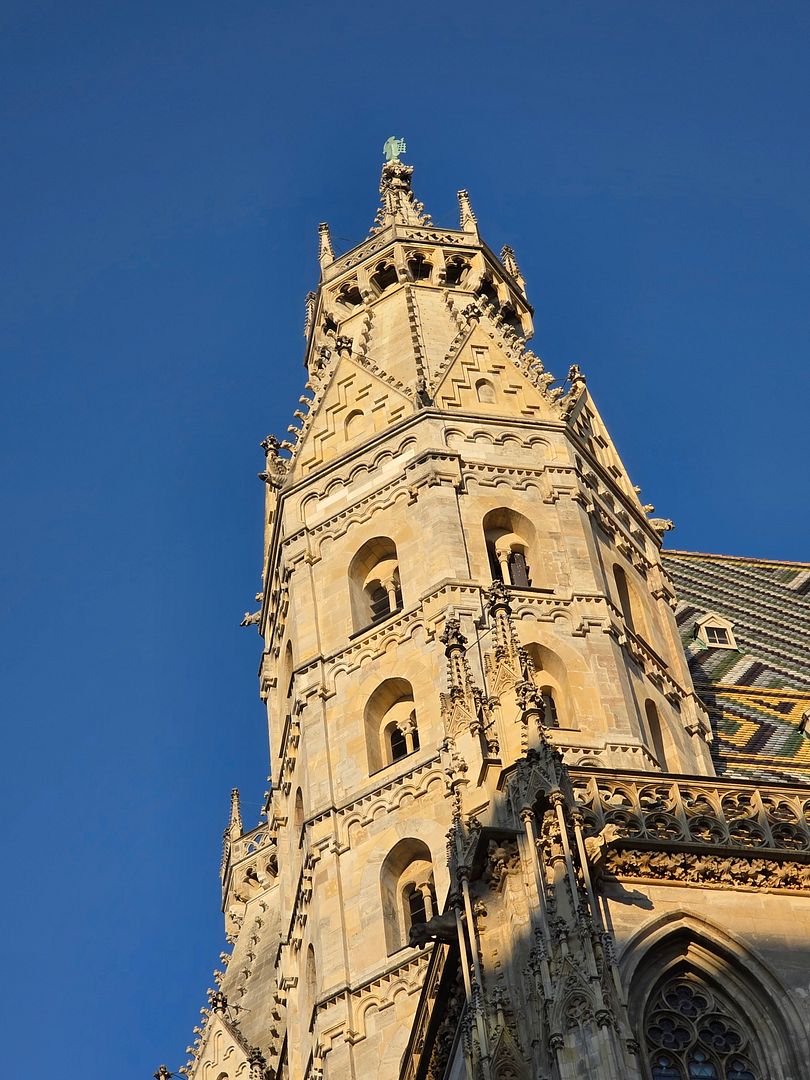
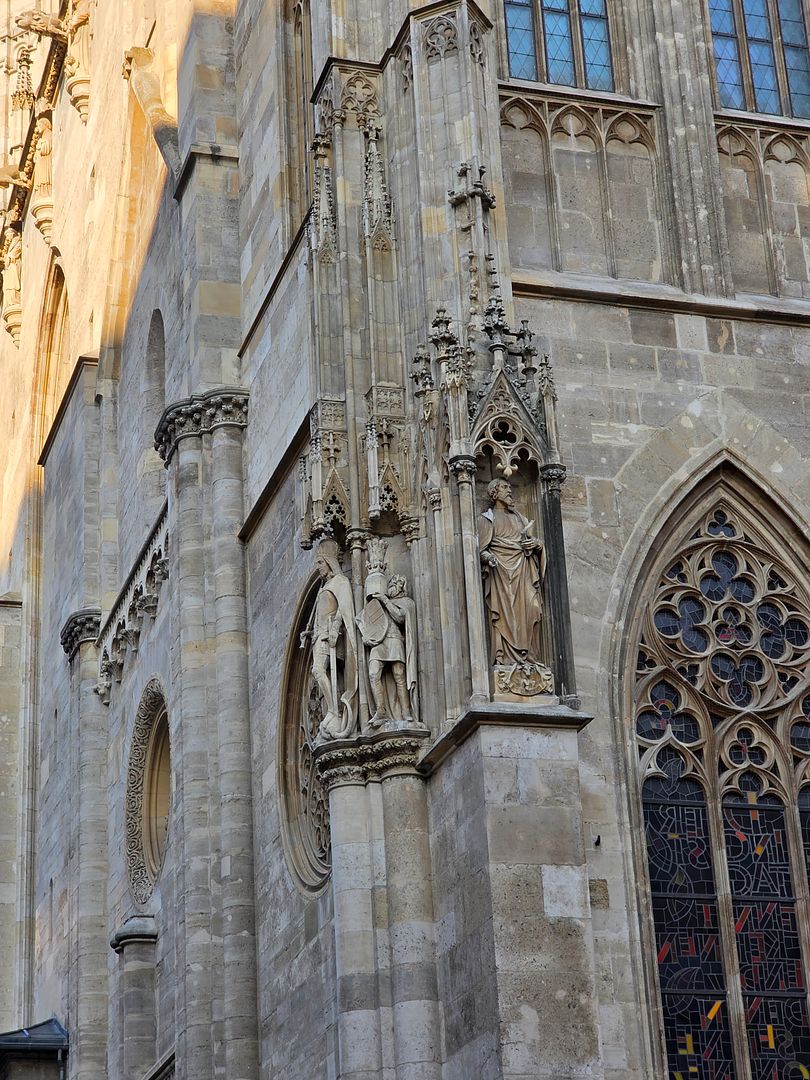
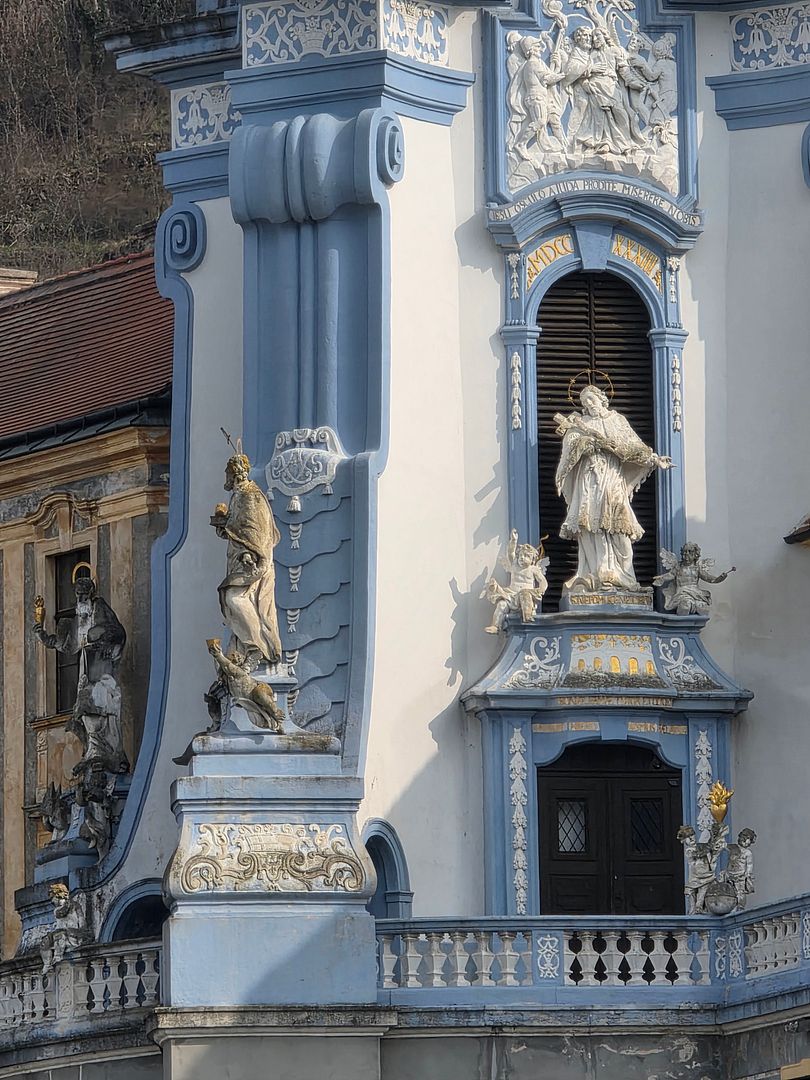
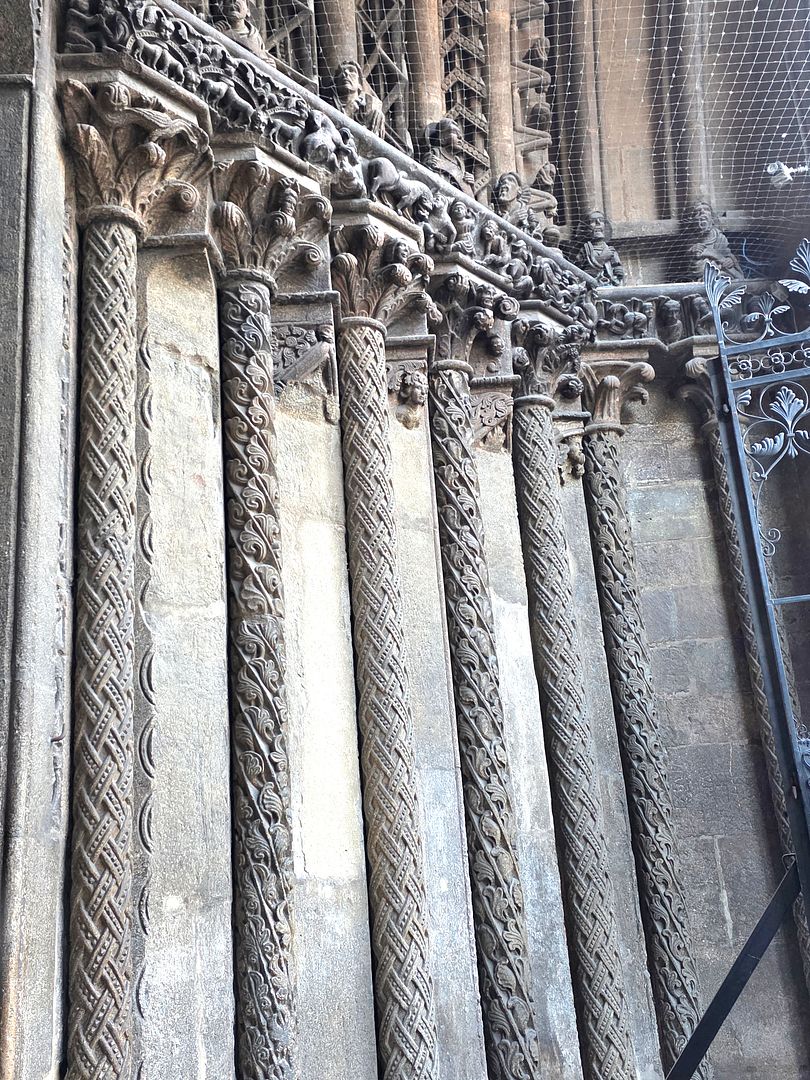
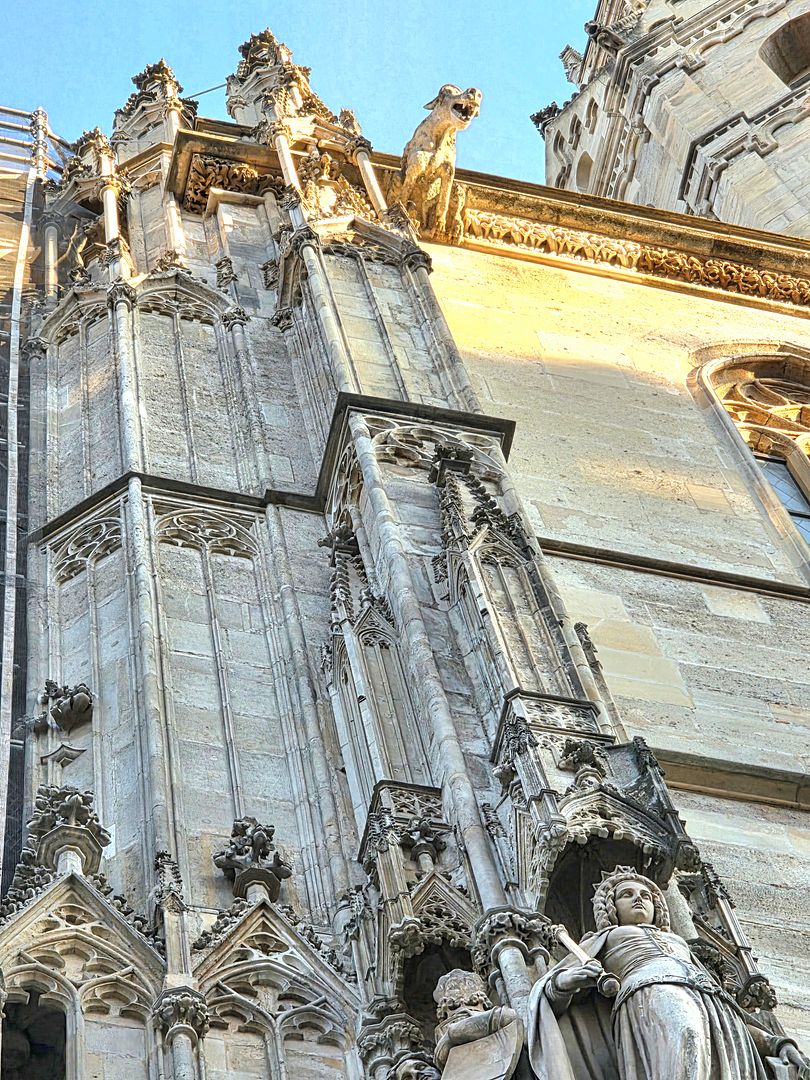
So many statues and gargoyles on the outer walls of the cathedral.
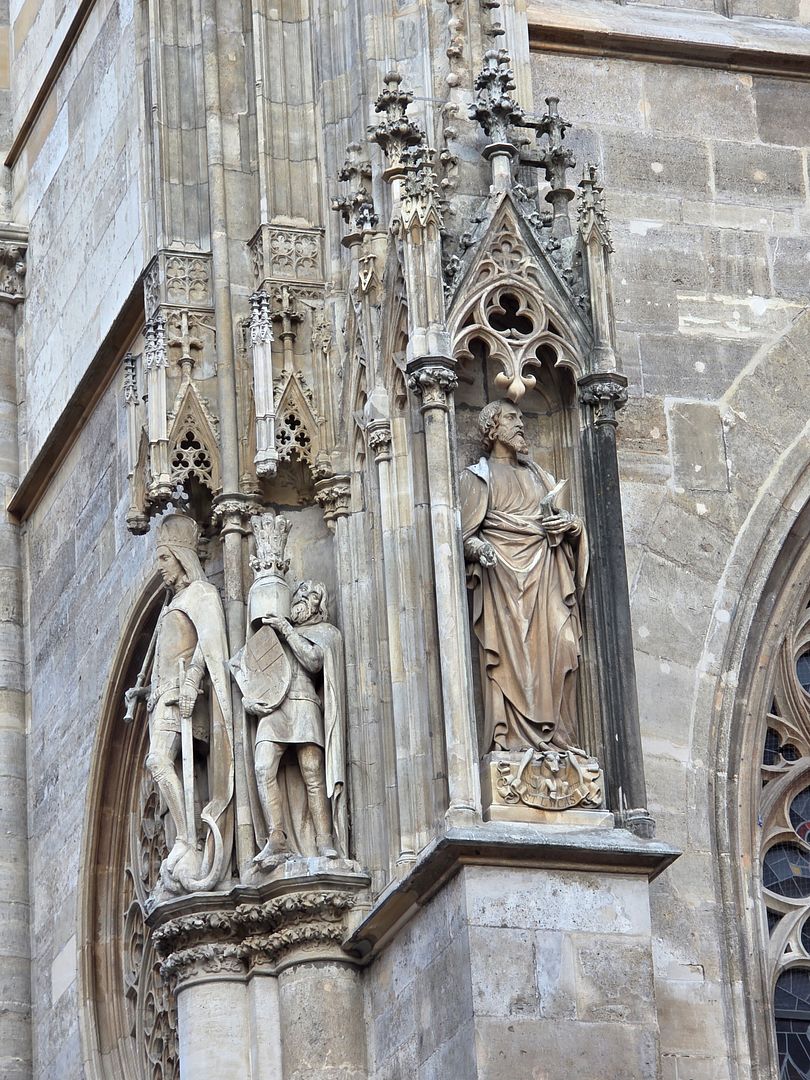
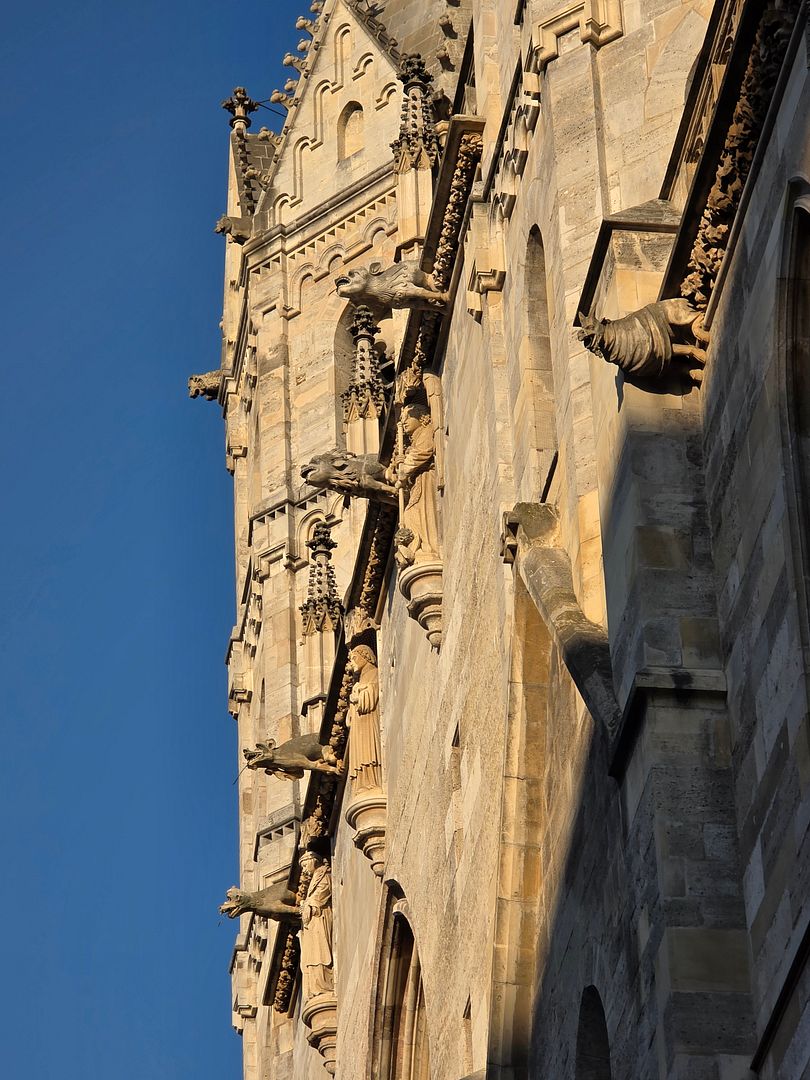
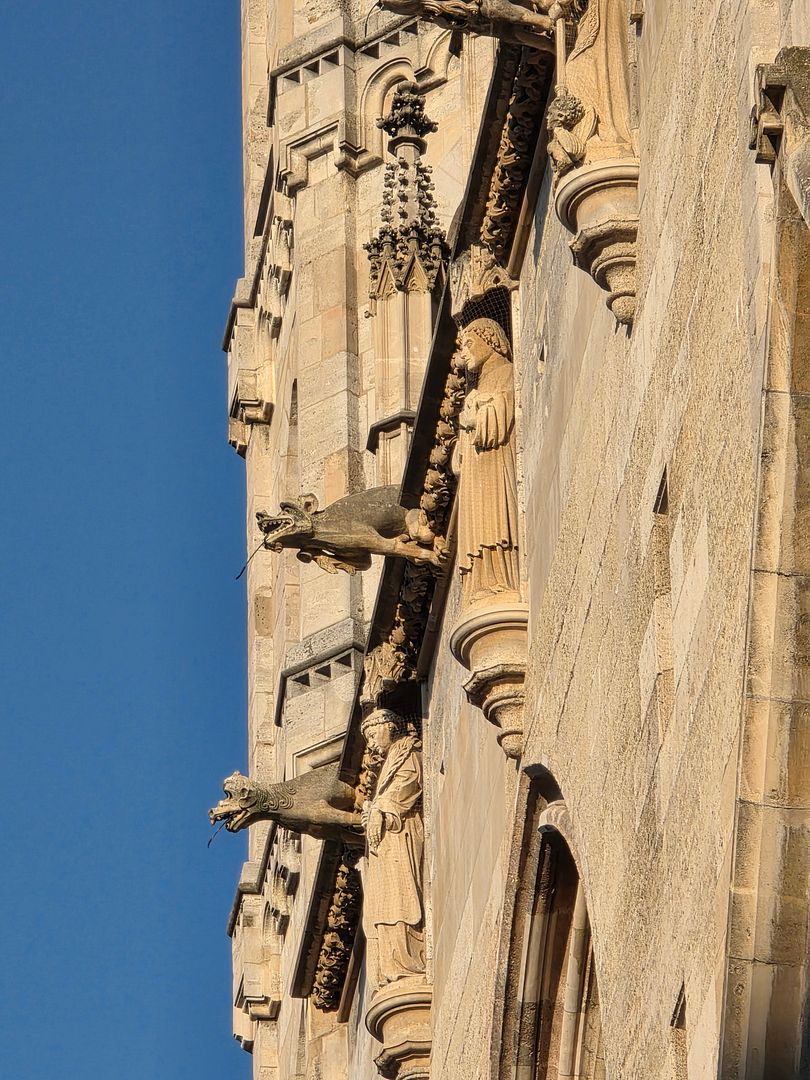
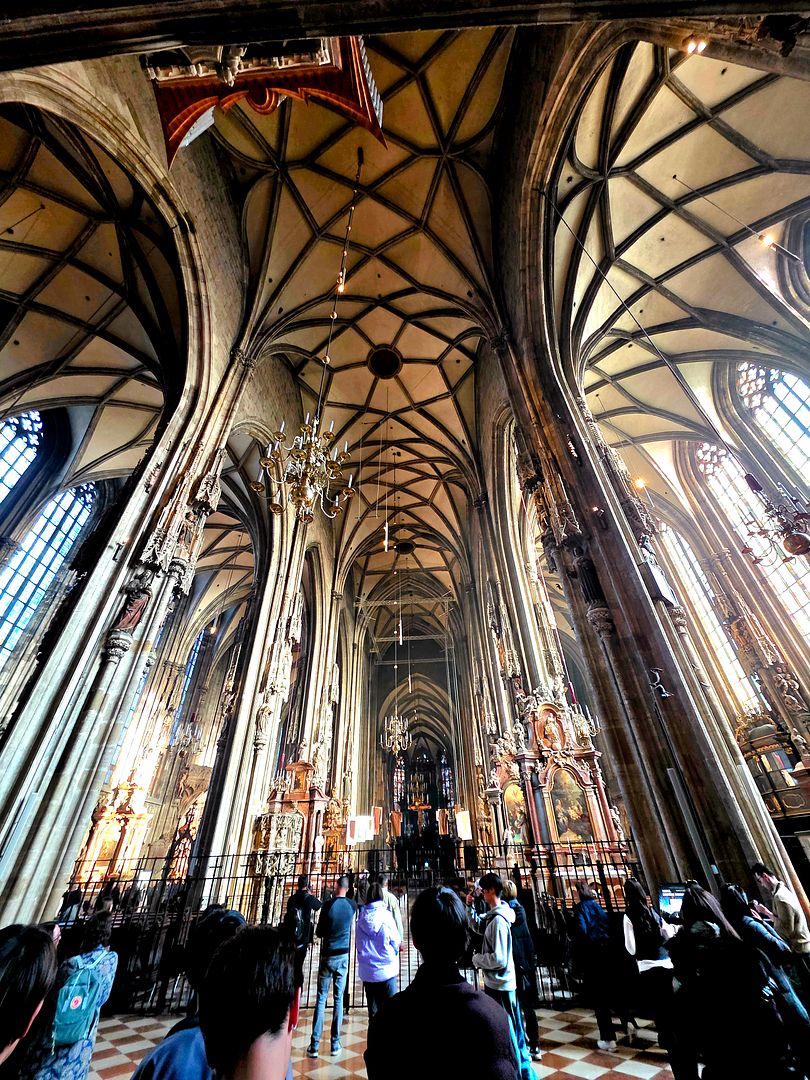
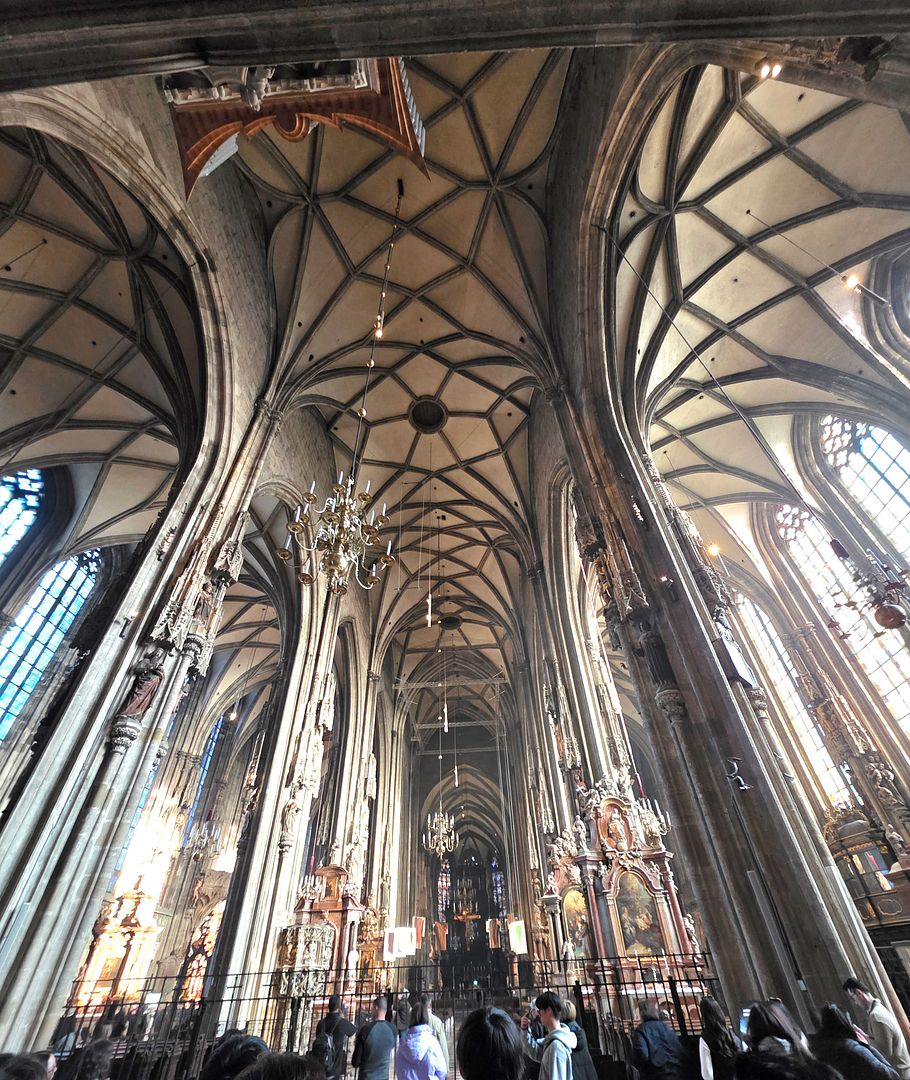
From a video by Rick Steve’s on St. Stephen’s Cathedral,
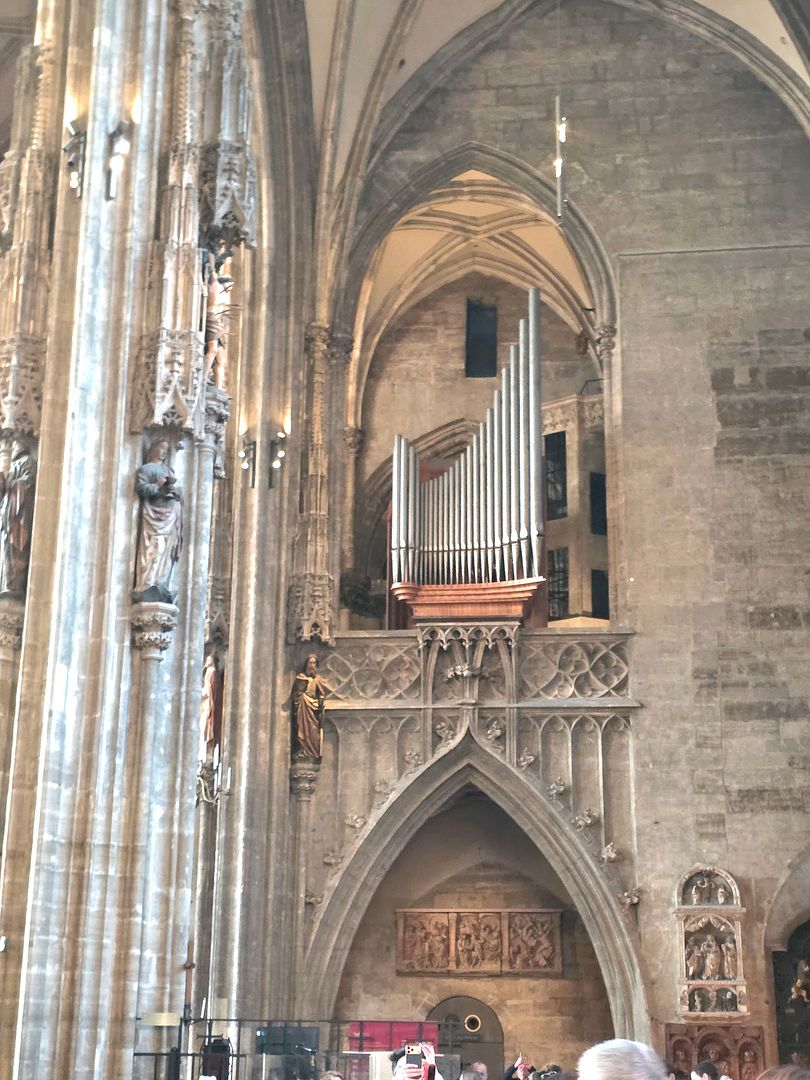
The ornate nave is Gothic with a Baroque overlay. While the columns support the roof, they also tell a story. Richly populated with statues, they make a saintly parade that leads right up to the high altar…
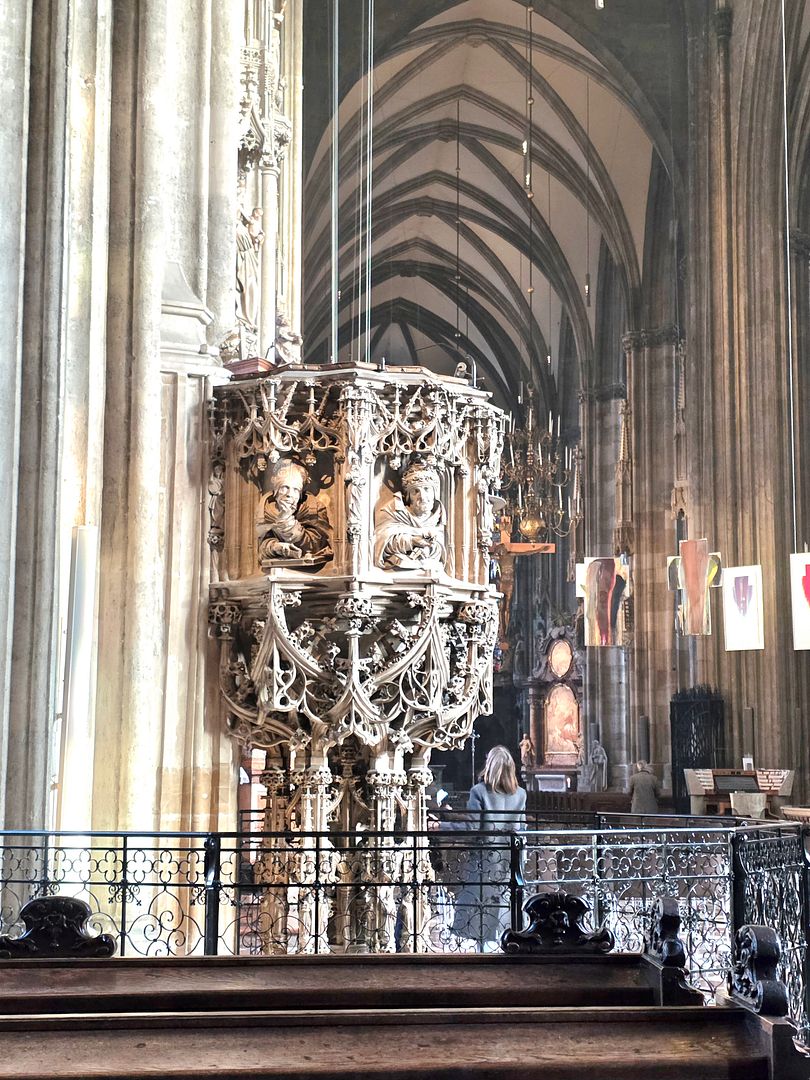
The Gothic pulpit, carved from sandstone, is a masterpiece.
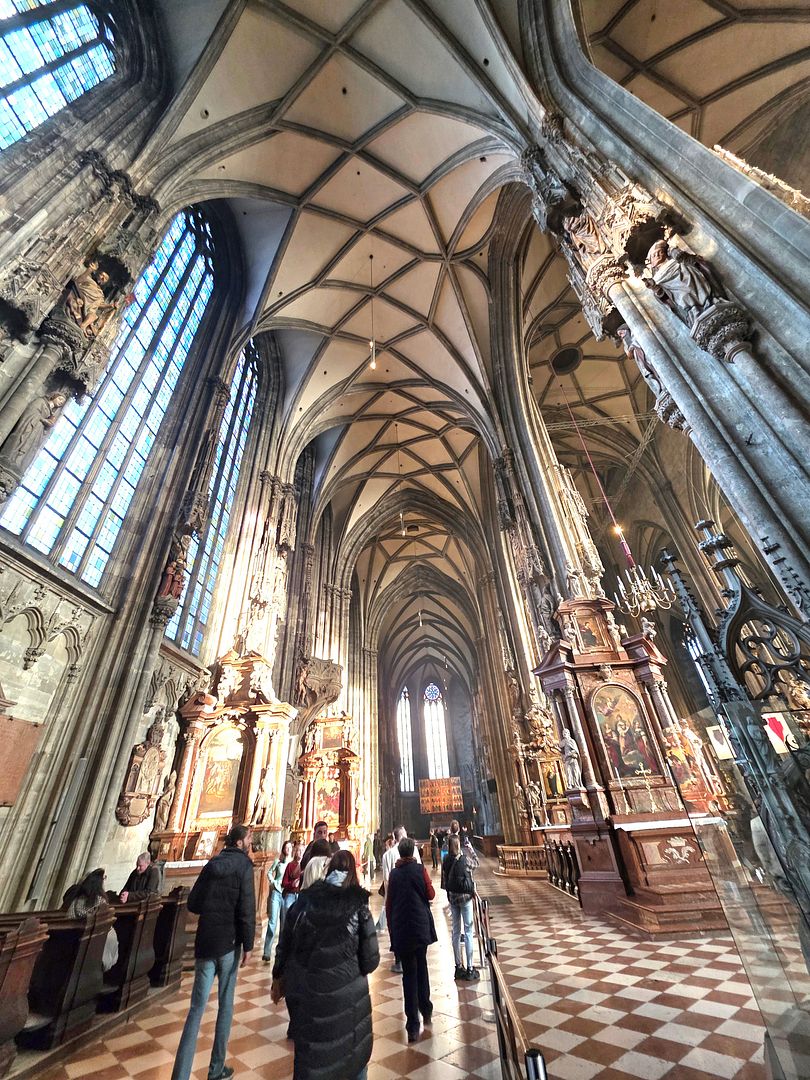
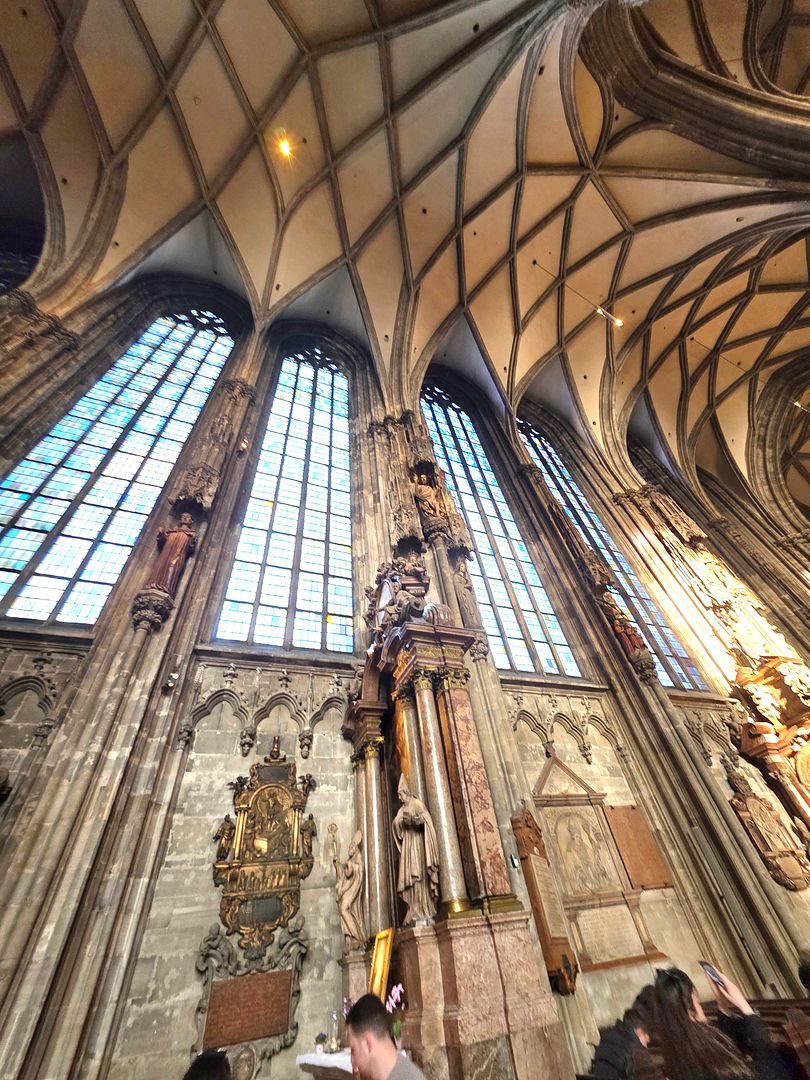
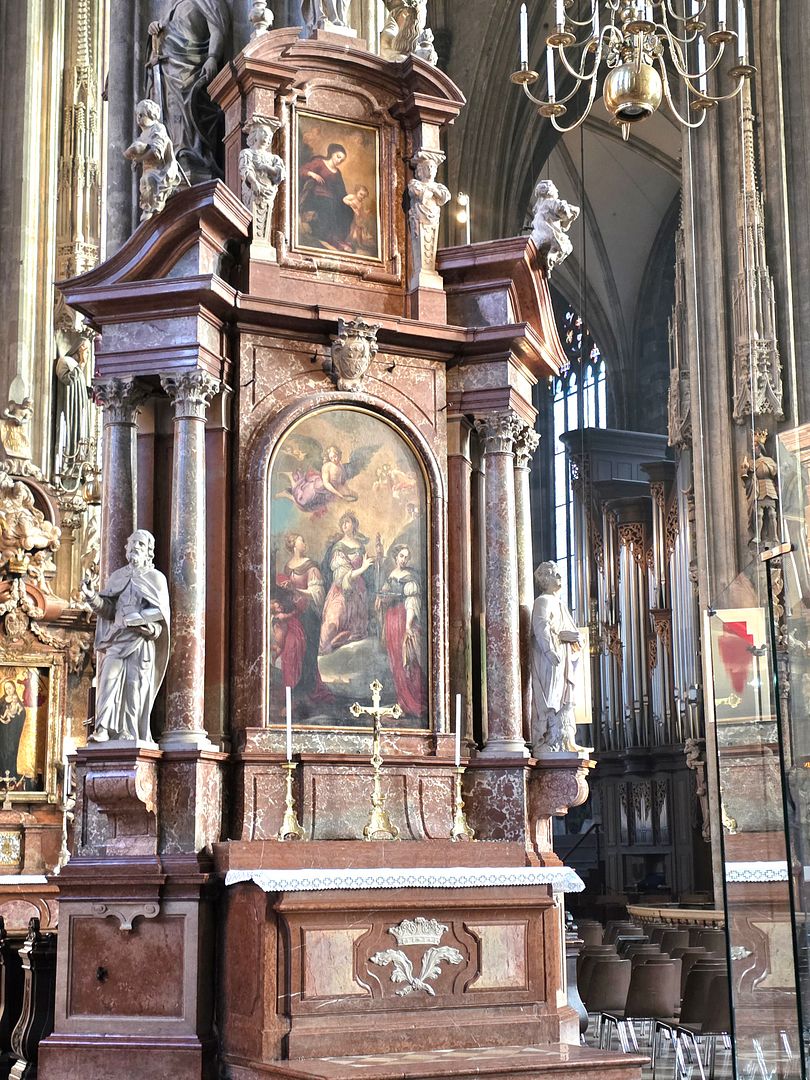
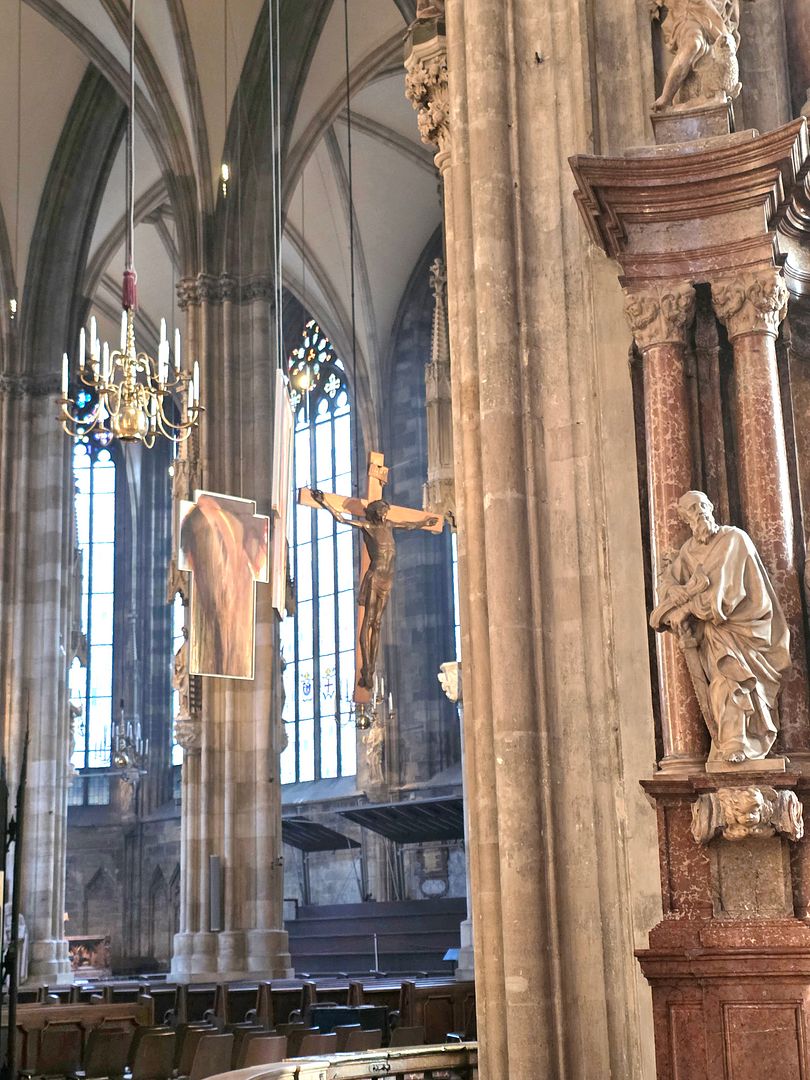
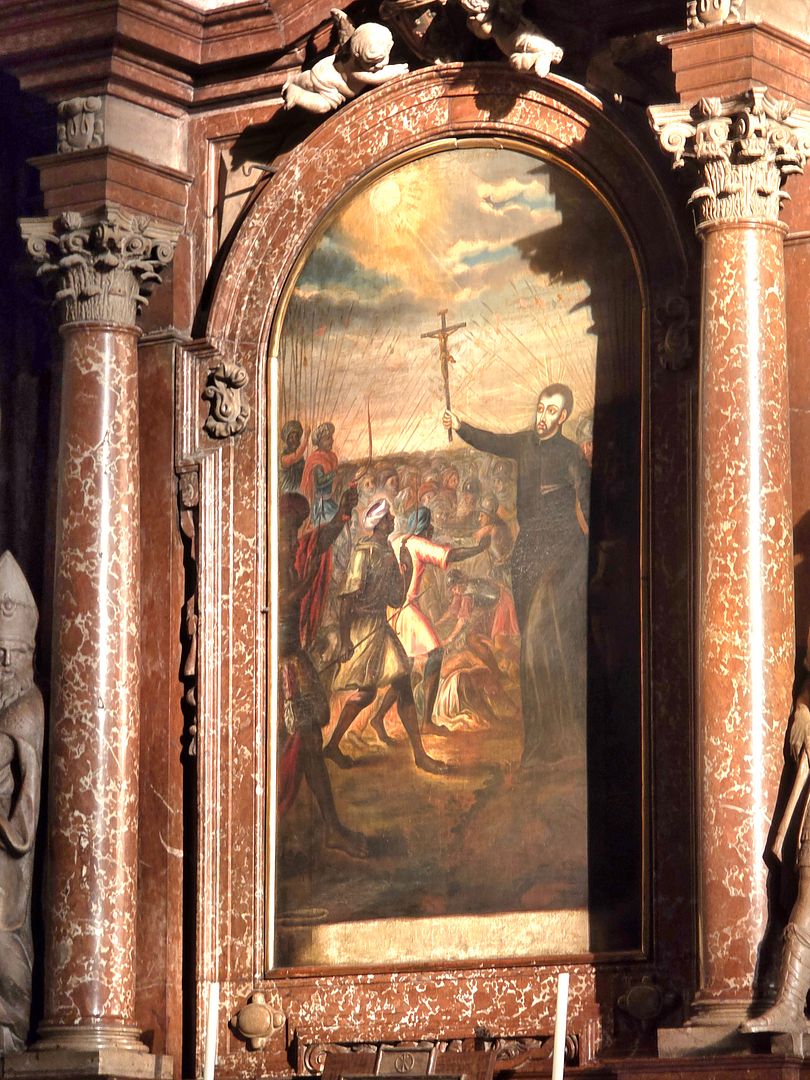
I took this photo of the painting but I could not find a description anywhere. Is it supposed to be Stephen?
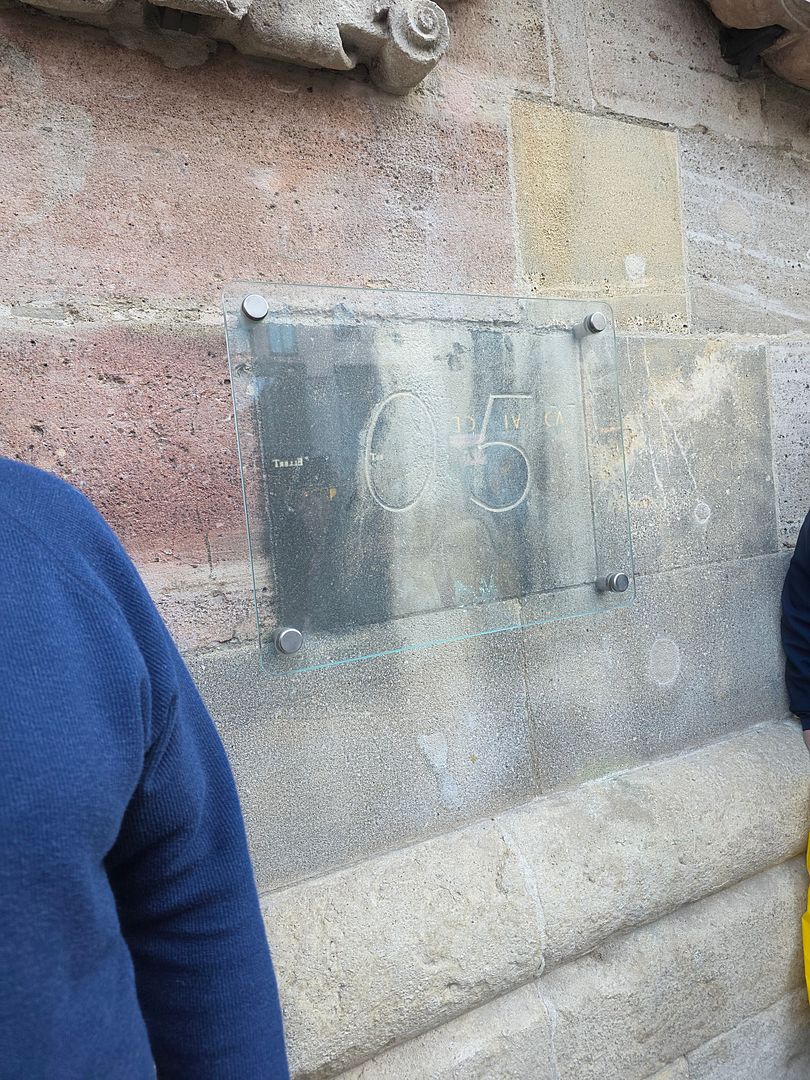
This code ‘O5’ is placed at the right side of the main entrance of St Stephen’s Cathedral. It was the code of an Austrian resistance group during World War II. It stands for Ö (Österreich) built by O and the 5th letter of the alphabet (= OE).
Originally the code was just painted but after World War II it has been engraved and covered by a transparent plate.
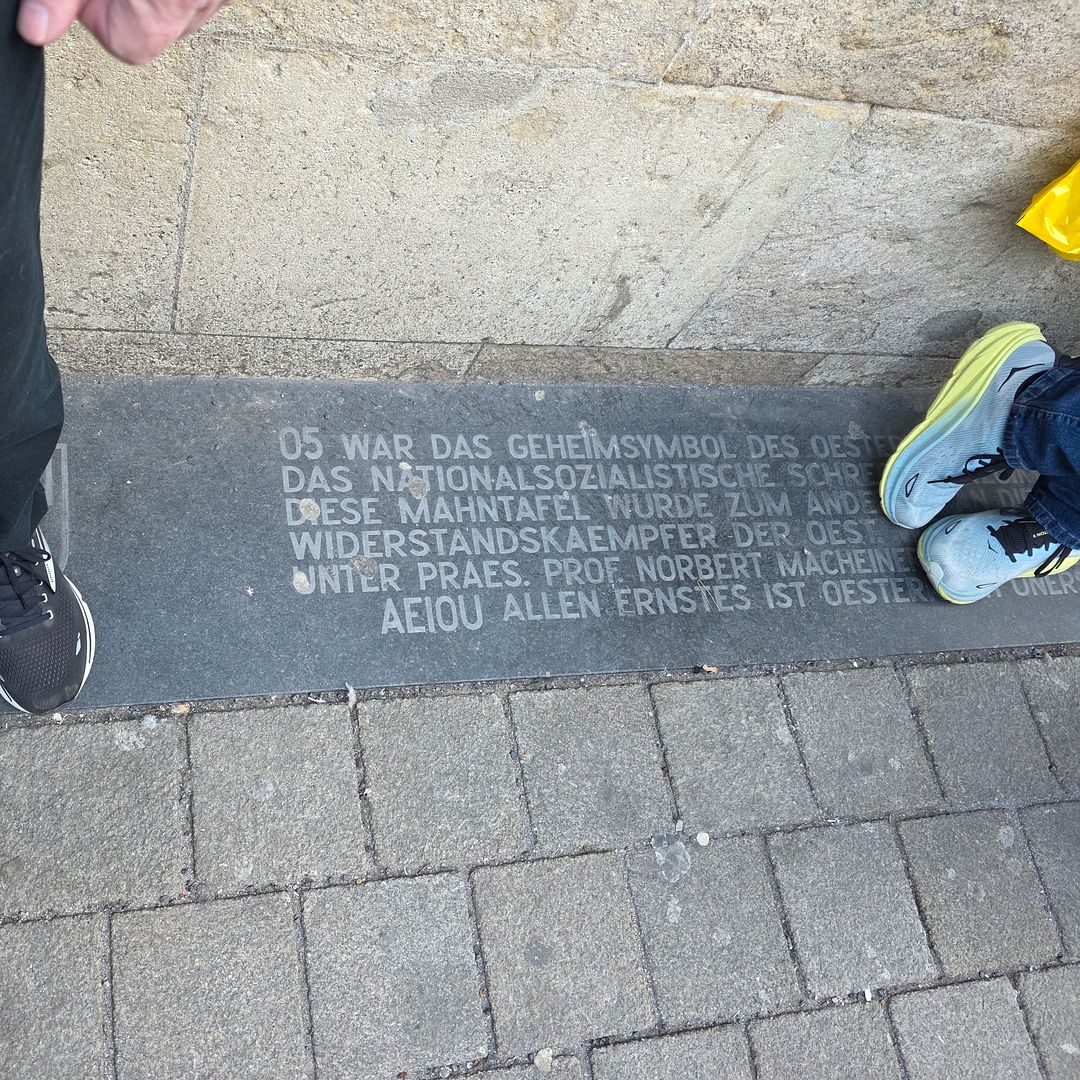
On the way back to our bus stop we saw another interesting plaque.
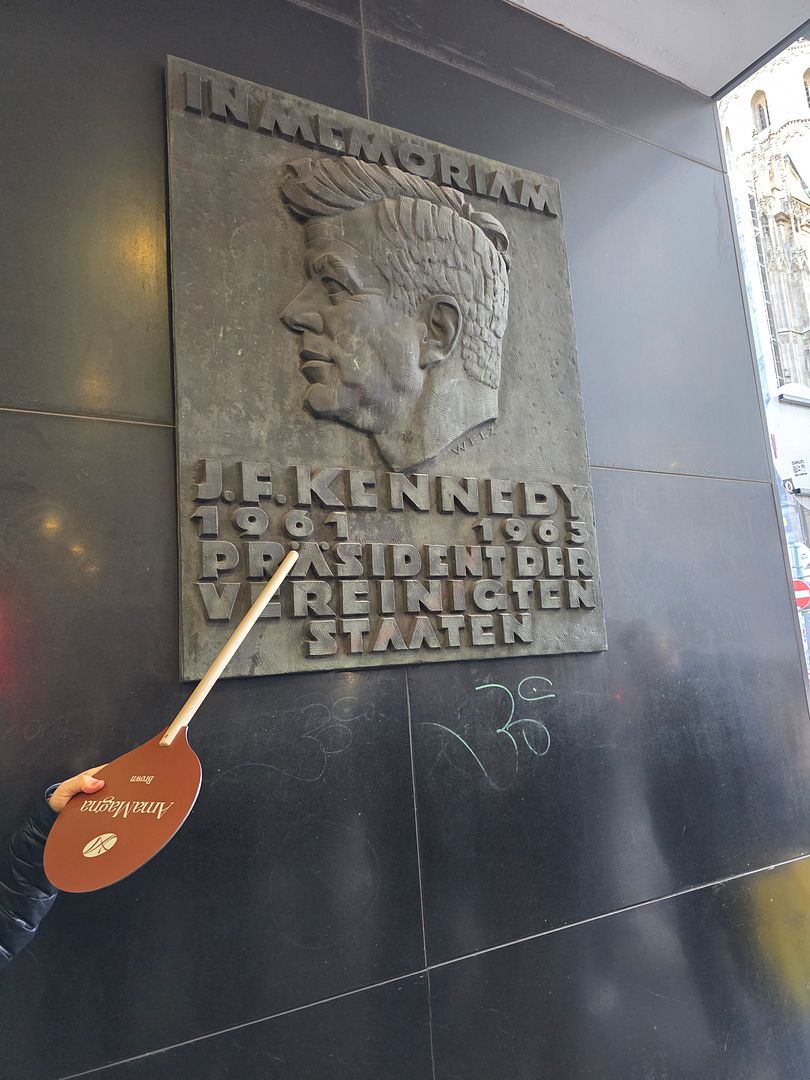
President John F. Kennedy met Soviet Premier Nikita Khrushchev in Vienna, Austria, on June 3-4, 1961, for a 2-day summit aimed at easing Cold War tensions. The meeting was contentious, with Khrushchev bullying the new president, particularly over the status of divided Berlin. The summit failed to produce agreements, leading to heightened tensions.
Kudos to guides who know about these details in cities because most probably on our own we would miss them totally.
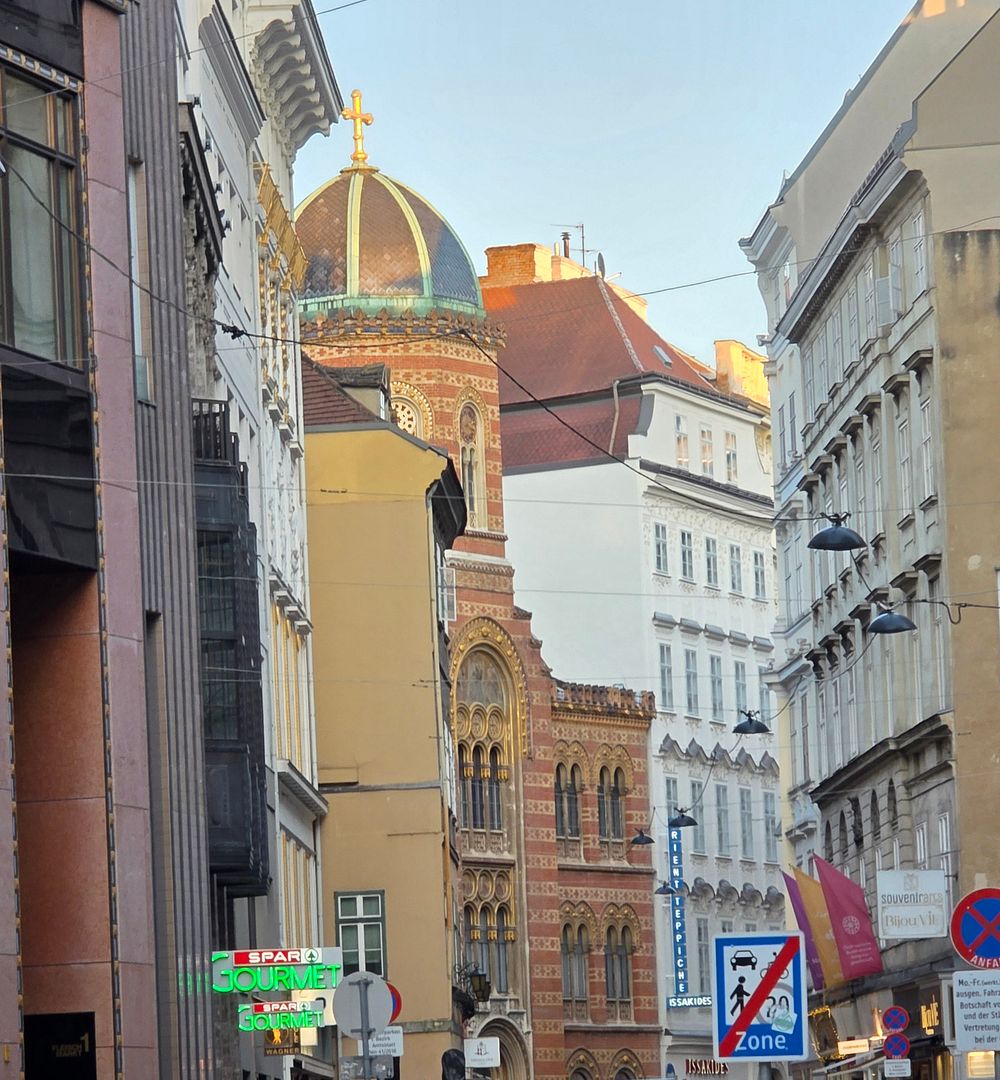
There are so many churches in Vienna that I would have liked to visit.
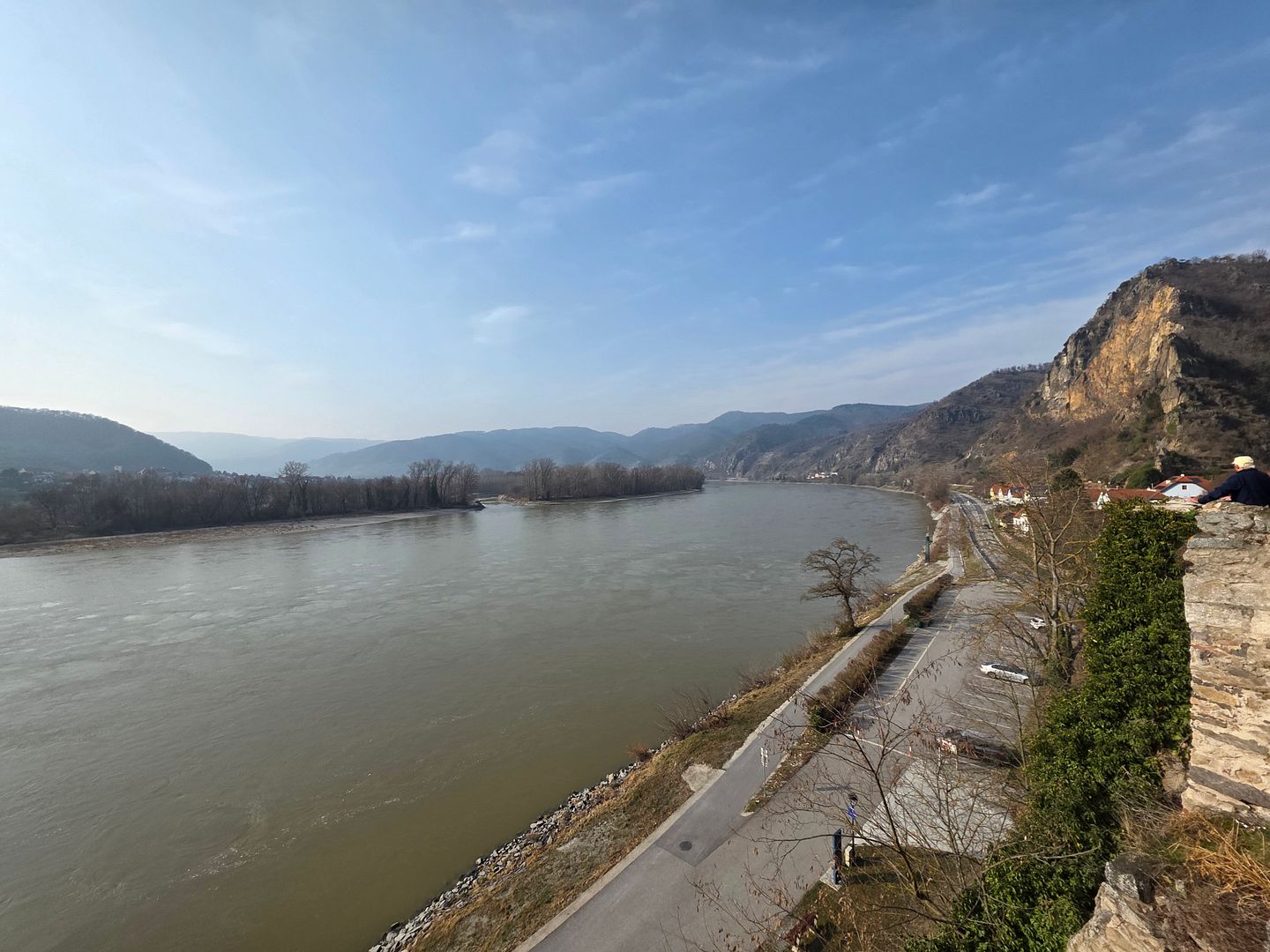
This was another beautiful winter day on our river cruise.
We made it back to the bus and back to the Danube where the AmaMagna was docked. On this night we would have an earlier dinner because we were booked for a concert in the evening at The House of Strauss.