Another journal entry for our time in Cambridge in March of 2026. This one will be for the evenings of March 11th and a back track to the evening of March 10th.
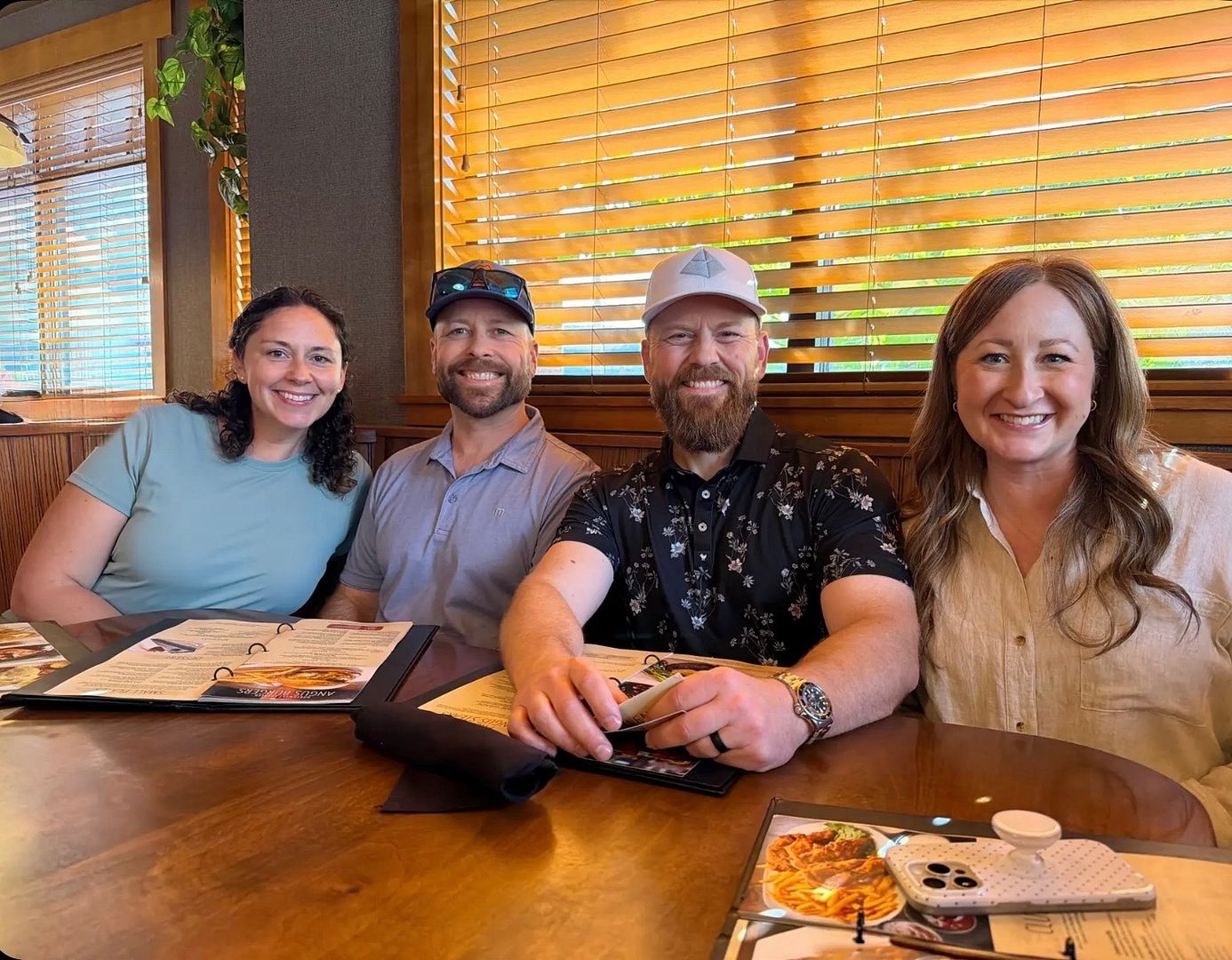
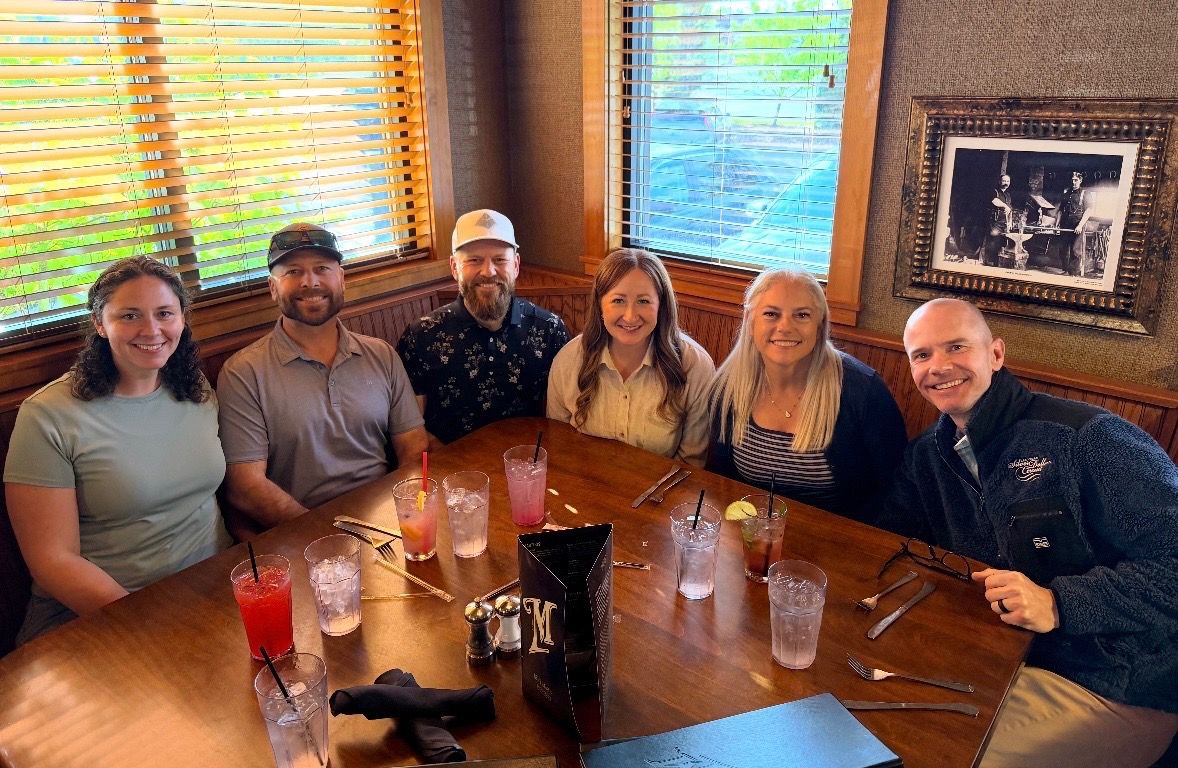
After our train ride back from Ely we hailed a taxi to drive us back to our lodgings. We freshened up and relaxed for a while but soon determined we were hungry and set out to find the likely spot for dinner.
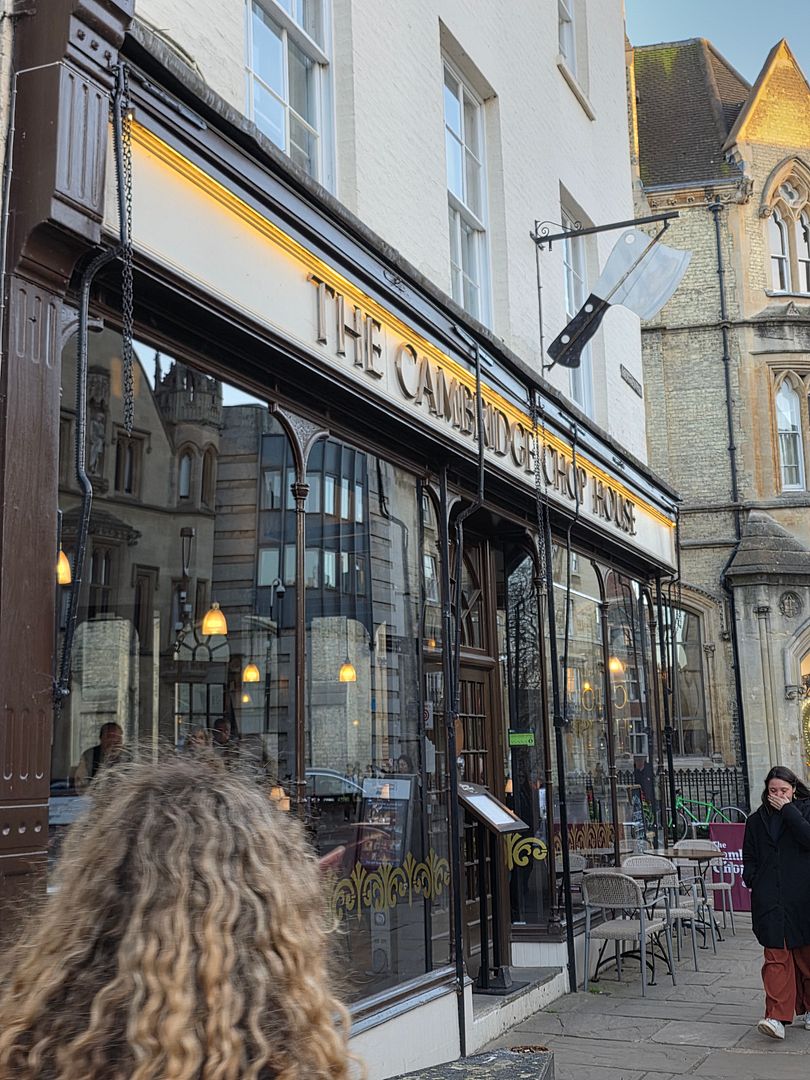
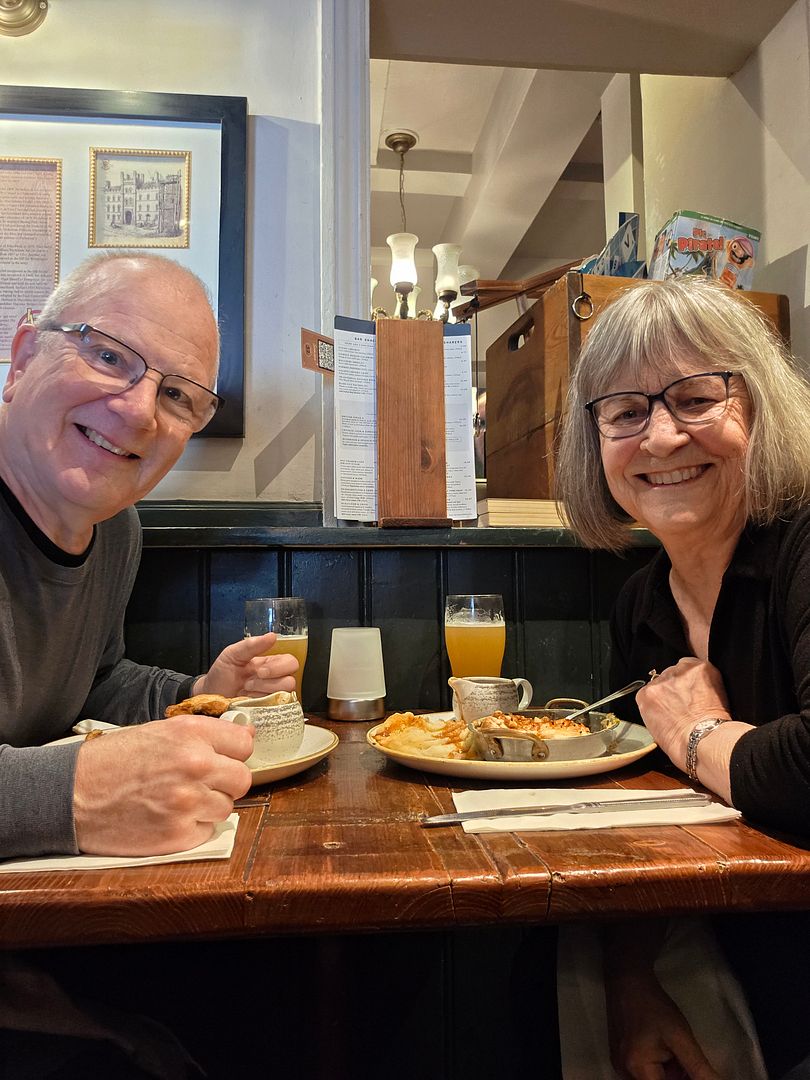
The Cambridge Chop House looked good and we managed to get seated without a reservation.
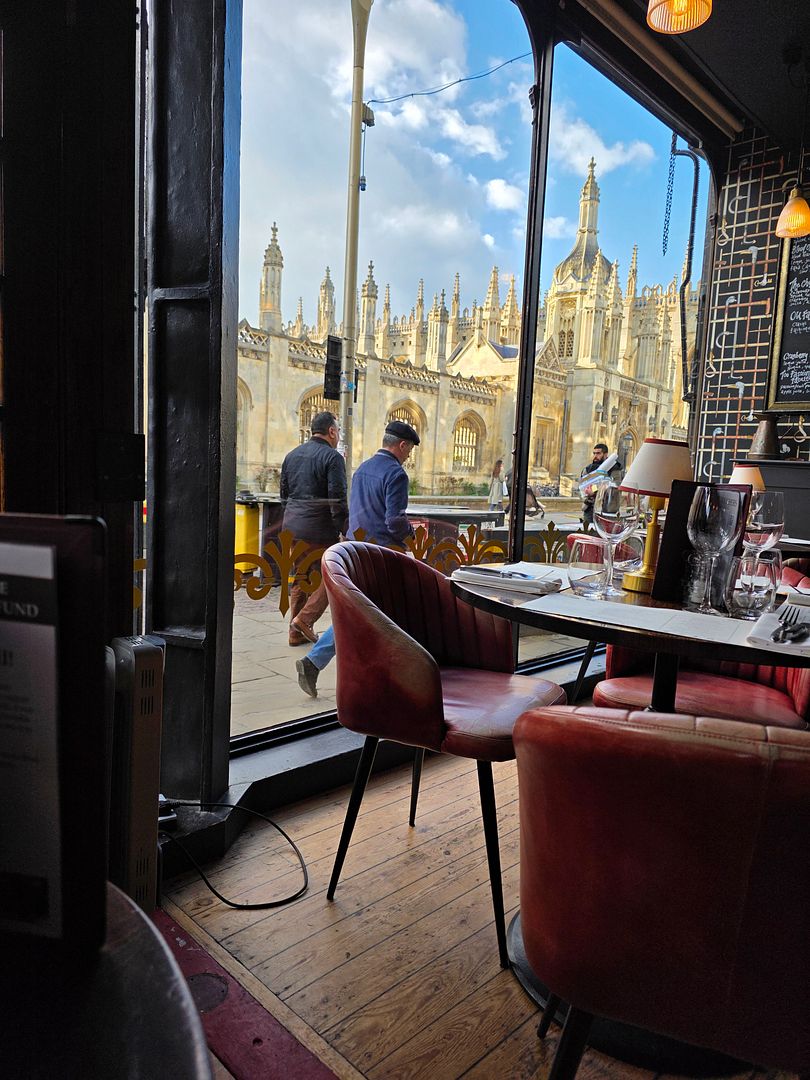
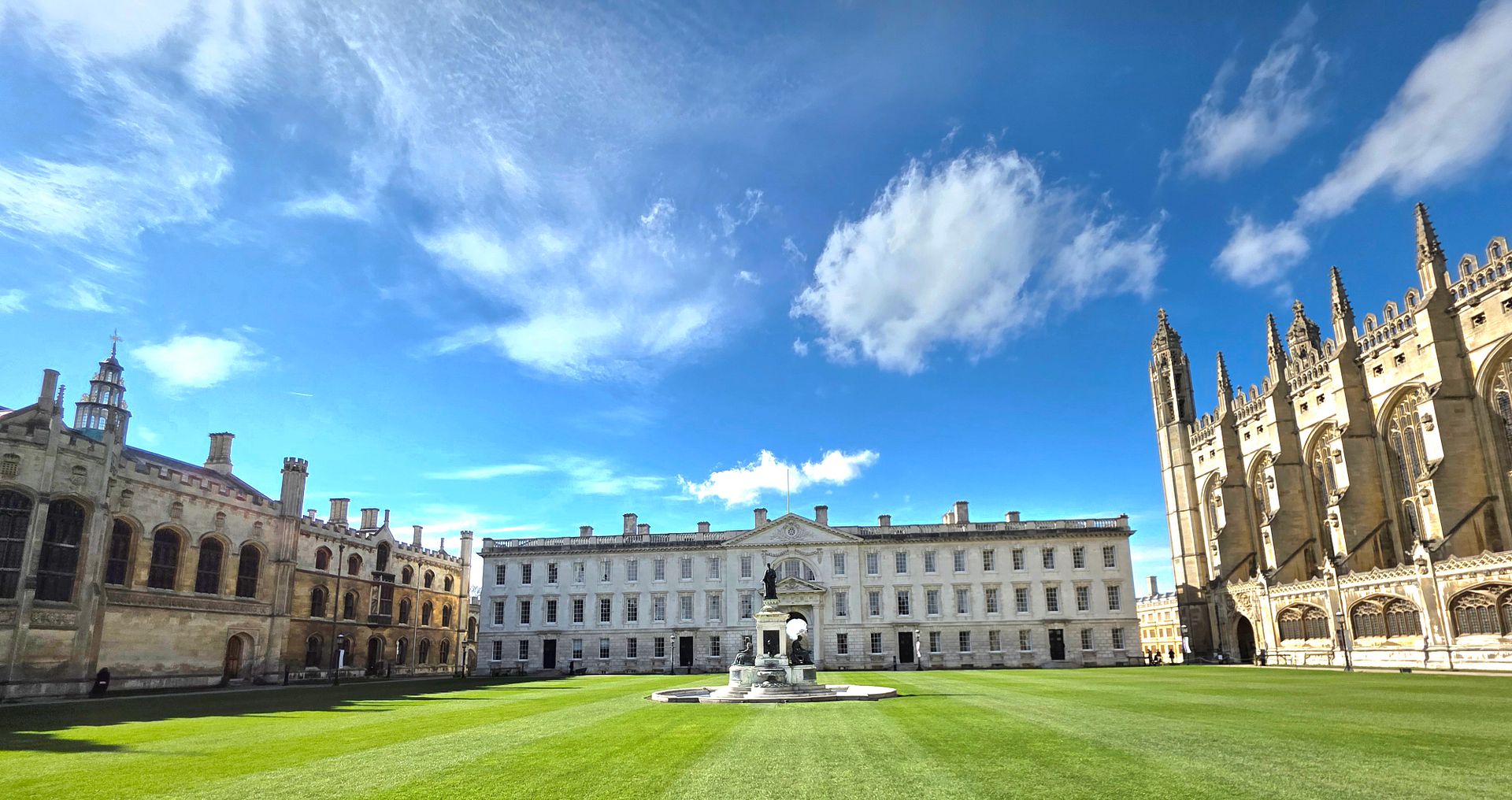
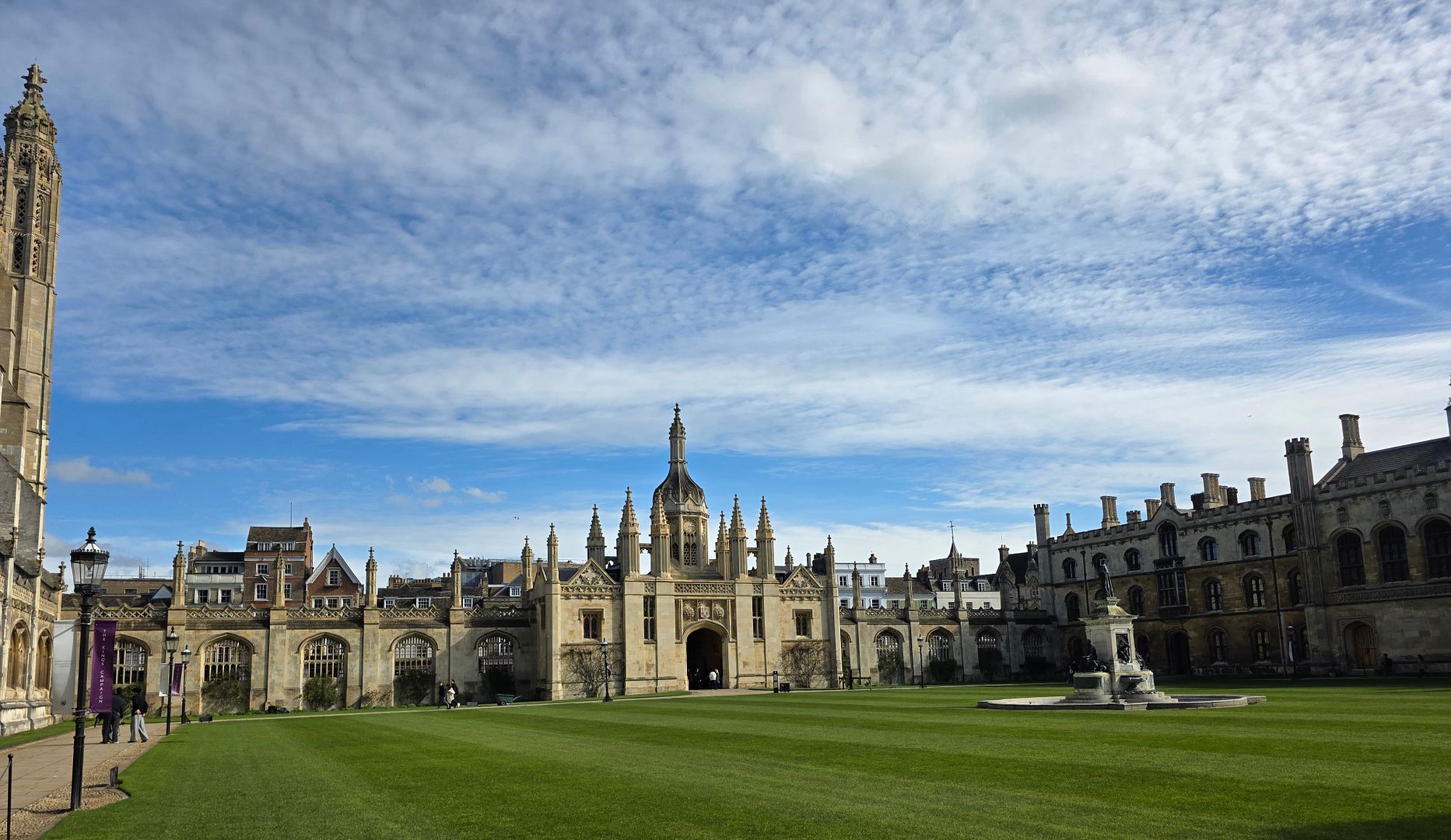
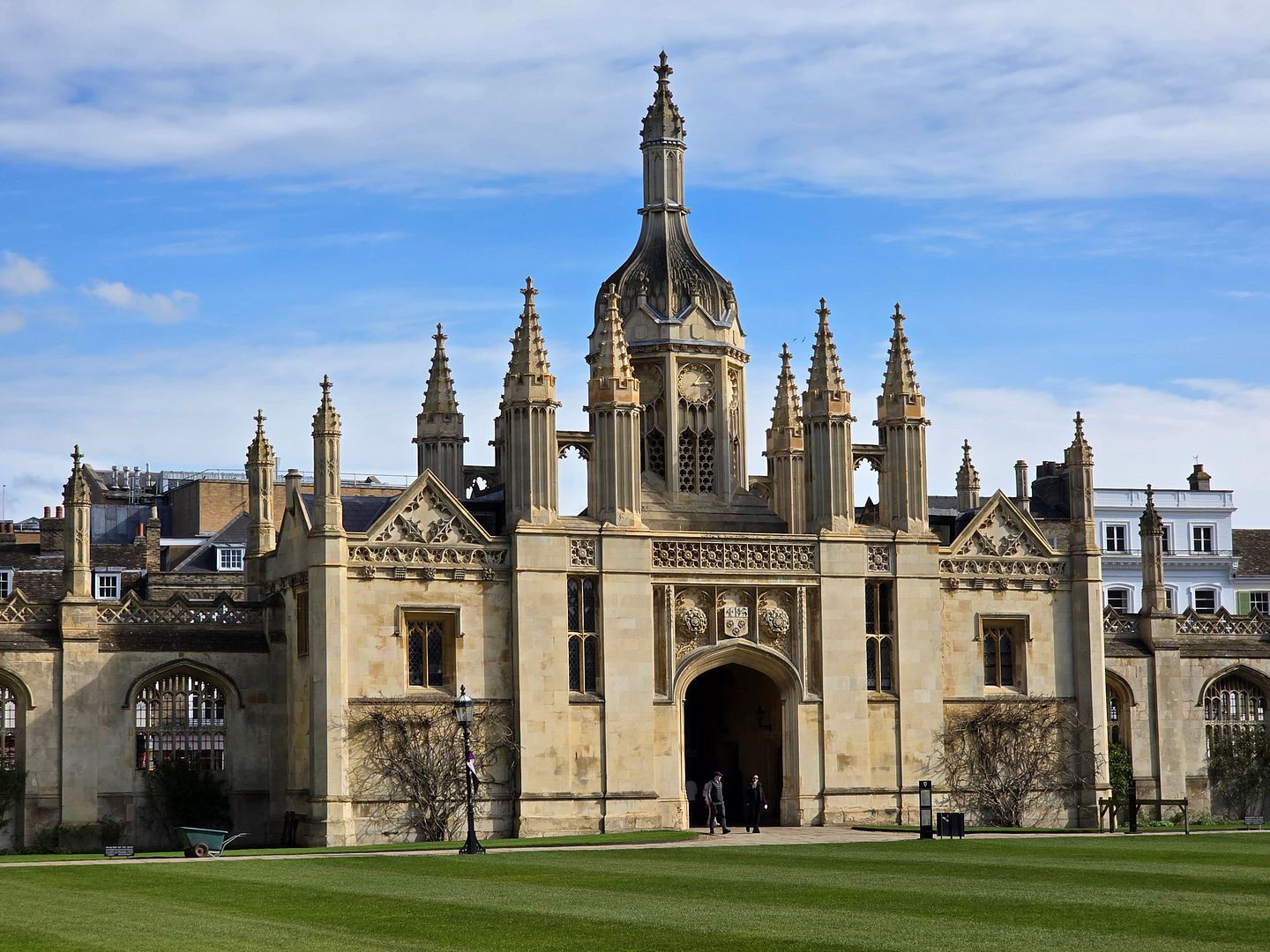
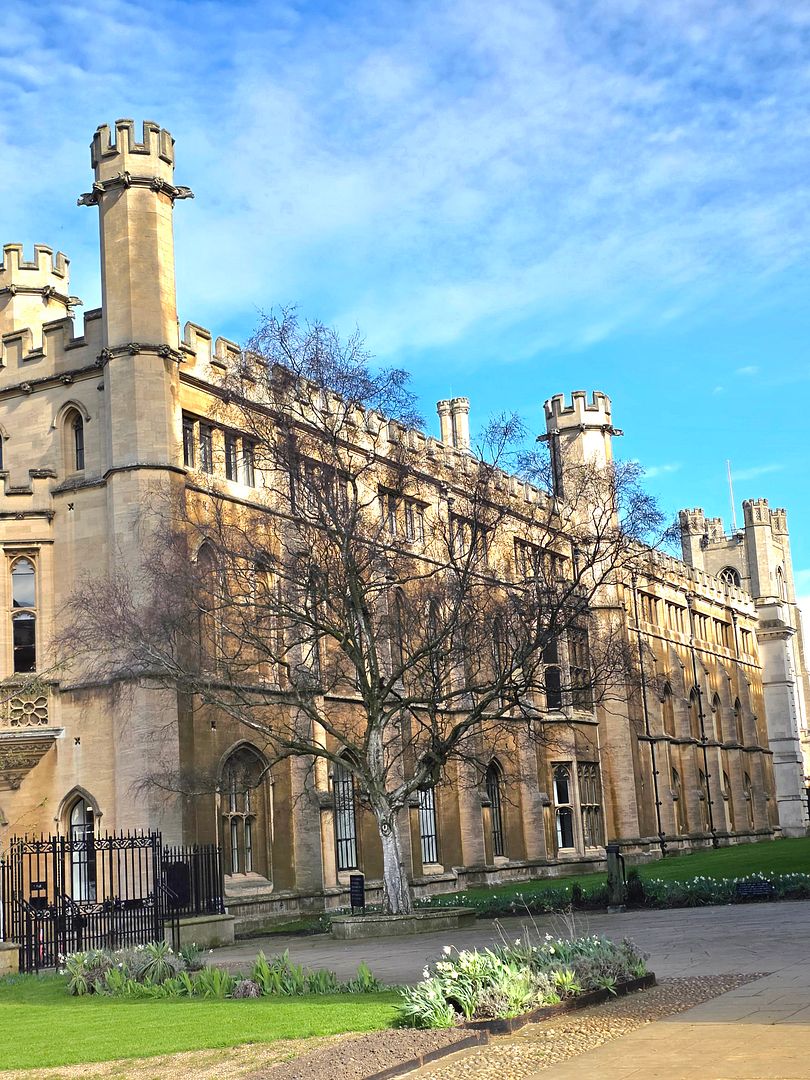
The views of King’s College were a nice added treat.
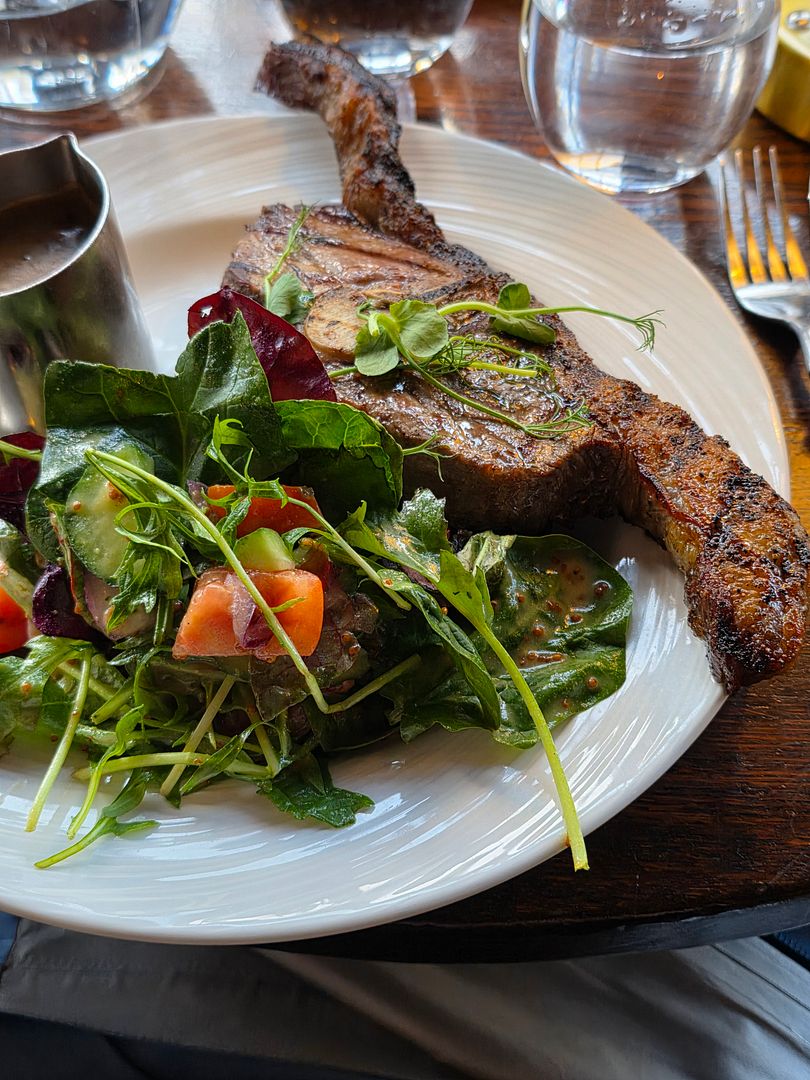
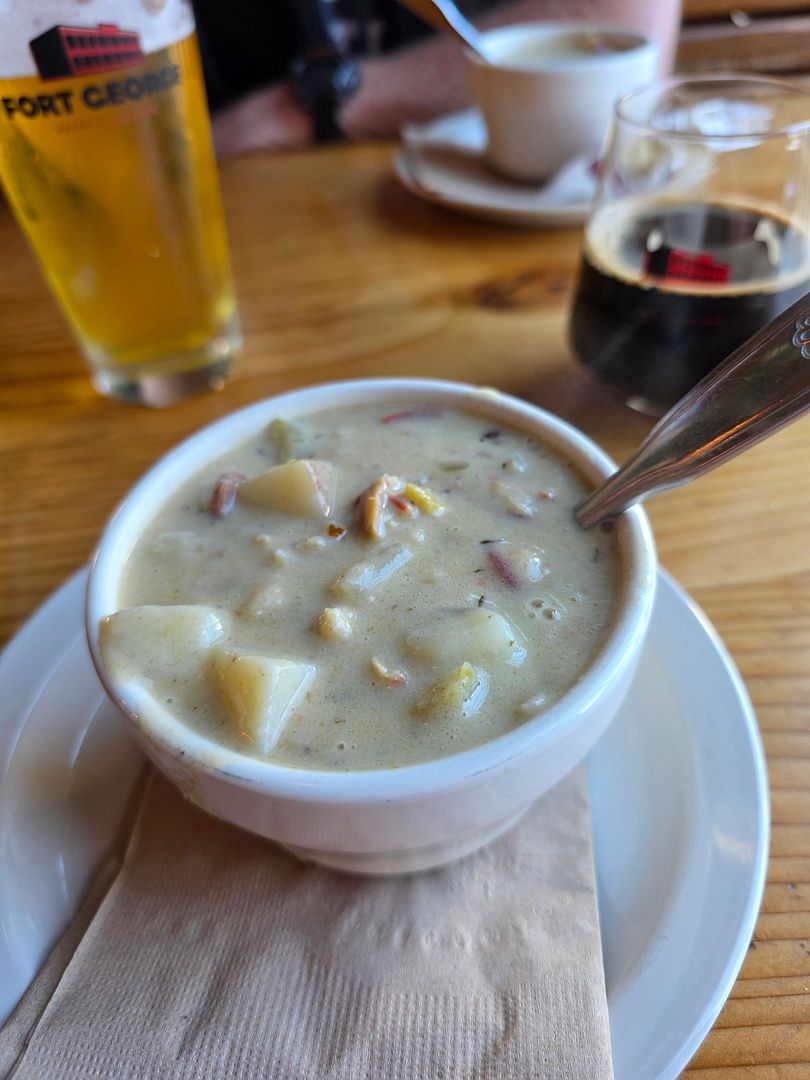
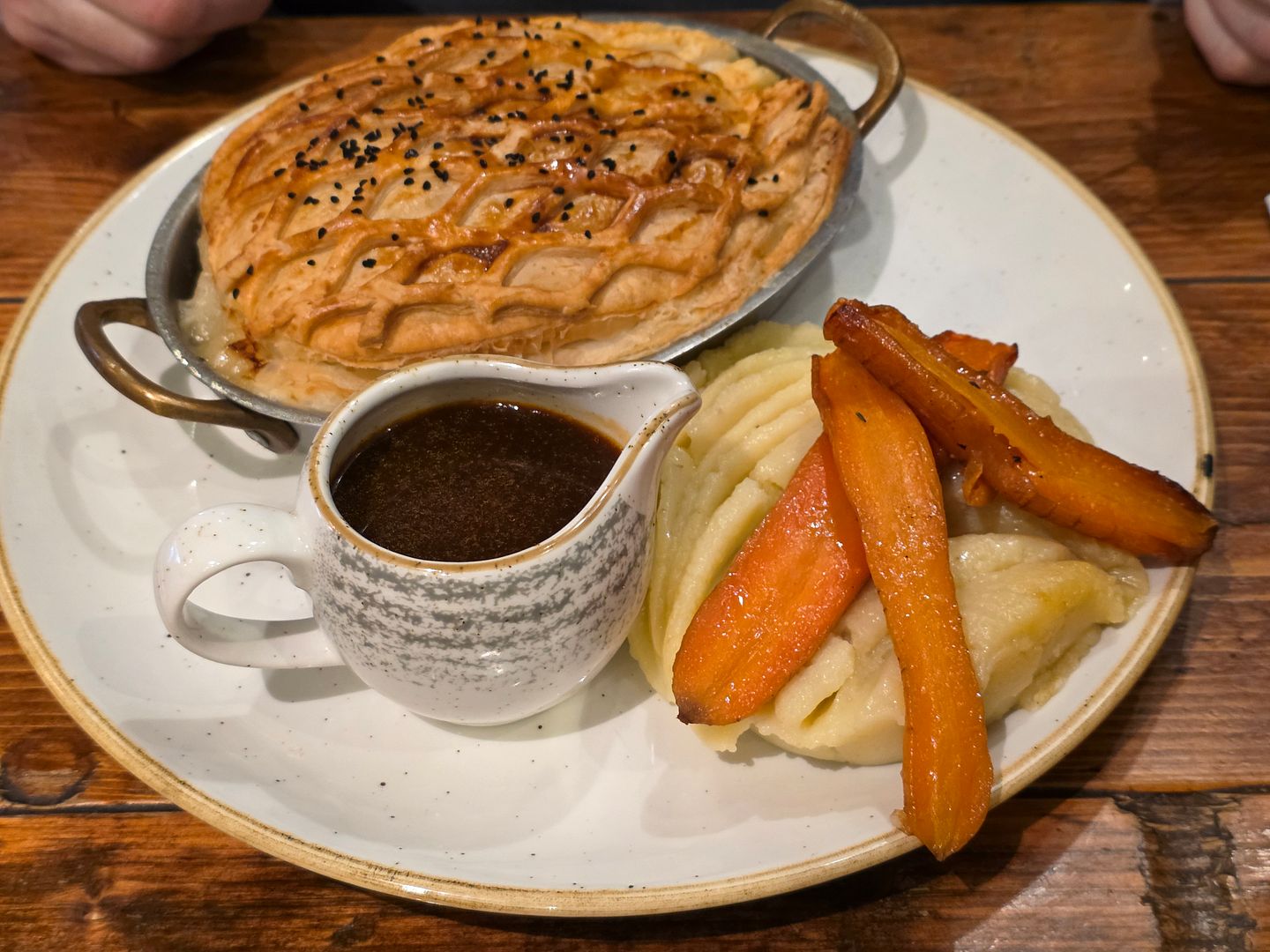
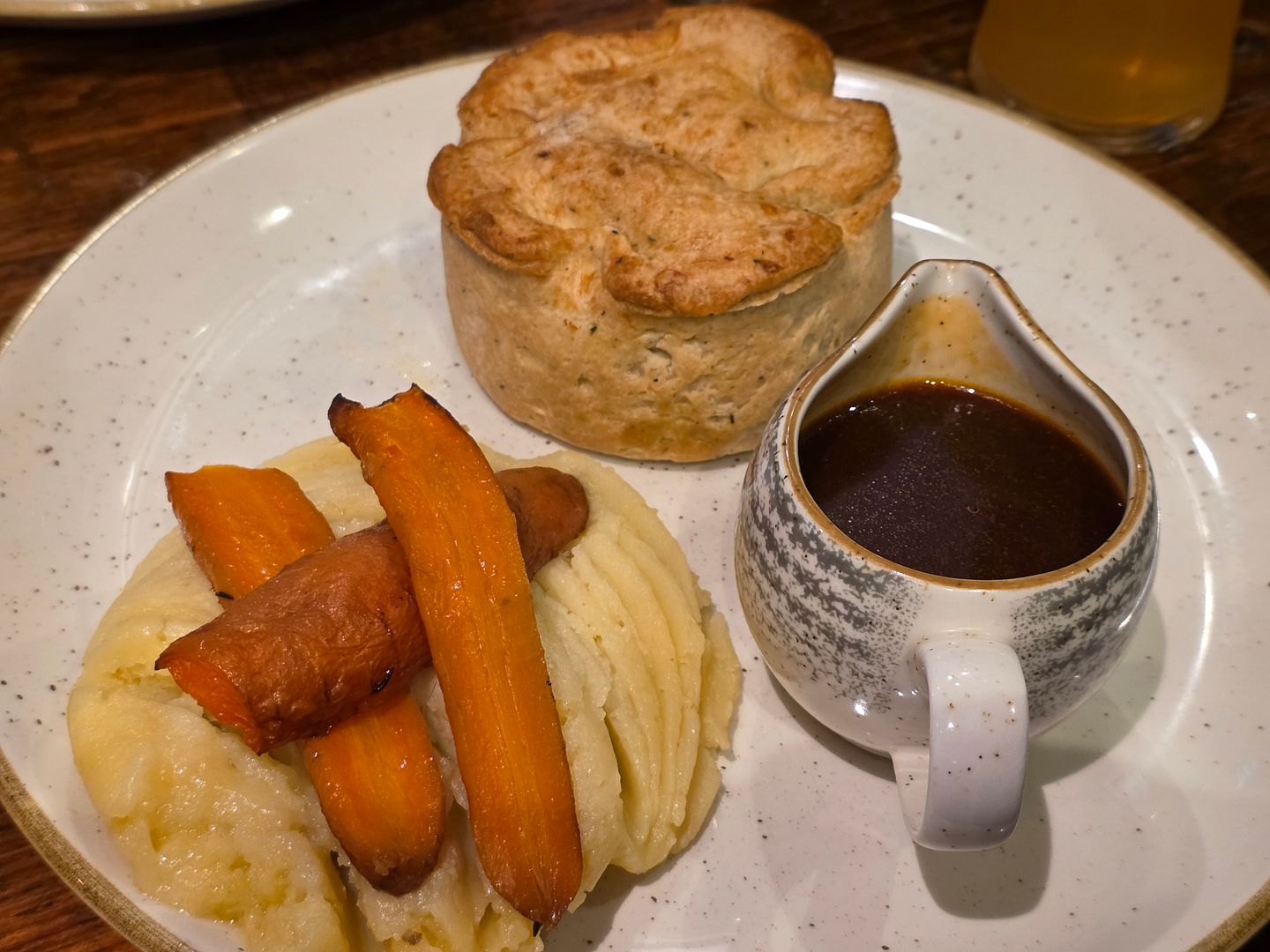
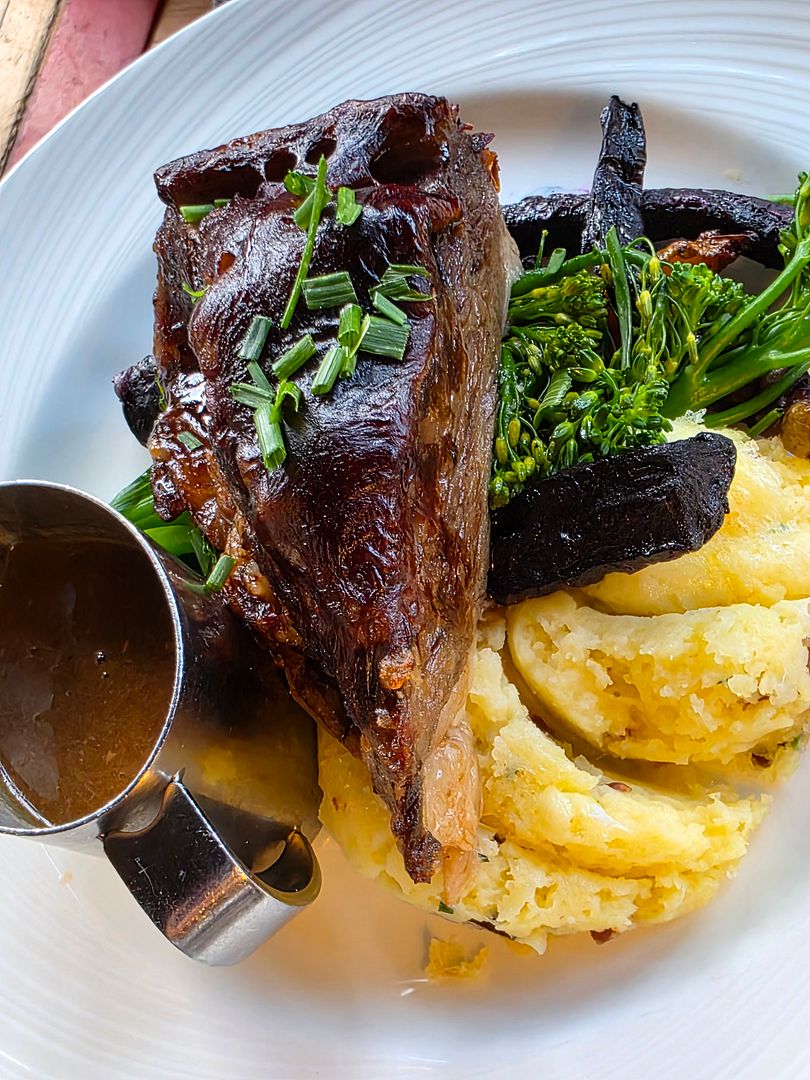
A lamb chop for me and short ribs for Greg.
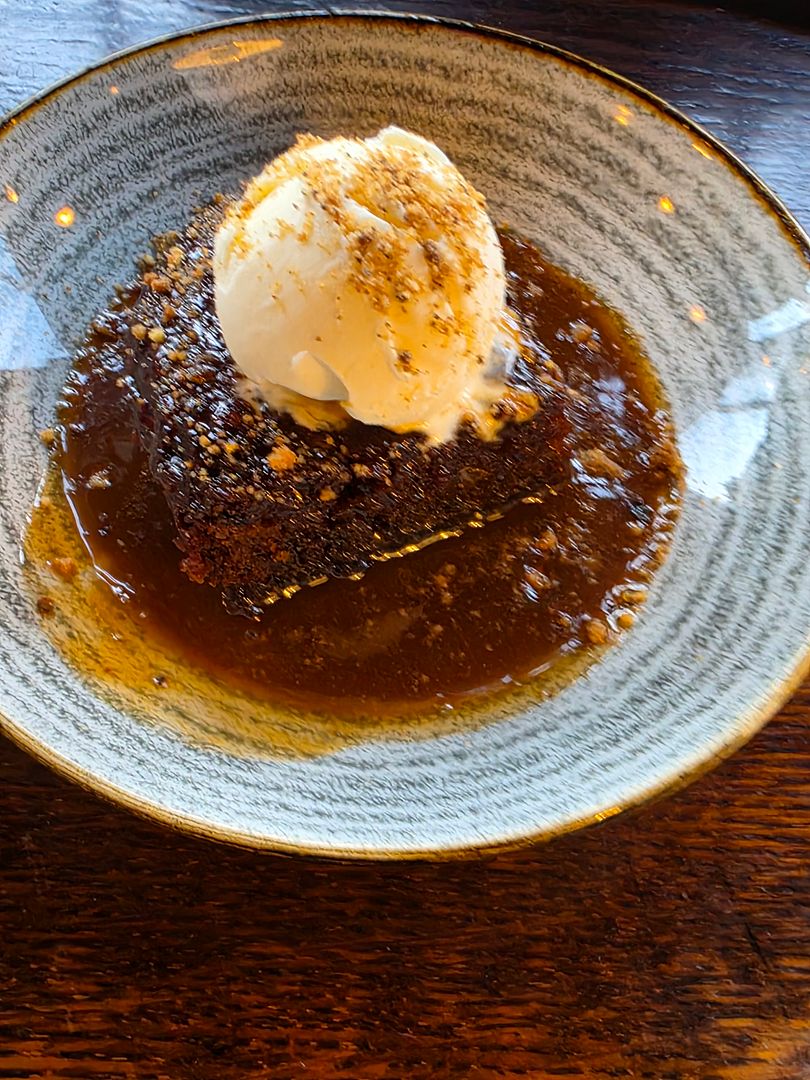
We shared sticky toffee pudding for dessert. This was a top notch and very satisfying meal.
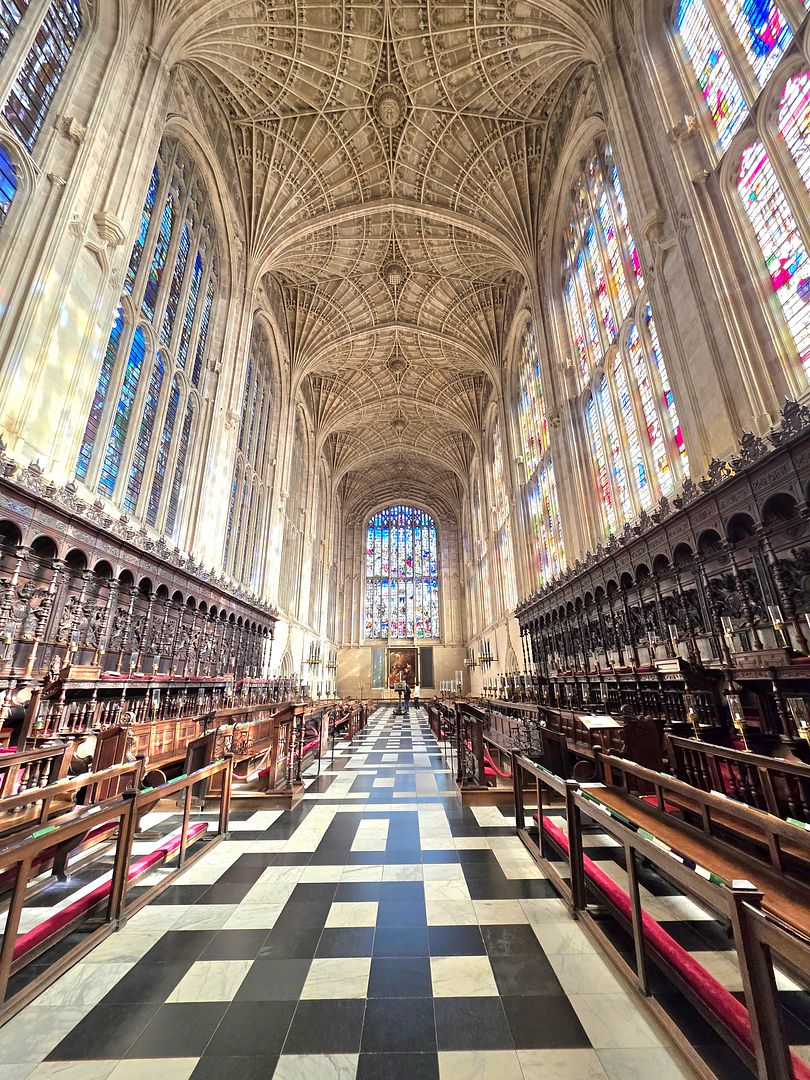
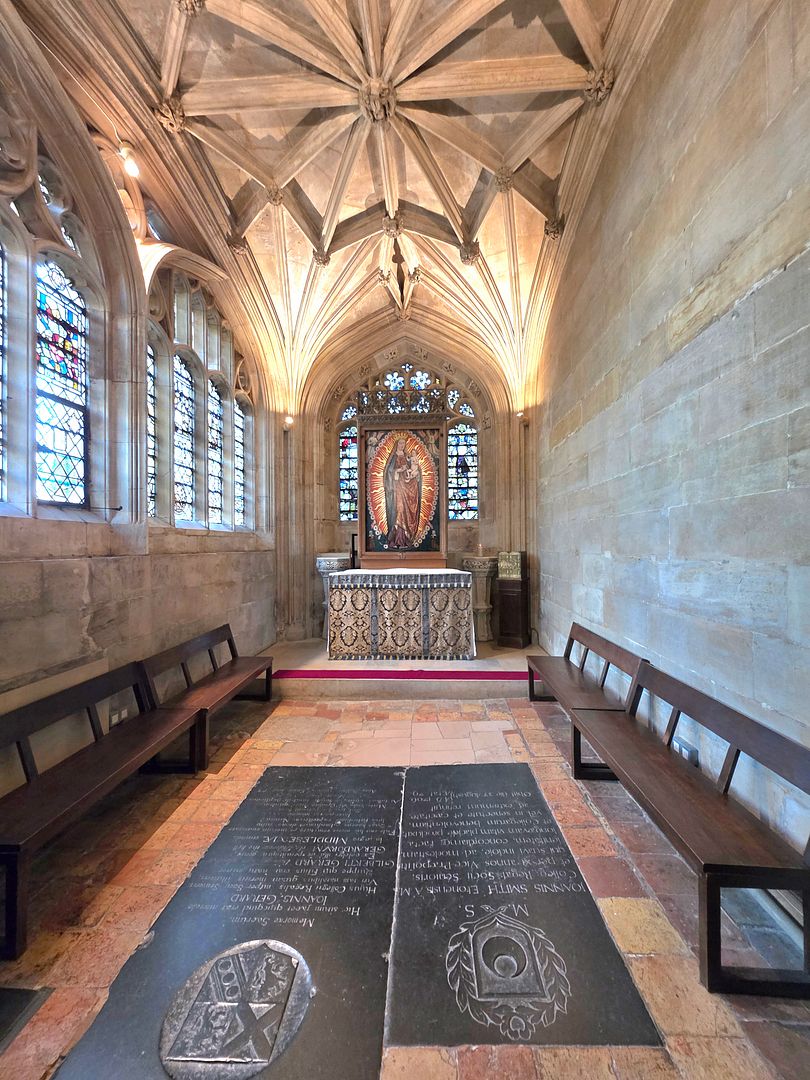
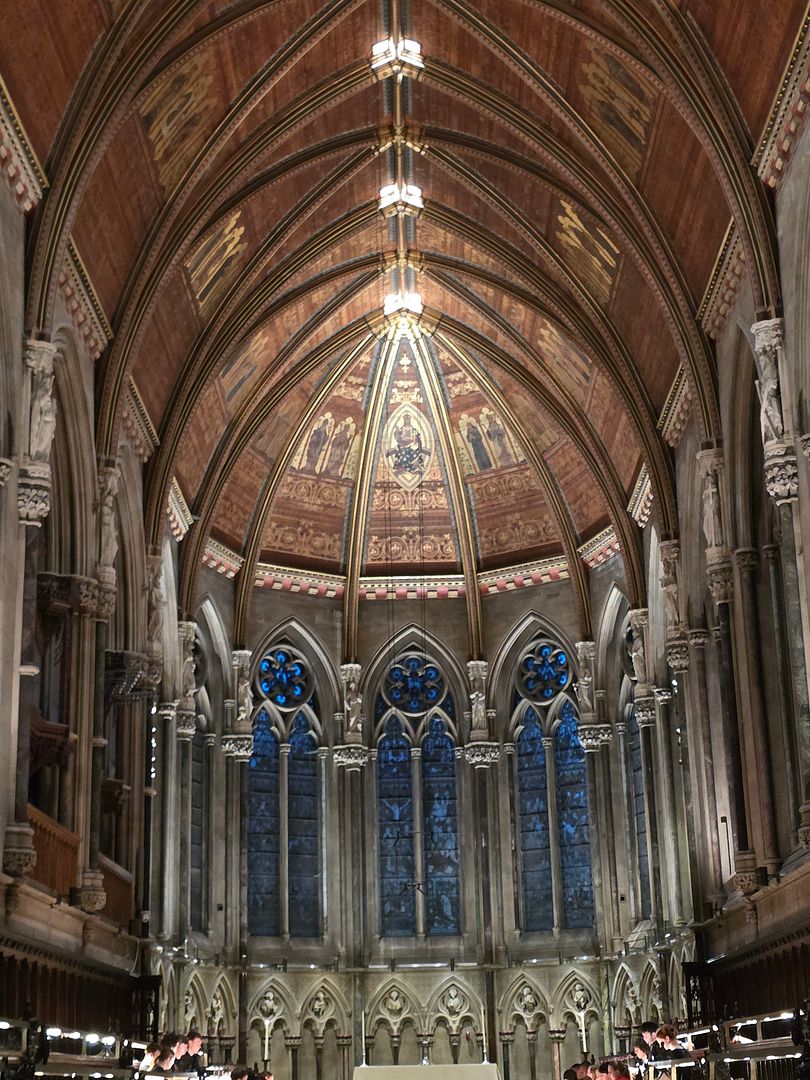
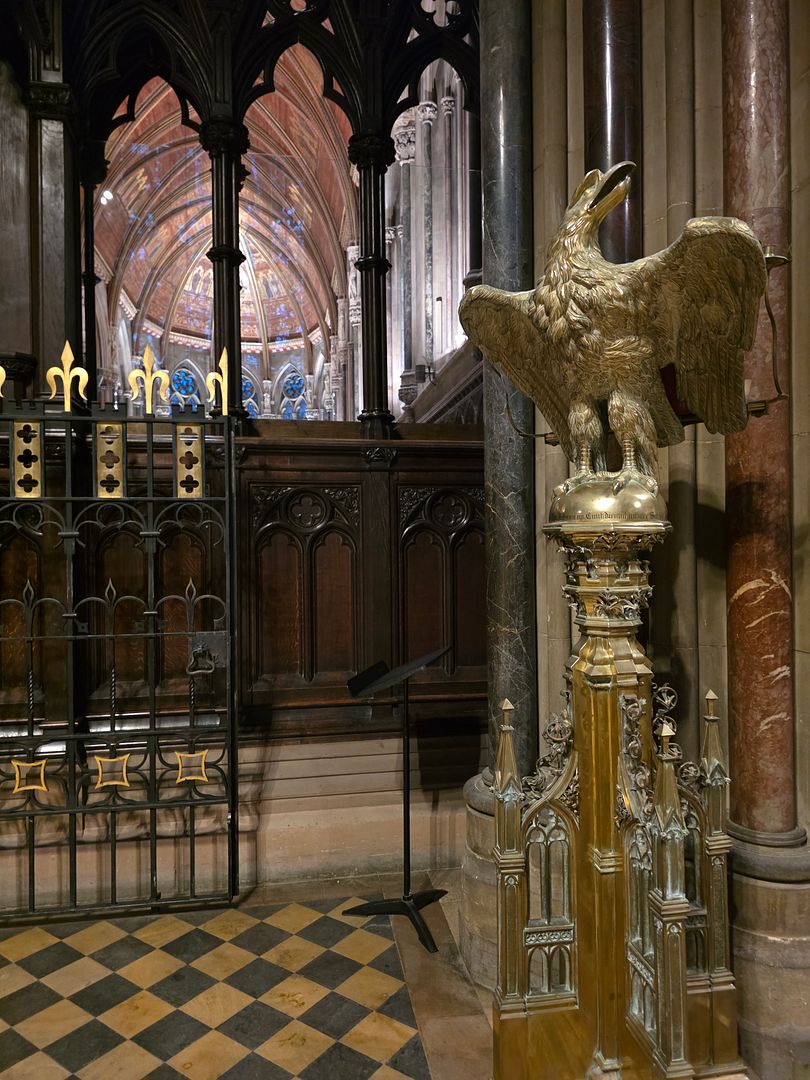
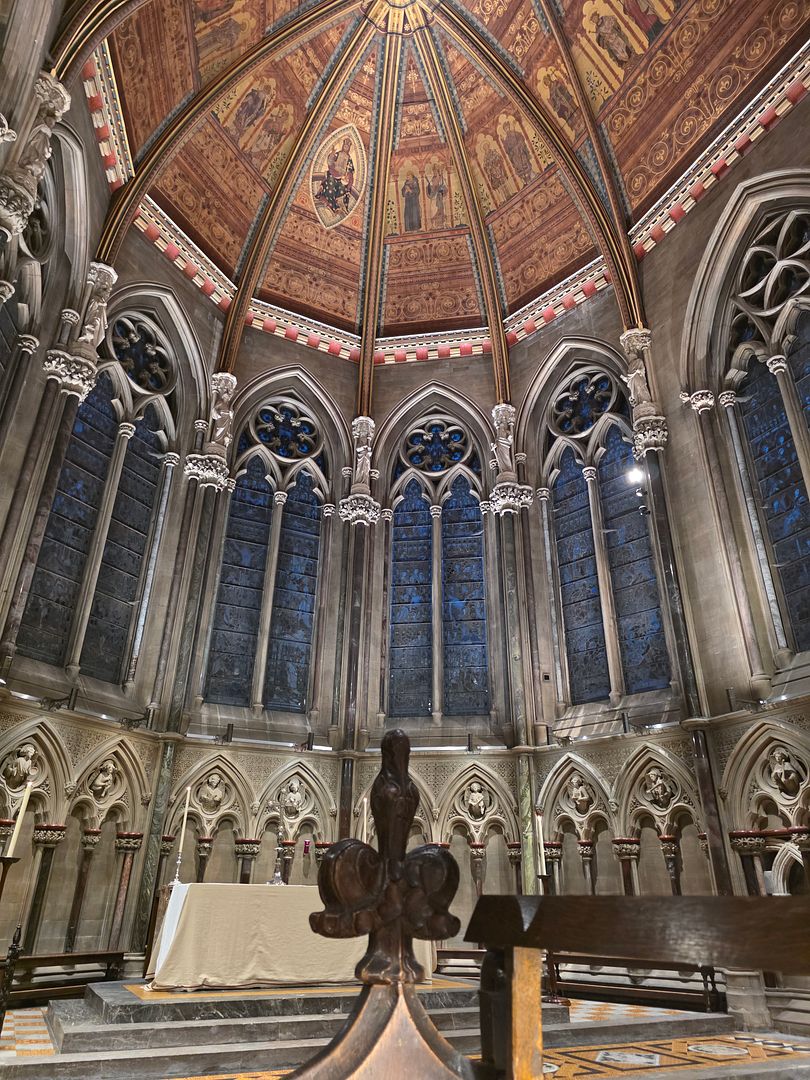
It slipped my journal posting radar about our Tuesday evening March 10th Evensong at St. John’s College. St. John’s College was closed to visitors the whole time we were in Cambridge but they did have Evensong that the public could enjoy. We were so happy to be able to attend it in the college chapel and get a little view into some of the architecture and history.
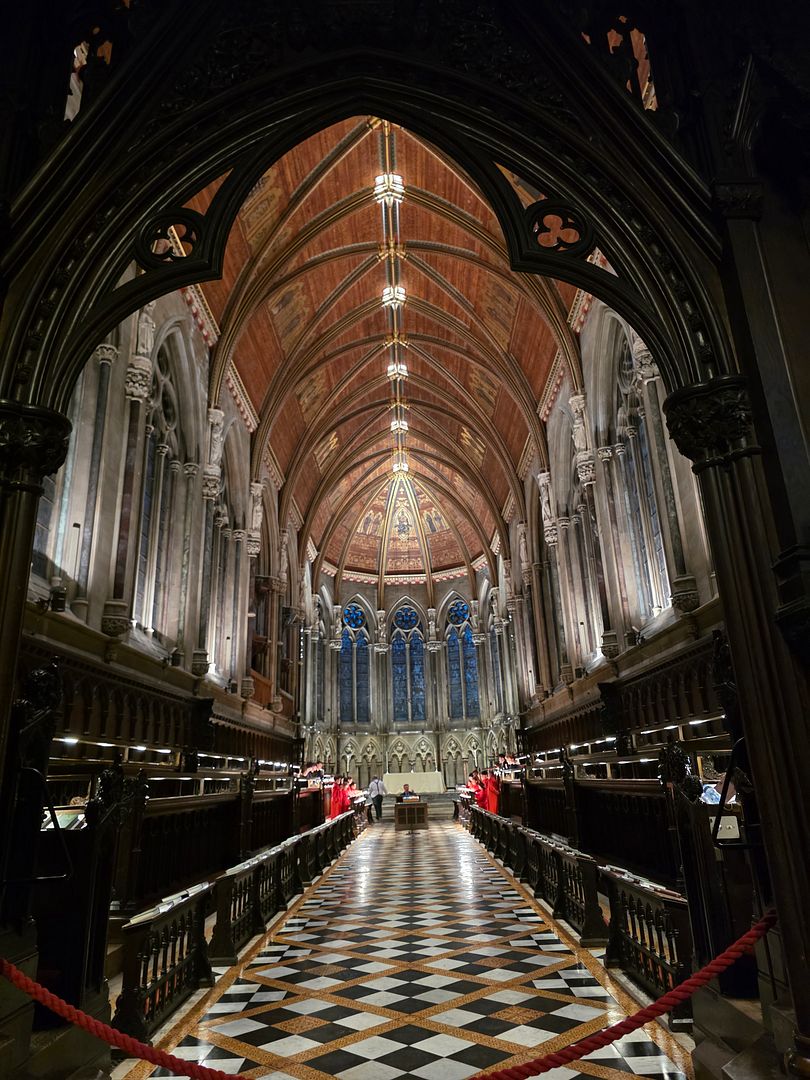
Evensong is a musical form of evening prayer, most familiar in the Anglican and Episcopal traditions. It’s typically held in cathedrals, collegiate chapels, and parish churches, often at the close of the day. Unlike many other church services, much of Evensong is sung by a choir, accompanied by an organ, with the congregation usually participating through silent reflection or by joining in a few responses and hymns. The primary purpose of Evensong is to offer thanks for the day that is past, to seek spiritual peace for the evening ahead, and to provide attendees with a space for contemplation through beautiful music and scripture.
It has been a wonderful way for us to end a day of sightseeing in our travels to attend Evensong.
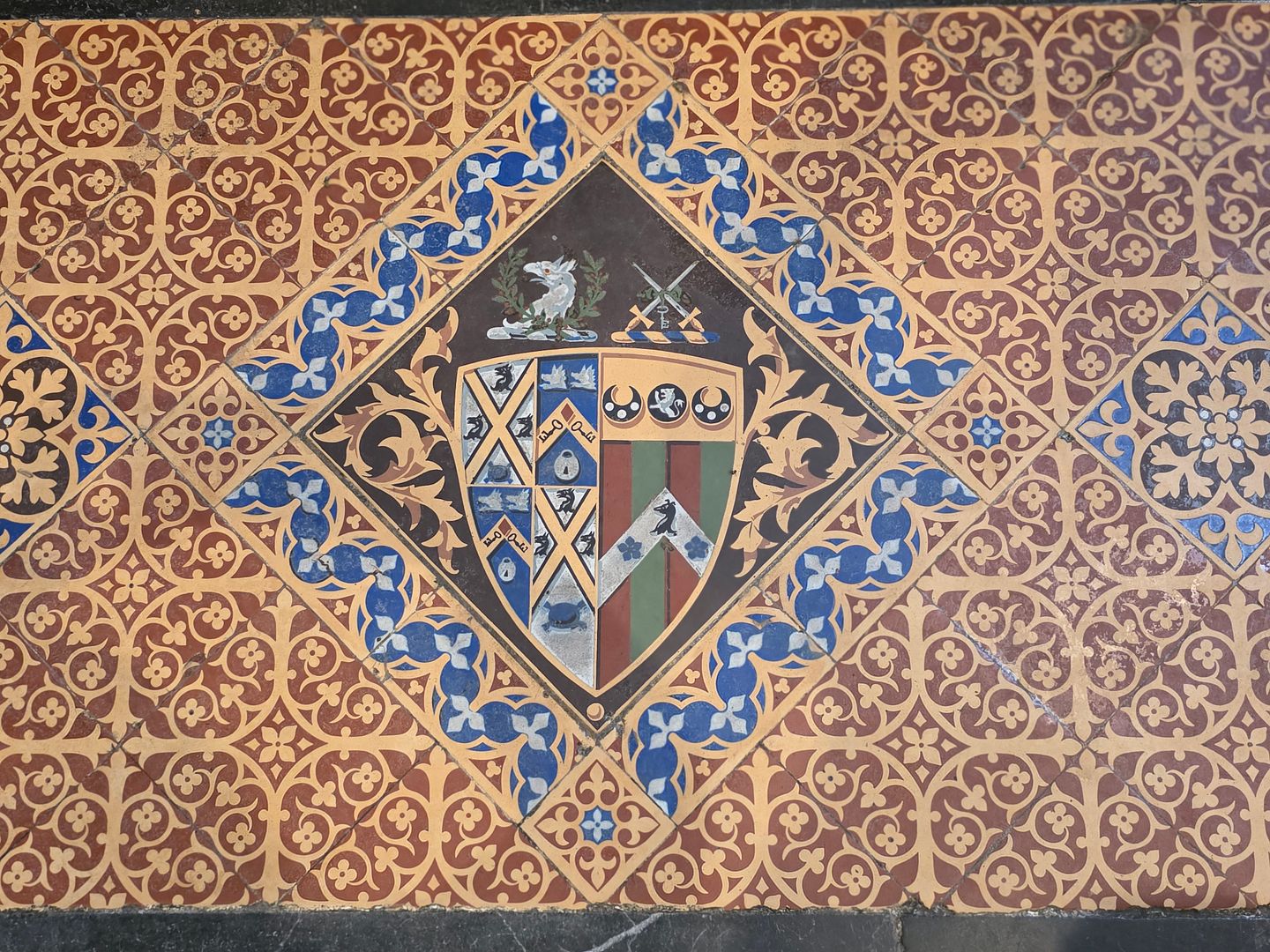
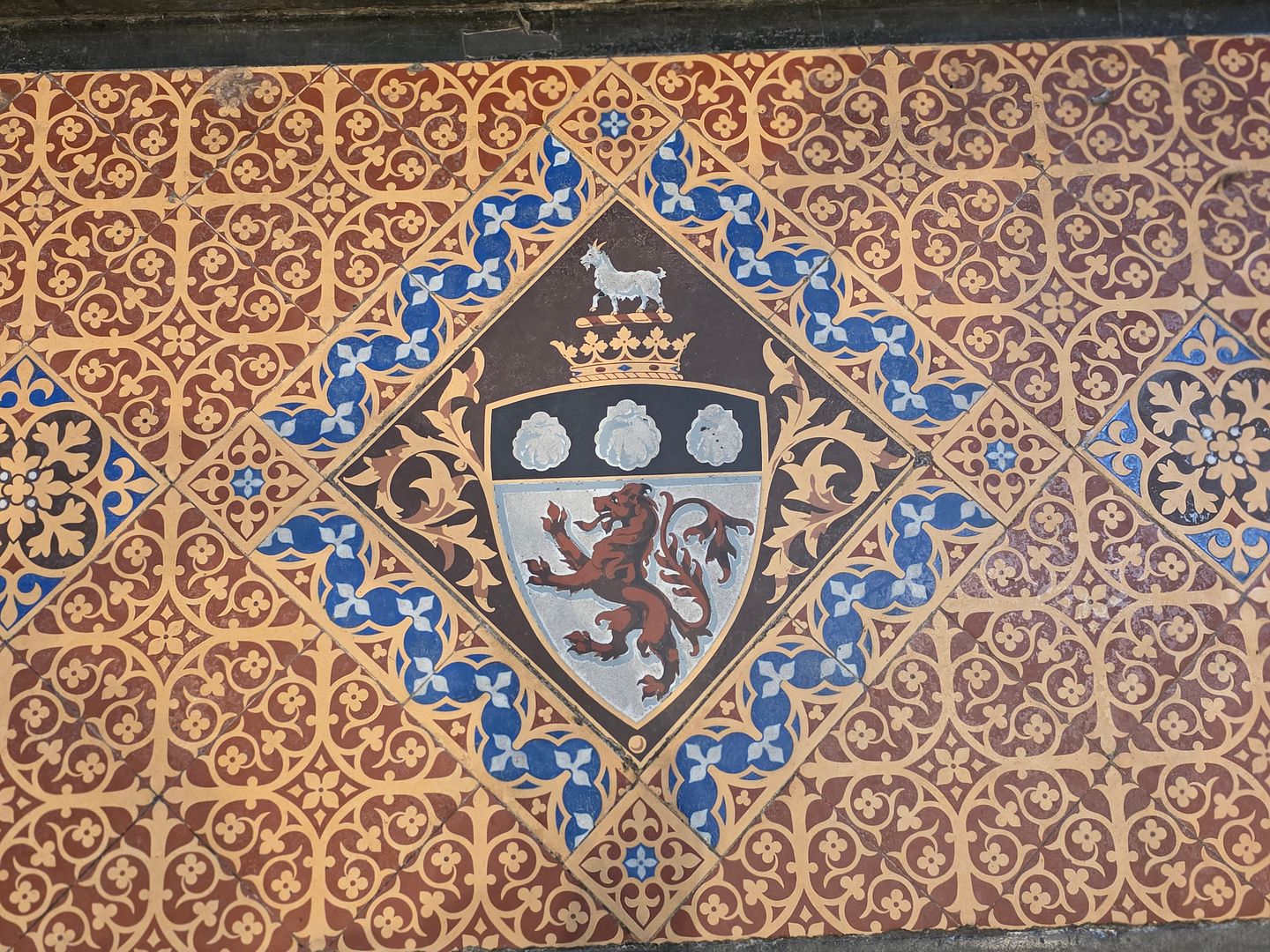
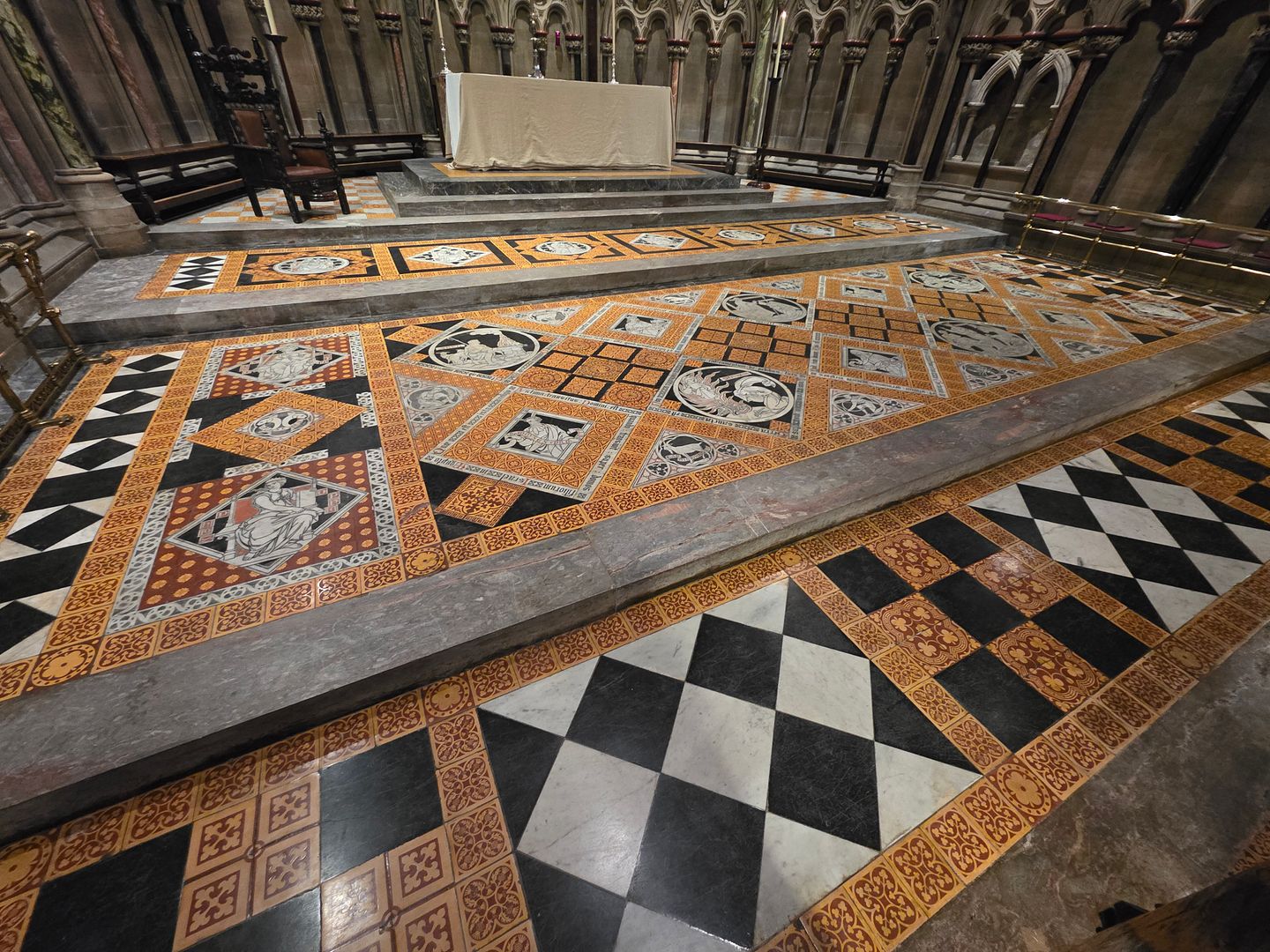
Where we were seated to enjoy Evensong I was able to see some of the floor tiles in the transept/crossing section of the chapel.
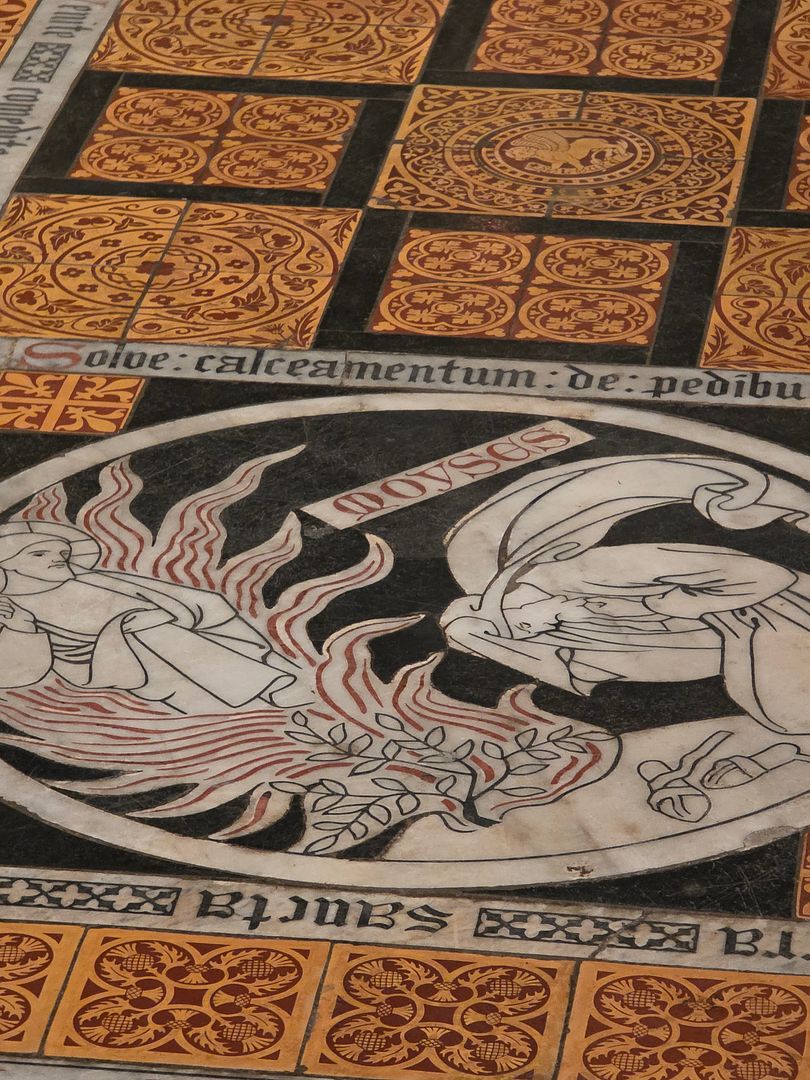
Moses and the burning bush.
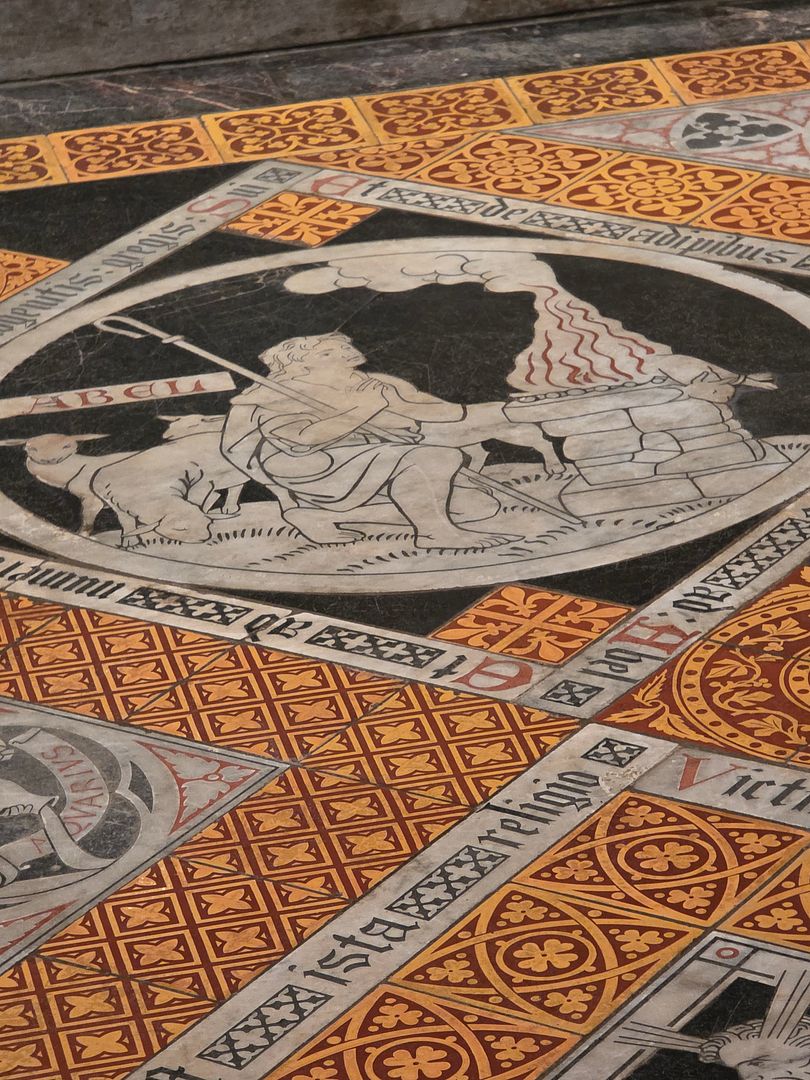
Abel and his offering to God.
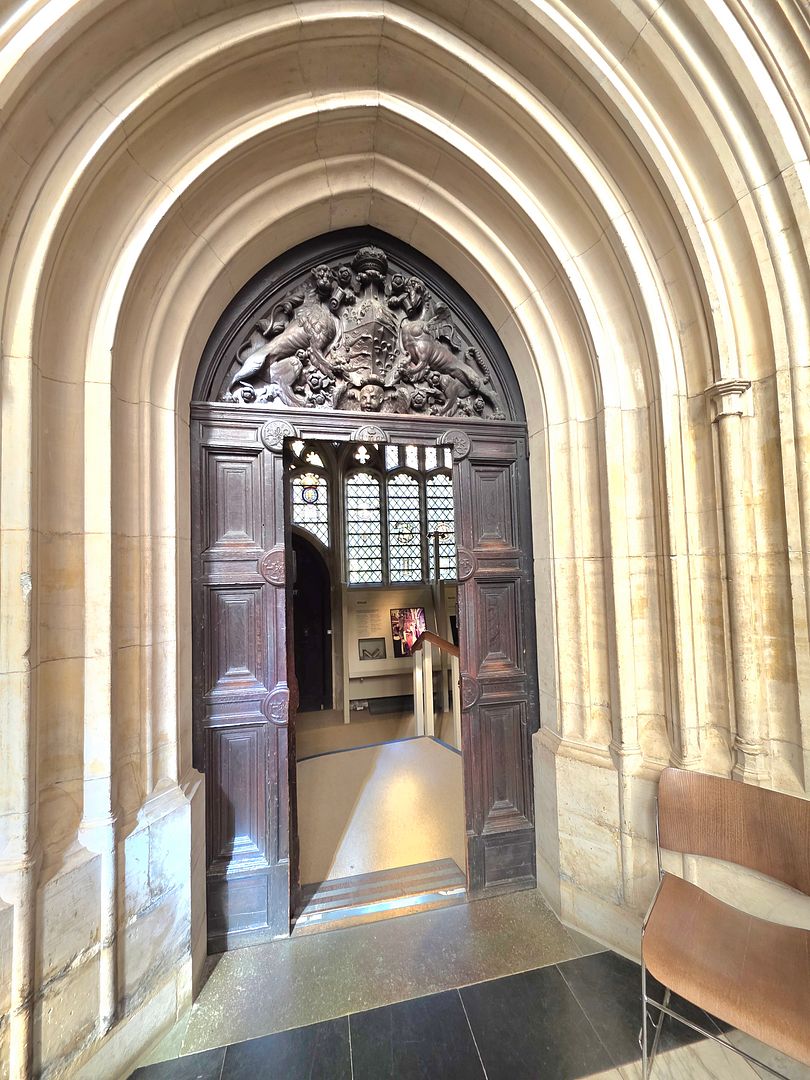
While waiting in the narthex of the chapel, I was thrilled to see the following tribute.
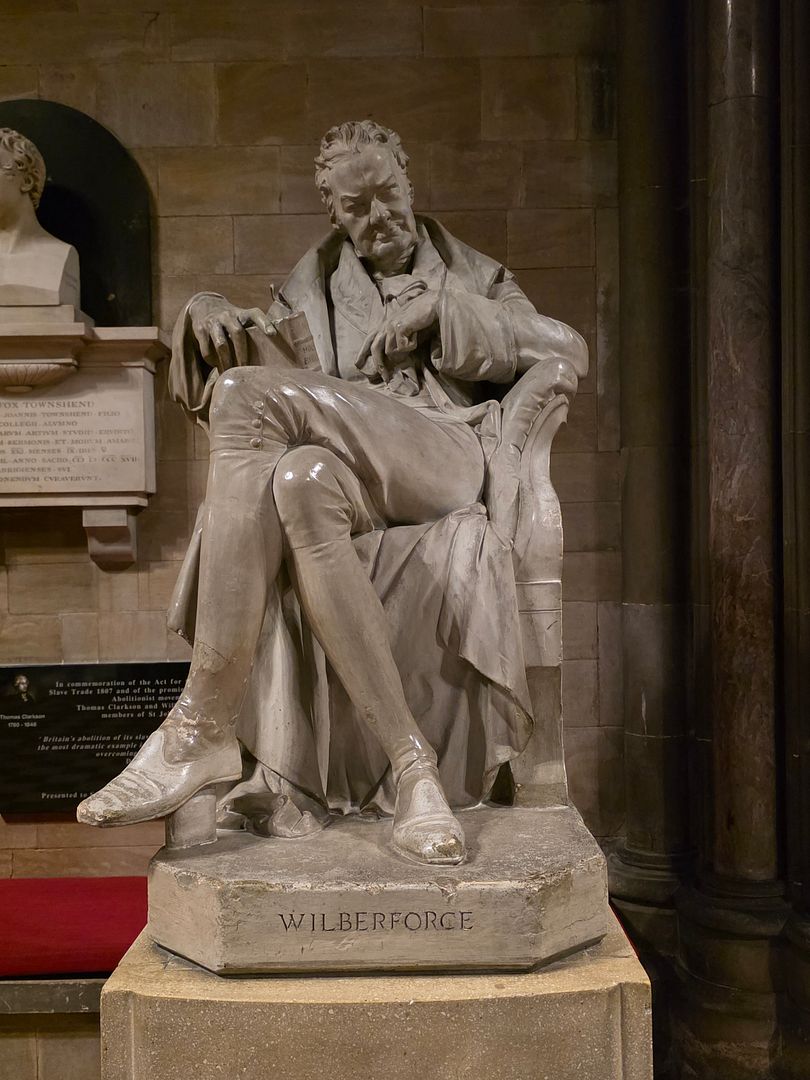
Greg and I have read about William Wilberforce and seen tributes to him in different parts of England. His book, Real Christianity, is a book I can recommend. I have the revised and updated version by Bob Beltz.
Wilborforce and Thomas Clarkson both members of St. John’s College were honored for their prominent role in passing of the Act for the Abolition of the Slave Trade 1807.
1776 & 1779 William Wilberforce and Thomas Clarkson begin their studies at St John’s. Joining forces in 1787, they will spend the rest of their lives leading the campaign to abolish the slave trade and slavery.
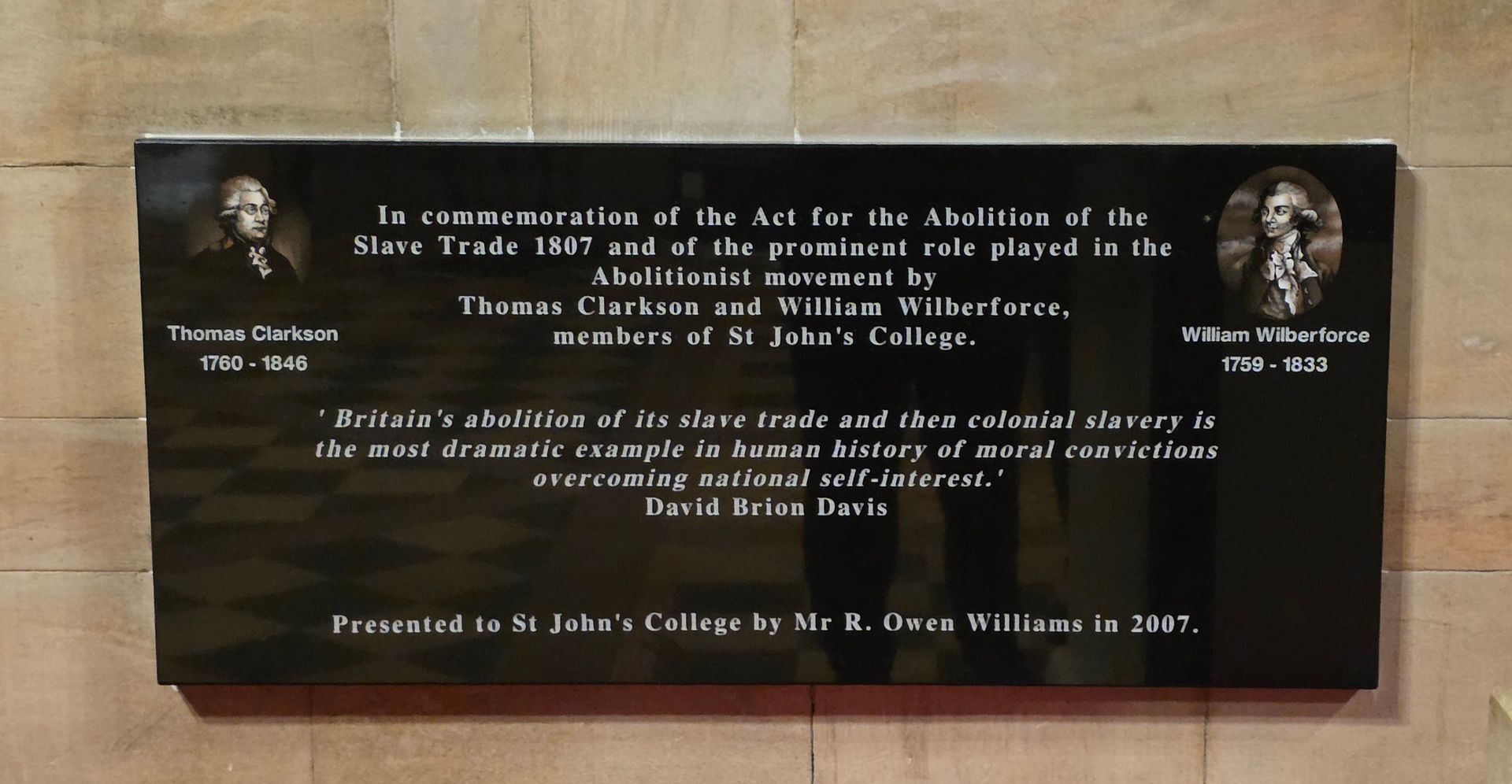
“Britain’s abolition of its slave trade and then colonial slavery is the most dramatic example in human history of moral convictions overcoming national self-interest.” David Brian Davis
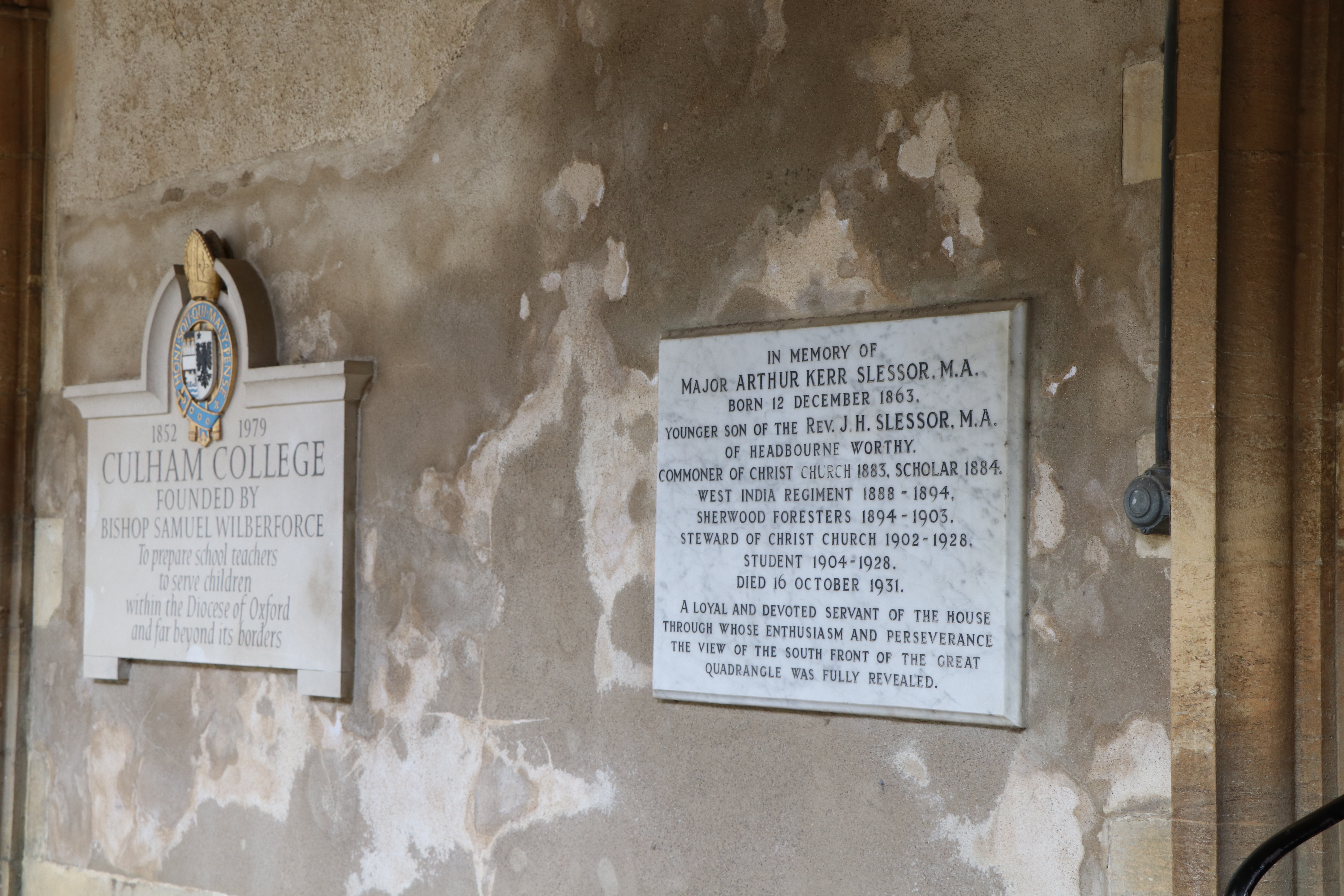
While we were in Oxford at Christ Church College in 2022 we saw a tribute to one of Wilberforce’s sons.

The plaque on the left reads Culham College, Founded by Bishop Samuel Wilberforce, to prepare school teachers to serve children within the Diocese of Oxford and well beyond its borders. 1852-1979
Samuel Wilberforce, FRS was an English bishop in the Church of England, and the third son of William Wilberforce. Known as “Soapy Sam”, Wilberforce was one of the greatest public speakers of his day. He is now best remembered for his opposition to Charles Darwin’s theory of evolution at a debate in 1860.
We also read an extensive plaque in his honor in the north transept of Westminster Abbey when we visited in 2003.
William Wilberforce is buried in the north transept of Westminster Abbey in London, England.
He was laid to rest on August 3, 1833, following a major state funeral. He is buried next to his close friend and former British Prime Minister, William Pitt.
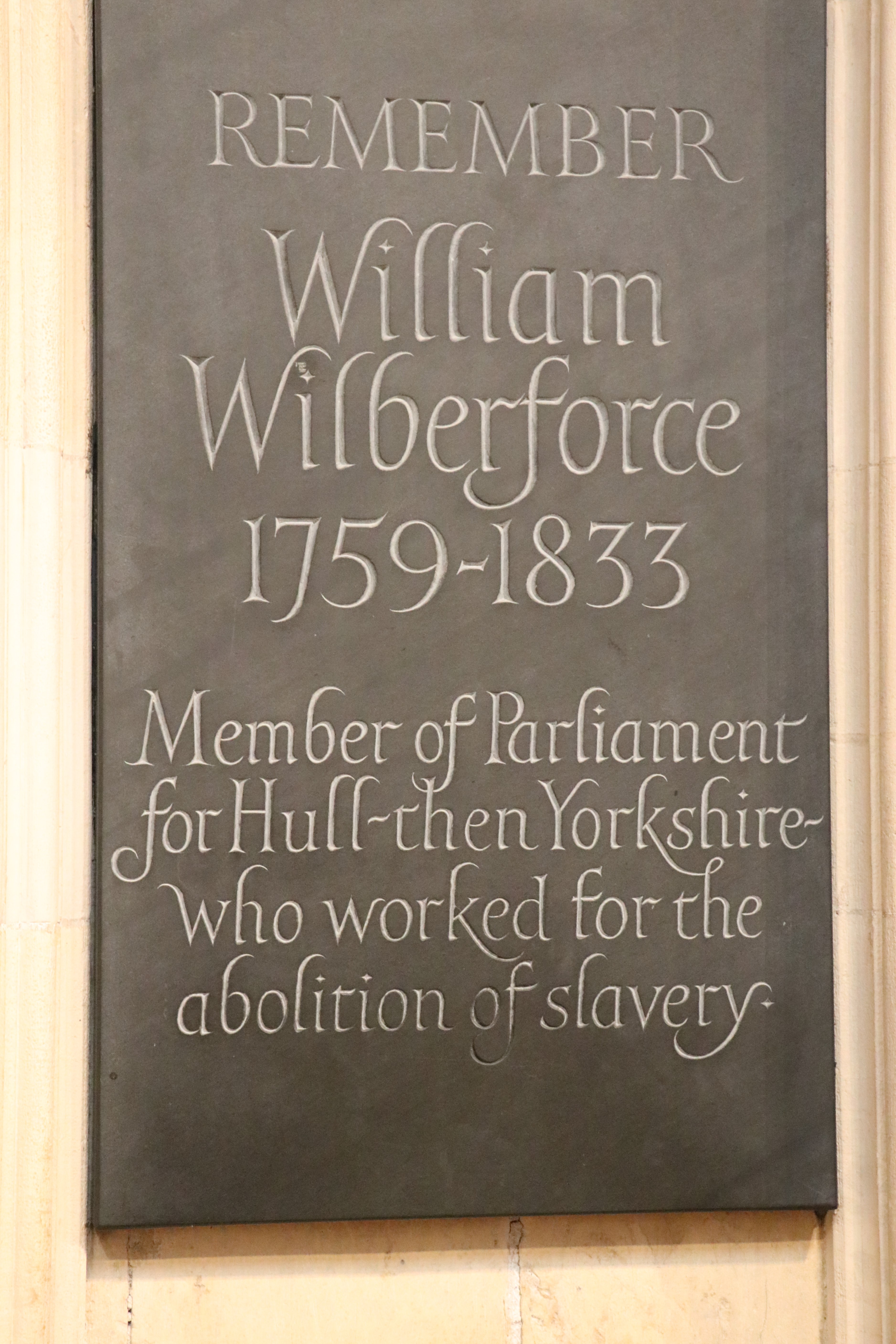
Wilberforce was a member of parliament from Yorkshire. When we were visiting the Yorkminster in 2023 I spotted a plaque dedicated to him at the entrance to the gift shop.
You can read more about Wilberforce at the following link;
William Wilberforce
I’ll leave this post with a couple quotes from Real Christianity.
The Bible is one of God’s greatest gifts to humanity. It tells us of the greatest gift that men and women have longed for through-out the ages and of which the prophets spoke about for centuries. When Jesus finally came, His arrival was hailed by the angelic host with the exclamation, “Glory to God in the highest, and on earth peace to men on whom his favor rests” (Luke 2:14). How can you measure the value of the good news of Christ? It is spoken of in the Bible as light in the darkness, freedom from slavery and life from death. Look at how much the Early Church valued the message. They received it with great joy and overflowing gratitude.
Surely all these things should help us come to terms with the inexpressible value of true faith. The greatest gift of God is often either rejected outright or treated as if it is of little worth. But if we really began to study the Bible, we would be impressed with the proper value of the gift.”