Nadyezhda’s (Надежда) Kulich (Paska)

This is a historic post that I will probably repost every year during one of the days leading up to Easter. Easter shares the rank with Christmas as my favorite holiday of the year. My winter favorite and my Spring favorite. Easter has more ‘dear to me’ food traditions. Our mom Nadyezhda (Nadia) passed these recipes to us with tweaks along the way. Nadia or Nadya (Надя, accent on first syllable) is the diminutive form of the full name Nadyezhda (Надежда), meaning “hope” and derived from Old Church Slavonic.
easter 2016 047

Paska is a slightly sweet Easter yeast bread that is traditional in the Ukraine and Russia. My Russian relatives call this bread Kulich. My mother and relatives always made dozens of loaves in the cylindrical shape using coffee cans or large juice cans.

What many of you call Paska we call Kulich. This is my mom’s Russian Easter Bread Recipe that I quartered because the amount she would make is quite daunting for me. We have cut it in half in years past. What you need to know about my mom and recipes is that she ends up tweaking them from year to year so this recipe is for her Kulich from 2001. I have a 2009 and 2012 recipe, too. This one was easier to quarter. Here’s the link to the original. My dear mom passed away from this earth in September of 2013 so I cherish her tweaked recipes.

I will post her recipe every year about a week before Easter for inspiration. We like it fresh so many years we bake it on the day in between Good Friday and Easter. This is not a recipe that I would attempt on my own. In my mind it calls for company enjoying the process together, like this group of loved ones in 2016.

12670500_10209025541021643_6688122367162299089_n

It’s always good to pray over your dough!

Kulich

Ingredients:

  • 2 packets rapid rise yeast
    1/4 cup lukewarm water
    1/4 cup lukewarm milk
    1 teaspoon sugar
  • 4 egg yolks
    1 egg
    1-1/4 cups sugar
    3/4 cup butter
    1 cup whipping cream
    1 cup half and half
    1/2 ounce apricot brandy
    1-1/2 teaspoons powdered vanilla
    1 teaspoon salt
    Zest of half a lemon
    About 2-1/2 pounds of flour, sifted (about 7 cups)
    Vegetable oil to coat the rising dough
  • 6 to 7 one pound or two pound cans for baking. You can use loaf pans or large muffin tins if you don’t have the cans to bake them in
Method:

Add yeast to the lukewarm water and milk and sugar in a stainless steel bowl making sure the liquids are lukewarm. Let this mixture dissolve and sit.

Beat the egg yolks and egg together.
Cream the butter and sugar in the large bowl of a stand-up mixer.
Add the eggs to the butter and sugar mixture slowly mixing to combine and then beat to incorporate well.

Mix the half and half with the whipping cream and heat until lukewarm, not hot, and slowly incorporate into the creamed mixture.
Mix in the vanilla and brandy.
Add the yeast mixture and the salt and beat with a mixer.
Continue beating and add the lemon zest.
Continue beating and add the sifted flour about a cup at a time.
Once you cannot beat the dough any longer using the mixer, put the dough on a floured surface and start incorporating the remaining flour by kneading the dough.
The dough should be kneaded very well, approximately 10 minutes.
You should knead the dough until you can cut it with a knife and it is smooth without any holes.
Place the dough in a stainless steel bowl.

Take some oil and pour a little on the dough and spread it all over the dough making sure to turn the dough so it is coated evenly.
Cover with plastic wrap right on the dough and a dish towel on top of that.
Place in a warm place away from drafts to rise.

(My sister usually puts it into the oven that has been warmed slightly).

It is now time to prepare the coffee cans (1 lb. and 2 lb. cans are the best)

Cut circles the size of the bottom of the cans out of wax paper. You will need four circles per can. Make sure the cans are well greased. Put the 4 circles in the bottom of the cans.

Use a empty and clean coffee can like the ones above. If there is a label make sure to take it off. If the can has a lip at the top you’ll need to use a can opener to cut the lip off the can. I hope these pictures will make the process easier to understand.

After putting the circles in the bottoms of the cans, cut sheets of wax paper long enough to line the sides of the can and tall enough to be 2″ above the rim of the can. Use Crisco to seal the ends of the paper.

Back to the dough…

When the dough has doubled in size, punch it down and turn it over.
Let it rise a second time until it doubles in size. Punch it down again.
Now the dough is ready to put into the prepared cans.
You will take a portion of dough about 1/3 the size of the can. Knead it and form it into a smooth ball that you can easily drop into the can.

Let the dough rise again inside the can until it is at least double in size.

Bake in a 350 degree oven until golden brown on top.(approximately 30 minutes or more depending on your oven.)

Let them cool slightly in the cans. Remove them from the cans and then cool completely standing up. Some people cool them on their sides turning them often to keep their shape. We found this time that they cool just fine and keep their shape standing up so we didn’t bother with that step!

This recipe yielded 7 loaves.

P1010130

To go with this bread my mom always made a wonderful sweet cheese topping that is formed in a mold in different shapes.  I’m adding the recipe here.

paska class 005

 Seernaya Paska

Ingredients:

18 – hard boiled eggs /
3 pounds Farmers cheese /a dry curd cheese like a dry cottage cheese can be substituted.
1 pint whipping cream /
3 cubes unsalted butter (12 oz.) /
3 cups sugar /

Press the Farmers cheese through a sieve. (This is the hardest part of the recipe) If you find a very small curd cheese you won’t have to do this to the cheese. I usually use a wooden spoon and press it through a wire strainer a little at a time. Separate the egg yolks from the whites. (You will not be using the whites).

Press the egg yolks through the sieve. Cream the sugar and butter together. Beat in the egg yolks. Beat in the cheese. Add whipping cream and mix well. You will place the mixture into a strainer lined with about 3 layers of cheesecloth. You will need enough cheesecloth to wrap up and over the top of the cheese. Place the cheese mixture into the cheese cloth lined strainer, or flower pot with holes in the bottom. Bring the ends of the cheese cloth up and tie the ends on top of the cheese in a knot. Place the sieve or flower pot into a larger bowl suspended with enough room for the cheese to drain without sitting in the drained liquid. Place a plate on top of the cheese an place a heavy rock, brick, or other weight on top of the plate. Refrigerate over night.

This recipe is enough to feed an army. If you don’t have to feed an army here’s a scaled down version :0)

If you just want a normal amount, cut the recipe in thirds. (6 cooked egg yolks, 1-lb. cheese, 2/3 cup whipping cream, 1 cube butter and 1 cup sugar.) Enjoy!

Farmers Cheese or Hoop Cheese can be hard to find. There are Russian-Ukrainian delis that sell a dry curd cottage type cheese that will work. If you can find a dry cottage cheese at the grocers that will work too.

I found a site online that sells the cheese that I use for this yummy spread.

The cheese spread in the flower pot in the refrigerator with the stone on top to help release as much liquid as possible.

We like to serve the kulich with the spread and strawberries.

When the Mennonite Girls Can Cook had a Paska demonstration at Lepp Market in Abbotsford I brought a completed Seernaya Paska, sweet cheese spread molded from home since it has to sit in the refrigerator having all the liquid pressed out for at least 24 hours. I plated it and showed one of the flower pots I use to mold the cheese and the heavy stone wrapped in plastic wrap to weight the cheese and force the liquid out. We used fresh viola blossoms to decorate it.

Because the class was all about Easter I have to explain what the X and B on my Russian Sweet Cheese Spread is all about. On Easter the greeting that we always express to one another is

Christos Voskress! Voistinu Voskress!

Христос Воскрес!

Воистину воскрес!

Christ is Risen!

Truly He is Risen!

So the X (the first letter of Christ in Russian) stands for Christ and the B (the first letter of risen in Russian) stands for Risen, Christ is Risen. This is what Easter is all about.

I made an error in the pronunciation of this dish in our first cookbook. It is called seernaya paska not seerney paska . I’ve always had a hard time with my Russian. I’ve found these plastic flower pots work well to mold the cheese. Make sure you add holes in the bottom of the pot so the liquid can escape easily.

easter 2016 038

You do not need old coffee cans to make Kulich/Paska. This next photo shows individual sized portions using paper baking cups that were baked for our cooking class at Lepp Farm Market years ago.

paska class 001

This blast from the past was probably our first Easter in Washington State, 1989.

2014-03-027

True Confessions: I have not attempted to make Kulich here in Colville. I have made Seernaya Paska to go with Kulich that I purchased at Kiev Market in Spokane. The market Kulich was only good for decorating the table. It does not compare to our mom’s recipe.

Are you preparing for Easter?

Lamb of God! Our Souls Adore Thee ~ Good Friday

Lamb of God! Our Souls Adore Thee

Lamb of God! Our souls ad­ore Thee
While upon Thy face we gaze;
There the Fa­ther’s love and glo­ry
Shine in all their bright­est rays;
Thine al­migh­ty pow­er and wis­dom
All cre­ation’s works pro­claim;
Heaven and earth alike con­fess Thee
As the ev­er great I AM.

Lamb of God! Thy Fa­ther’s bo­som
Ever was Thy dwell­ing place;
His de­light, in Him re­joic­ing,
One with Him in pow­er and grace;
Oh, that won­drous love and mercy—
Thou didst lay Thy glo­ry by,
And for us didst come from Heav­en,
As the Lamb of God, to die!

Lamb of God! When we be­hold Thee
Lowly in the man­ger laid,
Wandering as a home­less strang­er
In the world Thy hands had made;
When we see Thee in the gar­den,
In Thine ago­ny of blood,
At Thy grace we are con­found­ed,
Holy, spot­less, Lamb of God!

When we see Thee, as the vic­tim,
Bound for us up­on the tree,
For our guilt and fol­ly strick­en,
All our judg­ment born by Thee—
Lord, we own, with hearts ad­or­ing,
Thou hast loved us un­to blood:
Glory, glo­ry ev­er­last­ing,
Be to Thee, Thou Lamb of God!

Lamb of God, Thou soon in glo­ry
Will to this sad earth re­turn;
All Thy foes shall quake be­fore Thee,
All that now des­pise Thee mourn;
Then Thy saints all ga­thered to Thee,
With Thee in Thy king­dom reign;
Thine the praise and Thine the glo­ry,
Lamb of God, for sin­ners slain.

Words: James G. Deck, 1841

Jesus Prepares to Die…

GOTW-practice035

On the Thursday of Easter week we remember the Passover supper Jesus had with his disciples and the washing of the disciples feet. Some of what Jesus shared with his disciples on this day in history is copied below.

Excerpts from John chapter 13…

It was just before the Passover Feast. Jesus knew that the time had come for him to leave this world and go to the Father. Having loved his own who were in the world, he now showed them the full extent of his love.

Jesus knew that the Father had put all things under his power, and that he had come from God and was returning to God;  so he got up from the meal, took off his outer clothing, and wrapped a towel around his waist.  After that, he poured water into a basin and began to wash his disciples’ feet, drying them with the towel that was wrapped around him.

When he had finished washing their feet, he put on his clothes and returned to his place. “Do you understand what I have done for you?” he asked them.  “You call me ‘Teacher’ and ‘Lord,’ and rightly so, for that is what I am.  Now that I, your Lord and Teacher, have washed your feet, you also should wash one another’s feet.  I have set you an example that you should do as I have done for you.

“A new command I give you: Love one another. As I have loved you, so you must love one another.  By this all men will know that you are my disciples, if you love one another.”

Artists have tried to depict the last supper and we’ve seen some of those attempts in person over the years in our travels.

While in England in 2014 year we saw two amazing paintings of the last supper, one in the Parish Church of St. John the Baptist in Windsor and one in the chapel of Magdalen College.

The Thames 094

The Thames 104 - Copy - Copy

Oxford Day 6 141Above the stalls in the chapel hangs Giampetrino’s remarkable 15th copy of Leonardo da Vinci’s The Last Supper, on permanent loan from the Royal Academy. In view of the bad condition of the original fresco in Milan, Magdalen’s copy on canvas is a piece of increasing historic and artistic significance.

Oxford Day 6 144

This photo is a life sized artist’s depiction of the night Jesus had the Passover meal with his disciples, the event we call the Last Supper. This was taken at the Monumentale Cemetery in Milan Italy in 2013. “Do this in remembrance of me”

There seems to be only 11 of the 12 disciples which makes me wonder if the artist depicted the scene after Judas Iscariot, the betrayer, had left the meal.

The sculpture of Jesus washing Peter’s feet at the top of this post was taken in Thousand Oaks California at the Gardens of the World. 

“Come, my heart, rejoice in the immunity that your Redeemer has secured for you, and bless His name all day and everyday.” C.H. Spurgeon

Easter week, remembering what was accomplished by Jesus on the Cross and in His resurrection, our redemption, is celebrated every week and every day for true believers!

March Was Lovely Hodgepodge

Thank you, Joyce for keeping the Hodgepodge questions coming.

1. March is rolling on out of here. Sum up your March in ten words or less.
Budapest, Bratislava, Czech-Republic, Austria, Cambridge, Seventy-Five, Nine…Travel and Birthday Joys!

2. Are you afraid of heights? No

When was the last time you found yourself dealing with a height, and did it make you nervous?

Besides flying at whatever thousands of feet, the highest was climbing with our own two feet to the Panorama Look-Out at St. Stephen’s Basilica in Budapest last month.

It did not make me nervous until we started down on these stairs.

3. What’s a word you struggle to spell on a regular basis, and sometimes need to double check before writing it down?

Occassion , Ocasion, Ocassion, Occasion whew…finally I got it right.

Use the word in a sentence that tells us something about your April calendar. 

We are looking forward to several occasions to celebrate in April starting with Resurrection Sunday and then two more family birthdays.

4. Love ’em or hate ’em, with Easter comes the sweet treat known as Peeps. So… do you love ’em or hate ’em?

I neither love them or hate them, I ignore them.

Speaking of peeps, what’s your favorite way to have chicken? 

Chicken pot pie is a favorite.

5. This week’s Hodgepodge lands on the first day of April, which happens to be National Poetry Month. Do you like poetry?  Share a favorite line or two from one of your favorite poems. What makes this one a favorite? 

The form of poetry I love are old hymns by people like Fanny Crosby, John Newton, Wesley, and others. I’ll share a stanza and refrain from Fanny Crosby’s, Like a River Glorious;

Like a river glorious, is God’s perfect peace,
Over all victorious, in its bright increase
Perfect, yet it floweth, fuller every day,
Perfect, yet it groweth, deeper all the way.

Refrain:
Stayed upon Jehovah, hearts are fully blest
Finding, as He promised, perfect peace and rest

This has been a favorite for years. It was a hymn we sang often at Bethany Baptist church in L.A. and in other churches we’ve been a part of. It has a great four part harmony and the alto part comes back to my memory easily when singing it with the congregation. The longer I’ve been following Jesus as my Lord and Savior, God’s peace gets fuller and deeper.

6. Insert your own random thought here. 

It’s Easter week and this is another hymn that speaks of Jesus Christ and what the cross, Good Friday and Easter are about. Happy Easter, Hodgepodgers!


Lamb of God, We Fall Before Thee

Lamb of God, we fall be­fore Thee,
Humbly trust­ing in Thy cross.
That alone be all our glo­ry;
All things else are on­ly dross.

Thee we own a per­fect Sav­ior,
Only source of all that’s good.
Every grace and ev­ery fa­vor
Comes to us through Je­sus’ blood.

Jesus gives us true re­pent­ance
By His Spir­it sent from Heav’n;
Whispers this trans­port­ing sen­tence,
Son, thy sins are all for­giv’n.

Faith He grants us to be­lieve it,
Grateful hearts His love to prize;
Want we wis­dom? He must give it,
Hearing ears and see­ing eyes.

Jesus gives us pure af­fect­ions,
Wills to do what He re­quires,
Makes us fol­low His di­rect­ions,
And what He com­mands, in­spires.

All our pray­ers and all our prais­es,
Rightly of­fered in His name—
He that dic­tates them is Je­sus;
He that an­swers is the same.

When we live on Je­su’s mer­it,
Then we wor­ship God aright;
Father, Son, and Ho­ly Spir­it,
Then we sav­ing­ly unite.

Hear the whole con­clu­sion of it:
Great or good, whate’er we call,
God, or King, or Priest, or Pro­phet,
Jesus Christ is all in all.

Words: Joseph Hart, 1759

Hero’s Temple and Jewish Museum ~ Budapest

We continued our tour of the Dohany Street Synagogue and other buildings on the grounds on Sunday, March 1st.

The Heroes’ Temple has become an inseparable part of the Dohány Street Synagogue.
The arcade and the Heroes’ Temple, designed by László Vágó, seats 186 people. It was built in 1931 and is used for religious services.
The Heroes’ Synagogue commemorates the 10.000 Hungarian Jewish soldiers who earned glory on the battlefields of World War I and died heroes’ deaths.

The museum was the last area we would visit.


The Stained glass windows featured Moses, David and Saul and the last one pictured also featured Daniel in the Lion’s Den.

Speaking of Moses…

We left the Dohany Synagogue property and walked back to the hotel.

On the way we saw a few interesting doors and buildings.

We stopped to exchange our dollars for some Forints, Hungary’s currency.

Hungary has not bought into euros.

The Hungarian forint (HUF) consists of six banknote denominations (500, 1,000, 2,000, 5,000, 10,000, and 20,000 Ft) and six coin denominations (5, 10, 20, 50, 100, and 200 Ft). Banknotes feature famous Hungarian historical figures, while coins are used for smaller transactions, with the 200 forint being the highest-value coin. A 200 forint coin is what you need for public restrooms.

2000 forints converts to about $5.94.

We wanted to leave a tip for our room housekeeper at the hotel. It was hard to wrap our heads around such large sounding currency actually being such a small amount in our own currency.

We caught our AmaWaterways shuttle to take us to the boat for our embarkation. I took a video of us walking on to the boat instead of taking photos and never took photos of our room. I took a video of our room. Sad but true I cannot add those videos here.

We had a warm welcome when we arrived and made it to our room where we found our luggage waiting for us with welcome notes and other items.

Our room was one of the least expensive rooms and on the lower deck but we were impressed with the size and the conveniences it afforded. The bed was very comfortable and it was larger than a queen. Another notable thing is how quiet our room was. We never heard any noise from the rooms next to ours. We never heard load engine noises and anything of that kind while in bed for the night.

Our windows were at water level.

The journey would commence on the Danube as we were enjoying our first dinner aboard. We sat at a round table for eight and enjoyed getting to know total strangers that would become more familiar by the end of our seven day journey. We were told that the Captain would tell us when we were passing the Parliament Building in Budapest so we could go up on the upper deck and get some nice photos. I’ll share those photos in my next River Cruise post. This was more of an off season time and there were only 130 passengers on this cruise. The boat could have 190 if full.

Back to the present:

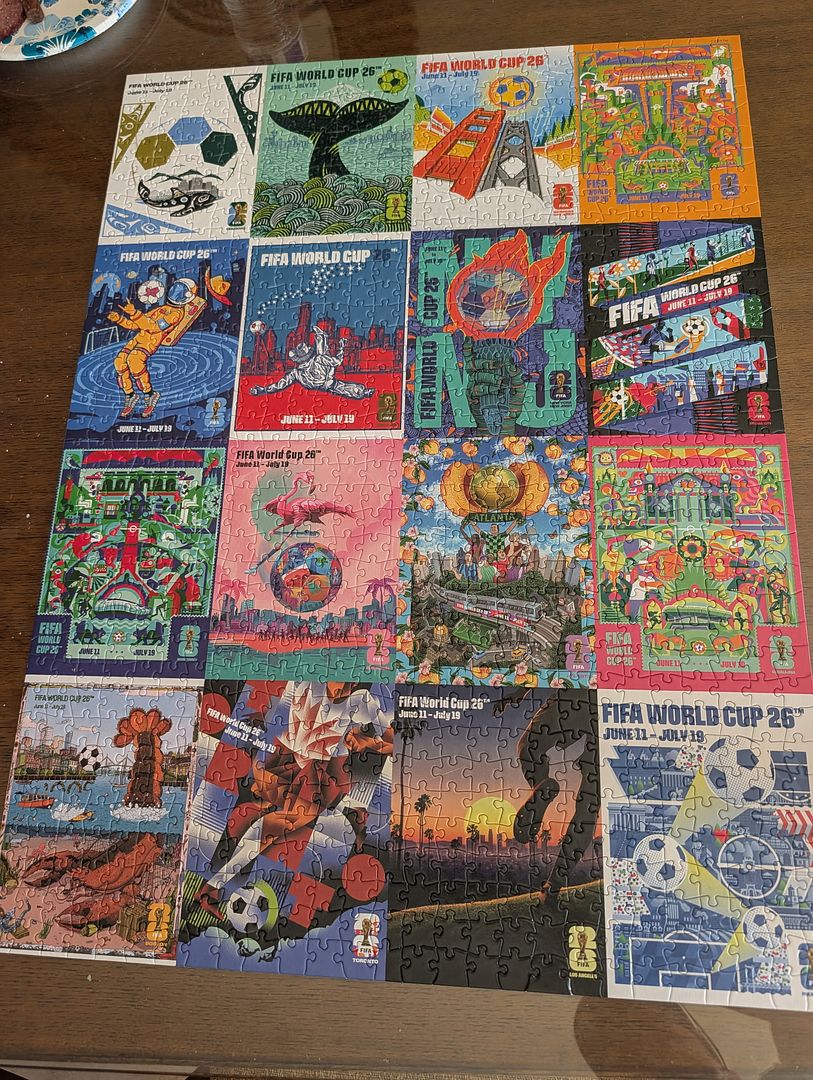
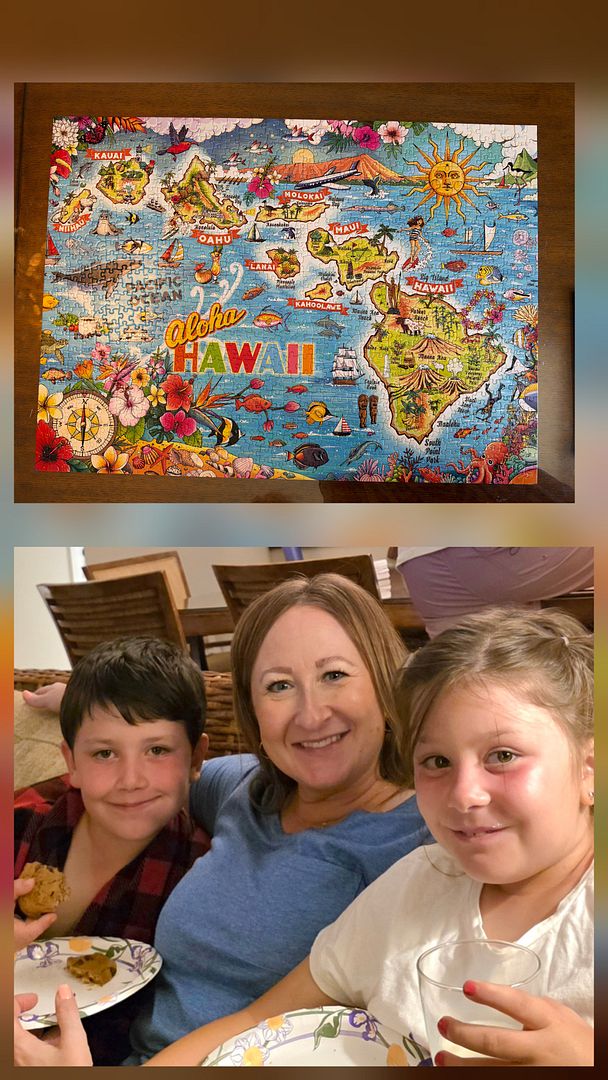
It is the last day of March and we are going full speed ahead to Good Friday and Easter Sunday. I finally brought our Easter Bin in. I started a new puzzle this week that Josh and Laura brought last weekend and I don’t think I’ll be able to complete it by Easter. It is a tough one because of the coloring. I’ve done the easiest parts, ha! I’m using my new puzzle mat that Andrew and Katie gifted me for my birthday. It is one of those that you can roll up with the puzzle intact if you need to move it before finishing.


The Empty Tomb!

Thanks for stopping by. Goodbye March and thank you, LORD, for a wonderful month filled with blessings galore!
Dohany Street Synagogue

On Sunday, March 1st, after another delicious breakfast at our hotel, The Matilde Palace, we packed up our belongings and left our suitcases outside our hotel room door to be collected by AmaWaterways. They would be curried to the boat and deposited in our room onboard. We would board AmaMagna later on this Sunday for the beginning of our cruise on the Danube.

But first, we had another walk ahead of us to the Jewish District in Budapest to visit the Dohany Street Synagogue.

The Dohány Street synagogue is one of Budapest’s touristic highlights as it is the largest synagogue in Europe and the second largest in the world. The synagogue was built in 1859 in the Moorish style and it can seat 3000 people. Its huge size demonstrates the significance and the high economic and cultural standards of the Budapest Jewry of the age.

It was another beautiful winter day in Budapest.

After we purchased our tickets for entry we had to go through security. This was the only place we visited on our entire time in Europe and England where we had to do this. I wasn’t surprised of this added security as the history of antisemitism around the world seems to be continuous.

The plaque and memorial reads; In memory of the 440,000 Hungarian Jews deported to their deaths between 15th May and 9th July 1944. Theodor Herzel Square, 5 May, 2024.

That is sobering and brings such sadness.

We got to the synagogue early and waited for it to open to visitors.

The temple was designed by Ludwig Förster (1797-1863), a German architect, professor of the Vienna Academy. The clerk of works was the architect Ignác Wechselmann (1828-1903) who later bequeathed his entire wealth to the Institute of the Blind. After Förster left, Frigyes Feszl, the famous architect of the Budapest Vigadó designed the temple’s inner sanctum. The official consecration of the synagogue took place on 6 September 1859. 

The interior of the synagogue is 1200 square metres, the towers are 44 metres high. There are 1497 seats for men downstairs and 1472 for women in the galleries, altogether the seating capacity of the flat-ceilinged inner space is nearly 3000 people.
The Synagogue is the temple of the Neolog Jewry. It was built in Budapest’s former Jewish quarter where many people of the Jewish faith still reside today.

The building is a holy place!

  • The building and the cemetery are holy places. Please comport yourself accordingly.
  • Men are forbidden to enter the synagogue without covering their heads. If you have a hat or cap, please put it on. After ticket validation you will be given a kippah at the entrance that you have to wear in the complex at all times.
  • Entry will be denied if you wear clothes inappropriate for a temple (e.g. sleeveless tops, short skirts or shorts). In such cases the ticket inspectors of the Synagogue will not grant you entry. Tickets are valid for 2 days. Clothing items can be purchased from the ticket inspectors.

The memory of the Holocaust is strongly connected to the old Jewish quarter where the Synagogue is situated. Dohány Street constituted the border to the ghetto during World War II. The area which was planned as a garden is the burial place of nearly 2600 Jewish people who perished during the Holocaust. 

Raoul Wallenberg was a Swedish architect, businessman, diplomat, and humanitarian. He saved thousands of Jews in German-occupied Hungary during the Holocaust from German Nazis and Hungarian fascists during the later stages of World War II.

According to Jewish tradition it is our duty to remember. To remember our martyrs and those non-Jewish people who did not fear for their lives but helped Jews during the holocaust, saving theirs.
The Emmanuel memorial tree was envisioned by Tony Curtis and completed by the sculptor Imre Varga. You can find memorial plaques of Hungarian and other nationality rescuers of Jewish people in the memorial park.

The cemetery in the synagogue’s yard is of particular significance as it is not usual in Jewish customs to situate cemeteries next to synagogues. The cemetery overlooking Wesselényi Street, however, was created during World War II, out of necessity.
When the ghetto was liberated on 18 January 1945, thousands of unburied corpses were lying in the streets, more than 3000 dead bodies were found on Klauzál Square alone. 1140 known and 1170 unknown martyrs were buried in 24 common graves in the yard of the Synagogue.

My information comes from the Synagogues website and from our Tour guide who was a practicing Jew from this Temple.

I was surprised by the interior of the Temple and especially the presence of an organ.

Unlike traditional, intimate synagogues, the Dohány is vast and longitudinal, resembling a Christian cathedral. It features a large, decorated ark and a massive organ designed to be played by non-Jews on the Sabbath.

I will save the Jewish Museum and the Heroes Temple for another post.

Back to the Present:

We are still experiencing freezing temps in the early hours. More blooms have opened up on our daffodils.

In our neck of the woods it is always a treat to have a new eatery open up. This month Buck 25 Roadhouse in Kettle Falls opened up. We decided to try lunch there after our church workday this past Saturday. We were pleased with the atmosphere and the light and friendly new spot to enjoy good food.

Yesterday was Palm Sunday and our service was good with a sermon from 1st John. This is the beginning of Holy Week culminating with Resurrection Sunday. It is a special week for Christians around the world. We are looking forward to our Good Friday Service and Resurrection Sunday service. Easter preparations are commencing here.

Shout Aloud, All Ye Lands ~ Hymn

Shout Aloud, All Ye Lands

Across the blue wa­ters
The mes­sage of grace
O’er king­dom and em­pire
Is fly­ing apace;
The day-beam is break­ing,
Majestic and bright,
And mill­ions are turn­ing
From dark­ness to light.

Refrain

Shout aloud, all ye lands,
And be glad while ye sing;
Shout aloud, all ye lands,
For the Sav­ior is king!
And the sound that went forth
On the night of His birth
Shall be heard to the ut­ter­most
Bounds of the earth.

All crea­tures ador­ing
Shall bow at His word,
All tongues shall con­fess Him
Their Sav­ior and Lord;
His truth and its glo­ry
Extended shall be,
And cover the earth
As the wa­ters the sea.

Refrain

How gent­ly and kind­ly
There comes from above
His scep­ter of mer­cy,
His stand­ard of love!
He rul­eth in wis­dom,
The mon­arch of peace;
His reign shall be glo­ri­ous
And nev­er shall cease.

Refrain

The day is ap­proach­ing,
The time draw­eth nigh,
When na­tion to na­tion
Hosanna shall cry;
The id­ols they wor­ship
In dust shall be laid,
And Je­sus be hon­ored,
Exalted, ob­eyed.

Refrain

Words: Fanny Crosby, 1875.

Spring Firsts

On our trip to Spokane on Tuesday we saw the new roadside sign from Williams Valley Mennonite Church as we drove through the little town of Clayton. Such a great verse for Spring!

Speaking of Spring we have a few signs on our property that Spring is springing before our eyes.

The birds have been very busy. Two nests in two of our roadside shrubs.

Greg spotted this mud lined nests on his way to our mailbox.

I wonder which birds made these nests.

Hooray for these sweet daffodils that are finally opening up. They make me smile. We’ve been dropping below freezing the mornings this week but the daffodils don’t seem to mind.

What signs of Spring are you enjoying as we head into Easter week?

Panorama Look-Out, St. Stephens Basilica

To get to the panorama views of St. Stephen’s Basilica and Budapest, there was an elevator option and stairs. We took the elevator up but when it was time to go down again we chose the stairs. Thankfully there were good railings and it was an open airy space so we didn’t get claustrophobic.

Saturday February 28th was a beautiful sunny day. We were so thankful.

This view is of the square in front of the Basilica with the pedestrian street beyond that takes you to the Danube. Looking beyond small slice of the Danube you can see the Buda side of Budapest.

On our way down to exit the Basilica we stopped at the Treasury. This painting of Peter and the Rooster caught my eye,  “the rooster will not crow till you have denied me three times“. This experience of Peter makes me emotionally as I consider times that I’ve denied or not stood up for my Lord and Savior.

The “Holy Family” was painted by Murillo (1682).

An artistic depiction of Jesus and the Samaritan Woman at the well.

Not quite busts but these circular heads of all the apostles were on an arched ceiling as we left the Treasury.


It was a narrower exit and walkway and I wasn’t able to get photos of all the apostles because of other people pressing in.

We exited the Basilica and found our way to the Jewish District for our lunch meal at Mazel-Tov. I wrote about our eating experience in Budapest and this restaurant in an earlier post.

This was a day that we were up on our feet and walking for the majority of the day. I was thankful that my Plantar Fasciitis was not an issue for me during this trip. I thanked the LORD several times. I did manage to get a nasty blister on my baby toe, though, that I had to doctor and pamper the next few days!

St. Stephen’s Basilica

On Saturday the 28th of February we broke away from our excursion group to buy tickets to visit the inside of St. Stephen’s Basilica situated centrally in the Pest side of Budapest. This is a photo heavy post!

St. Stephen’s Basilica is a Roman Catholic basilica in Budapest, Hungary. It is named in honor of Stephen, the first King of Hungary, whose right hand is housed in the reliquary.

It was awe-inspiring to see this finished work of art.


It is one of the grandest buildings we have been in.

This is kind of creepy to me. This is the right hand relic of King Stephen of Hungary. King Stephen died in August of 1038.

Not being Catholic, this Basilica was not a point of worship for me and in fact holds some areas of veneration that are against my beliefs. I did appreciate the beauty and the grandeur of the building. The way the architecture and artwork draws your eyes upward is appreciated, too. It is an amazing collection of artwork and treasures but not something to be worshipped in itself.

I’ll share the views from the panorama look-out in another post since this post is already photo heavy.

It is going to take a while to share much of our Danube River and Cambridge adventures.