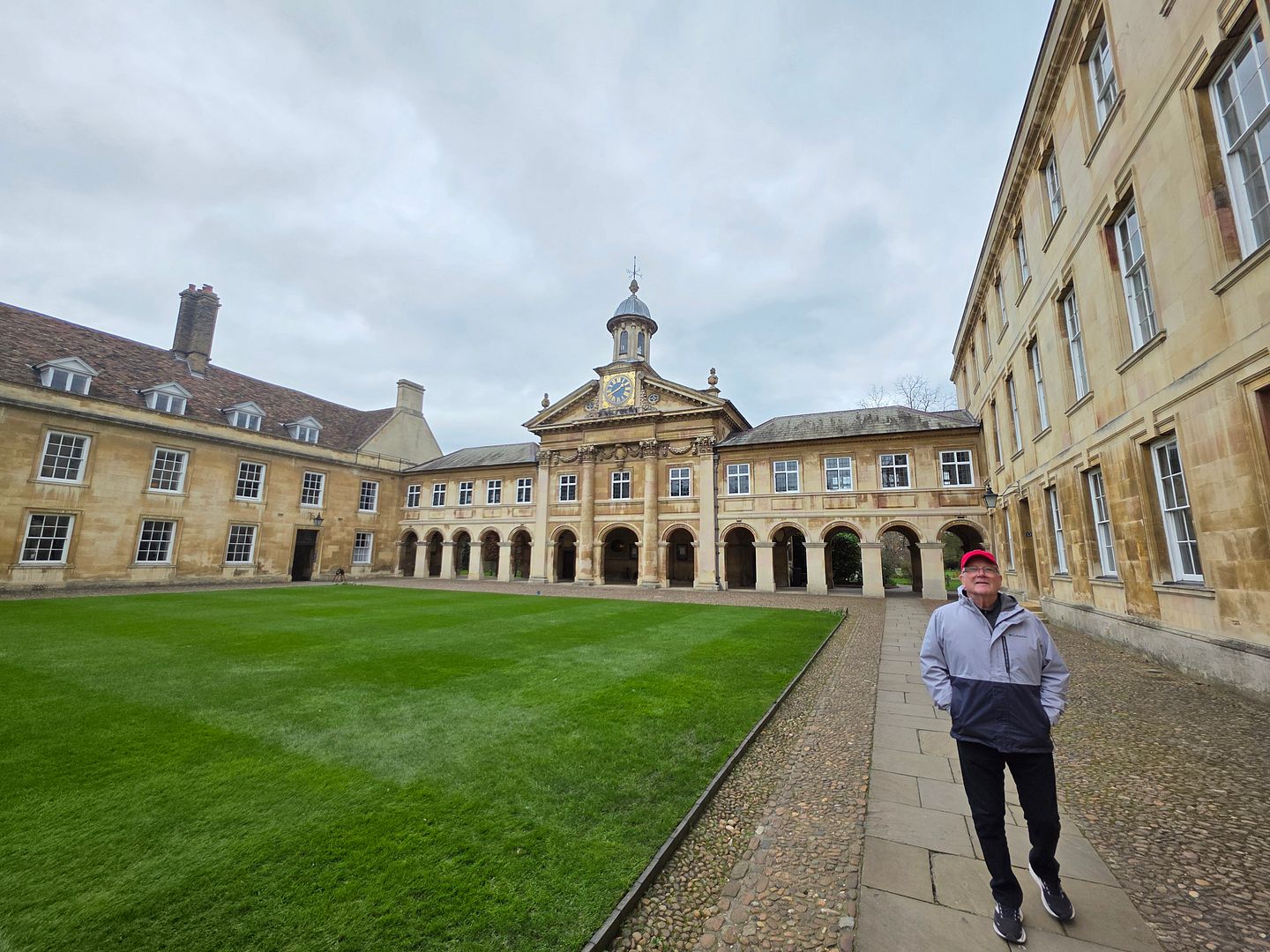
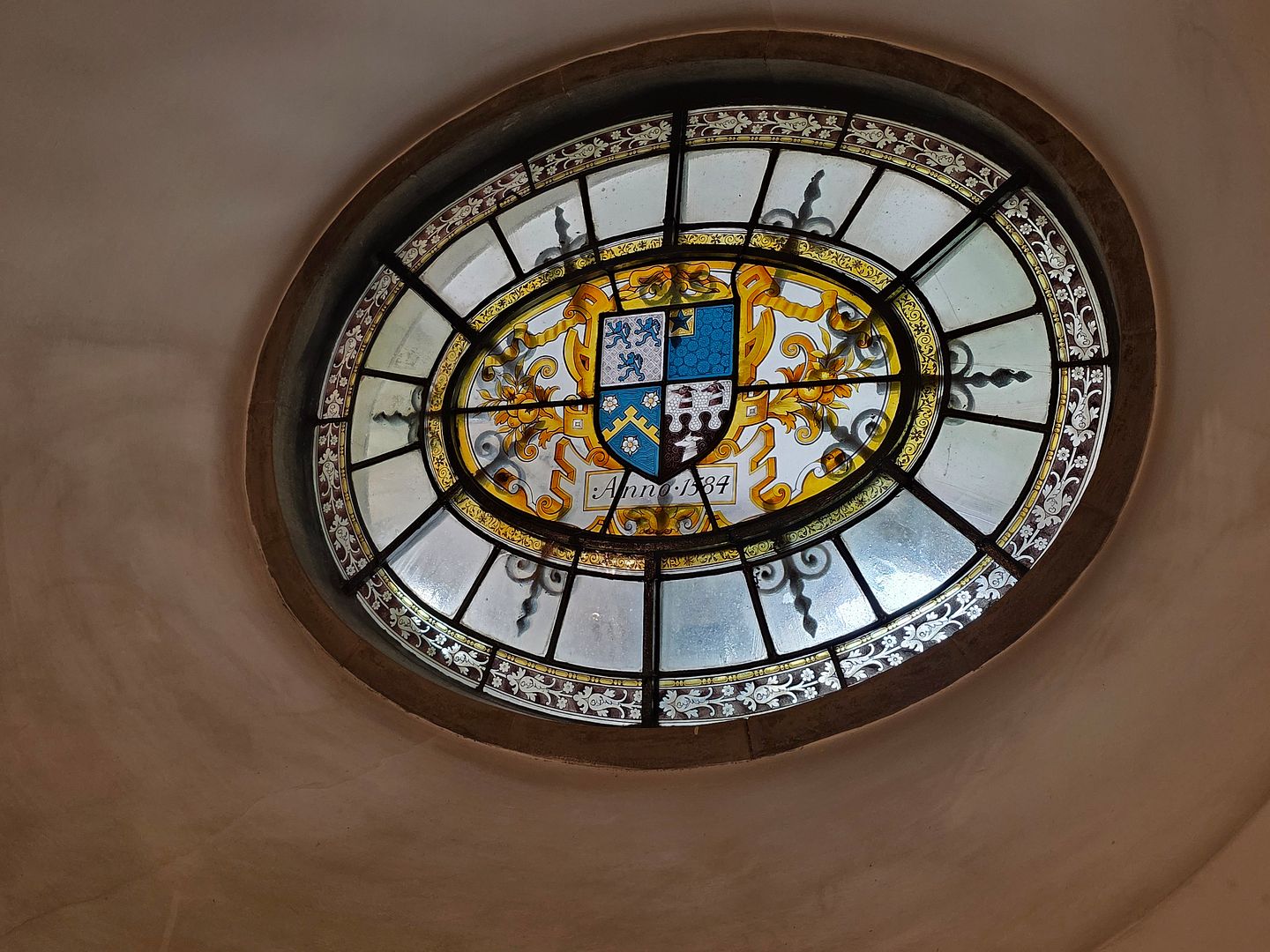
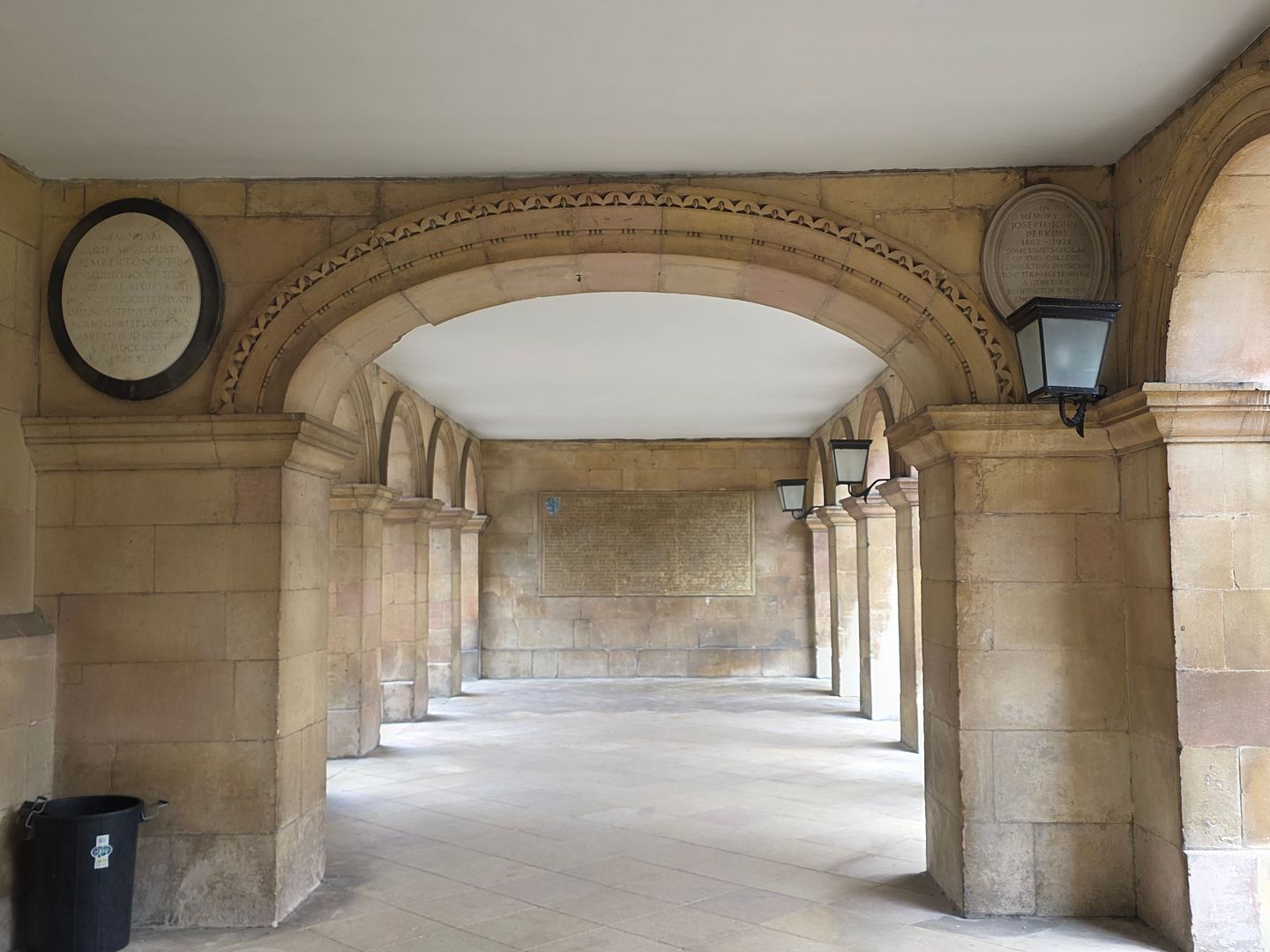
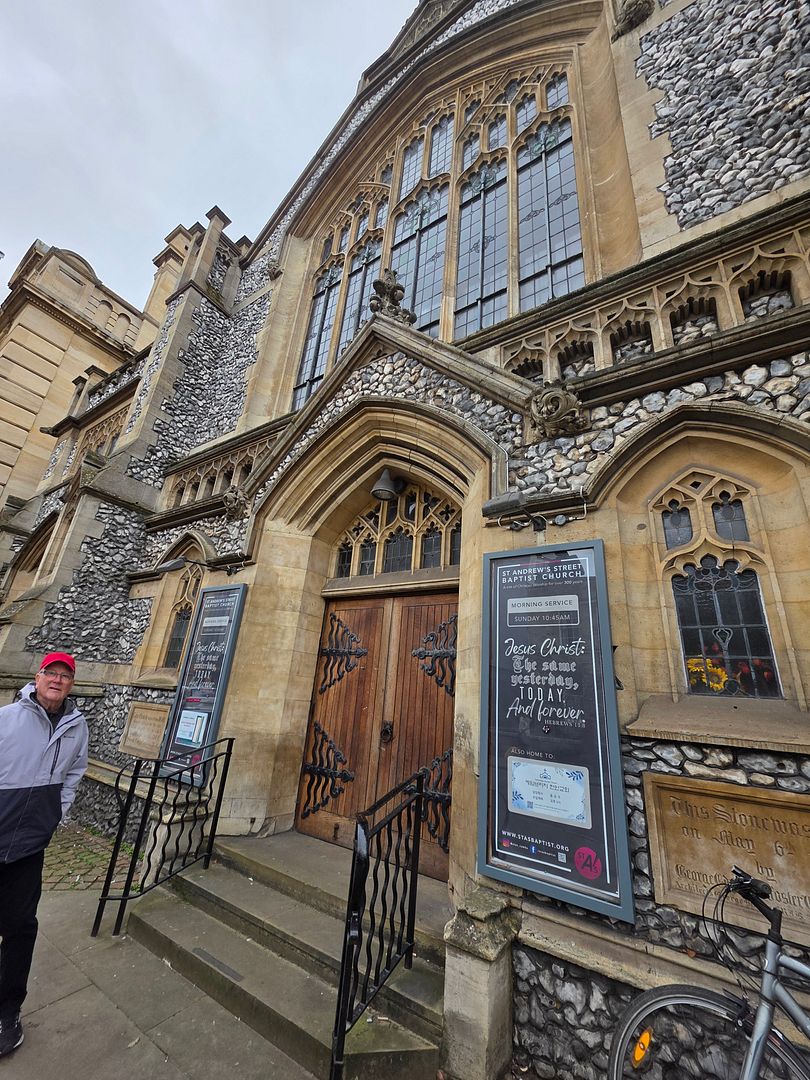
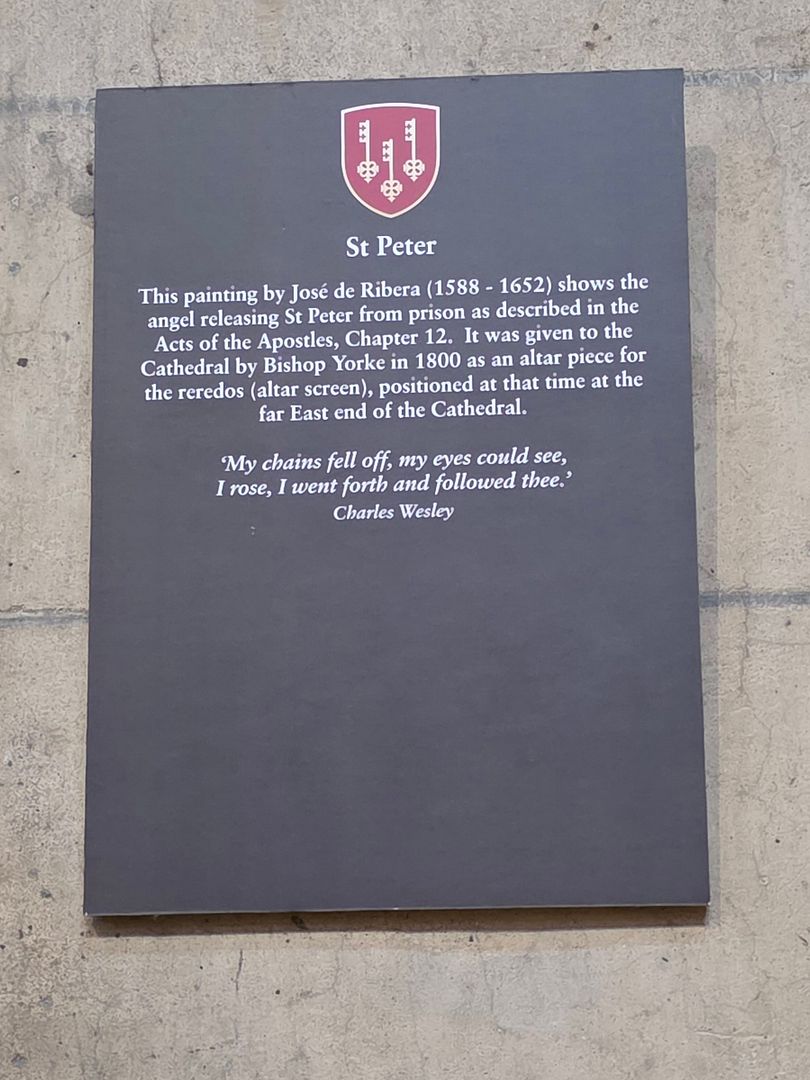
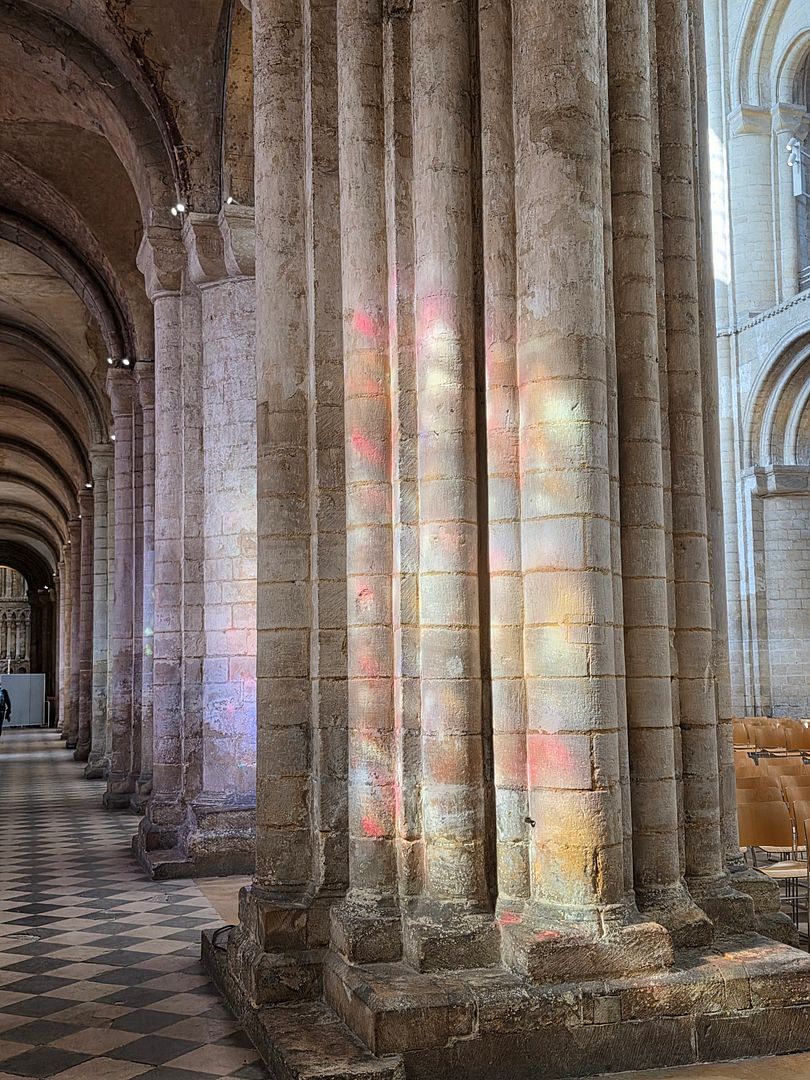
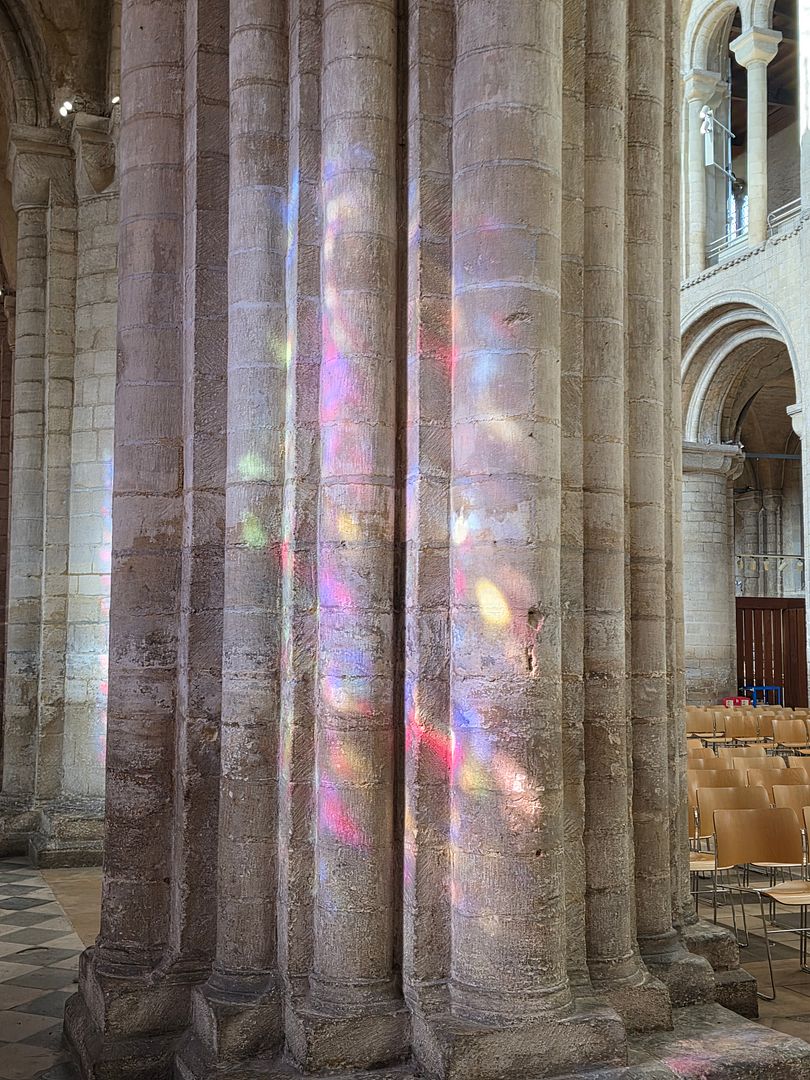
Cambridge Dinner and Evensong

Another journal entry for our time in Cambridge in March of 2026. This one will be for the evenings of March 11th and a back track to the evening of March 10th.

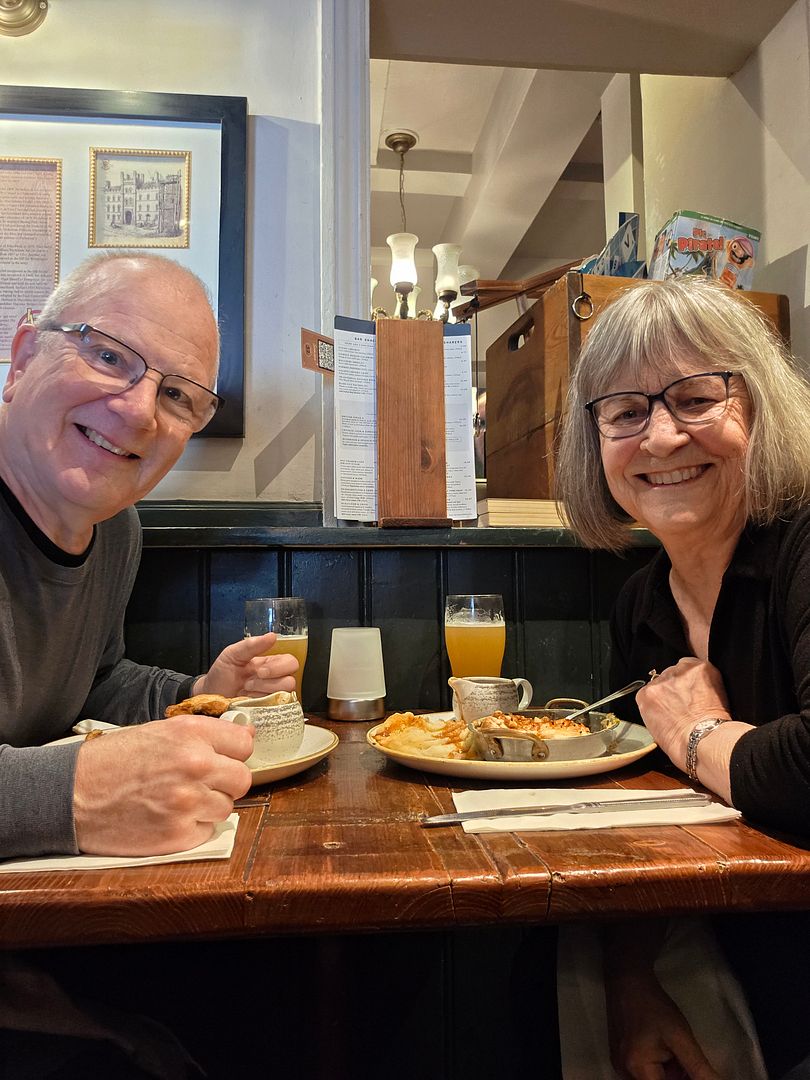
After our train ride back from Ely we hailed a taxi to drive us back to our lodgings. We freshened up and relaxed for a while but soon determined we were hungry and set out to find the likely spot for dinner.
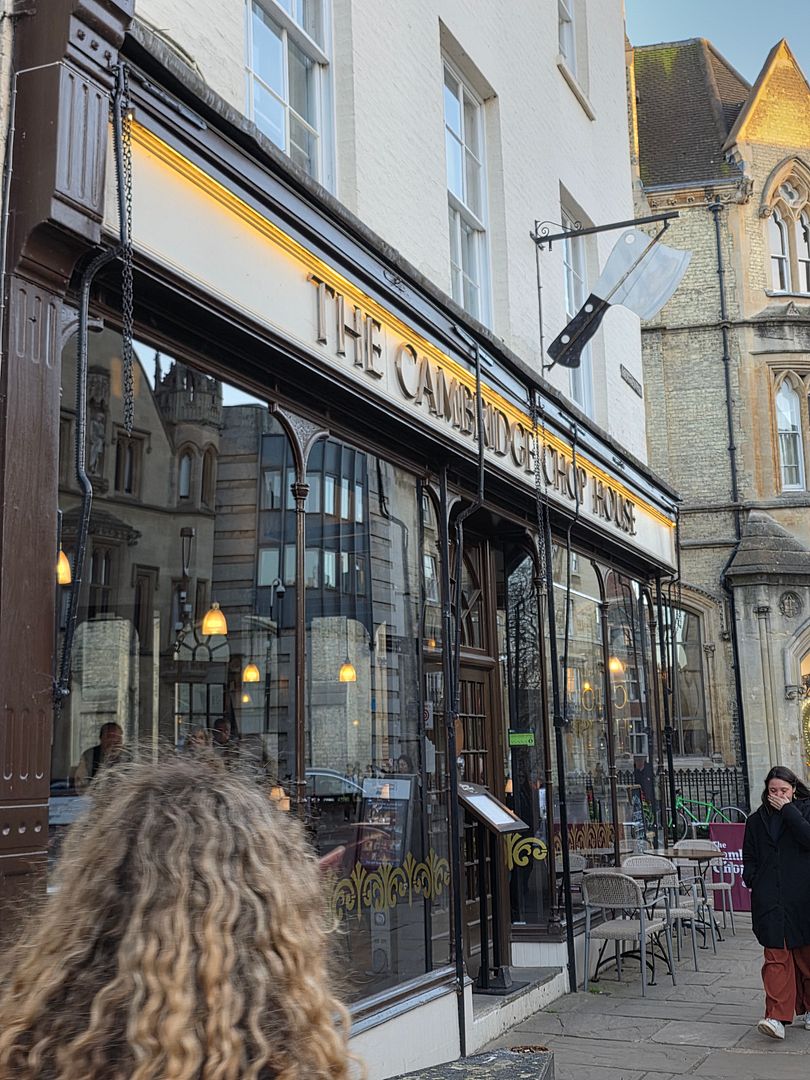
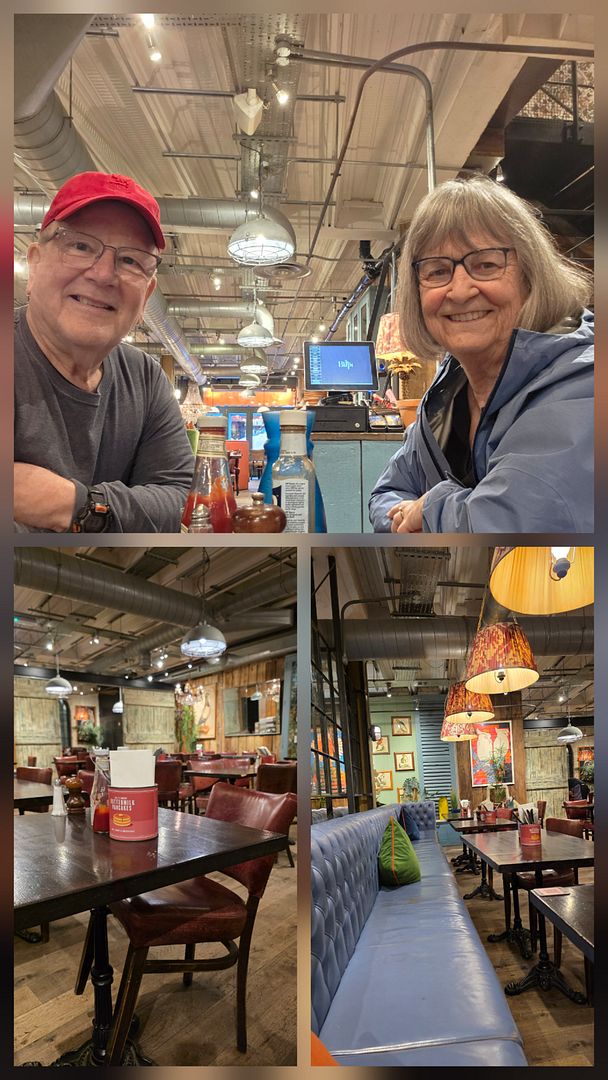
The Cambridge Chop House looked good and we managed to get seated without a reservation.
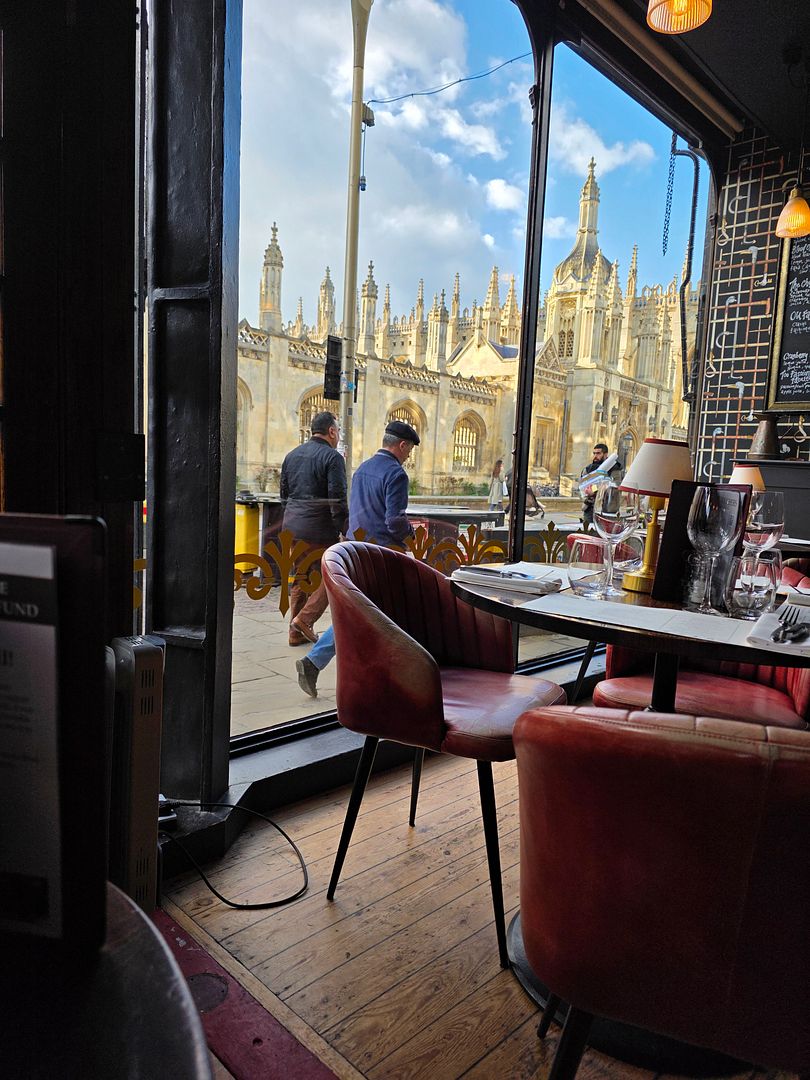
The views of King’s College were a nice added treat.
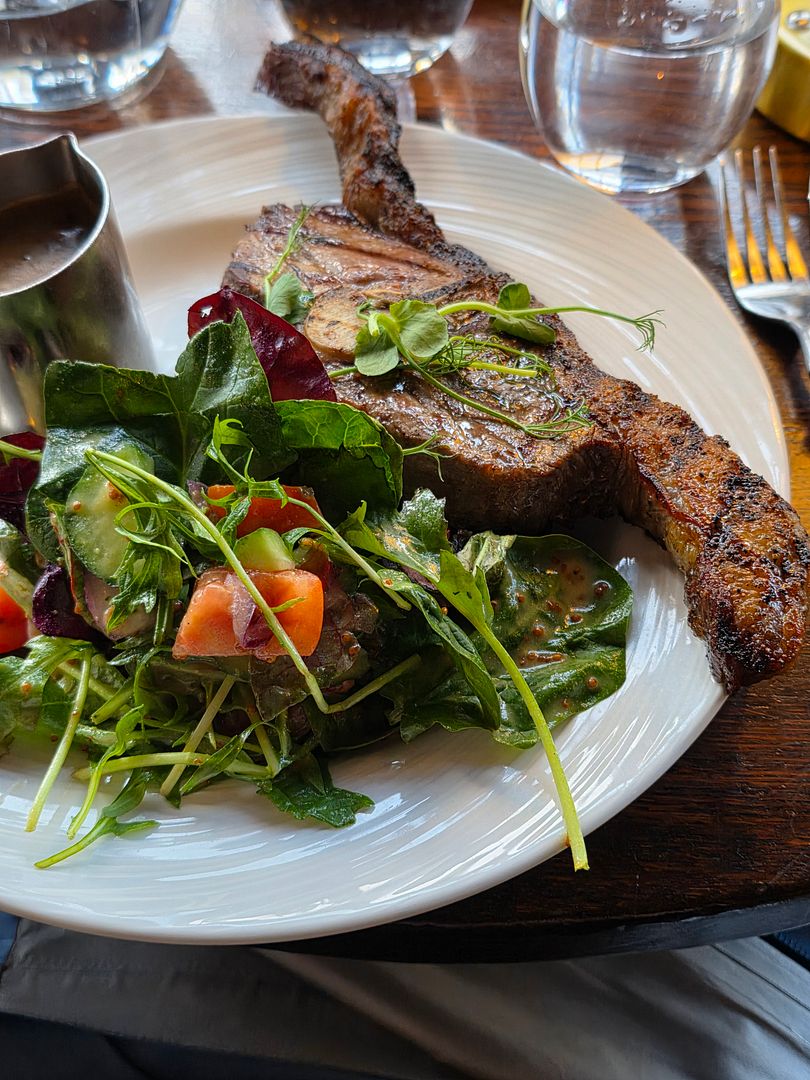
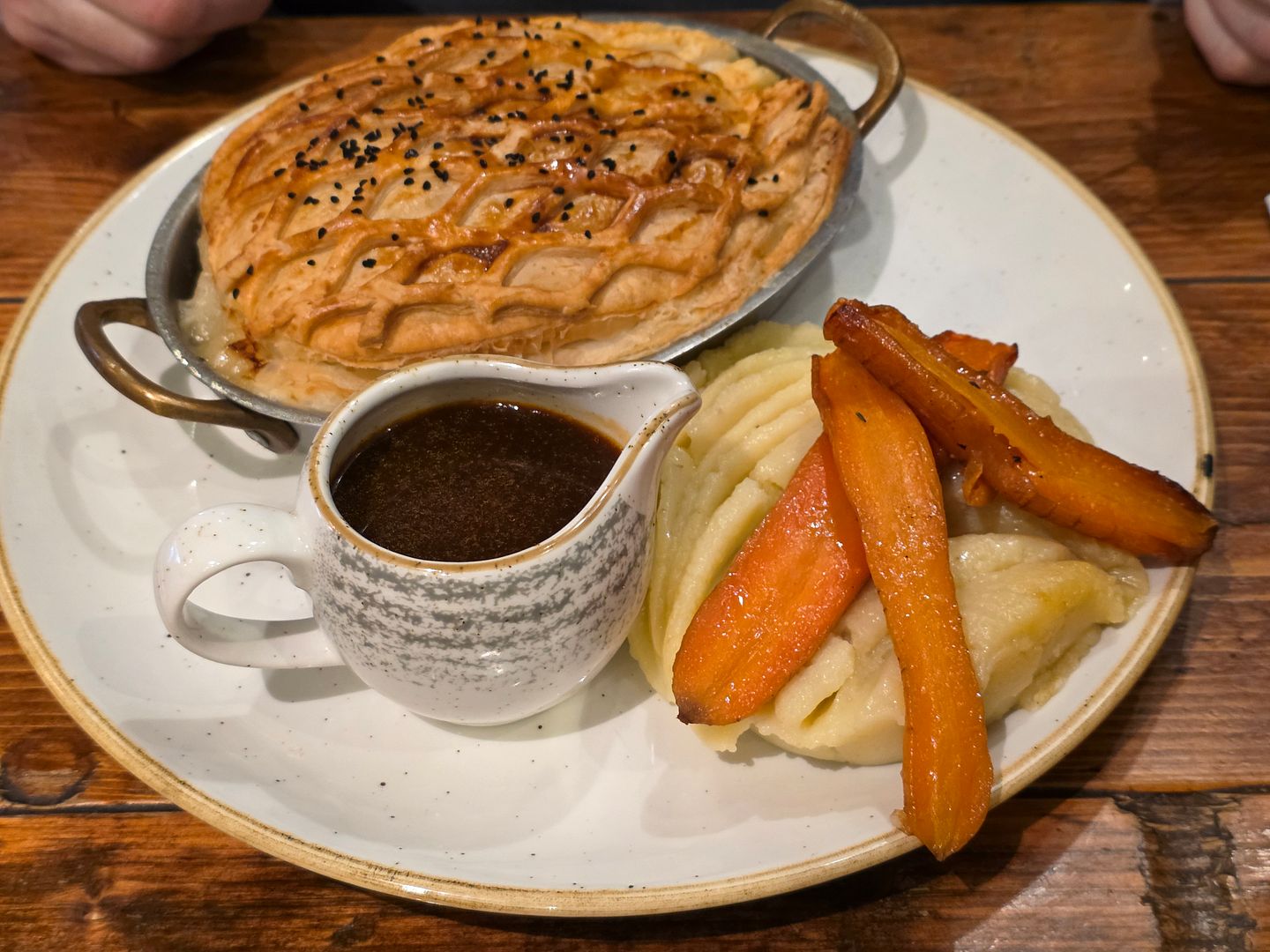
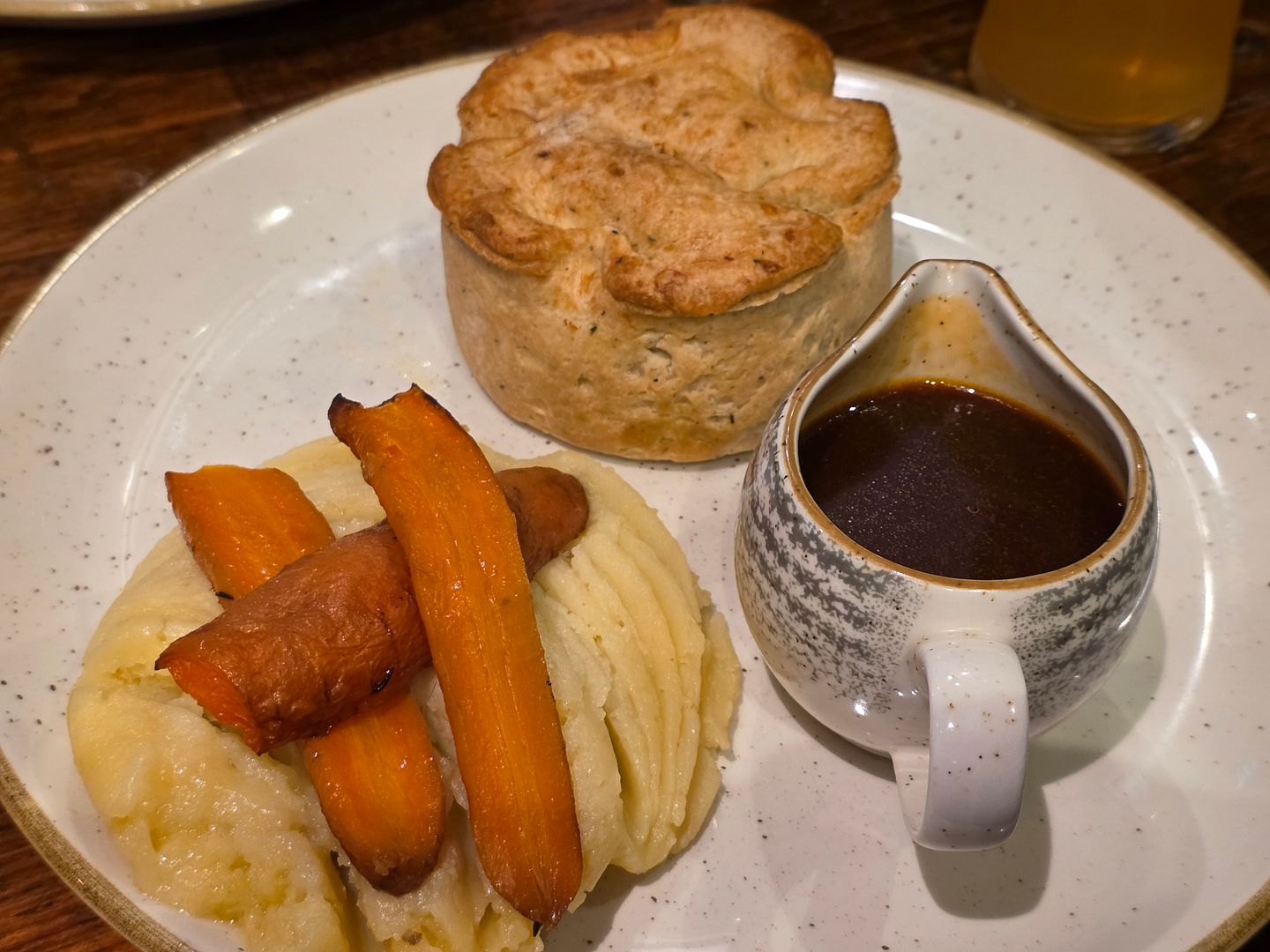
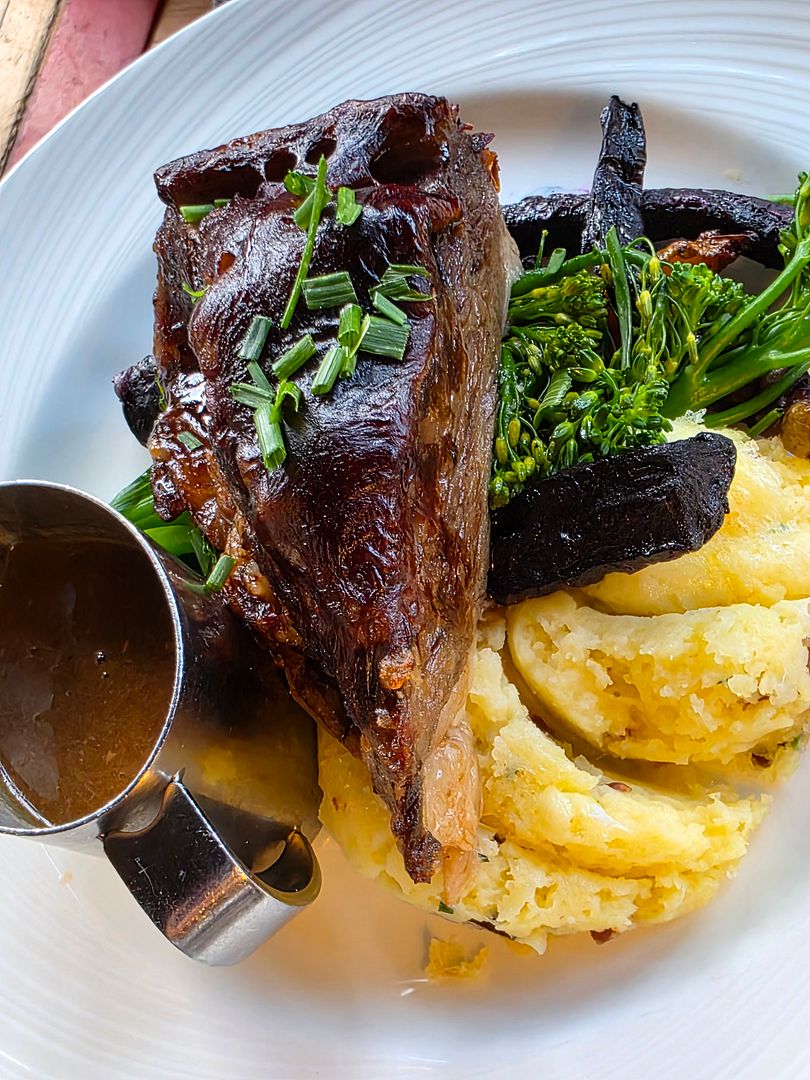
A lamb chop for me and short ribs for Greg.
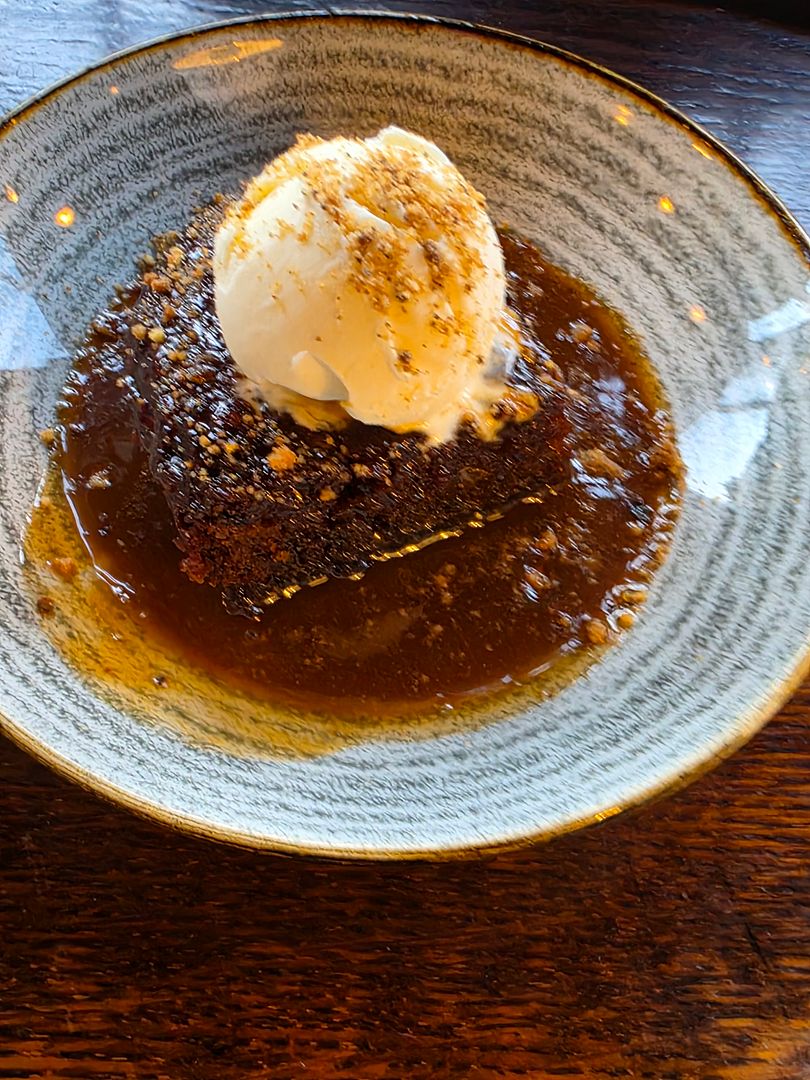
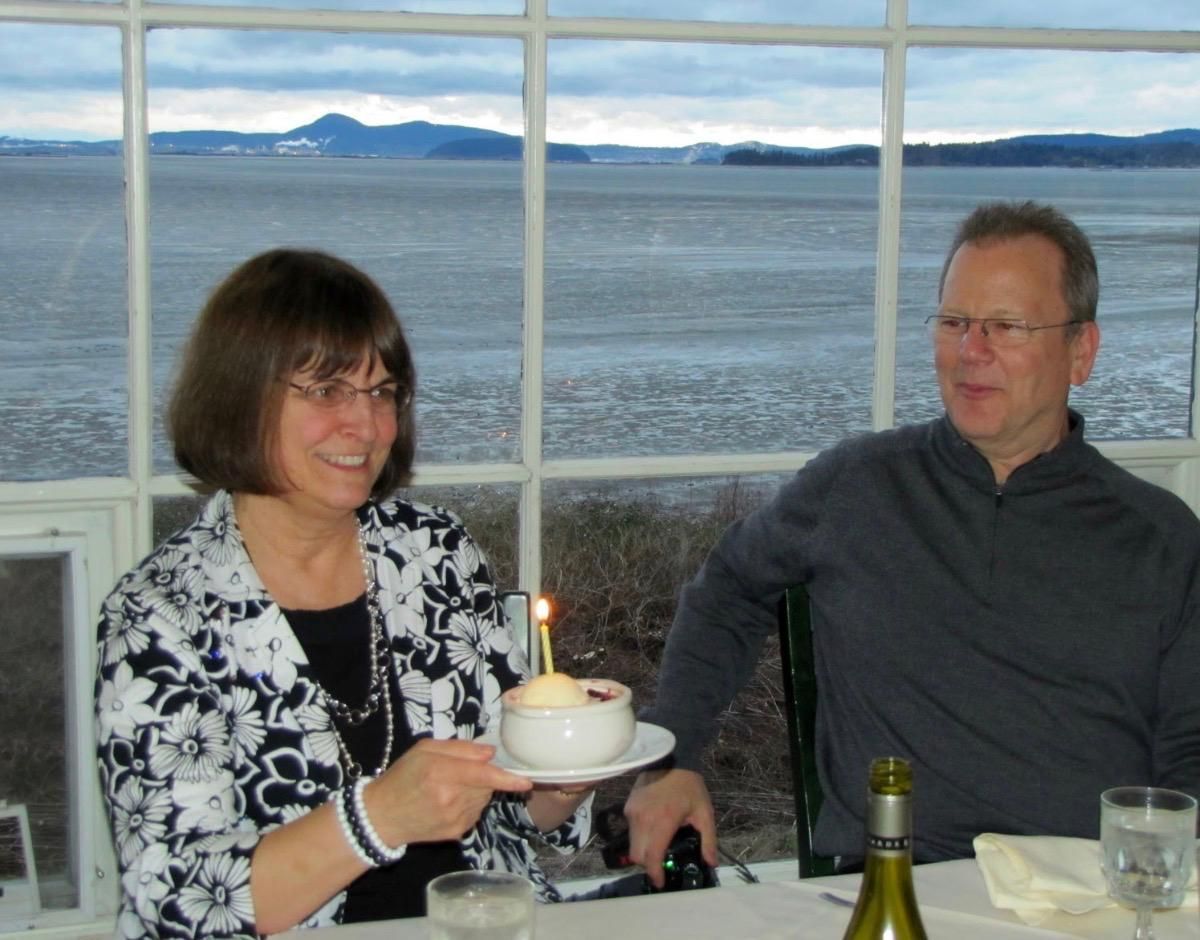
We shared sticky toffee pudding for dessert. This was a top notch and very satisfying meal.

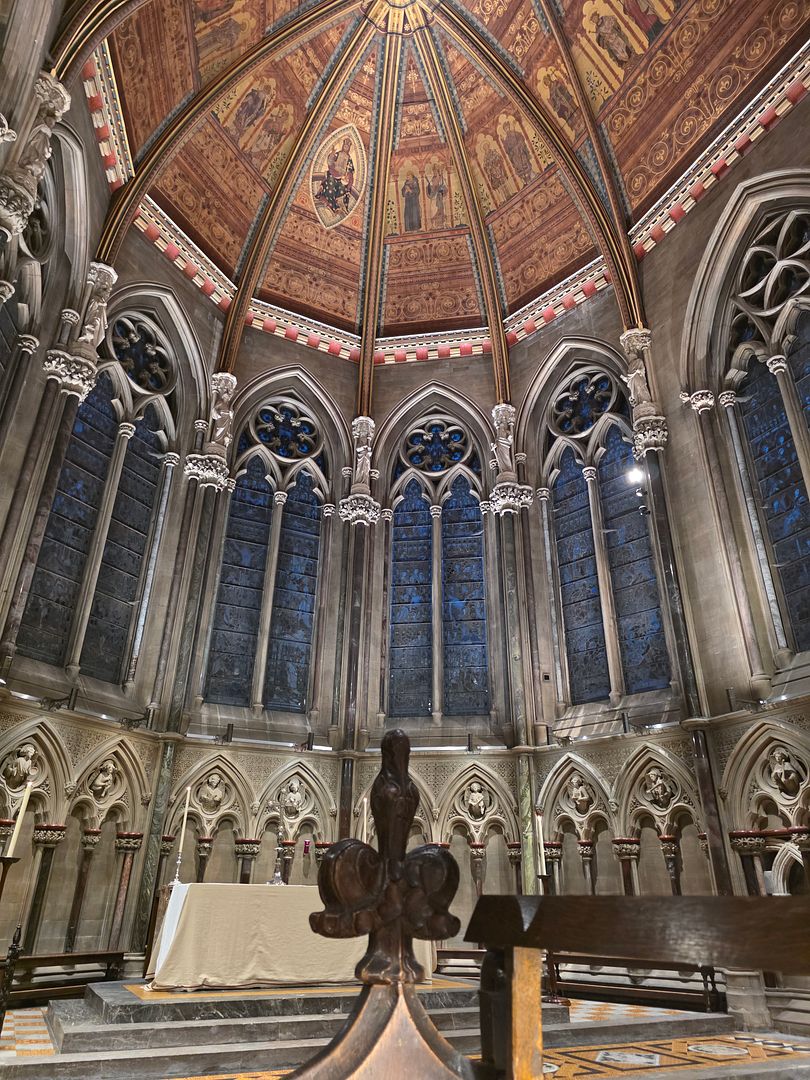
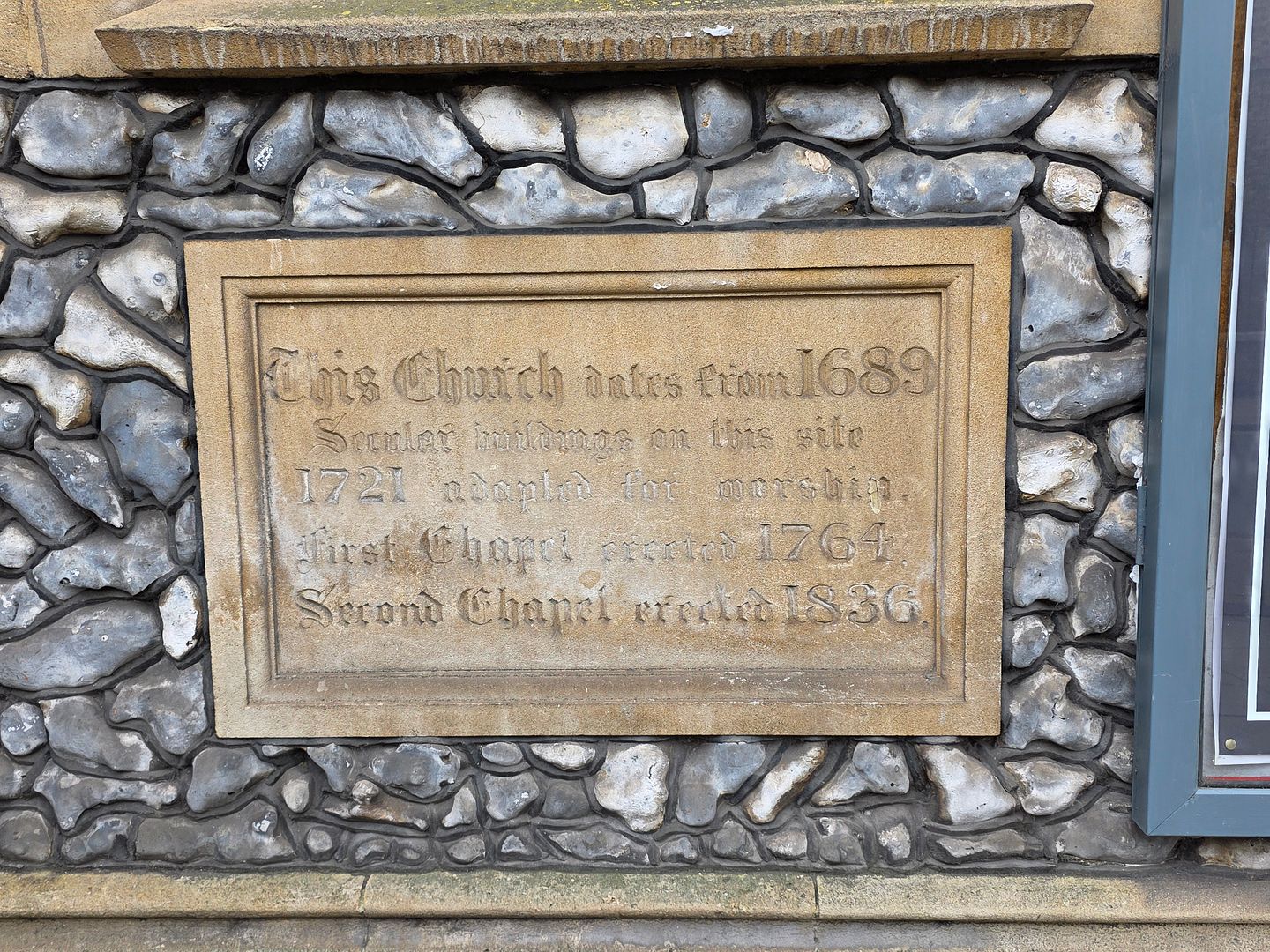
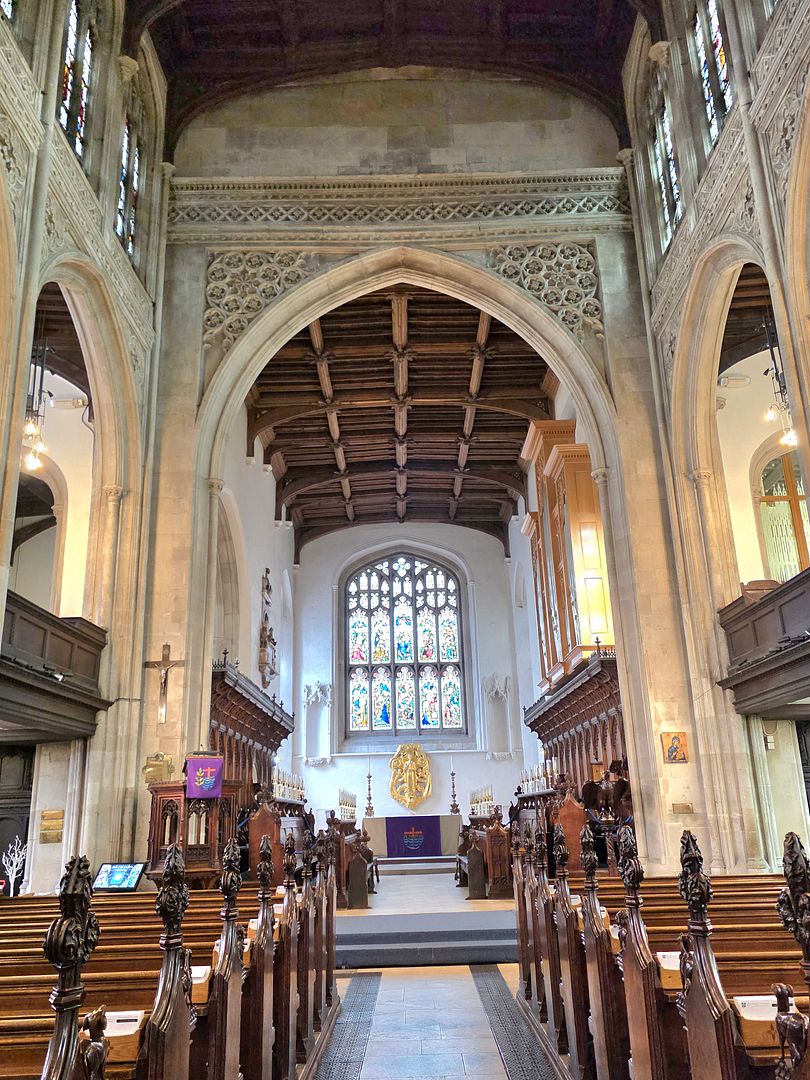
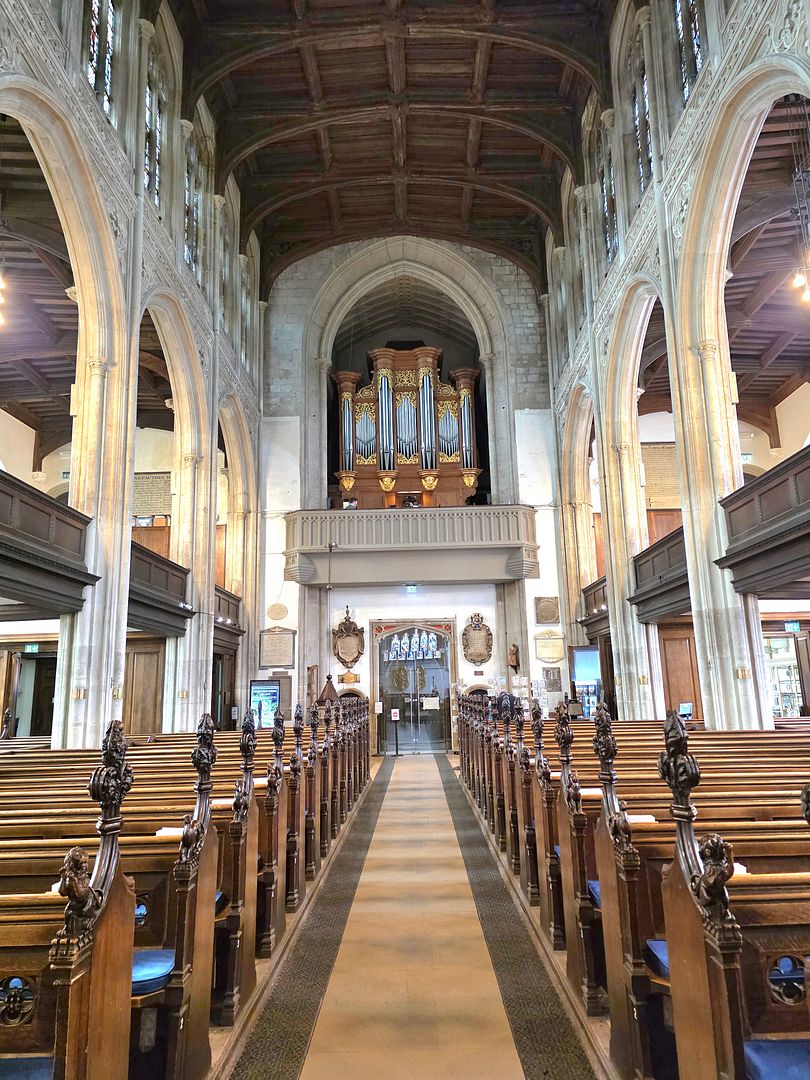
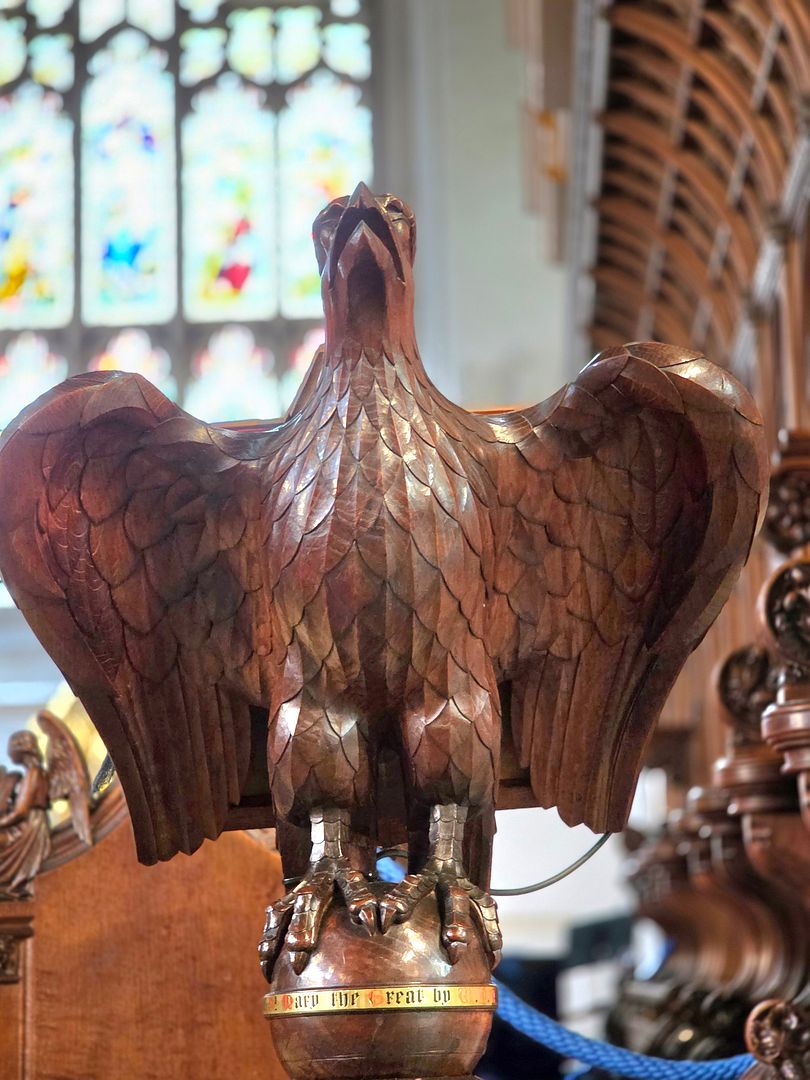
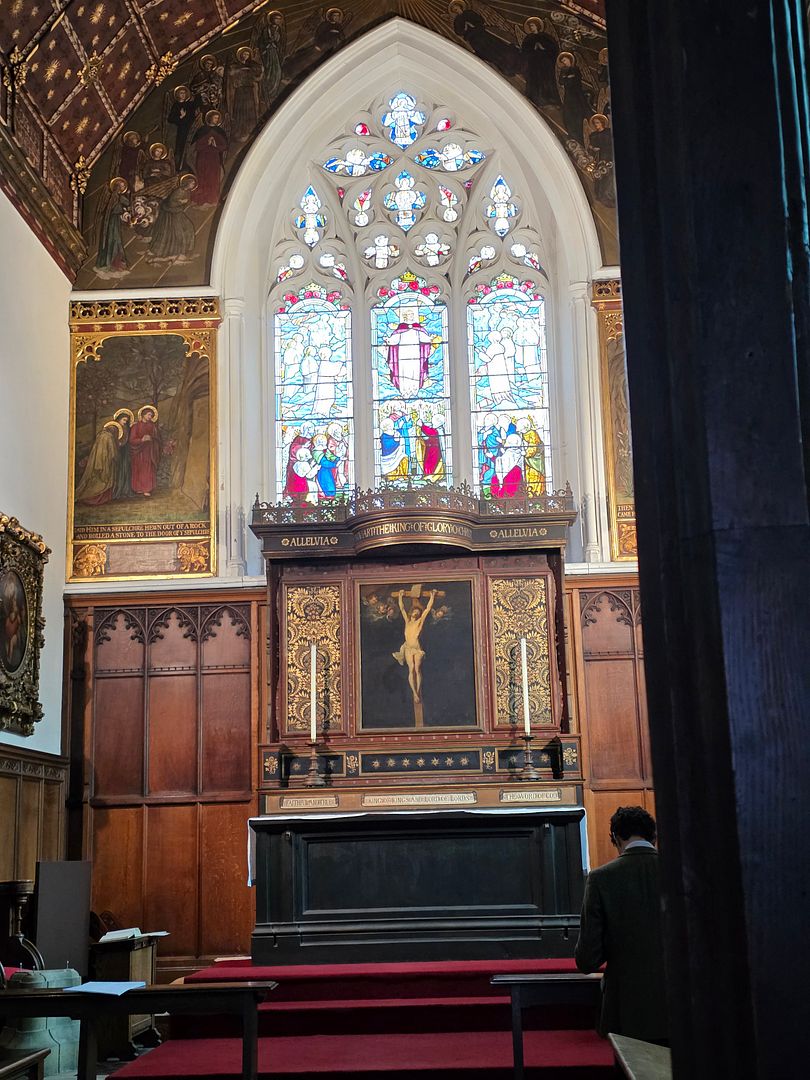
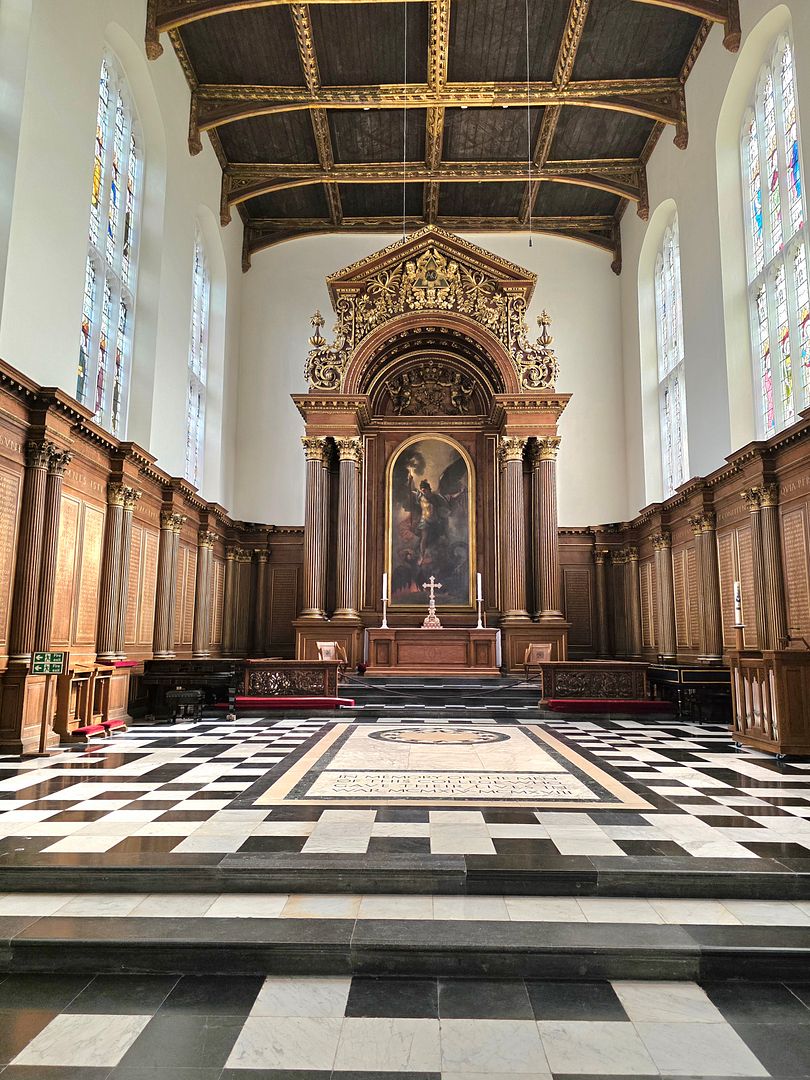
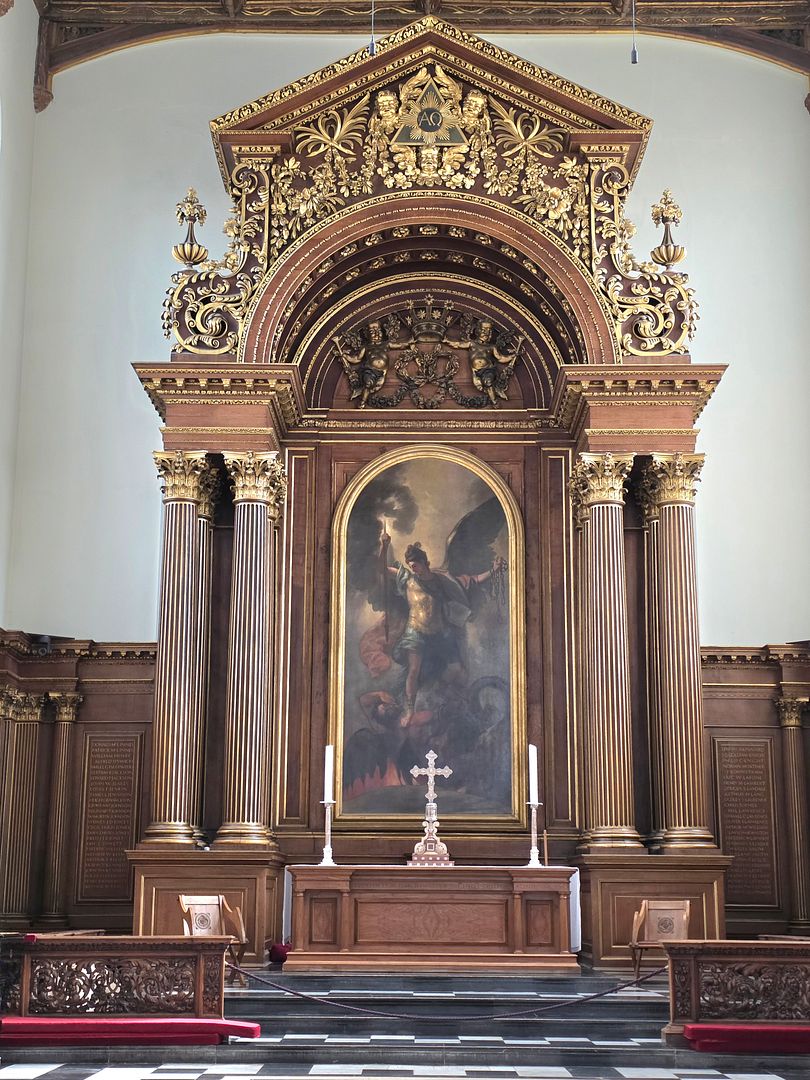
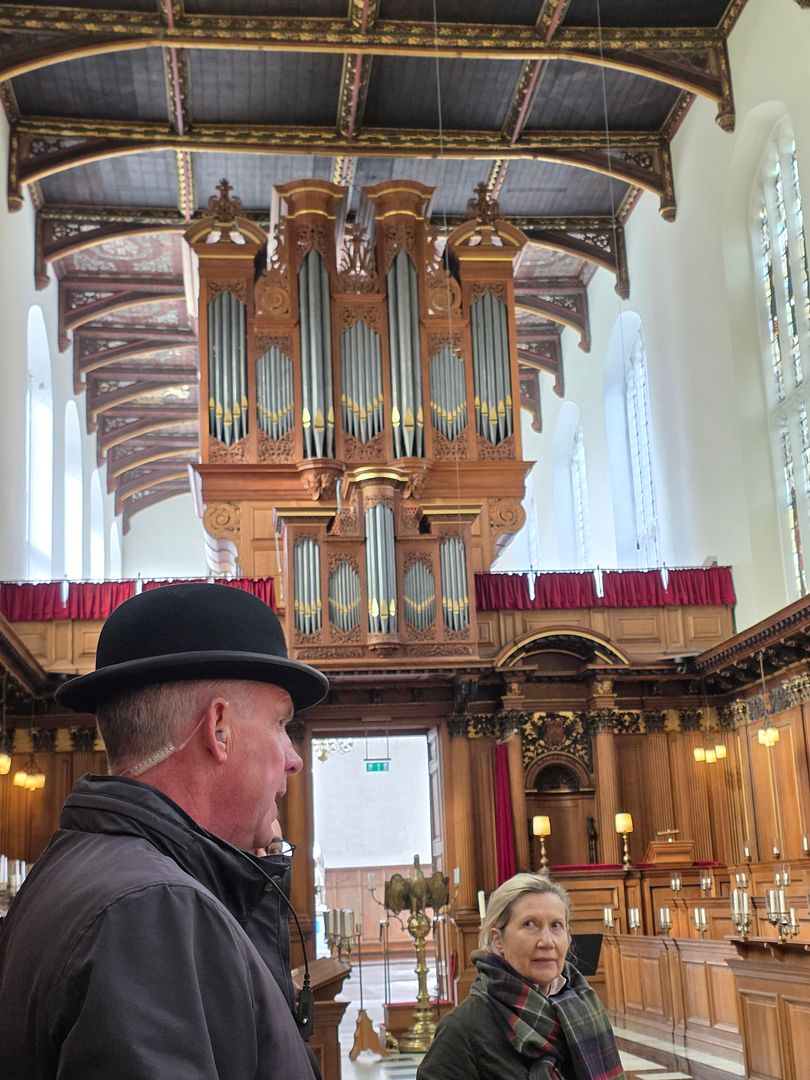
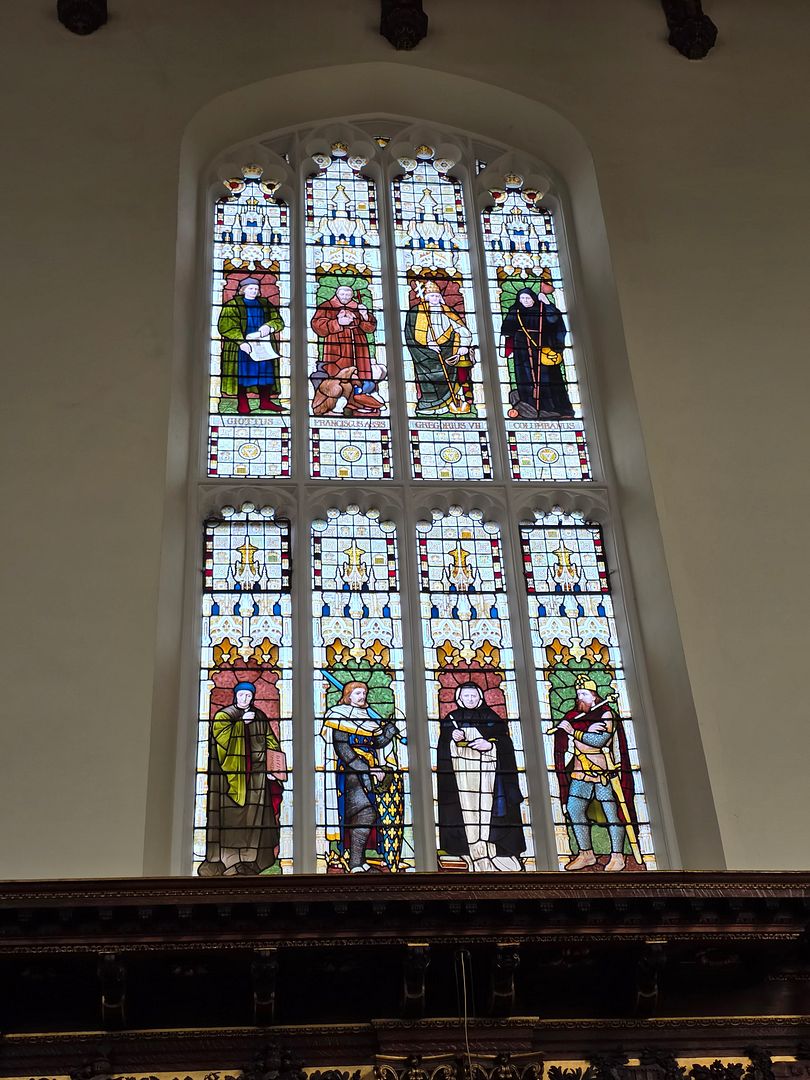
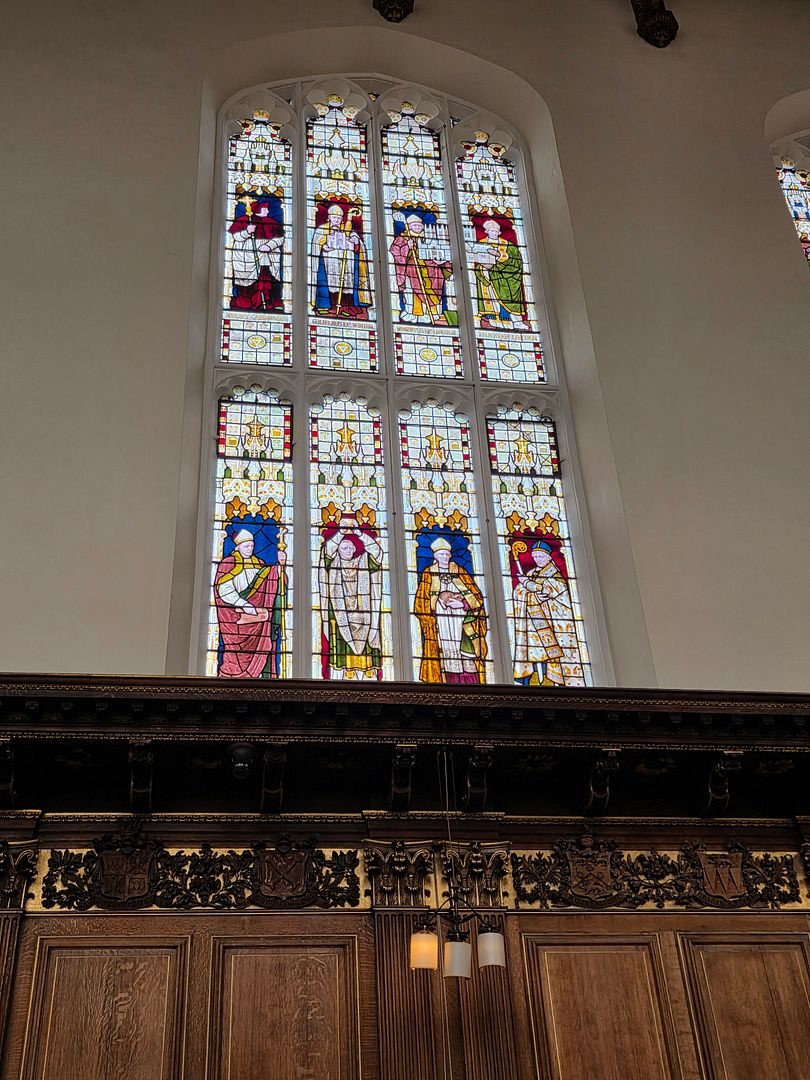
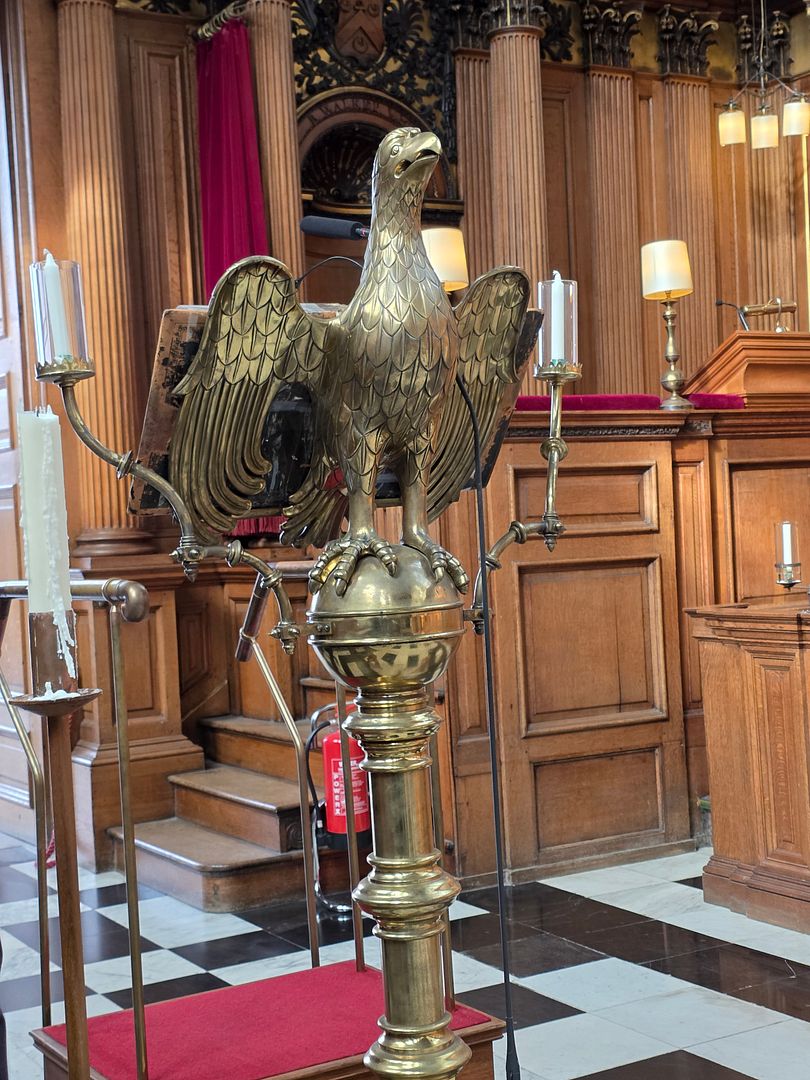
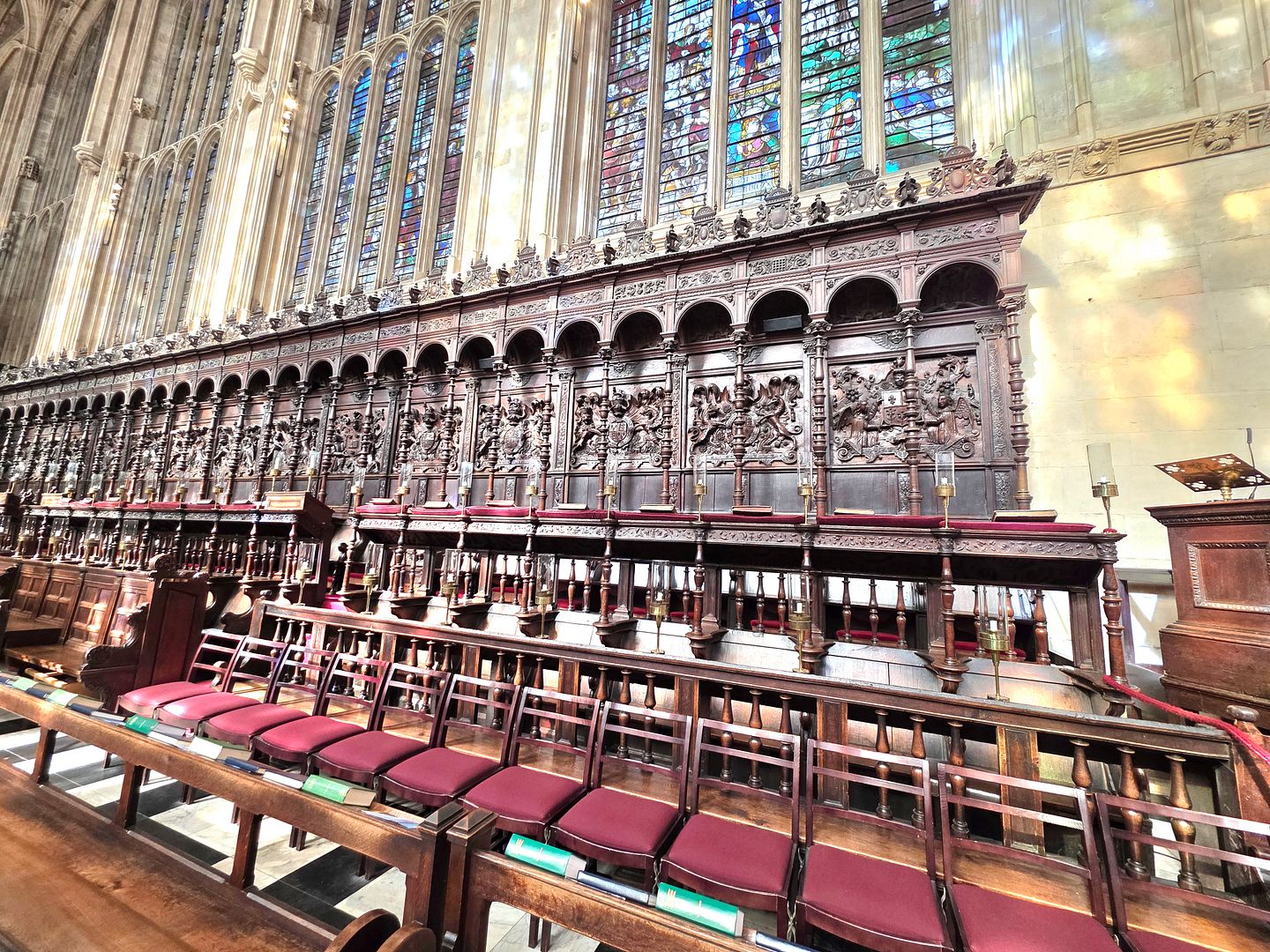
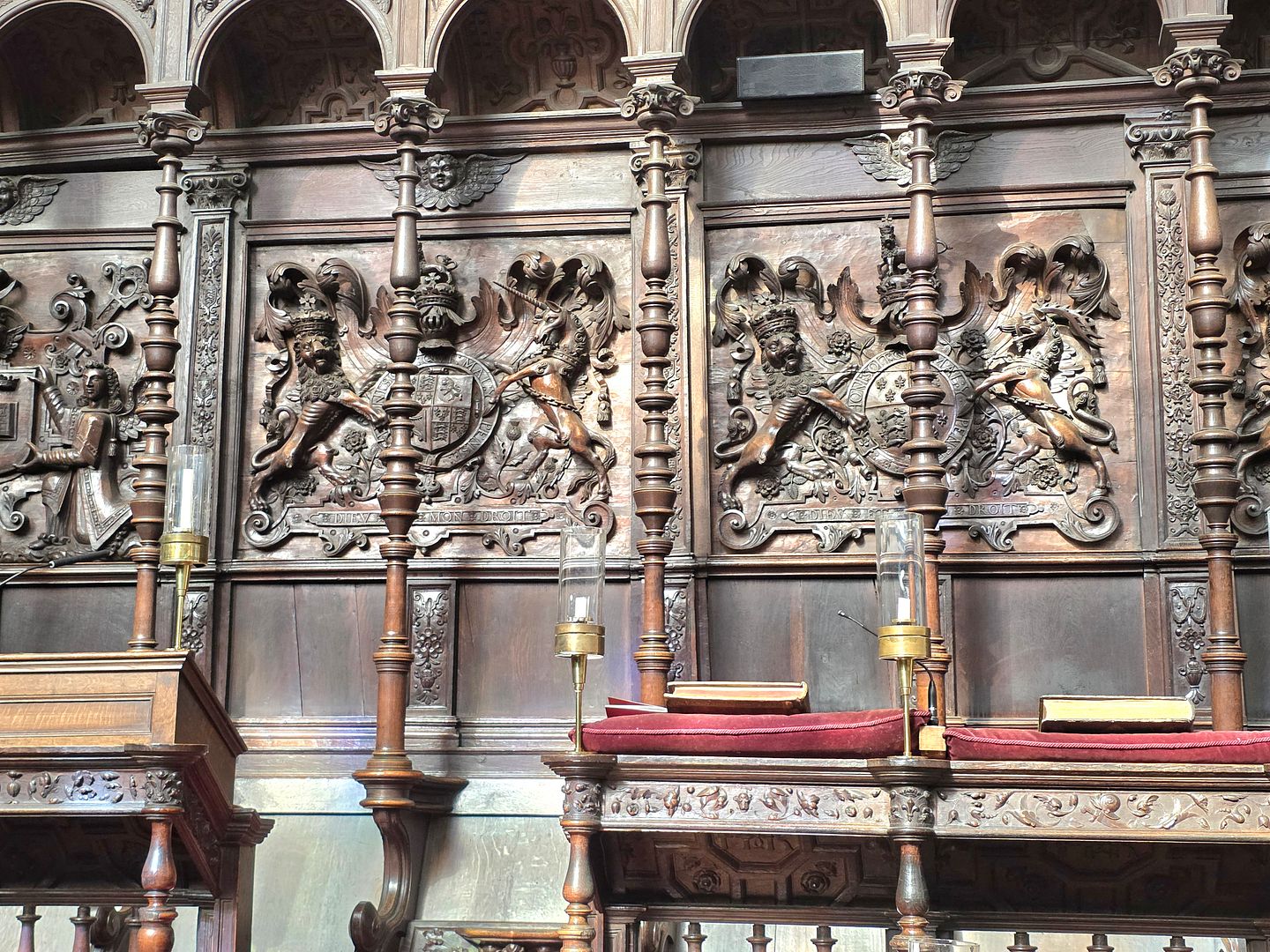
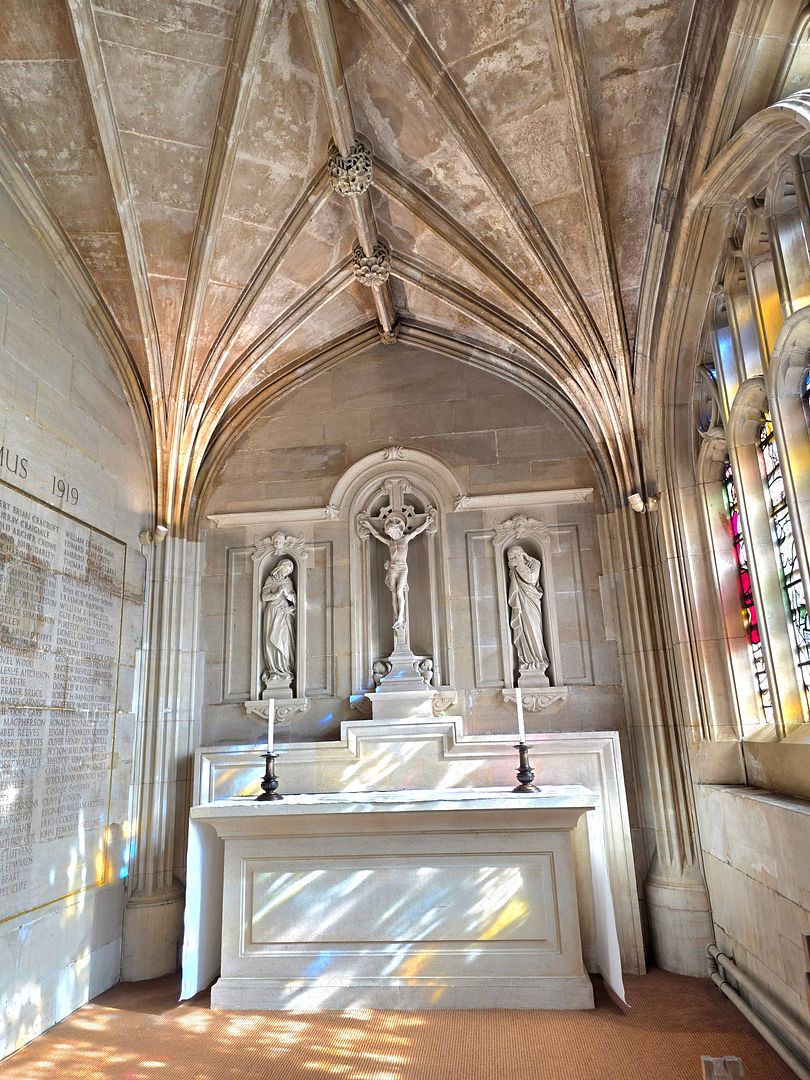
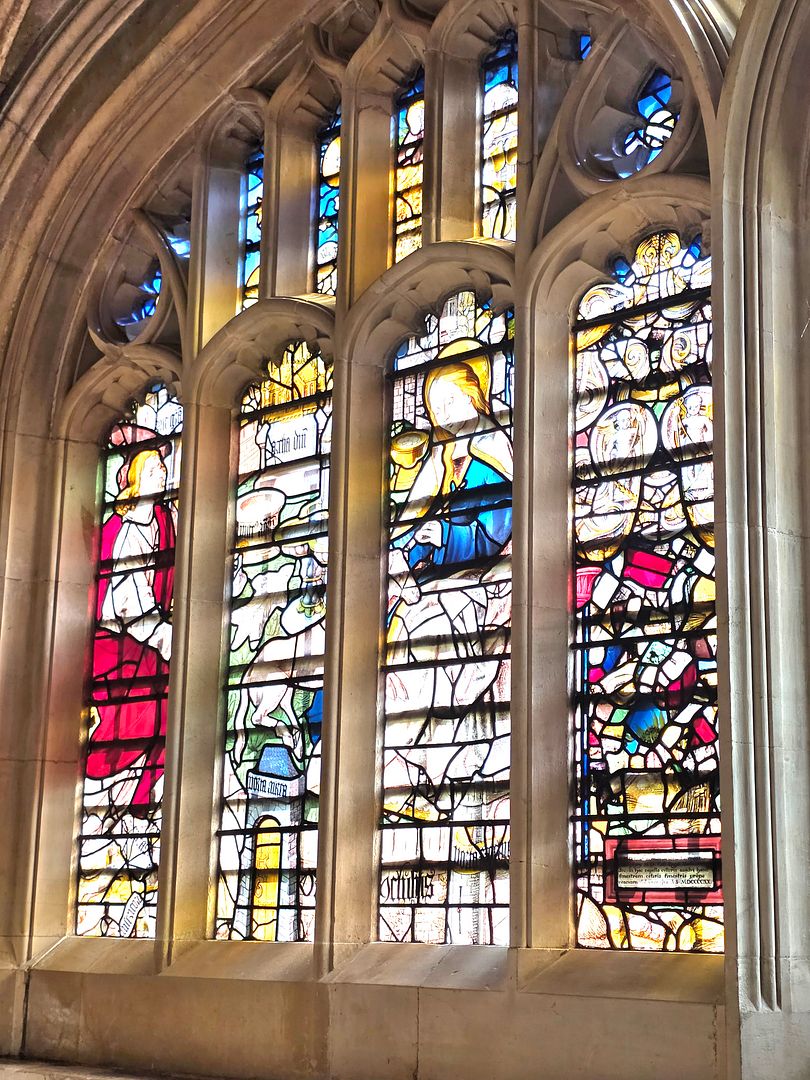
It slipped my journal posting radar about our Tuesday evening March 10th Evensong at St. John’s College. St. John’s College was closed to visitors the whole time we were in Cambridge but they did have Evensong that the public could enjoy. We were so happy to be able to attend it in the college chapel and get a little view into some of the architecture and history.
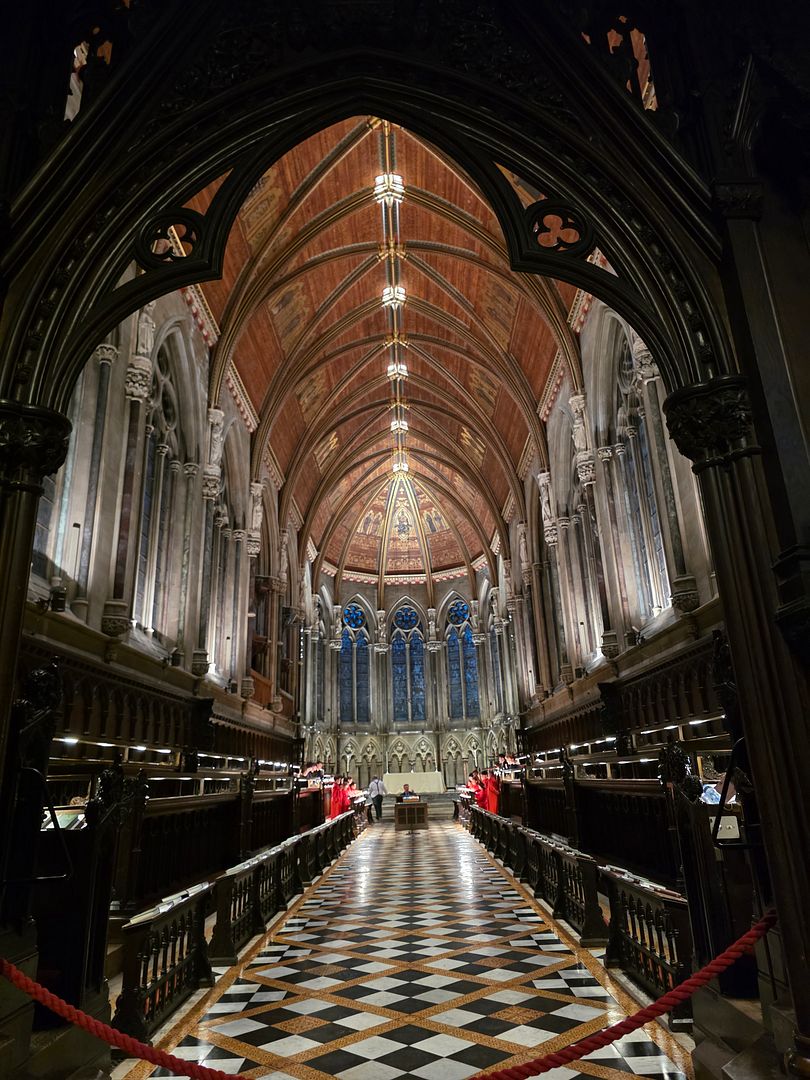
Evensong is a musical form of evening prayer, most familiar in the Anglican and Episcopal traditions. It’s typically held in cathedrals, collegiate chapels, and parish churches, often at the close of the day. Unlike many other church services, much of Evensong is sung by a choir, accompanied by an organ, with the congregation usually participating through silent reflection or by joining in a few responses and hymns. The primary purpose of Evensong is to offer thanks for the day that is past, to seek spiritual peace for the evening ahead, and to provide attendees with a space for contemplation through beautiful music and scripture. 

It has been a wonderful way for us to end a day of sightseeing in our travels to attend Evensong.
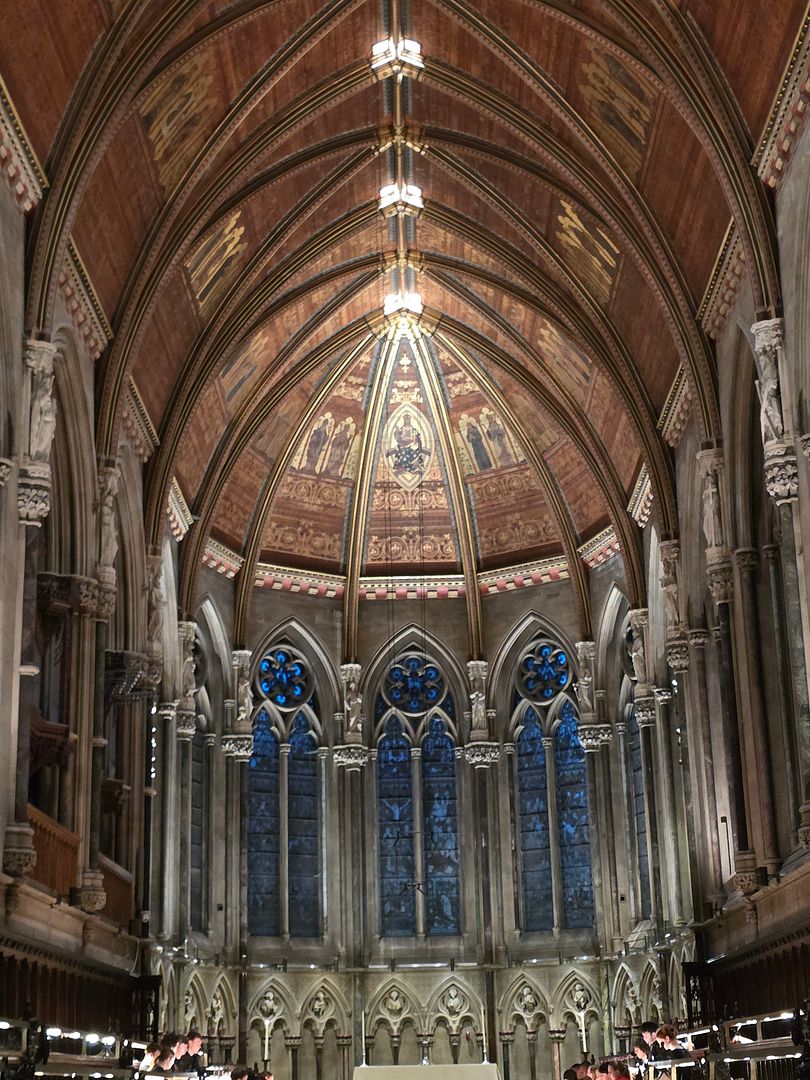
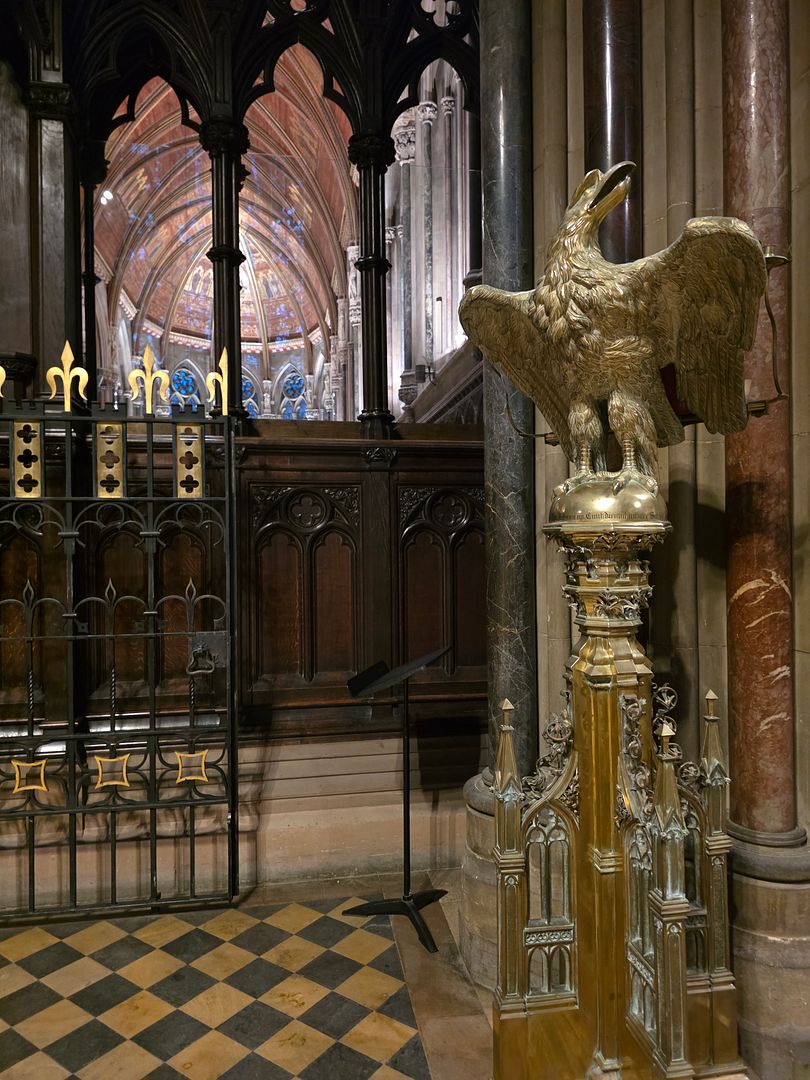
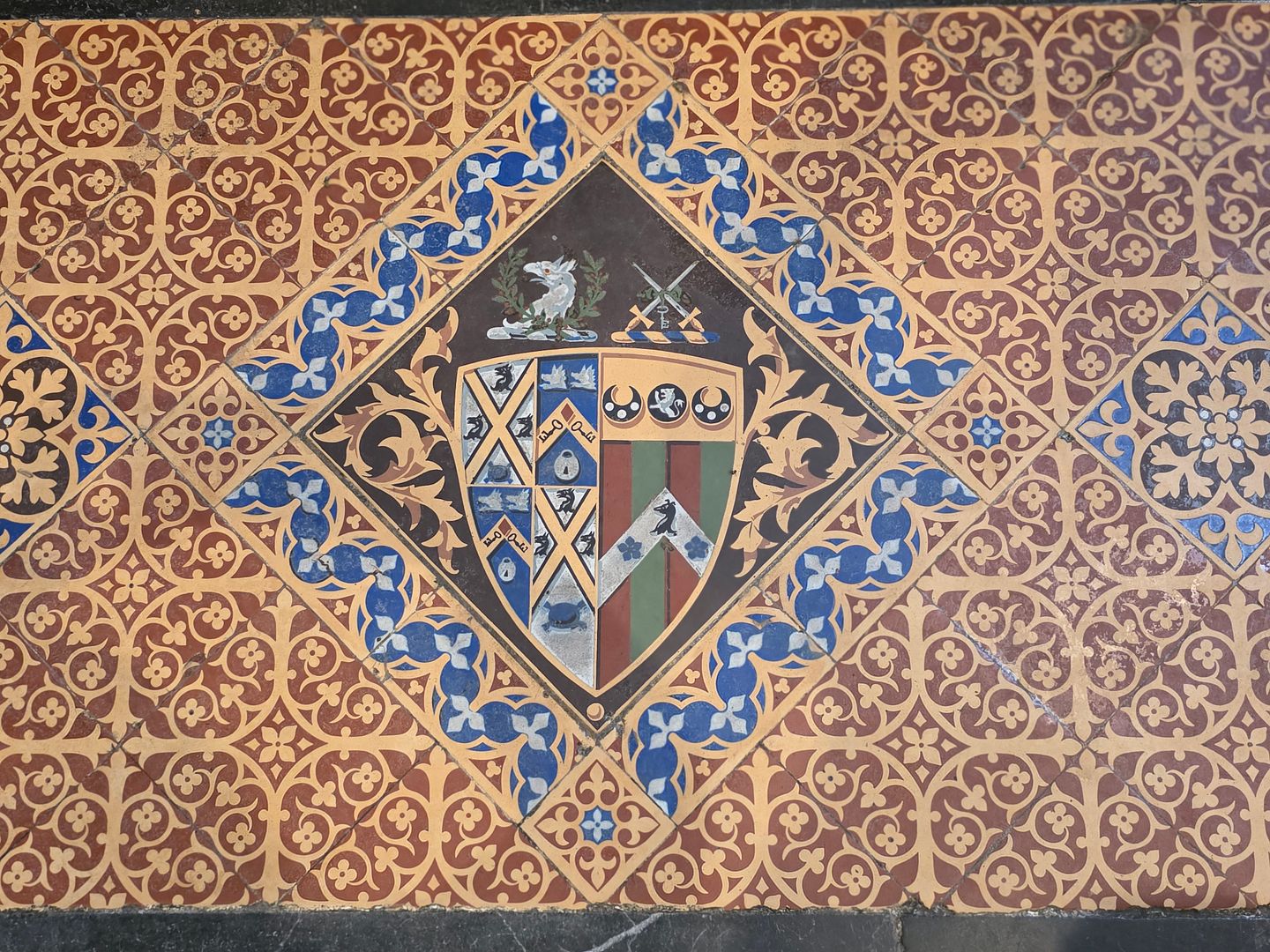
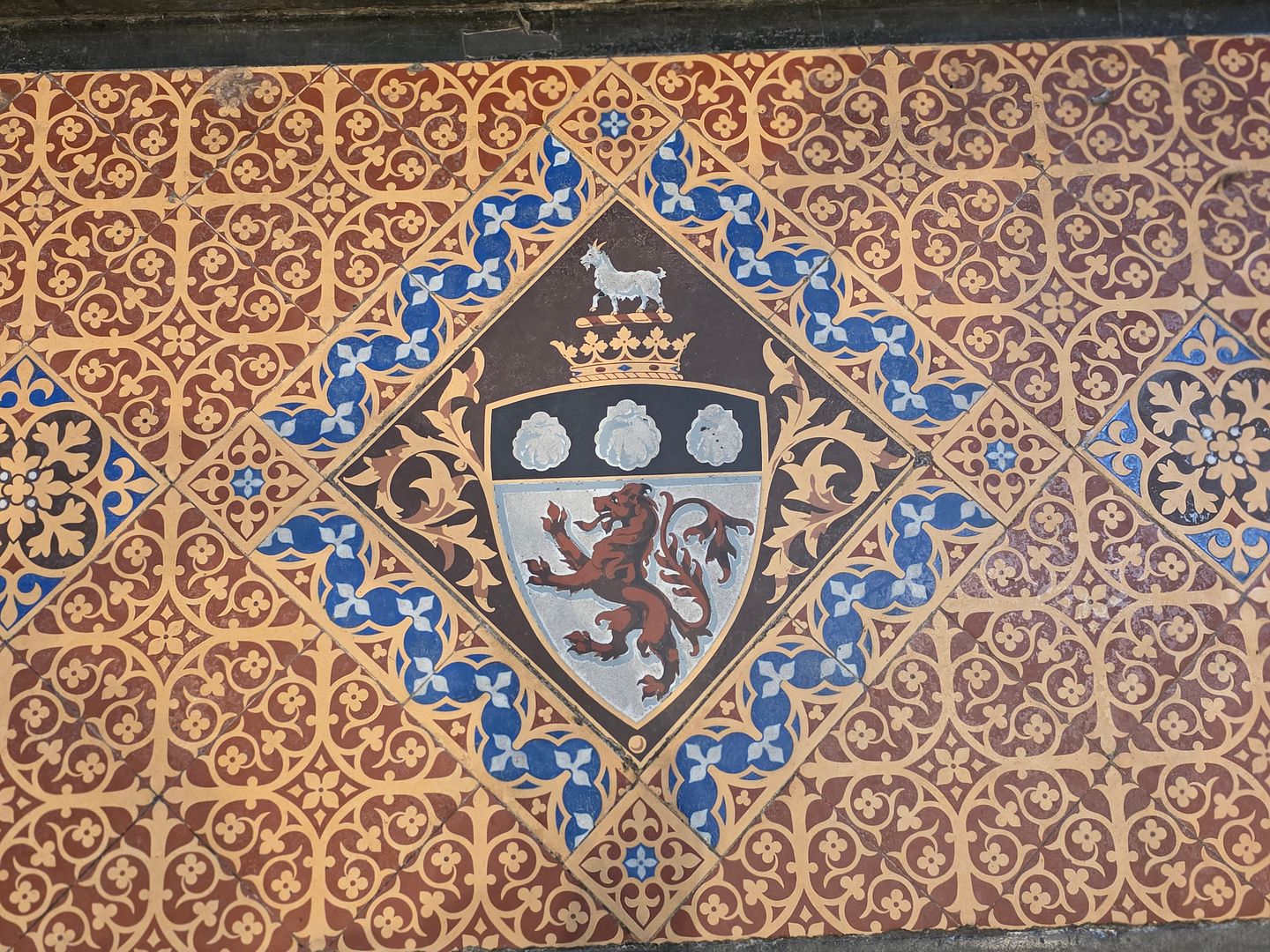
Where we were seated to enjoy Evensong I was able to see some of the floor tiles in the transept/crossing section of the chapel.
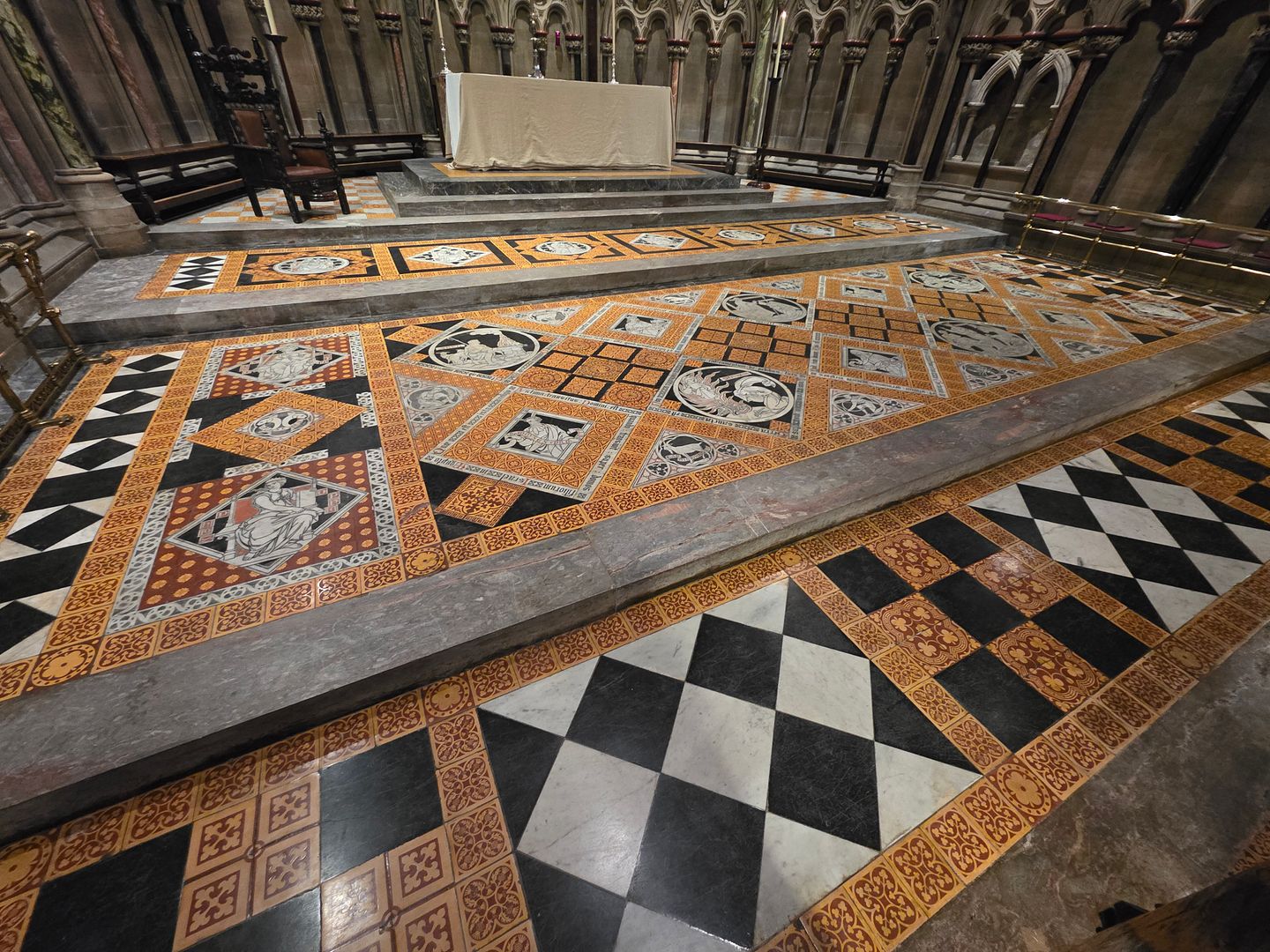
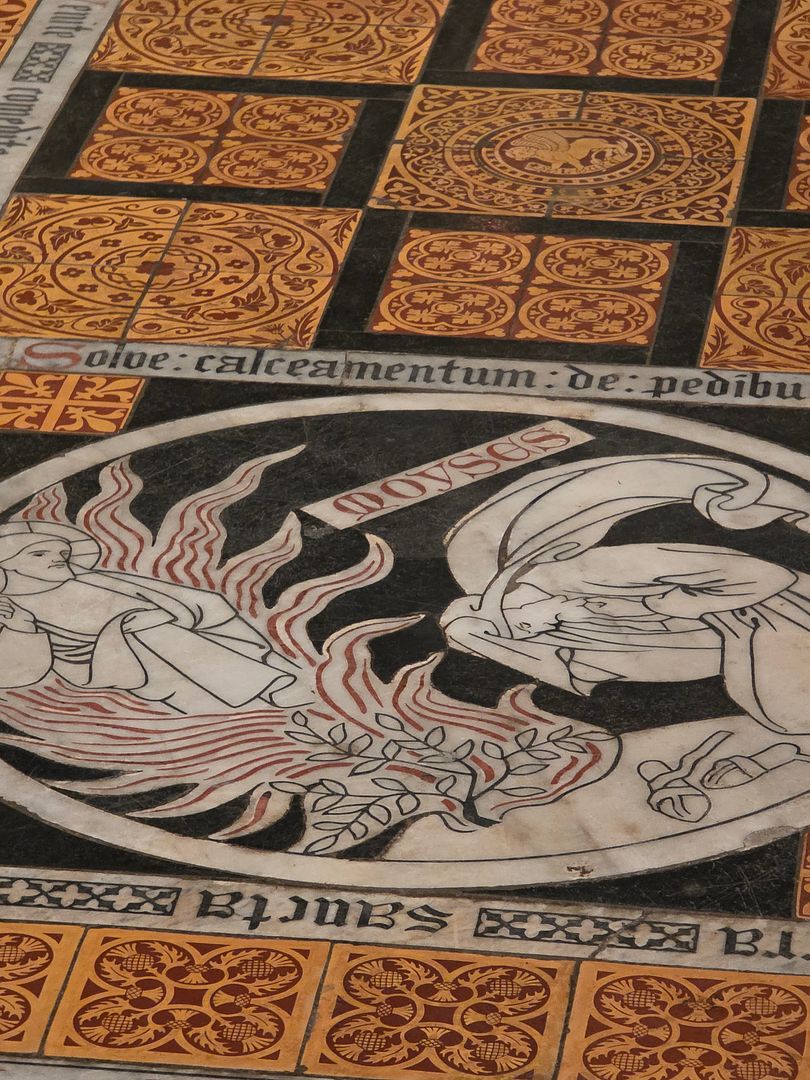
Moses and the burning bush.
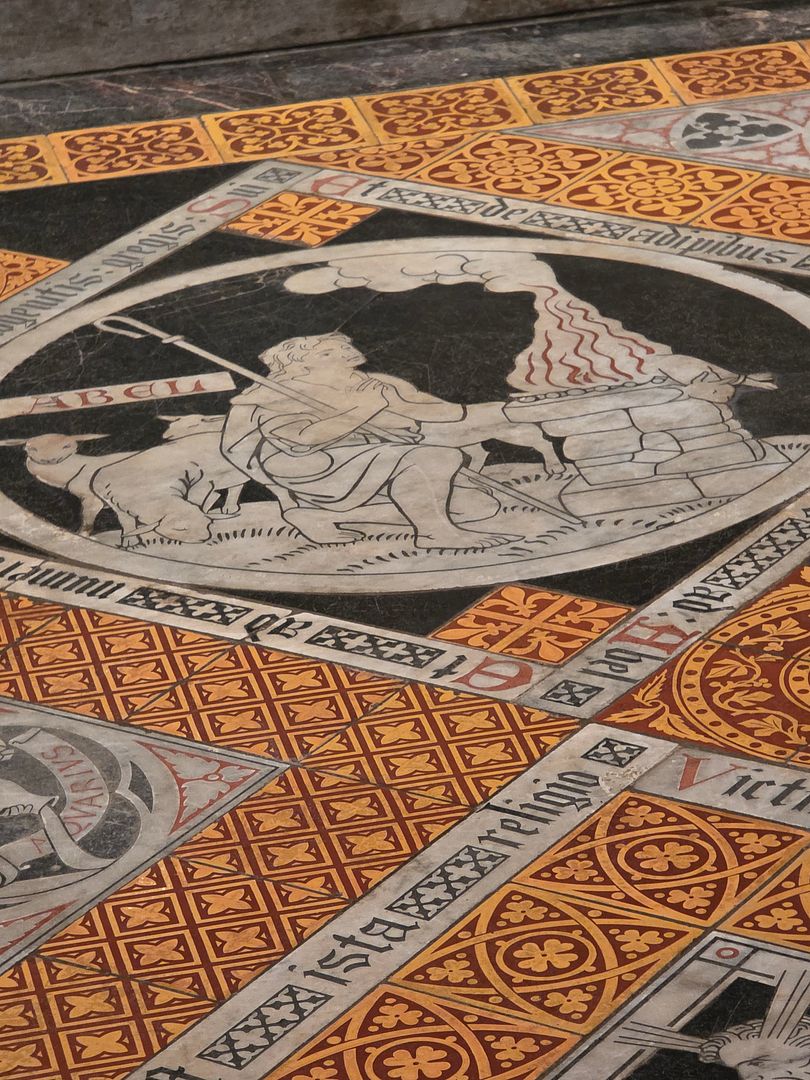
Abel and his offering to God.

While waiting in the narthex of the chapel, I was thrilled to see the following tribute.
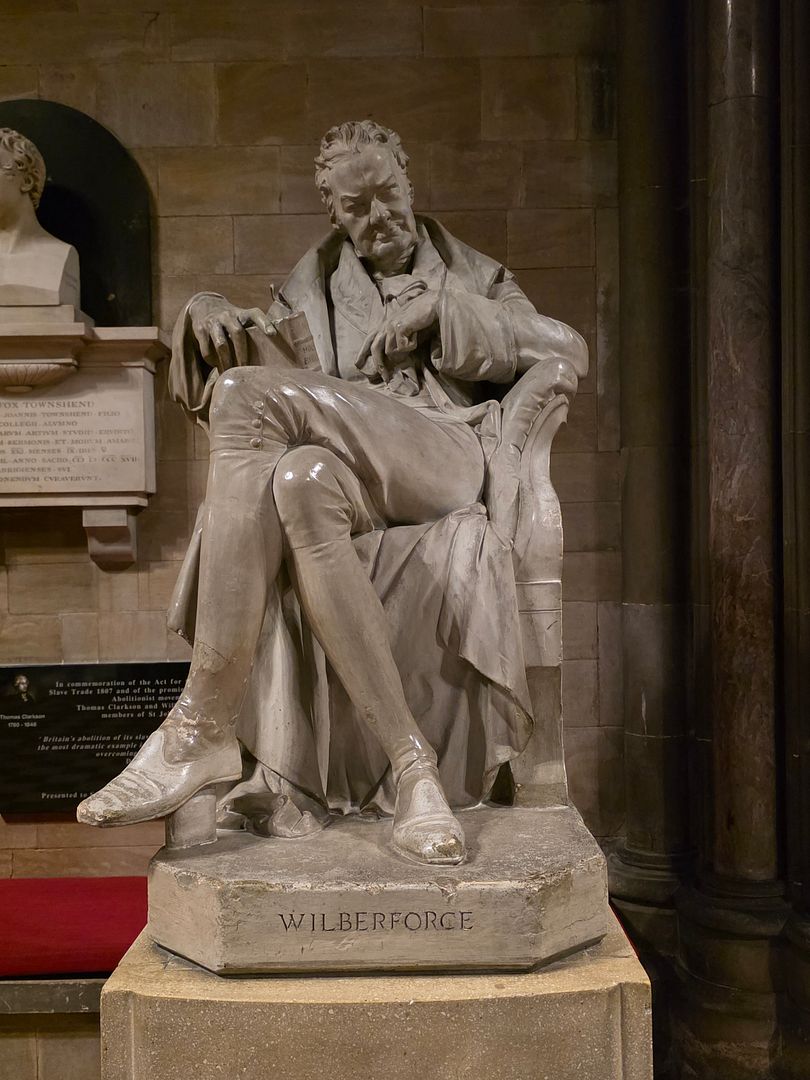
Greg and I have read about William Wilberforce and seen tributes to him in different parts of England. His book, Real Christianity, is a book I can recommend. I have the revised and updated version by Bob Beltz.

Wilborforce and Thomas Clarkson both members of St. John’s College were honored for their prominent role in passing of the Act for the Abolition of the Slave Trade 1807.

1776 & 1779 William Wilberforce and Thomas Clarkson begin their studies at St John’s. Joining forces in 1787, they will spend the rest of their lives leading the campaign to abolish the slave trade and slavery.
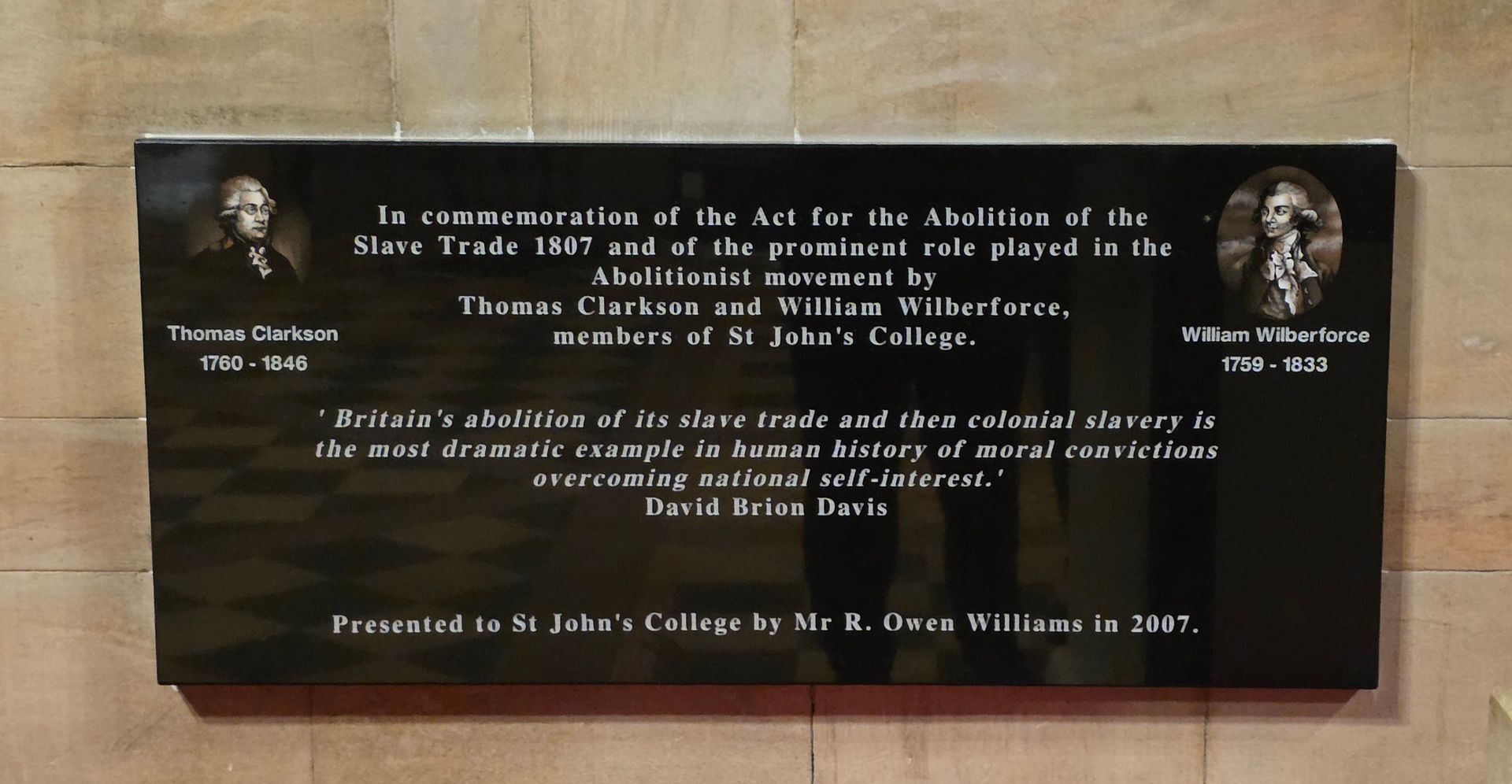
“Britain’s abolition of its slave trade and then colonial slavery is the most dramatic example in human history of moral convictions overcoming national self-interest.” David Brian Davis

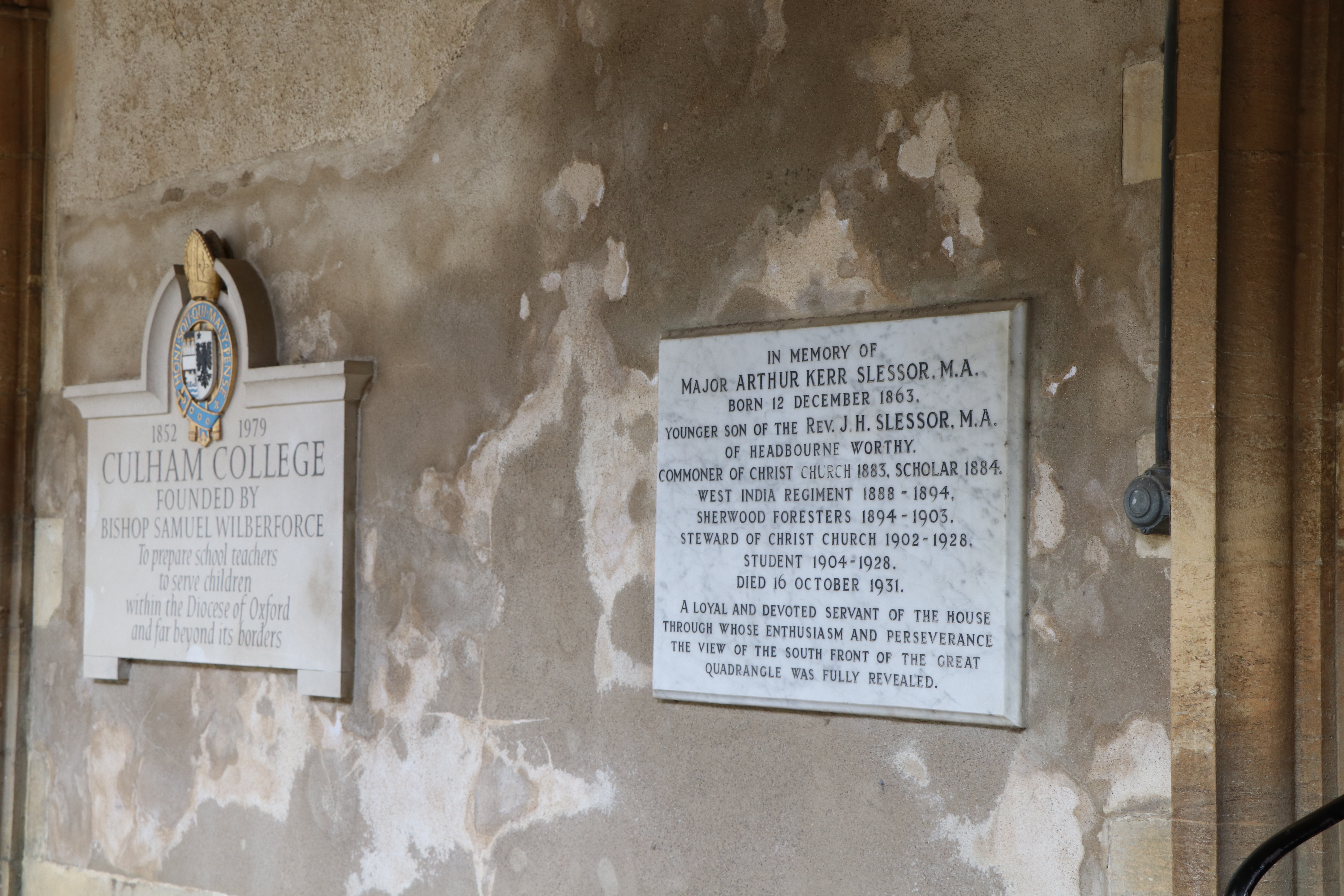
While we were in Oxford at Christ Church College in 2022 we saw a tribute to one of Wilberforce’s sons.

The plaque on the left reads Culham College, Founded by Bishop Samuel Wilberforce, to prepare school teachers to serve children within the Diocese of Oxford and well beyond its borders. 1852-1979

Samuel Wilberforce, FRS was an English bishop in the Church of England, and the third son of William Wilberforce. Known as “Soapy Sam”, Wilberforce was one of the greatest public speakers of his day. He is now best remembered for his opposition to Charles Darwin’s theory of evolution at a debate in 1860.

We also read an extensive plaque in his honor in the north transept of Westminster Abbey when we visited in 2003.

William Wilberforce is buried in the north transept of Westminster Abbey in London, England.
He was laid to rest on August 3, 1833, following a major state funeral. He is buried next to his close friend and former British Prime Minister, William Pitt.

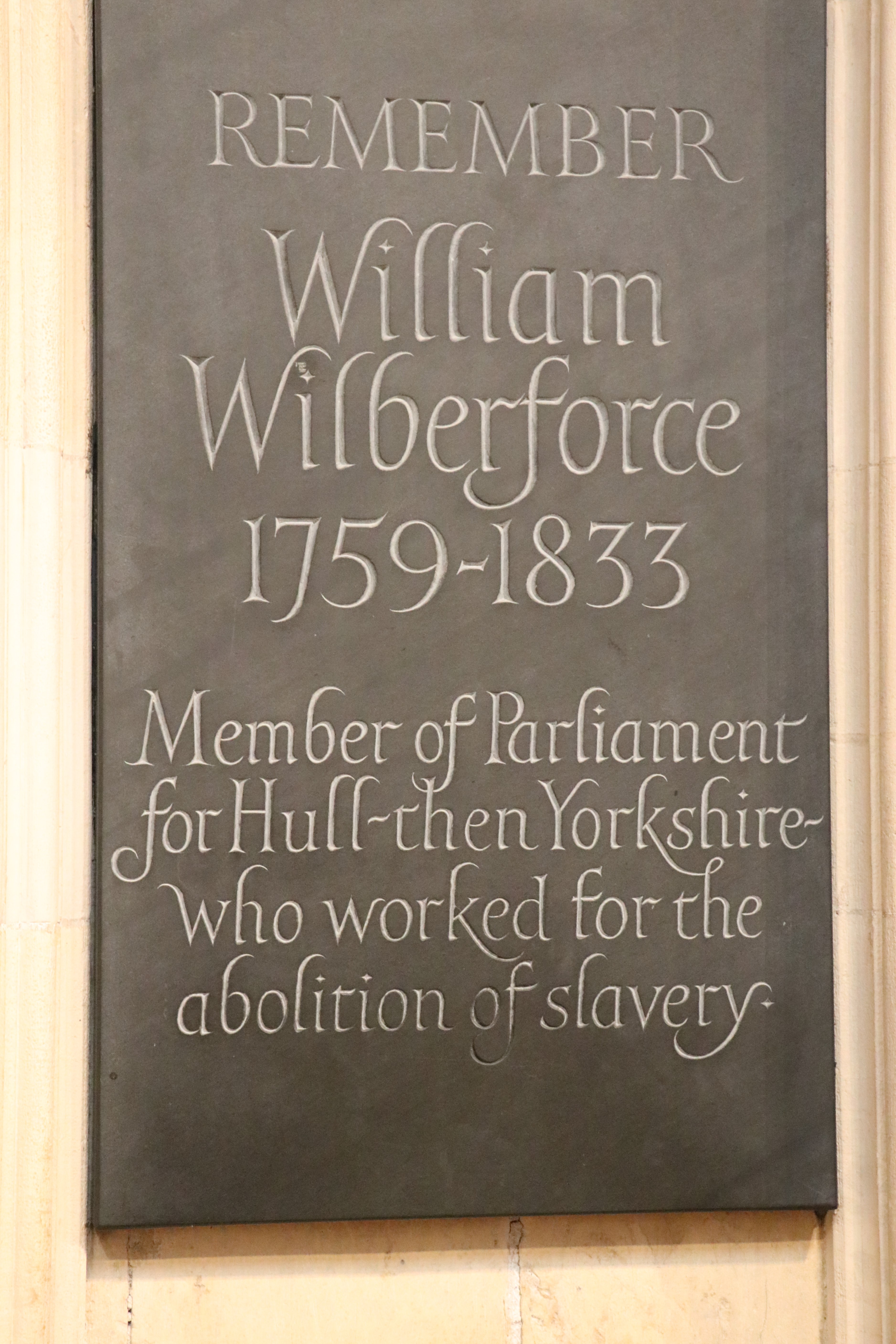
Wilberforce was a member of parliament from Yorkshire. When we were visiting the Yorkminster in 2023 I spotted a plaque dedicated to him at the entrance to the gift shop.
You can read more about Wilberforce at the following link;

William Wilberforce

I’ll leave this post with a couple quotes from Real Christianity.

The Bible is one of God’s greatest gifts to humanity. It tells us of the greatest gift that men and women have longed for through-out the ages and of which the prophets spoke about for centuries. When Jesus finally came, His arrival was hailed by the angelic host with the exclamation, “Glory to God in the highest, and on earth peace to men on whom his favor rests” (Luke 2:14). How can you measure the value of the good news of Christ? It is spoken of in the Bible as light in the darkness, freedom from slavery and life from death. Look at how much the Early Church valued the message. They received it with great joy and overflowing gratitude.

Surely all these things should help us come to terms with the inexpressible value of true faith. The greatest gift of God is often either rejected outright or treated as if it is of little worth. But if we really began to study the Bible, we would be impressed with the proper value of the gift.”

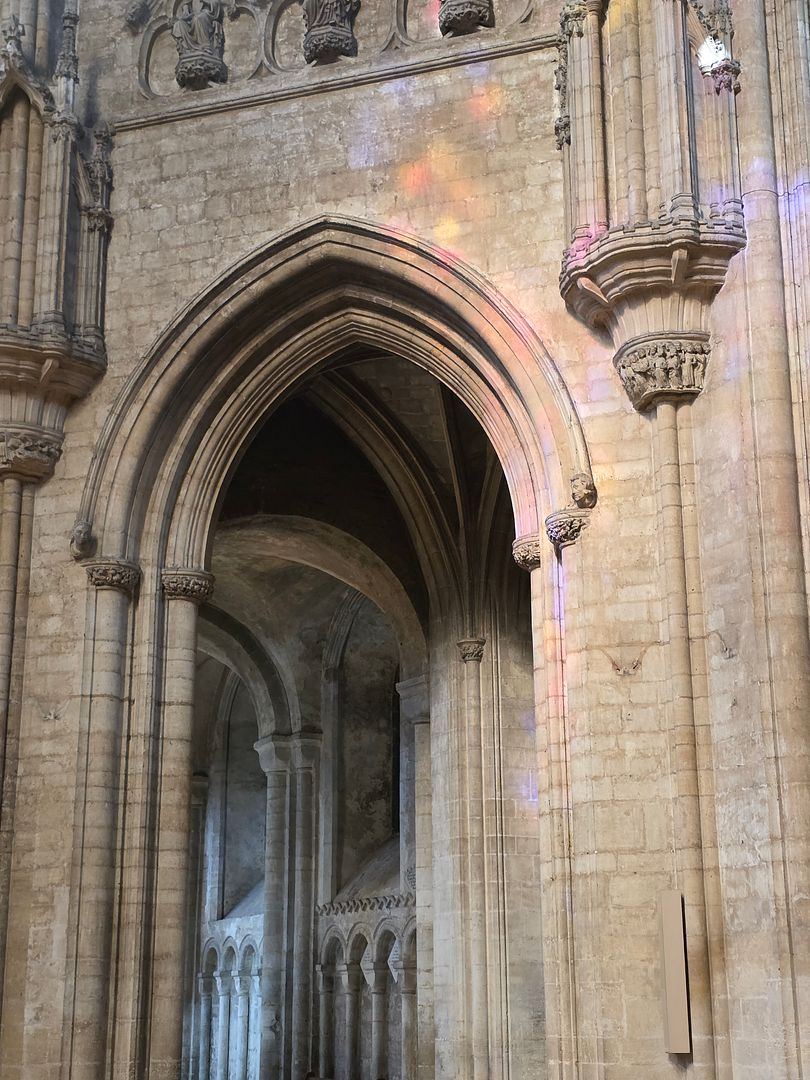
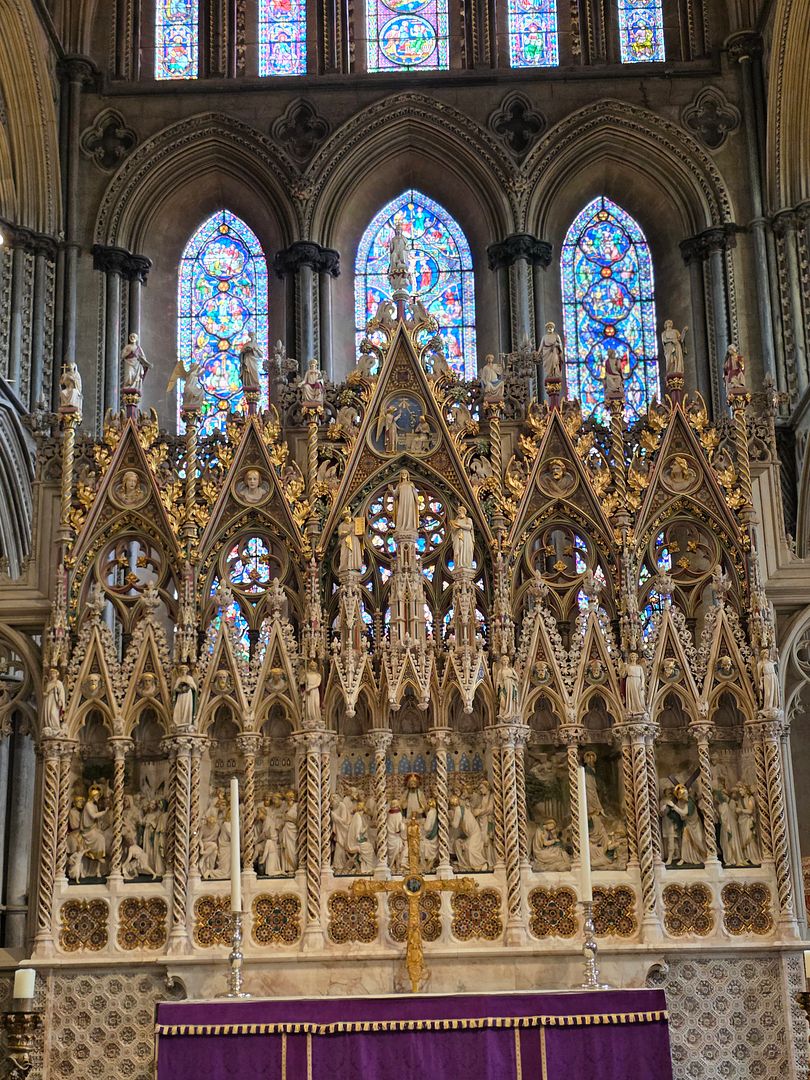
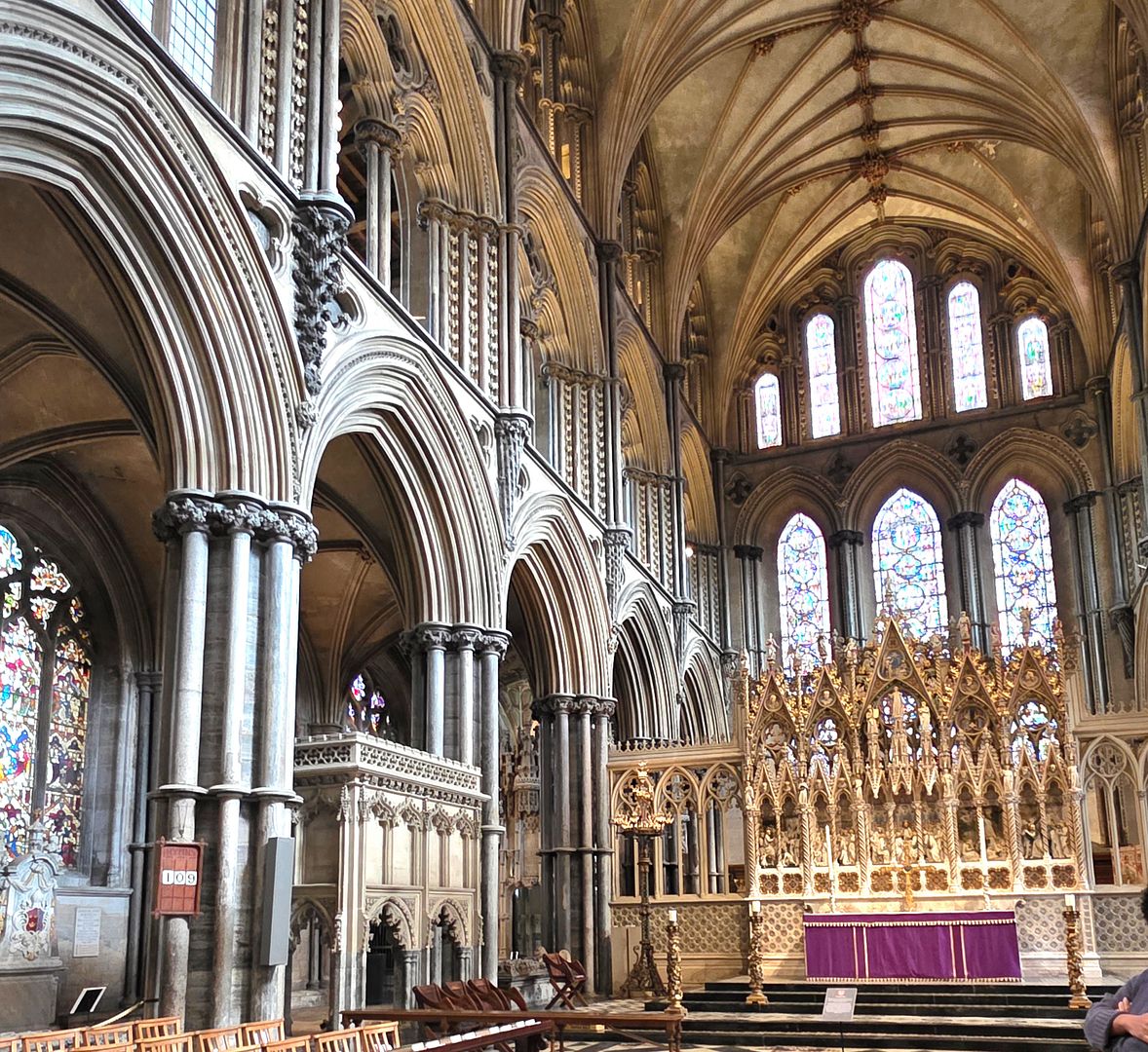
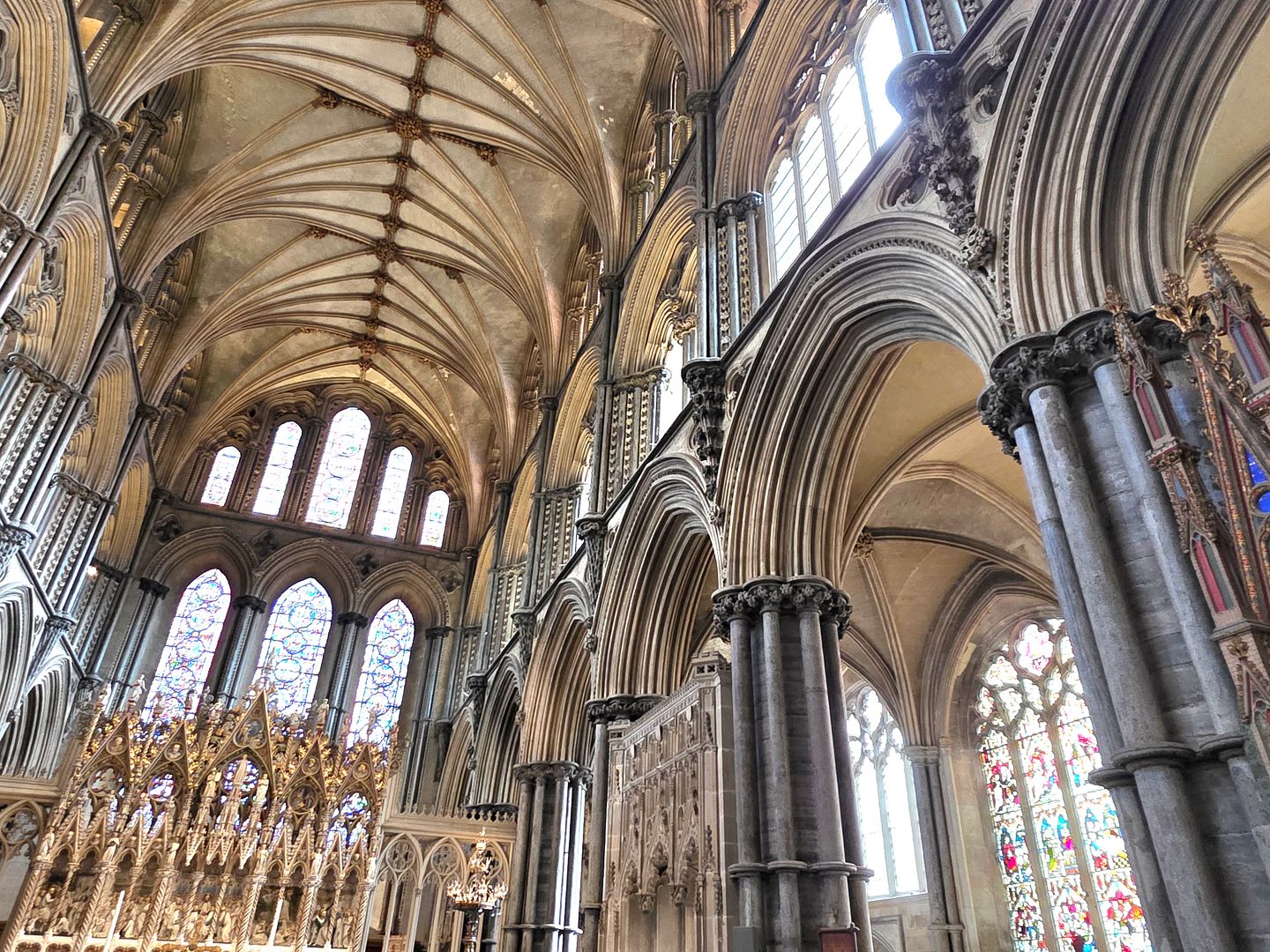
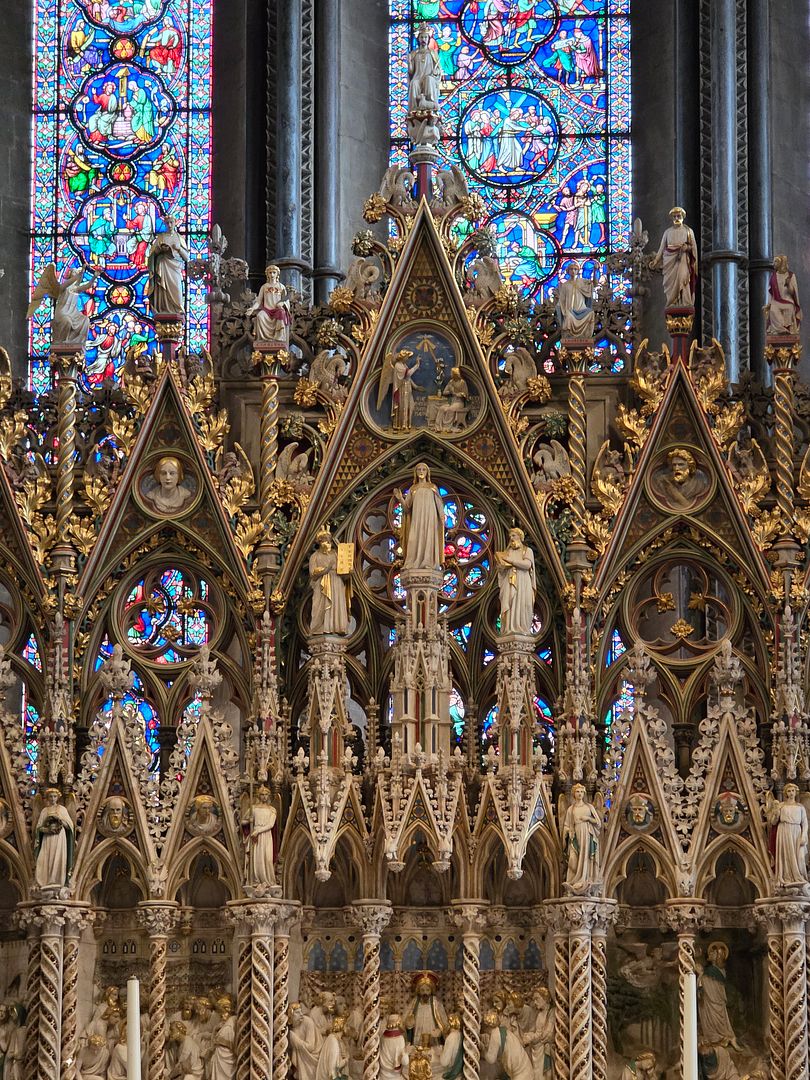
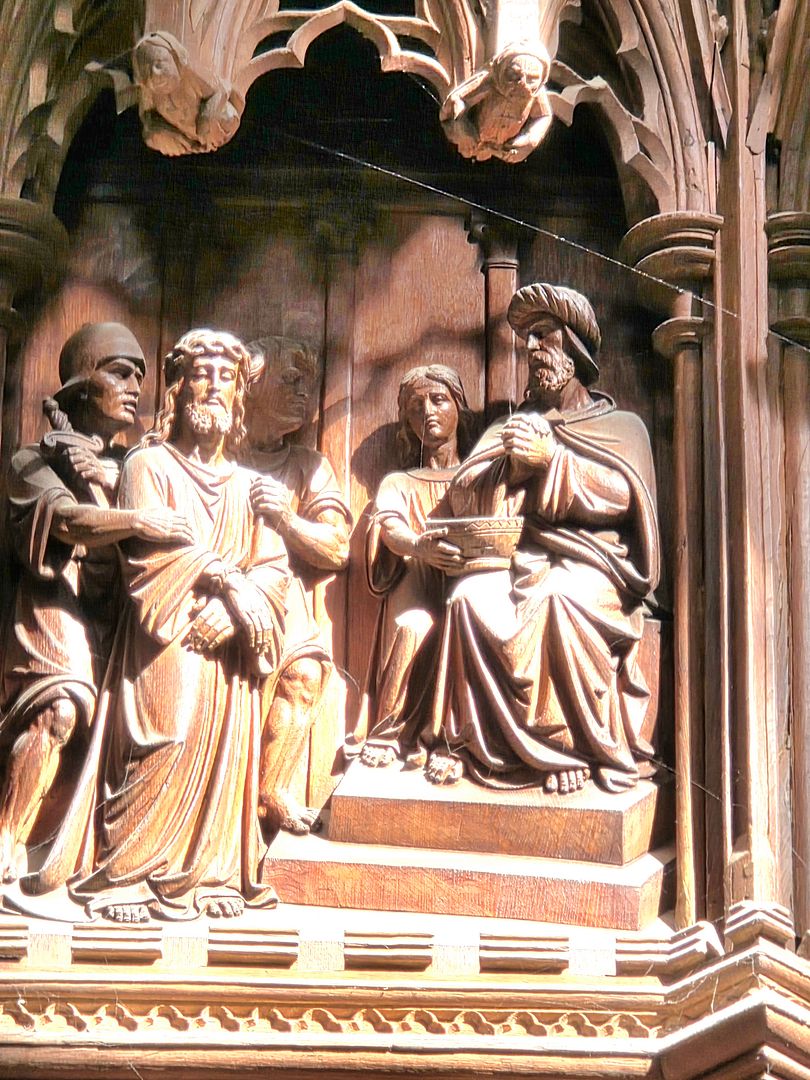
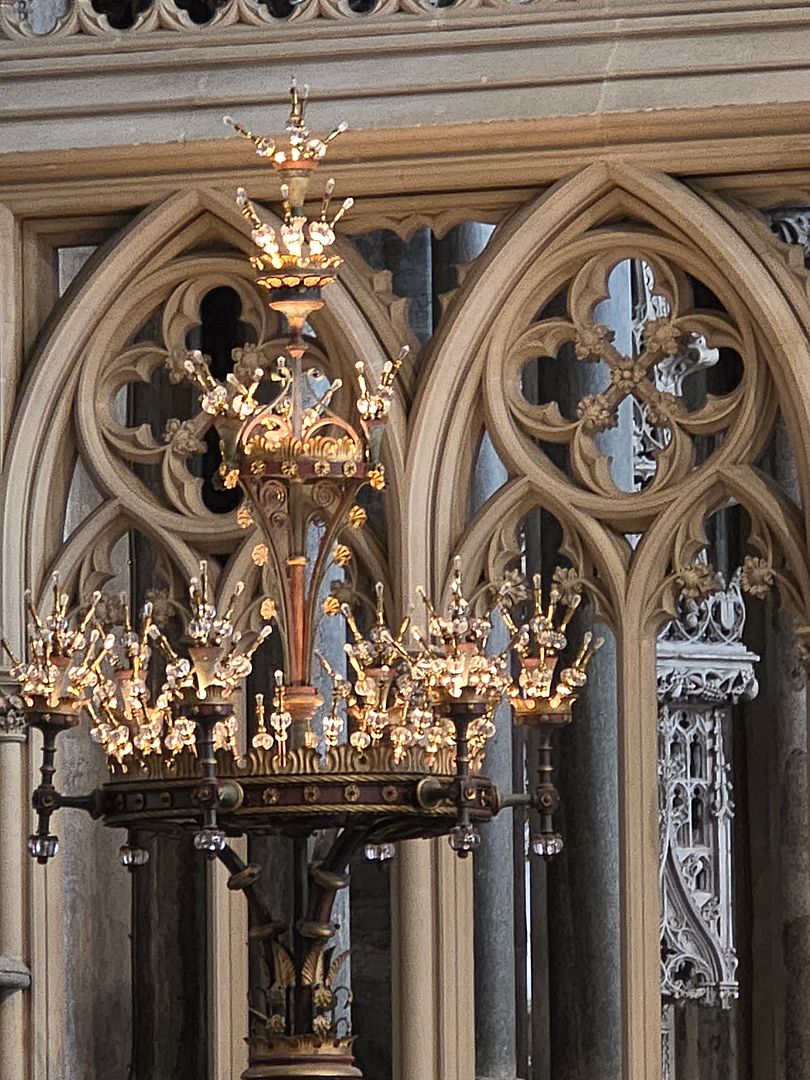
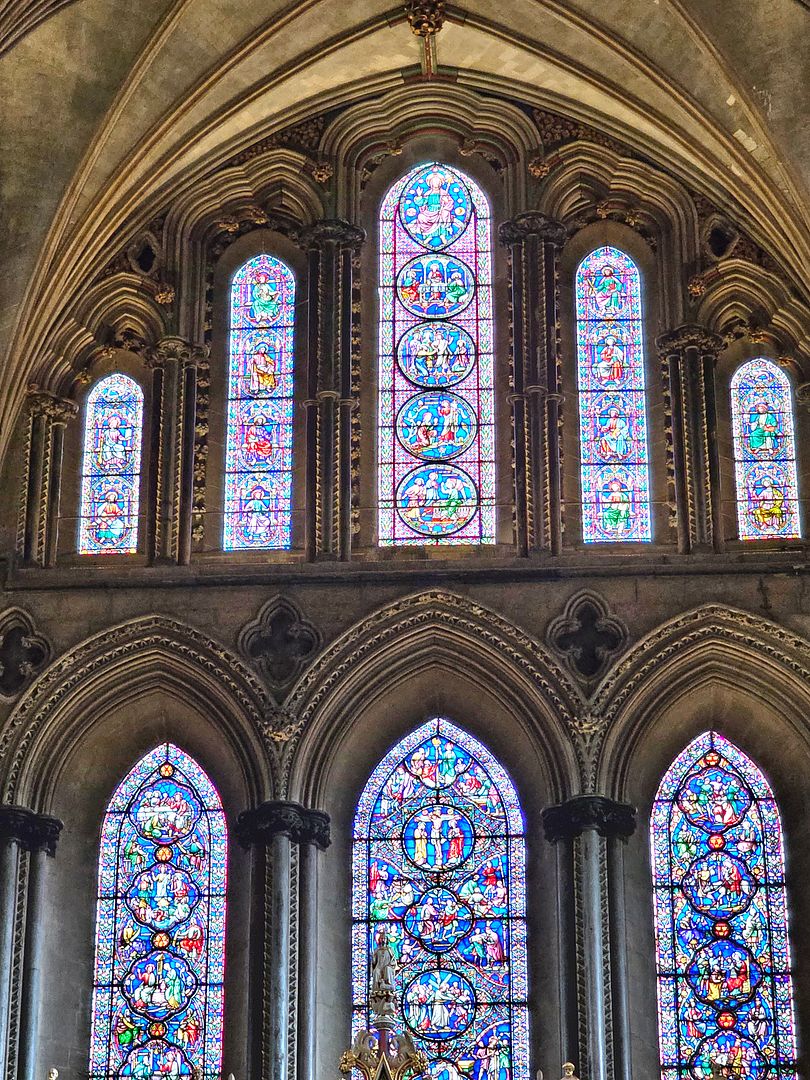
Inside Ely Cathedral

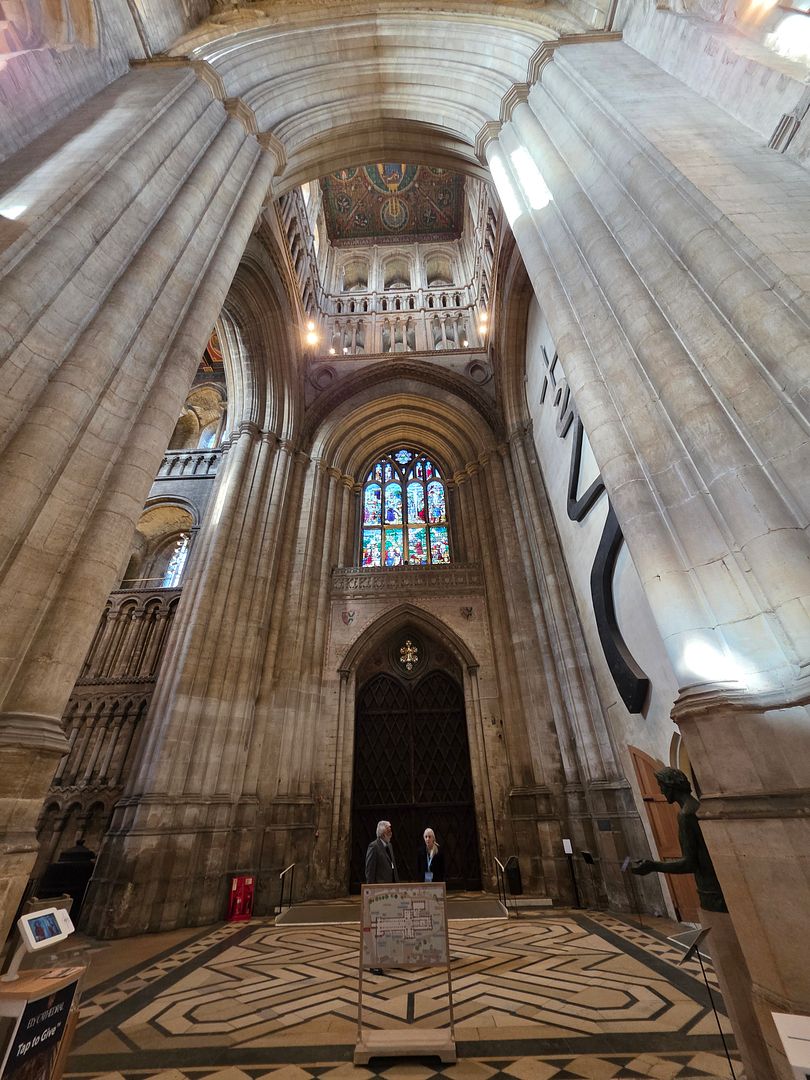
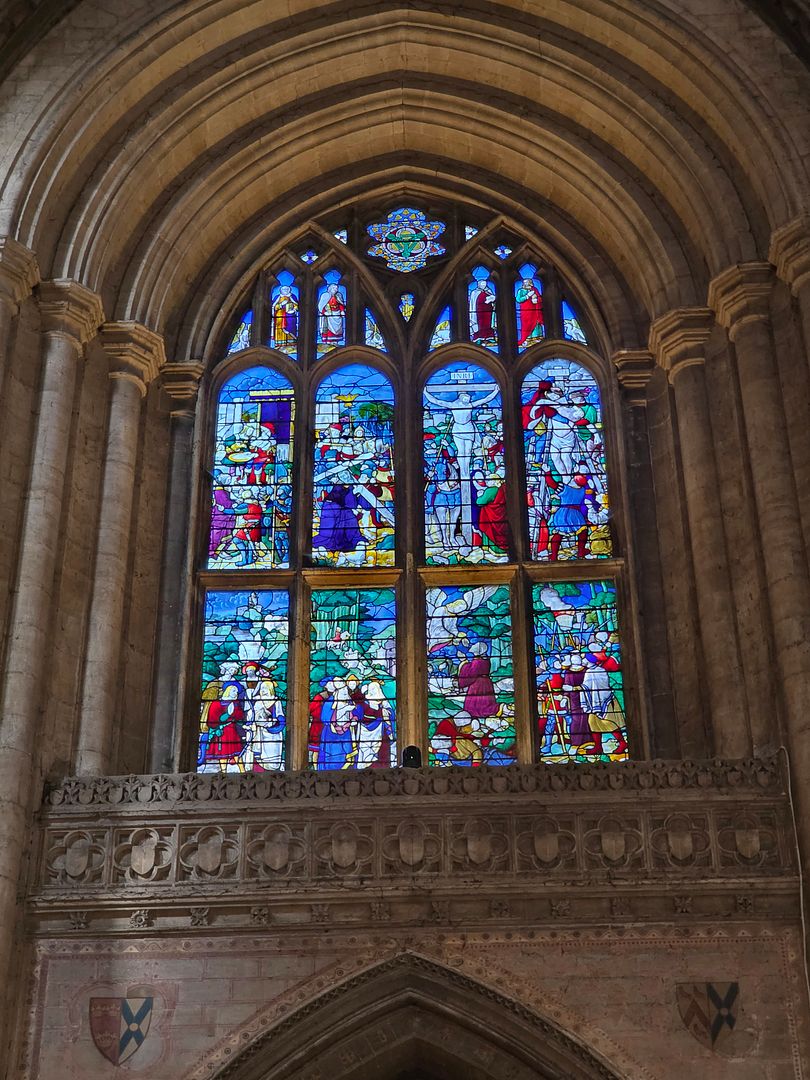
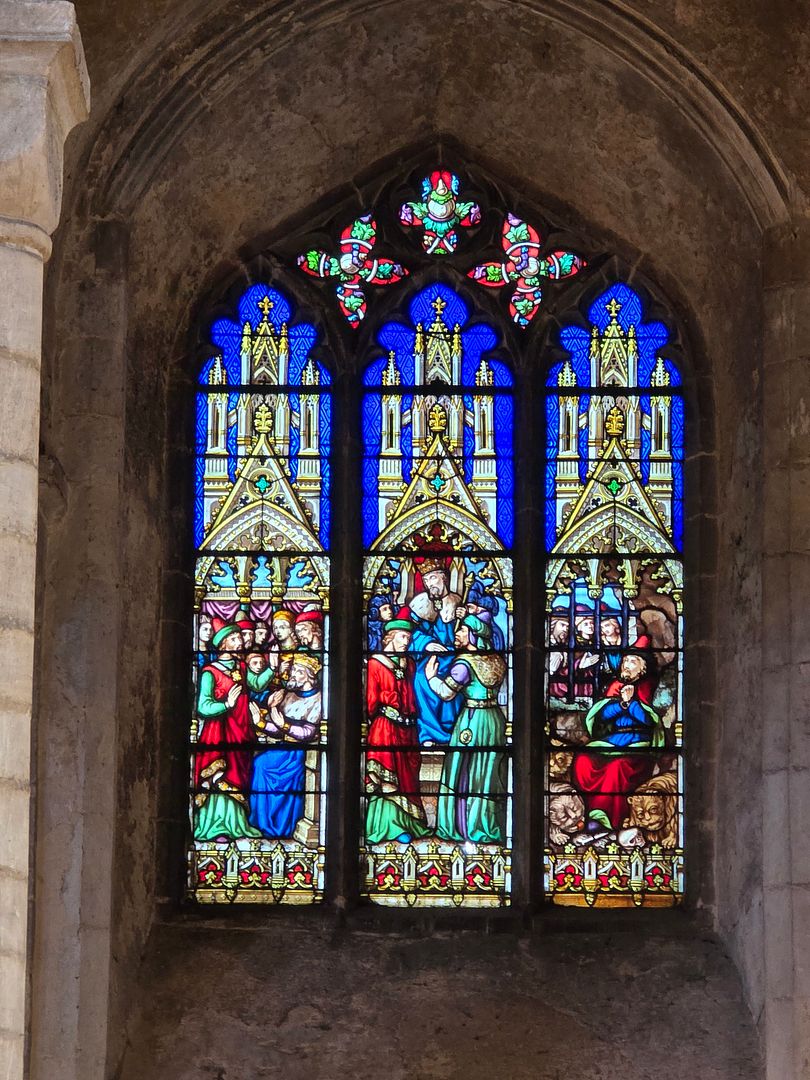
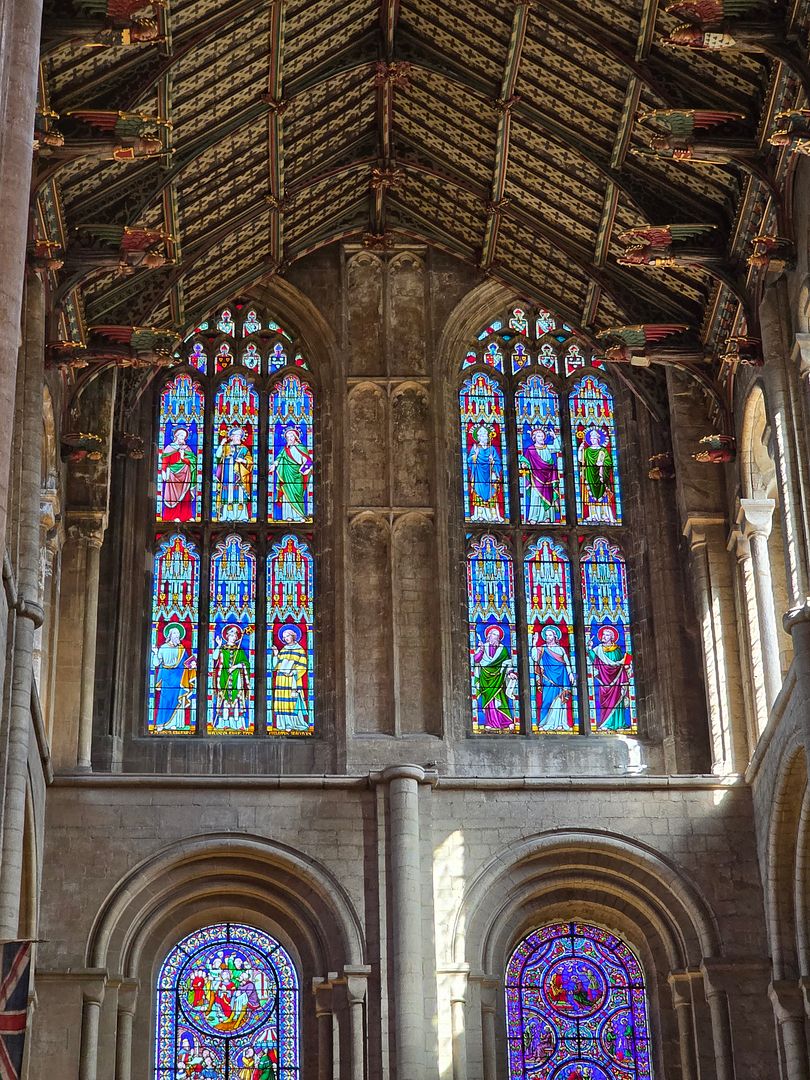
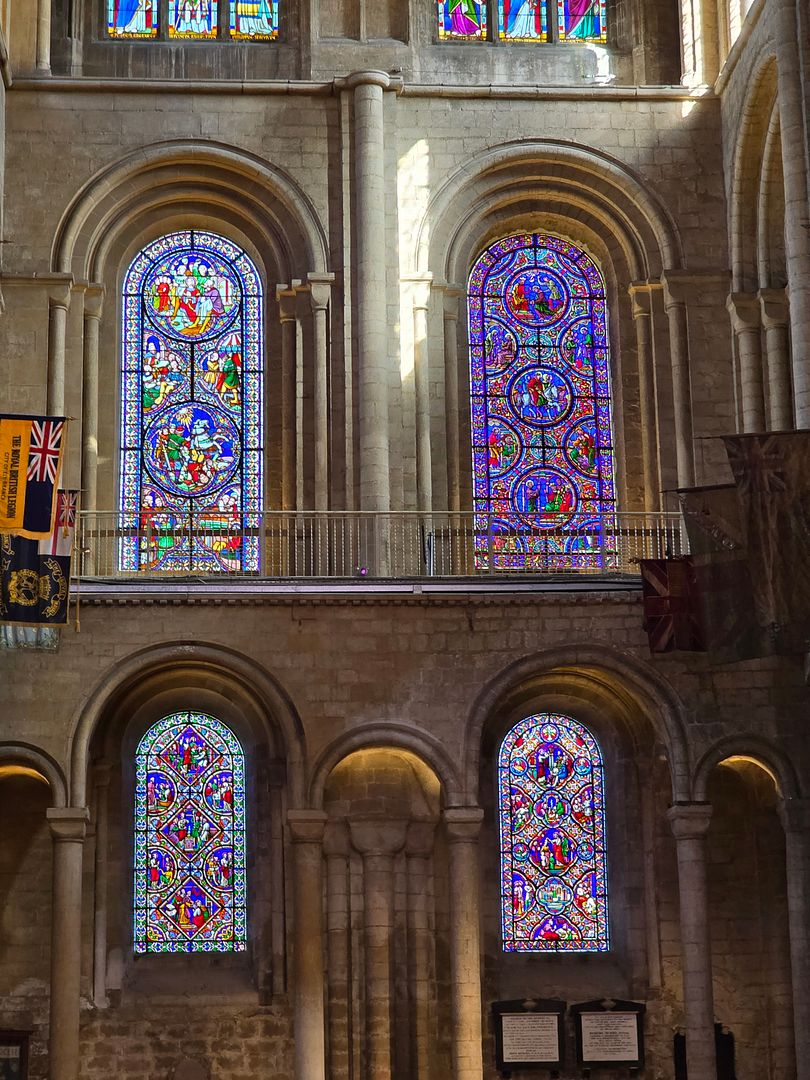
As previously mentioned, this continues our travel journal for Wednesday March 11 when we took a short train ride from Cambridge to Ely to visit the cathedral. These photos are numerous and are from the inside of Ely Cathedral.

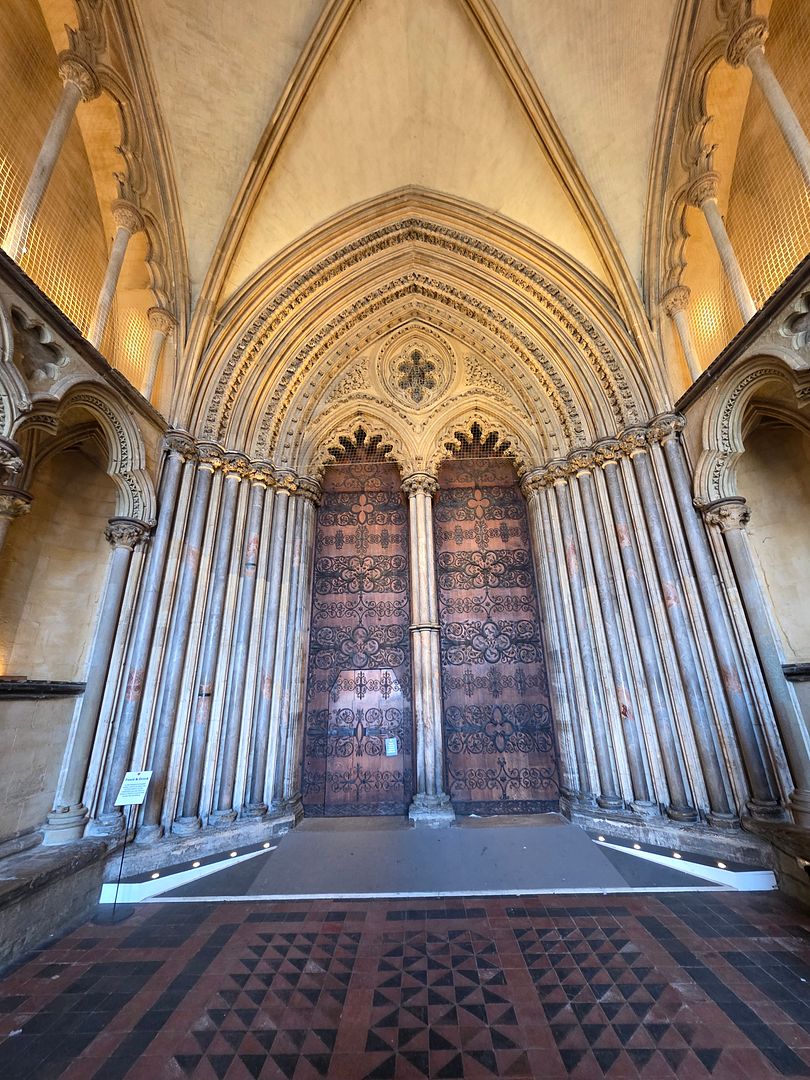
The entrance was through those amazing doors!

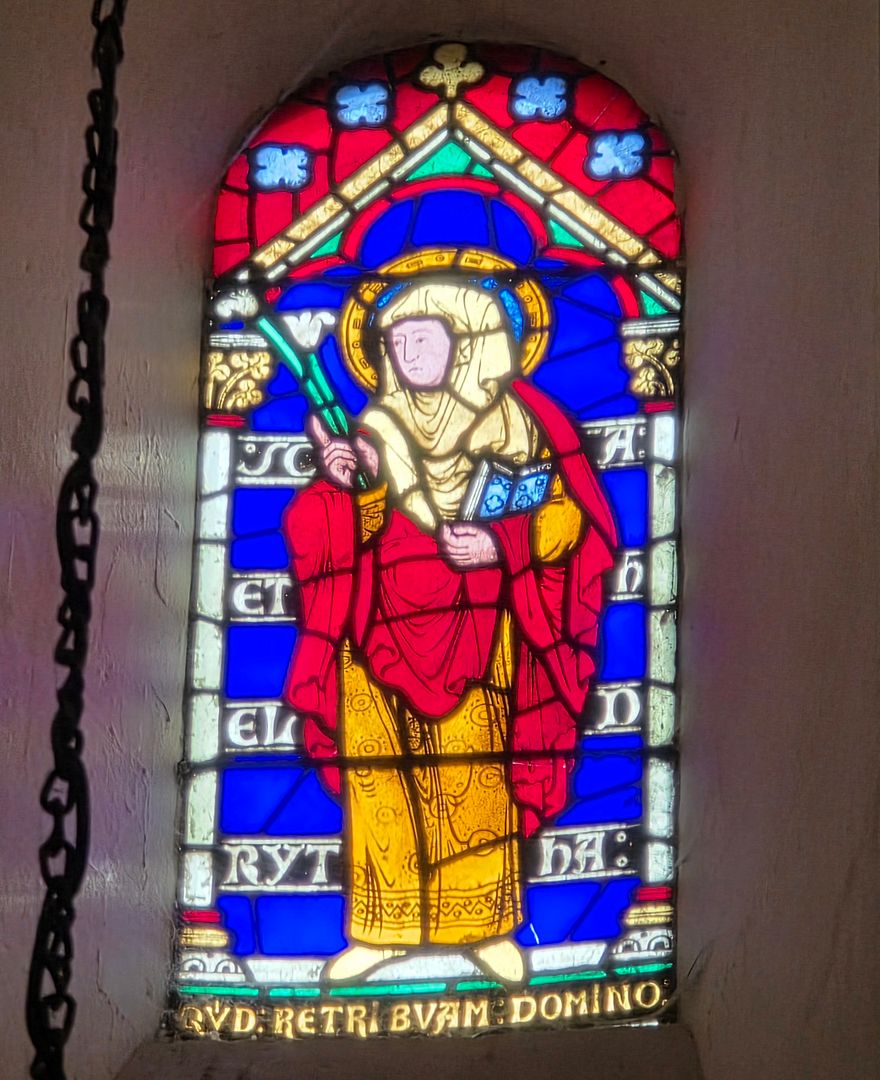
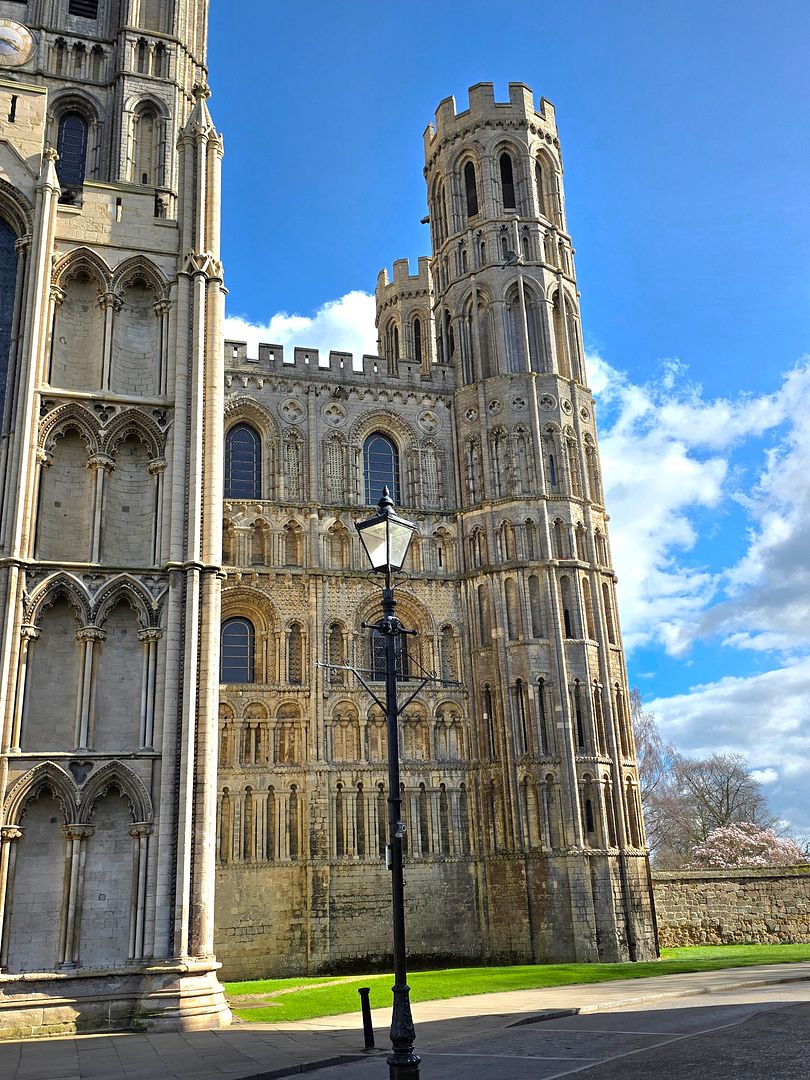
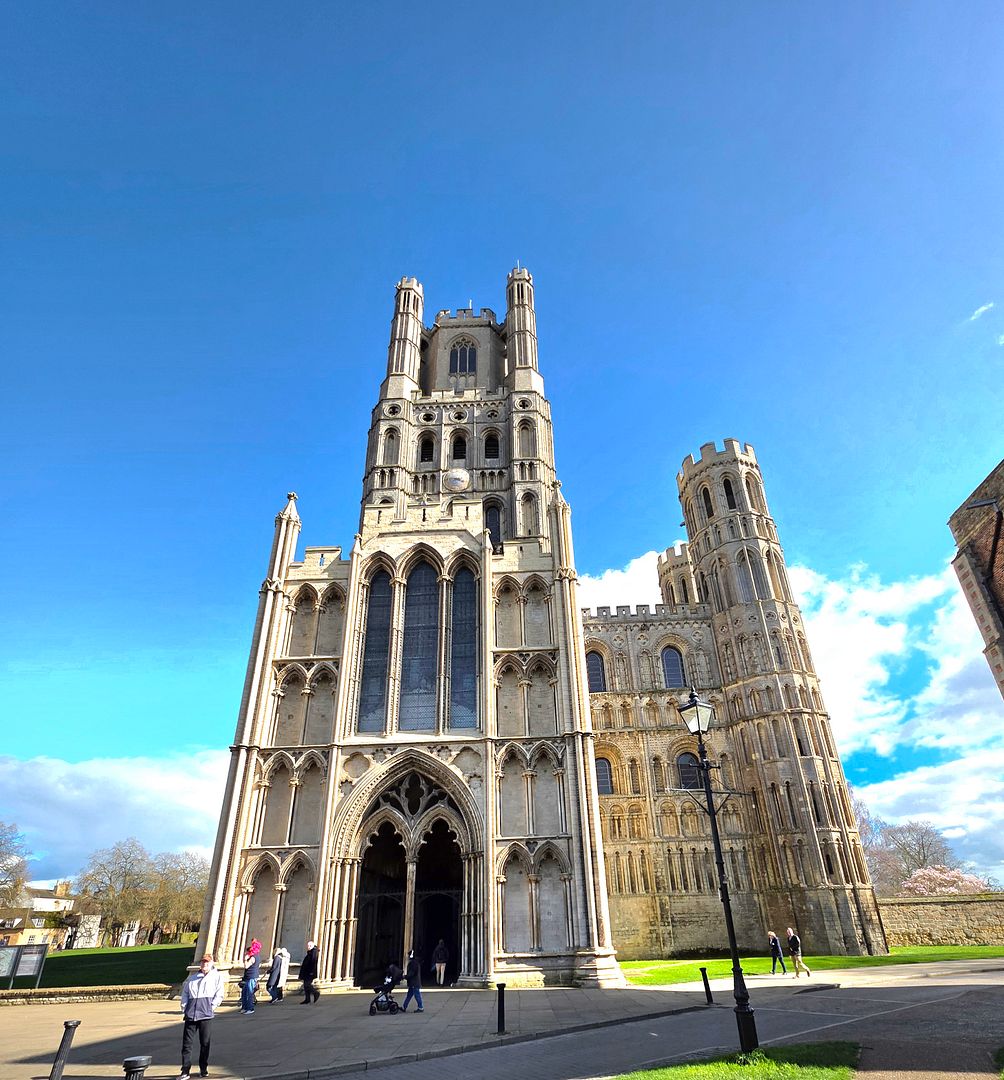
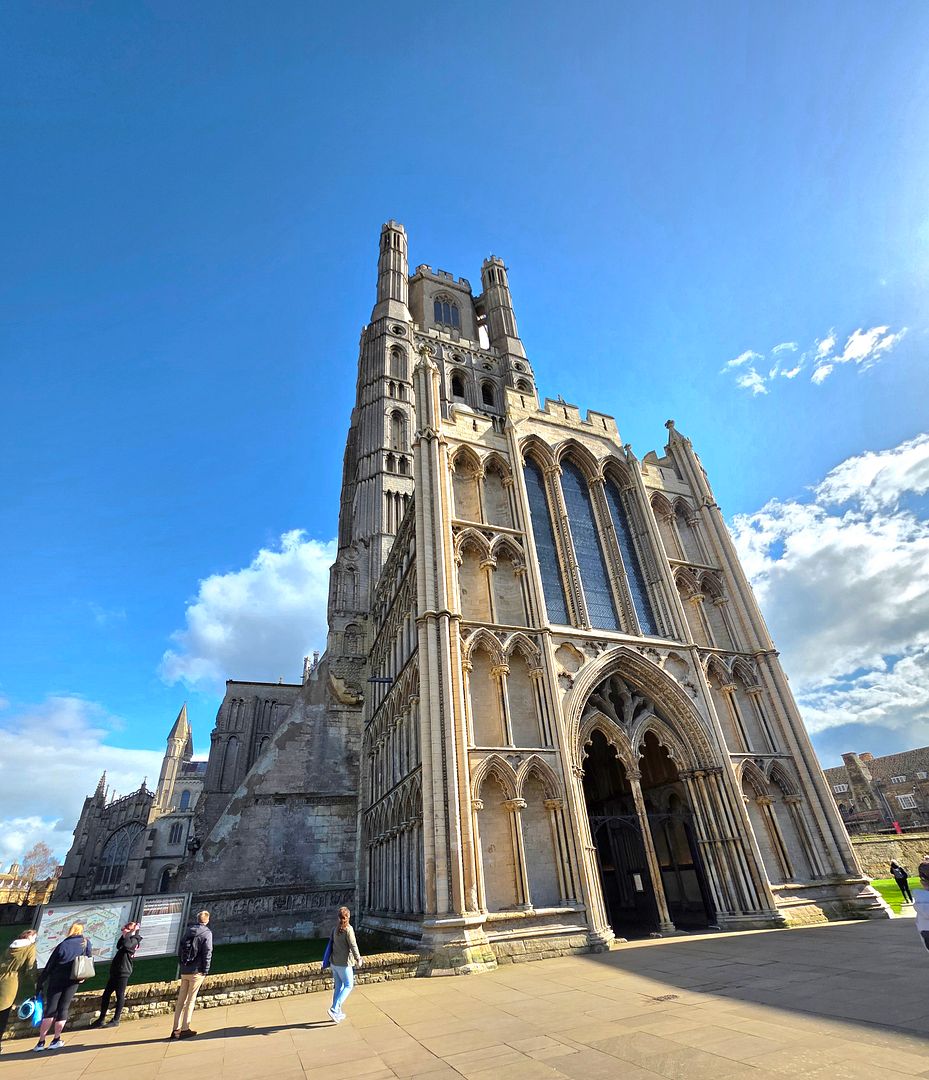
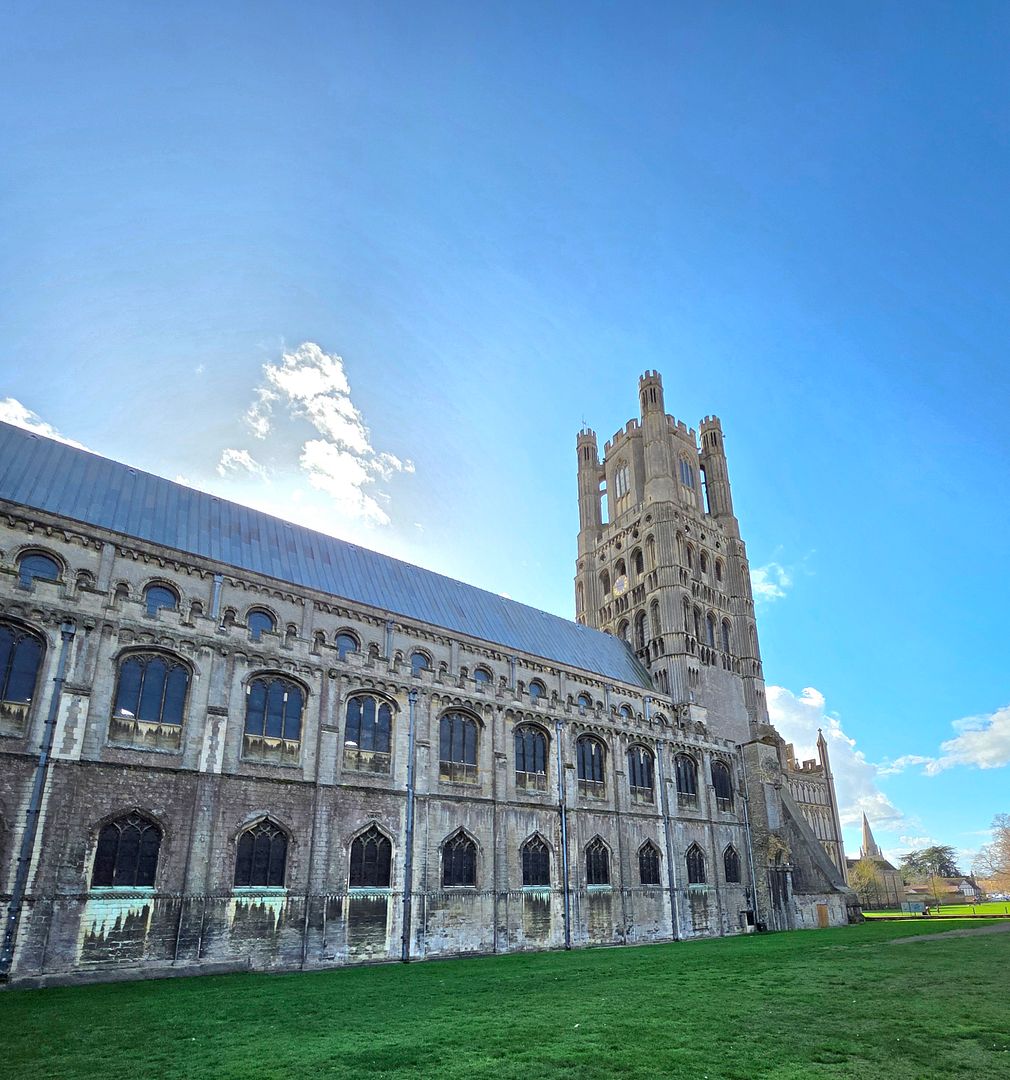
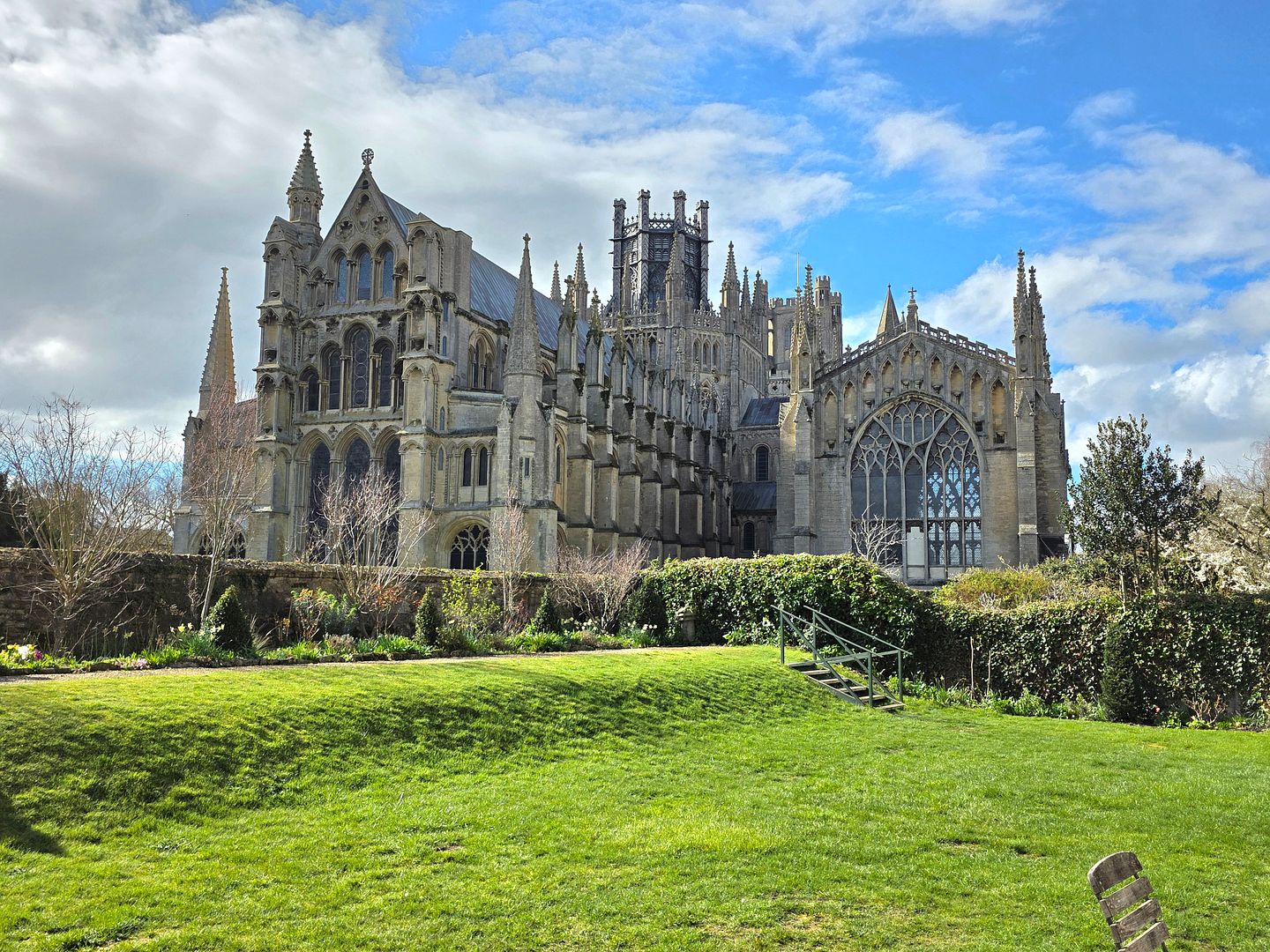
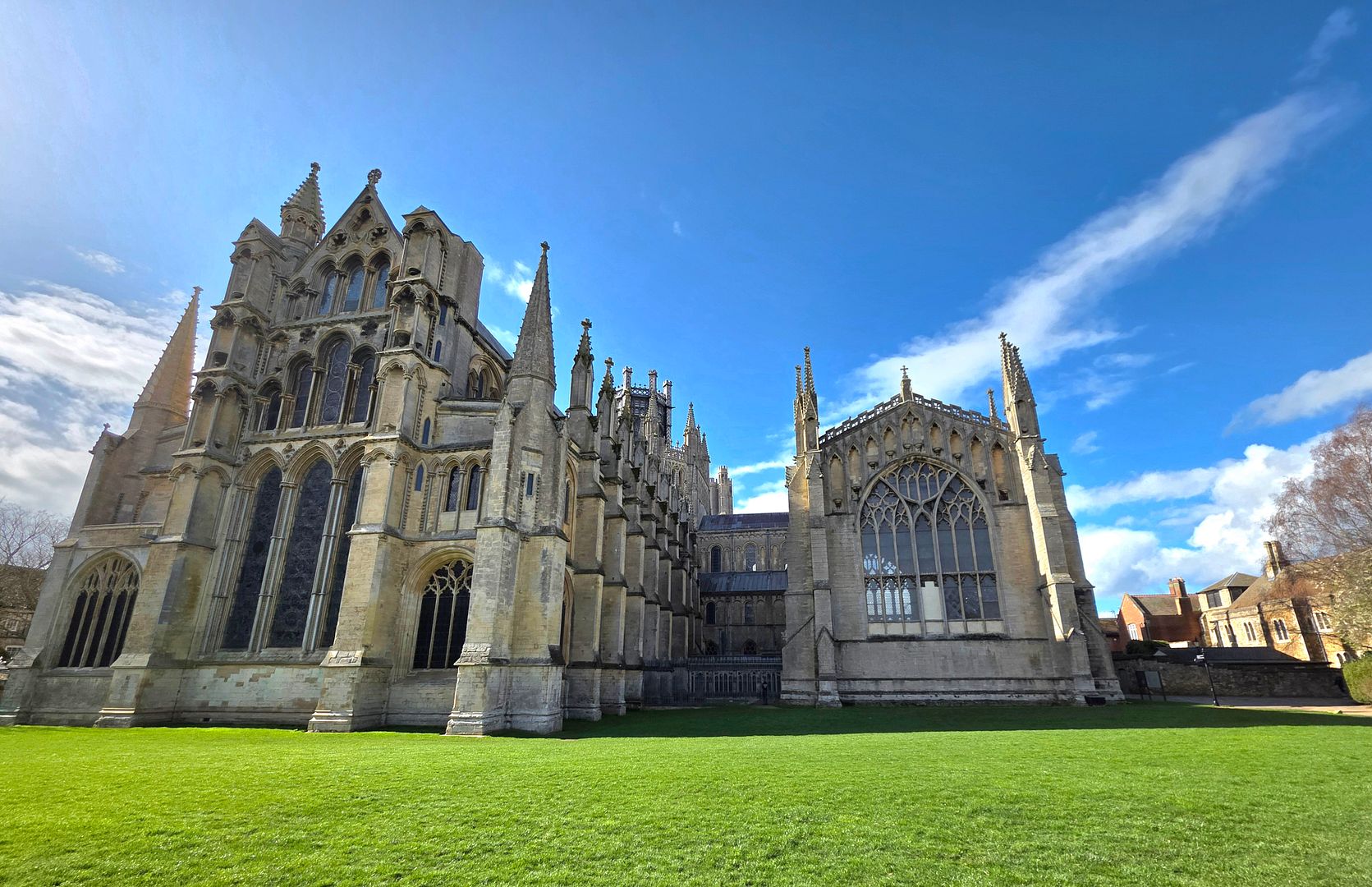
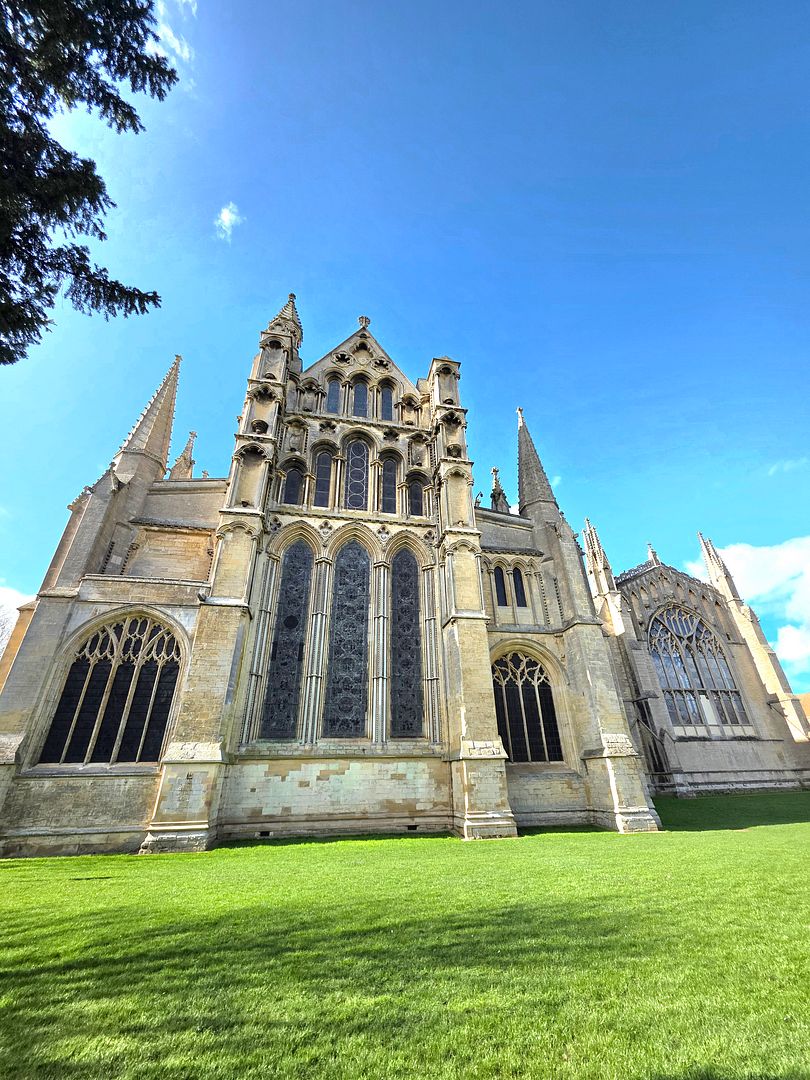
Ely Cathedral has origins dating back to AD 673 when St Etheldreda built an Abbey Church. The present building dates back to 1083, and was granted Cathedral status in 1109.


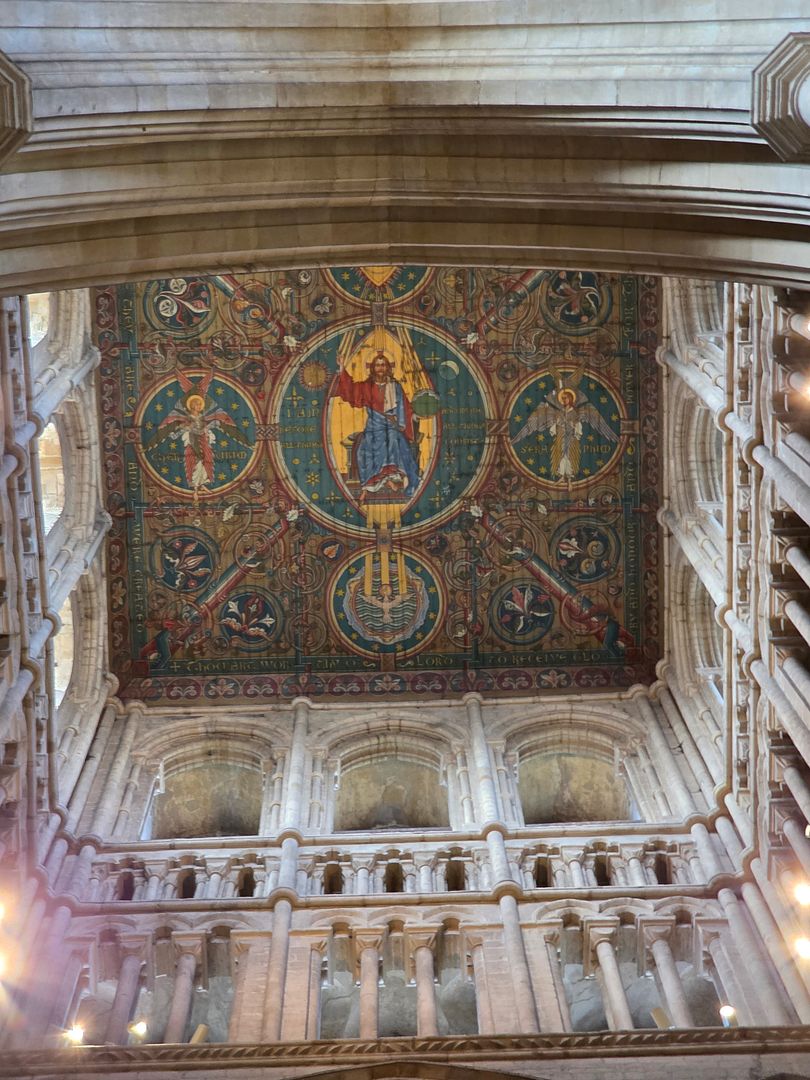
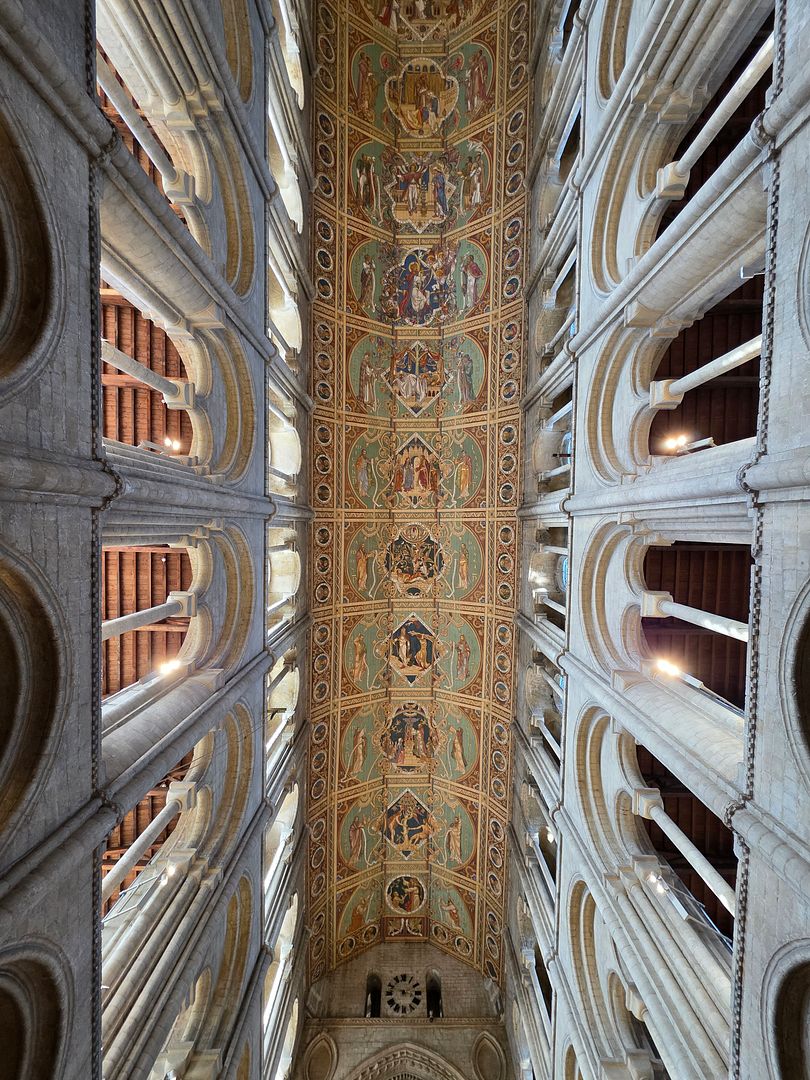
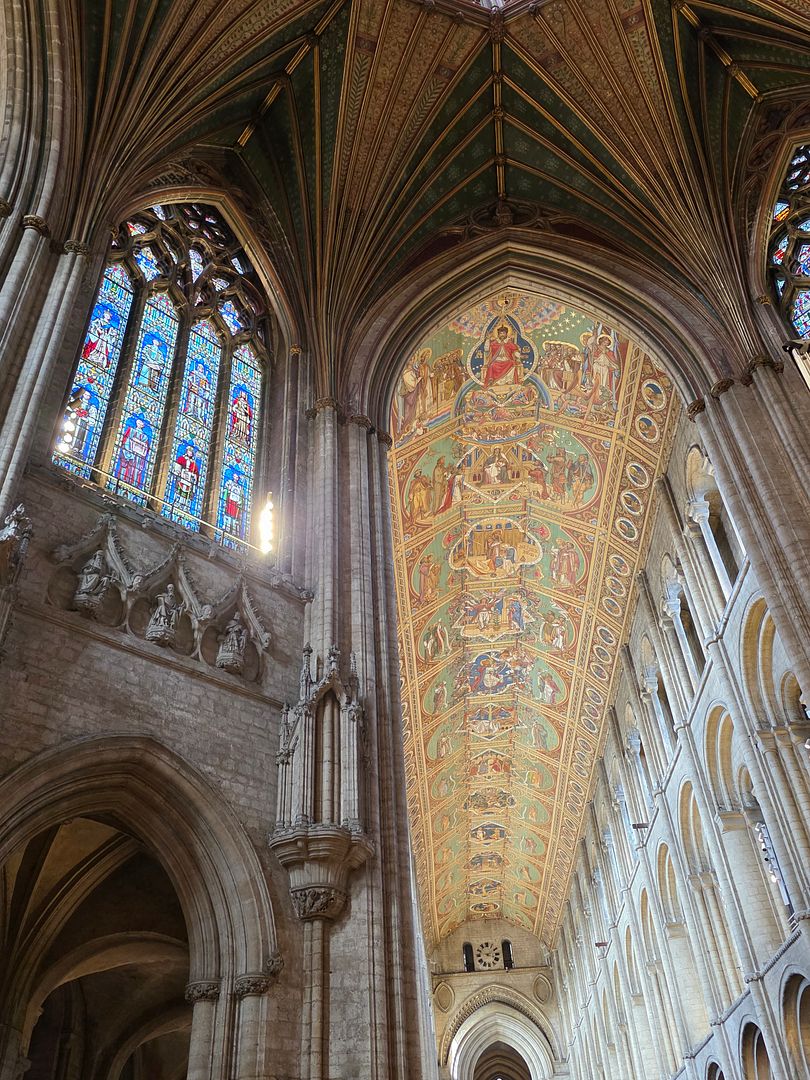
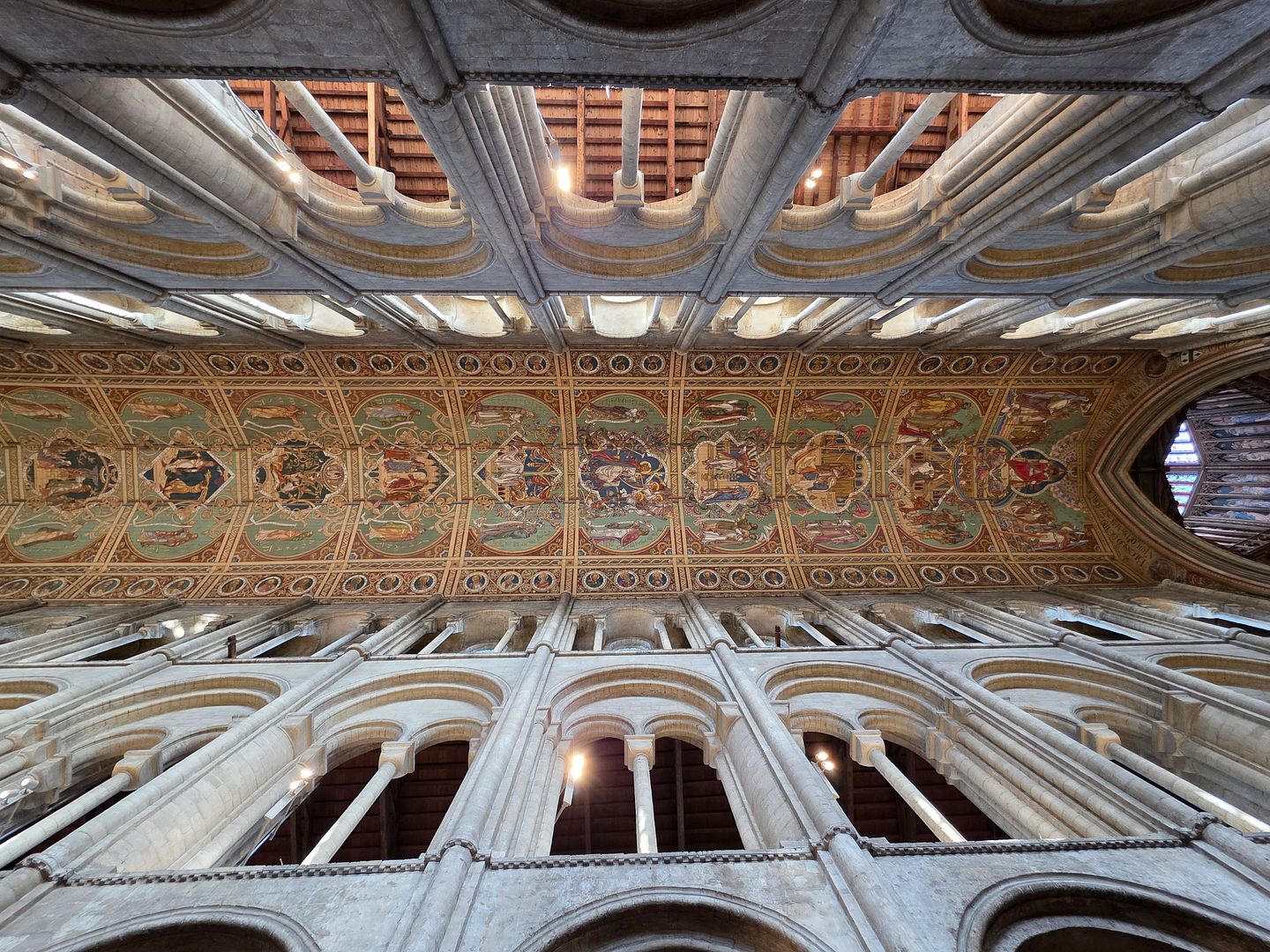
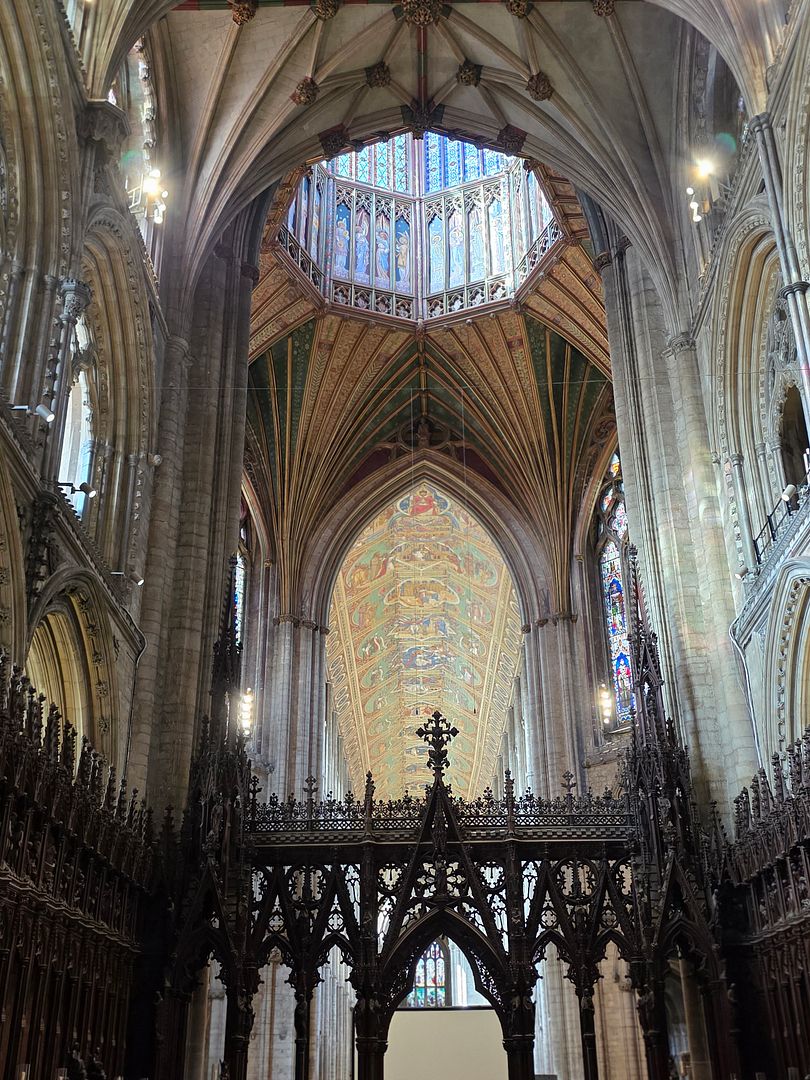
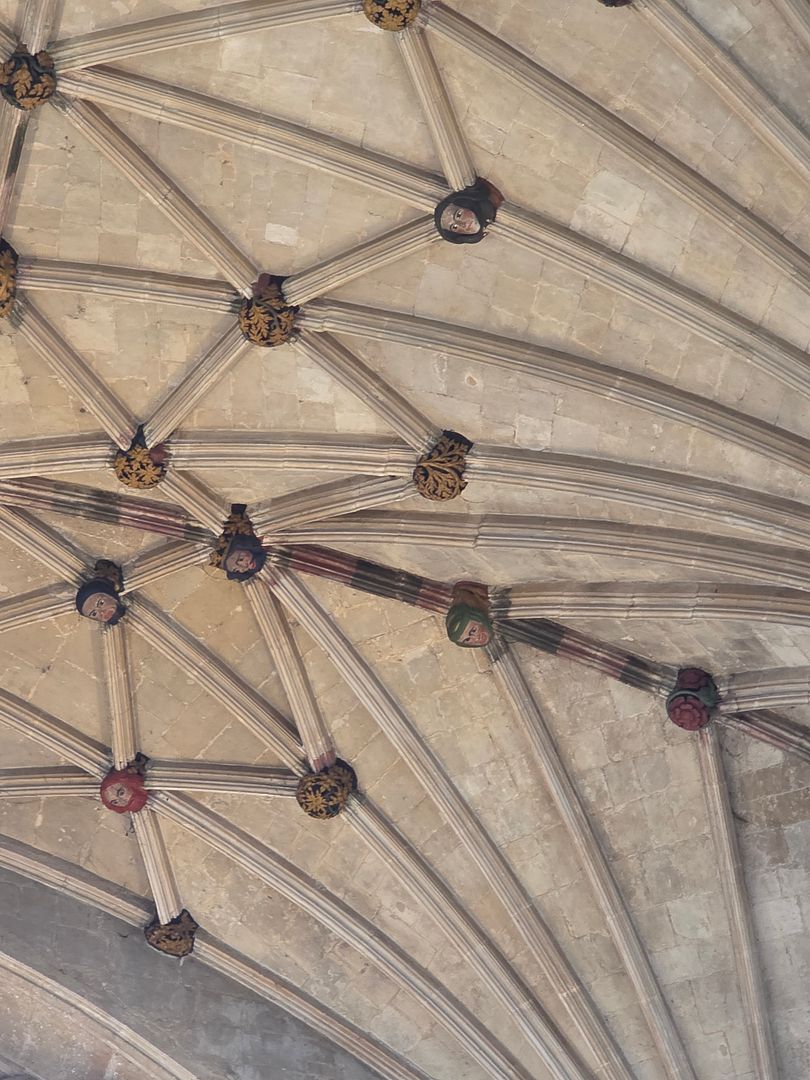
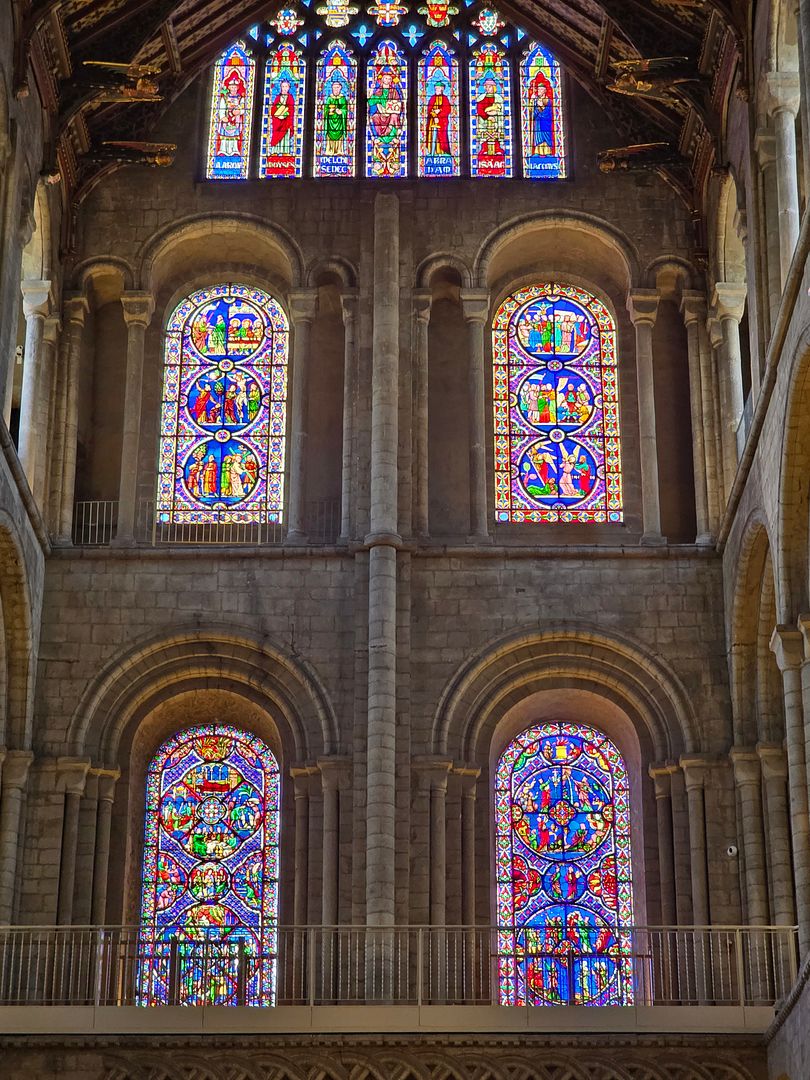
Installed as part of the Victorian restoration, the incredible Nave Ceiling was the work of two artists.

Henry Styleman Le Strange painted the first six panels (counting from the west), and Thomas Gambier Parry painted the last six – you can observe a change of style between the sixth and seventh panels.

The ceiling tells the story of the ancestry of Jesus, beginning with Adam (panel 1) and continuing through Abraham (panel 4), David (panel 8) and Mary (panels 9 and 10).

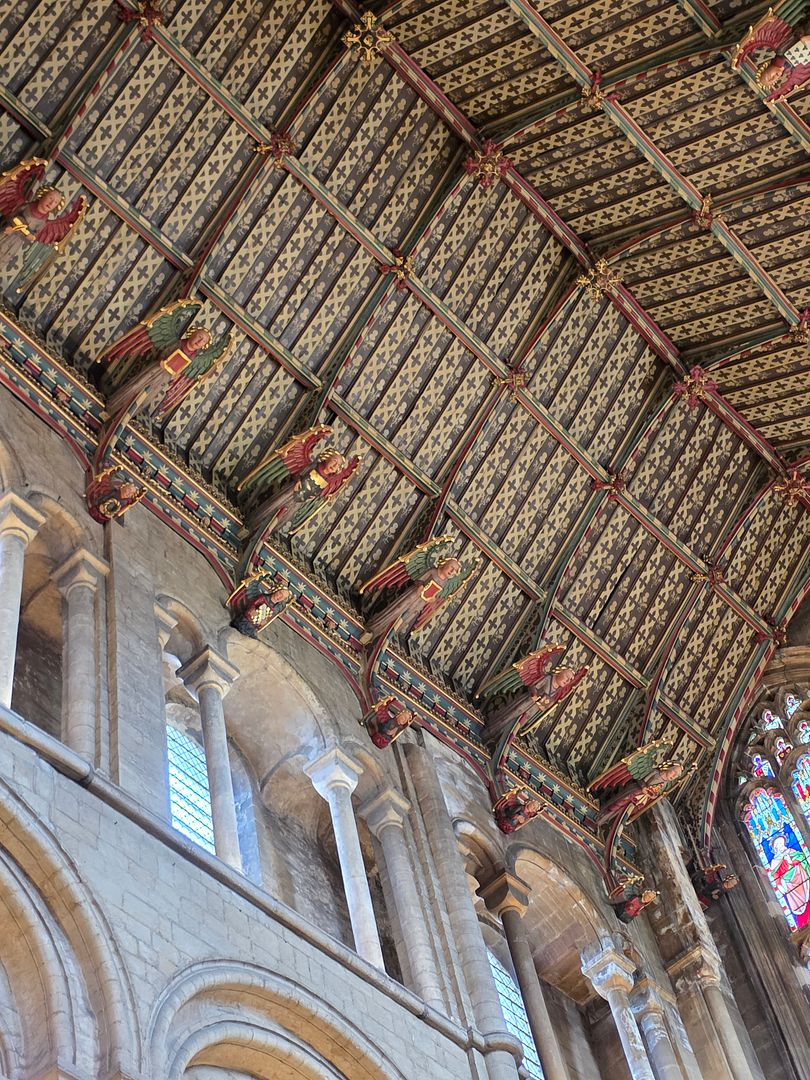
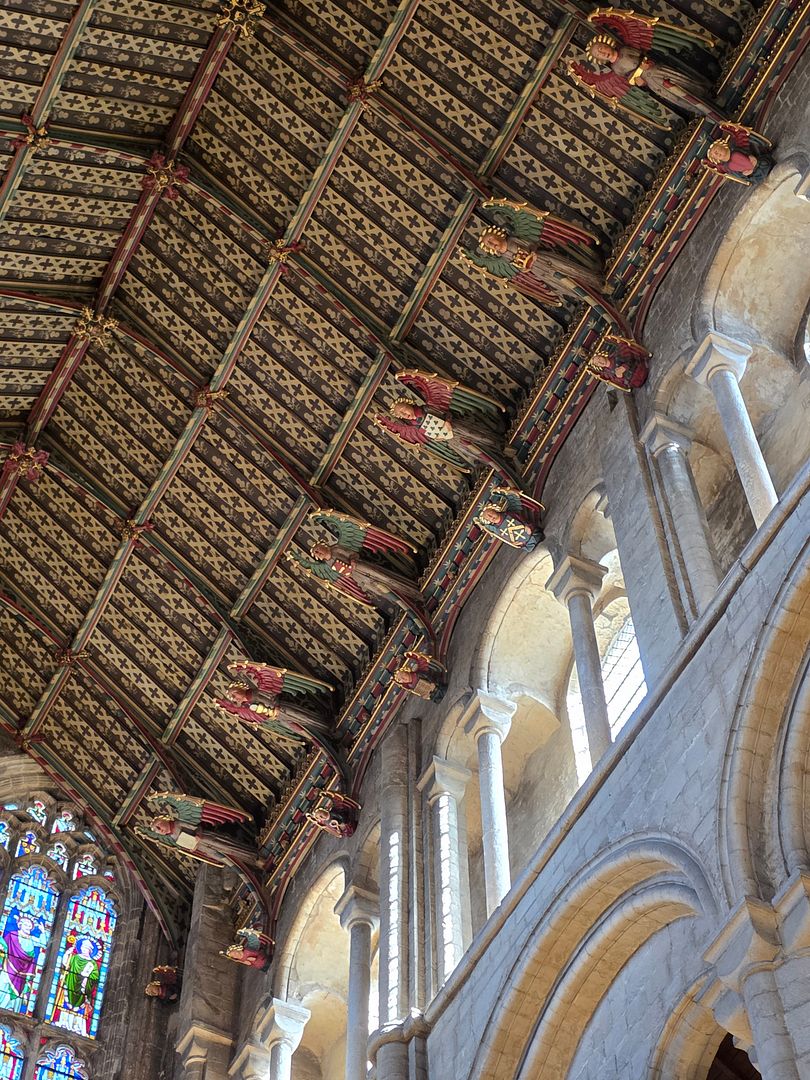
It is almost impossible not to look up when you visit a cathedral. I liked this ceiling section with all the angels looking down. Reminded me of 1 Peter 1:12

“It was revealed to them that they were serving not themselves but you, in the things that have now been announced to you through those who preached the good news to you by the Holy Spirit sent from heaven, things into which angels long to look.”
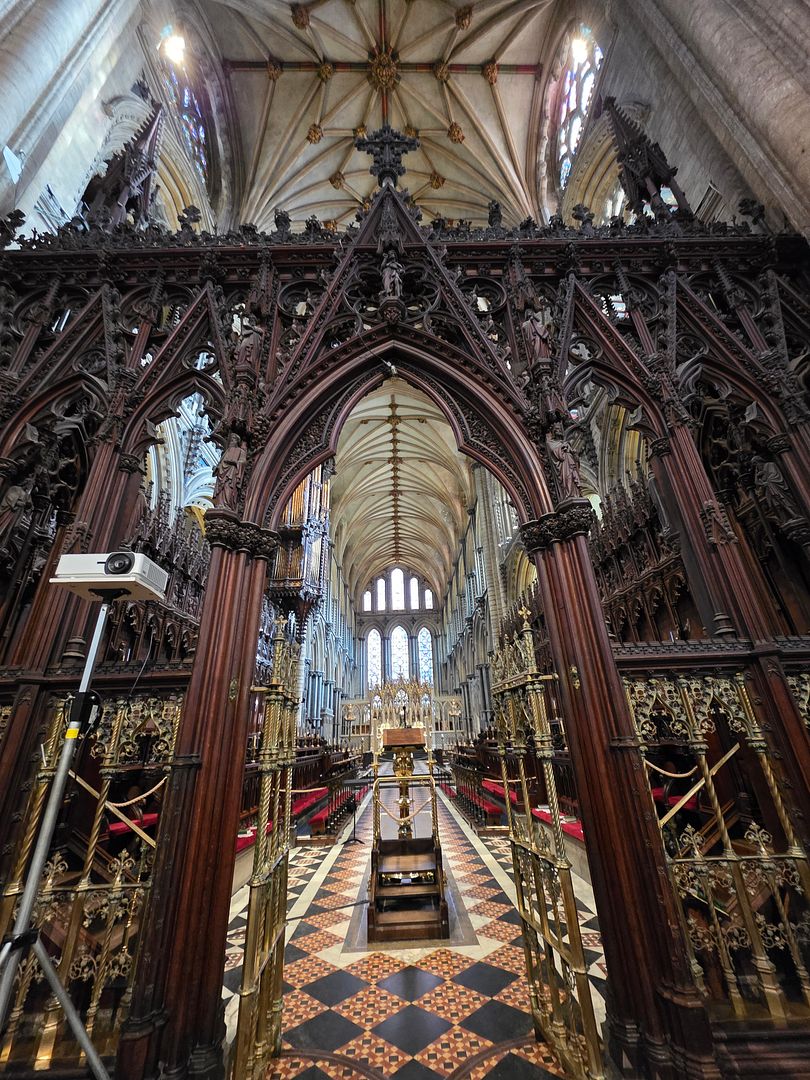
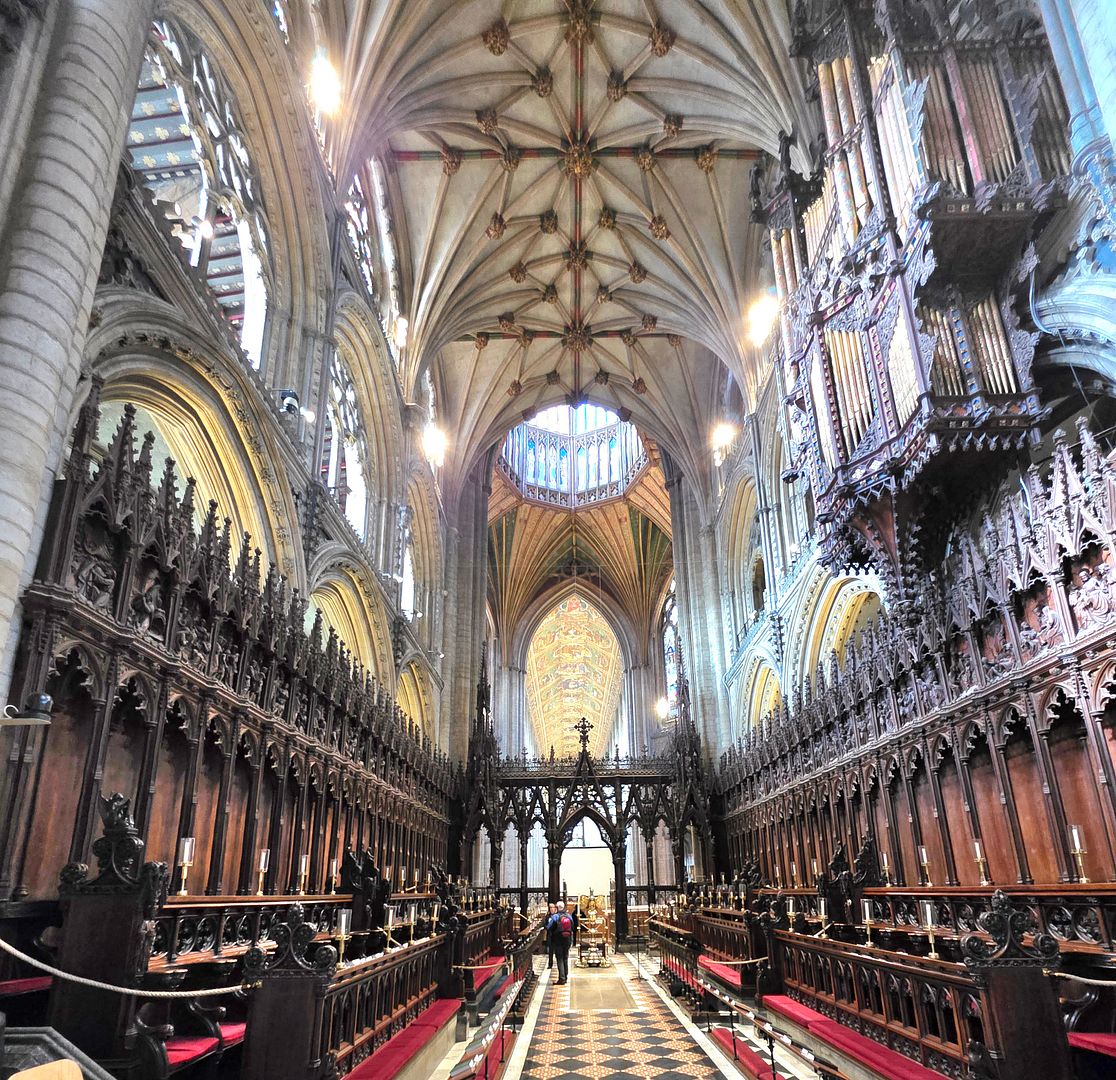
Looking into the Quire.

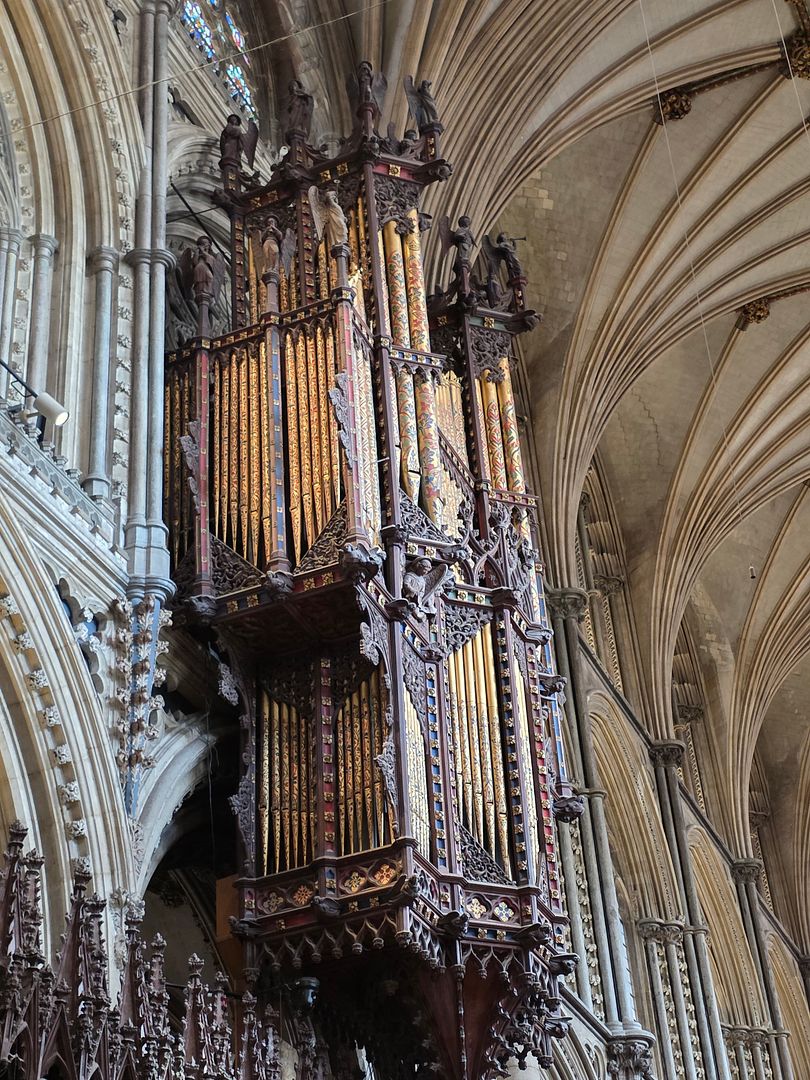
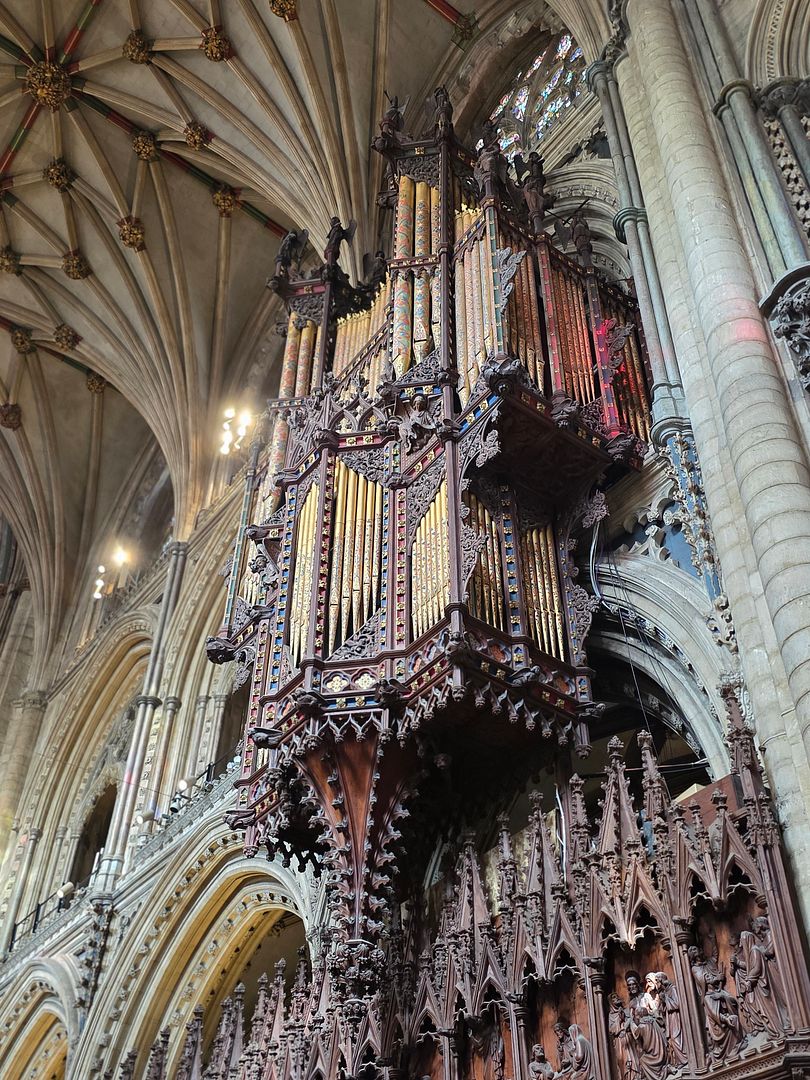
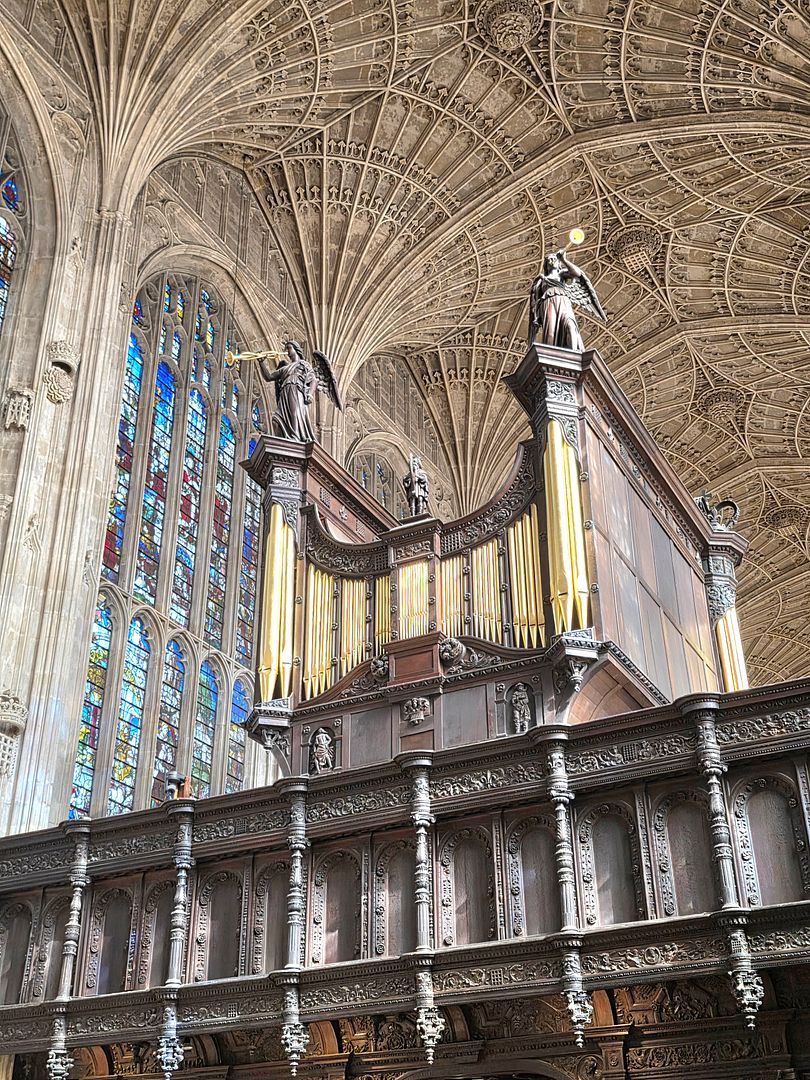
These ornate organ pipes were fascinating to me.

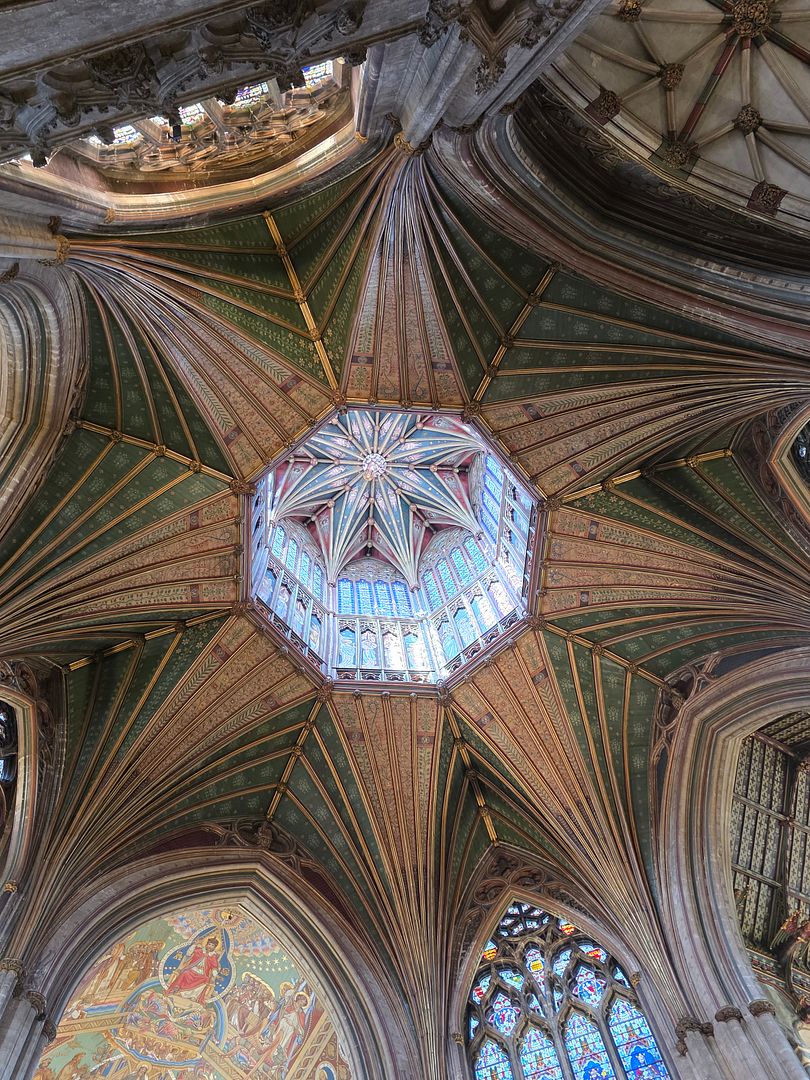
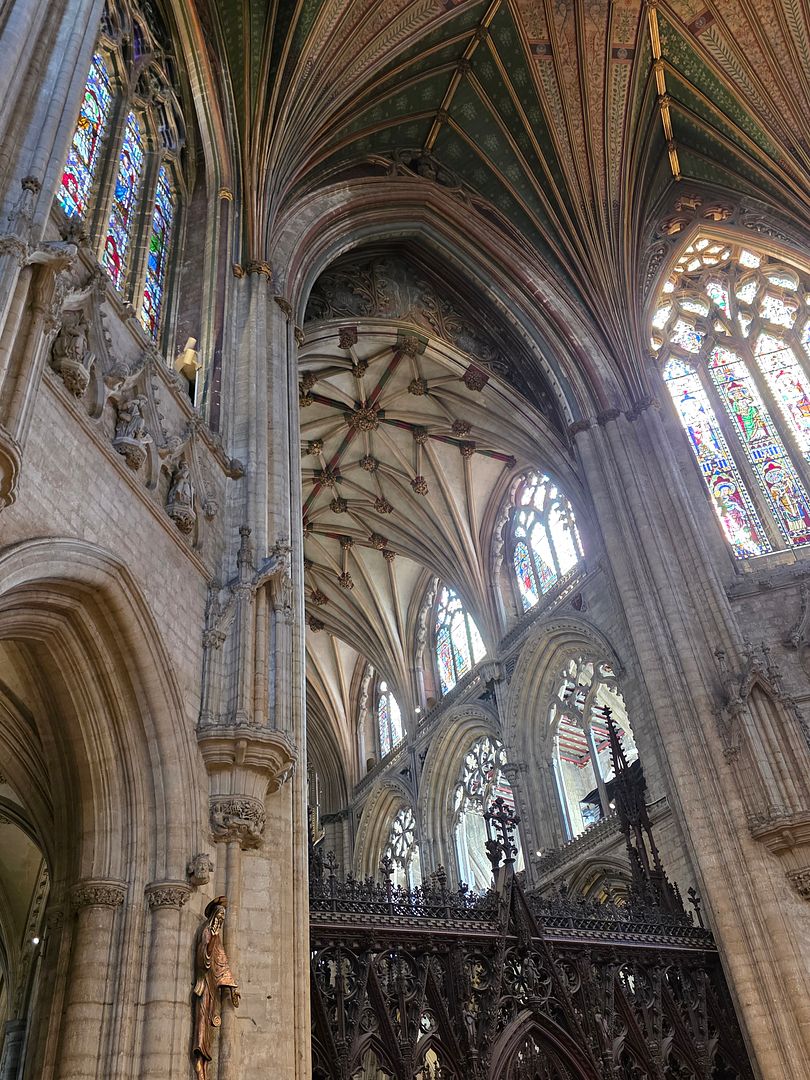
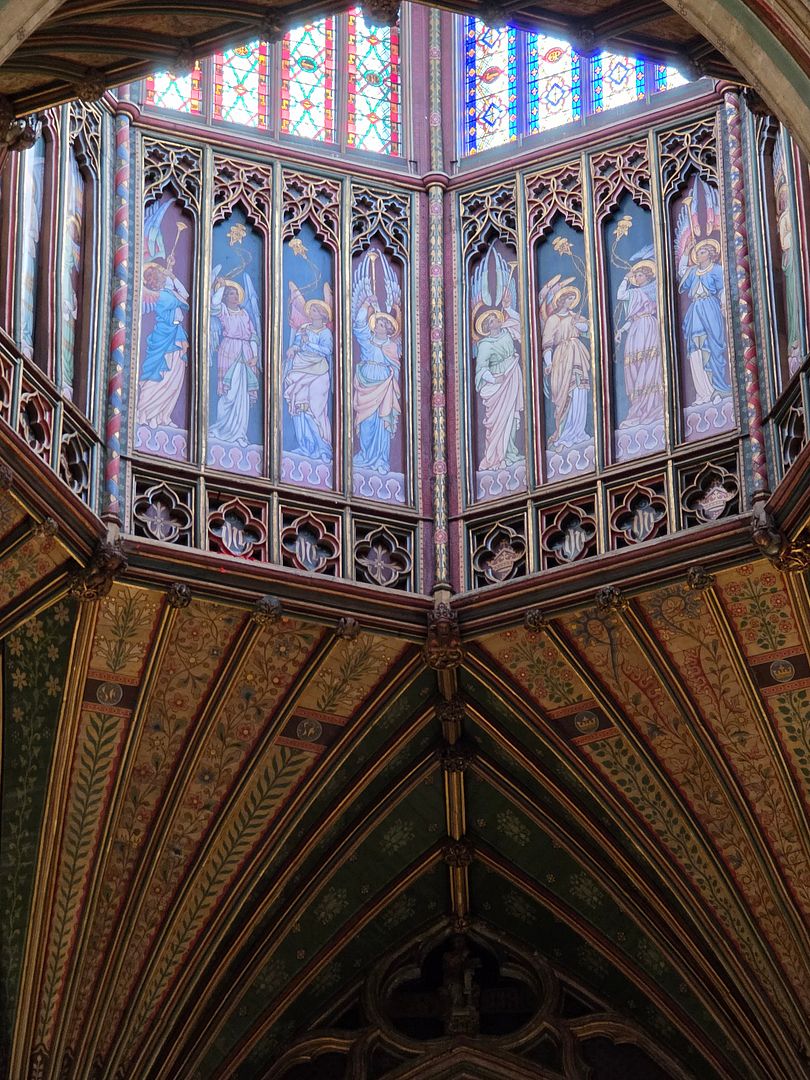
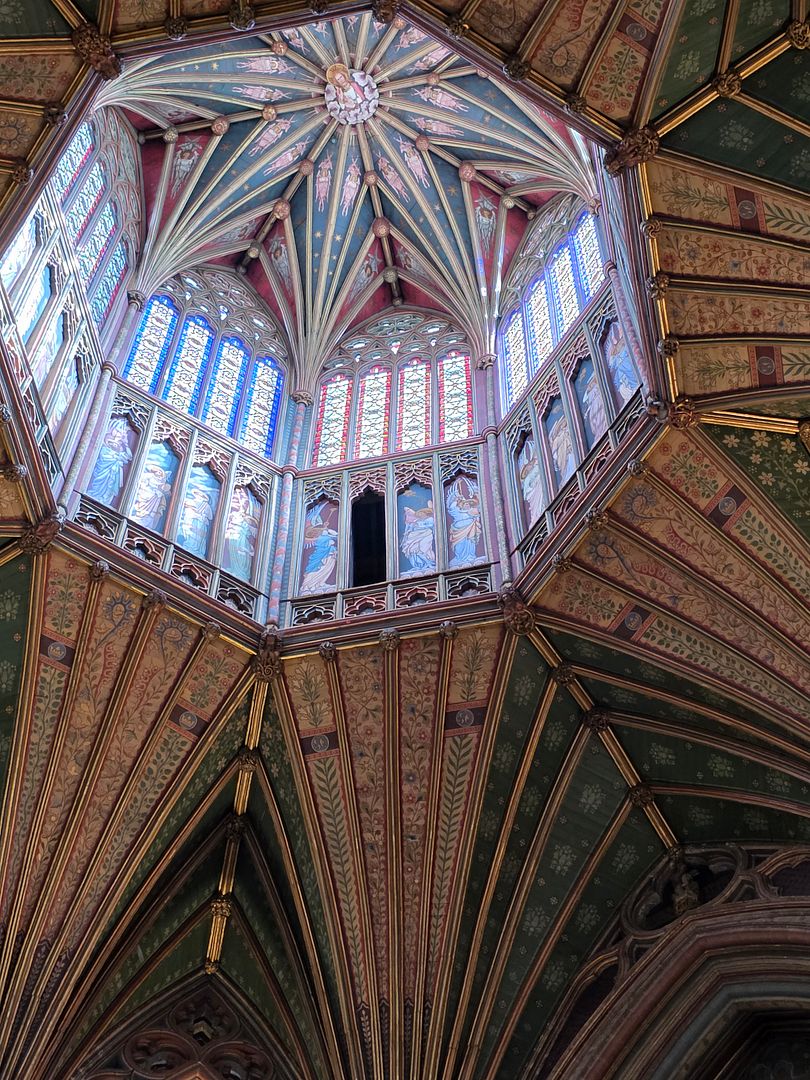
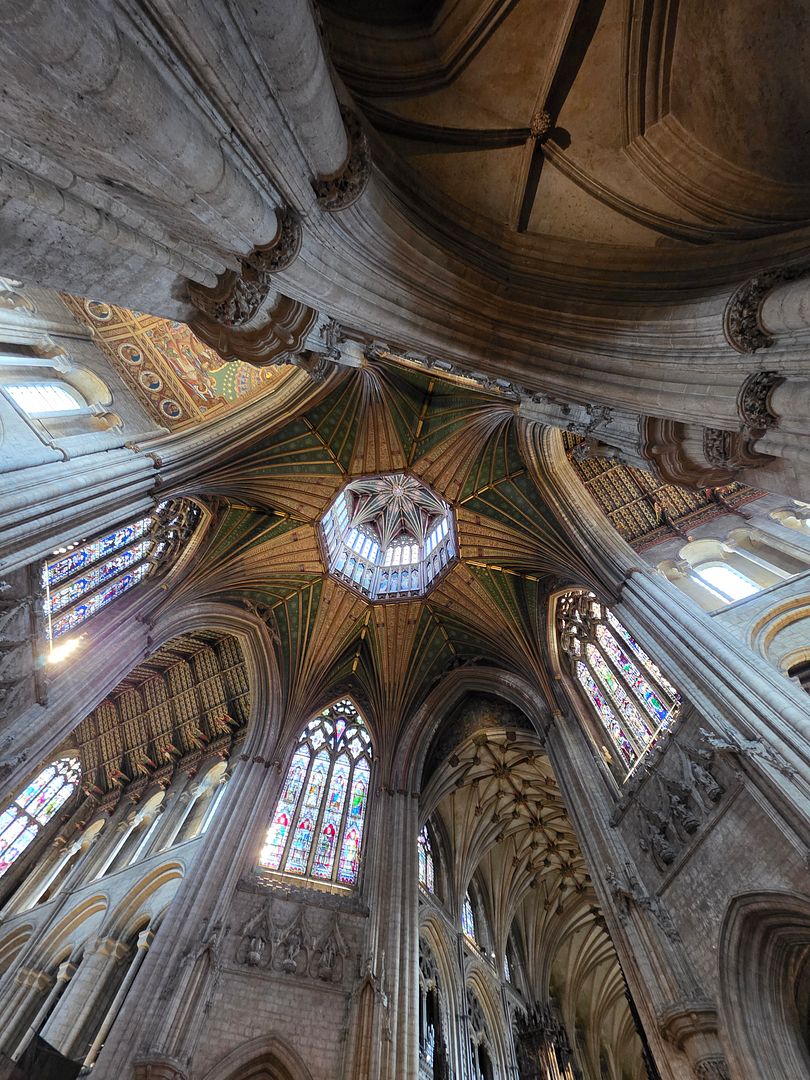
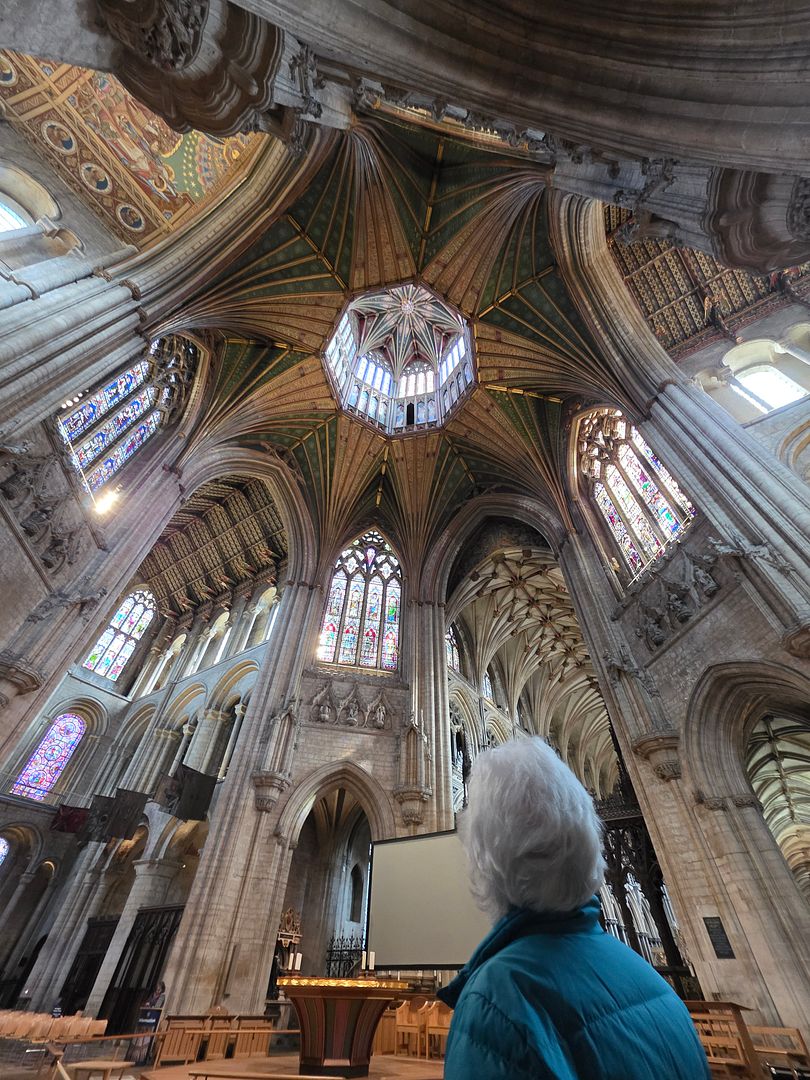
The jewel of Ely’s Crown and acknowledged as one of the wonders of the Medieval world is the Octagan.

You can read more about the Octagon here.

That is not a missing panel but a door opening.

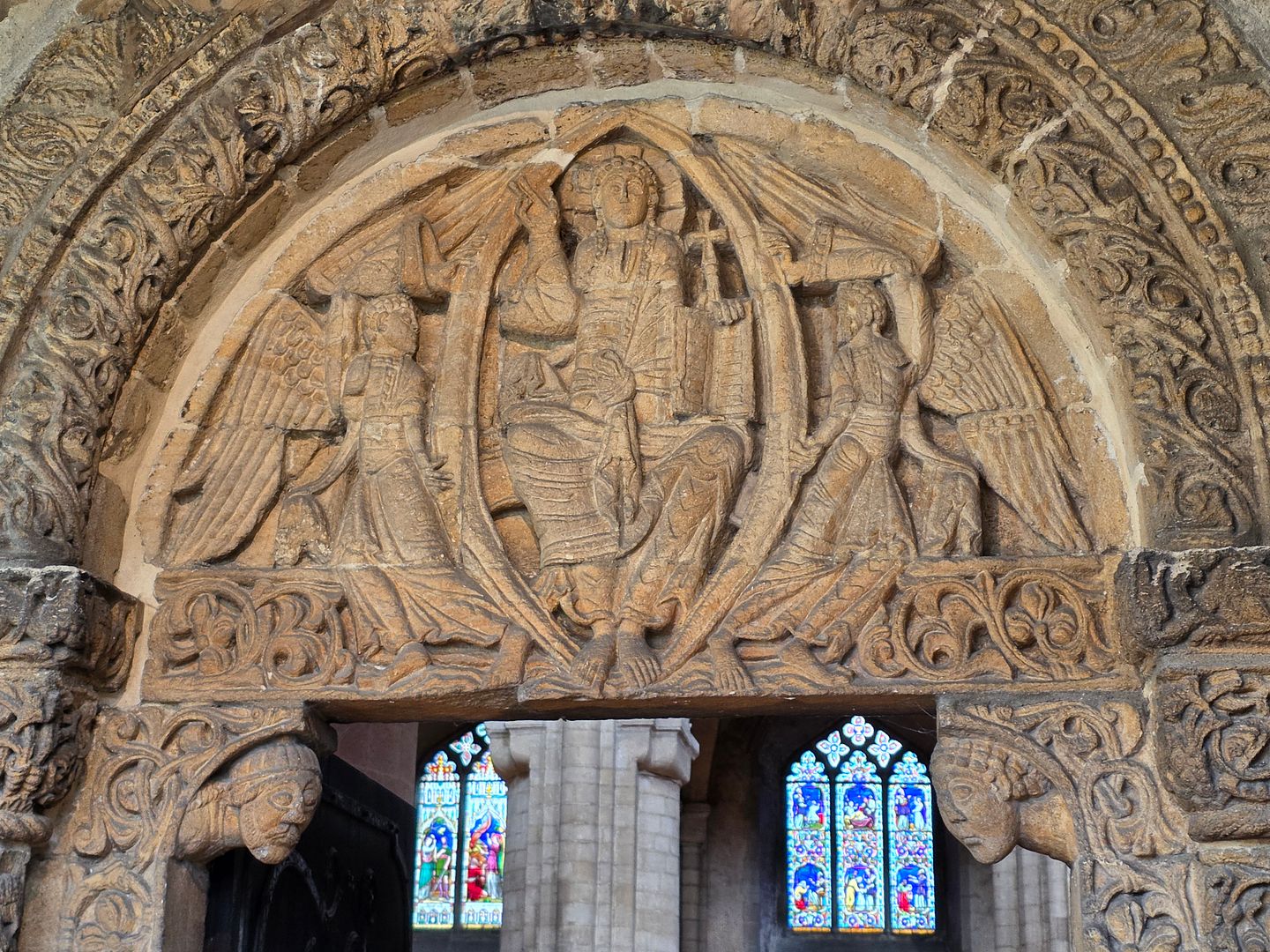
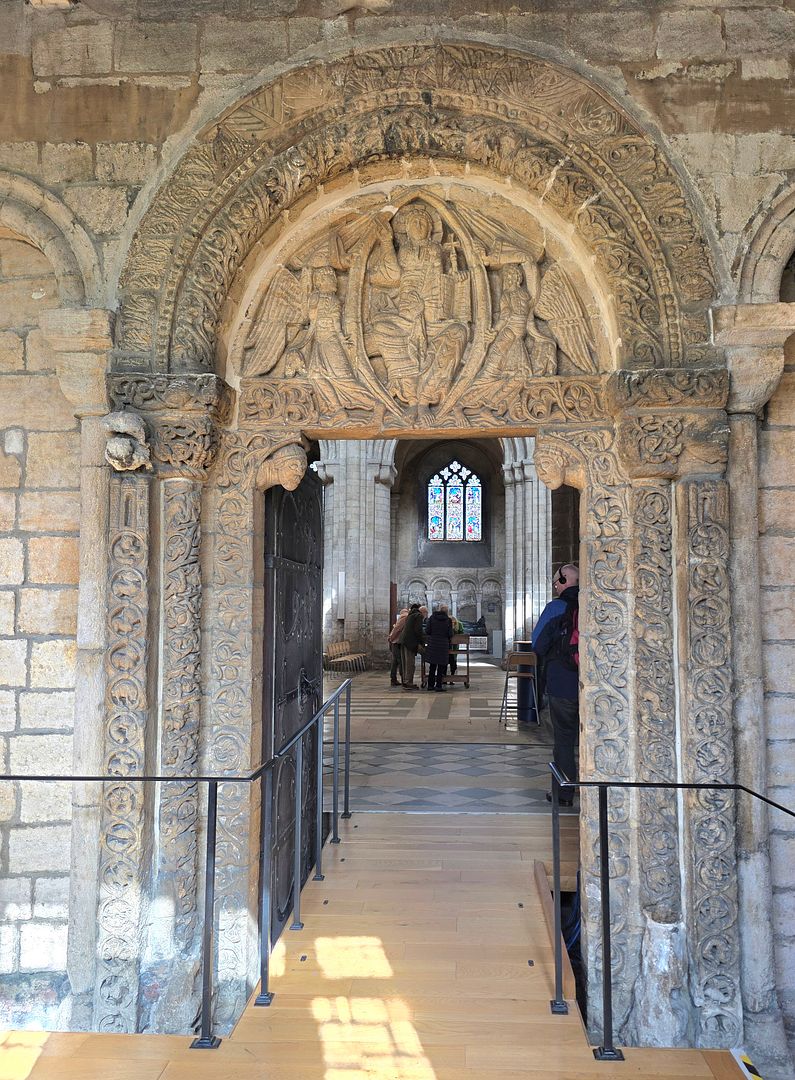
Our guide gave us important details about this doorway and I found more information here. They call this the Prior’s door (c.1135). A Romanesque carved doorway.

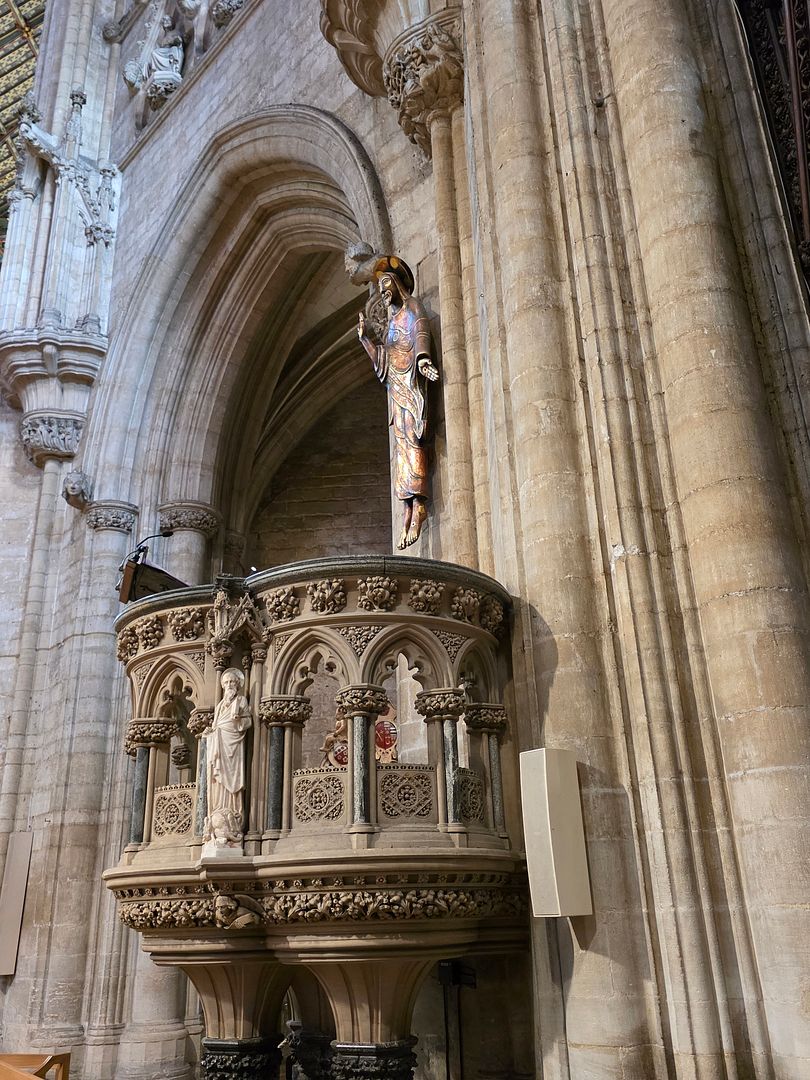
The Christ figure is contained within a mandorla – an almond shape traditionally used to frame images of the transcendent. Here Christ’s feet cross the boundary of the mandorla, stepping towards mankind.

 Two human heads with pronounced eyes just below the tympanum watch those passing through the door into the church and symbolically entering heaven.

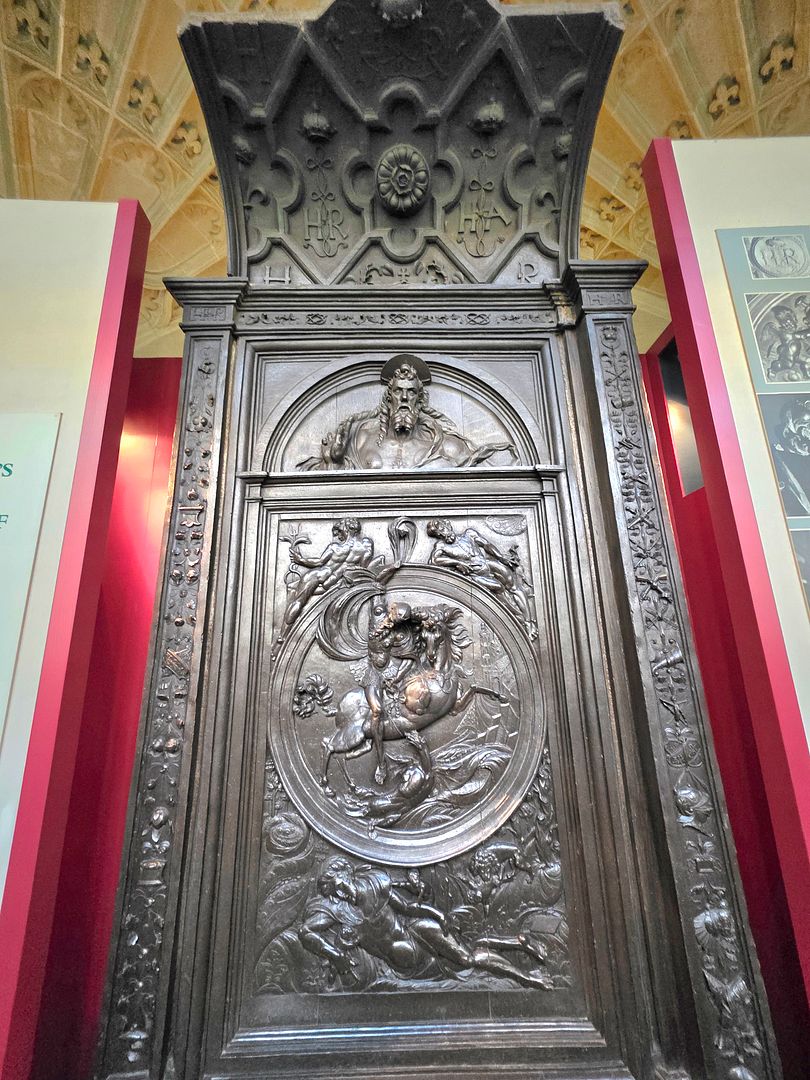
From the link; Like the rest of the building, the deeply carved doorway is sculpted in extremely hard Barnack limestone. It has a tympanum – a half-moon shape at the top – which would originally have been brightly painted. It shows an unusual clean-shaven Christ sitting in judgement on the peoples of the earth. One hand is raised in blessing, the other holds the Book of Judgement from Revelation.

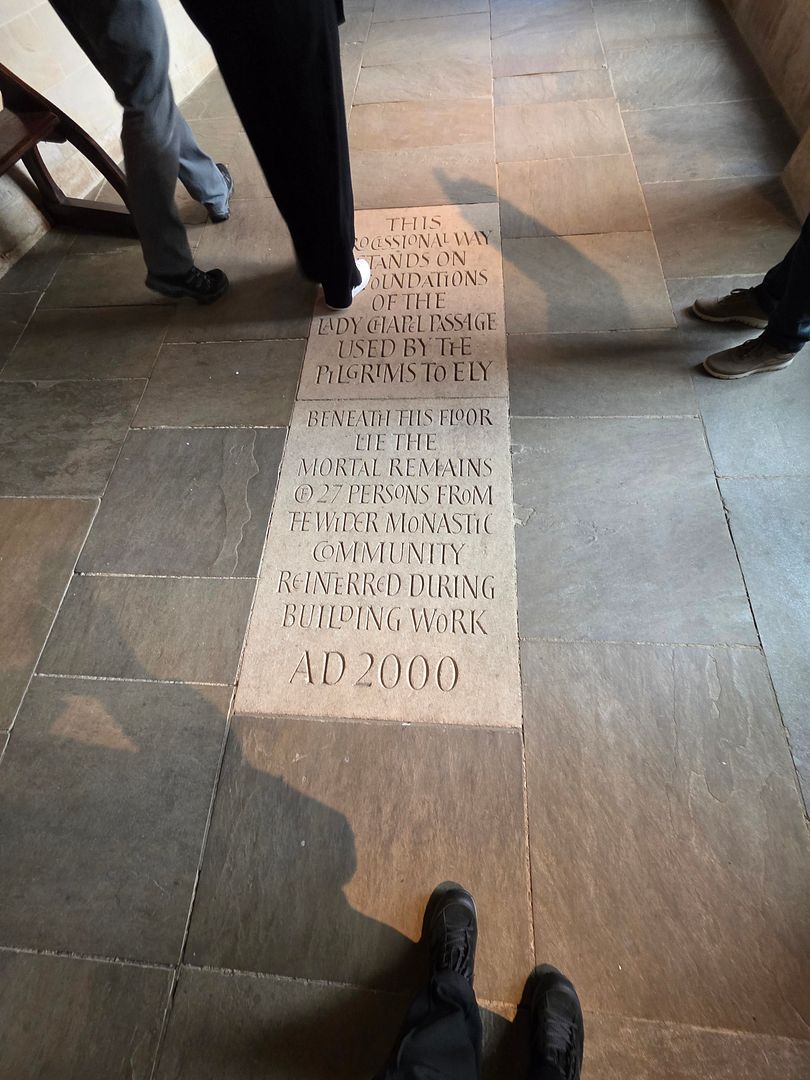
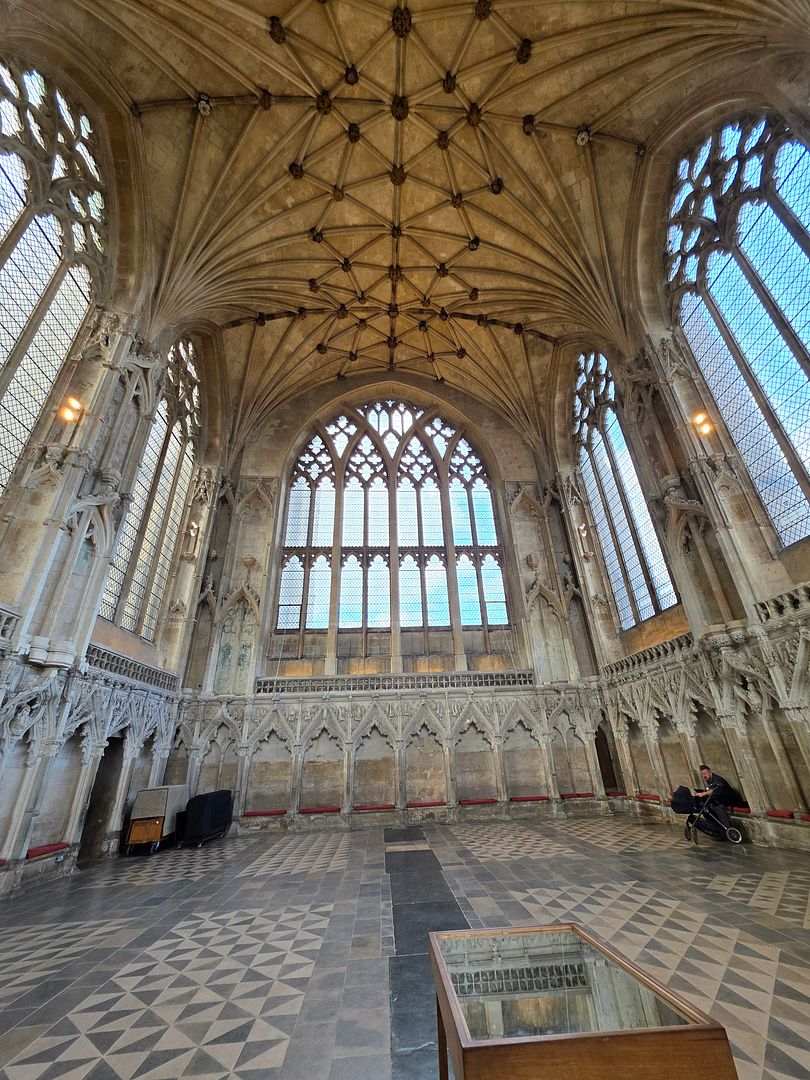
Processional Way (below) was built to join the Cathedral and the Lady Chapel.

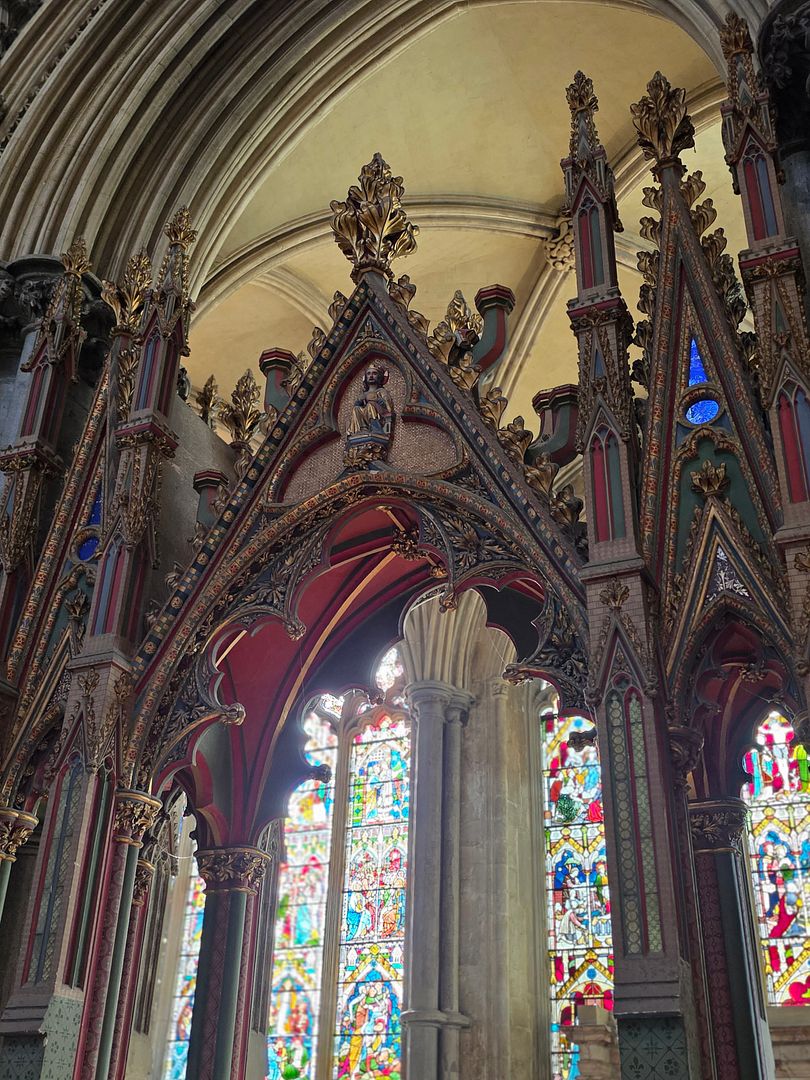
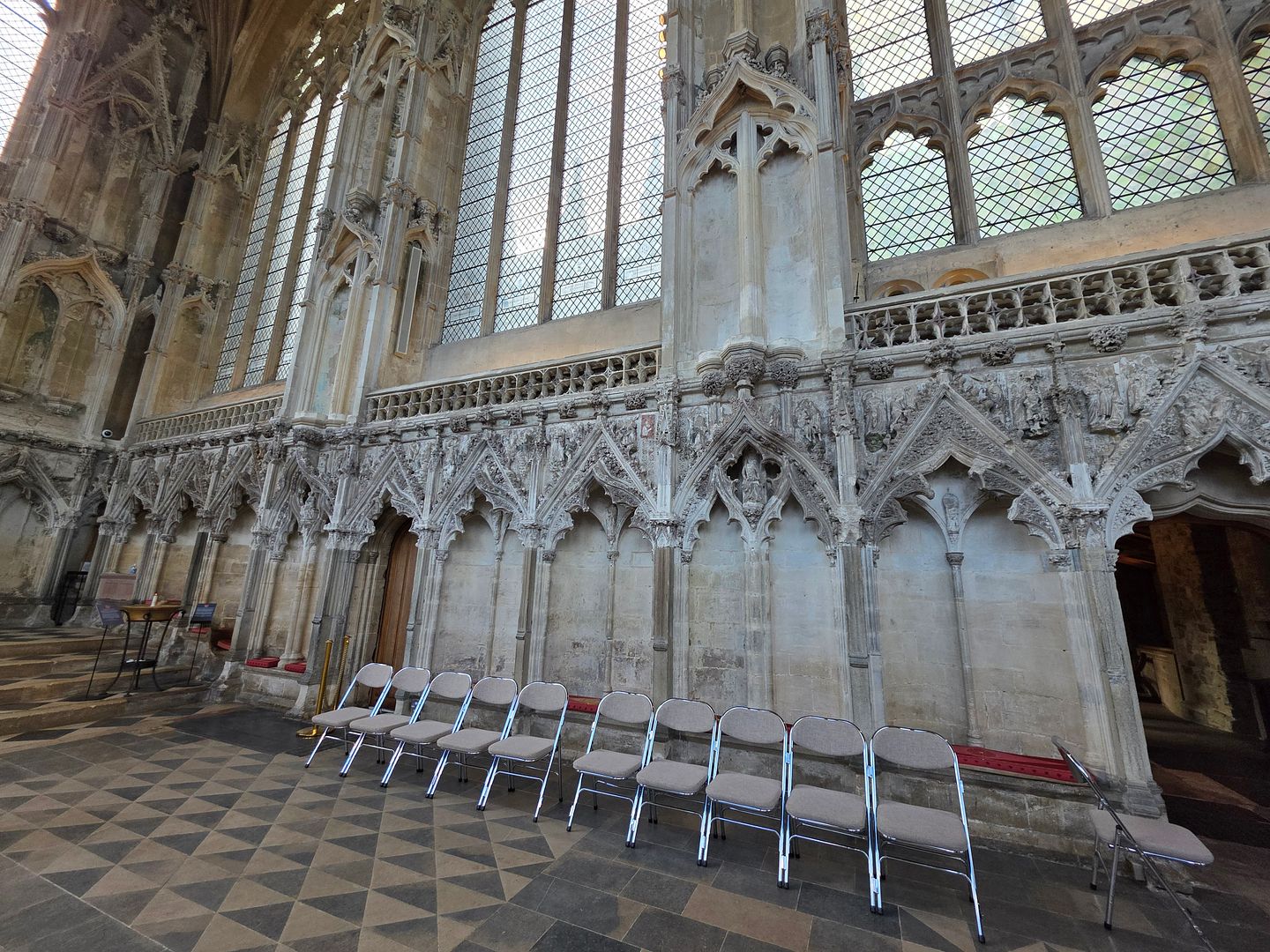
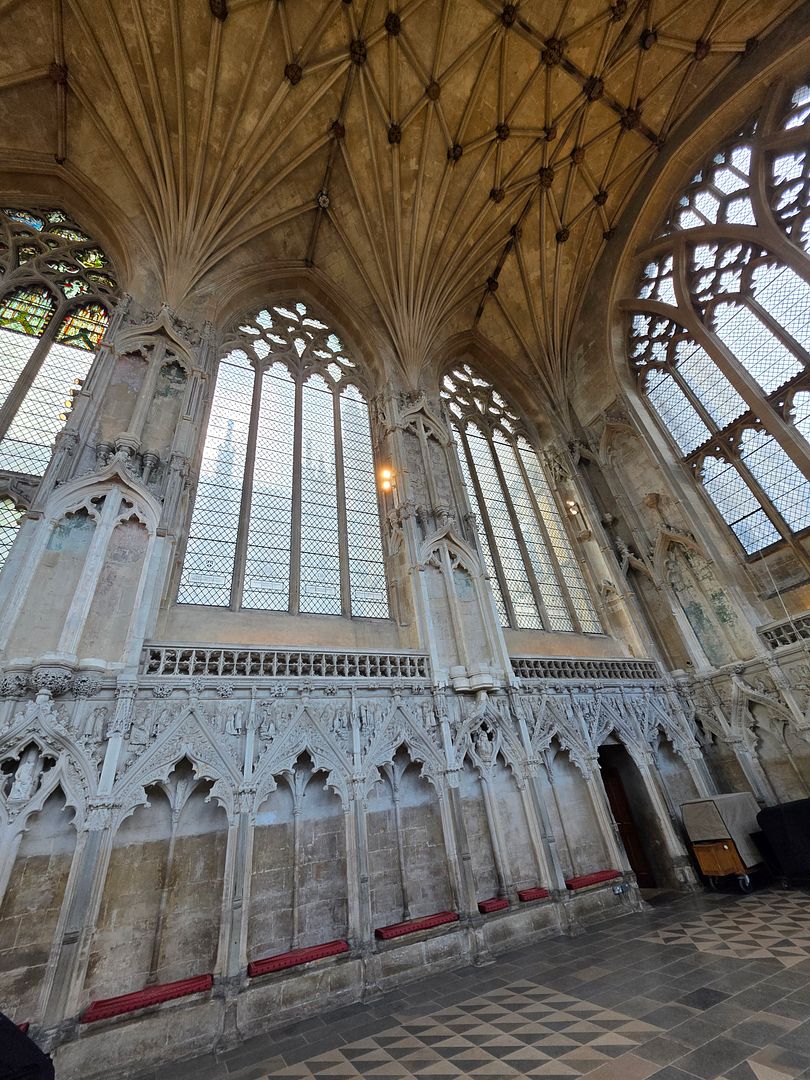
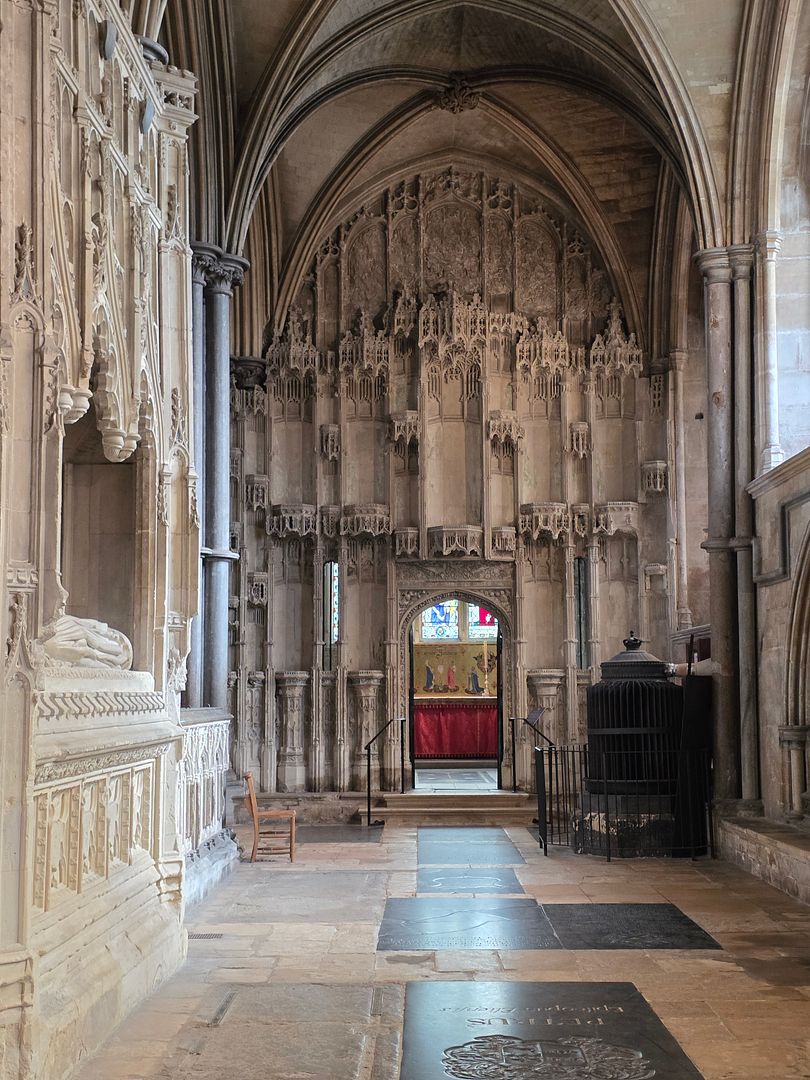
We were now entering the Lady Chapel, the largest Lady Chapel attached to any British Cathedral. I copied the following from Ely Cathedral’s Website.

The thirteenth and fourteenth centuries saw the rise of the cult of the Virgin Mary, and chapels in her honour were added to many churches and cathedrals, including Ely.

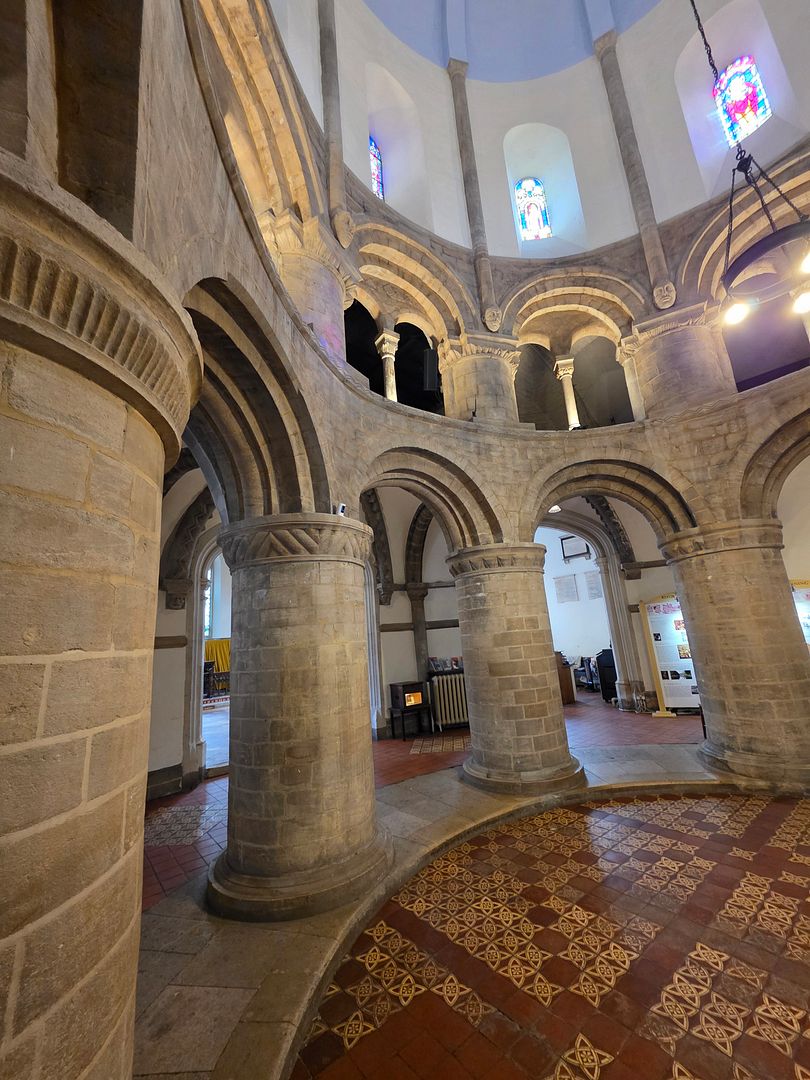
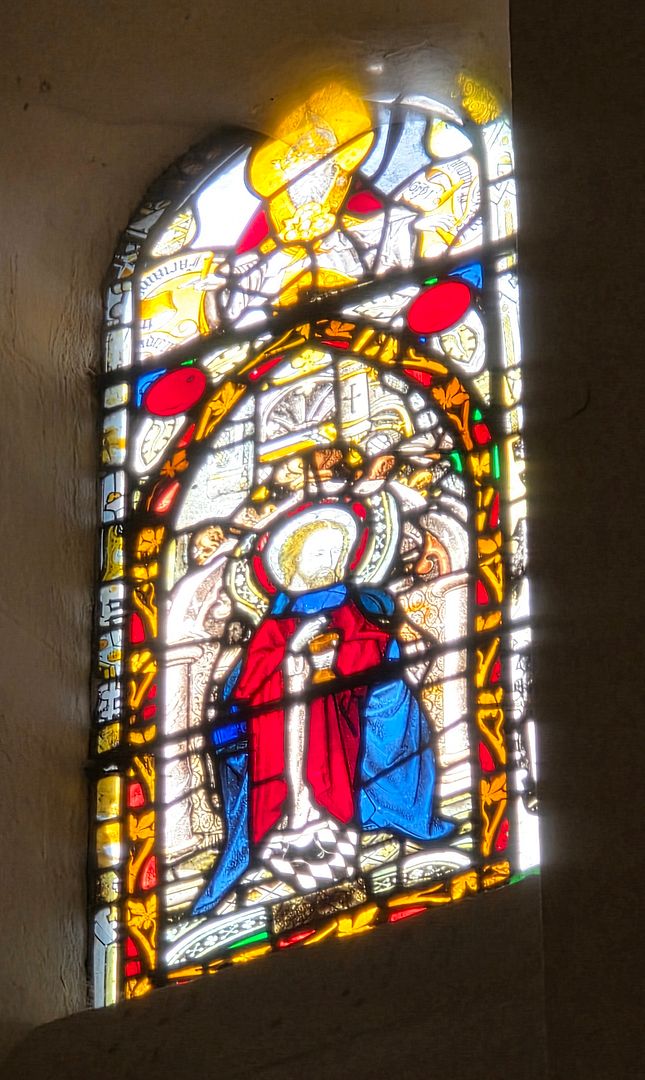
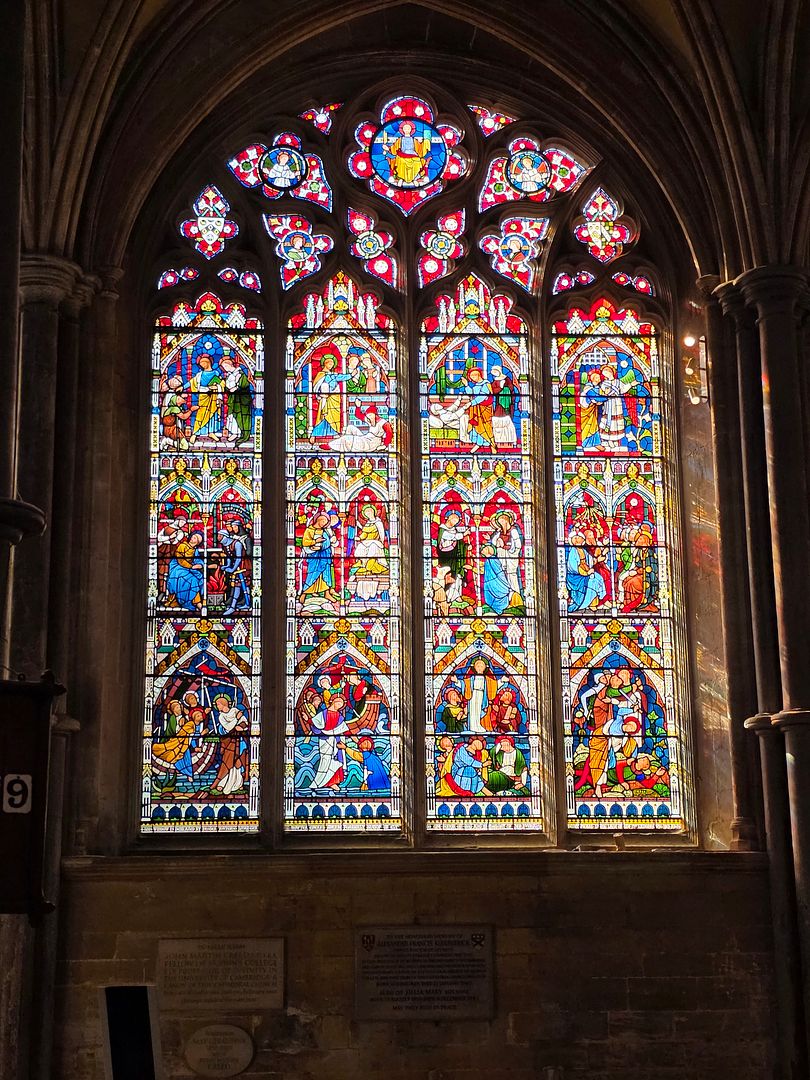
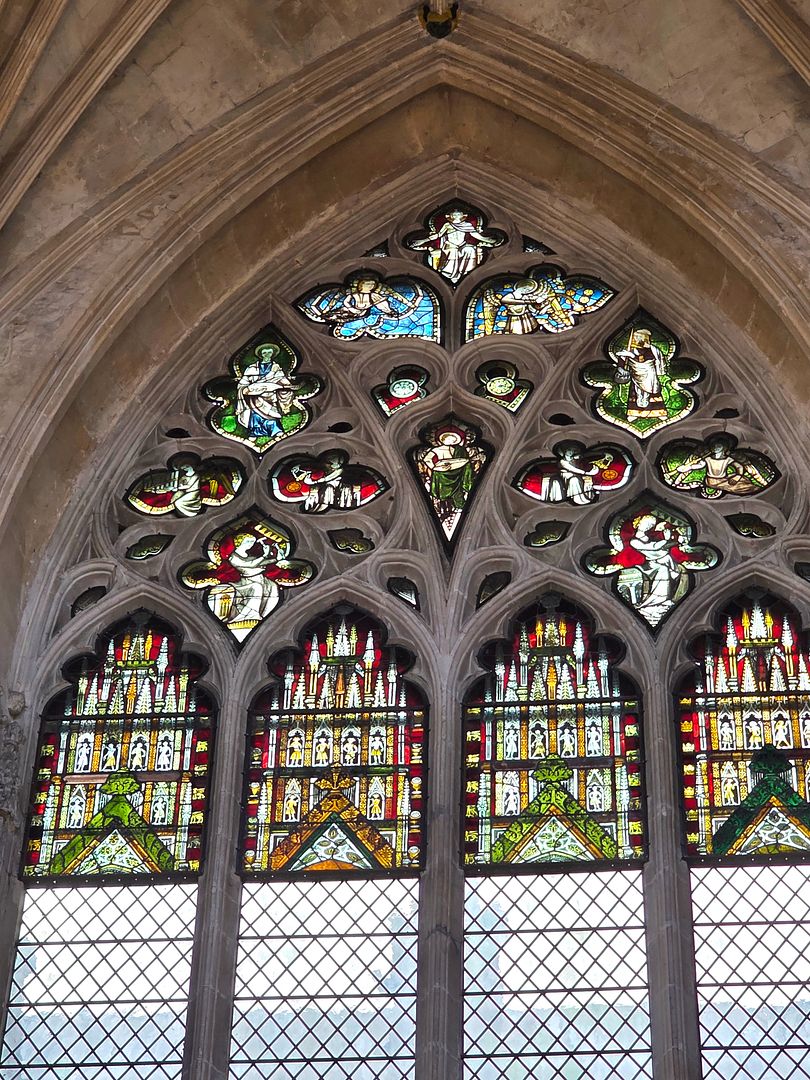
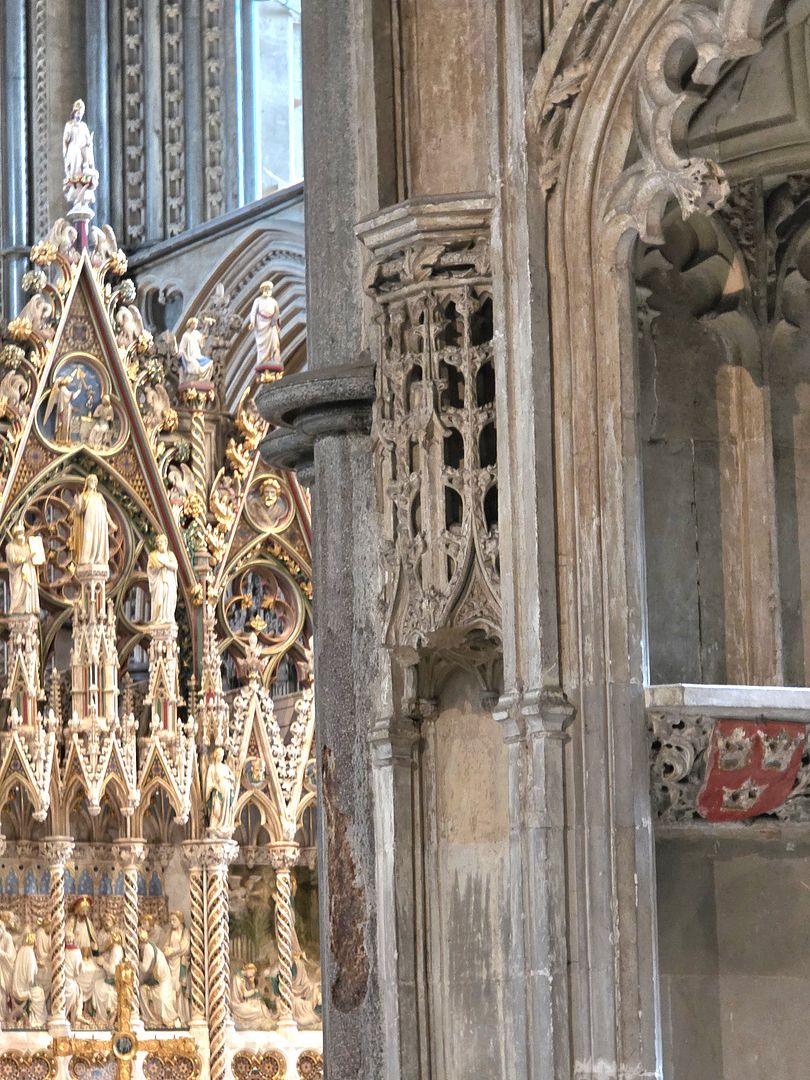
All this was destroyed in the sixteenth century during the Reformation, which, in keeping with Puritan convictions, rejected all forms of religious decoration. The scars of this deformation are highly visible today. Traces of coloured paint can still be seen, and fragments of the glass survive in the central window on the south side. The exquisite figures in the lower niches have been defaced and above are the empty pedestals where the statues stood.

Walking back into the main sections of the Cathedral.

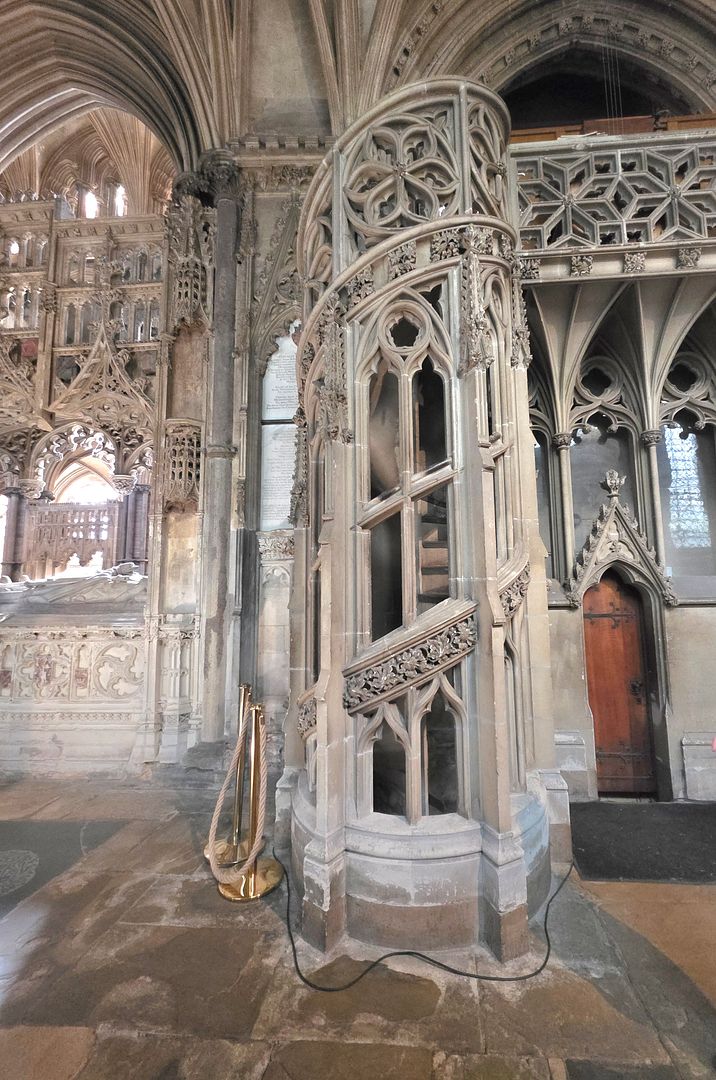
This narrow spiraling stone staircase leads to the organ. Hopefully the organist was slim.


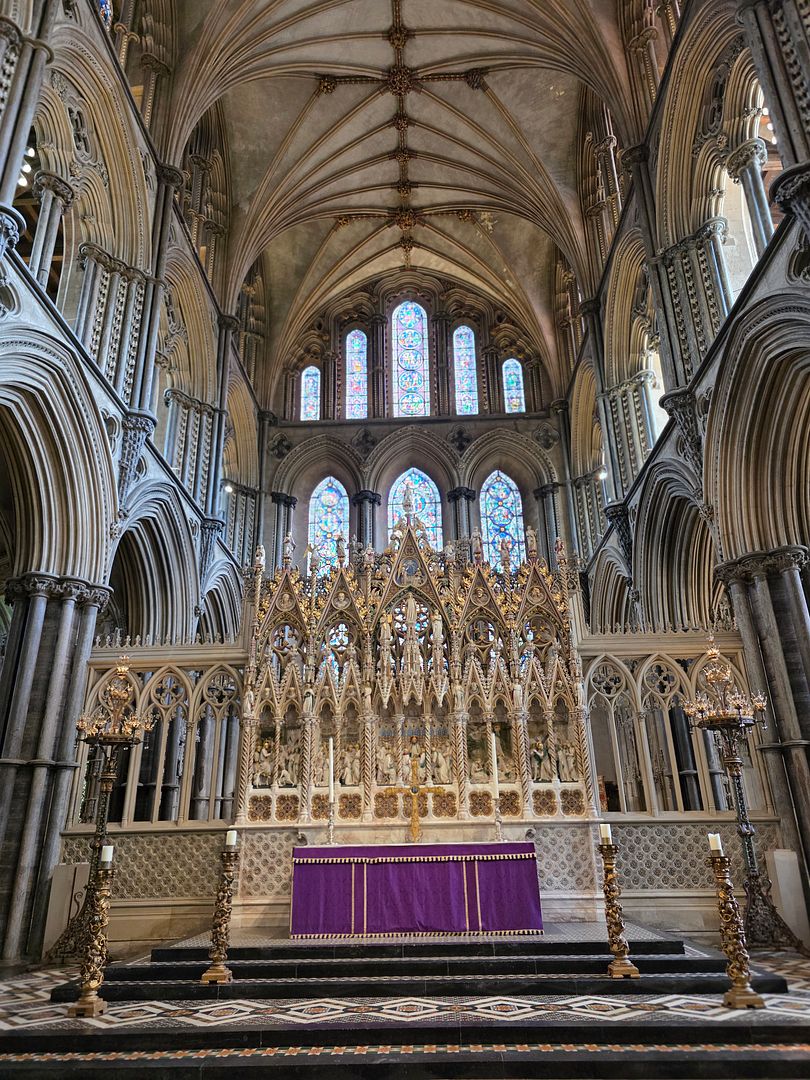
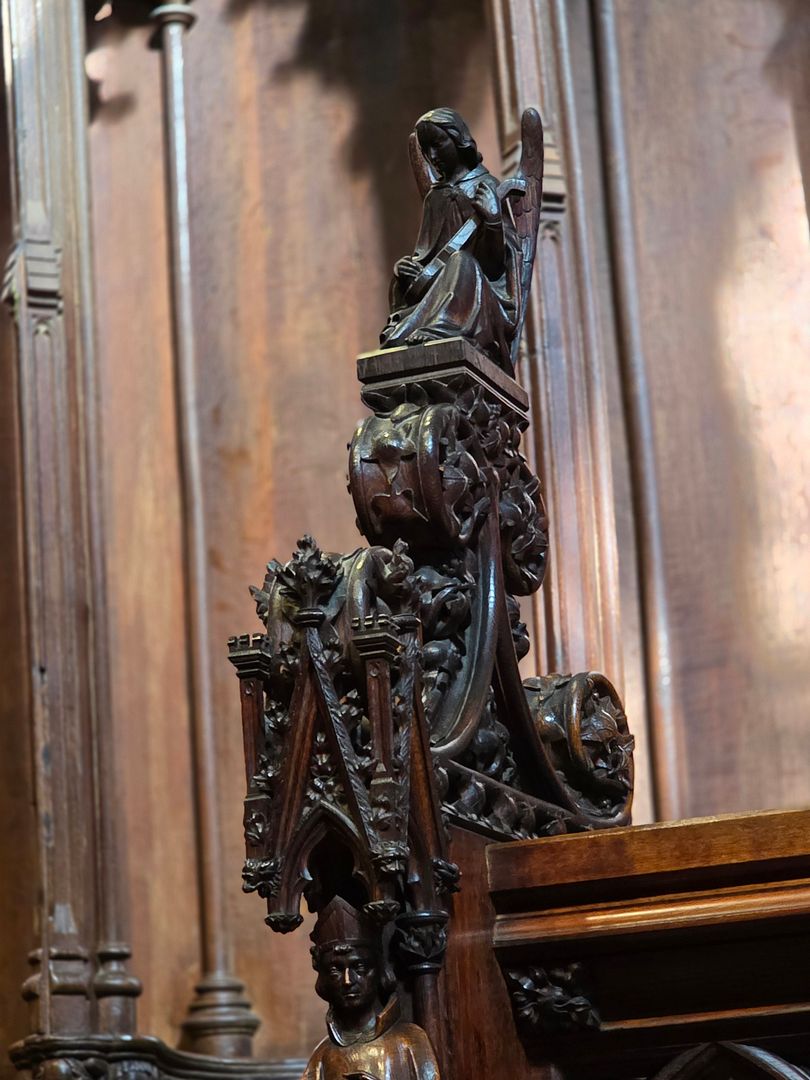
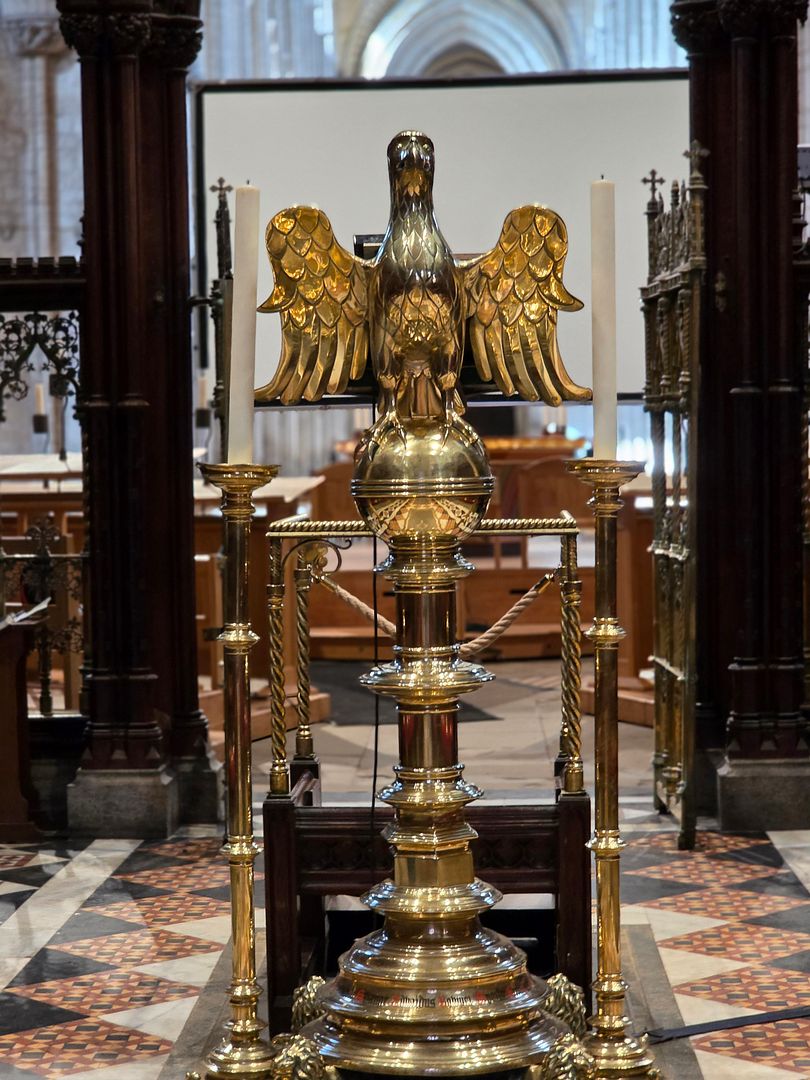
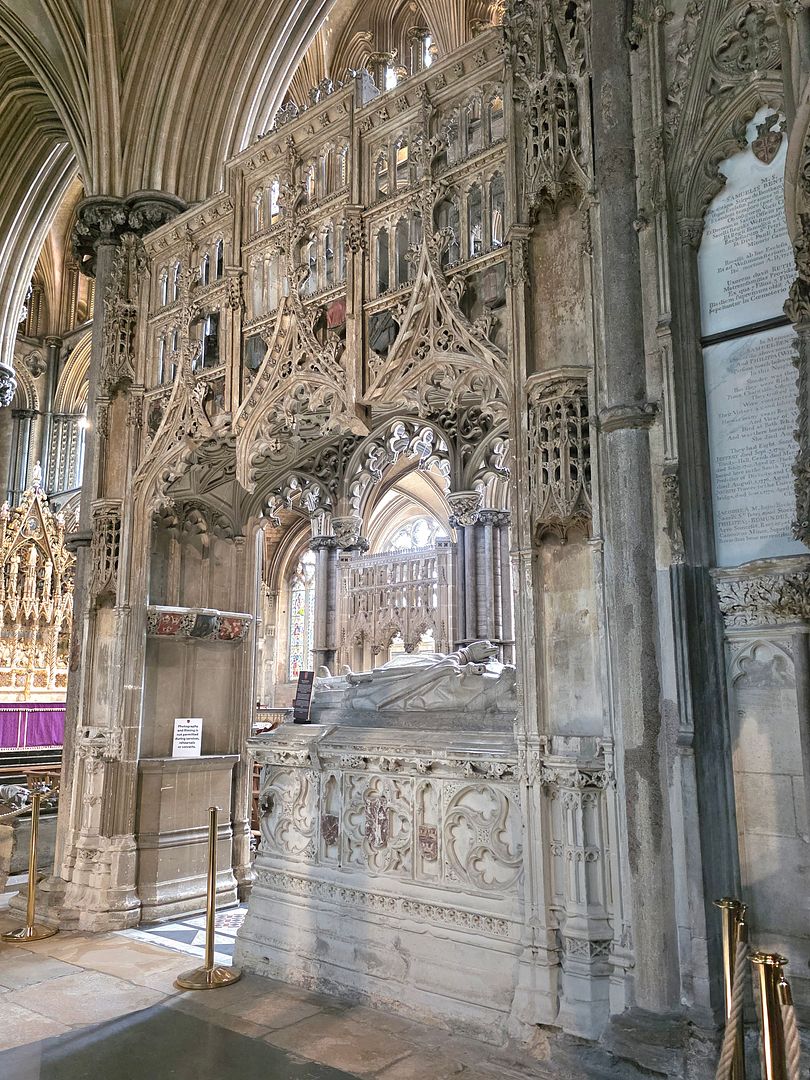
The Quire

So much history and so much to see and take in. I’ve shared enough or maybe too much here today and it would take a few more visits to absorb more.

This was a very long photo journal of the interior of Ely Cathedral. I will save the stained glass museum housed in an upper section of the cathedral for another day.

Cambridge to Ely

Continuing our travel journal from our trip from the Danube to Cambridge in March of 2026.

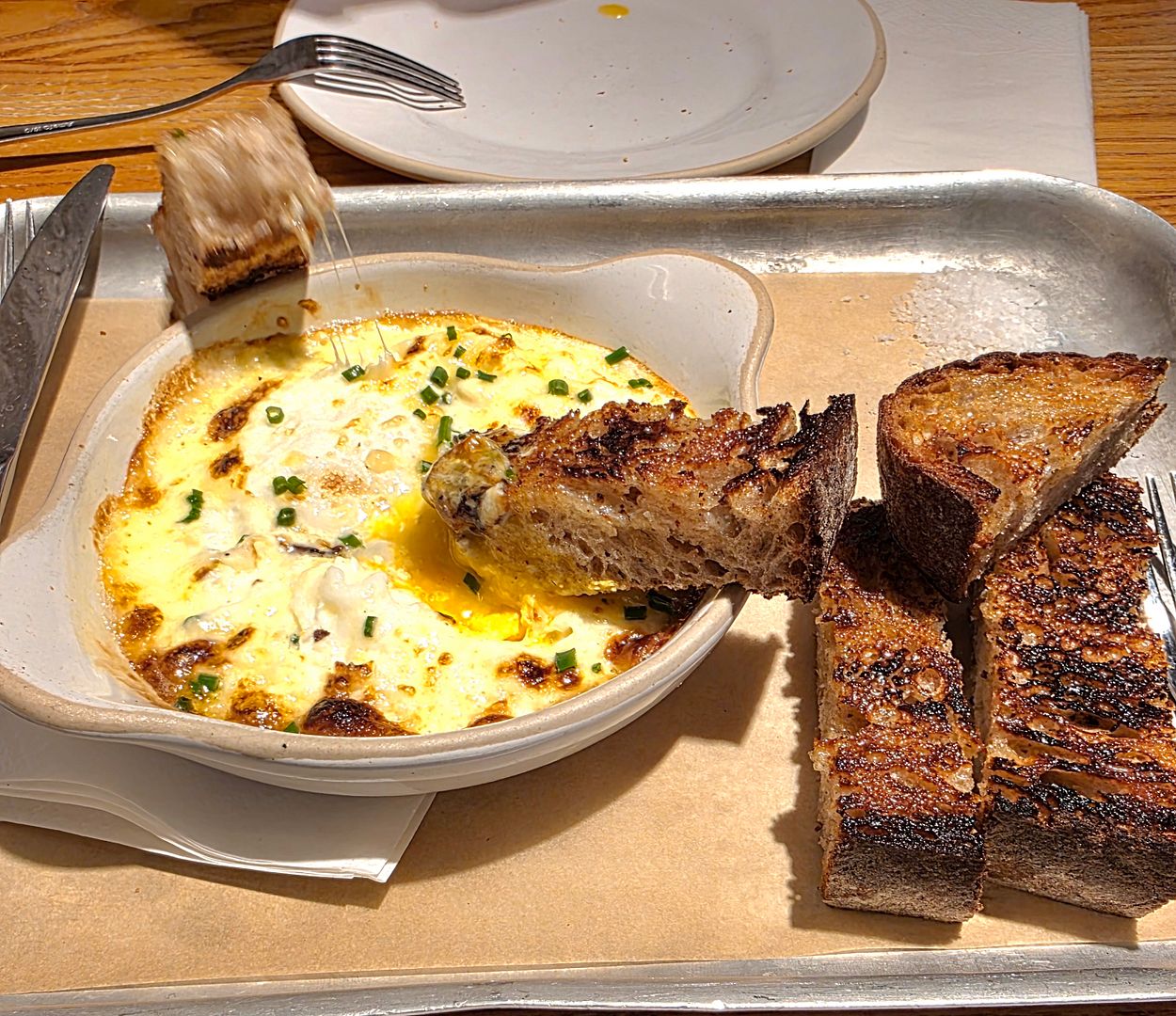
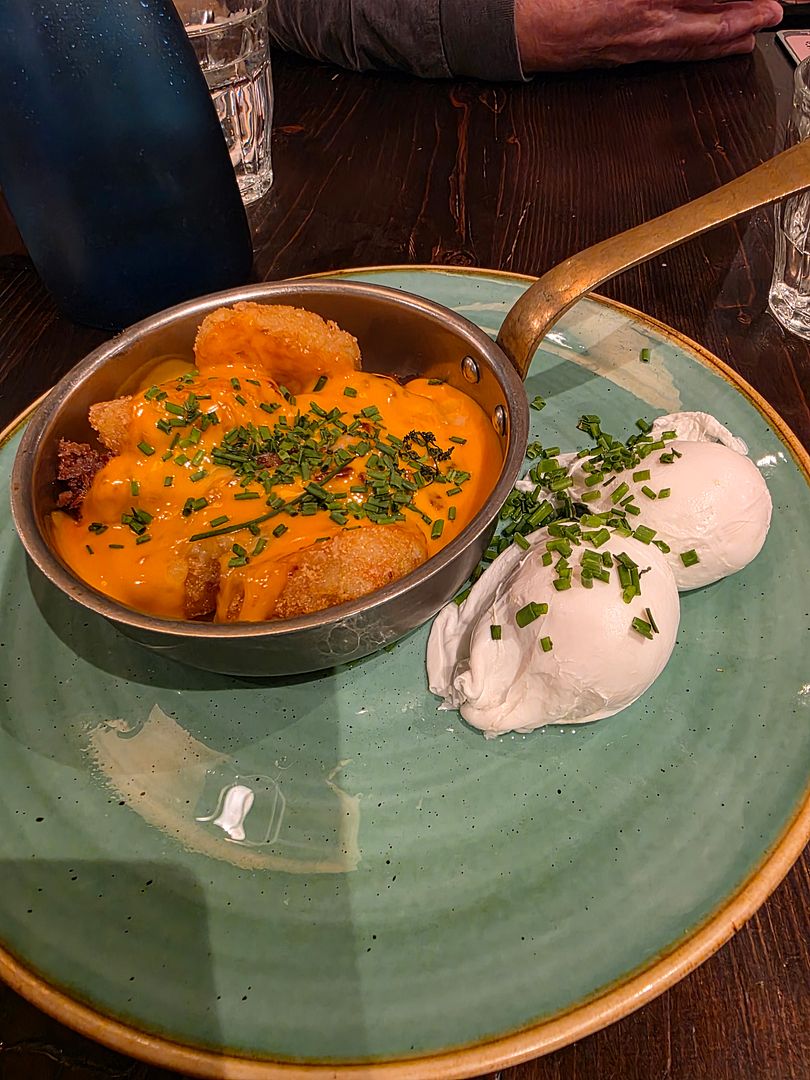
On Wednesday morning March 11th we walked to Bill’s Cambridge restaurant for breakfast before our train ride to Ely.

I know those are poached eggs but I honestly can’t remember what I ordered that came in that skillet…maybe potatoes of some kind. Oye.

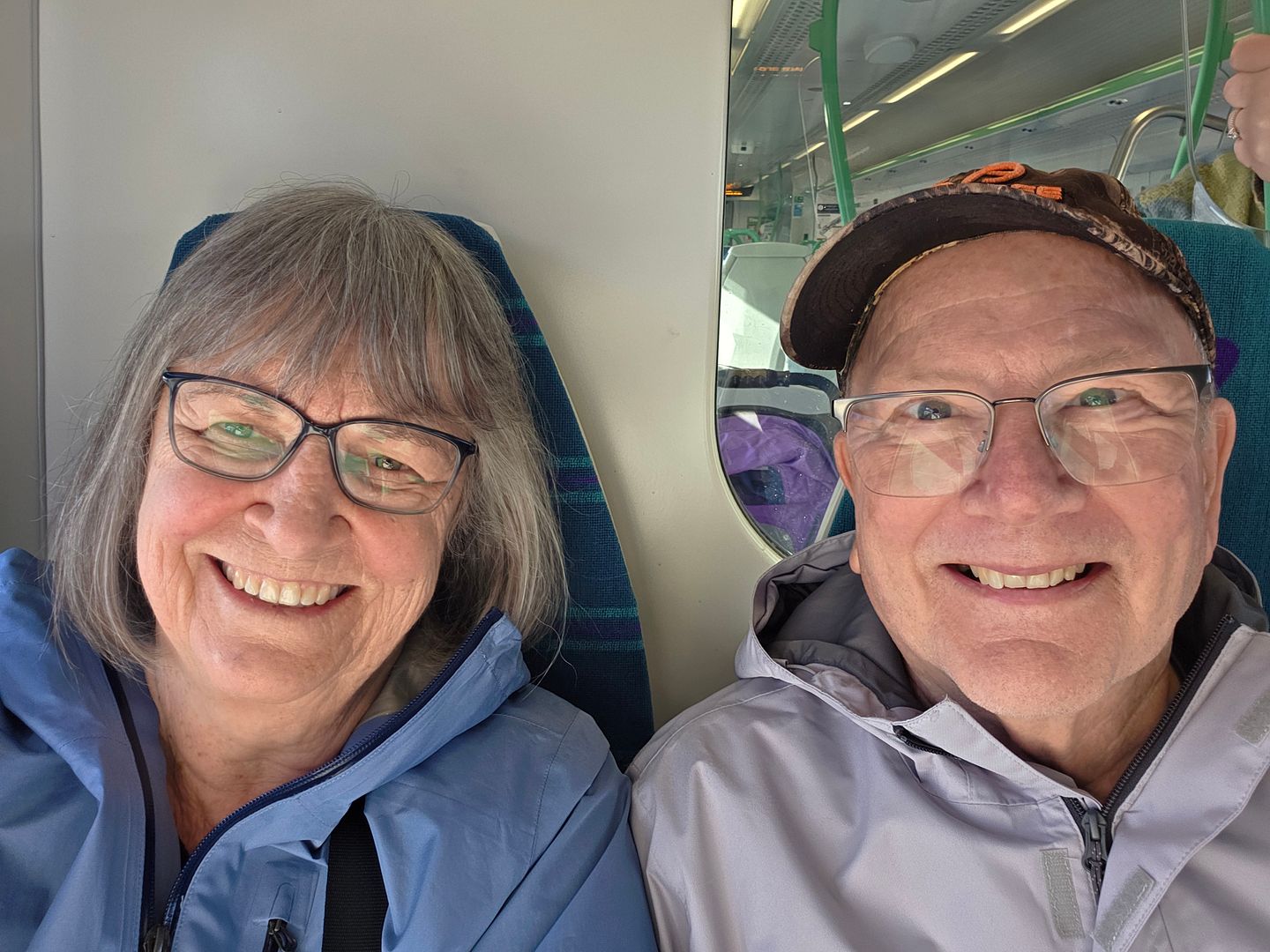
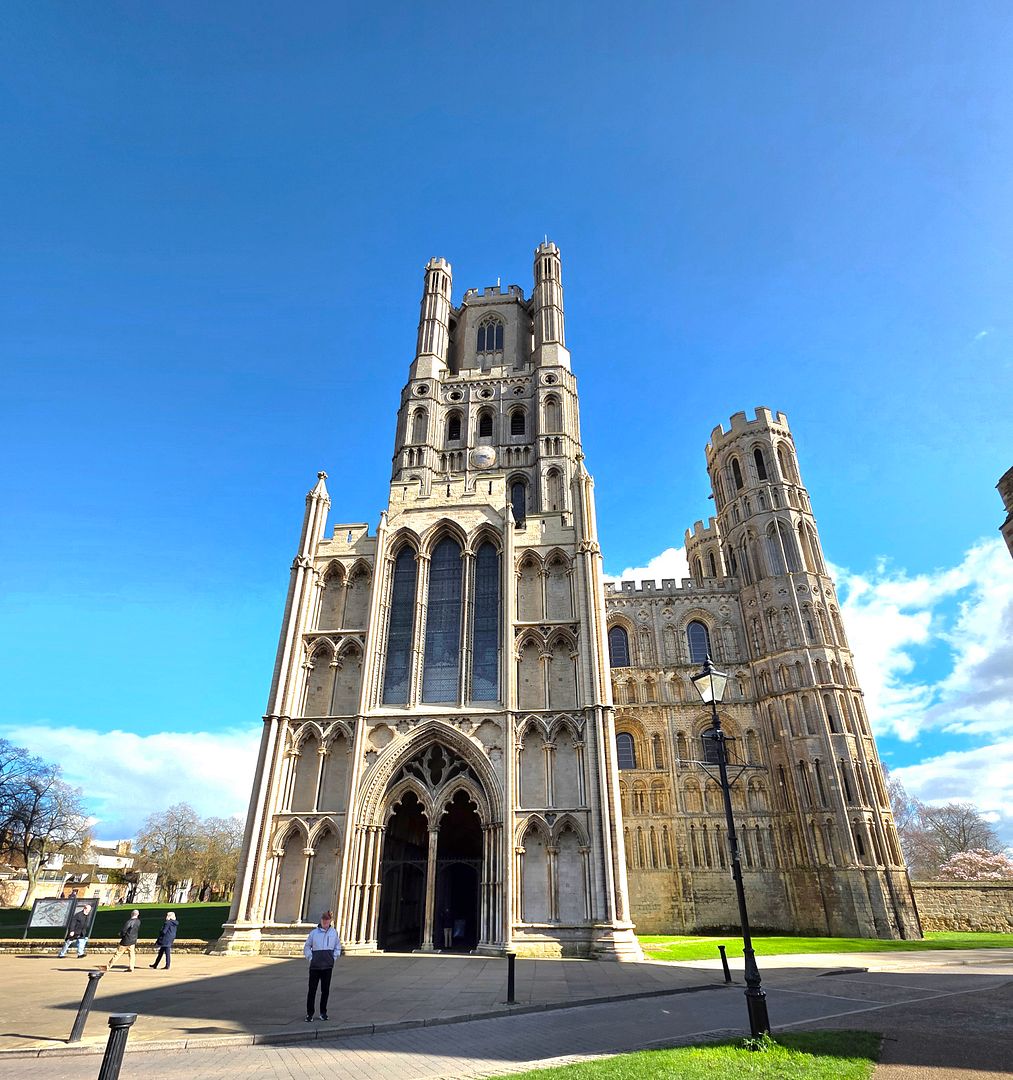
After breakfast we called a taxi to take us to the train station for a short trip to Ely. Once we arrived we walked over to another taxi to take us to the cathedral. When the taxi driver asked me where we wanted to go, I said, “Ely”. He said, “Well you are already in Ely so where else would you like to go?” Ha! We talked about soccer and his favorite team that wasn’t doing too well, Spurs.
  • Ely is the second smallest city in England. The small town grew up around the monastery and Cathedral which dominated the Isle of Ely for centuries.

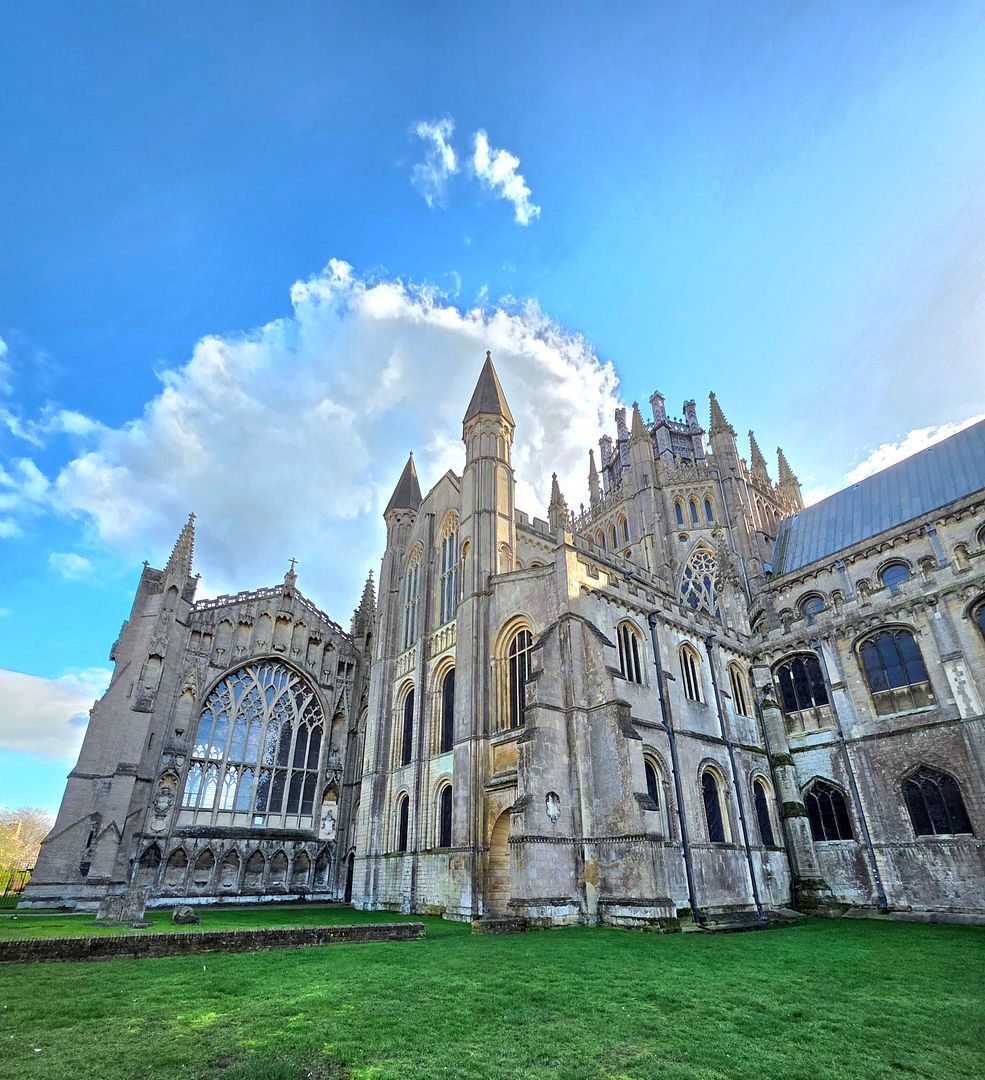
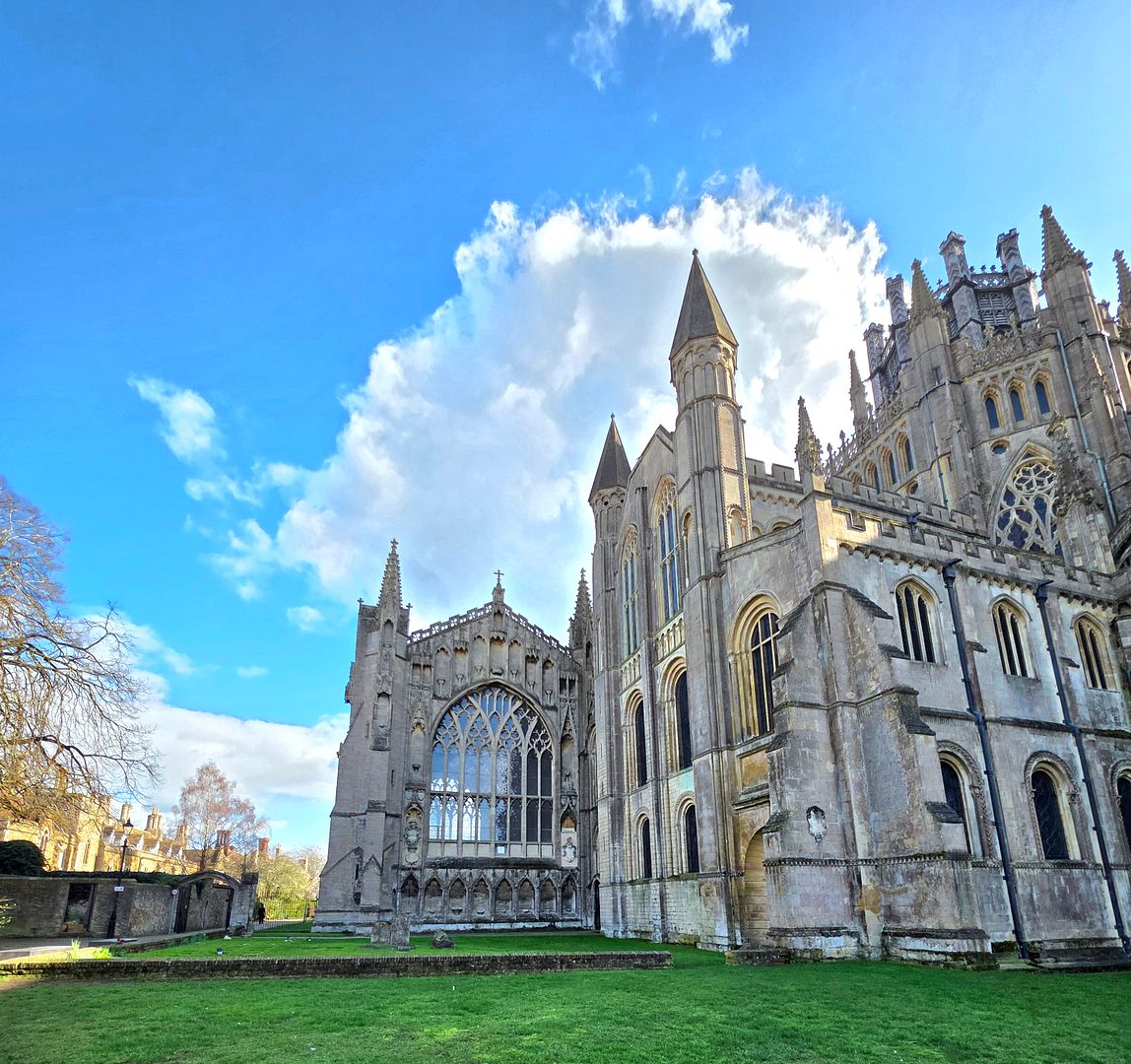
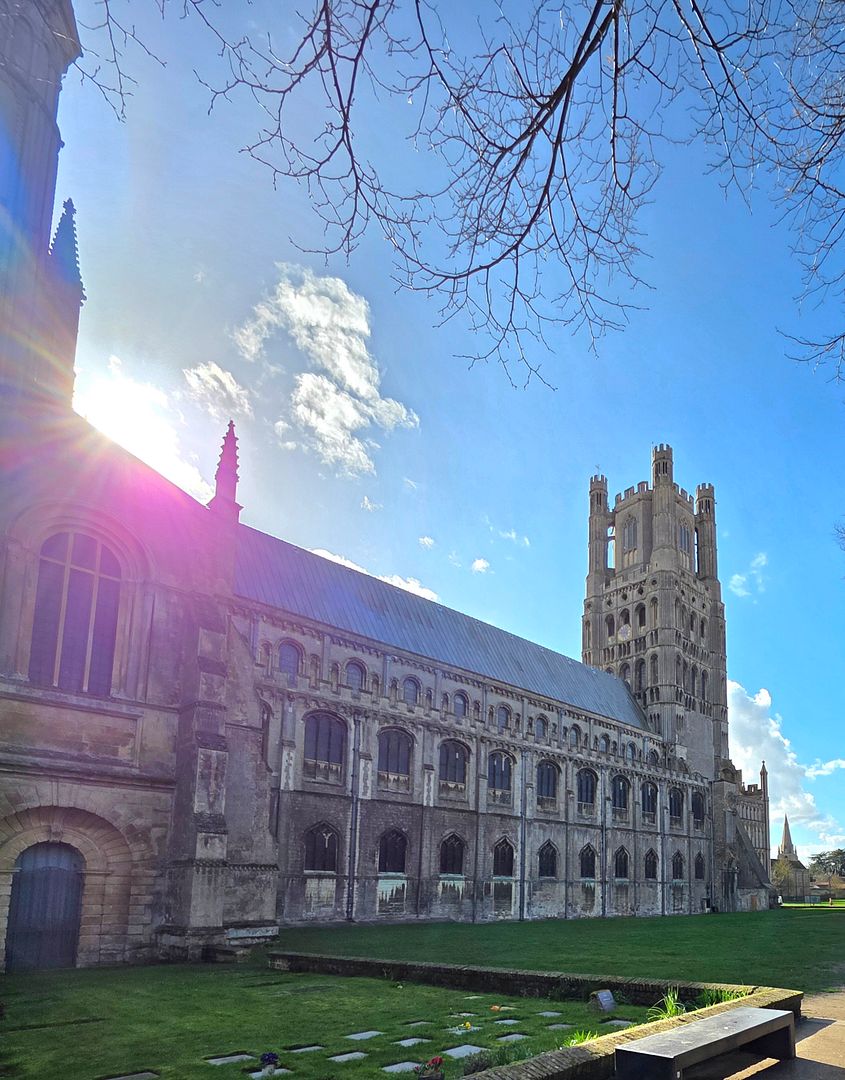
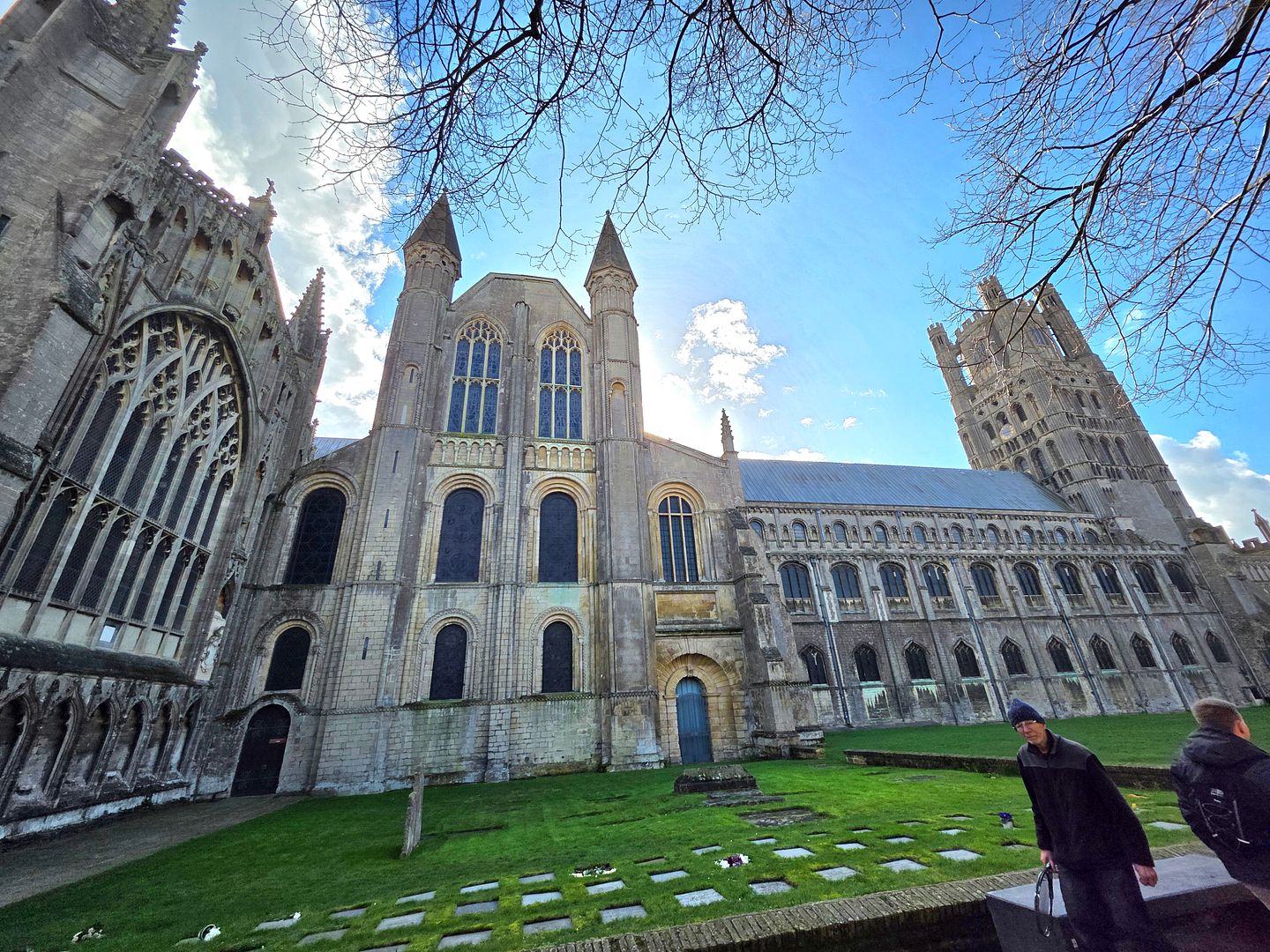
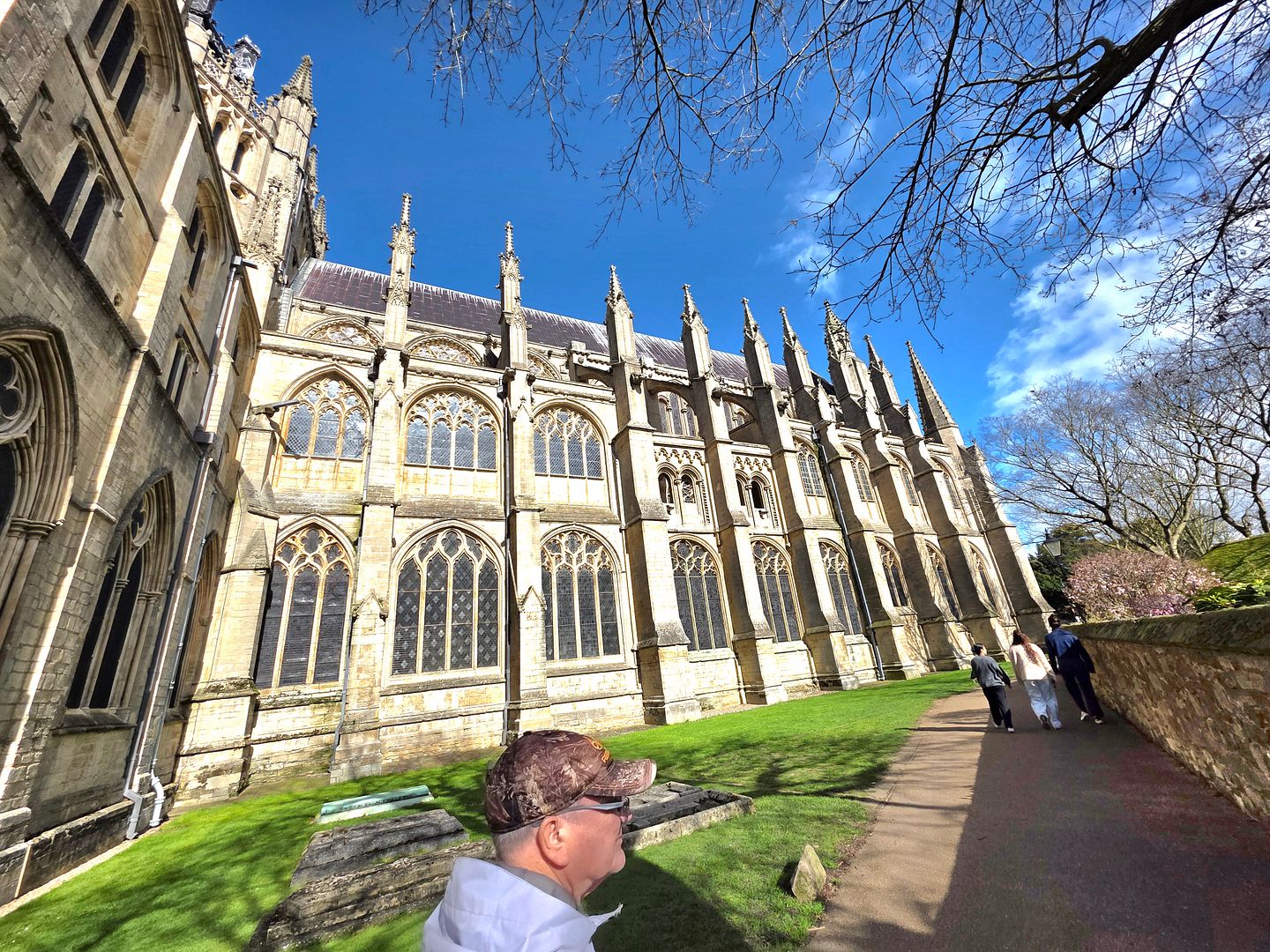
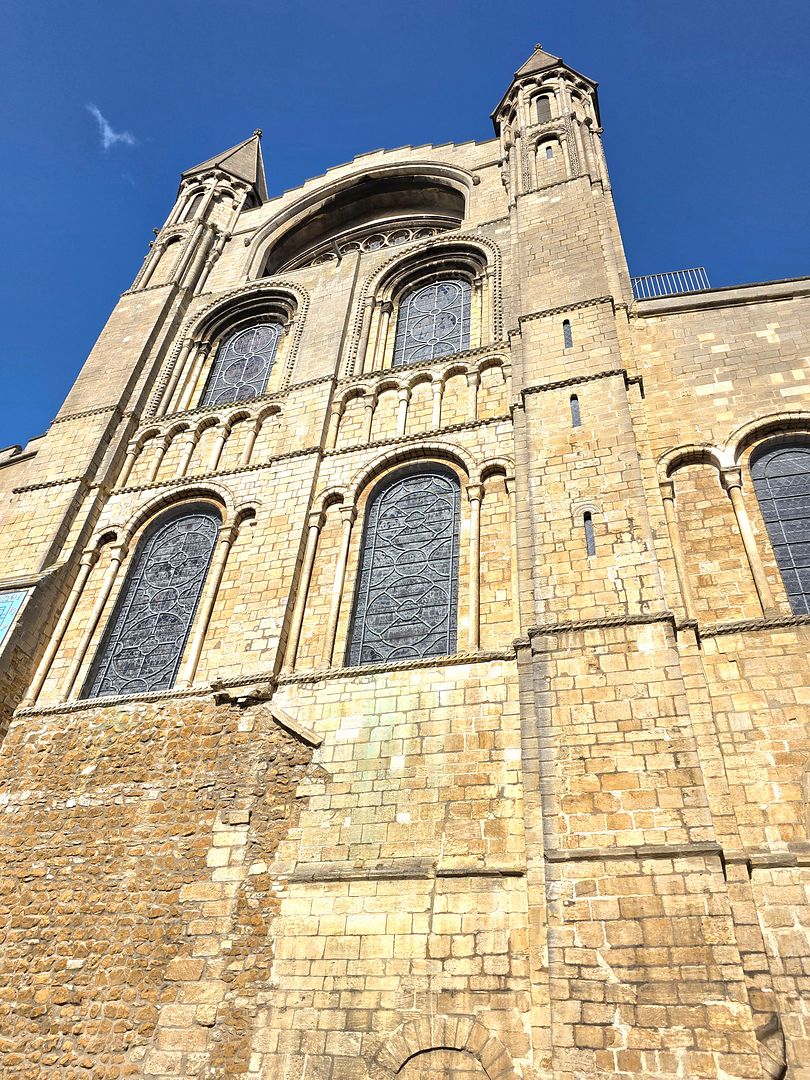
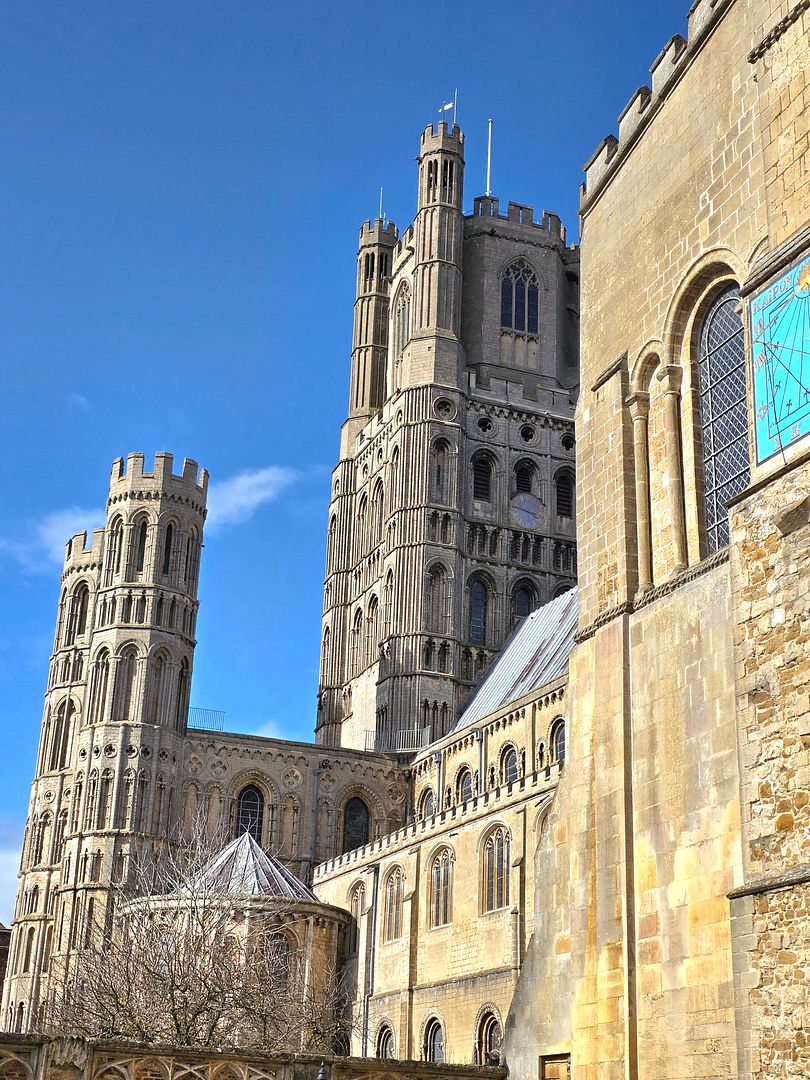
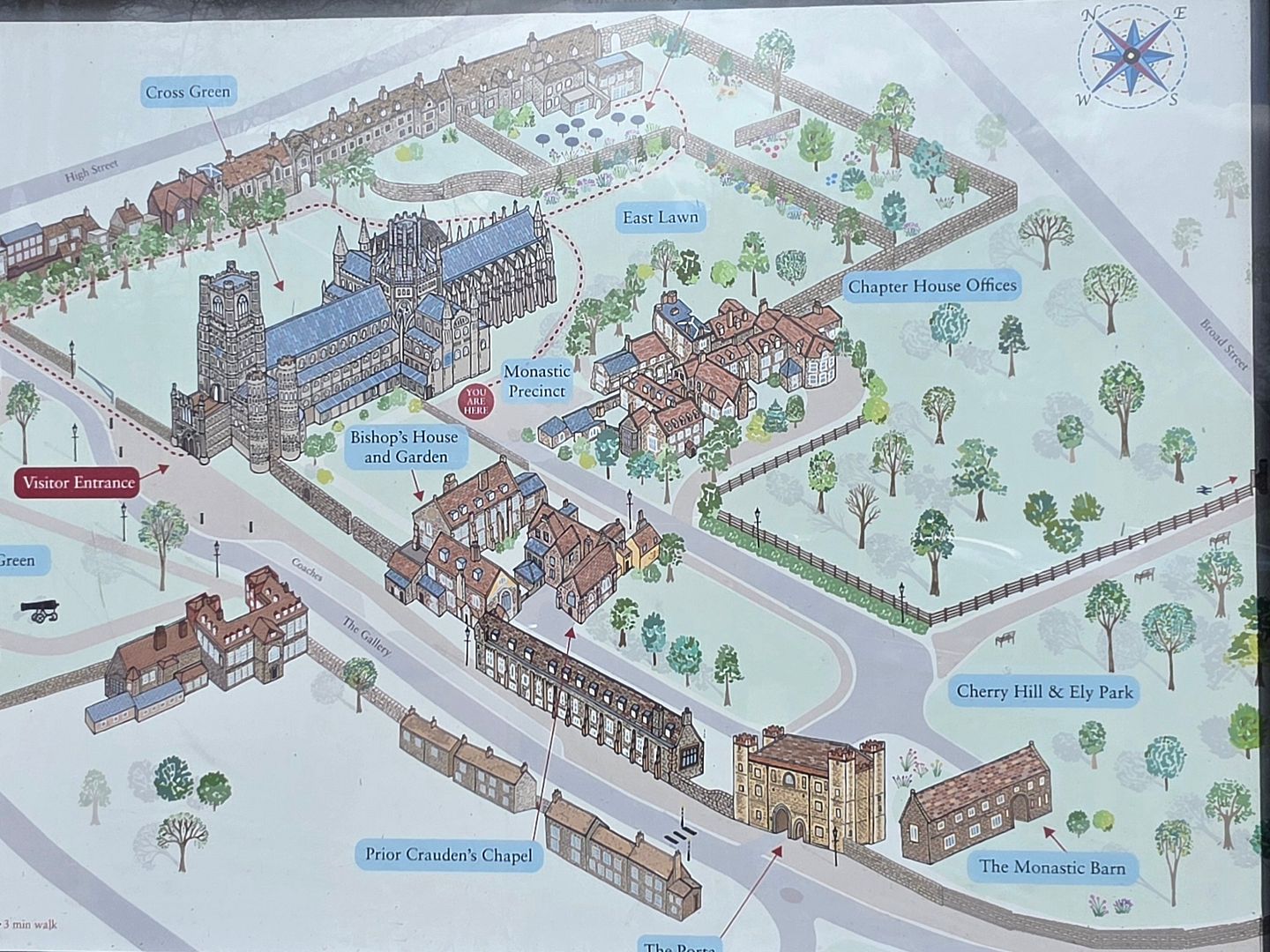
I’m sharing the outside of the cathedral first and the inside will be another post.

The history of Ely can be read here.


Why were we interested in seeing Ely Cathedral? We first heard of Ely through the author Elizabeth Goudge.

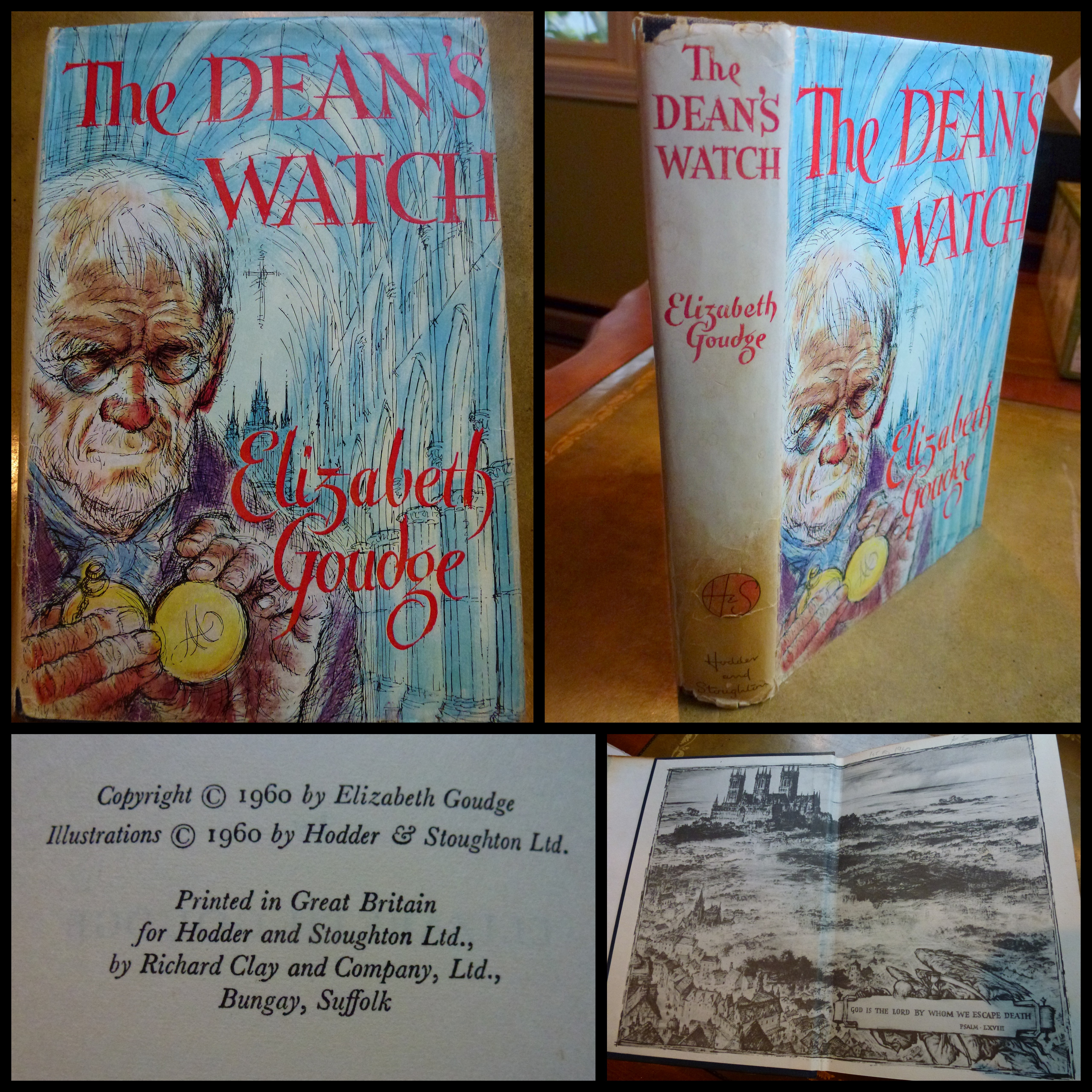
Elizabeth Goudge was a celebrated 20th-century English author who spent her formative years living at Ely Cathedral, where her father served as a canon. This historic Cambridgeshire setting deeply influenced her writing, inspiring her iconic 1960 novel, The Dean’s Watch as well as A City of Bells.

We both read The Dean’s Watch and it was one of my favorites of Goudge’s books.

flight-souvenirs2

We bought this copy of The Dean’s Watch in a used bookstore in Chipping Campden in September of 2013.

A quote from The Dean’s Watch by Miss Montague,

“How much more friendly it is when you cannot see, thought Miss Montague, and how much closer we are to Him. Why should we always want a light? He chose darkness for us, darkness of the womb and of the stable, darkness in the garden, darkness on the cross and in the grave. Why do I demand certainty? That is not faith. Why do I want to understand? How can I understand this great web of sin and ugliness and love and suffering and joy and life and death when I don’t understand the little tangle of good and evil that is myself? I’ve enough to understand. I understand that He gave me light that I might turn to Him, for without light I could not have seen to turn. I have seen creation in His light. He shared His light with me that I, turned, might share with Him the darkness of His redemption. Why did I despair? What do I want? If it is Him I want He is here, not only love in light illuming all that He has made but love in darkness dying for it…And she said, I will learn to pray.”
My next post will be of the inside of this magnificent cathedral.

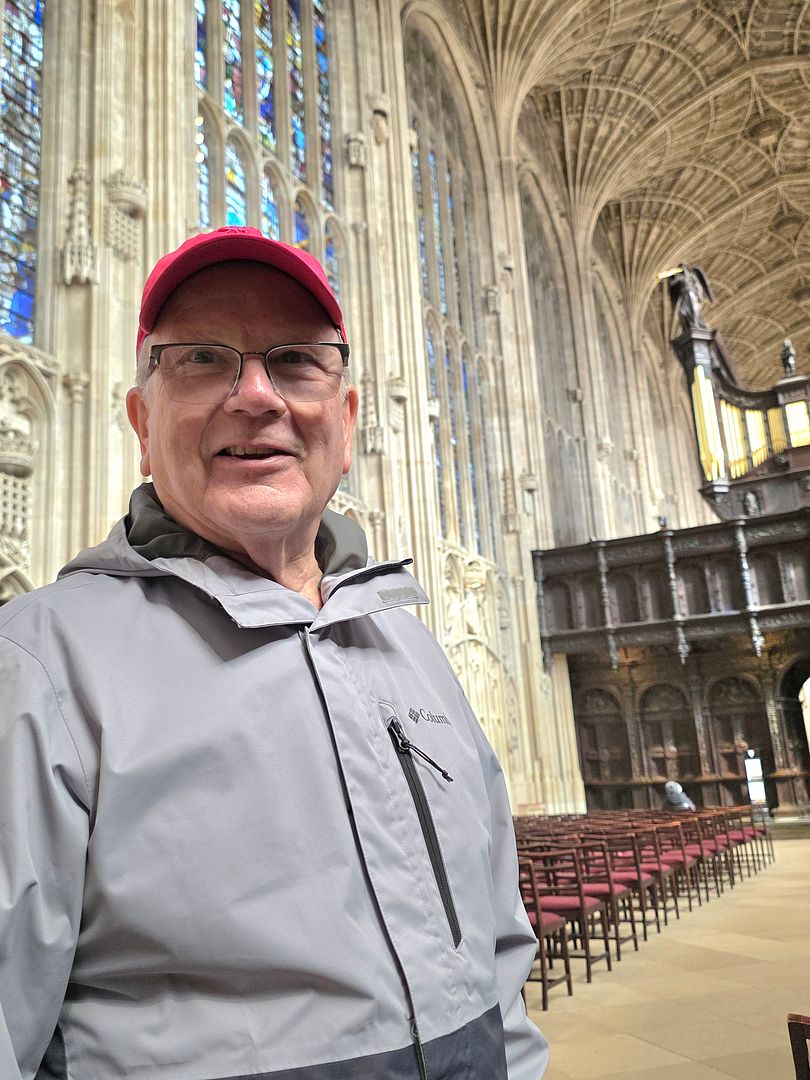
Cambridge – King’s Chapel

Our travel journal from our visit to Cambridge in March 2026 continues.

This is still from our Tuesday March 10th in Cambridge. Warning: There are a lot of photos in this post!

Our guide got us into the grounds of King’s College and then said her goodbyes while we enjoyed the Chapel.

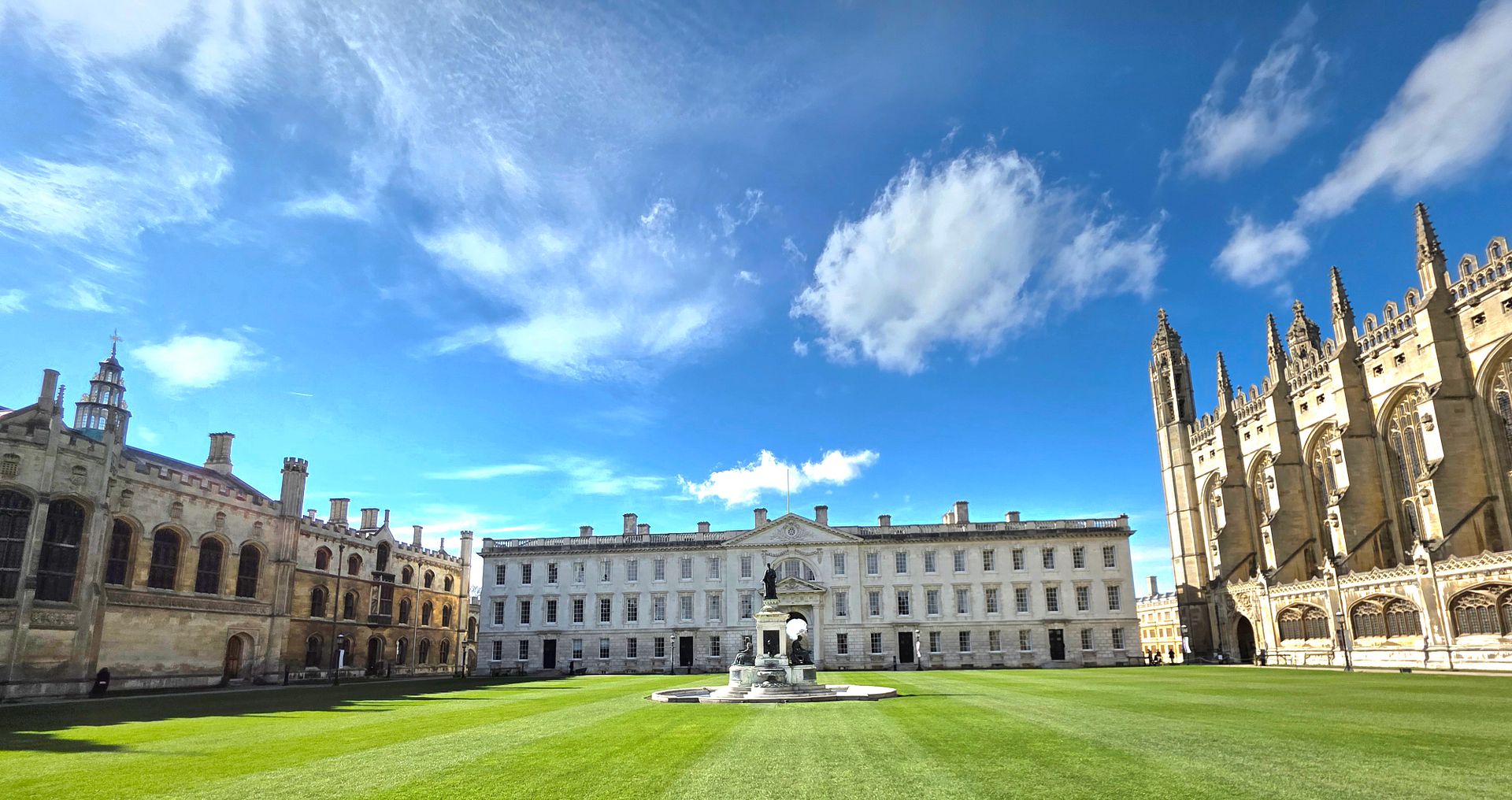
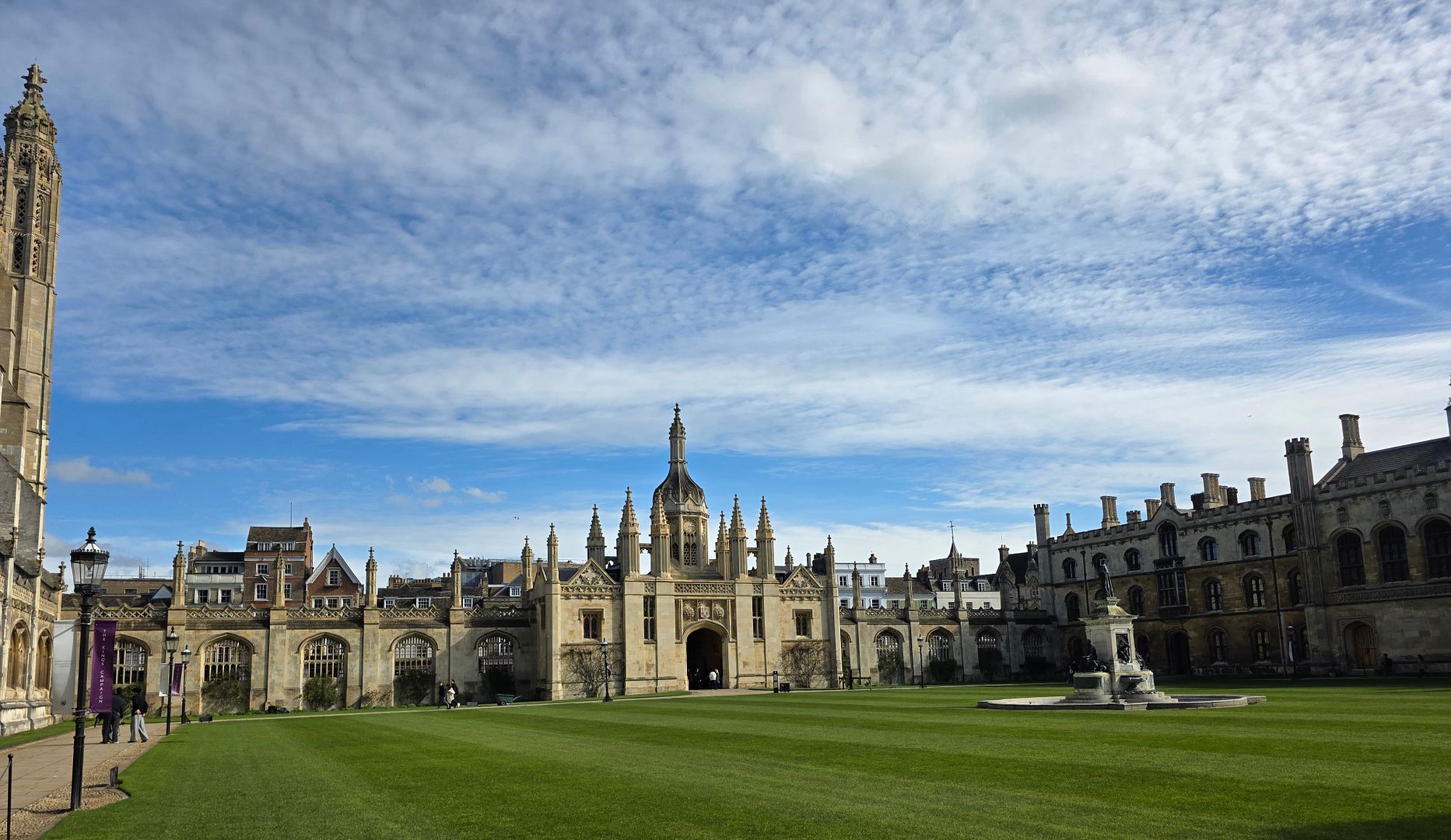
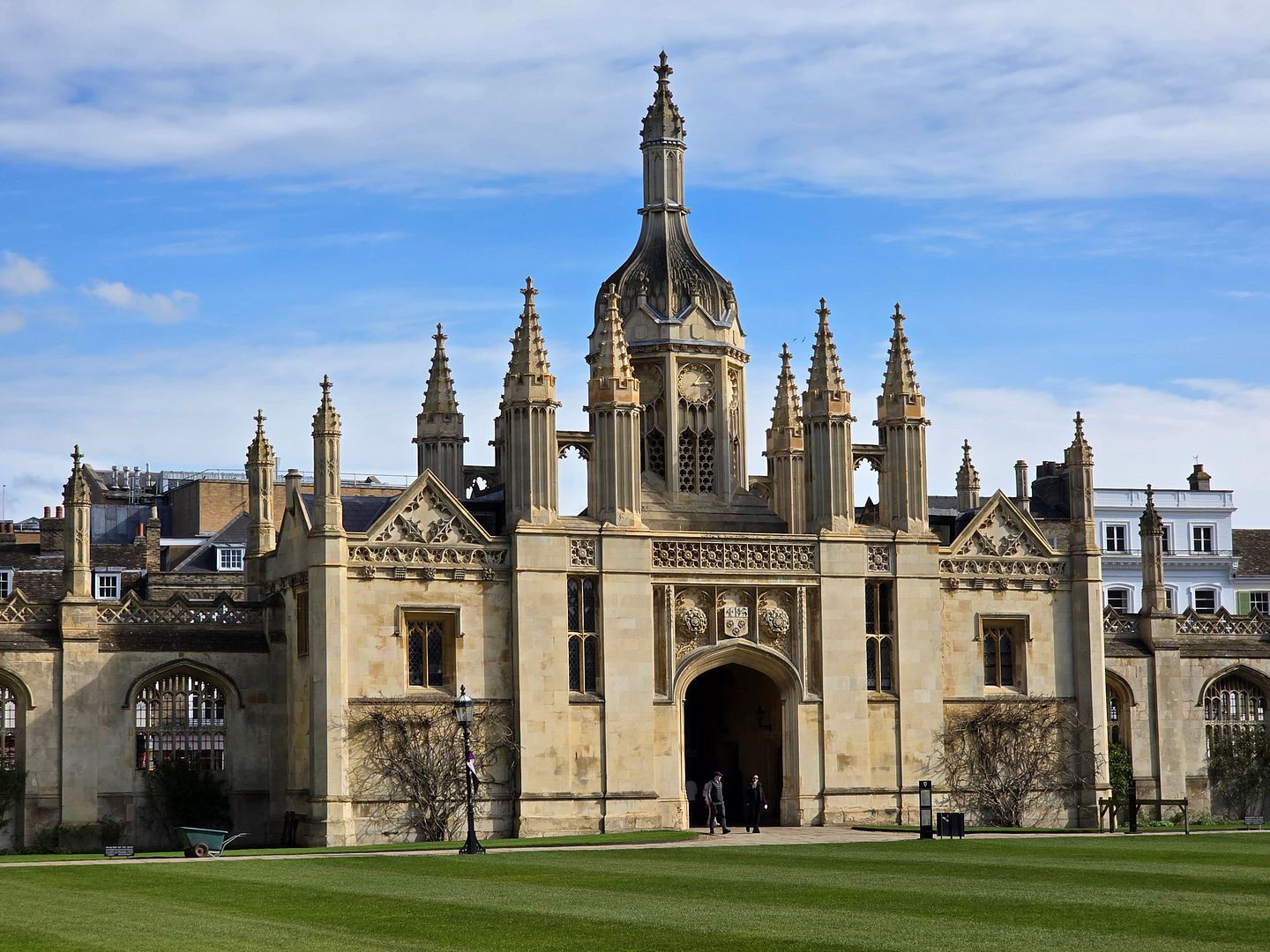
The college quad. The chapel is on the right.

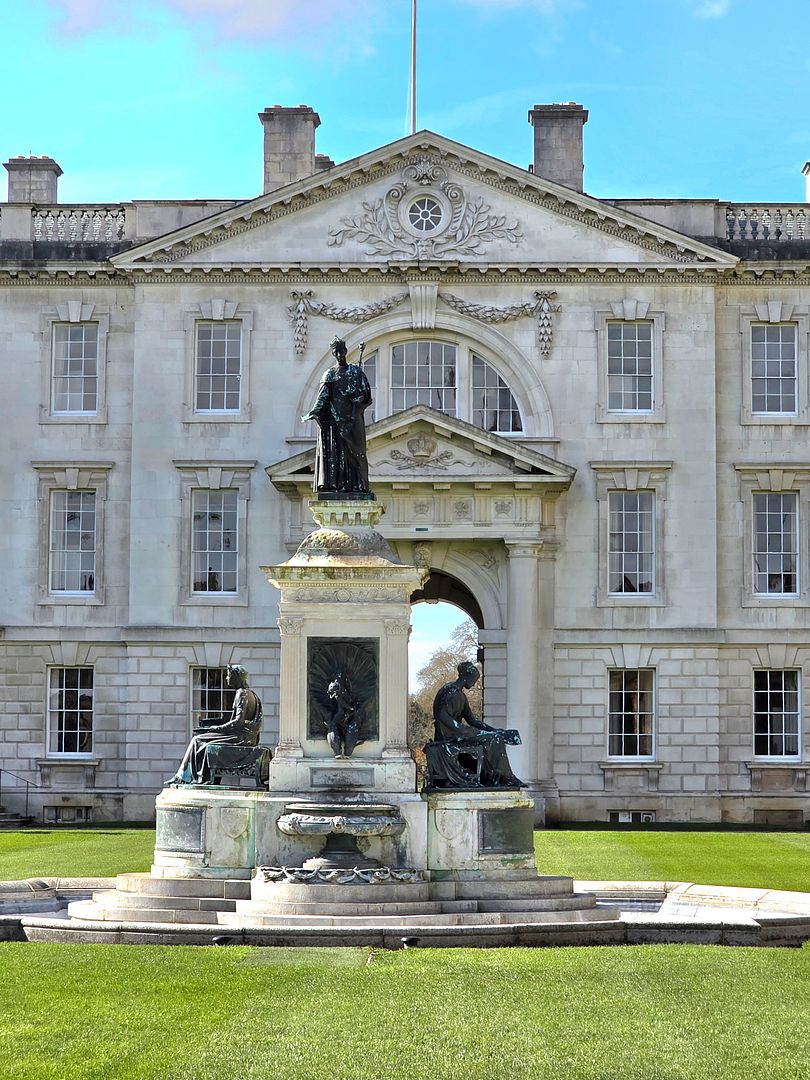
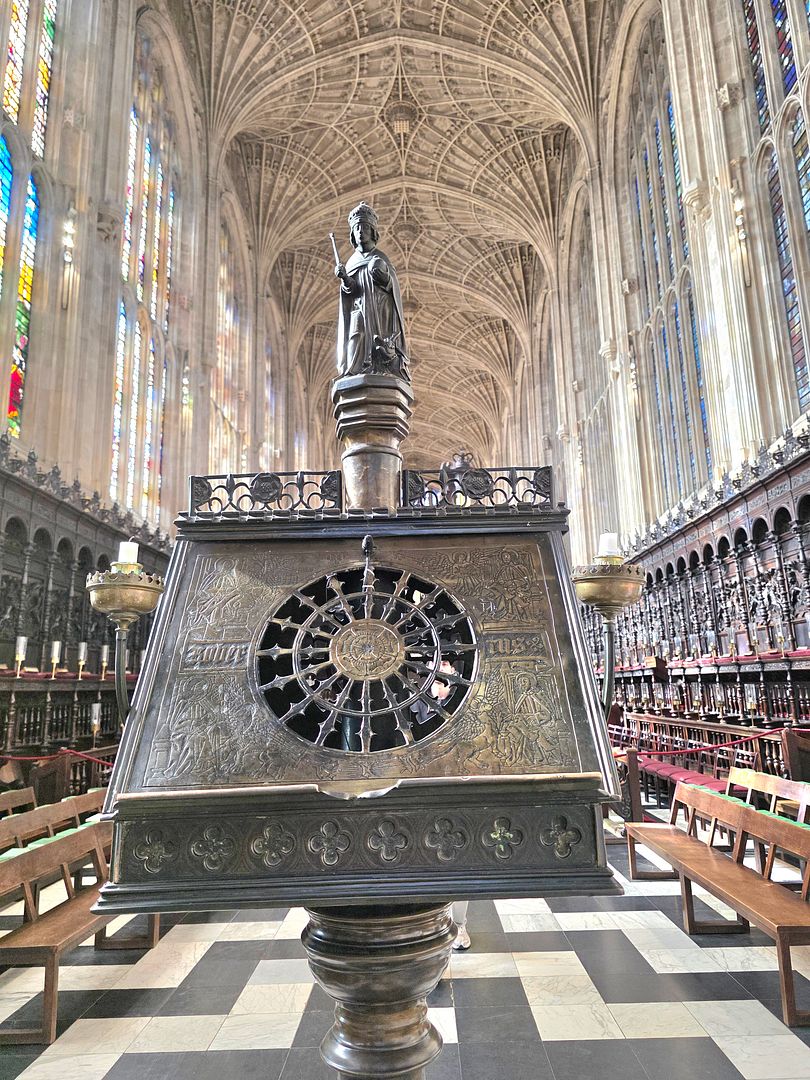
The fountain (1874-1879), with a statue of the College’s saintly Founder, stands in the centre of the Front Court.

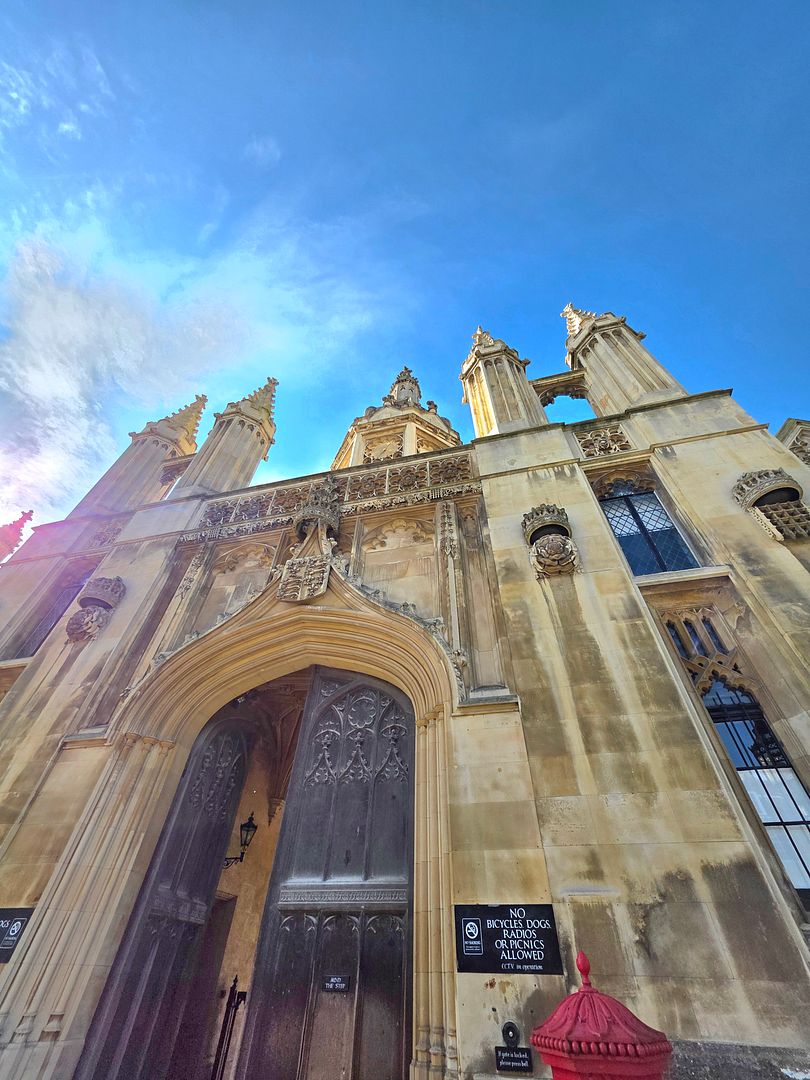
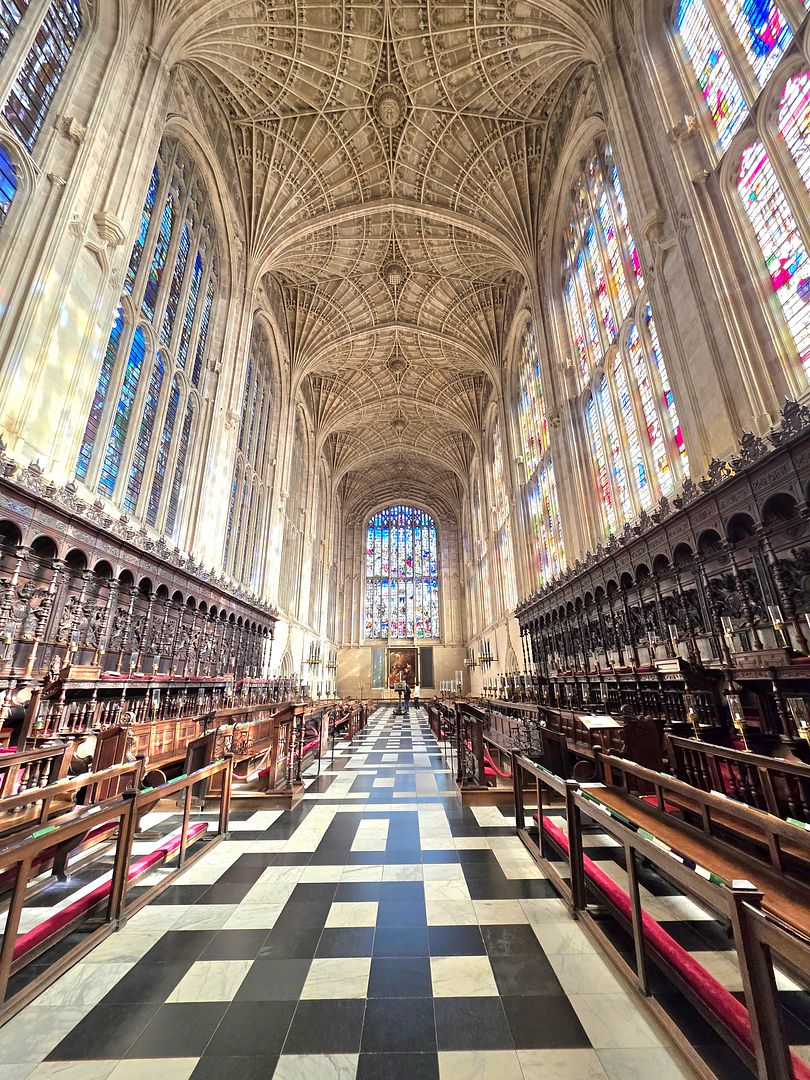
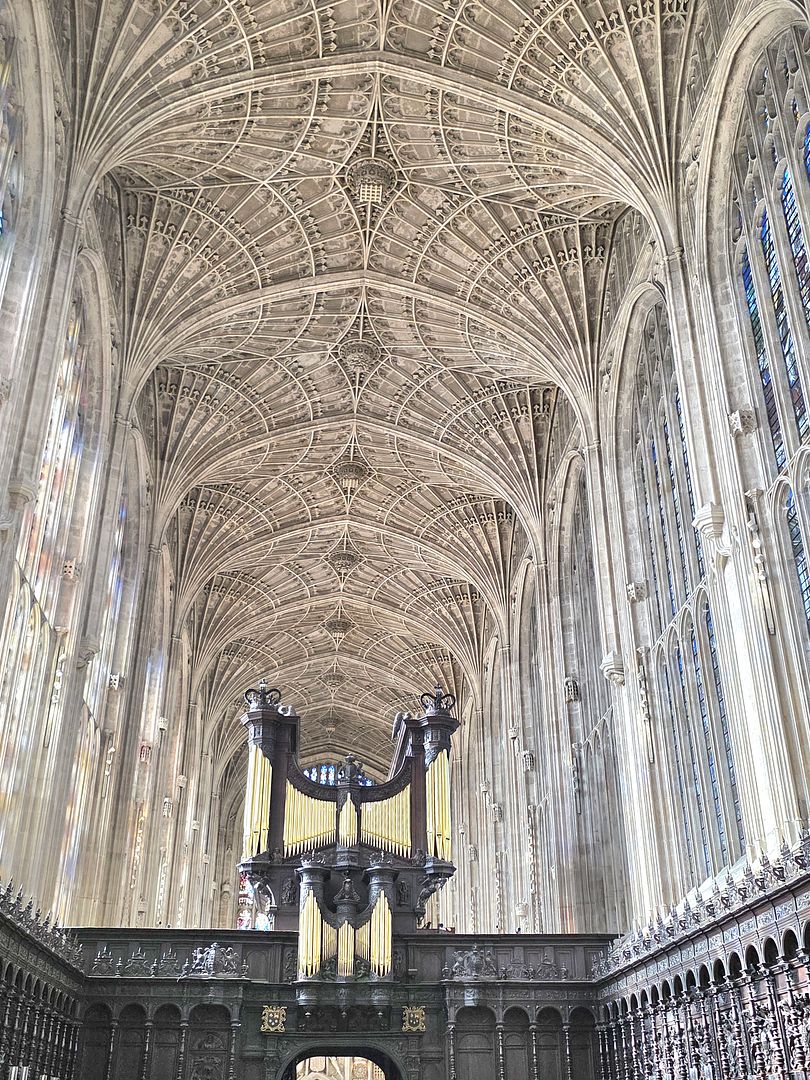
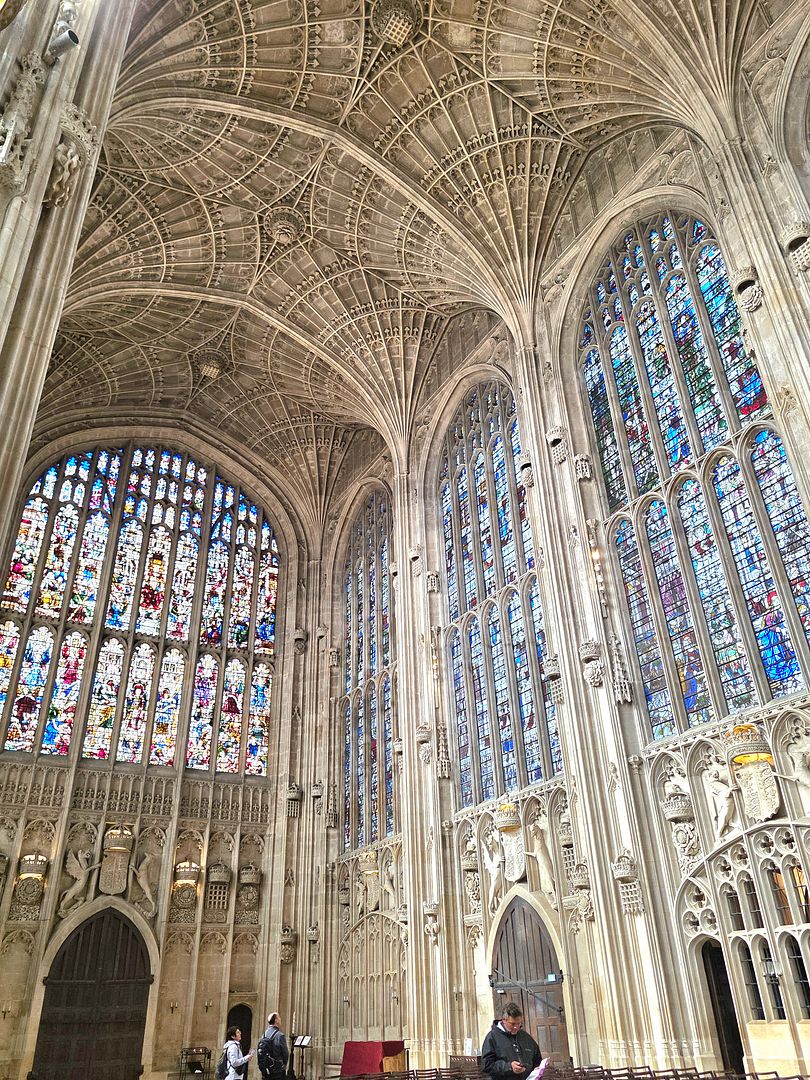
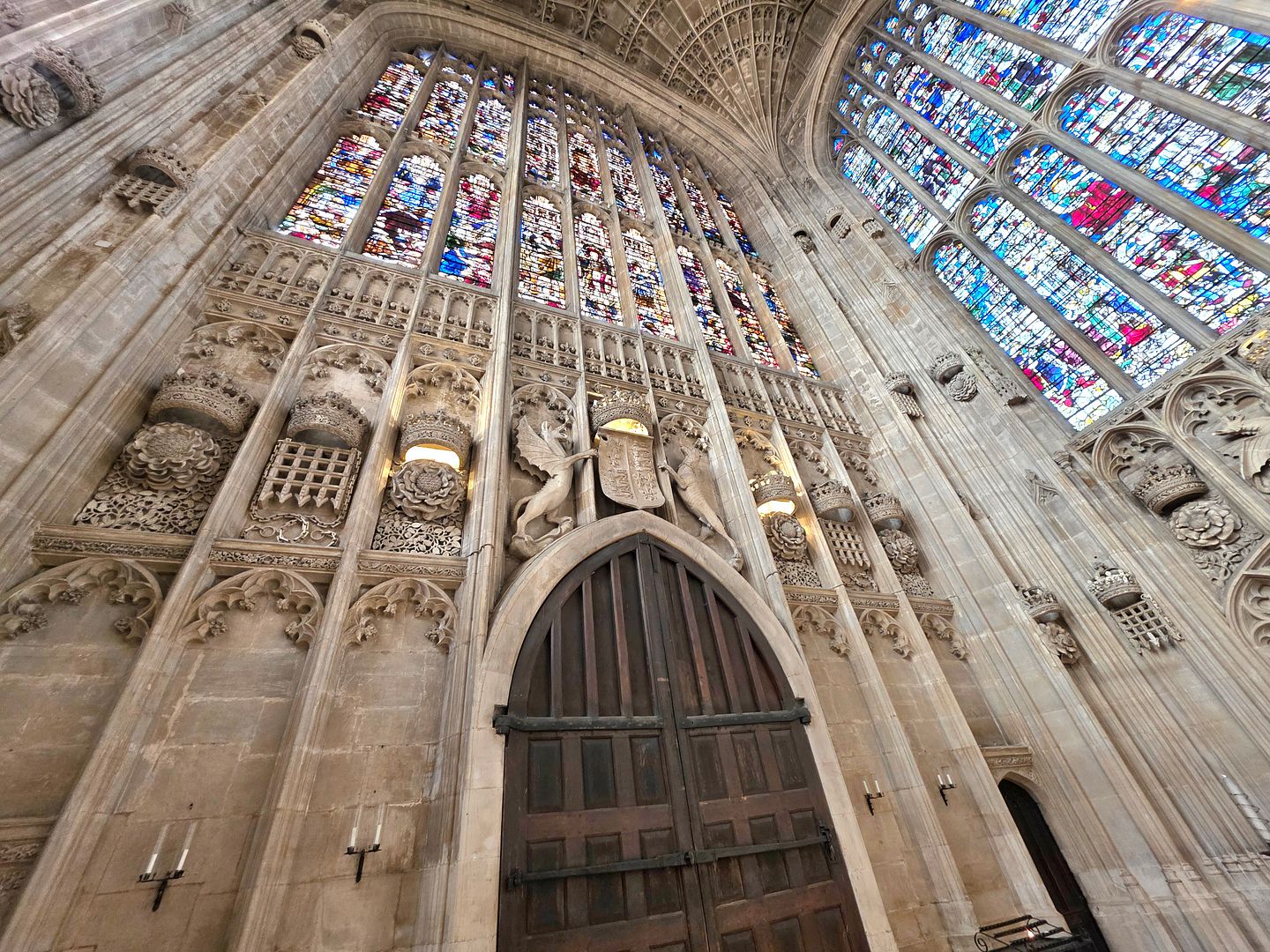
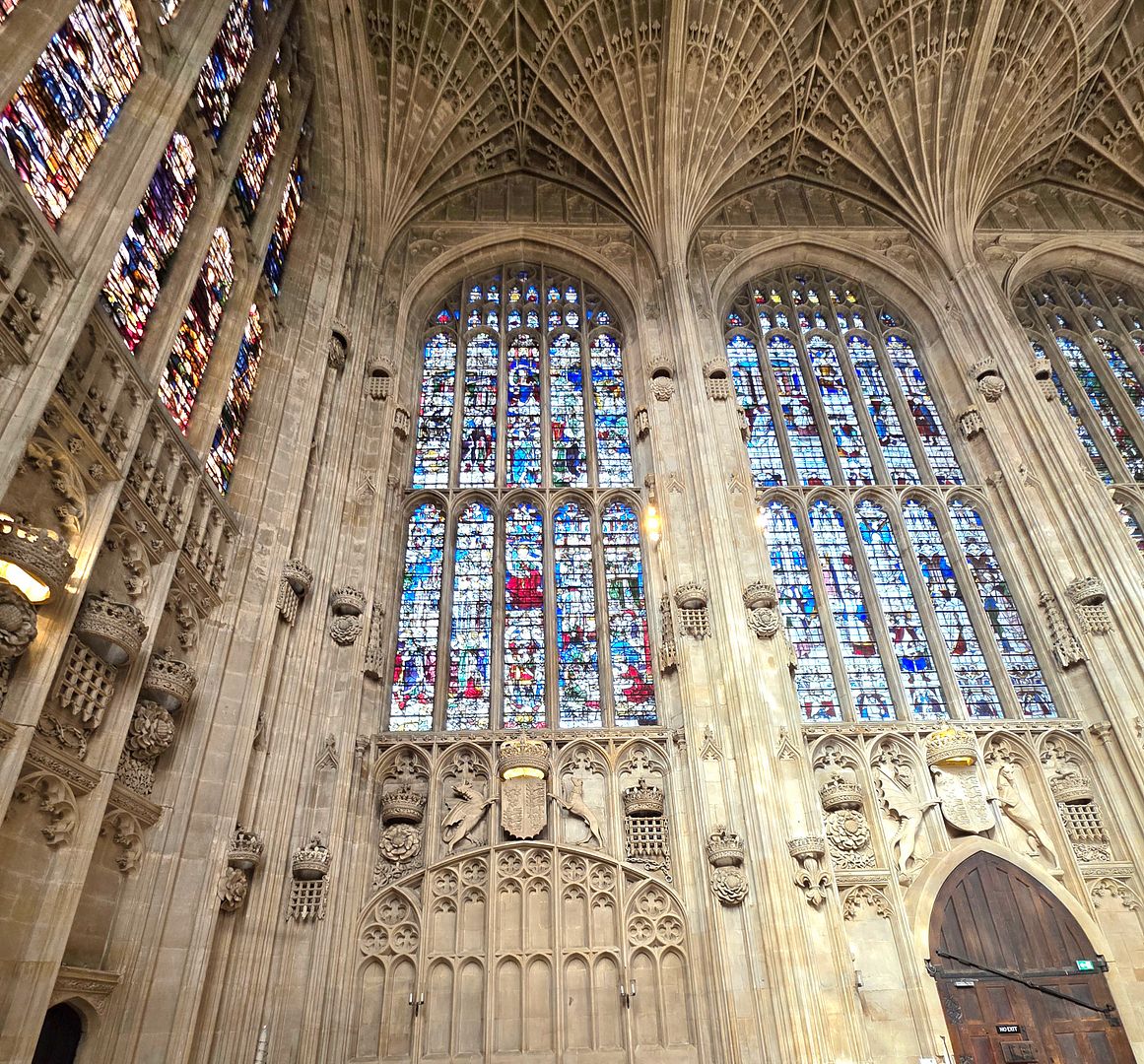
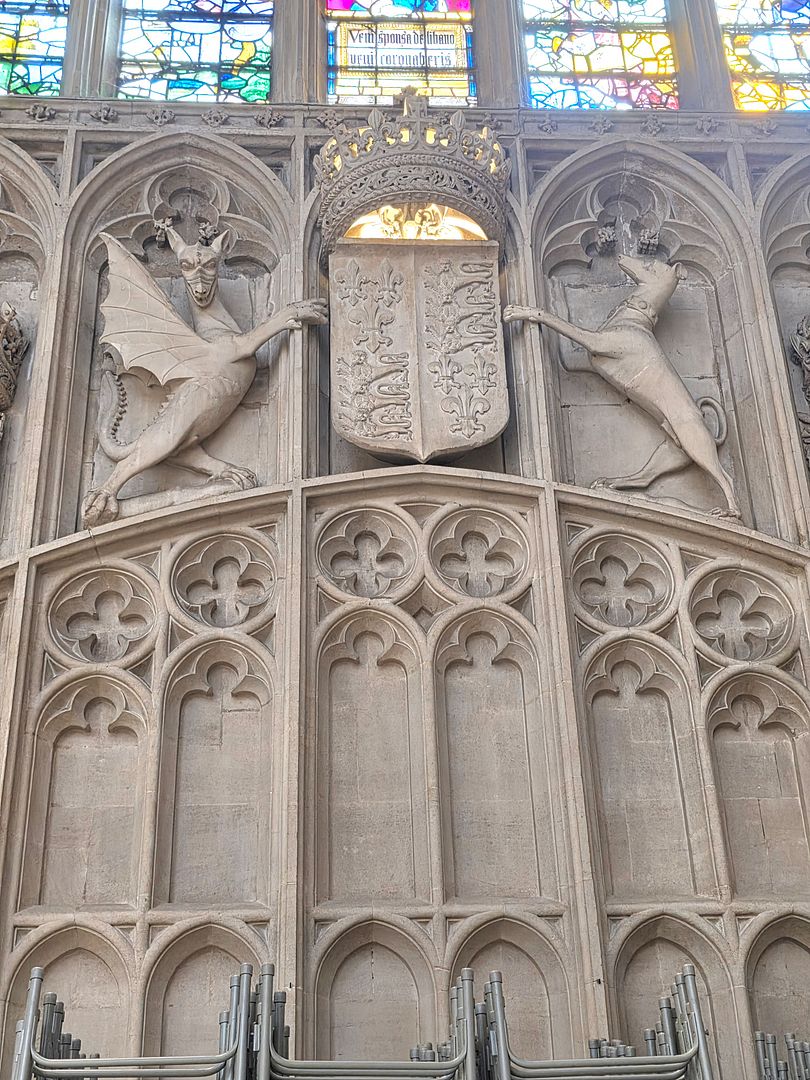
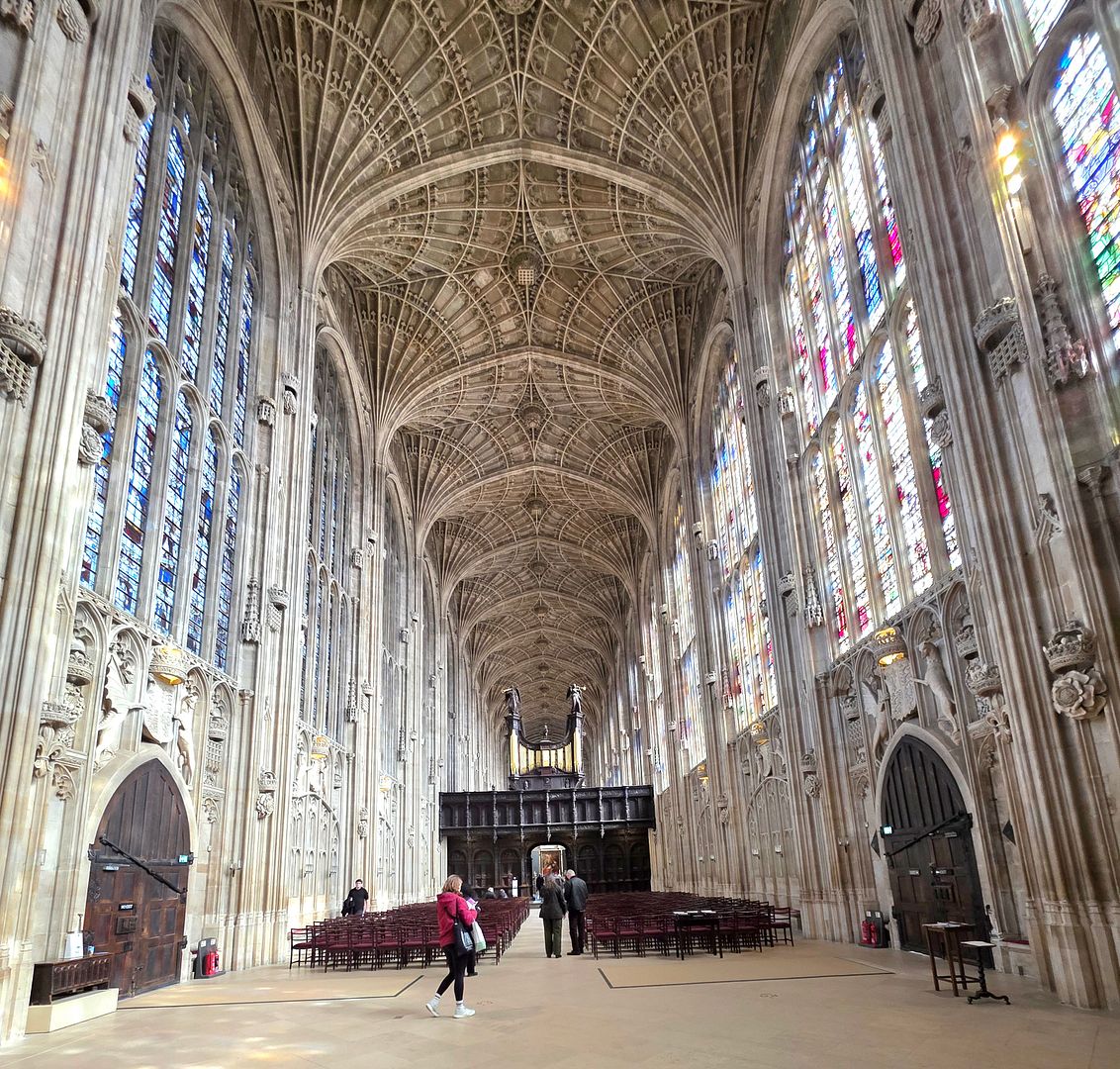
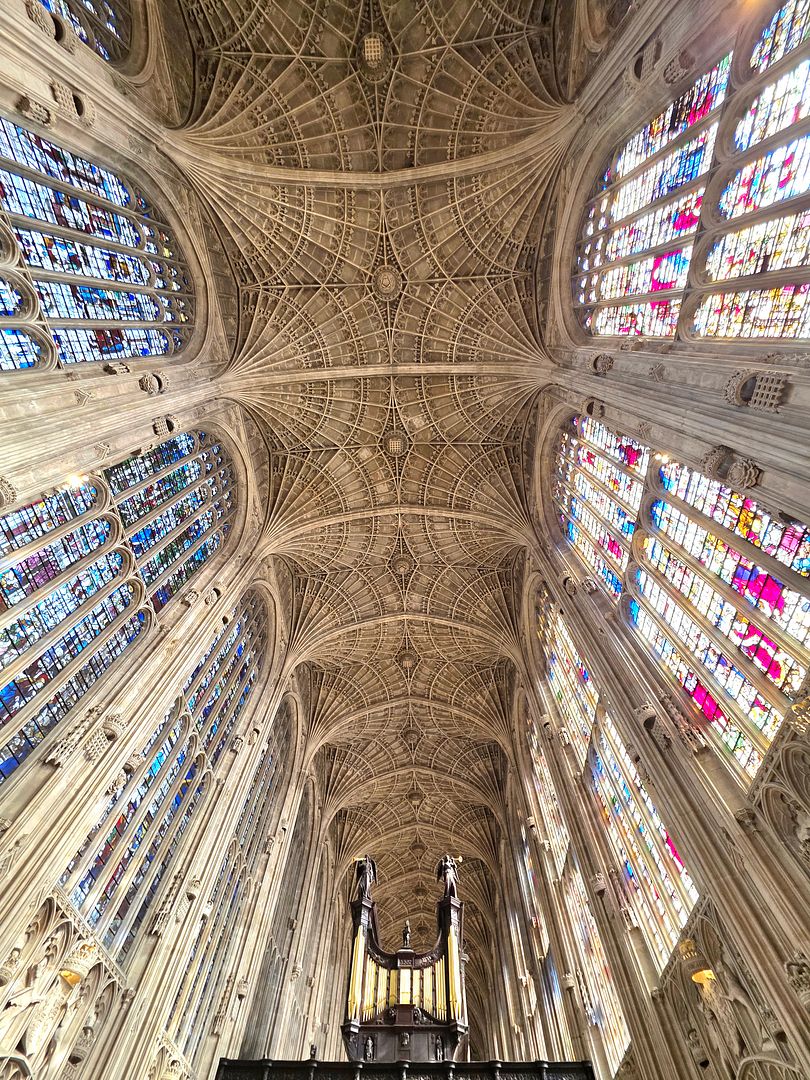
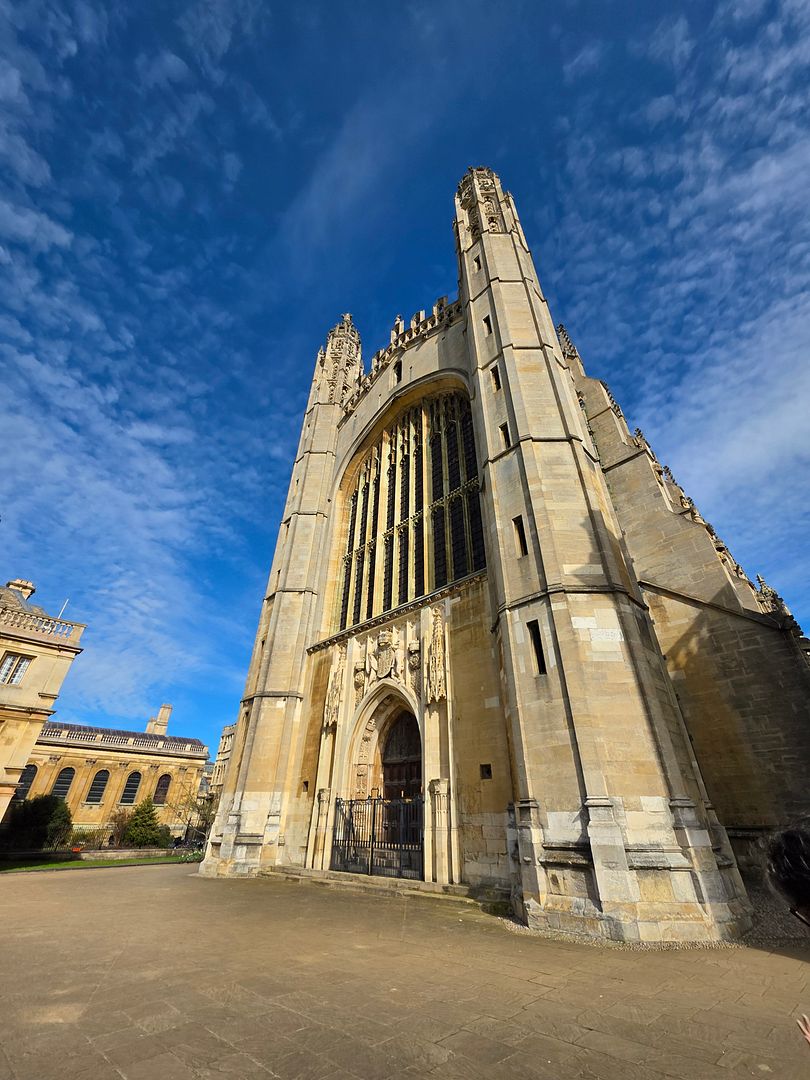
King’s College Chapel is the oldest surviving building within the College site and perhaps the most iconic building in Cambridge. Work on this Chapel only started five years after King’s College was founded by Henry VI in 1441.

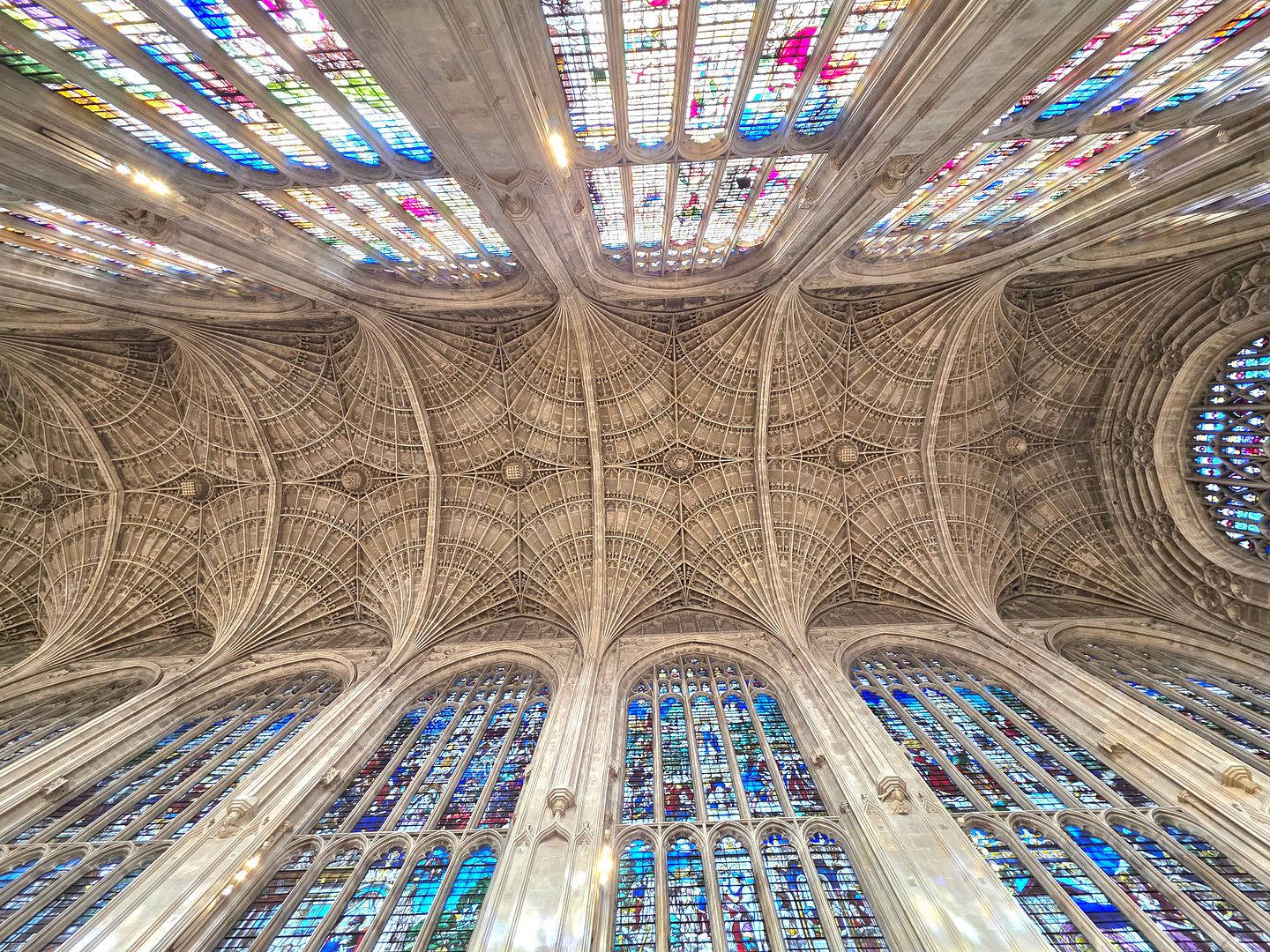
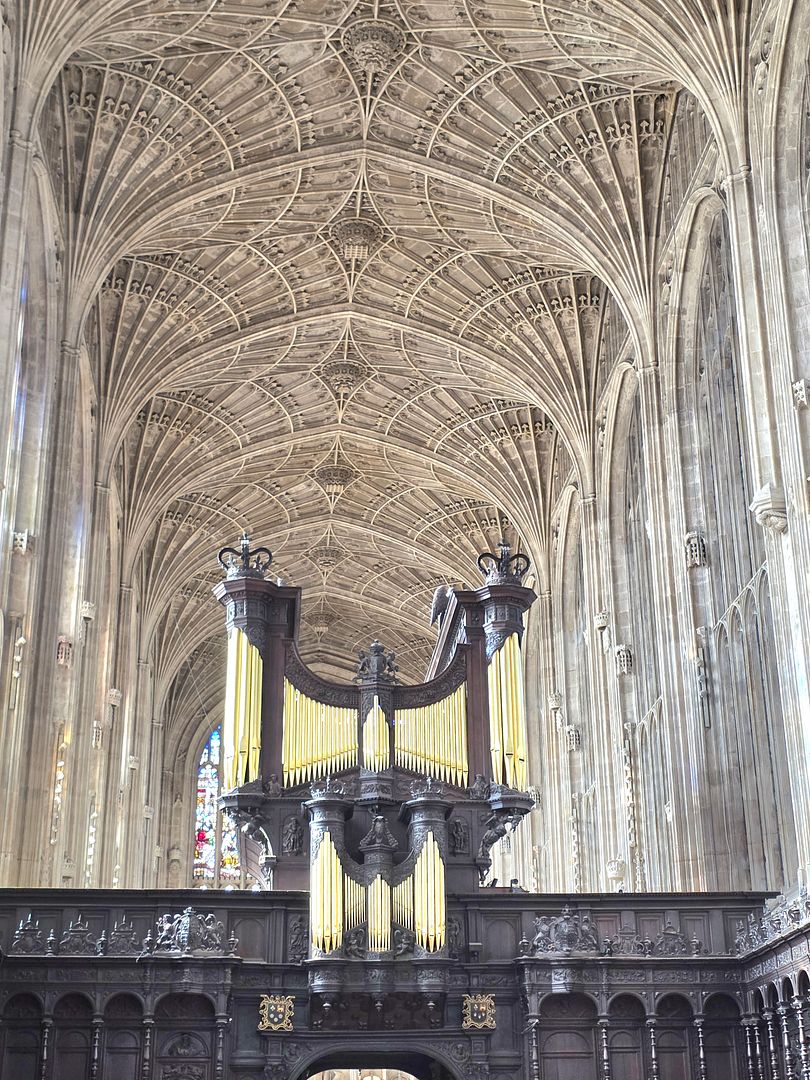
King’s College Chapel is the chapel of King’s College in the University of Cambridge. It is considered one of the finest examples of late Perpendicular Gothic English architecture and features the world’s largest fan vault.

It took 5 kings to finish this structure. 

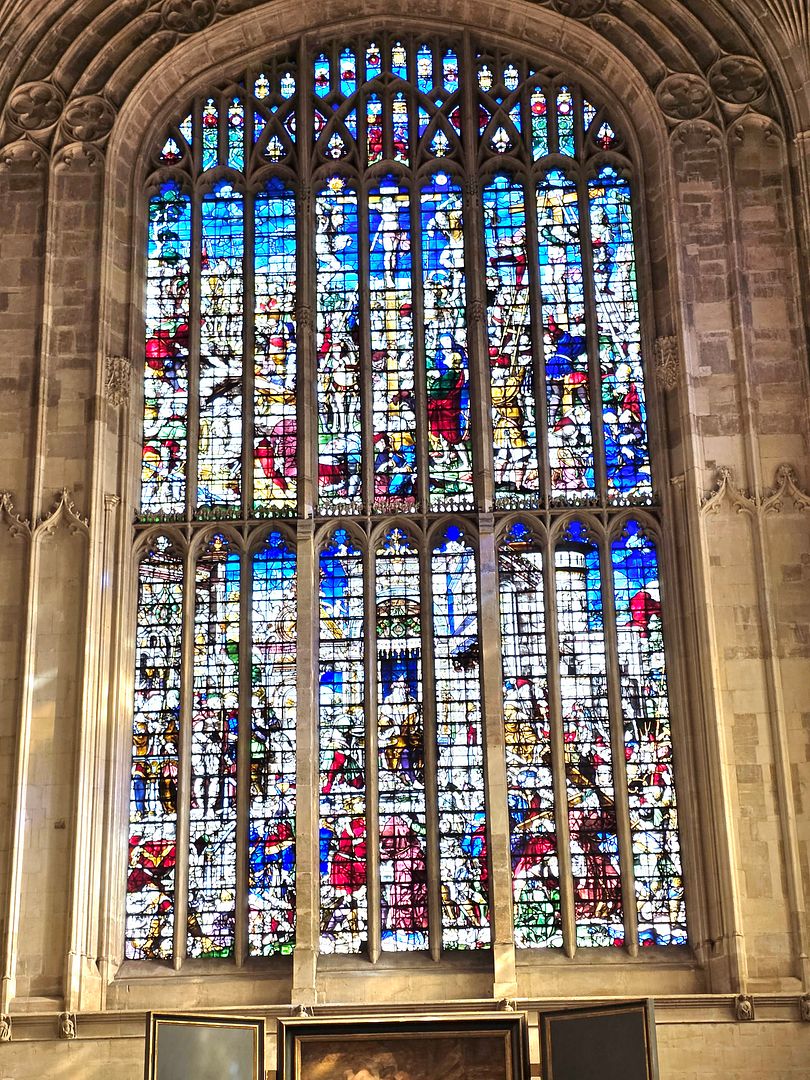
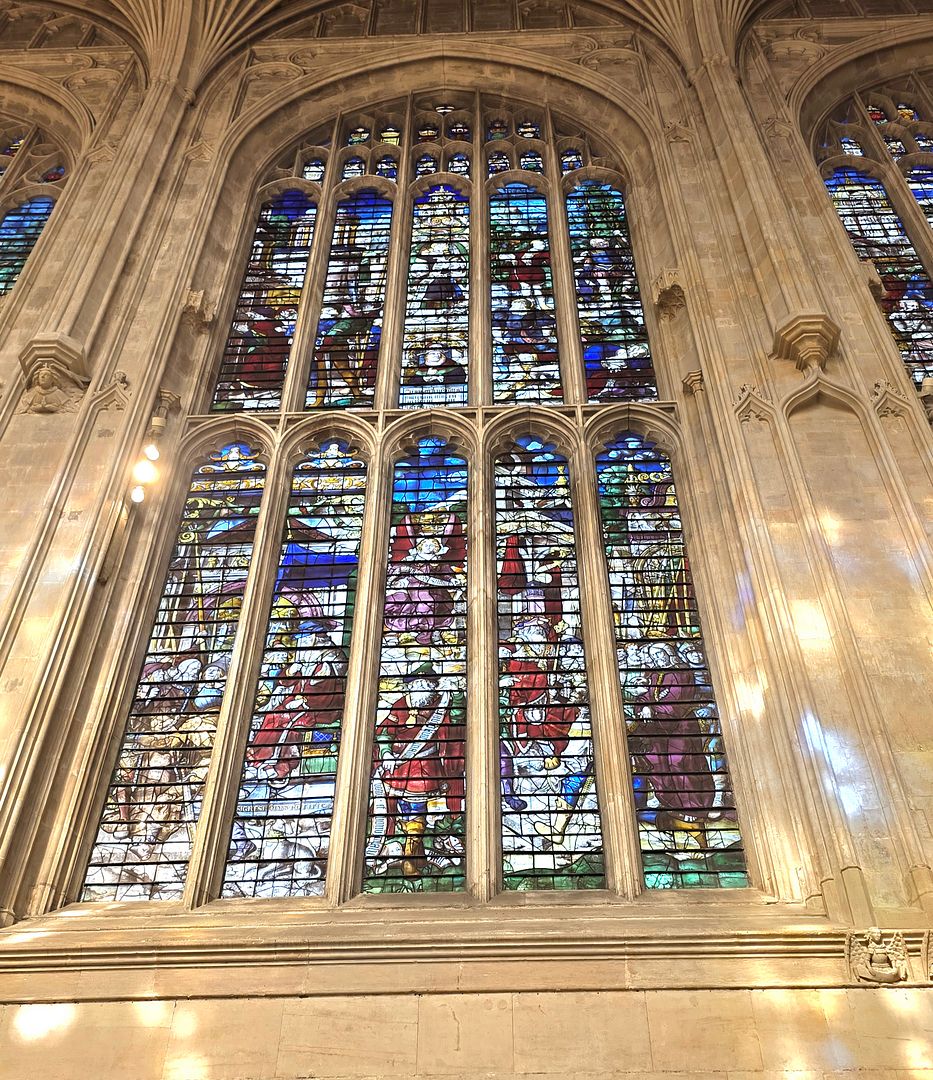
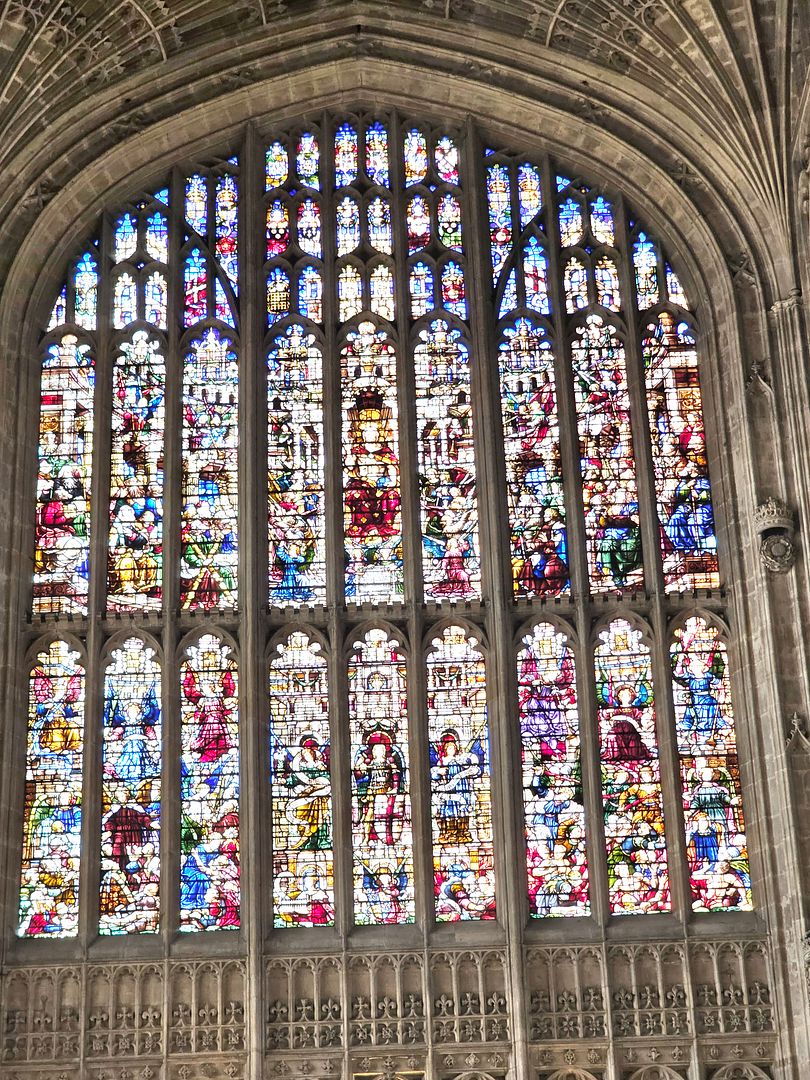
26 windows chronicling scenes from the Old and the New Testament.

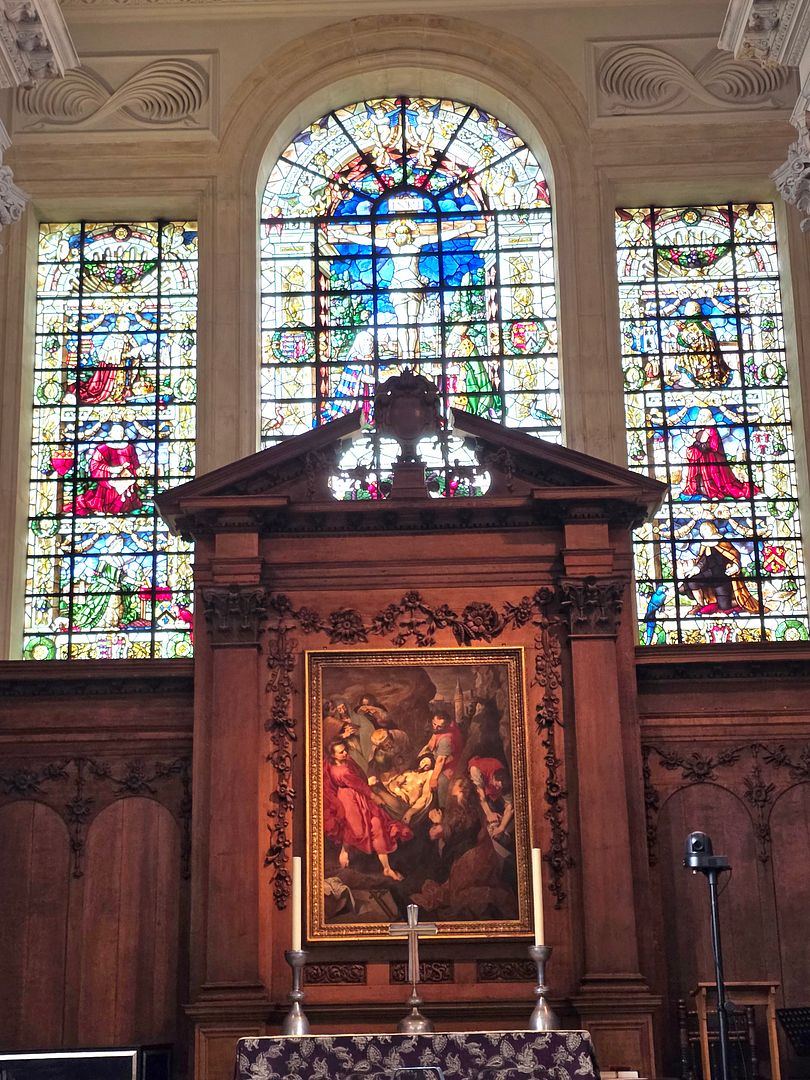
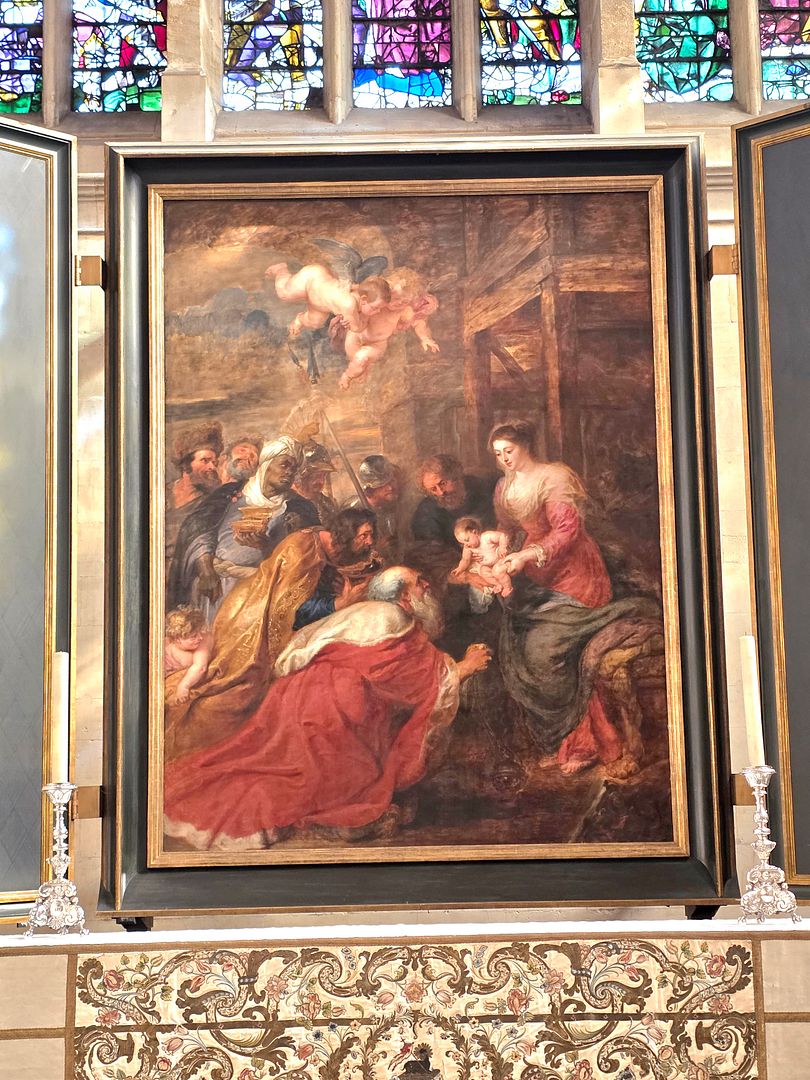
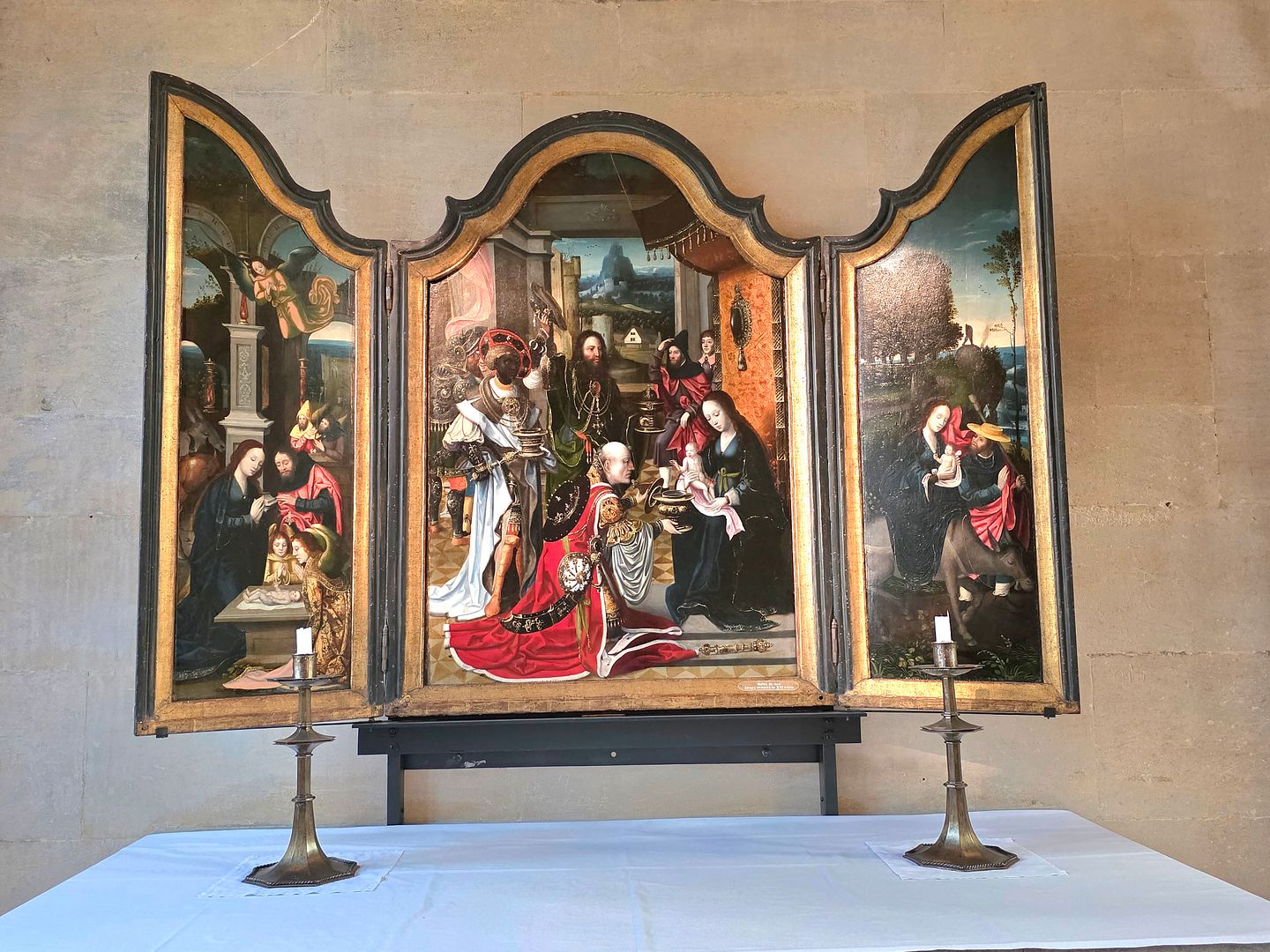
Adoration of the Magi

The three wise men have brought Jesus their gifts of gold, frankincense and myrrh. At the front in red is the oldest man, holding a container of frankincense; frankincense was burned in sacrifices to God by the Israelites in the Bible, so it came to be a symbol of Jesus being God. The man behind him is holding a jar of the perfume “myrrh”; this was used in embalming corpses, so it became a symbol of Jesus’ death as a sacrifice for mankind. The third man, often called the “Black Magus”, has brought Jesus gold, a symbol of the fact that Jesus is a king.

It was painted by the artist, Peter Paul Rubens, who born in 1577, in what is now Germany. He was one of the most well-known and successful artists of his time. He didn’t usually paint pictures in order to later sell them in a shop or a gallery: most of his paintings were commissioned by groups who wanted his pictures in their churches. This one was originally painted for a convent of nuns in Antwerp, Belgium. It only came to Cambridge in the 1960s.

King’s College Chapel escaped unscathed during wars including the Second World War, when the glass of most of the windows was removed for safety. The opportunity was taken to clean, repair and photograph it. Only the West Window remained in place, appreciated at last in the absence of unfair competition.

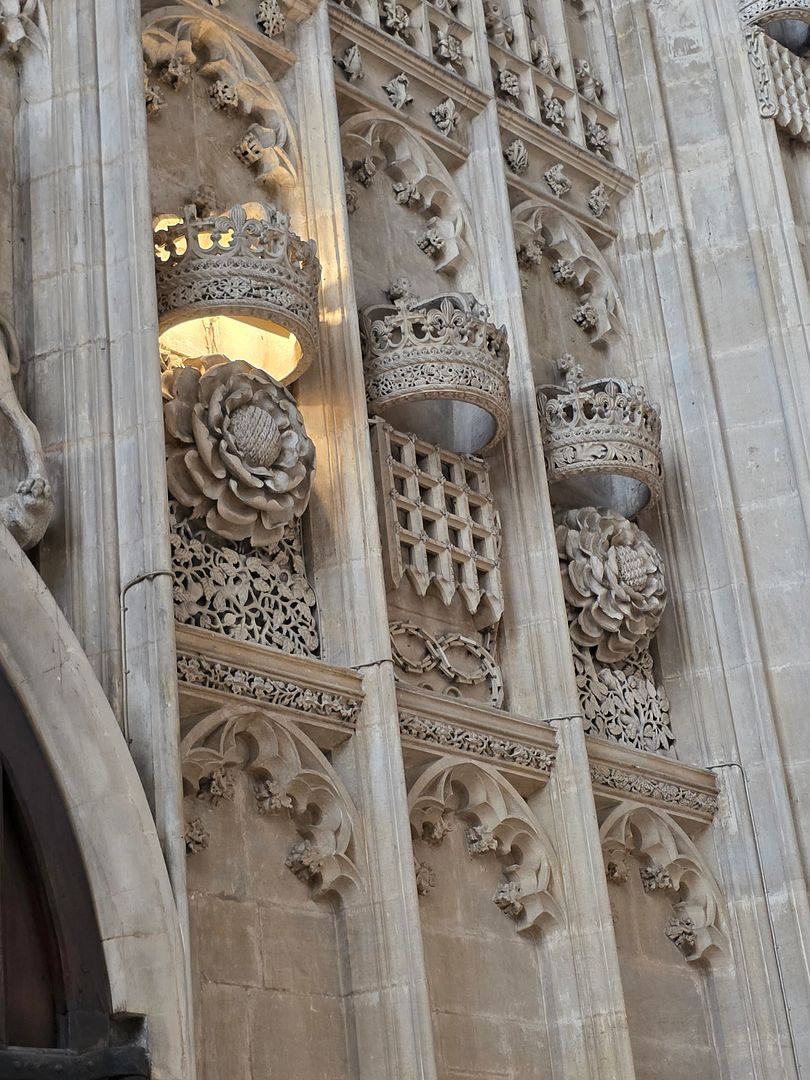
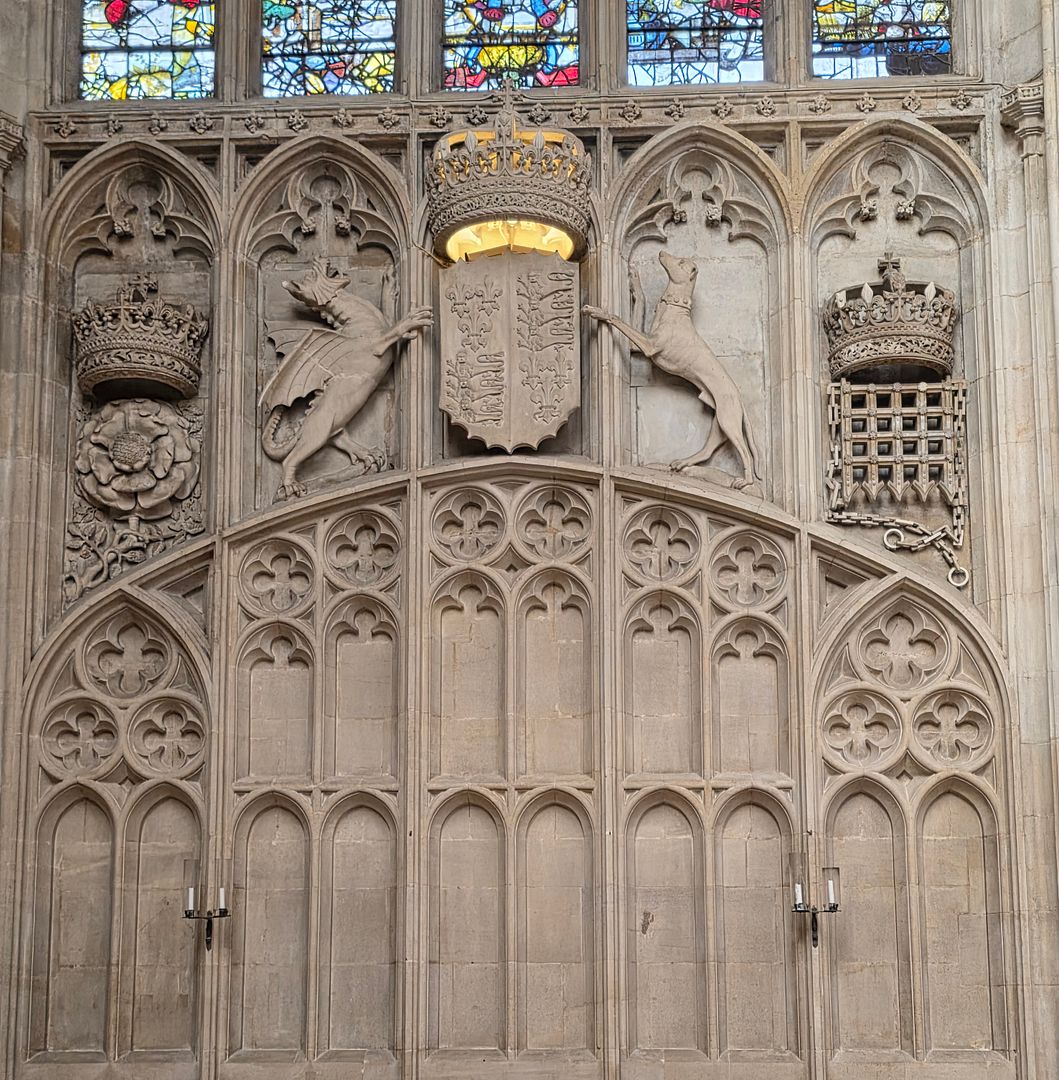
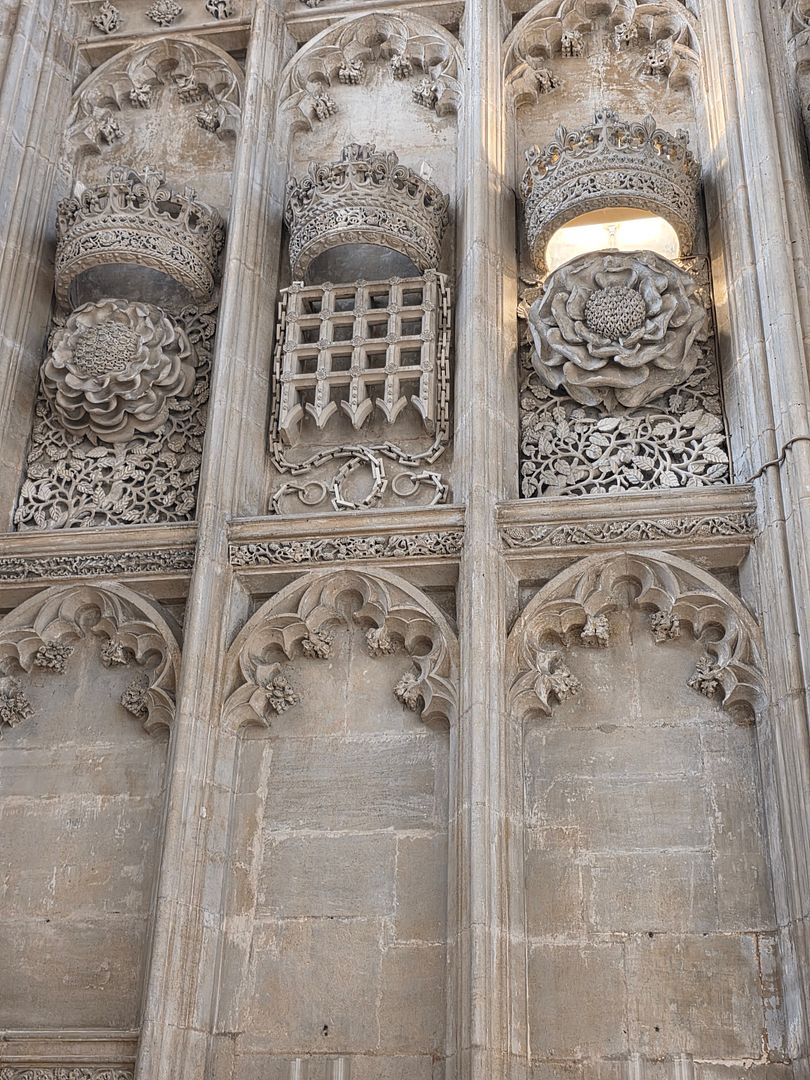
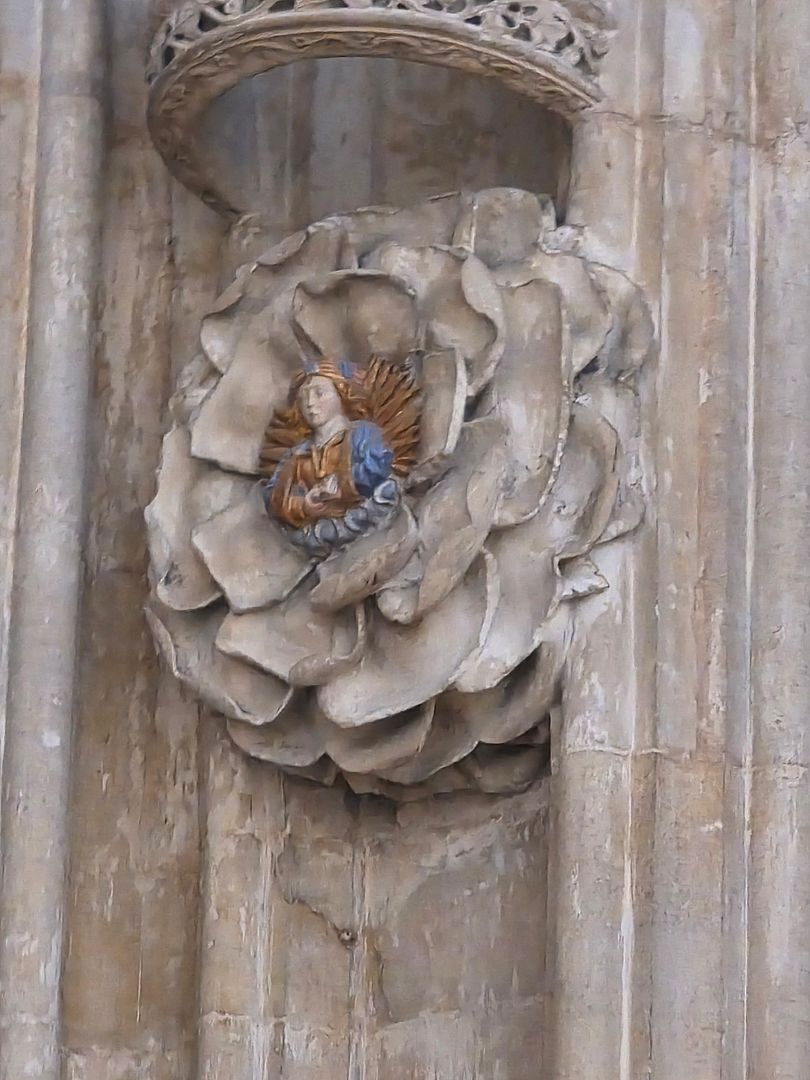
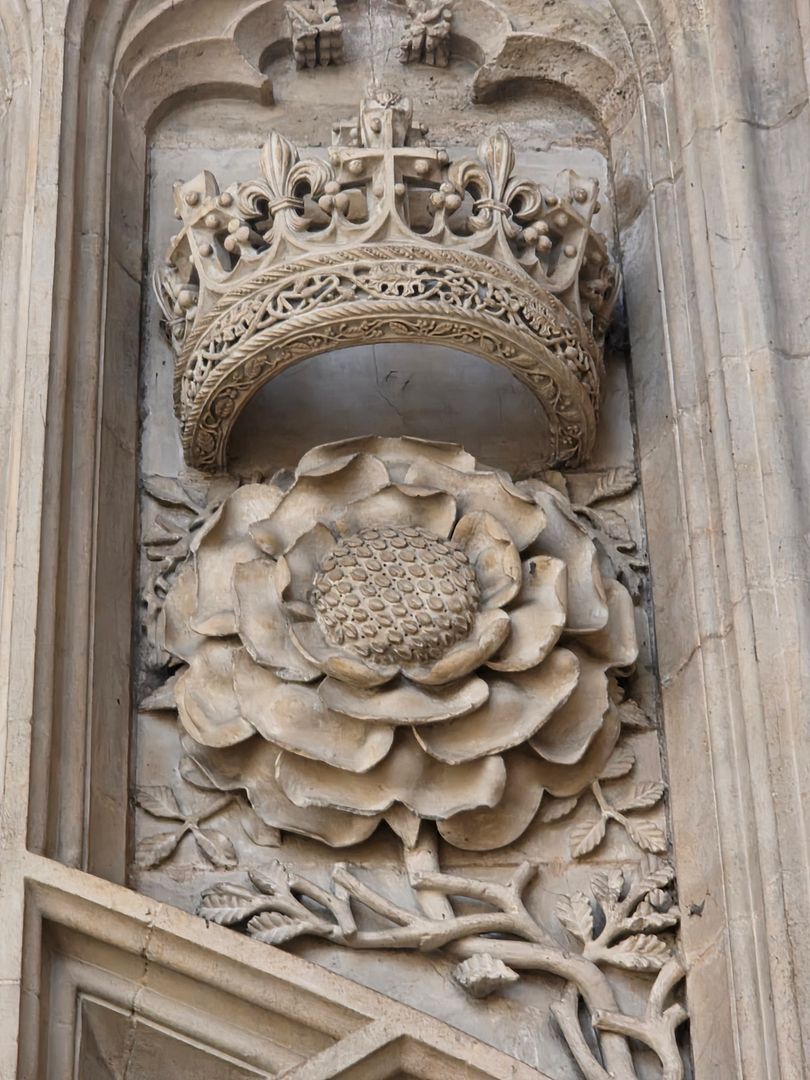
Carved Tudor Roses are seen and they, too, have an extensive history.

The Tudor Rose, was created in 1486 by King Henry VII. It symbolizes the unification of the House of Lancaster (red rose) and the House of York (white rose), bringing an end to the brutal civil wars known as the Wars of the Roses.


Built as a house of God it draws your eyes up.

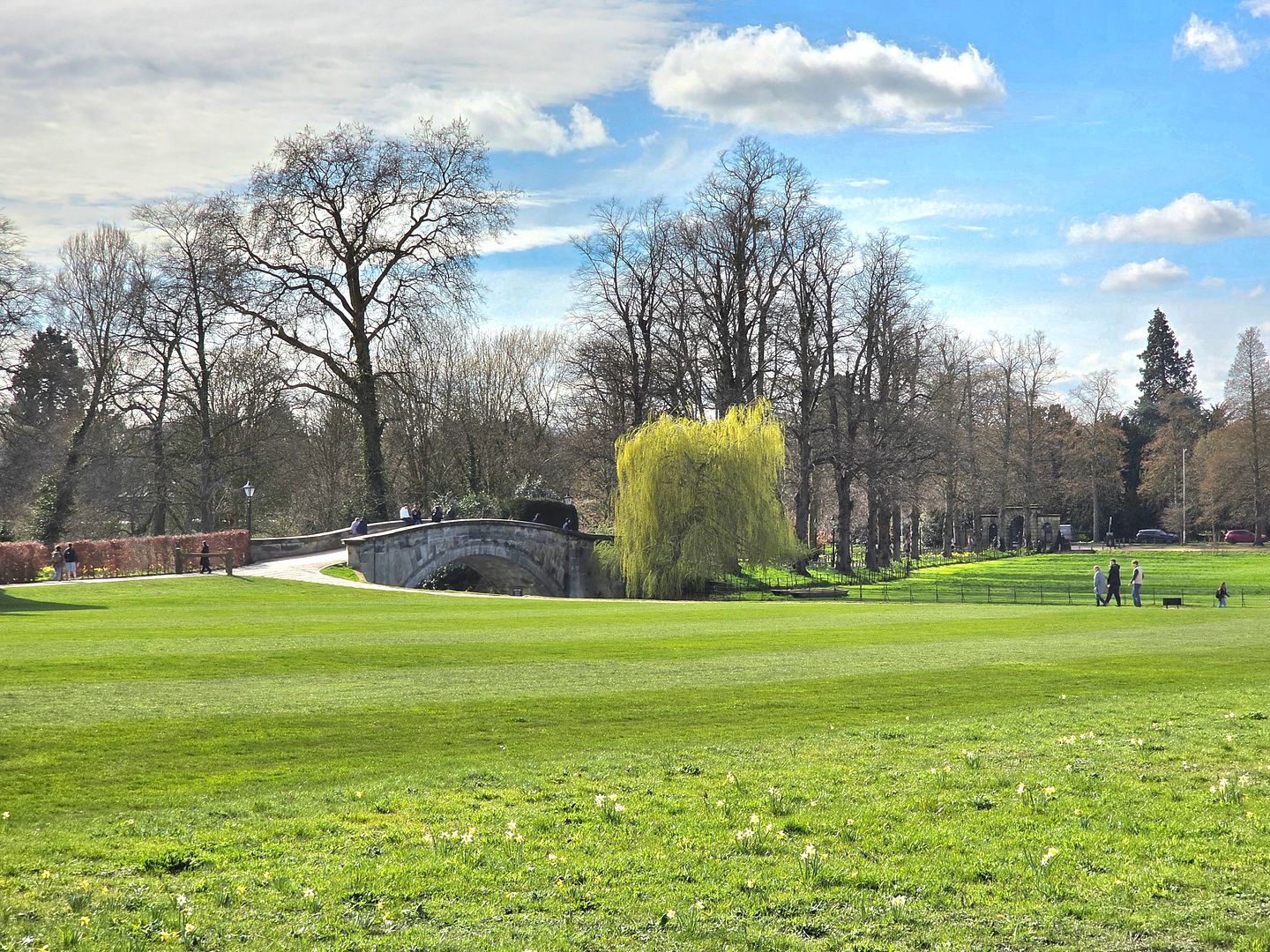
We left the chapel and enjoyed some scenes from the grounds of the college.

It was time for some refreshment after all the walking and viewing. We decided to try The Mitre for our main meal of the day.

We bought a famous Chelsea Bun from Fitzwilliams and enjoyed that later in the evening at our lodgings. We were content to stay in for the evening.

This ended our Tuesday March 10th in Cambridge. We had plans for Wednesday that took us on a train ride out of Cambridge.

Cambridge – Tuesday March 10th

Our travel journal of our time in Cambridge continues here from March 2026.

It was nice to enjoy our French press coffee on this morning before we headed out for breakfast at The Copper Kettle on King’s Parade in Cambridge.

It was a lovely morning and I took some photos along the way to breakfast.

We would sign up for a tour of Trinity College later in the week.

Looking out the window of the Copper Kettle.

I’ve never met a scone I didn’t like.

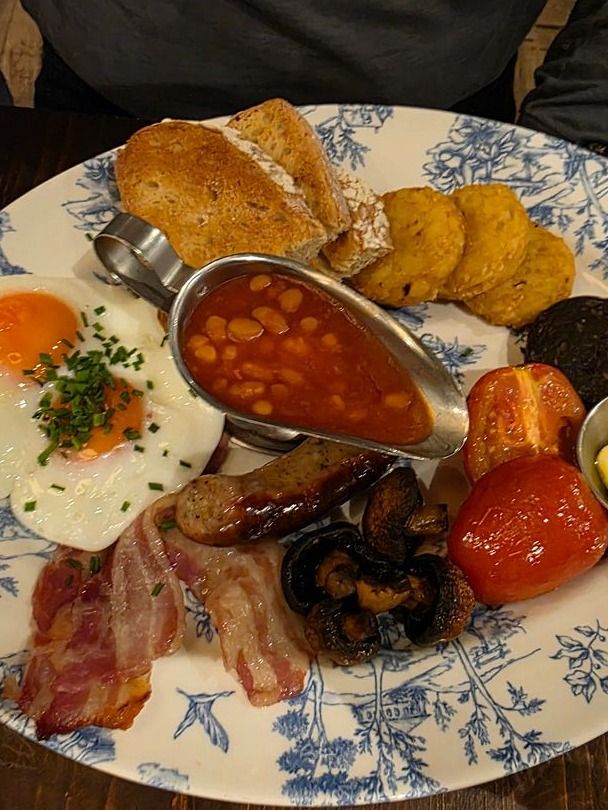
Greg went for the full English.

The Views from breakfast were lovely. This is the college and especially the chapel that would be part of our tour on this day.

This cafe was used in some of the filming for Grantchester. (Possibly as a tea-room?)

After breakfast we met up with our alumni tour guide and group for a 2 hour tour that would include King’s Chapel.

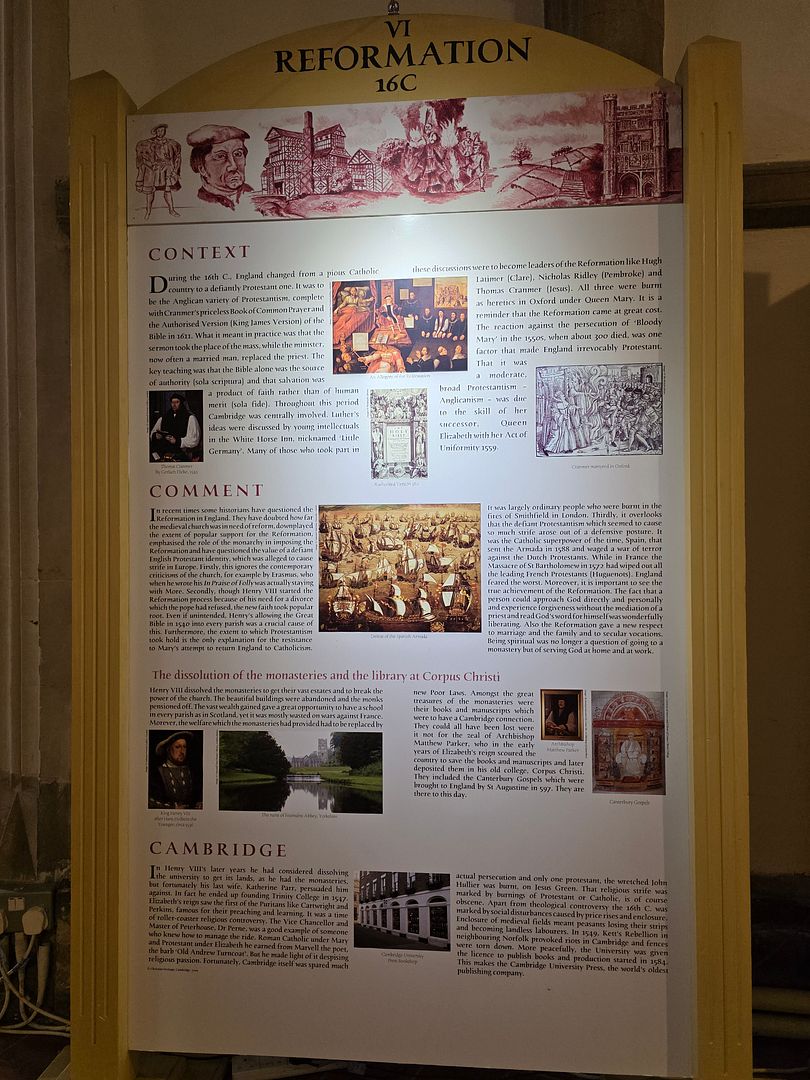
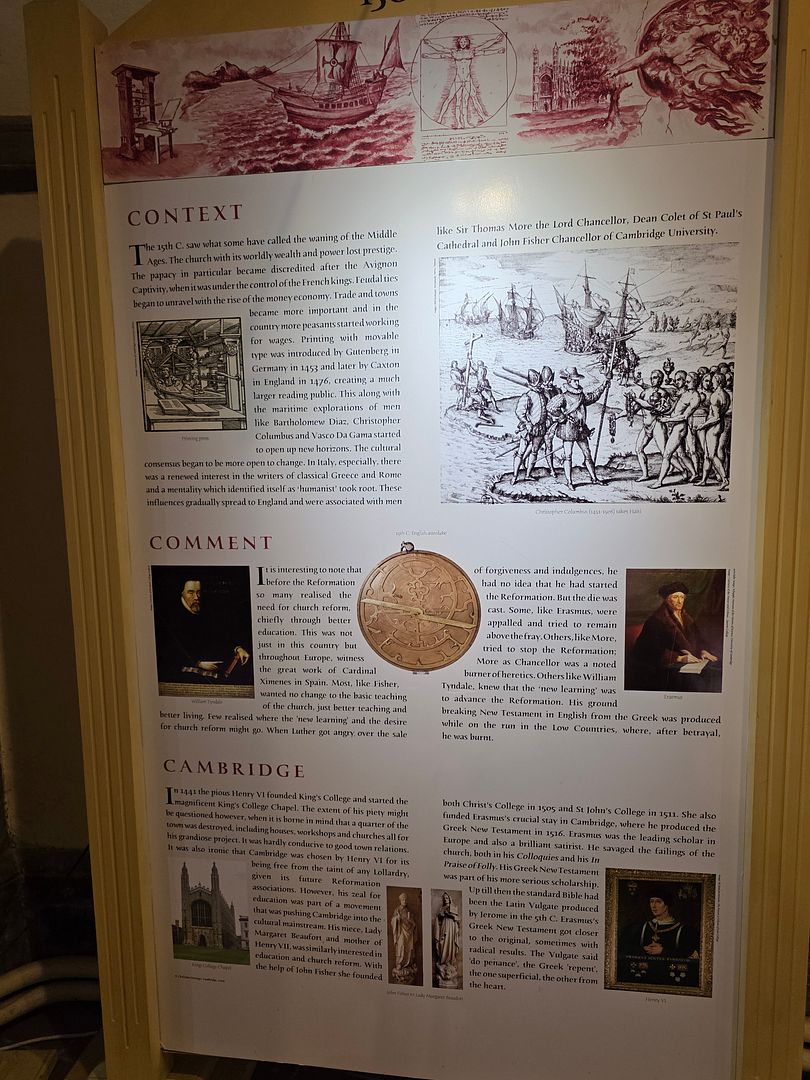
St Bene’t’s church on Bene’t’s street was one of our stops.

St Bene’t’s has been a place of Christian prayer and worship for nearly a thousand years. The exact date is in dispute; estimates vary between the tenth century and the reign of Edward the Confessor, but there are good grounds for placing it in the reign of King Canute about the year 1020. More history at this link.

St. Catharine’s College.

We continued on Silver Street to Queen’s college where the famous Mathematical Bridge spans the River Cam. I was chuckling here as I remembered the new quirky Ludwig murder series filmed in Cambridge. One of the episodes featured the bridge, the building on the left which is part of Queen’s college and a chapel. Have you watched the series. I highly recommend it.

The bridge was designed in 1748 by William Etheridge (1709–76), and was built in 1749 by James Essex the Younger (1722–84). It has subsequently been repaired in 1866 and rebuilt to the same design in 1905. More info here.

We continued on Silver Street to Queen Street on ‘the backs’ with some nice views of King’s College Chapel.

This is Trinity College Bridge.

St. John’s with the clock tower without an actual clock.

This bridge might be the Kitchen Bridge.

Working our way back to the King’s Parade to King’s College where our tour began and would end except for those of us who paid extra to go into King’s College to be able to visit King’s College Chapel.

The Chapel deserves a post of it’s own and that will come on another day.

Cambridge~ Monday March 9th

I’m working on finishing off my posts about our days in Cambridge. These posts are from Monday March 9th.

I’ve already posted about our early morning walk and seeing the famous clock here.

And I also posted about our lunch at The Eagle and all about it’s history here.

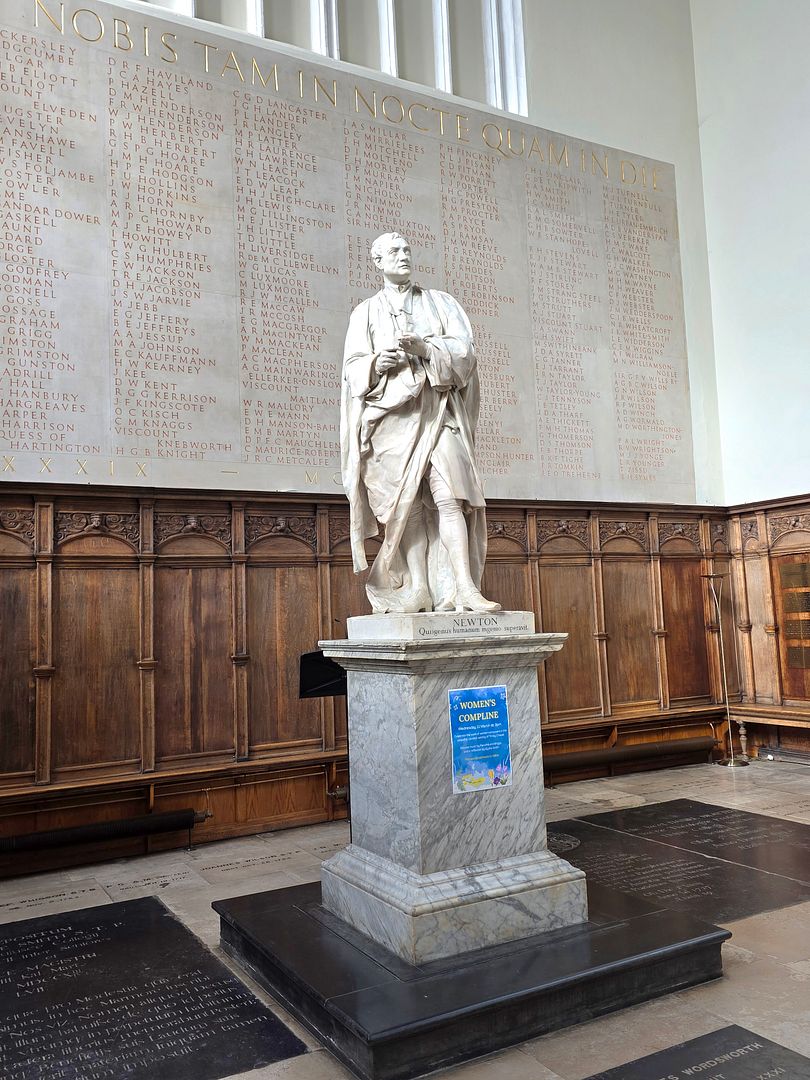
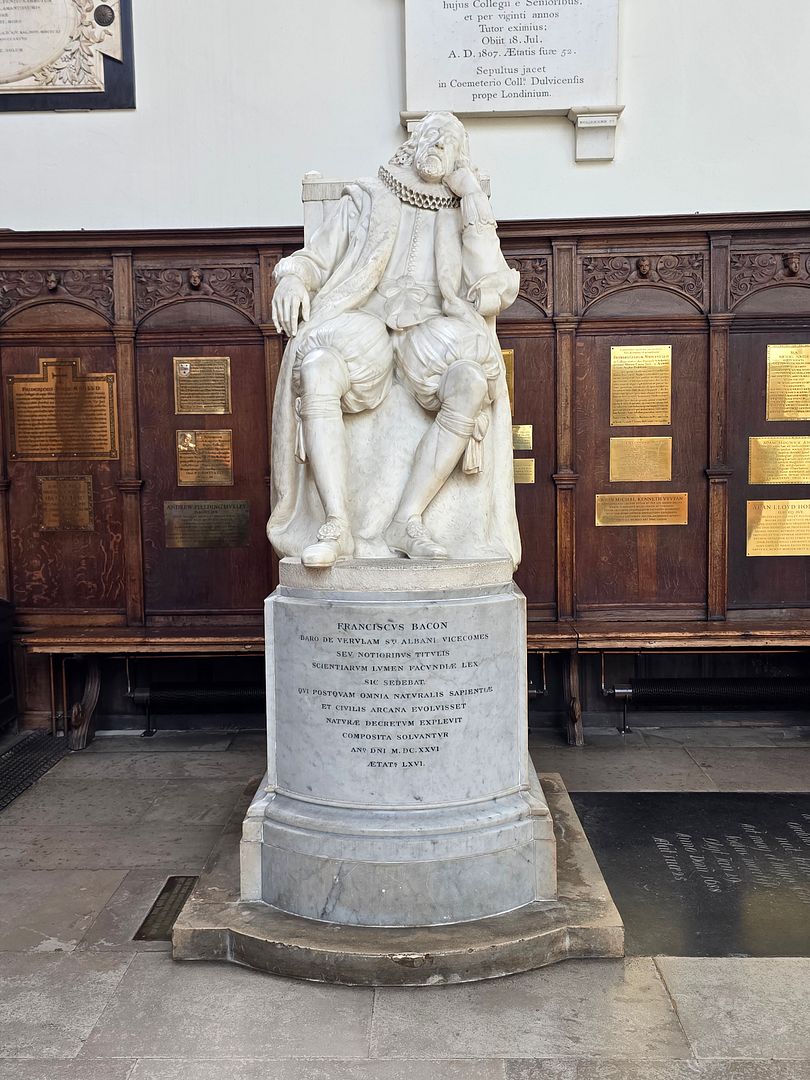
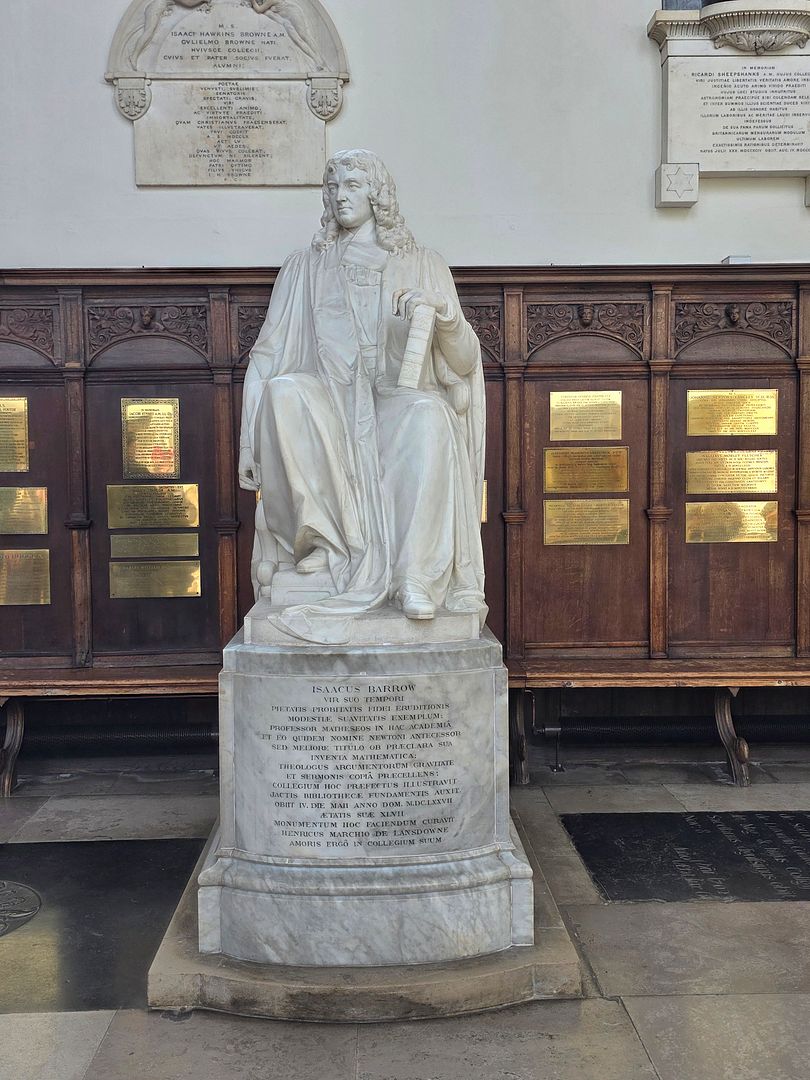
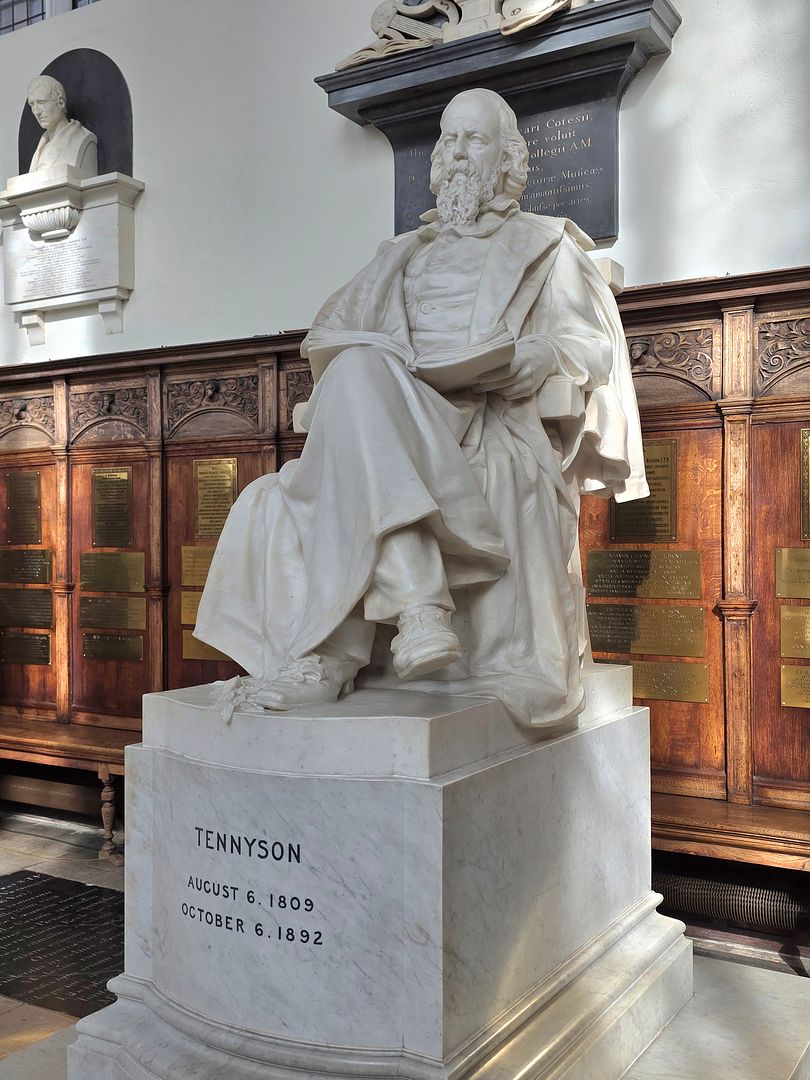
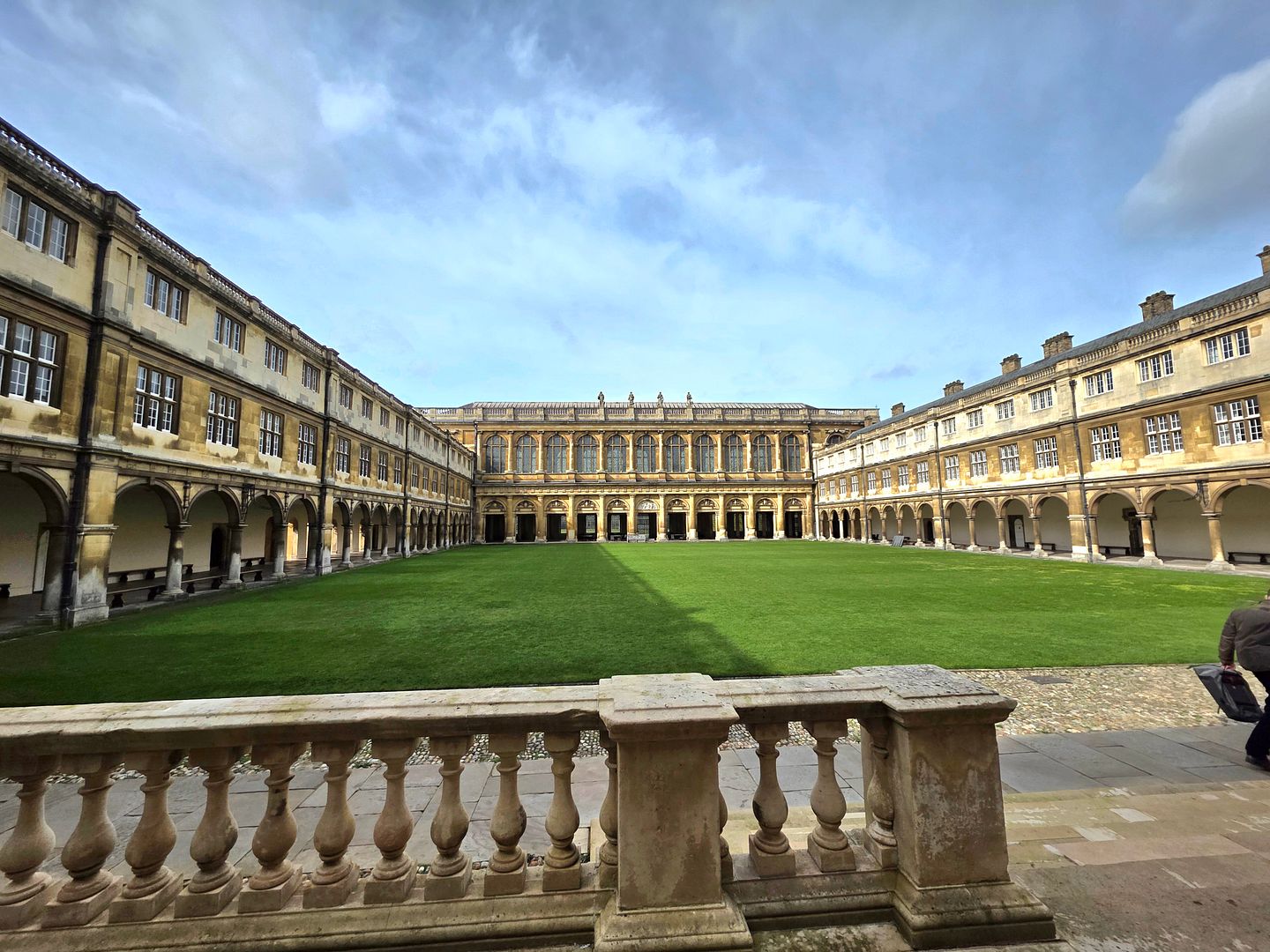
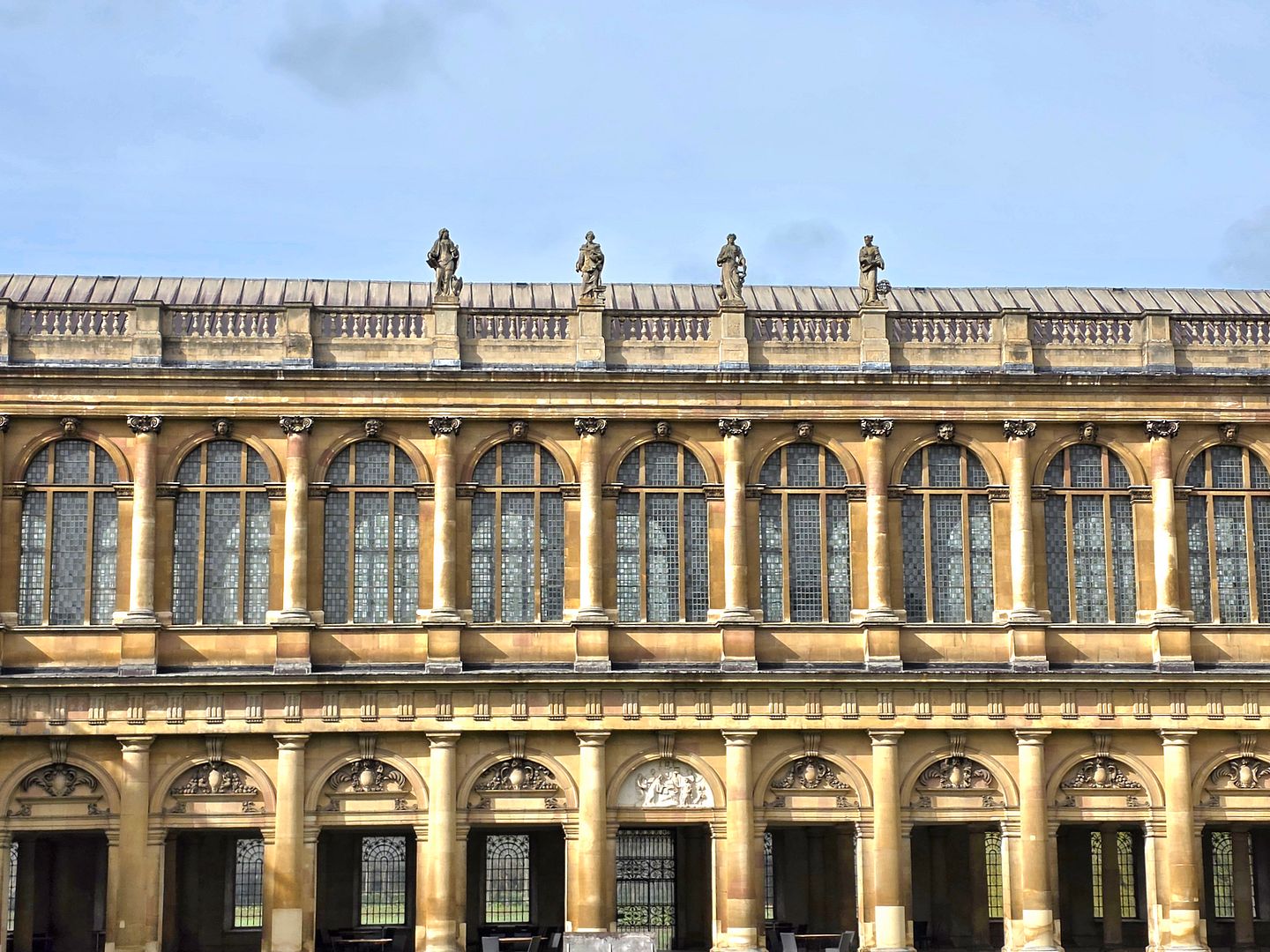
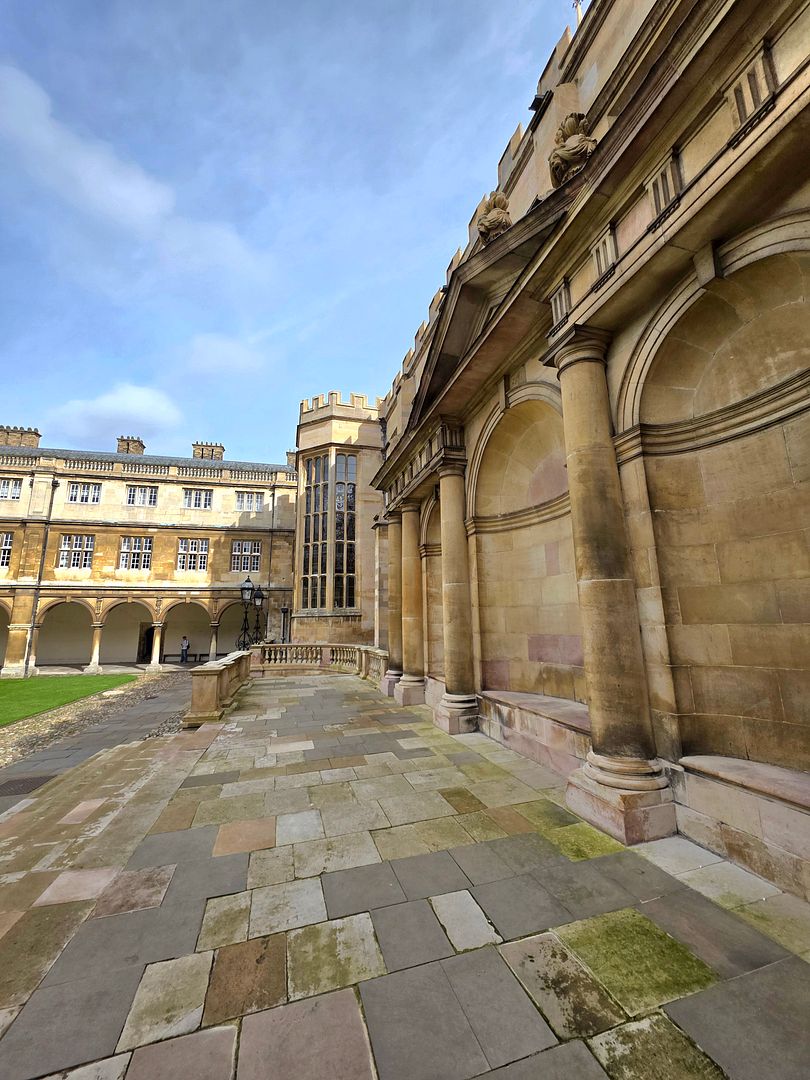
On this same day we visited the beautiful Wren Library.

From the Wren Library we continued on enjoying ‘the backs’. ‘The Backs’ is an area to the east of Queen’s Road in the city of Cambridge, England, where several colleges of the University of Cambridge back on to the River Cam with their grounds covering both banks of the river.

St. John’s College

1776 & 1779 William Wilberforce and Thomas Clarkson begin their studies at St John’s. Joining forces in 1787, they will spend the rest of their lives leading the campaign to abolish the slave trade and slavery

1787 William Wordsworth arrives as a 17-year-old Cumbrian undergraduate.  With his sympathy for the common man and love of nature, he becomes a central figure in shaping English Romanticism and perhaps our most famed alumnus

This is a photo of the back of the building where the Wren Library is housed.

Punting along the river Cam which is a major tourist draw. We did not choose to take a ride.

Signs like this were all along the sidewalk along Queen’s Road.

We made our way along the road for our destination for refreshment and along the way we saw many signs of the promise of Spring.

We were beat by the time we found the Pickerel Inn which is now a traditional public house established in 1608.

After our treat we walked back to our lodgings just a short .3 miles from the Pickerel.

The dish towels in our kitchenette had this saying on them.

The door signs made us chuckle, too.

We stayed in for this evening after it seemed we were walking all the day long.

We were looking forward to being able to make our own coffee in our room on Tuesday morning since we purchased a French Press and coffee while out and about this day.

The Other College Town

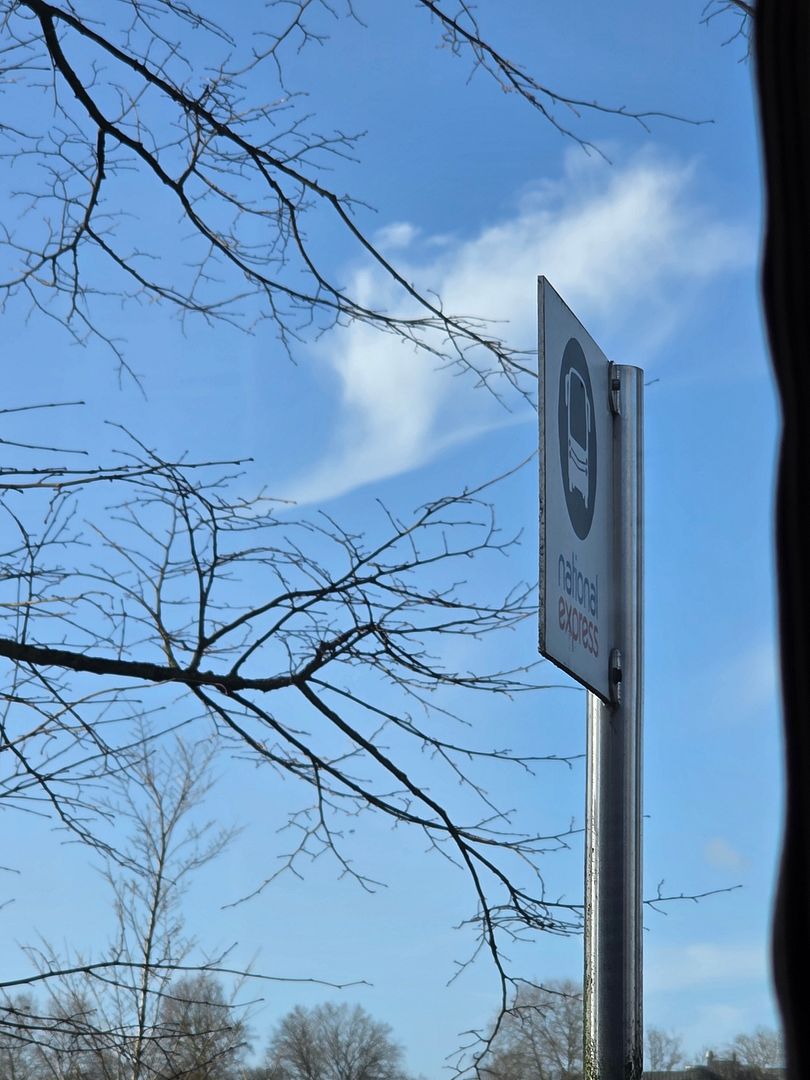
We have had some great visits to Oxford in the past so we decided this time around to visit the ‘other’ college town, Cambridge. When our river cruise was over on Sunday March 8th, we flew from Budapest to London. From Heathrow Airport we boarded a National Bus at the central bus terminal that is located outside terminal 3. We had reserved seats on the bus.

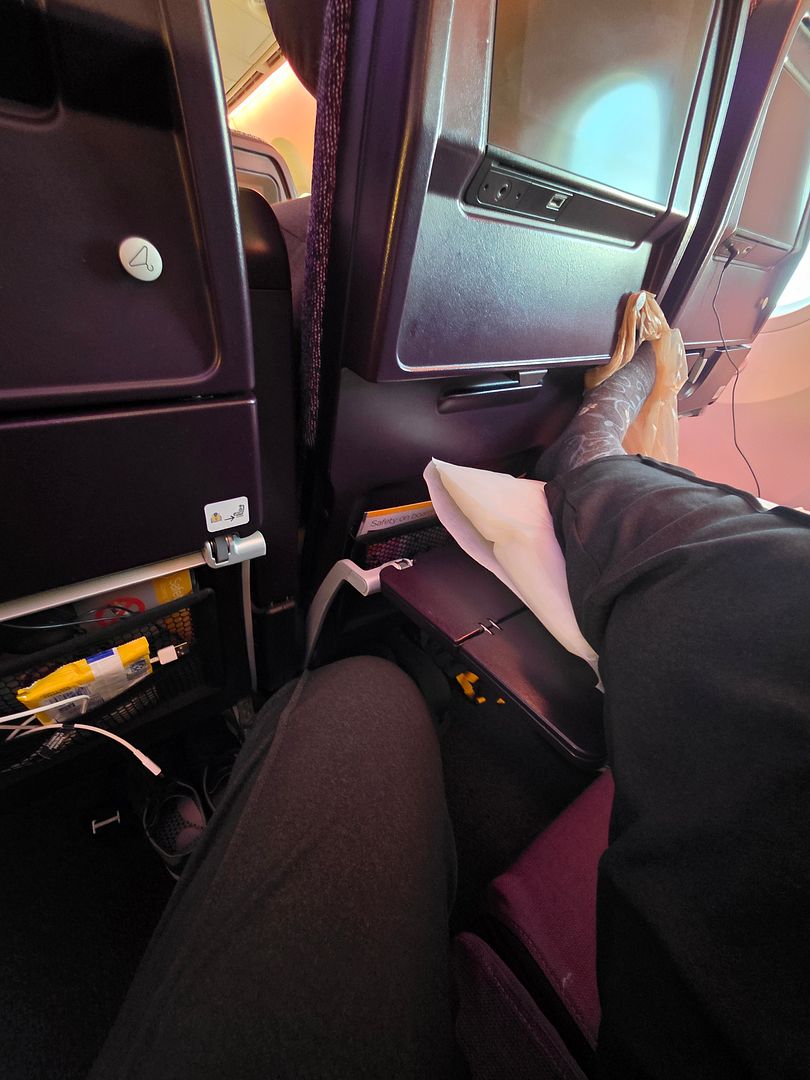
I was still being careful about my right foot, elevating it as much as possible while we waited for our bus. I wanted to be able to walk about Cambridge for the next 6 days without pain and swelling.

We were dropped off in central Cambridge and found the best walking route to The Wilde where we had reservations for the next 6 nights.

The lobby was a very nice welcoming space. We settled in and headed out to The Baron of Beef for a meal.

We had breakfast at the Budapest airport and were ready for a good meal this evening.

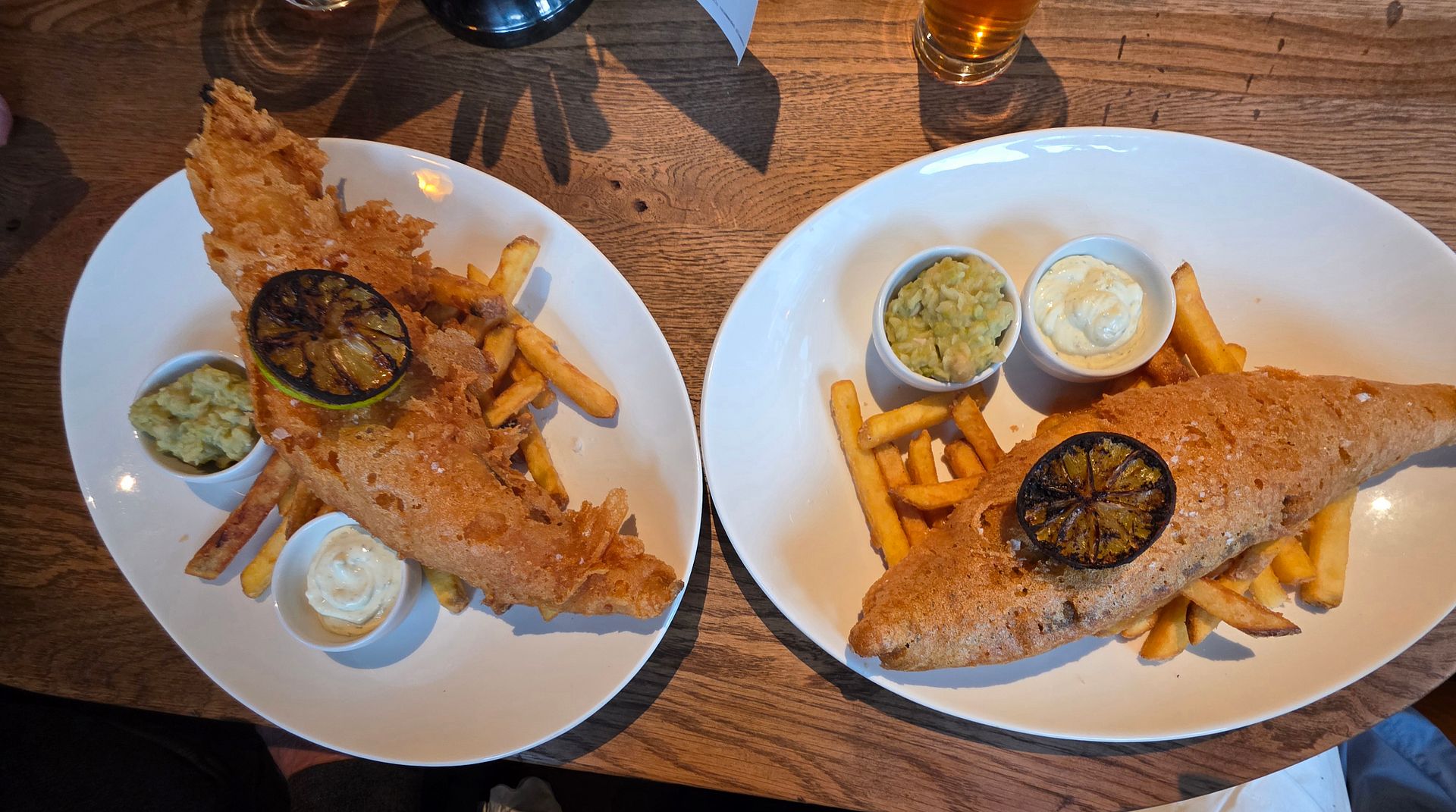
We were back in the land of Sticky Toffee Pudding, Meat pies, and Fish and Chips.

Satisfied we headed back to the Wilde to get some rest for Monday March 9th, our first full day in Cambridge.


Our Extravagant Creator


We’ve been working on our own personal part of earth for earth day. God was extravagant when he created earth and all it contains for us to enjoy.

Another Wednesday on this earth and Joyce has a fresh set of questions for us. This is Wednesday Hodgepodge.

1. April 22nd is Earth Day…what’s the most ‘out of this world’ place on earth you’ve ever visited? Tell us something about it. 

Greg said, ” When I was ten it was Disneyland.”
yellowstone day one 174

In our adult years I’m going to say Yellowstone or Badlands.

2. A favorite quote, verse, or song lyric with the word earth in it? 

3. What’s the most trivial thing about which you have a strong opinion? 

Where to park at Wal-Mart.

4. What’s your most commonly used kitchen utensil or tool? What’s the last thing you made using that tool? 

I’m going to say my Chefs Knife. I made roasted vegetables for our family meal last Friday and the onions and potatoes and carrots needed to be cut. I also used it to cut ham to throw into our breakfast egg scramble on Saturday. I love a good sharp Chefs knife! I like all sorts of knives.

5. Marilyn (Memphis Bridges) gave me a great book of 3000 questions, and I’m going to try to use one in our Hodgepodge every week. Here is today’s – 

What is your greatest extravagance? 

Our trips lately have been extravagant. Extravagance to me is something above and beyond and luxurious. These days I don’t like to penny pinch when we are traveling.

Nice hotels and nice restaurants are my choice. That is not to say we don’t enjoy a nice pub or cafe mixed in during travel. There was a time when we penny pinched and stayed in some sleazy motels and I have stories to tell.

I also am quite happy to be extravagant with our family.

6. Insert your own random thought here. 

Speaking of the beauty of our earth. I’ll be getting back to our daily travel spots during our Danube River Cruise on Thursday, Lord willing.

Looking forward to your answers this week.

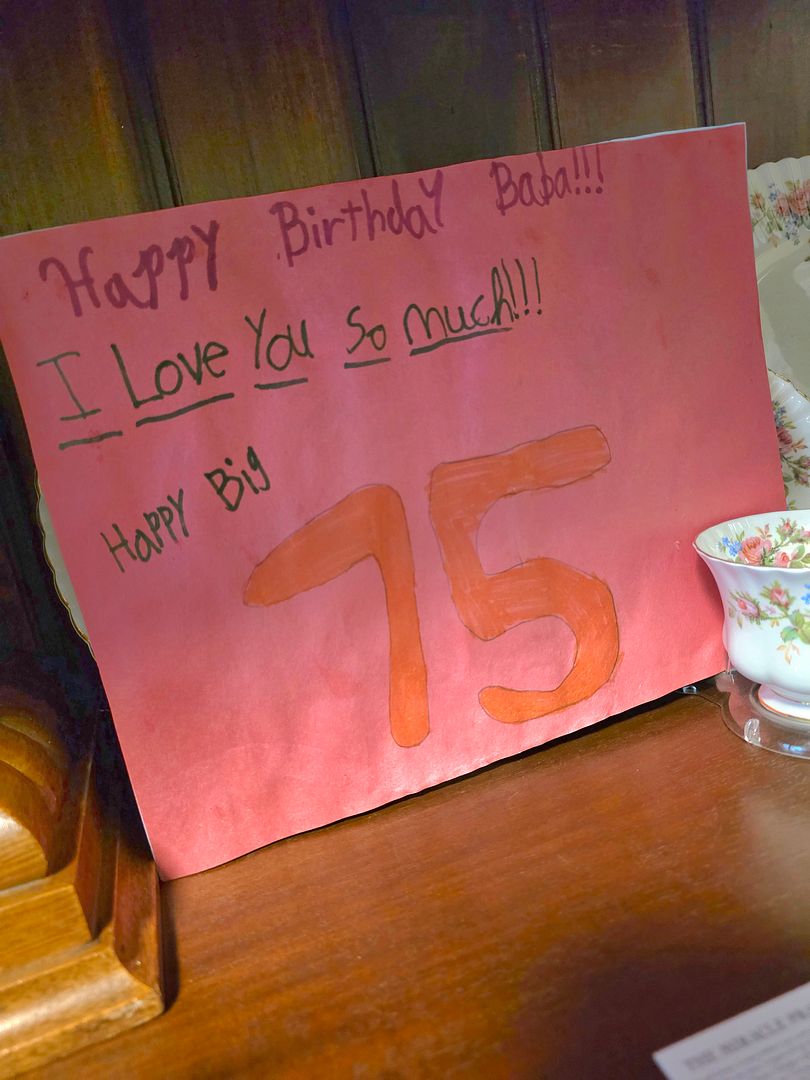
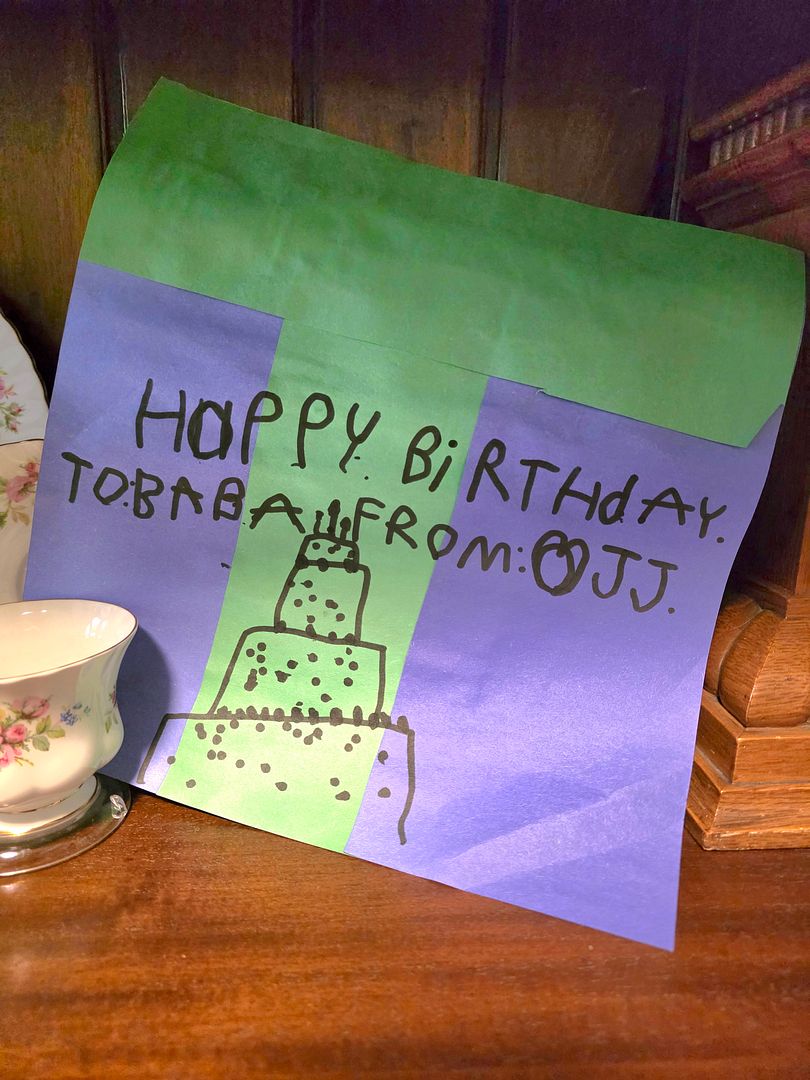
Seventy Five!

Today is my seventy fifth birthday. God has been so good to me. We will be traveling all the live long day today. From Cambridge to London to Seattle to Spokane and then home again, home again, jiggity jig!

It will be good to be home again and to get our bearings.

Here are some birthday photos from the past.


The lines have fallen for me in pleasant places;
    indeed, I have a beautiful inheritance.

Thank You, LORD!


The Eagle and DNA

Frances Crick’s brag in the Eagle. The pub where we habitually ate lunch, that we had indeed discovered that ‘Secret of life, struck me as somewhat immodest, especially in England, where understatement is the way of life. ~James Watson

The Eagle, Cambridge ~ Discovery of DNA~

On this spot on February 23, 1953, Francis Crick and James Watson made the first public announcement of the discovery of DNA with the words “We have discovered the secret of life.” Throughout their early partnership Watson and Crick dined in this room on six days every week. 

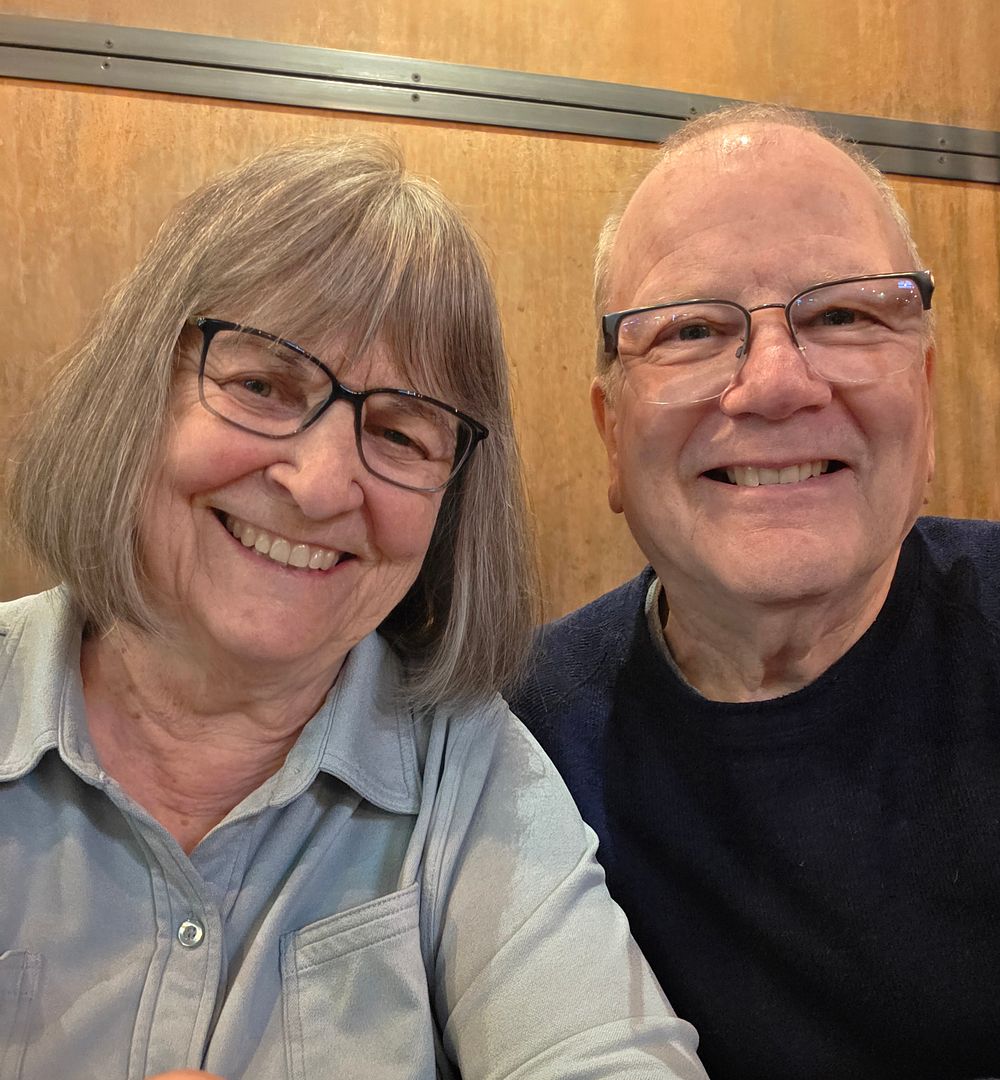
Greg and I dined in this room on Monday March 9th, 2026.

The other history that is special here is the ceiling covered in graffiti of British and American WWII pilots who burned their names and squadron numbers here using cigarette lighters, candles and lipstick.

Cottage pie and duck hash were our choices for our meal.

From The Eagle we decided to trek over to the Wren Library in Trinity College. It has limited visiting hours and this was a good day to fit it in. That will be another post!

We are walking our feet off here in Cambridge. Thanks for following along on our travels and discoveries.