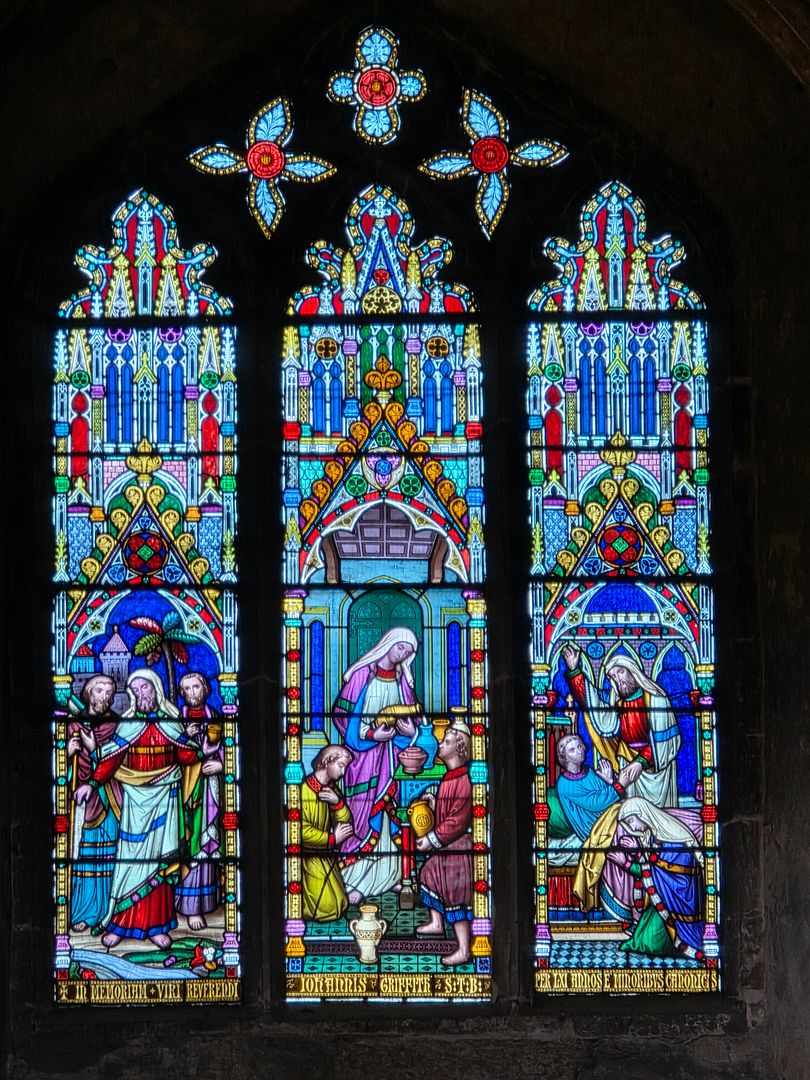
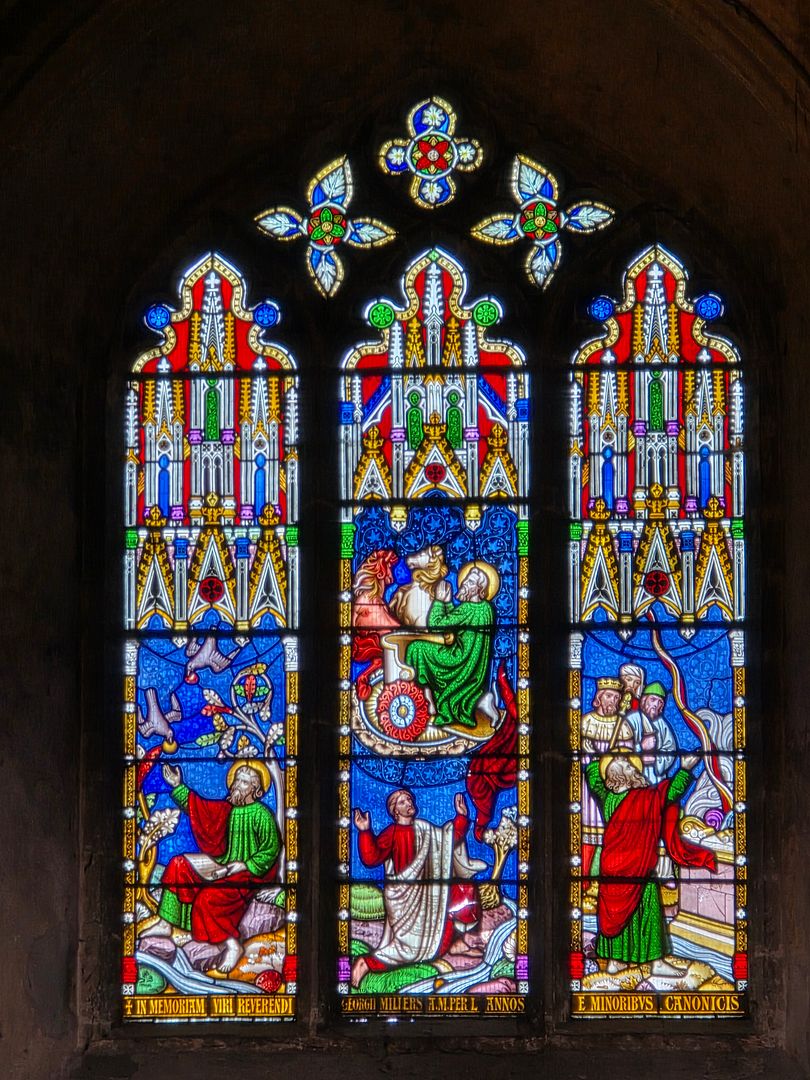
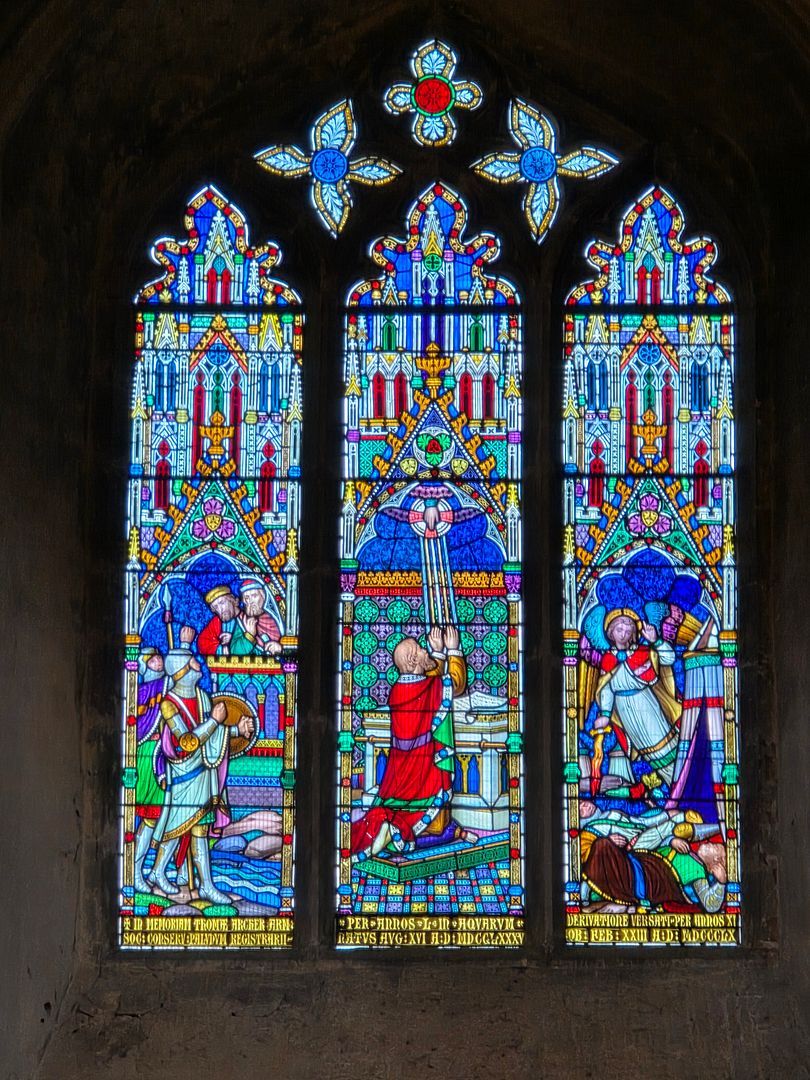
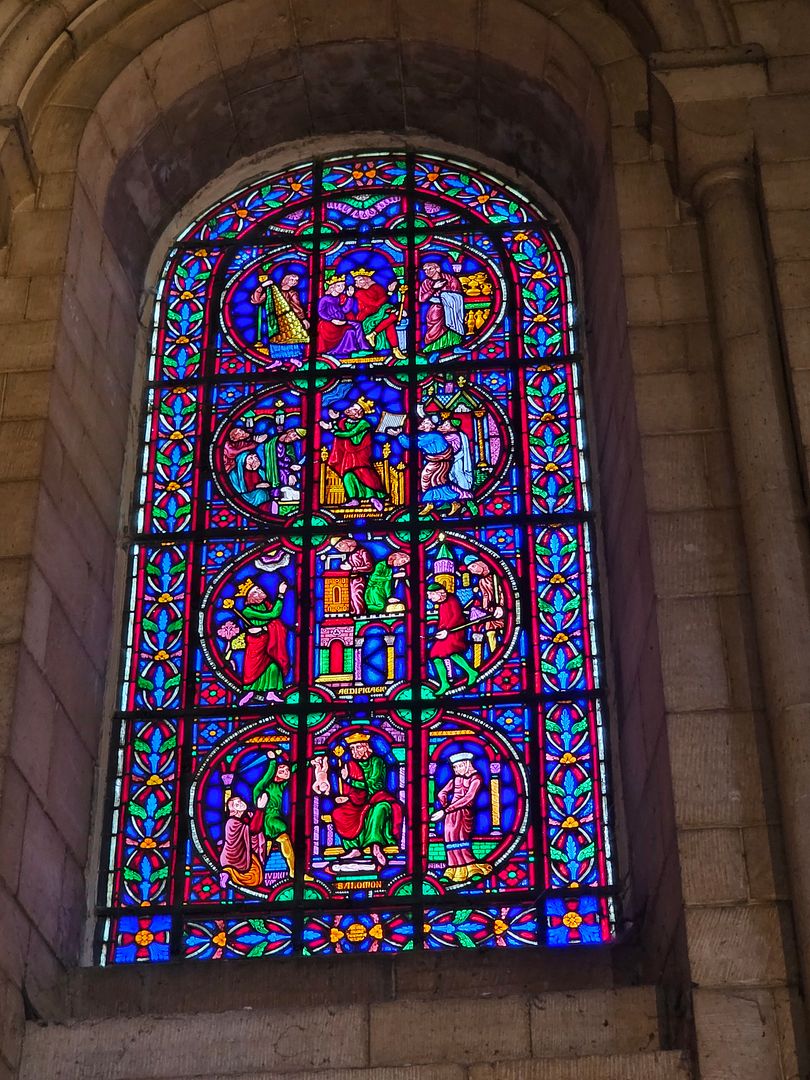
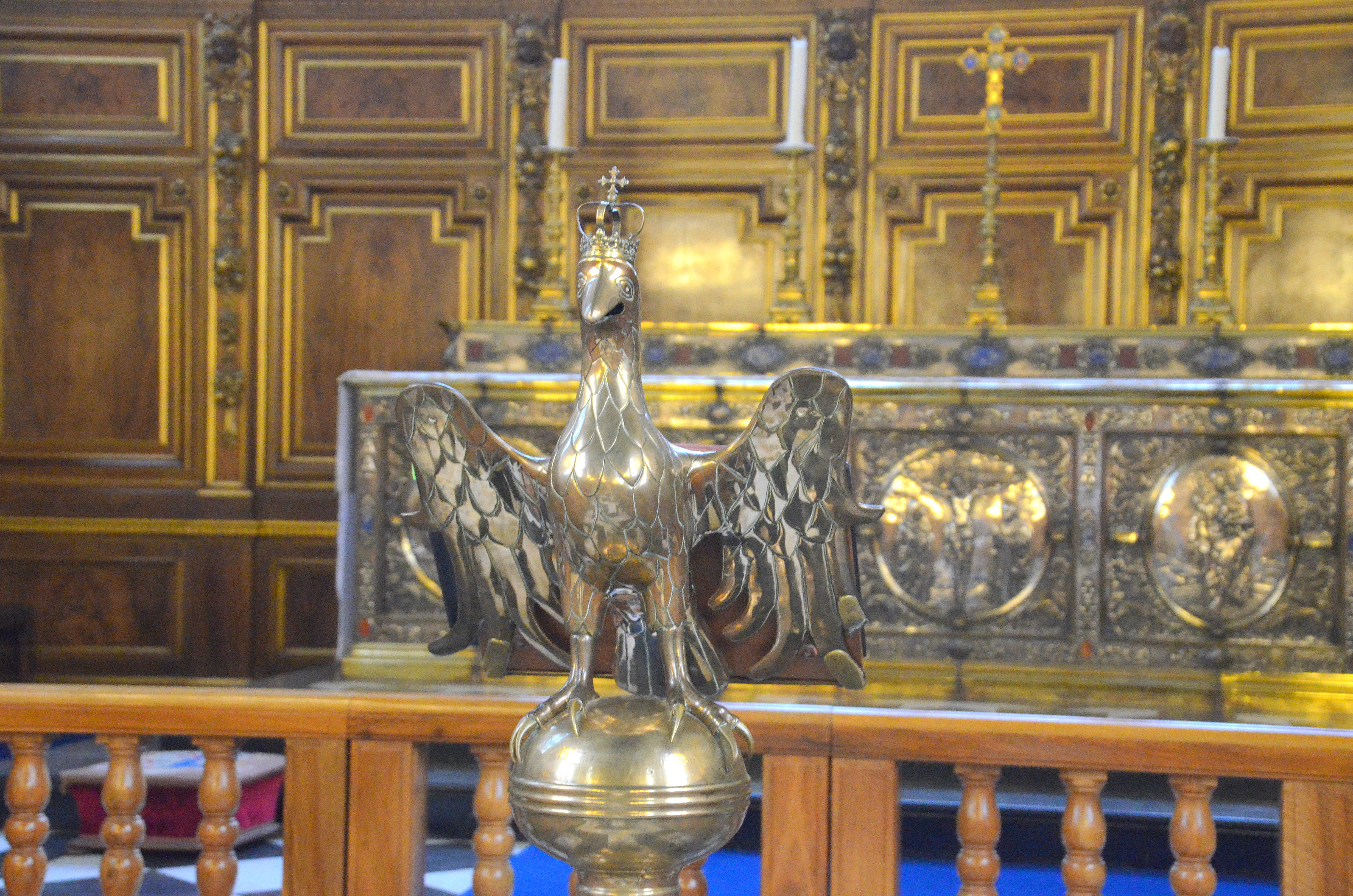
The Fitzwilliam Museum Cambridge

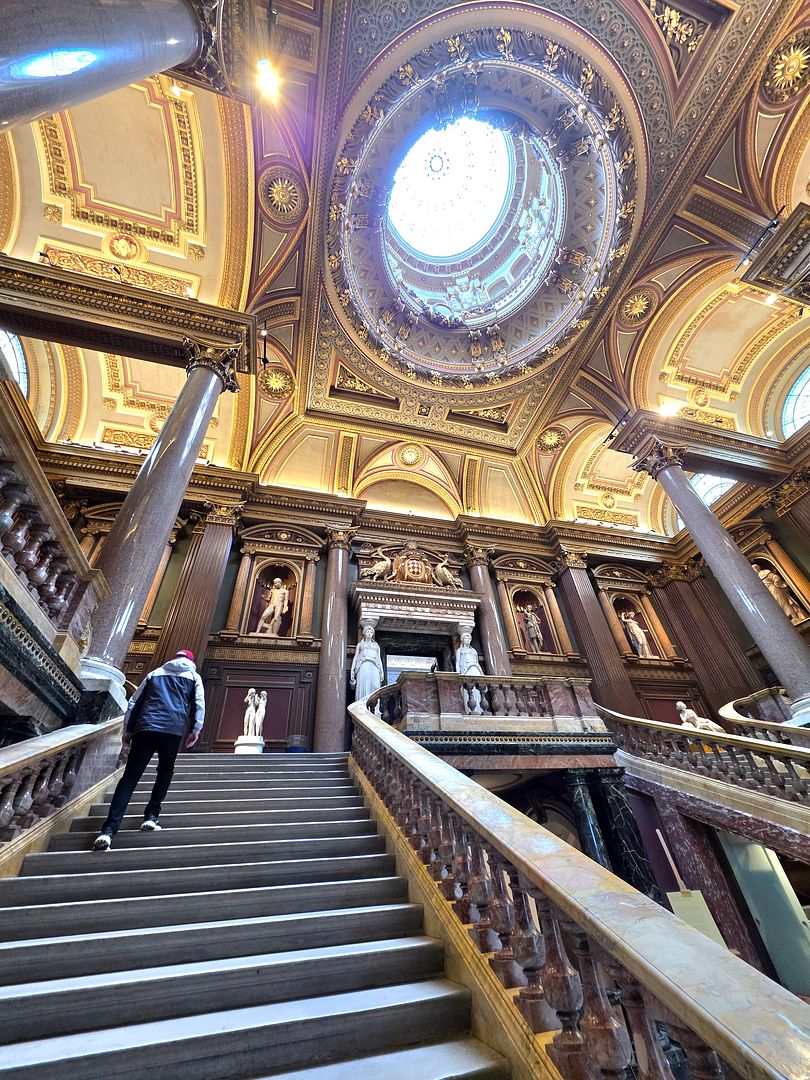
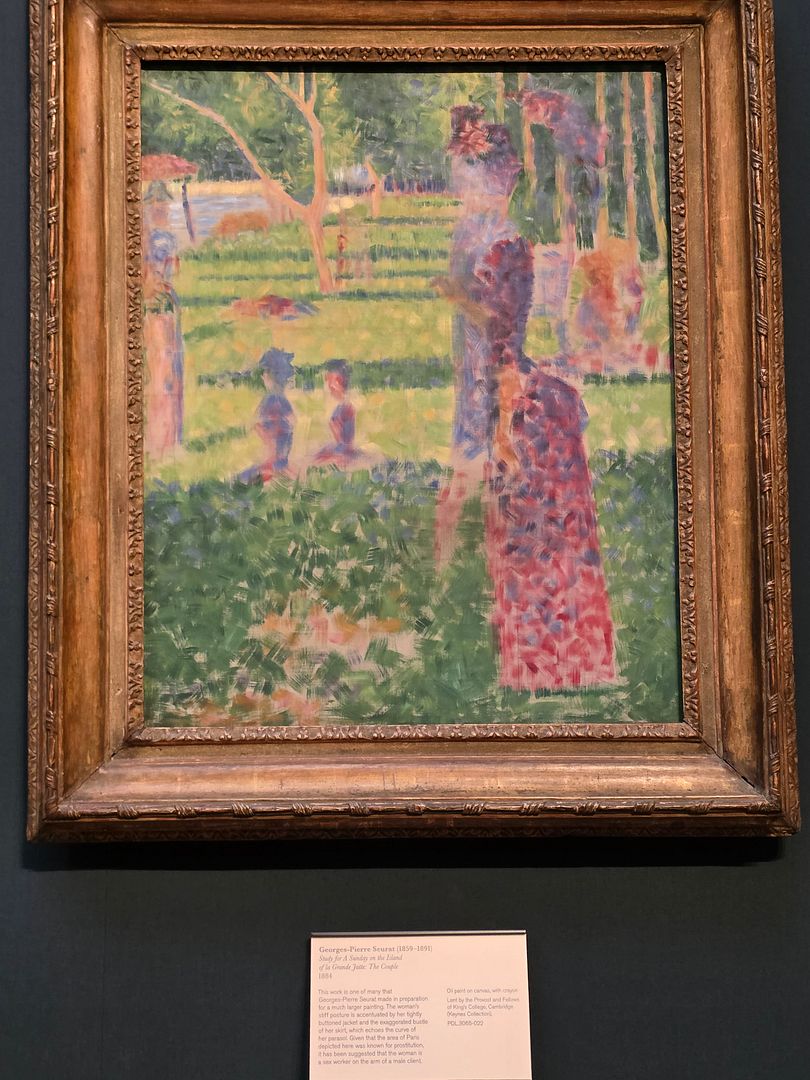
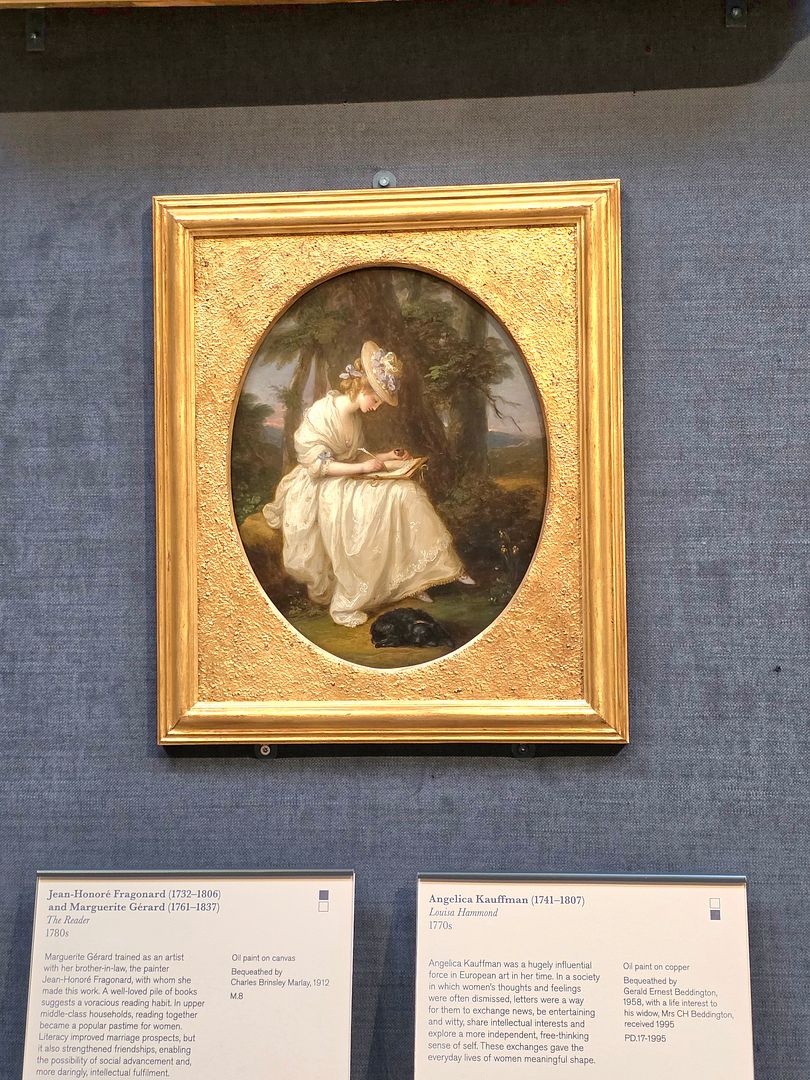
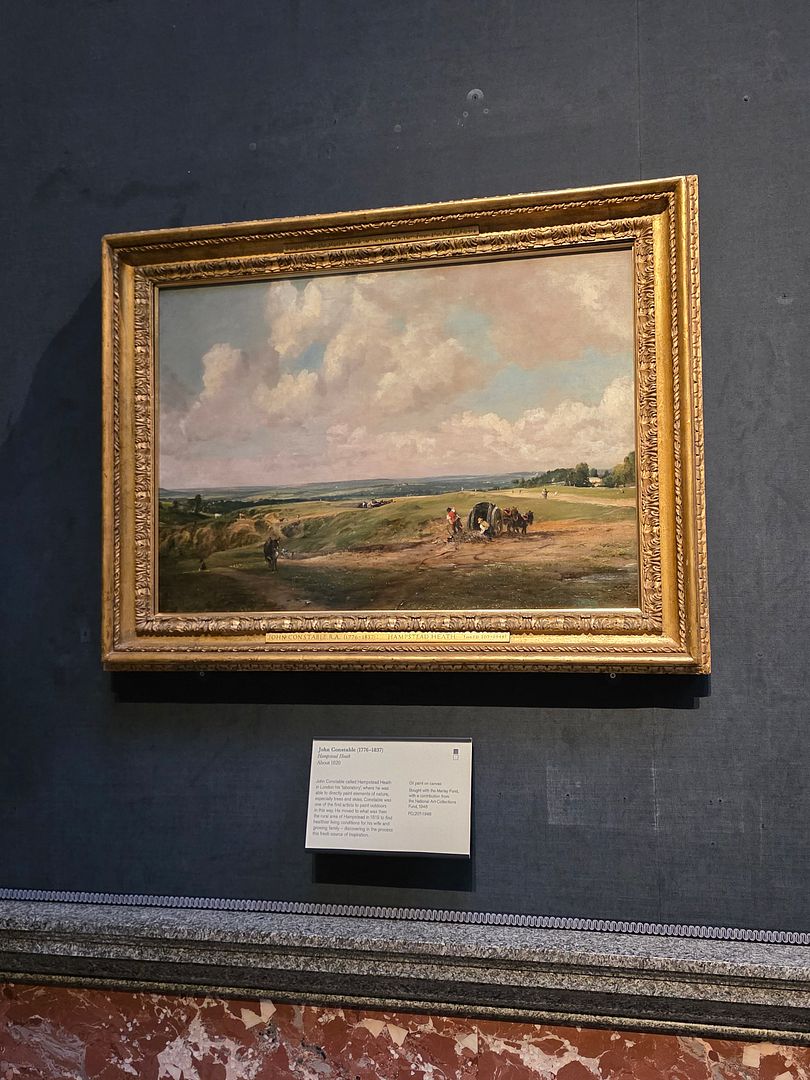
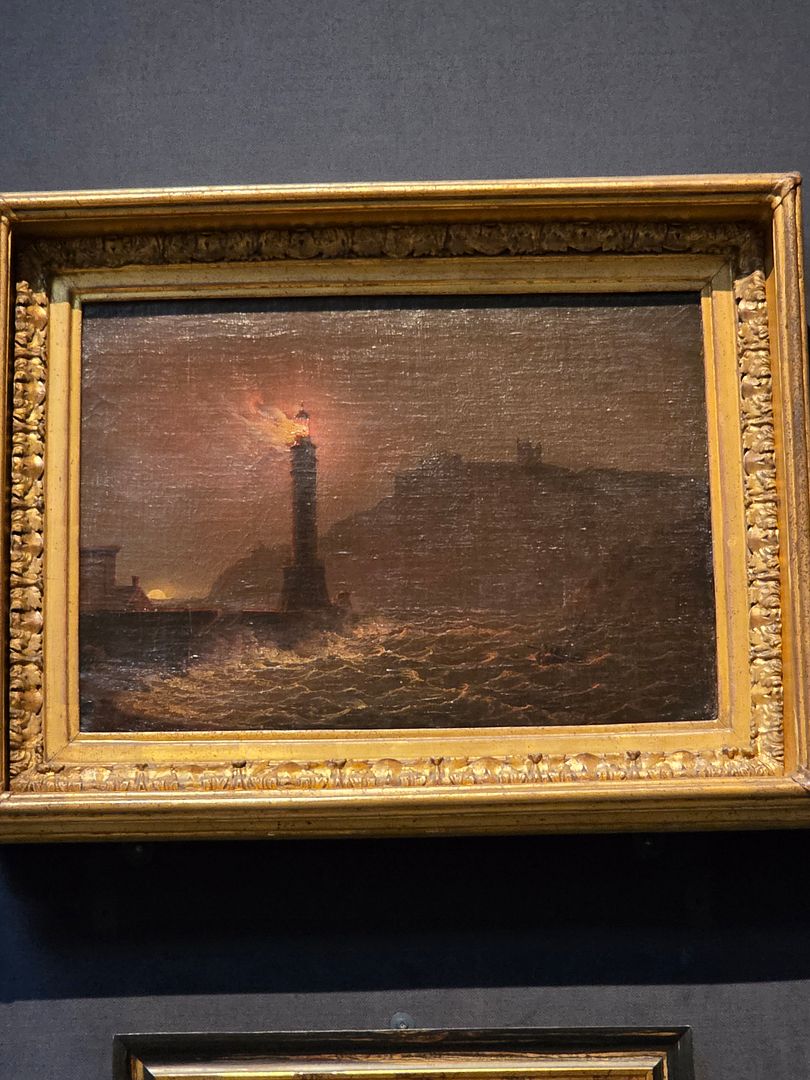
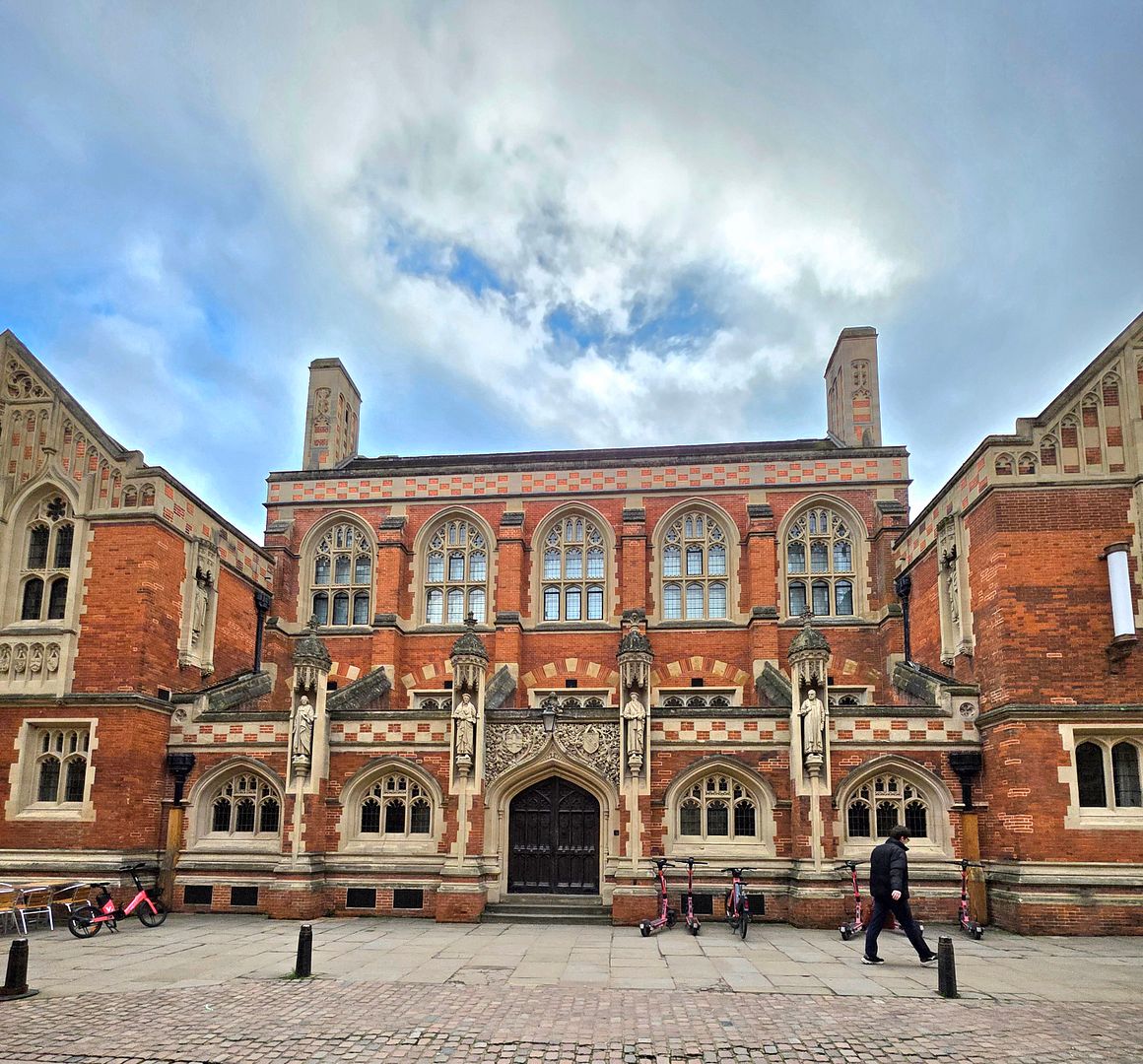
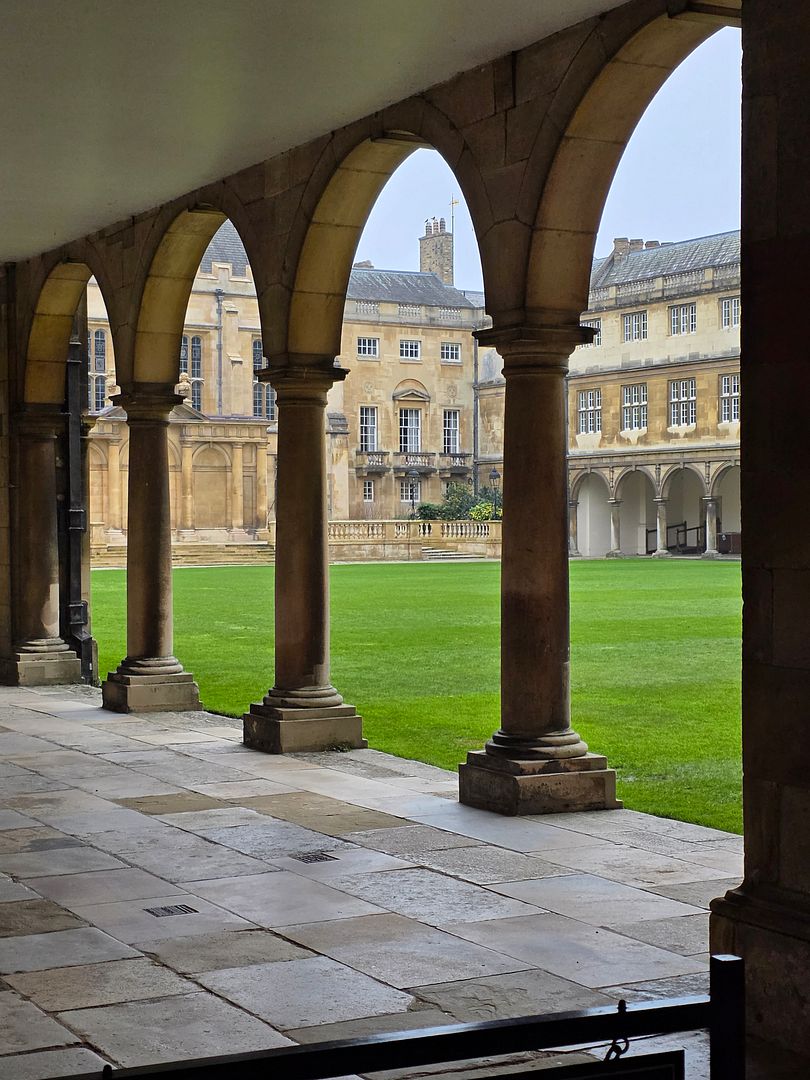
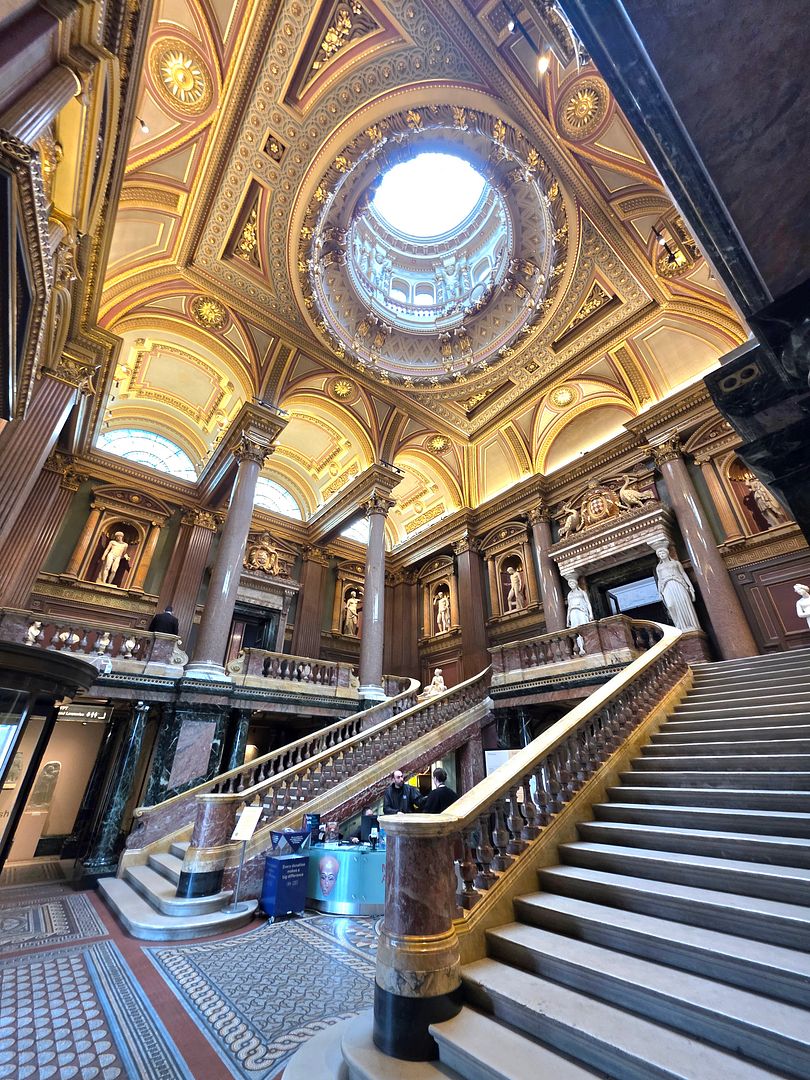
On Thursday March 12th we reached our furthest destination on Trumpington St. in Cambridge, The Fitzwilliam Museum.

We could have spent a lot more time in the museum but there were about 100 elementary+ age children who arrived and it was hard to work around them in the different exhibits. They worked on projects sprawled on the floors and we literally had to try and not step on them. The noise level was not pleasant, either. Thankfully we saw some favorites before the rooms were taken over by exuberant youth!

Note to Self: Go to museums as soon as they open in the earlier hours or at night.

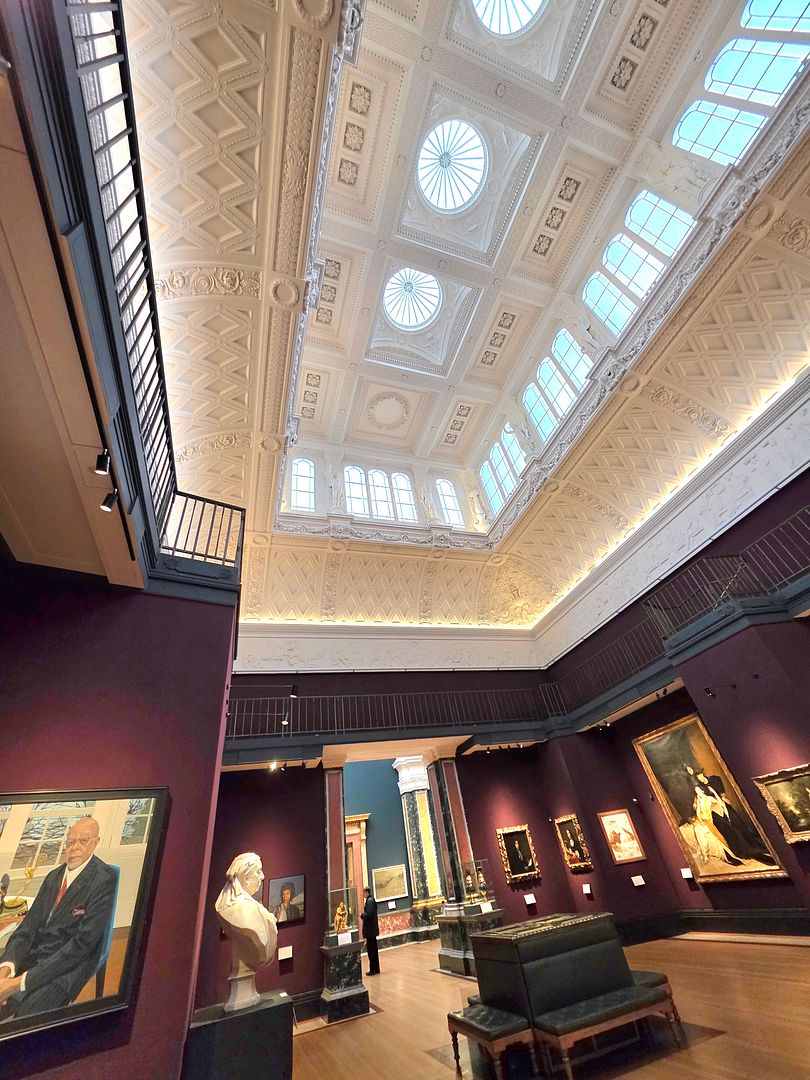
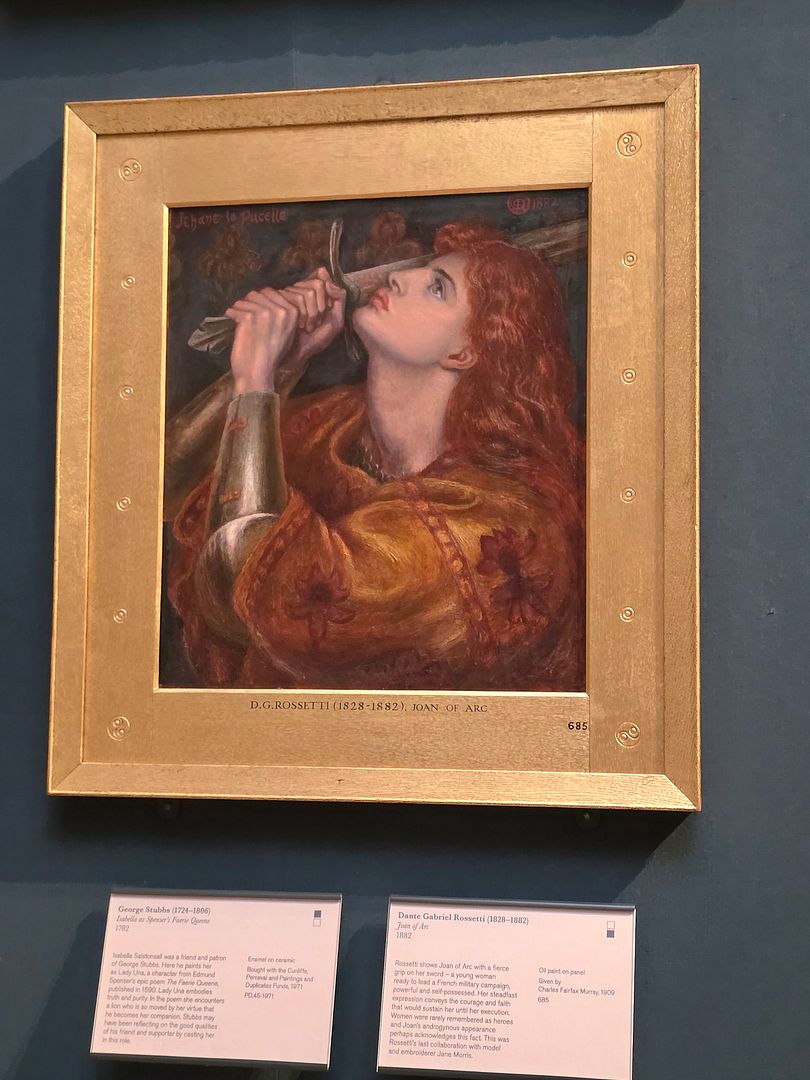
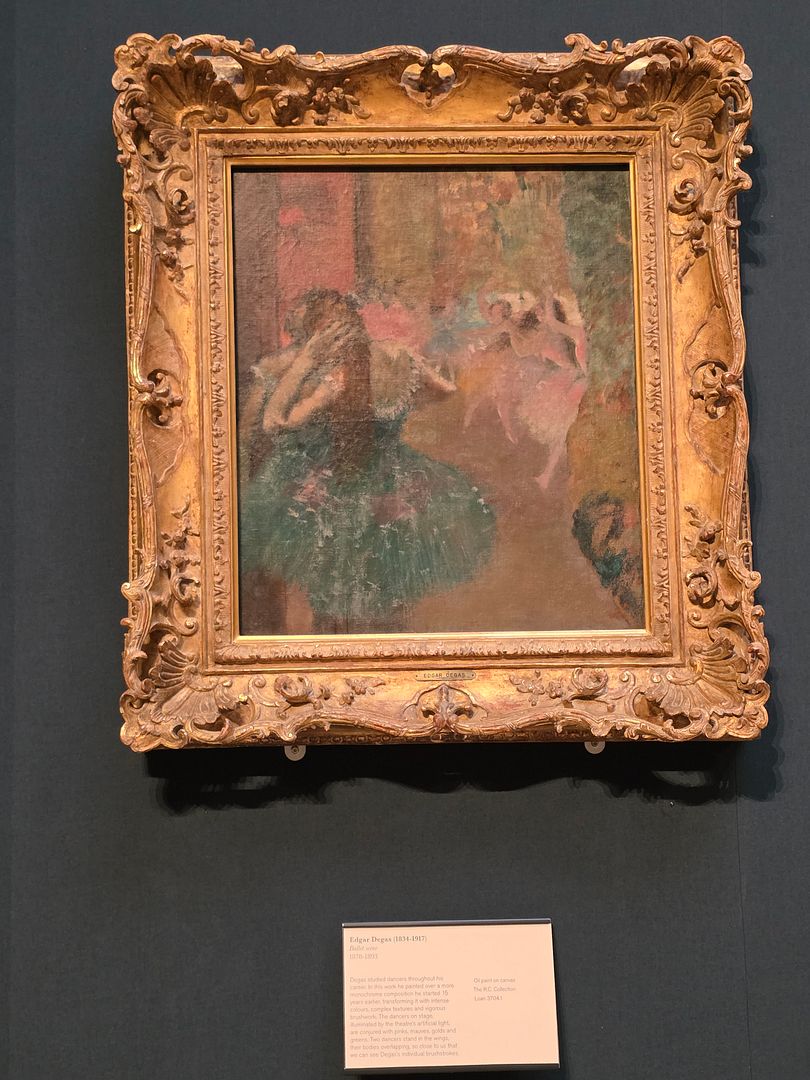
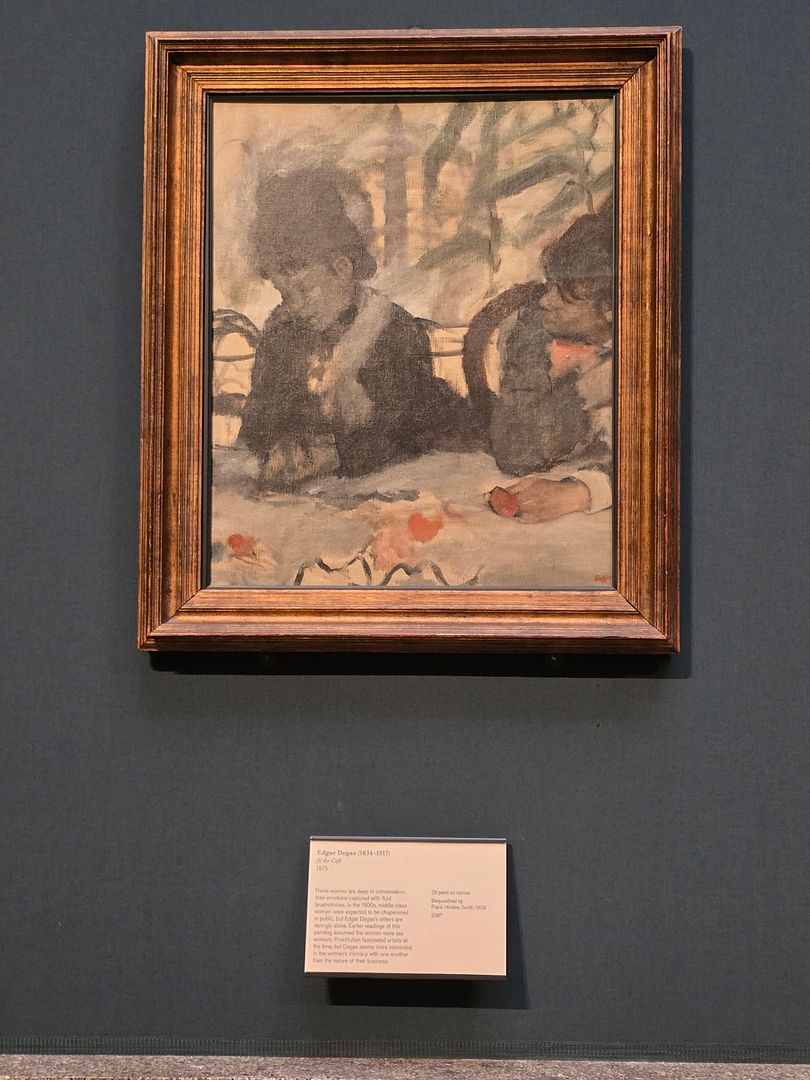
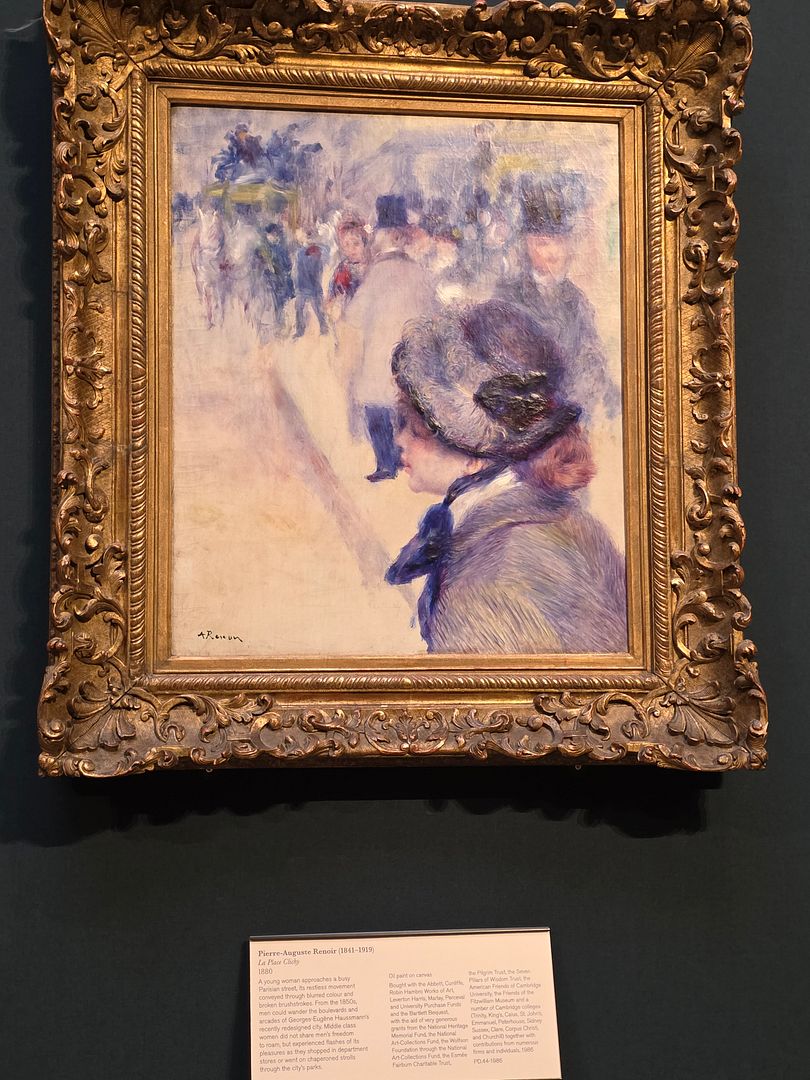
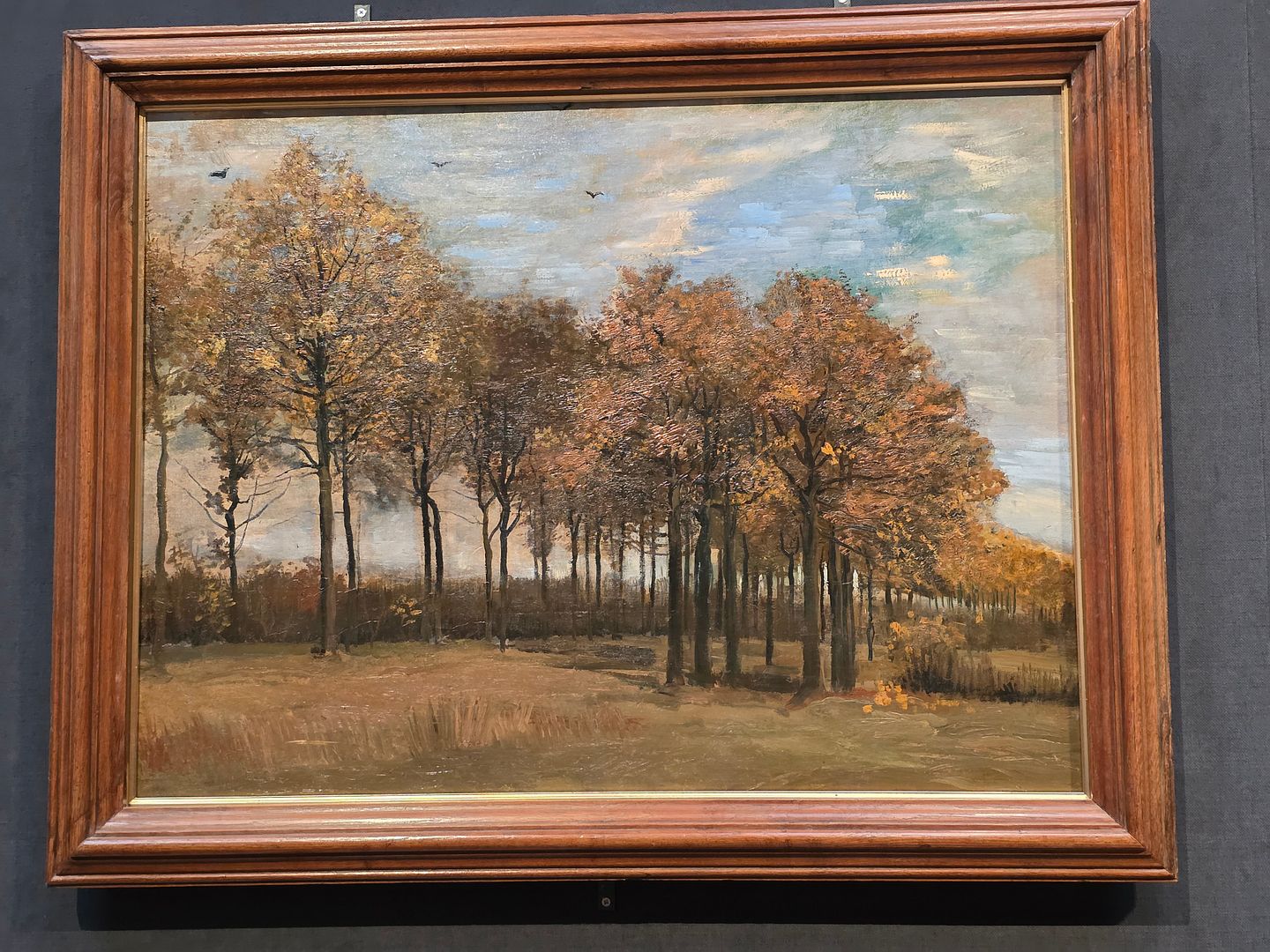
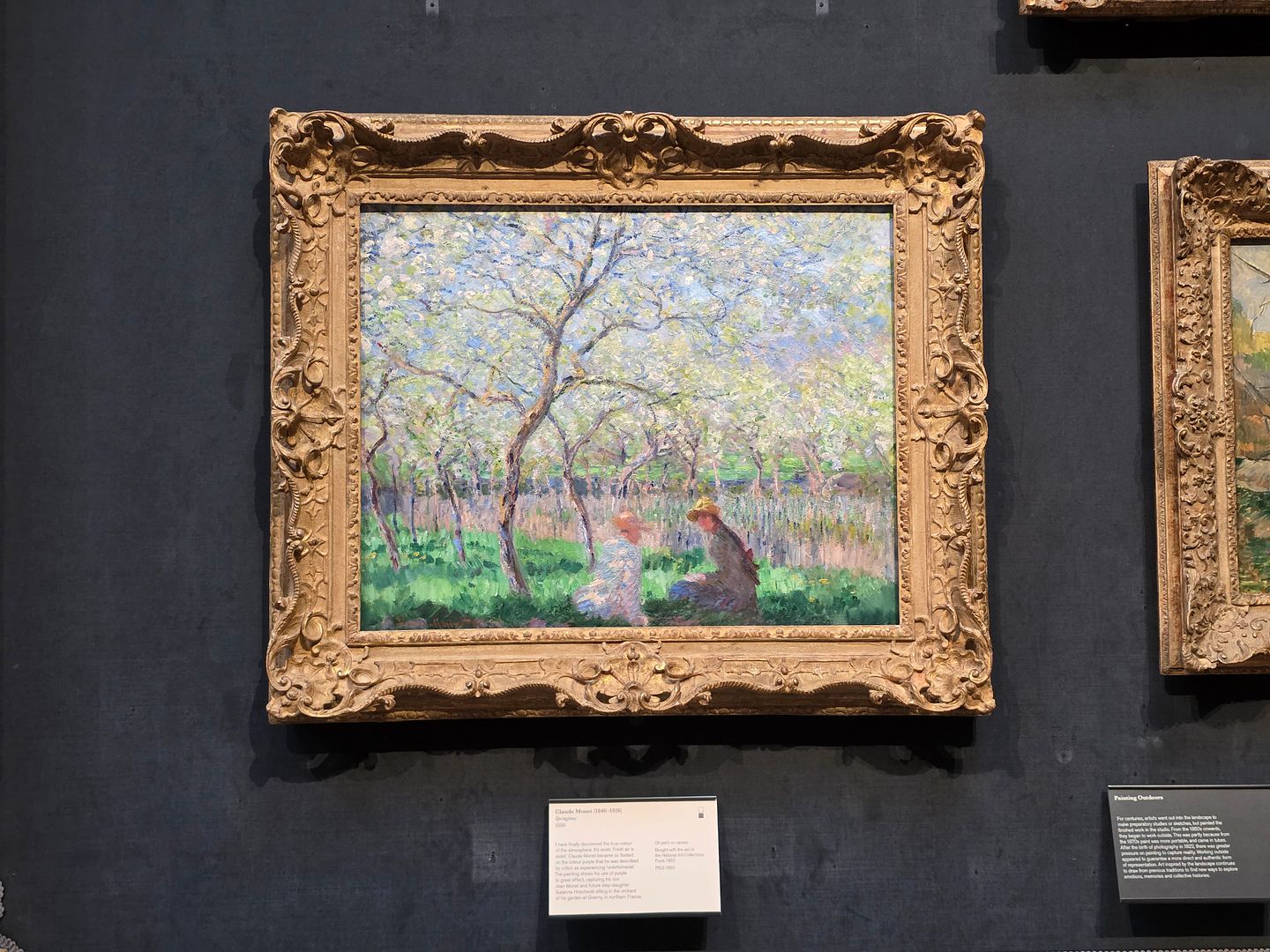
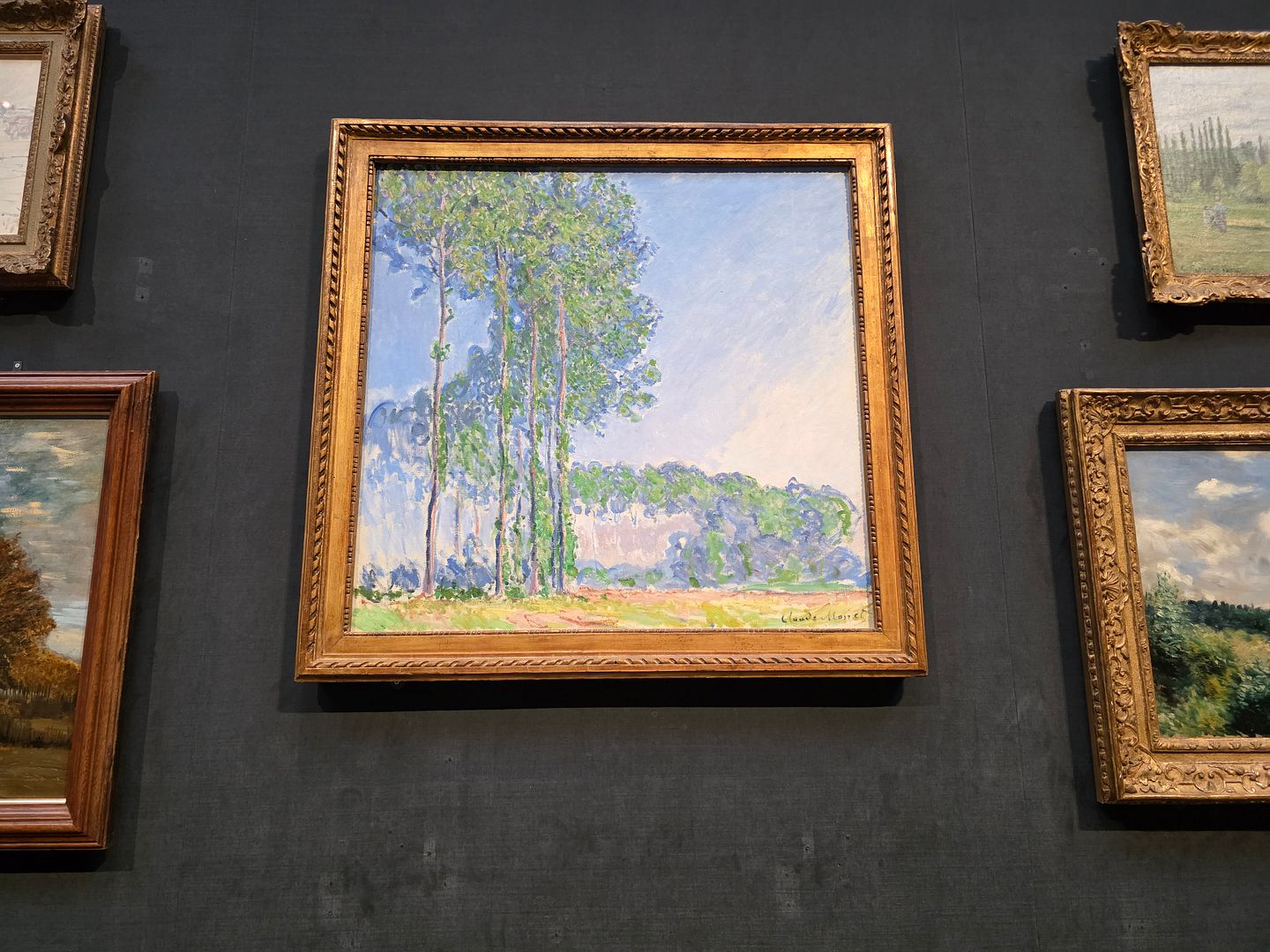
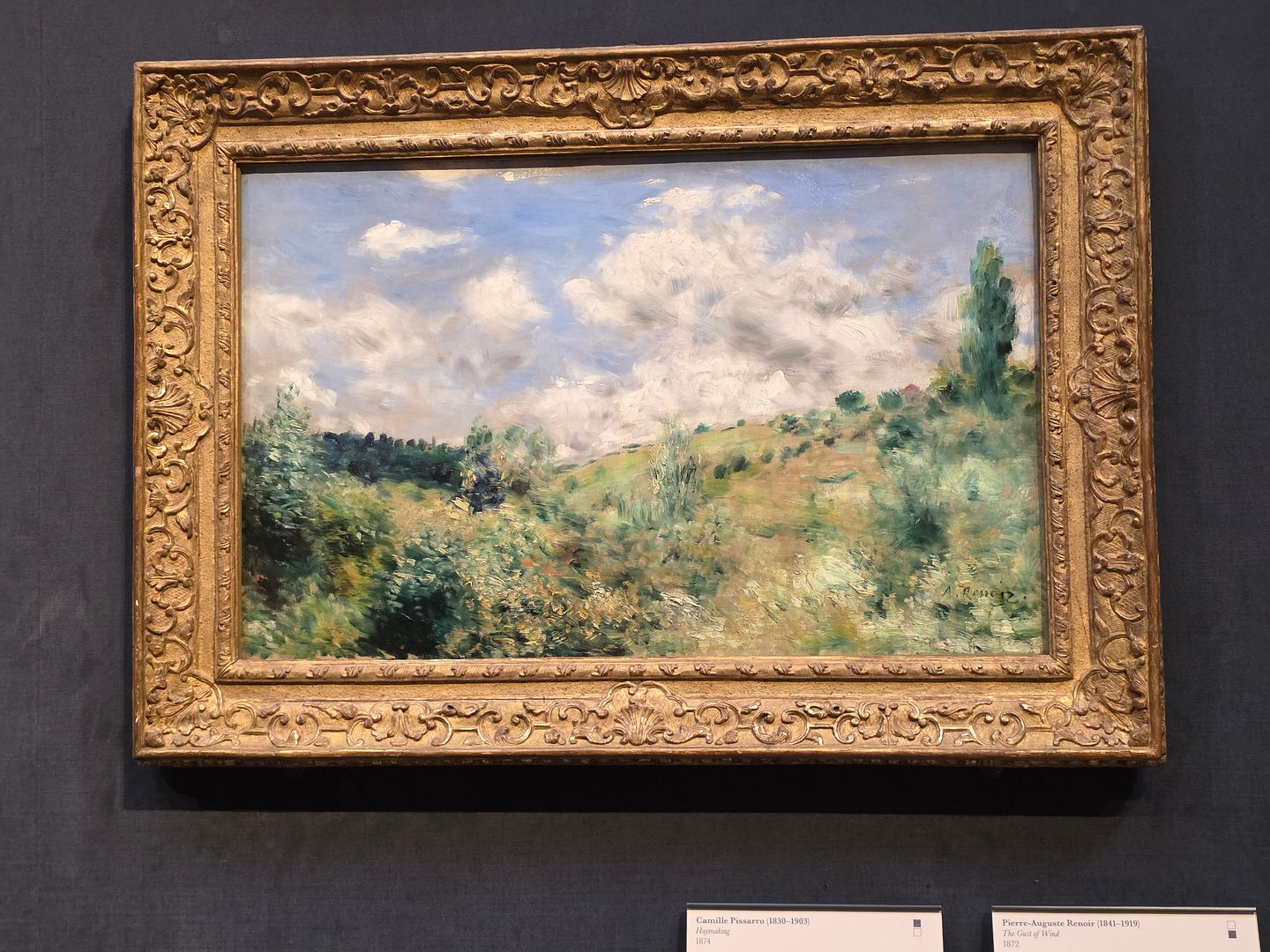
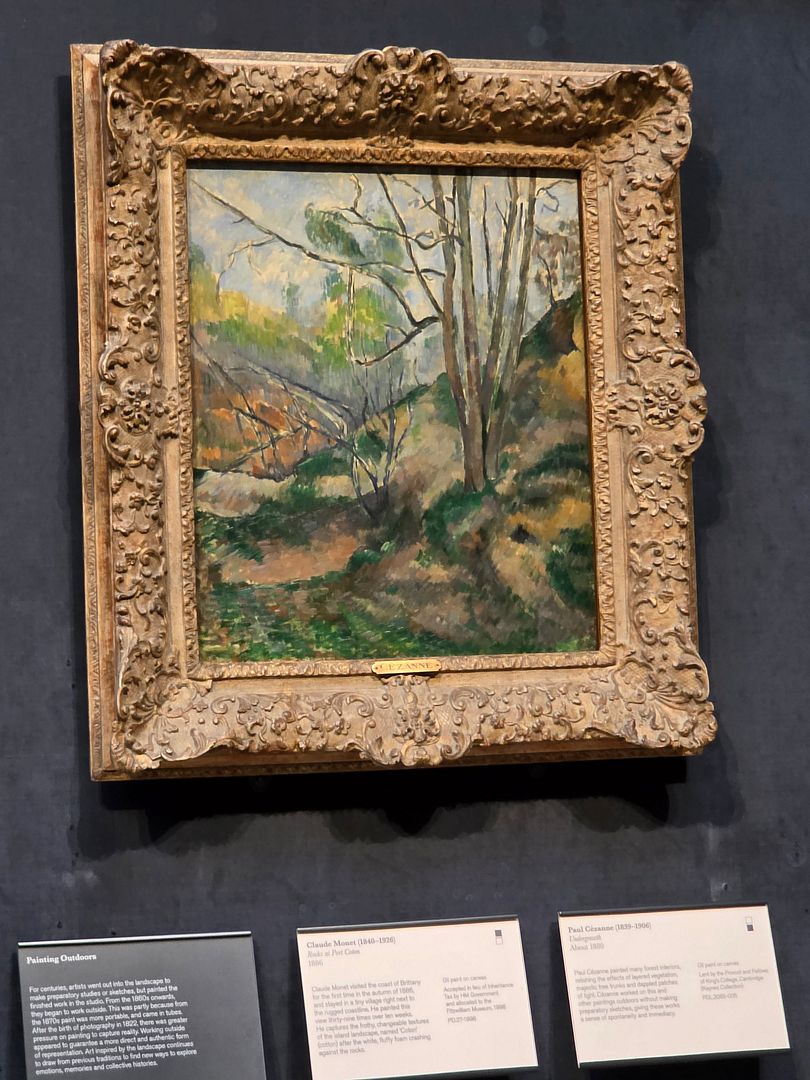
Monet, Degas, Renoir, Rossetti, Constable, Cezanne

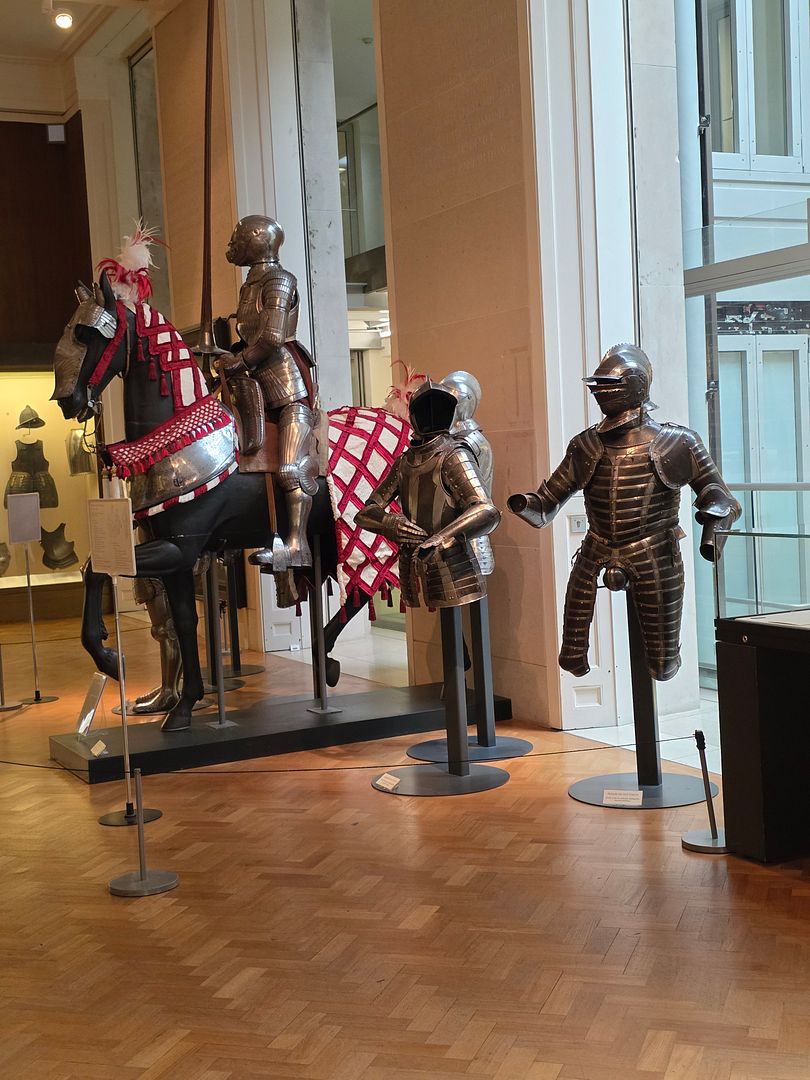
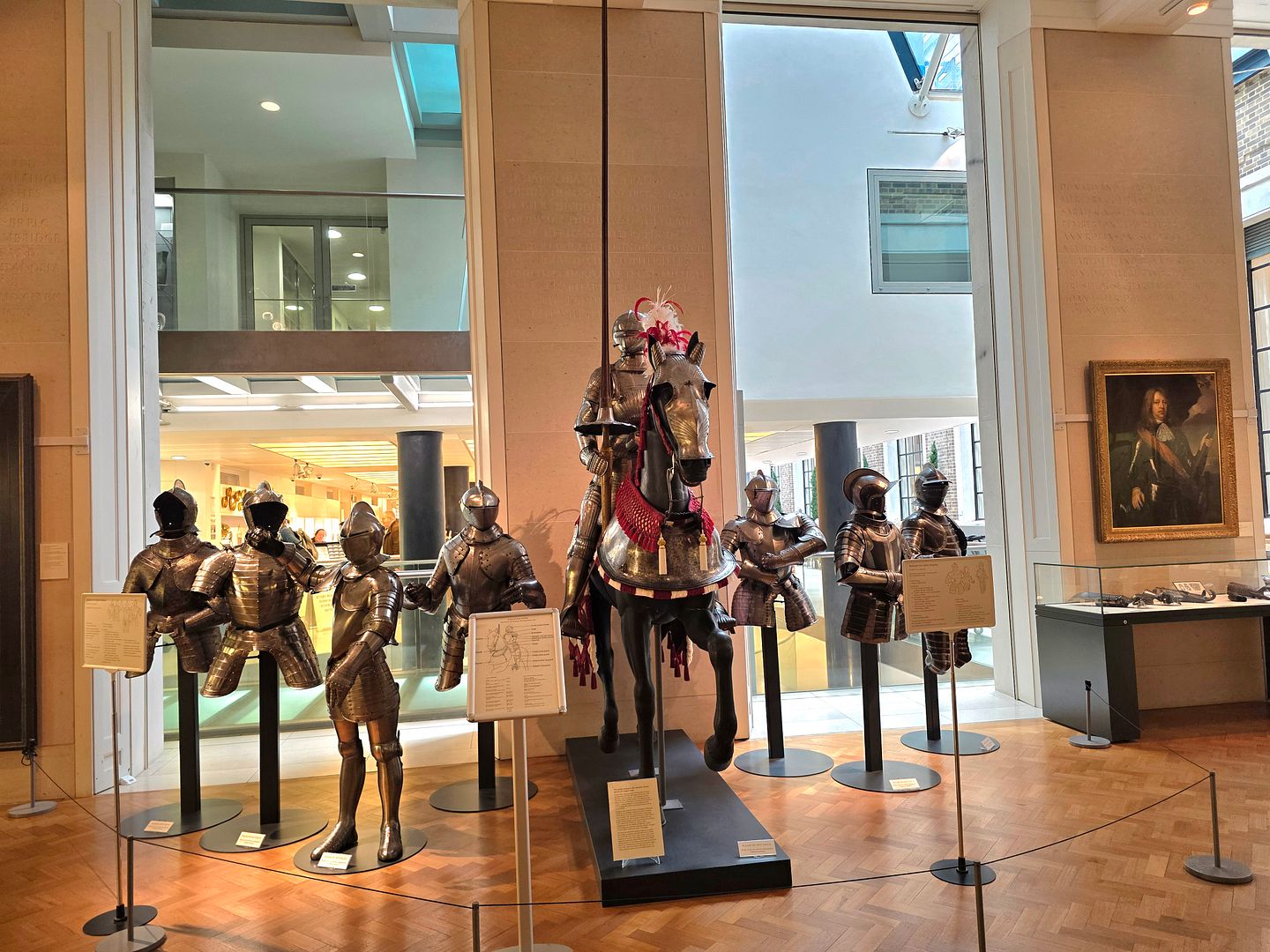
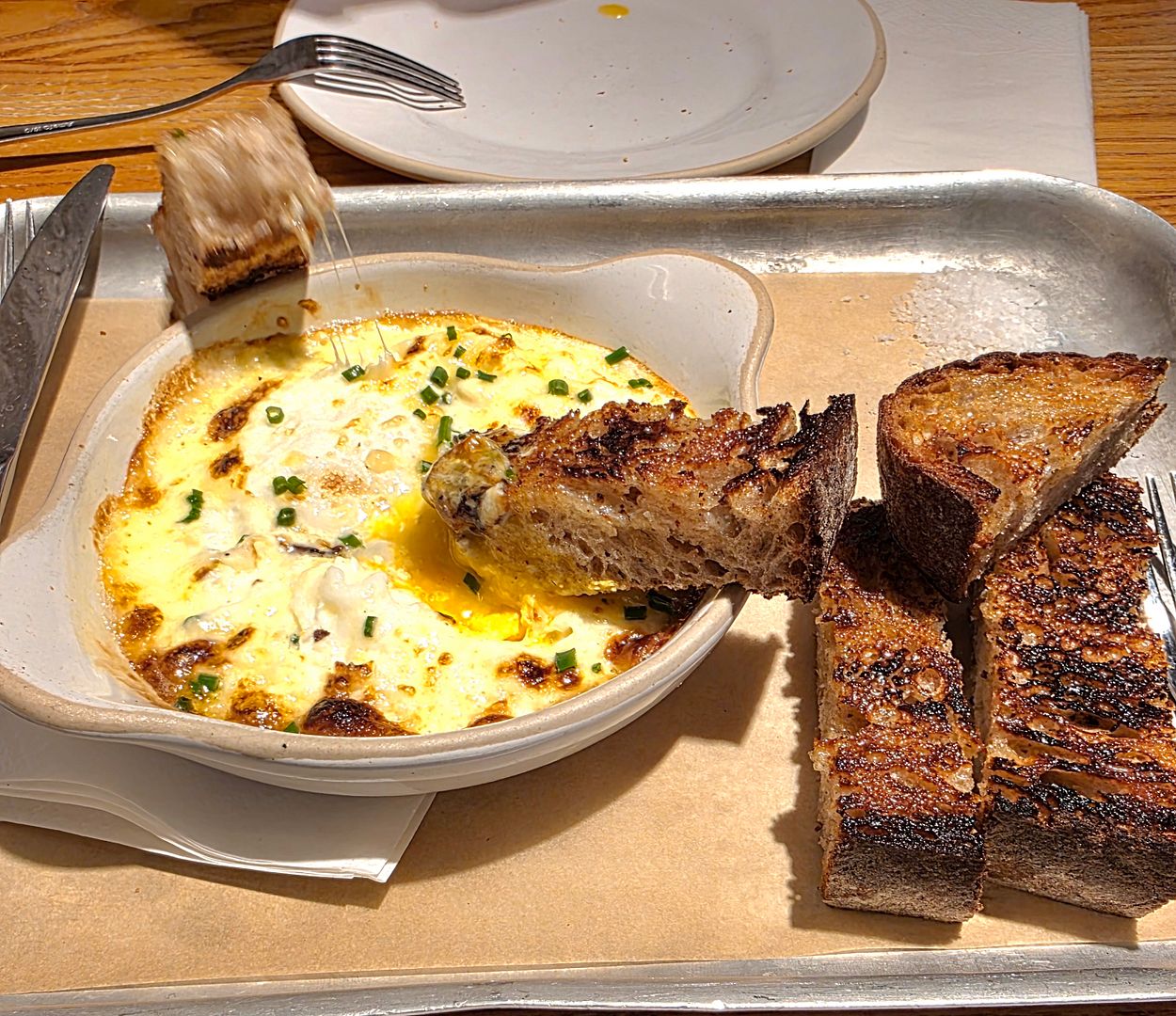
The lower levels had these displays and more with a gift shop and cafe.

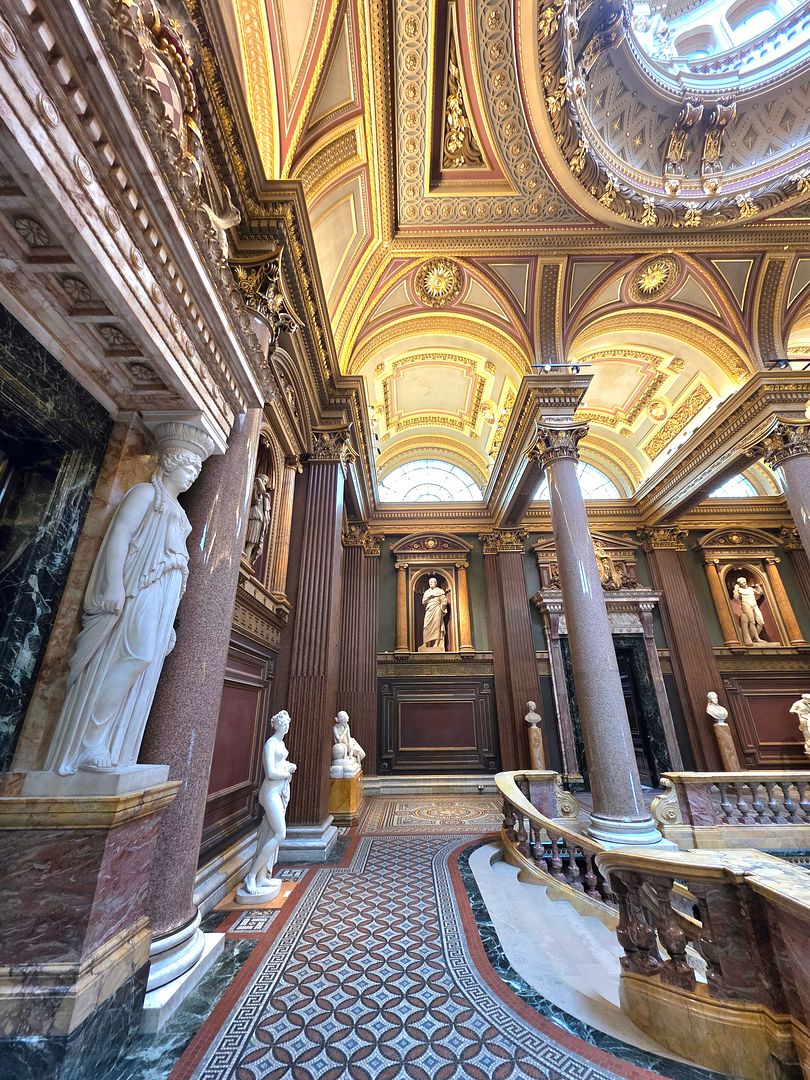
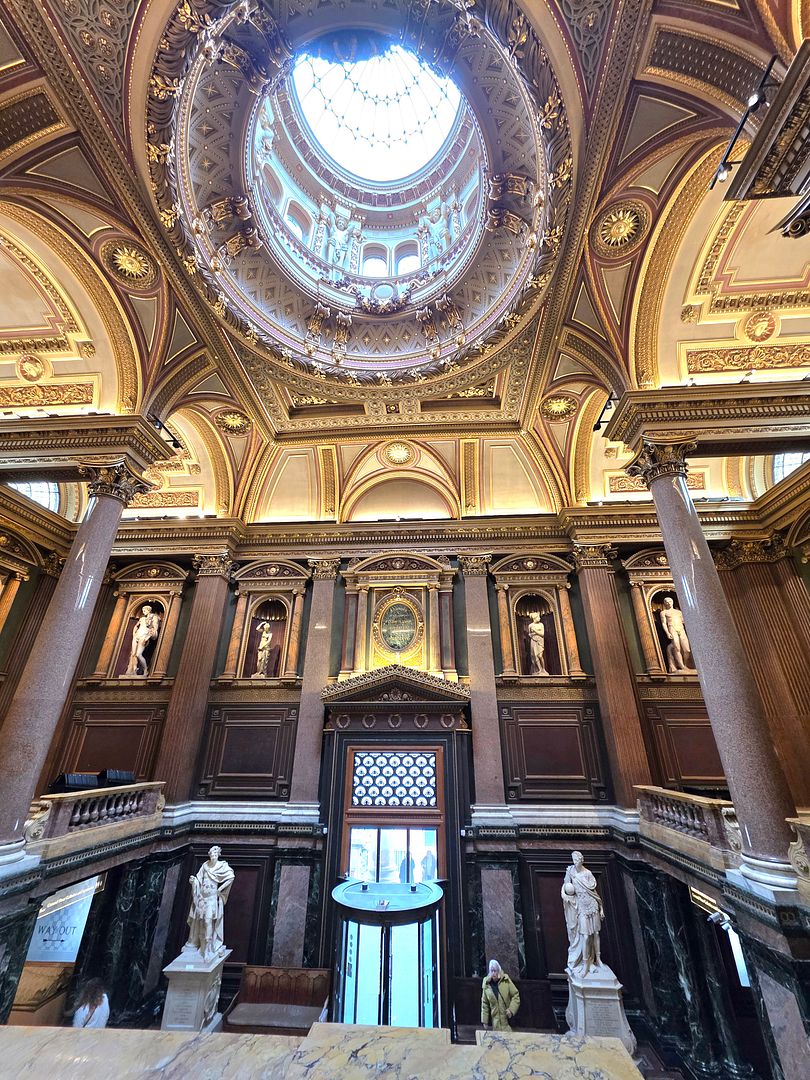
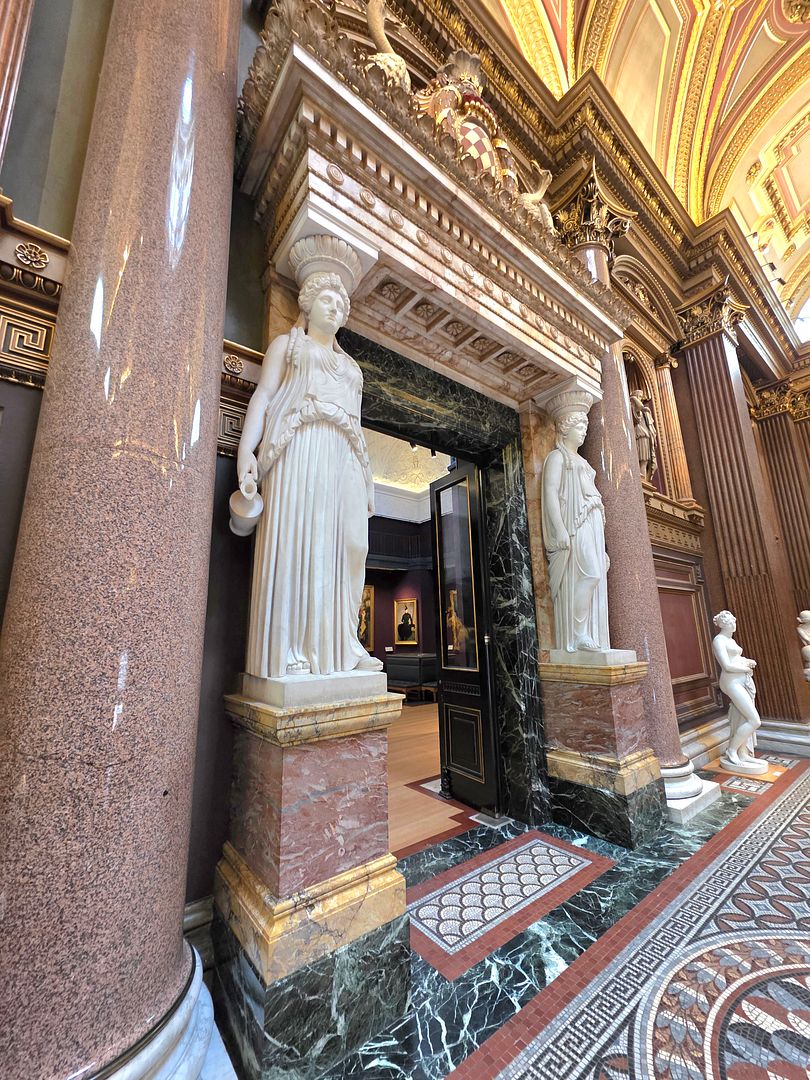
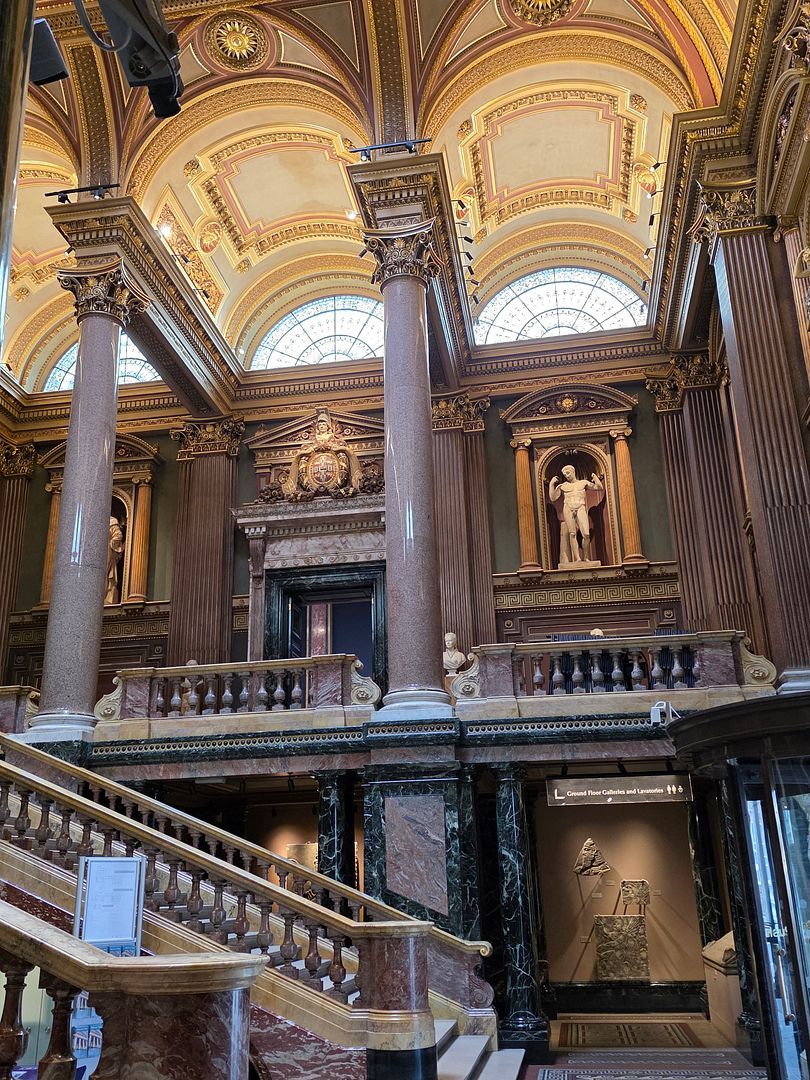
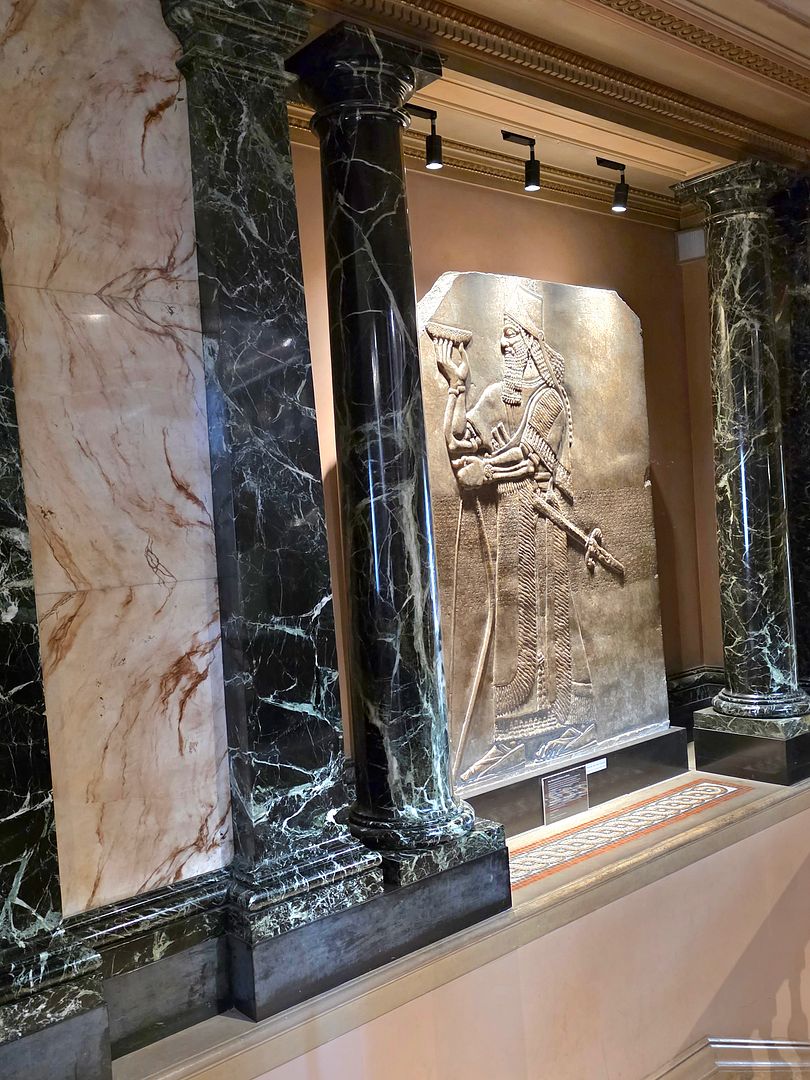
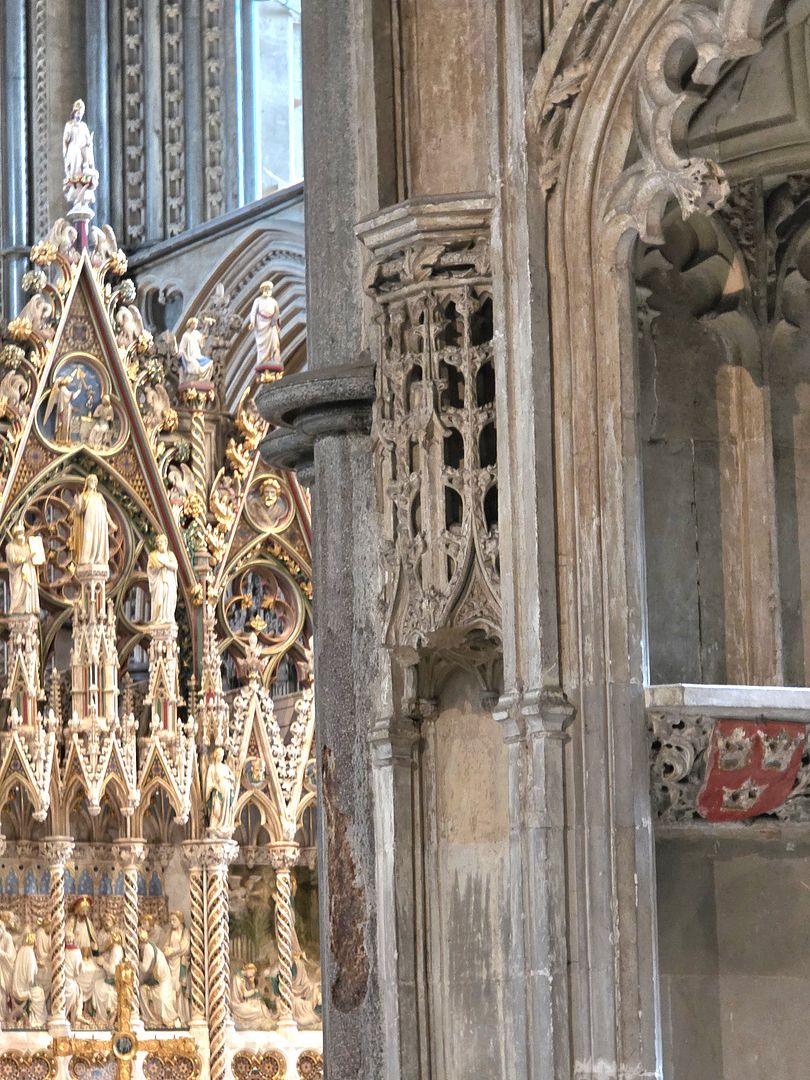
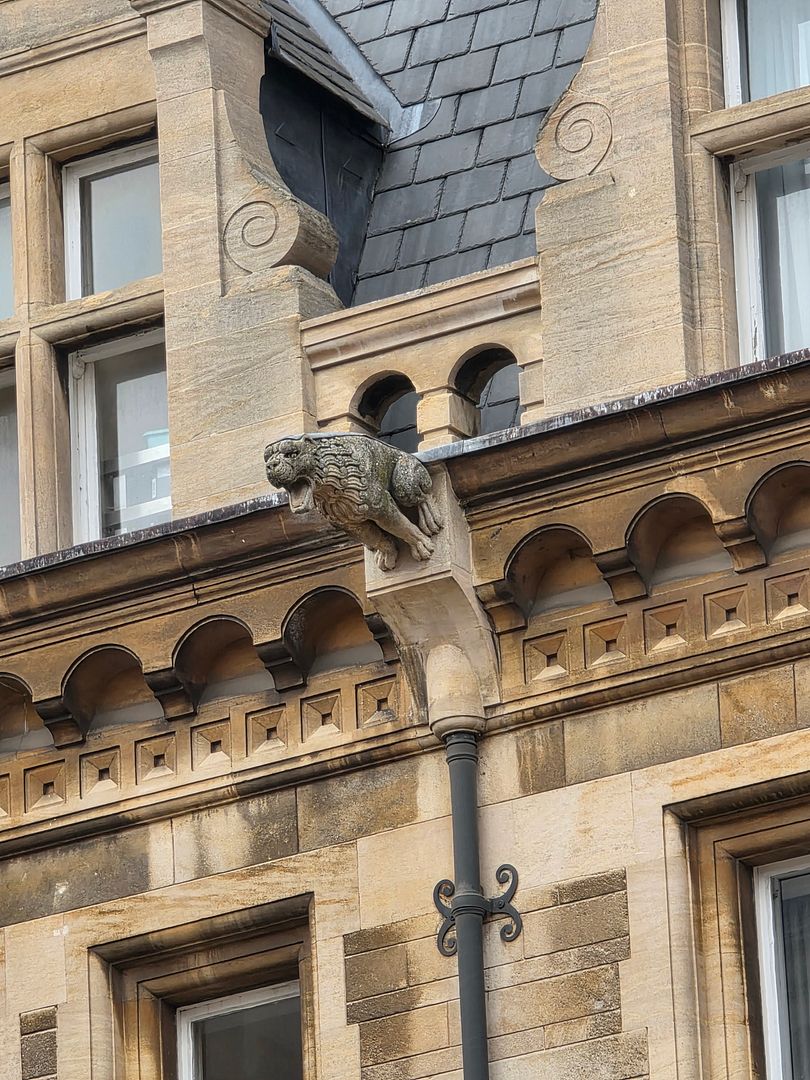
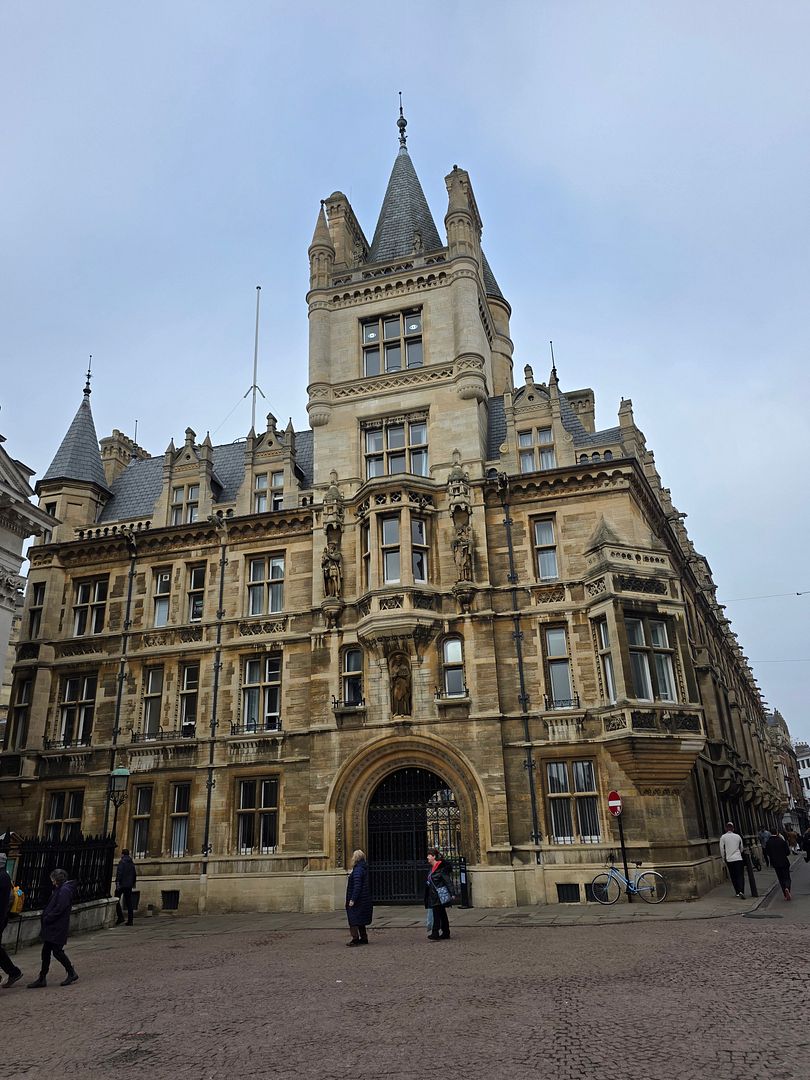
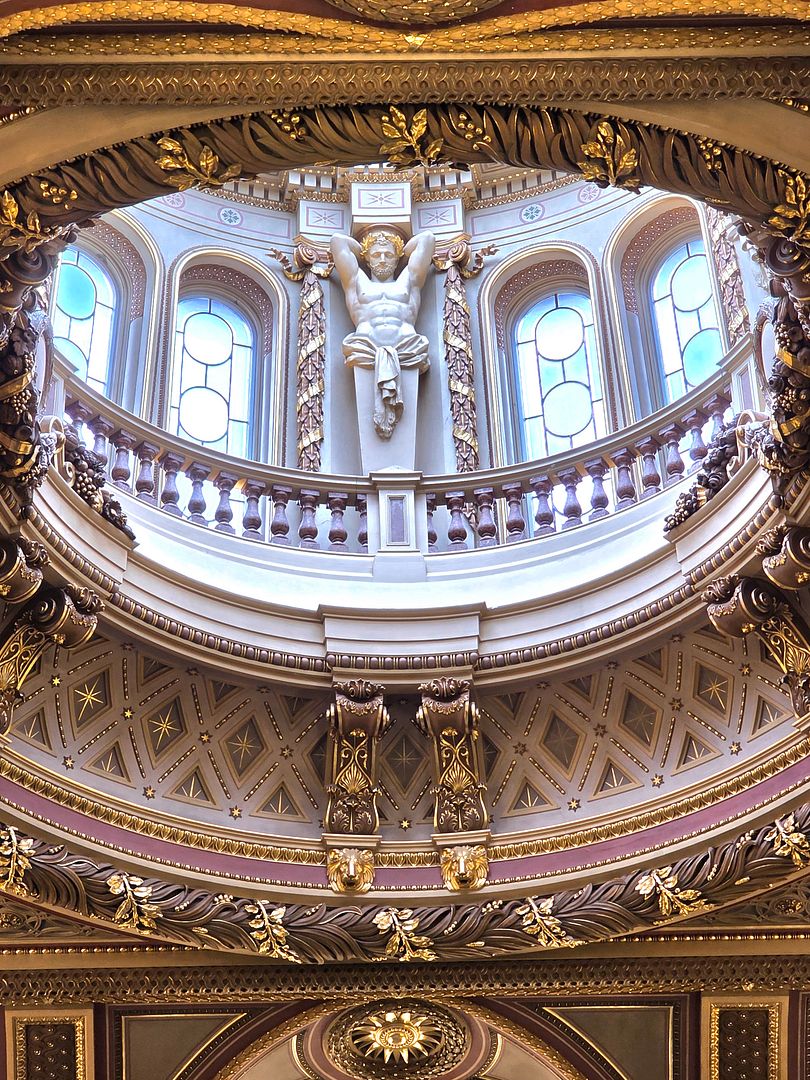
Overall this was a great museum with amazing architecture and art and artifacts.

We had a couple more walking adventures on this day before we called it quits for the day.

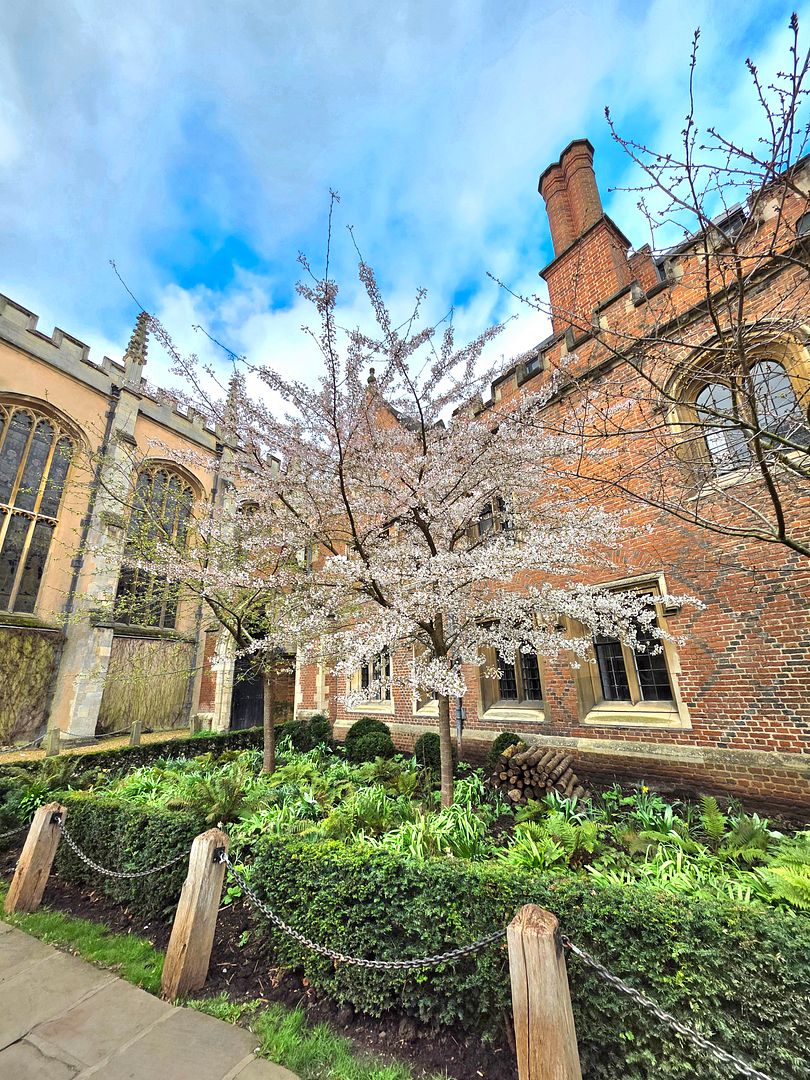
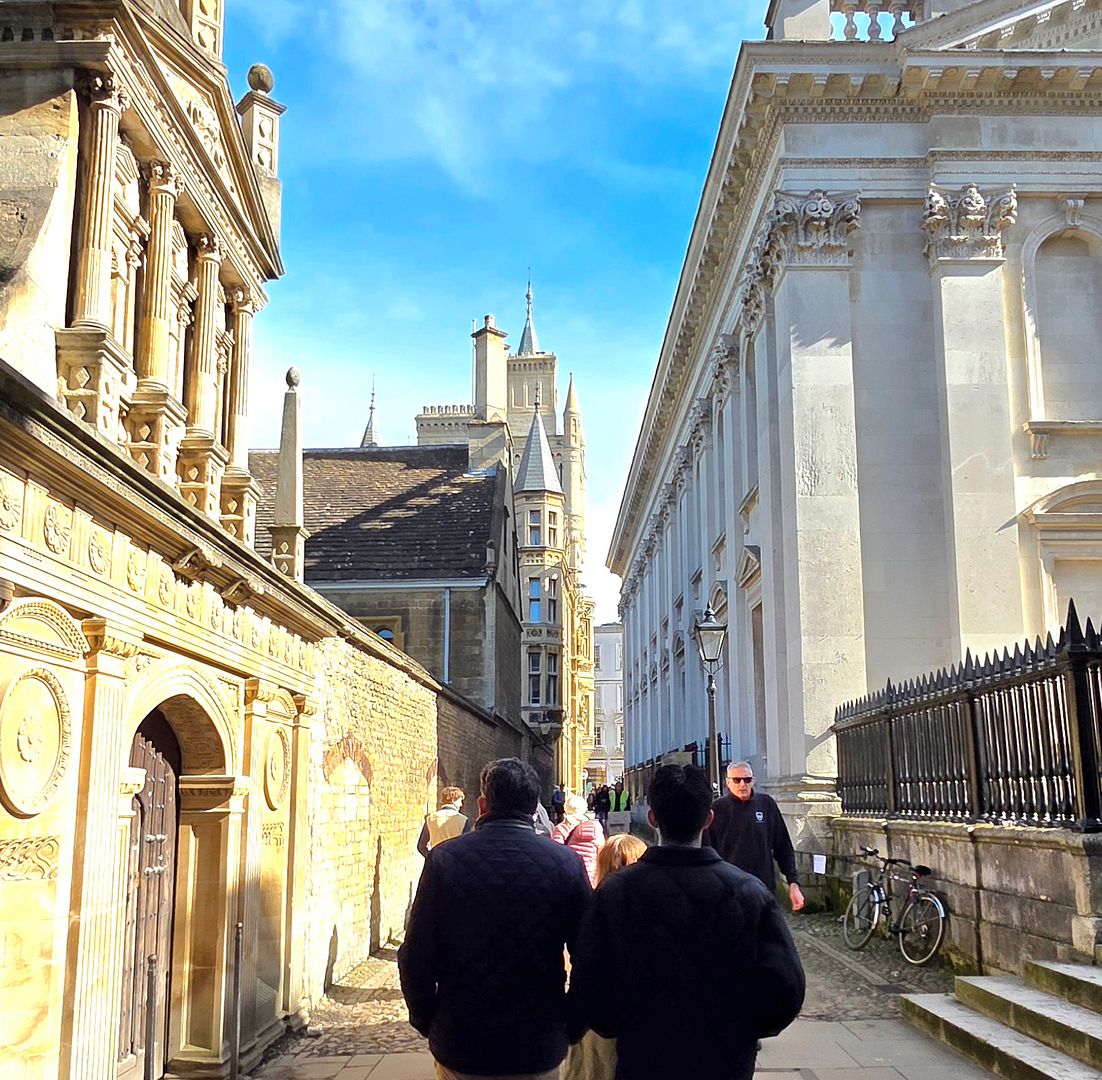
Along Trumpington St. in Cambridge

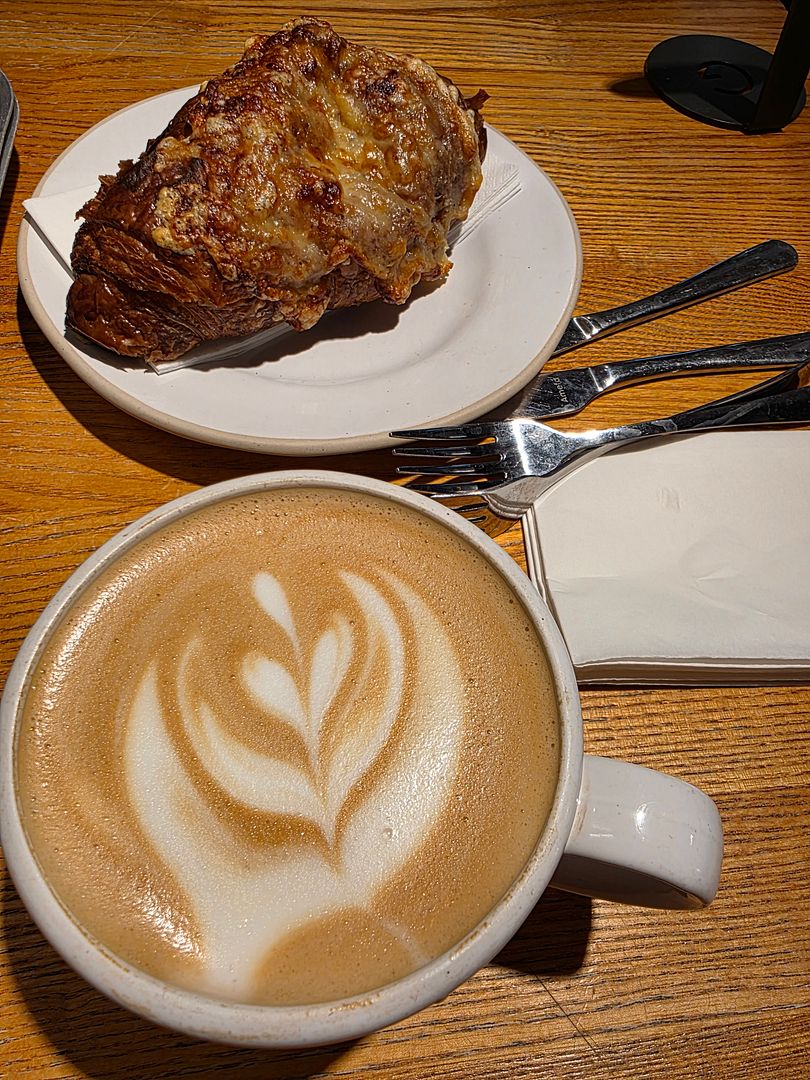
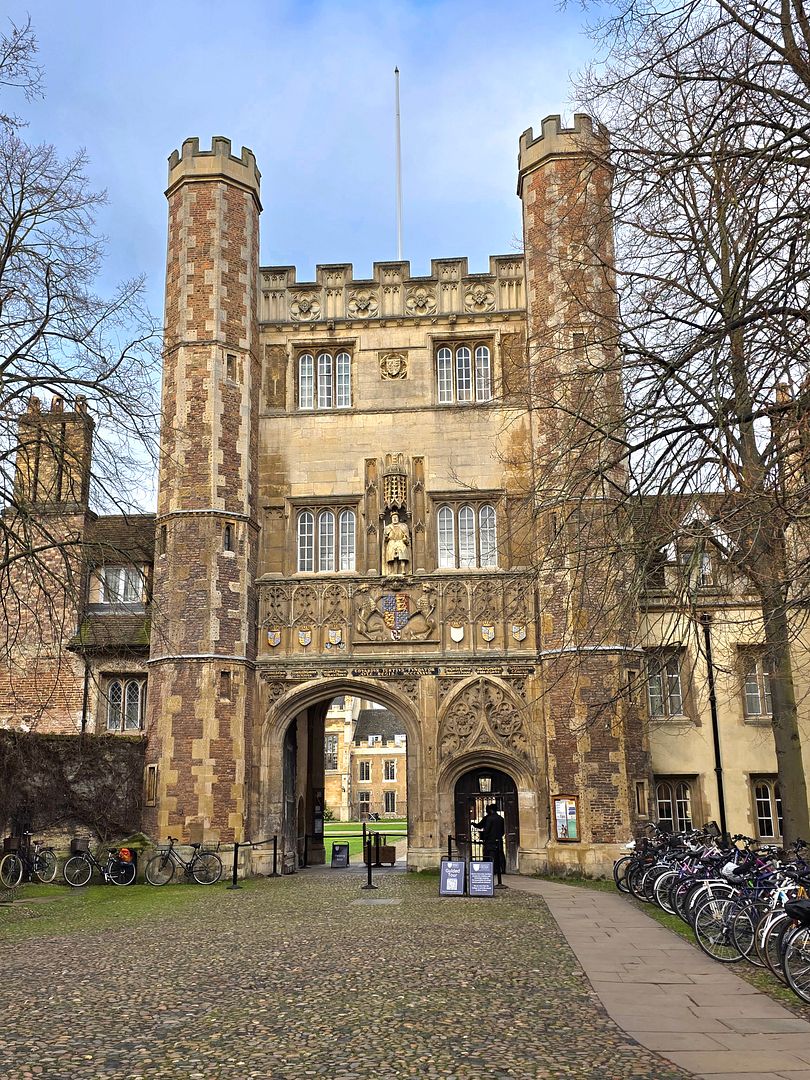
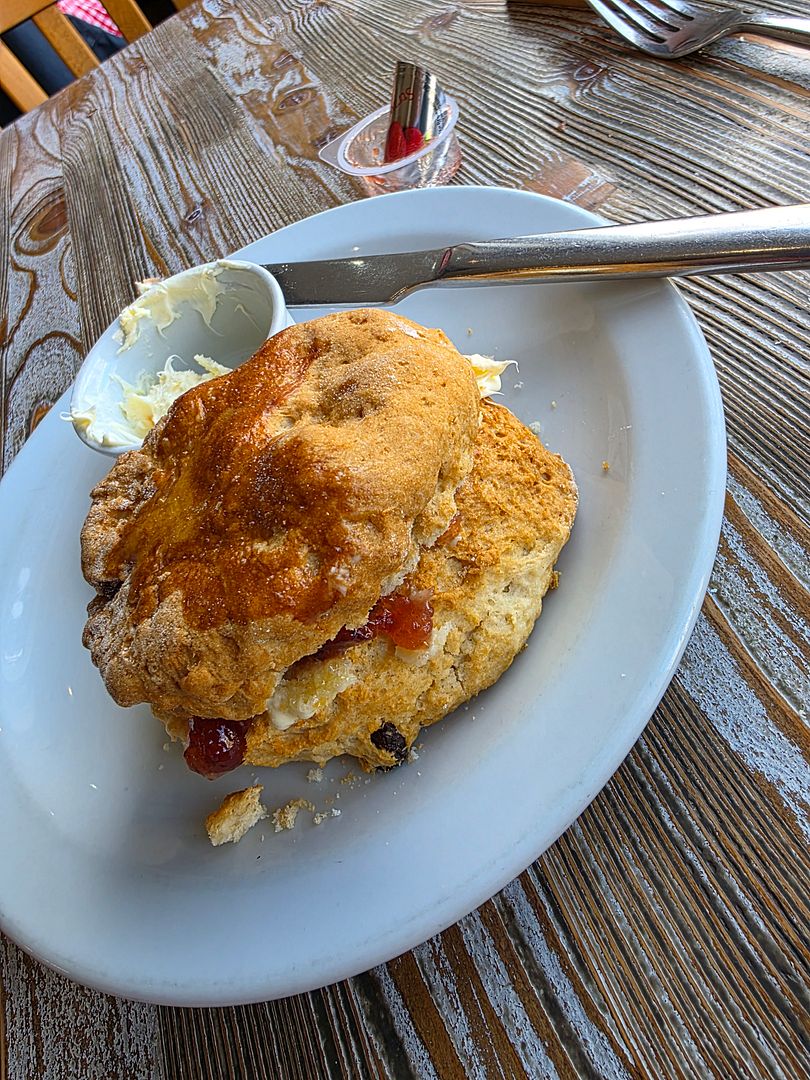
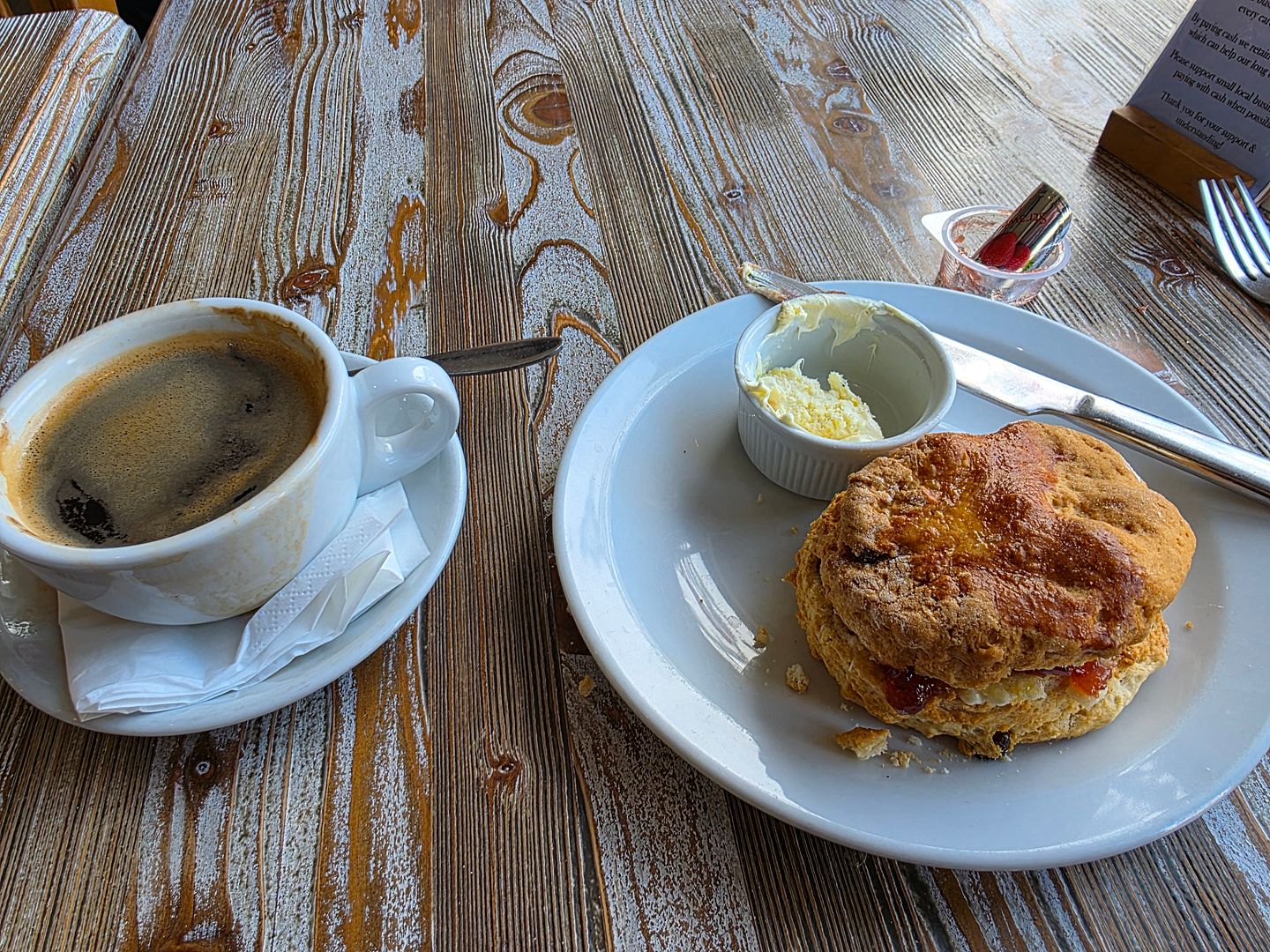
Our Danube/Cambridge travel journal is creeping to it’s end. On Thursday the 12th of March we managed a variety of experiences. After our tour of Trinity College we popped into Gail’s Bakery for a fortifying treat before we continued. This was a cooler day than we had experienced so far.

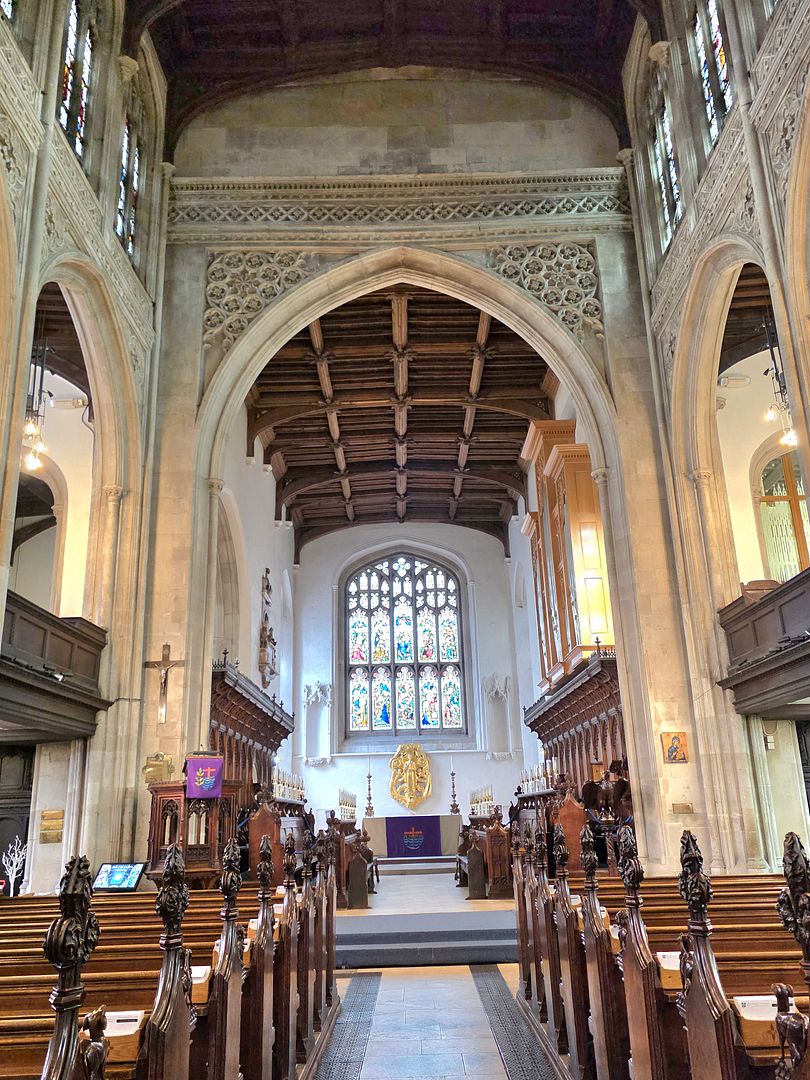
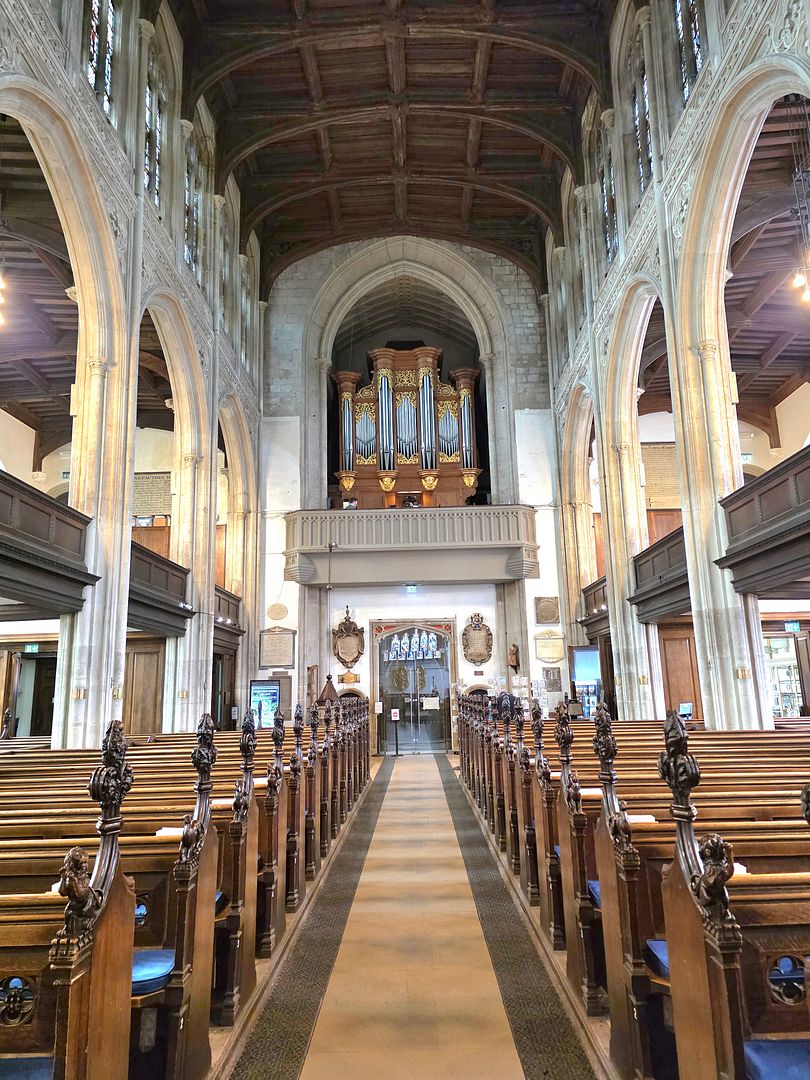
After being fortified we continued along Trumpington Street. We noticed that Great St. Mary’s University Church was accessible. There was work on the church tower while we were in town and the main entrance had been sealed off most days. We decided to enter in while we could. The tower was not accessible during our short visit.

.

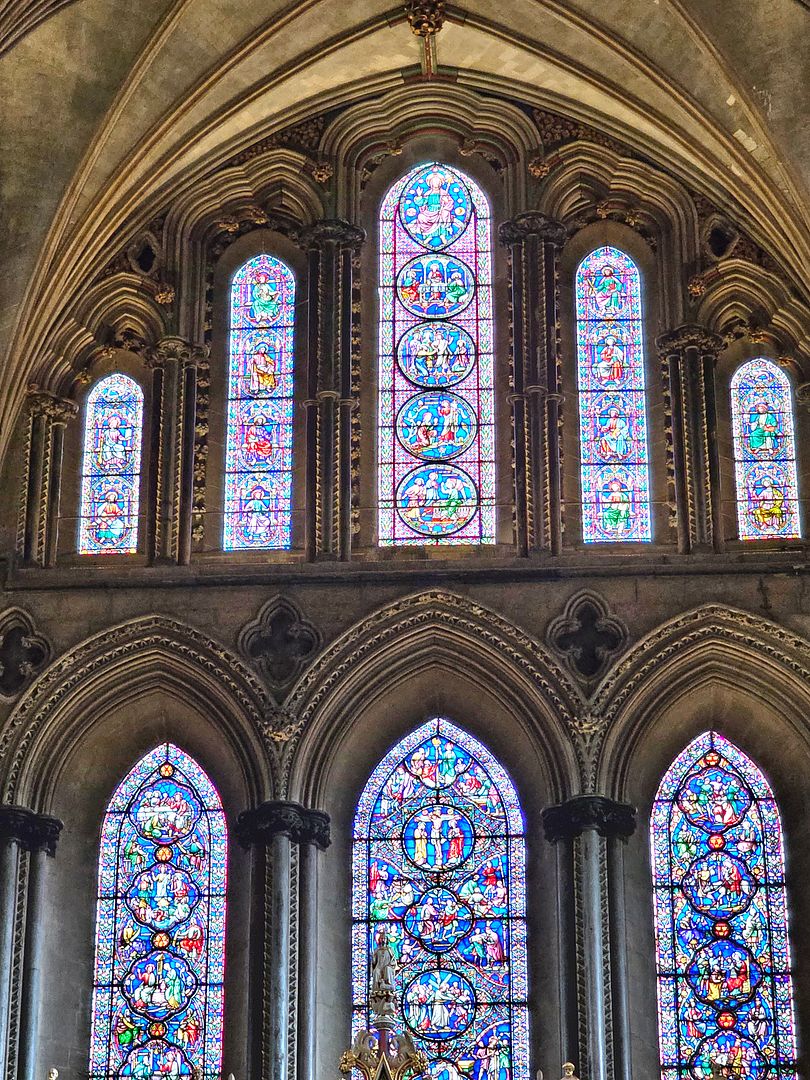
One of the features of the church when you first walk into the building is the large East window (the stained glass window above the Altar). This was installed in 1872, and tells the story of Jesus’ birth, from the angel’s visit to Mary, to the nativity scene, to the flight into Egypt.

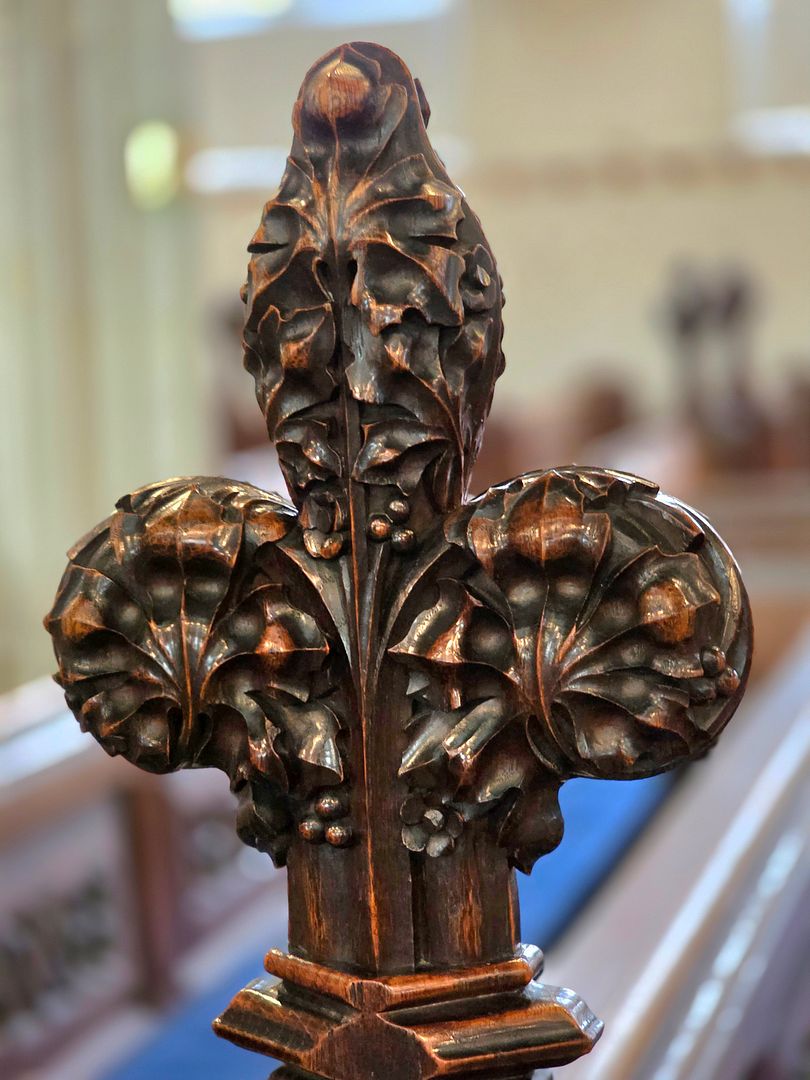
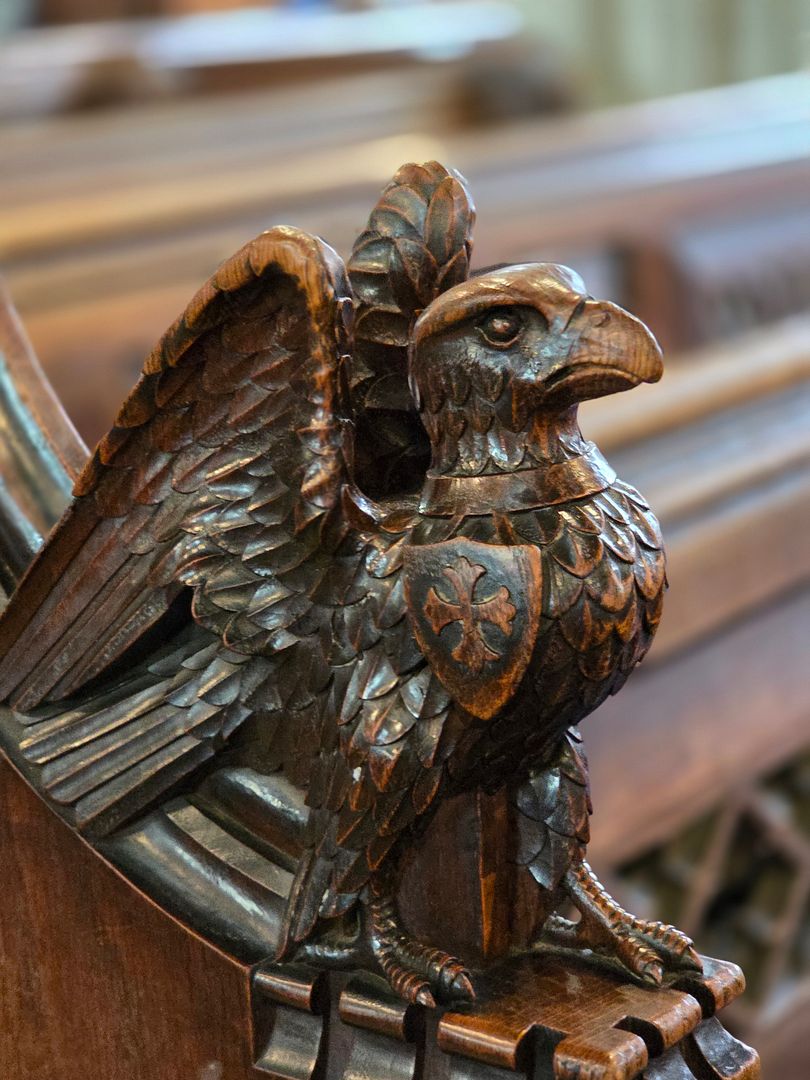
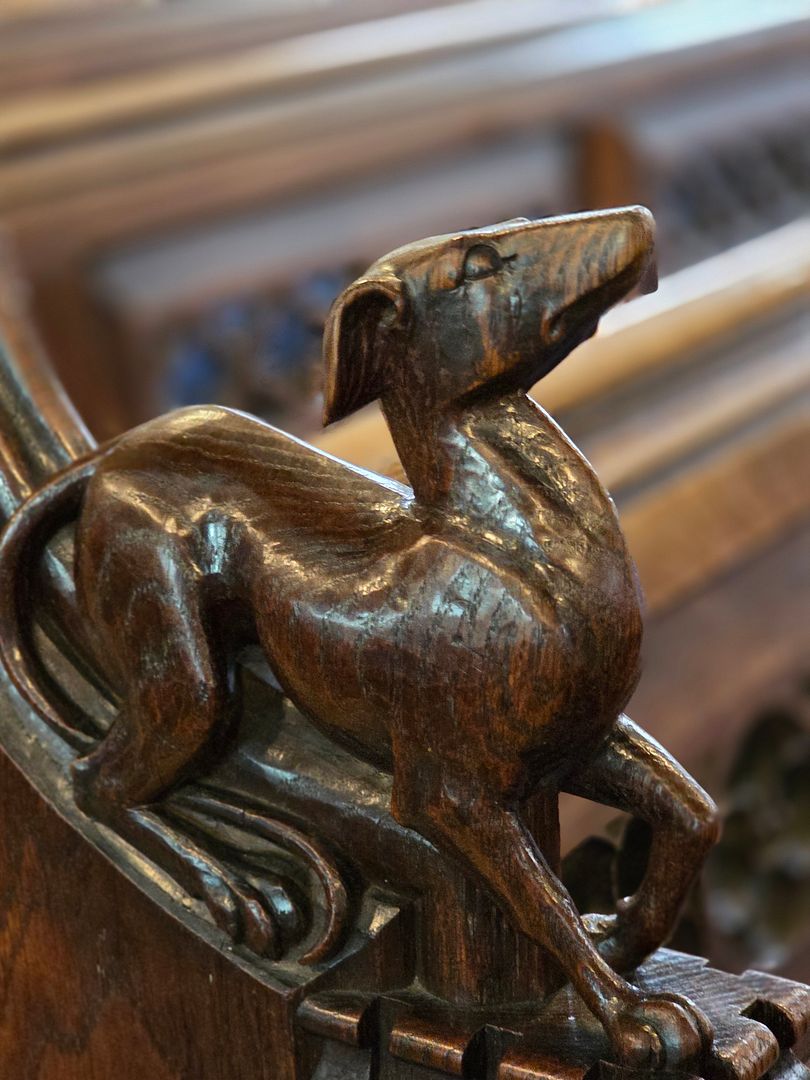
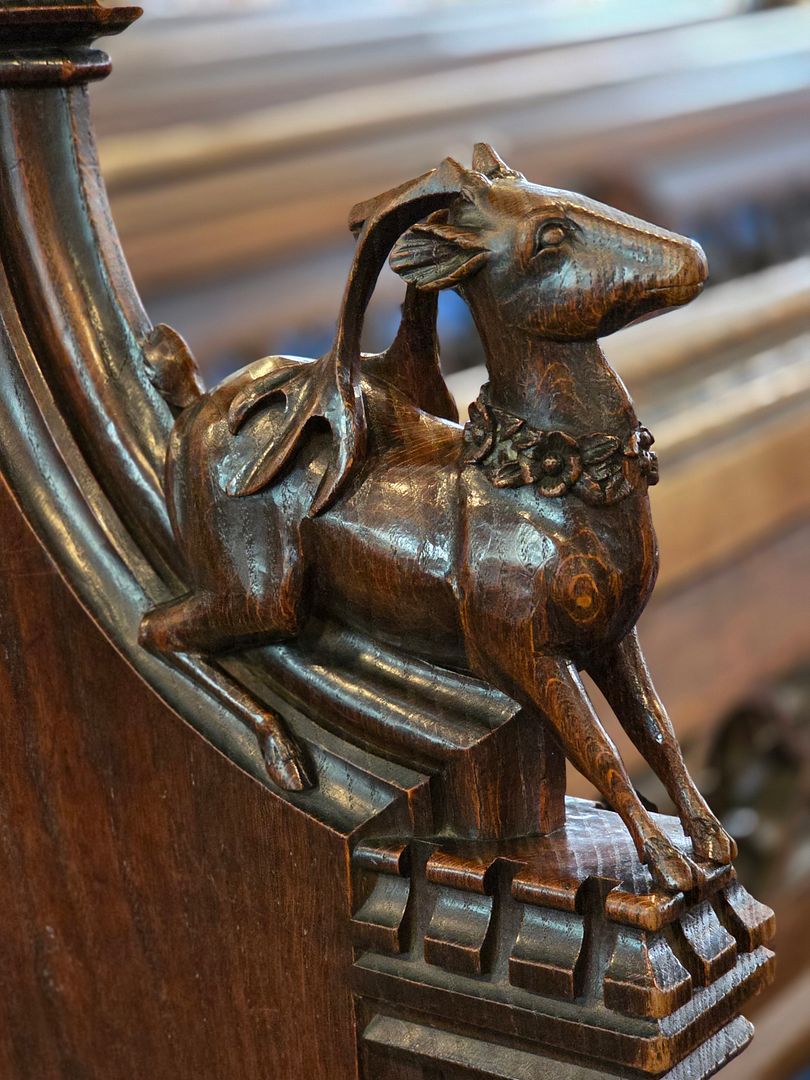
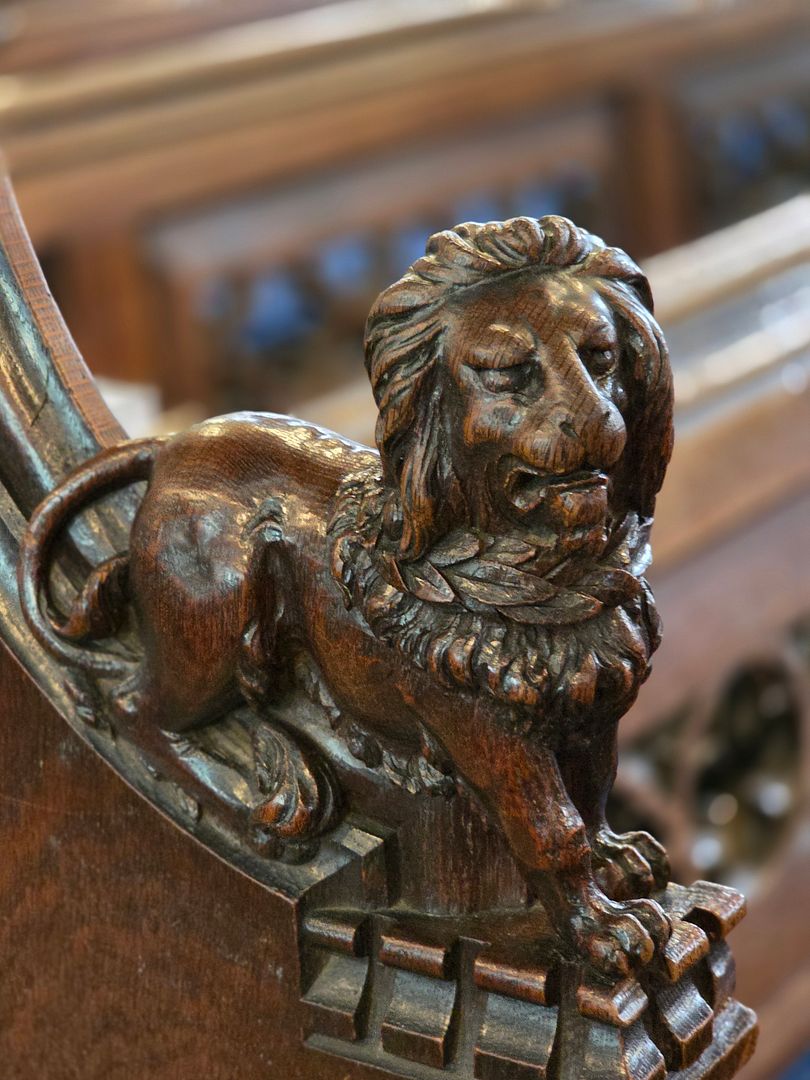
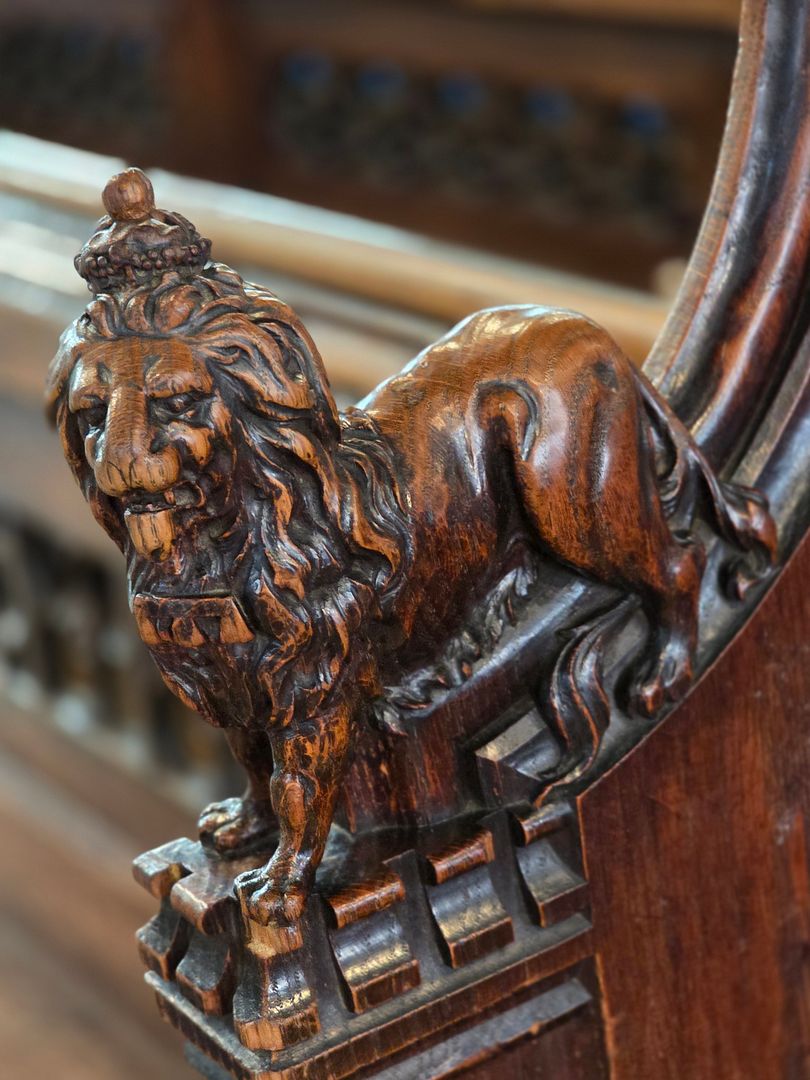
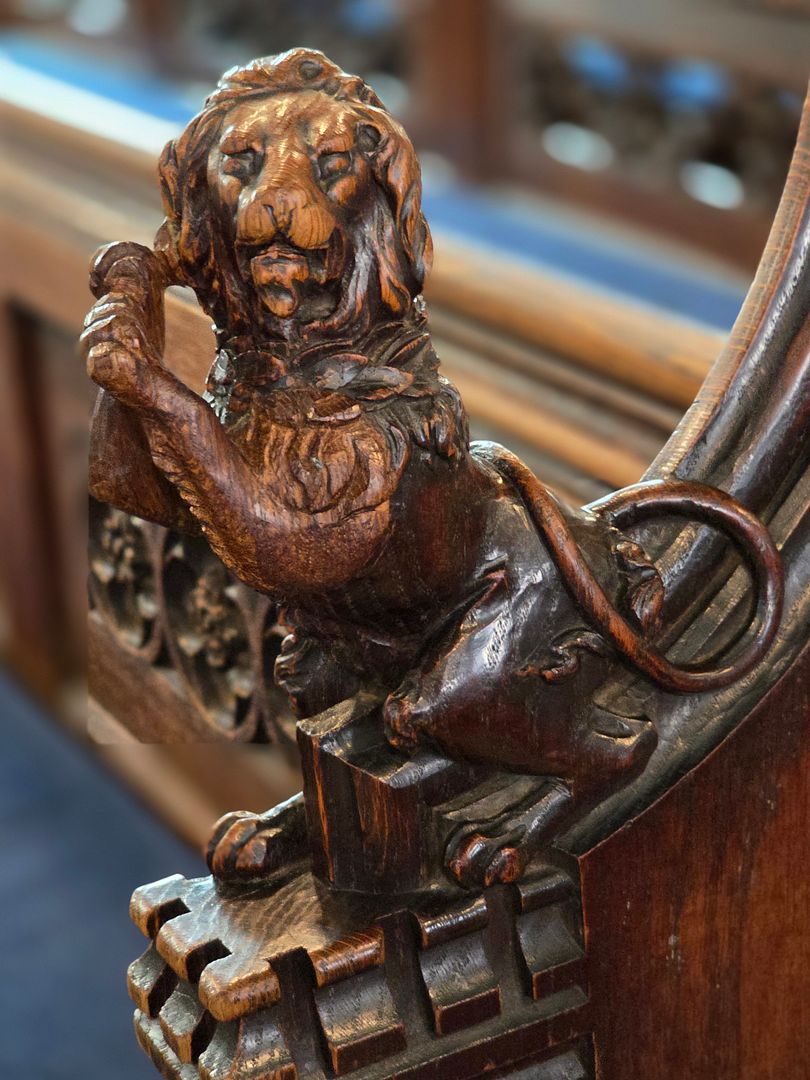
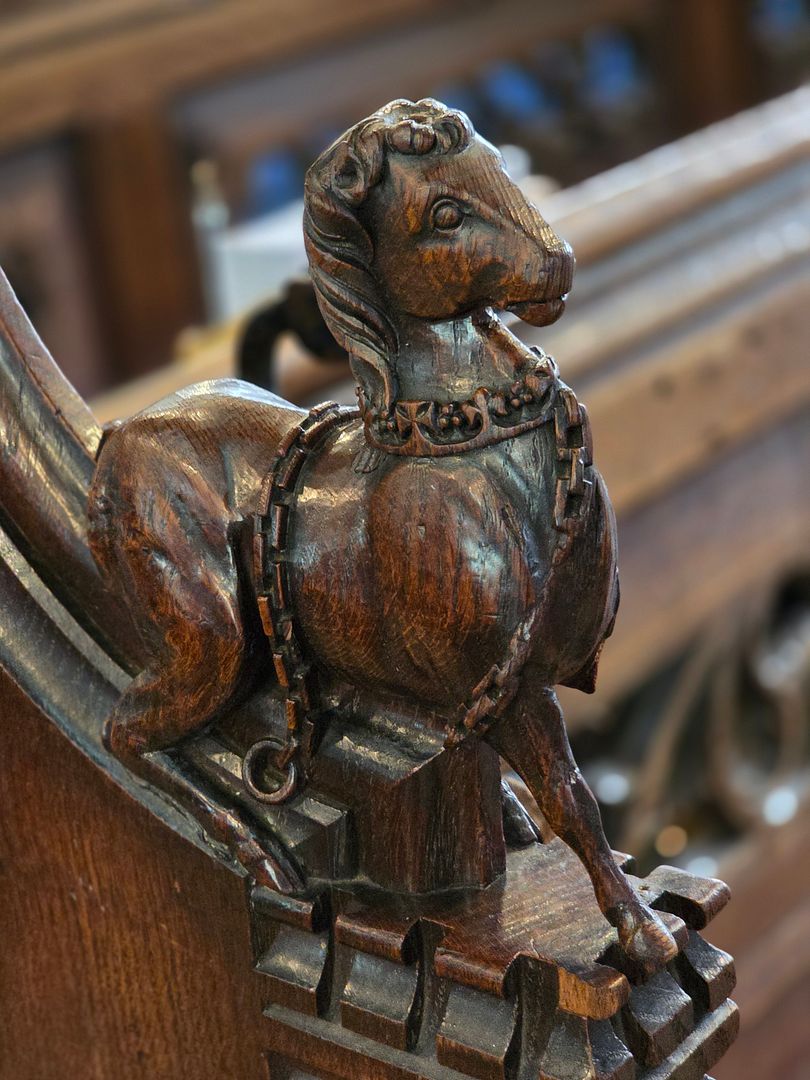
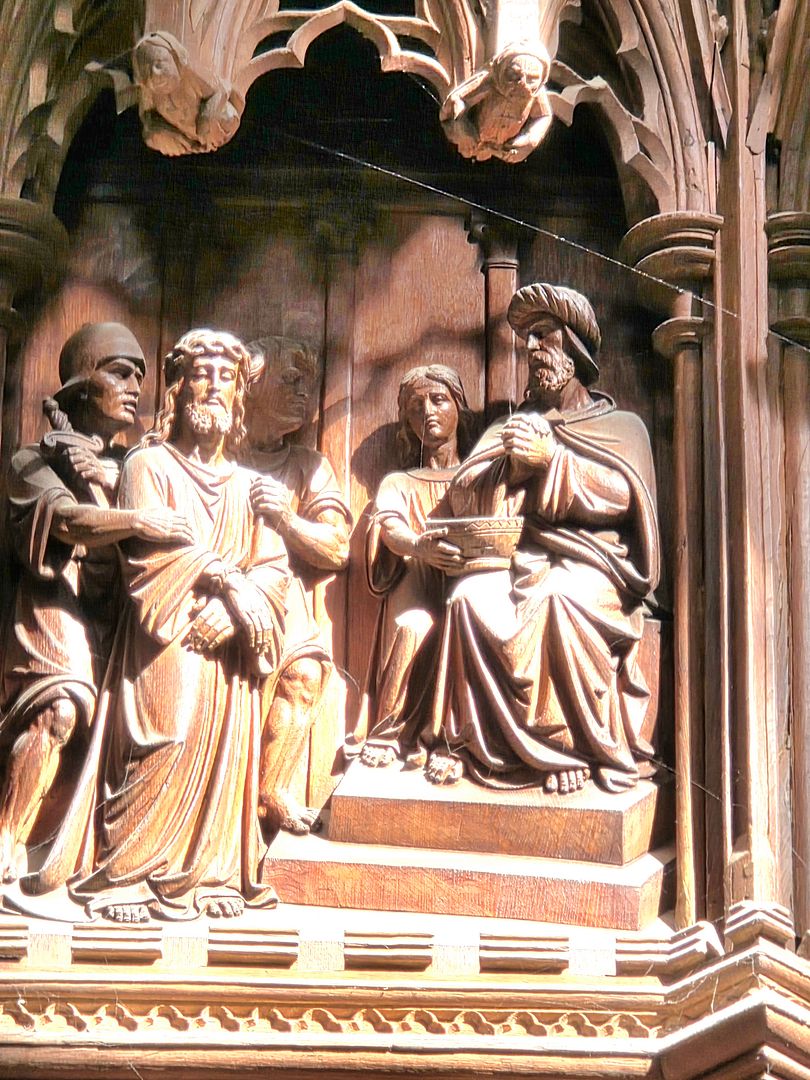
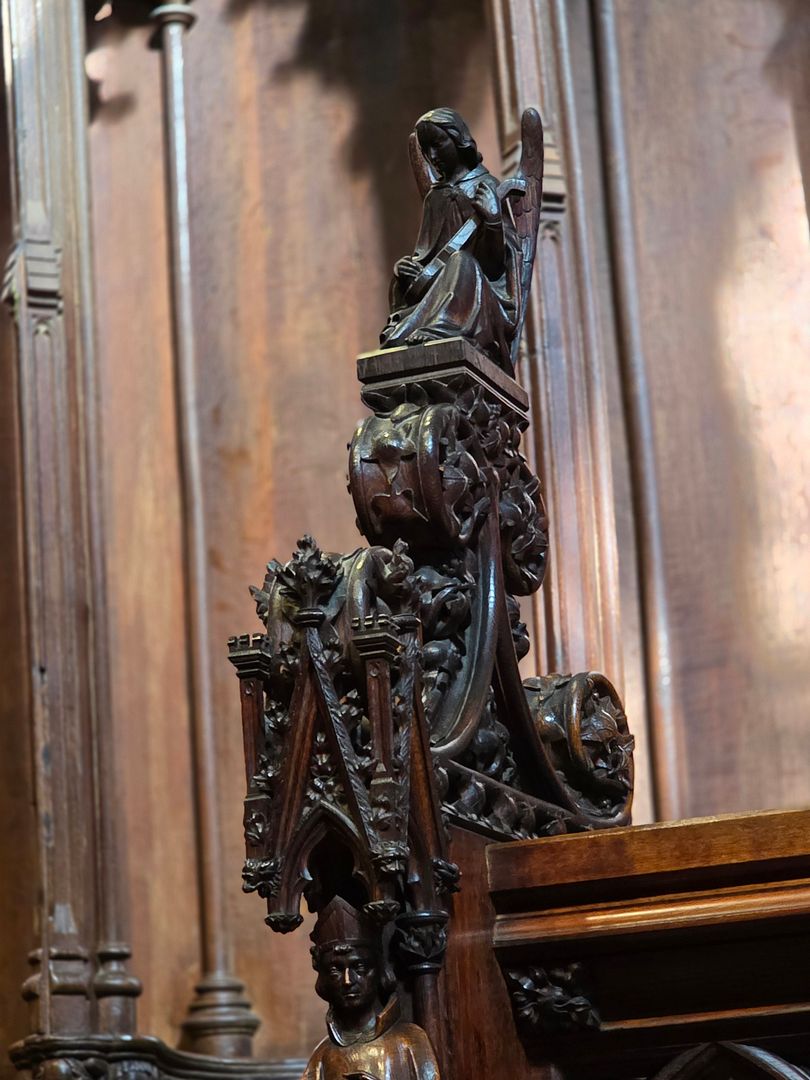
I was taken with the wood carvings on the ends of the pews.

Great St Mary’s has played a central role in many of England’s religious transformations. During the Reformation, sermons preached here influenced the spread of Protestant ideas, while leading figures including Hugh Latimer, Thomas Cranmer and later university preachers addressed congregations from its pulpit. 

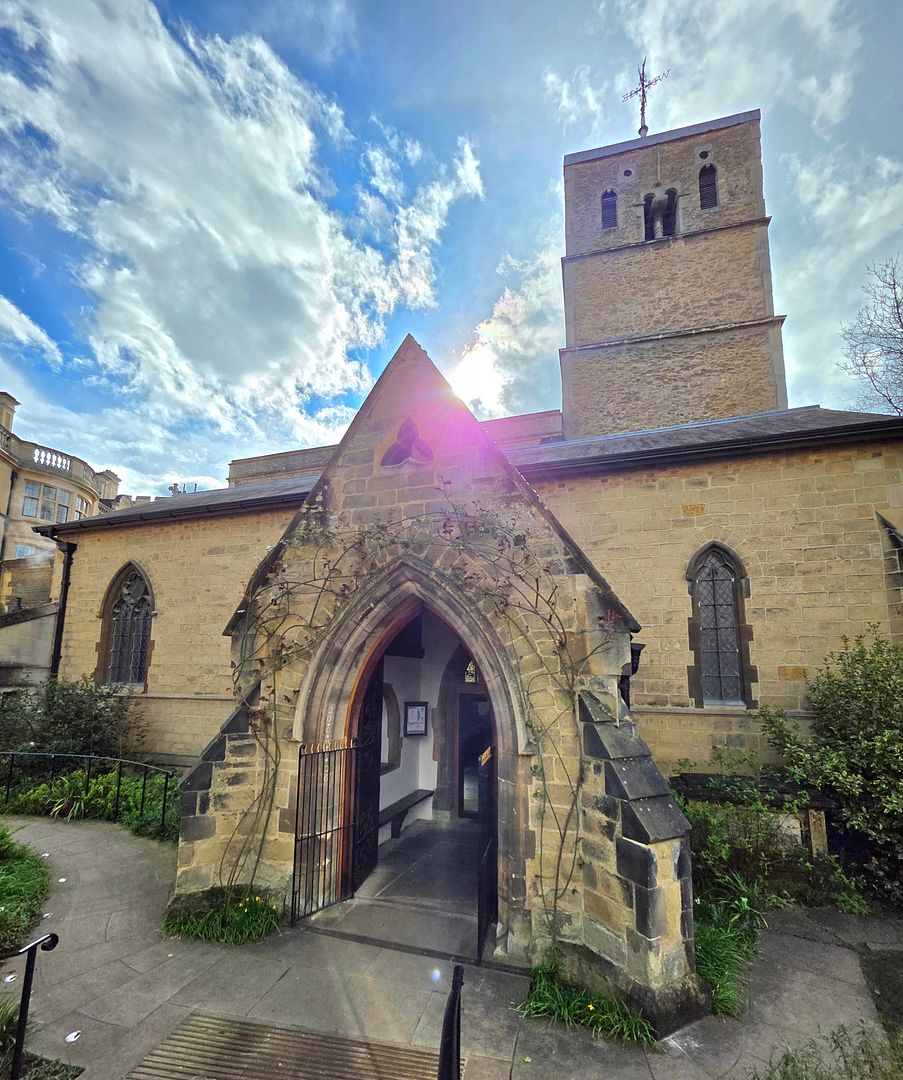
We moved further along Trumpington and saw the open door at St. Botolph’s church and walked in.

The church is dedicated to Botolph, a seventh-century abbot in East Anglia, who is a patron saint of travelers. The church was built by the long-demolished south gate of medieval Cambridge, through which travelers from the south and west entered the town.

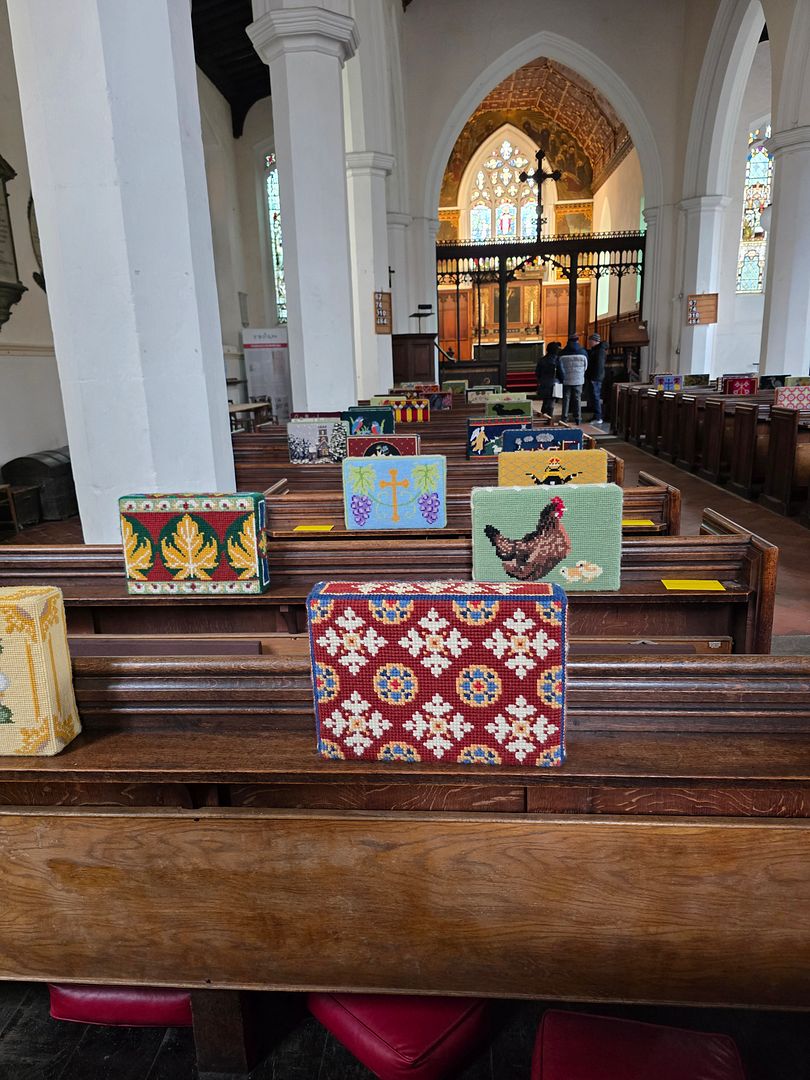
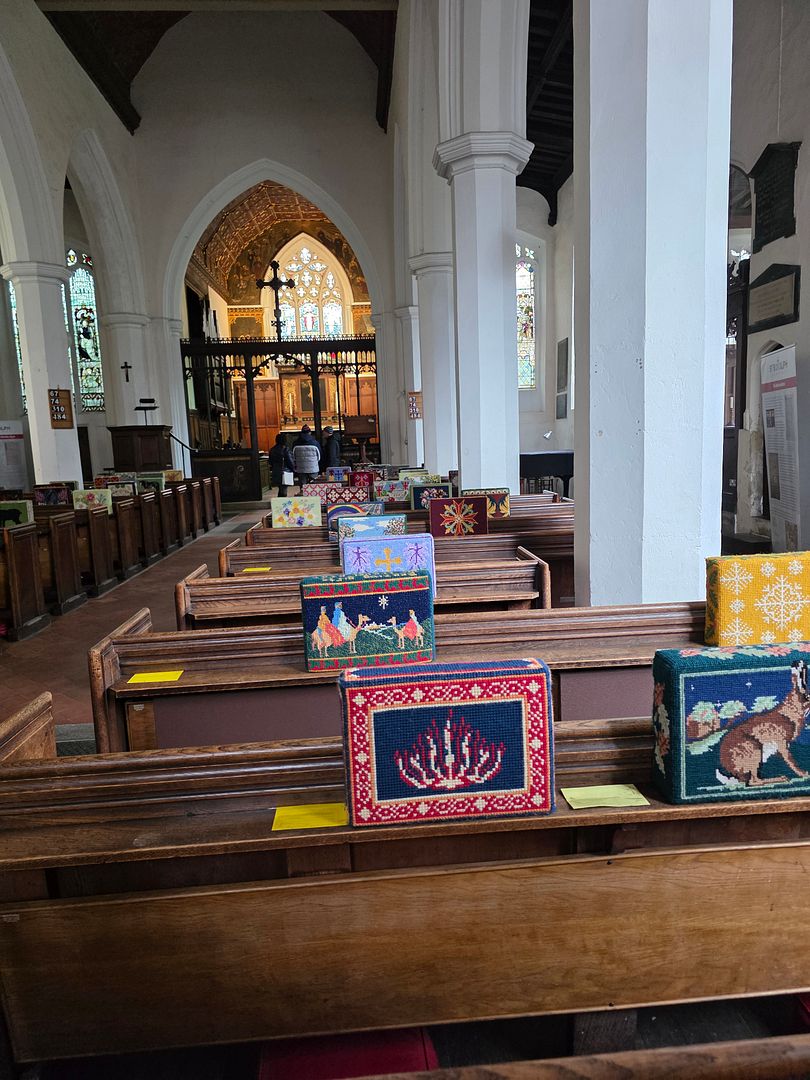
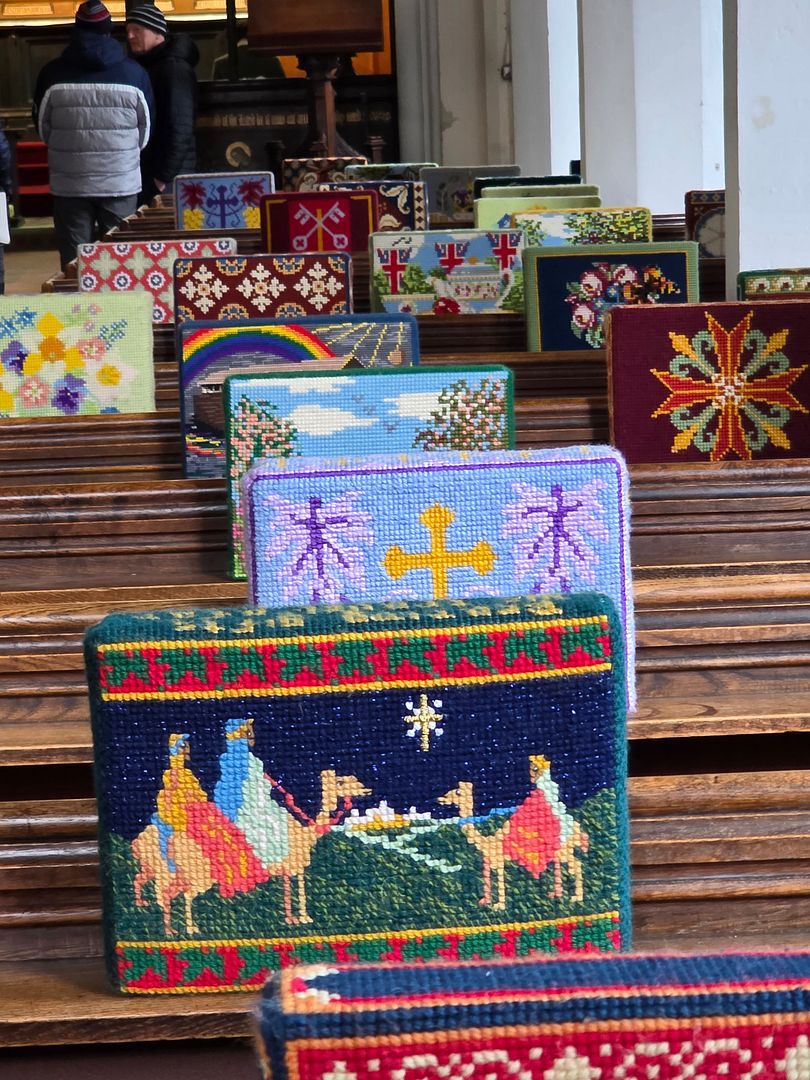
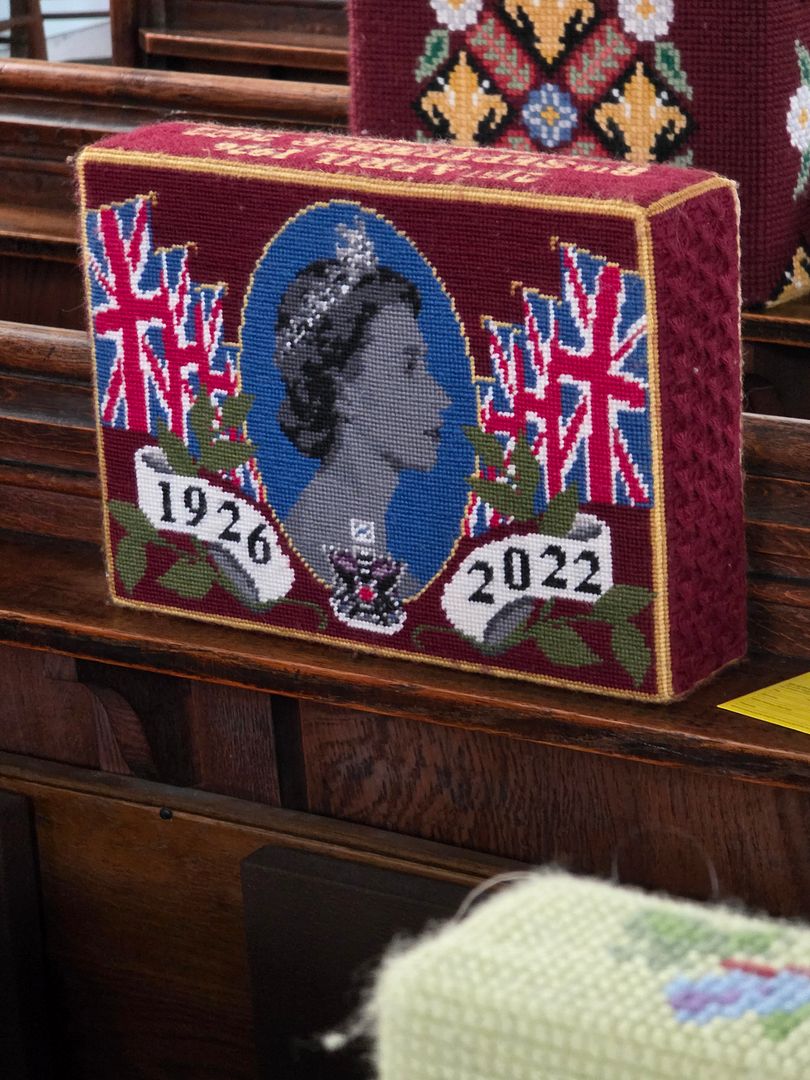
This church had their kneeling pads on display.

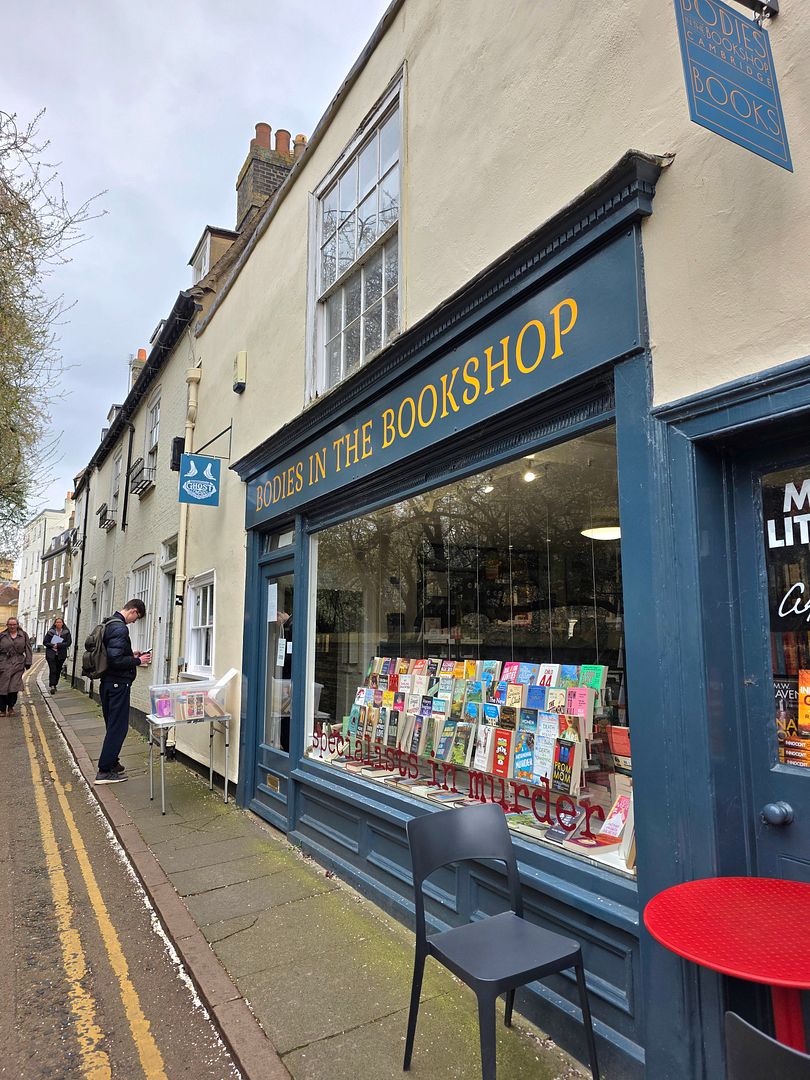
Moving along we spotted this bookstore and we would come back to it once it opened.

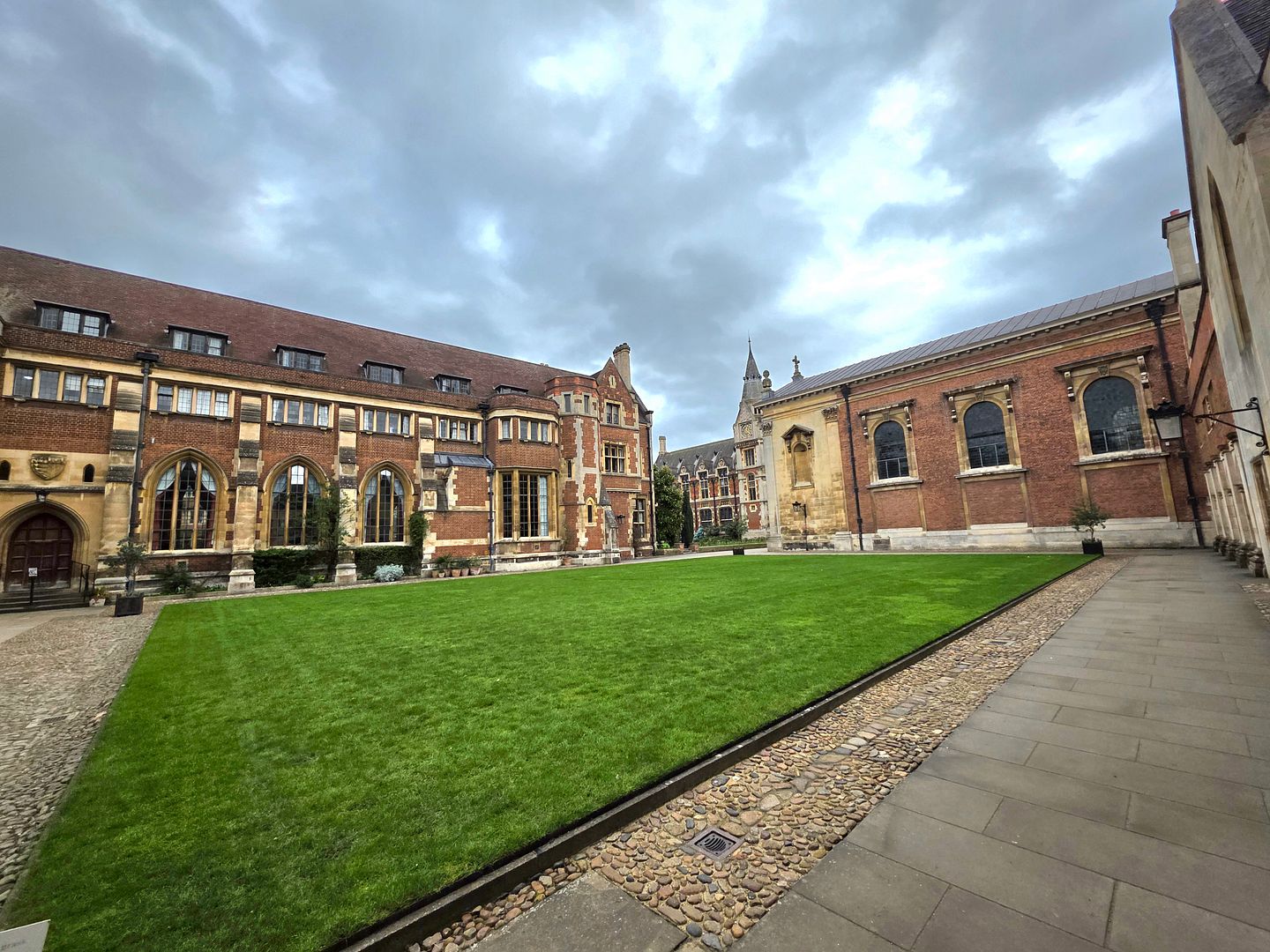
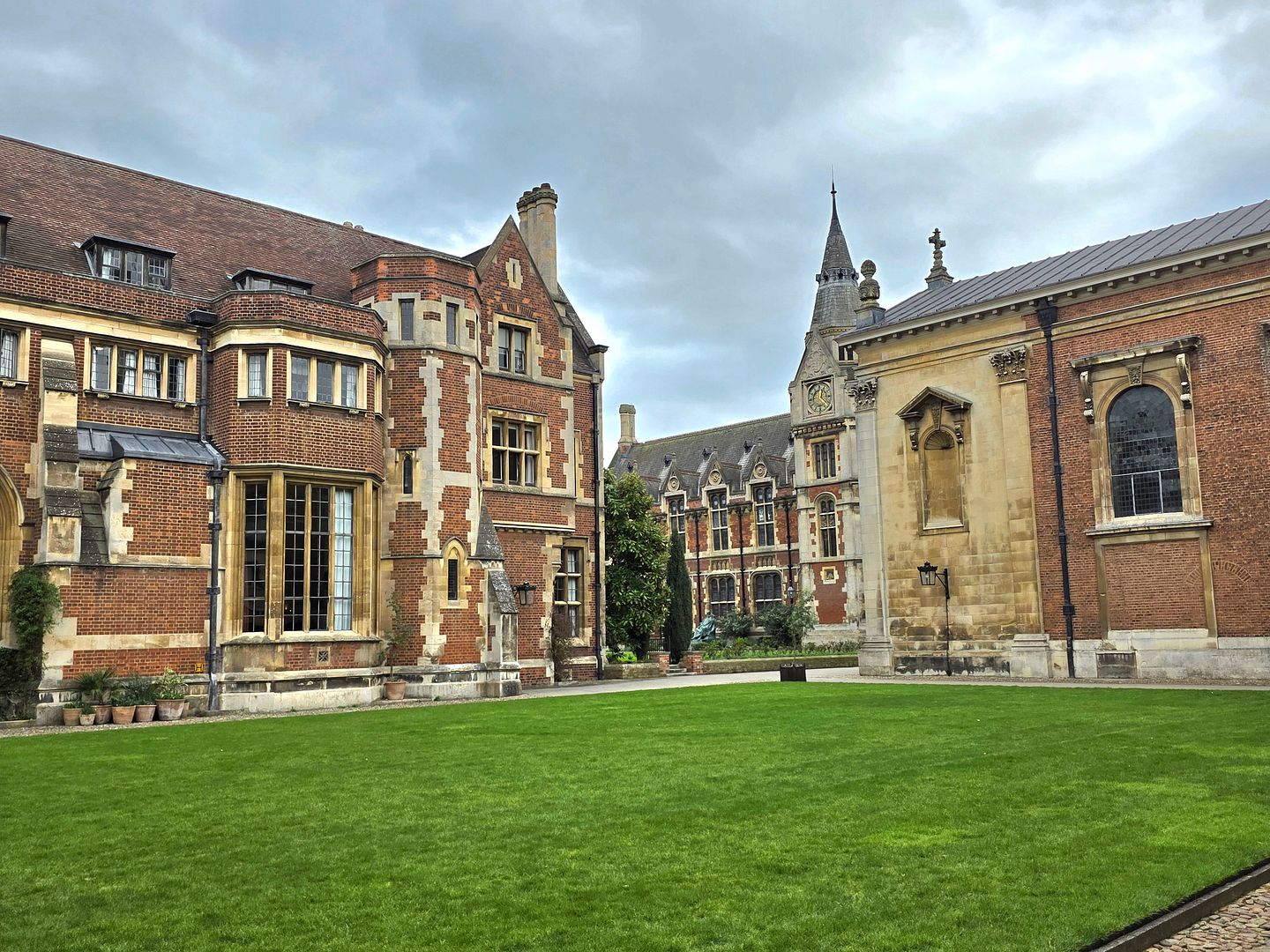
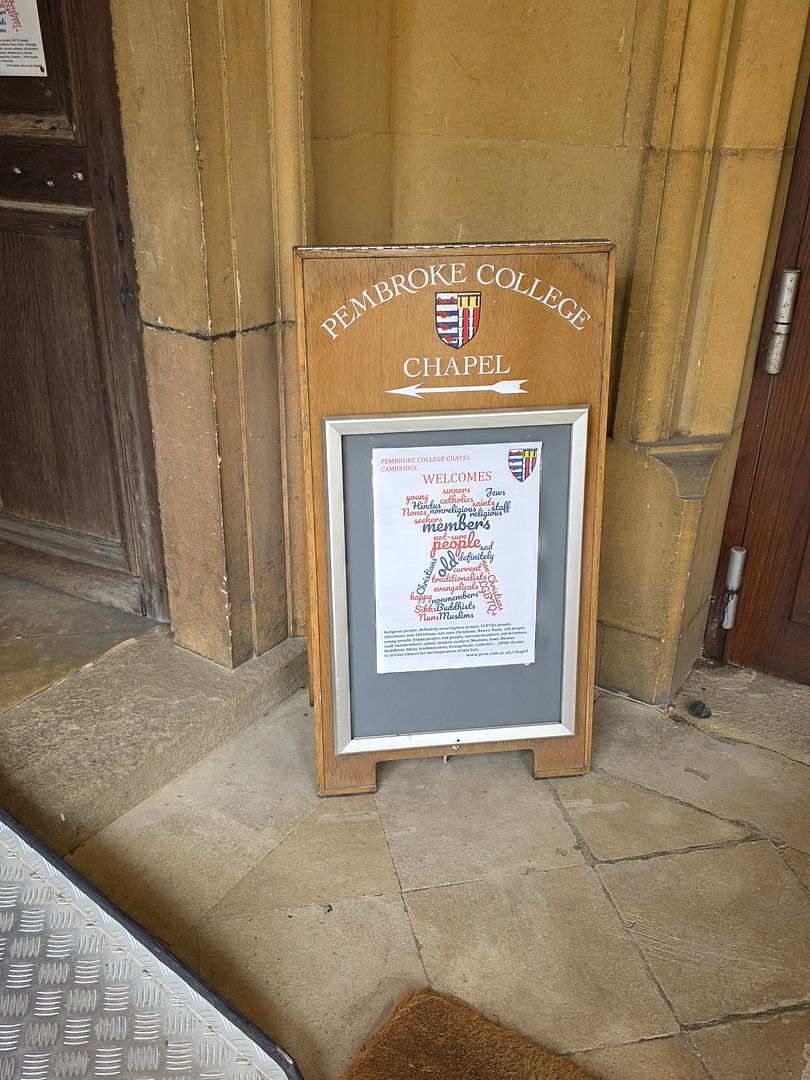
Pembroke College was open to visitors so we ventured in to check out their Chapel.

Nicholas Ridley was Principal of Pembroke College from 1540-1553 and then became the Bishop of Gloucester. In the Hall at Pembroke (we didn’t gain access) are portraits of Ridley and of John Bradford, a Pembroke graduate martyred in Smithfield in 1555. Bradford was overheard encouraging a younger martyr with the words:

‘Be of good comfort, brother, for we shall have a merry supper with the Lord this night.’

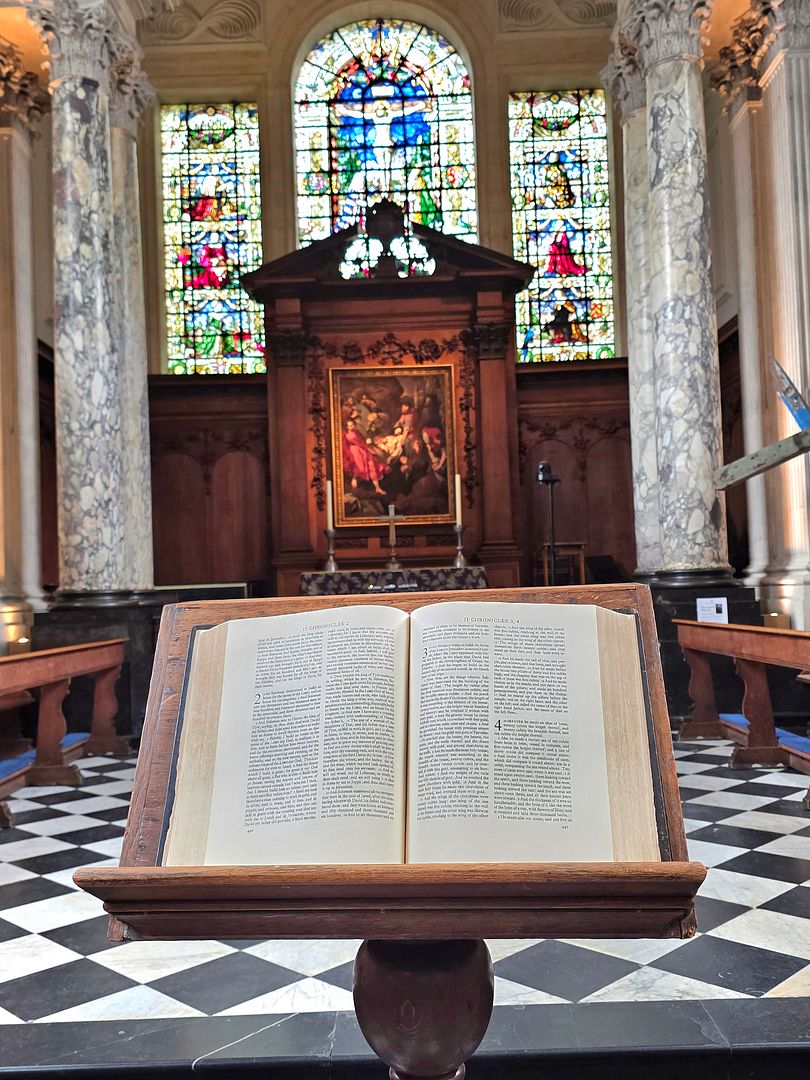
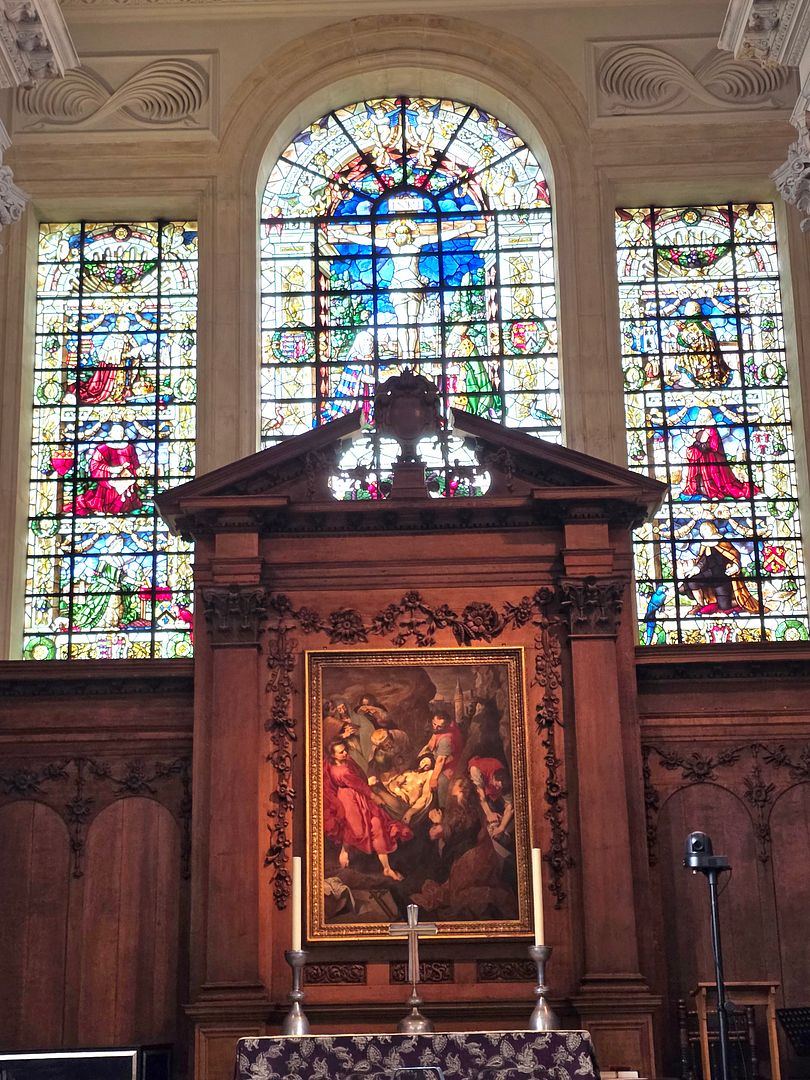
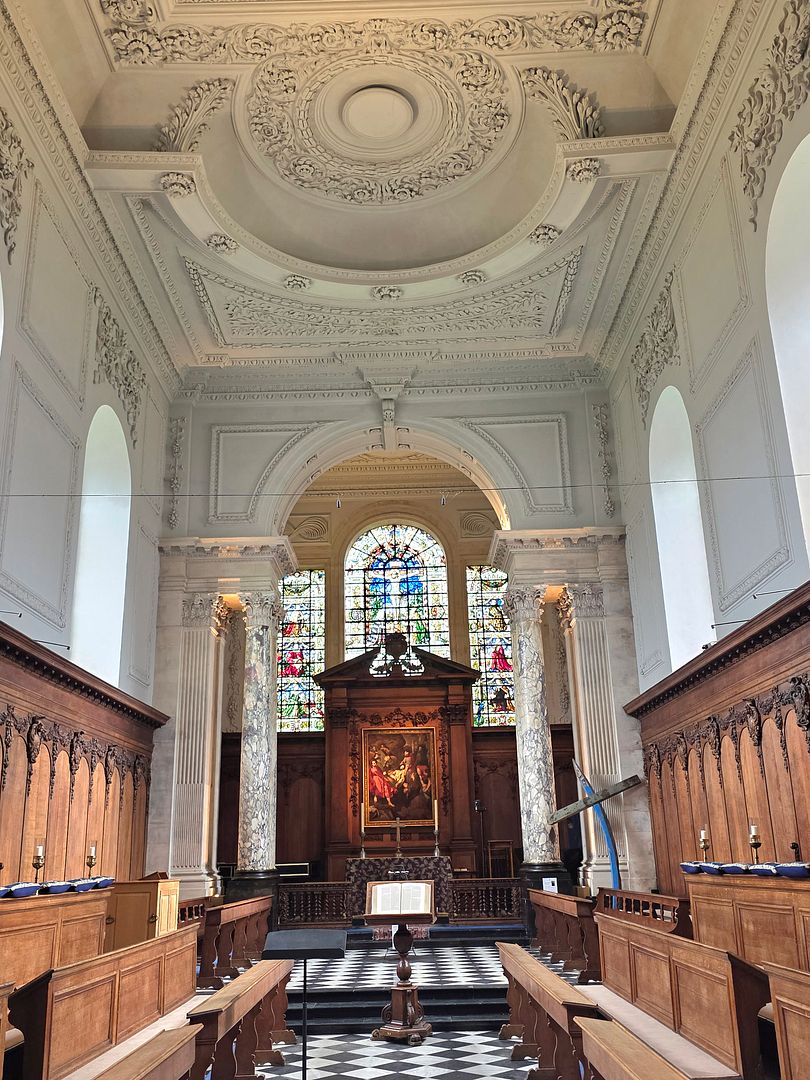
The Chapel is the first building of Christopher Wren, consecrated in 1665. Its new classical style set the fashion for other College chapels and continues to afford a fine setting for Christian worship and music.

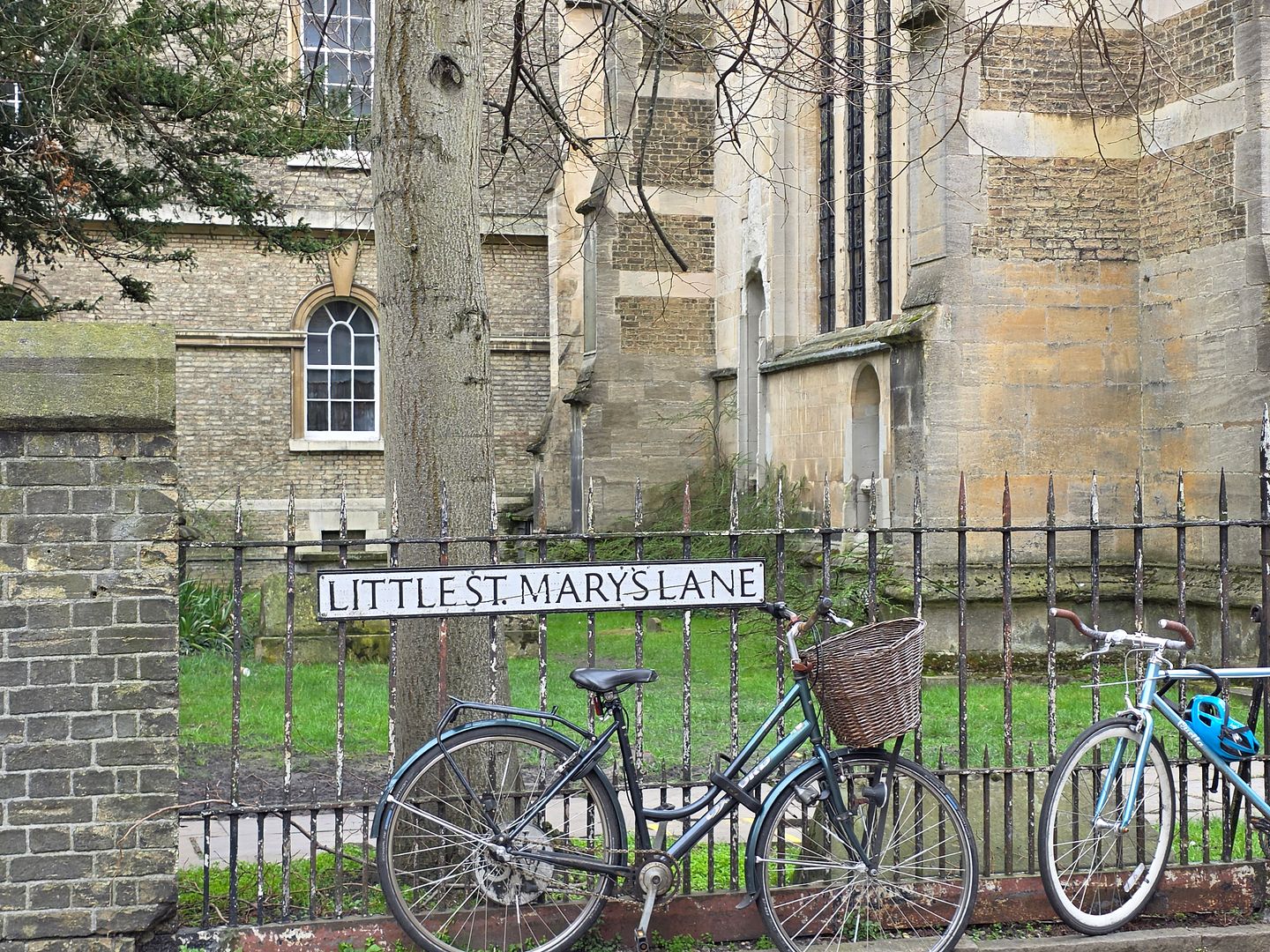
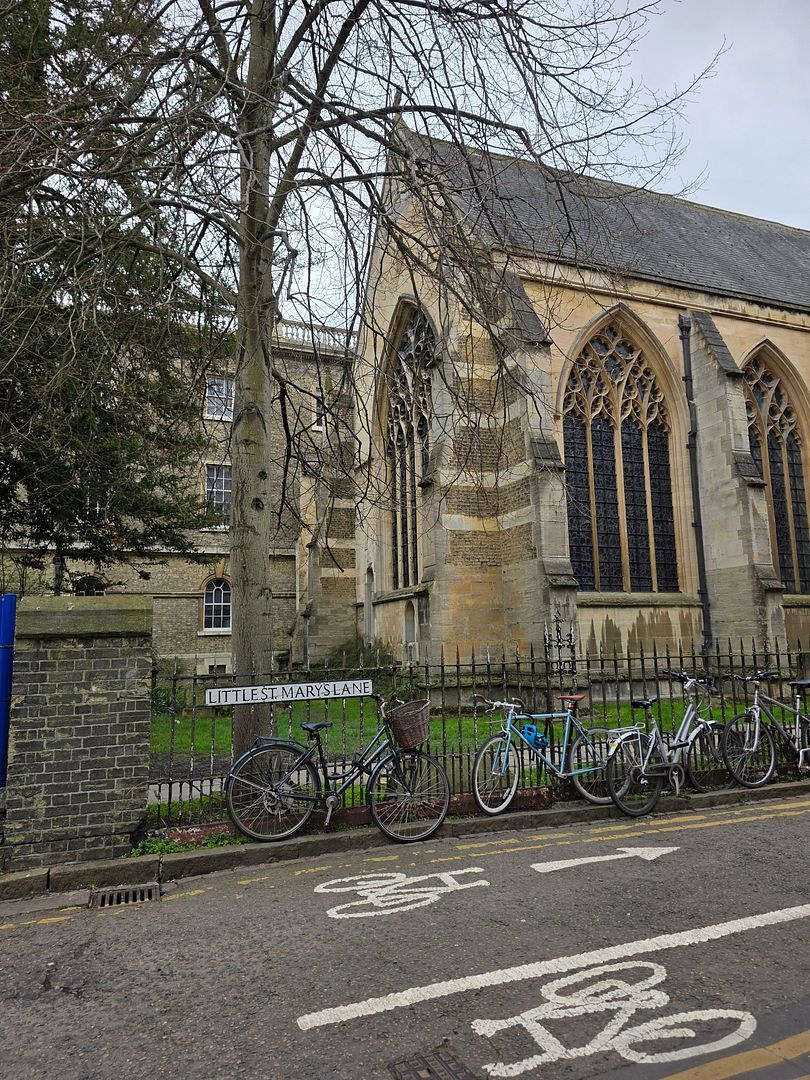
We moved on from Pembroke and noticed Little Mary’s Lane.

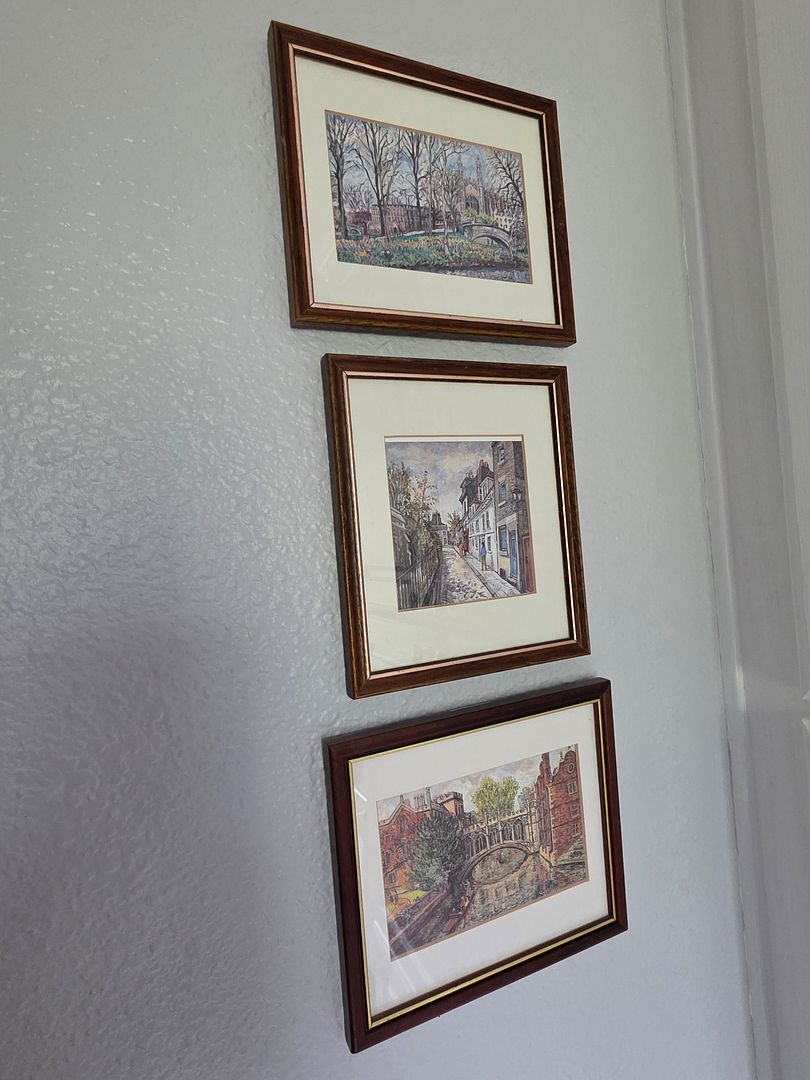
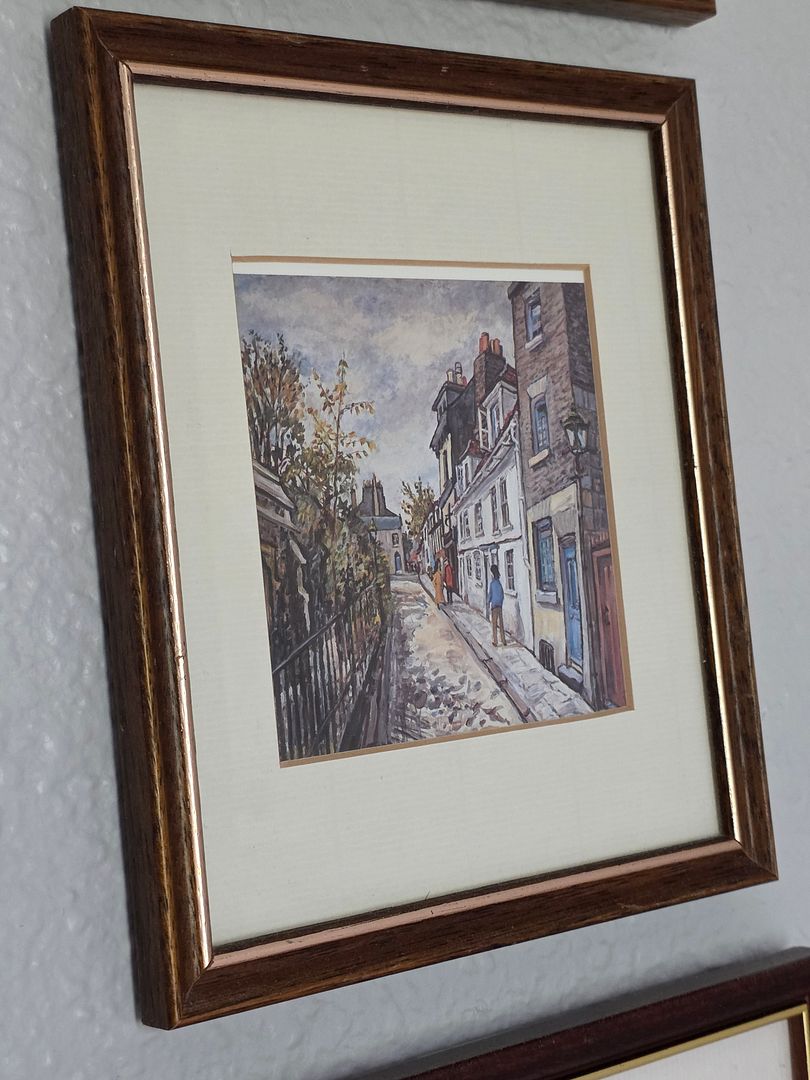
Back in my thrifting days I came across a set of three watercolors from the 1980’s that I purchased from Goodwill.

It was fun to spot the inspiration of these watercolors purchased years ago.

Our last stop on Trumpington would be the Fitzwilliam Museum and I’ll leave that for another post.

Cambridge Dinner and Evensong

Another journal entry for our time in Cambridge in March of 2026. This one will be for the evenings of March 11th and a back track to the evening of March 10th.

After our train ride back from Ely we hailed a taxi to drive us back to our lodgings. We freshened up and relaxed for a while but soon determined we were hungry and set out to find the likely spot for dinner.
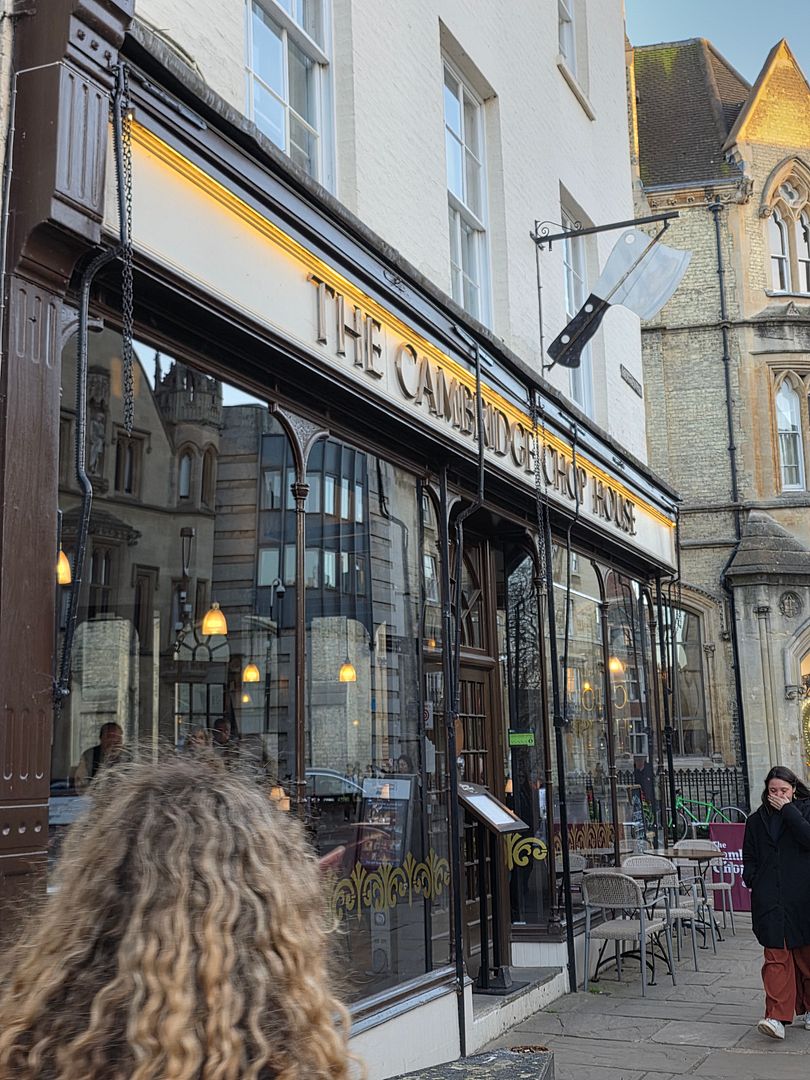
The Cambridge Chop House looked good and we managed to get seated without a reservation.
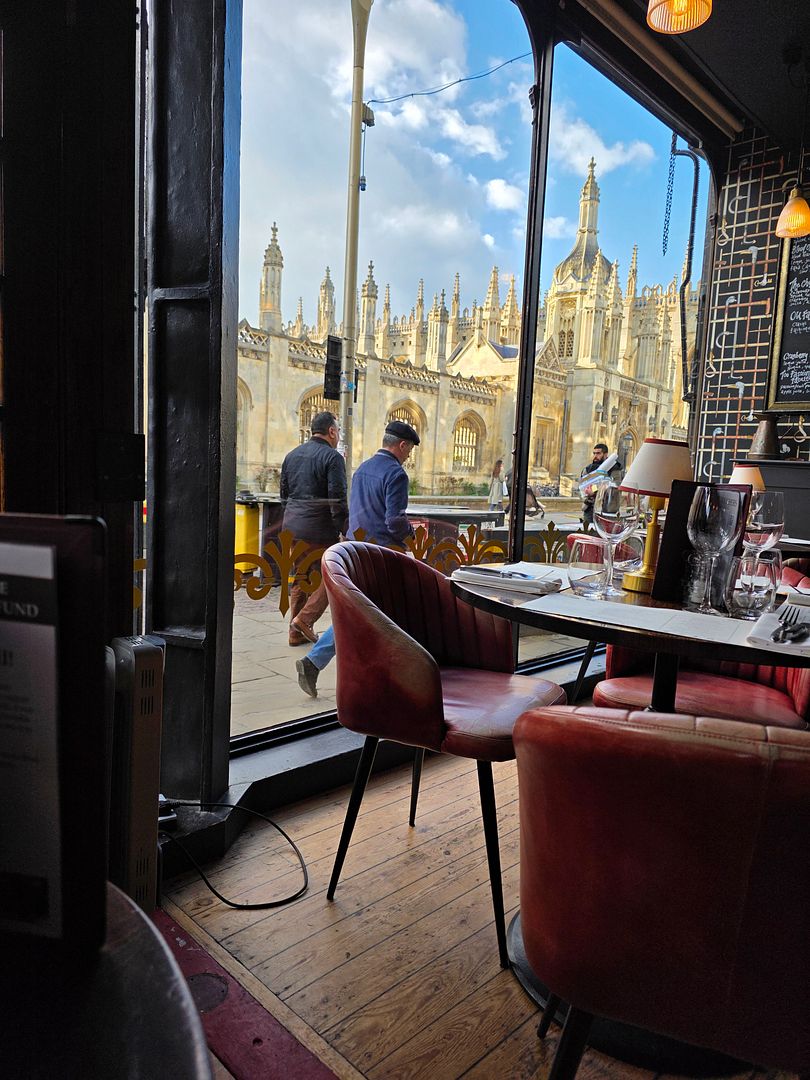
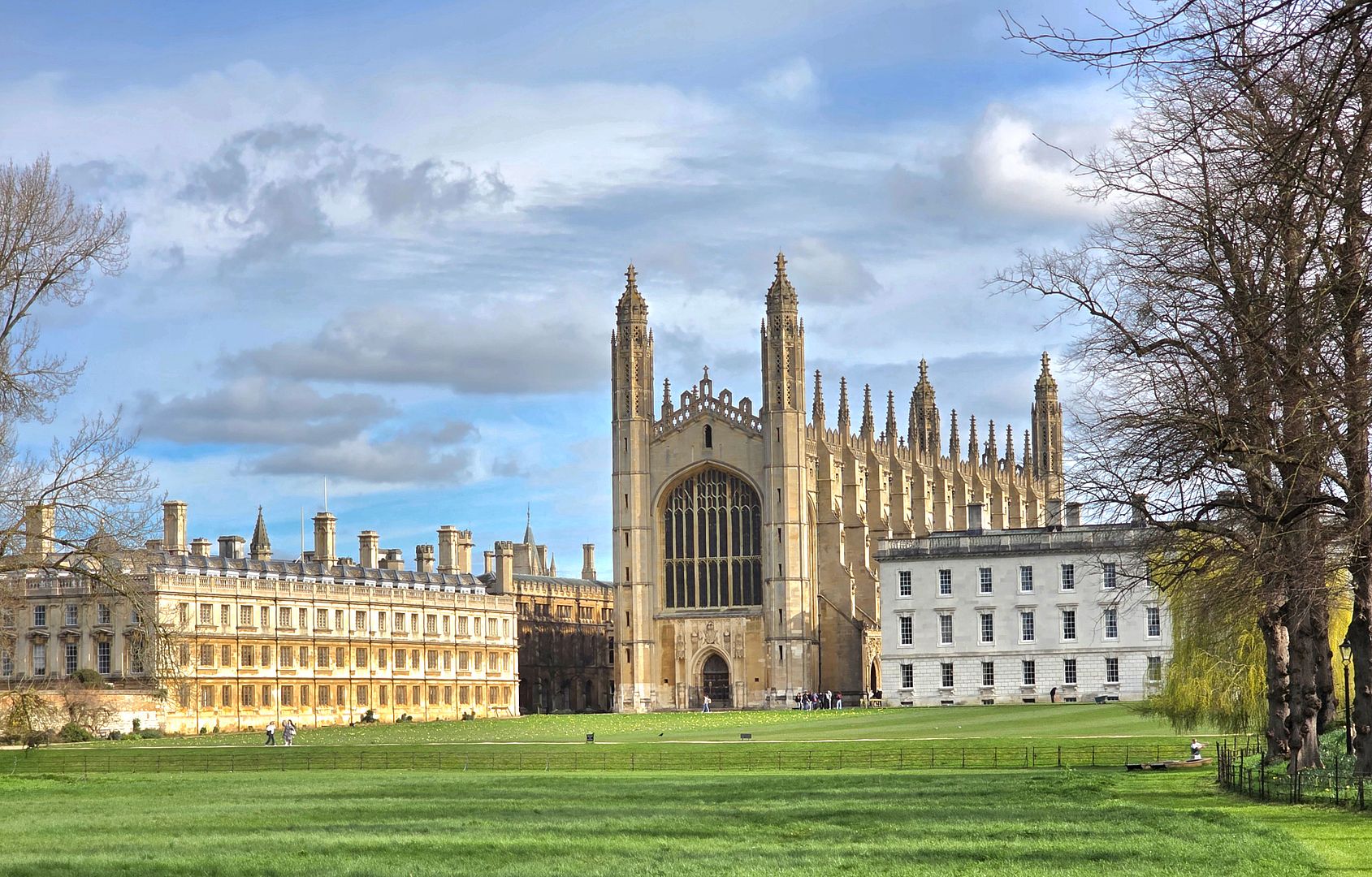
The views of King’s College were a nice added treat.
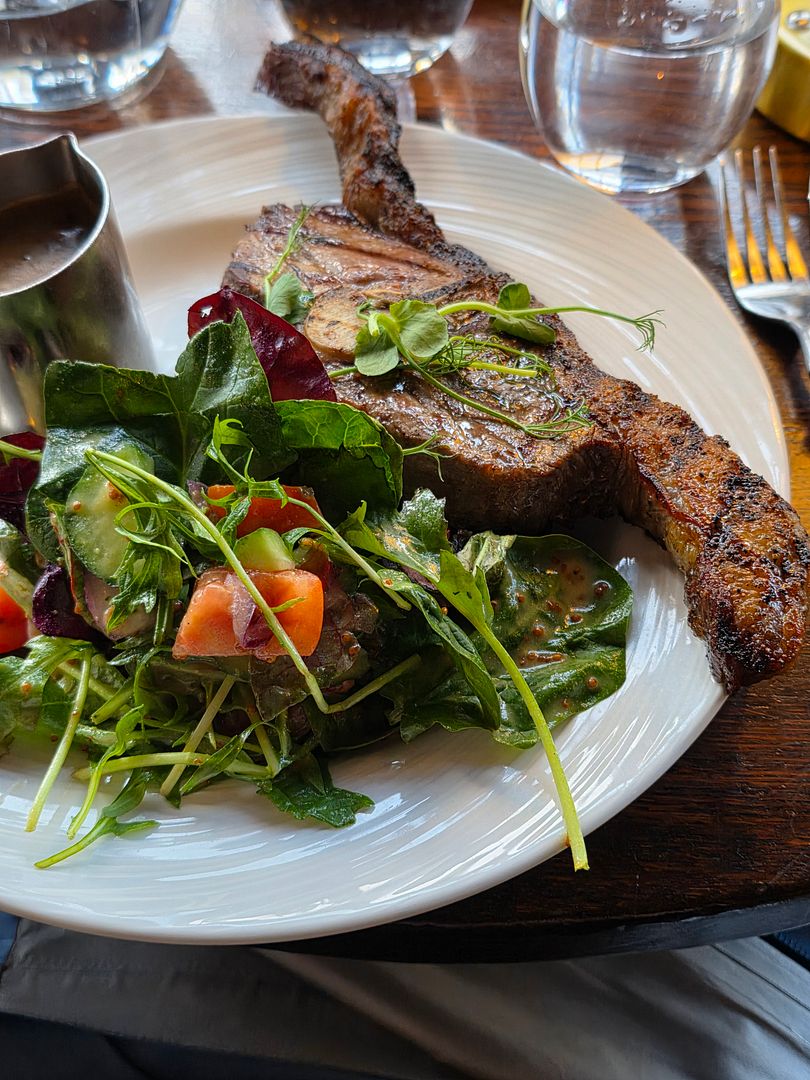
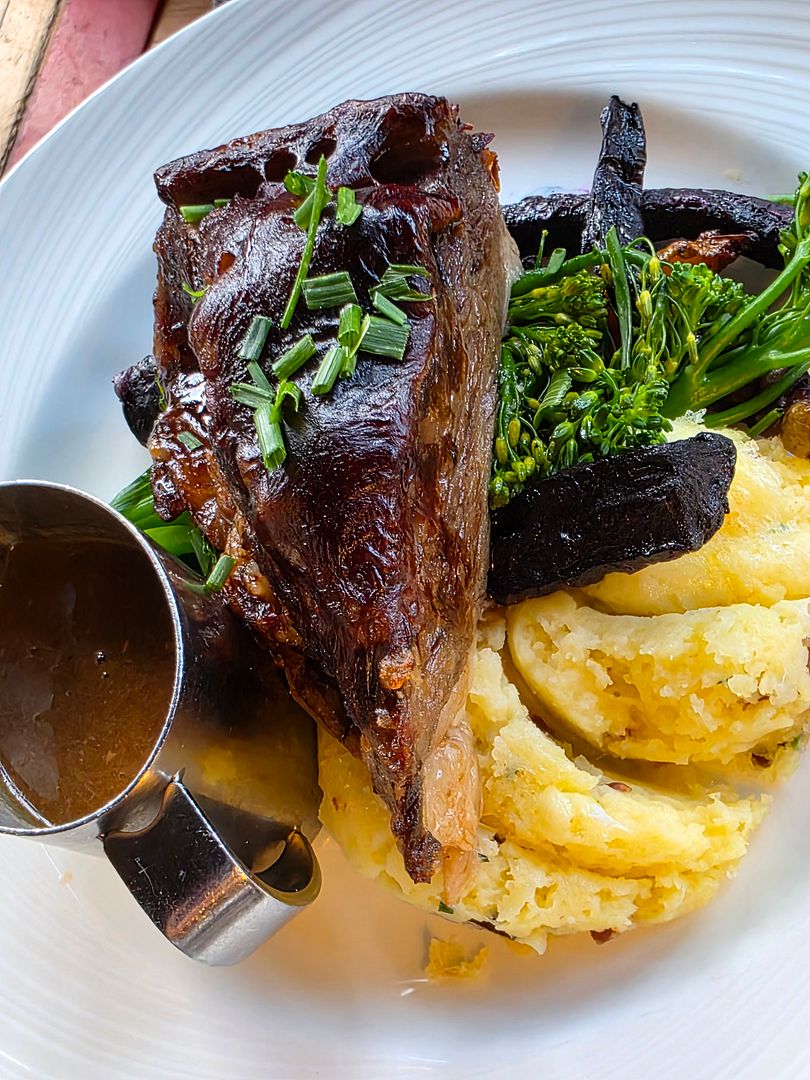
A lamb chop for me and short ribs for Greg.
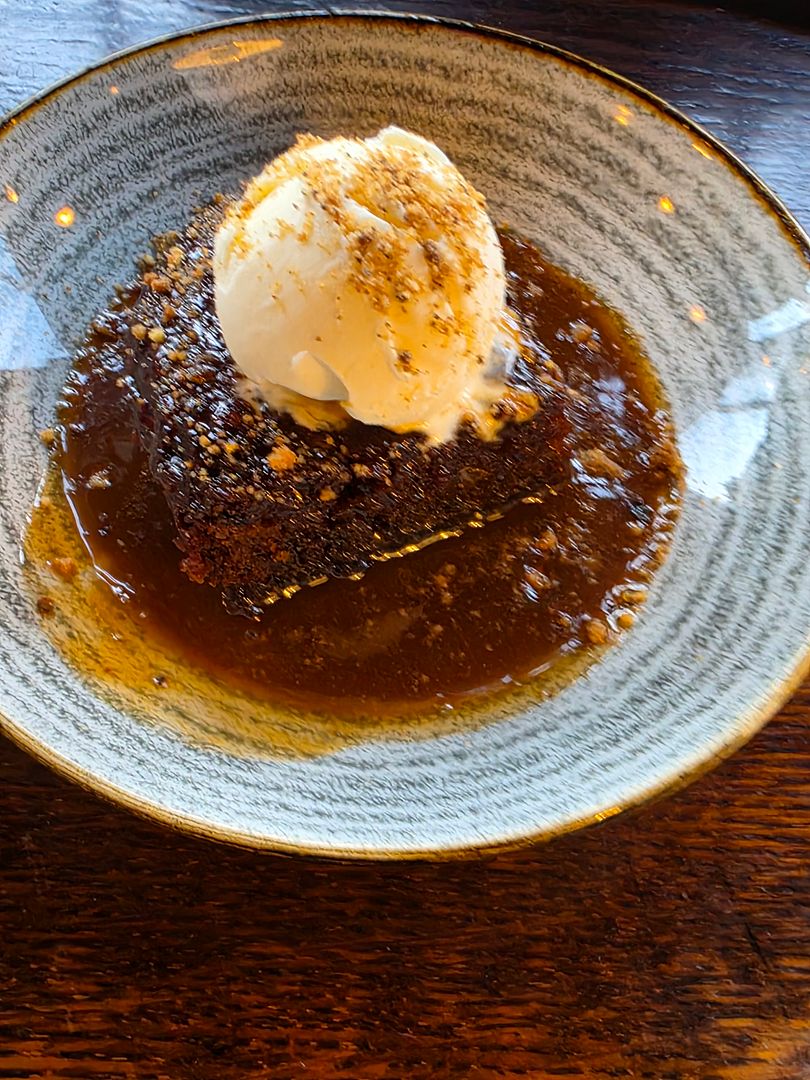
We shared sticky toffee pudding for dessert. This was a top notch and very satisfying meal.

It slipped my journal posting radar about our Tuesday evening March 10th Evensong at St. John’s College. St. John’s College was closed to visitors the whole time we were in Cambridge but they did have Evensong that the public could enjoy. We were so happy to be able to attend it in the college chapel and get a little view into some of the architecture and history.
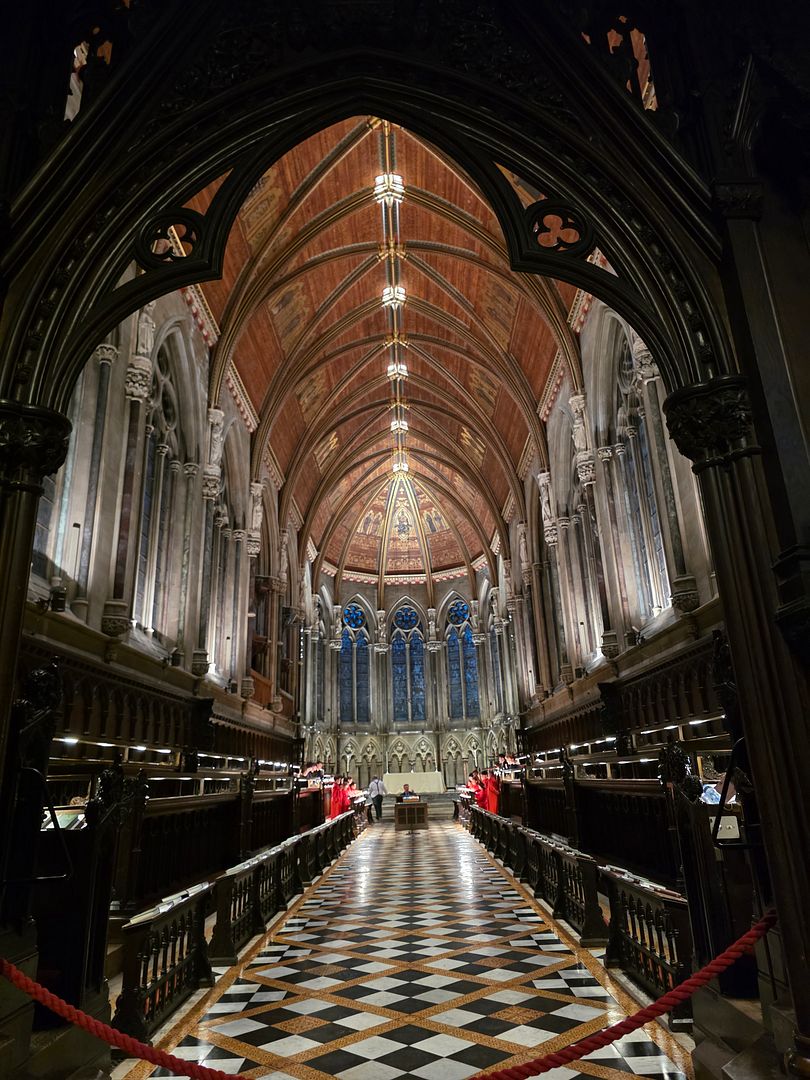
Evensong is a musical form of evening prayer, most familiar in the Anglican and Episcopal traditions. It’s typically held in cathedrals, collegiate chapels, and parish churches, often at the close of the day. Unlike many other church services, much of Evensong is sung by a choir, accompanied by an organ, with the congregation usually participating through silent reflection or by joining in a few responses and hymns. The primary purpose of Evensong is to offer thanks for the day that is past, to seek spiritual peace for the evening ahead, and to provide attendees with a space for contemplation through beautiful music and scripture. 

It has been a wonderful way for us to end a day of sightseeing in our travels to attend Evensong.
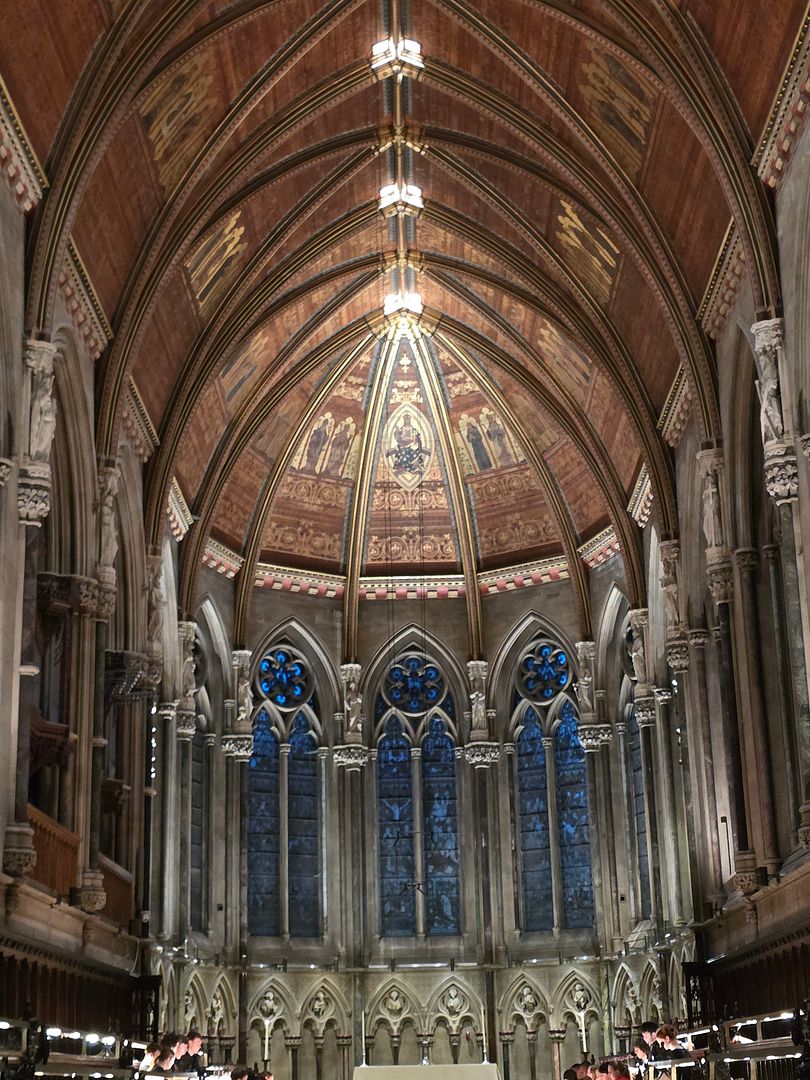
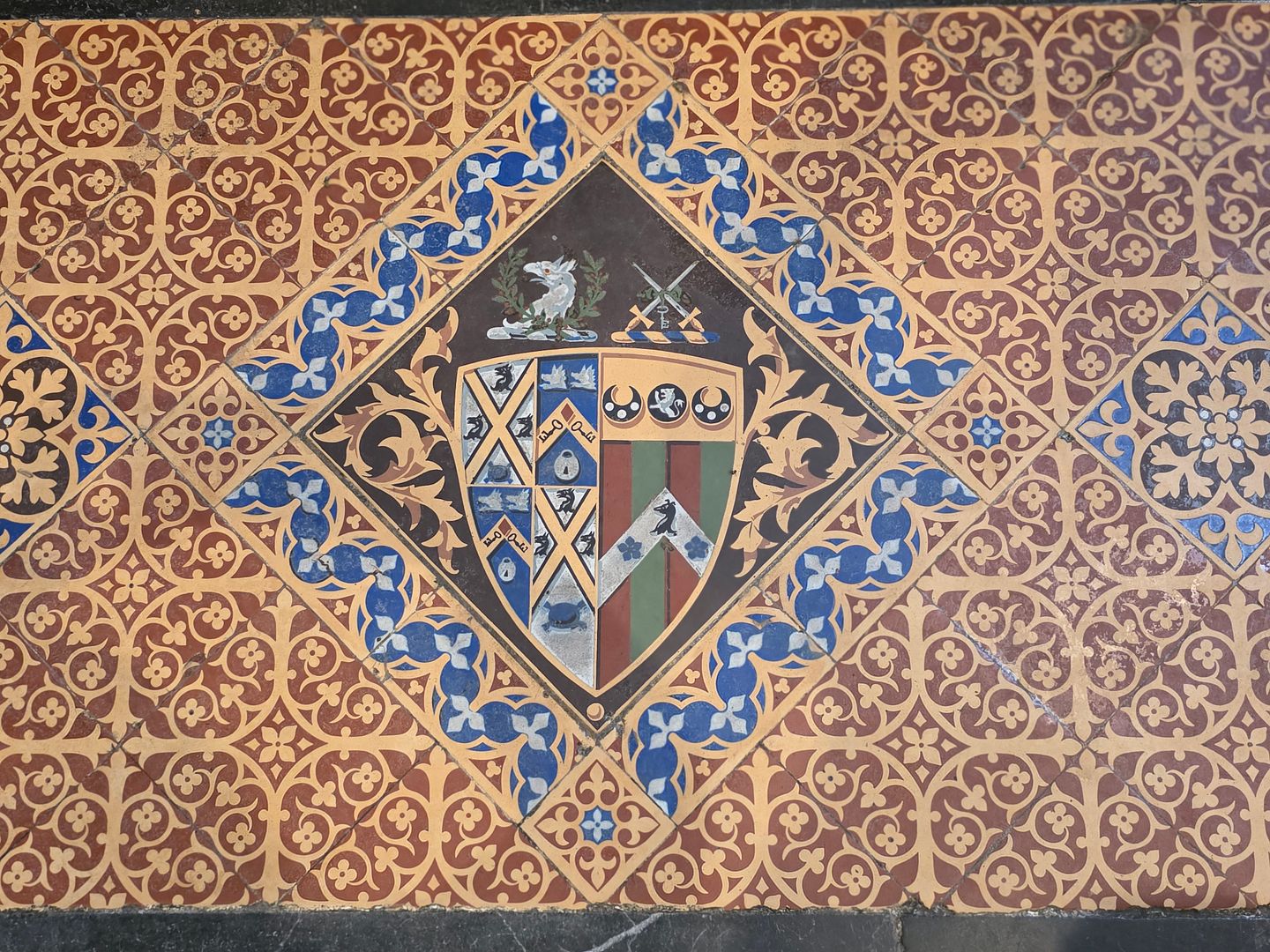
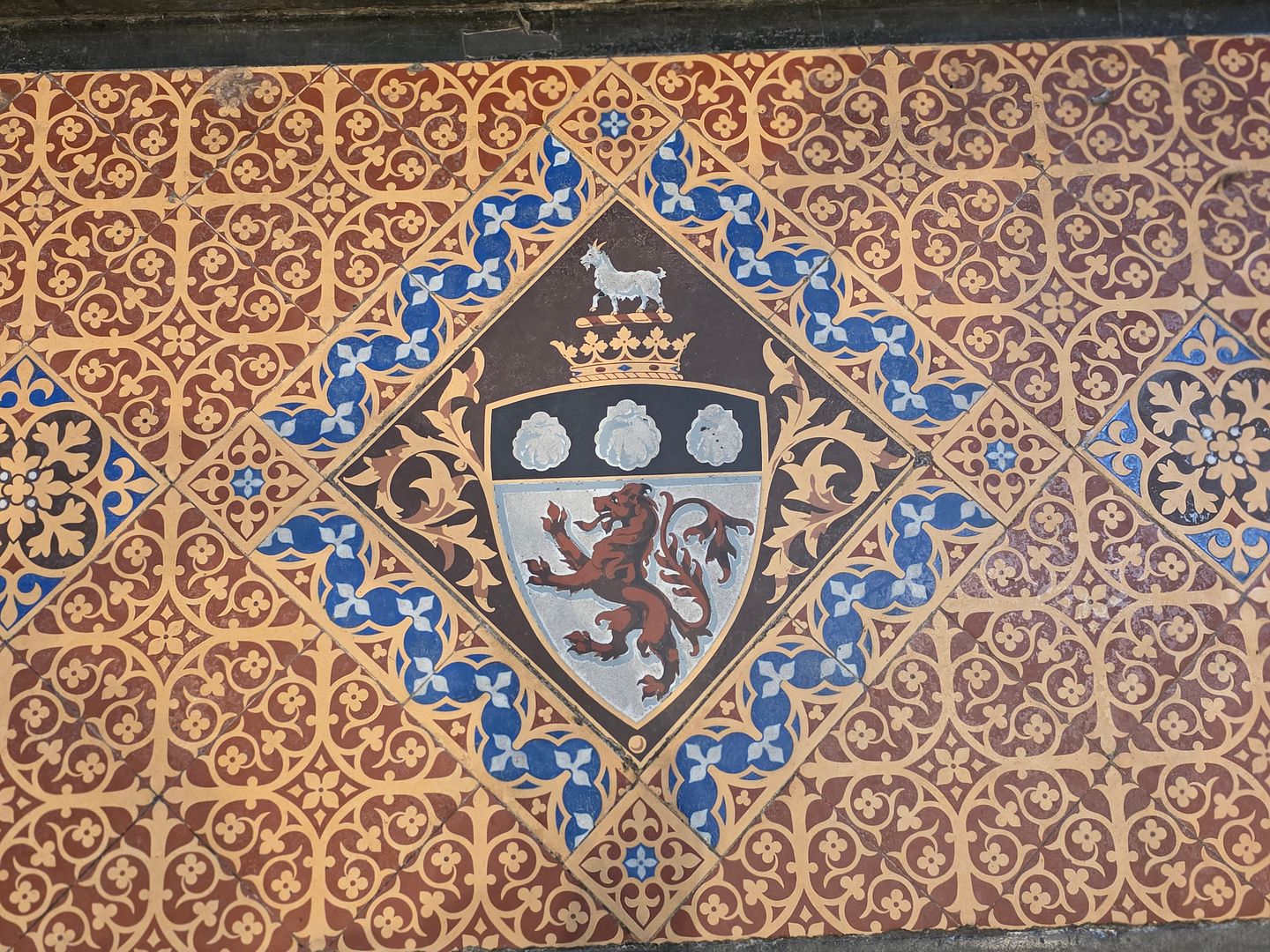
Where we were seated to enjoy Evensong I was able to see some of the floor tiles in the transept/crossing section of the chapel.
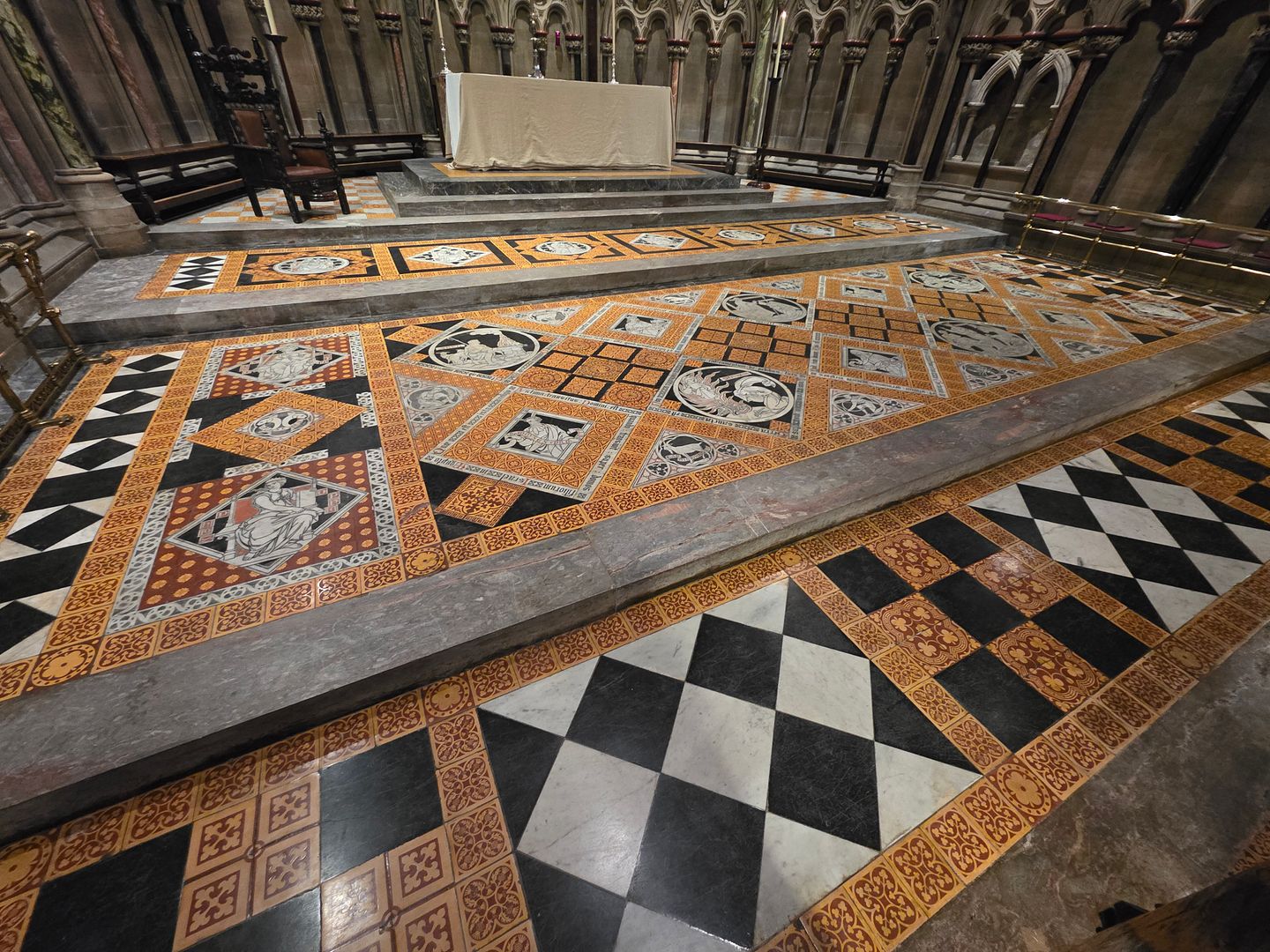
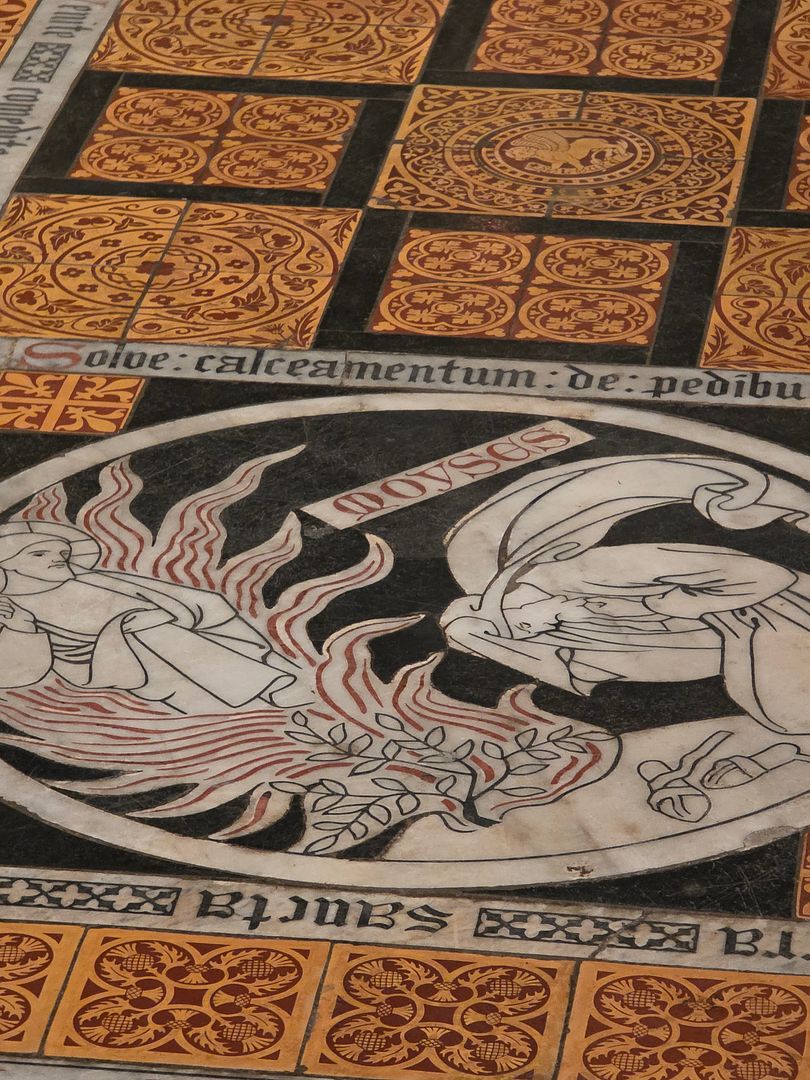
Moses and the burning bush.
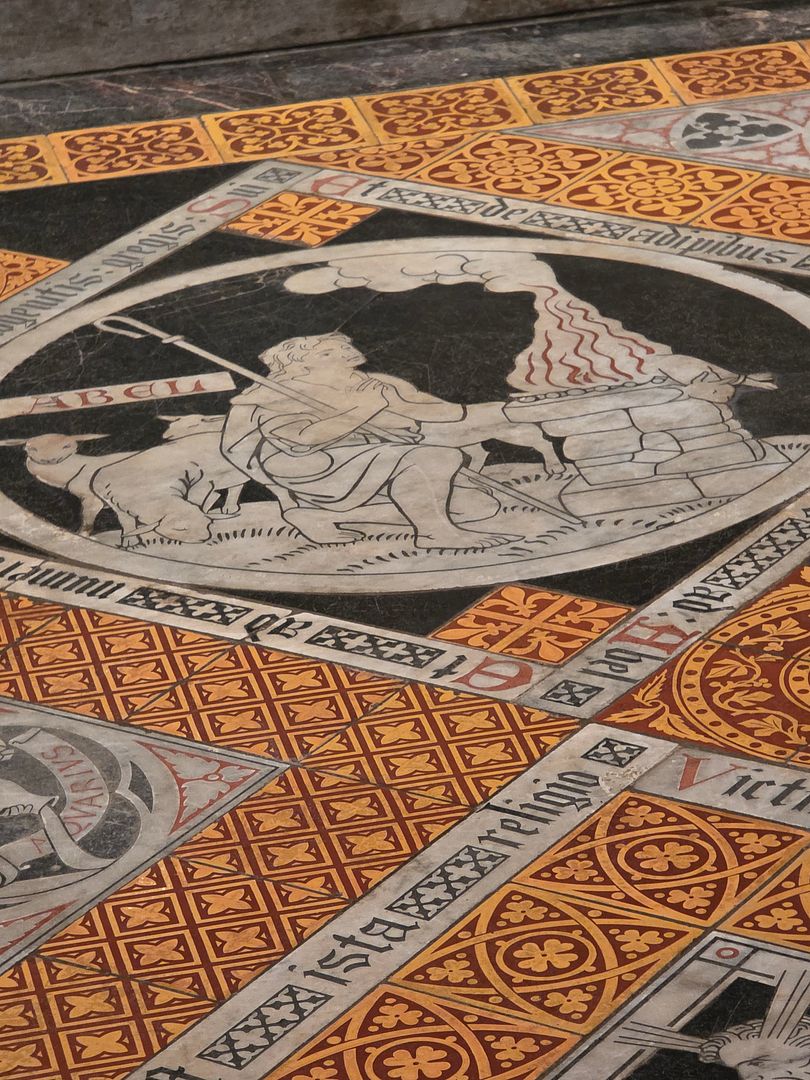
Abel and his offering to God.

While waiting in the narthex of the chapel, I was thrilled to see the following tribute.
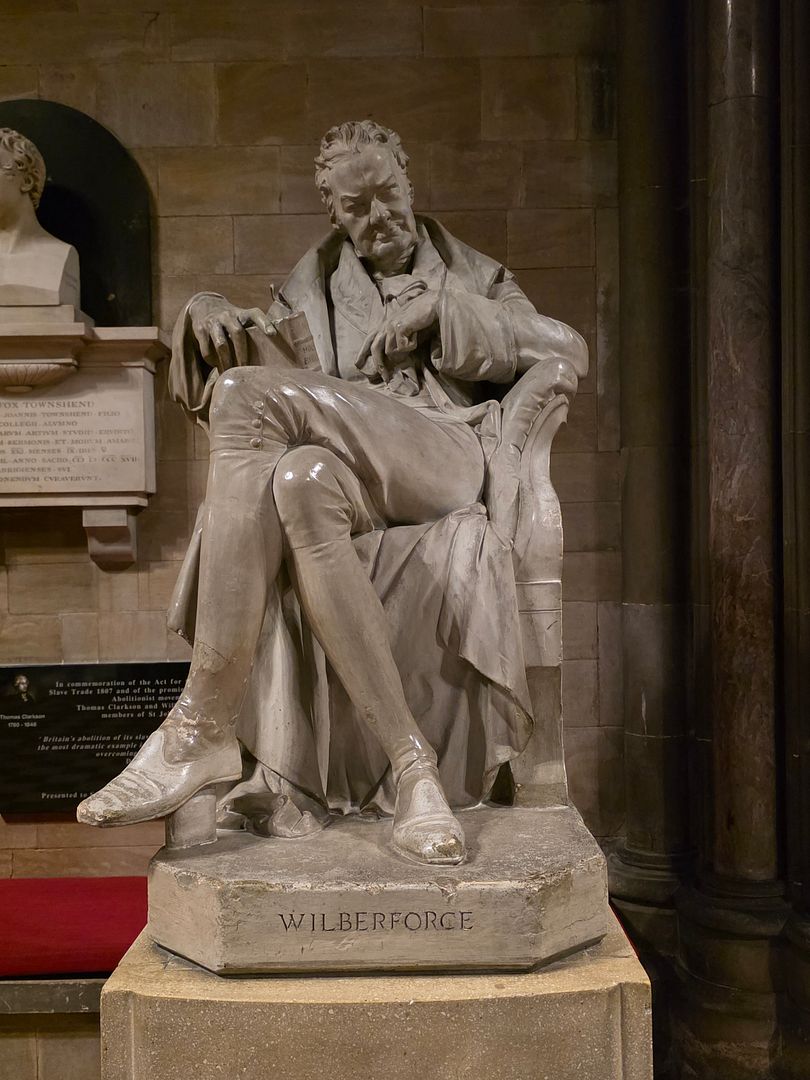
Greg and I have read about William Wilberforce and seen tributes to him in different parts of England. His book, Real Christianity, is a book I can recommend. I have the revised and updated version by Bob Beltz.

Wilborforce and Thomas Clarkson both members of St. John’s College were honored for their prominent role in passing of the Act for the Abolition of the Slave Trade 1807.

1776 & 1779 William Wilberforce and Thomas Clarkson begin their studies at St John’s. Joining forces in 1787, they will spend the rest of their lives leading the campaign to abolish the slave trade and slavery.
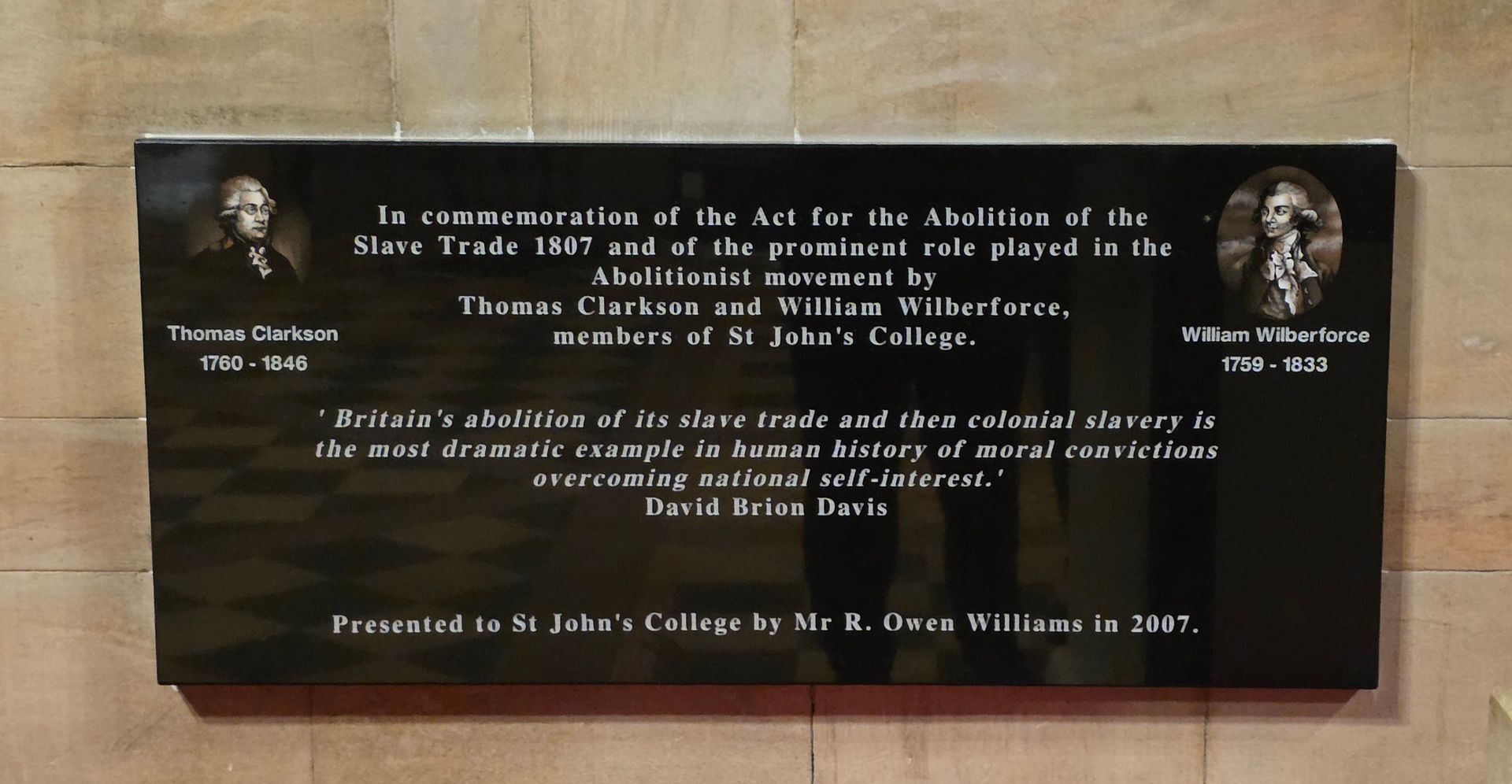
“Britain’s abolition of its slave trade and then colonial slavery is the most dramatic example in human history of moral convictions overcoming national self-interest.” David Brian Davis

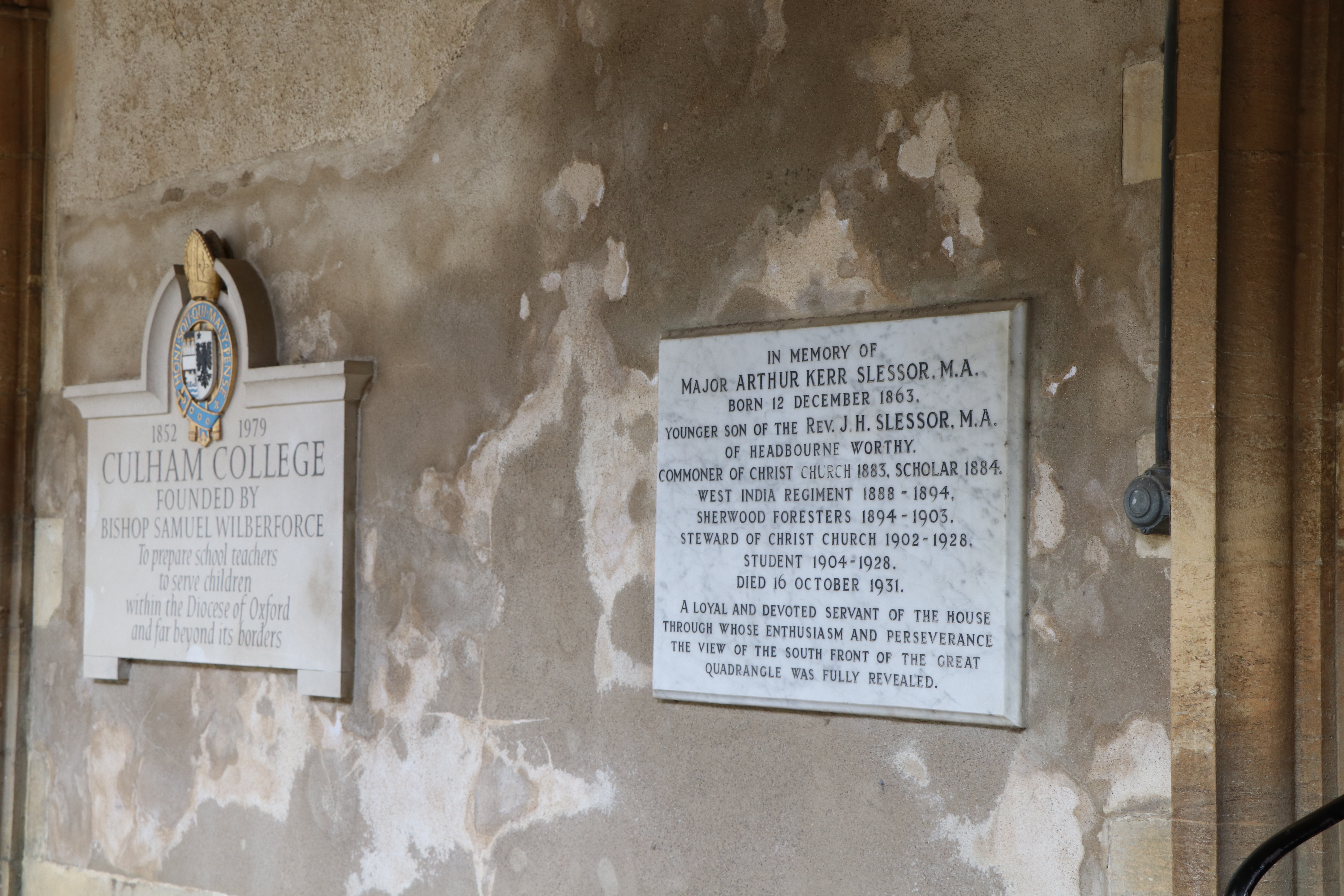
While we were in Oxford at Christ Church College in 2022 we saw a tribute to one of Wilberforce’s sons.

The plaque on the left reads Culham College, Founded by Bishop Samuel Wilberforce, to prepare school teachers to serve children within the Diocese of Oxford and well beyond its borders. 1852-1979

Samuel Wilberforce, FRS was an English bishop in the Church of England, and the third son of William Wilberforce. Known as “Soapy Sam”, Wilberforce was one of the greatest public speakers of his day. He is now best remembered for his opposition to Charles Darwin’s theory of evolution at a debate in 1860.

We also read an extensive plaque in his honor in the north transept of Westminster Abbey when we visited in 2003.

William Wilberforce is buried in the north transept of Westminster Abbey in London, England.
He was laid to rest on August 3, 1833, following a major state funeral. He is buried next to his close friend and former British Prime Minister, William Pitt.

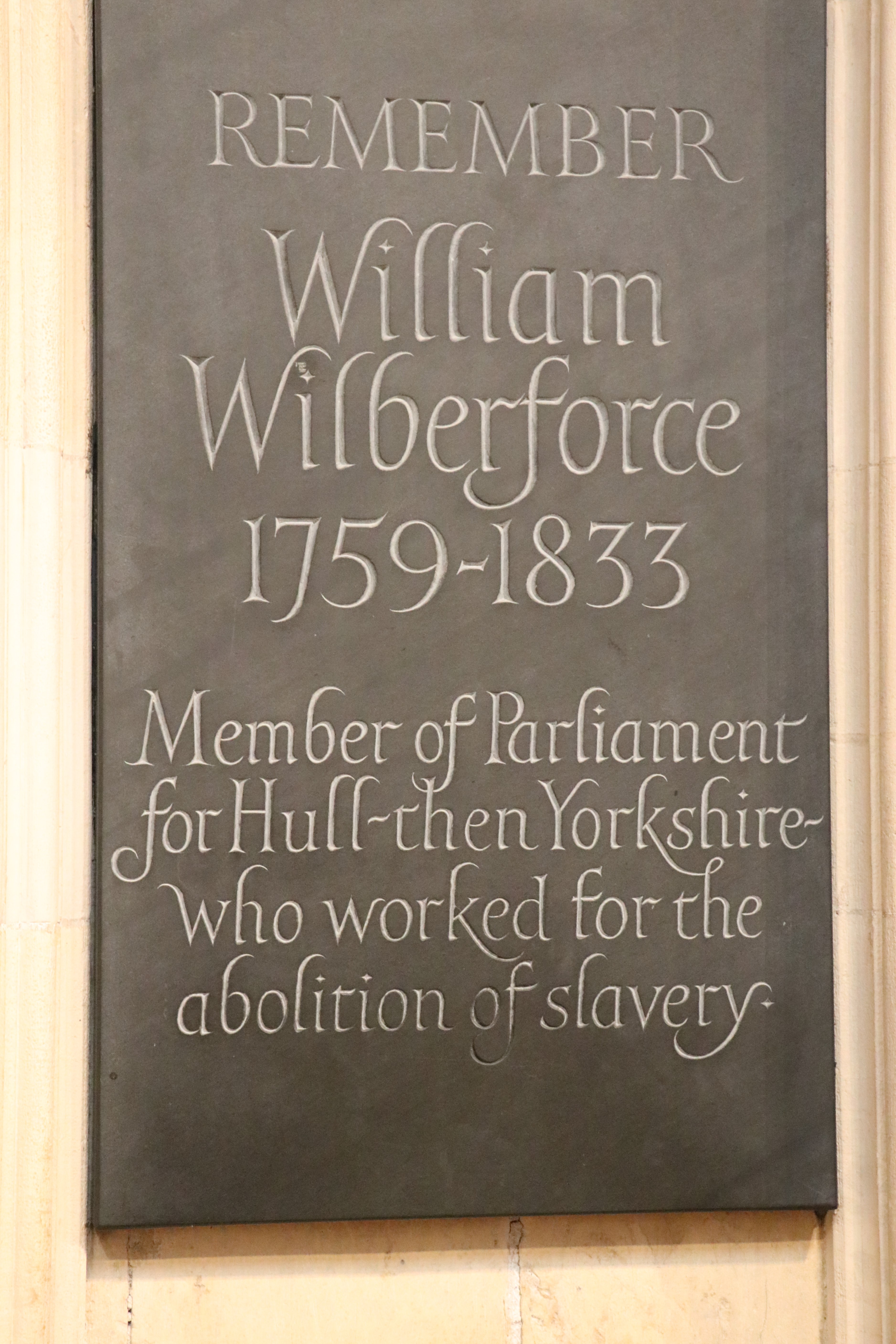
Wilberforce was a member of parliament from Yorkshire. When we were visiting the Yorkminster in 2023 I spotted a plaque dedicated to him at the entrance to the gift shop.
You can read more about Wilberforce at the following link;

William Wilberforce

I’ll leave this post with a couple quotes from Real Christianity.

The Bible is one of God’s greatest gifts to humanity. It tells us of the greatest gift that men and women have longed for through-out the ages and of which the prophets spoke about for centuries. When Jesus finally came, His arrival was hailed by the angelic host with the exclamation, “Glory to God in the highest, and on earth peace to men on whom his favor rests” (Luke 2:14). How can you measure the value of the good news of Christ? It is spoken of in the Bible as light in the darkness, freedom from slavery and life from death. Look at how much the Early Church valued the message. They received it with great joy and overflowing gratitude.

Surely all these things should help us come to terms with the inexpressible value of true faith. The greatest gift of God is often either rejected outright or treated as if it is of little worth. But if we really began to study the Bible, we would be impressed with the proper value of the gift.”
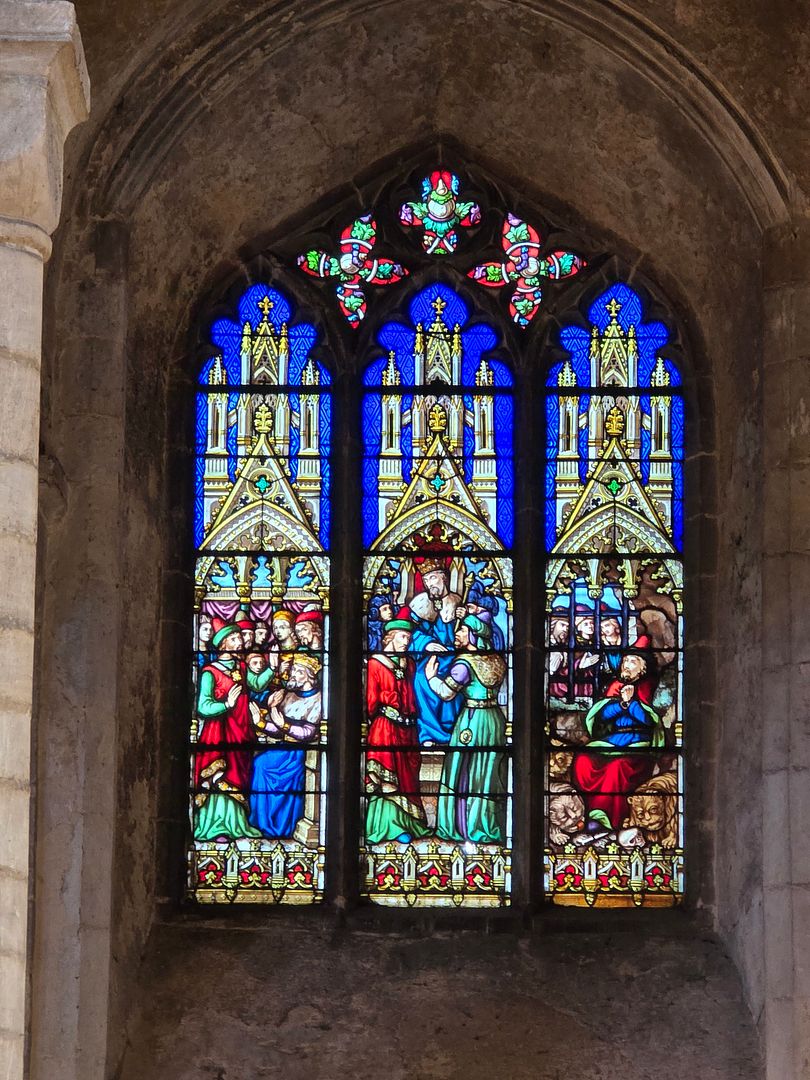
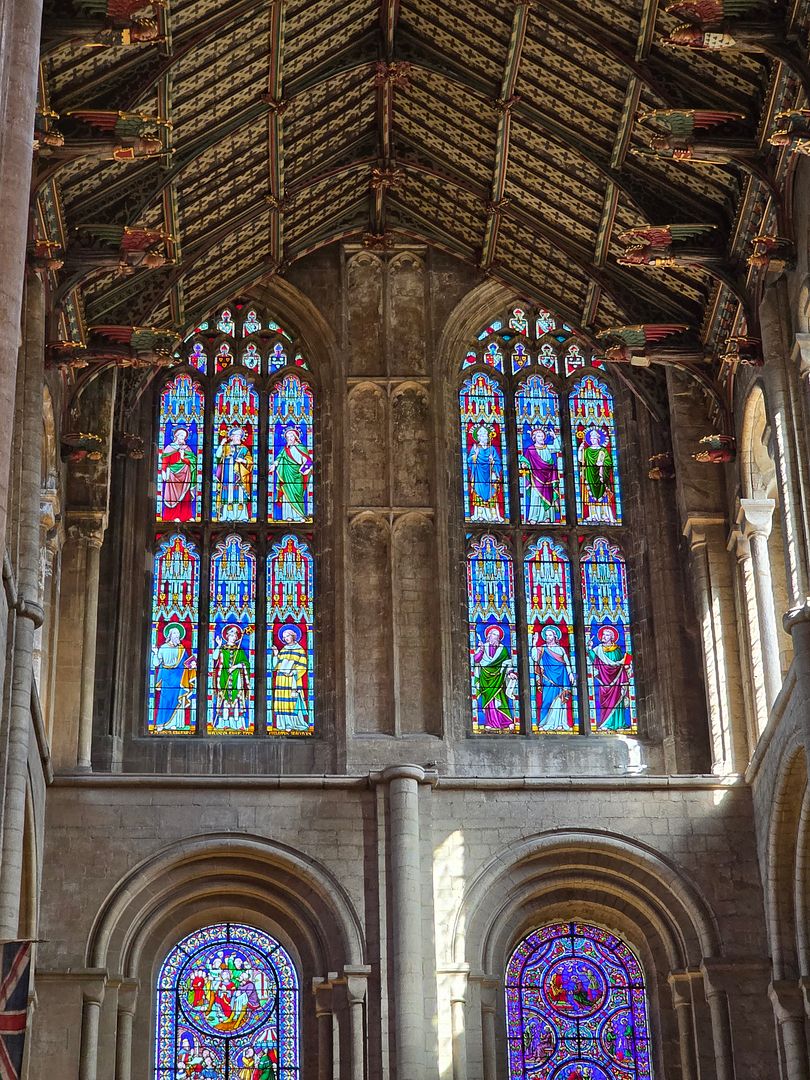
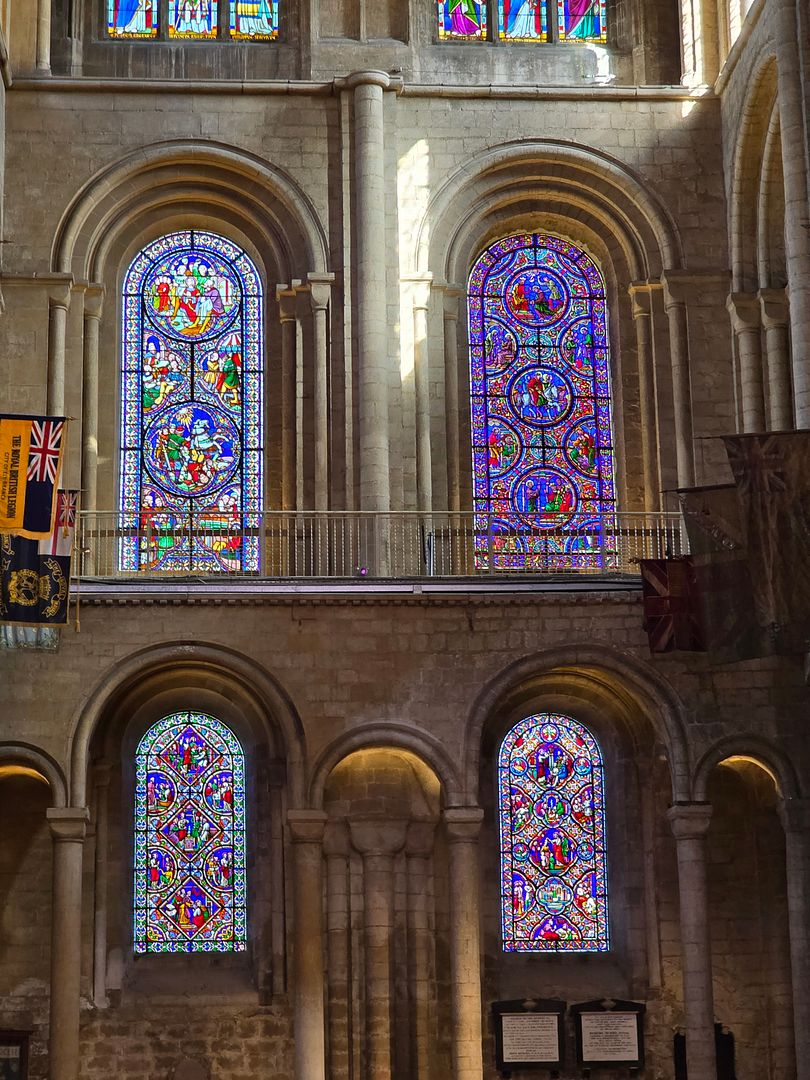
Ely Cathedral Stained Glass Museum

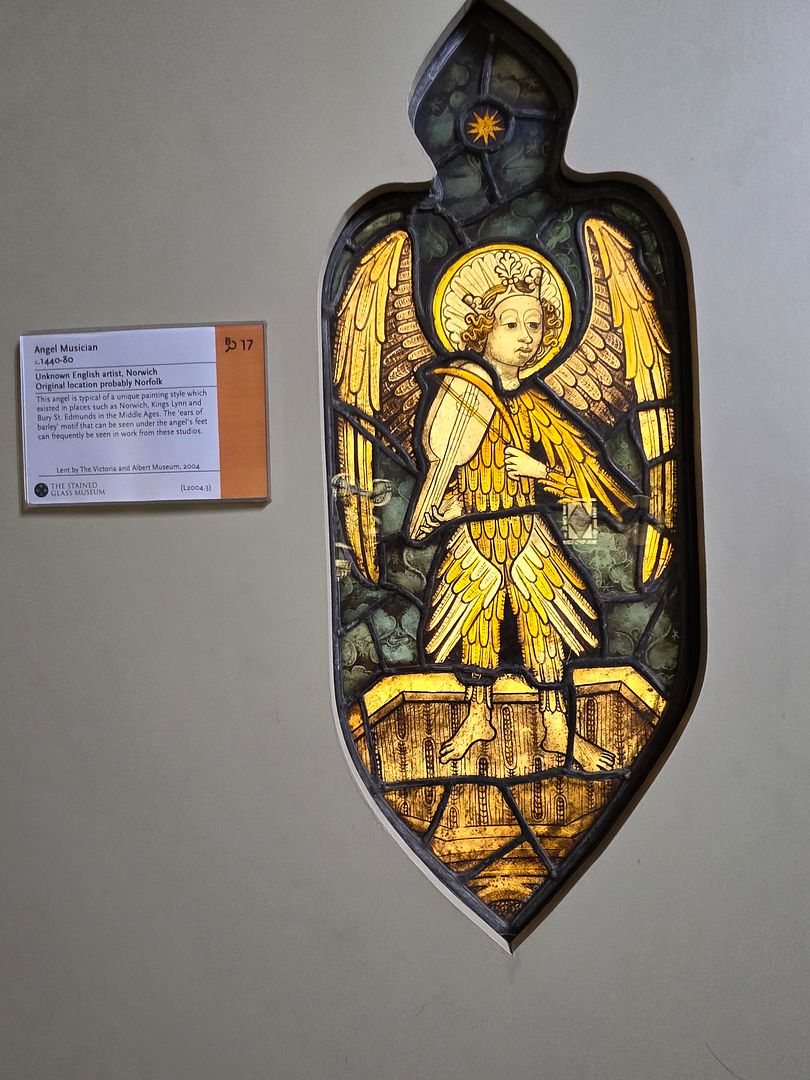
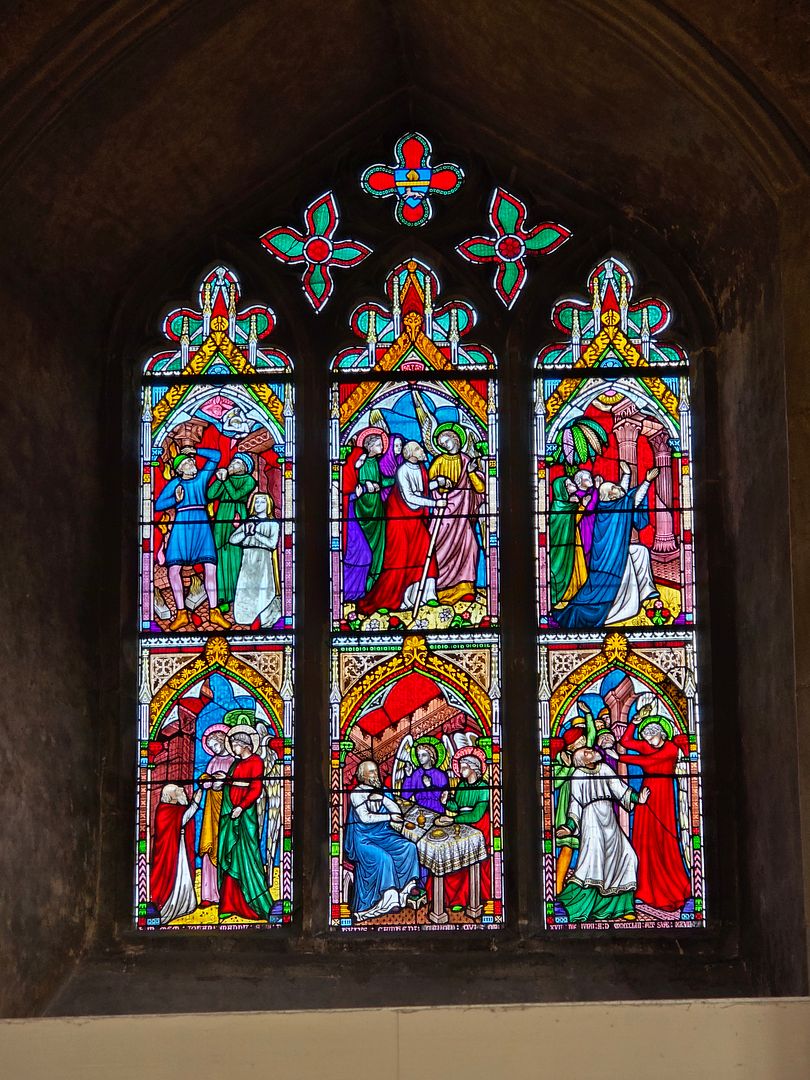
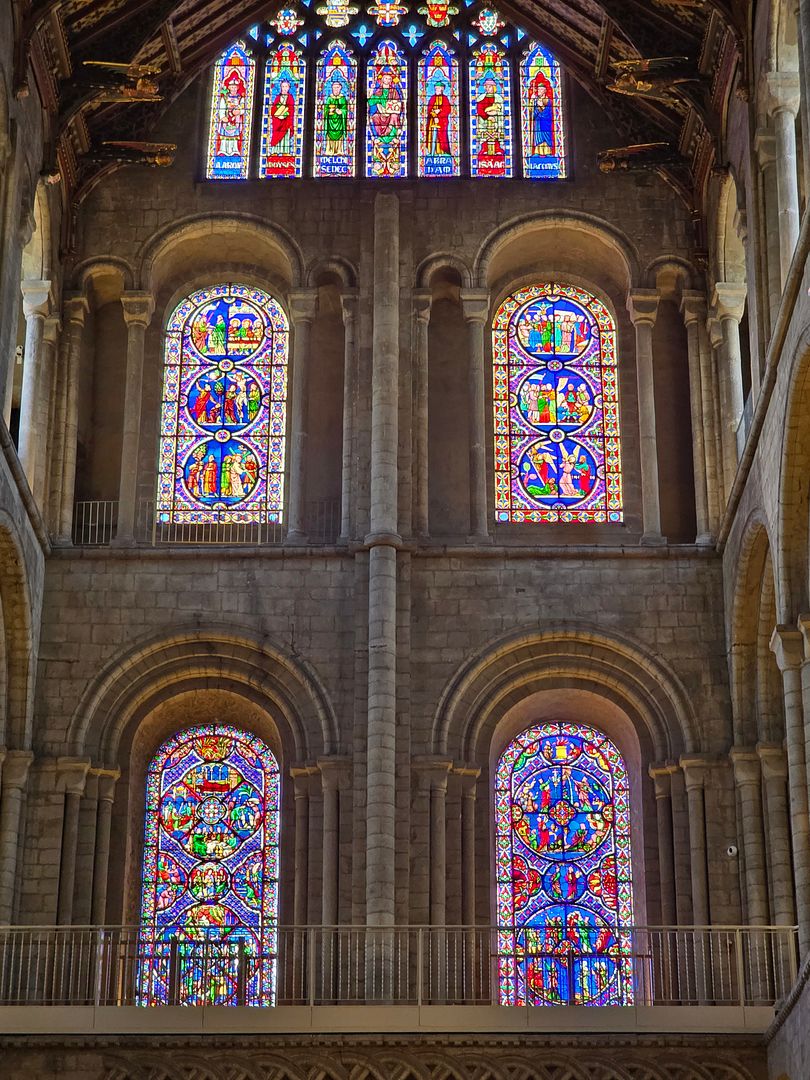
Our Danube to Cambridge Travel Journal continues with a visit to the Stained glass Museum housed up many stone stairs in Ely Cathedral. This visit was on Wednesday March 11th, 2026.

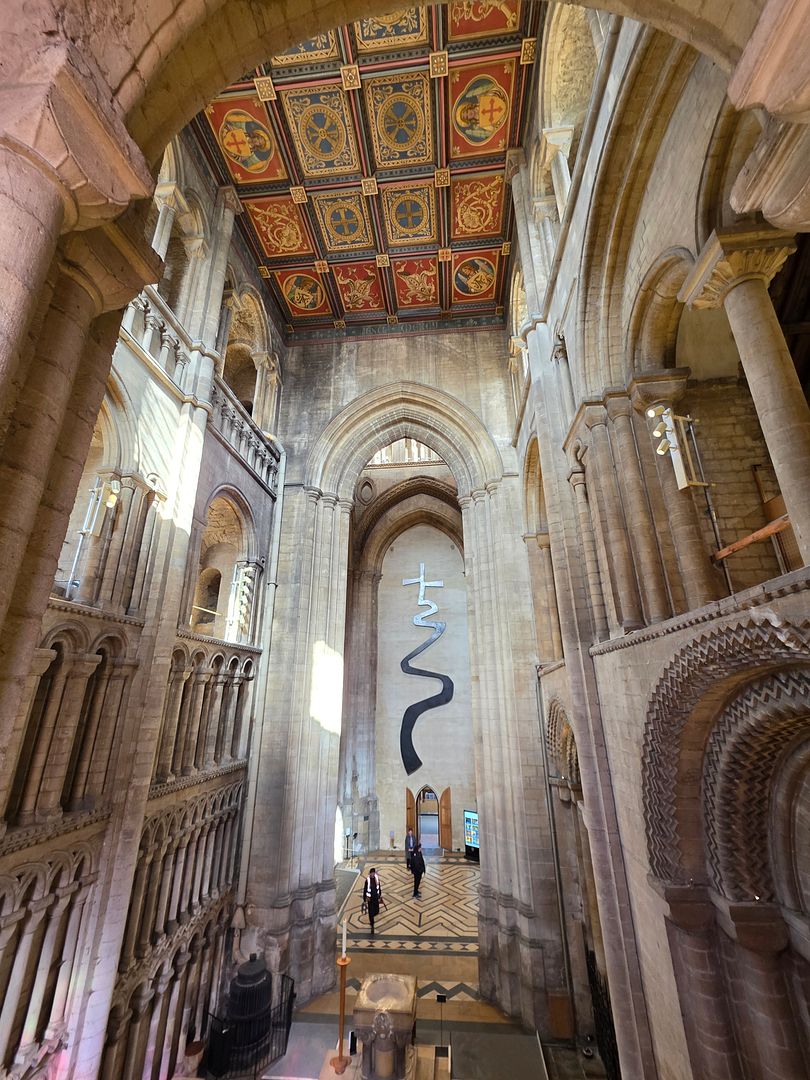
Looking down to the narthex where we entered the cathedral.

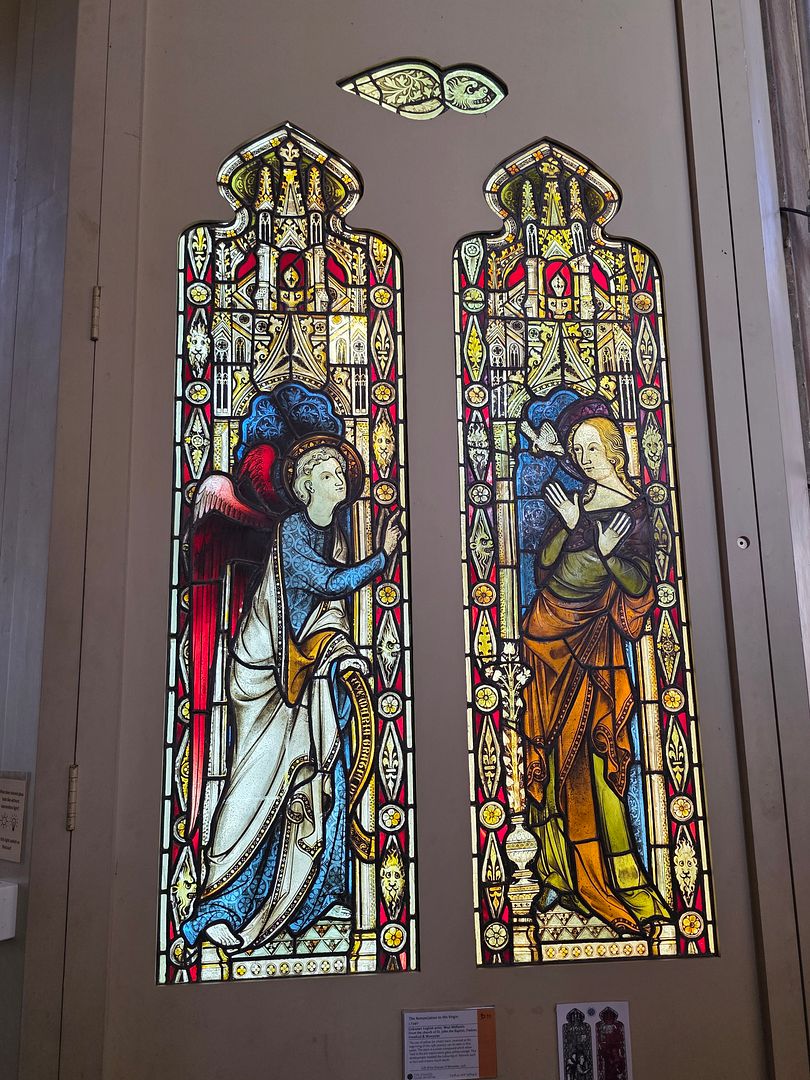
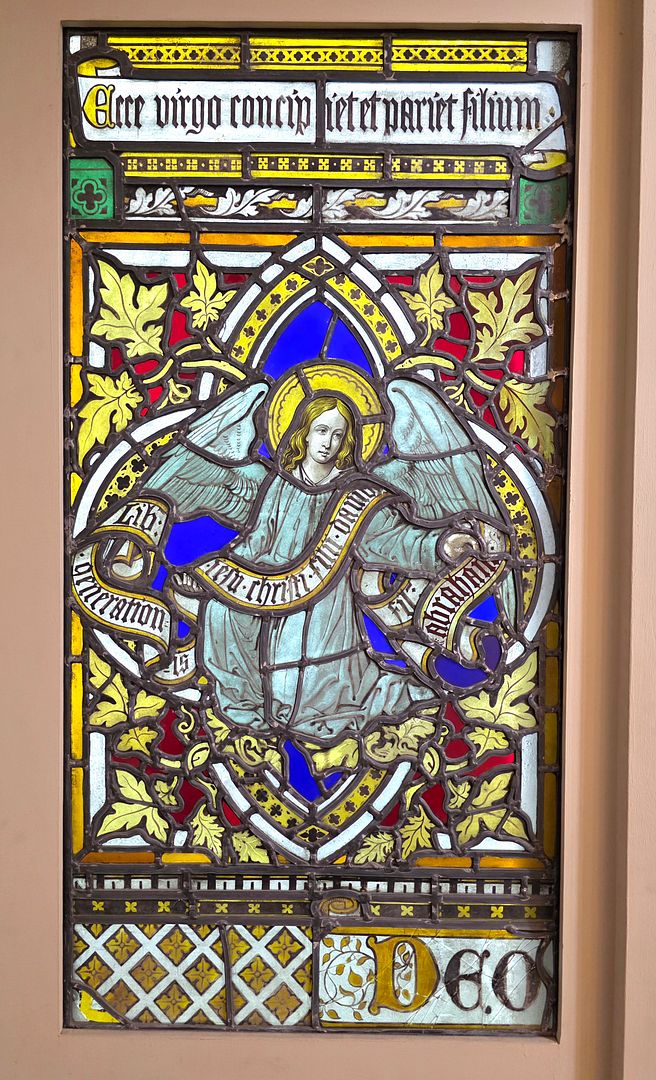
The Annunciation

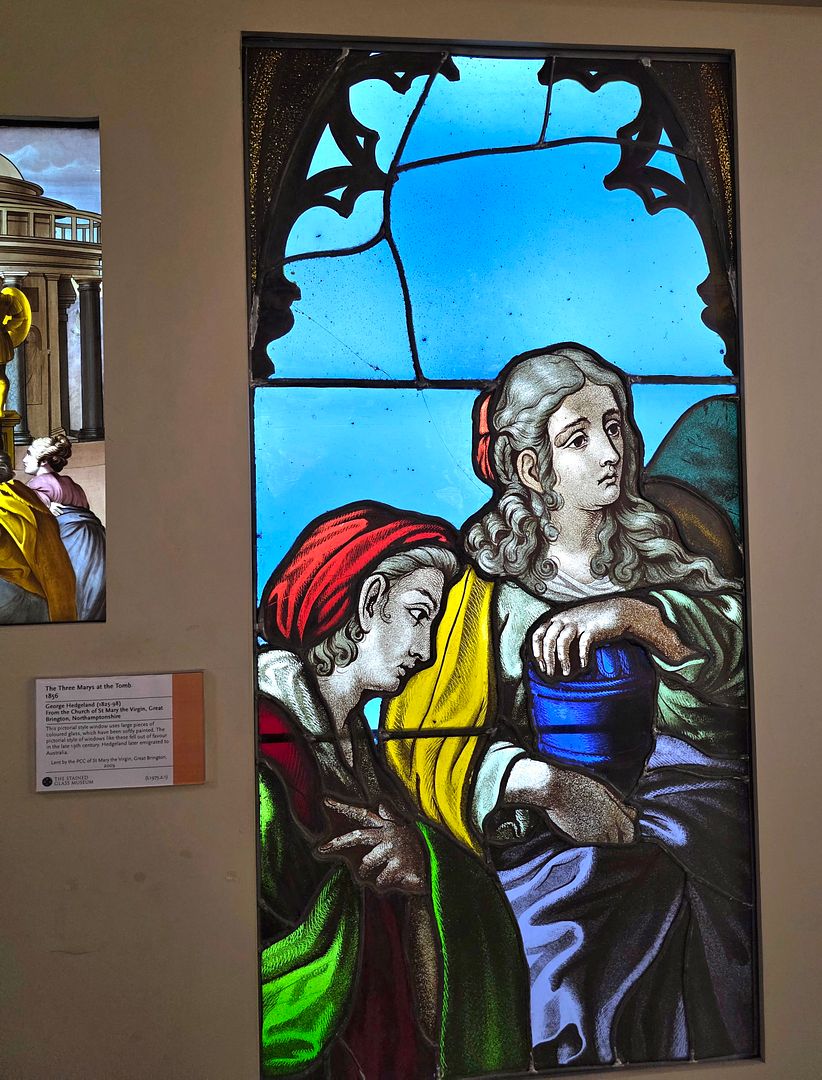
The Three Marys at the tomb.

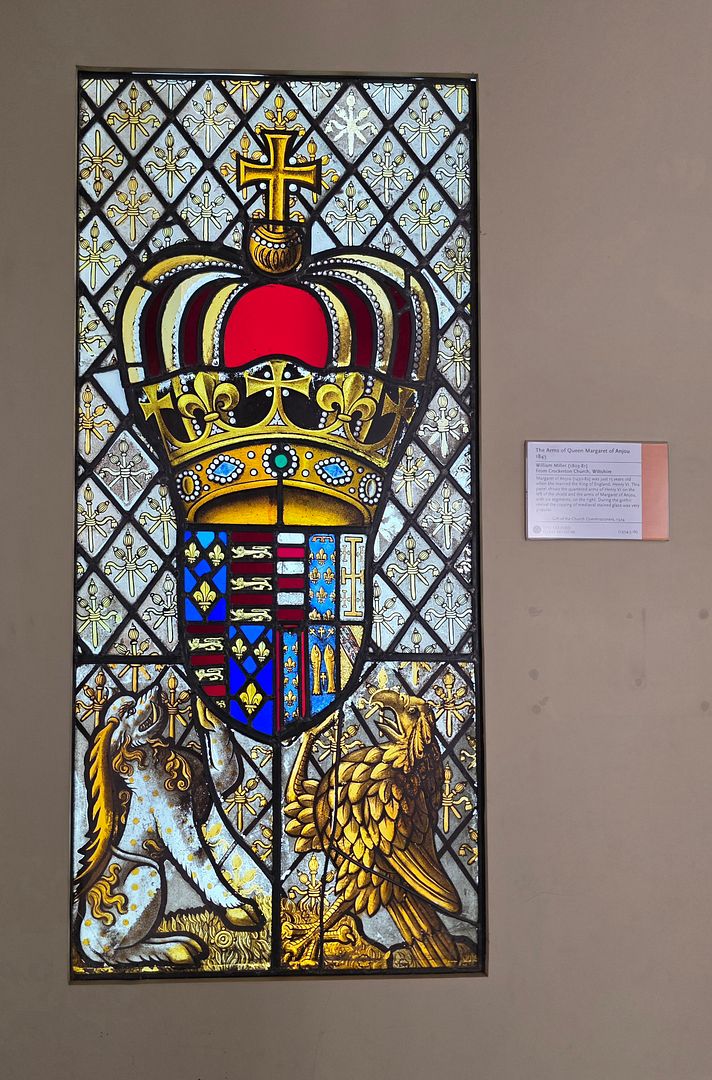
The Arms of Queen Margaret of Anjou, 1843.

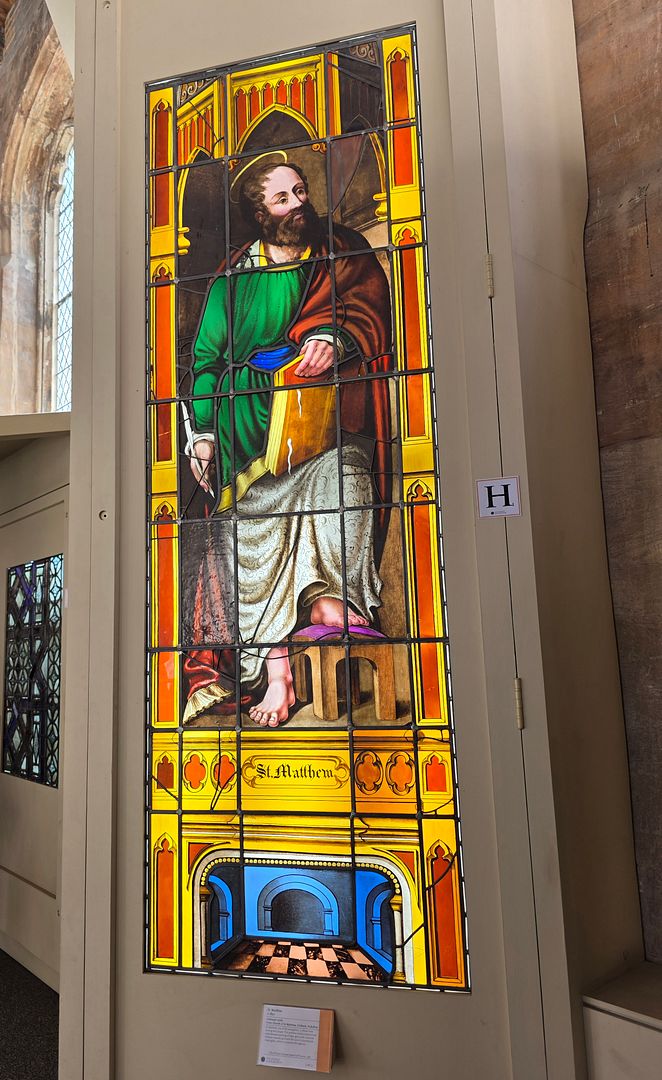
St. Matthew shown writing the Gospel of Matthew

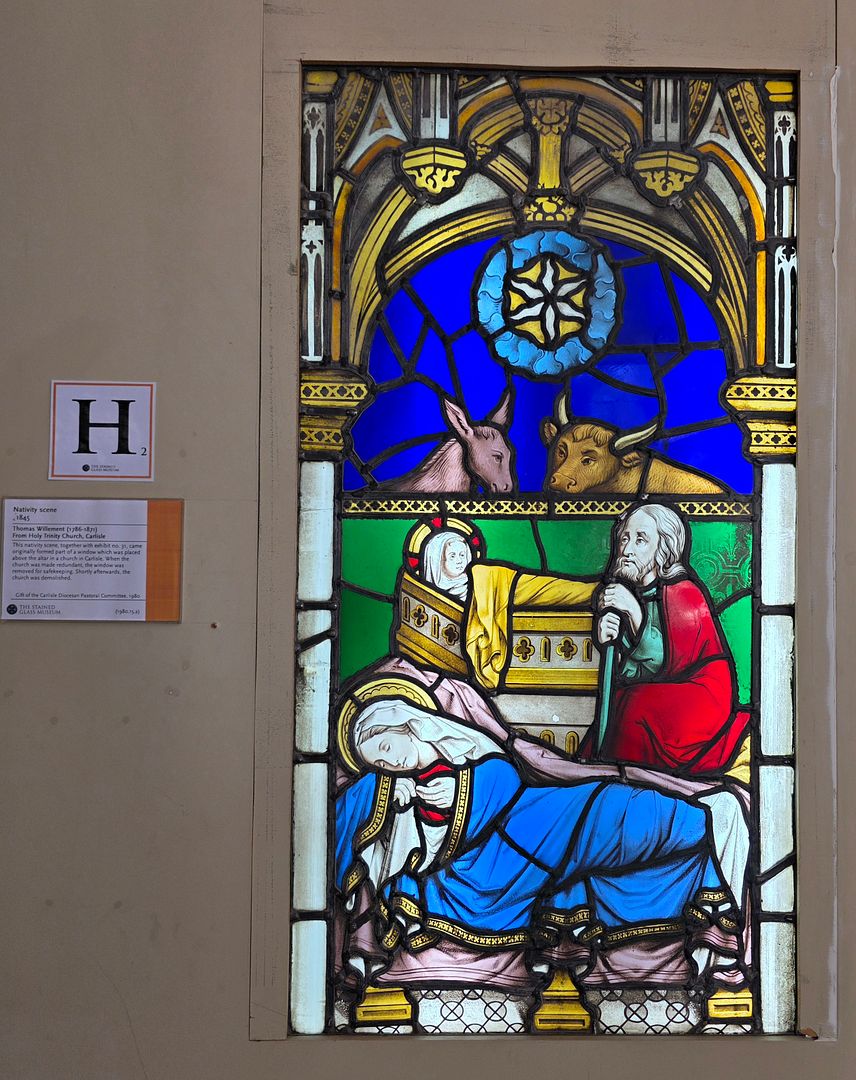
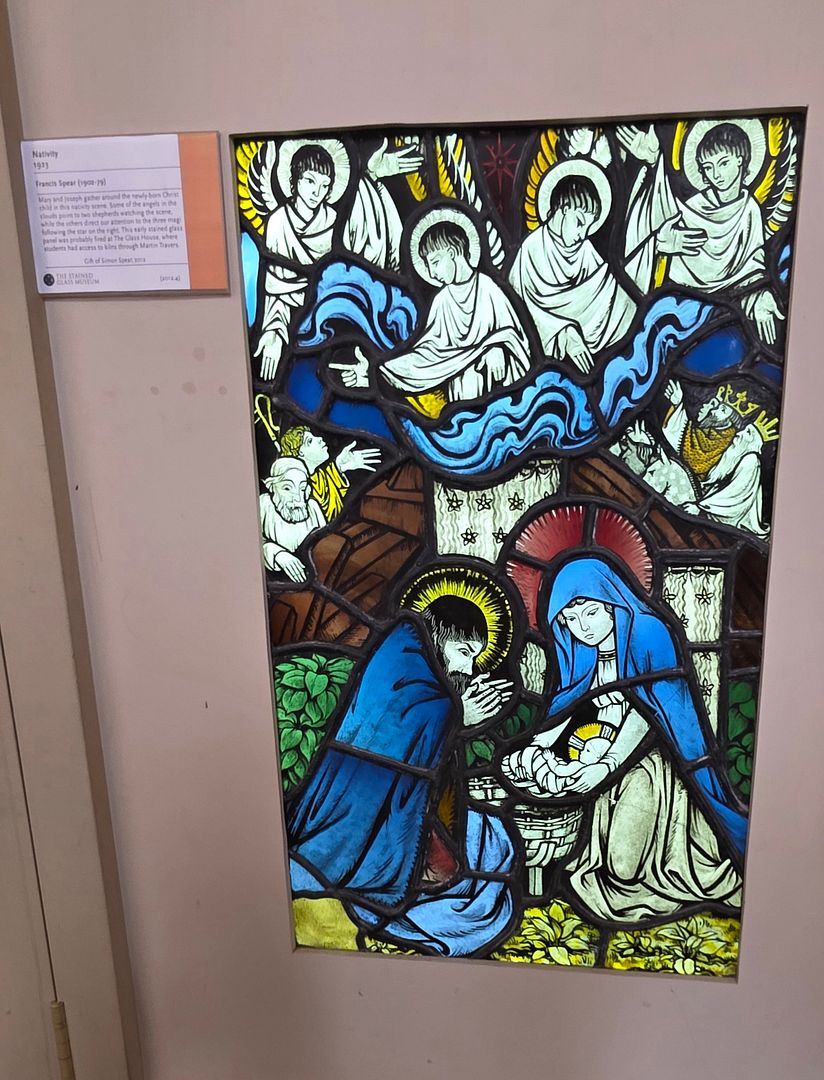
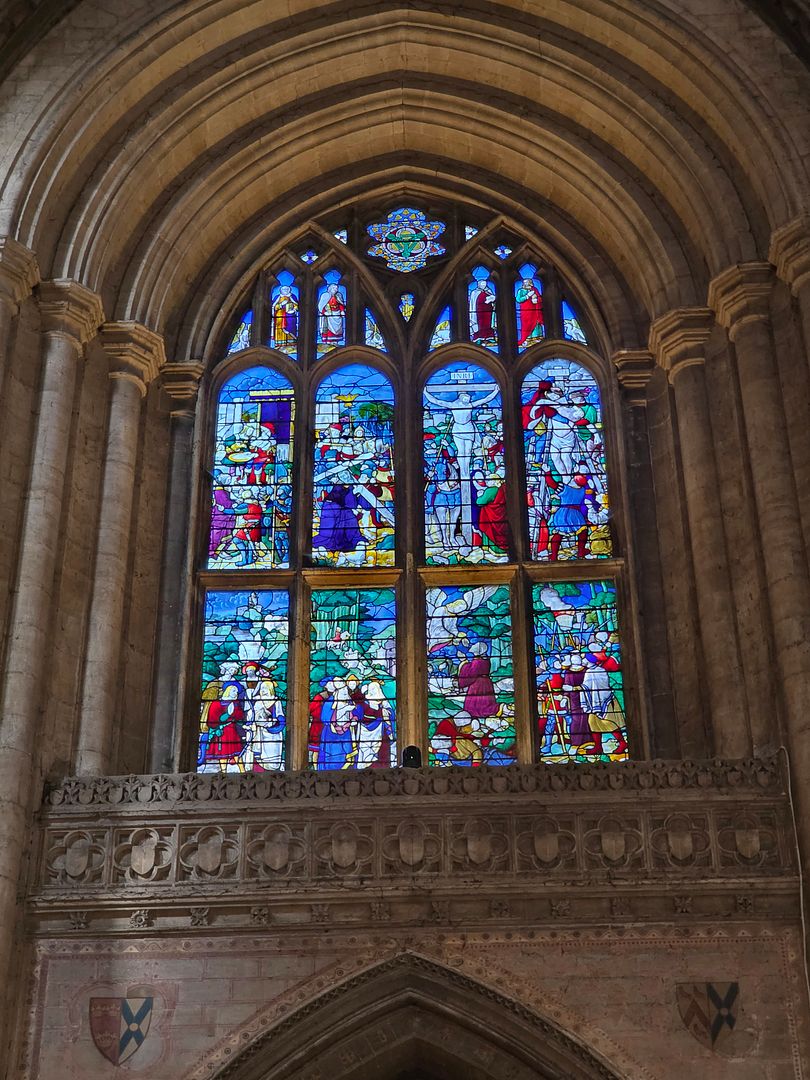
Nativity Scene window that was removed for safekeeping from a church that became redundant. Shortly afterwards, the church was demolished.

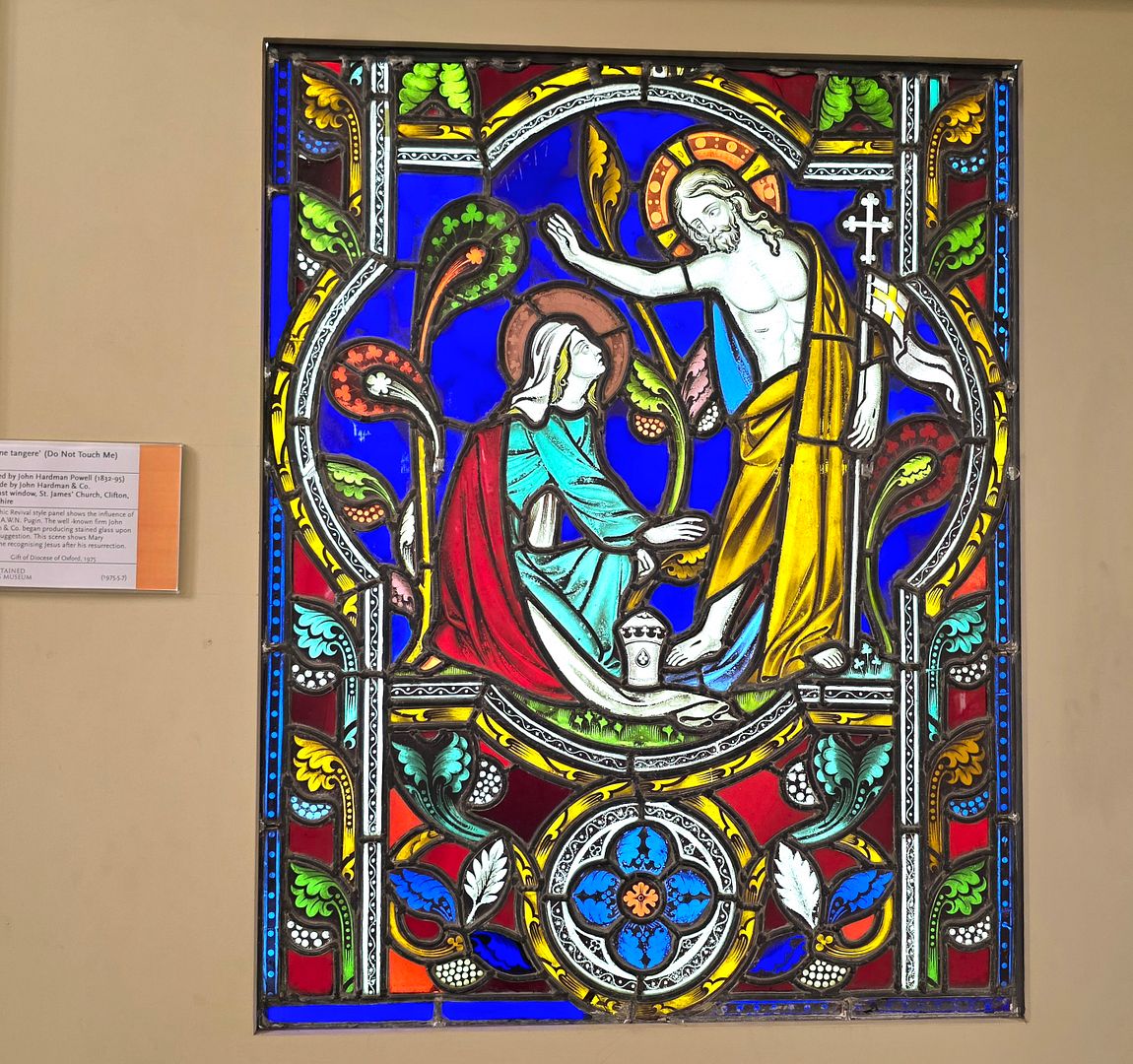
“Do not touch me” Mary at the Tomb when she recognizes Jesus.

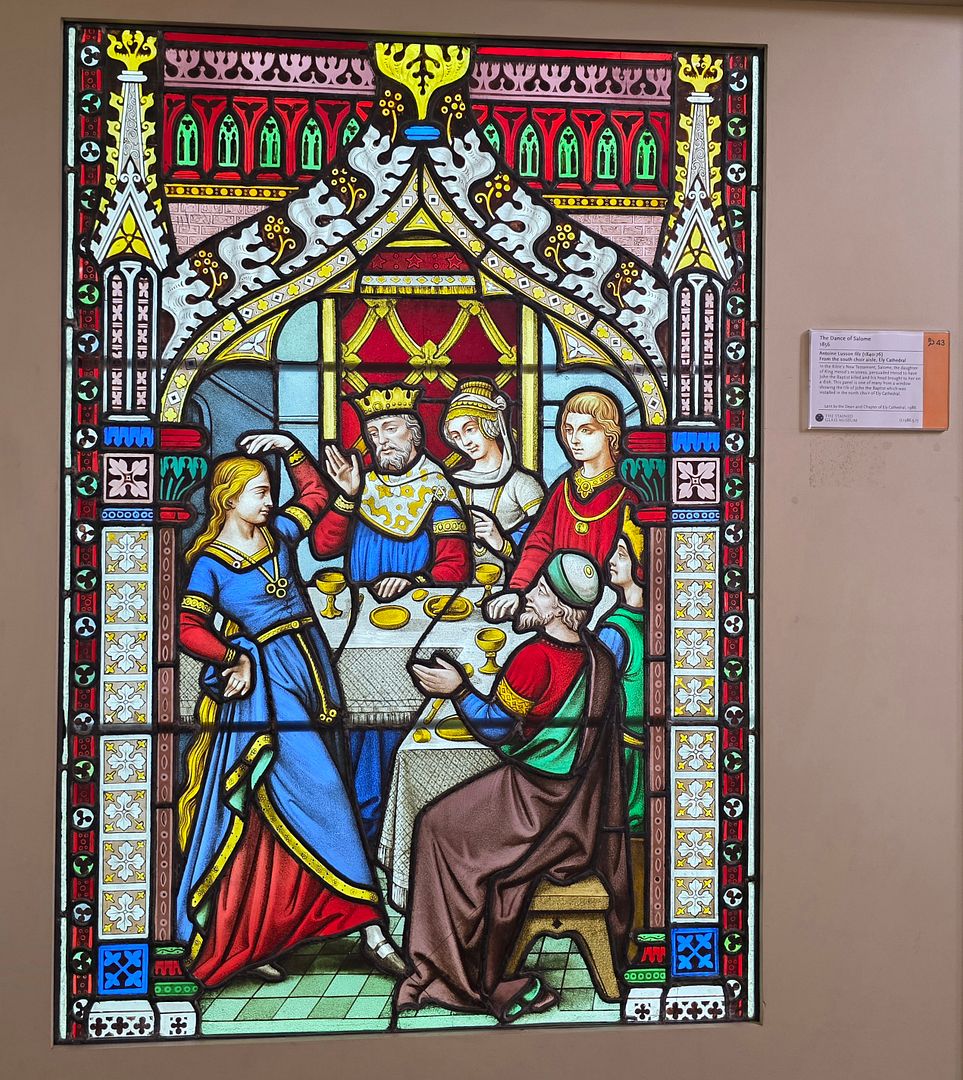
The Dance of Salome

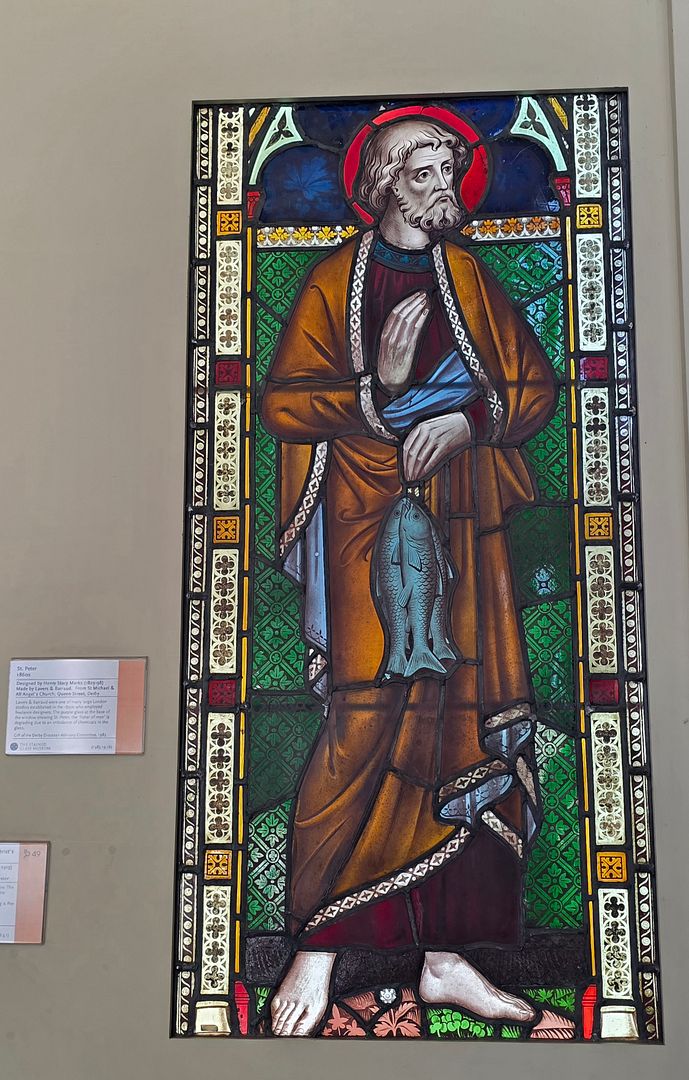
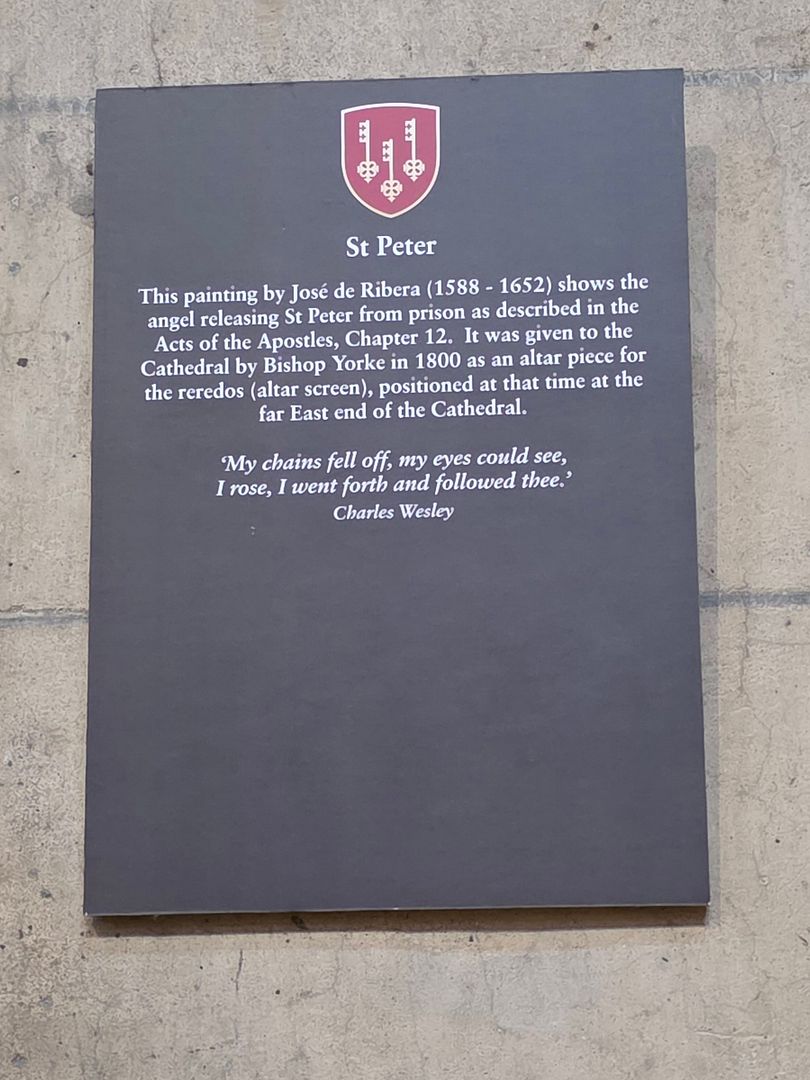
St. Peter

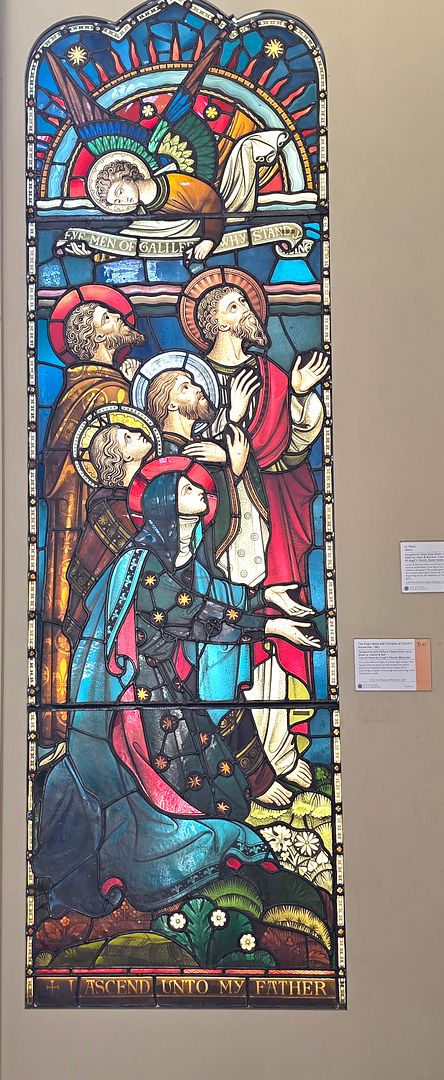
Mary and the Disciples at Christ’s Ascension

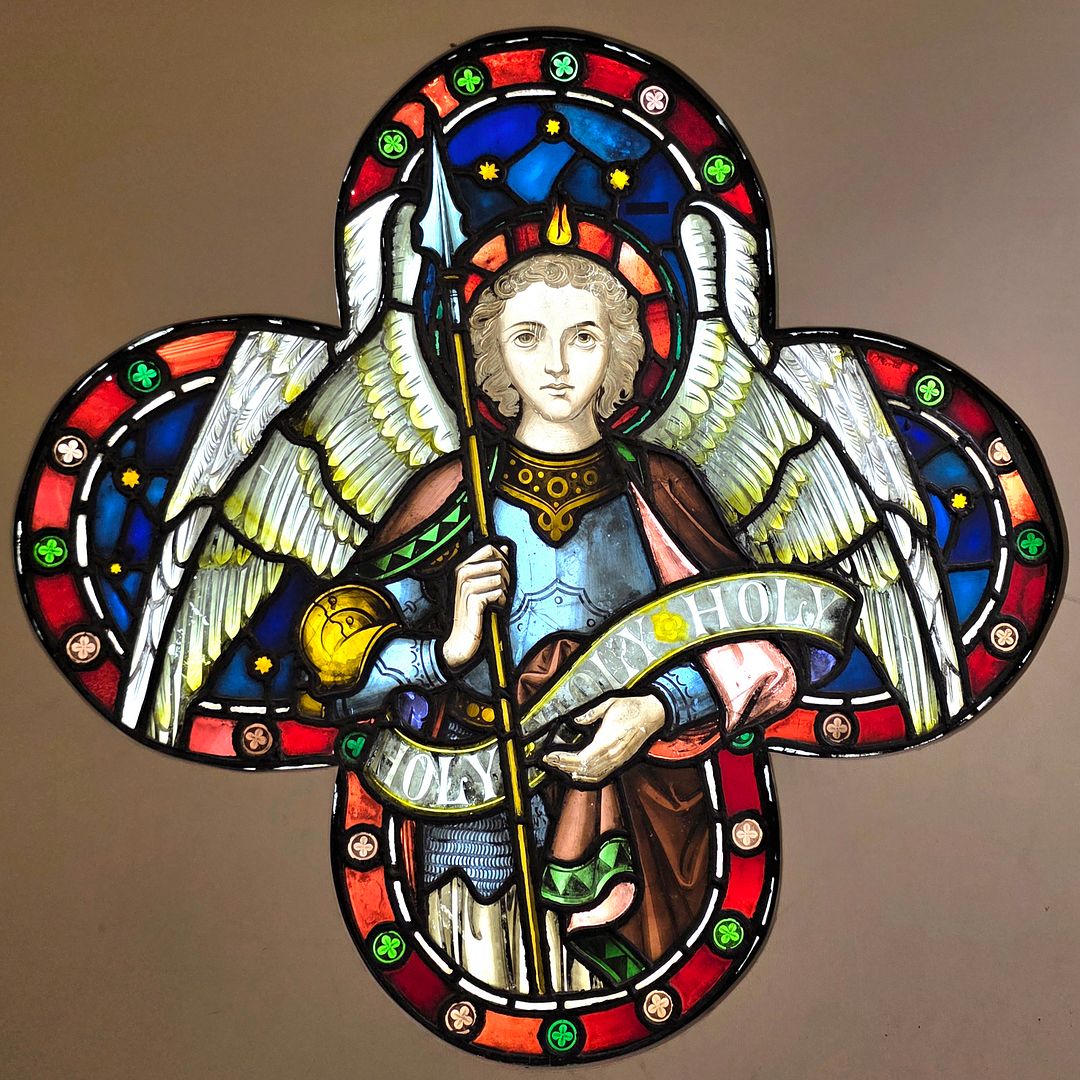
Holy, Holy, Holy

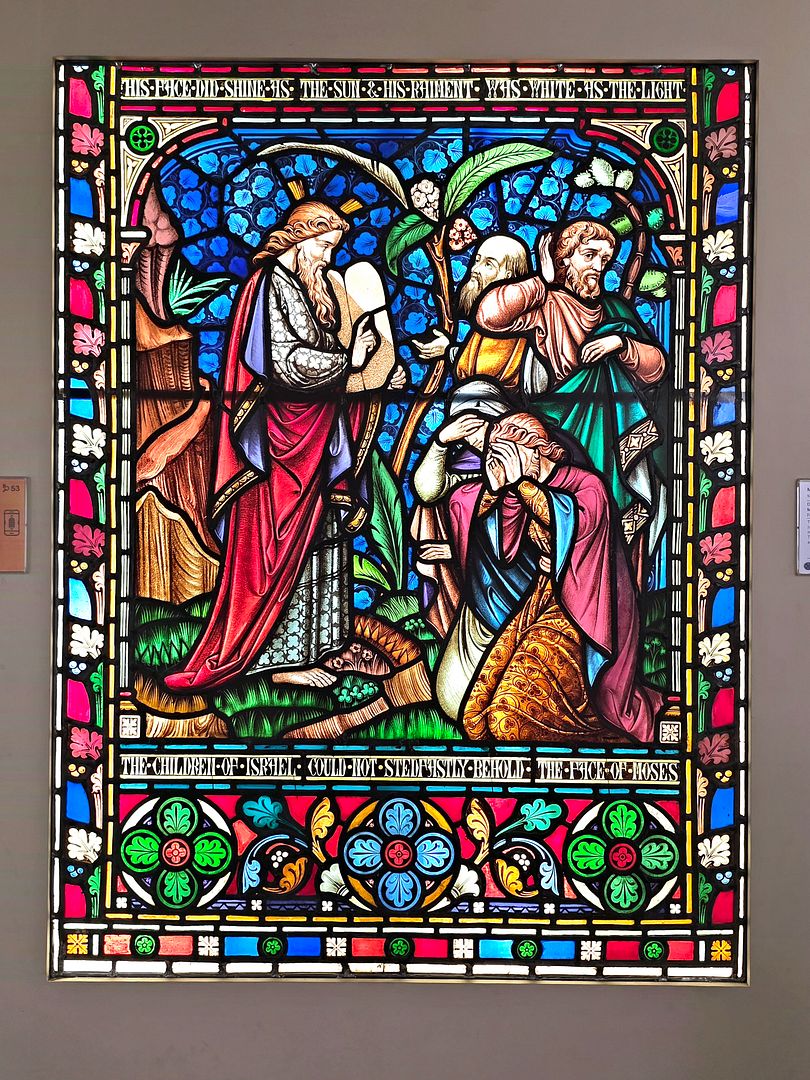
The Children of Israel could not steadfastly behold the face of Moses.

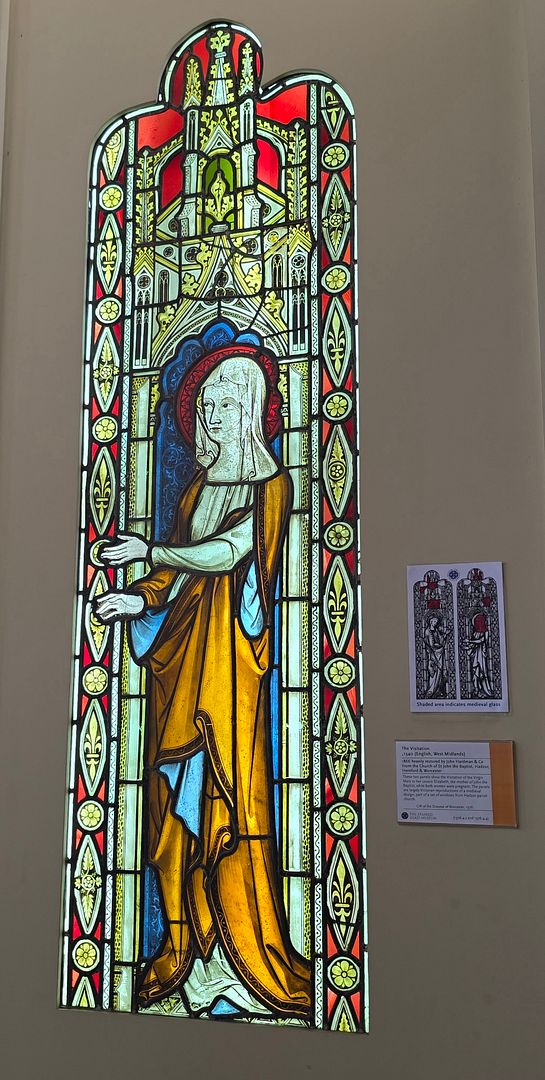
The Visitation

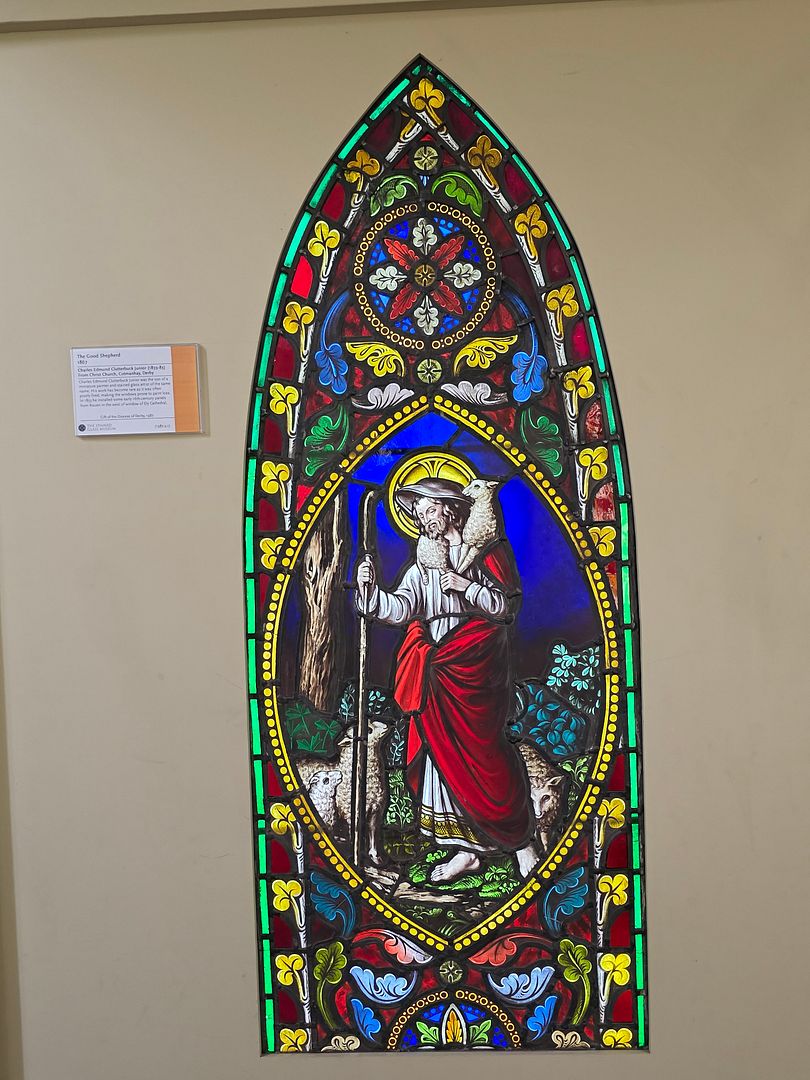
The Good Shepherd

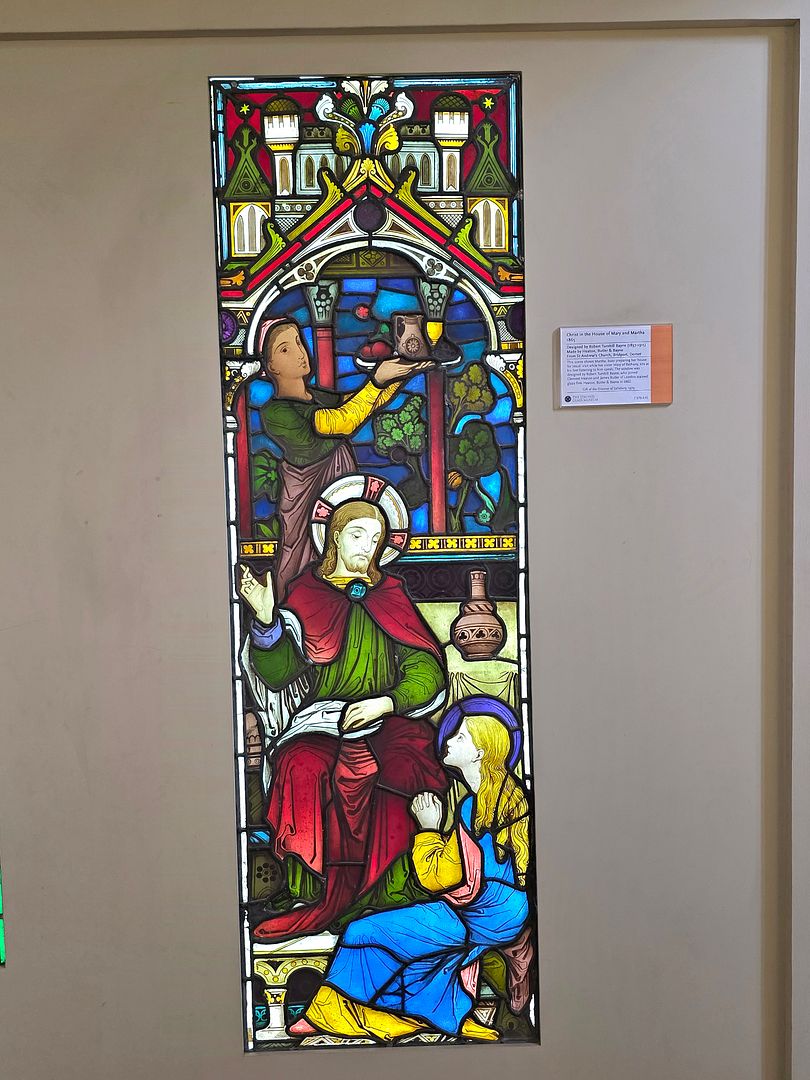
Mary and Martha and Jesus

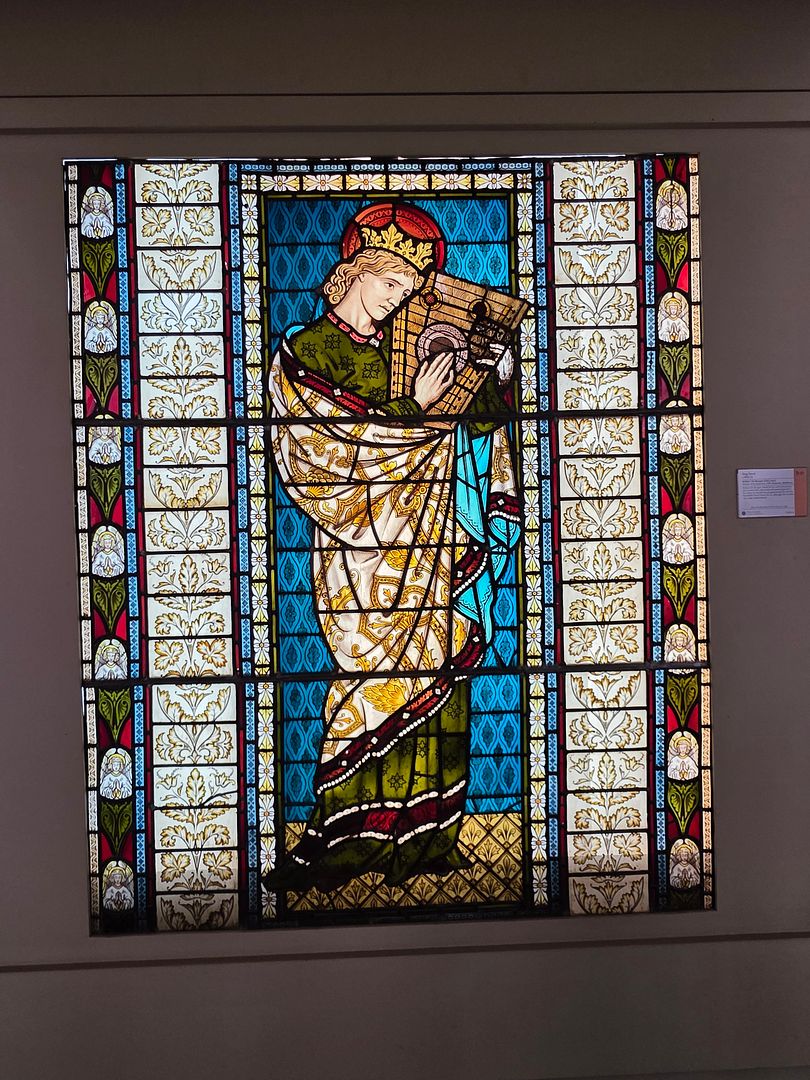
King David

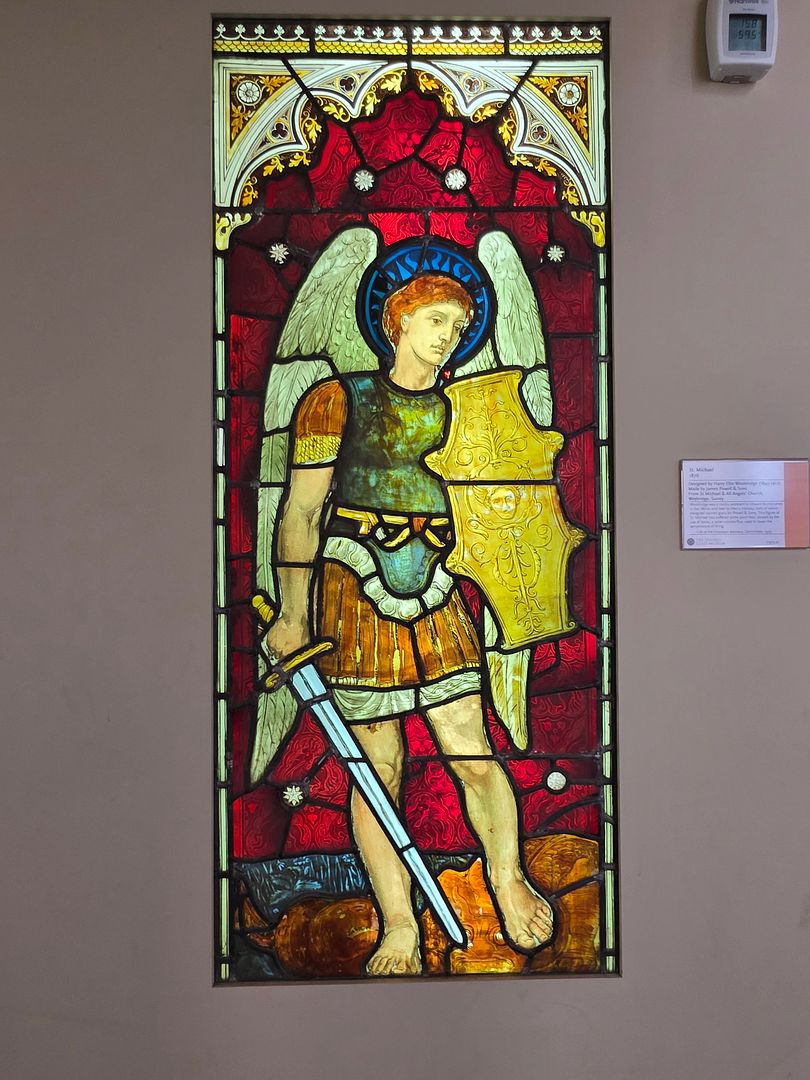
Michael

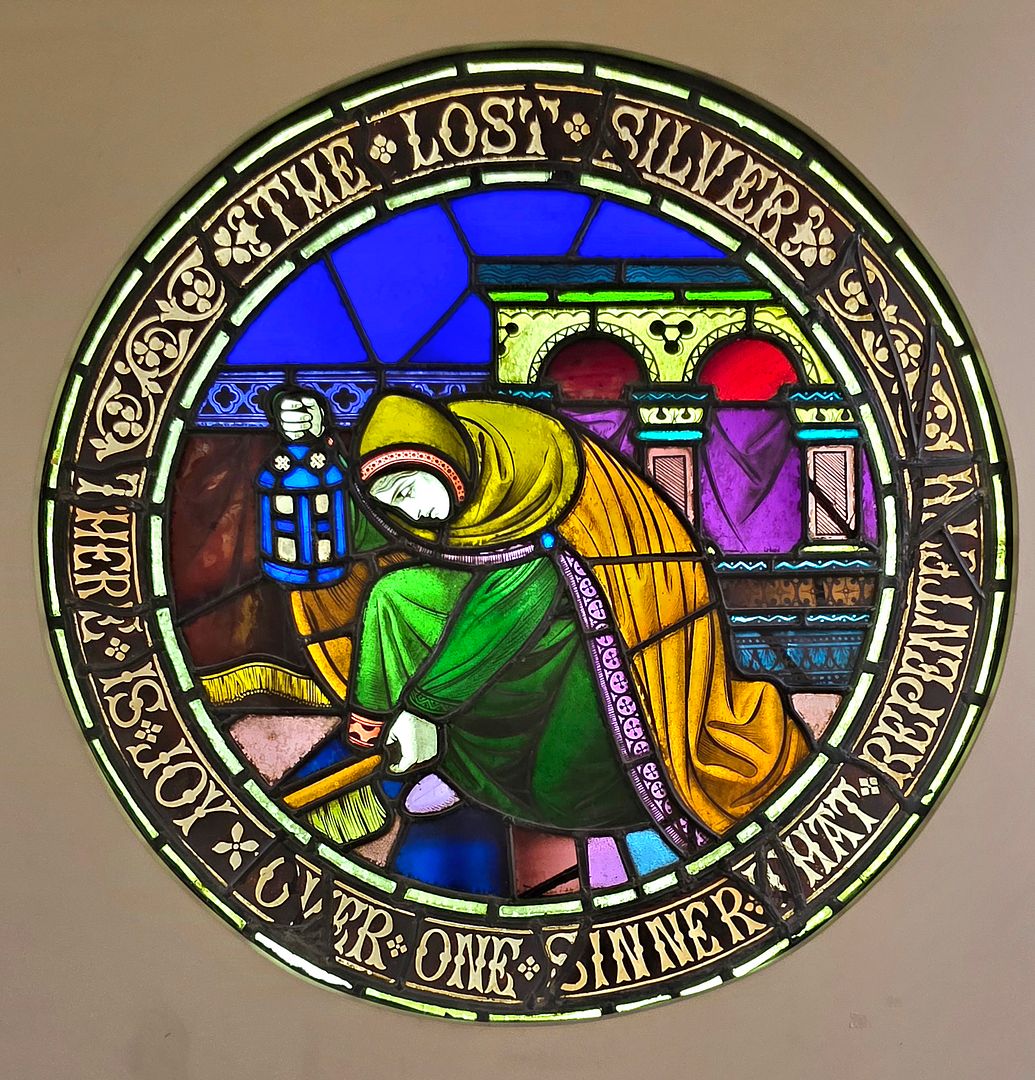
The Lost Silver, There is Joy over one Sinner that Repentith

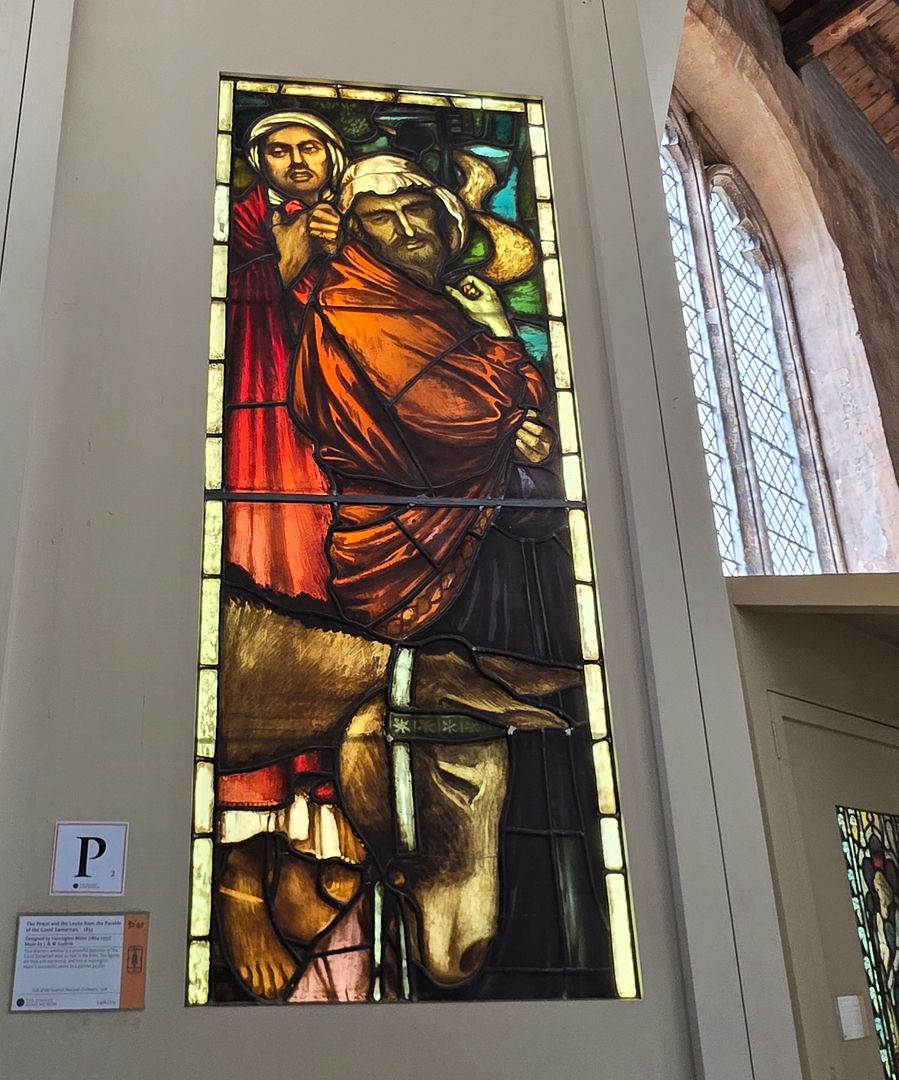
The Parable of the Good Samaritan

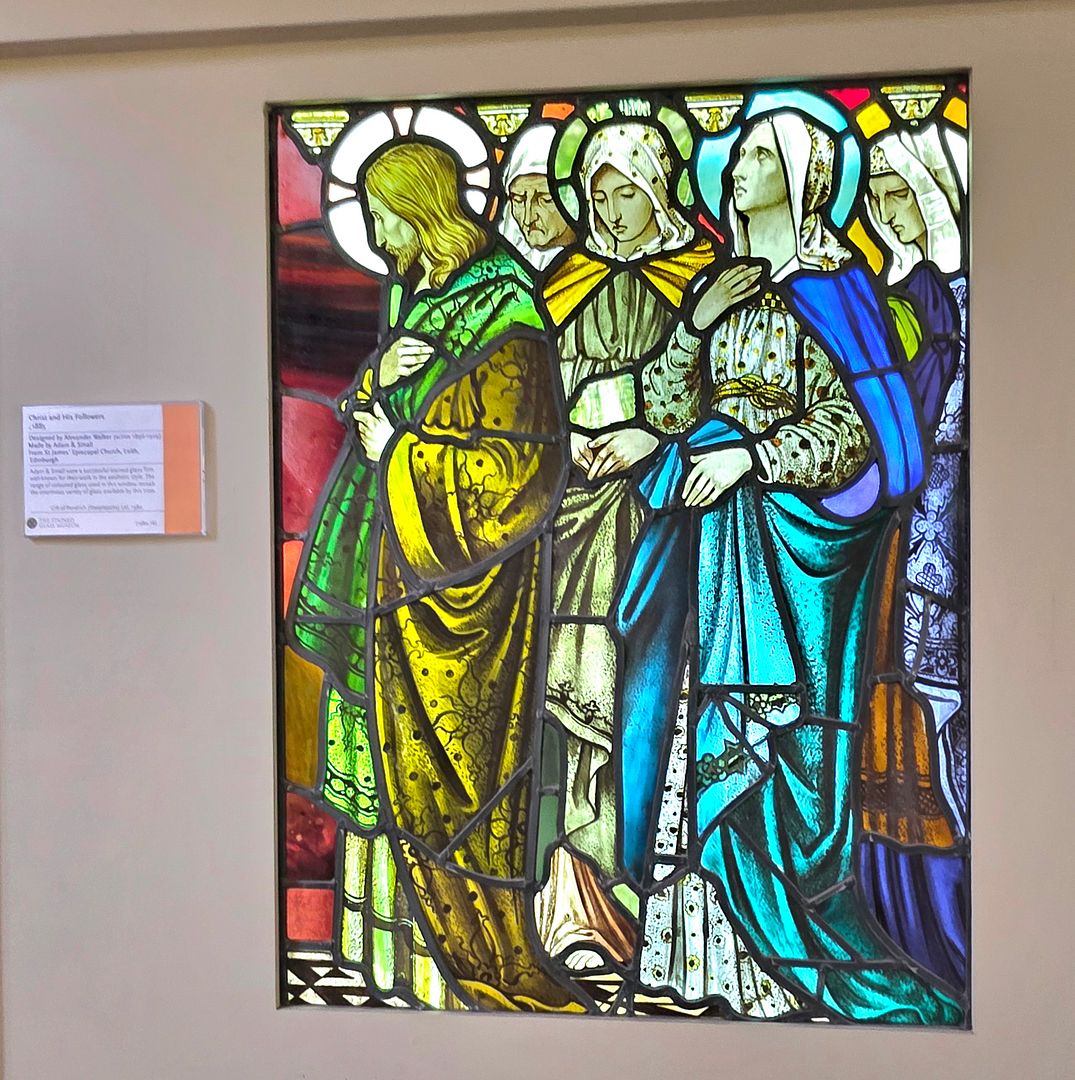
Christ and His Followers

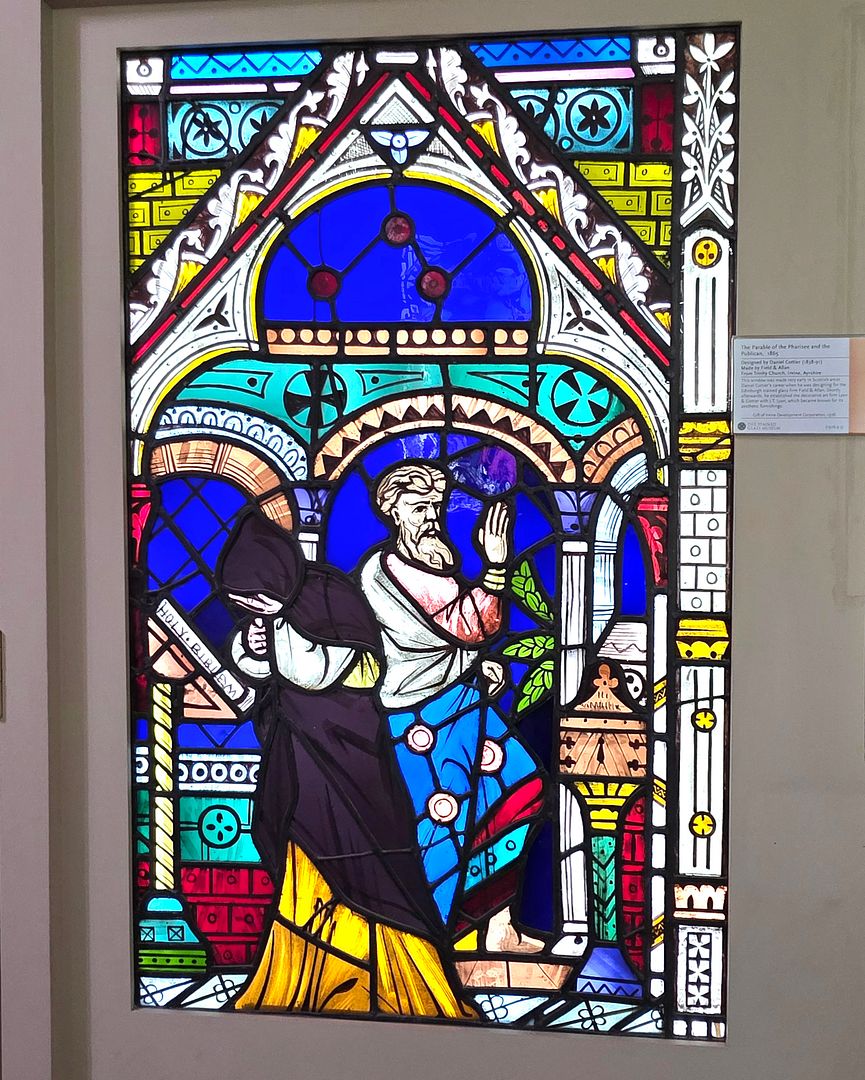
The Parable of the Pharisee and the Publican

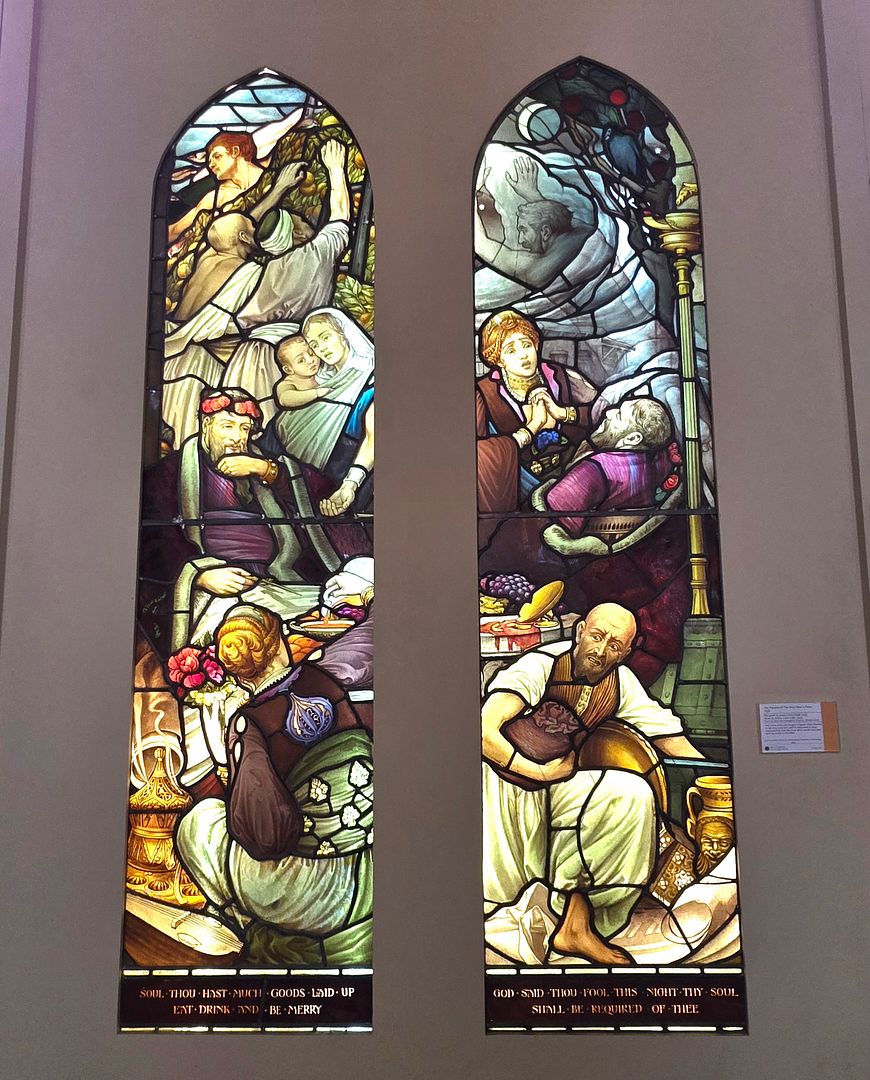
The Parable of the Rich Fool

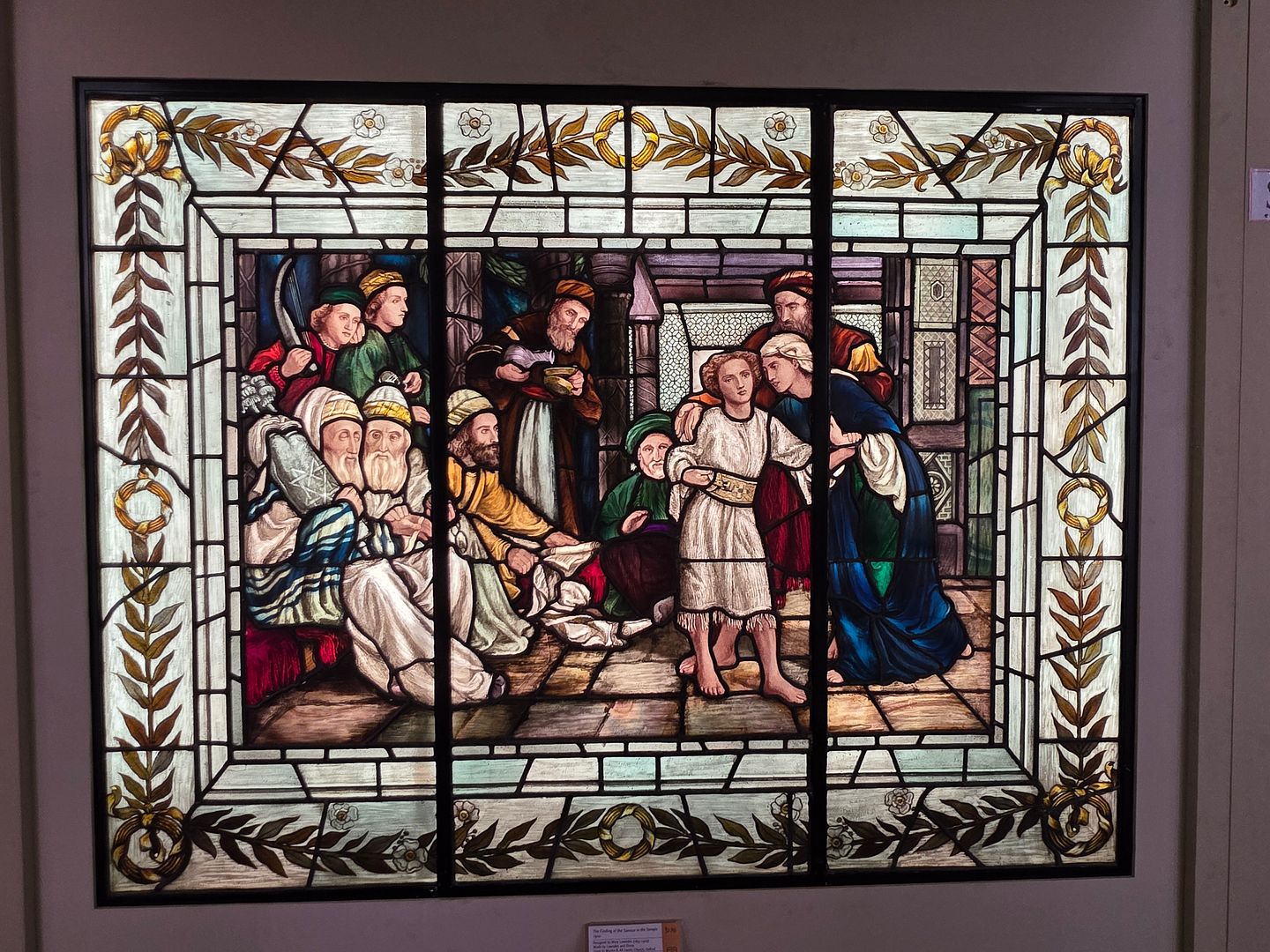
Finding Jesus in the Temple

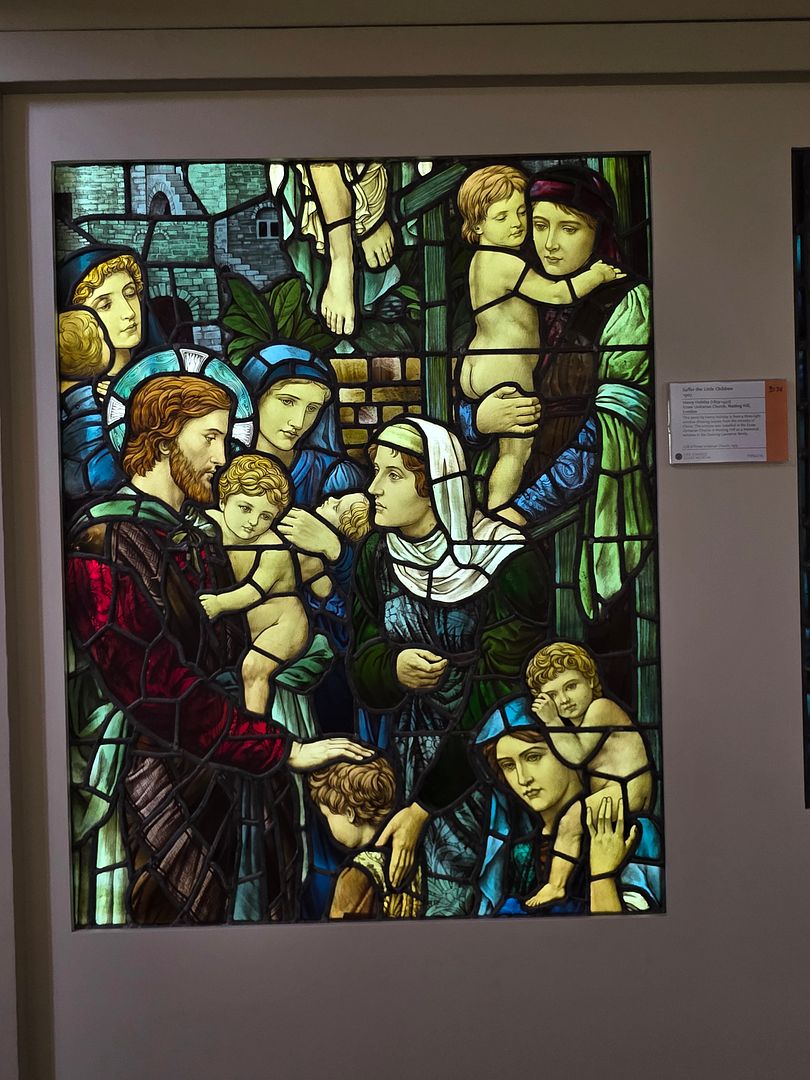
Suffer the Little Children

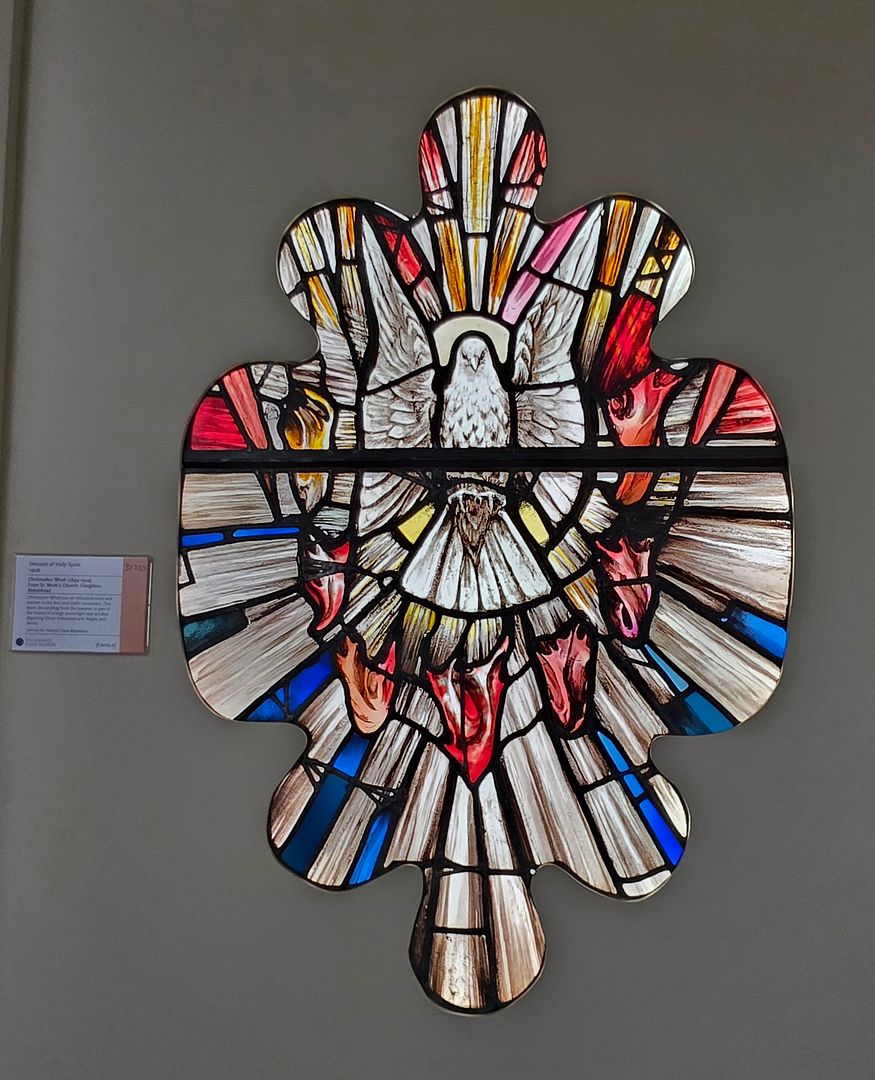
Descent of the Holy Spirit

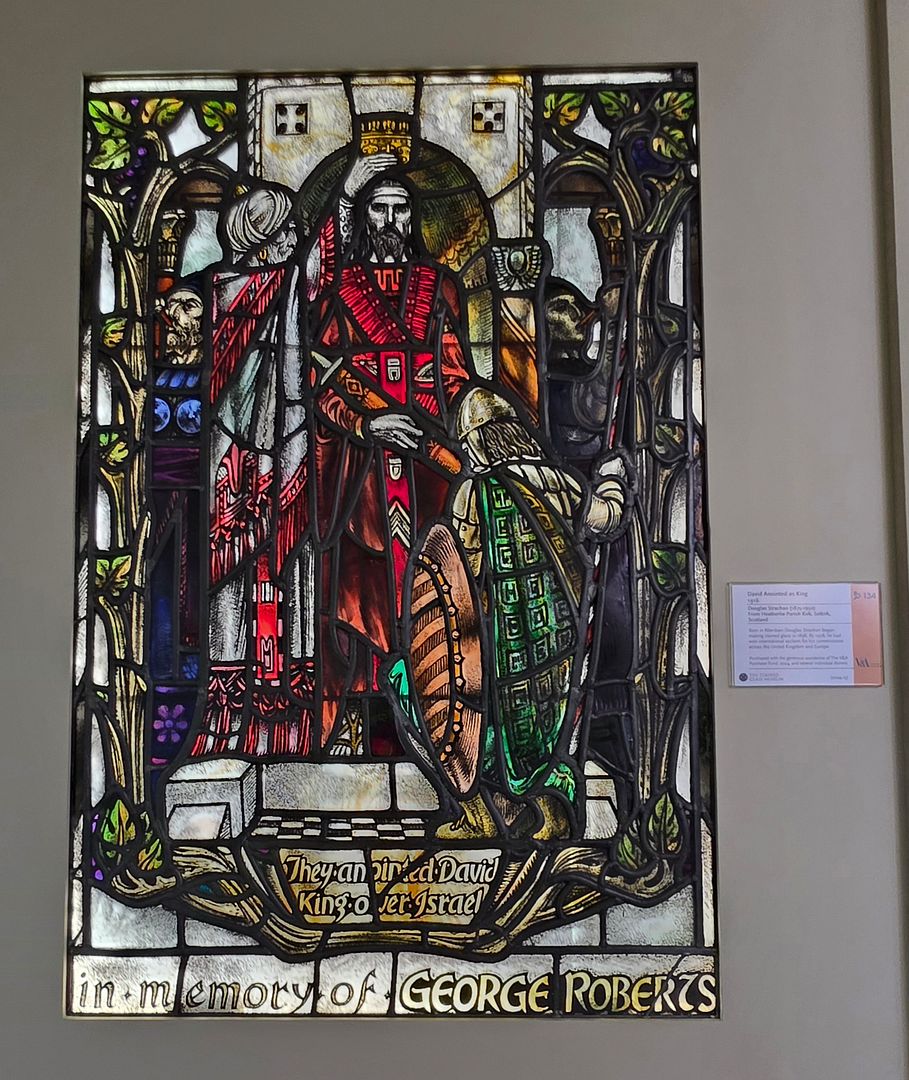
The Anointing of David King over Israel

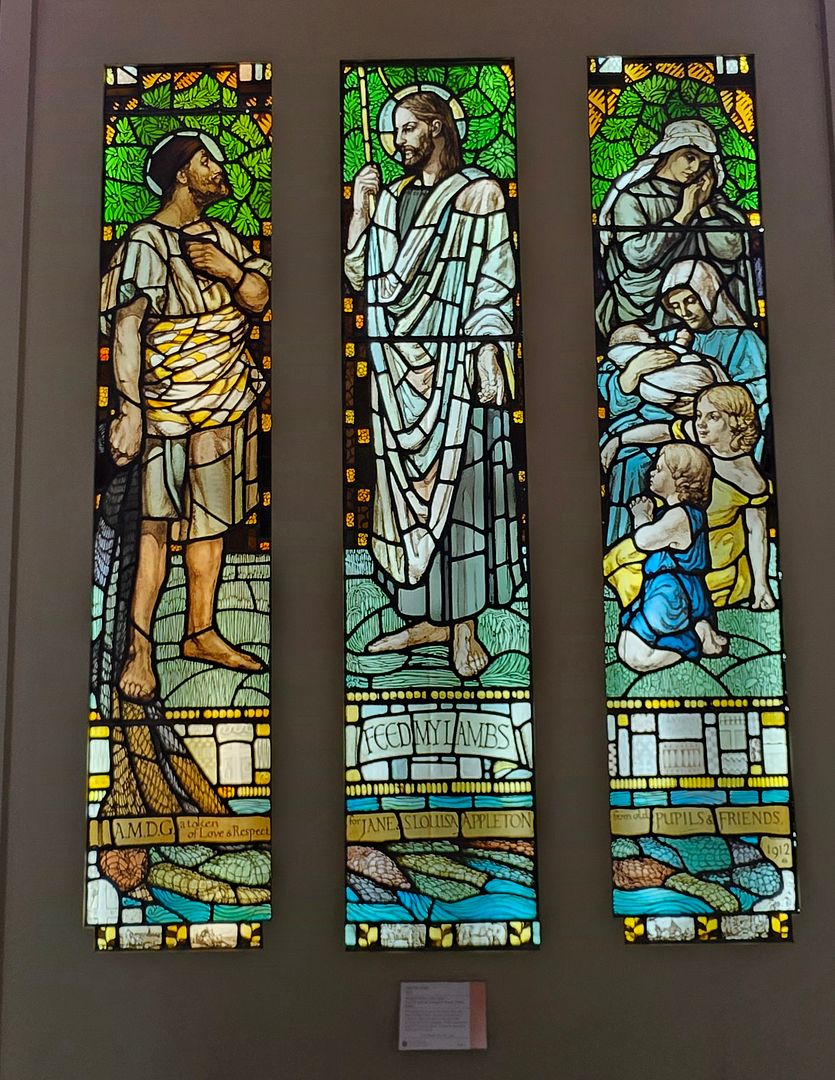
Feed my Lambs

Nativity

These were the windows that stood out to me. There were more but I restrained myself.

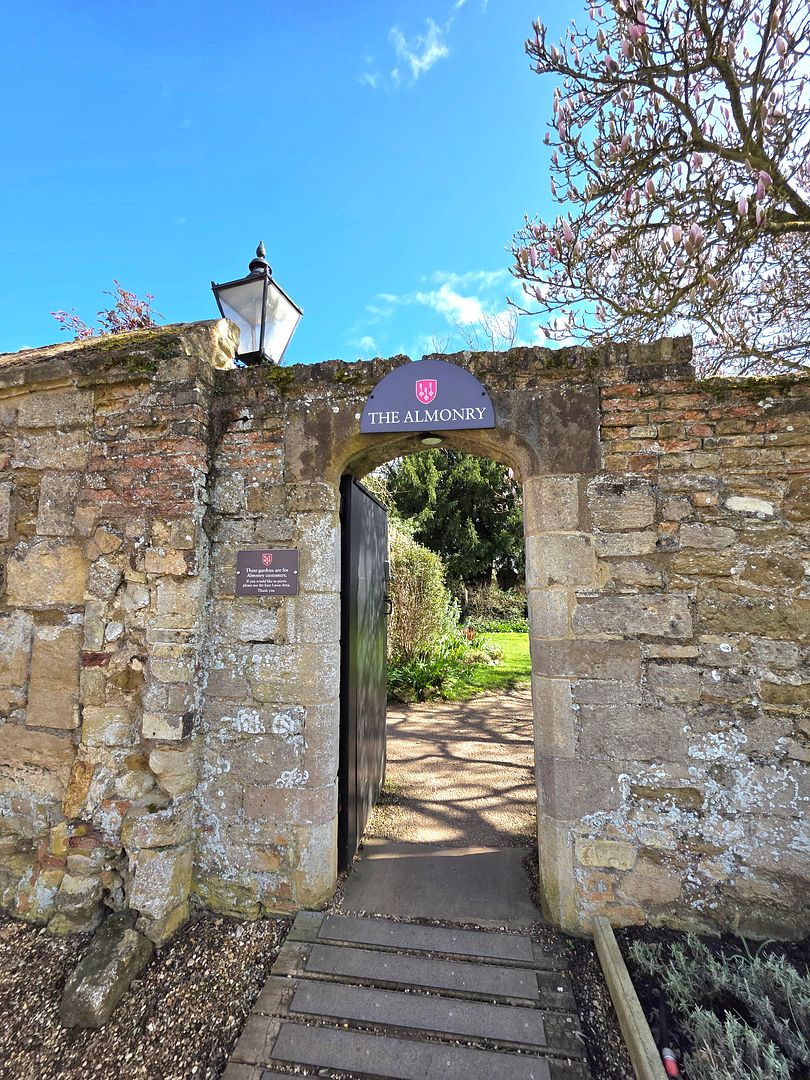
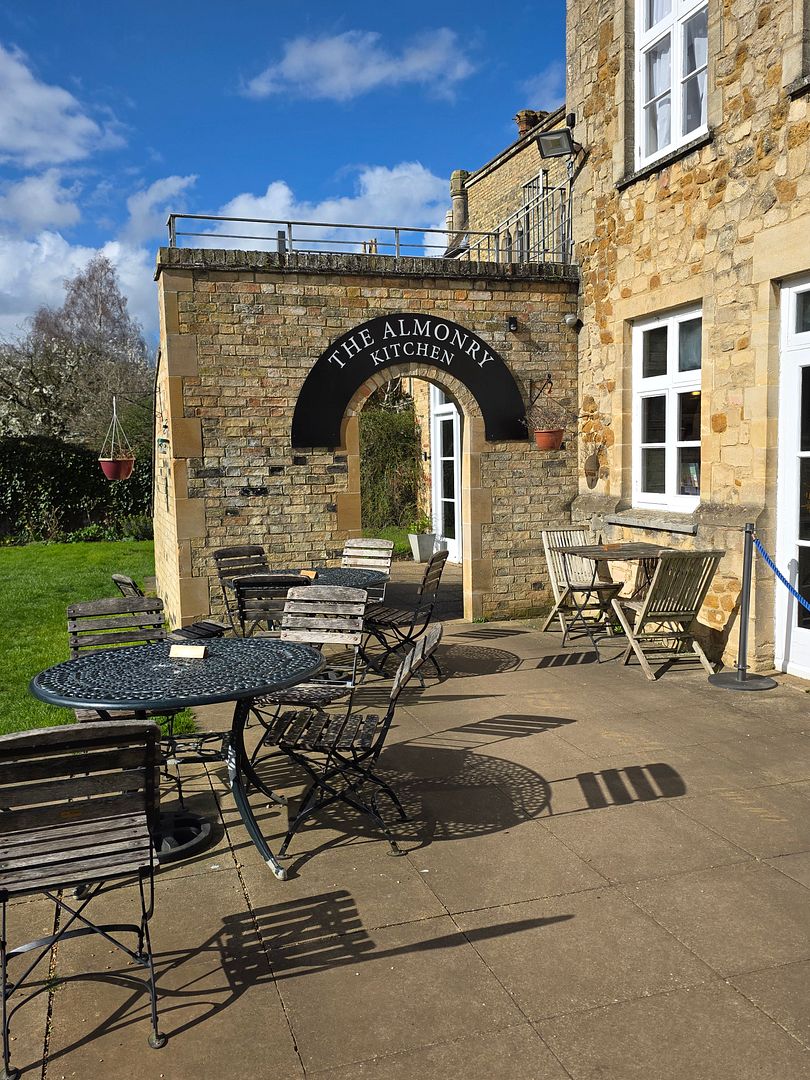
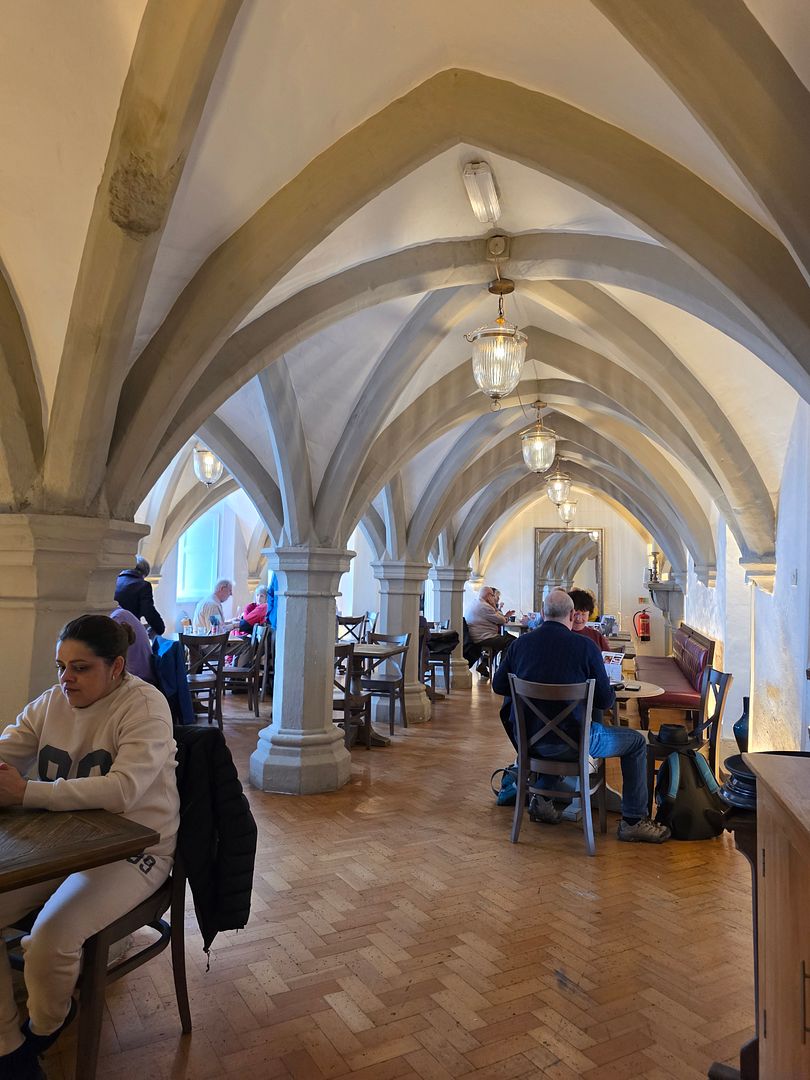
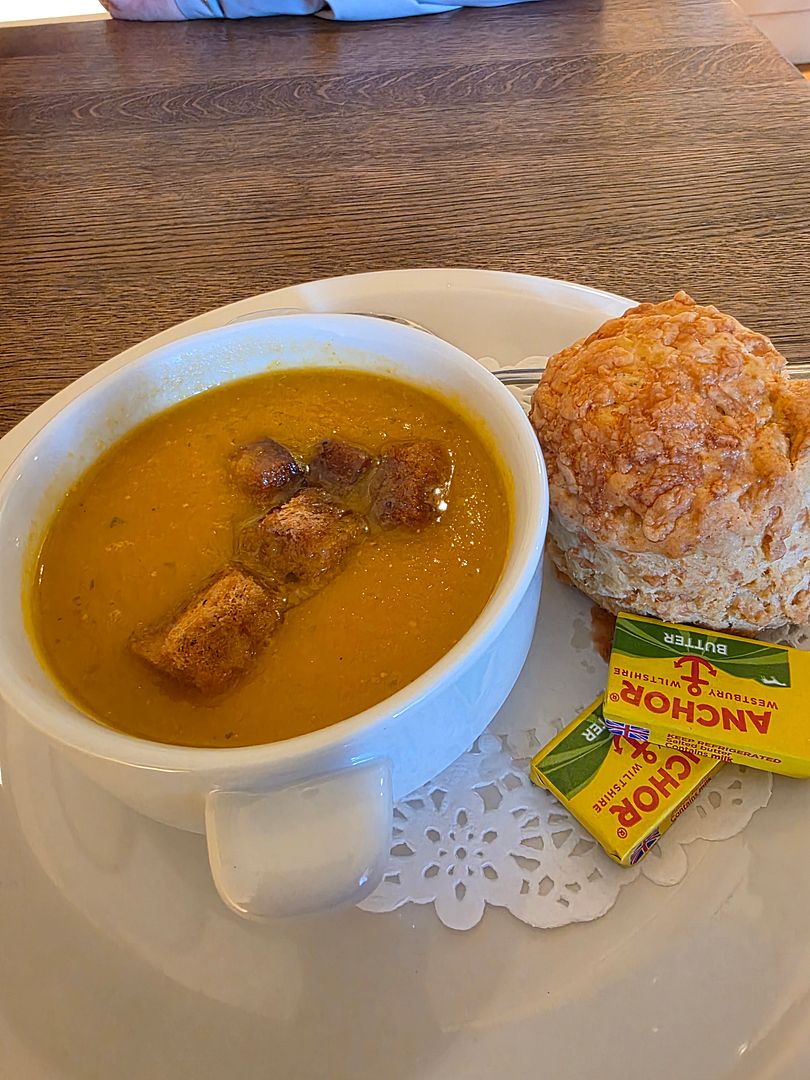
From the museum we walked over to the Almonry for a bite to eat.

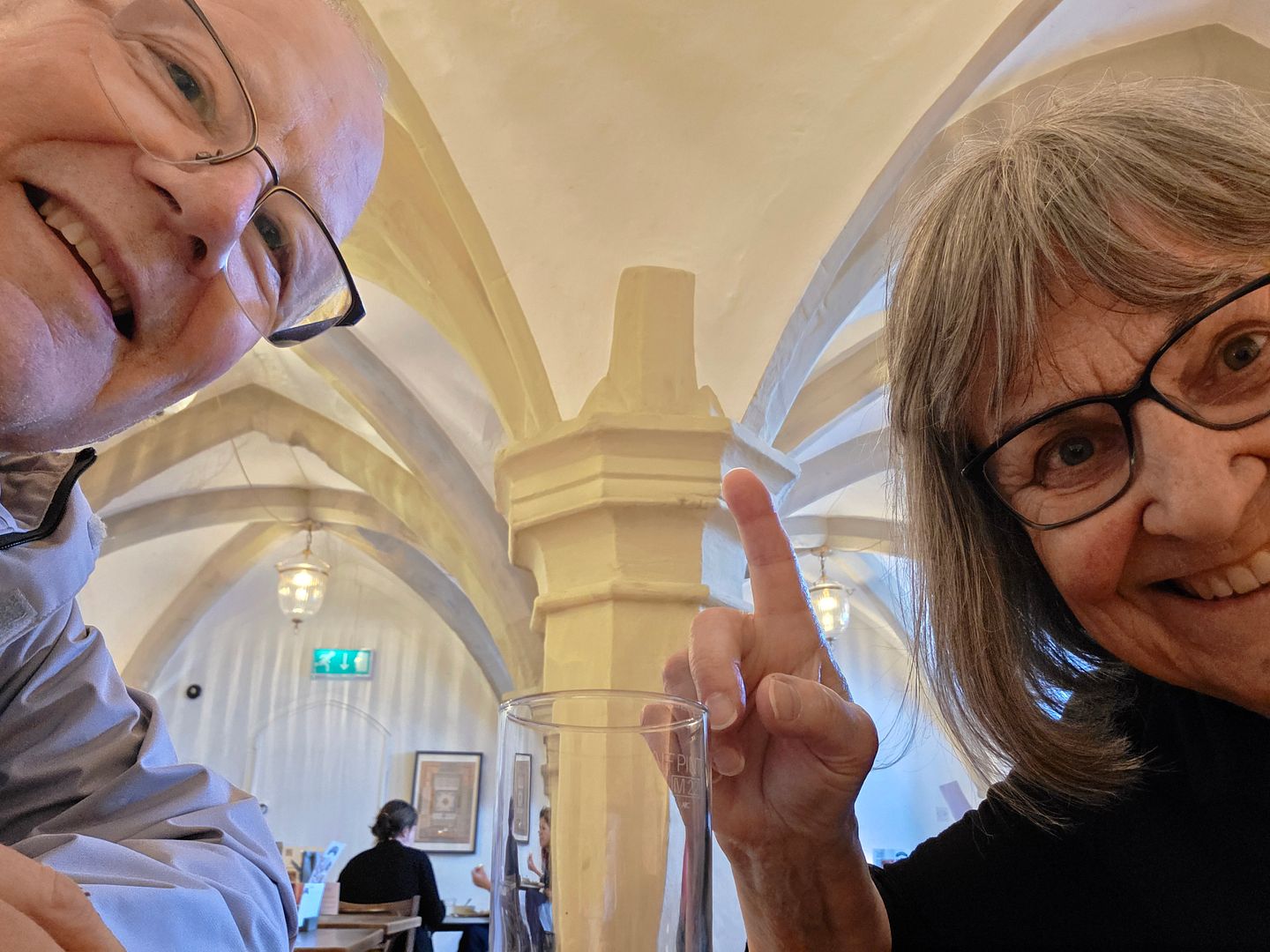
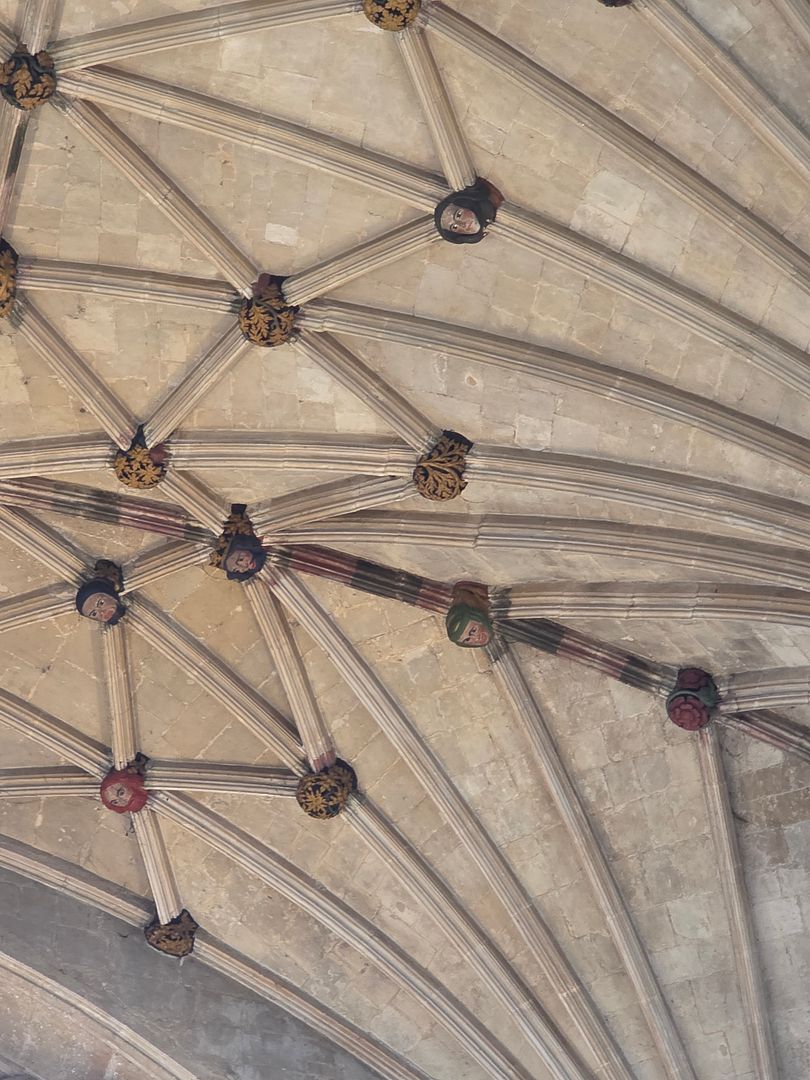
Check out the ceiling!

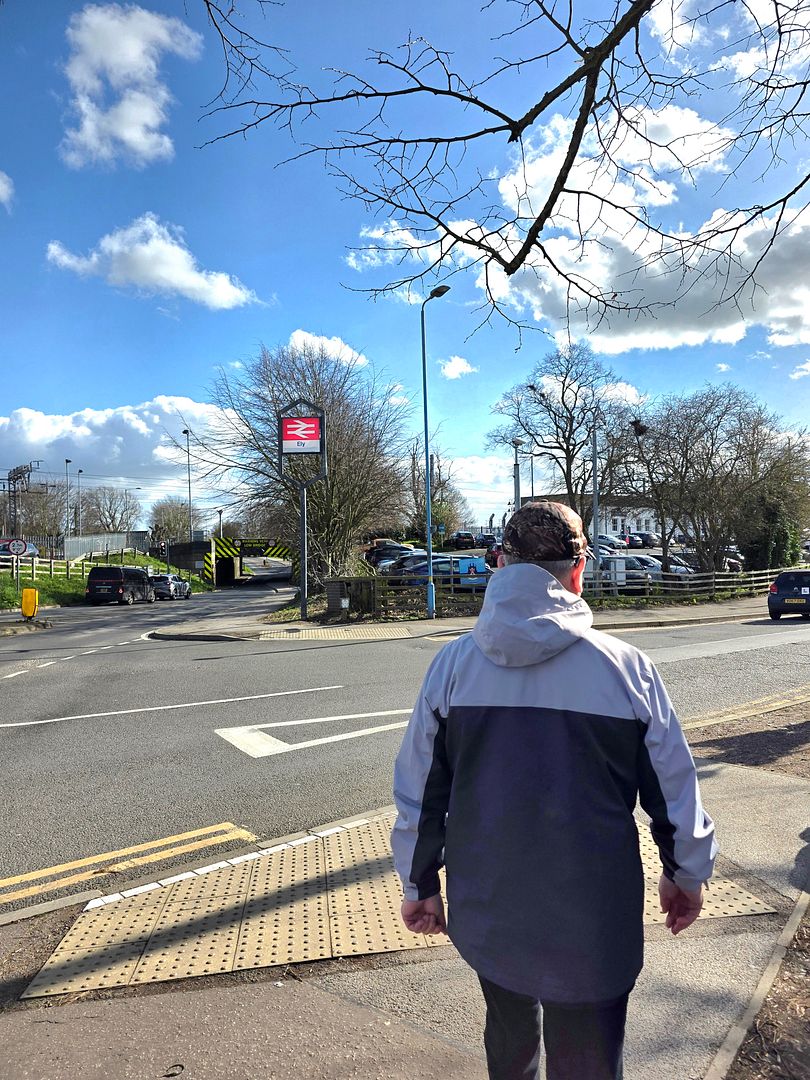
After our light meal we walked back to the Train Station for our ride back to Cambridge. This was a bright and blustery day.

Just a few more posts to complete our travel journal in Cambridge after our Danube River Cruise.

Inside Ely Cathedral

As previously mentioned, this continues our travel journal for Wednesday March 11 when we took a short train ride from Cambridge to Ely to visit the cathedral. These photos are numerous and are from the inside of Ely Cathedral.

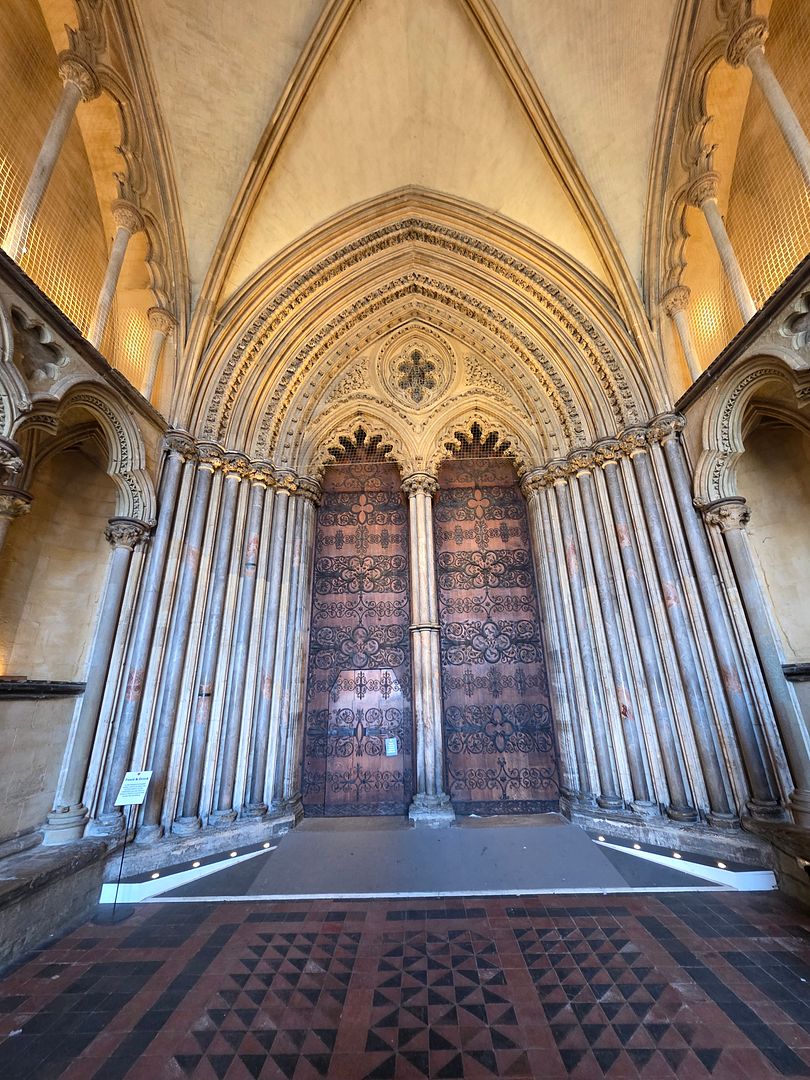
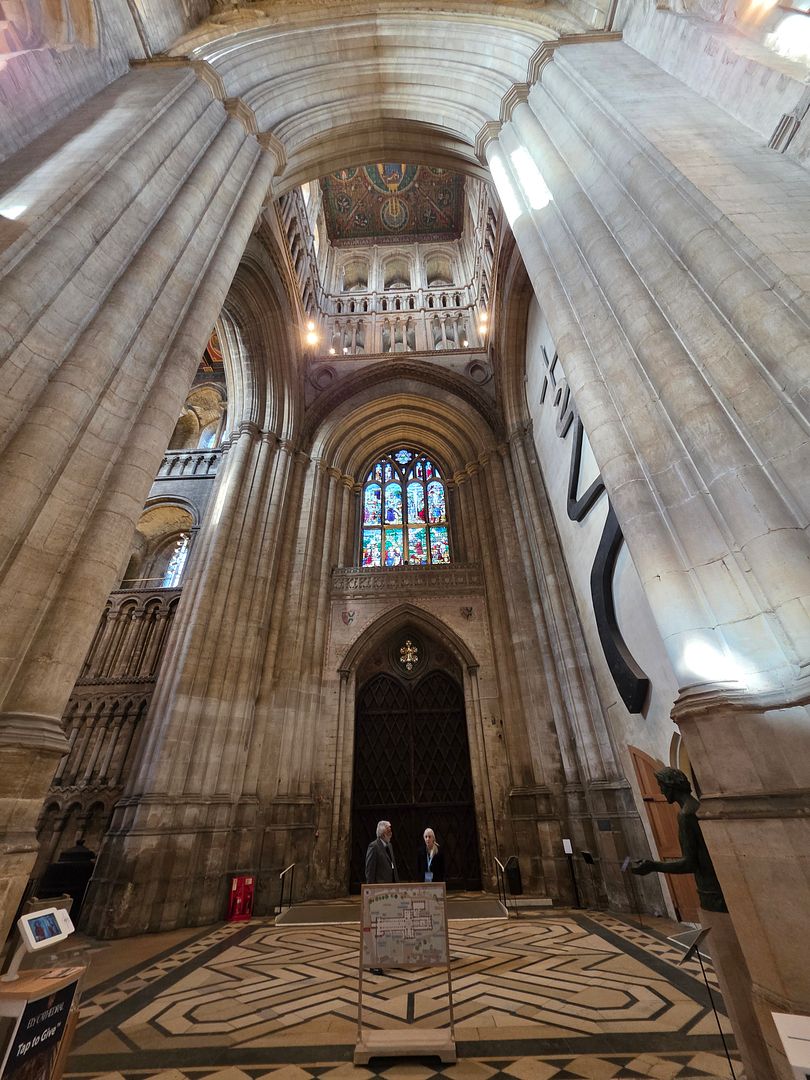
The entrance was through those amazing doors!

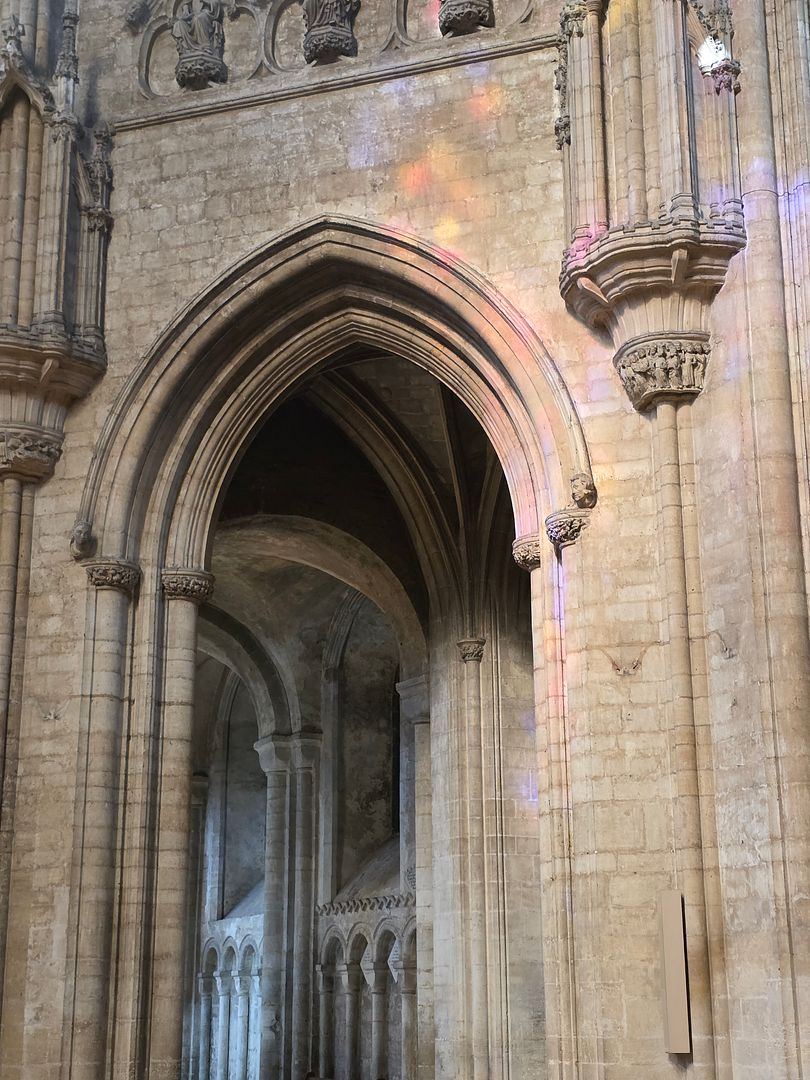
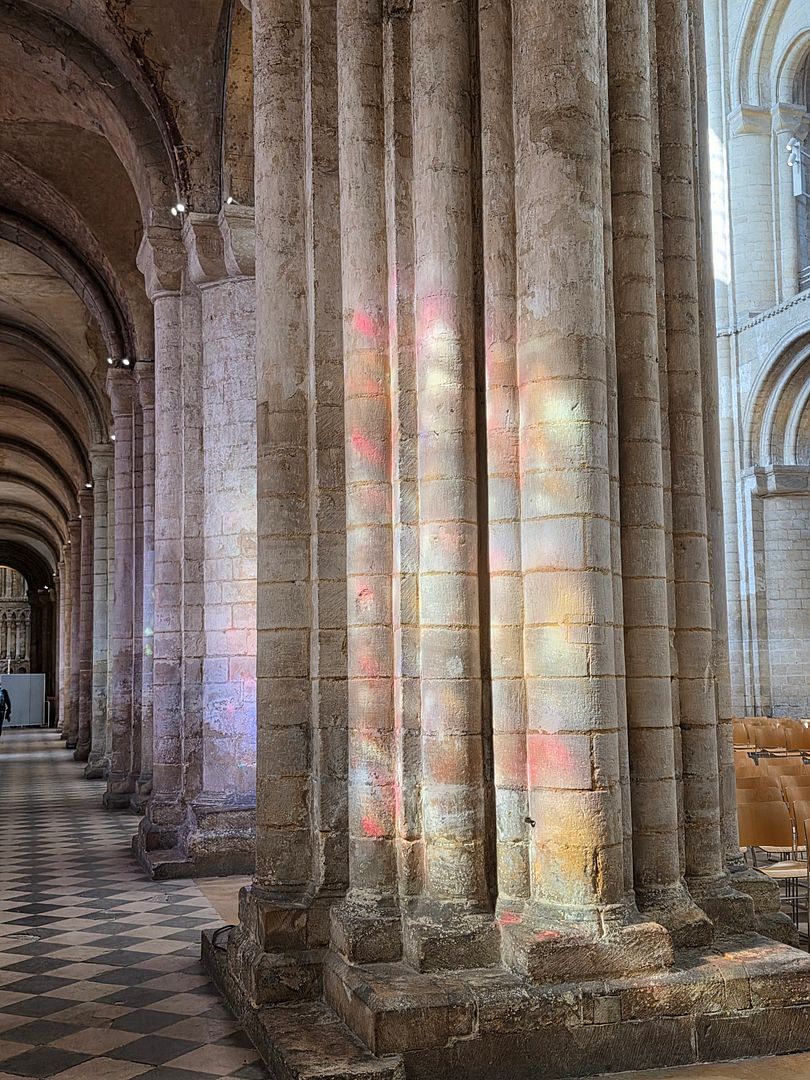
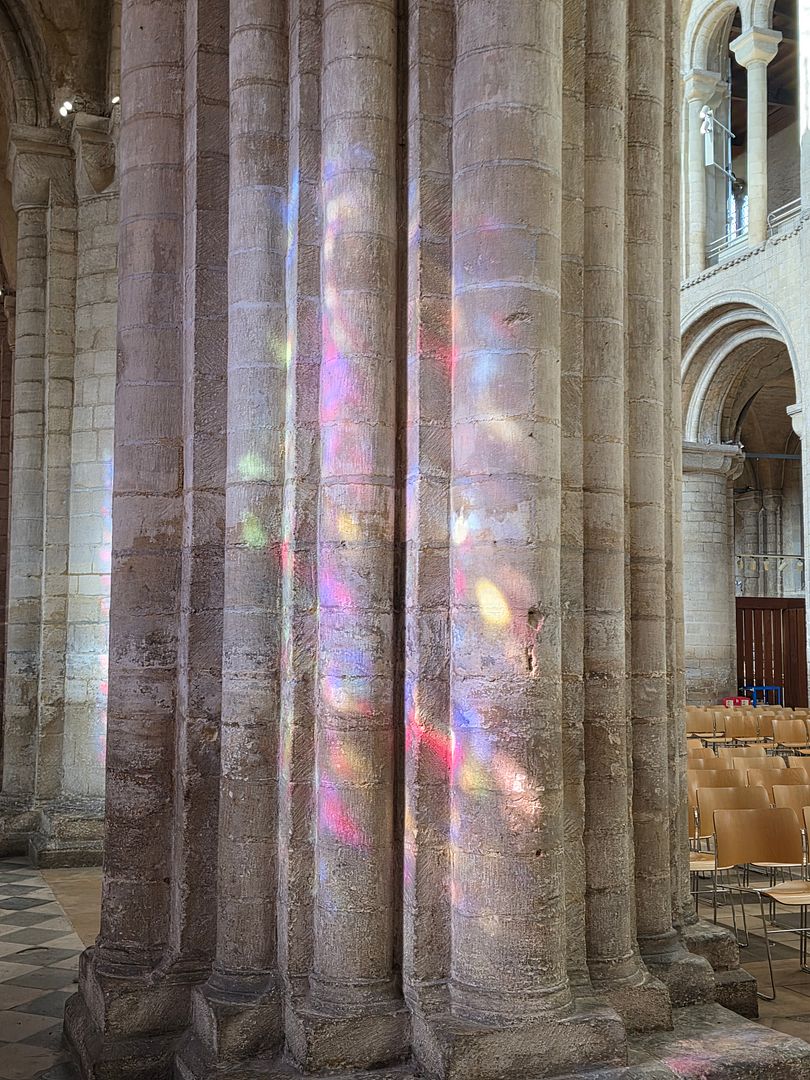
Ely Cathedral has origins dating back to AD 673 when St Etheldreda built an Abbey Church. The present building dates back to 1083, and was granted Cathedral status in 1109.


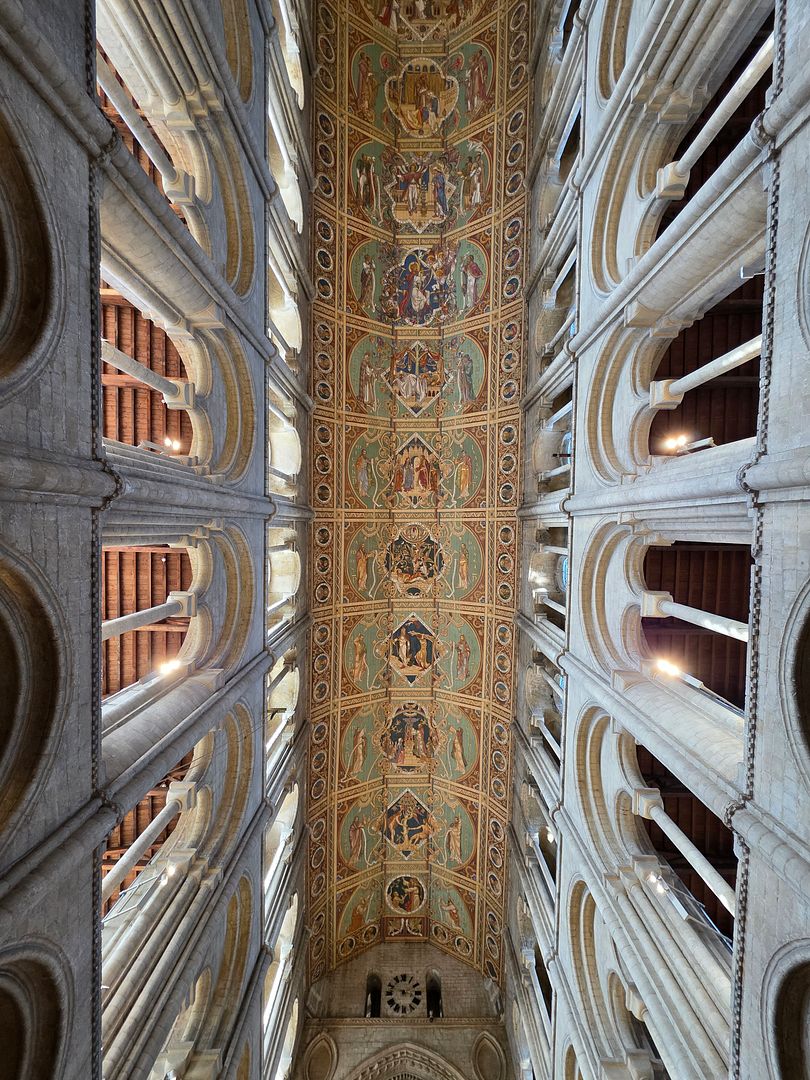
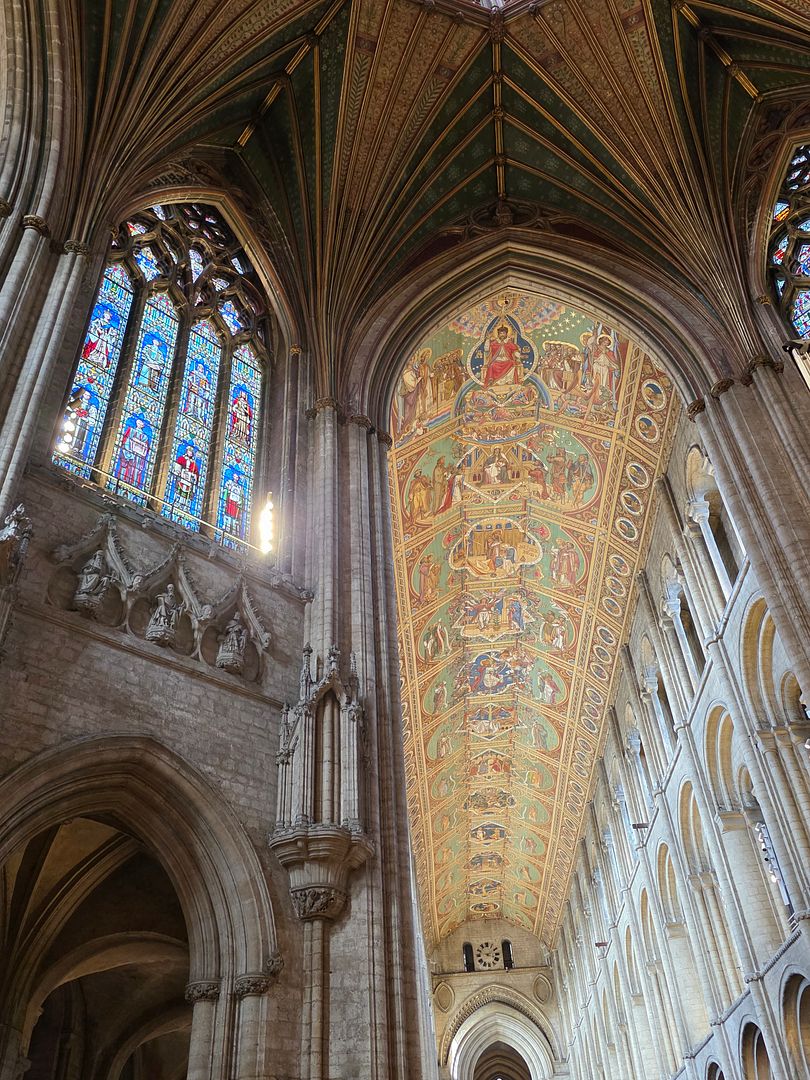
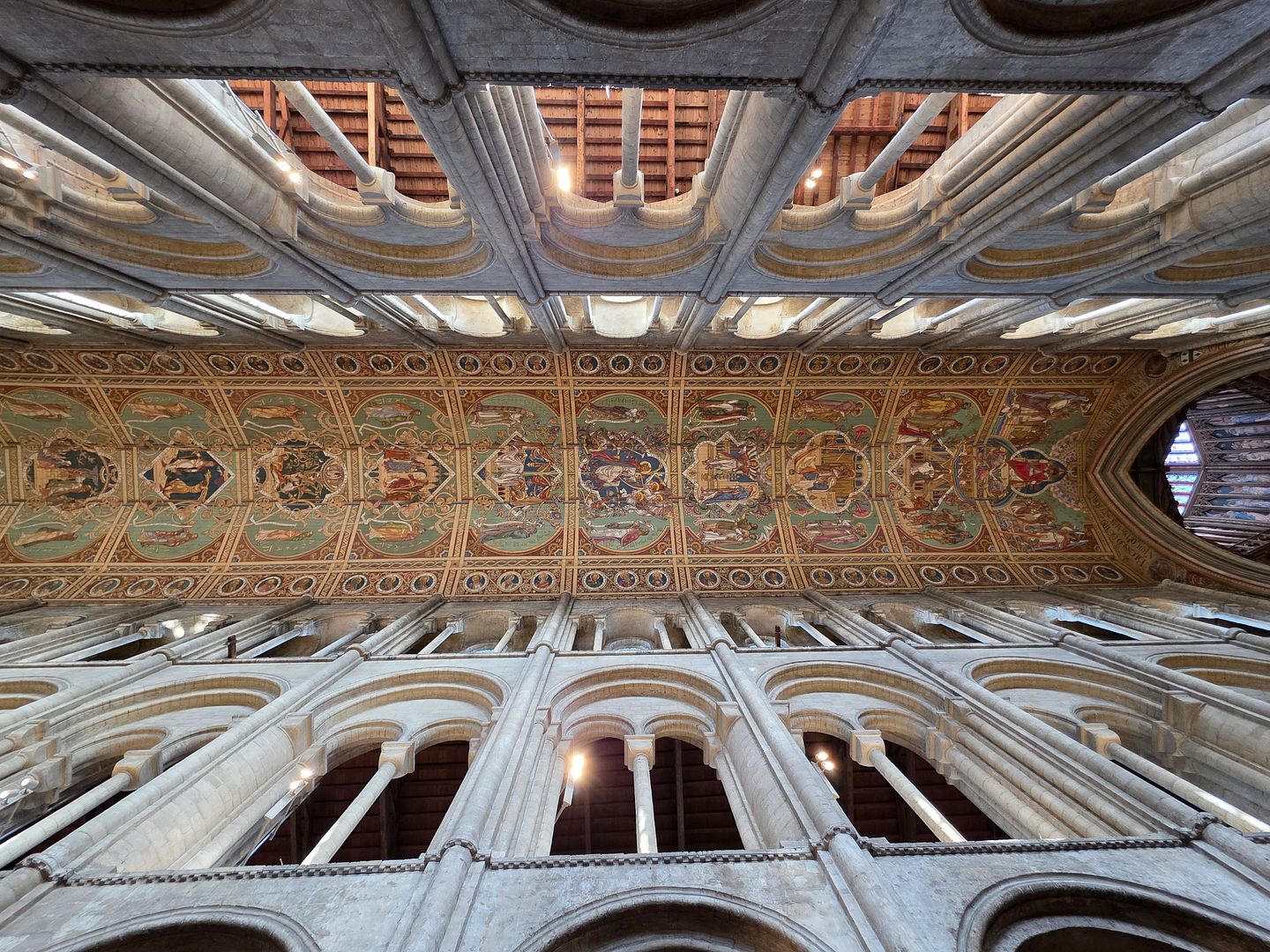
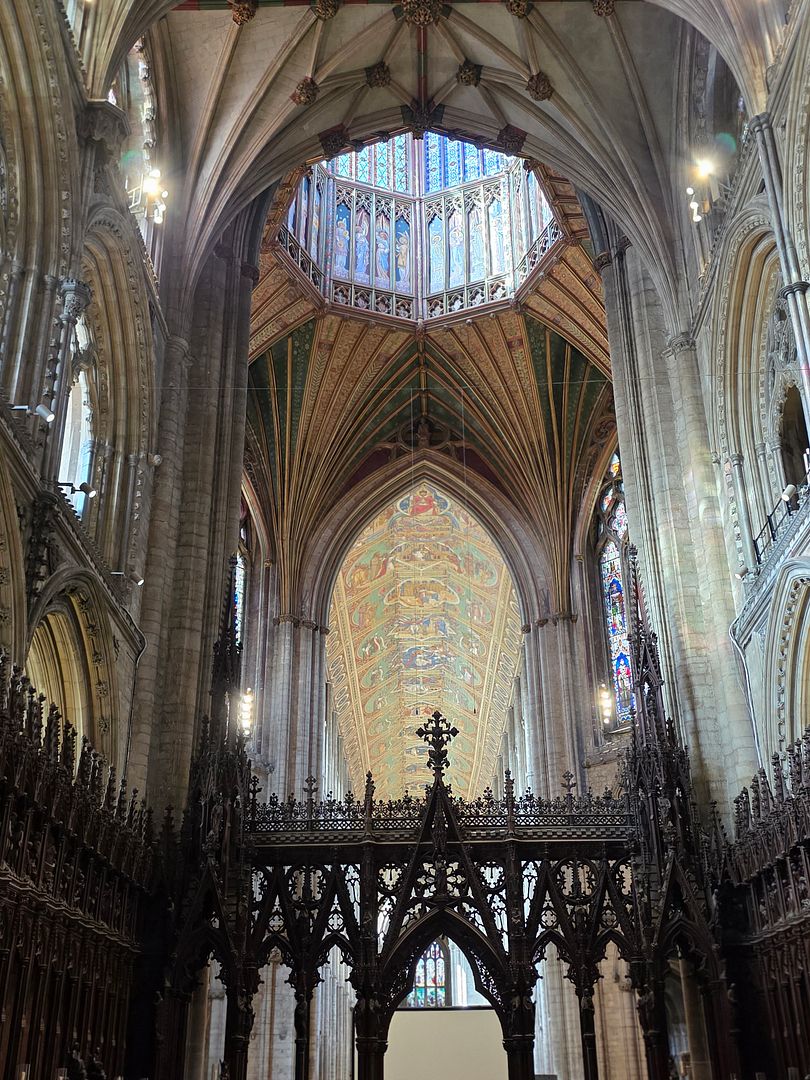
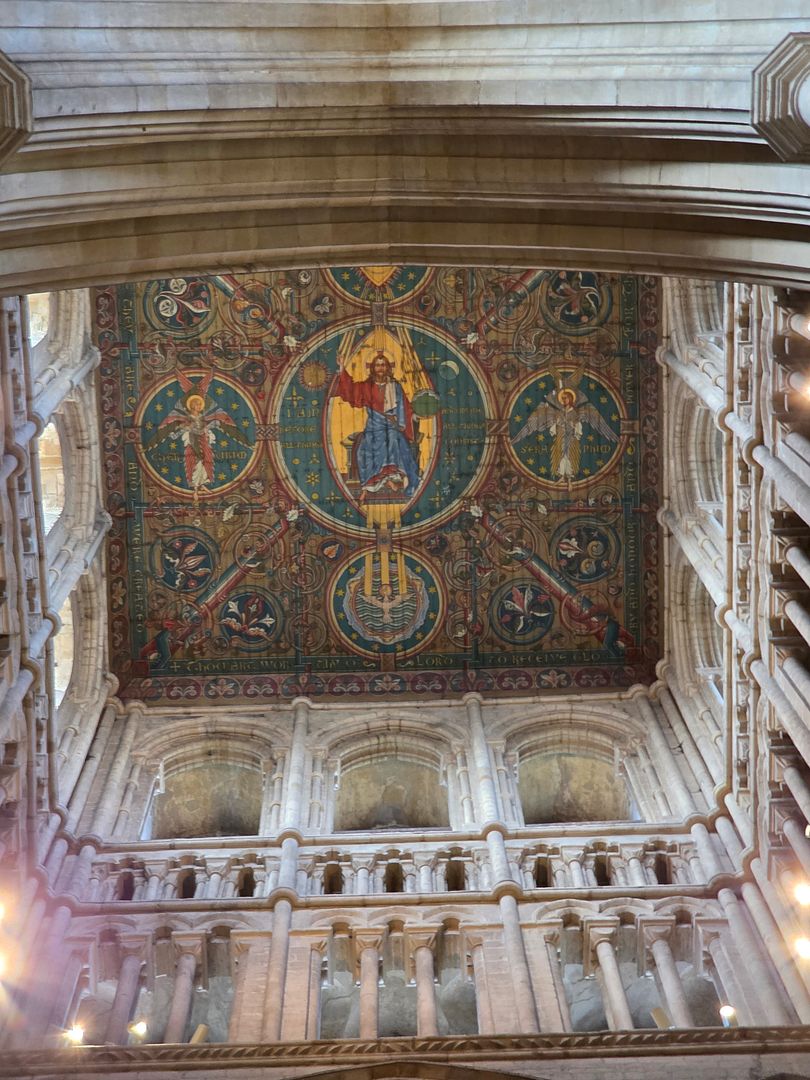
Installed as part of the Victorian restoration, the incredible Nave Ceiling was the work of two artists.

Henry Styleman Le Strange painted the first six panels (counting from the west), and Thomas Gambier Parry painted the last six – you can observe a change of style between the sixth and seventh panels.

The ceiling tells the story of the ancestry of Jesus, beginning with Adam (panel 1) and continuing through Abraham (panel 4), David (panel 8) and Mary (panels 9 and 10).

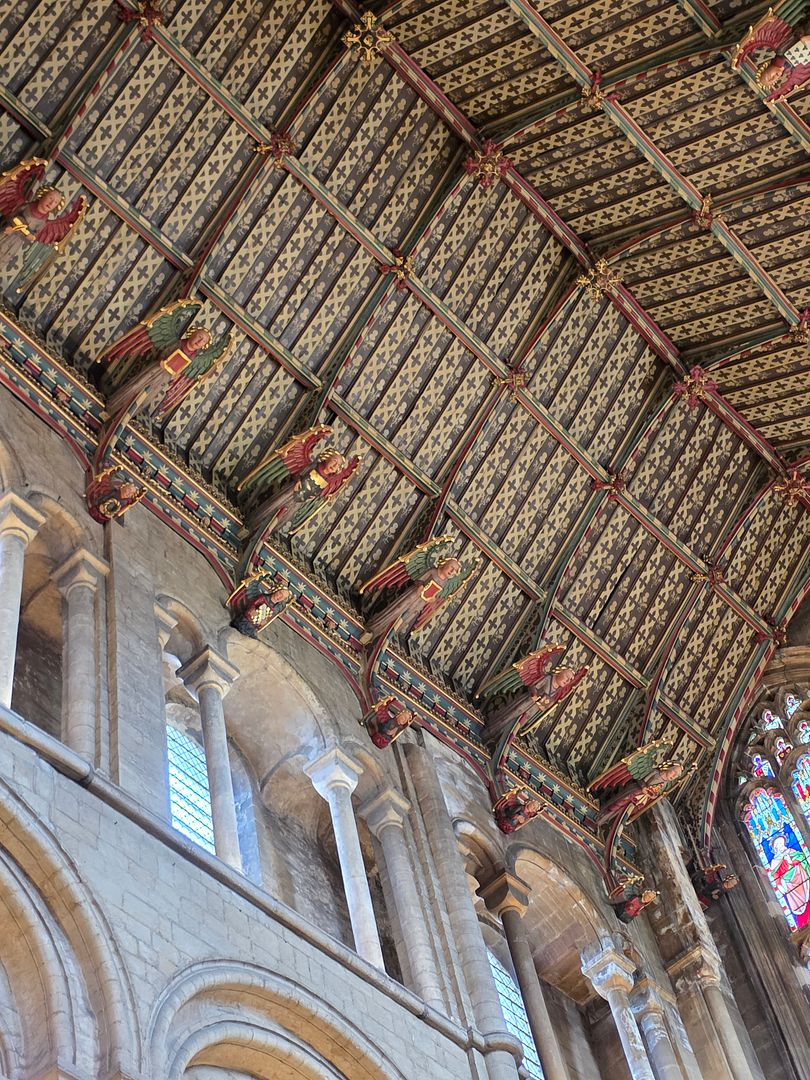
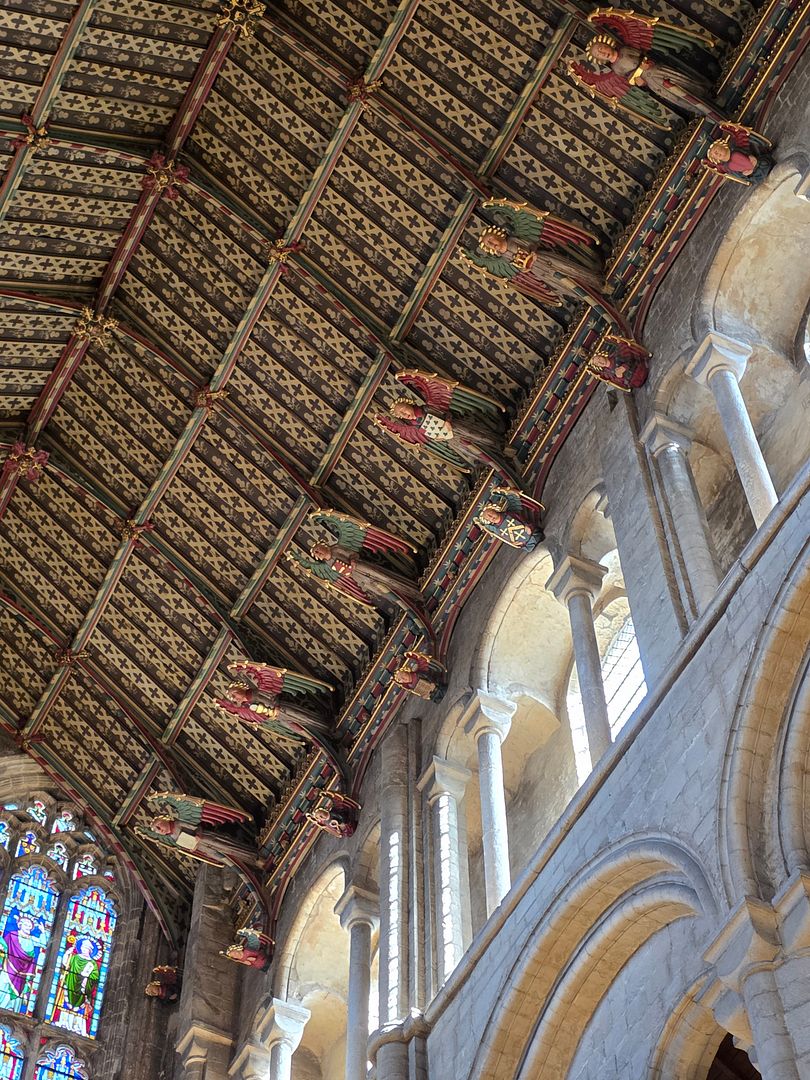
It is almost impossible not to look up when you visit a cathedral. I liked this ceiling section with all the angels looking down. Reminded me of 1 Peter 1:12

“It was revealed to them that they were serving not themselves but you, in the things that have now been announced to you through those who preached the good news to you by the Holy Spirit sent from heaven, things into which angels long to look.”
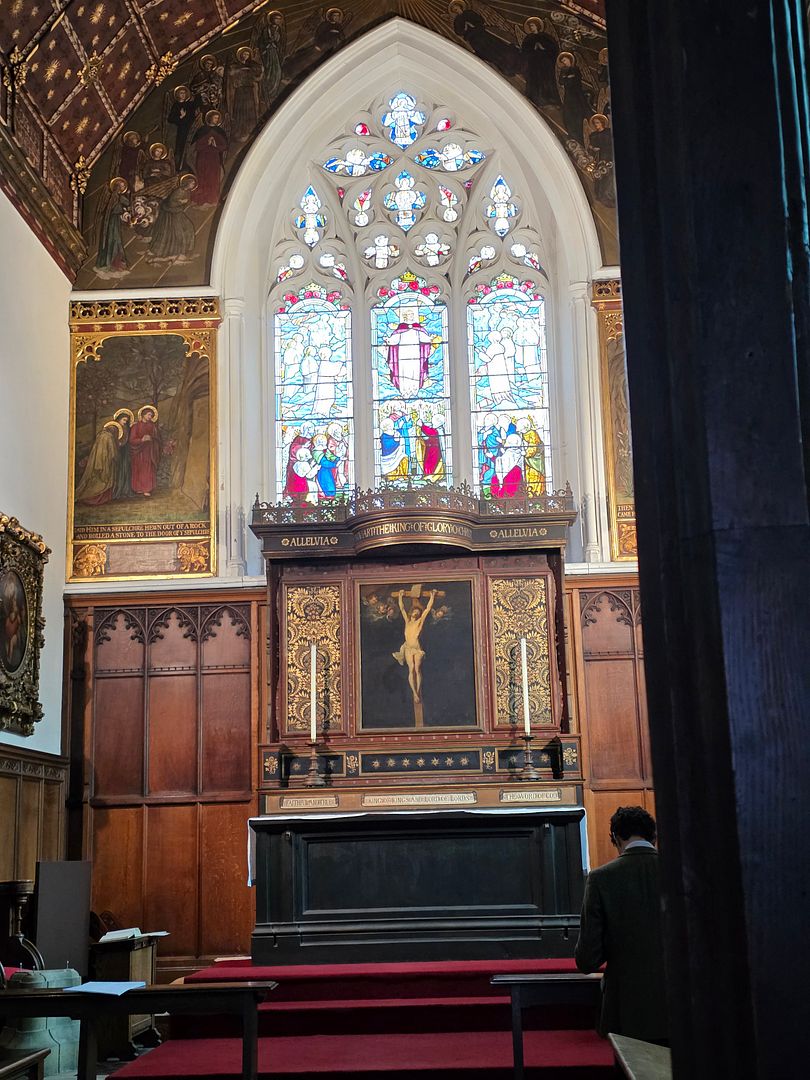
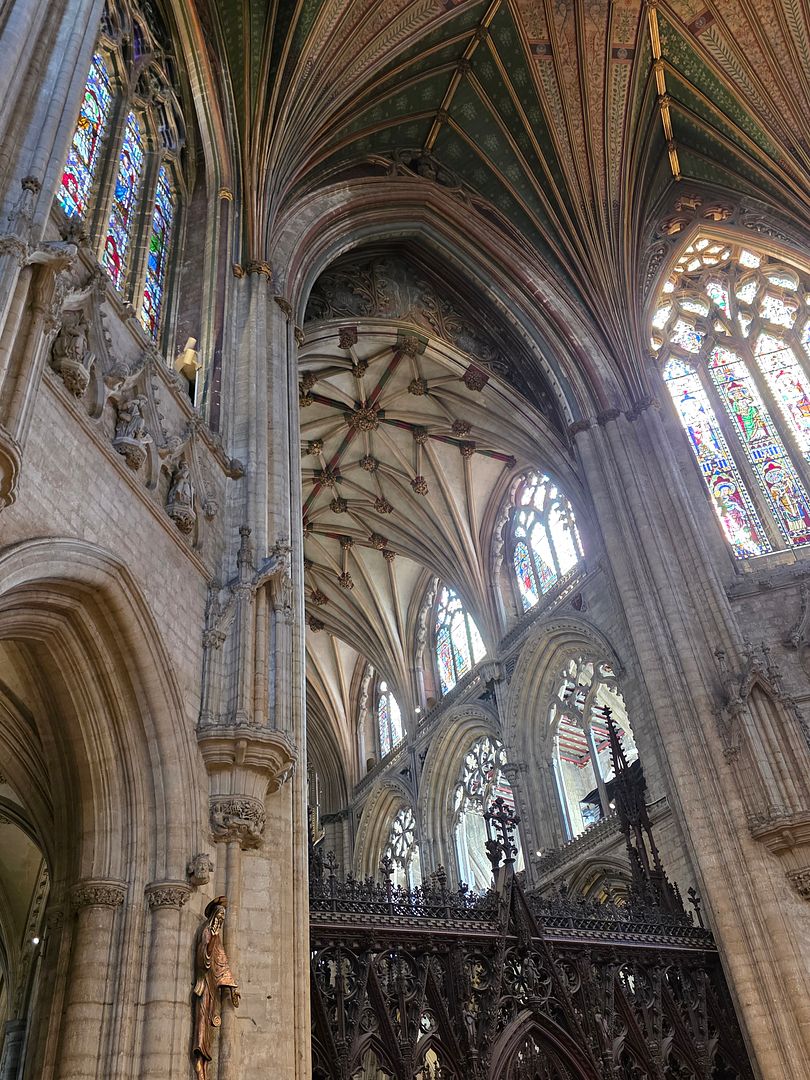
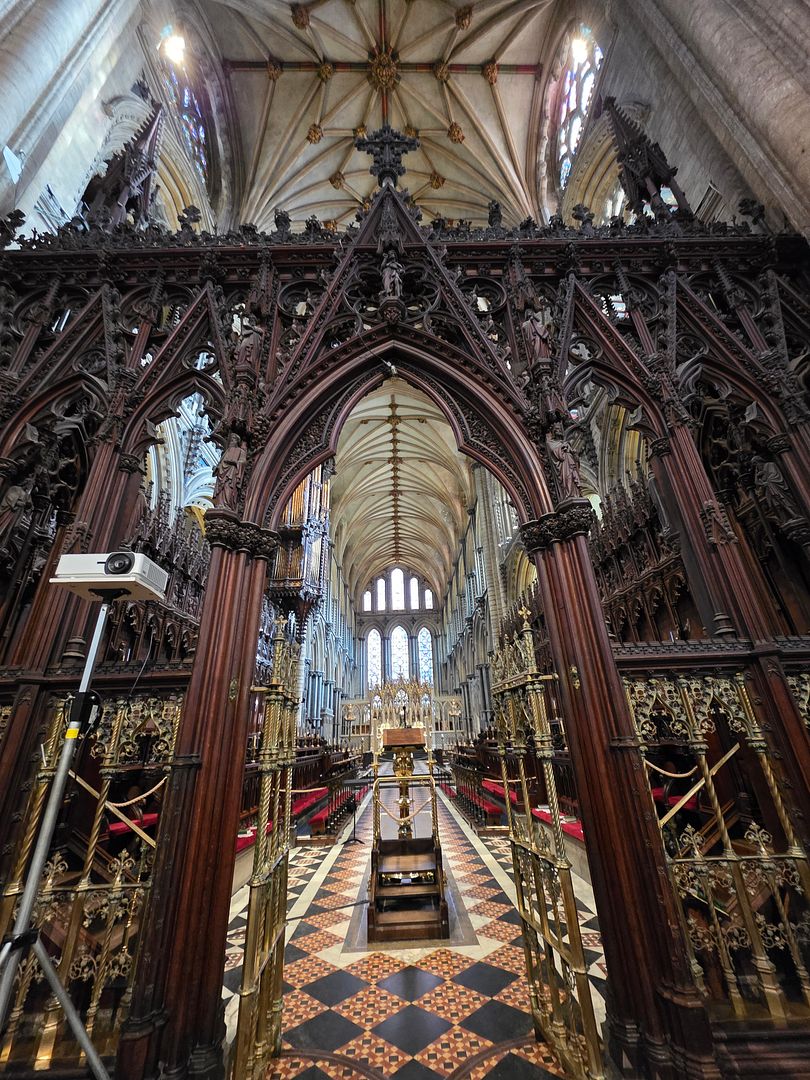
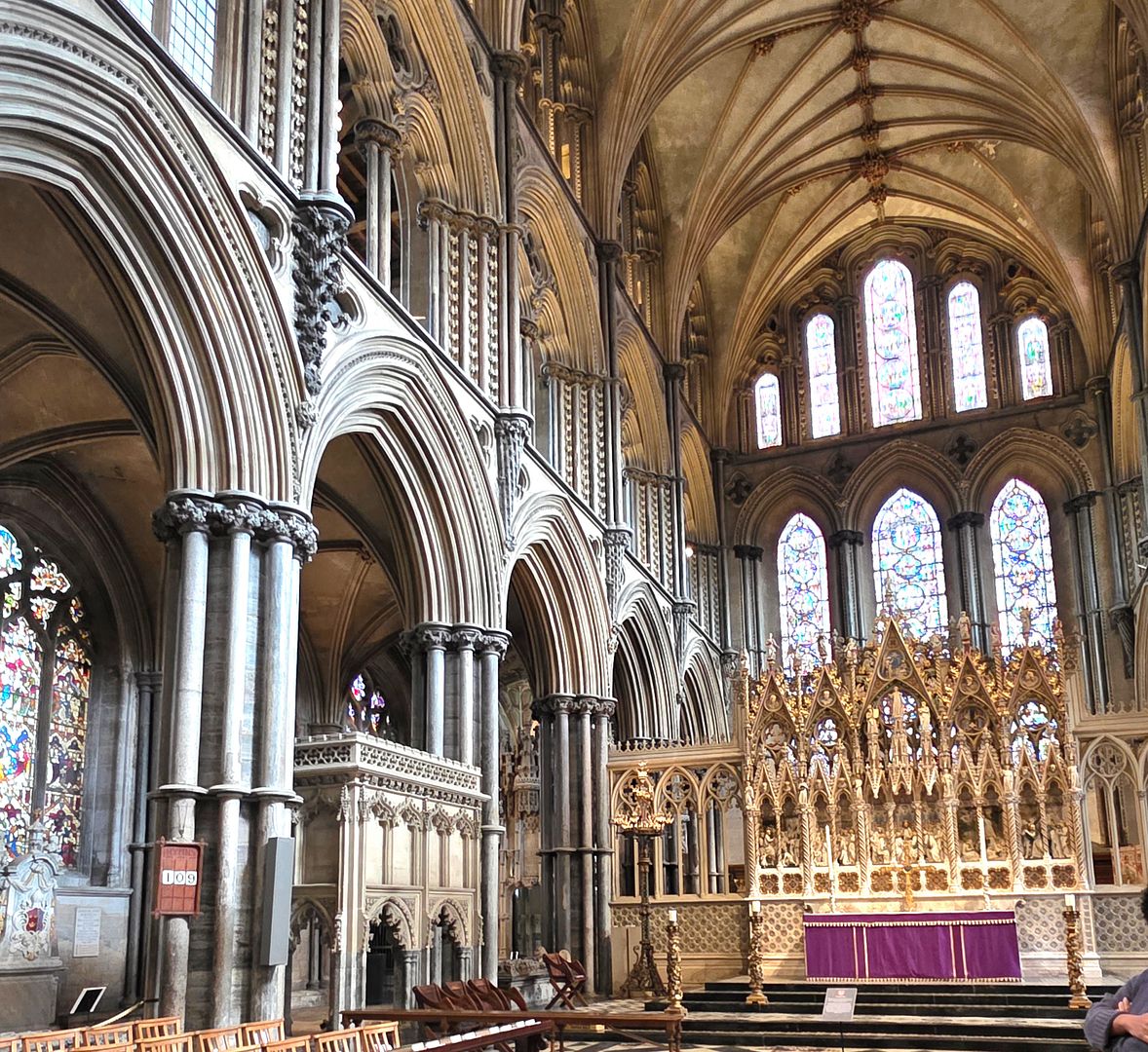
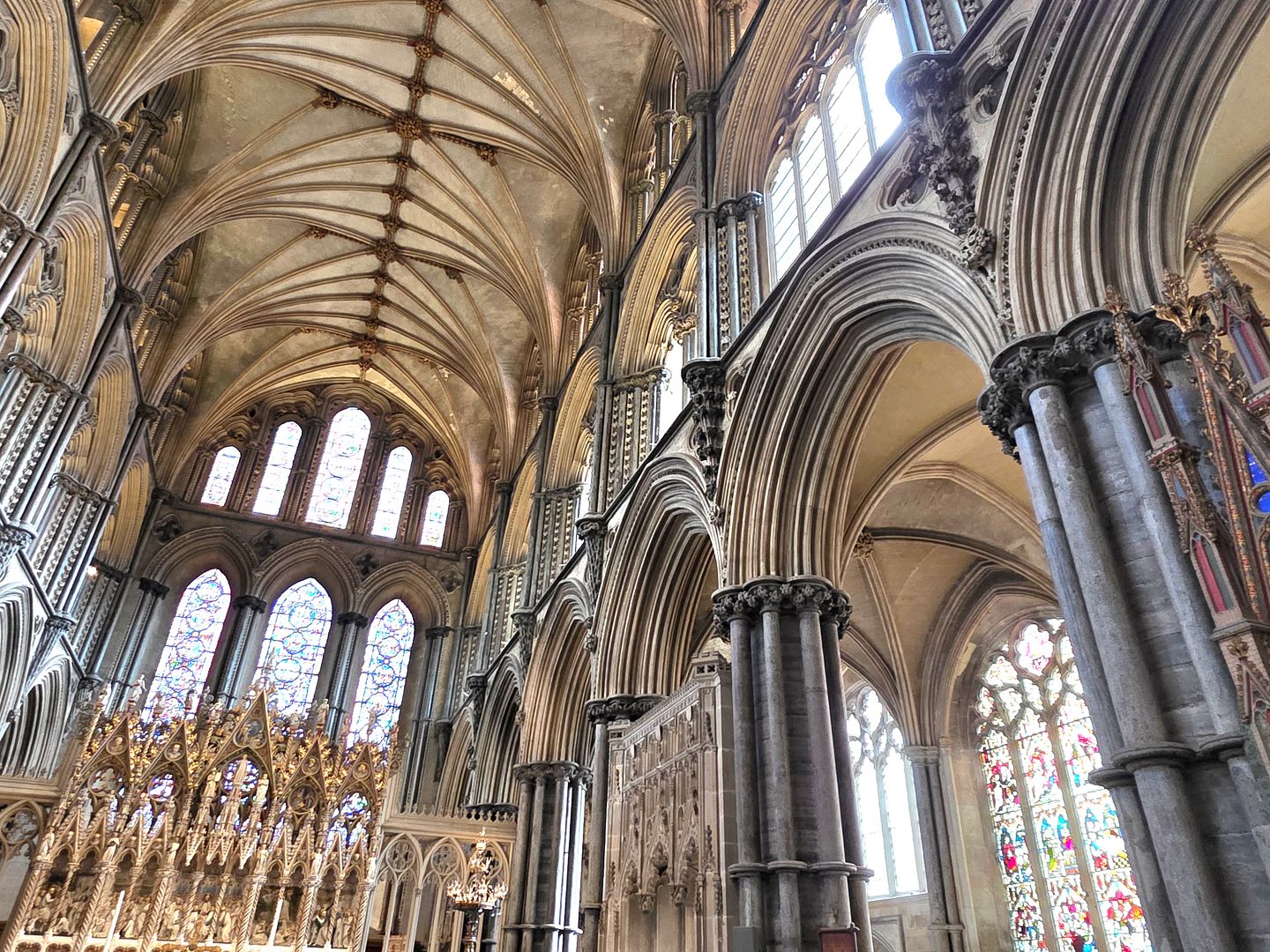
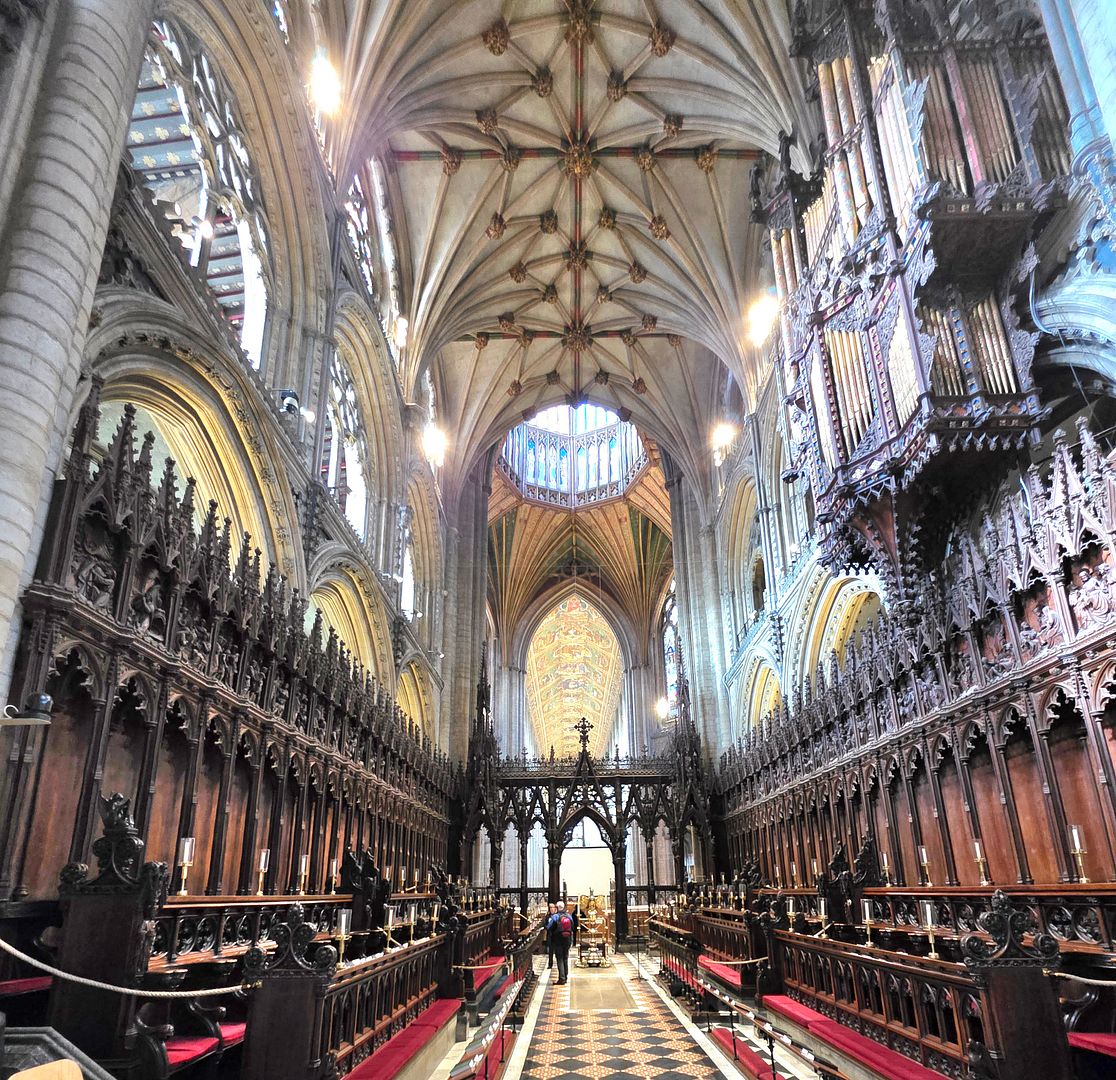
Looking into the Quire.

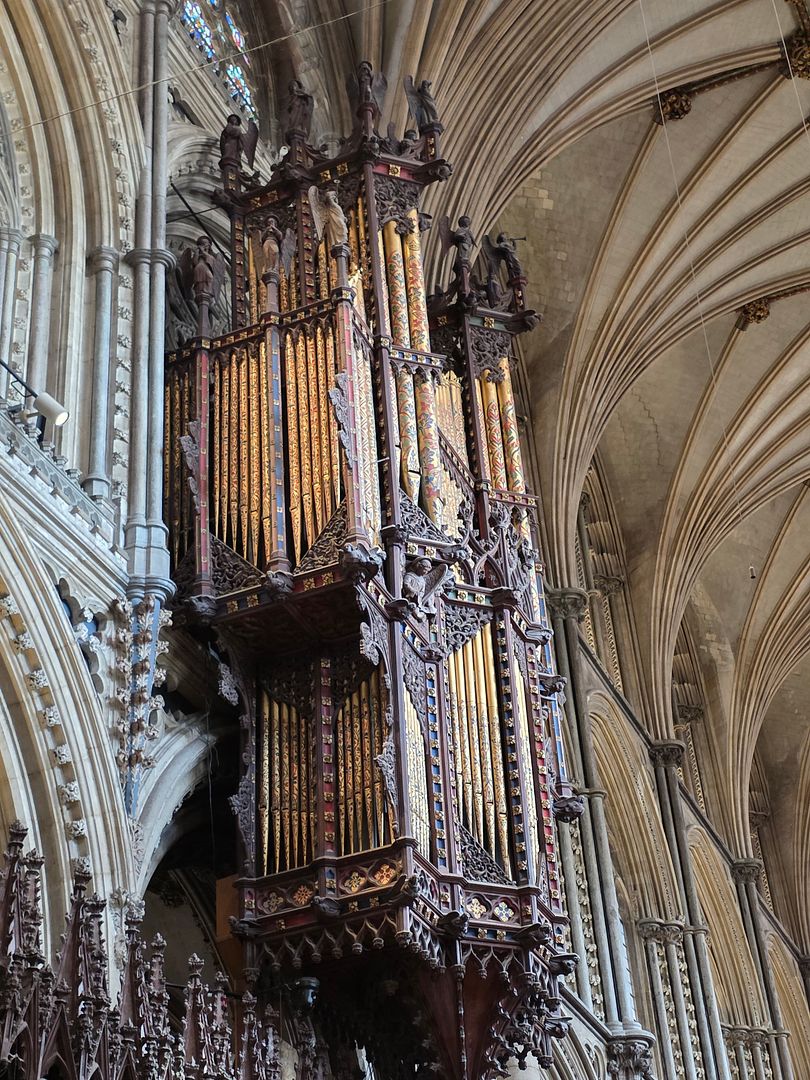
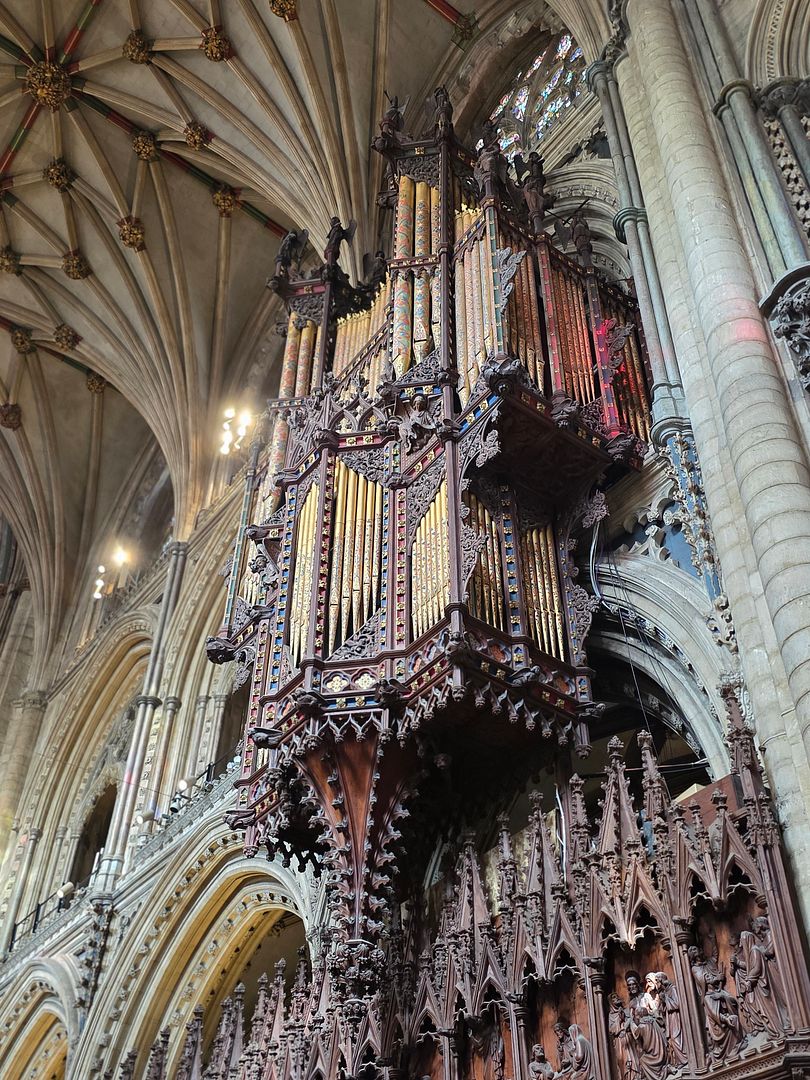
These ornate organ pipes were fascinating to me.

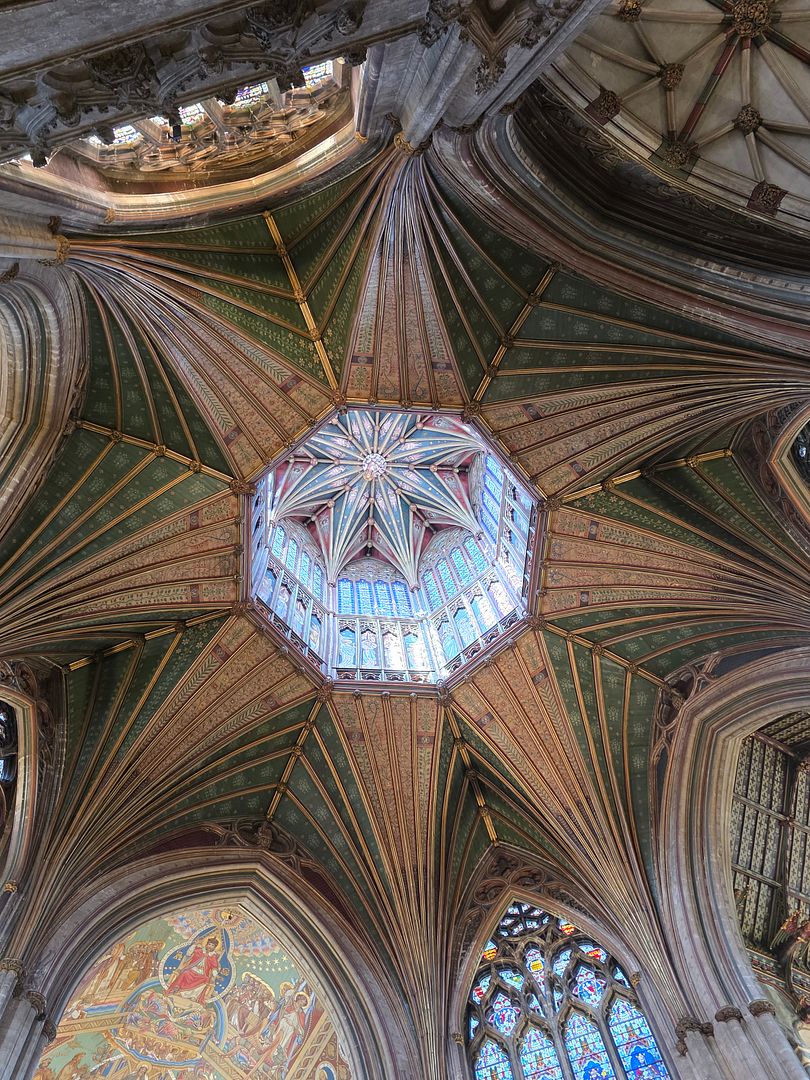
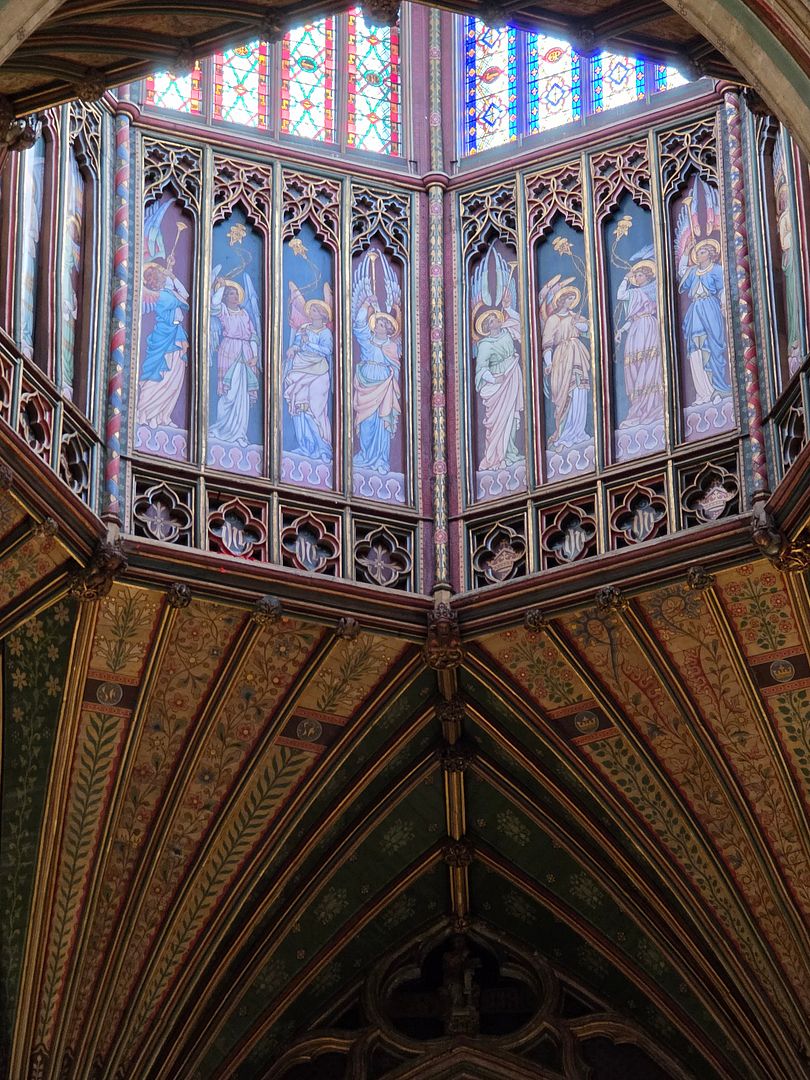
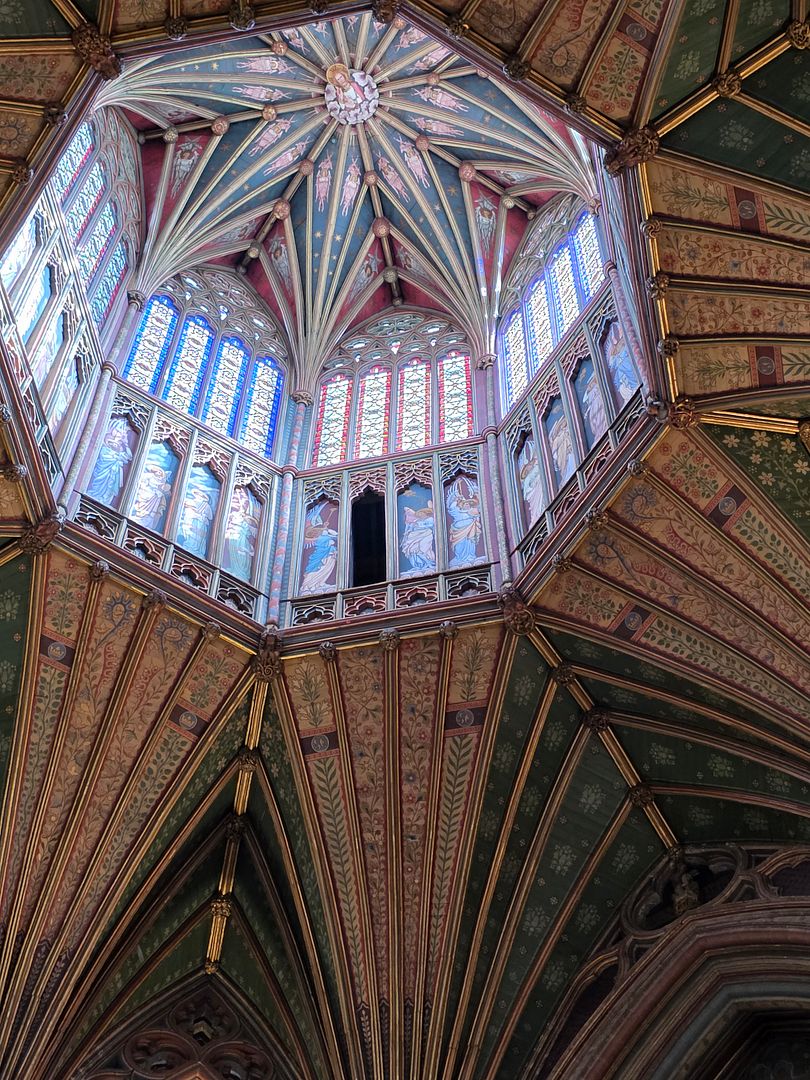
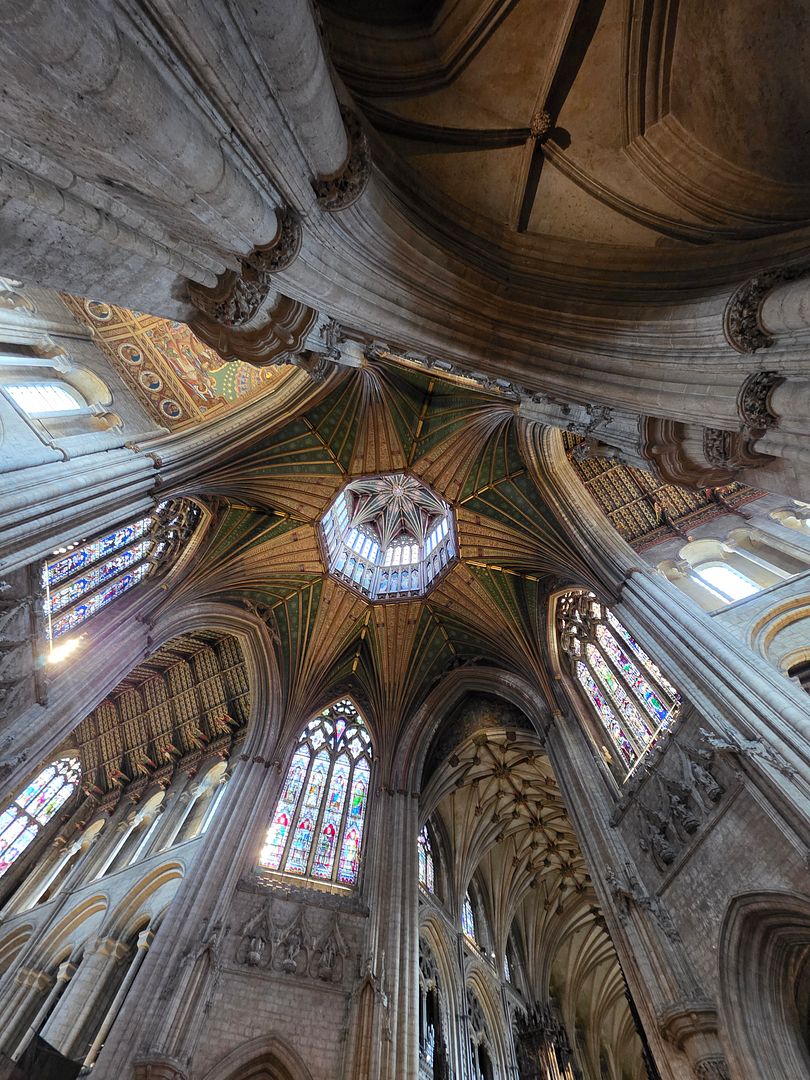
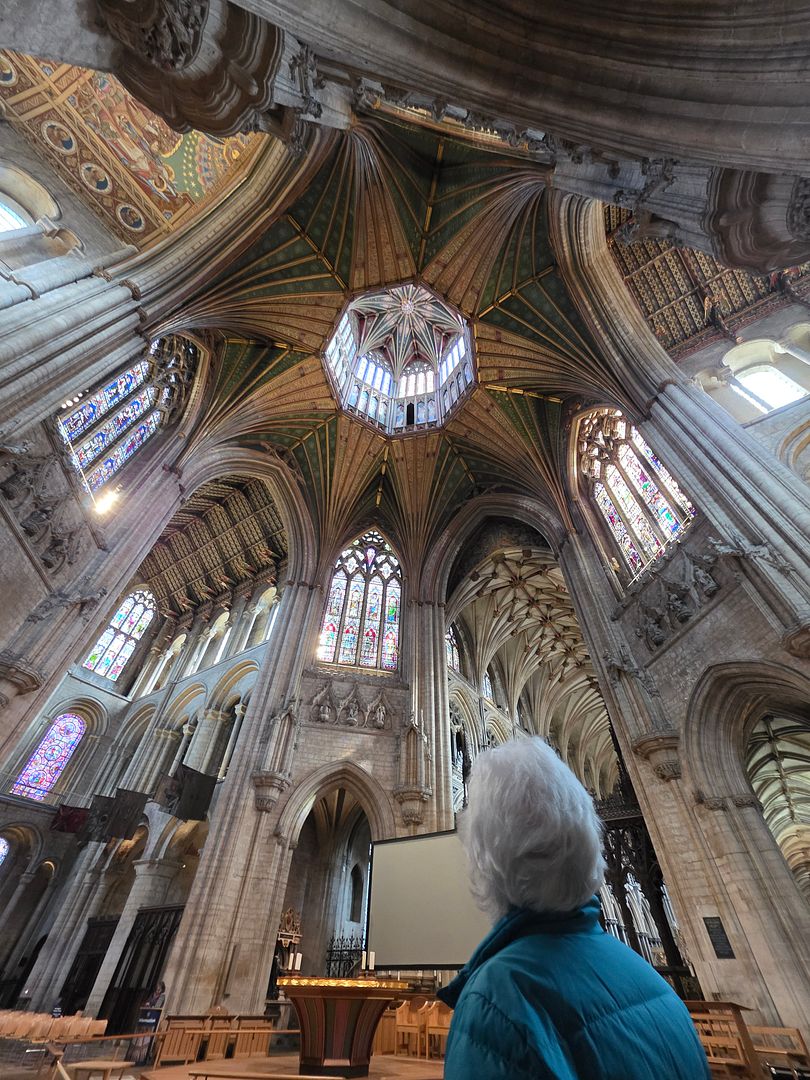
The jewel of Ely’s Crown and acknowledged as one of the wonders of the Medieval world is the Octagan.

You can read more about the Octagon here.

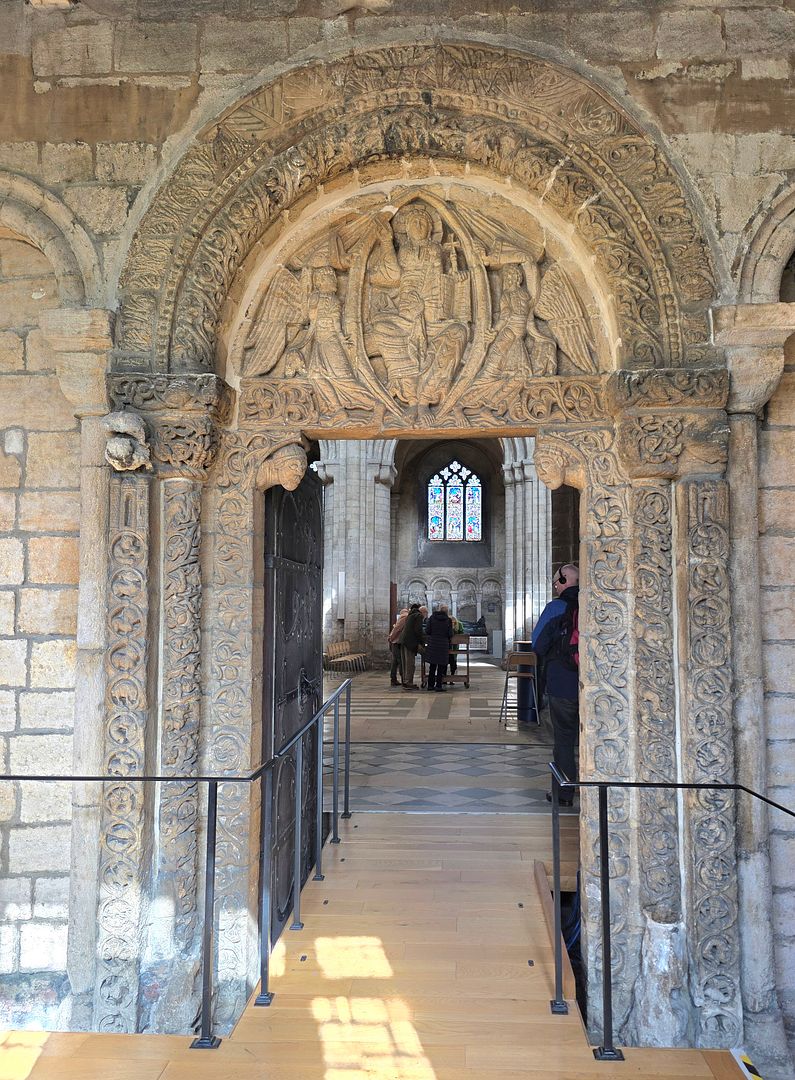
That is not a missing panel but a door opening.

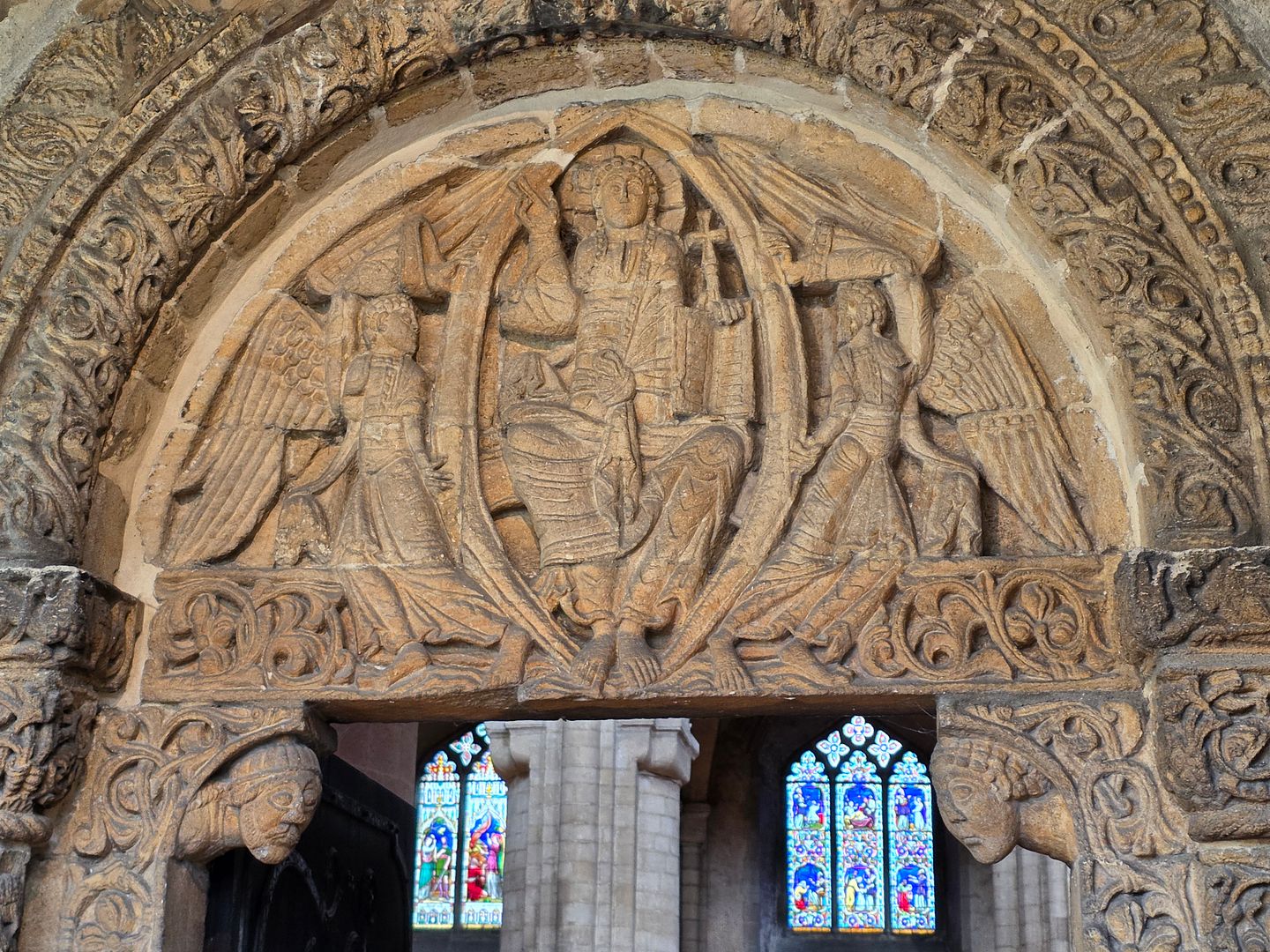
Our guide gave us important details about this doorway and I found more information here. They call this the Prior’s door (c.1135). A Romanesque carved doorway.

The Christ figure is contained within a mandorla – an almond shape traditionally used to frame images of the transcendent. Here Christ’s feet cross the boundary of the mandorla, stepping towards mankind.

 Two human heads with pronounced eyes just below the tympanum watch those passing through the door into the church and symbolically entering heaven.

From the link; Like the rest of the building, the deeply carved doorway is sculpted in extremely hard Barnack limestone. It has a tympanum – a half-moon shape at the top – which would originally have been brightly painted. It shows an unusual clean-shaven Christ sitting in judgement on the peoples of the earth. One hand is raised in blessing, the other holds the Book of Judgement from Revelation.

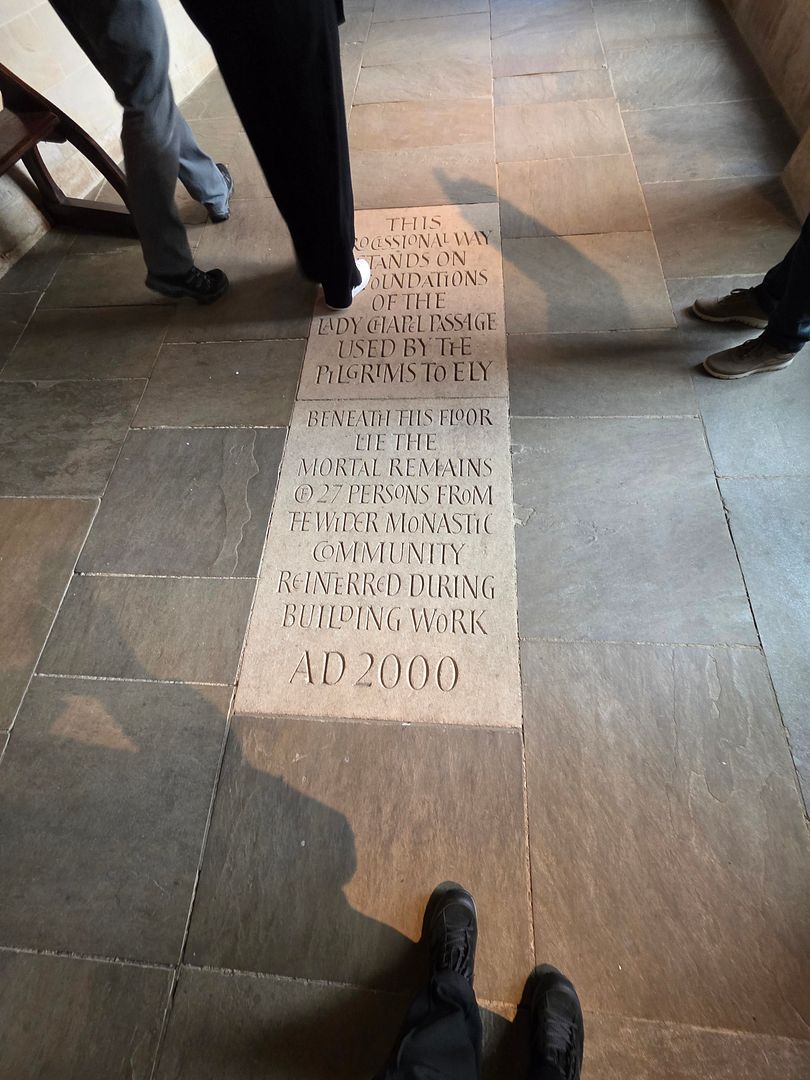
Processional Way (below) was built to join the Cathedral and the Lady Chapel.

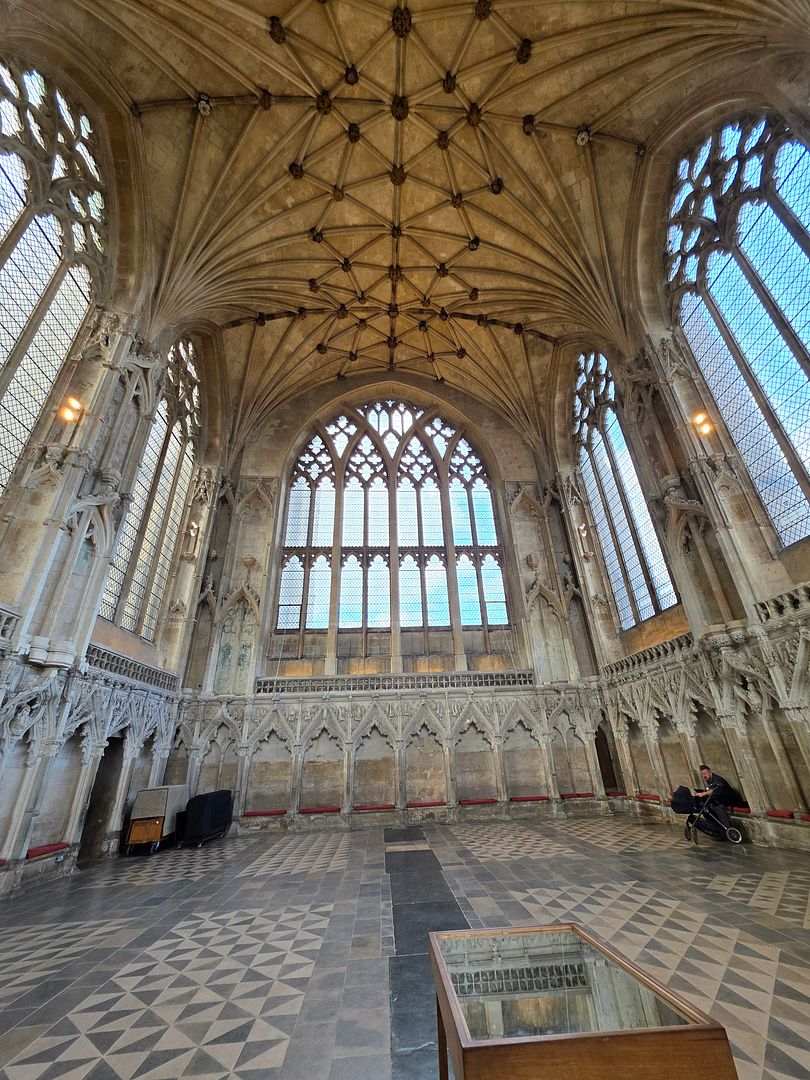
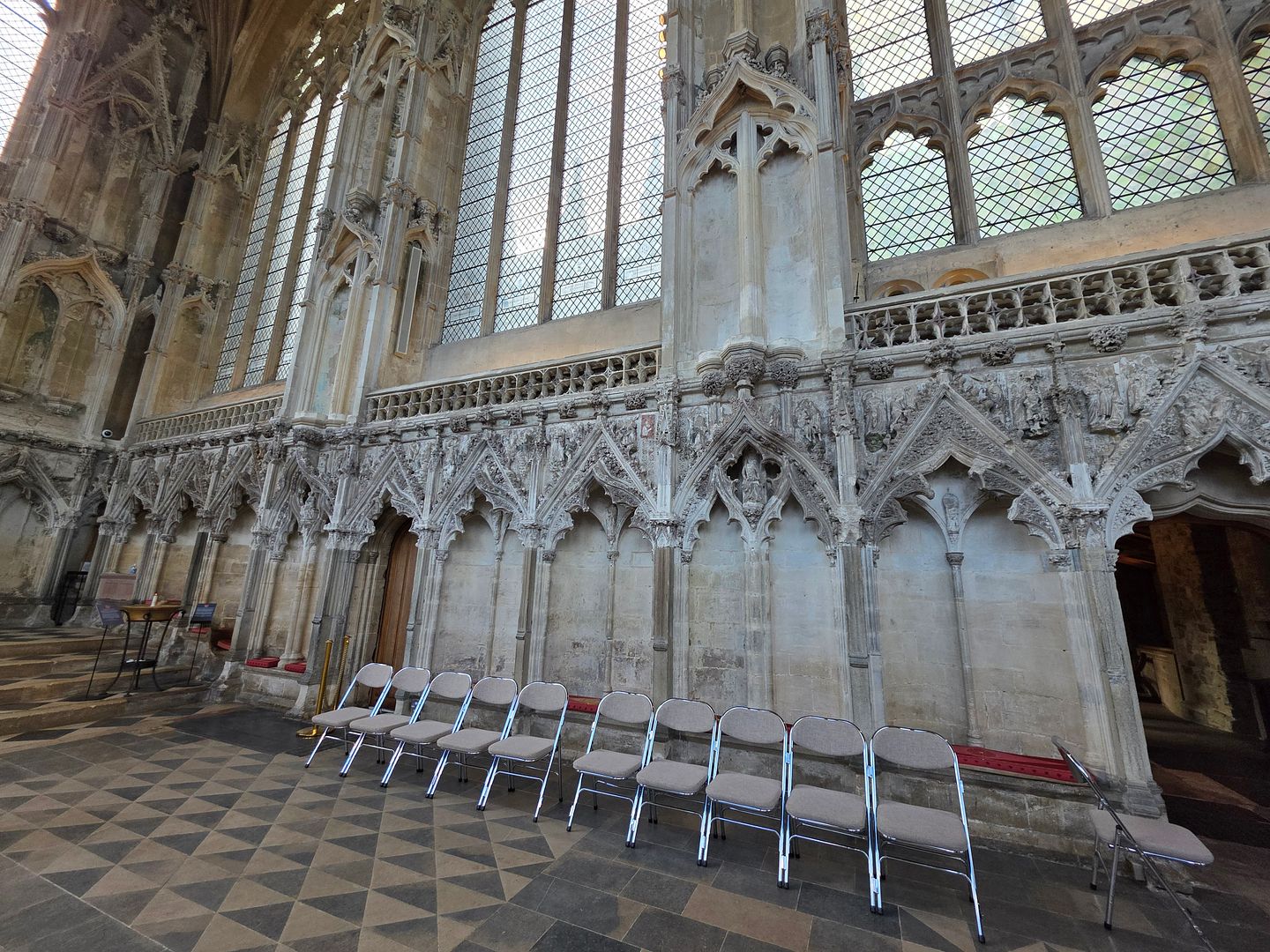
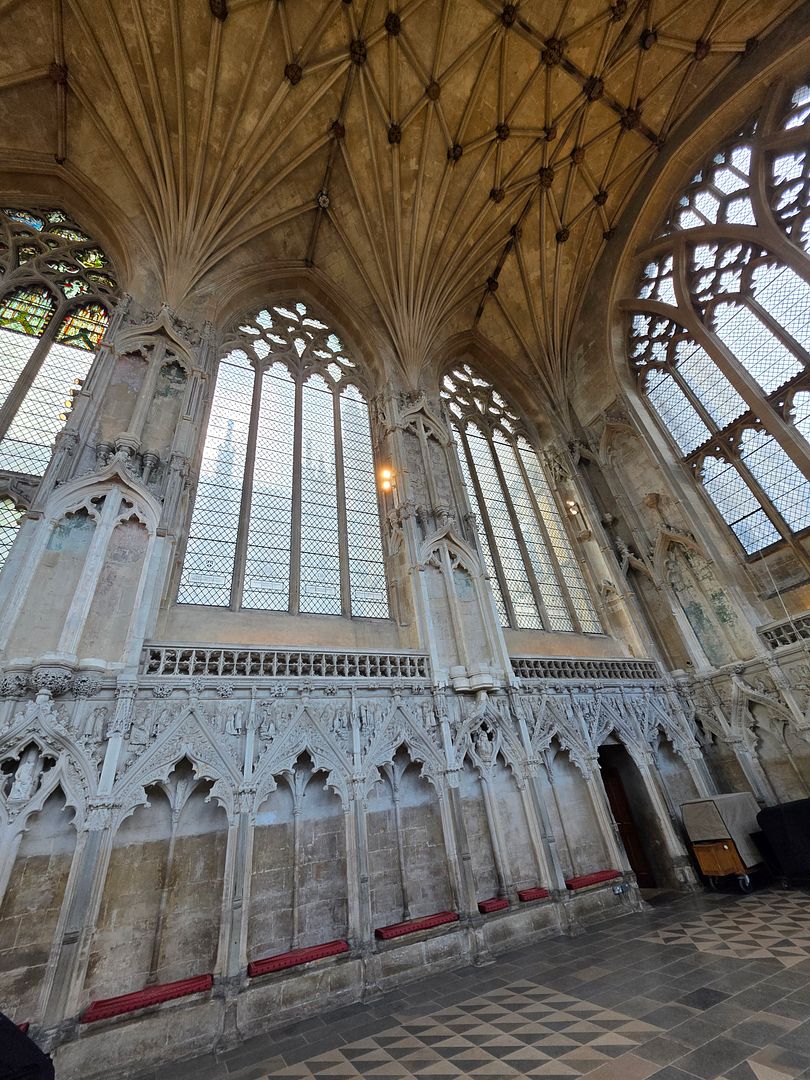
We were now entering the Lady Chapel, the largest Lady Chapel attached to any British Cathedral. I copied the following from Ely Cathedral’s Website.

The thirteenth and fourteenth centuries saw the rise of the cult of the Virgin Mary, and chapels in her honour were added to many churches and cathedrals, including Ely.

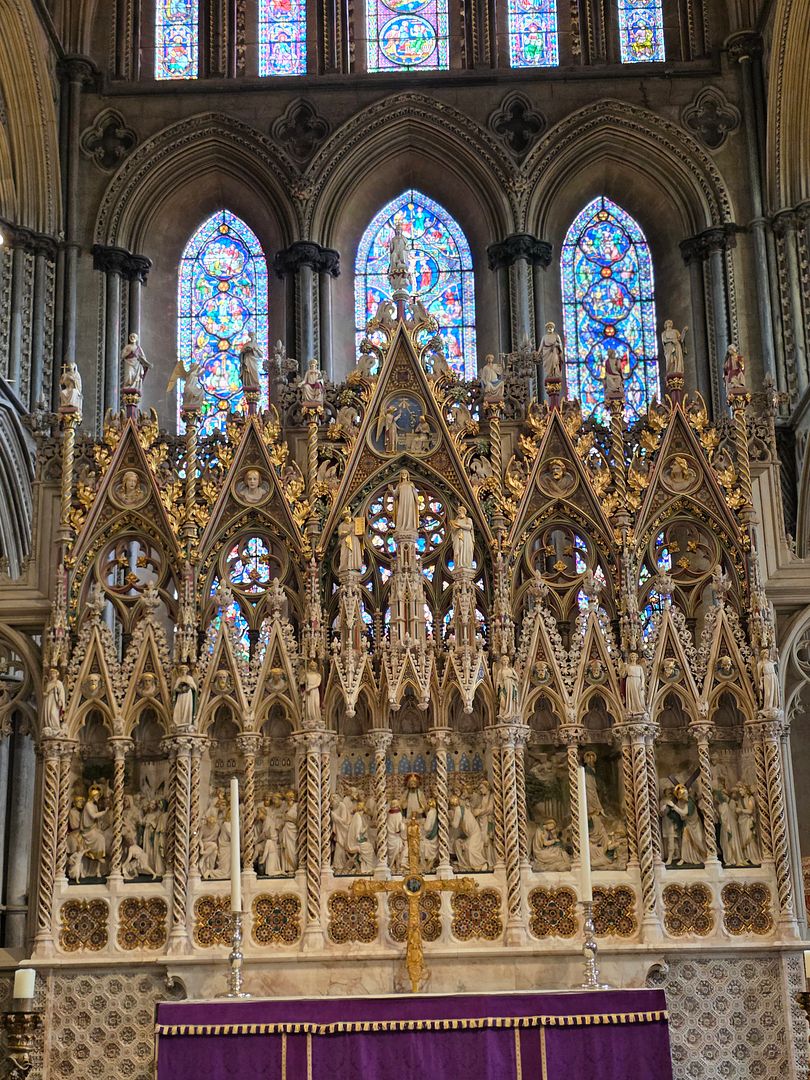
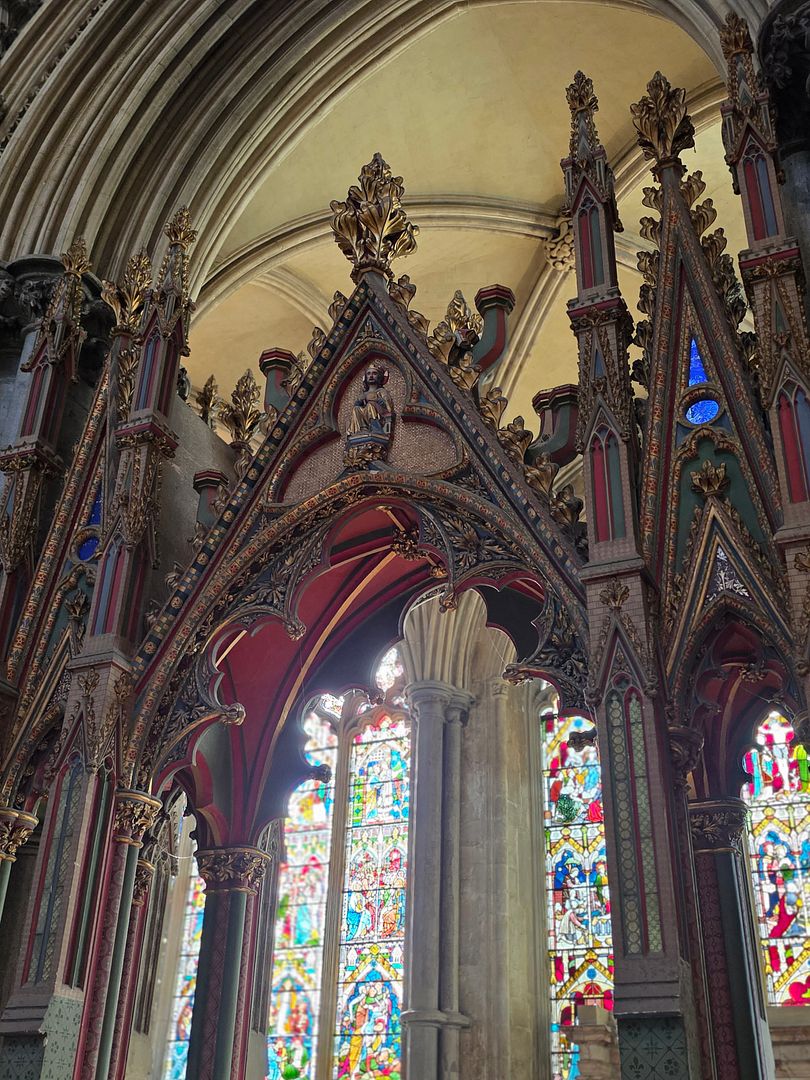
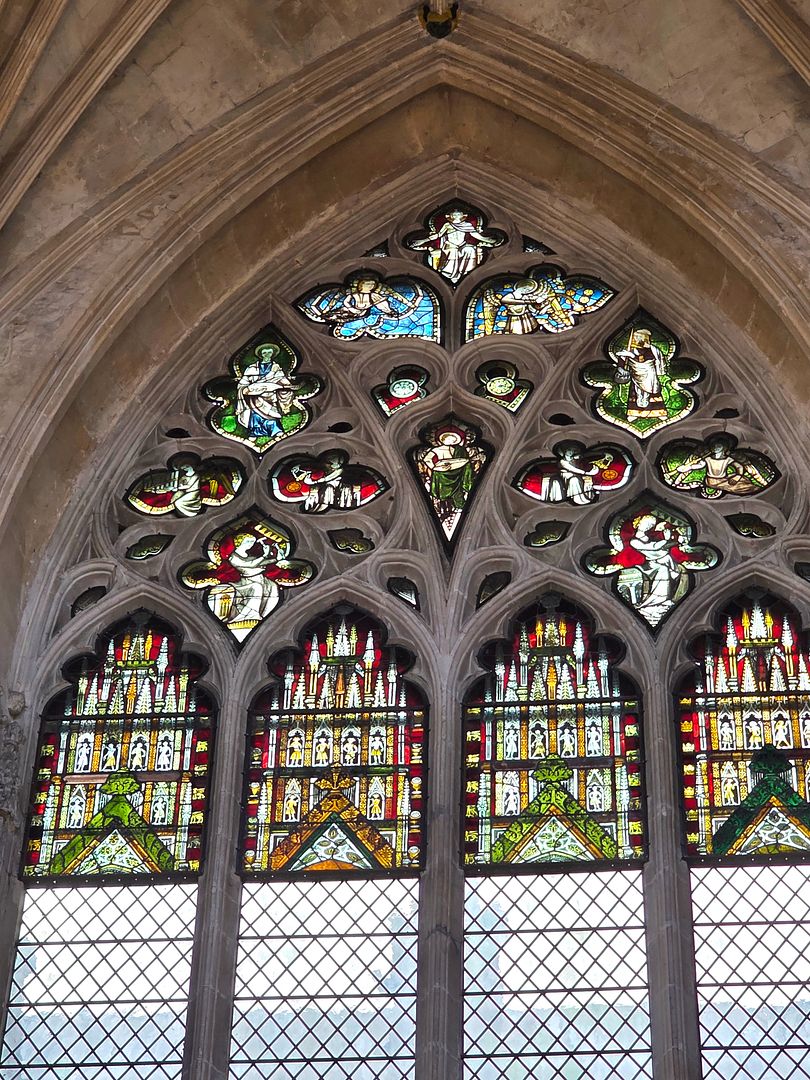
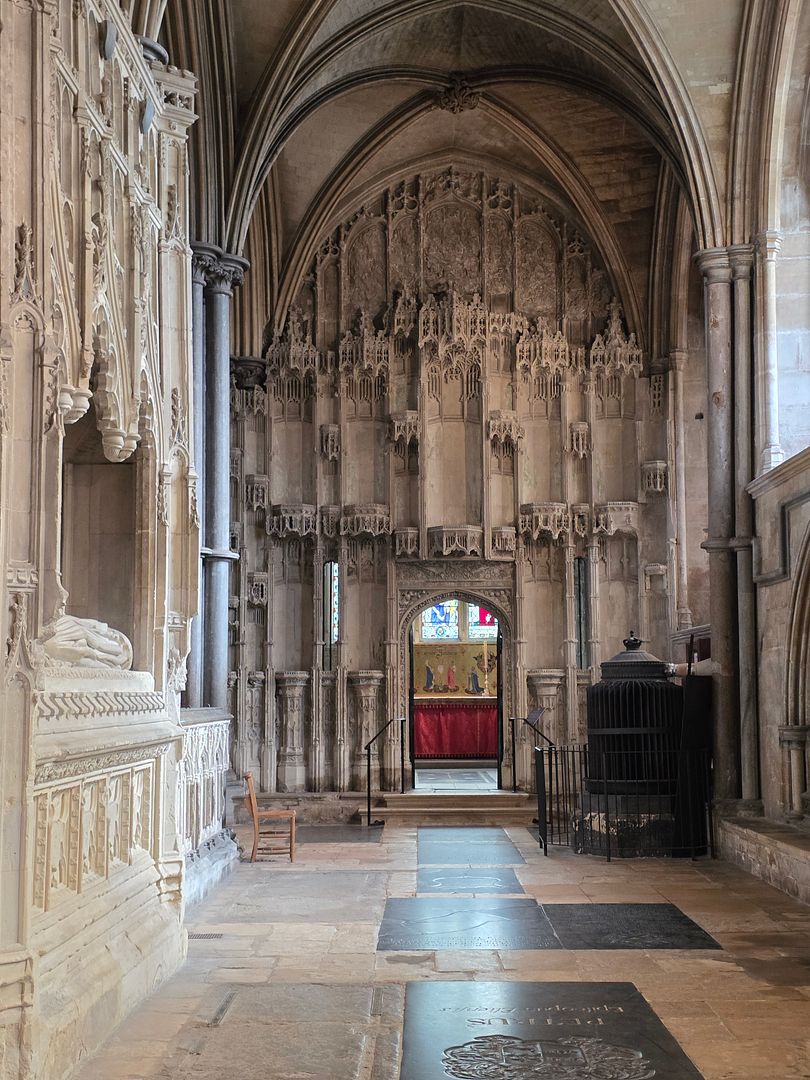
All this was destroyed in the sixteenth century during the Reformation, which, in keeping with Puritan convictions, rejected all forms of religious decoration. The scars of this deformation are highly visible today. Traces of coloured paint can still be seen, and fragments of the glass survive in the central window on the south side. The exquisite figures in the lower niches have been defaced and above are the empty pedestals where the statues stood.

Walking back into the main sections of the Cathedral.

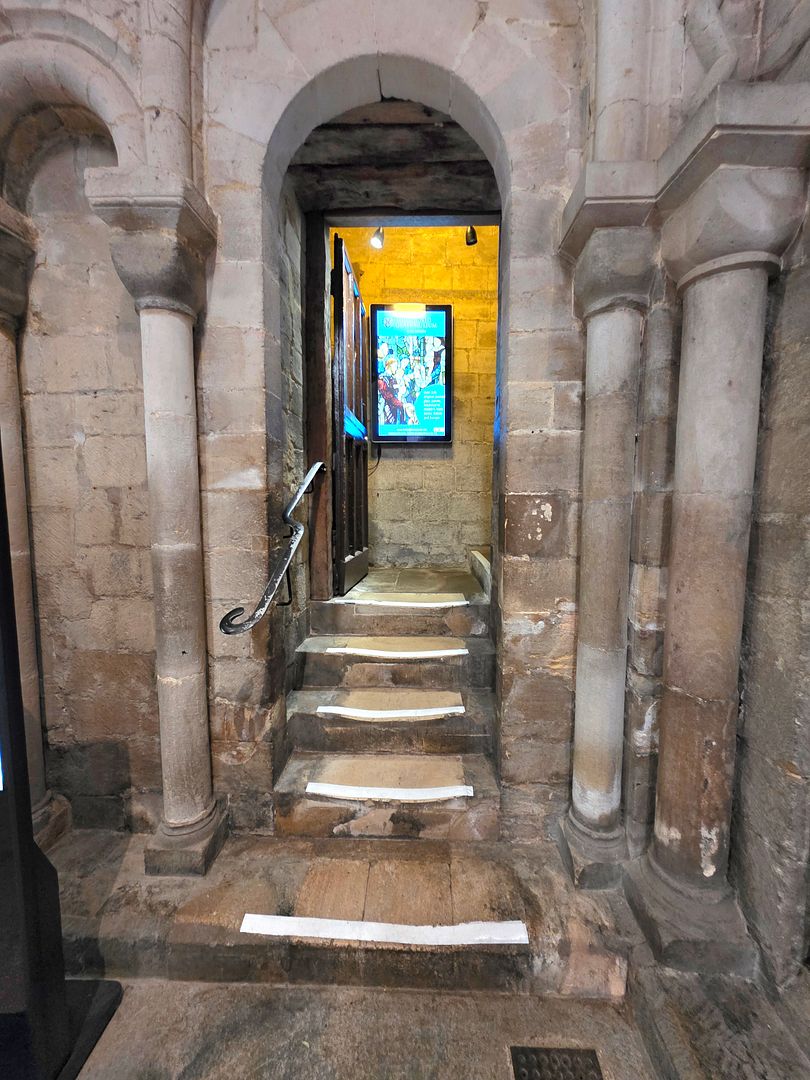
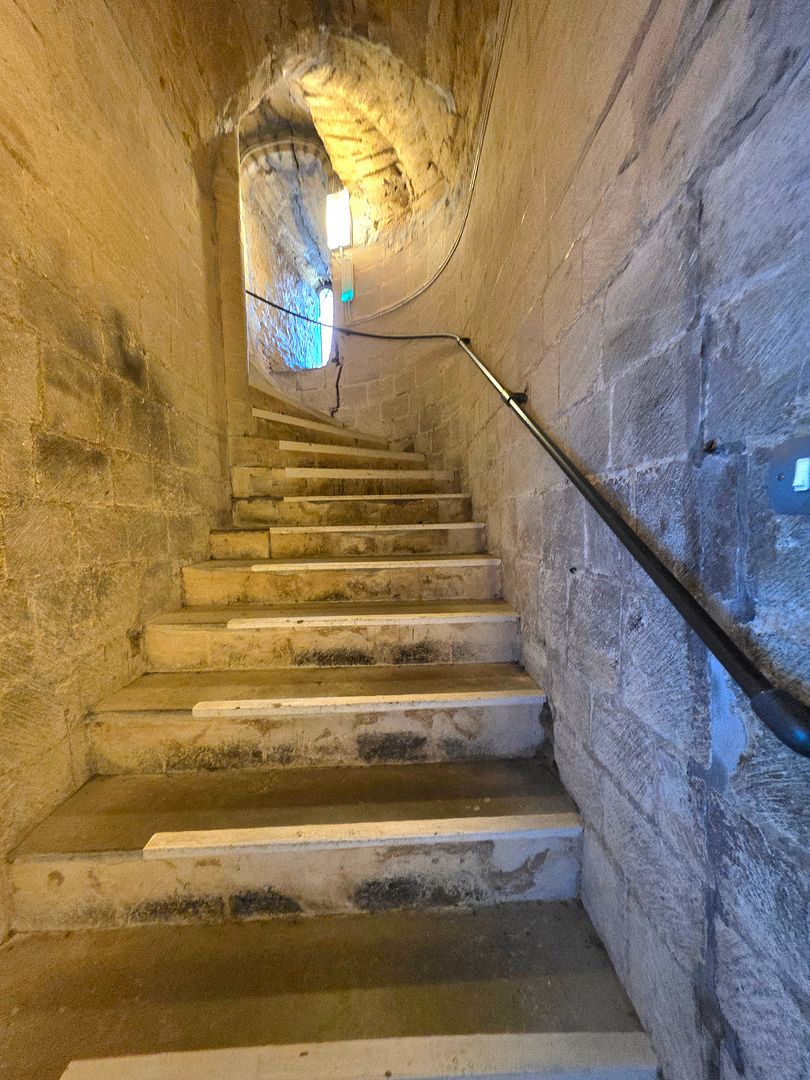
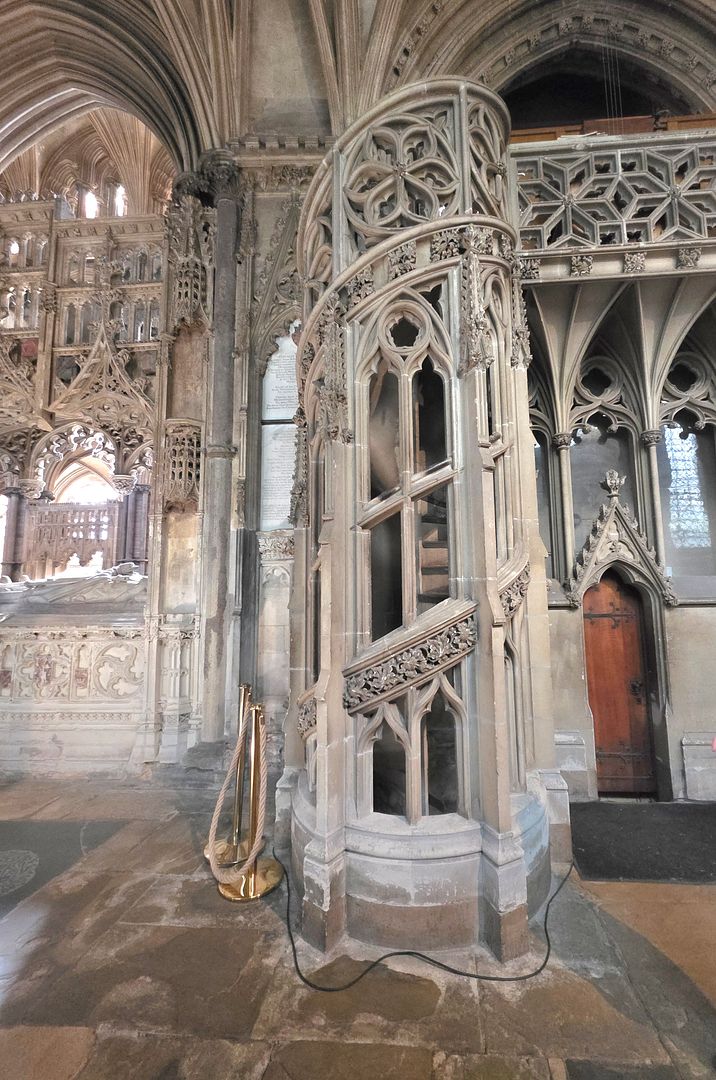
This narrow spiraling stone staircase leads to the organ. Hopefully the organist was slim.


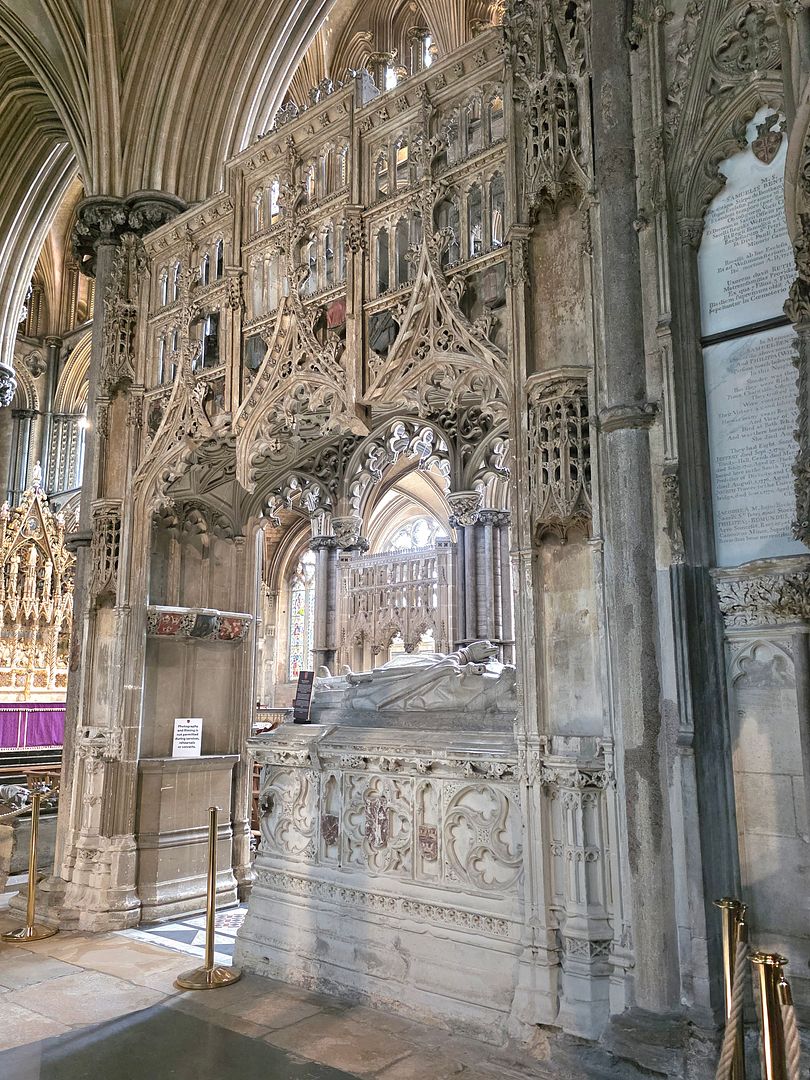
The Quire

So much history and so much to see and take in. I’ve shared enough or maybe too much here today and it would take a few more visits to absorb more.

This was a very long photo journal of the interior of Ely Cathedral. I will save the stained glass museum housed in an upper section of the cathedral for another day.

Cambridge – Tuesday March 10th

Our travel journal of our time in Cambridge continues here from March 2026.

It was nice to enjoy our French press coffee on this morning before we headed out for breakfast at The Copper Kettle on King’s Parade in Cambridge.

It was a lovely morning and I took some photos along the way to breakfast.

We would sign up for a tour of Trinity College later in the week.

Looking out the window of the Copper Kettle.

I’ve never met a scone I didn’t like.

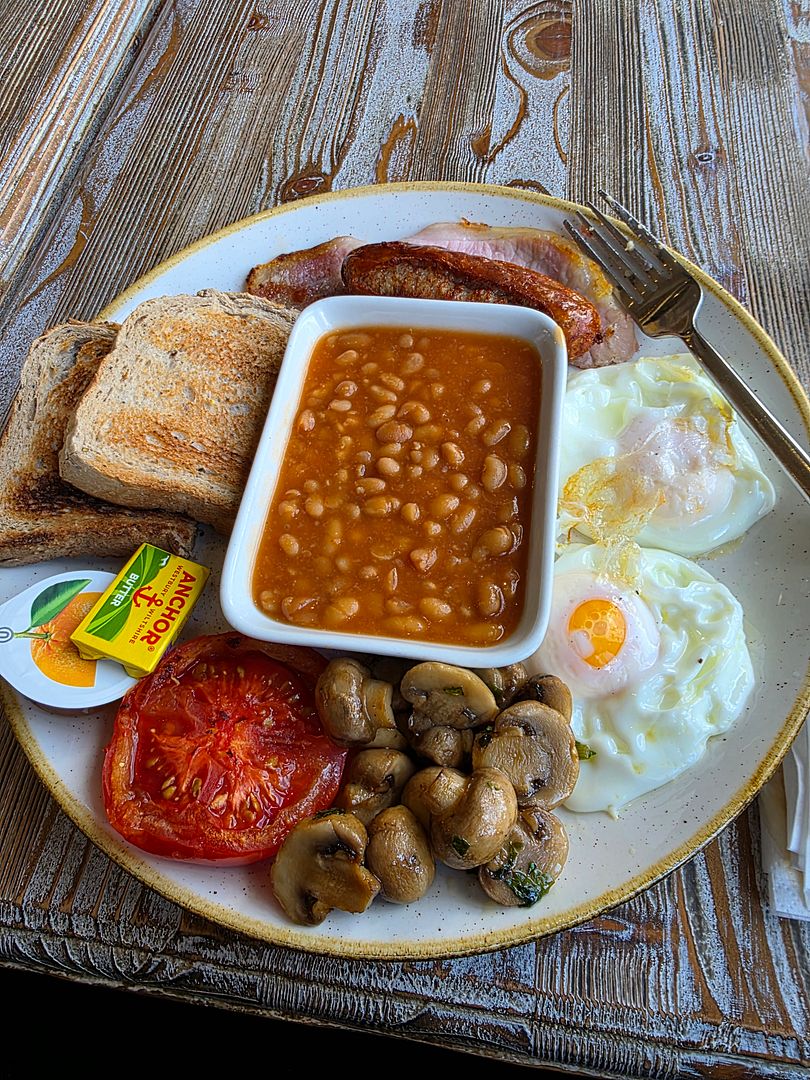
Greg went for the full English.

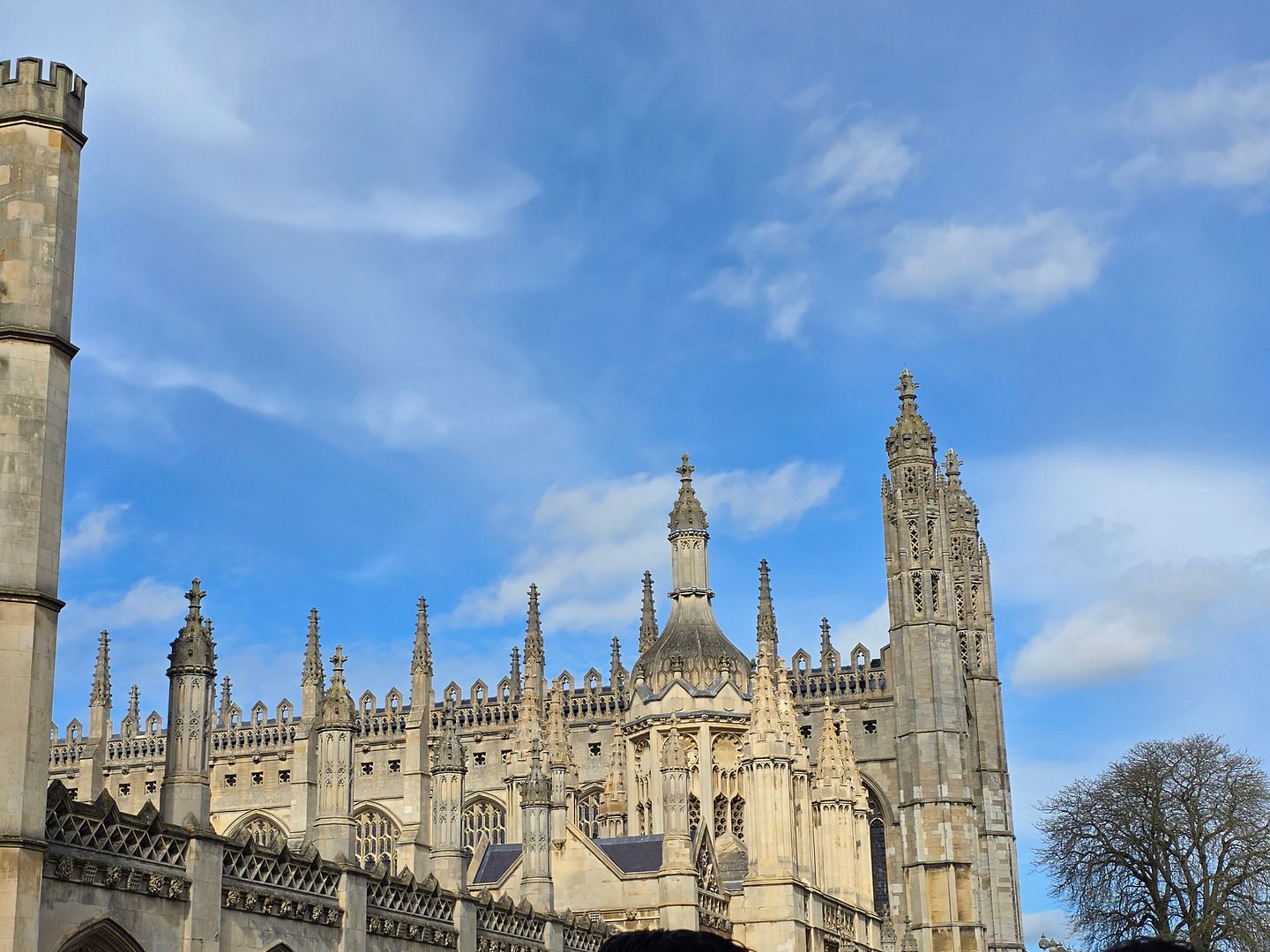
The Views from breakfast were lovely. This is the college and especially the chapel that would be part of our tour on this day.

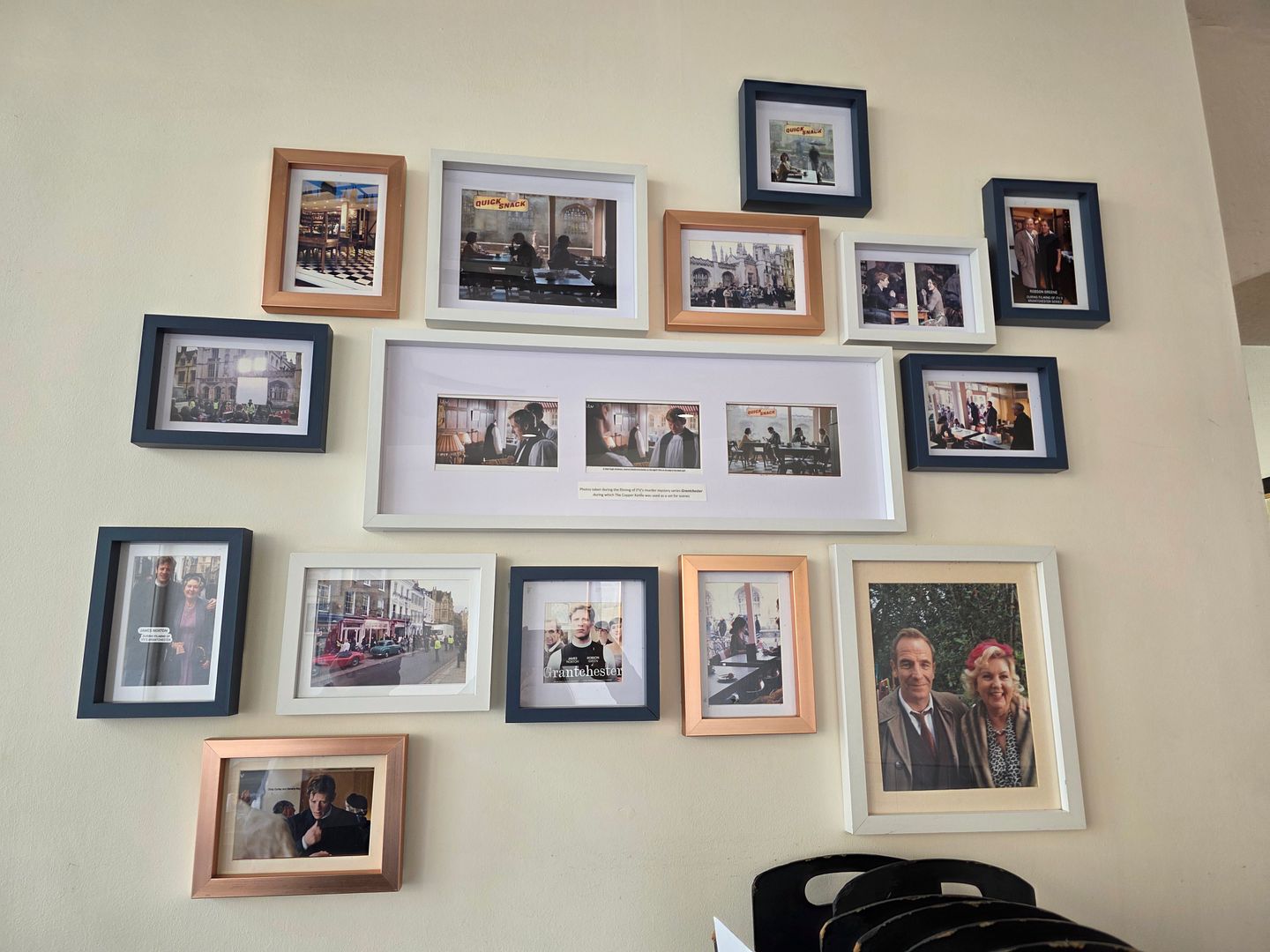
This cafe was used in some of the filming for Grantchester. (Possibly as a tea-room?)

After breakfast we met up with our alumni tour guide and group for a 2 hour tour that would include King’s Chapel.

St Bene’t’s church on Bene’t’s street was one of our stops.

St Bene’t’s has been a place of Christian prayer and worship for nearly a thousand years. The exact date is in dispute; estimates vary between the tenth century and the reign of Edward the Confessor, but there are good grounds for placing it in the reign of King Canute about the year 1020. More history at this link.

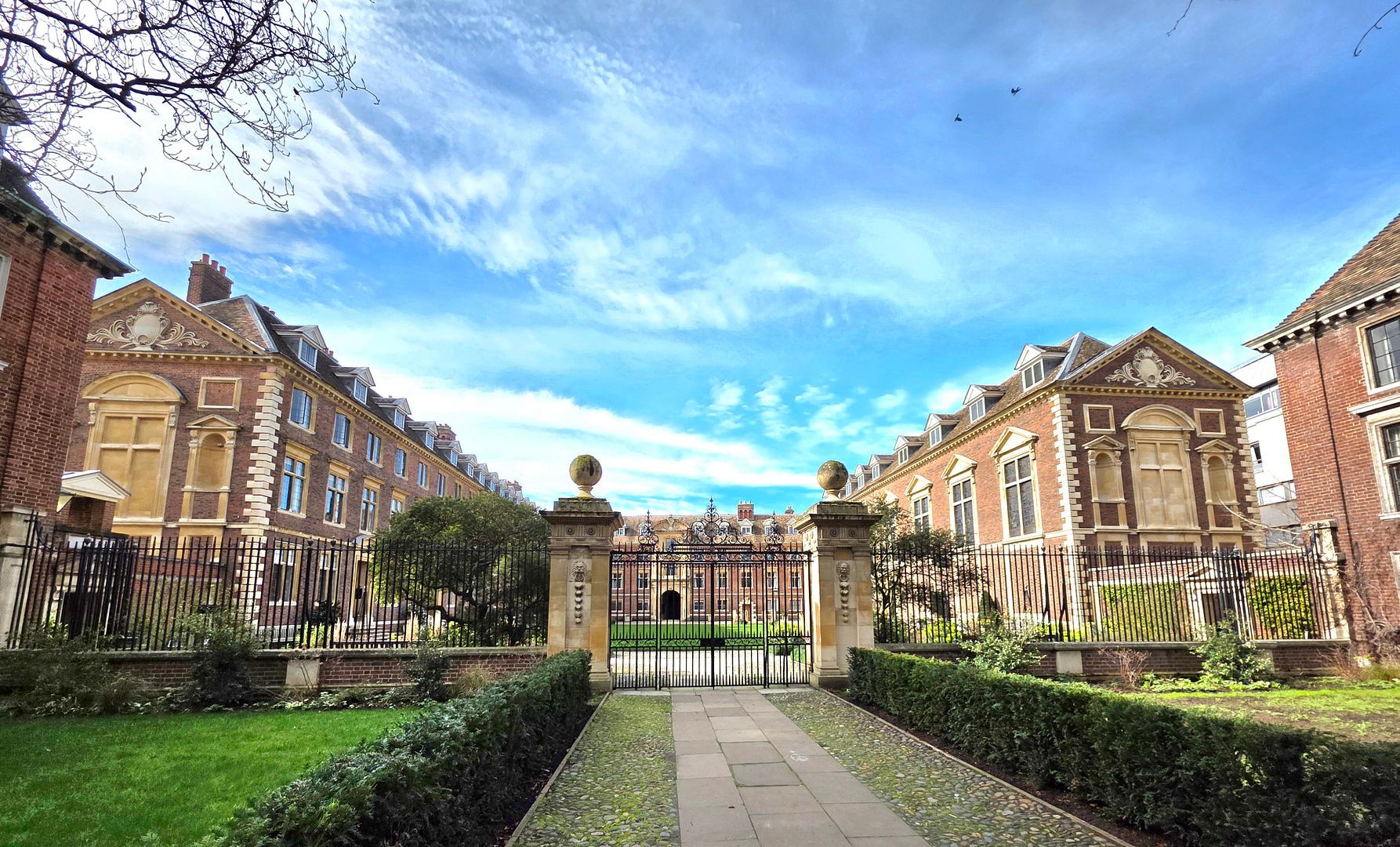
St. Catharine’s College.

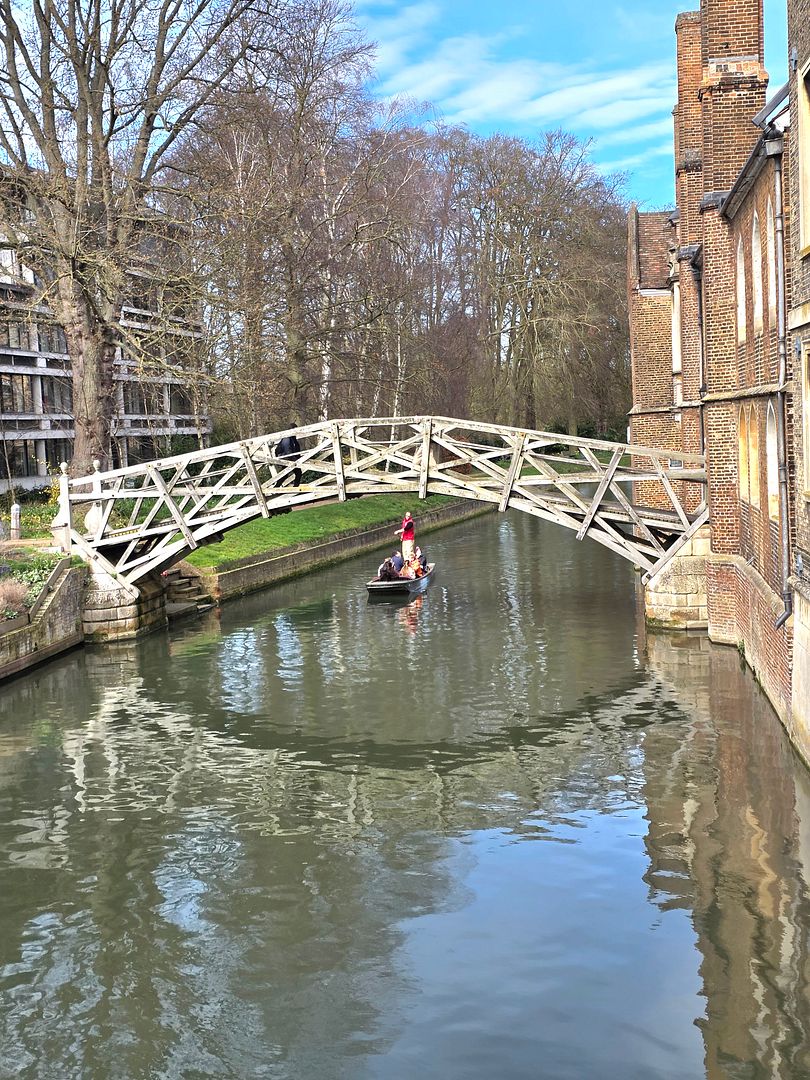
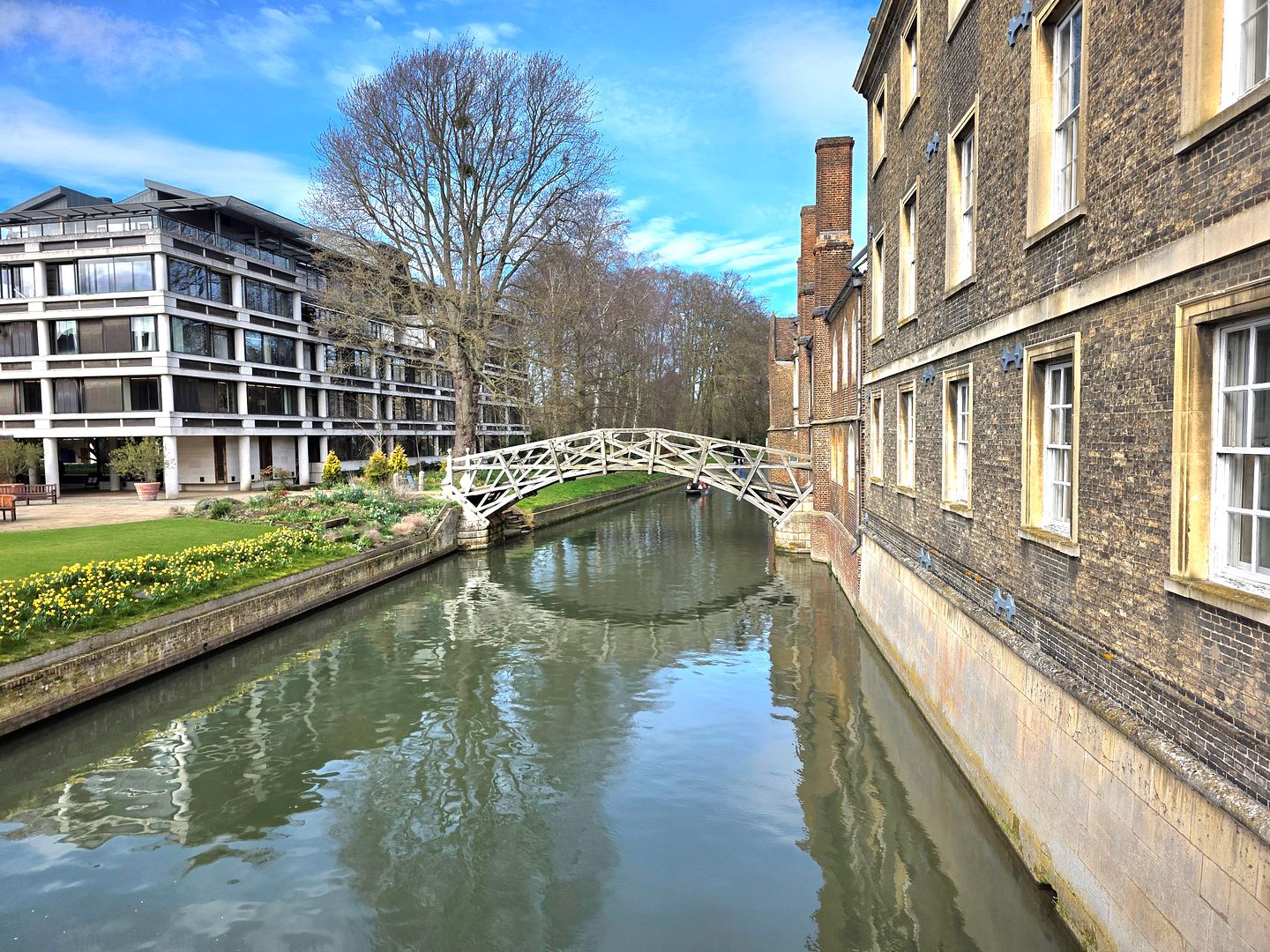
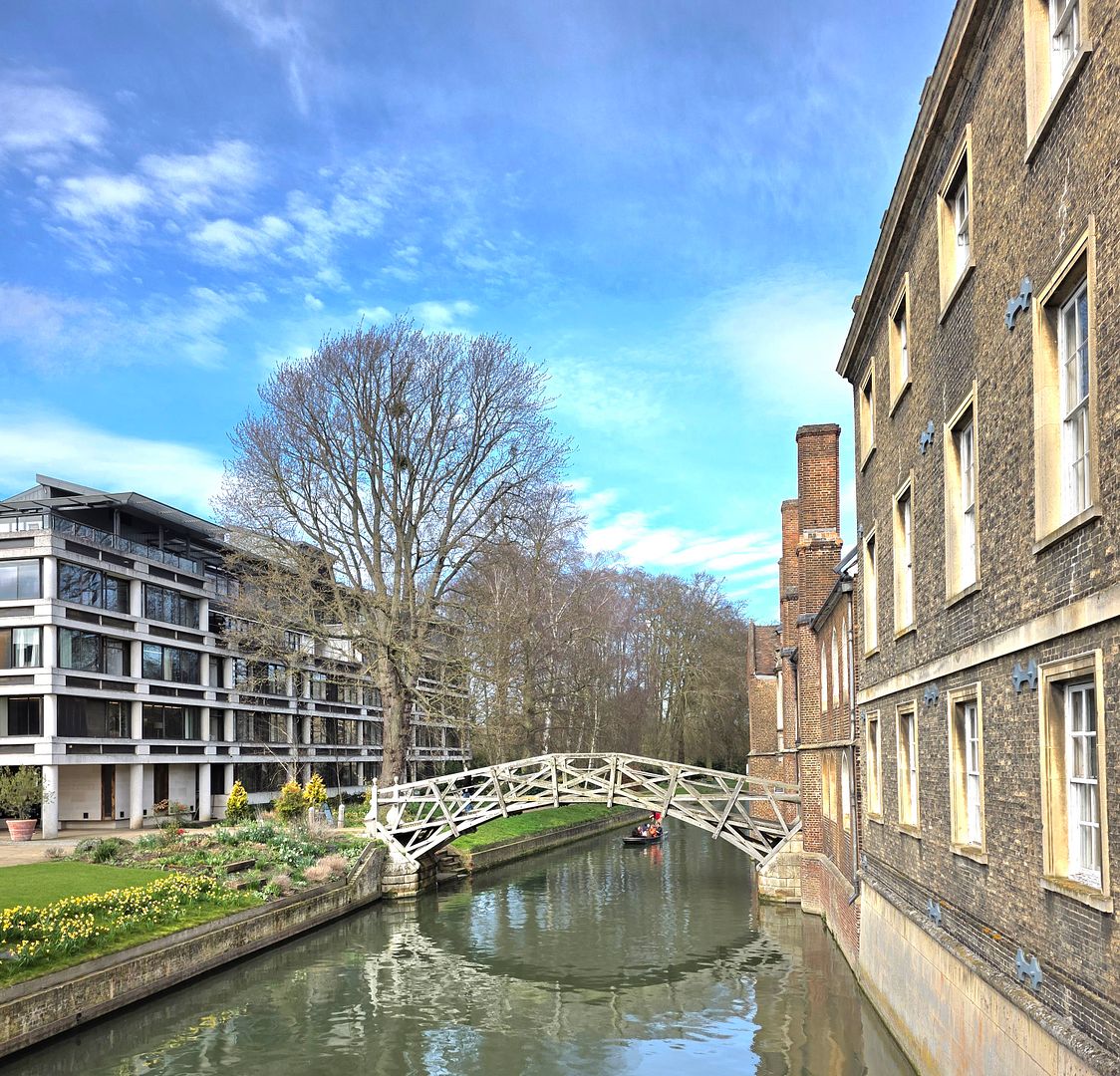
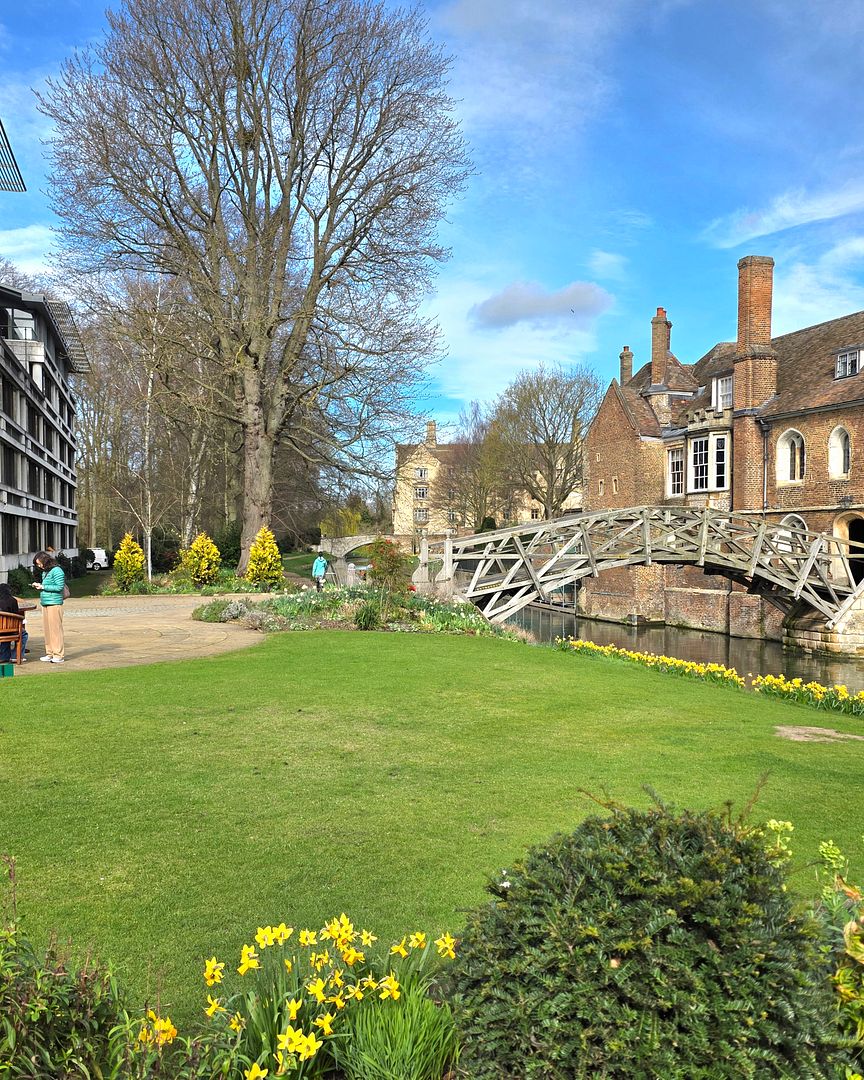
We continued on Silver Street to Queen’s college where the famous Mathematical Bridge spans the River Cam. I was chuckling here as I remembered the new quirky Ludwig murder series filmed in Cambridge. One of the episodes featured the bridge, the building on the left which is part of Queen’s college and a chapel. Have you watched the series. I highly recommend it.

The bridge was designed in 1748 by William Etheridge (1709–76), and was built in 1749 by James Essex the Younger (1722–84). It has subsequently been repaired in 1866 and rebuilt to the same design in 1905. More info here.

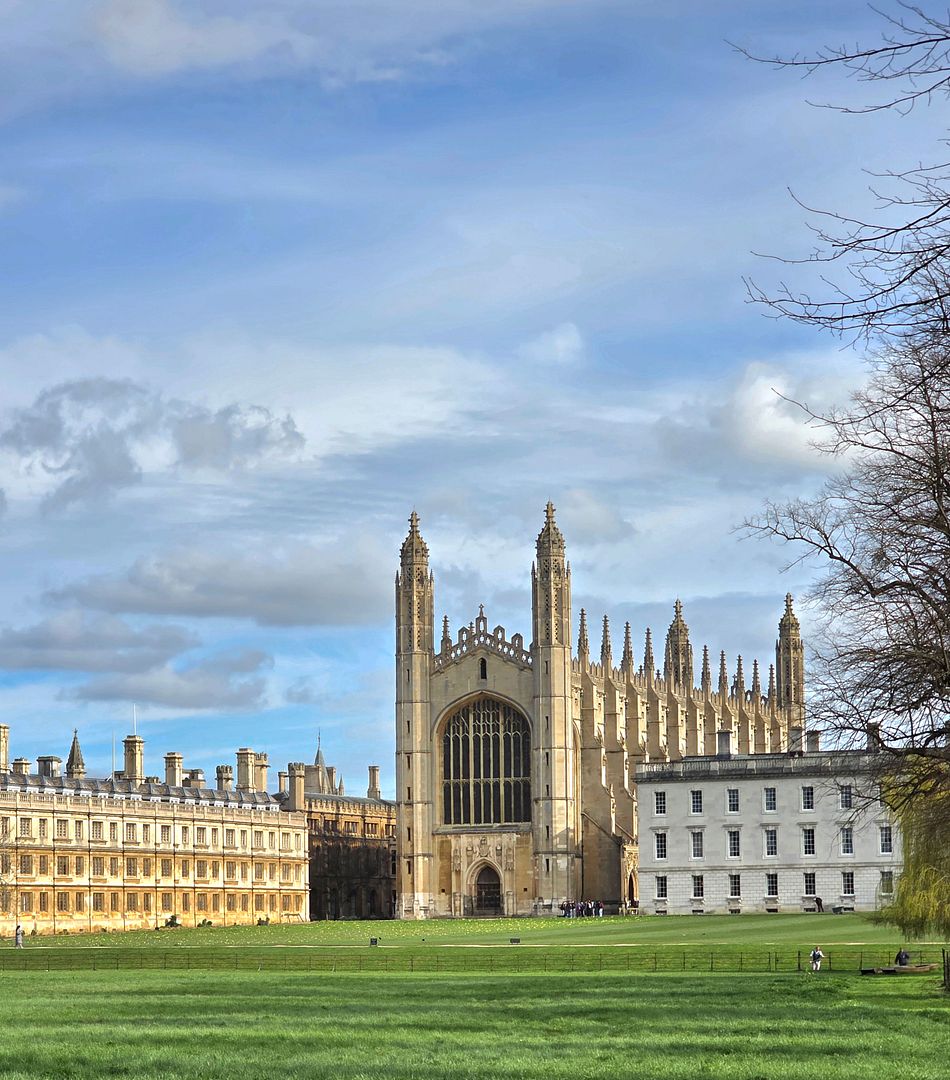
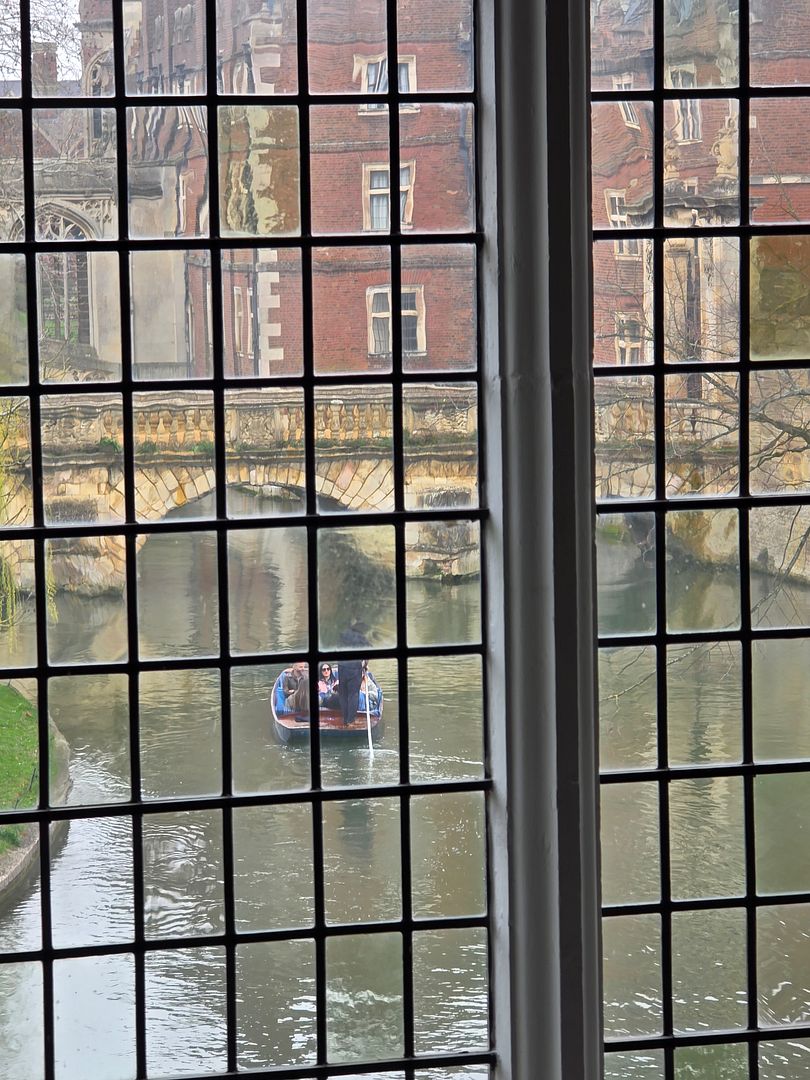
We continued on Silver Street to Queen Street on ‘the backs’ with some nice views of King’s College Chapel.

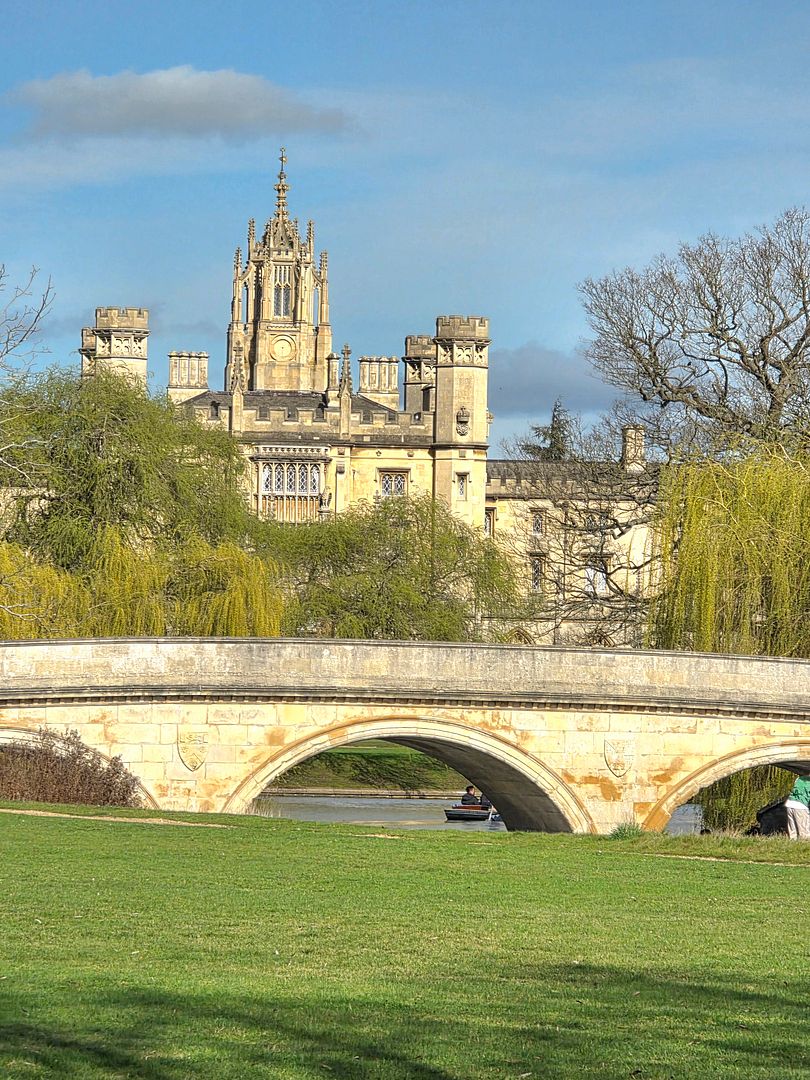
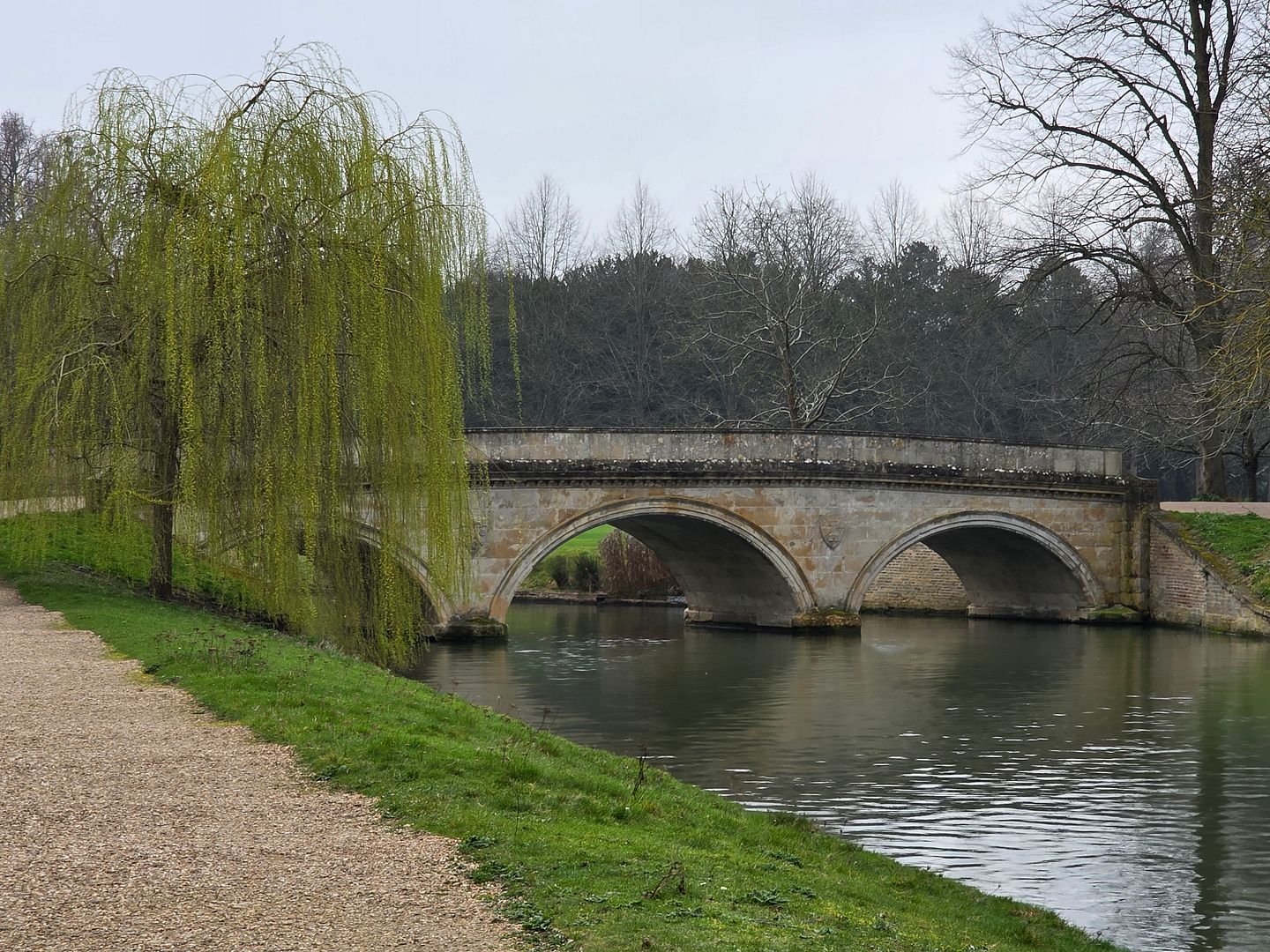
This is Trinity College Bridge.

St. John’s with the clock tower without an actual clock.

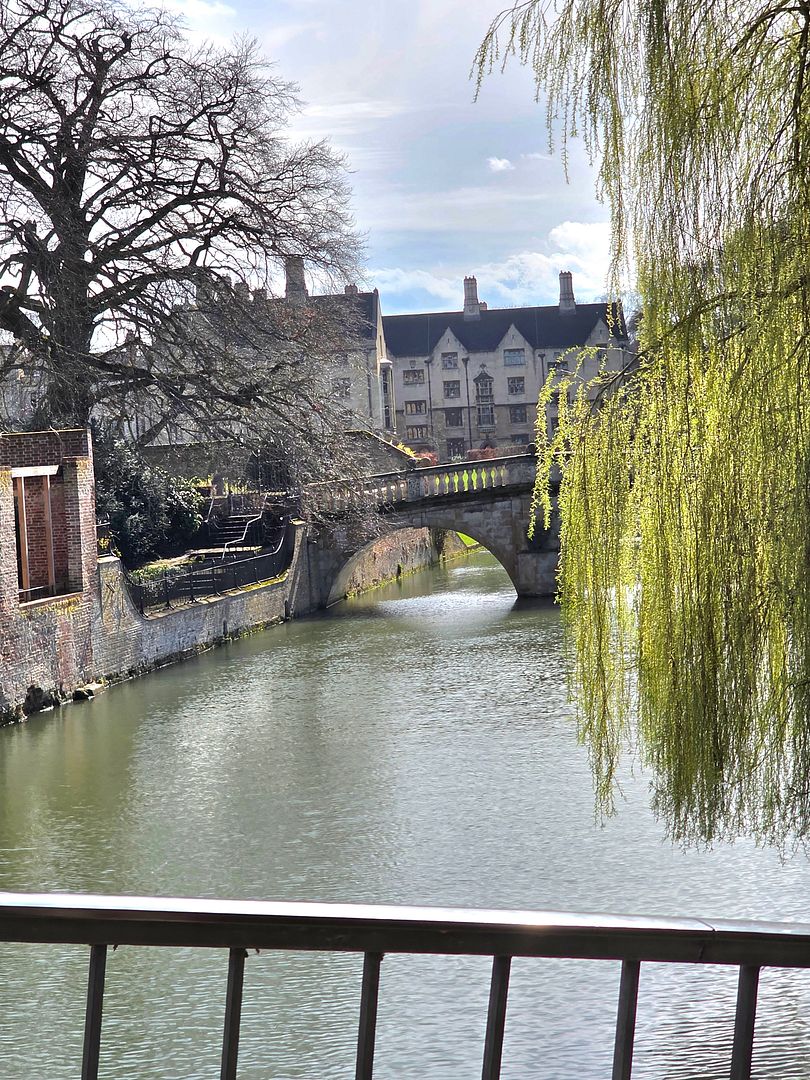
This bridge might be the Kitchen Bridge.

Working our way back to the King’s Parade to King’s College where our tour began and would end except for those of us who paid extra to go into King’s College to be able to visit King’s College Chapel.

The Chapel deserves a post of it’s own and that will come on another day.

Jesus Prepares to Die…

GOTW-practice035

On the Thursday of Easter week we remember the Passover supper Jesus had with his disciples and the washing of the disciples feet. Some of what Jesus shared with his disciples on this day in history is copied below.

Excerpts from John chapter 13…

It was just before the Passover Feast. Jesus knew that the time had come for him to leave this world and go to the Father. Having loved his own who were in the world, he now showed them the full extent of his love.

Jesus knew that the Father had put all things under his power, and that he had come from God and was returning to God;  so he got up from the meal, took off his outer clothing, and wrapped a towel around his waist.  After that, he poured water into a basin and began to wash his disciples’ feet, drying them with the towel that was wrapped around him.

When he had finished washing their feet, he put on his clothes and returned to his place. “Do you understand what I have done for you?” he asked them.  “You call me ‘Teacher’ and ‘Lord,’ and rightly so, for that is what I am.  Now that I, your Lord and Teacher, have washed your feet, you also should wash one another’s feet.  I have set you an example that you should do as I have done for you.
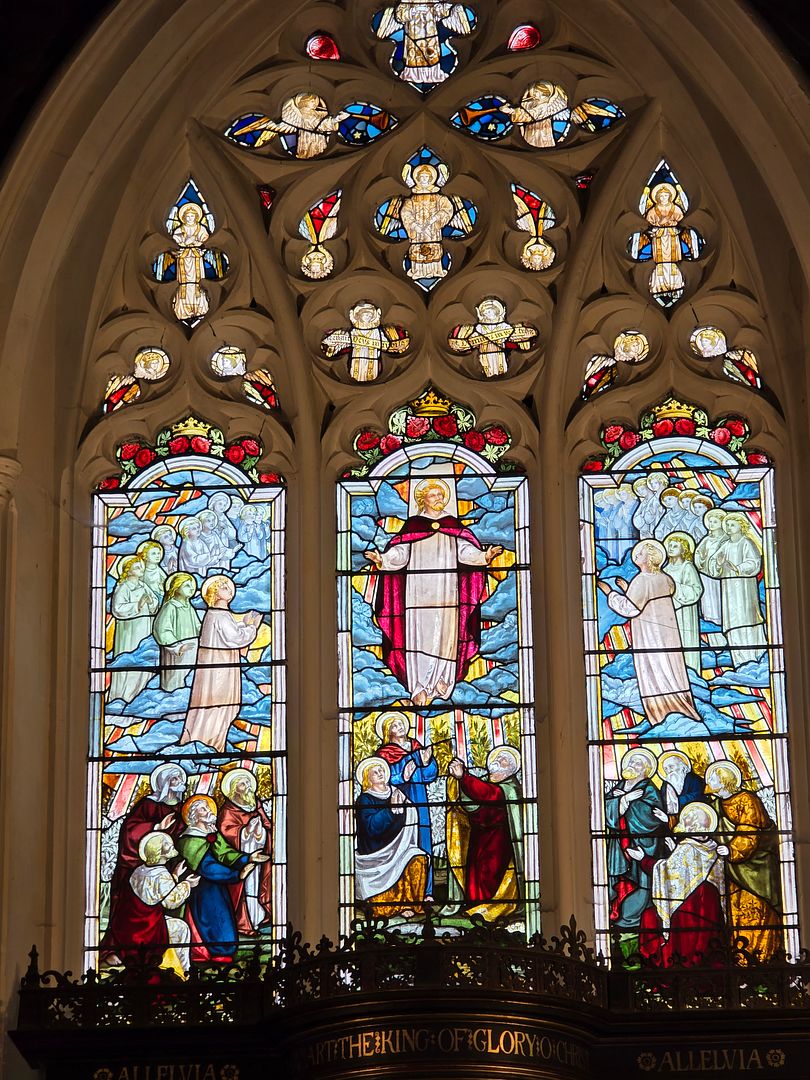
“A new command I give you: Love one another. As I have loved you, so you must love one another.  By this all men will know that you are my disciples, if you love one another.”
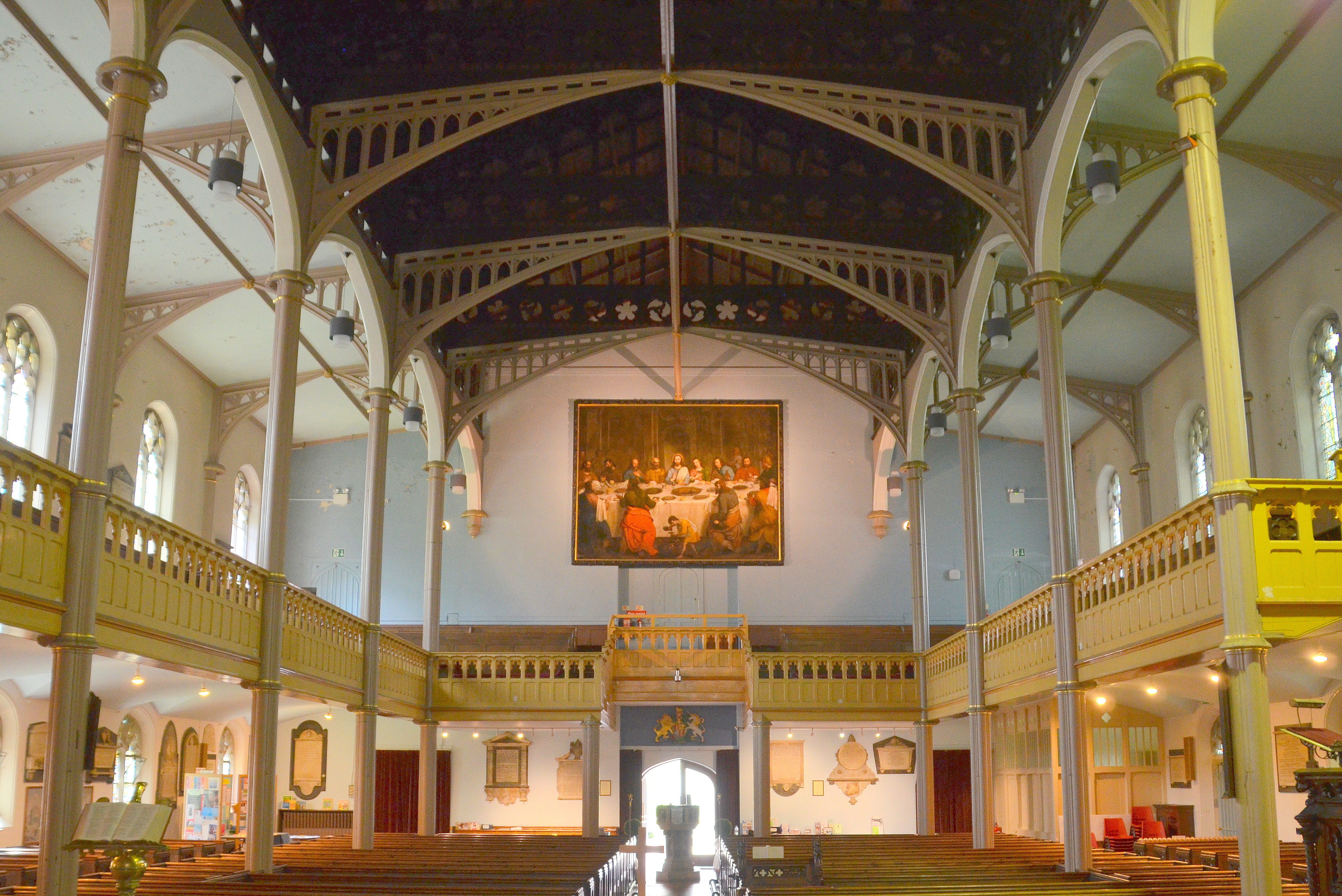
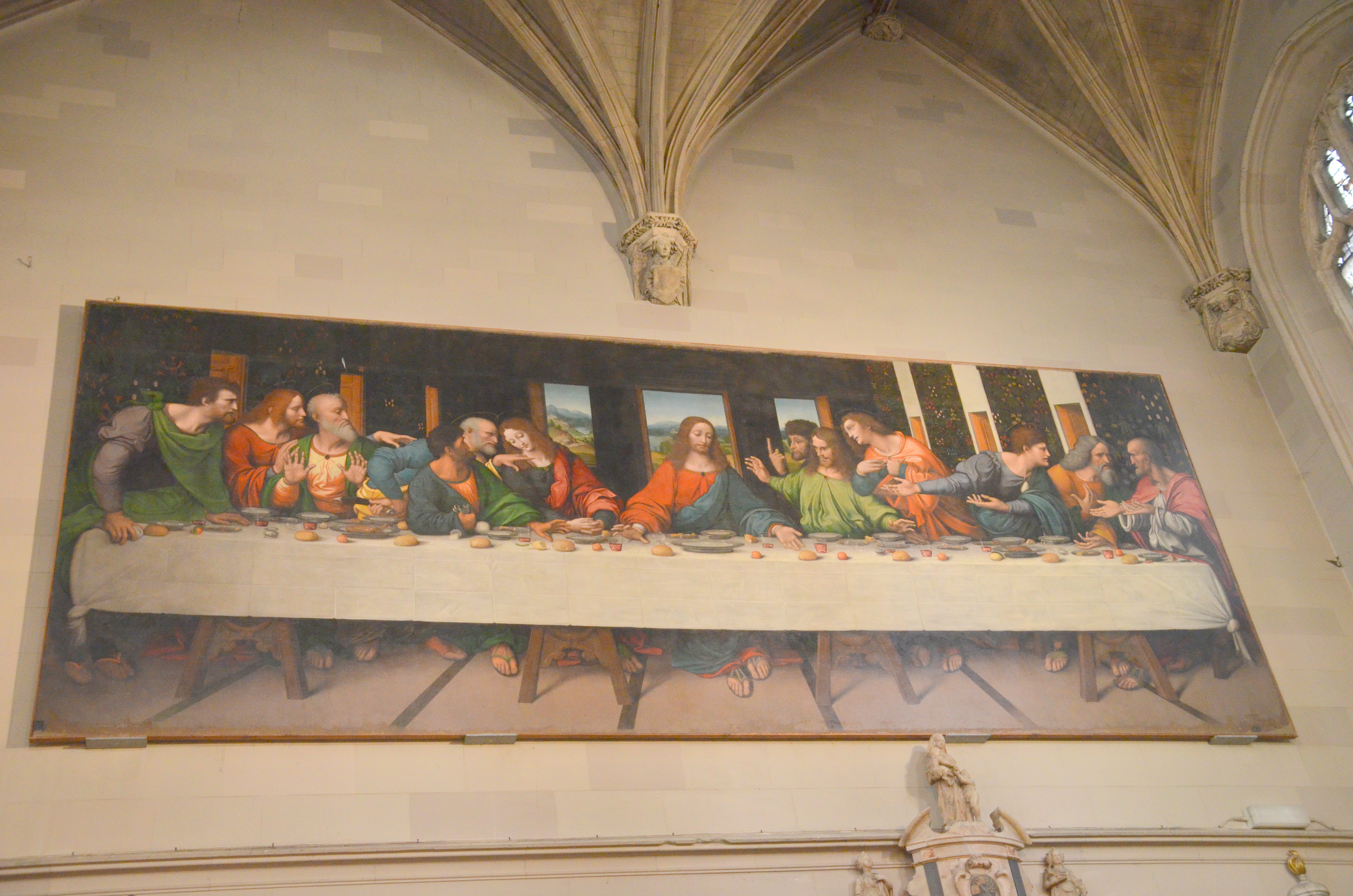
Artists have tried to depict the last supper and we’ve seen some of those attempts in person over the years in our travels.

While in England in 2014 year we saw two amazing paintings of the last supper, one in the Parish Church of St. John the Baptist in Windsor and one in the chapel of Magdalen College.

The Thames 094

The Thames 104 - Copy - Copy

Oxford Day 6 141Above the stalls in the chapel hangs Giampetrino’s remarkable 15th copy of Leonardo da Vinci’s The Last Supper, on permanent loan from the Royal Academy. In view of the bad condition of the original fresco in Milan, Magdalen’s copy on canvas is a piece of increasing historic and artistic significance.

Oxford Day 6 144

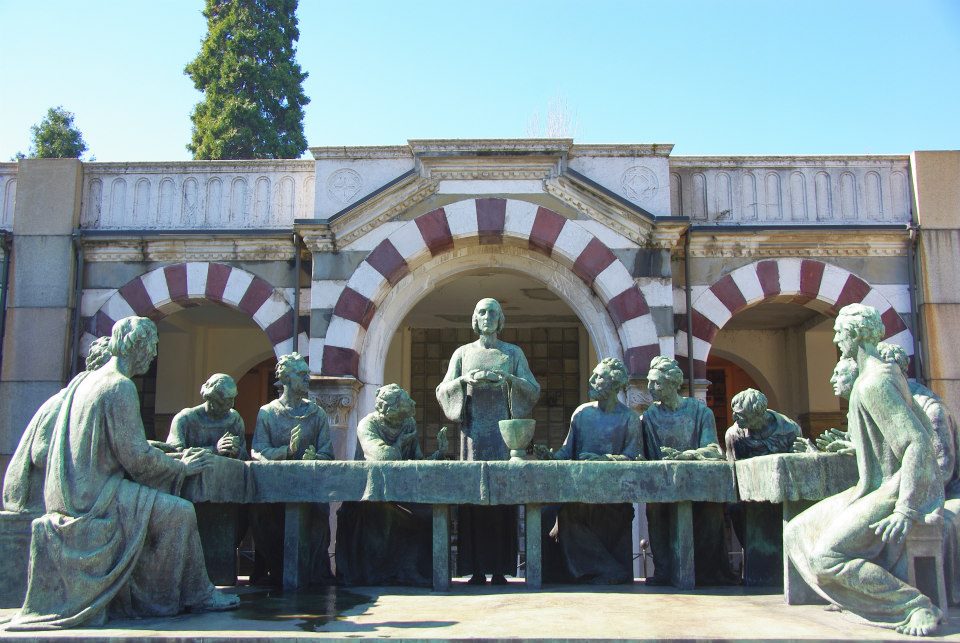
This photo is a life sized artist’s depiction of the night Jesus had the Passover meal with his disciples, the event we call the Last Supper. This was taken at the Monumentale Cemetery in Milan Italy in 2013. “Do this in remembrance of me”
There seems to be only 11 of the 12 disciples which makes me wonder if the artist depicted the scene after Judas Iscariot, the betrayer, had left the meal.

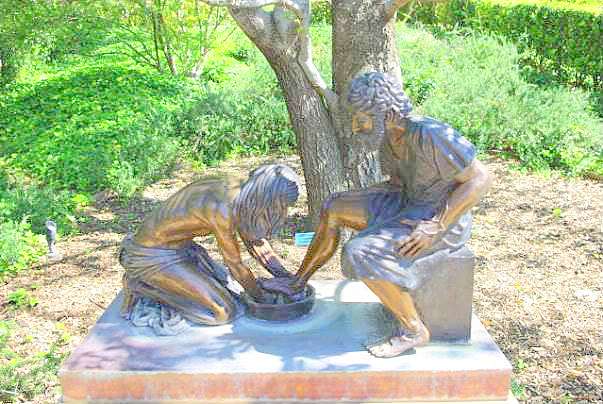
The sculpture of Jesus washing Peter’s feet at the top of this post was taken in Thousand Oaks California at the Gardens of the World. 

“Come, my heart, rejoice in the immunity that your Redeemer has secured for you, and bless His name all day and everyday.” C.H. Spurgeon

Easter week, remembering what was accomplished by Jesus on the Cross and in His resurrection, our redemption, is celebrated every week and every day for true believers!

Seventy Five!

Today is my seventy fifth birthday. God has been so good to me. We will be traveling all the live long day today. From Cambridge to London to Seattle to Spokane and then home again, home again, jiggity jig!

It will be good to be home again and to get our bearings.

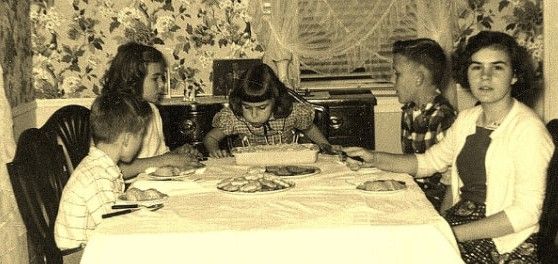
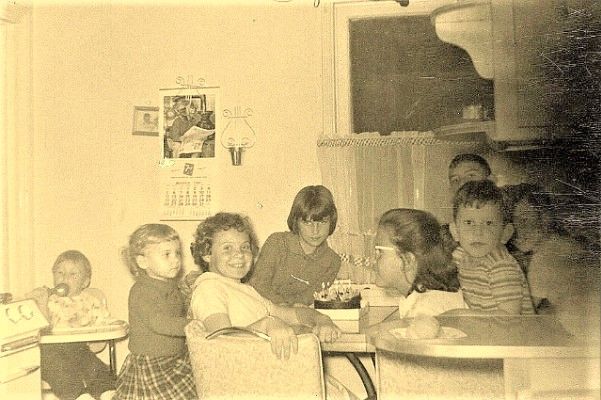
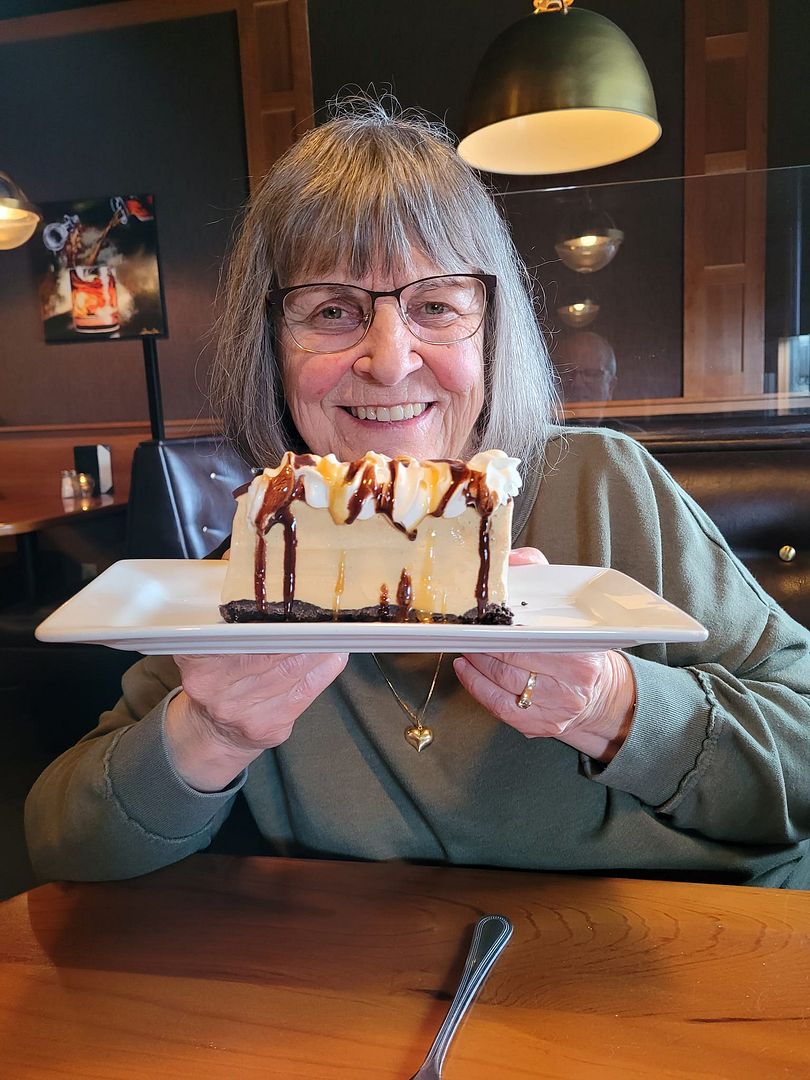
Here are some birthday photos from the past.


The lines have fallen for me in pleasant places;
    indeed, I have a beautiful inheritance.

Thank You, LORD!


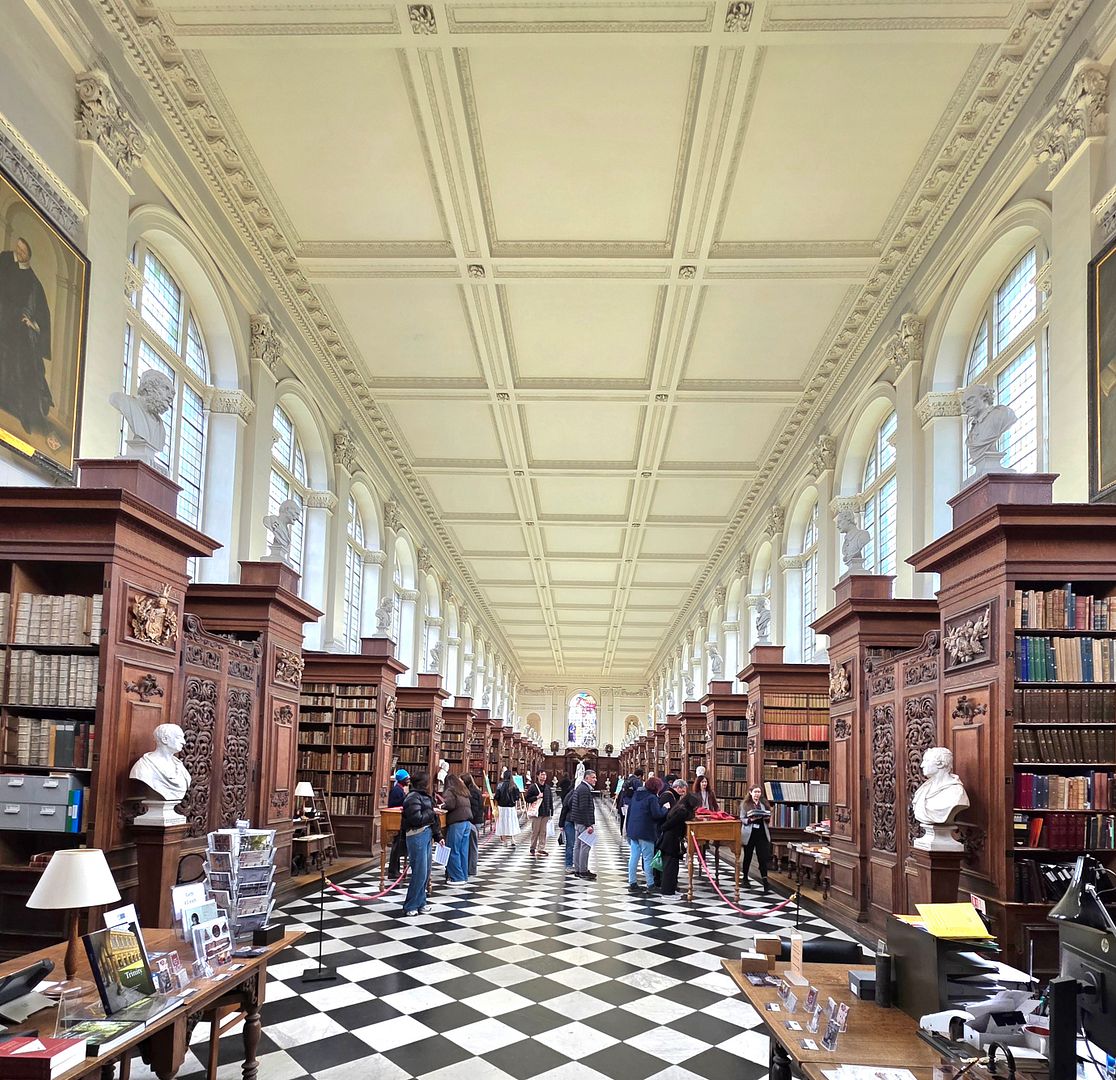
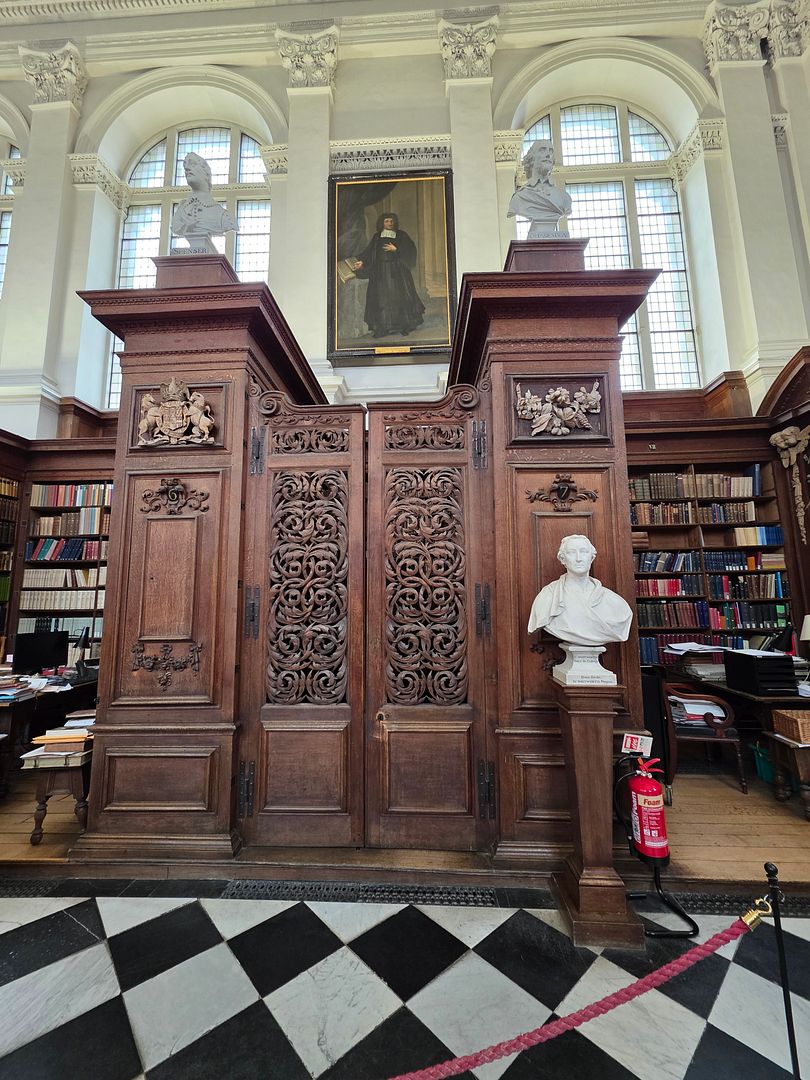
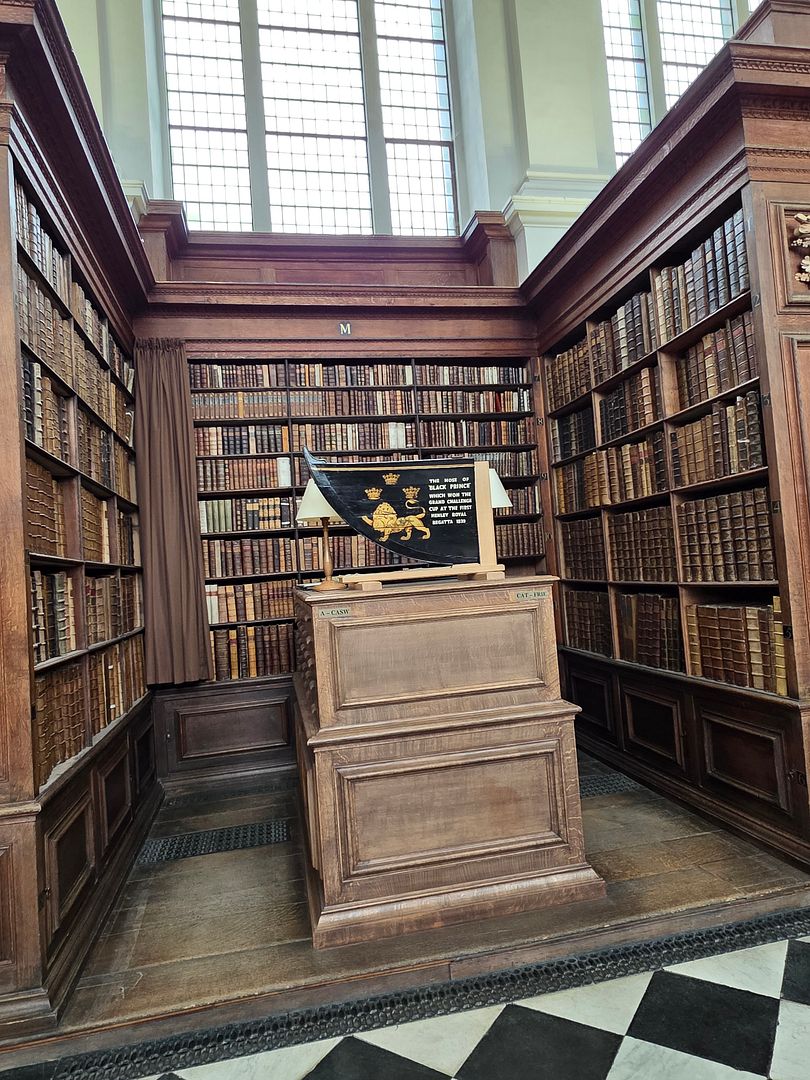
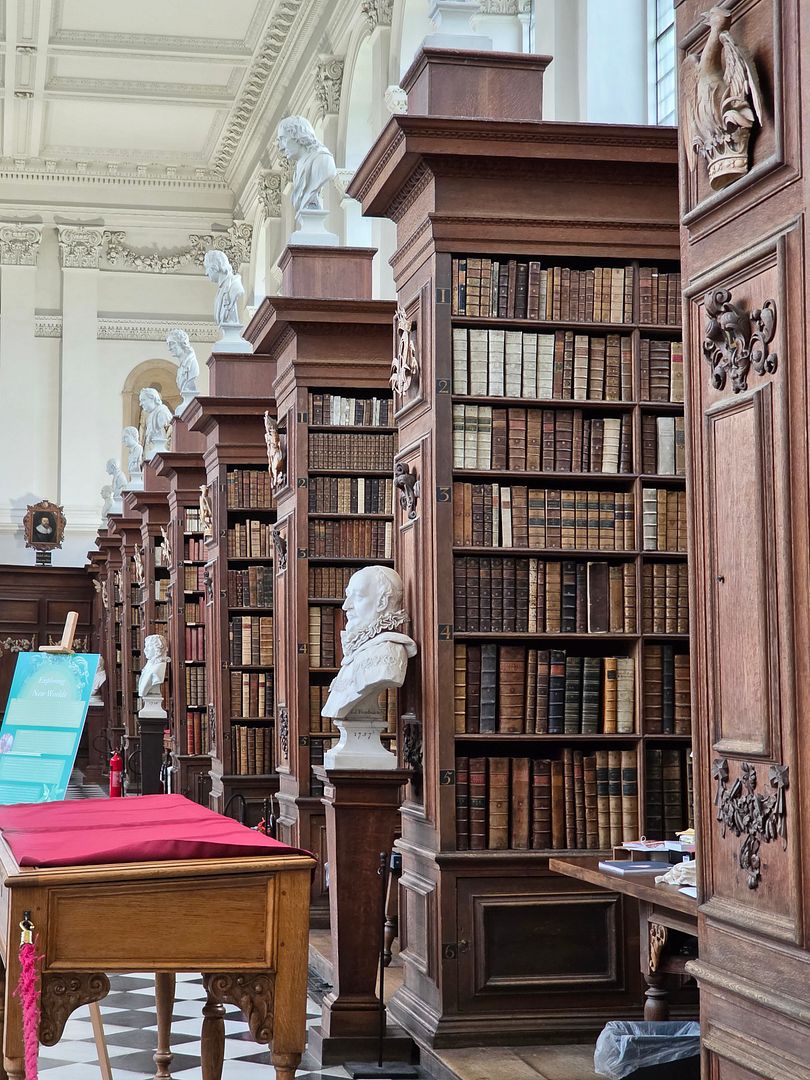
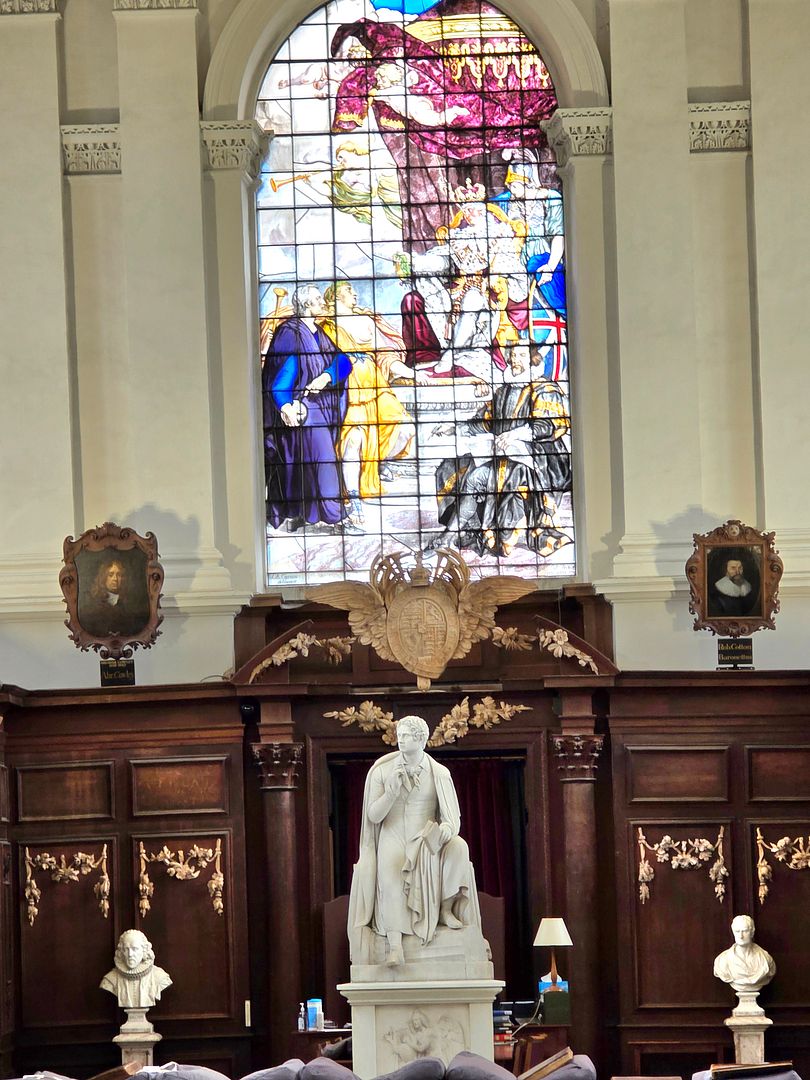
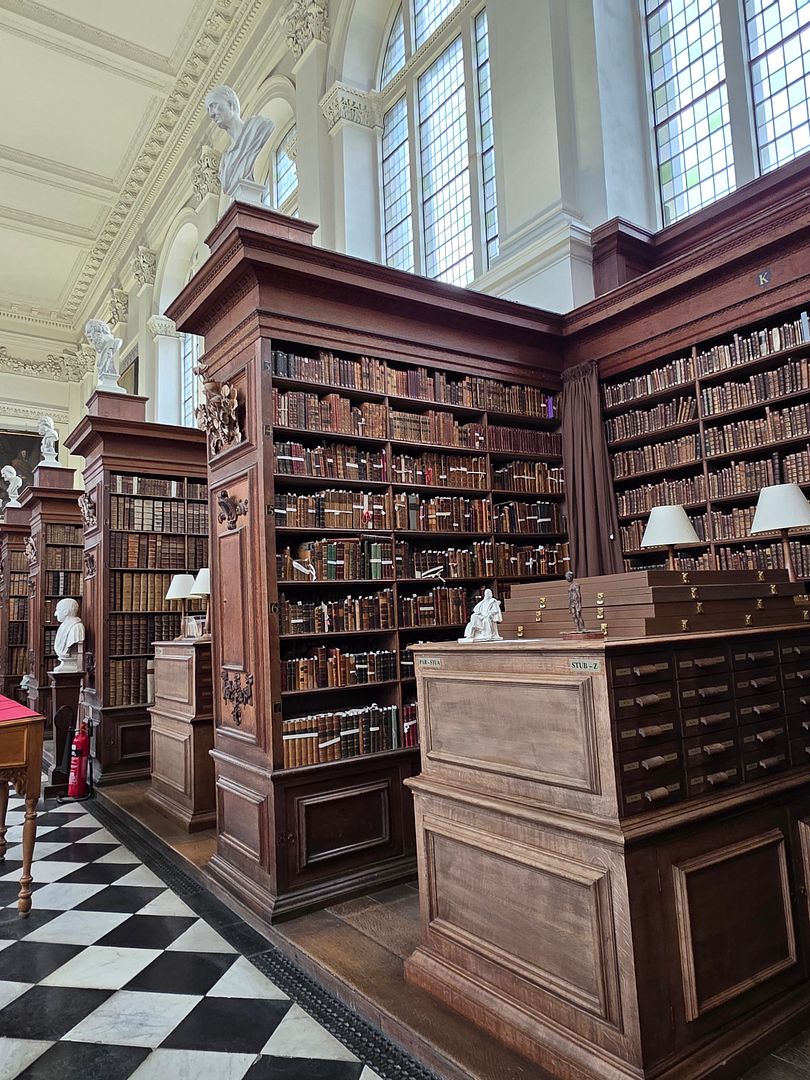
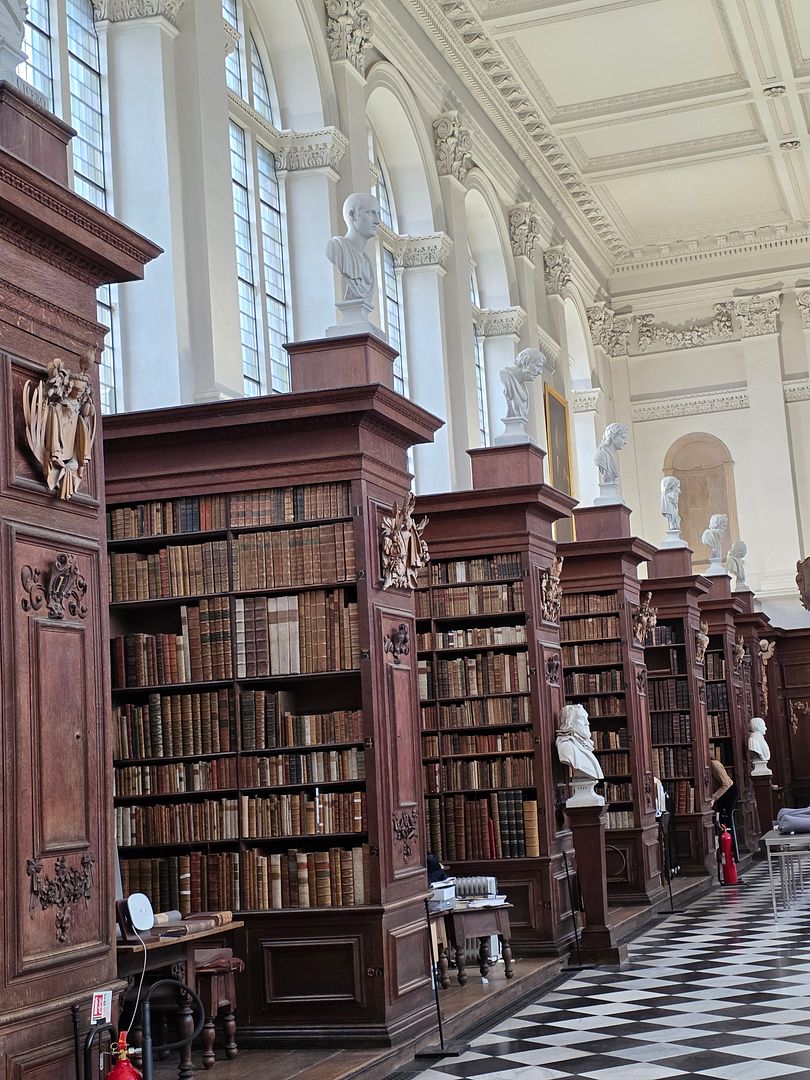
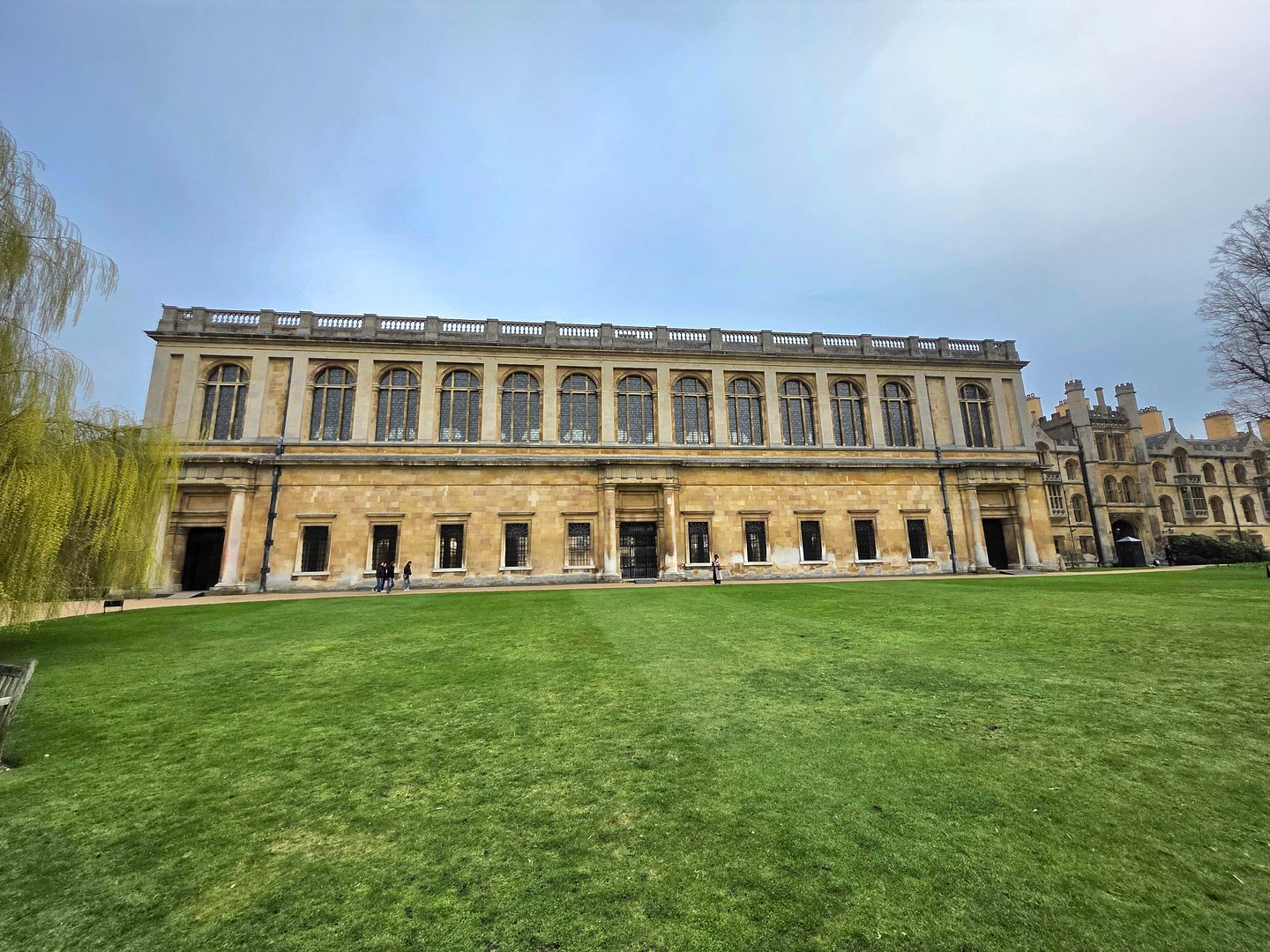
The Wren Library

Cambridge is a town that affords you many great architectural treats. On our way to the Wren Library which is part of Trinity College we enjoyed many. This day was still Monday March 9th and our first full day in Cambridge.

There is a lot of history in this library and many important documents. If you are interested you can read more here.

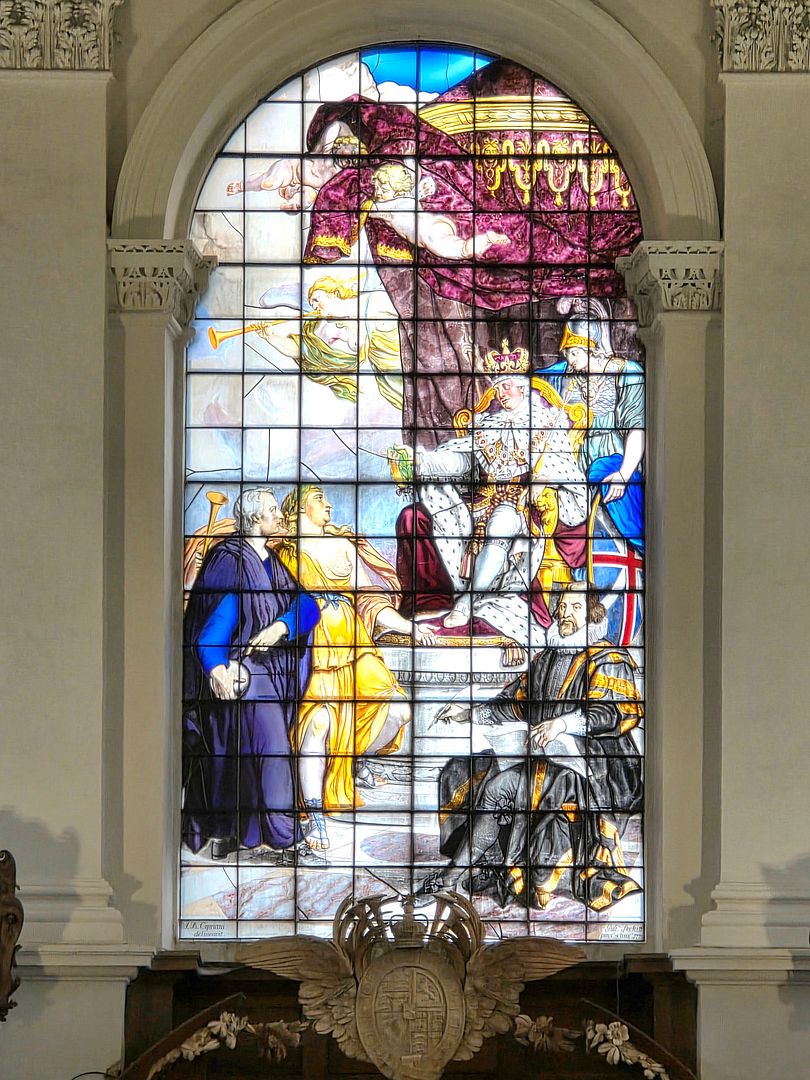
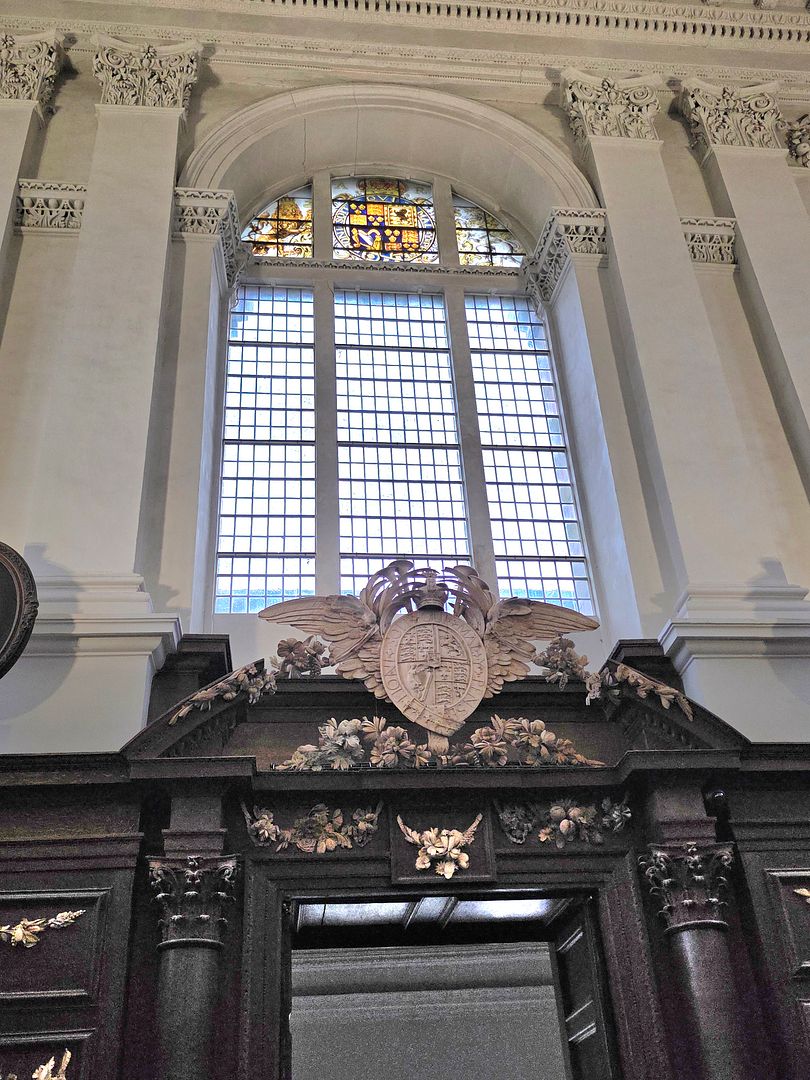
A detailed description of the window can be found here.

A.A. Milne attended Trinity college and some original manuscripts from Winnie the Pooh are featured in the Wren Library. Some interesting reading here.

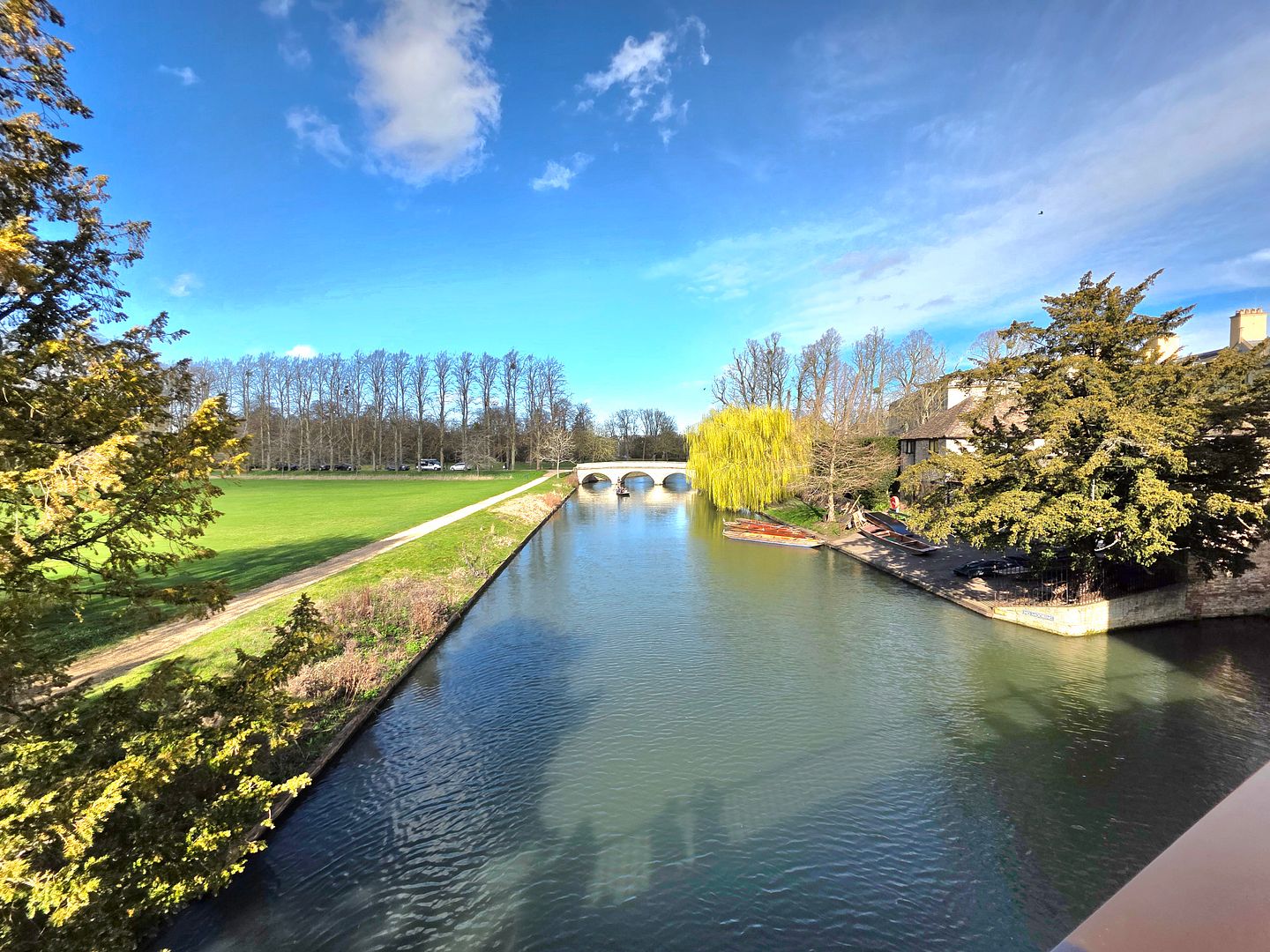
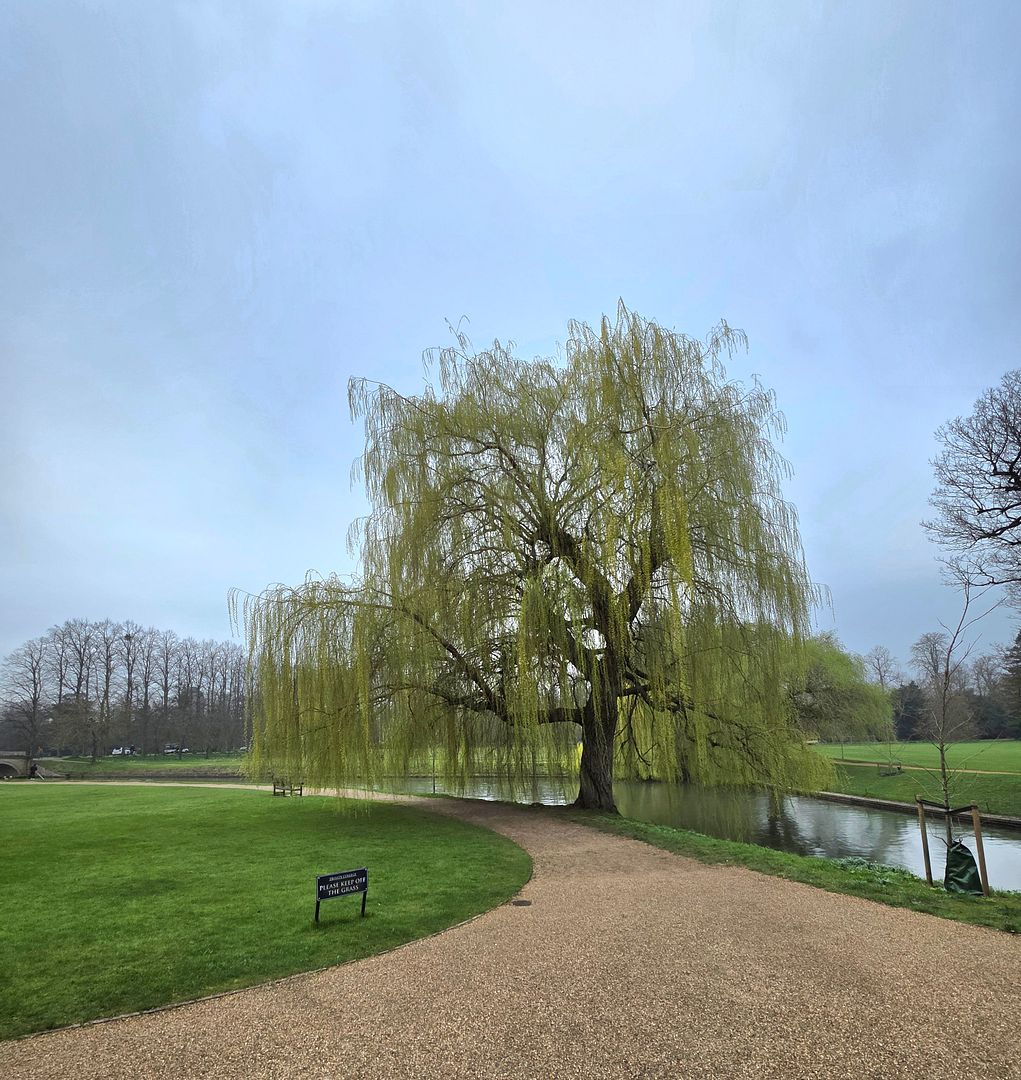
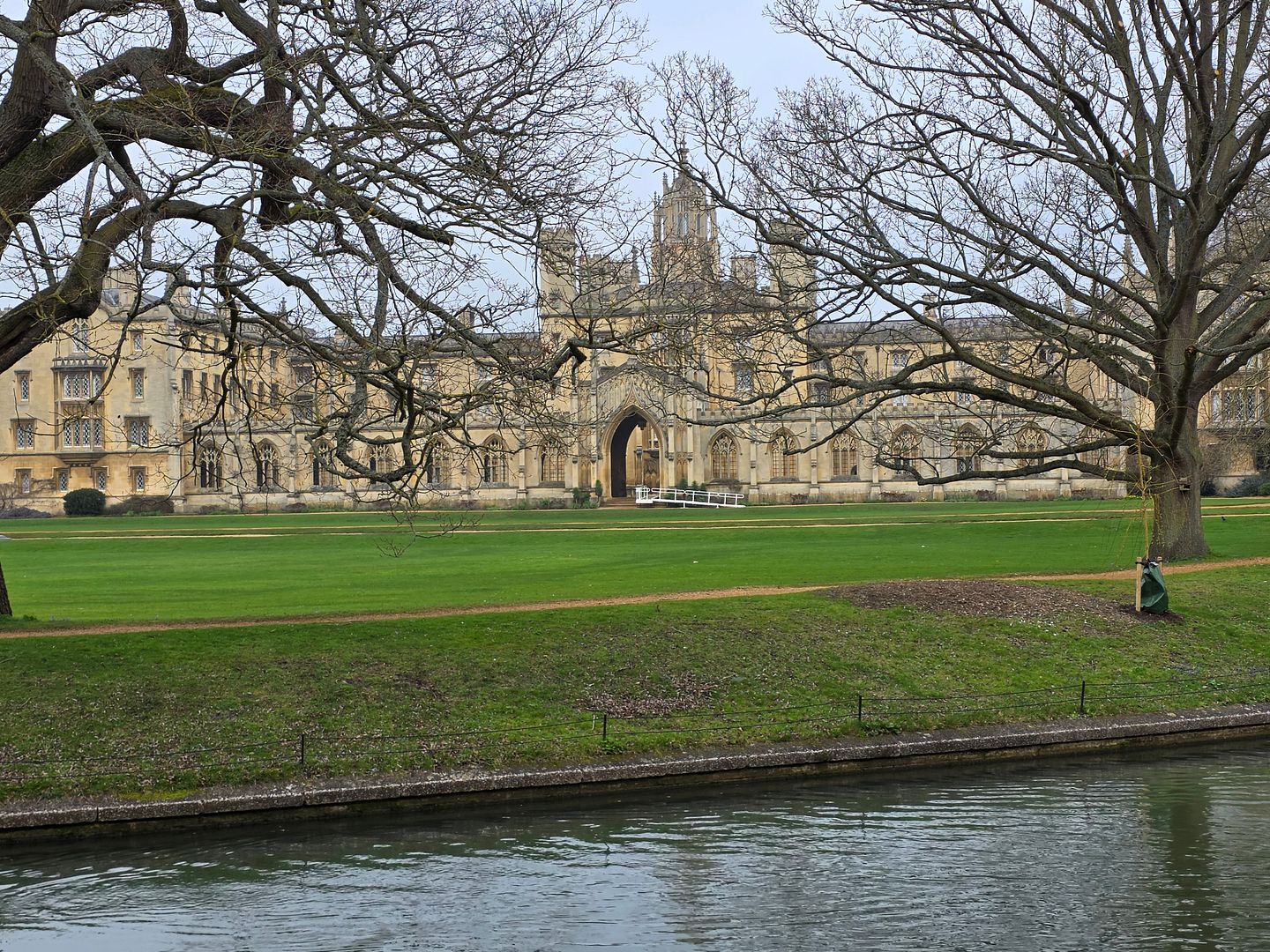
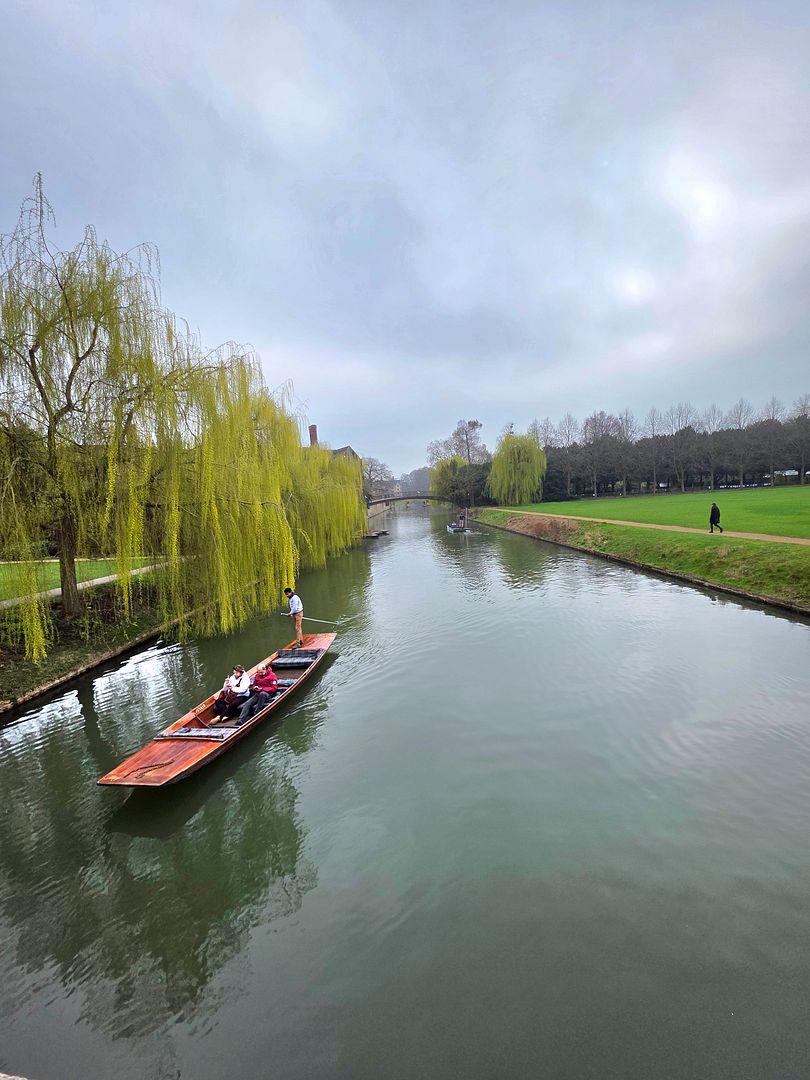
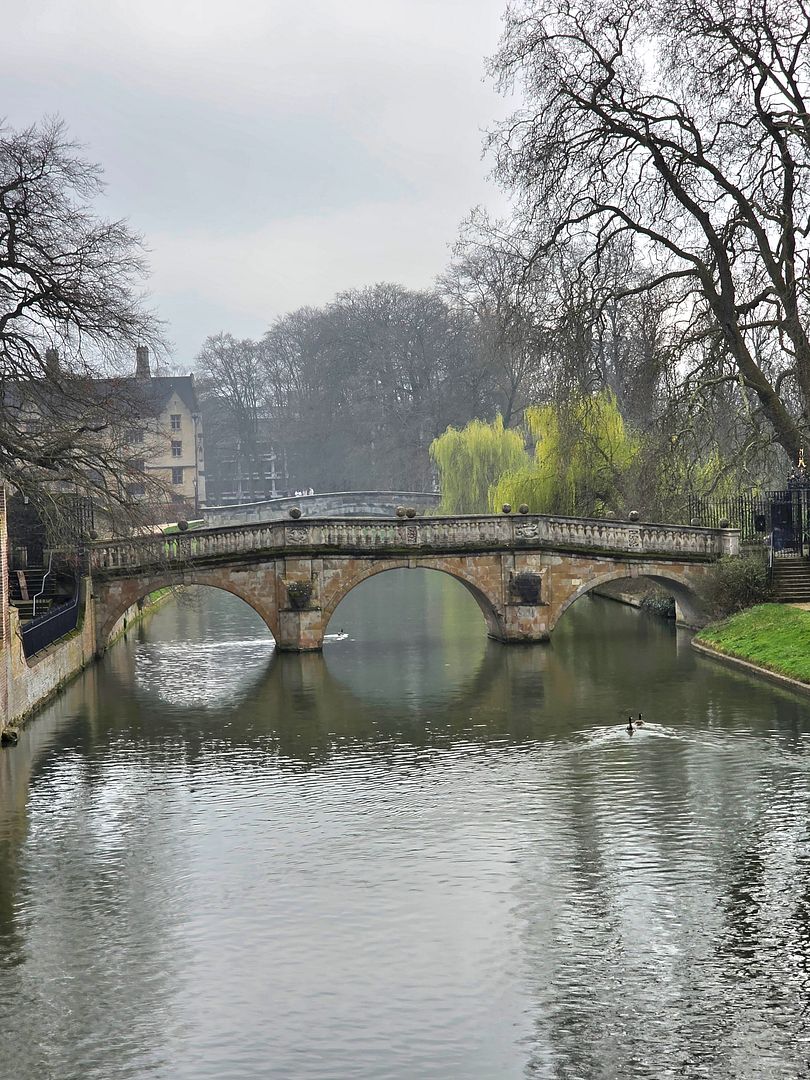
This was a beautiful day in Cambridge and we enjoyed some views at the back of Trinity and other colleges, too.

A view of the Wren from the Backs.

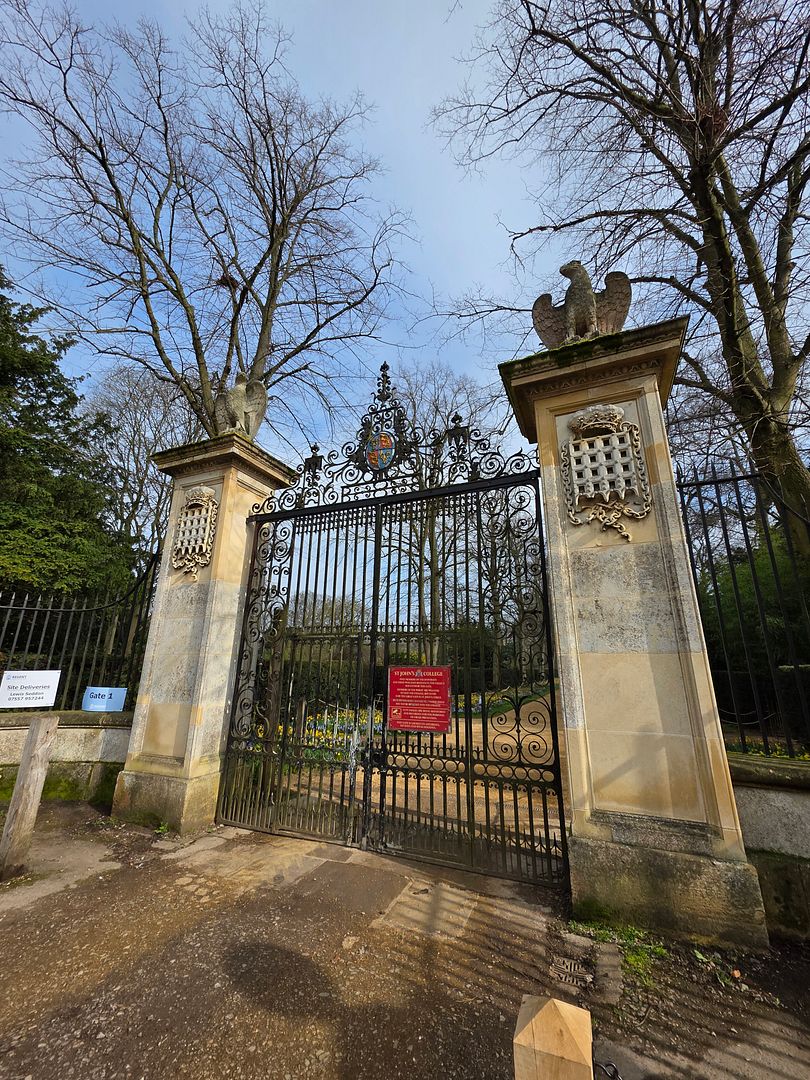
A view of St. John’s college.

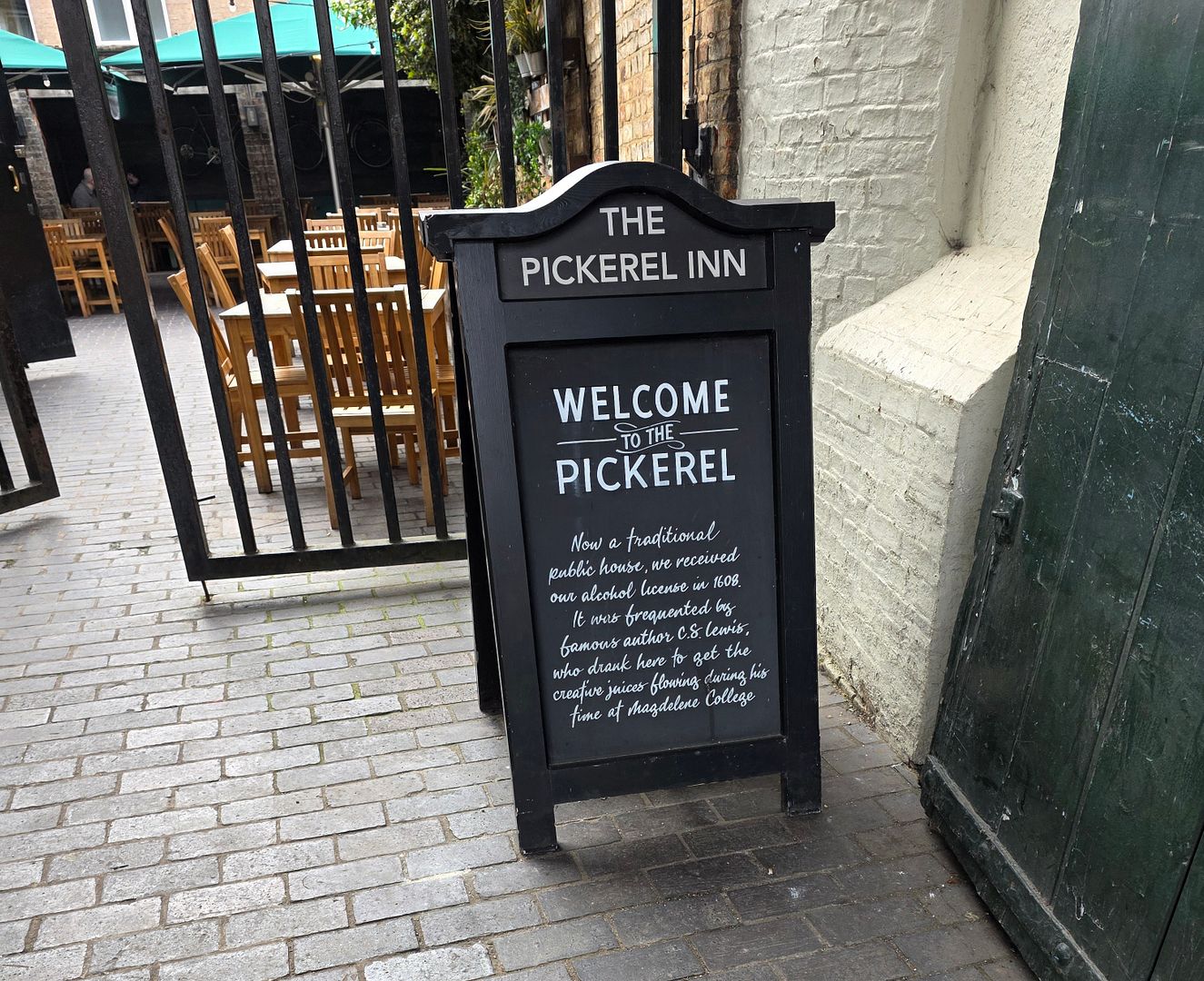
They have a claim to fame of C.S. Lewis visiting here during his time in Cambridge.

They also claim to be the oldest pub.

We had our last meal of the day at the Mitre.

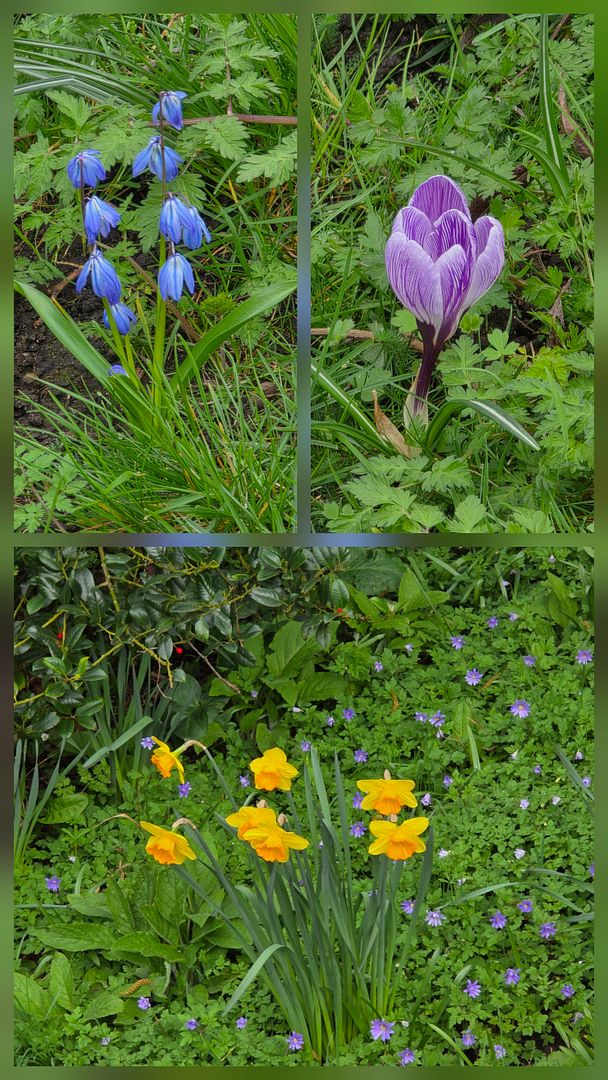
Love the signs of spring we are seeing…

So this was Monday and we had 4 more full days in Cambridge. It will take lots of posts to cover everything we have seen and experienced. Today, Thursday the 12th of March, was a very blustery day. The kind of wind that moved you along. We still had sunshine break through. Our weather here has been fabulous with no rain so far. Time will tell if we get rained upon. Thank you, friends, for following along with us.

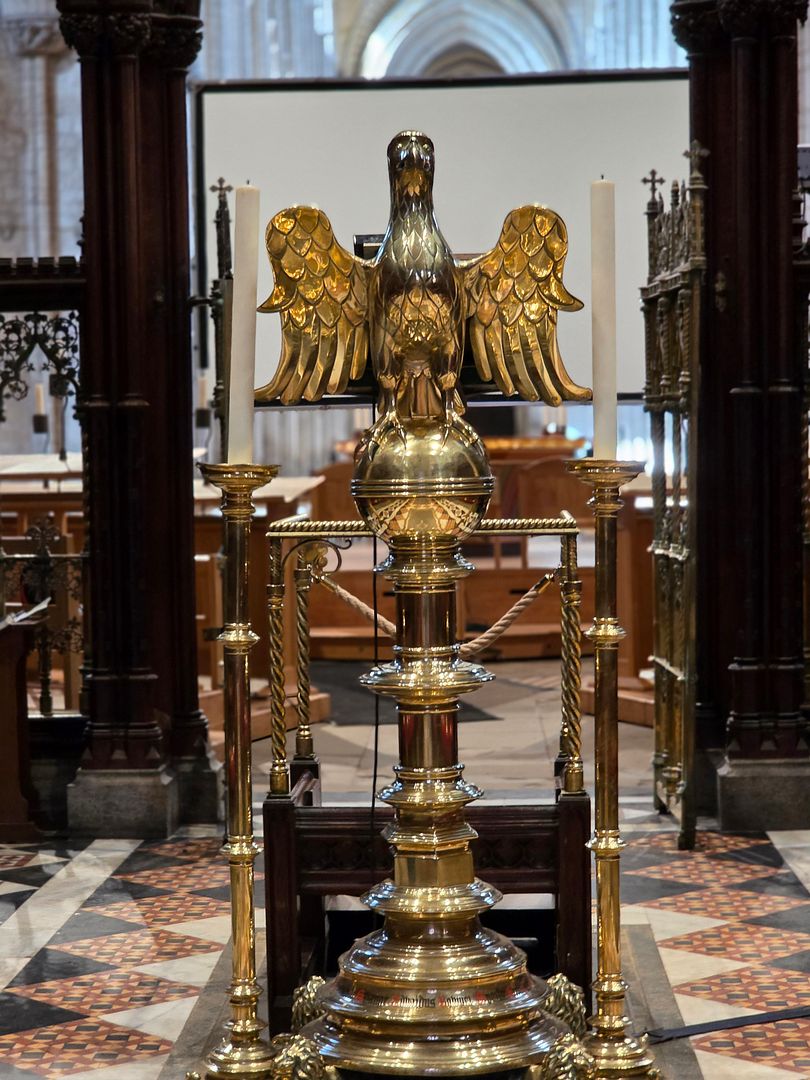
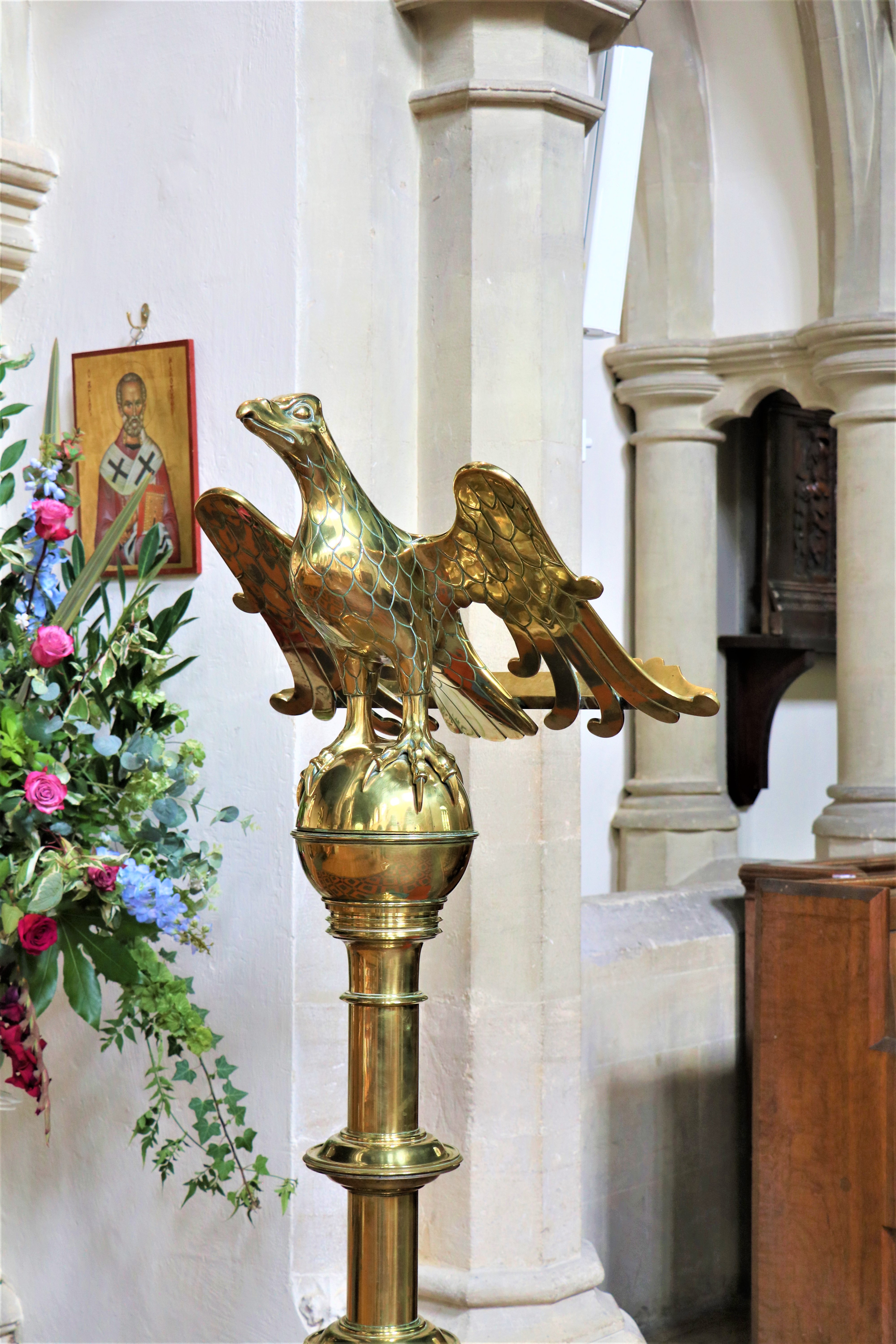
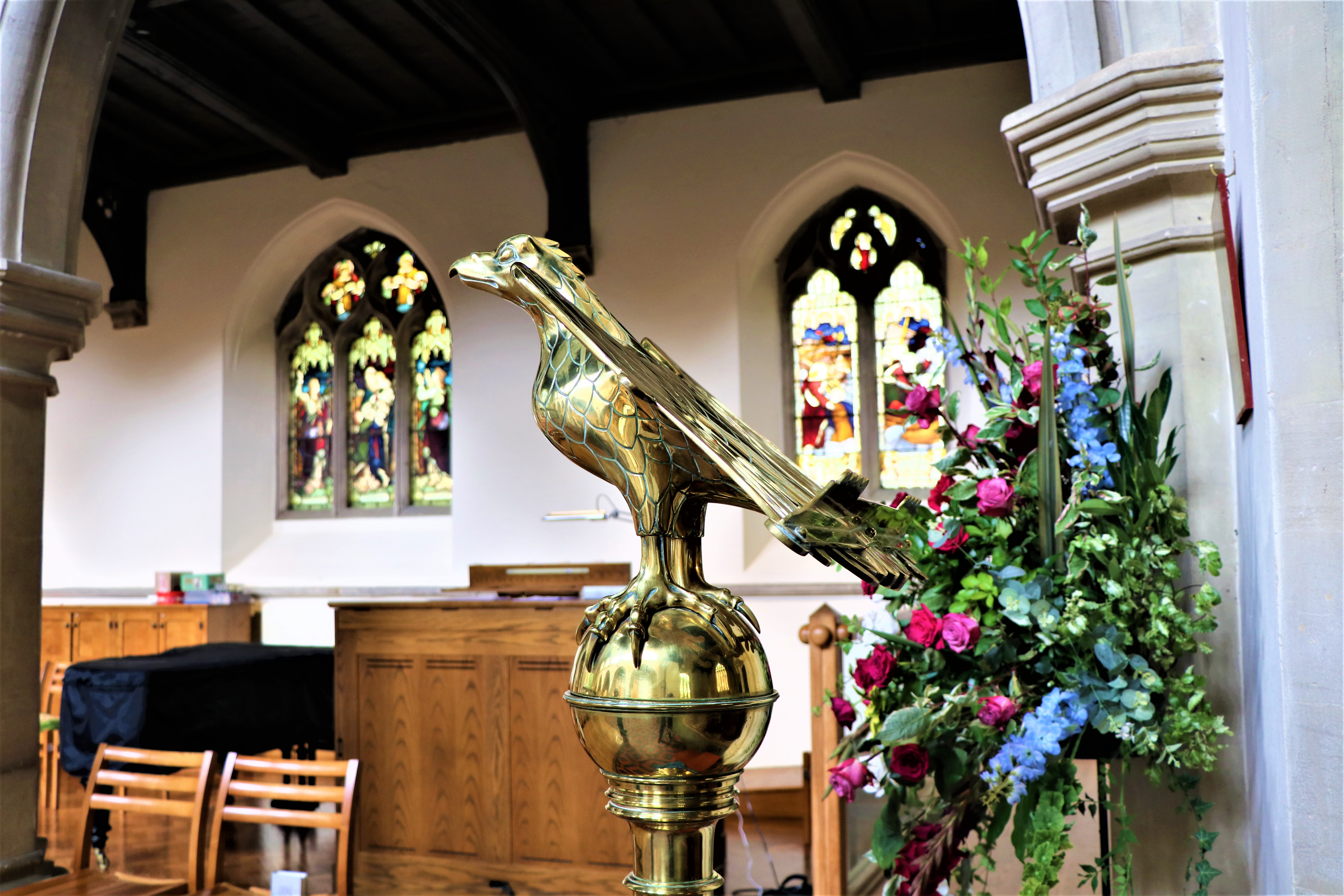
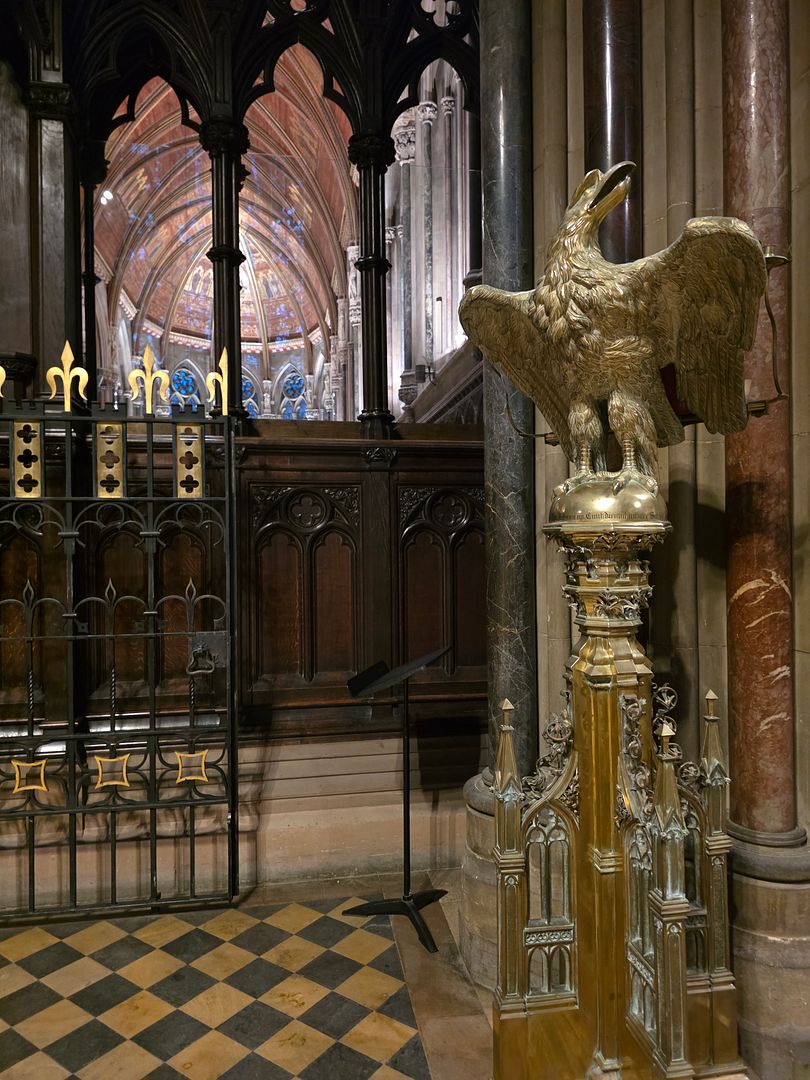
The Eagle Lectern

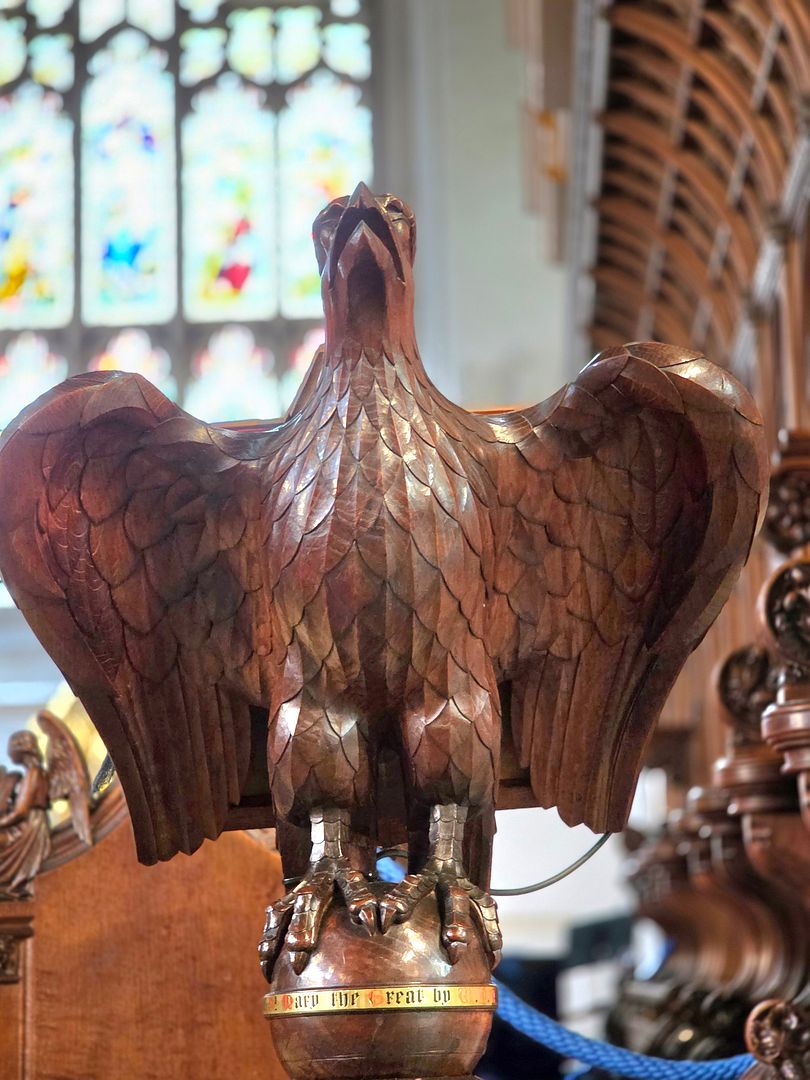
The symbolism of the eagle derived from the belief that the bird was capable of staring into the sun and that Christians similarly were able to gaze unflinchingly at the revelation of the divine word. Alternatively, the eagle was believed to be the bird that flew highest in the sky and was therefore closest to heaven, and symbolized the carrying of the word of God to the four corners of the world.
The eagle is the symbol used to depict John the Apostle, whose writing most clearly witnesses the light and divinity of Christ. In art, John, as the author of the Gospel, is often depicted with an eagle, which symbolizes the height to which he rose in the first chapter of his gospel. The eagle came to represent the inspiration of the gospels.
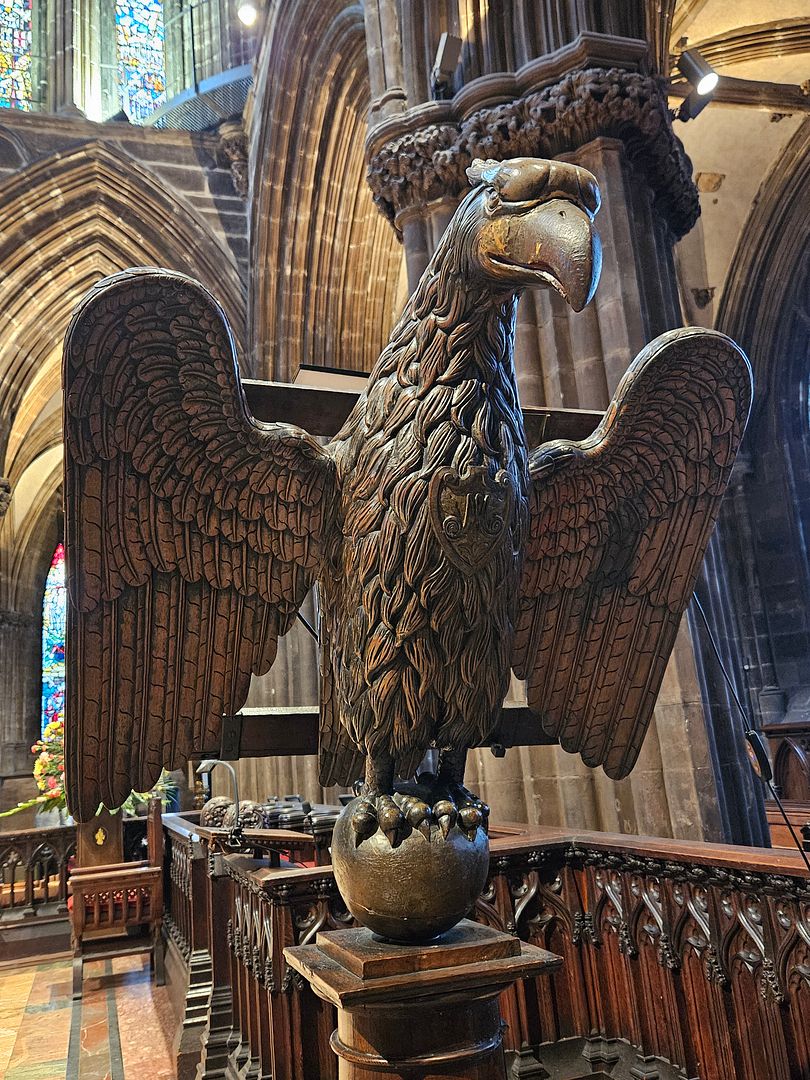
Eagle Lectern at Glasgow Cathedral
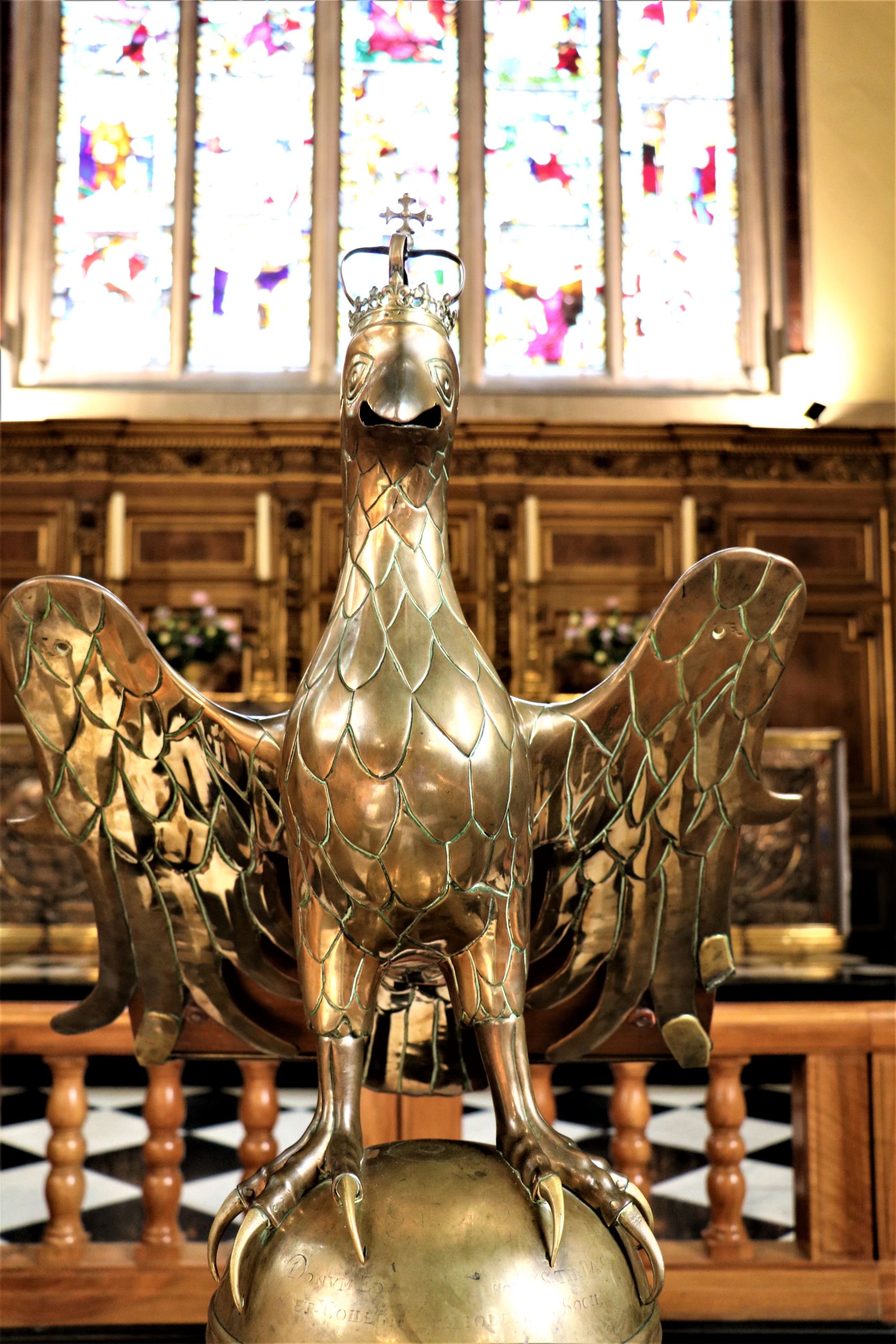
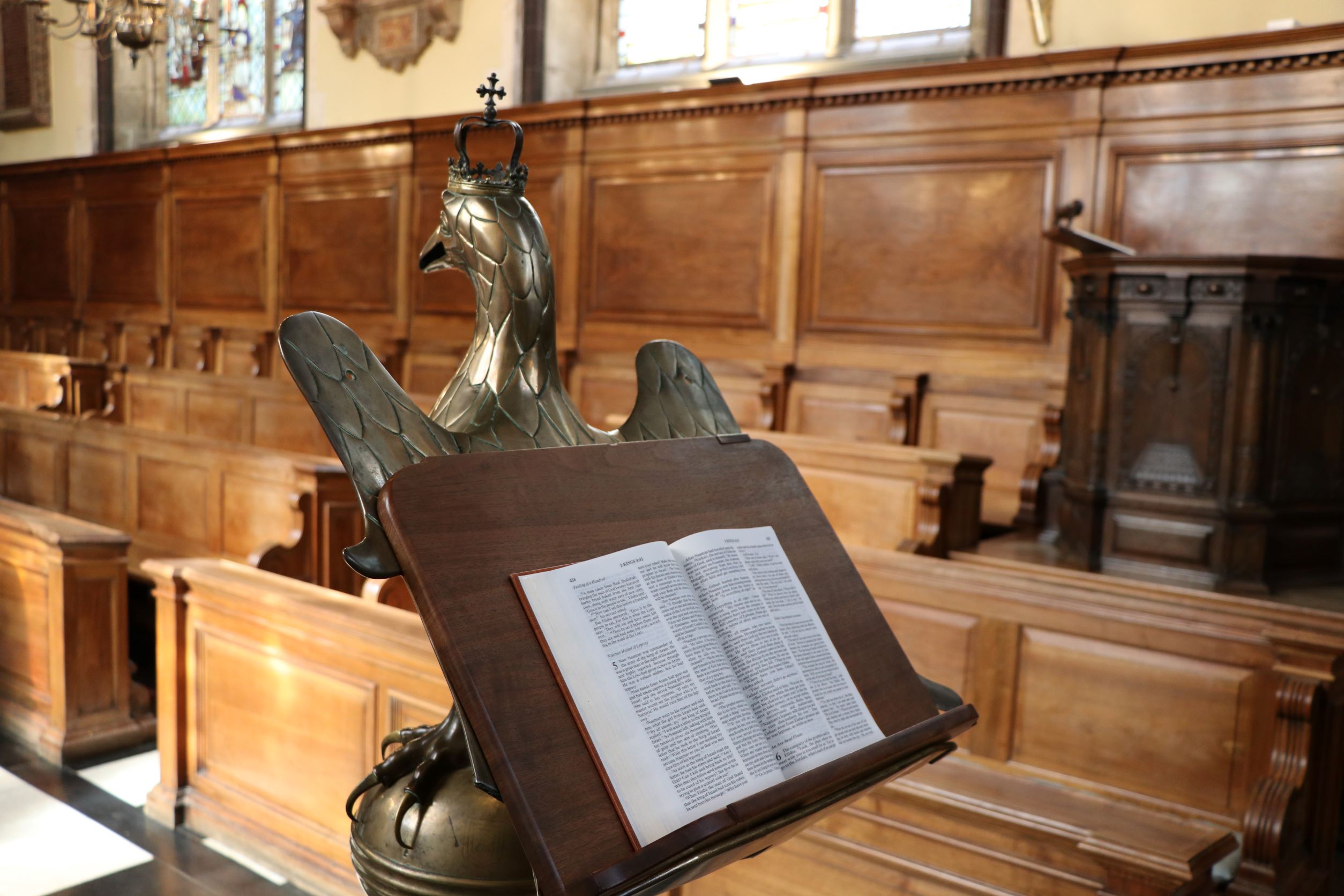
Balliol College, Oxford.

THE FLYING eagle is the symbol of John the Evangelist (see Revelation, ch 4, v 7) who proclaimed Christ as ‘the Word of God’ at the beginning of his Gospel. The flying eagle is thus a suitable emblem from which God’s word is read, reaching to the ends of the earth.

St. Mary Magdalene Church in Woodstock

Broadway Day 7 034

St. Michael and All Angels Church in Broadway (Cotswolds)

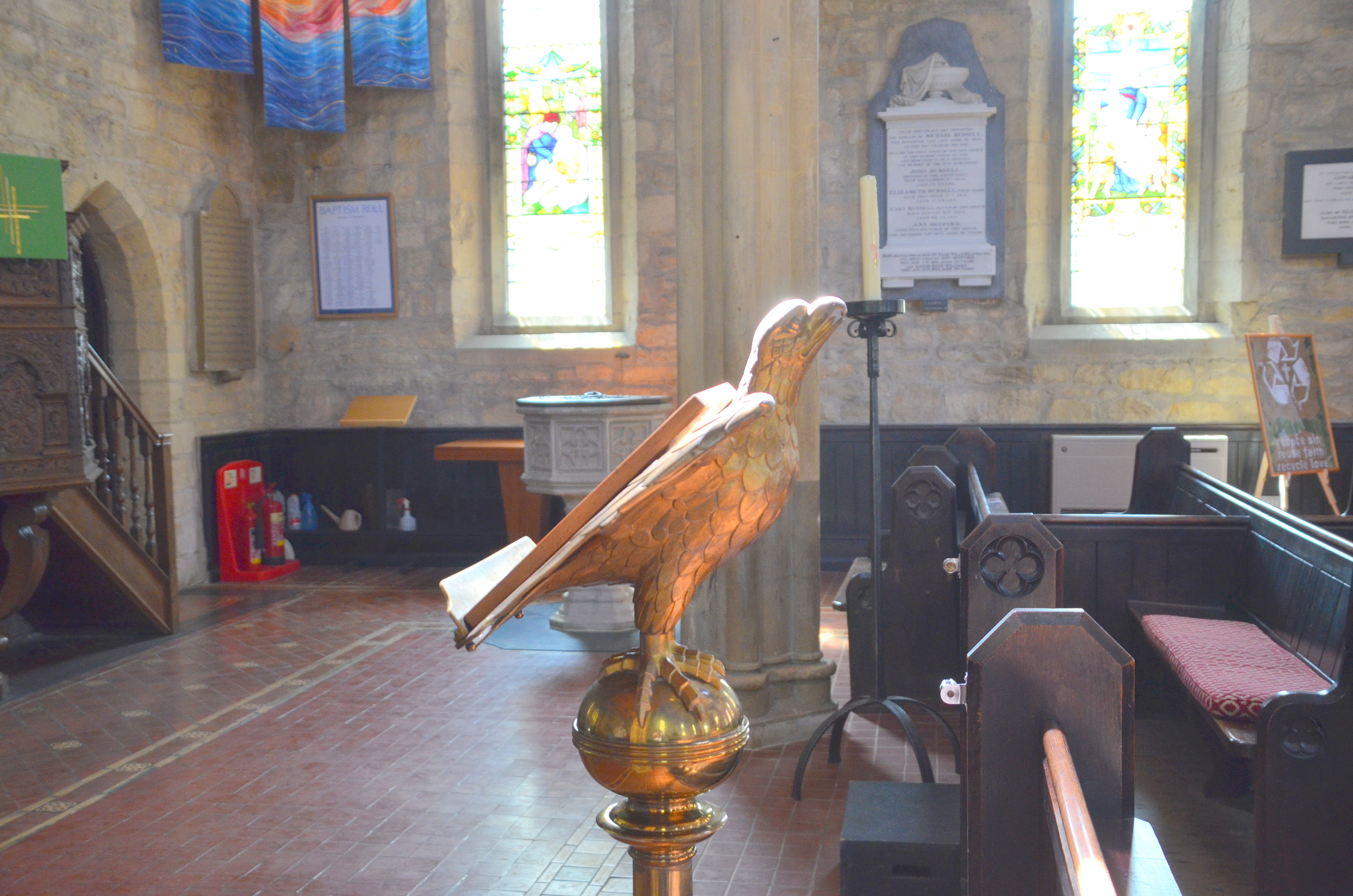
We were intrigued with these ornate Eagle lecterns that we saw in most of the churches and cathedrals we visited in England. That is why I researched to see the significance of this design.

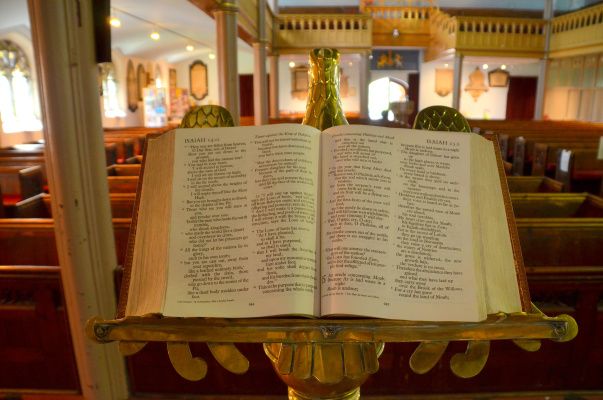
The lectern stands as the location from which Christian Biblical lessons are given. Lecterns hold the Bible in place as the church leader reads various passages from it. Lecterns in the shape of an eagle hold special value within churches.

Eagle lecterns date back to early church history. Some of the earliest examples of church lecterns that are still in existence date back to the 13th century, such as the lectern located within All Saints’ Parish Church in Bedfordshire, England.

The eagle is the symbol used to depict John the Apostle, whose writing is said to most clearly witness the light and divinity of Christ.

Another reason for eagle-shaped lecterns lies in its symbolizing the word of God being read from the lectern and soaring its way to the ears of the churchgoers.

Oxford

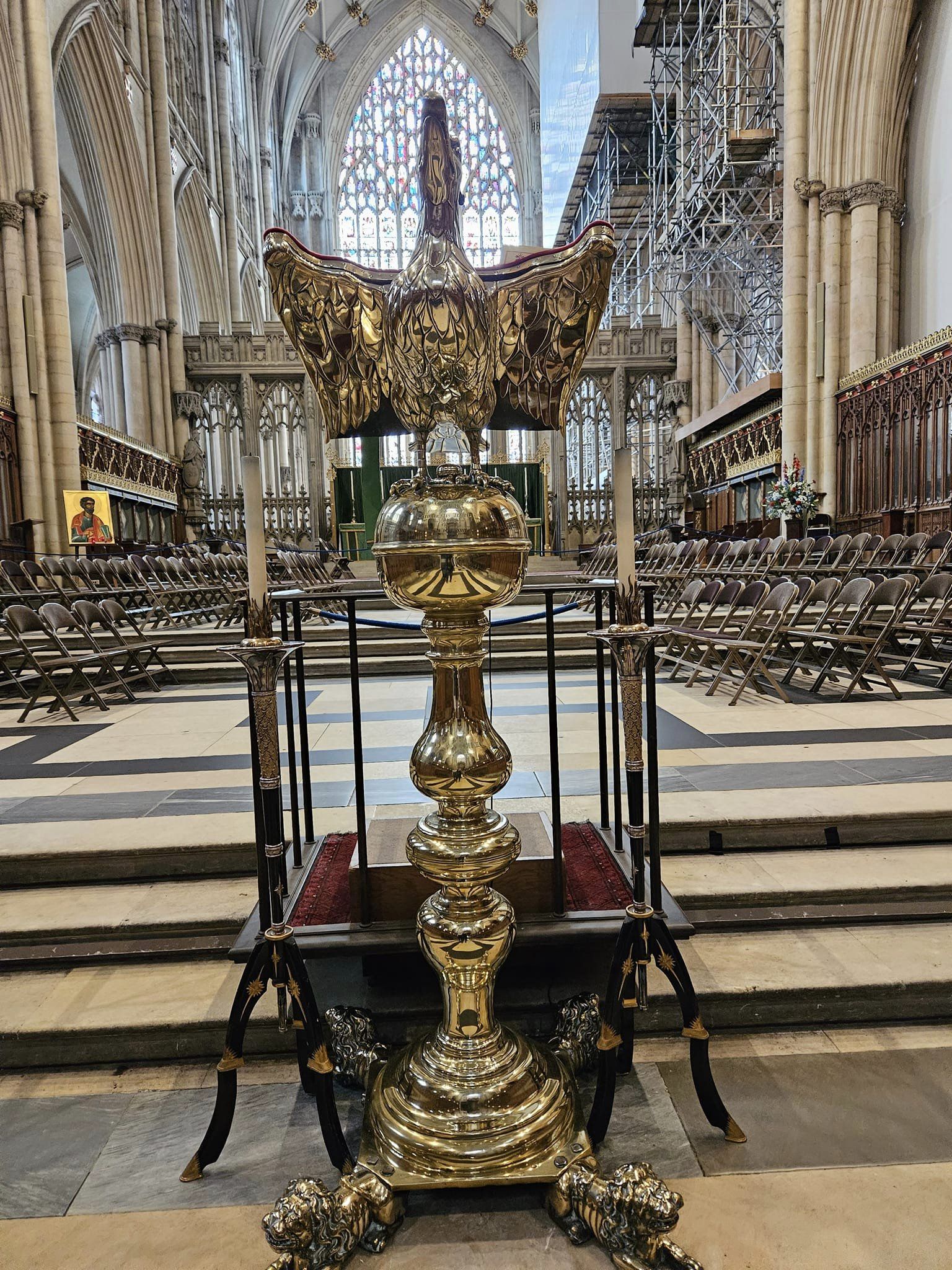
York Minster

What a blessing it has been to be able to visit so many of these beautiful chapels and cathedrals and learn the history and inspiration behind the Eagle Lectern. But how much more amazing is it that we can hold the Word of God in our hands and read it and learn from it and grow in wisdom and grace.

Psalm 19:7-11

The law of the Lord is perfect,
    reviving the soul;
the testimony of the Lord is sure,
    making wise the simple;
the precepts of the Lord are right,
    rejoicing the heart;
the commandment of the Lord is pure,
    enlightening the eyes;
the fear of the Lord is clean,
    enduring forever;
the rules of the Lord are true,
    and righteous altogether.
10 More to be desired are they than gold,
    even much fine gold;
sweeter also than honey
    and drippings of the honeycomb.
11 Moreover, by them is your servant warned;
    in keeping them there is great reward.

I’m adding a quote from one of my favorite pastors who inspired me to love God’s Word because of His love for all of God’s Word and his faithful preaching of the Word.

“It is the power of the Word that saves. It is the power of the Word that sanctifies. It provides doctrine. It reproves error and sin. It sets upright and then trains in the path of righteousness.” ~John MacArthur