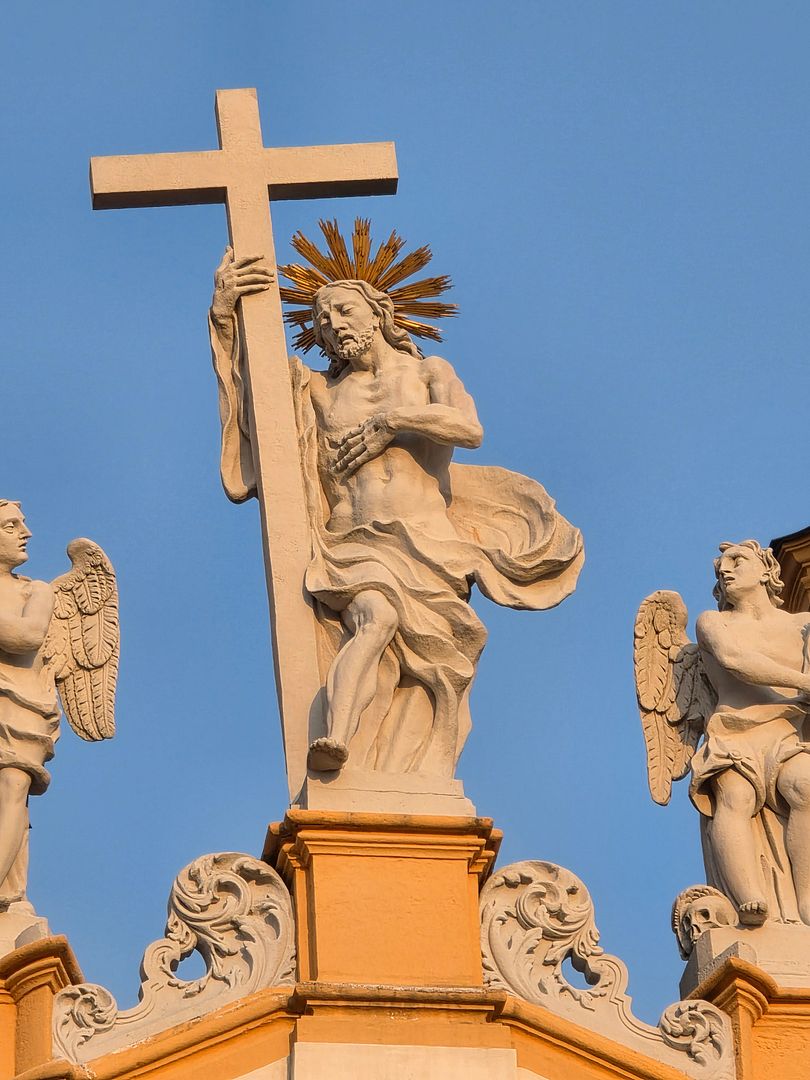
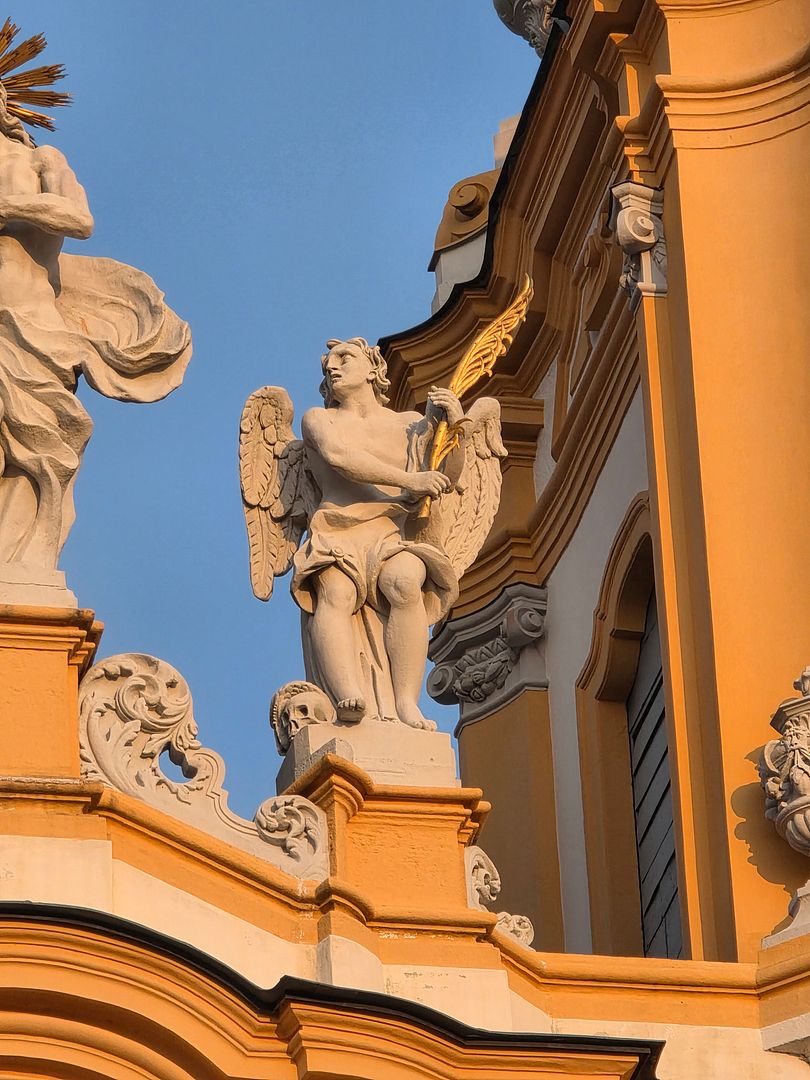
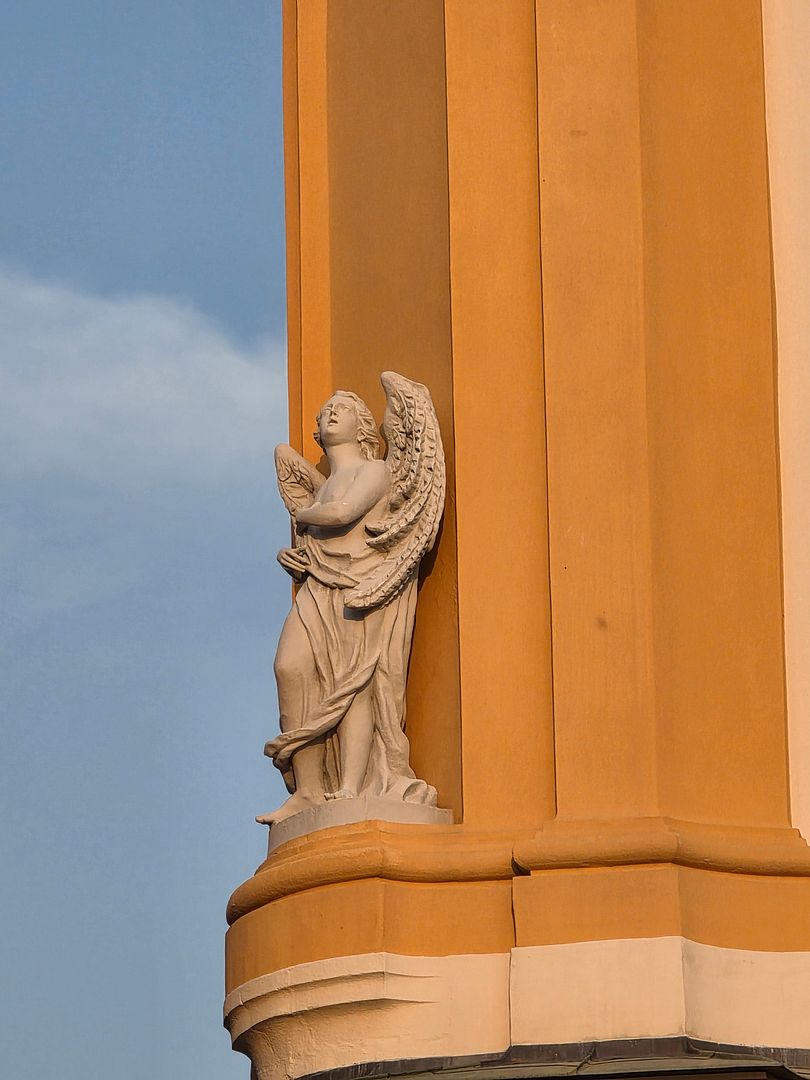
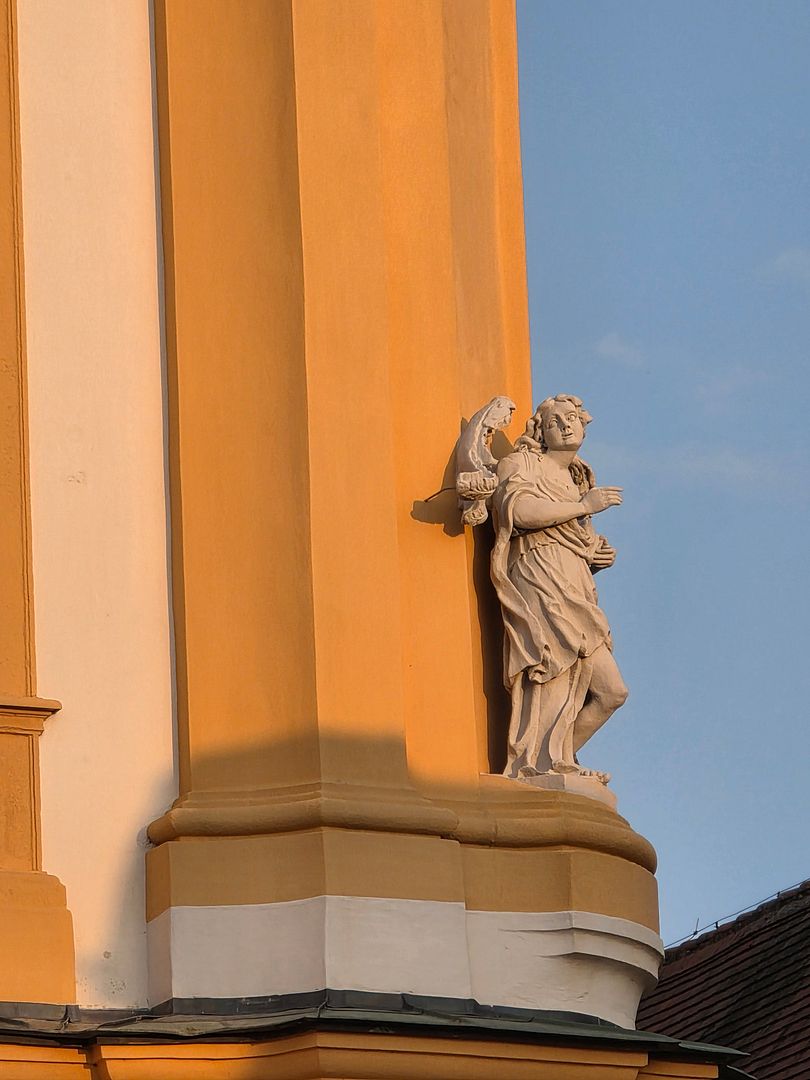
All my photos are from the outside areas of the abbey. We did tour several indoor rooms as well as the library and church. No photos were allowed inside the museum, library or church.
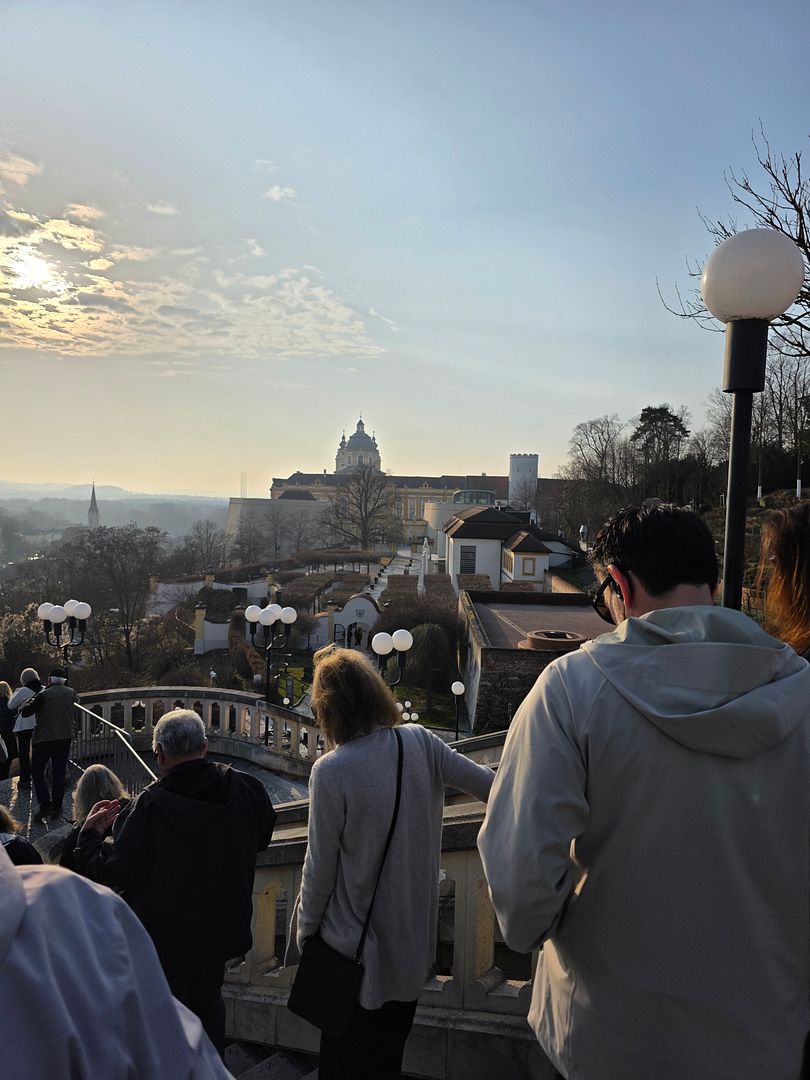
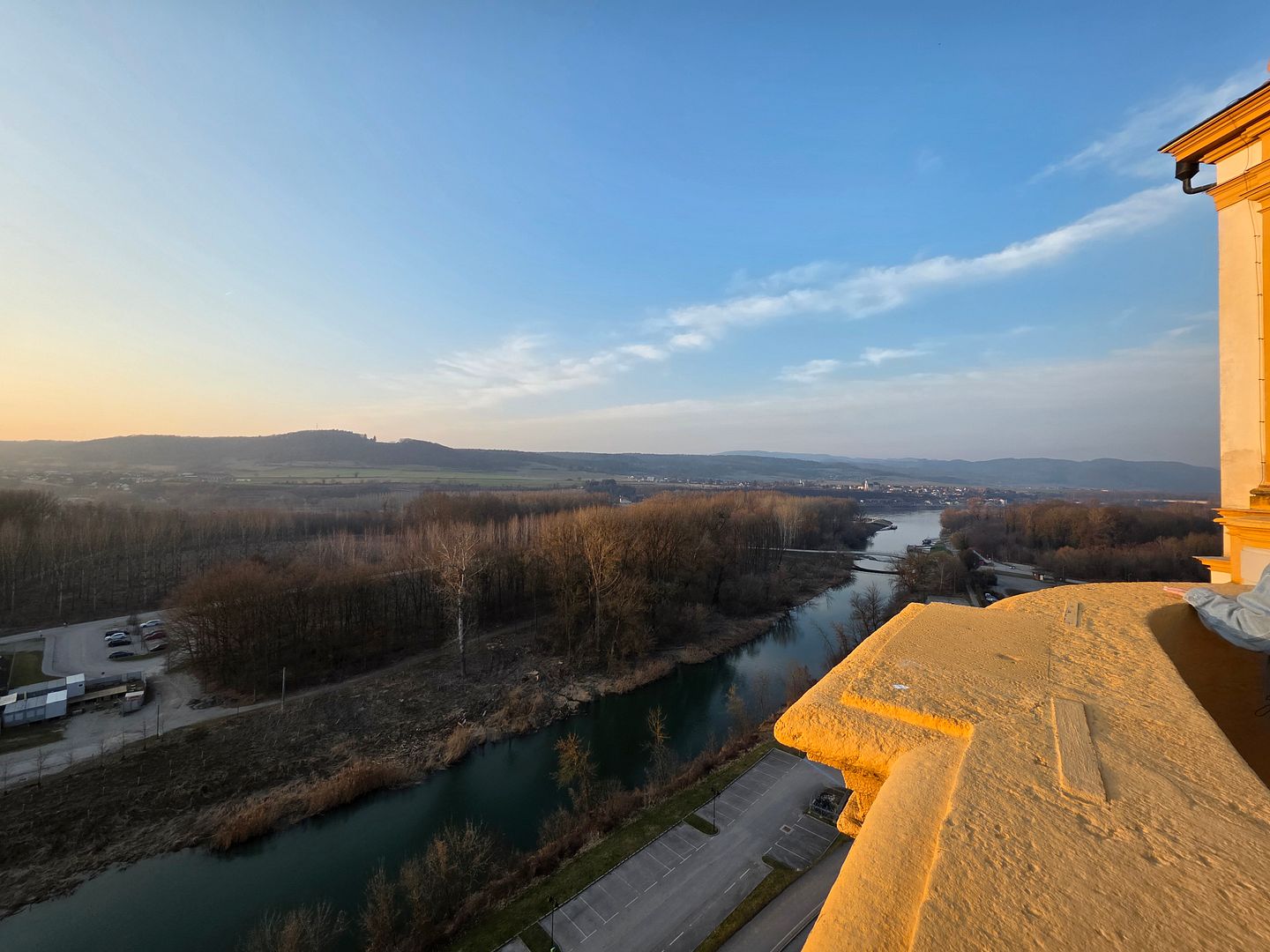
Stift Melk (Melk Abbey) is a renowned Benedictine monastery in Austria, located on a rocky outcrop overlooking the Danube River. Founded in 1089, it is a significant, UNESCO-listed Baroque architectural masterpiece that operates as an active monastery, school, and cultural center. The term Stift means abbey or foundation, and it represents a major center of faith and history.
The history of Austria is closely connected with the history of Melk Abbey. Some of the first rulers of Austria, the margraves Heinrich, Adalbert and Ernst are buried in the collegiate church. Also buried there is the first patron saint of the Babenbergs, St. Koloman, who was the patron saint of the country until the 17th century.
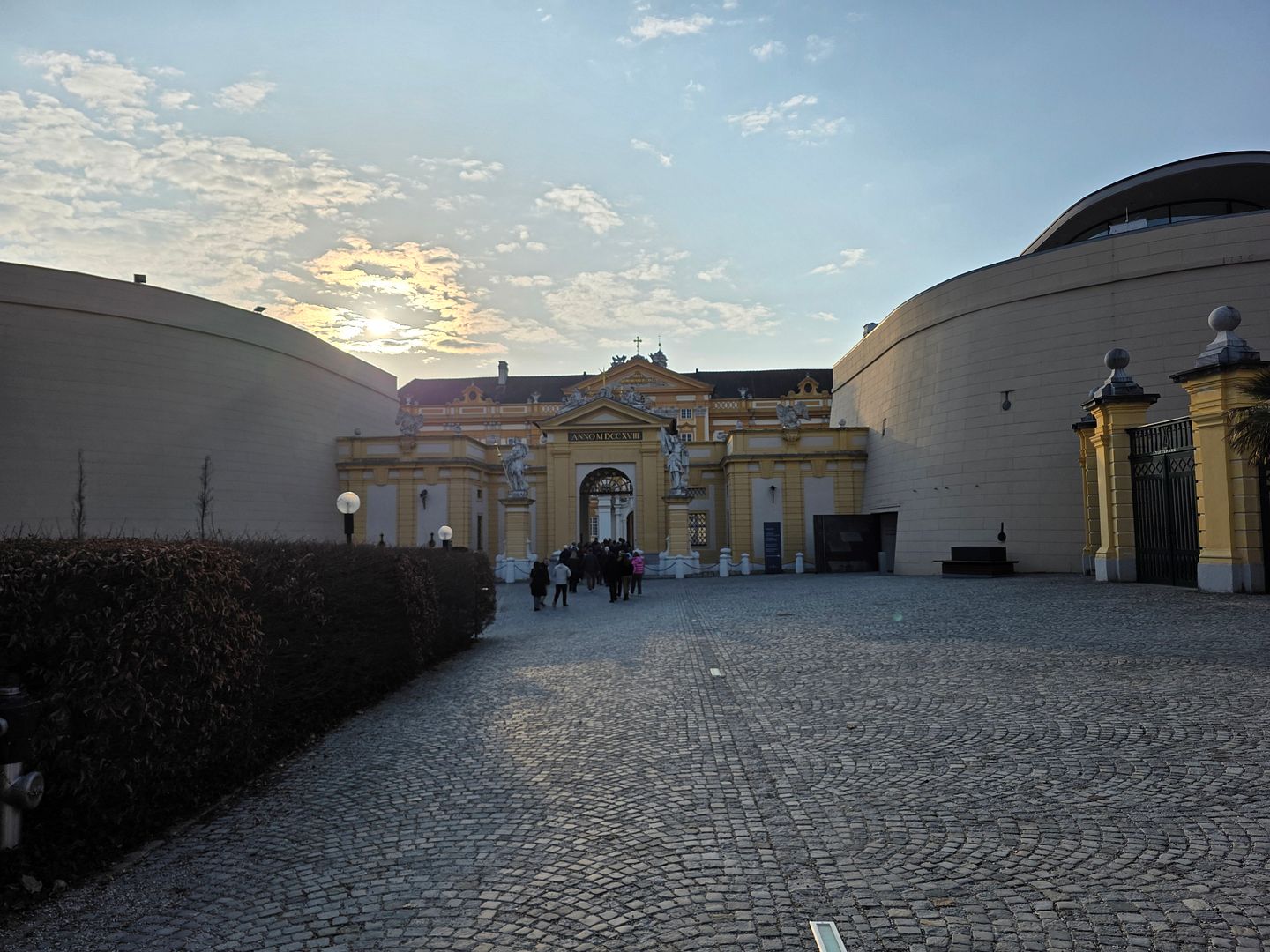
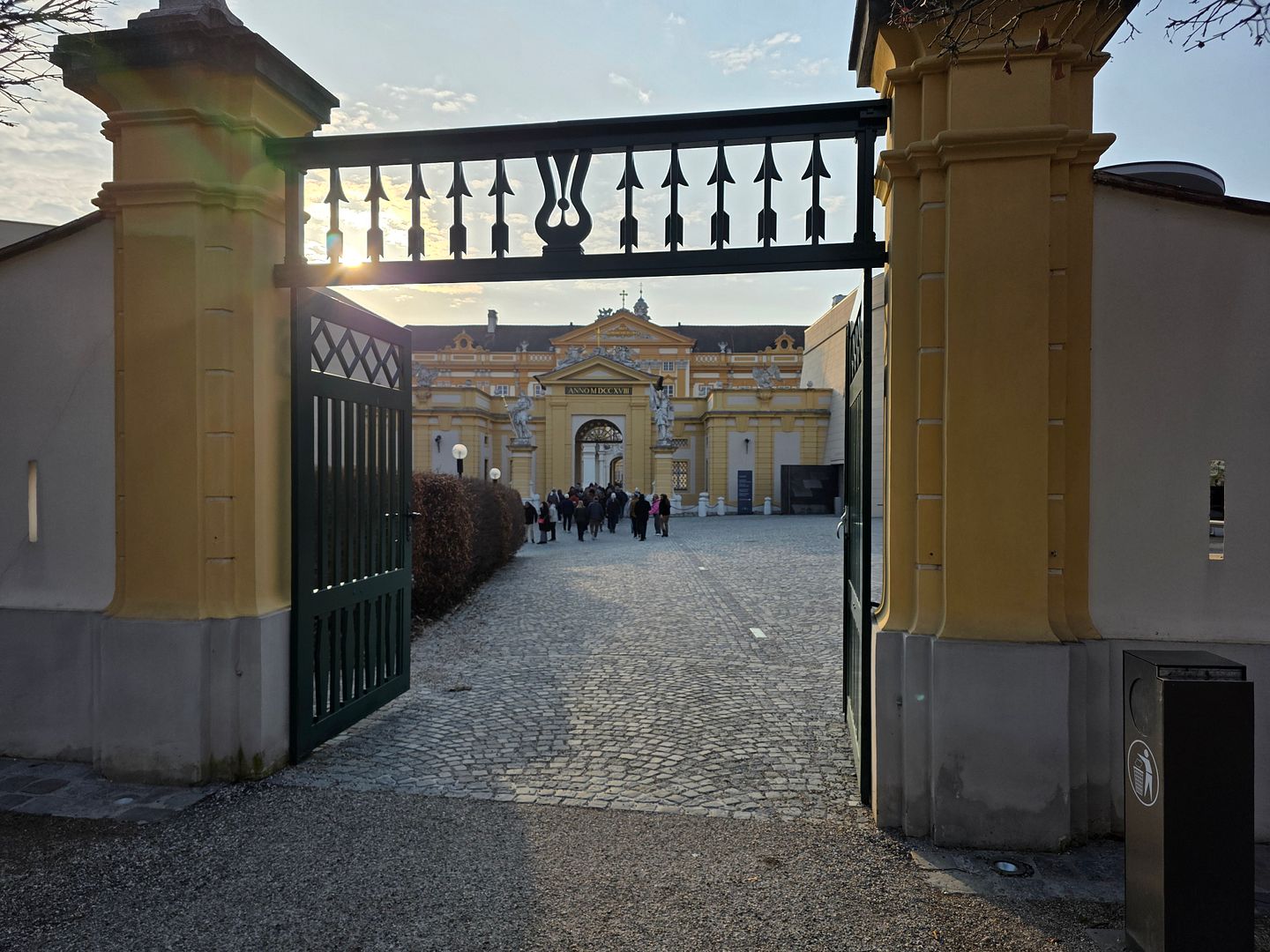
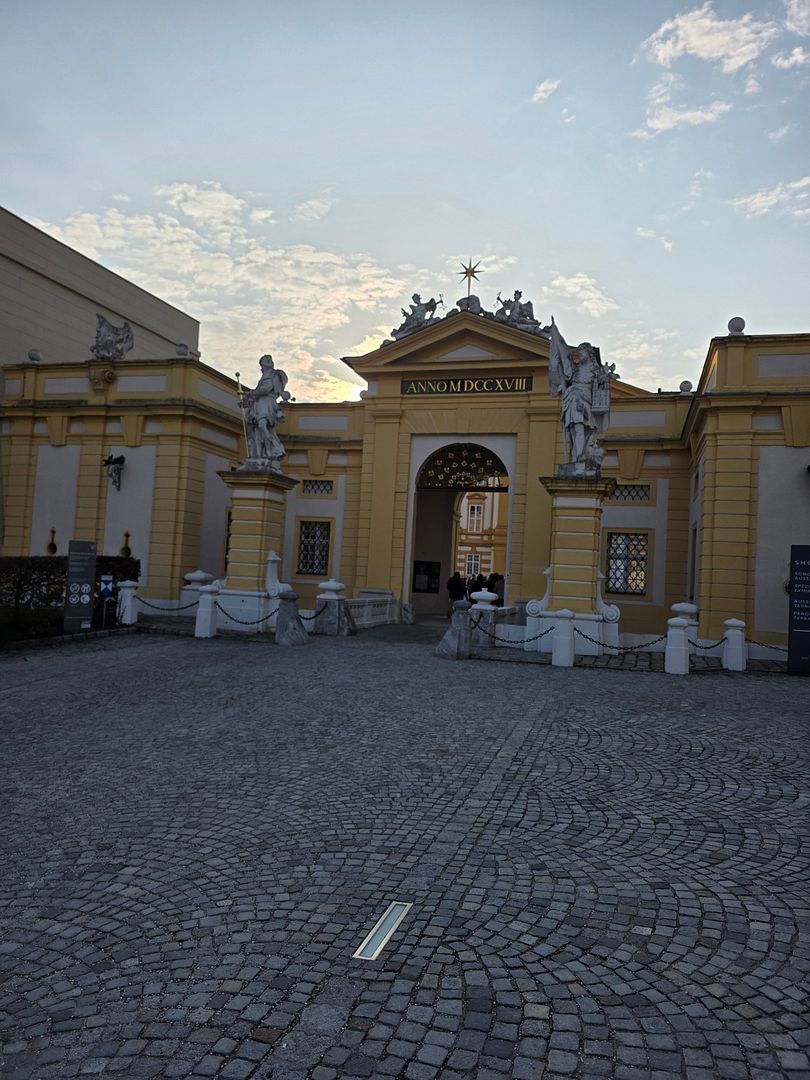
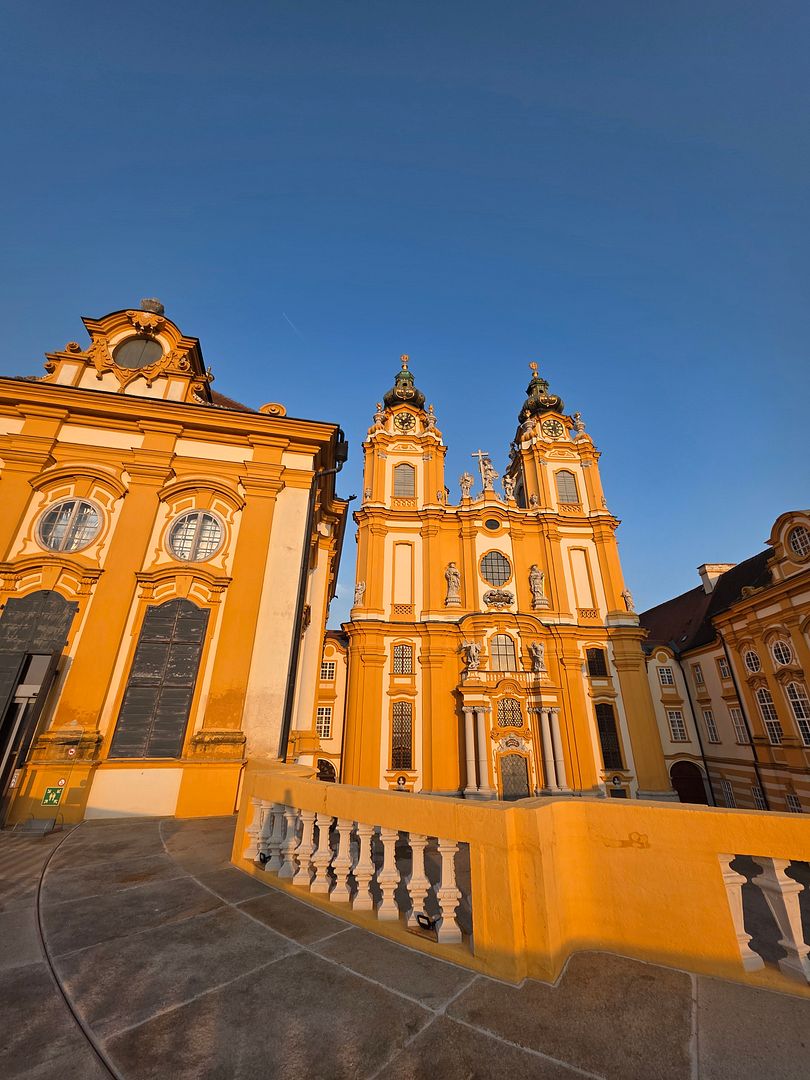
Melk Abbey is one of the most beautiful and largest unified Baroque ensembles in Europe. Its magnificent architecture is known worldwide and is a UNESCO World Heritage Site. The baroque building (1702 – 1739) on a rock above the Danube is one of the most visited art-historical sites in Austria.
Known for its active Benedictine community following the motto of Ora et Labora et Lege (pray, work, and learn).
The italicized parts of my posts are information from the Melk Abbey website.
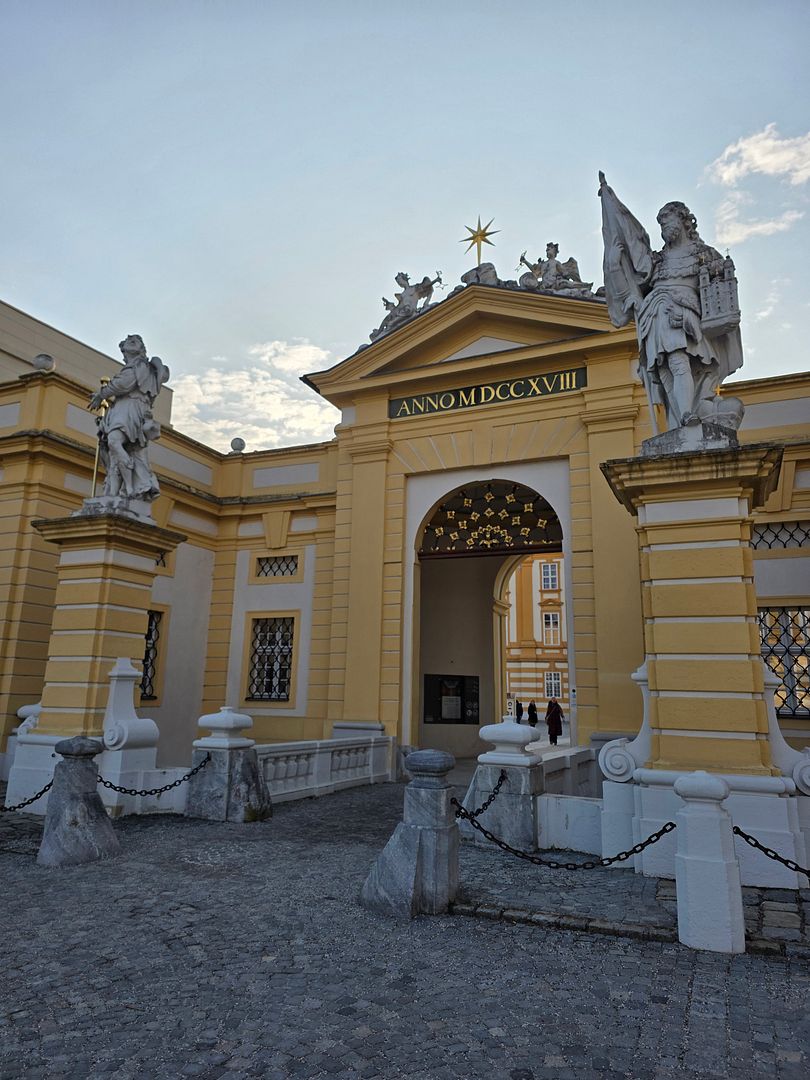
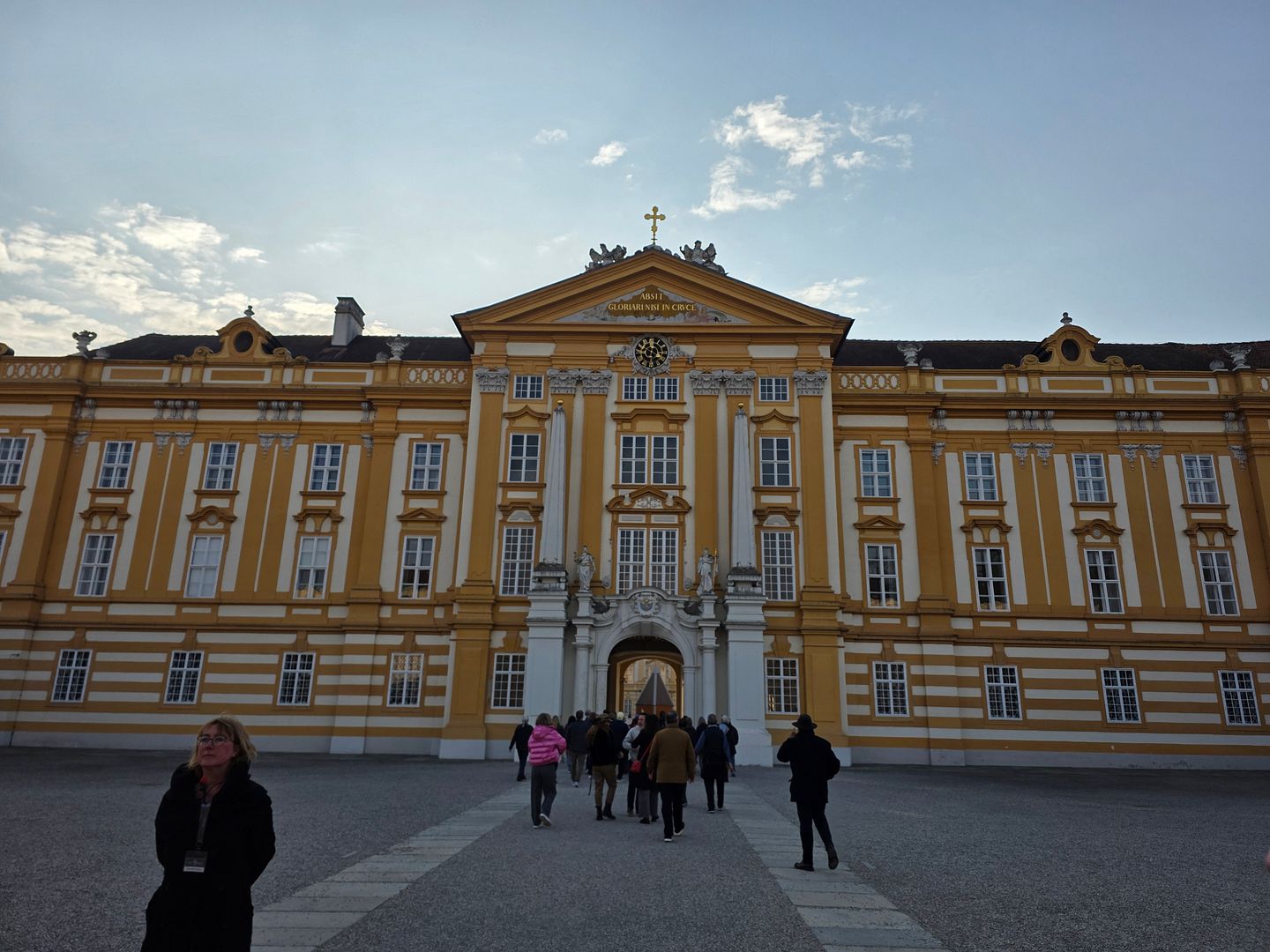
Our group from the river cruise were divided into two groups and we were the only folk at the Abbey at this point in the late afternoon. Our group went through the Abbey last and our tour guide locked up each room as we exited the room.
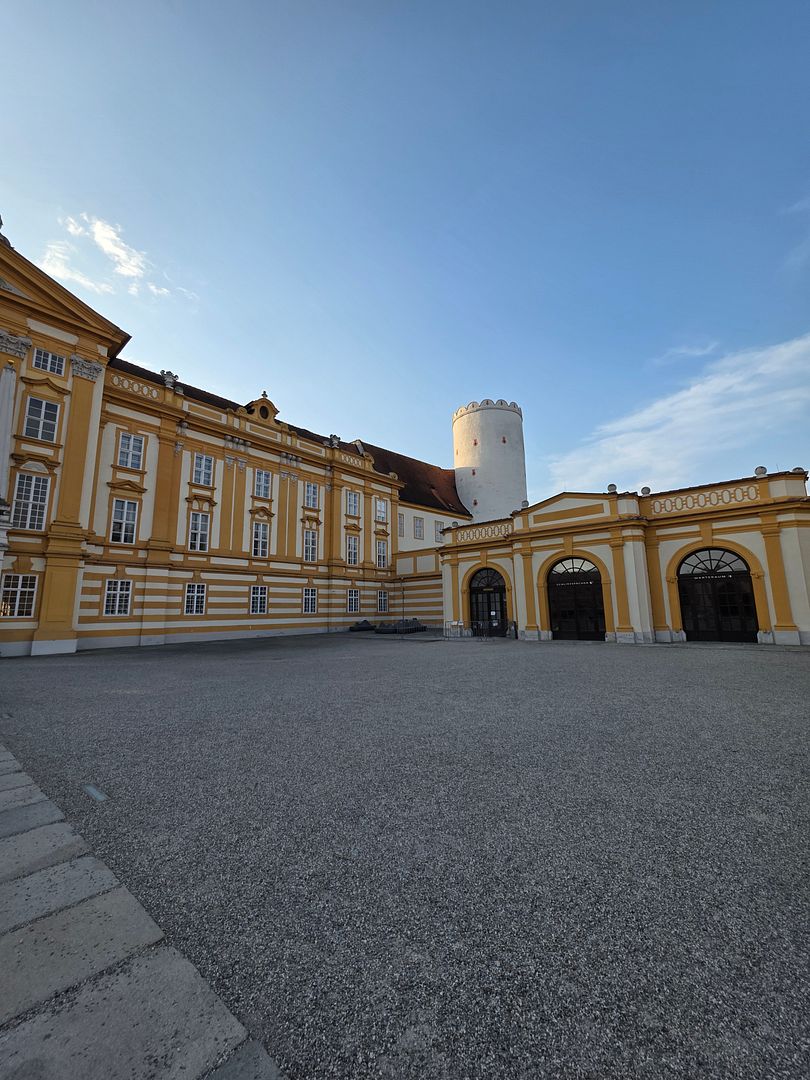
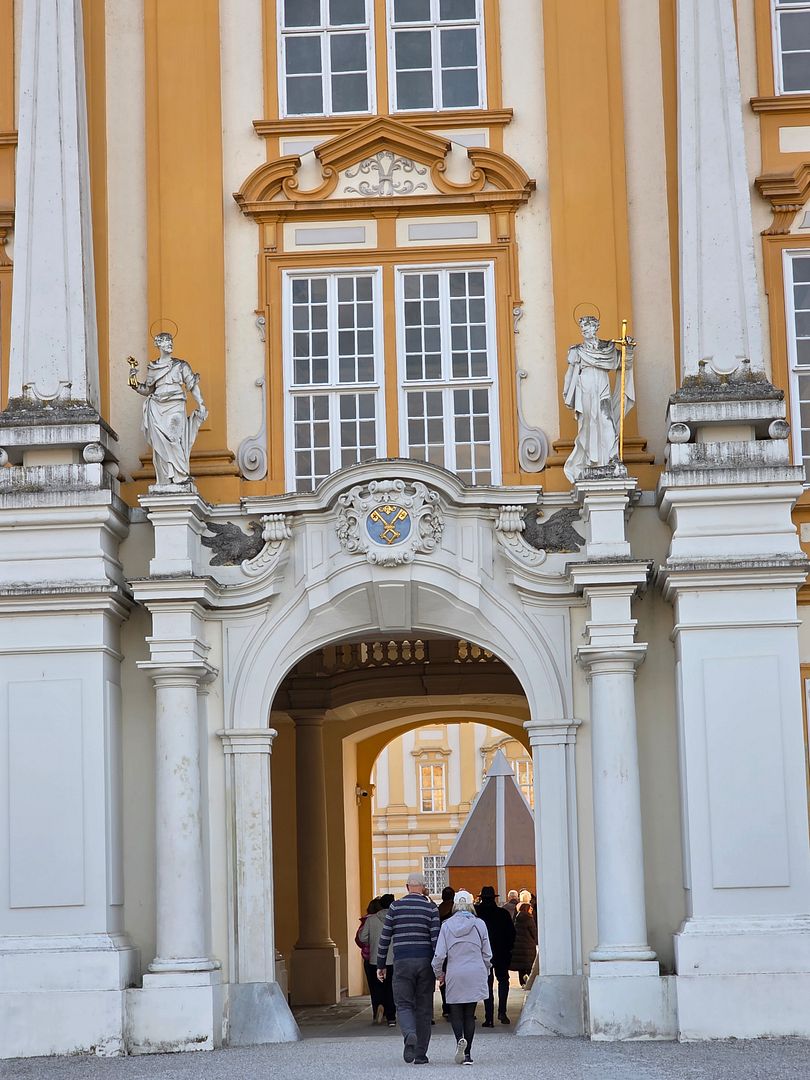
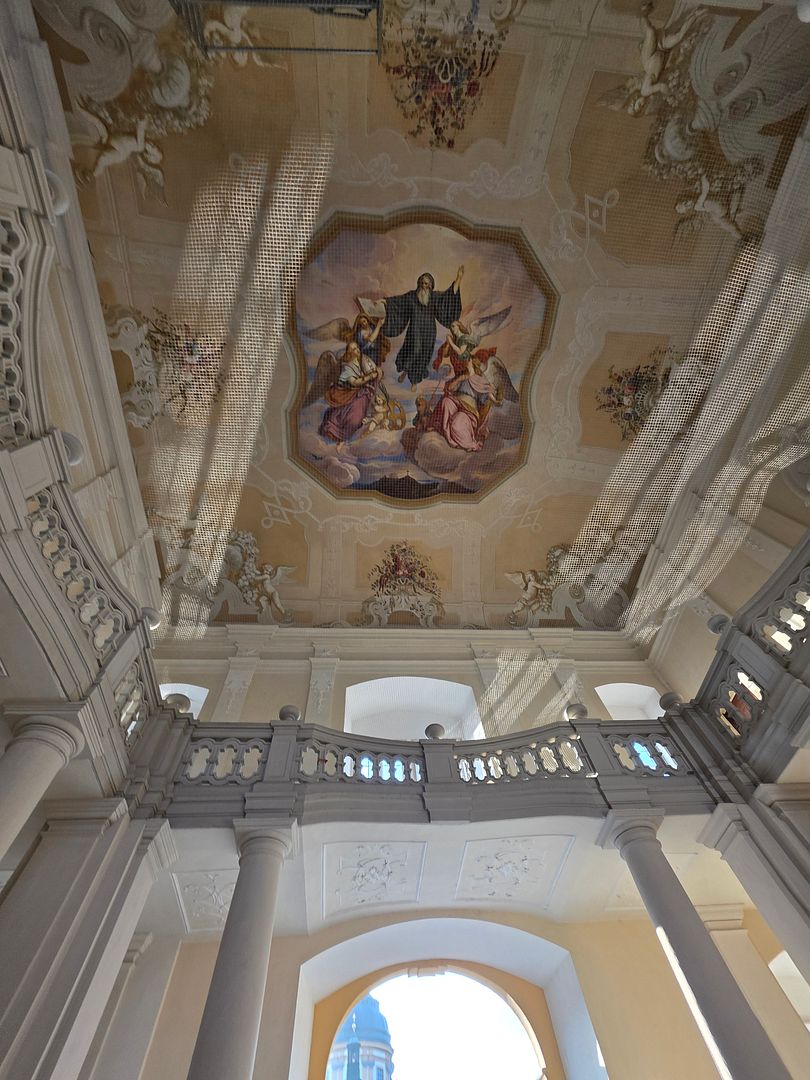
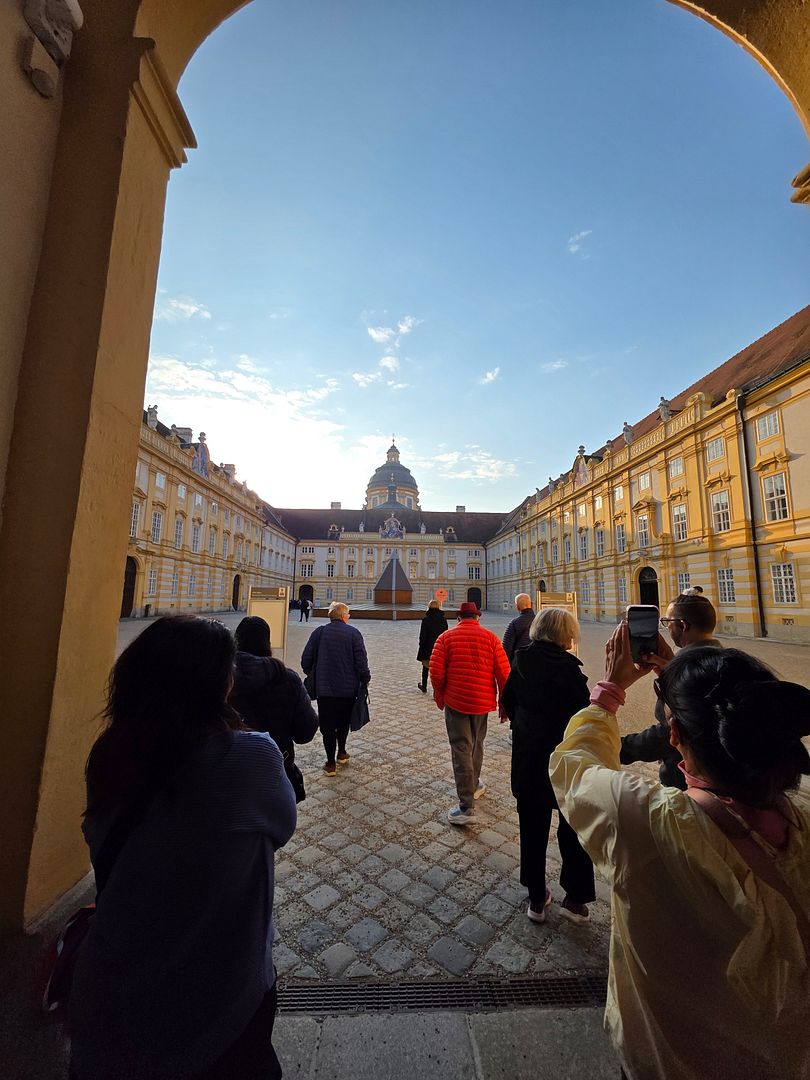
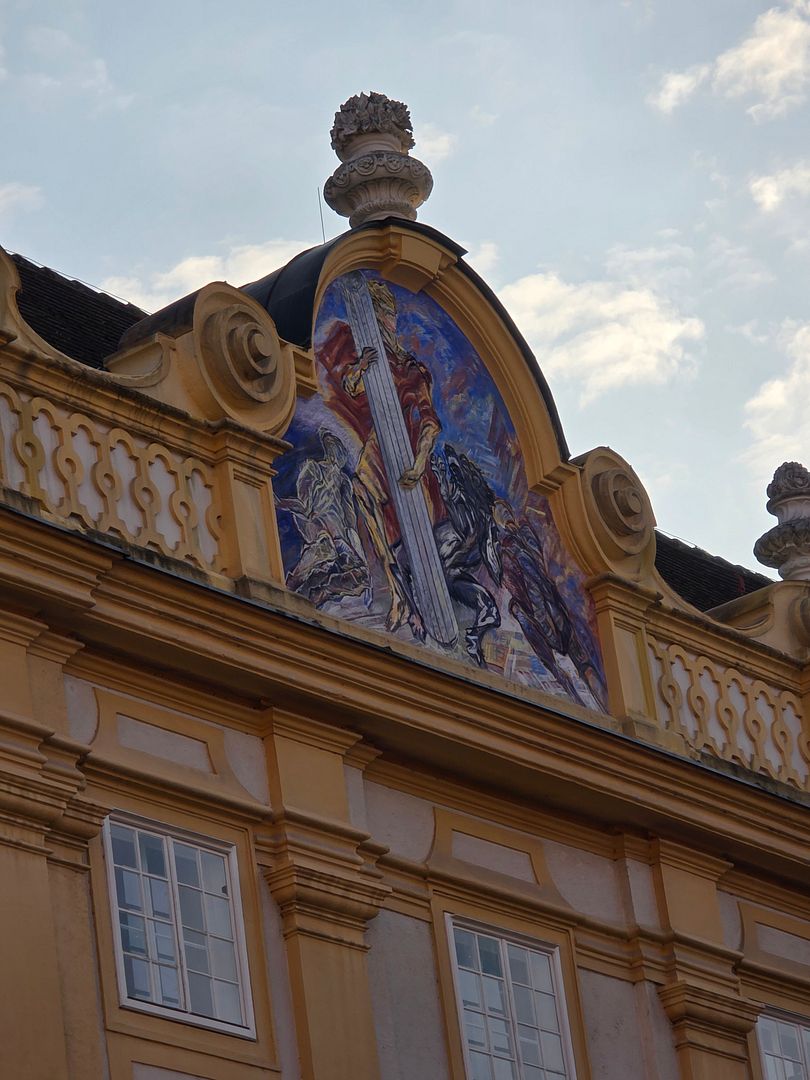
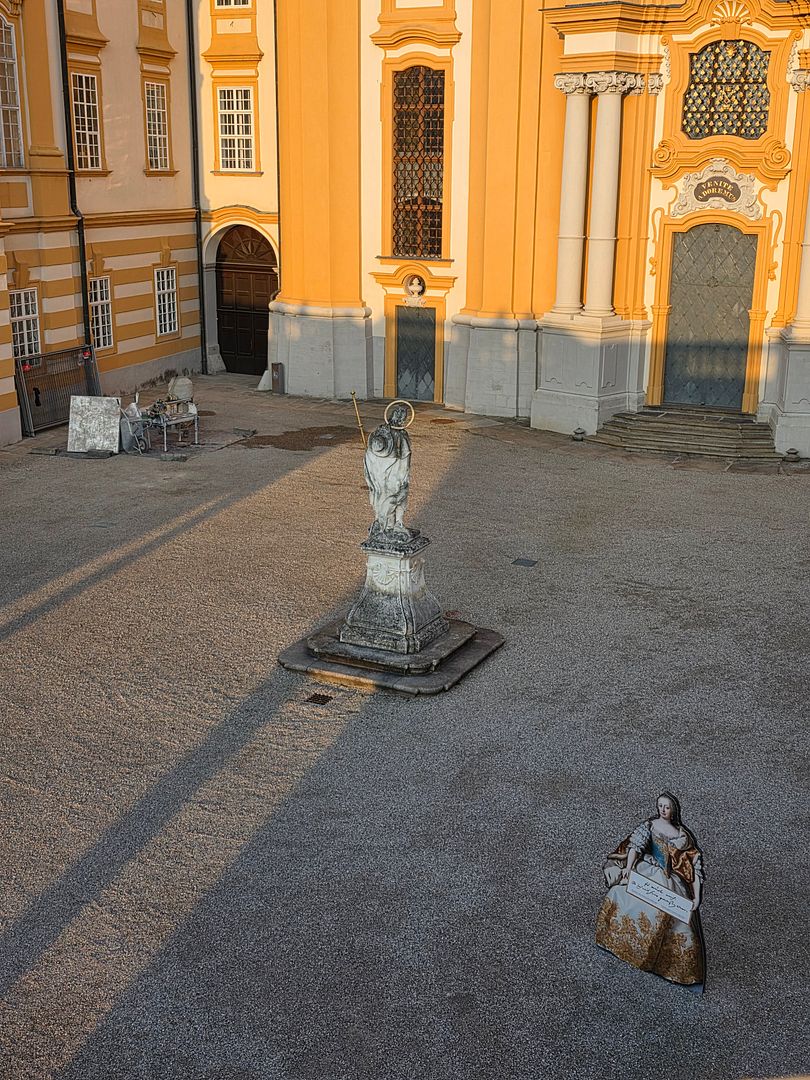
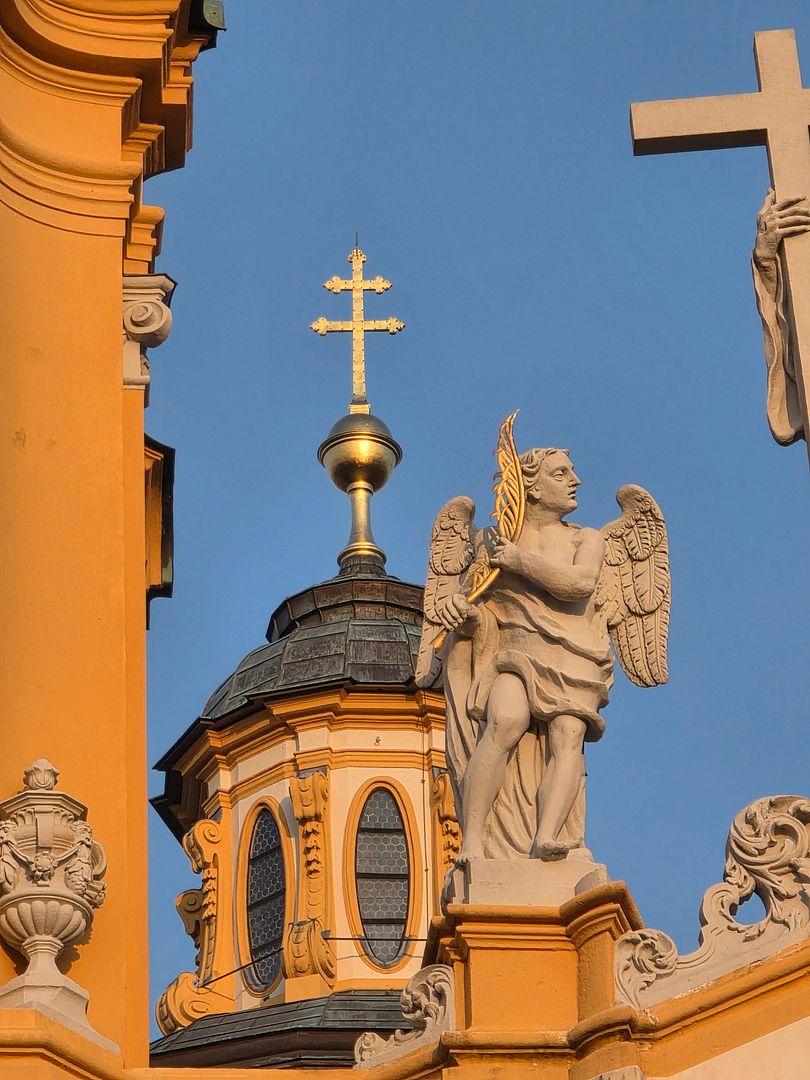
The Prelate’s Courtyard forms a trapezoid, 275 ft. long and 138 ft. wide. On the cornices on each of the four sides are statues of apostles and prophets. In the center of each cornice is an area framed by a round arch. These originally contained Baroque frescos by Franz Rosenstingl but, unable to be restored, were replaced recently (1988) with more contemporary forms by Peter Bischof and Helmut Krumpel.
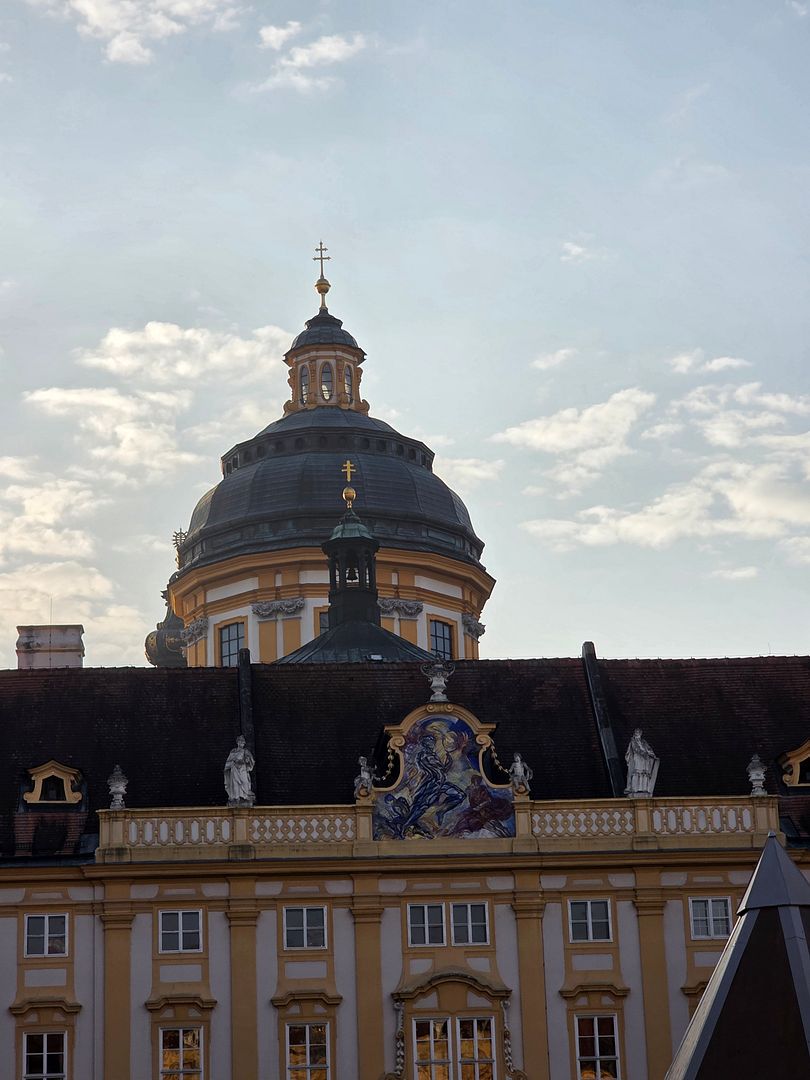
The four murals in the courtyard represent four virtues: Prudence, Justice, Fortitude, and Temperance.
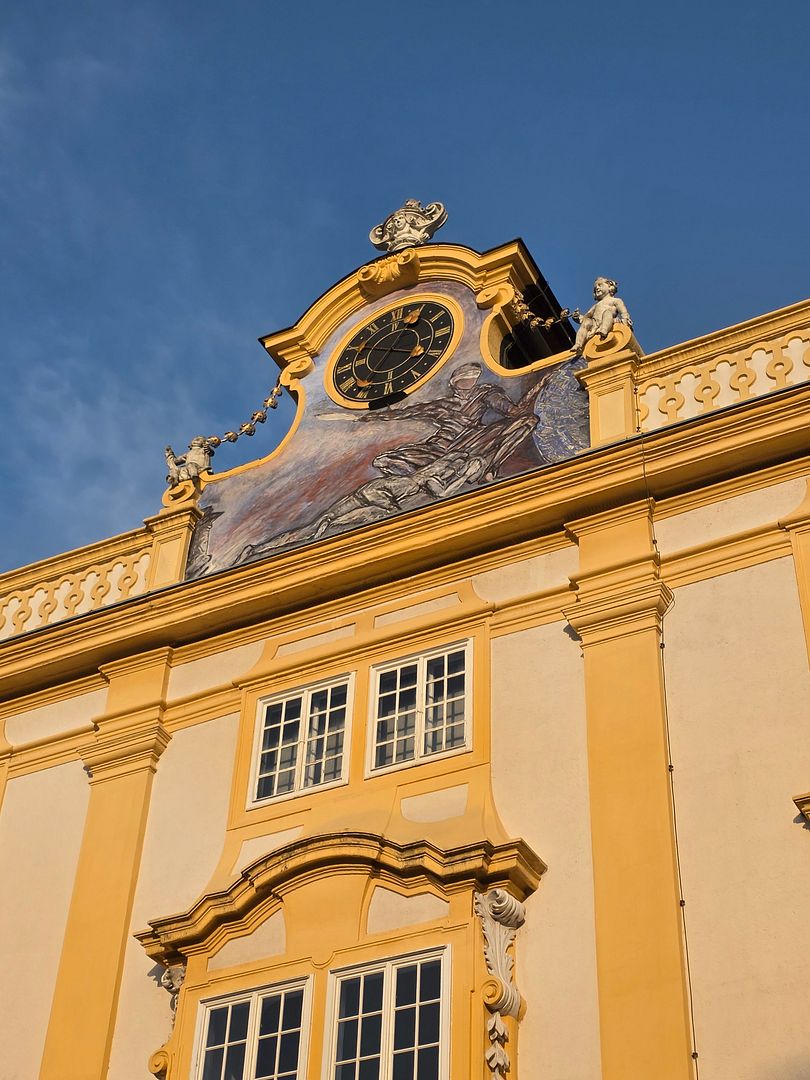
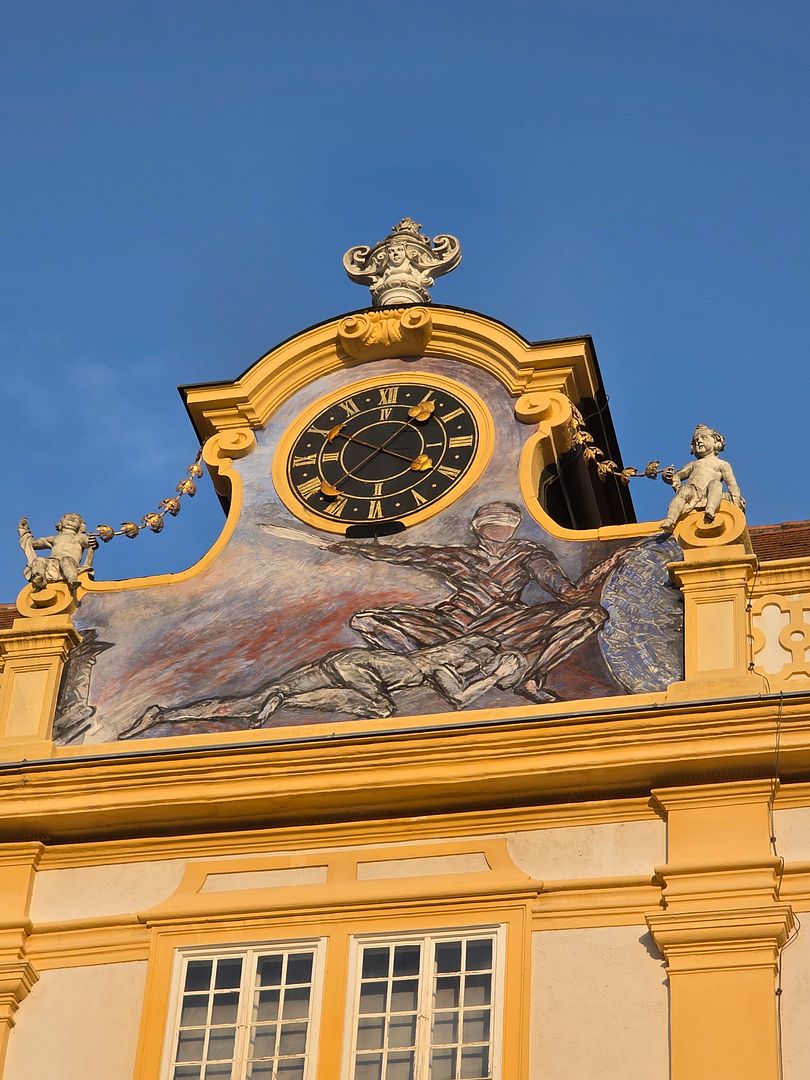
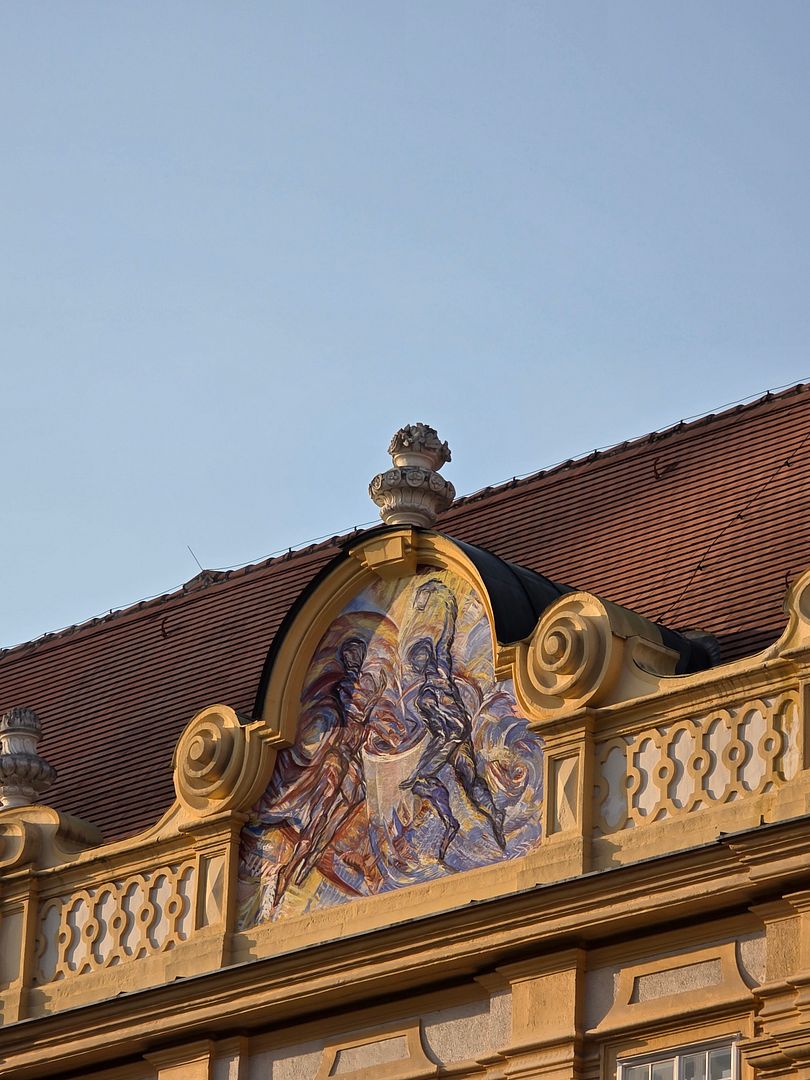
The four murals in the courtyard represent four virtues: Prudence, Justice, Fortitude, and Temperance.
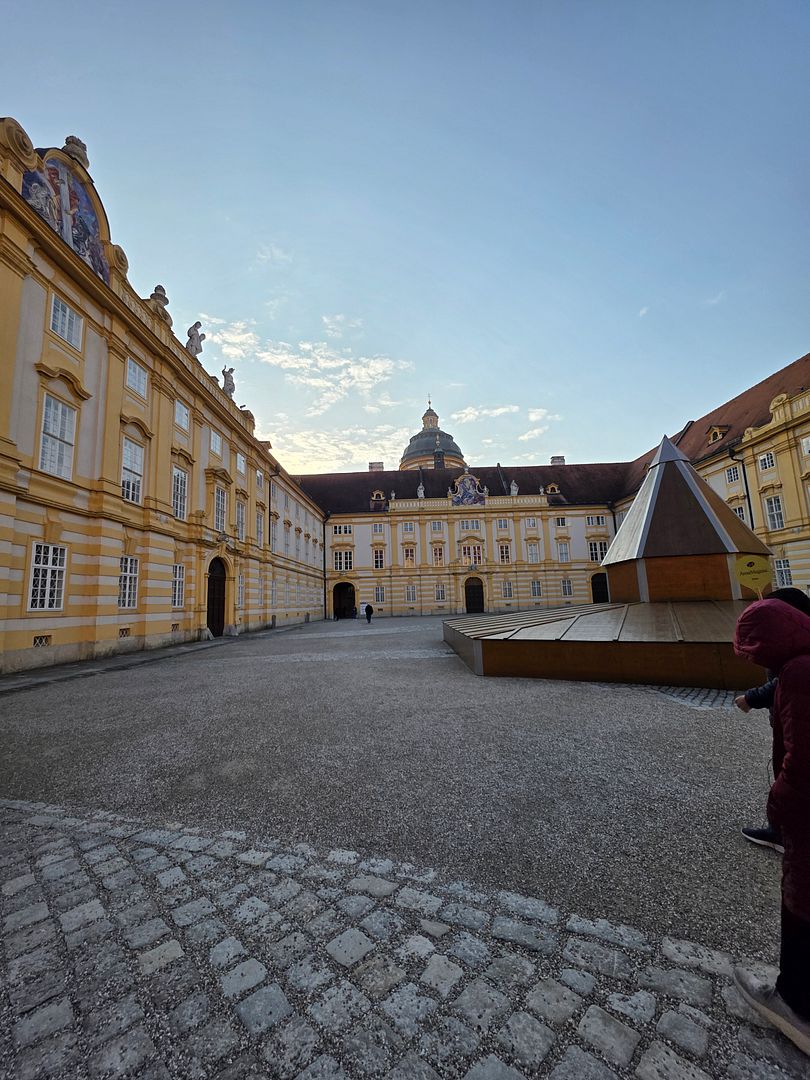
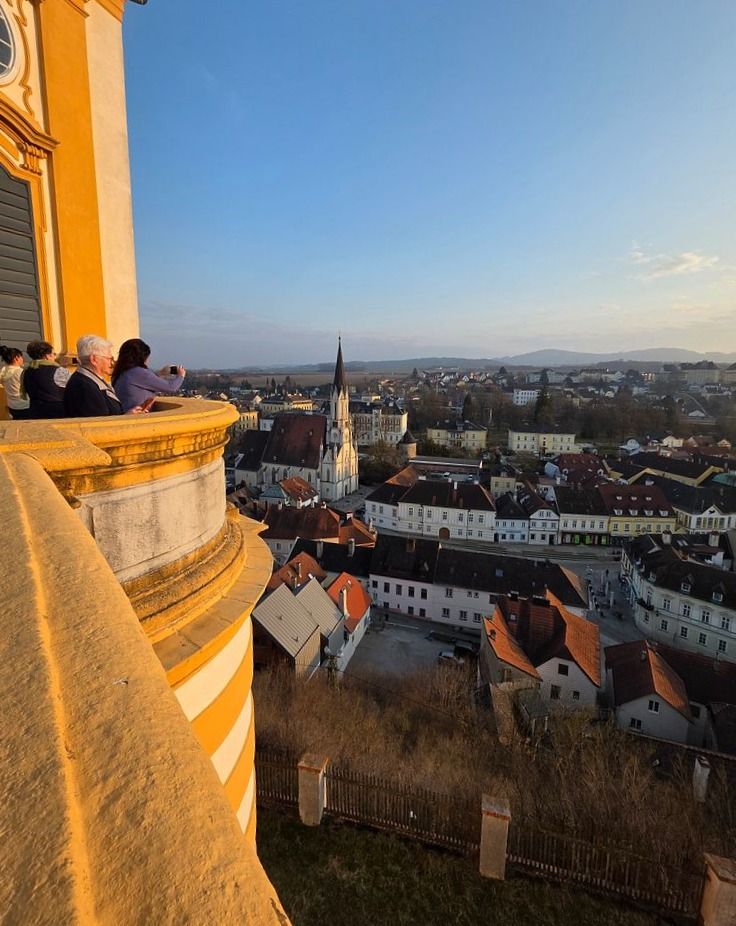
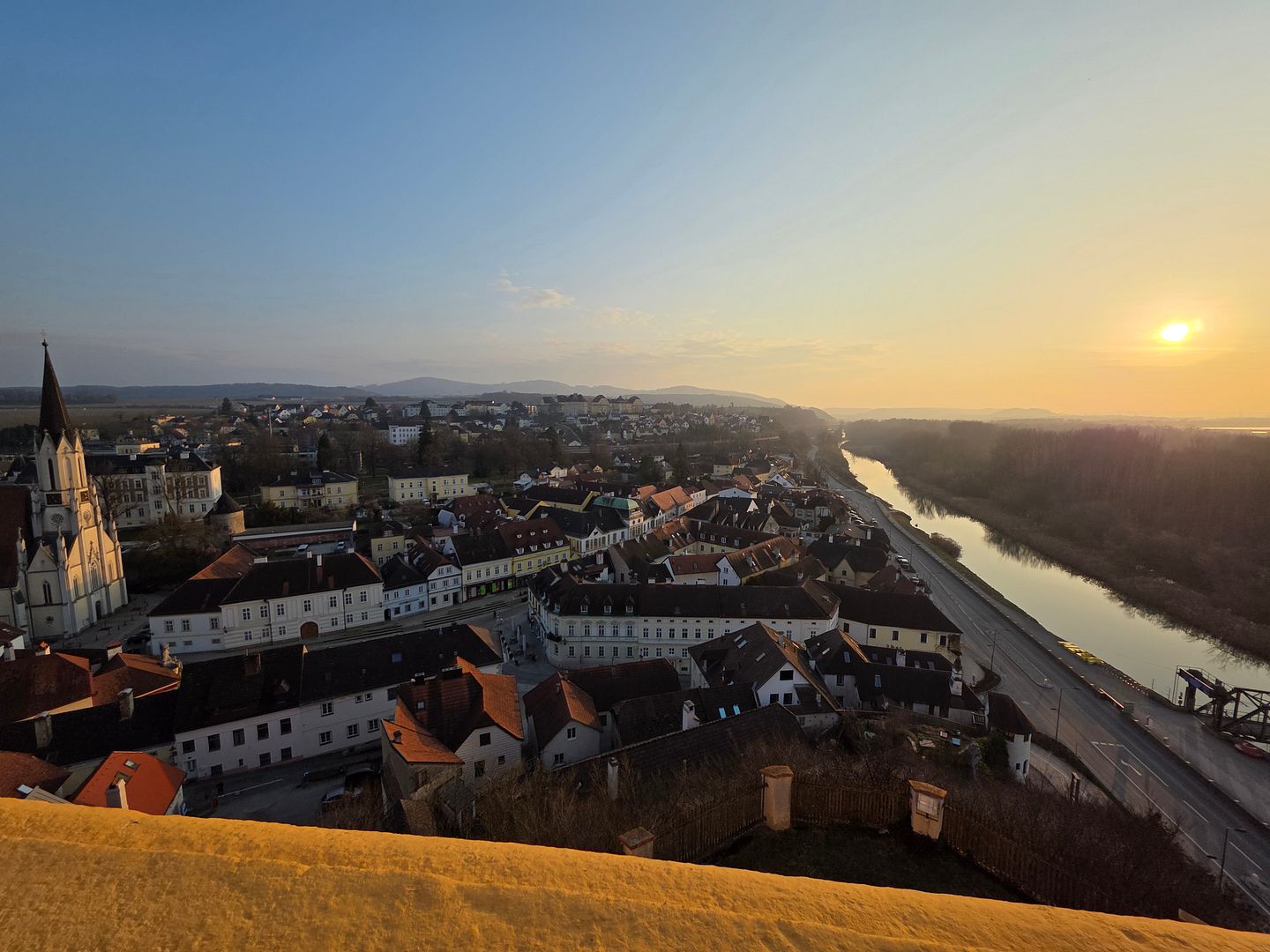
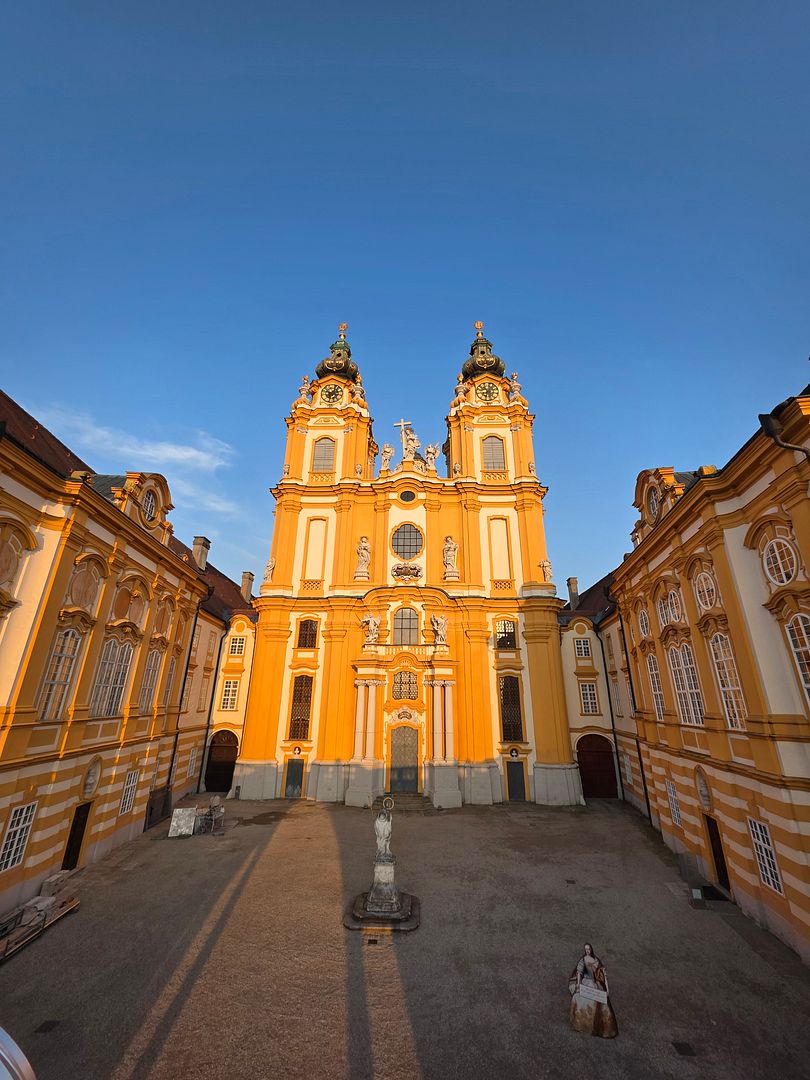
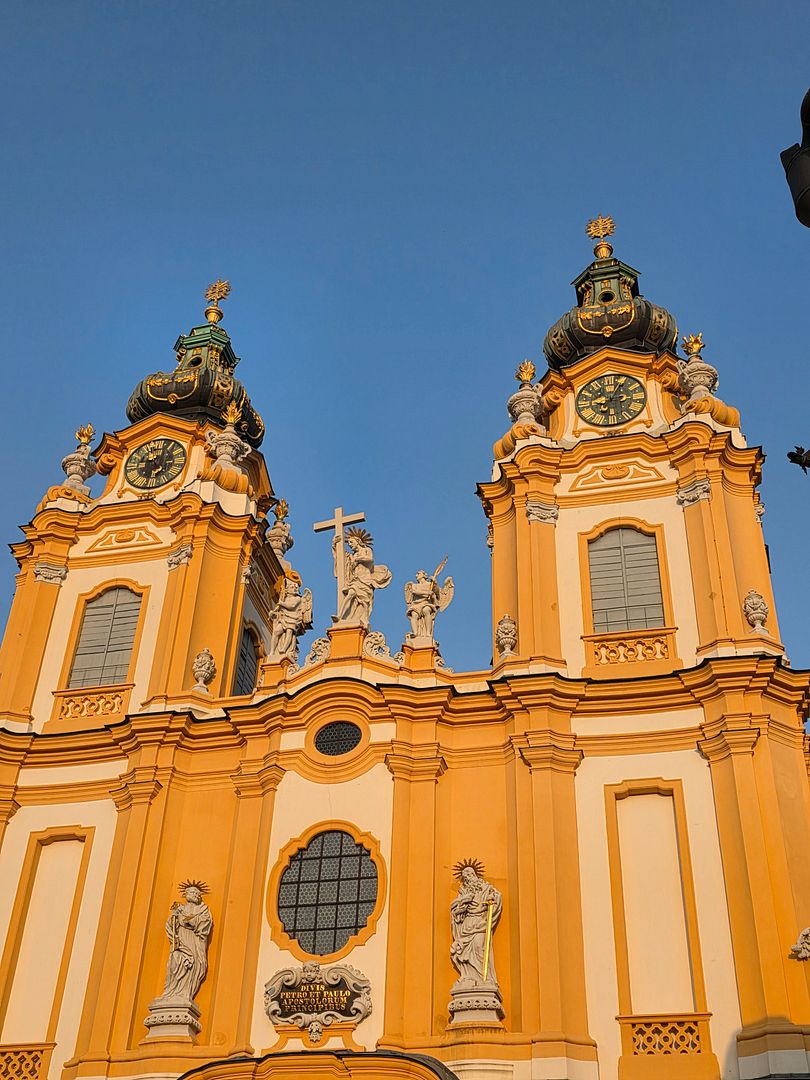
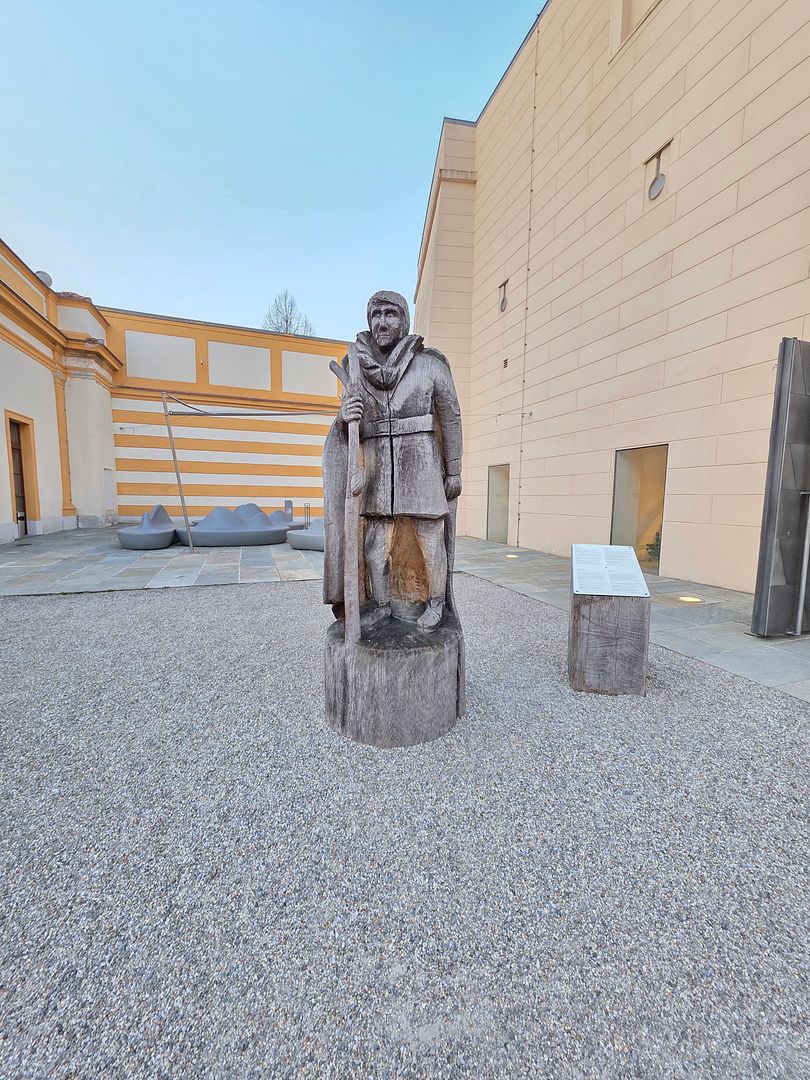
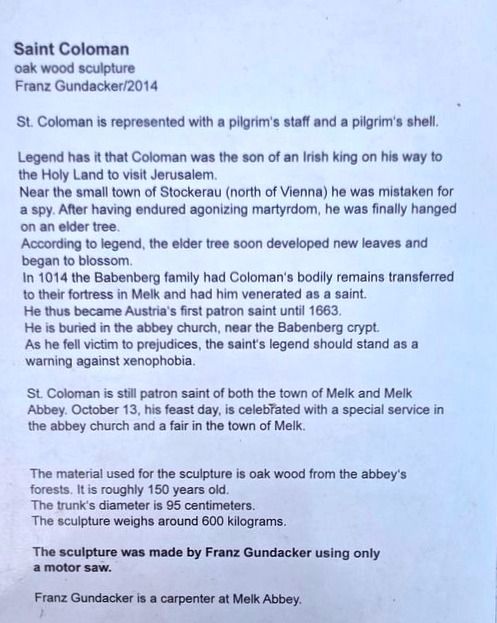
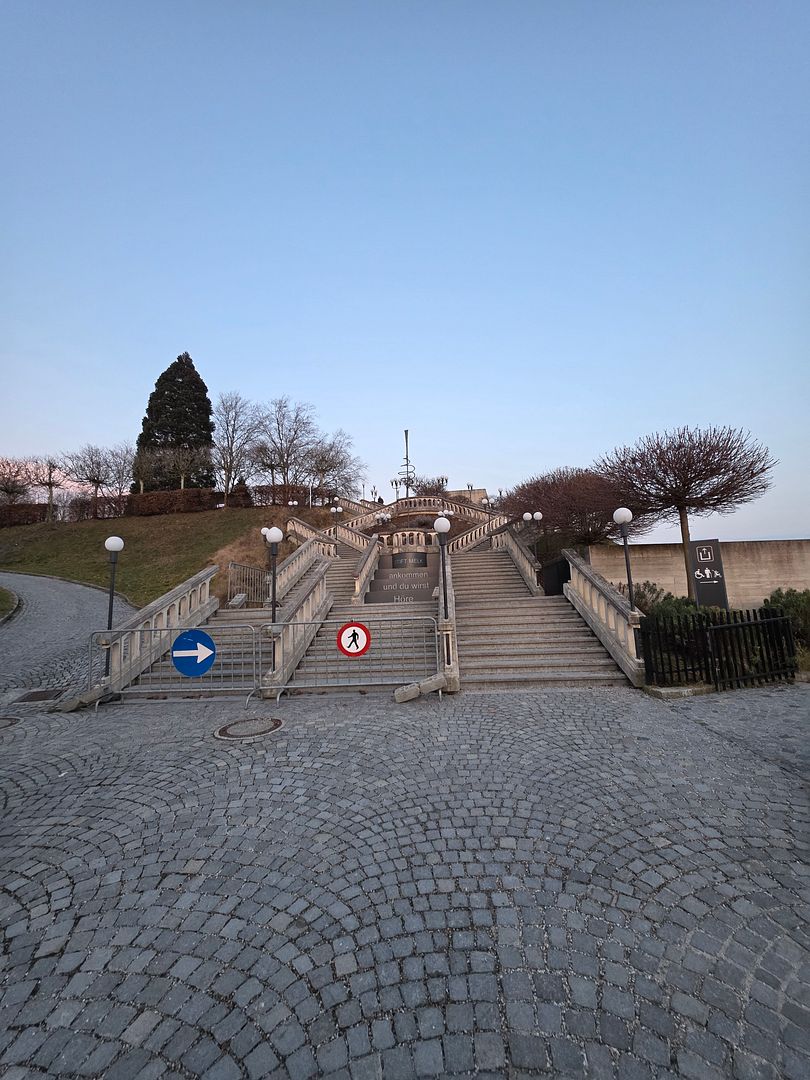
Time to walk up all those stairs to our bus that would take us back to the AmaMagna for dinner. We turned right at the stairs and took the elevator instead.
This was the night we were slated for a smaller dinner group in the Al Fresco Restaurant and I’ll share that dinner event in another post.
 The Happy Wonderer ~ ellen b.