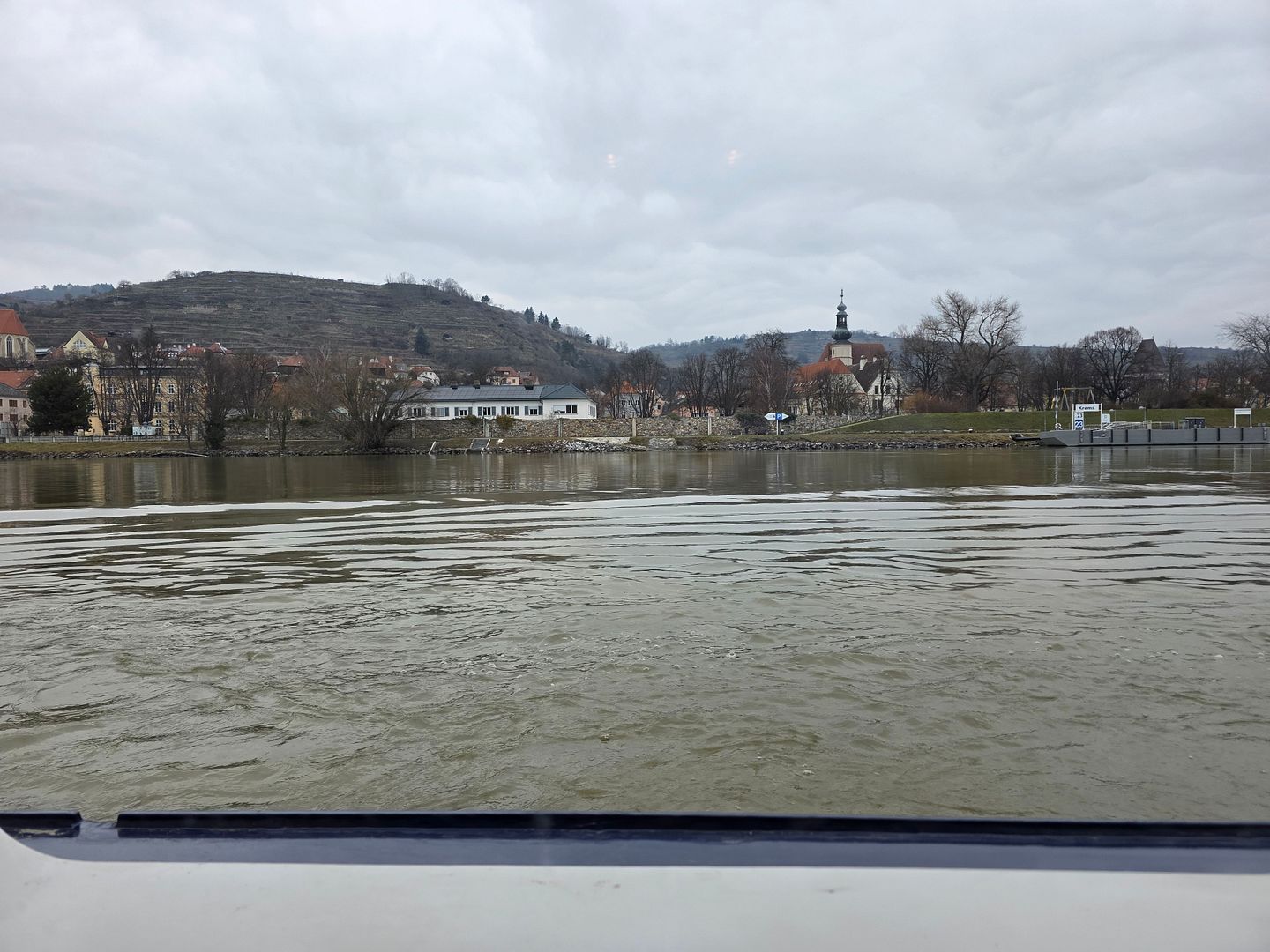
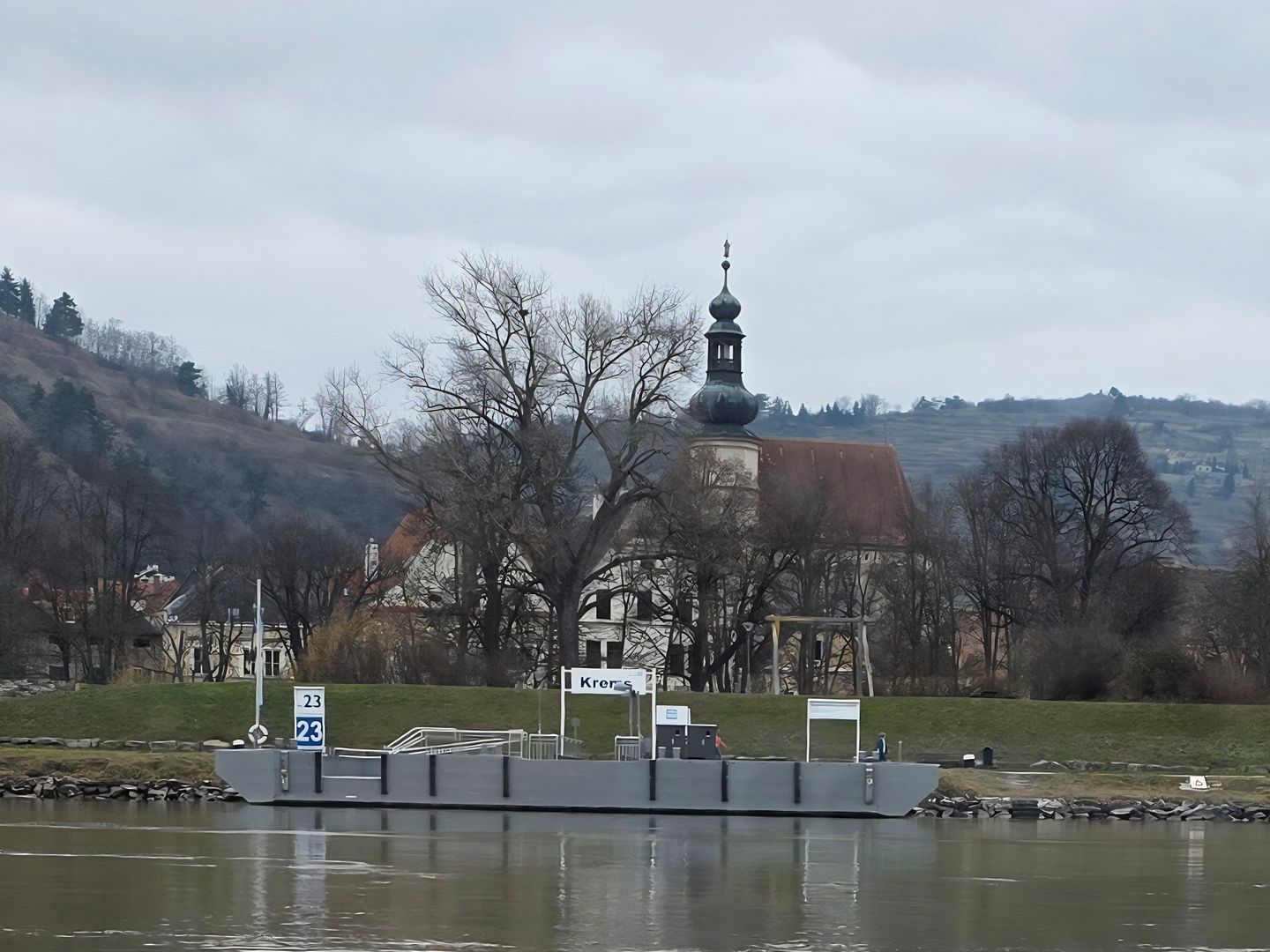
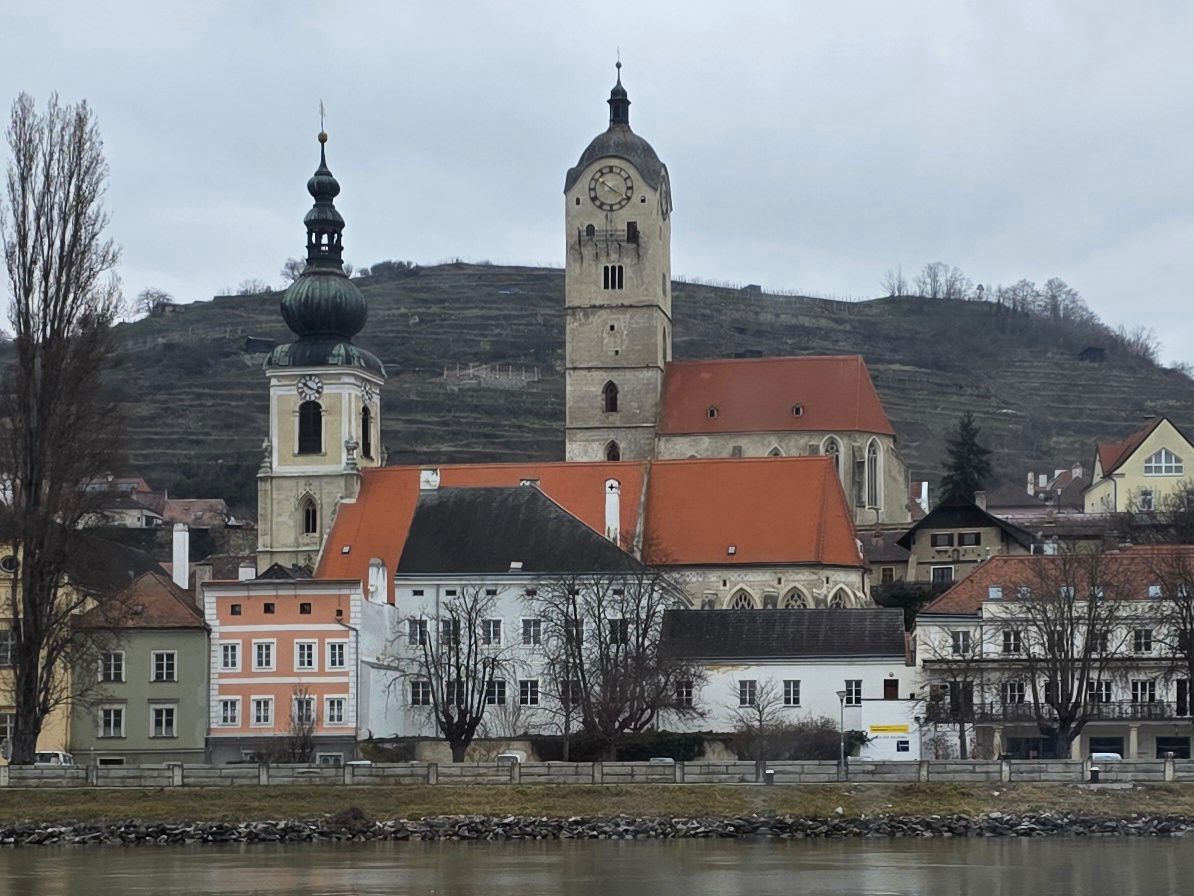
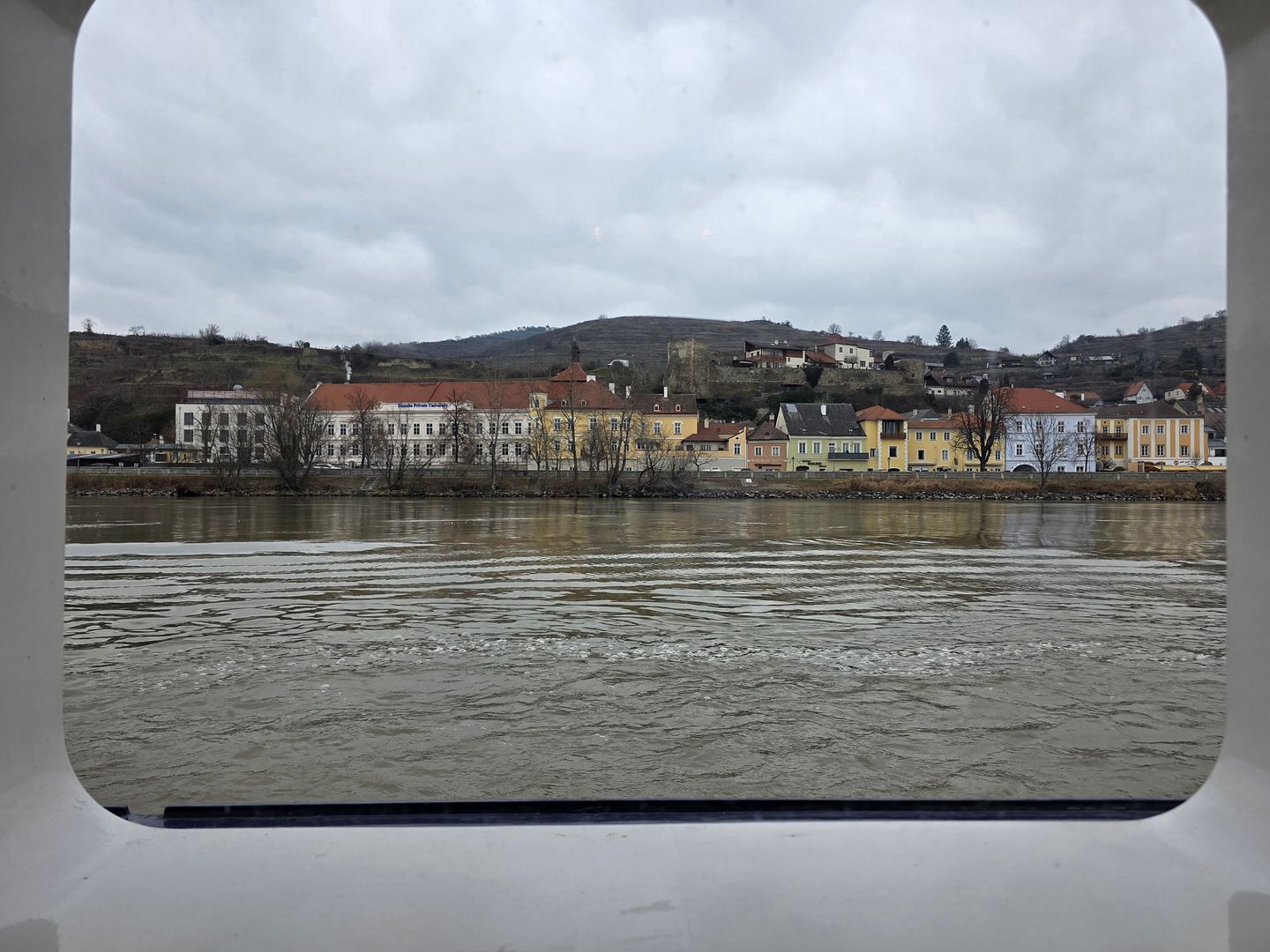
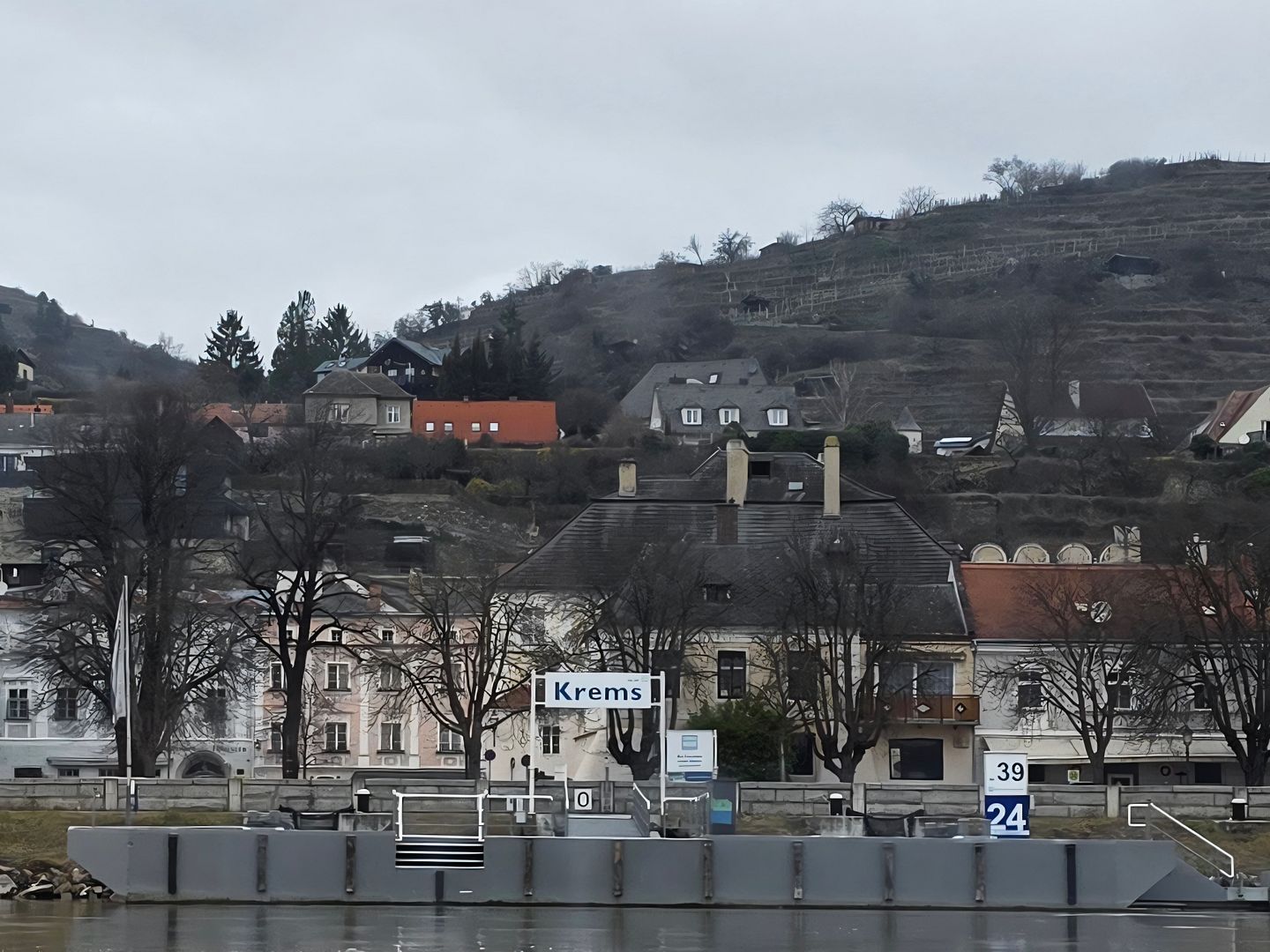
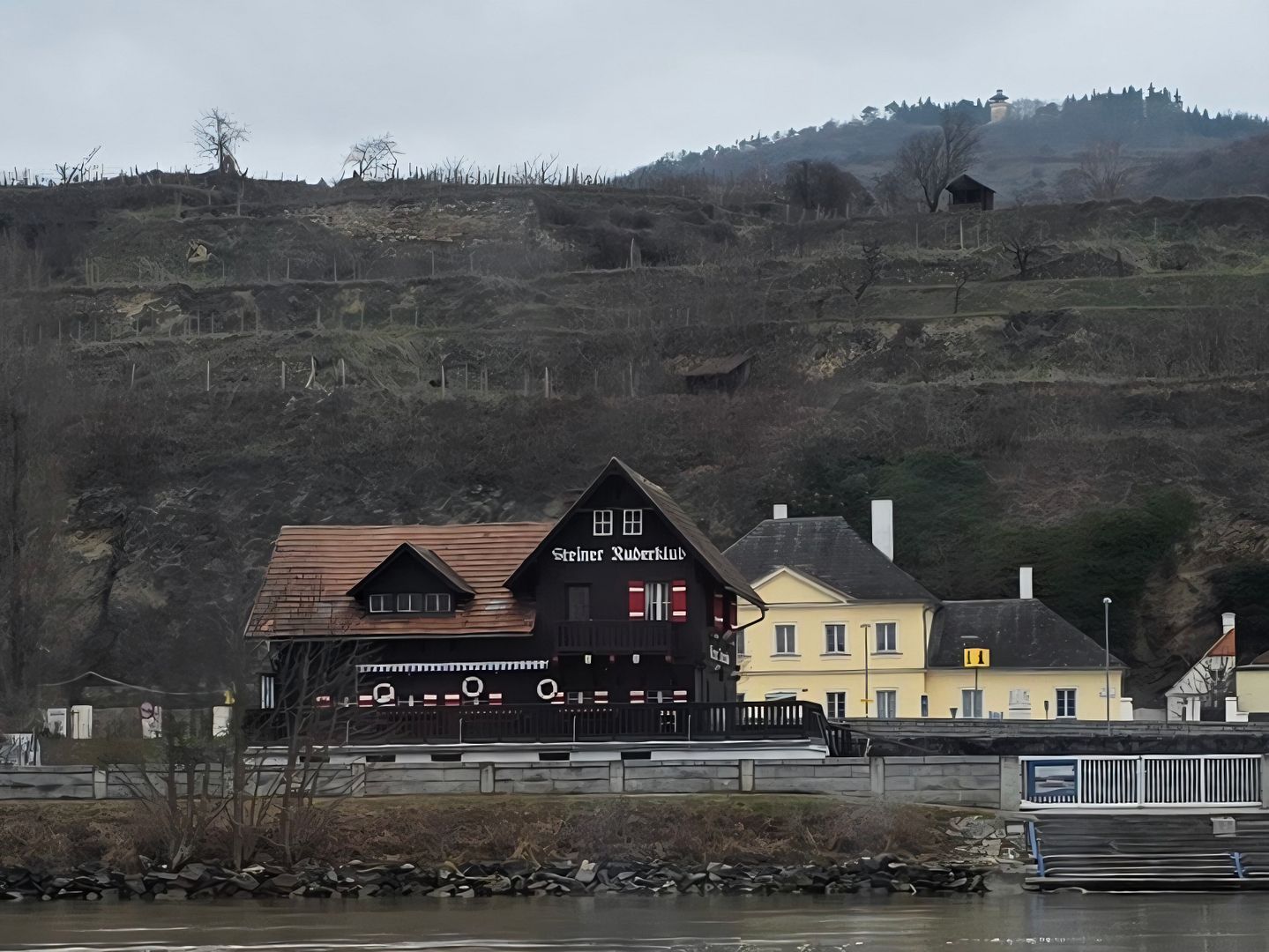
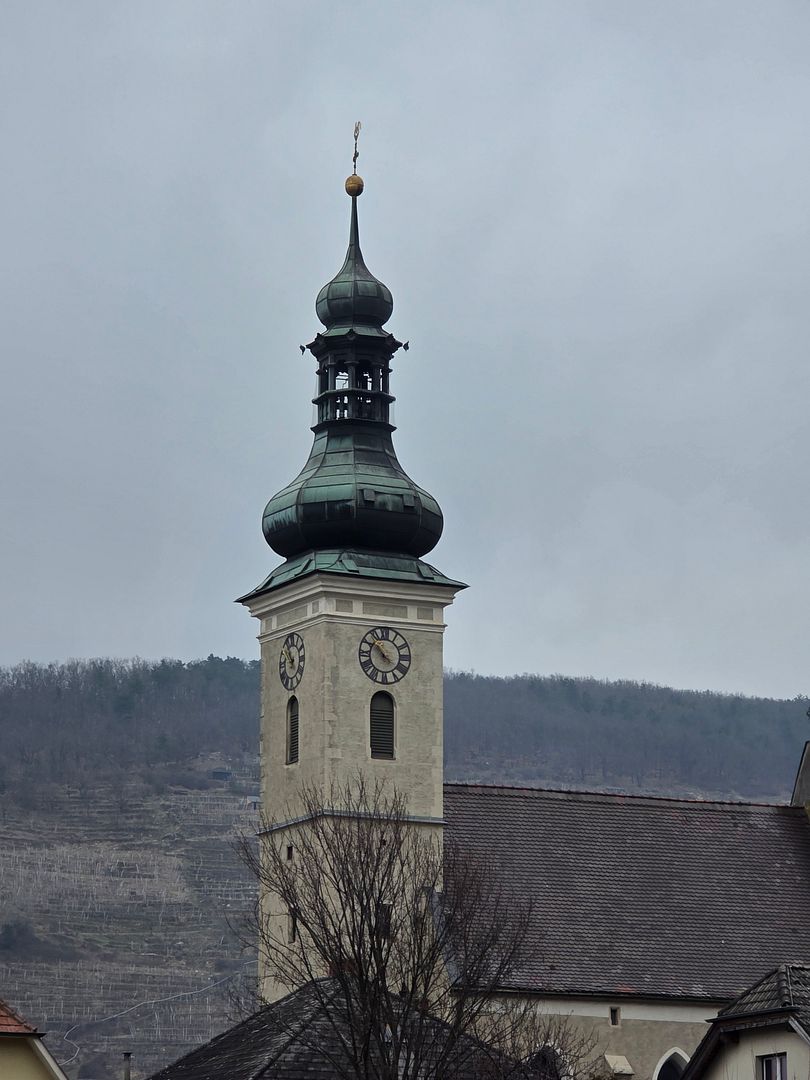
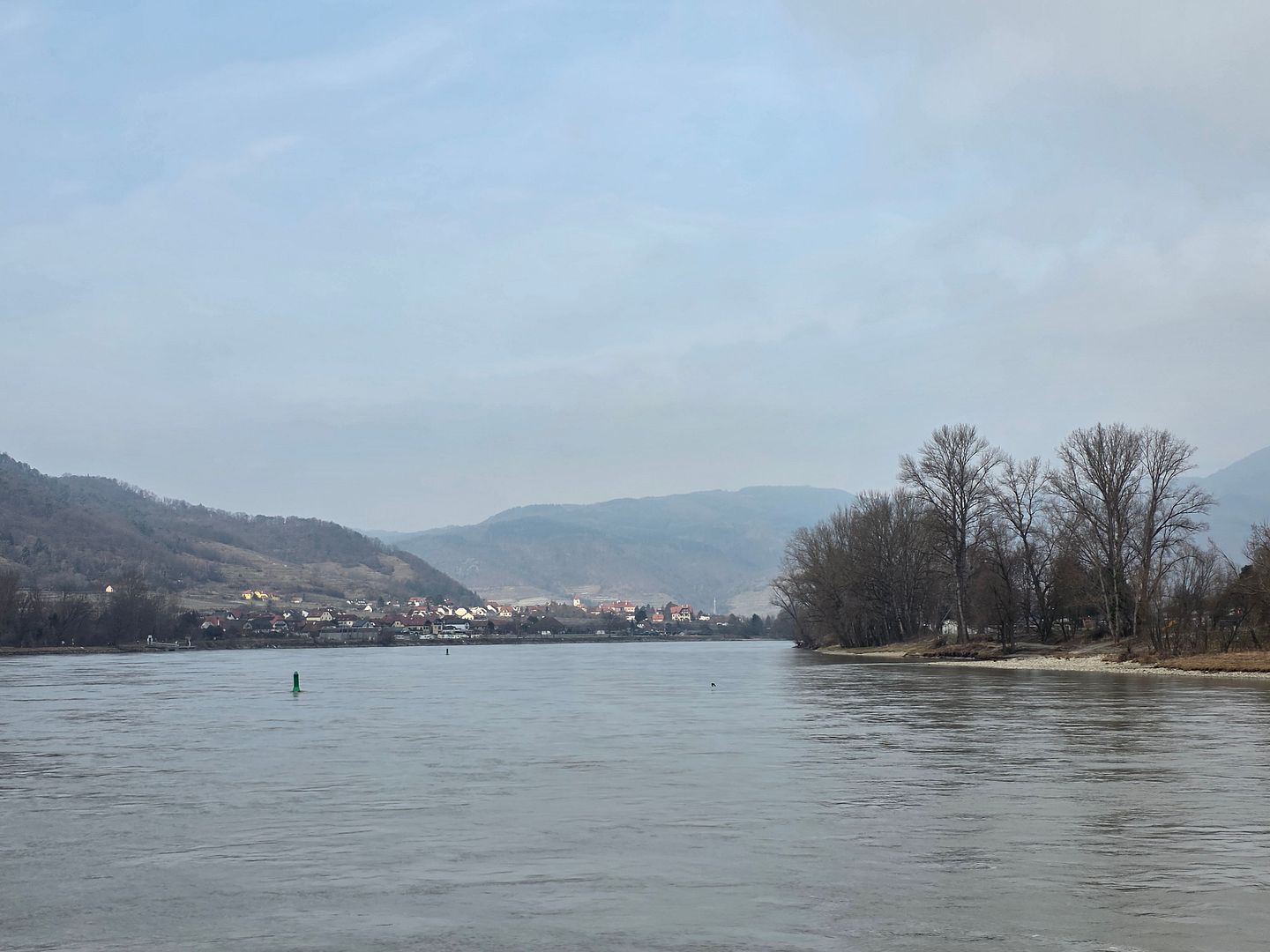
On Wednesday, March 4th, we had a full day excursion to the charming mountain town of Český Krumlov just over the Czech-Austrian border. This was after our short morning tour of Krems.
Our guide grew up in this region and shared his memories of growing up under communism. On our way to our stop, we saw some areas where housing high rises from the past were everywhere. Current residents were making them more colorful and personal.
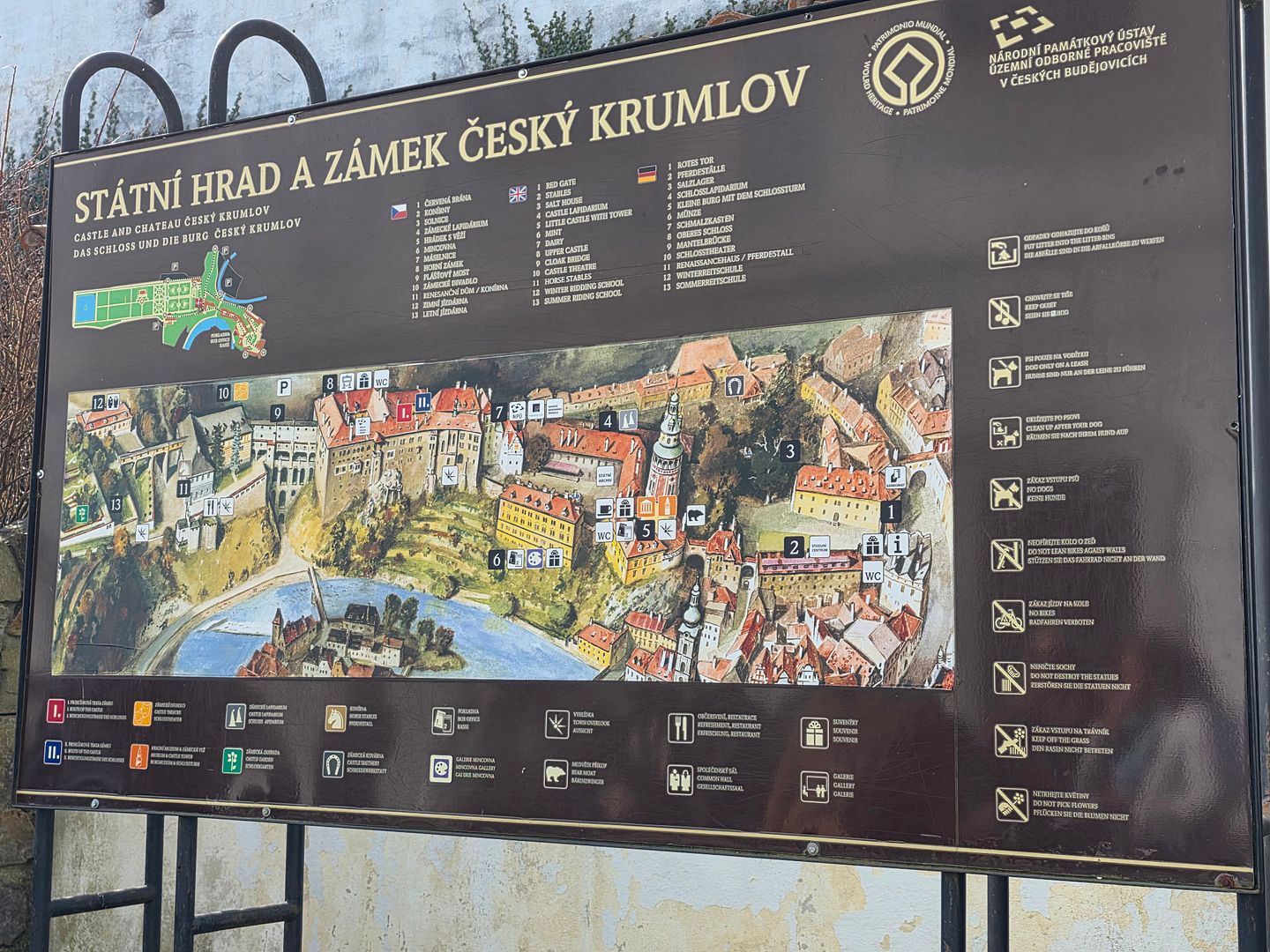
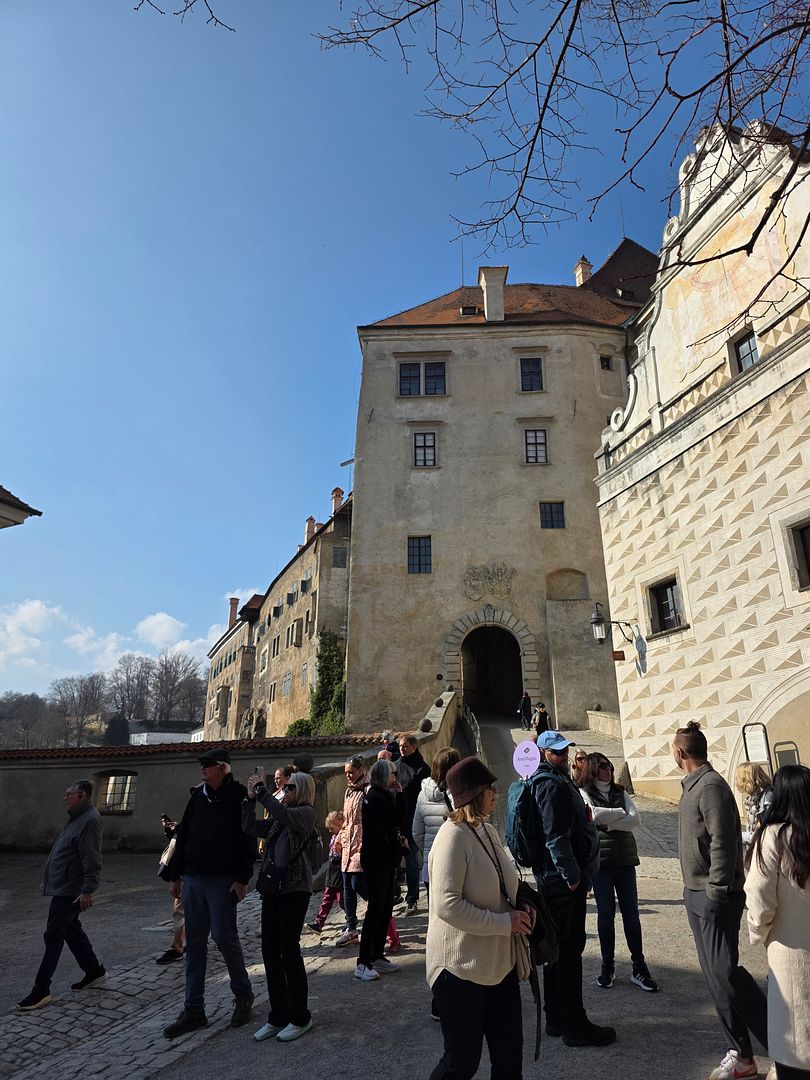
We finally reached our destination. From the bus parking lot, the walk to the castle was all uphill and I’m not going to lie, it was a huff and a puff to get there. Thankfully that would be the only uphill trek on this day!
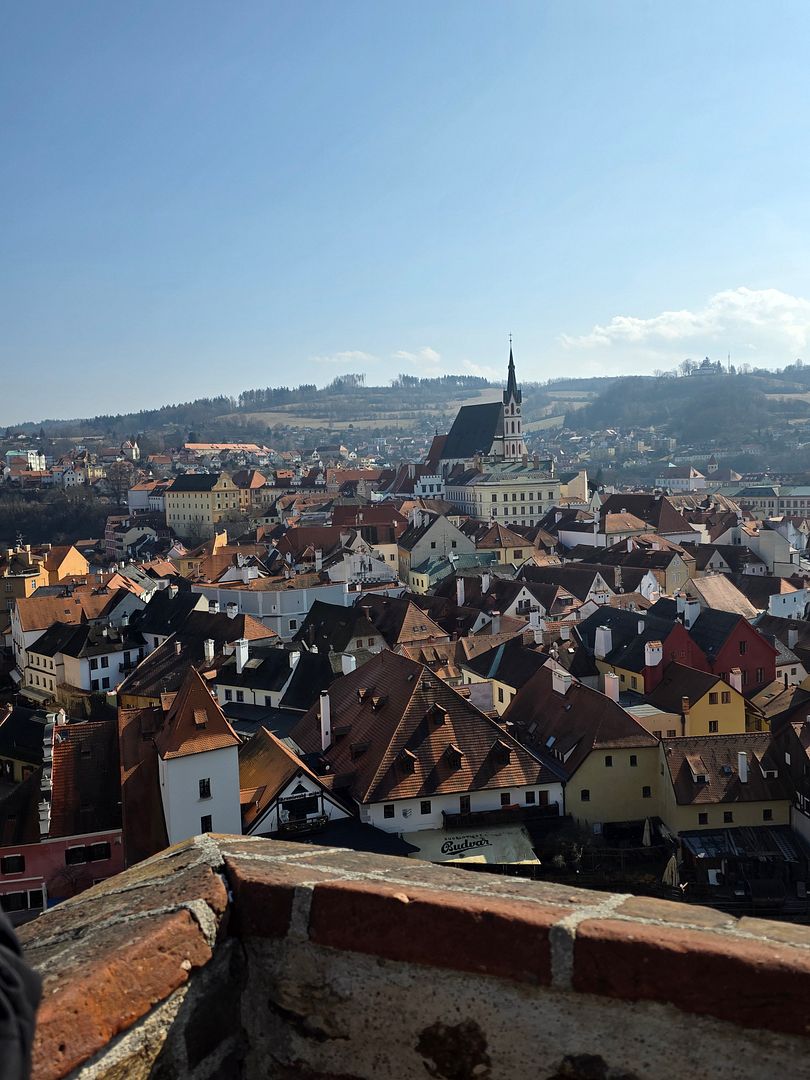
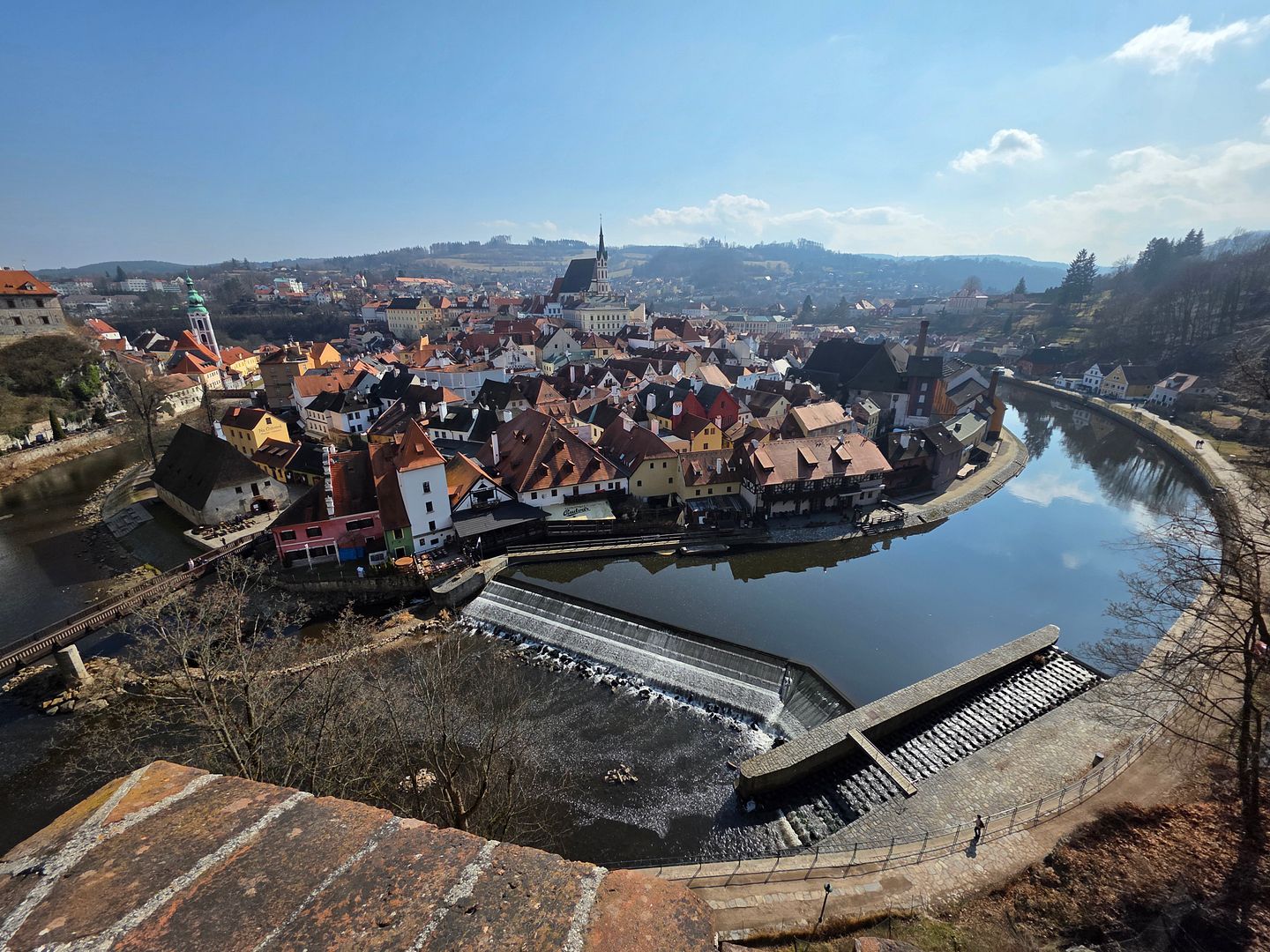
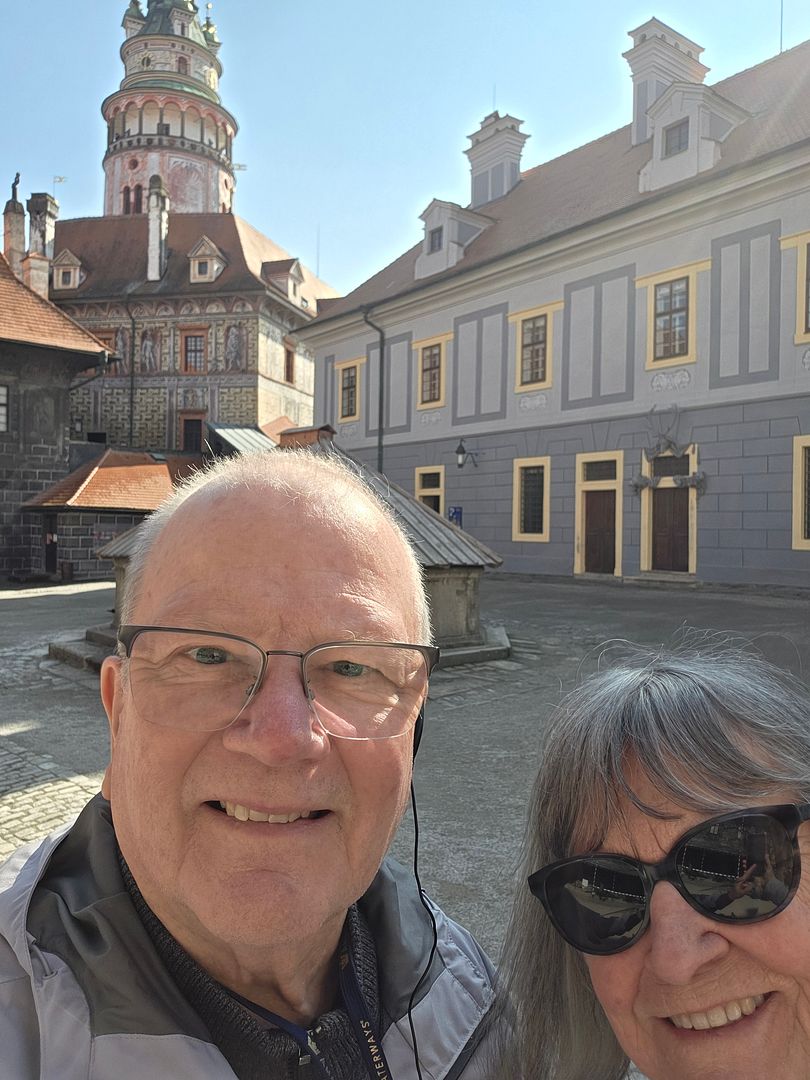
Český Krumlov is a city in the South Bohemia region of the Czech Republic. It’s bisected by the Vltava River, and dominated by its 13th-century castle. The castle has Gothic, Renaissance and baroque elements, an 11-hectare garden and an original 17th-century baroque theater. There are panoramic views of the old town and the river from the top of its round belltower.
We were here in the winter months so the garden wasn’t visited.
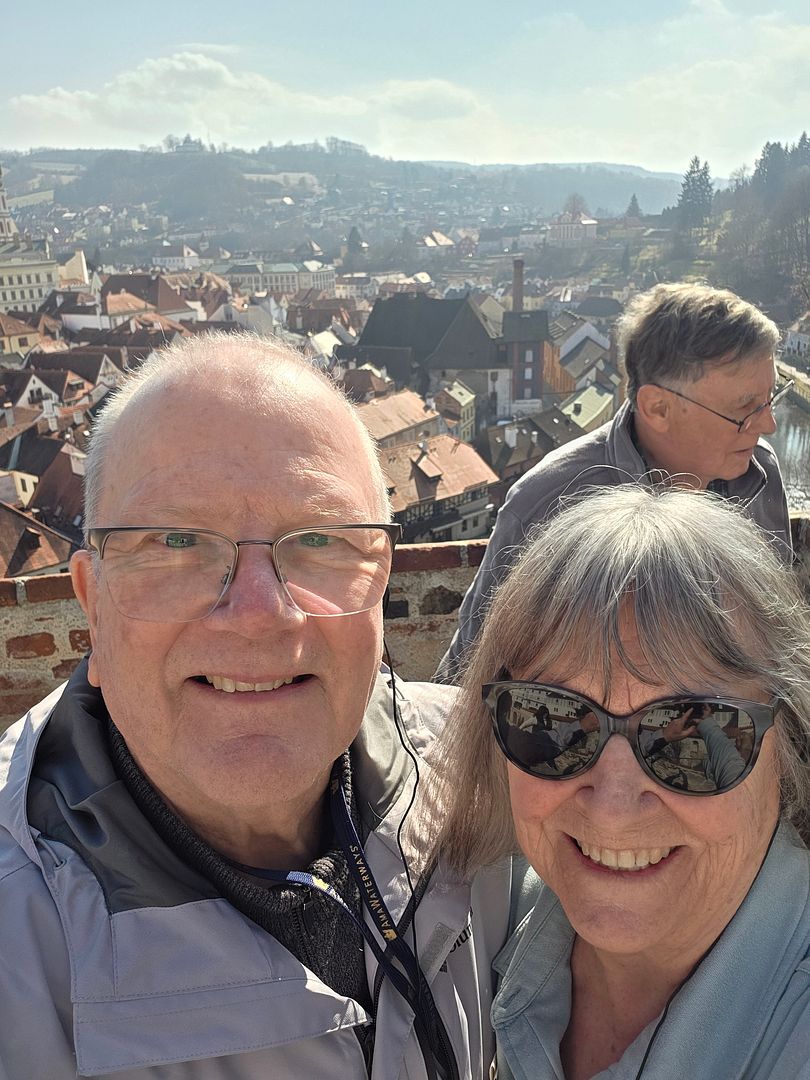
Český Krumlov, a UNESCO World Heritage site since 1992. It flourished under the Rosenbergs as a Renaissance hub, transitioning to Baroque under the Eggenbergs and Schwarzenbergs, maintaining its medieval layout largely due to slow industrialization in the 19th century. In 1938, it was annexed by Nazi Germany and after the Second World War, it was part of Communist Czechoslovakia. In 1992, after the Velvet Revolution, Czech Republic was born, and Český Krumlov is one of its crown jewels in the Bohemian region.
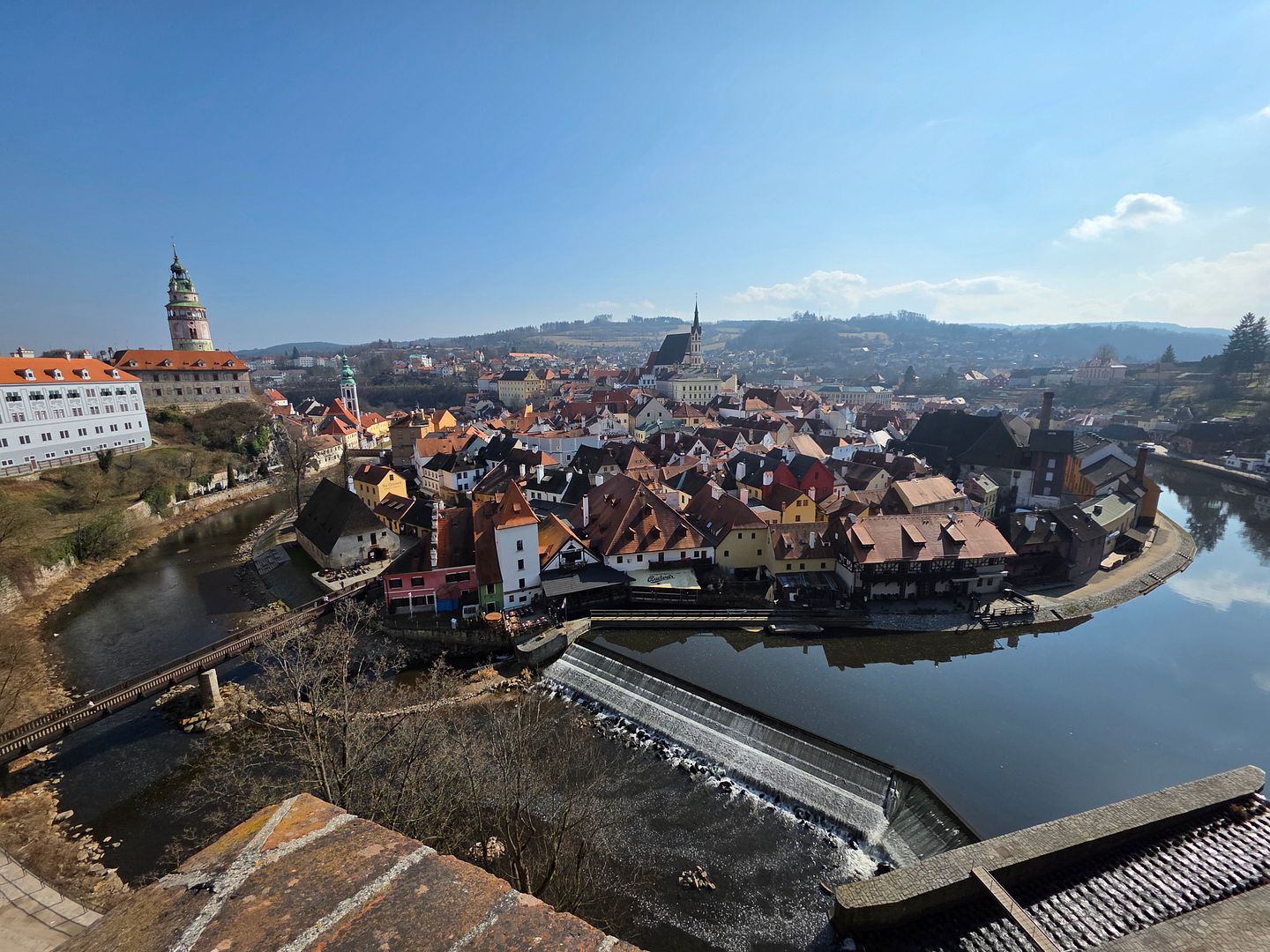
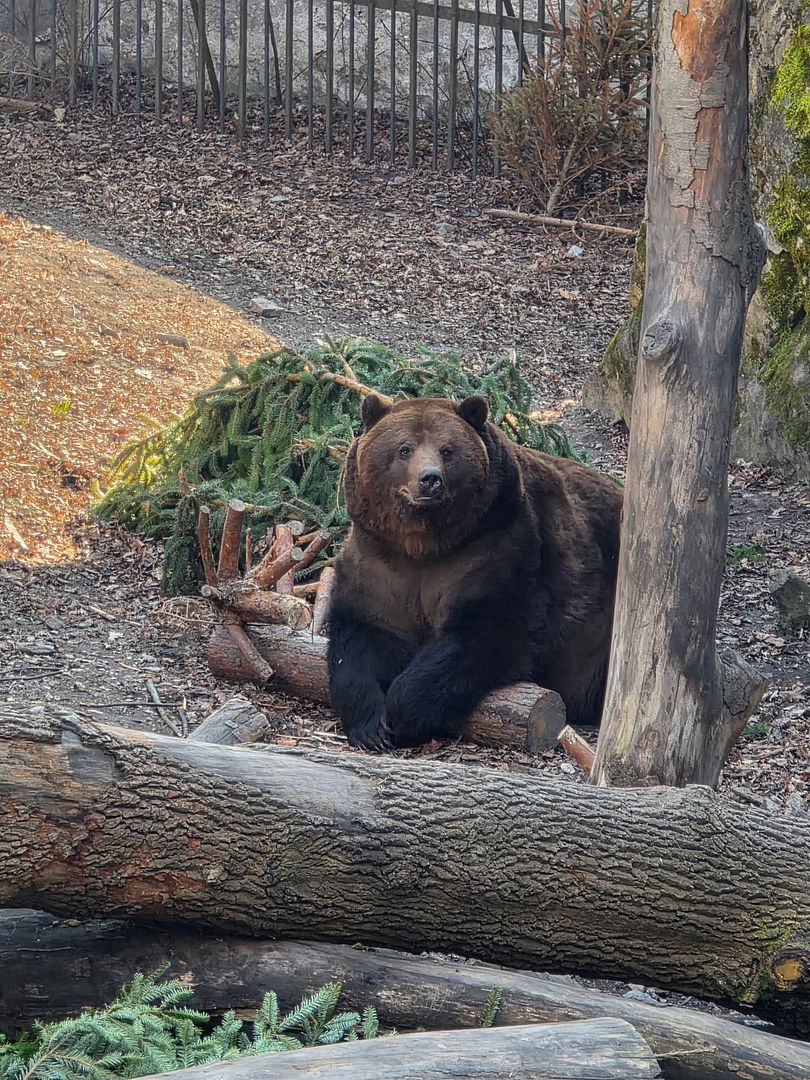
The village below is where we would be spending more time visiting and enjoying lunch on our own. But first, we would enjoy the castle and the castle moat with bears!
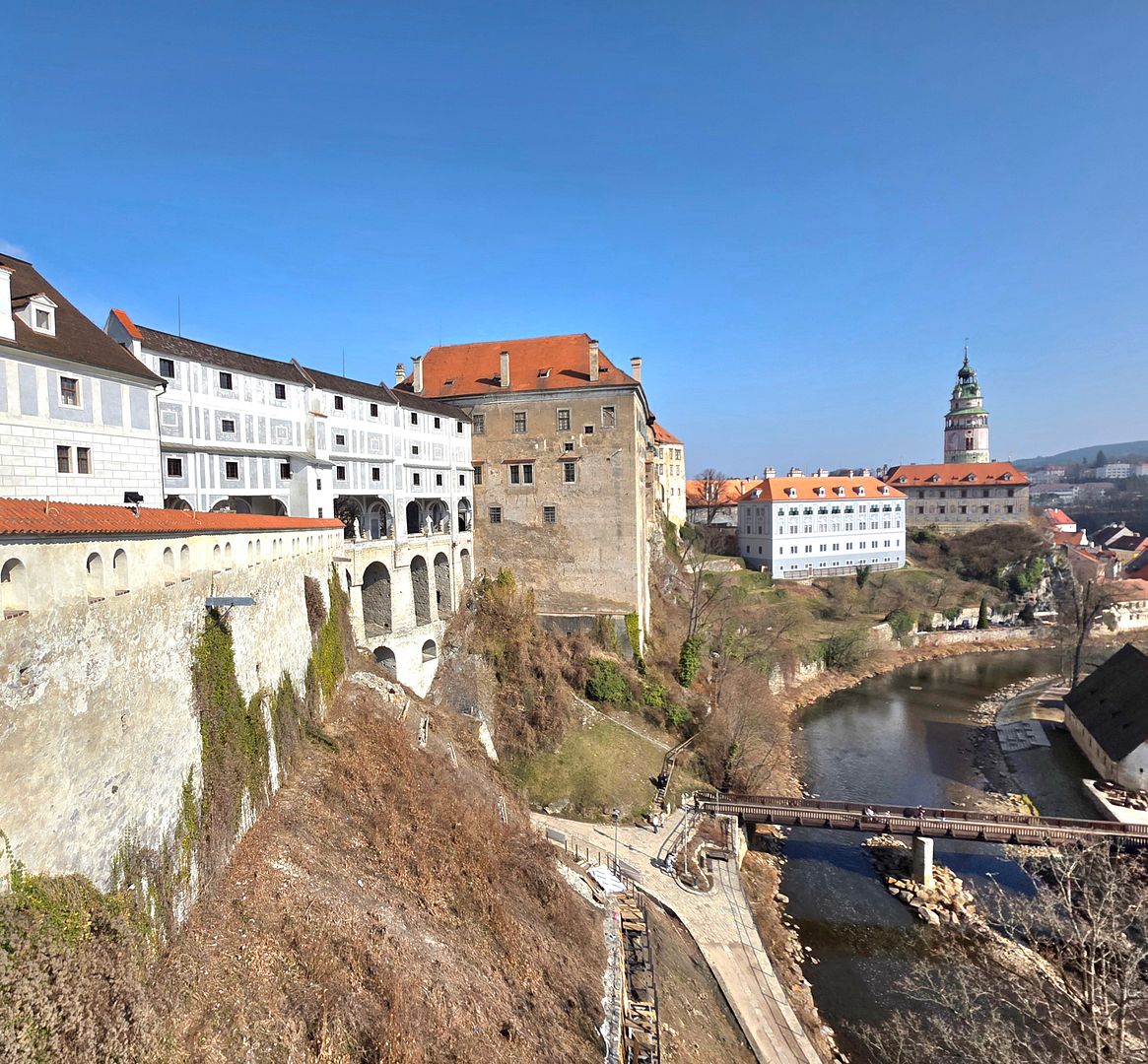
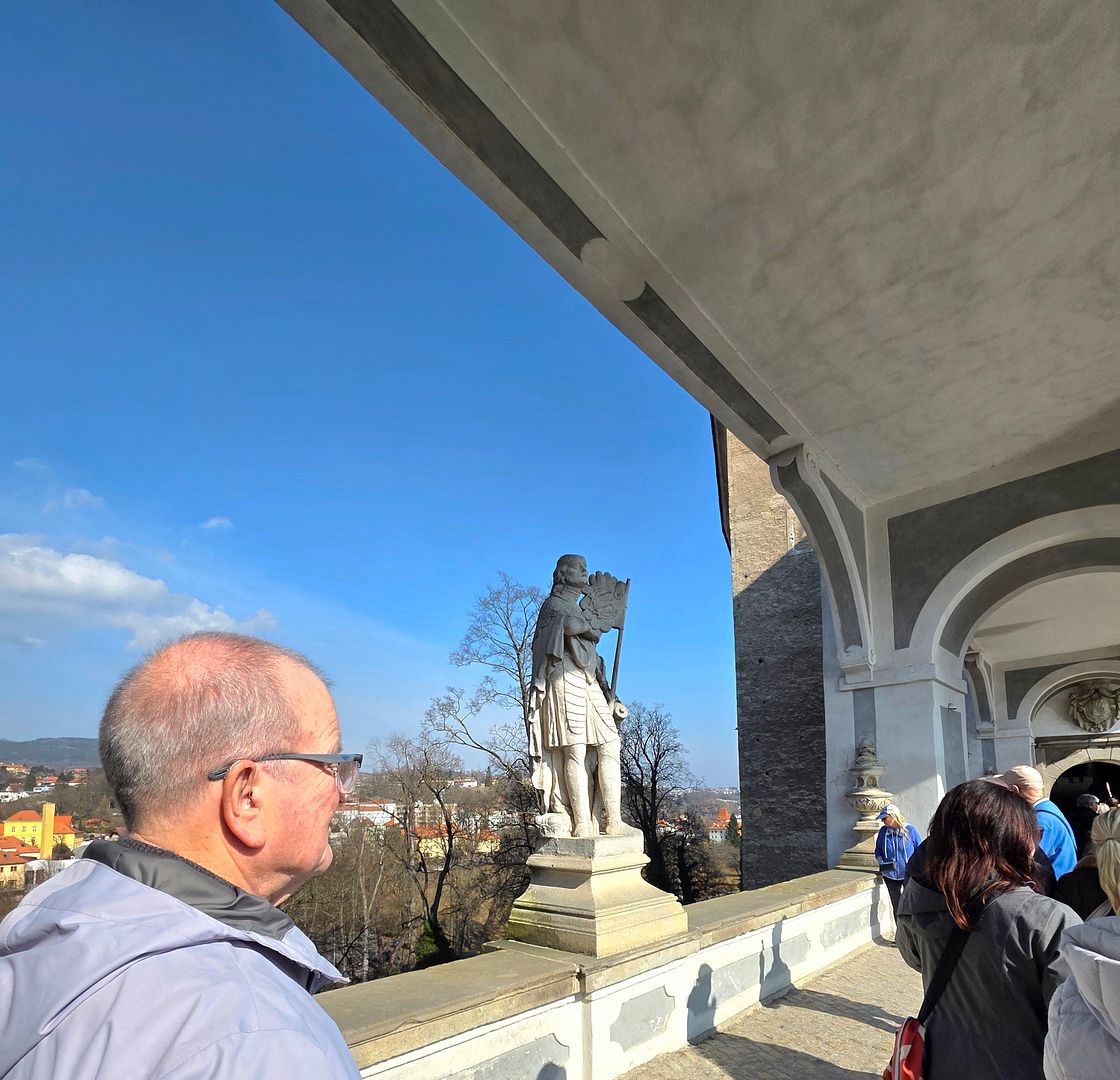
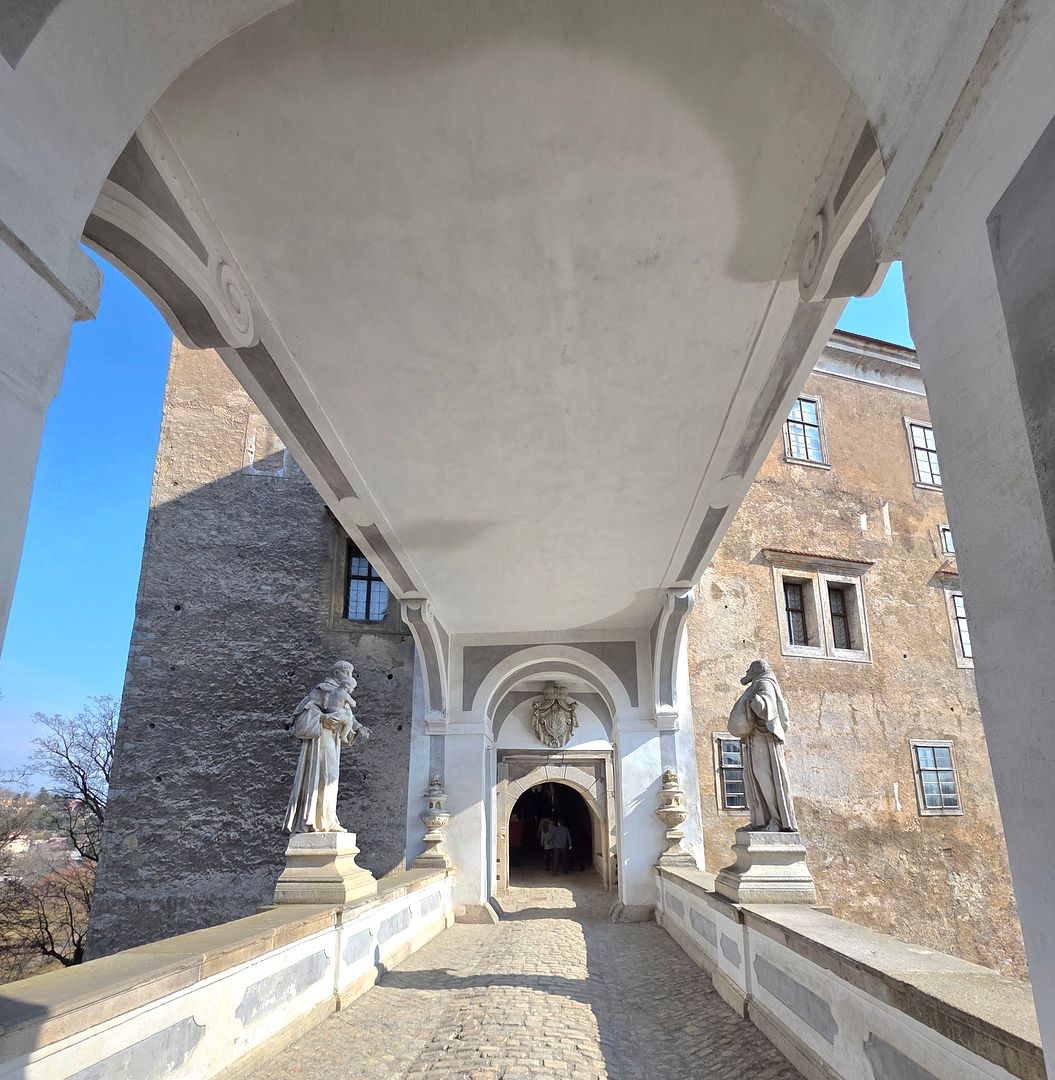
Plastovy Bridge or Cloak Bridge.
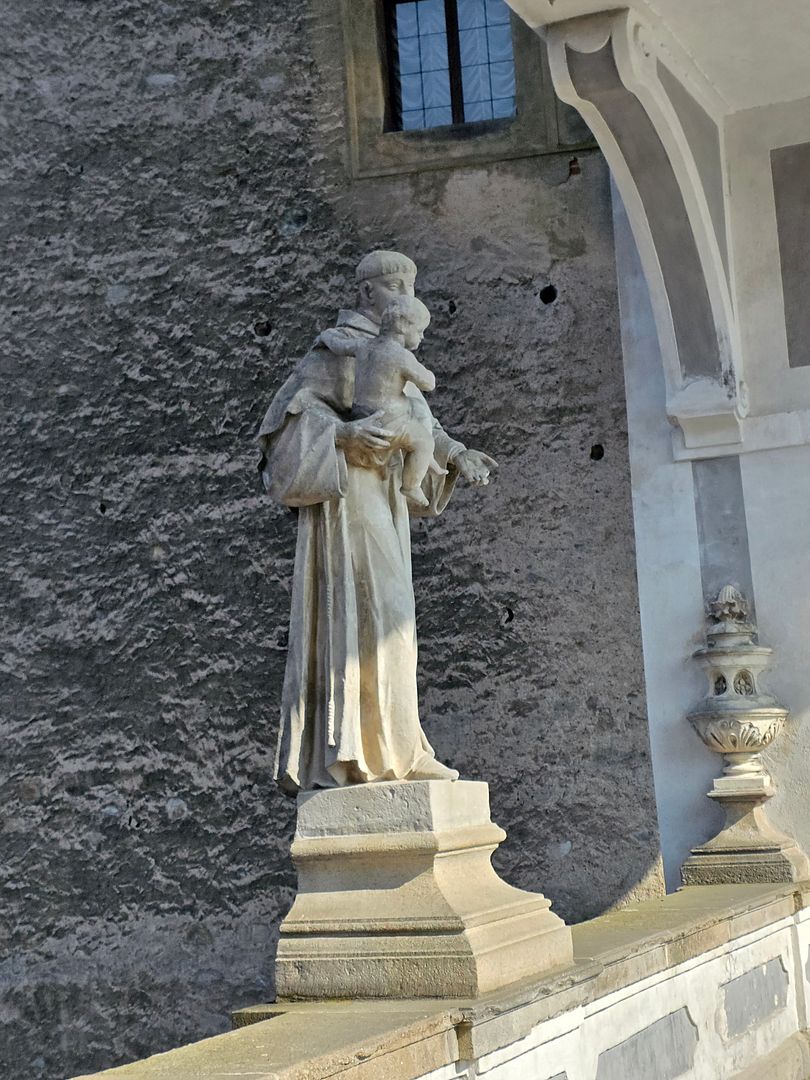
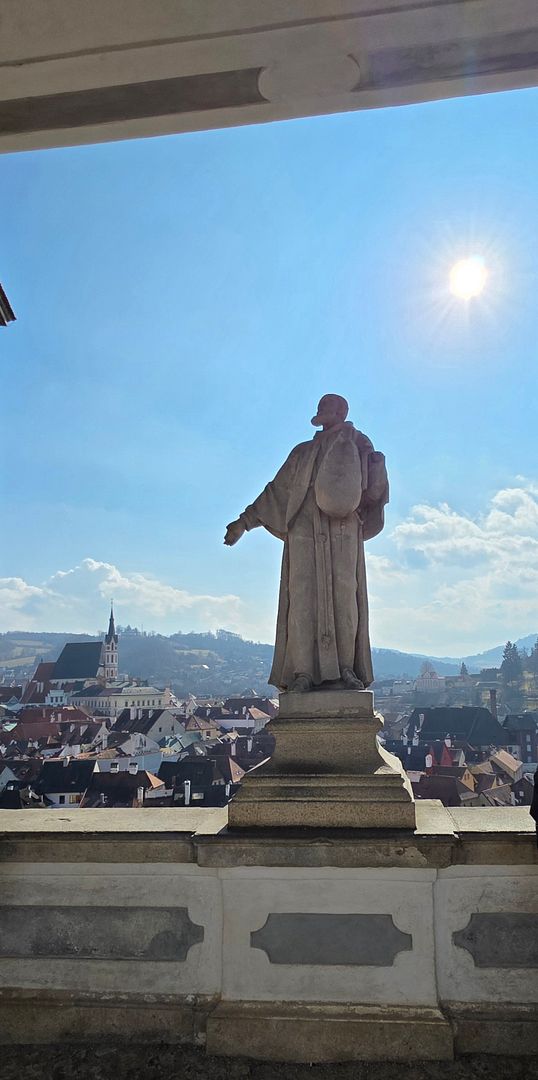
I know I’ve talked about it before, we were blessed with such great weather on the duration of our cruise!
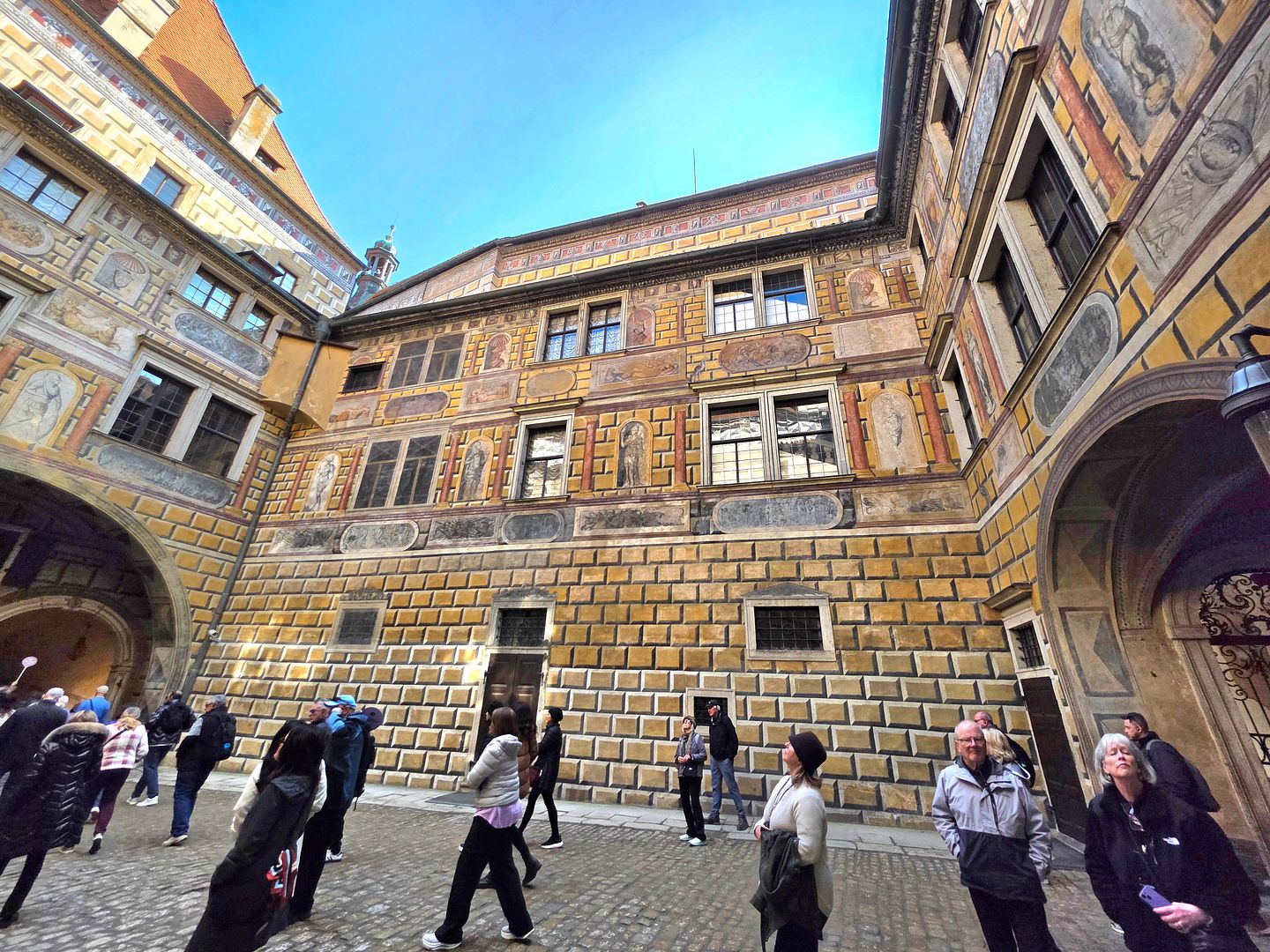
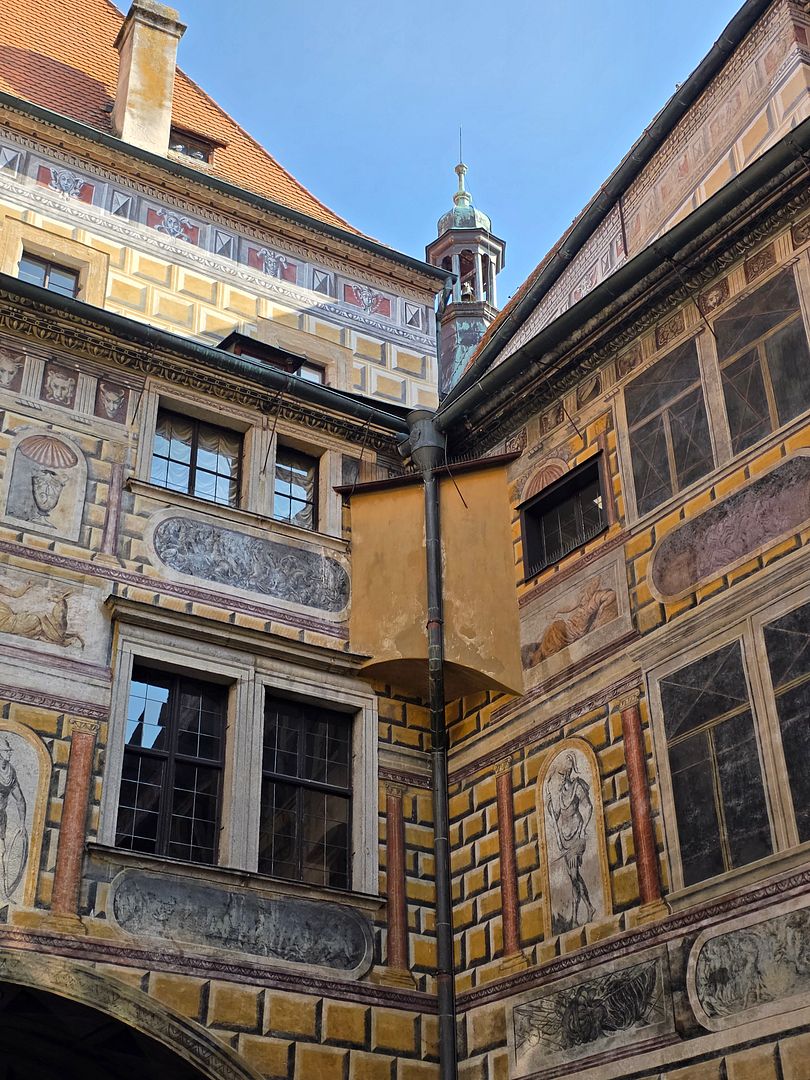
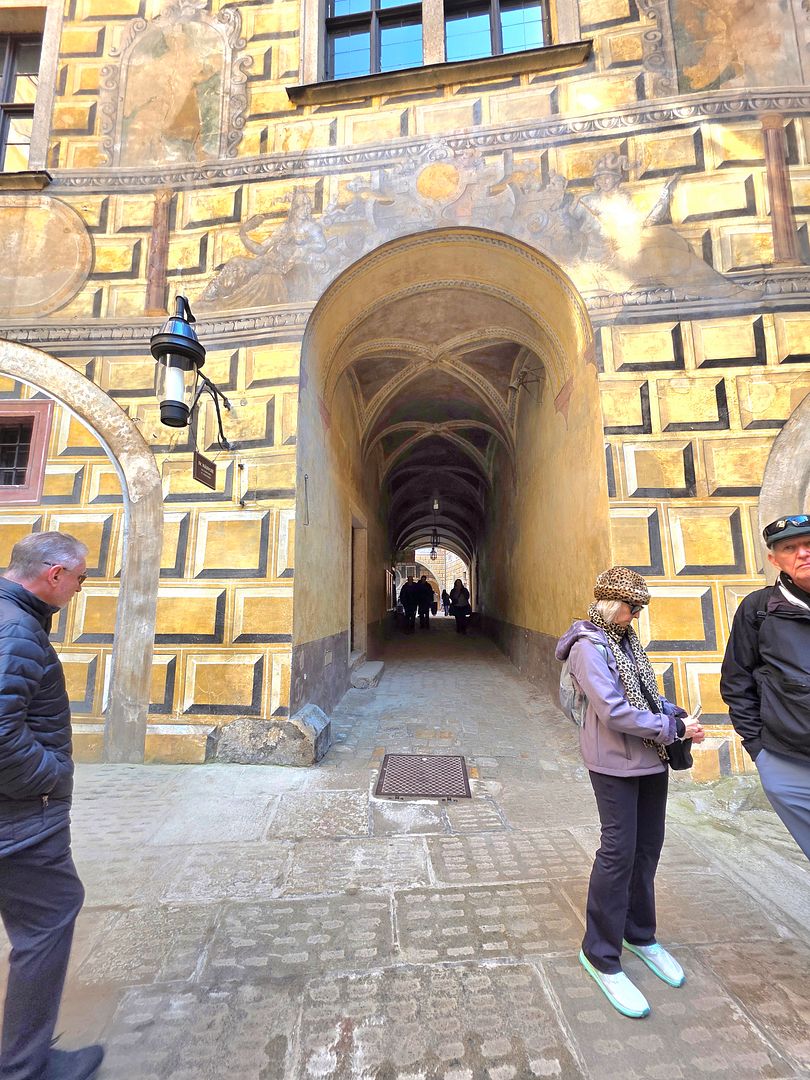
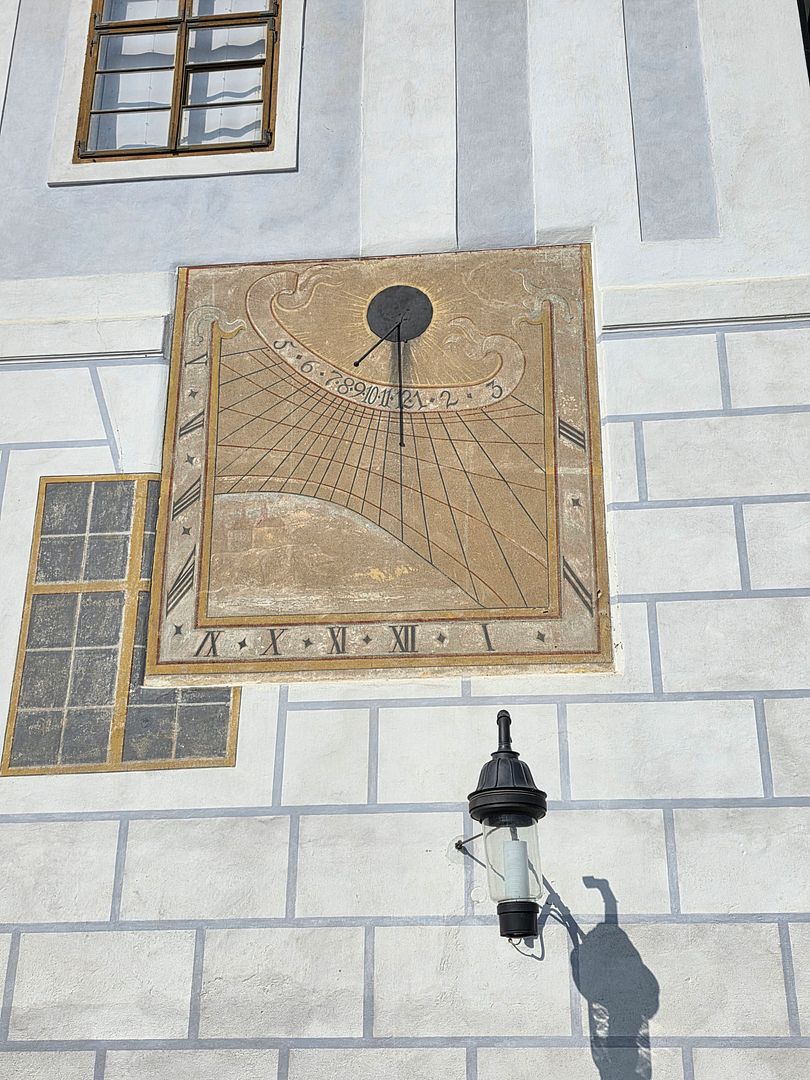
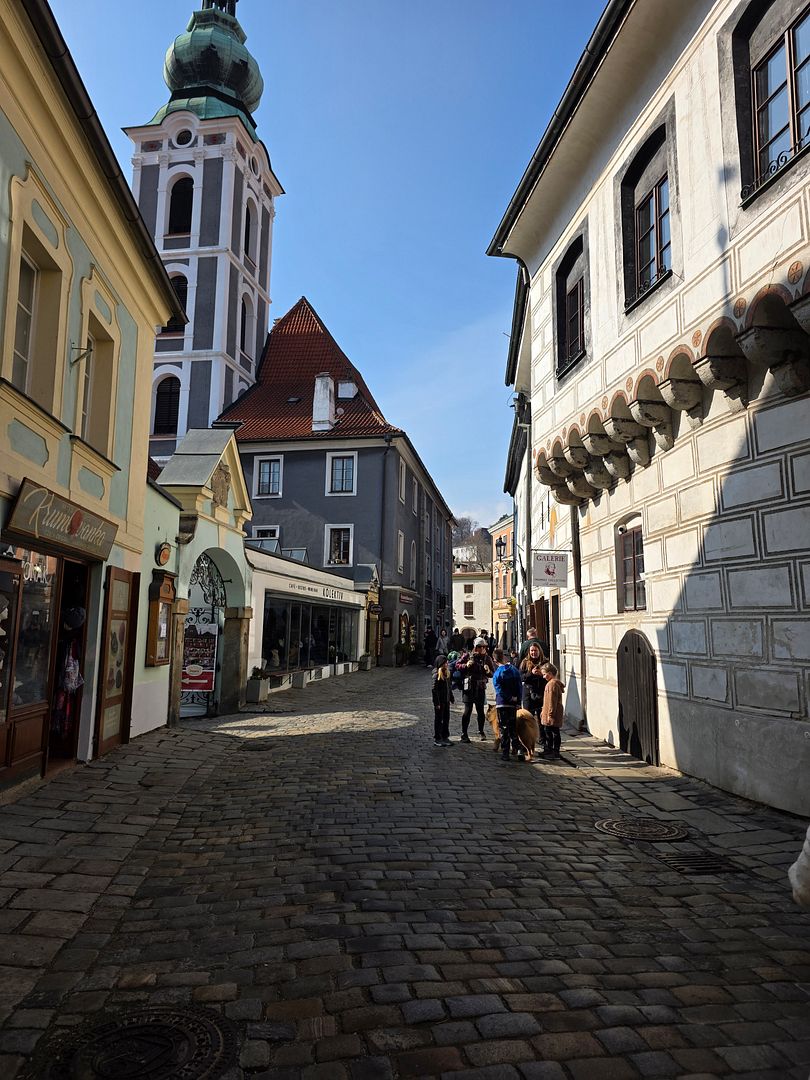
Architecture and figural paintings relating to mythology and Roman history can be seen on the facades covered with colored sgraffito (geometrical or other motives scratched into wet parquet). We would see many types of sgraffito on buildings as we walked into Old Town, too.
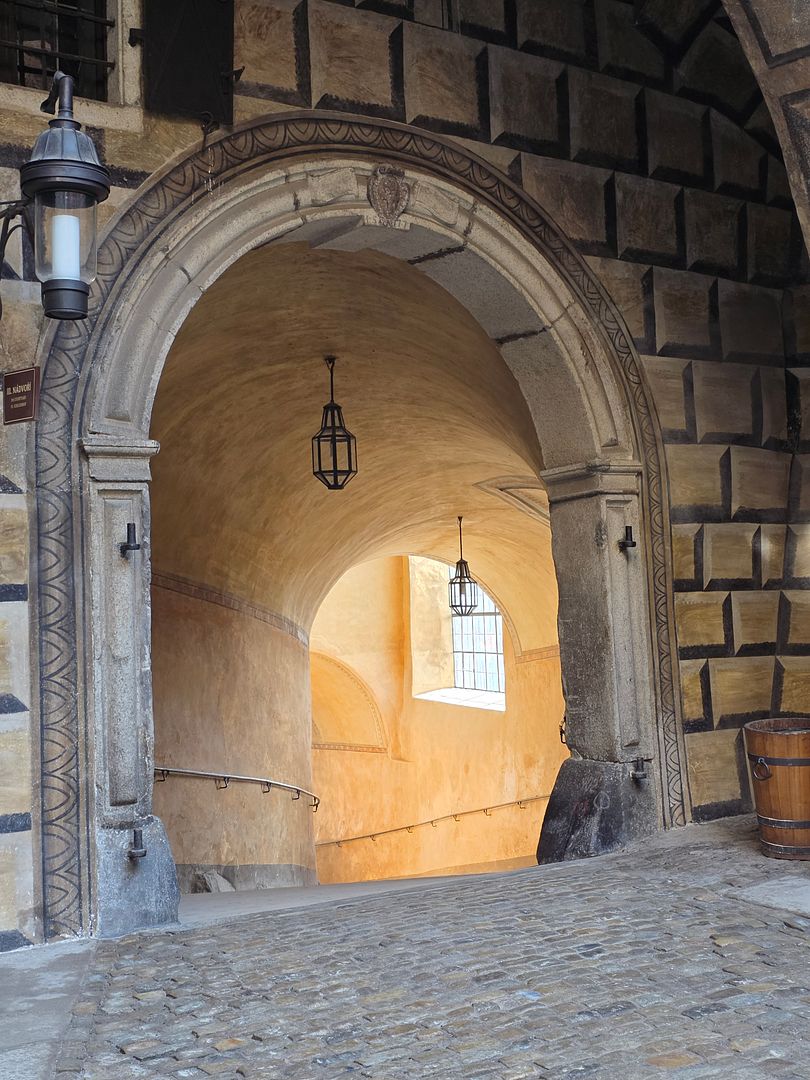
Time to move downward to the outer courts.
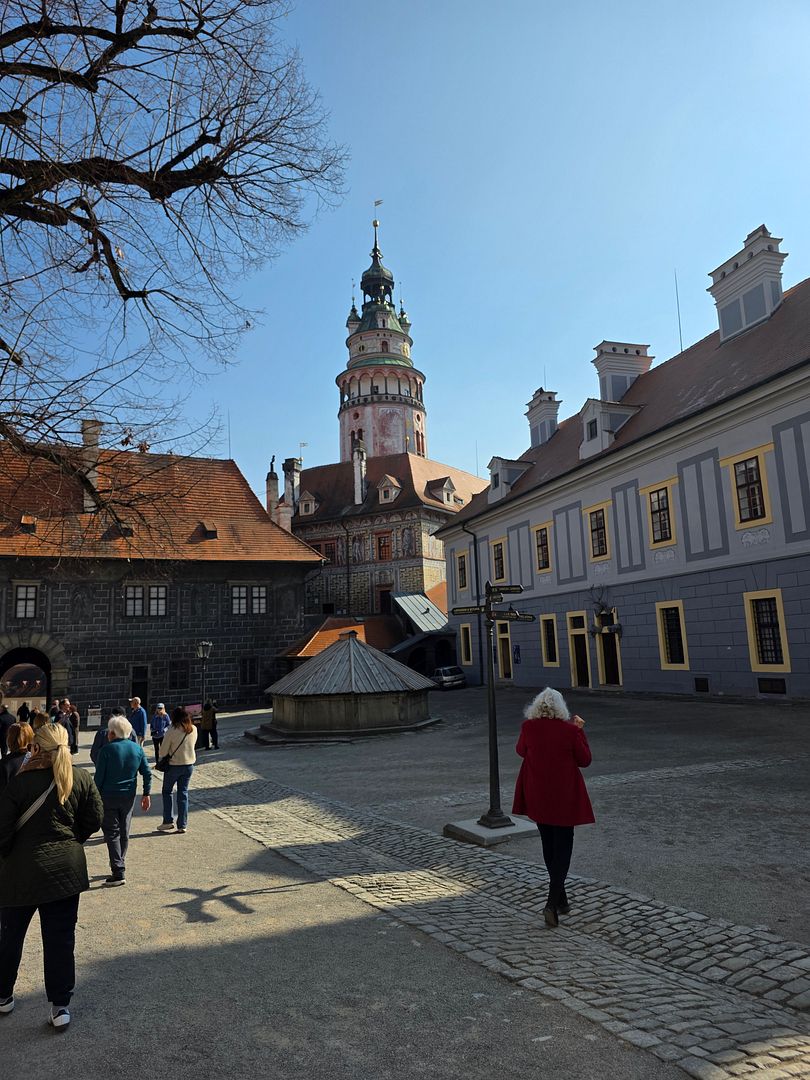
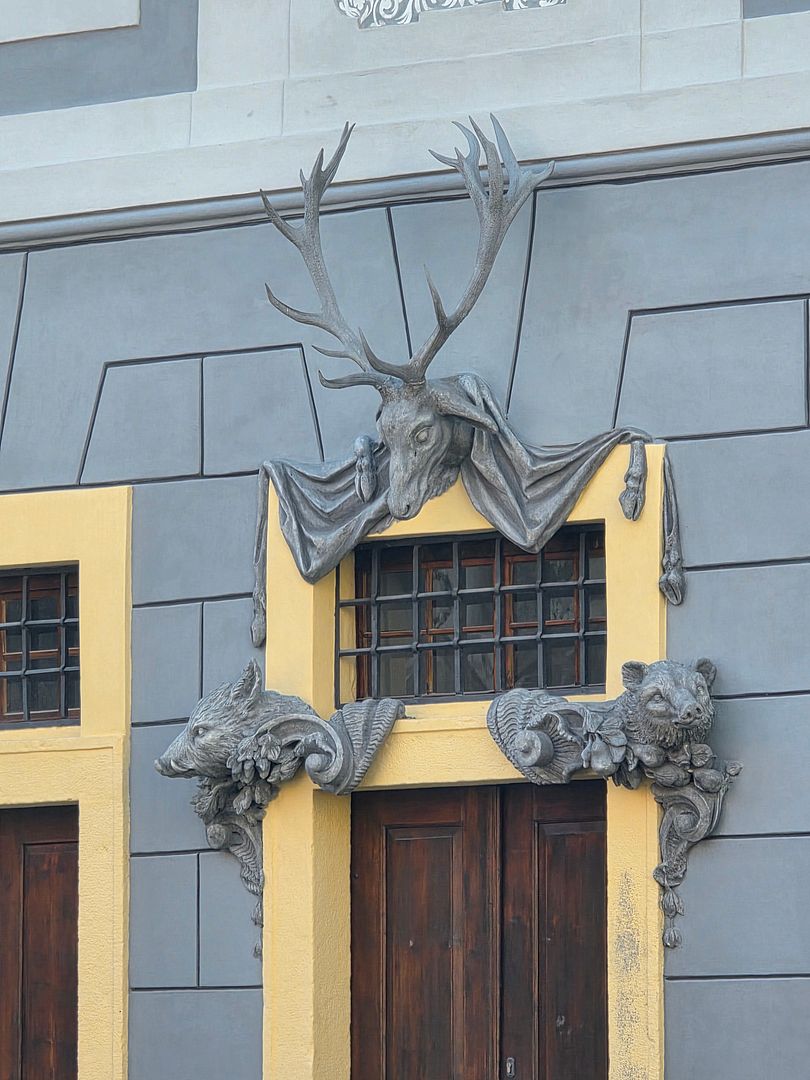
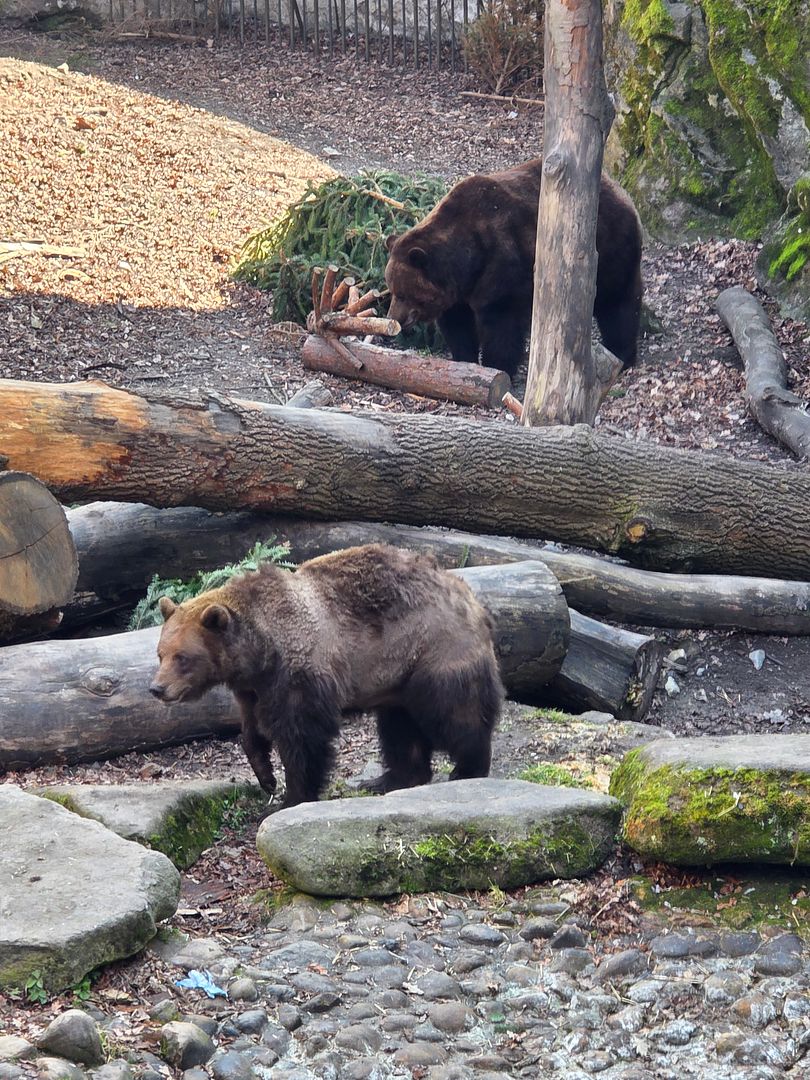
You can read more about the history of bear keeping at the castle here.
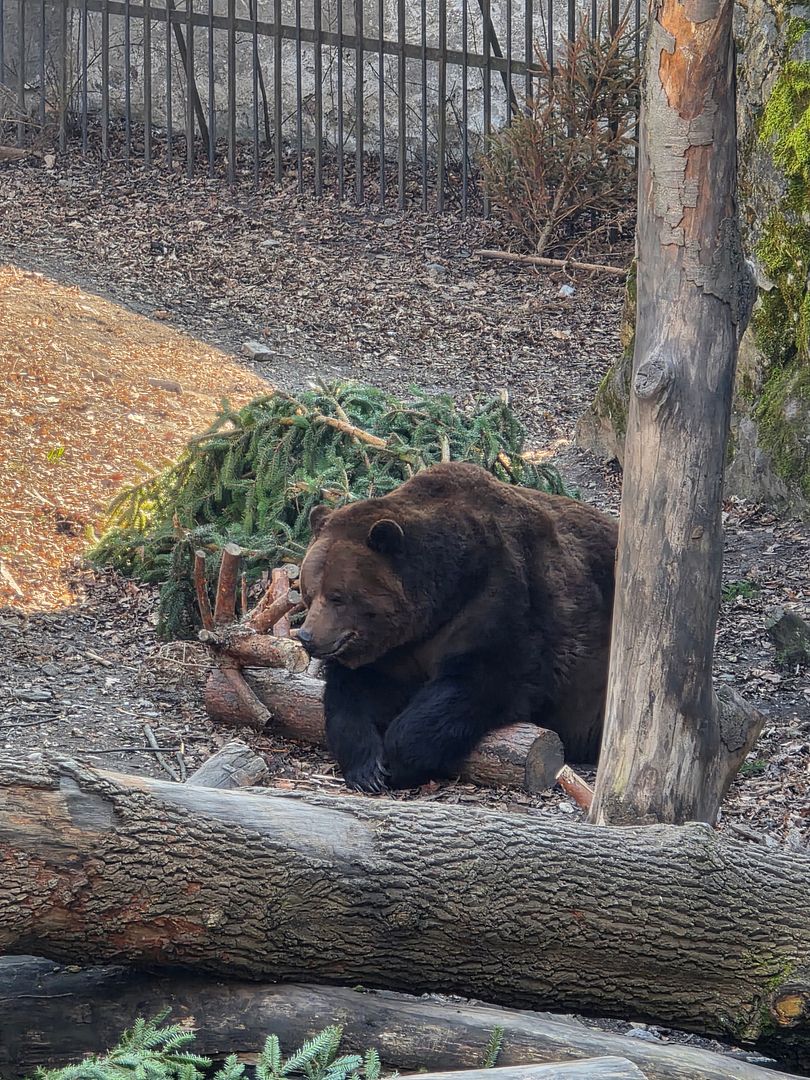
These days we were told they only bring in old bears that have no where else to be cared for. They are cared for well, here.
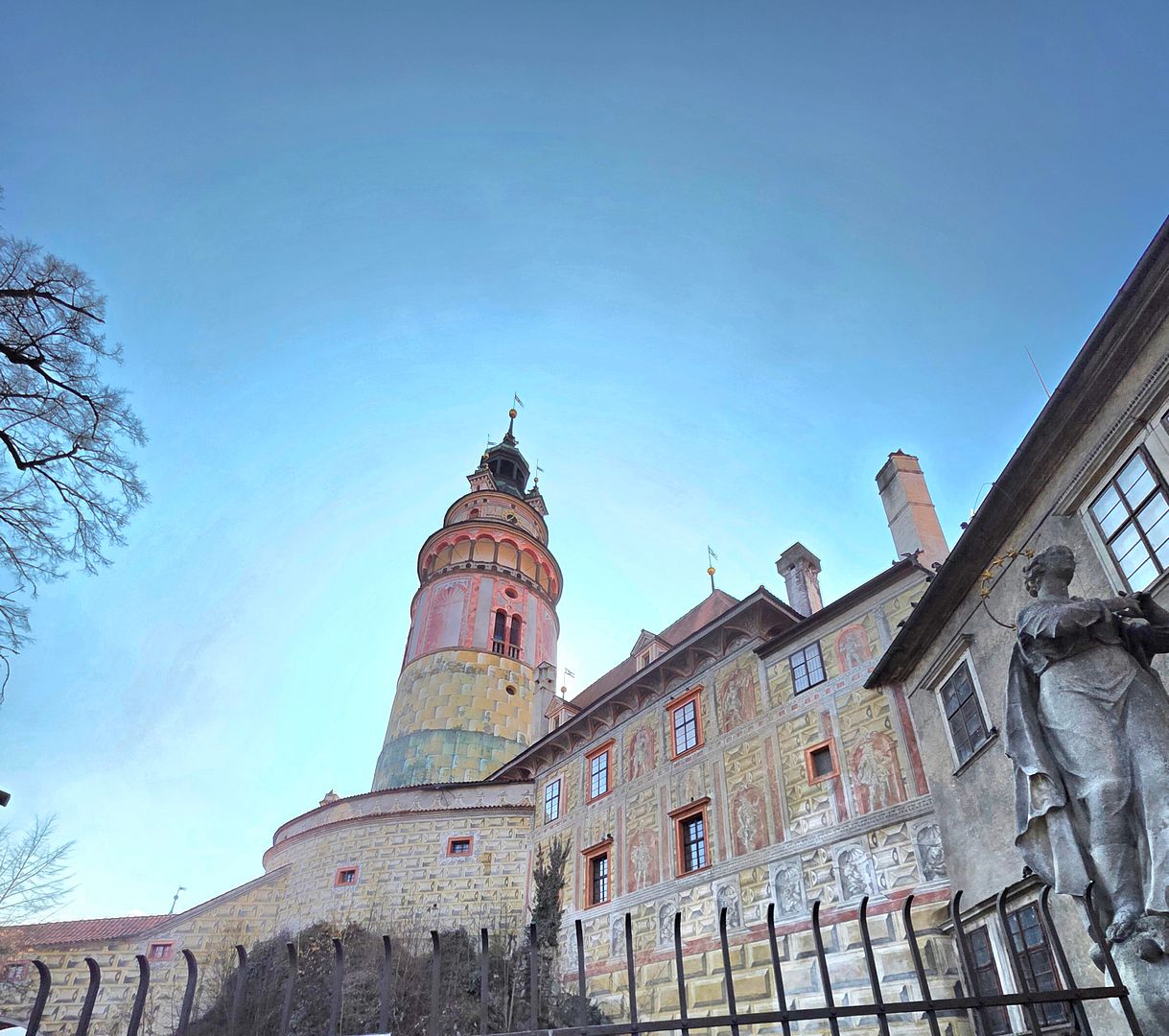
We didn’t climb the belltower but it was an option.
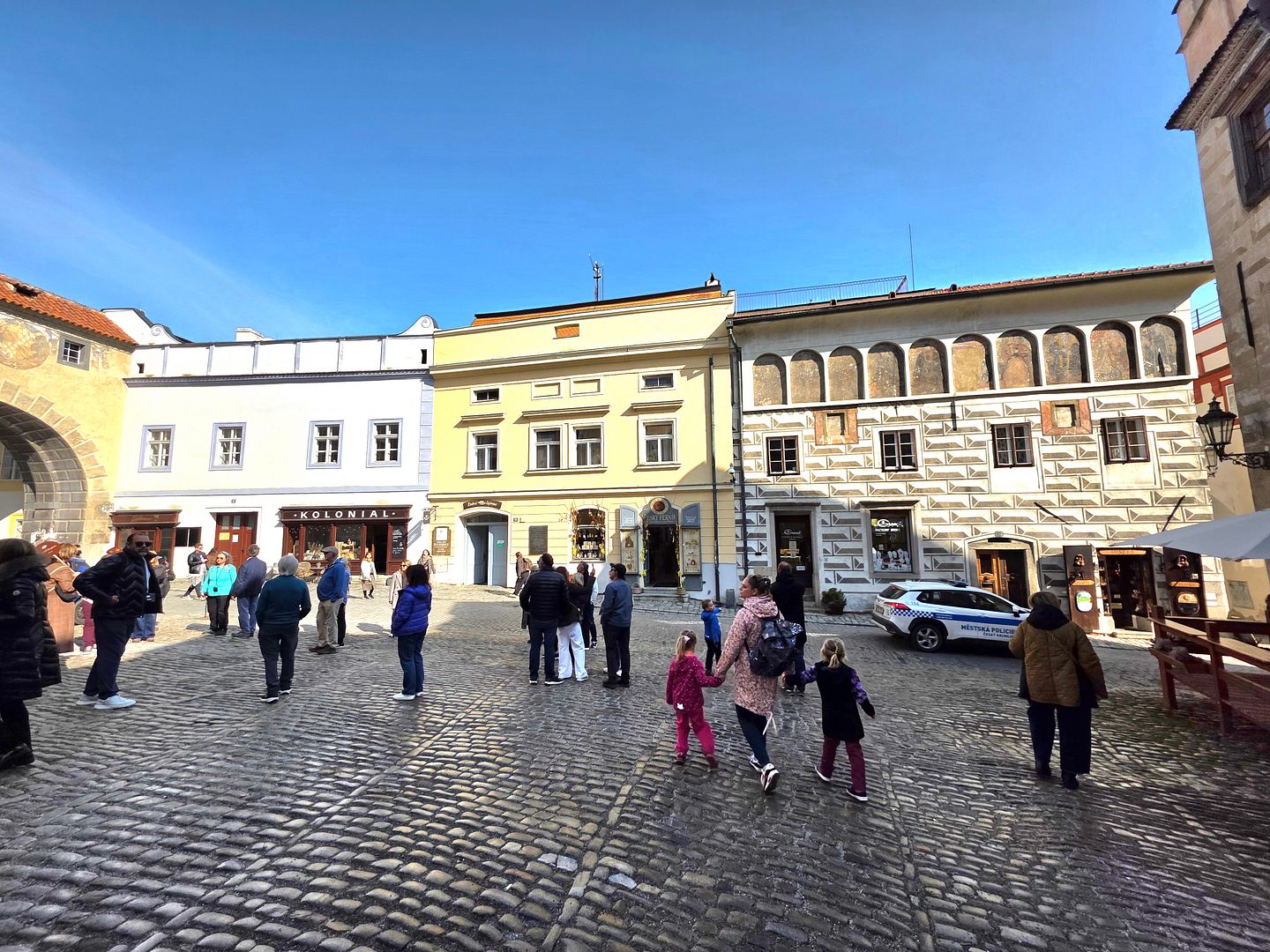
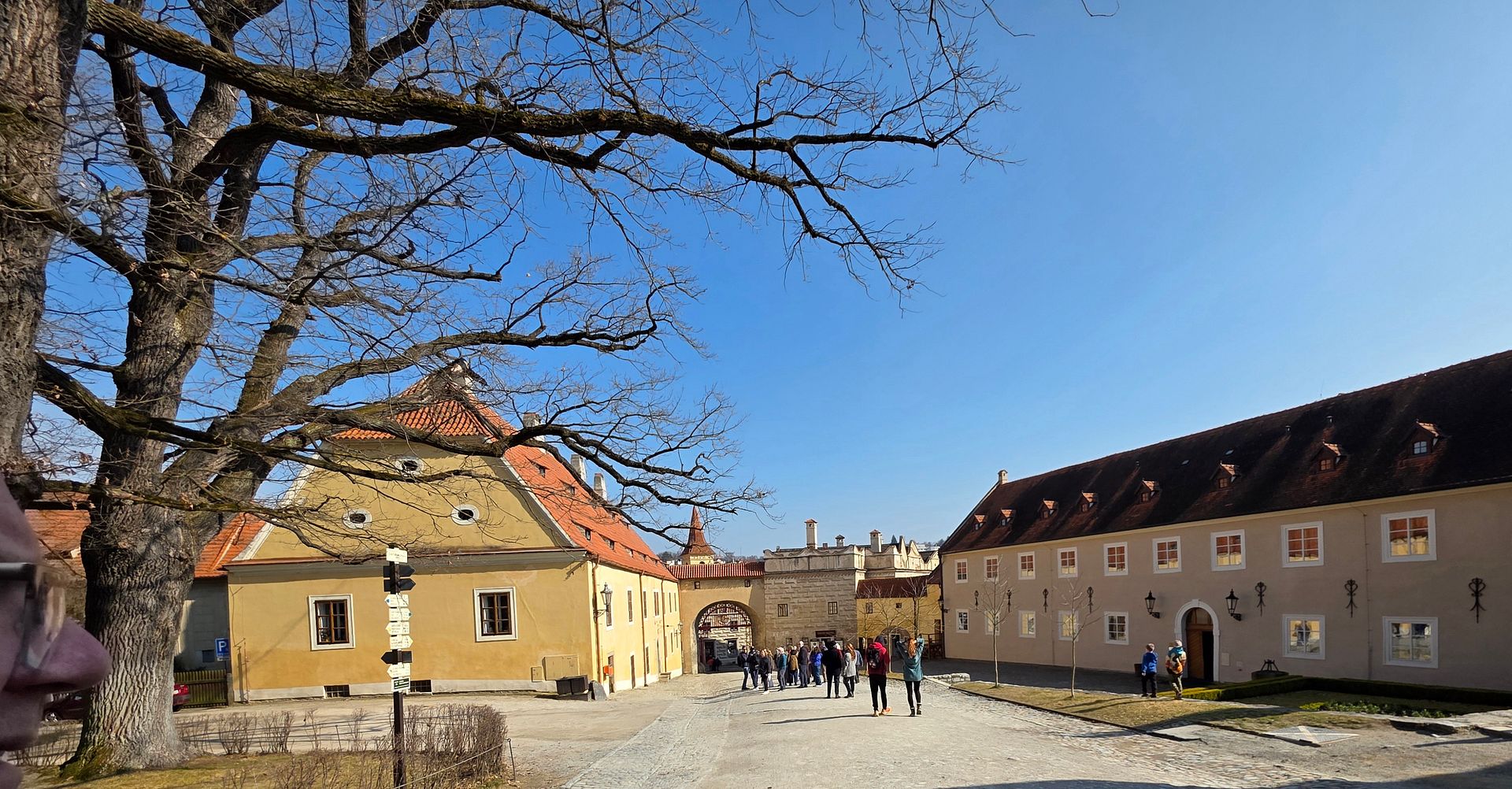
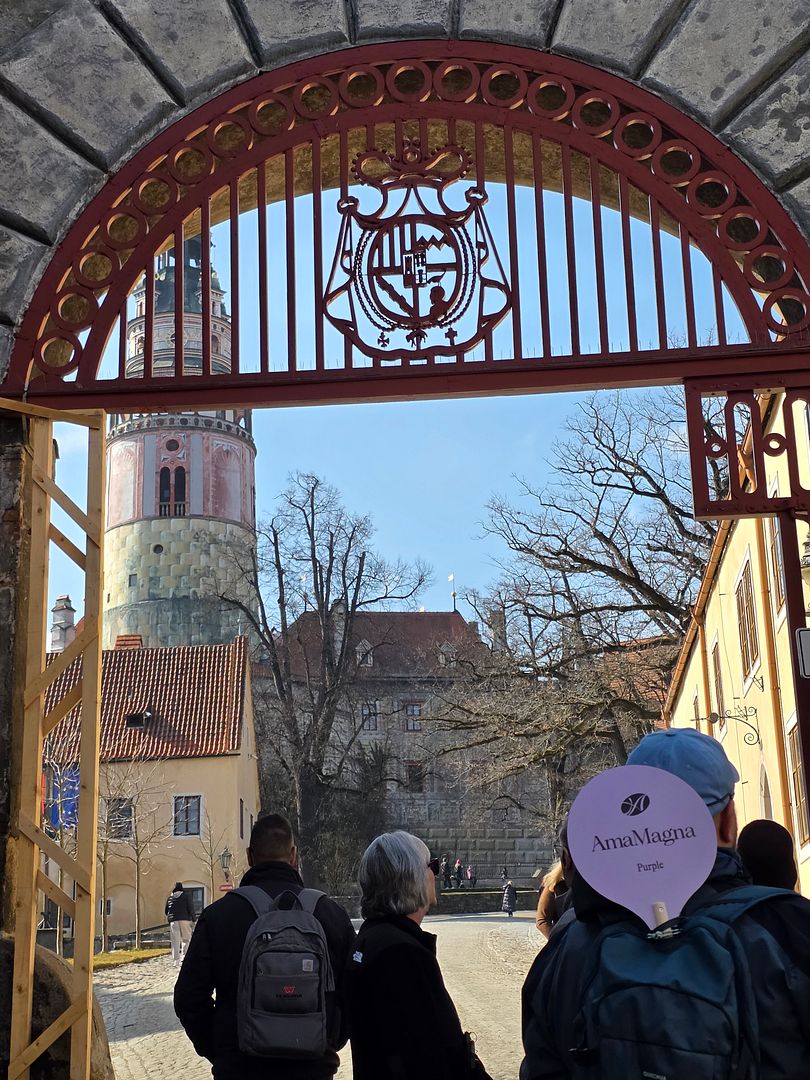
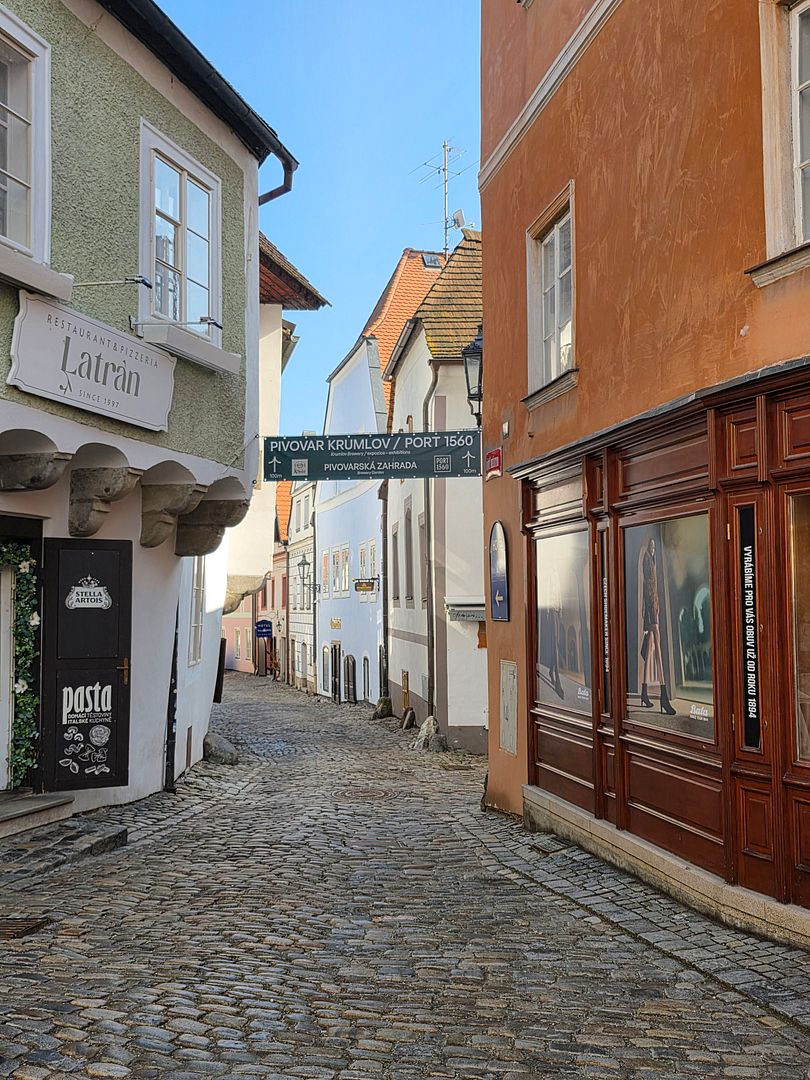
From the castle we journeyed on cobbled streets to get to Old Town.
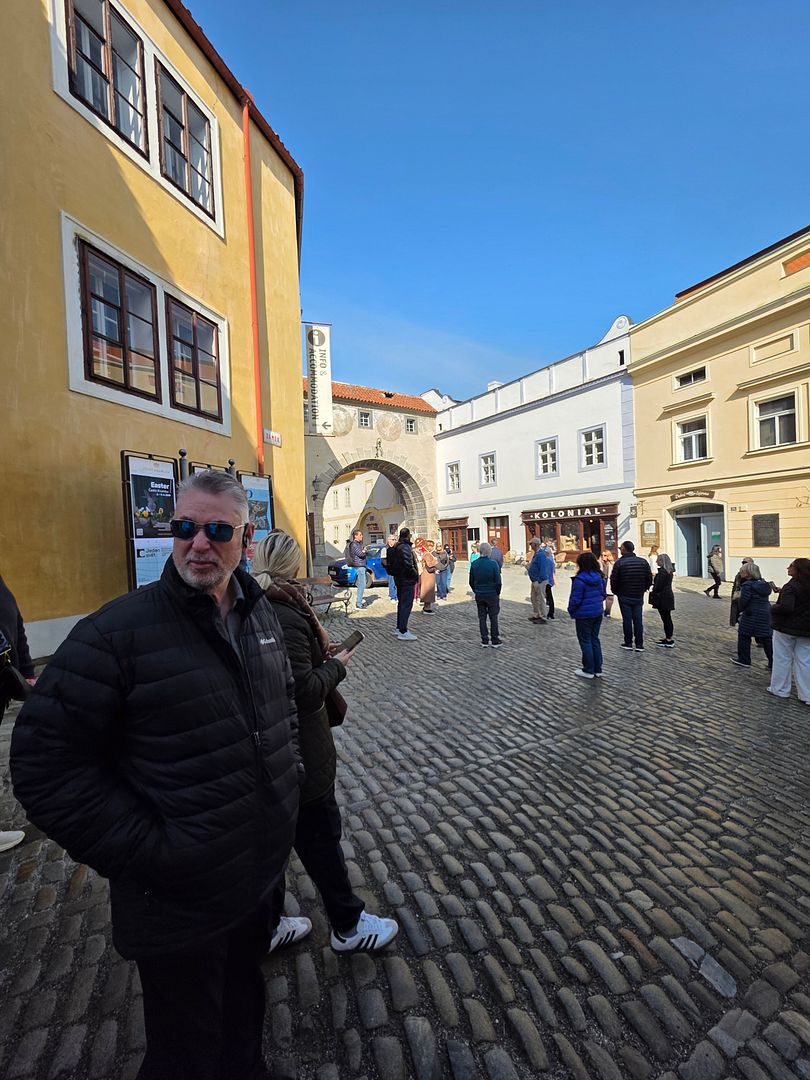
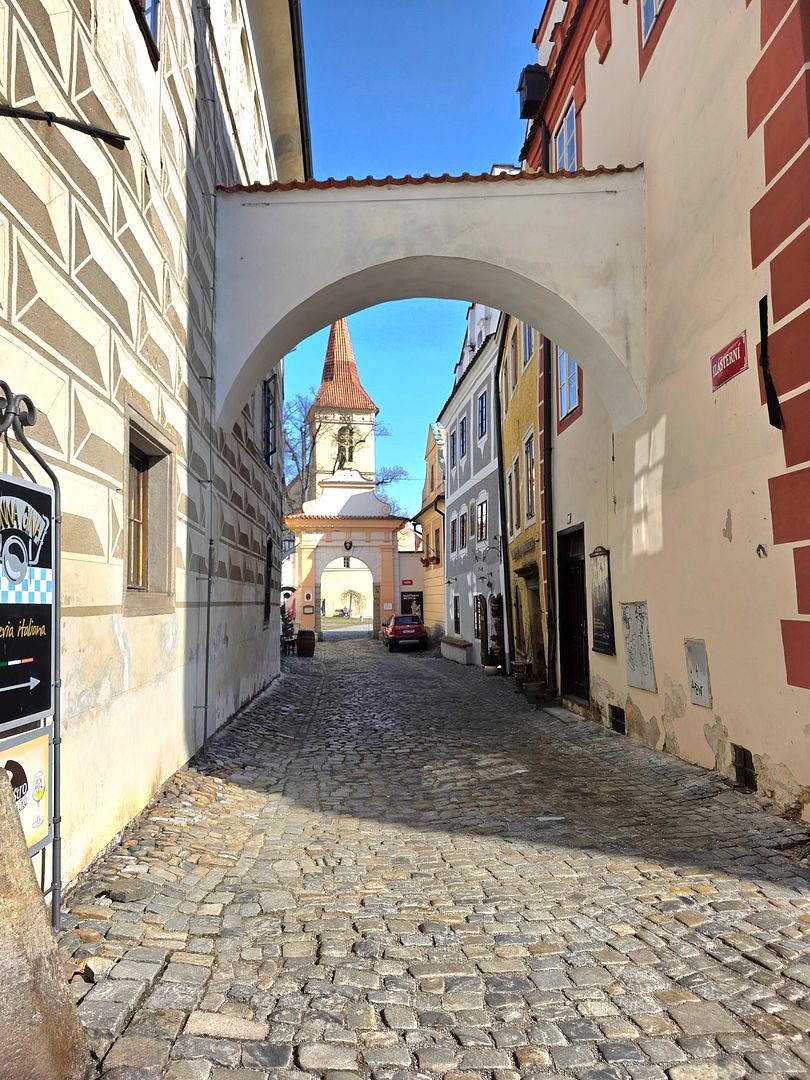
Cobbled streets and narrower alleyways.
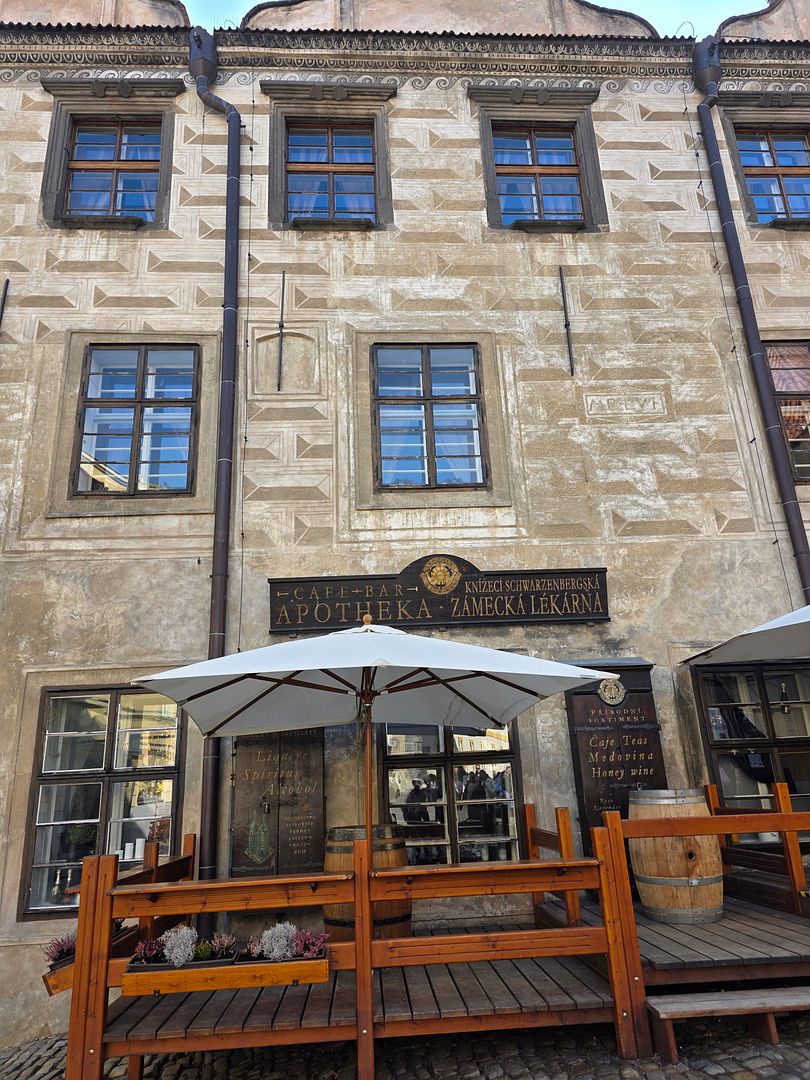
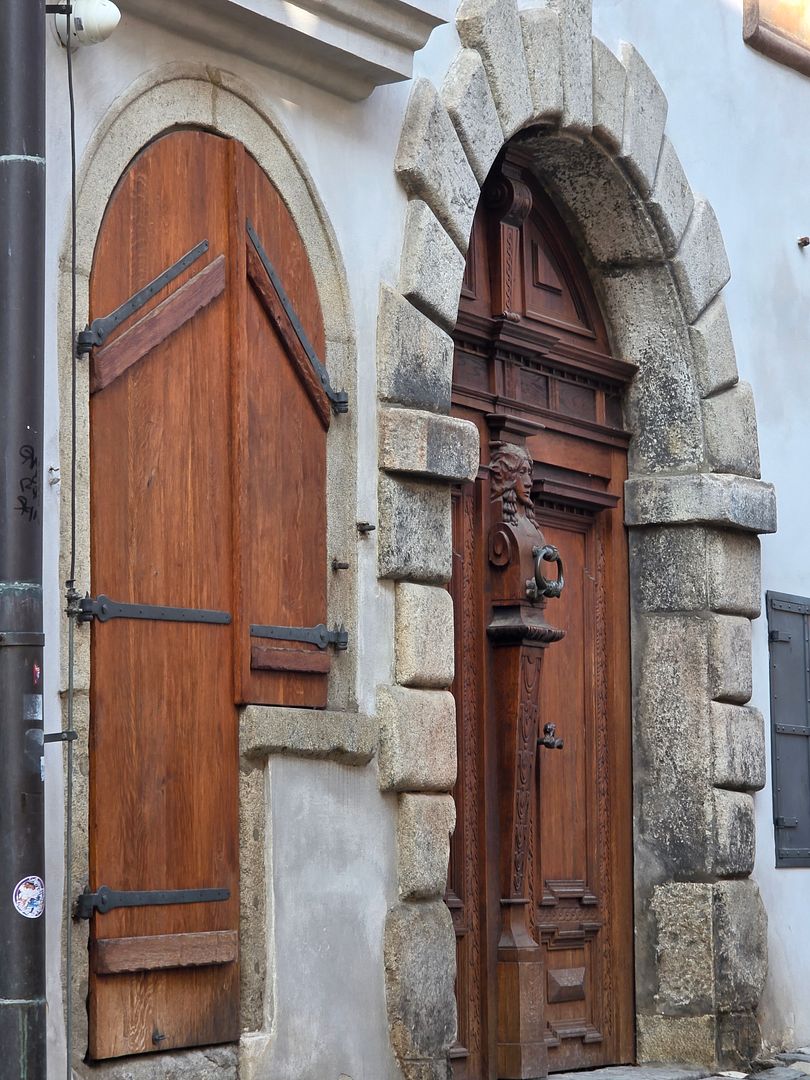
After being part of the Austro-Hungarian Empire, it became part of Czechoslovakia in 1918. The town suffered minimal damage in the 20th century, preserving its unique, intact medieval and Renaissance architecture.
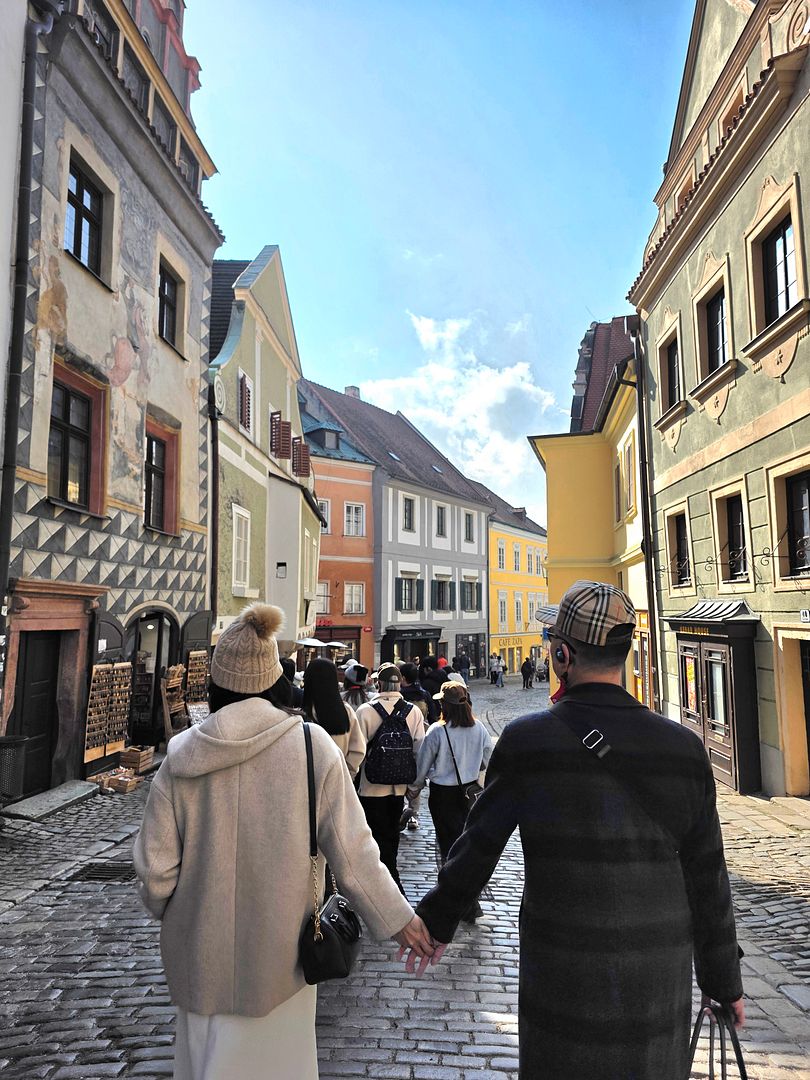
By this time, I kept looking at my watch thinking it is lunch time. My brain had enough of tour talk and my ears were tired of the ear pieces. You might feel the same way about this post but I’m not done yet, nor was our guide. 🙂
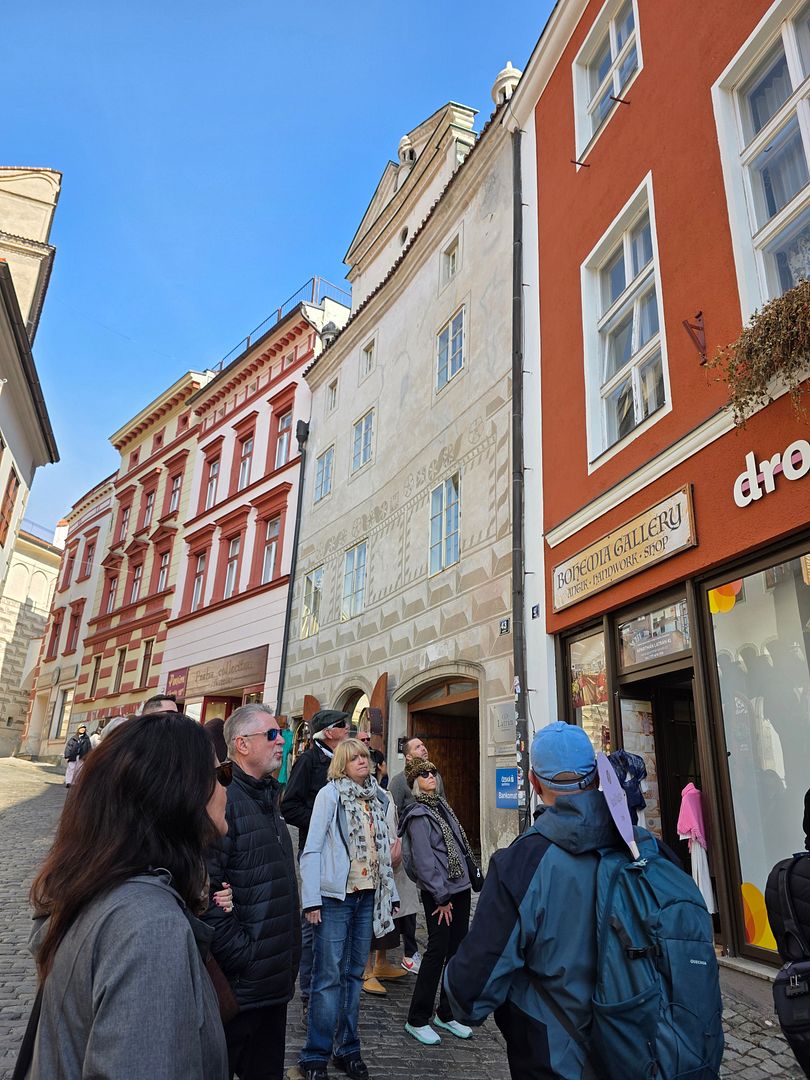
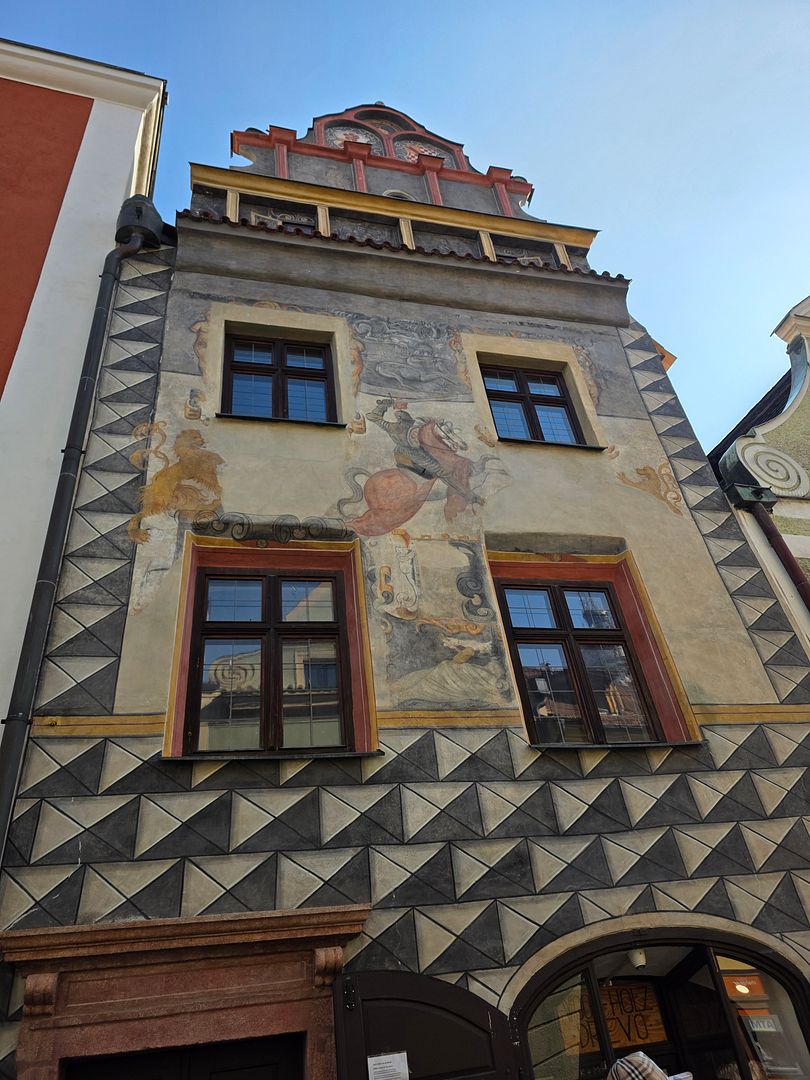
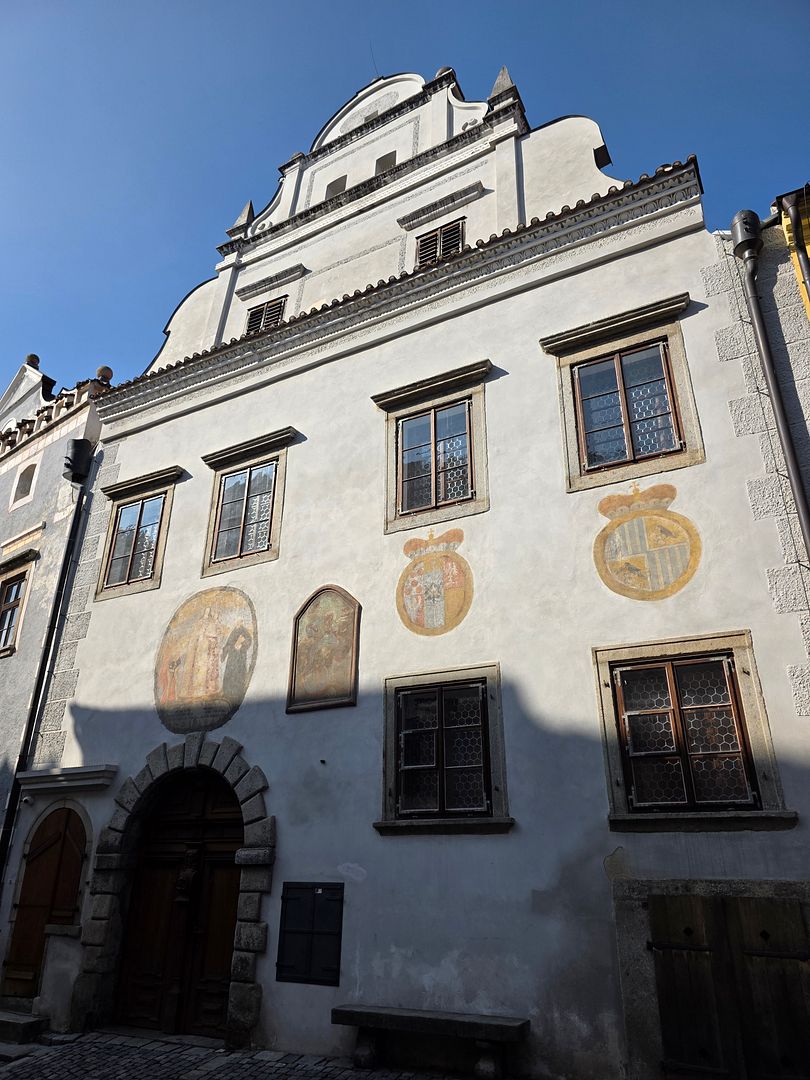
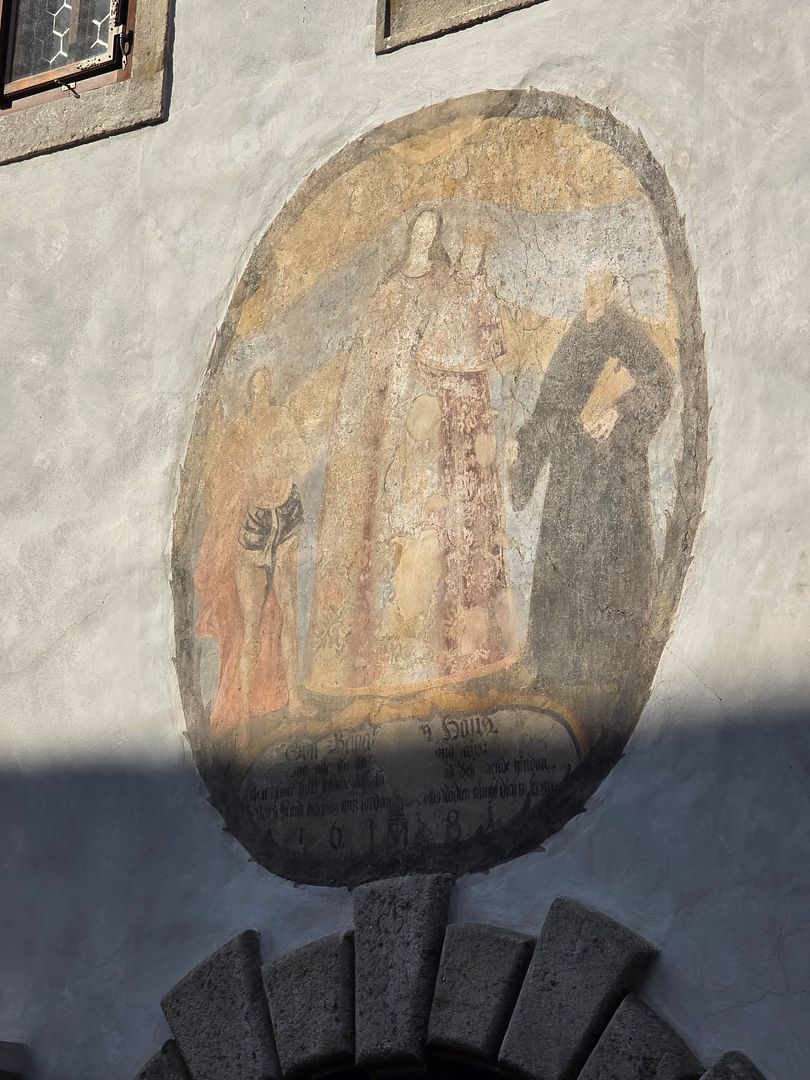
Many precious Gothic and Renaissance frescoes were whitewashed in Baroque times, when the colorful trimmings of earlier periods were out of style. Some of these frescoes are being rediscovered and restored.

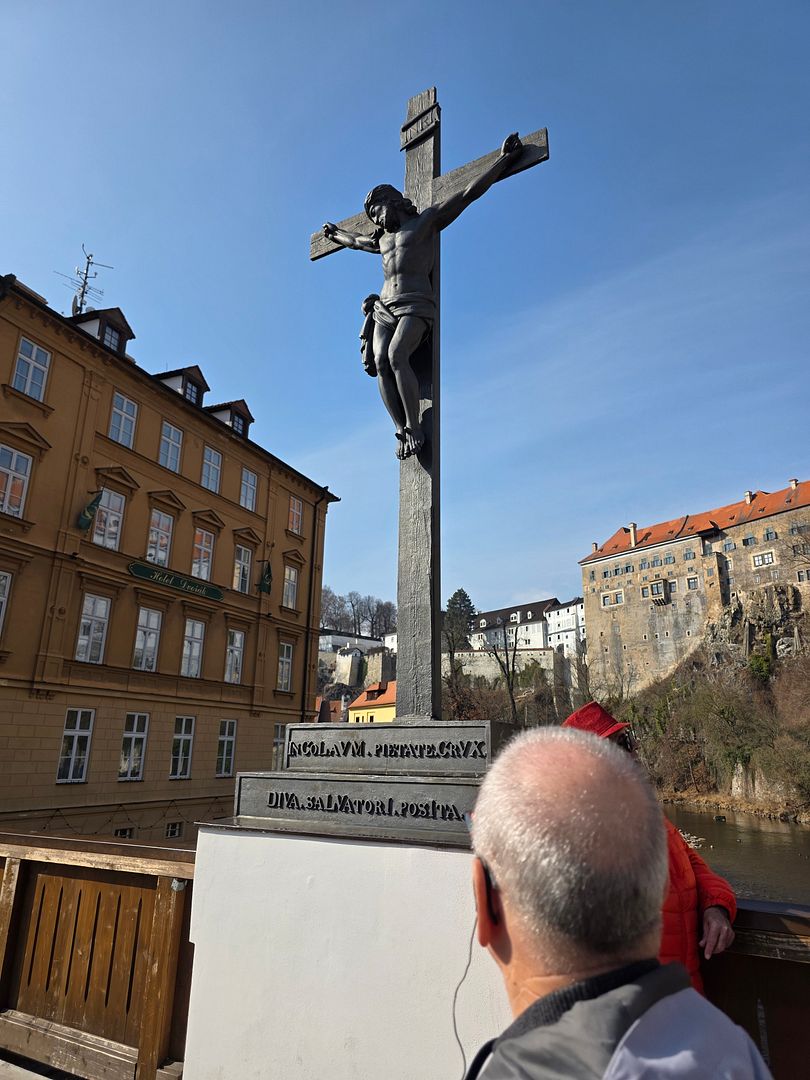
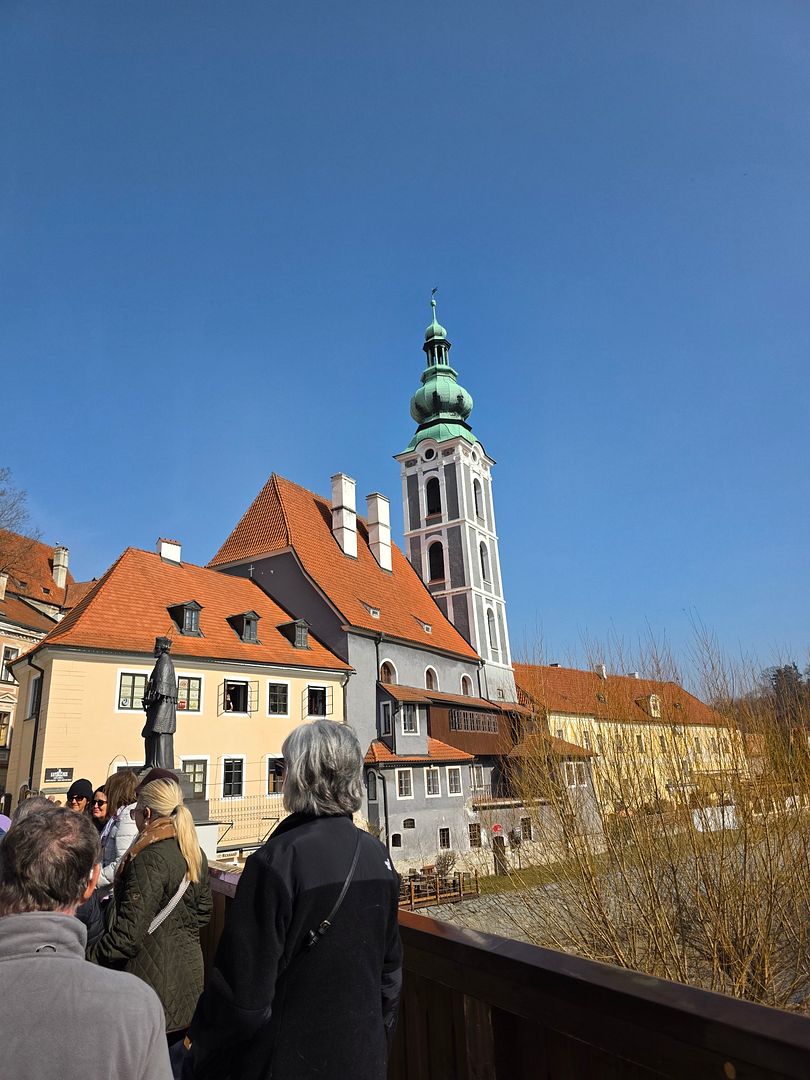
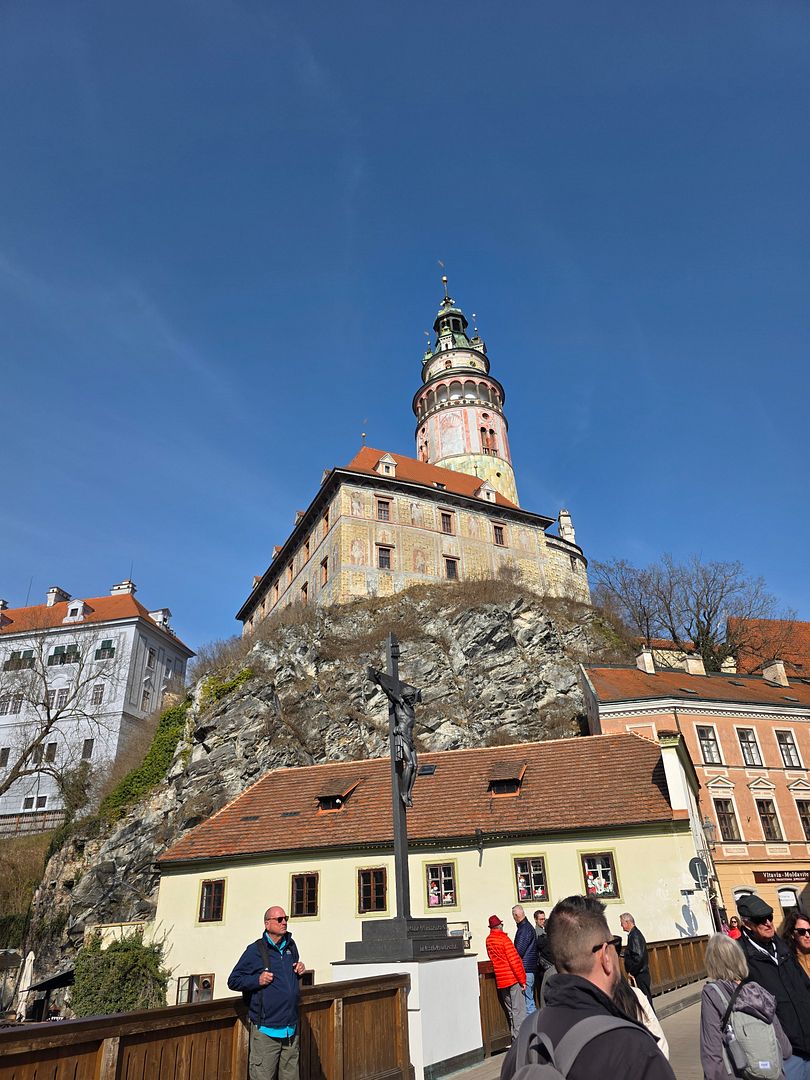
Looking up and back at the round bell tower at the Castle from the bridge over the river. This river circles the town.
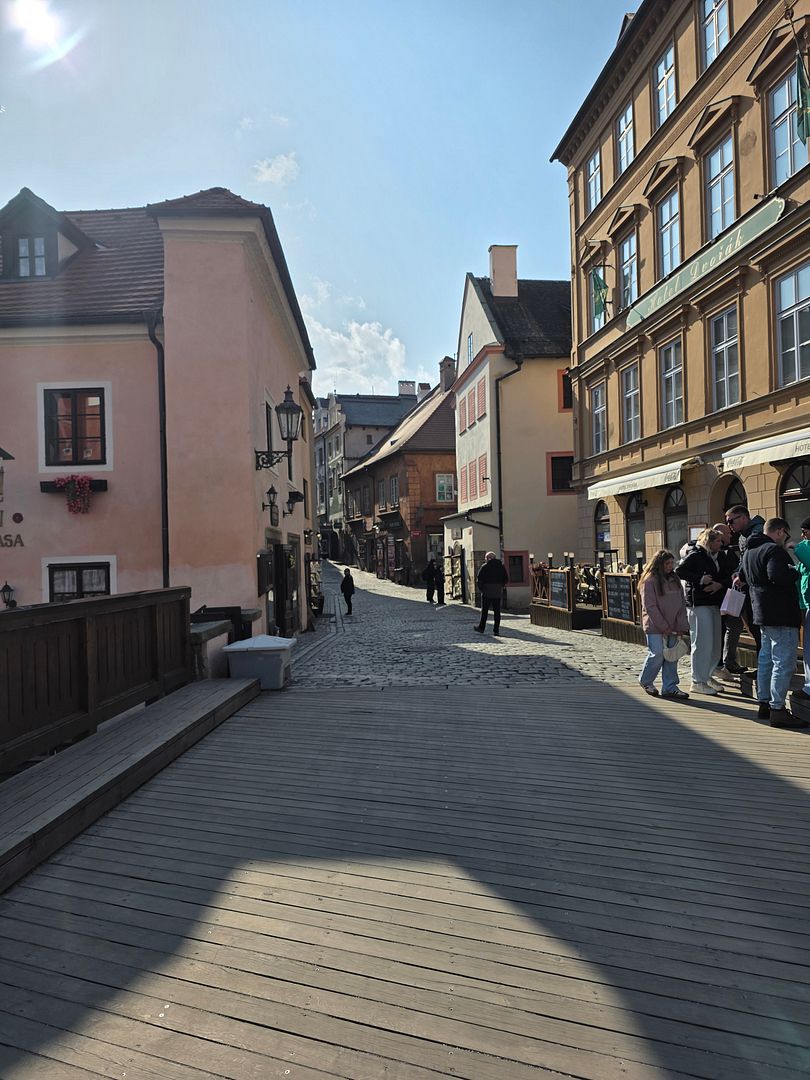
Finally at the bridge we saw the spot we were interested in for our lunch meal. Our guide wasn’t winding down yet and he was going to keep going all the way to the square in the middle of town. That would be the spot to meet up with him again after our few hours in town by ourselves. We knew we’d be able to find the square with no problem. My feet were saying, “why go all the way to the center of town and then have to double back to this very spot for lunch?” NYET!
We broke away with thoughts of that good lunch and a nice sit down to rest our feet.
I’ll leave it here and give you a break, too. Part deux (french) or dva (czech) coming soon.