Hear Ye, Hear Ye, Hodgepodge

It’s another week with fresh questions for Hodgepodge Wednesday. Thank you, Joyce!

1. Do you make an effort to see/hear live music? Last time you went somewhere for the live music? 

We enjoy live music every Sunday at church.
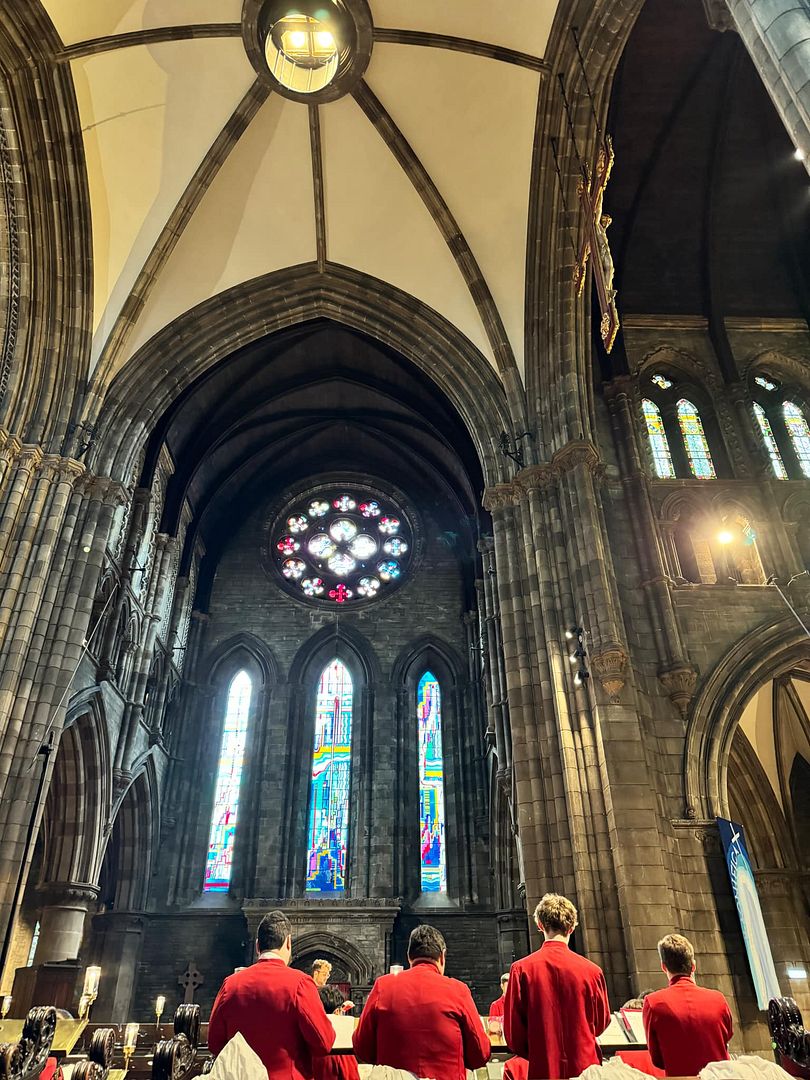
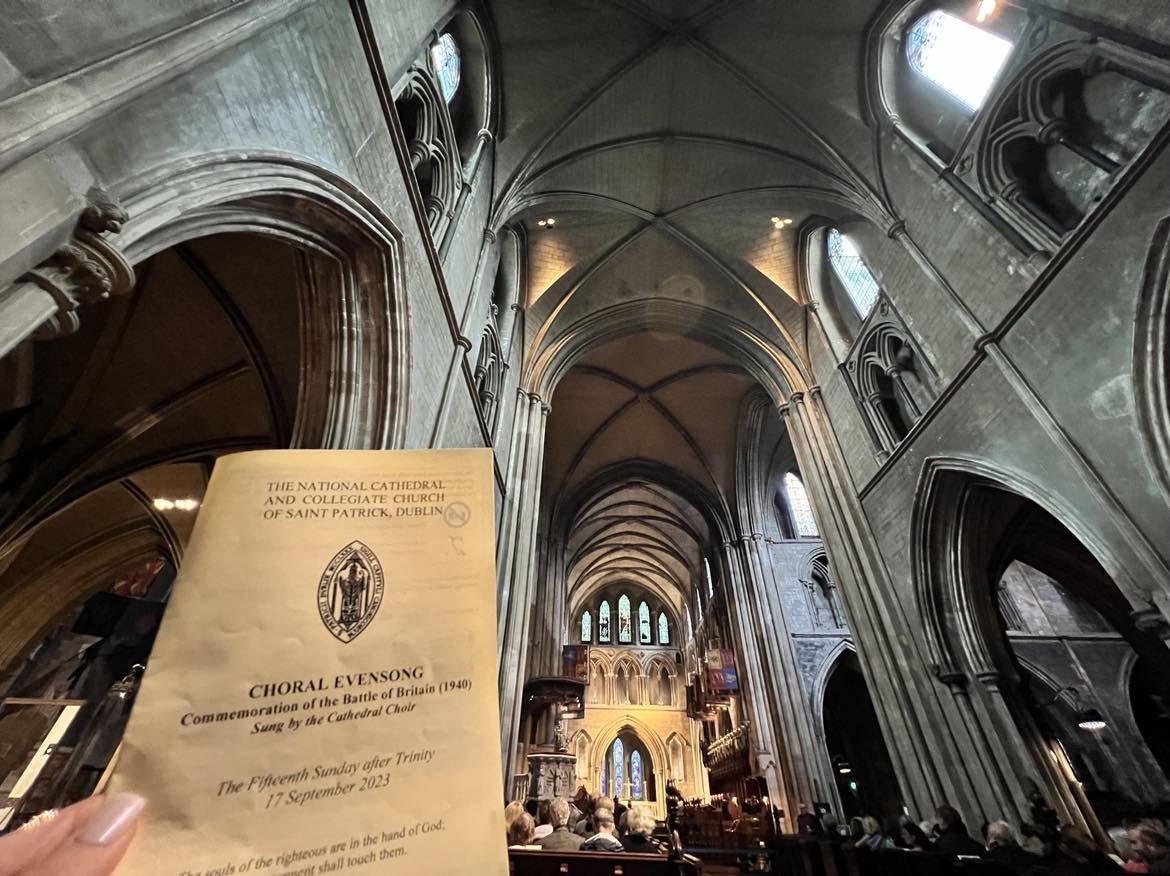
We haven’t made an effort to enjoy live music elsewhere lately except for attending evensong while in Great Britain, Scotland or Ireland and our Church’s Children’s Musicals at Christmas.
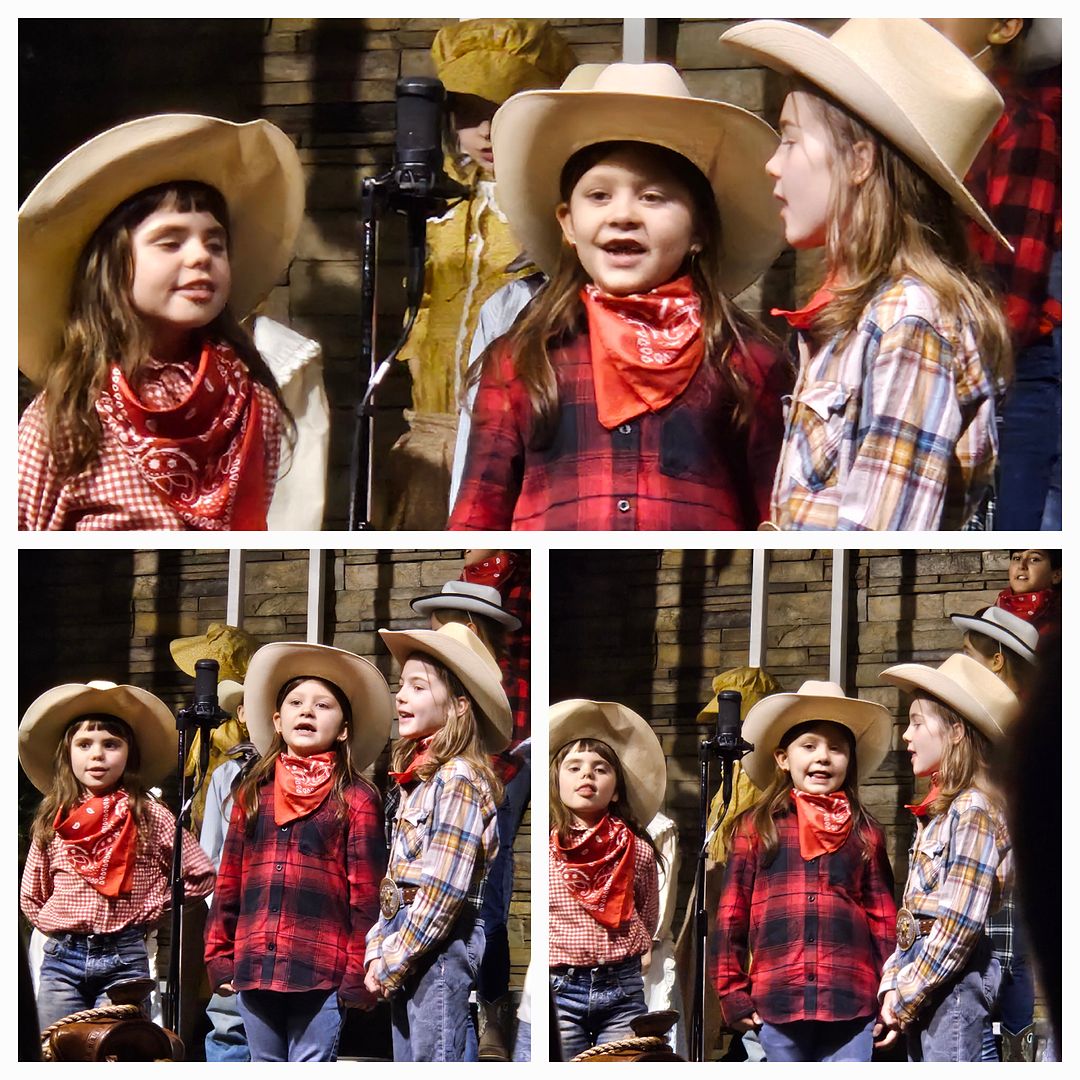
We are looking into attending a live performance of The Messiah this year.

2.According to HGTV the colors of the year for 2026 are mostly decided. Top paint companies declare a color of the year, and decorators will incorporate that into their new year home and room designs. Here’s what’s on tap in terms of paint trends for 2026 (check out the link here to see photos)

  • Sherwin Williams-universal khaki (inspired by heavy canvas and outdoor gear)
  • Behr-hidden gem (a confident shade of teal)
  • Valspar-warm eucylyptus (a warm sliver tinted green)
  • Dutch Boy-melodious ivory (a honey tinted beige)
  • Glidden-warm mahogany (a classic brick red)
  • Krylon-matte coffee bean
  • Clark and Kensington -Hazelnut Crunch (warm reddish-brown)
  • Graham and Brown-Divine Damson (cherry red with a subtle violet undertone)
  • Dunn and Edwards-midnight garden (the green that works everywhere) 

First question-did you know there were so many different paint manufacturers?

Yes, I’m married to a former painter and his first job was with his father in a painting business.

Which color on the list most appeals to you in terms of your own decorating style?

Decorating style is not a term that I would use for me or my home. 🙂 The base color in our home is Khaki Shadow with white trim.

Do you have plans to do any painting in your home in the coming year, and if so might you choose a color from this list? 

The only plan is to complete some areas that were started awhile back. Just a little trim here and there.

Now, forget painting walls, which color name appeals to you most? 

Hidden gem is appealing.

3. What’s something in your life you have to do-watch-or participate in that’s about as exciting as ‘watching paint dry’? 

For this one, I’m going with drying my hair.

4 . Tuesday, October 14th is/was National Dessert day…did you/will you celebrate? Tell us how? What’s your absolute favorite dessert. Yes, just one. I know!! 
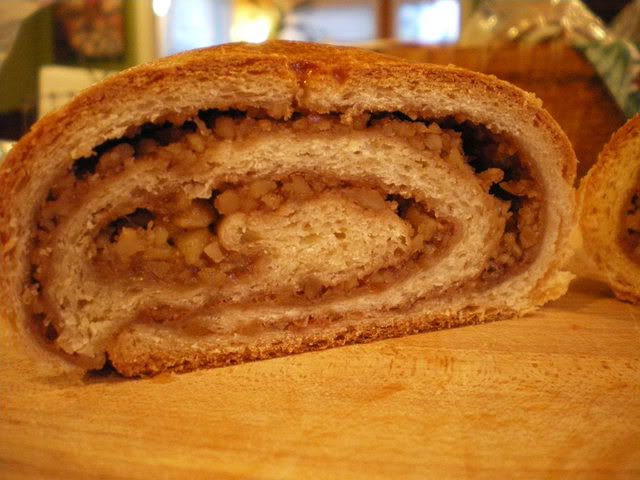
I would pick roolyete. A traditional nut roll our mom made and we have now duplicated. I like pastries that have a soft chew to them. Here’s the recipe.

5. Perhaps today is the day I will…

Sort through my clothes and purge.

6. Insert your own random thought here. 

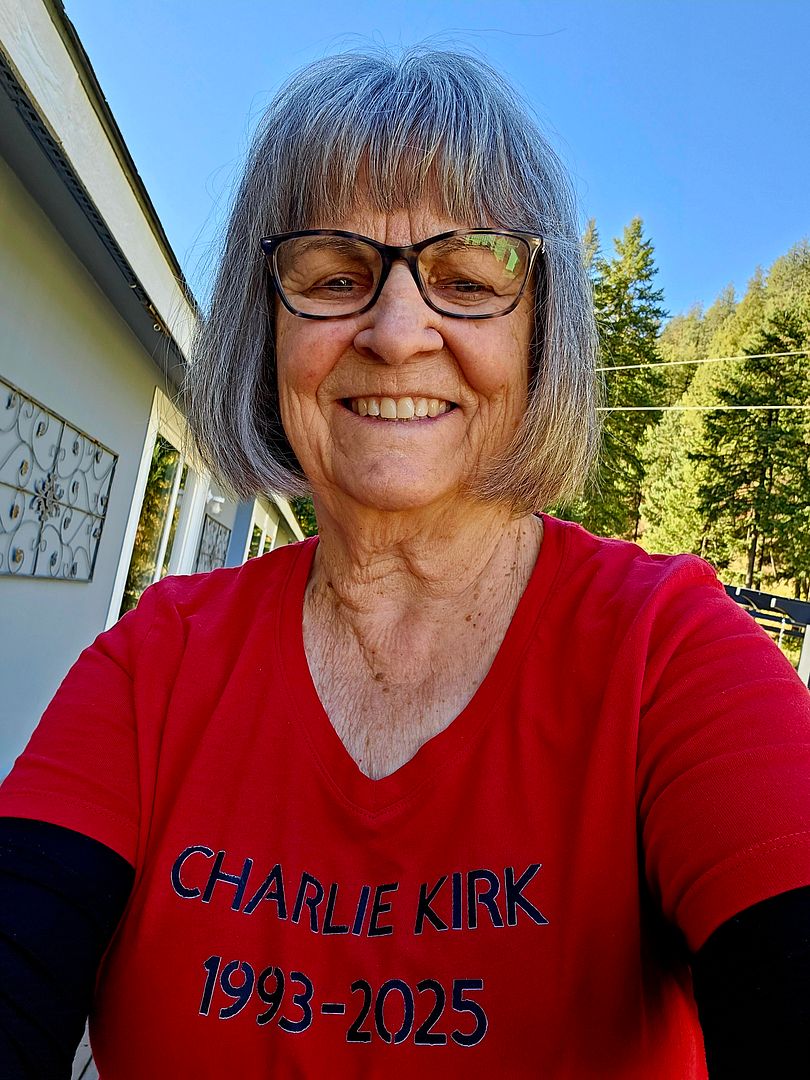
Tuesday October 14th was also Charlie Kirk Day. It was a day to wear red in remembrance of this young man who would have been 32 on that day and I was happy to participate.
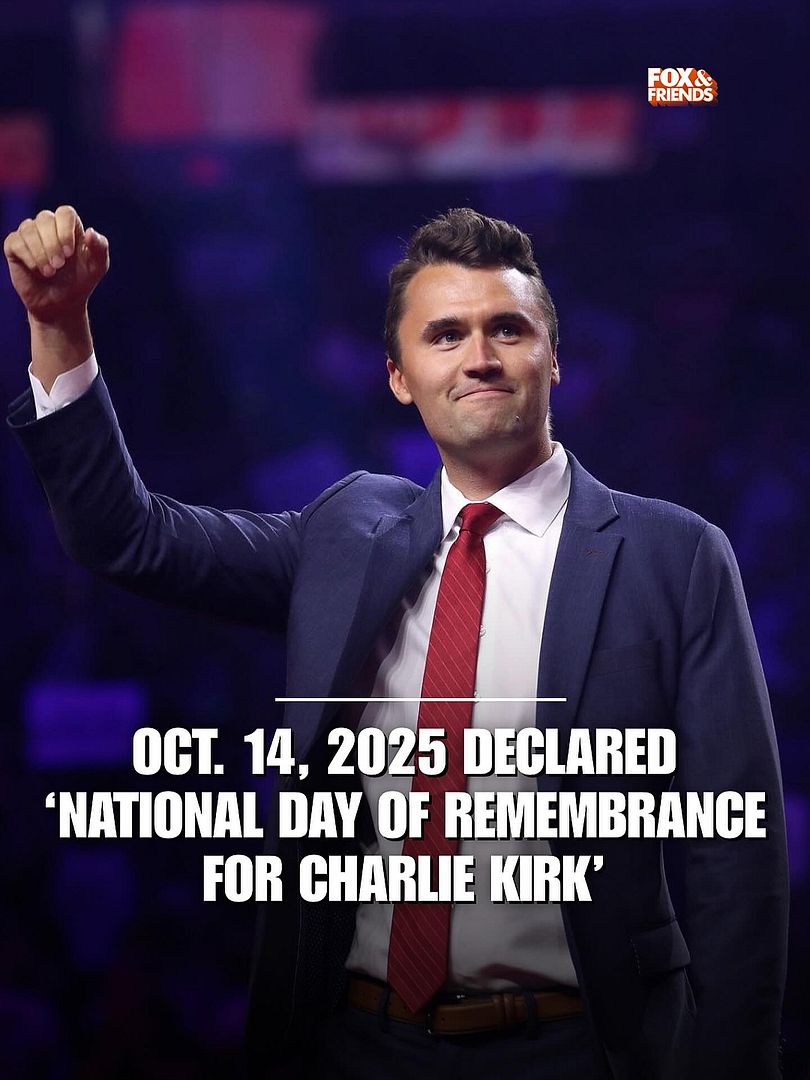
We also watched the White House ceremony to honor Charlie Kirk’s memory with President Trump awarding him the Medal of Freedom, posthumously.
T is for…

For April I’m challenging myself to an A-Z photo a day excluding Sundays and in addition to any regular posts that come to be.

Today is Wednesday April 23rd and we are on the letter T.

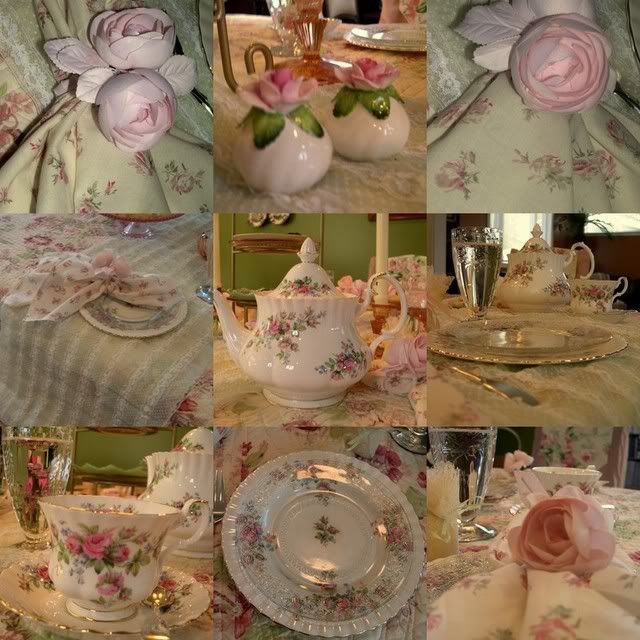
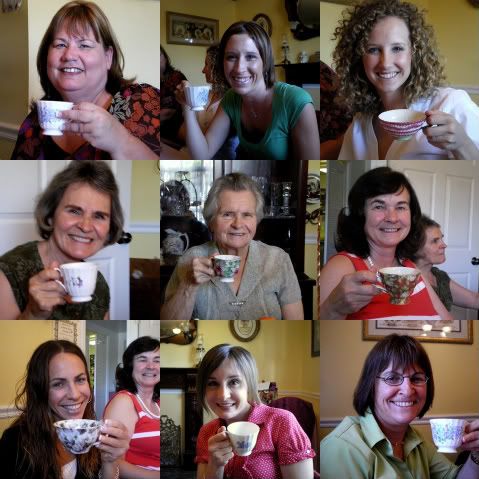
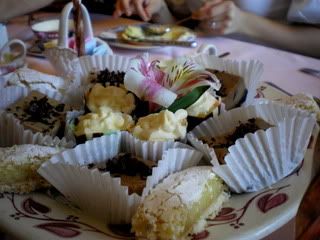
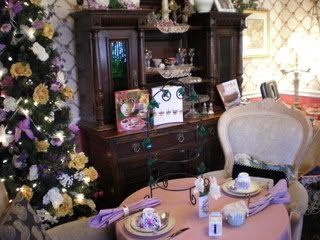
T is for Tea and Tea Rooms and High Tea and Tea for Two and a Table full!

Growing up, tea was the hot drink served most regularly. When there was ‘company’ involved with a meal, it was served at the end of the meal with some sort of sweet treat.
It has only been in the last 18 or so years that going to a tea room and enjoying high tea has been on my radar.

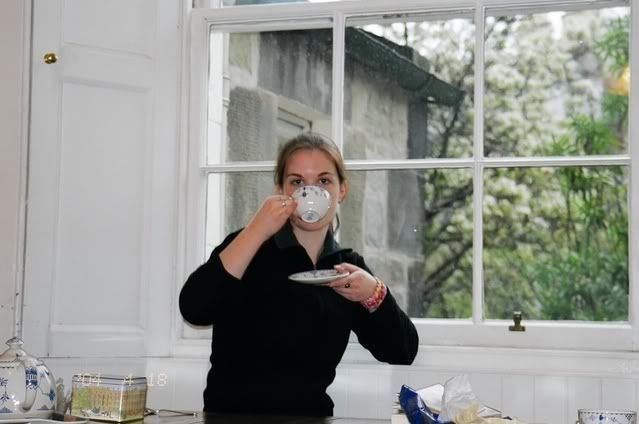
I love this photo of our daughter Katie drinking tea in our rented apartment in April of 2004 in Edinburgh.

Tea tables and tea times became front and center during my early blogging years.

This Blog-a-Thon at Gracious Hospitality by LaTeaDah lit the fire and inspired many table settings and hunting down tea rooms.

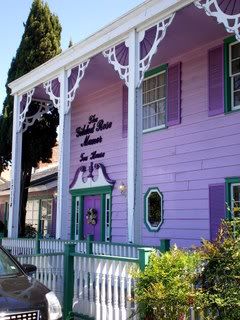
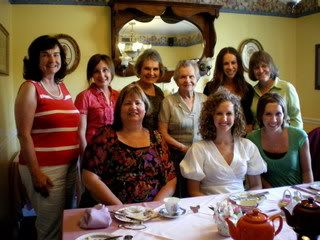
Living in Camarillo and closer to my California family for a few years (2006-2010) inspired planning tea times with family and friends. The first one was to celebrate our mom’s 85th birthday in 2008. We gathered at The Gilded Rose Manor Tea Room in Northridge, California.

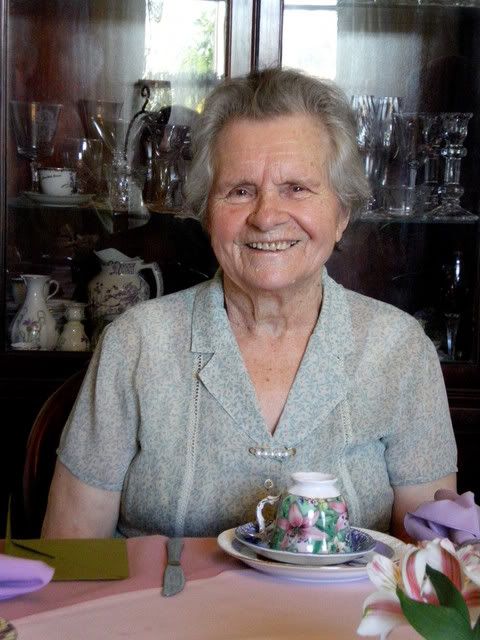
SIL Kelly, Niece Melissa, Niece Jessica, Sister Kathy, Nadia~Mom and Babushka, Sister Vera, Niece Debbee, Niece Michelle, and me.

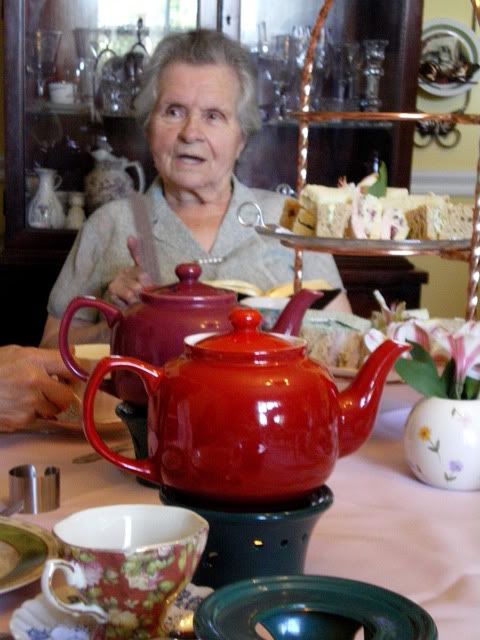
Our mom sharing words of wisdom.

There was a lot to learn about photography in those early years of blogging.

This was a fun tea room and it’s sad to report that it is no longer serving tea like many other tea rooms we have visited in the past 15 years.

There are too many tea experiences to try to post them all here for ‘T is for Tea’ this April. Maybe in May I’ll do a tea room or high tea experience a day until I run out of them.

Happy Wednesday everyone. If you are looking for Wednesday Hodgepodge it is the post before this one.

Scotland Travel Journal ~Finale

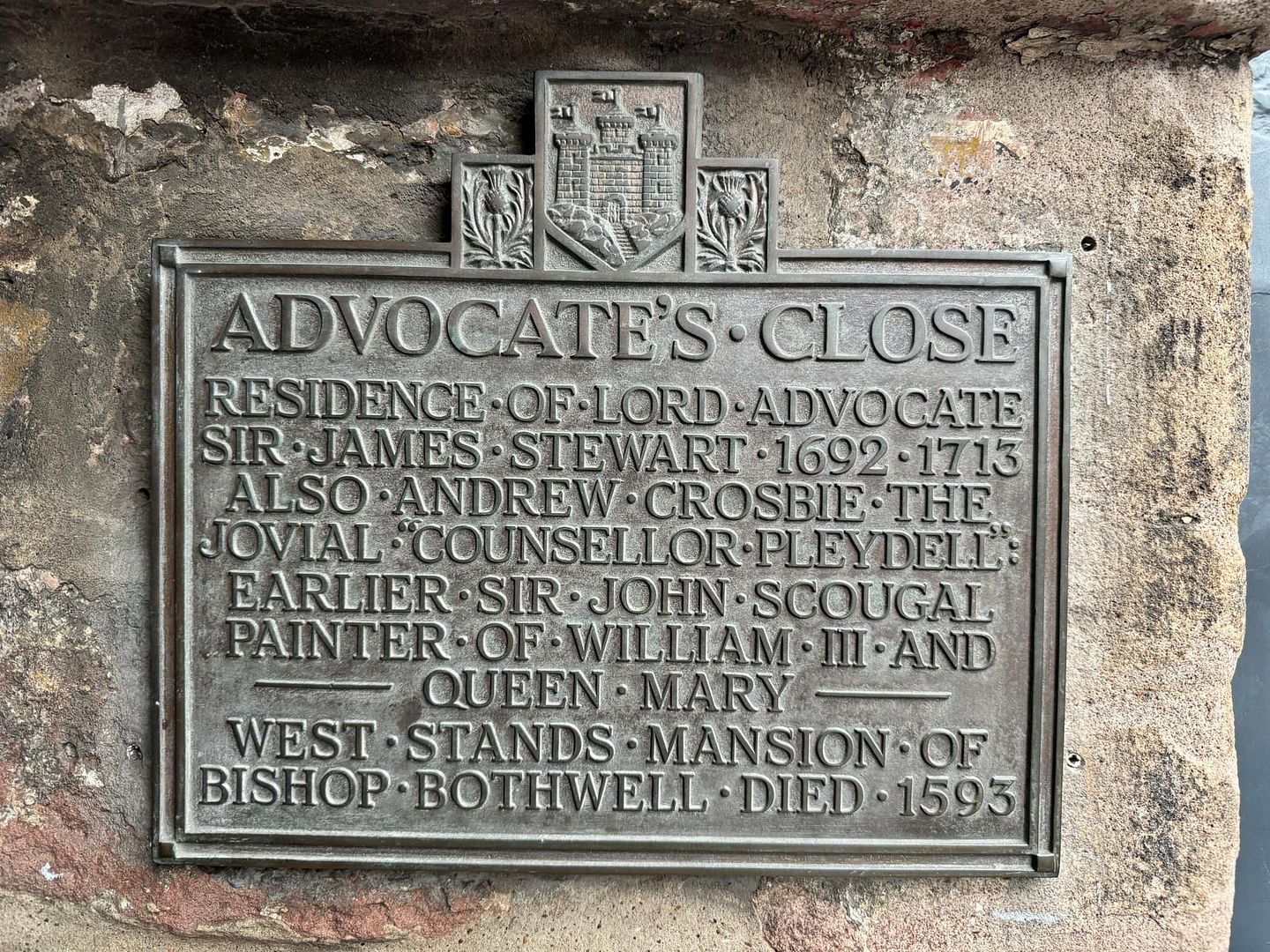
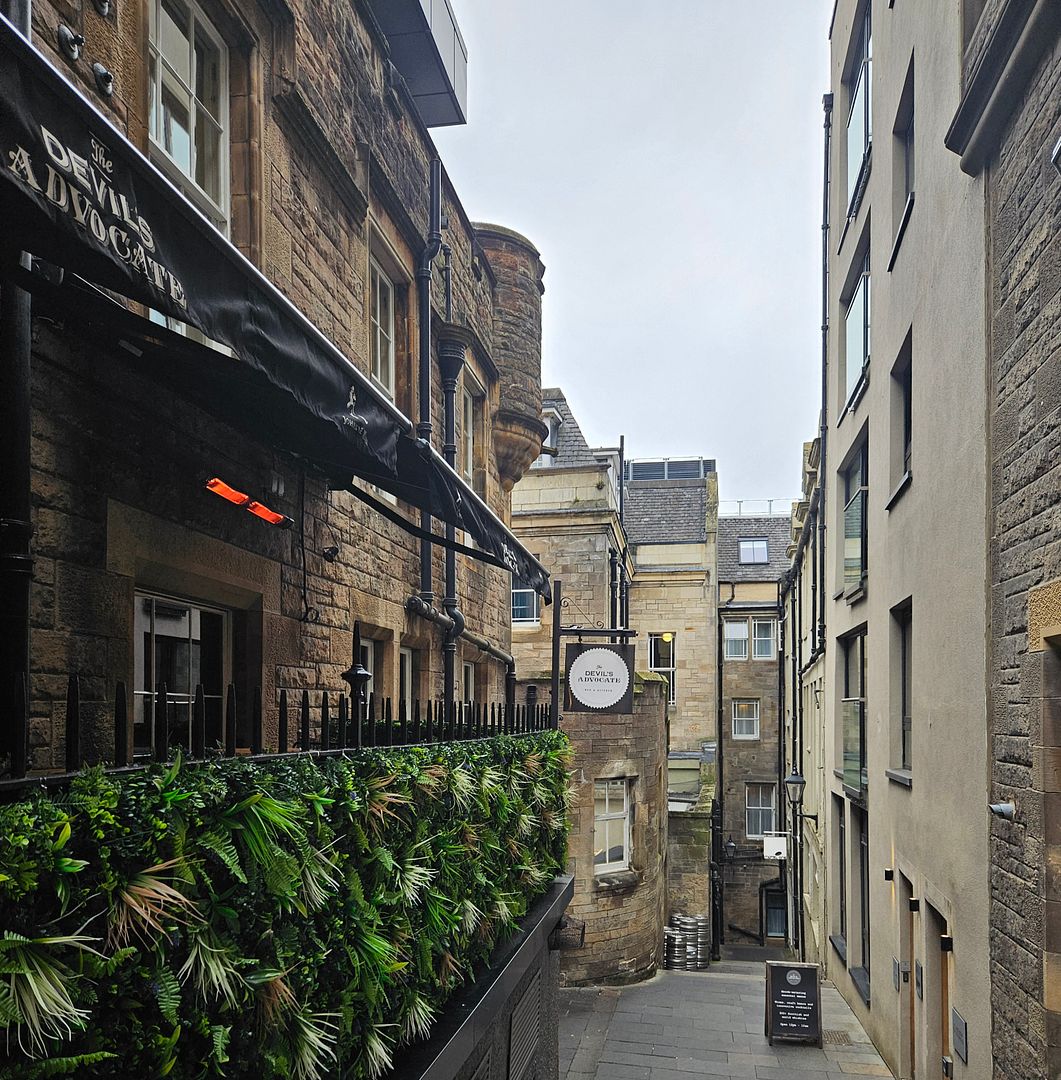
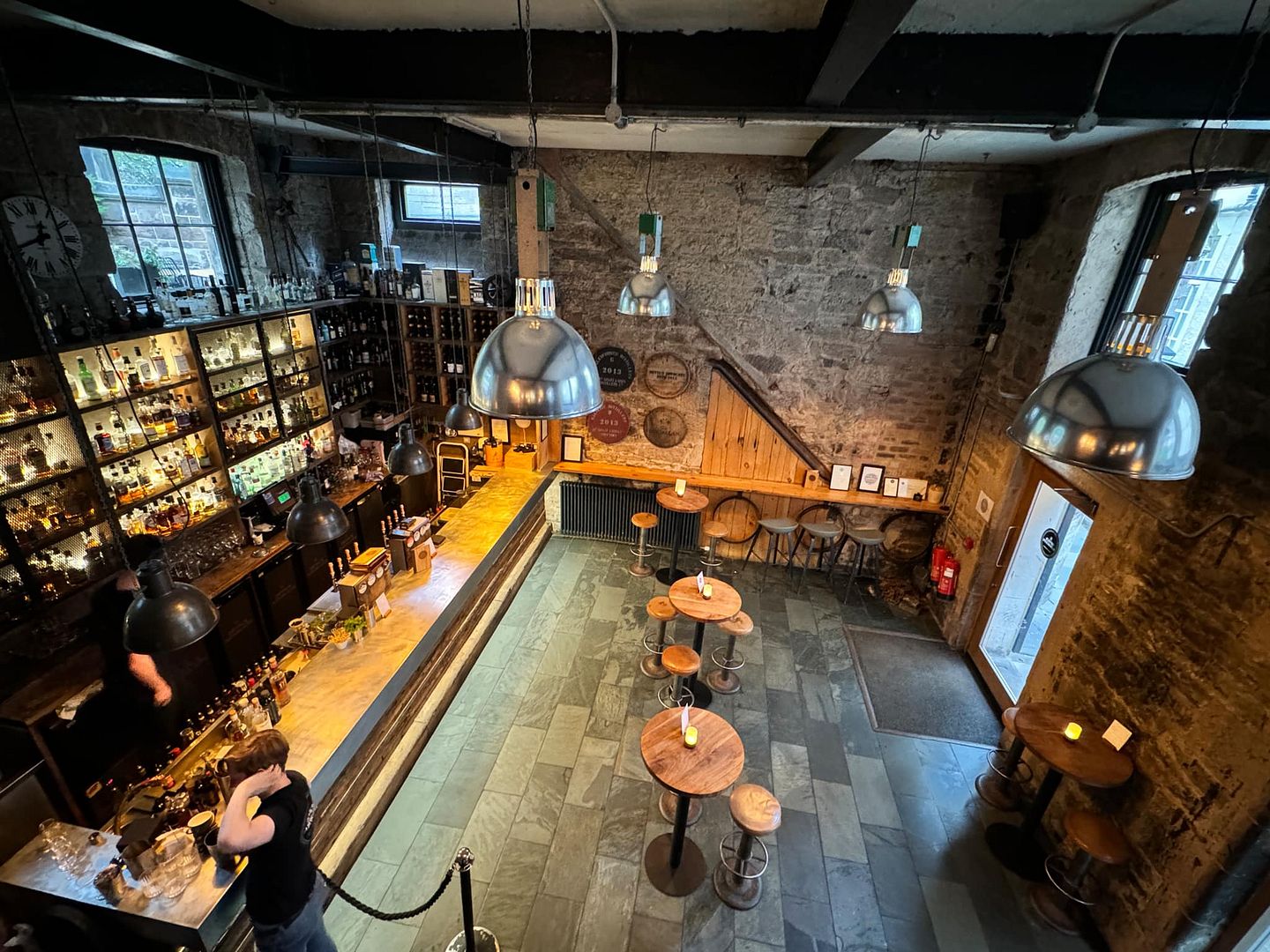
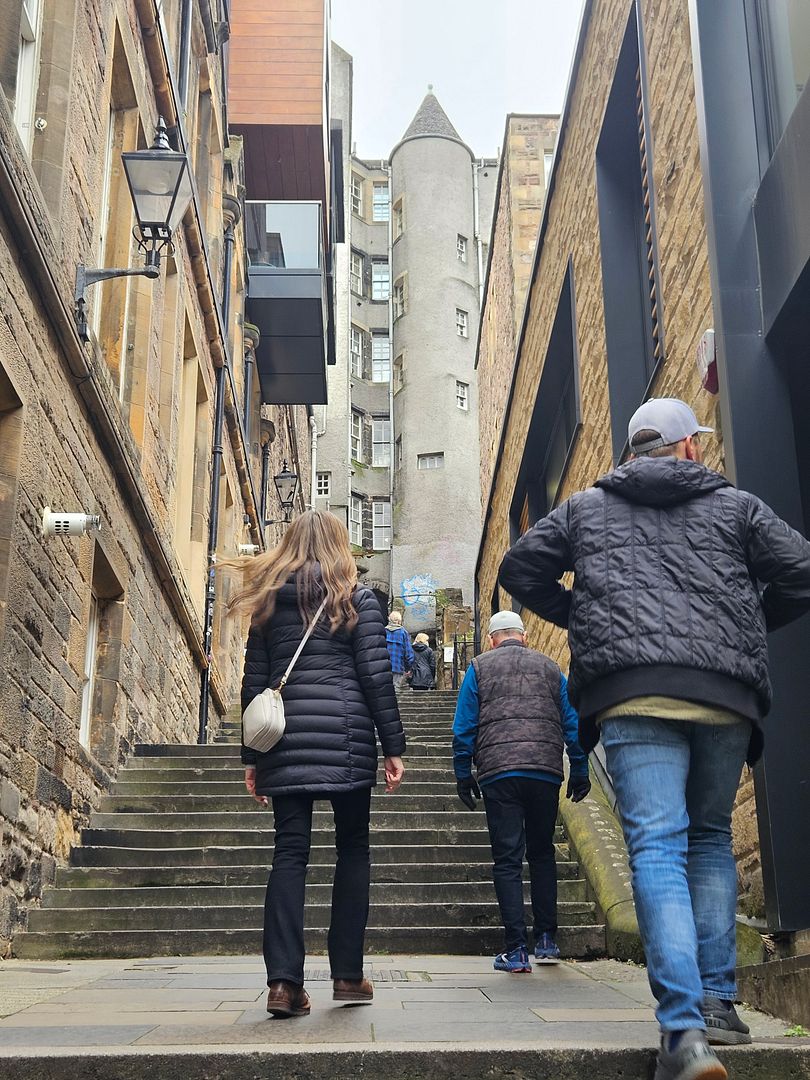
After our wonderful tour with Jimmy on Monday September 23rd we were ready for lunch. We took the steps down Advocate’s Close and found the Devil’s Advocate.

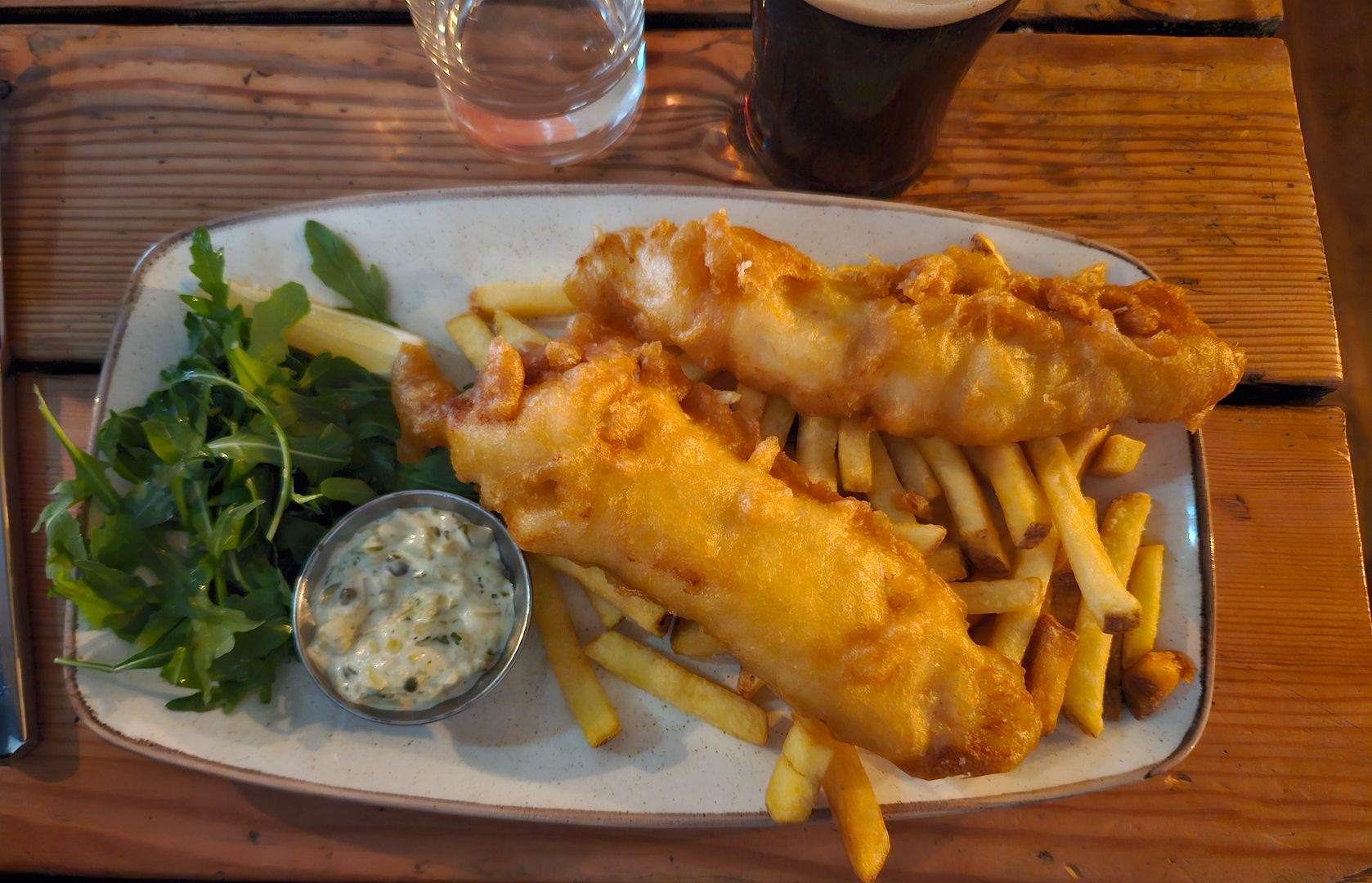
Fish and Chips one more time before we left Scotland.

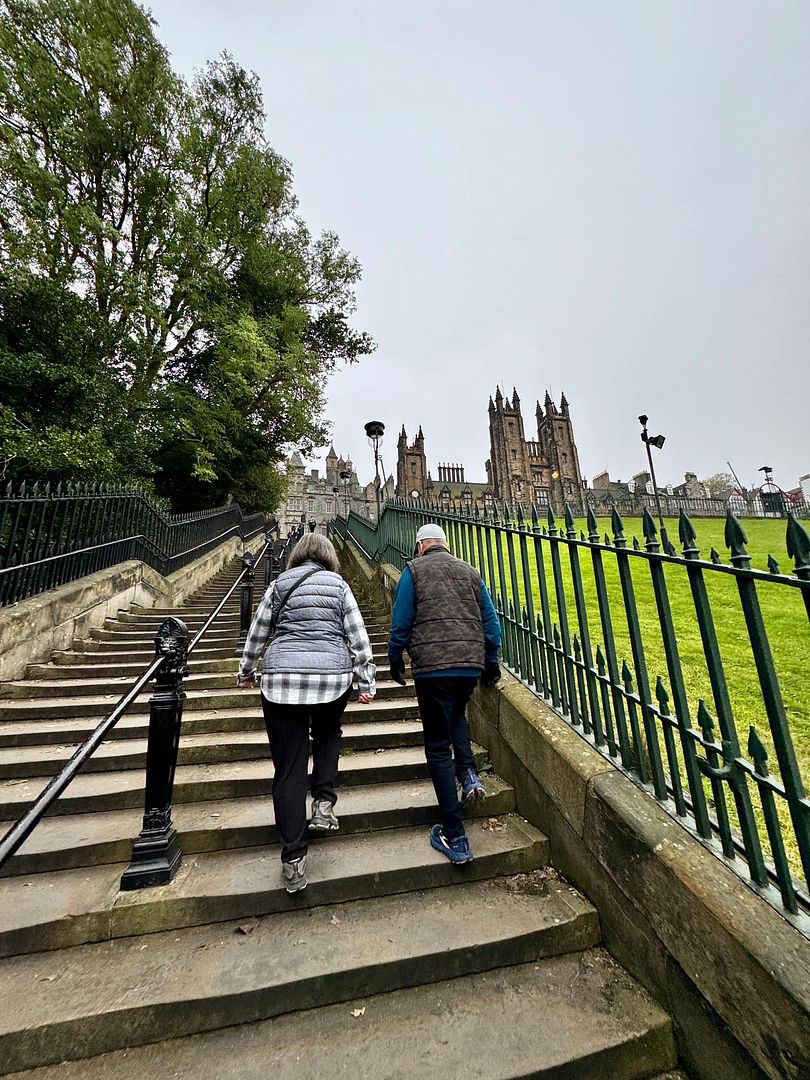
After our lunch we could face the stairs to go back up Advocate’s Close to the Royal Mile.

Our destination would be Holyrood Palace which is at the opposite end of the Royal Mile from Edinburgh Castle.

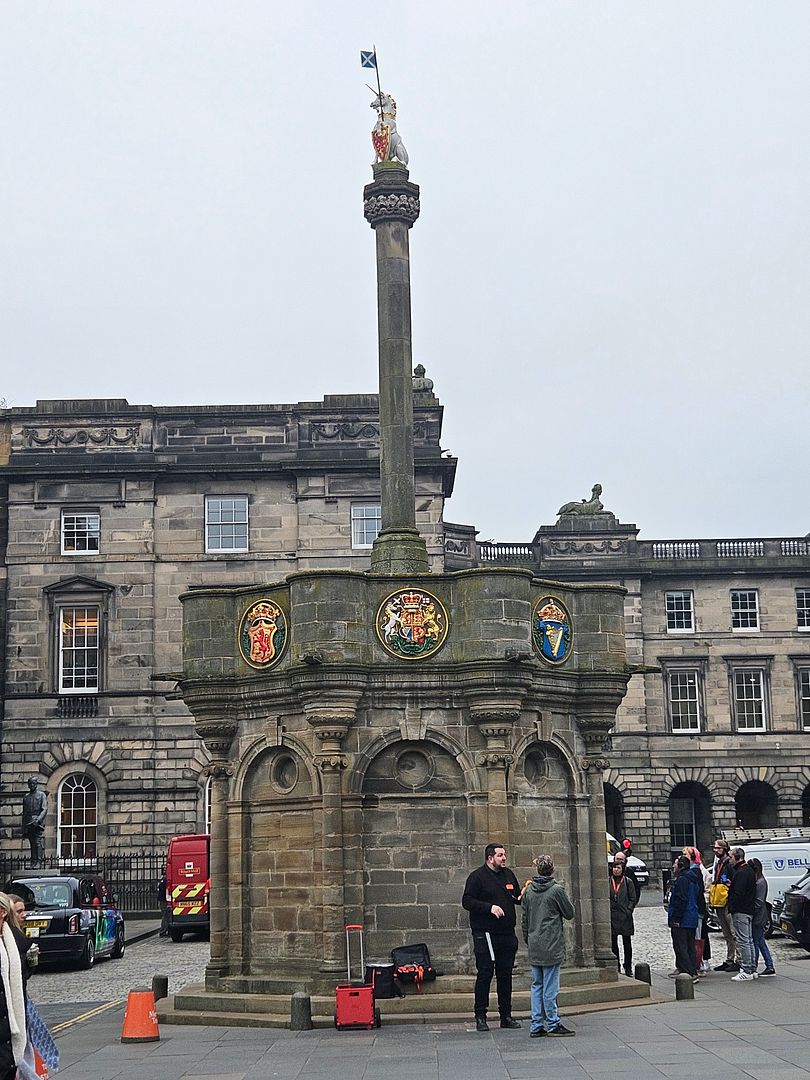
Located on the Royal Mile, the Mercat Cross holds a prominent position within the Old Town. Its proximity to other historic sites, including St Giles’ Cathedral and the Museum of Edinburgh, places it at the heart of Edinburgh’s cultural and civic life.

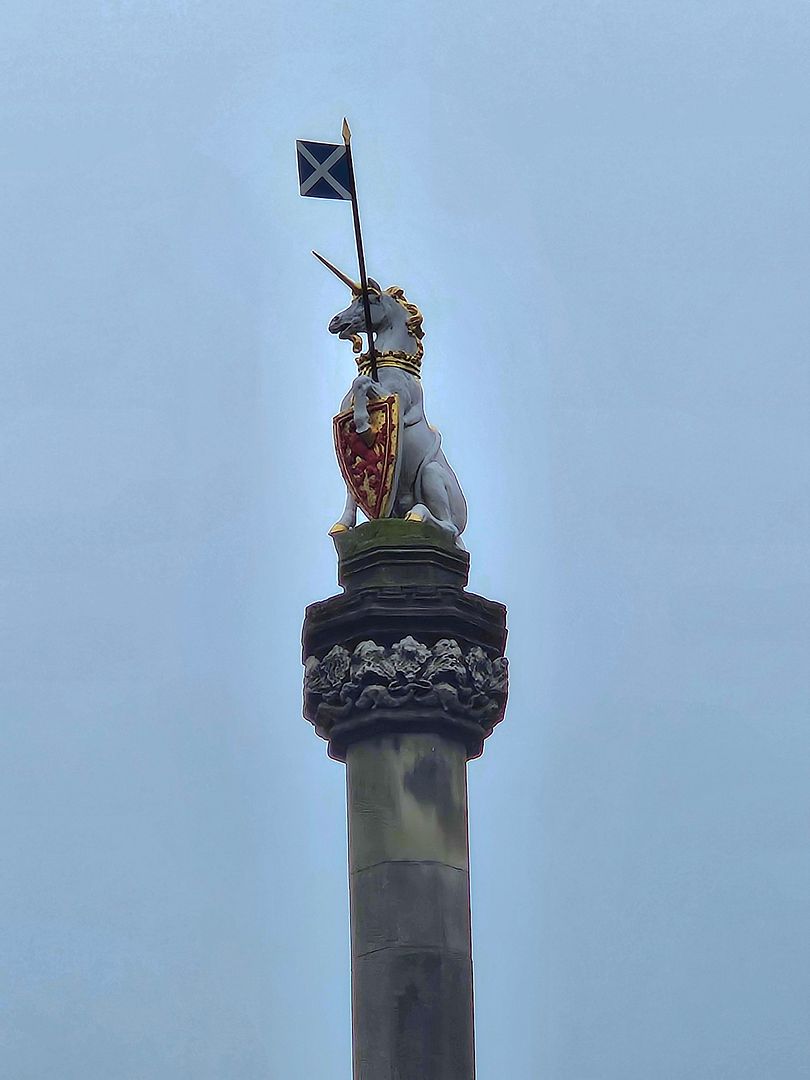
The Mercat Cross holds significant cultural importance in Edinburgh’s history. It was not merely a market hub, but also the focal point of civic gatherings and proclamations. Its distinctive octagonal structure, adorned with a unicorn and the royal coat of arms, reflects the intersection of commerce and monarchy in medieval Edinburgh.
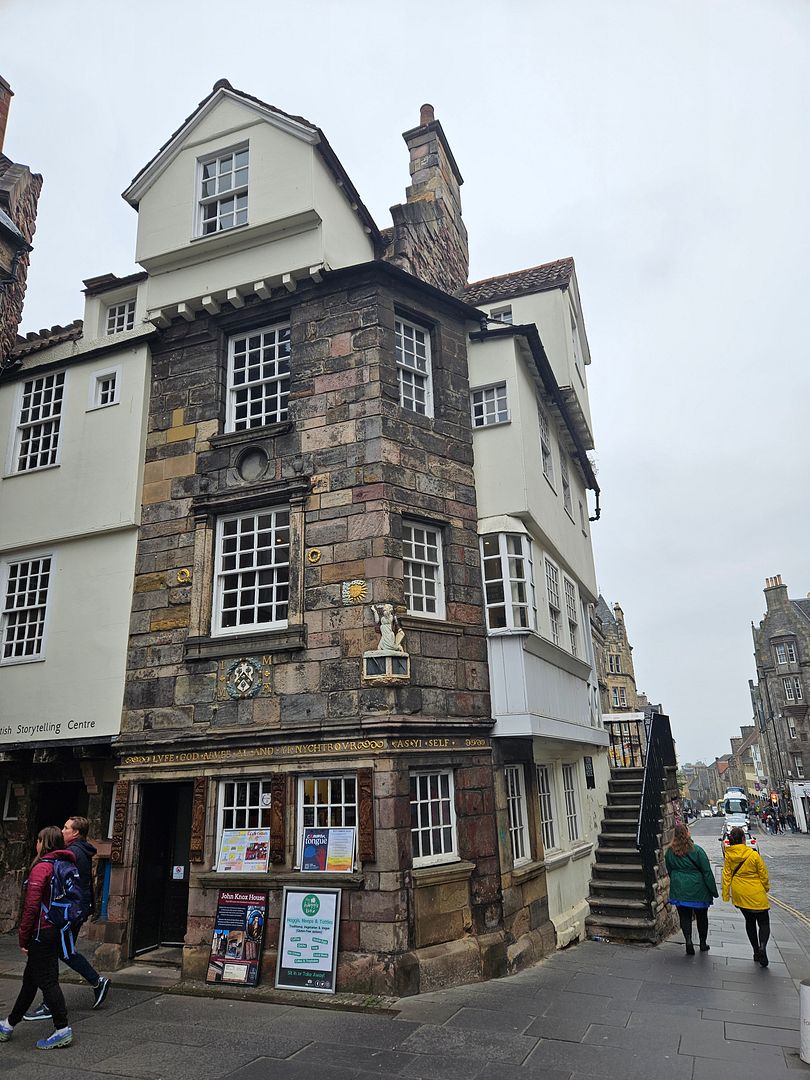
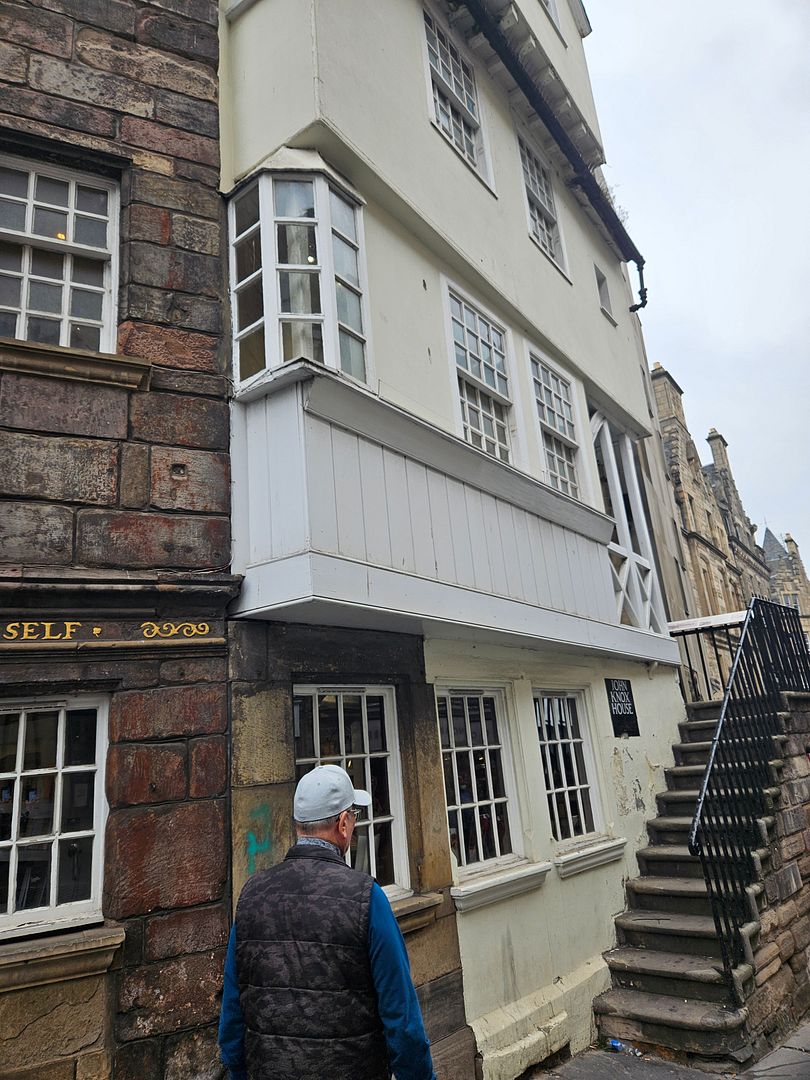
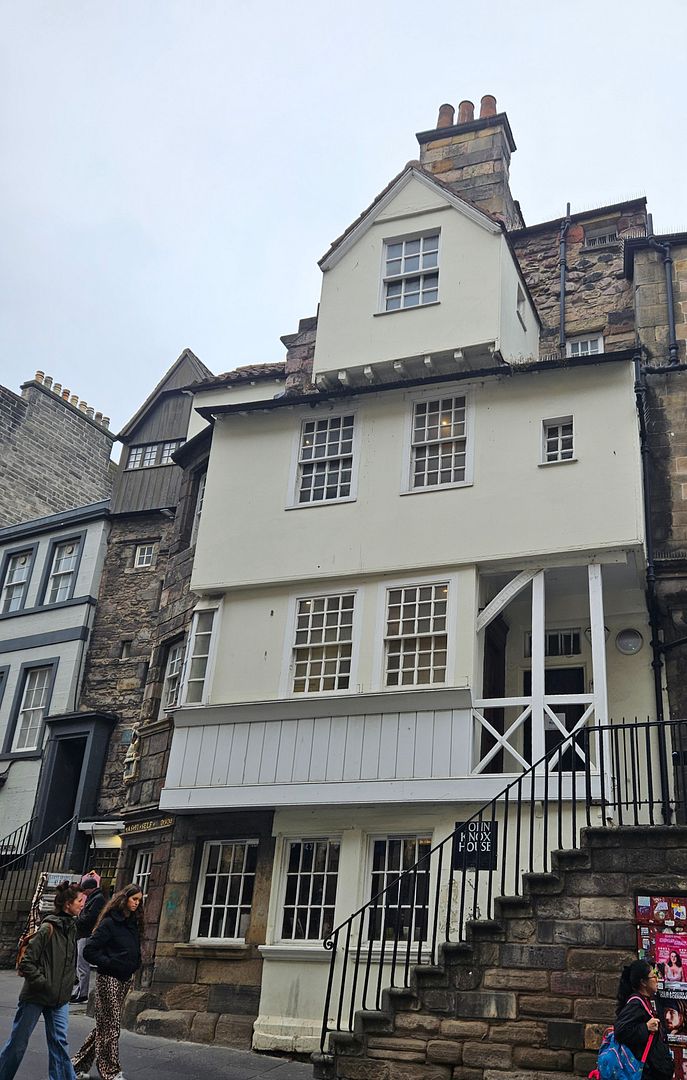
The John Knox House is on the Royal Mile.

John Knox’s House dates from the 15th century and has been largely unaltered since the 1550’s when the Mosman family, Goldsmiths to Mary Queen of Scots, remodeled the house. John Knox, leader of the Scottish Reformation and founder of the Presbyterian Church, only lived here for a short period before his death in 1572.

The ground and first floors of the house are presented as a museum about John Knox, the evolution of the Protestant faith in Scotland, and the conflict between John Knox and Mary Queen of Scots. There are a few audio commentaries and lots of written information to read.

On the second floor of the house, you see a wood-paneled apartment that is preserved in the state that John Knox would have known. This is the most interesting part of the house.

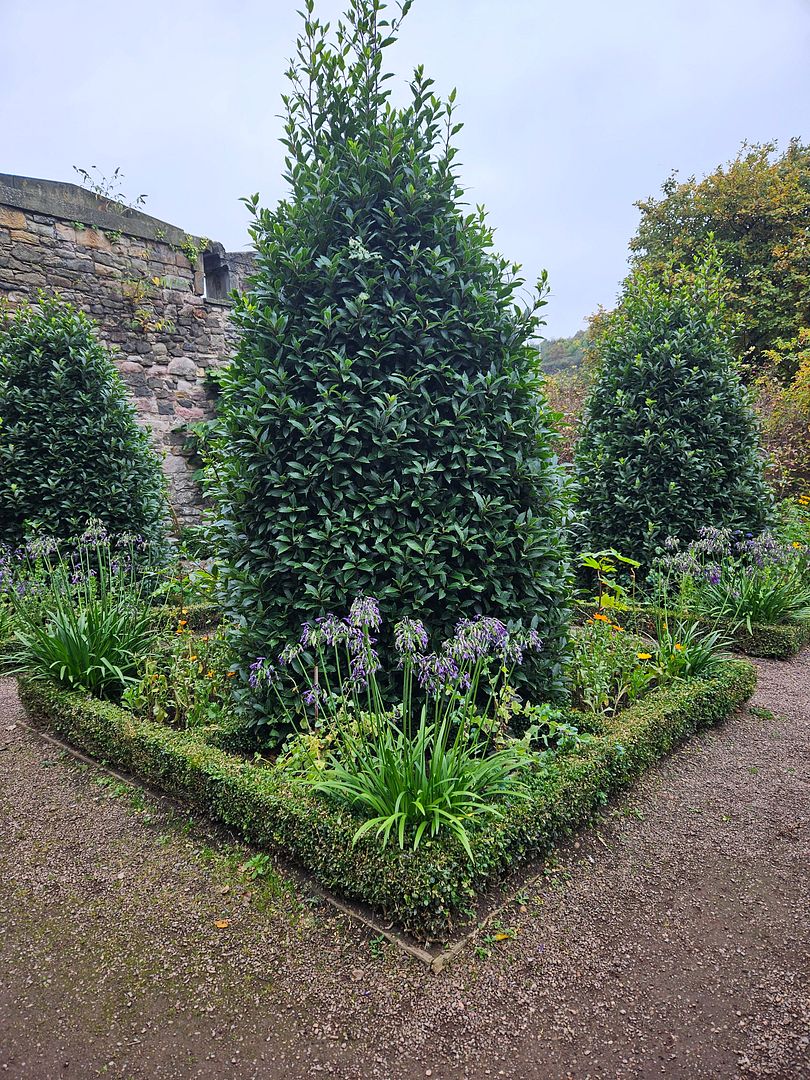
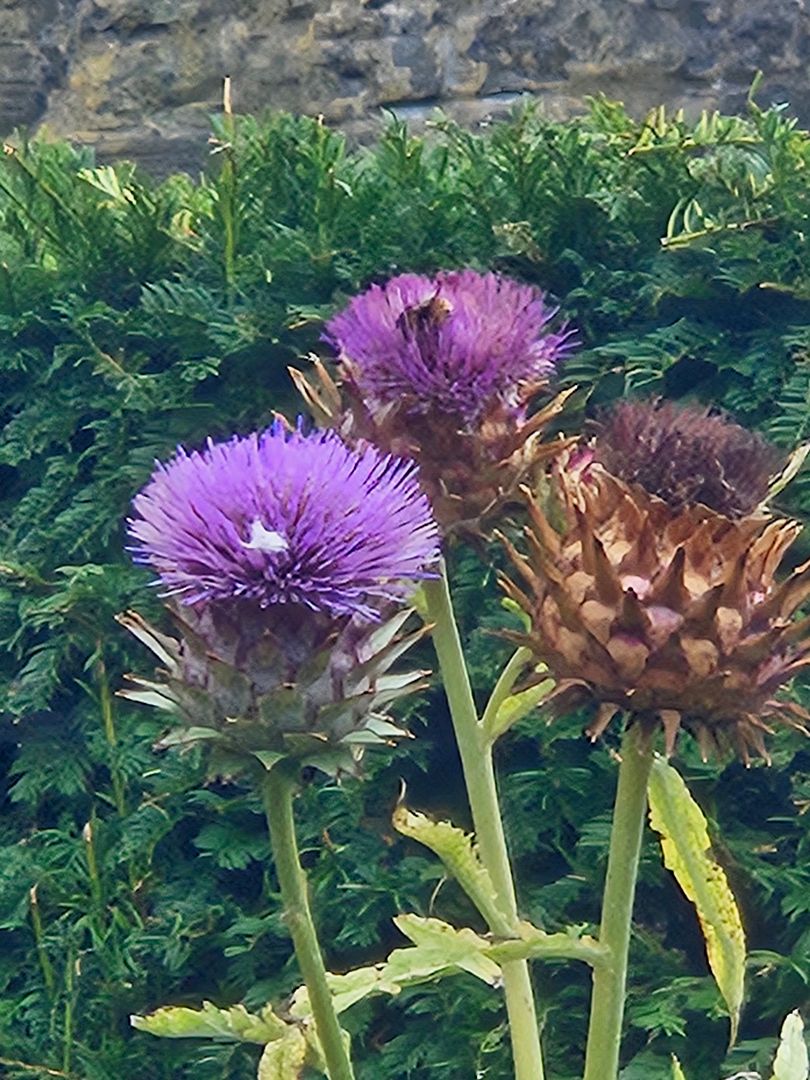
We found the Secret Garden through an archway along the Royal Mile and had to take a photo of the Thistle

After the garden we finally were at the end of the Royal Mile at Holyrood Palace.

Holyrood Abbey was founded by David I, King of Scots in 1128, and Holyrood Palace has served as the principal residence of the Kings and Queens of Scots since the 15th century. Queen Elizabeth II spent one week in residence at Holyrood Palace at the beginning of each summer, where she carried out a range of official engagements and ceremonies
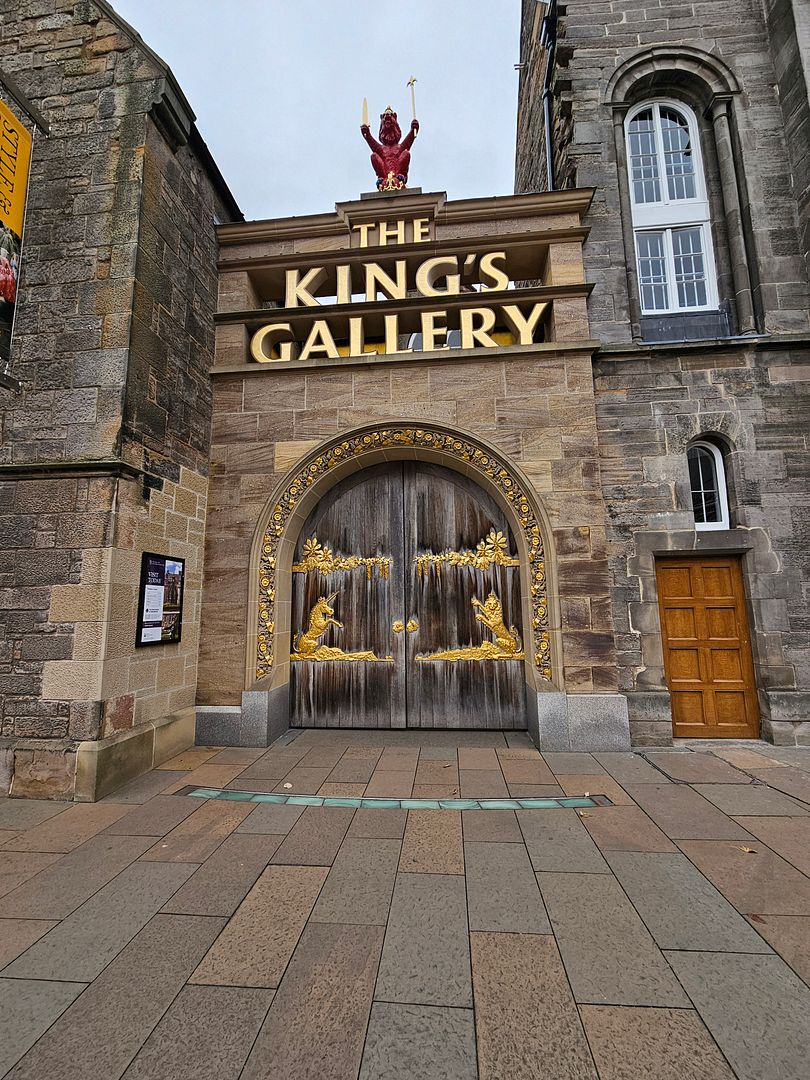
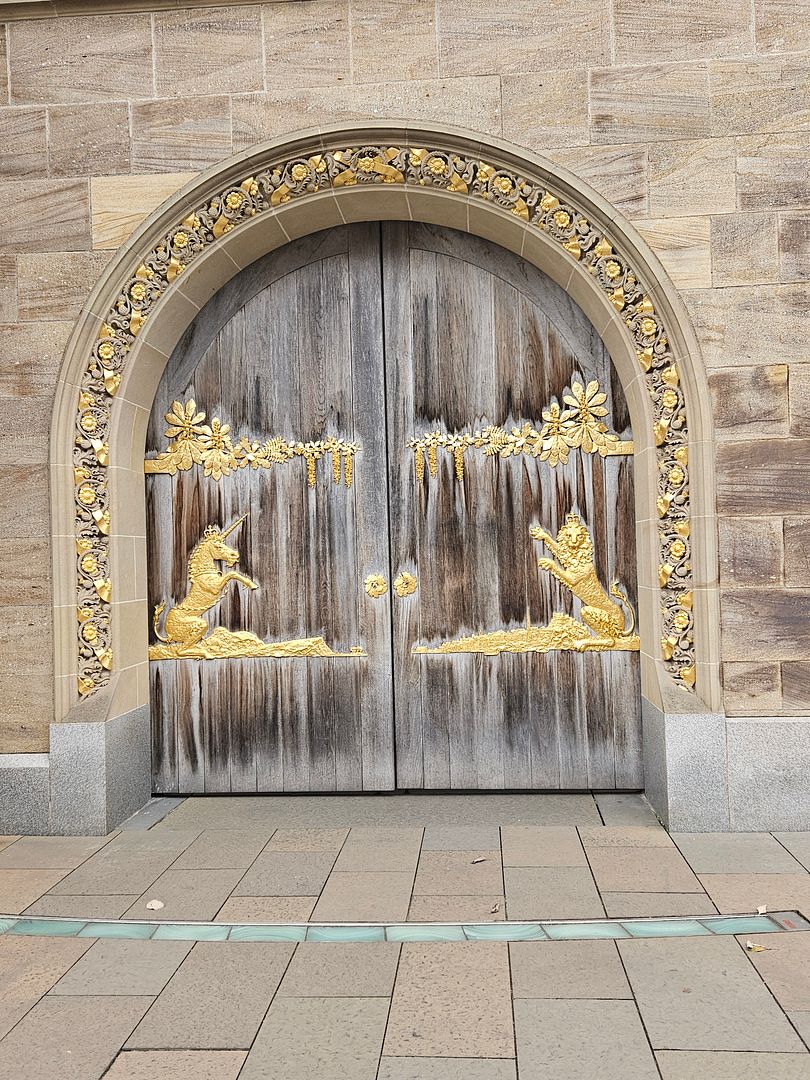
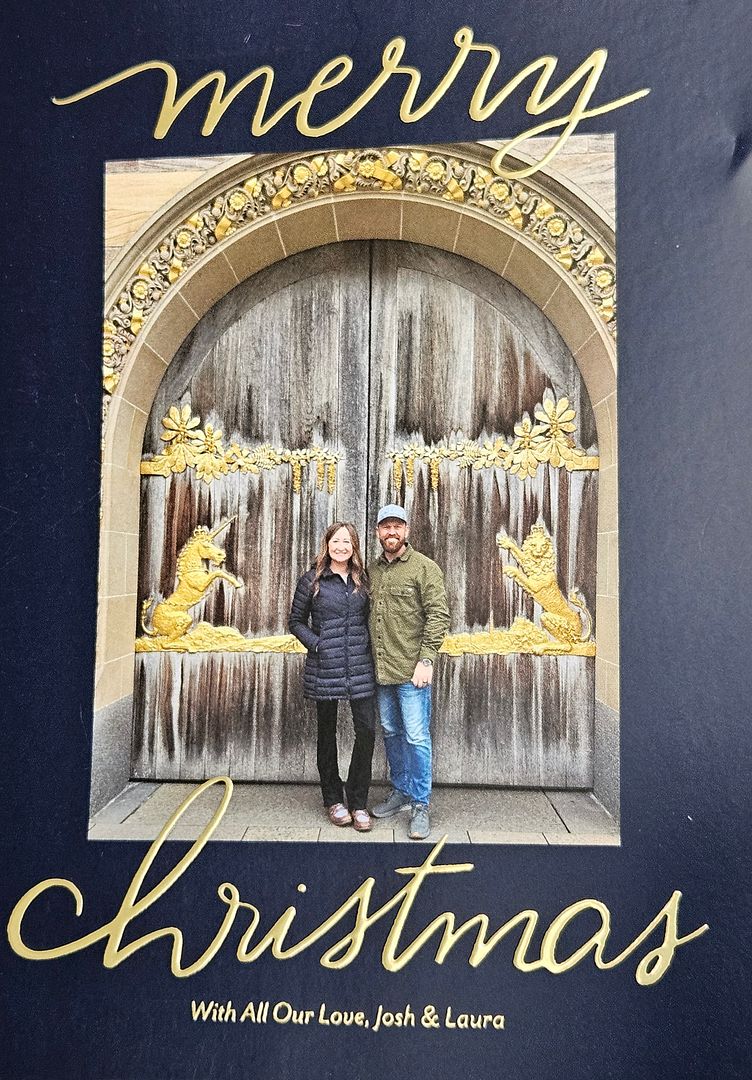
This beautiful doorway was a perfect photo op and it became Josh and Laura’s Christmas card.
We bought some souvenirs in the shop at Holyrood.

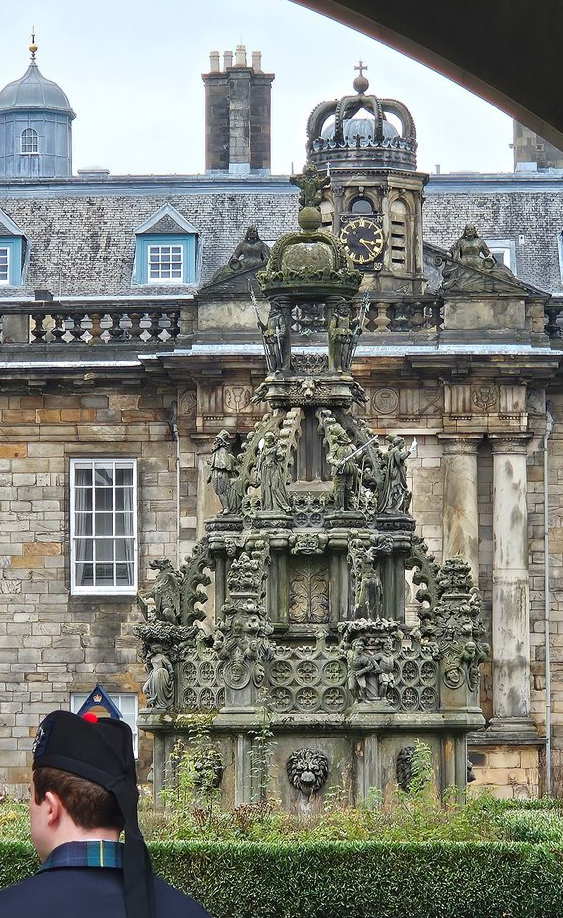
The Palace of Holyroodhouse Fountain

The Palace of Holyroodhouse, commonly referred to as Holyrood Palace, is the official residence of the monarch in Scotland. The palace stands at the bottom of the Royal Mile in Edinburgh, at the opposite end to Edinburgh Castle. Holyrood Palace is the setting for state ceremonies and official entertaining.

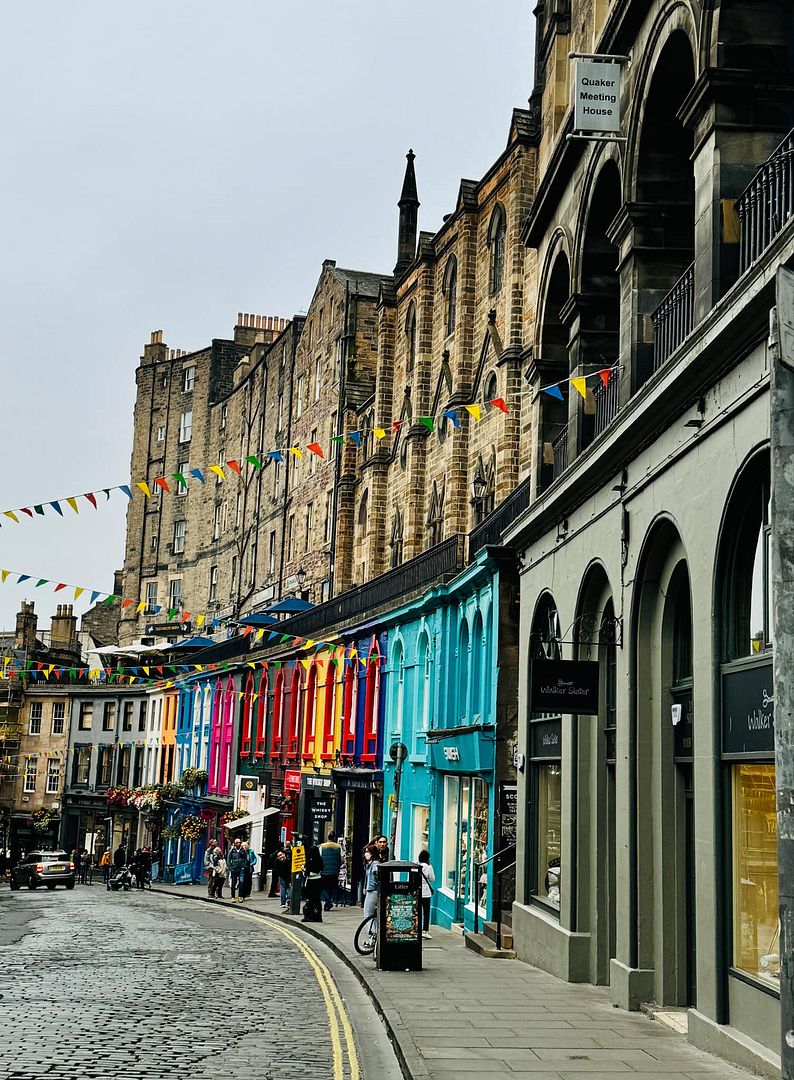
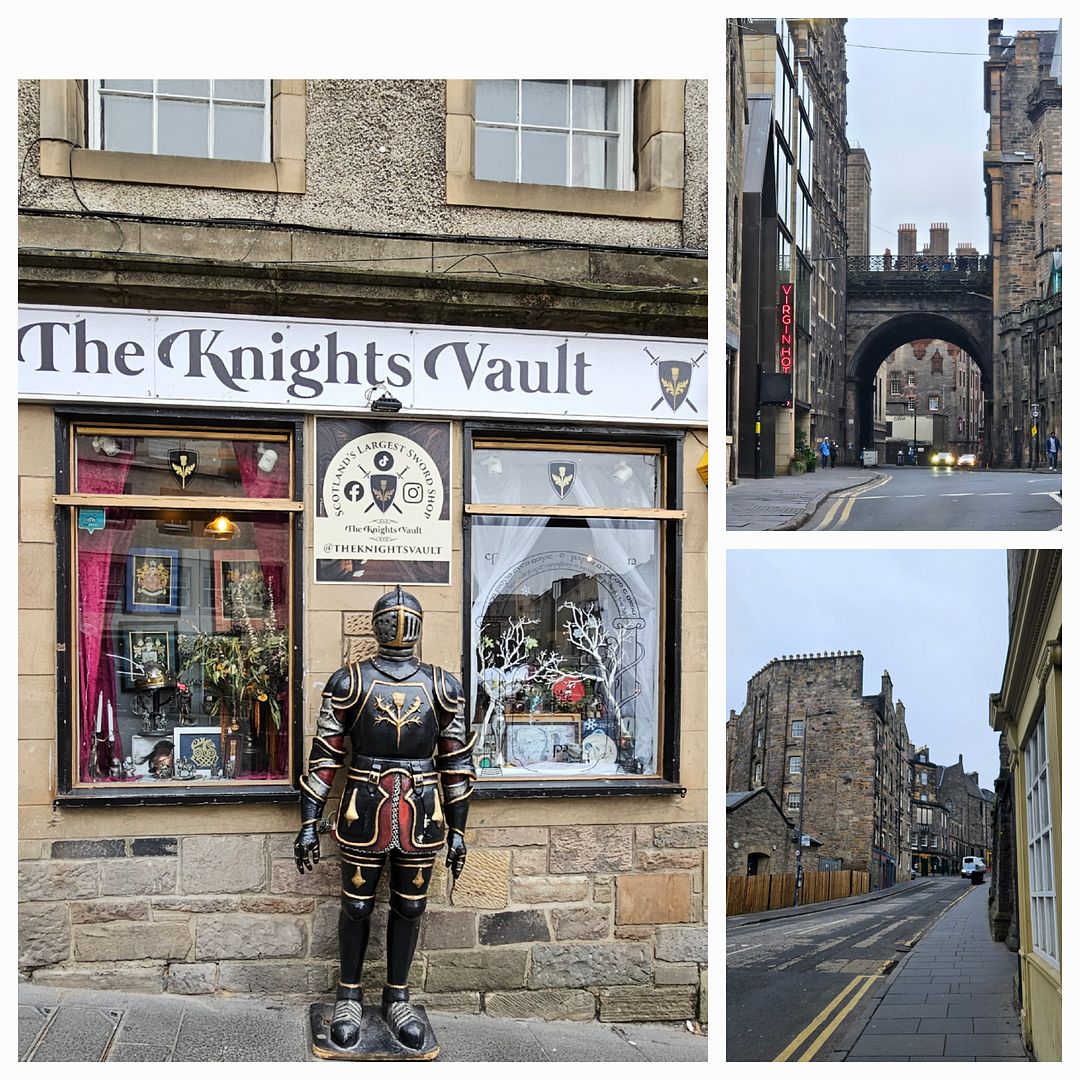
We walked back along different roads to Grassmarket and then up Victoria Street.

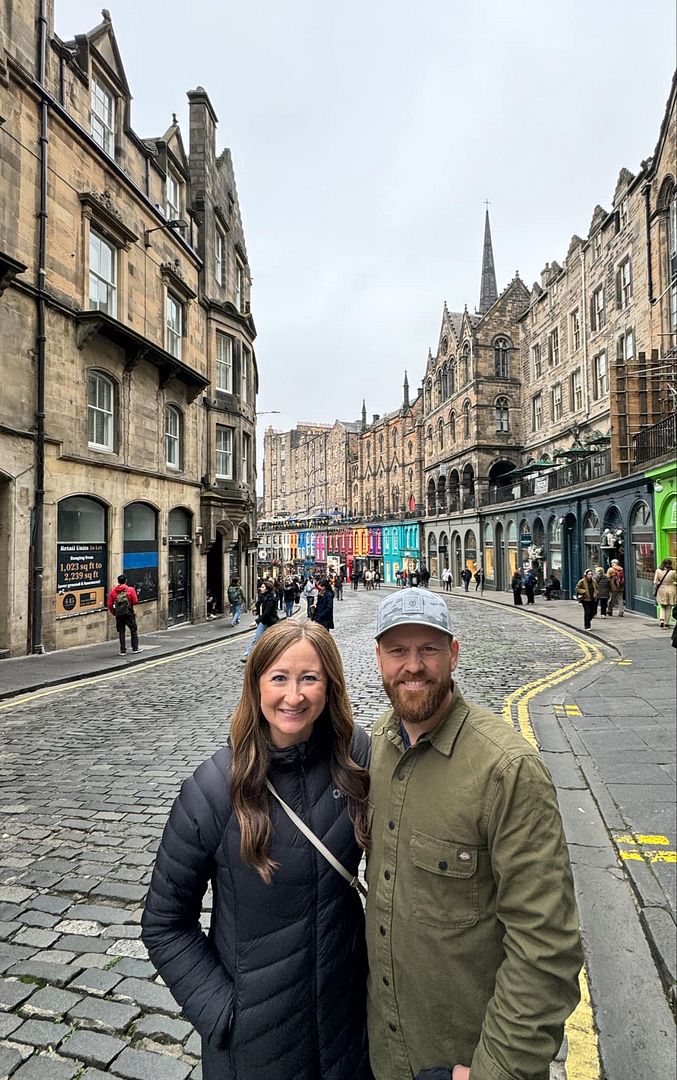
Looking down Victoria Street.

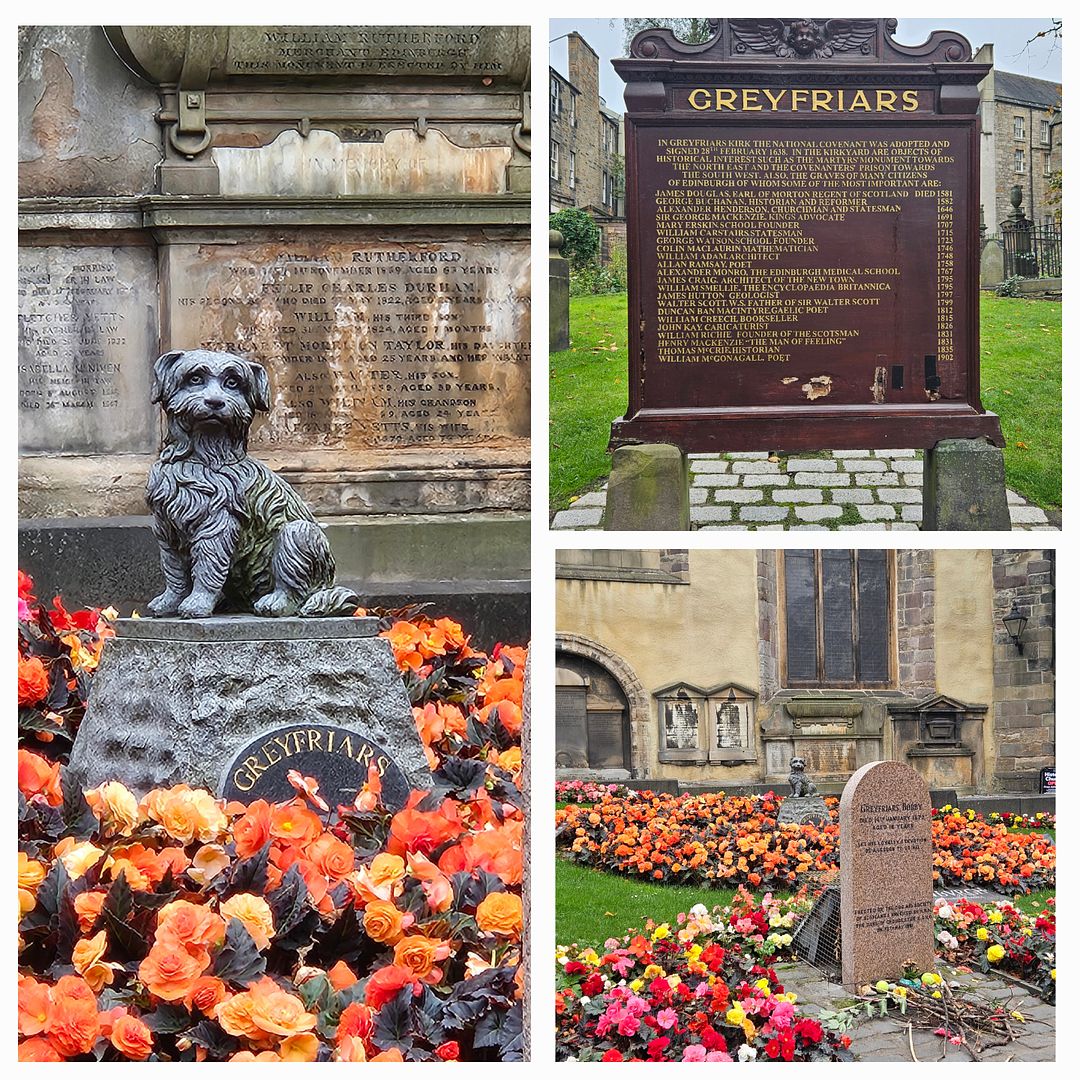
Since this is the last of my posts from Scotland I wanted to add Greyfriars Bobby in the Kirk. We saw this spot earlier in this day. Do you know the story behind Greyfriars Bobby or have you seen the old movie?

Our last full day in Scotland was another record breaking steps day. Goodnight to Monday September 23rd.

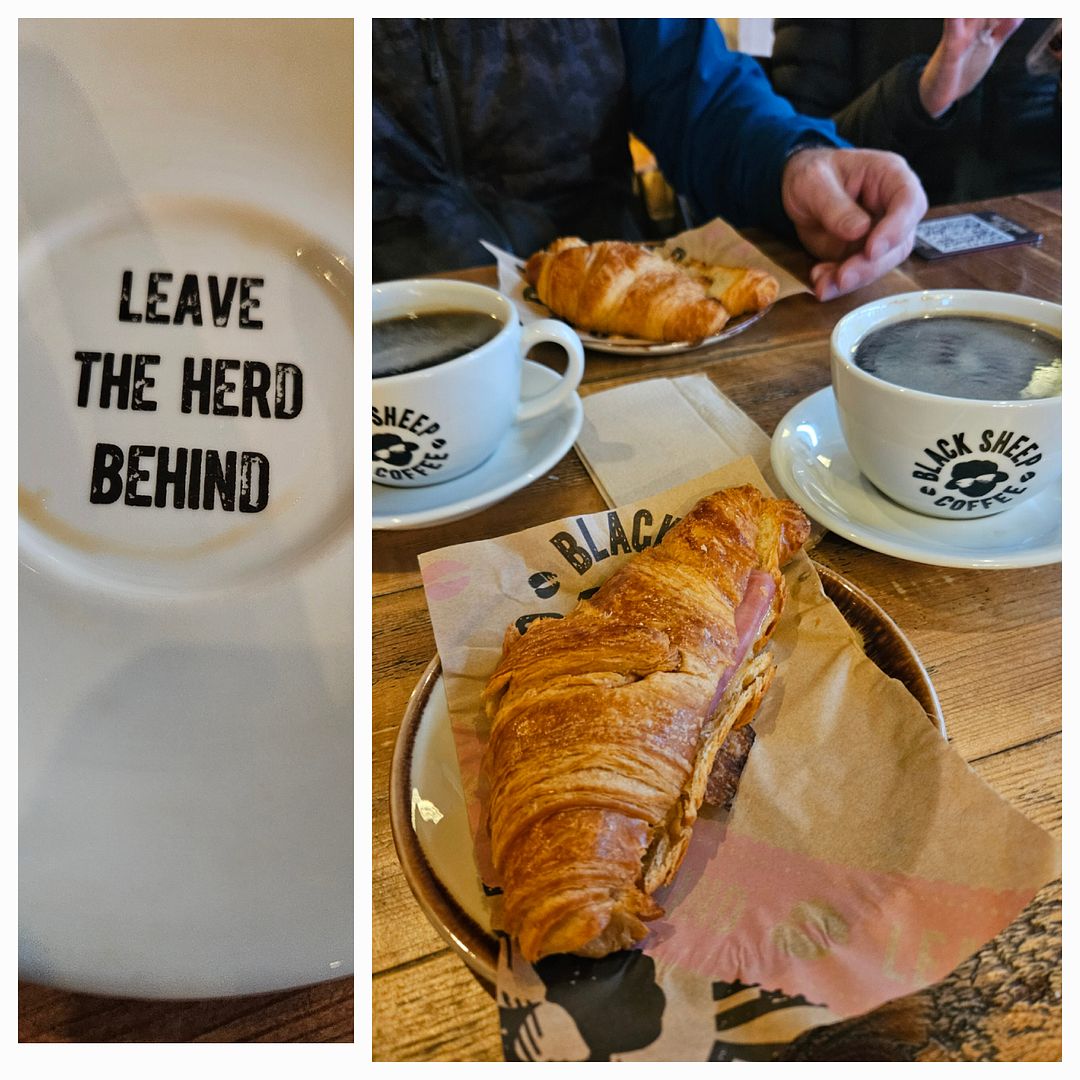
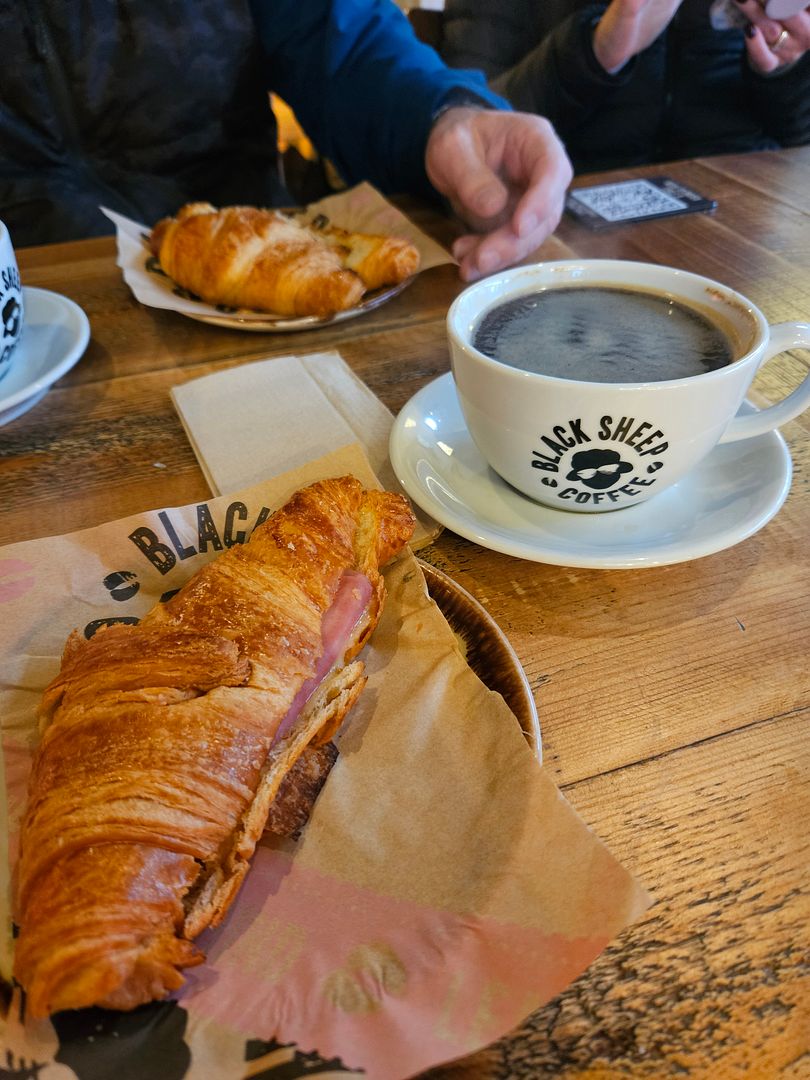
On Tuesday September 24th we had coffee and breakfast snacks at the Black Sheep before we checked out and called an uber to take us to the airport for our flights home.

We loved our time and what we experienced in Bonnie Scotland. Cheerio.

Scotland Travel Journal ~ St. Giles Cathedral

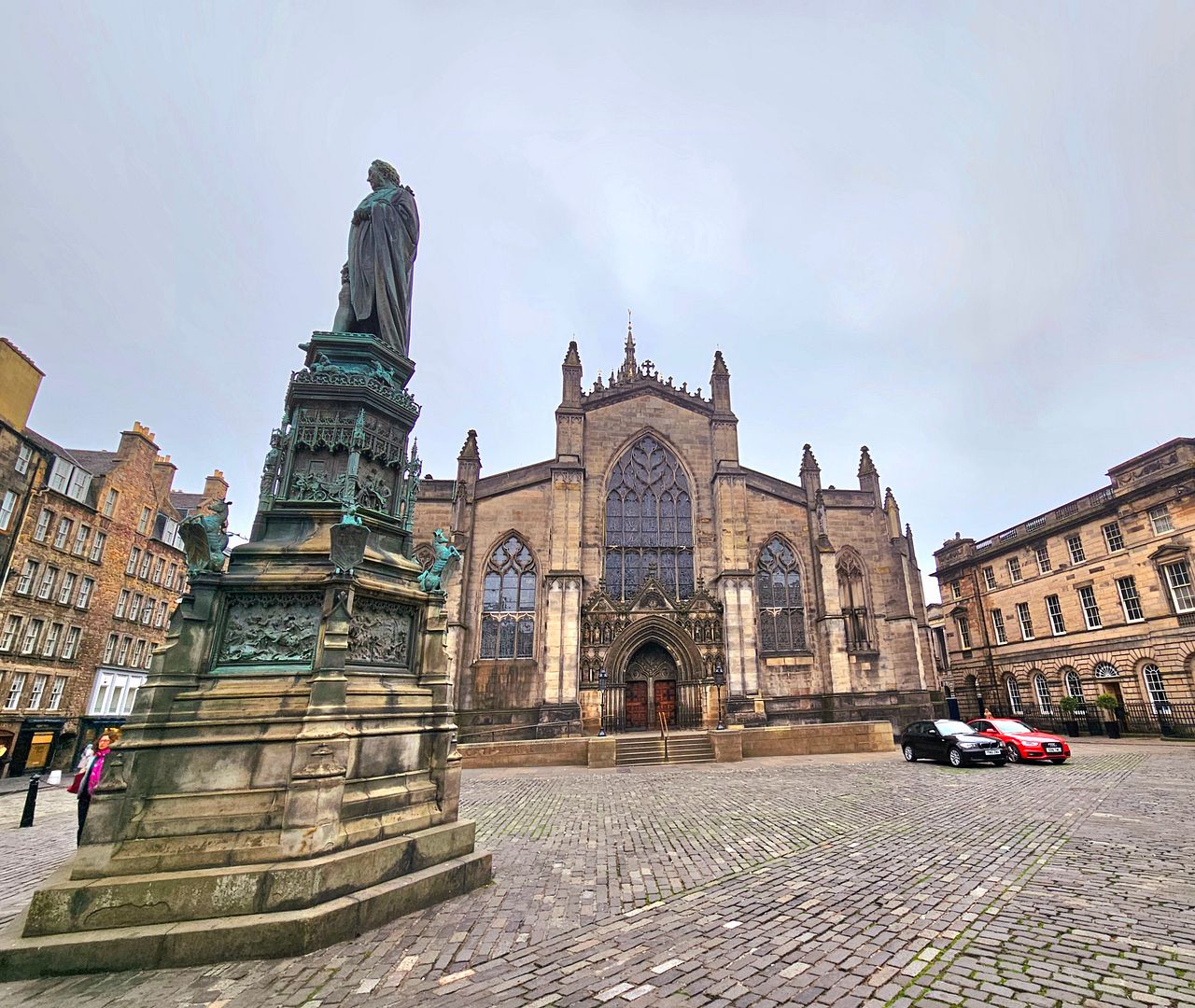
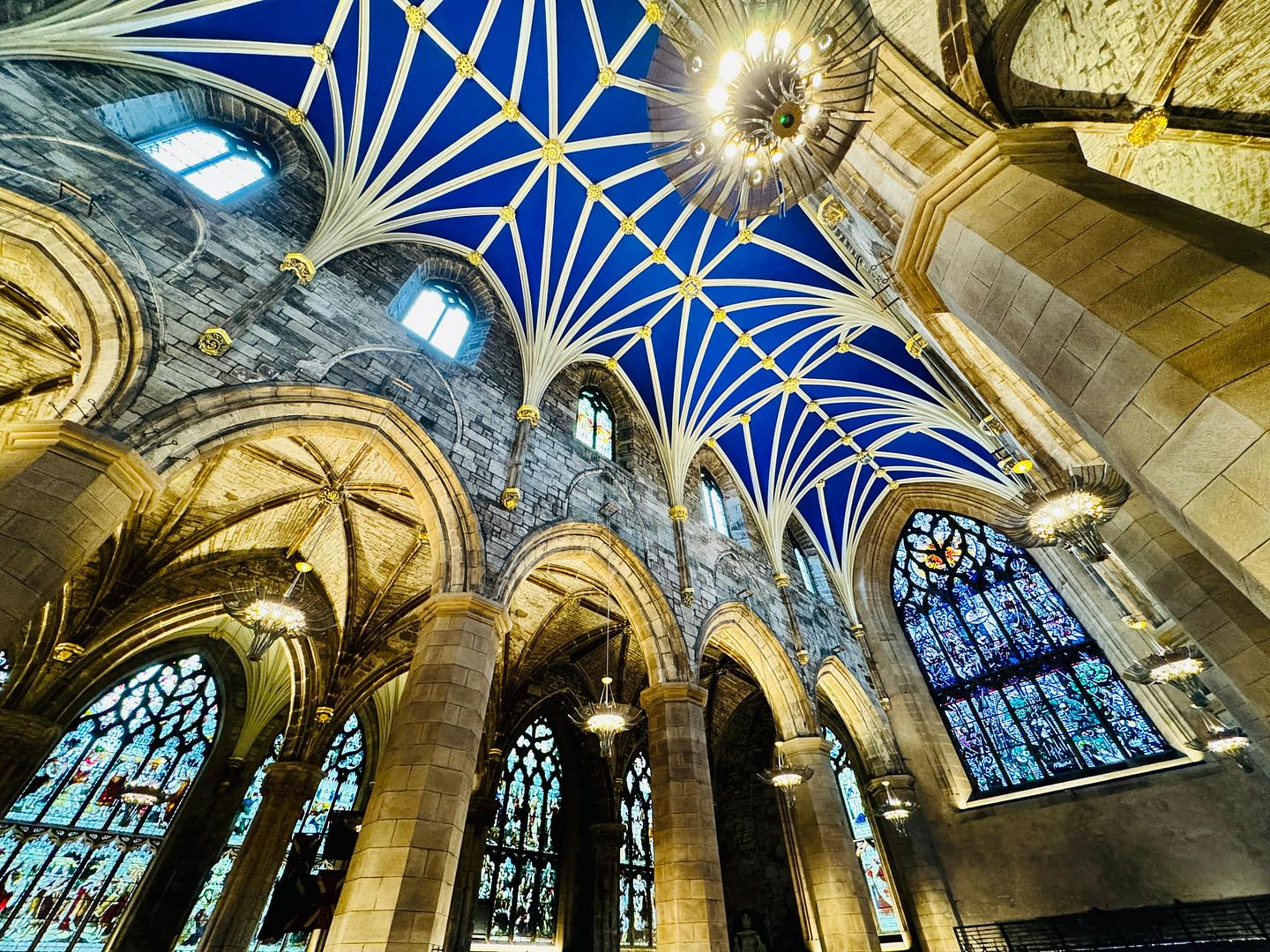
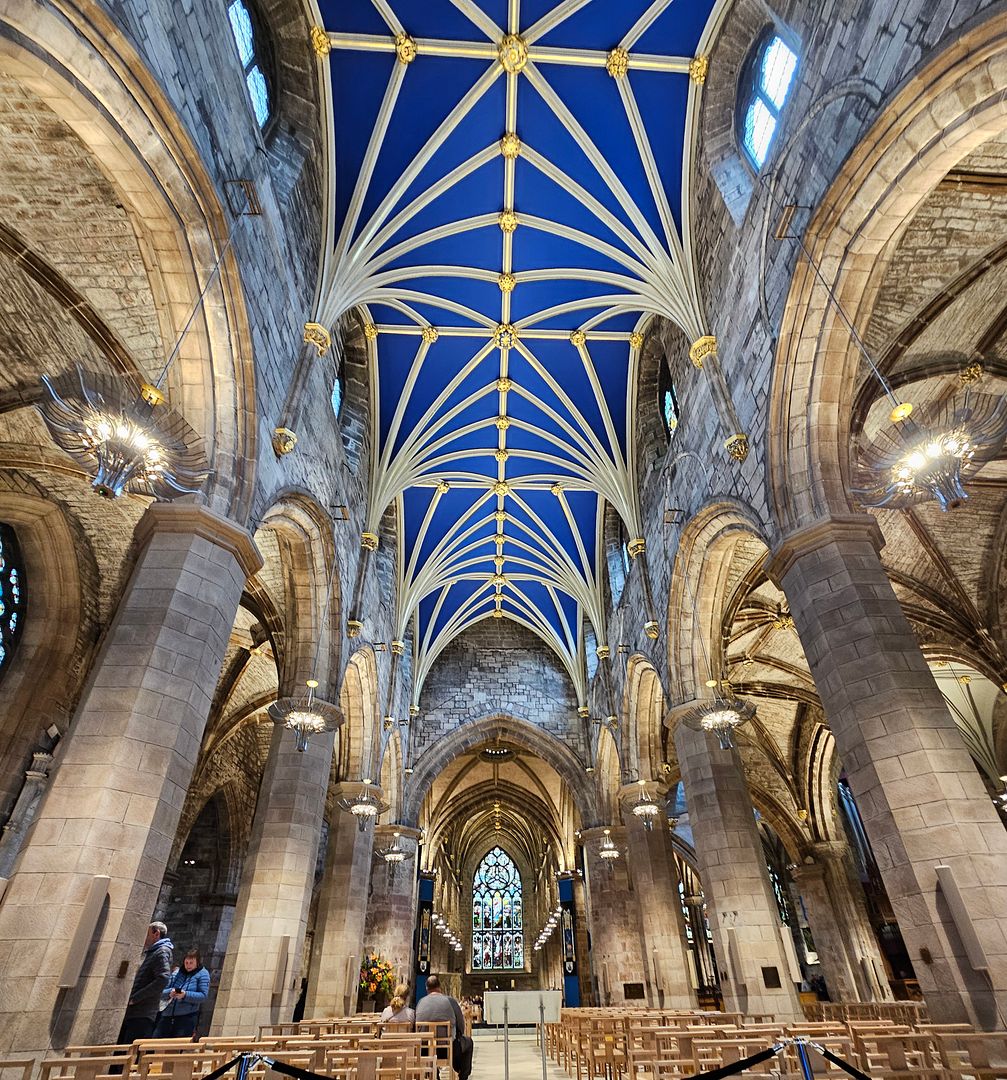
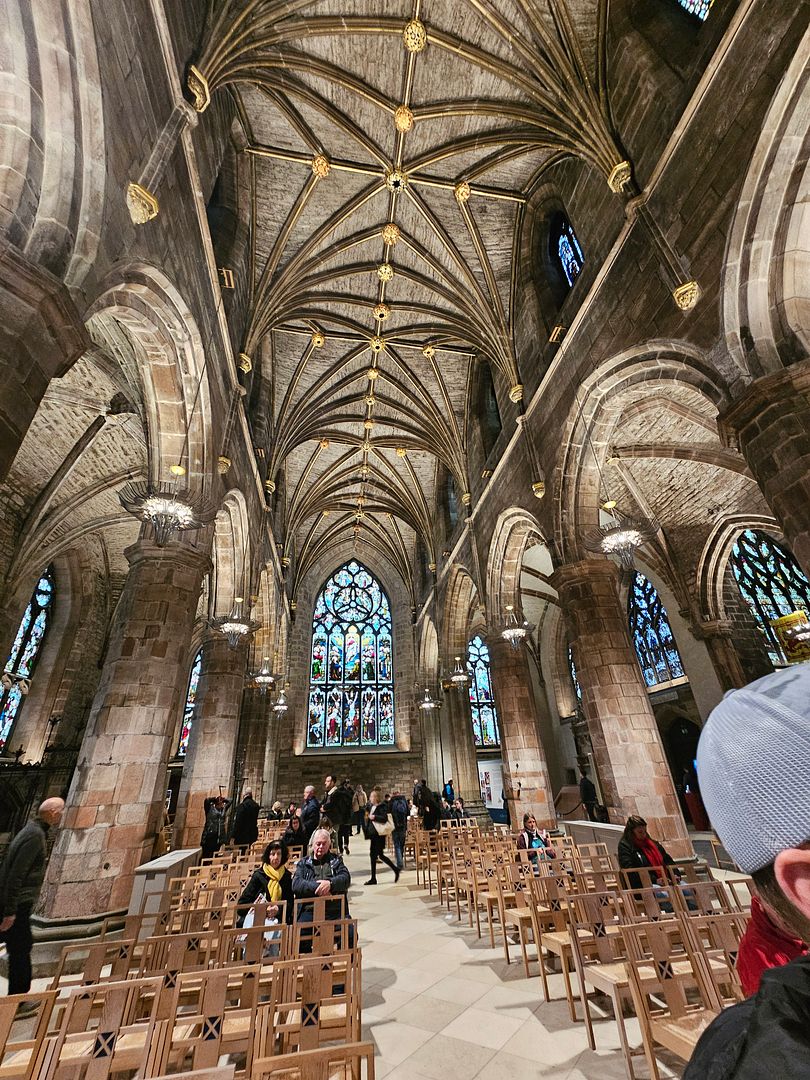
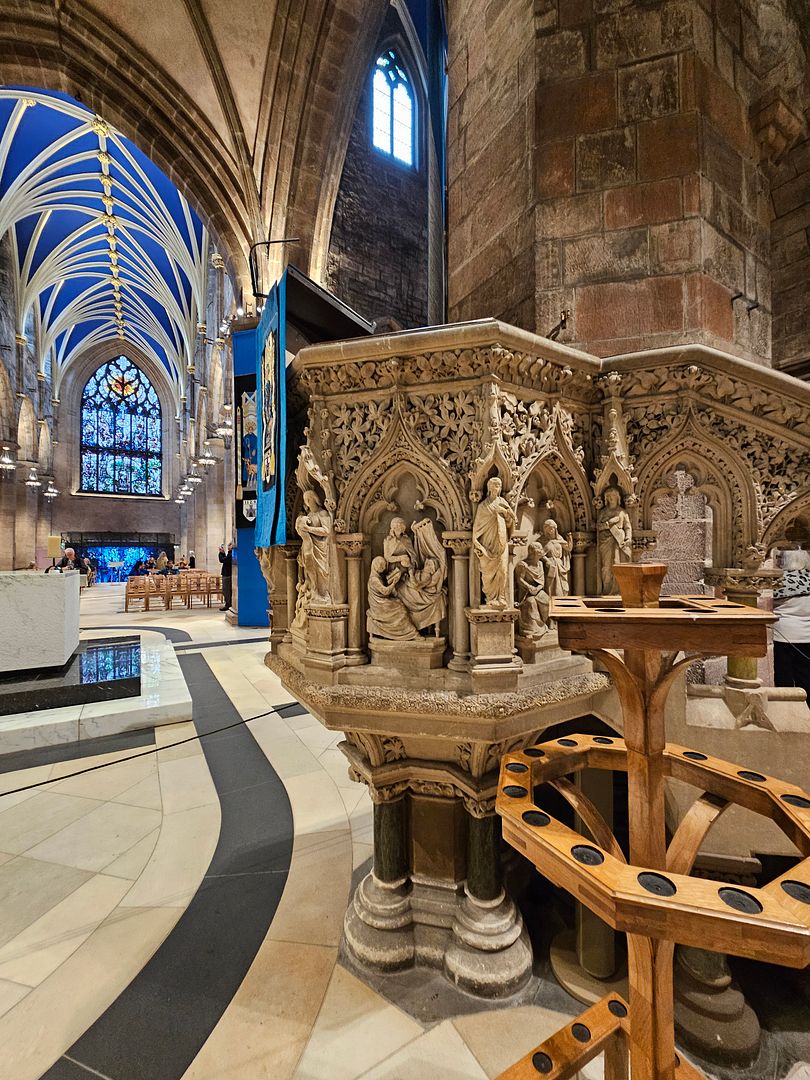
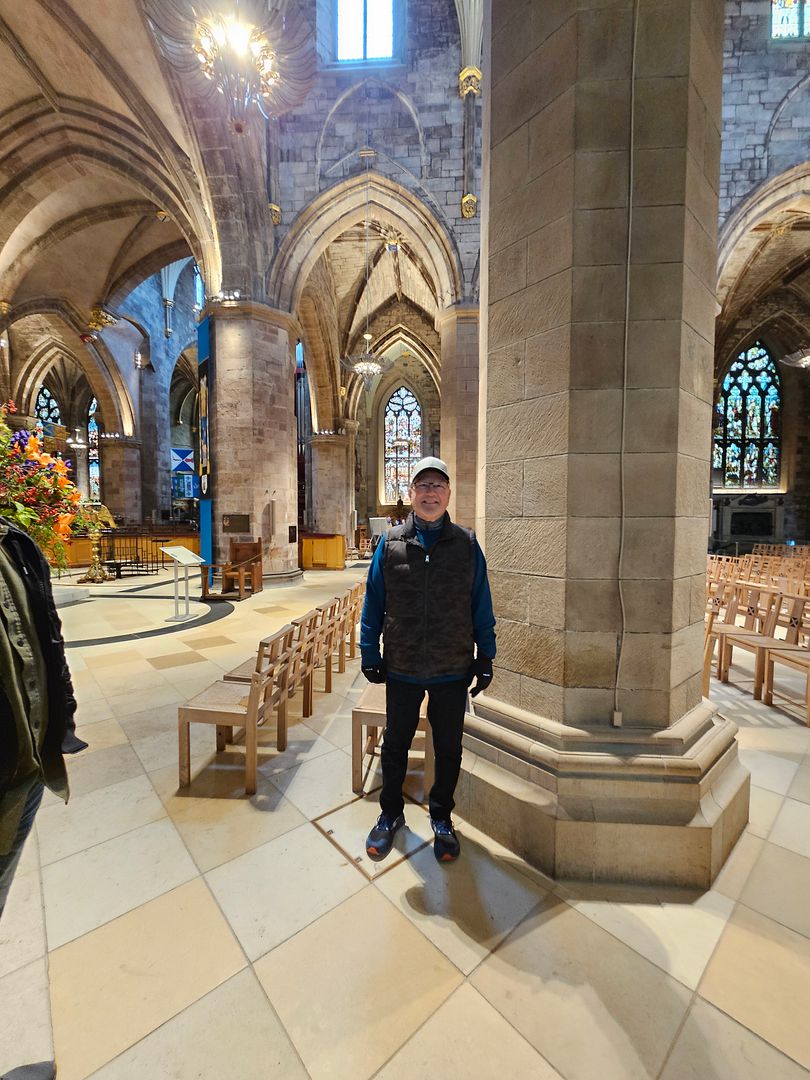
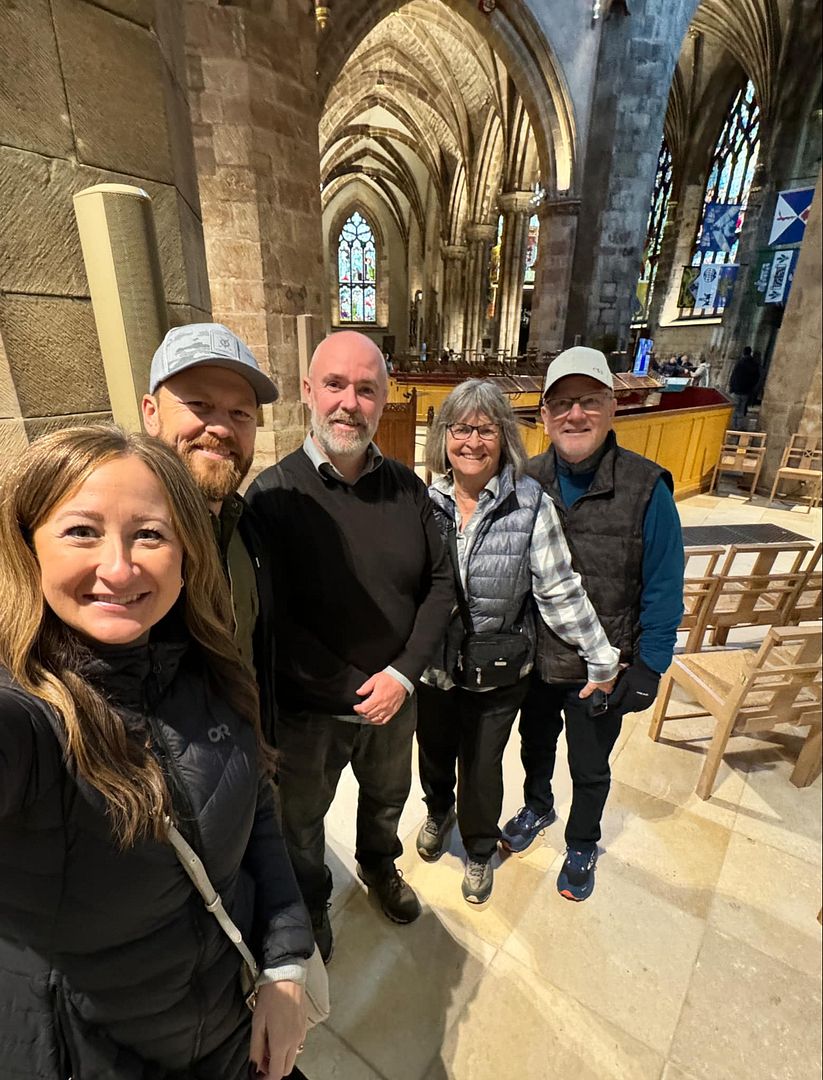
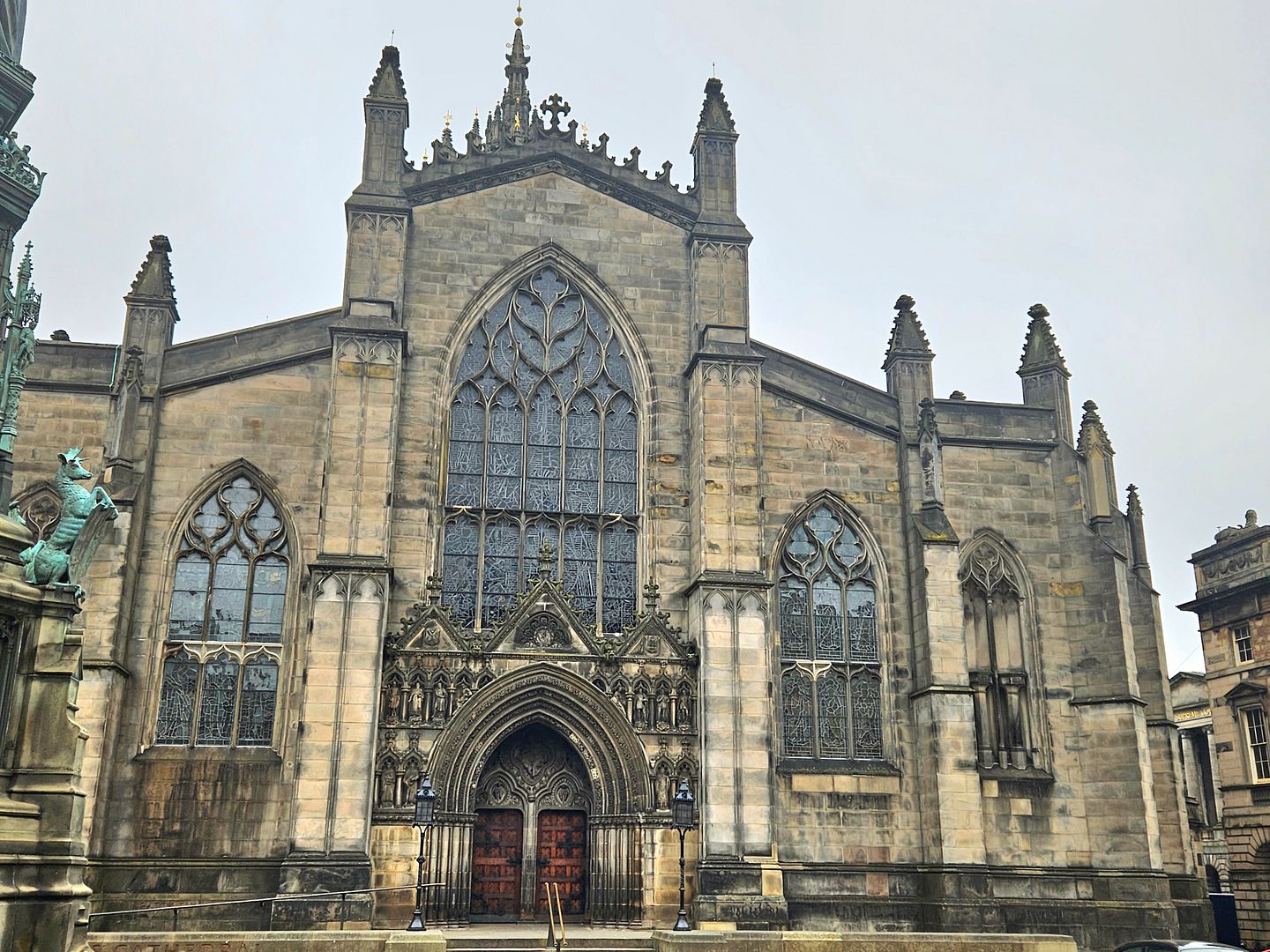
From Greyfriars Kirkyard we made our way back to St. Giles Cathedral which would be the end of our tour. By this time the cathedral was full of fellow tourists from around the world.

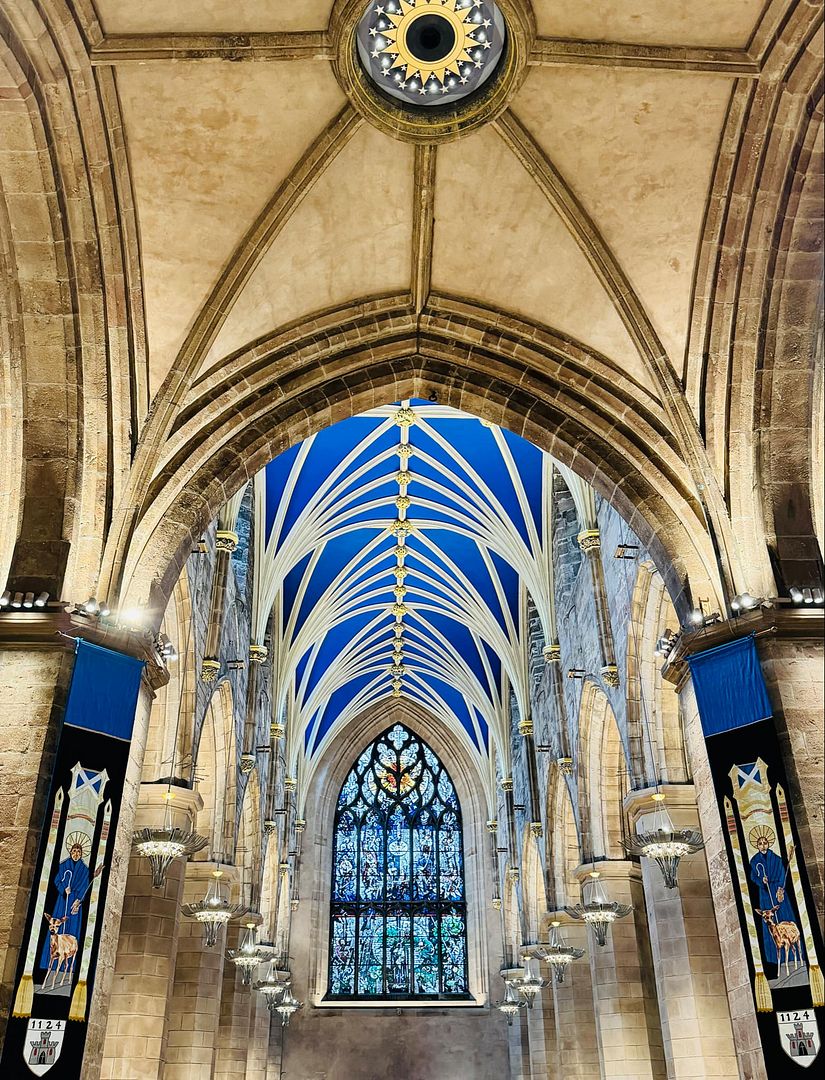
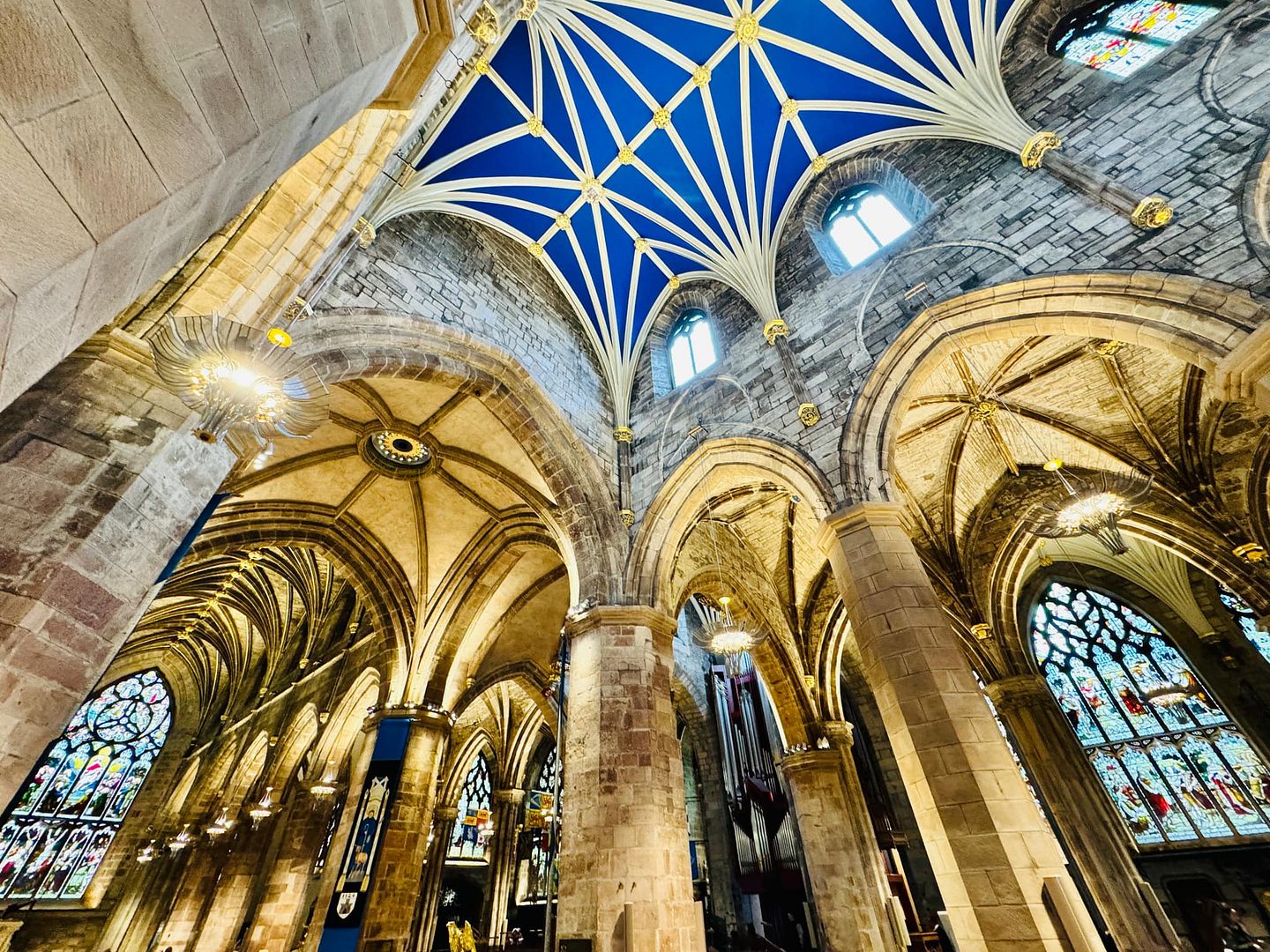
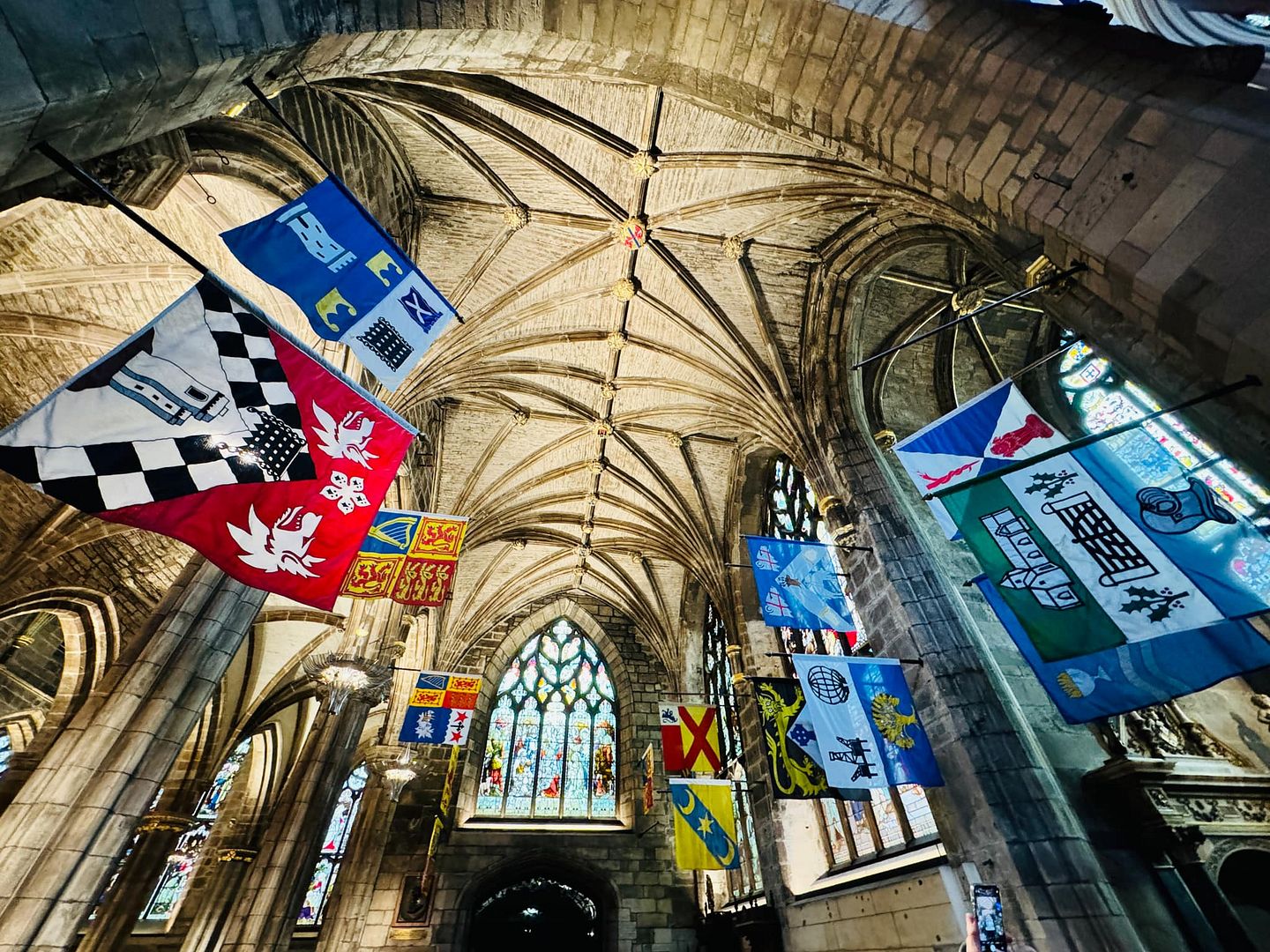
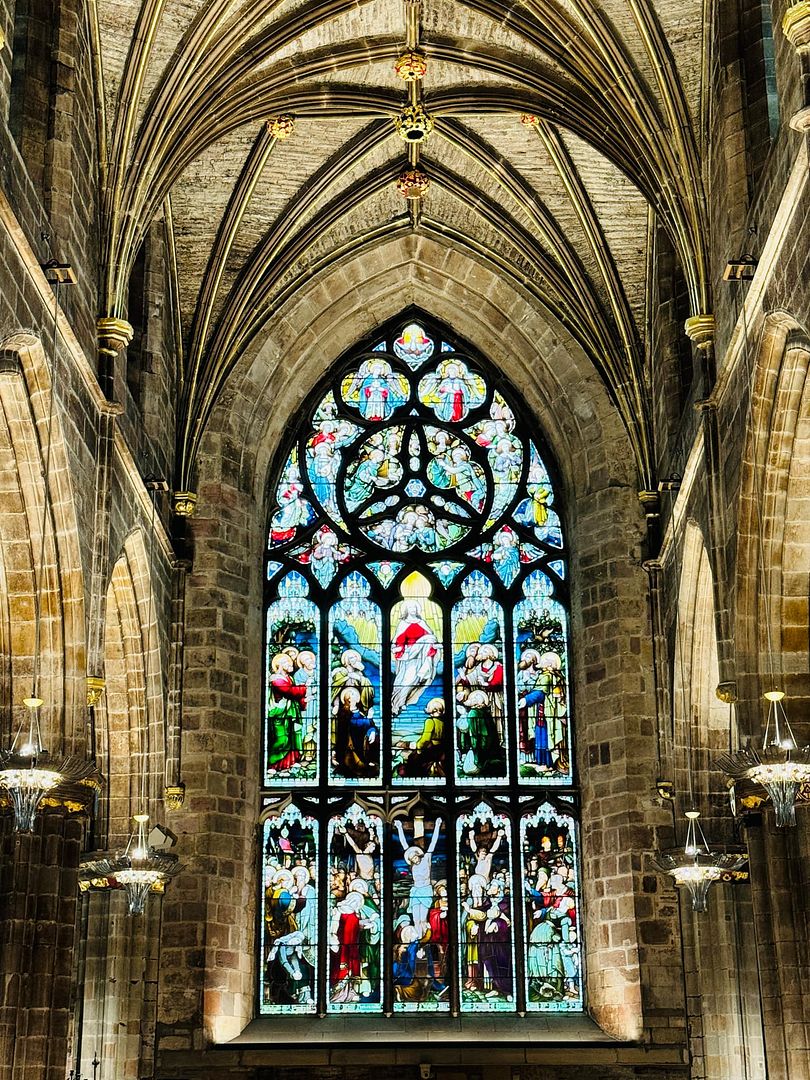
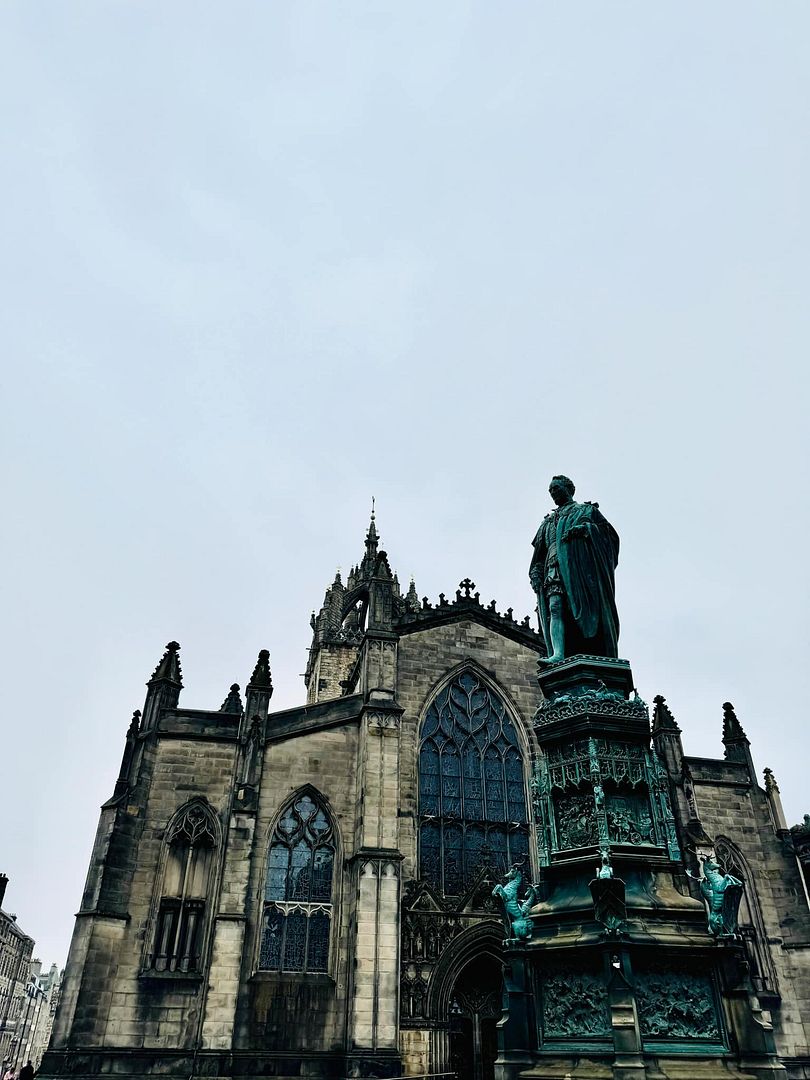
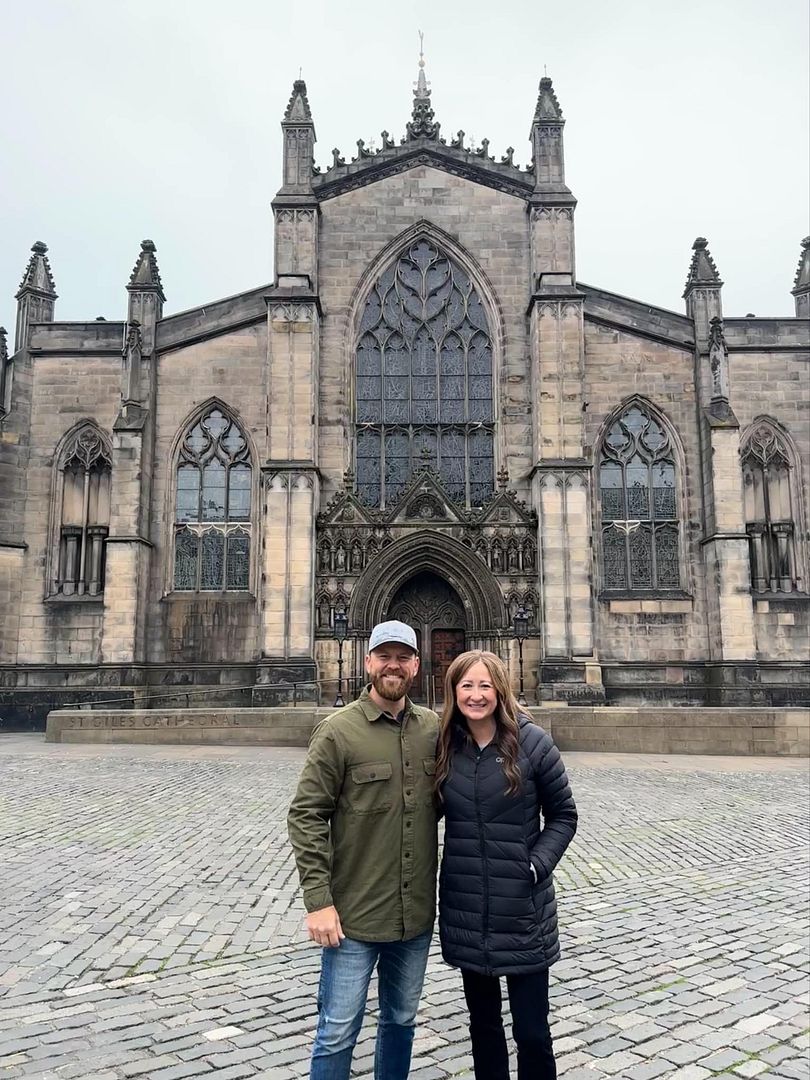
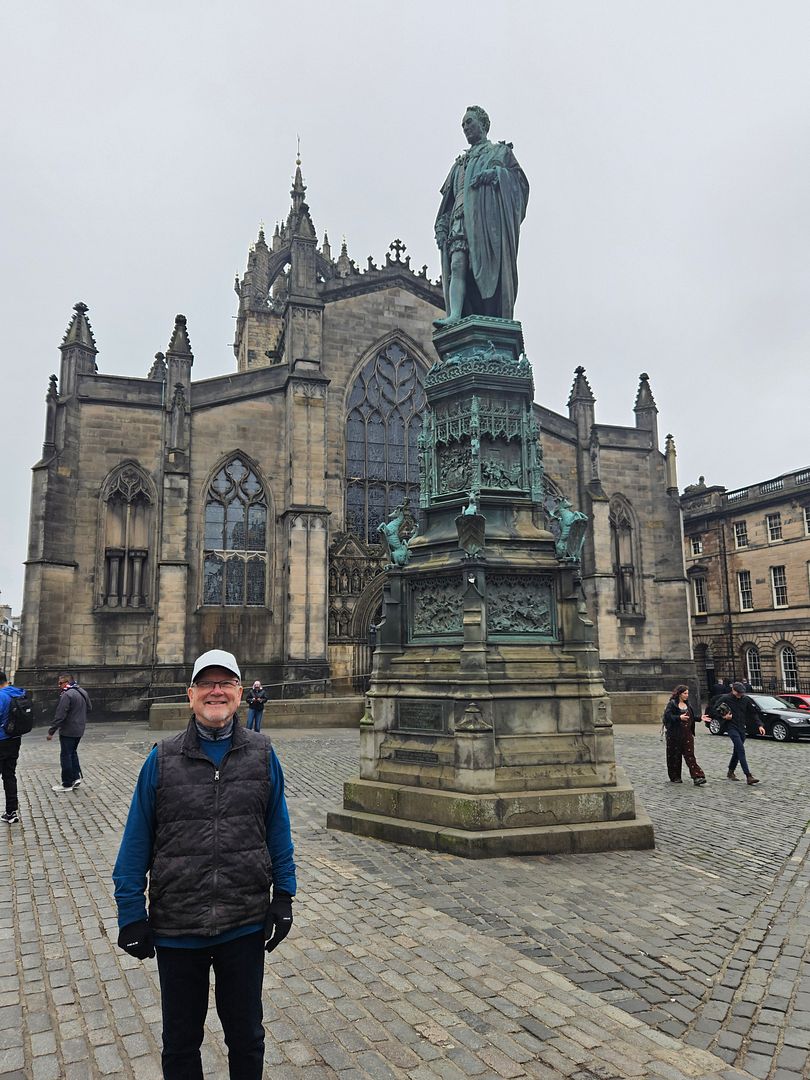
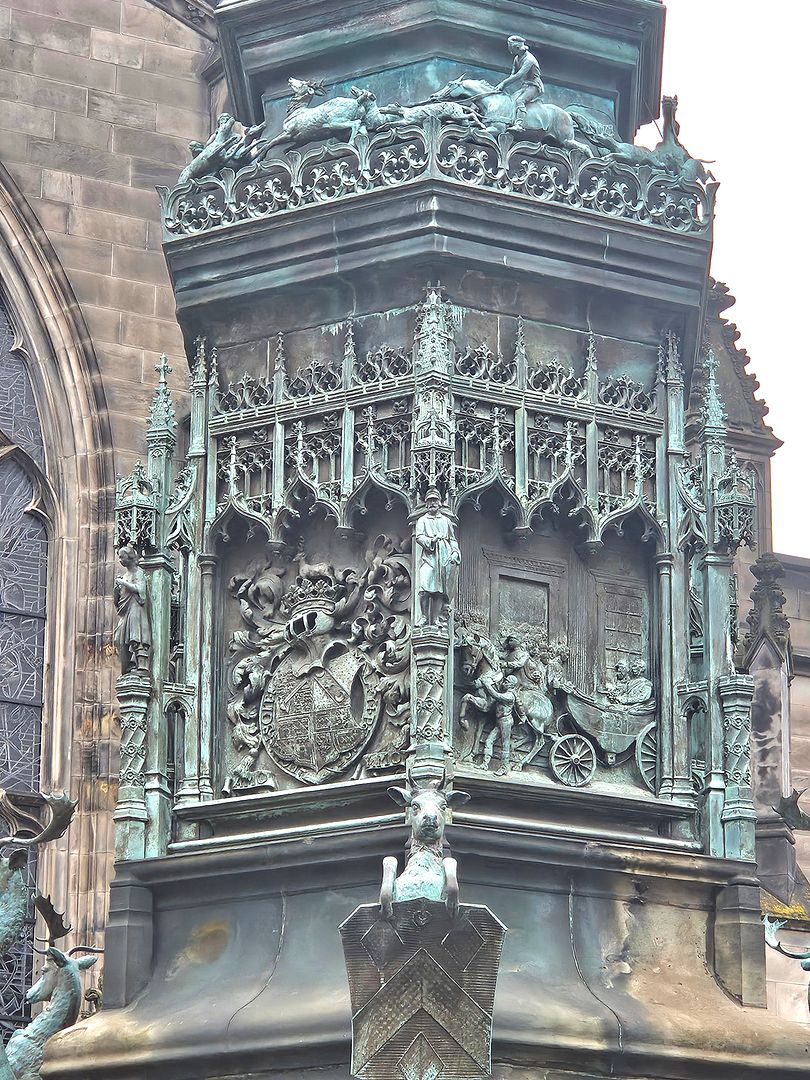
St Giles’ Cathedral, founded in 1124 by King David I, has been a working church for almost 900 years. A backdrop to Scotland’s turbulent religious history, it has seen the seeds of civil war sown and been John Knox’s parish church during the Reformation. It is still an important centre for civic services such as the Kirking of the Parliament and services for Most Ancient and Most Noble Order of the Thistle.

More history of St. Giles can be found here.

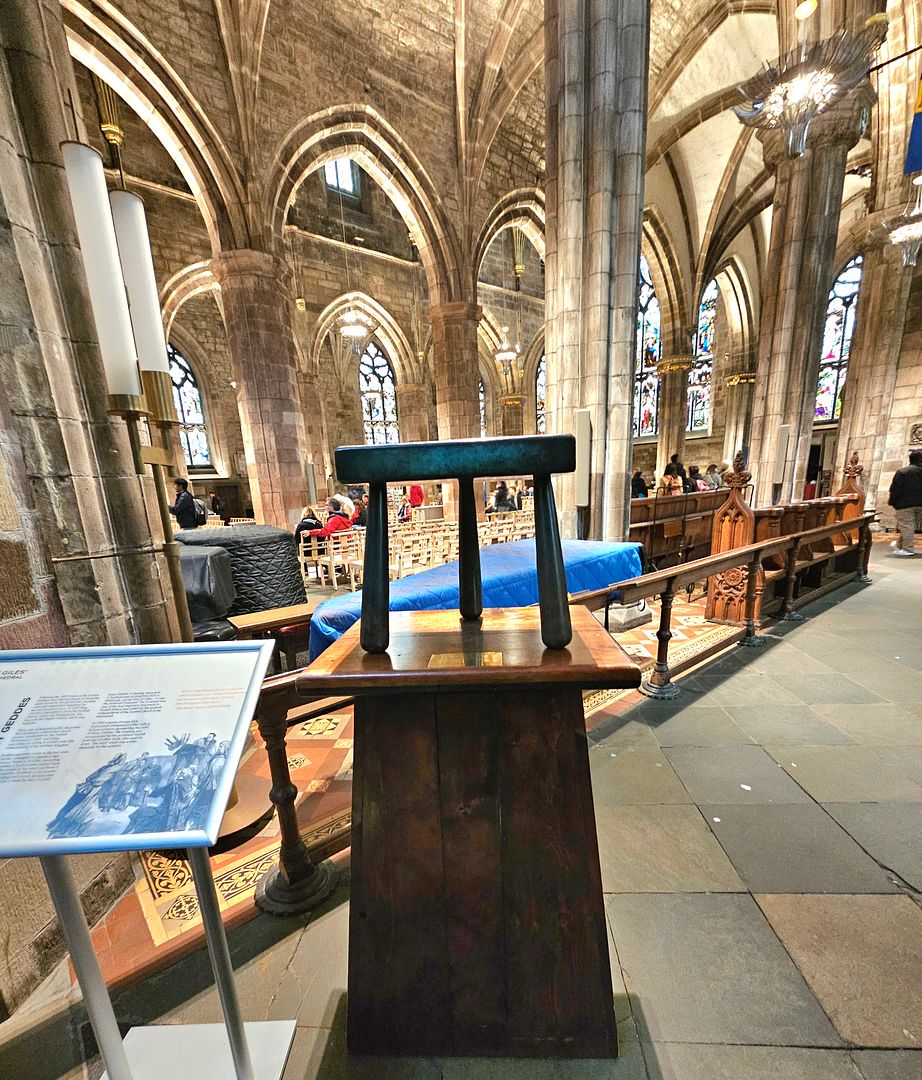
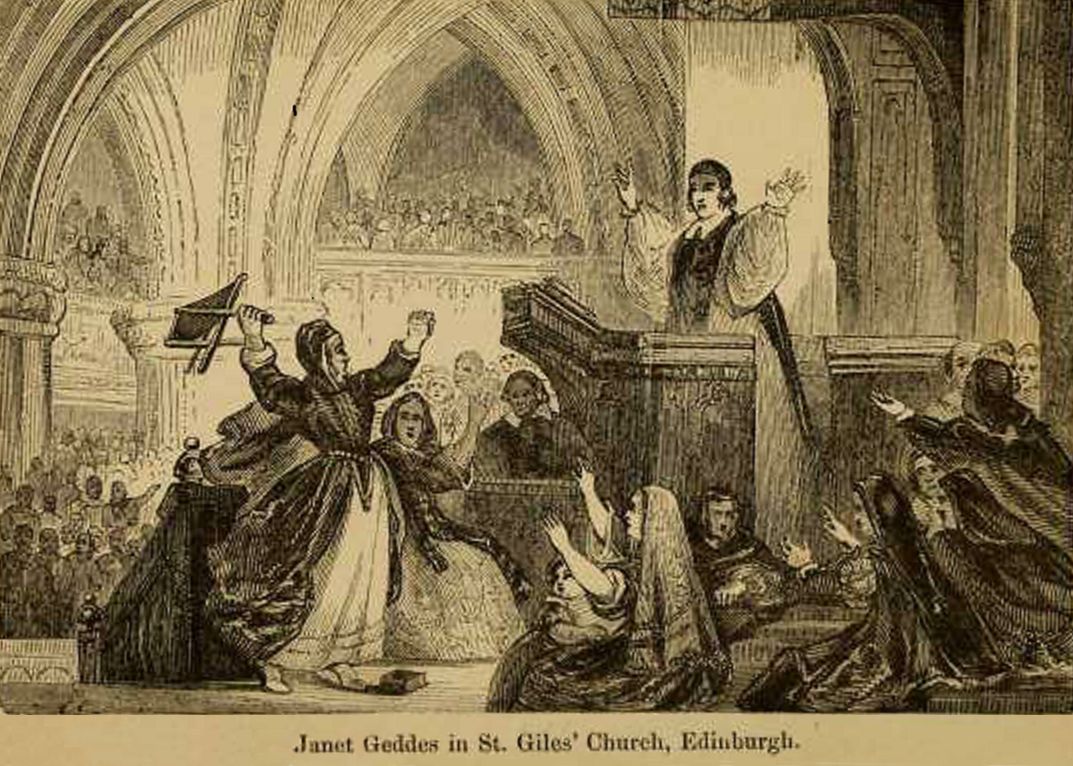
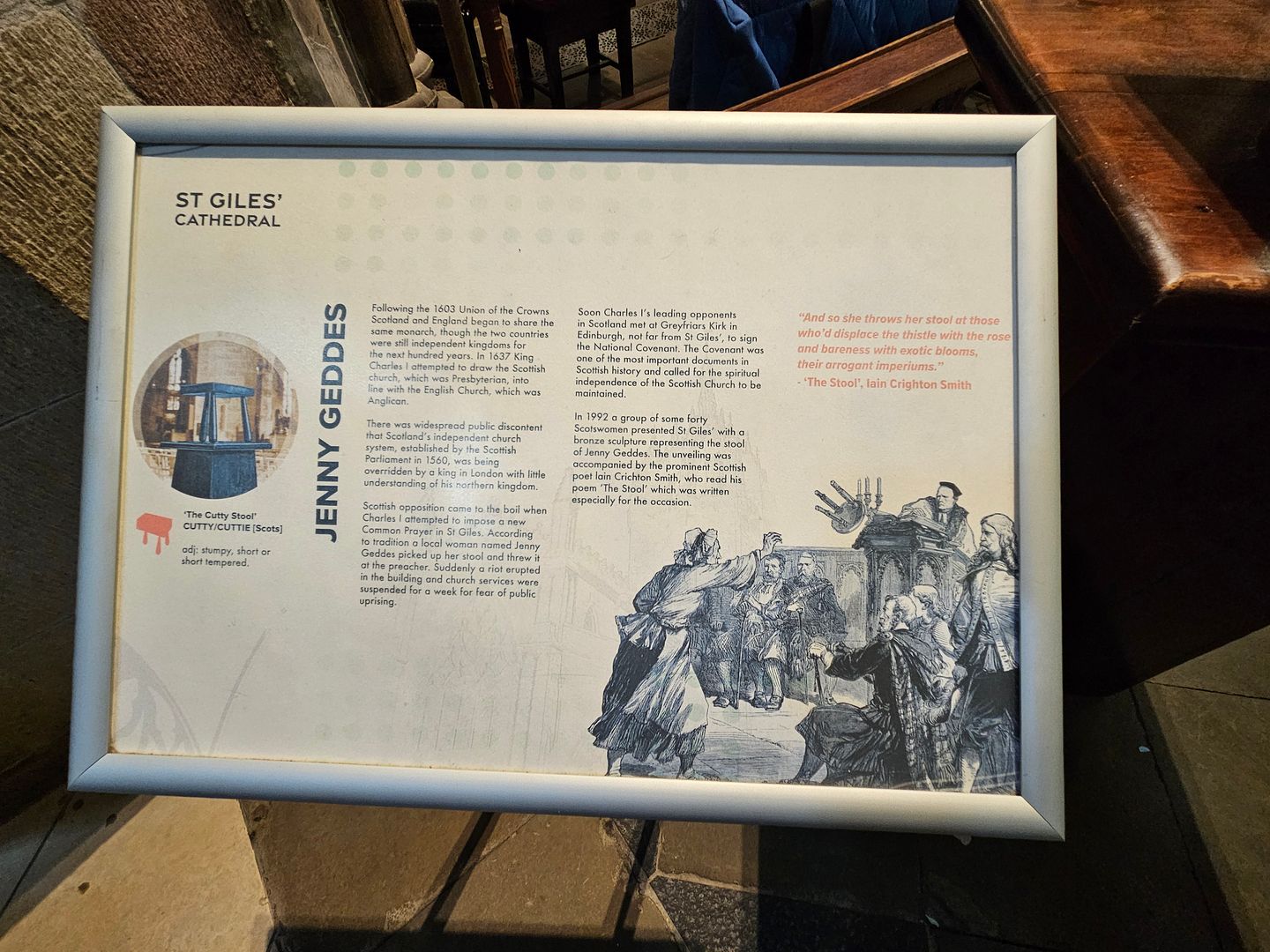
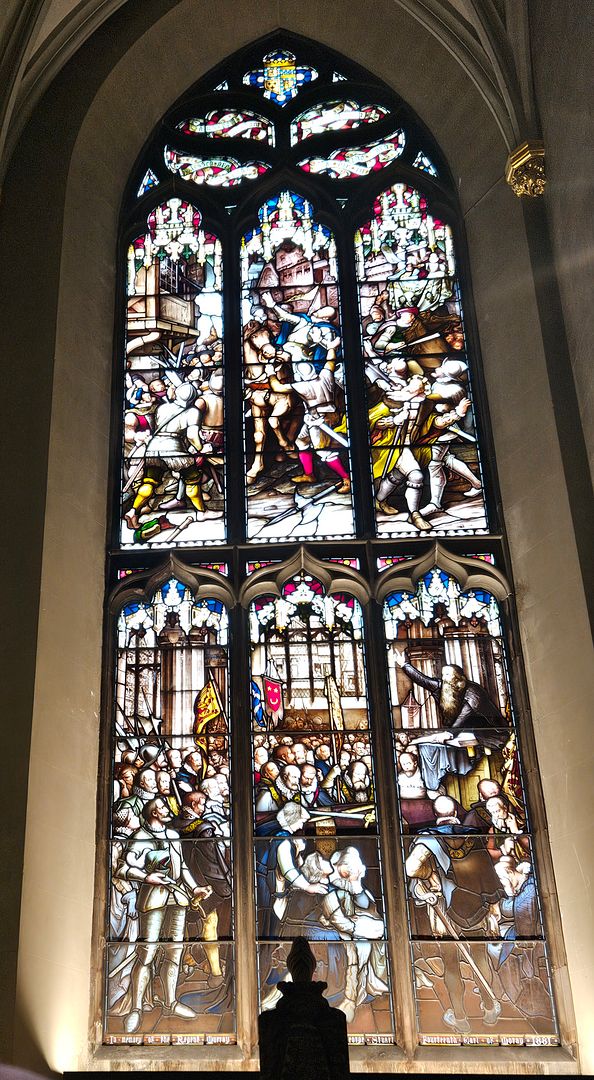
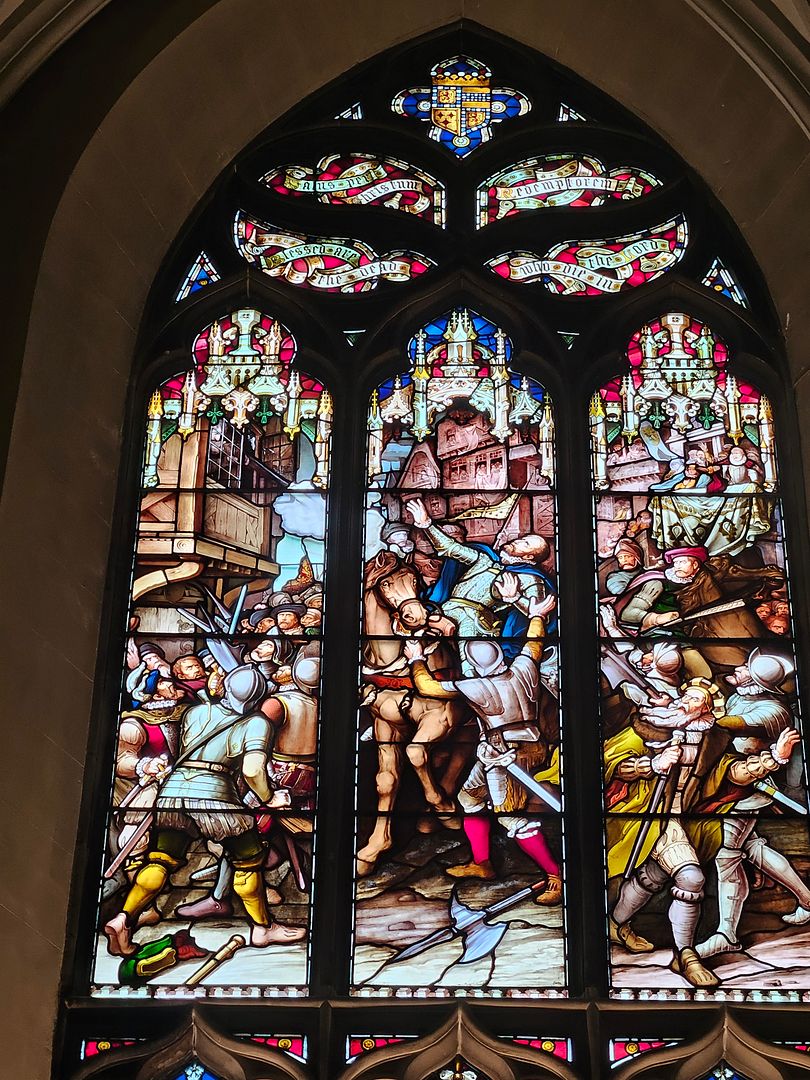
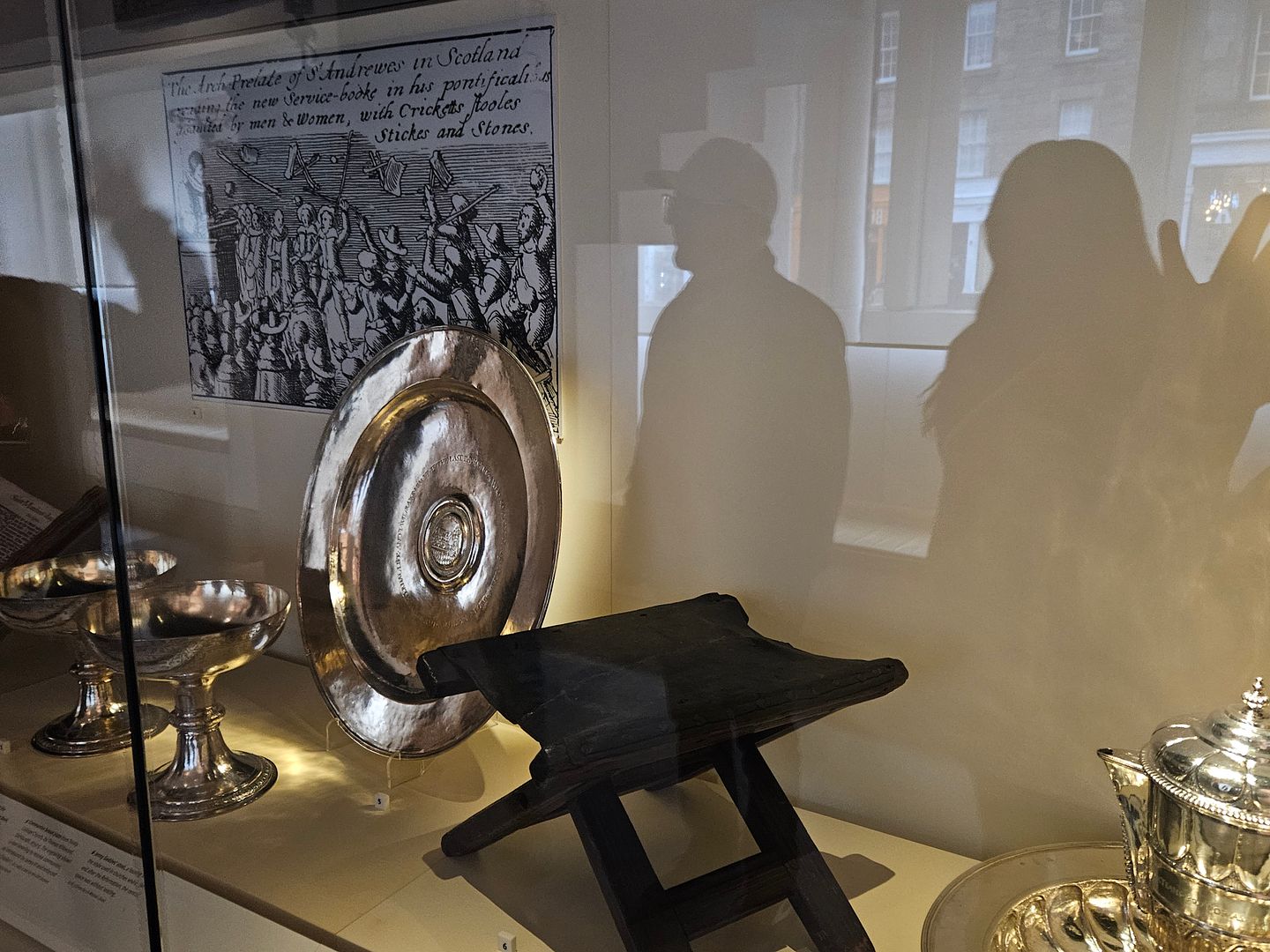
On 23 July, 1637 Dean Hannay rose to read the new liturgy in the High Church of Edinburgh, St. Giles. The liturgy had nineteen chapters within its forty-three pages “detailing how the church should be governed, from the King gaining his position from God, down to the renaming of ministers, kirk sessions, and presbyteries with terms taken from the Episcopal Church.” As the pastor began intoning from the prayer book, Jenny Geddes, allegedly a local street vendor, stood up and yelled, “Wha dur say mass in my lug!” (How dare you say the Mass in my ear) and flung her three-legged stool at the minister. Pandemonium broke out as others followed suit and the prelatical entourage fled the scene out a back door. The town guard had to rescue the bishop from the rioters. Similar scenes were enacted in other Scottish towns where the liturgy was read.

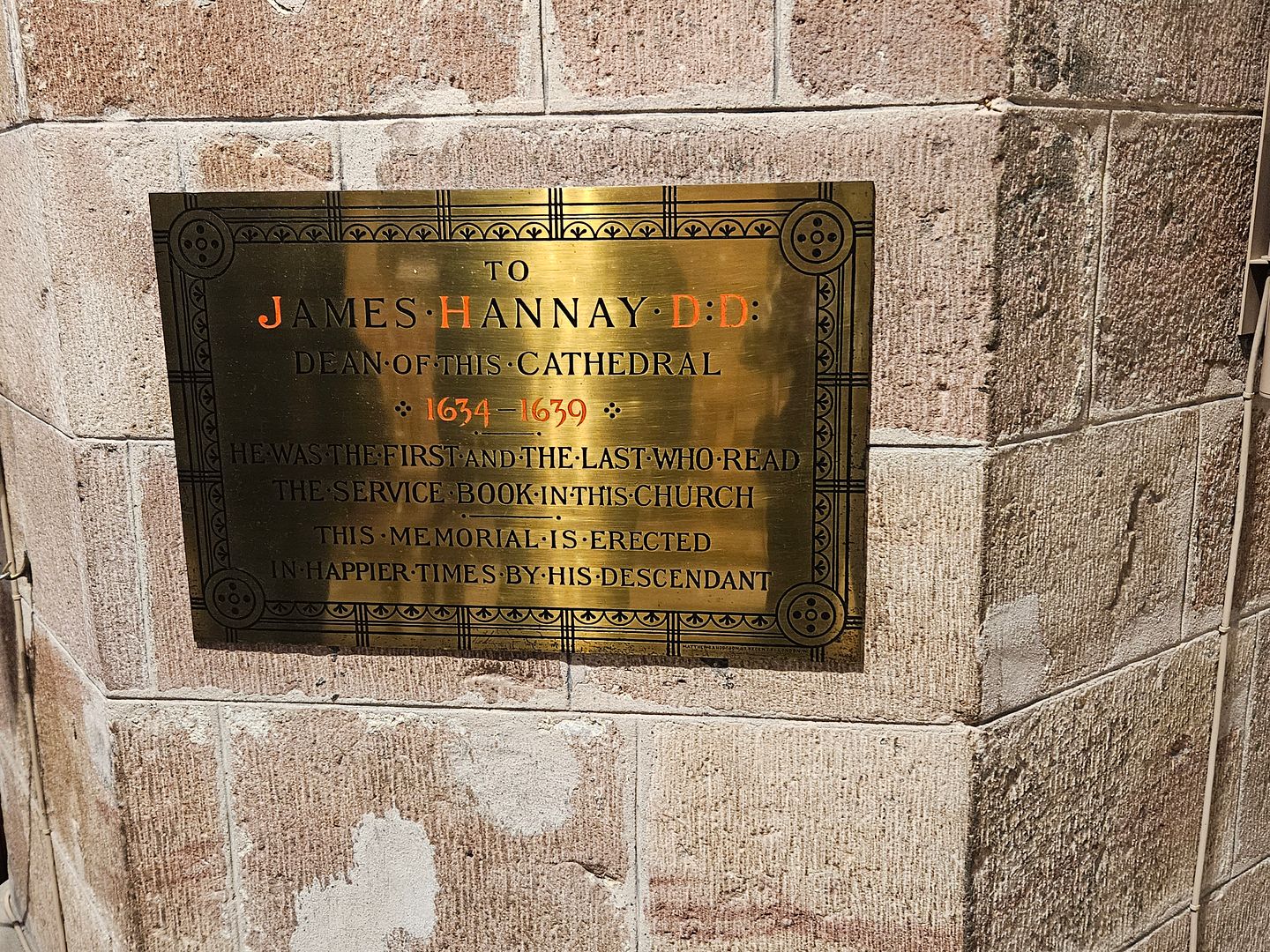
This plaque made me chuckle. James Hannay D.D. the Dean of this Cathedral, 1634-1639, He was the first and the last who read the service book in this church. This memorial is erected in happier times by his descendants.

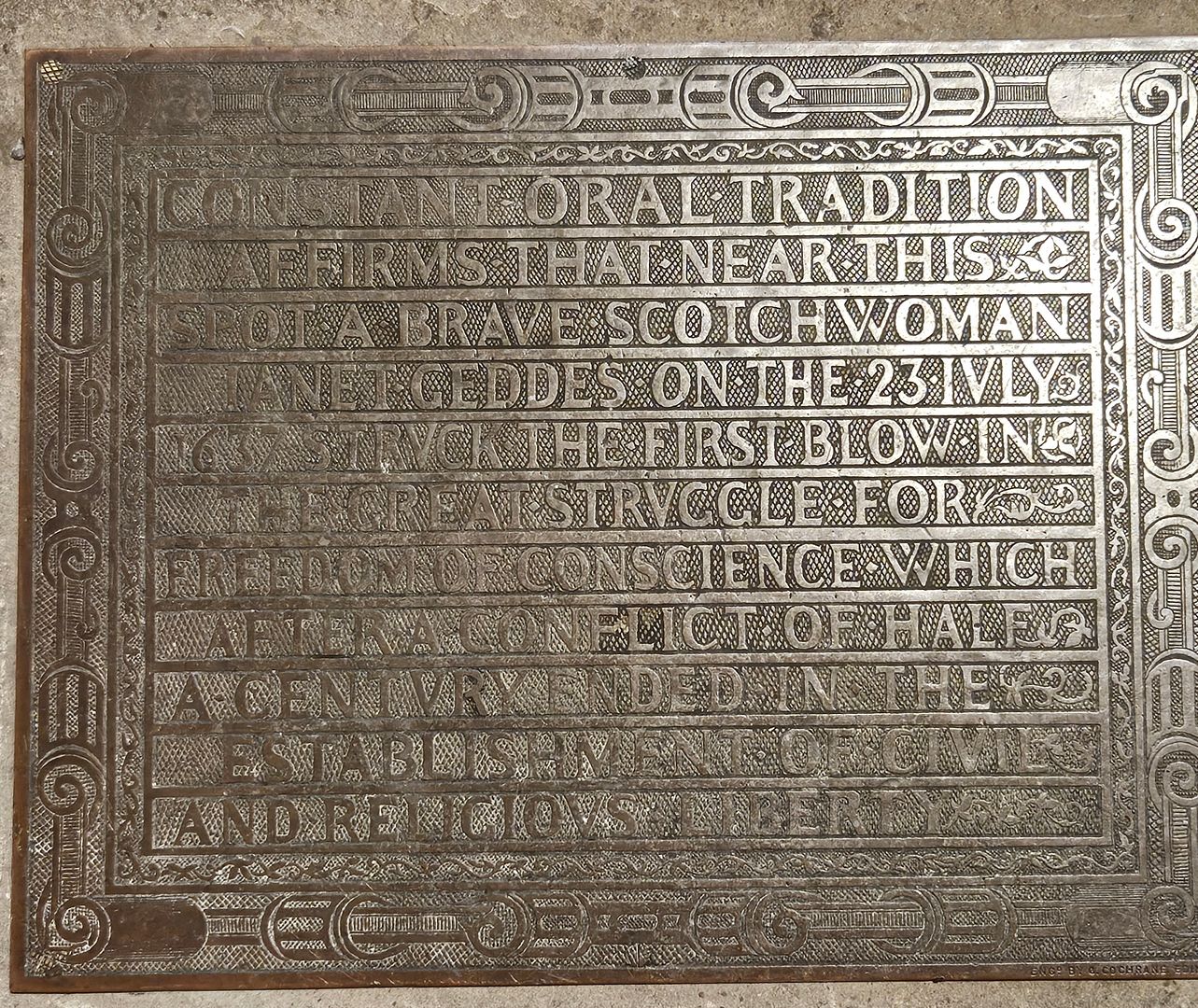
“Constant oral tradition affirms that near this spot a brave Scotch woman Janet Geddes on the 23 July 1637 struck the first blow in the great struggle for freedom of conscience which after a conflict of half a century ended in the establishment of civil and religious liberty.”

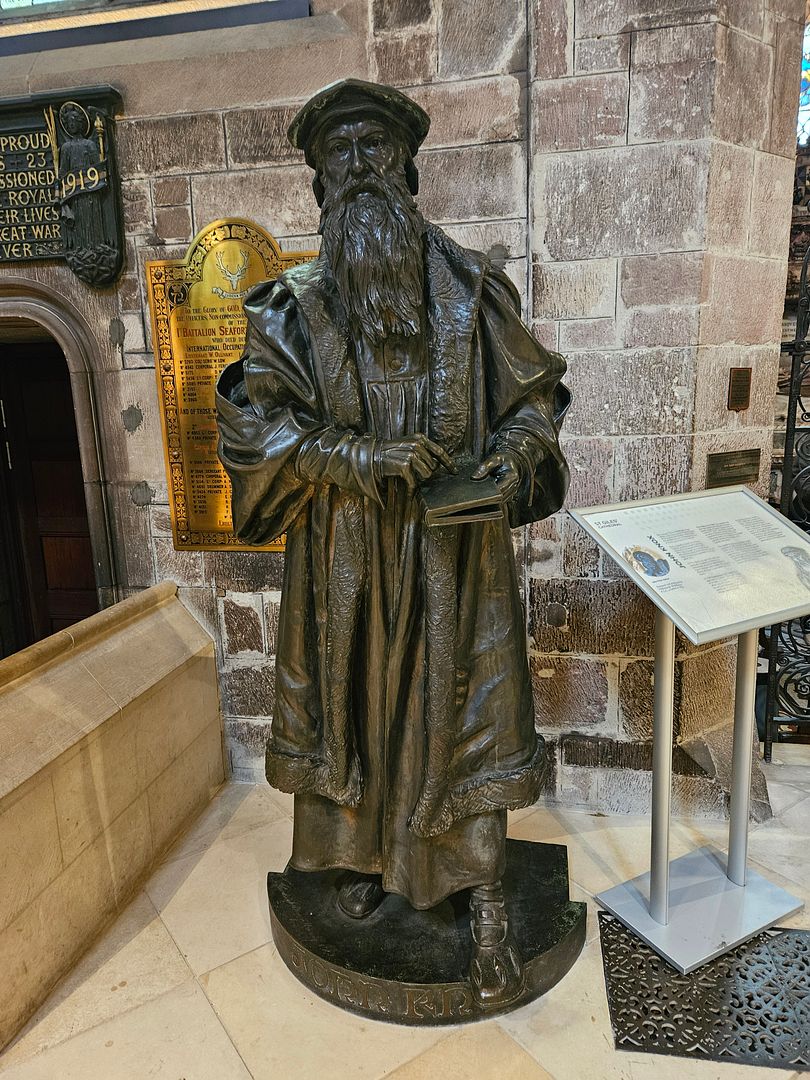
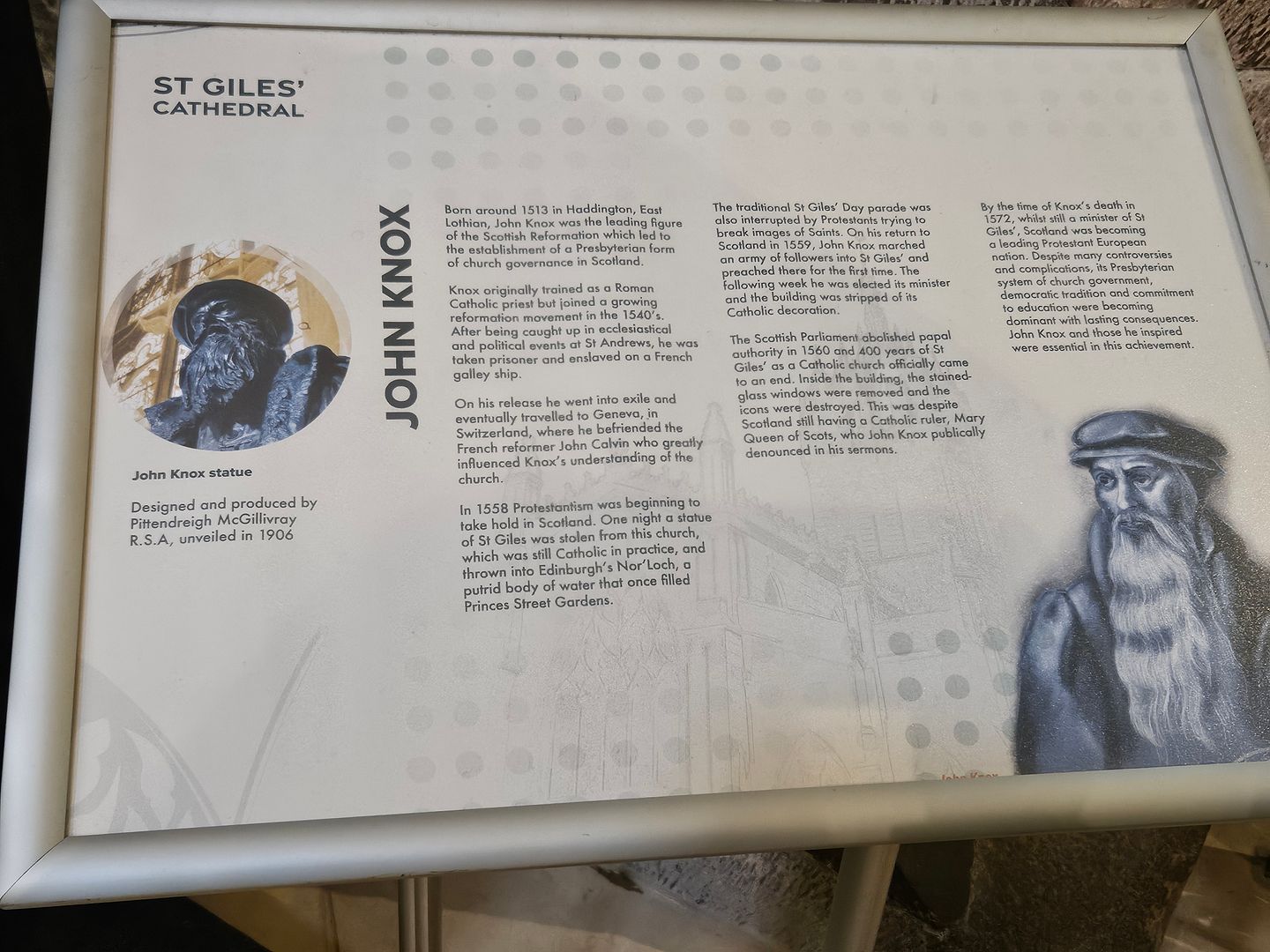
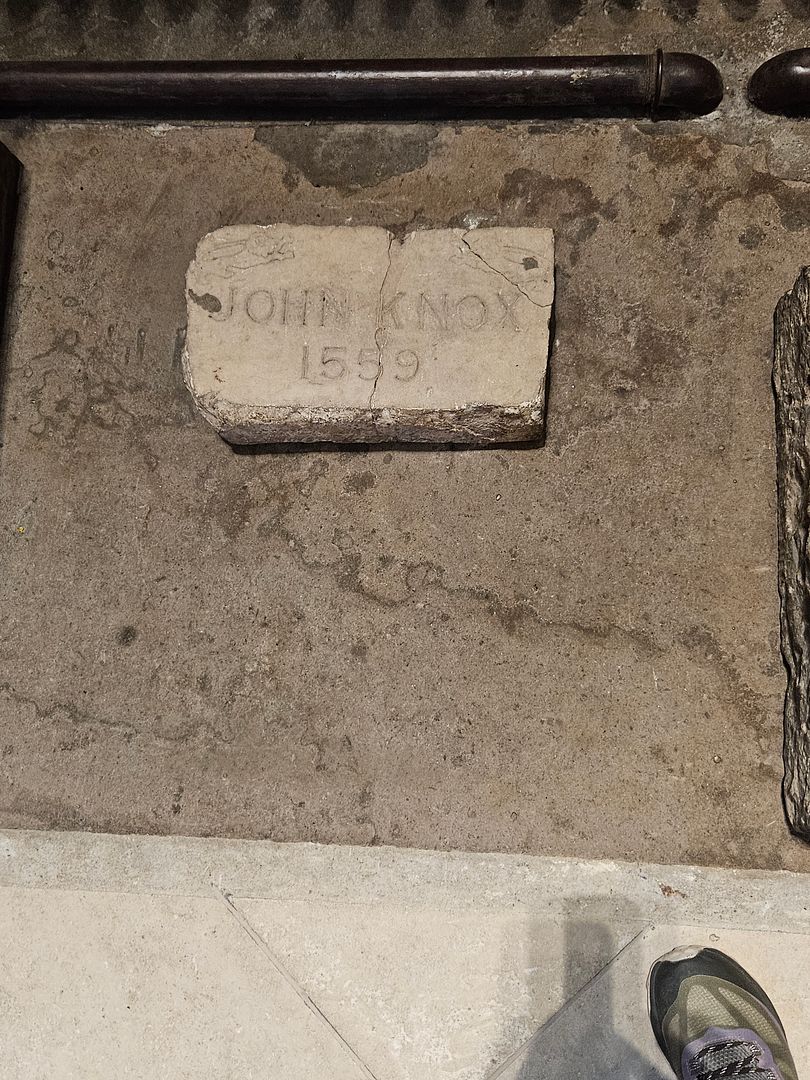
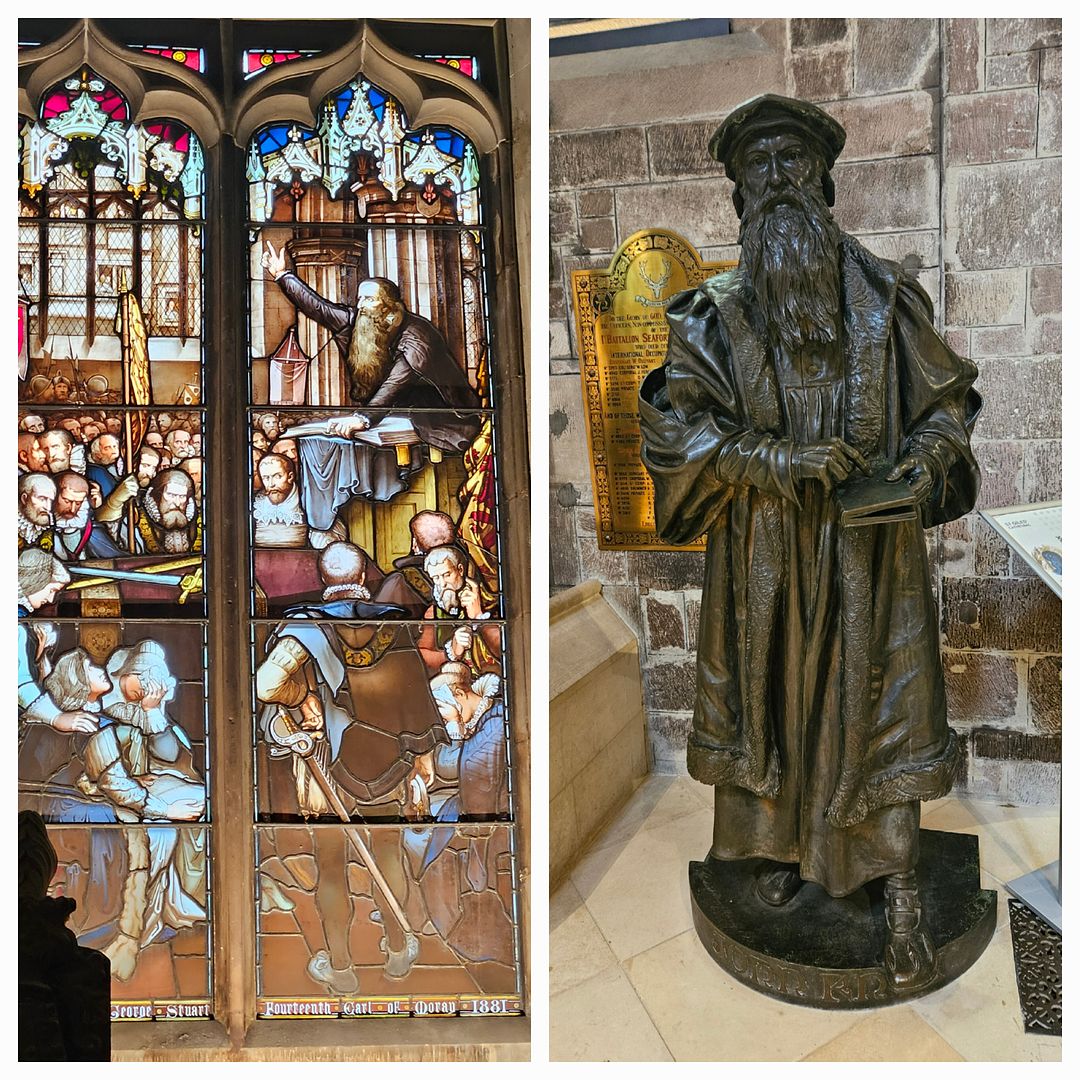
The famous Scottish Reformer, John Knox was born near Edinburgh in 1505. Knox’s writings and his determination to fight for Scotland to be Protestant saw the Scottish nation and its identity changed forever…

John Knox saw how important it was for the church to do what the Bible said, and not just what they thought was right. He wasn’t afraid to stand up to anyone, even kings and queens, for what he knew was right. His preaching was used by God to transform the whole of Scotland.

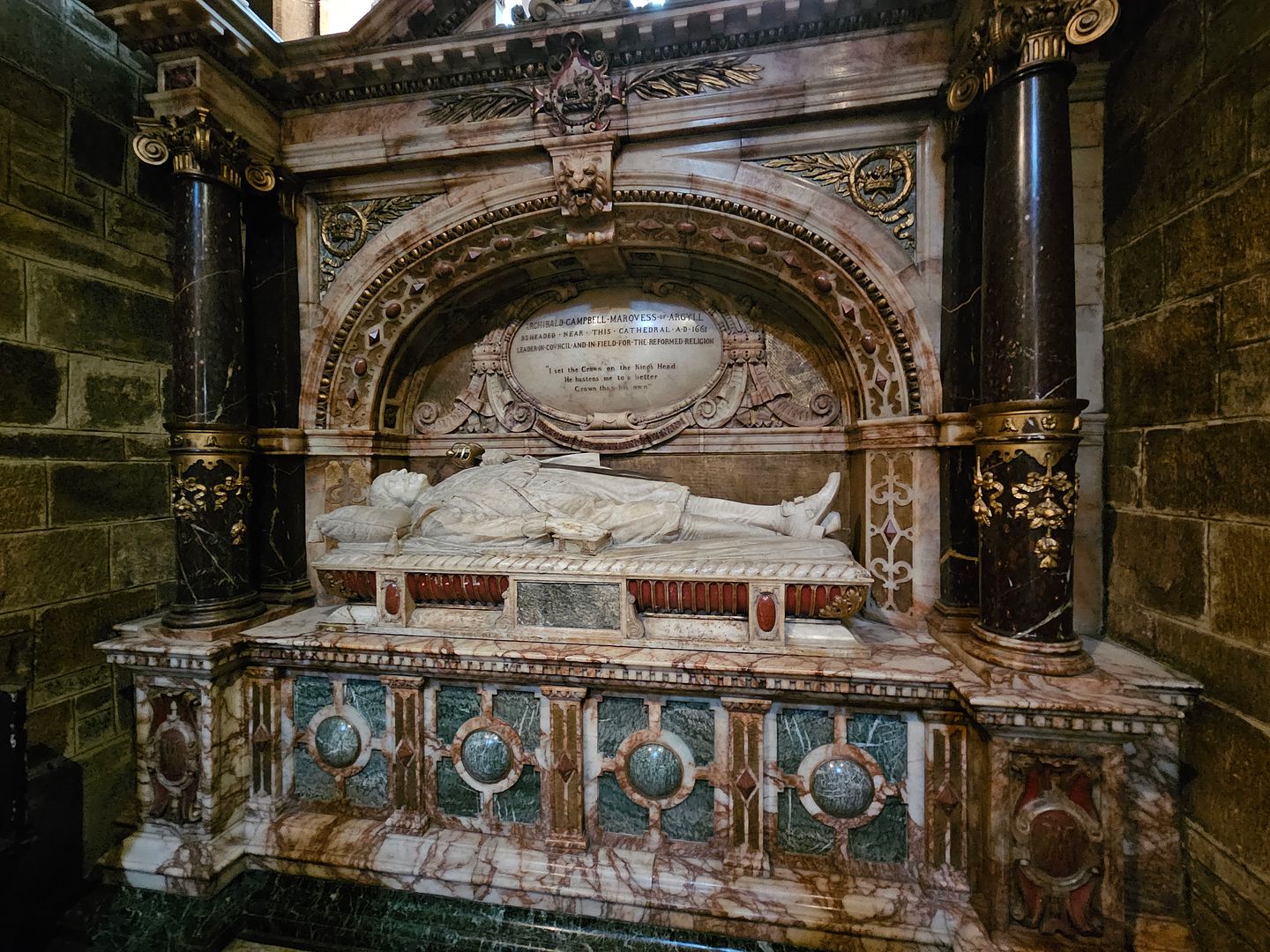
Archibald Campbell, Marquis of Argyll ~ Beheaded near this cathedral- A-D-1661

Leader in council and in field for the Reformed Religion

I had the honour to set the crown on the King’s head, and now he hastens me to a better Crown than his own.

I found some of his history at Christian Heritage Edinburgh site.

With all the niceties settled at the coronation, it was time for King Charles II to reveal his true nature. One of the few nobles to oppose the king’s decree and stand faithfully for the Covenants was Archibald Campbell, the first Marquis of Argyll. He travelled from Scotland to London to congratulate Charles II, arriving there on 8 July 1660. He never got to see the king however, for he was straightaway arrested and thrown into the Tower of London on a charge of treason and false accusation that he was one of Cromwell’s conspirators behind the execution of Charles I. After languishing there for five months, he was sent to Edinburgh castle and was sentenced to death. The marquis was beheaded at the Mercat cross next to St Giles on 27 May 1661, being the first of many of the Covenanters who followed him as martyrs.

Before he was executed, he is cited as saying, ‘I had the honour to set the crown on the King’s head, and now he hastens me to a better Crown than his own.’ Back in 1651 he had crowned Charles II as King of Scotland at Scone after this prince had lied to God and man, swearing under oath that he would support and defend the Presbyterian Church and the Covenants. The marquis is also said to have stooped and kissed the guillotine called the Maiden, and quipped, ‘That is the sweetest maiden I have ever kissed!’ He welcomed the thought of leaving this corrupt world and joining his Saviour in heaven.

Our son Josh left this review of our tour.

“Jimmy was an incredible wealth of knowledge!!! This walking tour in Edinburgh and the history and stories he told, tied our whole 12 day Scotland trip together! We visited different cities, castles, monuments, grave sites and memorials all over the country and this was the absolute capstone experience of our trip! My faith was deepened hearing stories of these martyrs and how they died trusting and following their Saviour~!”

Scotland Travel Journal ~Edinburgh Reformation Tour 2

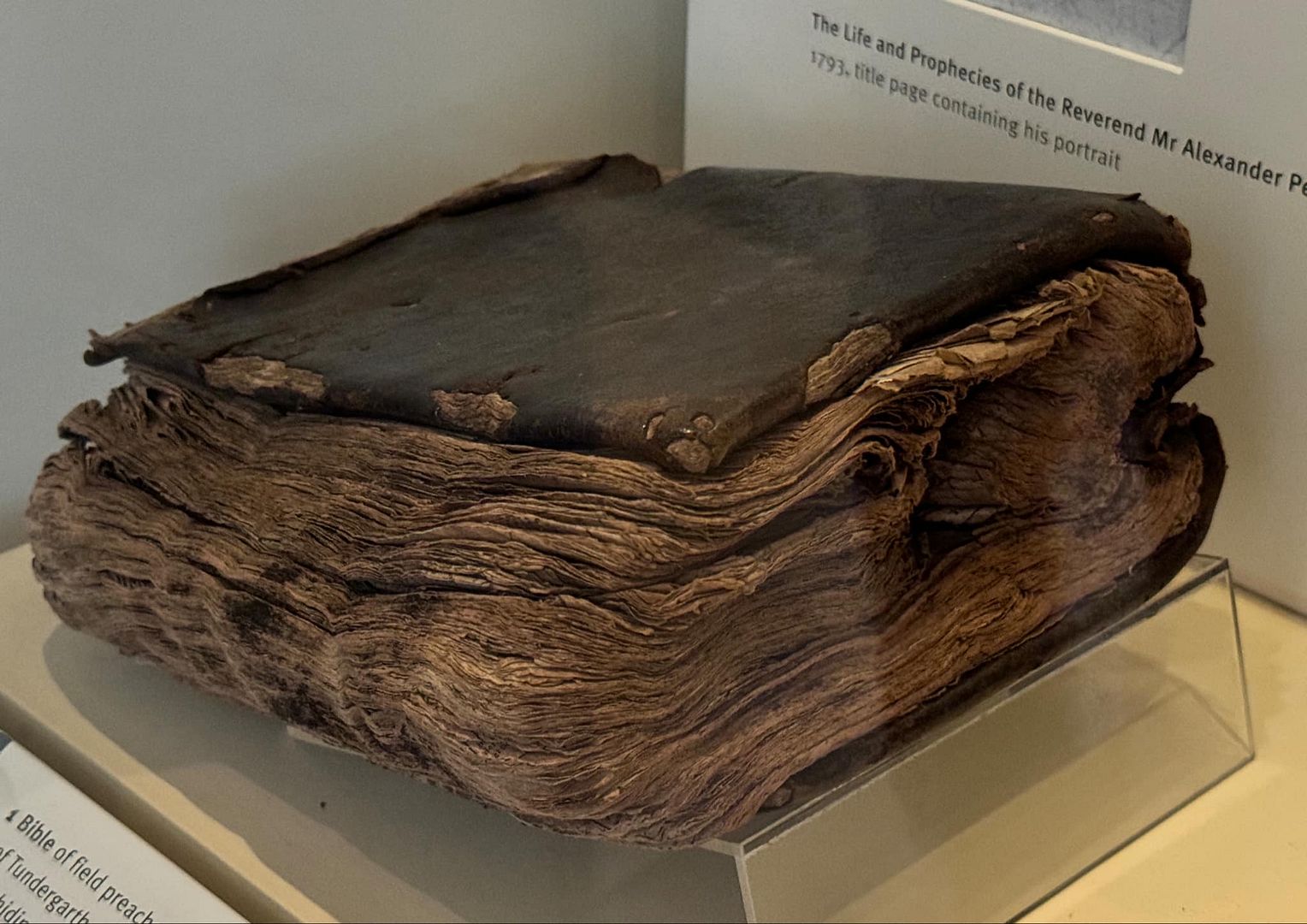
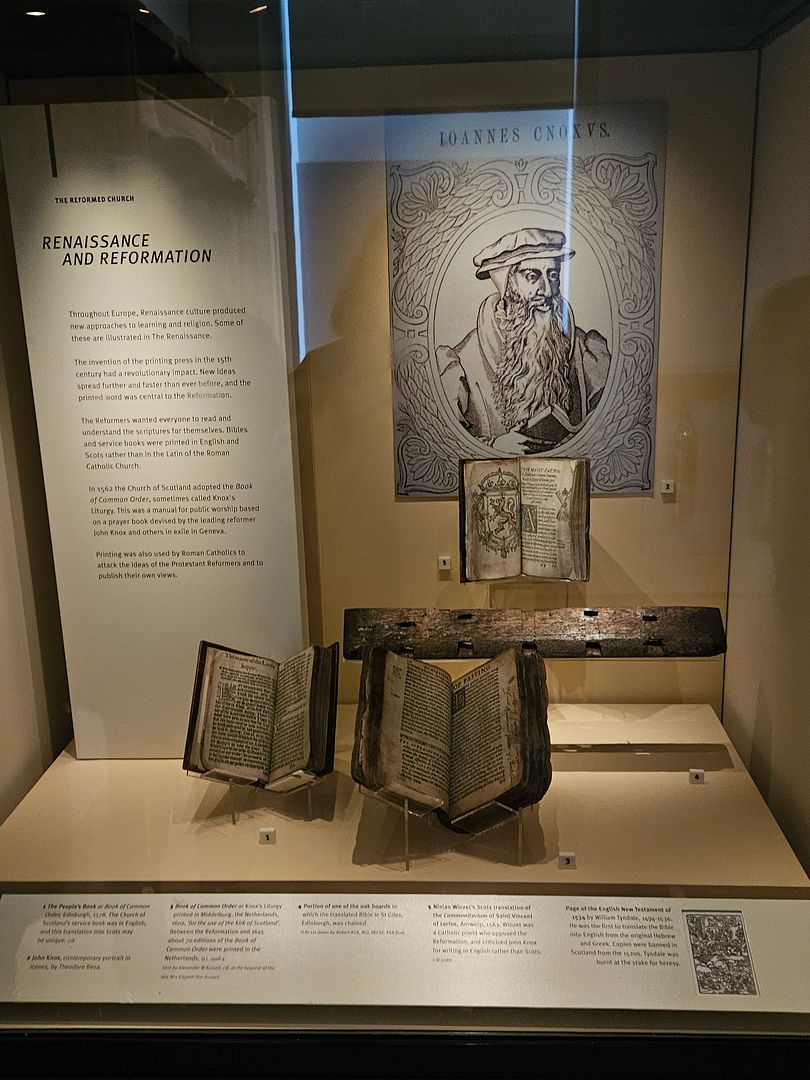
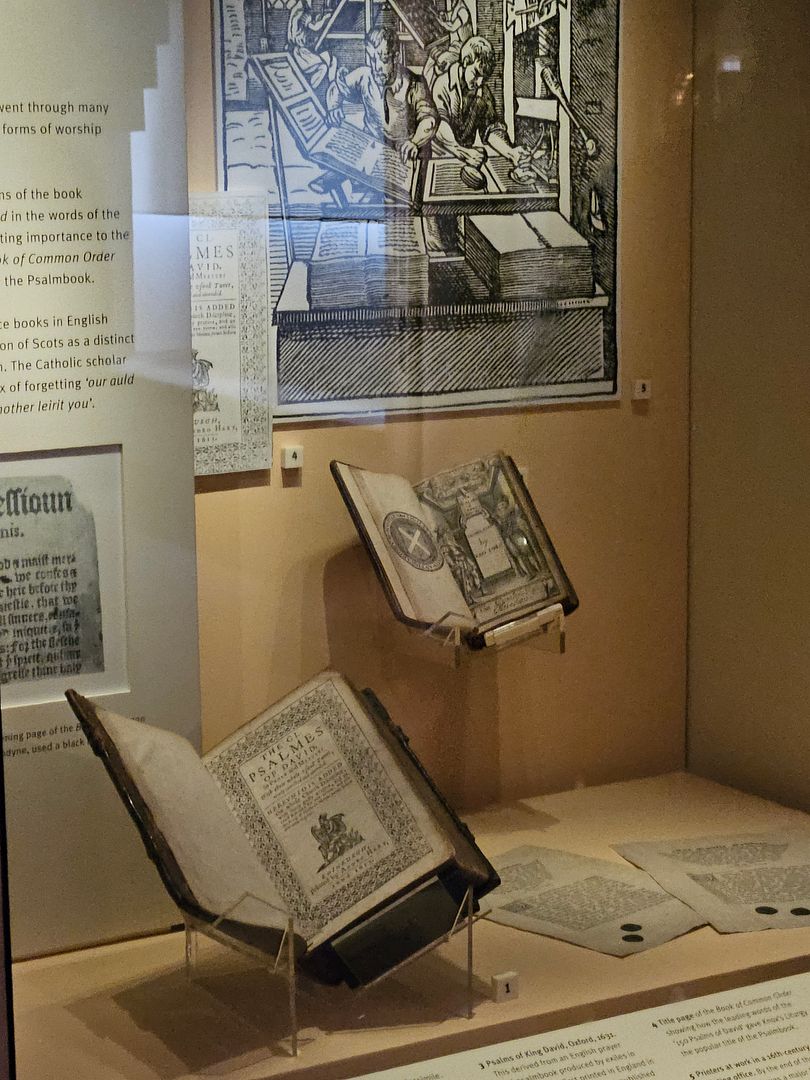
From Grassmarket, Jimmy took us to The National Museum of Scotland and to the National Library where we saw more artifacts and information about the Covenanters and The Reformation.

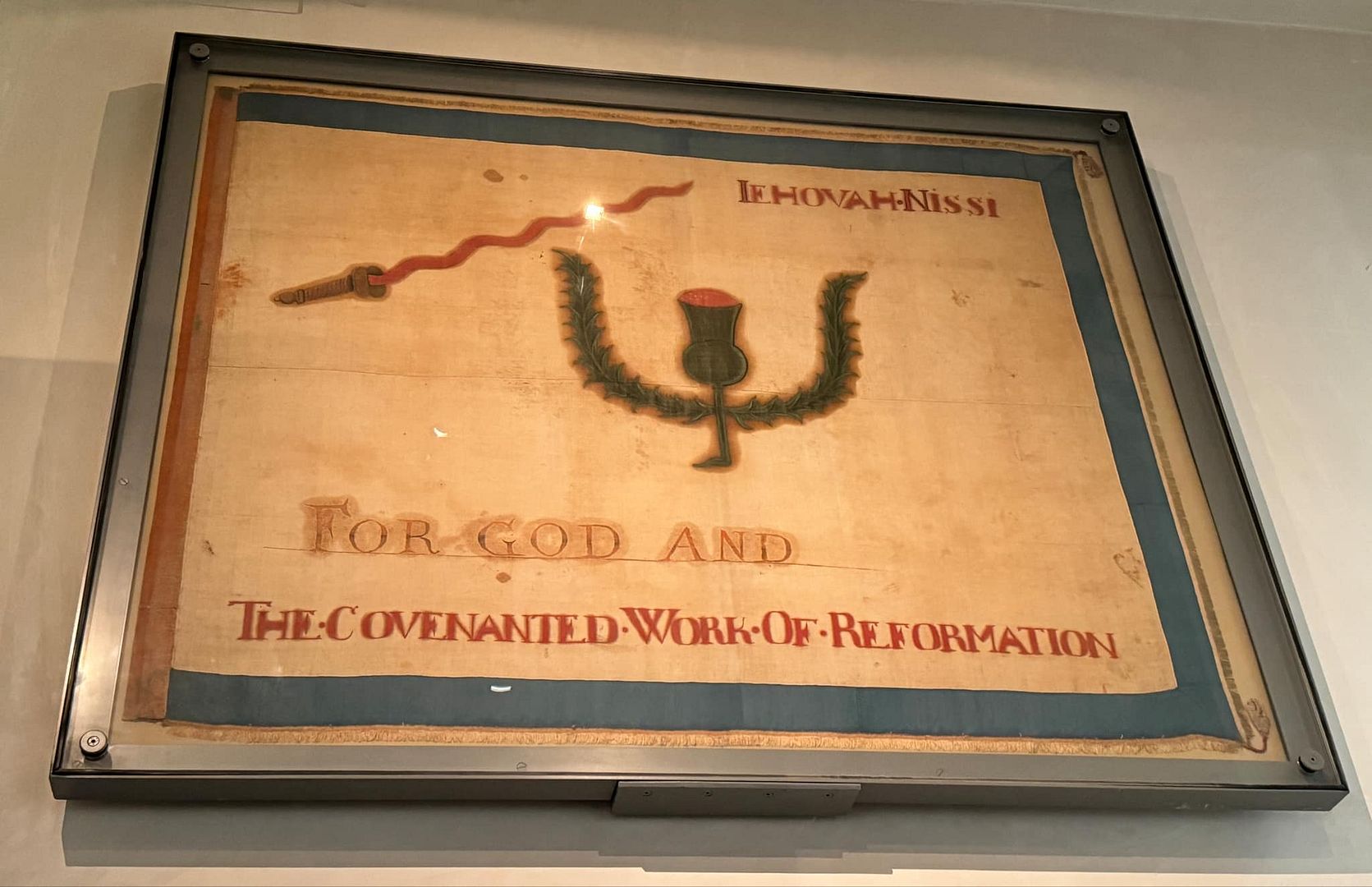
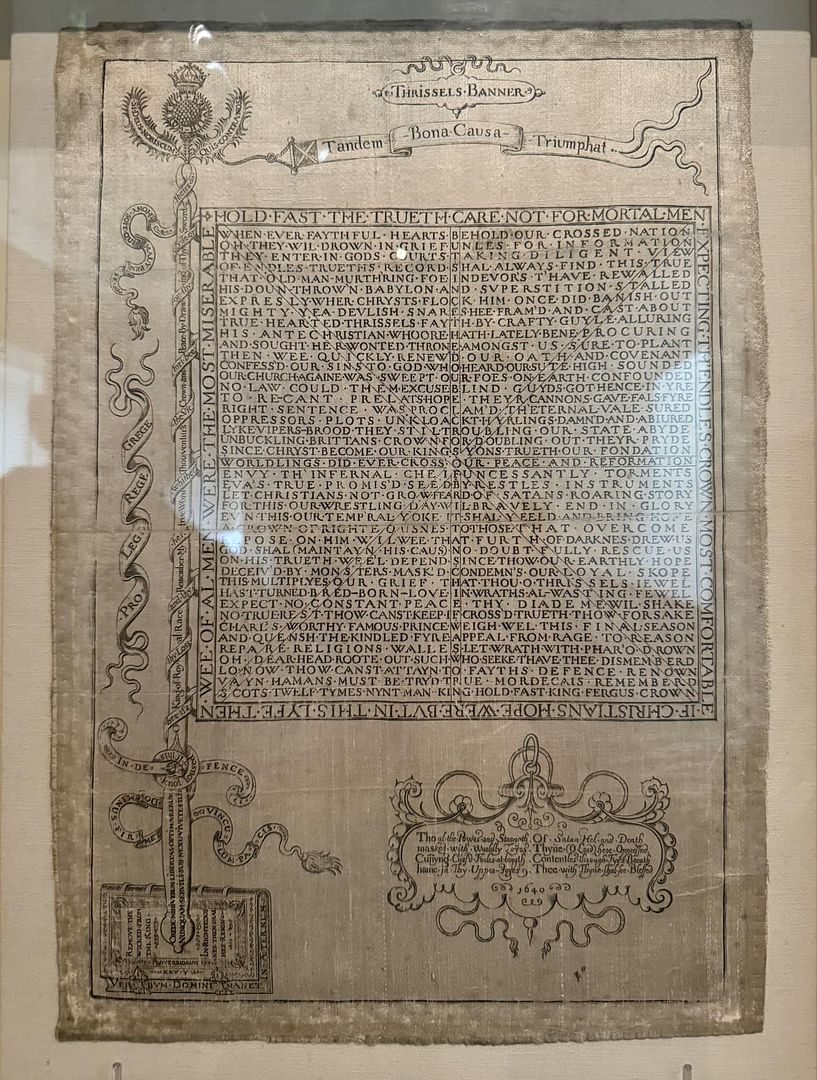
This printed satin banner, known as the ‘Thrissels Banner’, dates from 1640. The text on the banner was written by Thomas Cunynghame. It expresses opposition to the Crown and to the contemporary policy of religious anglicization.

On the left is the ‘staff’ of the banner, shown as a sword with a crowned thistle and bible at either end.

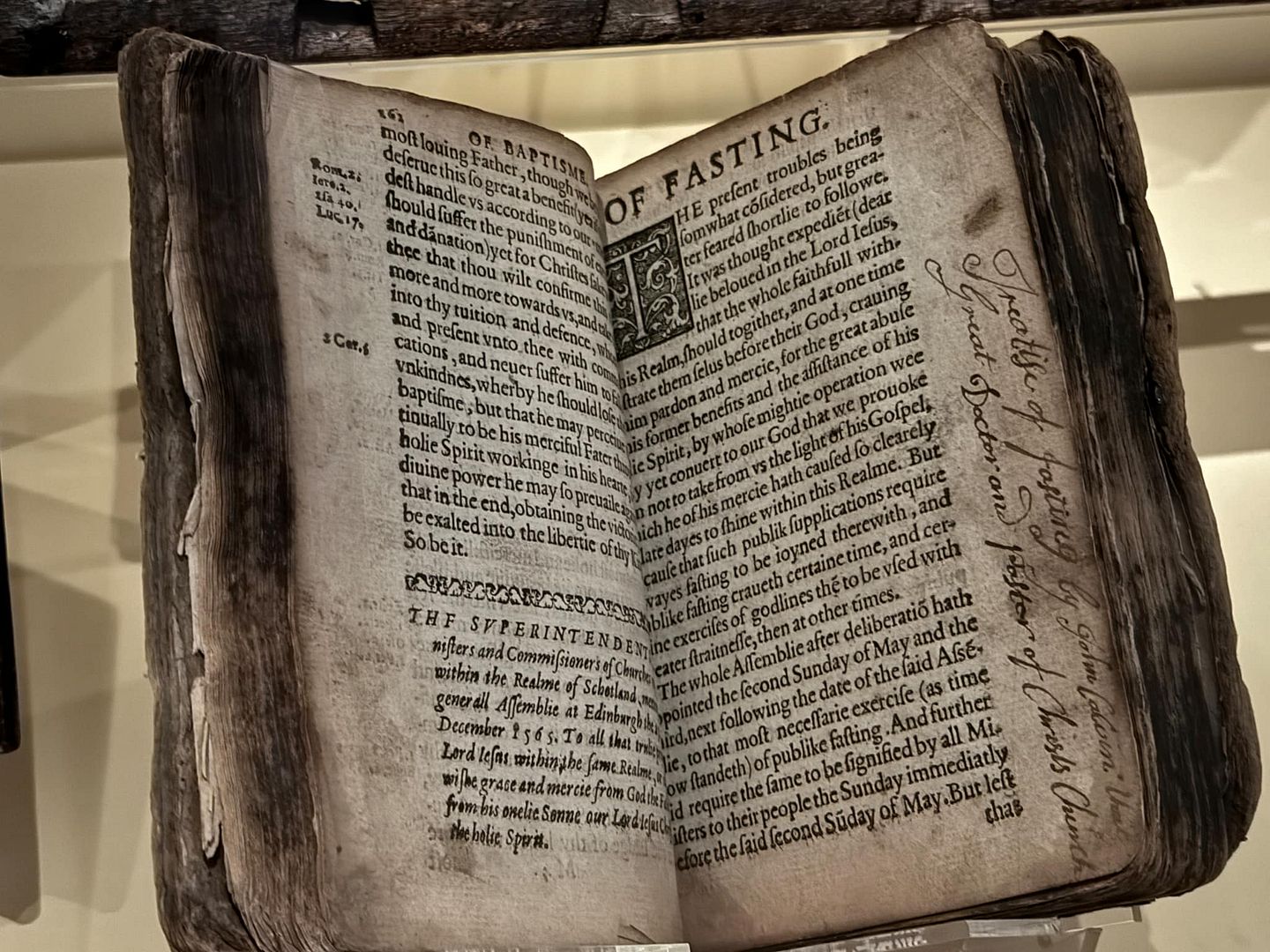
John Knox is a notable figure in Scotland’s history and in Christendom.

Jenny Geddes chair of which I was very interested. I’ll share more about it with a photo from St. Giles Cathedral in another post.

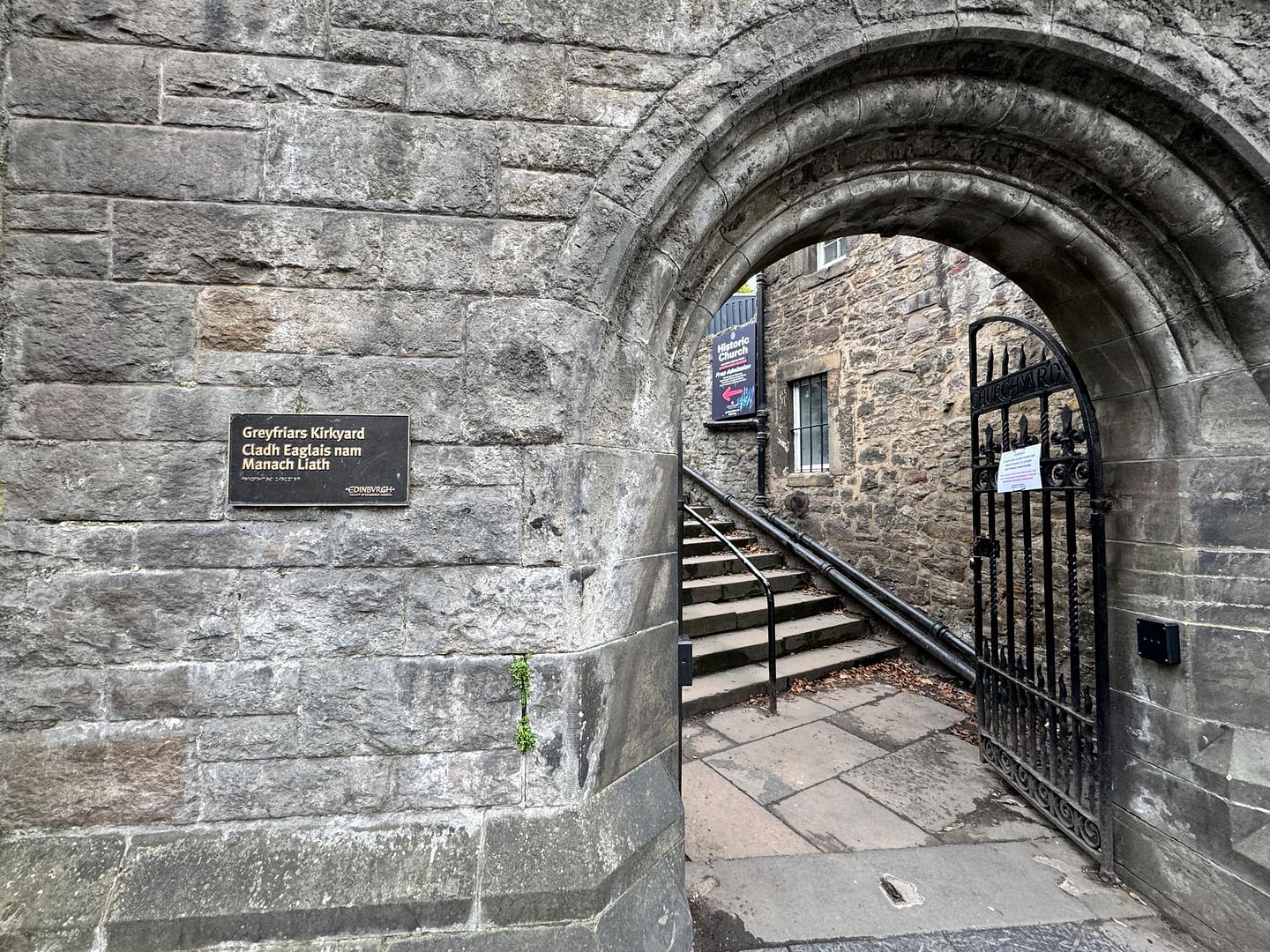
From the museum and library we made our way to Greyfriars Kirkyard.


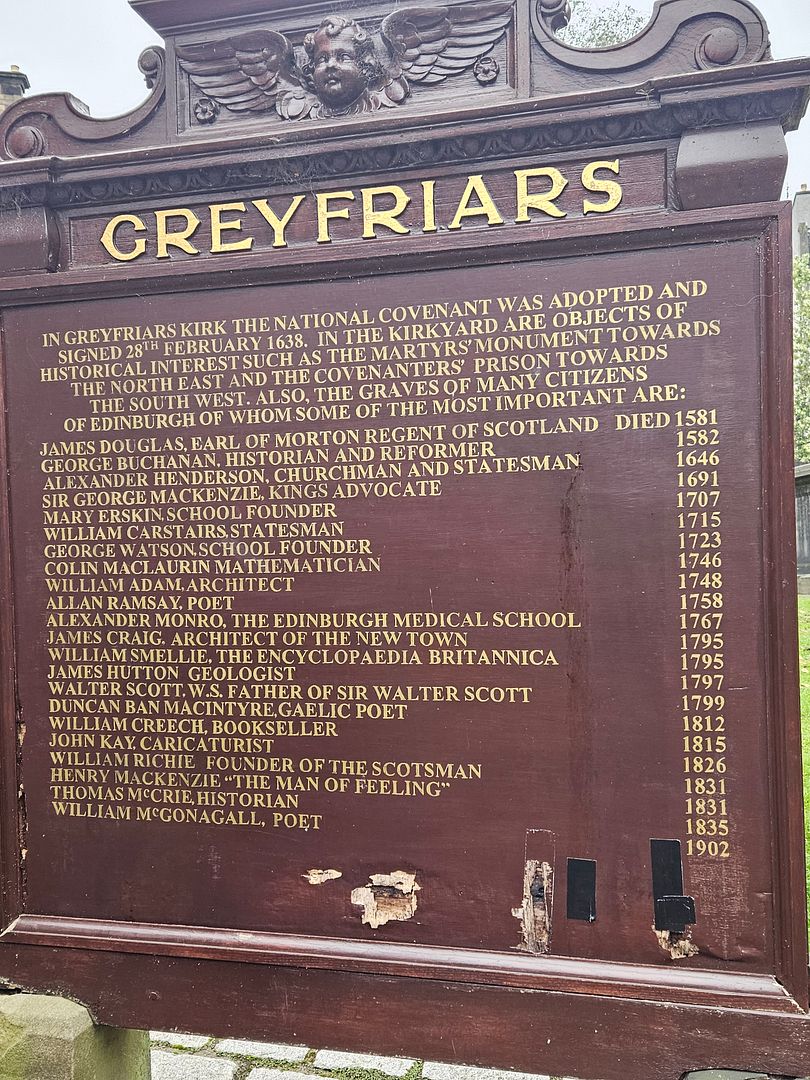
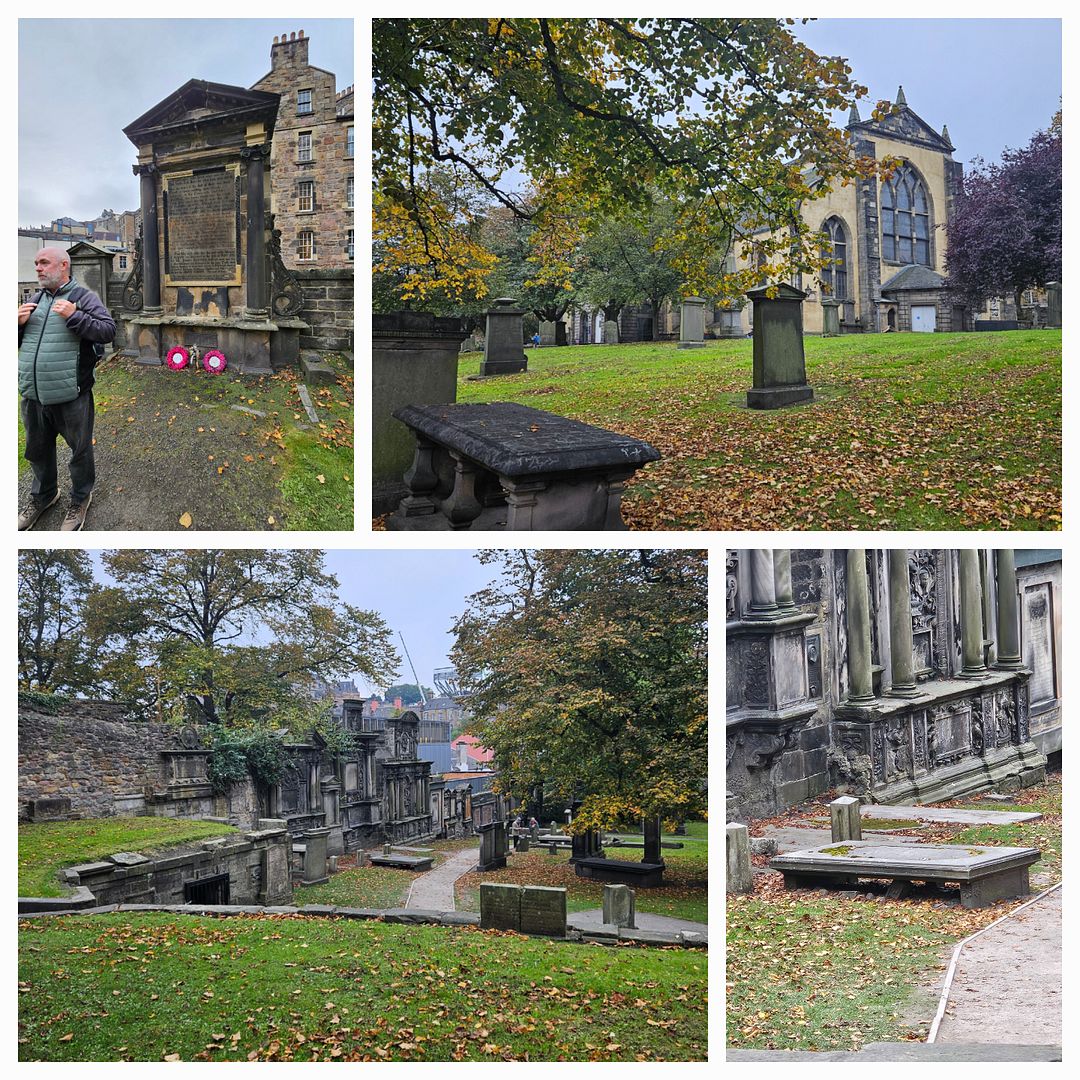
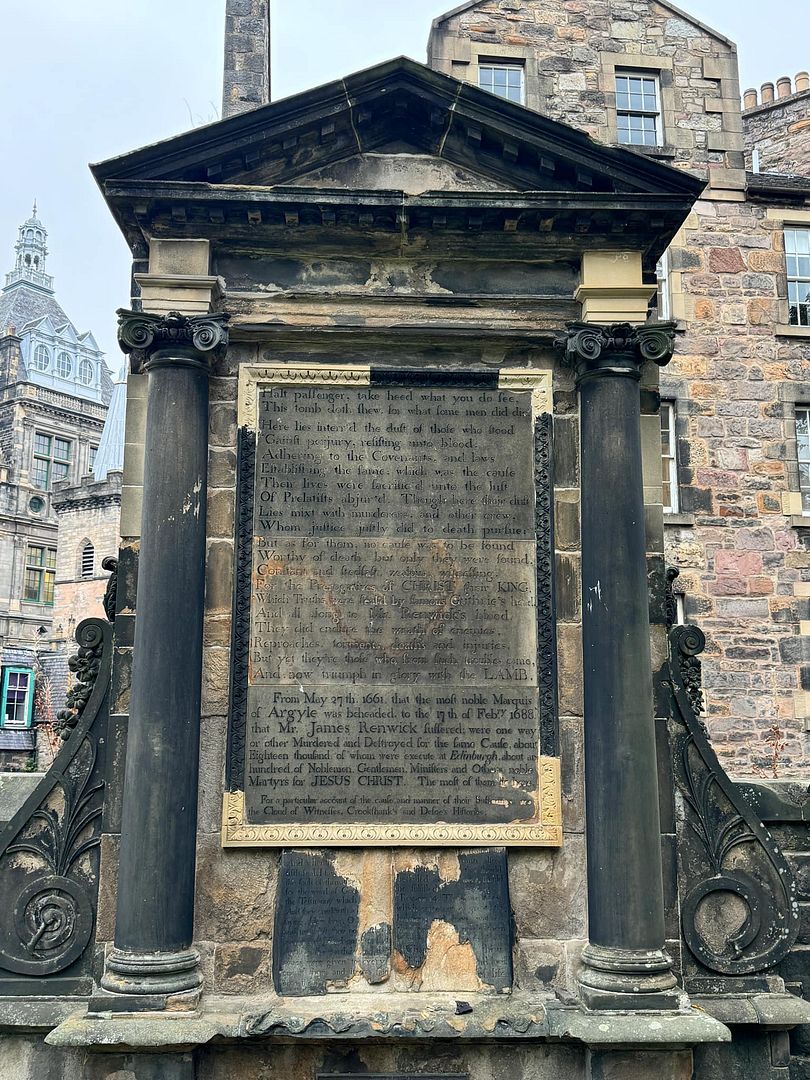
If you venture down to Greyfriars’ Kirk graveyard, which these days sees hordes of Harry Potter devotees brandishing their wands and reciting Potterite spells, you will find a large monument at the bottom right of this fascinating corner of Edinburgh. The monument towers above you and recalls the Covenanting struggle. The monument, first erected in 1706, then rebuilt in its 1771 version, has undergone restoration work up until recent times.

The Martyr’s Monument.

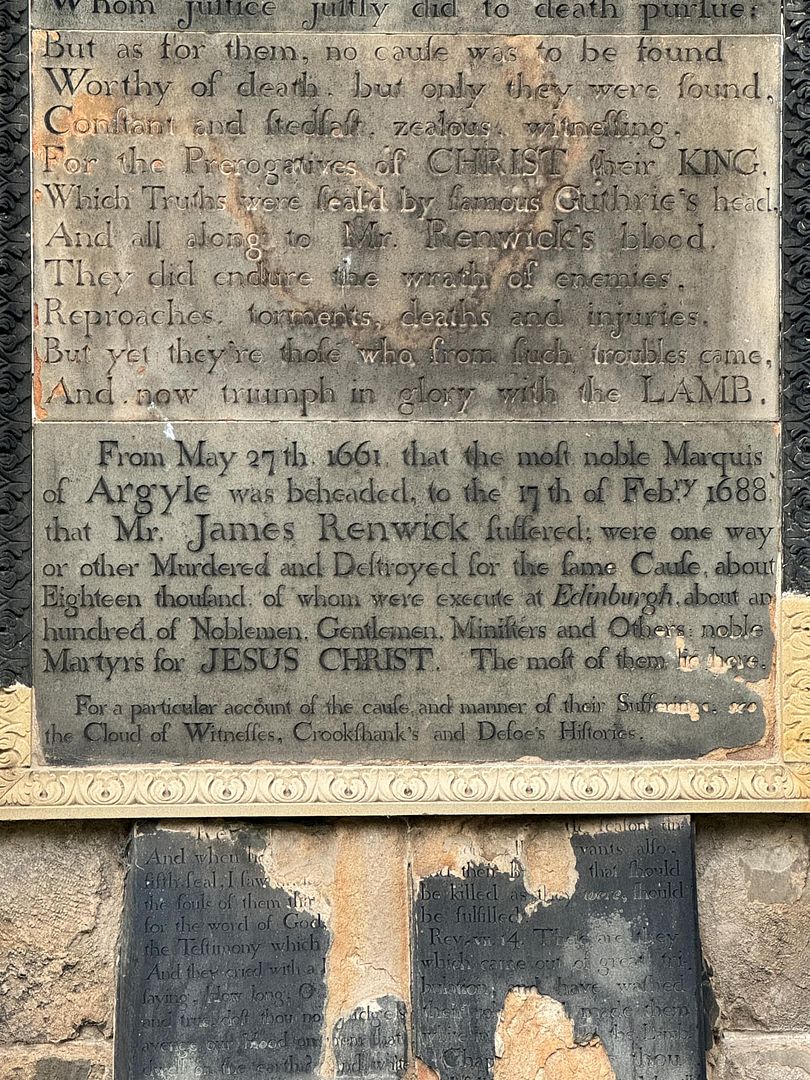
Halt passenger, take heed what you do see…’ The text then outlines the Covenanters’ cause ‘Gainst perjury, resisting unto blood: Adhering to the Covenants and Laws, their lives were sacrific’d unto the lust of Prelatiffs [bishops] abjur’d …’. The words ‘CHRIST their KING’ is deliberately written in large letters, designating their struggle against tyrant kings who wanted absolute power over Church and State. At the bottom of the monument, it states that ‘one way or other [were] Murdered and Destroyed for the same Cause, about Eighteen thousand of whom were execute at Edinburgh, about one hundred of Noblemen, Gentlemen, Ministers and others, noble martyrs for JESUS CHRIST.

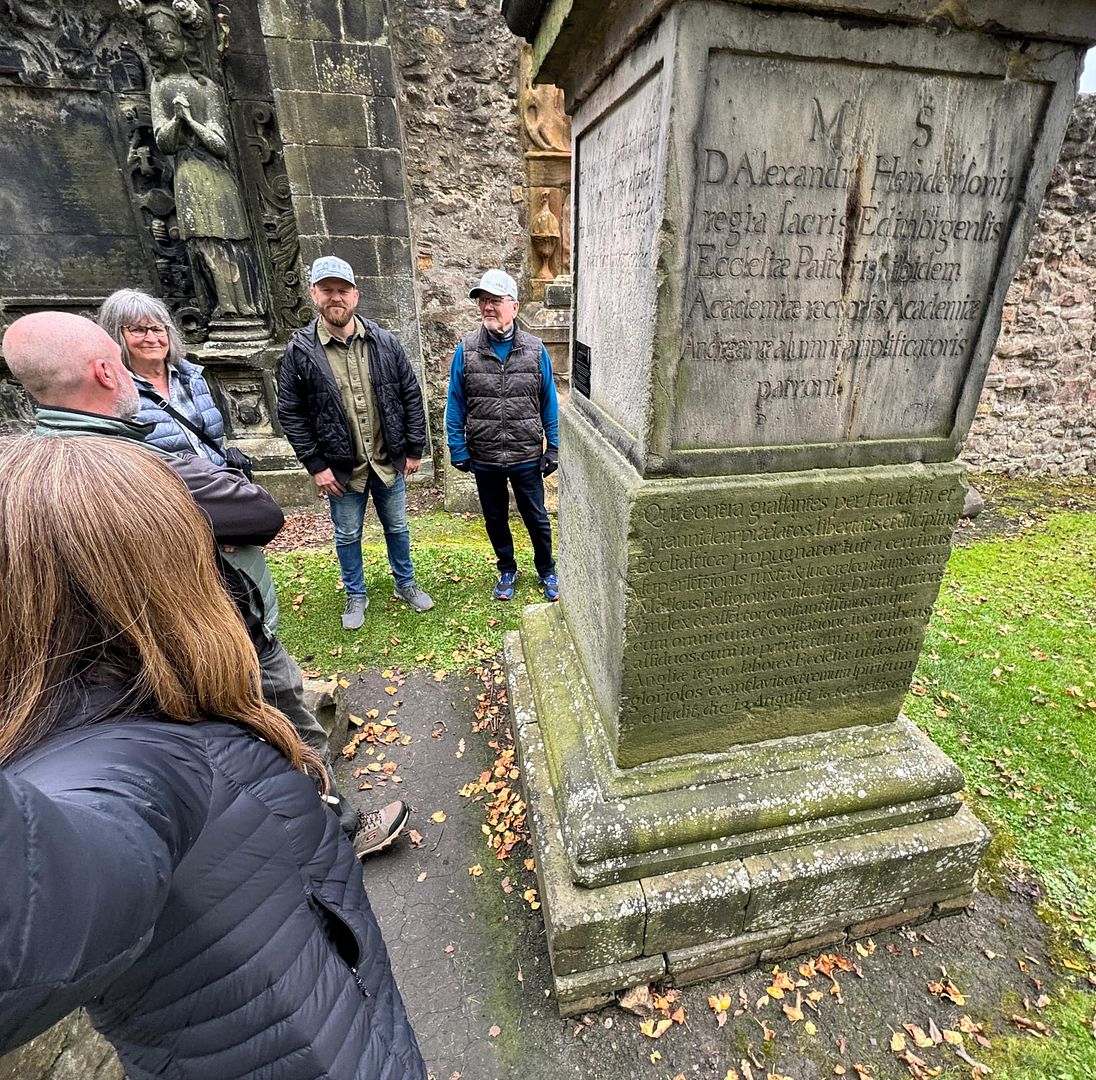
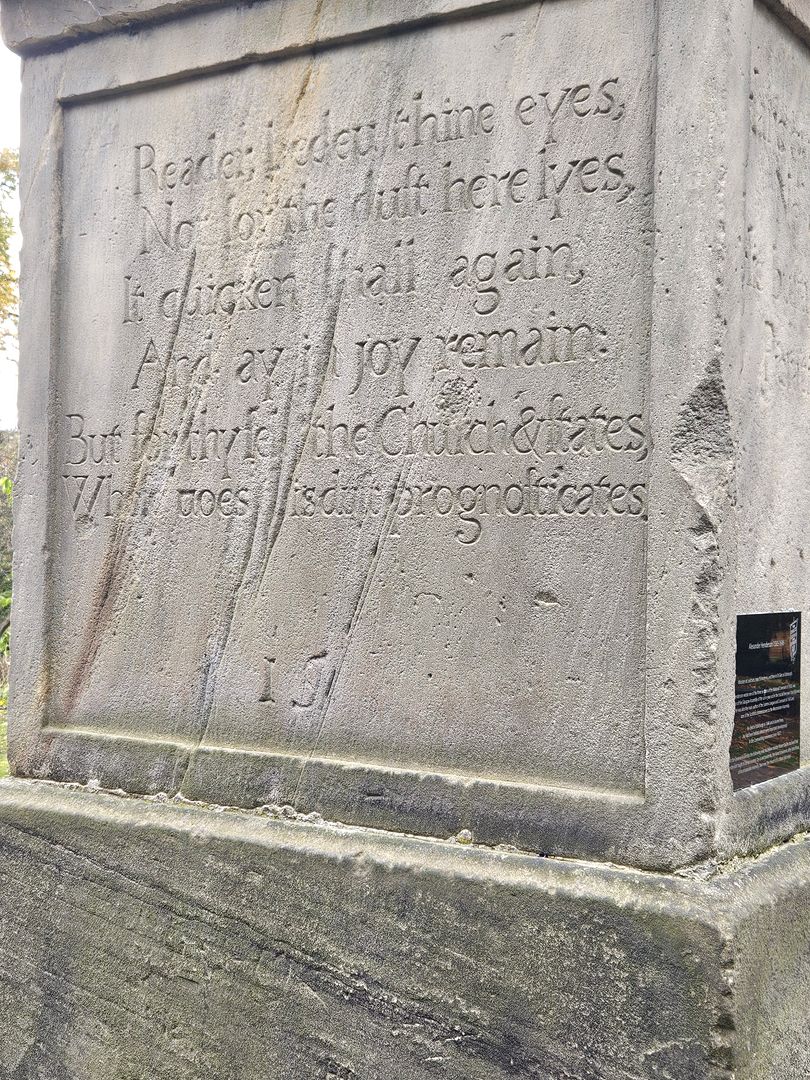
We heard about the Reverend Alexander Henderson at this site of his burial.

He was one of Scotland’s greatest Covenanter Ministers.

He died in Edinburgh in 1646 and was buried in Greyfriars kirkyard. He had been behind almost every important development in the Covenanting movement since 1637. At the General Assembly the following year, Baillie declared that Henderson ‘ought to be accounted by us and posterity, the fairest ornament, after John Knox, of incomparable memory, that ever the church of Scotland did enjoy.

Click on his name above to read more about the history of this ‘fairest ornament’.

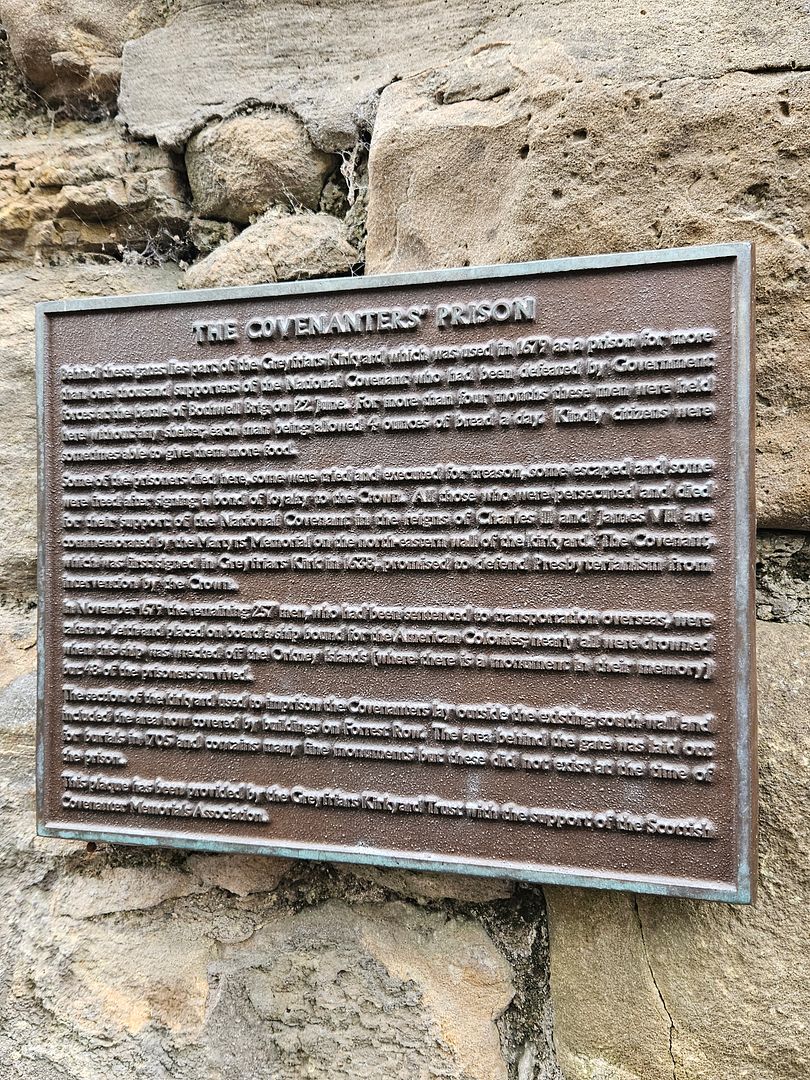
THE COVENANTERS’ PRISON
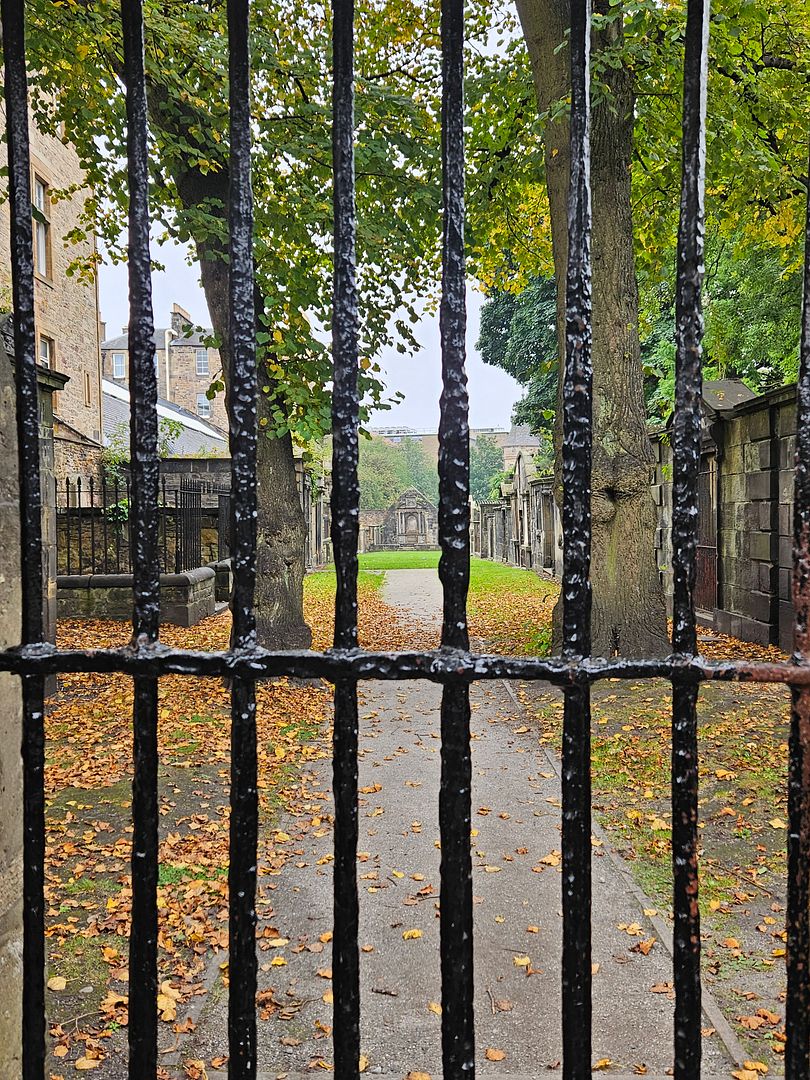
Behind these gates lies part of the southern section of Greyfriars Kirkyard which was used in 1679 as a prison for over one thousand supporters of the National Covenant who had been defeated by Government forces at the battle of Bothwell Brig on 22 June. For over four months these men were held here without any shelter, each man being allowed 4 ounces of bread a day. Kindly citizens were sometimes able to give them more food.

Some of the prisoners died here, some were tried and executed for treason, some escaped, and some were freed after signing a bond of loyalty to the Crown. All those who were persecuted and died for their support of the National Covenant in the reigns of Charles II and James VII are commemorated by the Martyrs’ Memorial on the north-eastern wall of the kirkyard. The Covenant, which was first signed in Greyfriars Kirk in 1638, promised to defend Presbyterianism from intervention by the Crown.

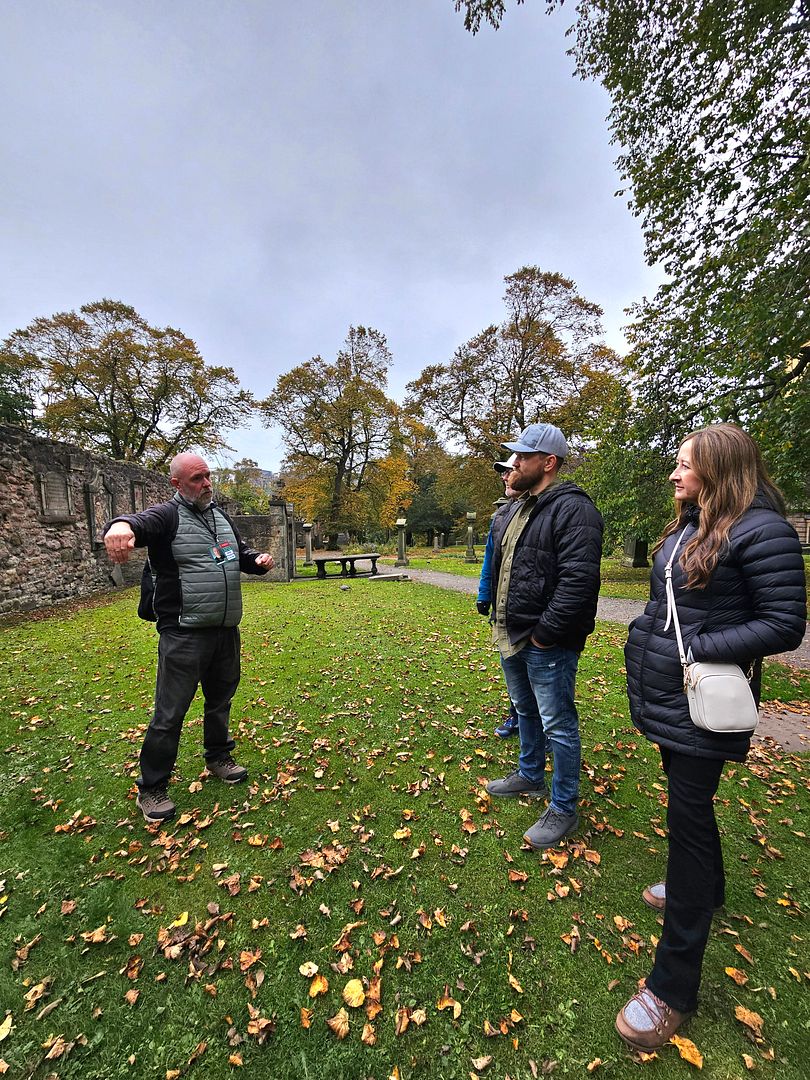
Jimmy our tour guide, was so knowledgeable and we were in awe of all that we were learning on this tour.

Our last stop with Jimmy would be St. Giles Cathedral. Such a fitting end to this amazing tour of the Covenanters in Edinburgh. It was a humbling experience.

That will be another post.

Scotland Travel Journal ~ Edinburgh Reformation Tour 1

Monday September 23rd was our last full day in Edinburgh and Scotland. This would be a day filled with walking and stairs and information. We were thankful on this morning that Greg was well enough to walk and not miss our special tour.

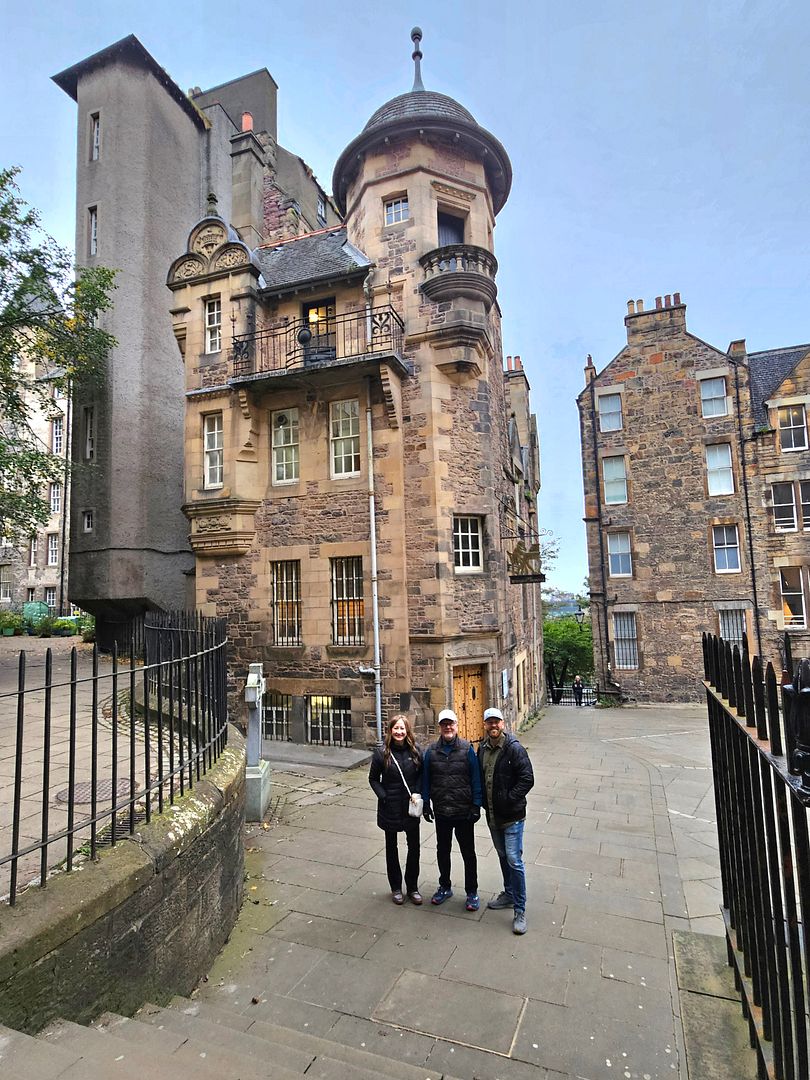
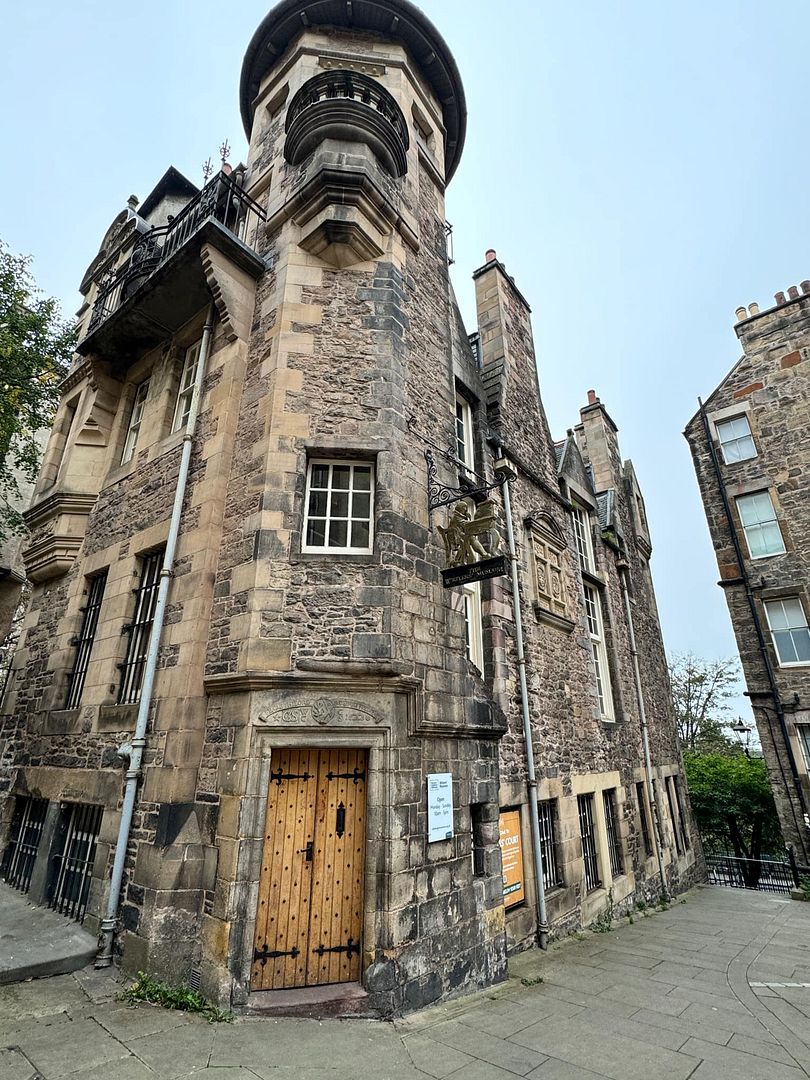
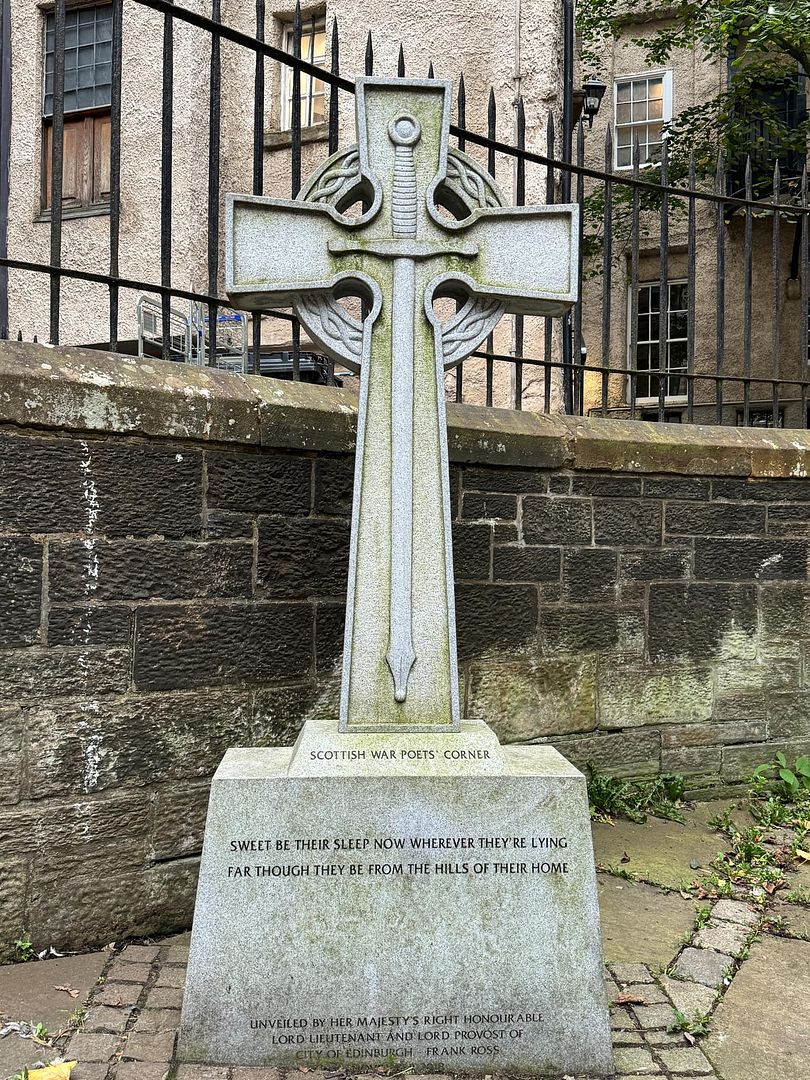
We took the Lady Stair’s Close to get up to the Royal Mile. We stopped to take some photos outside the Writer’s Museum.

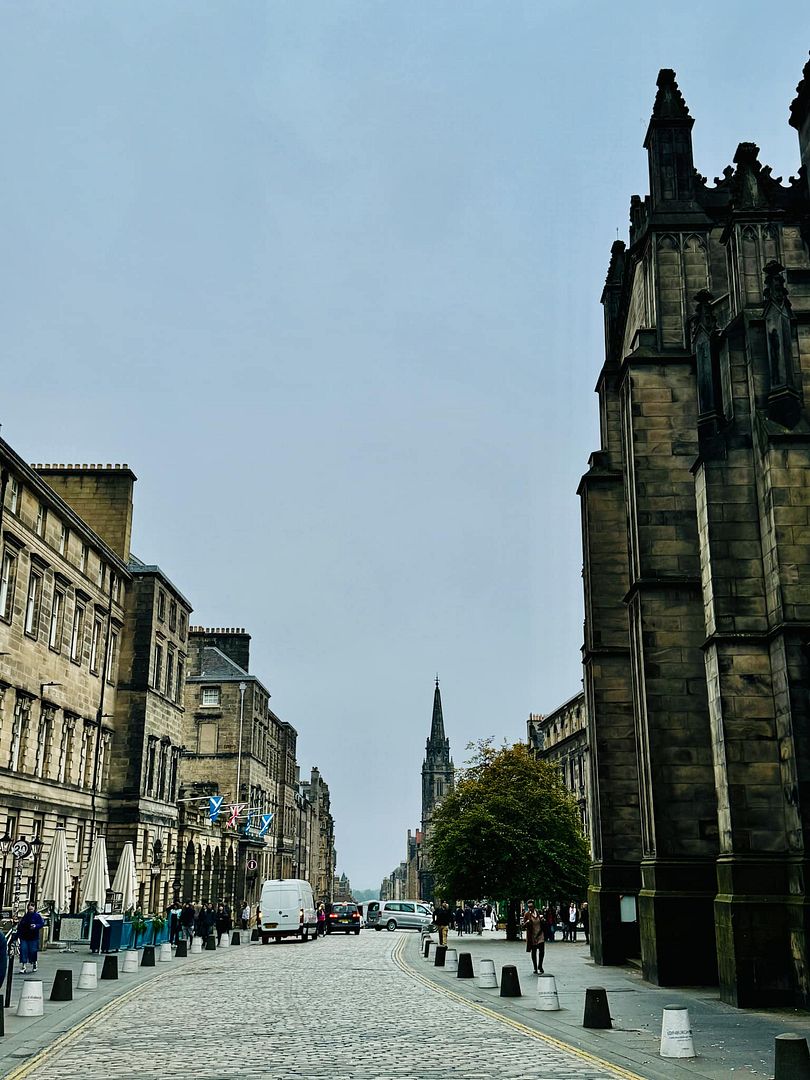
Early on the Royal Mile there were fewer folk milling about. That would change soon.

We scheduled a private Scottish Reformation Tour on this day.

I included the link above. We were to meet Jimmy at 9am in front of St. Giles Cathedral.

Soon we saw who we assumed was Jimmy and he came right to us assuming we were his clients for the morning.

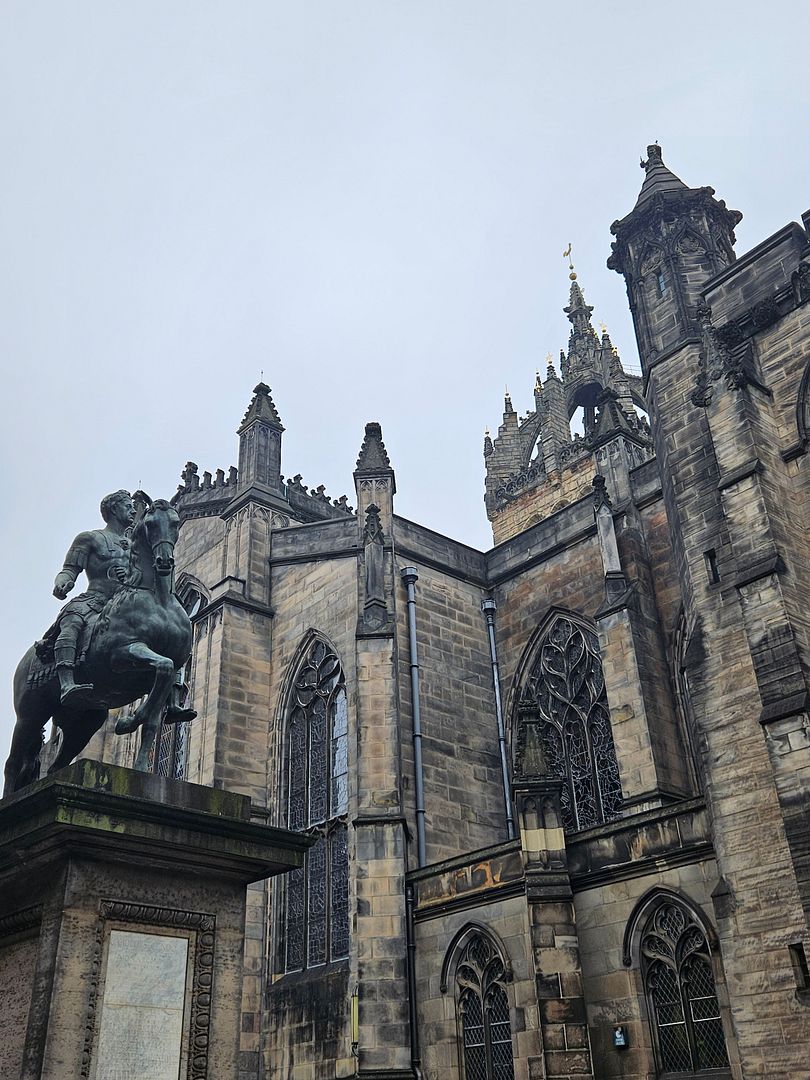
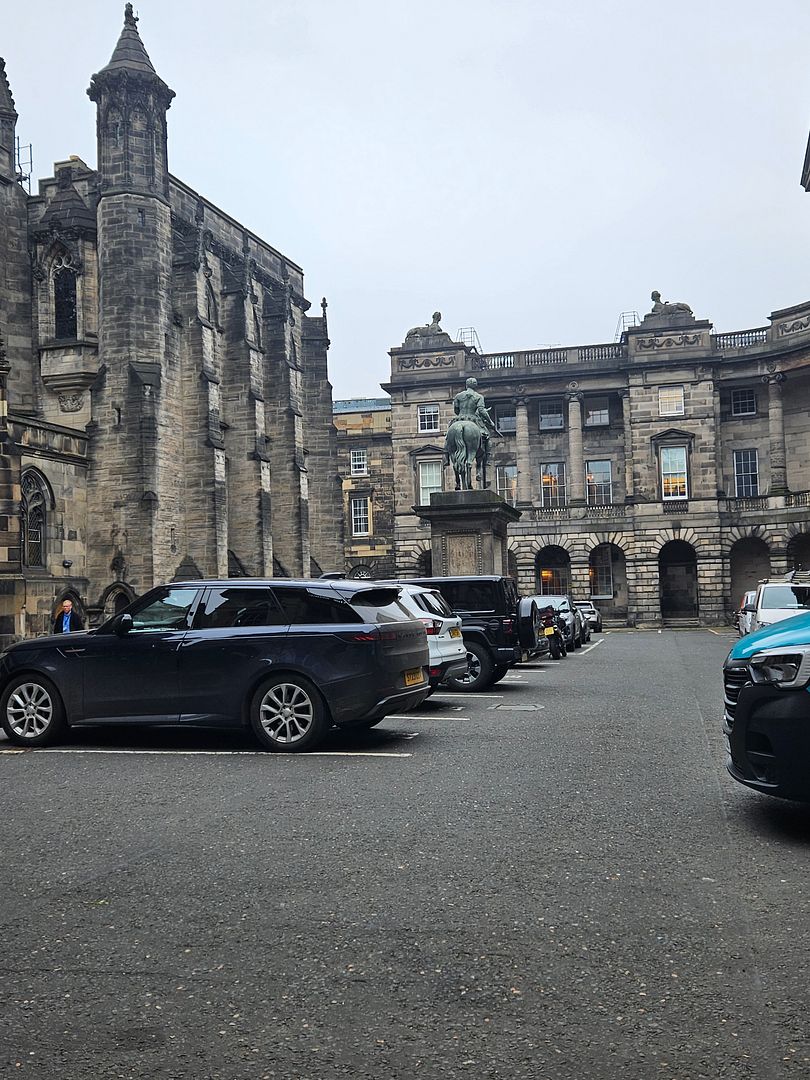
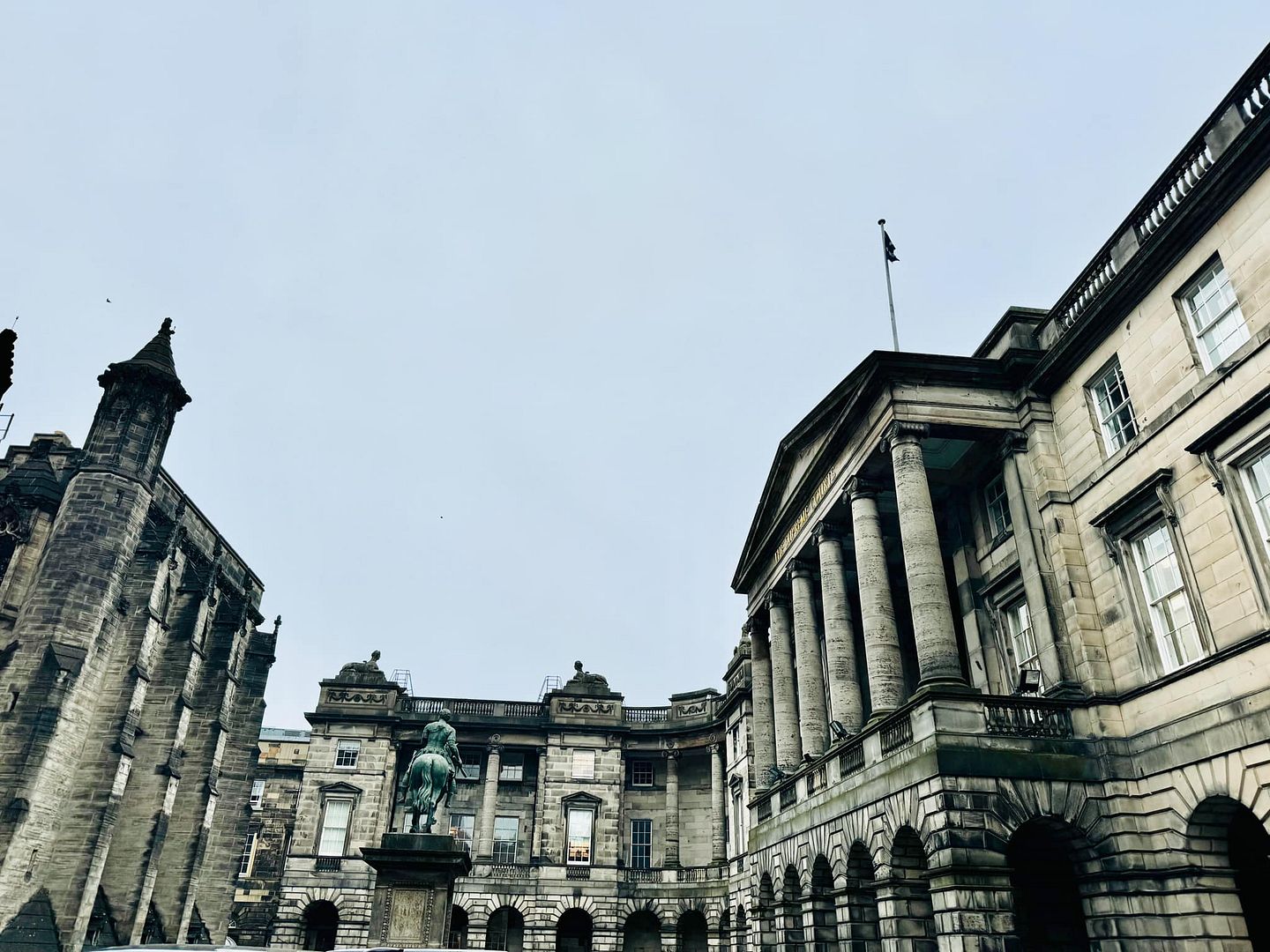
St. Giles was not open to the public yet on this particular morning so Jimmy took us around to the parking lot between St. Giles and The Supreme Court building. We would visit the inside of the cathedral at the end of our tour.

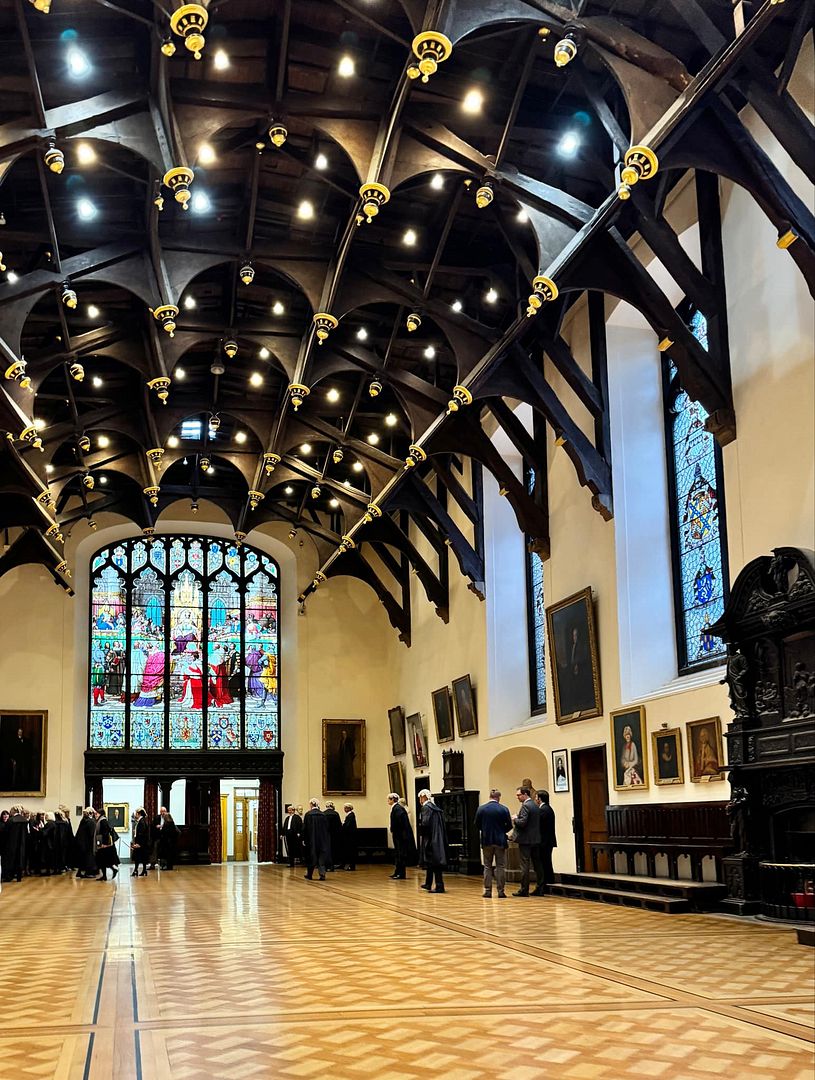
It looked to Jimmy’s keen eye that something was going on in the Supreme Court building so he managed to gain us access into the hall outside the courtroom.

It was quite fascinating to see all the ‘big wigs’ standing around and some pacing back and forth the length of the room discussing their cases.

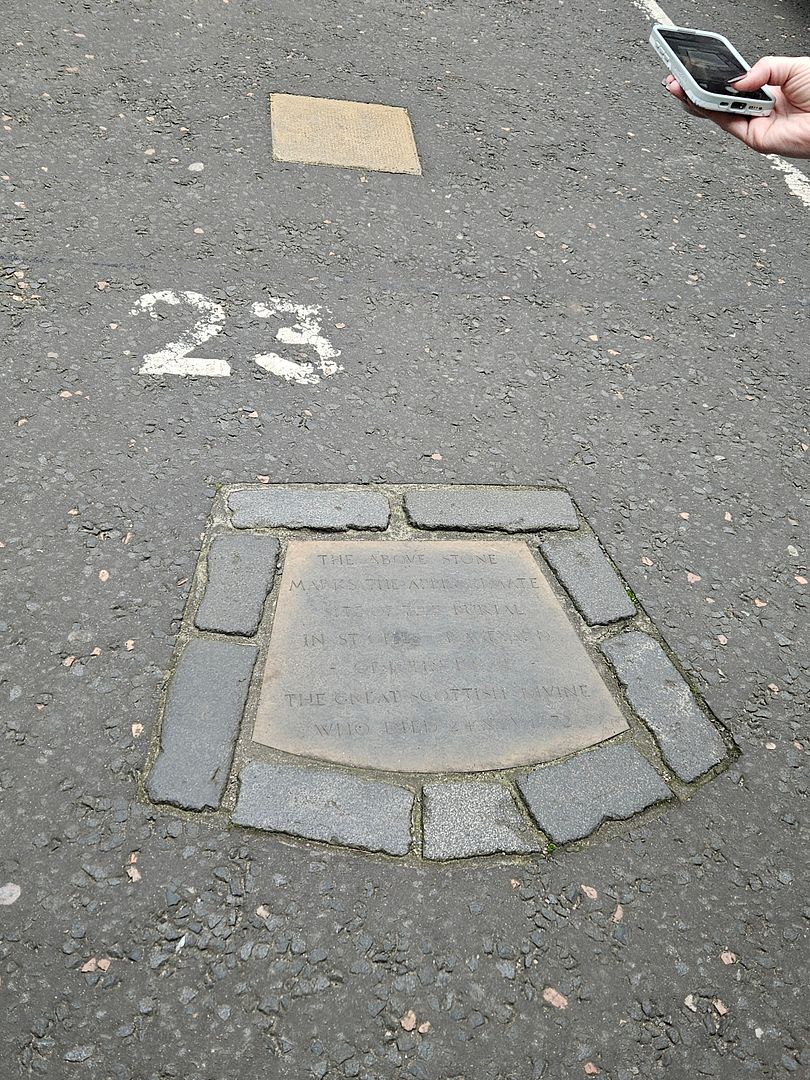
Back outside we were on the search for parking space #23.

Here at space number 23 in the car park is approximately where John Knox is buried!

The Scottish Reformation leader’s grave was paved over and is now a parking lot. The stone inscription reads;

‘The Above Stone Marks

the Approximate

Site of the Burial

In St. Giles Graveyard

Of John Knox

The Great Scottish Divine

Who Died 24th November 1572′

It’s said that Knox wanted to be buried within 20 feet of Saint Giles, so he was laid to rest right outside the church in what was once a proper graveyard. However, the site has since been tarmacked over and is now a functioning parking lot. A plaque in parking space number 23 marks the approximate location of his now-lost grave.

Knox was a 16th-century preacher who commanded that his people be able to read the Bible in their own language. He was a key figure in turning a nation of Catholics into one of Protestants. His fire and brimstone sermons and teachings often put him at odds with the Catholic Mary, Queen of Scots.

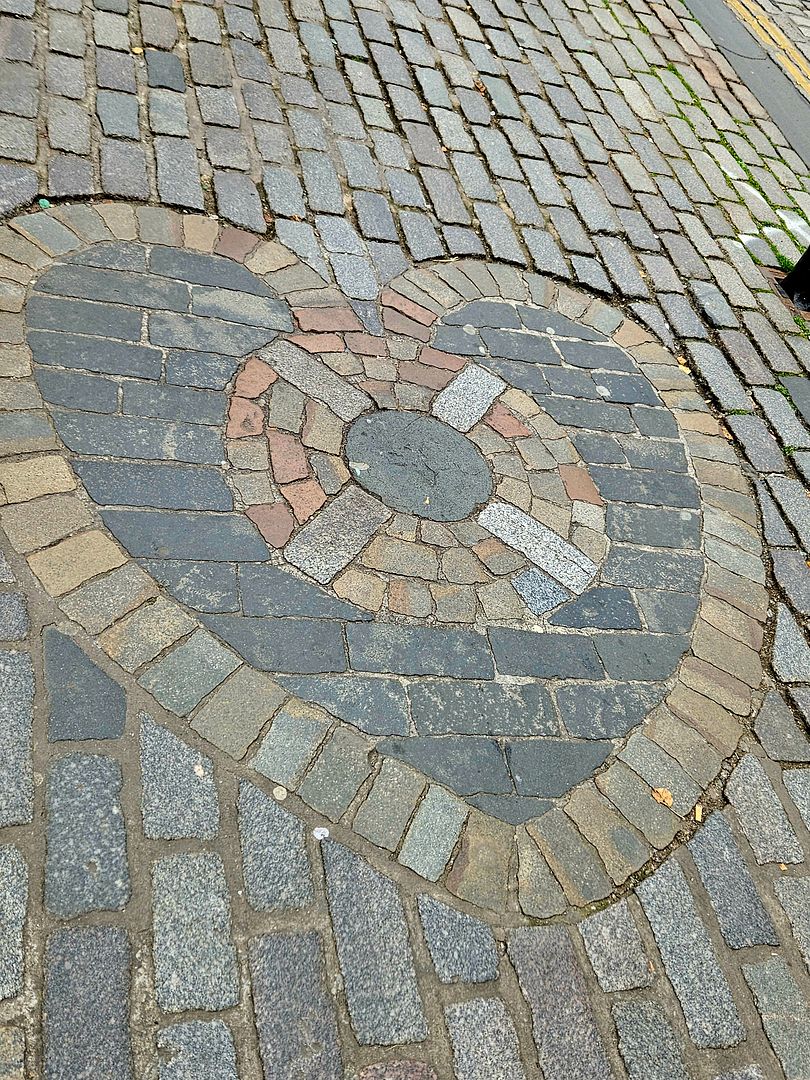
On our walk to Victoria street we came across this Famous Heart.

The Heart of Midlothian is both a historic mosaic dating to the Middle Ages and a landmark that denotes the location of Edinburgh’s Old Tolbooth administrative building. Locals often spit on the sign as a good luck charm, a tradition that has morphed from its original meaning of disdain for the many executions that took place at this site over the years. The Heart of Midlothian F.C., the local soccer club, takes its name from the mosaic and the Old Tolbooth.

The Heart was installed as part of a replacement building to the Old Tolbooth in 1561, and after this second building was demolished in 1817, the Heart was all that remained. It has been an inspiration for the writings of Sir Walter Scott and has become an iconic part of the city’s culture and historic identity – even if many now don’t remember its true origins.

FYI: Tolbooth is a Scottish term that refers to a townhall, jail or guildhall where tolls are collected.

From here we walked down Victoria Street to Grassmarket.

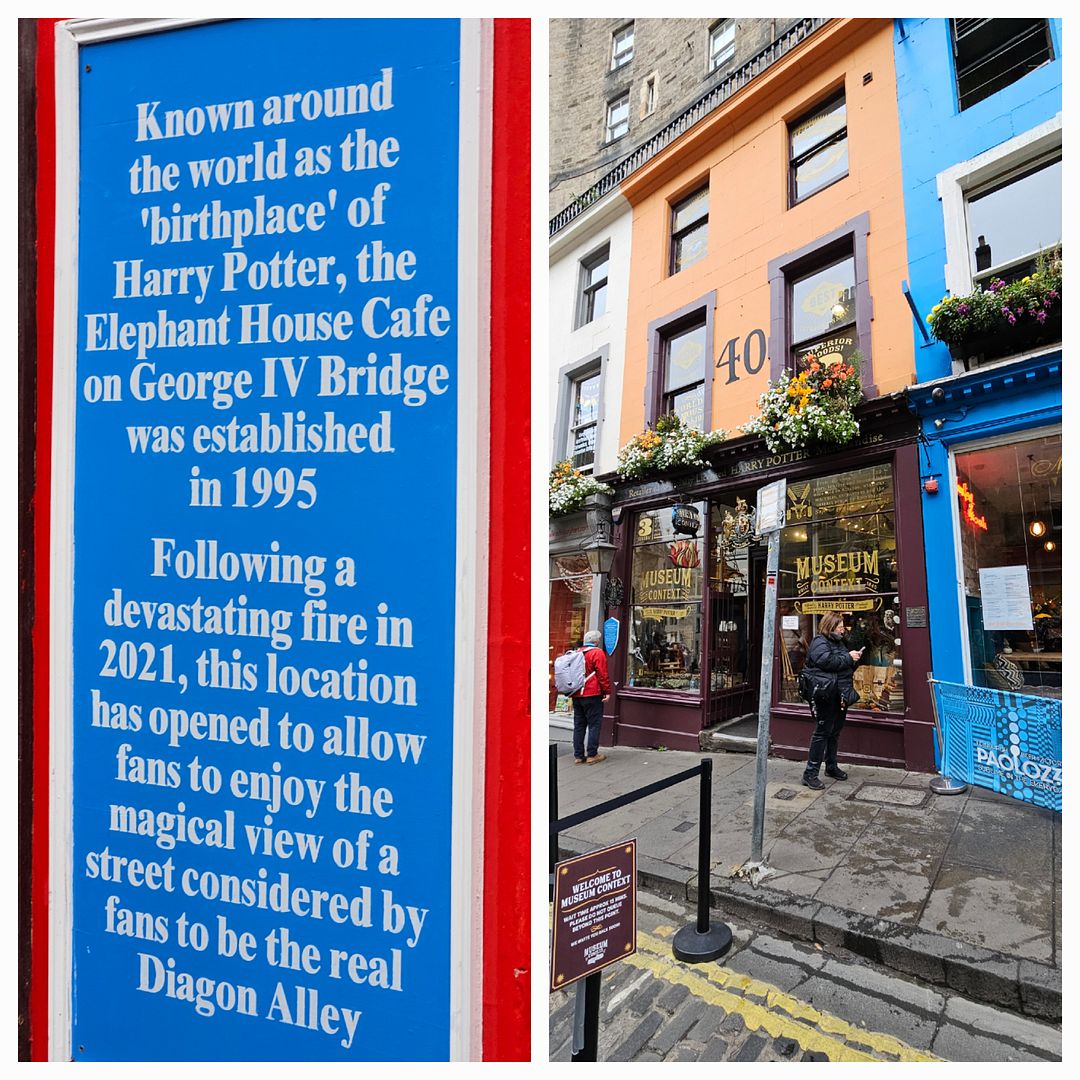
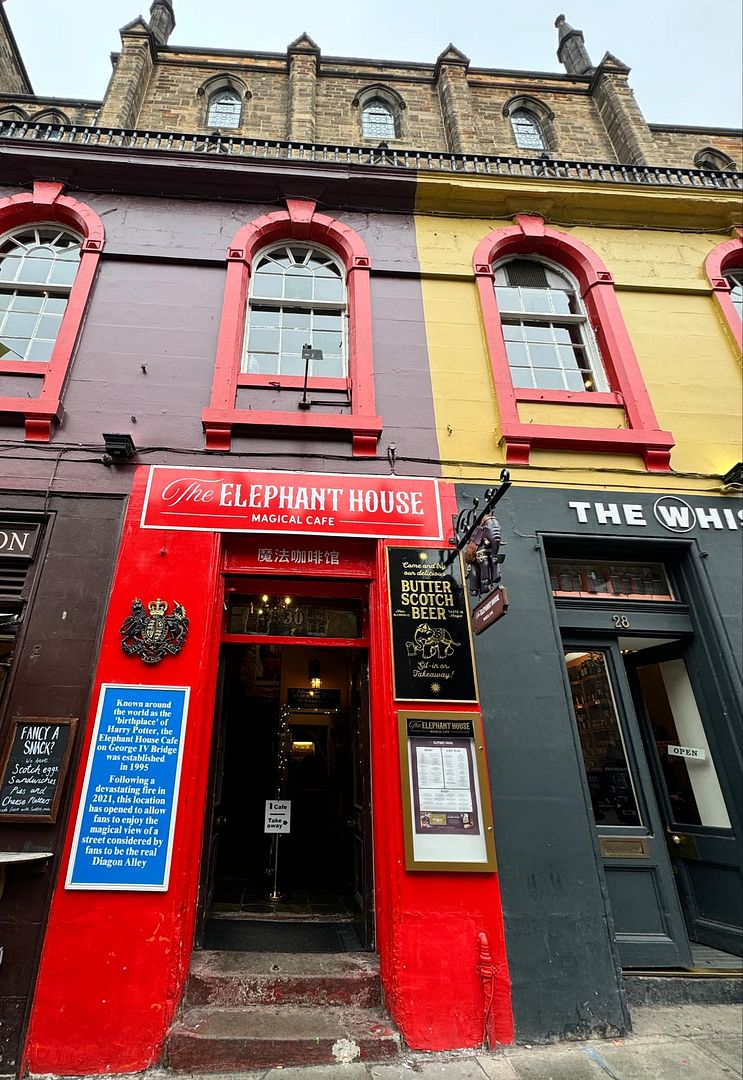
Victoria Street is said to be an inspiration for Diagon Alley in the Harry Potter books but J.K. Rowling denies that it is. Nonetheless fans flock here and stand in line to get in the museum on this colorful street.

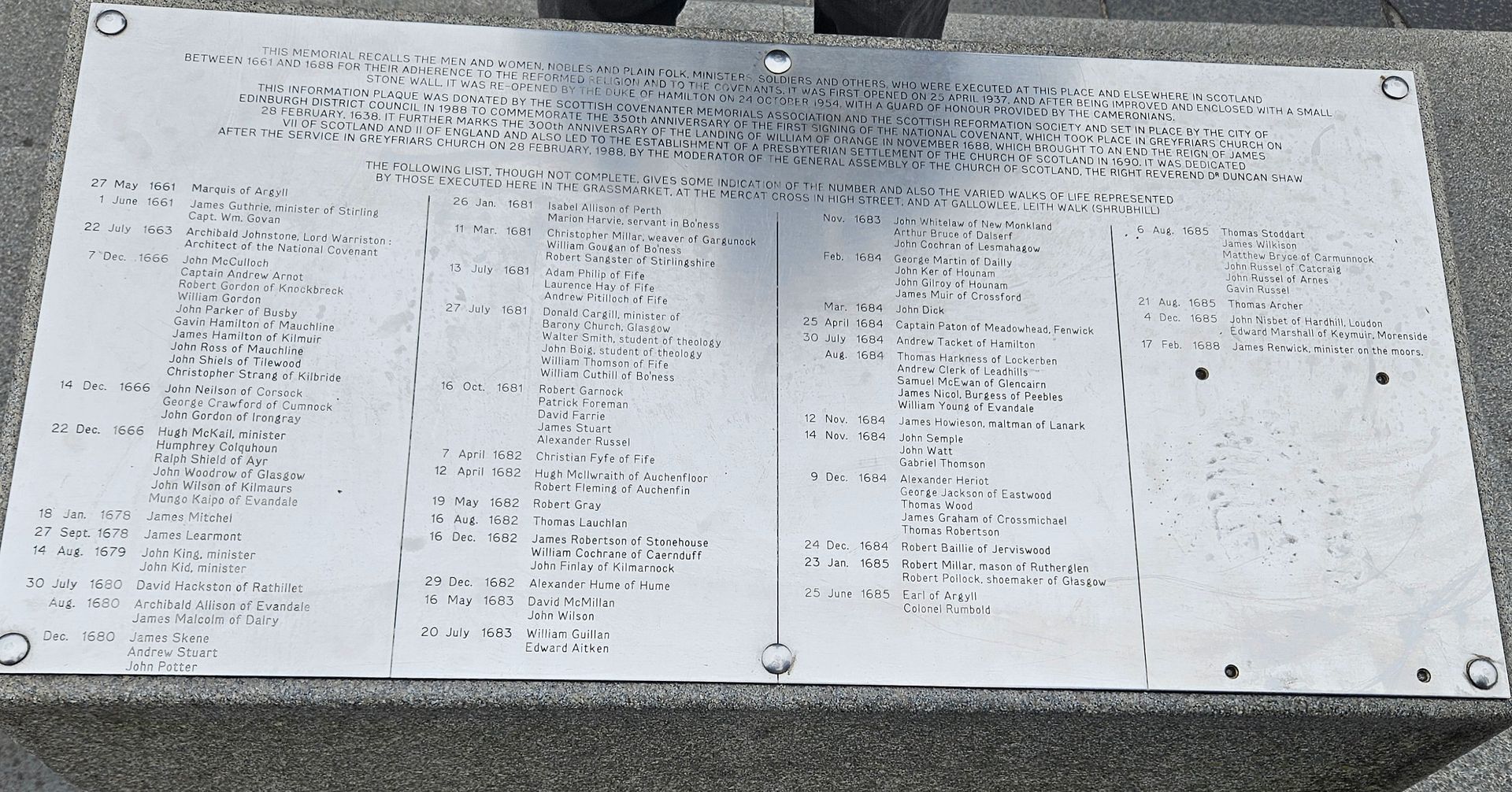
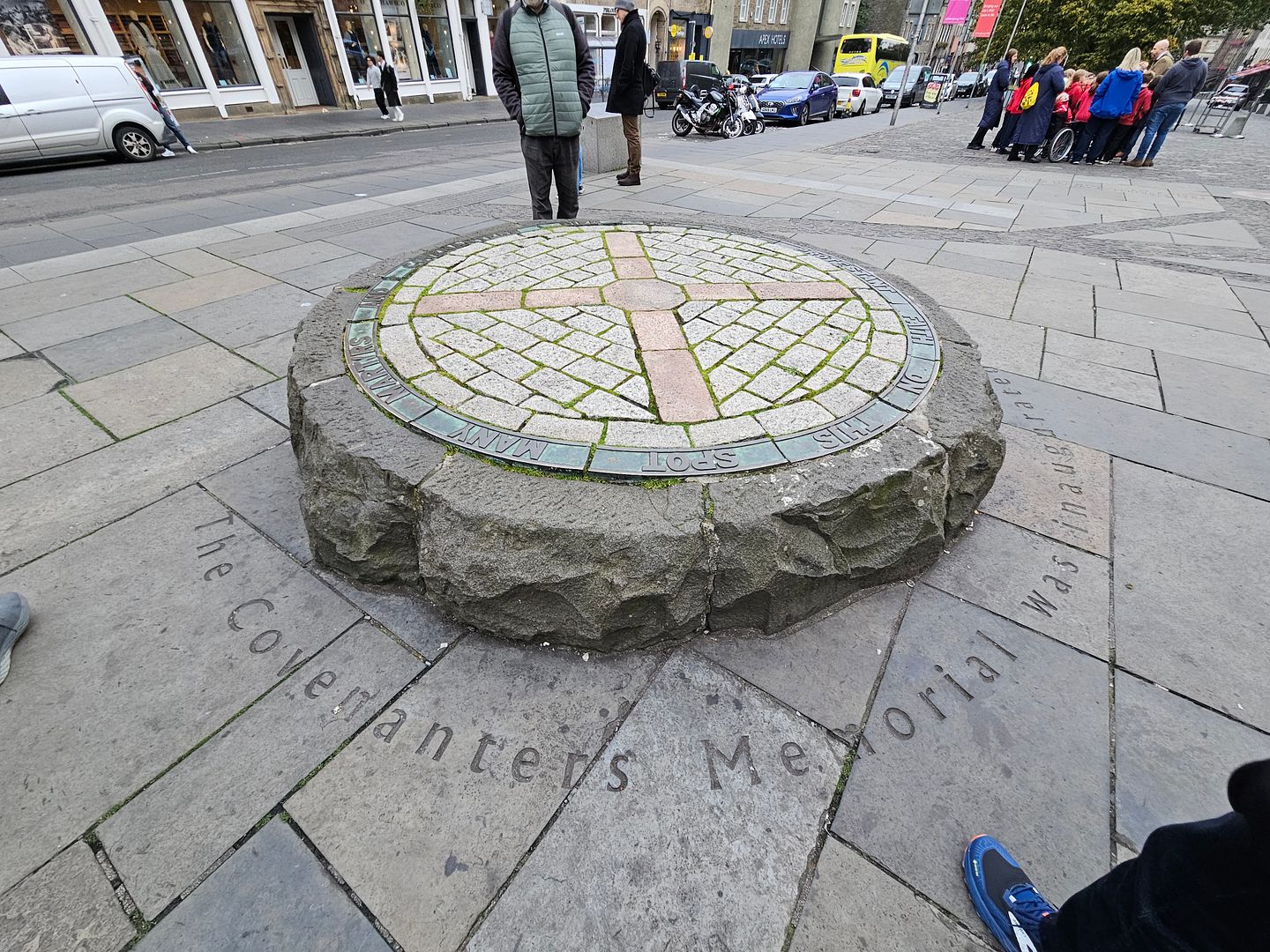
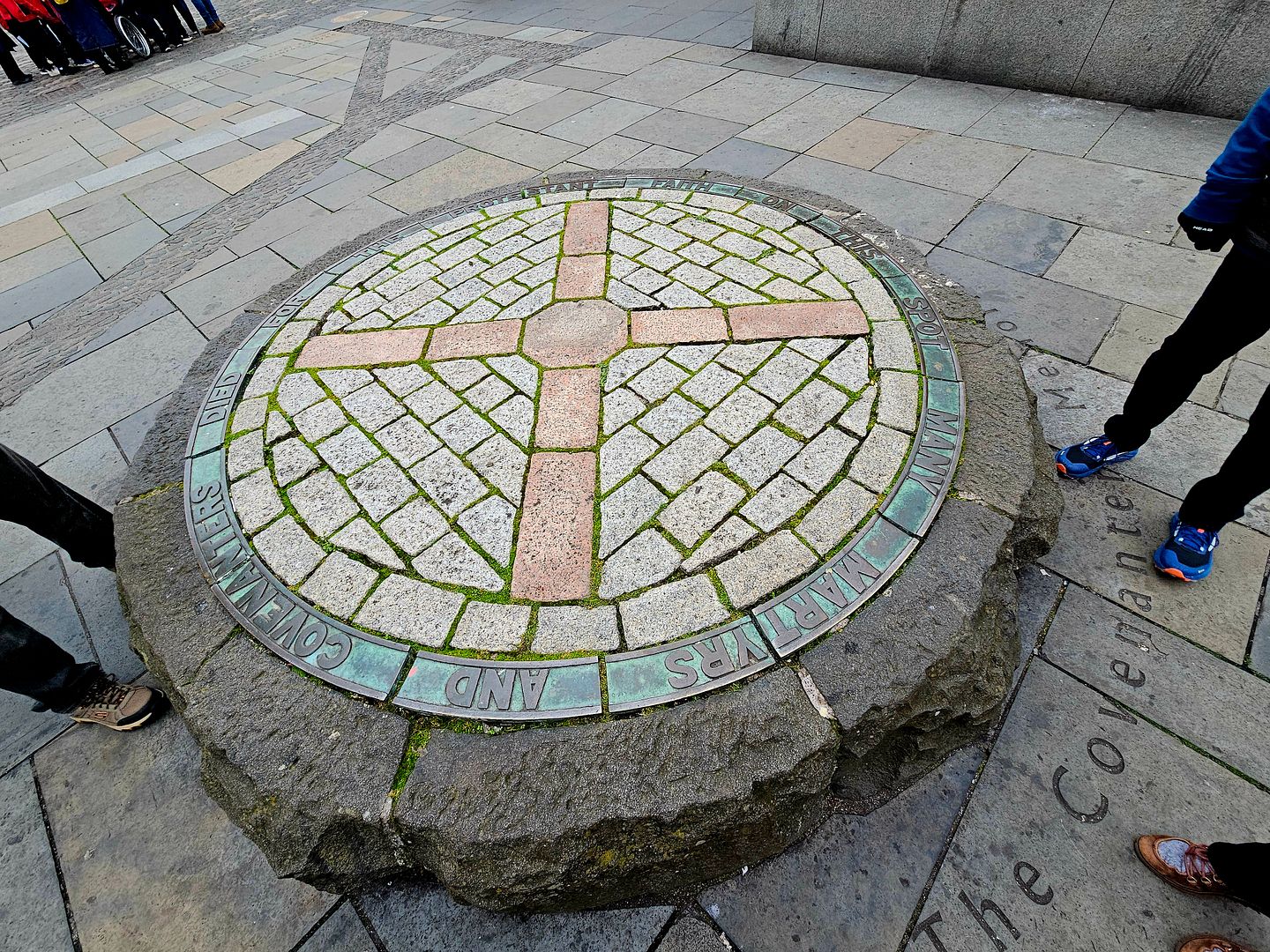
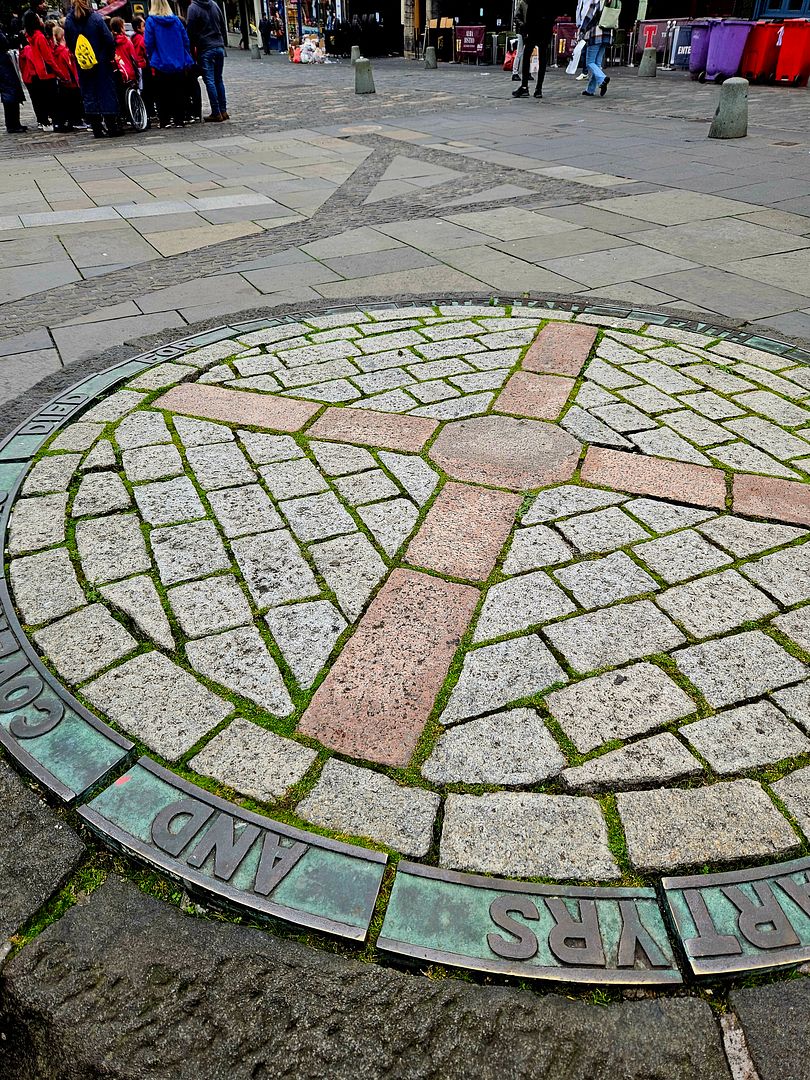
This is where the ‘meat’ of our Reformation Tour began as we were told that this was the route that martyrs would take from their sentencing in the courts above then down Victoria Street to the public gallows. Once we reached Grassmarket we stood around this monument to Martyrs and Covenanters who lost their lives at this spot for their faith.

The Grassmarket is an wide open street on the south side of Edinburgh’s Old Town. The city had the public gallows there, and many Covenanters were executed during the Covenanting period.

A circular memorial, erected by public subscription in 1937, marks the site, and an adjoining plaque lists the names of the many Covenanters who were hanged there.

In a recent renovation of the locality, a representation of the gallows’ shadow was made on the ground using different coloured stone, as seen in the picture to the left.

Our tour continued from here. We made stops at Greyfriars Kirkyard, The National Museum, The National Library and St. Giles Cathedral.

At this stage in January, many months later, I’m not sure of the order of those stops! Travel failure in not writing a journal while on our trip. I’ll put it down to the fact that our days were so full we didn’t have a lot of down time in the evenings.

Hello to February. I was hoping to have our Scotland Journal Posts done by the end of January but it will take a few days into February to accomplish that.

Scotland Travel Journal ~ Edinburgh Castle 4

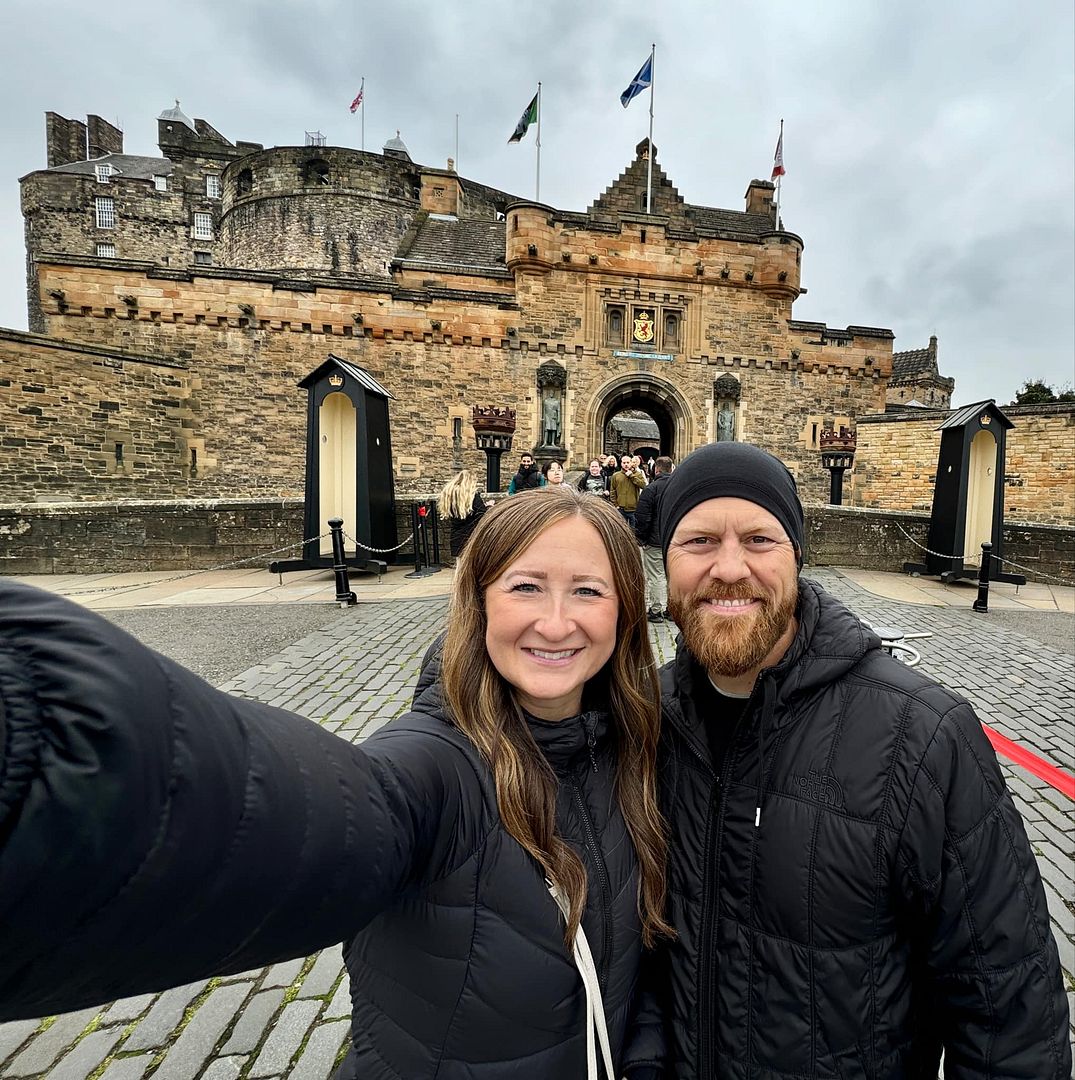
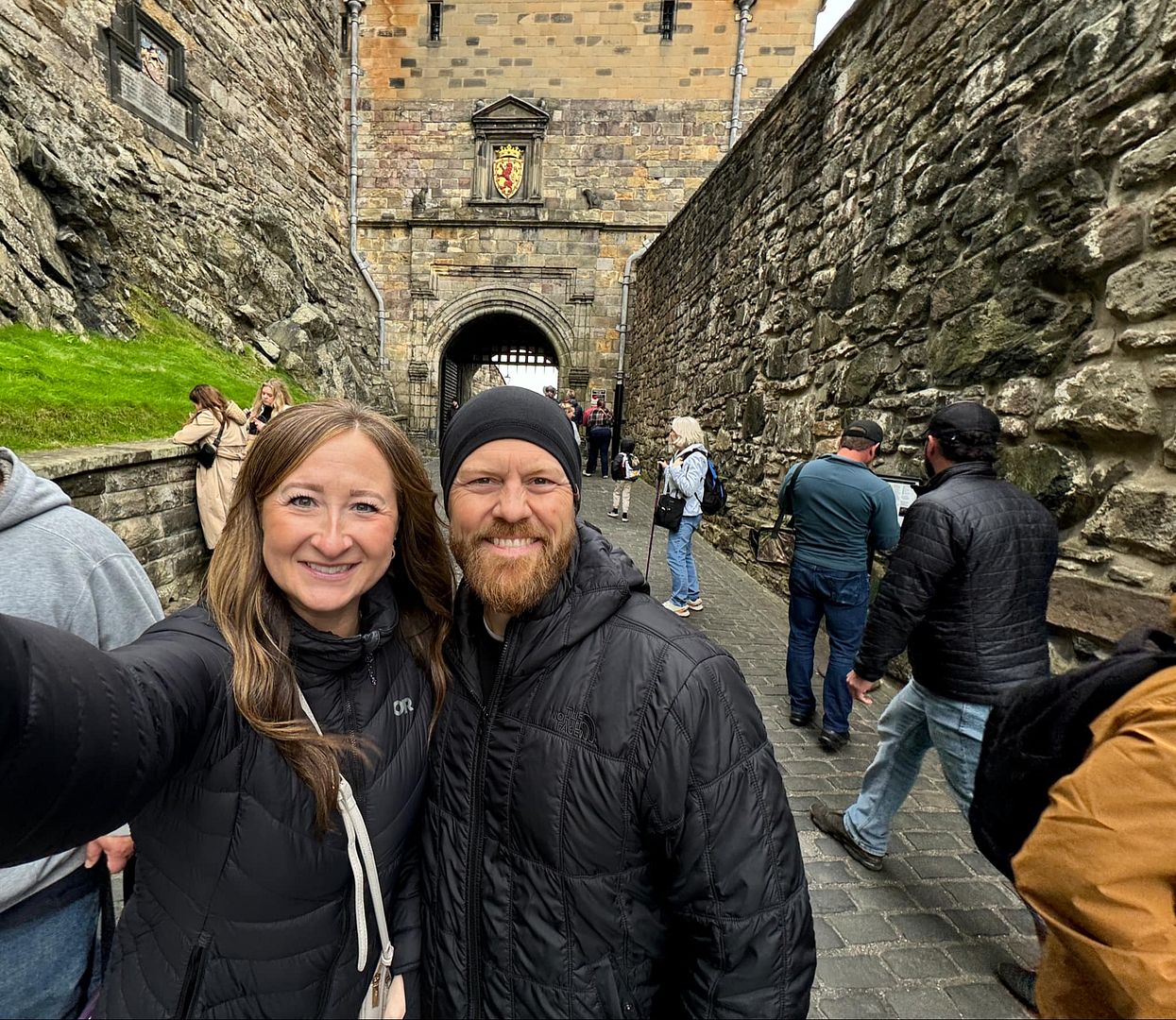
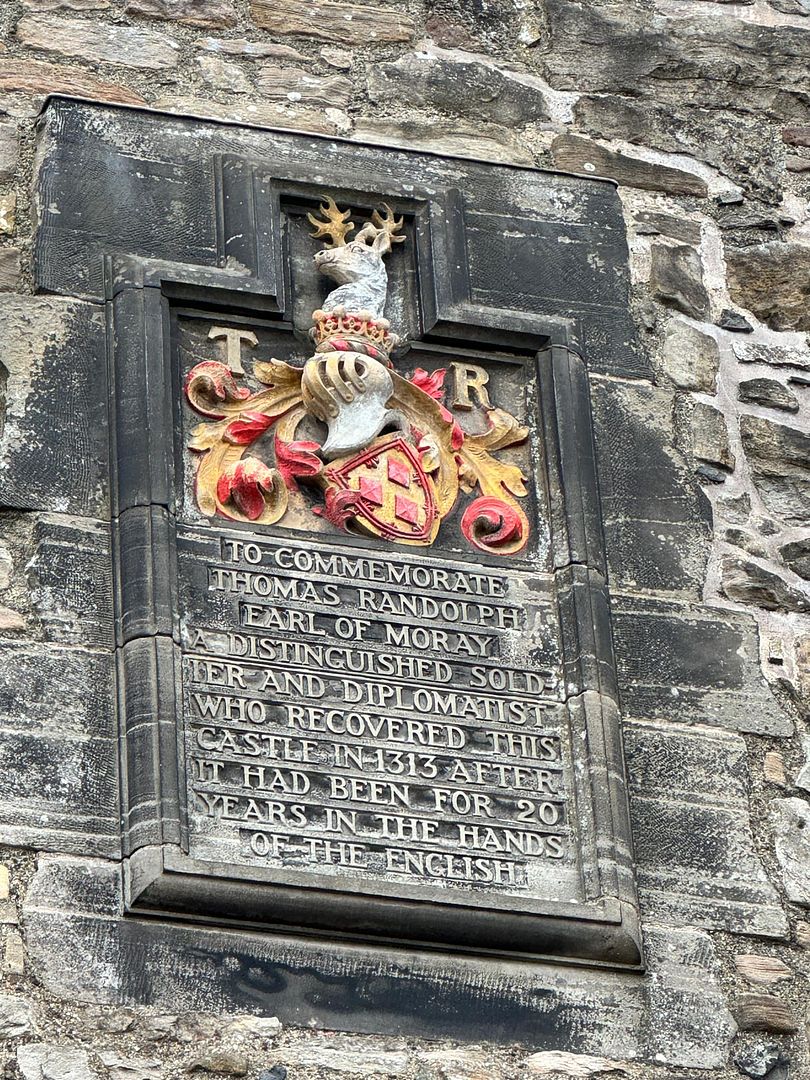
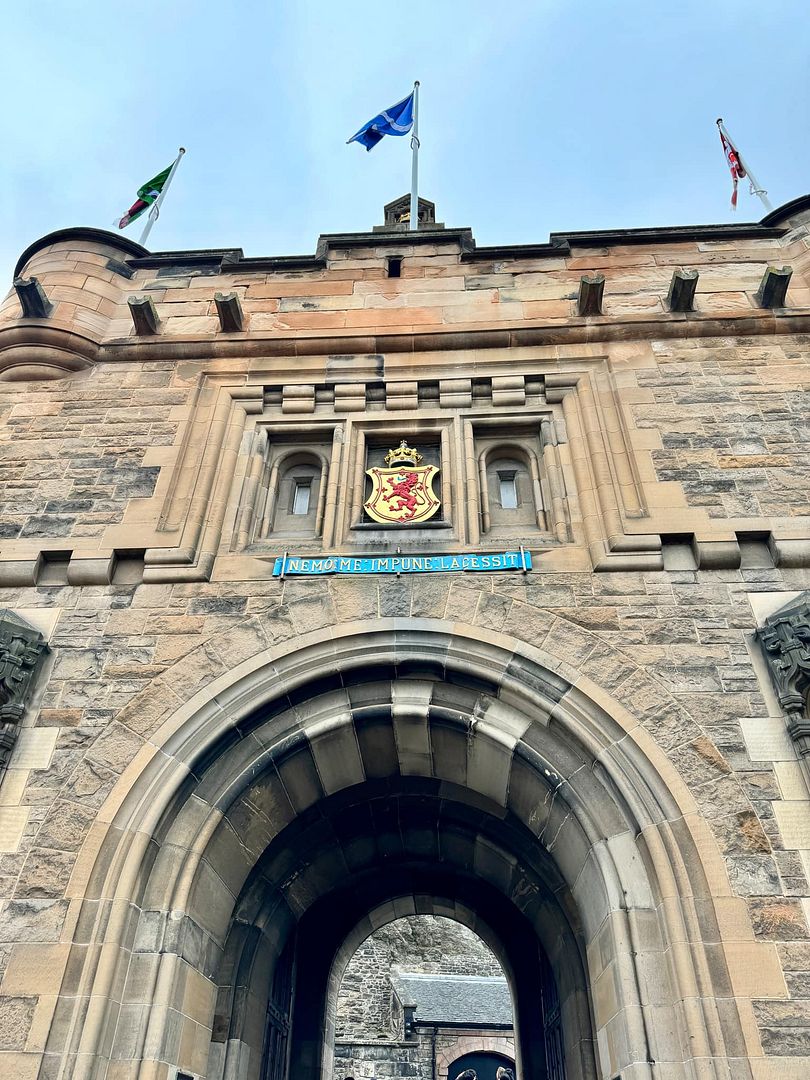
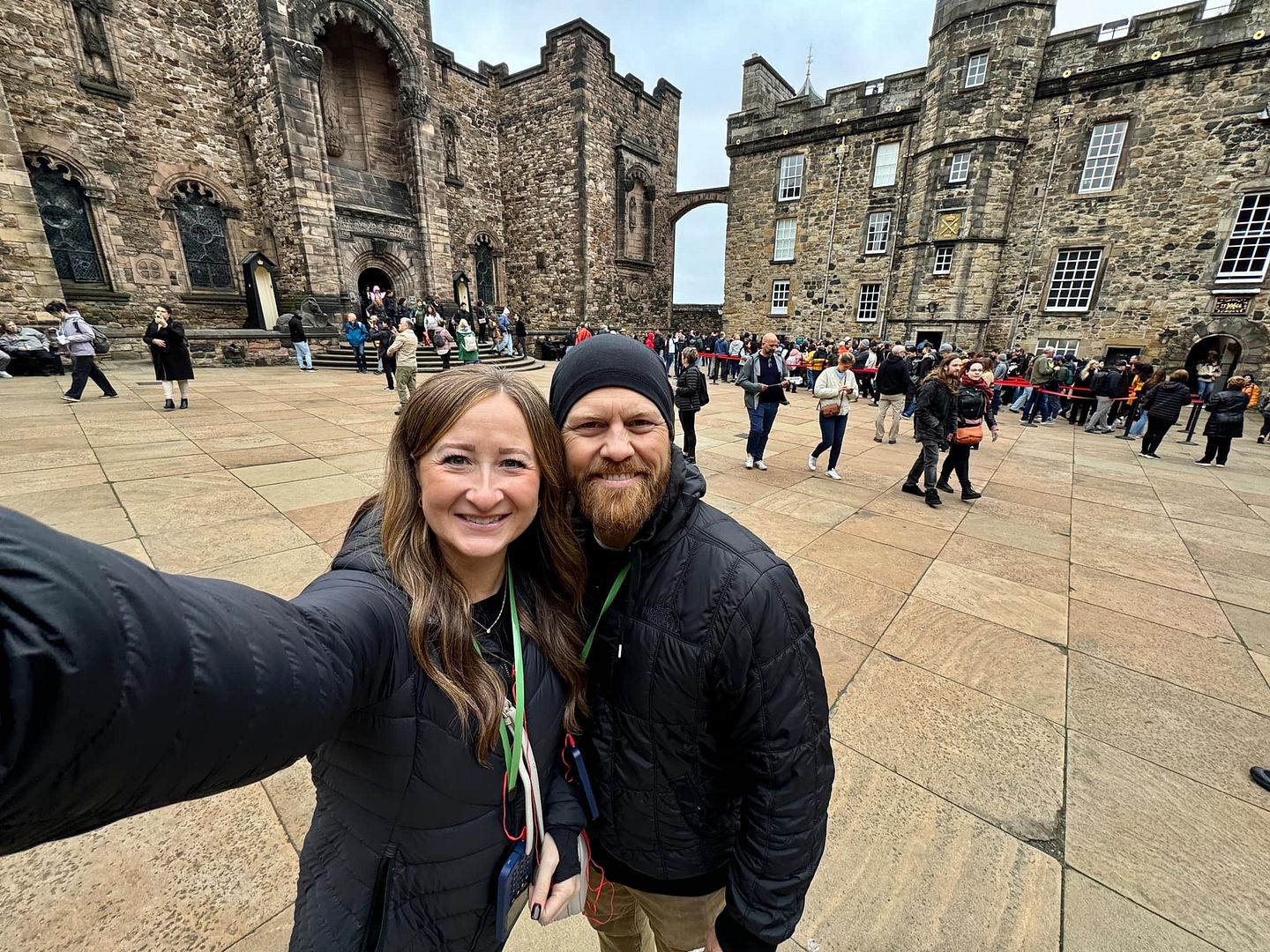
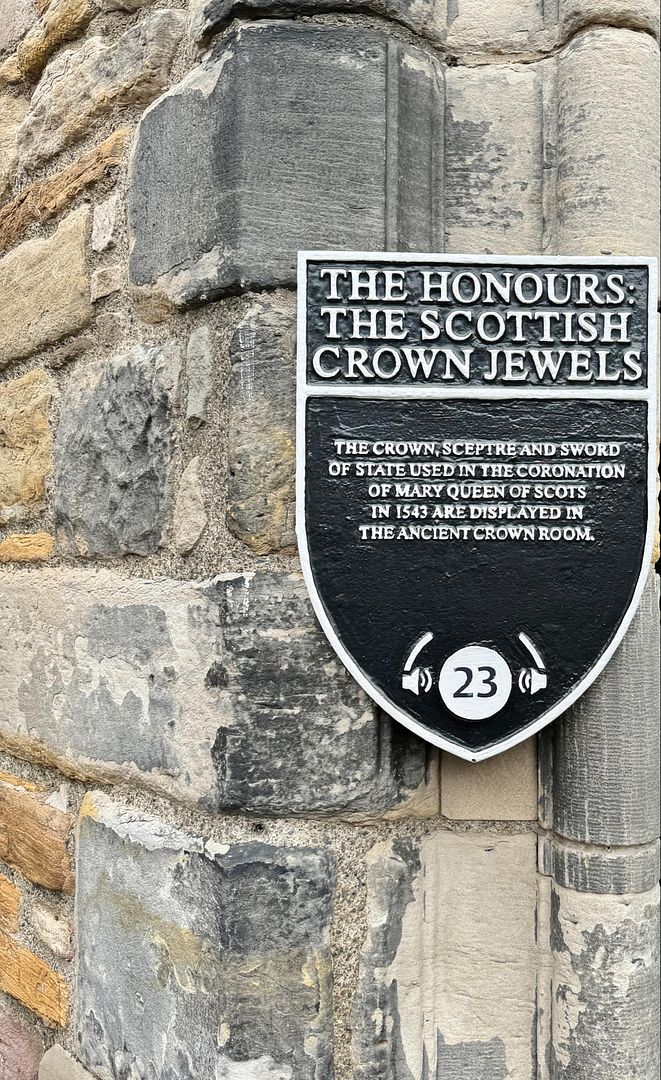
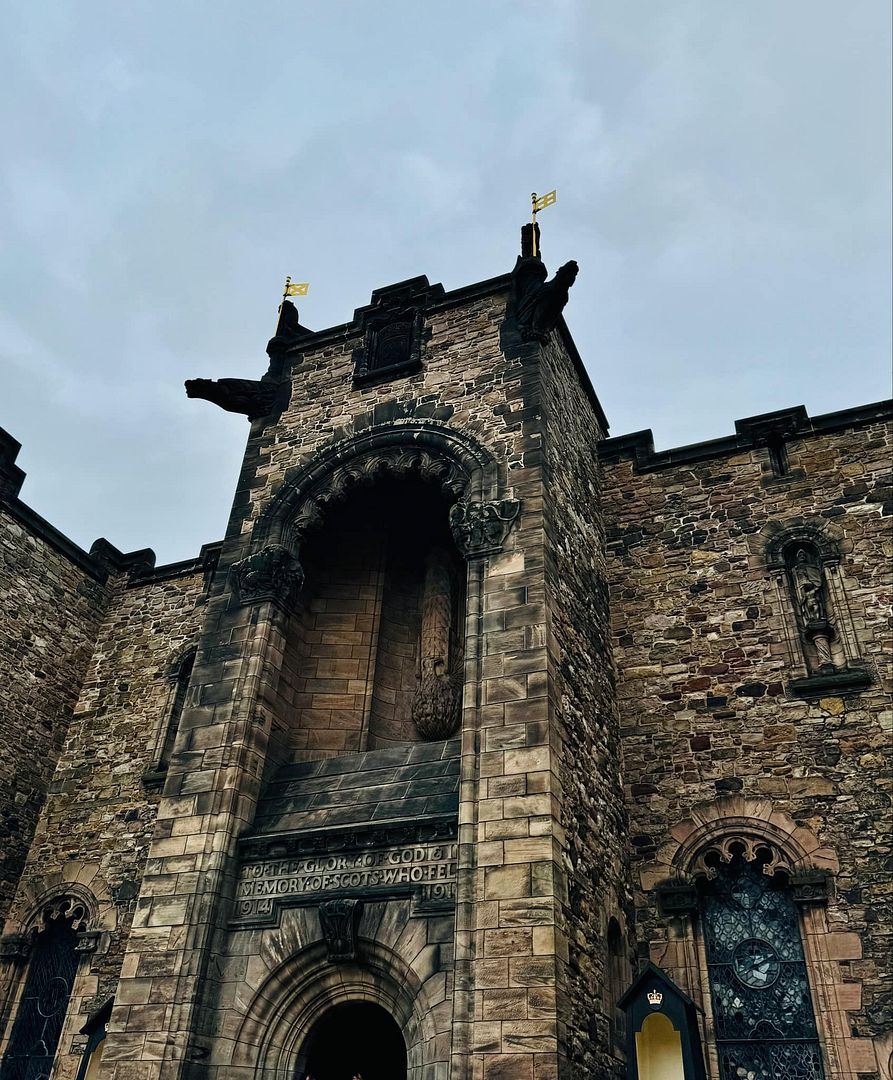
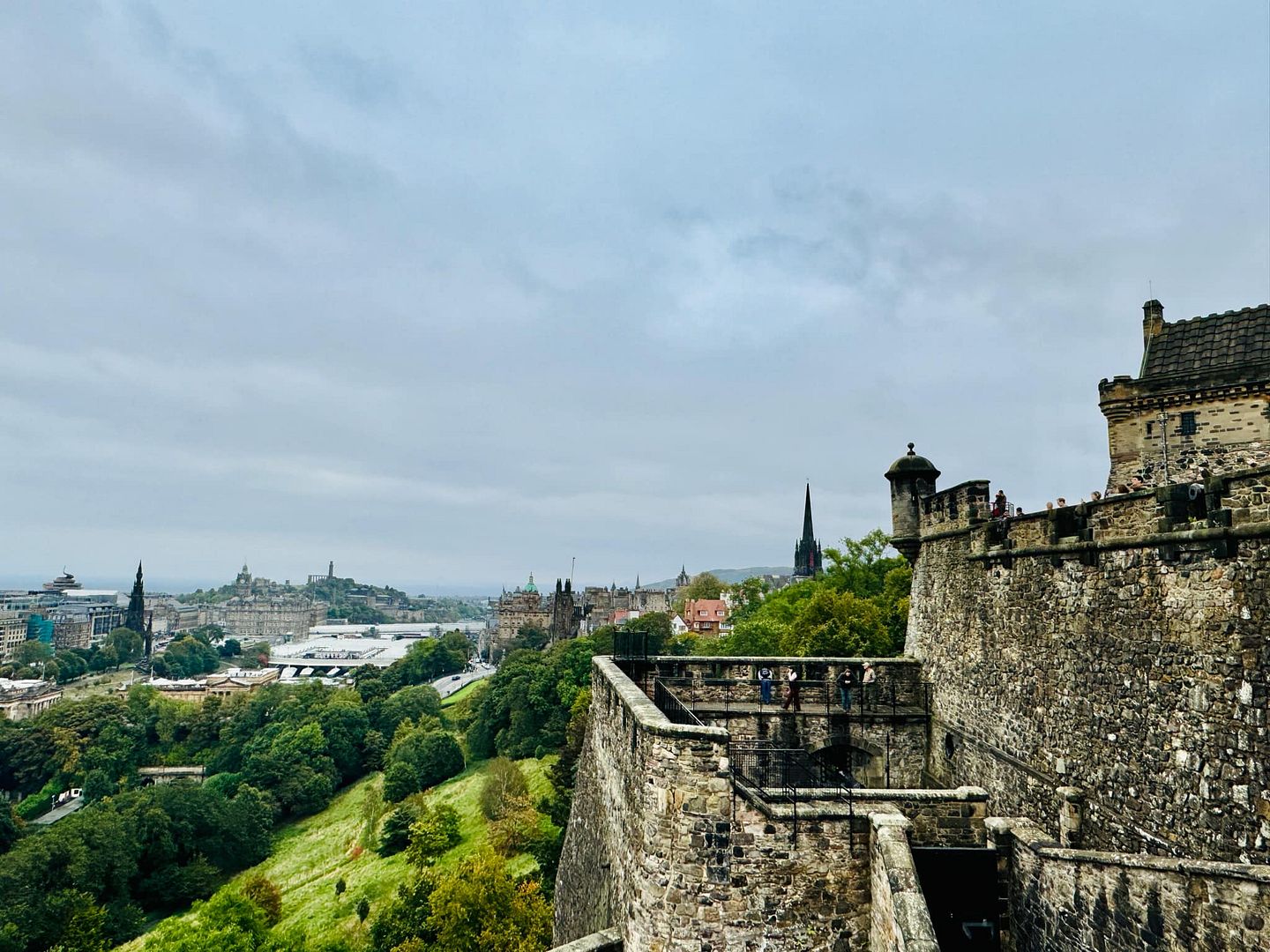
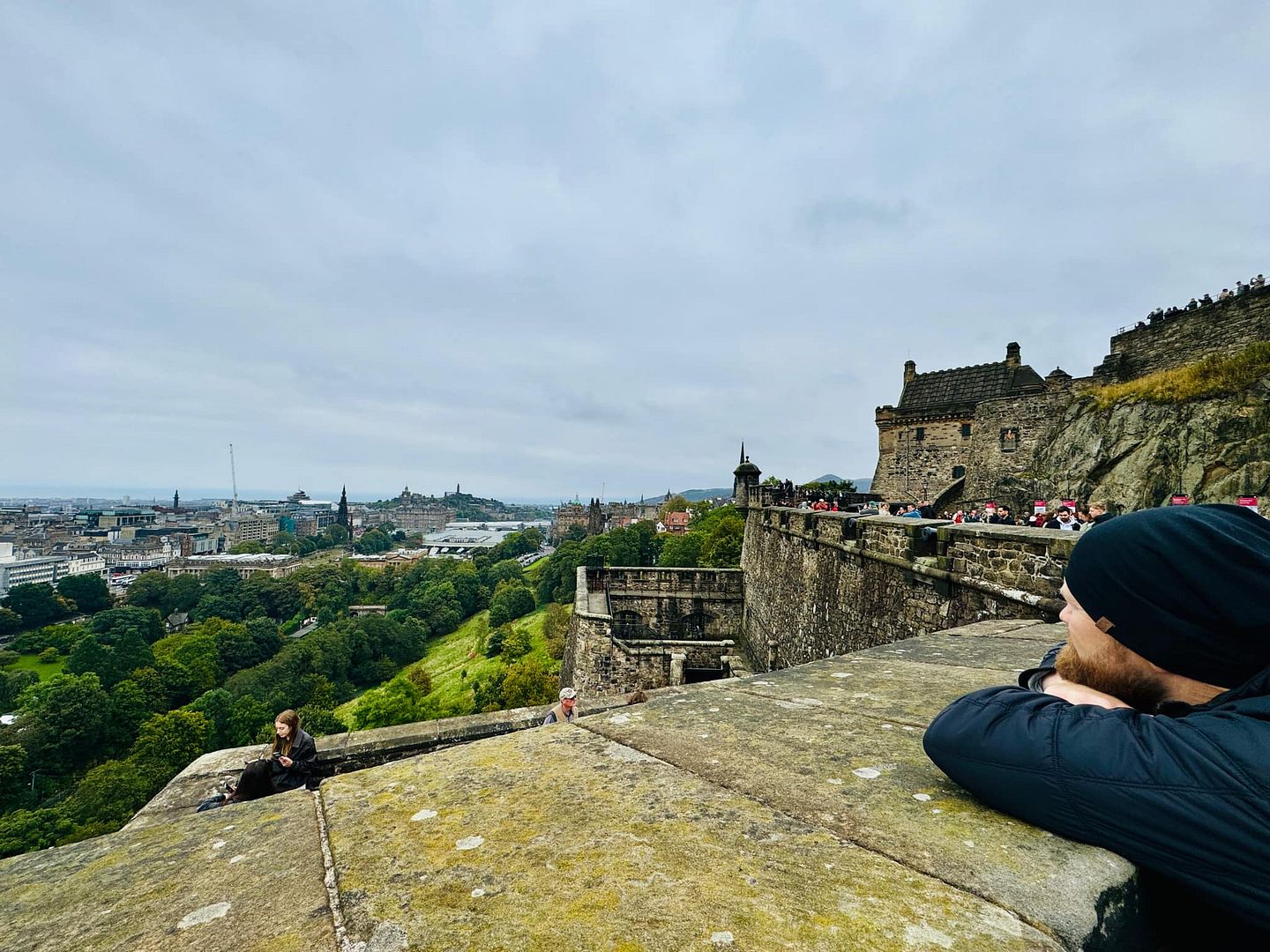
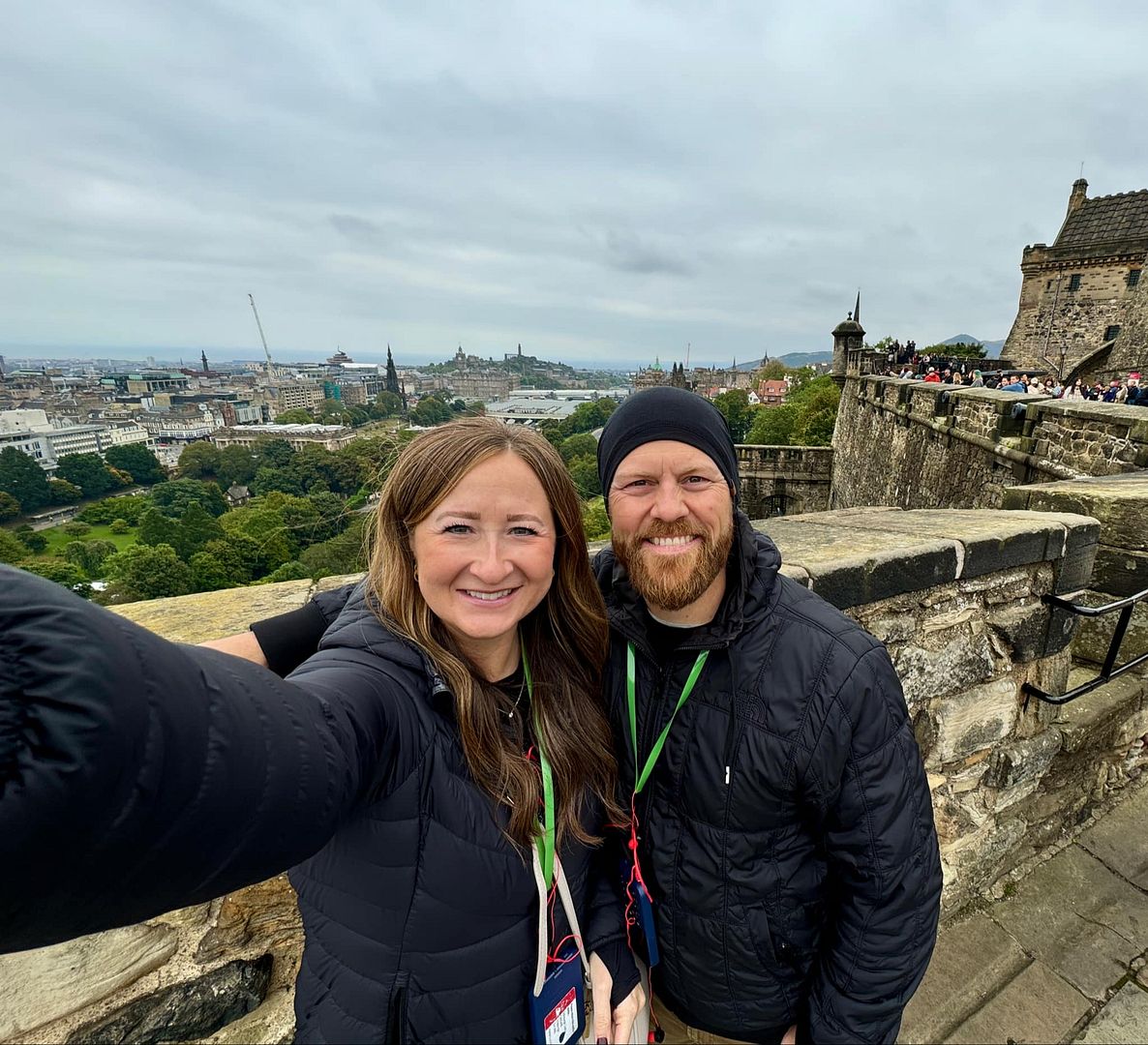
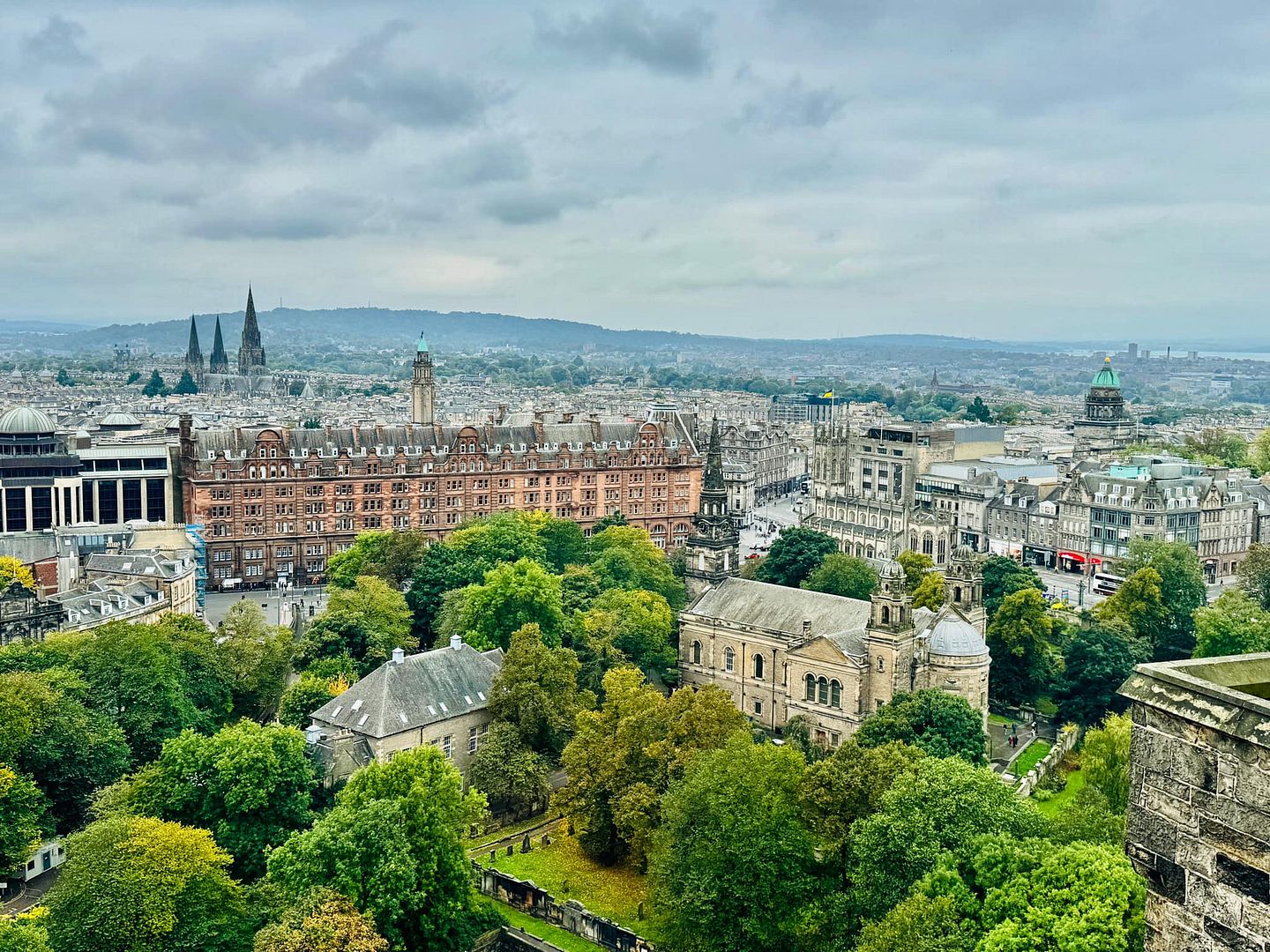
Josh and Laura toured Edinburgh Castle on Sunday the 22nd of September. Laura shared her photos with me.


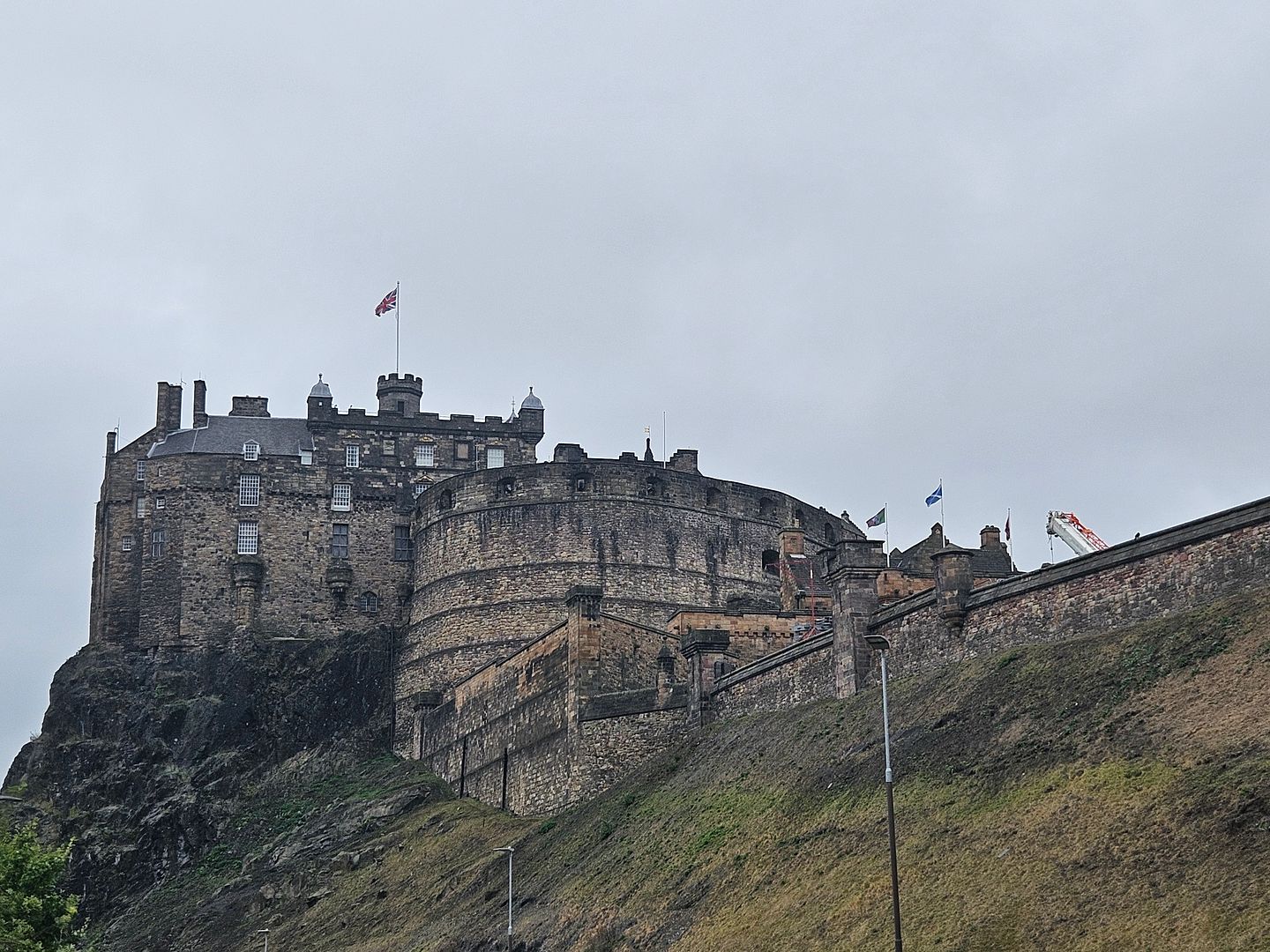
From this view of Edinburgh that Laura captured at the top of the castle walls you can see the Church I was visiting while they were in the castle, The Parish church of St. Cuthbert. Further in the distance the three spires you see are from St. Mary’s Episcopal Cathedral that we visited later in the afternoon.


The castle is a worthwhile place to visit for any first timers to Edinburgh. You can read about the history of the castle here.

My next few posts will be from our last full day in Edinburgh. We had a private tour in the morning and continued to walk our legs off in the afternoon!

Back to the present: Today is the last day of January and in our little corner of the world we are getting some light snowfall. Hope all is well in your corner!

Scotland Travel Journal ~Edinburgh 3

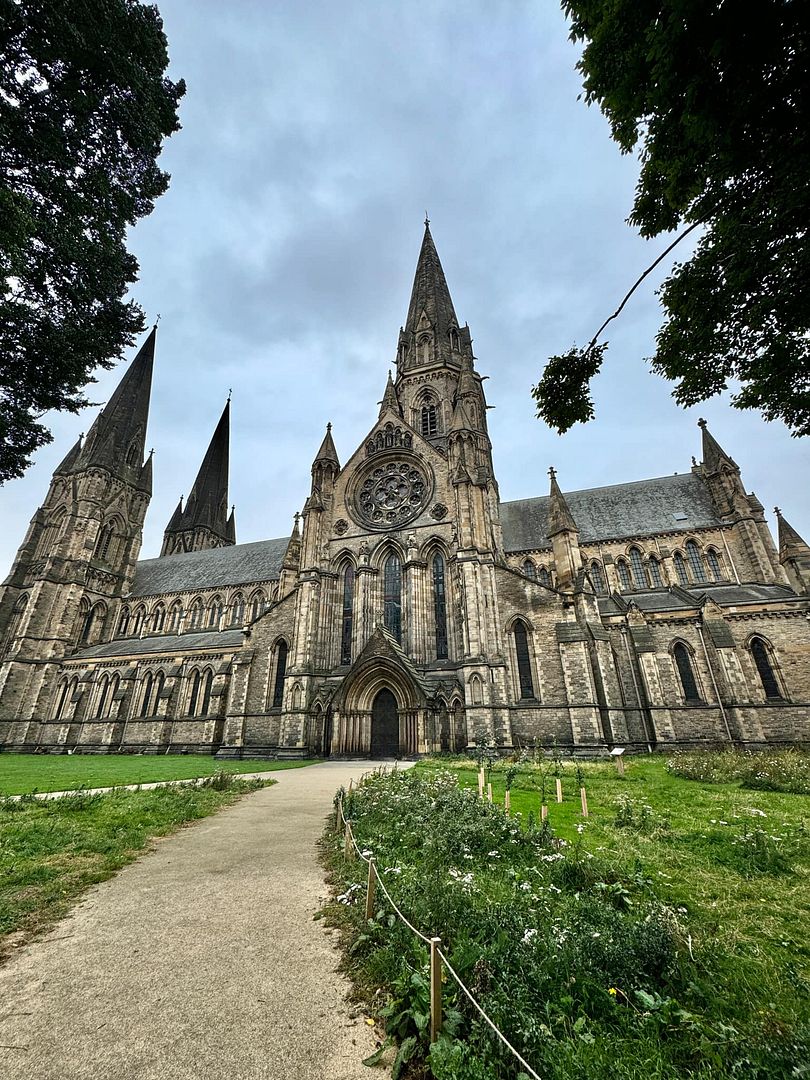
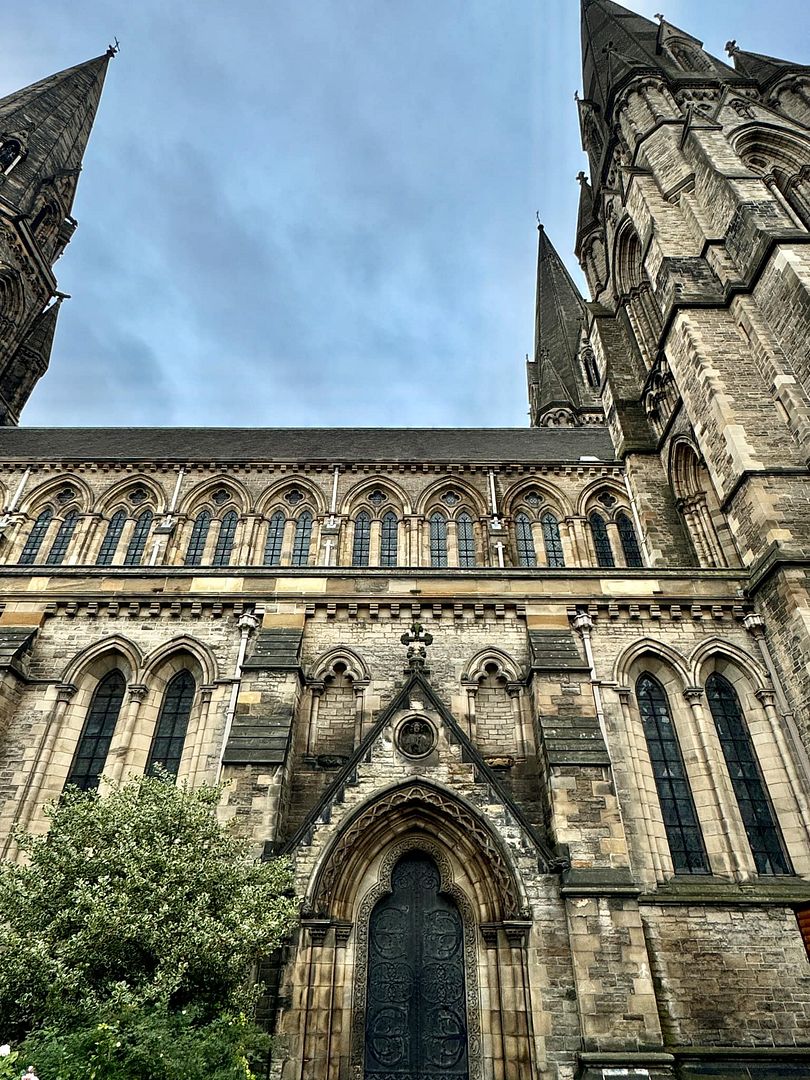
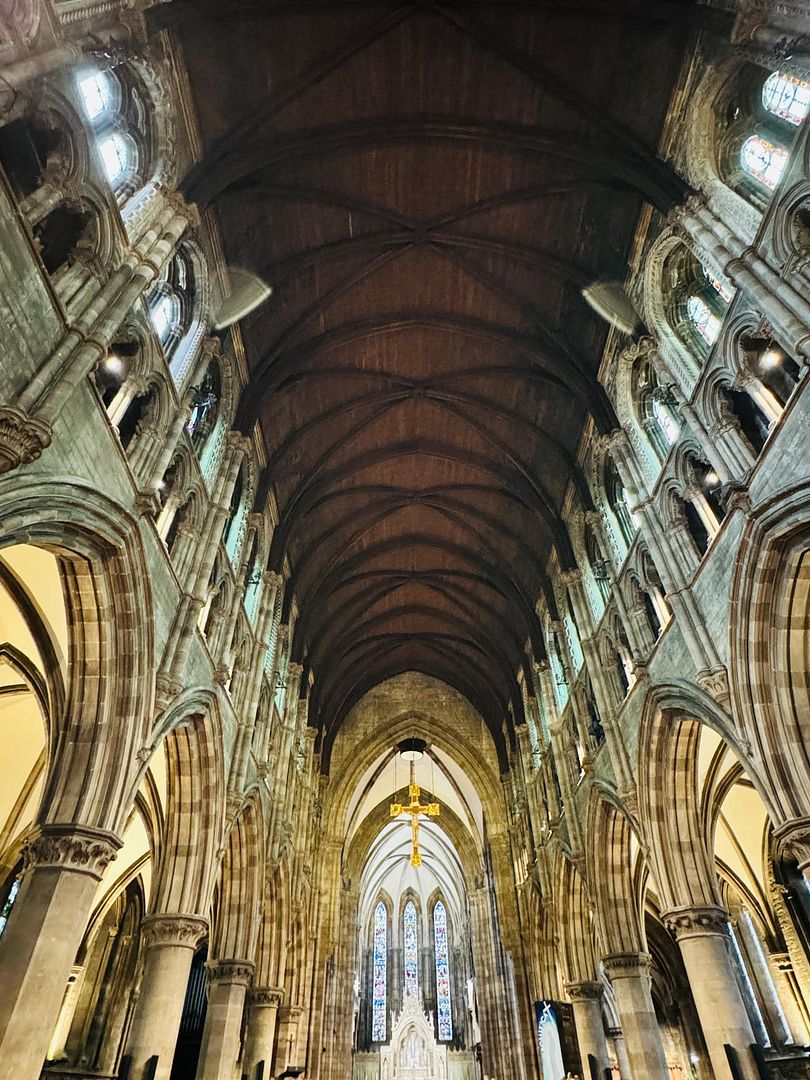
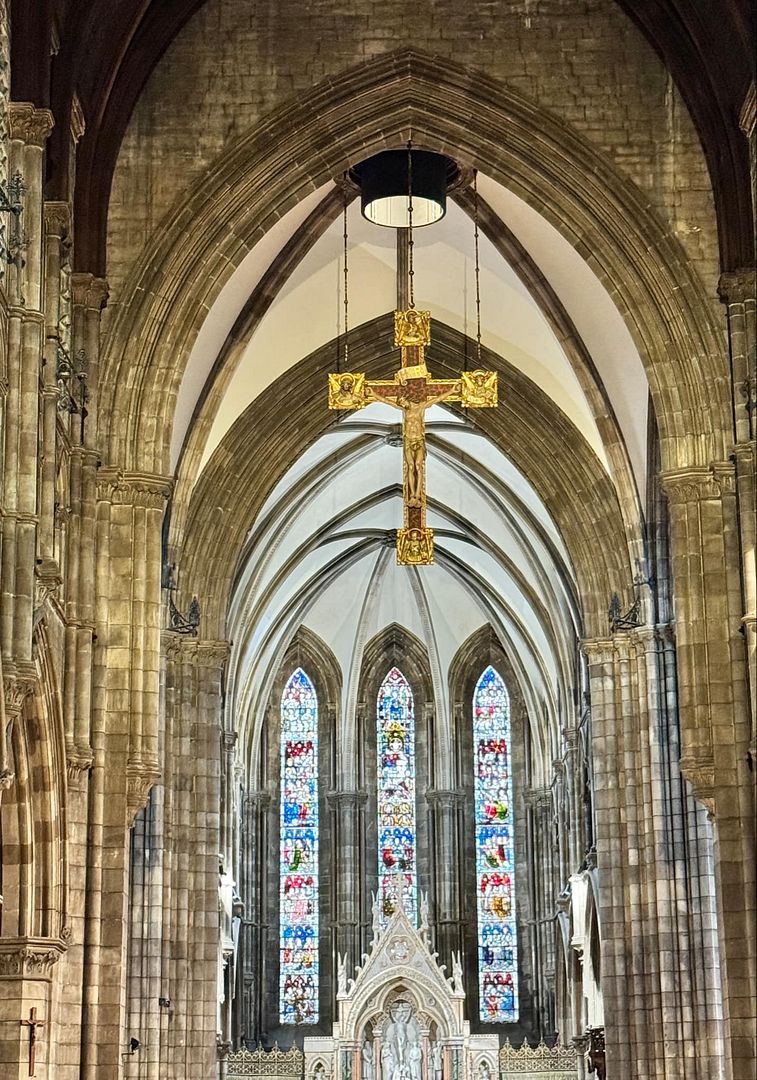
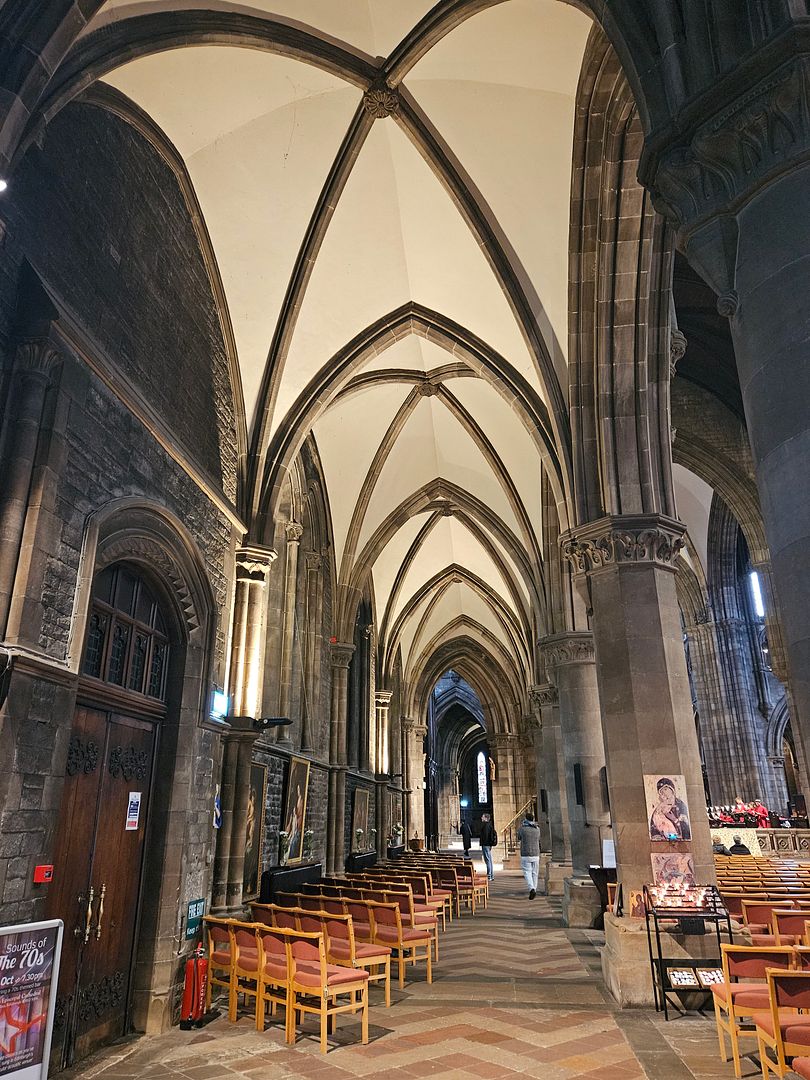
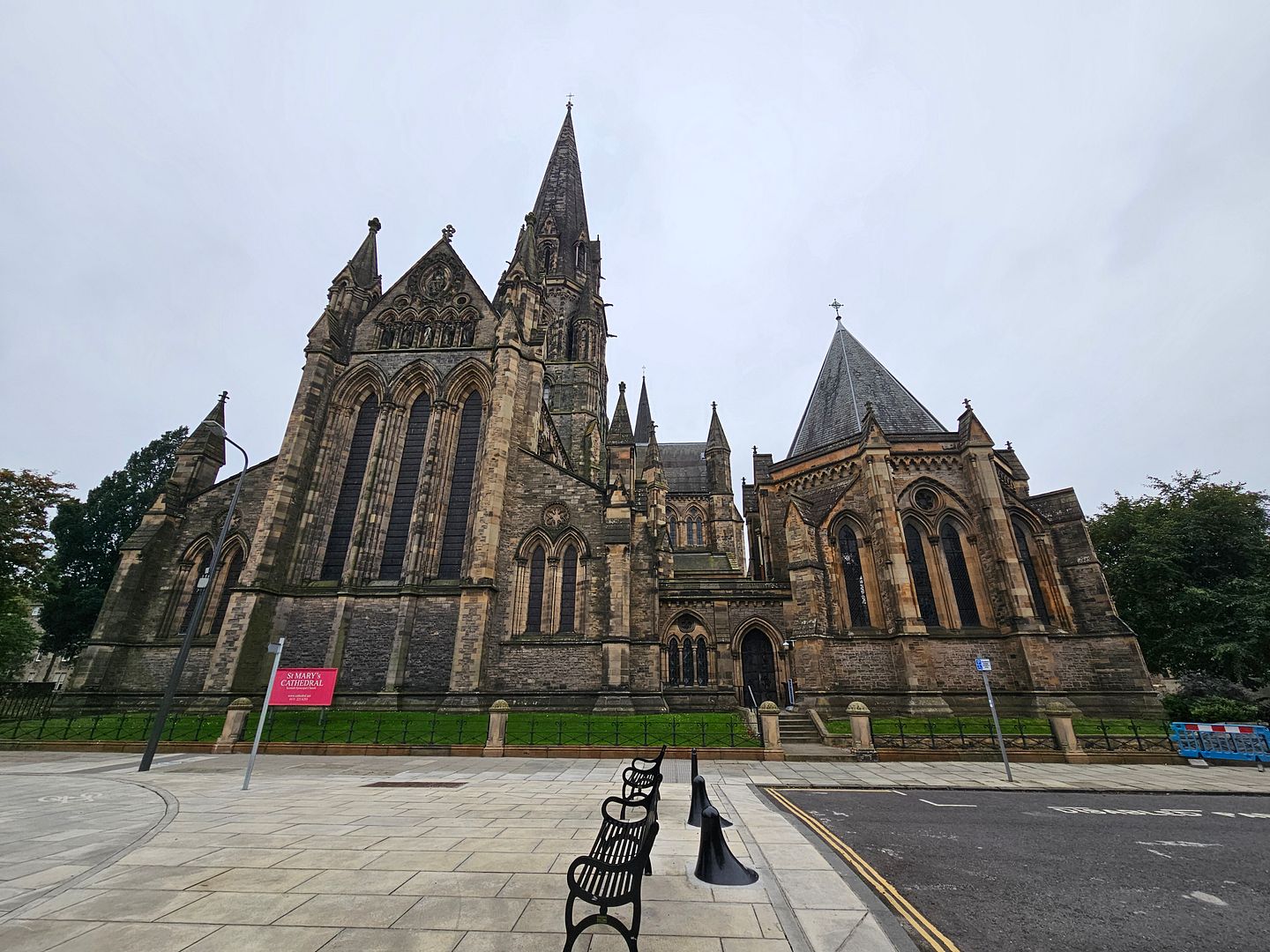
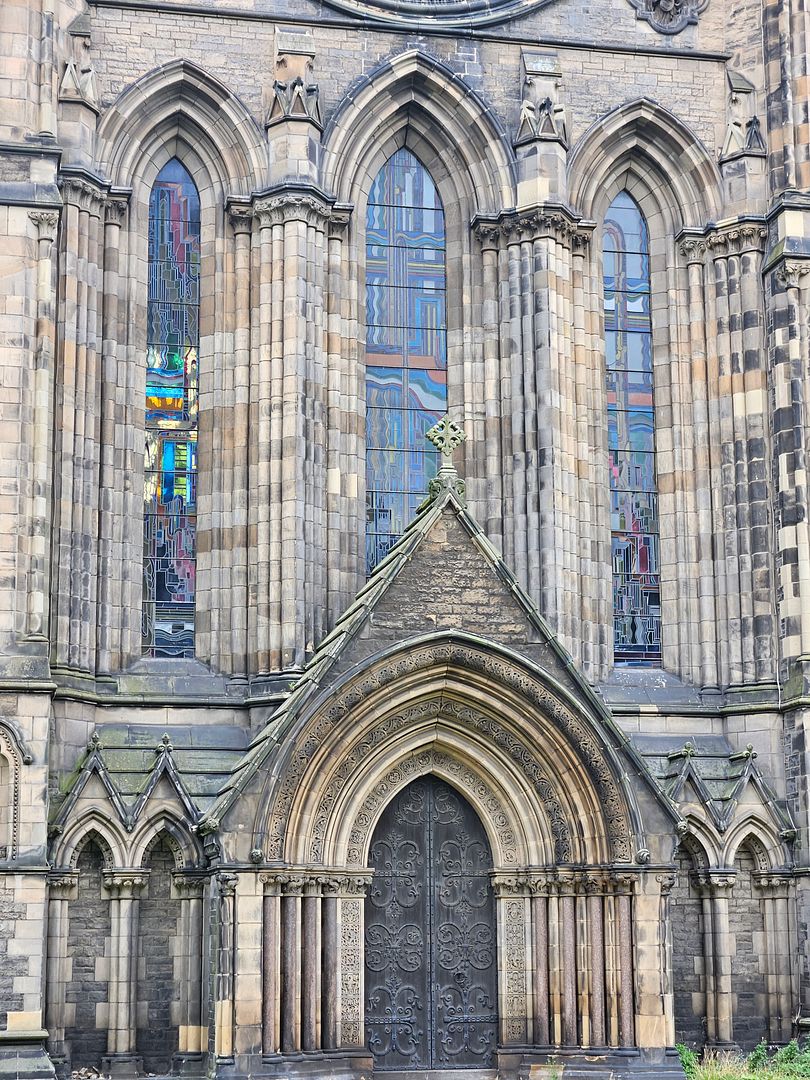
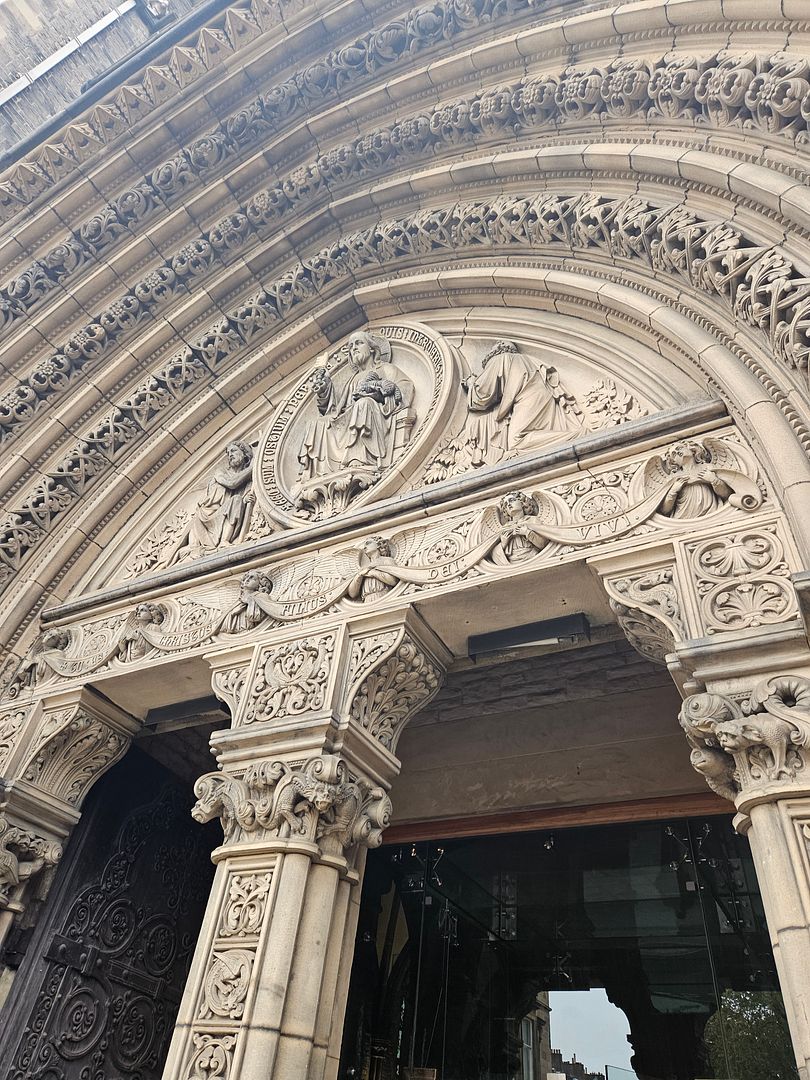
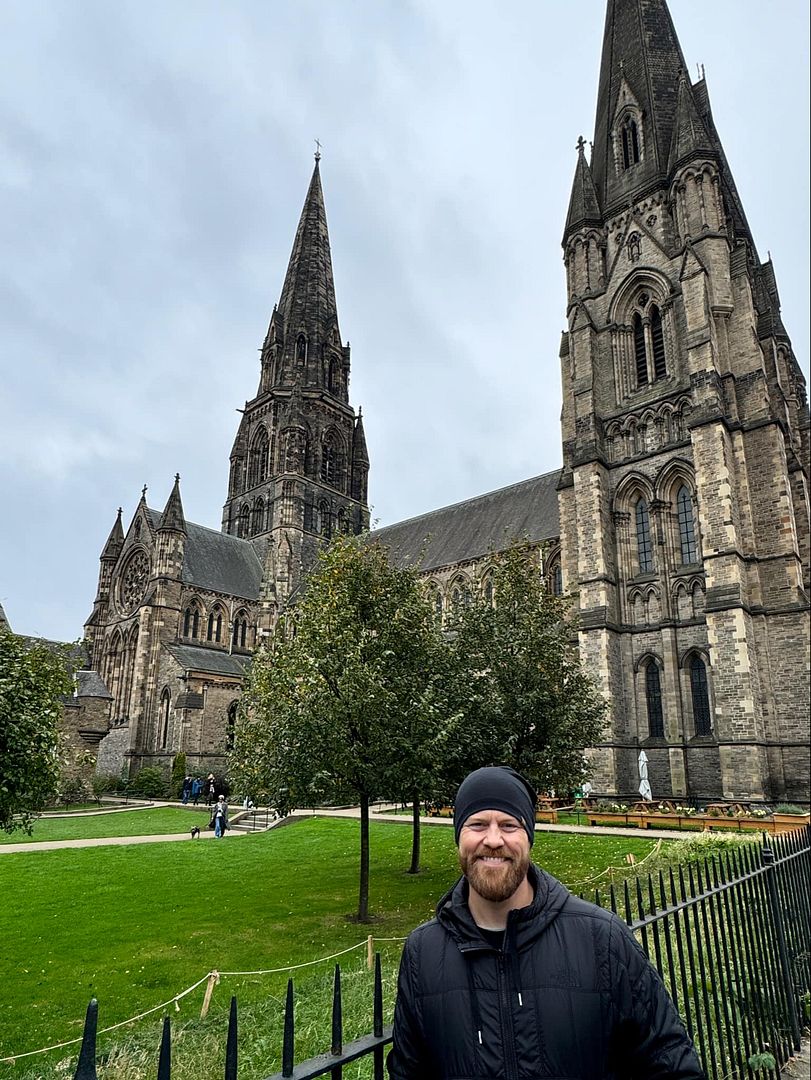
Continuing our sight seeing experiences in Edinburgh on Sunday September 22nd we traveled by Uber from the Grassmarket area to St. Mary’s Episcopal Cathedral for evensong. On this Sunday evensong was from 3:30 to 4:30. We arrived a little early so we had time to take some photos outside and inside before the service began.

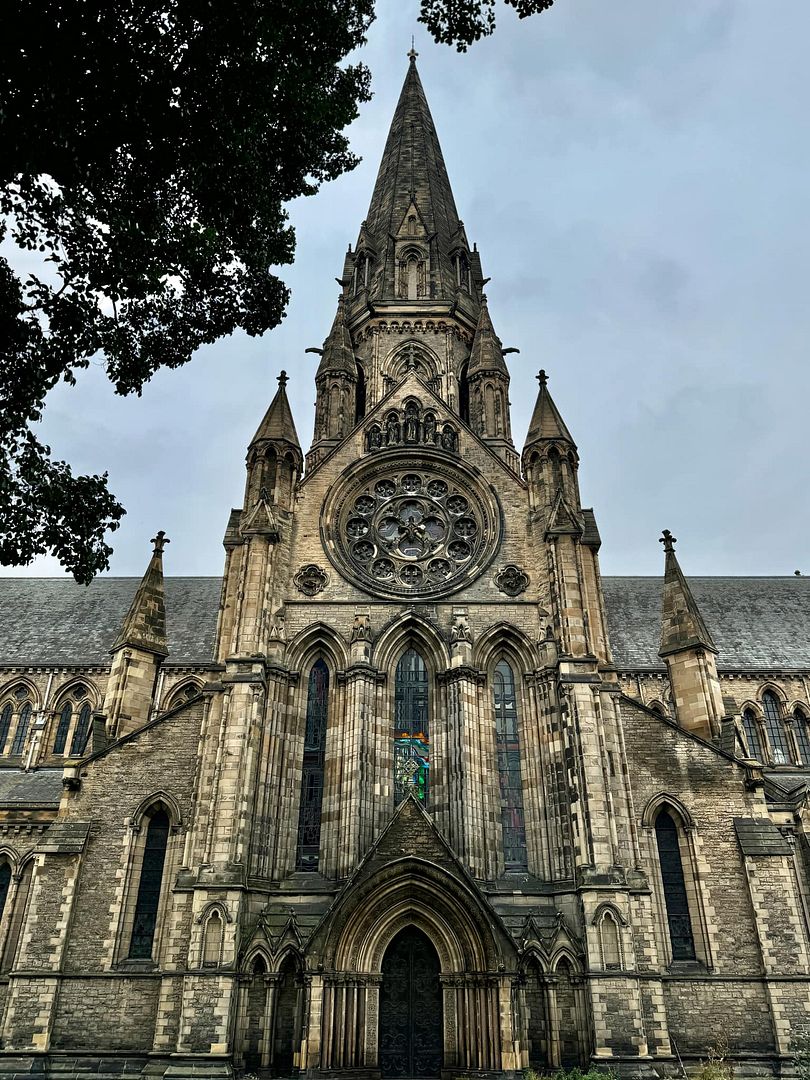
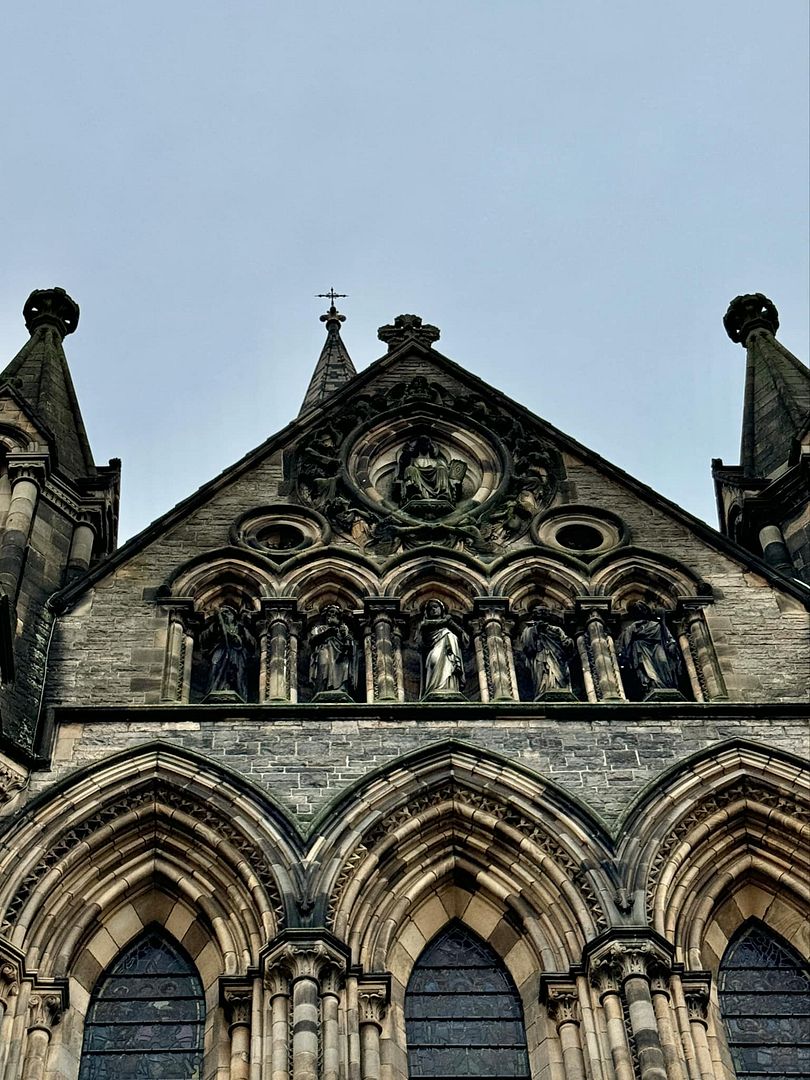
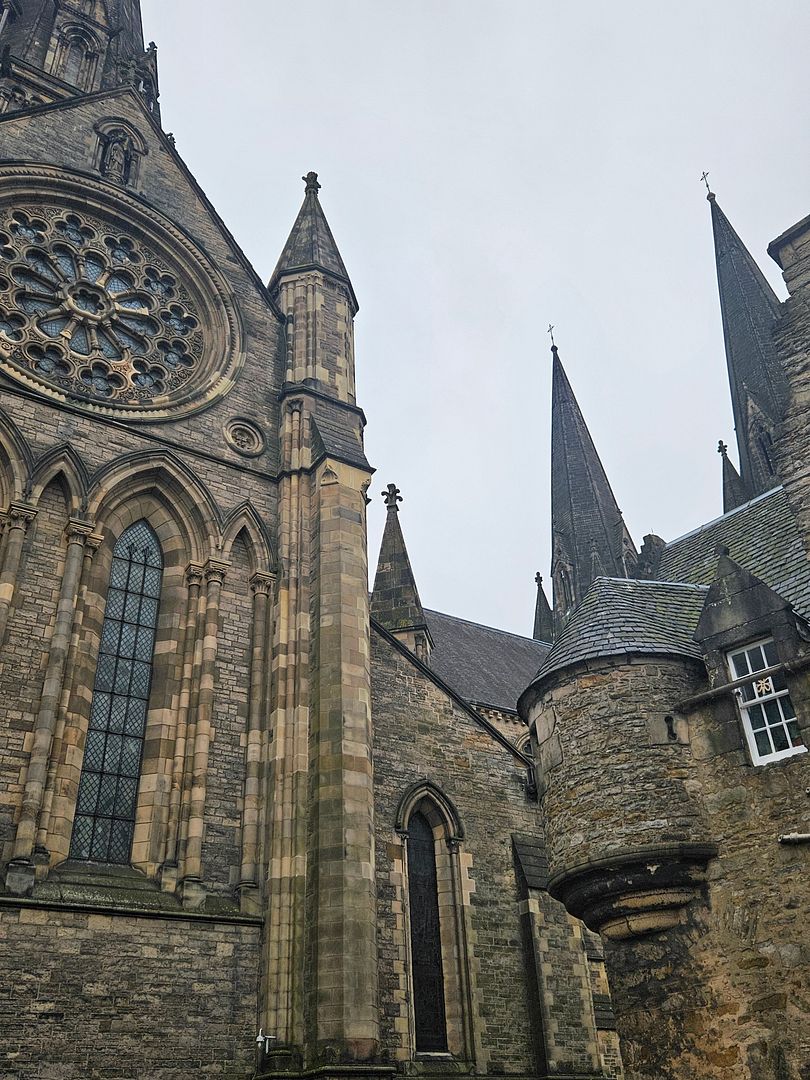
St Mary’s Cathedral is the Mother Church of the Diocese of Edinburgh, the largest Cathedral in Scotland, and the only one to maintain the tradition of daily Choral worship. With its three spires dominating Edinburgh’s western skyline, St Mary’s is a renowned masterpiece of Victorian Gothic architecture. Designed by Sir George Gilbert Scott, the Cathedral was consecrated in 1879, and has been open daily for public and private prayer ever since.

Some History of the Cathedral can be found here.

We weren’t able to visit the interior of the Song School but found this YouTube that shows the beautiful panels!

We appreciated the beautiful singing and the scripture readings during the Evensong but to be honest and transparent some of the prayers given at the end of the service made our heads snap up. Bottom line they didn’t line up with Biblical accuracy and were bent toward human speculation. It put our Berean mindset to the test.

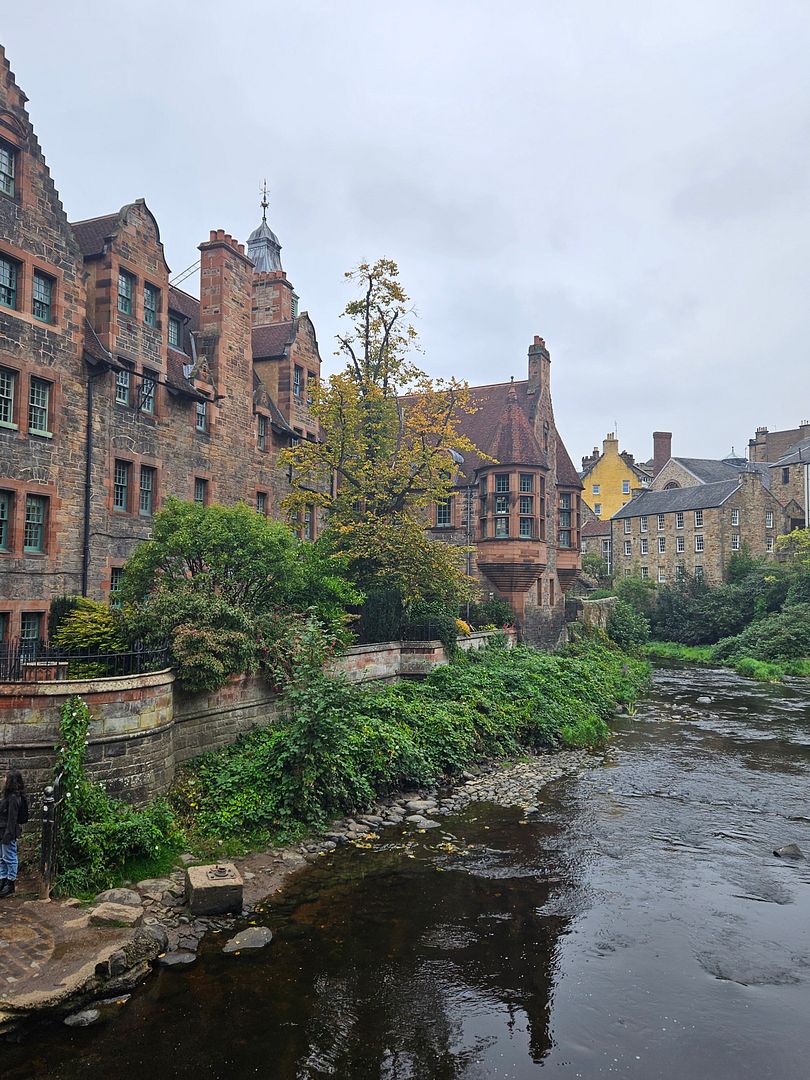
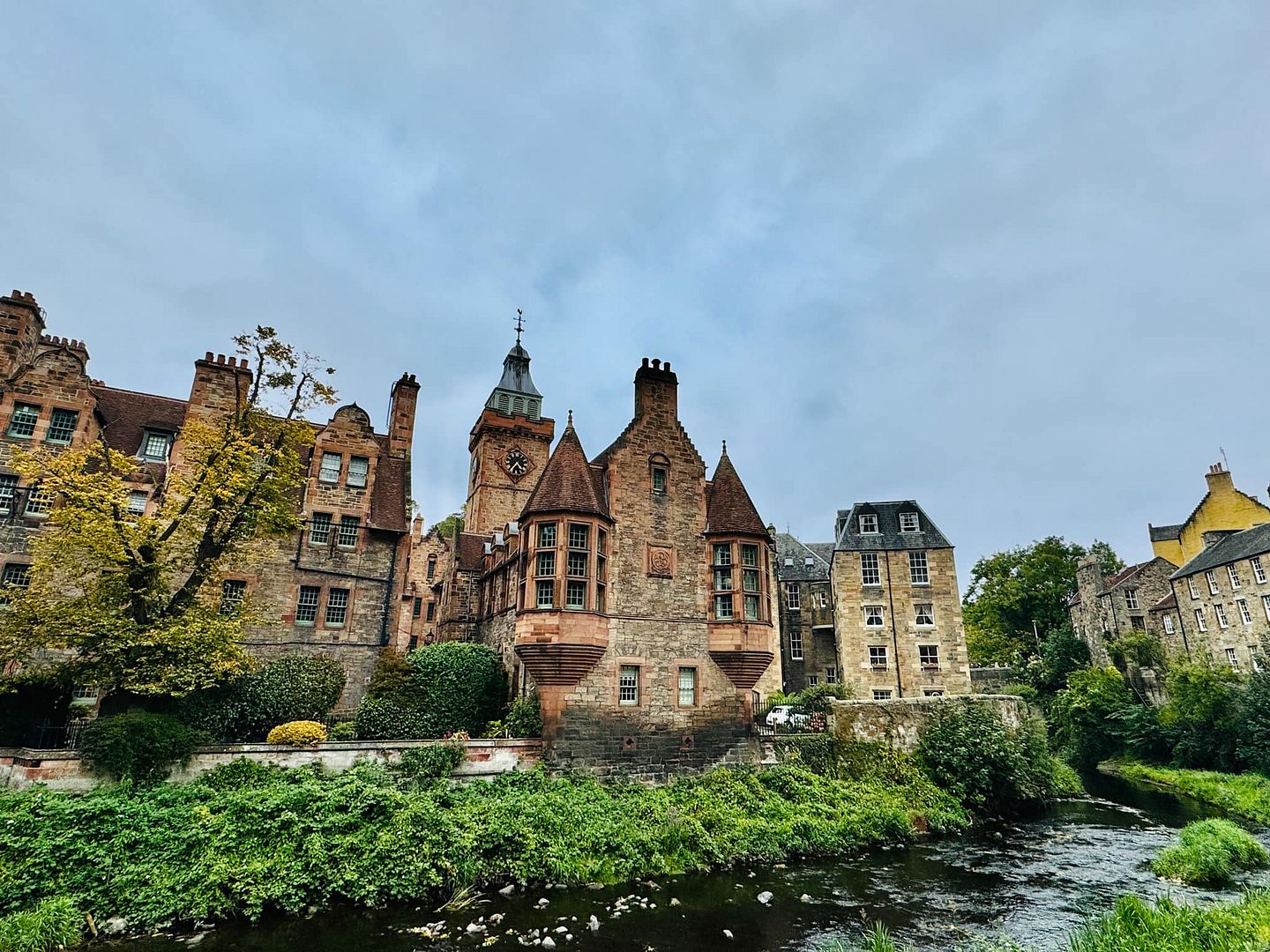
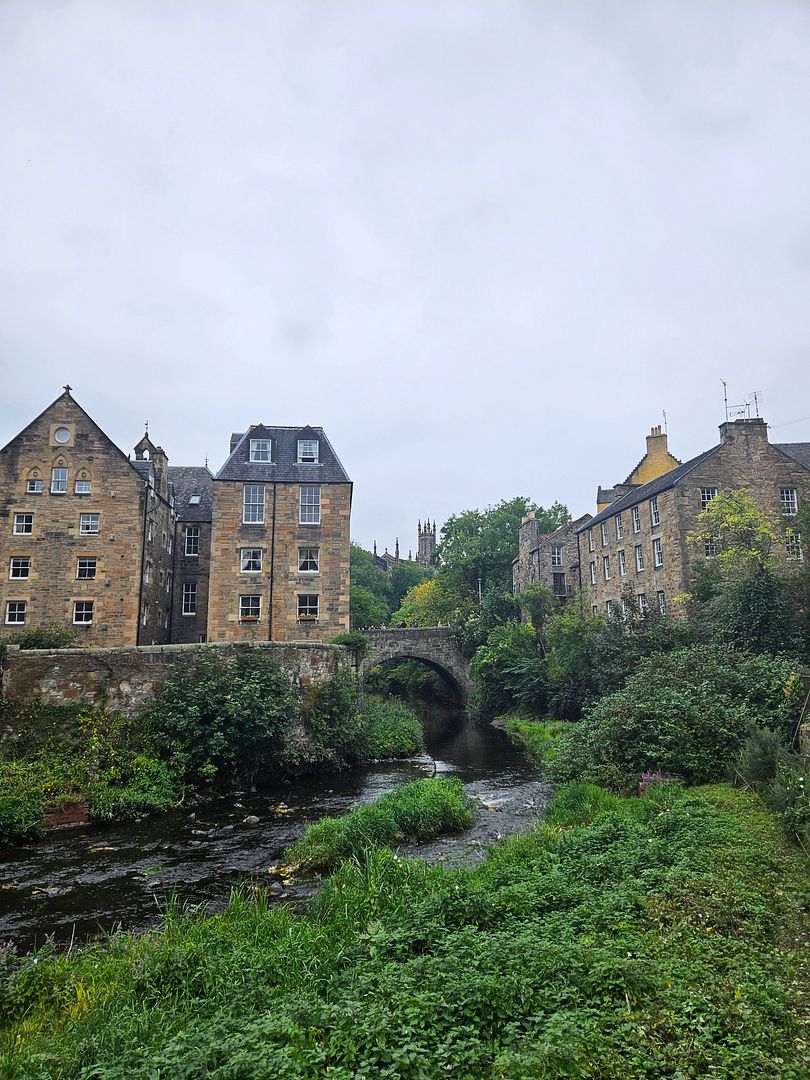
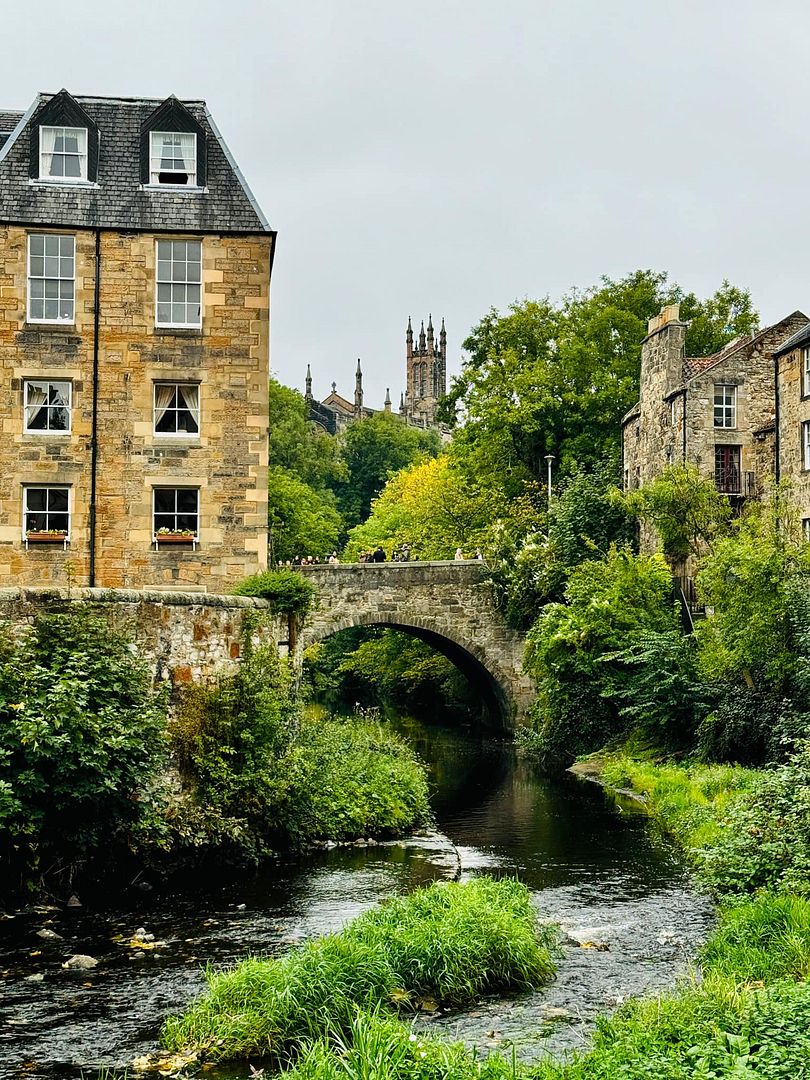
When Evensong was over we decided to walk a short distance to see picturesque Dean Village.


Dean village is a picturesque quiet village in Edinburgh. A beautiful hamlet!

We again decided on an Uber to get us back to our apartment to see how Greg was doing and if he was up to walk to dinner. He was ready for a meal so we walked down Thistle Lane looking for a likely spot for dinner. Again we didn’t have reservations. We walked by a Thai restaurant that looked very popular. After a short distance further we decided to go back to the Thai Restaurant and see if we could be seated. The owners took pity on us and found a spot for us explaining they needed the table soon for a reservation. We assured them we didn’t need a lot of time to eat. The food and service was excellent and we were pleased. We were done in good time and went back to our apartment with our ‘doggie bags’. We highly recommend Dusit Thai Restaurant.

Correct me if I have my day off for our Thai meal being on Sunday and not Monday, Laura or Josh. 🙂

Our Sunday was complete. I will share Josh and Laura’s photo travelogue of their time at Edinburgh Castle next. Monday would be our last full day in Edinburgh.


Scotland Travel Journal ~ Edinburgh 2

On Sunday September 22nd we would have an eye full of amazing sights to see but first, coffee!

The Black Sheep was just around the corner from our apartment and we started our mornings there.

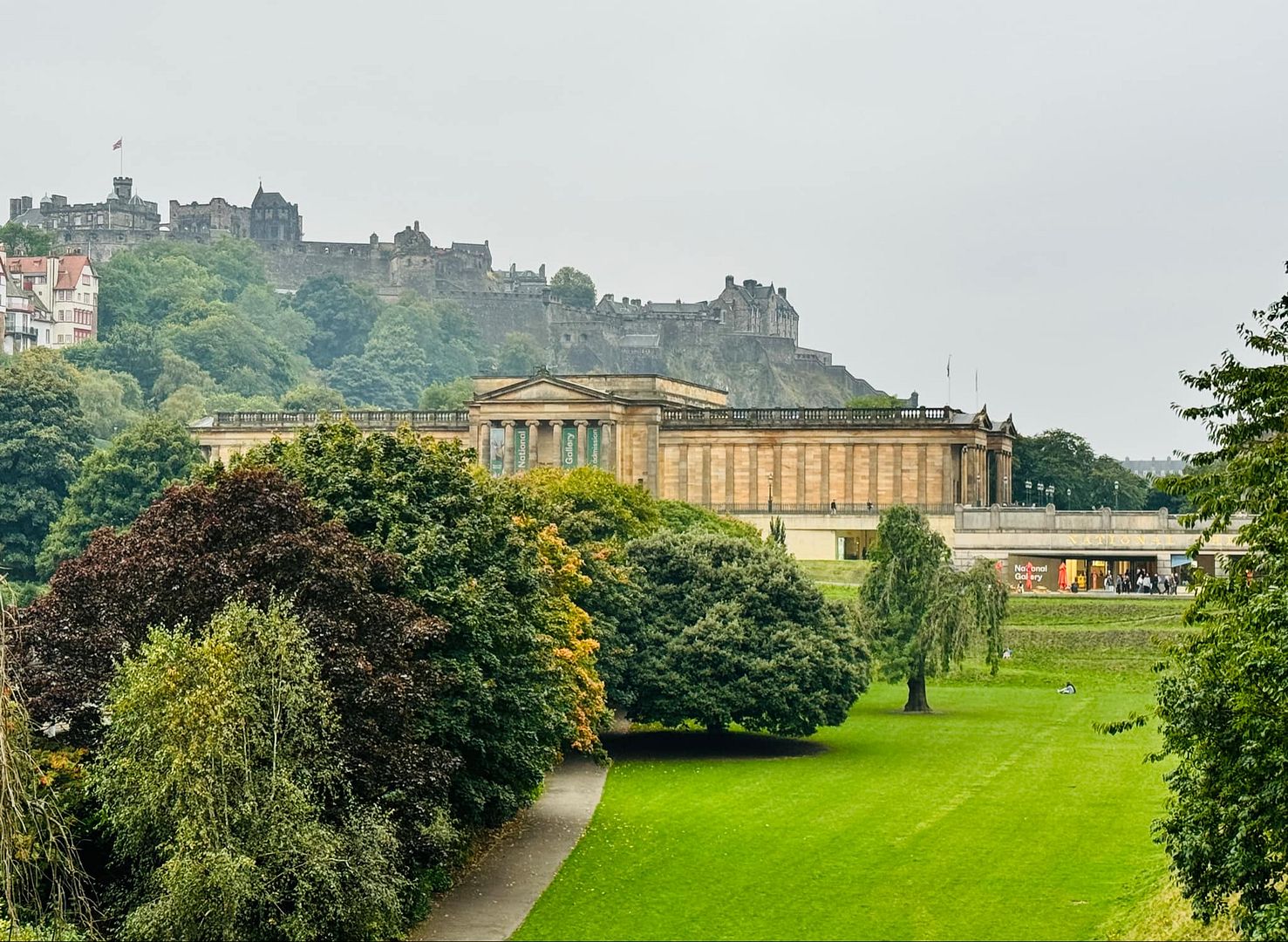
Edinburgh has so much history and so much to see. We saw as much as we could in our 2 full days there. I’ll have a few posts to cover everything. Our apartment was positioned well for getting around Edinburgh. We made our way across the Mound and up many stairs to reach the Royal Mile and Edinburgh Castle. The Mound is the elevated walkway above Princess Gardens that you can see in the distance. On the Mound you walk past the National Gallery of Scotland and the Royal Scottish Academy. It was another day of overcast weather with little or no sunshine.

Josh and Laura had tickets for the Castle and my plan was to head down to Grassmarket and see what I could see, solo. Back in 2004 we toured the castle with our daughter, Katie, so I didn’t need to spend the money to see it again. This was Josh and Laura’s first trip to Scotland so the Castle was a priority. When they completed their Castle tour we would meet up. Greg spent this day in bed working on getting better.

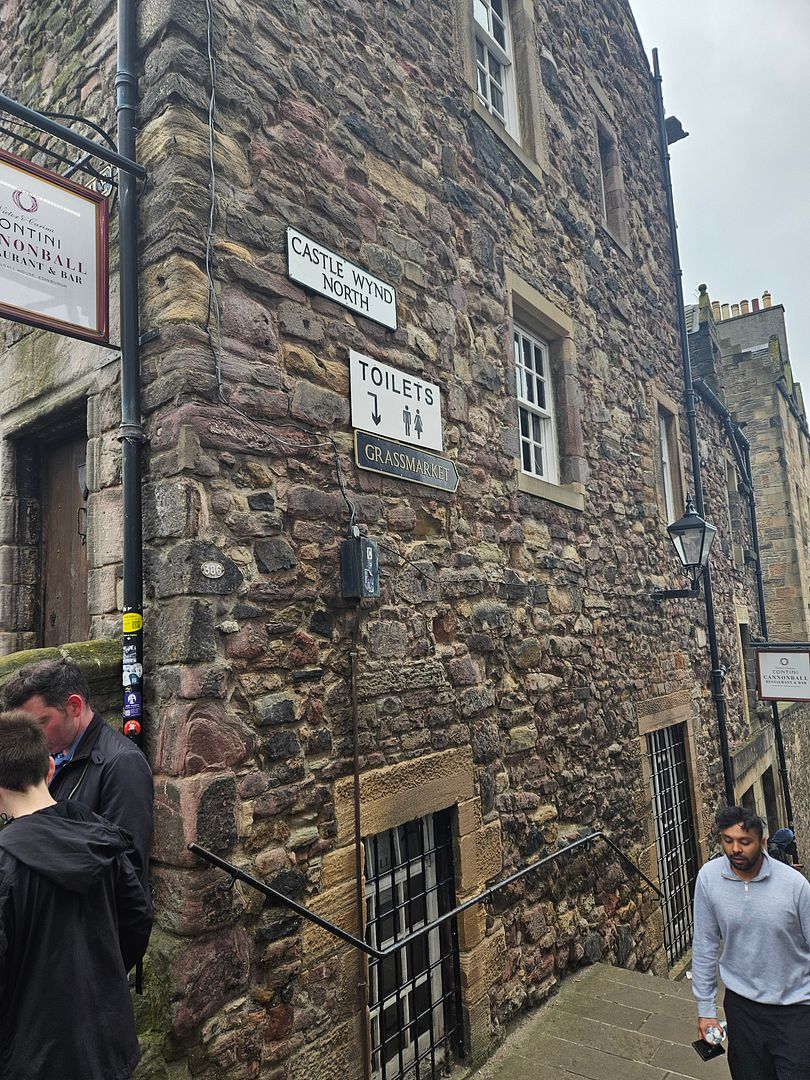
I left Josh and Laura at the entrance to the castle and headed down two separate flights of stairs to get to the Grassmarket area of Edinburgh.

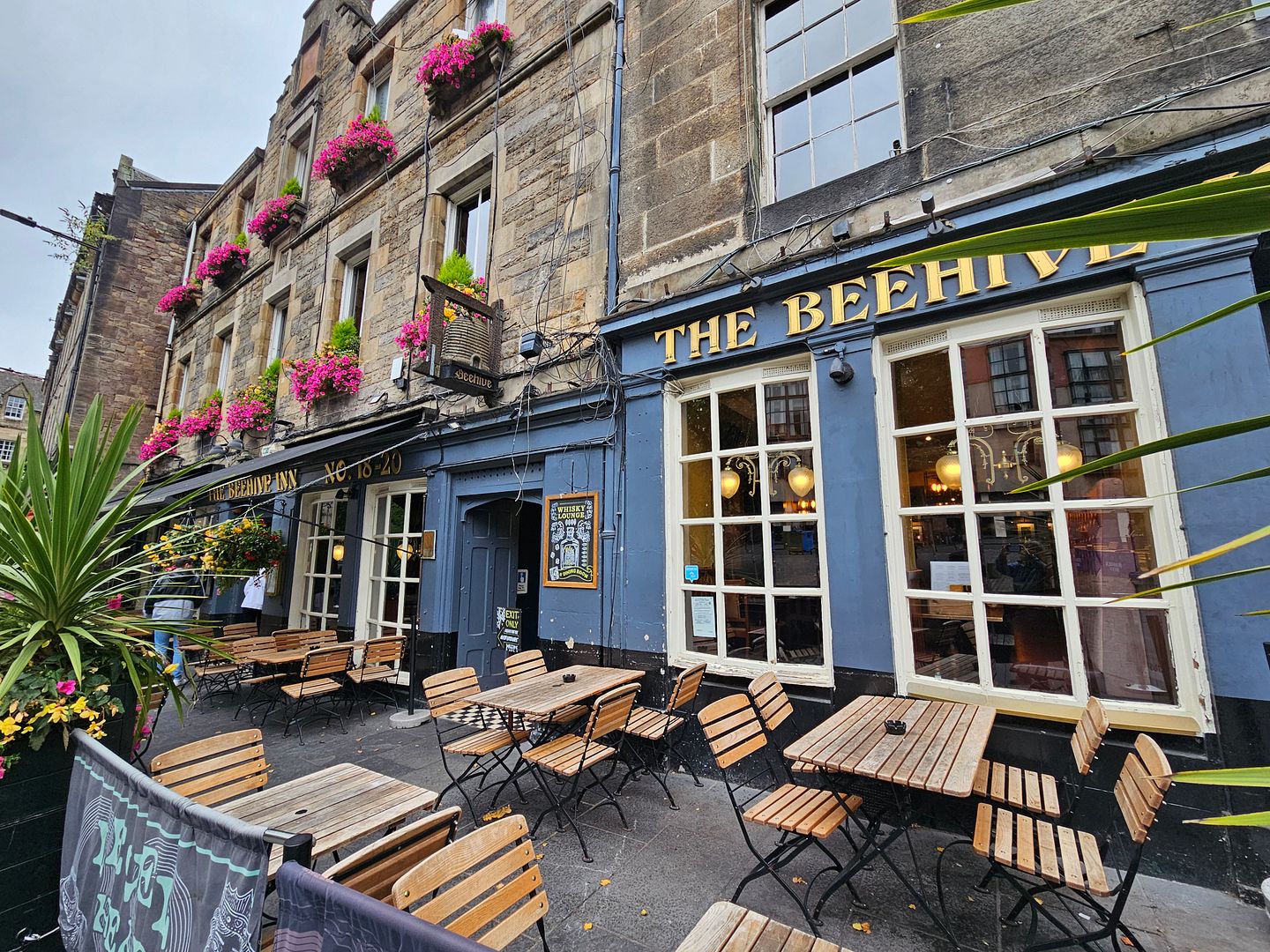
I spent my time this morning below the castle.

If I was to visit Edinburgh again, I would choose lodging in the Grassmarket area of Edinburgh.

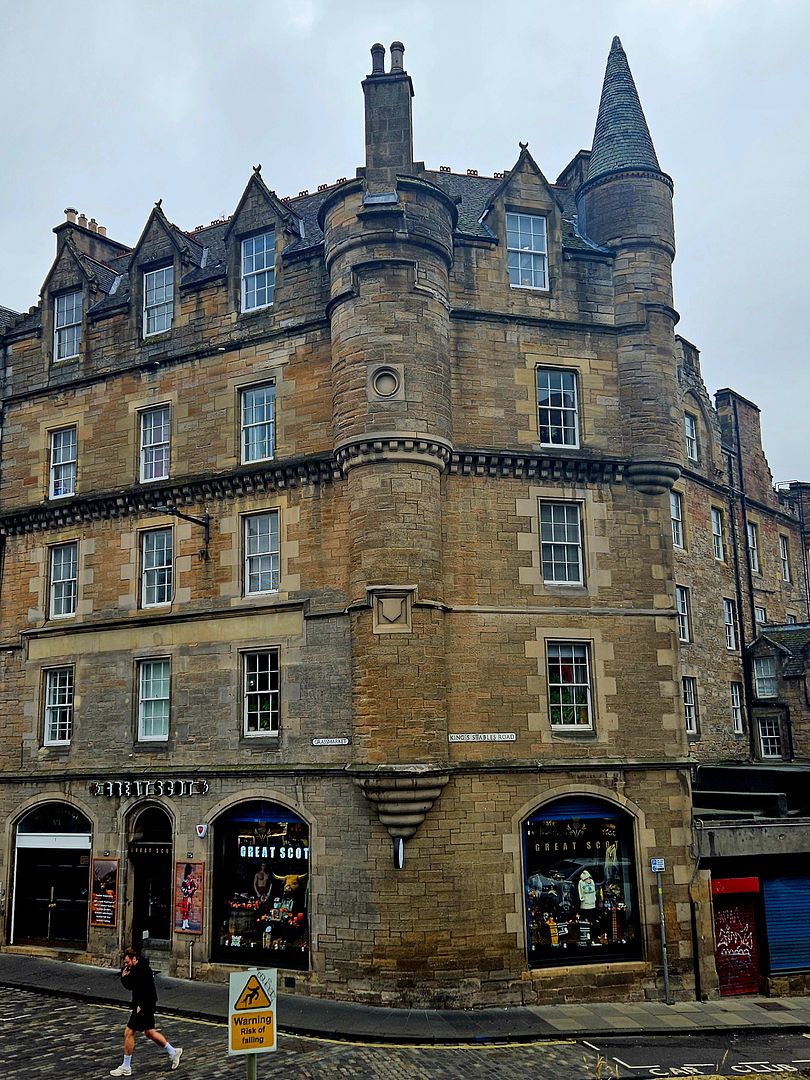
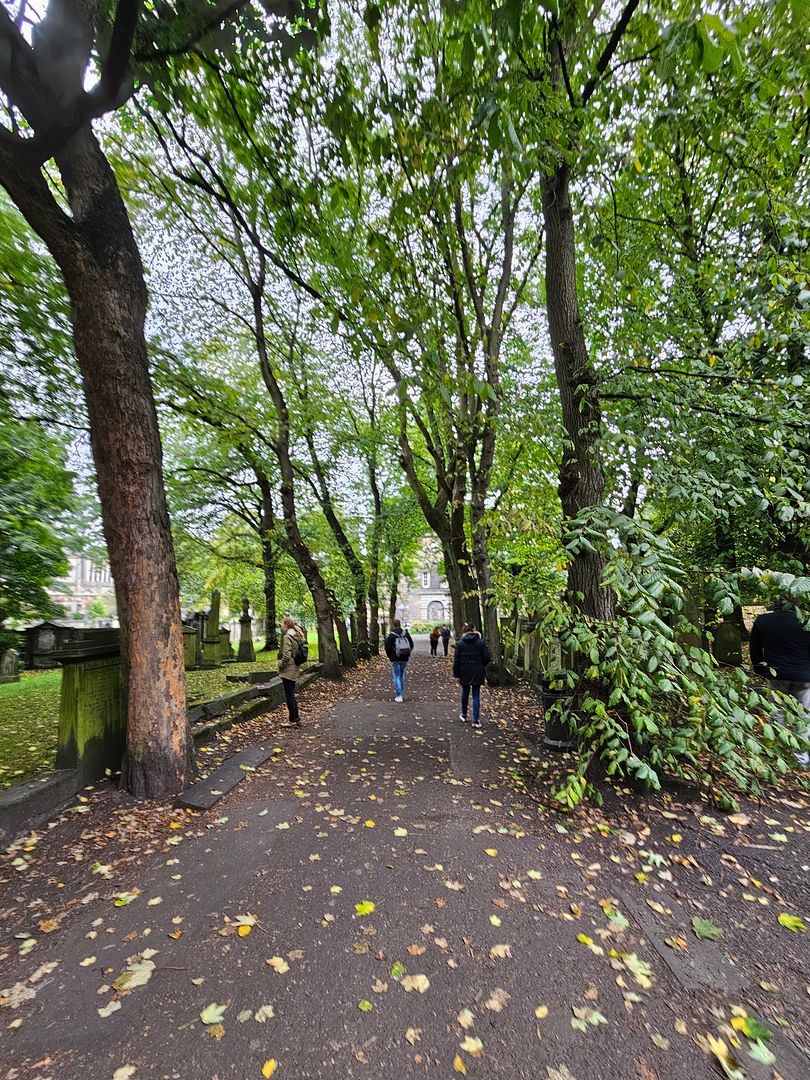
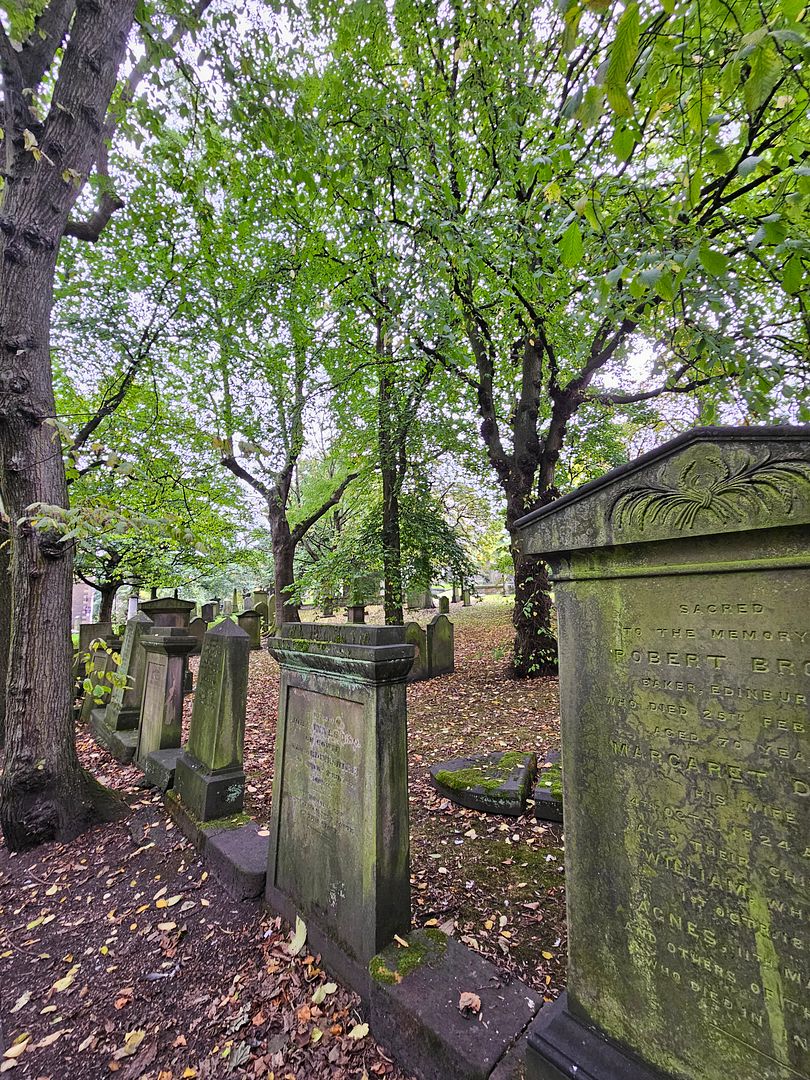
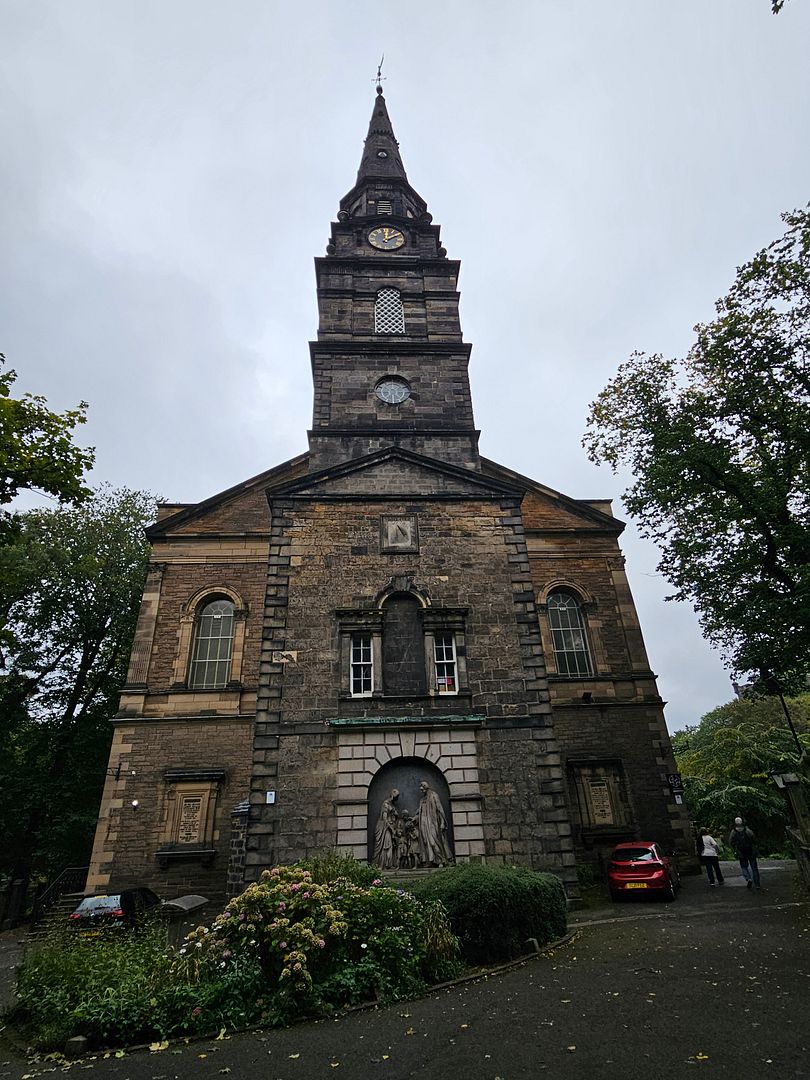
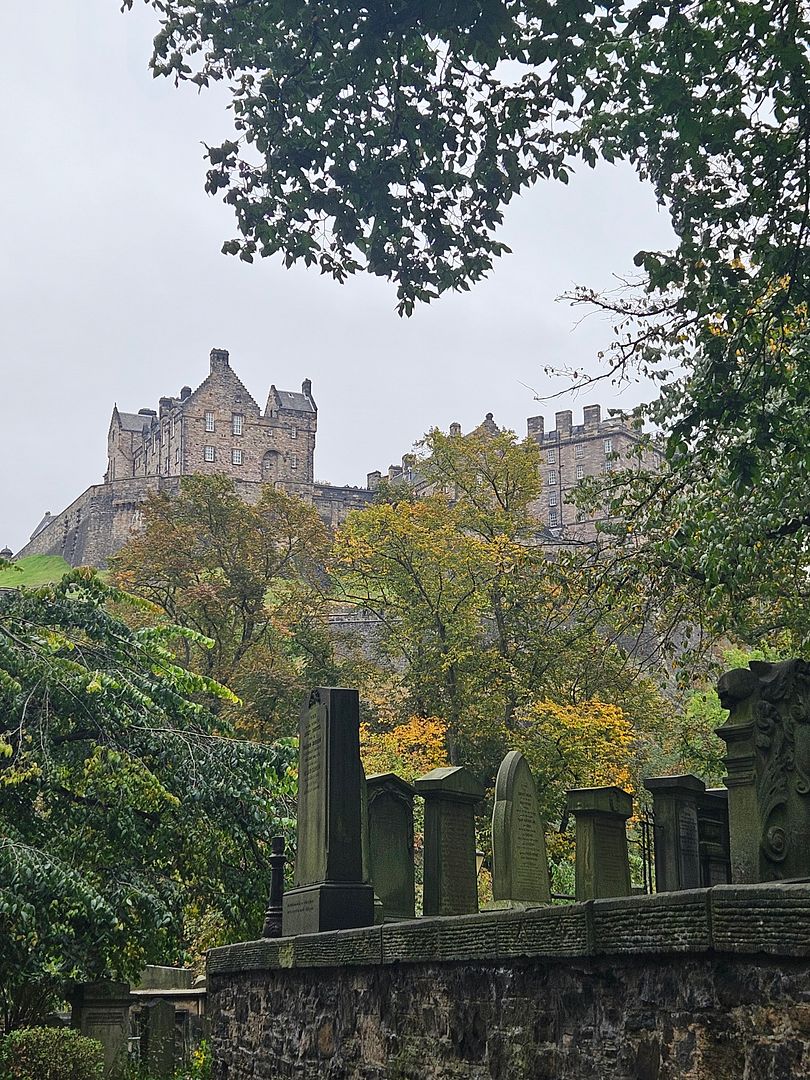
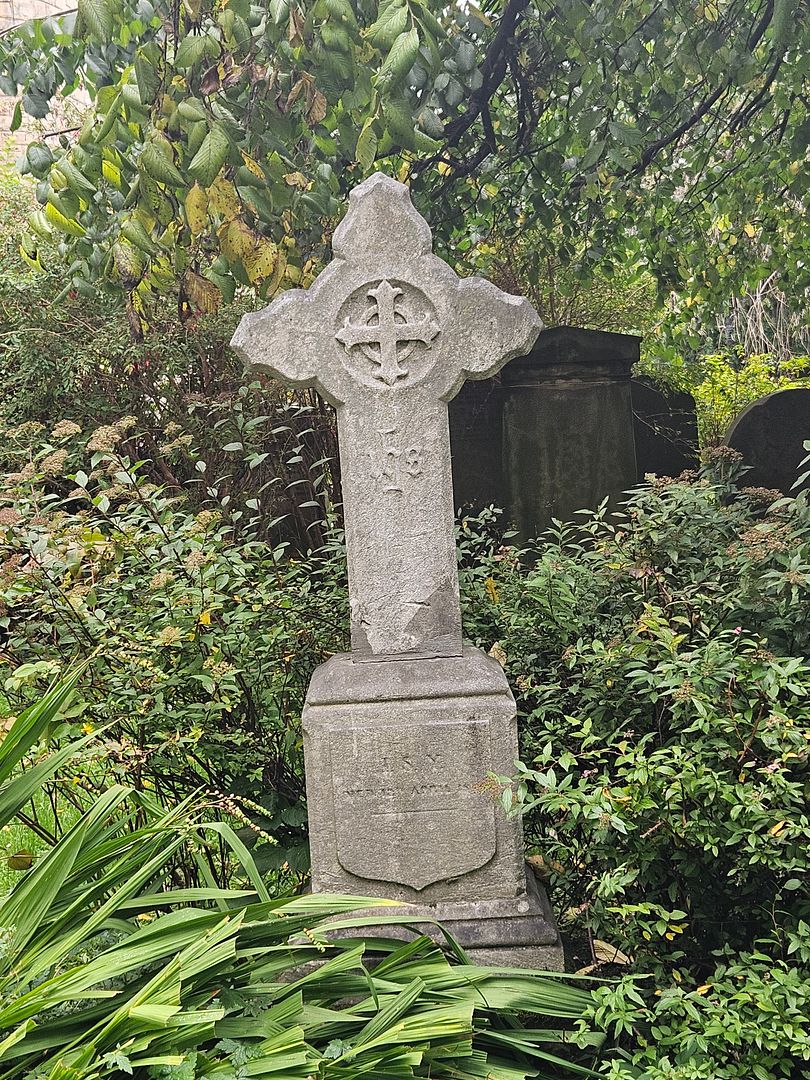
Walking along King’s Stables Road I entered the cemetery adjacent to The Parish Church of St. Cuthbert.

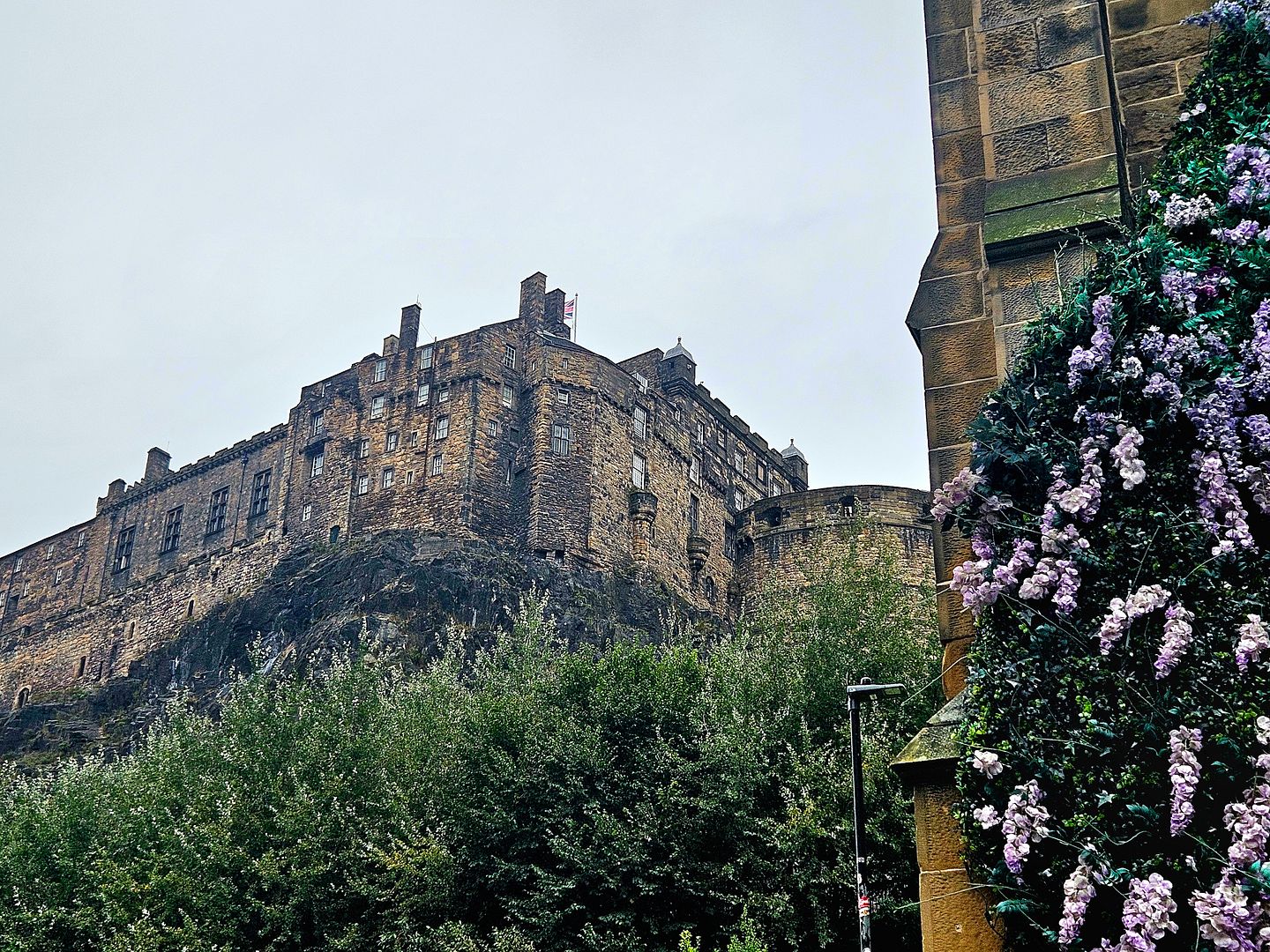
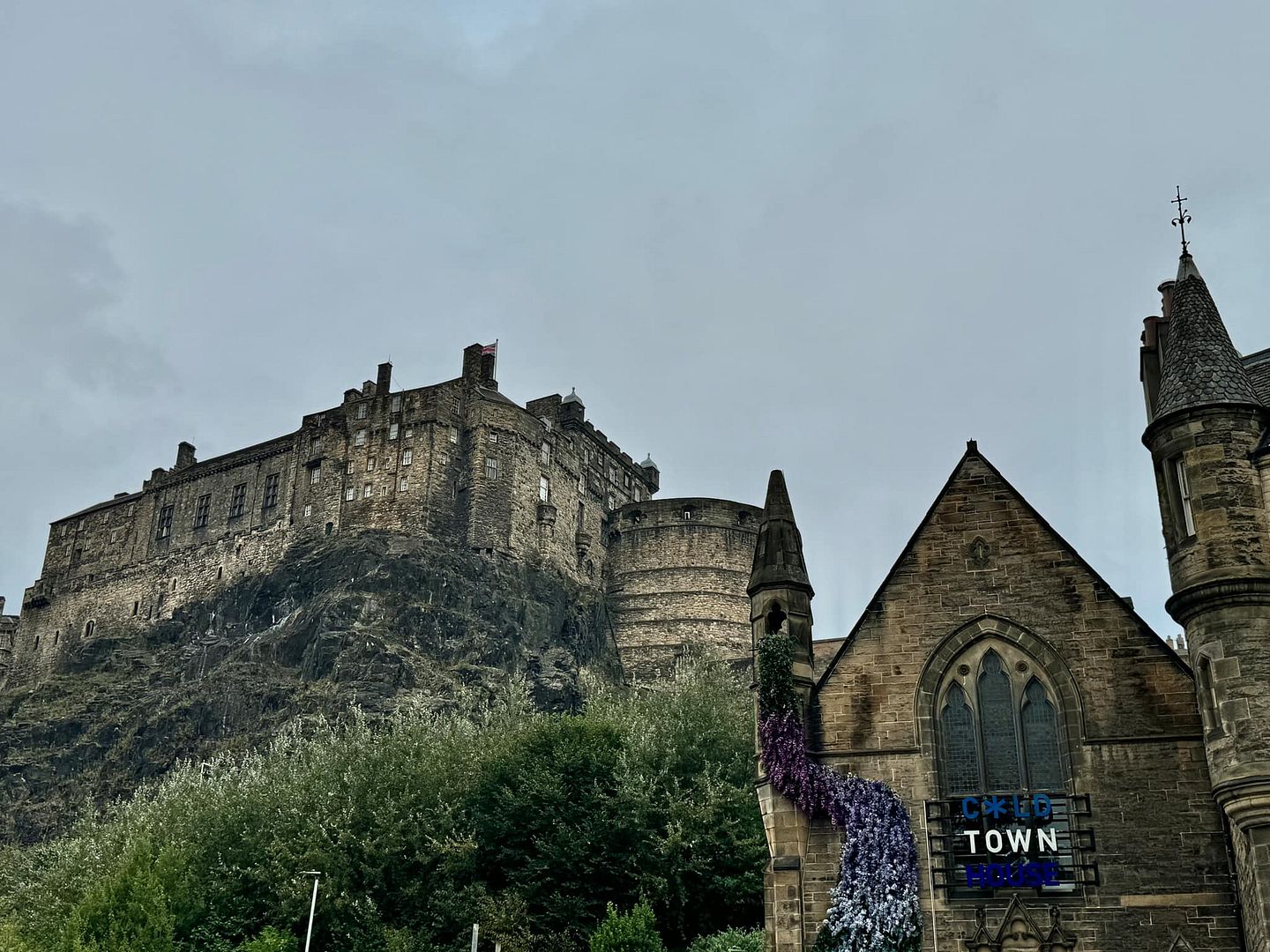
Looking up from St. Cuthbert I had a different view of the castle.

From here I went into the church and was greeted kindly and given a brochure with some history of the church. I asked if I could take photos and was granted enthusiastic permission. Information I’m sharing is from the brochure.

Tradition tells us that the Celtic missionary, Cuthbert, preached from this spot in the 7th century and established the first church here. Since then there have been at least seven buildings on the same site. By the late 19th century the people of St. Cuthbert’s wanted to rebuild their 18th century “God-box”, a very plain building. In 1894 the present building designed by architect Hippolyte Blanc, was opened and has been in constant use ever since.

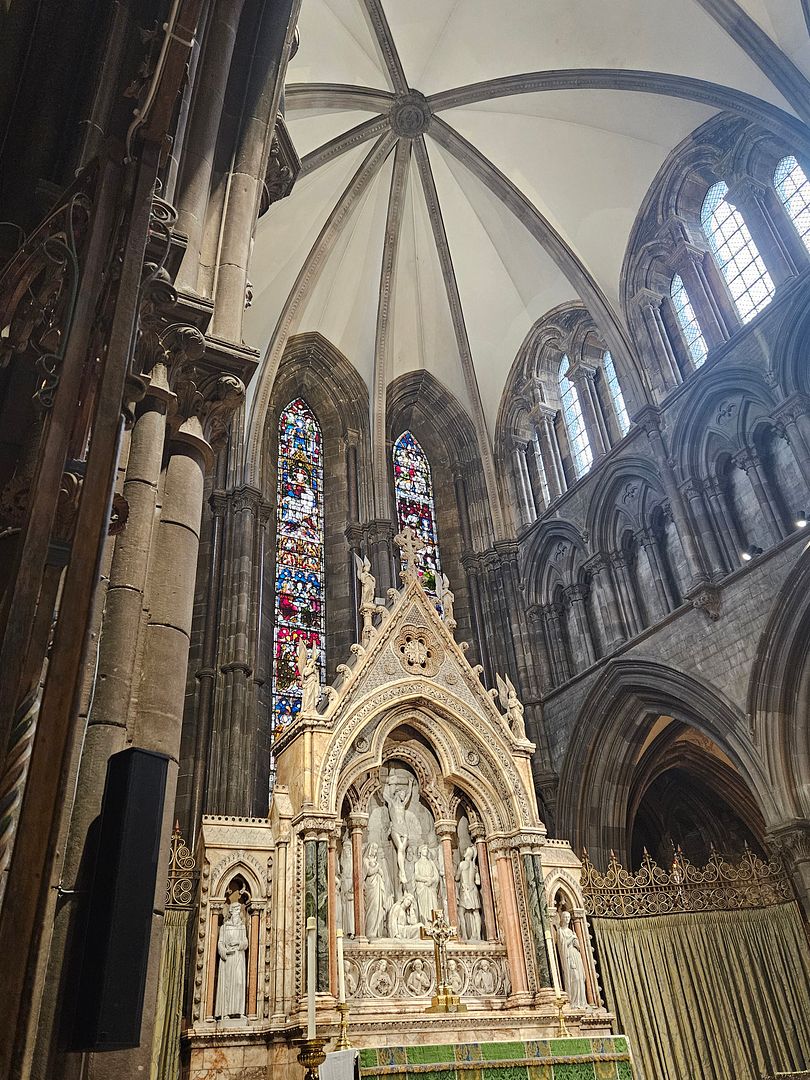
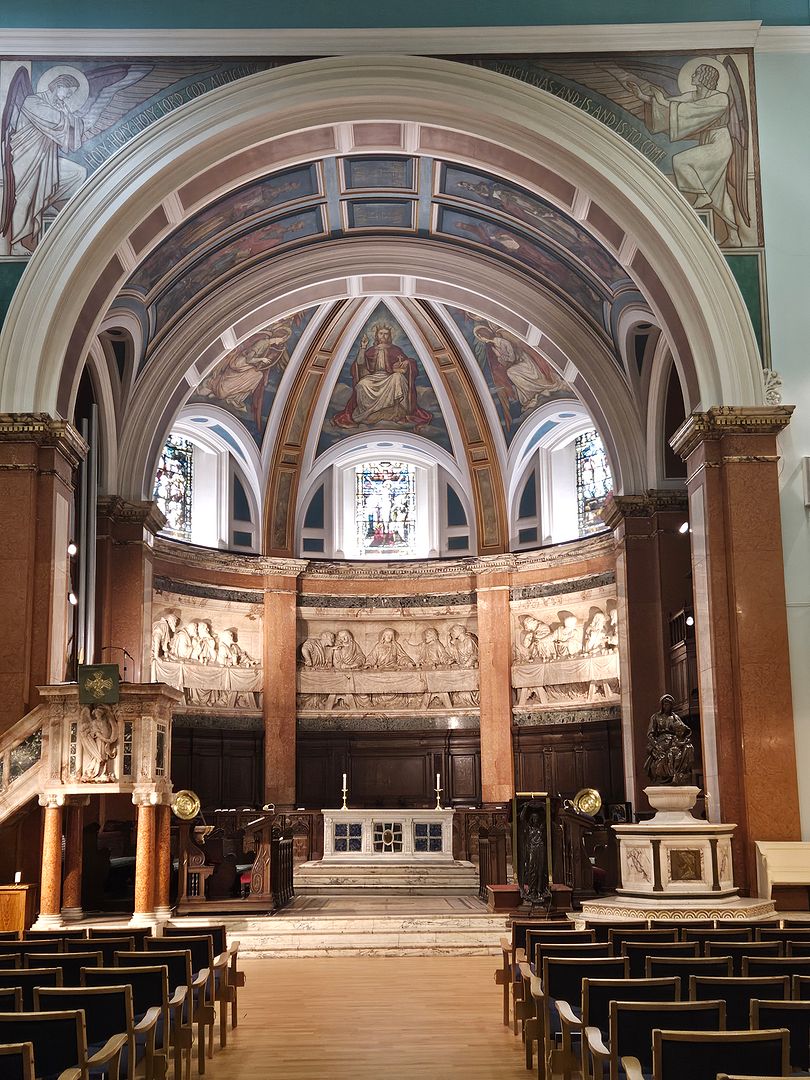
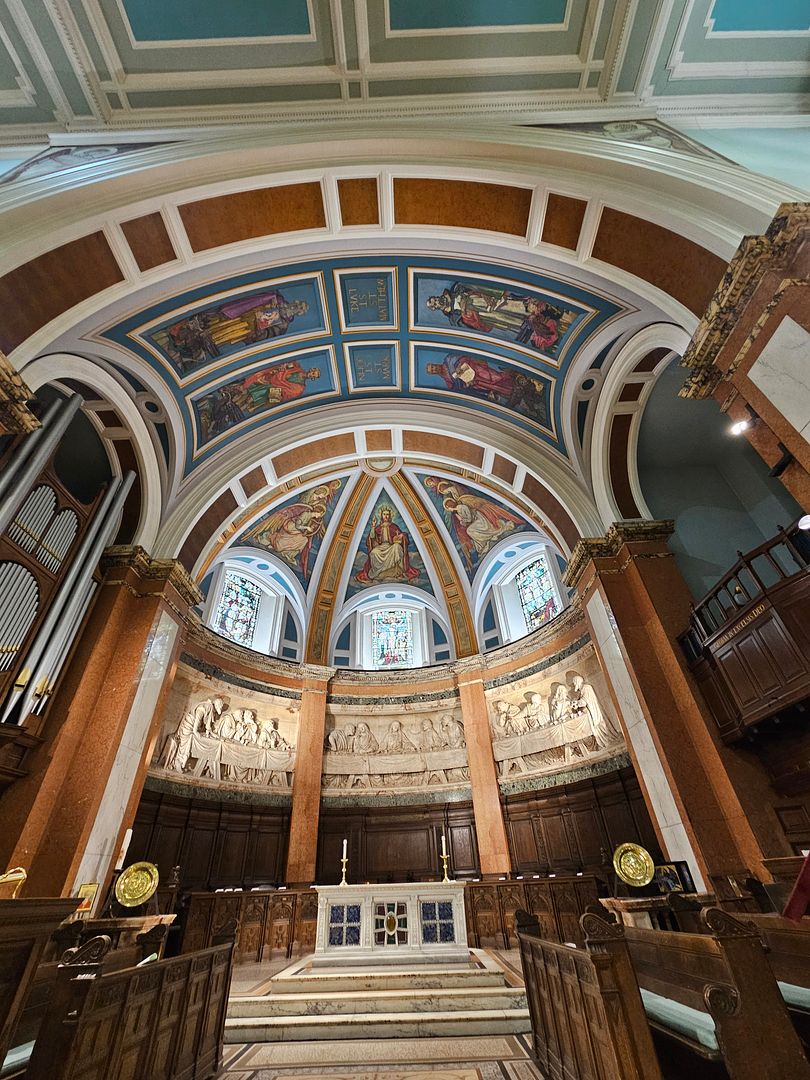
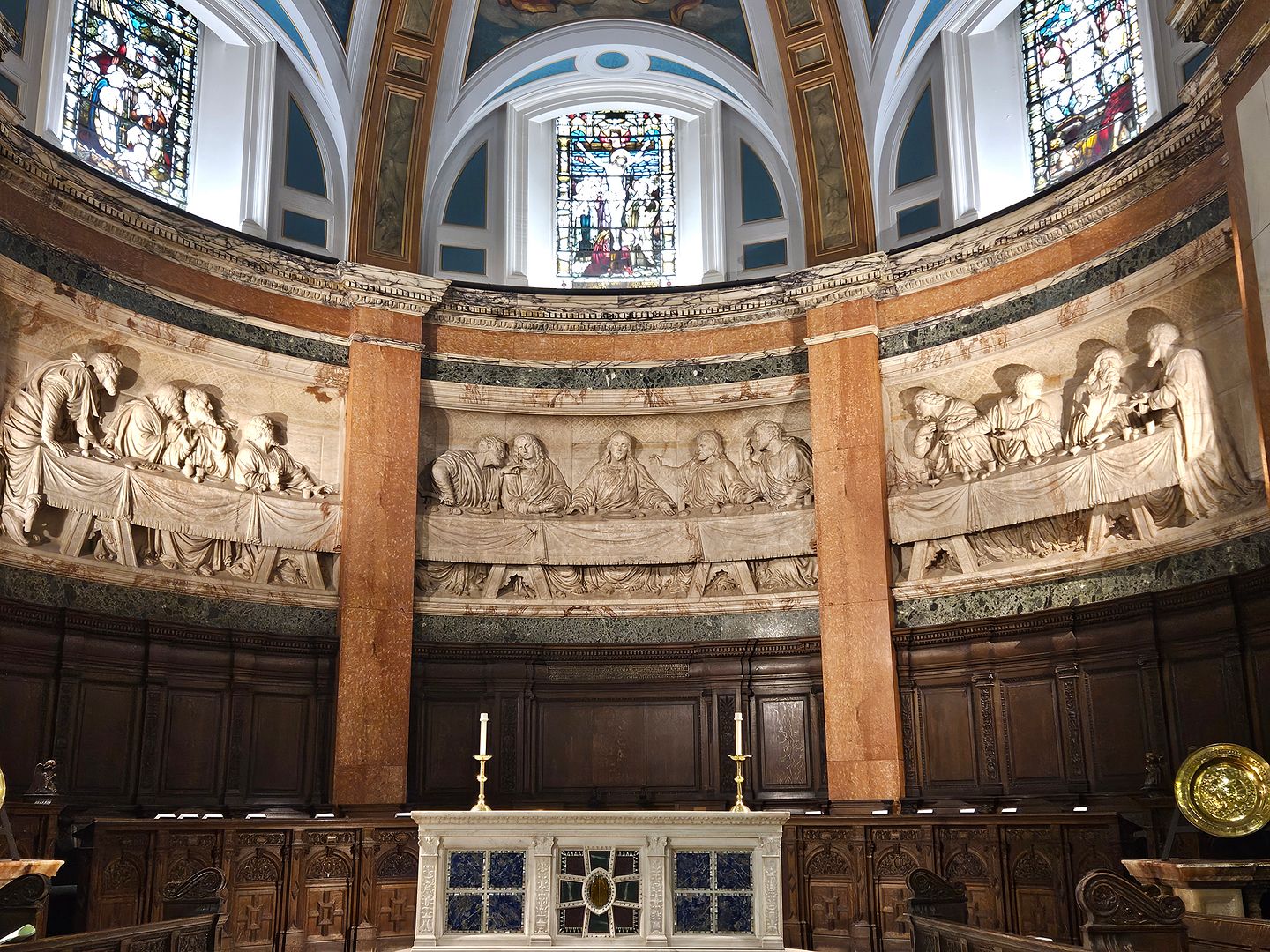
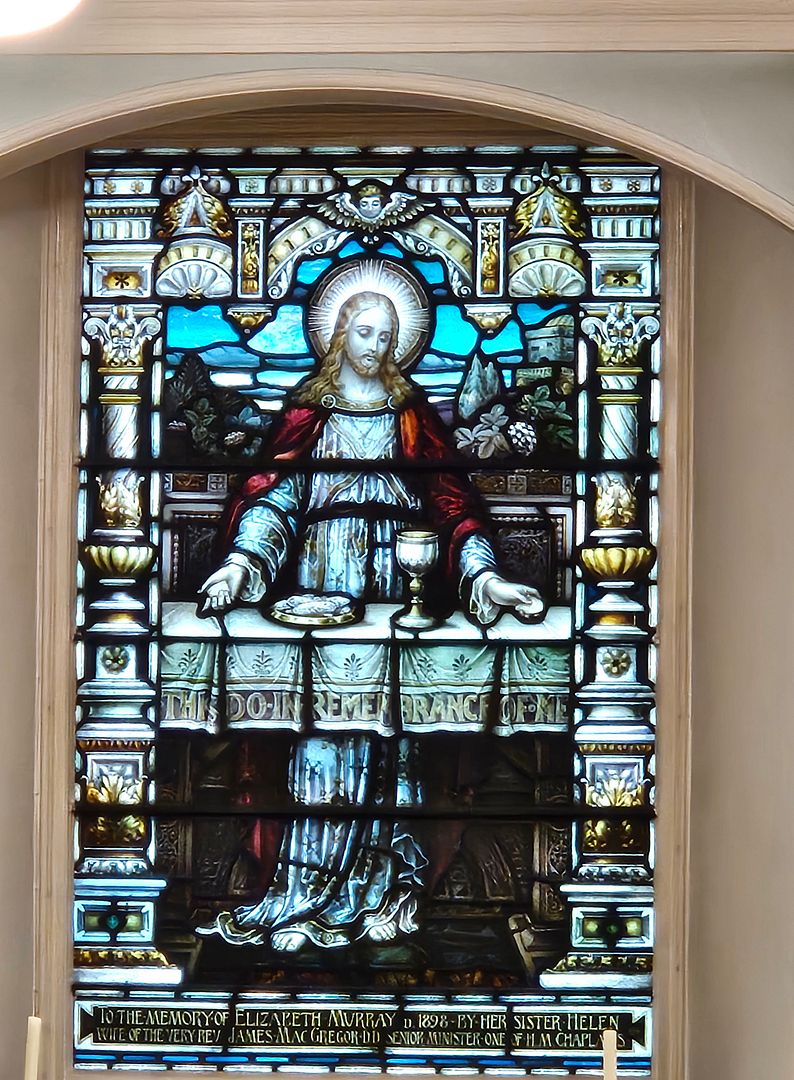
The Apse: In 1906 the Minister of the day, Dr. James Macgregor, celebrated 50 years of ministry. To commemorate this occasion Dr. Macgregor commissioned the alabaster frieze on the wall of the apse. It features Jesus and His disciples and the design is based on The Last Supper by Leonardo da Vinci. From left to right the characters are Bartholomew, James the Less, Andrew, Judas, Peter, John, Jesus, James, Thomas, Philip, Matthew, Thaddeus and Simon.

To the left of the apse is the pulpit. It is thought that the earliest church was probably built on the spot where the pulpit stands today. Under the pulpit is the foundation stone of the building along with a time capsule containing documents and artefacts of the 1890’s, including photographs, coins, newspapers, and copies of the Minister’s sermons.


The Communion Table is made from alabaster and marble, mostly Italian, green and Egyptian. The middle of the Communion Table shows the cross of St. Cuthbert which can be seen in the decor in other parts of the building.

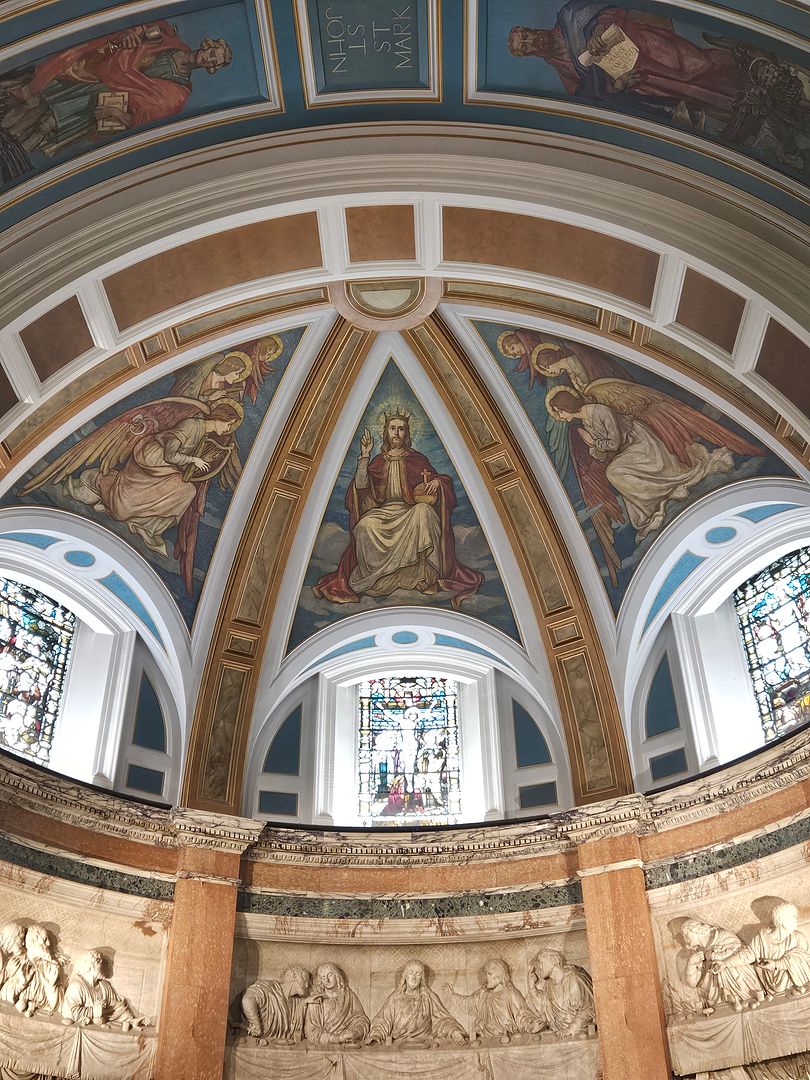
The Exalted Christ with His angels on either side of Him was the first of the murals painted by Robert Hope RSA. In 1928 Professor Gerald E. Moira of Edinburgh College of Art painted the four apostles. Then in 1933 the angels on the spandrels at either side of the chancel area were painted by John Duncan RSA, RSW. The angels are seen worshipping God in two different ways. The one on the left is quietly praying to the spirit within, while on the right, the angel with raised hands and head worships joyfully, radiantly!

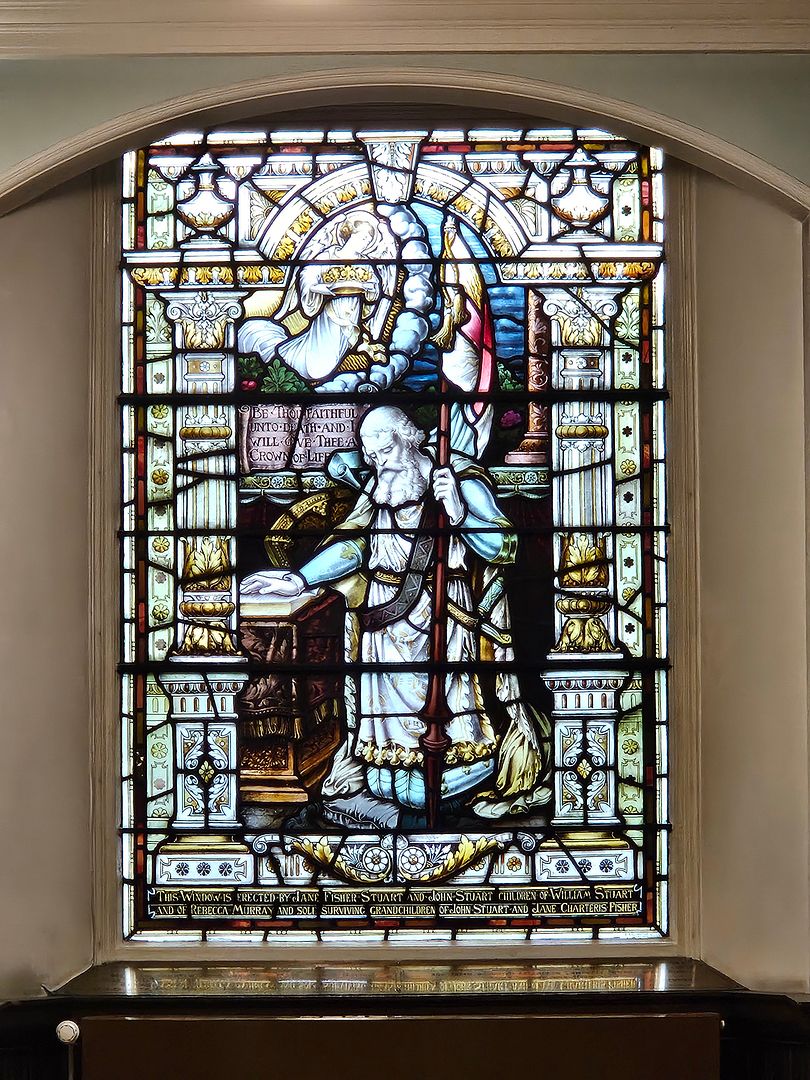
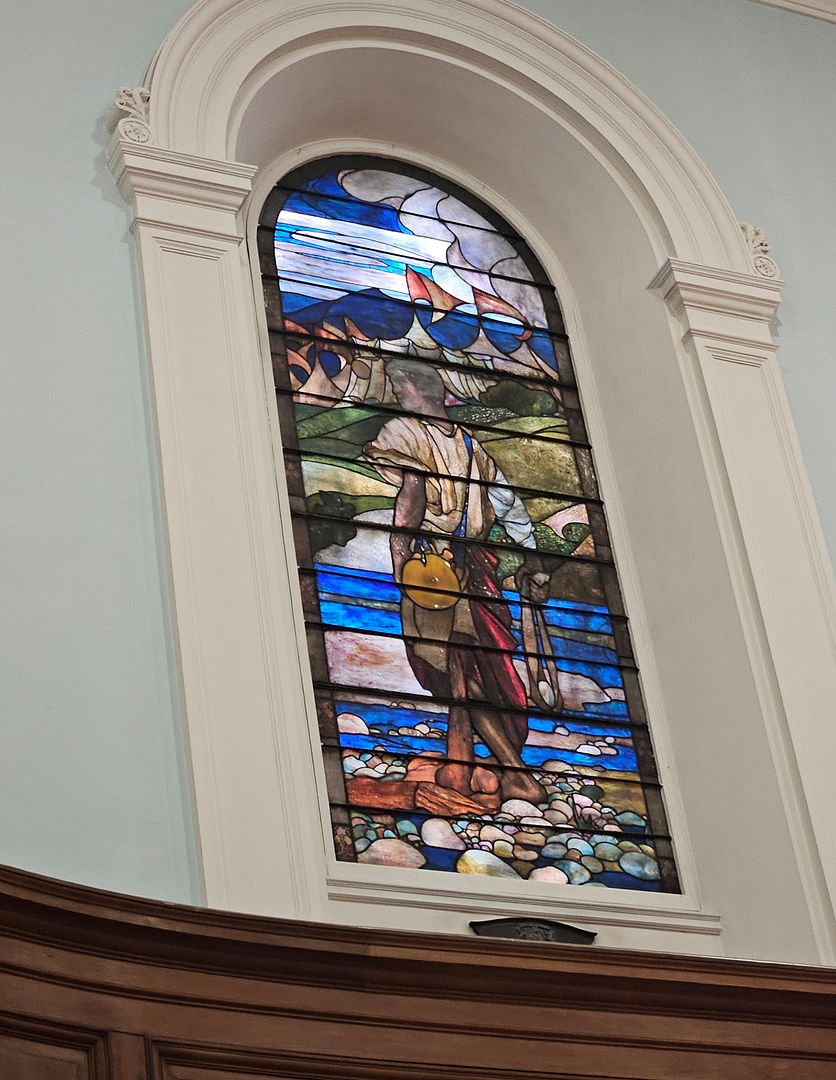
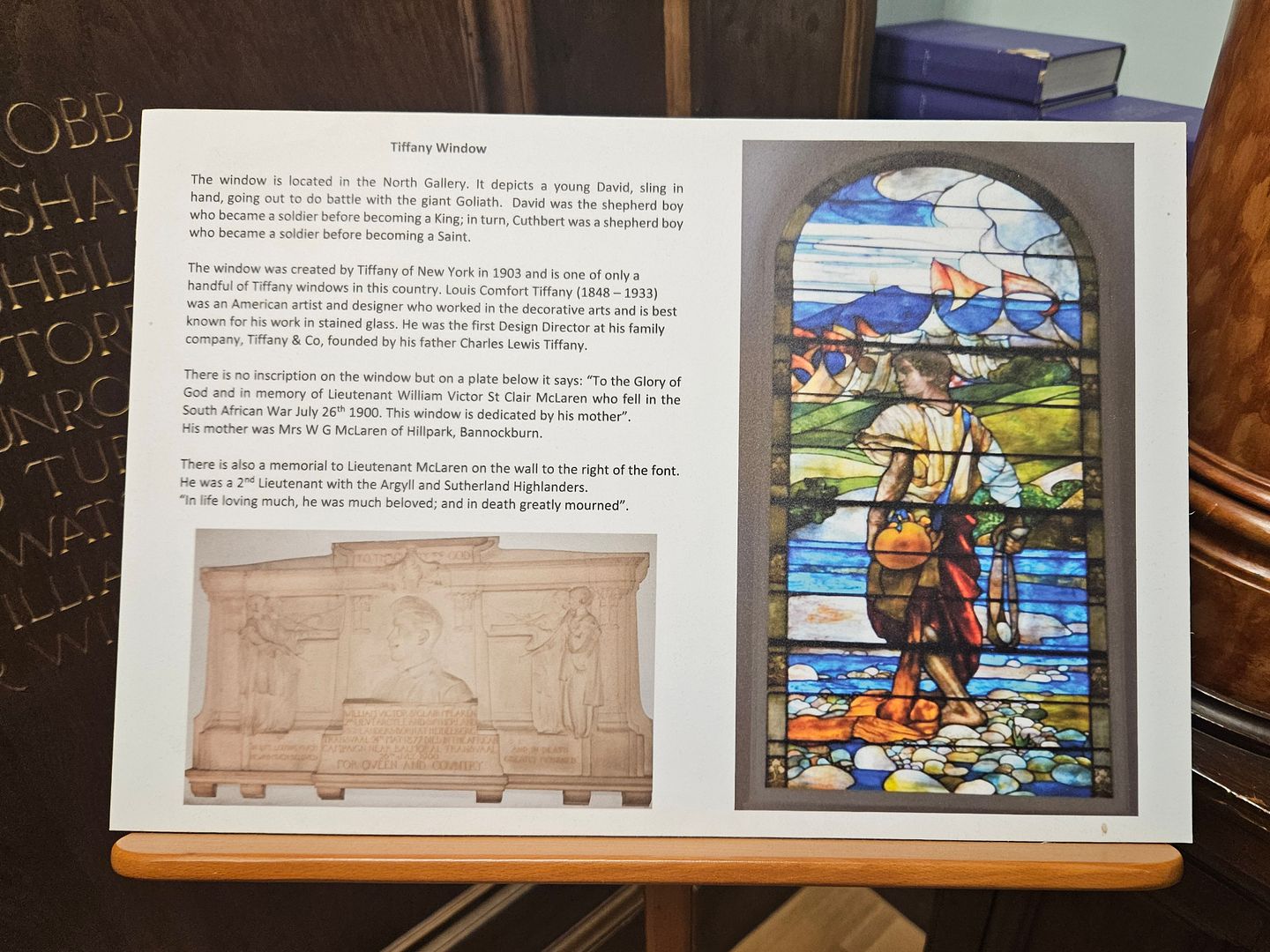
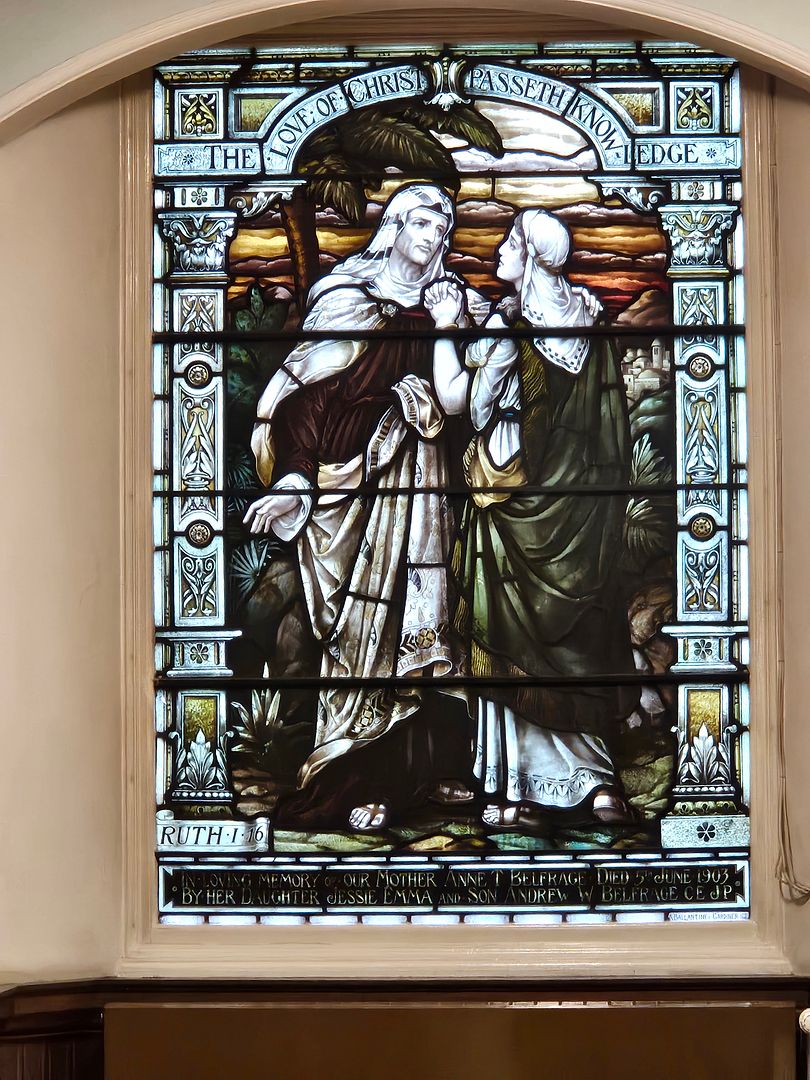
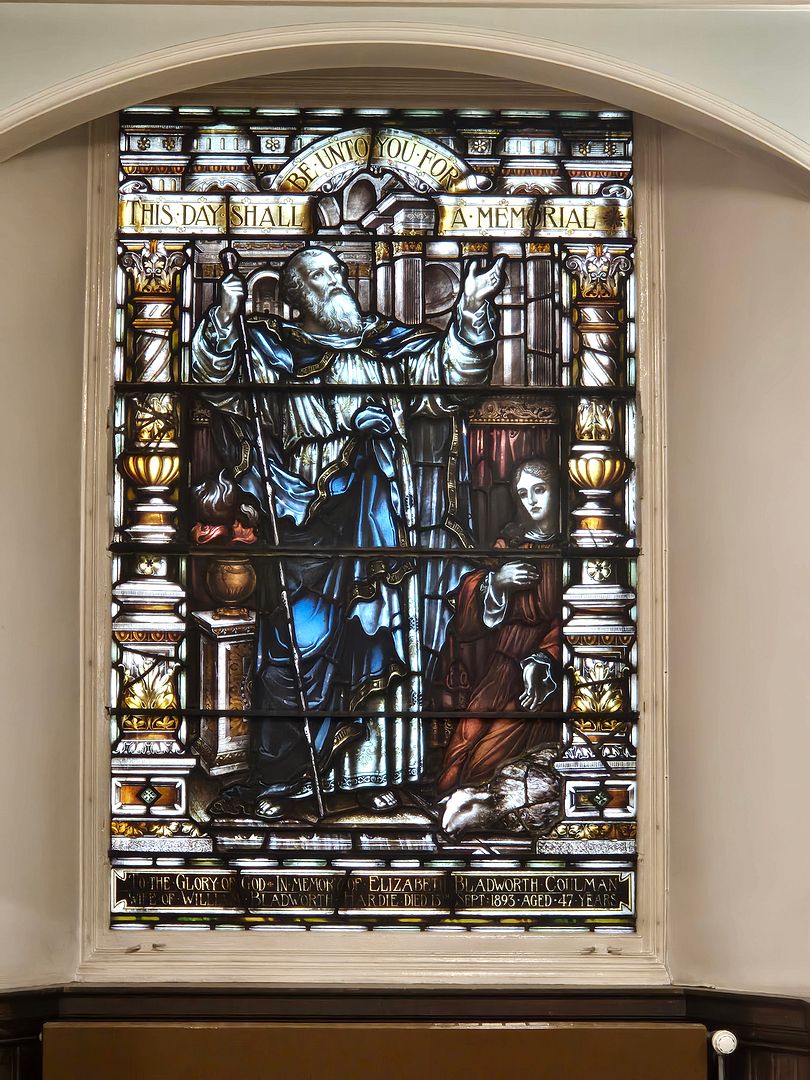
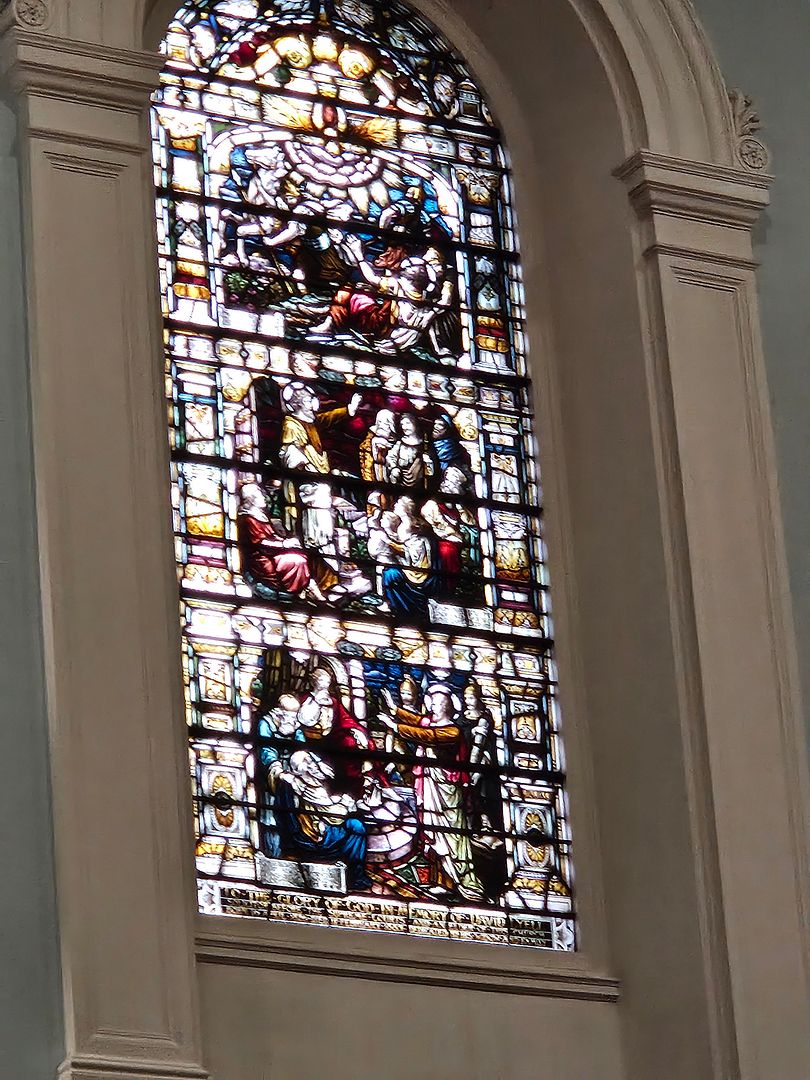
The windows on the left of the church depict stories from the Old Testament and on the right the New Testament. Upstairs on the North side you will see a young David, sling in hand, going out to meet the giant Goliath. This window was created by Tiffany of New York in 1903 and is one of only five Tiffany windows in Britain.

When I was done at St. Cuthbert’s I strolled back to Grassmarket to wait for Josh and Laura.

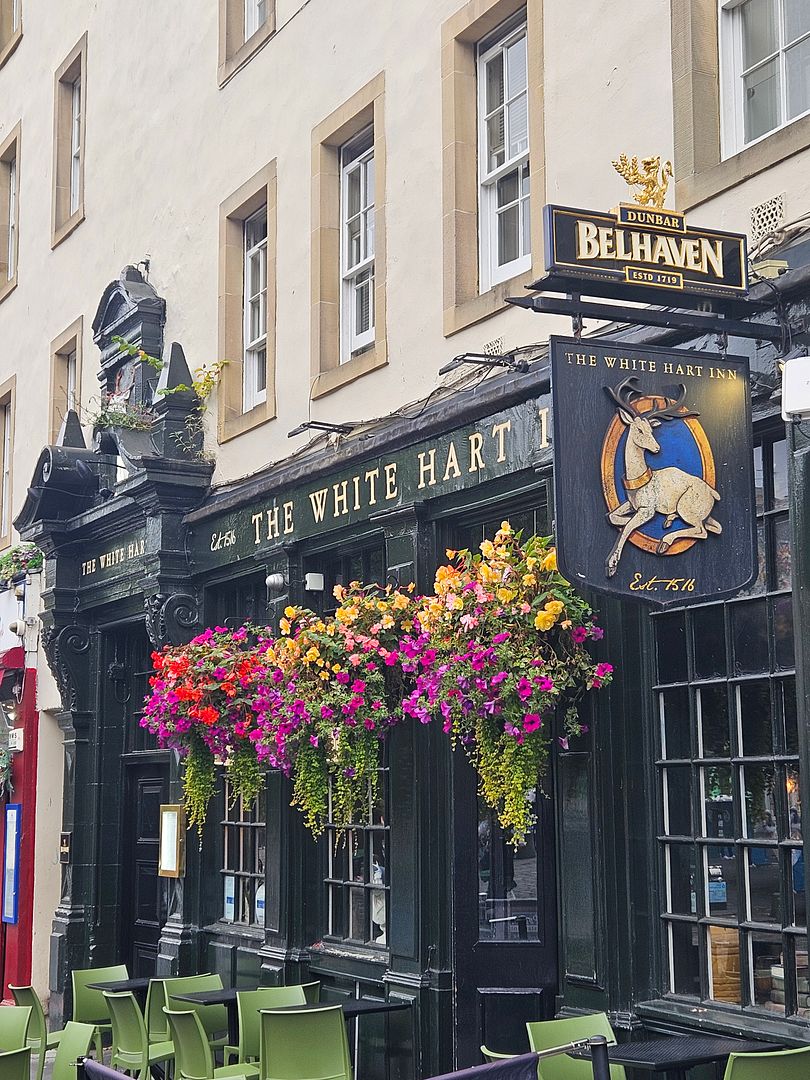
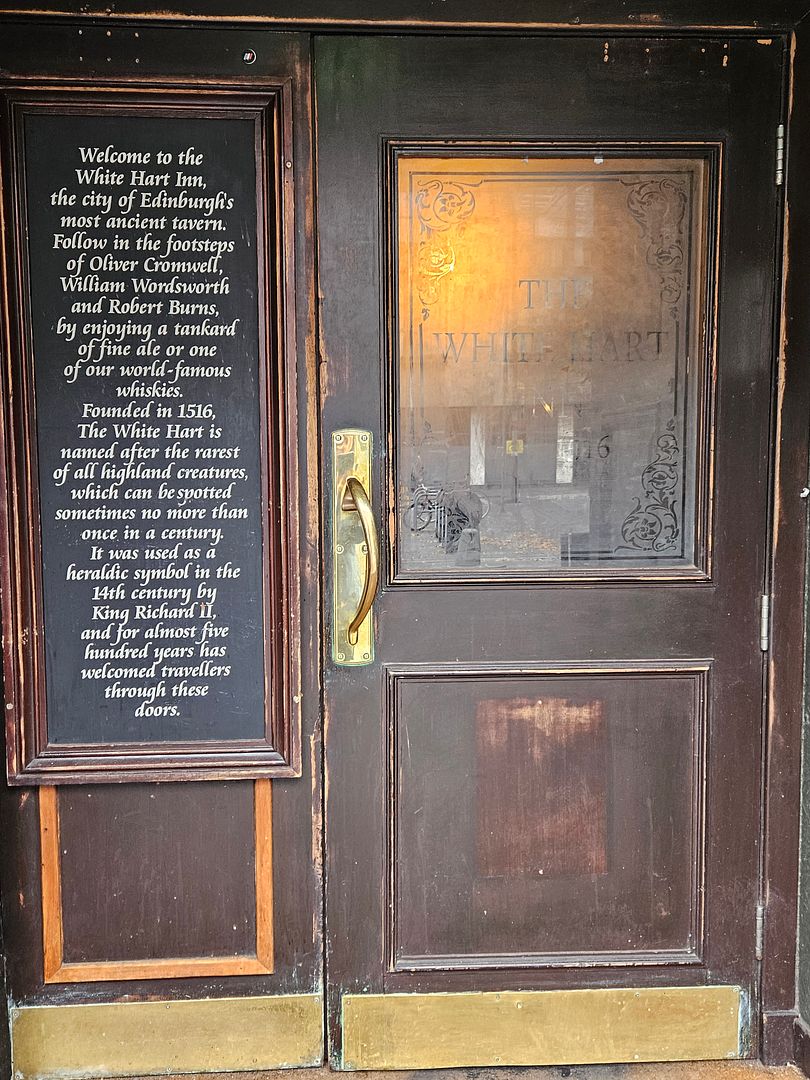
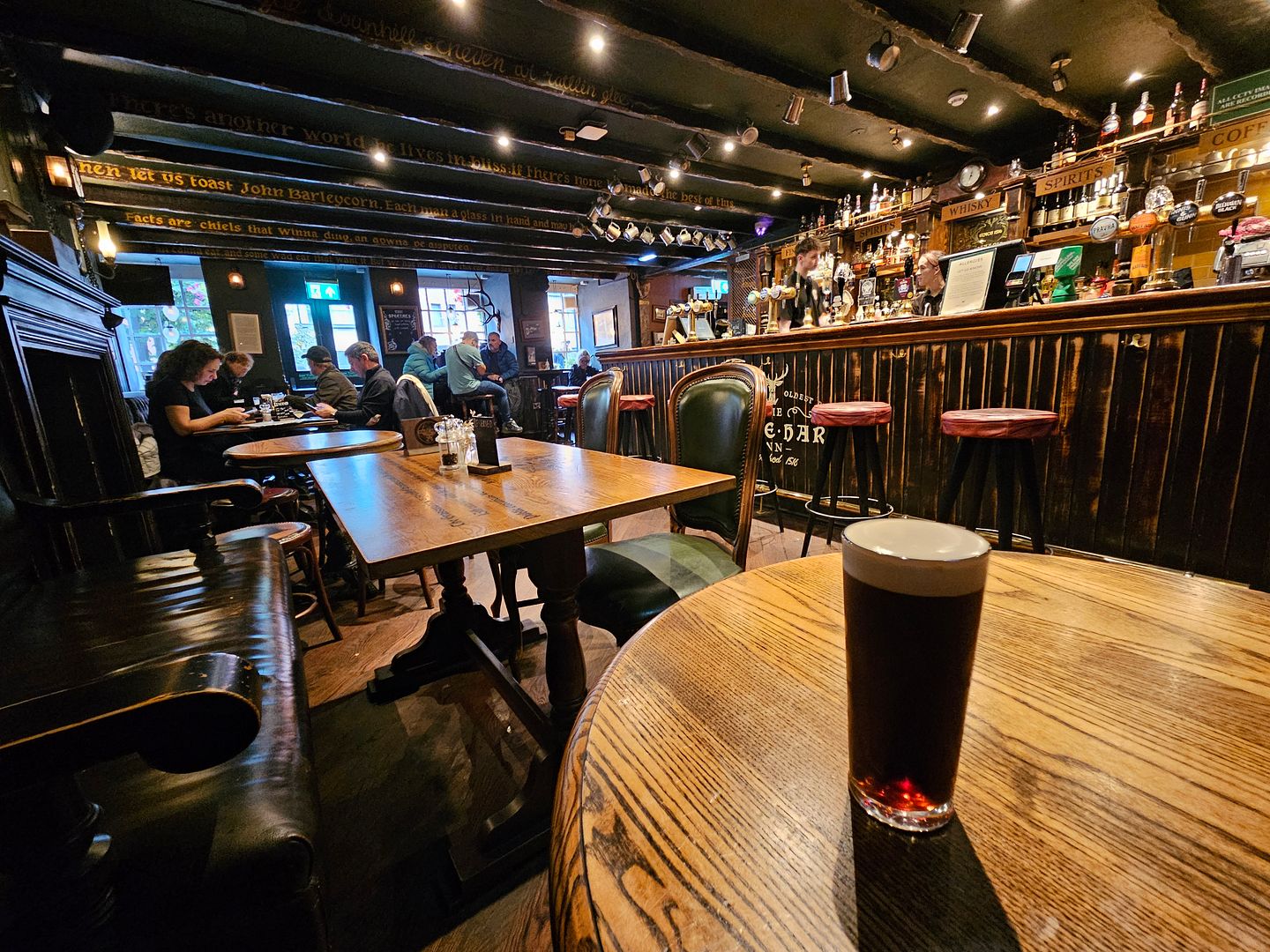
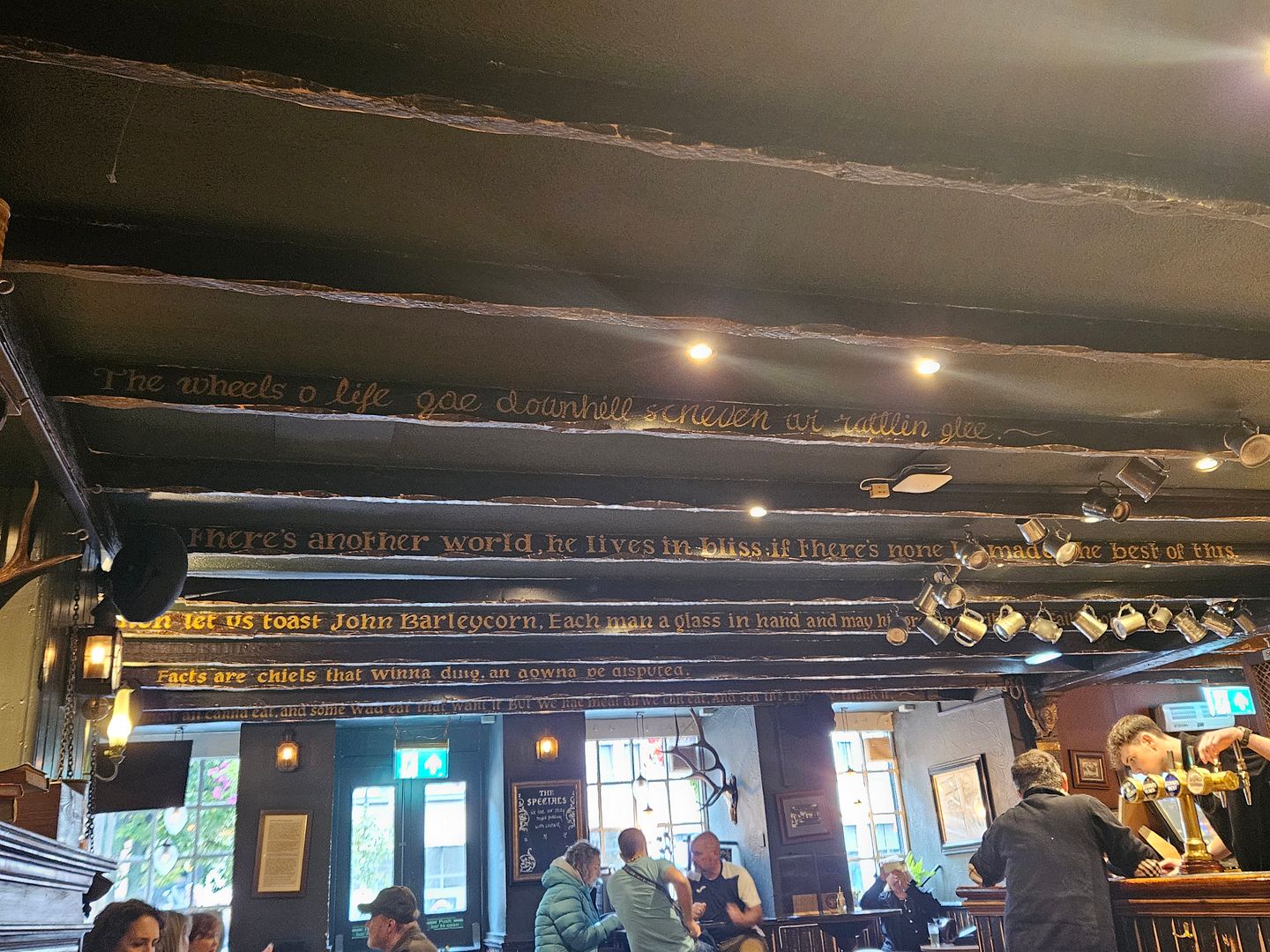
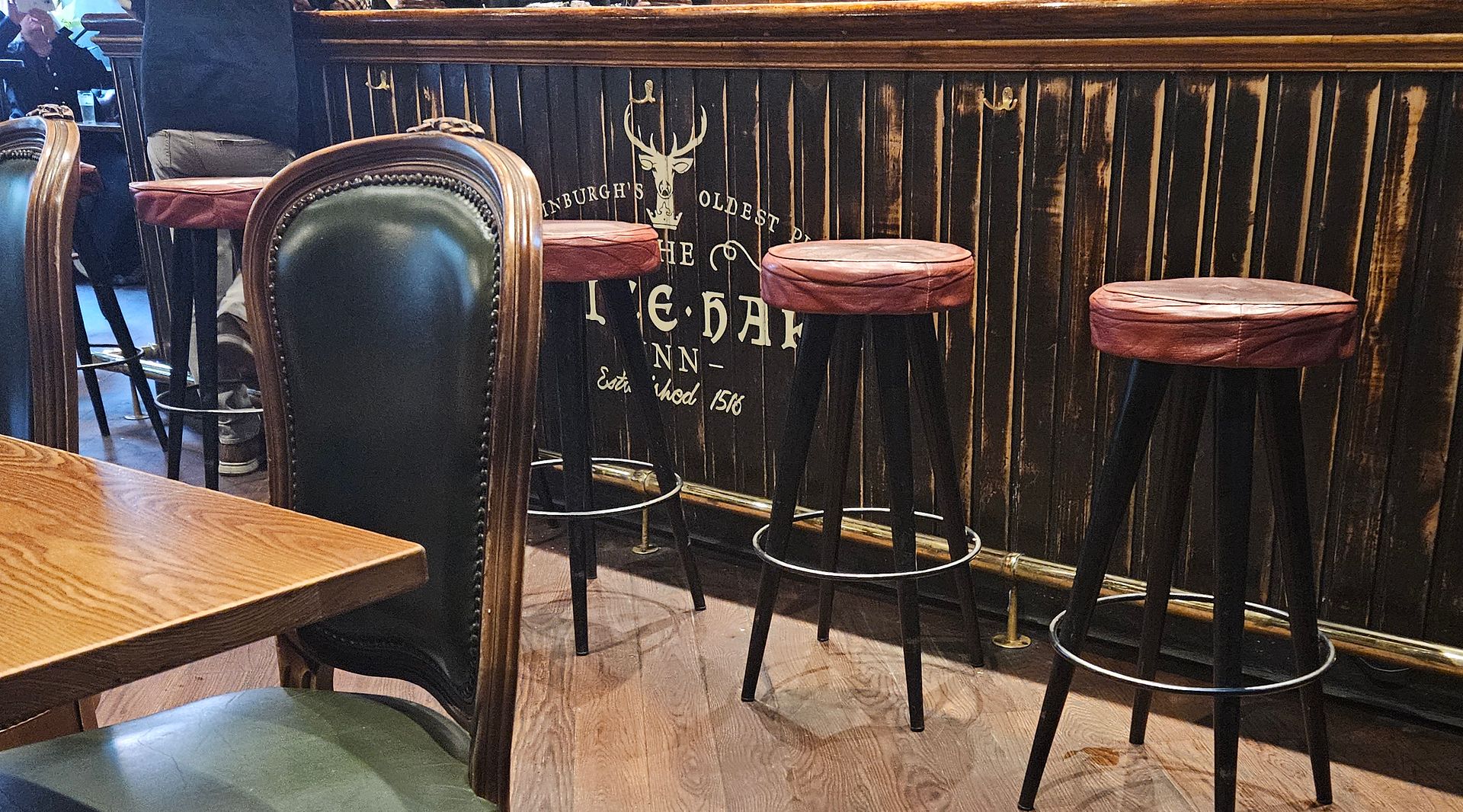
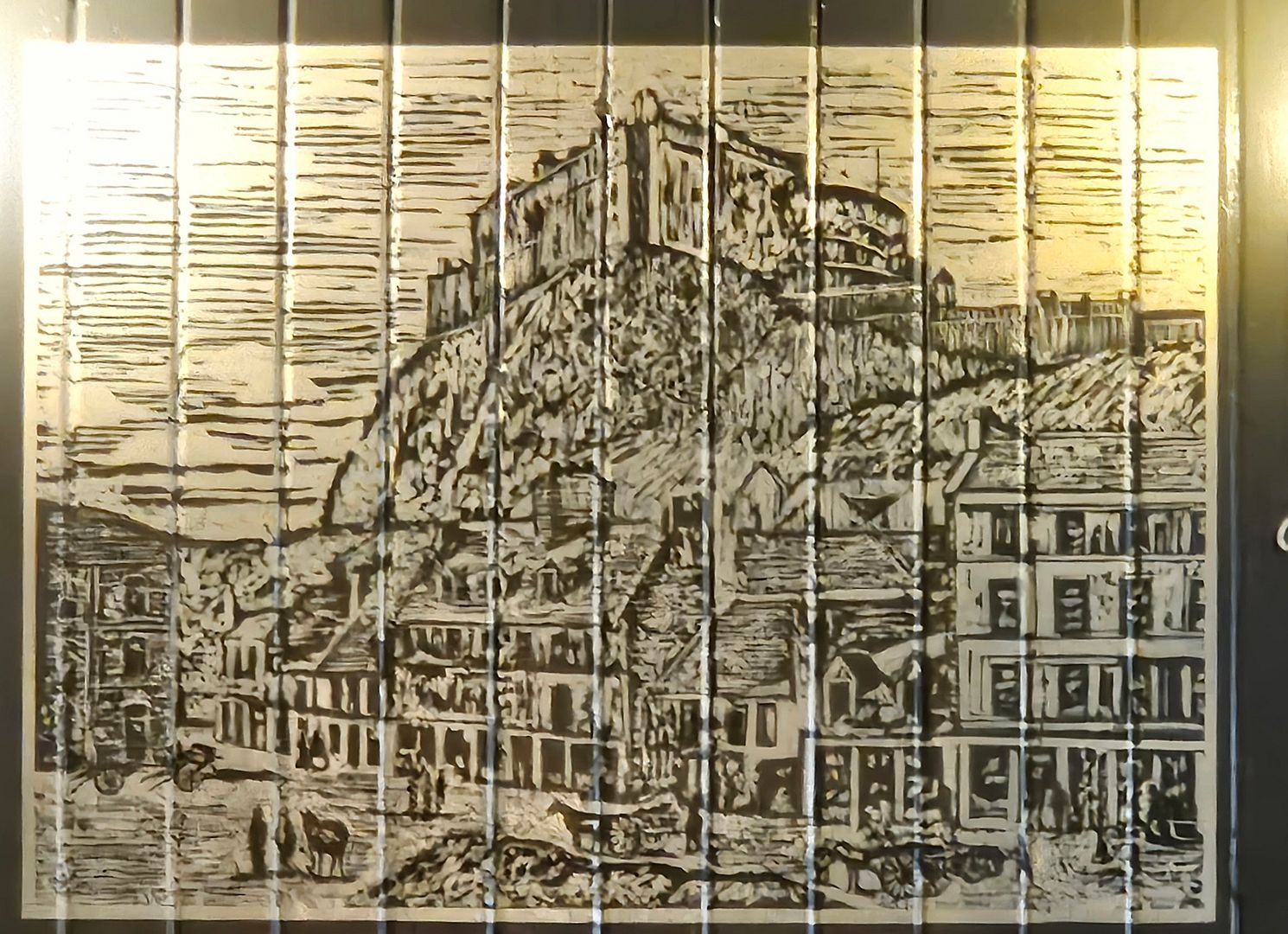
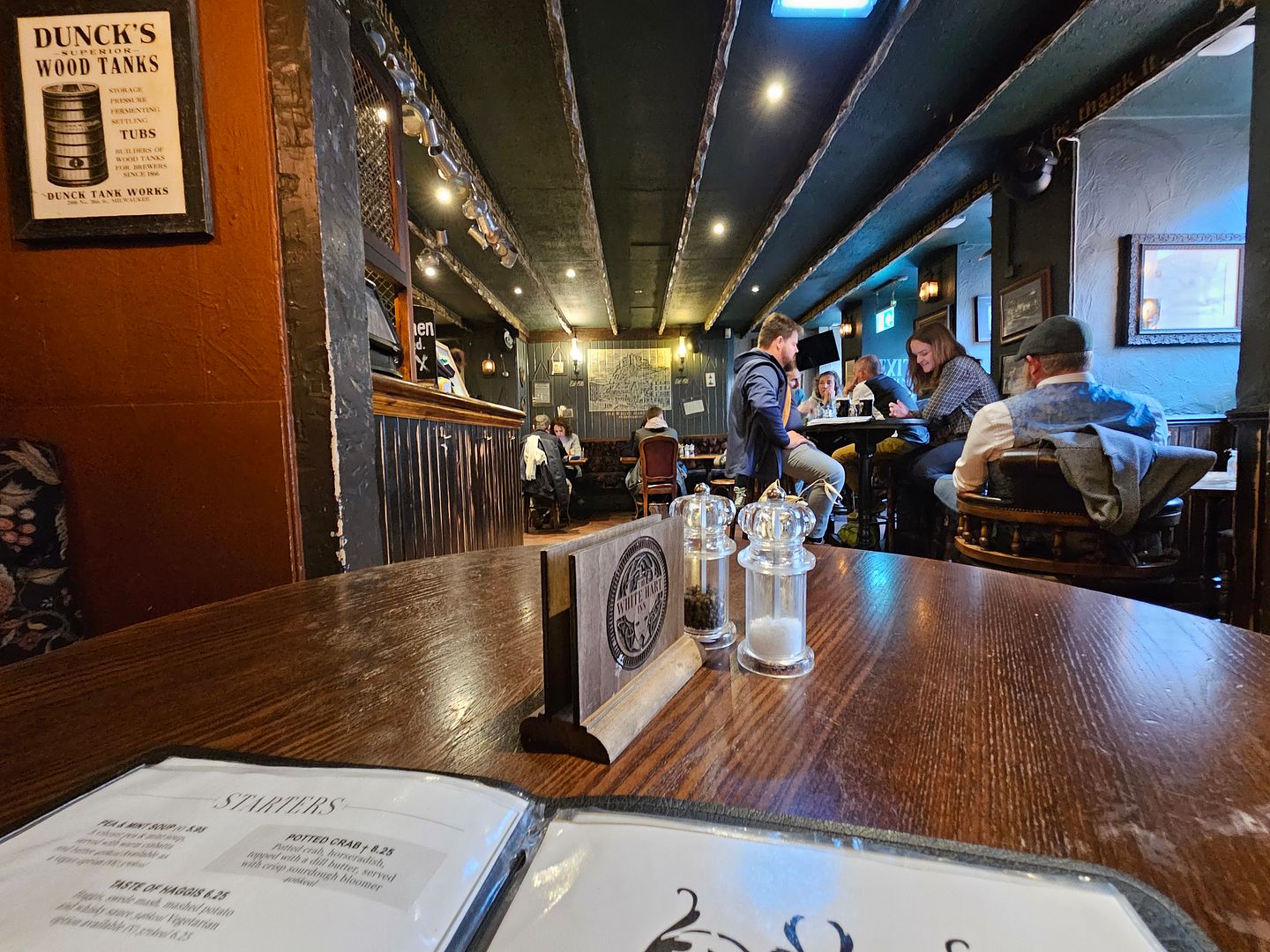
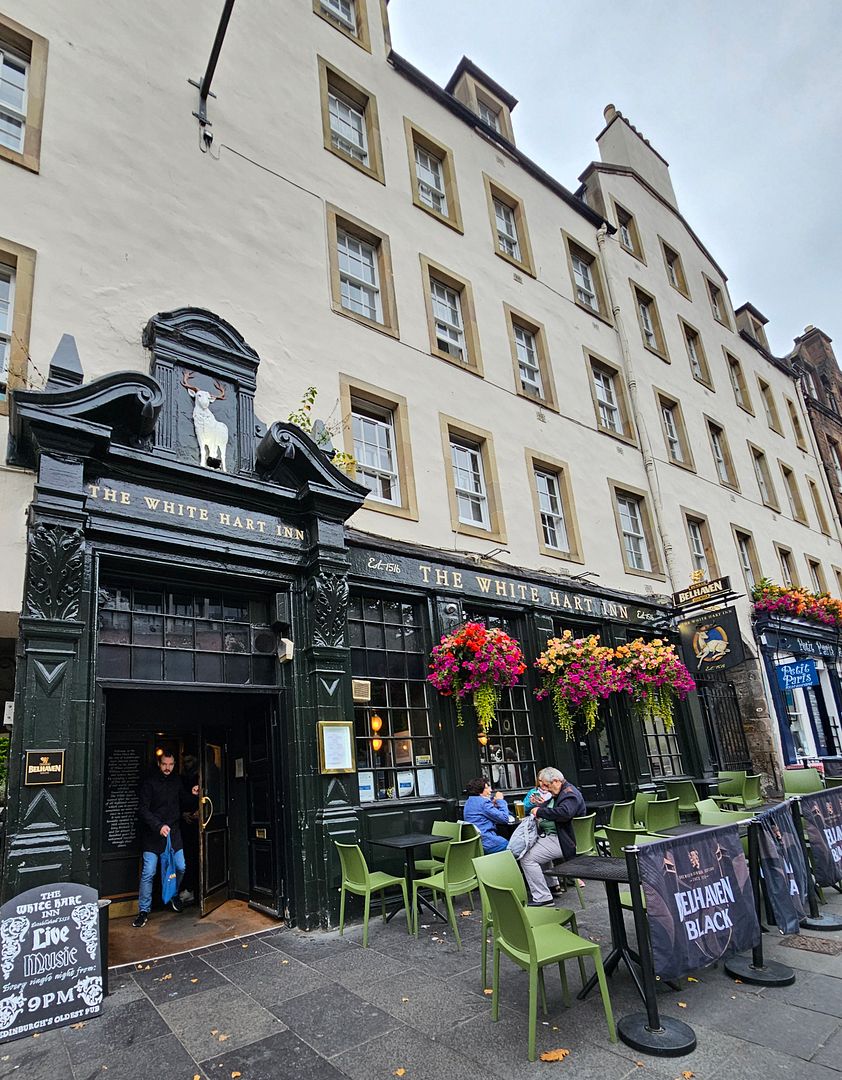
I waited at the White Hart Inn, Edinburgh’s most ancient tavern.

Follow in the footsteps of Oliver Cromwell, William Wordsworth and Robert Burns by enjoying a tankard of fine ale or one of our world-famous whiskies. Founded in 1516, The White Hart is named after the rarest of all Highland creatures, which can be spotted sometimes no more than once in a century. It was used as a heraldic symbol in the 14th century by King Richard II, and for almost five hundred years has welcomed travellers through these doors.

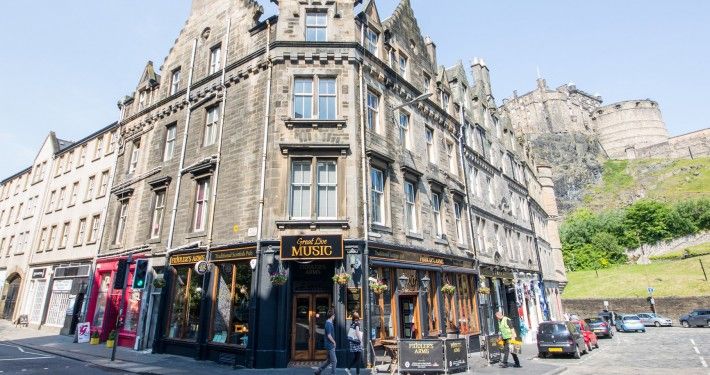
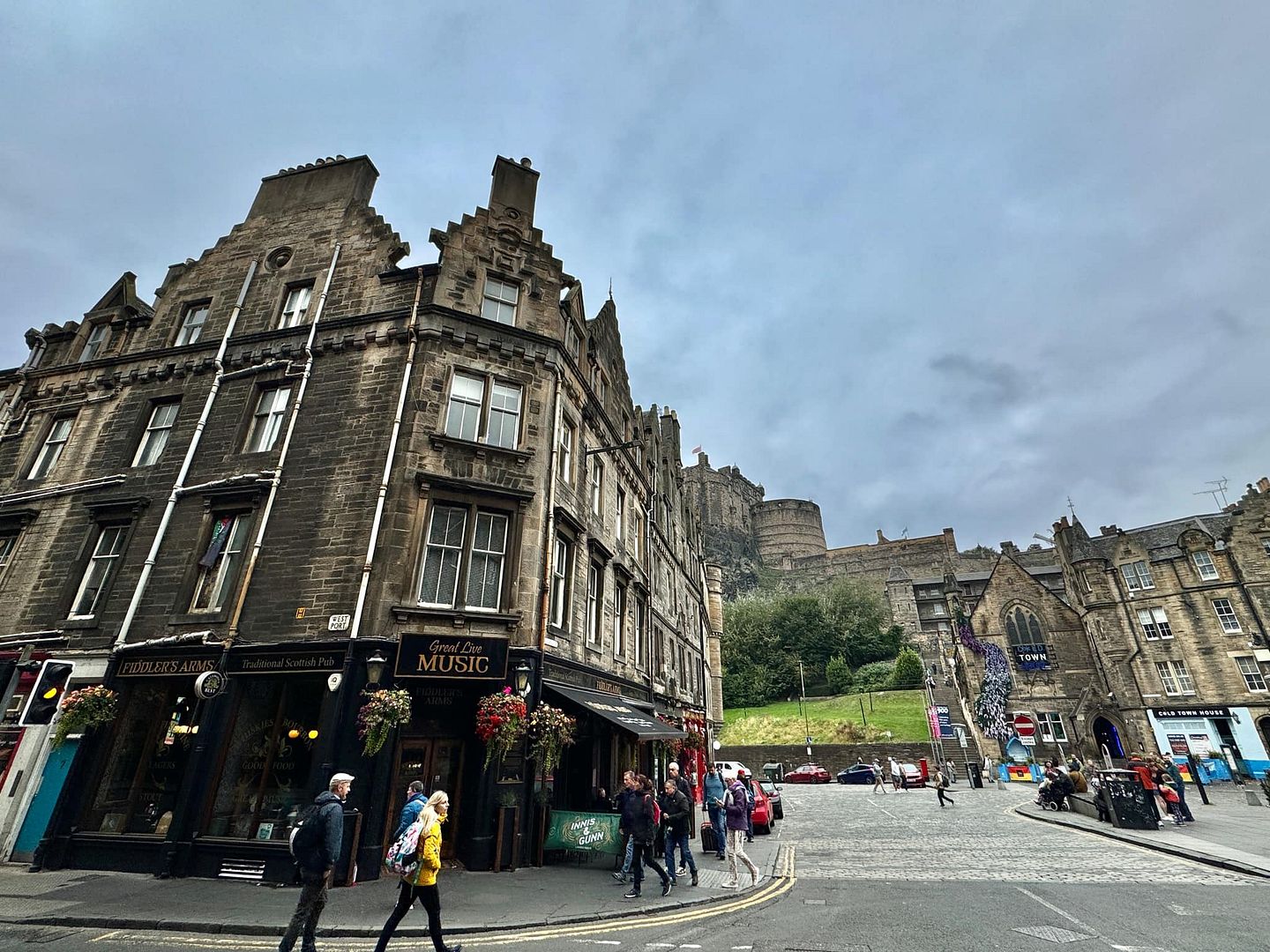
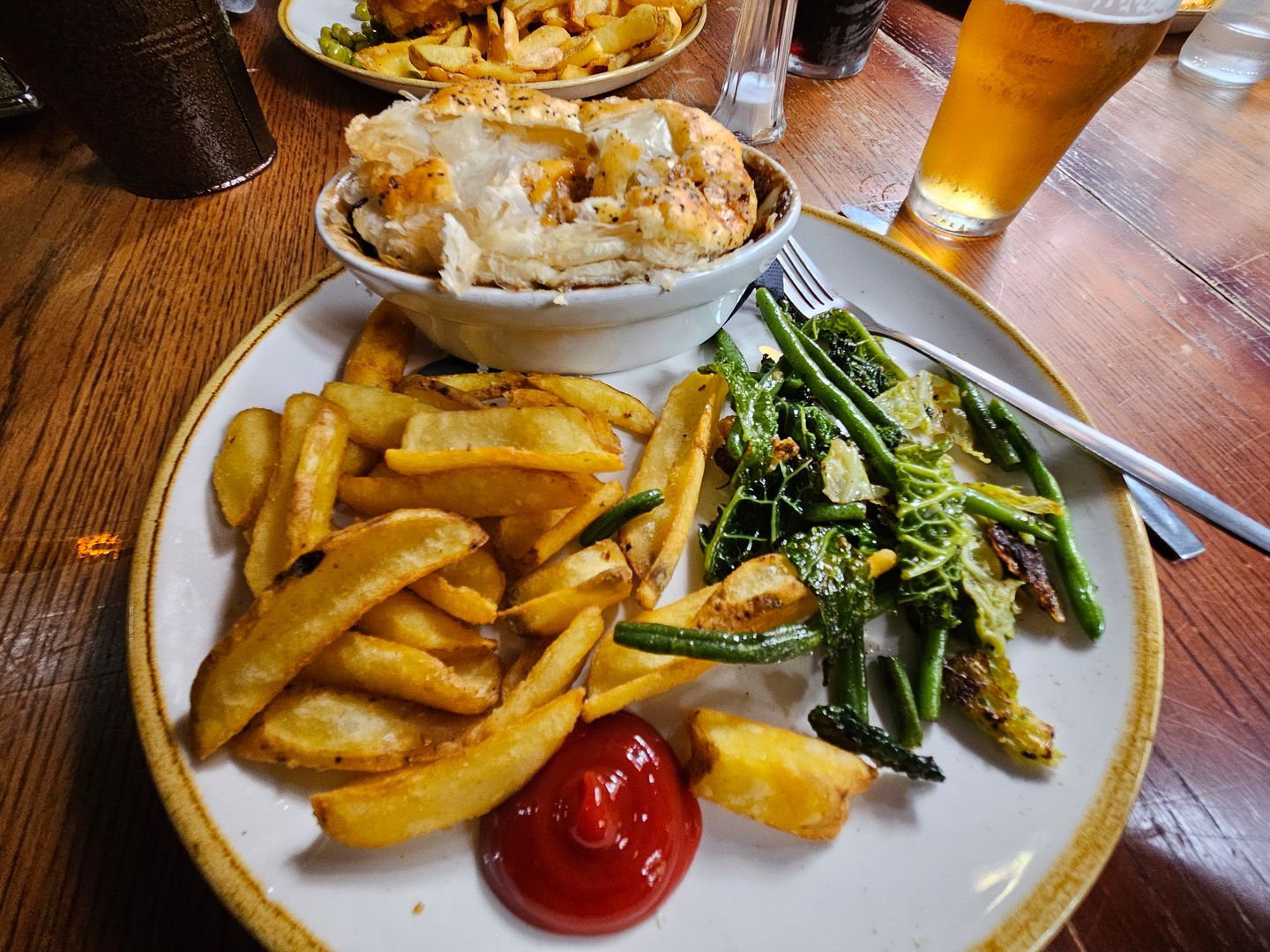
The food choices here were not hitting the spot for us so when Josh and Laura met up with me after their castle experience we found a table at the Fiddler’s Arms.

This image above is from The Fiddler’s Arms webpage. You can see what a sunny day would look like in the shadow of the castle. Below is what the atmosphere was like when we were here.

After lunch we popped into a couple of shops, took some photos and then we got an Uber to take us to St. Mary’s Episcopal Church to enjoy evensong which was due to begin at 3:30 on this Sunday. That will have to be another post.