Ely Cathedral Stained Glass Museum

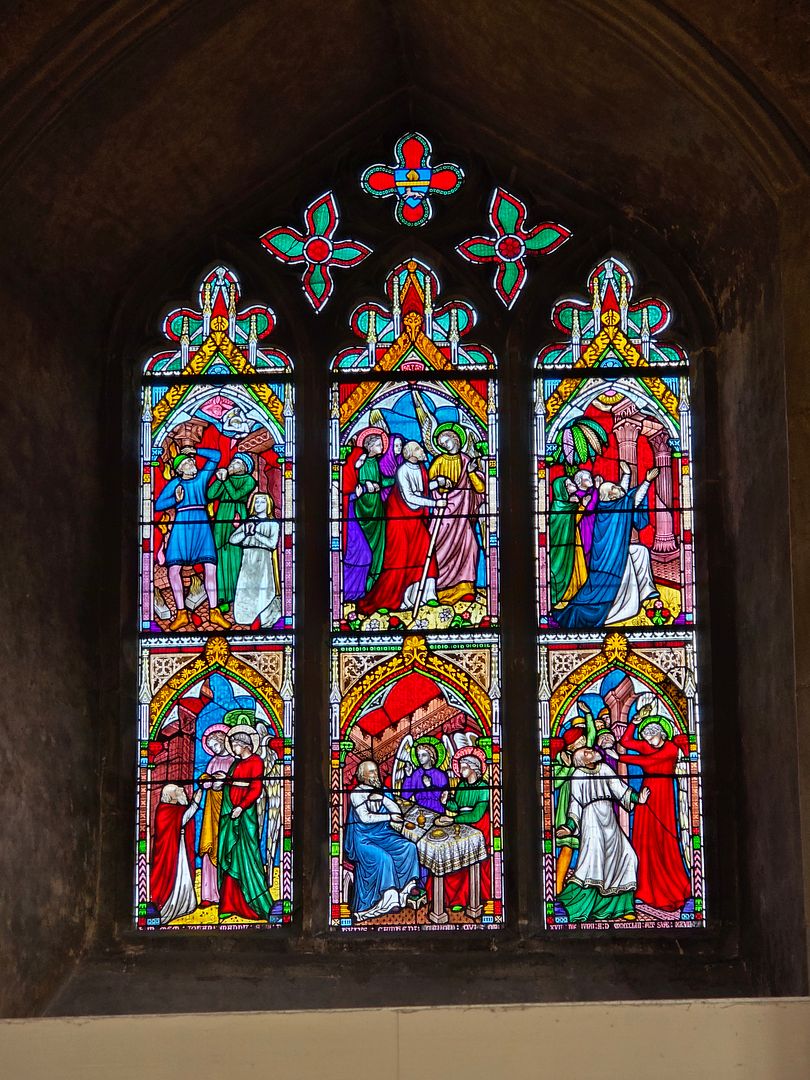
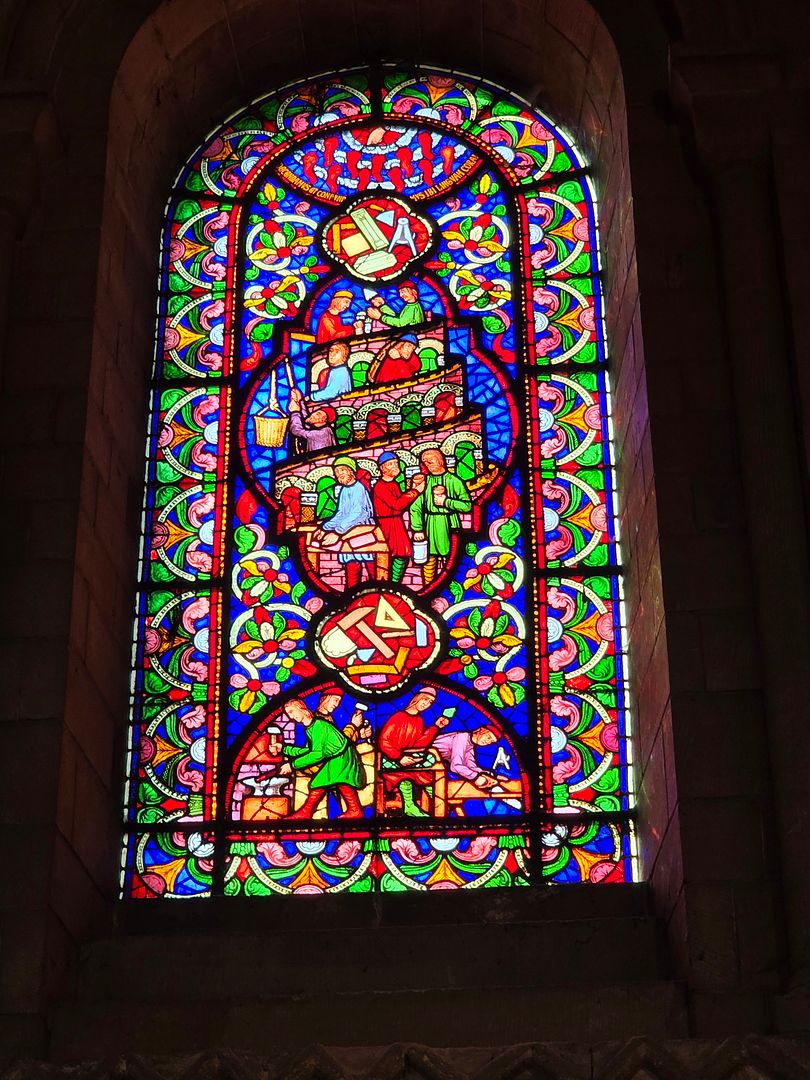
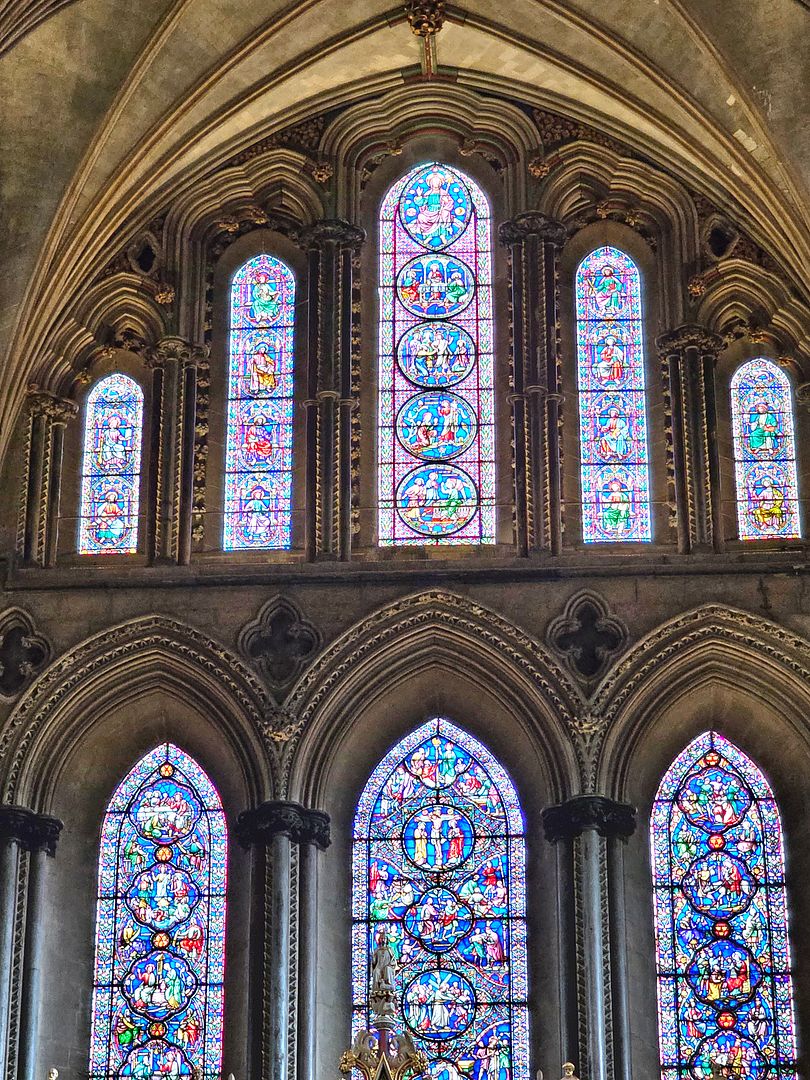
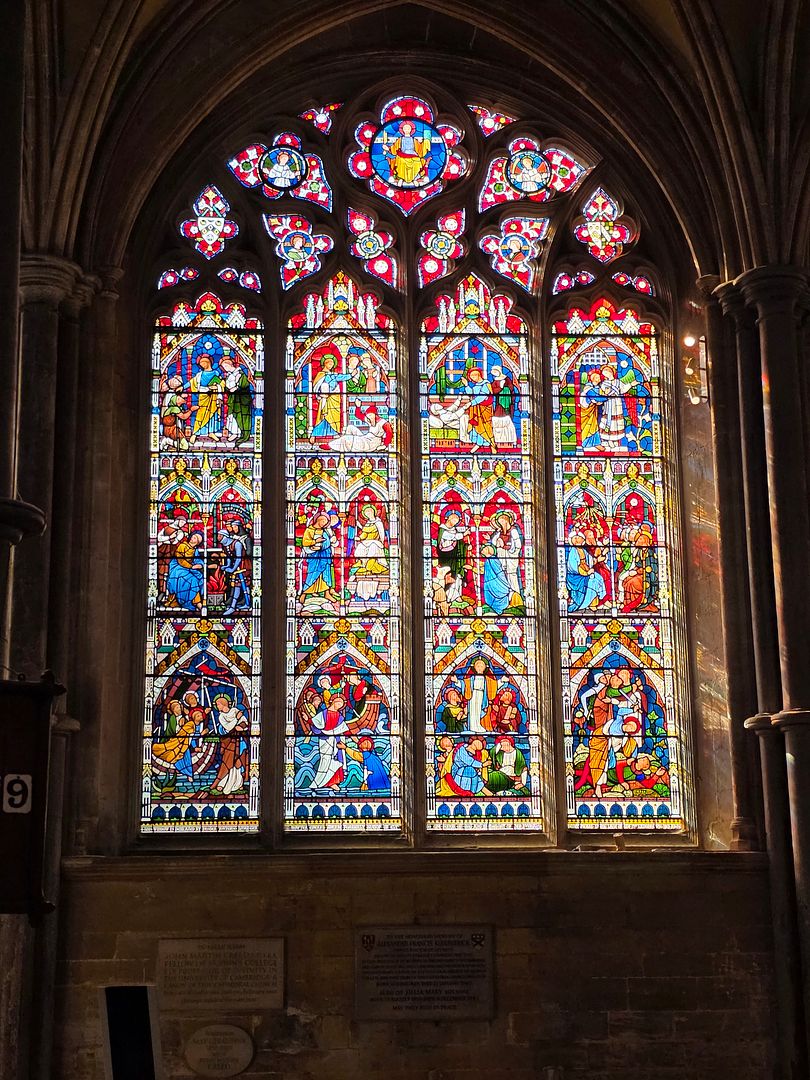
Our Danube to Cambridge Travel Journal continues with a visit to the Stained glass Museum housed up many stone stairs in Ely Cathedral. This visit was on Wednesday March 11th, 2026.

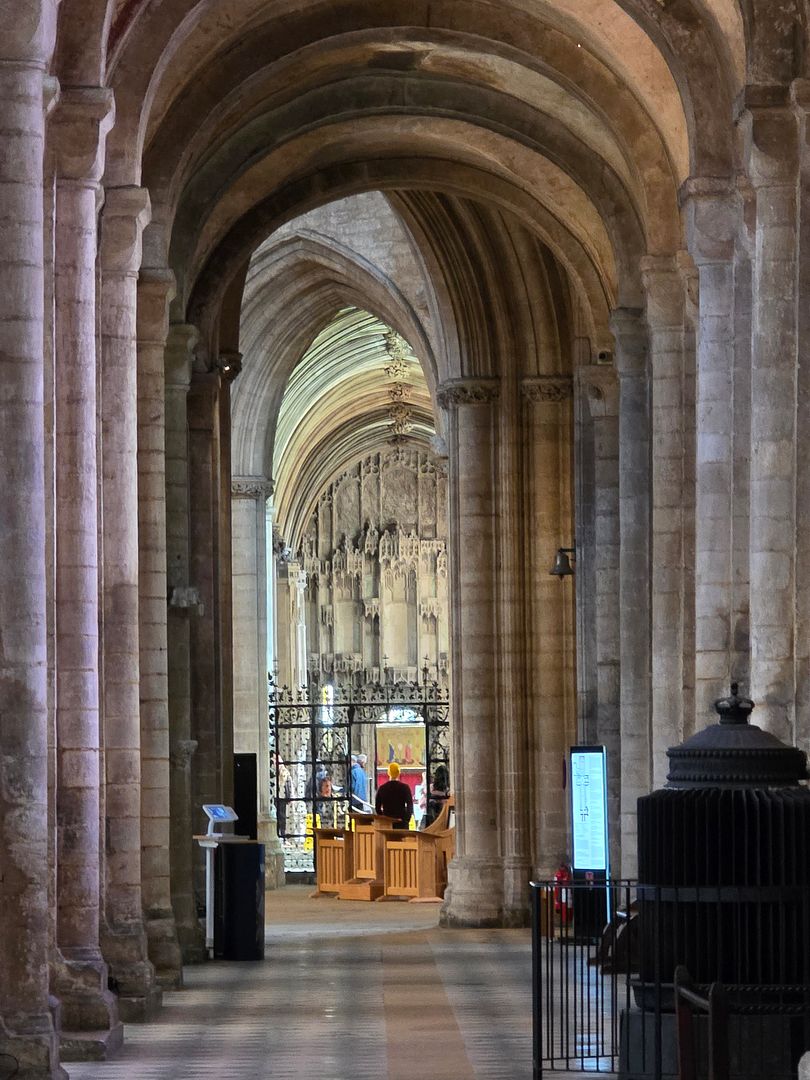
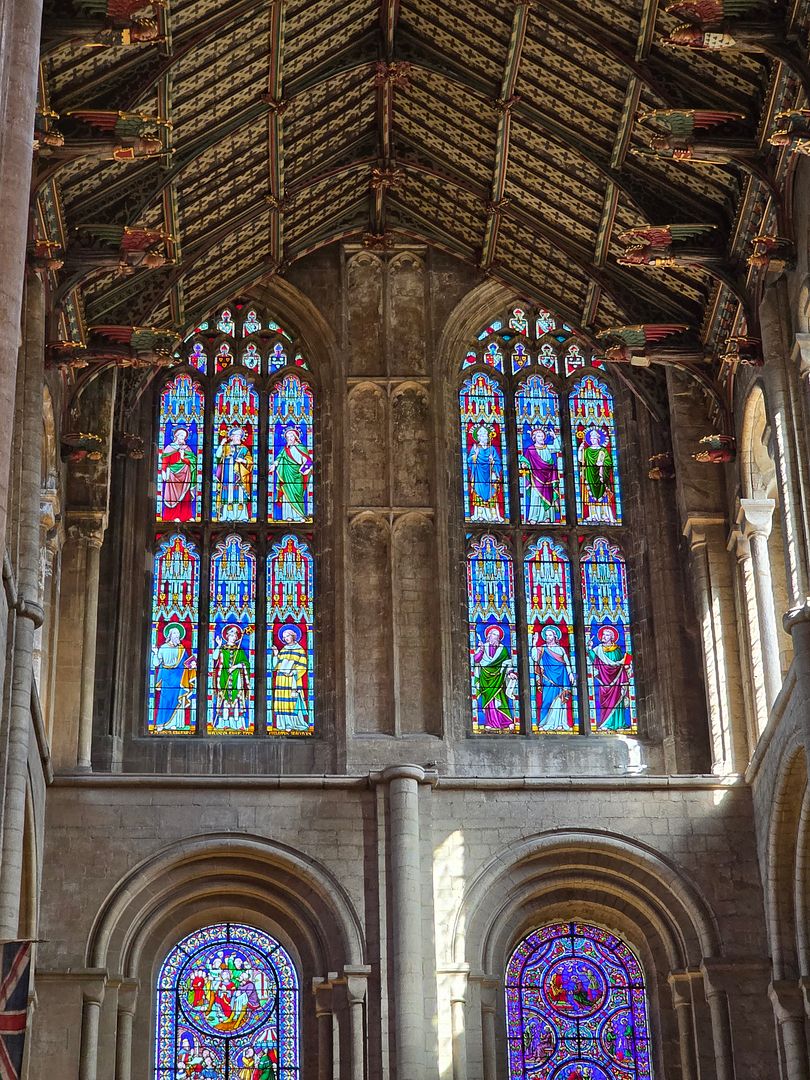
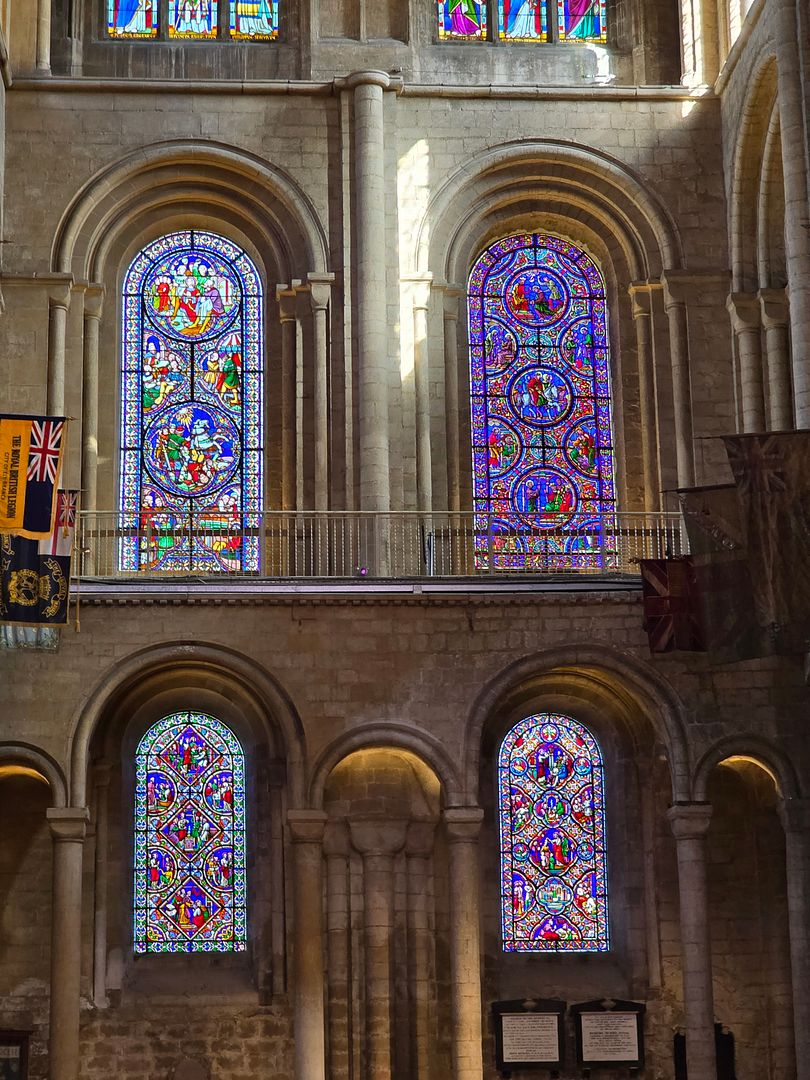
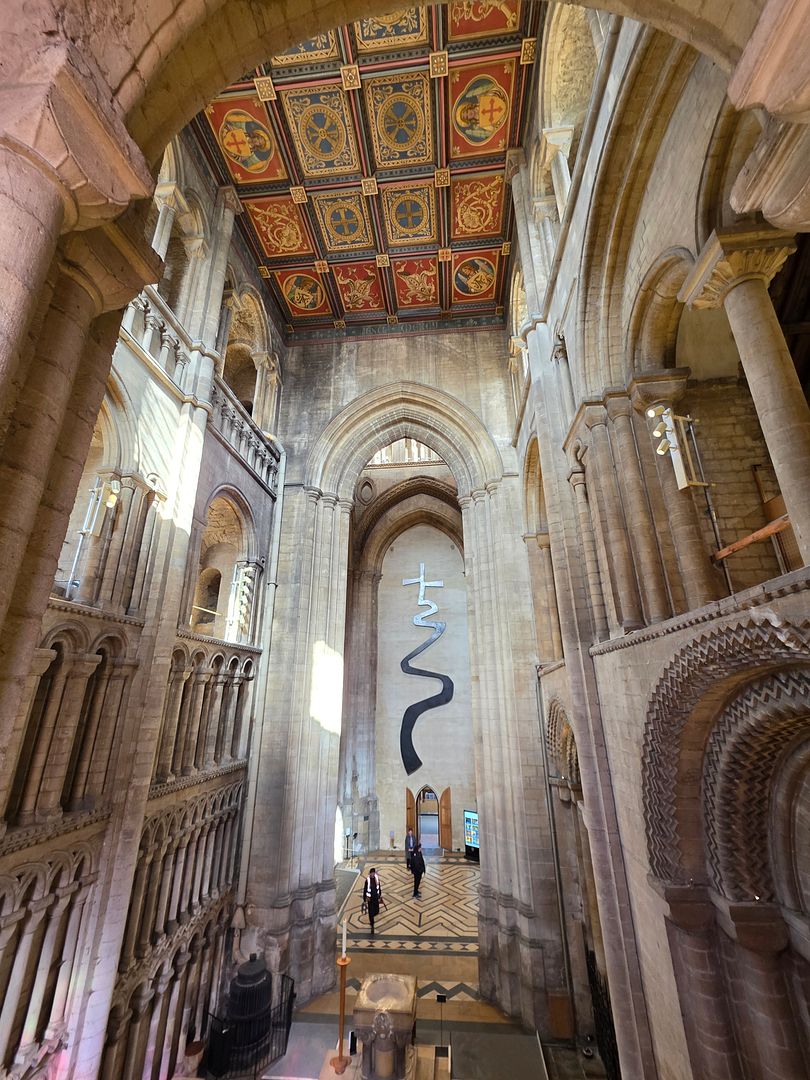
Looking down to the narthex where we entered the cathedral.

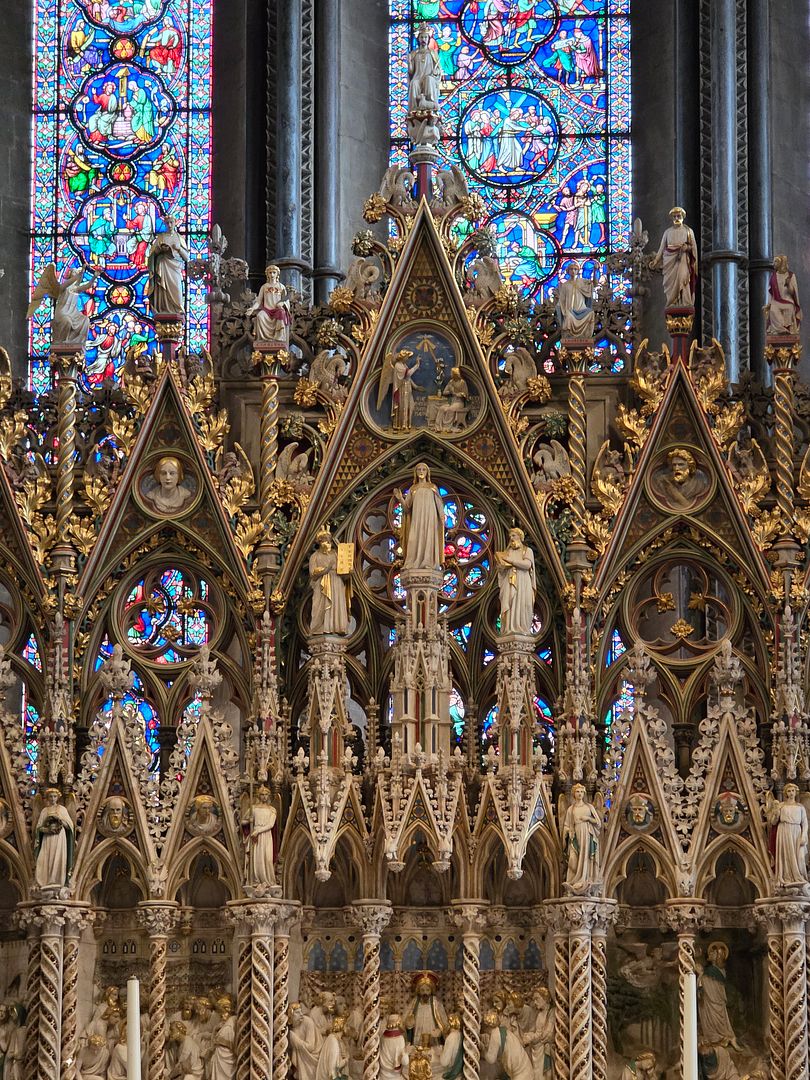
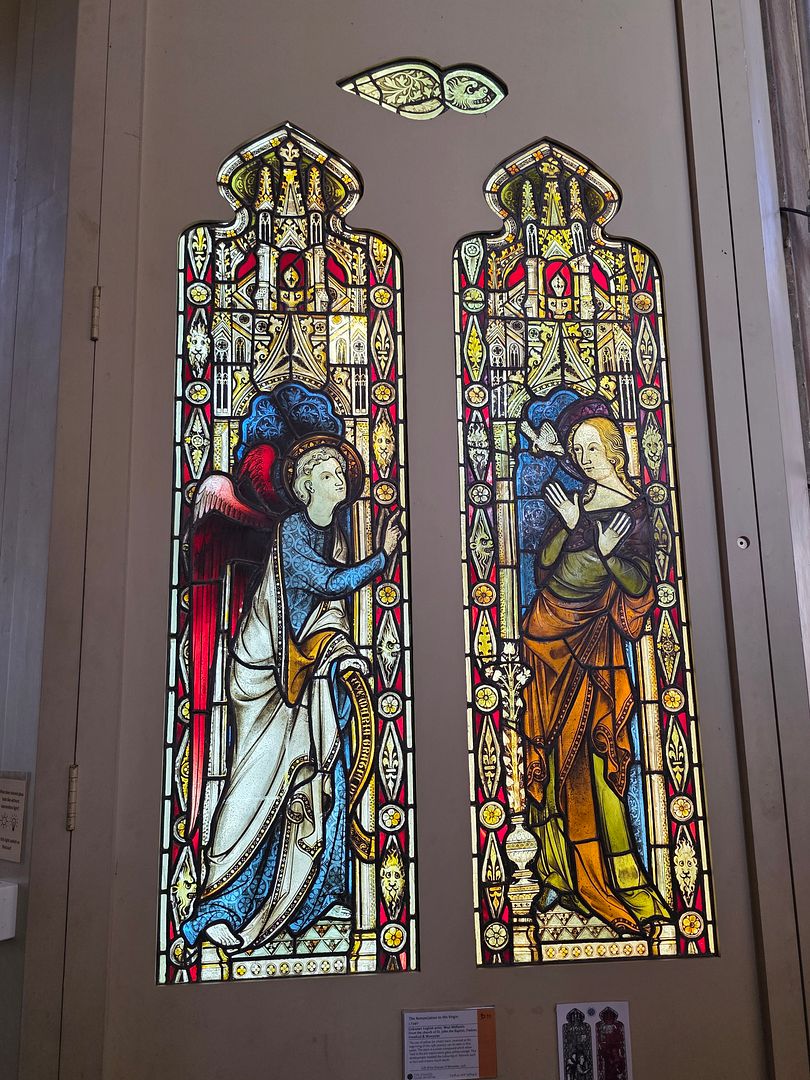
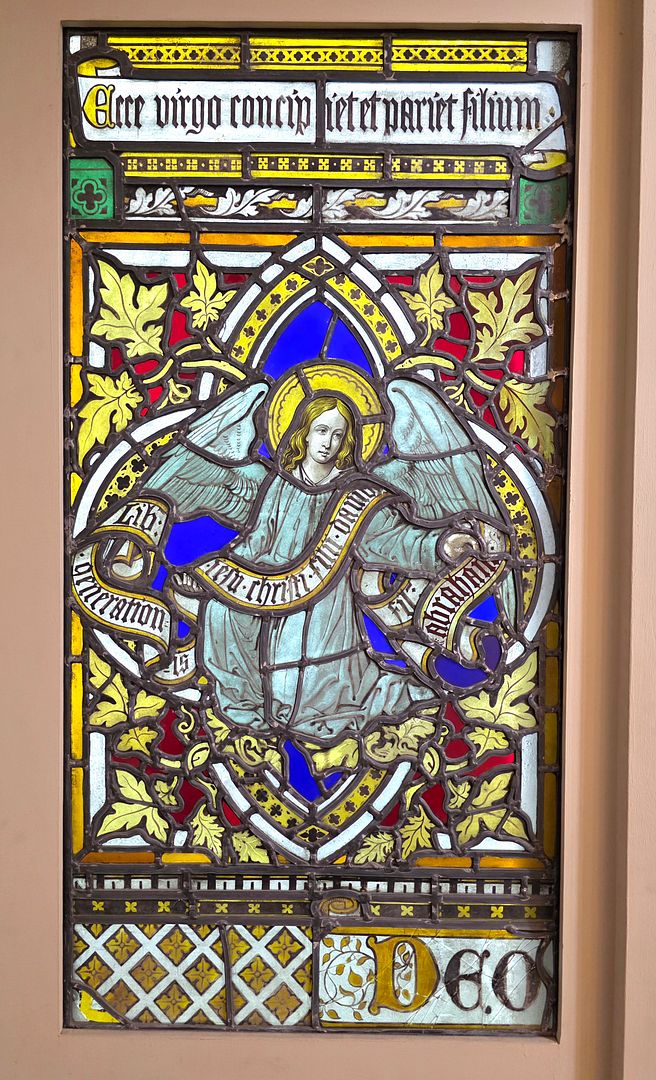
The Annunciation

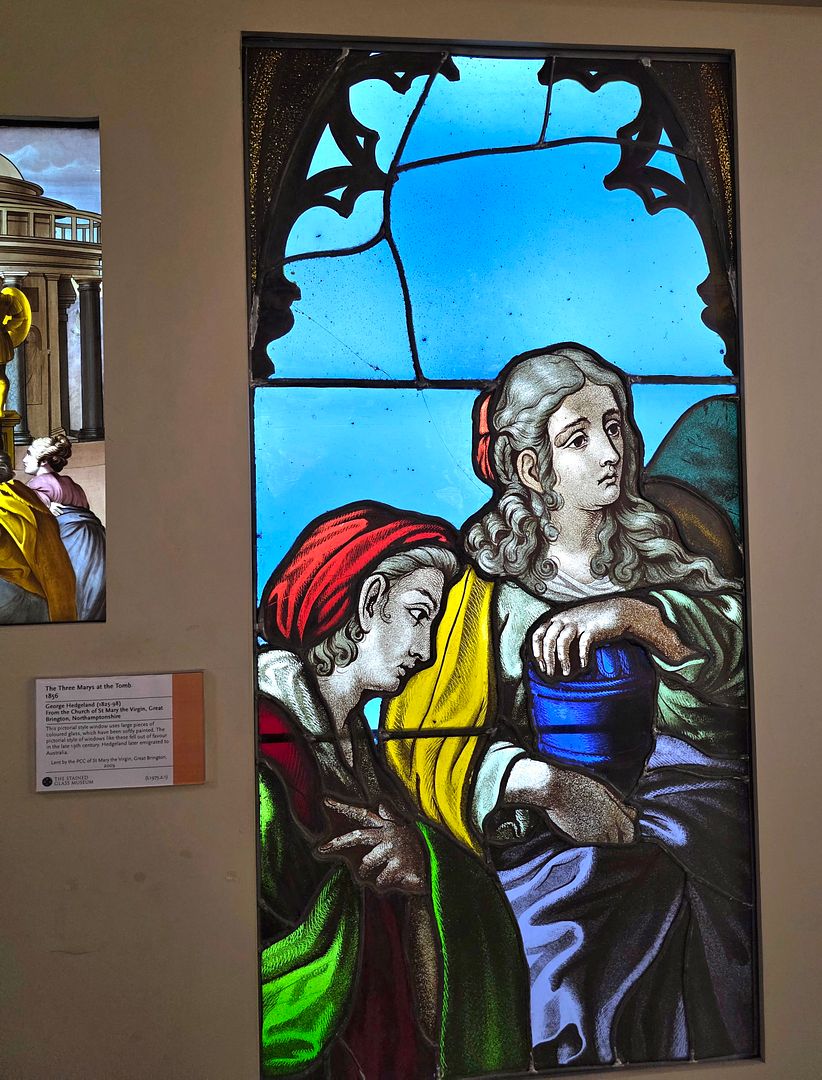
The Three Marys at the tomb.

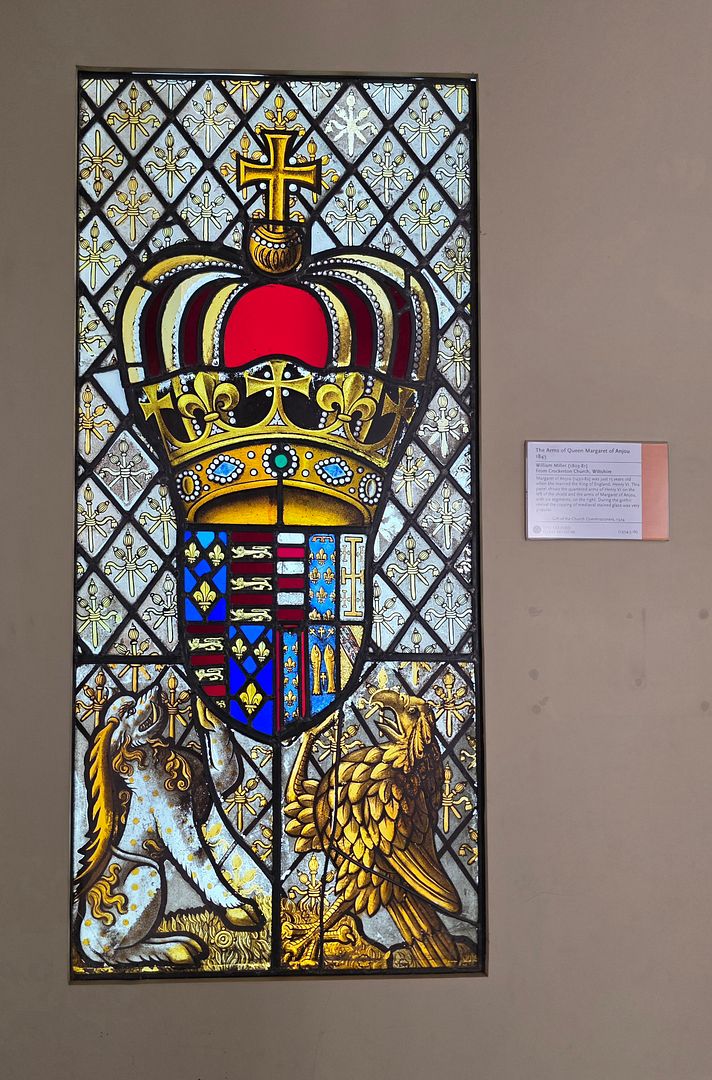
The Arms of Queen Margaret of Anjou, 1843.

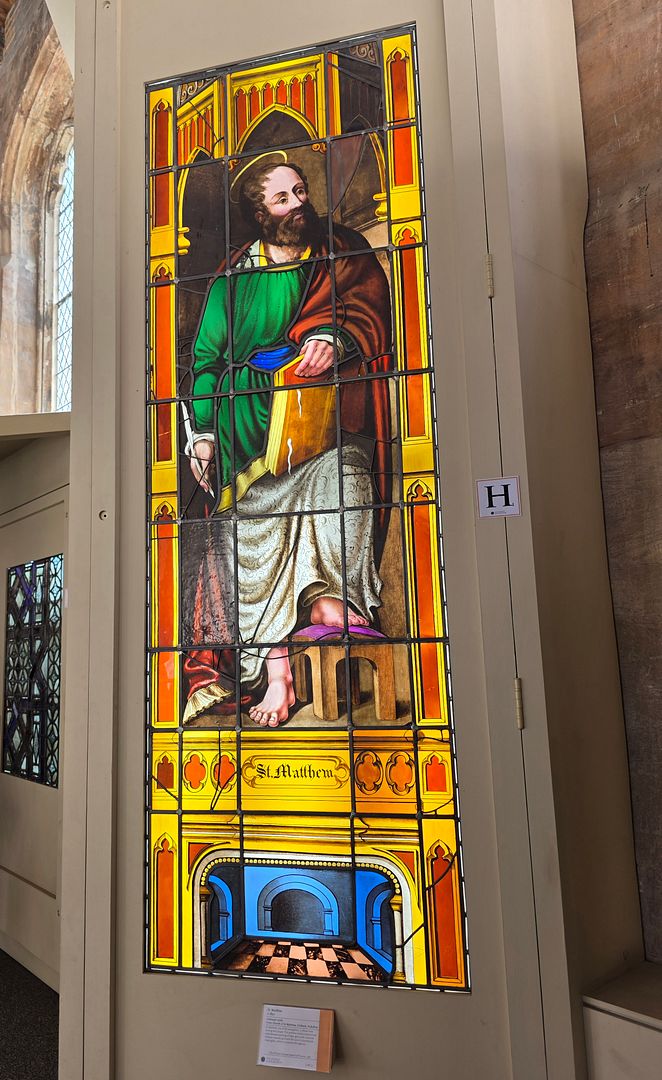
St. Matthew shown writing the Gospel of Matthew

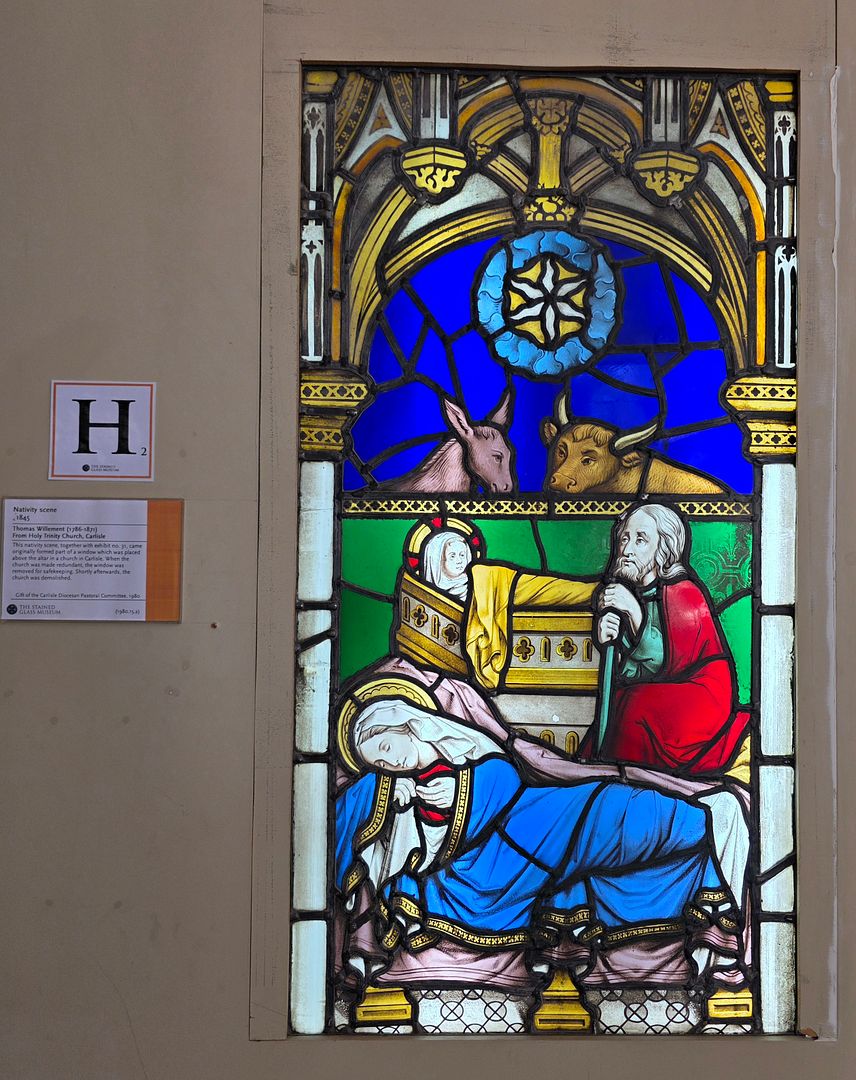
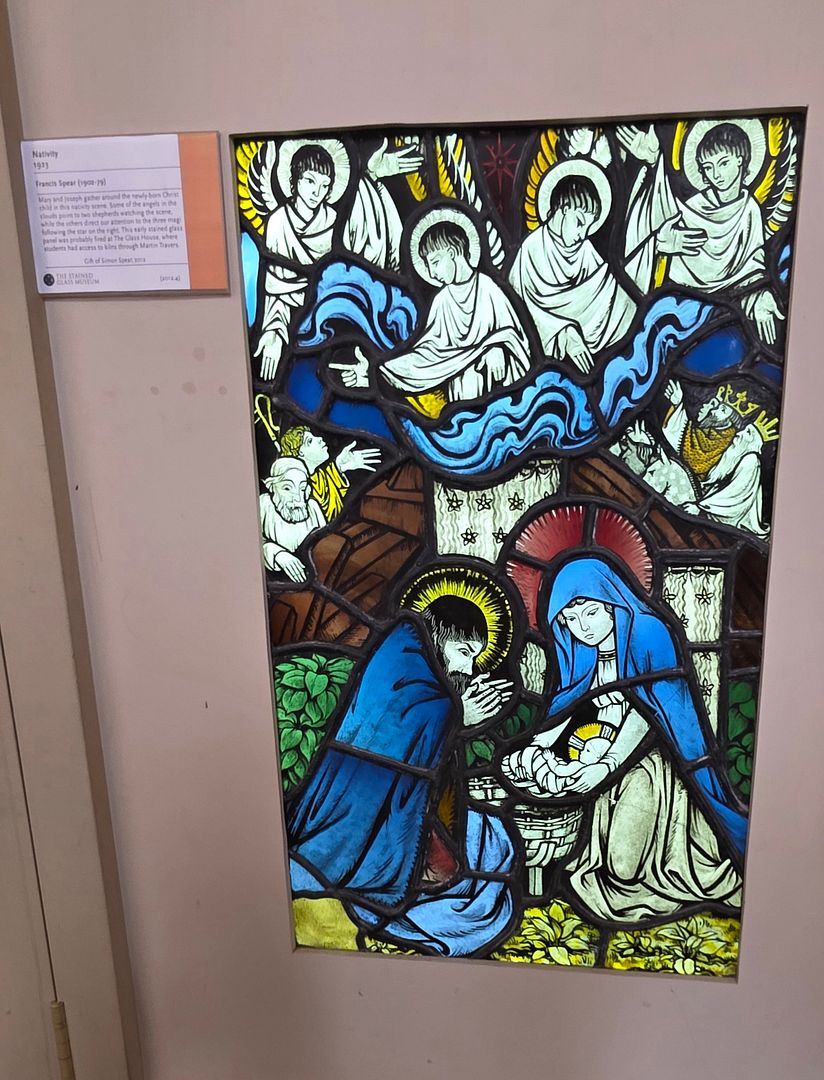
Nativity Scene window that was removed for safekeeping from a church that became redundant. Shortly afterwards, the church was demolished.

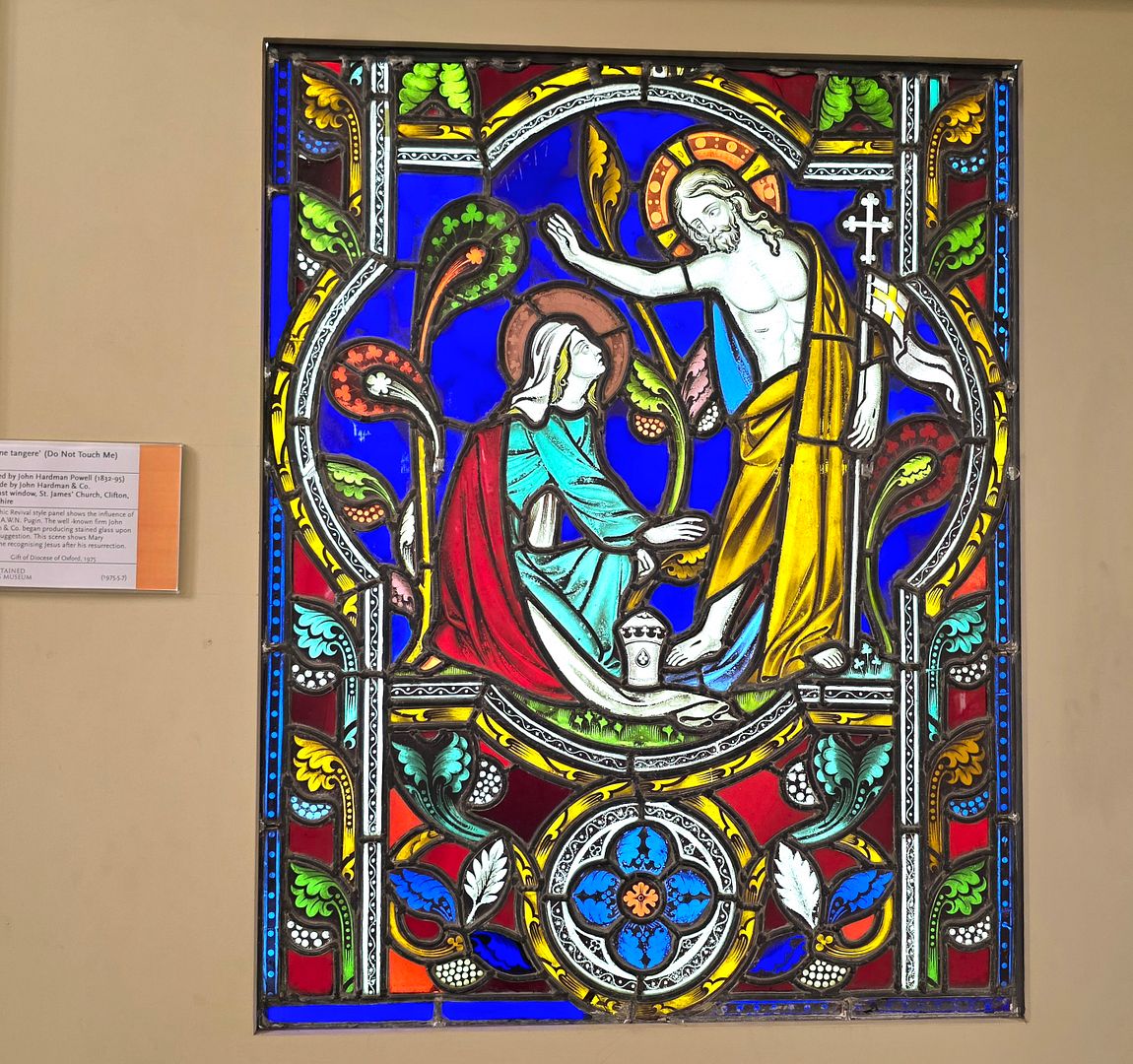
“Do not touch me” Mary at the Tomb when she recognizes Jesus.

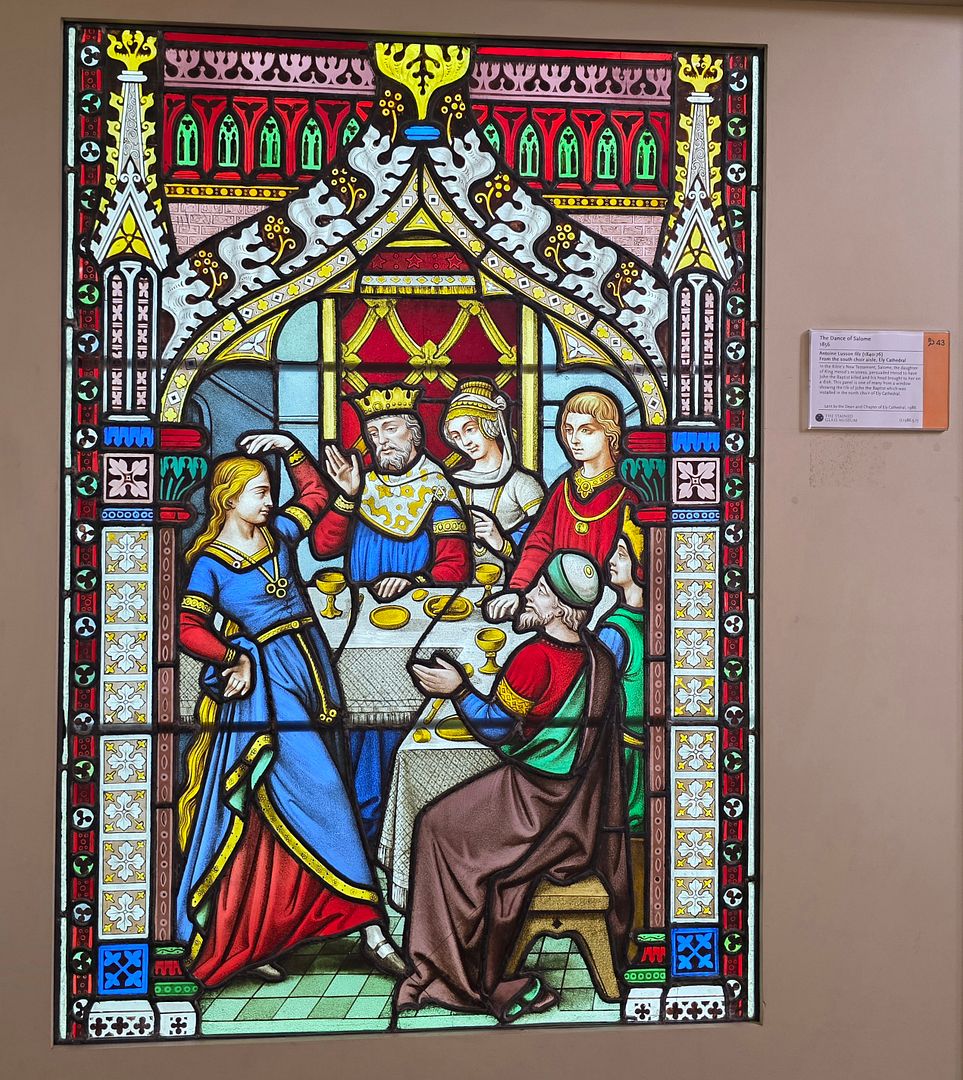
The Dance of Salome

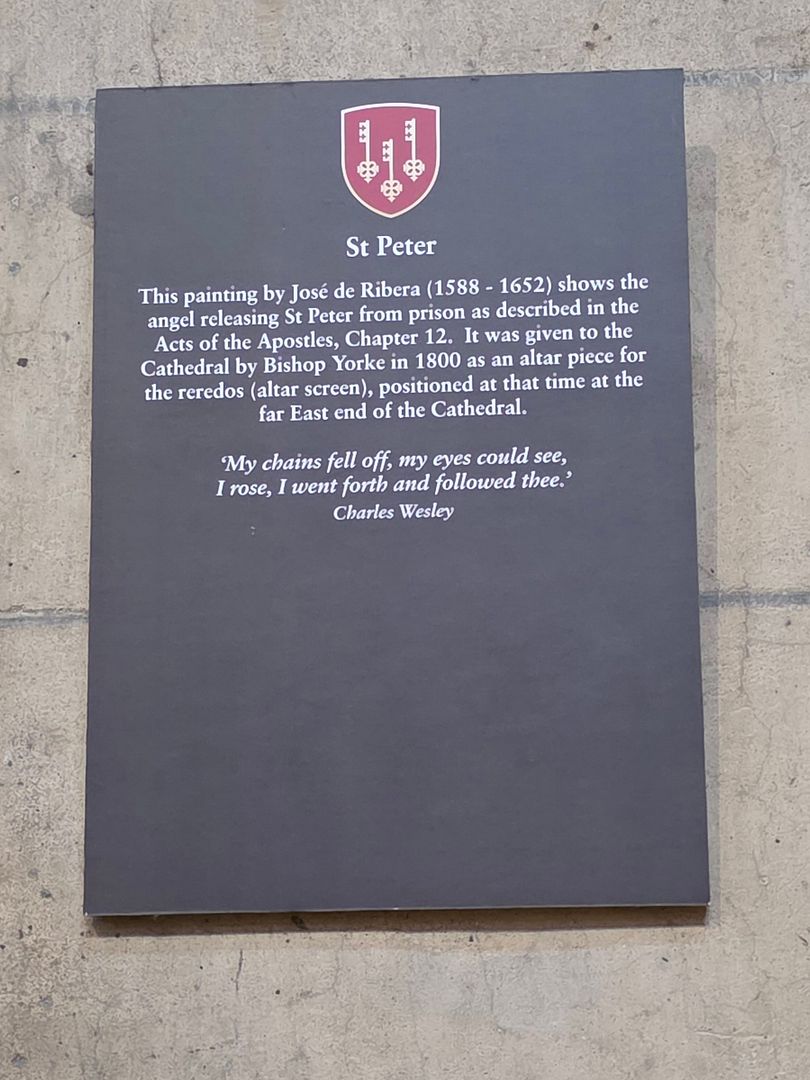
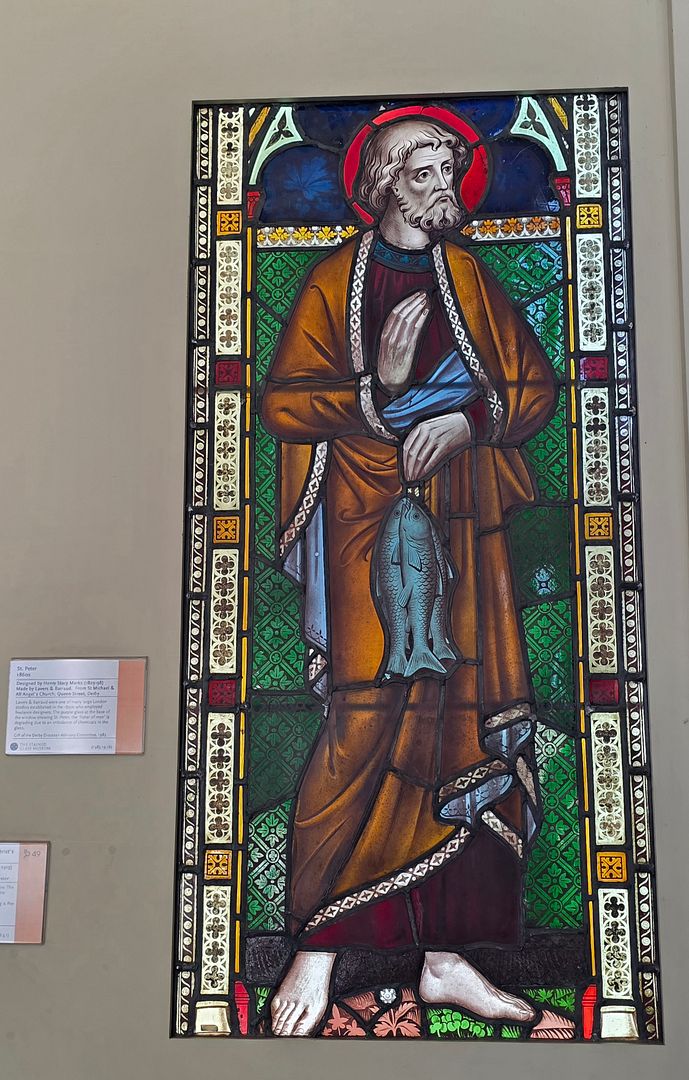
St. Peter

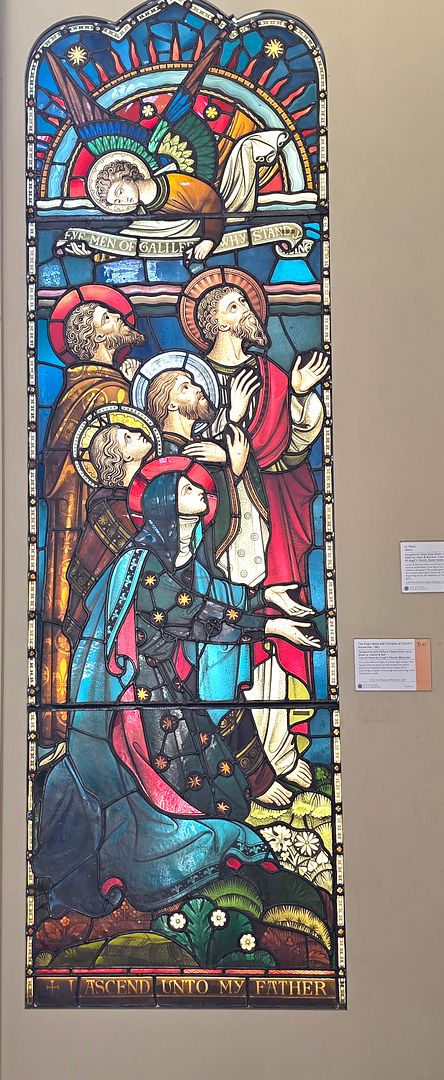
Mary and the Disciples at Christ’s Ascension

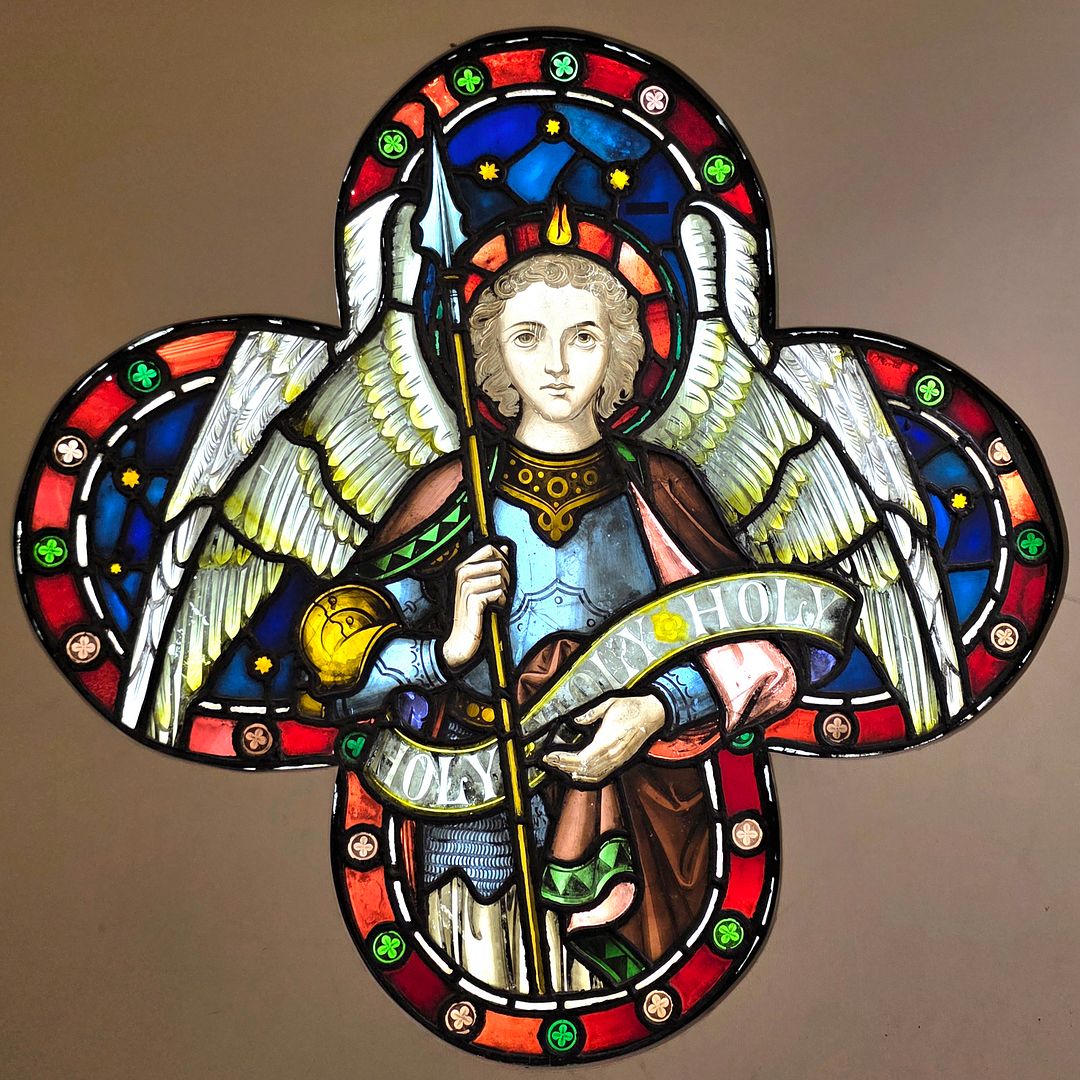
Holy, Holy, Holy

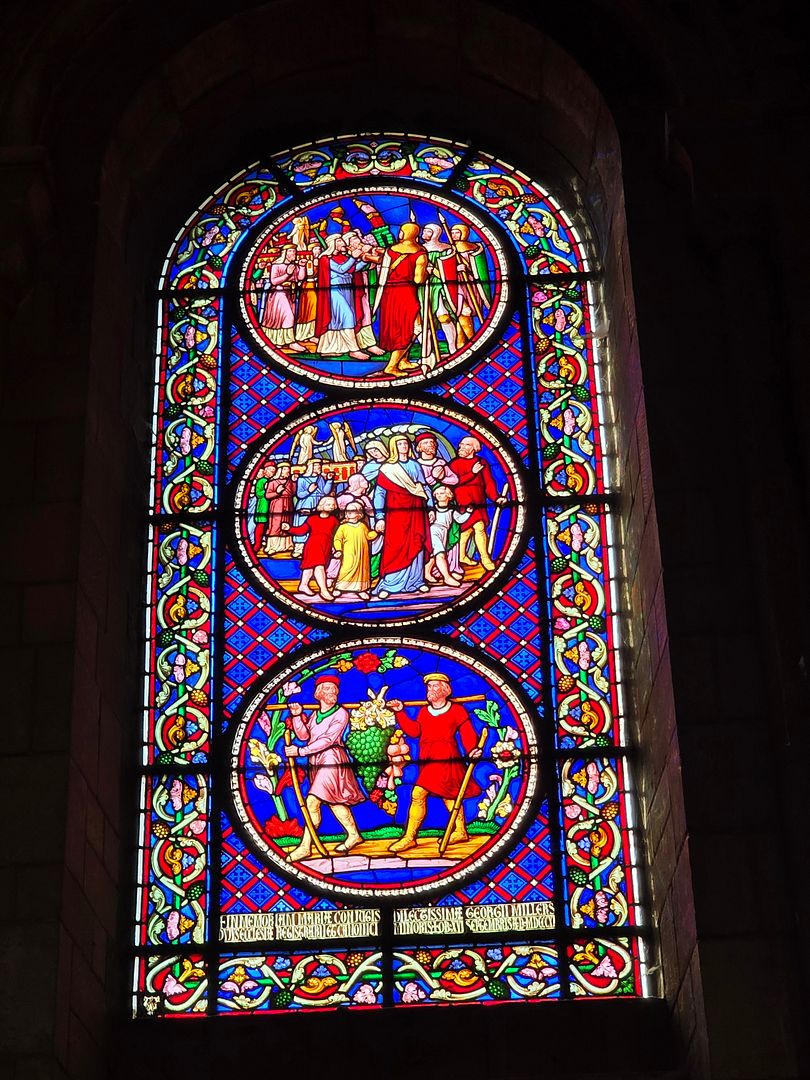
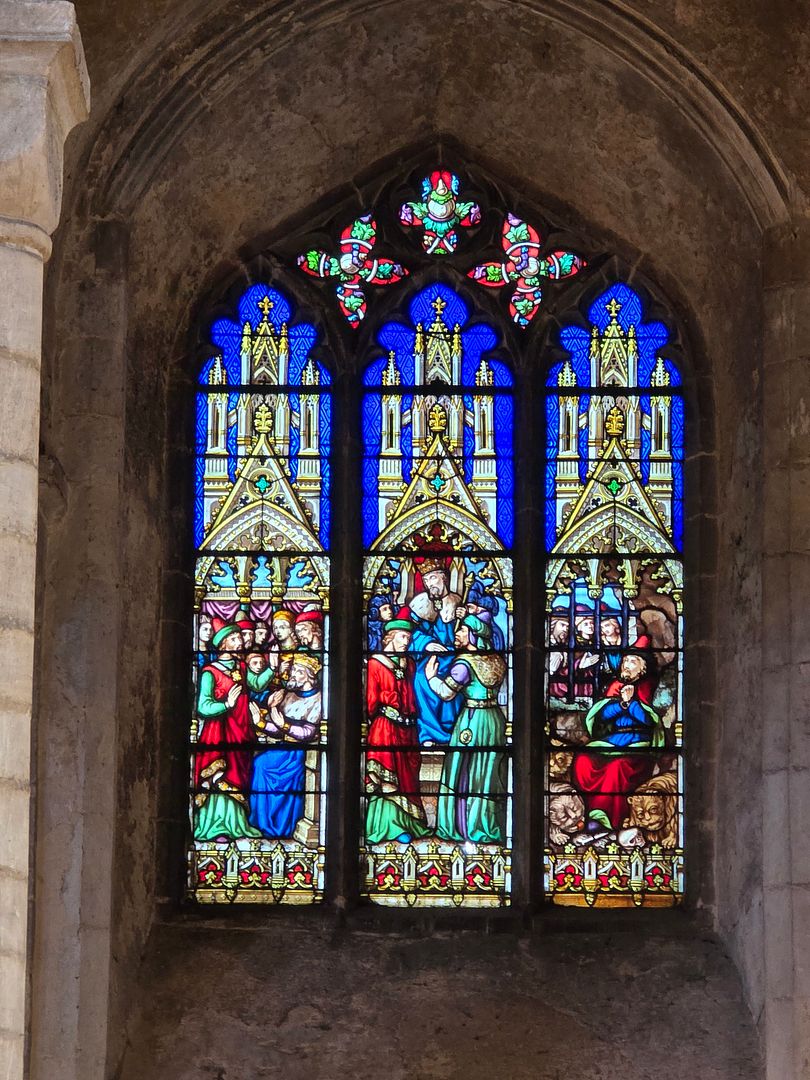
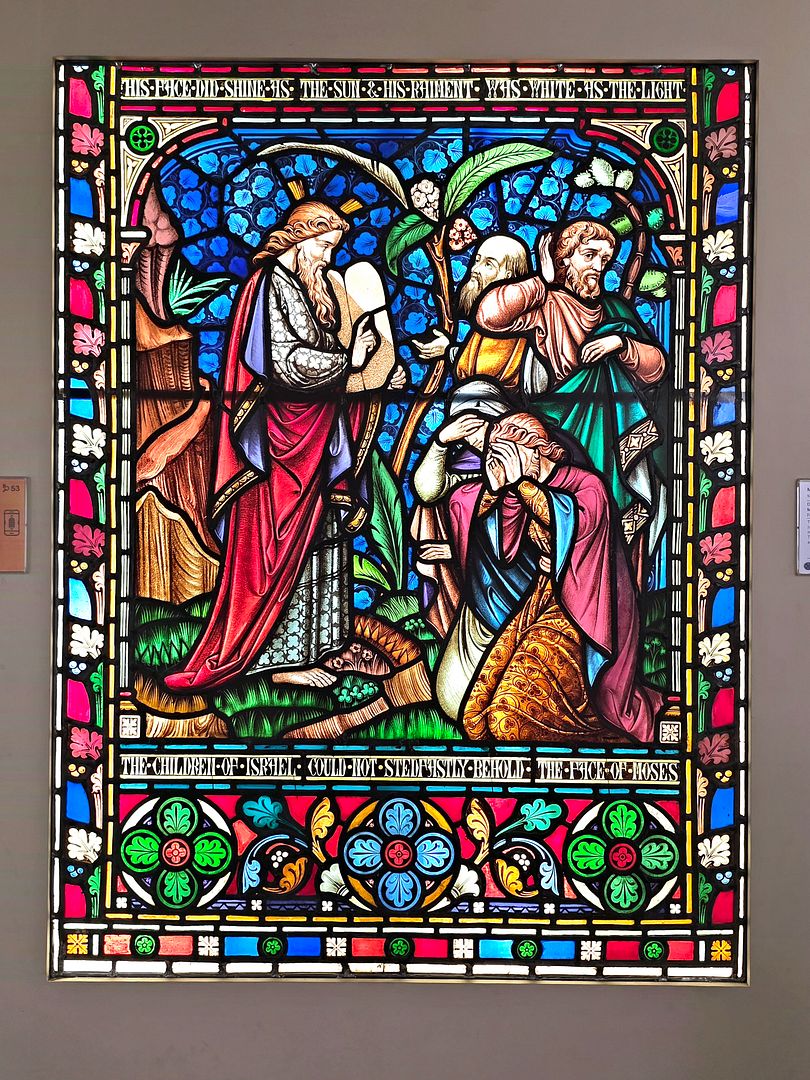
The Children of Israel could not steadfastly behold the face of Moses.

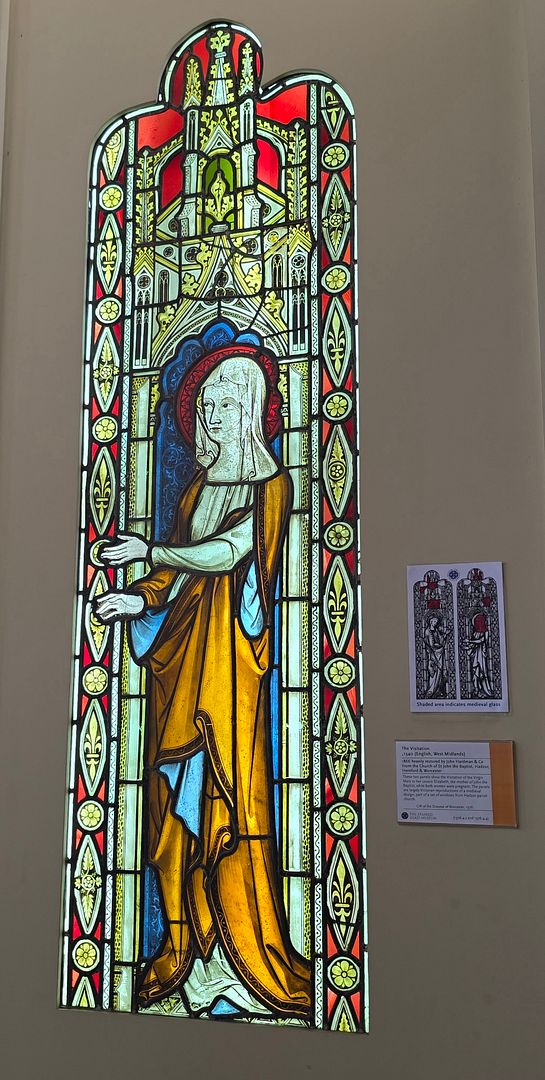
The Visitation

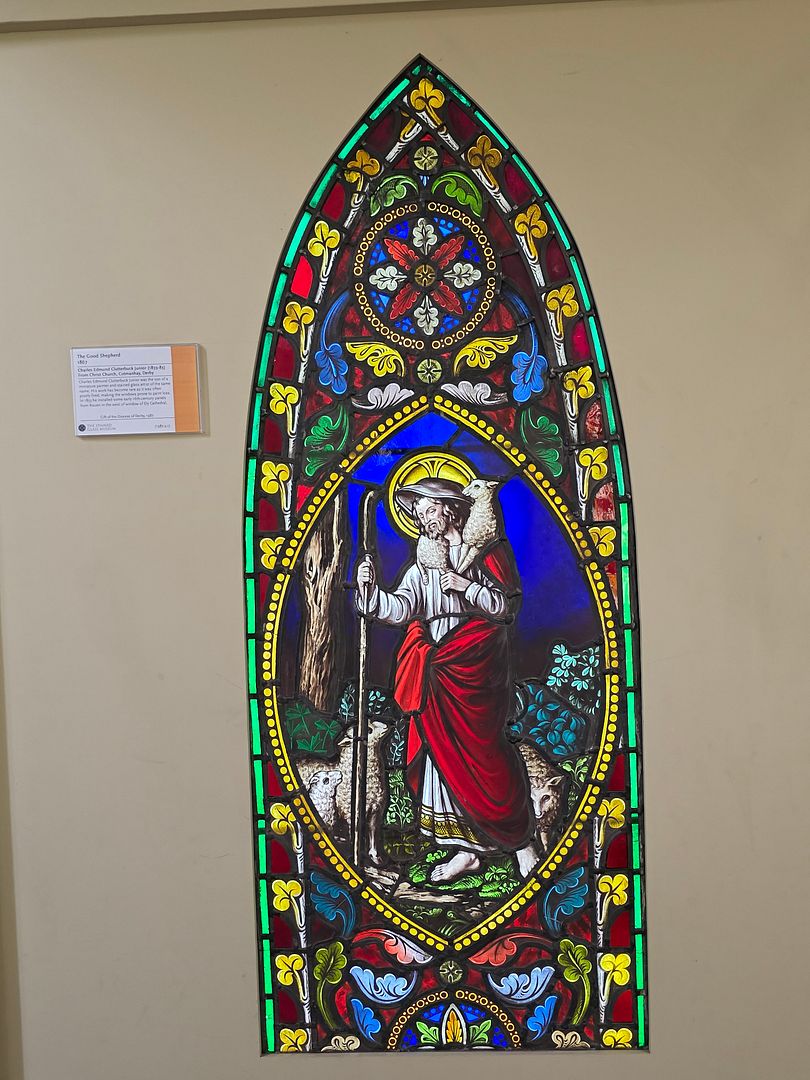
The Good Shepherd

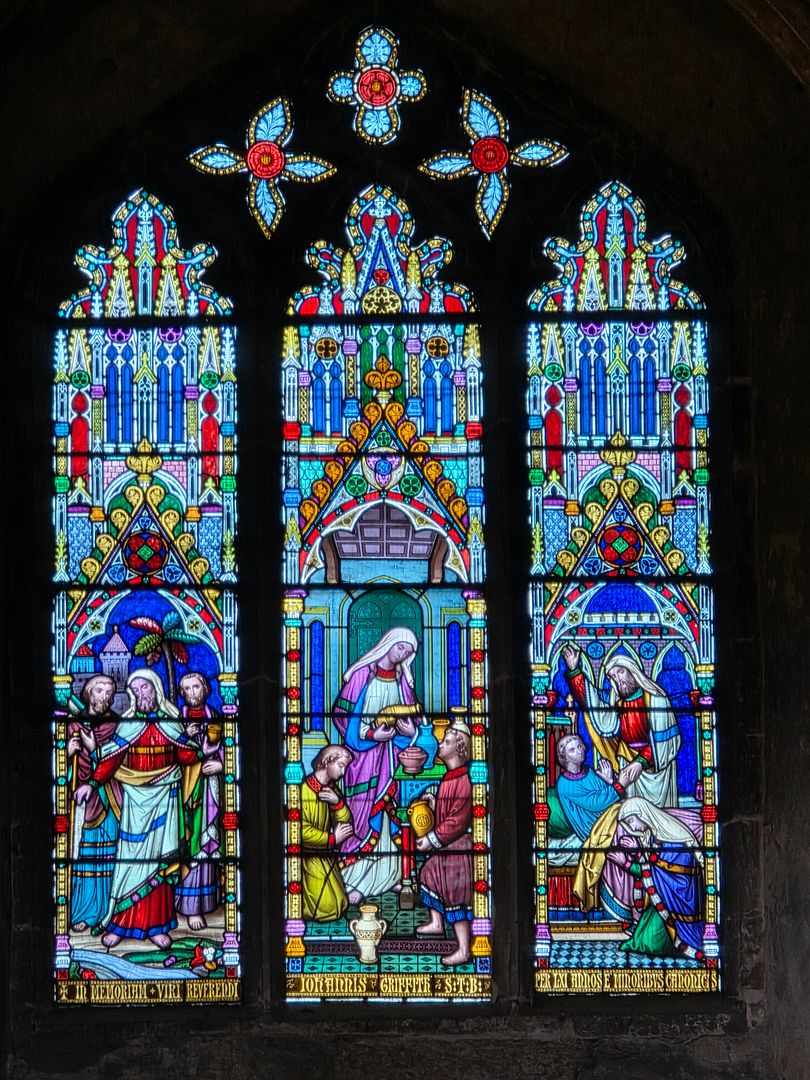
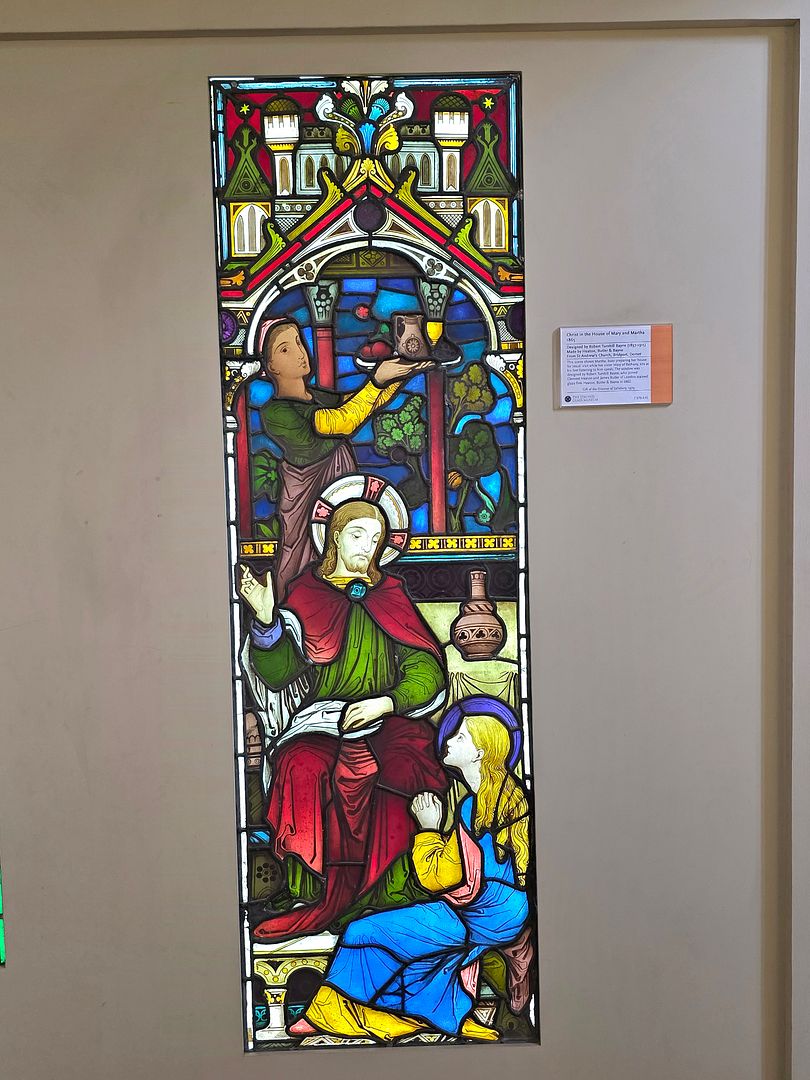
Mary and Martha and Jesus

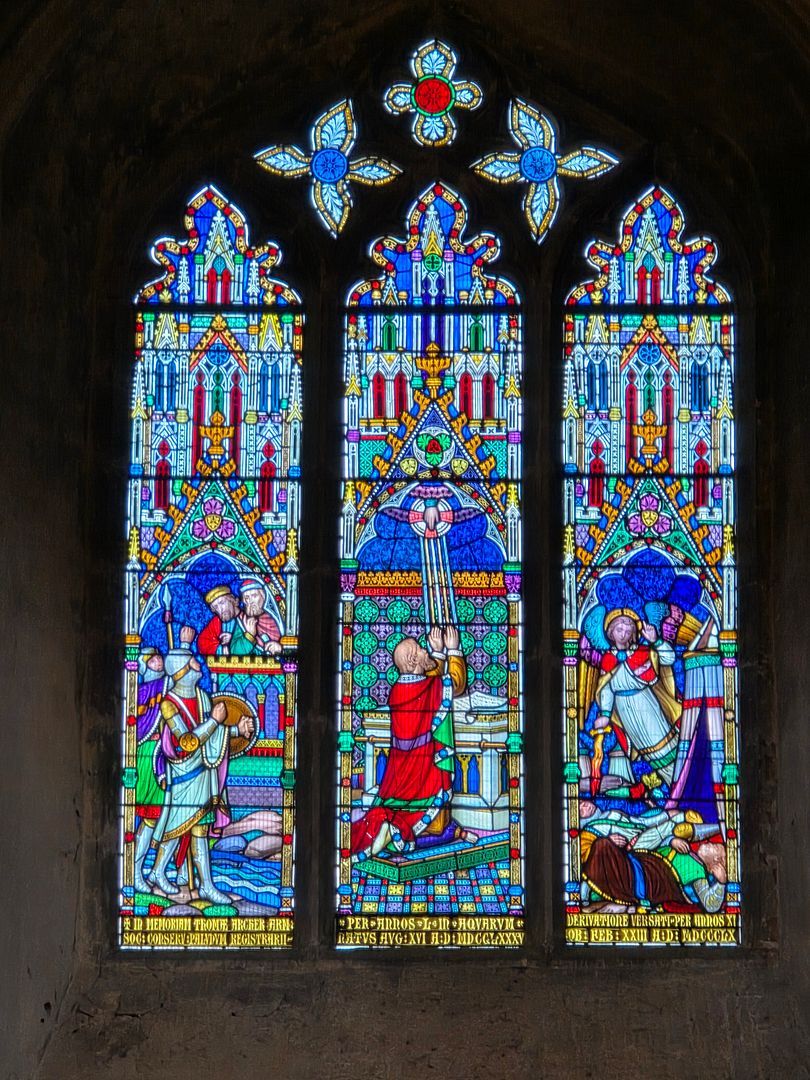
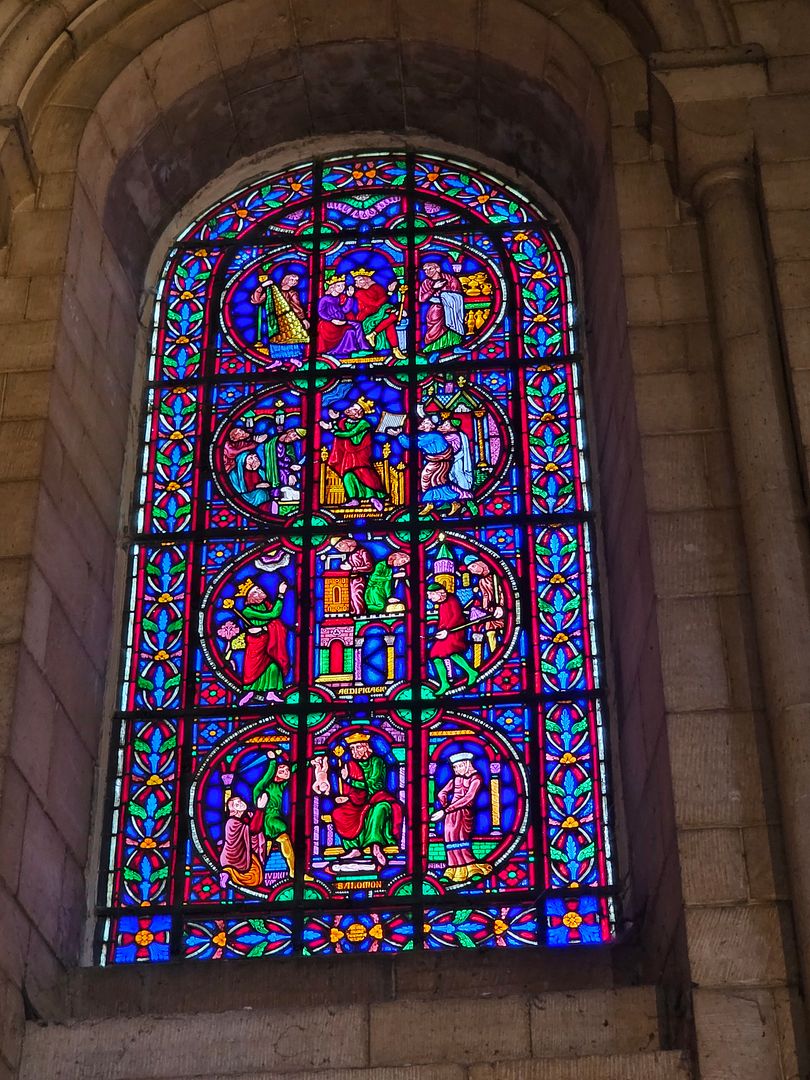
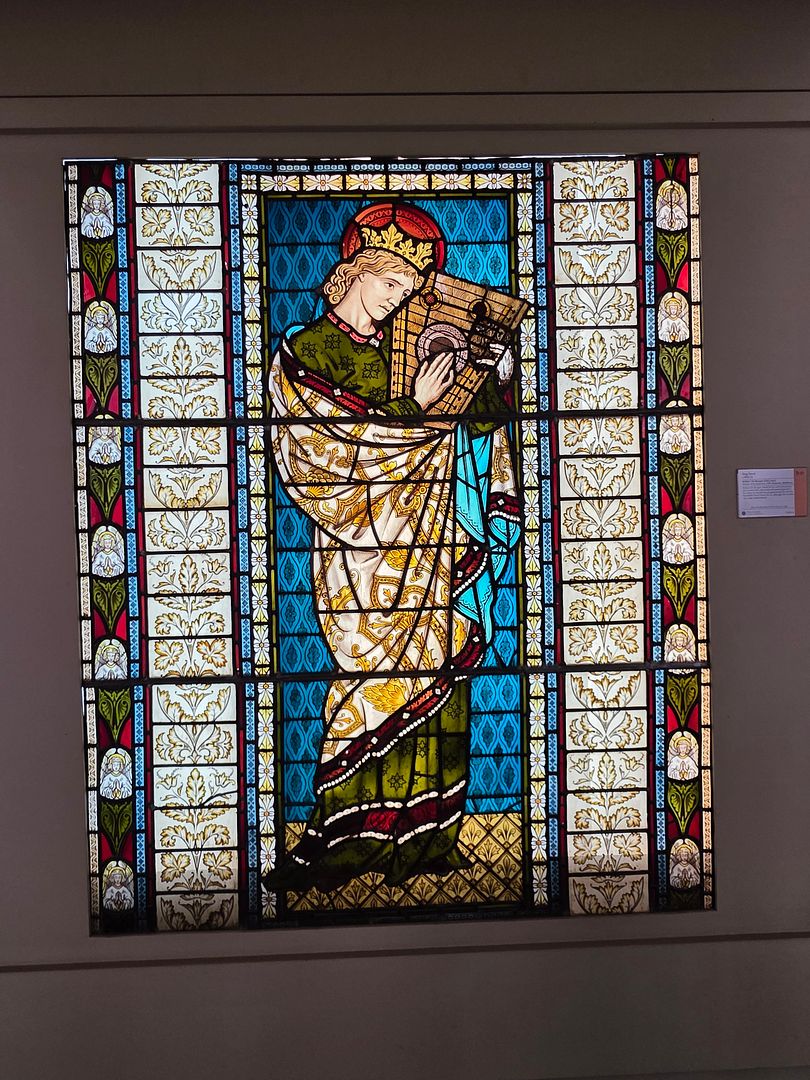
King David

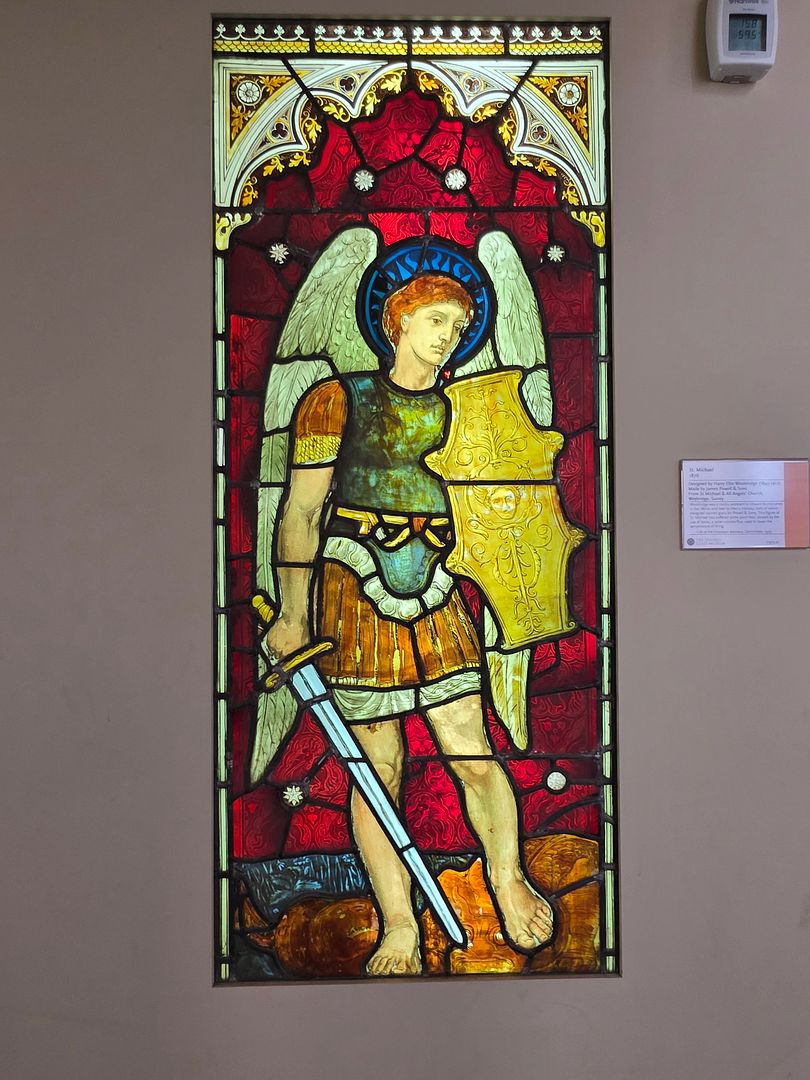
Michael

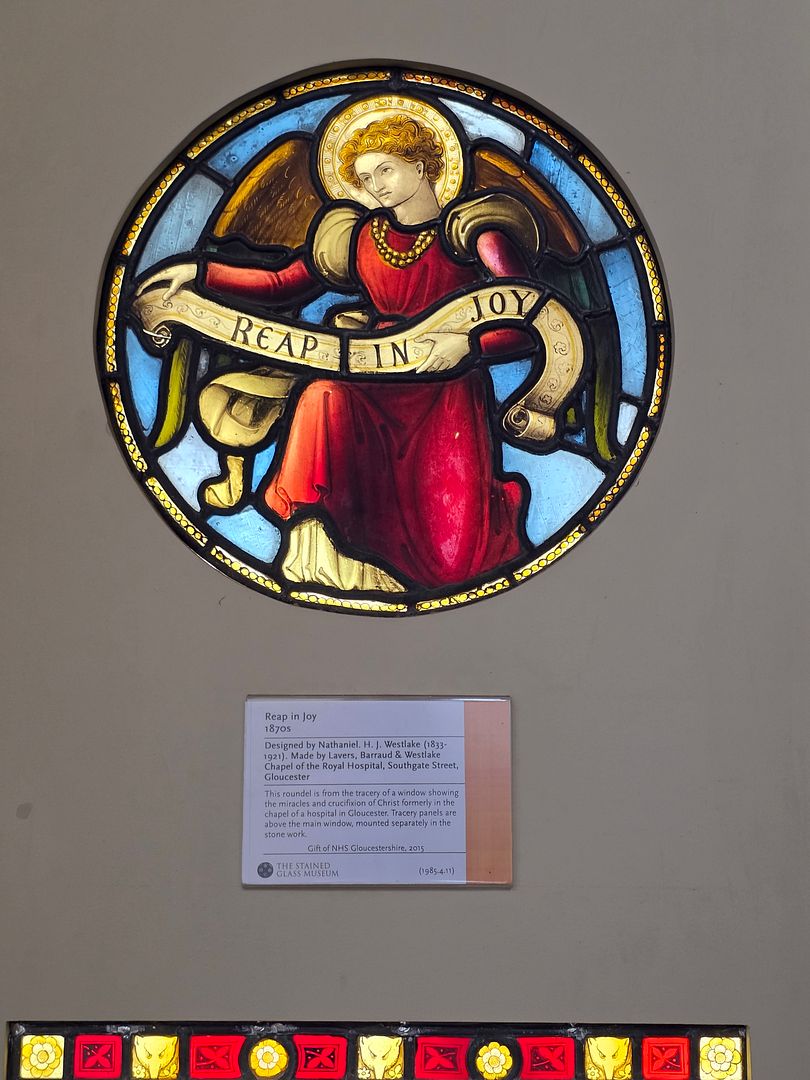
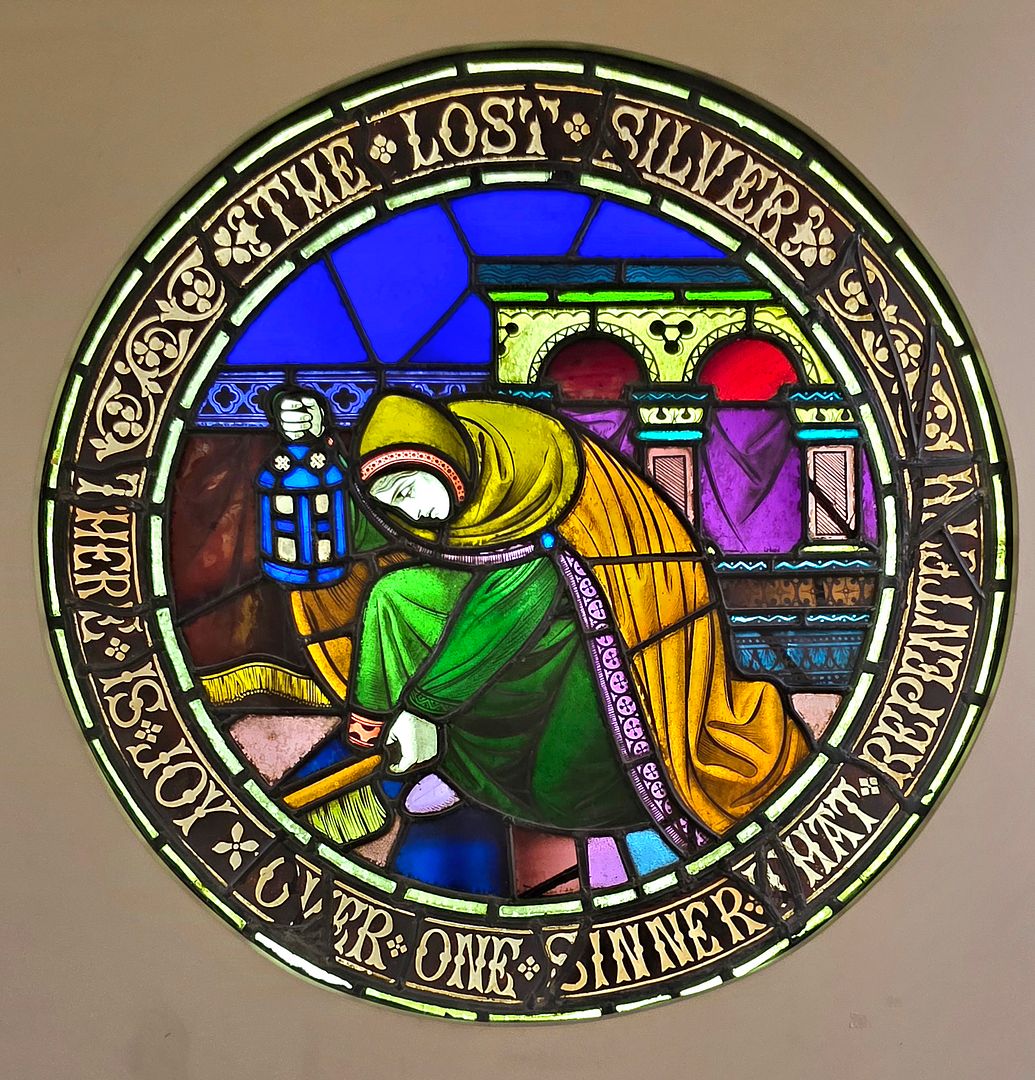
The Lost Silver, There is Joy over one Sinner that Repentith

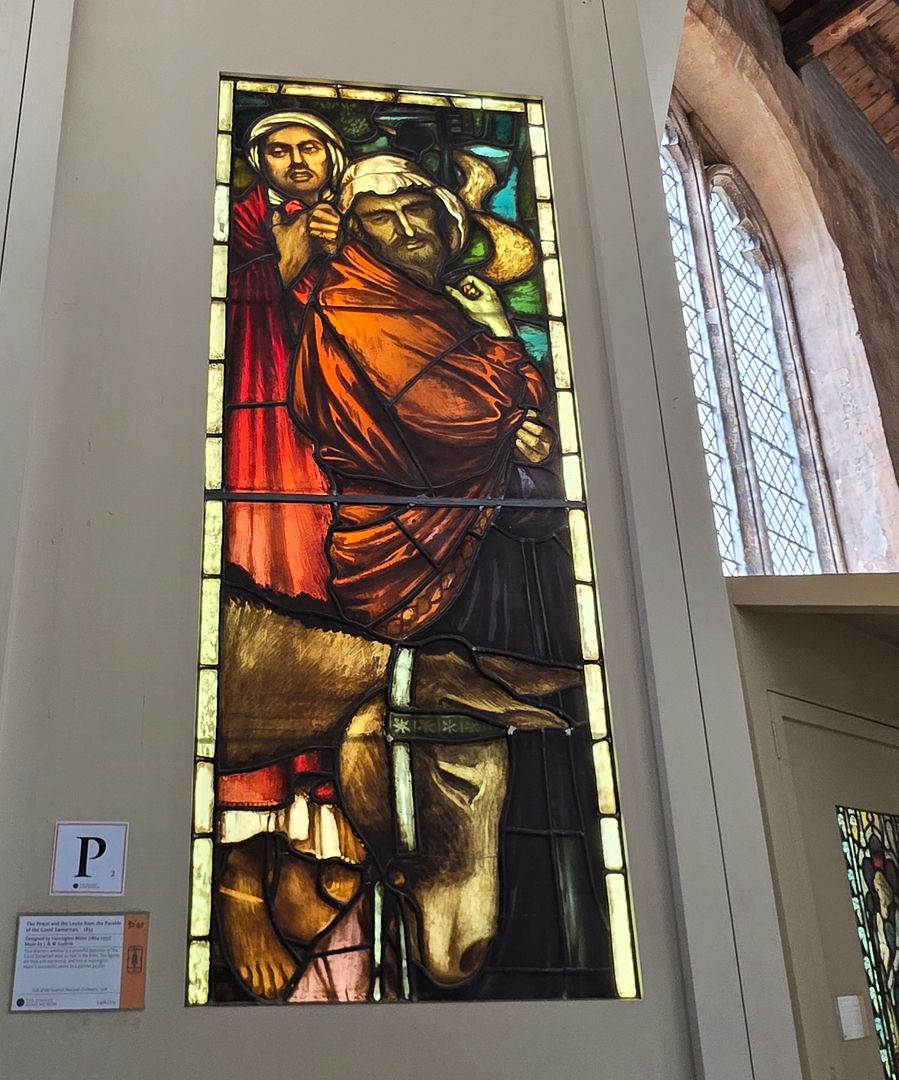
The Parable of the Good Samaritan

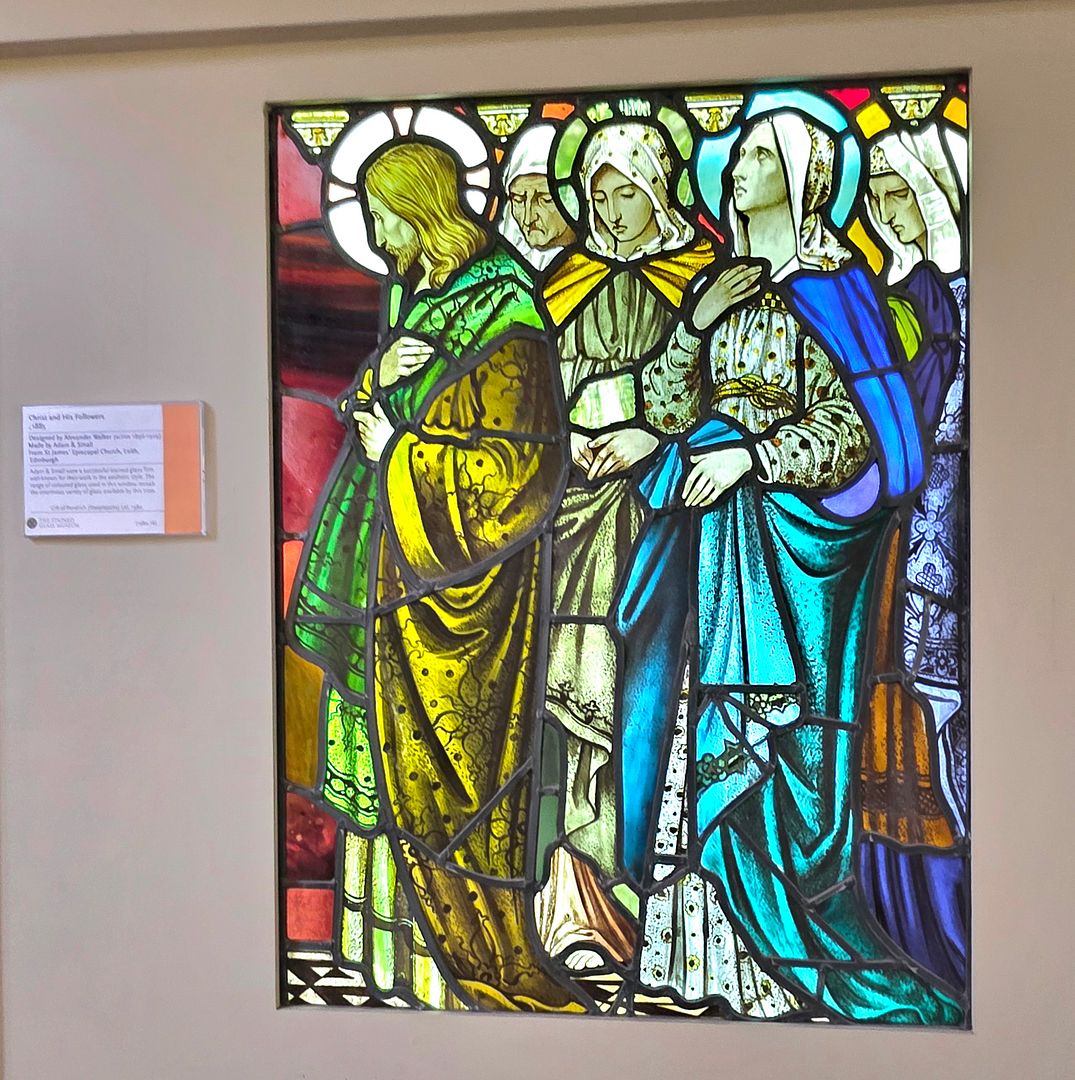
Christ and His Followers

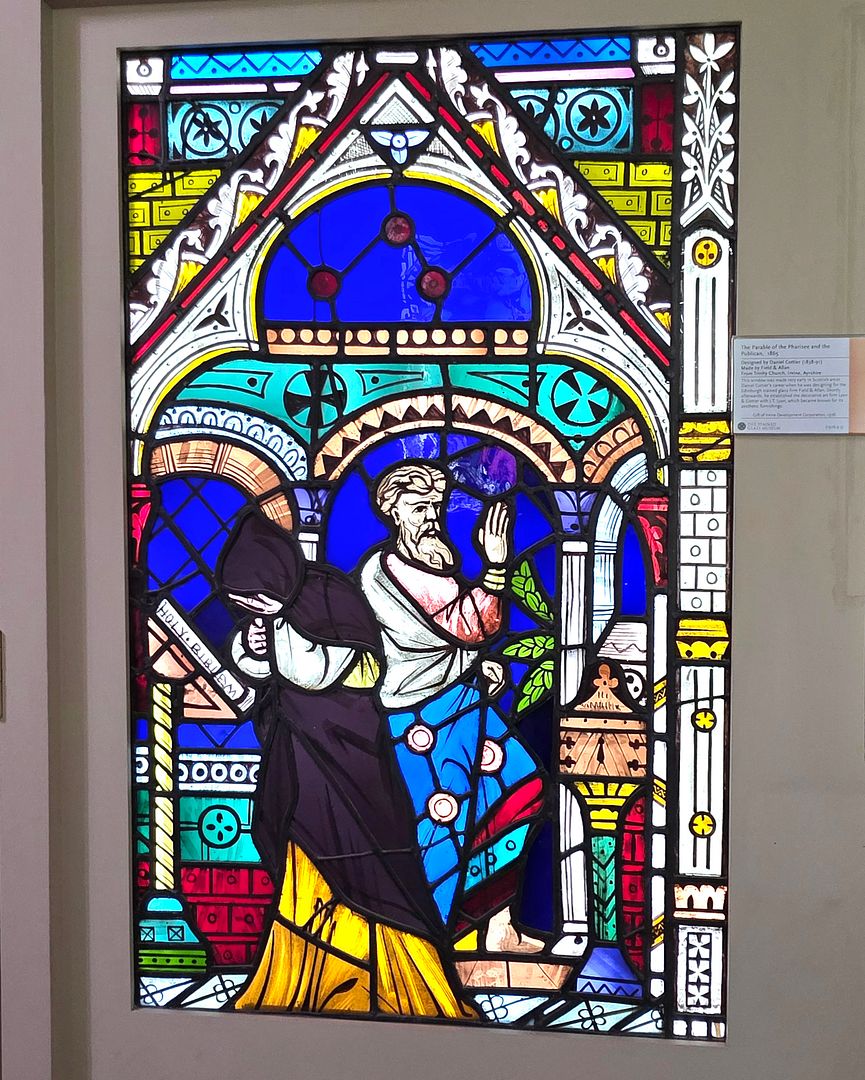
The Parable of the Pharisee and the Publican

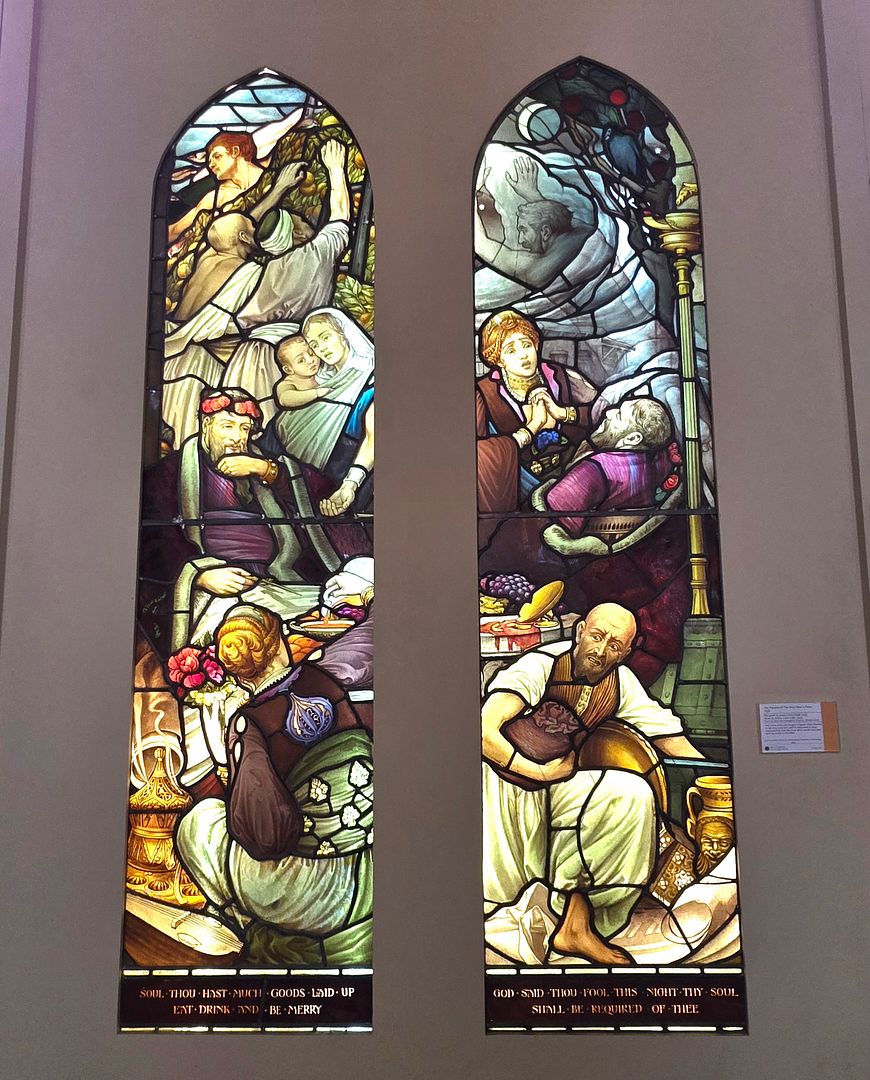
The Parable of the Rich Fool

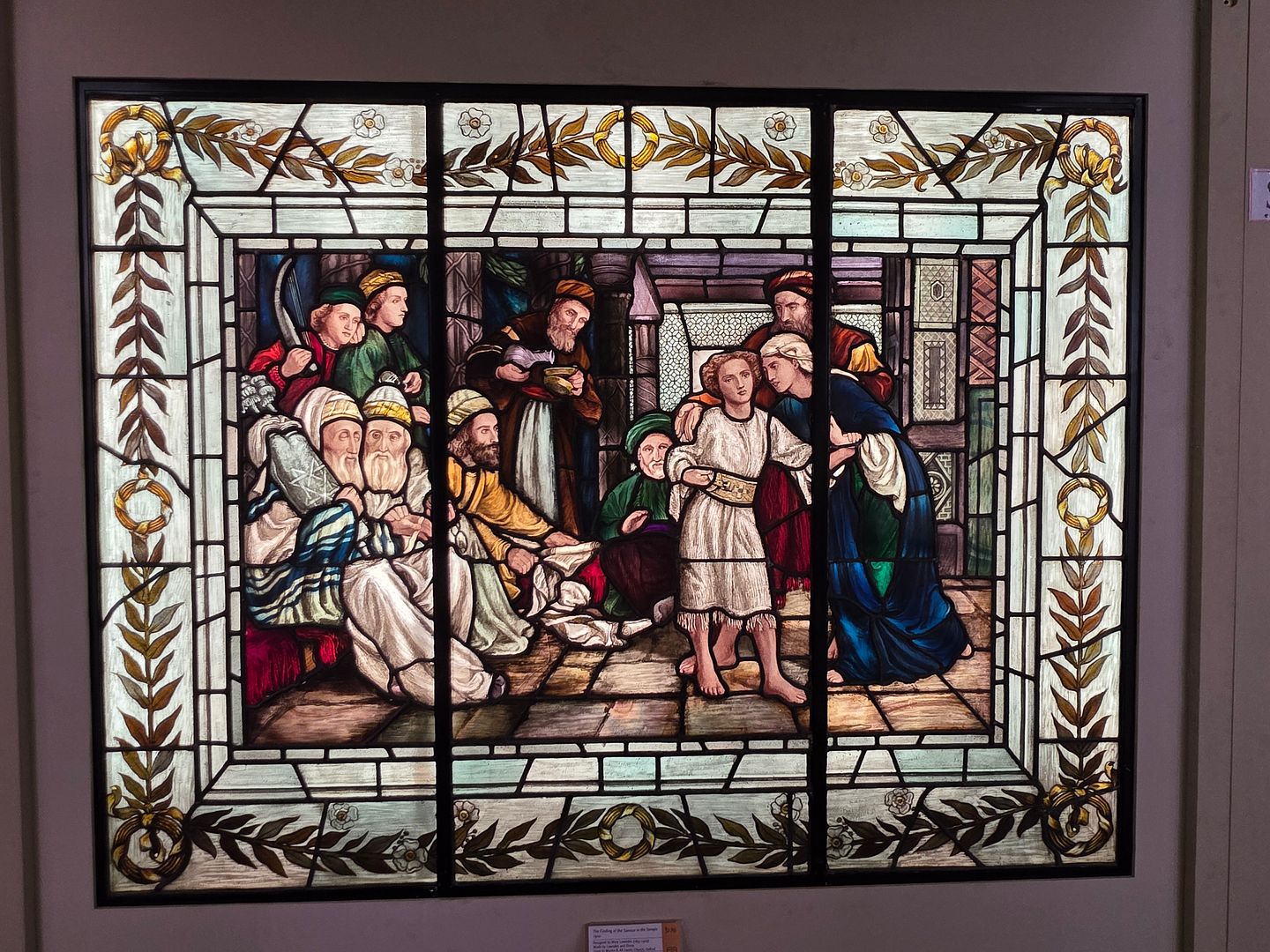
Finding Jesus in the Temple

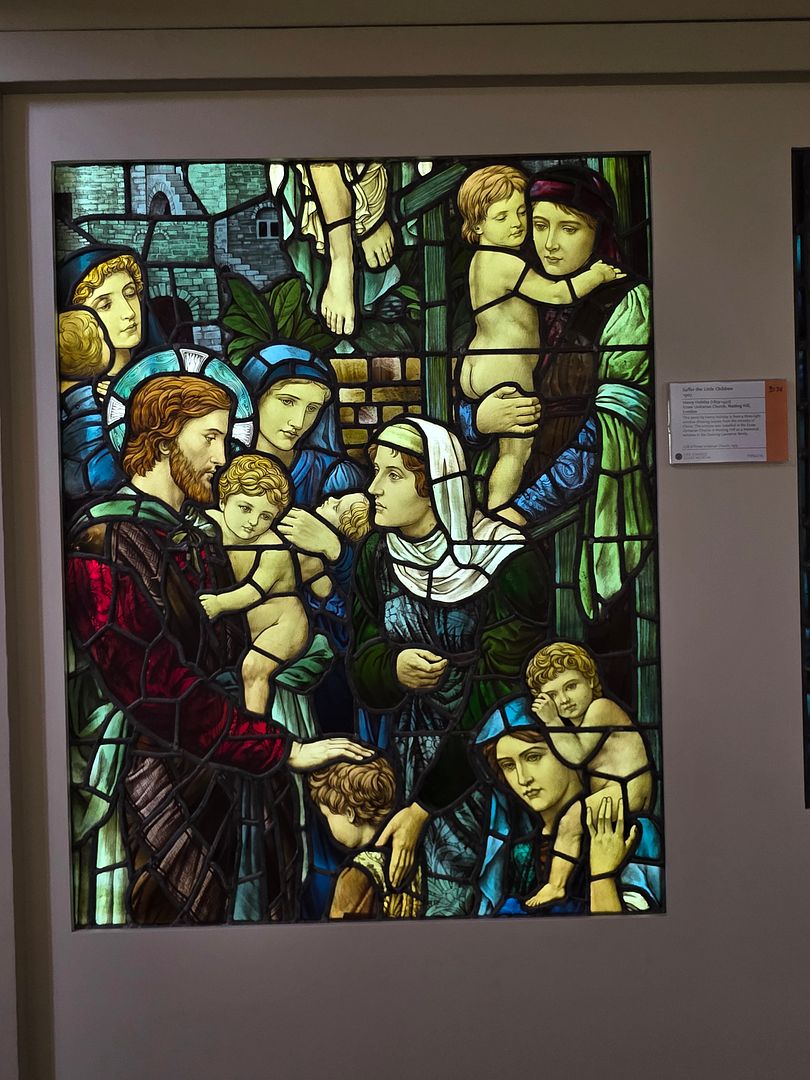
Suffer the Little Children

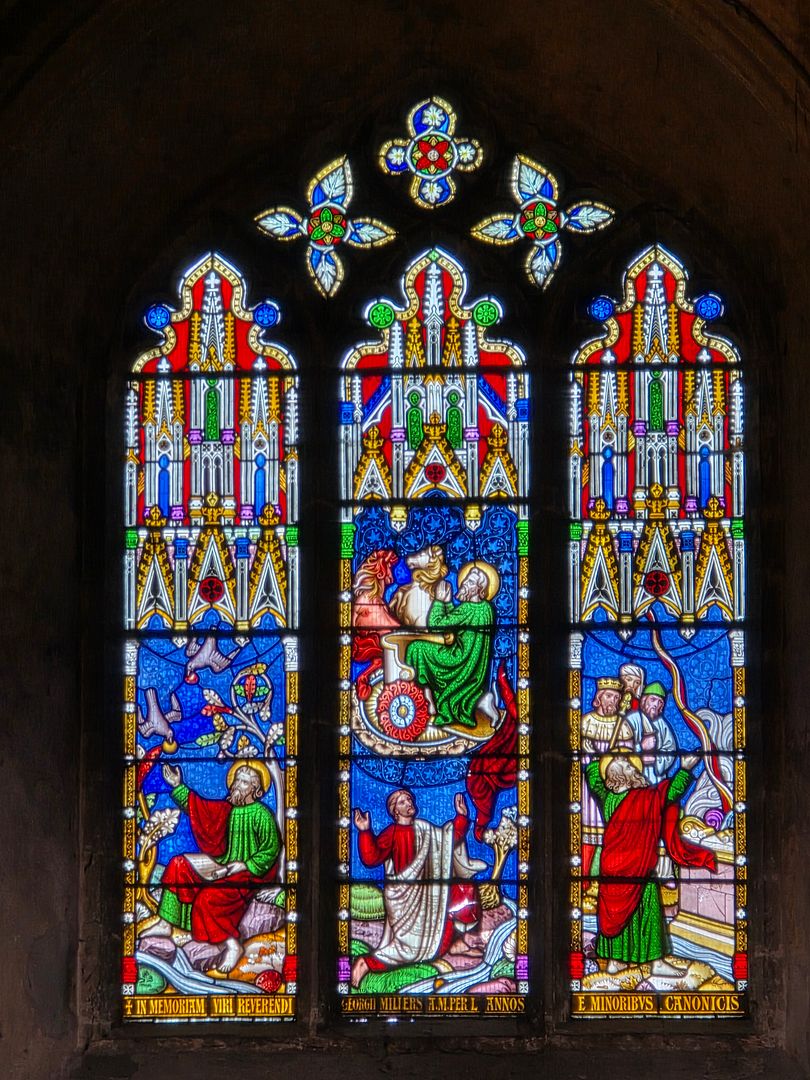
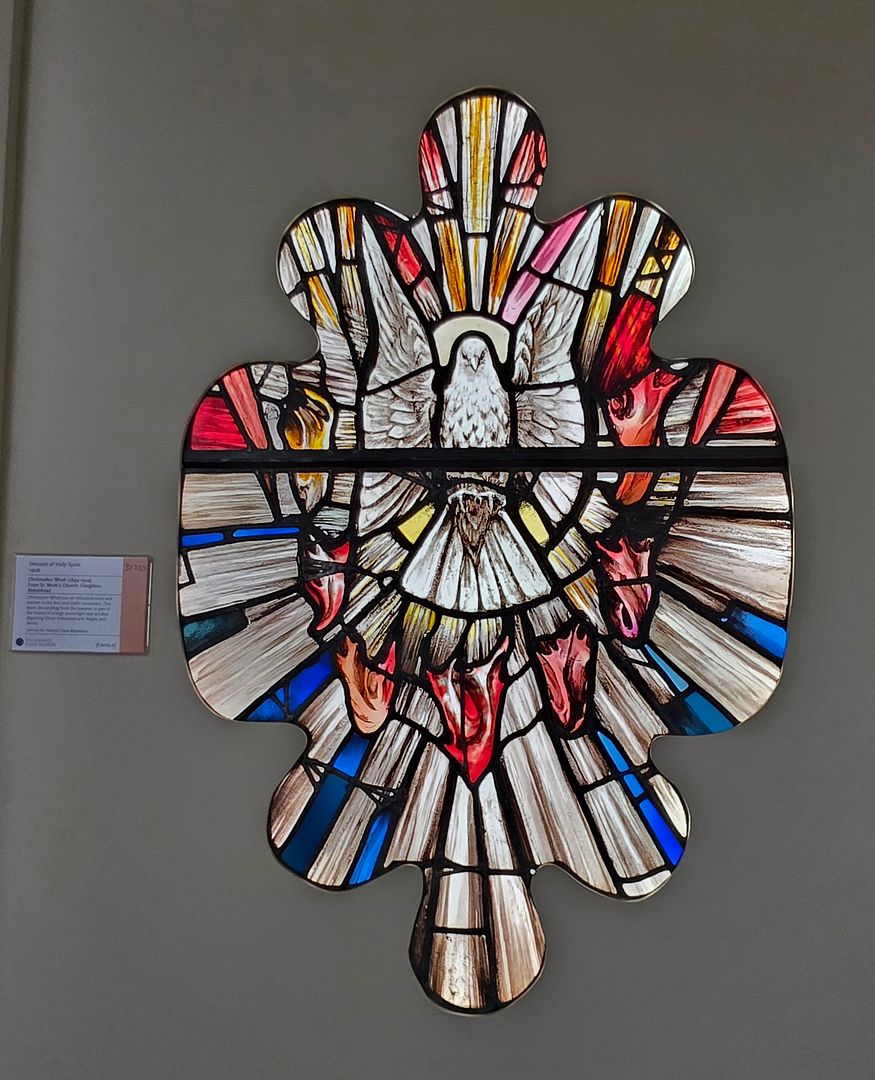
Descent of the Holy Spirit

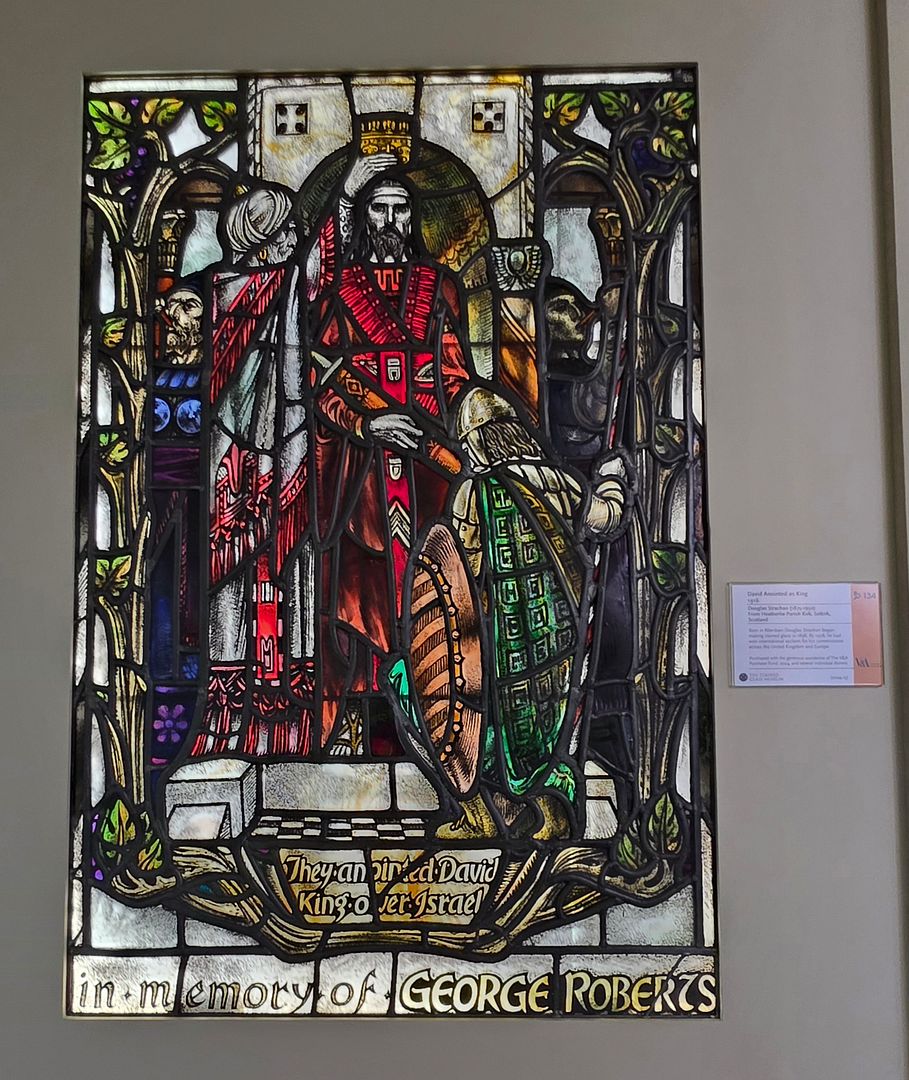
The Anointing of David King over Israel

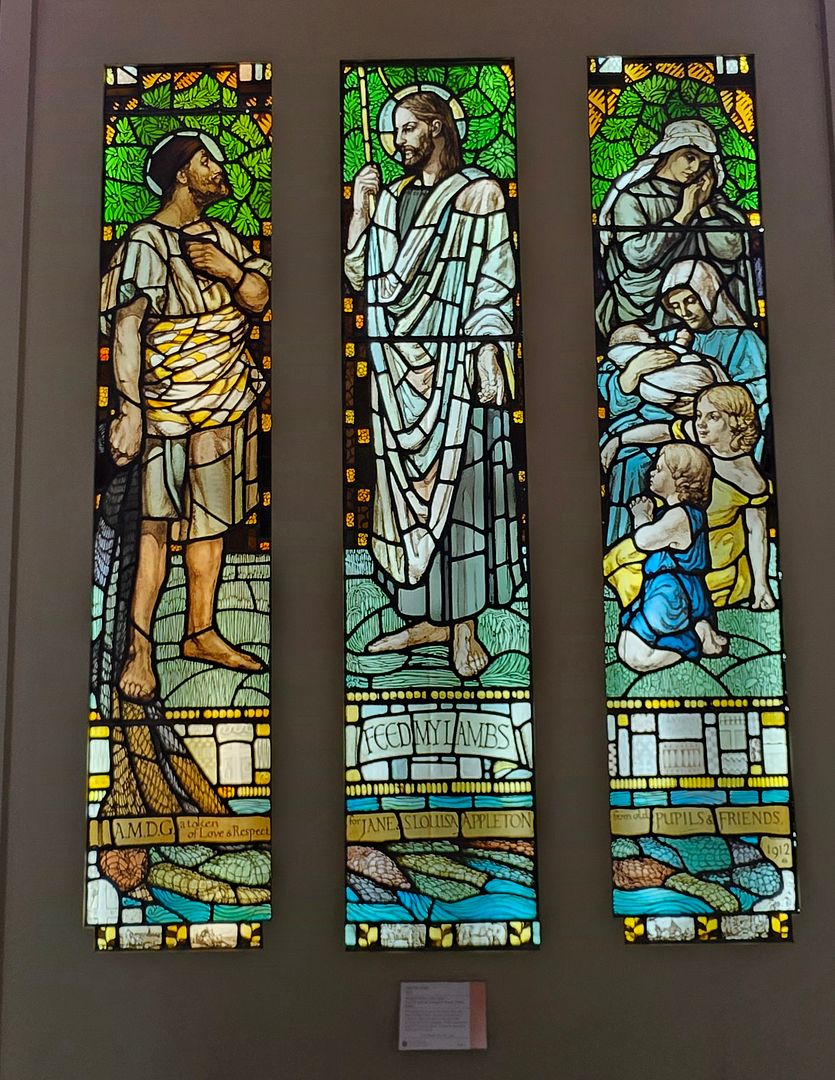
Feed my Lambs

Nativity

These were the windows that stood out to me. There were more but I restrained myself.

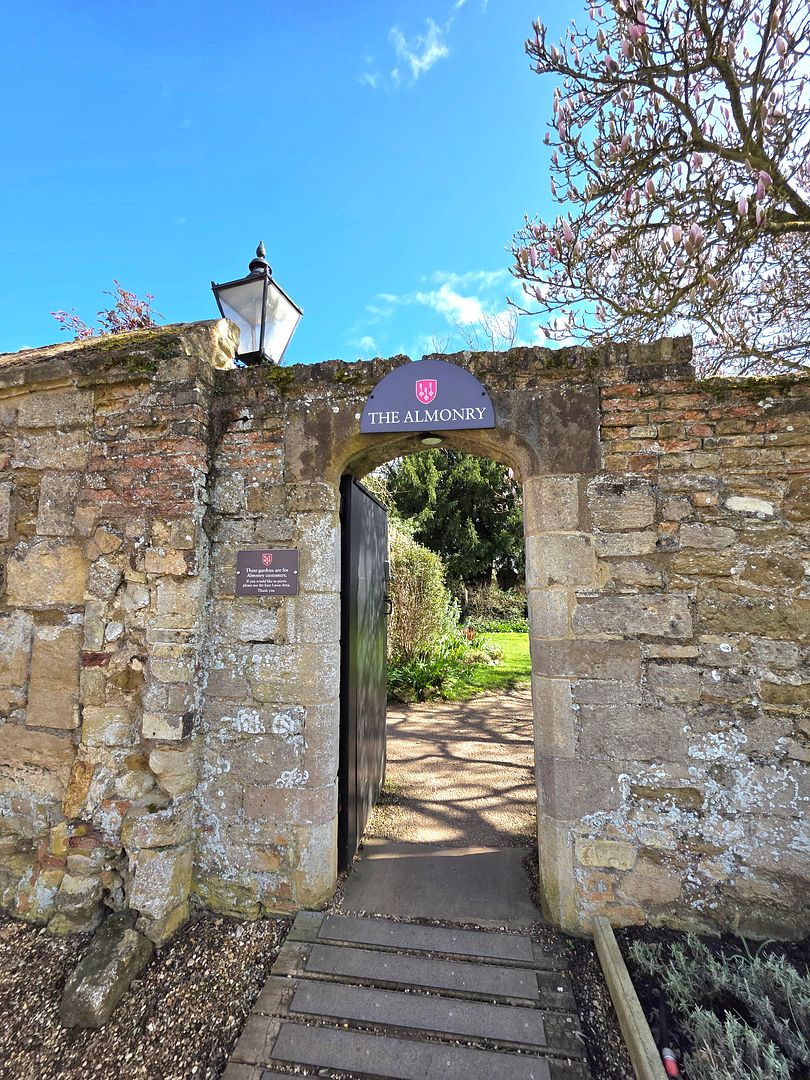
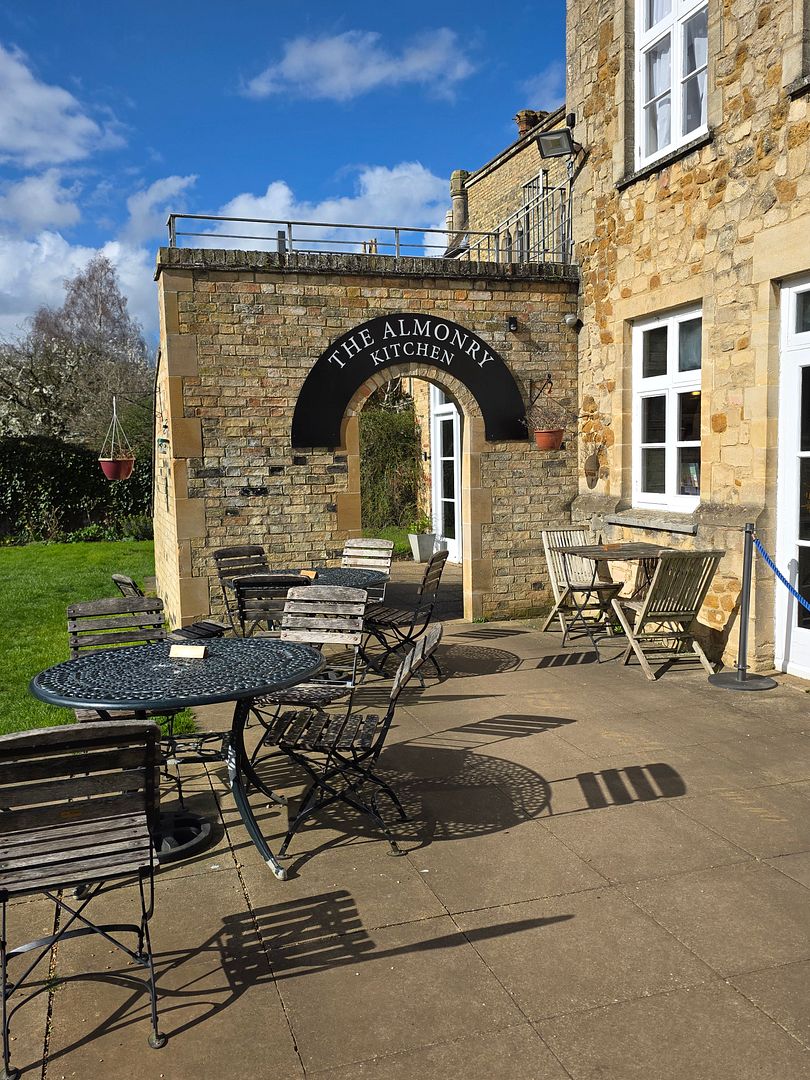
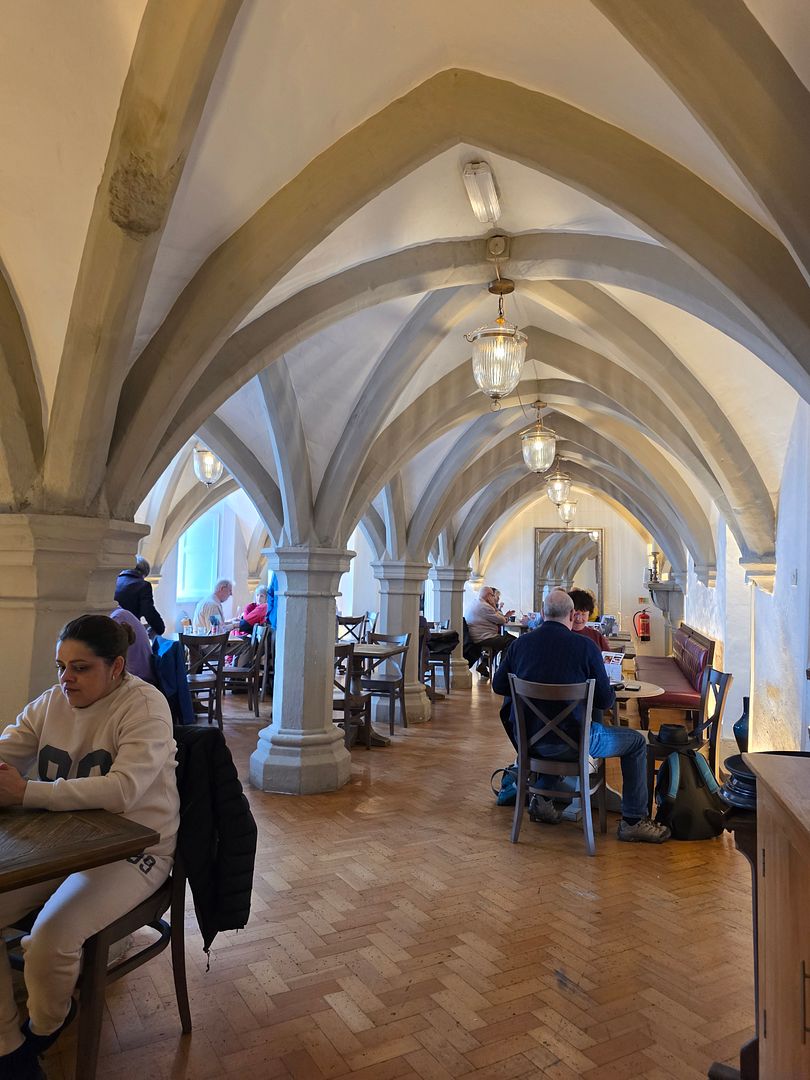
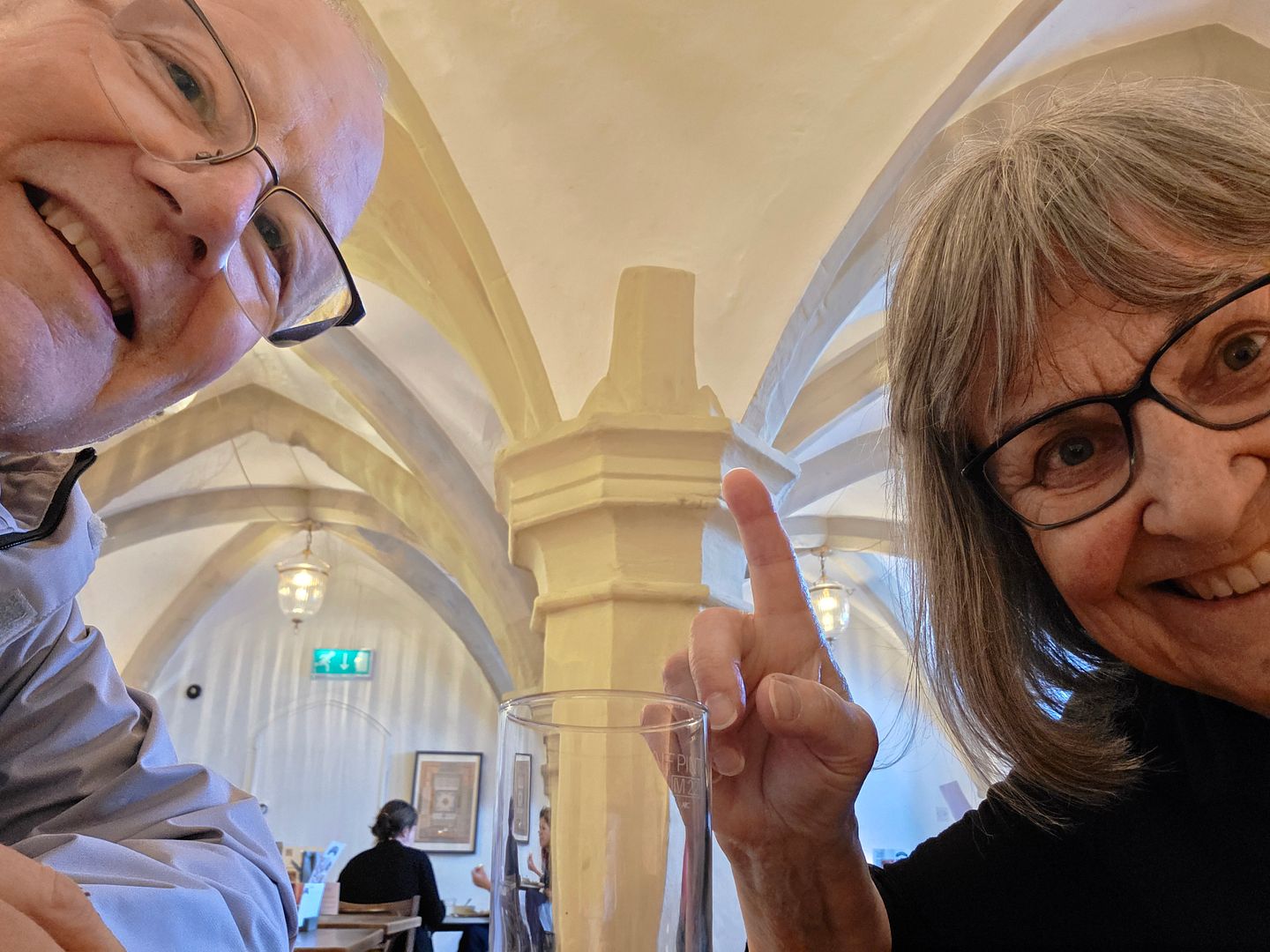
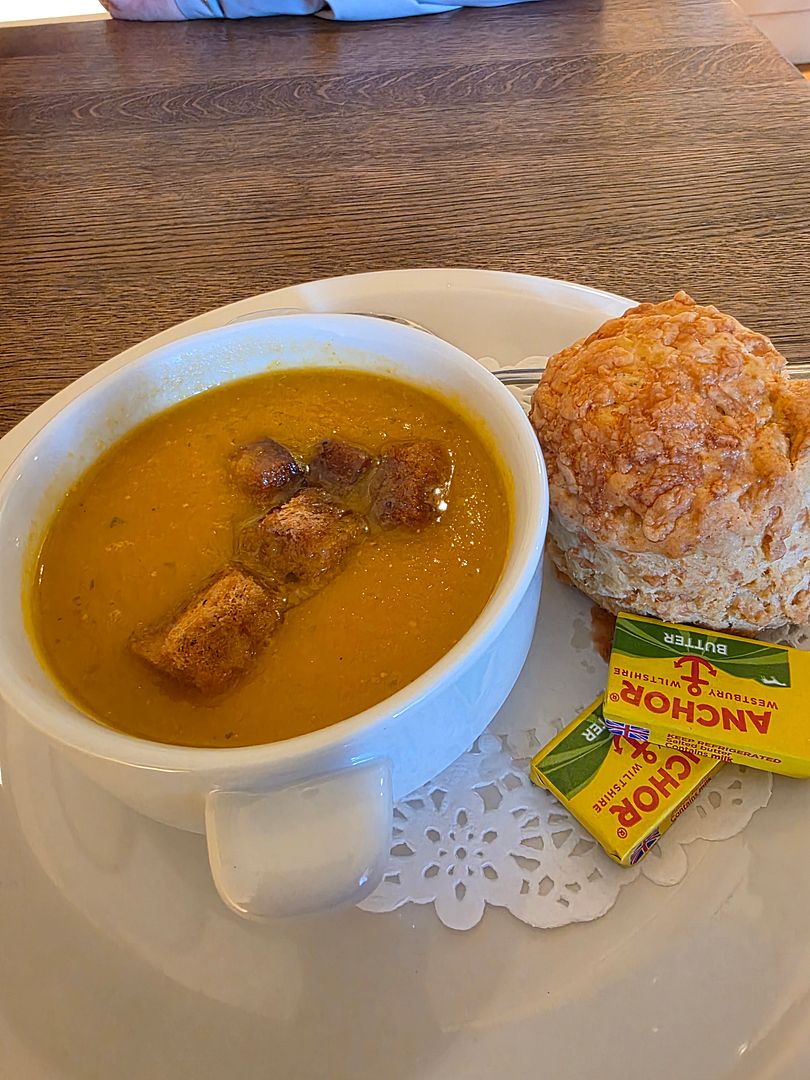
From the museum we walked over to the Almonry for a bite to eat.

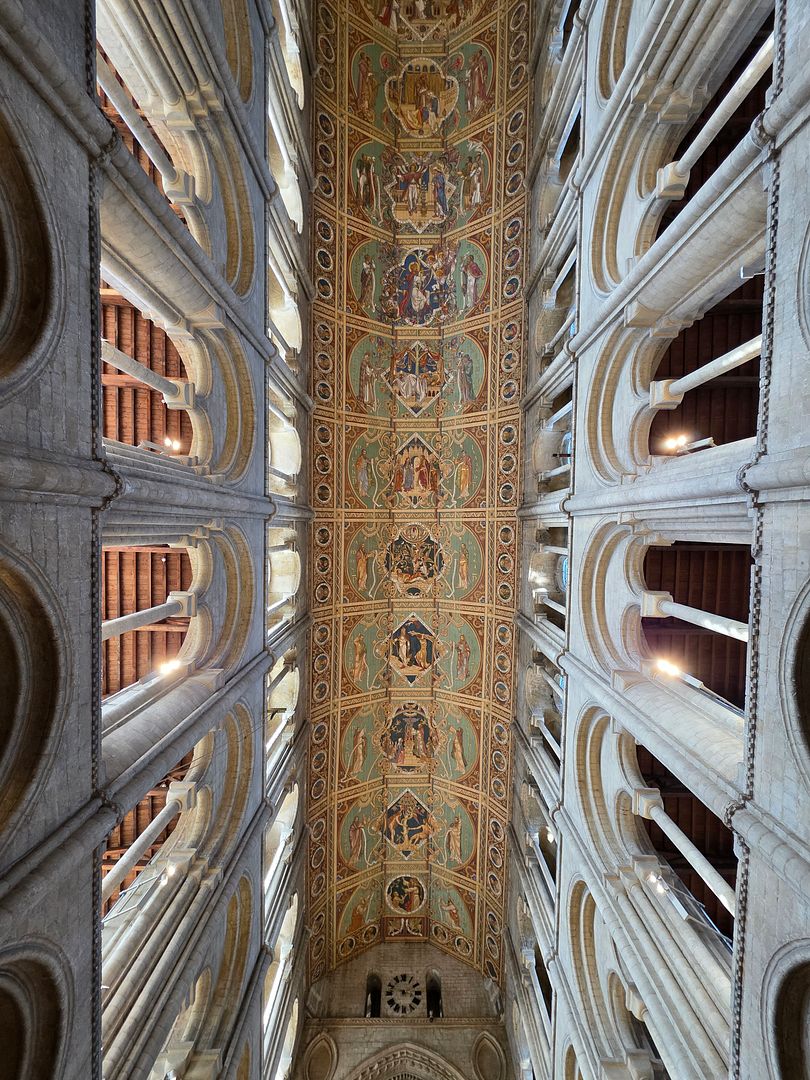
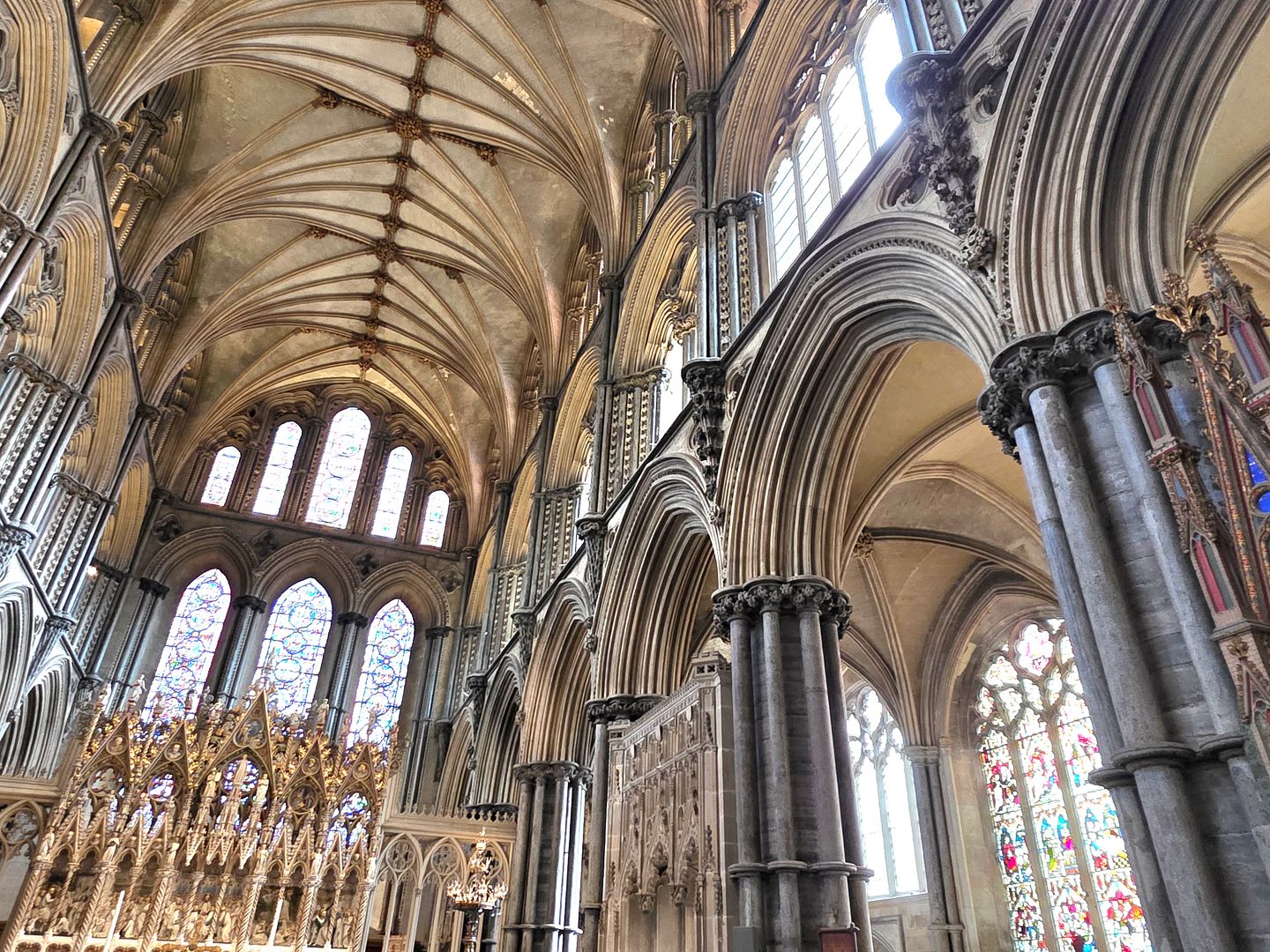
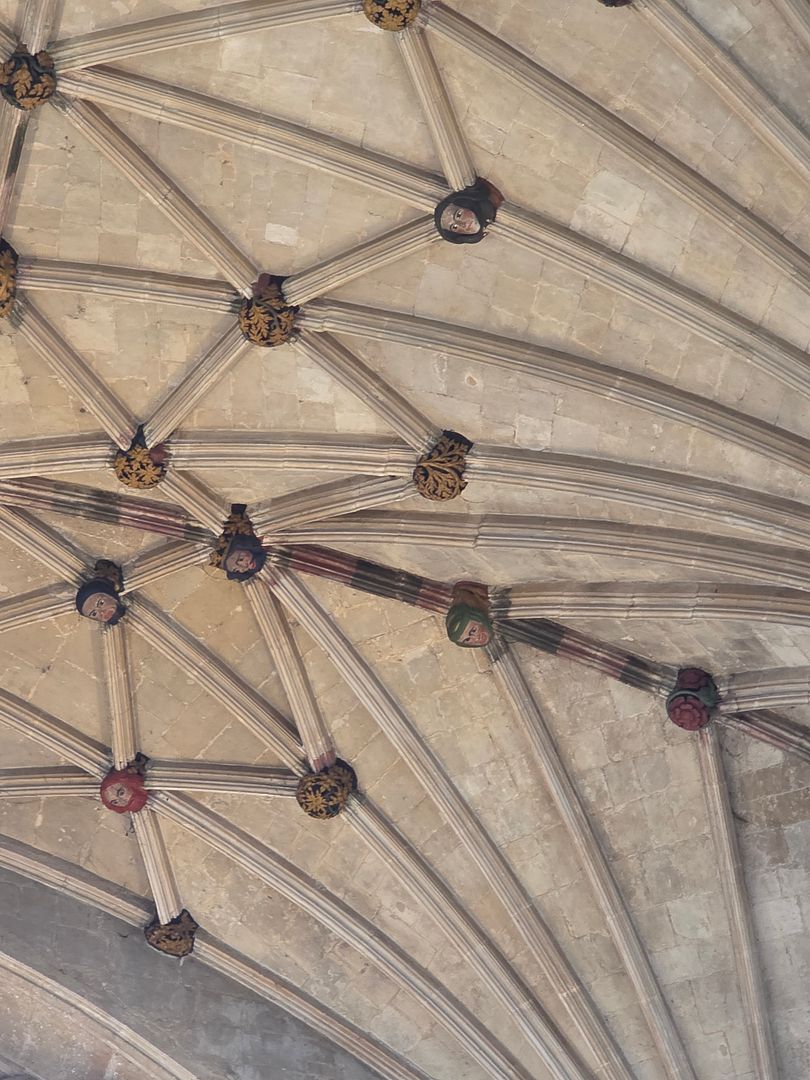
Check out the ceiling!

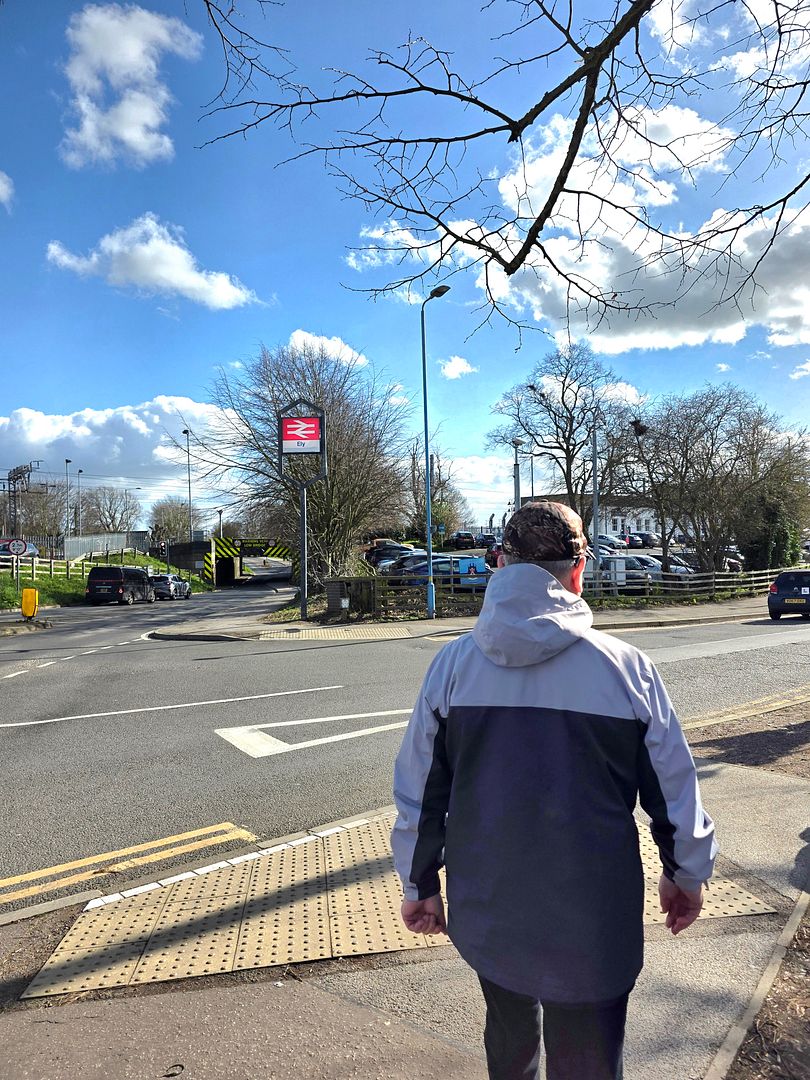
After our light meal we walked back to the Train Station for our ride back to Cambridge. This was a bright and blustery day.

Just a few more posts to complete our travel journal in Cambridge after our Danube River Cruise.

Inside Ely Cathedral

As previously mentioned, this continues our travel journal for Wednesday March 11 when we took a short train ride from Cambridge to Ely to visit the cathedral. These photos are numerous and are from the inside of Ely Cathedral.
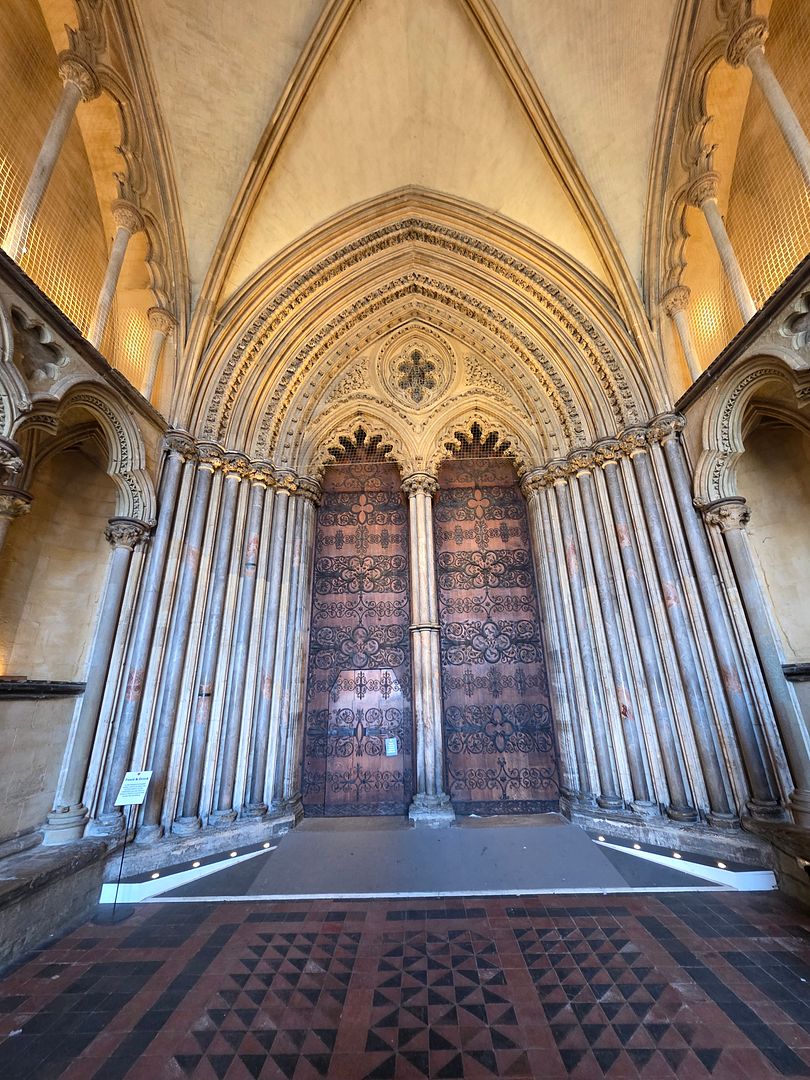
The entrance was through those amazing doors!
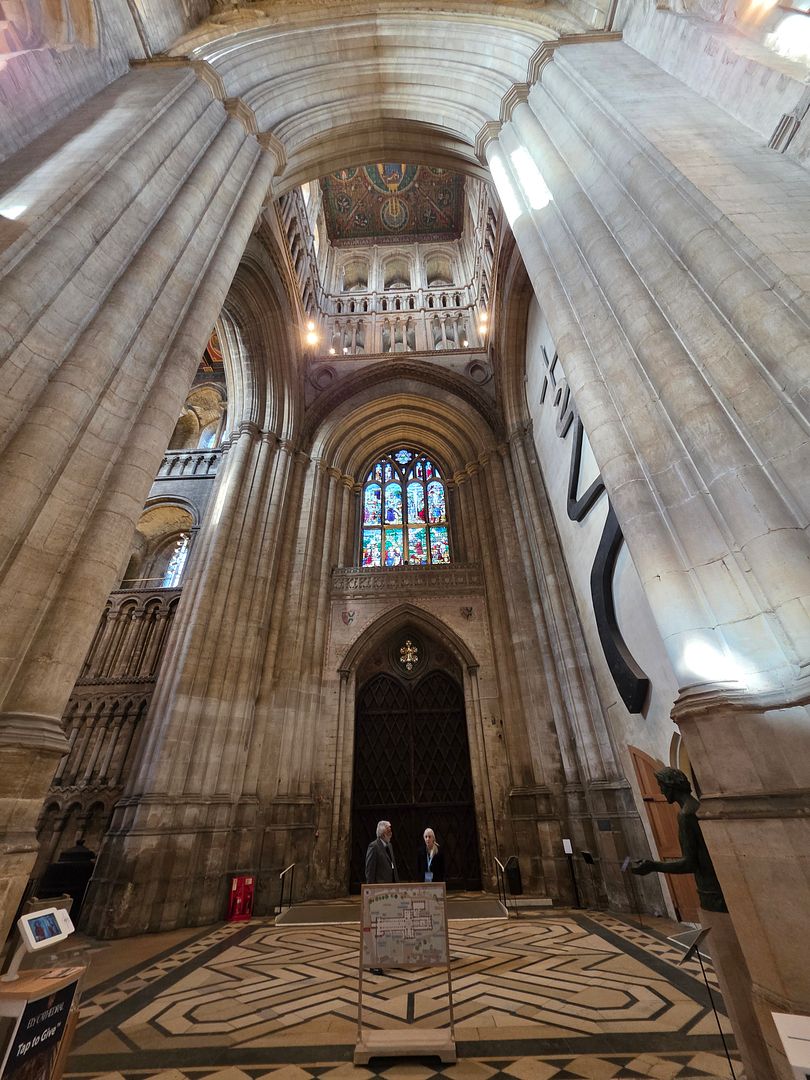
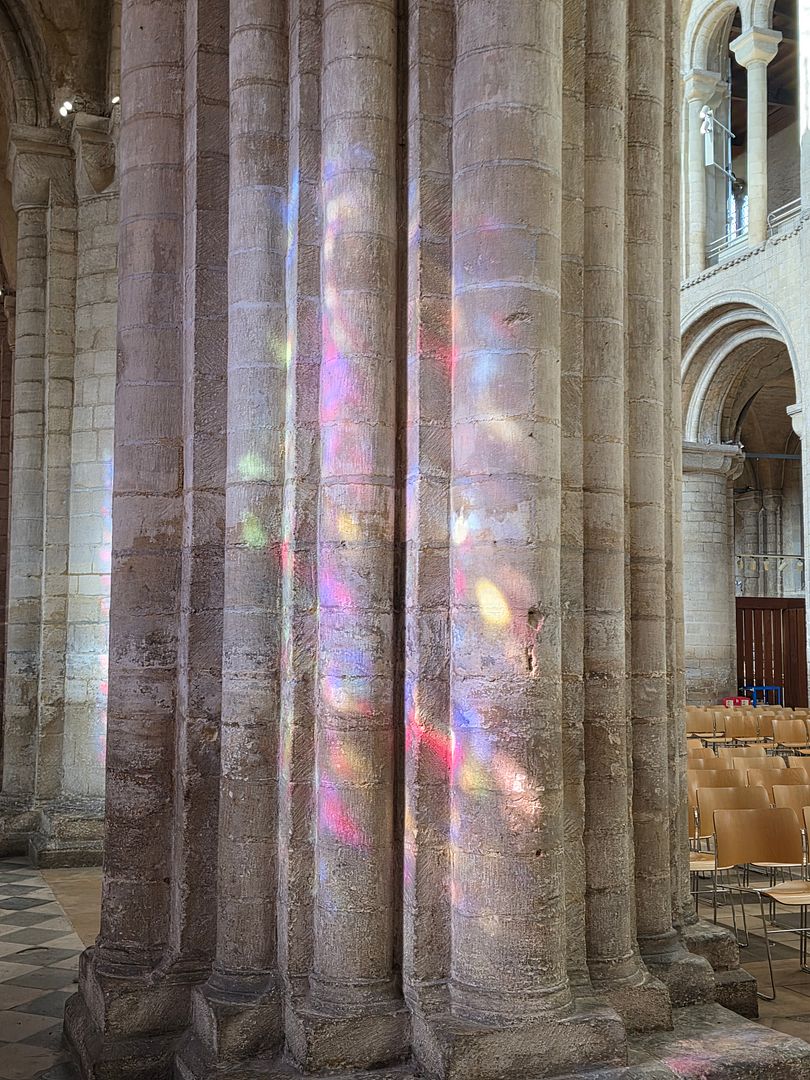
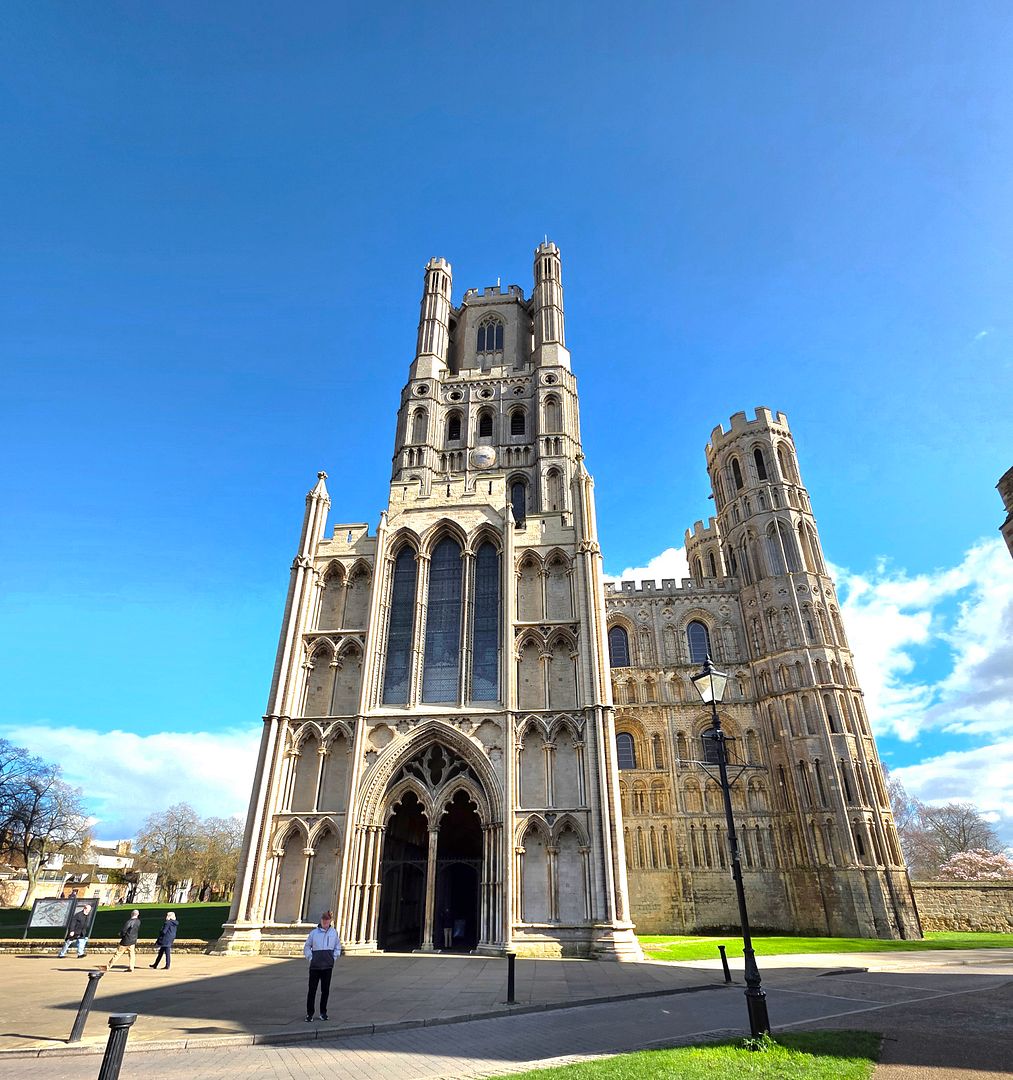
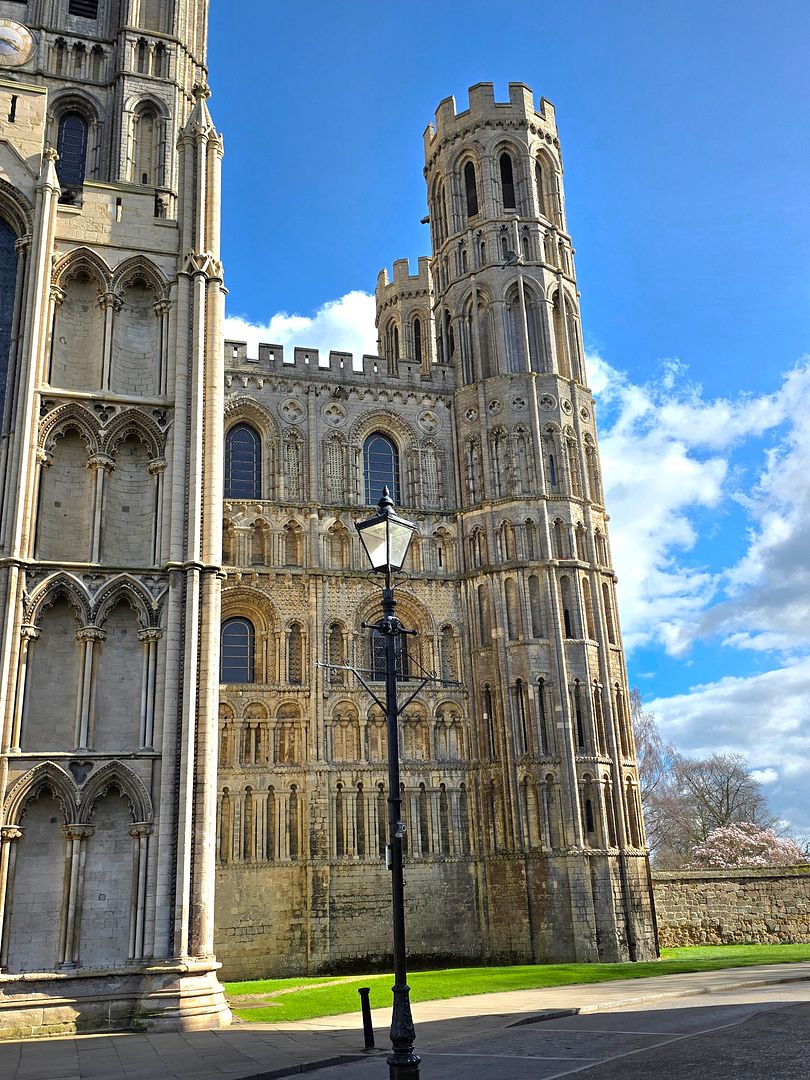
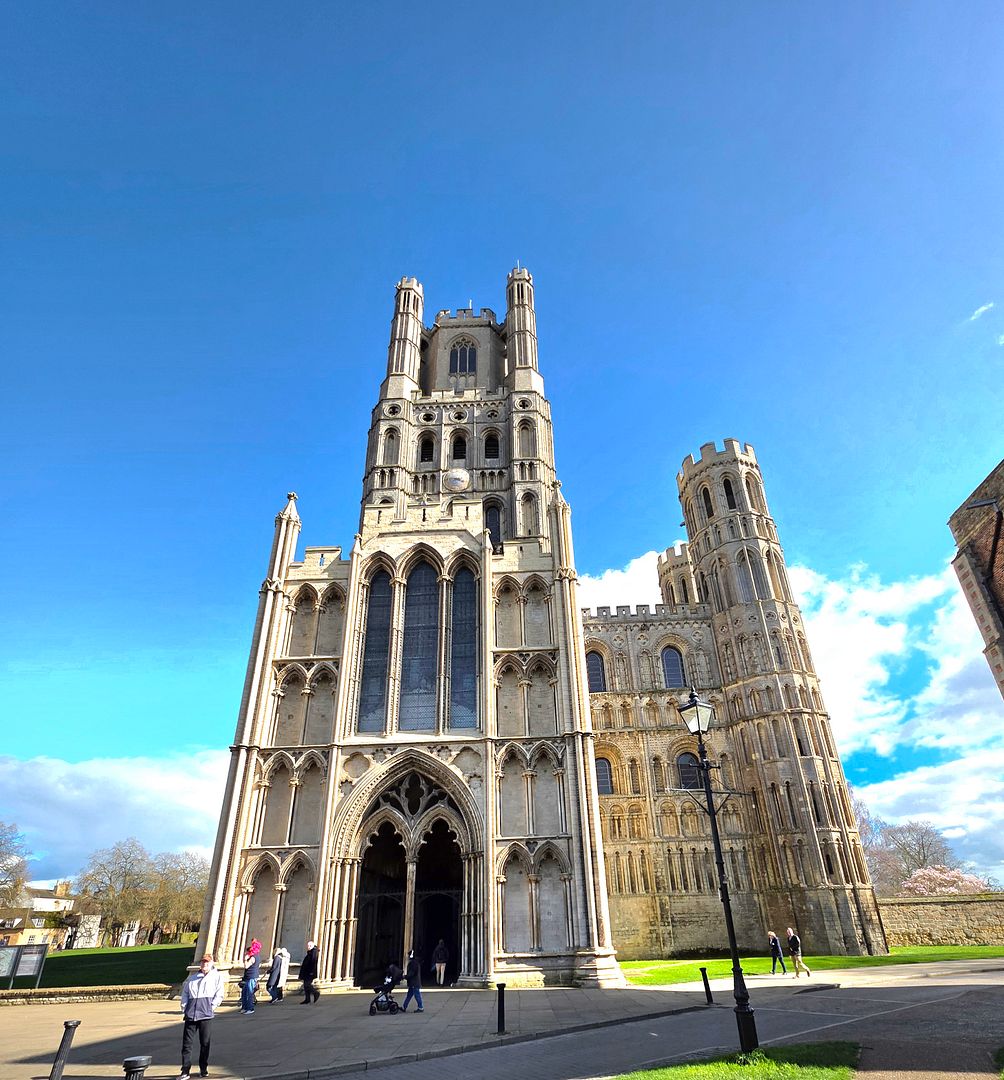
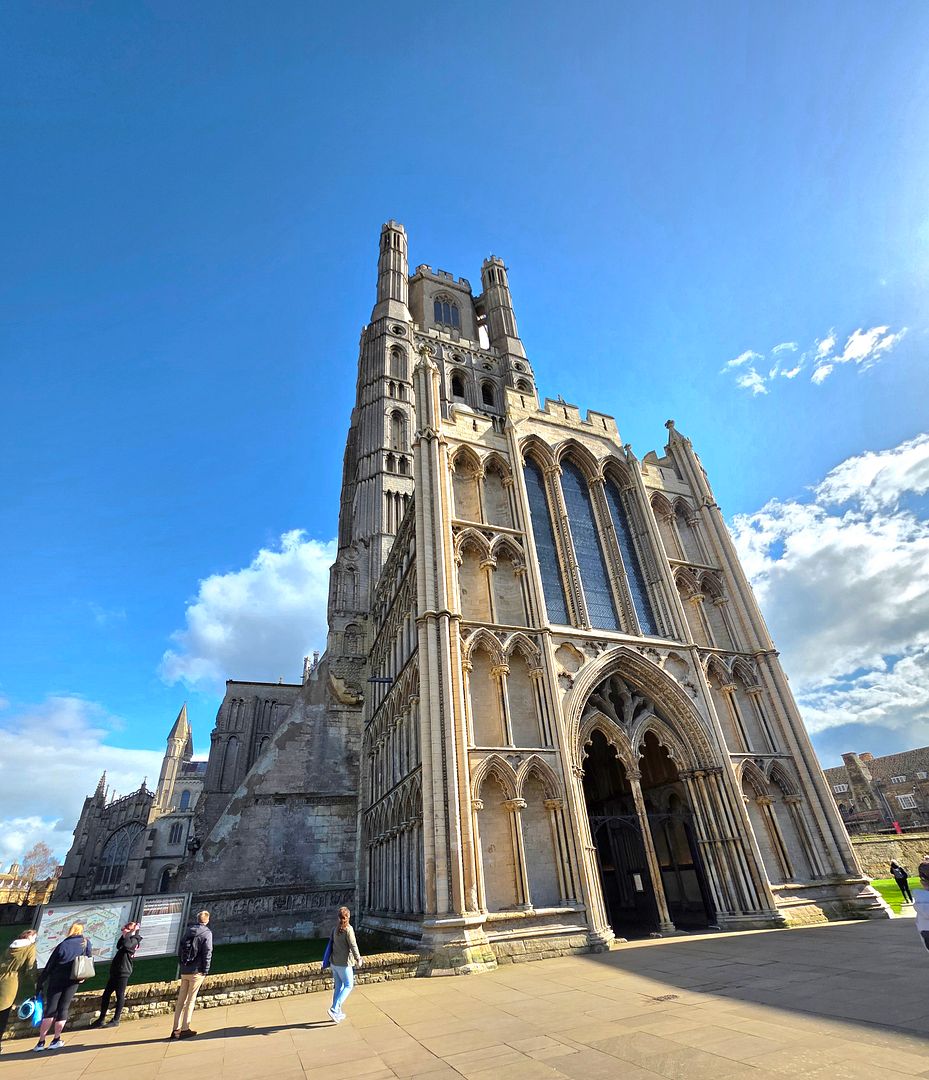
Ely Cathedral has origins dating back to AD 673 when St Etheldreda built an Abbey Church. The present building dates back to 1083, and was granted Cathedral status in 1109.
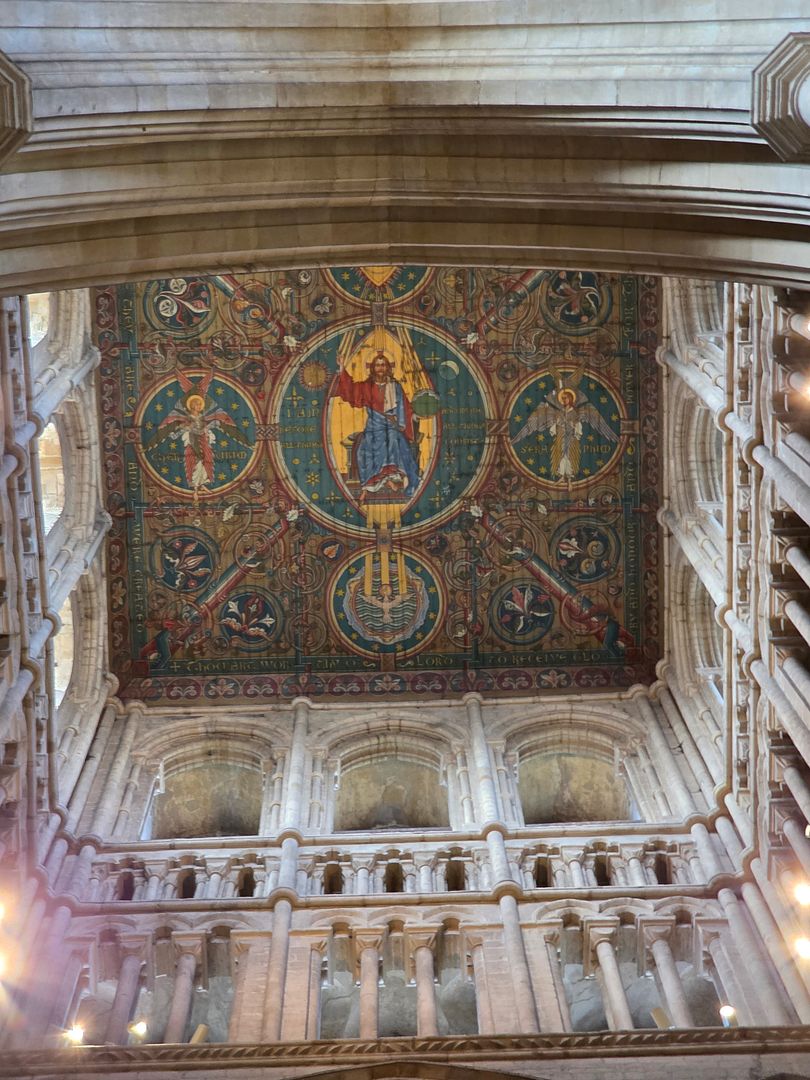
 

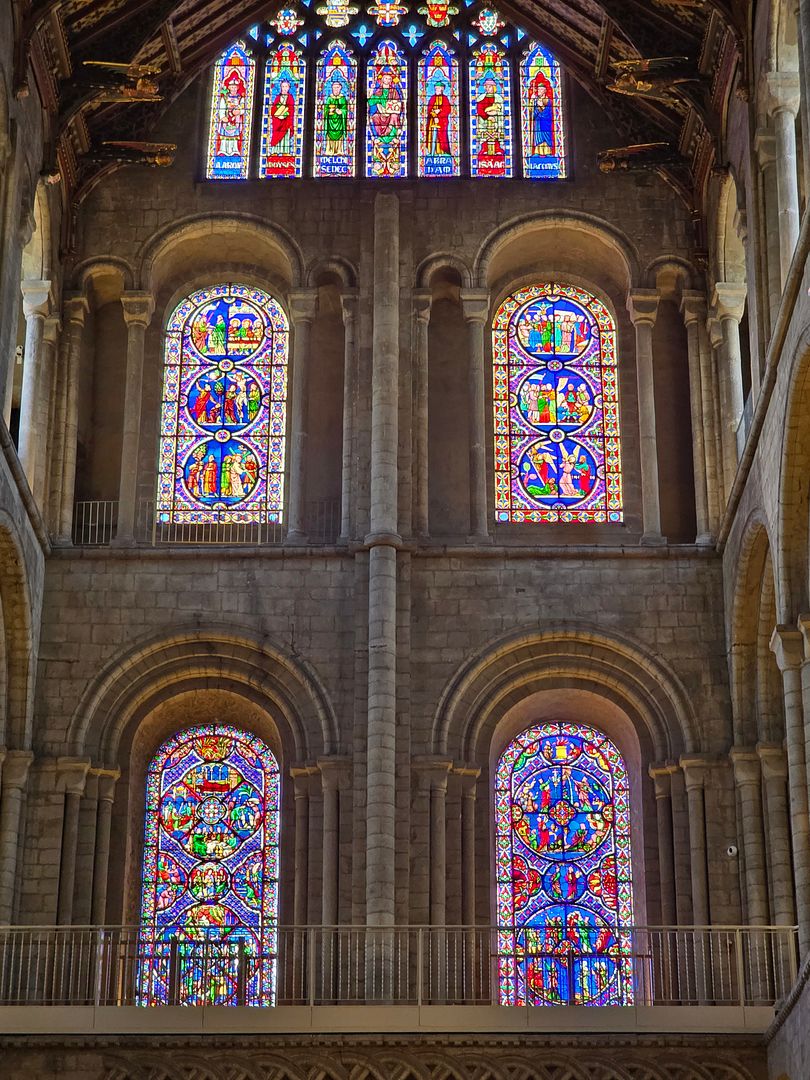
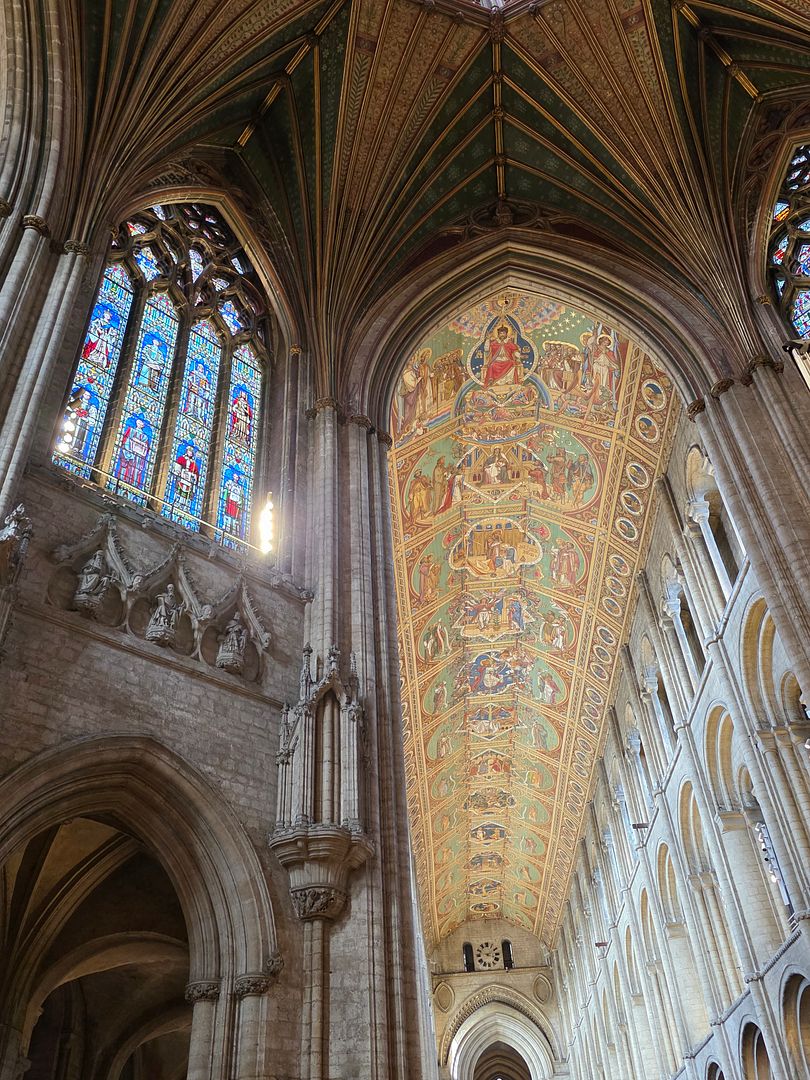
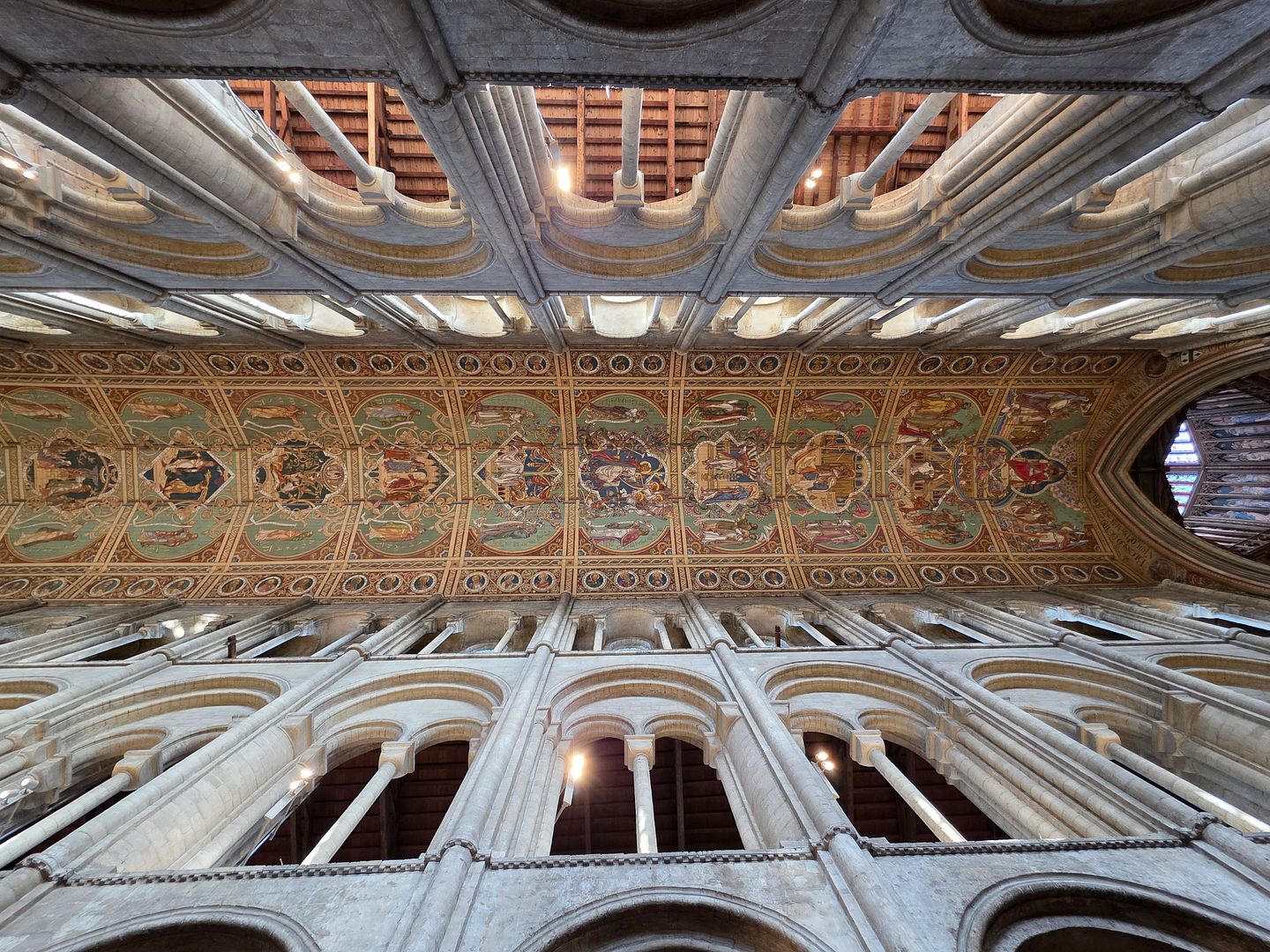
Installed as part of the Victorian restoration, the incredible Nave Ceiling was the work of two artists.

Henry Styleman Le Strange painted the first six panels (counting from the west), and Thomas Gambier Parry painted the last six – you can observe a change of style between the sixth and seventh panels.

The ceiling tells the story of the ancestry of Jesus, beginning with Adam (panel 1) and continuing through Abraham (panel 4), David (panel 8) and Mary (panels 9 and 10).
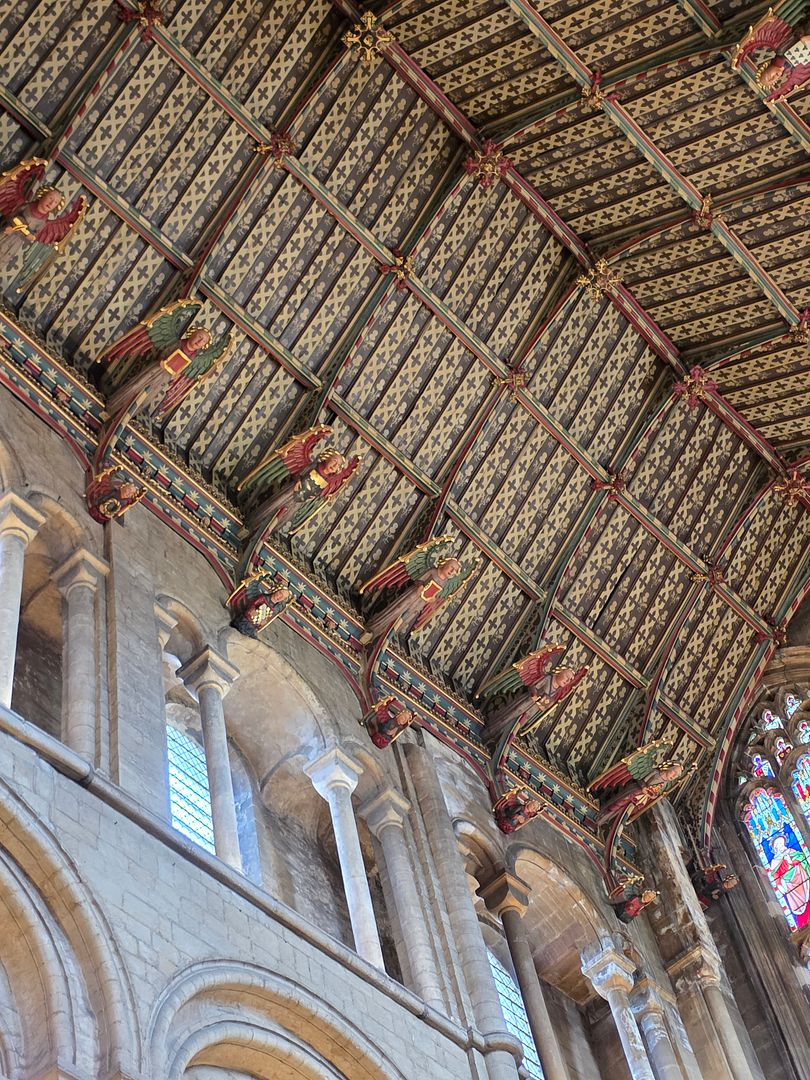
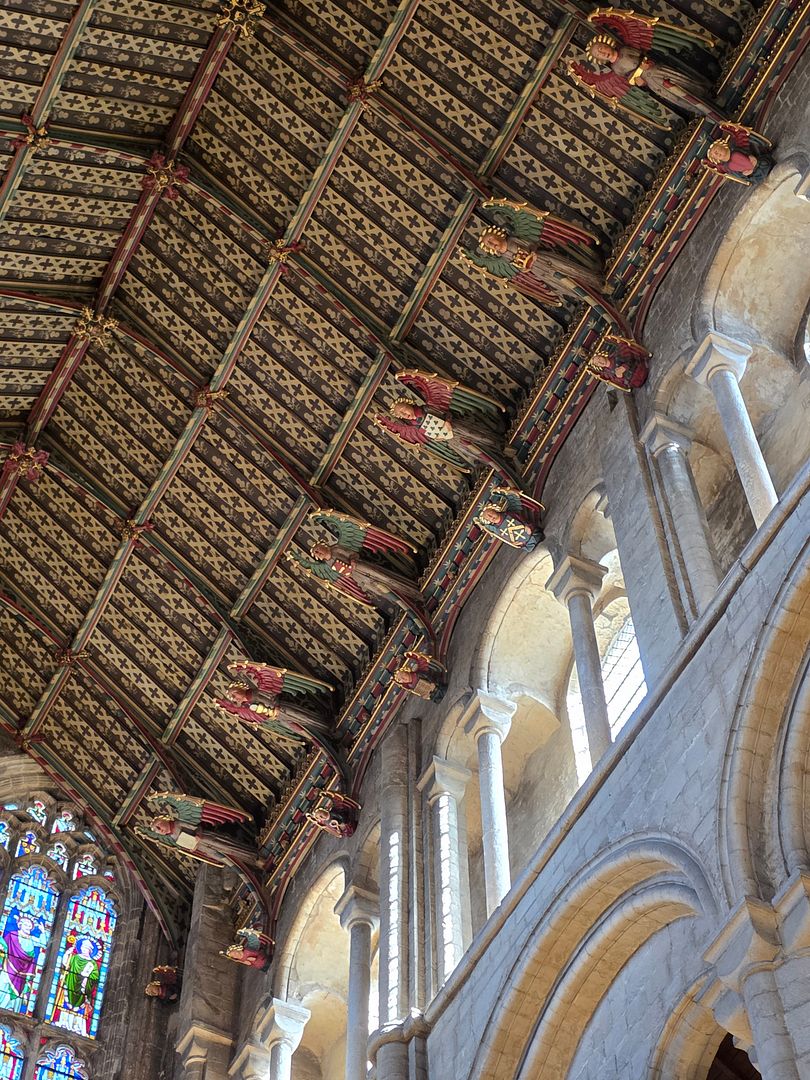
It is almost impossible not to look up when you visit a cathedral. I liked this ceiling section with all the angels looking down. Reminded me of 1 Peter 1:12

“It was revealed to them that they were serving not themselves but you, in the things that have now been announced to you through those who preached the good news to you by the Holy Spirit sent from heaven, things into which angels long to look.”
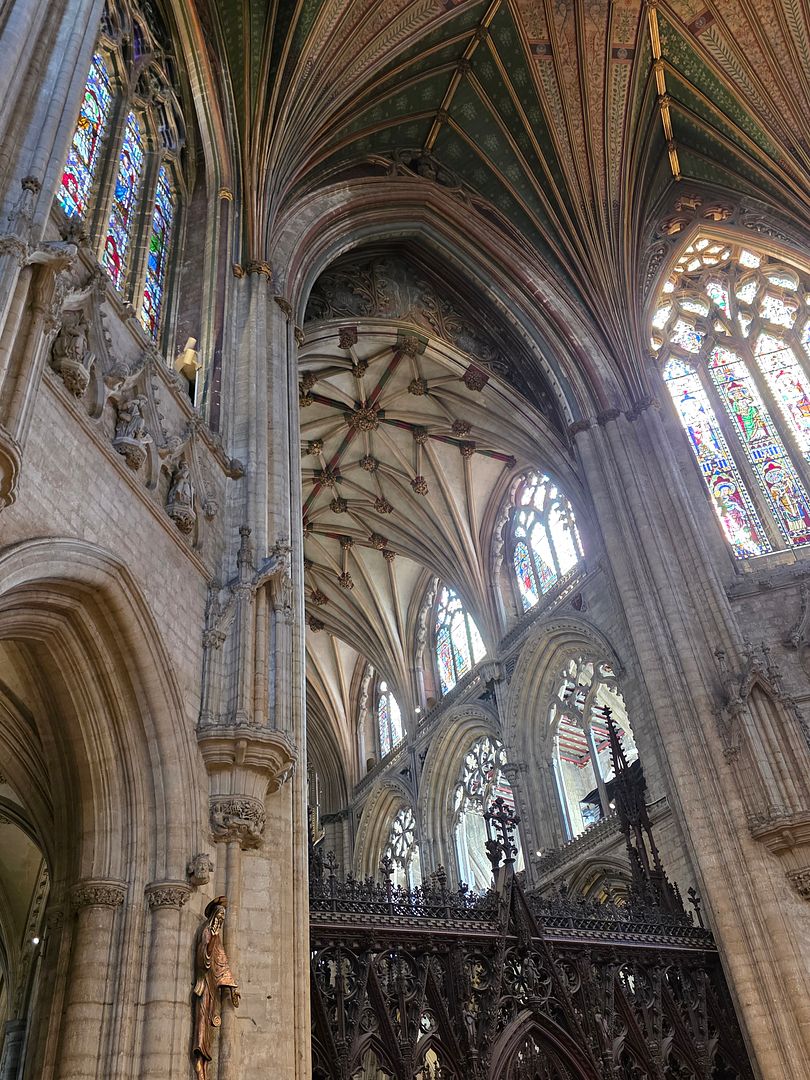
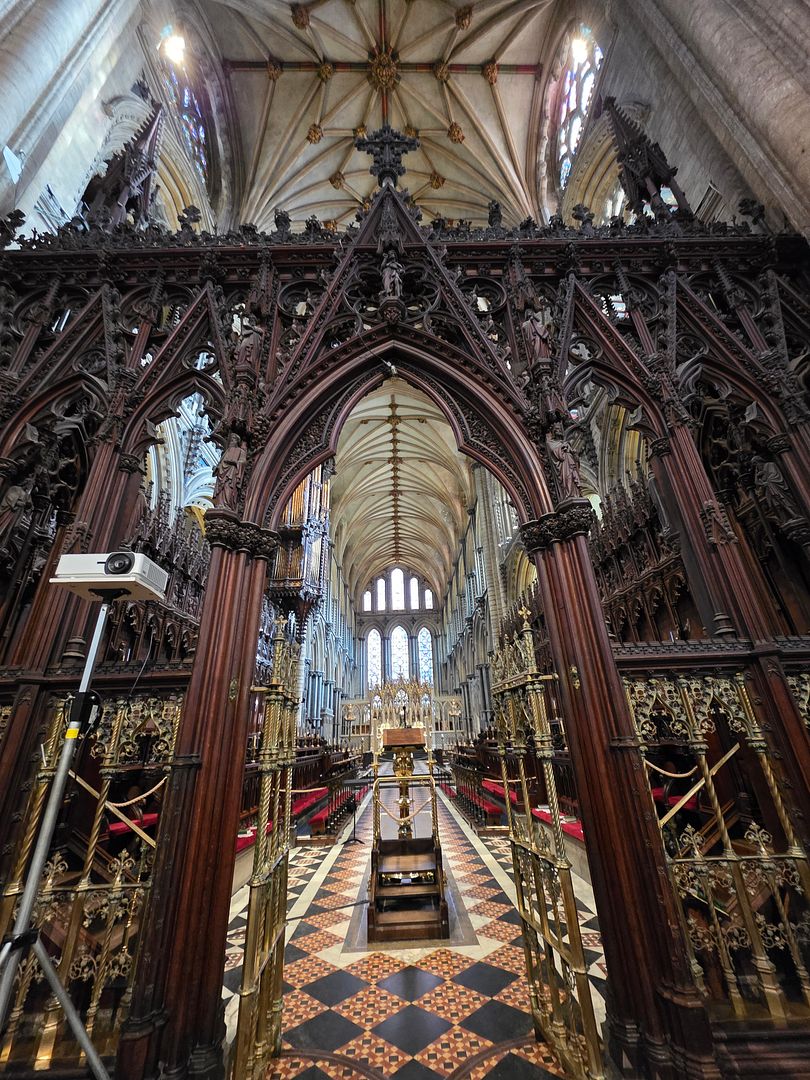
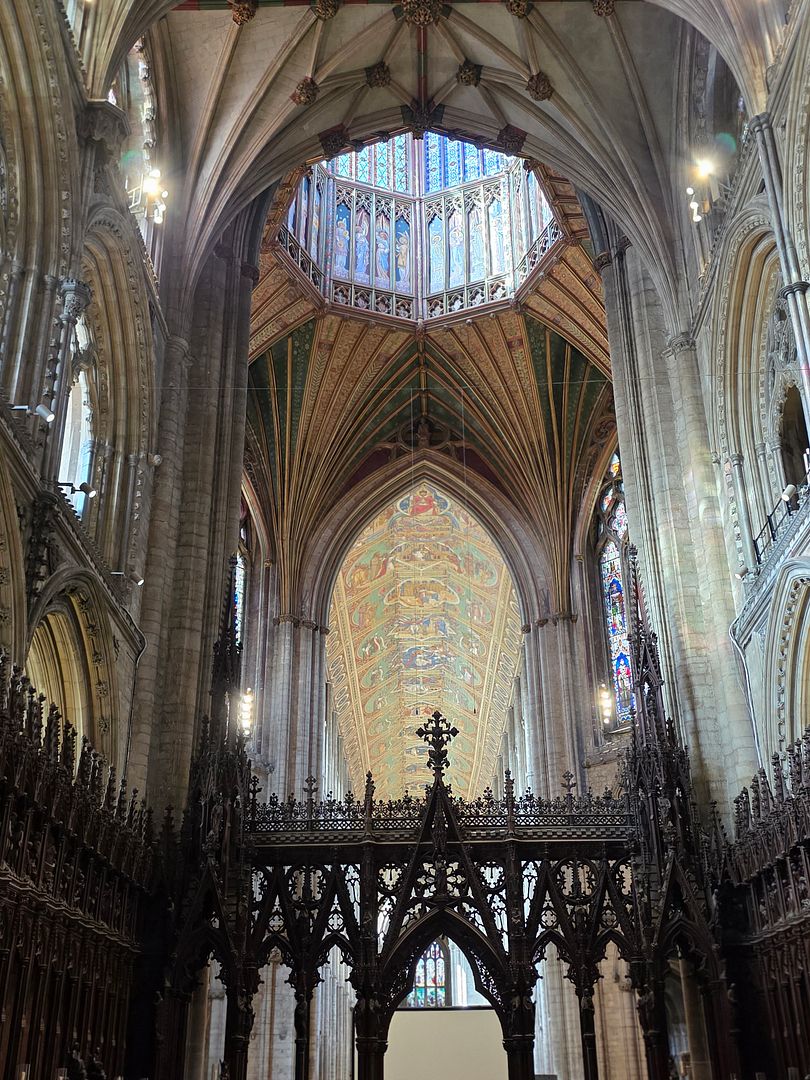
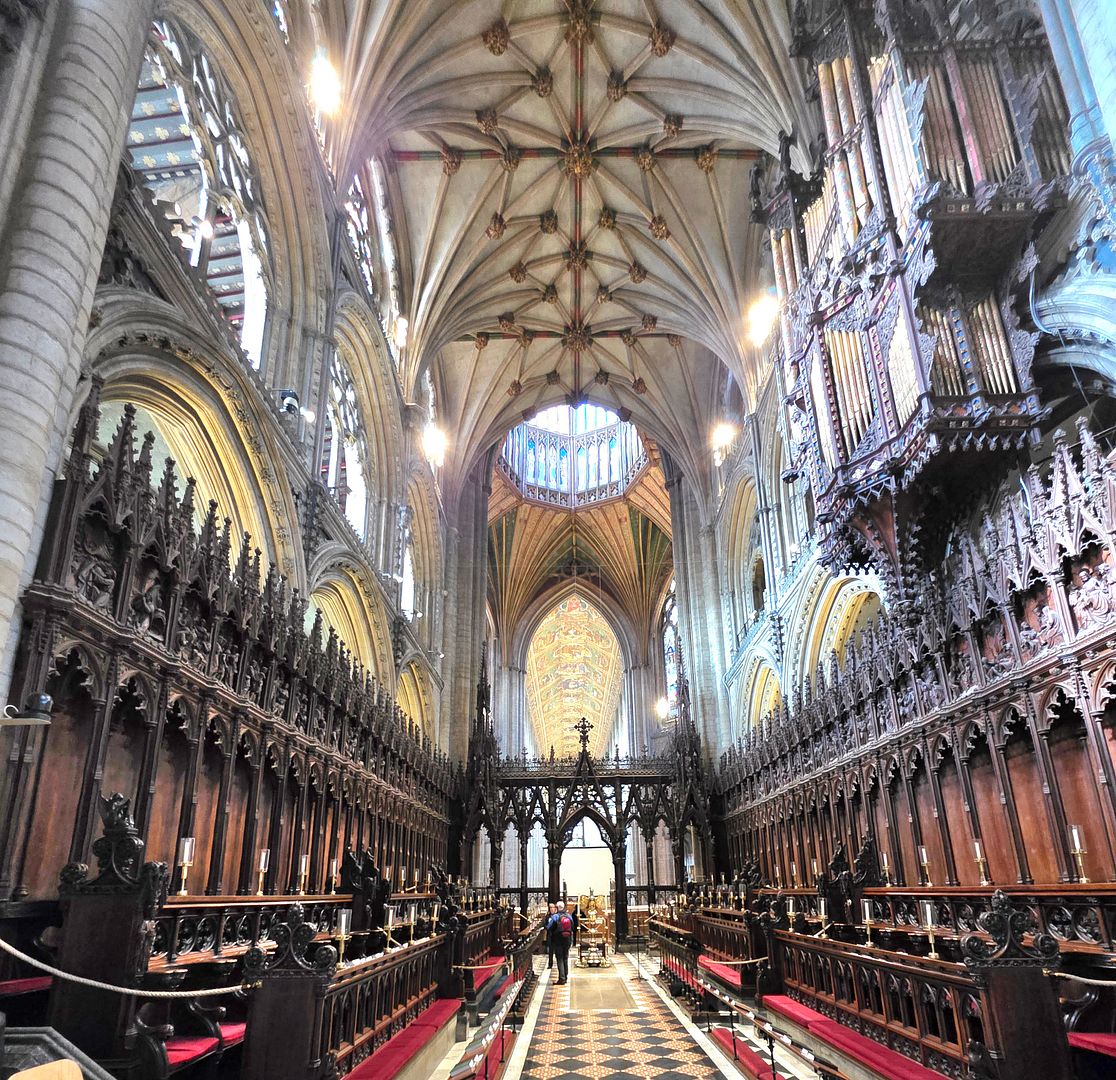
Looking into the Quire.
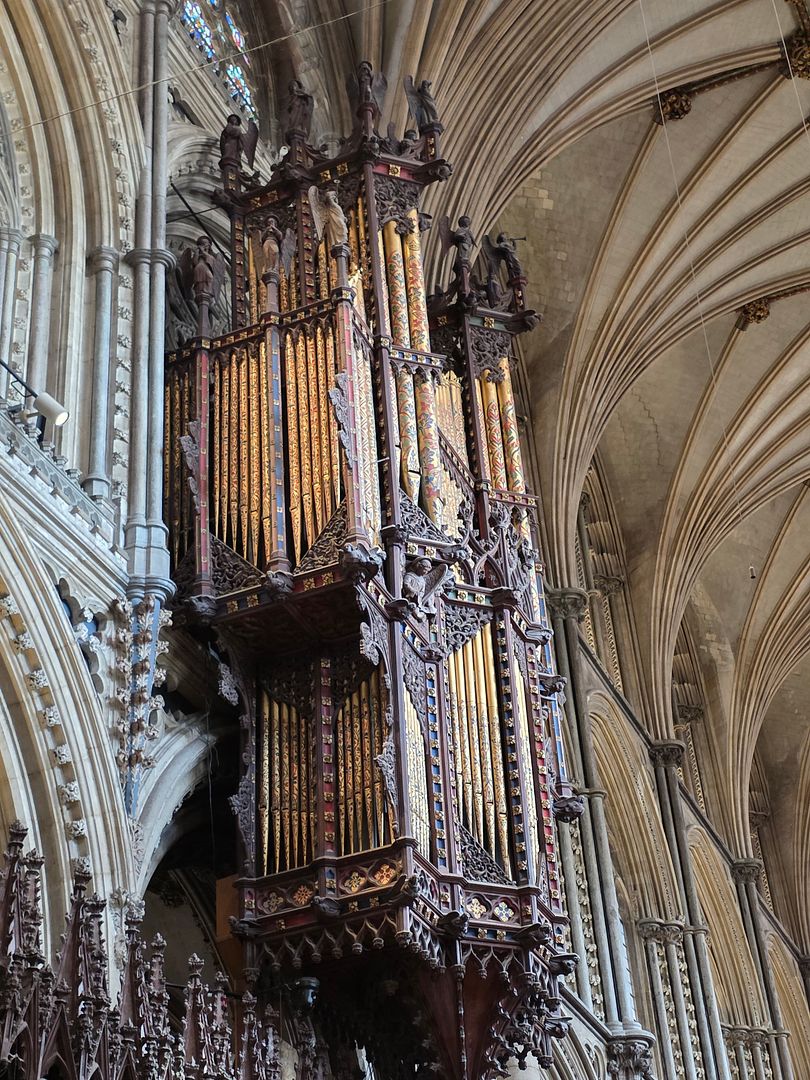
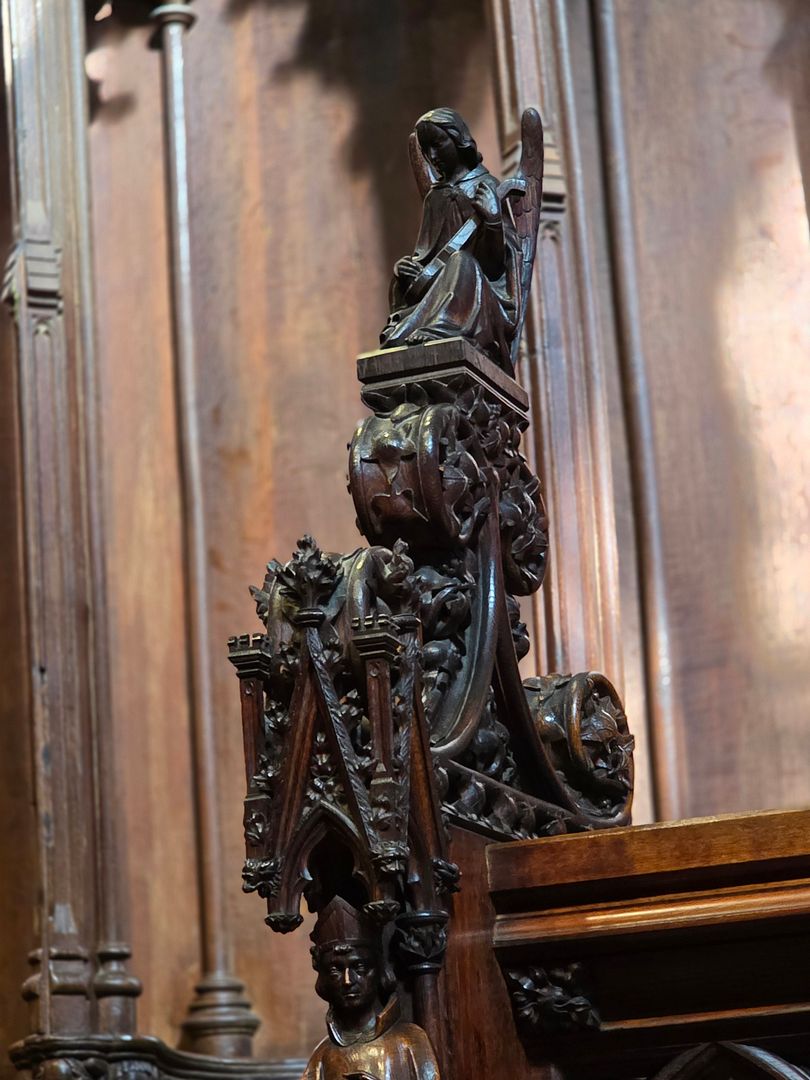
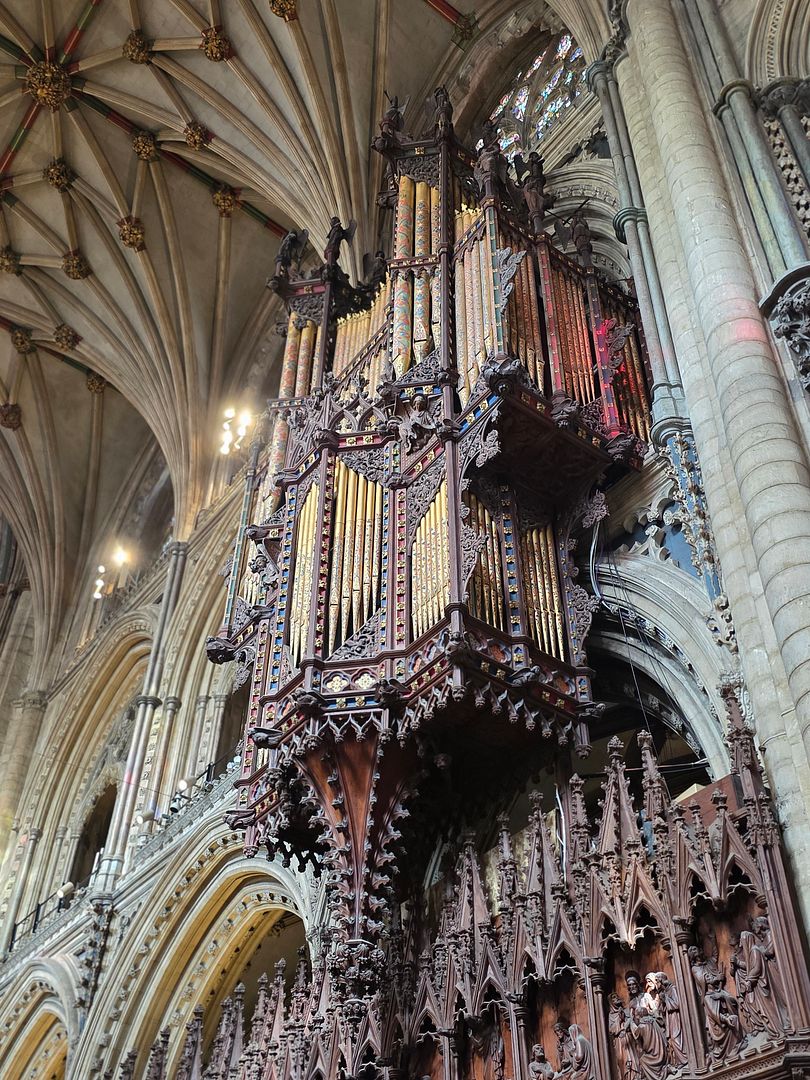
These ornate organ pipes were fascinating to me.
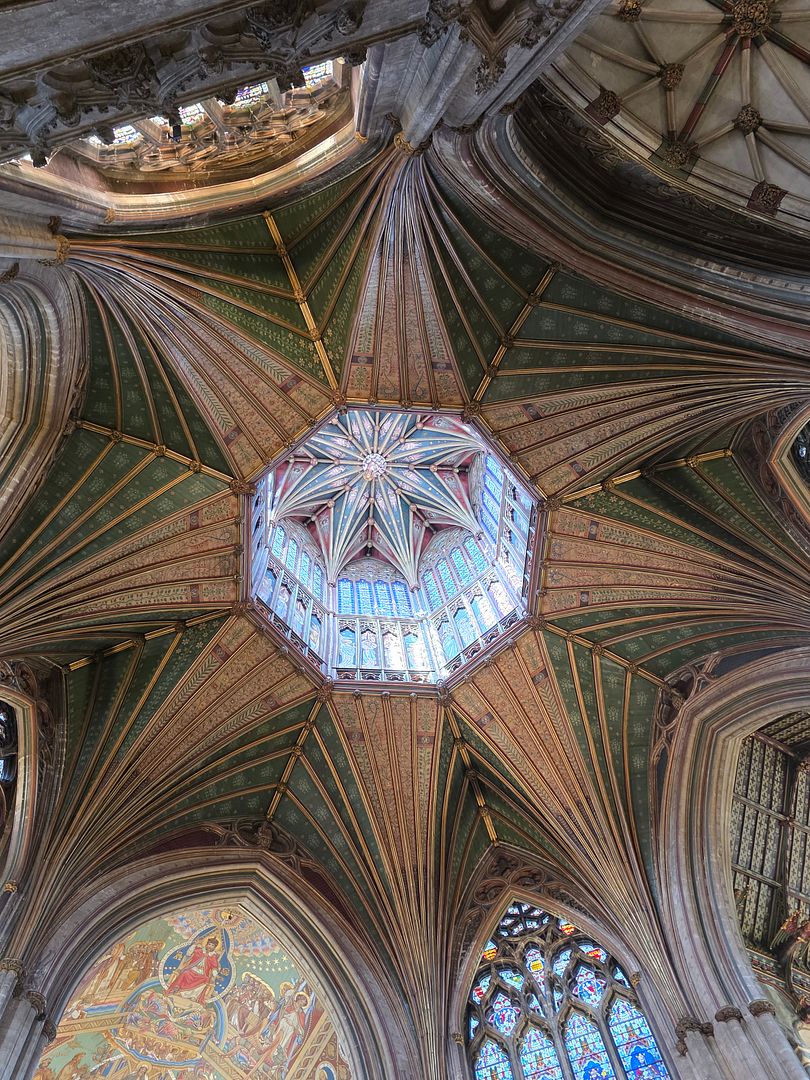
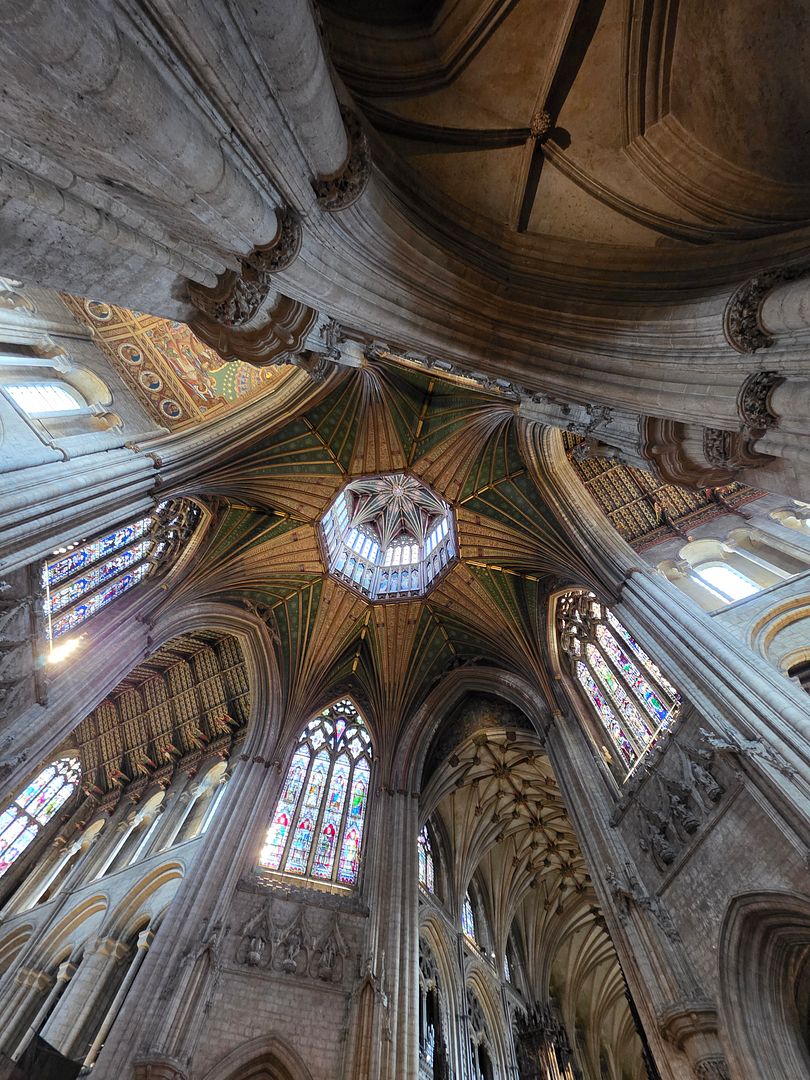
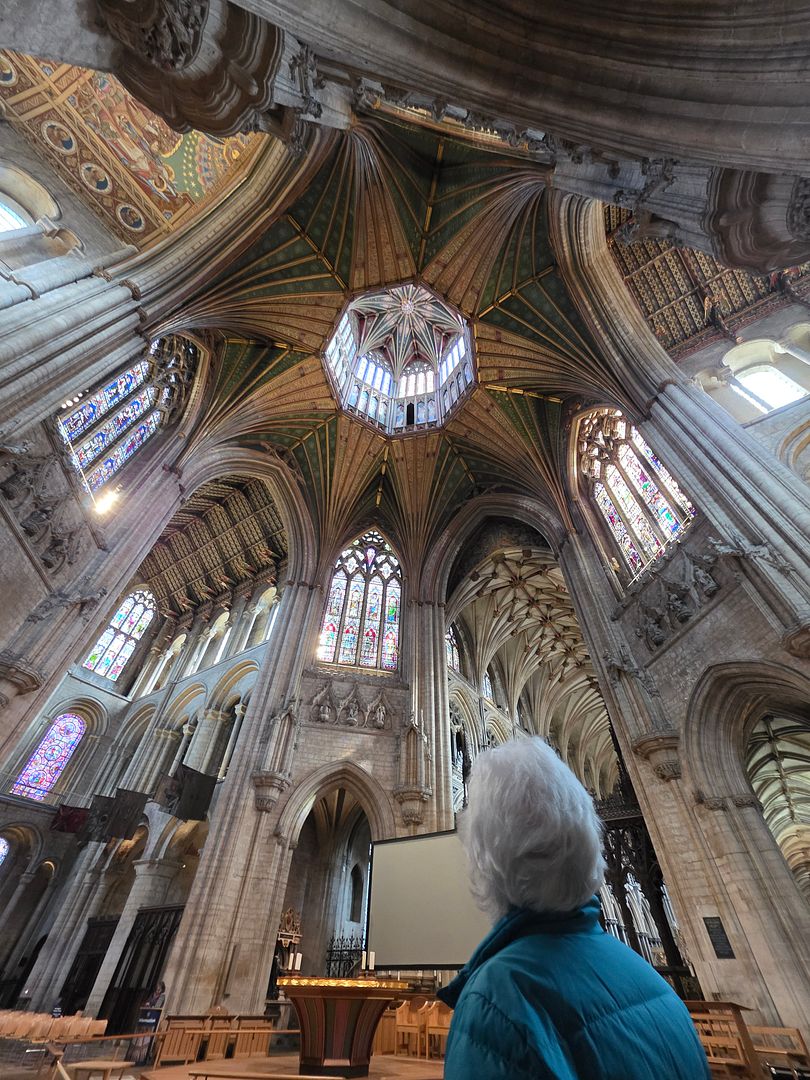
The jewel of Ely’s Crown and acknowledged as one of the wonders of the Medieval world is the Octagan.
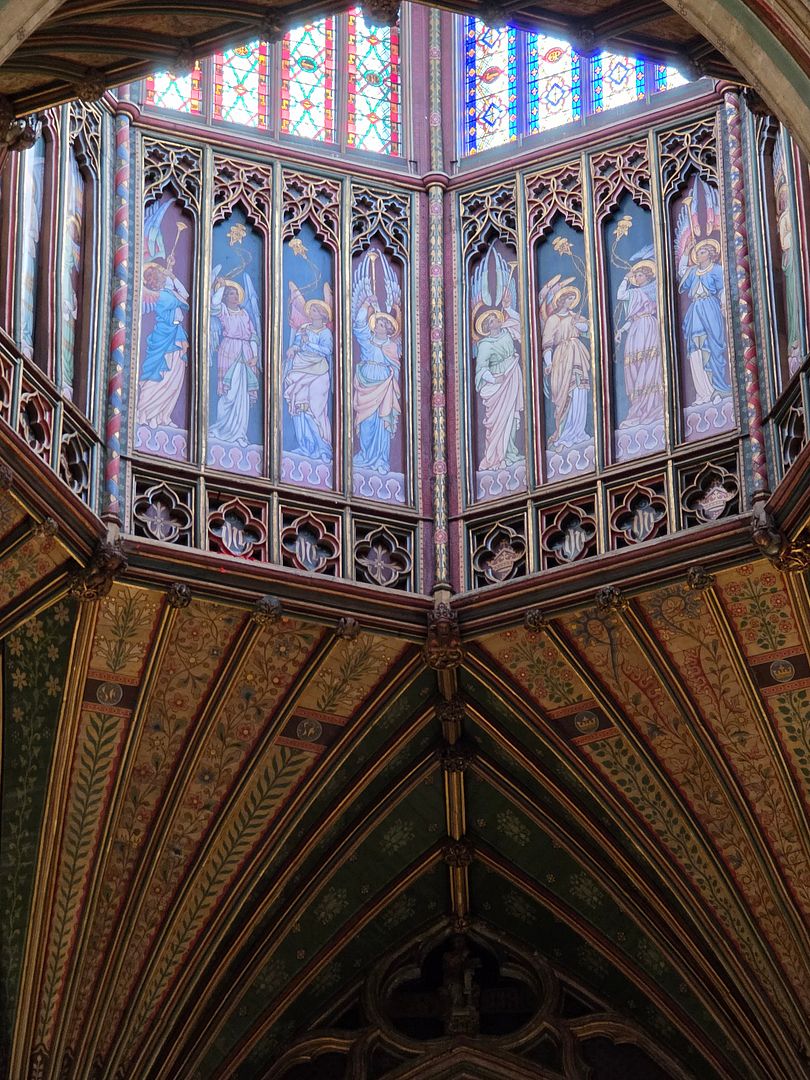
You can read more about the Octagon here.
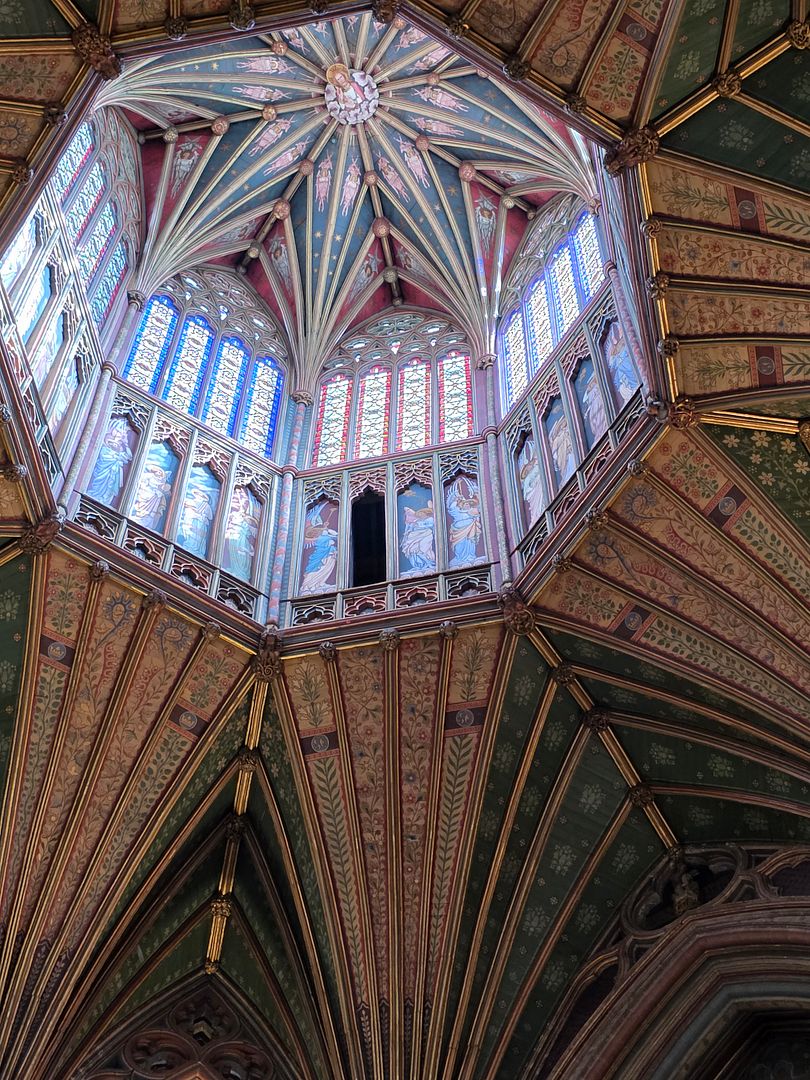
That is not a missing panel but a door opening.
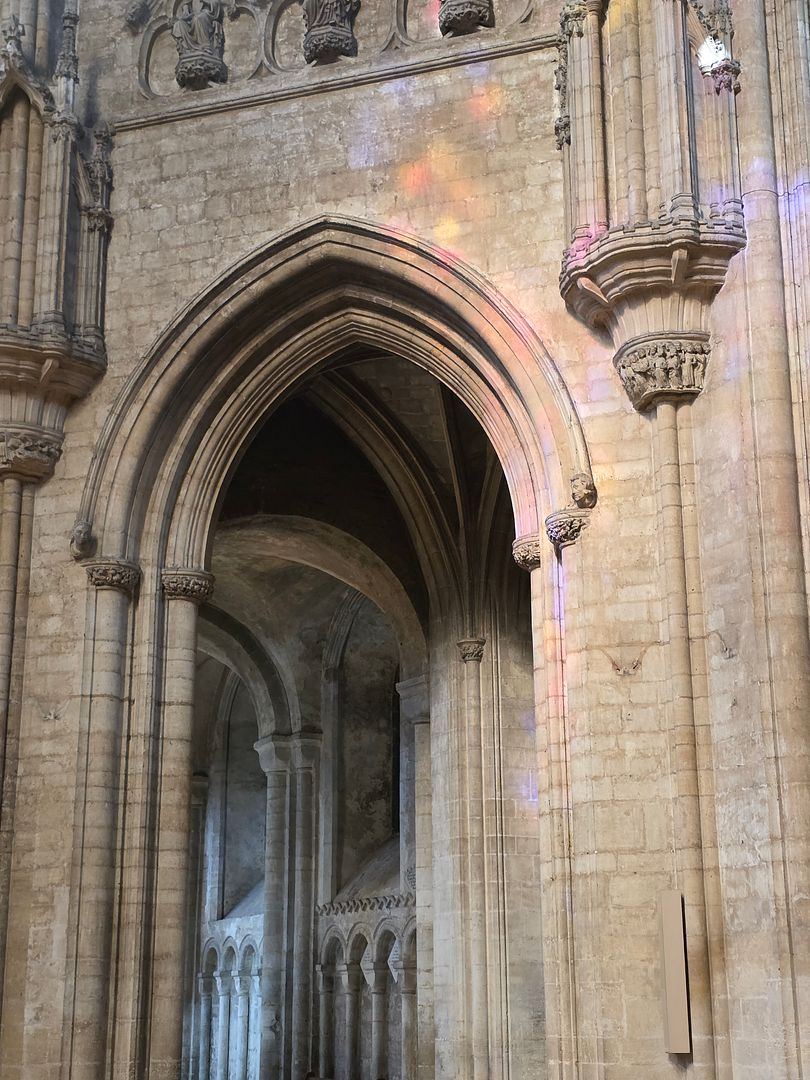
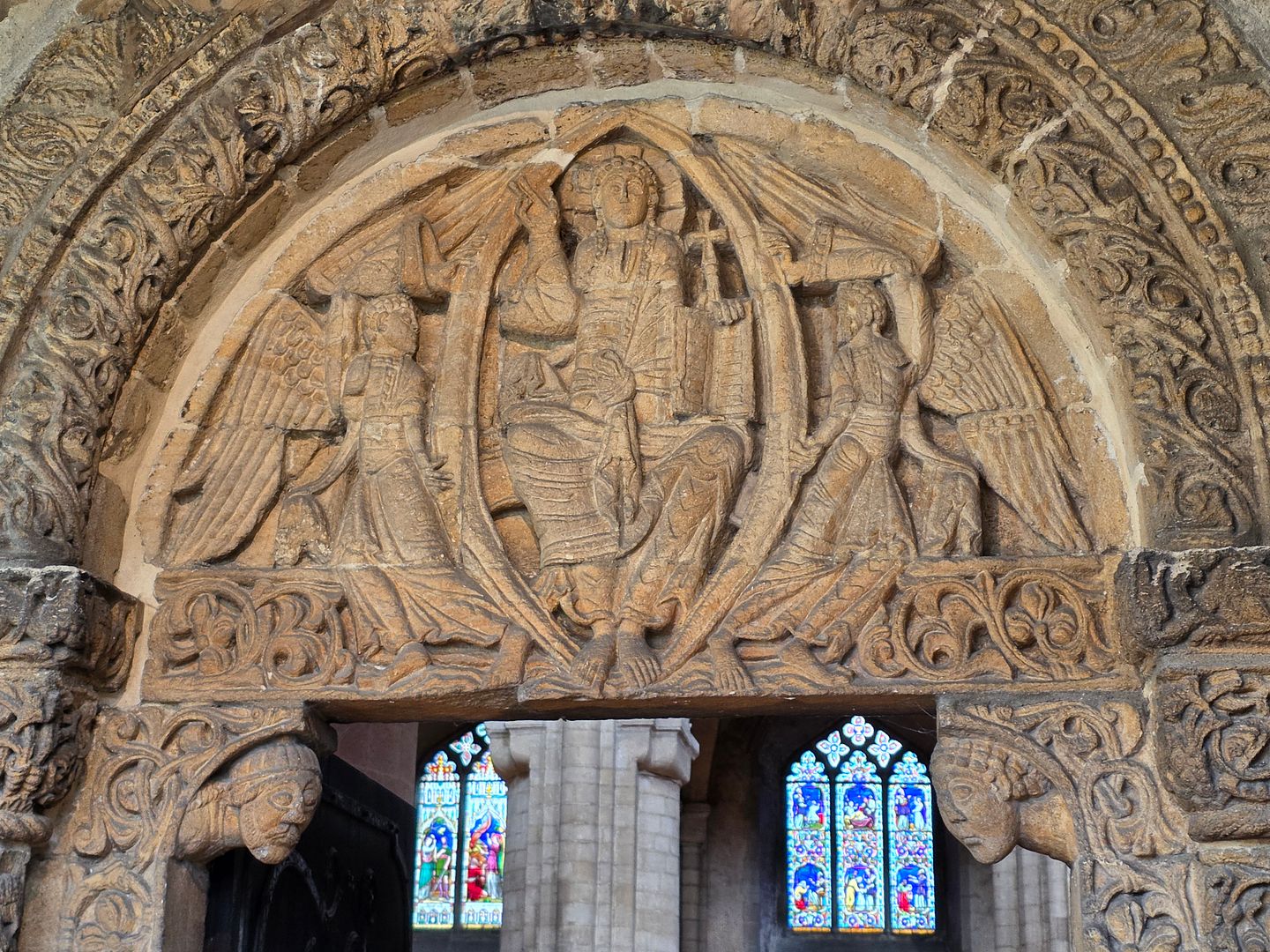
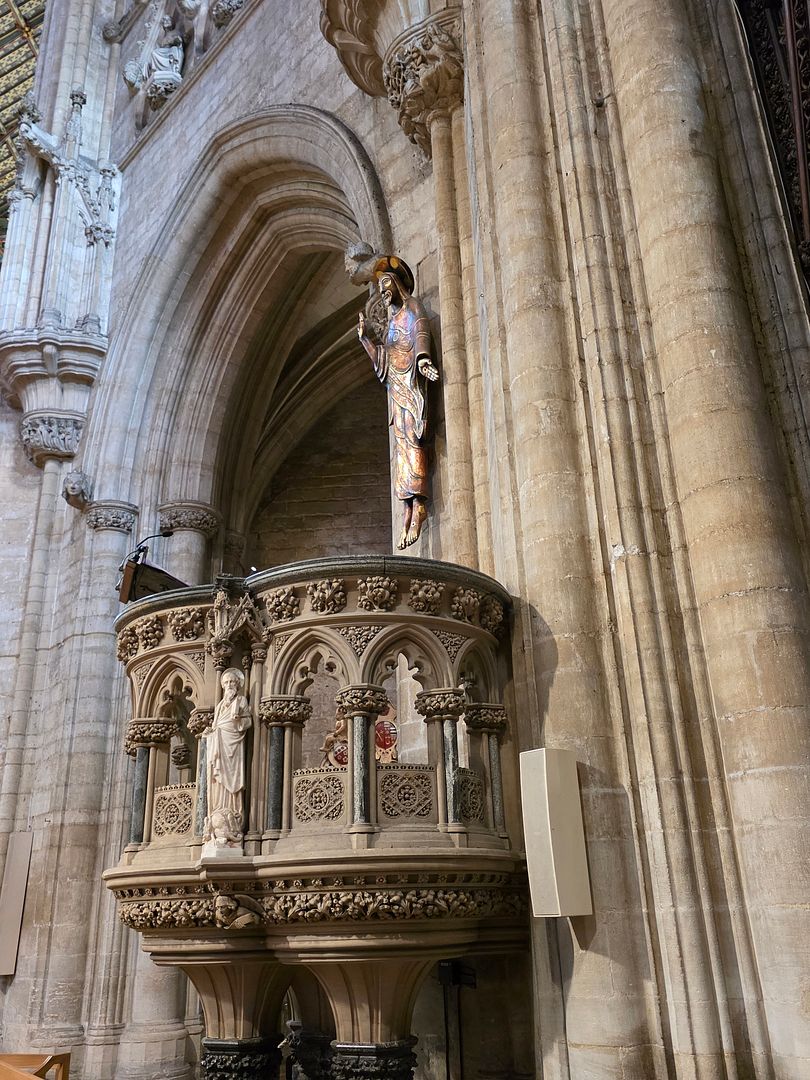
Our guide gave us important details about this doorway and I found more information here. They call this the Prior’s door (c.1135). A Romanesque carved doorway.

The Christ figure is contained within a mandorla – an almond shape traditionally used to frame images of the transcendent. Here Christ’s feet cross the boundary of the mandorla, stepping towards mankind.

 Two human heads with pronounced eyes just below the tympanum watch those passing through the door into the church and symbolically entering heaven.
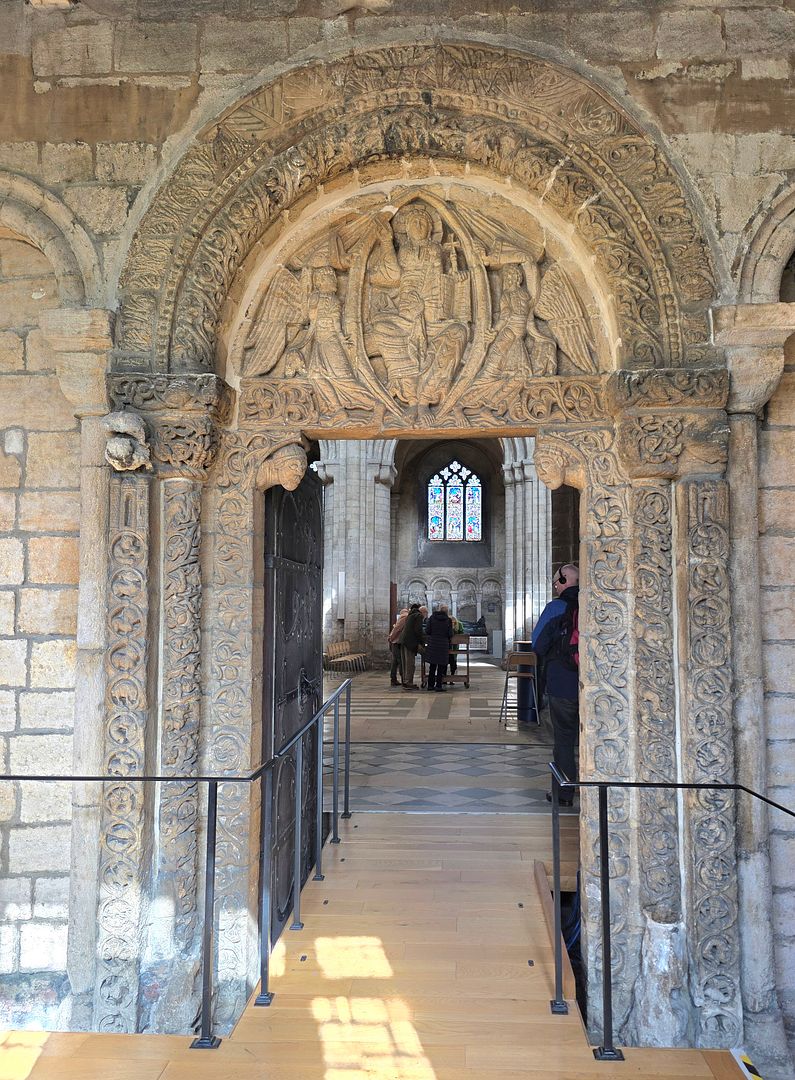
From the link; Like the rest of the building, the deeply carved doorway is sculpted in extremely hard Barnack limestone. It has a tympanum – a half-moon shape at the top – which would originally have been brightly painted. It shows an unusual clean-shaven Christ sitting in judgement on the peoples of the earth. One hand is raised in blessing, the other holds the Book of Judgement from Revelation.
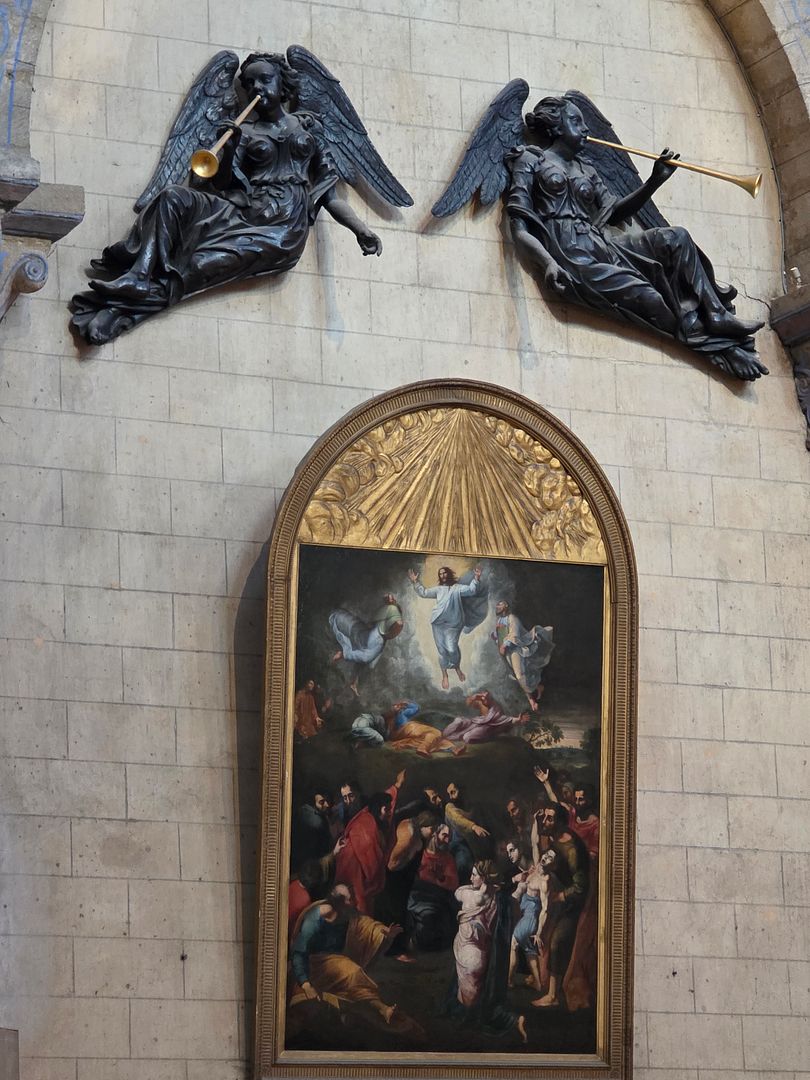
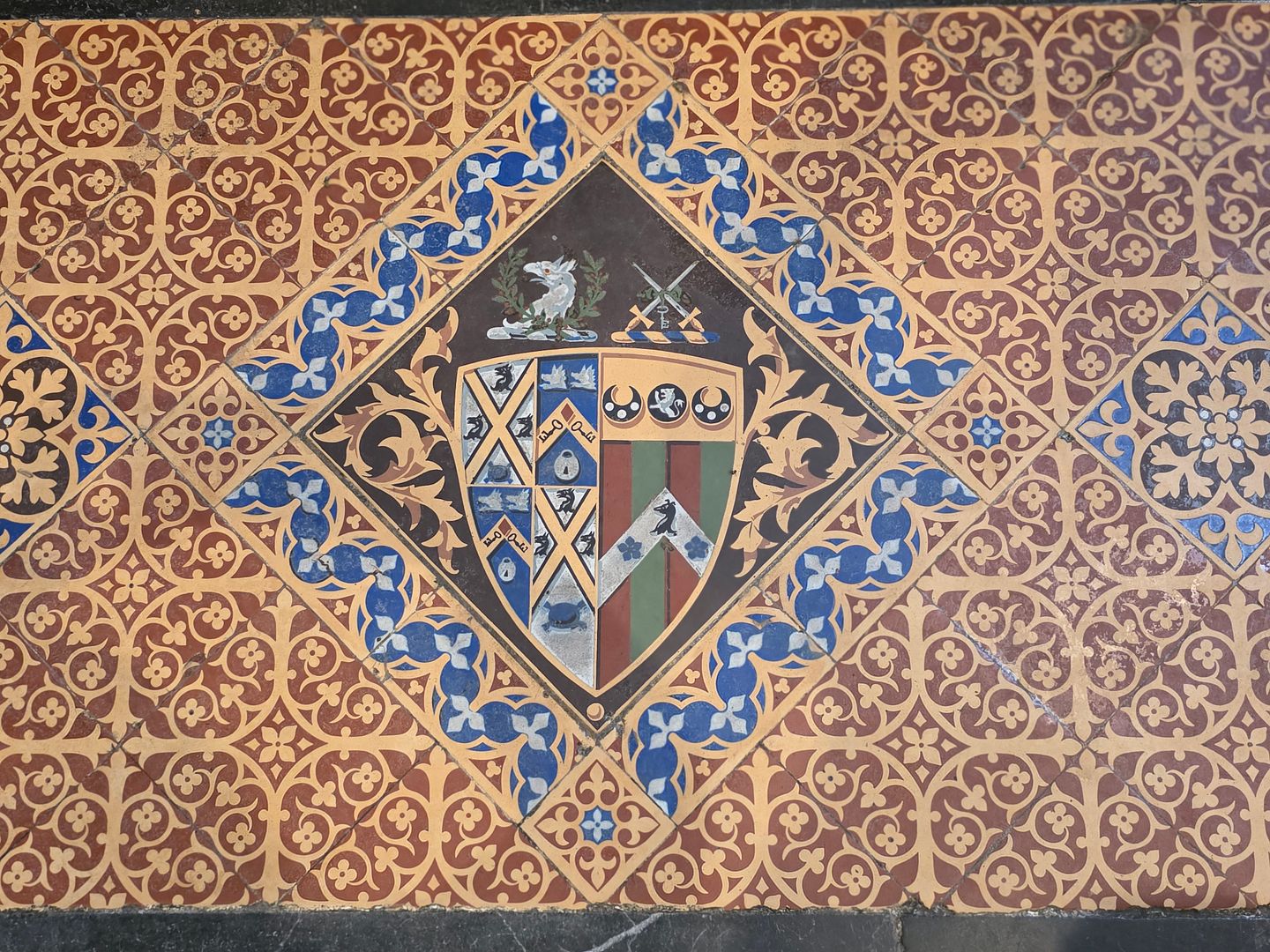
Processional Way (below) was built to join the Cathedral and the Lady Chapel.
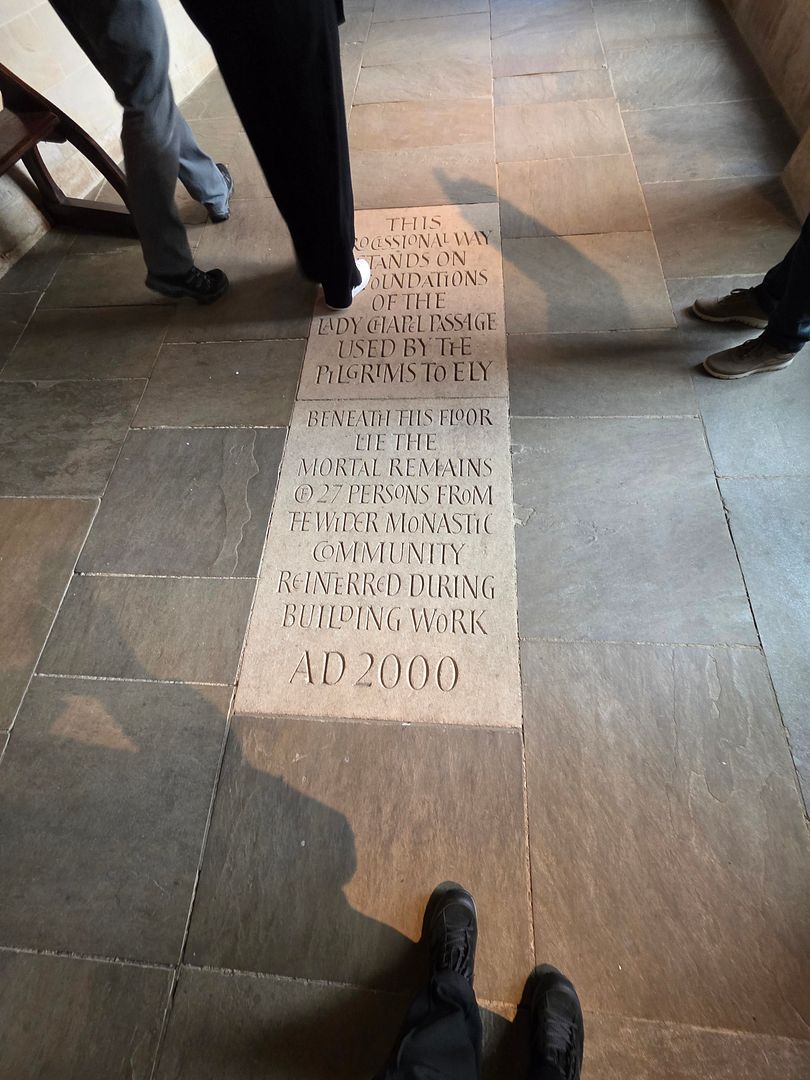
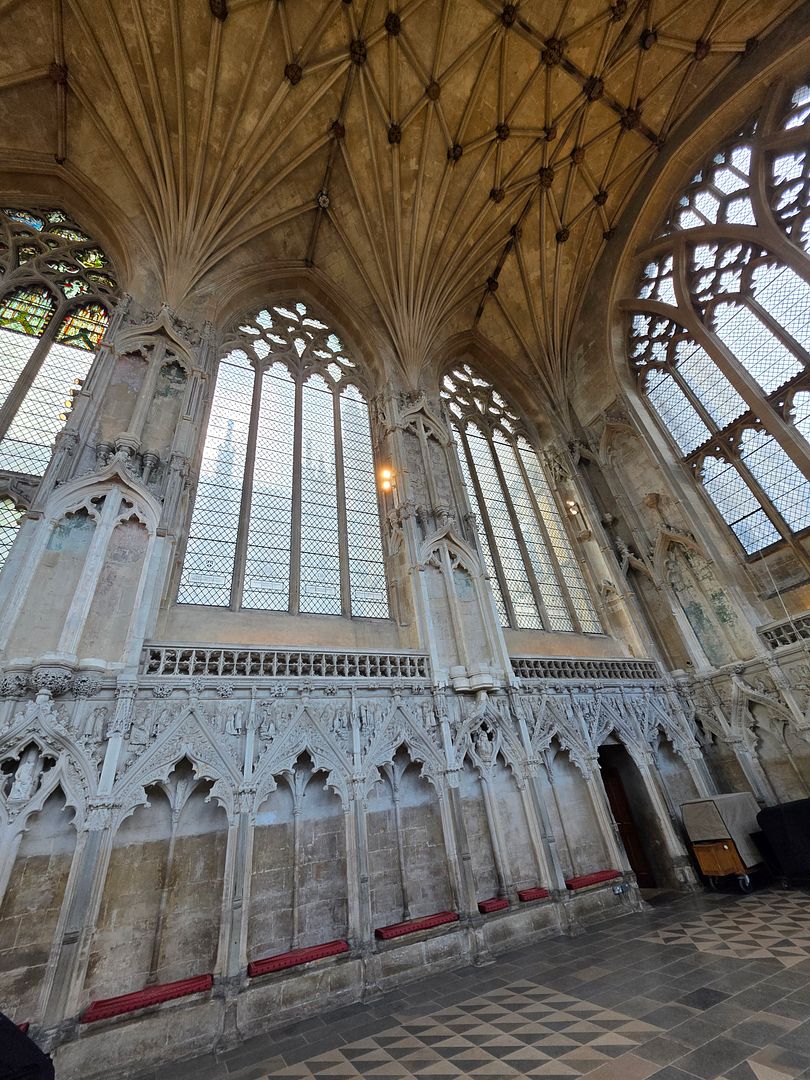
We were now entering the Lady Chapel, the largest Lady Chapel attached to any British Cathedral. I copied the following from Ely Cathedral’s Website.

The thirteenth and fourteenth centuries saw the rise of the cult of the Virgin Mary, and chapels in her honour were added to many churches and cathedrals, including Ely.
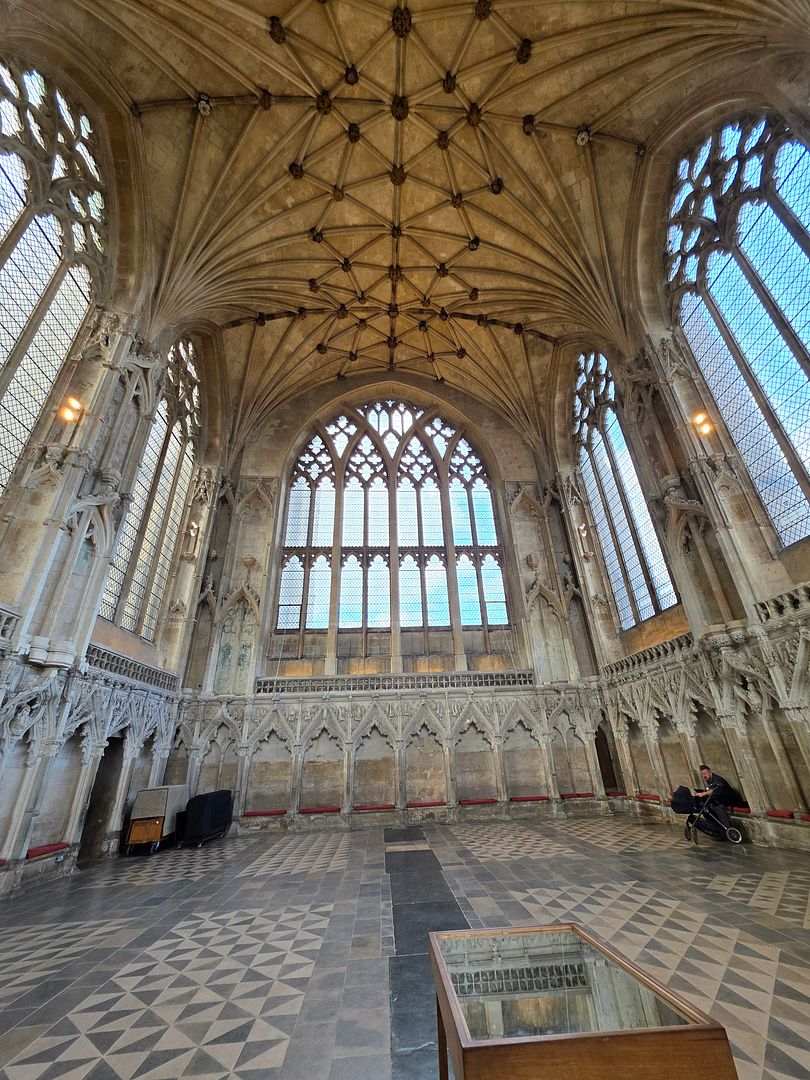
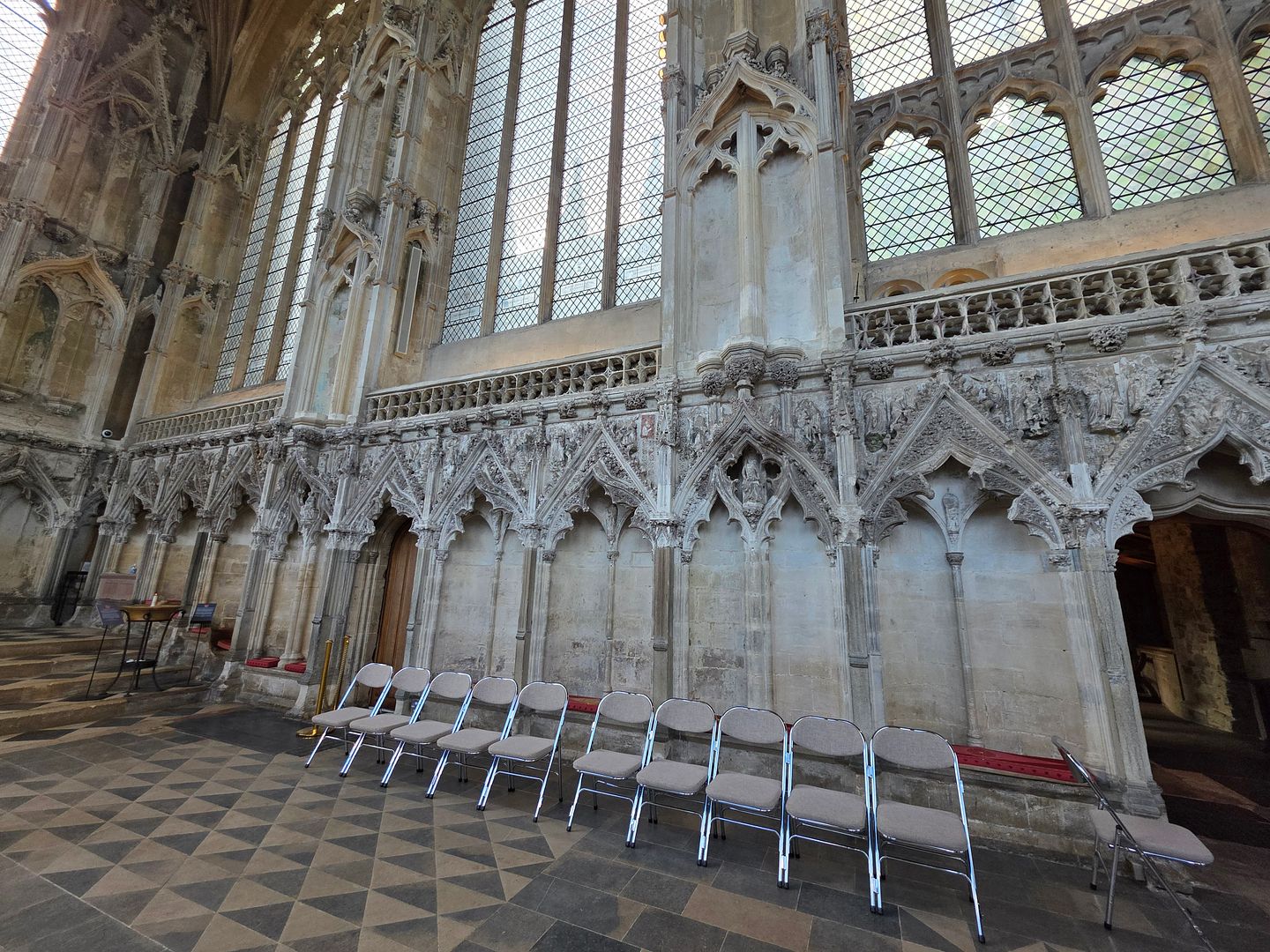
All this was destroyed in the sixteenth century during the Reformation, which, in keeping with Puritan convictions, rejected all forms of religious decoration. The scars of this deformation are highly visible today. Traces of coloured paint can still be seen, and fragments of the glass survive in the central window on the south side. The exquisite figures in the lower niches have been defaced and above are the empty pedestals where the statues stood.
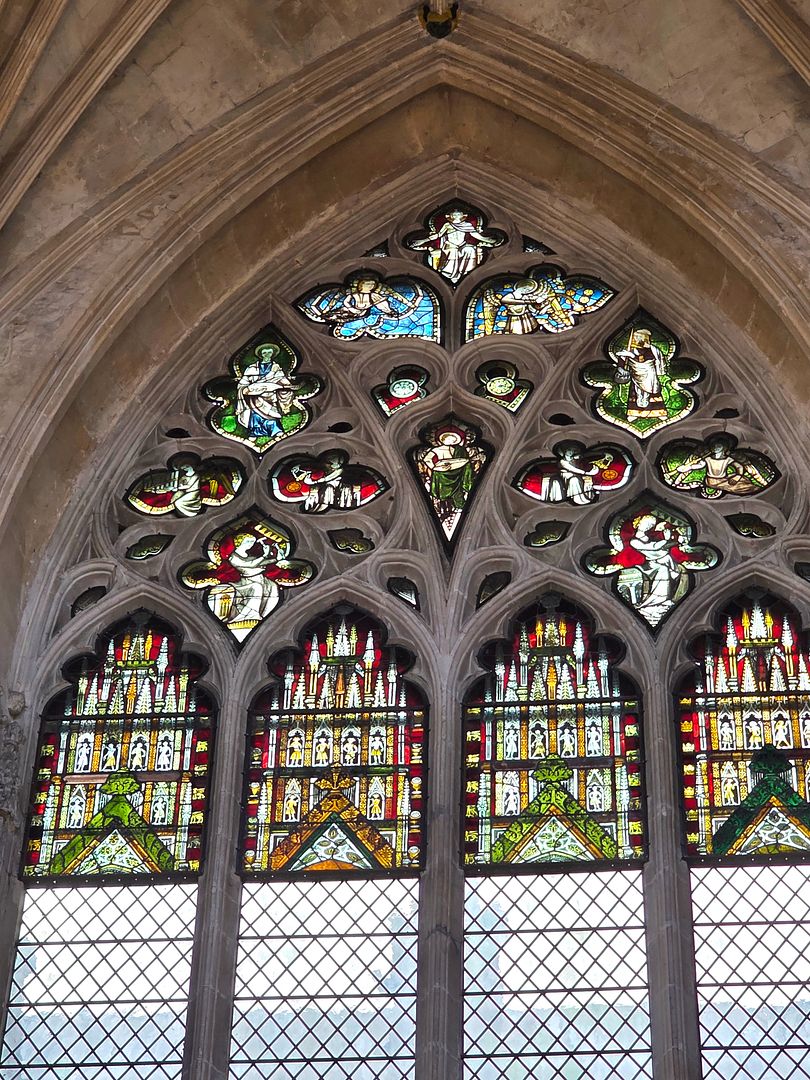
Walking back into the main sections of the Cathedral.
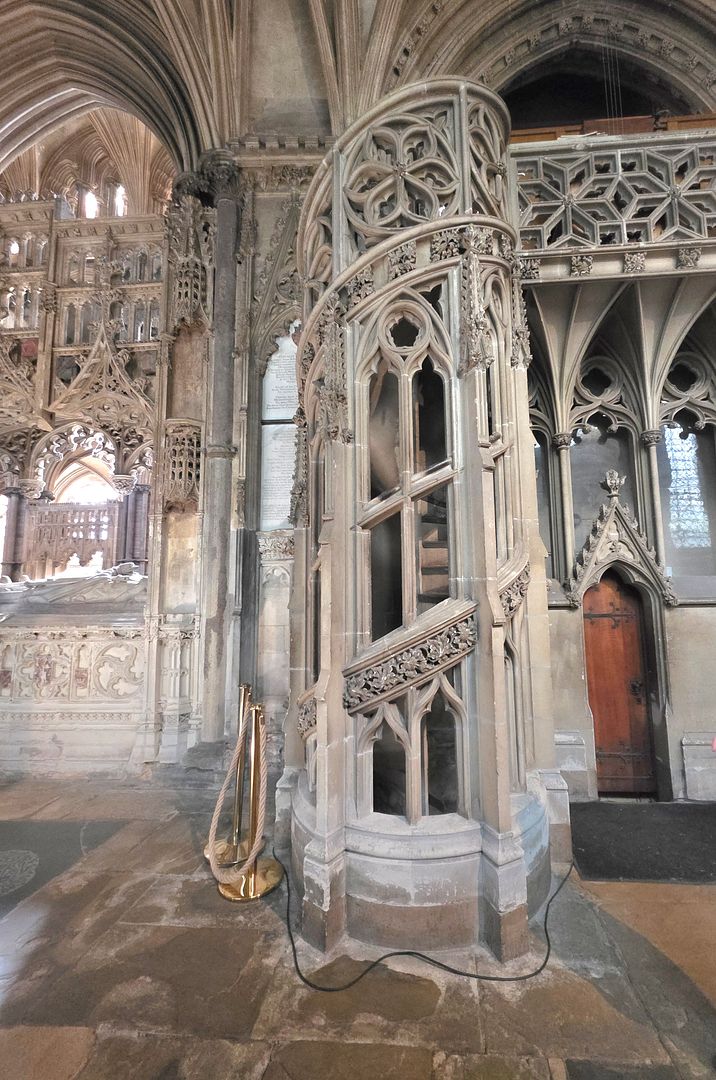
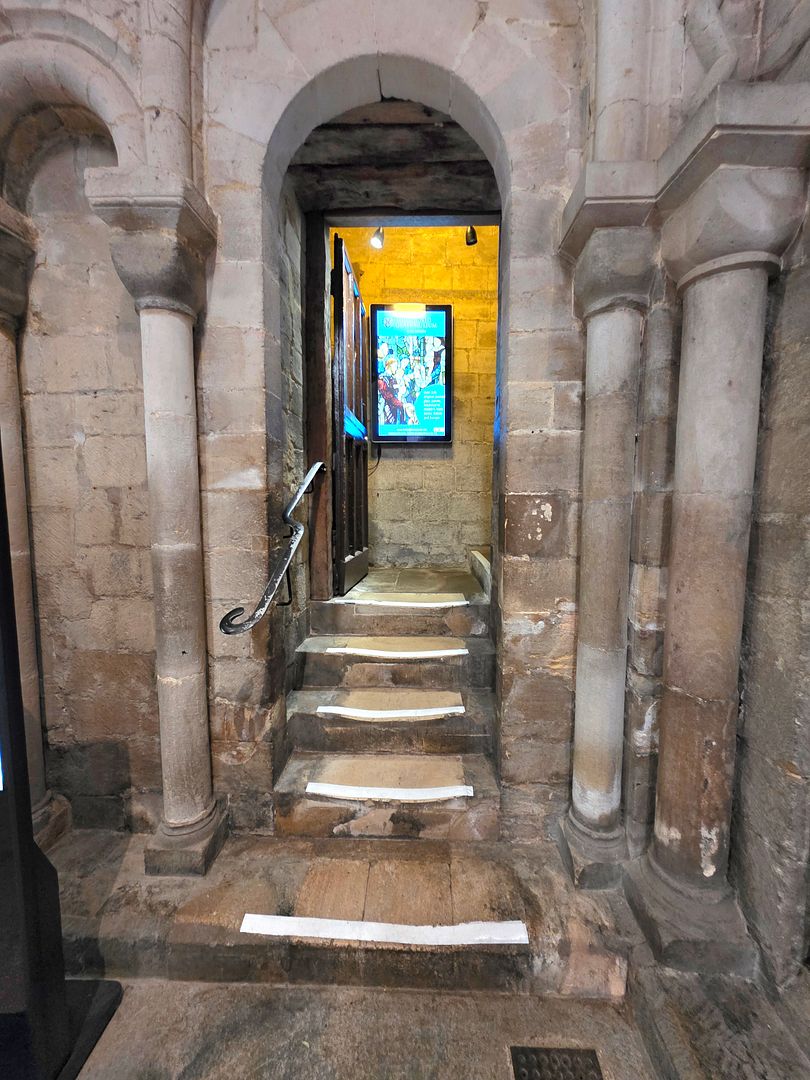
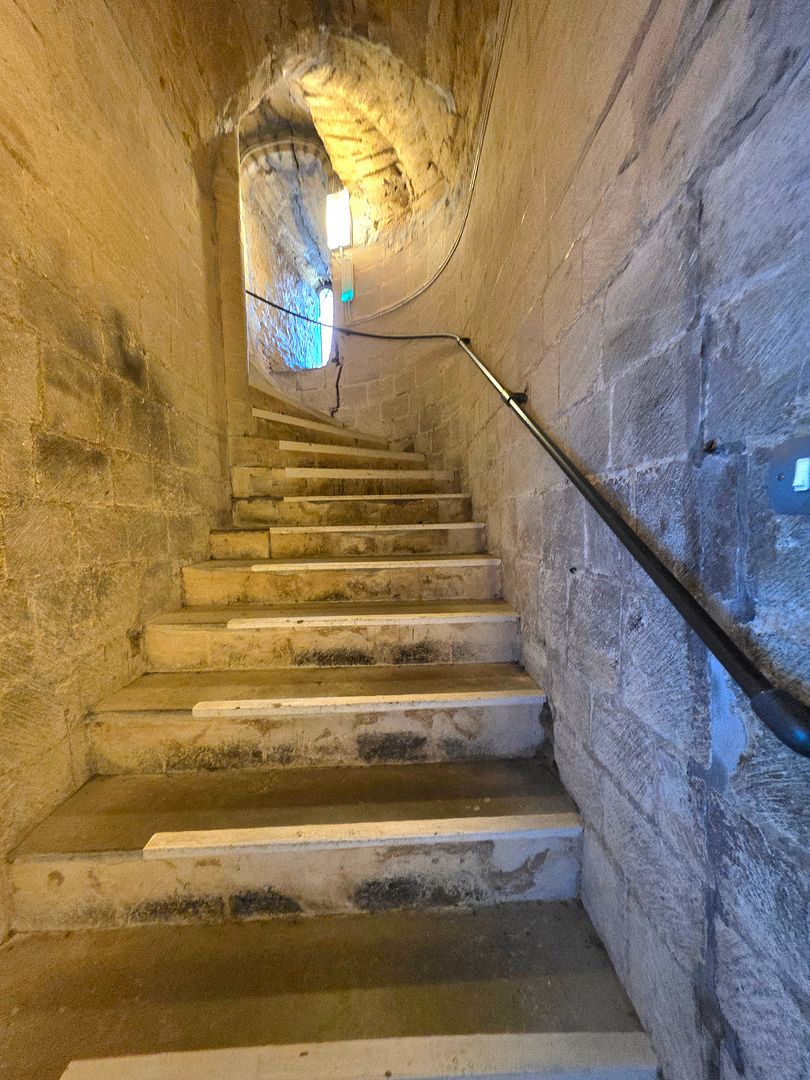
This narrow spiraling stone staircase leads to the organ. Hopefully the organist was slim.
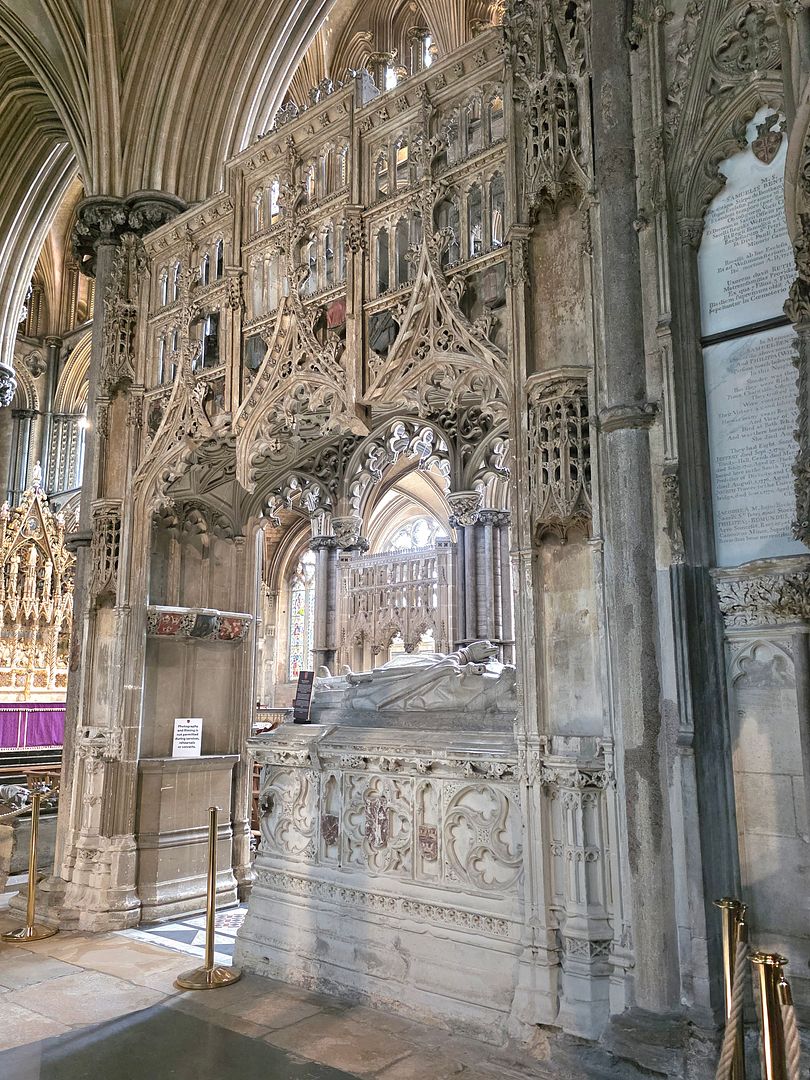
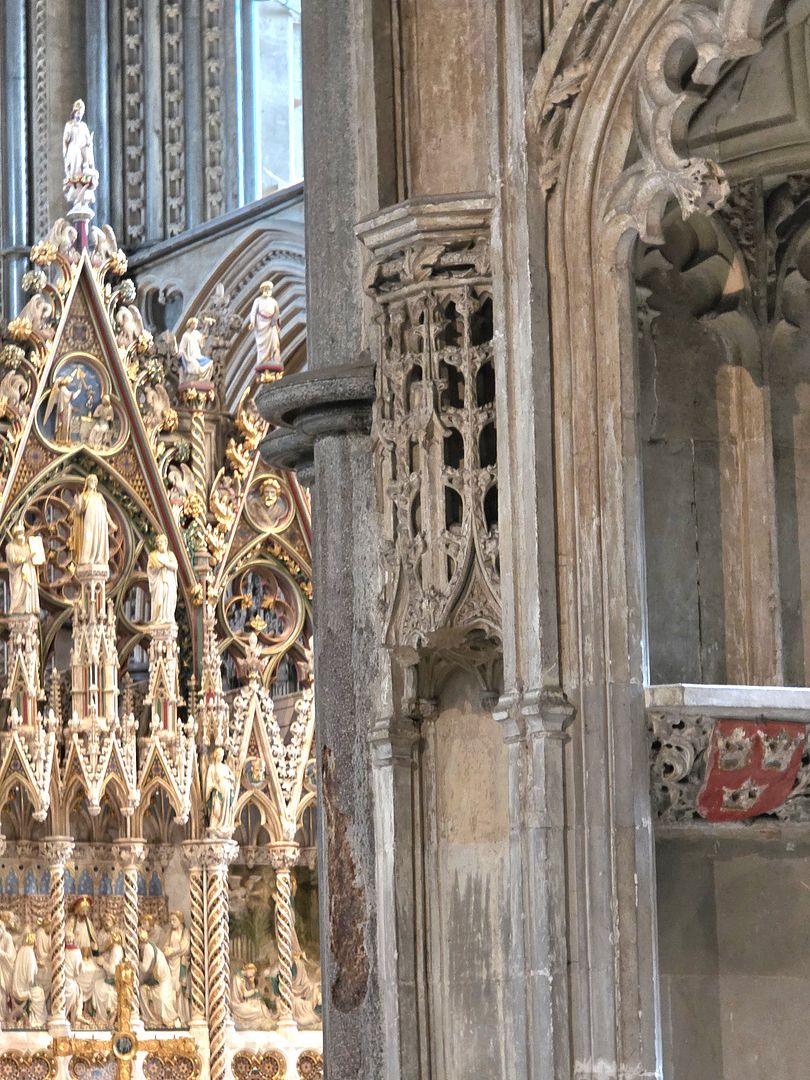
 

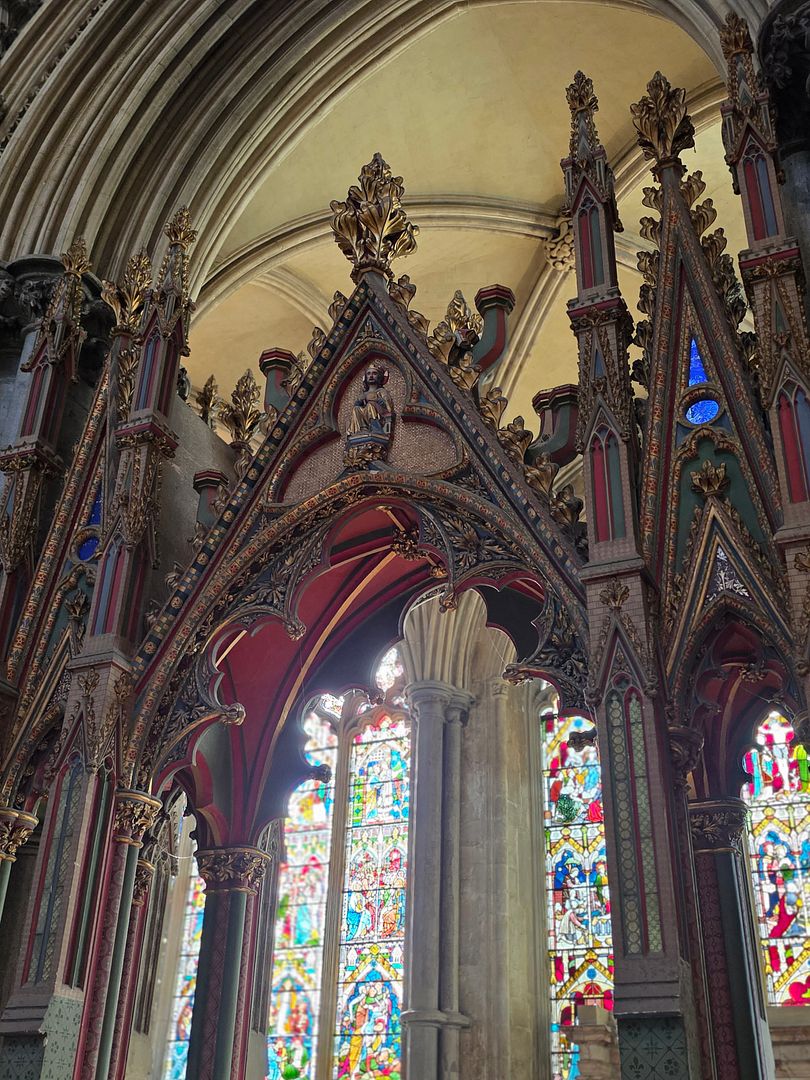
The Quire
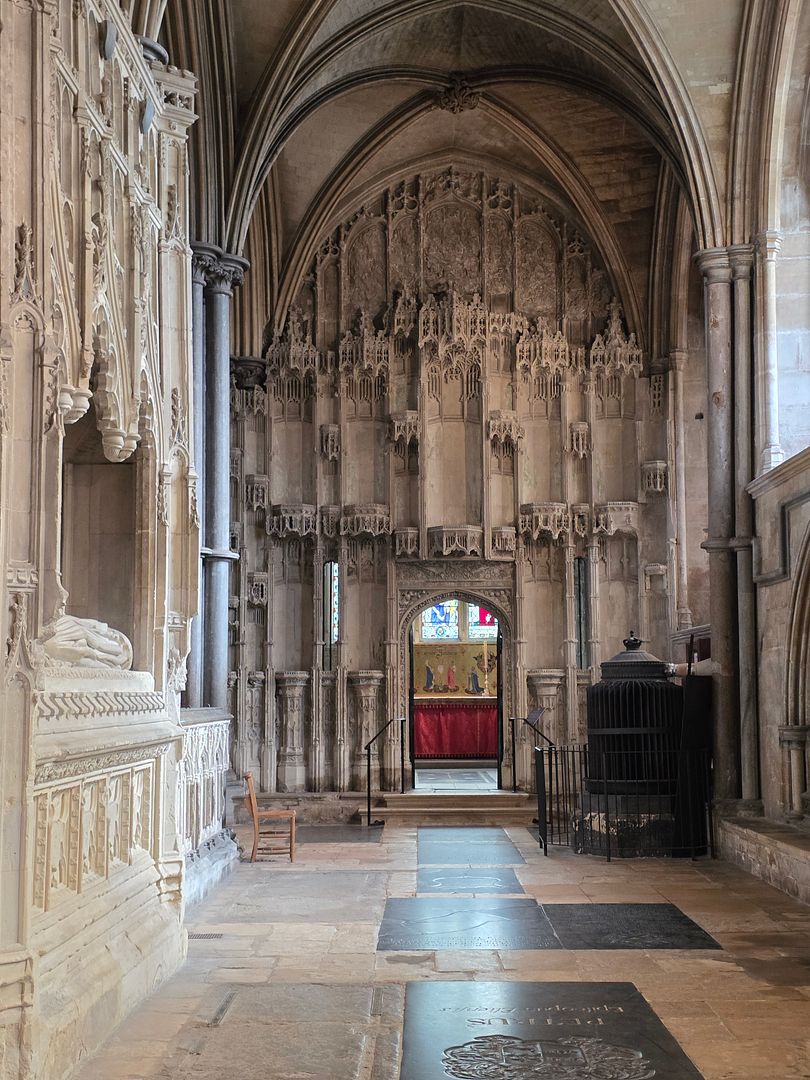
So much history and so much to see and take in. I’ve shared enough or maybe too much here today and it would take a few more visits to absorb more.

This was a very long photo journal of the interior of Ely Cathedral. I will save the stained glass museum housed in an upper section of the cathedral for another day.
Cambridge to Ely

Continuing our travel journal from our trip from the Danube to Cambridge in March of 2026.

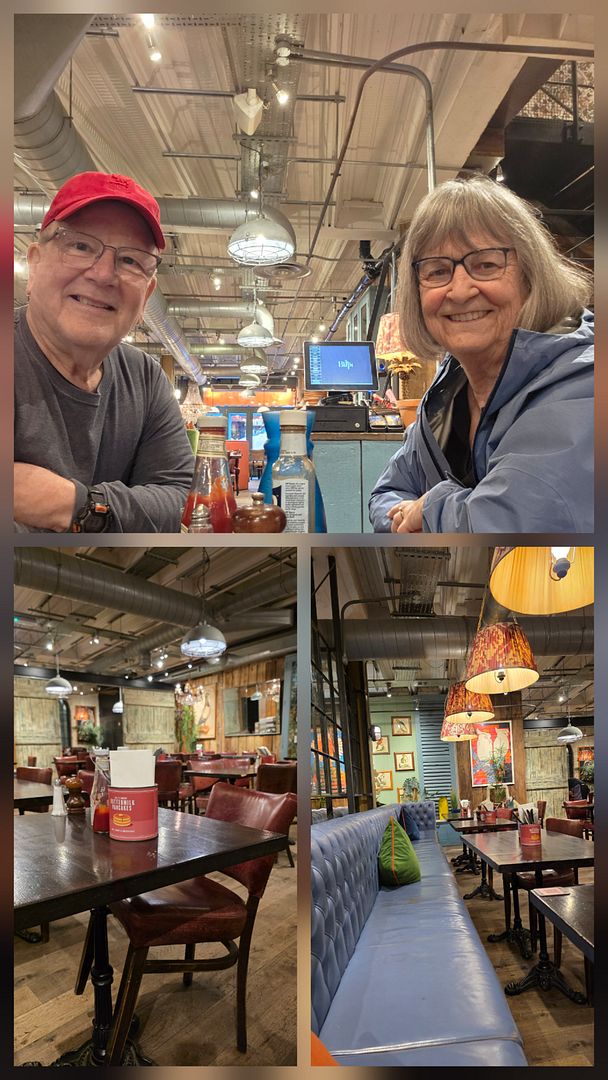
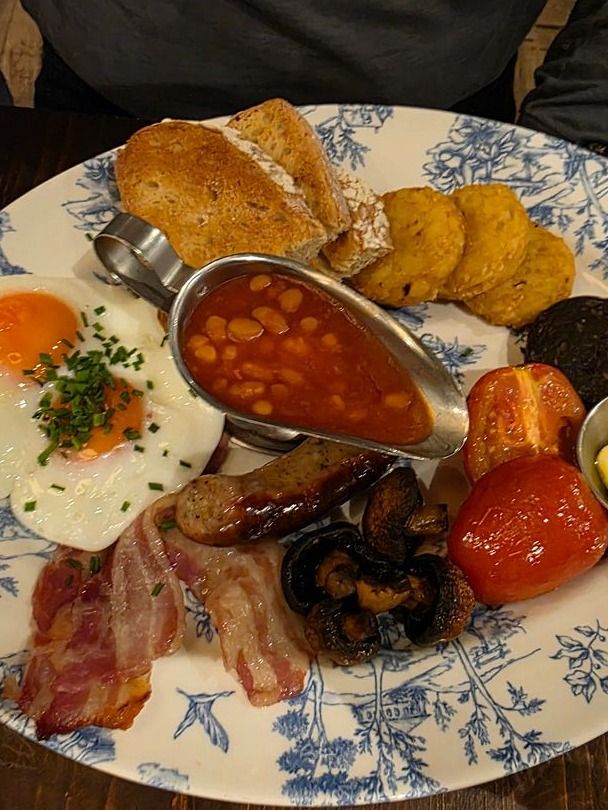
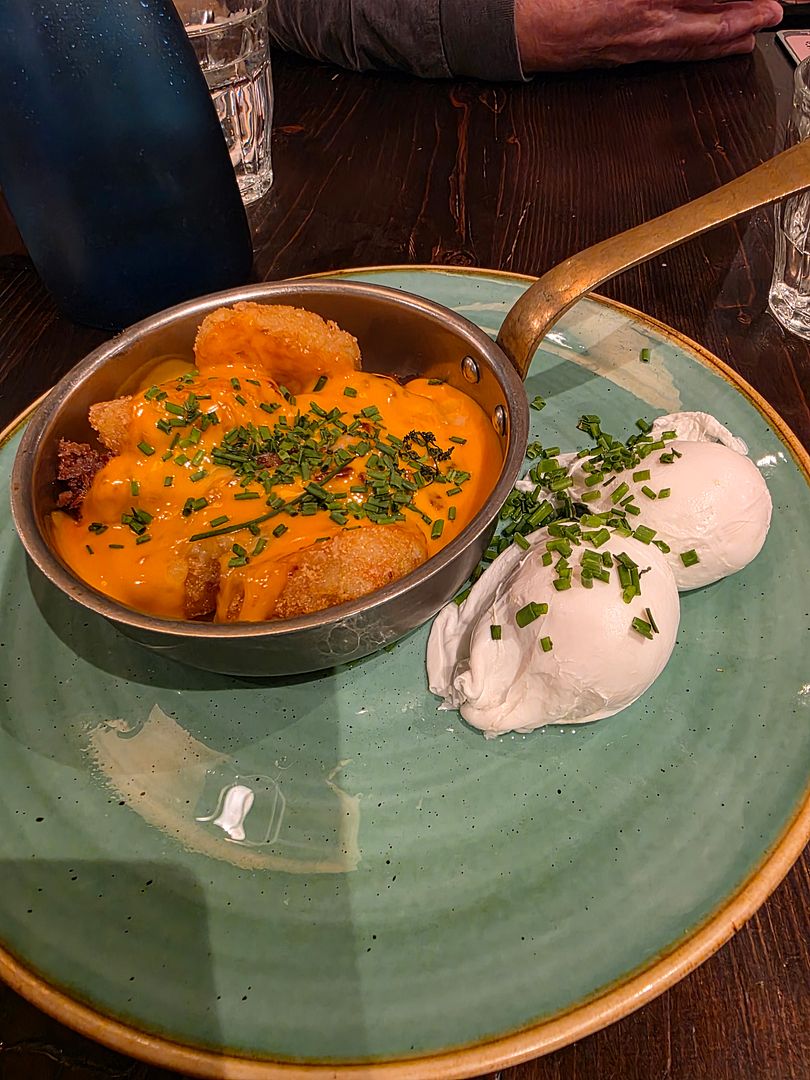
On Wednesday morning March 11th we walked to Bill’s Cambridge restaurant for breakfast before our train ride to Ely.

I know those are poached eggs but I honestly can’t remember what I ordered that came in that skillet…maybe potatoes of some kind. Oye.

After breakfast we called a taxi to take us to the train station for a short trip to Ely. Once we arrived we walked over to another taxi to take us to the cathedral. When the taxi driver asked me where we wanted to go, I said, “Ely”. He said, “Well you are already in Ely so where else would you like to go?” Ha! We talked about soccer and his favorite team that wasn’t doing too well, Spurs.

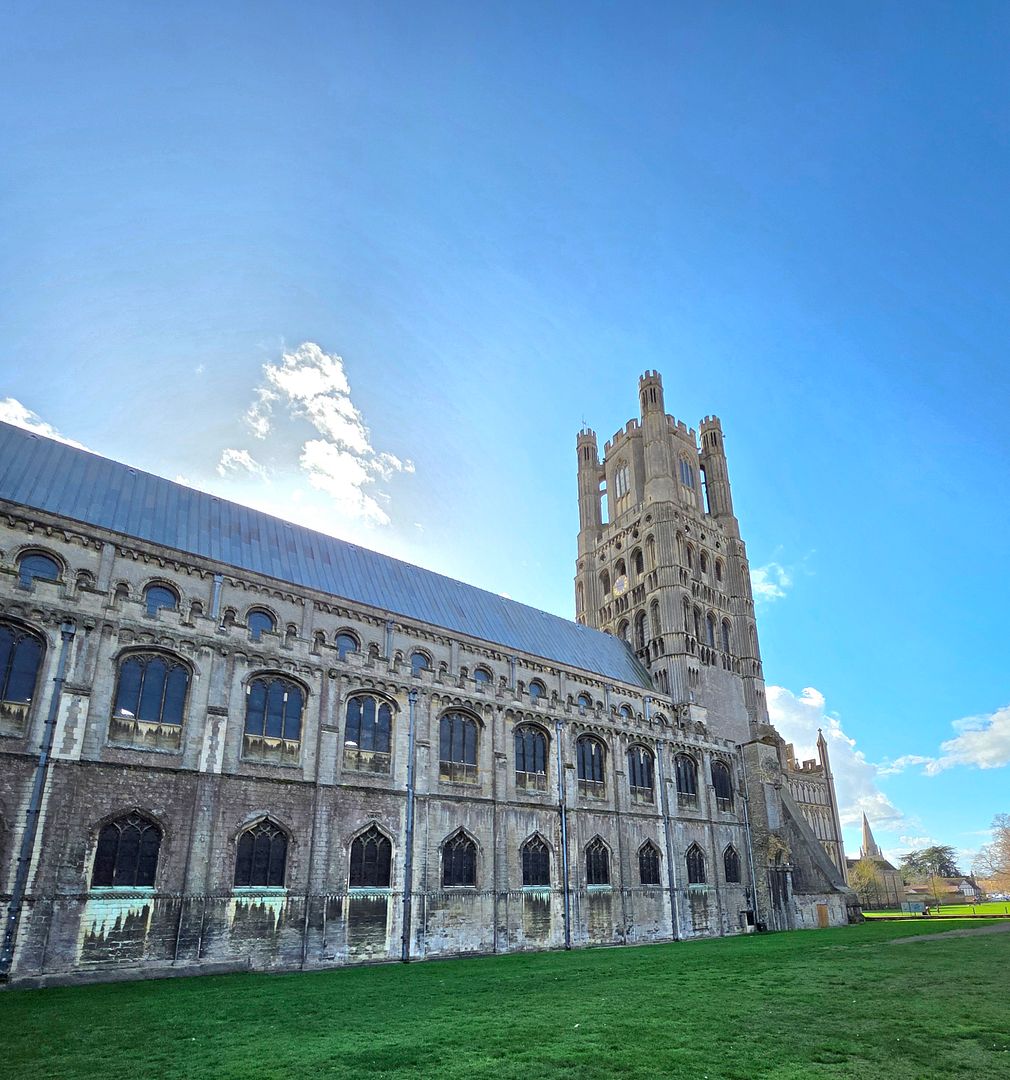
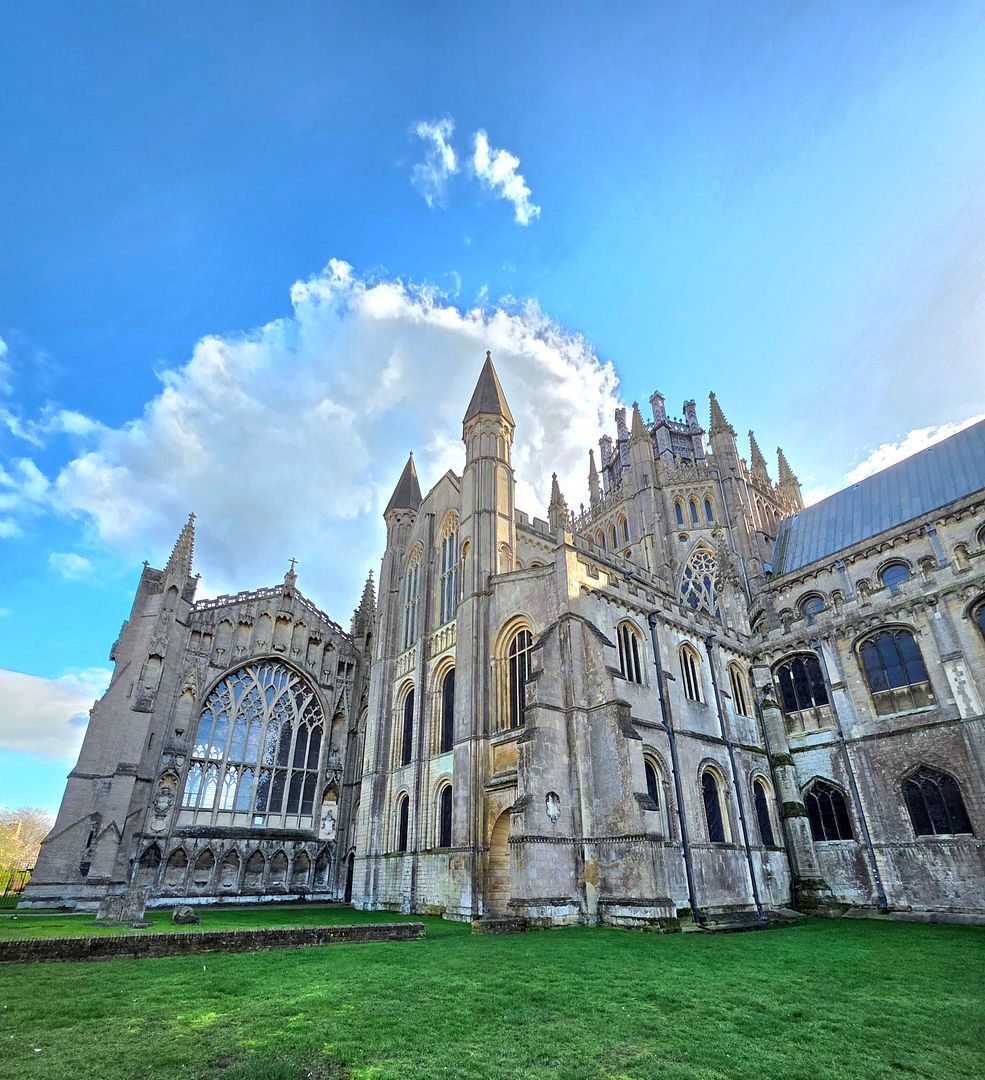
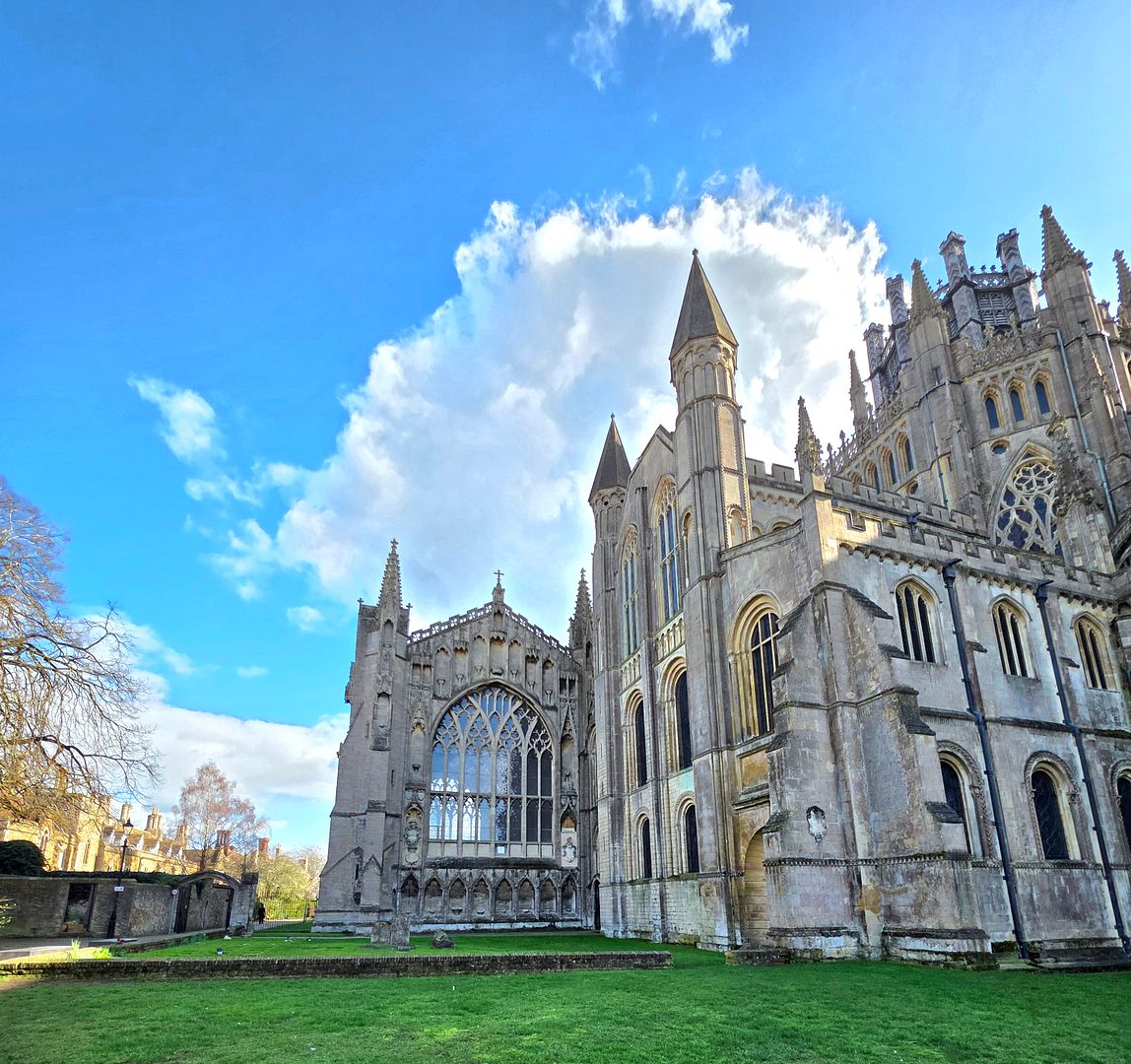
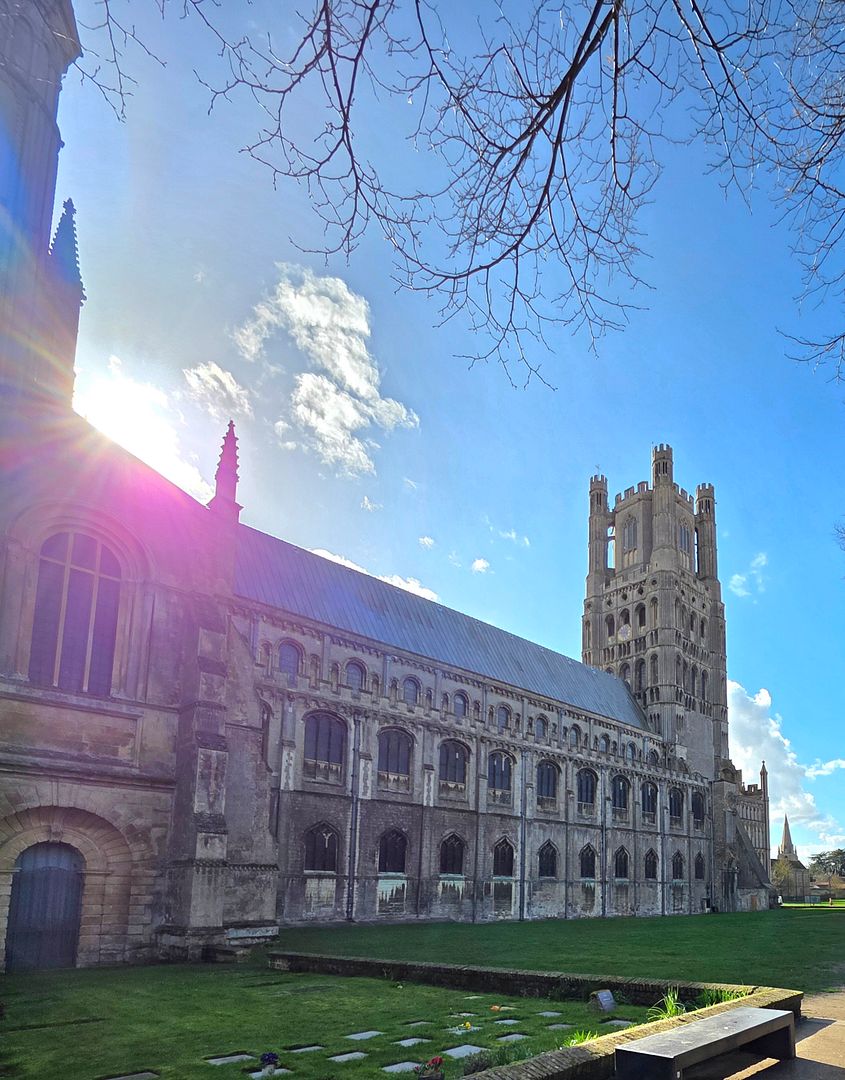
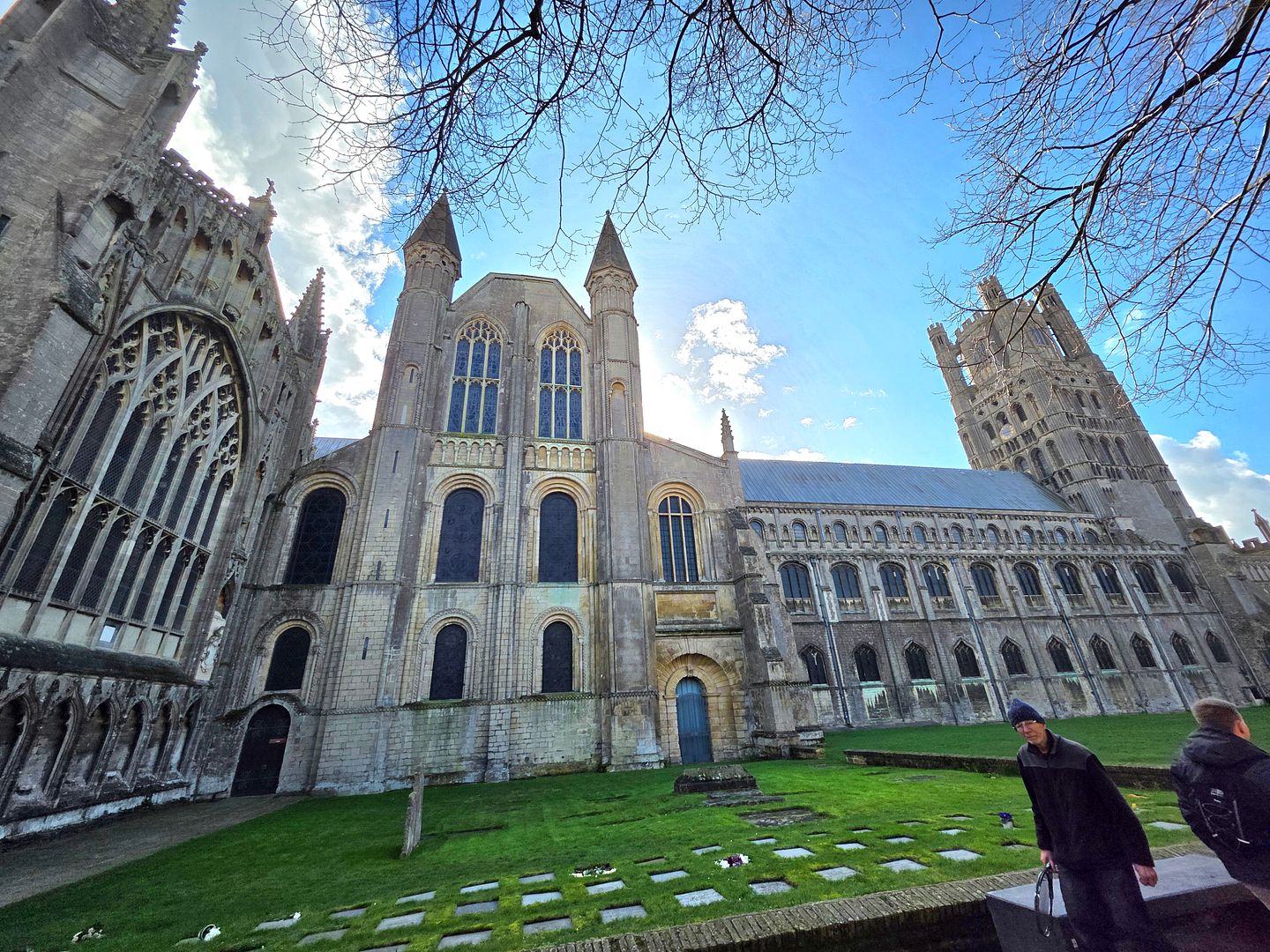
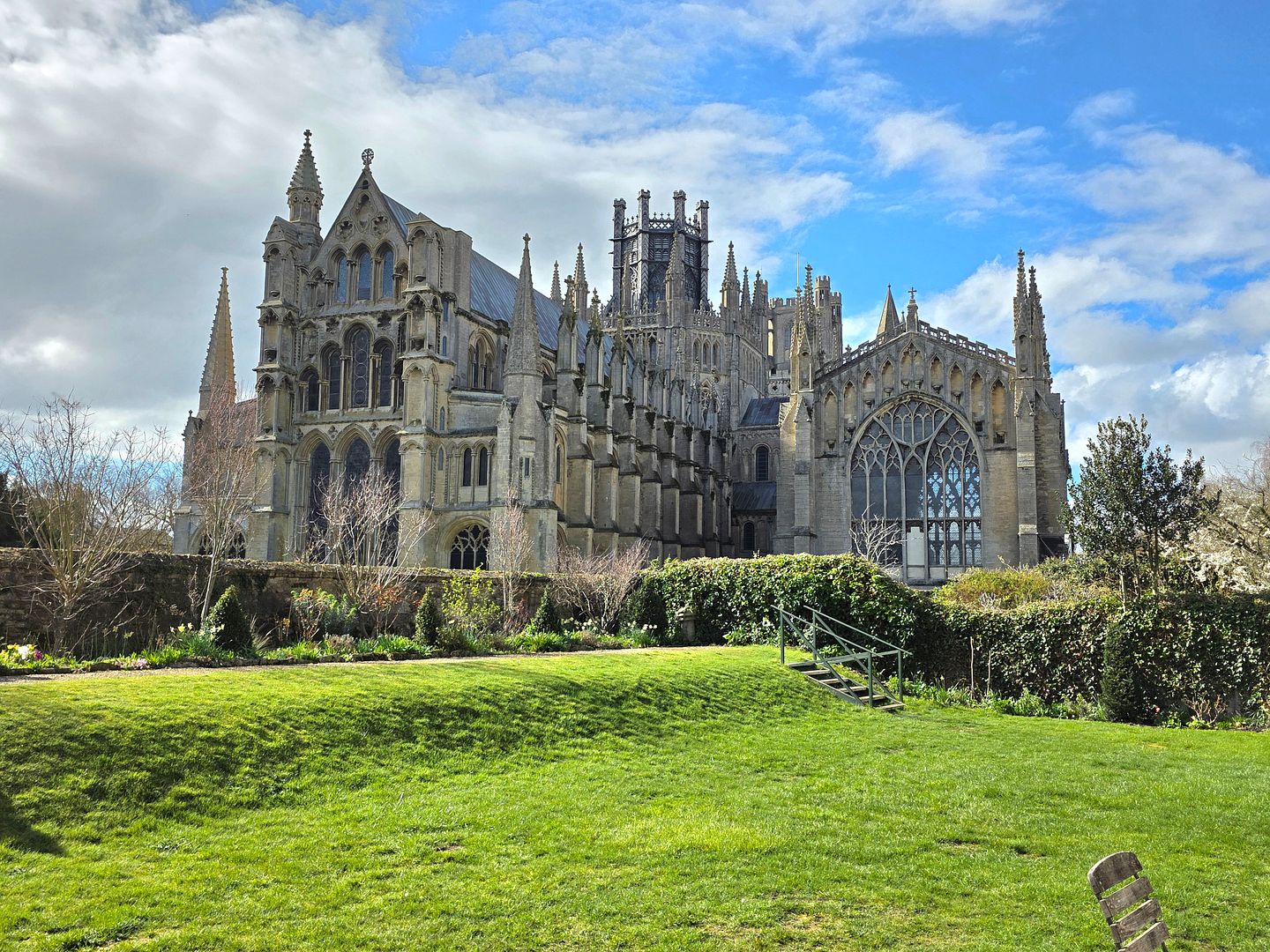
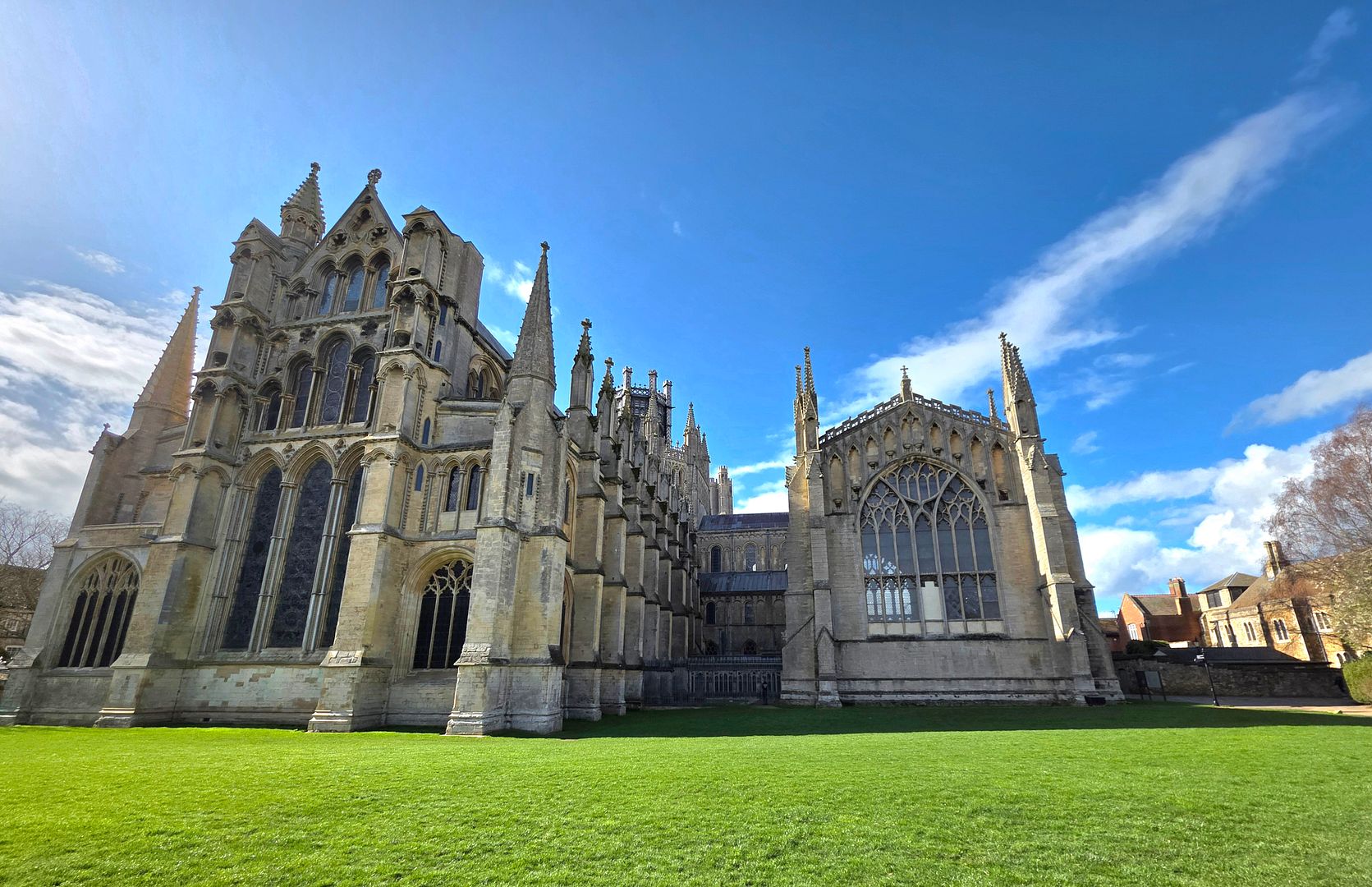
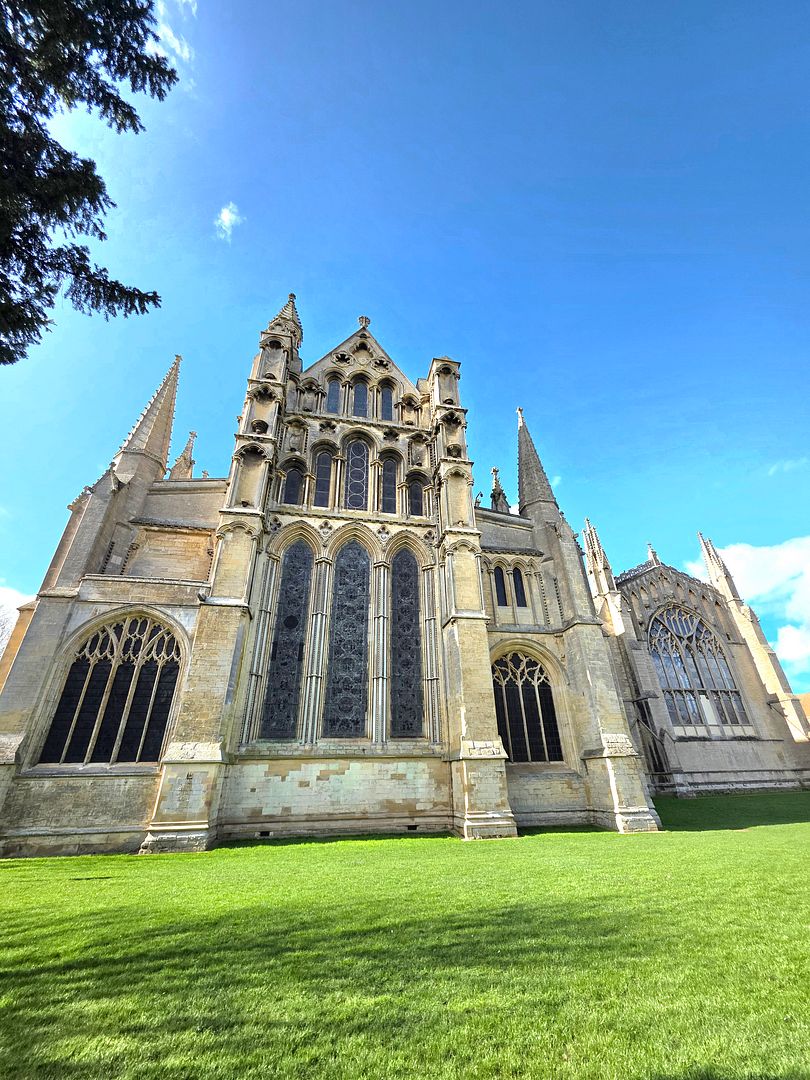
  • Ely is the second smallest city in England. The small town grew up around the monastery and Cathedral which dominated the Isle of Ely for centuries.

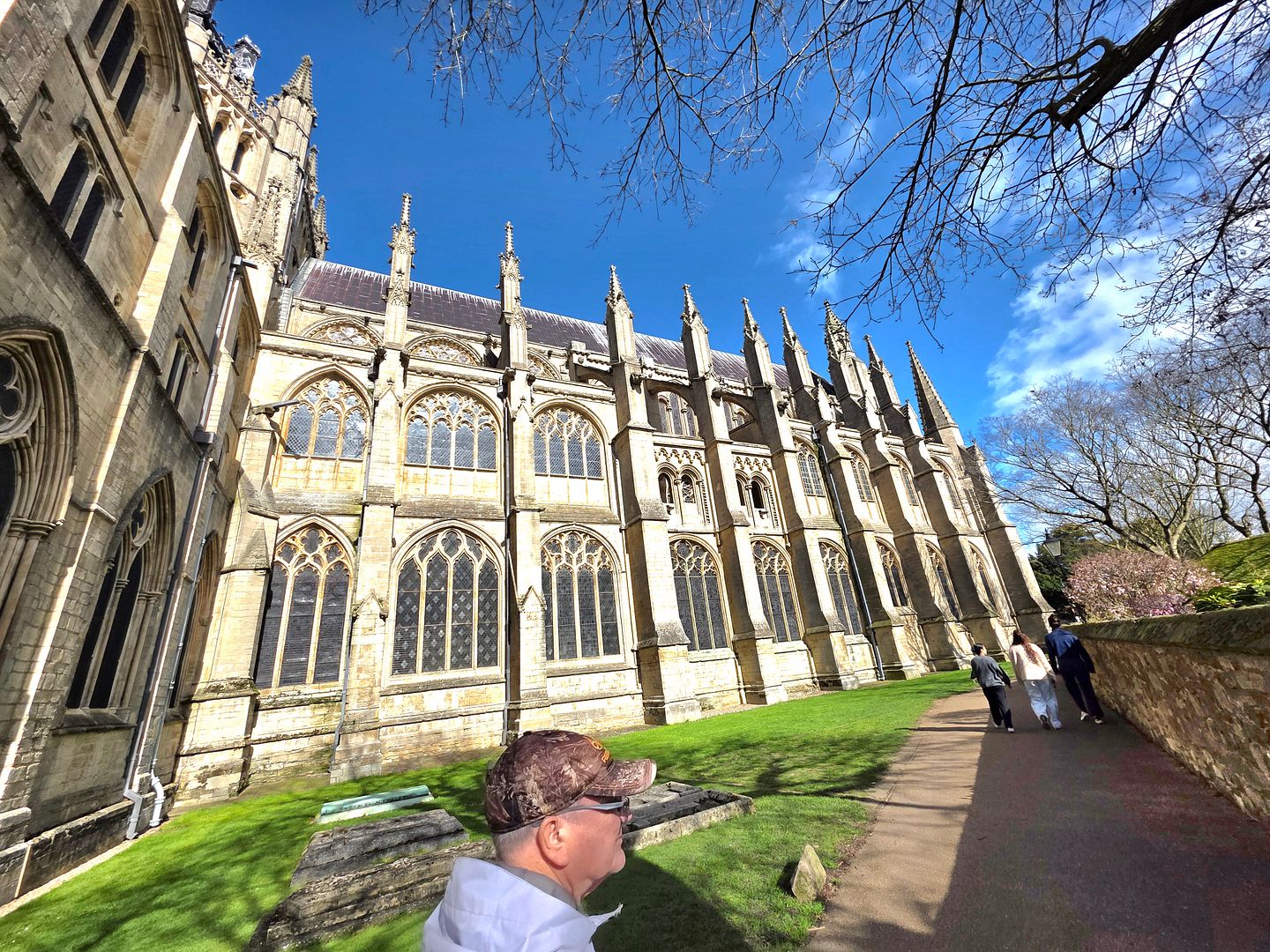
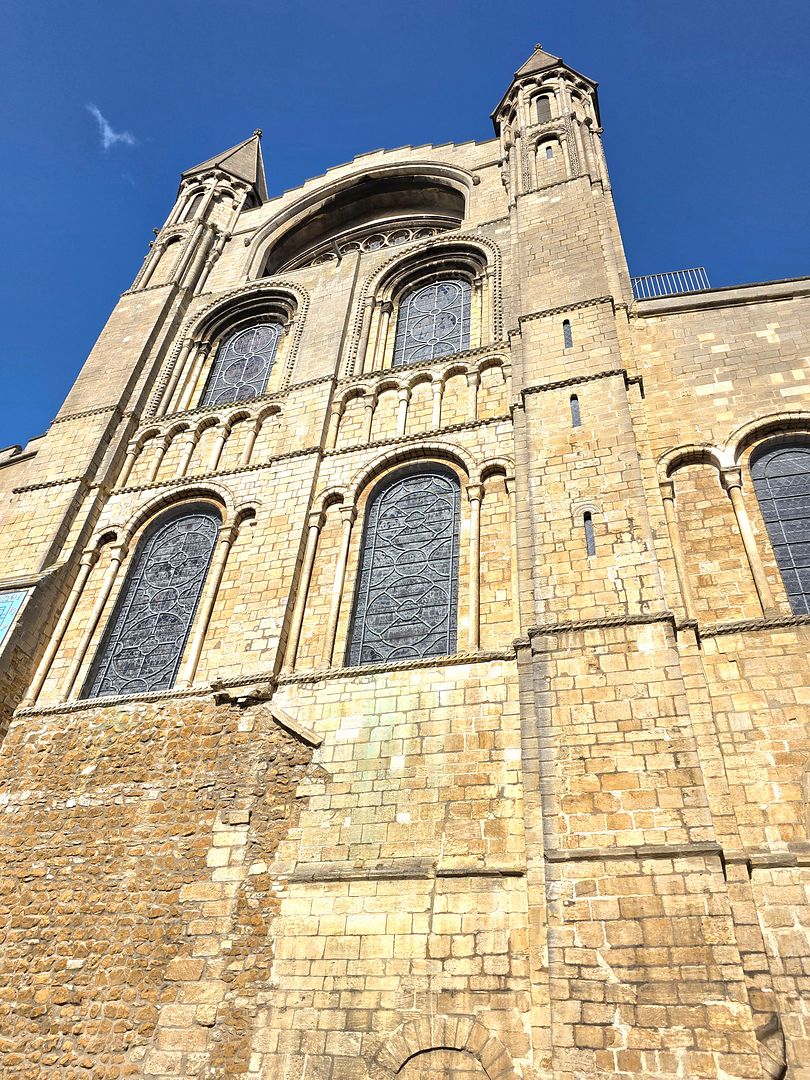
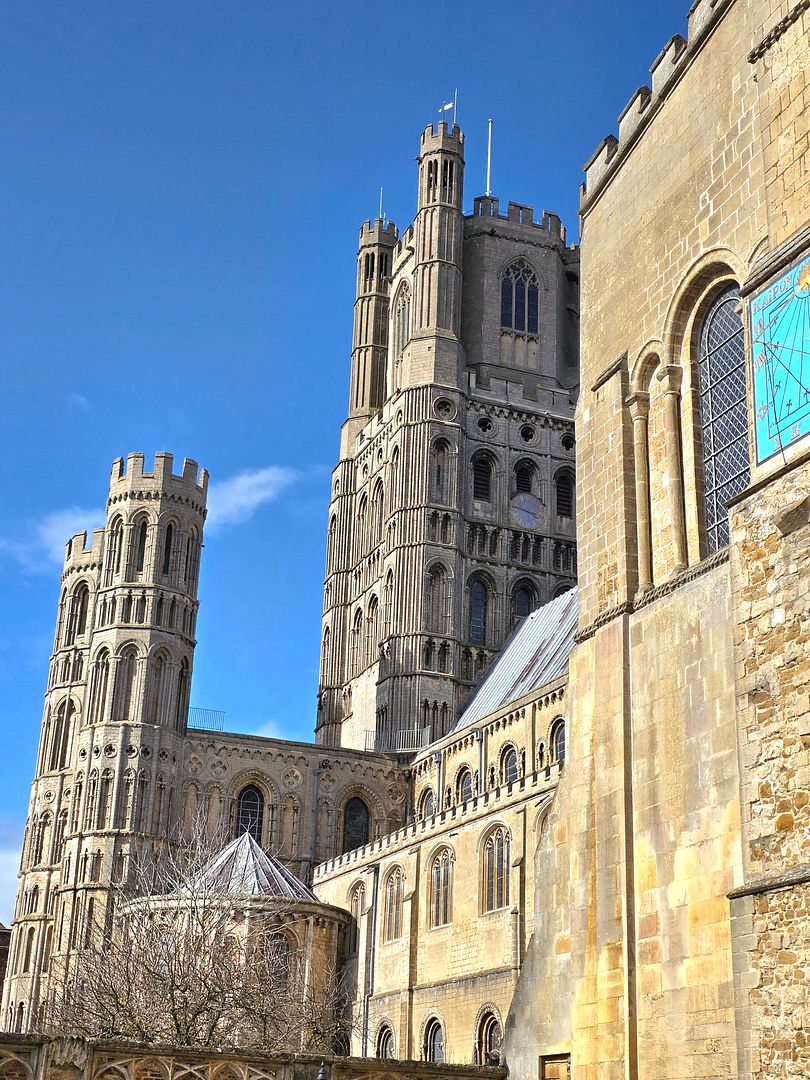
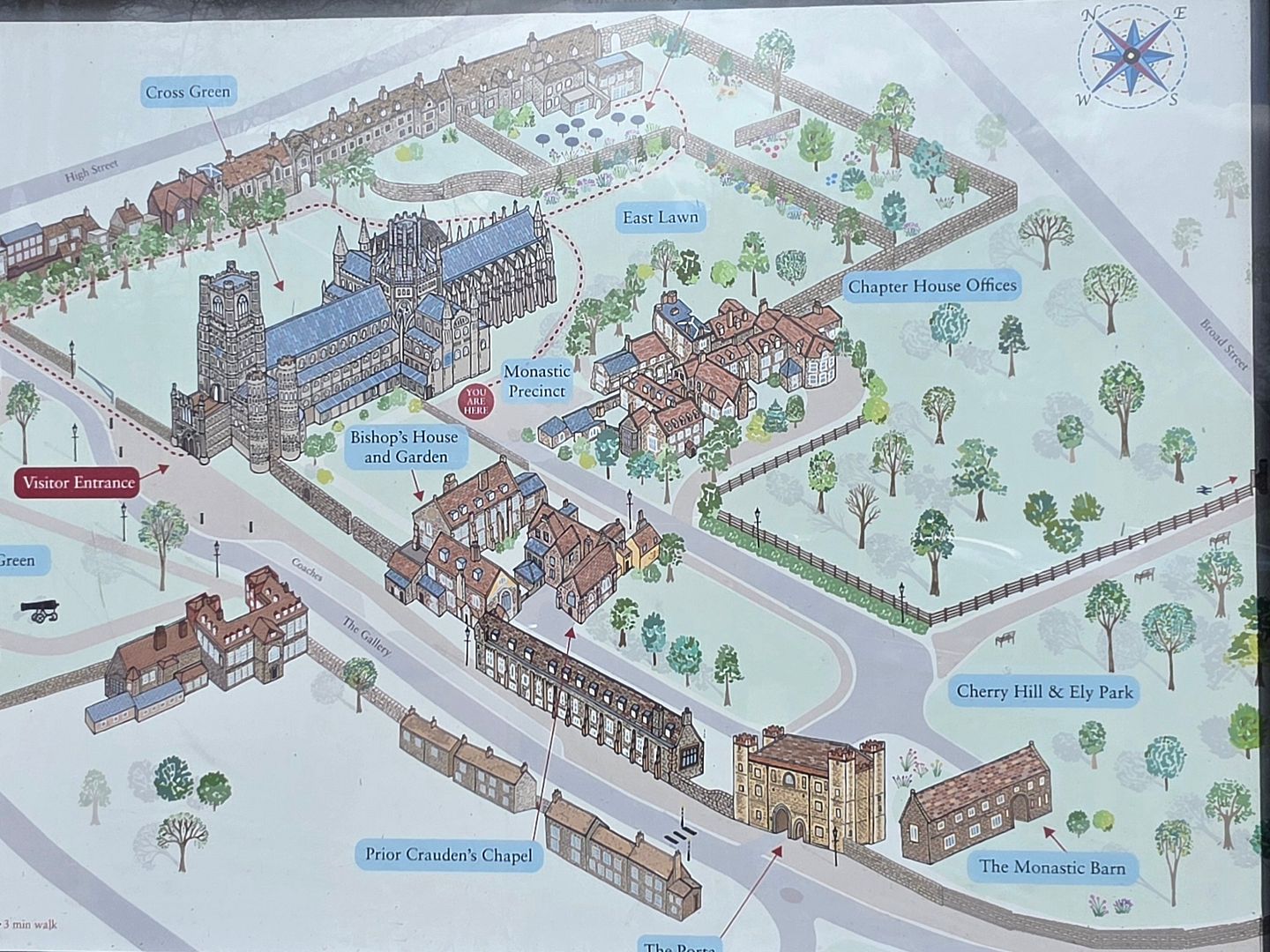
I’m sharing the outside of the cathedral first and the inside will be another post.

The history of Ely can be read here.


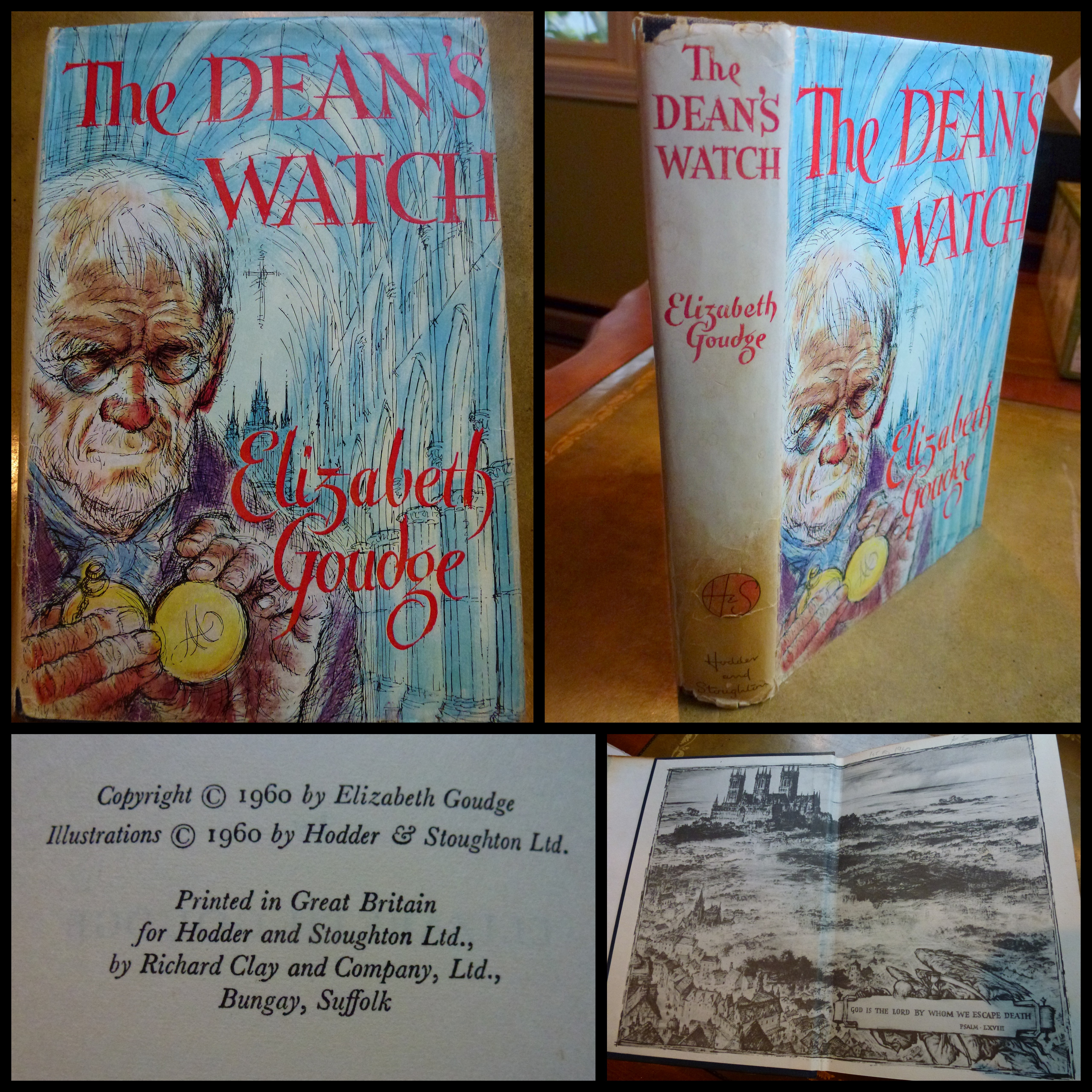
Why were we interested in seeing Ely Cathedral? We first heard of Ely through the author Elizabeth Goudge.

Elizabeth Goudge was a celebrated 20th-century English author who spent her formative years living at Ely Cathedral, where her father served as a canon. This historic Cambridgeshire setting deeply influenced her writing, inspiring her iconic 1960 novel, The Dean’s Watch as well as A City of Bells.

We both read The Dean’s Watch and it was one of my favorites of Goudge’s books.

flight-souvenirs2

We bought this copy of The Dean’s Watch in a used bookstore in Chipping Campden in September of 2013.

A quote from The Dean’s Watch by Miss Montague,

“How much more friendly it is when you cannot see, thought Miss Montague, and how much closer we are to Him. Why should we always want a light? He chose darkness for us, darkness of the womb and of the stable, darkness in the garden, darkness on the cross and in the grave. Why do I demand certainty? That is not faith. Why do I want to understand? How can I understand this great web of sin and ugliness and love and suffering and joy and life and death when I don’t understand the little tangle of good and evil that is myself? I’ve enough to understand. I understand that He gave me light that I might turn to Him, for without light I could not have seen to turn. I have seen creation in His light. He shared His light with me that I, turned, might share with Him the darkness of His redemption. Why did I despair? What do I want? If it is Him I want He is here, not only love in light illuming all that He has made but love in darkness dying for it…And she said, I will learn to pray.”

My next post will be of the inside of this magnificent cathedral.

My Song is Love Unknown ~Hymn


My Song is Love Unknown

My song is love un­known,
My Sav­ior’s love to me;
Love to the love­less shown,
That they might love­ly be.
O who am I, that for my sake
My Lord should take frail flesh and die?

He came from His blest throne
Salvation to be­stow;
But men made strange, and none
The longed for Christ would know:
But O! my friend, my friend in­deed,
Who at my need His life did spend.

Sometimes they strew His way,
And His sweet prais­es sing;
Resounding all the day
Hosannas to their king:
Then Cru­ci­fy! is all their breath,
And for His death they thirst and cry.

Why, what hath my Lord done?
What makes this rage and spite?
He made the lame to run,
He gave the blind their sight,
Sweet in­ju­ries! Yet they at these
Themselves dis­please, and ’gainst Him rise.

They rise and needs will have
My dear Lord made away;
A mur­der­er they saved,
The Prince of Life they slay,
Yet cheer­ful He to suf­fer­ing goes,
That He His foes from thence might free.

In life, no house, no home
My Lord on earth might have;
In death no friend­ly tomb
But what a strang­er gave.
What may I say? Heav’n was His home;
But mine the tomb where­in He lay.
Here might I stay and sing,
No sto­ry so di­vine;
Never was love, dear King!
Never was grief like Thine.
This is my friend, in whose sweet praise
I all my days could glad­ly spend.

Words: Samuel Crossman, 1664.