Scotland Travel Journal ~ Edinburgh 2

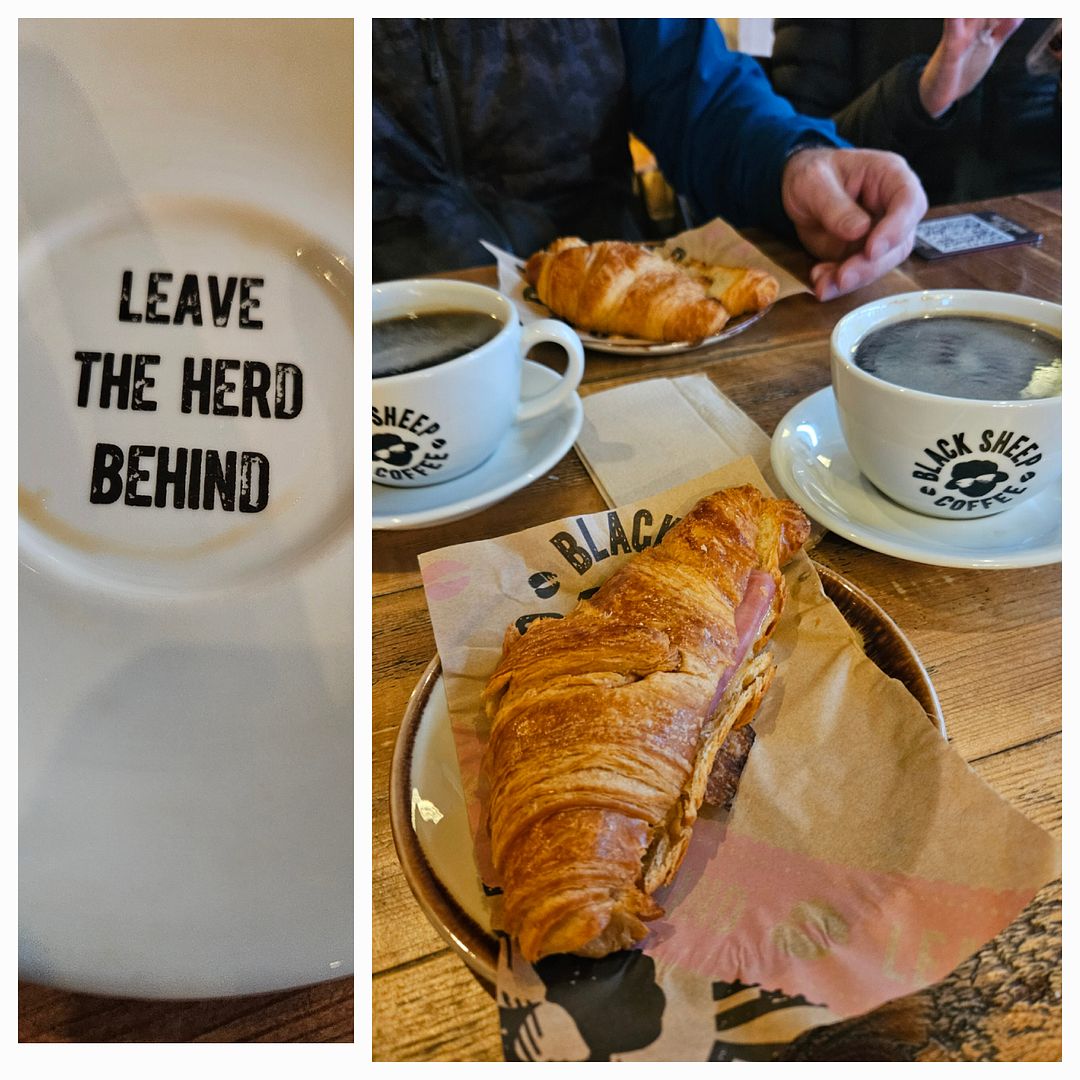
On Sunday September 22nd we would have an eye full of amazing sights to see but first, coffee!

The Black Sheep was just around the corner from our apartment and we started our mornings there.

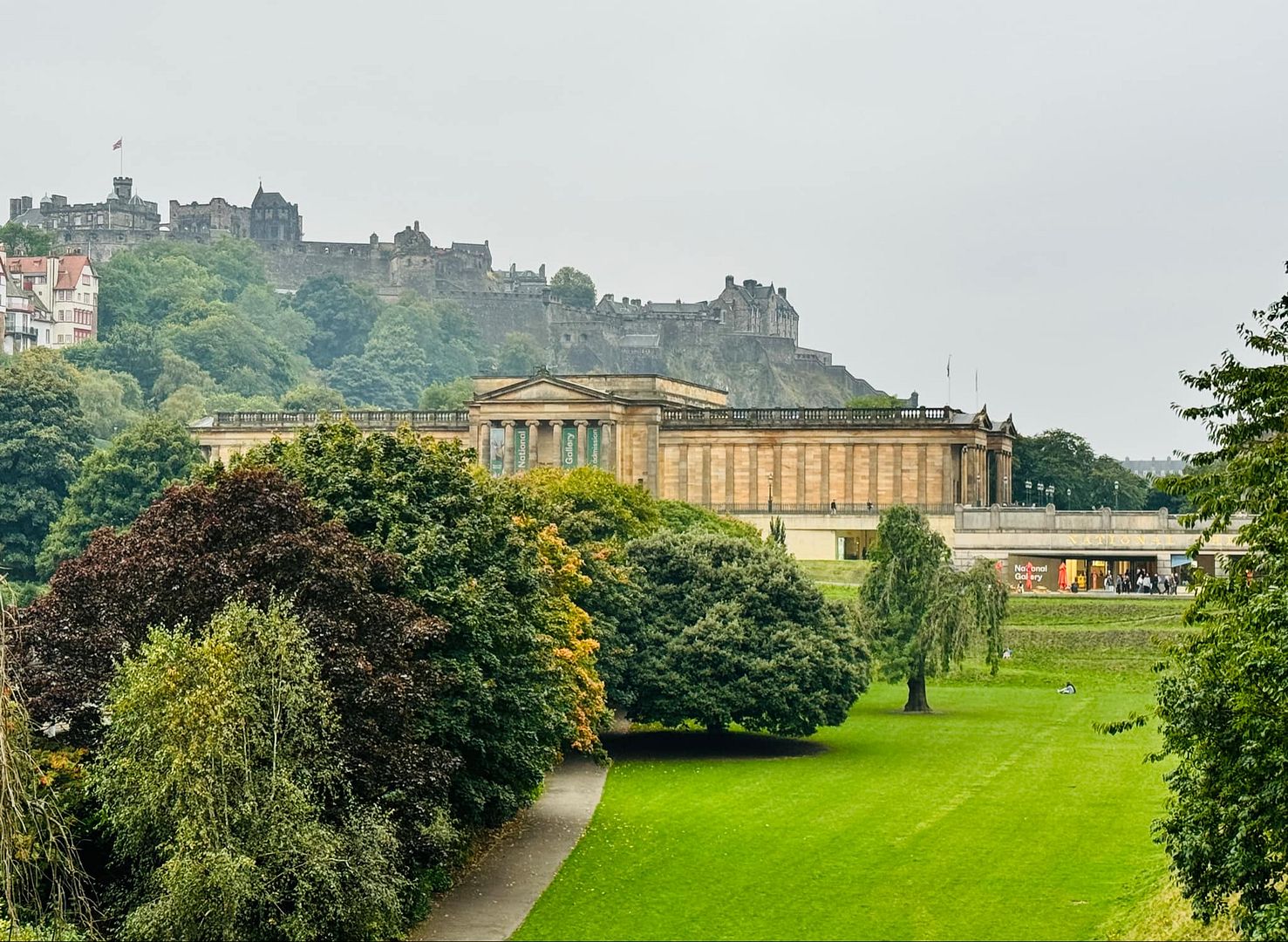
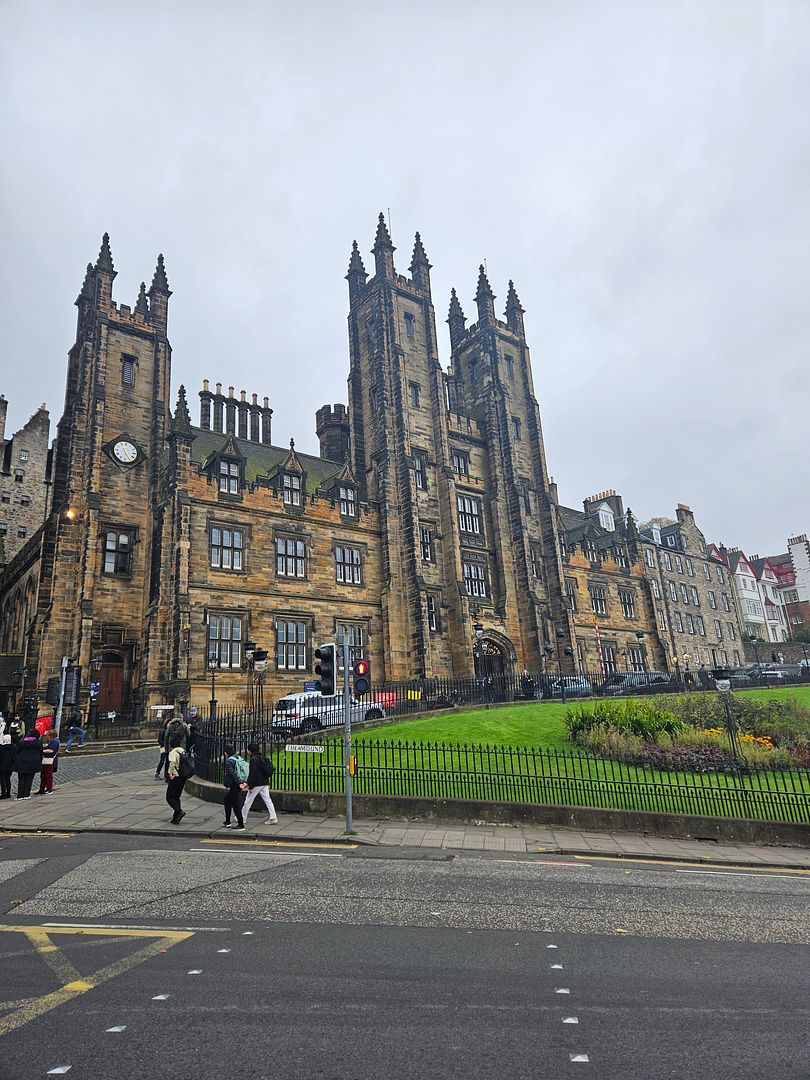
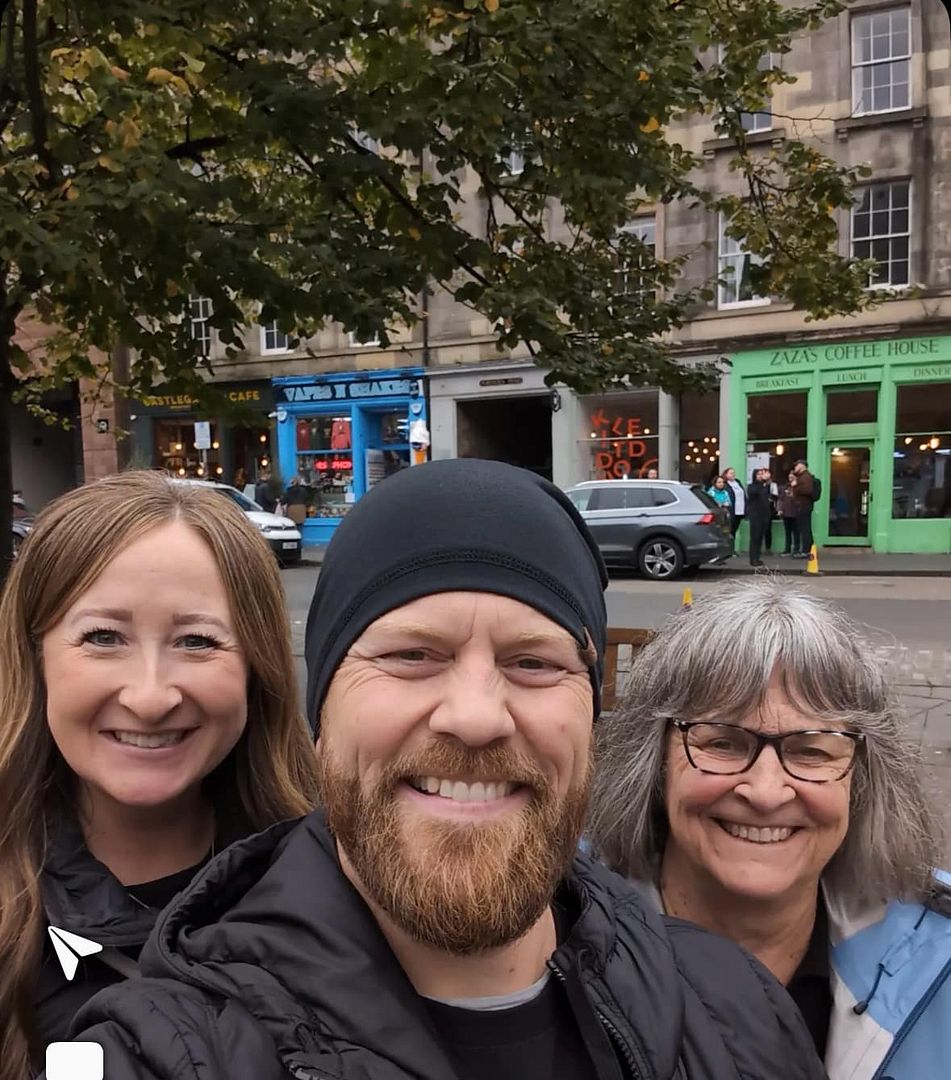
Edinburgh has so much history and so much to see. We saw as much as we could in our 2 full days there. I’ll have a few posts to cover everything. Our apartment was positioned well for getting around Edinburgh. We made our way across the Mound and up many stairs to reach the Royal Mile and Edinburgh Castle. The Mound is the elevated walkway above Princess Gardens that you can see in the distance. On the Mound you walk past the National Gallery of Scotland and the Royal Scottish Academy. It was another day of overcast weather with little or no sunshine.

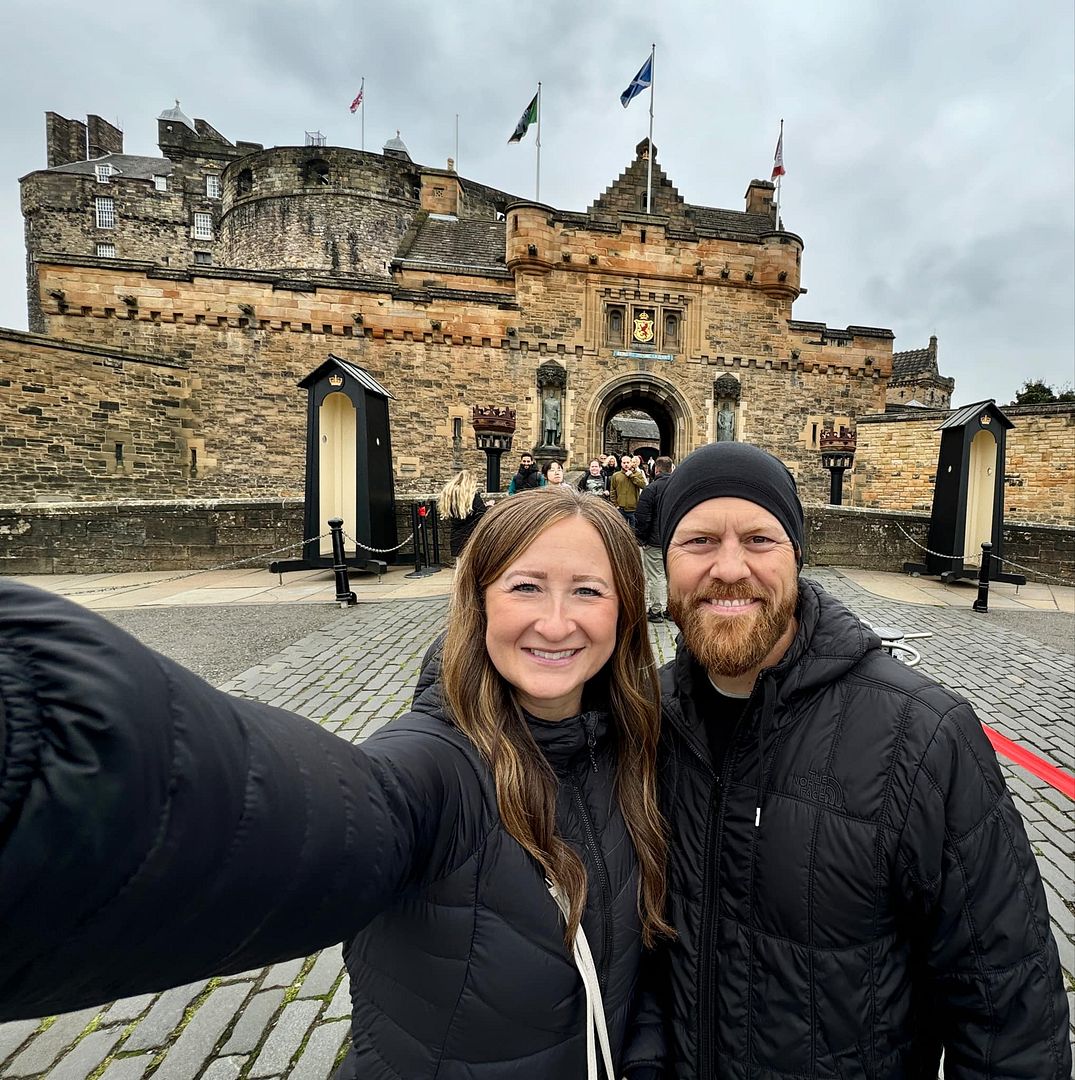
Josh and Laura had tickets for the Castle and my plan was to head down to Grassmarket and see what I could see, solo. Back in 2004 we toured the castle with our daughter, Katie, so I didn’t need to spend the money to see it again. This was Josh and Laura’s first trip to Scotland so the Castle was a priority. When they completed their Castle tour we would meet up. Greg spent this day in bed working on getting better.

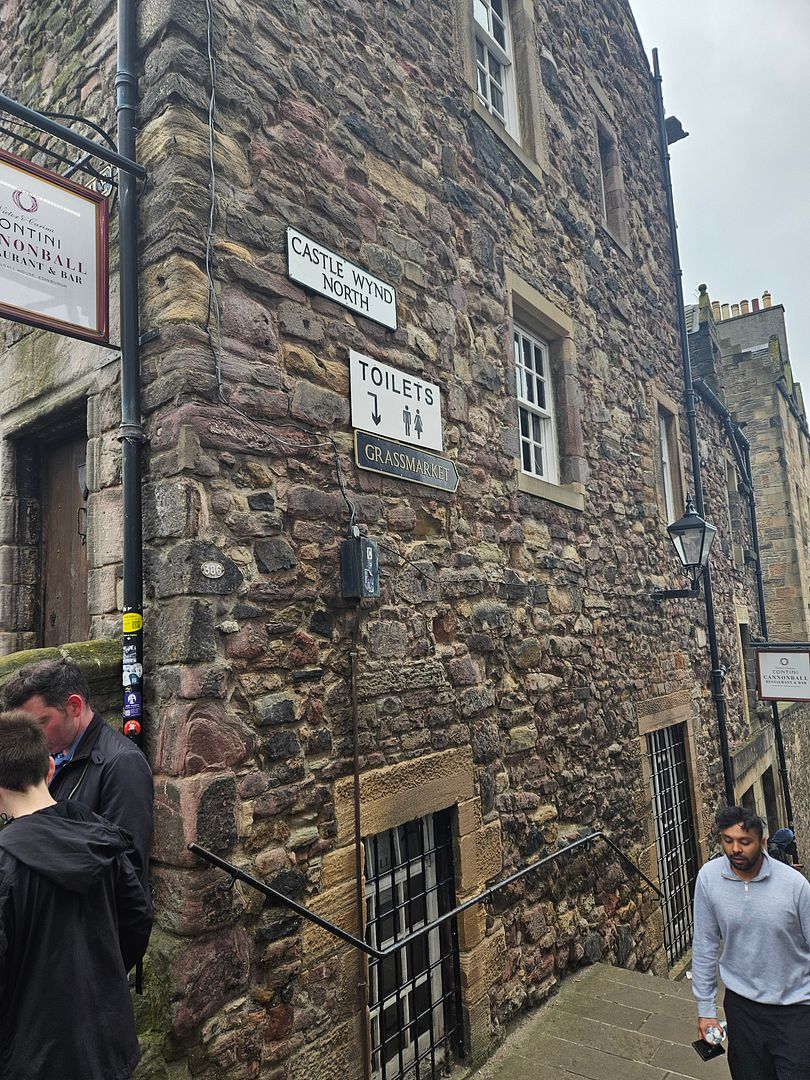
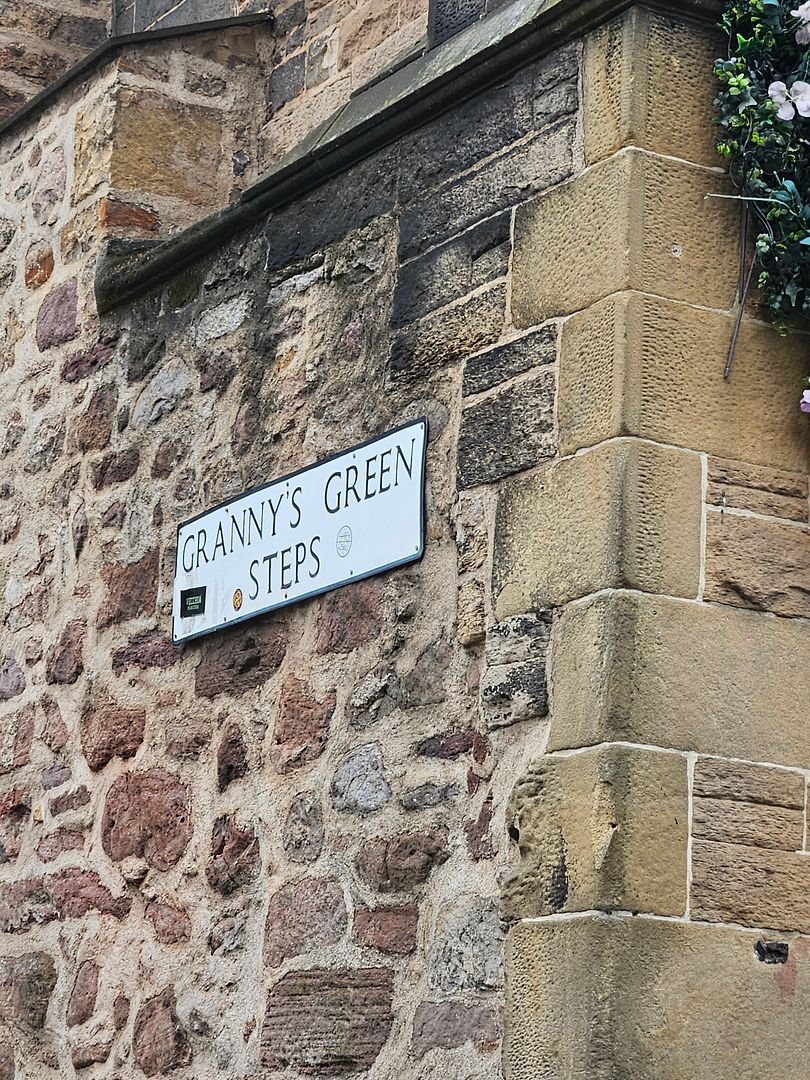
I left Josh and Laura at the entrance to the castle and headed down two separate flights of stairs to get to the Grassmarket area of Edinburgh.

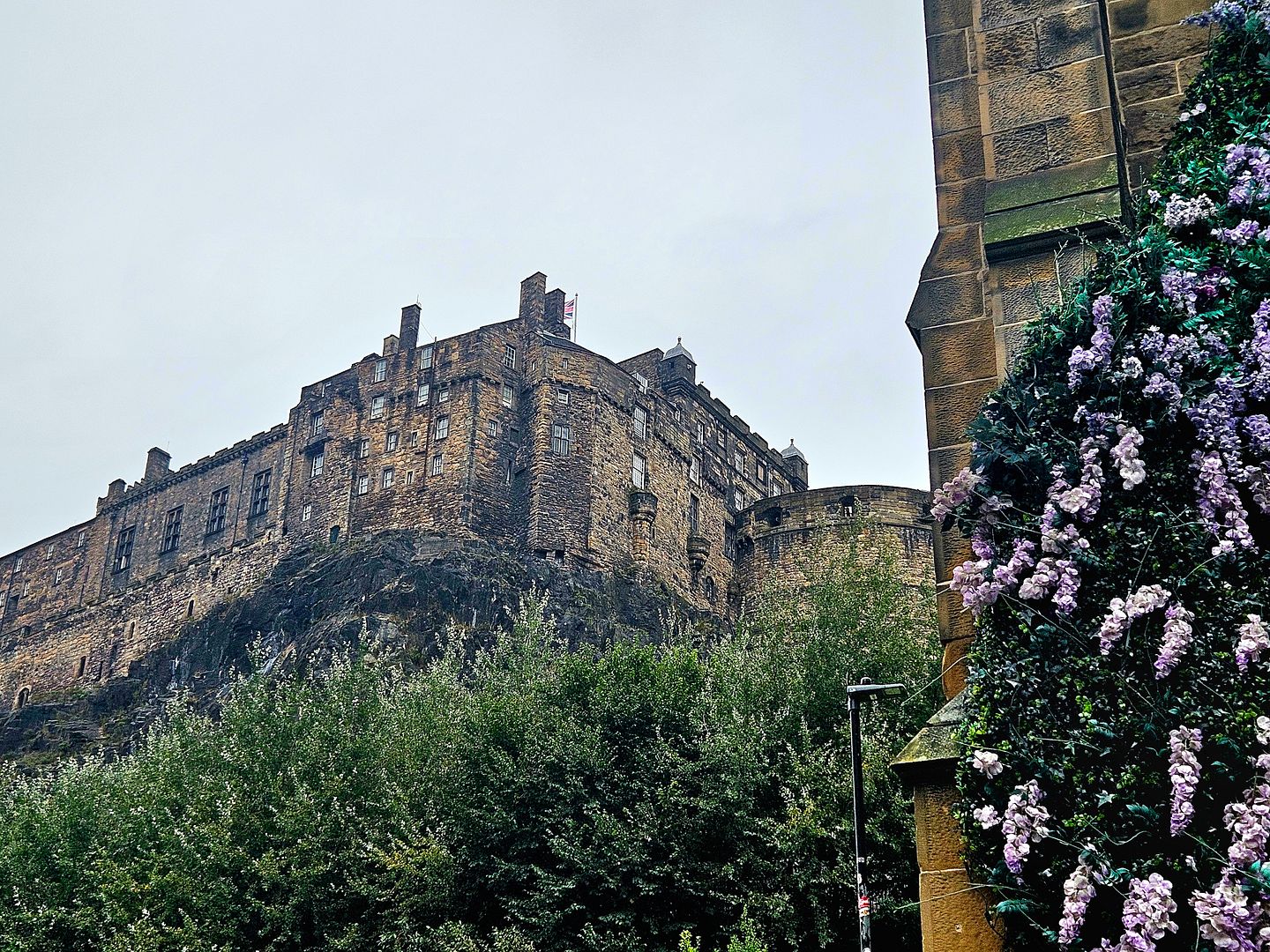
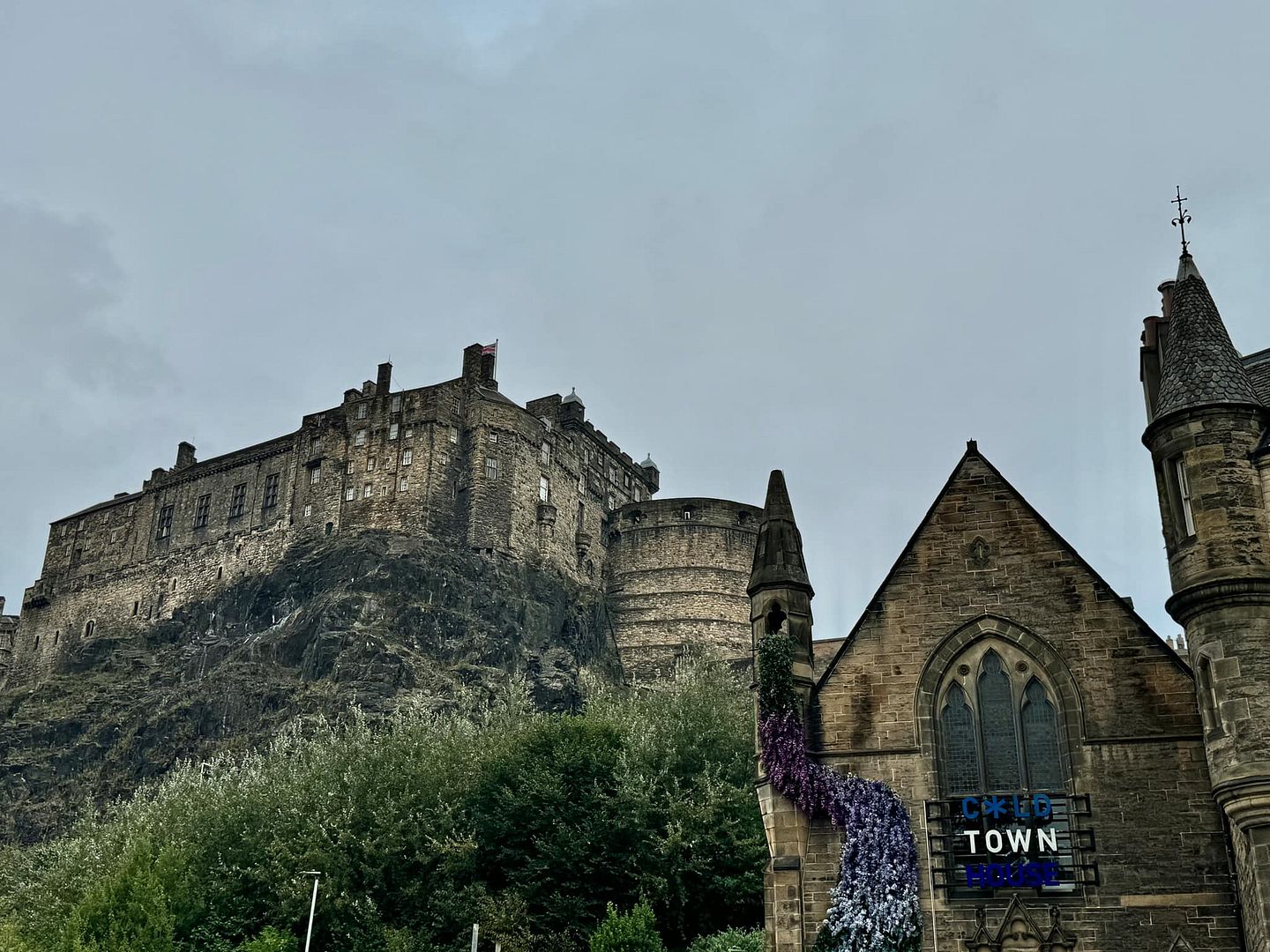
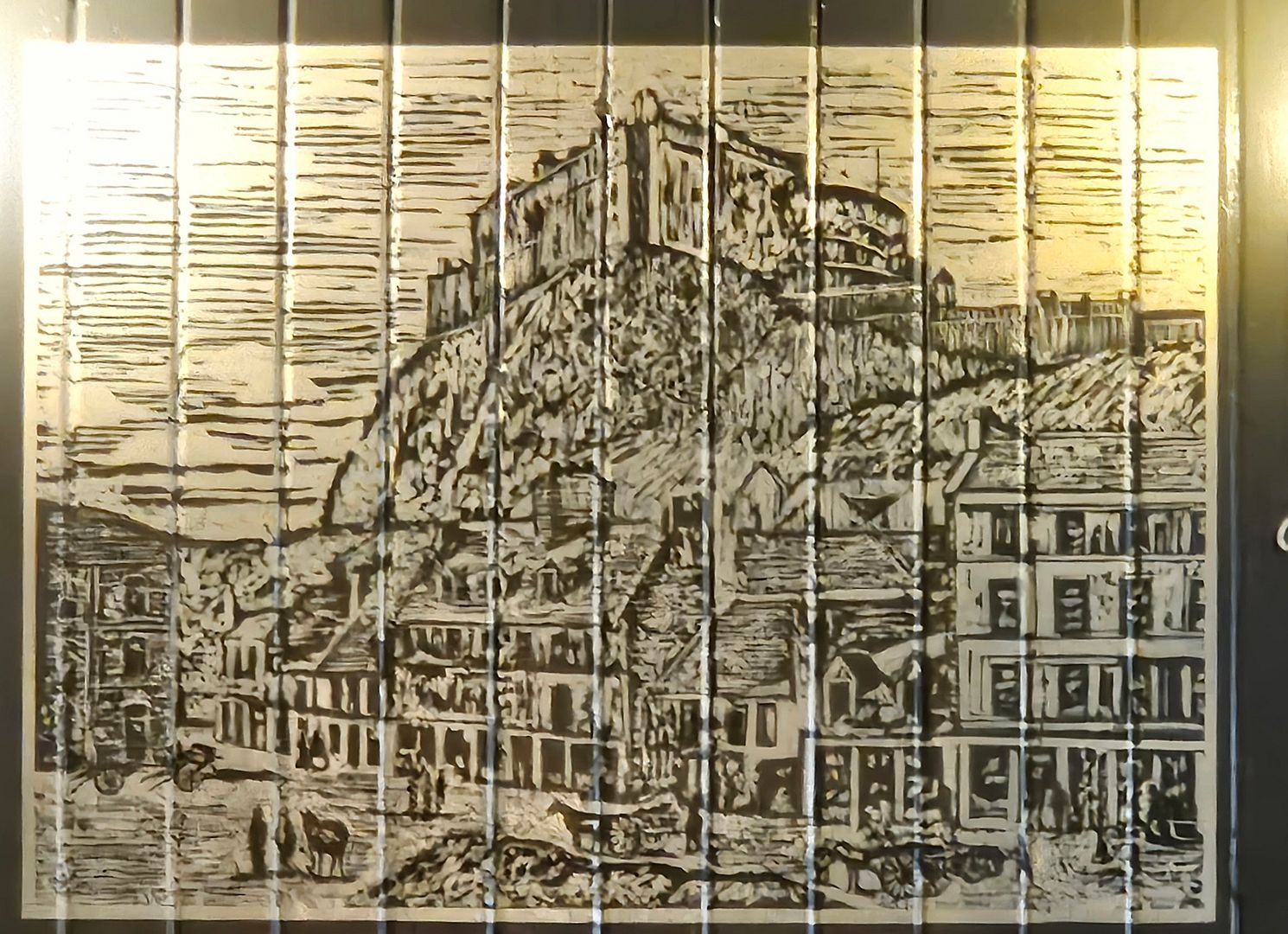
I spent my time this morning below the castle.

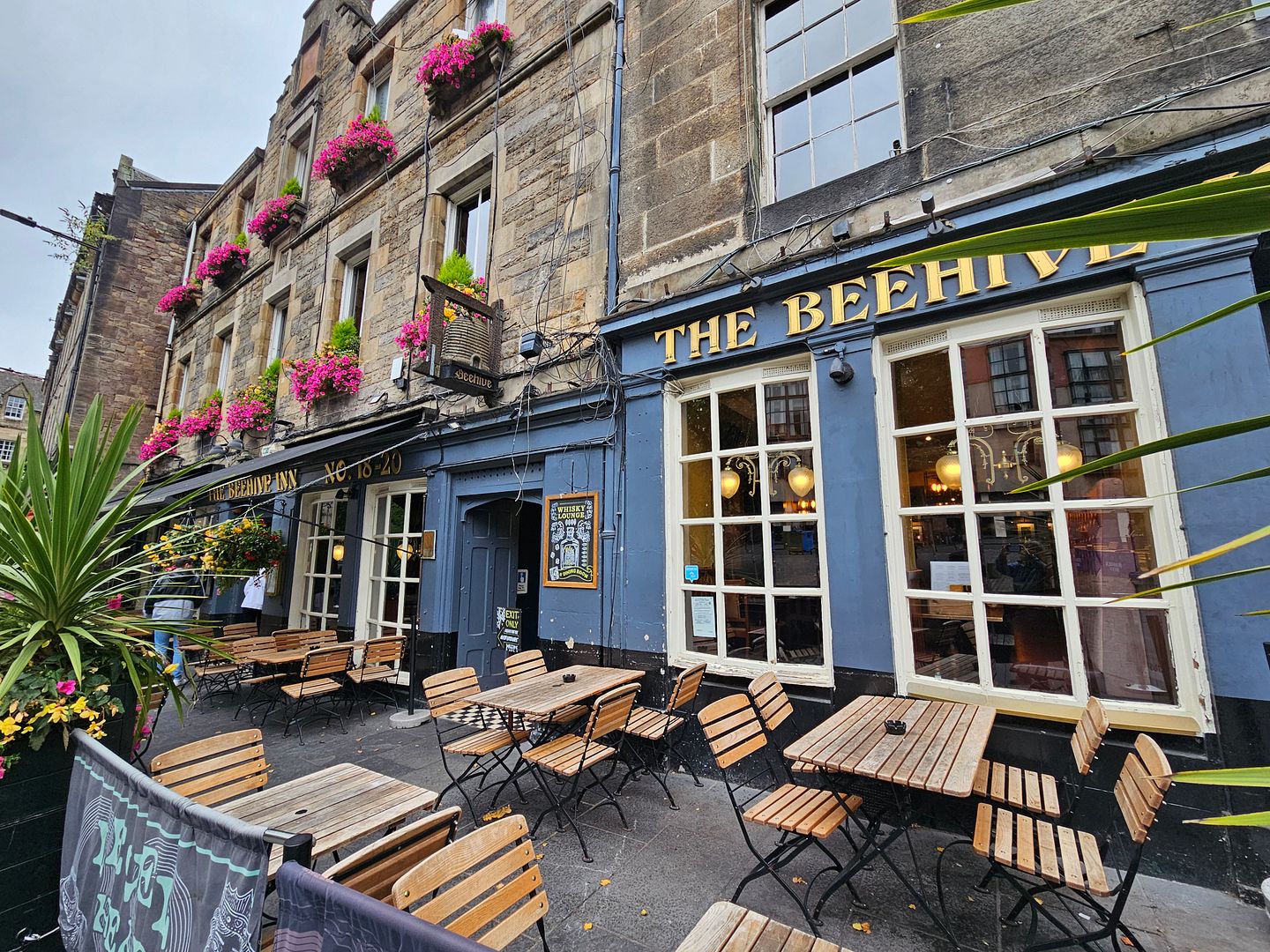
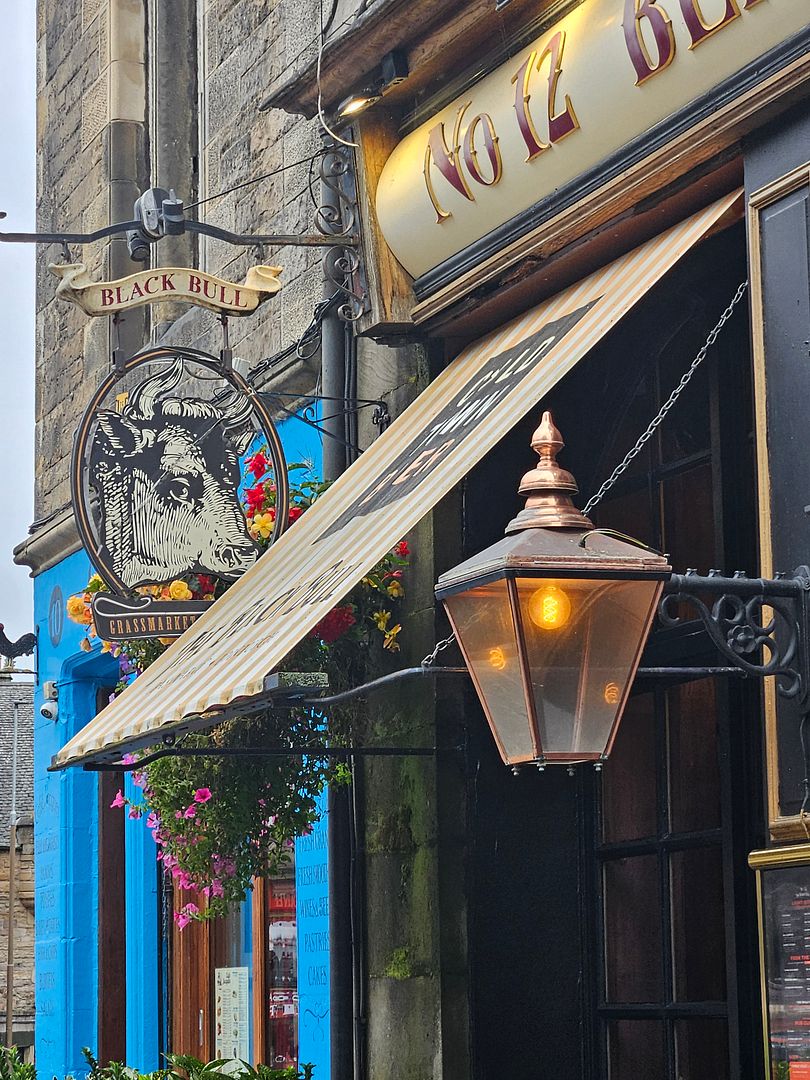
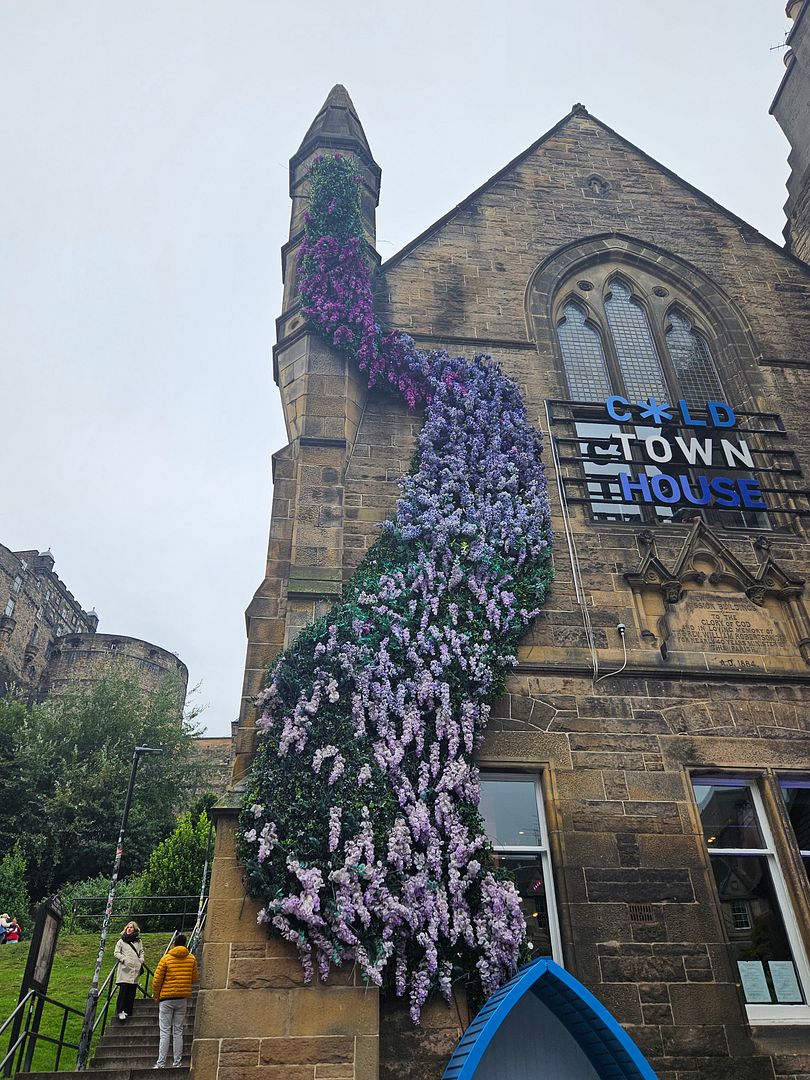
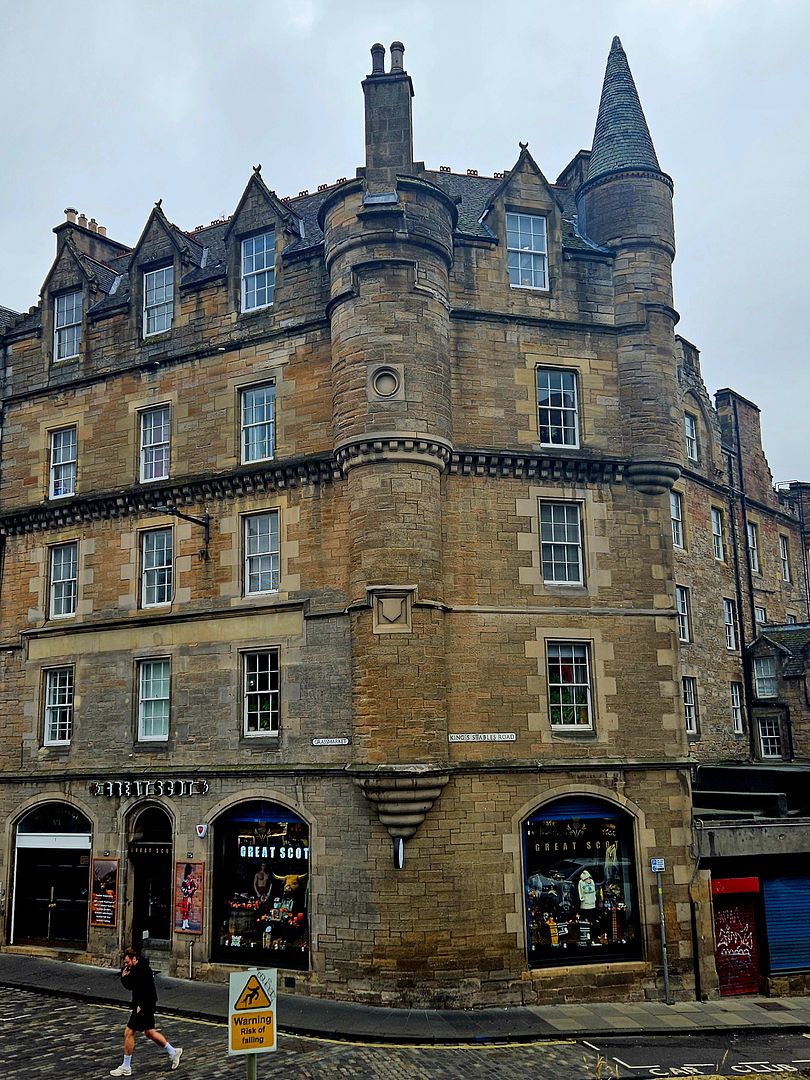
If I was to visit Edinburgh again, I would choose lodging in the Grassmarket area of Edinburgh.

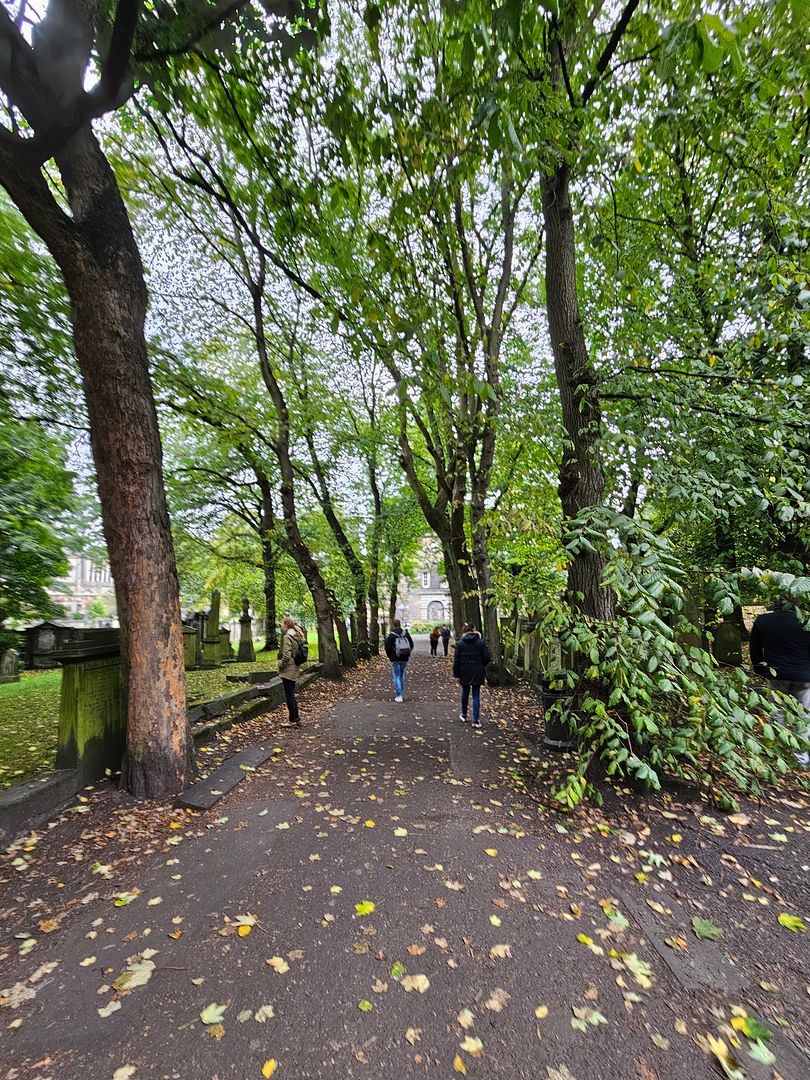
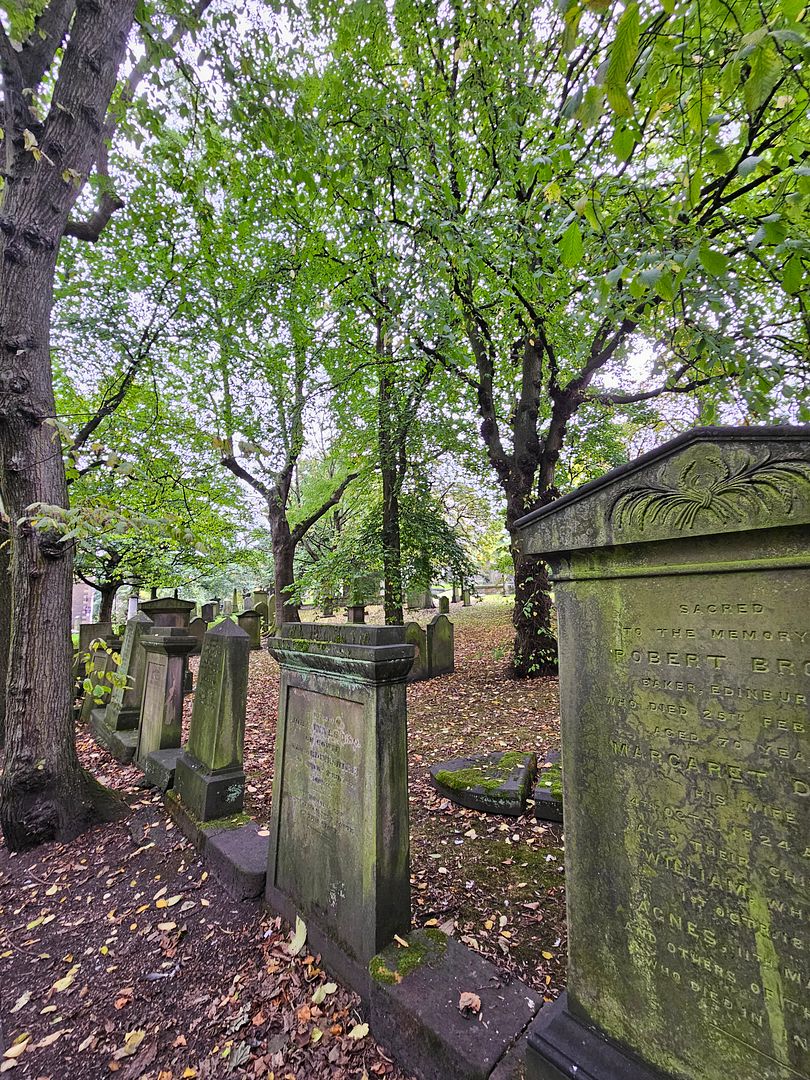
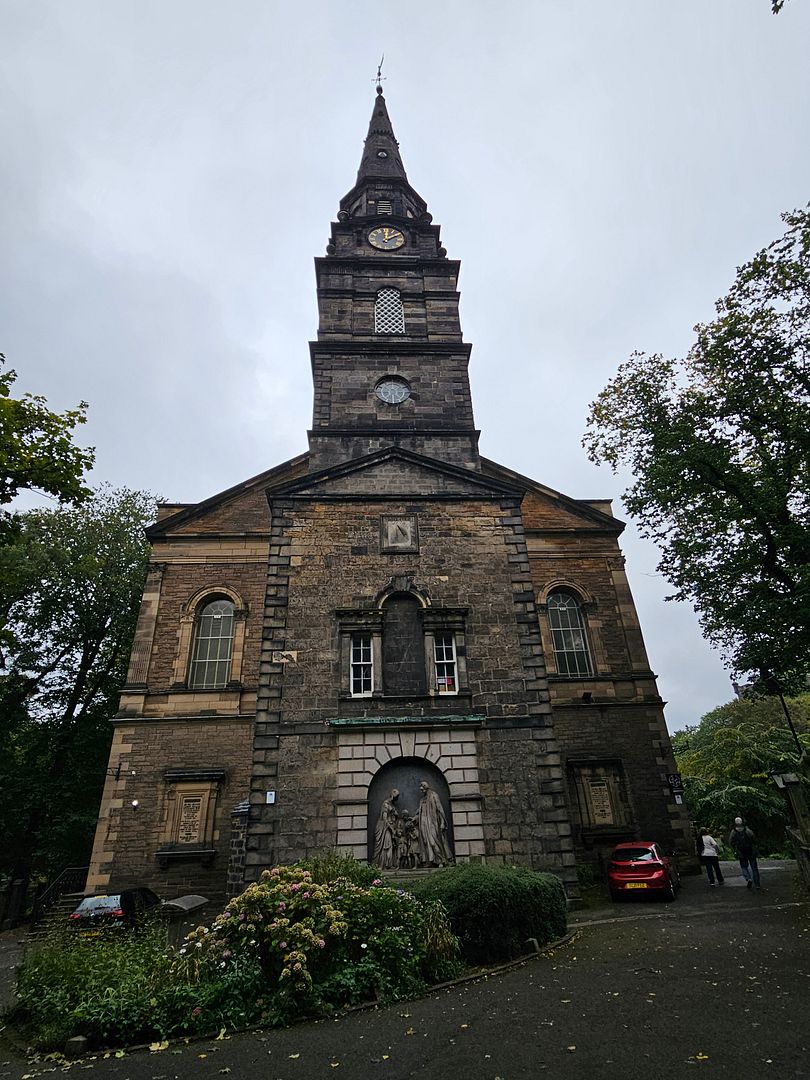
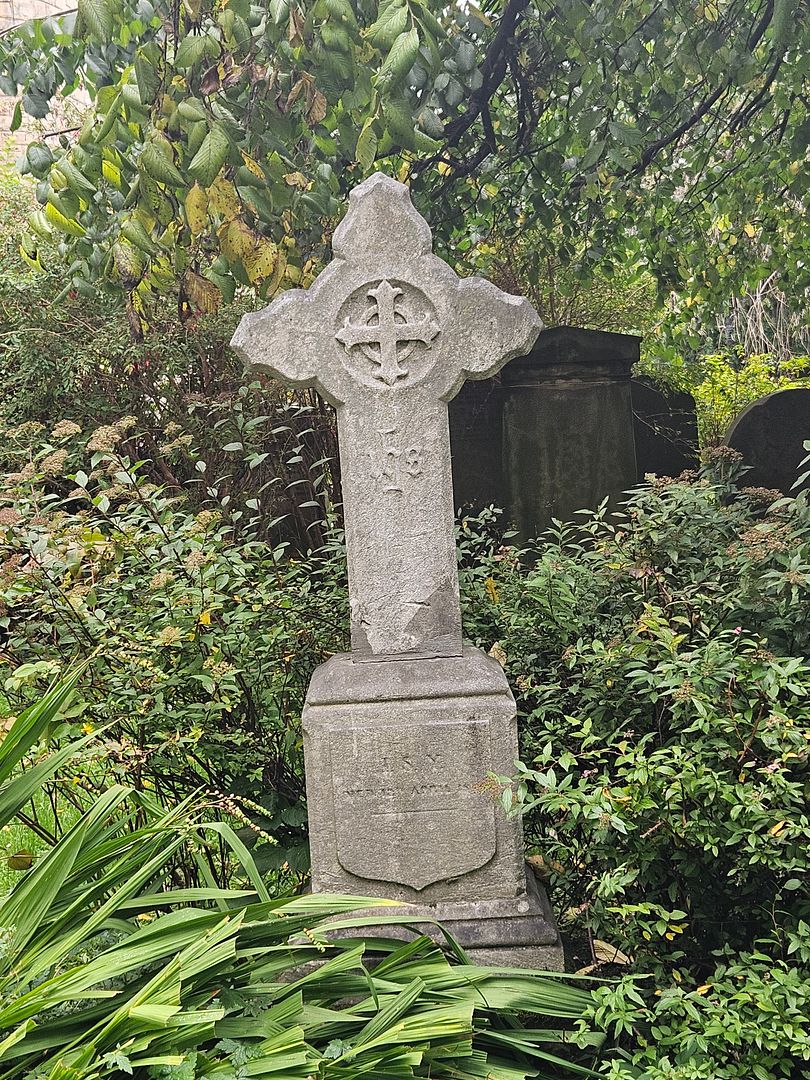
Walking along King’s Stables Road I entered the cemetery adjacent to The Parish Church of St. Cuthbert.

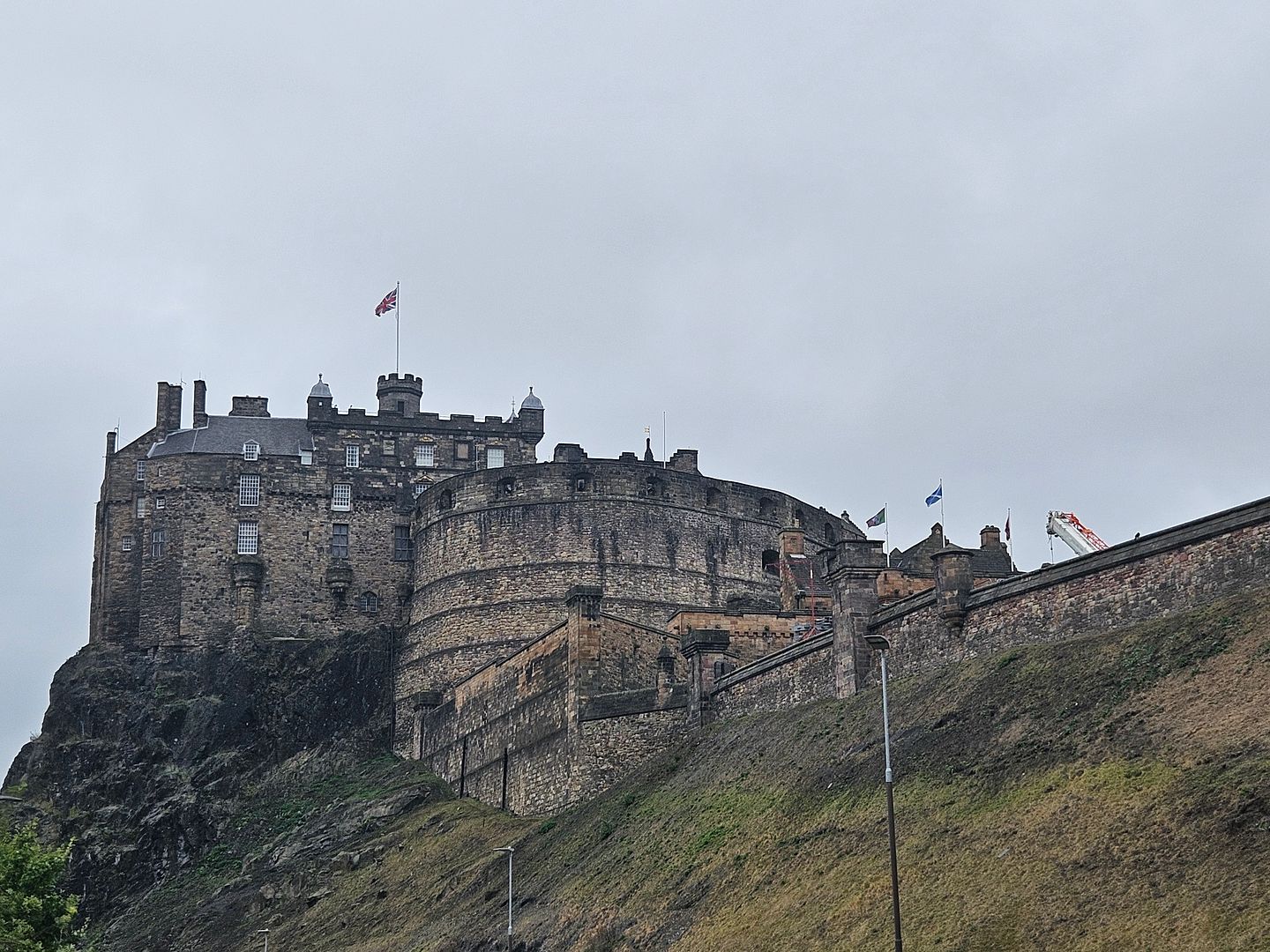
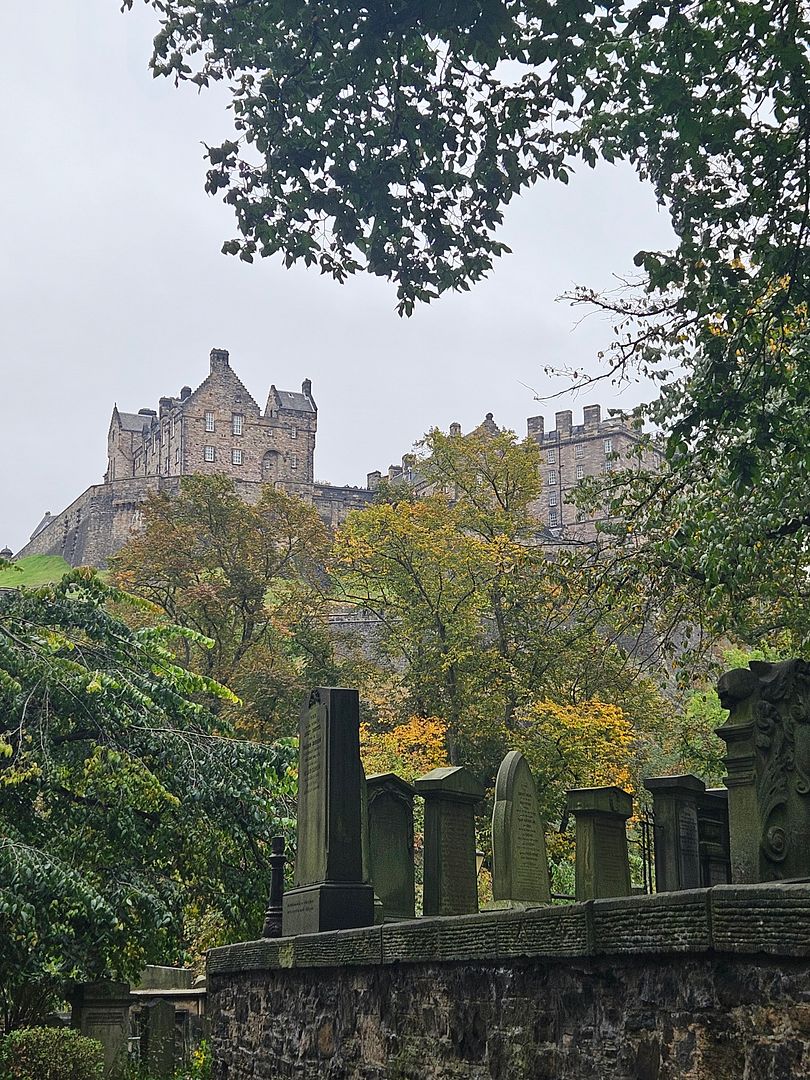
Looking up from St. Cuthbert I had a different view of the castle.

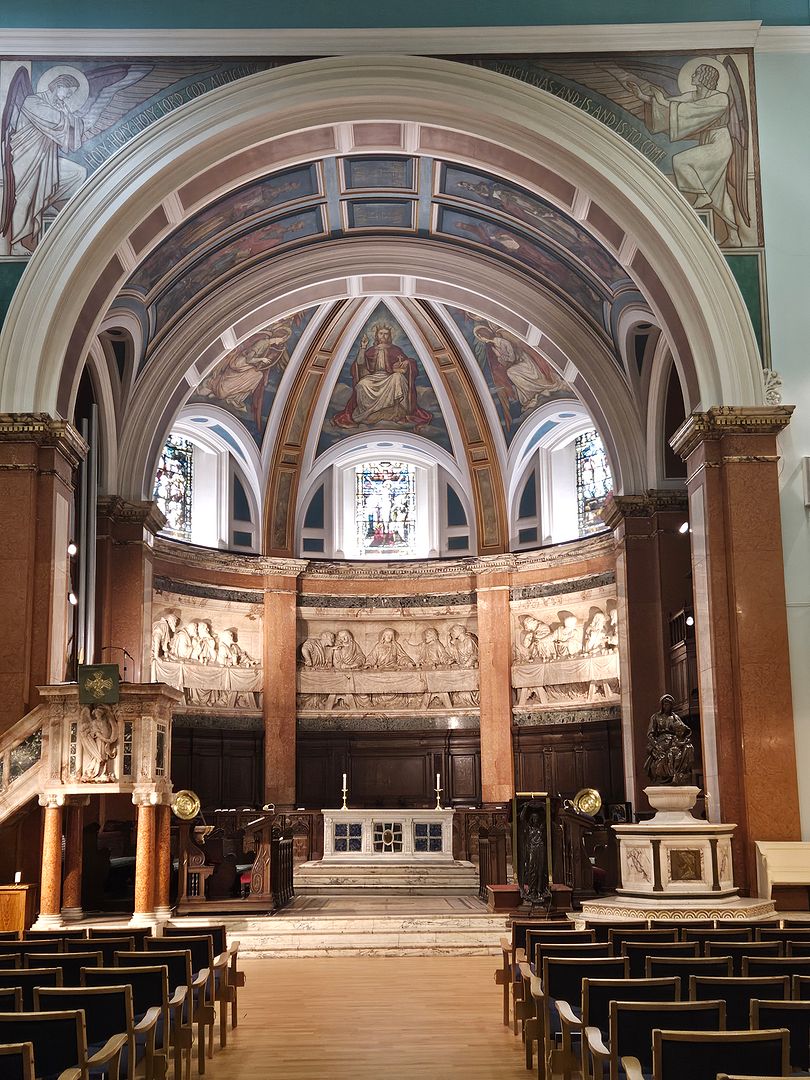
From here I went into the church and was greeted kindly and given a brochure with some history of the church. I asked if I could take photos and was granted enthusiastic permission. Information I’m sharing is from the brochure.

Tradition tells us that the Celtic missionary, Cuthbert, preached from this spot in the 7th century and established the first church here. Since then there have been at least seven buildings on the same site. By the late 19th century the people of St. Cuthbert’s wanted to rebuild their 18th century “God-box”, a very plain building. In 1894 the present building designed by architect Hippolyte Blanc, was opened and has been in constant use ever since.

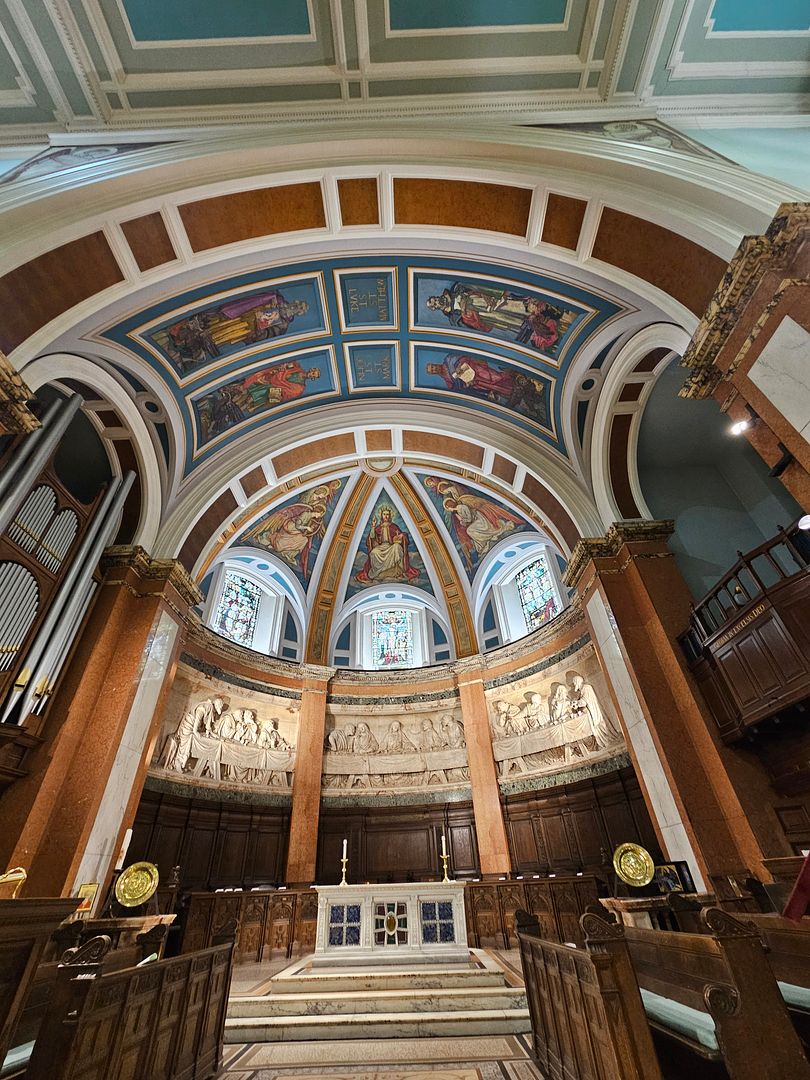
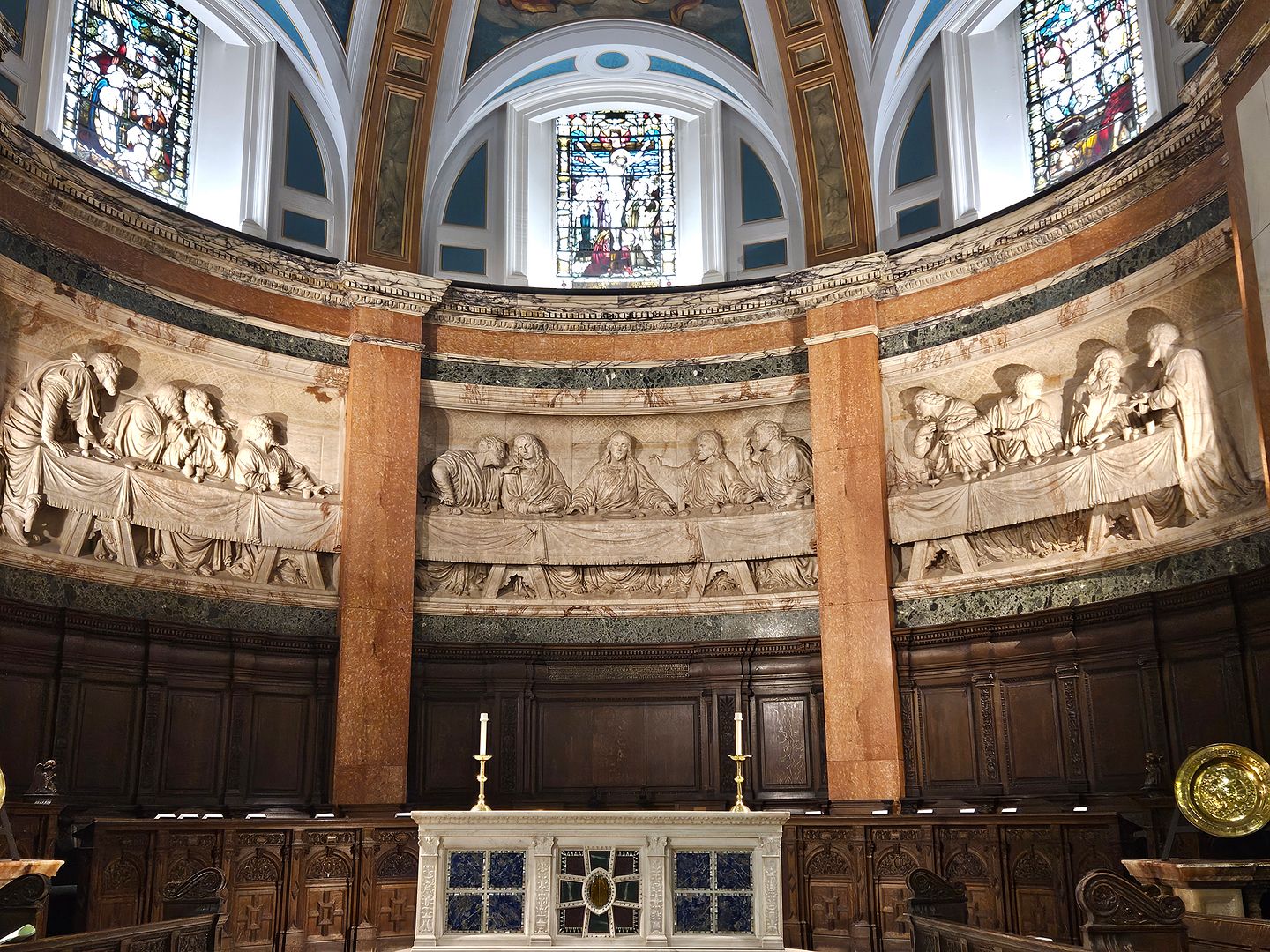
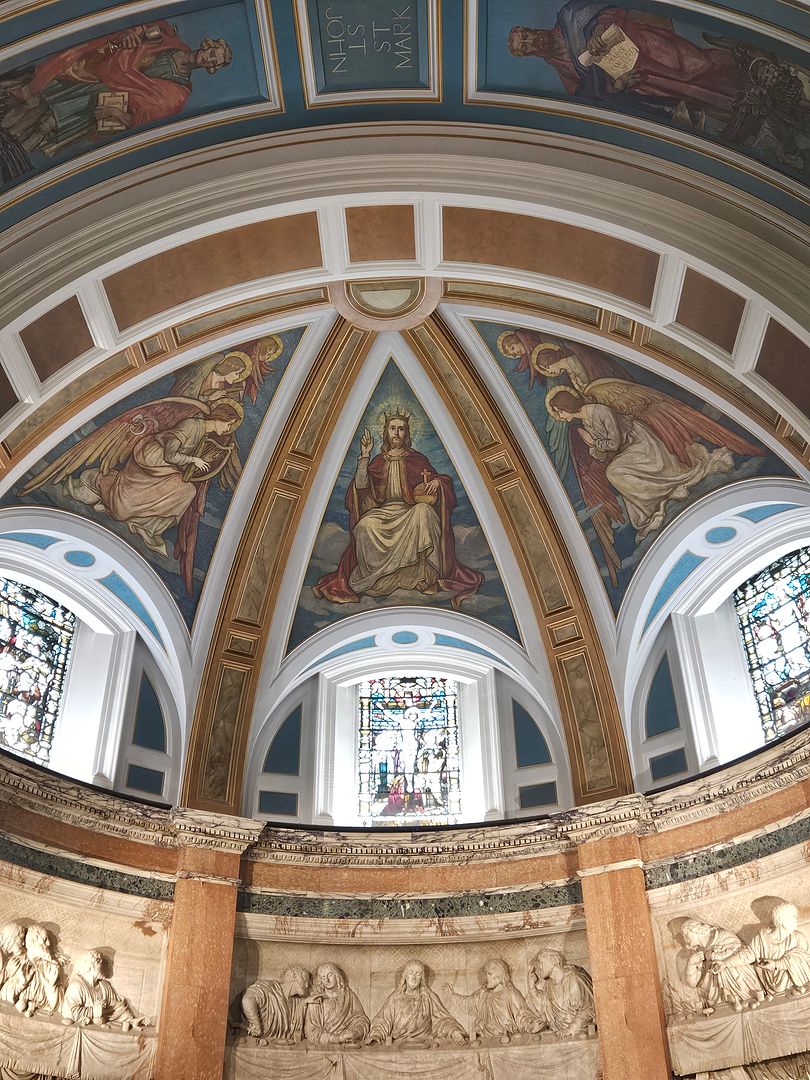
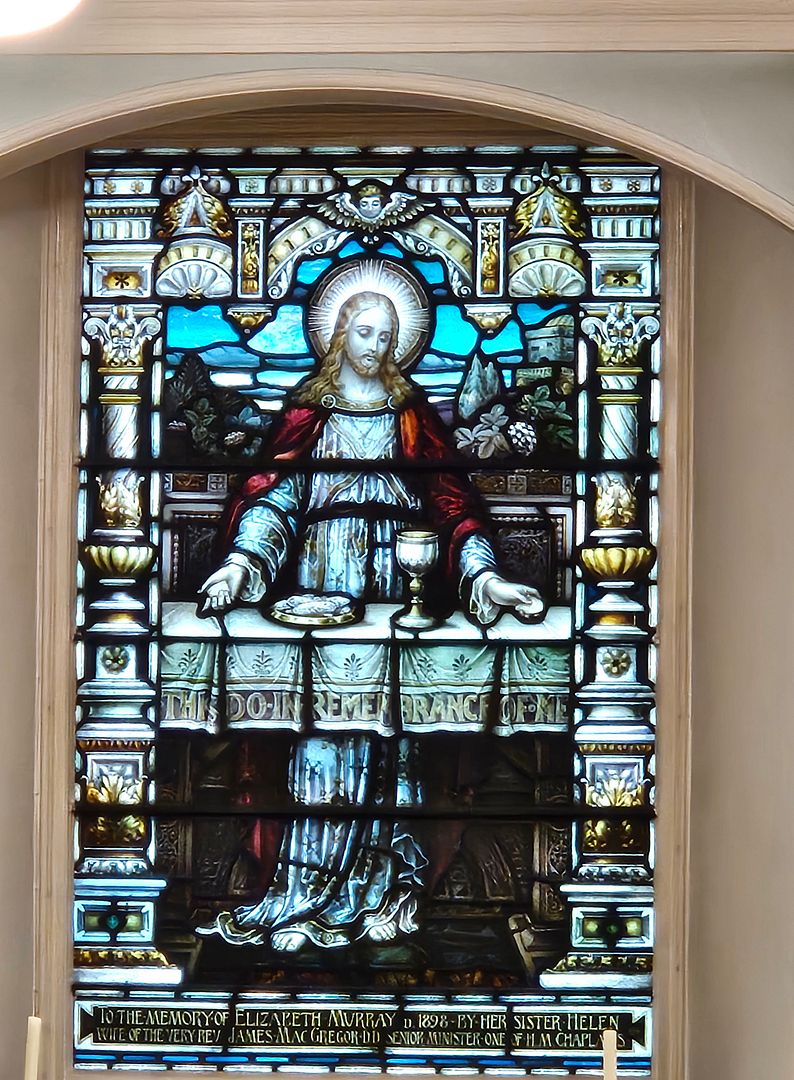
The Apse: In 1906 the Minister of the day, Dr. James Macgregor, celebrated 50 years of ministry. To commemorate this occasion Dr. Macgregor commissioned the alabaster frieze on the wall of the apse. It features Jesus and His disciples and the design is based on The Last Supper by Leonardo da Vinci. From left to right the characters are Bartholomew, James the Less, Andrew, Judas, Peter, John, Jesus, James, Thomas, Philip, Matthew, Thaddeus and Simon.

To the left of the apse is the pulpit. It is thought that the earliest church was probably built on the spot where the pulpit stands today. Under the pulpit is the foundation stone of the building along with a time capsule containing documents and artefacts of the 1890’s, including photographs, coins, newspapers, and copies of the Minister’s sermons.


The Communion Table is made from alabaster and marble, mostly Italian, green and Egyptian. The middle of the Communion Table shows the cross of St. Cuthbert which can be seen in the decor in other parts of the building.

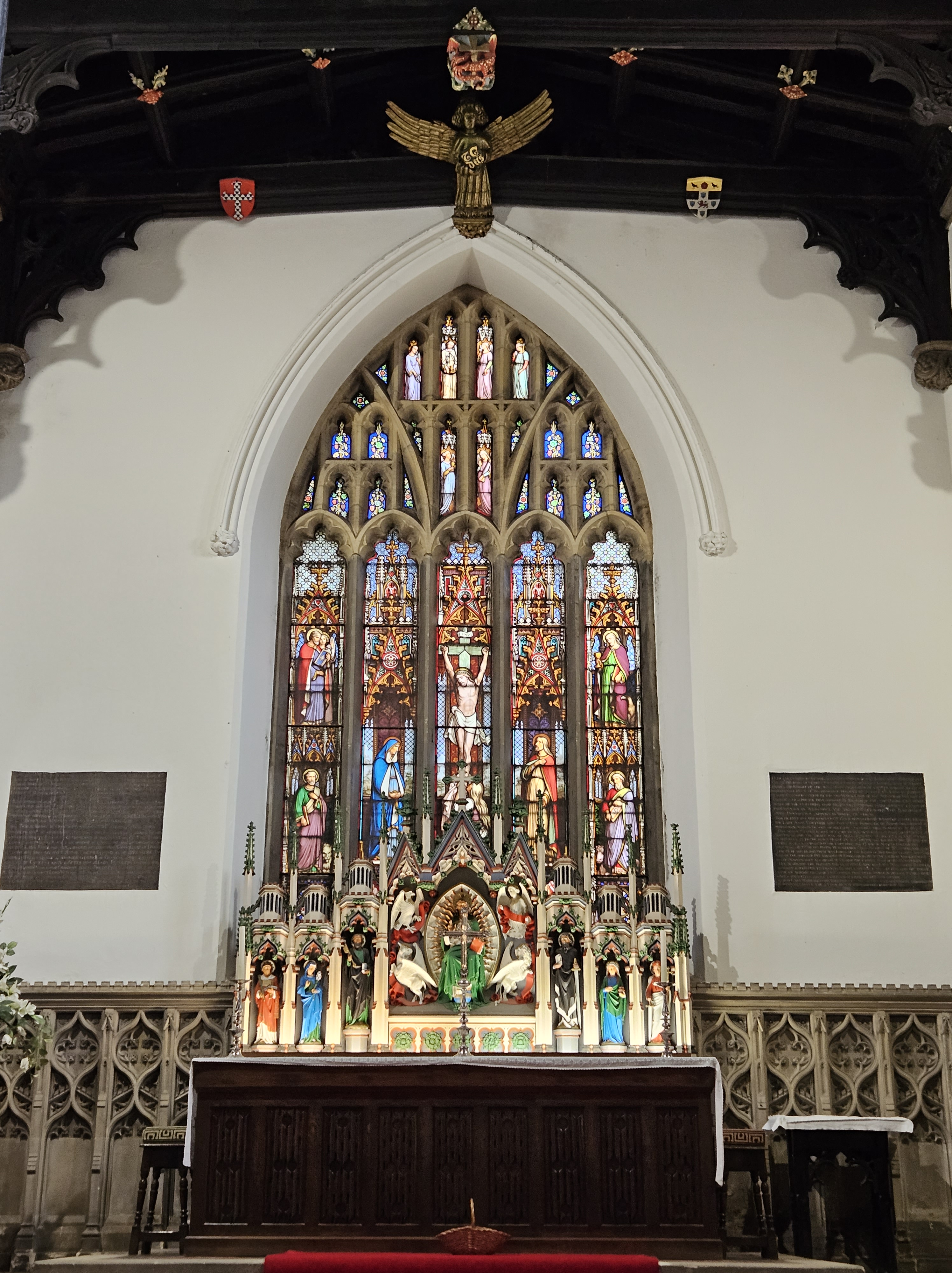
The Exalted Christ with His angels on either side of Him was the first of the murals painted by Robert Hope RSA. In 1928 Professor Gerald E. Moira of Edinburgh College of Art painted the four apostles. Then in 1933 the angels on the spandrels at either side of the chancel area were painted by John Duncan RSA, RSW. The angels are seen worshipping God in two different ways. The one on the left is quietly praying to the spirit within, while on the right, the angel with raised hands and head worships joyfully, radiantly!

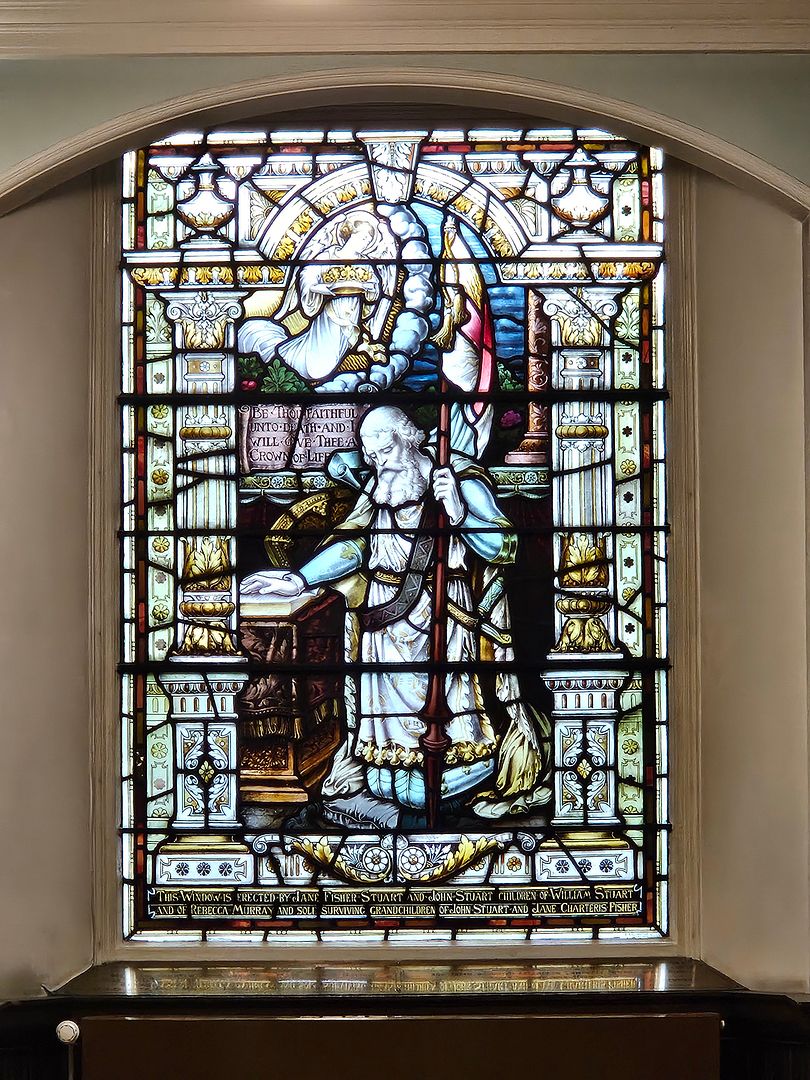
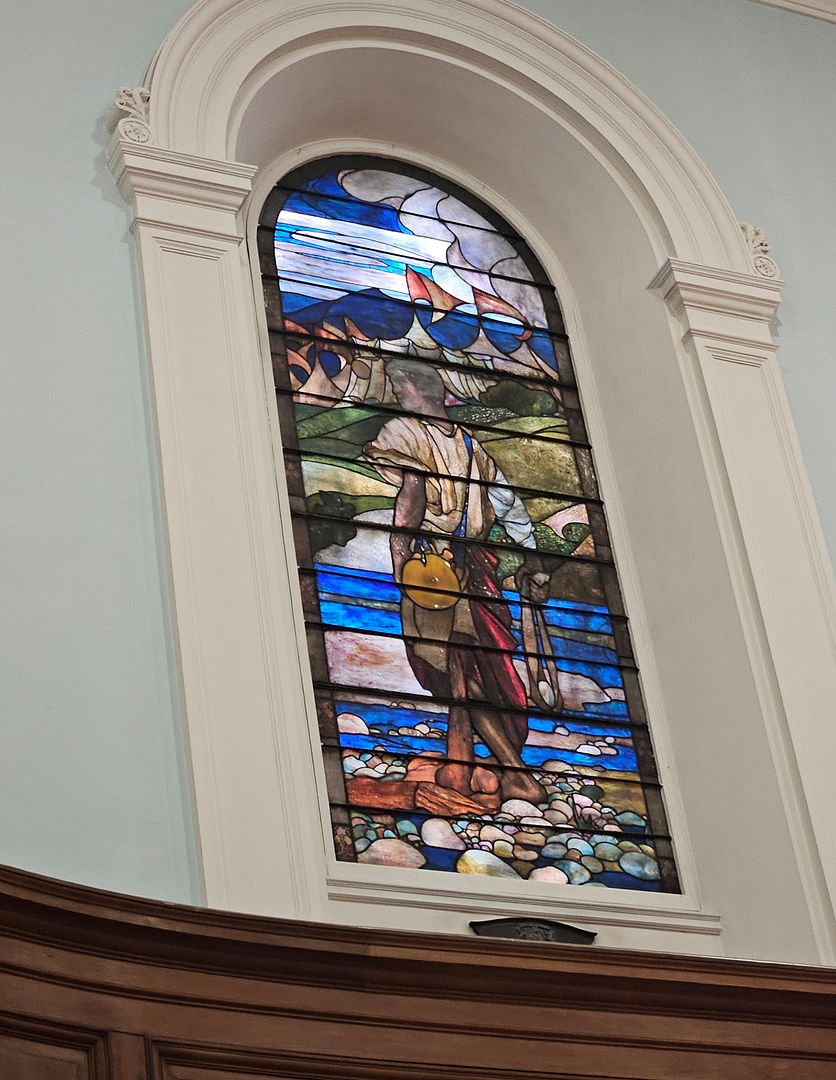
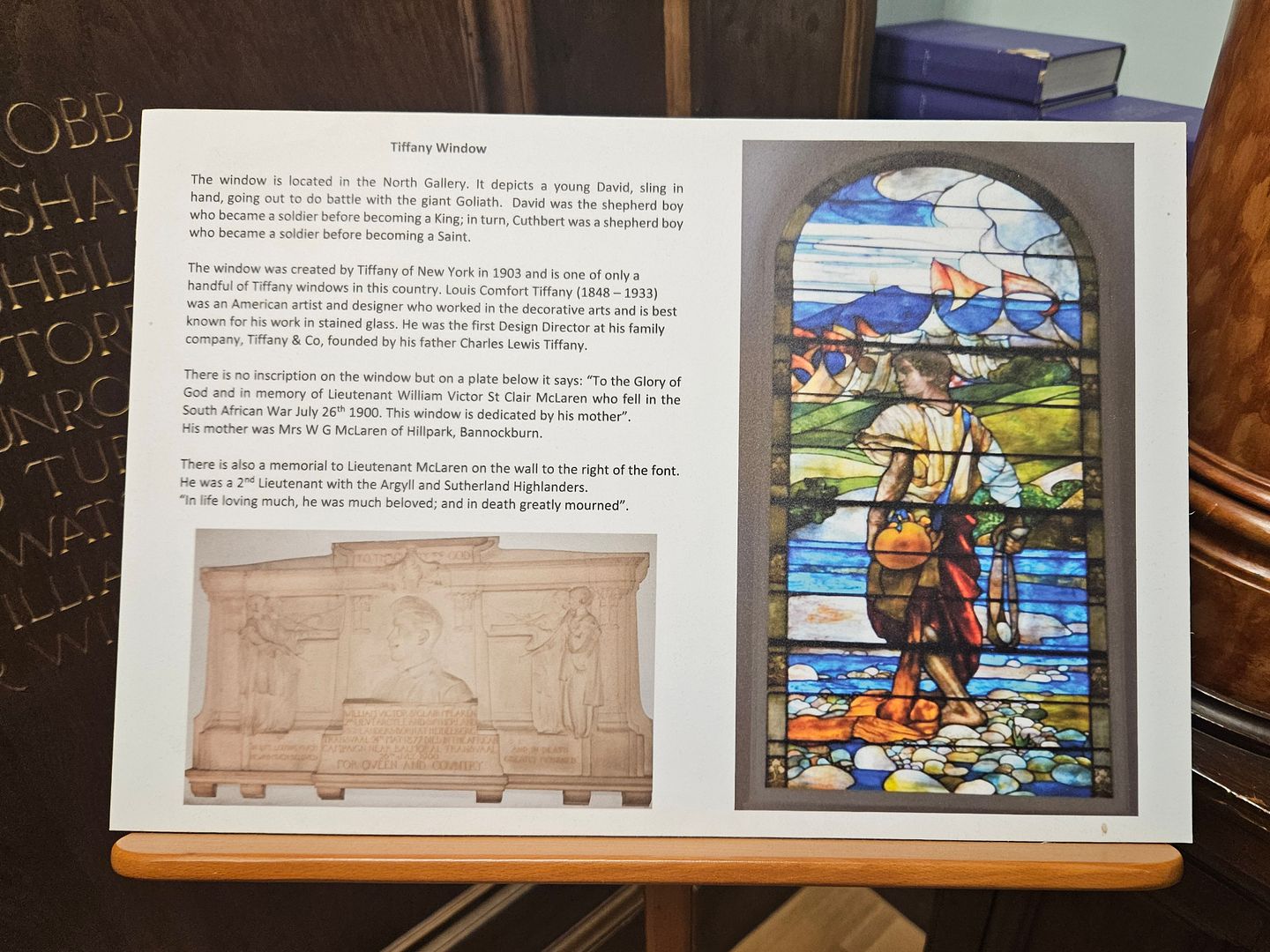
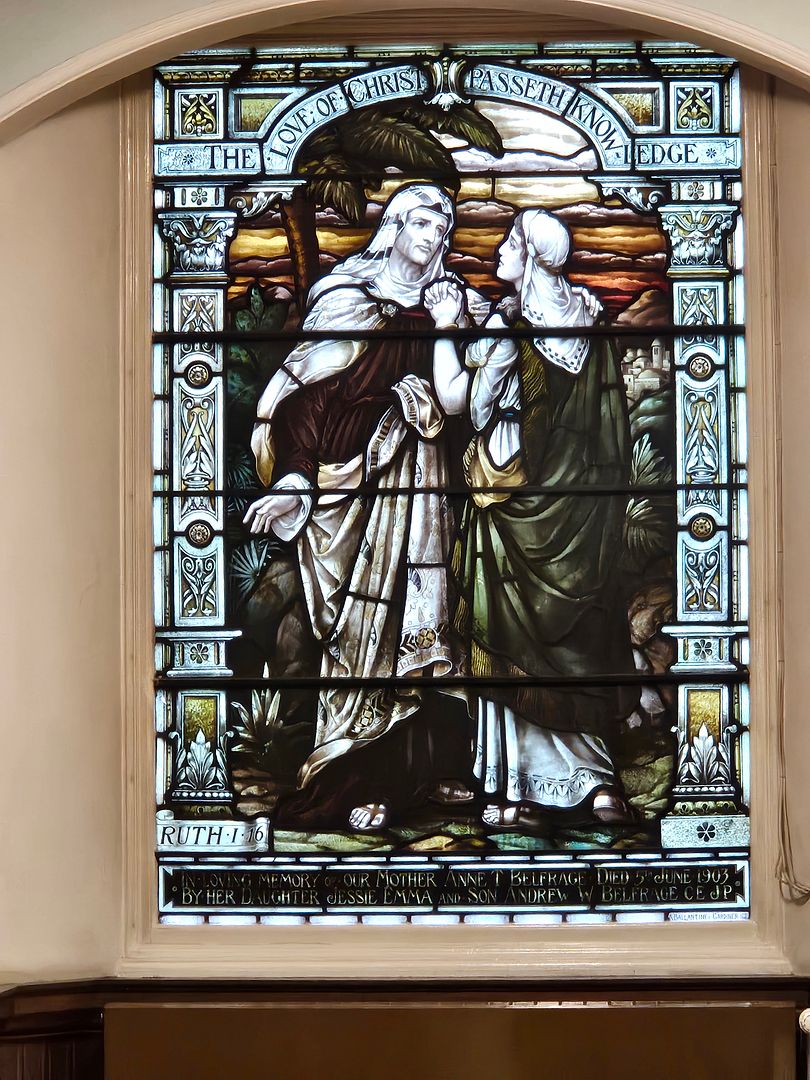
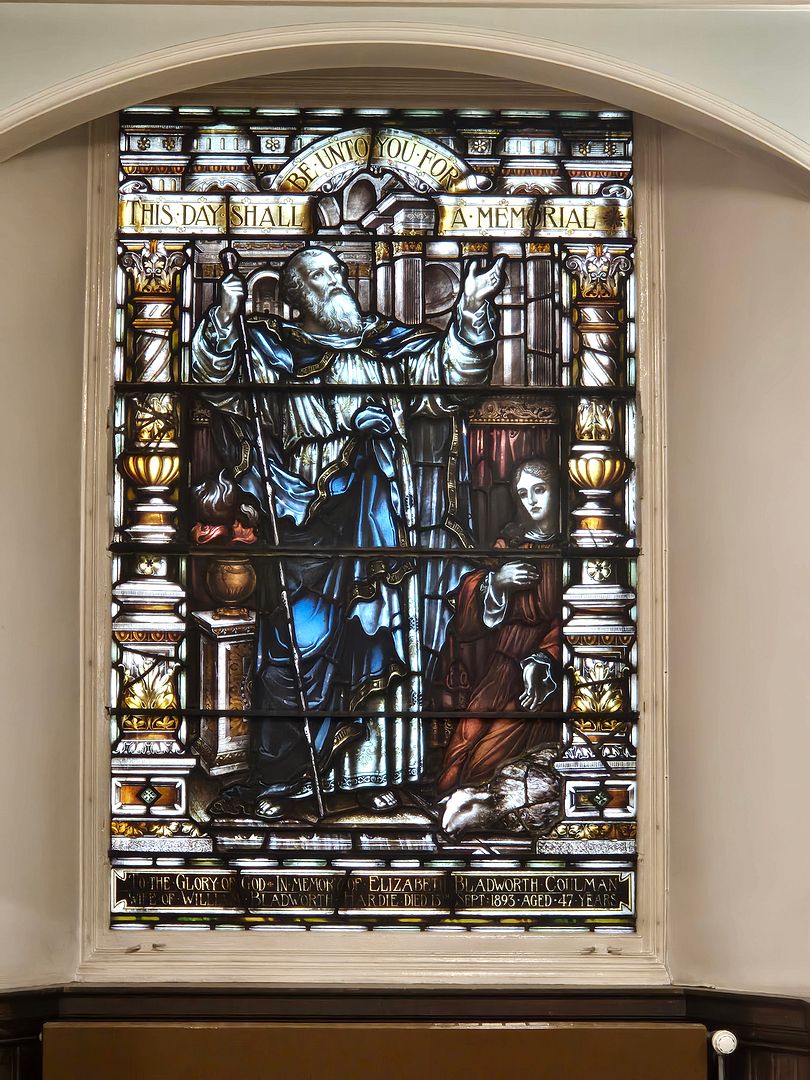
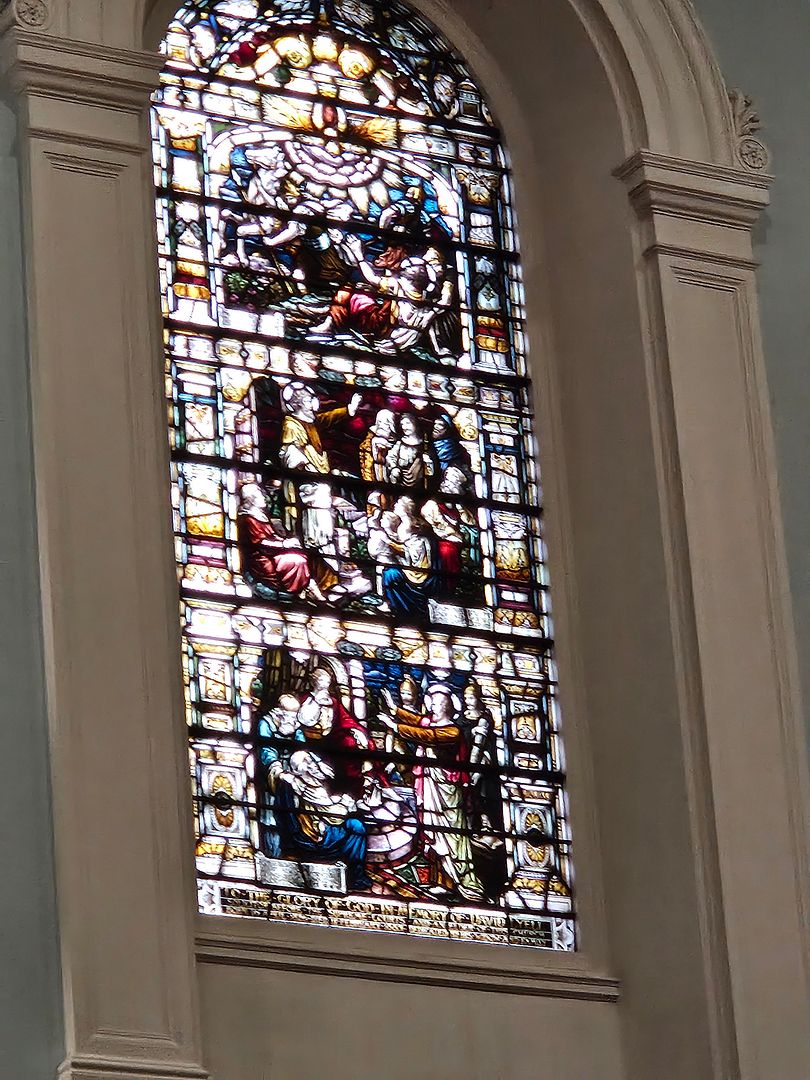
The windows on the left of the church depict stories from the Old Testament and on the right the New Testament. Upstairs on the North side you will see a young David, sling in hand, going out to meet the giant Goliath. This window was created by Tiffany of New York in 1903 and is one of only five Tiffany windows in Britain.

When I was done at St. Cuthbert’s I strolled back to Grassmarket to wait for Josh and Laura.

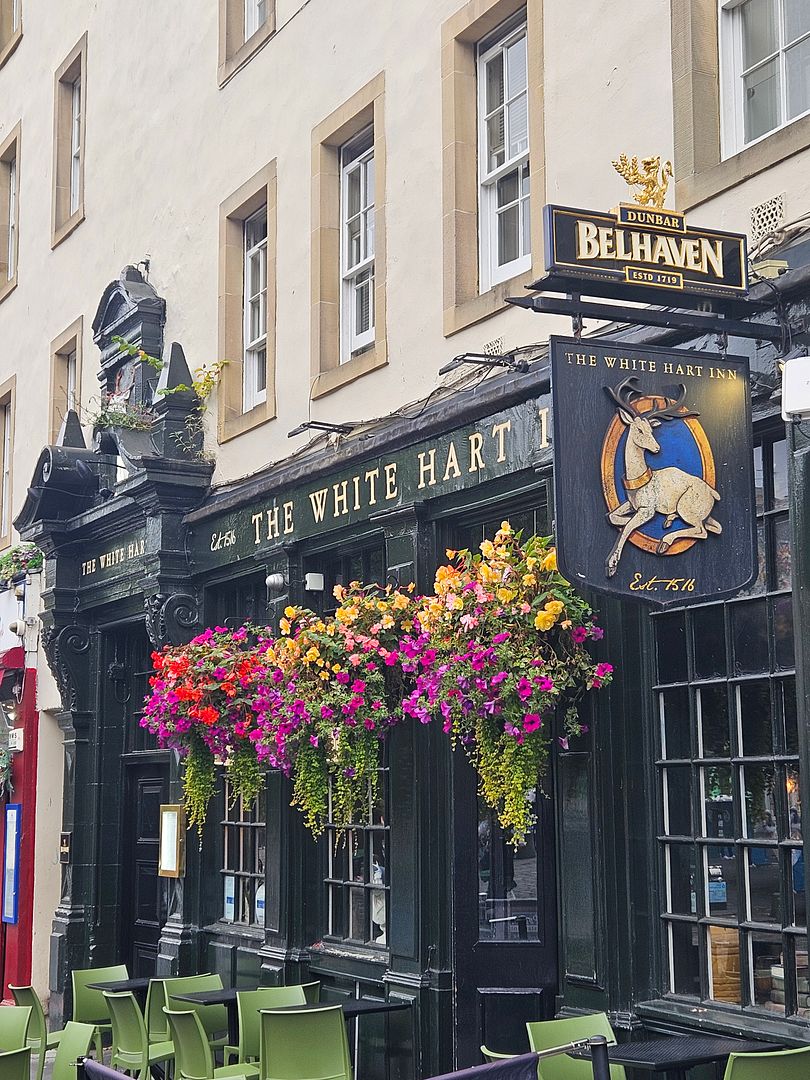
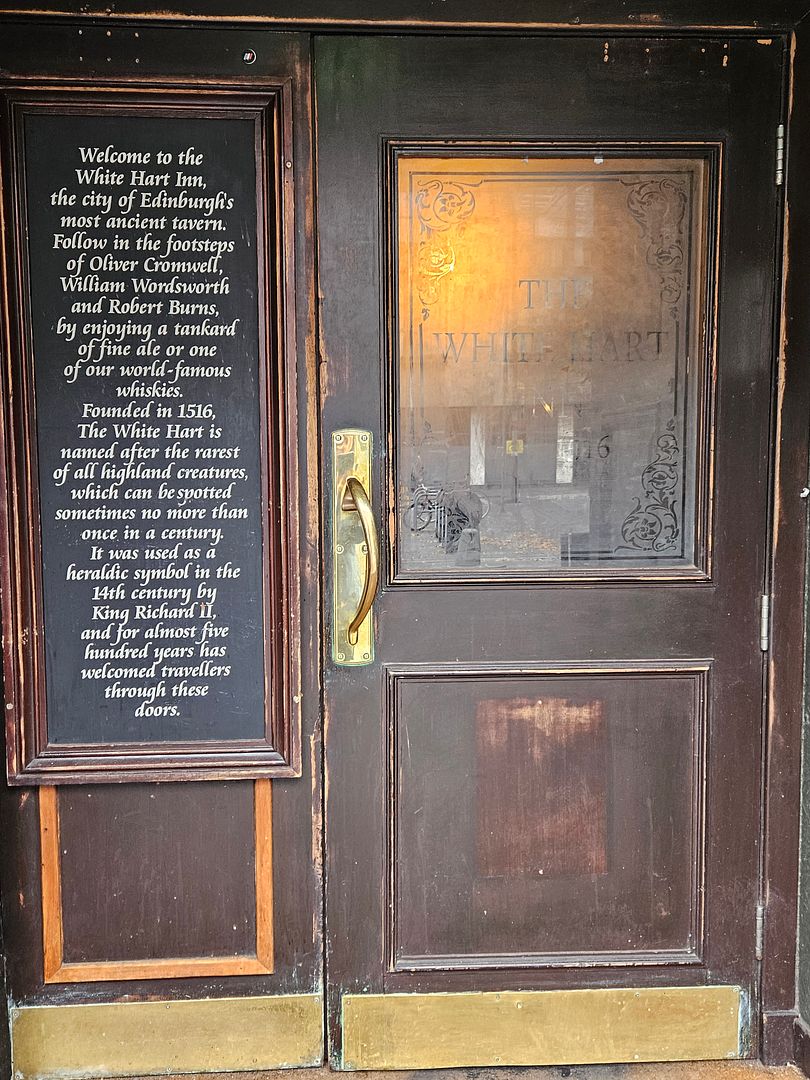
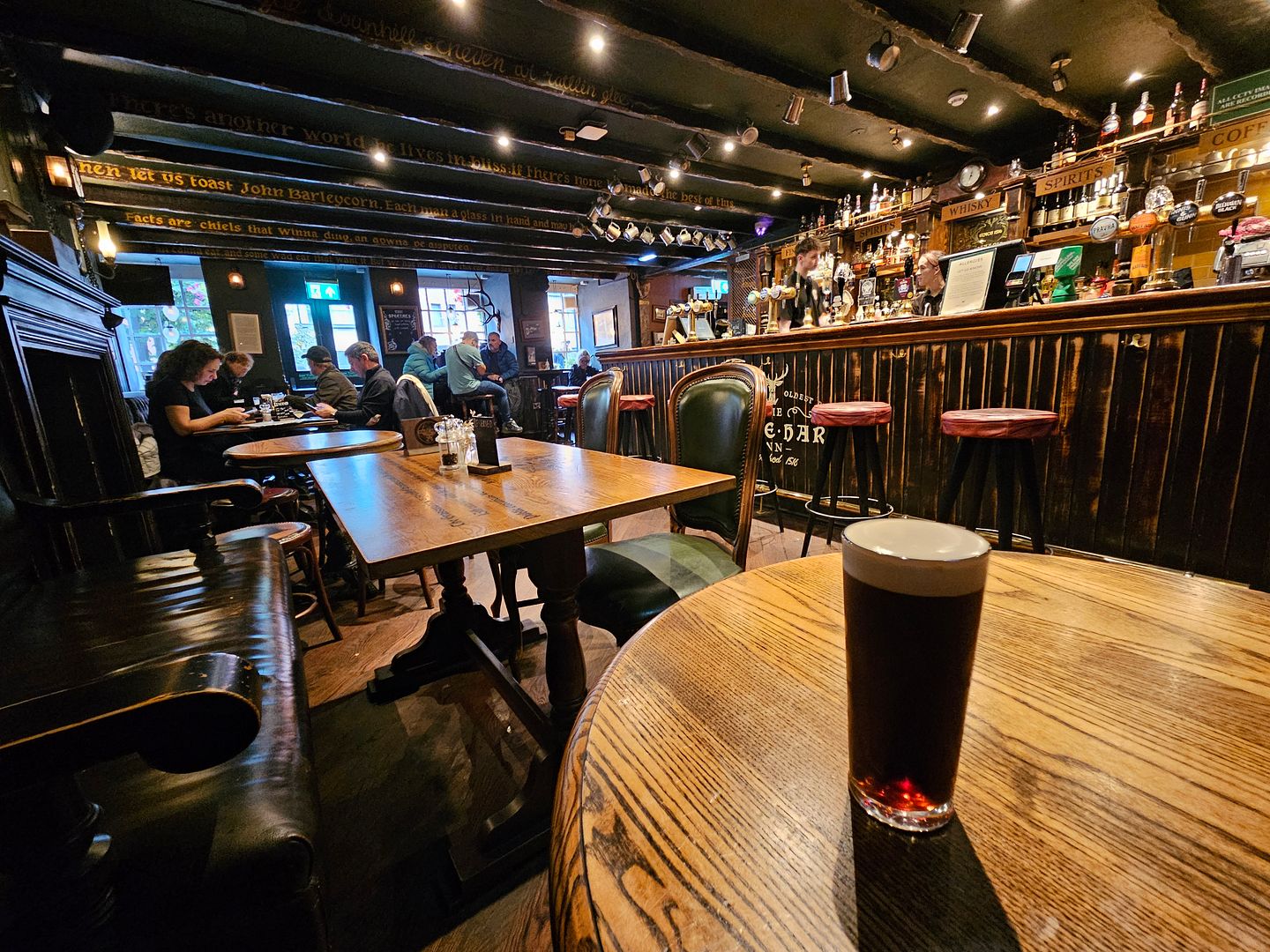
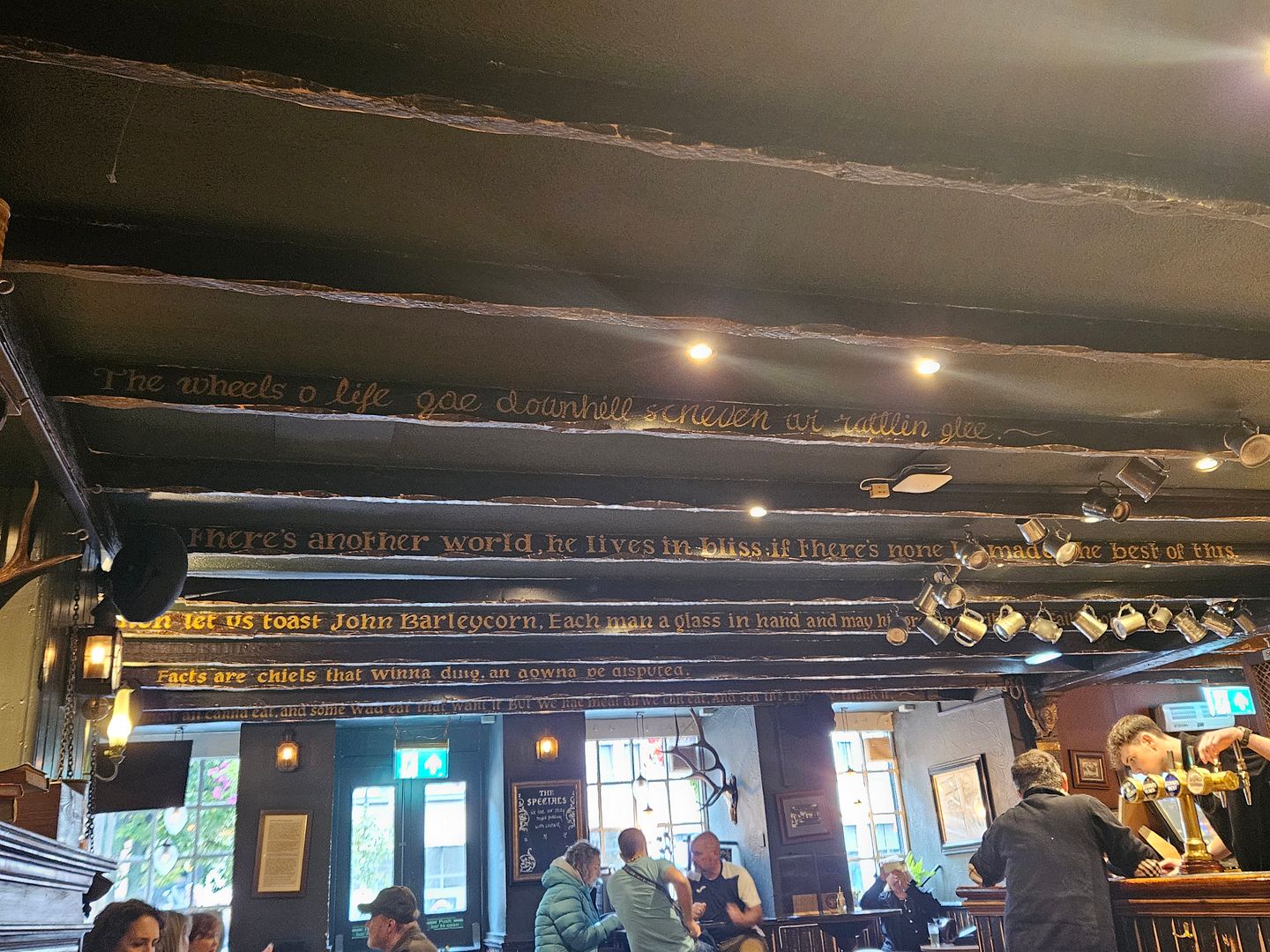
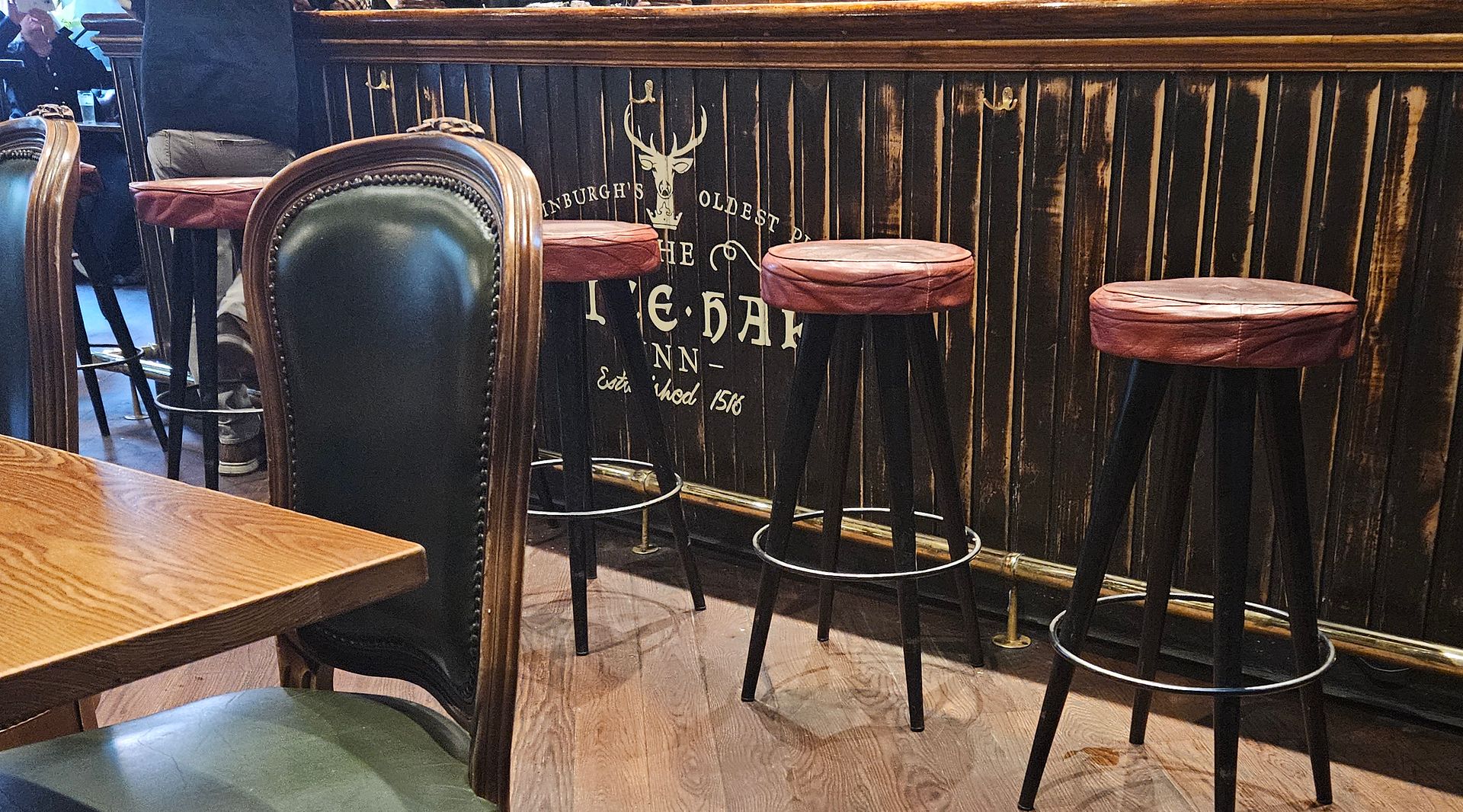
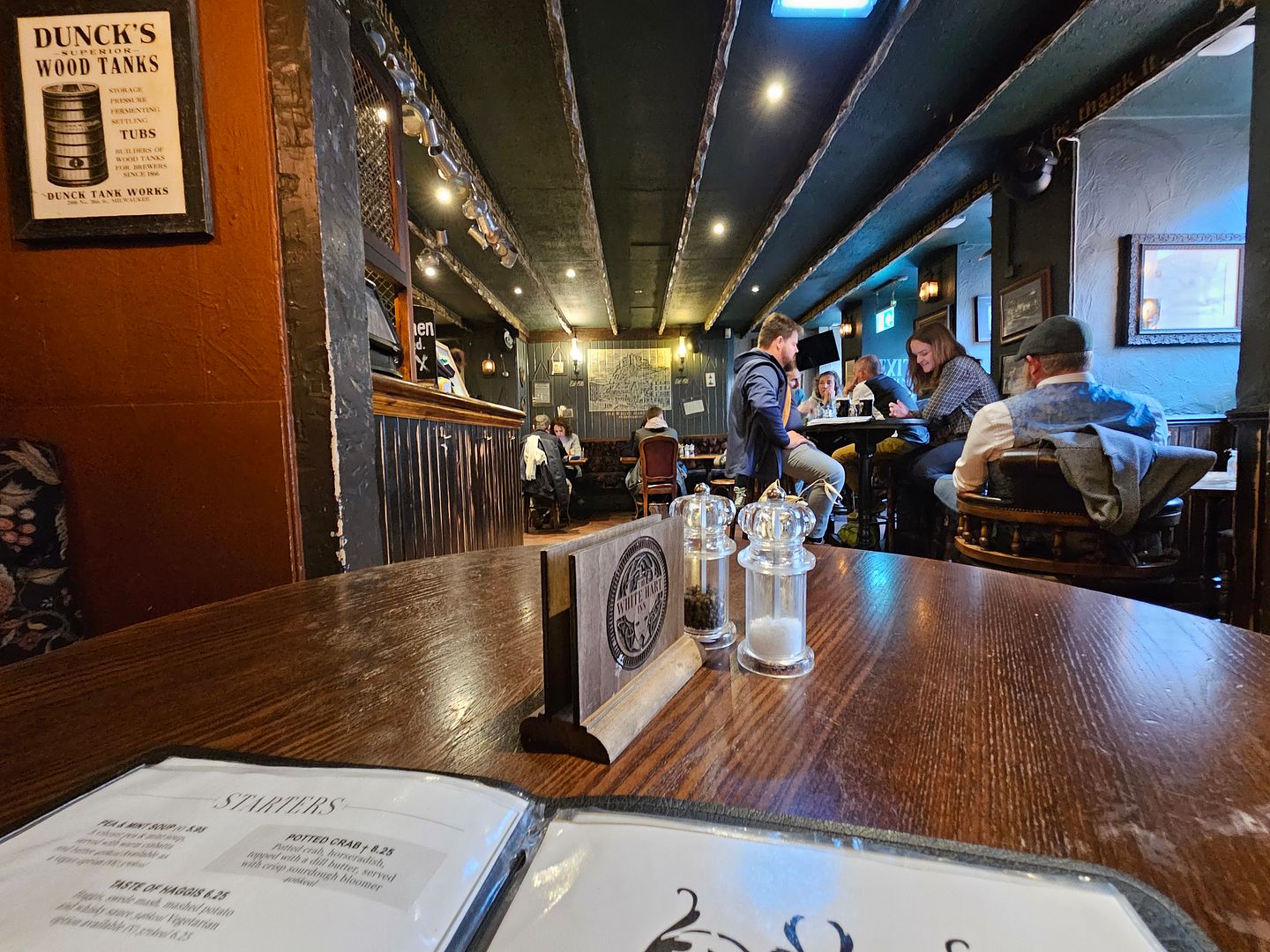
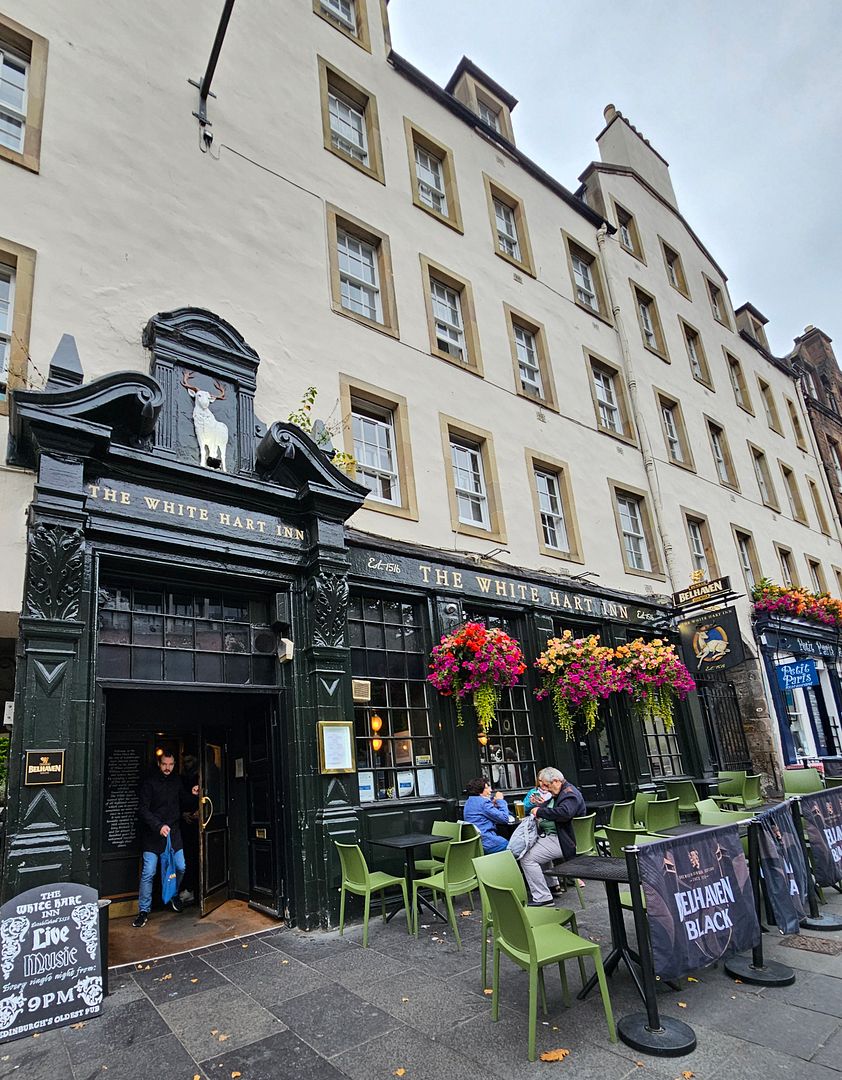
I waited at the White Hart Inn, Edinburgh’s most ancient tavern.

Follow in the footsteps of Oliver Cromwell, William Wordsworth and Robert Burns by enjoying a tankard of fine ale or one of our world-famous whiskies. Founded in 1516, The White Hart is named after the rarest of all Highland creatures, which can be spotted sometimes no more than once in a century. It was used as a heraldic symbol in the 14th century by King Richard II, and for almost five hundred years has welcomed travellers through these doors.

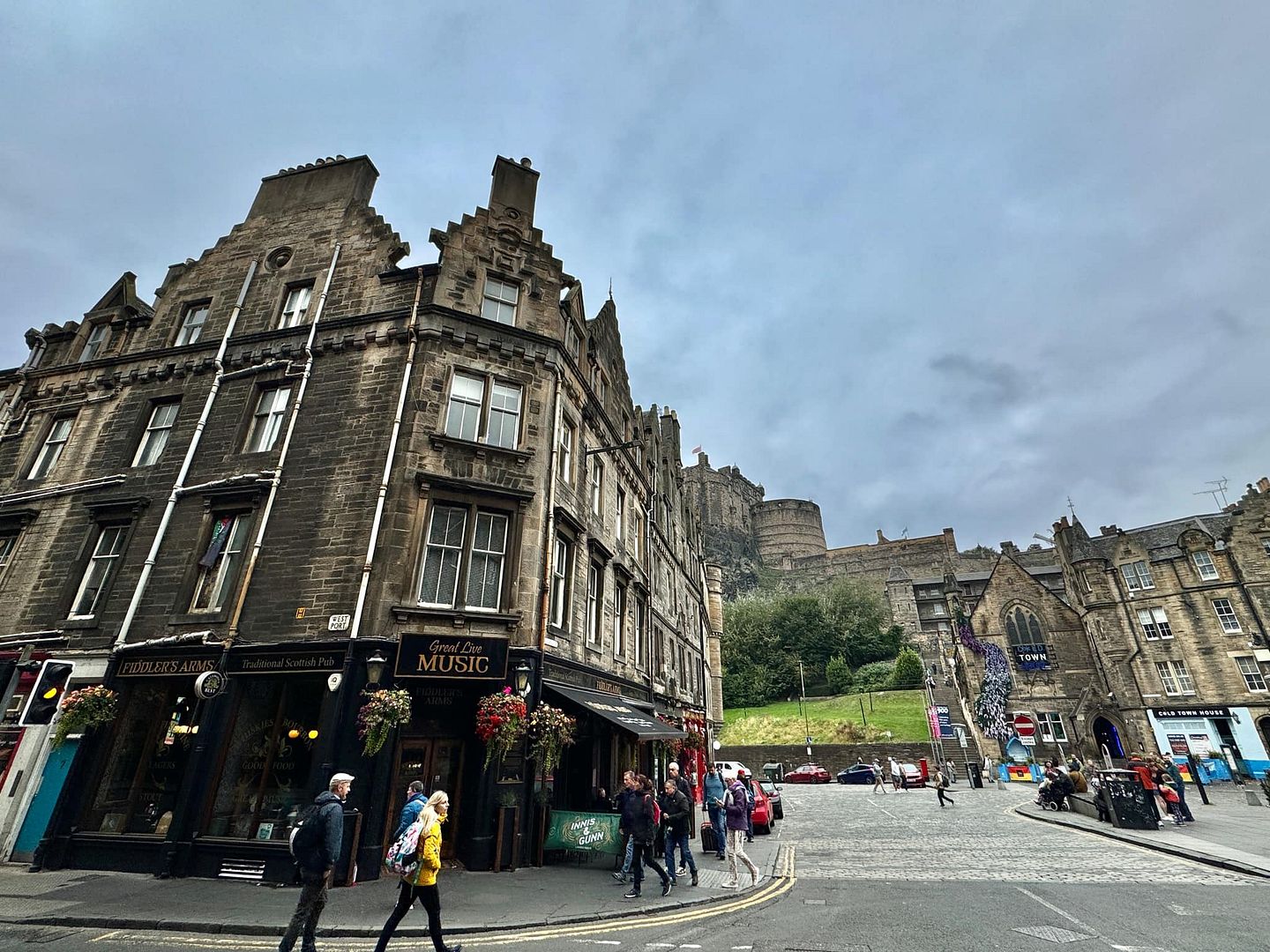
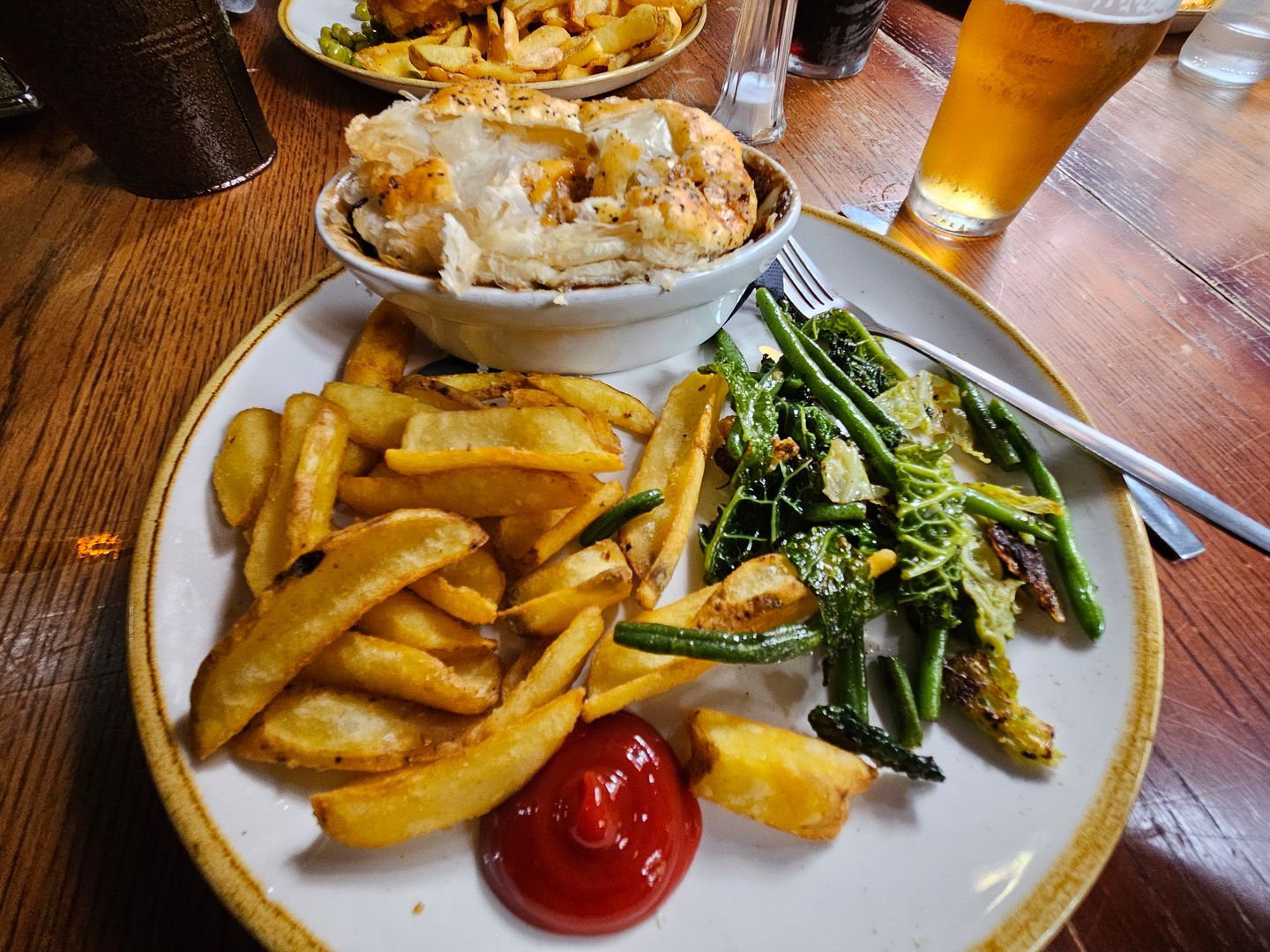
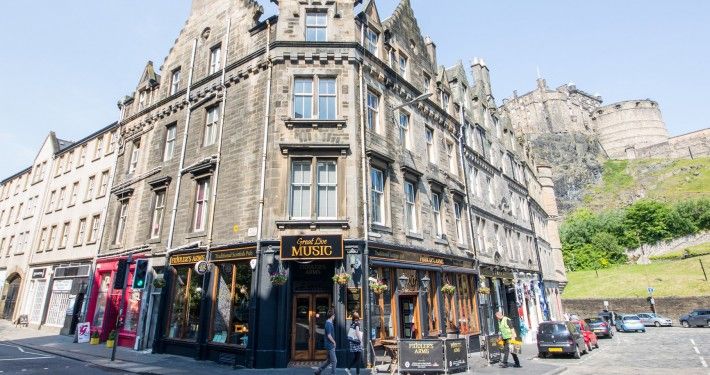
The food choices here were not hitting the spot for us so when Josh and Laura met up with me after their castle experience we found a table at the Fiddler’s Arms.

This image above is from The Fiddler’s Arms webpage. You can see what a sunny day would look like in the shadow of the castle. Below is what the atmosphere was like when we were here.

After lunch we popped into a couple of shops, took some photos and then we got an Uber to take us to St. Mary’s Episcopal Church to enjoy evensong which was due to begin at 3:30 on this Sunday. That will have to be another post.

Scotland Travel Journal ~ Dunfermline 2

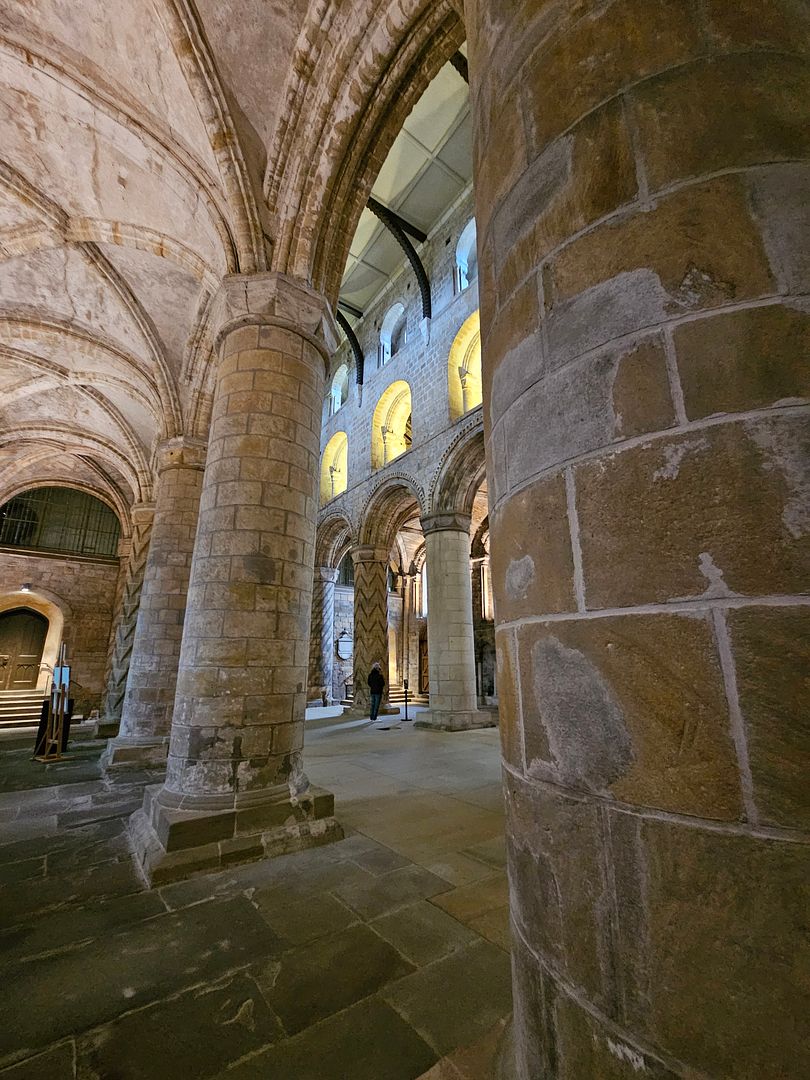
The Old Church
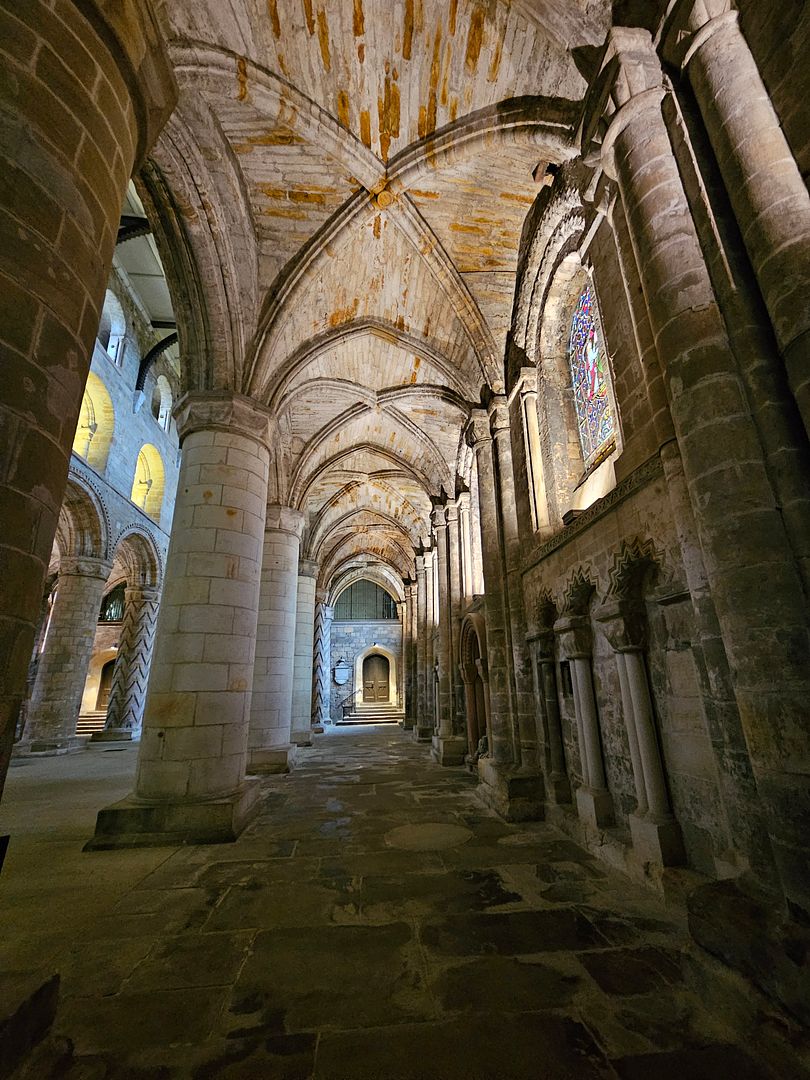
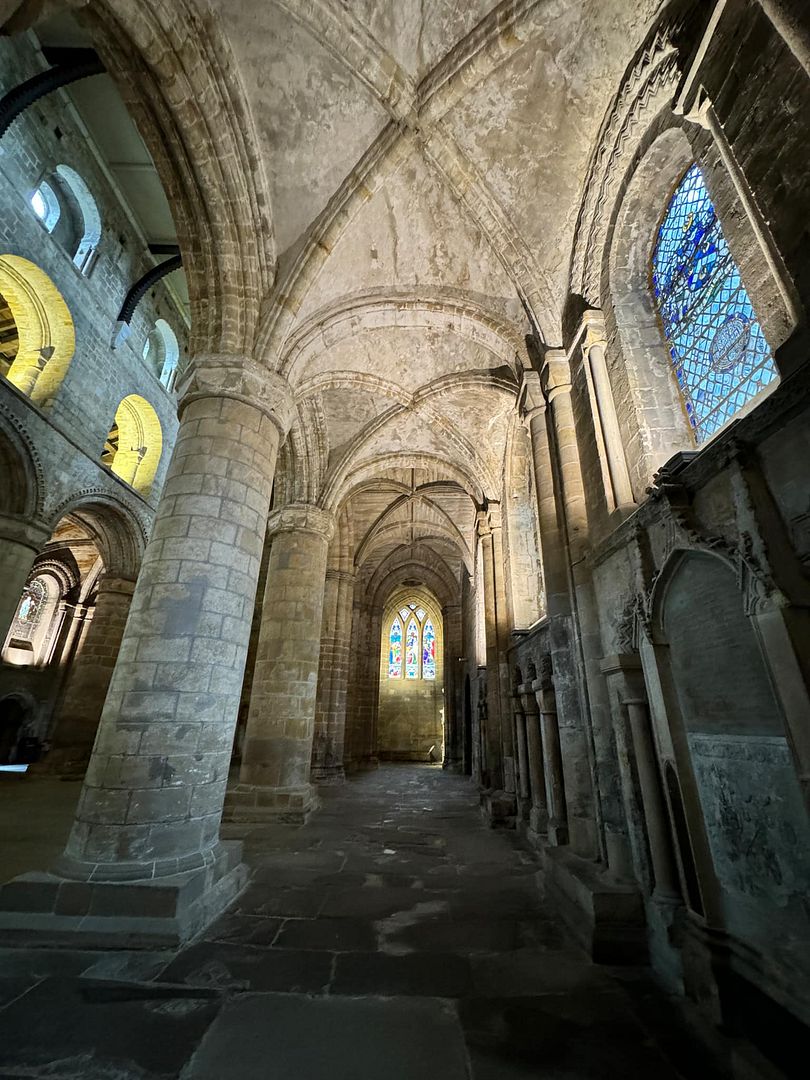
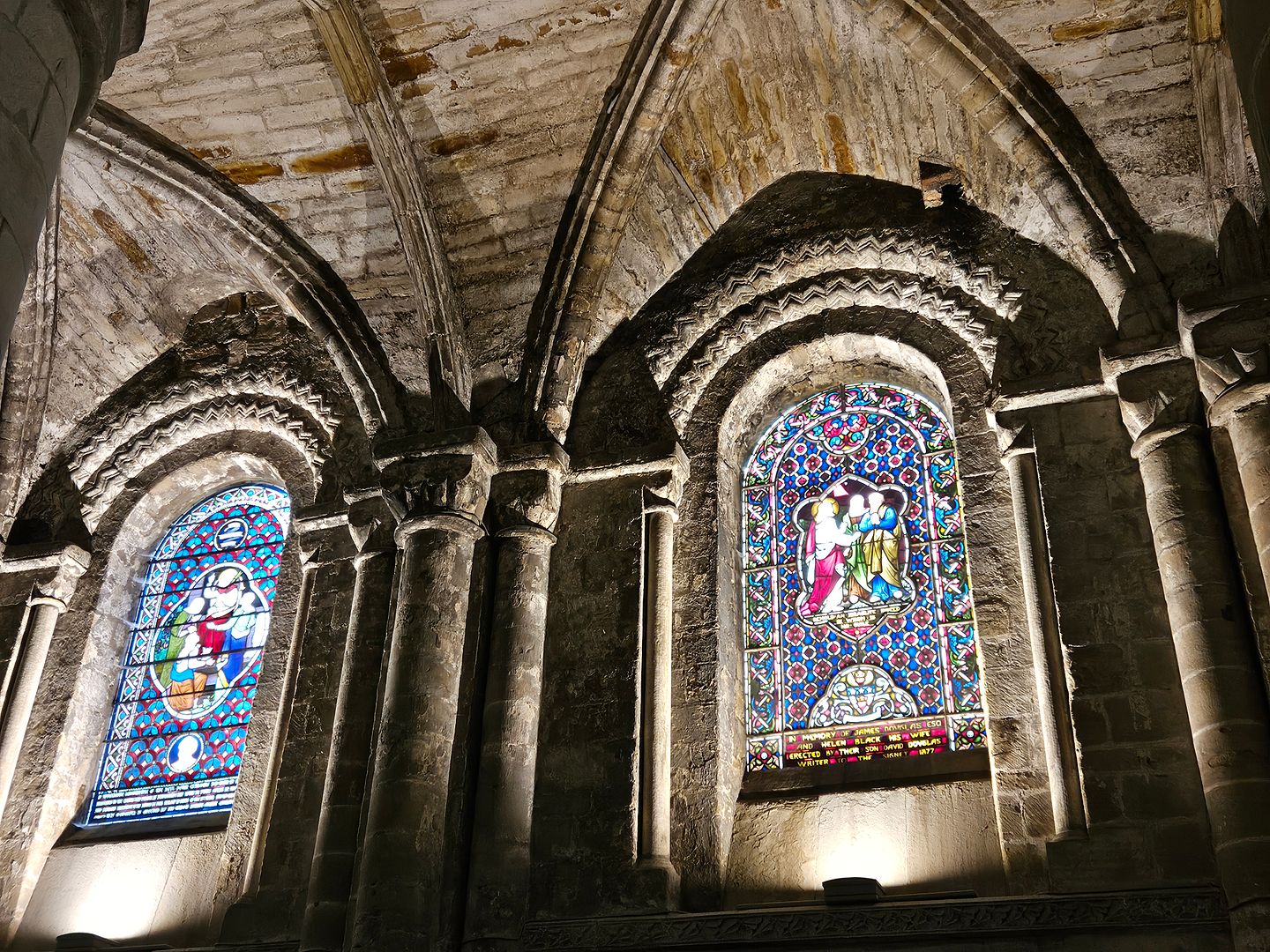
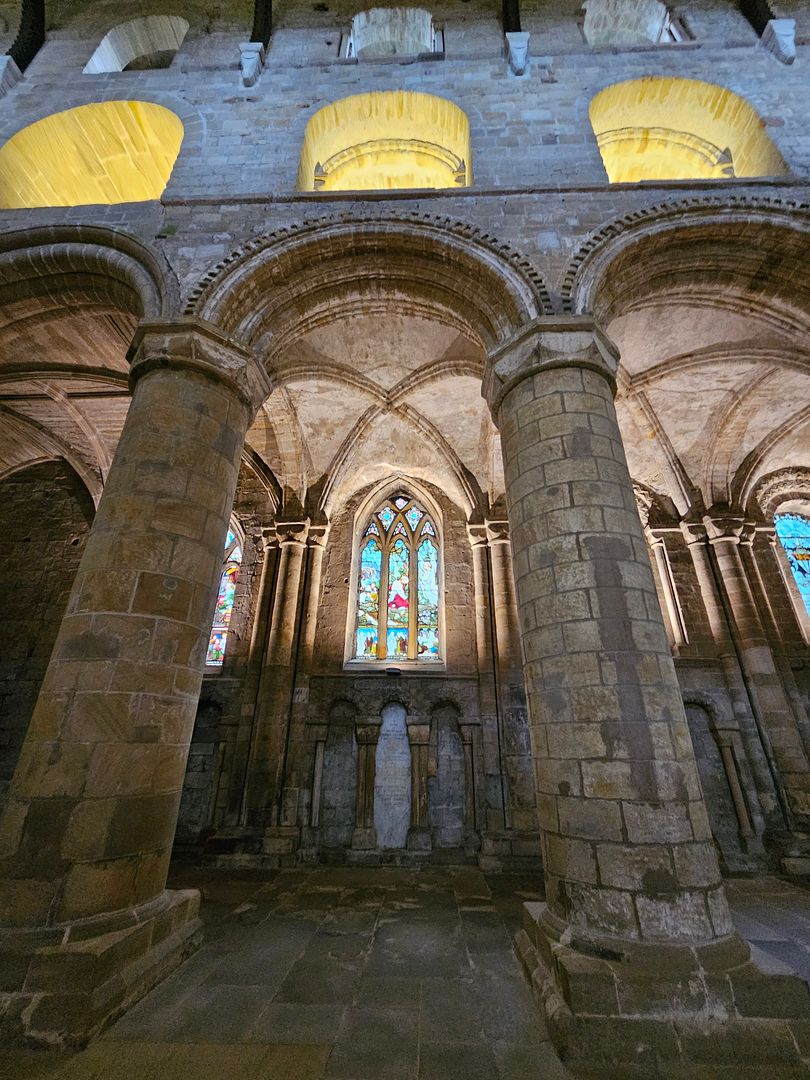
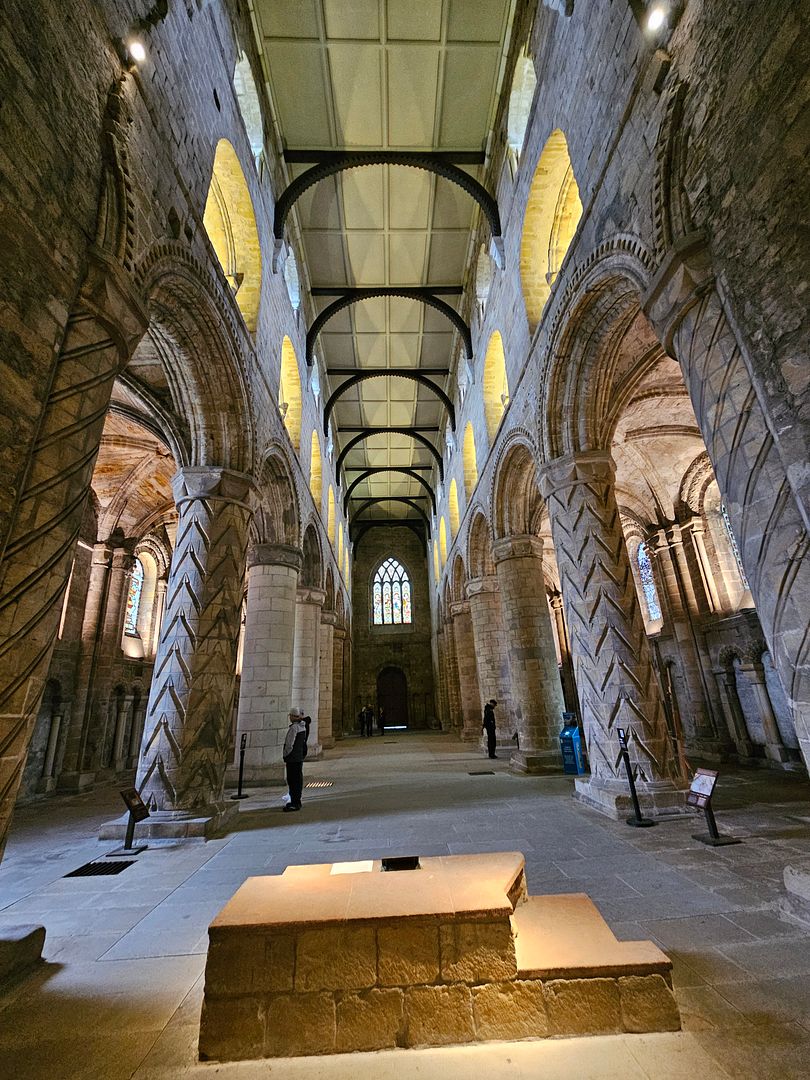
The former nave of the abbey church, erected by David I over the original church founded by his mother, Queen Margaret. The Old Church is the only significant remain of the 1147 abbey, and is a wonderful example of Romanesque architecture, with huge, rounded pillars, two carved with striking zigzag patterns.

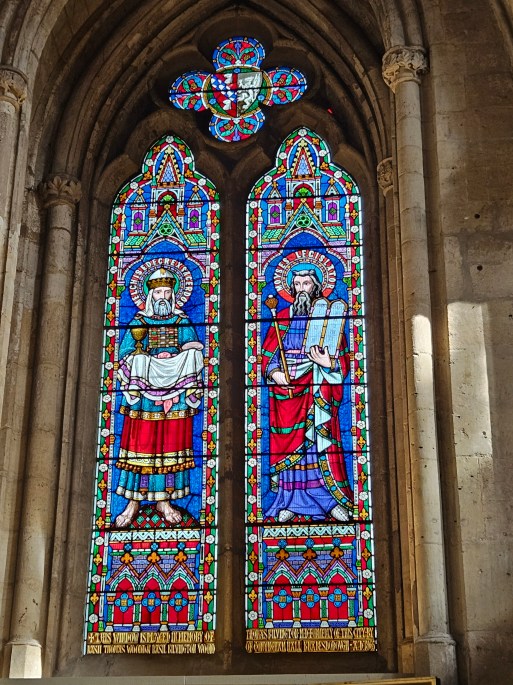
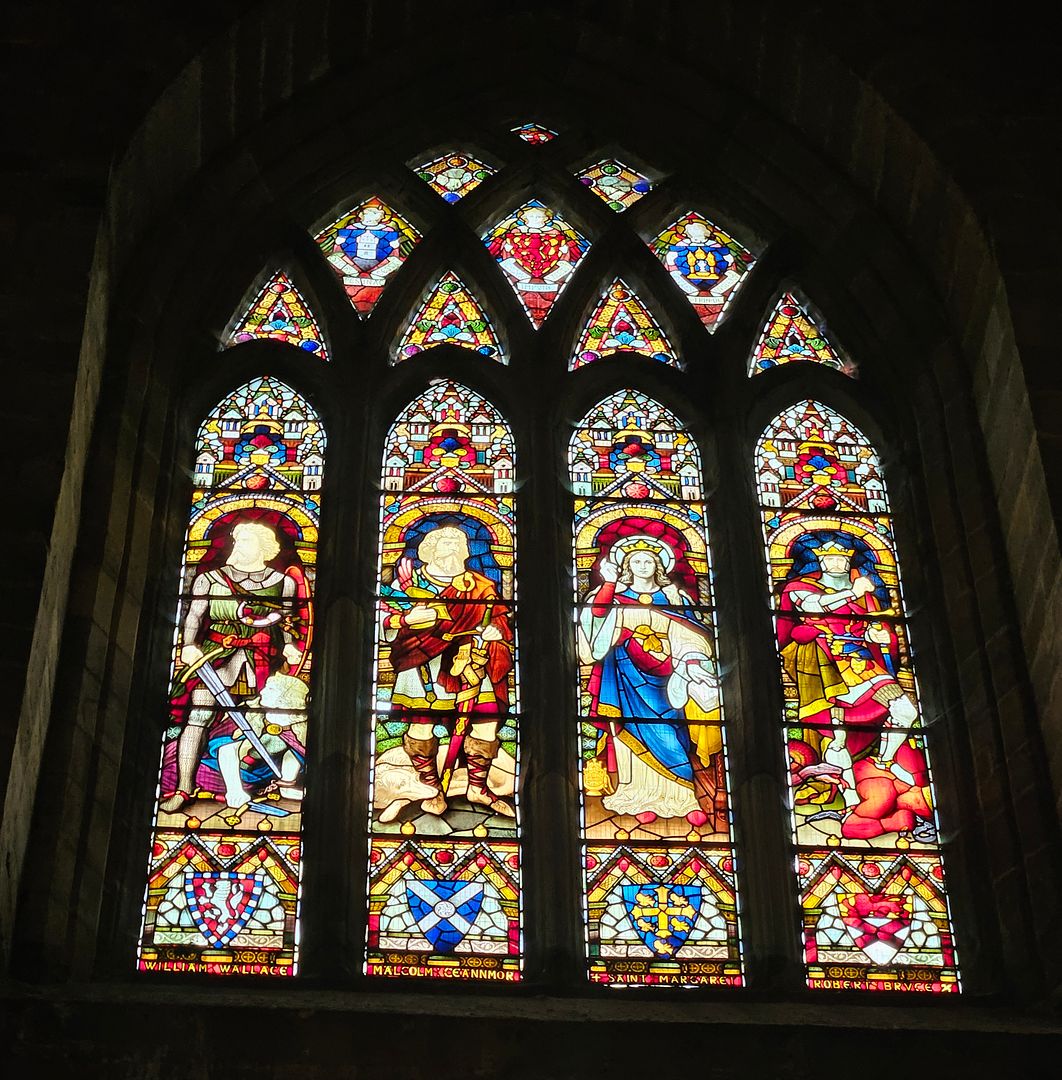
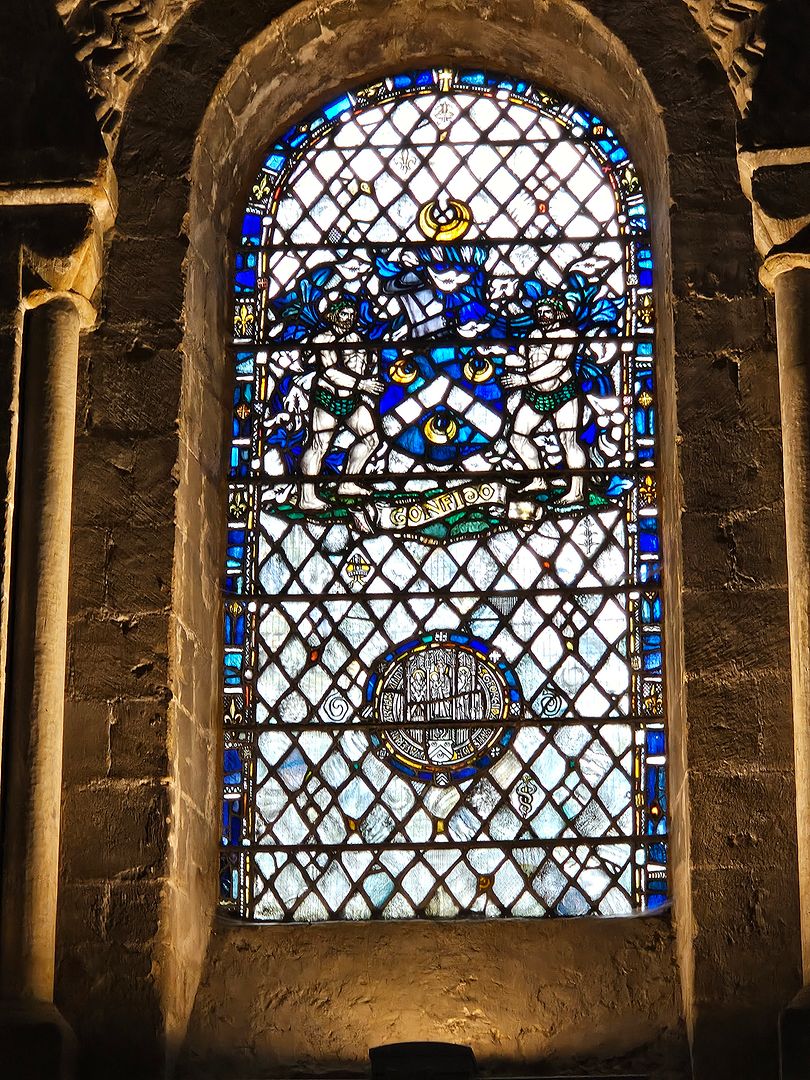
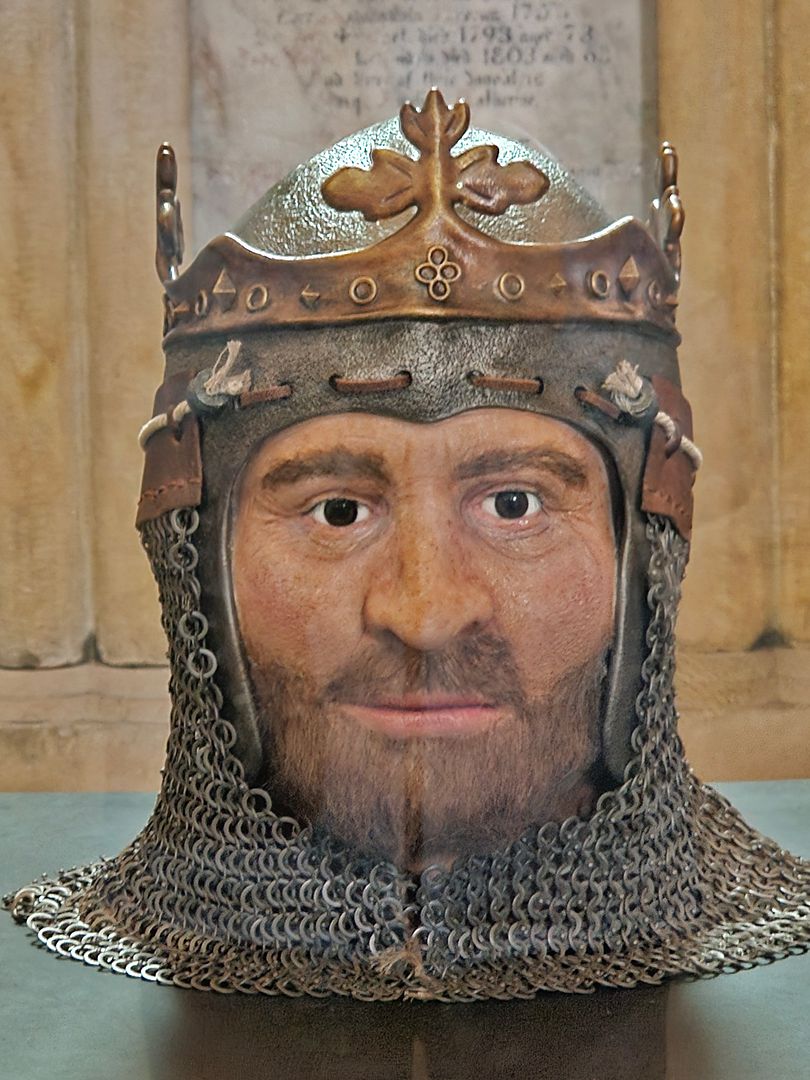
Carnegie Historical Window in Dunfermline Abbey. Left to right: William Wallace, Malcolm III, Queen Margaret and Robert the Bruce.

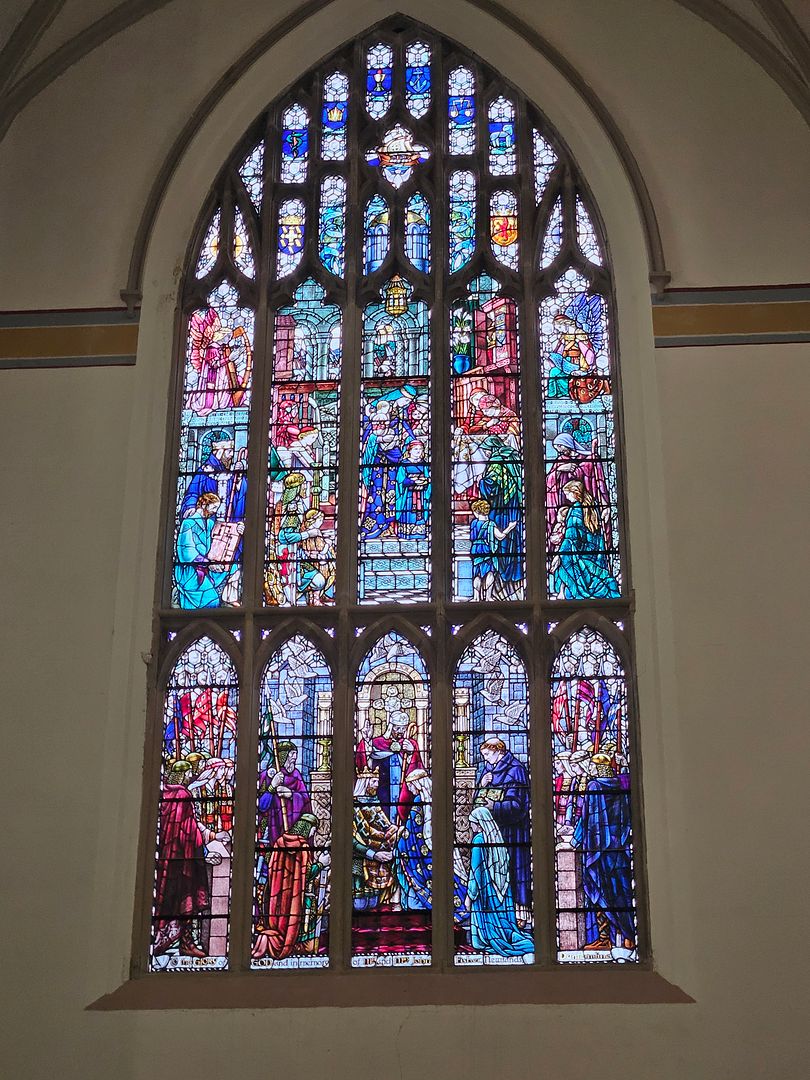
In 1881, when Andrew Carnegie returned to Dunfermline with his mother Margaret to lay the foundation stone of the world’s first purpose-built Carnegie library, a thought came to mind to offer to the Abbey a commemorative stained glass window of his own design.

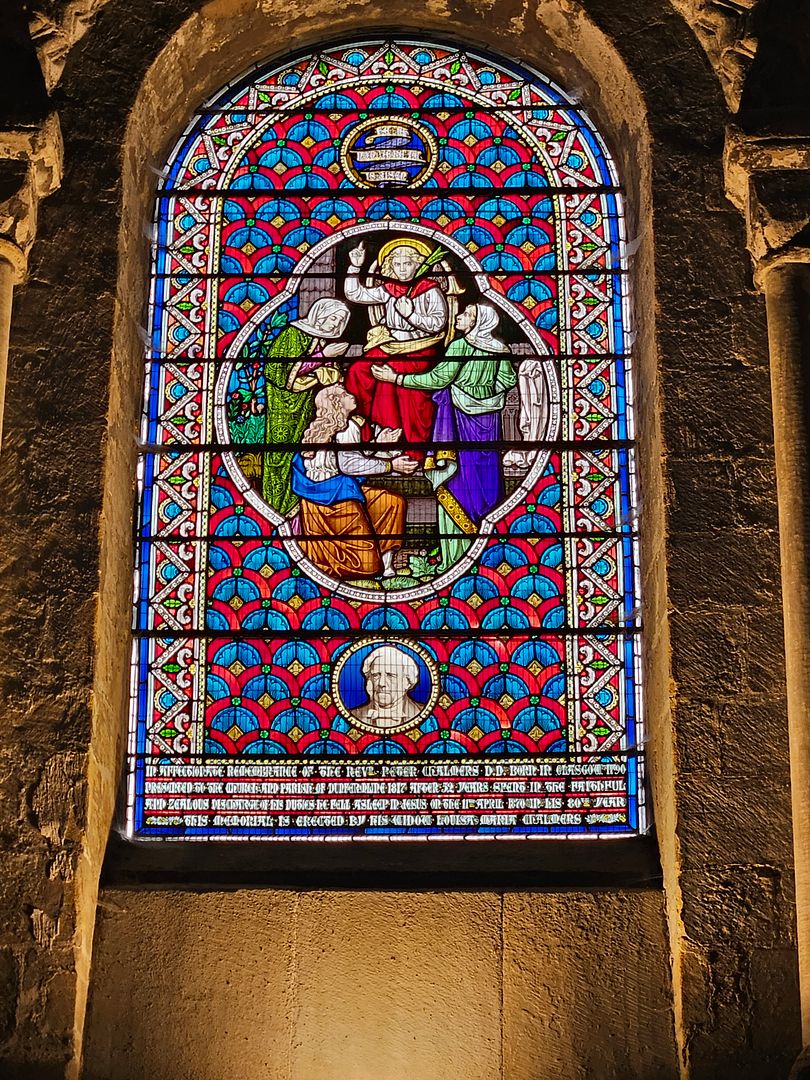
Reverend Doctor Peter Chalmers, 1790-1870

by Dr. Jean Barclay

Peter Chalmers, minister of the Church of Scotland and local historian, was born in Glasgow on September 19th 1790 the only son of Alexander Chalmers, cloth merchant, and his wife Marion Bald.  At the age of sixteen, having done well at school, he went to the University of Glasgow, gaining an MA (or AM) in 1808 and decided to enter the ministry.  He was licensed to preach by the Presbytery of Glasgow in September 1814 and became assistant to the well-known evangelist Rev. Thomas Chalmers (no relation) at St. George`s (Tron) Church. In July 1817 Peter Chalmers was ordained to the Second Charge (or ministry) at Dunfermline Abbey. He arrived just before the removal of the ruins of the old monastic church and the erection of the New Abbey Church on its site in 1818-21 and gave the last sermon in the Auld Kirk in the nave and the first in the New Church. In 1836, on the death of the Rev. Allan MacLean, Chalmers was promoted to the First Charge of the Abbey.

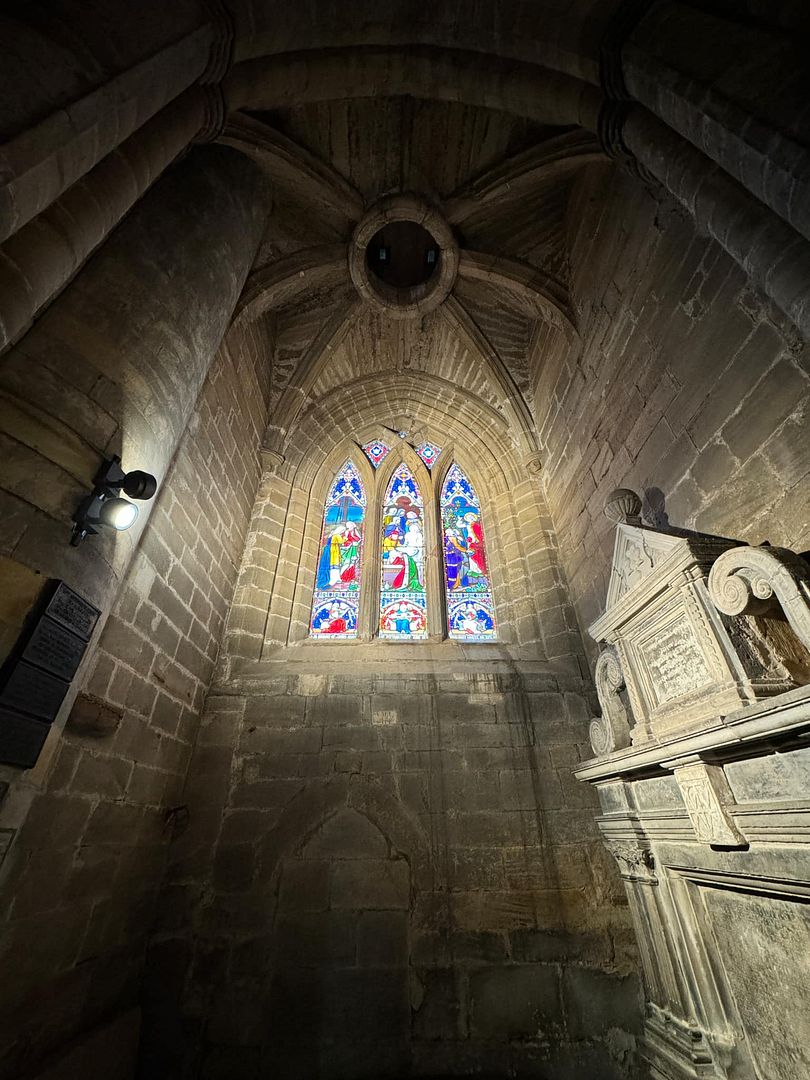
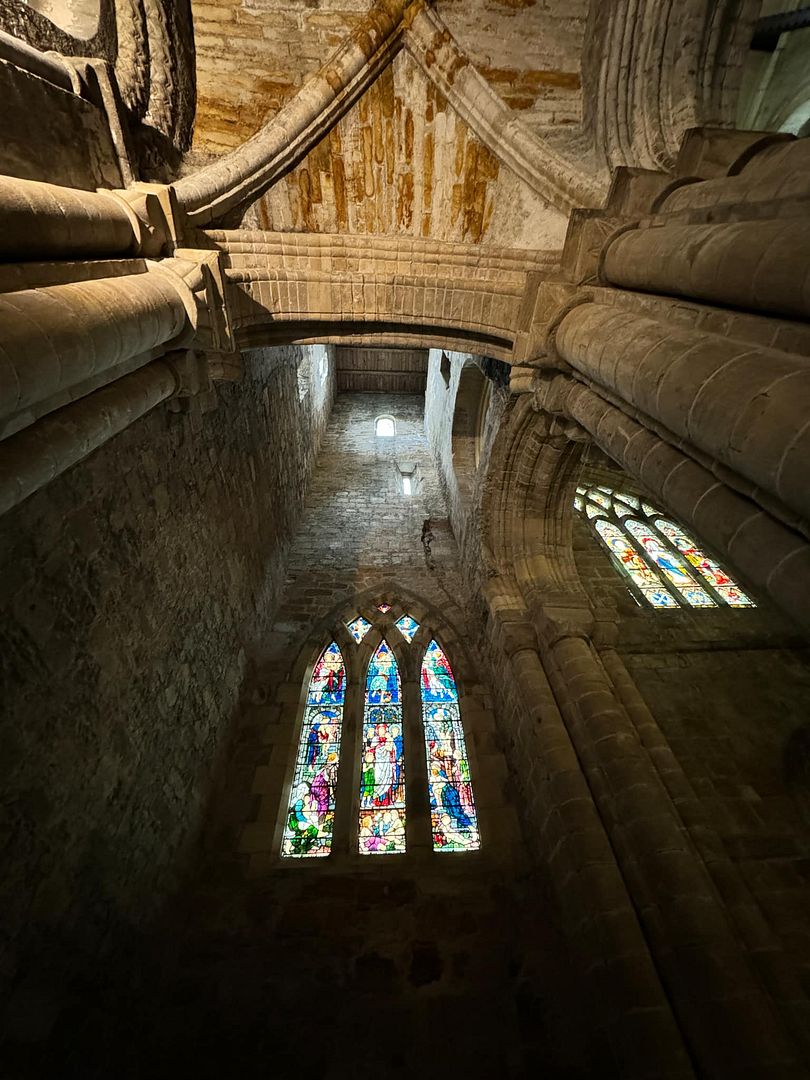
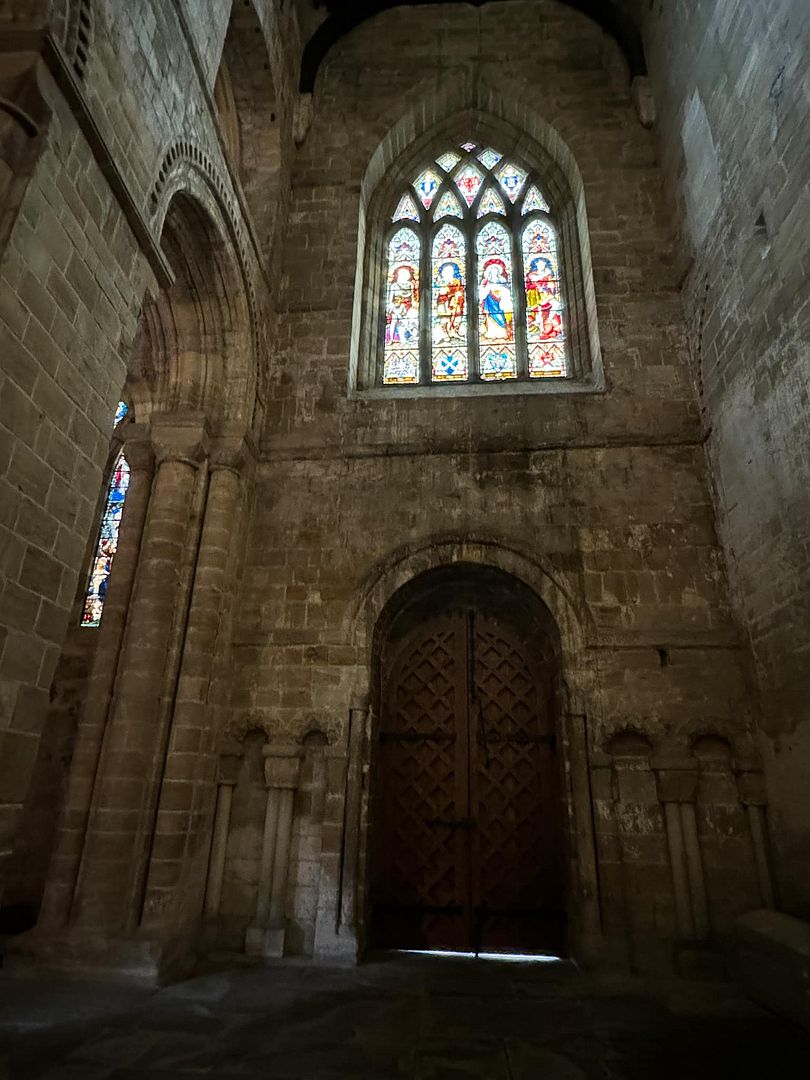
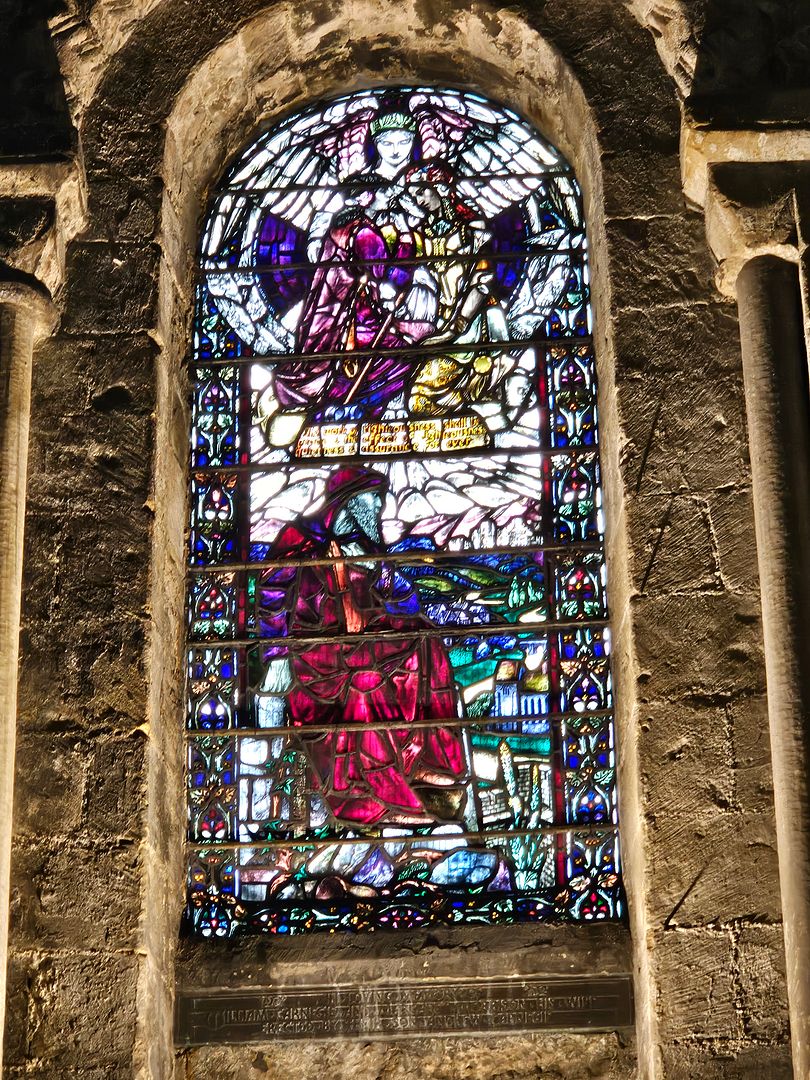
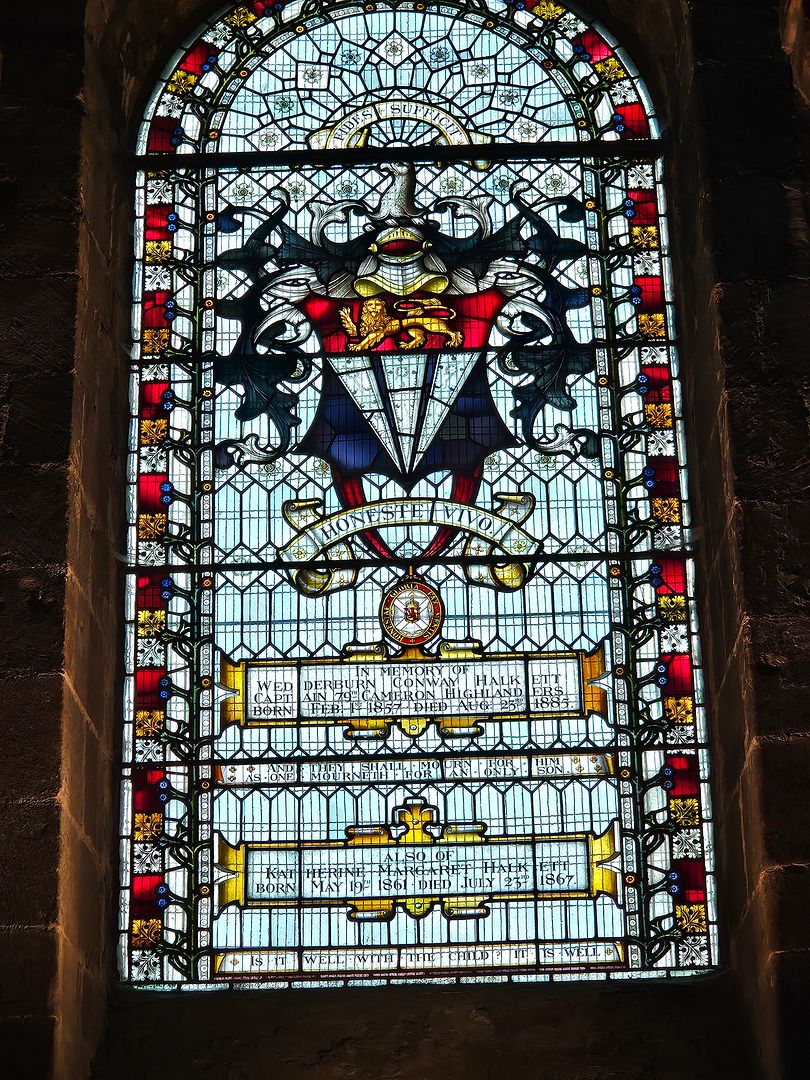
It was not easy to research the stained glass windows in the Abbey and newer section of the church.

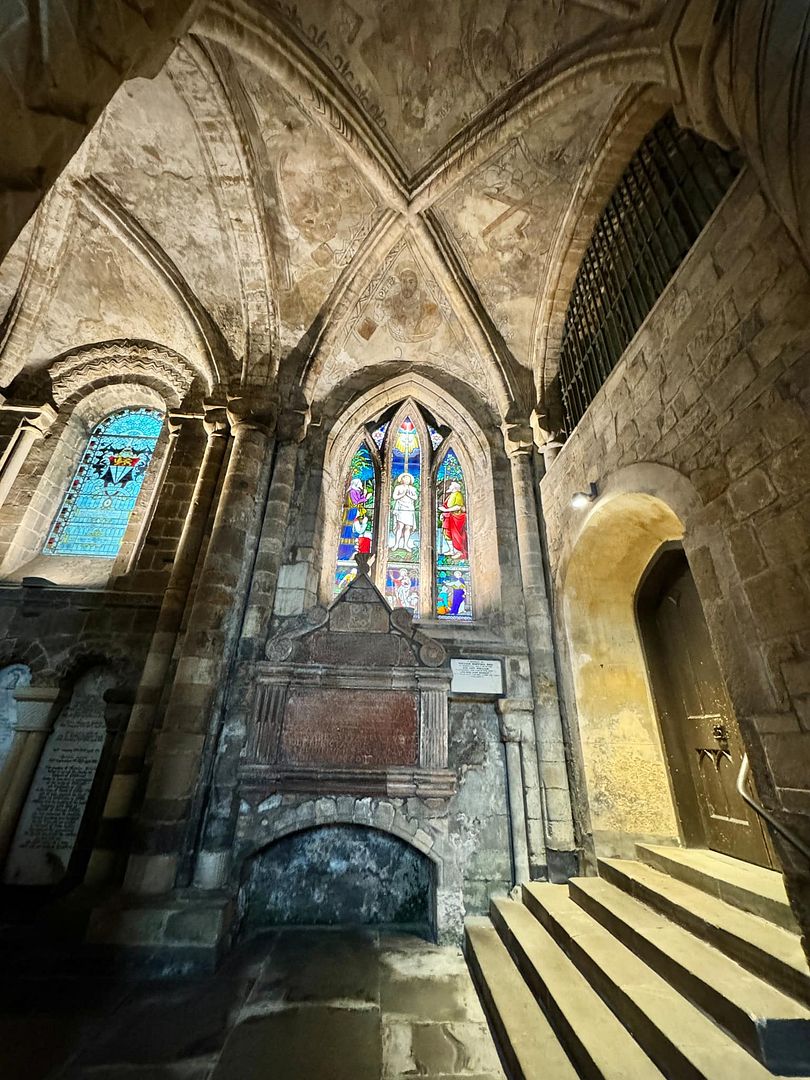
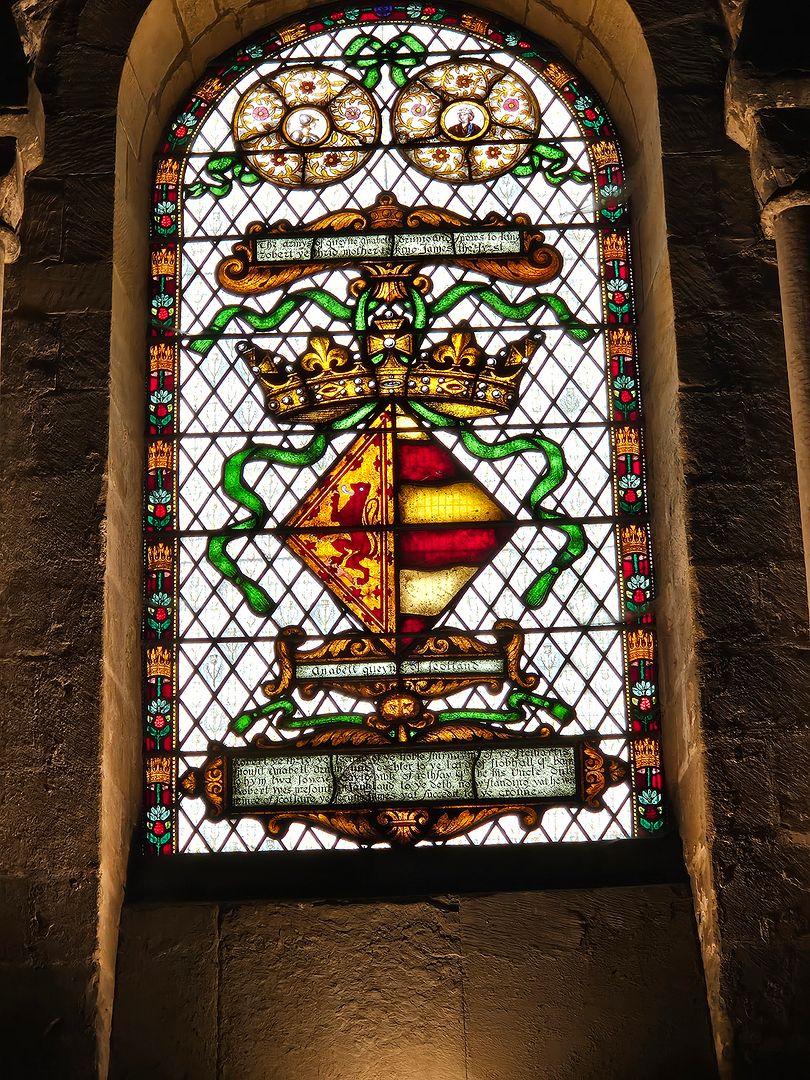
Armorial window
of
Annabella Drummond Queen of Robert III of Scotland .

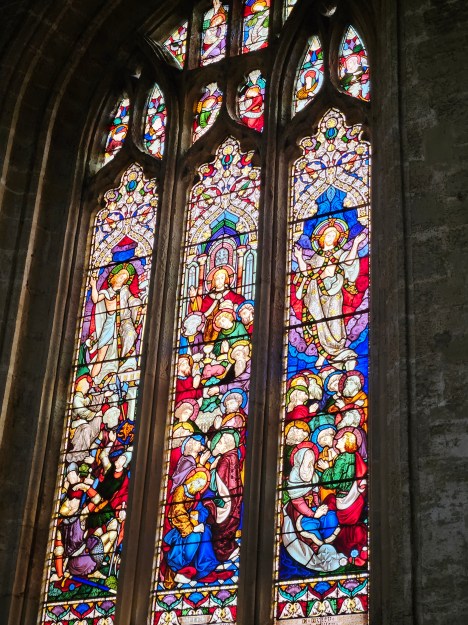
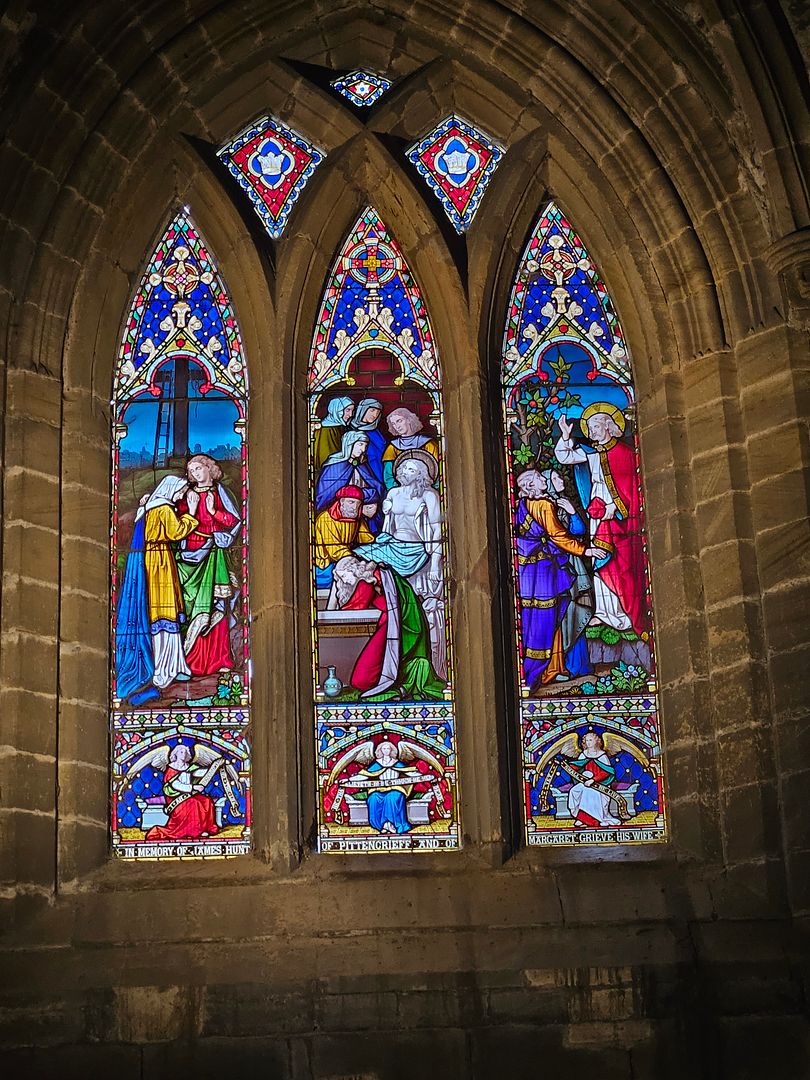
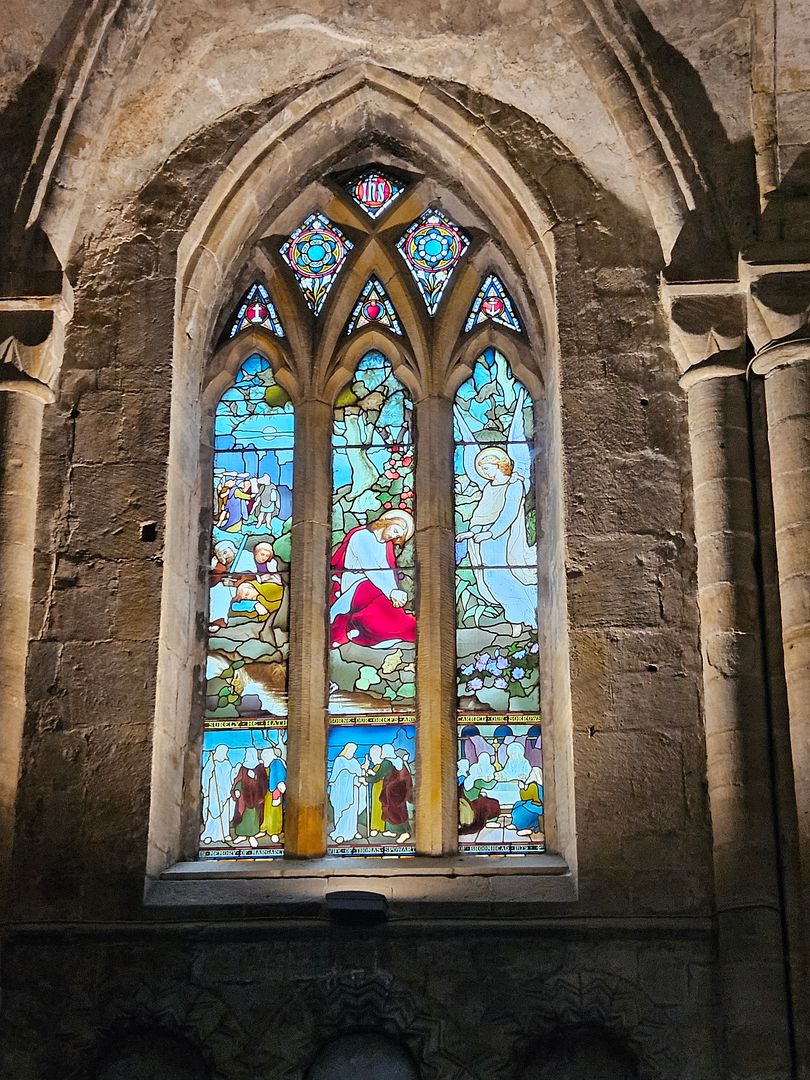
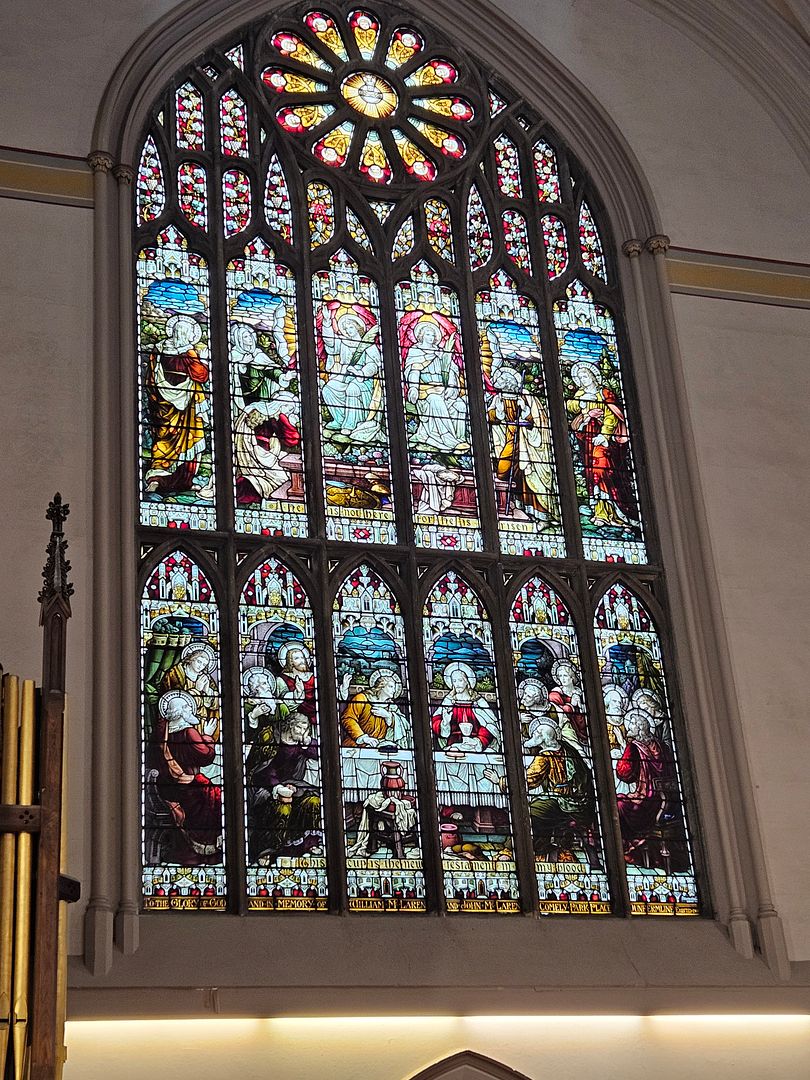
The McLaren Window – Dunfermline Abbey, featuring scenes from the Last Supper and the Resurrection. This stained glass window was erected in 1904 to honour two local brothers William and John McLaren, who stipulated that their own faces should be reproduced among the disciples. Below the Last Supper Window a quote states, ‘This cup is the New Testament in my Blood.’

In the Resurrection Window, Mary Magdalene can be seen kneeling alongside the two Mary’s above a quote that states: ‘He is not here, for he is risen.’ To the right of Mary Magdalene are weapons and armour belonging to a Roman Soldier, including what appears to be the ‘Holy Lance’ otherwise known as the ‘Spear of Destiny…’

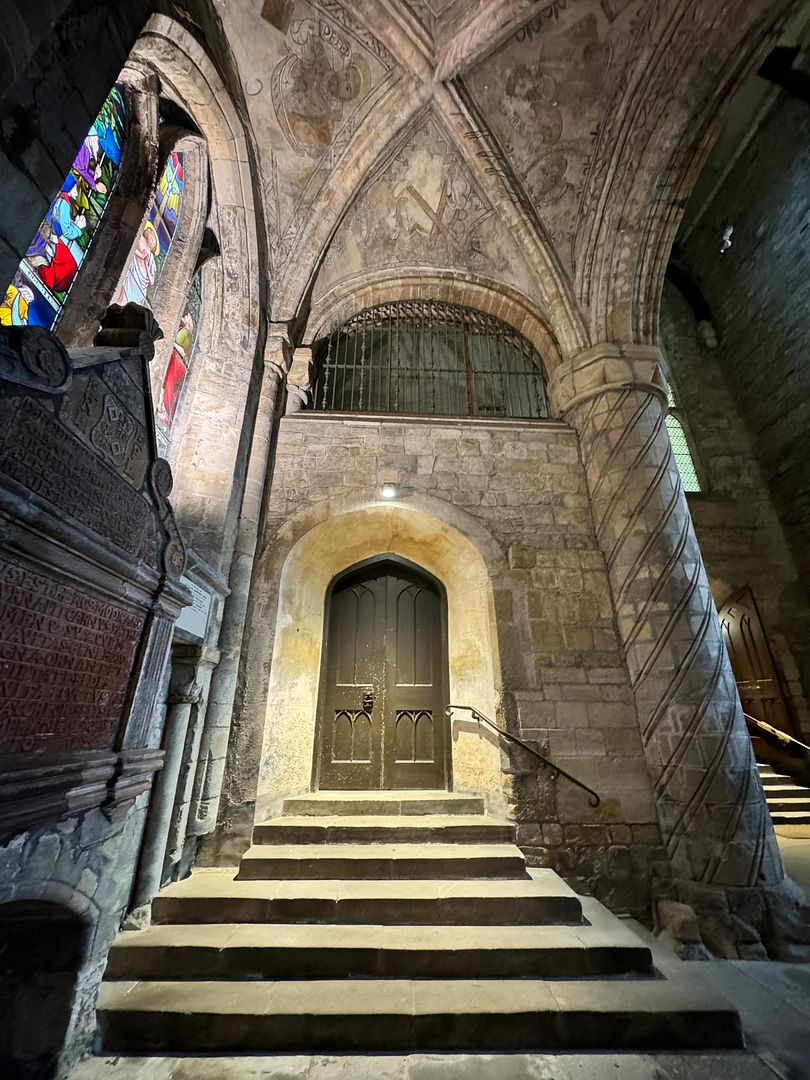
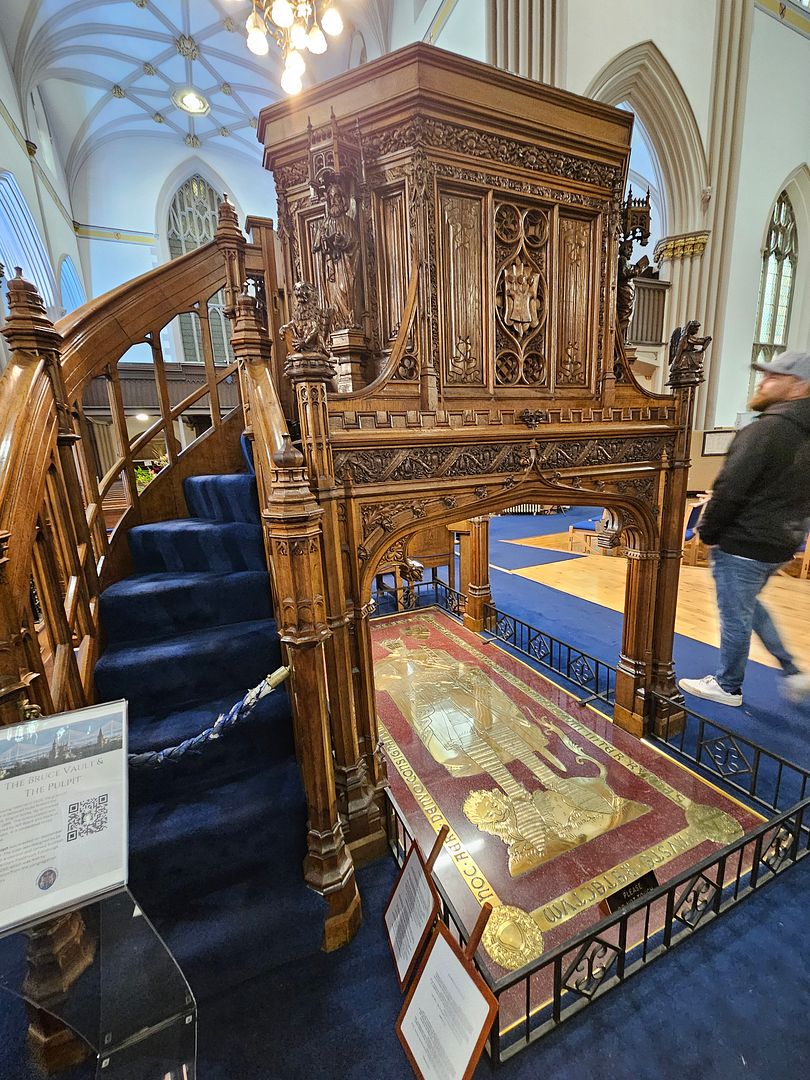
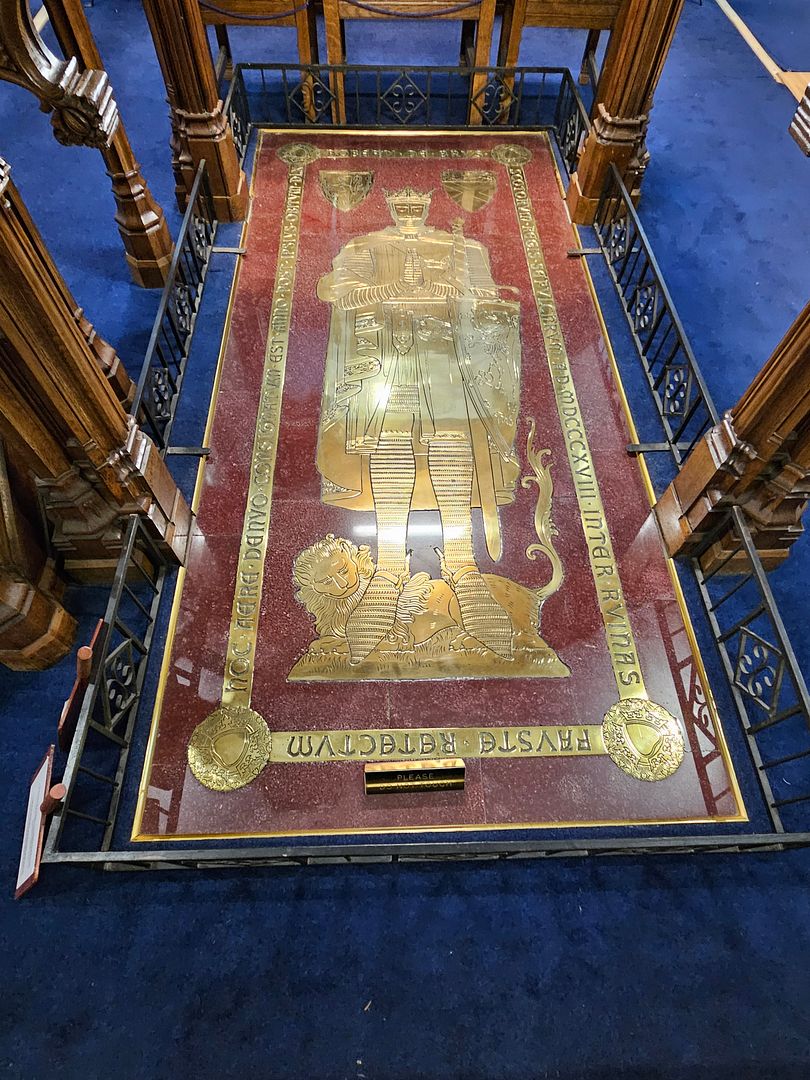
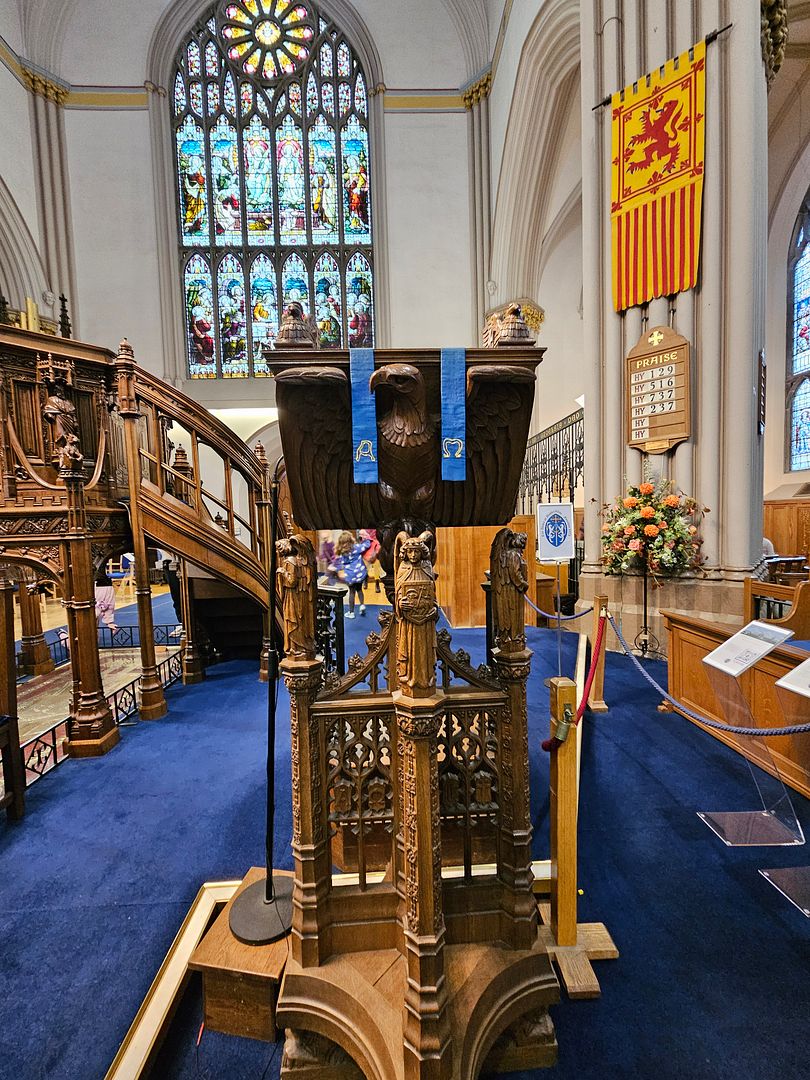
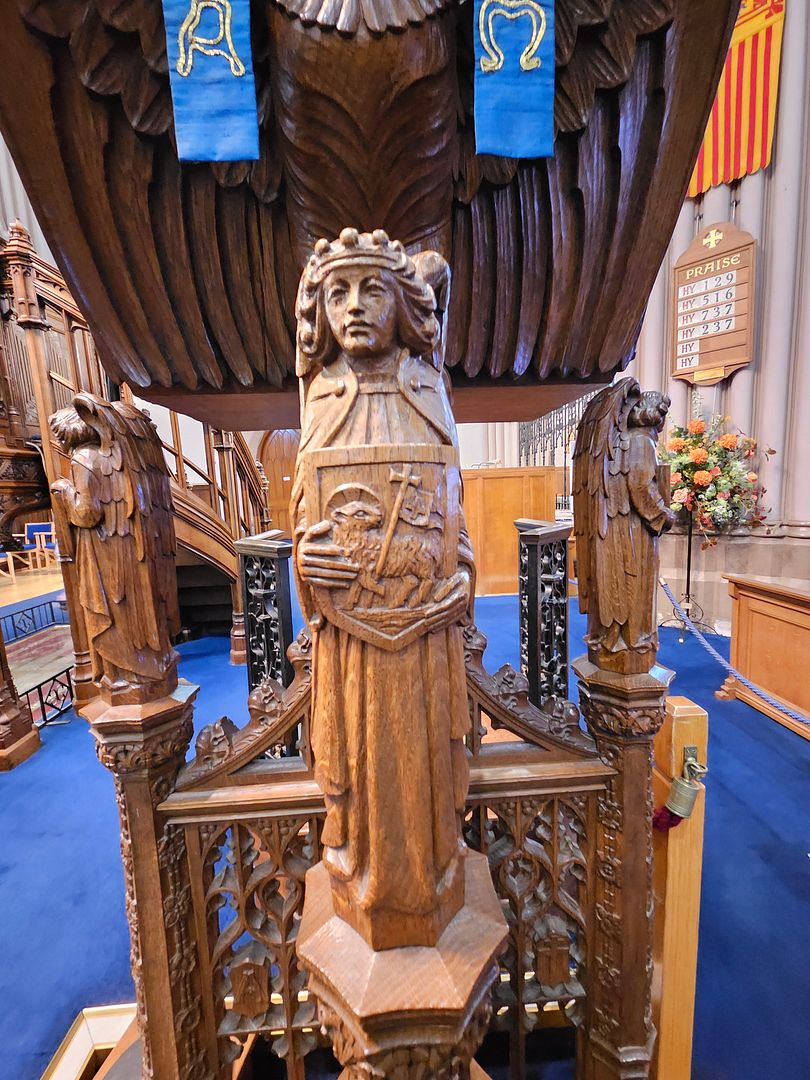
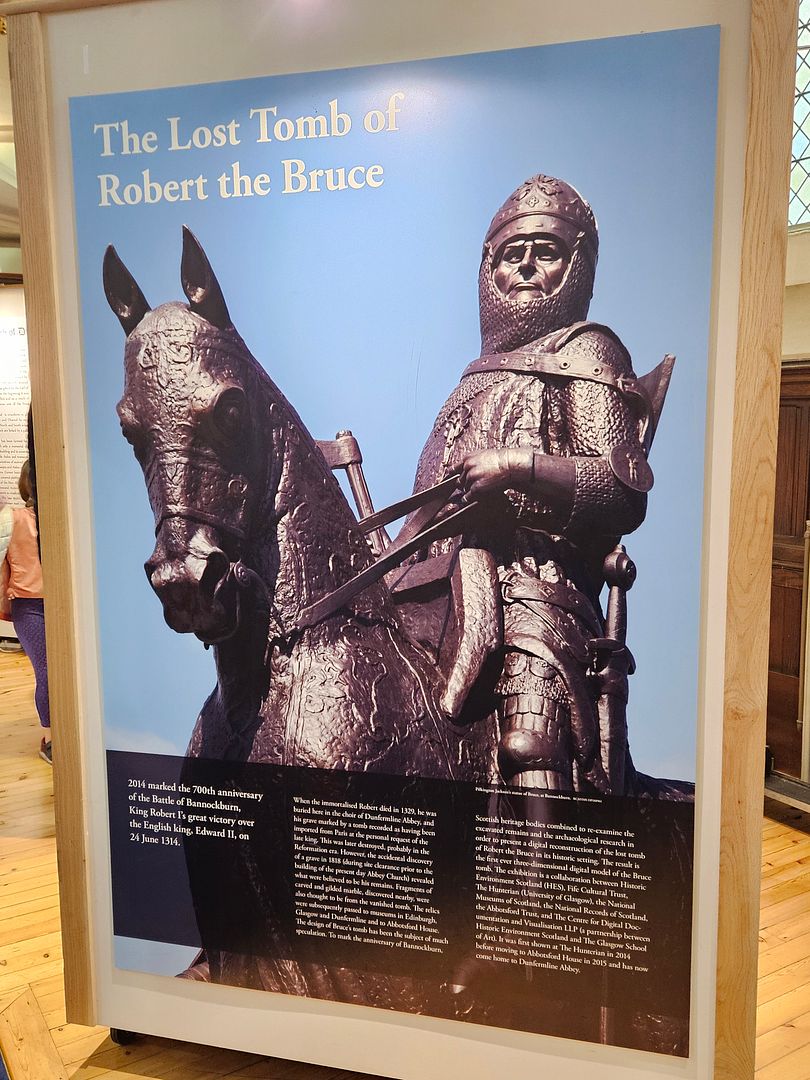
The chancel is such a contrast to the empty, echoing nave; the grave of Robert the Bruce is striking, but it is rather oddly tucked under the pulpit, surrounded by Victorian woodwork, so it isn’t the easiest thing to see closely.

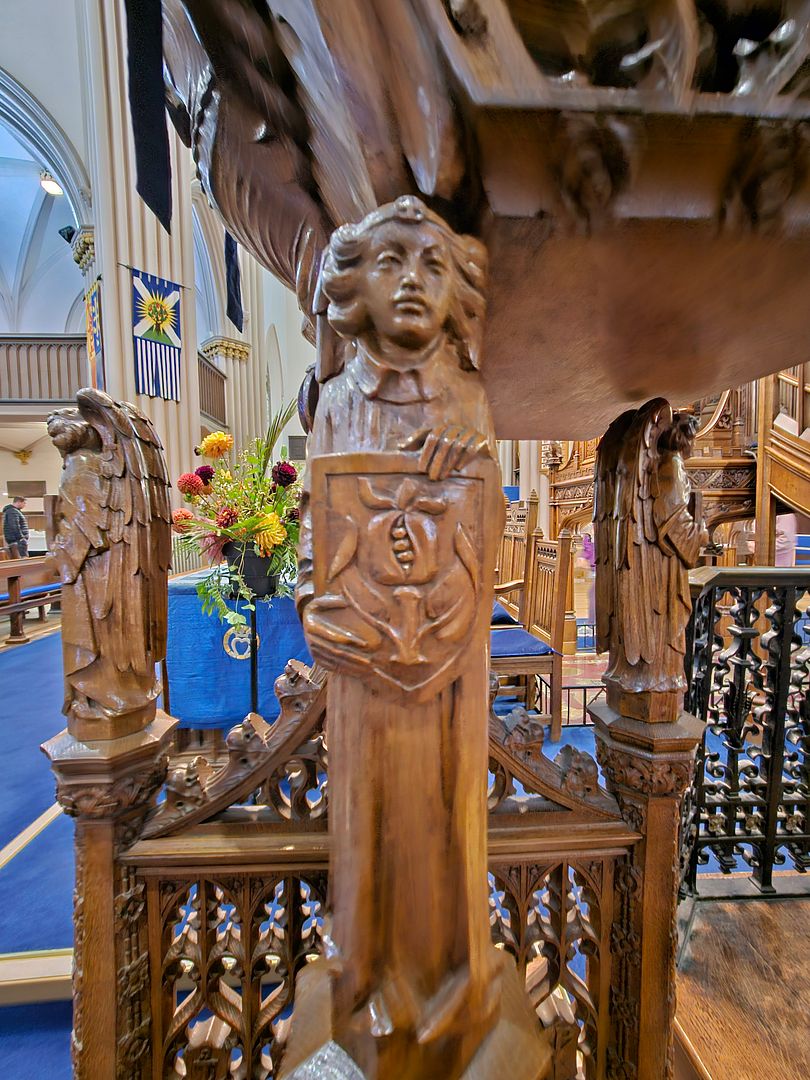
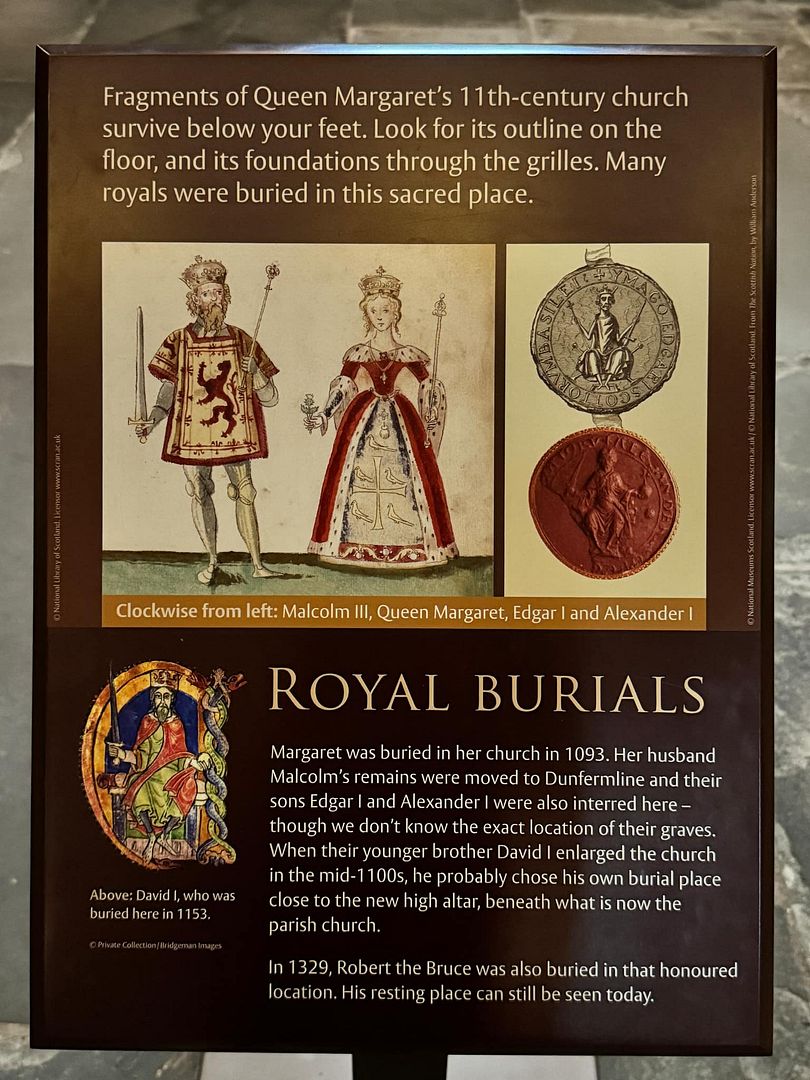
Robert the Bruce was buried, in 1329, in the choir, now the site of the present parish church. Bruce’s heart rests in Melrose, but his bones lie in Dunfermline Abbey, where (after the discovery of the skeleton in 1818) they were reinterred with fitting pomp below the pulpit of the New church. In 1891, the pulpit was moved back and a monumental brass inserted in the floor to indicate the royal vault.


When and if I find more information about some of the windows we photographed I’ll add the information to this post.

On this Saturday the 21st of September we also toured the remains of the castle which will be another post.

It’s always after the fact that I learn so much more about the places we visited. One of the things I didn’t know about Dunfermline is that Andrew Carnegie was born in Dunfermline and the Andrew Carnegie Galleries and Library are in the town.

Back to the present: We are moving into the Martin Luther King Jr. weekend with many folks getting Monday as a holiday in the USA to honor the memory of him. Hope you all have a good weekend.

Skipton to Knaresborough ~ Day 8

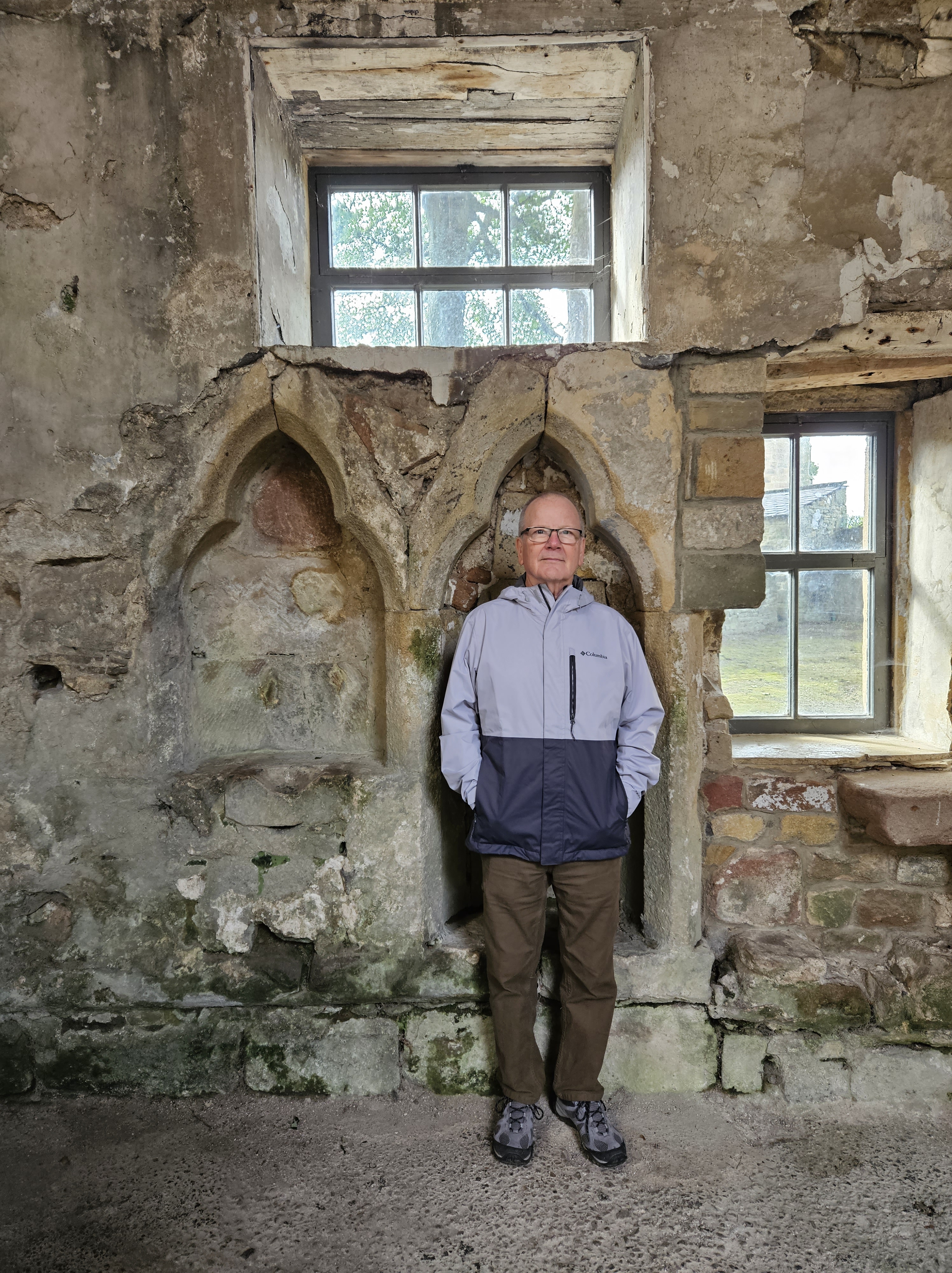
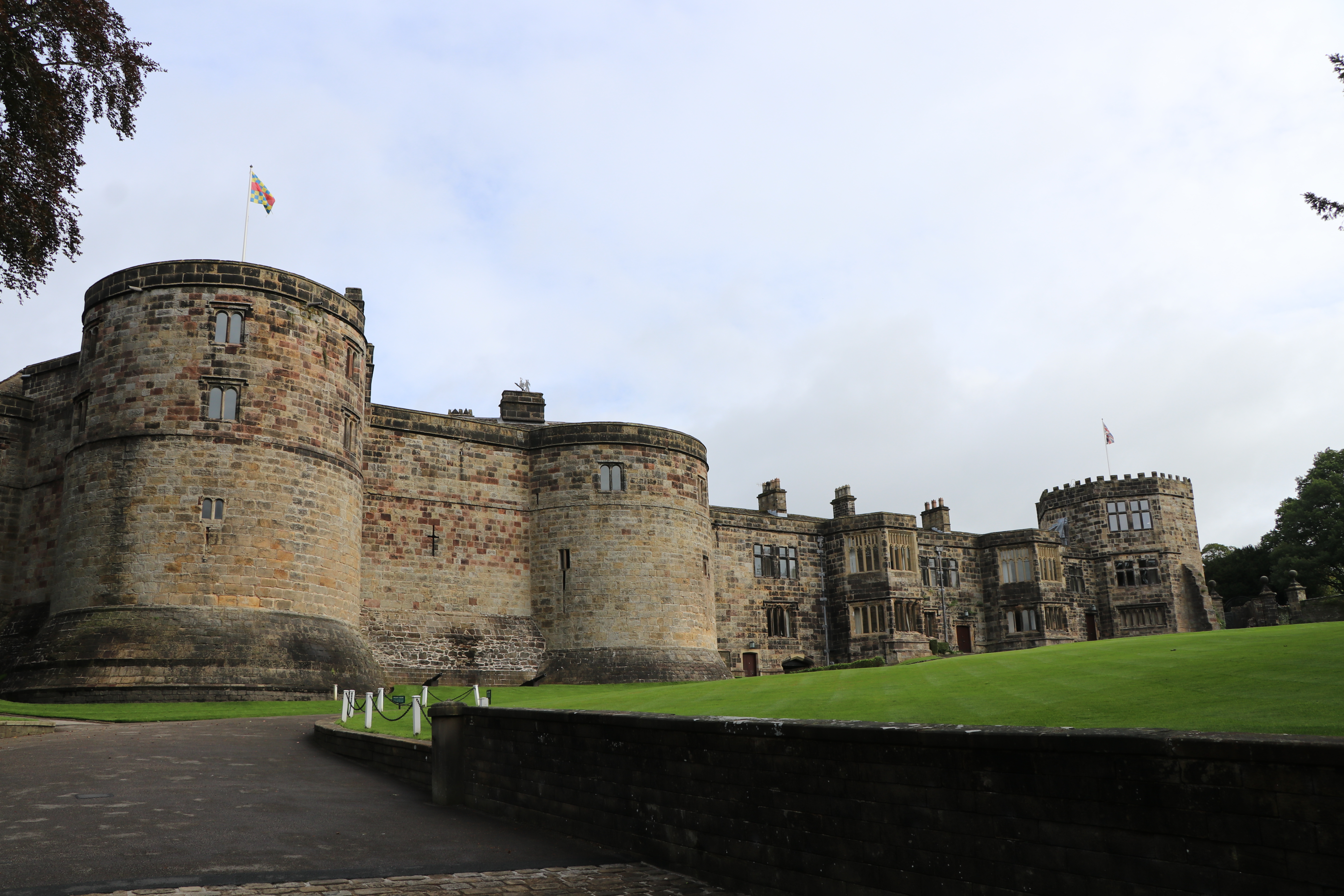
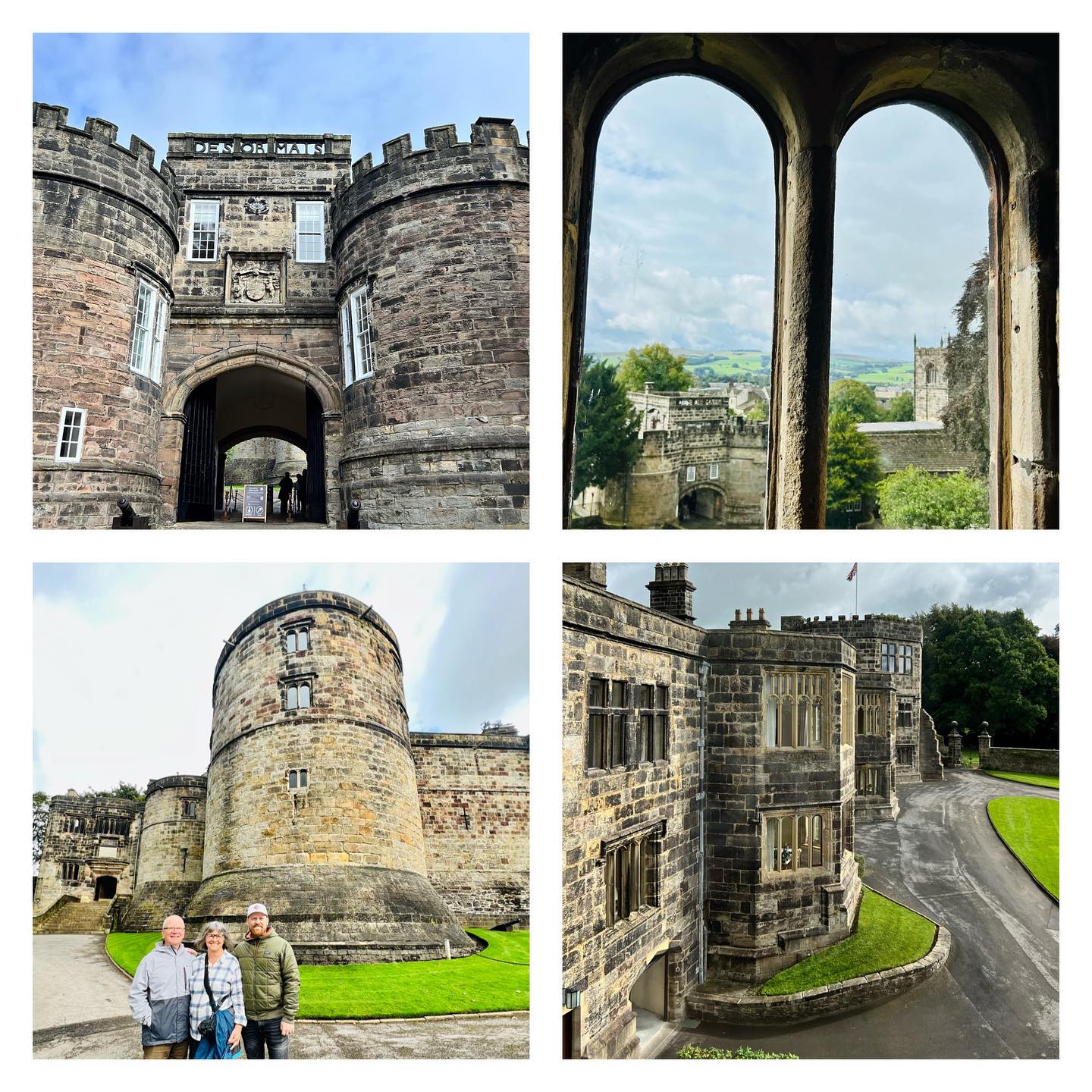
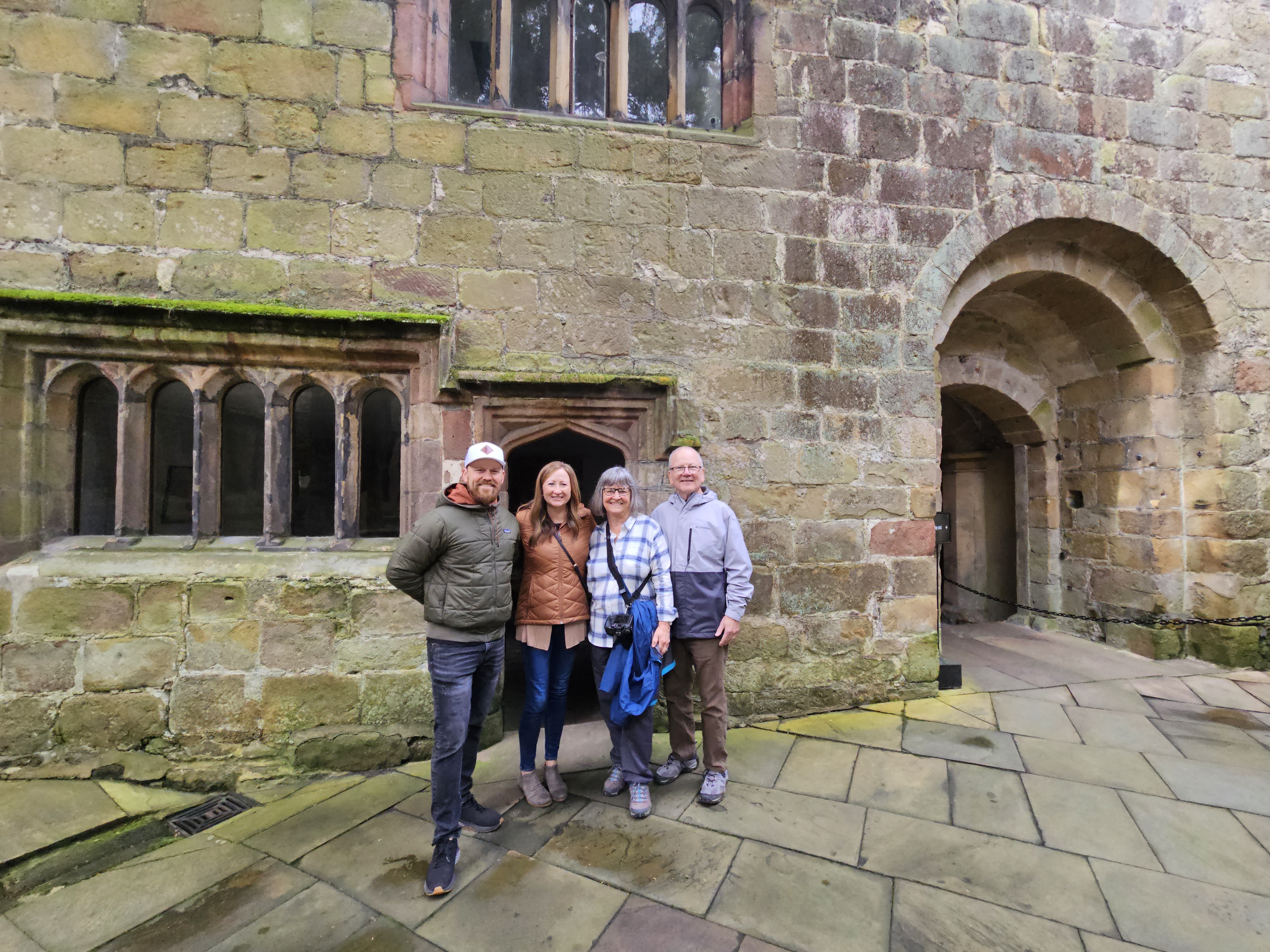
Friday September 22nd was the eighth day of our travels in the UK. Originally we were going to be driving straight to York from Grassington to return our car and take a train to Liverpool. The reason we were traveling to Liverpool was to attend the Liverpool v. West Ham futbol/soccer match which was scheduled for Saturday the 23rd. After we had made reservations for a hotel and flights back to Dublin based on that date the game was switched to Sunday the 24th. We scrambled to make different plans than we had prior to the game change. Instead of spending an extra night in Liverpool we decided to spend Friday night in Knaresborough. On the way to Knaresborough we stopped in Skipton to see the castle.

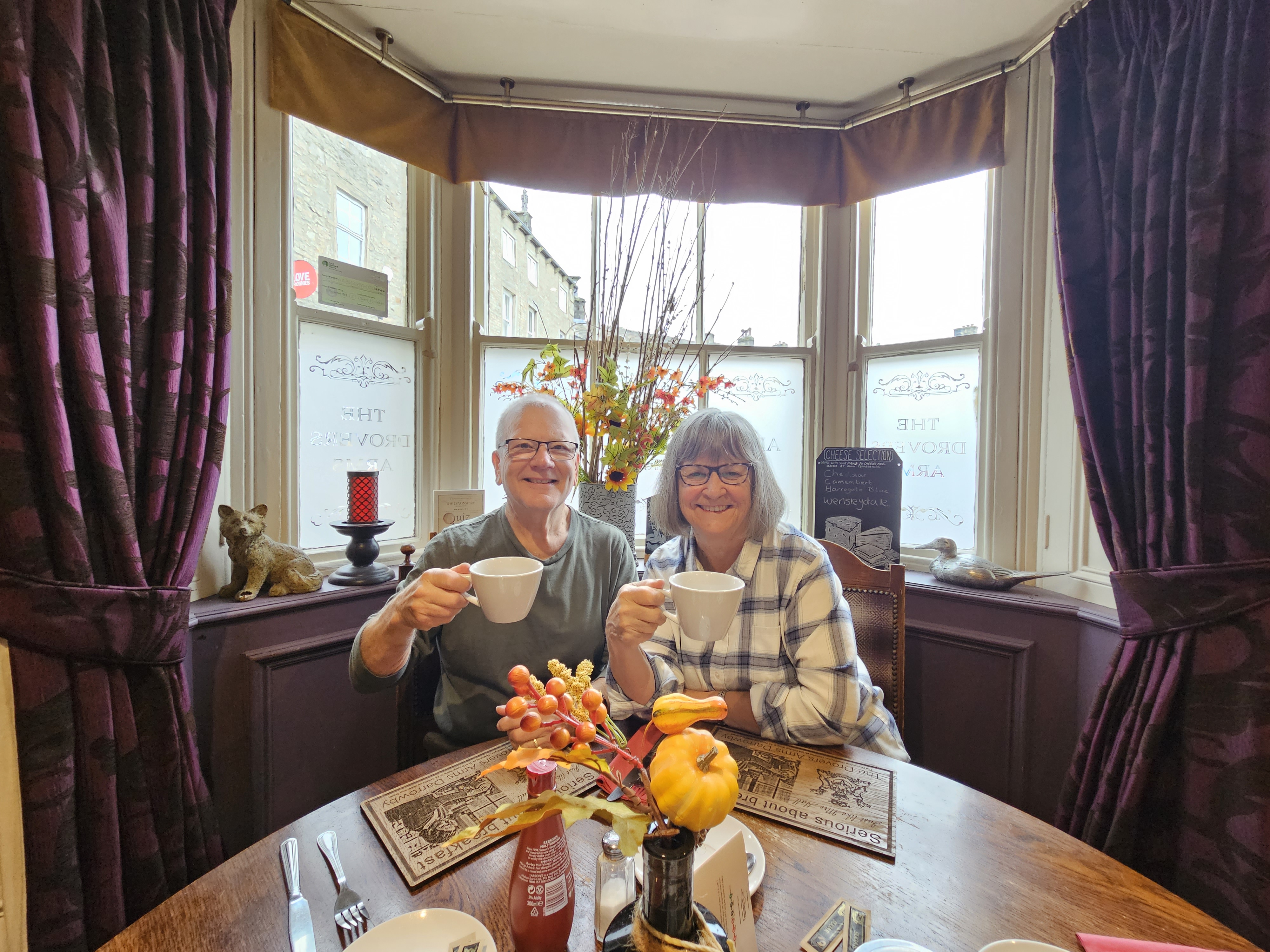
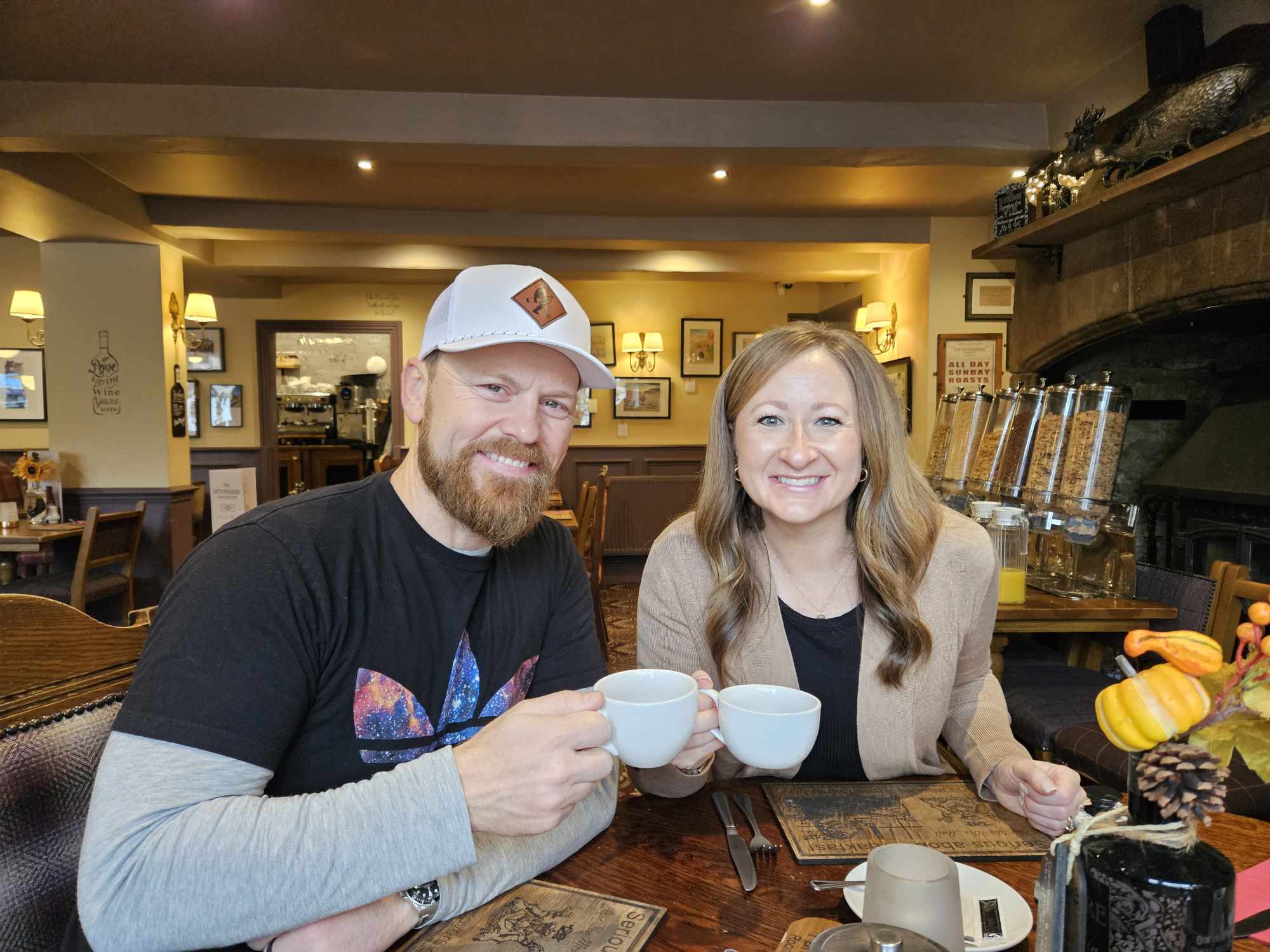
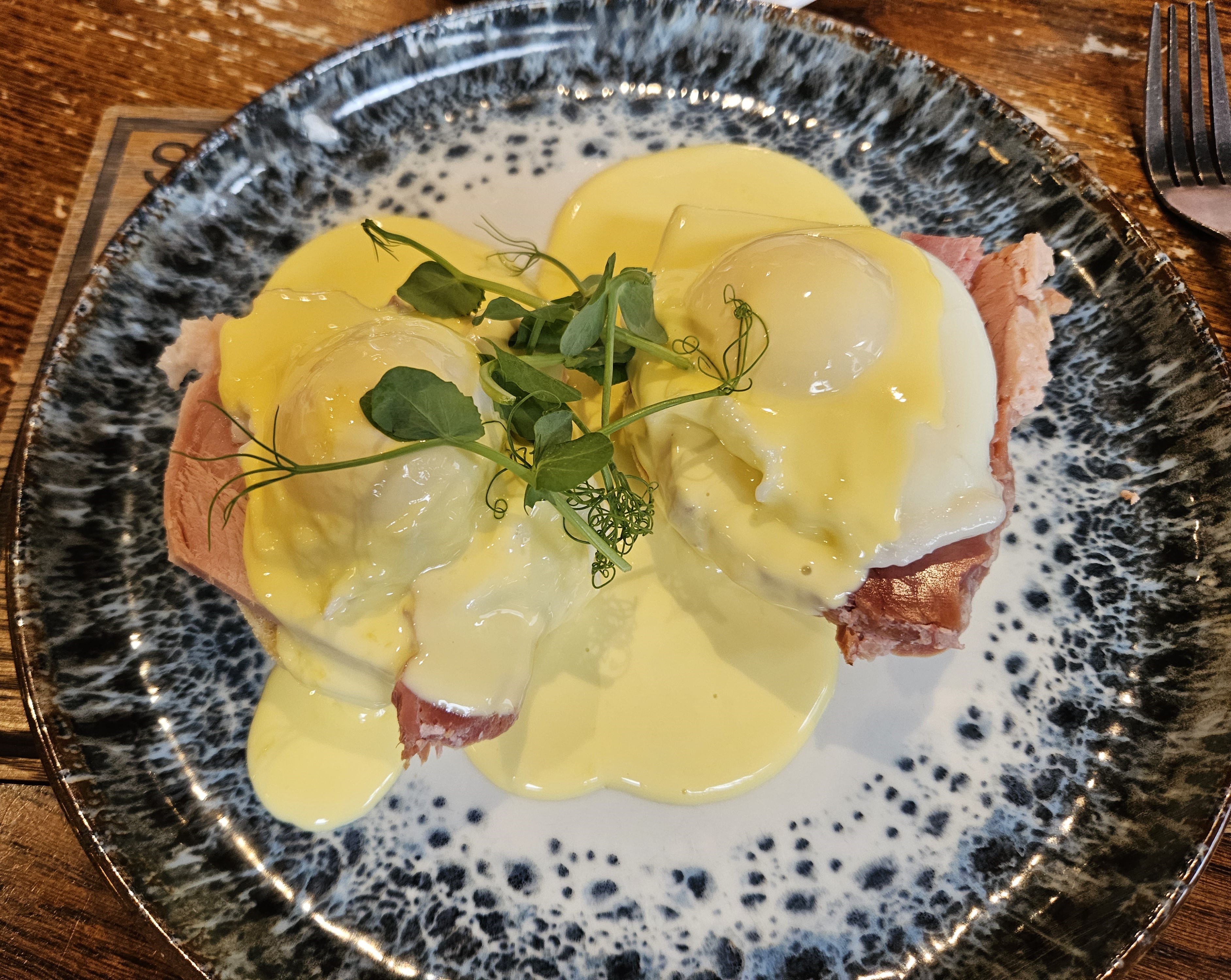
Before we packed up and checked out of the Devonshire in Grassington we enjoyed breakfast.

Breakfast was very good each of our mornings here.

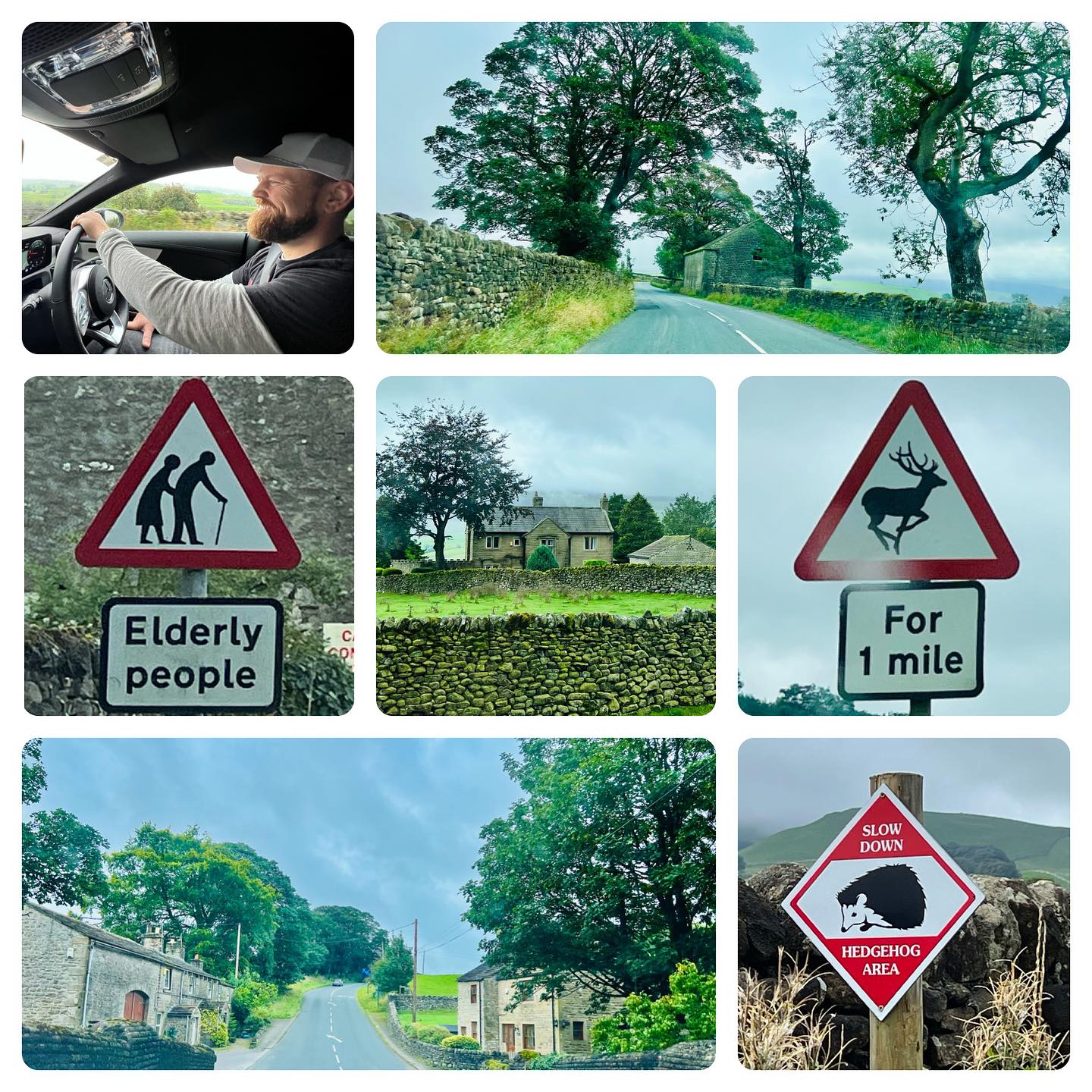
On the road to Skipton Laura managed to get snaps of all these great road signs. We don’t see Hedgehog area signs on any roads we travel in the USA.

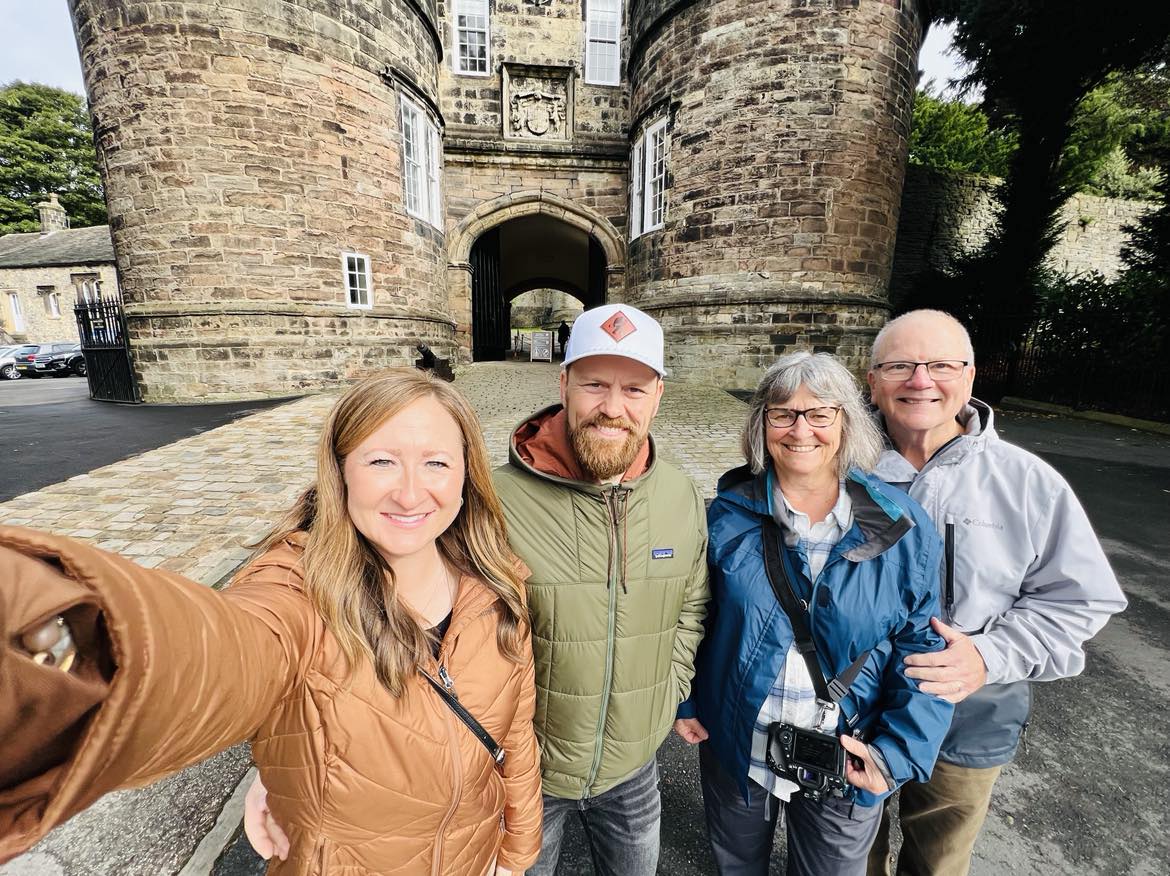
We had reservations for the castle and the castle car park.

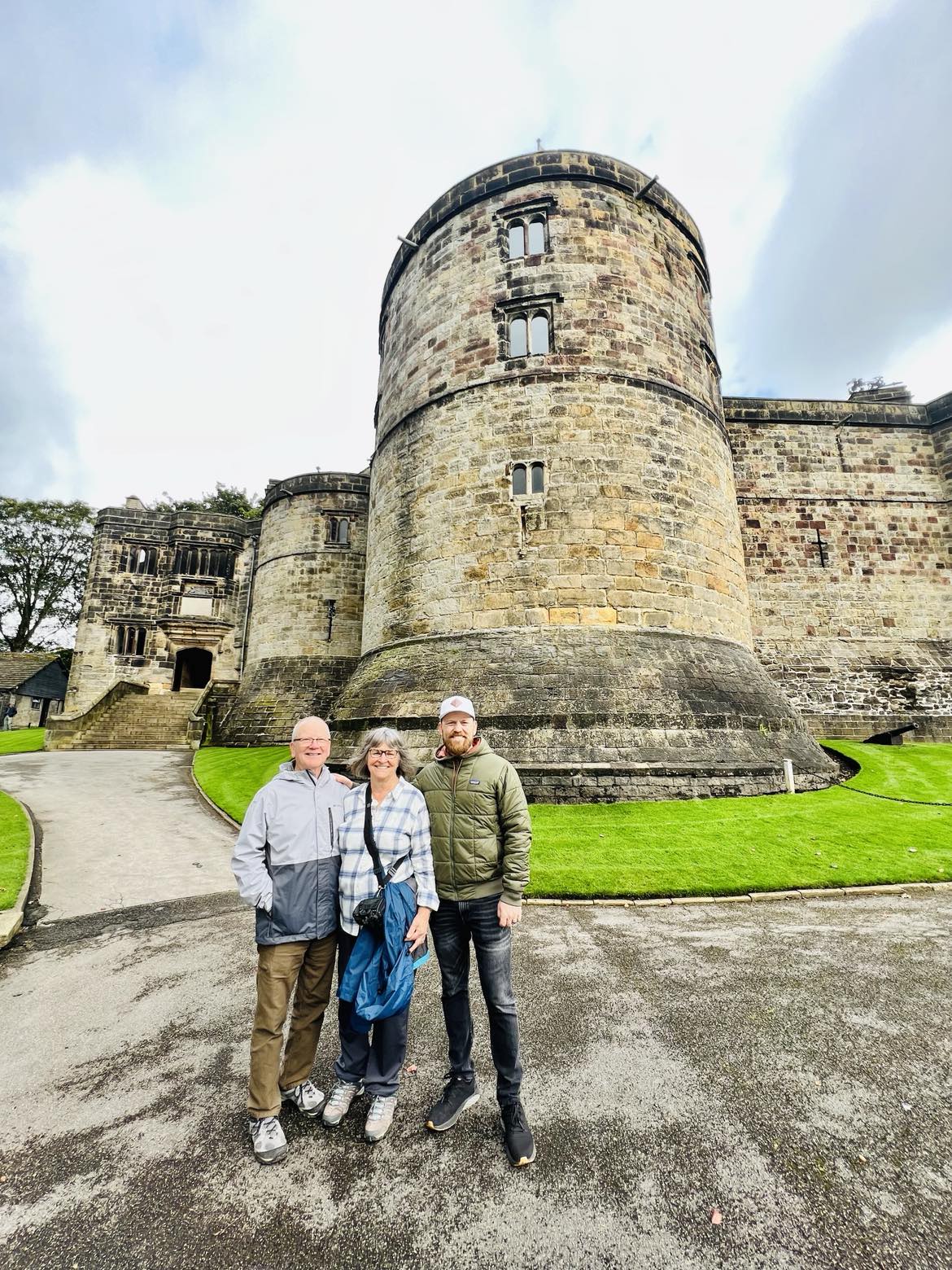
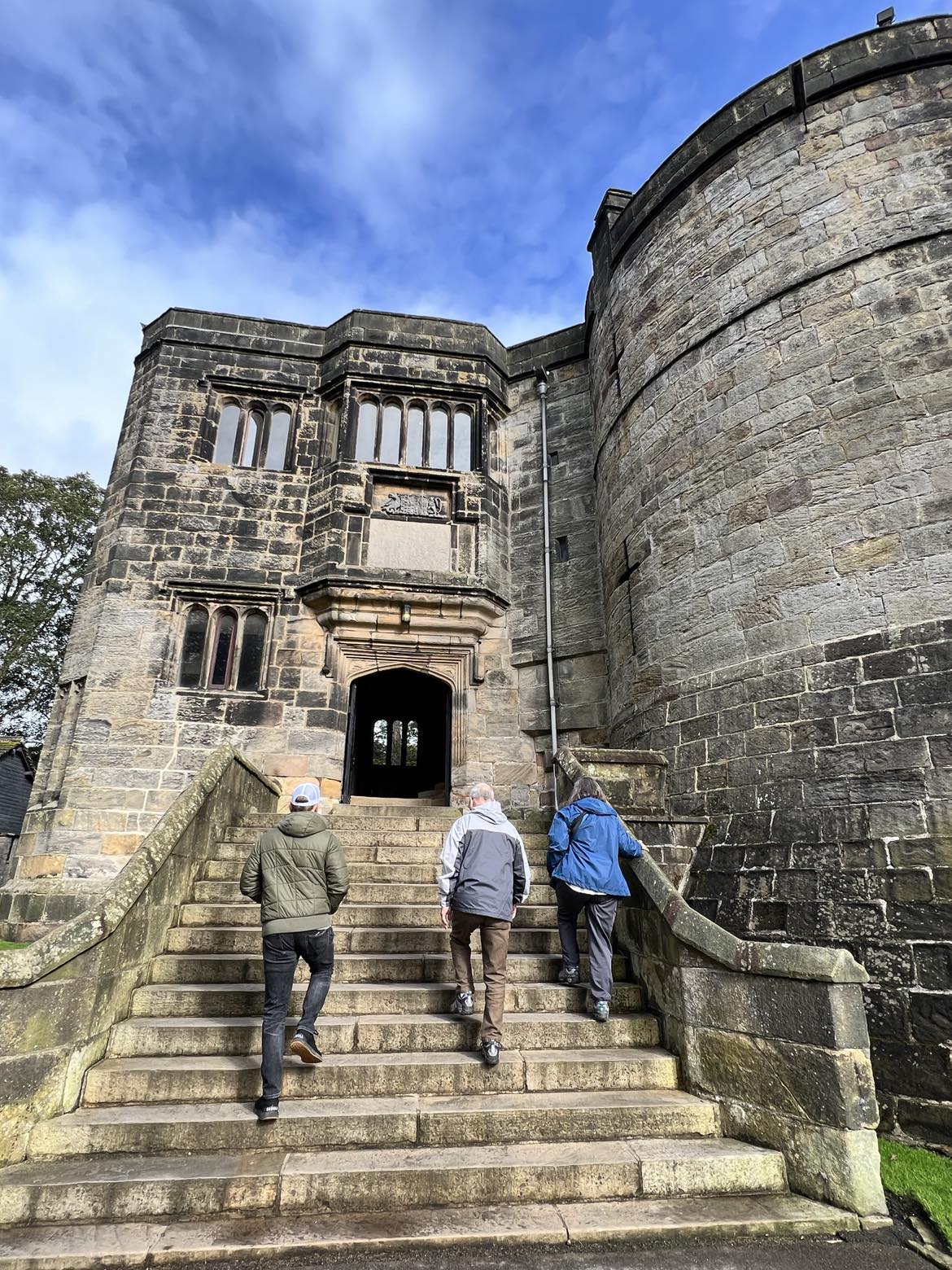
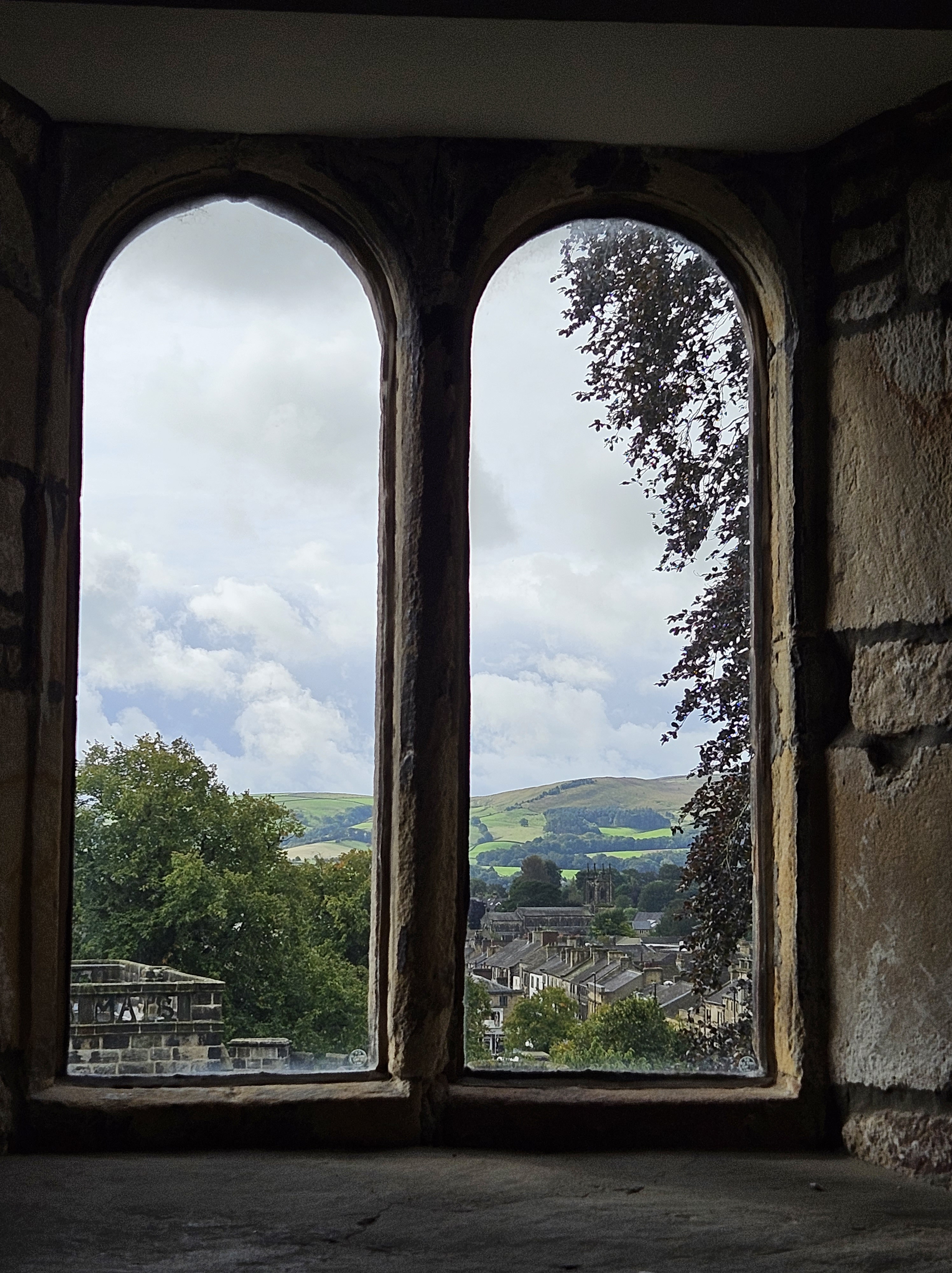
Over 900 years old, Skipton Castle is one of the most complete and best preserved medieval castles in England. If you are interested in the history of this castle follow this link.

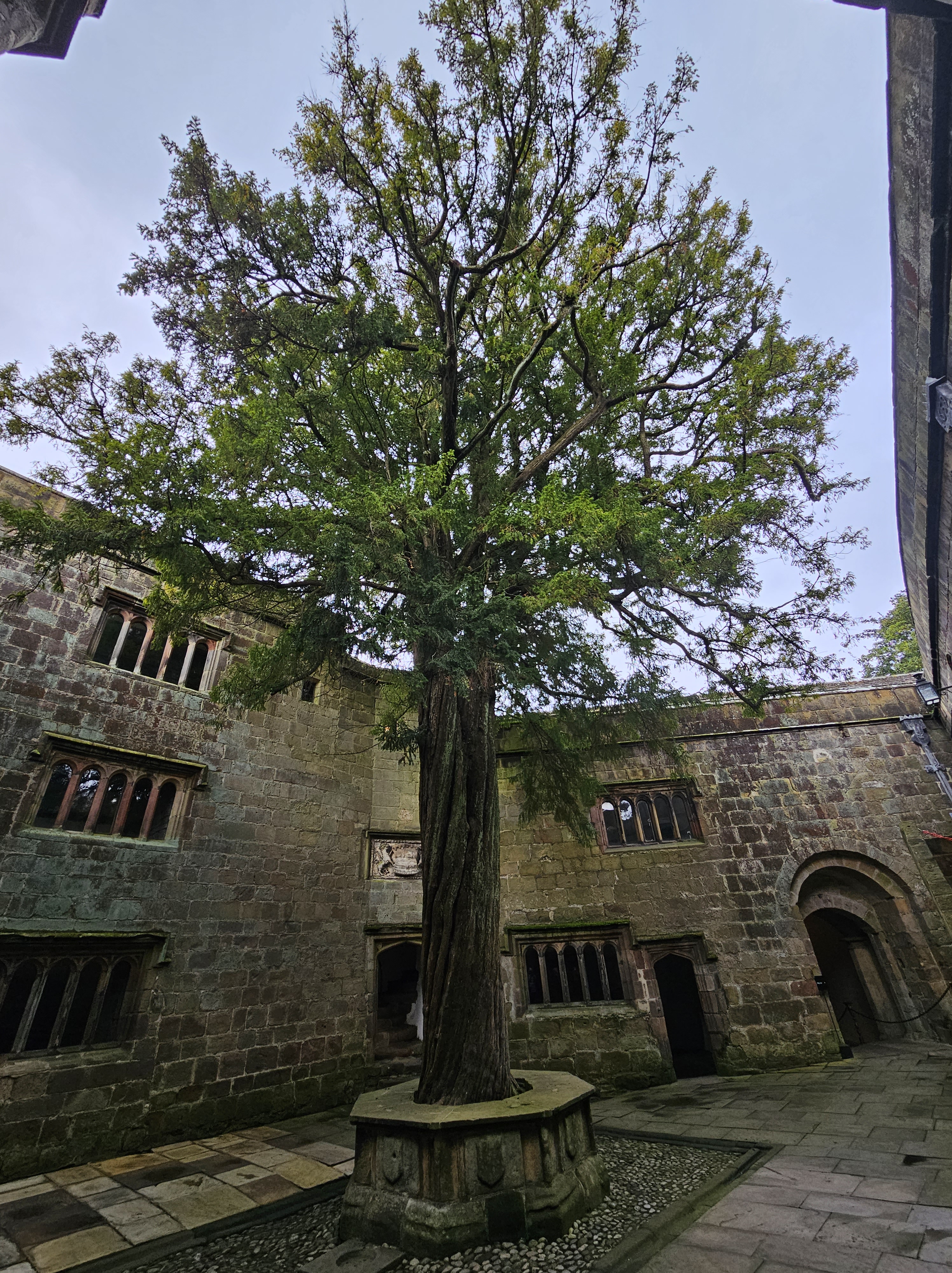
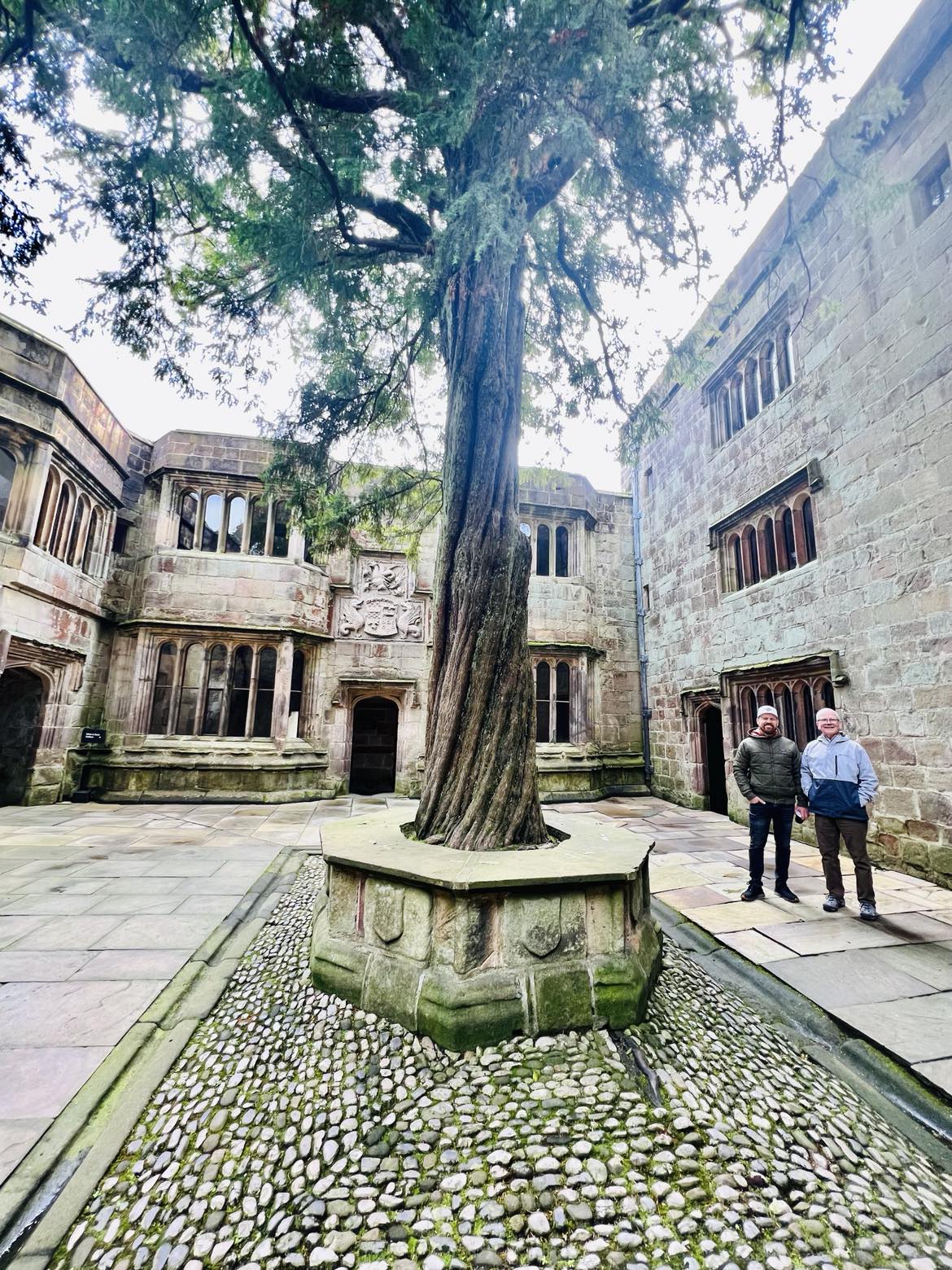
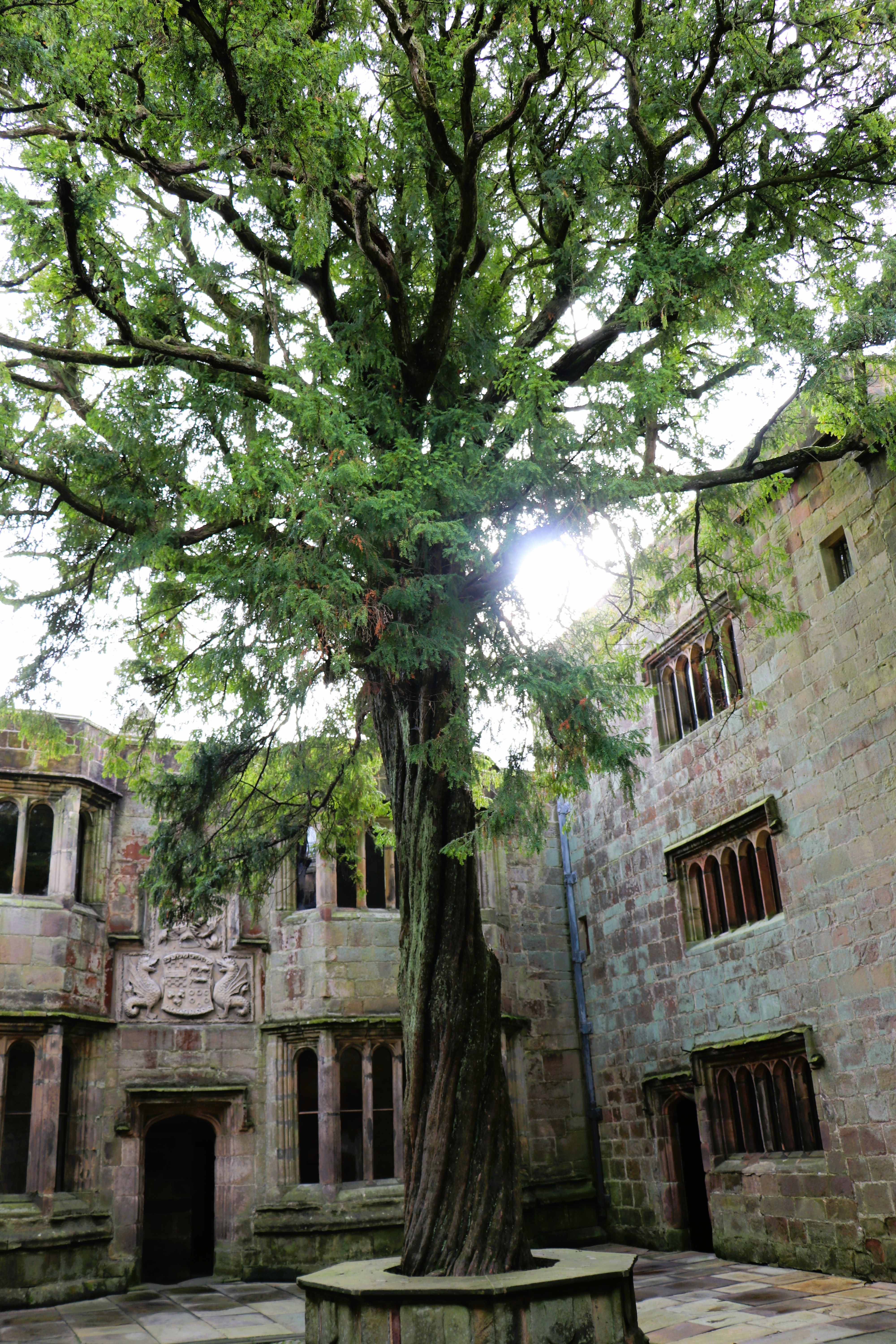
The ancient Yew tree in Conduit Court.

Lady Anne Clifford (1590-1676)
Born at Skipton Castle, 30th January, 1590, the daughter of George Clifford, she was the last Clifford to own Skipton Castle. She fought equally tenaciously for her rights and for the King’s cause in the Civil War, when Skipton Castle withstood a three years siege.

Lady Anne was also remarkable for the extensive post Civil War restoration work on her Castles. In 1659 she planted the yew tree in the central courtyard to mark the Castle’s repair from its Civil War damage.

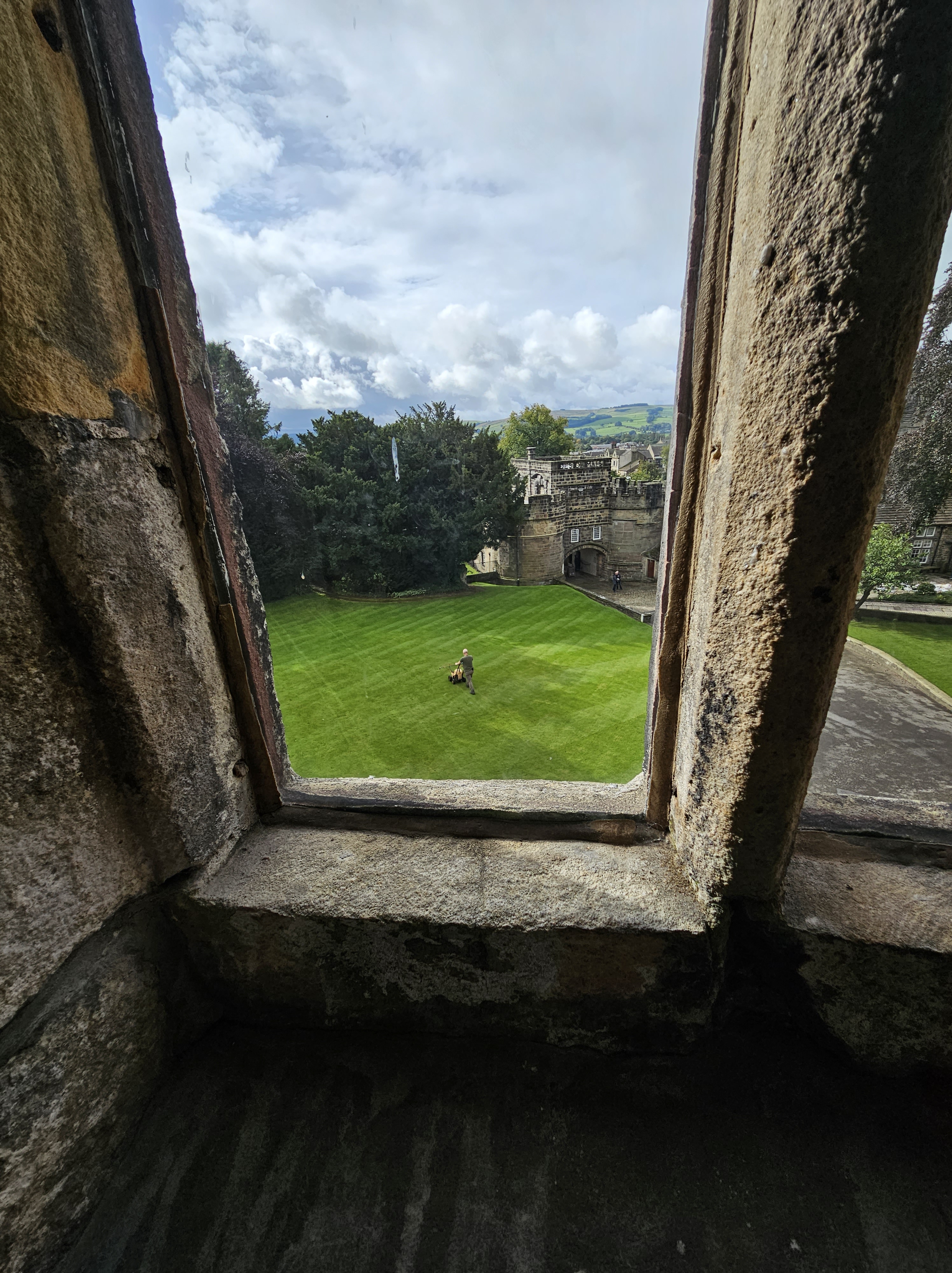
The beautiful Conduit Court where a 350-year old Yew tree planted by Lady Anne Clifford still survives today

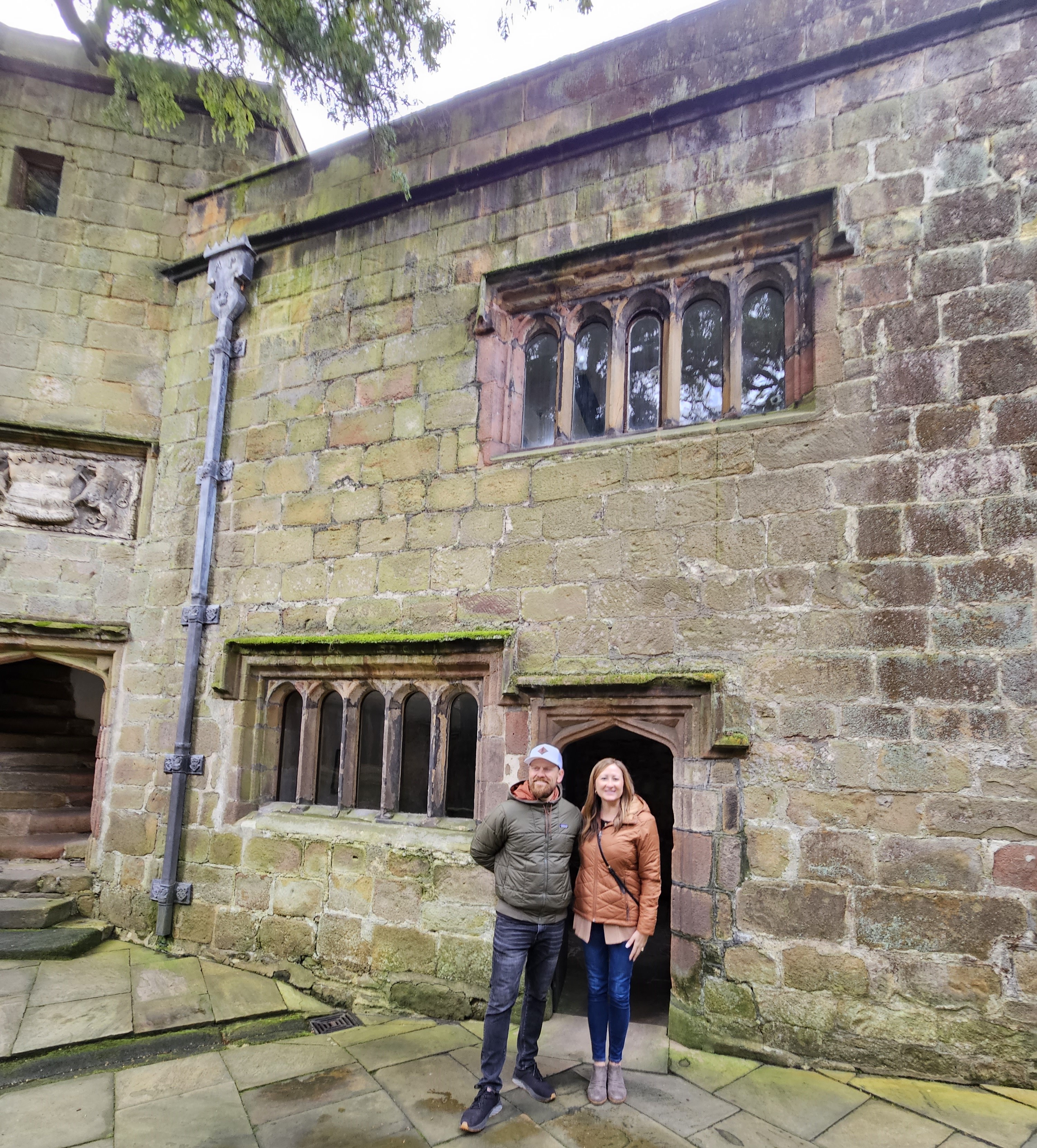
We enjoyed our time here especially since we were early enough to enjoy the castle mostly on our own.

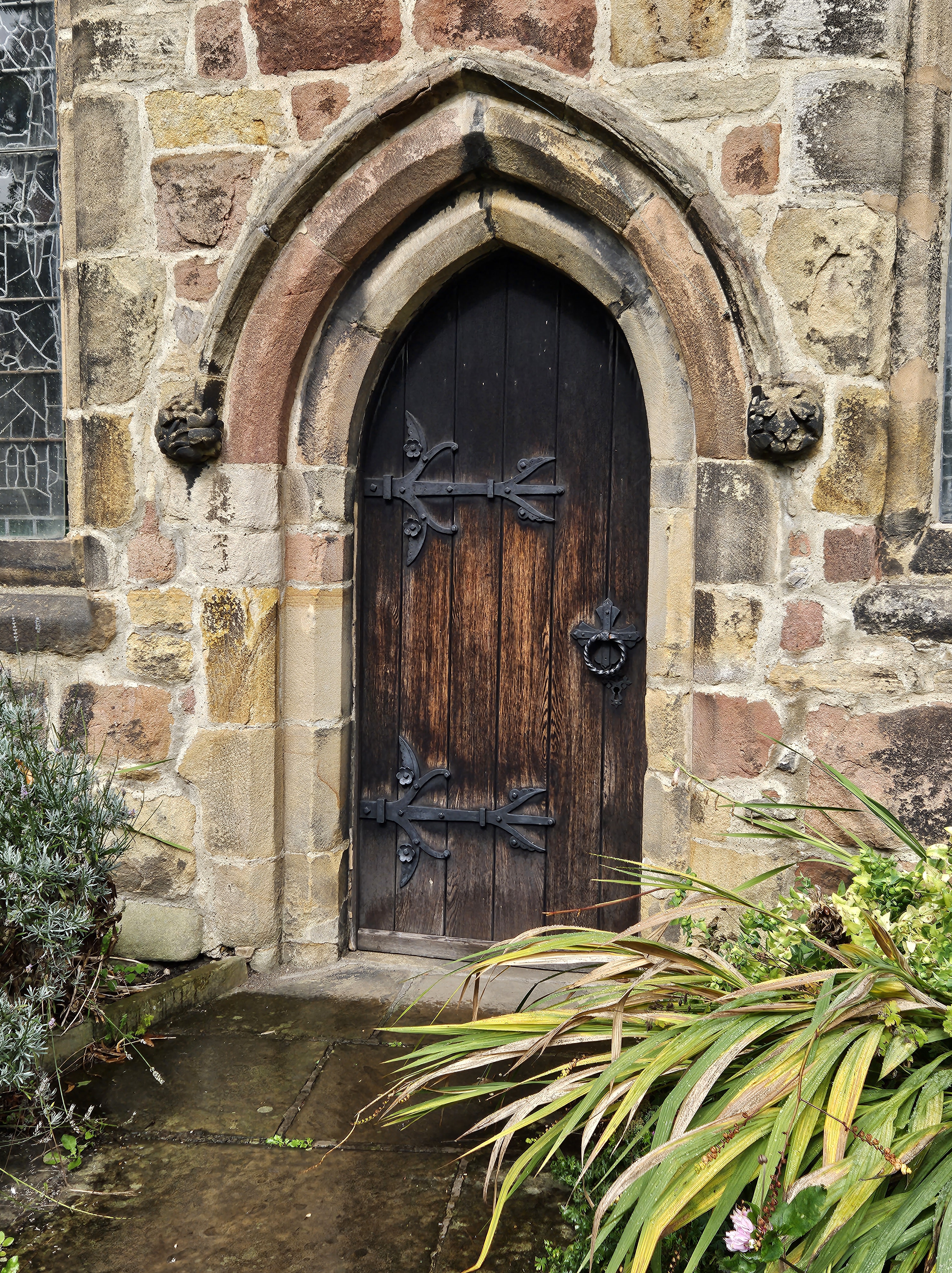
This door called out to me at Holy Trinity Church in Skipton. Before we left Skipton we popped into the church.

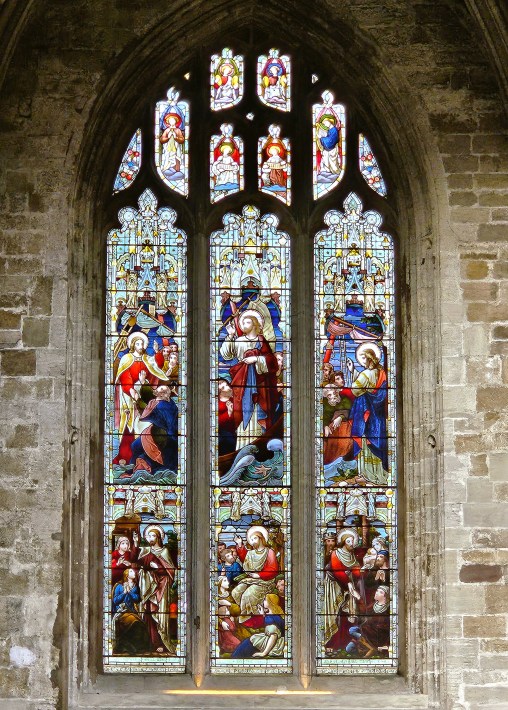
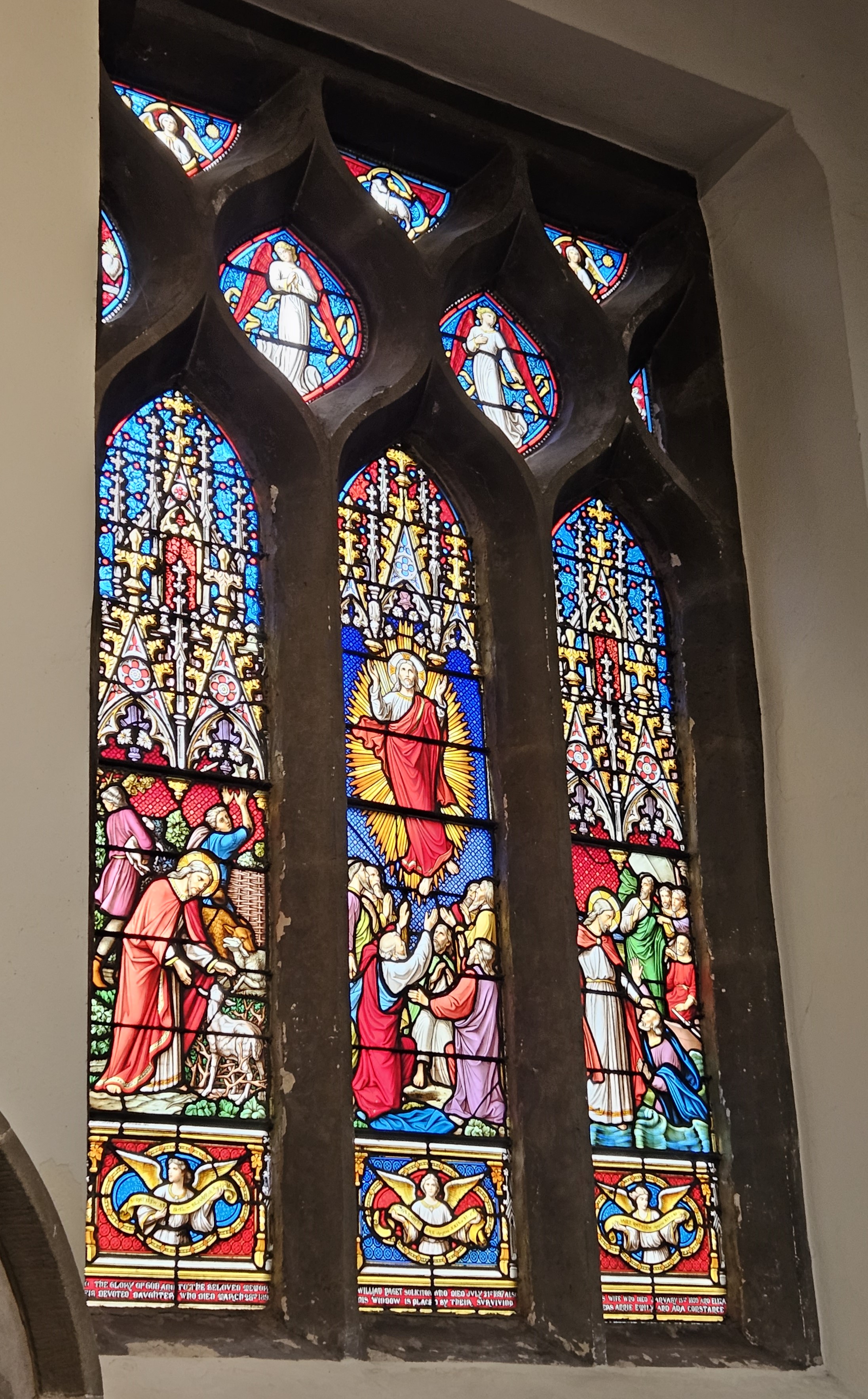
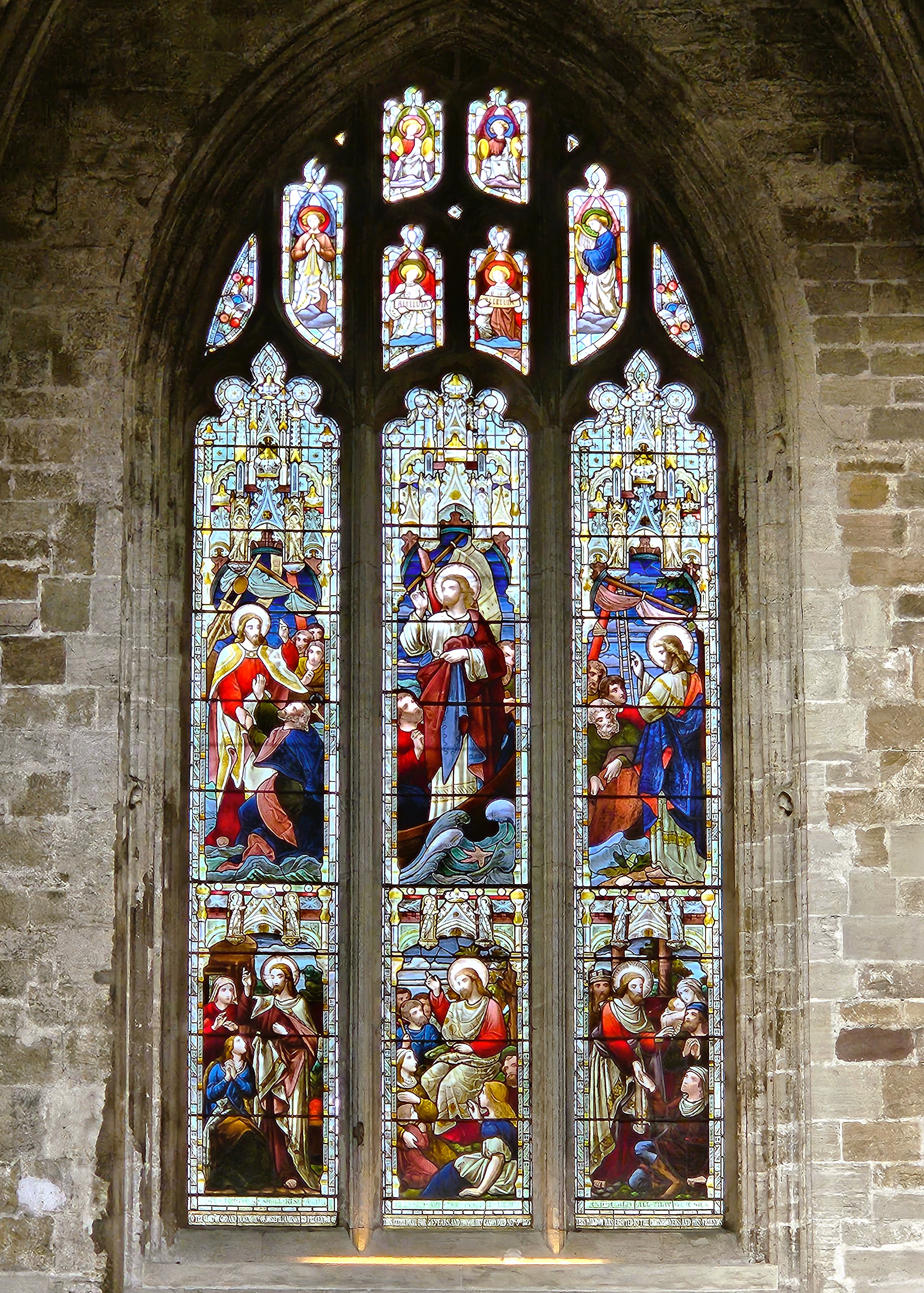
The window of the Ministry and Ascension of Jesus. Centre-Ascension to his Father in Heaven, whilst his disciples watch from the ground as they receive the gift of the Holy Spirit at Pentecost. Left panel: Jesus the Good Shepherd. Right Panel; Jesus walking on water.

Window by; J.B. Cappronnier of Brussels, 1899.

Love the rest of our journey to Knaresborough. That will be another post.

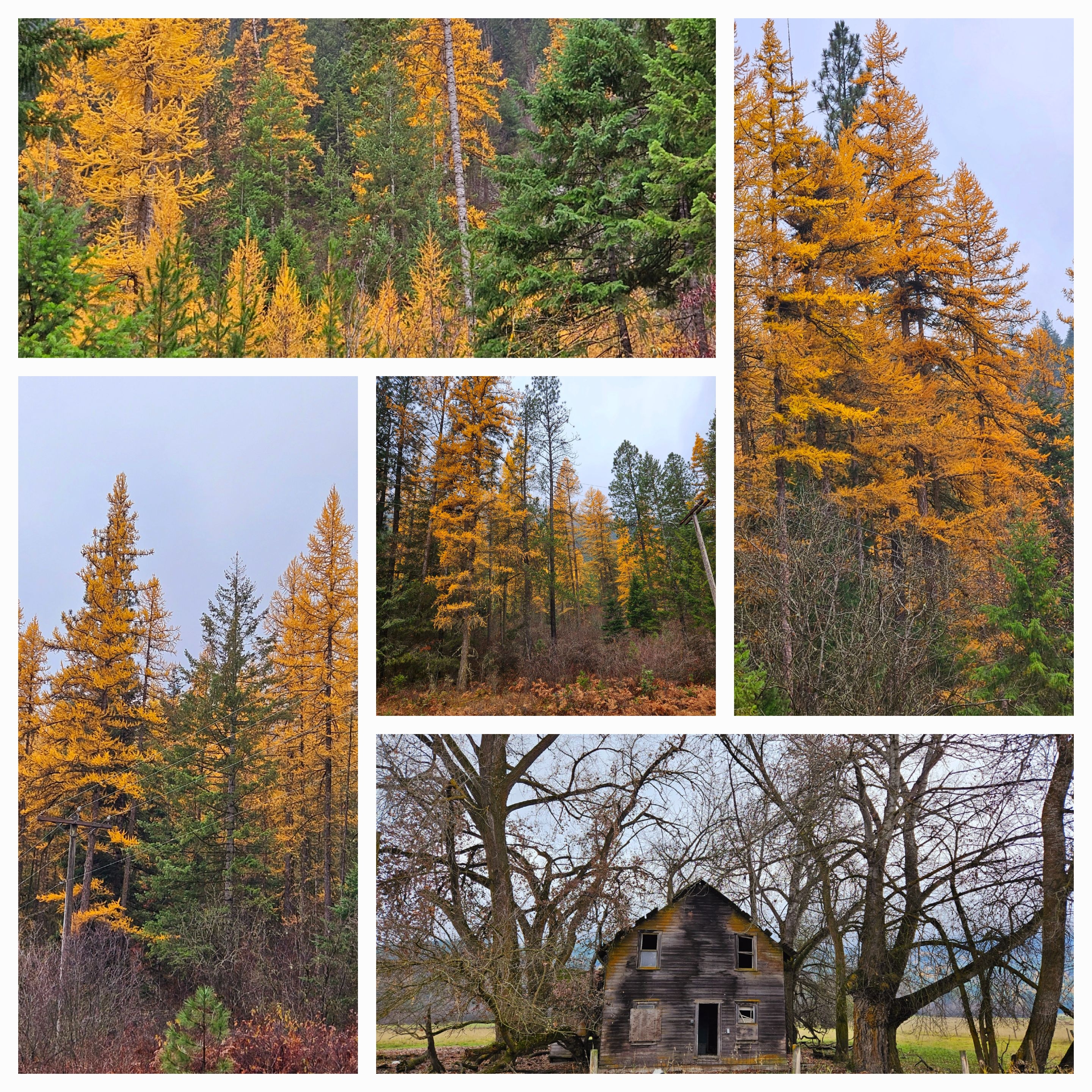
Back to the Present: Greg is working hard to finish up the redo of our Master Bedroom Shower stall. He is almost there. He needed a break from all the hard work so we did a little drive on Friday to some craft fairs. We had breakfast in Chewelah and then took some roads less traveled to see the beautiful larches in our area. Before we left home I put a roast in the slow cooker so dinner would be taken care of while we were out and about.

Saturday was back to work for Greg and he finished the grouting while I did some shopping. We enjoyed leftovers on this day.

We had a wonderful Sunday at church including our annual business meeting. After church we stopped for Mexican food in town. We were happy to see my cousin and her husband at the restaurant and had a good catch up with them. Hope you all had a good weekend.

Day Six ~ Ripon

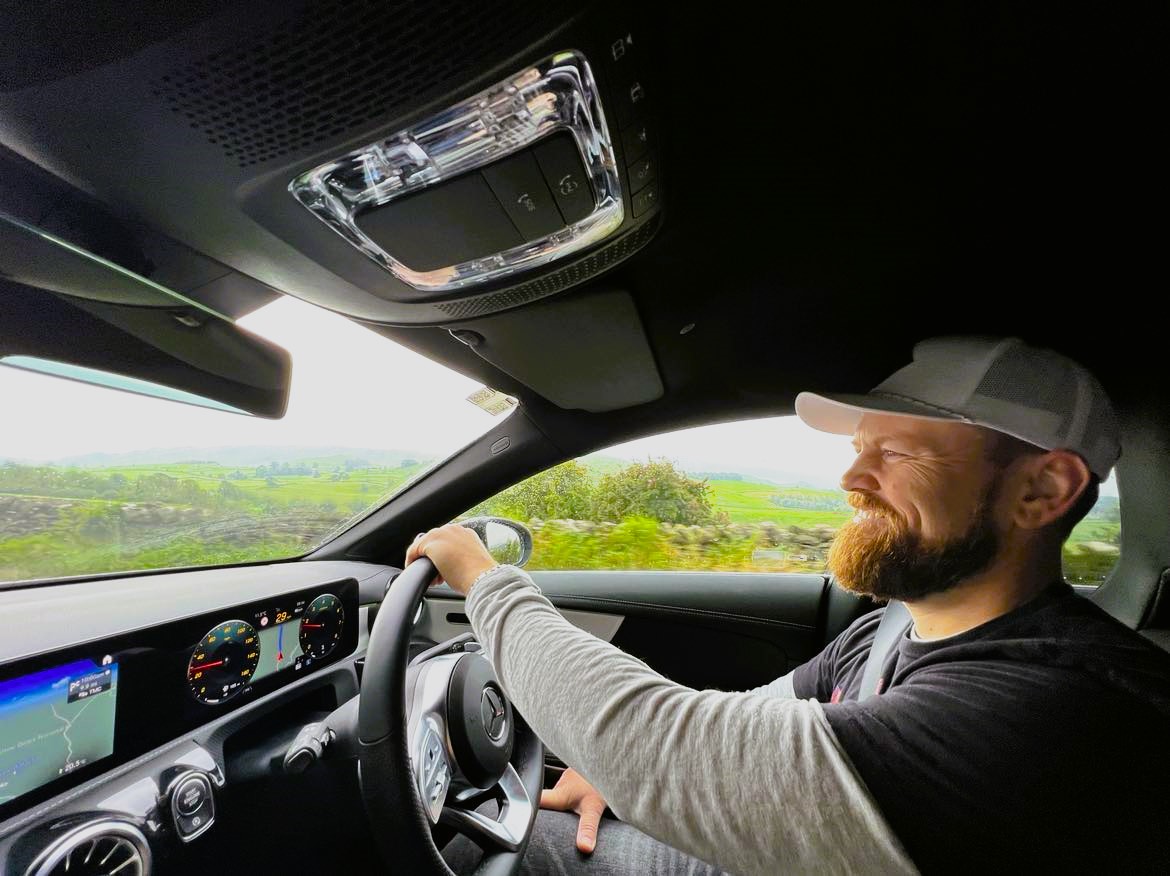
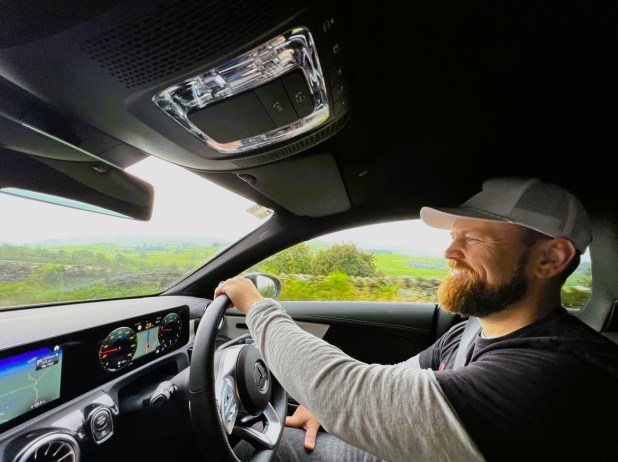
Continuing my travel log of our 6th day in the United Kingdom. Our 6th day, Wednesday September 20th took us into the Yorkshire Dales. Our trusty driver, Josh, kept us on track and gave us confidence on the lanes and highways.
Our route on this day took us northwest with our first stop in Ripon and continuing on through the picturesque village of Pateley Bridge before arriving at our destination for the a couple nights in Grassington which was only 50 miles from York.
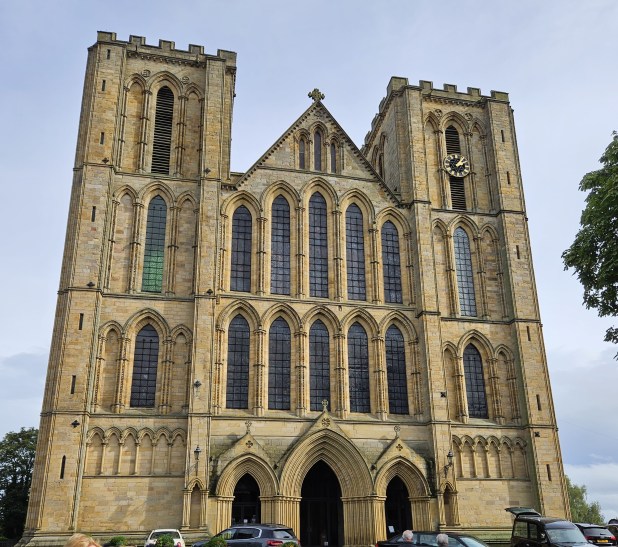
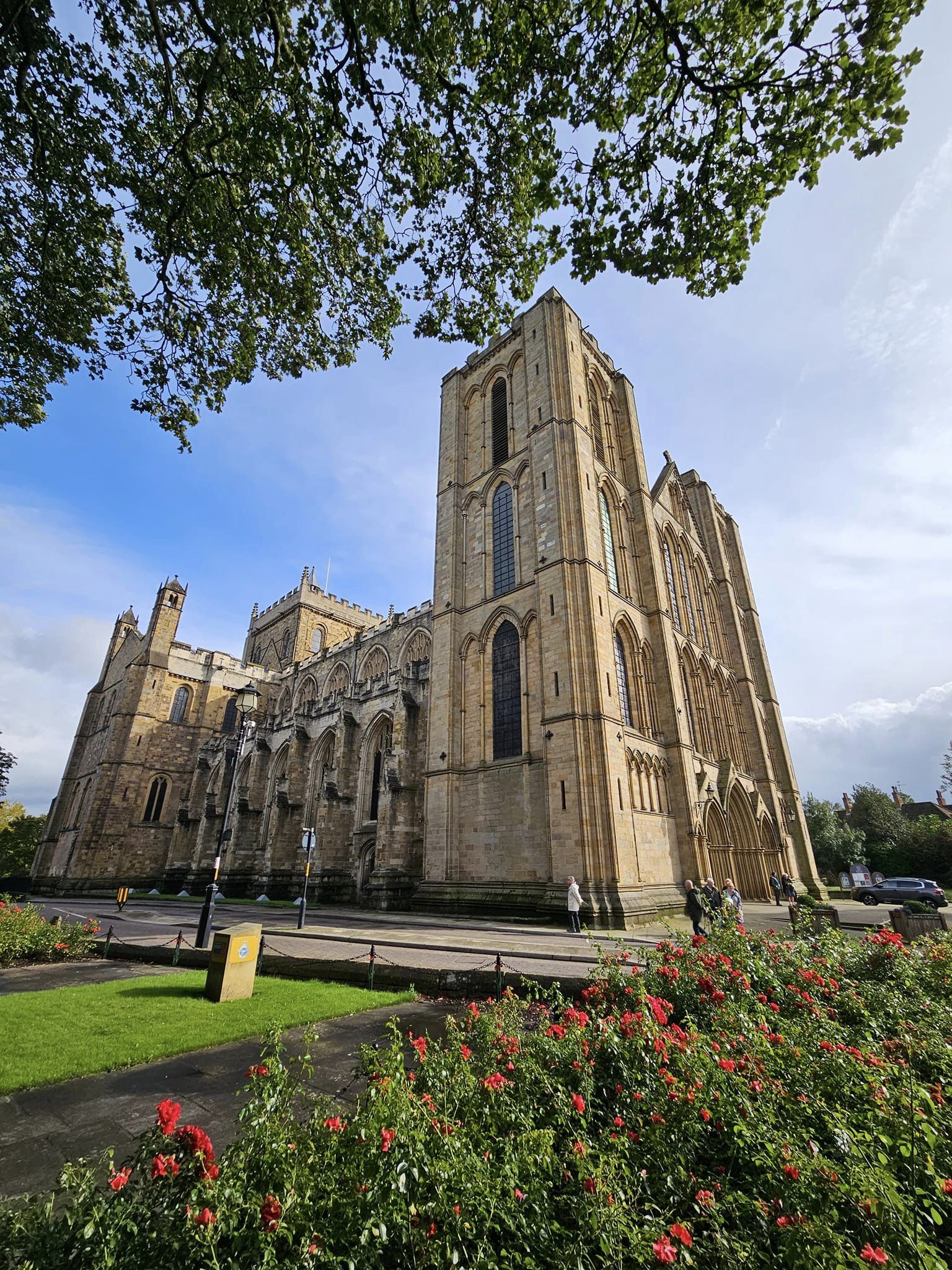
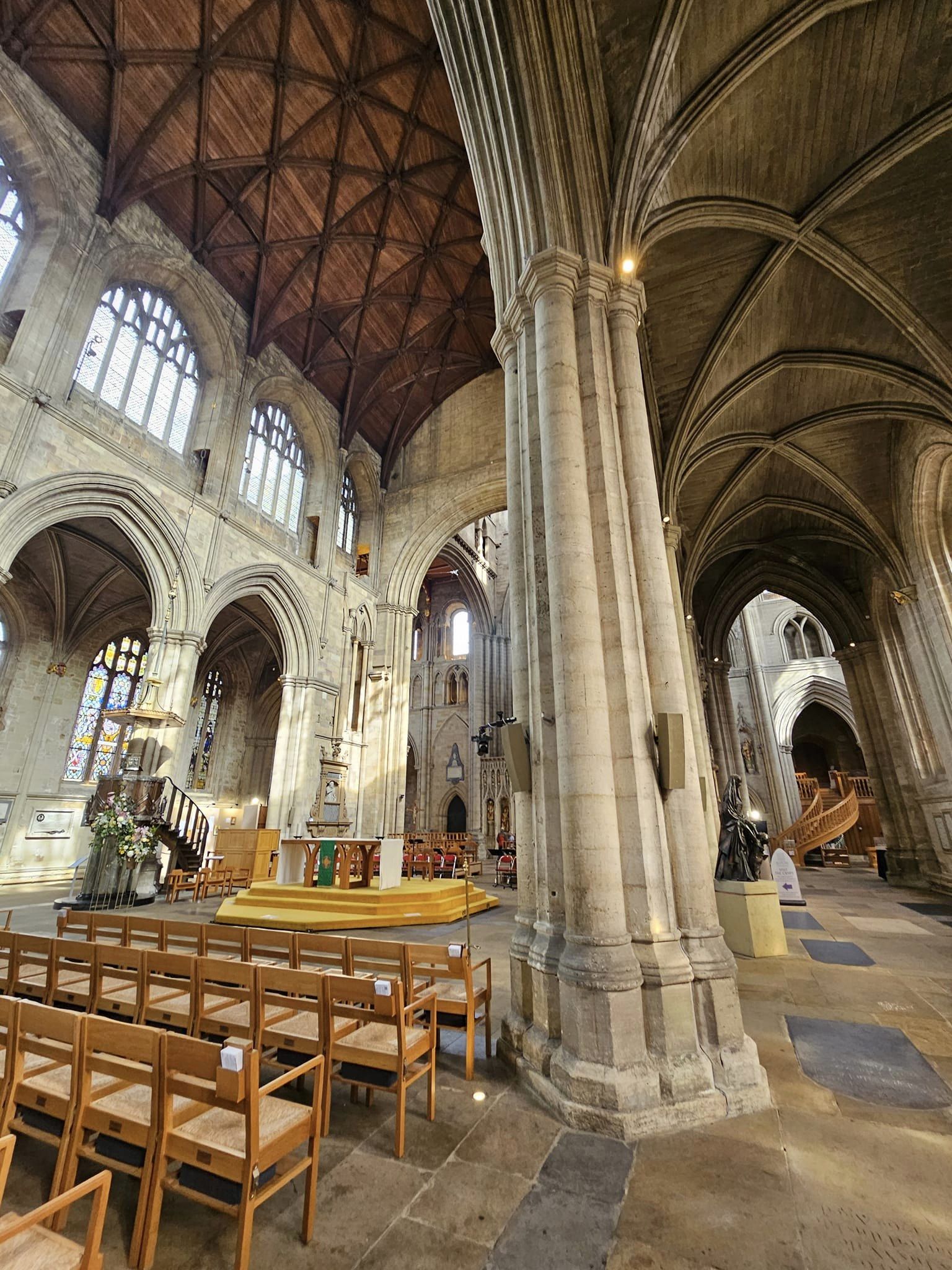
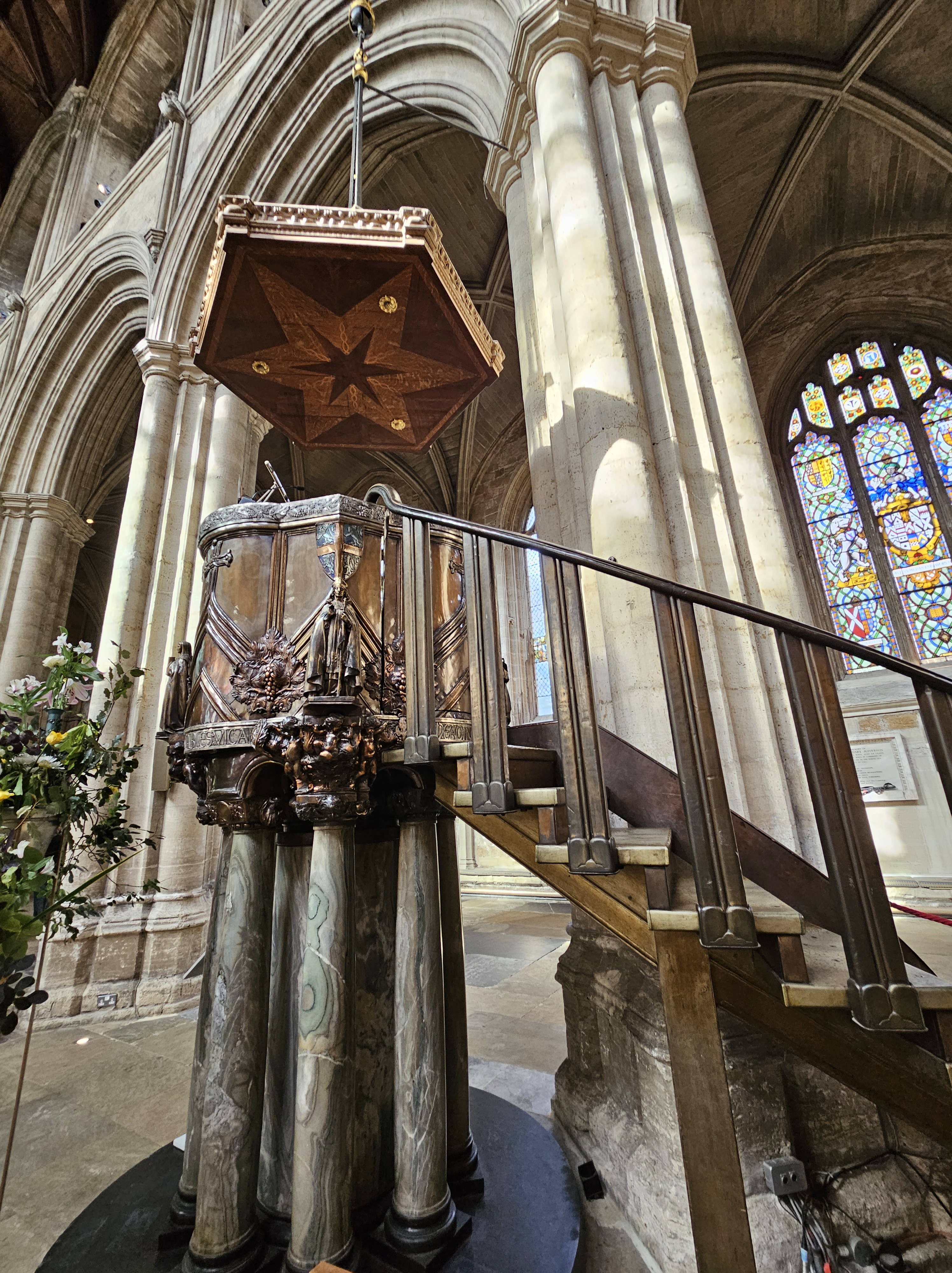
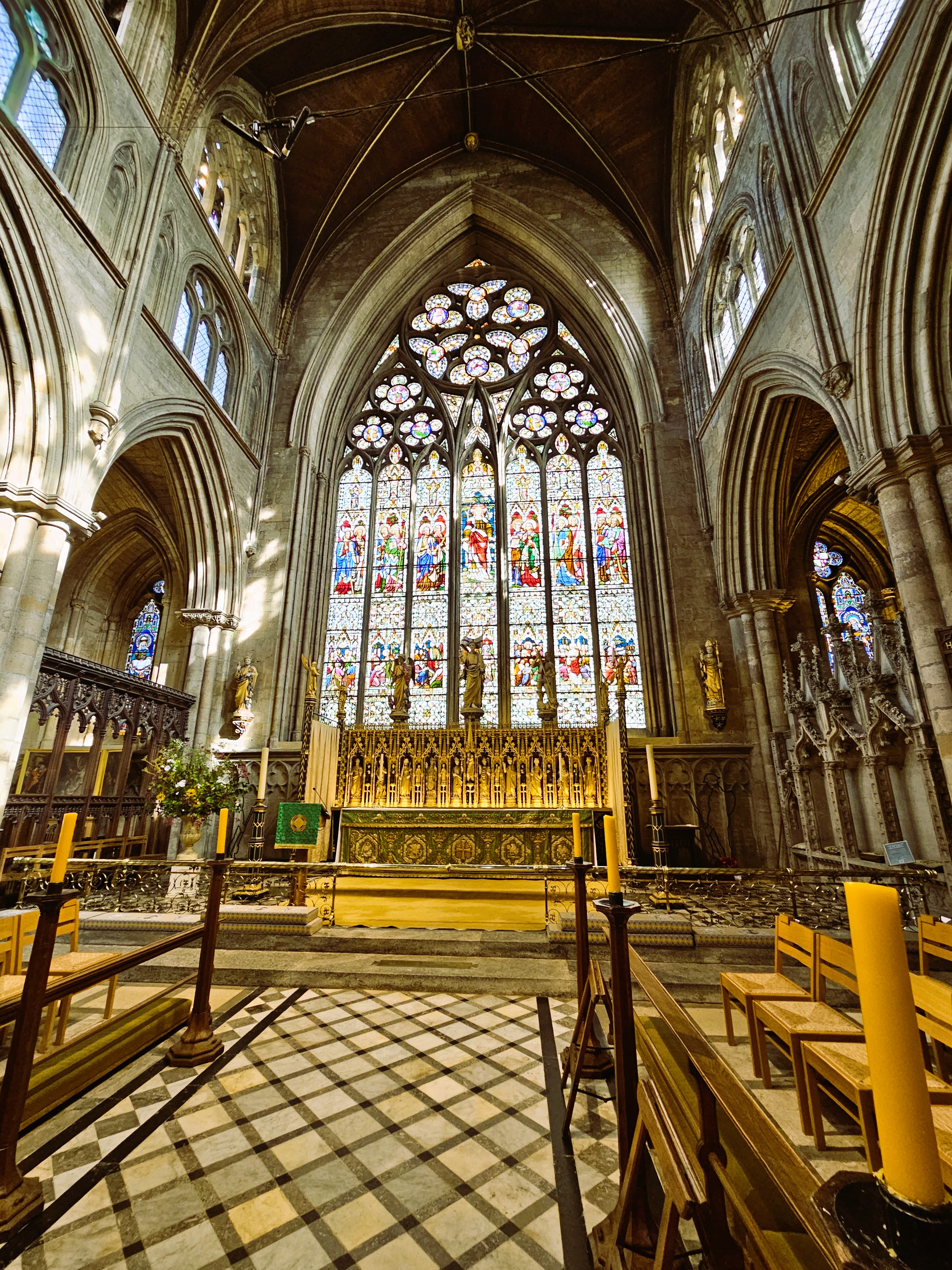
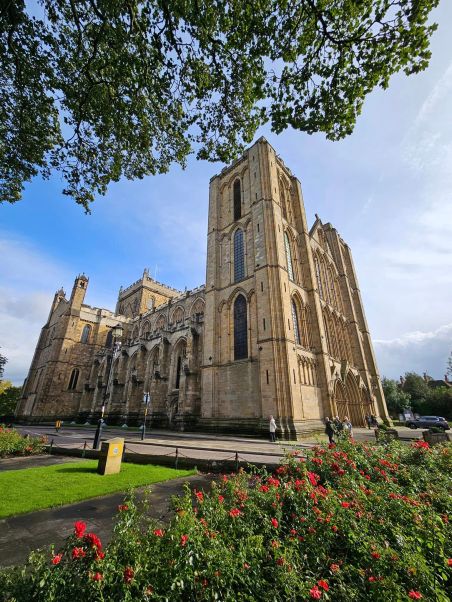
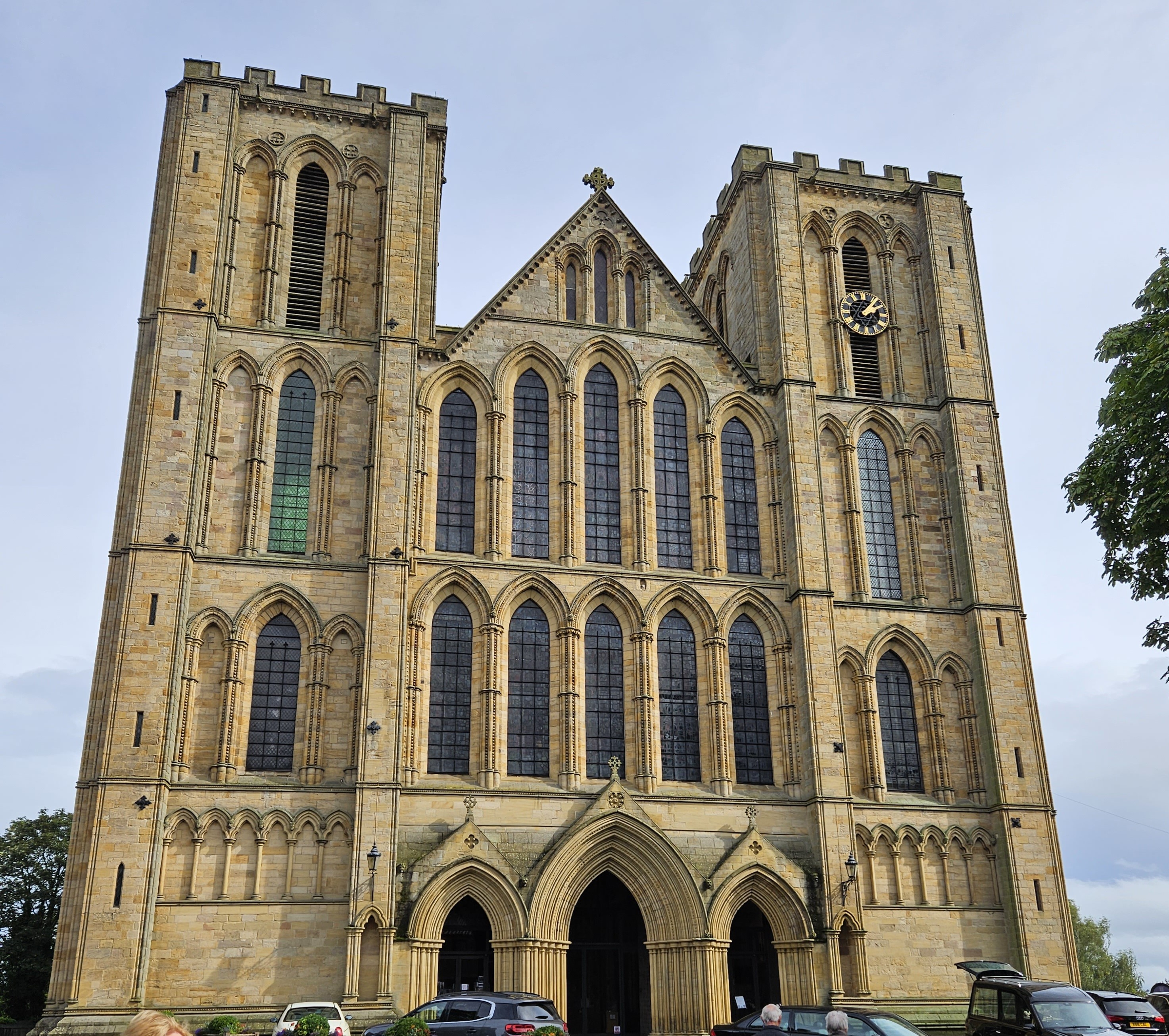
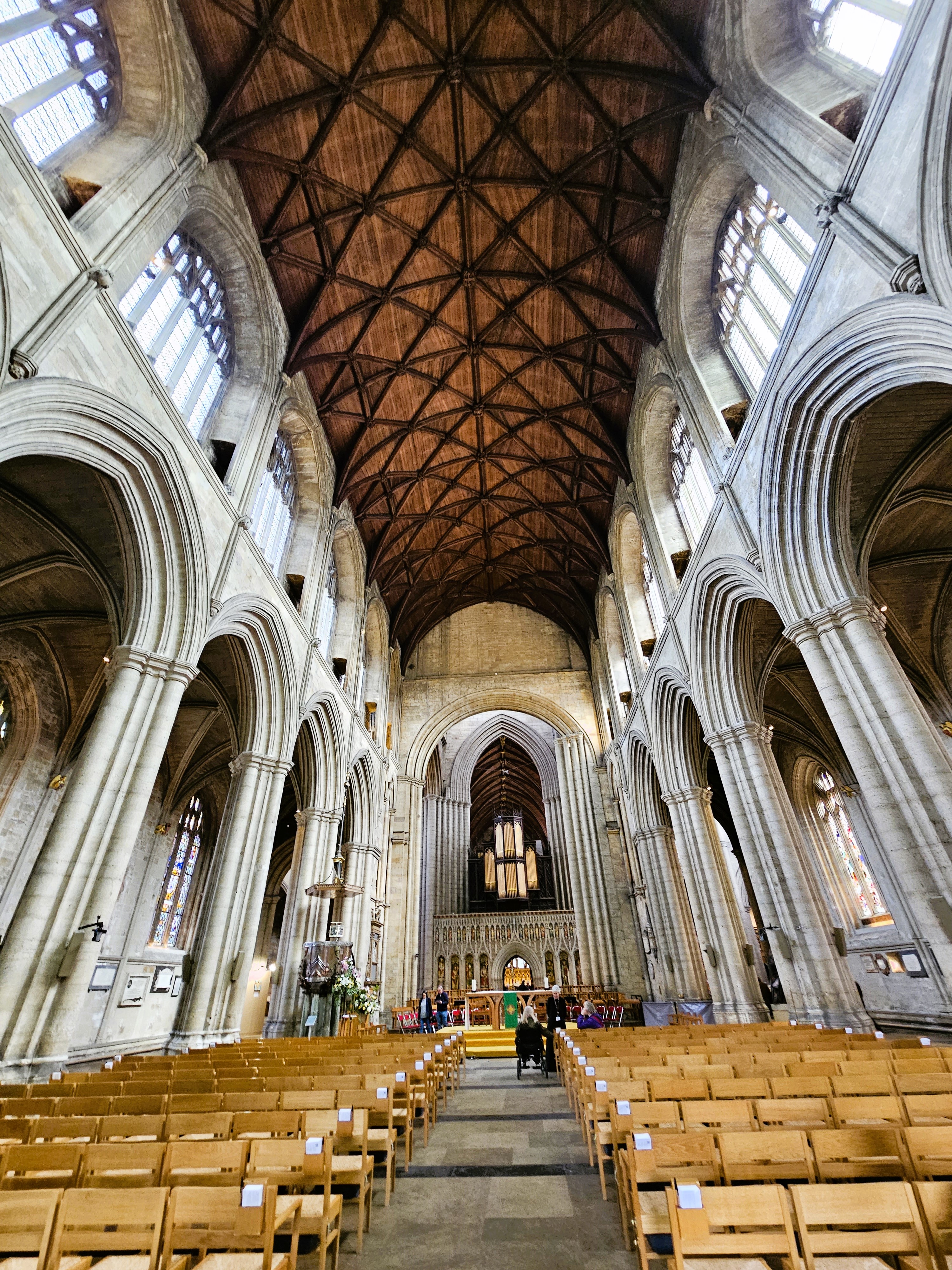
After our lunch at the Silva Bells we walked across the street to the cathedral. There was a funeral in progress so we waited a short time for the friends of the deceased to leave the cathedral. Once inside we met a very helpful volunteer of the Cathedral. We discussed the expense of maintaining these beautiful cathedrals.
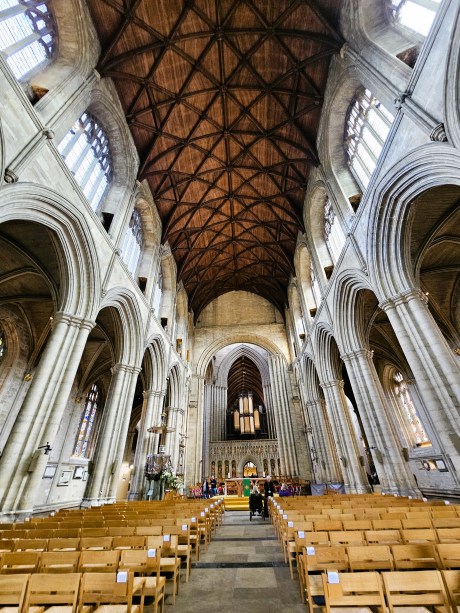
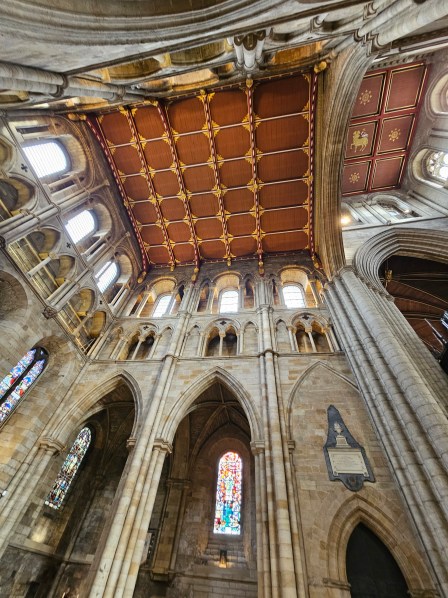
The typical cathedral contains a narthex at the entrance, three aisles with the central being the nave, a transept that gives the church its cross shape, an open choir where the nave and transept meet, and an apse at the far end of the nave, containing the altar.

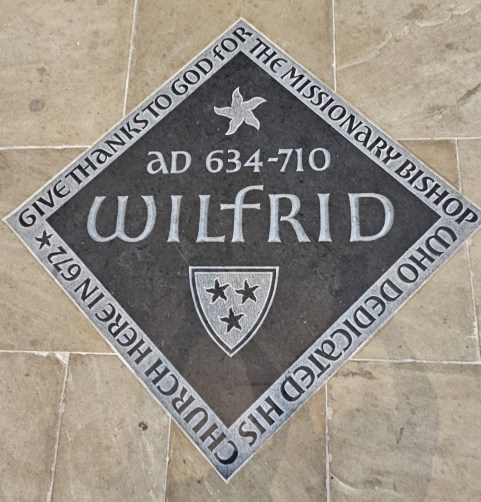
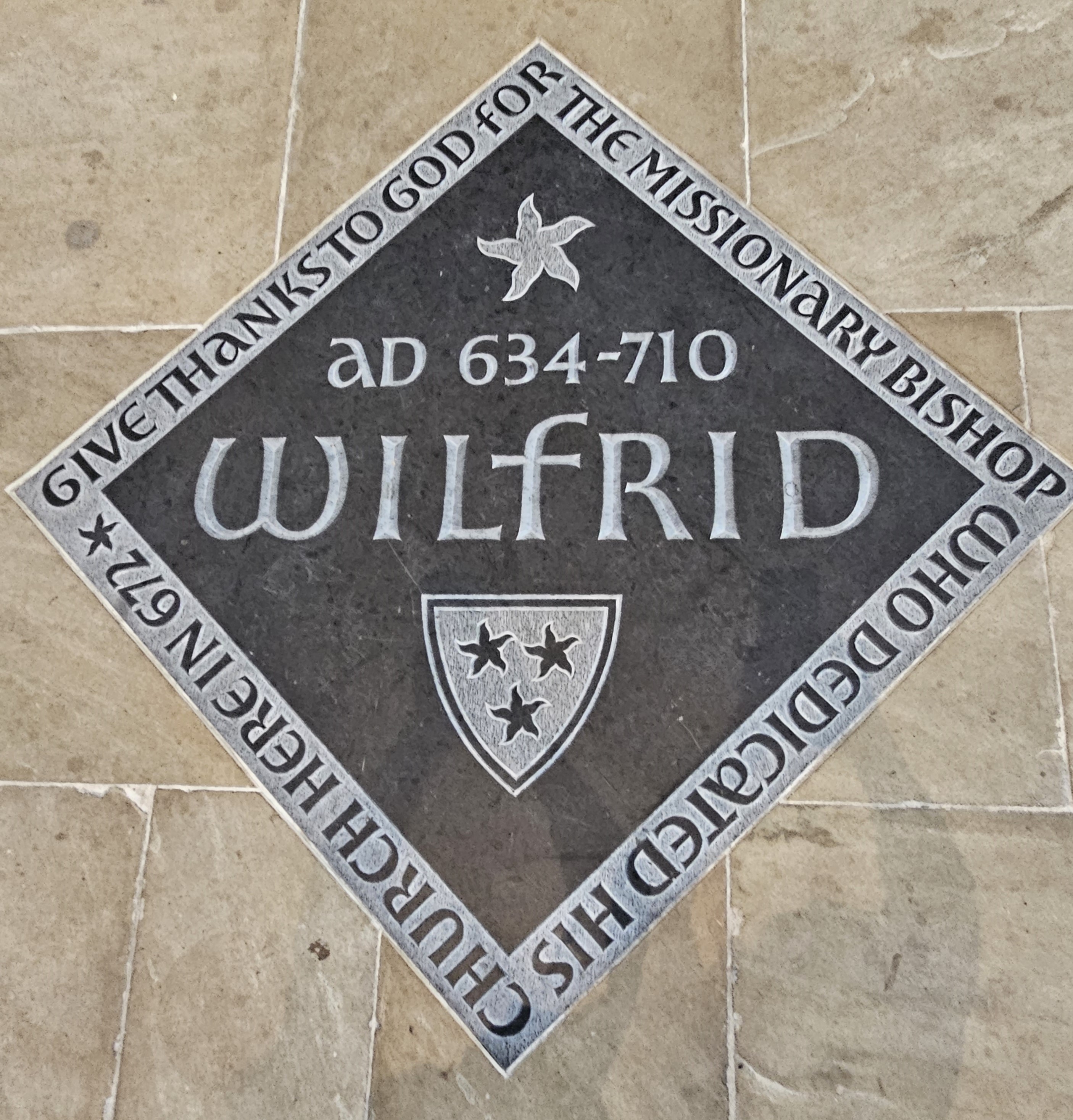
The present church was founded by Saint Wilfrid and dedicated in 672, although it has been rebuilt several times since. The ancient Saxon crypt – one of the oldest in the country – is the only part of Wilfrid’s original church that remains to this day.
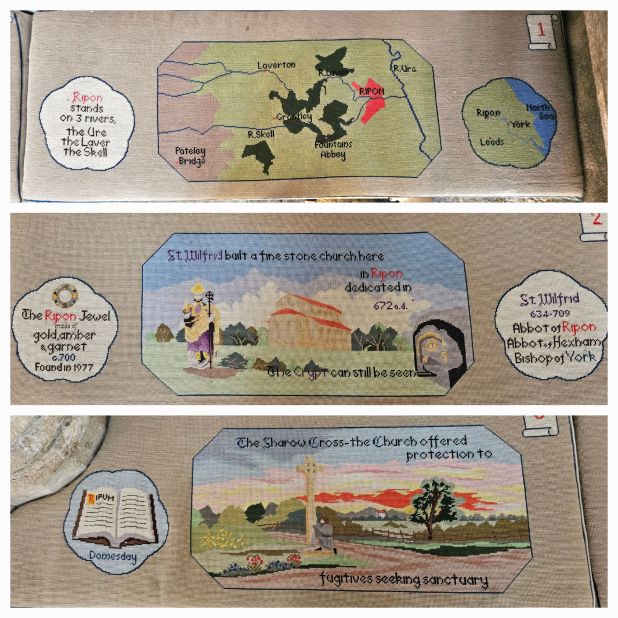
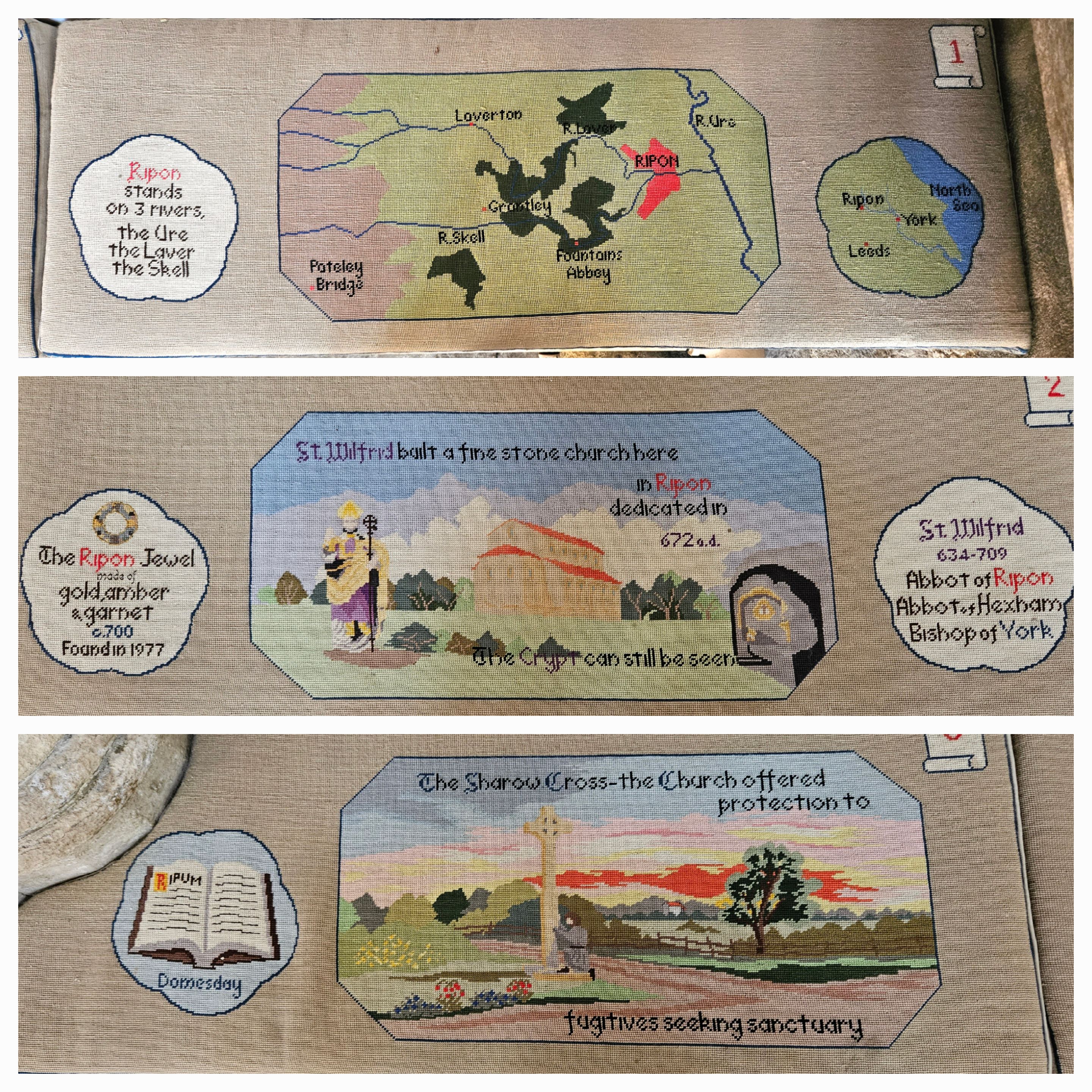
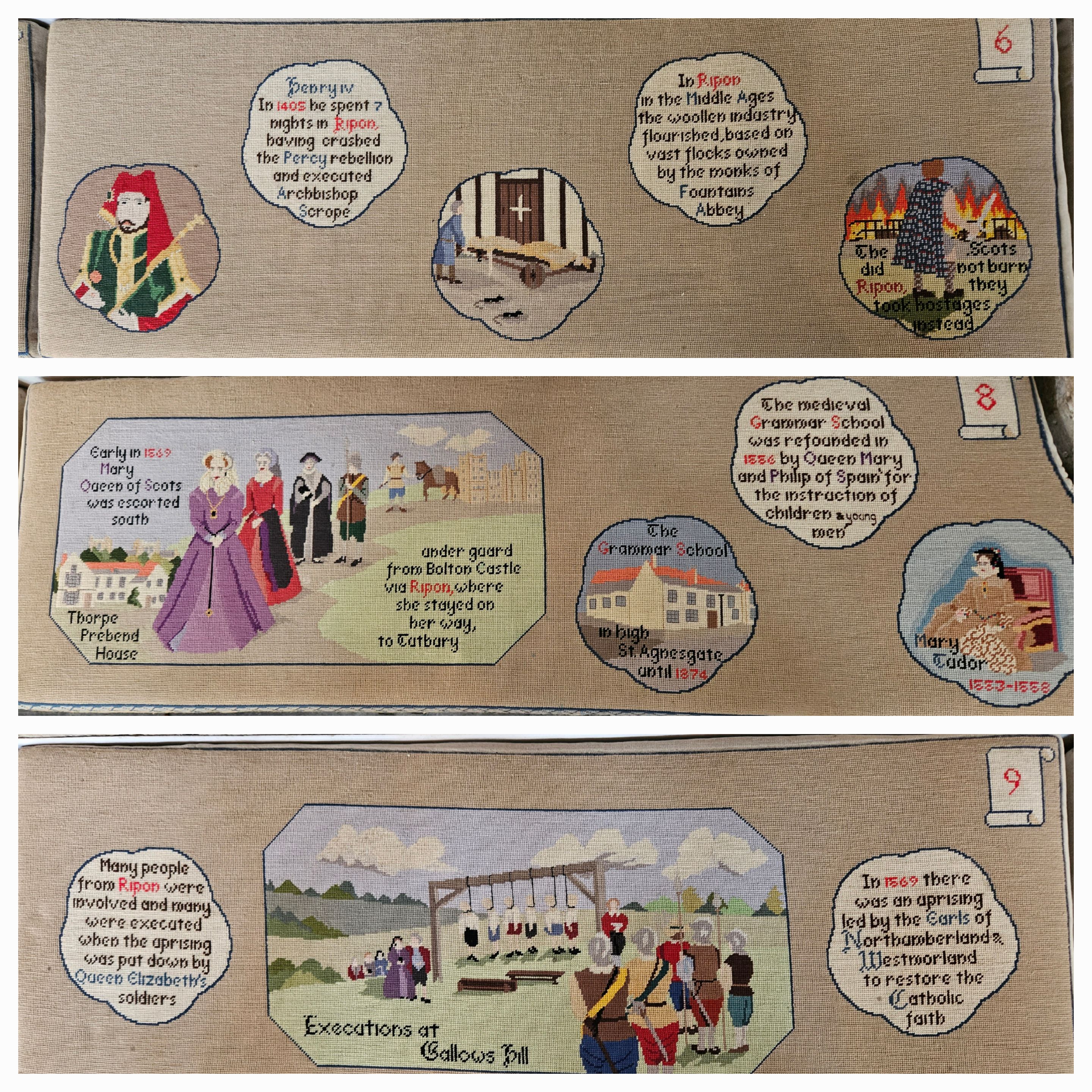
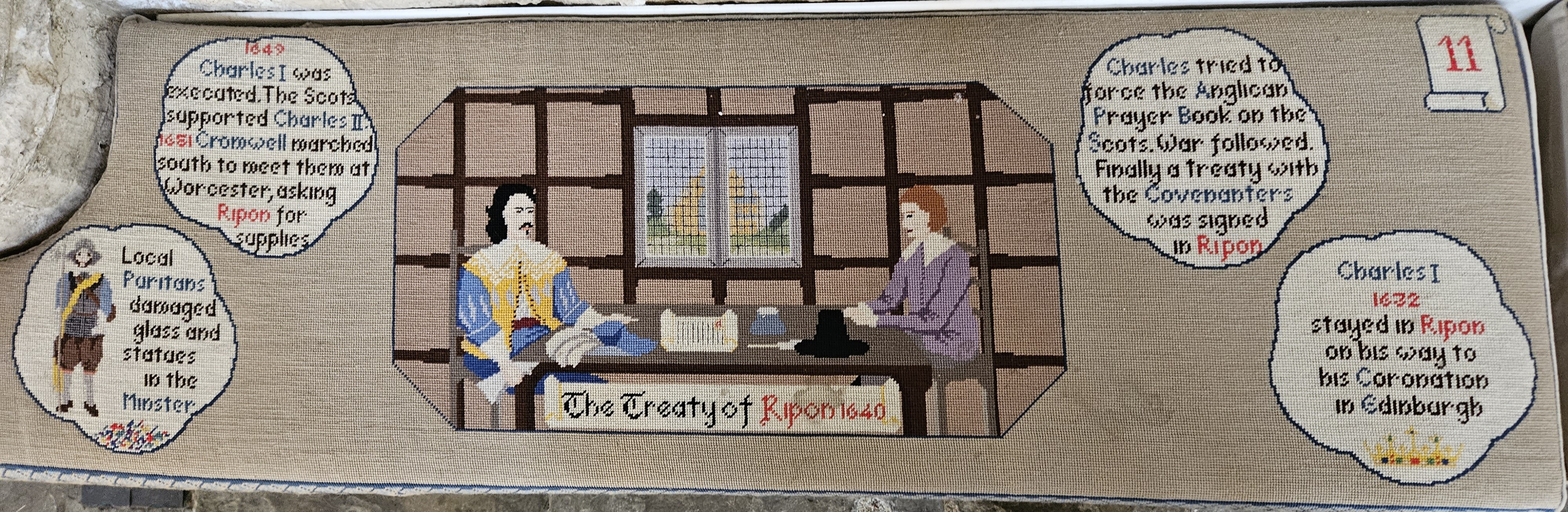
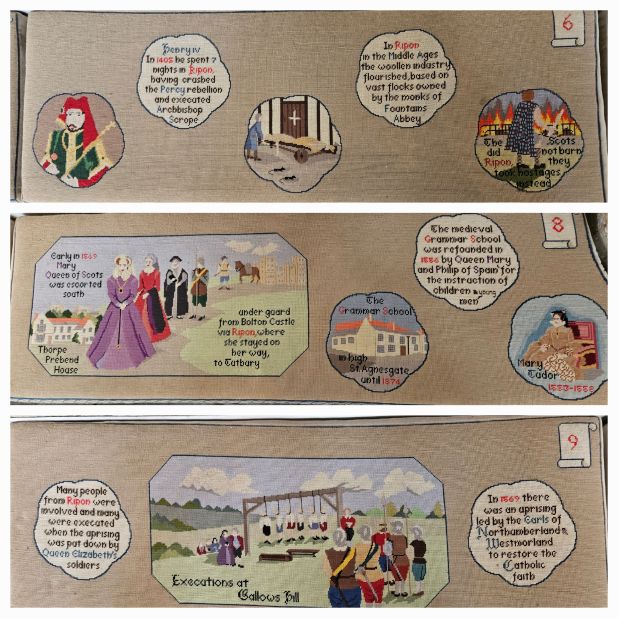
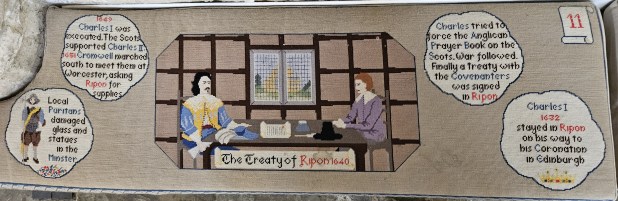
These amazing needlepoint cushions that lined the stone benches on the outer walls represent a piece of the history of this area of Yorkshire and the history of Ripon and the Cathedral. They were created as a commemorative project celebrating the 2000 Millennium.
Let us test and examine our ways, and return to the LORD! Let us lift up our hearts and hands to God in heaven. Lamentations 3:40-41
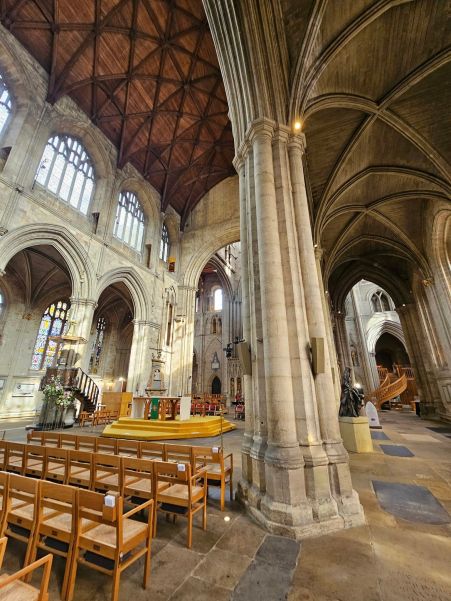
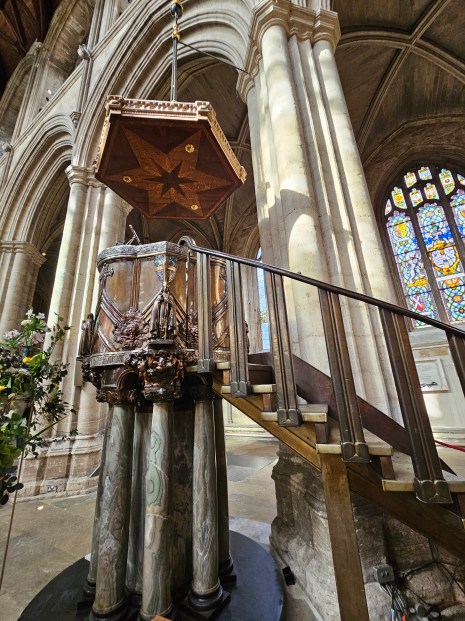
 

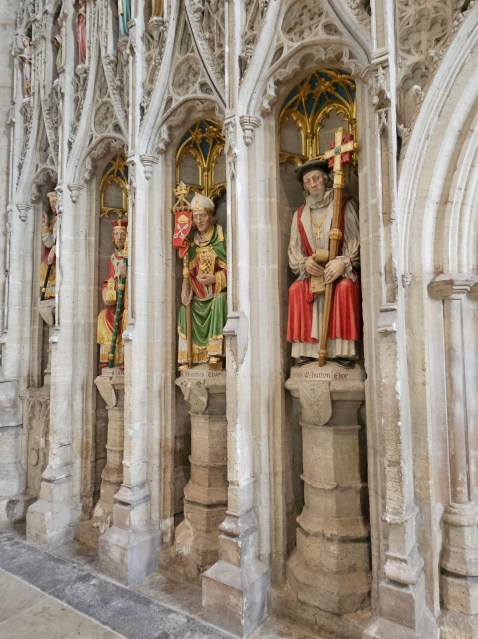
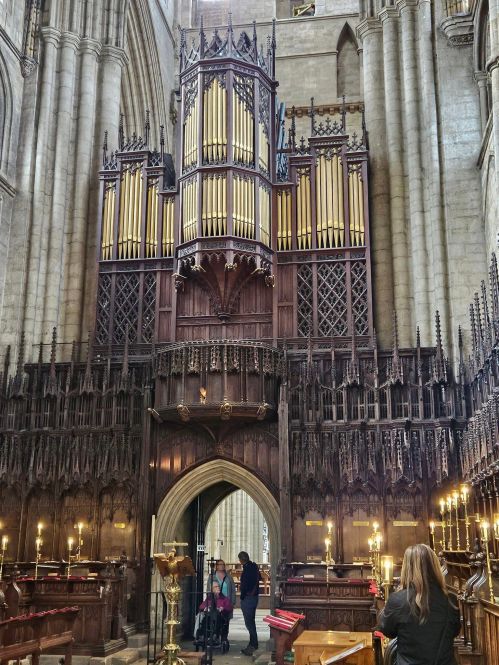
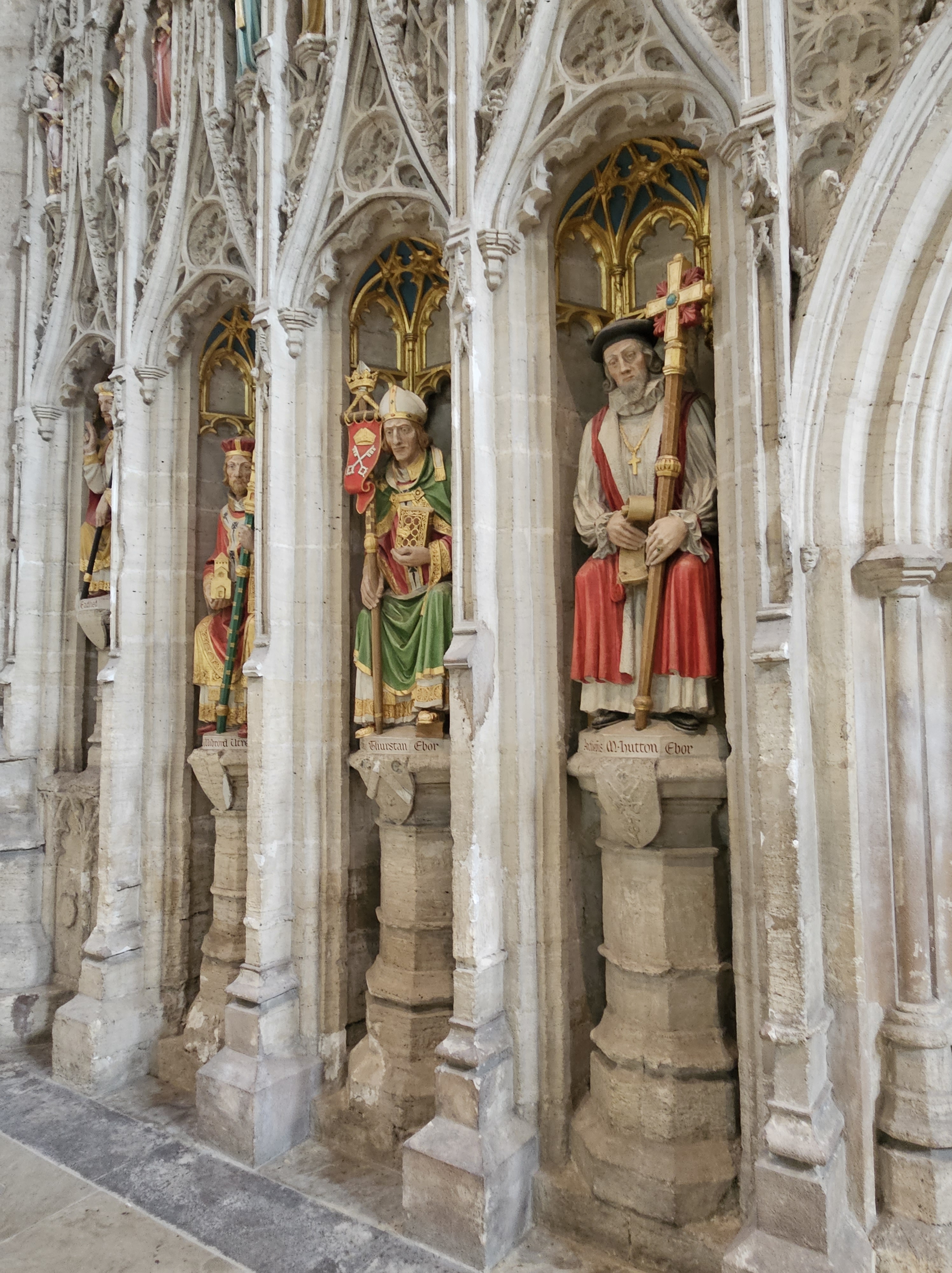
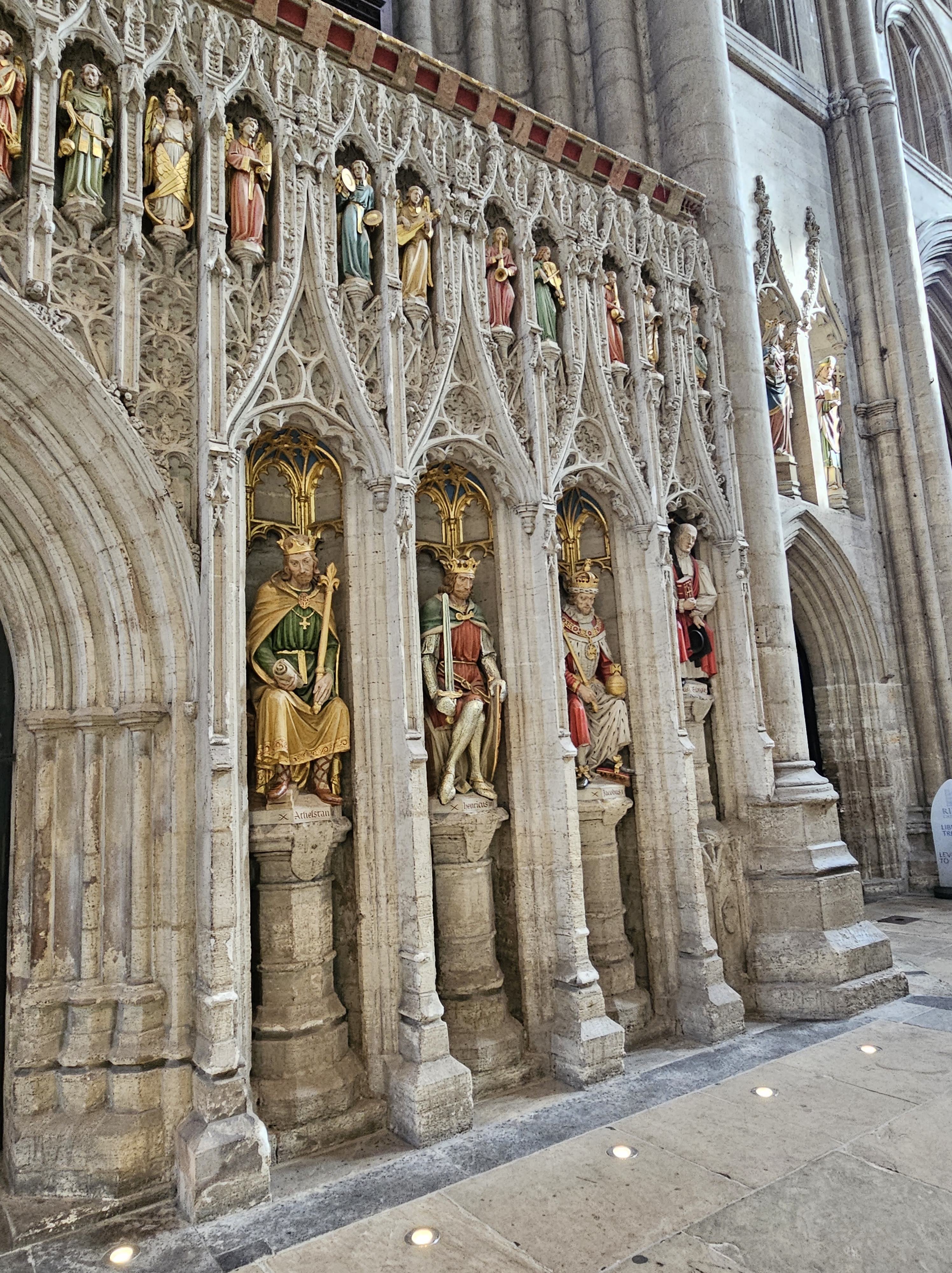
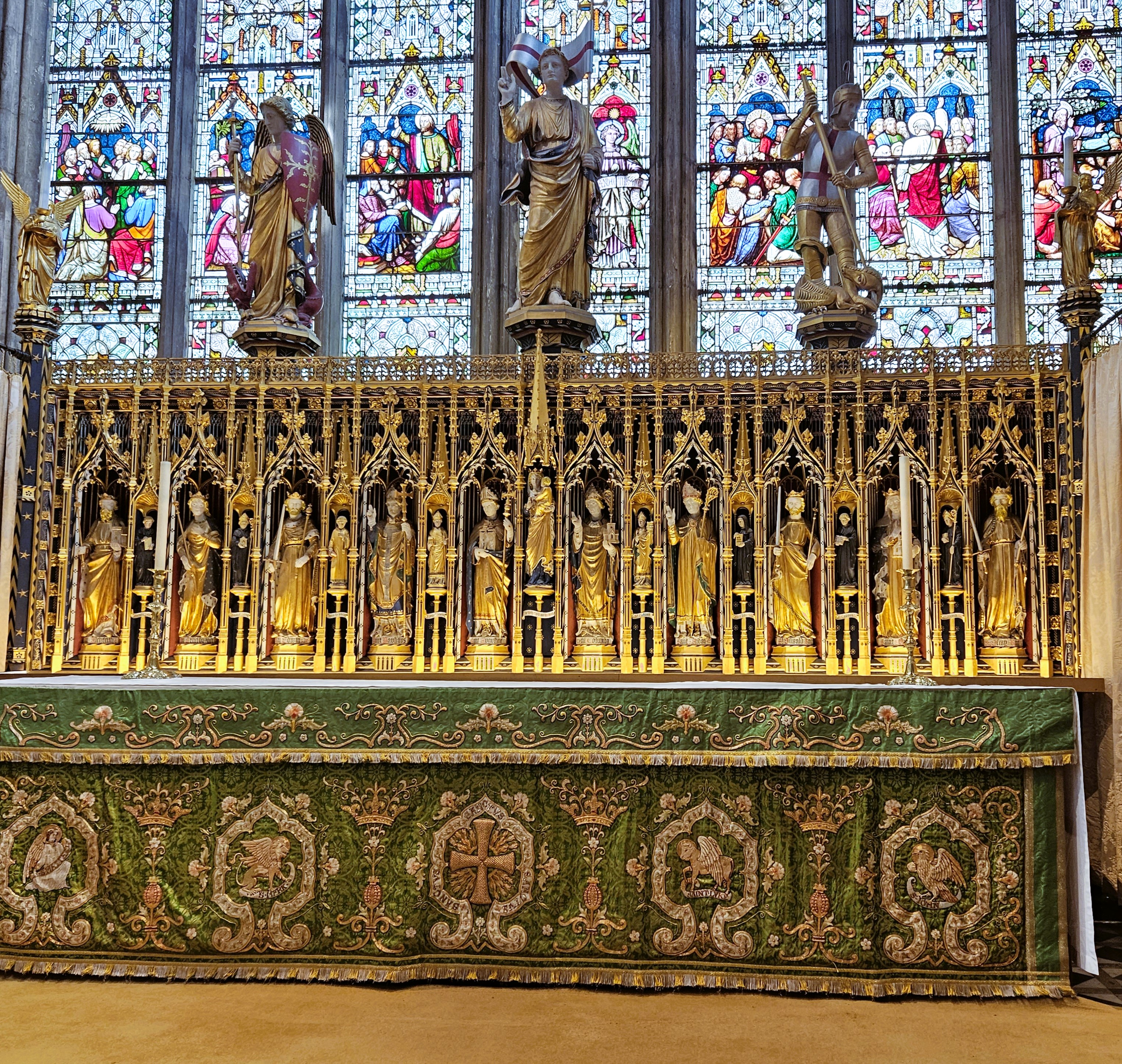
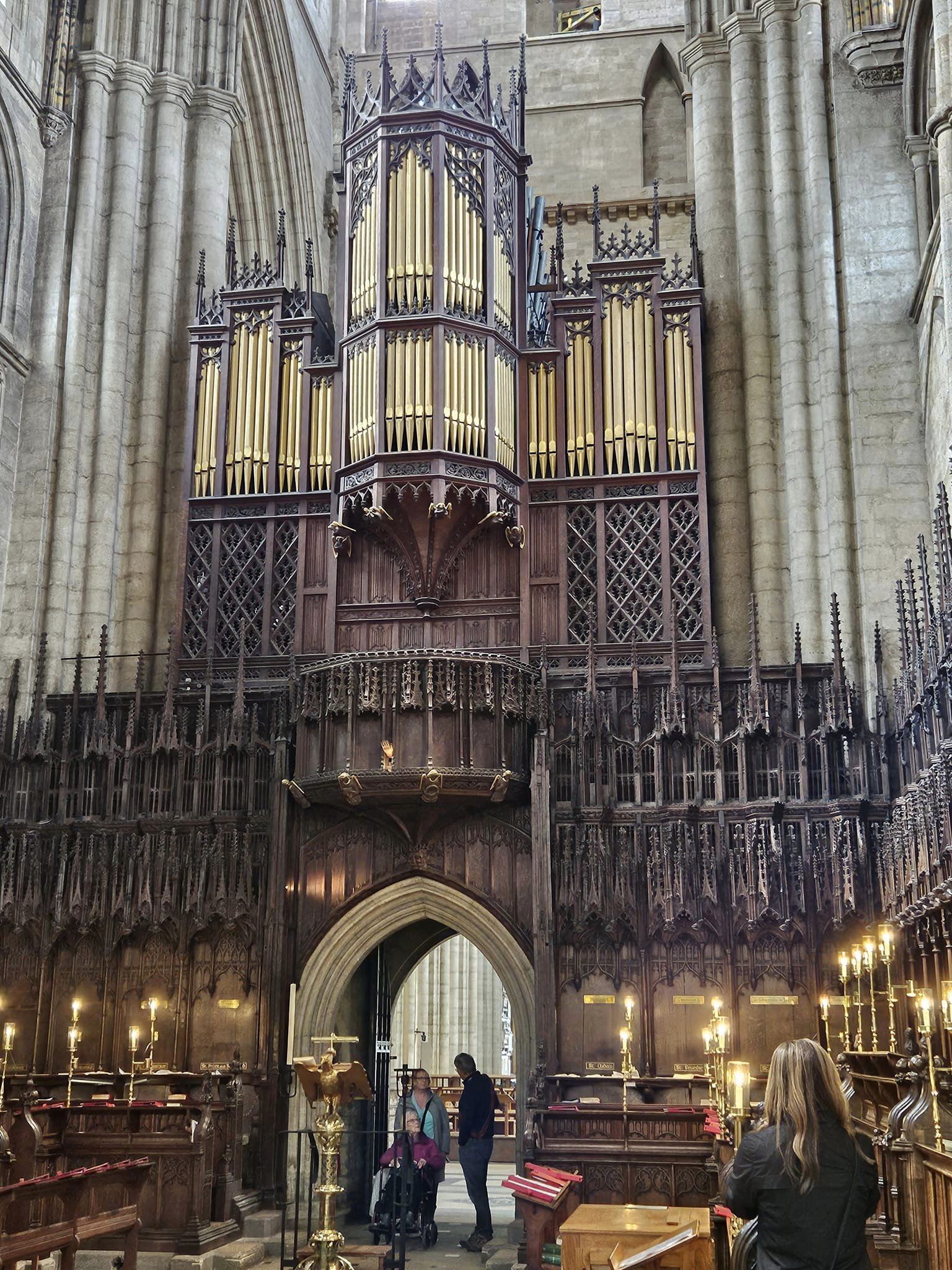
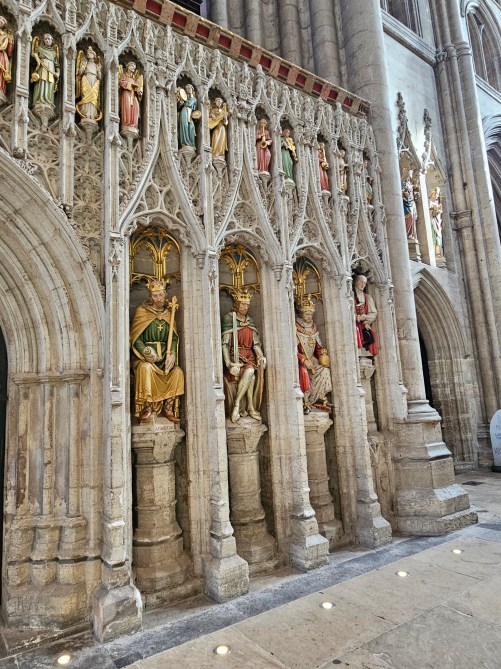
The choir screen, (pictured above) features eight carved and painted kings in canopied niches flanking a central doorway into the choir, with another 24 statues in niches above the doorway arch. The screen, which dates to the fifteenth century, is 8 feet thick. Although the screen is medieval, the statues are Victorian, and represent both kings, bishops, and saints who played a part in the history of the cathedral.
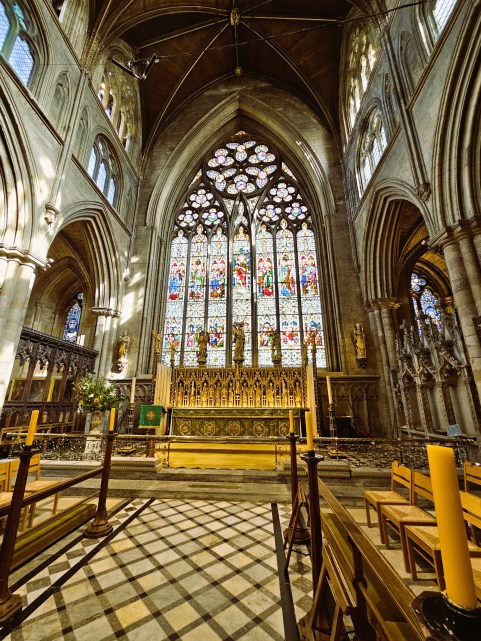
To read more about Ripon Cathedral visit Mike from ‘A Bit About Britain’ and his Introduction to Ripon Cathedral.
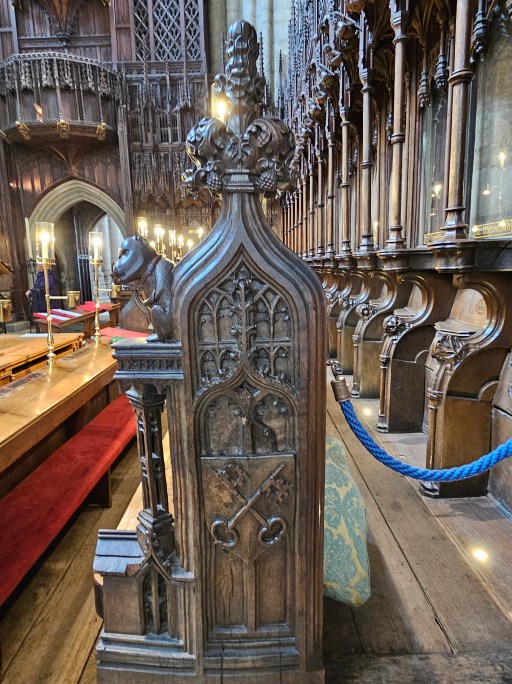
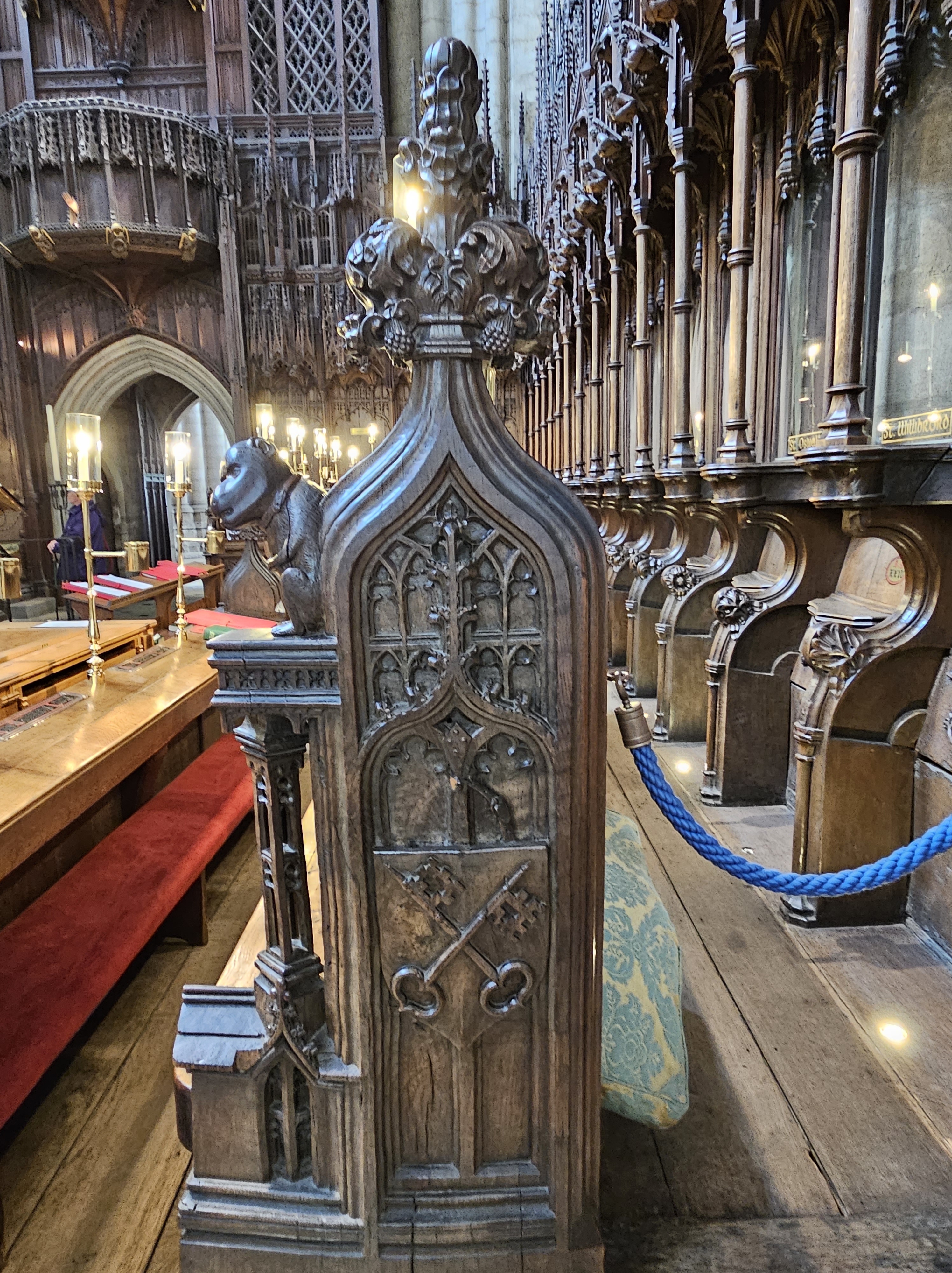
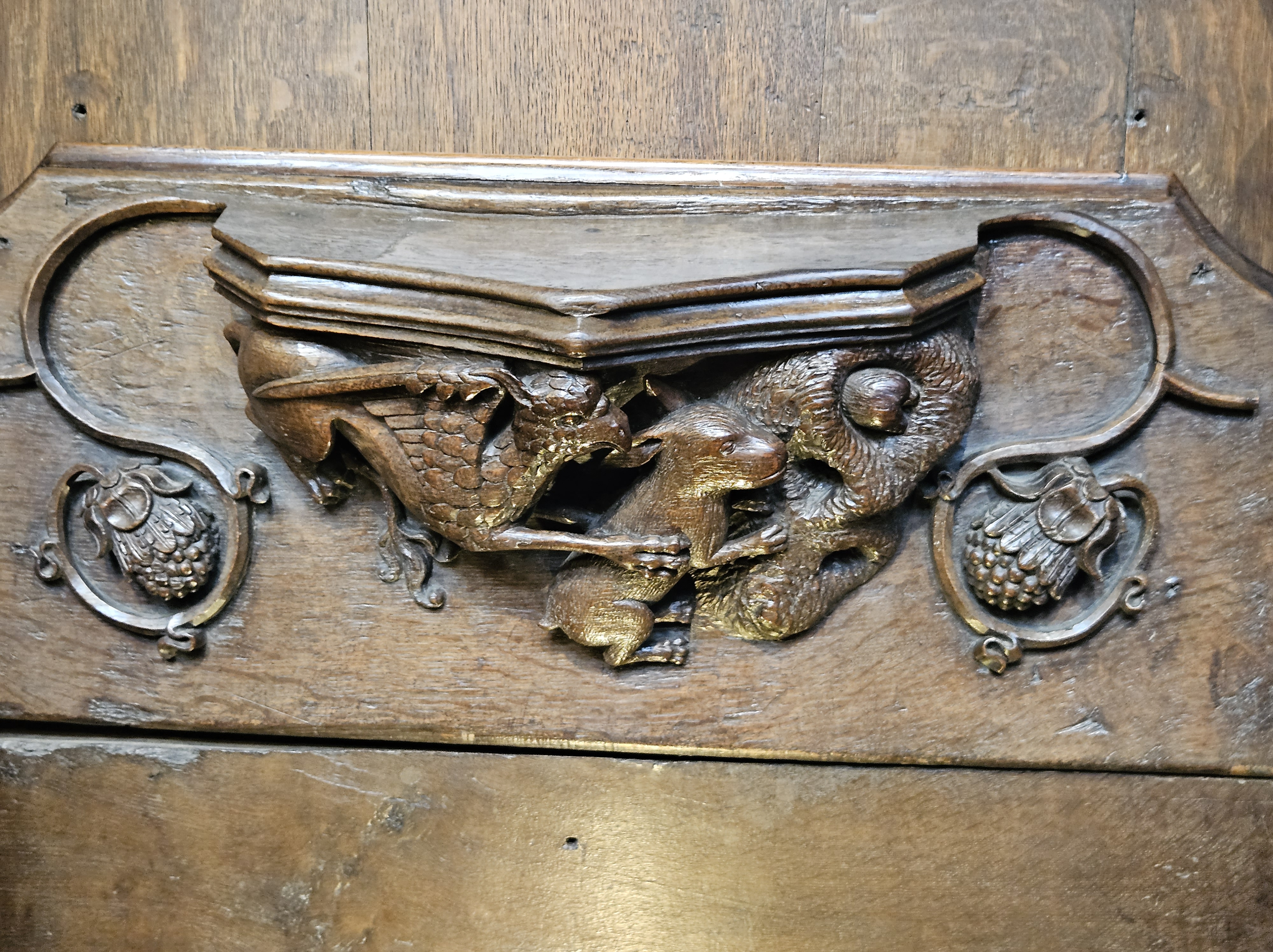
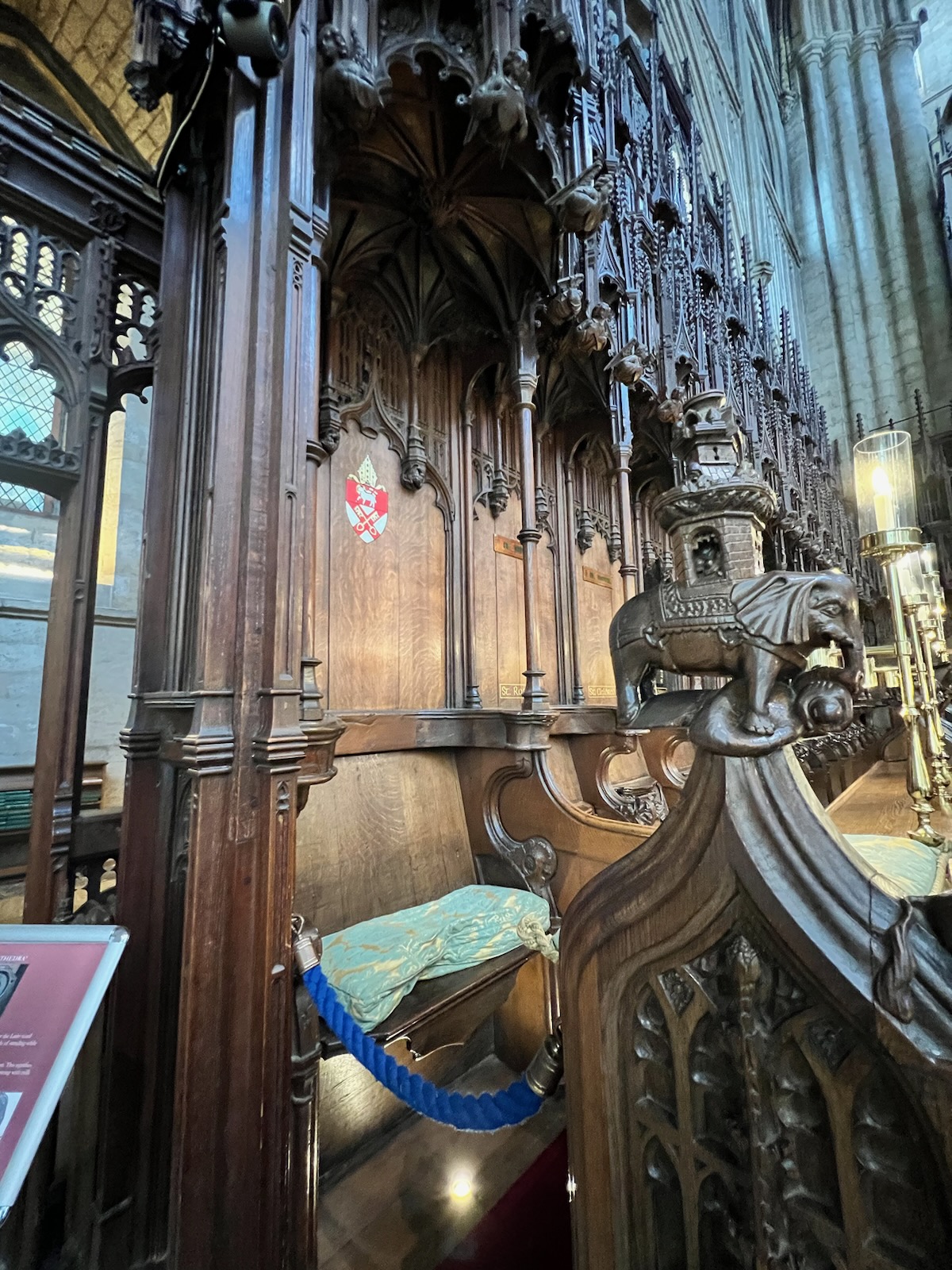
The superb intricate carving of the oak choir stalls which were completed in 1494 by Ripon woodcarvers, they are amongst most famous and finest choir stalls in the country. The cathedral also has many other interesting features, including the late fifteenth century misericords – the carvings on the back of the choir stall seats which are superlative surviving examples of medieval craftsmanship. Many of these, including the misericord of a griffon chasing a rabbit down a rabbit hole, are thought to have inspired Charles Lutwidge Dodgson, more famously known as Lewis Carroll, the author of Alice’s Adventures in Wonderland, whose father became a residentiary canon of the Cathedral in 1852.
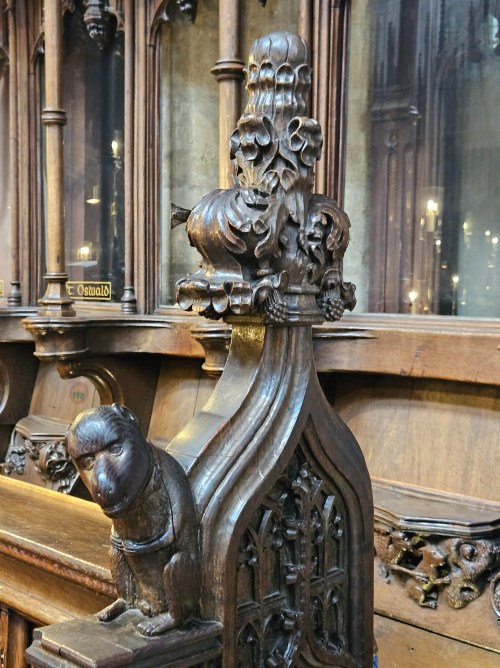
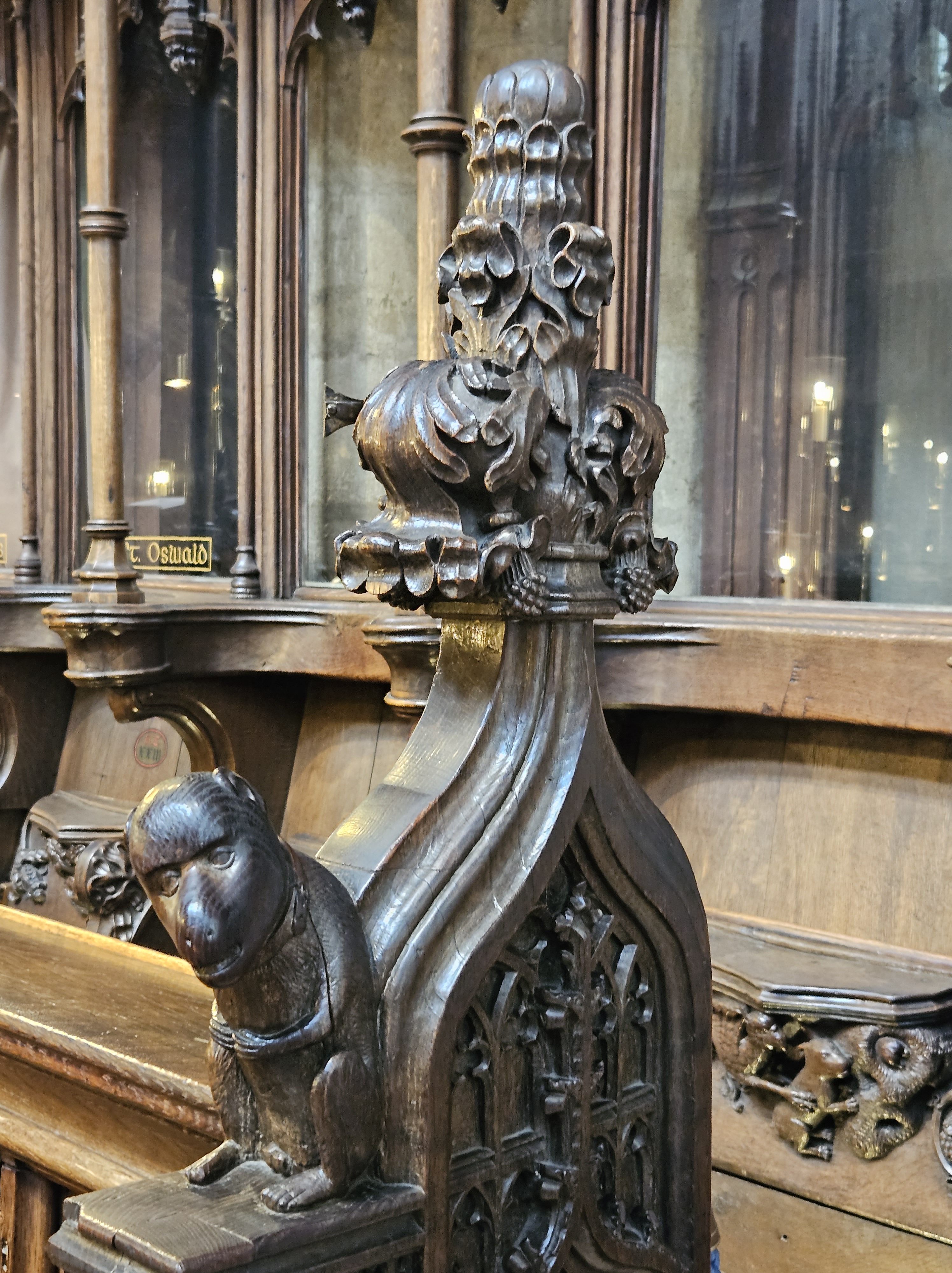
A monkey (perhaps a baboon?) decorating a bench end in the choir of Ripon Cathedral. The choir stalls date from the 1490s with later repairs making good damage caused when a spire over the crossing tower collapsed into the choir in 1660.

The choir stalls had these curious little shelves with carvings underneath. I found a description of what they were called and what they were for.

The term misericord translates from the Latin as ‘mercy seat’, and that’s precisely what it was; a small ledge, or seat, attached to the underside of a pew or choir seat, to provide a merciful and very welcome place for clergy to rest during long periods of standing during lengthy medieval sermons.

Misericords were often elaborately carved, and it is these carvings that make studying them so fascinating. The carvings might be of mythological creatures, religious symbols, grotesque beasts, Green Men, and a wide variety of other unusual and striking symbols.
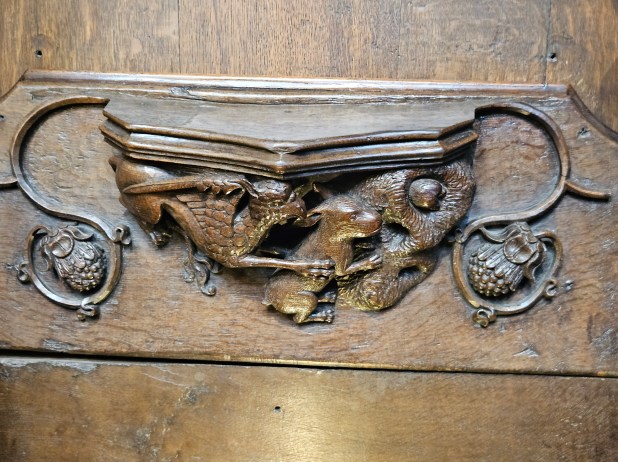
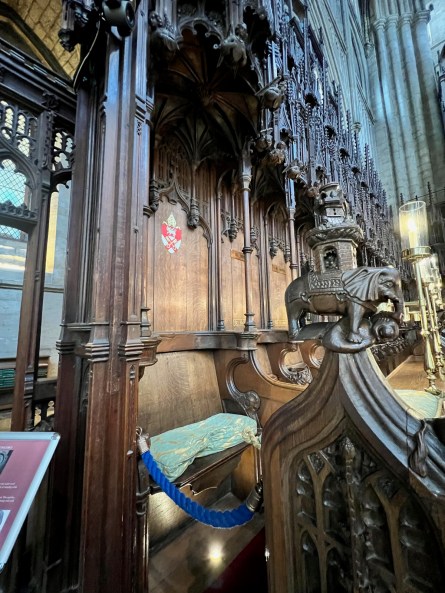
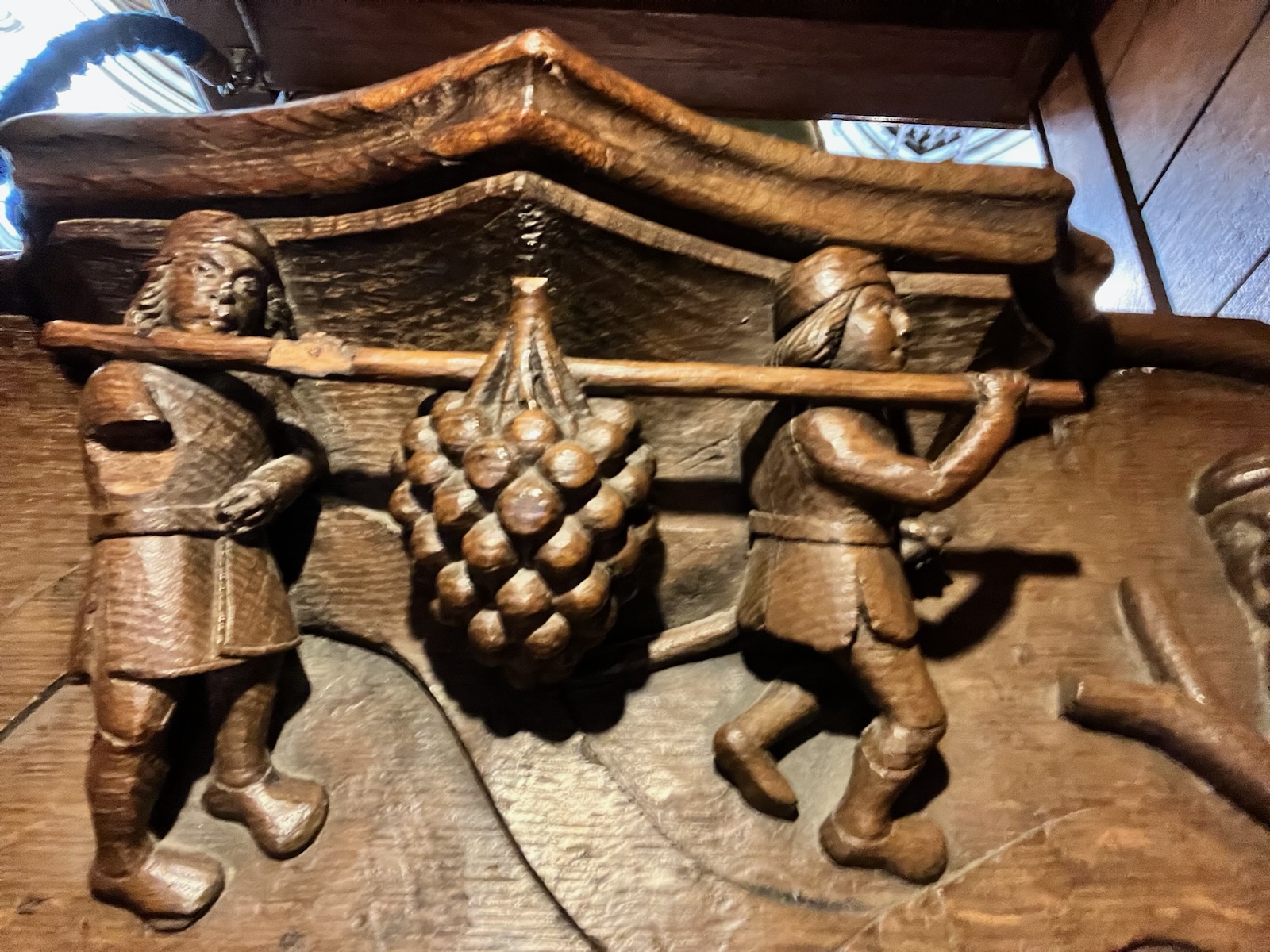
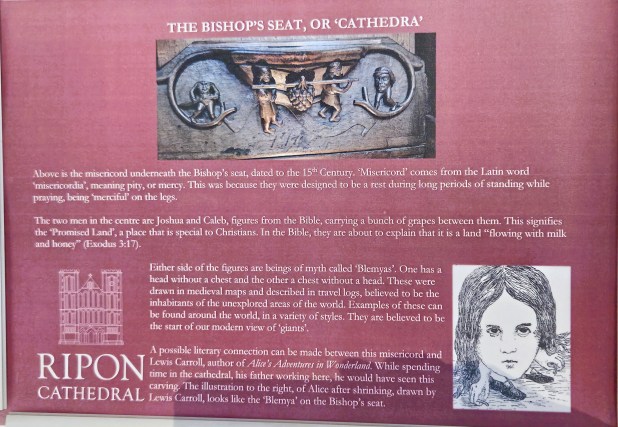
Here is the Bishop’s Seat or ‘Cathedra’ and here is the carving under the seat that Laura was able to capture. She had to take the photo ‘blind’ by getting her phone under the seat and hoping she captured it.
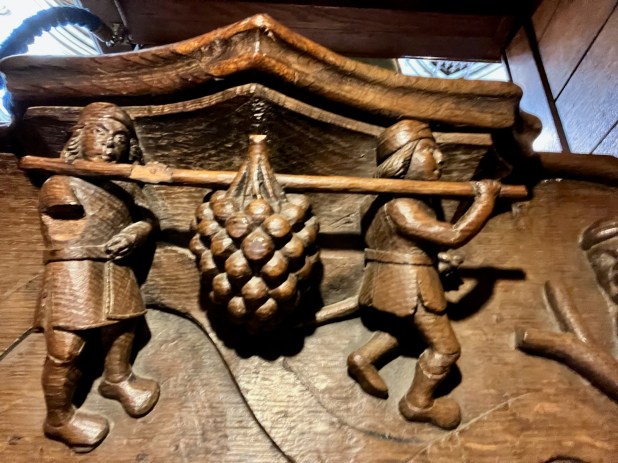
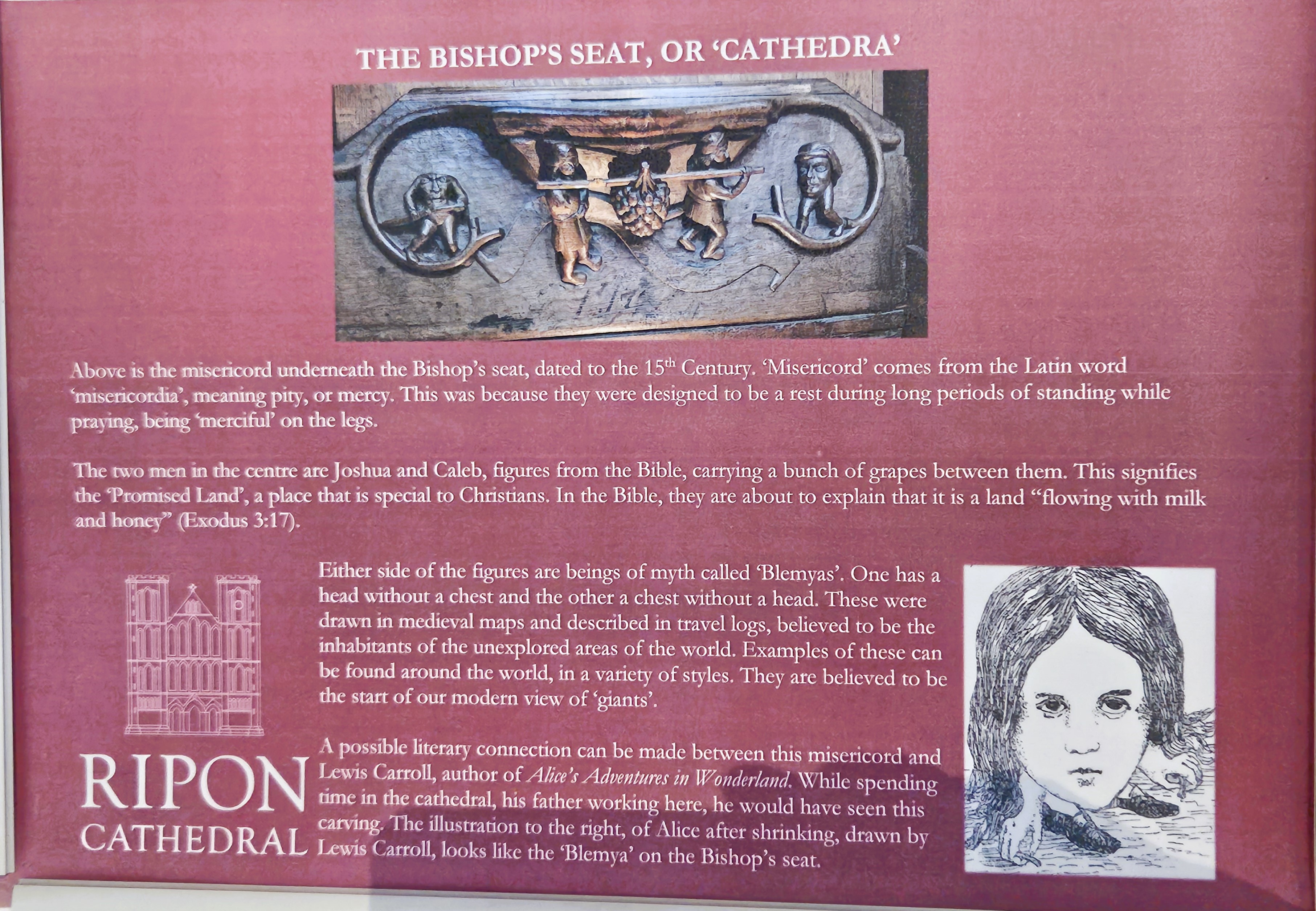
A description was given on a placard beside the Bishop’s seat.

“The Two men in the centre are Joshua and Caleb, figures in the Bible, carrying a bunch of grapes between them. This signifies the ‘promised land’, a place that is special to Christians. In the Bible they are about to explain that it is a land flowing with milk and honey. Ex. 3:17”

I found this description to be curious in it’s wording because we are in a cathedral where you would expect knowledge of the Bible and these central figures in the Old Testament and Bible in general to be more familiar.

The account of the spies sent to learn about the land of Canaan, this ‘promised land’, and the fact that Caleb and Joshua were the only two who brought back a good report can be found in Numbers 13.
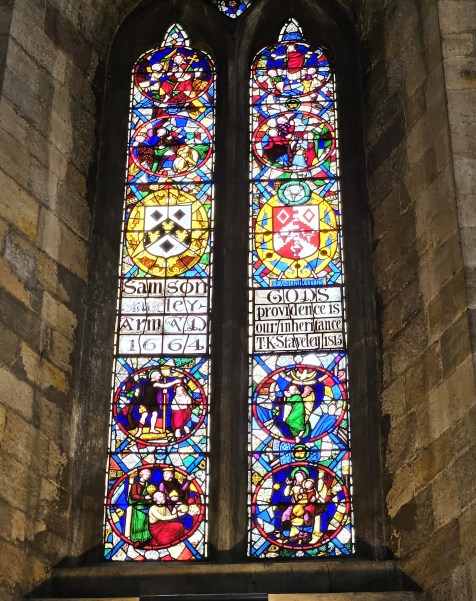
 

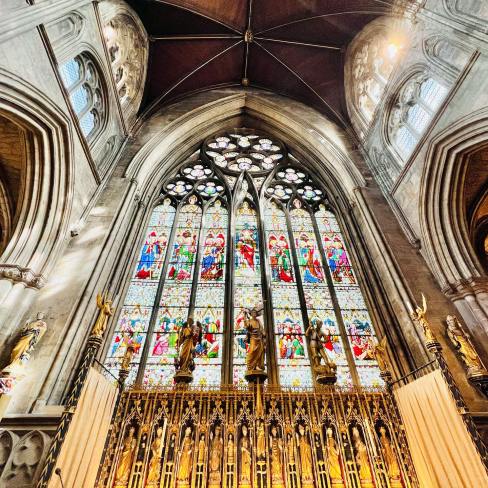
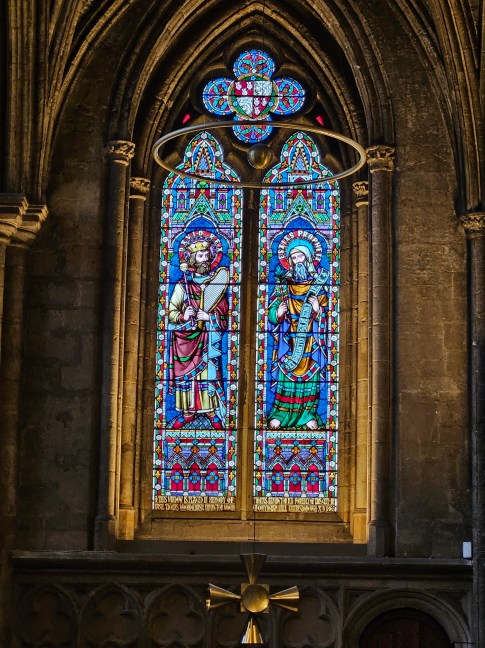
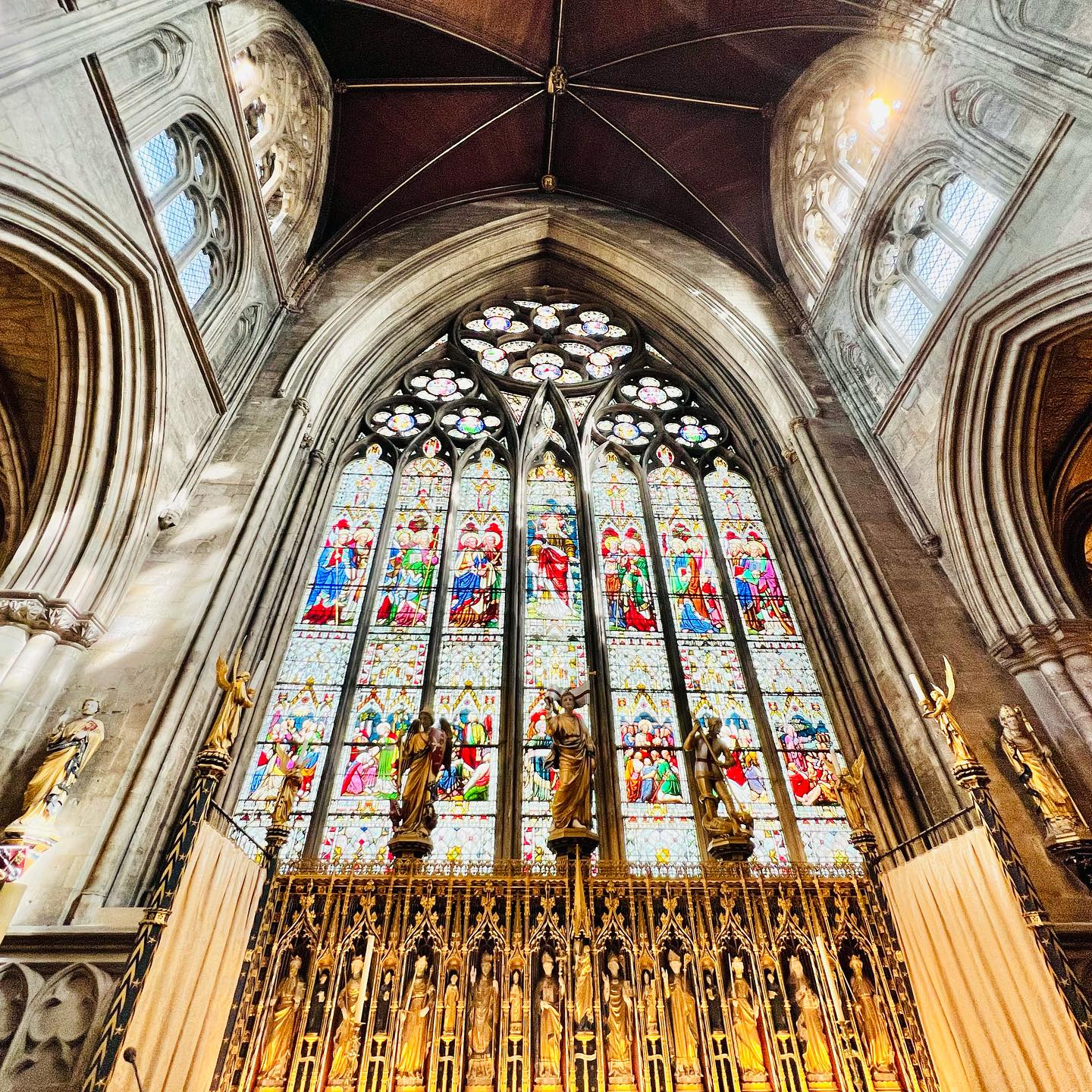
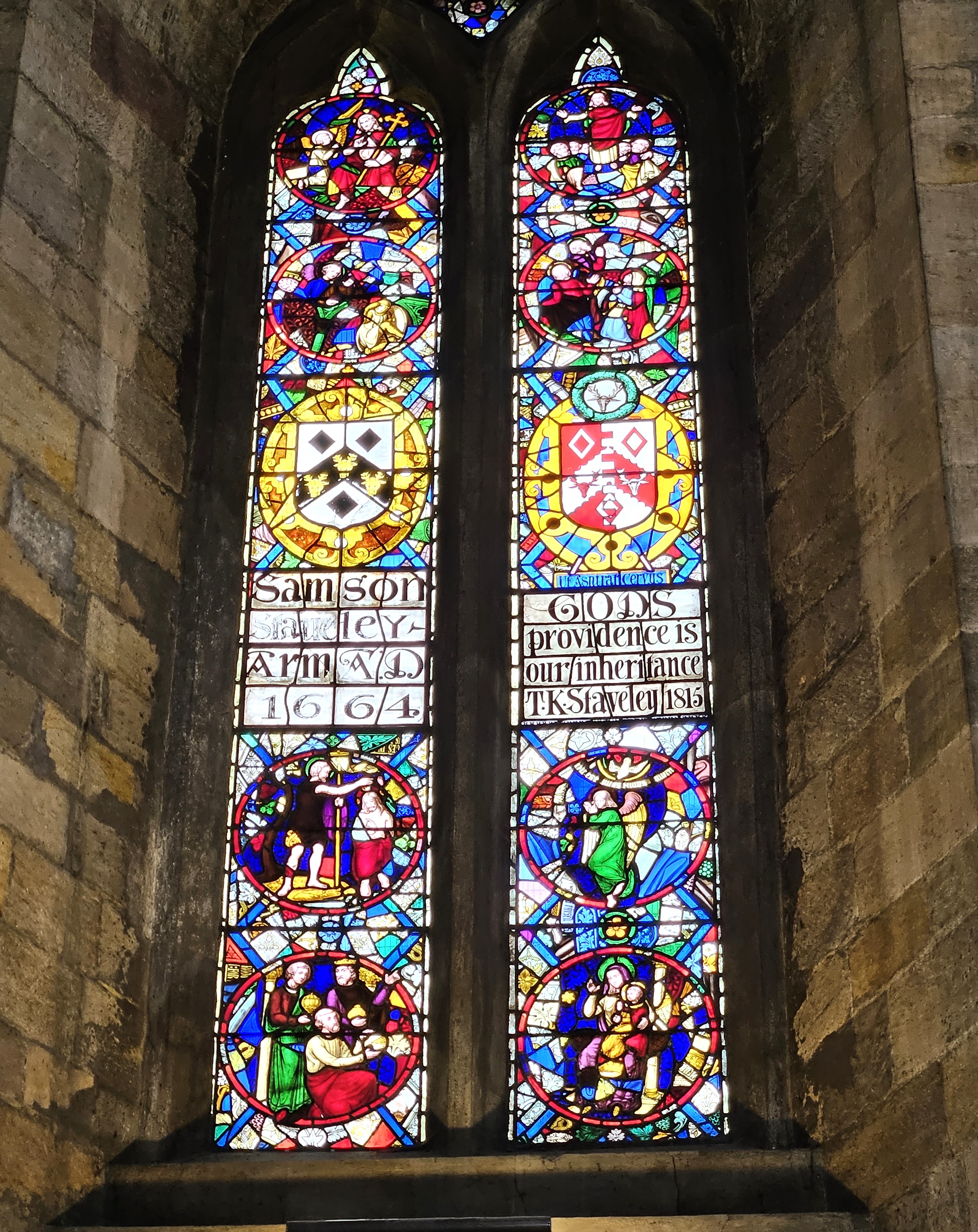
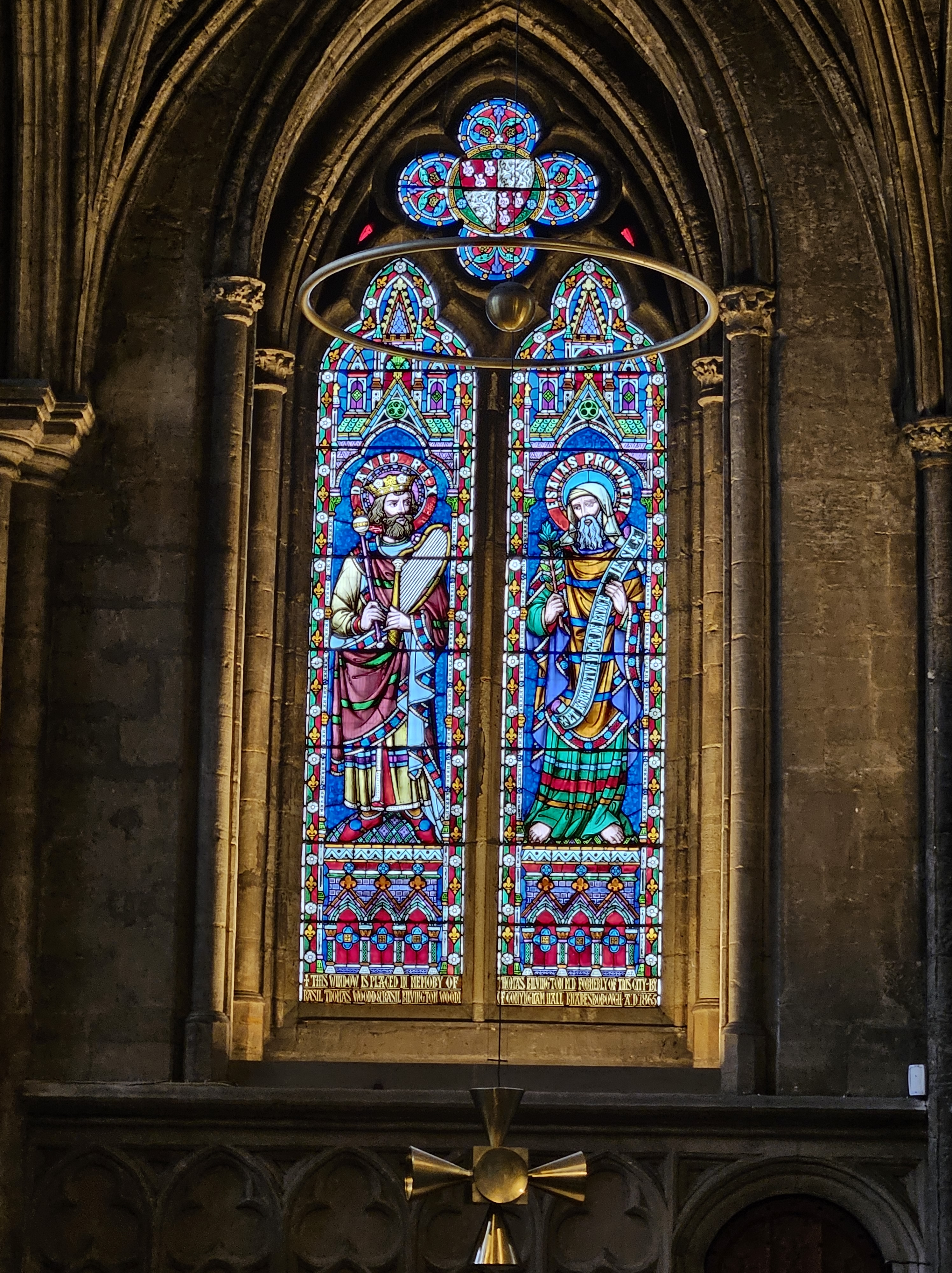
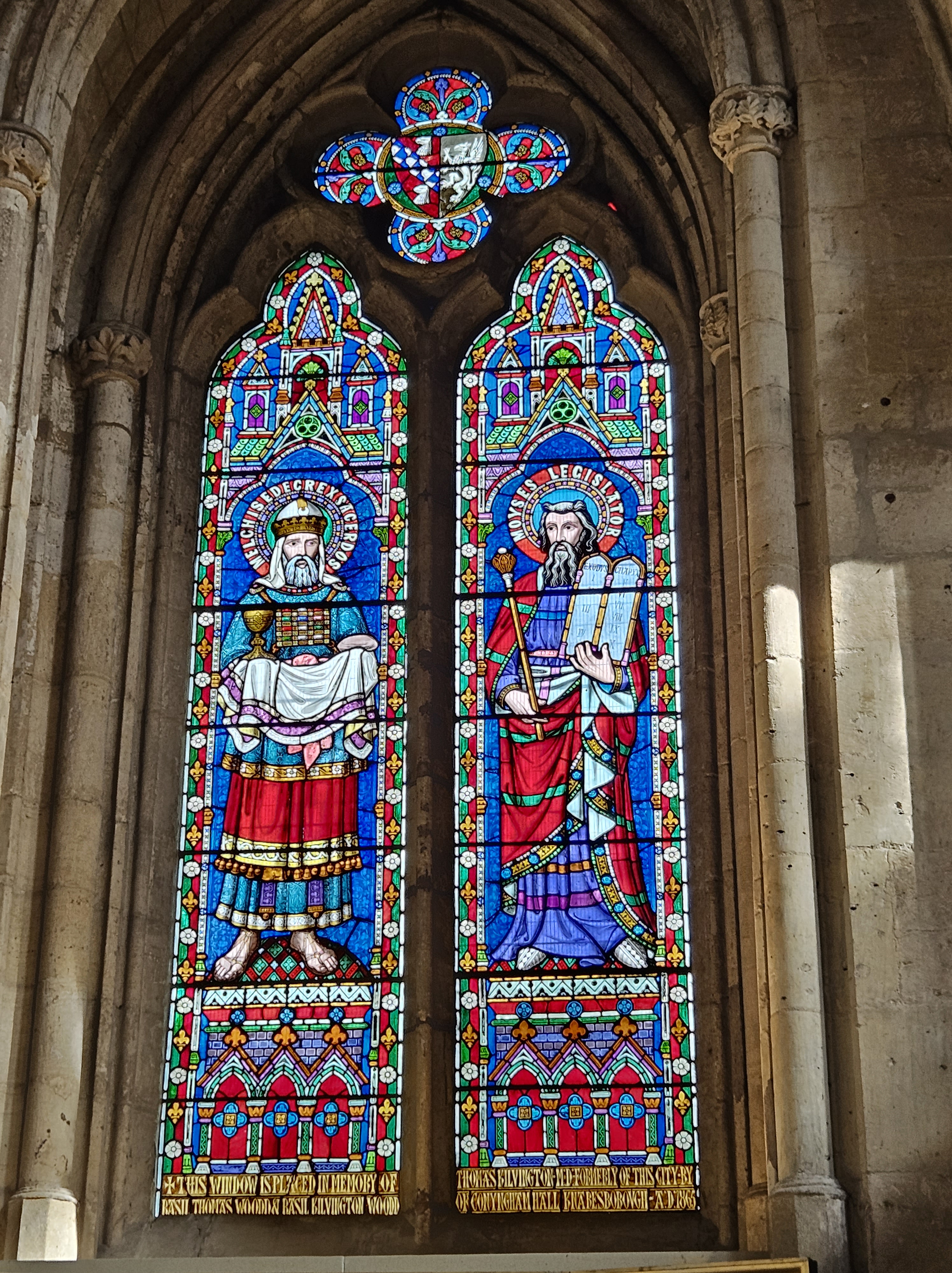
The stained glass windows were exceptional. ‘God’s Providence is our Inheritance’
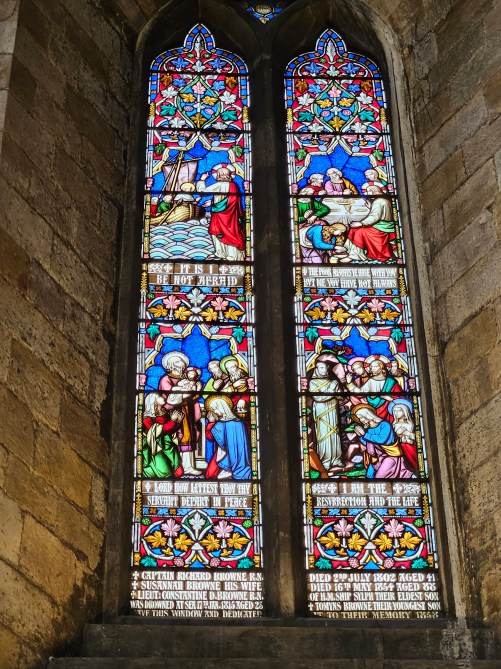
 

As I gather more history about Ripon Cathedral I will add it to my post.

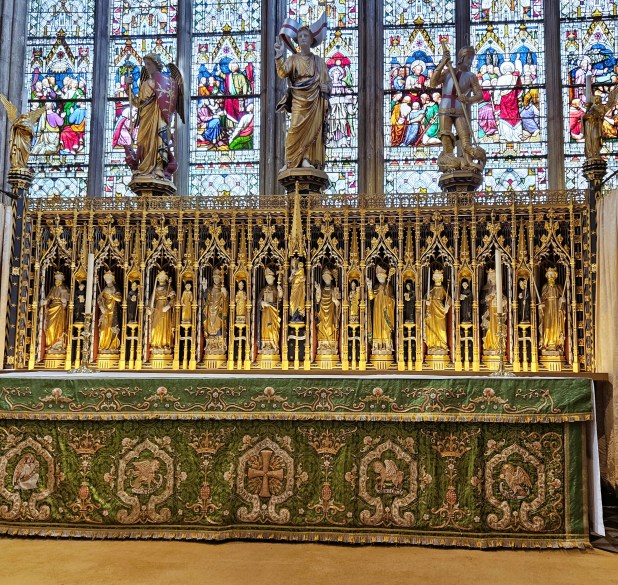
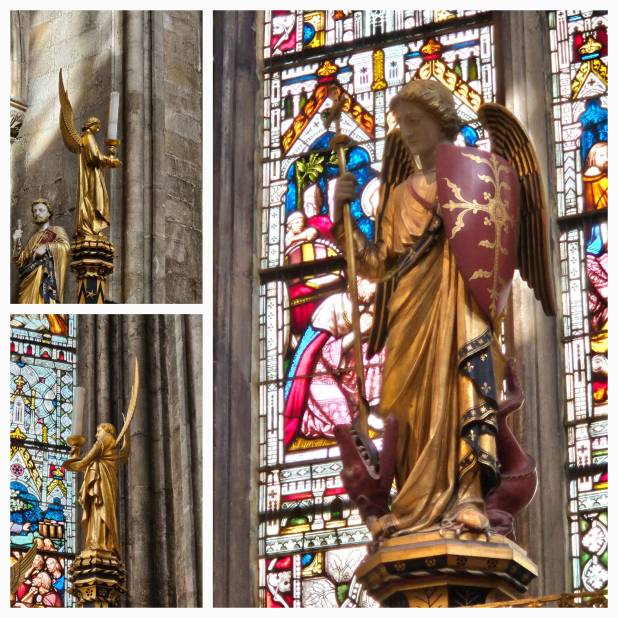
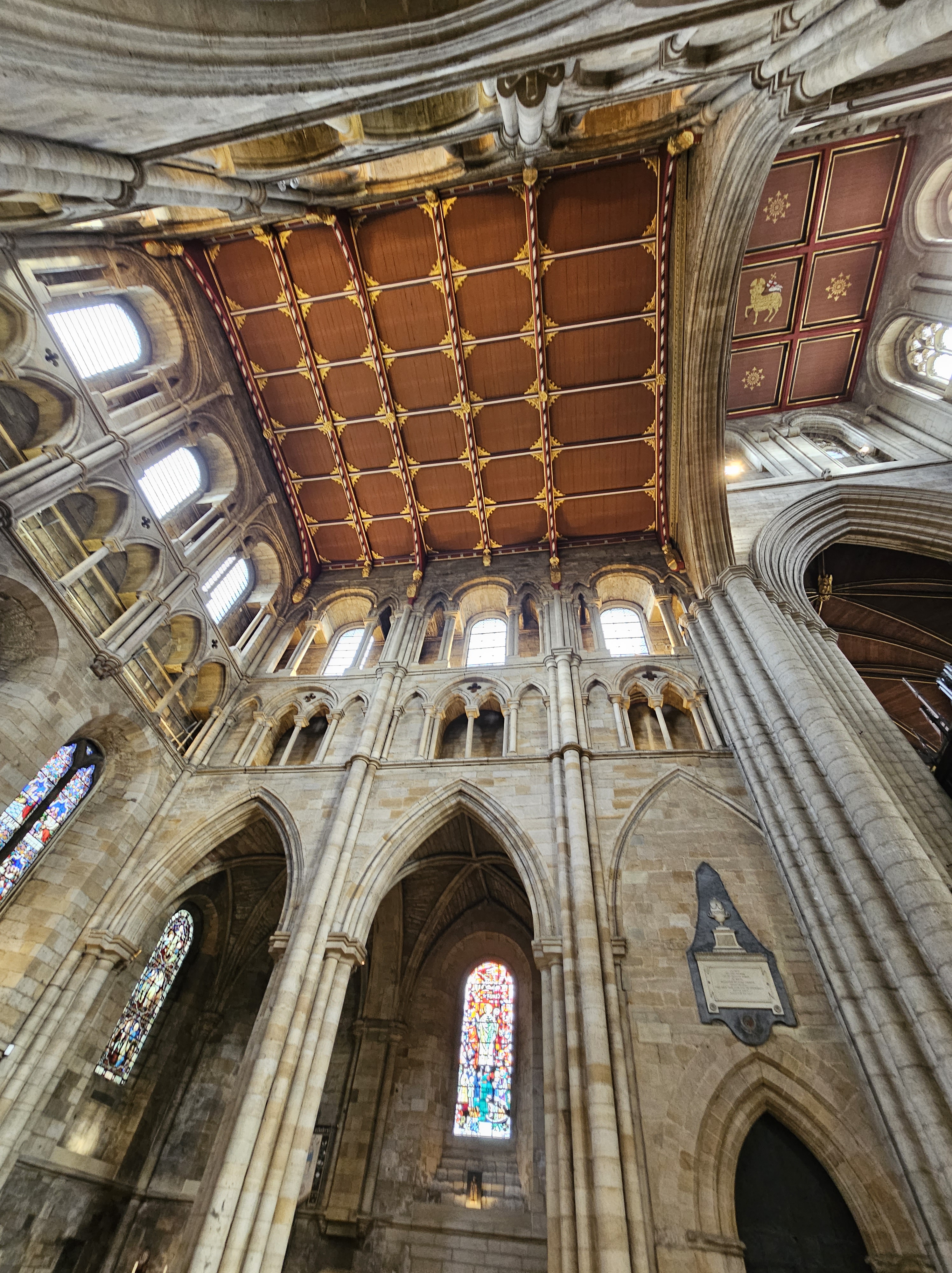
What a treat to be able to walk through and marvel at all the amazing architecture and artistry in the carvings and stained glass. We love how the architecture is meant to draw your eyes upward.

We were happy that we included this stop on our journey to Grassington. That will be my next post to complete Day Six of our travels.
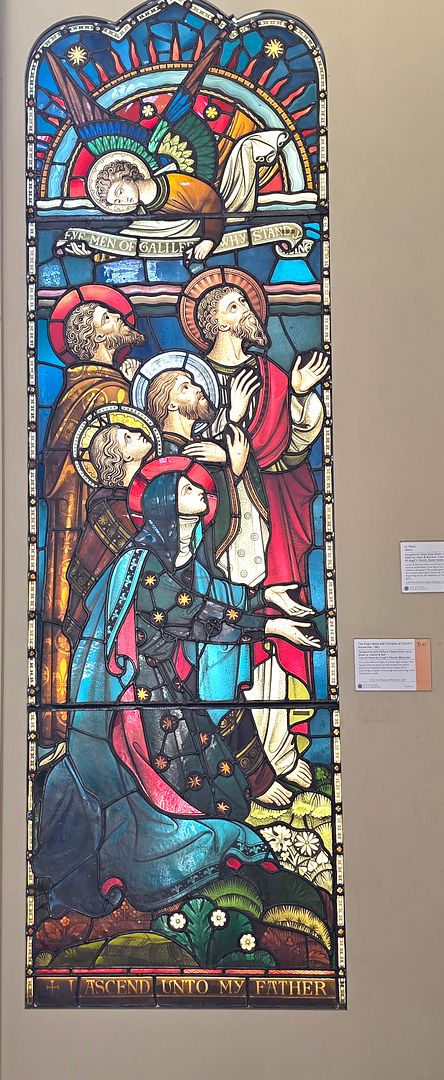
 

How Sweet the Name of Jesus Sounds ~ Hymn

How Sweet the Name of Jesus Sounds

How sweet the name of Jesus sounds
In a believer’s ear!
It soothes his sorrows, heals his wounds,
And drives away his fear.

It makes the wounded spirit whole,
And calms the troubled breast;
’Tis manna to the hungry soul,
And to the weary rest.

Dear name! the rock on which I build,
My shield and hiding place,
My never failing treasury filled
With boundless stores of grace!

By Thee my prayers acceptance gain,
Although with sin defiled;
Satan accuses me in vain,
And I am owned a child.

Jesus! my shepherd, husband, friend,
O prophet, priest and king,
My Lord, my life, my way, my end,
Accept the praise I bring.

Weak is the effort of my heart,
And cold my warmest thought;
But when I see Thee as Thou art,
I’ll praise Thee as I ought.

Till then I would Thy love proclaim
With every fleeting breath,
And may the music of Thy name
Refresh my soul in death!

Words: John Newton, 1779.

Inside Cathedral of St. Helena

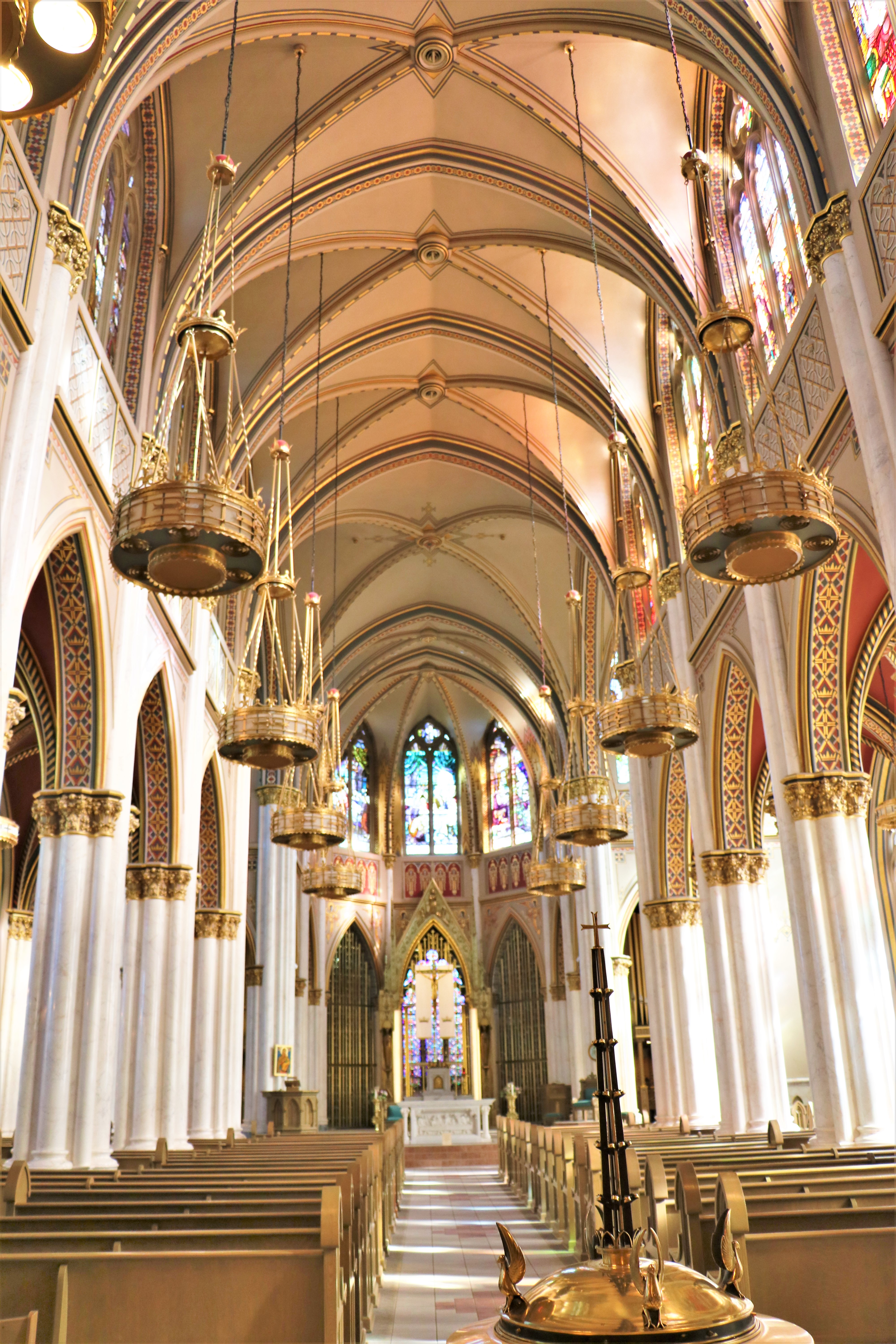
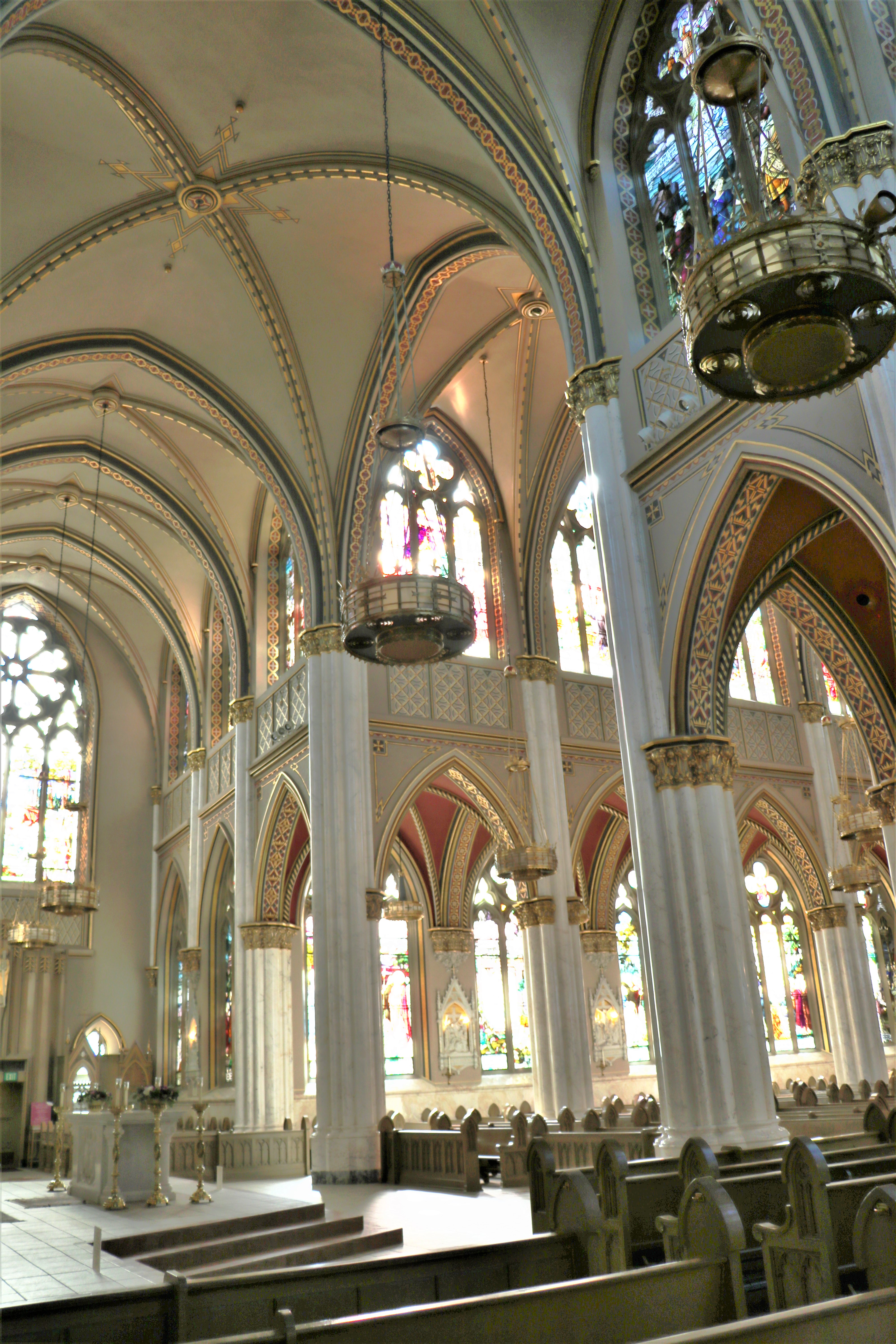
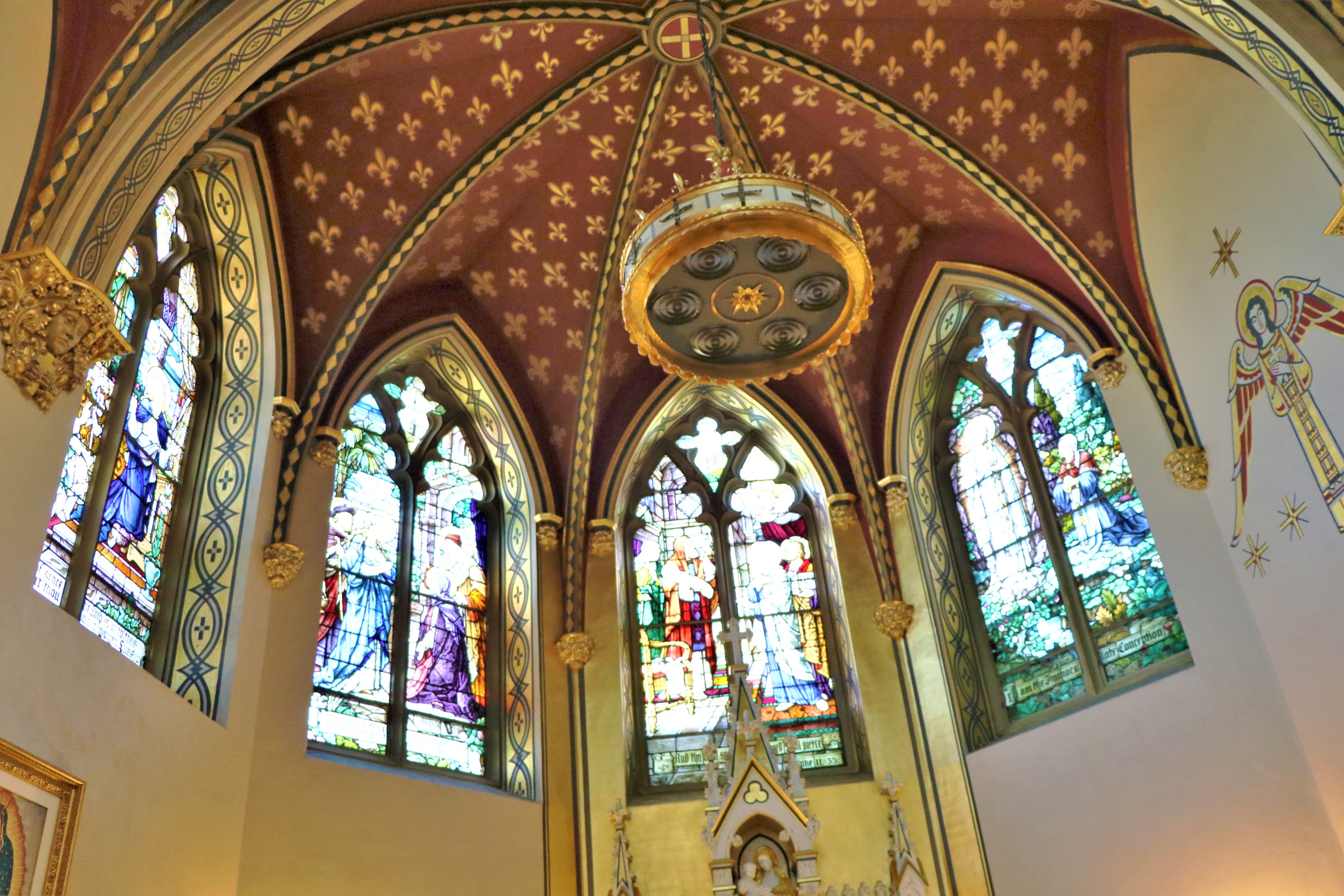
Continuing on our Land That We Love Tour here are the photos I took inside the Cathedral of St. Helena. This is a photo intensive post. Couldn’t leave out any of the photos I took. Dear and I had the cathedral to ourselves on this Tuesday afternoon.

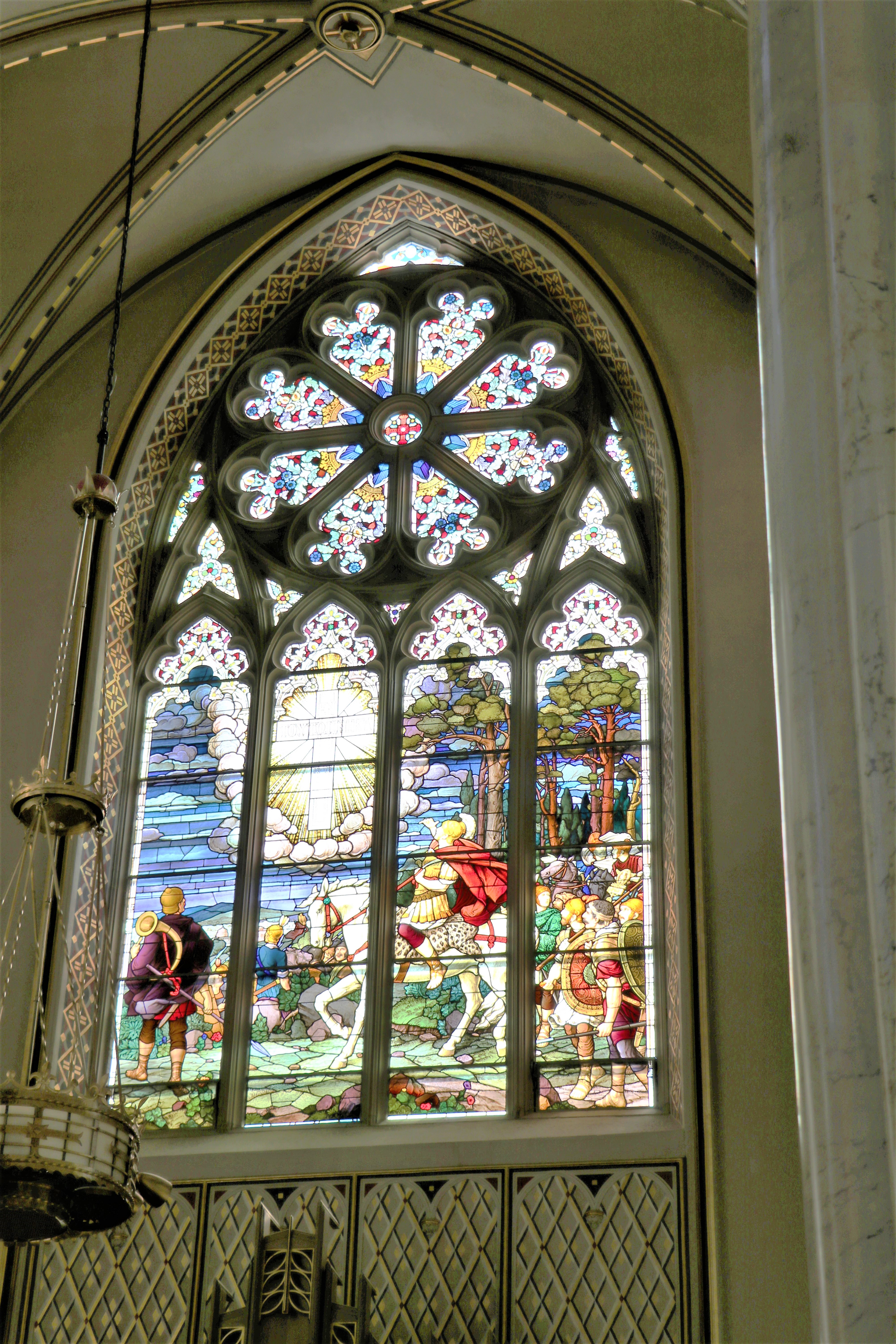
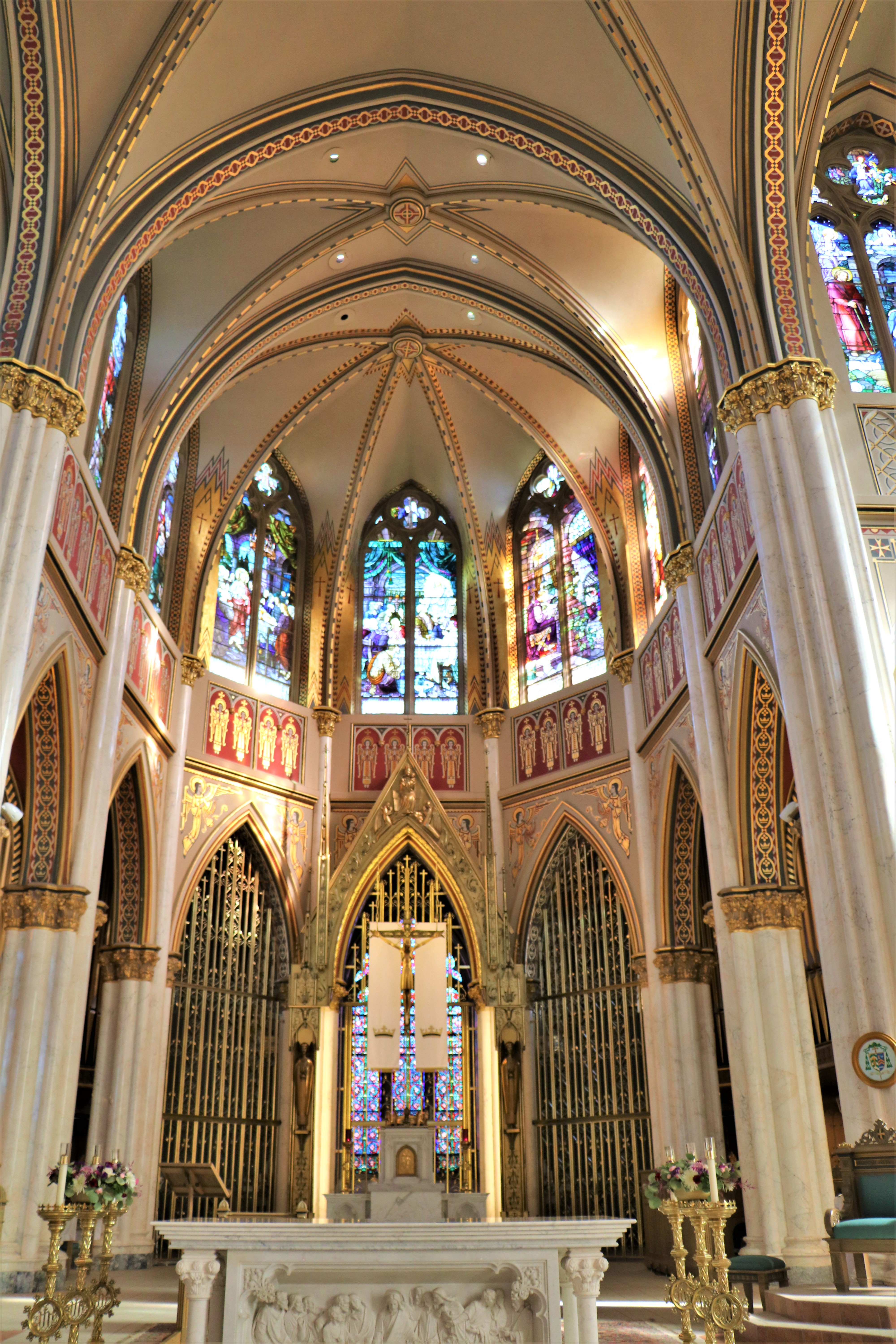
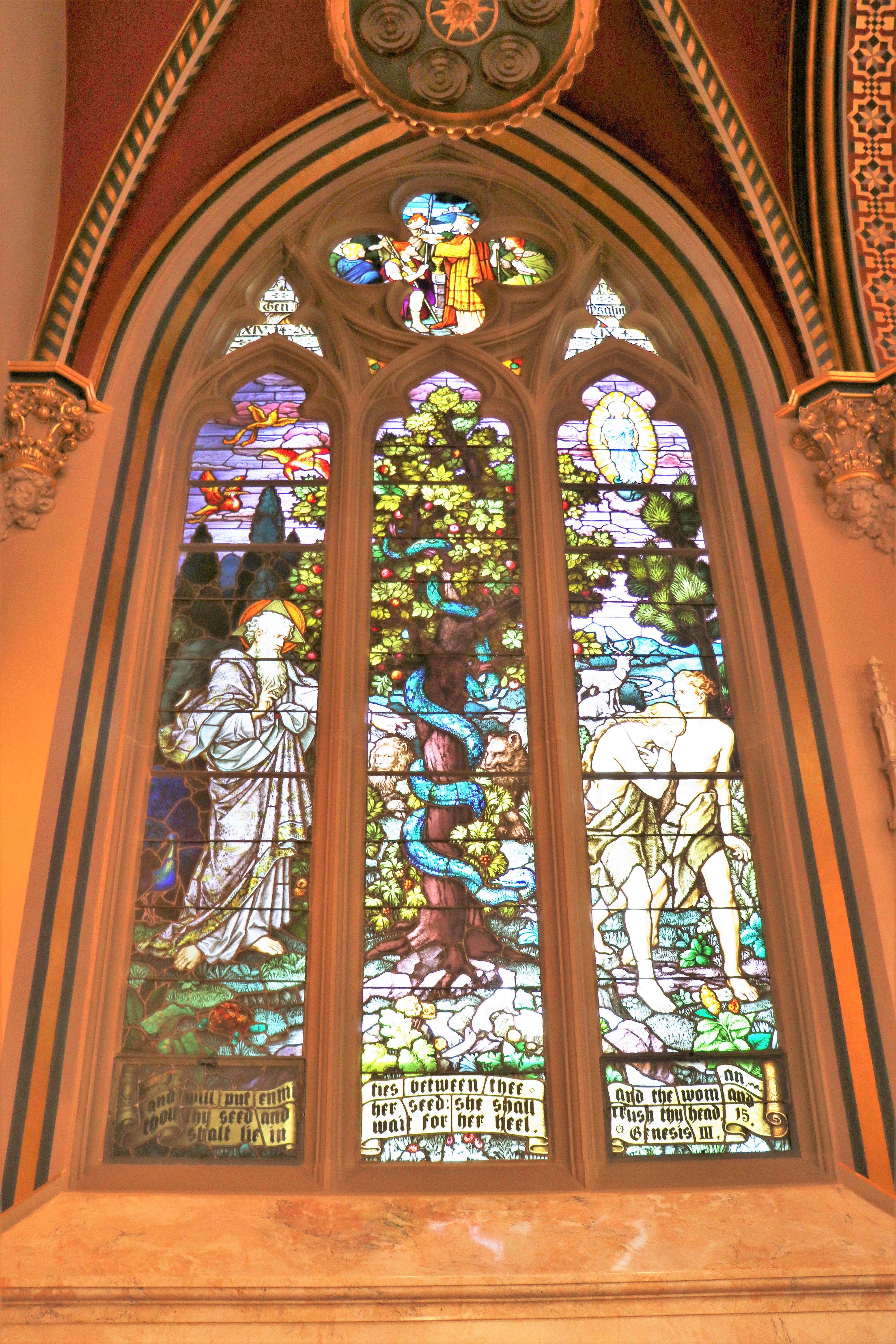
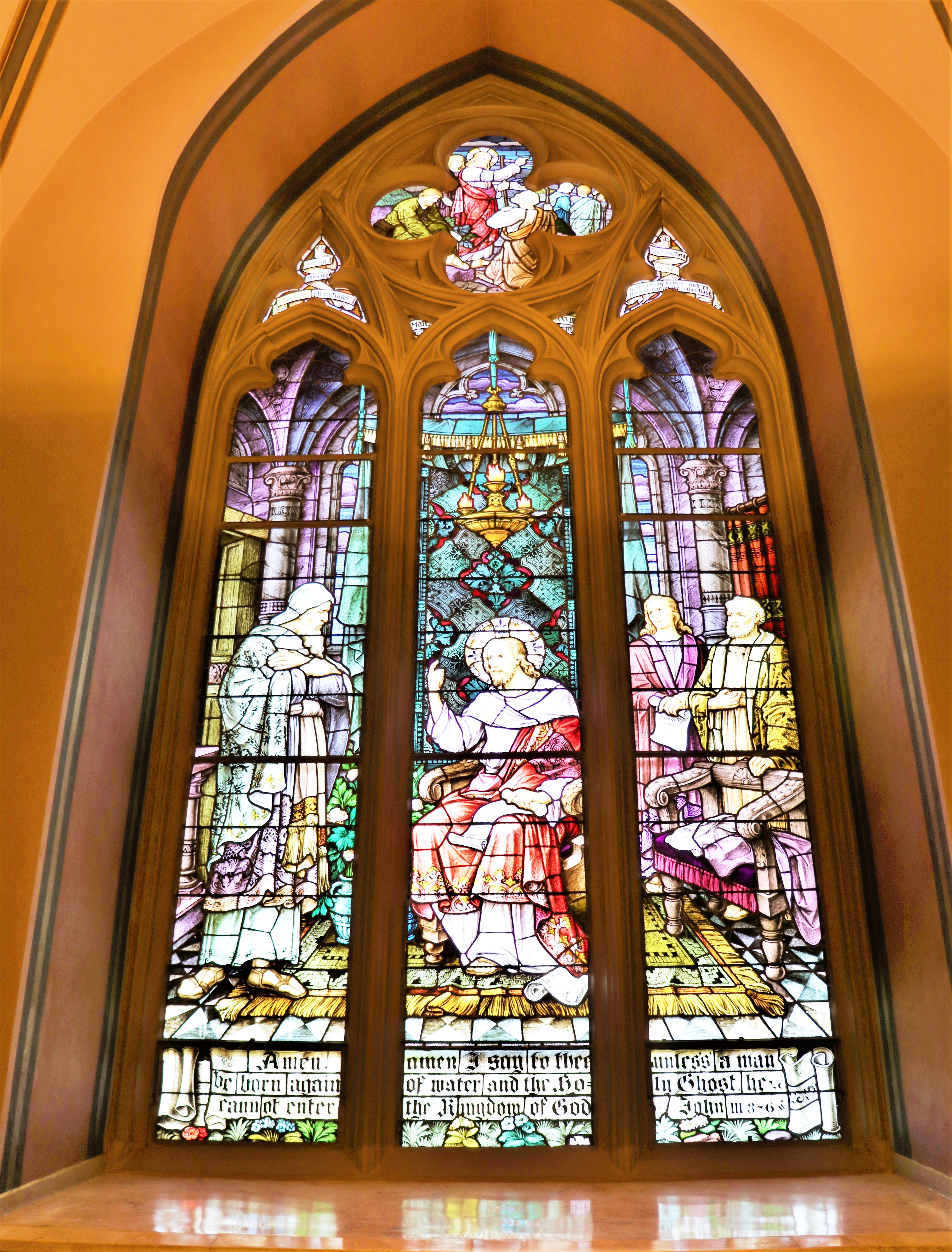
The Cathedral of St. Helena was constructed at the turn of the century during the episcopate of Bishop John Carroll. It is an outstanding example of Geometric Gothic architecture, patterned after the Votive Church of the Sacred Heart in Vienna, Austria. Stained glass windows, white marble altars, statues carved of the purest Carrara marble, and genuine gold leaf decorates the sanctuary. The pews and woodwork are all done in hand carved oak. The magnificent lighting fixtures are of hand-forged bronze with a special lacquer finish. Outside, majestic twin spires rise 230 feet above the street.

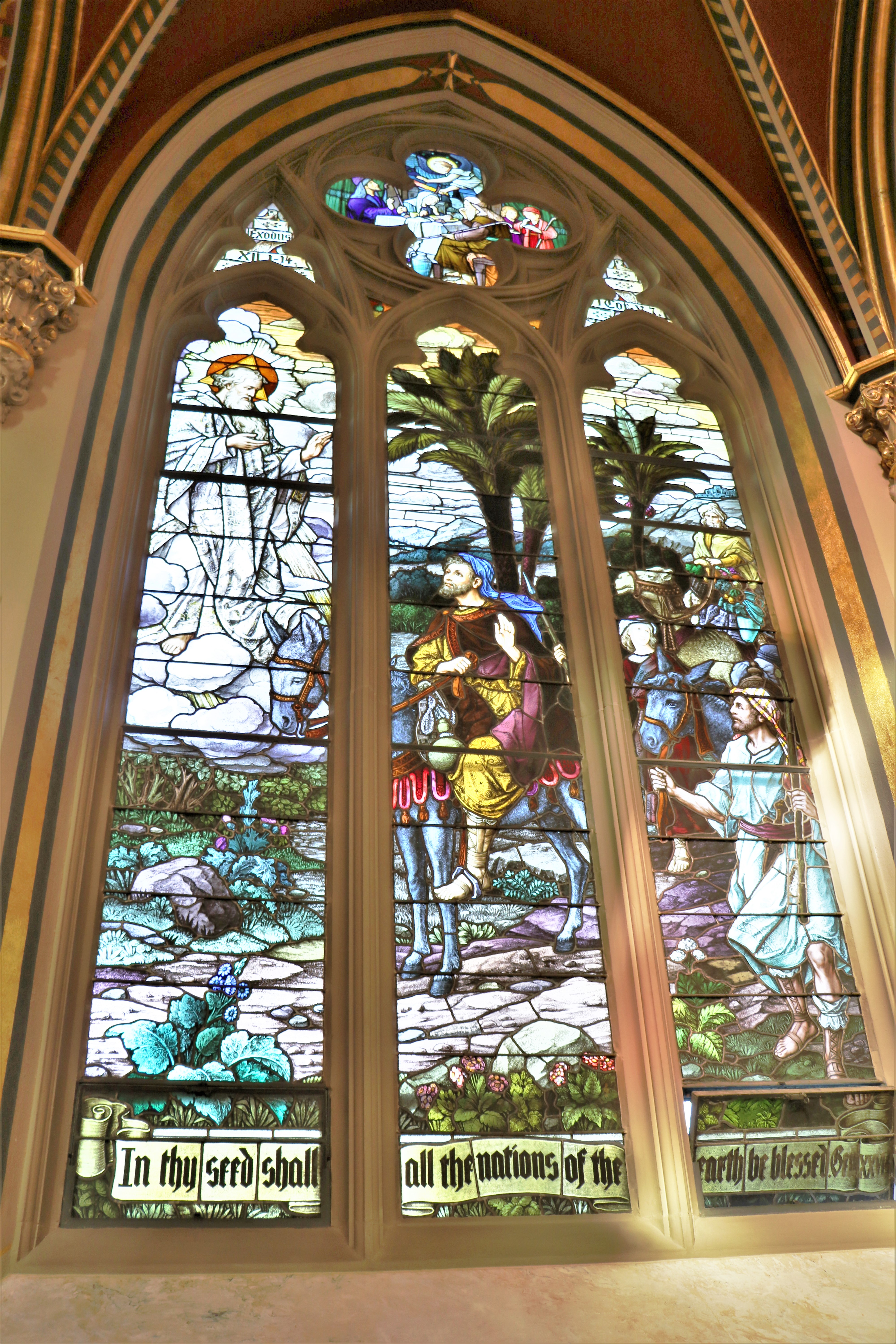
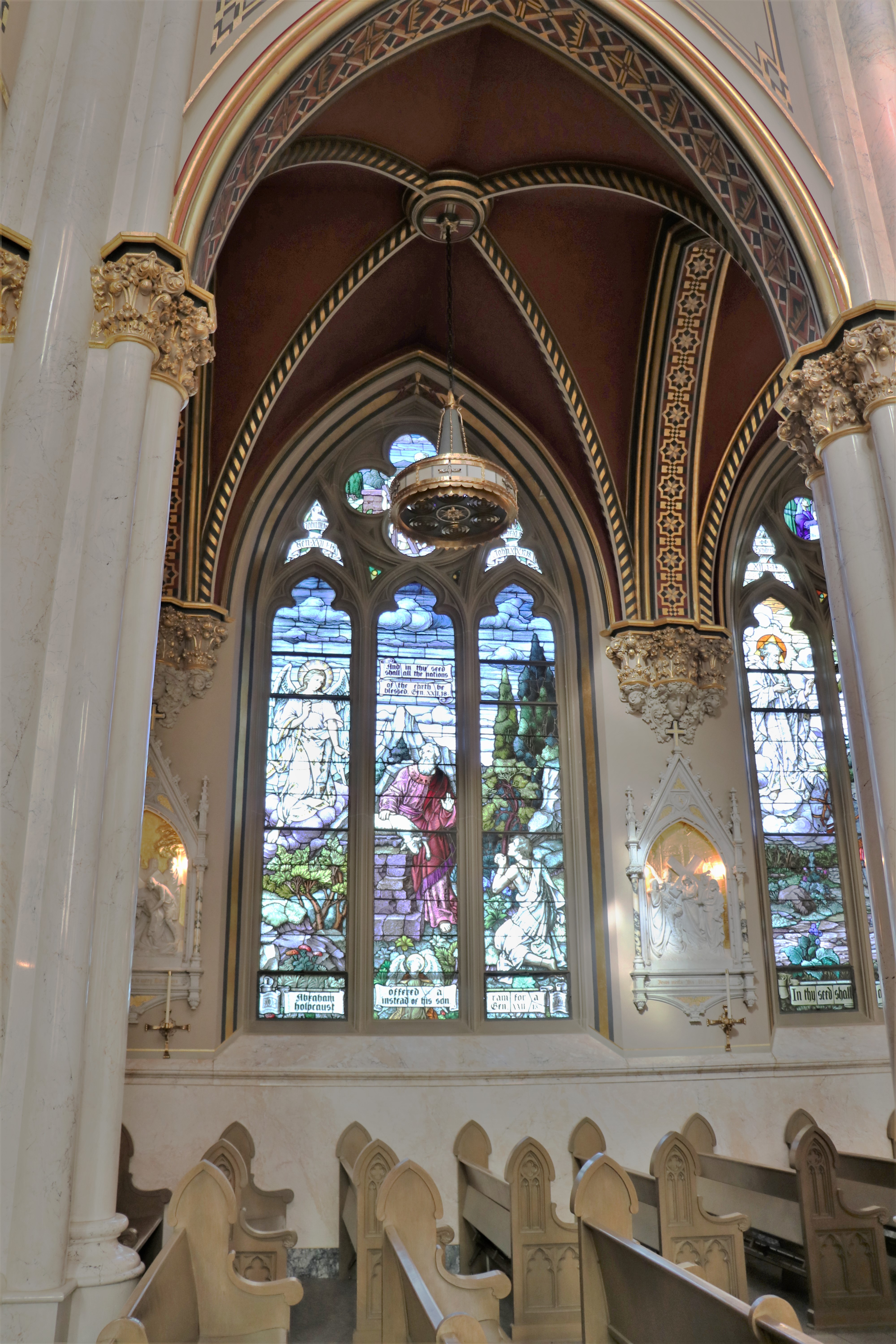
In thy seed shall all the nations of the earth be blessed. Genesis 22:18

Abraham and Isaac

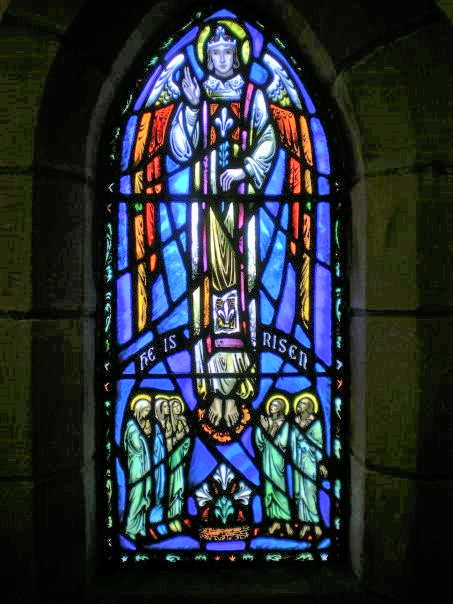
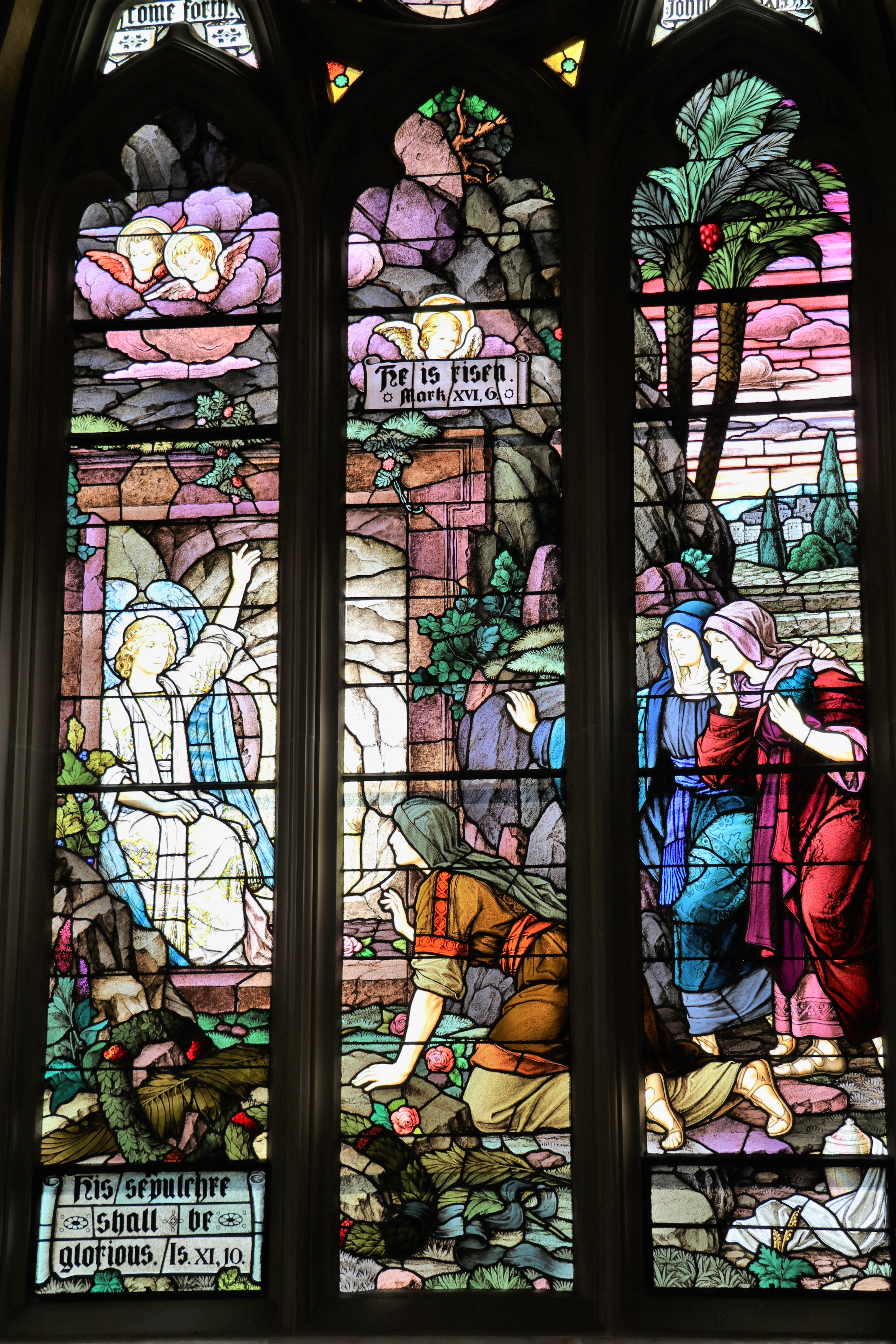
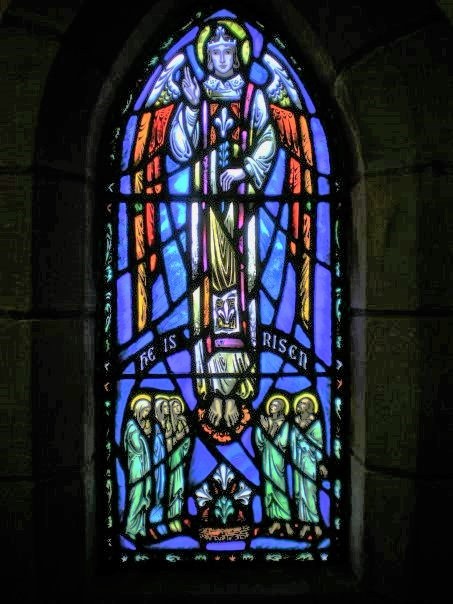
He is risen.

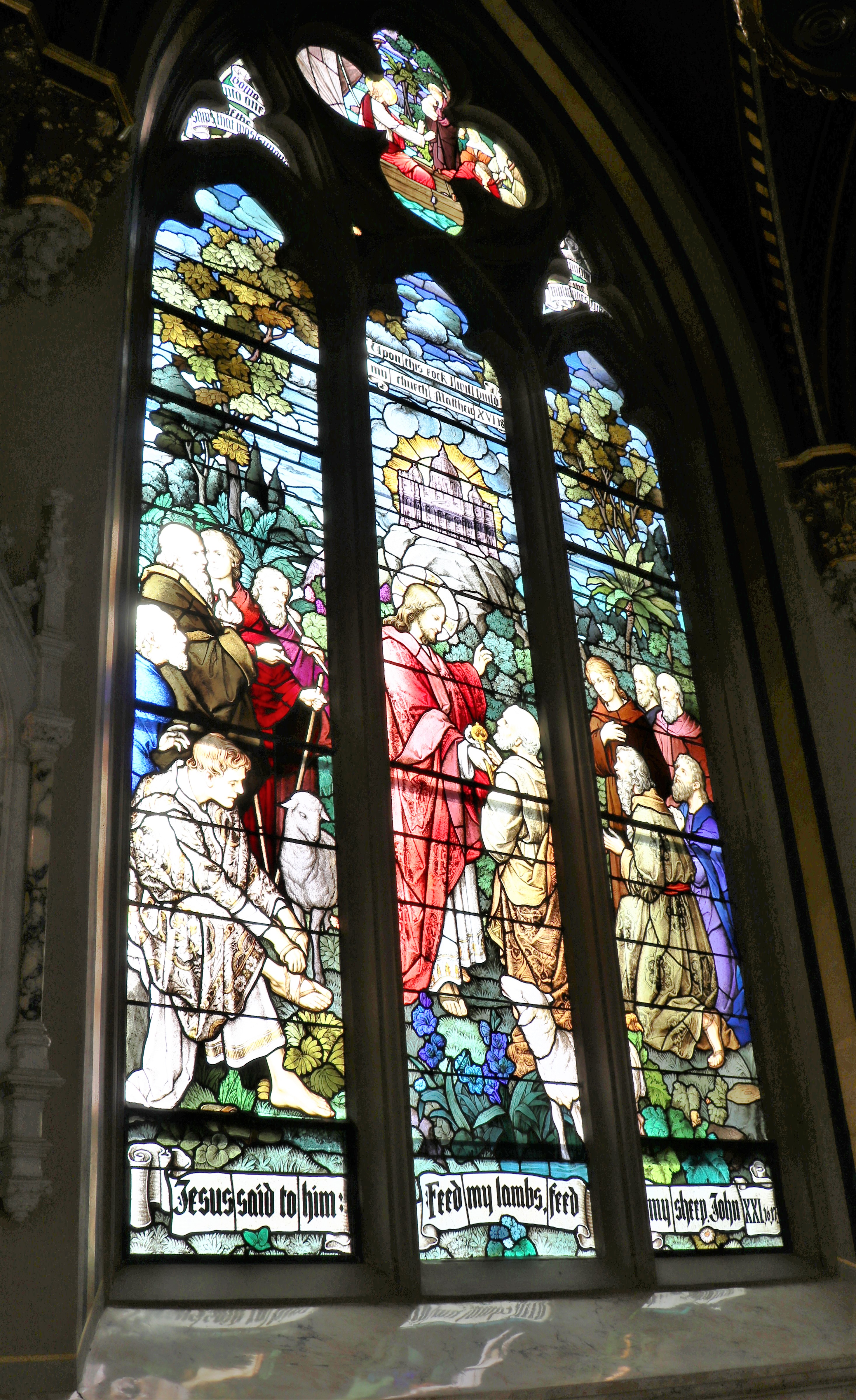
Jesus said to him: Feed my lambs, feed my sheep. John 21:15

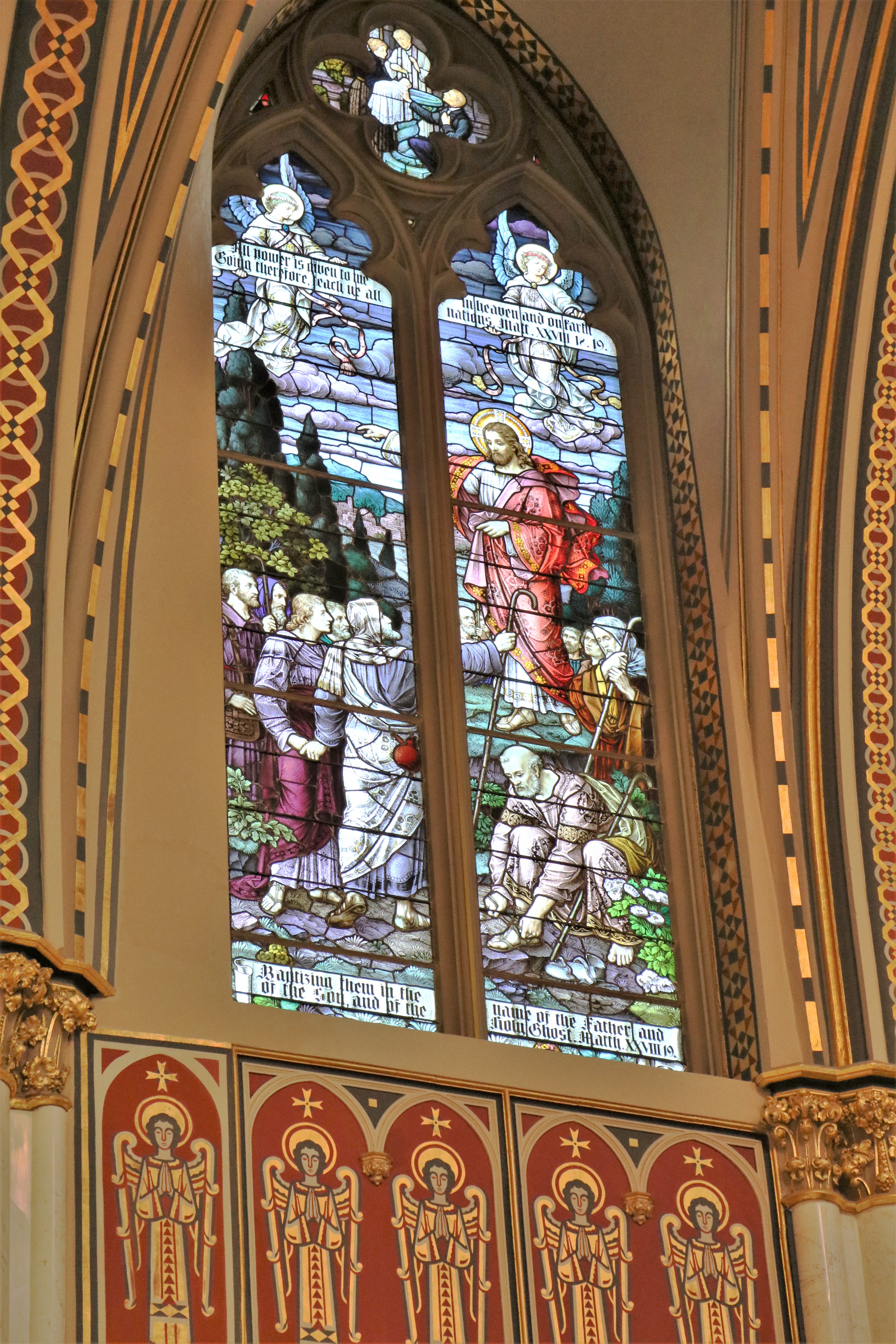
All power is given unto me in heaven and on earth.

Baptizing them in the name of the Father, and of the Son, and of the Holy Ghost.

Verily, verily, I say unto thee, Except a man be born of water and of the Spirit, he cannot enter into the kingdom of God. John 3:5

To read about some of the history of St. Helena Cathedral click here.

Ever Lovin Saturday…

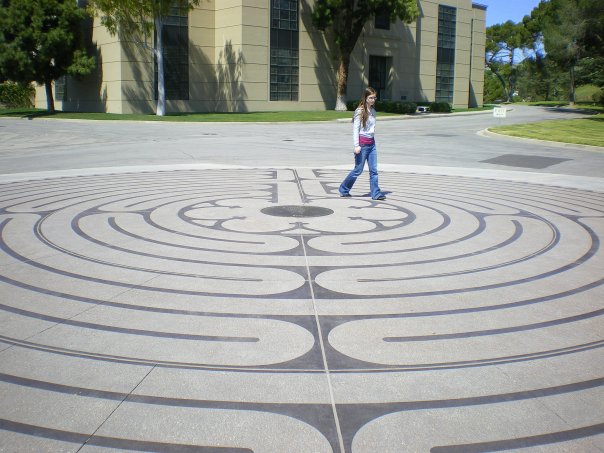
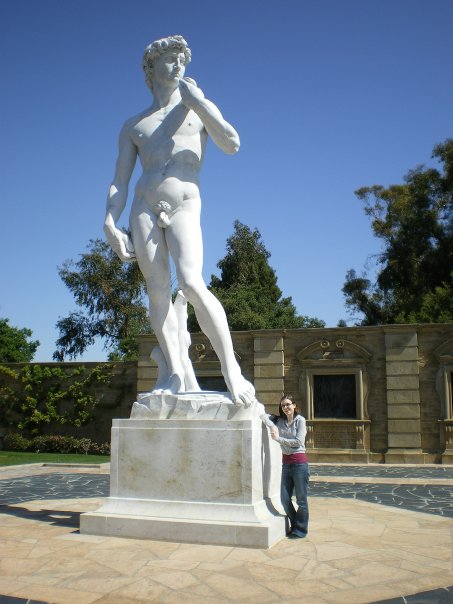
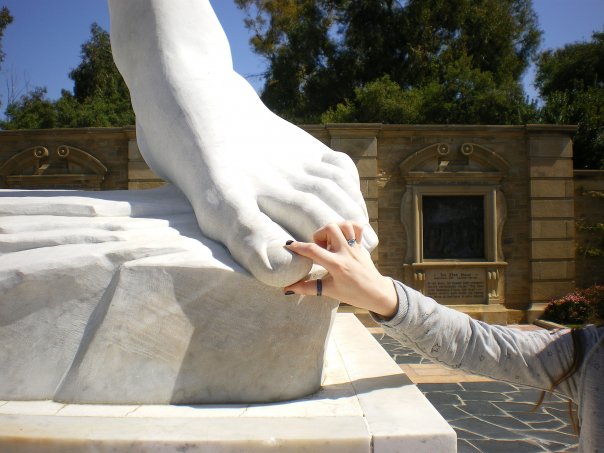
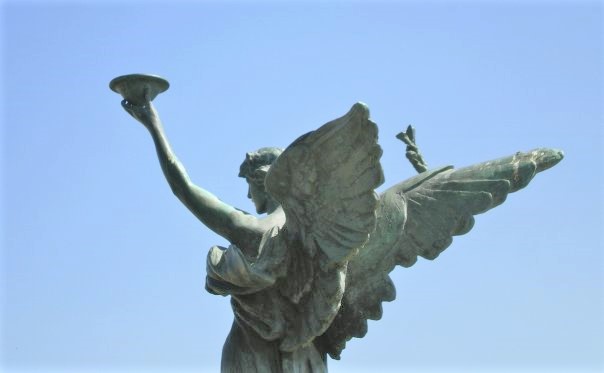
Looking back to some photos dating back to 2009. Our daughter at Forest Lawn in Glendale. Hoping we all can travel to the end of the maze we are on and come out better than we were before. If you find yourself in Southern California sometime in the future a trip to Glendale Forest Lawn will afford you lots of great art.

The statue of David with a little perspective on just how huge it is.
Indeed!

These 5 photos are just a taste of what you can see.
Hope you all have a great Saturday.

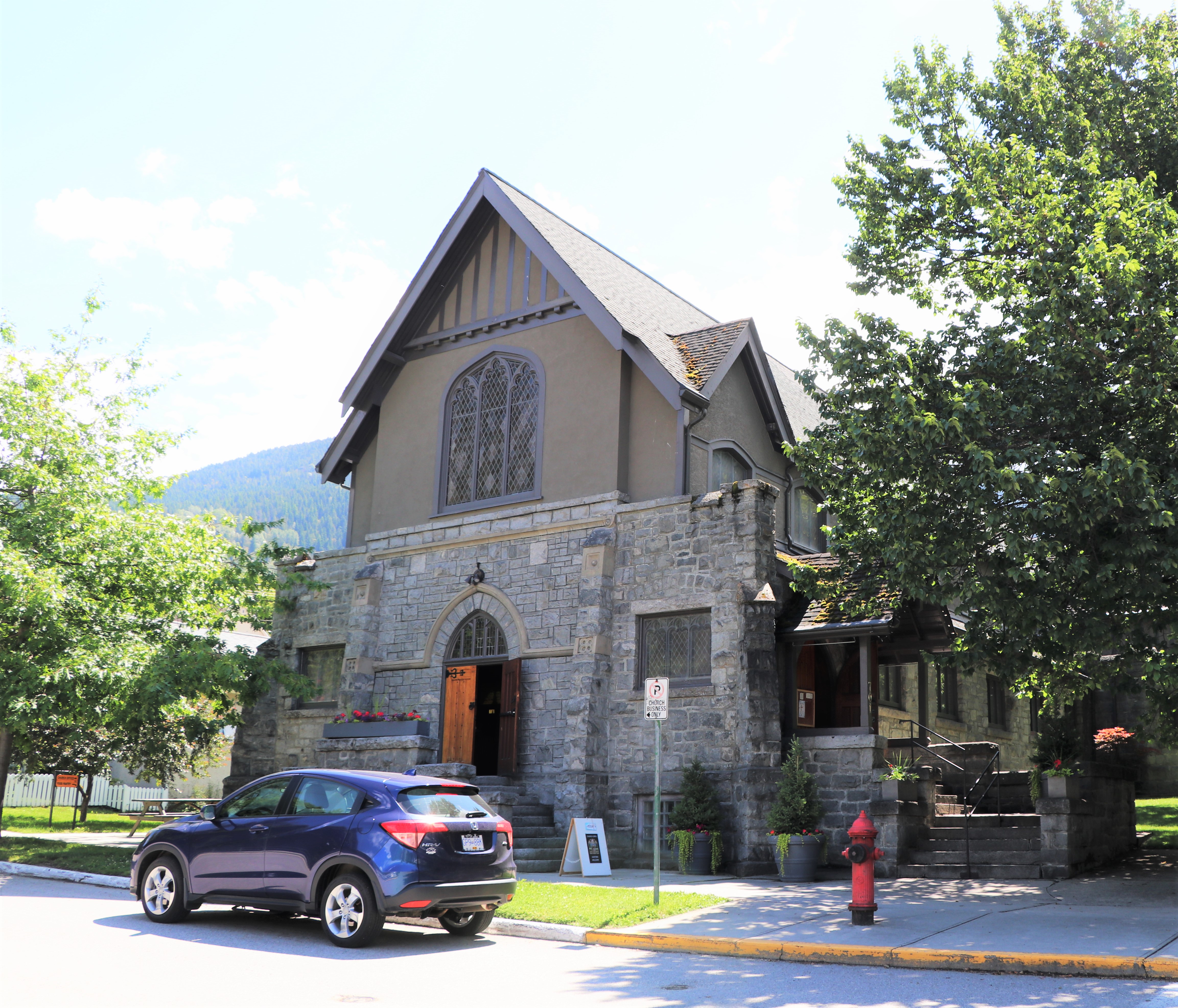
St. Saviour Anglican Church

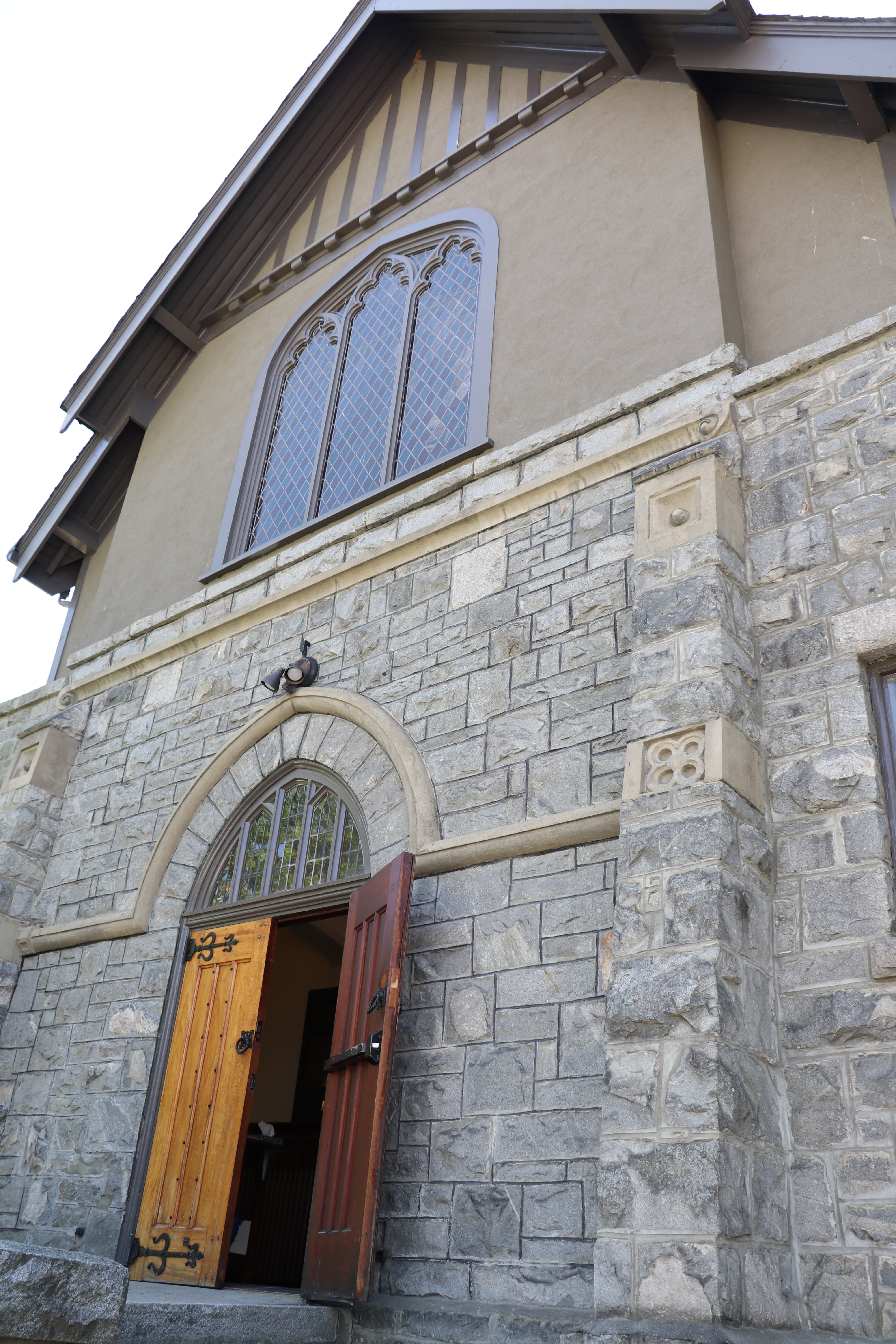
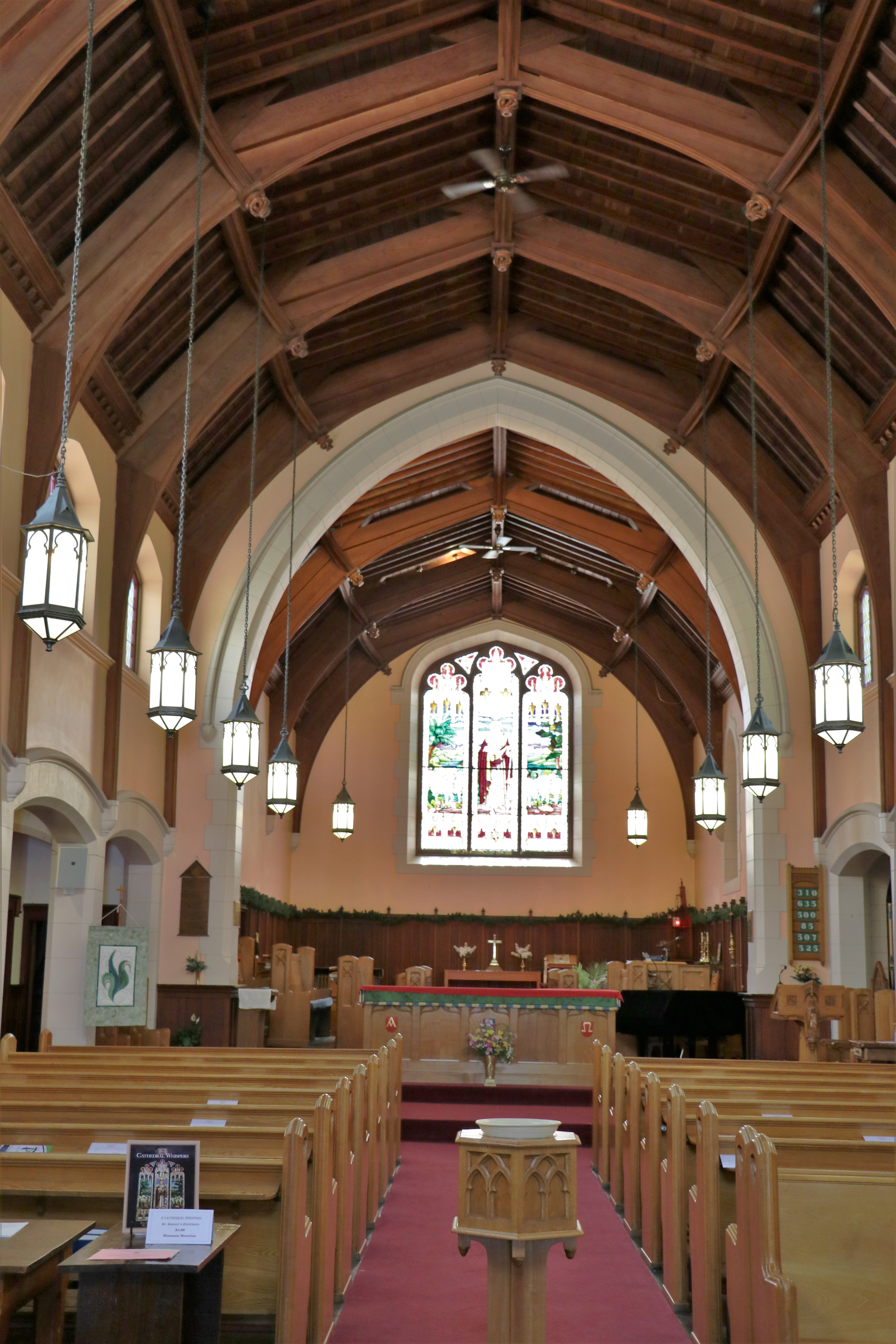
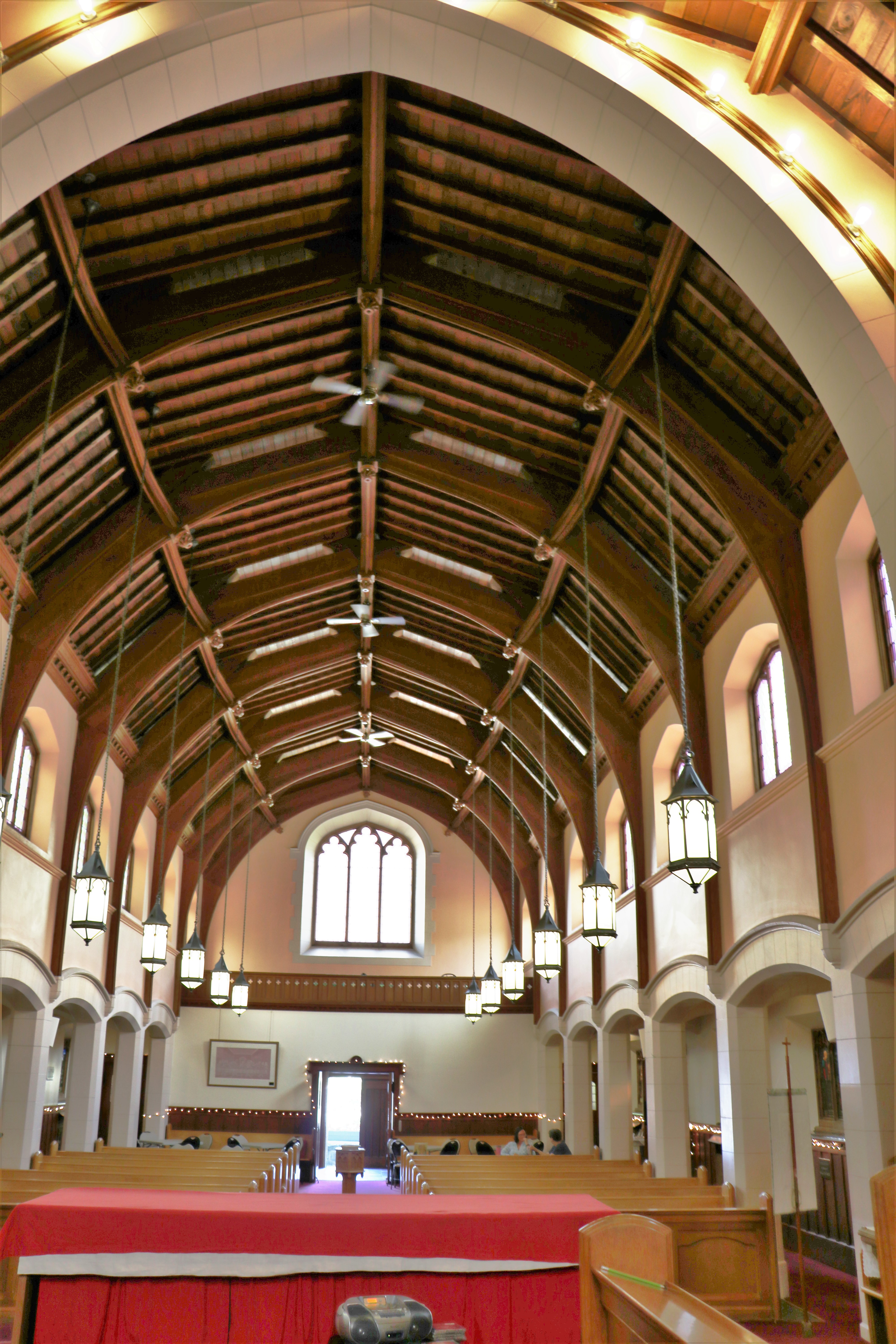
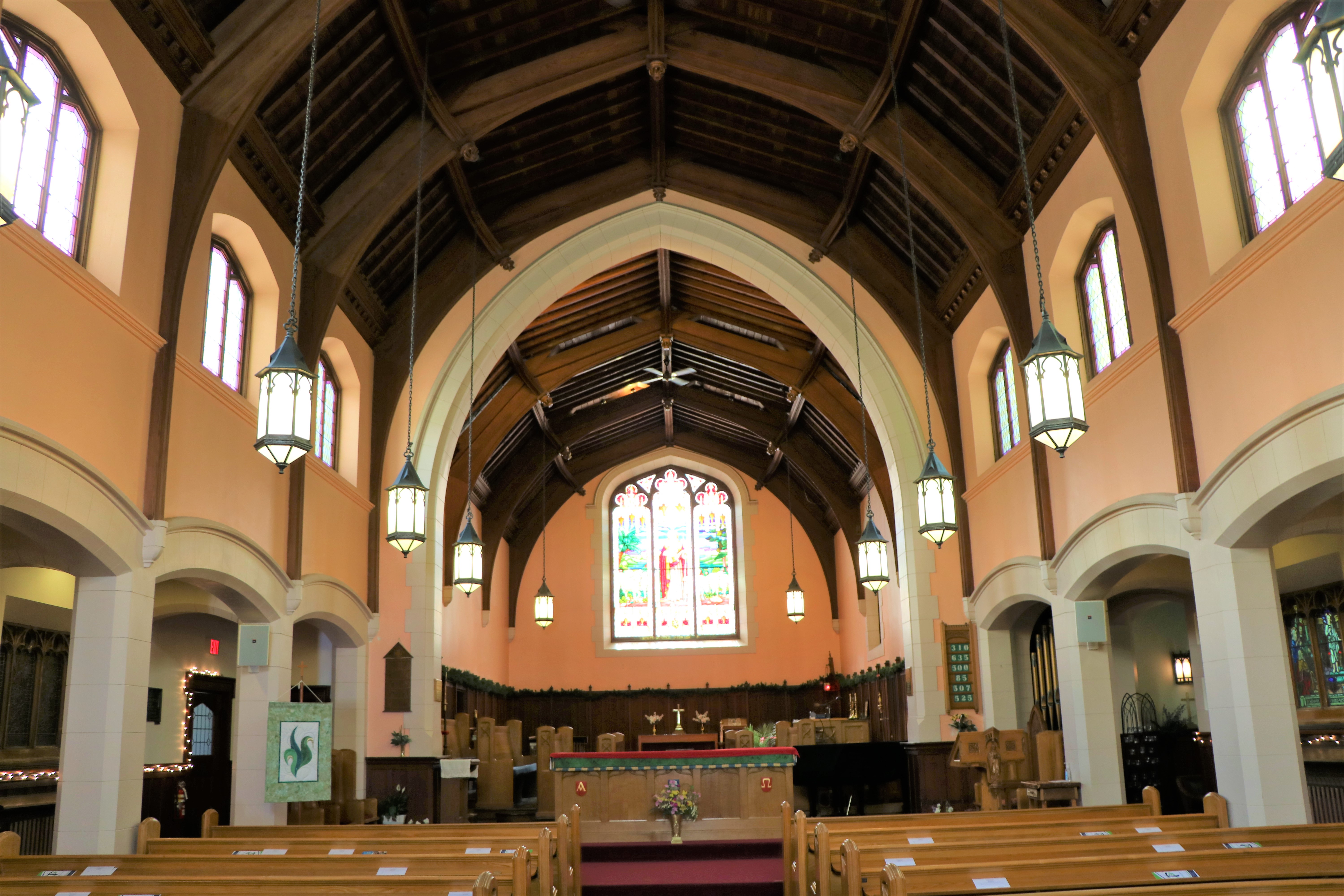
St. Saviour’s Pro-Cathedral is an excellent example of a Gothic Perpendicular church in stone, and thus reminiscent of many English churches. Visitors are amazed by the jewel-like stained glass windows that depict stories from the Bible and, by their dedications, provide a connection to the history of families that helped build Nelson.
St. Saviour’s congregation began in 1890 when Nelson was a raw mining town. In the early days St. Saviour’s was likely a haven for homesick English men and women far from their homes.  The words and music of the traditional Church of England services, no doubt, brought great comfort. A Mission Room was erected in 1892 and the stone church was opened in 1899. The church burned to its granite walls in 1928 and was rebuilt in 1929. The stained glass windows that grace the church were donated after the fire.  St. Saviour’s is still one of Nelson’s best loved heritage buildings.

Dear and I had a very enjoyable visit with a couple ladies from the church who welcomed visitors on this day.

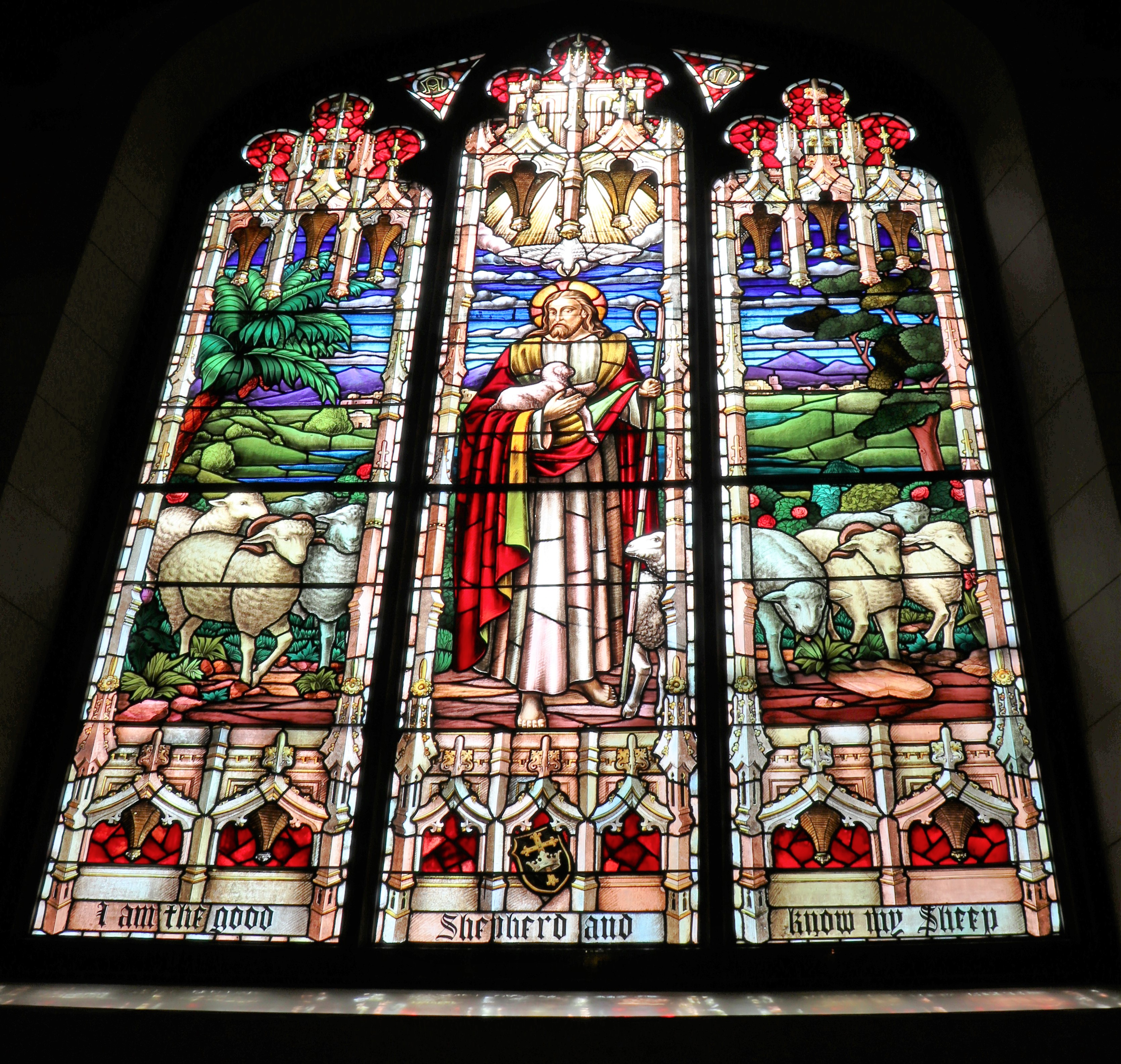
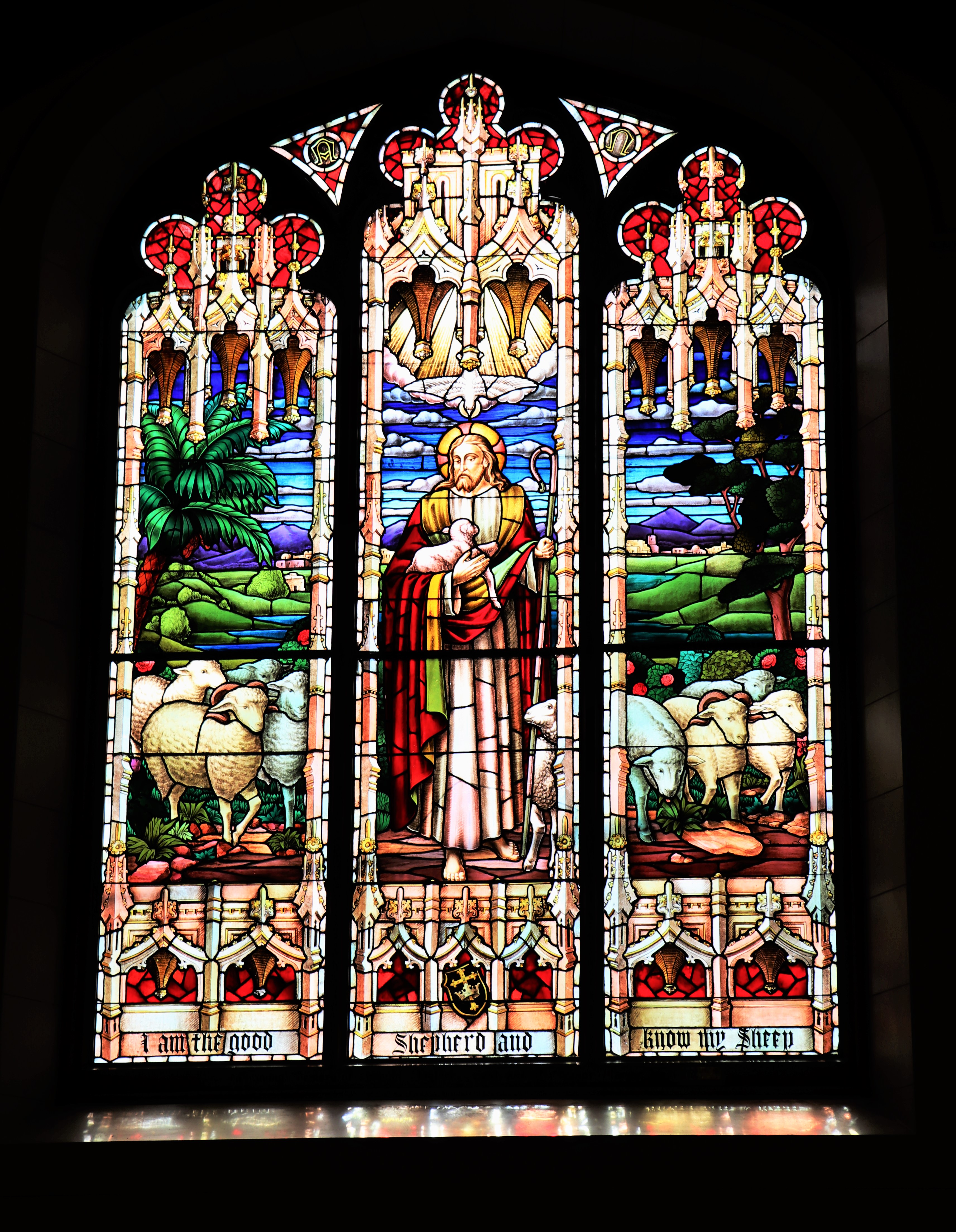
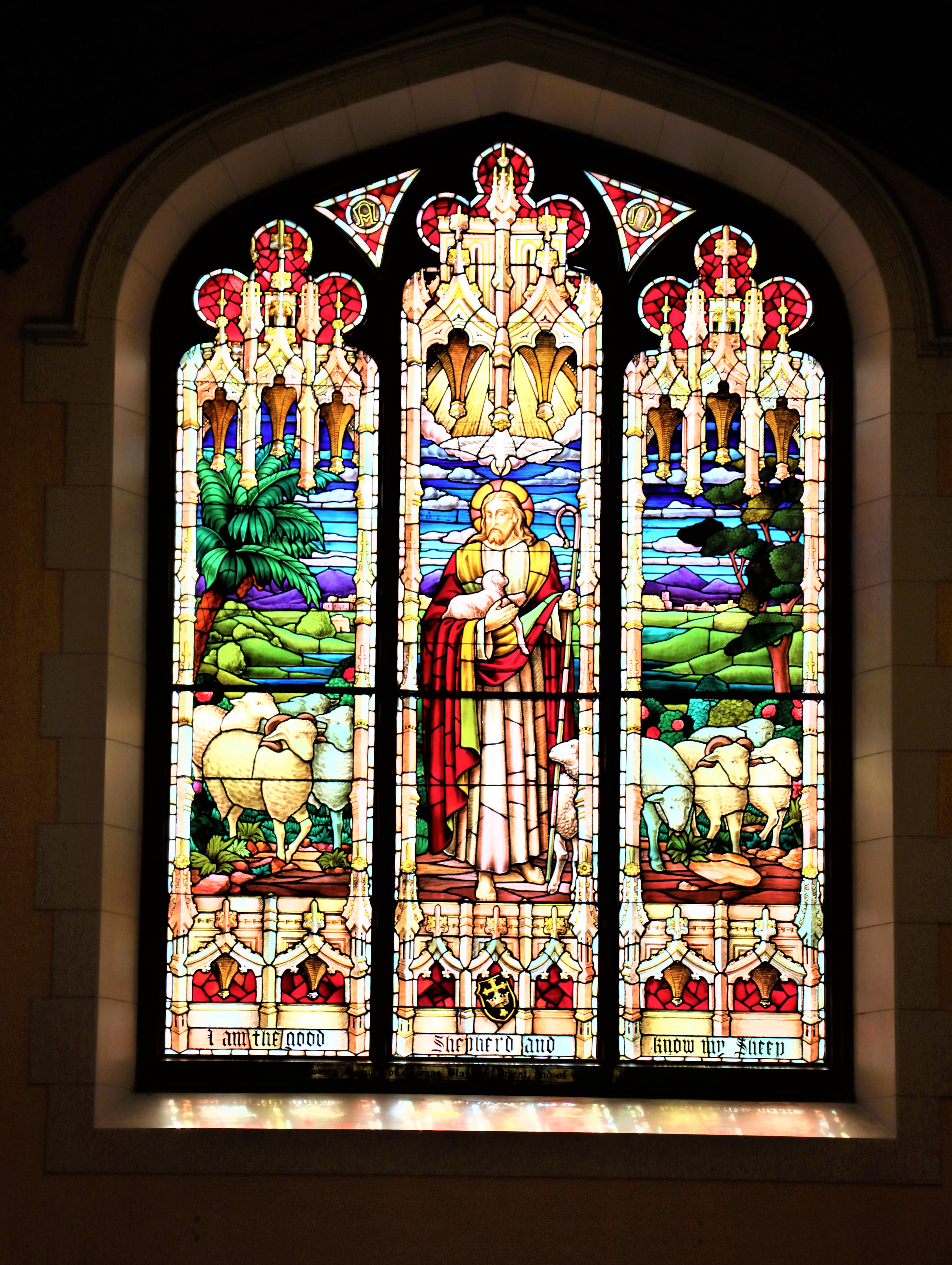
I am the good Shepherd and know my sheep.

The Good Shepherd window-McCauslands masterpiece for this church, was donated by Consolidated Mining and Smelting President Selwyn G. Blaylock in memory of his parents Rev. Thomas and Mrs. Eleanor Blaylock.

John 10:11-18 English Standard Version (ESV)

11 I am the good shepherd. The good shepherd lays down his life for the sheep. 12 He who is a hired hand and not a shepherd, who does not own the sheep, sees the wolf coming and leaves the sheep and flees, and the wolf snatches them and scatters them. 13 He flees because he is a hired hand and cares nothing for the sheep. 14 I am the good shepherd. I know my own and my own know me, 15 just as the Father knows me and I know the Father; and I lay down my life for the sheep. 16 And I have other sheep that are not of this fold. I must bring them also, and they will listen to my voice. So there will be one flock, one shepherd. 17 For this reason the Father loves me, because I lay down my life that I may take it up again. 18 No one takes it from me, but I lay it down of my own accord. I have authority to lay it down, and I have authority to take it up again. This charge I have received from my Father.”

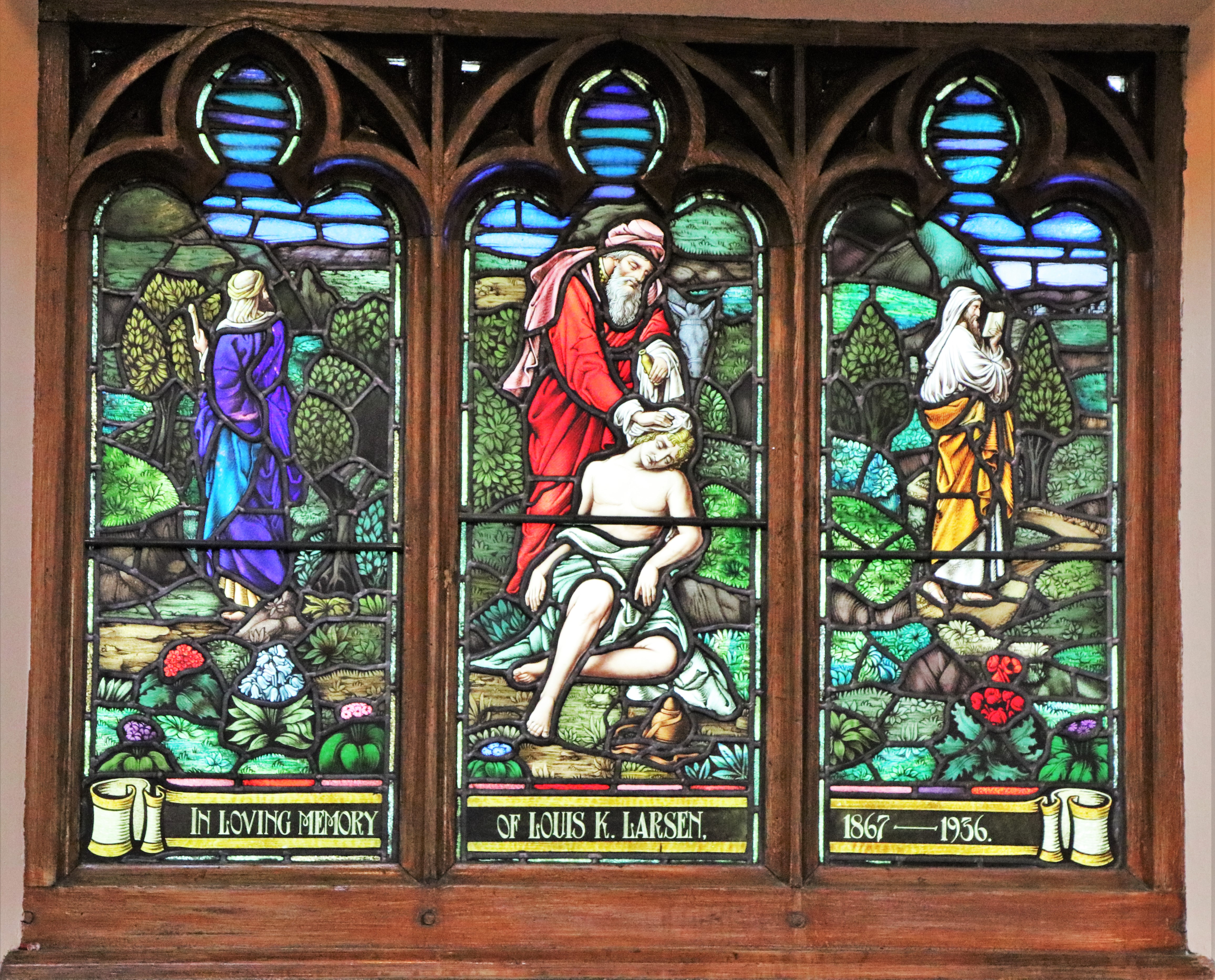
The Good Samaritan.

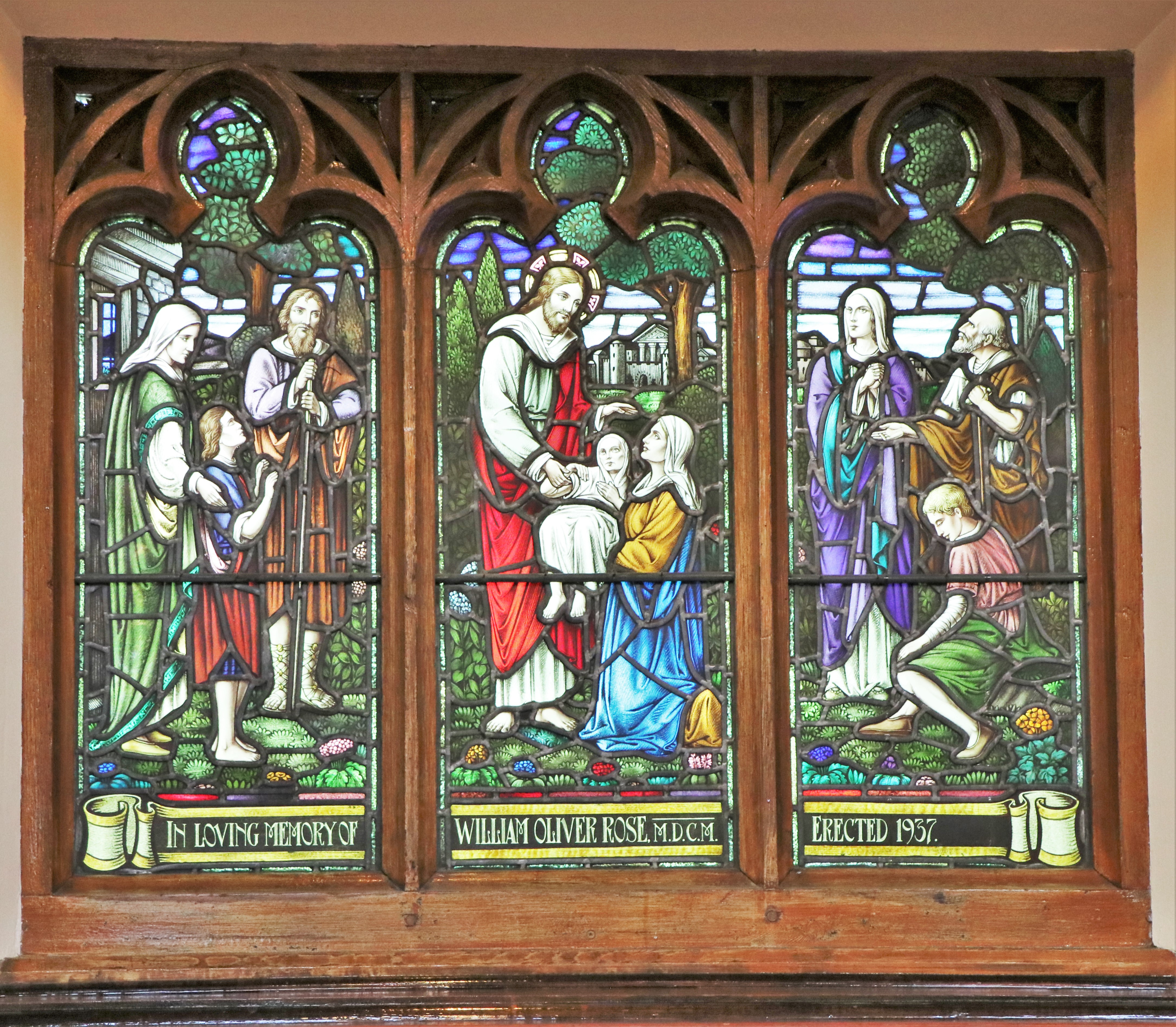
The Miracle of the Widow’s Son is in memory of Dr. William Rose who was not only a medical man but also became mayor and a Provincial Legislator.

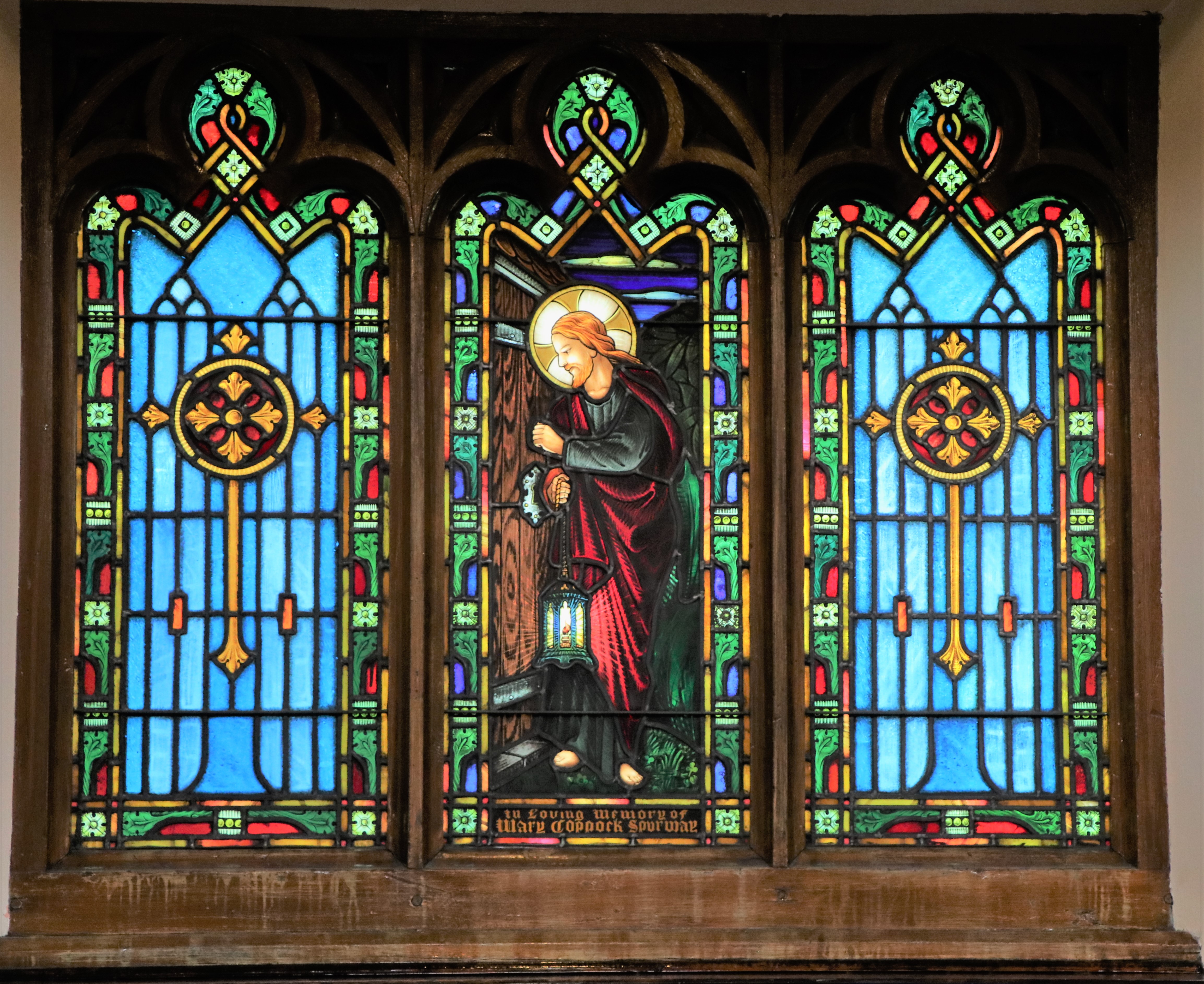
A representation of the Holman Hunt painting “Behold I stand at the door and knock” is in memory of Mary Spurway, mother of noted Nelson photographer Dick Spurway. Her husband Rowland was a true frontiersman-a cowboy and trapper who could speak 3 First Nations Languages-Blackfoot, Cree and Sioux.

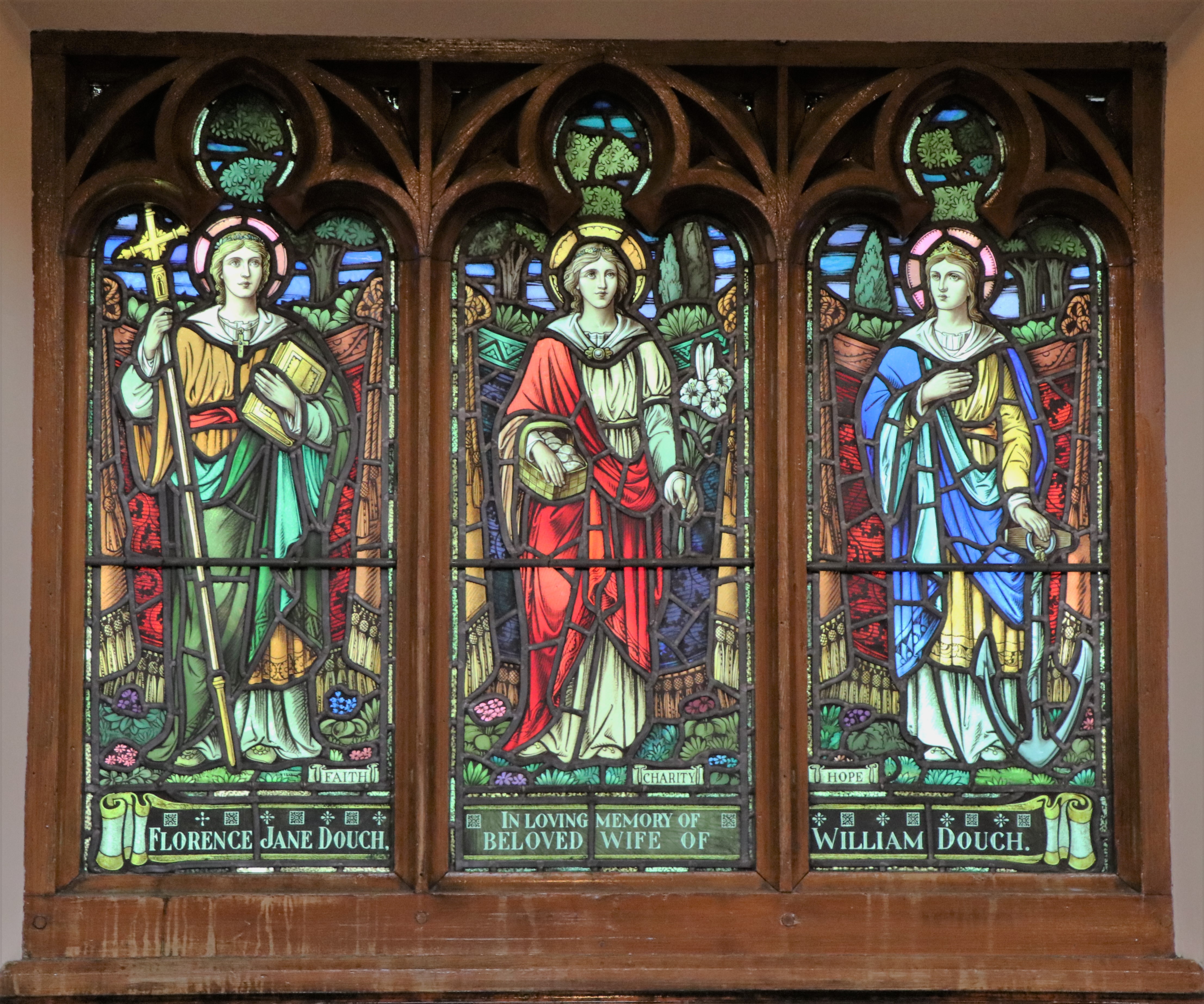
The Faith Charity and Hope window is in memory of Florence Douch one of Nelson’s unsung heroes of the Spanish Flu epidemic of 1918.

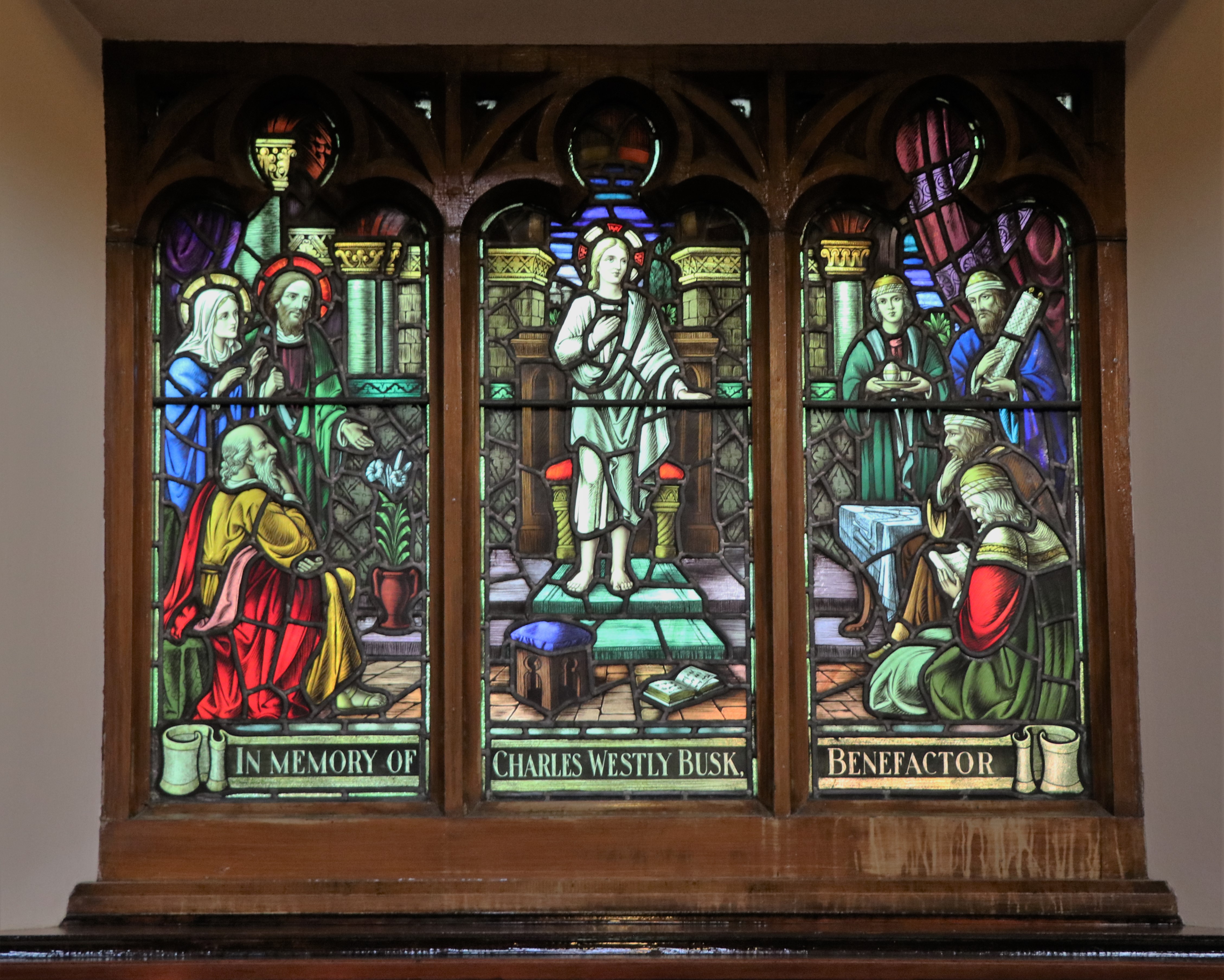
Jesus as a boy talking with the elders in the temple. In memory of Charles Wesley Busk, who was a pioneer and surveyor in the area. He donated the land for St. Michael and All Angels Church in Balfour and All Saints Church Longbeach. He had an estate at Kokanee Creek and was instrumental in forming the 1st Scout Troop in Nelson–Scouts still meet at Camp Busk.

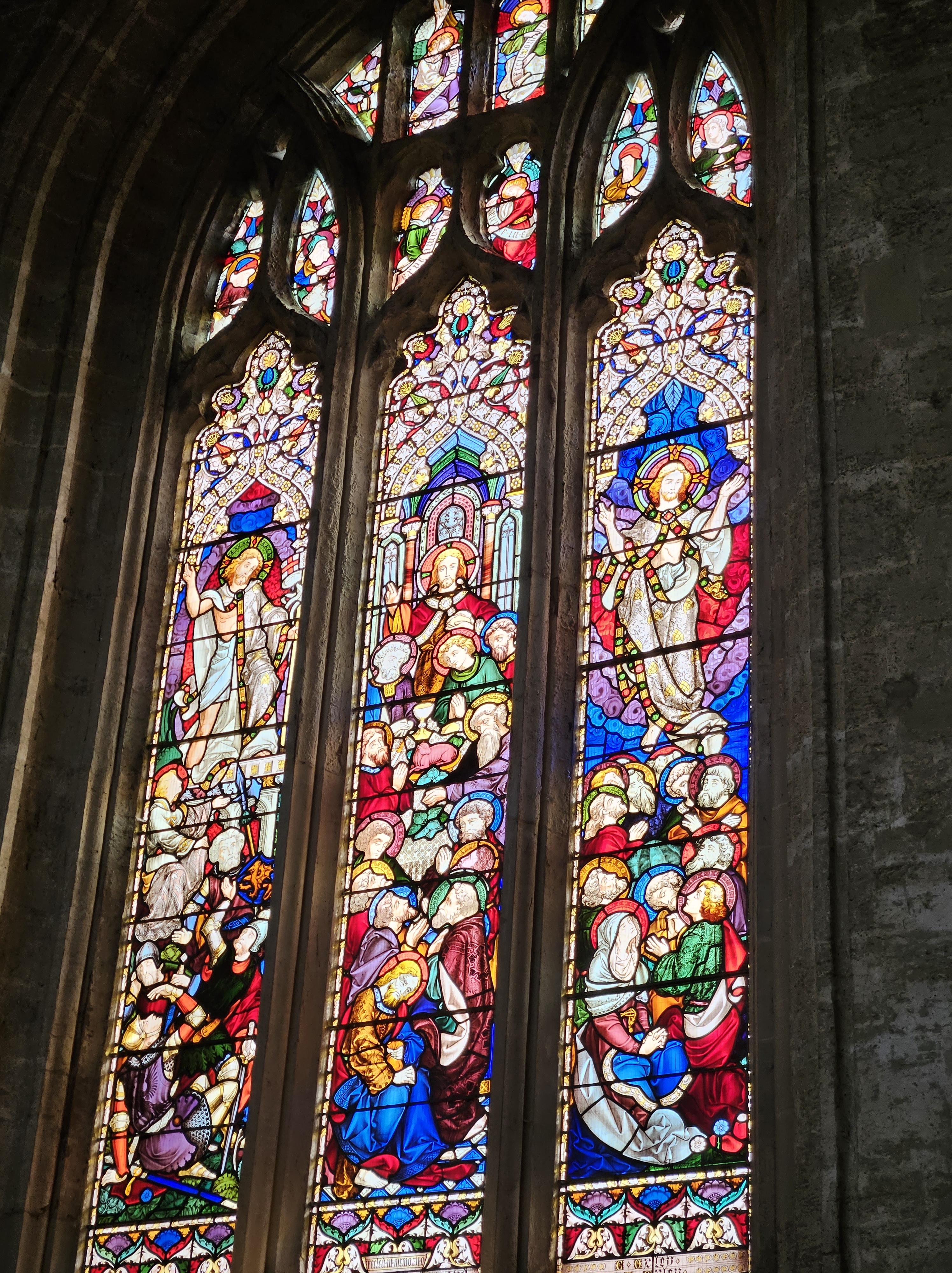
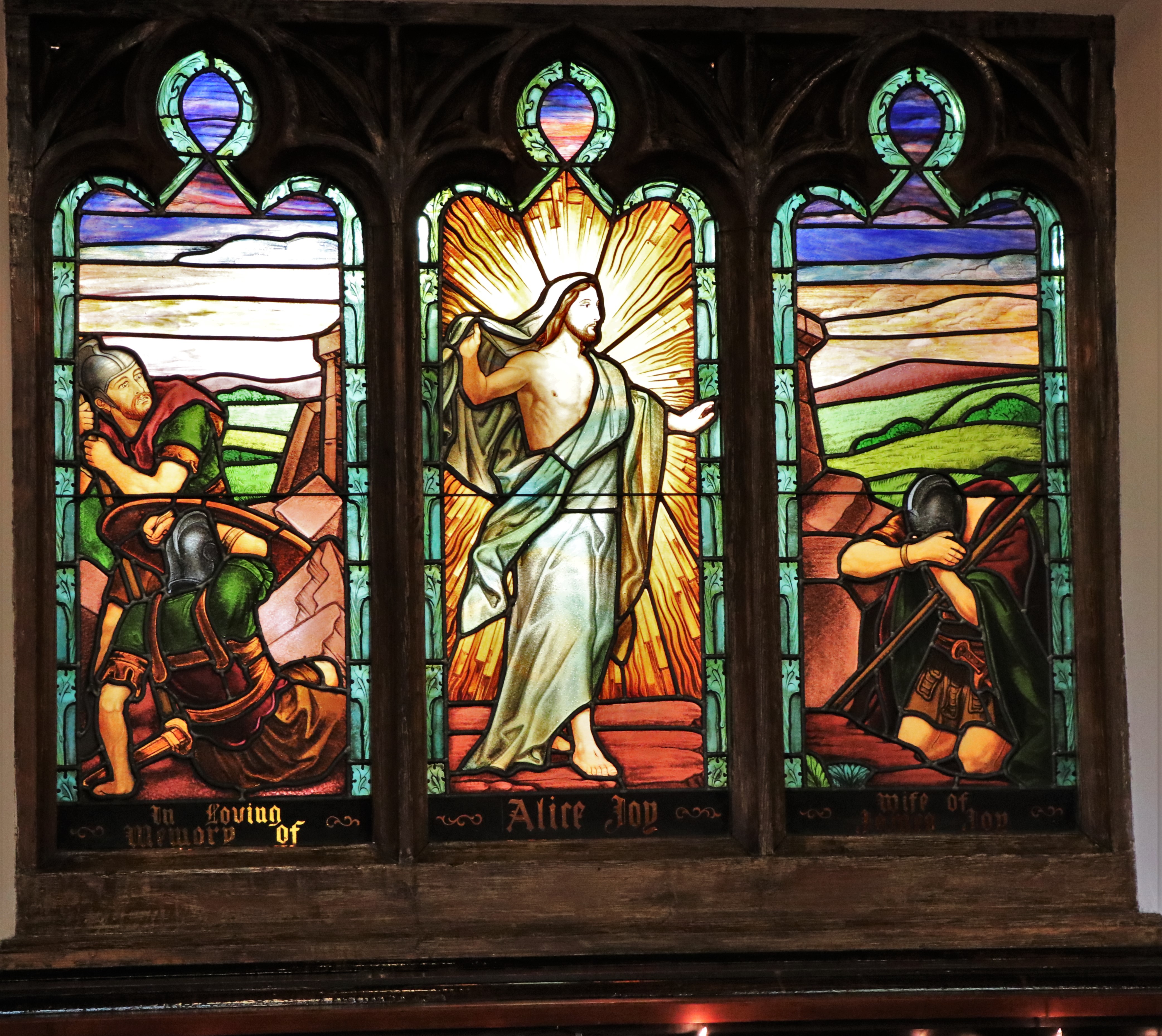
The Joy window showing the Risen Christ.

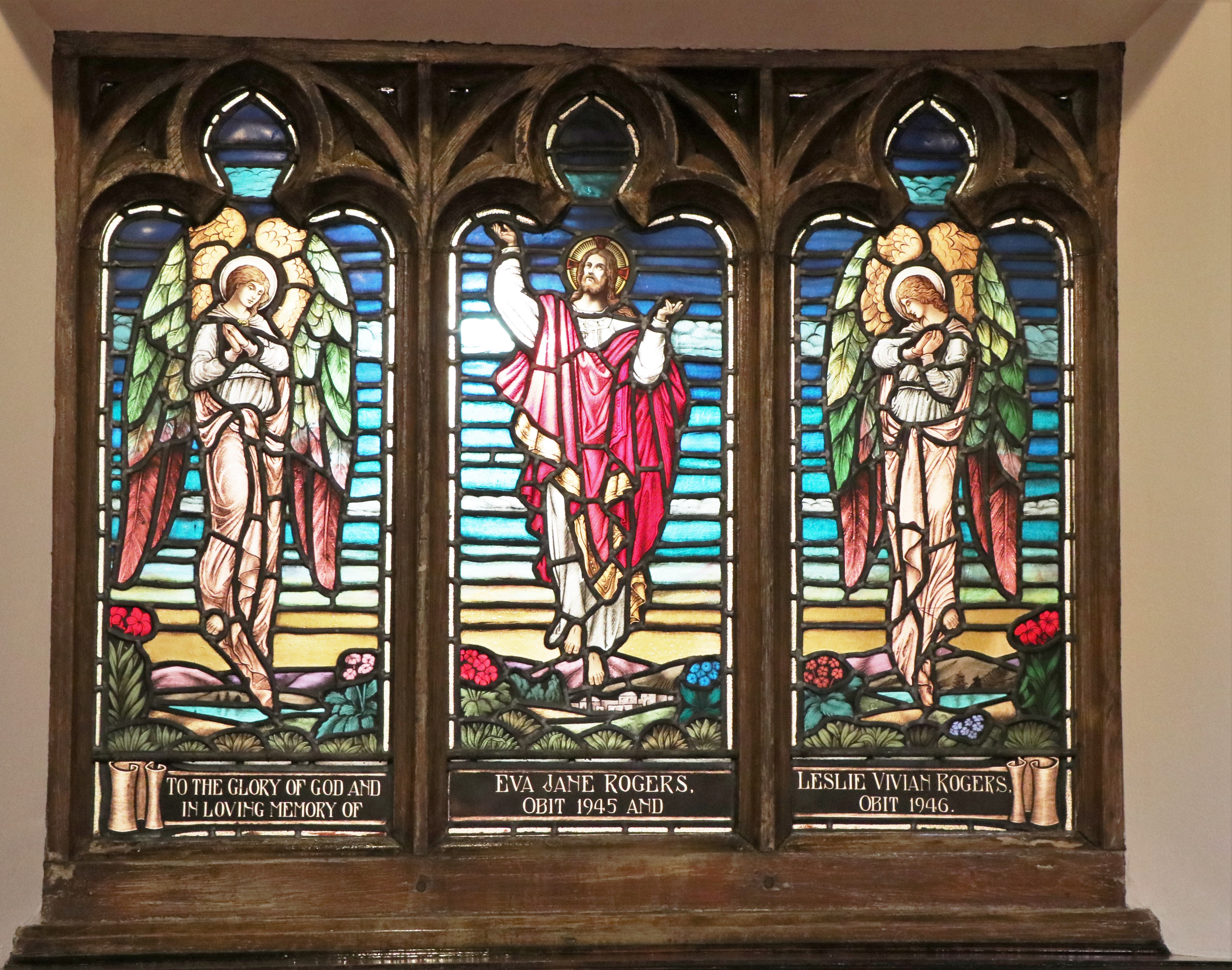
The Ascension window is in memory of Lesley Vivian Rogers and his wife Eva Jane. Rogers was the “Home Child” from England and later served as a drummer boy in the Boer War. He became the Principal of Nelson High School keeping his position for 24 years – L. V. Rogers High School (the present day Sr. high) is named after him.

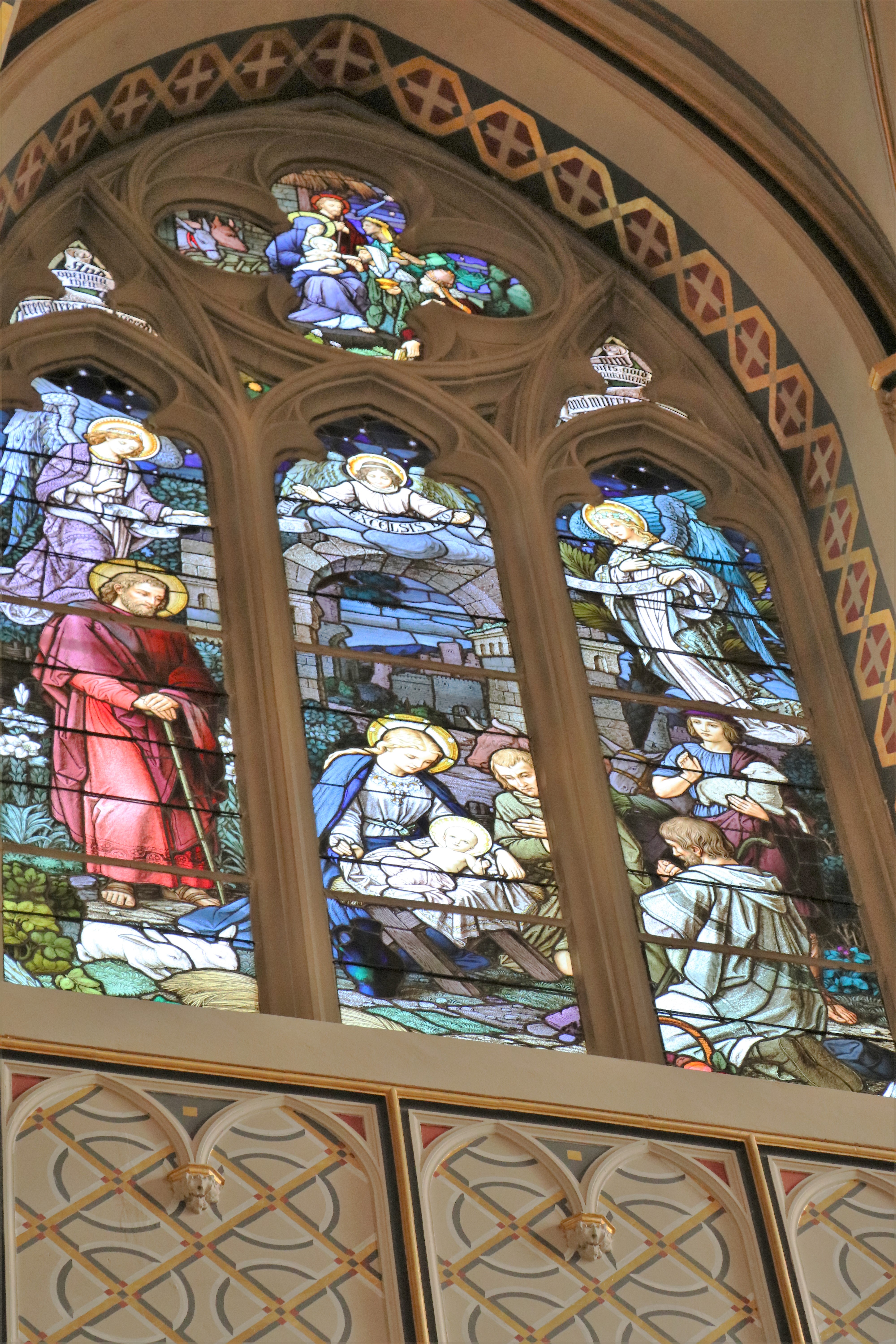
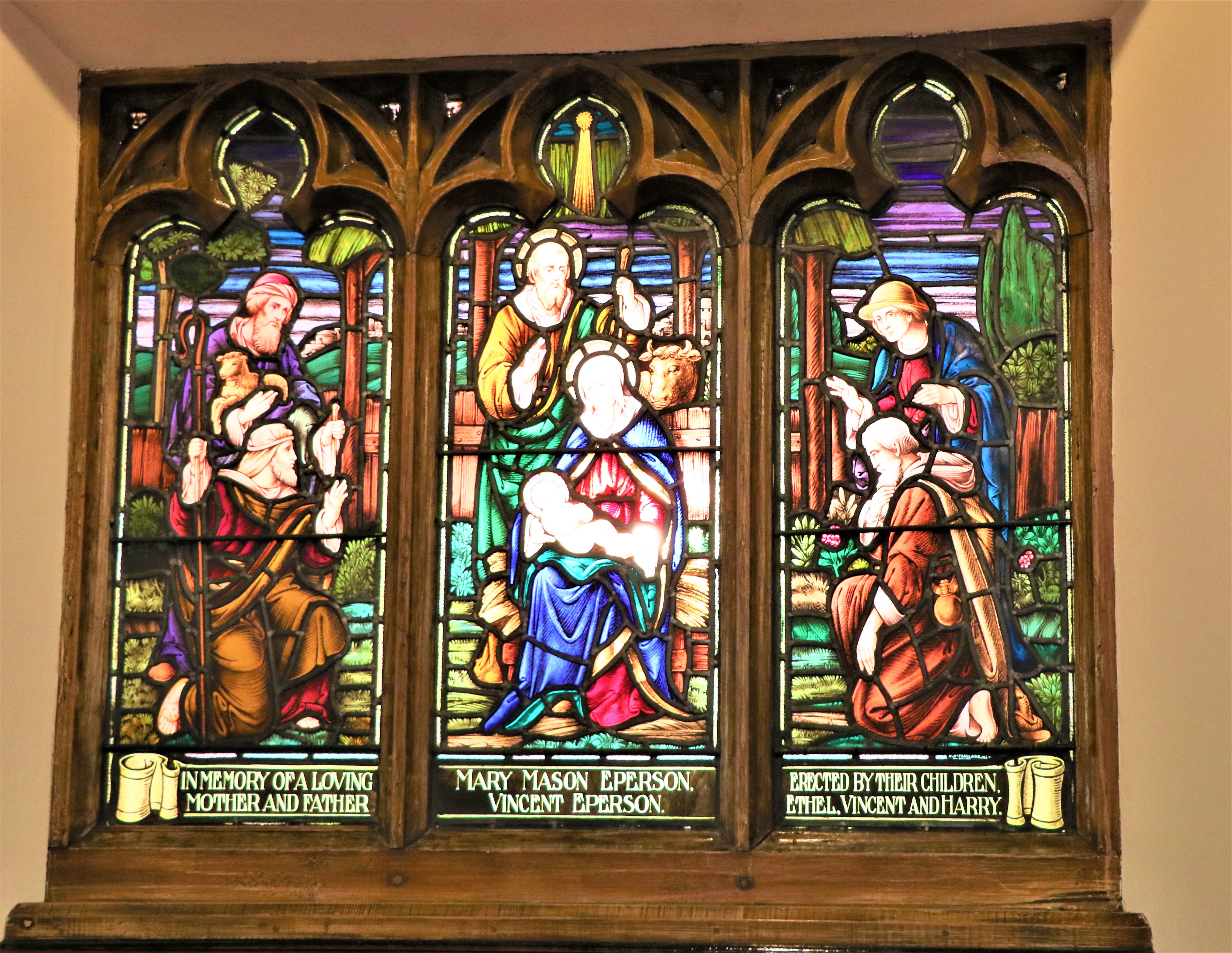
The Nativity Window created by McCausland of Toronto -it has a typical scroll on the lower edge and it is the only window in the church which shows the McCausland signature.

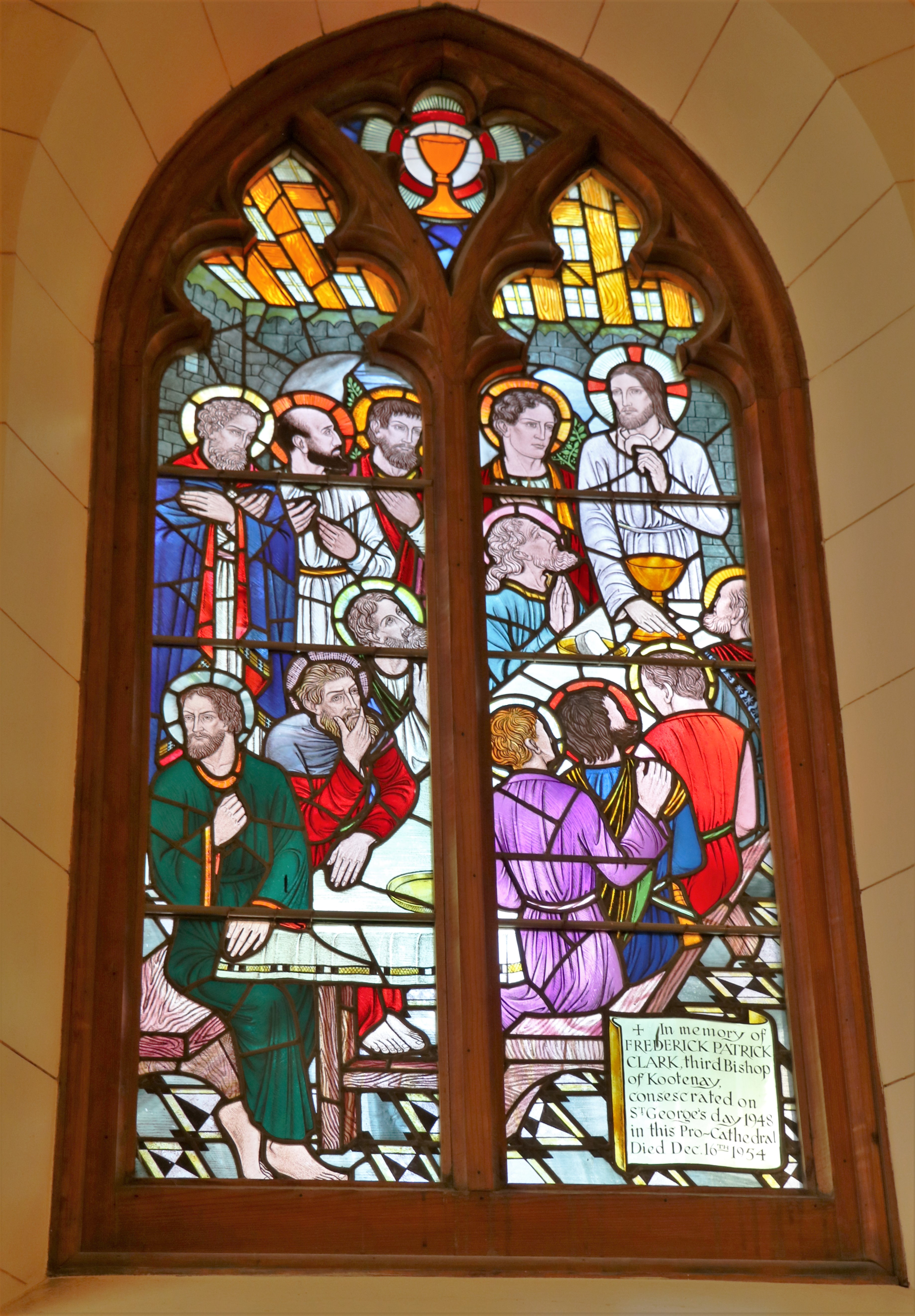
The window of the Last Supper is in memory of Bishop Frederick Patrick Clark, who died suddenly while visiting Cranbrook in 1954. An overflow of 400 people attended the funeral at St. Saviour’s with clergy from around B.C., Alberta and the U.S.A. This it the newest window in the church and is a bit controversial as “consecrate is spelt wrongly and Judas has been given a Halo. The window was not made by the McCauslands as their quote for $1120.00 was turned down.

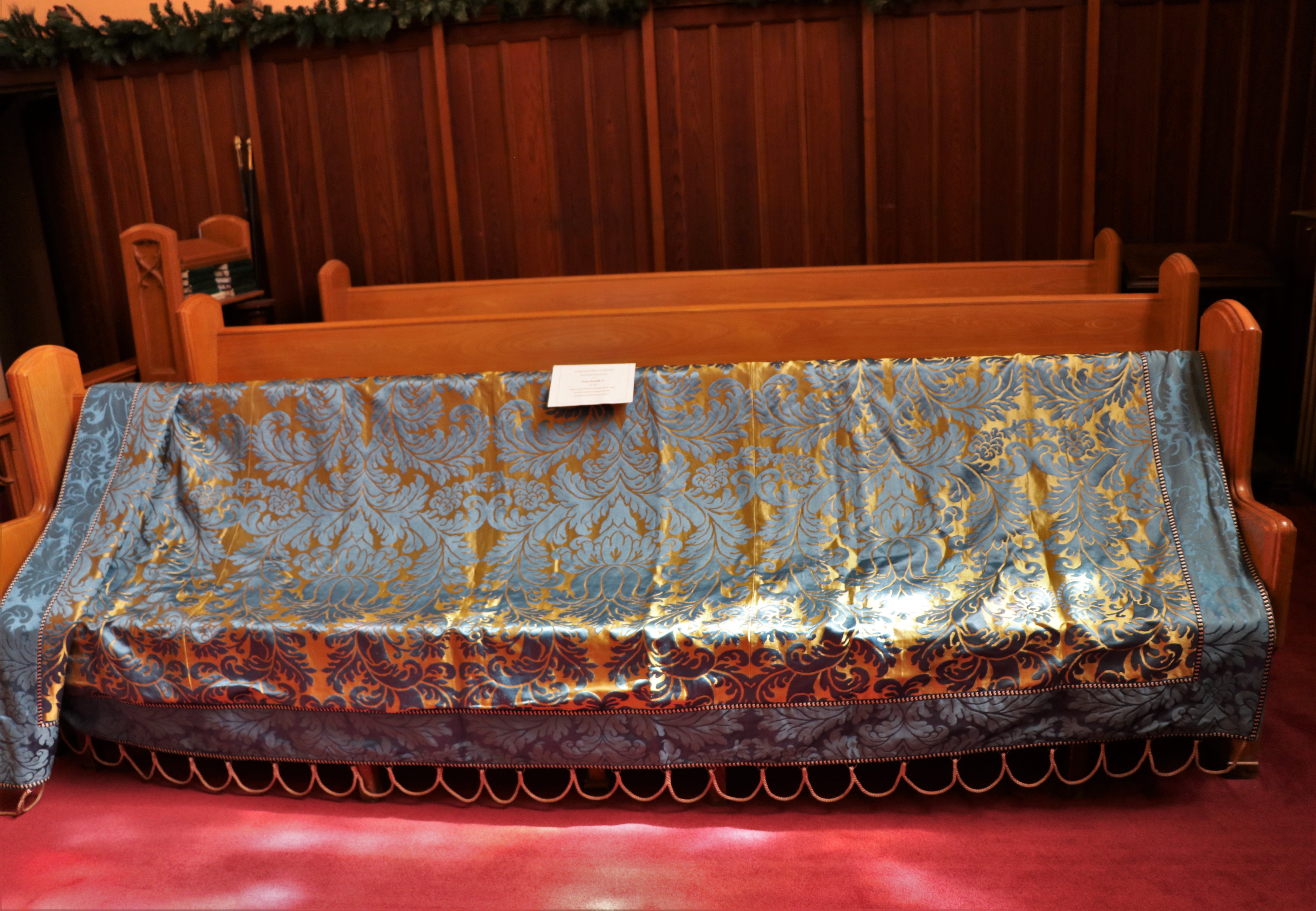
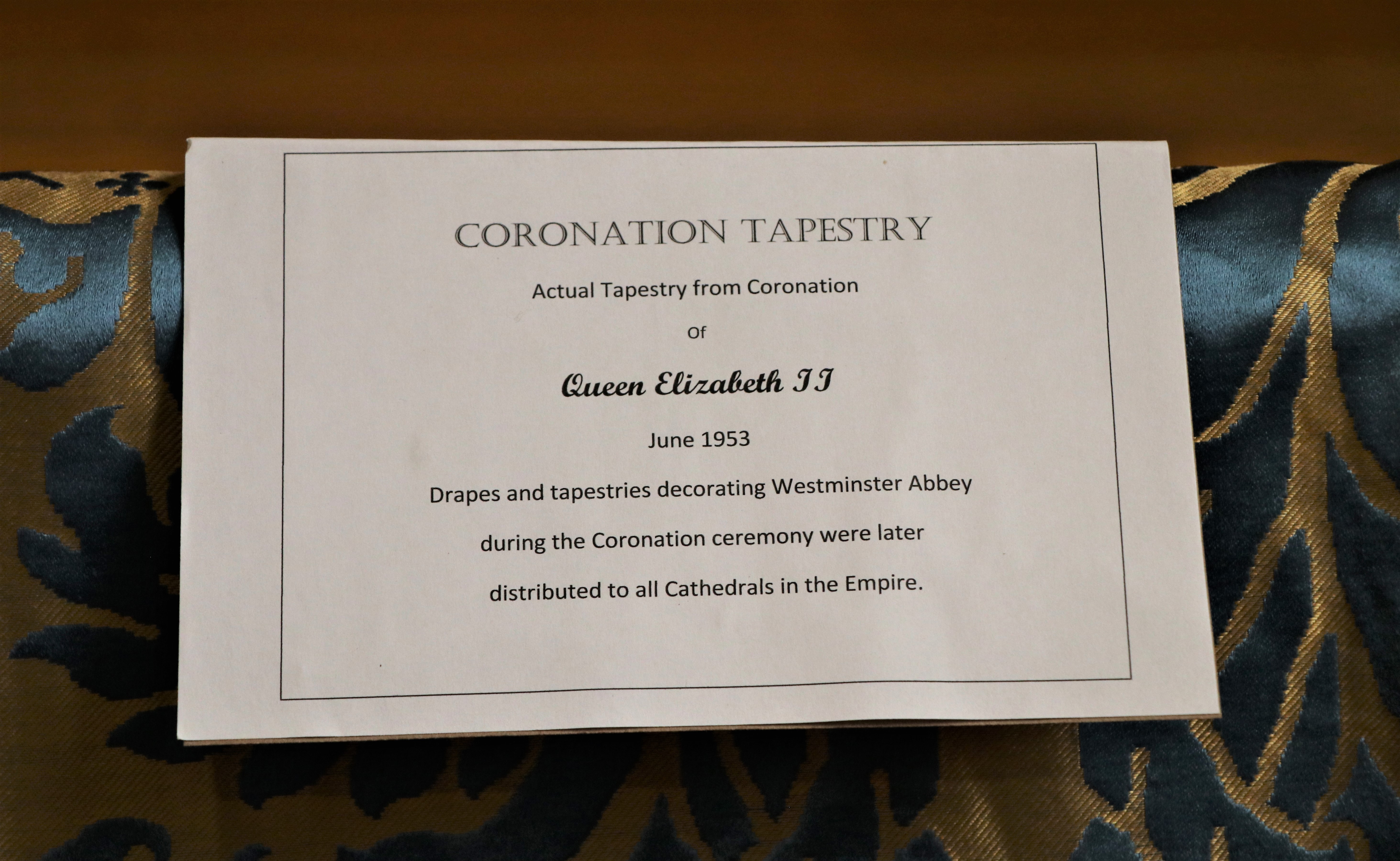
This Coronation Tapestry is an actual tapestry from the Coronation of Queen Elizabeth II, June 1953. Drapes and tapestries decorating Westminster Abbey during the Coronation ceremony were later distributed to all Cathedrals in the Empire.

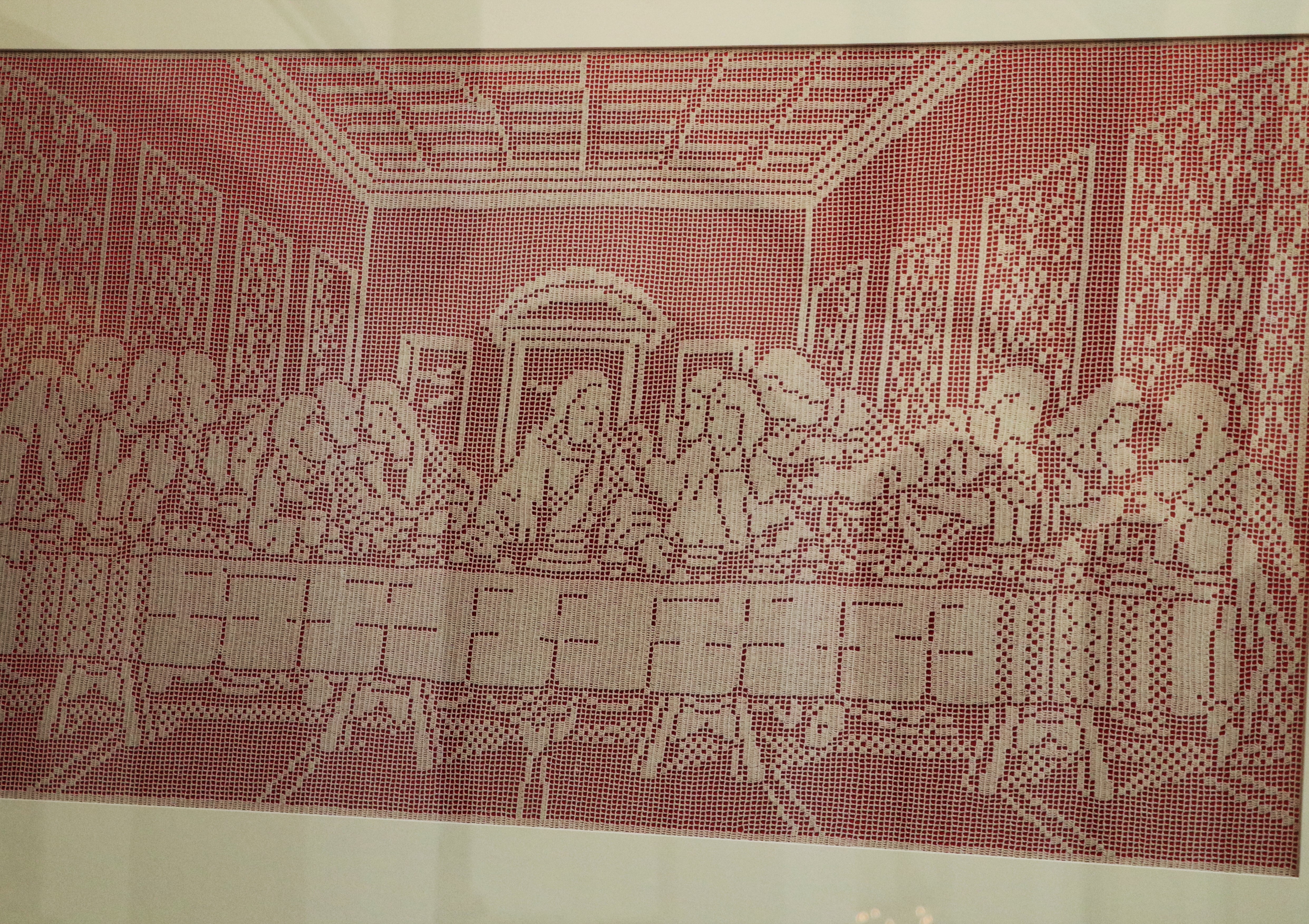
The crochet of the Last Supper has an interesting history. It was given to a young nurse in gratitude for her part in saving the life of a sick child. The young nurse was called out to a lonely farmhouse in the depth of winter and stayed for several days until the child recovered when the impoverished parents gave her the tapestry. Many years later on the death of her husband the nurse unrolled the tapestry and had it framed as a memorial to her husband.

After our visit to the church, which we really enjoyed, we walked down a few blocks to enjoy a snack of mussels and fresh bread at Jackson’s Hole and Grill. We walked back to our car and drove to the cemetery and then headed back home to the U.S.A.

St. John Vianney Chapel ~ Kenmore

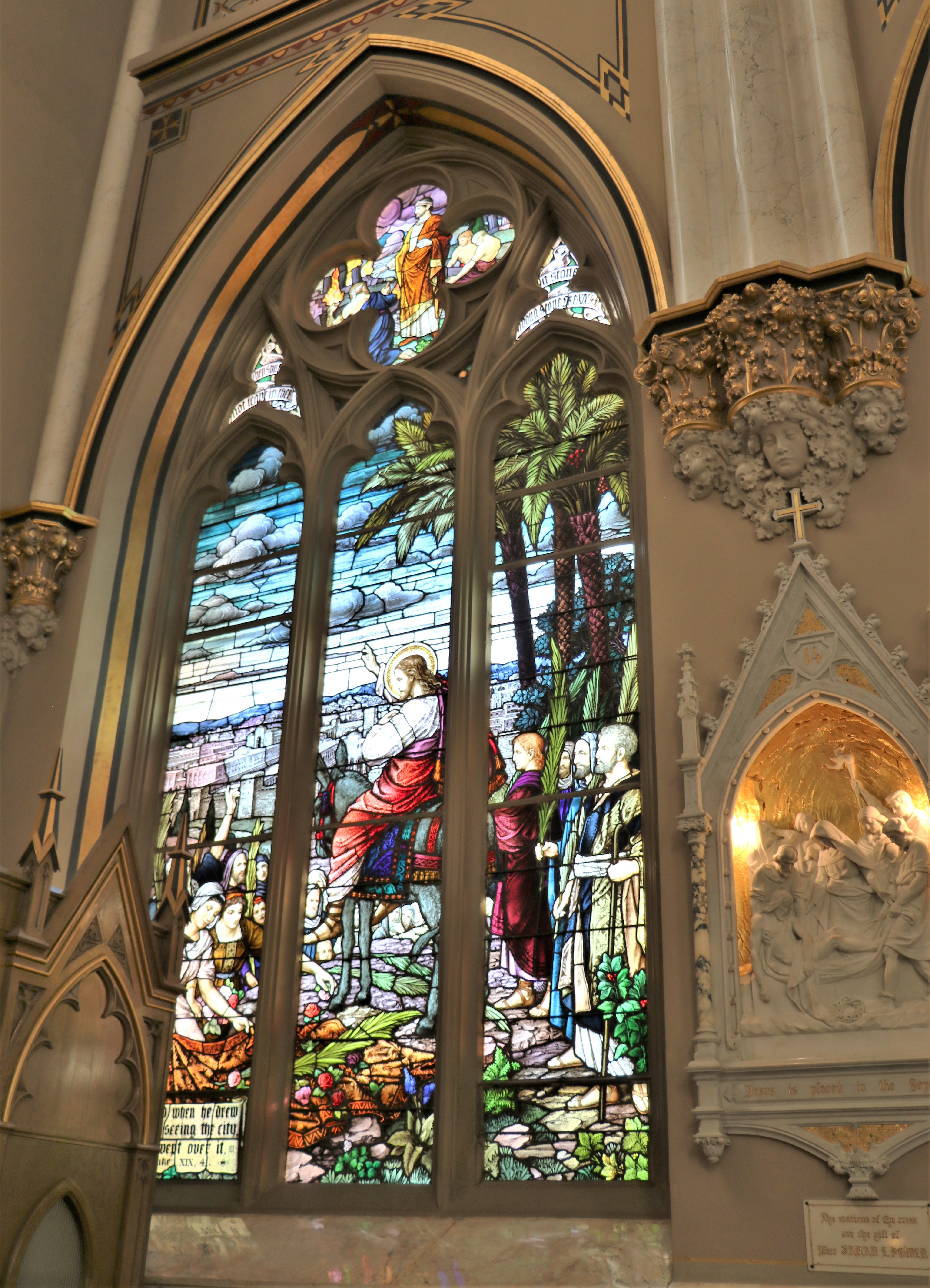
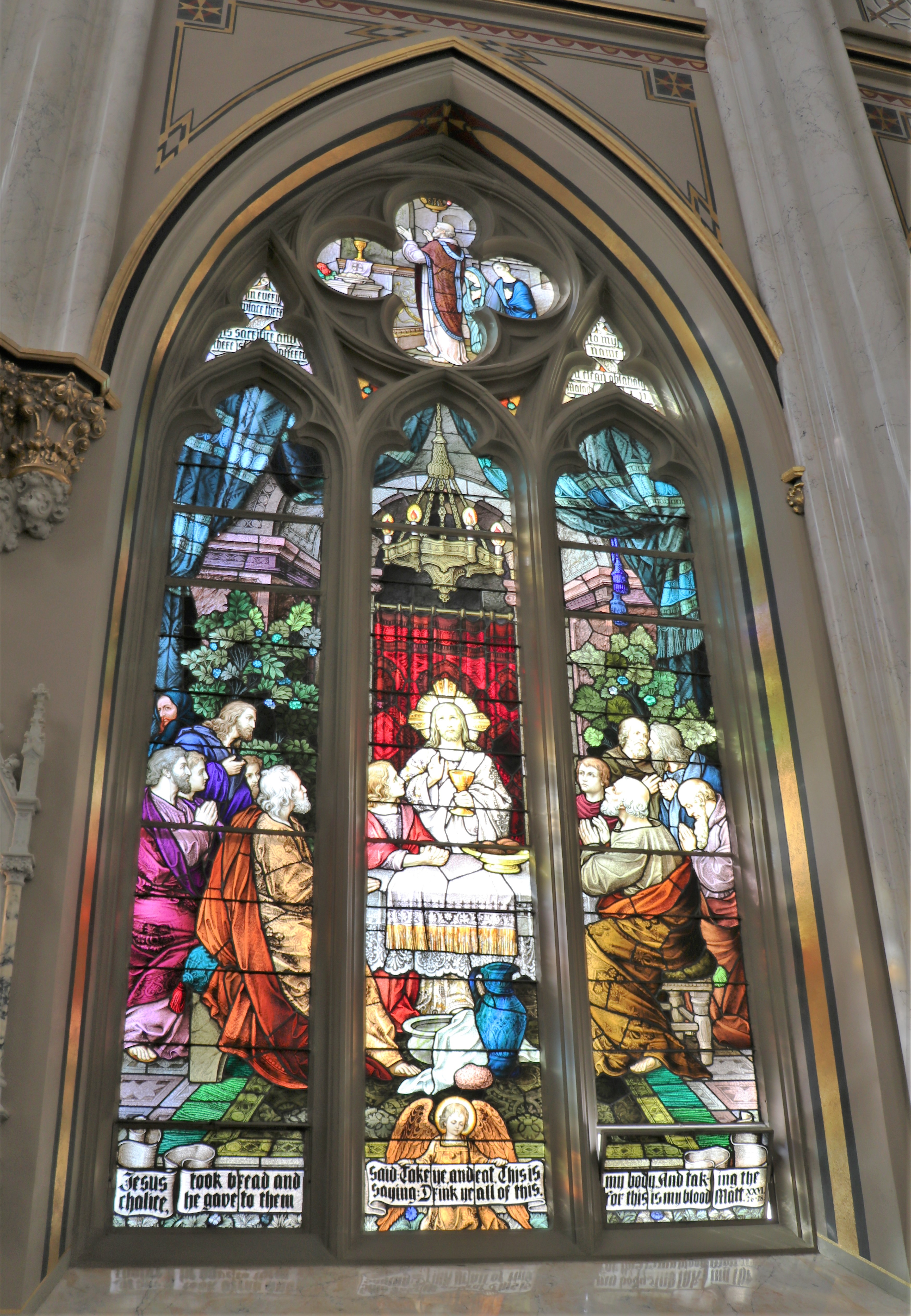
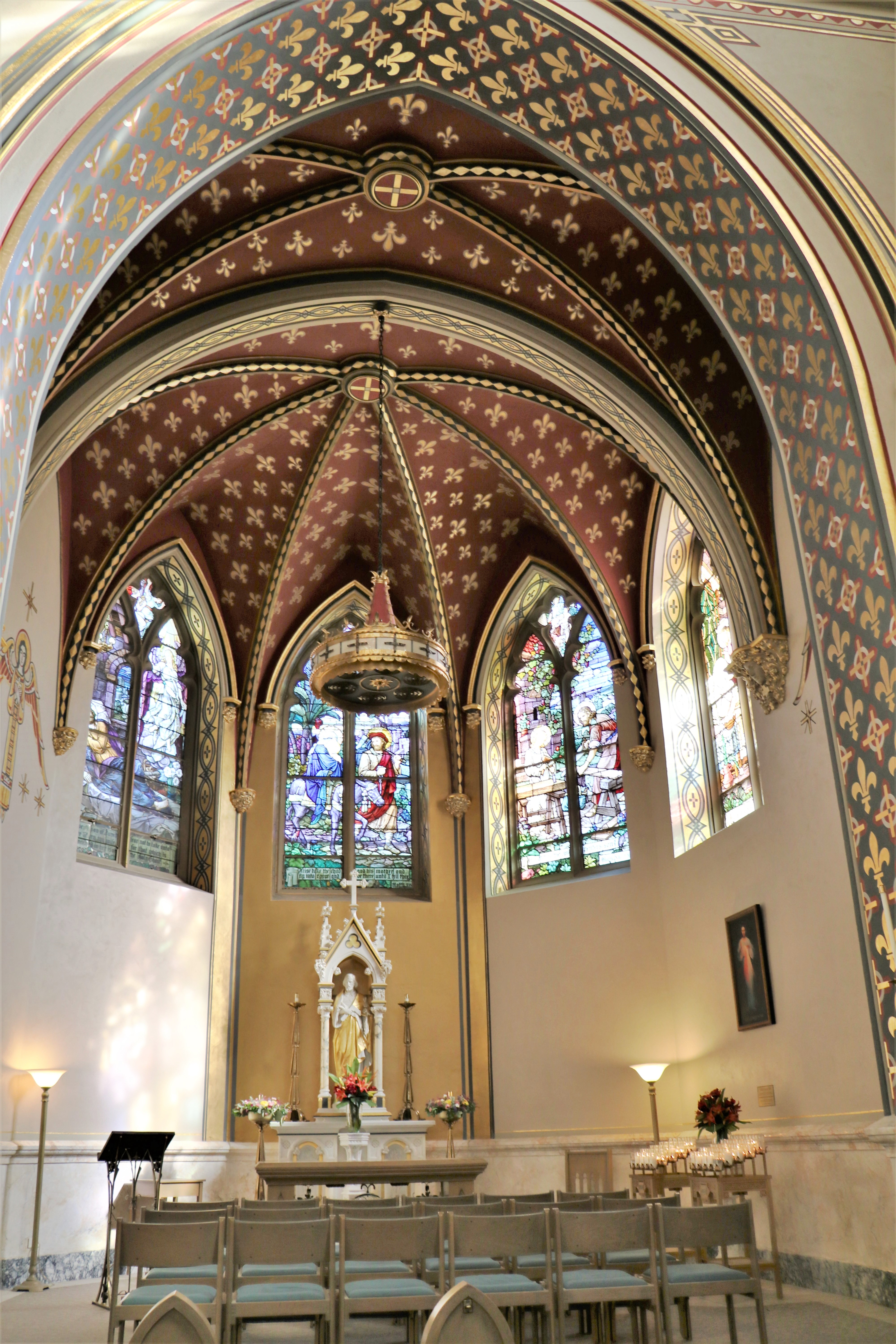
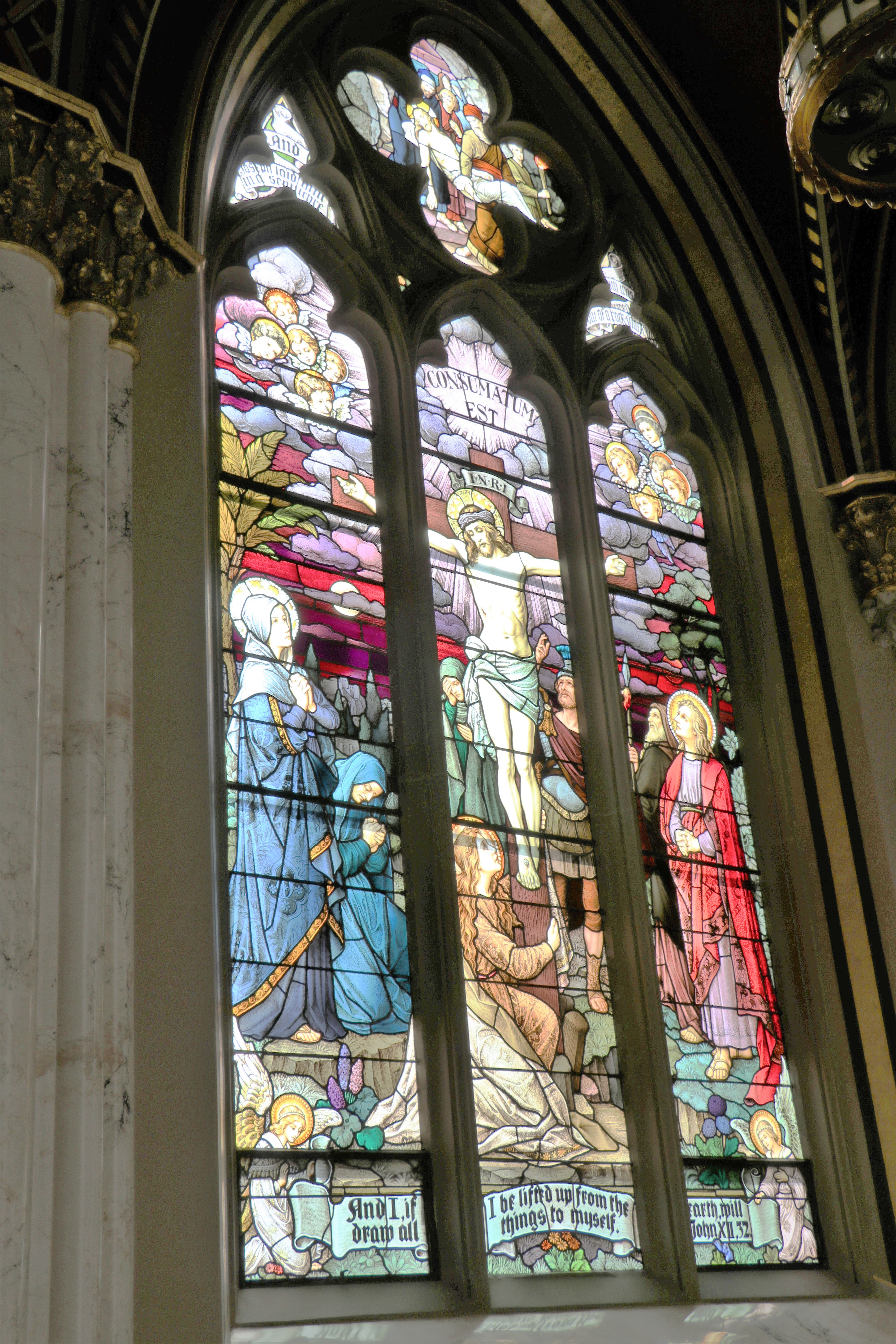
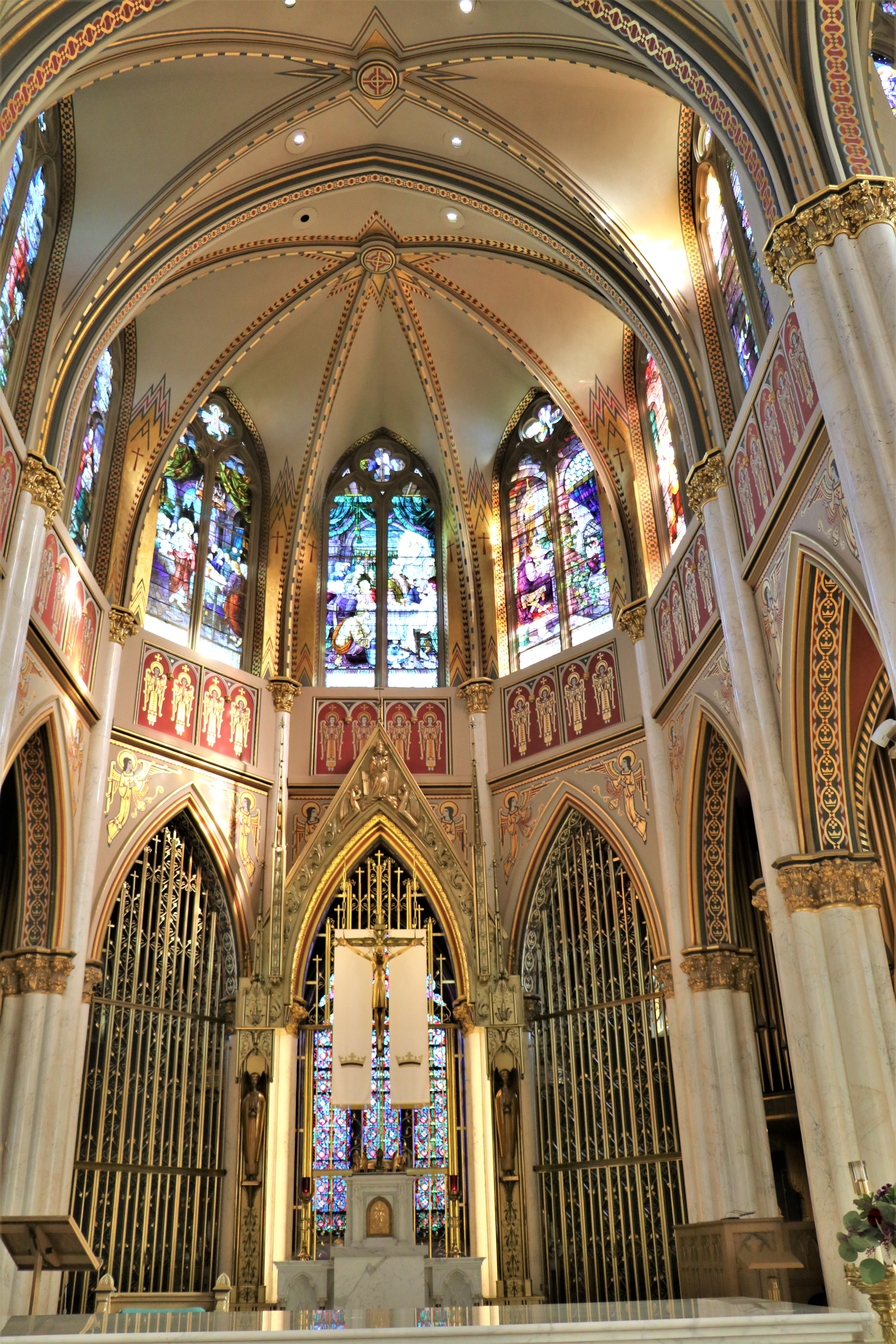
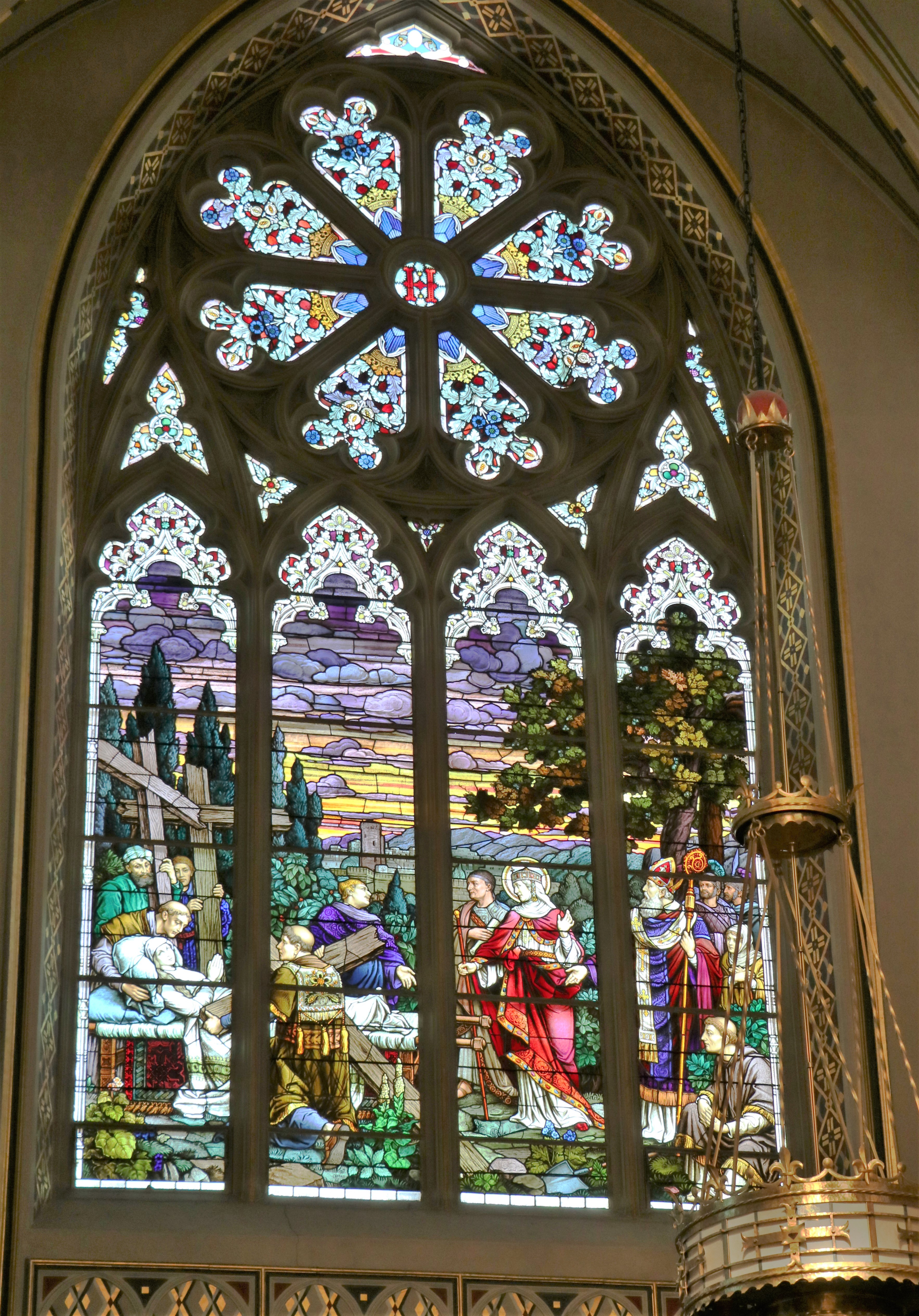
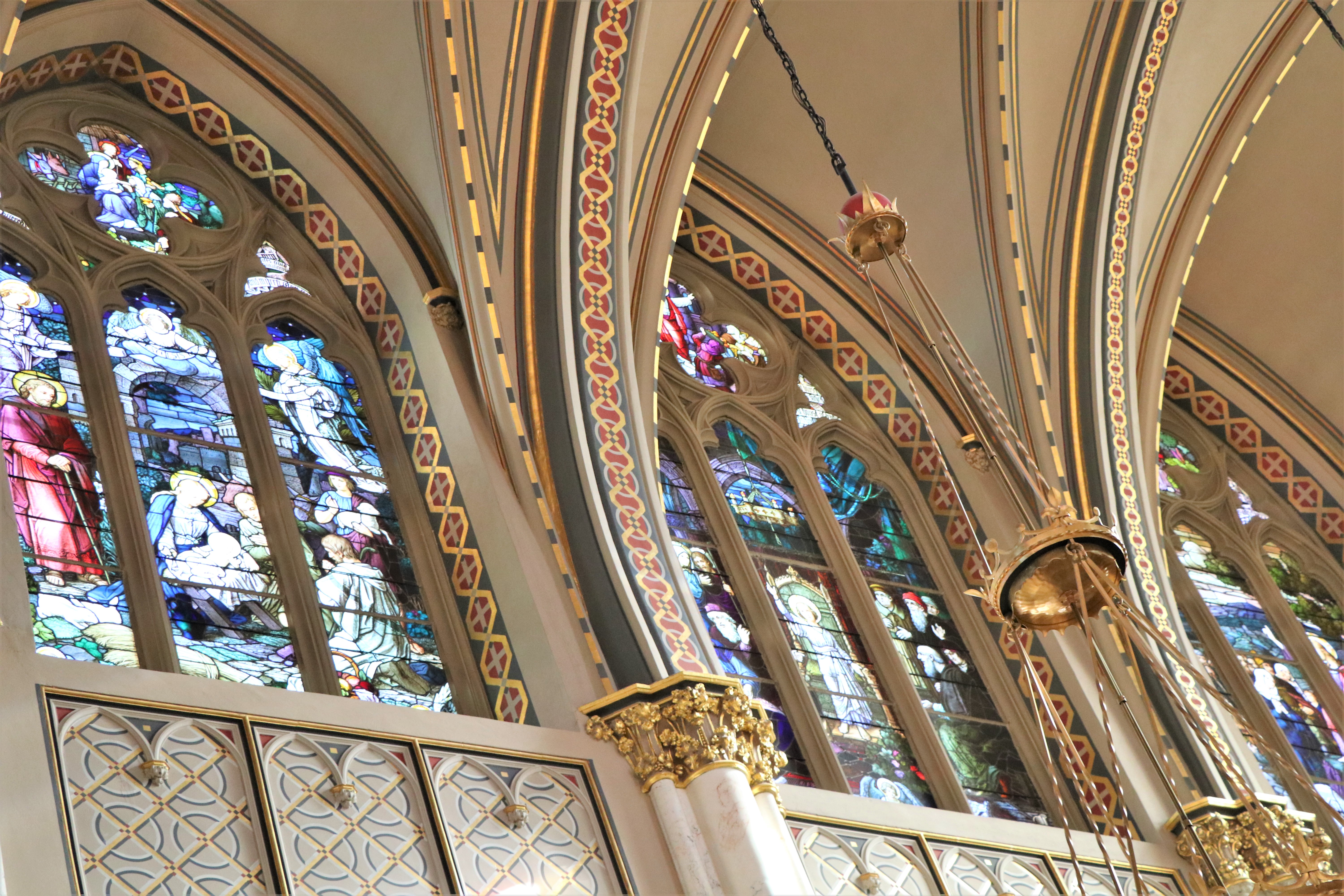
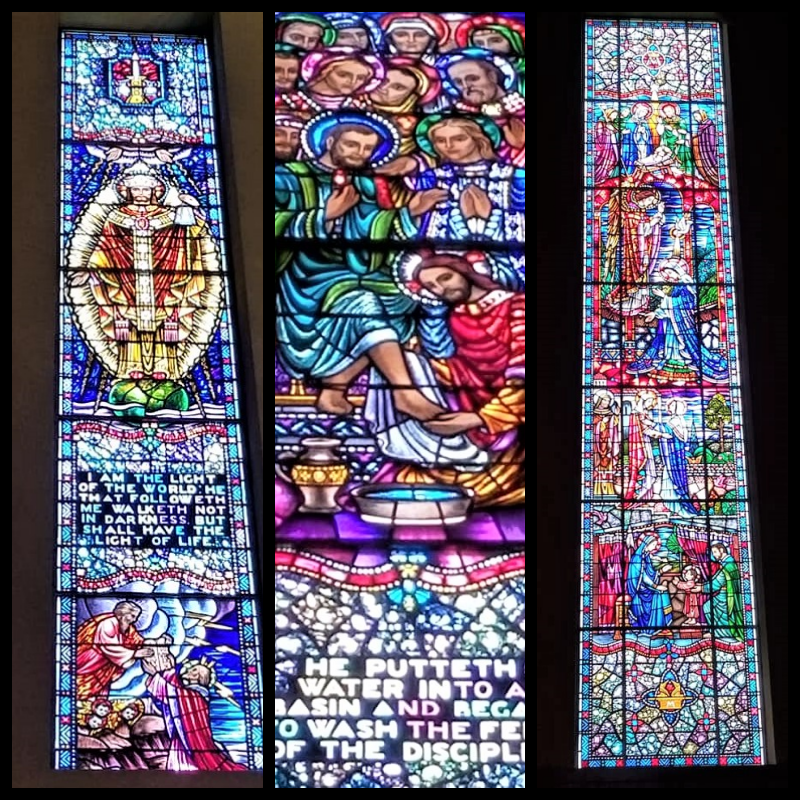
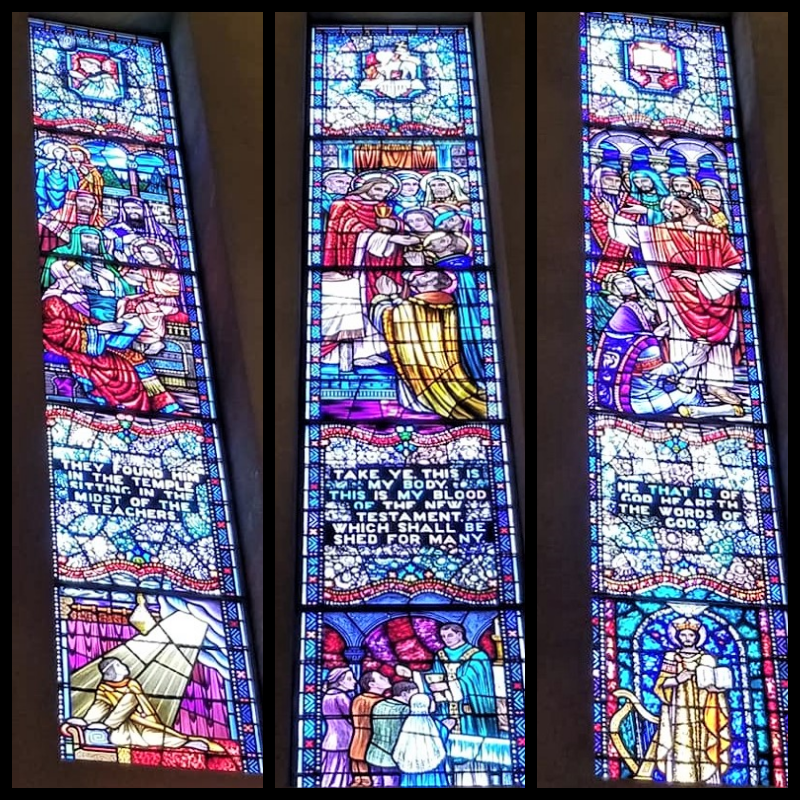
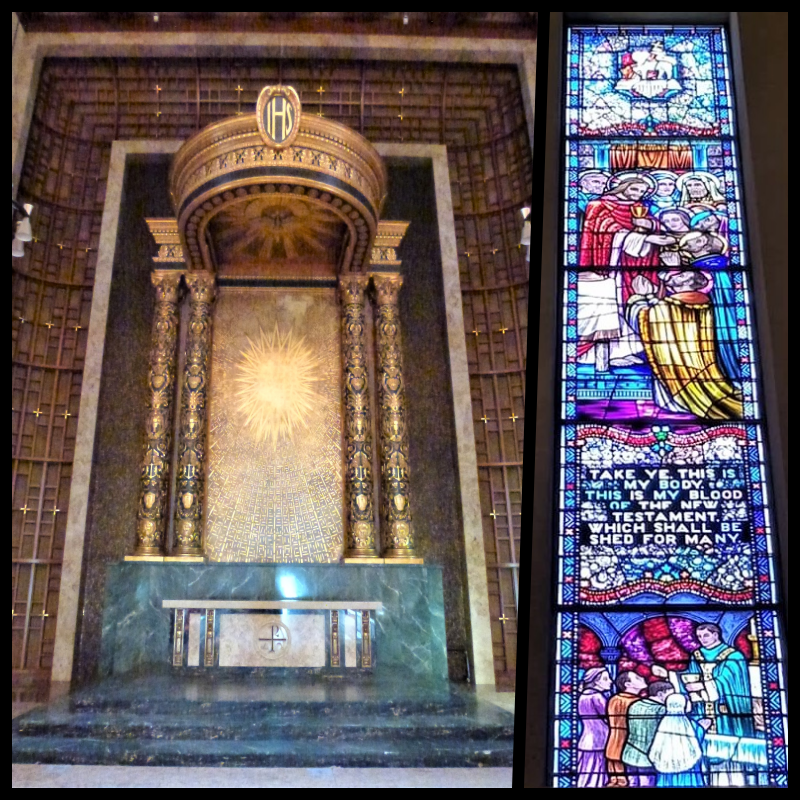
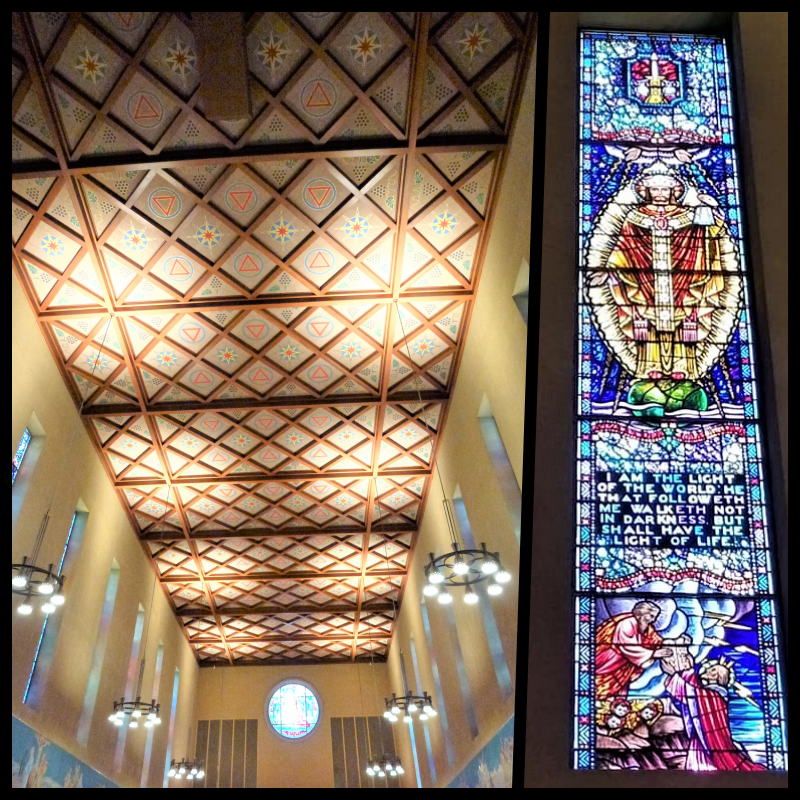
While I was “on the coast”, besides spending time with the Mennonite Girls in Canada, I was able to have some extended time with our Coast Kids. On Thursday afternoon my daughter-in-law and I were able to visit this chapel in Kenmore where she and her family have a lot of history. The chapel is now a part of Bastyr University which is an alternative medicine university. I’m happy that they have kept the chapel in tact. St. John Vianney church have built a new church further down the road from this location. The stained glass windows are amazing works of art. I hope they will always be preserved.

After we spent time in the chapel we drove past our former home in Kenmore and were a wee bit disappointed in the upkeep of the property. Laura’s parents have also sold their homestead in this past year and we had the same feeling when we drove past her childhood home.

Later on Thursday evening we had a tasty dinner at Josh and Laura’s with Andrew, Katie and my sister Lana and her husband Steve. I was so pleased that we were able to have this time of fellowship together while I was in town. On Friday I got some alone shopping in and when Katie was done with work we spent a few hours together and met up with Josh for dinner, too. My time on “The Coast” was filled to the brim with what matters most.

Linking up with Angie at Letting Go of the Bay Leaf for Mosaic Monday.

I’m catching up after being away from home and this will be a busy week into the weekend, too. Hopefully I’ll have some good pockets of time to visit my favorite blogs. Hope you all have a good week ahead.