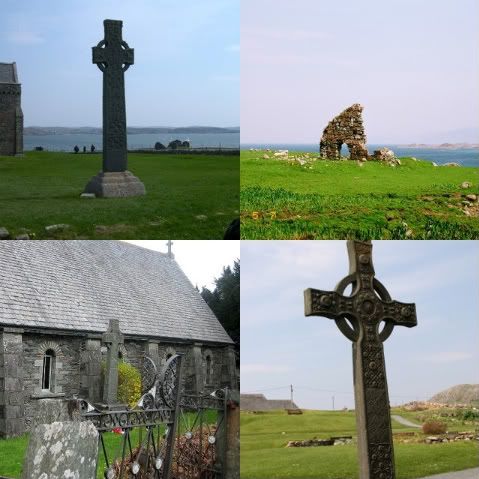
Sky Watch ~ Good Friday


Luke 23: 44-46 ~ “It was now about the sixth hour, and darkness fell over the whole land until the ninth hour, because the sun was obscured; and the veil of the temple was torn in two. And Jesus, crying out with a loud voice, said, “Father, INTO YOUR HANDS I COMMIT MY SPIRIT.” Having said thus, He breathed His last.”

For more Sky Watch photos visit Tom at  Wiggers World.

Photobucket is holding all my photos from 2007-2015 hostage. I’m working on updating my blog posts very slowly.

Poetry of the Cross

Over at Rebecca Writes there are links to posts with the theme of the Poetry of the Cross. This is something I found that I’ll contribute during this Holy Week.

I found this old book on our bookcase that Dear’s parents owned. It is called The Gospel in Art by Albert Edward Bailey copyright 1916.

I’m sharing this portion from the section RENI: “ECCE HOMO” John 19:1-5


Reni, Guido (1575-1642) Original: in the National Gallery, London.

“There is no denying that the thought of Christ’s suffering has been a powerful stimulus to the religious life of the past. Latin Christianity is full of it, and even Greek Christianity found inspiration in it. Hymns to the suffering Savior have sounded from many a monastery cell and have echoed sweetly down even to our own time. Take for example the wonderful hymn of Bernard, redolent of the midnight vigil and of modes of thought characteristic of his age, but of such beauty that every country and every Christian sect claims a share of it.

“O Sacred Head, now wounded,
With grief and shame weighed down;
Now scornfully surrounded
With thorn, thine only crown.
O Sacred Head, what glory,
What bliss till now was thine!
Yet though despised and gory
I joy to call thee mine.”

This hymn is one section of a long poem beginning “Salve mundi salutare,” addressed to the different members of Christ, “a most devout prayer of the Abbot St. Bernard, which he made when an image of the Savior with outstretched arms embraced him from the cross.” There is a still earlier hymn by Theoctistus of the Studium, Constantinople, less widely known but scarcely less beautiful in Neale’s translation. It is found in some of our hymnals under the first line, “Jesus, name all names above.” This hymn evidently arose under the same need as Bernard’s, and serves to show how all the harrowing details of suffering may be blended in thought with one’s highest spiritual good.

“Jesus, crowned with thorns for me,
Scourged for my transgression,
Witnessing in agony
That thy good confession.
Jesus clad in purple raiment,
For my evil making payment:
Let not all thy woe and pain,
Let not Calvary be in vain.”

When we visited the National Gallery we started in the religious art section with painting after painting of Christ on the cross. After a while I was eager to head to another part of the gallery. When I think of Jesus I do not typically picture Him on the cross at Calvary. I’m always eager to get from Good Friday (which my nephew thinks should not be called “good”) to Resurrection Sunday. I love to picture the Risen Christ, triumphant and victorious, after all that pain and agony. He Lives! Thanks be to God!

Photobucket is holding all my photos from 2007-2015 hostage. I’m working on updating my blog posts very slowly.

Maundy Thursday ~ John 13: 1-17

 I’m reposting this from last year… Blessings! 

Maundy ThursdayCeremonial washing of feet

Maundy Thursday is the Thursday of Holy Week (the Thursday before Easter). It was the day on which Jesus celebrated the Passover with his disciples, sharing a meal with them which we call the Last Supper.

In those days it was usual for a servant to wash the guests feet on arrival. On this occasion there was no servant present and none of the disciples volunteered to do the menial task. Instead, Jesus got up and washed his disciples feet, giving them an object lesson in humility and service.

In some churches priests carry out a ceremonial washing of the feet of twelve men on Maundy Thursday as a commemoration of Christ’s act.

In Britain it is still customary for the sovereign to give ‘Maundy Money’ to a number of male and female pensioners – one man and one woman for each year of the sovereign’s age. The money is contained in two purses: one red and one white. The white purse contains specially minted coins – one for each year of the sovereign’s life. The red purse now also contains money, in lieu of gifts which used to be offered to the poor. Up to the time of James II the sovereign also washed the feet of selected poor men.

The word “Maundy” comes from the Latin for ‘command’ (mandatum). It refers to the command given by Jesus at the Last Supper, that his disciples should love one another.

Thanks to Jeff Osborne for supplying the picture below which shows a bowl with two platforms. The guest would be able to stand on these and have water poured over the feet into the bowl

 Ethiopian basin for washing feet

Jesus Washes the Disciples’ Feet ~  John 13: 1-17 (ESV)

13:1 Now before the Feast of the Passover, when Jesus knew that his hour had come to depart out of this world to the Father, having loved his own who were in the world, he loved them to the end. During supper, when the devil had already put it into the heart of Judas Iscariot, Simon’s son, to betray him, Jesus, knowing that the Father had given all things into his hands, and that he had come from God and was going back to God, rose from supper. He laid aside his outer garments, and taking a towel, tied it around his waist. Then he poured water into a basin and began to wash the disciples’ feet and to wipe them with the towel that was wrapped around him. He came to Simon Peter, who said to him, “Lord, do you wash my feet?” Jesus answered him, “What I am doing you do not understand now, but afterward you will understand.” Peter said to him, “You shall never wash my feet.” Jesus answered him, “If I do not wash you, you have no share with me.” Simon Peter said to him, “Lord, not my feet only but also my hands and my head!” 10 Jesus said to him, “The one who has bathed does not need to wash, except for his feet,  but is completely clean. And you  are clean, but not every one of you.” 11 For he knew who was to betray him; that was why he said, “Not all of you are clean.”

12 When he had washed their feet and put on his outer garments and resumed his place, he said to them, “Do you understand what I have done to you? 13 You call me Teacher and Lord, and you are right, for so I am. 14 If I then, your Lord and Teacher, have washed your feet, you also ought to wash one another’s feet. 15 For I have given you an example, that you also should do just as I have done to you. 16 Truly, truly, I say to you, a servant  is not greater than his master, nor is a messenger greater than the one who sent him. 17 If you know these things, blessed are you if you do them.

~~~~~~~

What Jesus did here to teach his disciples is very important for us to consider. He showed the “full extent of his love” by washing their feet and instructed them to follow his example and wash each others feet. We can’t miss the fact that serving one another is a very important truth that Jesus wants us to understand and follow. We need to put others needs above our own. Who does God want me to serve? Who am I suppose to wrap the towel around my waist for? Who am I suppose to lay down my rights and privileges for? Who am I to show the full extent of my love to?  Who am I suppose to humble myself for? I pray that I will go deep in understanding this amazing thing that God wants me to follow Him in and that you will, too. Let us consider together what our Savior, Master, King did and try to do the same.

http://www.gnpcb.org/esv/search/?q=John+13%3A+1-17

http://www.thisischurch.com/christianinfo/maundythursday.htm
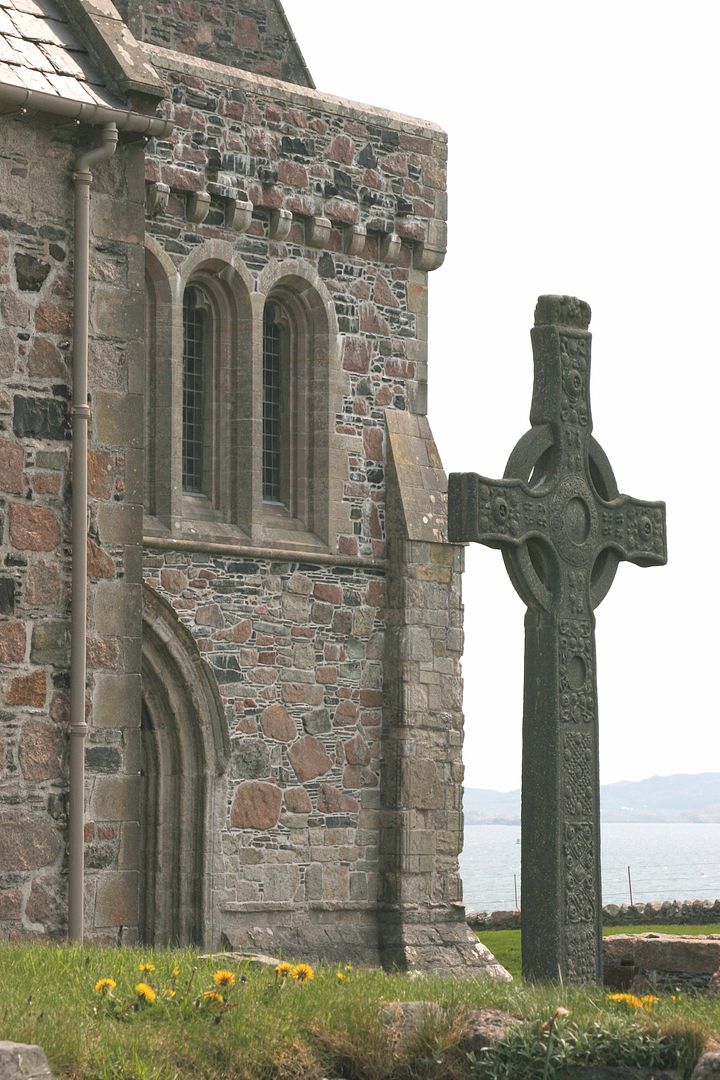
WFW ~ Hebrews 12: 1-2


“Therefore, since we have so great a cloud of witnesses surrounding us, let us also lay aside every encumbrance and the sin that so easily entangles us, and let us run with endurance the race that is set before us, fixing our eyes on Jesus, the author and perfecter of faith, who for the joy set before Him endured the cross, despising the shame, and has sat down at the right hand of the throne of God.”

For more Word Filled Wednesday click here.

I is for Iona ~

It’s time for ABC Wednesday and this week we are on the letter I.

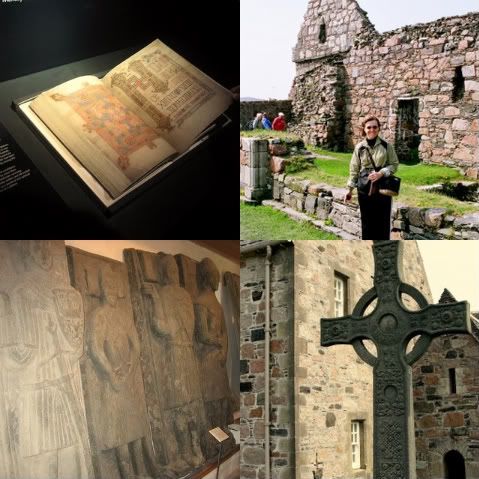
Come with me to the Isle of Iona in the Hebrides.

We traveled from the town of Oban on the western coast of Scotland by ferry to the Island of Mull and then we boarded a bus to travel down the Island to take a small ferry to the small Isle of Iona.

This little Isle is rich in history and beauty.

History of Iona

St. Columba, an Irish scholar, soldier, priest, and founder of monasteries, got into a small war over the possession of an illegally copied Psalm book. Victorious but sickened by the bloodshed, Columba left Ireland, vowing never to return. According to legend, the first bit of land out of sight of his homeland was Iona. He stopped here in 563 and established the abbey.

Columba’s monastic community flourished, and Iona became the center of Celtic Christianity. Iona missionaries spread the gospel through Scotland and North England, while scholarly monks established Iona as a center of art and learning. The Book of Kells – perhaps the finest piece of art from “Dark Ages” Europe – was probably made on Iona in the eighth century. The island was so important that it was the legendary burial place for ancient Scottish and even Scandinavian kings (including Shakespeare’s Macbeth).

Slowly the importance of Iona ebbed. Vikings massacred 68 monks in 806. Fearing more raids, the monks evacuated most of Iona’s treasures (including the Book of Kells, which is now in Dublin) to Ireland. Much later, with the Reformation, the abbey was abandoned, and most of its finely carved crosses were destroyed. In the 17th century, locals used the abbey only as a handy quarry for other building projects.

Iona’s population peaked at about 500 in the 1830’s. In the 1840’s a potato famine hit. In the 1850’s a third of the islanders emigrated to Canada and Australia. By 1900 the population was down to 210, and today it’s only around 100.

But in our generation a new religious community has given the abbey new life. The Iona community is an ecumenical gathering of men and women who seek new ways of living the Gospel in today’s world, with focus on worship, peace, and justice issues, and reconciliation.

The island is car free. While the present  abbey, nunnery, and graveyard go back to the 13th century, much of what you see today was rebuilt in the 19th century.

ht: history and other information taken from Rick Steves’ Great Britain

For more ABC Wednesday go see Mrs. Nesbitt.


Birthday Memories from Montebello!

Today is my birthday and I decided to go down memory lane and post some older photos and show you a little of my history.


First I’ll surround myself with things I enjoy. I do know how to pamper me 🙂


I think this is my seventh birthday because of the candles on the cake which would make this 1958.


This is our dining room at 4635 Oak Street in Montebello Gardens. We lived here till I was in 5th grade. My brother Fred, sister Vera, me, my cousin Jim and my sister Kathy who got cut off when I posted this (sorry Kathy)


This birthday was either 1960 or 1961 because there’s my little brother Steve in the high chair and he was born in December of 1959. This is the kitchen and my cousins around me are Tanya, Valia, Vera, Johnny, and you can barely see Walter. These next 4 photos were taken just last Sunday when we ended up driving through Montebello to go to a family function in Whittier.

While we lived on Oak Street in Montebello Gardens (Pico Rivera) my 3 older siblings and I would walk to the Montebello library to check out books. We’d head to Whittier Blvd. and have to cross this bridge over the Rio Hondo River to get to the library. It was approximately 2 miles each way.

The library was located at Montebello Park. This is the building the library was housed in where I spent many happy hours looking at all those books and trying to choose just 4. Now it’s a senior center.

We moved from Montebello Gardens across the river to Montebello when I was in 5th grade. This is our house at 305 Los Angeles Ave. When we lived here there wasn’t a second story and there wasn’t a chain link fence. Although a chain link fence would have come in handy after the twins (escape artists) were born…


This was my high school. Montebello High home of the Montebello Oilers. It’s totally fenced in now so they can have Lock-downs. How sad is that?! That’s a reality of our times. No fences in the 60’s!


The football field that I spent most Friday nights at during football season in high school. It’s under renovation.


In my junior and senior year I was a Song-leader and part of the cheer squad. I’m in the bottom row on the right.  Judy, my best friend from junior high and high school is next to me. Debbie next to her. The top row left to right is Kathy, Bet (yes we called her Bet), and Judy. You can see those same stands behind us. This photo was taken in fall of 1967. We’re seniors here and will all graduated in June of 1968.

These are the photos I had access to while I’m here at the condo in California. Tomorrow I fly to Seattle to see my kids and celebrate Easter with them. I’ll be there for a couple of weeks. I haven’t seen them face to face since January 1st so I’m really looking forward to my time with them.

This was taken last Easter in Edmonds overlooking Puget Sound at our good friends Dave and Jody’s. They started the tradition of eating  fish on Easter because that is what Jesus ate after his resurrection to show the Disciples He was alive.
~
Thanks for indulging me and I couldn’t resist the Beatles singing Happy Birthday to finish off this post. Thanks Myrna.
Photobucket is holding all my photos from 2007-2015 hostage. I’m working on updating my blog posts very slowly.

TT #25 ~ 13 Big Years in my 57!

 Friday March 14th is my 57th Birthday. For my TT this week I’m choosing 13 very memorable years in my 57!

1. 1951 ~ My birth year. I was born in East Los Angeles, California.

2. 1963 ~ At Hume Lake Christian Camps in King’s Canyon, California God called me to become a disciple of Jesus Christ and I started a new life following him.

3. 1968 ~ Graduated from Montebello High School in Montebello, California

4. 1972 ~ Went on my first date with Dear in October of this year.

5. 1973 ~ Graduated from Cal-State Los Angeles with a degree in Home Economics and an Elementary Teaching Certificate.

6. 1974 ~ Got married on December 6th to Dear and have celebrated 33 years of marriage so far. We were married on a Friday evening.

7. 1979 ~ Our first child was born in January. Josh is our firstborn weighing in at 10 pounds. Born on a Friday.

8. 1981 ~ Our second son was born also in January, also on a Friday. Dan was 8 pounds and 1-1/2 oz.

9. 1985 ~ Our third child was born on a Friday, too but not in January. Our first daughter (and last) Katie was born at the end of December even though her due date was in January also. She weighed in at 8 pounds and 12 oz.

10. 1988 ~ We moved from California to the state of Washington so Dear could go to Pharmacy School at the University of Washington.

11. 1996 ~ We gave our dream home and all of our equity back to the bank because of a major landslide on the slope behind our home.

12. 2001 ~ Our first born son was married to our beautiful daughter in law, Laura.

13. 2006 ~ Dear took a full-time job in Southern California and he and I find ourselves living in Southern California again but without our children close by. They are all still in Washington. Dan and Katie are taking care of our home while we’re in Southern California in our Condo.

I’ll leave you with this party image of me way back in the 50’s. I’ve always been one to love a good time…


For more TT click here.

Photobucket is holding all my photos from 2007-2015 hostage. I’m working on updating my blog posts very slowly.

Advent Tells Us, Christ is Near ~ Hymn

At first glance this hymn may not seem appropriate for our Easter Season but read it all the way through. Blessings on you today and through Easter Celebrations this year!

Advent tells us, Christ is Near

(words by A. Katherine Hankey 1834-1911)

Advent tells us, Christ is near:
Christmas tells us Christ is here!
In Epiphany we trace
All the glory of His grace.

Those three Sundays before Lent
Will prepare us to repent;
That in Lent we may begin
Earnestly to mourn for sin.

Holy Week and Easter, then,
Tell who died and rose again;
O that happy Easter day!
“Christ is risen indeed,” we say.

Yes, and Christ ascended, too,
To prepare a place for you;
So we give Him special praise,
After those great forty days.

Then, He sent the Holy Ghost,
On the day of Pentecost,
With us ever to abide:
Well may we keep Whitsuntide!

Last of all, we humbly sing
Glory to our God and King,
Glory to the One in three,
On the Feast of Trinity.

For information on Whitsuntide click here.

This was written for Sunday School of St. Peter’s Eaton Square, London and printed on a card with music by the author.

Ht: Cyberhymnal for Hymn and history.

Olivas Adobe ~ Ventura, California

Photobucket is holding all my photos I stored with them from 2007-2015 hostage. They have blacked out all those photos on my blog posts. OH BOTHER! I’m slowly cleaning up my posts.

Since I have 13 photos in my collages on this post I decided to make this  my 23rd Thursday Thirteen entry.

The restored 1847 Adobe home of Raymundo Olivas stands as a monument to the rancho period of California’s history.

Born in 1809 in Los Angeles, Raymundo was the seventh child of a poor family. He joined the Mexican Army in California at the age of 16 and was assigned to the Presidio (fort) of Santa Barbara as a Lancer (cavalryman). He met his wife in Santa Barbara was married in 1832 and had 21 children -8 girls and 13 boys!

In return for his service to the State, Raymundo Olivas and his friend, Felipe Lorenzana, were granted 4,670 acres by the Mexican Governor Juan B. Alvarado. Raymundo began ranching his land in 1847. He started building this adobe home in 1847 with Chumash Indians providing the labor. The main house for the Rancho San Miguel was one of the few two story haciendas in Southern California and one of the most impressive homes in the Santa Clara River Valley.


For many years the Rancho prospered but droughts in the 1860’s and the death of Raymundo in 1879 was the beginning of the end for the Olivos fortune. The house was sold in 1899. After passing through many hands the Adobe was purchased by yeast king Major “Max” Fleischmann who restored the building in 1927 and built the distinctive bell archway. Upon Fleischmann’s death, the adobe was given to the city of Ventura and it opened as a museum in July, 1972


I’m going to go back and visit the grounds later in the Spring to visit the 100 year old fuchsias in the front yard and the 140-year old grapevine that can trace its roots to the days of Fray Junipero Serra and the missions.

I got the history information from the Historical Park brochure. They have a web site here.

For more Thursday Thirteen posts click here.