The Dogwood and Easter


This excerpt is taken from Christianity Today (April 2000), written by Virginia Stem Owens;

Although it has not happened since 1913, and won’t happen again till 2008, Easter can come as early as March 23, just barely inside the official limits of spring. But whether Holy Week falls in March or April makes little difference in Texas. It’s always springtime here by then.

People like the dogwood to be in full bloom for Good Friday. They like to point out to one another how the dogwood’s white blossom, shaped like an ivory Maltese cross, each point dented and tinged with red, is an emblem of Christ’s crucifixion wounds. They even send one another greeting cards bearing the so-called Legend of the Dogwood, which links the tree with the wood used for the cross.

The dogwood trees are usually blooming at about the same time I teach college sophomores the Housman poem that begins,

Loveliest of trees, the cherry now
Is hung with bloom along the bough,
And stands about the woodland ride
Wearing white for Eastertide.

Most of my students have never seen cherry trees in bloom. The Texas weather is too mild and genial for the cherry’s hearty nature, so I rely on the dogwood tree to furnish them with a reasonable facsimile of Housman’s vision. The decorative dogwood chooses to display its white blossoms along the highways precisely when they will be the most conspicuous—before their own leaves unfurl and before the other, taller trees have put on their new leaves. Thus, the shadowy recesses of the winter-bare forests provide the perfect background for the white blossoms.”

The Legend of the Dogwood 

There is a legend, that at the time of the Crucifixion the dogwood had been the size of the oak and other forest trees. So firm and strong was the tree that it was chosen as the timber of the cross. To be used thus for such a cruel purpose greatly distressed the tree, and Jesus, nailed upon it, sensed this, and in His gentle pity for all sorrow and suffering said to it: “Because of your regret and pity for My suffering, never again shall the dogwood tree grow large enough to be used as a cross. Henceforth it shall be slender and bent and twisted and its blossoms shall be in the form of a cross. ..two long and two short petals. And in the center of the outer edge of each petal there will be nail prints, brown with rust and stained with red, and in the center of the flower will be a crown of thorns, and all who see it will remember.”

I recognize that this is just a legend but I wanted to post these two entries because I’ve always loved the Dogwood blooms. If I look at them and think about what my Savior did for me that’s a good thing. He created the tree, the beautiful bloom, and you and me to enjoy it!

http://www.ctlibrary.com/ct/2000/aprilweb-only/43.0b.html

http://www.midamericawoodcarvers.org/patterns/dogwood.htm

Good Friday 2007

Alton to Cotswolds 282

From C. J. Mahaney’s, Living the Cross Centered Life

Knowing the hour for His death is fast approaching, Jesus has come here in need as never before of His Father’s comfort and strength. Instead, hell – utter separation from God – is thrust in His face.

We hear Him cry out: Father – is there an alternative? Is there any way to avoid this? If there’s a way this cup could pass from Me, would You please provide that to Me?

Silence. We can see it in His face – Jesus receives no answer to this desperate entreaty.

A second time He pleads for an alternative to that horror of abandonment by His Father. If such an alternative existed, the Father would most surely provide it. But the obedient Son’s plea to his loving Father is met with silence. Why?

Listen to this verse again for the very first time: For God so loved the world…that He is silent to His Son’s agonizing appeal.

This is what bearing our sin means to Him – utter distress of soul as He confronts total abandonment and absolute wrath from His Father on the cross, a distress and an abandonment and a rejection we cannot begin to grasp.

In this, our Savior’s darkest hour…do you recognize His love for you?

~~~~~~~~

The following song by Stuart Townend is so fitting in describing what God has accomplished for us through His beautiful Son, Jesus. May God fill all of us full and fresh with these truths this Easter weekend and let us “recognize His love for us”.  Blessings on your thoughts of Him!

 How Deep the Father’s Love for Us

by Stuart Townend

How deep the father’s love for us,
how vast beyond all measure
That He should give His only Son,
To make a wretch His treasure

How great the pain of searing loss
The Father turns his face away
As wounds which mar the chosen One
Bring many sons to glory

Behold a man upon the cross
My sin upon His shoulders
Ashamed, I hear my mocking voice
Call out among the scoffers

It was my sin that held Him there
Until it was accomplished
His dying breath has brought me life
I know that it is finished

I will not boast in anything
No gifts, no powers, no wisdom
But I will boast in Jesus Christ
His death and resurrection

Why should I gain from His reward?
I cannot give an answer
But this I know with all my heart
His wounds have paid my ransom

P1010179


Thinking of Retiring?

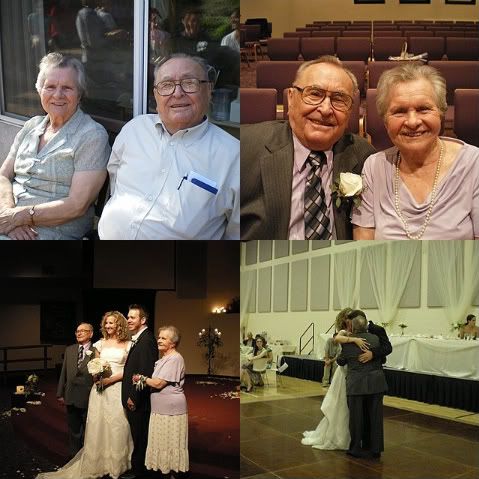
You’re 74, your wife is 73, you’re retired, what do you do? My parents, Moisi and Nadia decided to sell their house, many of their household possessions and move to Russia to start a Bible study ministry in a small village near Rostov-on-Don. They filed for a one year visitor’s visa and left with suitcases full of Bible study materials on May 6, 1997. They set up shop in a four-room home with no indoor plumbing. My dad is not an ordained minister. His experience comes from many years of following Christ sincerely, Bible study, service for the Lord, sincere love for God and God’s people. My mother loves God, loves my father, and loves to cook. They work together beautifully.

My parents were both born in Russia. When young, (1932), their families separately escaped out of Russia into Iran. They lived in and near Tehran, where they met and were married. My oldest sister was born there. My dad was not a believer when he married my mom. She was a believer and the daughter of a Baptist minister. Shortly after WWII they applied for and received permission to immigrate to the U.S.A. After customs and registering in New York they traveled to Los Angeles, where relatives set them up with shelter and work. Two more of my older siblings, myself, and four younger siblings were born to my parents. Twenty years into their marriage my dad accepted the call from God to follow His son Jesus as his Savior. This took place at the Billy Graham Crusade at the Los Angeles Coliseum in 1963.

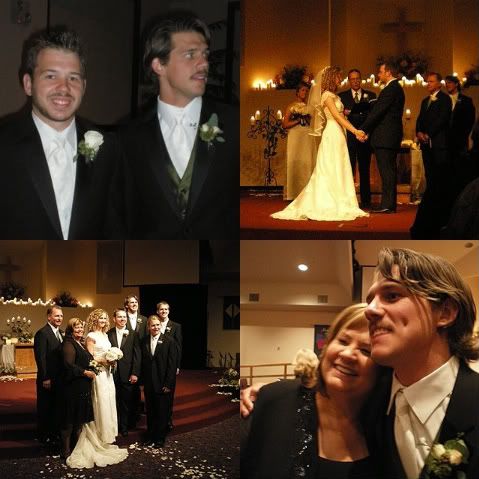
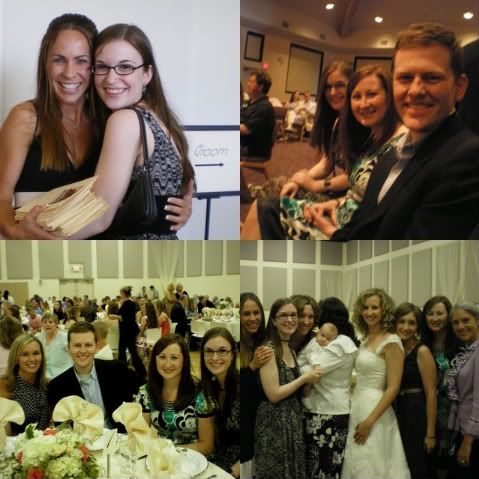
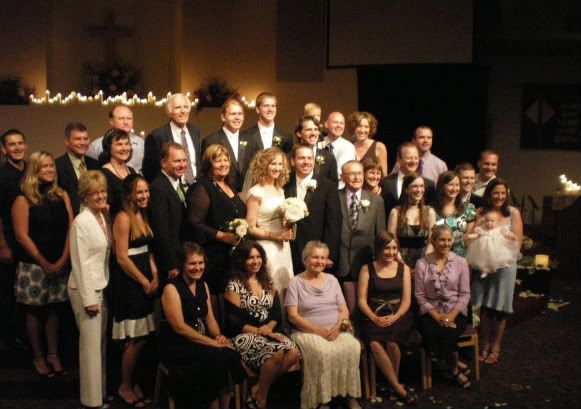
This is a photo of all my brothers and sisters at my sister Kathy’s wedding in 1974 along with my brother-in-law Len, his brother in-law as best man and Dear is in the photo, too.

My parents have faithfully followed the Lord in word and deed. On trips to Russia earlier in the 1990’s they felt the need of the lost sheep in this spiritually poor country. While visiting relatives they led a cousin to the Lord. She begged my parents to come and teach her the Bible. My parents prayed, listened, and felt it was time for them to go for longer than a 2-month visit.

A Bible study turned into a small church that met in my parents’ rental home. Up to 15 women started coming to church on Sunday. No men. They did not anticipate the response they’d get from the children in the village. Forty children came for Sunday School.

Many of the children came faithfully each week even though their parents did not come. Some of the fathers ridiculed their children for going. The Sunday School Christmas program brought out a lot of parents. Same for Easter programs. God kept opening doors for the men to hear the gospel, too. My dad was asked to speak at funerals where he always preached the Gospel, the Lord works in mysterious ways. At the end of their first year there were several new believers. My parents had to leave Russia in the Spring. Eight women wanted to be baptized before my father left. The lake was frozen and there was no baptistery in the village. The women insisted my dad baptize them in the largest bathtub in the village!

My parents came home to the States in May of 1998. They had their medical exams and my mother was diagnosed with Breast Cancer. She had surgery to remove a cancerous lump and had radiation treatments for 6 weeks. She recovered well enough to encourage my father to make arrangements for another one year visa. They returned to Russia in October of 1998. They had a great reception on their return and their mission there was confirmed. They bought the house they were renting and turned it into a church with their small living quarters.

They built an outdoor baptistery on the church grounds.

They have gone back for a few months at a time since 1999.  Their final trip was just last year. They went to  encourage the existing church and make arrangements for a visiting pastor from a neighboring larger city to come in and teach this small group of believers. My parents turn 84 and 83 this year.

Comparing my folks from this 1999 photo in Russia with their 1997 photo above you can see the toll their two years of service, cancer (prostate and breast), and age have taken on them. They do not have any regrets for the time and sacrifice their service in Russia cost them. They are now living in a Senior apartment continuing in service for their Lord.

I leave you with this song, Remind Me, by Aaron Spiro and Carlo Furlan as a fitting close to this story of my parents.

Remind Me

When I’m old, remind me not to get stuck in my ways
When I’m old, remind me not to sit around day after day
’cause there’s a race to run that doesn’t finish at sixty
And I’m not giving up till I’m safe in your arms

When I’m old, let me bring glory to your super name
When I’m old, remind me not to take your grace in vain

When I’m old, remind me who and what I’m livin’ for
When I’m old, remind me not to hide away and double lock my door

I’ll rest in heaven, retire there. Let me run for Jesus ’till I get there.

Moisi (Moses) and Nadia have certainly lived their lives for Jesus and they haven’t stopped yet!

ht:  I Am, I Am, Kickin’ the Sky / Aaron Spiro & Carlo Furlan

Behold Your King! ~ Matthew 21:1-11

When they had approached Jerusalem and had come to Bethphage, at the Mount of Olives, then Jesus sent two disciples, saying to them, “Go into the village opposite you, and immediately you will find a donkey tied there and a colt with her; untie them and bring them to Me. “If anyone says anything to you, you shall say, ‘The Lord has need of them, ‘ and immediately he will send them.” This took place to fulfill what was spoken through the prophet: “SAY TO THE DAUGHTER OF ZION, ‘BEHOLD YOUR KING IS COMING TO YOU, GENTLE, AND MOUNTED ON A DONKEY, EVEN ON A COLT, THE FOAL OF A BEAST OF BURDEN.” The disciples went and did just as Jesus had instructed them, and brought the donkey and the colt, and laid their coats on them; and He sat on the coats. Most of the crowd spread their coats in the road, and others were cutting branches from the trees and spreading them in the road. The crowds going ahead of Him, and those who followed, were shouting, “Hosanna to the Son of David; BLESSED IS HE WHO COMES IN THE NAME OF THE LORD; HOSANNA IN THE HIGHEST!” When He had entered Jerusalem, all the city was stirred, saying, “Who is this?” And the crowds were saying, This is the prophet Jesus, from Nazareth in Galilee.”

Matthew 21: 1-11 (NASB)

All Glory, Laud and Honor

All glory, laud and honor,
To Thee, Redeemer, King,
To whom the lips of children
Made sweet hosannas ring.

Thou art the king of Israel,
Thou David’s royal Son,
Who in the Lord’s name comest,
The King and Blessèd One.

The company of angels
Are praising Thee on High,
And mortal men and all things
Created make reply.

The people of the Hebrews
With palms before Thee went;
Our prayer and praise and anthems
Before Thee we present.

To Thee, before Thy passion,
They sang their hymns of praise;
To Thee, now high exalted,
Our melody we raise.

Thou didst accept their praises;
Accept the prayers we bring,
Who in all good delightest,
Thou good and gracious King.

Thy sorrow and Thy triumph
Grant us, O Christ, to share,
That to the holy city
Together we may fare.

For homage may we bring Thee
Our victory o’er the foe,
That in the Conqueror’s triumph
This strain may ever flow.

Words: Theodulph of Orleans, circa 820, trans. John M. Neale


Kulich – Russian Easter Bread

My mother makes Kulich (Russian Easter Bread) and Sernaya Paska (a yummy sweet cheese, cream spread) every Easter. The white pyramid looking thing with the cross on it is the Sernaya Paska. I don’t have a special mold so mine looks like a rounded dome. I’m including a recipe for the spread and a link to a recipe for Kulich. We eat the bread with the paska or slather it with sour-cream. My mom’s is the best and we’ve documented how she makes it and hopefully we’ll continue the tradition. You use empty, clean, 1 or 2 lb. coffee tins to bake the bread in.

Update for Easter 2008 ~ I’ll be adding my mother’s recipe for Kulich before Easter this year. Click here for the recipe.

Sernaya Paska

Ingredients:   18 – hard boiled eggs / 3 pounds Farmers cheese / 1 pint whipping cream / 3 cubes unsalted butter (12 oz.) / 3 cups sugar /

Press the Farmers cheese through a sieve. (This is the hardest part of the recipe) I usually use a wooden spoon and press it through a wire strainer a little at a time. Separate the egg yolks from the whites. (You will not be using the whites). Press the egg yolks through the sieve. Cream the sugar and butter together. Beat in the egg yolks. Beat in the cheese. Add whipping cream and mix well. You will place the mixture into a strainer lined with about 3 layers of cheesecloth. You will need enough cheesecloth to wrap up and over the top of the cheese. Place the cheese mixture into the cheese cloth lined strainer. Bring the ends of the cheese cloth up and tie the ends on top of the cheese in a knot. Place the sieve into a larger bowl suspended with enough room for the cheese to drain without sitting in the drained liquid. Place a plate on top of the cheese an place a heavy rock, brick, or other weight on top of the plate. Refrigerate over night.

Update #1: I used a plastic flower pot for my Seerney Paska and added more holes to the bottom. I got the shape I wanted and it drained well.

New tip: Use a potato ricer instead of a wire strainer for the egg yolks.

Update #2: This Sernaya Paska recipe is for a huge amount (enough for my huge extended family). If you just want a normal amount, cut the recipe in thirds. (6 cooked egg yolks, 1-lb. cheese, 2/3 cup whipping cream, 1 cube butter and 1 cup sugar. Enjoy!

Tip #2: If you don’t get around to baking Kulich you can substitute a good Panettone for the bread. Hard to find this time of year because most stores stock it at Christmas, not Easter. If you are fortunate to have a Italian food store near you they seem to stock it year round. I bought the most plain one I could find (not easy) It had raisens and candied orange and lemon bits in it. It was a good substitute nevertheless!

ht: Vera Titov/Nadia Bagdanov ~ recipe for Sernaya Paska

Spring has Sprung in Seattle

Restore your light, O excellent chief

to your country; for it is like spring

Where your countenance has appeared;

To the people the day passes more pleasantly,

And the sun shines more brightly.

Horace, Odes, bk. 4, 5, 5.

My first Spring blooms have appeared in my yard in Washington

This is my Lenten Rose~ Helleborus

2016-02-11 February plants and food2

Click on Lenten Rose (above) to learn more about this popular plant.

My friend Beth gave it to me for my birthday last year.

The amazing thing is that these plants are still alive.

This too is only by the grace of God.

 Spring clean-up 021

My Camellias which look so nice in a bowl with water and floating candles.

My Lilies that my friend Jan gave me won’t bloom for a bit.

Thank you ladies for adding a bit of your gardening pleasures to my brown thumb yard!

And thank you Lord for keeping these beauties alive. (The plants and my friends)

ht: quote , Real Christianity by William Wilberforce, rev./updated by Bob Beltz

My Testimony and a John Newton Hymn

HUME LAKE CHRISTIAN CAMP

Ellen’s simple version of her testimony, March 29th, 2007

I accepted Christ (was spiritually born) in the summer of 1963 at Hume Lake Christian Camp. I was a reluctant, stubborn, proud, follower of Jesus for many years. Similar to the birth process, I was comfortable in the womb (when God was calling me), but at birth when I had to get up and walk down an aisle and be singled out I howled like a baby. (Why do they say down the aisle instead of up the aisle?) I thank God He didn’t throw me back! I was a colicky baby. I fussed when anyone called attention to my bad attitudes, stubbornness, sin. I became more of a pharisee than a lover of God and my neighbor. I had my moments of obedience and peace. I had a long way to go and still do in the sanctification process. It has dawned on me what an amazing thing Christ did for me and the dirty rotten sinner I am. I still need to go deeper in this reality. I’m so glad God keeps after me. If my memory serves me correctly I cooperated more in the sanctification process after my baptism in high school. I’ve had periods of growth and periods of “being asleep in my faith”. BUT – GOD IS FAITHFUL and His promises are true. I want to follow Him for the rest of my life. Every day I want to say, thank you for saving me, I’m yours Lord. Every day I want to seek Him. More and more, I’m looking forward to seeing Him “face to face”.

I read this classic hymn by John Newton (In Evil Long I Took Delight) in Living the Cross Centered Life by C.J. Mahaney and felt it appropriate to include with my testimony.

In evil long I took delight
Unawed by shame or fear;
Till a new object struck my sight
And stopped my wild career.
I saw one hanging on a tree
In agonies and blood;
Who fixed his languid eyes on me
As near his cross I stood.
Sure never till my latest breath
Can I forget that look;
It seemed to charge me with his death
Though not a word he spoke.
My conscience felt and owned the guilt
And plunged me in despair;
I saw my sins his blood had spilt
And helped to nail him there.
Alas, I knew now what I did
But now my tears are vain;
Where shall my trembling soul be hid?
For I the Lord have slain.
A second look he gave which said
“I freely all forgive;
This blood is for thy ransom paid
I died that thou mayest live.”
Thus while his death my sin displays
In all its blackest hue;
Such is the mystery of grace,
It seals my pardon too.
With pleasing grief and mournful joy
My spirit now is filled;
That I should such a life destroy
Yet live by him I killed.

Olney Hymns, Book 2: On Occasional Subjects (London: W. Oliver, 1779).

Molokan Cemetery


By HUGO MARTIN
TIMES STAFF WRITER

Photos by AL SEIB / Los Angeles Times
Women in traditional dresses wander through the Russian Molokan Cemetery after attending the funeral of an elderly church member.
Danny Kanavalov and son Josh, of Bakersfield, walk through the graves at the Russian Molokan Cemetery in the City of Commerce.
EIGHTY-FOUR-YEAR-OLD Shasha Tolmachoff lives in Glendale, Ariz., but plans that when she dies, she will be buried in the City of Commerce, in the same dusty parcel where generations of Russian Molokans including her parents and in-laws have been laid to rest.
“It’s very comforting to be with them,” said the retired homemaker as she walked gingerly around the tightly packed tombstones at the Russian Molokan Cemetery on Slauson Avenue after attending the funeral of an elderly church member.
Tolmachoff is a member of a little-known Christian sect that broke away from the Russian Orthodox Church in the 1600s. About 60% of America’s church-going Molokans–about 3,000 people–live in Los Angeles. [Descendants of Molokans in LA County number over 20,000]. Molokan Since 1941, most of them have been burying their ancestors at the Slauson cemetery, sandwiched between a paper factory and a warehouse.
The 14-acre graveyard has about 2,500 graves and space for thousands more, free to dues-paying church members. Two smaller Molokan cemeteries in East Los Angeles are too small or too full to absorb many more graves.
In recent years, as commercial development has surrounded the Slauson cemetery and vacant land in Commerce has become scarce, banks and real estate firms have clamored to buy and develop the cemetery or its vacant 10 acres for nearly a half-million dollars an acre.
But the six Molokan churches that own the property have rejected all offers outright.
“If our people have put our blood, sweat and tears into this land, why move?” said Alex Goosseff”

Yesterday I posted a description of the Molokan religion.  I was raised in this community. My grandparents and other relatives are buried at this cemetery. In high school I chose to leave this religion because of some of their beliefs. The outfits you see on these ladies are what is worn by married women to church services, weddings, and funerals. Molokans wear pastels or white garments for their gatherings. No black or bright colors.

Molokans (Milk Drinkers)


 The following post on Molokans is a combination of material I copied from The Molokan Homepage, Wikipedia, and my own observations and additions about my families experience in the Molokan Church. I am italicizing my entries. This is a long post so I will shorten what appears on the post page and give you the option to continue reading more if you’d like. I’m organizing this material so my children and I have a better understanding of the history of Molokans and what we were brought out of by the grace of God. Tomorrow I’m posting an LA Times article on the Molokan Cemetery where my paternal grandparents and other relatives are buried.

 The Molokans (Russian: Молока́не) are a “Biblically-based” religious movement, among Russian peasants (serfs), who broke away from the Russian Orthodox Church in the 1550s. Molokans denied the Czar’s divine right to rule and rejected icons, Orthodox fasts, military service, the eating of unclean foods, and other practices, including water baptism. They also rejected the traditional beliefs (held by Roman Catholic, Protestant, and Orthodox Christians) in the Trinity, the veneration of religious icons, worship in cathedrals, the adherence toward saintly holidays, and the decisions of Synods and Ecumenical Councils.

 The Molokans also called “milk drinkers” were persecuted by their countrymen and government, and were exiled to a remote area of Russia (Transcaucasia), where they lived and prospered for several generations. In 1833, there was a reported outpouring of the Holy Spirit upon a number of Molokans in the Transcaucasus region. This created a schism between Constants and the newly evolved Jumpers and Leapers. With what the Molokans believed to be an additional manifestation of the Holy Spirit, this new smaller sect began a revival with intense zeal and reported miracles that purportedly rivaled that of Christ’s Apostles. Condemnation from the Constant sect lead to betrayals and imprisonment for many of the Jumpers and Leapers, now called New Israelites by their anointed leader Maxim Rudometkin. Maxim Rudometkin, while he was in prison, wrote a spiritual book that was smuggled out by close friends and relatives who came to visit him that later become the basis for a sub-sect of the Molokan faith. This book, used as a companion to the Holy Bible, is known as the Book of Spirit and Life. Molokans who accepted this book and who followed Maxim’s interpretations of the Bible are known as Maximisti, which make up most of the Jumper and Leapers sect. (This was the group my family was a part of. Maxim classified them as the New Israelites, the new chosen ones). (more…)

Be Beautiful

I decided to respond to the “Carnival of Beauty” challenge to post something on “The Beauty of Being Made in the Image of God”.  I ran to several good sources I know. The first excerpts come from R.C. Sproul in his book, Now That’s a Good Question, and a couple articles in His Tabletalk Magazine. The last contribution comes from my brother’s blog, The Temple.

R.C. Sproul – Now That’s a Good Question

The basic call to a person in this world is to be a reflection of the character of God. That’s what it means to be created in the Image of God. Long before the Sermon on the Mount, God required the people of Israel to reflect his character when he said to them, “Be holy even as I am holy.” He set them apart to be holy ones. The New Testament word for that is saints.

From Tabletalk June 2003 – Imago Dei – Sproul

An image cannot reflect something utterly dissimilar to it. Rather, an image is a likeness of something beyond itself. It is not the original, but it mirrors the original.

…That we bear the image of the God of glory is an unspeakable blessing. But with this elevated status comes a weighty responsibility. We were made to glorify God – to reflect the character of God and that duty comes with a divine mandate “You shall be holy, for I The Lord your God am holy” (Lev. 19:2)

” Thinking God’s Thoughts”  – Wayne Kenyon

Among created things, human beings are unique, for they are made in the image of God. As rational creatures, we are able to know God and , in a finite manner, think like Him.

For this reason, we have the great privilege of thinking God’s thoughts after Him. Also, as volitional creatures, we are able to reflect His excellencies in the manner in which we live and exercise dominion. This is our great responsibility.

…All of creation is also “for him”. With man’s great privilege to think God’s thoughts after Him comes the responsibility to take that which we receive and give it back to God in an act of worship. The God who is knowledge is worshipped by our knowing Him. The pursuit of knowledge is good. The only wise God is worshipped when His creatures are wise. This is done when we have the noblest of ends (i.e.,God Himself) and employ the most effective means of exercising dominion over His world. The God who is love is glorified when appreciative love for God is the motive from which we act. The God who is truth is worshipped when we “practice the truth” (I John: 1:6). God is worshipped when we model our lives after Him in loving obedience.

Finally from Steve at The Temple, a post on holiness. I’m including this because it personalizes holiness so well for me. Is what I’m doing the beautiful thing, the holy thing? Am I reflecting God’s image in me? Now in Steve’s words:

I wrote this in my journal some time ago:

“Holiness is doing something beautiful as opposed to not doing something ugly.”

I chose the words beautiful and ugly purposefully because they are not usually used in conjunction with holy behavior, and yet I think that they are wholly appropriate, and challenging. We are much more attracted to behaving beautifully, which may be defined as the most good. Beautiful is related to a word much closer to holiness: beatific. Being holy, being a holder of beauty. I like that correlation, it is an inspirational definition.

This perspective also hits the core issue in successful Christian living. What God wants from us is not simply the absence of evil acts, not even that we stop wanting to do bad things. God wants us to love to do the beautiful thing, the holy thing, the right thing. With regard to our speech, that is also the goal. So many of us, self included, have seen it as a matter of Christian freedom to use an occasional “strong” term, that was ultimately ugly. I am striving now to have only things of beauty as my expression in life, to the glory of the Beautiful One.

Be beautiful.

ht: Tabletalk from Ligonier Ministries and R.C. Sproul – June 2003