See What He Will Do…


About two years ago the Billy Graham Association was asking for email stories of how Billy Graham’s Evangelical Outreach had touched our lives. I sent in the story of my Pop’s conversion. Previously to this request, when our daughter was at Wheaton College in Illinois we were able to visit the Billy Graham Museum on campus. Emotions came to the surface when I saw the photos from the Los Angeles Crusade at the Coliseum in 1963. I knew my dad and I were somewhere in that photo of the stadium filled to overflowing.


I sent in my story hoping that Billy would hear and know that I thanked God for his devotion to the Gospel of Jesus Christ and how it impacted my family.


What a thrill to get this book in the mail this past month, skimming through and seeing my story about Pop published.


I can hardly wait to show my Mom and Pop the book…

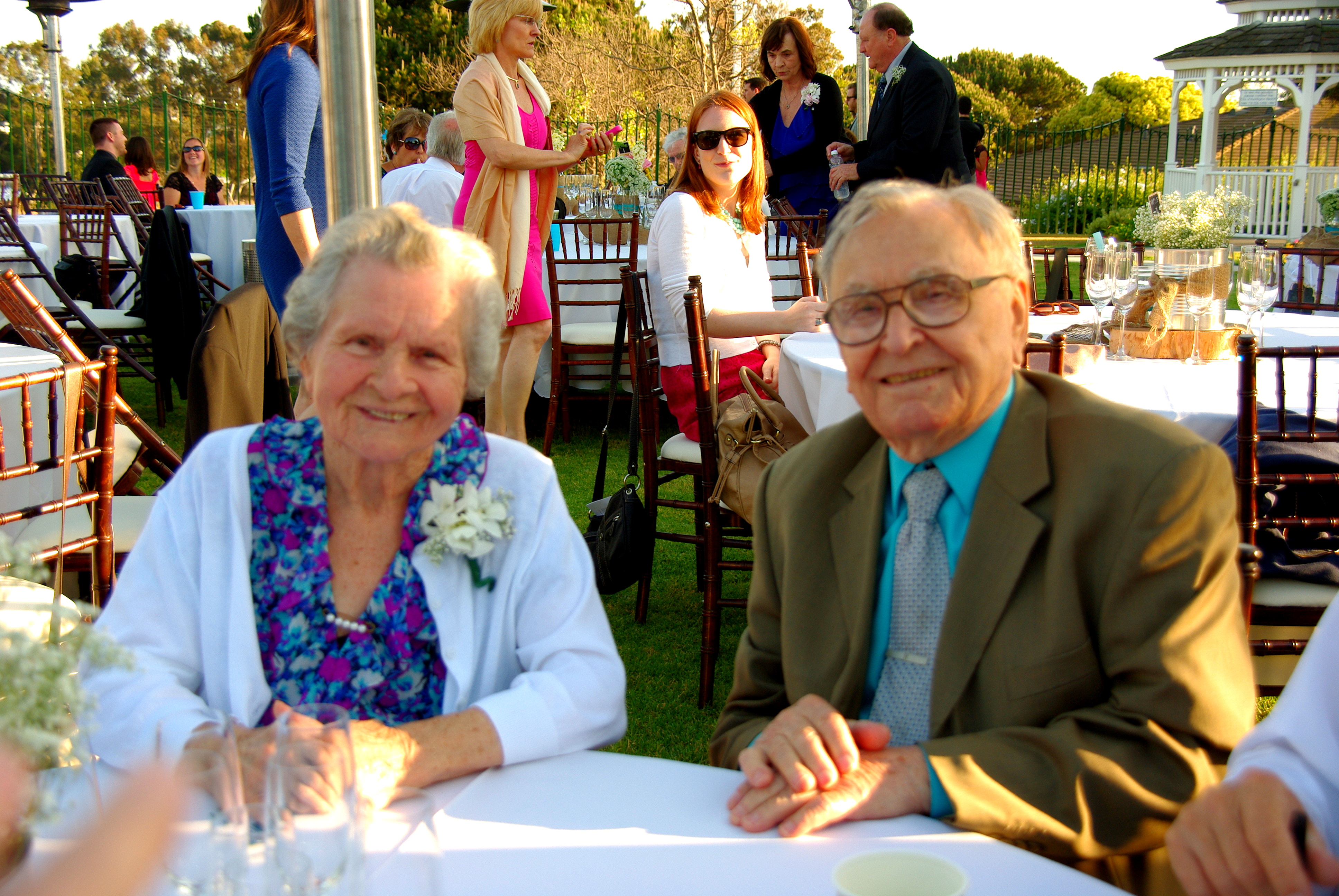
My parents are soon turning 86 and 85.

Photobucket is holding all my photos that I stored on their site from 2007-2015 hostage replacing them with ugly grey and black boxes and asking for a large ransom to retrieve them. It is a slow process to go through all my posts deleting the ugly boxes.

Give Me My Babushka’s Cooking

IMGP9094

For Foodie Friday I’m posting this paragraph my daughter wrote about her Babushka’s cooking and a recipe and how to make my mom’s Borsch following it.

  • Gimme my Babushka’s cooking and I’ll be content

  • The sort of Russian/Persian cuisine that my Baba (Grandma) makes… I would be a happy camper for a year with yummy borscht, galupsi, kulyich, syrny paska, lapsha, varenky, shashlik, and a million other treats that I would butcher just as badly trying to spell in English…I can say most of them but they’re sure hard to type. Just make sure you give me a good supply of sour cream, and can I bend the rules to include my Mom’s “green borscht” which is spinach soup we chop up hardboiled eggs in? I was never entirely sure where that soup’s origins really lay…I could never get sick of all the lamb and cabbage and butter filled goodness, heck I even like the Russian candies my Deda (Grandpa) keeps around though none of my cousins do. My mouth is watering already. ~ Katie
  • borsch-snoqualmie-001
  • Many Borsch recipes include beets in them. The familiar Borsch that we grew up with and that we had at Molokan Church Meals did not have beets in it. Here is my mother’s recipe.

    Nadia’s Borsch

    For the Stock:
    1 Chuck Roast (with bone would be good)
    1 onion
    1-3 celery stalks with leaves
    2-3 carrots
    2 bay leaves
    5-10 peppercorns
    Salt to taste

    In a big stock pot, cover chuck roast with good water. Bring just to boil. Take roast out of water and discard the water. Put chuck roast back in pot and cover with fresh water again. Add remaining ingredients. Bring to a boil. Simmer and cook until roast is fork tender. Strain the stock. Reserve the roast.

    1 head of cabbage shredded (green is what we use)
    1-3 carrots grated
    1-2 onions diced
    1 bell pepper diced

    2-3 stalks of celery diced

    (saute the bell pepper, onion, celery and jalapeno then blend before adding to stock)
    2-3 potatoes diced
    2 cans stewed tomatoes blended in blender (we have those that don’t like chunky tomatoes)
    1 can tomato sauce
    1/2-small bunch of dill (to taste)
    1 handful of chopped Italian parsley
    salt and pepper to taste
    optional – 1 can of garbanzo beans
    option #2 – add a small jalapeno diced to the saute group above.

    Put the strained broth back into a stock pot. Add all the above ingredients and bring to a boil. Simmer until cabbage and carrots are tender. Taste and see if the soup needs more salt or pepper at this time.

    The Borsch is ready now.

    My mother doesn’t include this in her recipe but when she made borsch at my house once I saw her add a half a cube of unsalted butter at the end. :) My mother mashes most of the potatoes to thicken up the soup a bit.

    You can bake the chuck roast with a little of the stock, salt, pepper, and sauteed onions to serve alongside the borsch with a good loaf of bread and of course…sour cream. This was my welcome home meal for my kids on one of my trips back to Seattle a couple years ago.

    I hope you enjoyed this post from my archives. I think it is high time I make borsch again and take some new pictures.

  • Photobucket is holding all my photos that I stored on their site from 2007-2015 hostage replacing them with ugly grey and black boxes and asking for a large ransom to retrieve them. It is a slow process to go through all my posts deleting the ugly boxes.

Sweet Cheese Spread for Kulich ~ Seernaya Paska

My Russian heritage affords me some really good Easter eats. Every year we look forward to having our Easter Bread which we call Kulich in Russian and my Mennonite Friends called Paska.

We also make this yummy cheese spread to spread on this Easter Bread!

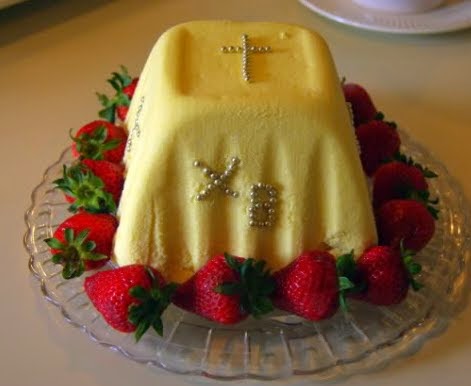
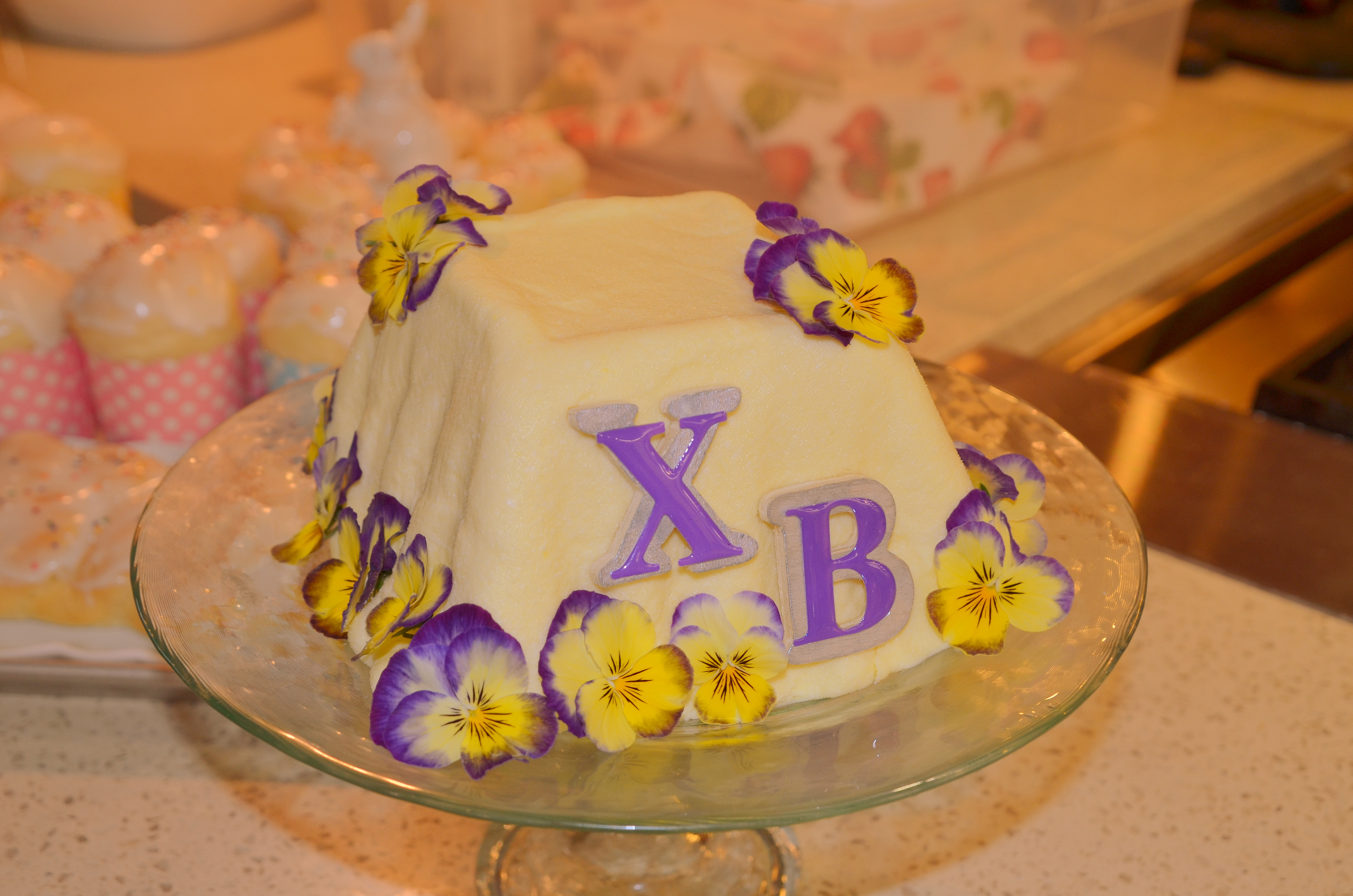
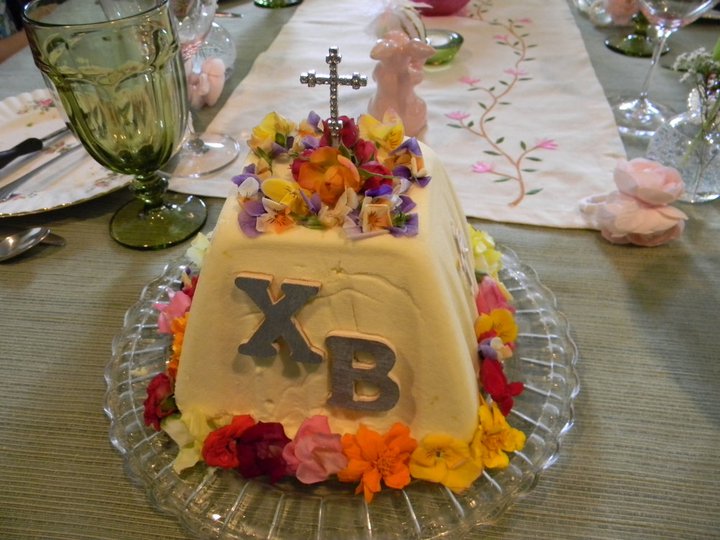
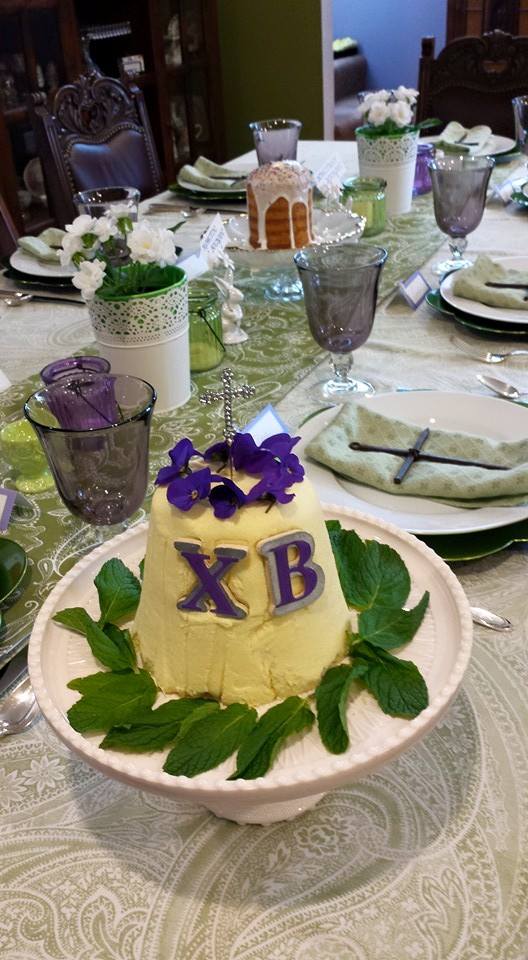
Seernaya Paska for Kulich (Russian Easter Bread) The X and the B are for Xpucmoc Bockpec (Christ Arose)

paska class 005


Seernaya Paska  (Сырная пасха)

Ingredients:

18 – hard boiled eggs /
3 pounds Farmers cheese /a dry curd cheese like a dry cottage cheese can be substituted.
1 pint whipping cream /
3 cubes unsalted butter (12 oz.) /
3 cups sugar /

Press the Farmers cheese through a sieve. (This is the hardest part of the recipe) If you find a very small curd cheese you won’t have to do this to the cheese. I usually use a wooden spoon and press it through a wire strainer a little at a time. Separate the egg yolks from the whites. (You will not be using the whites).

Press the egg yolks through the sieve. Cream the sugar and butter together. Beat in the egg yolks. Beat in the cheese. Add whipping cream and mix well. You will place the mixture into a strainer lined with about 3 layers of cheesecloth. You will need enough cheesecloth to wrap up and over the top of the cheese. Place the cheese mixture into the cheese cloth lined strainer or another container to mold into shape. Bring the ends of the cheese cloth up and tie the ends on top of the cheese in a knot. Place the sieve into a larger bowl suspended with enough room for the cheese to drain without sitting in the drained liquid. Place a plate on top of the cheese an place a heavy rock, brick, or other weight on top of the plate. Refrigerate over night.

I have used different shaped plastic flower pots to drain and mold the cheese into a higher domed result. If you choose to use a flower pot make sure there are enough holes in the bottom of the pot so the liquid can drain well.

This recipe is enough to feed an army. If you don’t have to feed an army here’s a scaled down version :0)

If you just want a normal amount, cut the recipe in thirds. (6 cooked egg yolks, 1-lb. cheese, 2/3 cup whipping cream, 1 cube butter and 1 cup sugar. Enjoy!

Farmers Cheese or Hoop Cheese can be hard to find. There are Russian delis that sell a dry curd cottage type cheese that will work. If you can find a dry cottage cheese at the grocers that will work too.

Here are examples of the Seernaya Paska I have made over the years.

Three or More ~ Russian Lacquer Boxes

Today for Three or More Tuesday I’m showing my Russian Lacquer Boxes. My heritage is Russian and I’ve always loved these boxes.


Dear bought me this first lacquer box for an anniversary of ours in the 70’s.


My parents brought us this one from one of their trips to Russia.

This last one was purchased at Goodwill.

Tam at The Gypsy’s Corner is the hostess for Three or More so if you’d like to join in head on over and sign in on Mr. Linky.

Have a wonderful Tuesday everyone!

Photobucket is holding all my photos I stored with them from 2007-2015 hostage unless I pay them a lot of money. I’m slowly cleaning up many posts from this time period and deleting their ugly grey and black boxes with a ransom request. Such a time consuming bother.

Aren’t They Cute?


Our drive to and home from the funeral on Saturday was quite treacherous at times with rain squalls that turned the freeways into rivers. We saw a few cars that had hydroplaned and ended up in the medians or in accidents with other vehicles.


But we made it there and home again just fine and it was worth it to see these cuties, my mom and dad.


Here are the song sheets from the funeral with the same songs in Russian and English side by side.


A closer look at the same song here in English and below in Russian…


I was pleased that I understood most of the Russian message at the funeral service. The English message delivered by my brother Steve was challenging…

Welcome to my bi-lingual world…

Some of you asked if Dear is Russian and the answer is no. He took Russian in college and he can read Russian. He sang with our Russian choir when we were dating. Dear is half Swedish and half English, Welsh and Cherokee. :0)

Photobucket is holding all my photos I stored with them from 2007-2015 hostage unless I pay them a lot of money. I’m slowly cleaning up many posts from this time period and deleting their ugly grey and black boxes with a ransom request. Such a time consuming bother.

Tea in the Afternoon


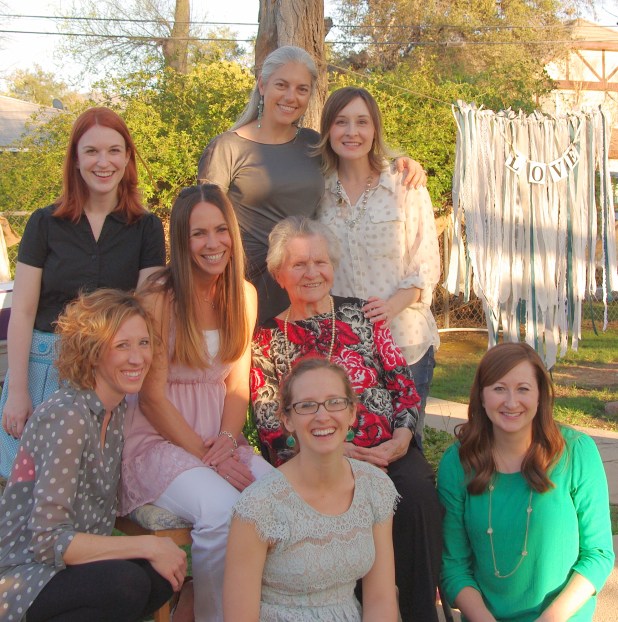
Kelly (SIL married to my brother Steve), Melissa my niece (Sister Kathy’s 2nd daughter) Jessica (soon to be my niece by marriage to my nephew Timothy, Kelly will be her MIL), Kathy my oldest sister, My Mother Nadia, My sister Vera, Debbee my niece (Sister Vera’s daughter), Michelle my niece (Sister Kathy’s first born daughter), and myself. (Wish my daughter Katie and DIL Laura, my sister Lana, my SIL Letty, my SIL Mandy, and my niece Kristin (Vera’s DIL) could have been with us, too!!)

In honor of my mother’s 85th birthday I spent a couple hours today with these lovely ladies having an afternoon tea. (More tea posts to follow) My mother the guest of honor shared with us some verses she wanted to gift us with. She read them in Russian from her Russian Bible. (This Psalm is 132 in the Russian Bible)


Psalm 133 ~ “How good and pleasant it is when brothers live together in unity! It is lke precious oil poured on the head, running down on the beard running down on Aaron’s beard, down upon the collar of his robes. It is as if the dew of Hermon were falling on Mount Zion. For there the Lord bestows his blessing, even life forevermore.”

What a blessing it is to live with these ladies in unity. It is good and pleasant everytime we get together. Thanks mom for sharing this Psalm with us at your tea.

Photobucket is holding all my photos from 2007-2015 hostage and they have blacked them all out. I’m slowly working at restoring my posts without their help. Such a tiresome bother!

Happy Birthday Mom ~ Nadejda!


Today is my mom’s birthday. On her official papers (she doesn’t have a birth certificate) she’s 85 today. She was born a year earlier than her papers say so she is really 84 today. Little things like birth dates got mixed up when filling out paper work during immigration.

God has blessed us richly with a mom who loves her God, husband, children, grandchildren and great grandchildren.

Encouragement ~

I Thessalonians 5:11 ~ “Therefore encourage one another and build one another up, just as you are doing.”

I Thessalonians 5:14 ~ “And we urge you, brothers, admonish the idle, encourage the fainthearted, help the weak, be patient with them all.”

Romans 1:11,12 ~ “For I long to see you, that I may impart to you some spiritual gift to strengthen you – that is, that we may be mutually encouraged “by each others” faith, both yours and mine.”

Romans 15:5 ~ “May the God of endurance and encouragement grant you to live in such harmony with one another, in accord with Christ Jesus, that together you may with one voice glorify the God and Father of our Lord Jesus Christ.”

Hebrews 3:13 ~ “But encourage one another daily, as long as it is called Today, so that none of you may be hardened by sin’s deceitfulness.

Hebrews 10:25 ~ “Let us not give up meeting together, as some are in the habit of doing, but let us encourage one another – and all the more as you see the Day approaching.”

So here’s what I heard yesterday in our church service (we went to the Saturday evening service) that I found encouraging and want to pass along to you. Our hope looks forward to our inheritance. When Jesus was resurrected and was seated at the right hand of the Father we became heirs with Him (Romans 8:17, Gal. 4:7).  Our inheritance is unfading, death proof, sin proof, time proof. We will have a new body (I Cor. 15:50-58), a new home (John 14: 1-3), a new world (2 Peter 3:13), a new job (Matt: 25:21-23), a new relationship with God (Rev. 21:3-4). The Holy Spirit is the pledge of our inheritance (Ephesians 1:13,14).

We need to keep looking to what Jesus has done for us and what we have to look forward to in Him in order to be grounded in our faith and anchored in this topsy turvy world. We don’t look at what is happening on the outside but what is happening in our inner man, daily renewal. We keep looking to what Jesus has accomplished for us. This is where our hope is, our living hope. We can’t focus on this life. I’m going to work on memorizing these next verses over the next couple of weeks. Do you want to join me? 🙂

2 Corinthians 4: 16-18 ~ “Therefore we do not lose heart. Though outwardly we are wasting away, yet inwardly we are being renewed day by day. For our light and momentary troubles are achieving for us an eternal glory that far outweighs them all. So we fix our eyes not on what is seen, but on what is unseen. For what is seen is temporary, but what is unseen is eternal.”

My hope is that this will be encouraging to you…

ht: Steve Larson, pastor E.V. Free Conejo Valley
One Misty Moisty Morning ~ Ладушки, Ладушки

On mornings like today this old Mother Goose nursery rhyme pops into my head and I say it again and say it again and say it again and again…

One misty moisty morning,
When cloudy was the weather,
I chanced to meet an old man,
Clothed all in leather.
He began to compliment
And I began to grin.
How do you do? And how do you do?
And how do you do again?

When I was a school teacher we had a training session on how important nursery rhymes were to a child’s language development and future reading skills. So take that baby on your knee and have fun with all the nursery rhymes out there. Sing them instead of just saying them. I remember bouncing my kids on my knee with this one, too.

Ride a cock horse to Banbury Cross
To see a fine lady upon a white horse
With rings on her fingers and bells on her toes
She shall have music wherever she goes

There’s also a rhyme we would repeat in Russian that goes something like this…

Ладушки, ладушки
Pat-a-cake
Clapping Song
(Russian)
Ладушки, ладушки
Где были?
У бабушки!
Что ели?
Кашку!
Что пили?
Бражку!
Кашка масленька
Бражка сладенька
Бабушка добренька!
~
The loose translation into English
Pat-a-cake, pat-a-cake,
Where were you?
At granny’s!
What did you eat?
Porridge*!
What did you drink?
A little home-brewed beer**
The porridge is buttered,
The home-brewed beer is sweet,
Granny is kind!
~
The version we sang was a bit different at the end. I’ll need to talk to my mom today and update how we ended this rhyme.
~
*In Russia porridge is very famous, it can be made from wheat (millet), oatmeal, buckwheat, rice, fine-ground barley, etc.**This probably means kvas, a Russian home-brewed non-alcoholic drink, or it means that Granny gave the children some beer to try, she indulged her grandchildren. (and actually if it sits long enough Kvas turns into an alcohol drink)
~
I updated this post with photos from our trip to Banbury, England in July of 2014.
ht: Mama Lisa’s World for the Russian Rhyme.

Tea Week Two ~ Litera Tea

Photobucket is holding all my photos from 2007-2015 hostage. I’m working on updating my blog posts very slowly.

 Samovar

During the 19th century, samovars gained increasing popularity in major cities, such as St. Petersburg and Moscow, and became inseparably bound to the Russian way of life.

Classics of Russian literature, like Pushkin, Gogol and Chekhov, regularly mention samovars in their works. Chekhov even coined an idiom: “to take one’s own samovar to Tula”. This phrase is still understood and occasionally used by Russians, with a meaning similar to the English “to carry coals to Newcastle”.

“To carry Coals to Newcastle, that is to do what was done before; or to busy one’s self in a needless imployment.”

 Railroad companies in Russia recognized the practicality and popularity of samovars, and fitted long-distance sleeping cars with them. Luxurious cars of the Trans-Siberian railroad were first to adopt this custom. Gradually, the samovar in a railroad car was replaced by the boiler of potable water, known as титан (titan) in the Soviet Union

From Wikipedia, the free encyclopaedia:
A samovar (Russian: самовар, literally “self-brewer”) is a heated metal container traditionally used to brew tea in and around Russia, as well as in other Slavic nations, Iran and Turkey.

A traditional samovar consists of a large metal container with a faucet near the bottom and a metal pipe running vertically through the middle. The pipe is filled with solid fuel to heat the water in the surrounding container. A small smokestack is put on the top to ensure draft. After the fire is off a teapot could be placed on top to be kept heated with the passing hot air. The teapot is used to brew the заварка (zavarka), a strong concentrate of tea. The tea is served by diluting this concentrate with кипяток (kipyatok = boiled water) from the main container, obtaining a lighter or darker brew function of drinkers’ tastes.

“To have a sit by samovar” means to have a leisurely talk while drinking tea from samovar, and it is a Russian expression reflecting the popular attitude towards its use.

In older times it was an economic continuous source of hot water. Various slow-burning items could be used for fuel, such as charcoal or dry pinecones. When necessary, the fire in the samovar pipe was quickly rekindled with the help of bellows manufactured specifically for this use.

In modern times, the samovar is mostly associated with Russian exotica and nostalgia.  During the Olympic games of 1980, an incredible amount of samovars were sold to visitors from abroad, thus affecting the samovar: it gained international recognition and became a symbol of Russia.

I don’t ever remember using tea-cups in our Russian gatherings for tea. Typically a glass was used served with a bowl under it. Many of the children and older folk would pour their tea into the bowl and drink it out of the bowl. There were fancier glass holders called podstakahnyik that I’ve posted a couple of pictures of here. Literally translated it means under the glass. Any Russians out there can correct me if I got that wrong. Russia has two national drinks, tea (chai) and vodka.

Tea is “Chai” in russian, (not the now popular Chai drink you find at Starbuck’s). Chai is just plain old steeped tea with boiled water added to your desired strength.  In our Russian culture it is an important part of a meal. We usually have it at the end of a meal. Many times we’ll have it in the middle of the day too. It’s has been associated with rest, comfort and refreshment. It’s just common for us to say at the end of the meal, “Chai?”  or “Who wants Chai?”

When I have my “russian” crowd over these are what I serve chai in. I have 12 of them and they are perfect to see the strength you want your tea to be. Some add lemon, some add cream, some have it black. I’ll have to share in a later post the varenya that my mom and other russian ladies make to add to tea. It’s a fruit based syrupy liquid to sweeten and flavor your tea instead of sugar.

For more Litera Tea posts click over to Gracious Hospitality.