Scotland Travel Journal ~ Edinburgh Reformation Tour 1

Monday September 23rd was our last full day in Edinburgh and Scotland. This would be a day filled with walking and stairs and information. We were thankful on this morning that Greg was well enough to walk and not miss our special tour.

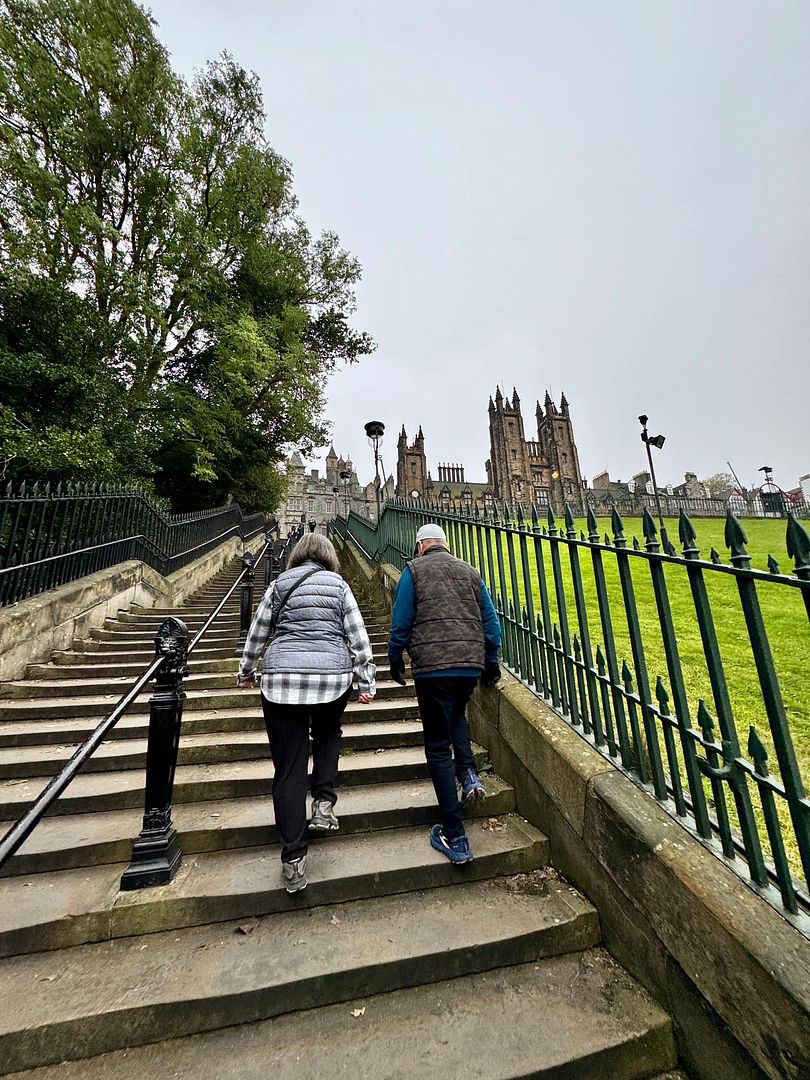
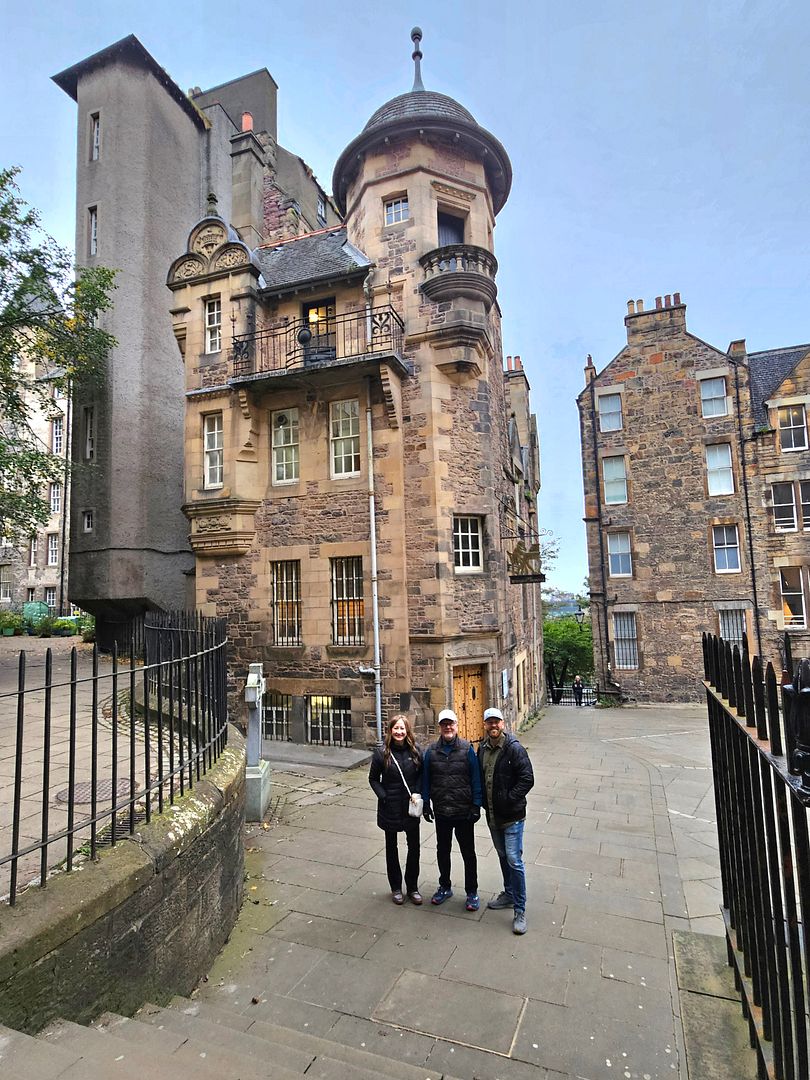
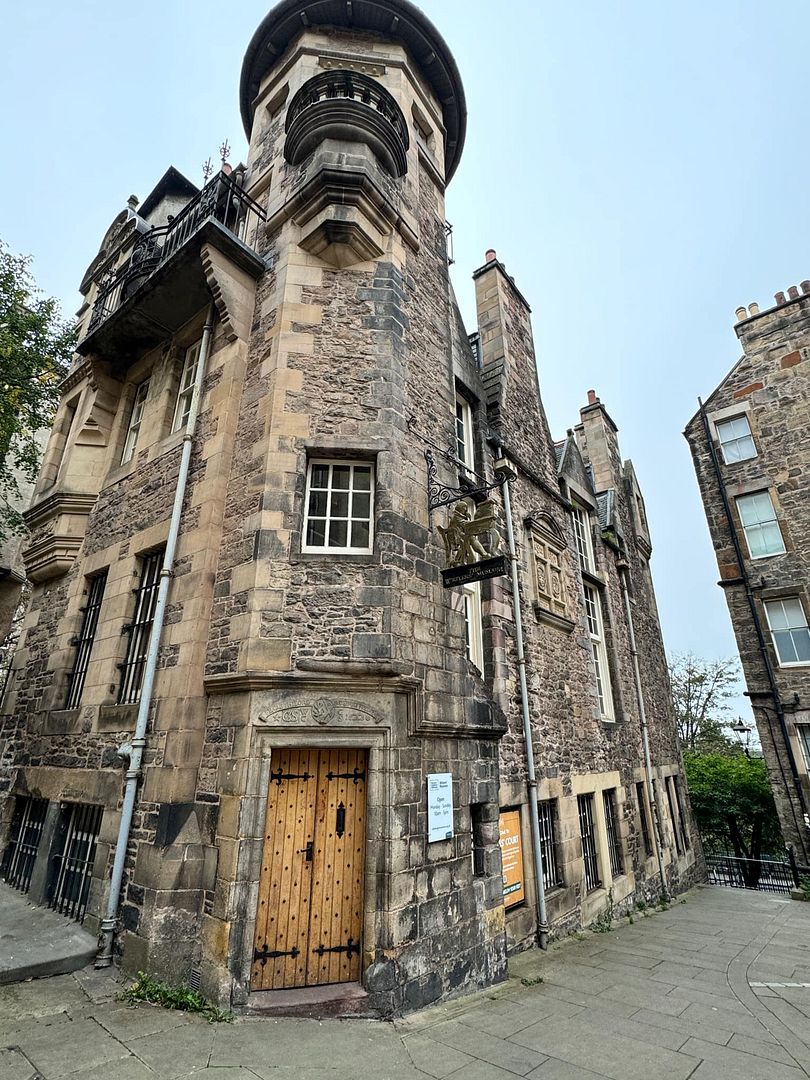
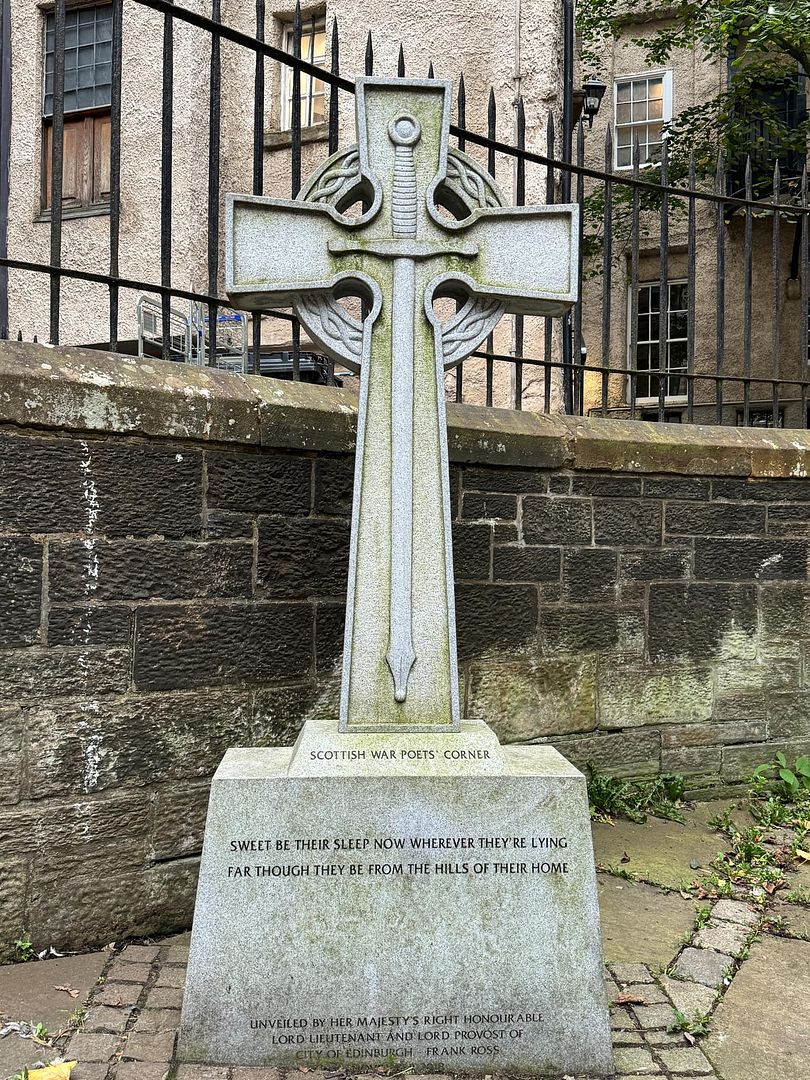
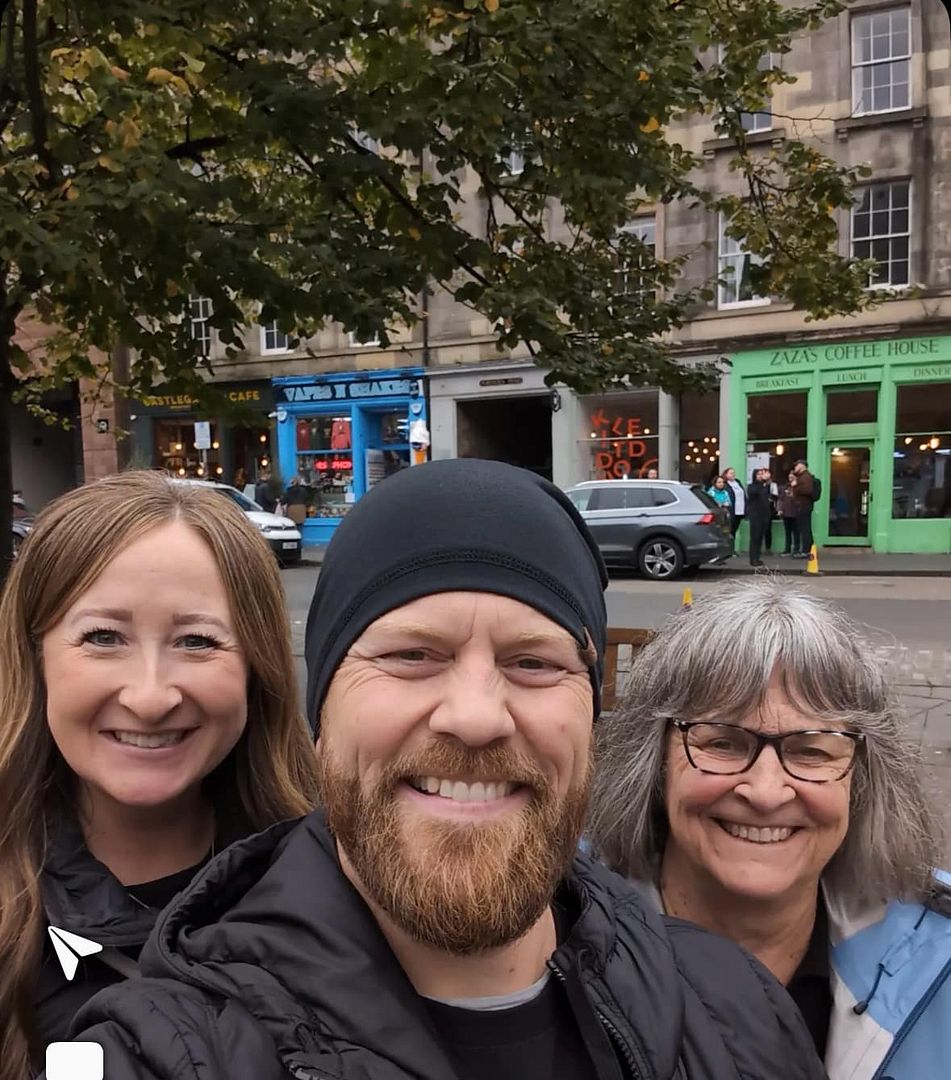
We took the Lady Stair’s Close to get up to the Royal Mile. We stopped to take some photos outside the Writer’s Museum.

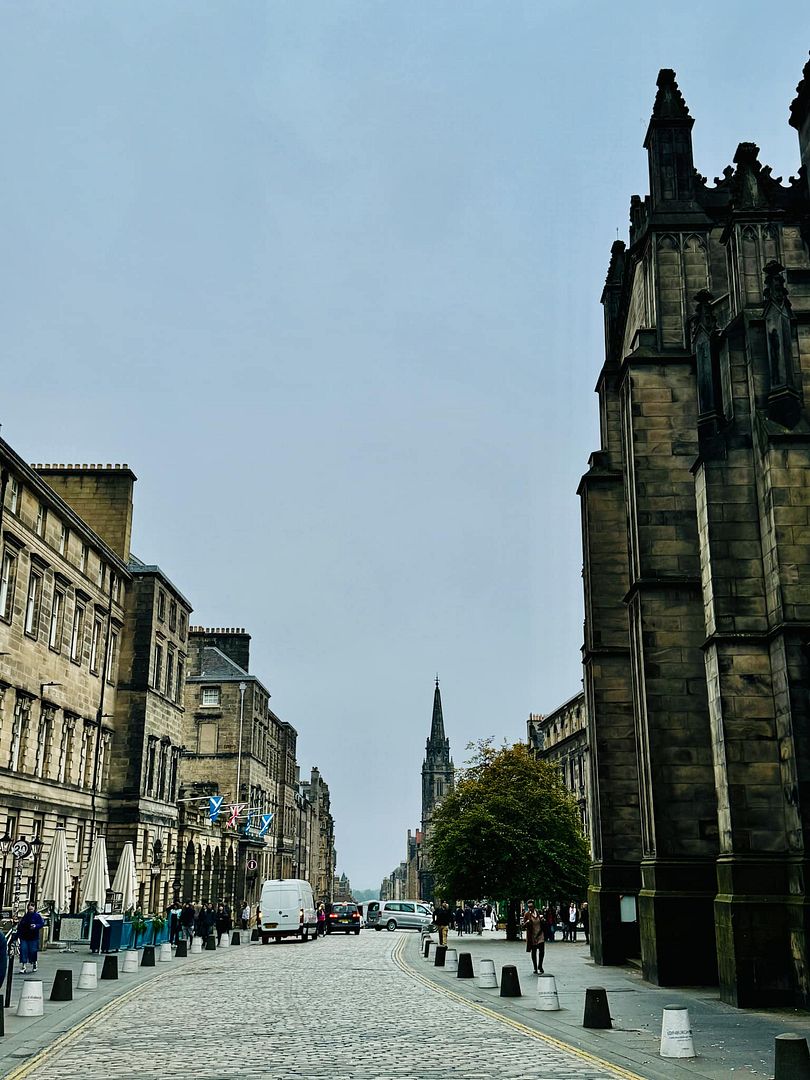
Early on the Royal Mile there were fewer folk milling about. That would change soon.

We scheduled a private Scottish Reformation Tour on this day.

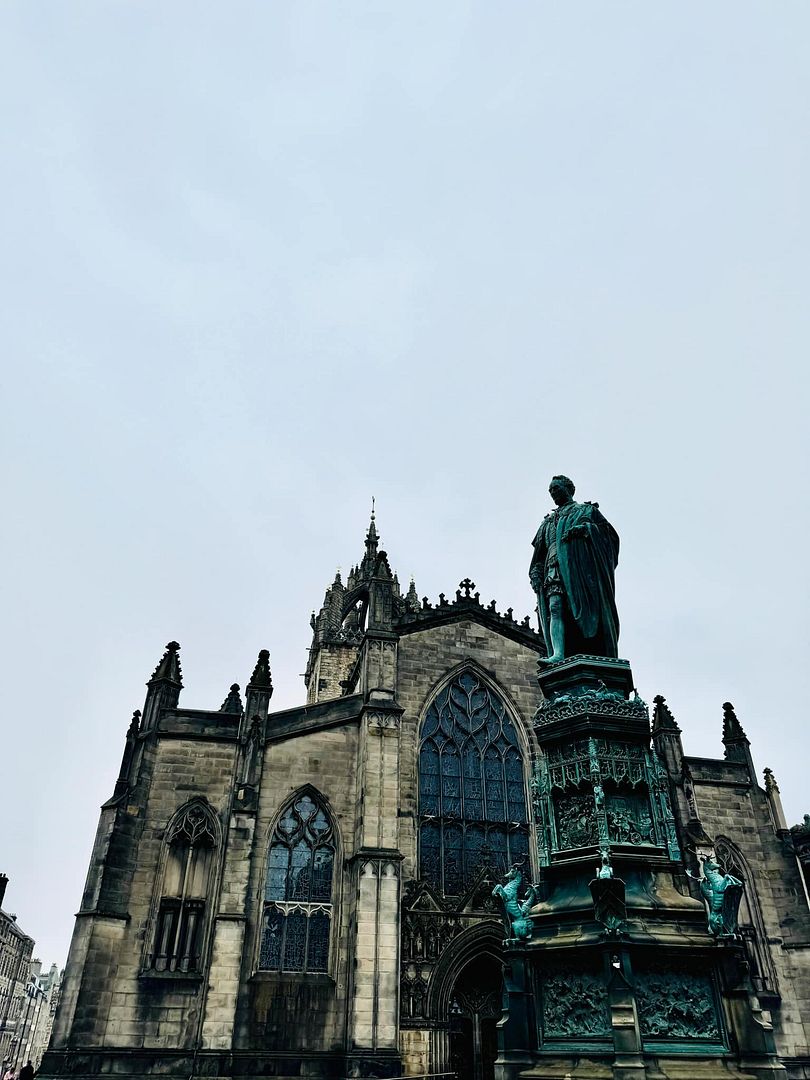
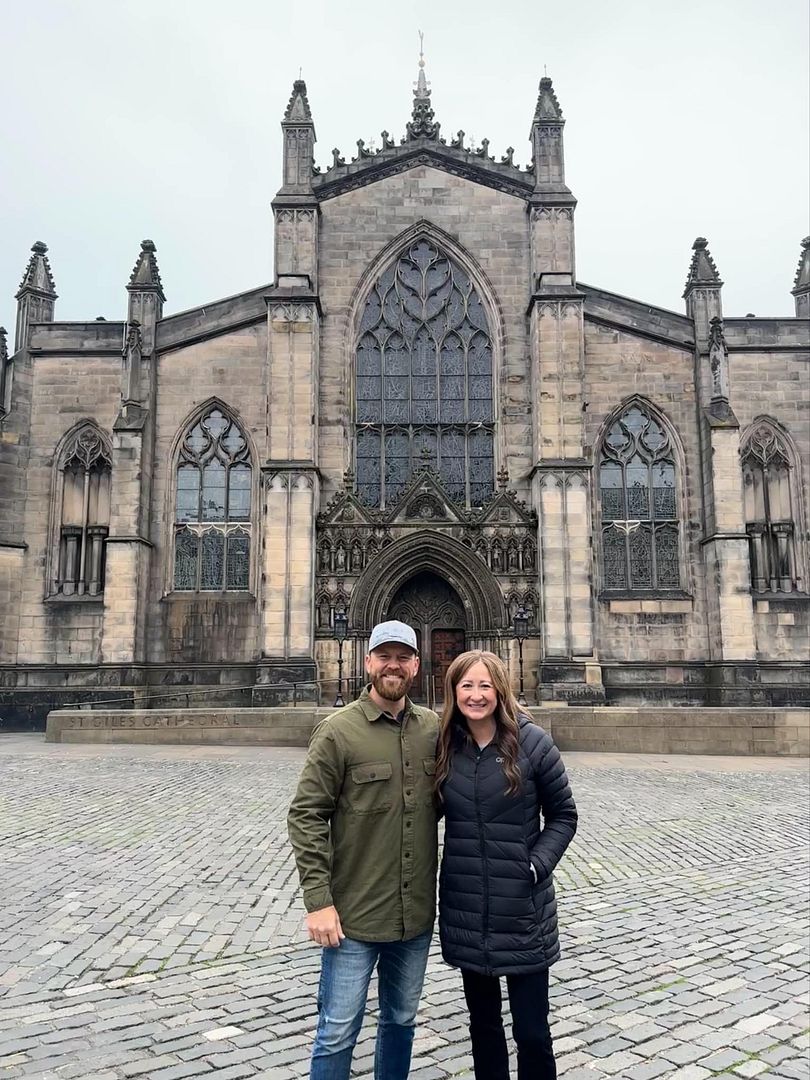
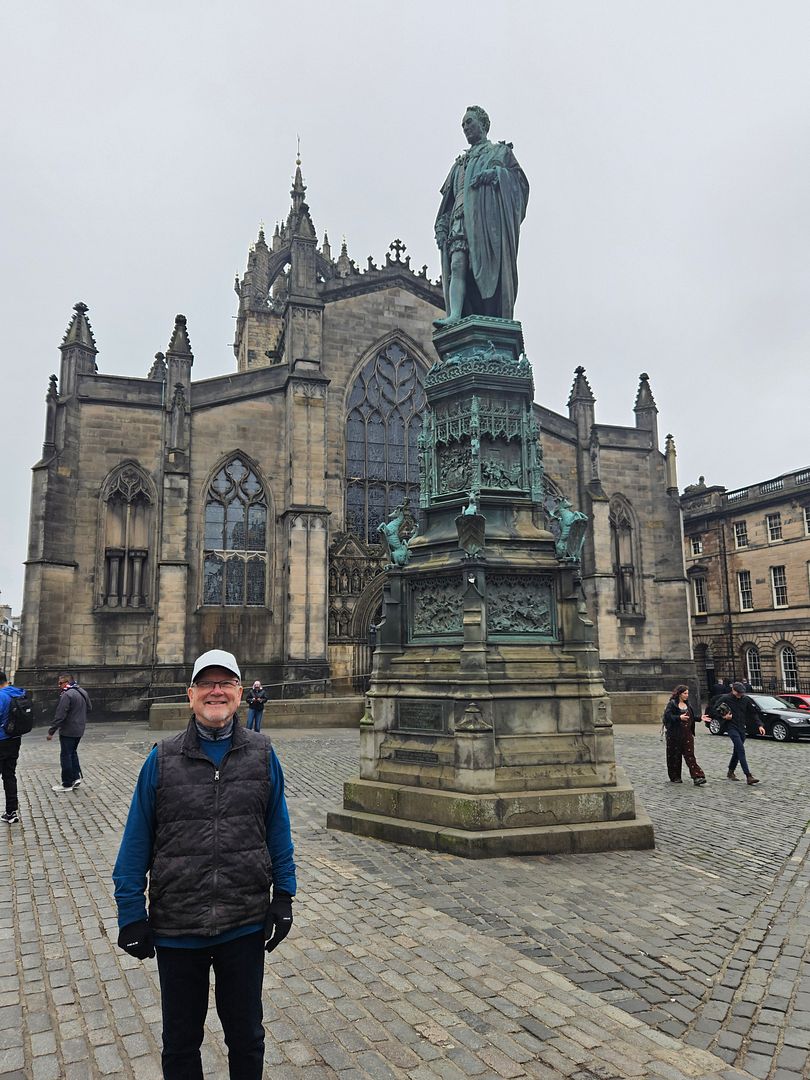
I included the link above. We were to meet Jimmy at 9am in front of St. Giles Cathedral.

Soon we saw who we assumed was Jimmy and he came right to us assuming we were his clients for the morning.

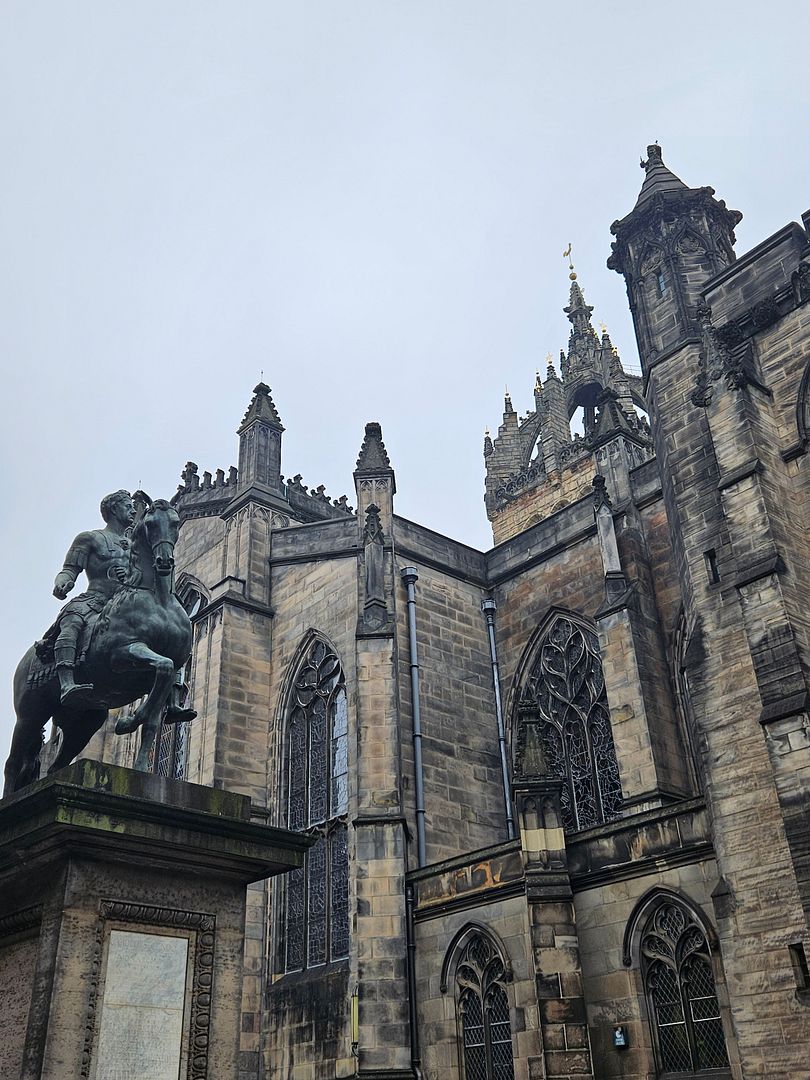
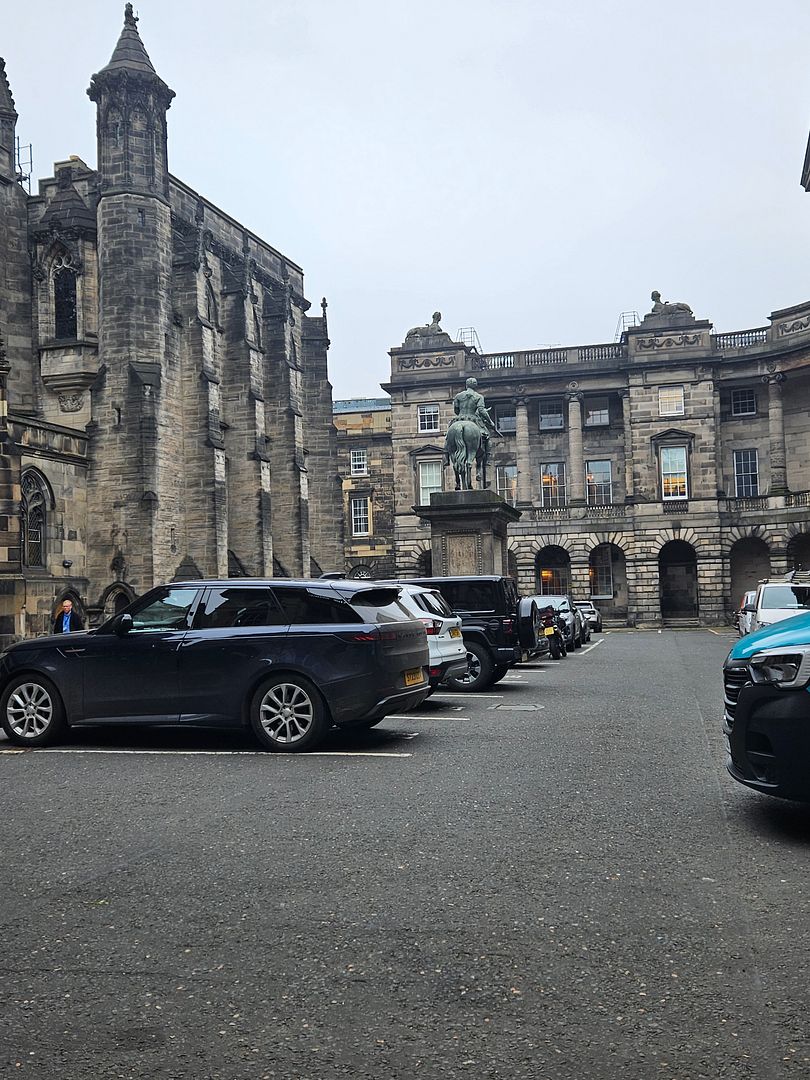
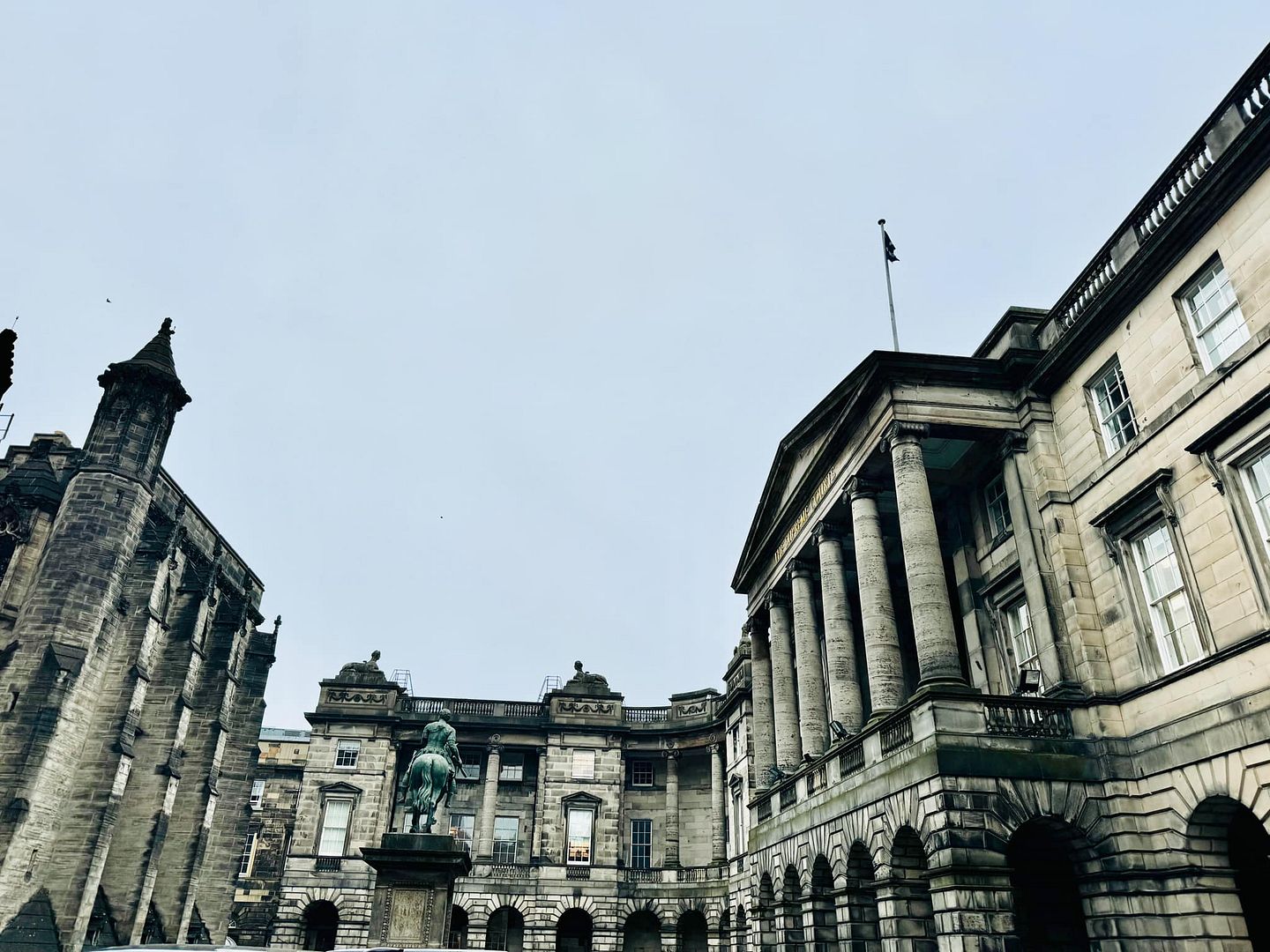
St. Giles was not open to the public yet on this particular morning so Jimmy took us around to the parking lot between St. Giles and The Supreme Court building. We would visit the inside of the cathedral at the end of our tour.

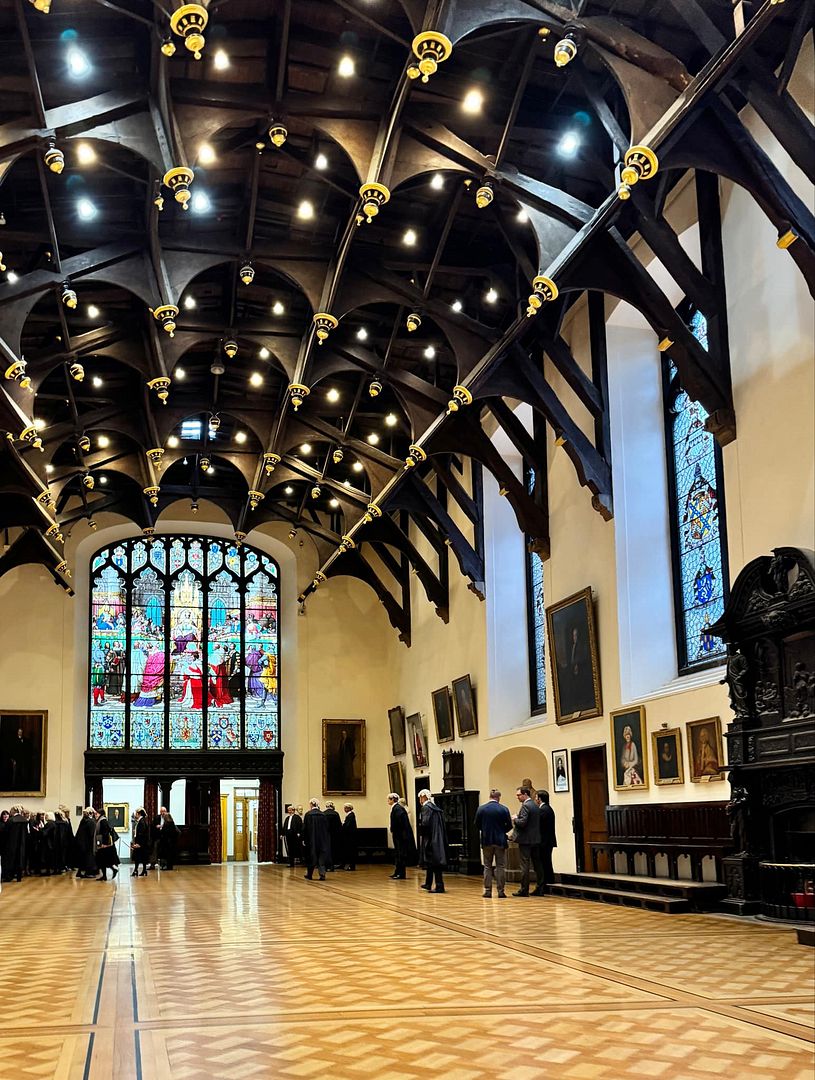
It looked to Jimmy’s keen eye that something was going on in the Supreme Court building so he managed to gain us access into the hall outside the courtroom.

It was quite fascinating to see all the ‘big wigs’ standing around and some pacing back and forth the length of the room discussing their cases.

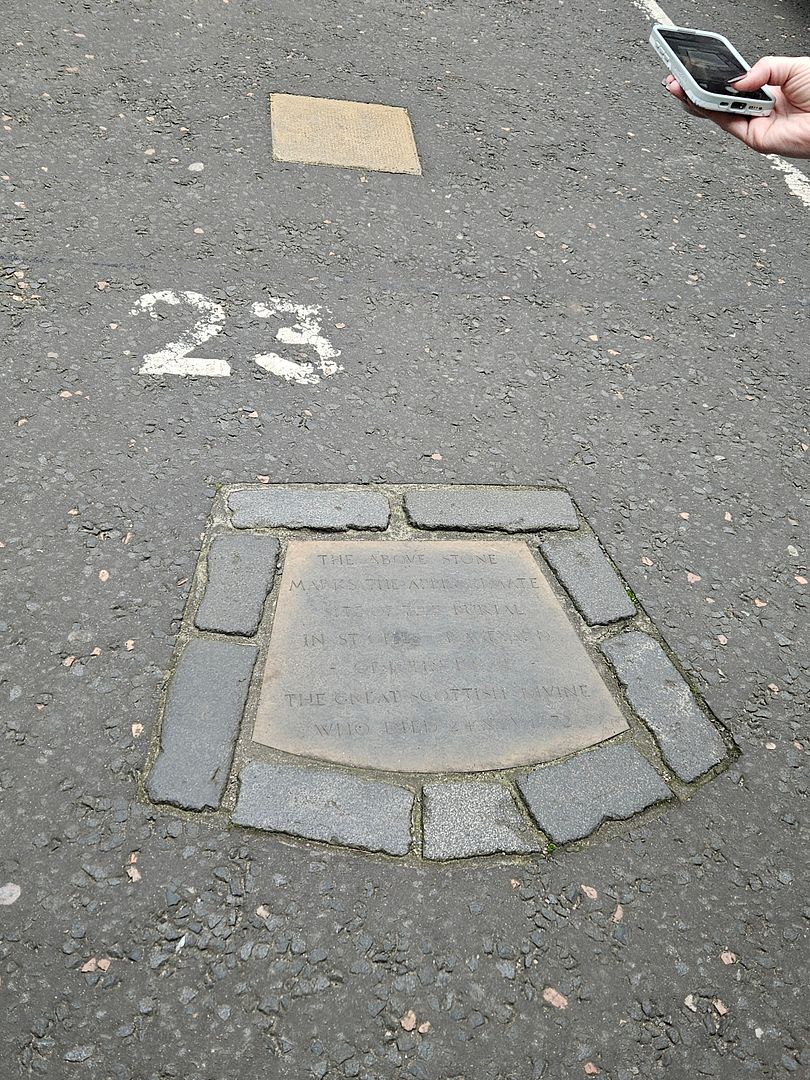
Back outside we were on the search for parking space #23.

Here at space number 23 in the car park is approximately where John Knox is buried!

The Scottish Reformation leader’s grave was paved over and is now a parking lot. The stone inscription reads;

‘The Above Stone Marks

the Approximate

Site of the Burial

In St. Giles Graveyard

Of John Knox

The Great Scottish Divine

Who Died 24th November 1572′

It’s said that Knox wanted to be buried within 20 feet of Saint Giles, so he was laid to rest right outside the church in what was once a proper graveyard. However, the site has since been tarmacked over and is now a functioning parking lot. A plaque in parking space number 23 marks the approximate location of his now-lost grave.

Knox was a 16th-century preacher who commanded that his people be able to read the Bible in their own language. He was a key figure in turning a nation of Catholics into one of Protestants. His fire and brimstone sermons and teachings often put him at odds with the Catholic Mary, Queen of Scots.

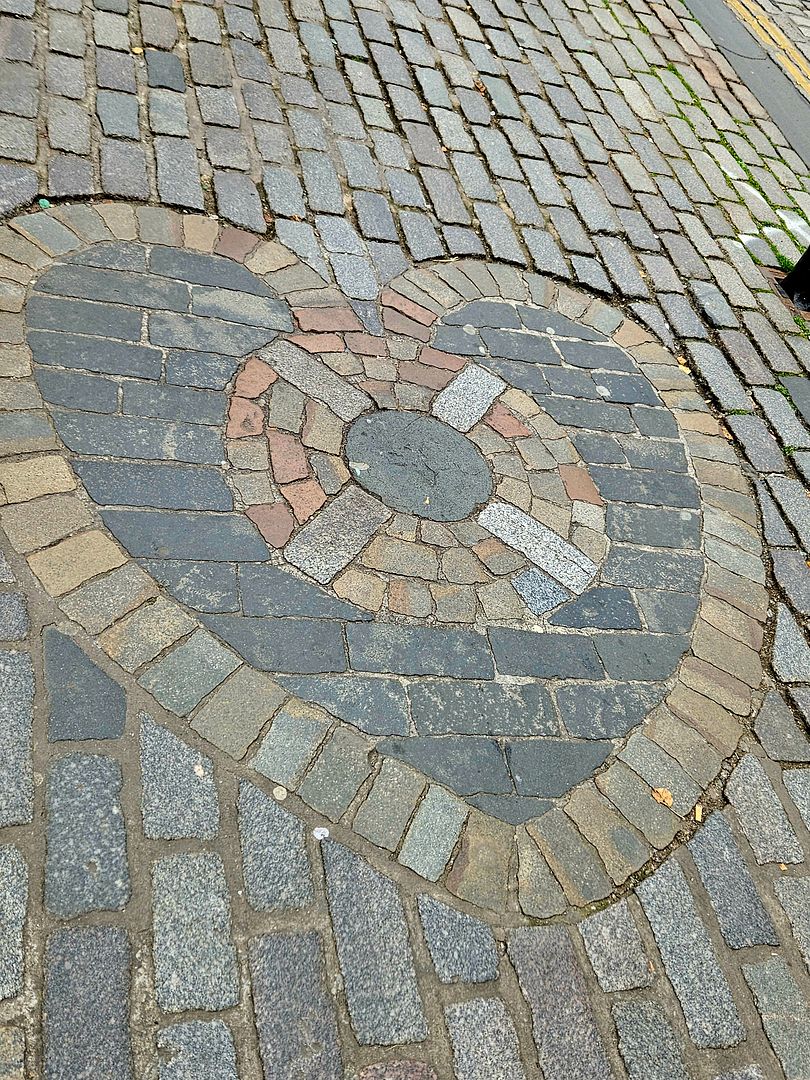
On our walk to Victoria street we came across this Famous Heart.

The Heart of Midlothian is both a historic mosaic dating to the Middle Ages and a landmark that denotes the location of Edinburgh’s Old Tolbooth administrative building. Locals often spit on the sign as a good luck charm, a tradition that has morphed from its original meaning of disdain for the many executions that took place at this site over the years. The Heart of Midlothian F.C., the local soccer club, takes its name from the mosaic and the Old Tolbooth.

The Heart was installed as part of a replacement building to the Old Tolbooth in 1561, and after this second building was demolished in 1817, the Heart was all that remained. It has been an inspiration for the writings of Sir Walter Scott and has become an iconic part of the city’s culture and historic identity – even if many now don’t remember its true origins.

FYI: Tolbooth is a Scottish term that refers to a townhall, jail or guildhall where tolls are collected.

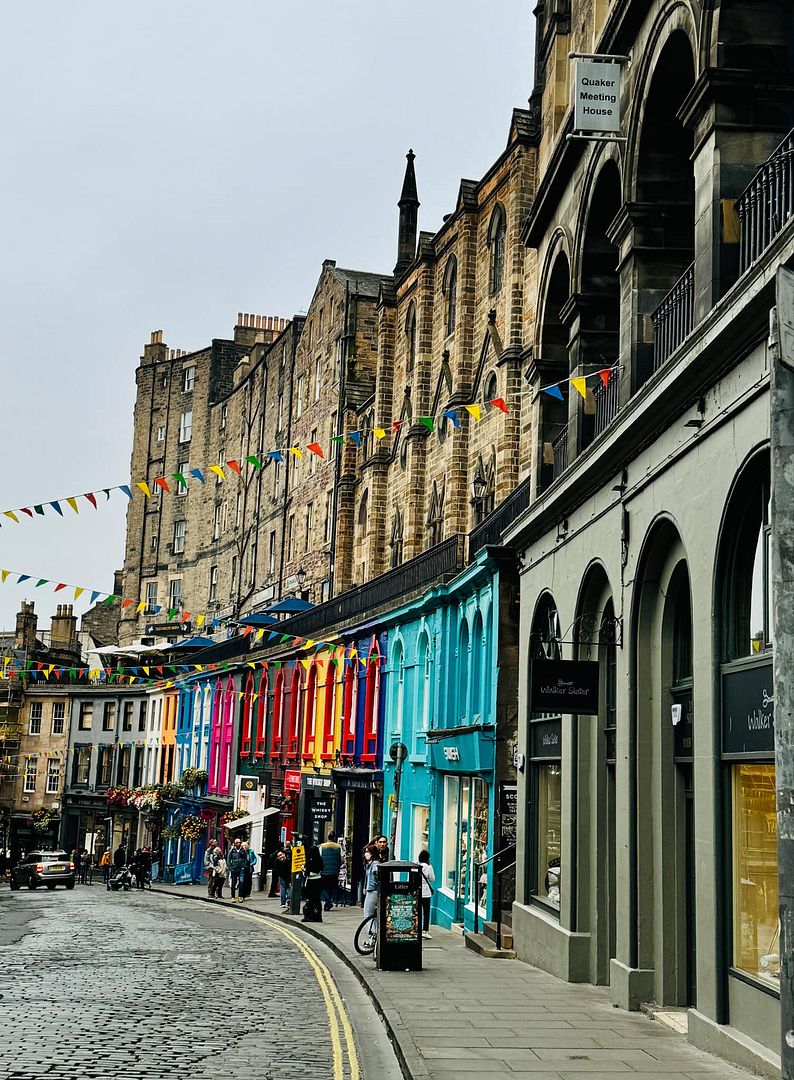
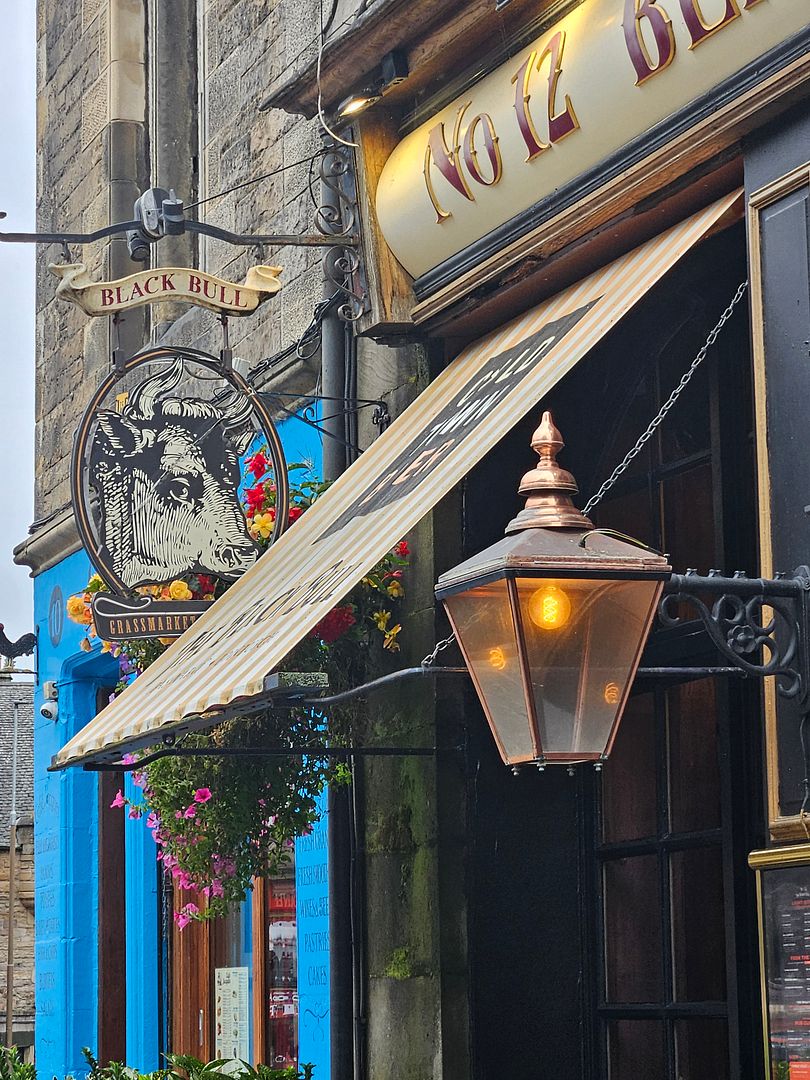
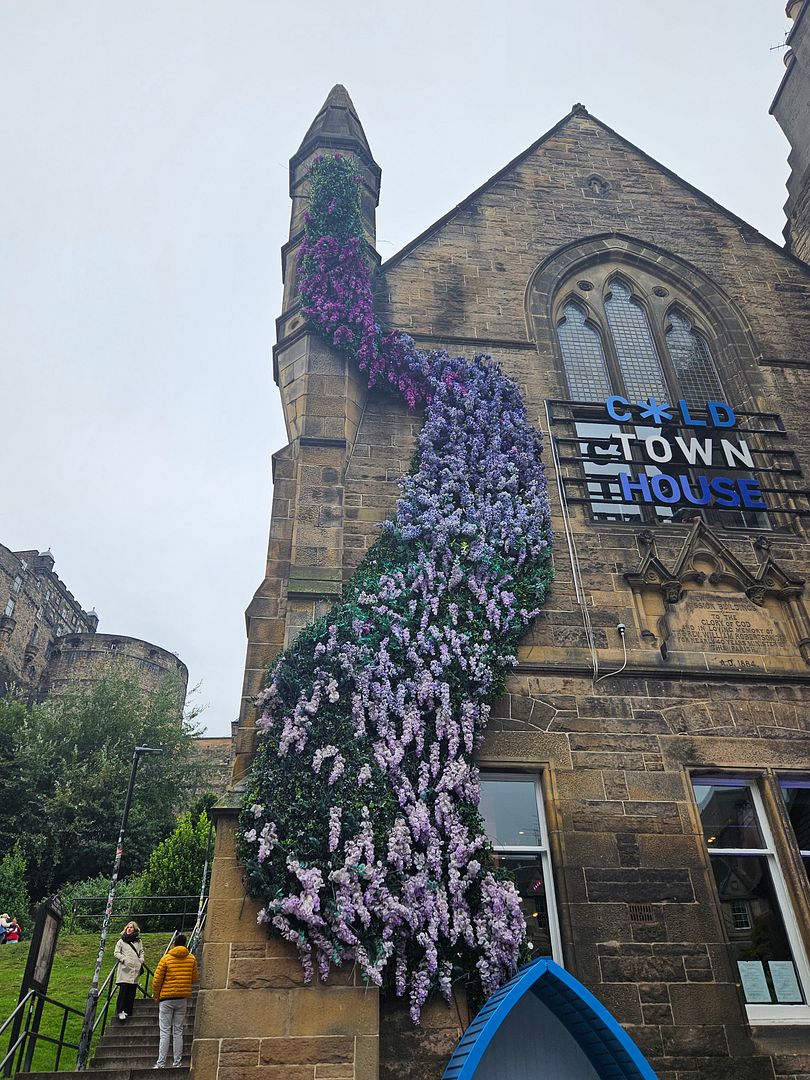
From here we walked down Victoria Street to Grassmarket.

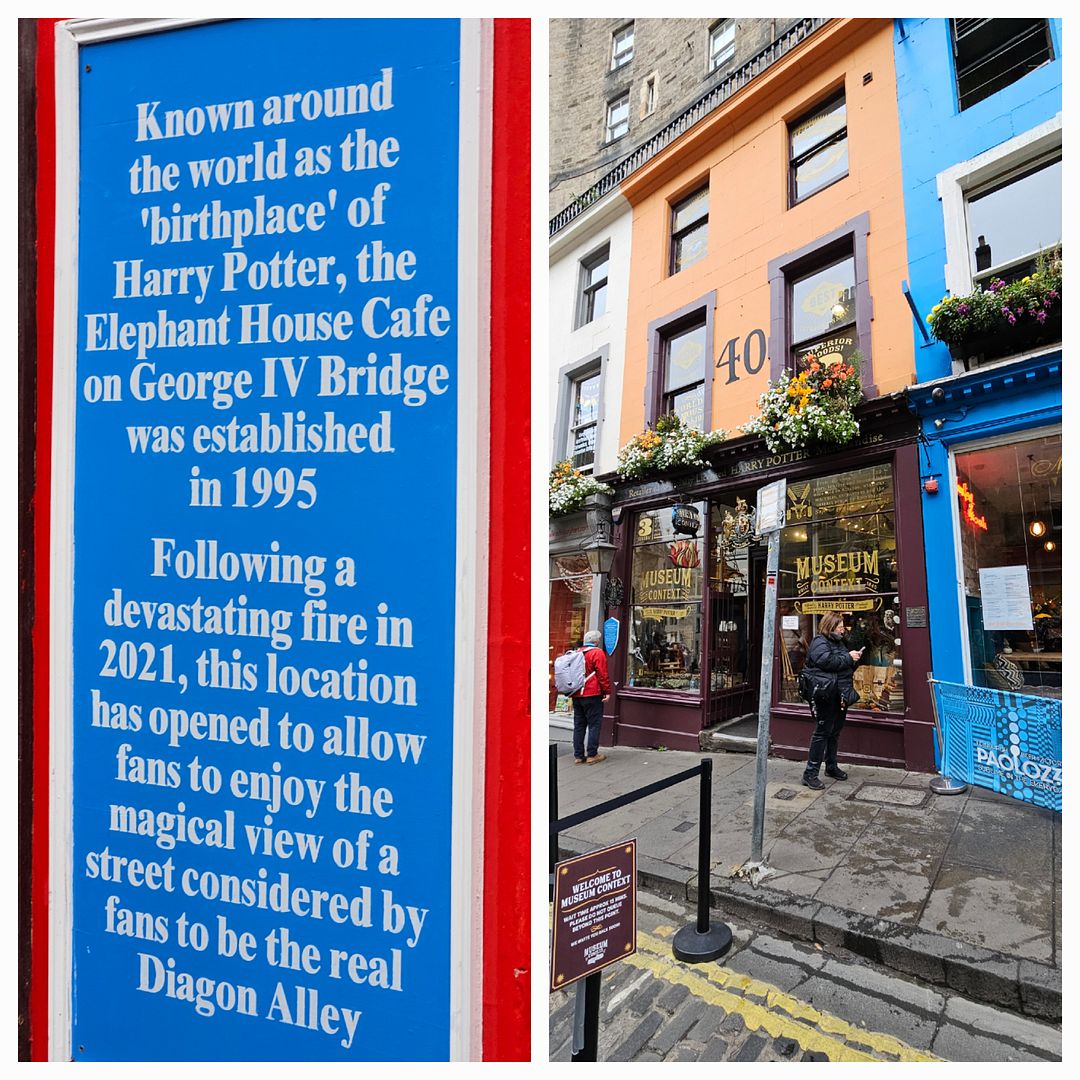
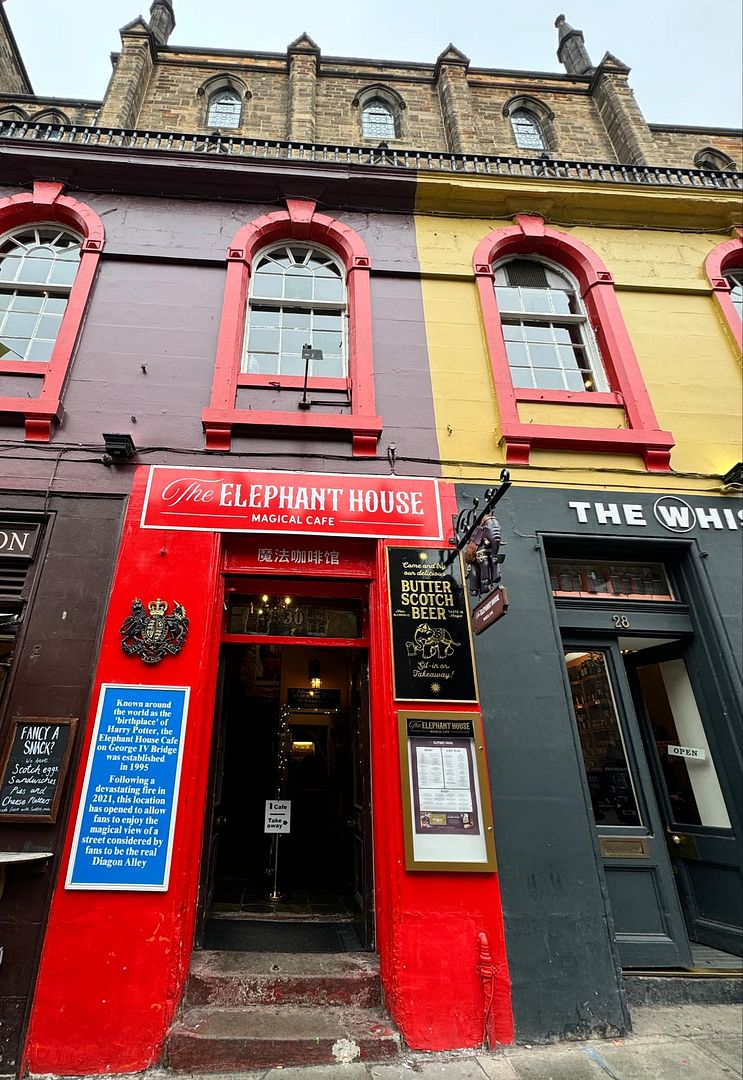
Victoria Street is said to be an inspiration for Diagon Alley in the Harry Potter books but J.K. Rowling denies that it is. Nonetheless fans flock here and stand in line to get in the museum on this colorful street.

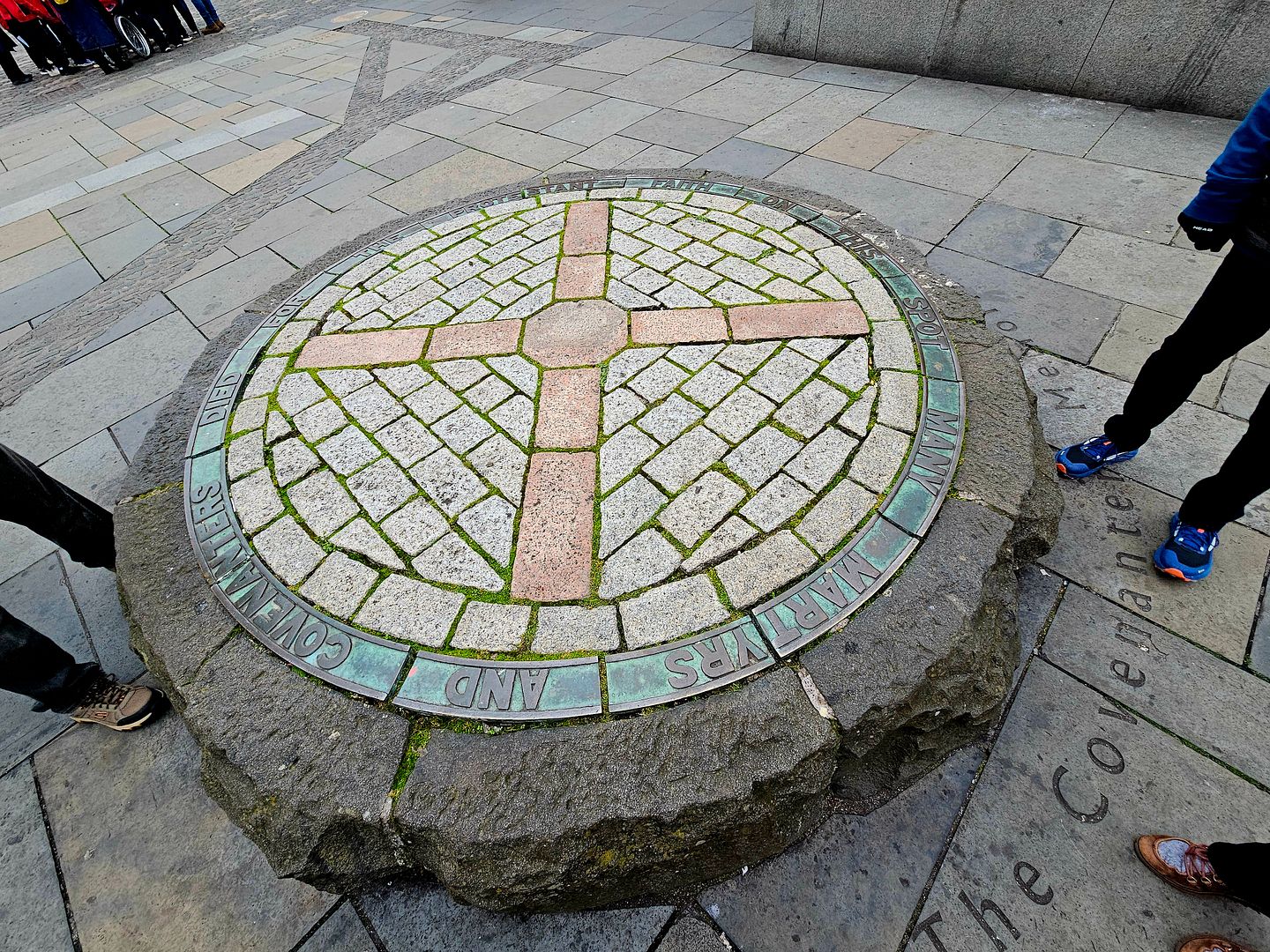
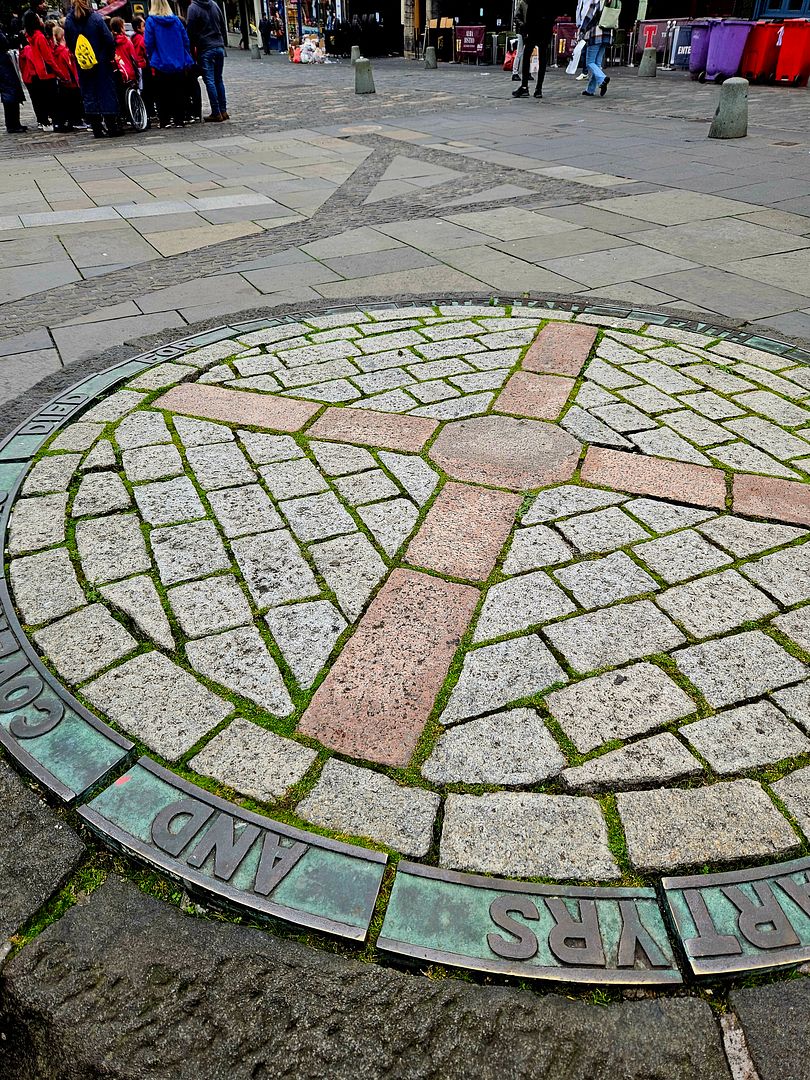
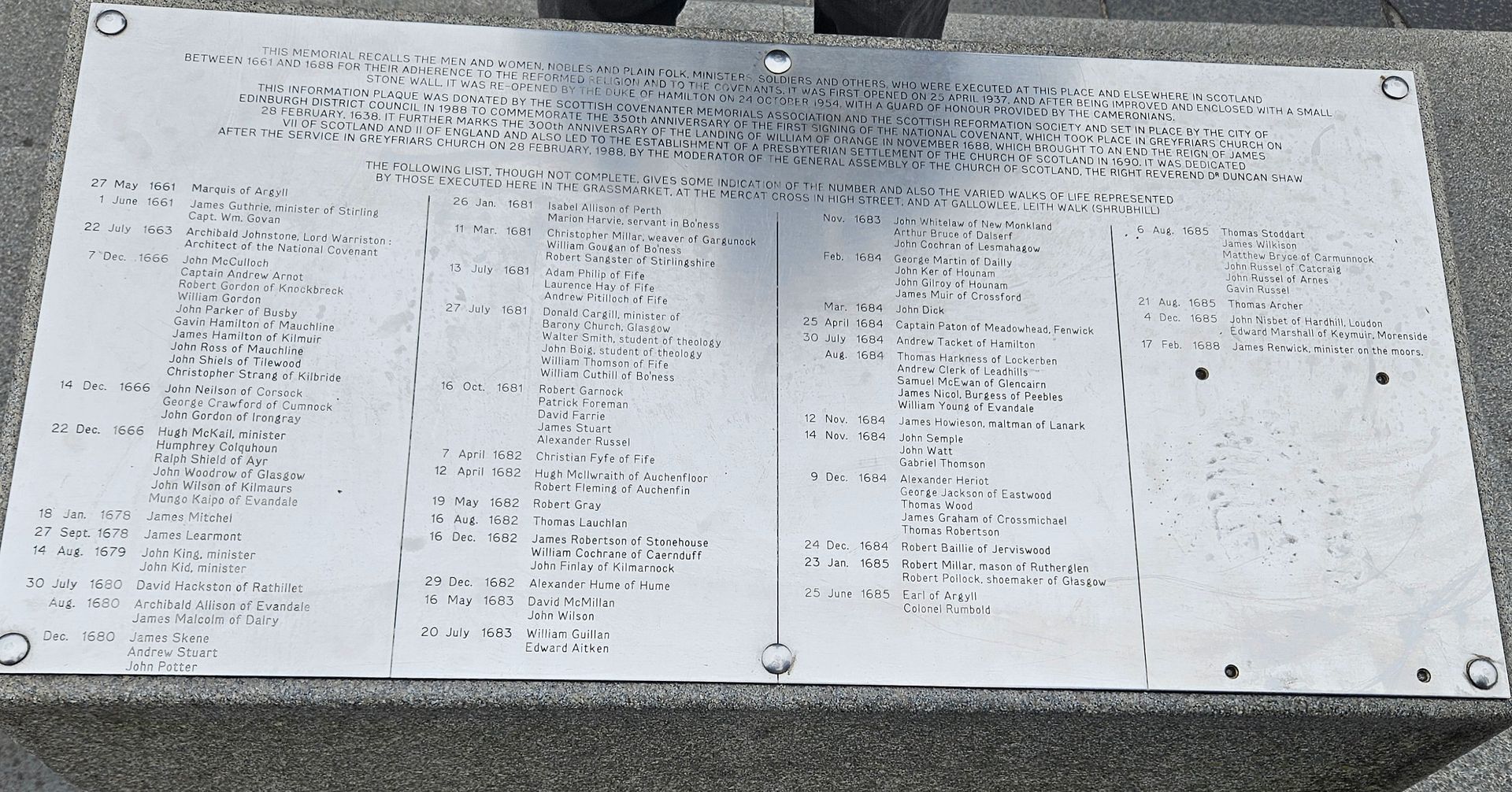
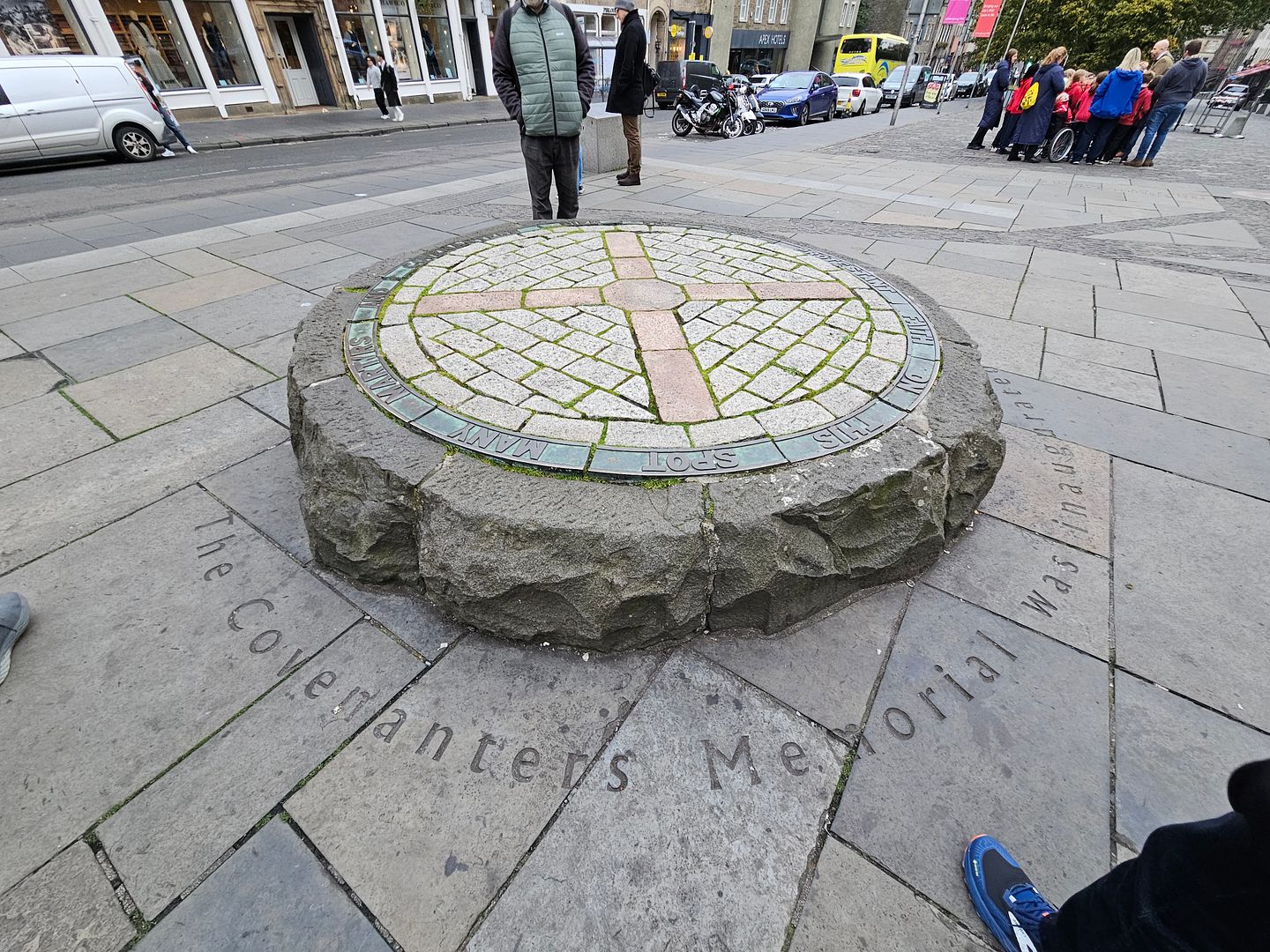
This is where the ‘meat’ of our Reformation Tour began as we were told that this was the route that martyrs would take from their sentencing in the courts above then down Victoria Street to the public gallows. Once we reached Grassmarket we stood around this monument to Martyrs and Covenanters who lost their lives at this spot for their faith.

The Grassmarket is an wide open street on the south side of Edinburgh’s Old Town. The city had the public gallows there, and many Covenanters were executed during the Covenanting period.

A circular memorial, erected by public subscription in 1937, marks the site, and an adjoining plaque lists the names of the many Covenanters who were hanged there.

In a recent renovation of the locality, a representation of the gallows’ shadow was made on the ground using different coloured stone, as seen in the picture to the left.

Our tour continued from here. We made stops at Greyfriars Kirkyard, The National Museum, The National Library and St. Giles Cathedral.

At this stage in January, many months later, I’m not sure of the order of those stops! Travel failure in not writing a journal while on our trip. I’ll put it down to the fact that our days were so full we didn’t have a lot of down time in the evenings.

Hello to February. I was hoping to have our Scotland Journal Posts done by the end of January but it will take a few days into February to accomplish that.

Scotland Travel Journal ~Edinburgh 3

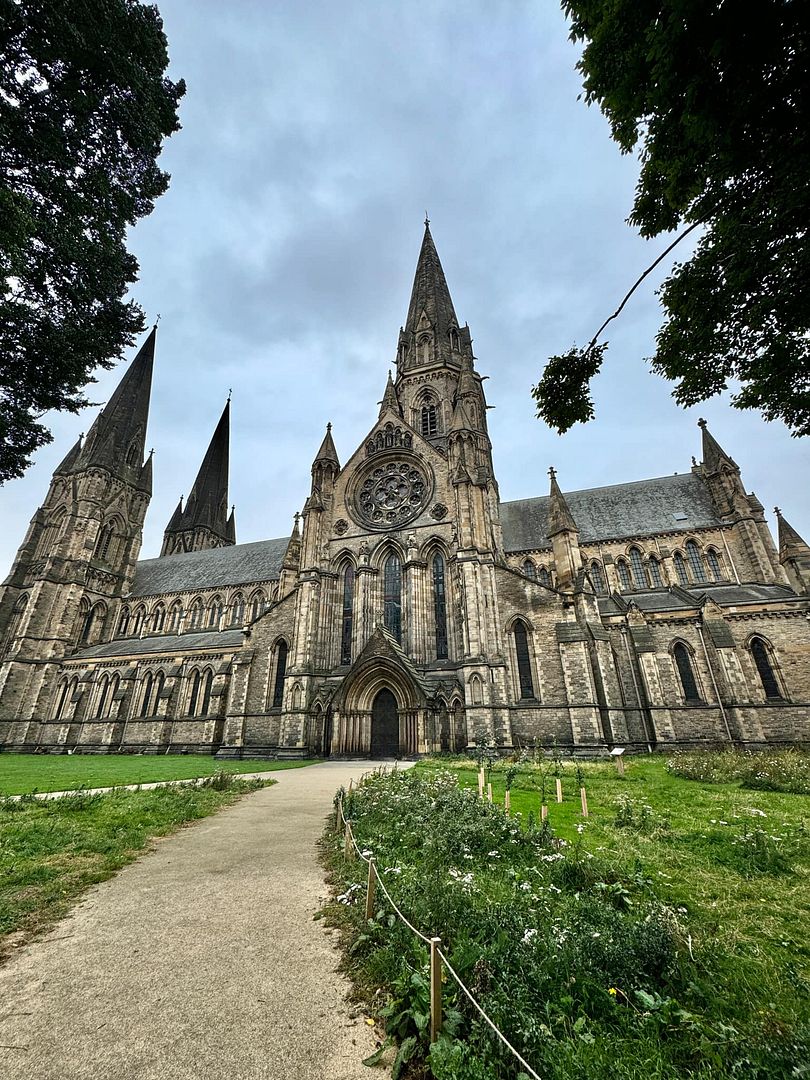
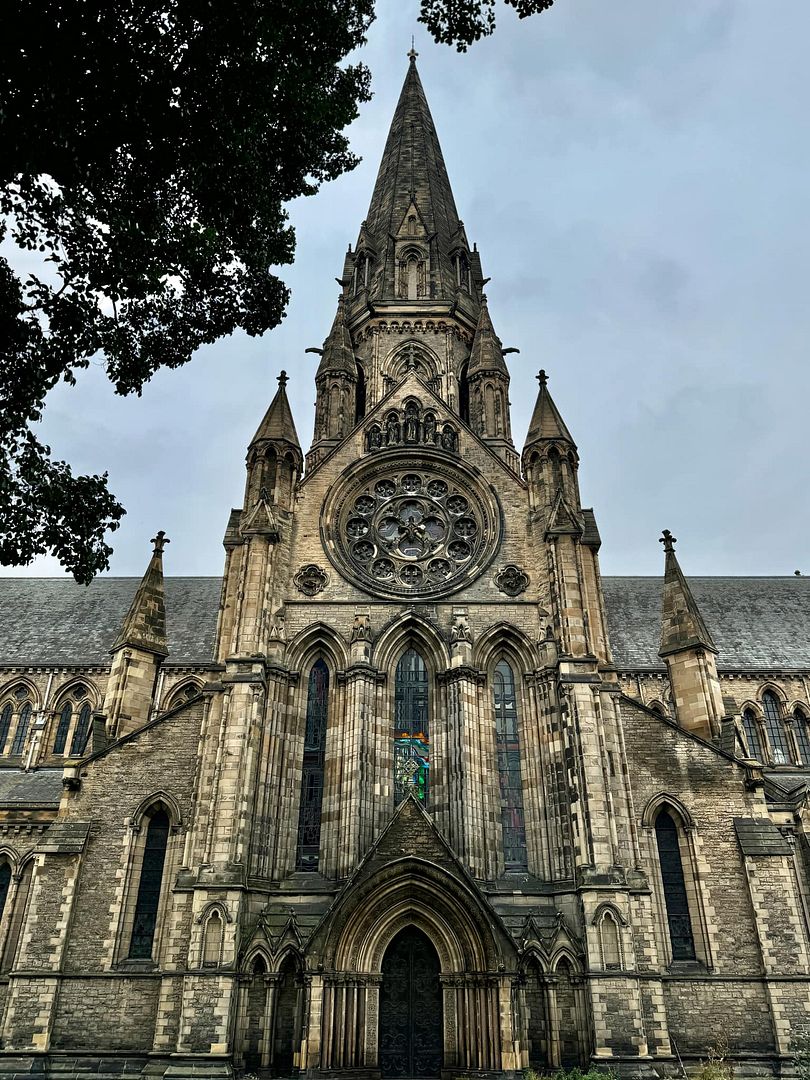
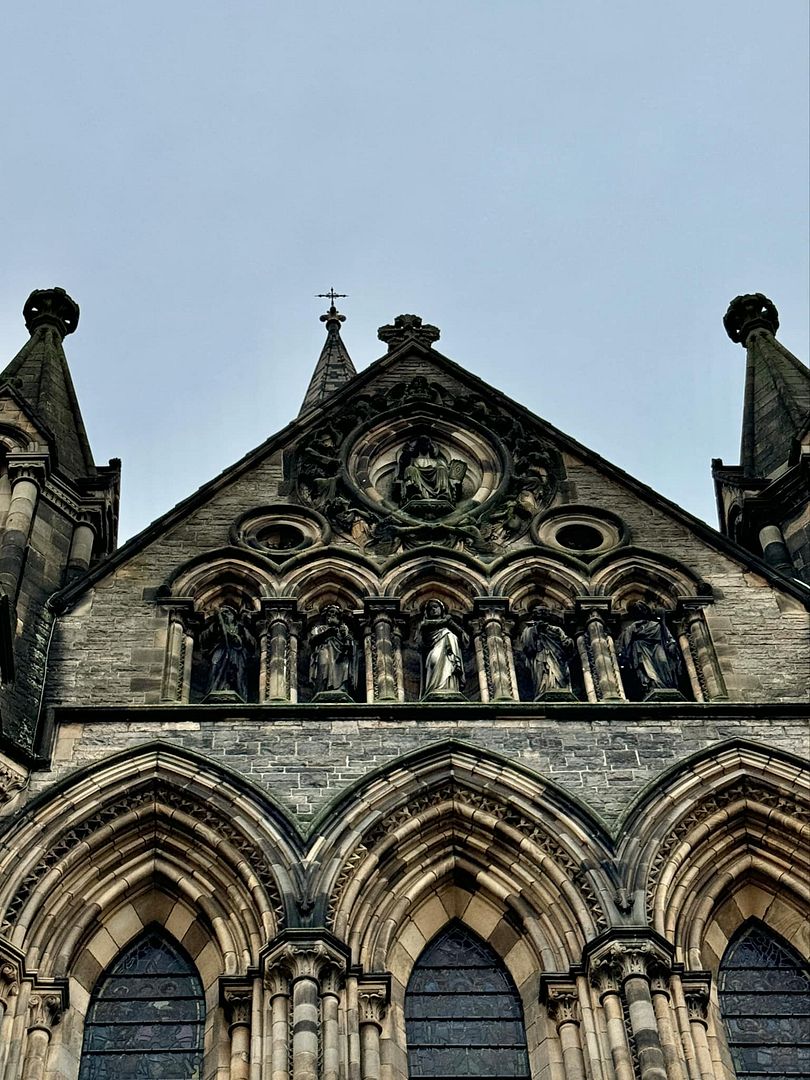
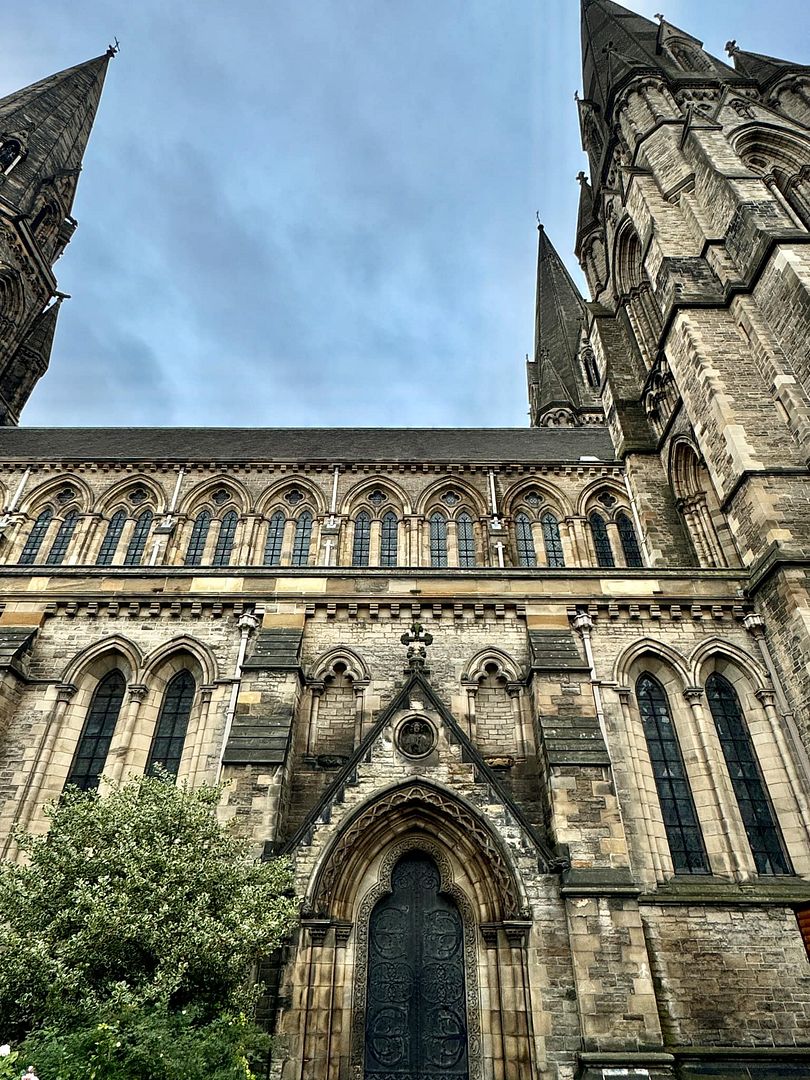
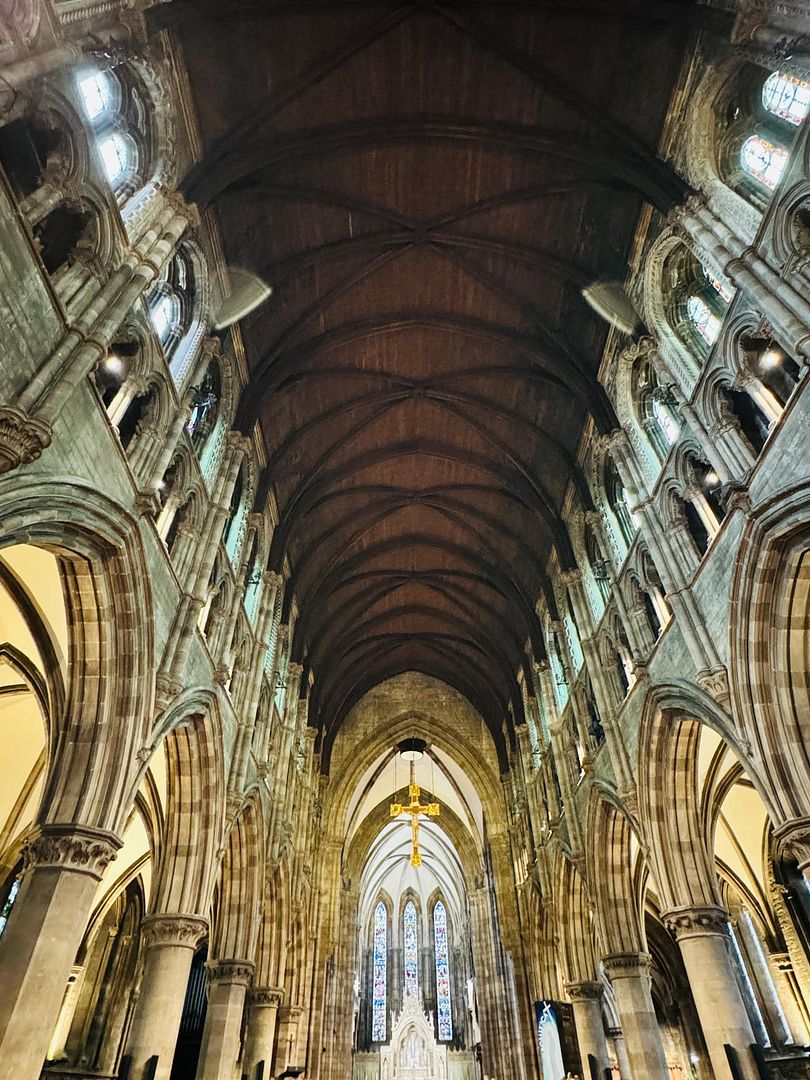
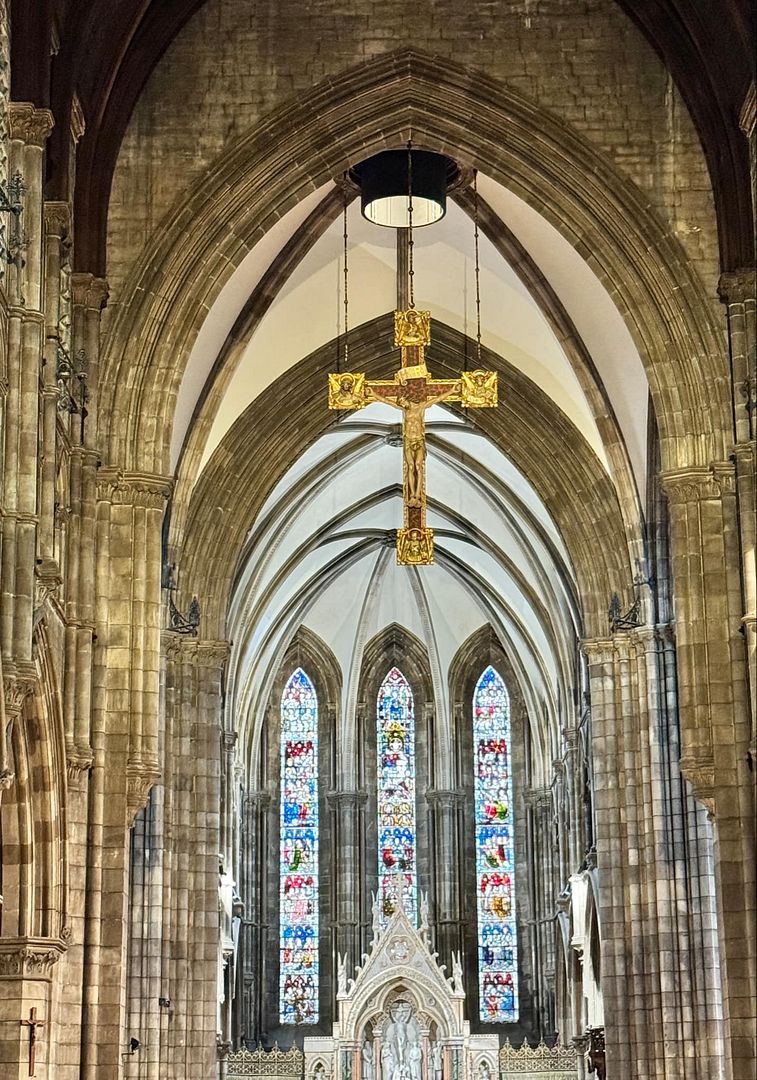
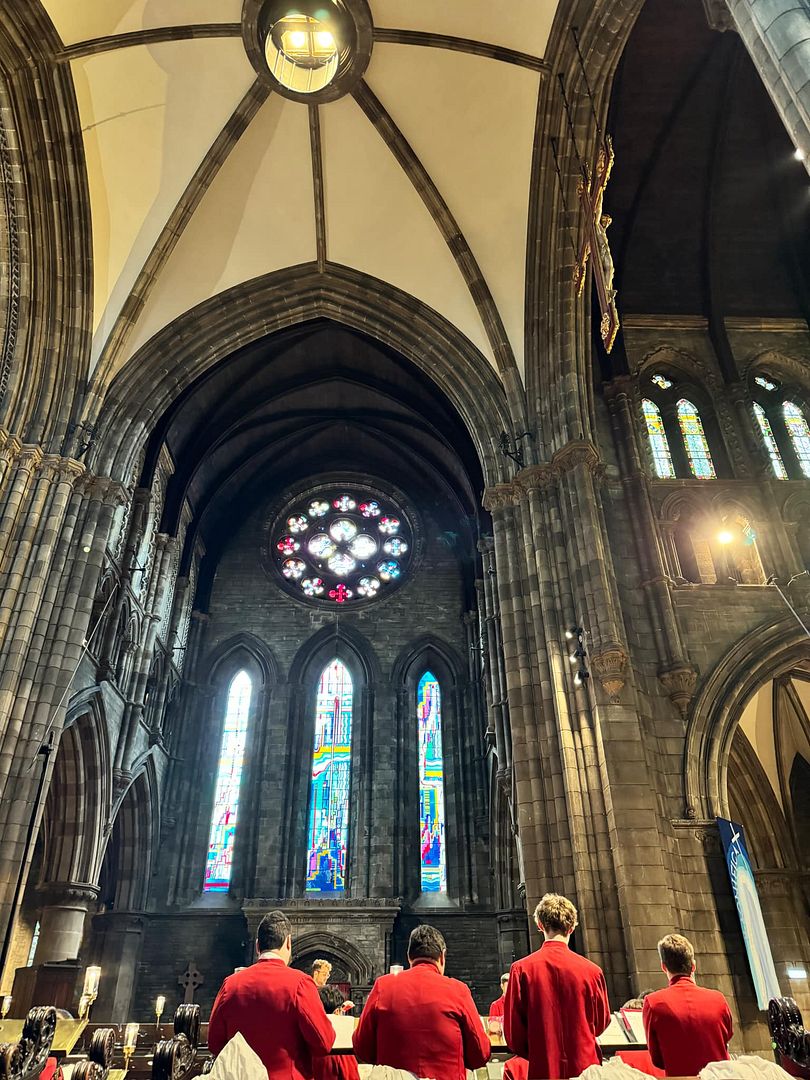
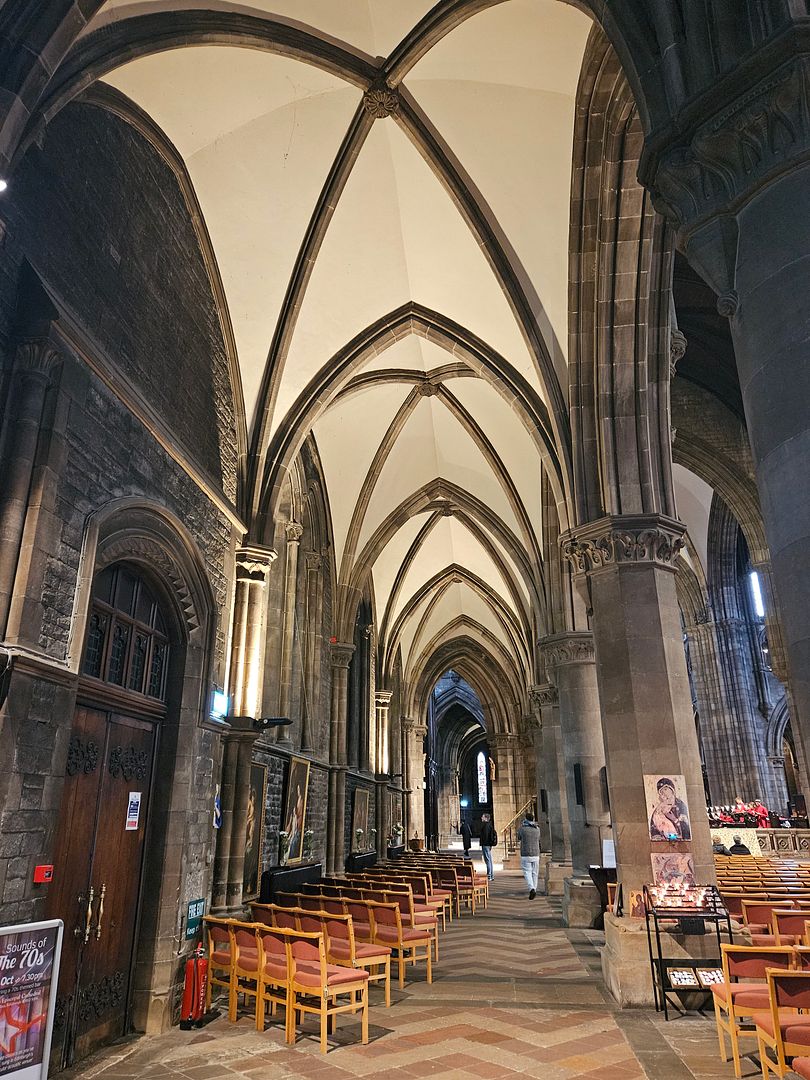
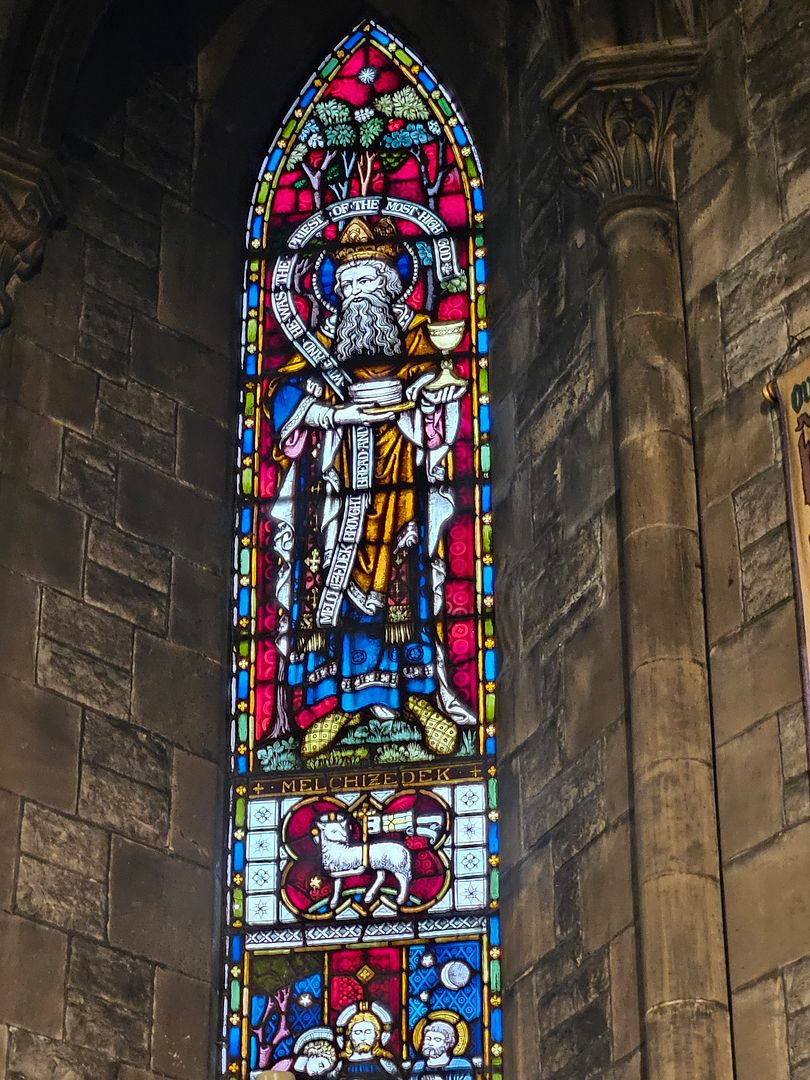
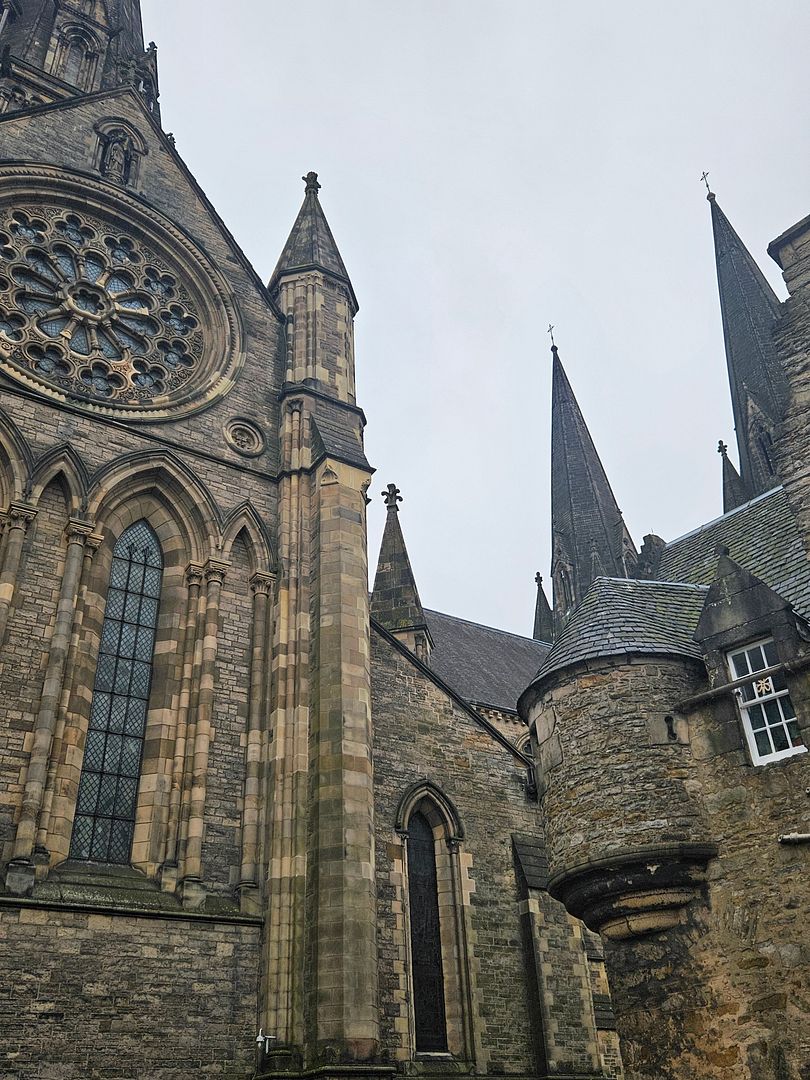
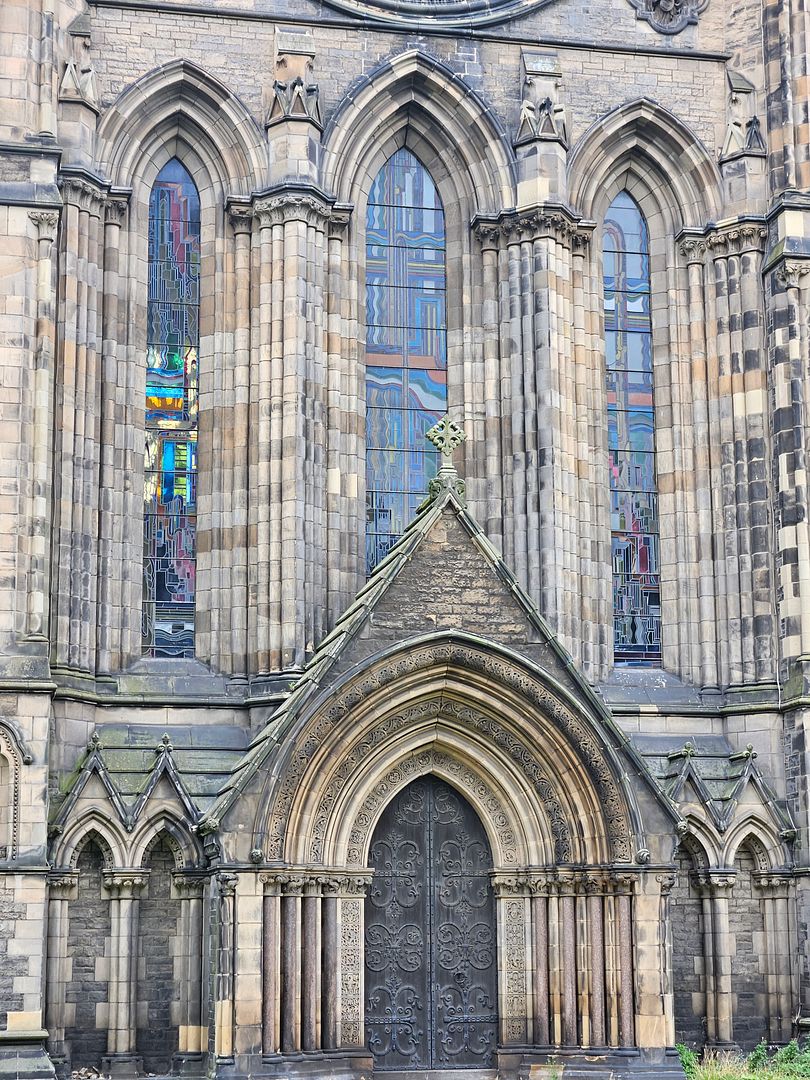
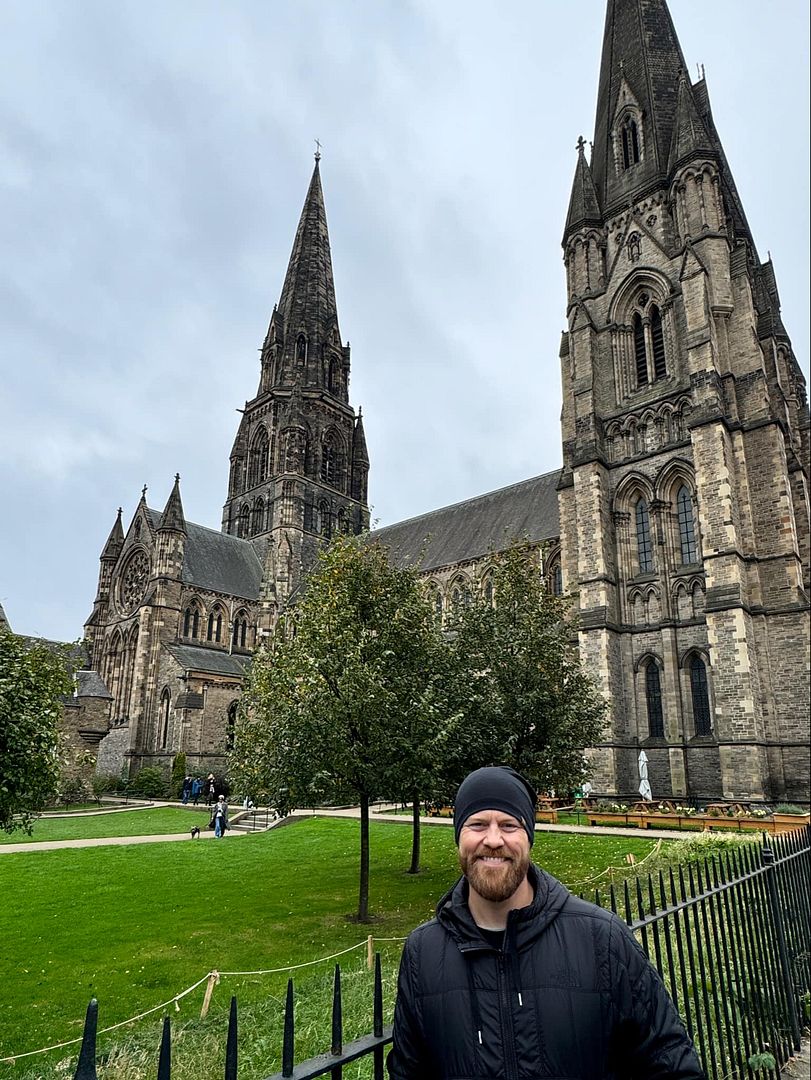
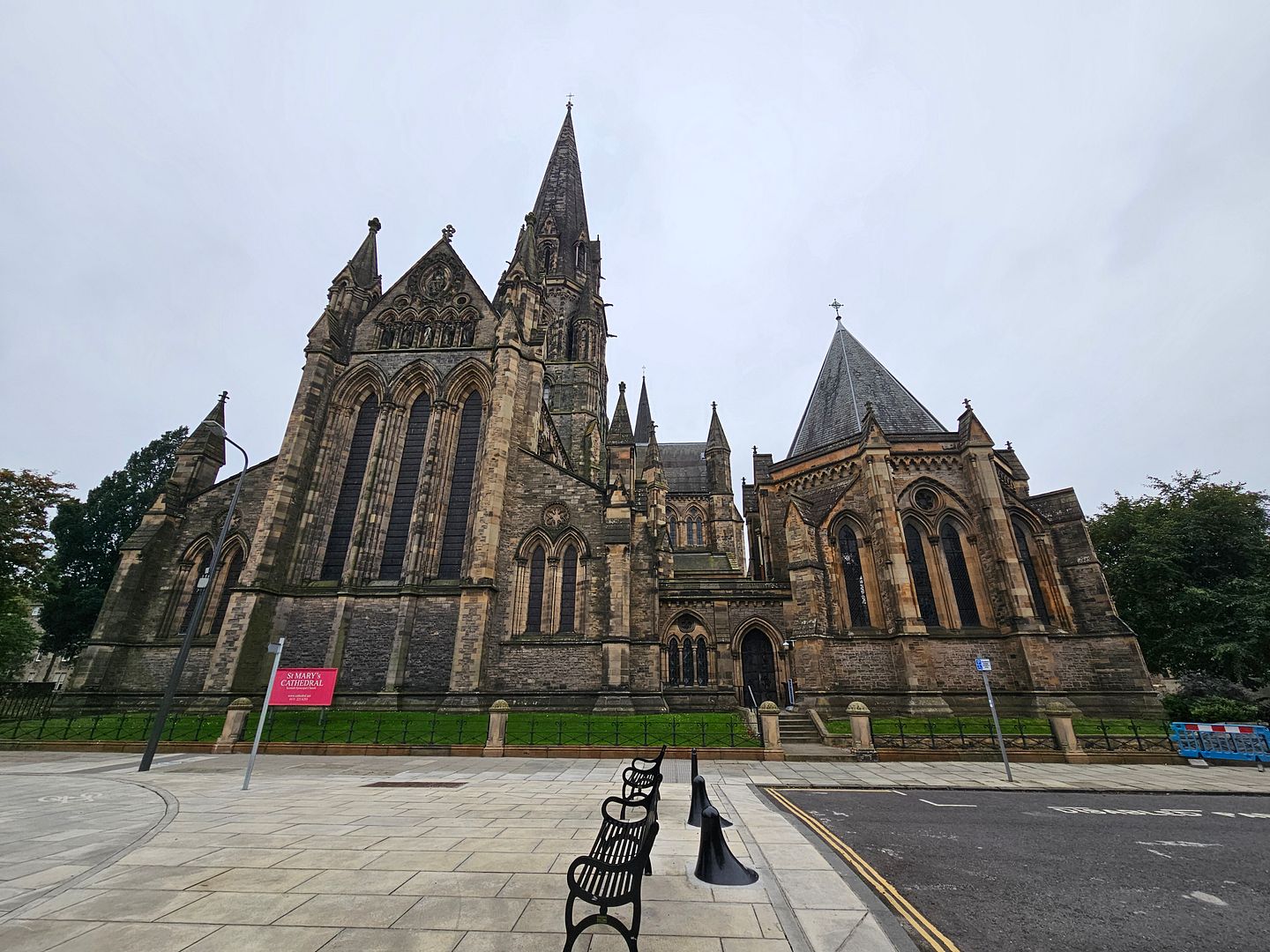
Continuing our sight seeing experiences in Edinburgh on Sunday September 22nd we traveled by Uber from the Grassmarket area to St. Mary’s Episcopal Cathedral for evensong. On this Sunday evensong was from 3:30 to 4:30. We arrived a little early so we had time to take some photos outside and inside before the service began.

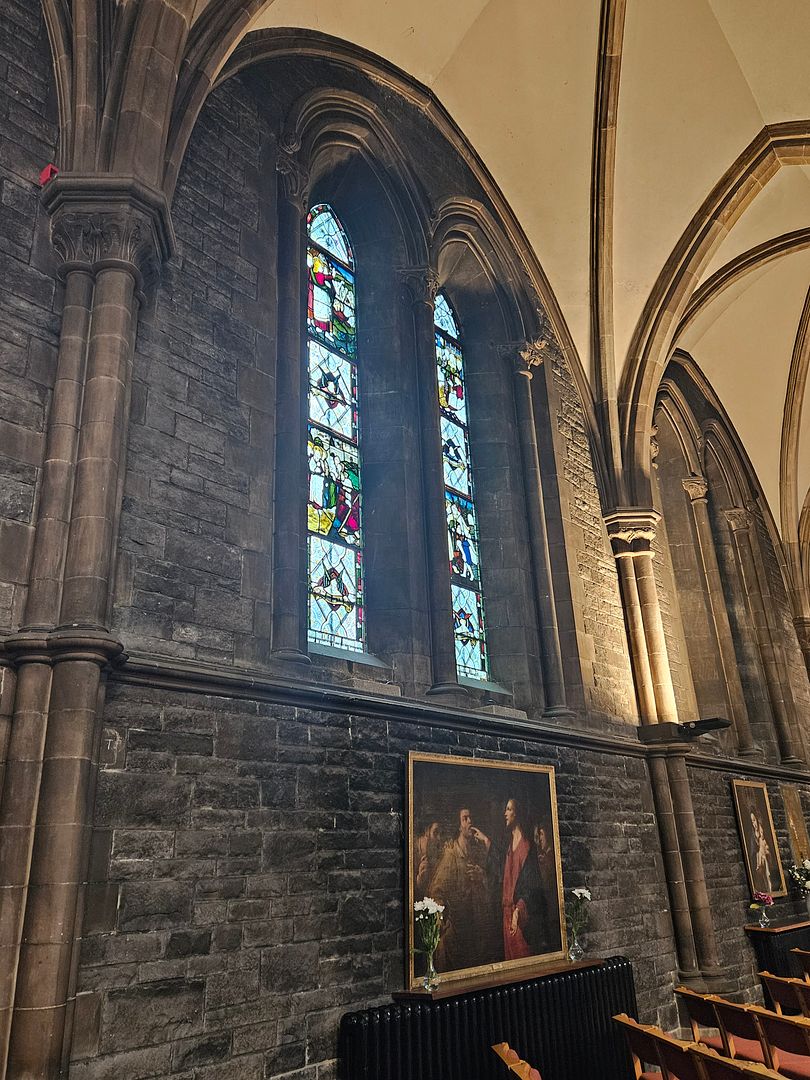
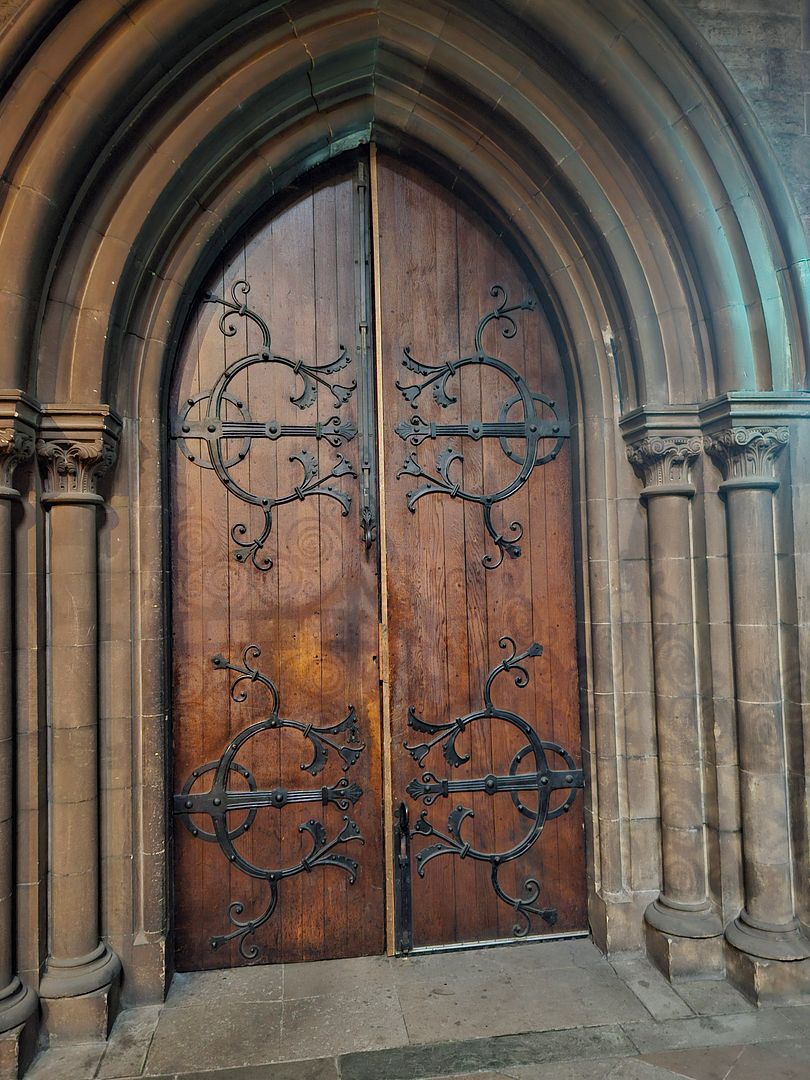
St Mary’s Cathedral is the Mother Church of the Diocese of Edinburgh, the largest Cathedral in Scotland, and the only one to maintain the tradition of daily Choral worship. With its three spires dominating Edinburgh’s western skyline, St Mary’s is a renowned masterpiece of Victorian Gothic architecture. Designed by Sir George Gilbert Scott, the Cathedral was consecrated in 1879, and has been open daily for public and private prayer ever since.

Some History of the Cathedral can be found here.

We weren’t able to visit the interior of the Song School but found this YouTube that shows the beautiful panels!

We appreciated the beautiful singing and the scripture readings during the Evensong but to be honest and transparent some of the prayers given at the end of the service made our heads snap up. Bottom line they didn’t line up with Biblical accuracy and were bent toward human speculation. It put our Berean mindset to the test.

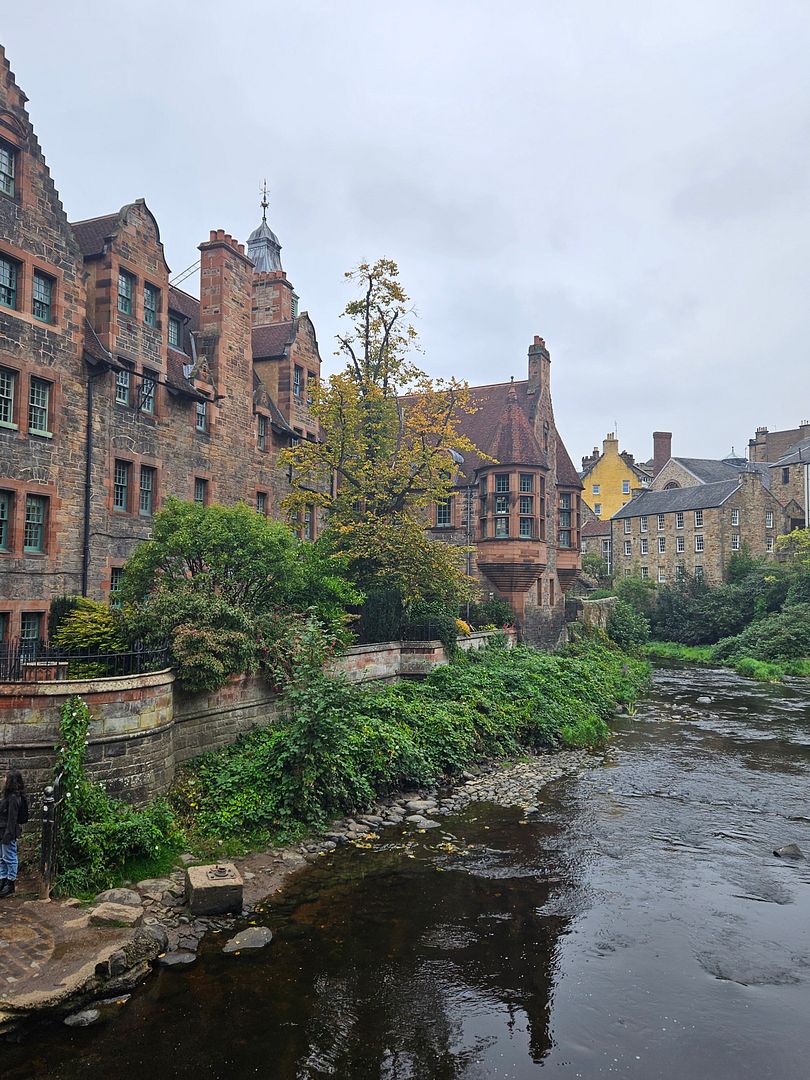
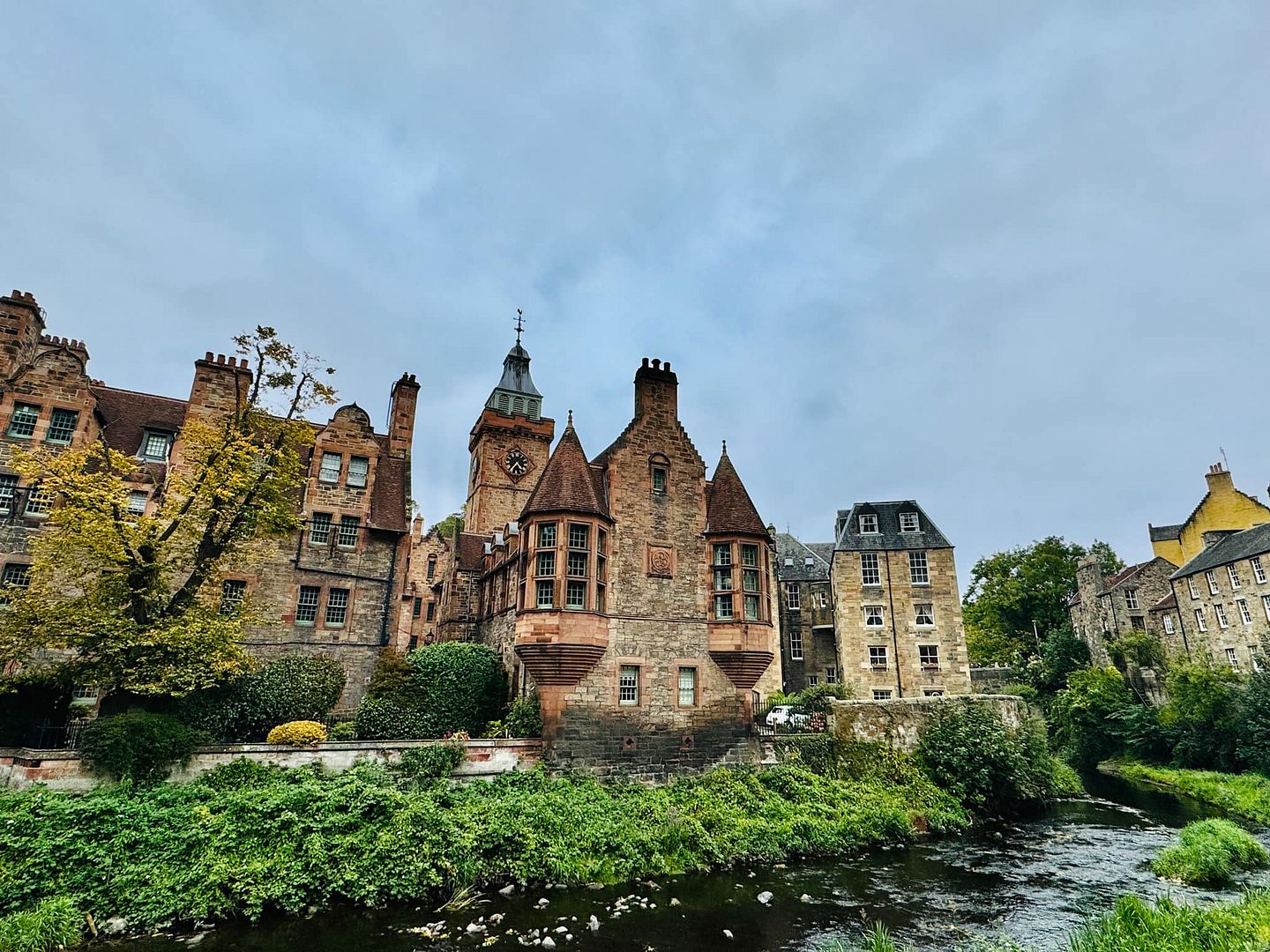
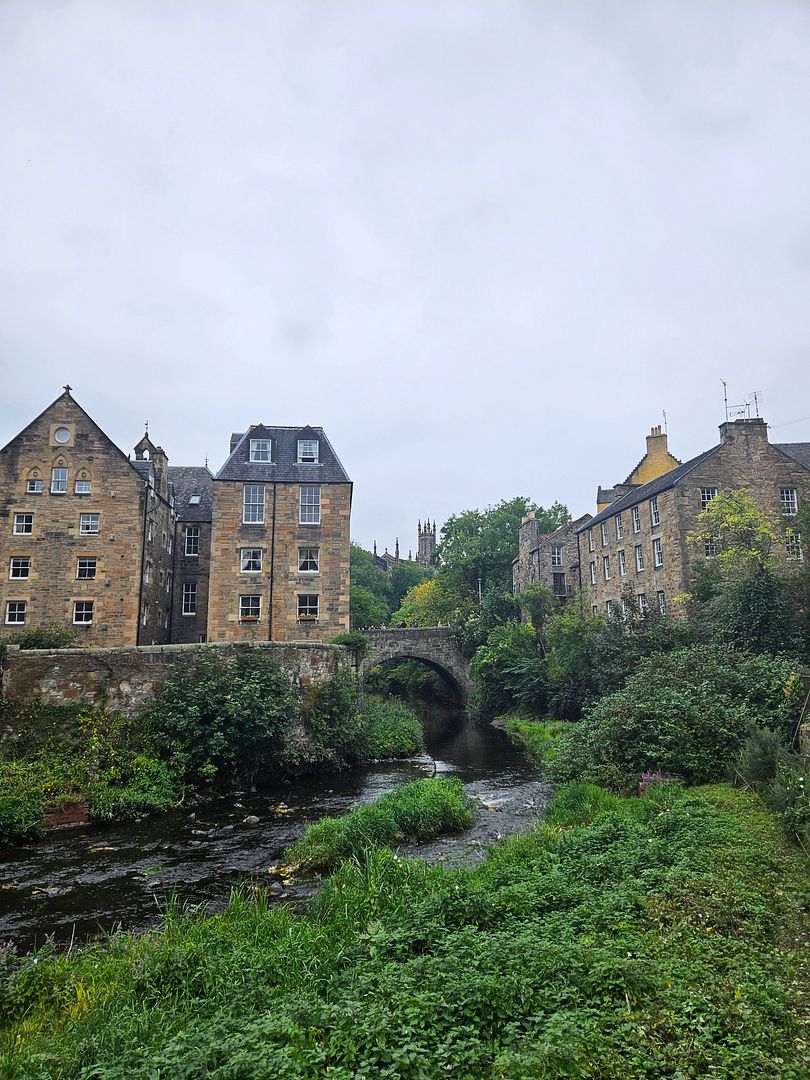
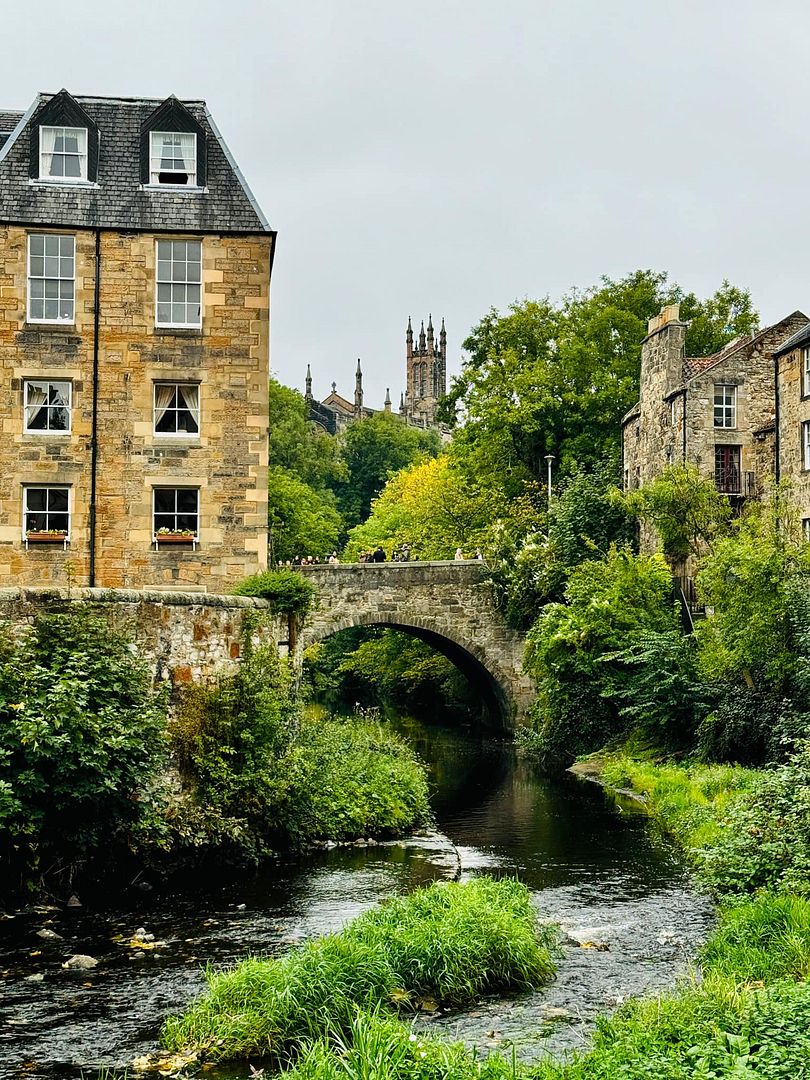
When Evensong was over we decided to walk a short distance to see picturesque Dean Village.


Dean village is a picturesque quiet village in Edinburgh. A beautiful hamlet!

We again decided on an Uber to get us back to our apartment to see how Greg was doing and if he was up to walk to dinner. He was ready for a meal so we walked down Thistle Lane looking for a likely spot for dinner. Again we didn’t have reservations. We walked by a Thai restaurant that looked very popular. After a short distance further we decided to go back to the Thai Restaurant and see if we could be seated. The owners took pity on us and found a spot for us explaining they needed the table soon for a reservation. We assured them we didn’t need a lot of time to eat. The food and service was excellent and we were pleased. We were done in good time and went back to our apartment with our ‘doggie bags’. We highly recommend Dusit Thai Restaurant.

Correct me if I have my day off for our Thai meal being on Sunday and not Monday, Laura or Josh. 🙂

Our Sunday was complete. I will share Josh and Laura’s photo travelogue of their time at Edinburgh Castle next. Monday would be our last full day in Edinburgh.


Scotland Travel Journal ~ Edinburgh 2

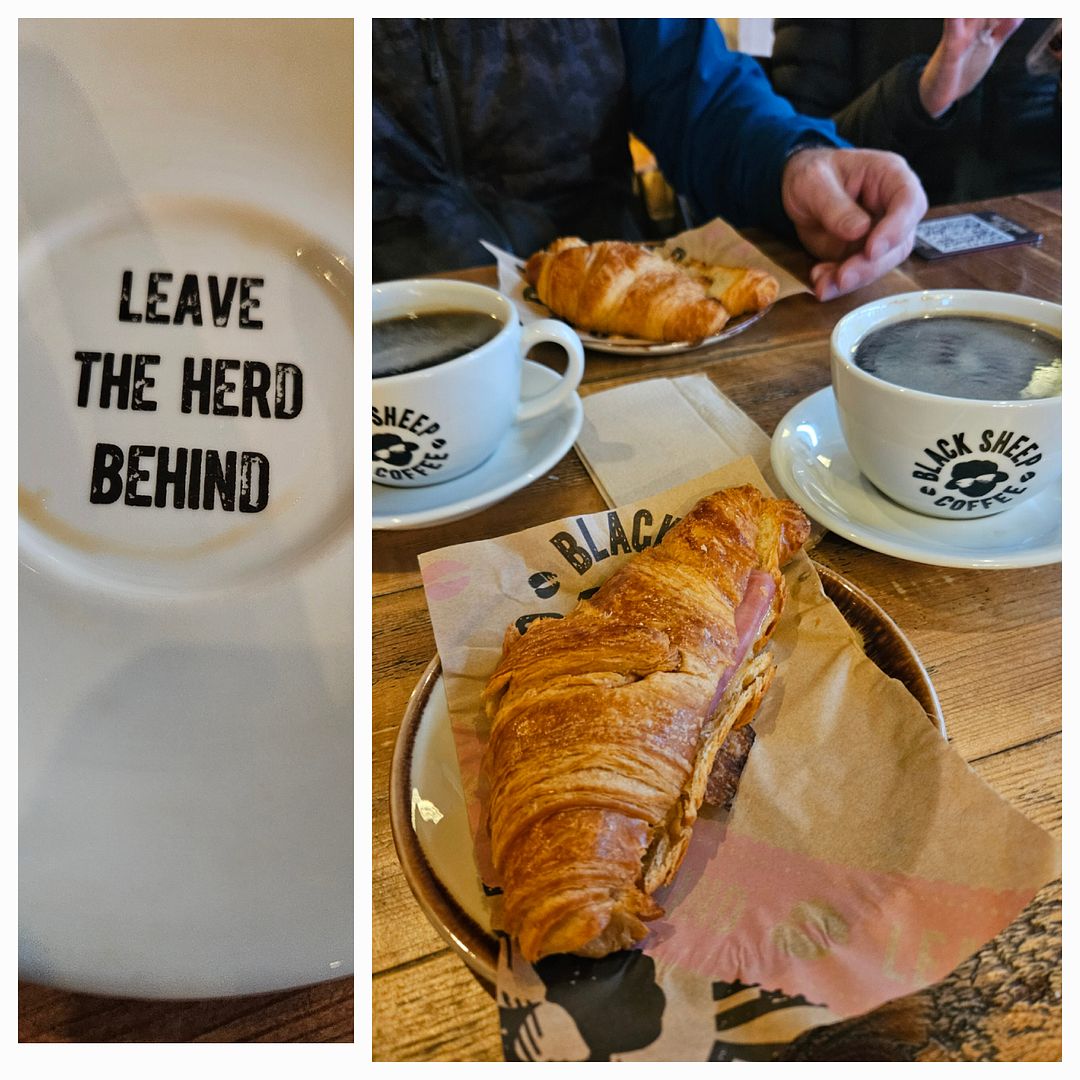
On Sunday September 22nd we would have an eye full of amazing sights to see but first, coffee!

The Black Sheep was just around the corner from our apartment and we started our mornings there.

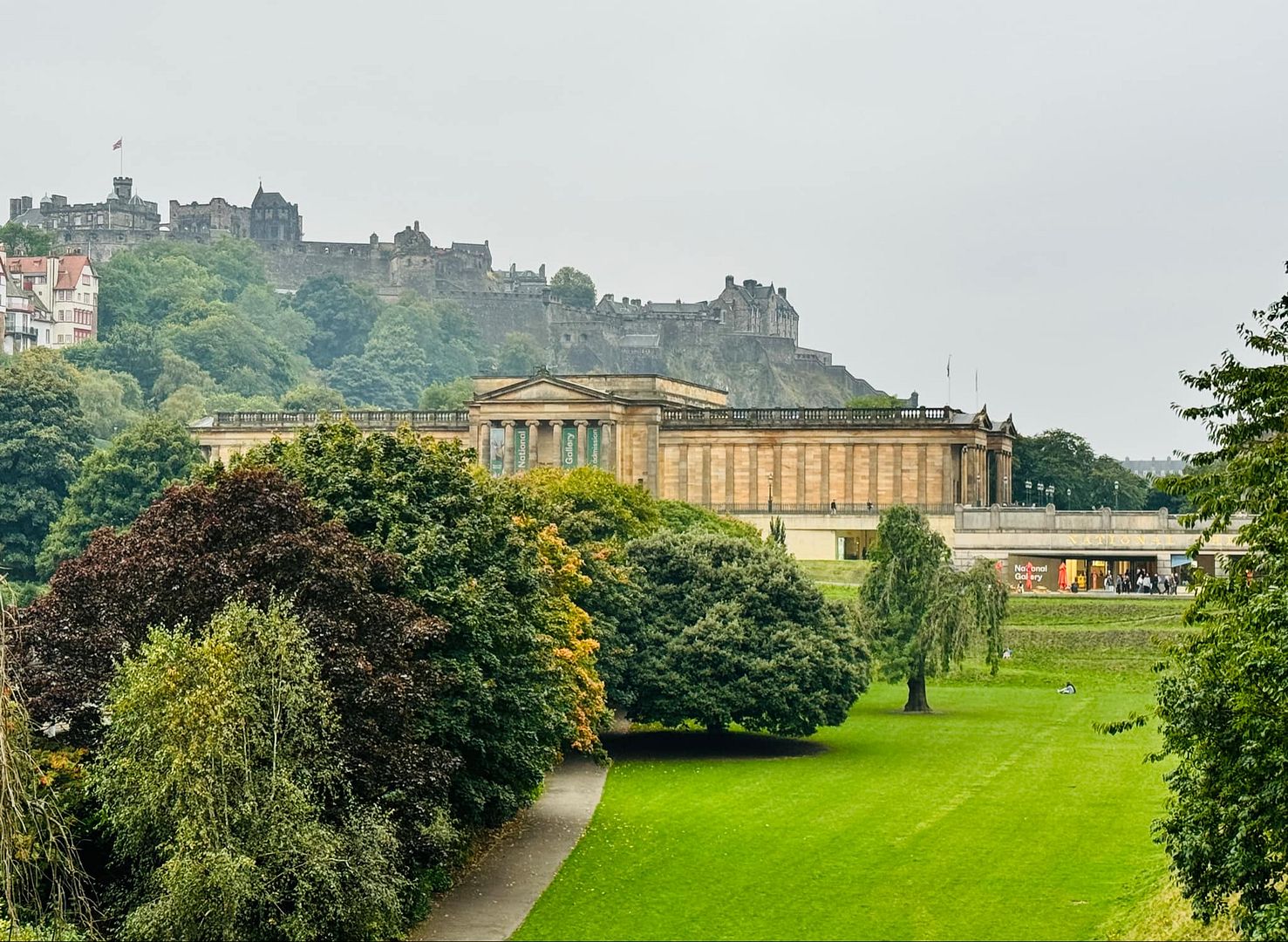
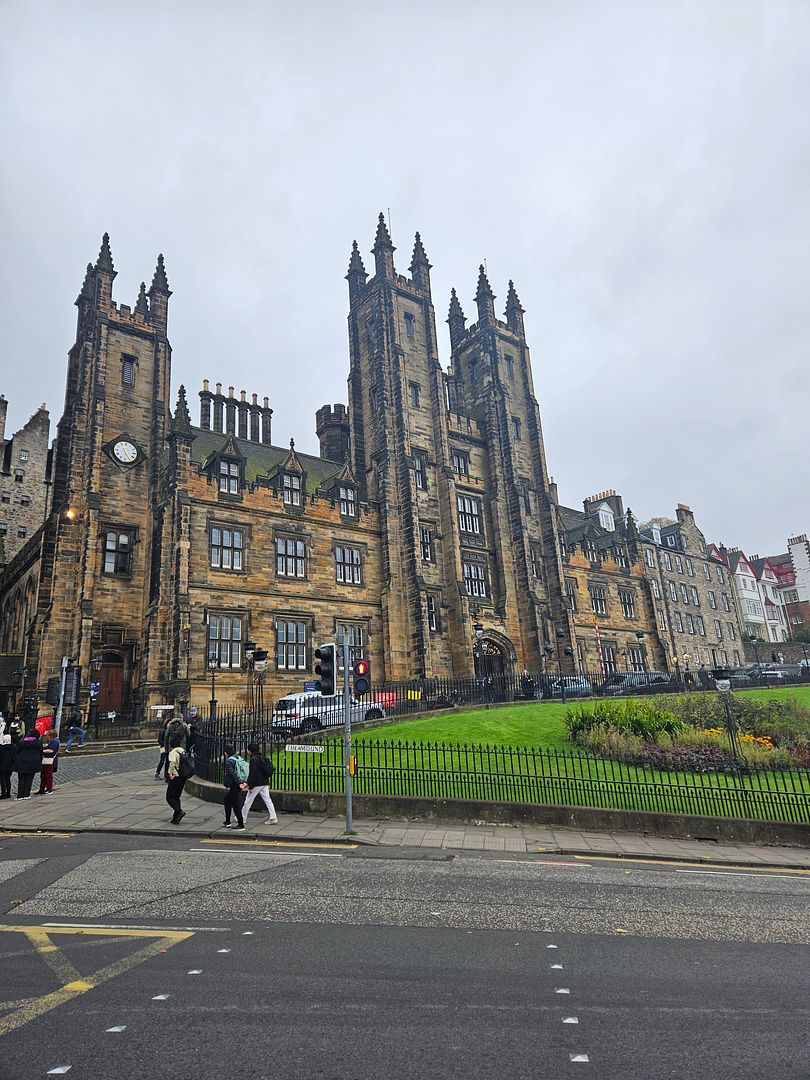
Edinburgh has so much history and so much to see. We saw as much as we could in our 2 full days there. I’ll have a few posts to cover everything. Our apartment was positioned well for getting around Edinburgh. We made our way across the Mound and up many stairs to reach the Royal Mile and Edinburgh Castle. The Mound is the elevated walkway above Princess Gardens that you can see in the distance. On the Mound you walk past the National Gallery of Scotland and the Royal Scottish Academy. It was another day of overcast weather with little or no sunshine.

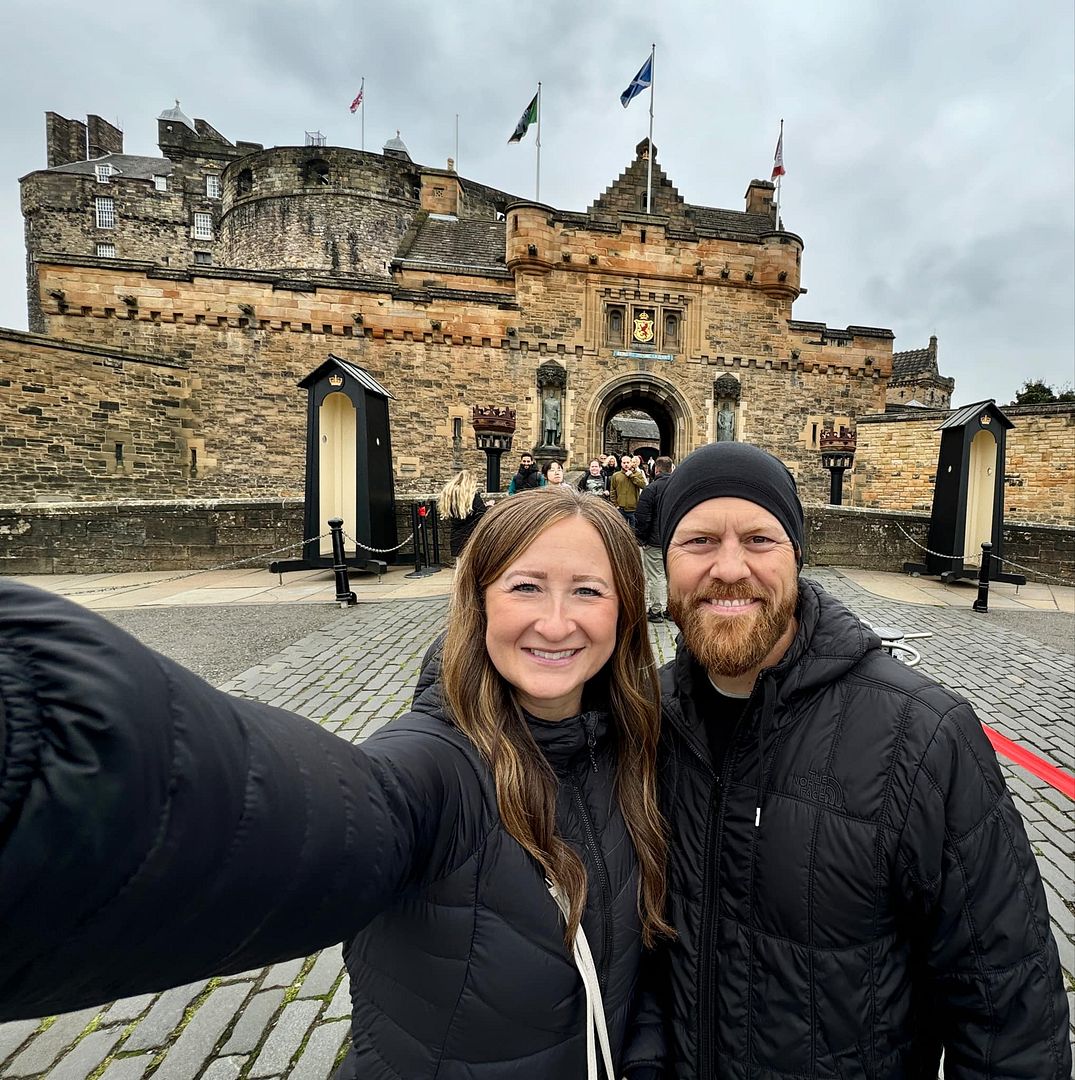
Josh and Laura had tickets for the Castle and my plan was to head down to Grassmarket and see what I could see, solo. Back in 2004 we toured the castle with our daughter, Katie, so I didn’t need to spend the money to see it again. This was Josh and Laura’s first trip to Scotland so the Castle was a priority. When they completed their Castle tour we would meet up. Greg spent this day in bed working on getting better.

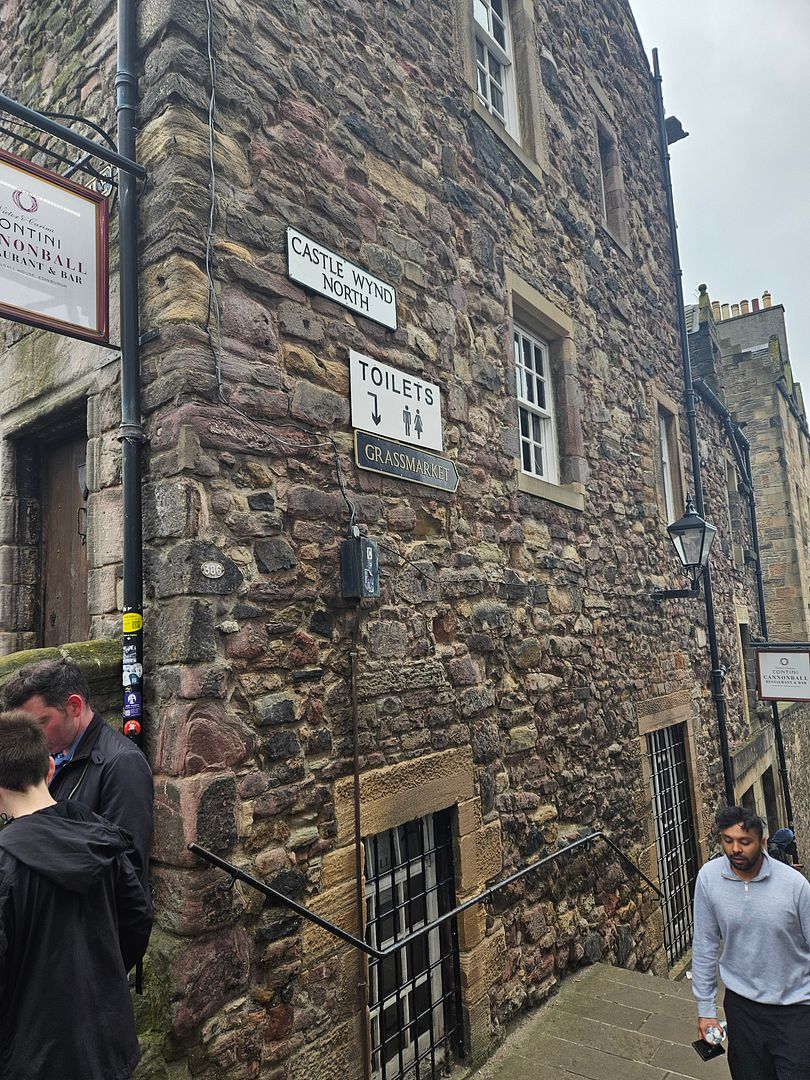
I left Josh and Laura at the entrance to the castle and headed down two separate flights of stairs to get to the Grassmarket area of Edinburgh.

I spent my time this morning below the castle.

If I was to visit Edinburgh again, I would choose lodging in the Grassmarket area of Edinburgh.

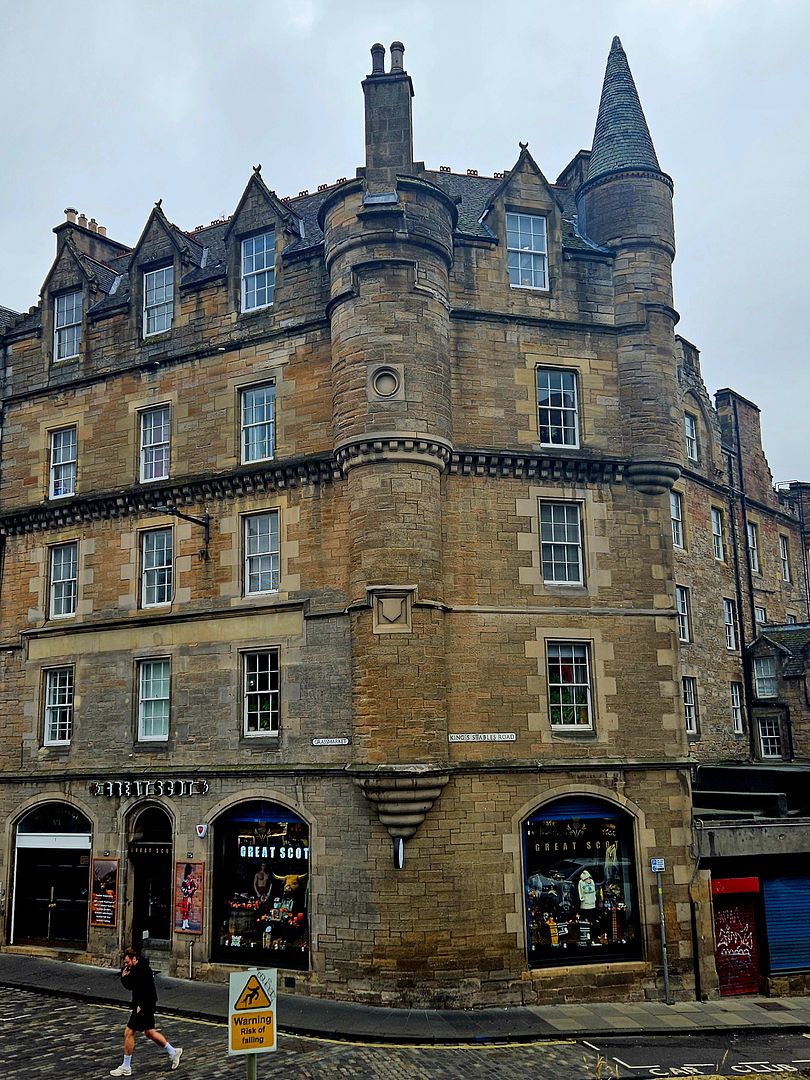
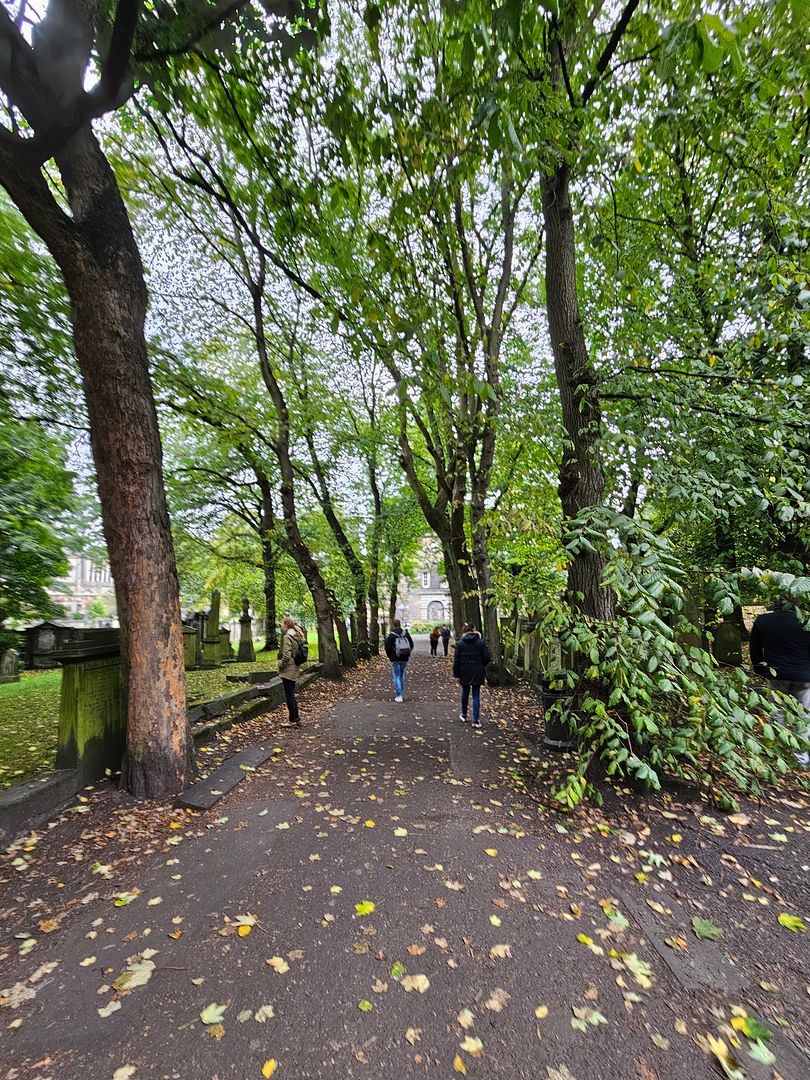
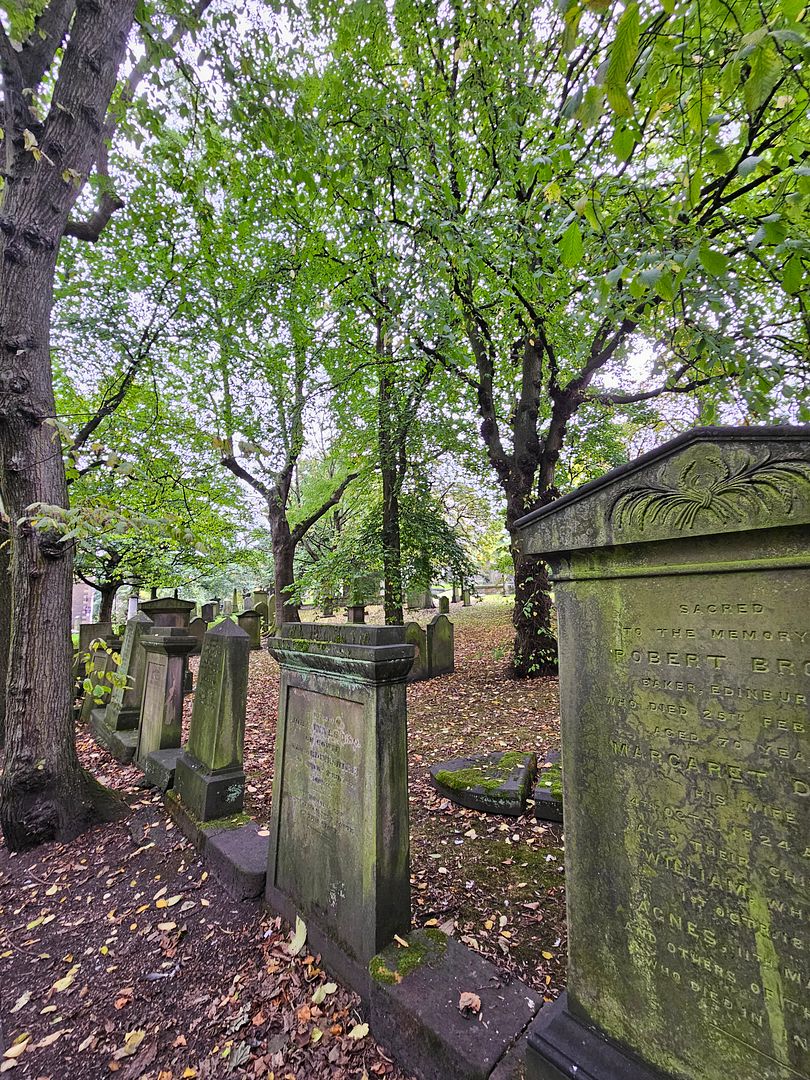
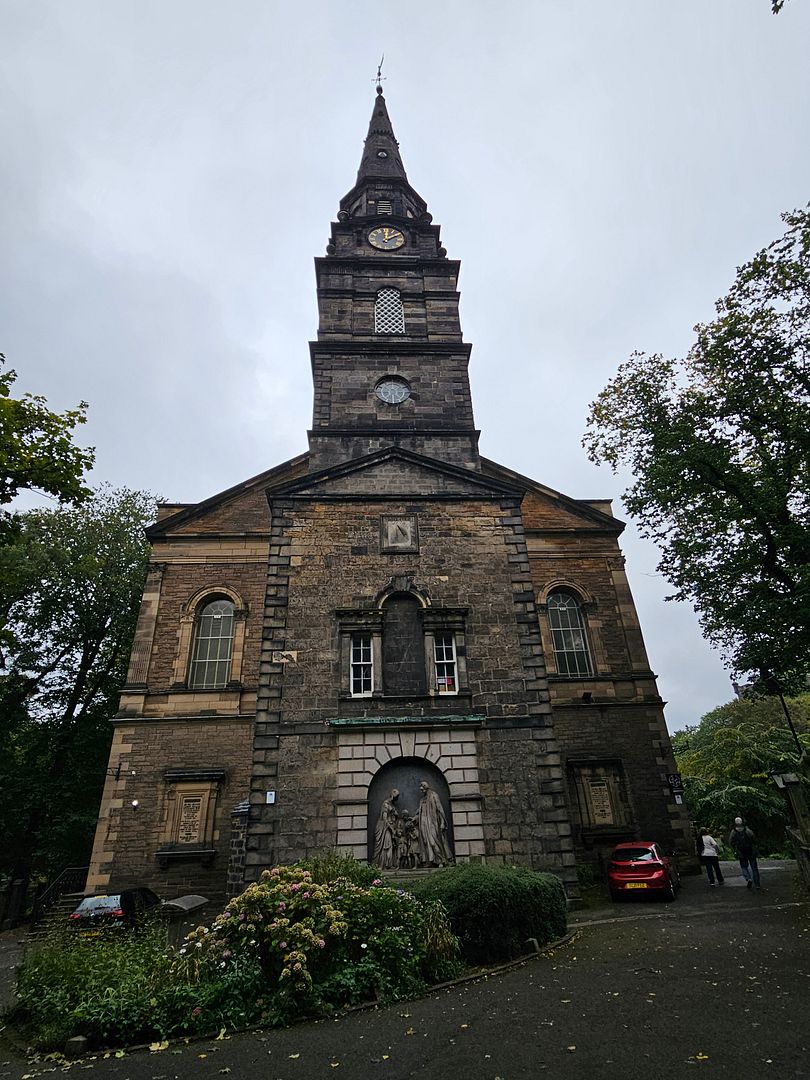
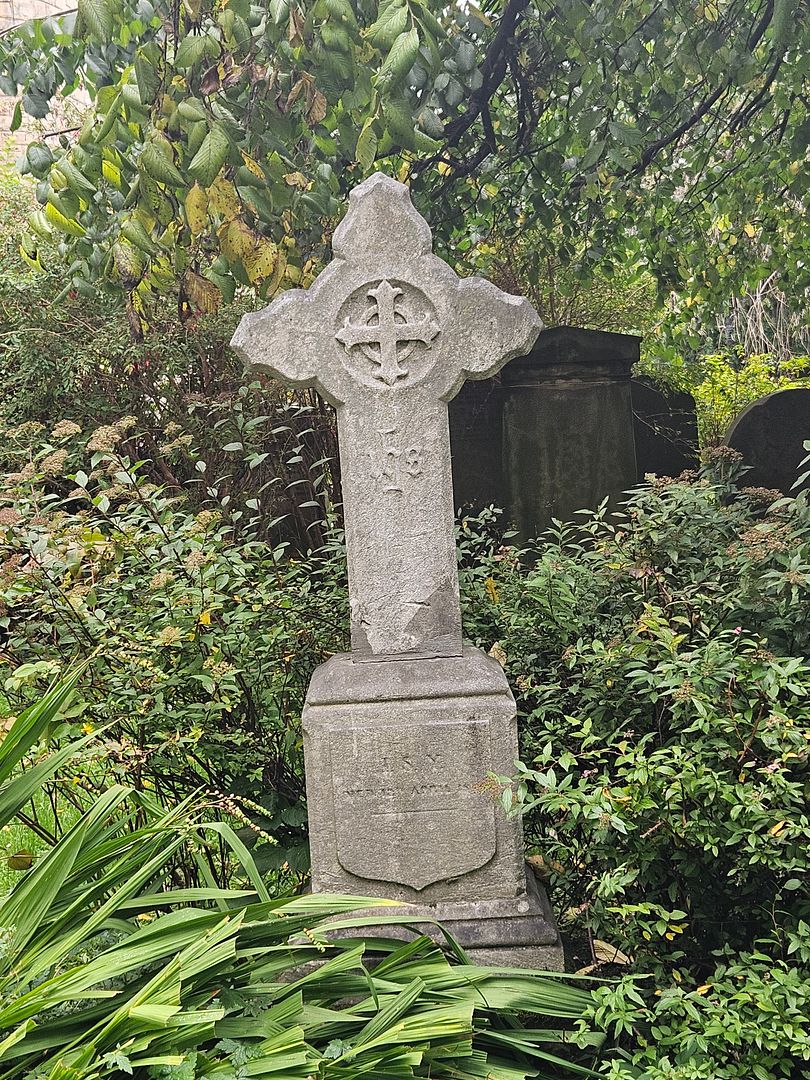
Walking along King’s Stables Road I entered the cemetery adjacent to The Parish Church of St. Cuthbert.

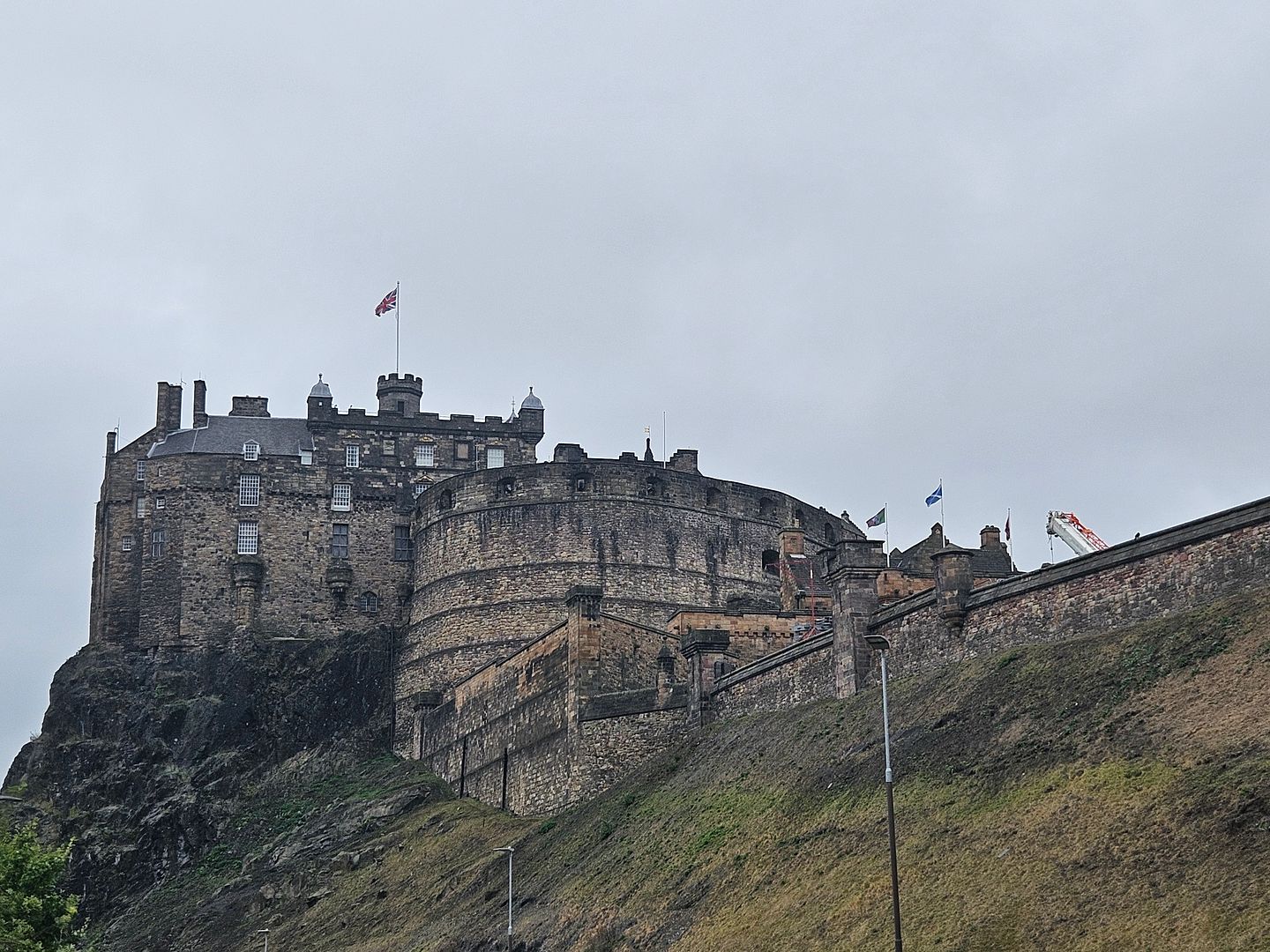
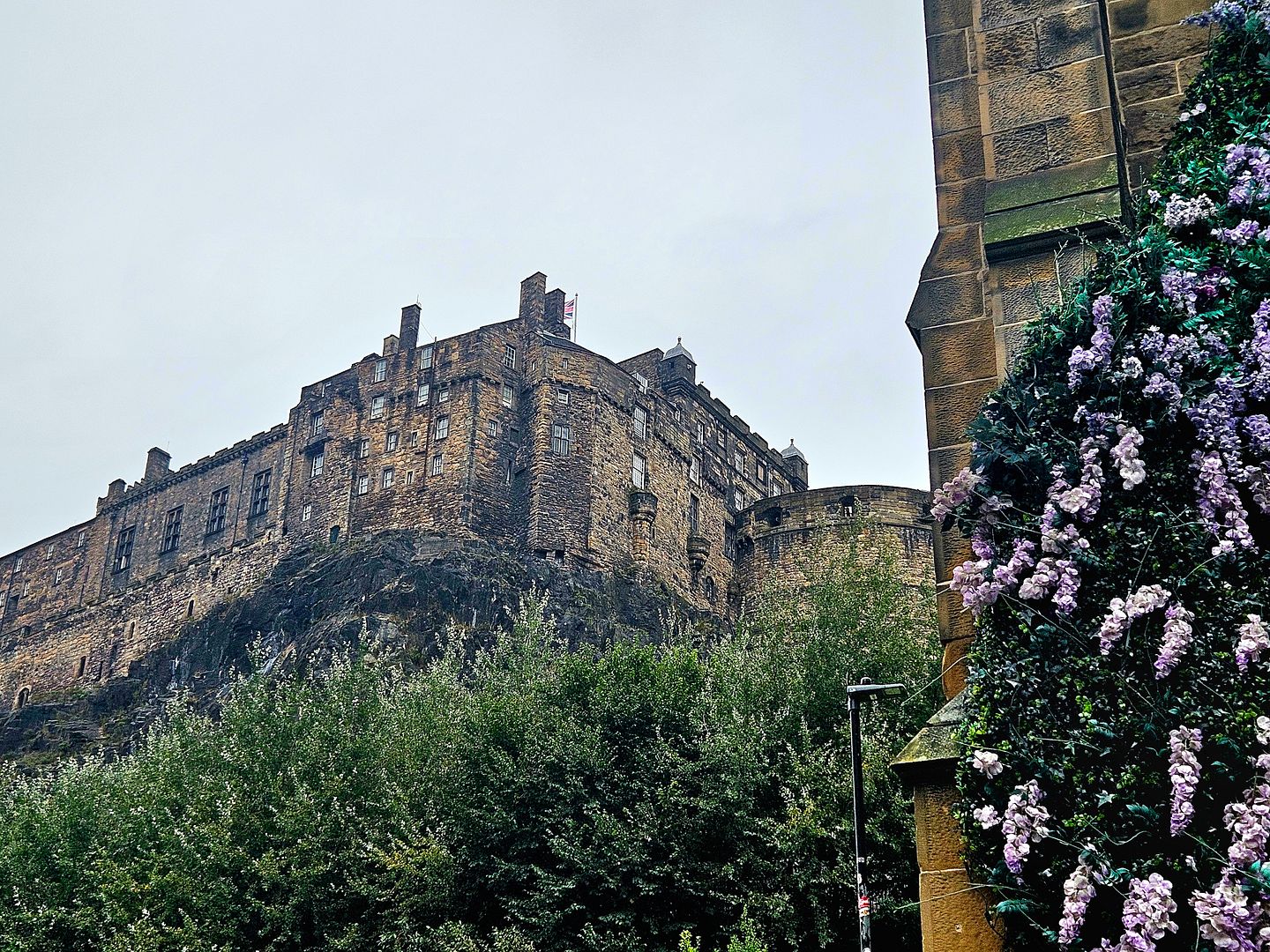
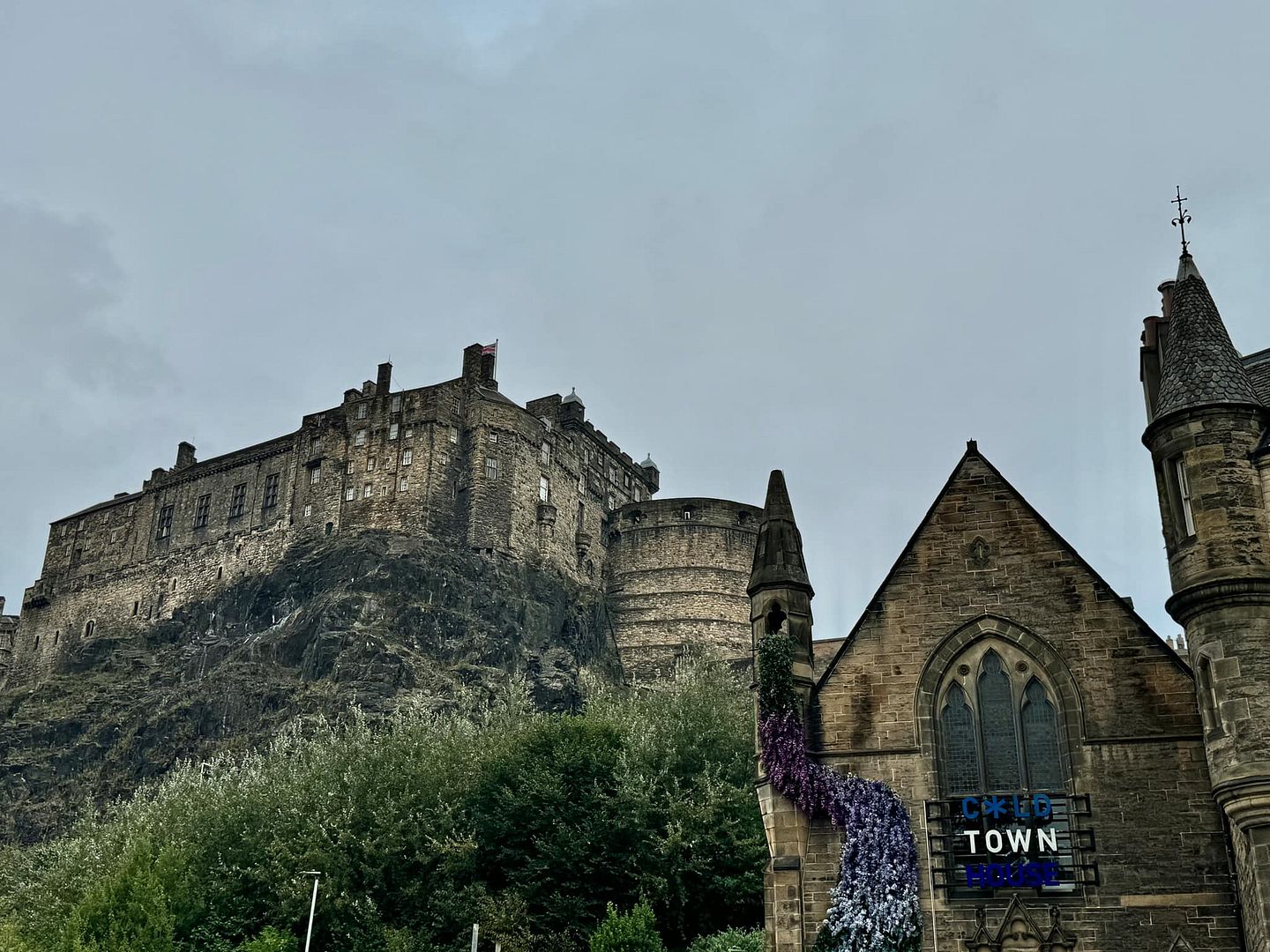
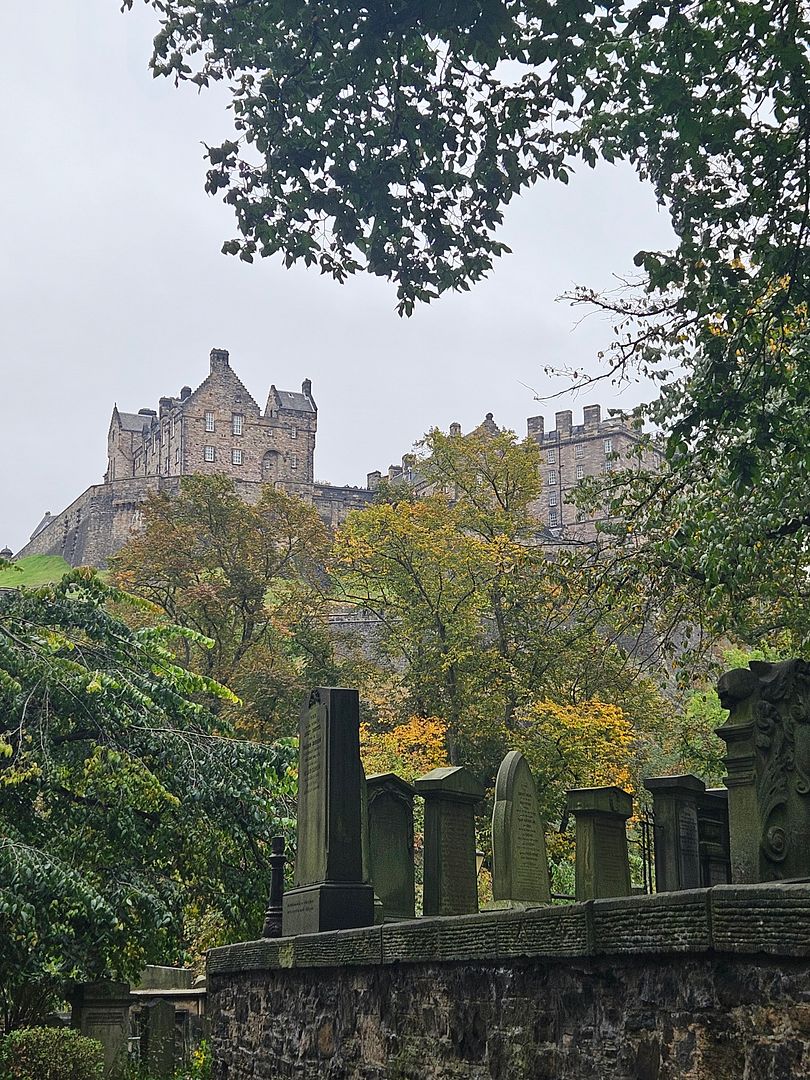
Looking up from St. Cuthbert I had a different view of the castle.

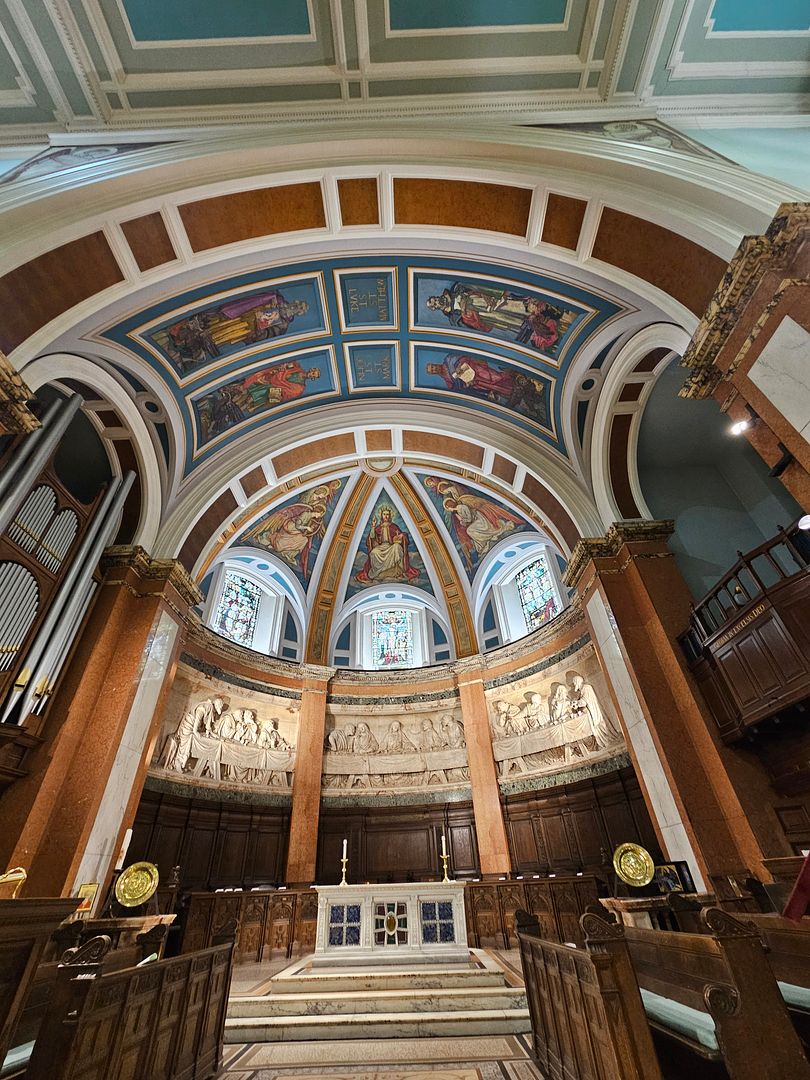
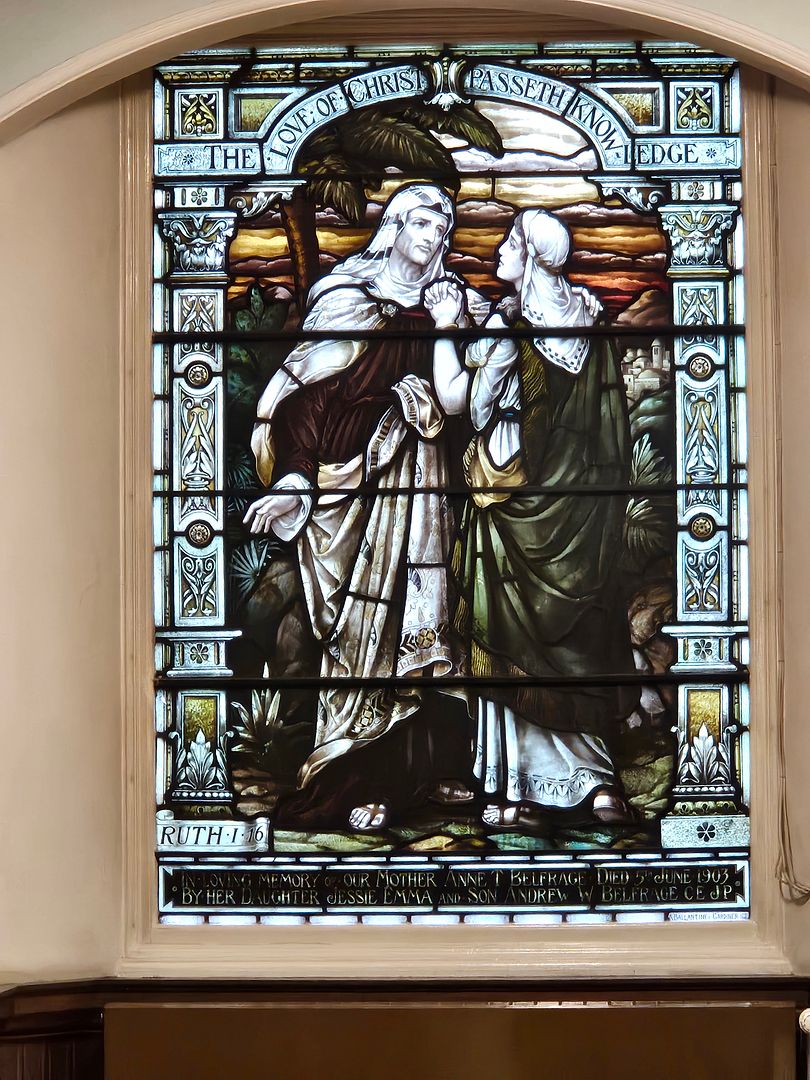
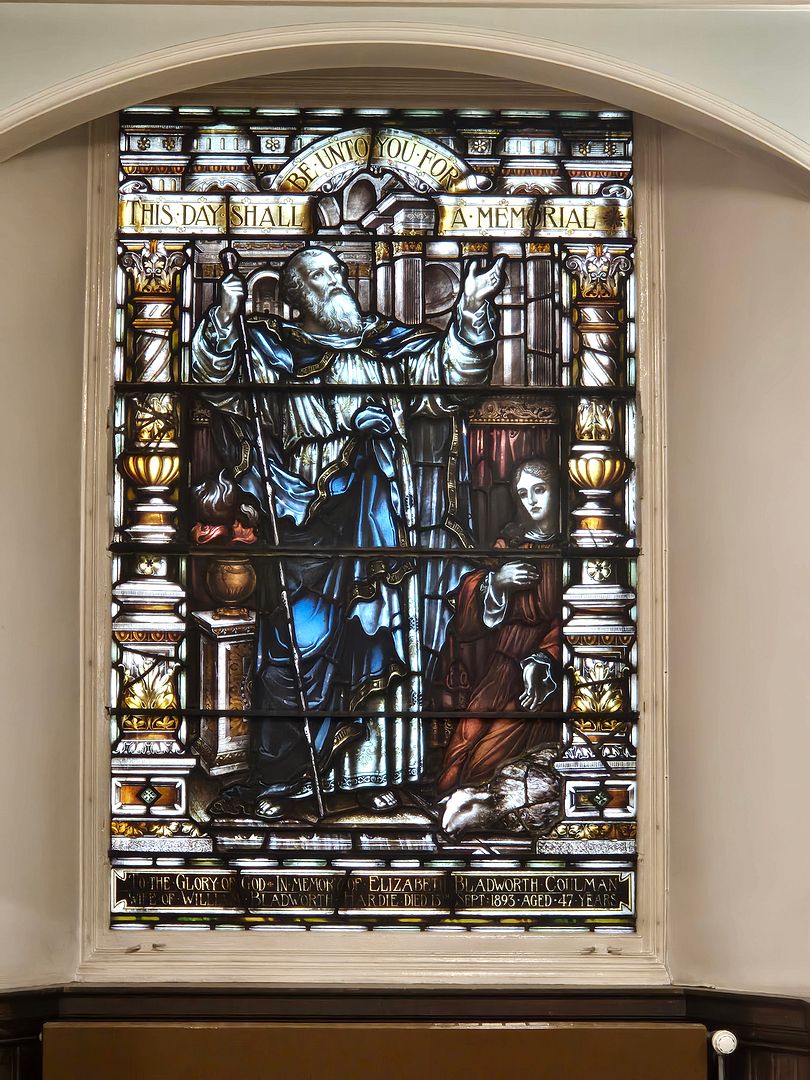
From here I went into the church and was greeted kindly and given a brochure with some history of the church. I asked if I could take photos and was granted enthusiastic permission. Information I’m sharing is from the brochure.

Tradition tells us that the Celtic missionary, Cuthbert, preached from this spot in the 7th century and established the first church here. Since then there have been at least seven buildings on the same site. By the late 19th century the people of St. Cuthbert’s wanted to rebuild their 18th century “God-box”, a very plain building. In 1894 the present building designed by architect Hippolyte Blanc, was opened and has been in constant use ever since.

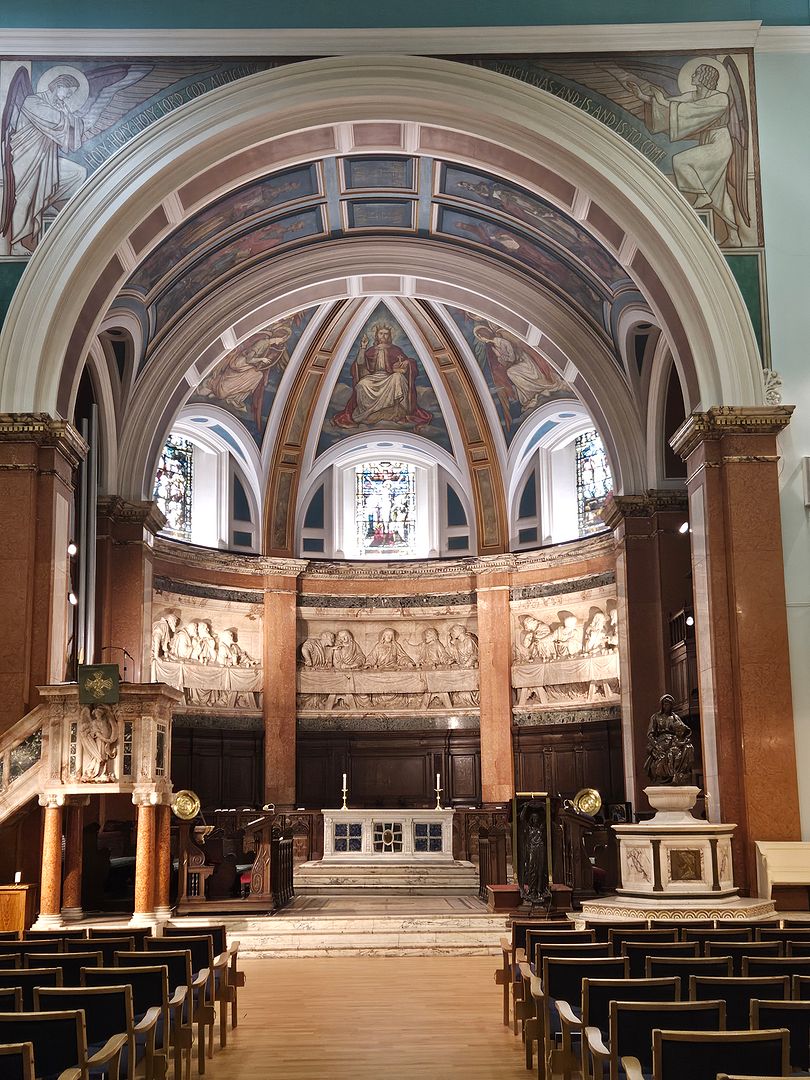
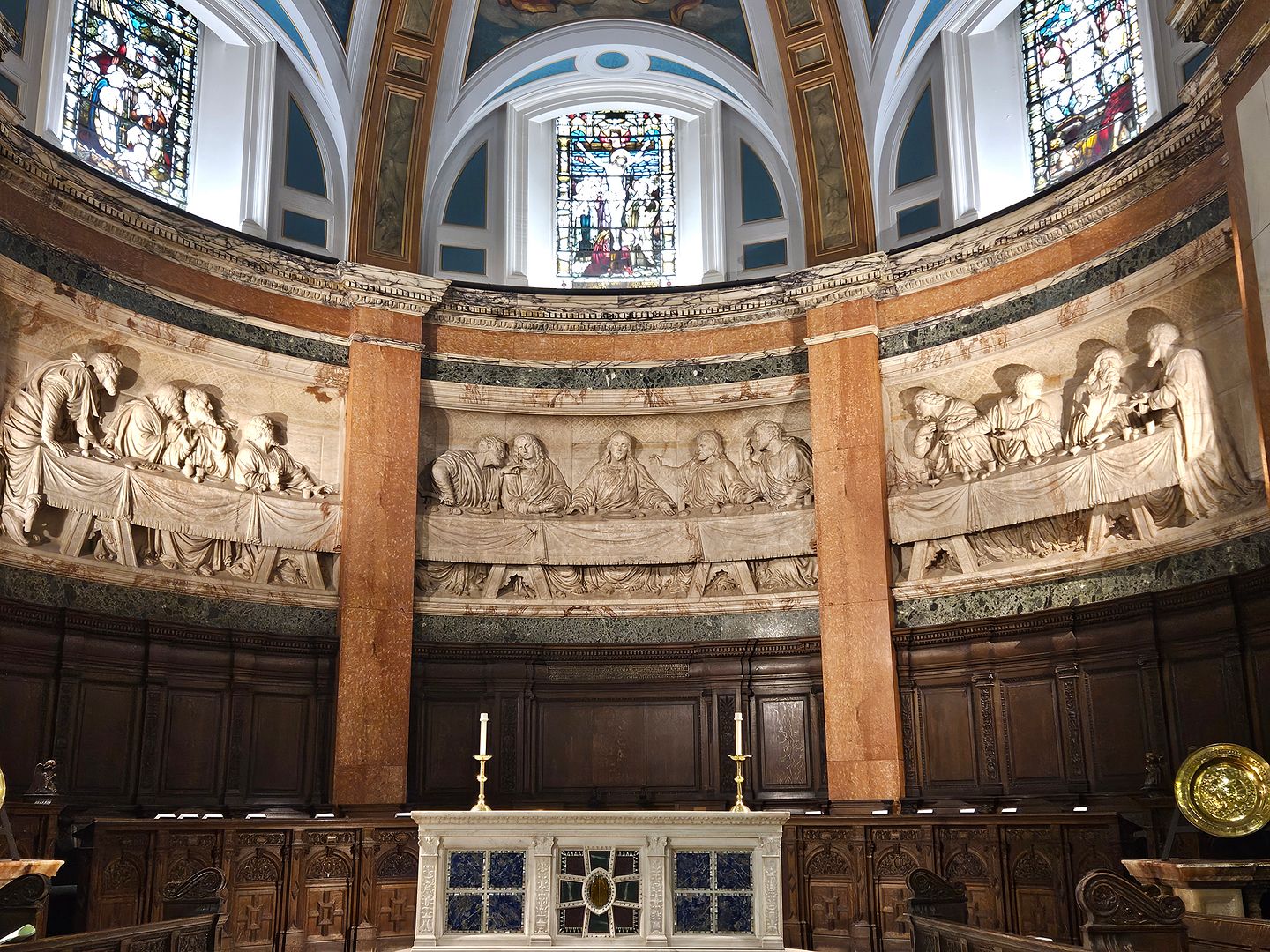
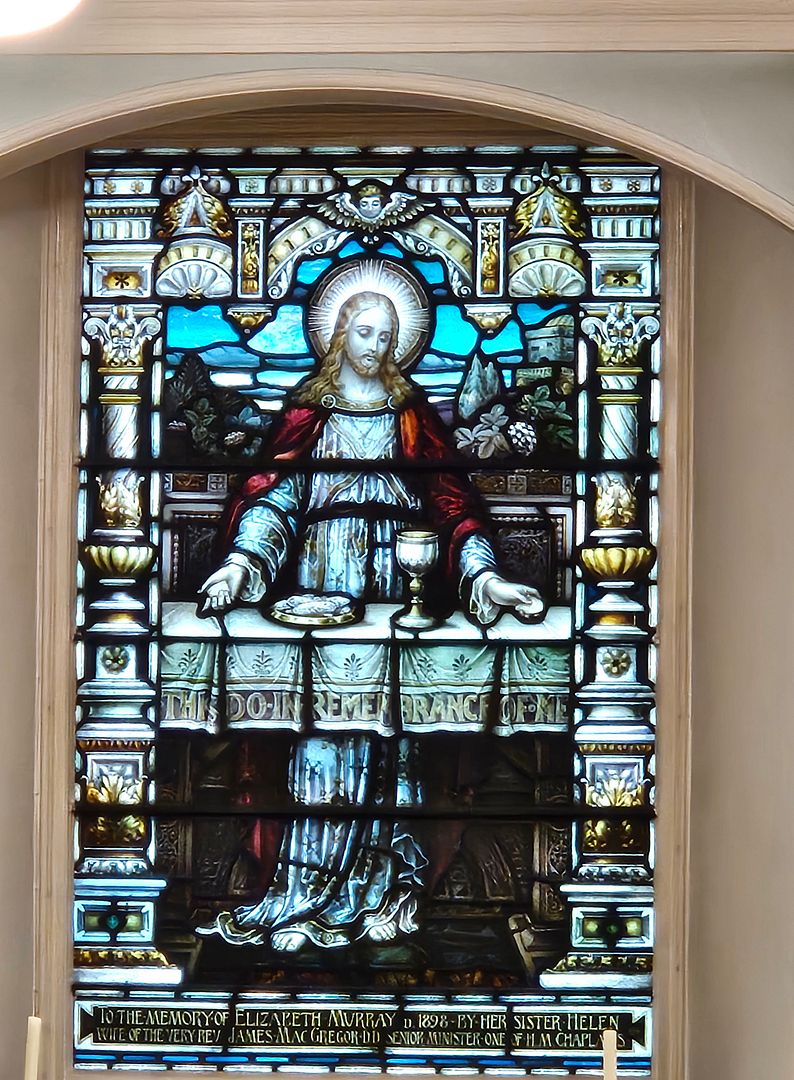
The Apse: In 1906 the Minister of the day, Dr. James Macgregor, celebrated 50 years of ministry. To commemorate this occasion Dr. Macgregor commissioned the alabaster frieze on the wall of the apse. It features Jesus and His disciples and the design is based on The Last Supper by Leonardo da Vinci. From left to right the characters are Bartholomew, James the Less, Andrew, Judas, Peter, John, Jesus, James, Thomas, Philip, Matthew, Thaddeus and Simon.

To the left of the apse is the pulpit. It is thought that the earliest church was probably built on the spot where the pulpit stands today. Under the pulpit is the foundation stone of the building along with a time capsule containing documents and artefacts of the 1890’s, including photographs, coins, newspapers, and copies of the Minister’s sermons.


The Communion Table is made from alabaster and marble, mostly Italian, green and Egyptian. The middle of the Communion Table shows the cross of St. Cuthbert which can be seen in the decor in other parts of the building.

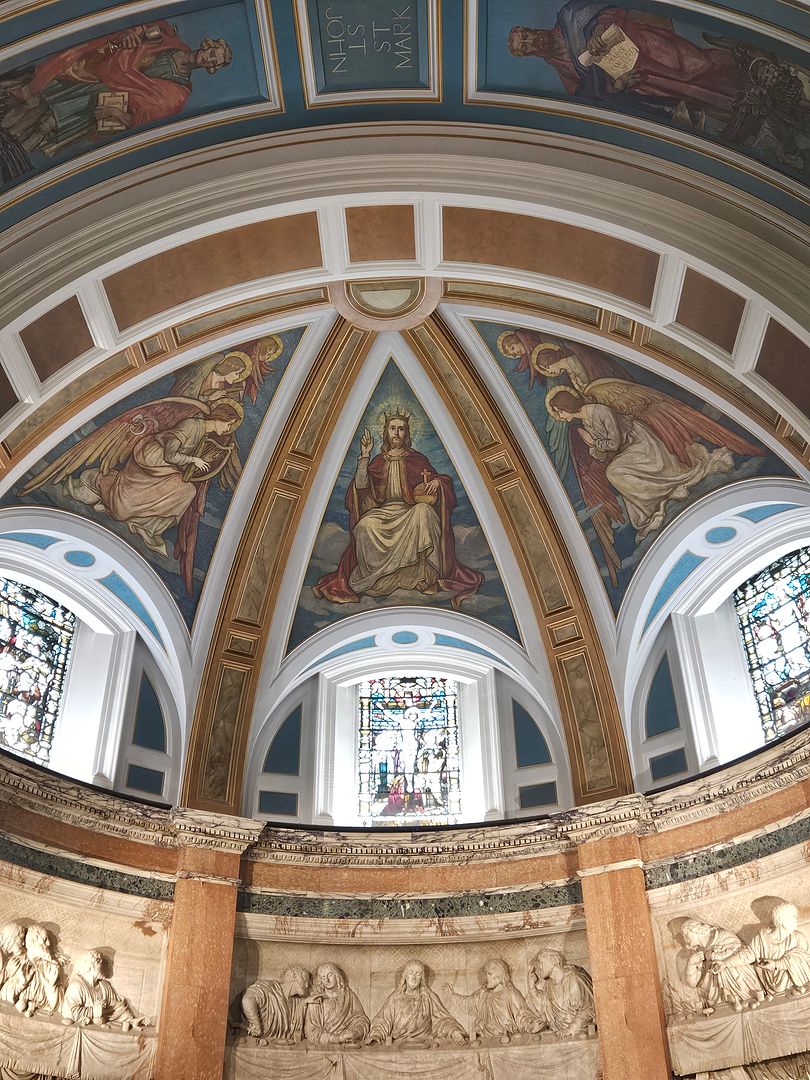
The Exalted Christ with His angels on either side of Him was the first of the murals painted by Robert Hope RSA. In 1928 Professor Gerald E. Moira of Edinburgh College of Art painted the four apostles. Then in 1933 the angels on the spandrels at either side of the chancel area were painted by John Duncan RSA, RSW. The angels are seen worshipping God in two different ways. The one on the left is quietly praying to the spirit within, while on the right, the angel with raised hands and head worships joyfully, radiantly!

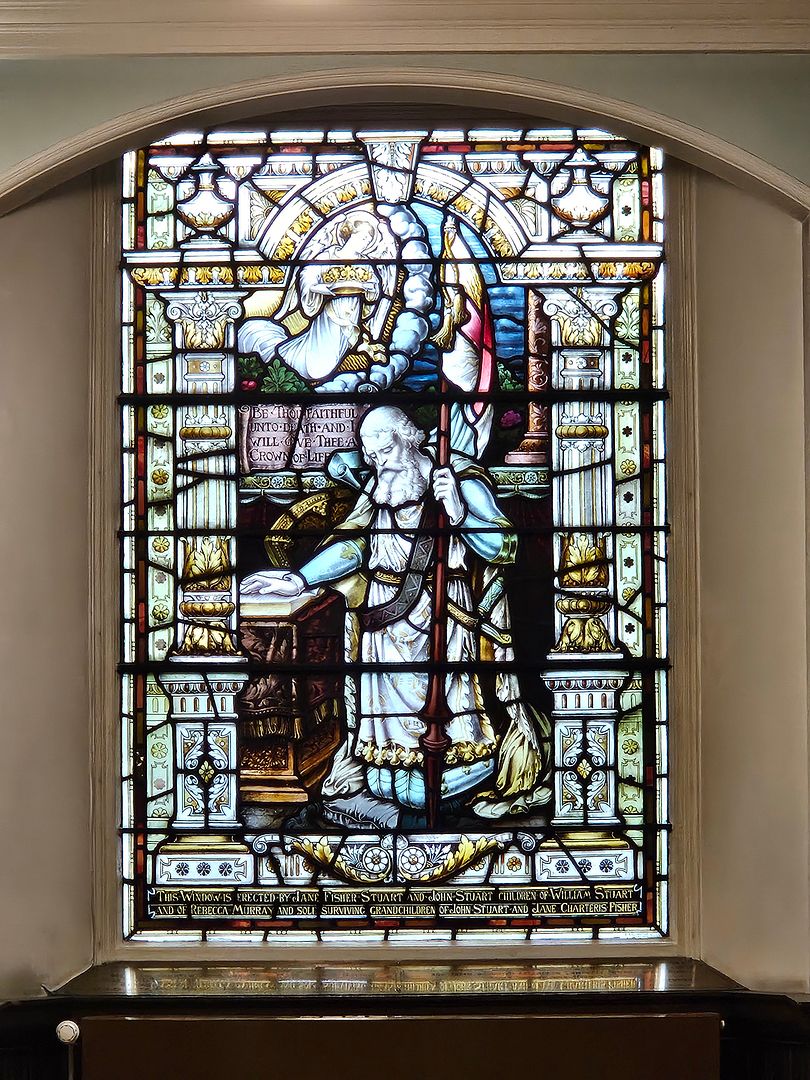
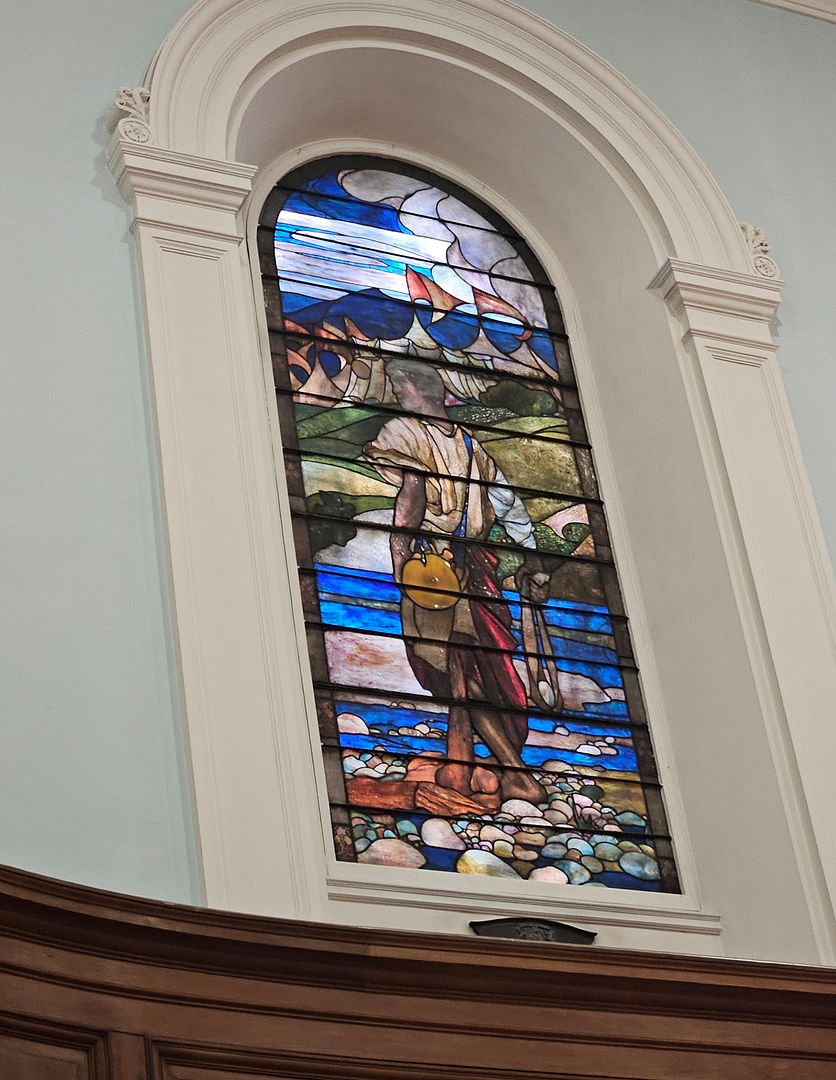
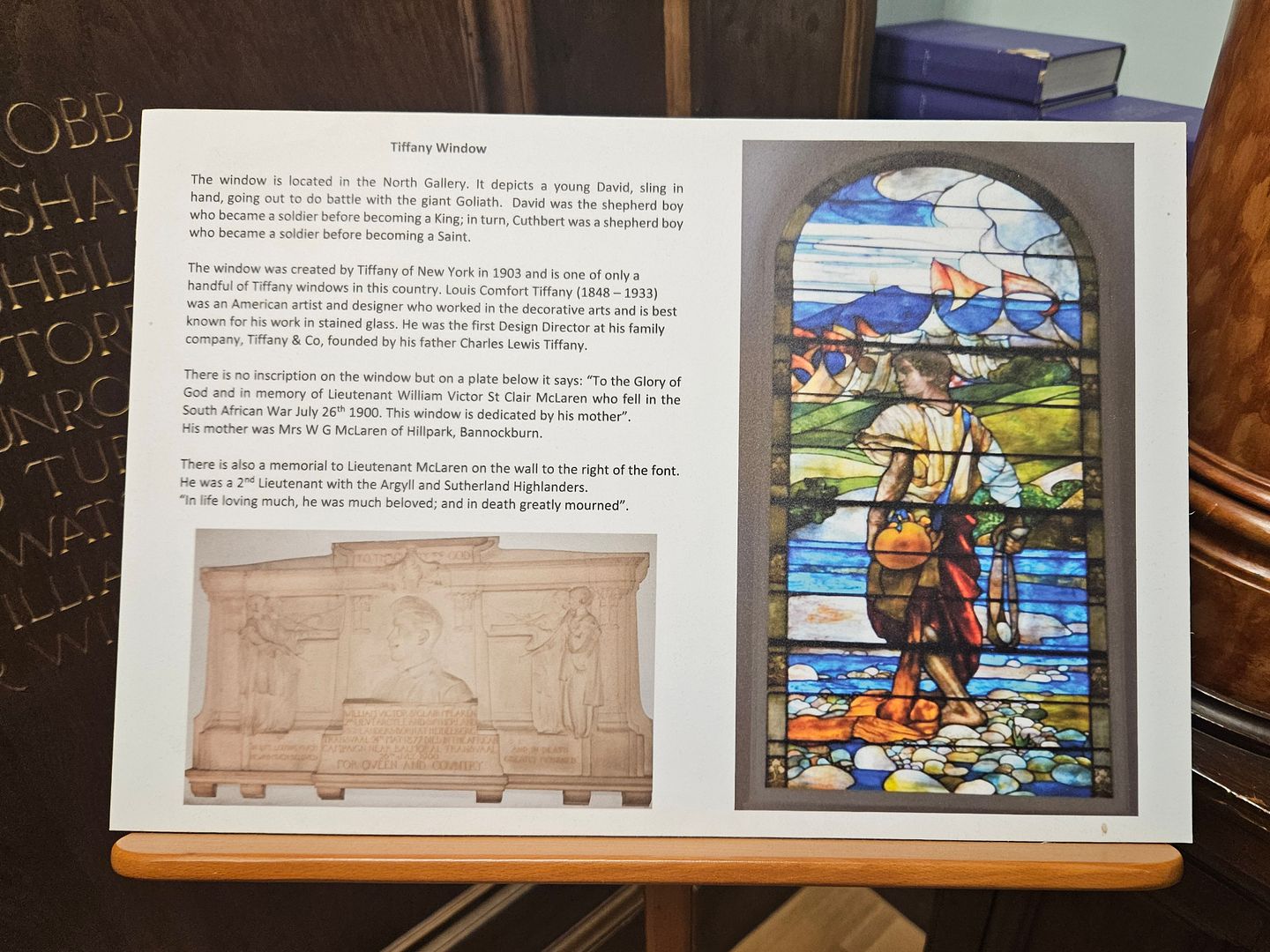
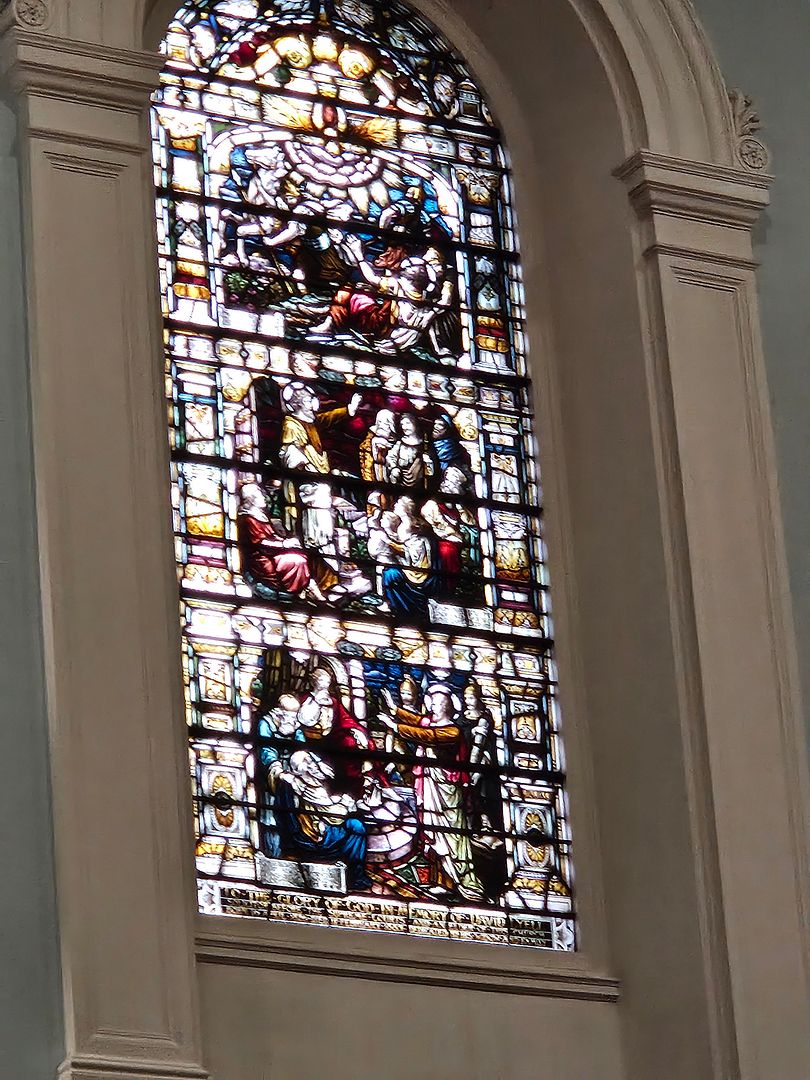
The windows on the left of the church depict stories from the Old Testament and on the right the New Testament. Upstairs on the North side you will see a young David, sling in hand, going out to meet the giant Goliath. This window was created by Tiffany of New York in 1903 and is one of only five Tiffany windows in Britain.

When I was done at St. Cuthbert’s I strolled back to Grassmarket to wait for Josh and Laura.

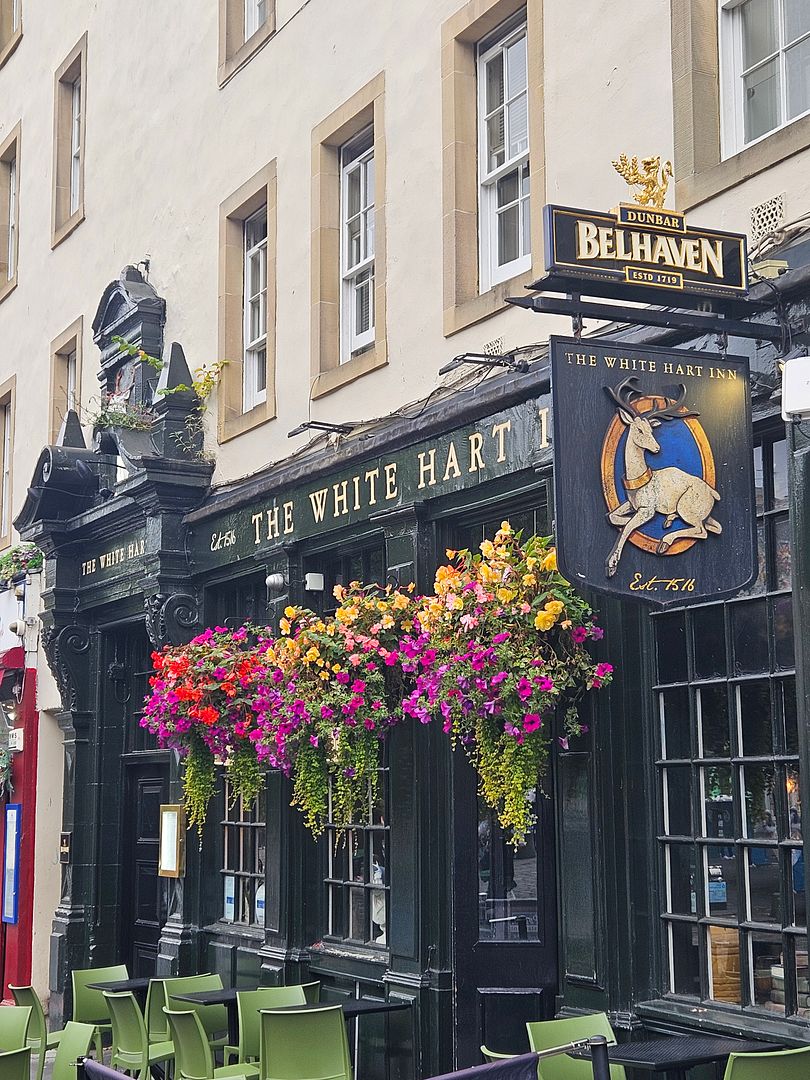
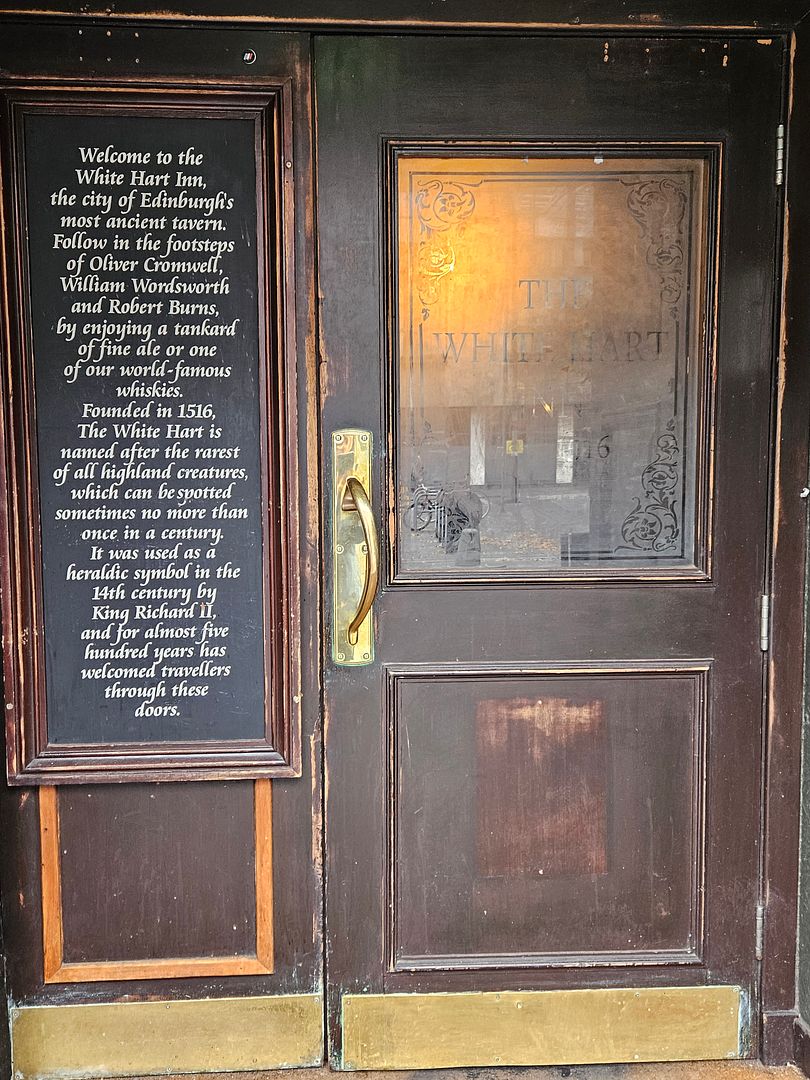
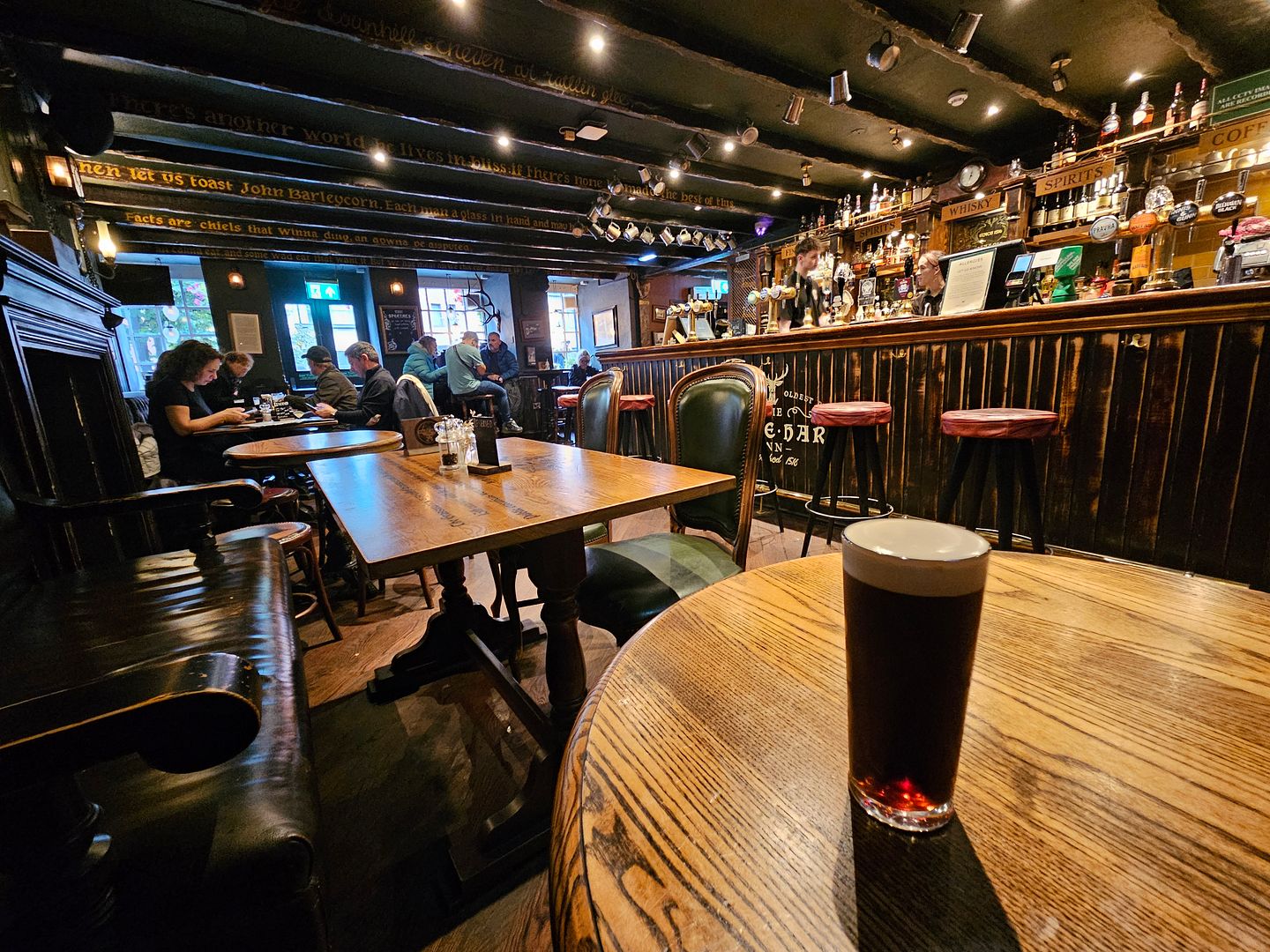
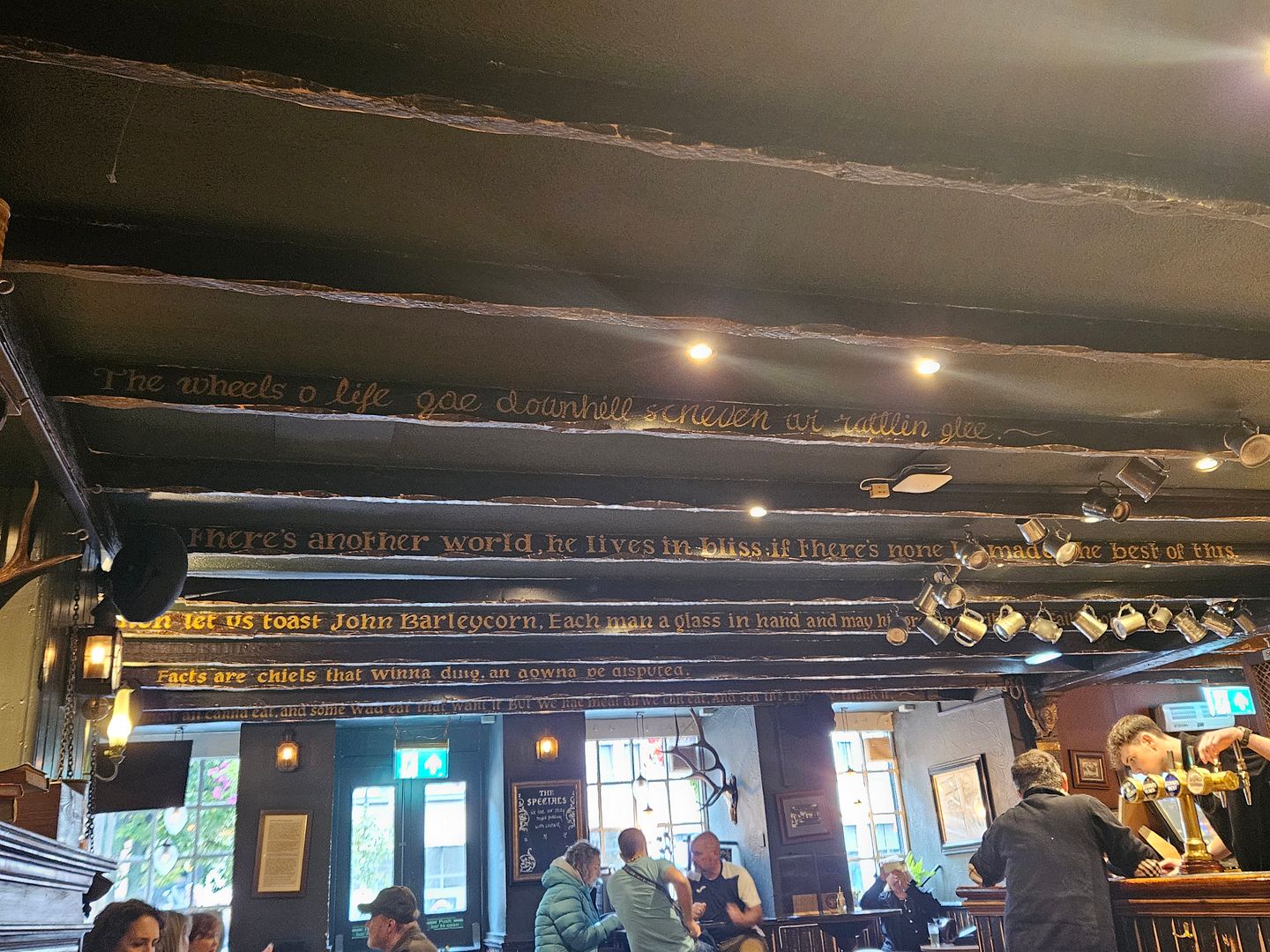
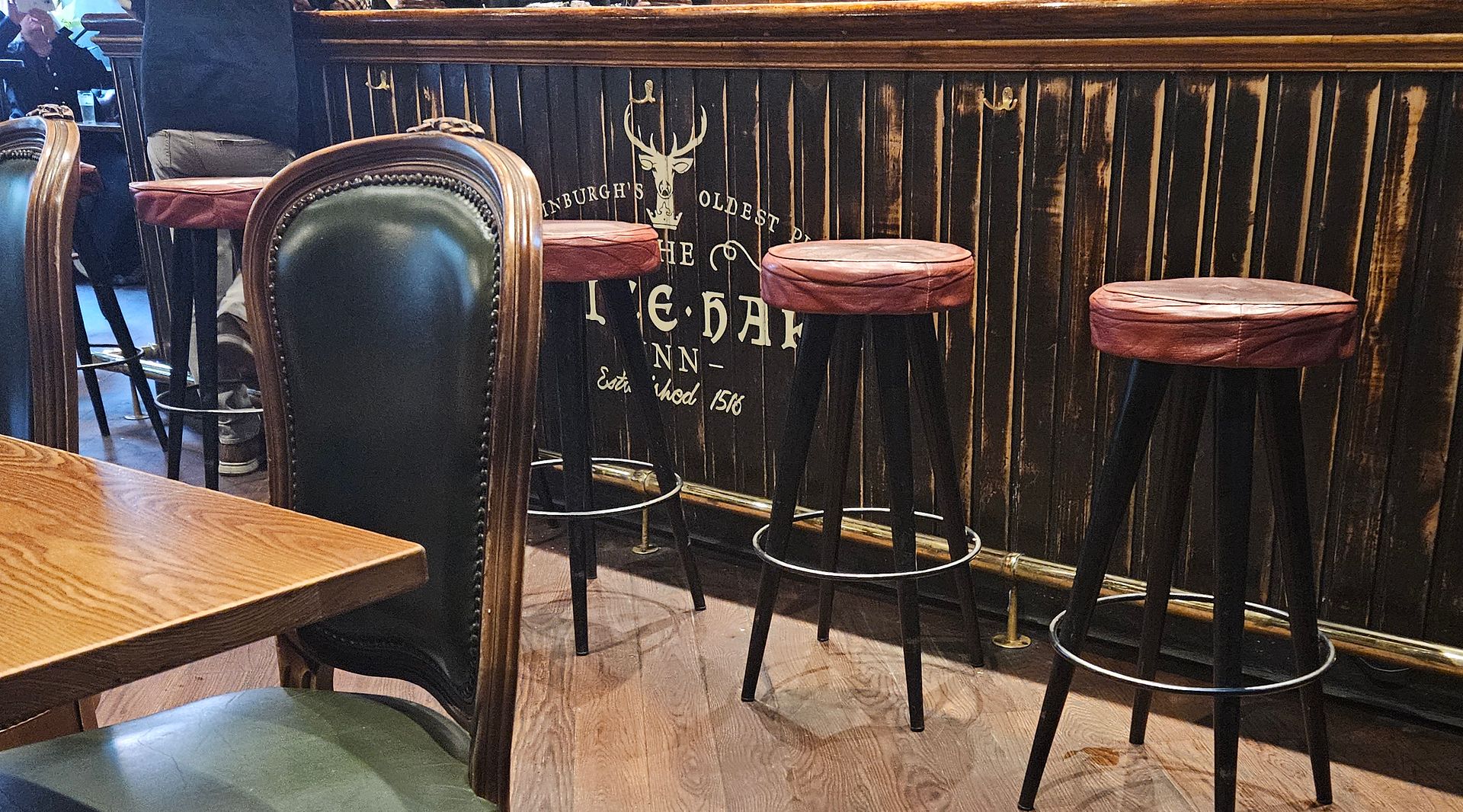
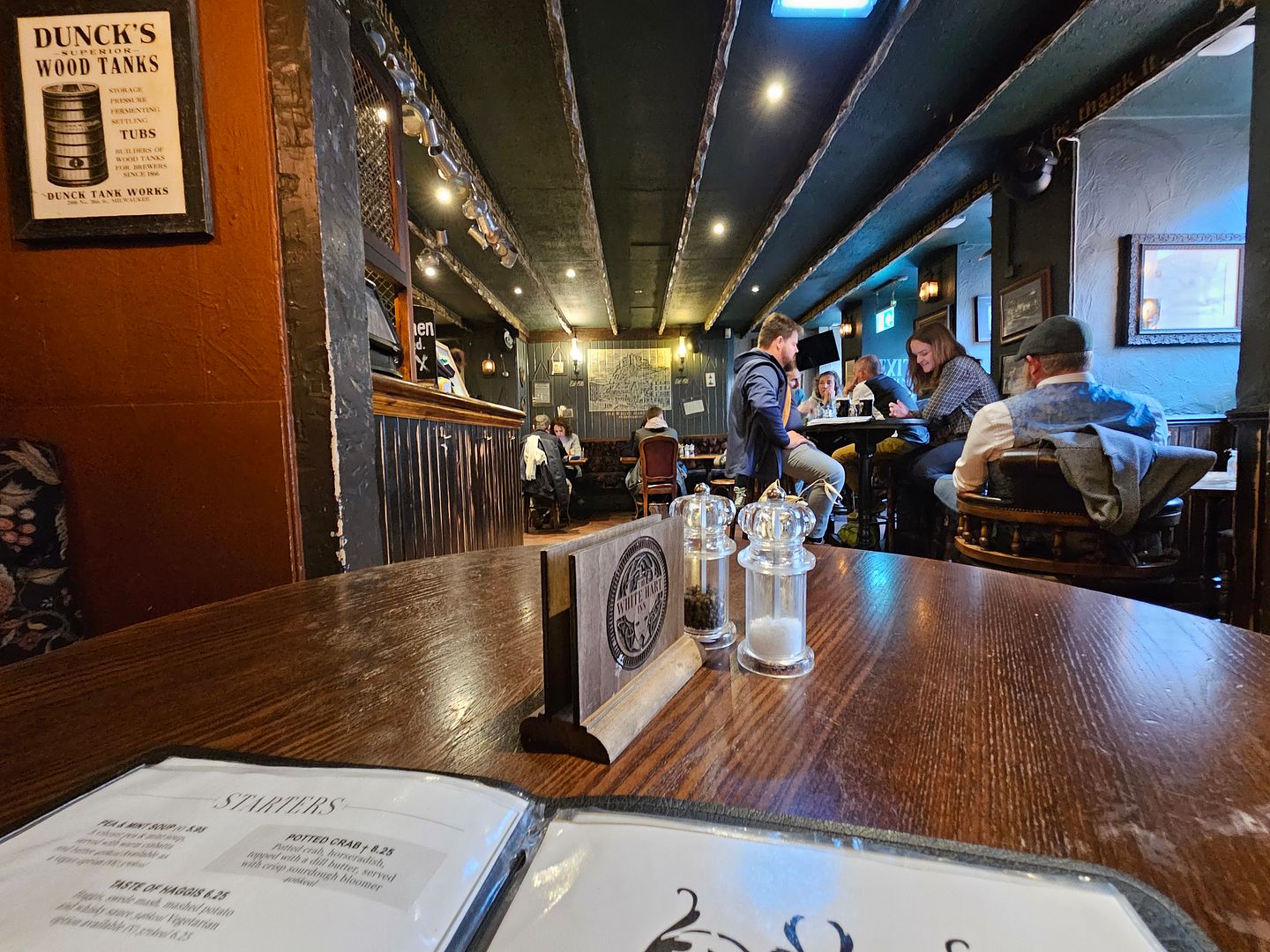
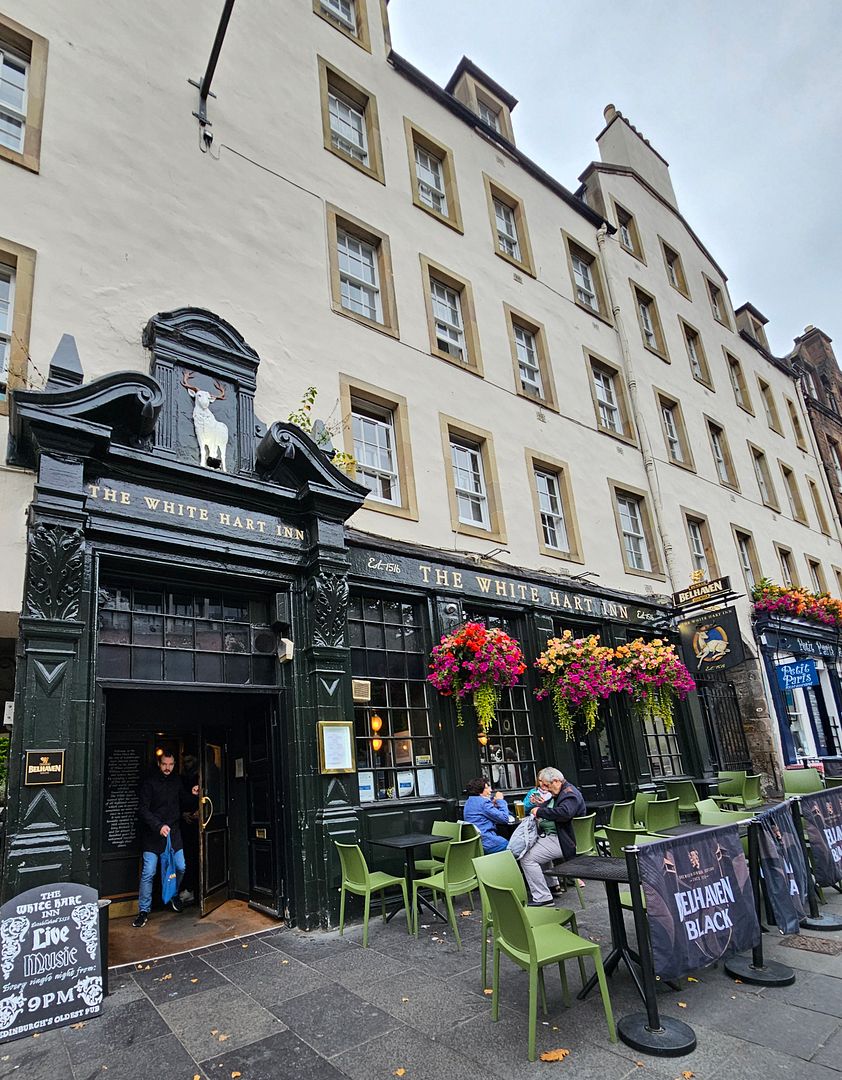
I waited at the White Hart Inn, Edinburgh’s most ancient tavern.

Follow in the footsteps of Oliver Cromwell, William Wordsworth and Robert Burns by enjoying a tankard of fine ale or one of our world-famous whiskies. Founded in 1516, The White Hart is named after the rarest of all Highland creatures, which can be spotted sometimes no more than once in a century. It was used as a heraldic symbol in the 14th century by King Richard II, and for almost five hundred years has welcomed travellers through these doors.

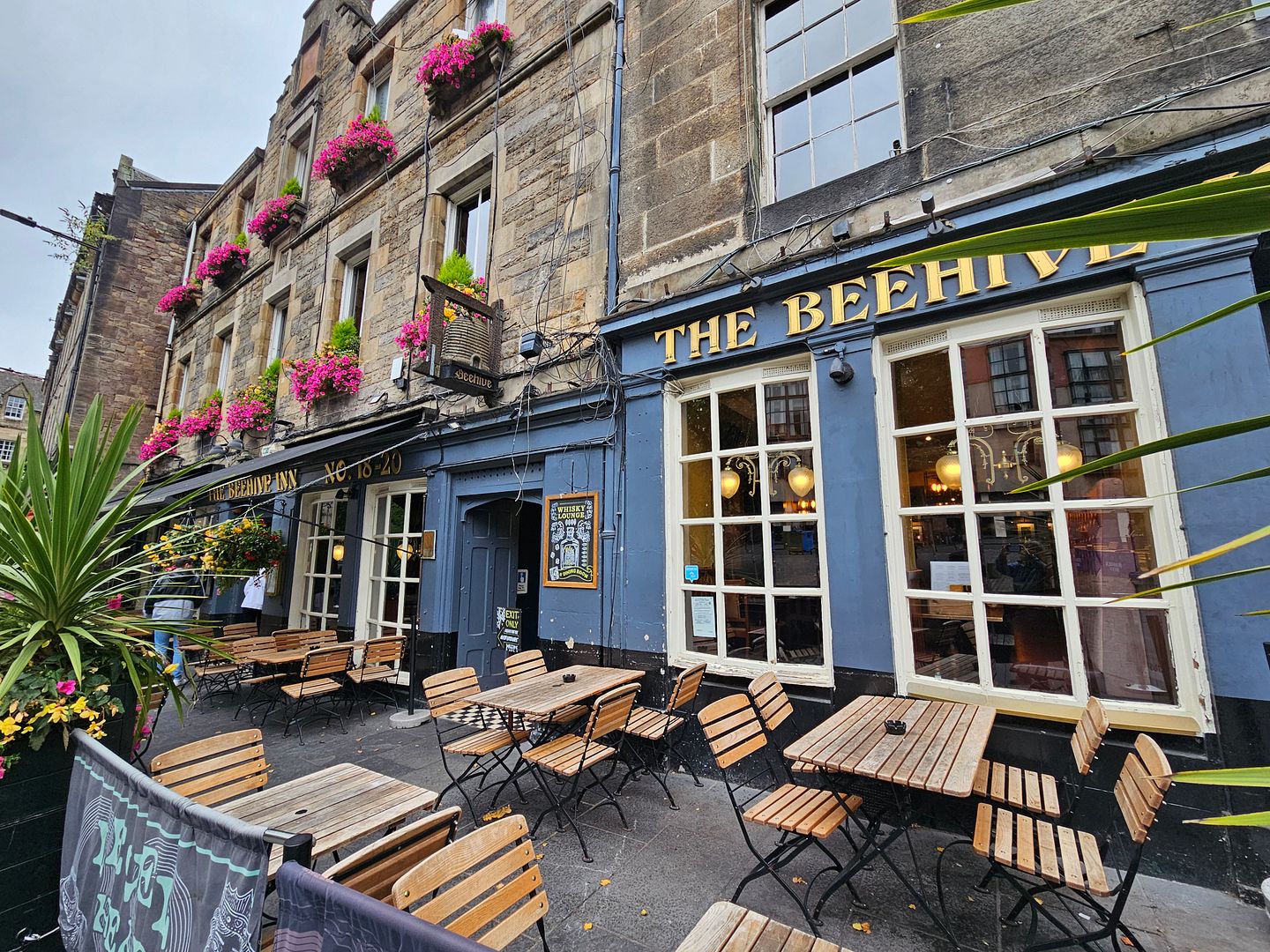
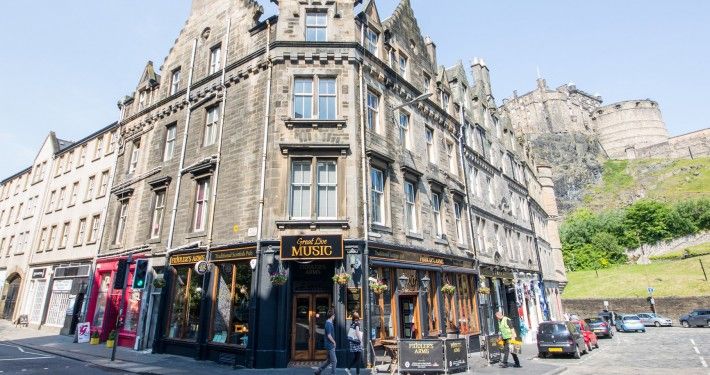
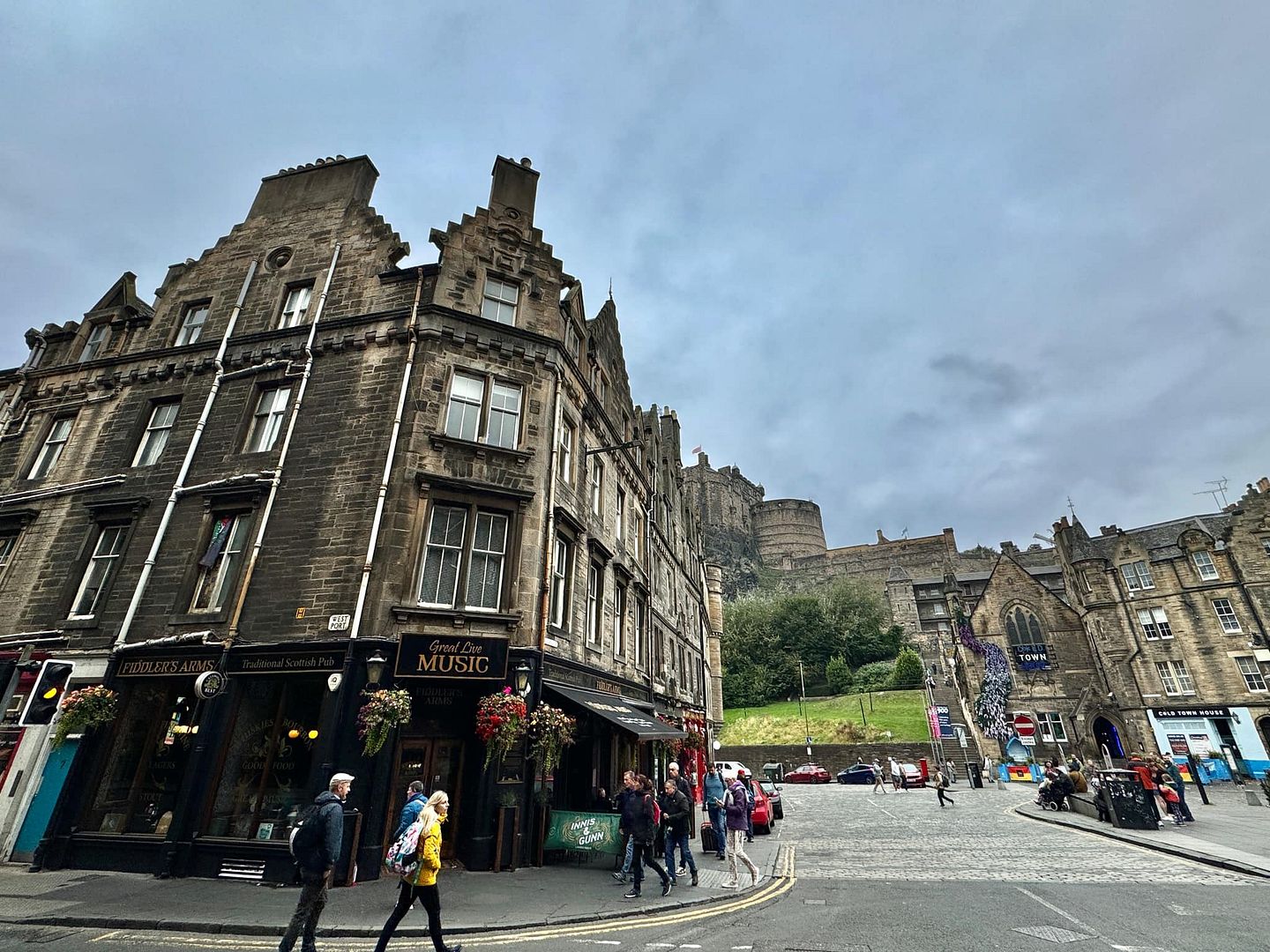
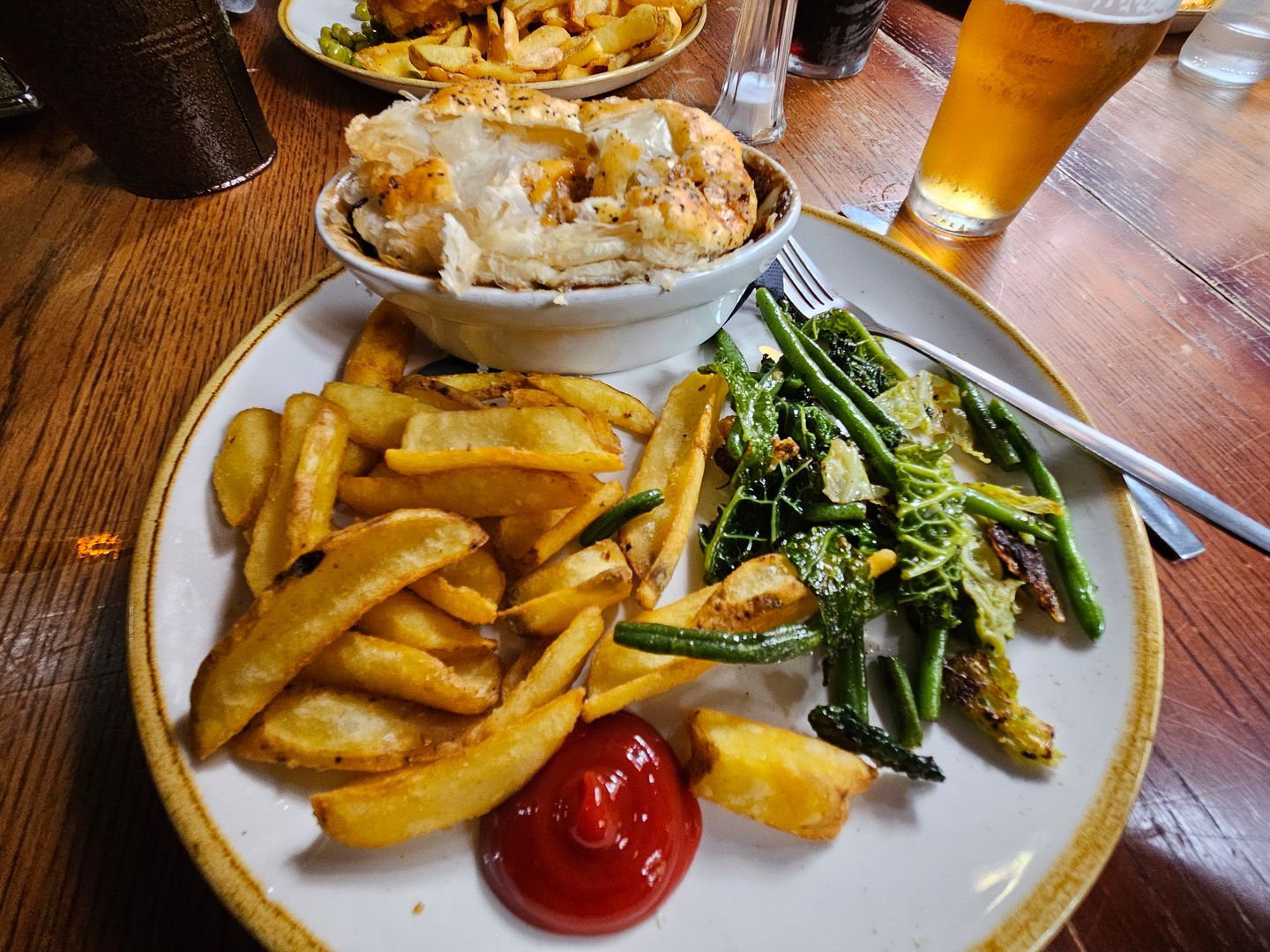
The food choices here were not hitting the spot for us so when Josh and Laura met up with me after their castle experience we found a table at the Fiddler’s Arms.

This image above is from The Fiddler’s Arms webpage. You can see what a sunny day would look like in the shadow of the castle. Below is what the atmosphere was like when we were here.

After lunch we popped into a couple of shops, took some photos and then we got an Uber to take us to St. Mary’s Episcopal Church to enjoy evensong which was due to begin at 3:30 on this Sunday. That will have to be another post.

Scotland Travel Journal ~ Dunfermline 3

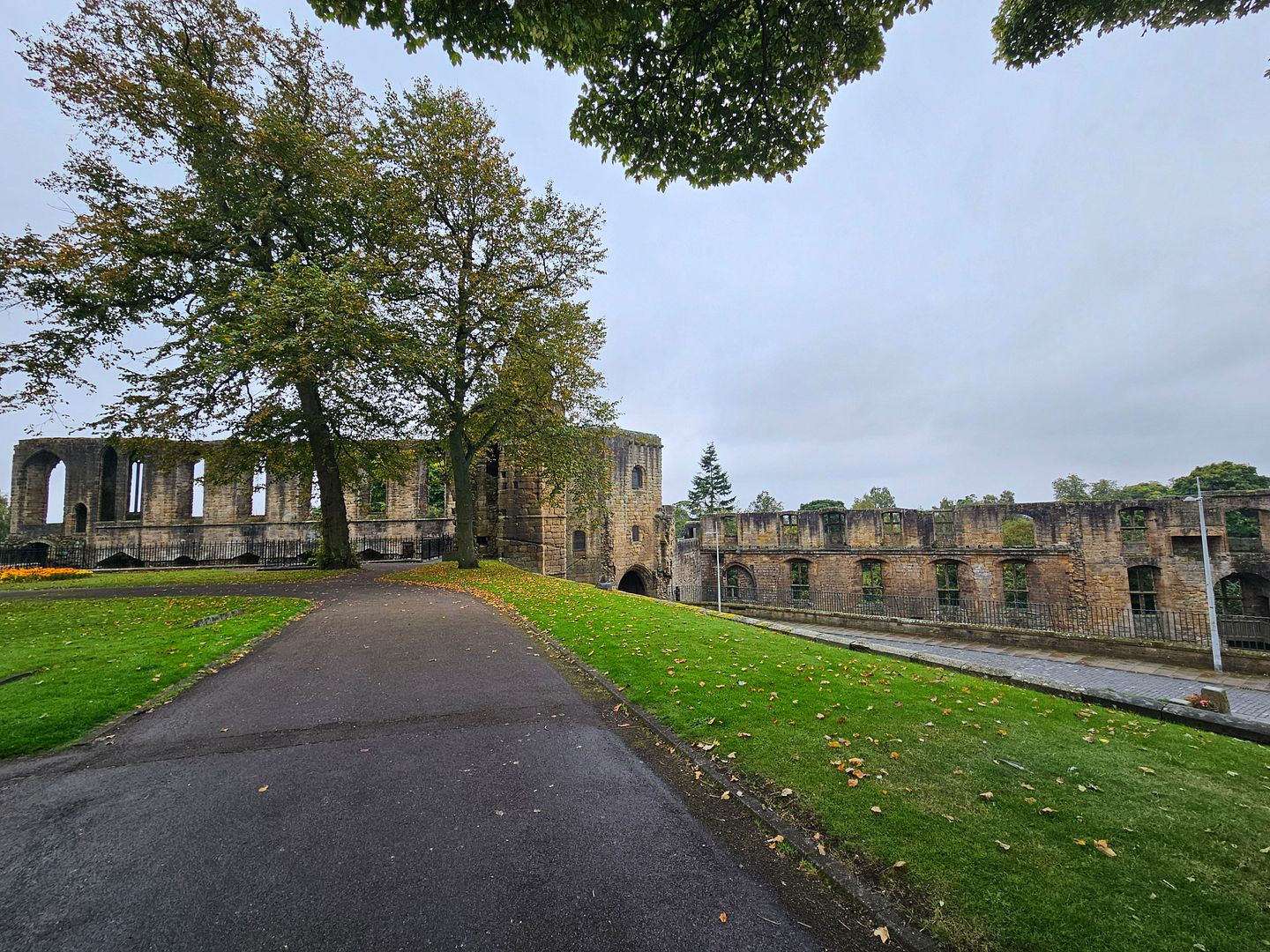
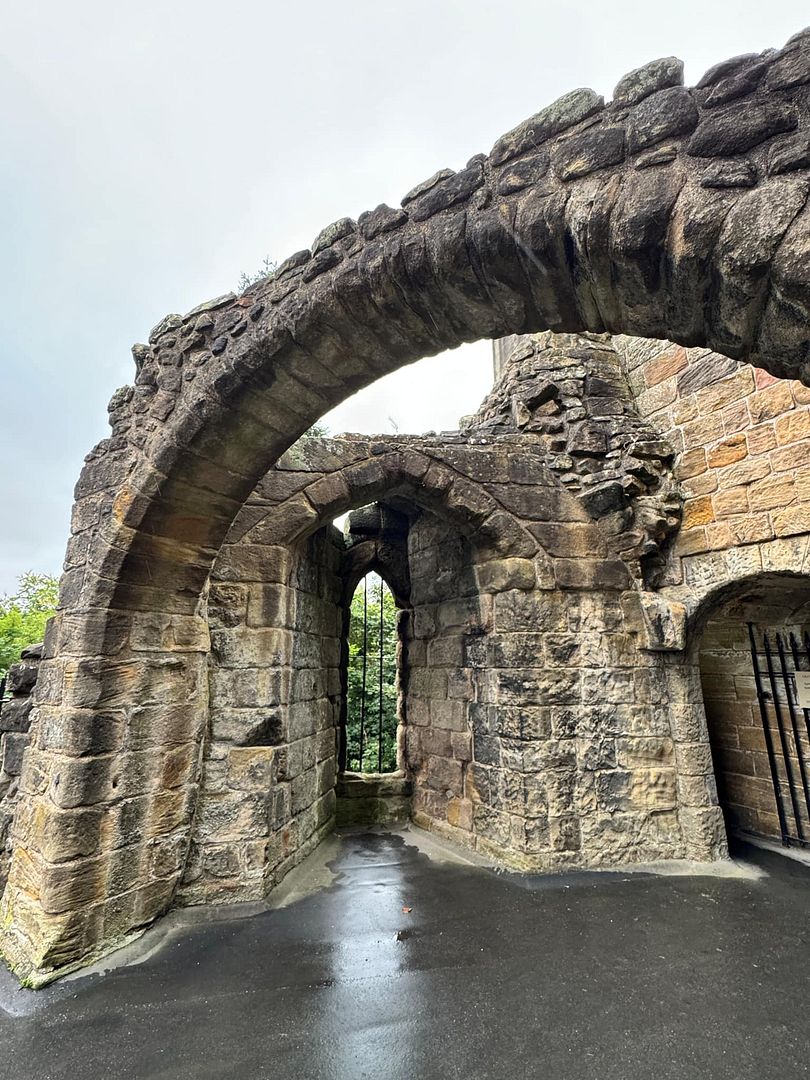
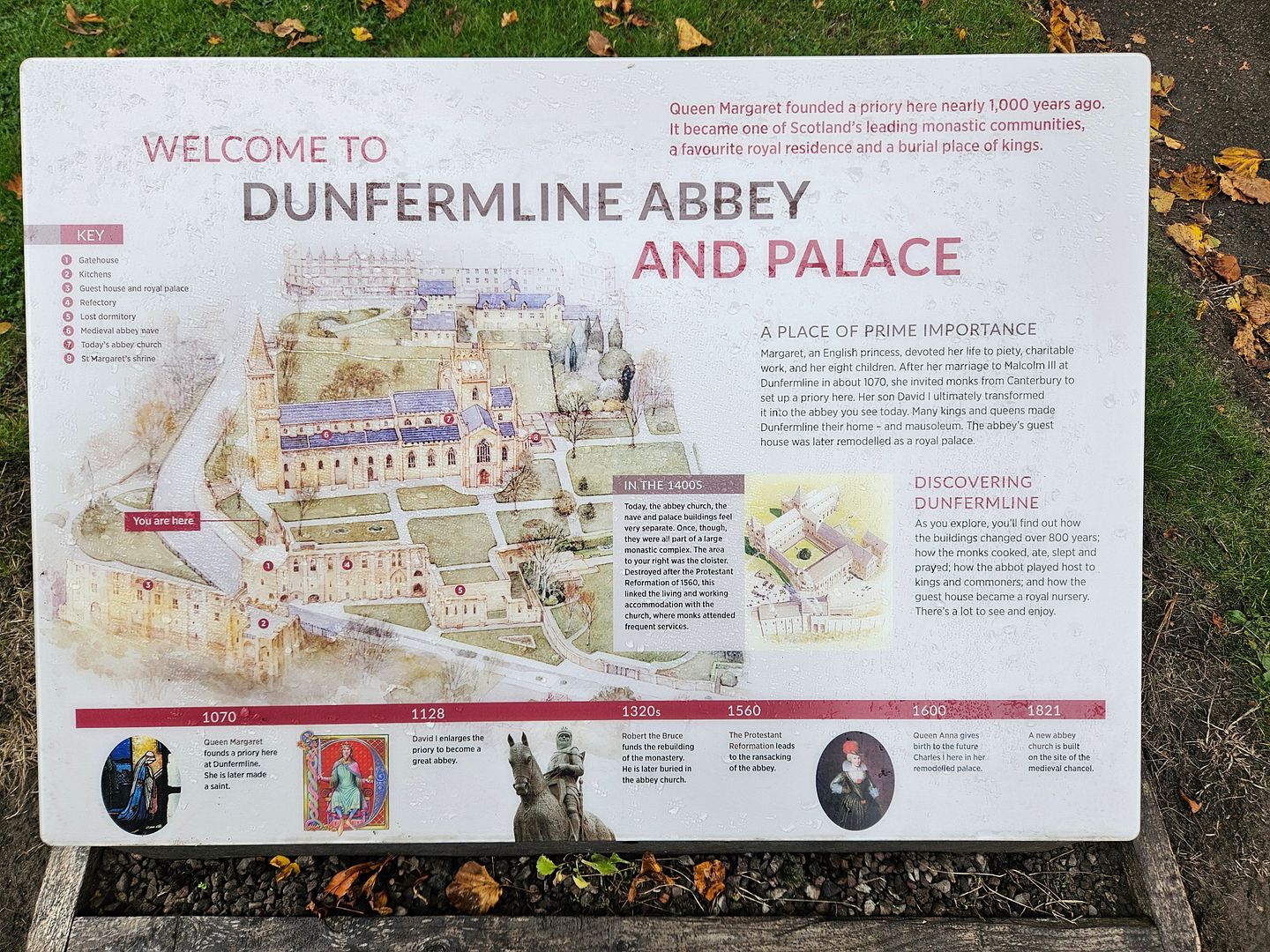
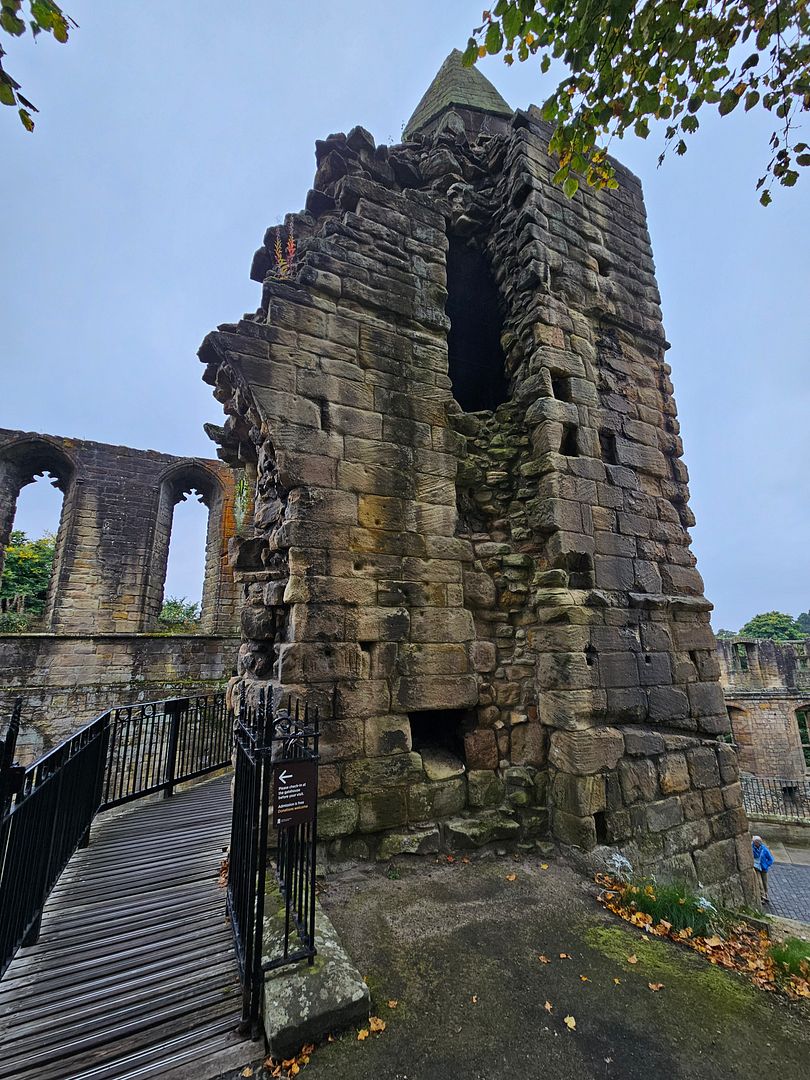
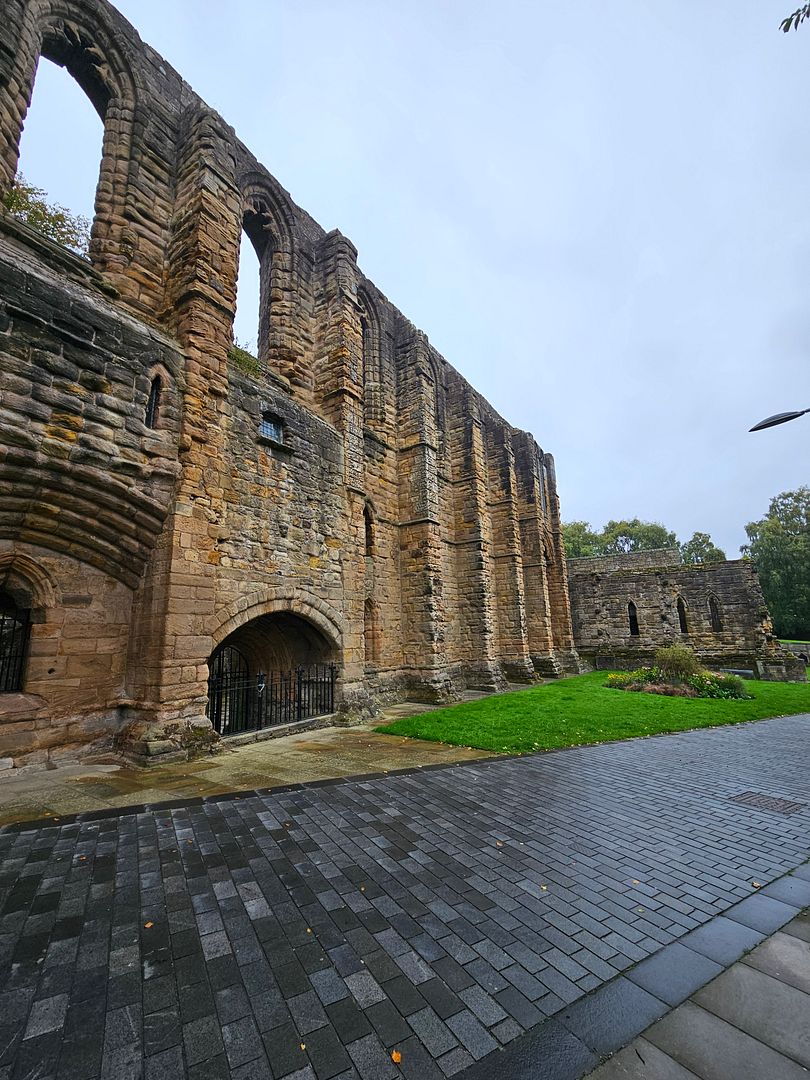
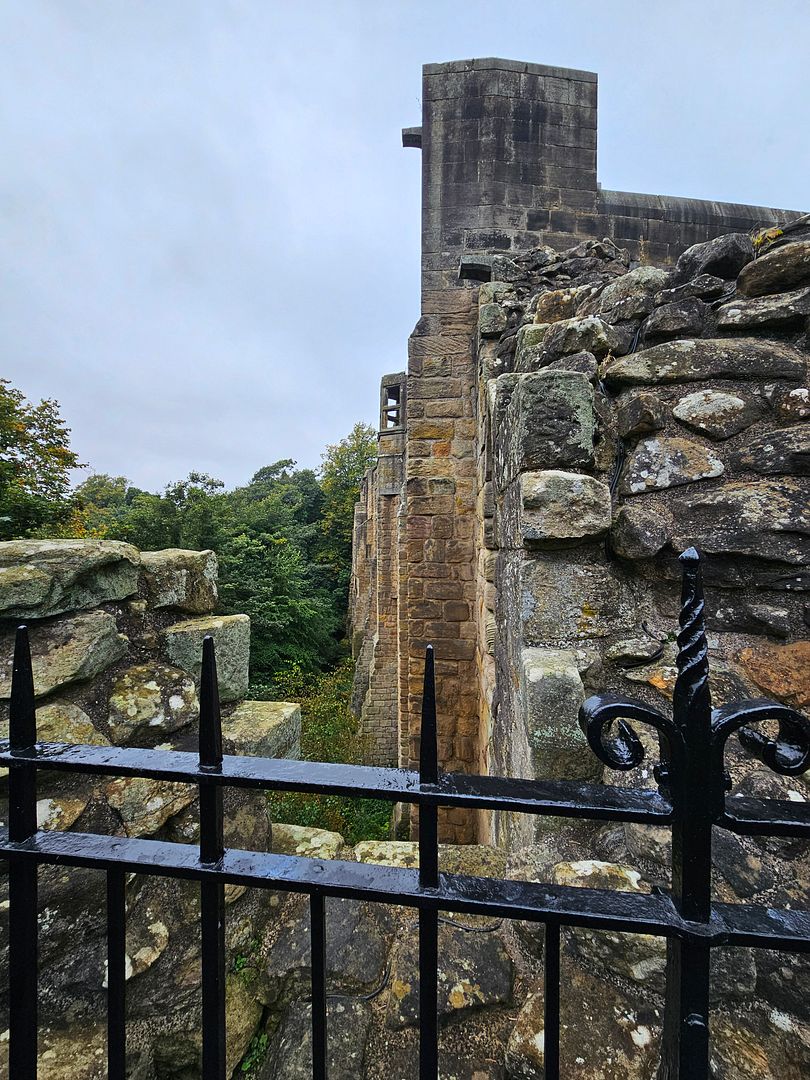
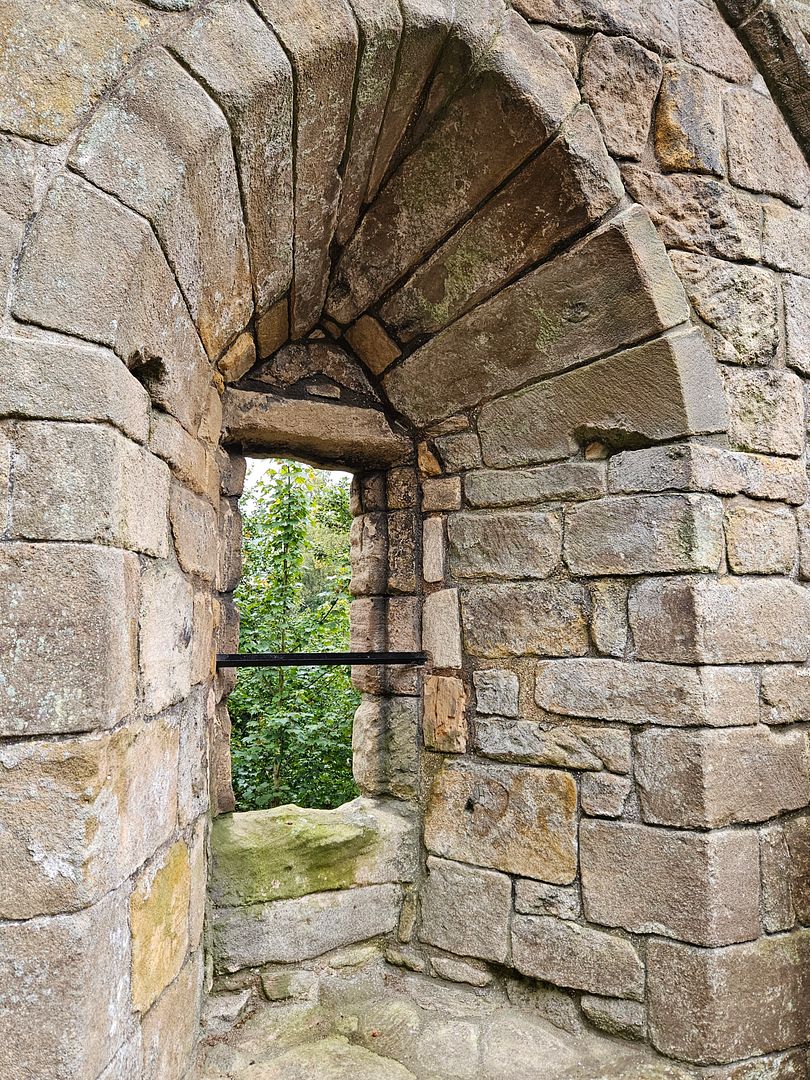
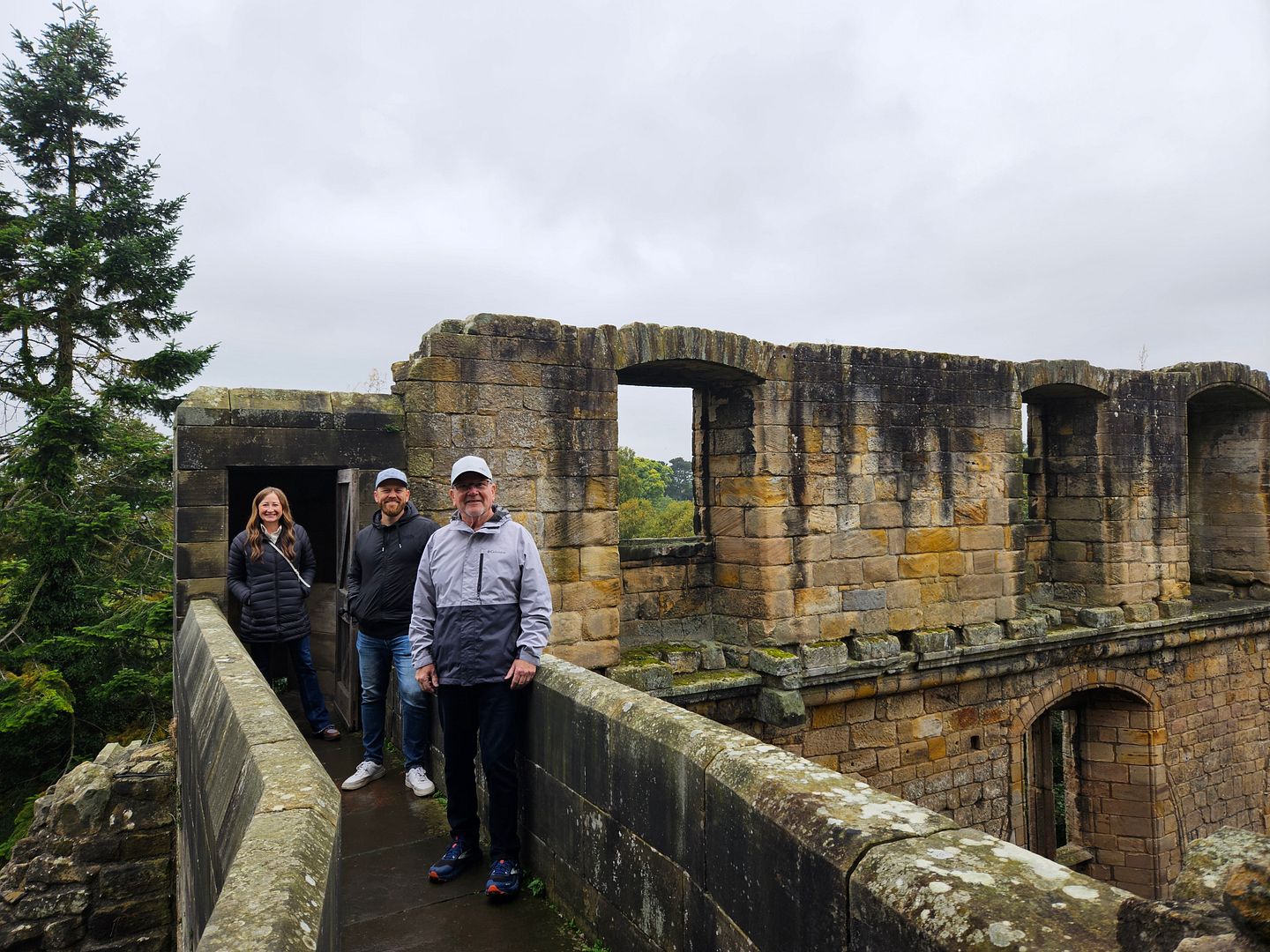
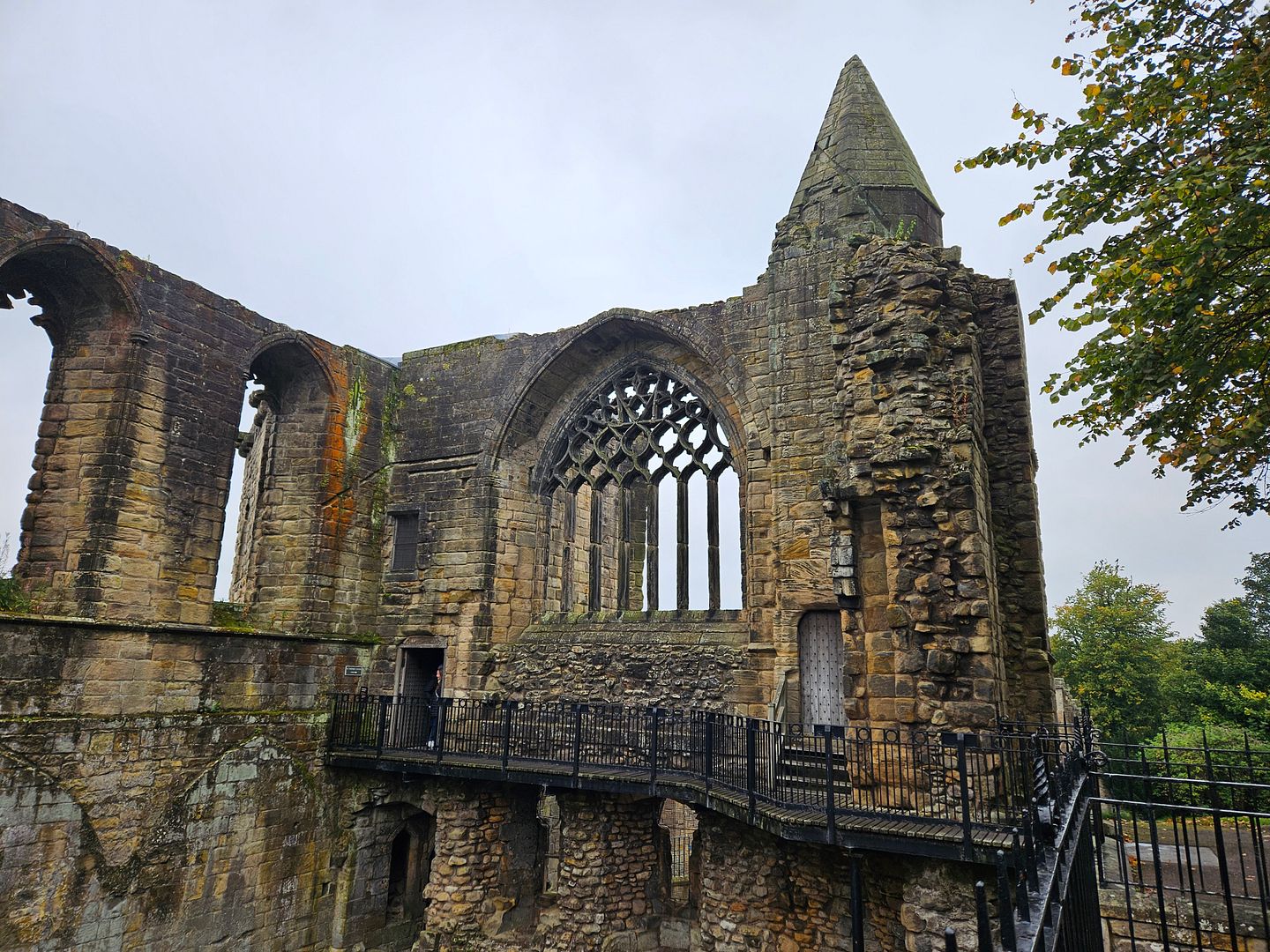
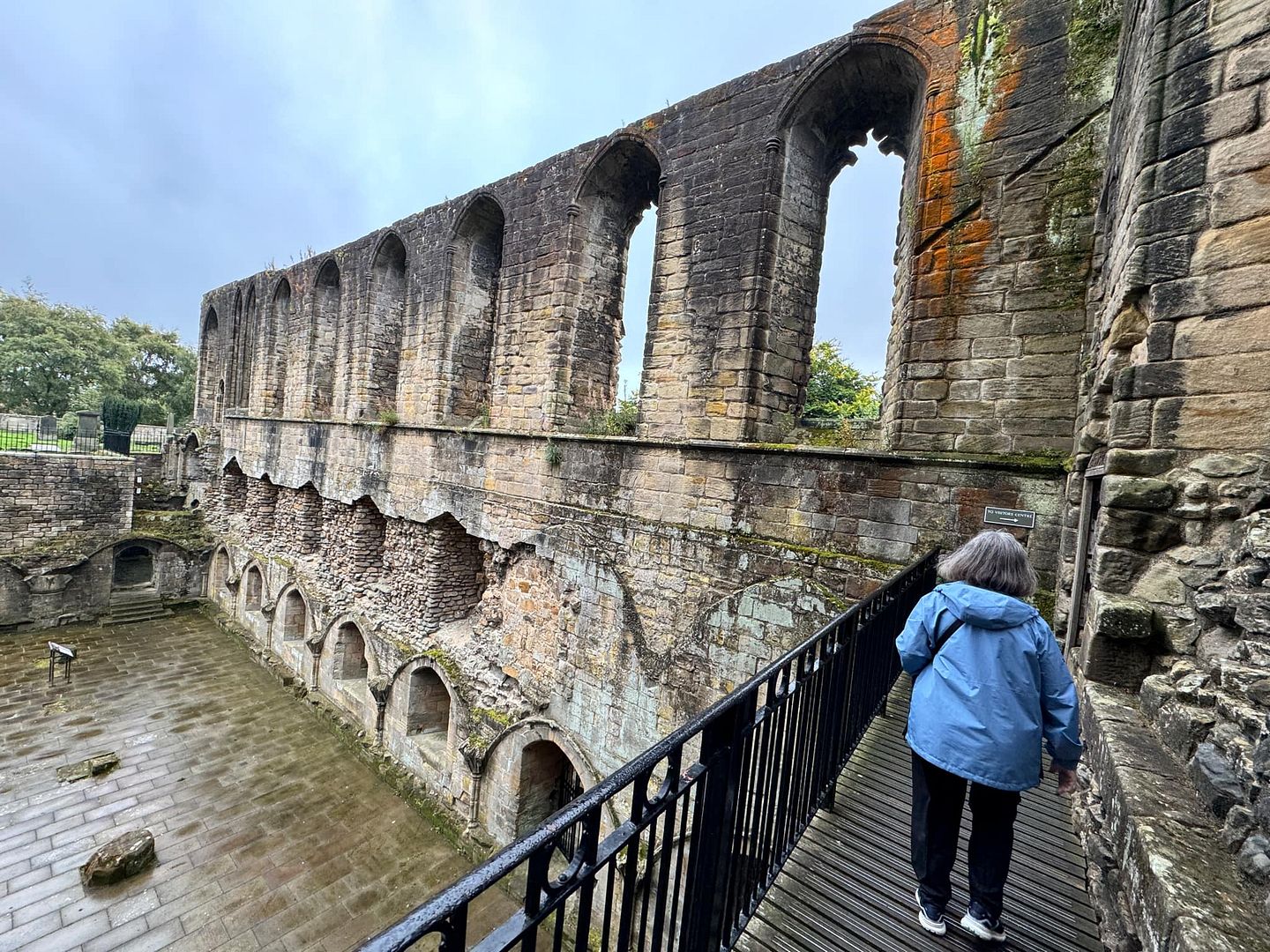
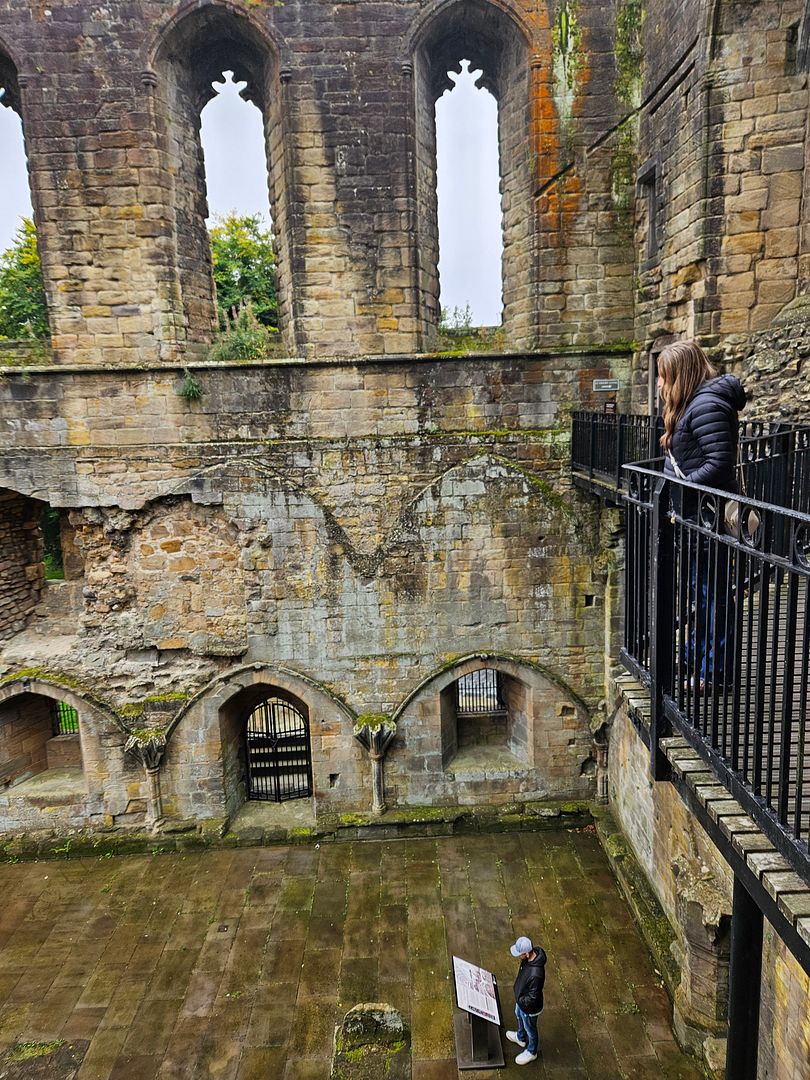
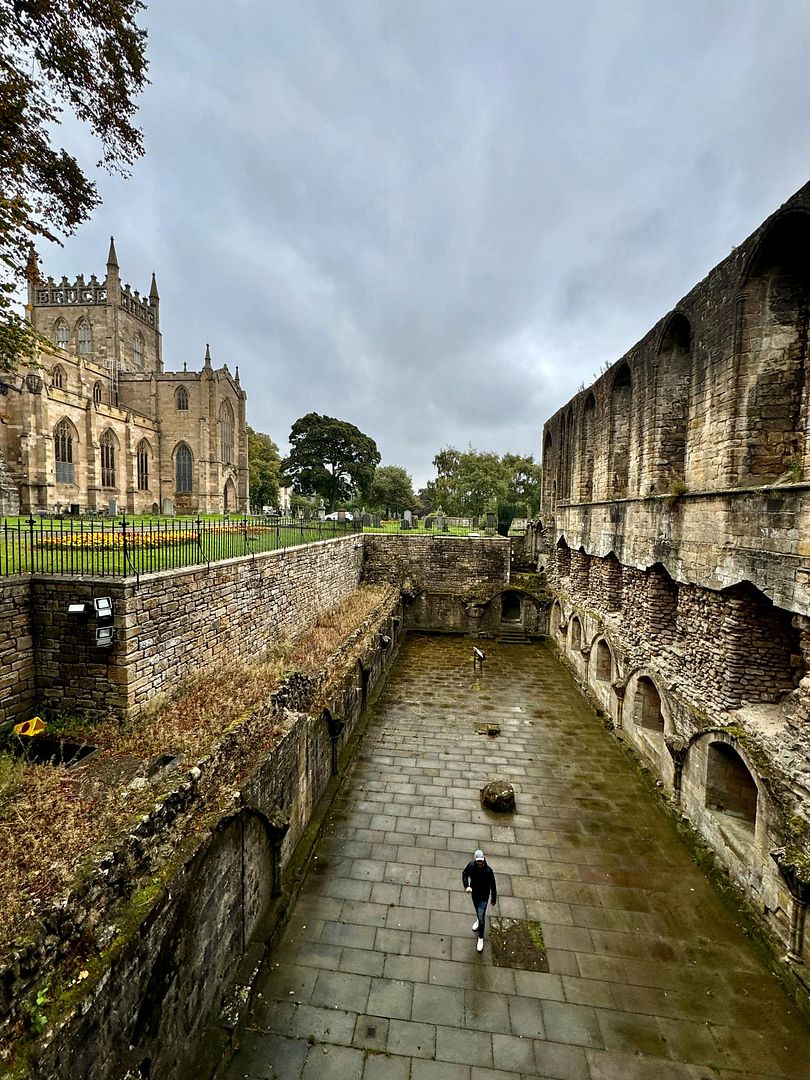
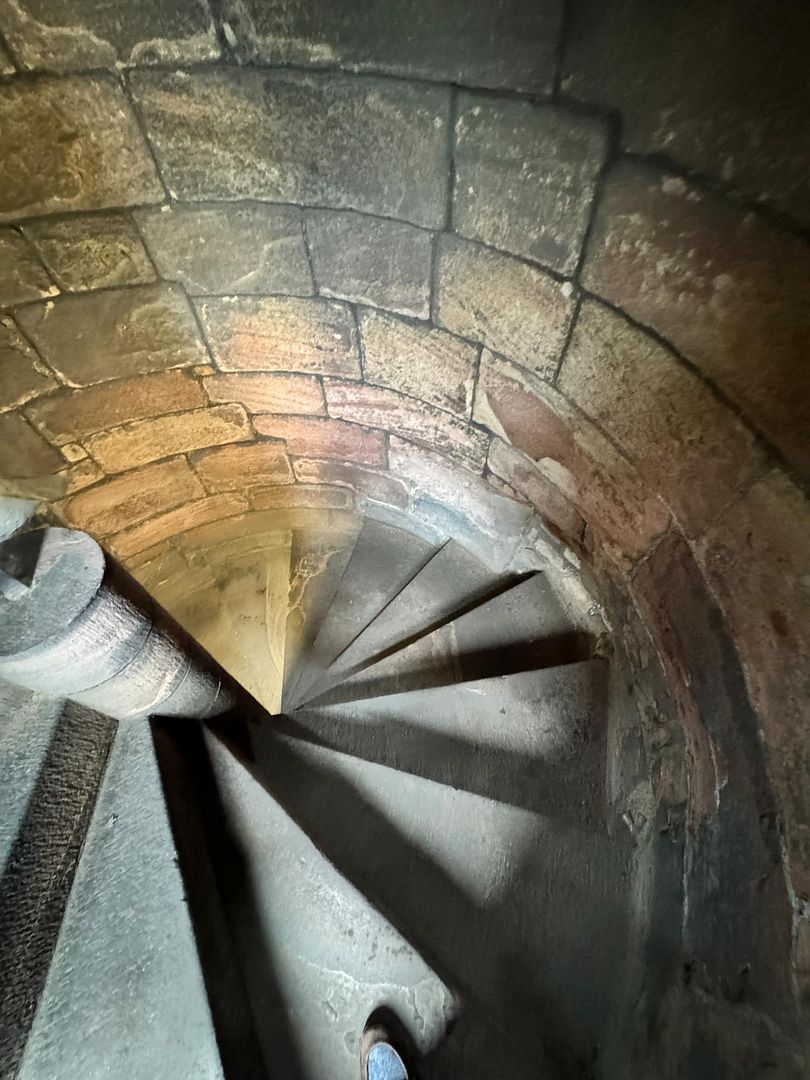
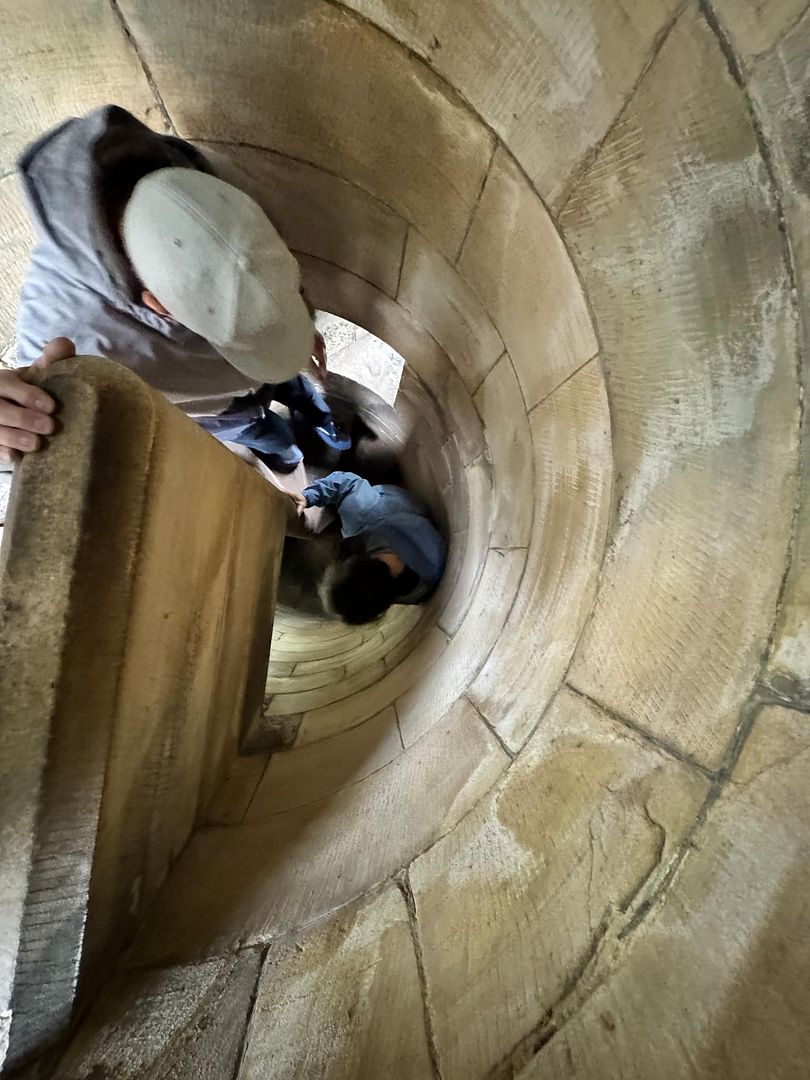
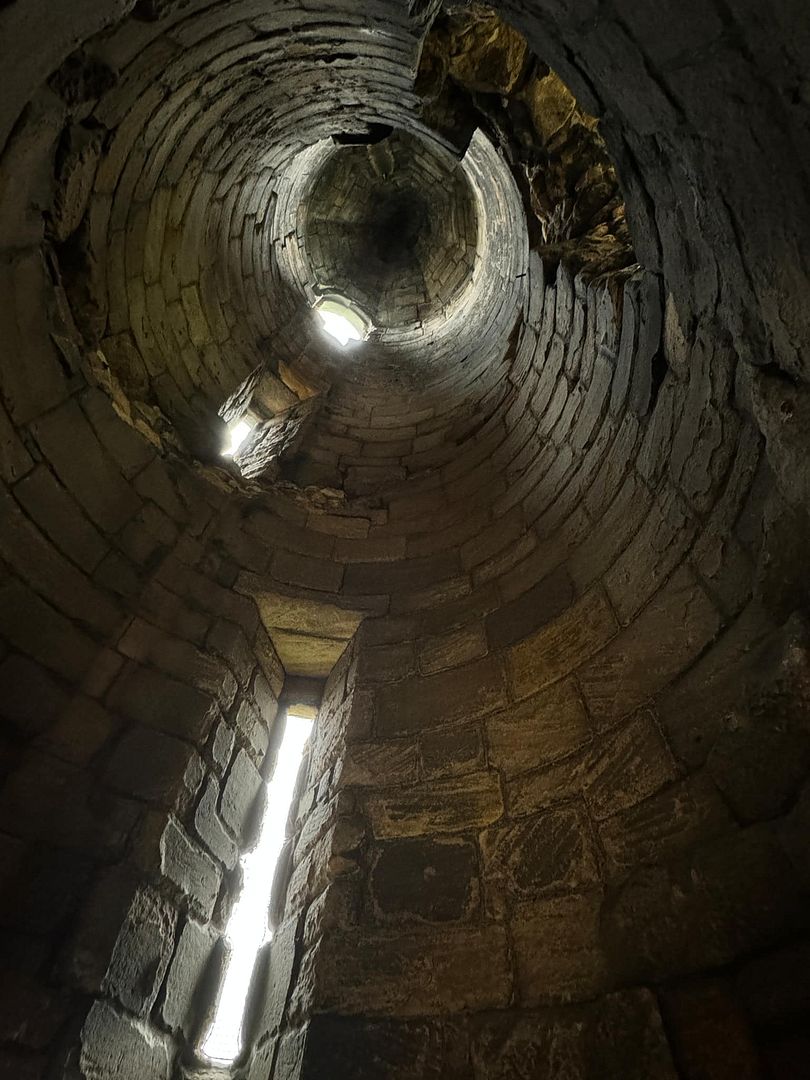
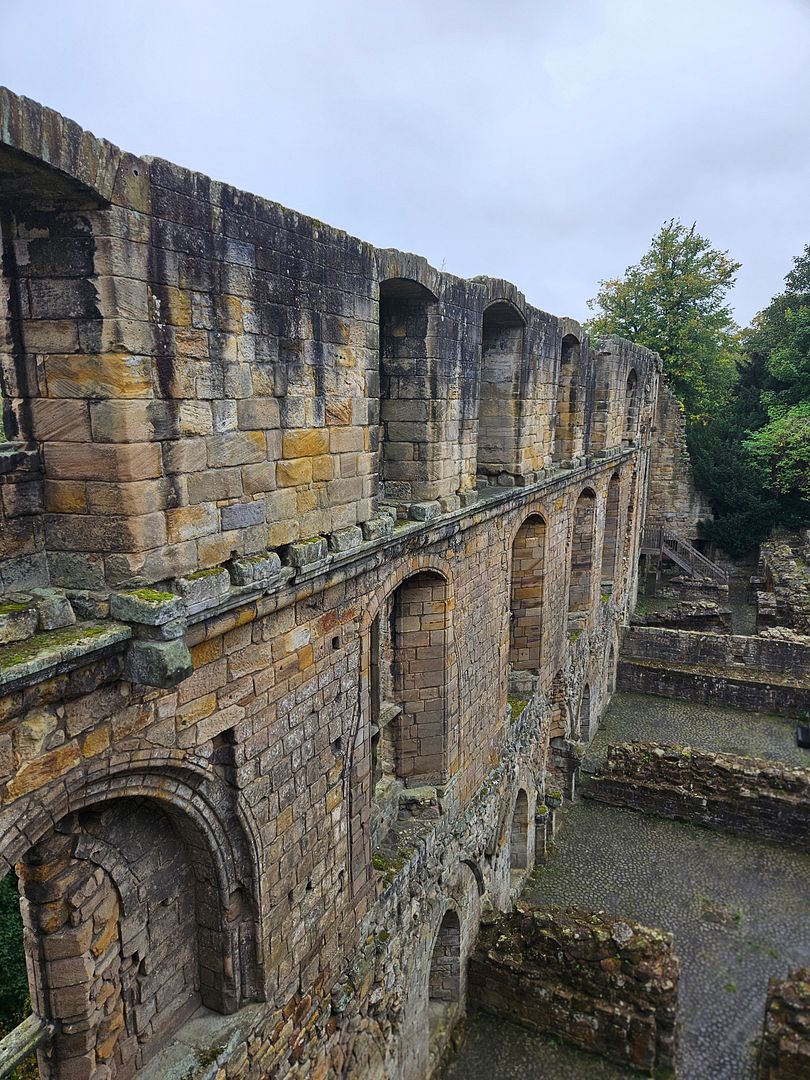
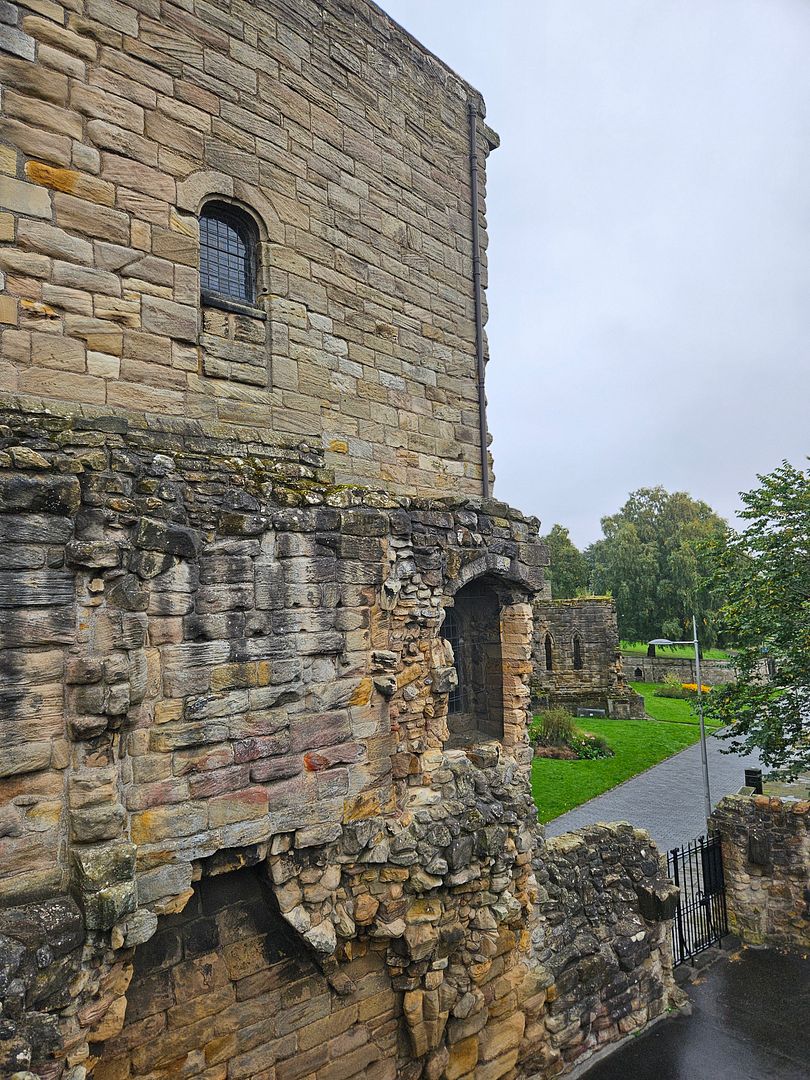
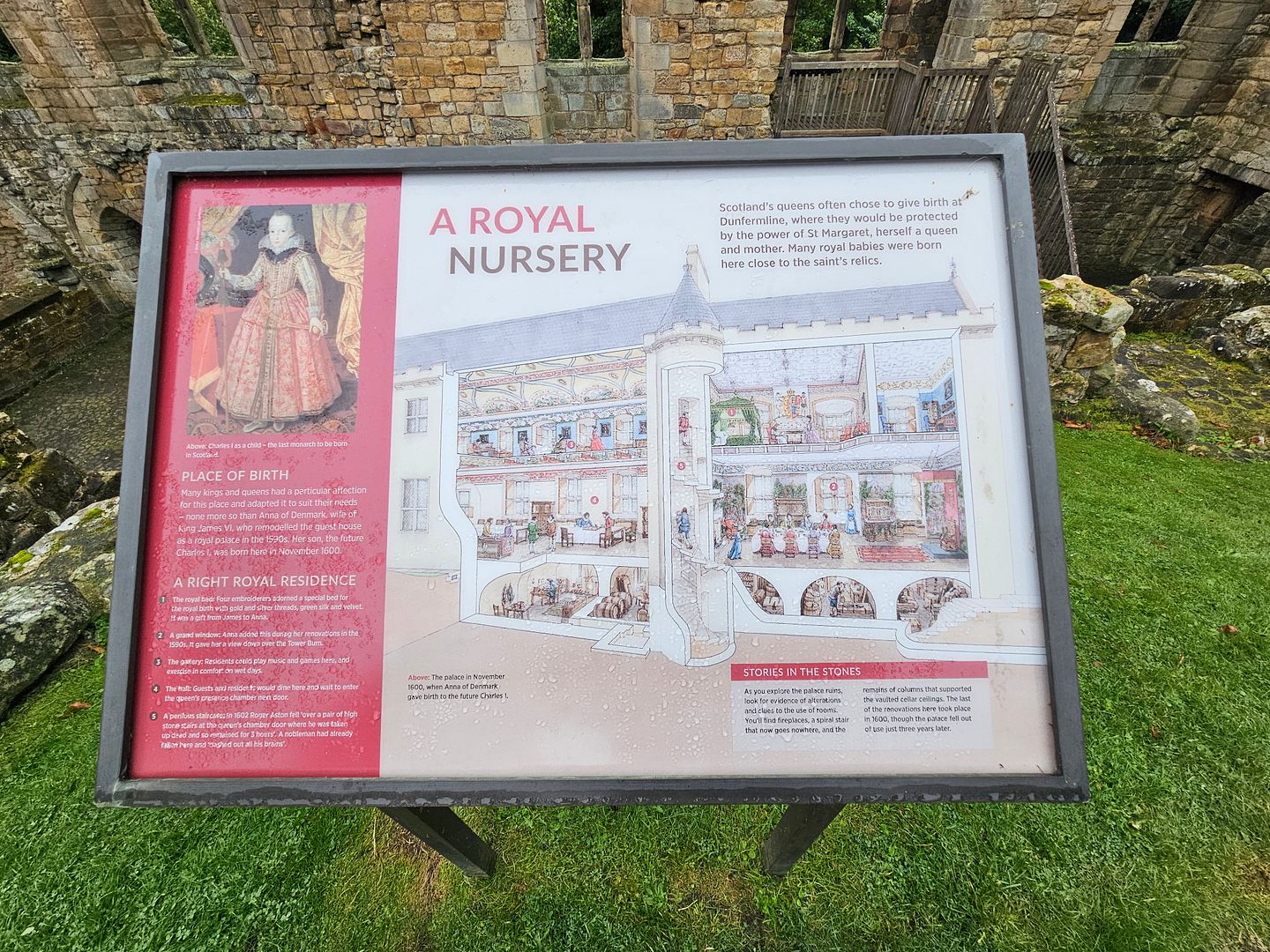
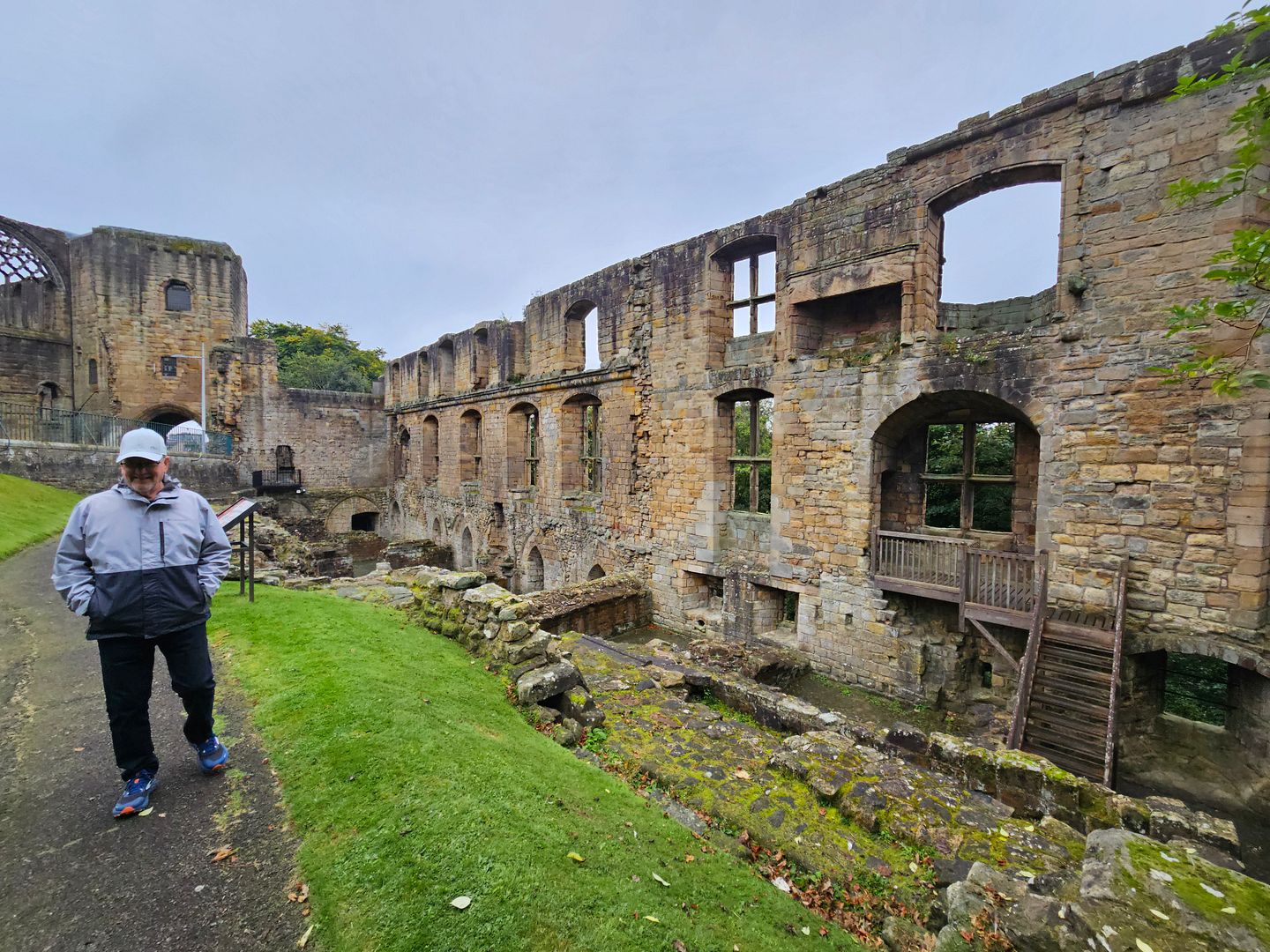
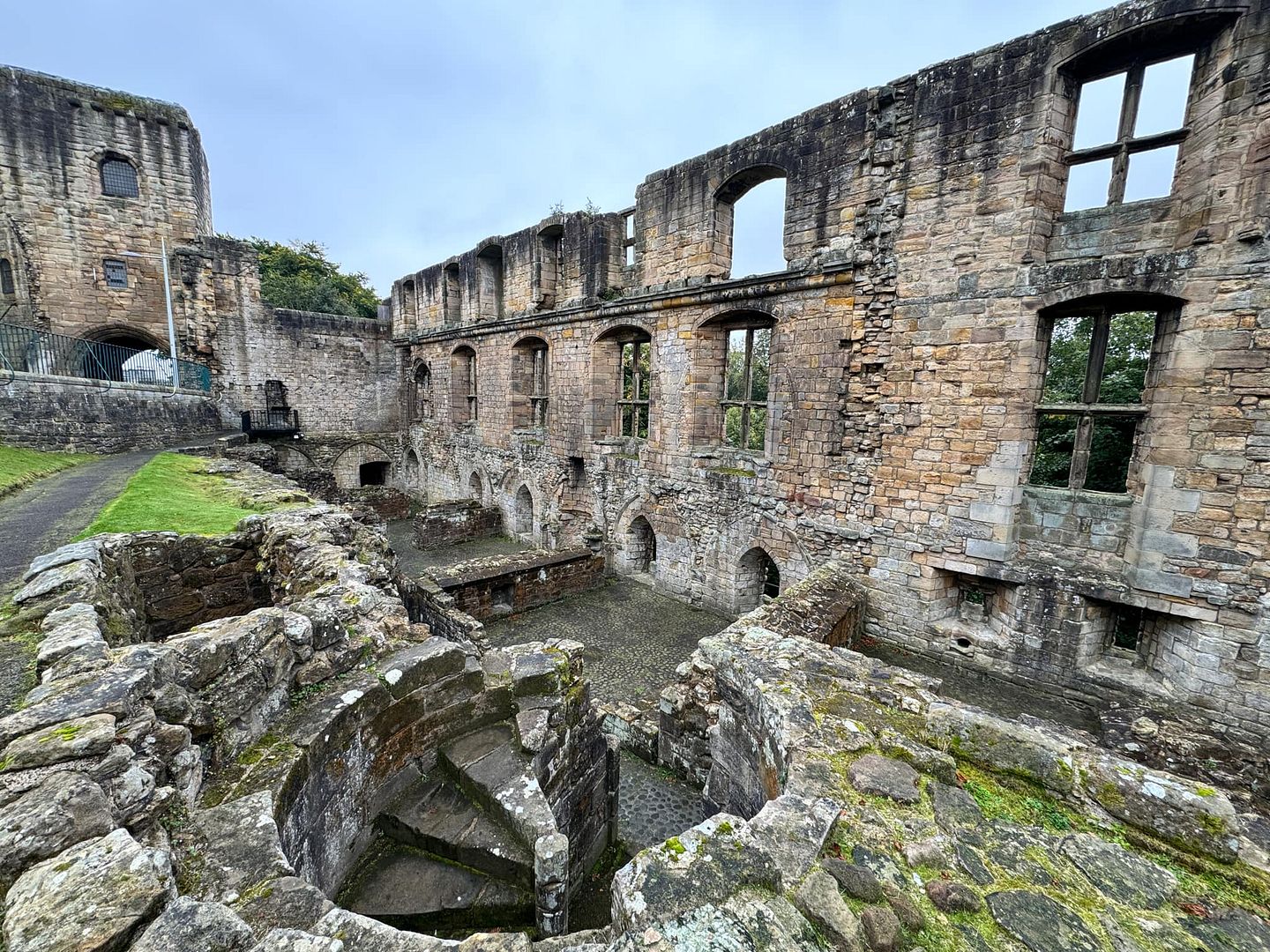
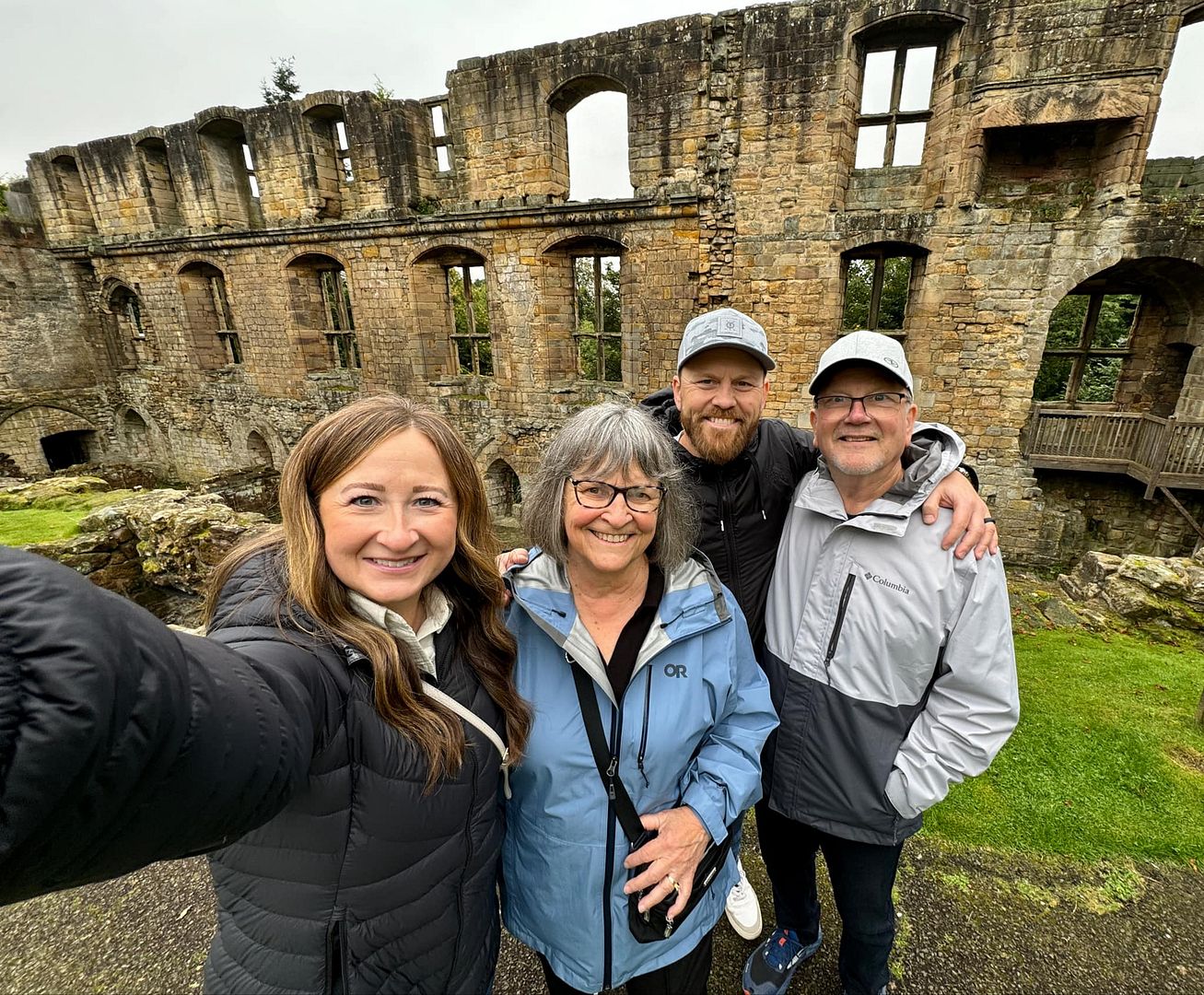
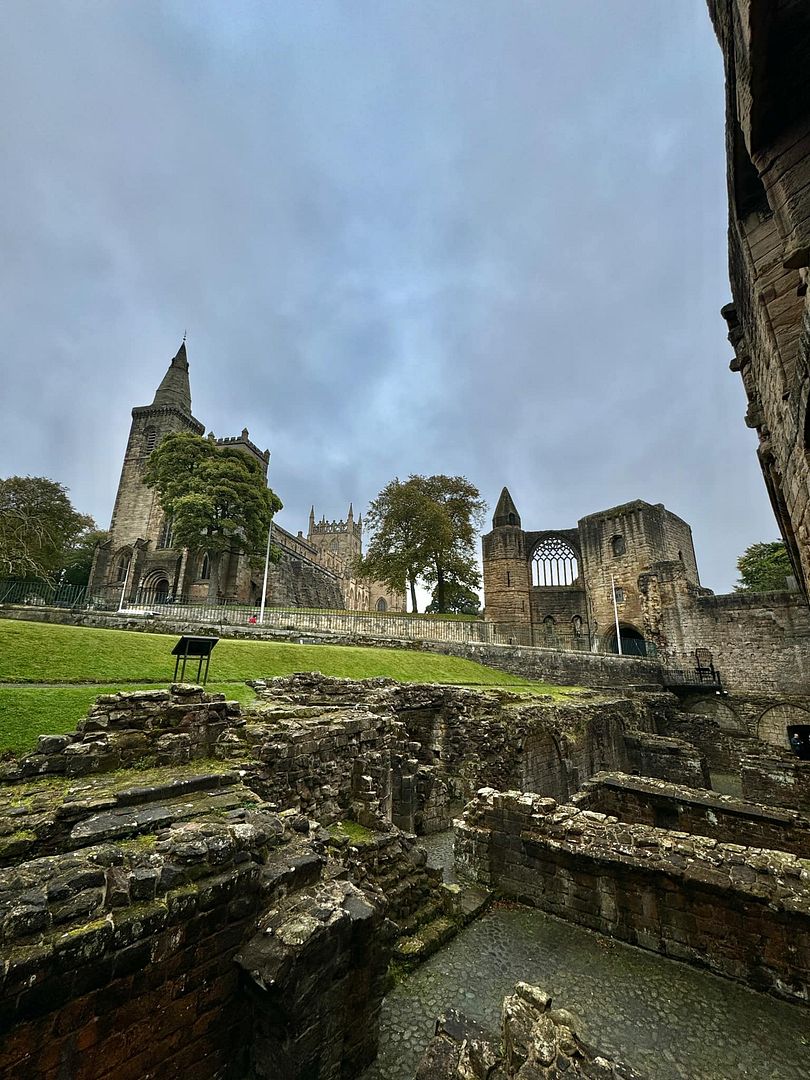
On September 21st which was a Saturday and our journey from St. Andrews to Edinburgh we stopped to visit the Dunfermline Abbey and Palace. Although I’ve posted the exterior and interior of the Abbey already we toured the palace grounds first on this day. The kiosk to pay for our visit was located in the palace ruins area. This part of our visit involved going up and down different elevations within and along the ruins of palace.

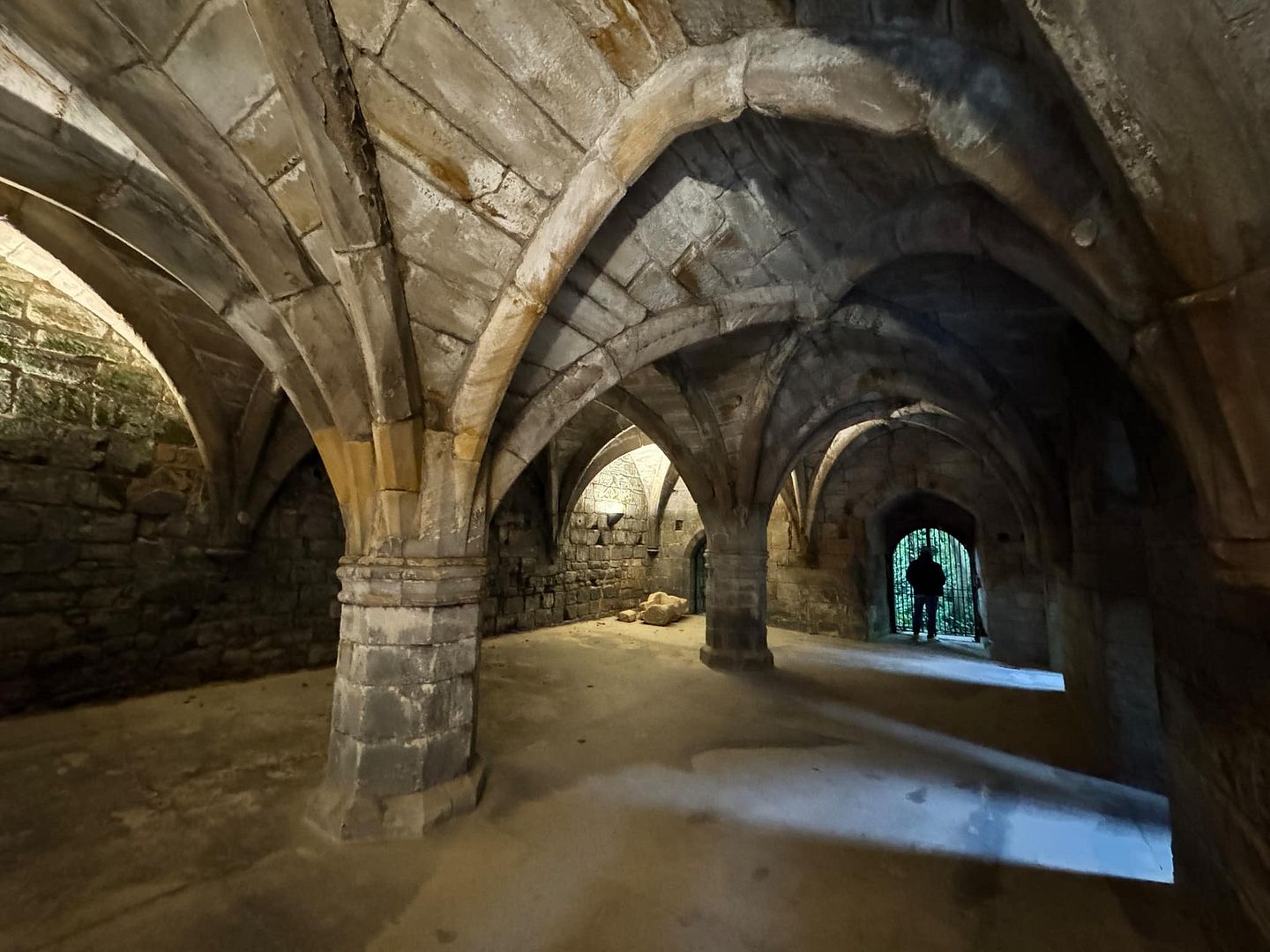
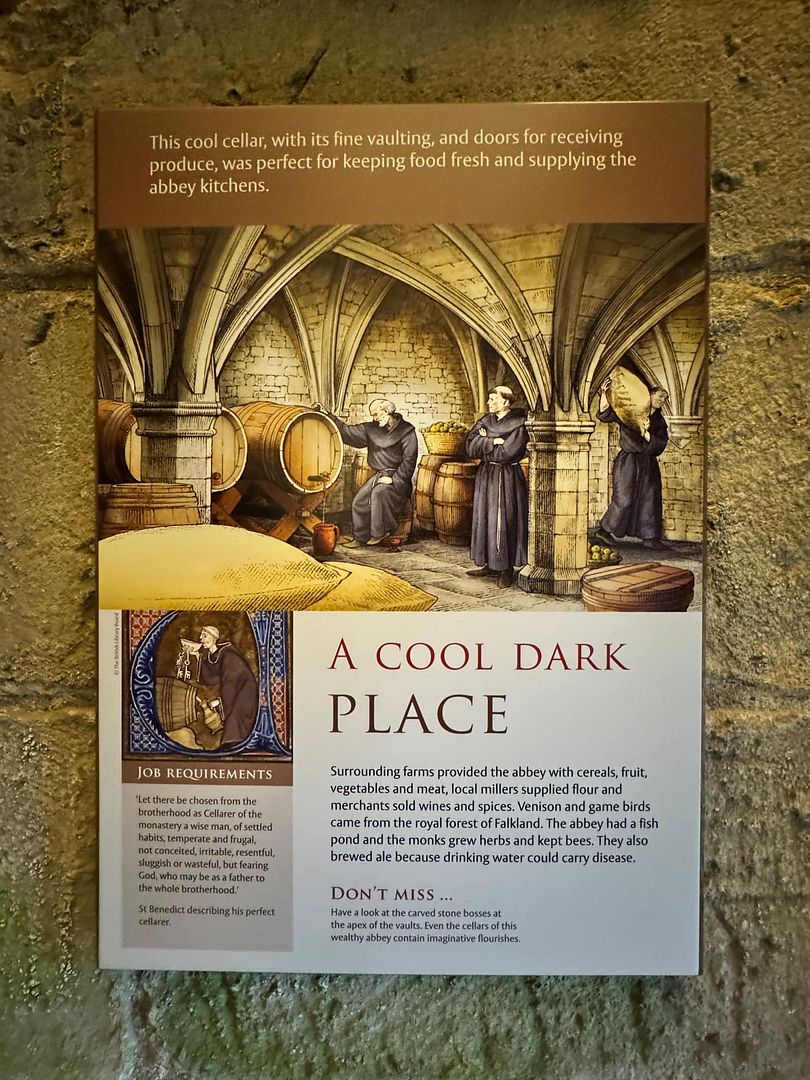
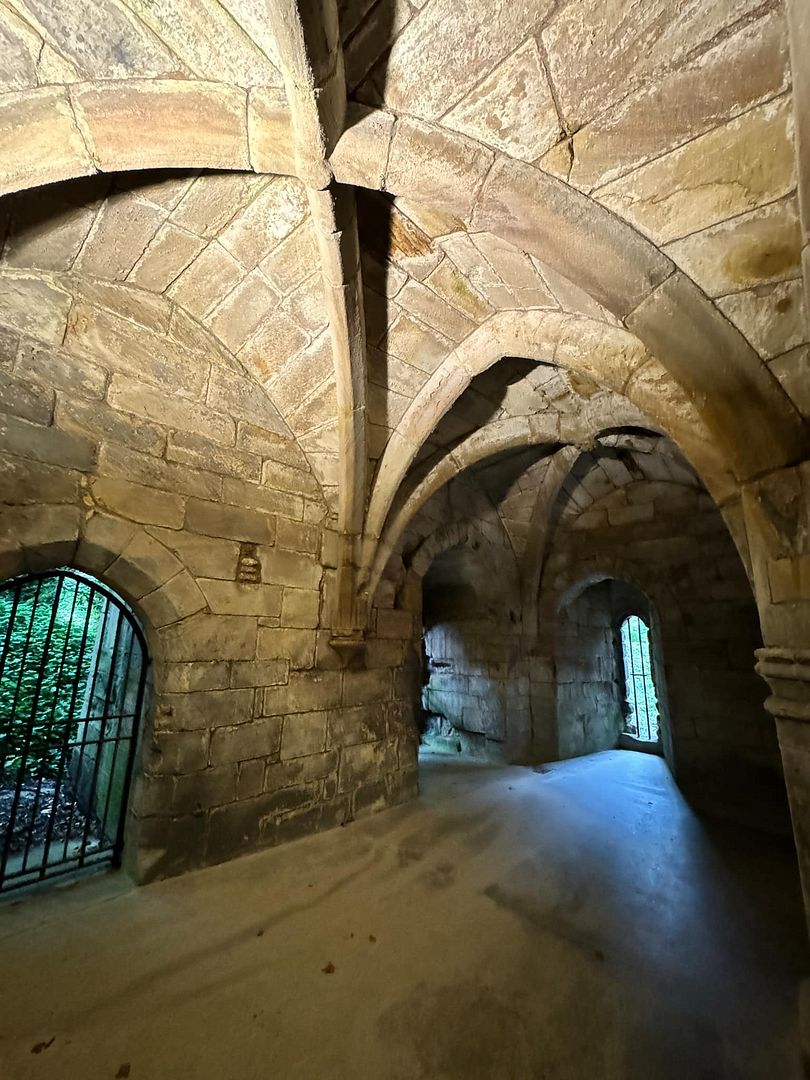
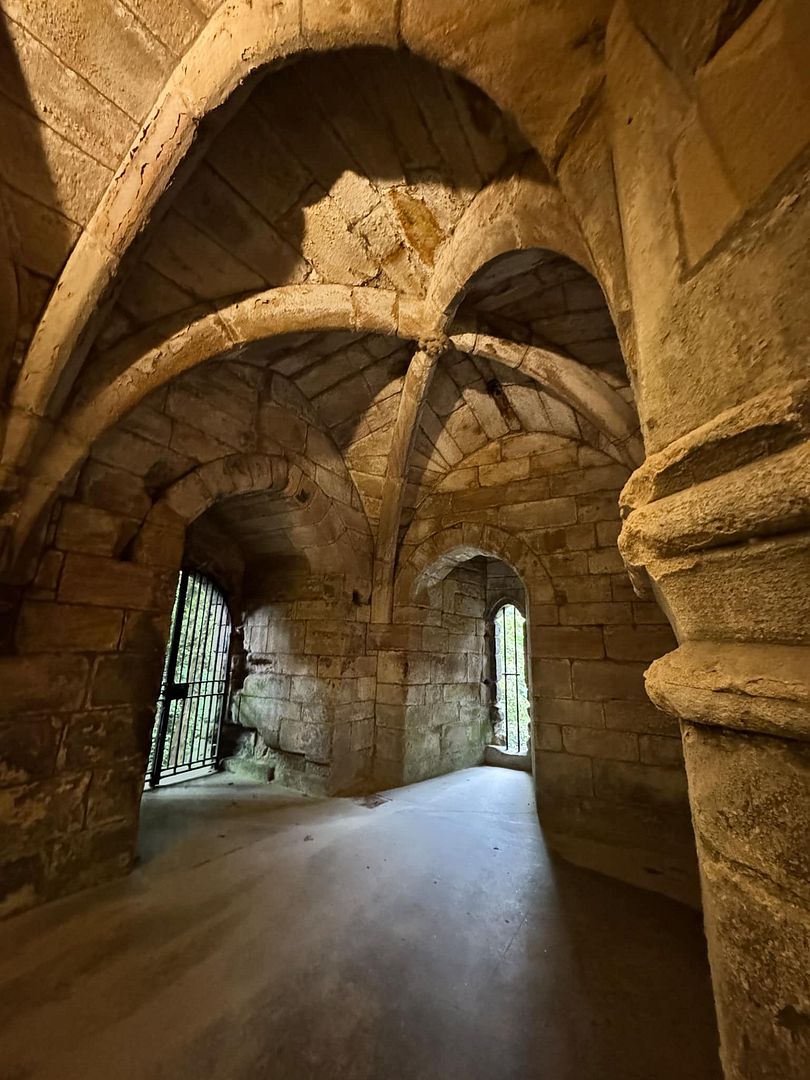
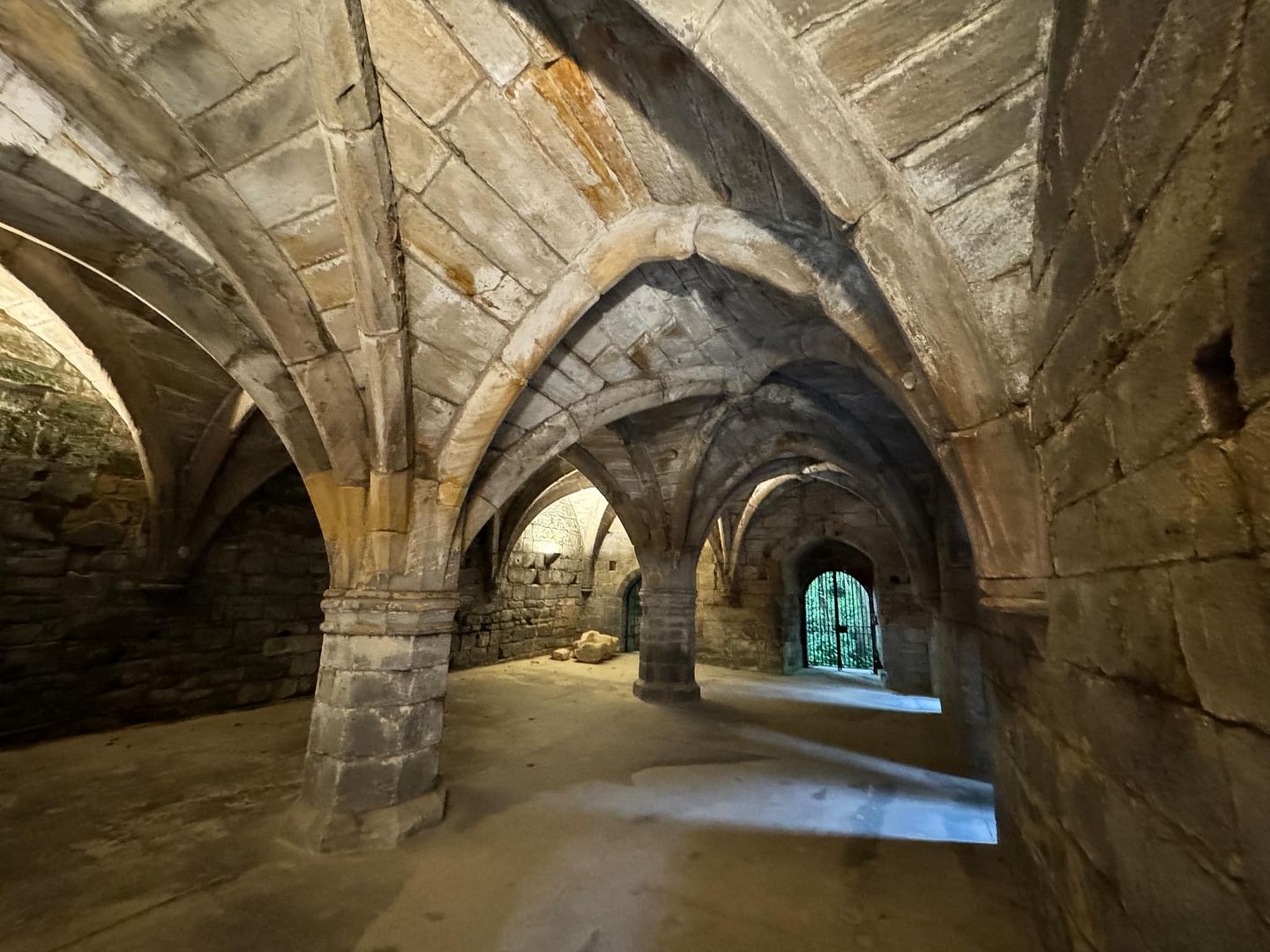
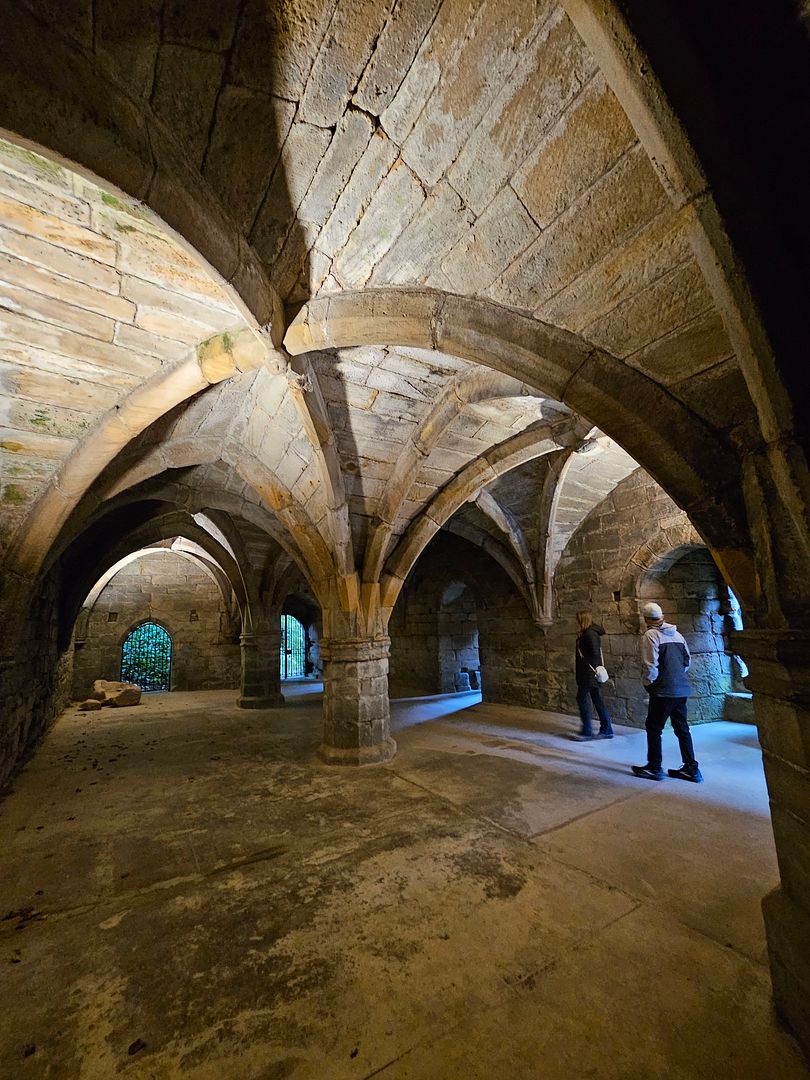
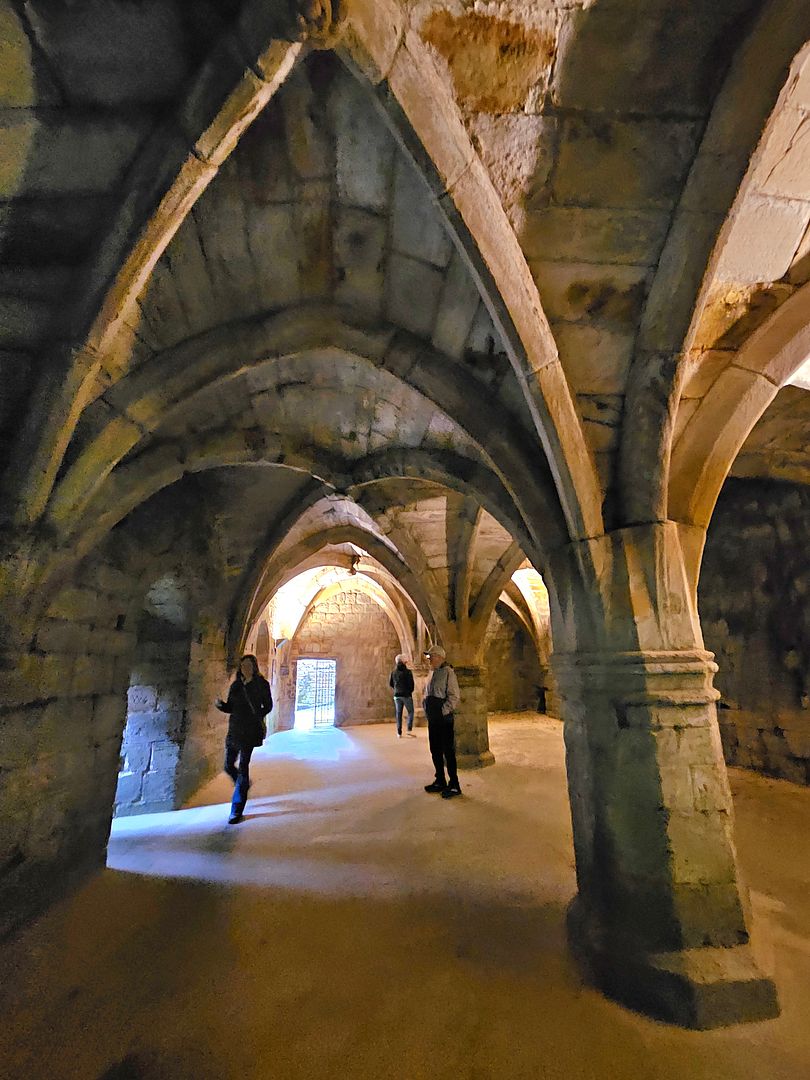
In the cellars with some great acoustics we had an impromptu moment of worship as Laura began to sing ‘Praise God From Whom All Blessings Flow’. We all joined in and it was a sweet time together.

Praise God from whom all blessings flow, praise Him all creatures here below, praise Him above ye heavenly hosts, praise Father, Son and Holy Ghost, Amen.

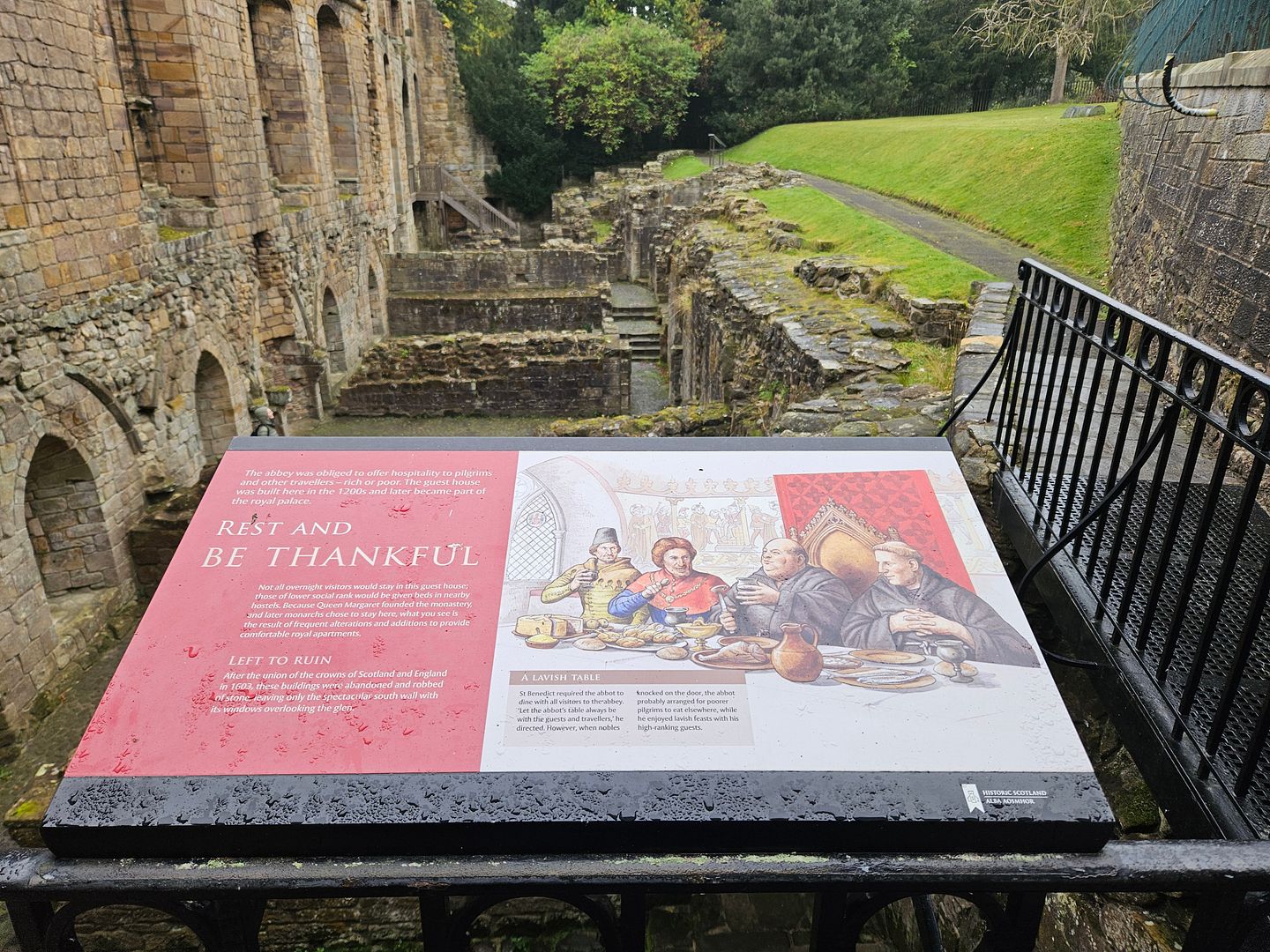
The Abbey was obliged to offer hospitality to pilgrims and to other travelers whether rich or poor. The guest house was built here in the 1200’s and later became part of the royal palace. 

Not all overnight visitors would stay in this guest house; those of lower social rank would be given beds in nearby hostels. Because Queen Margaret founded the monastery and later monarchs chose to stay here, what you see is frequent alterations and additions to provide comfortable royal apartments. 

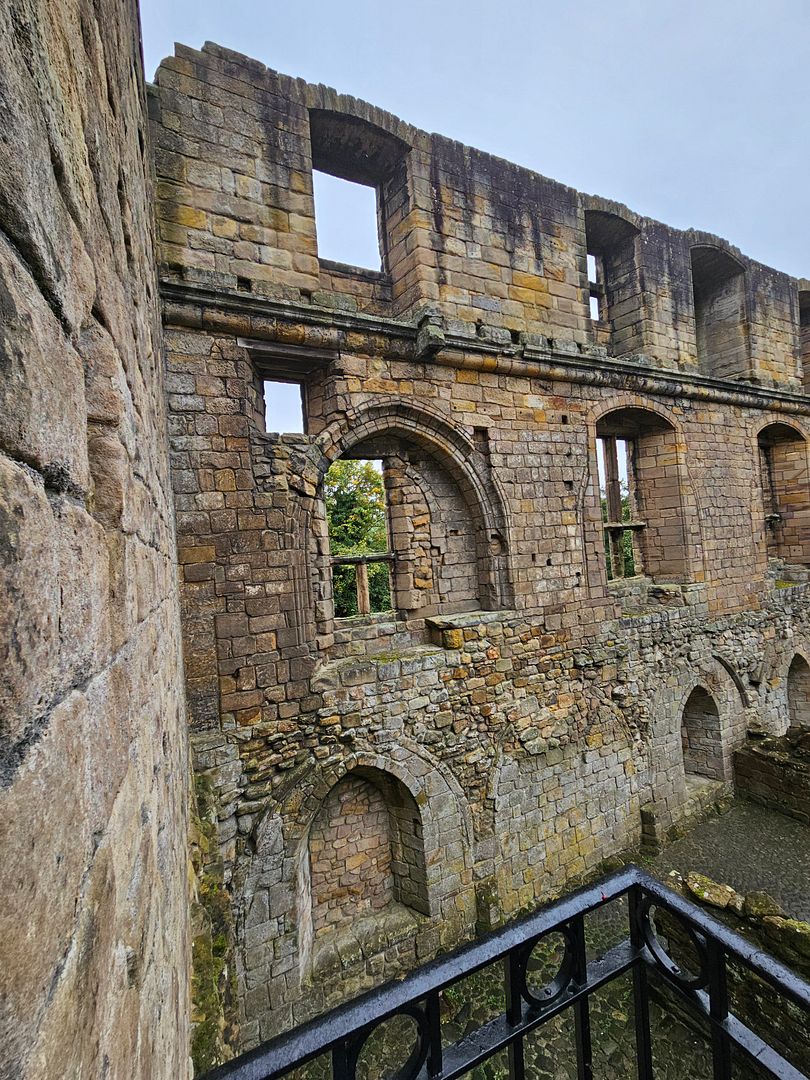
After the union of the crowns of Scotland and England in 1603, these buildings were abandoned and robbed of stone leaving the spectacular south wall with its windows overlooking the glen.

St. Benedict required the abbot dine with all visitors to the abbey. ‘Let the abbots table always be with guests and travellers’, he directed. However, when nobles knocked on the door, the abbot probably arranged for poorer pilgrims to eat elsewhere, while he enjoyed lavish feasts with his high-ranking guests.

This was such a worthwhile stop on our way back to Stirling to drop off our rental car and take a train to Edinburgh for the last few days of our Scotland Trip. Our sunshiny days were behind us.

Back to the present:

Today, January 20, 2025, in the United States is the inauguration of our 47th President, Donald J. Trump. We will be watching the ceremony. We hope for the best for our country and it’s people and our world. For us as believers, the very best is yet to come and it’s not happening here. In the meantime, we pray, we hope for the best, and we remain good citizens of our country doing our part as citizens. We acknowledge that we are not in control of the world and what is happening around the world but we know the One who is in control and who holds our world together.

As the song resounds, ‘This World is not my home I’m just a passing through, my treasures are laid up somewhere beyond the blue, the angels beckon me from heaven’s open door, and I can’t feel at home in this world anymore.’

Fifty Years and Counting…

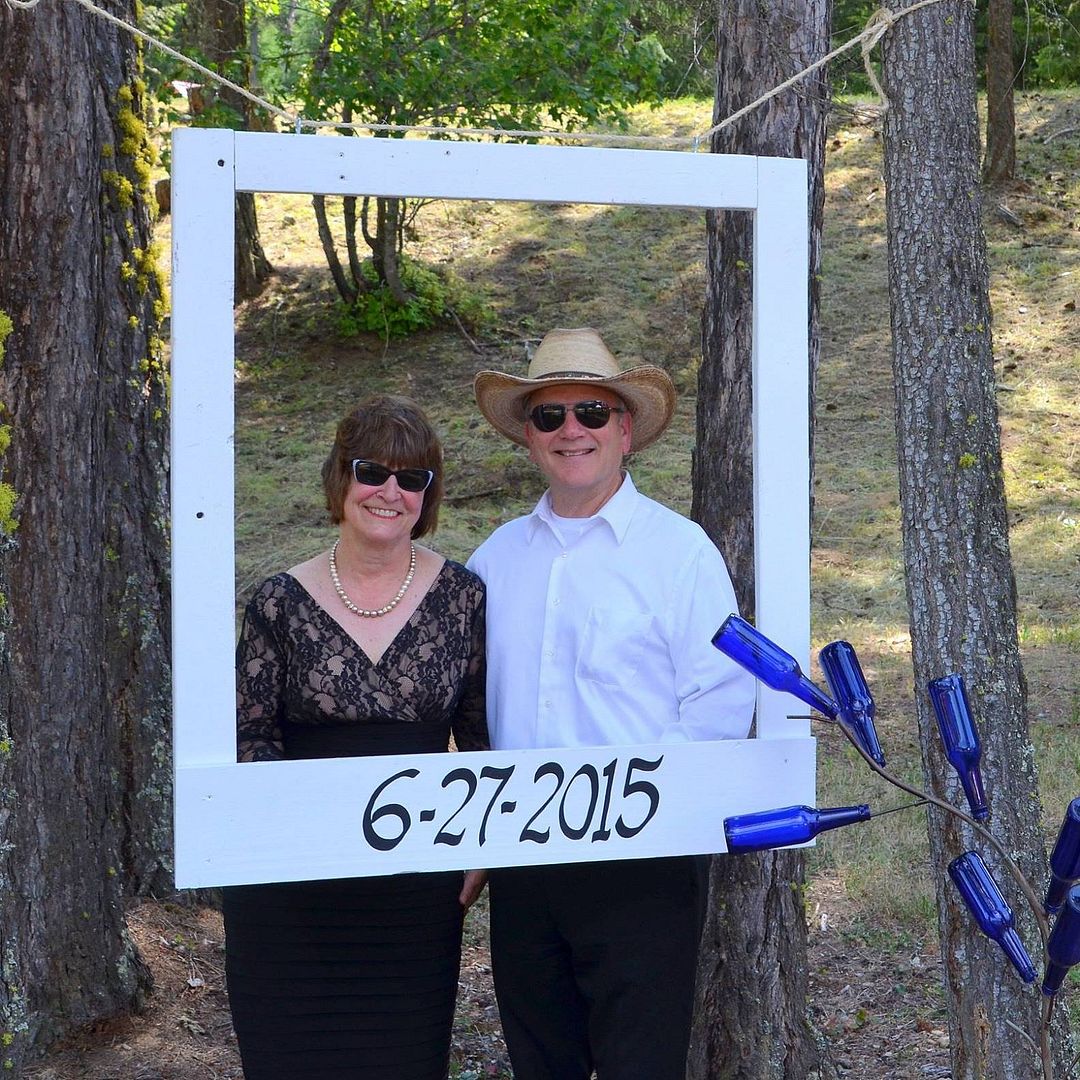
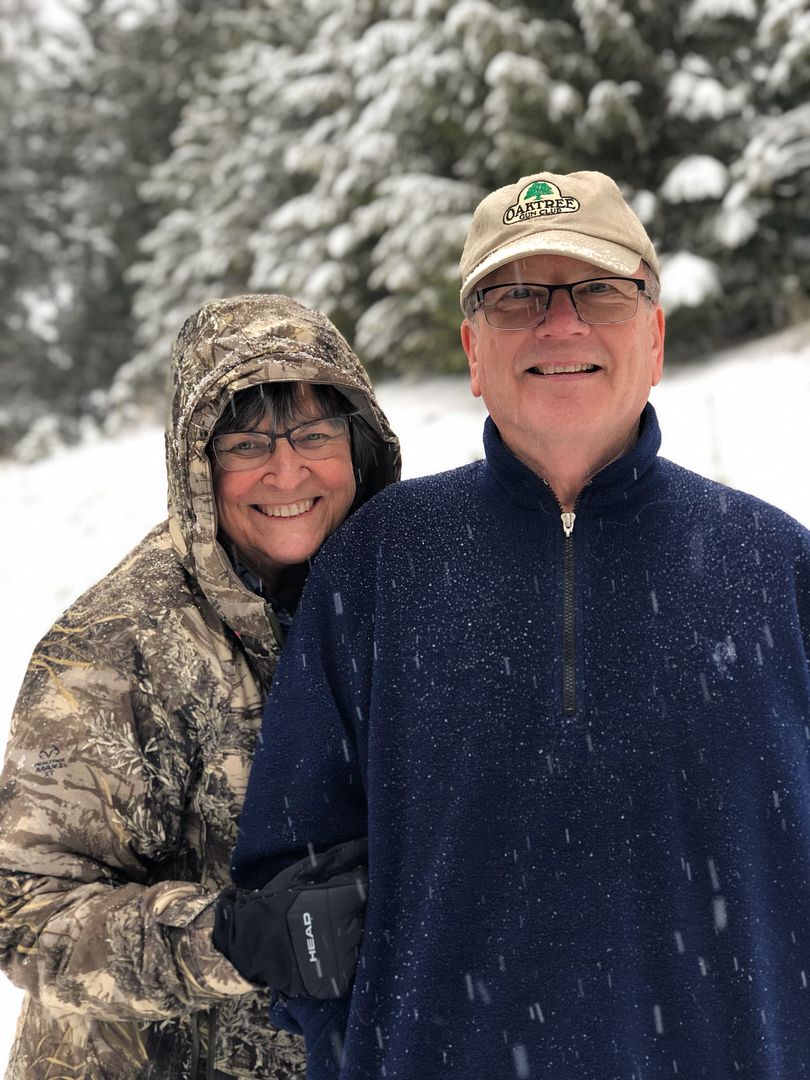
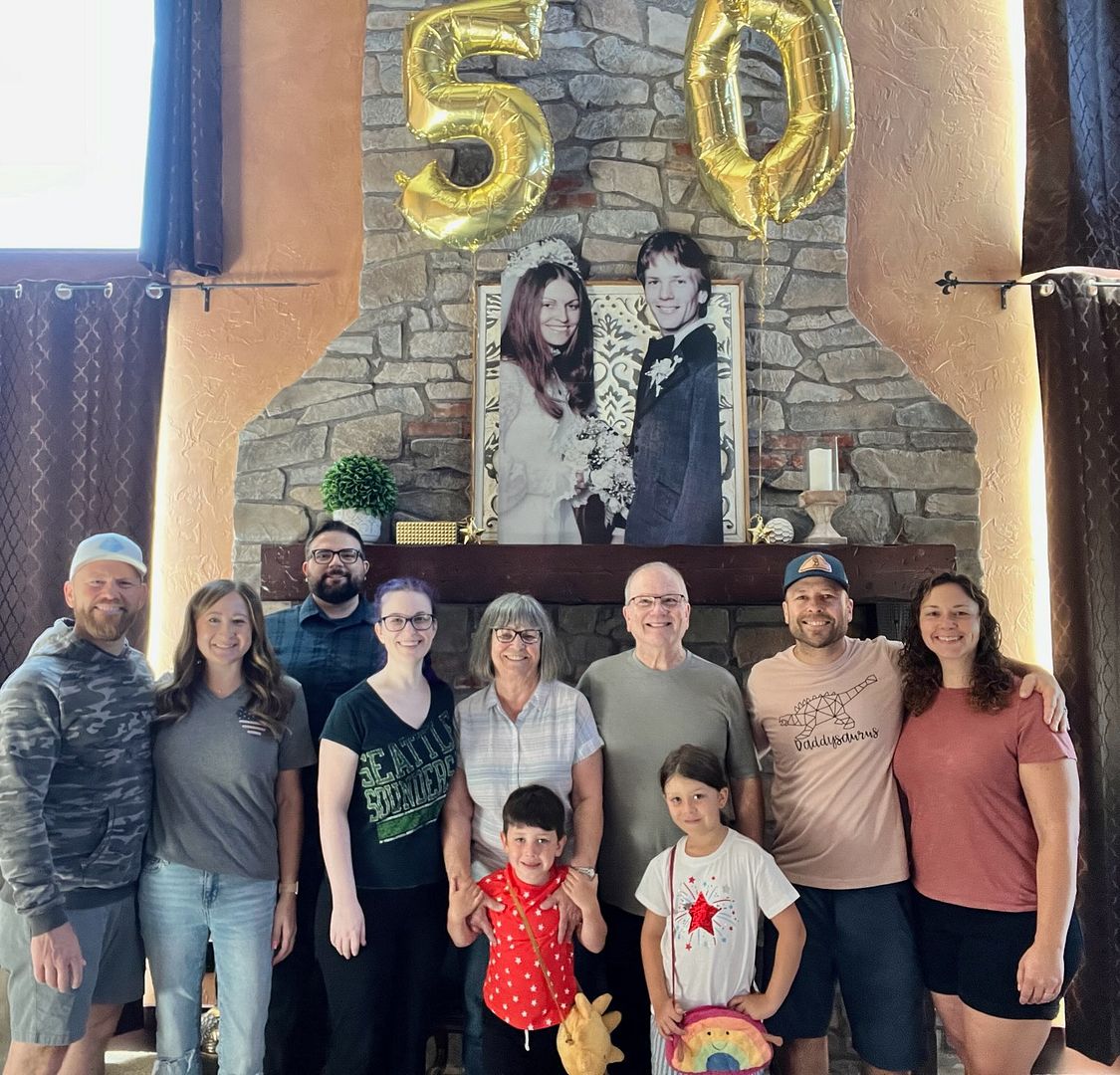
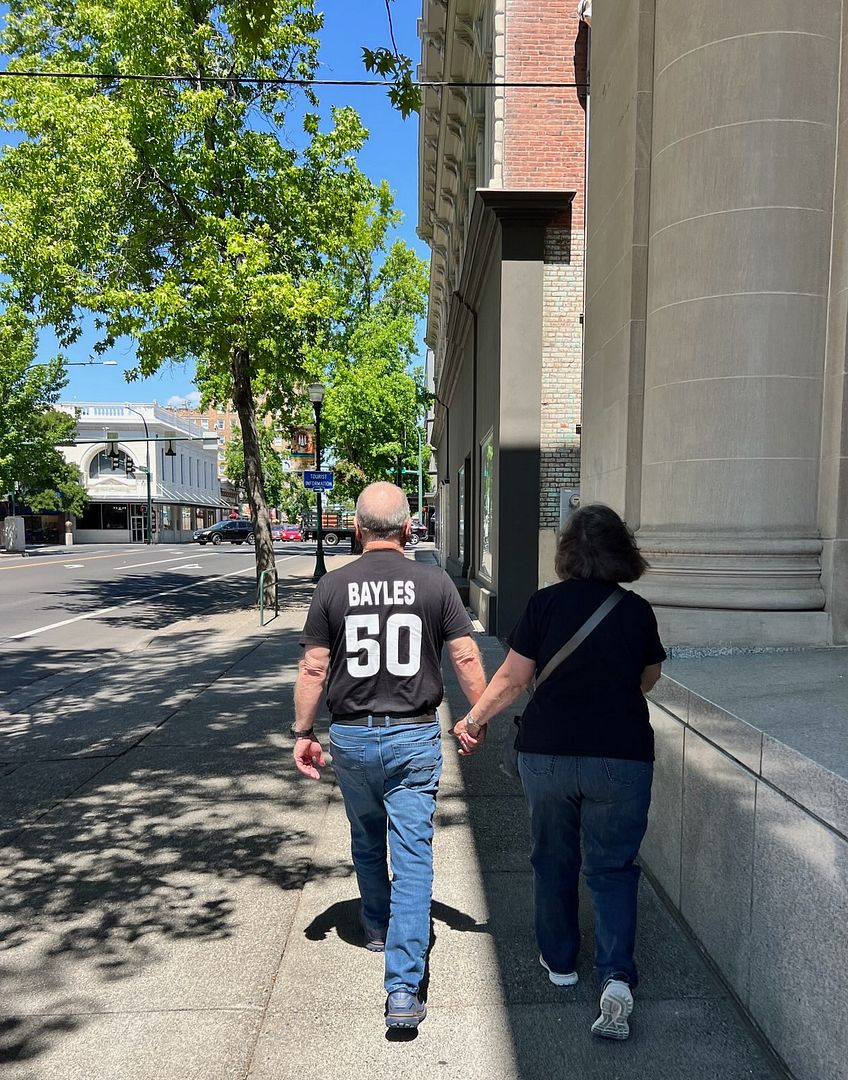
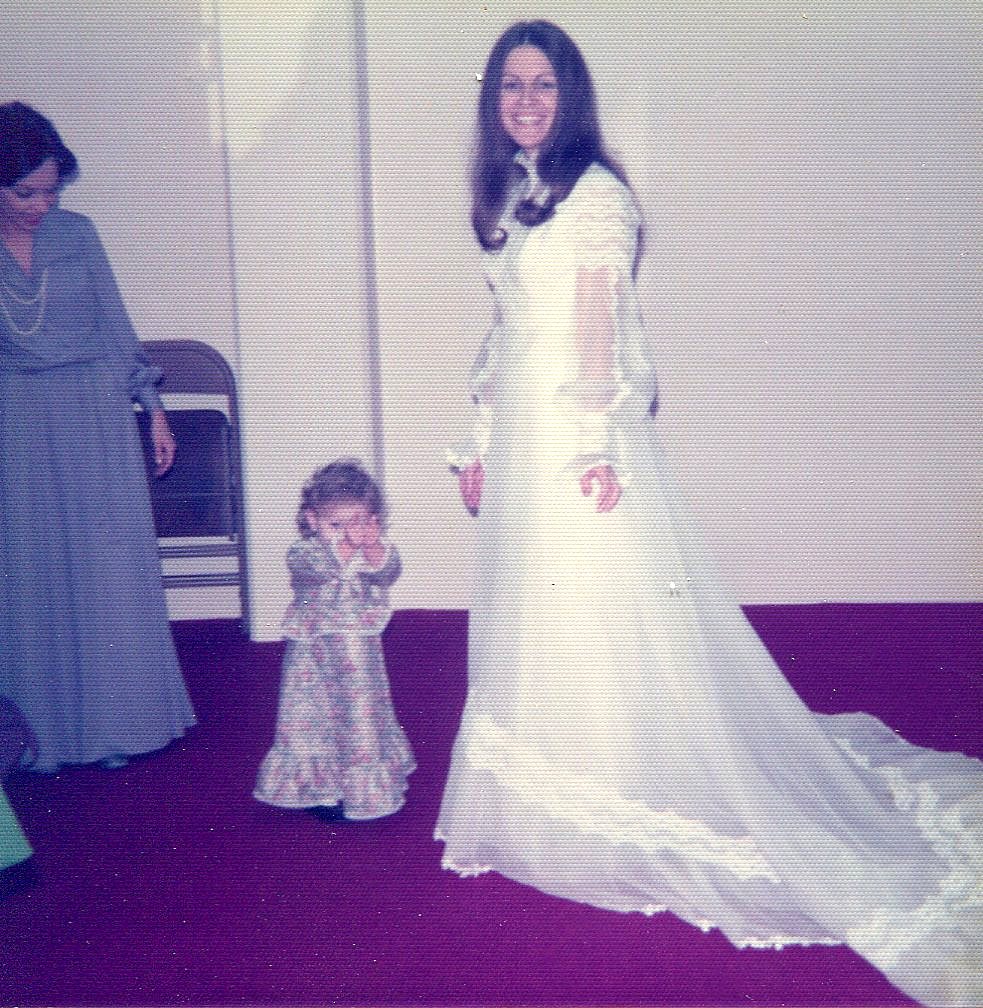
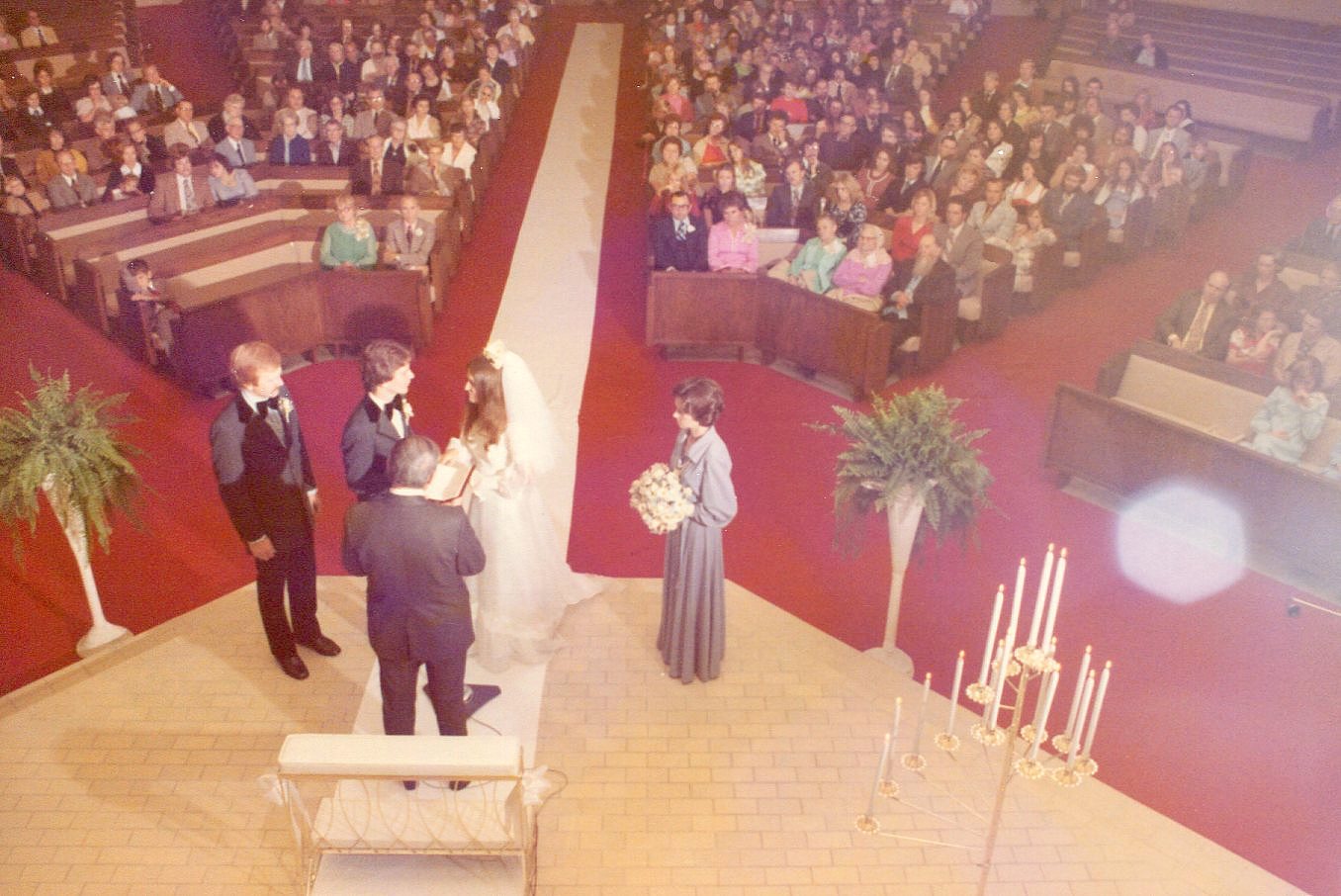
Today Dear and I are celebrating the day we got married fifty years ago. We were married on a Friday evening in Southern California. Our 50th anniversary lands on a Friday, too.

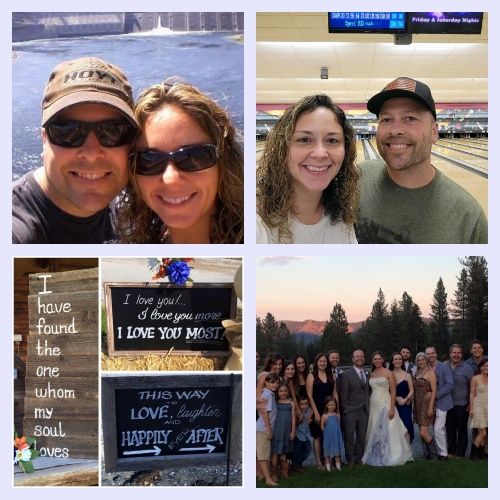
Sharing lots of photos from our years together.
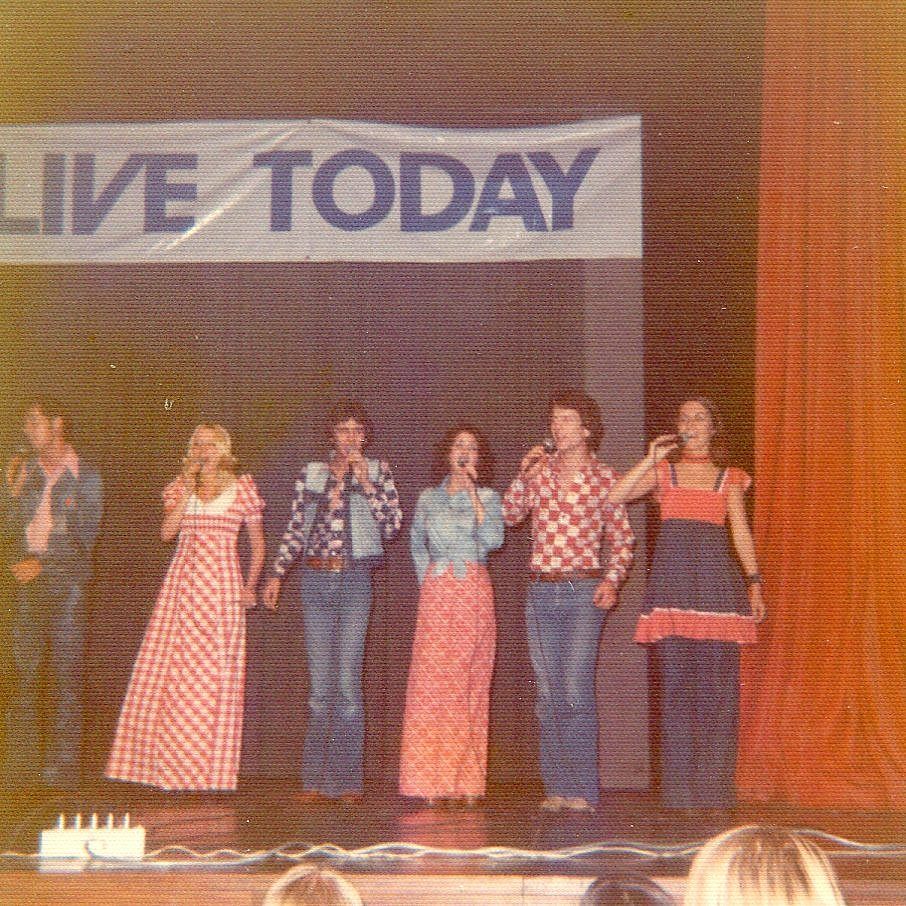
Greg and I on stage in England. We are on the right in this photo.

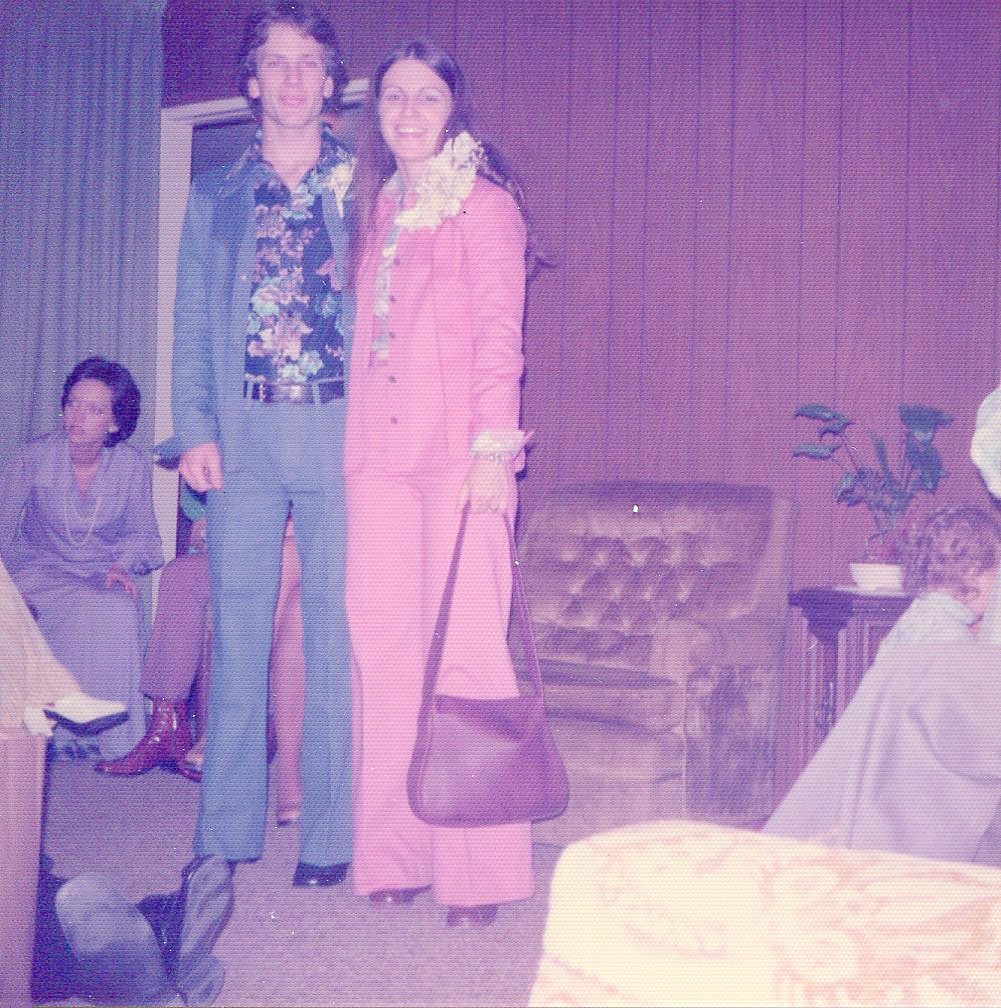
We met at a church parking lot where Greg was singing in a contemporary Christian Band that my best friend auditioned for. I went to the concerts she was singing in with the group and that is how Greg and I met. Later the group needed an alto so I auditioned and joined the group, too. We fell in love while traveling with this group.
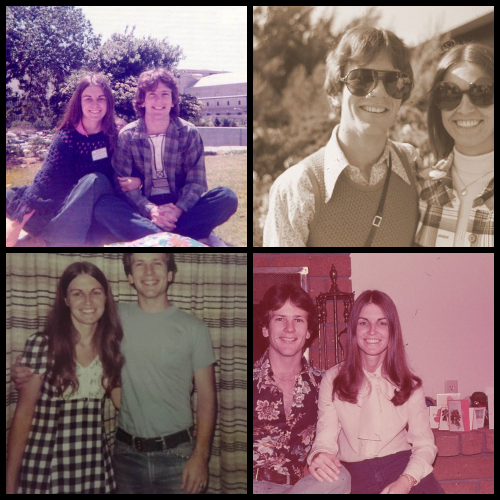
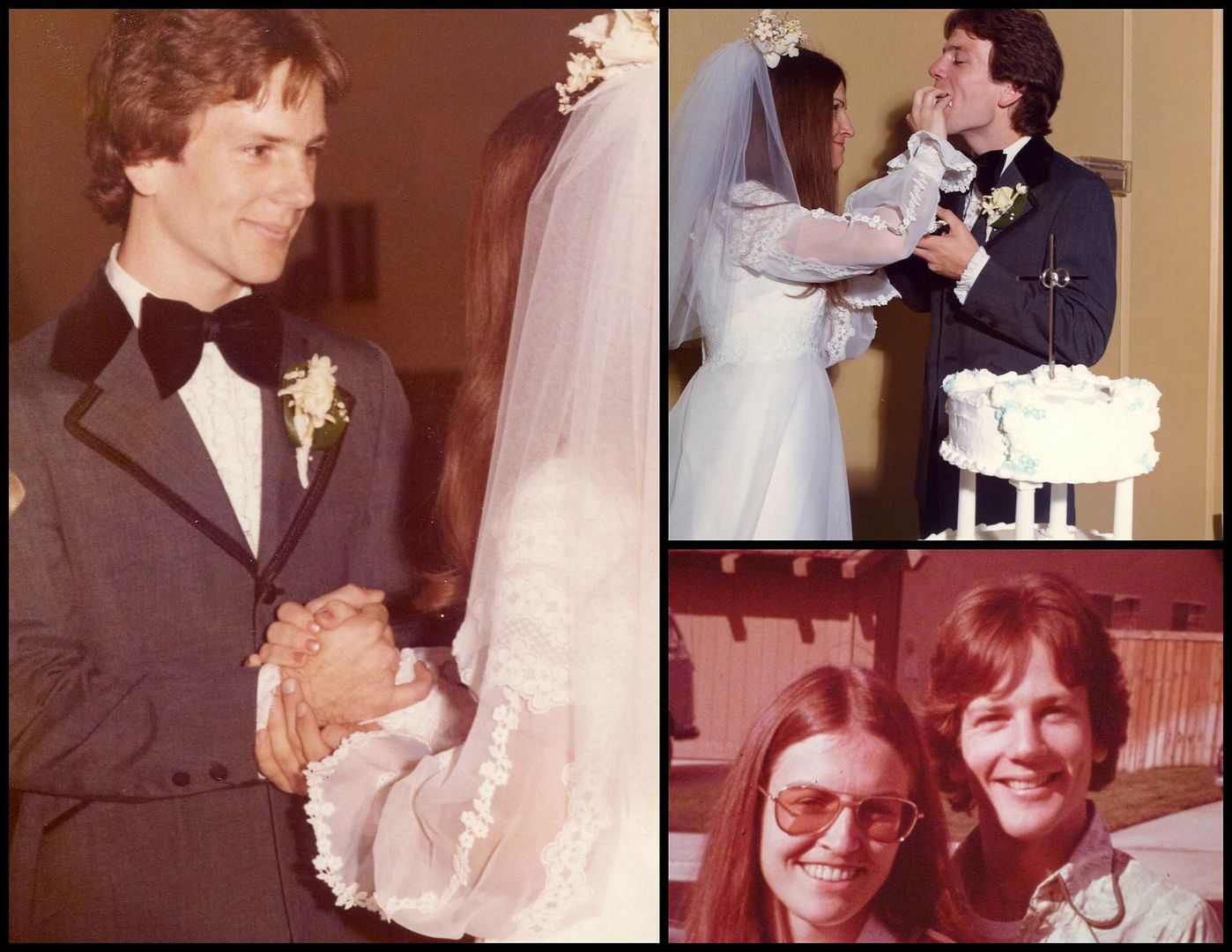
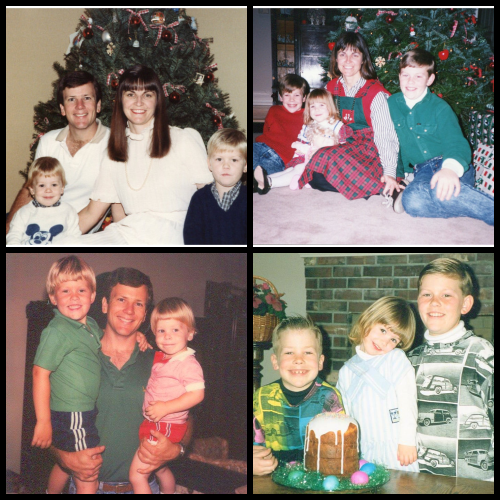
Dating, Engagement party and early marriage collage.
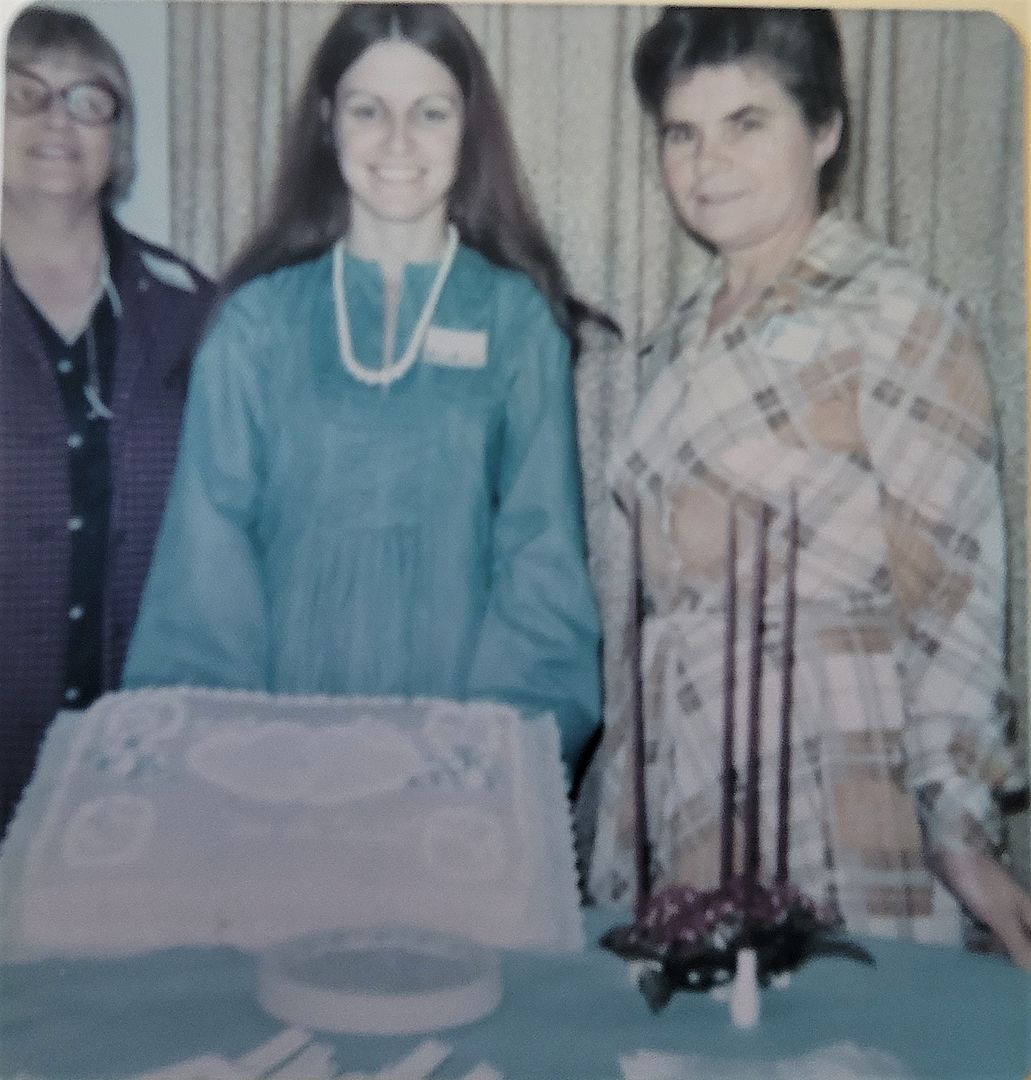
Lousy photo from one of my bridal showers with my mom and Greg’s mom.img560
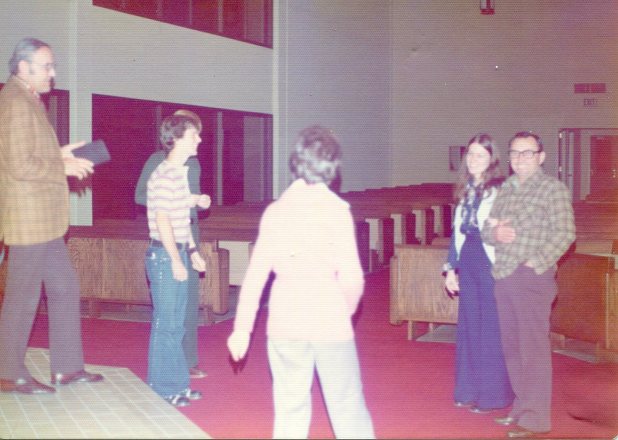
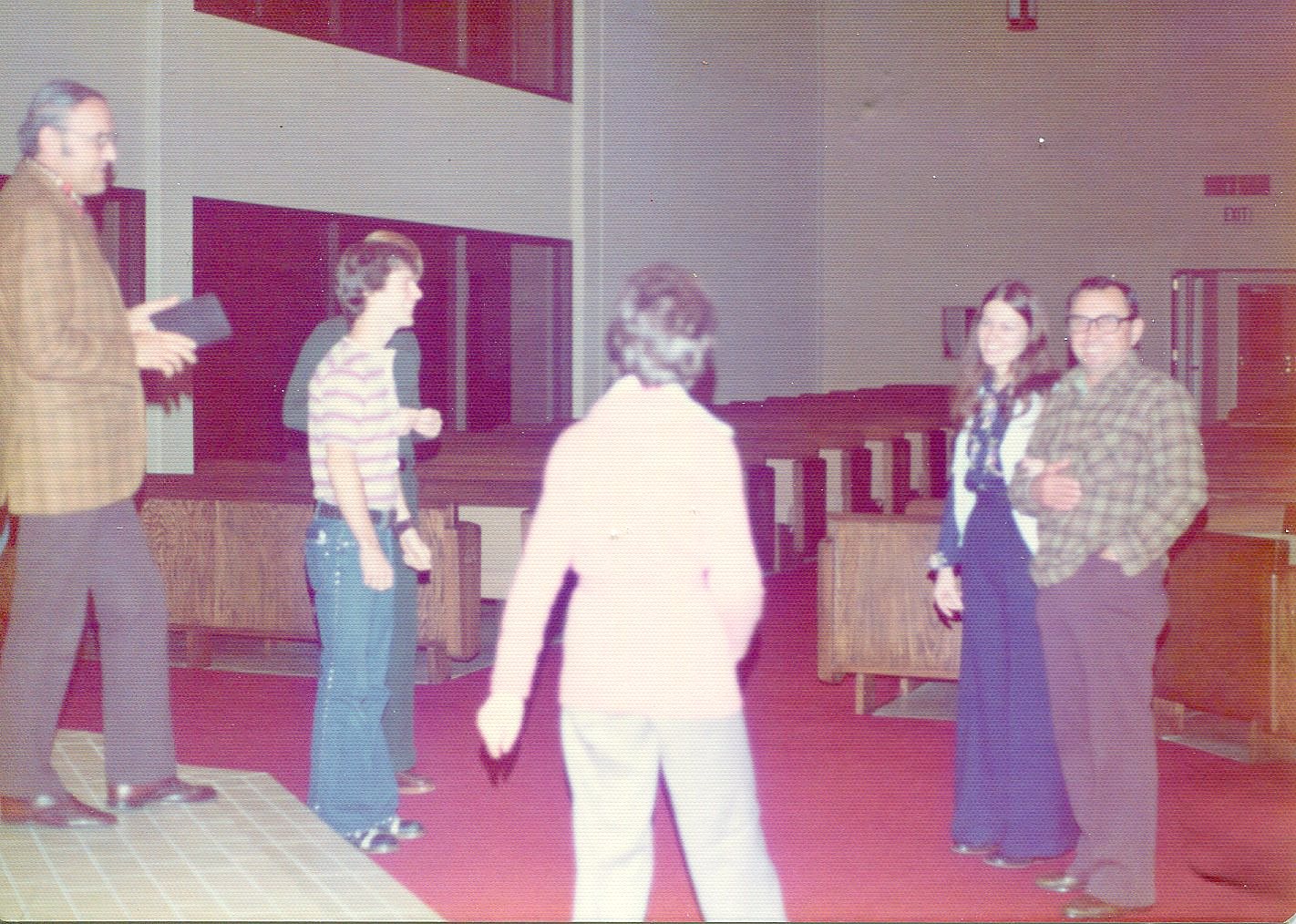
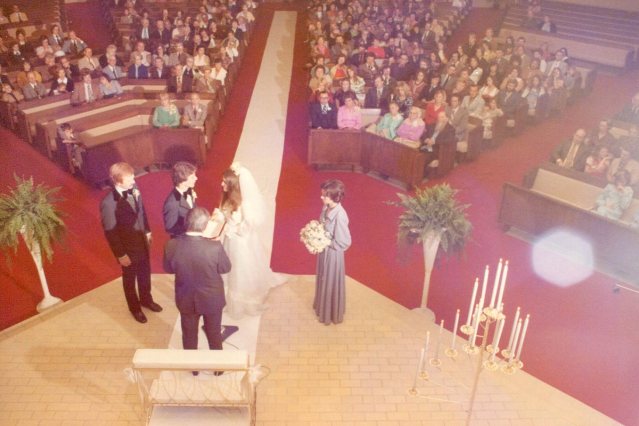
The rehearsal for our wedding ceremony. Our officiant Andrew Semenchuk turned 99 this week!

December – When December’s snows fall fast, marry and your love will last.

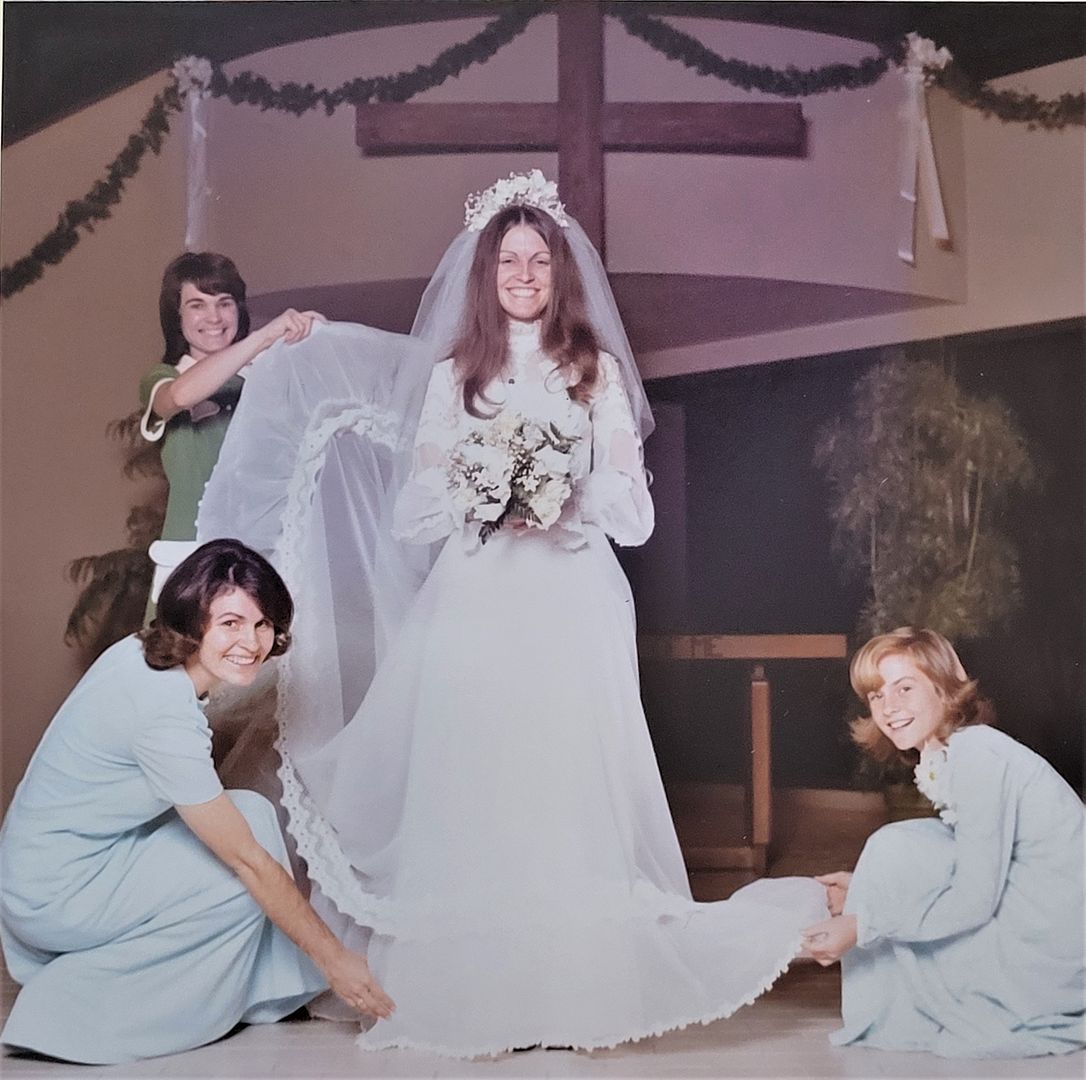
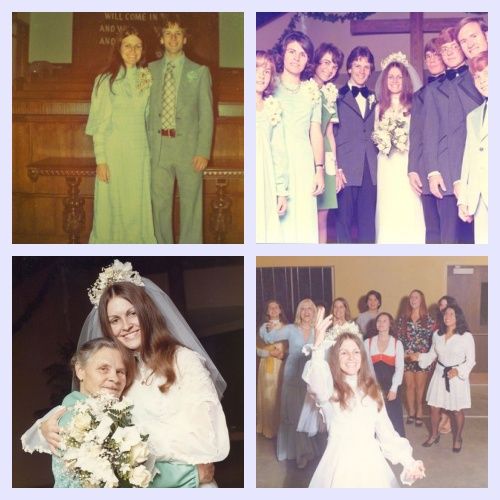
Our wedding day…
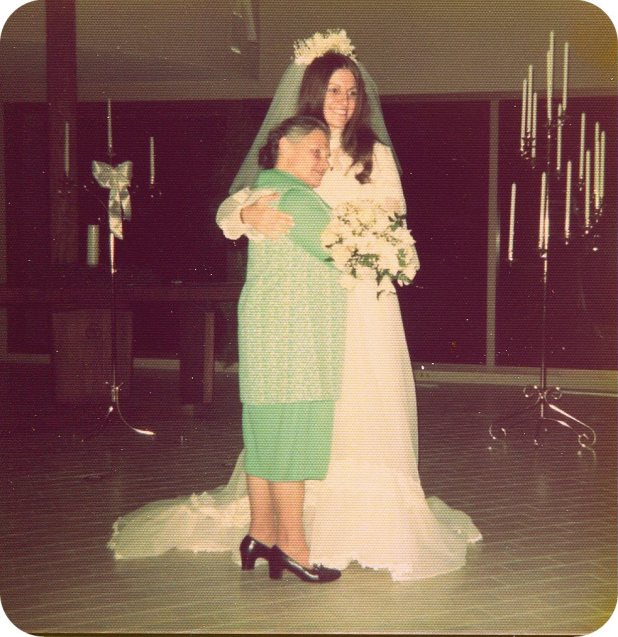
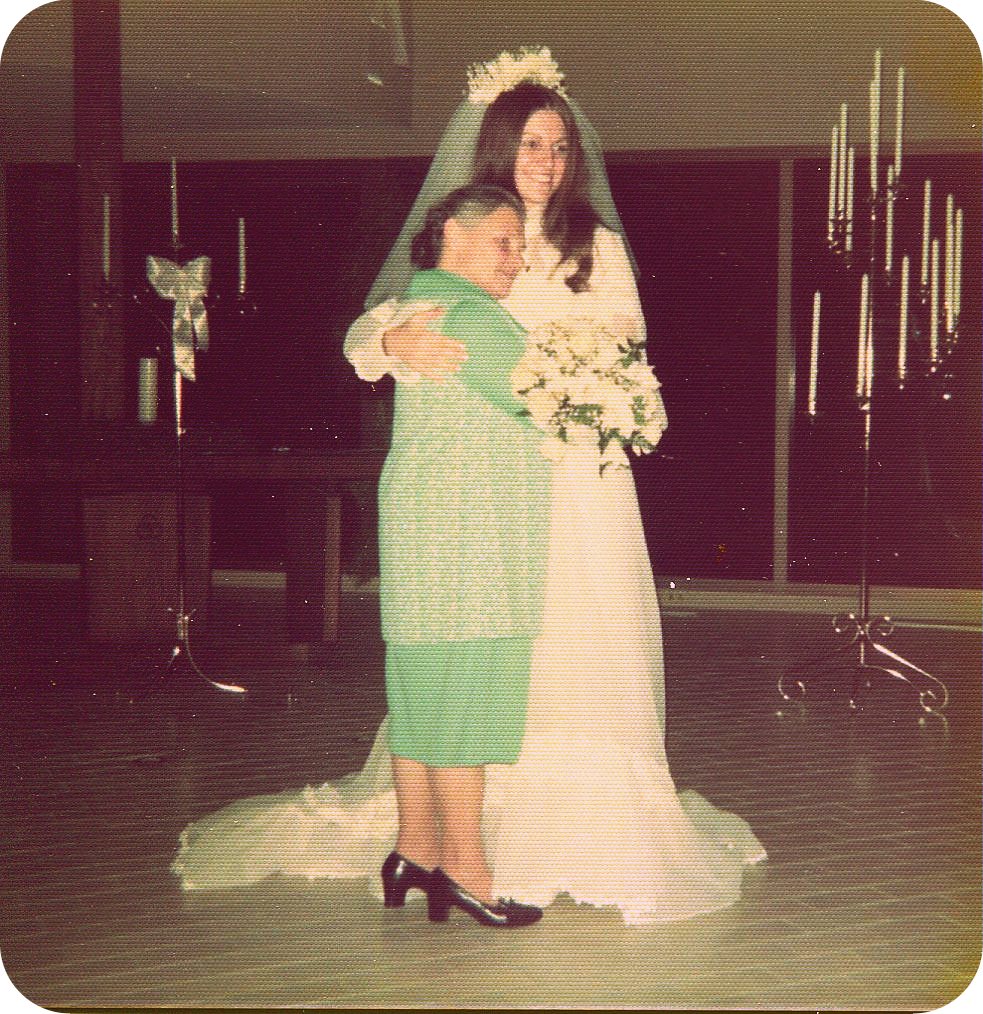
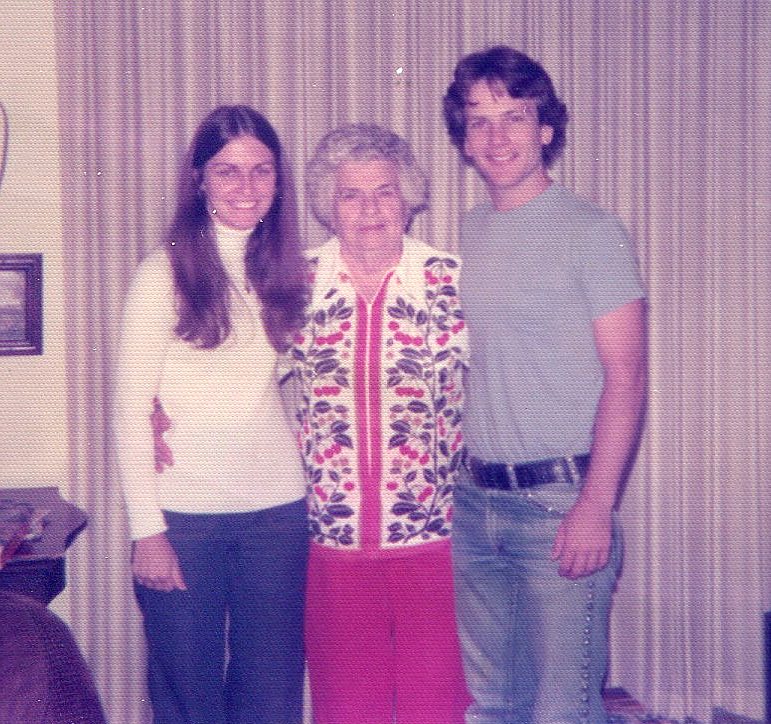
img568I love this photo of my dear maternal grandmother and me. She was a gem.
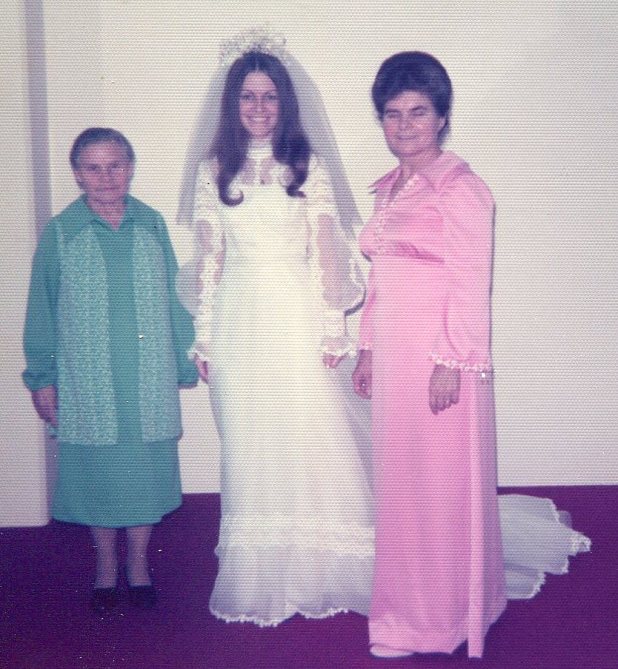
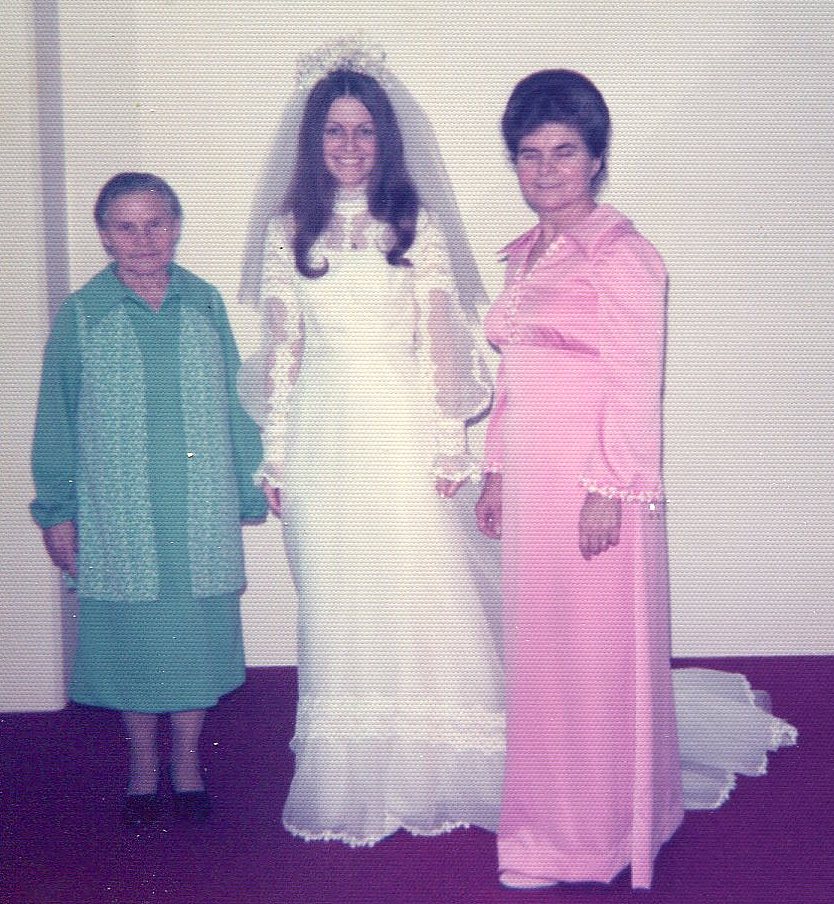
img567My maternal grandmother, my mom and me.
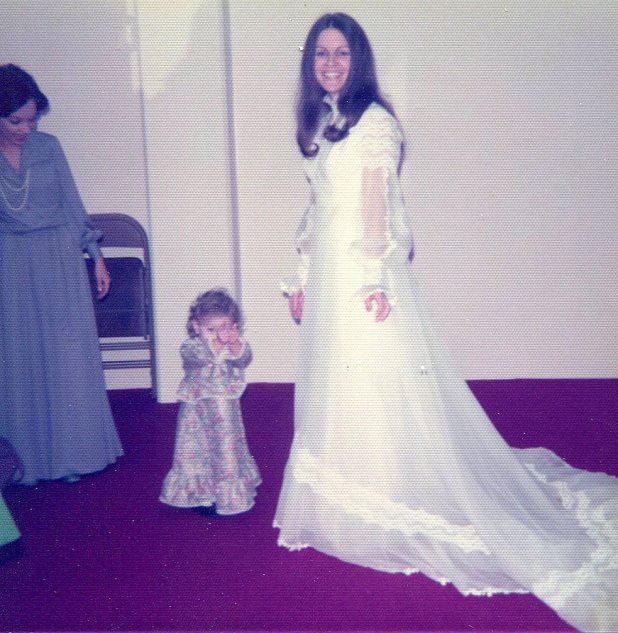
img566Our sweet and oldest niece was at our wedding. Her mom and dad were our matron of honor and best man.
My sisters on our wedding day. Kathy, kneeling on the left, also got married in 1974.
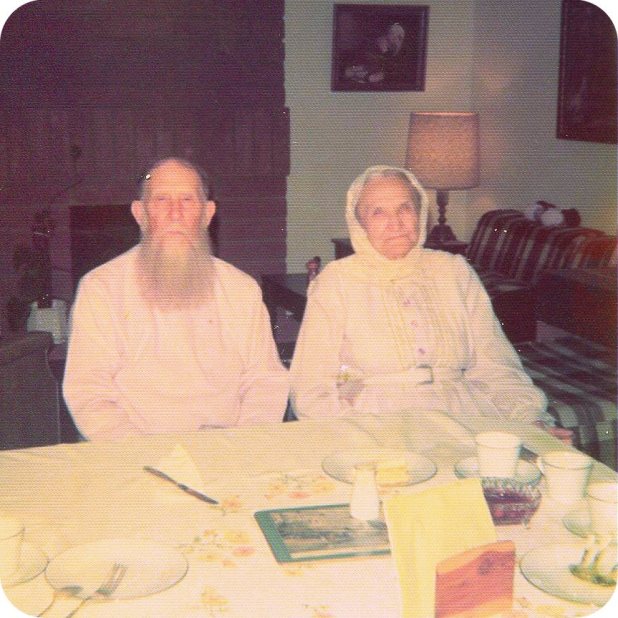
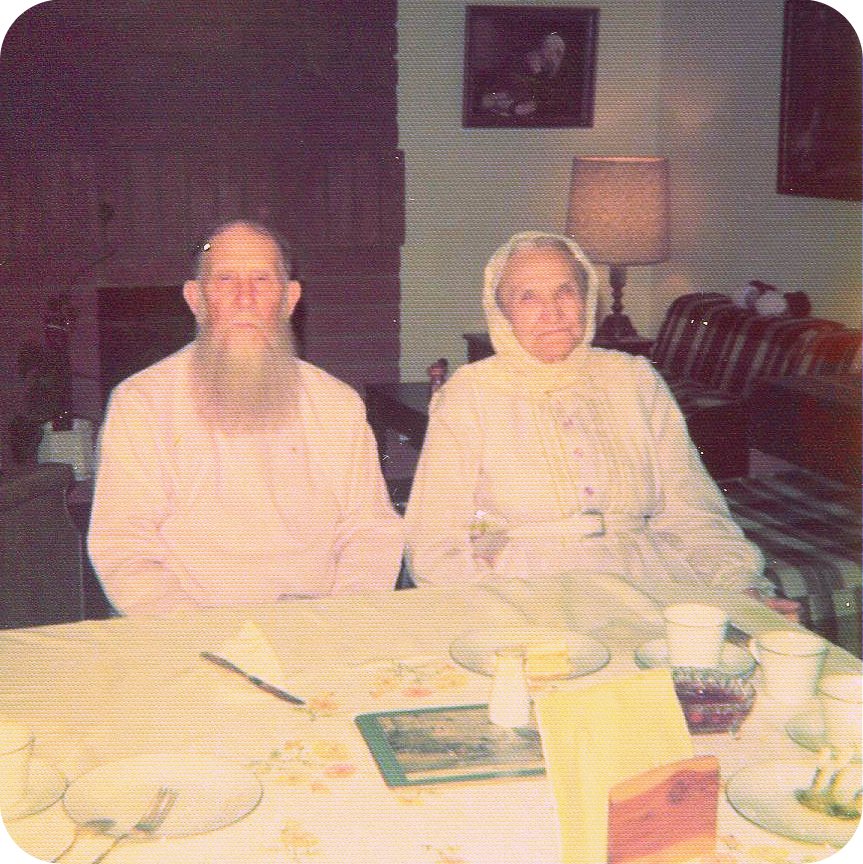
img578My paternal grandparents came to the wedding, too. This was not a given and we were pleased that they came.
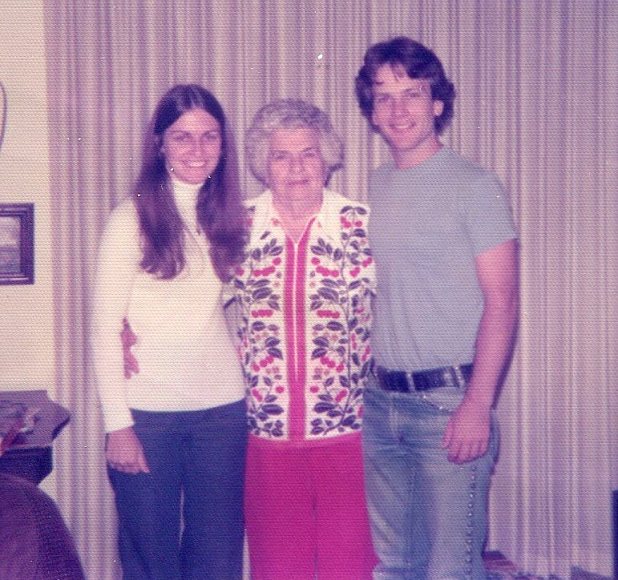
img576This is Dear’s paternal grandmother and she was not able to travel to the wedding but she visited us in our first apartment.
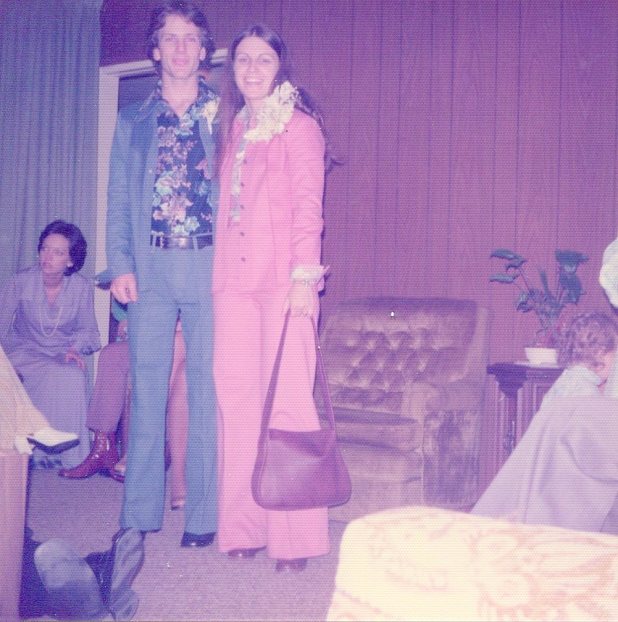
img570Here we are heading off to our honeymoon.
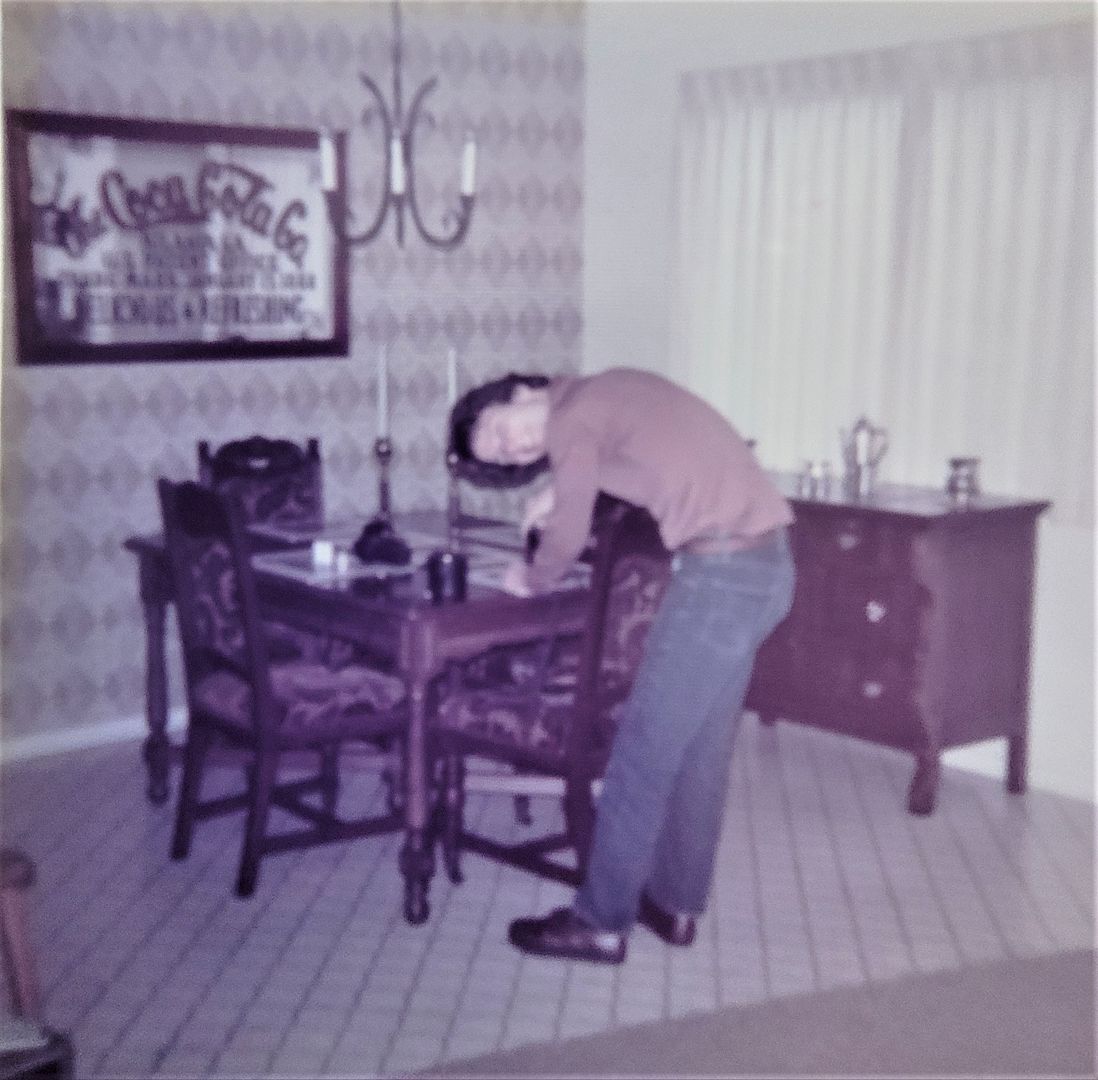
Our first apartment in West L.A. We were in it for less than a year. The great thing about this apartment was that it was 2 buildings down from a grocery store and easy to get last minute items we needed for a meal.
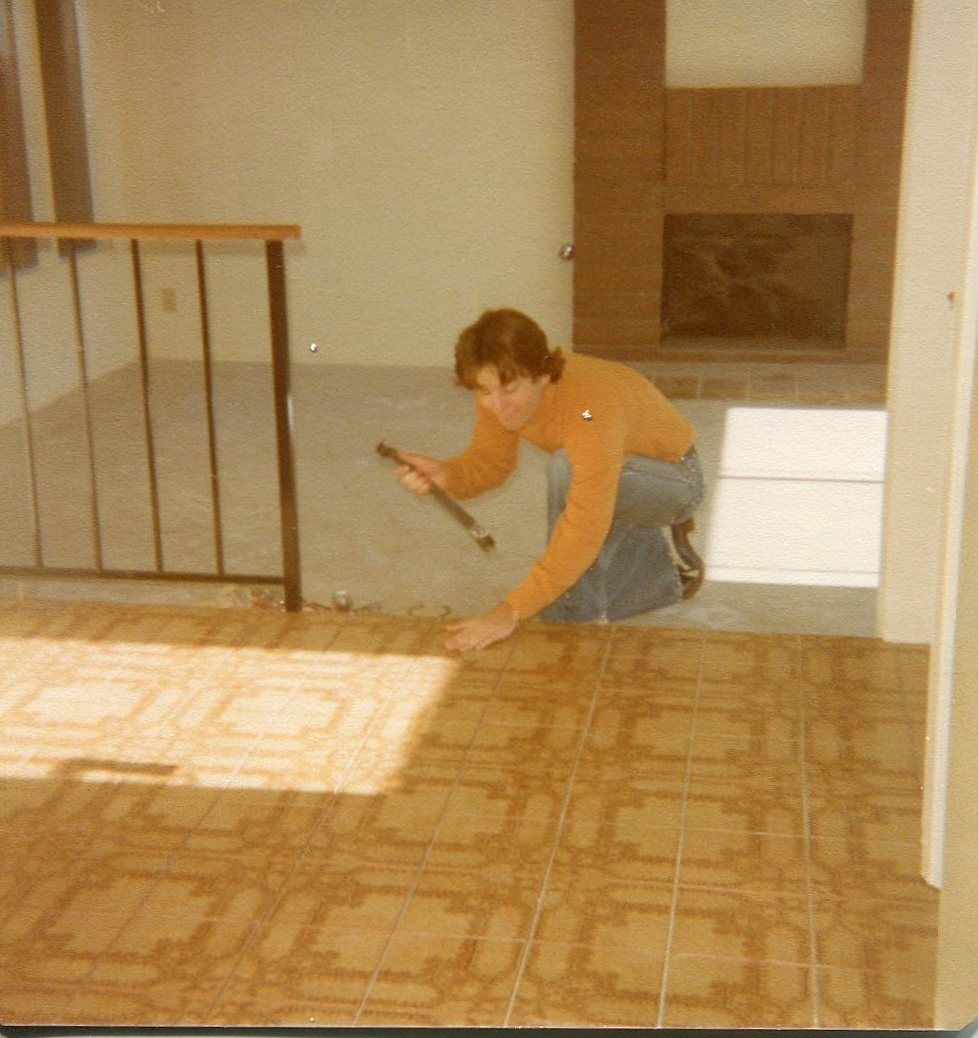
Our first home with a mortgage in Huntington Beach across the street from my sister Vera and Nick, 1975. Greg tiled the entry.
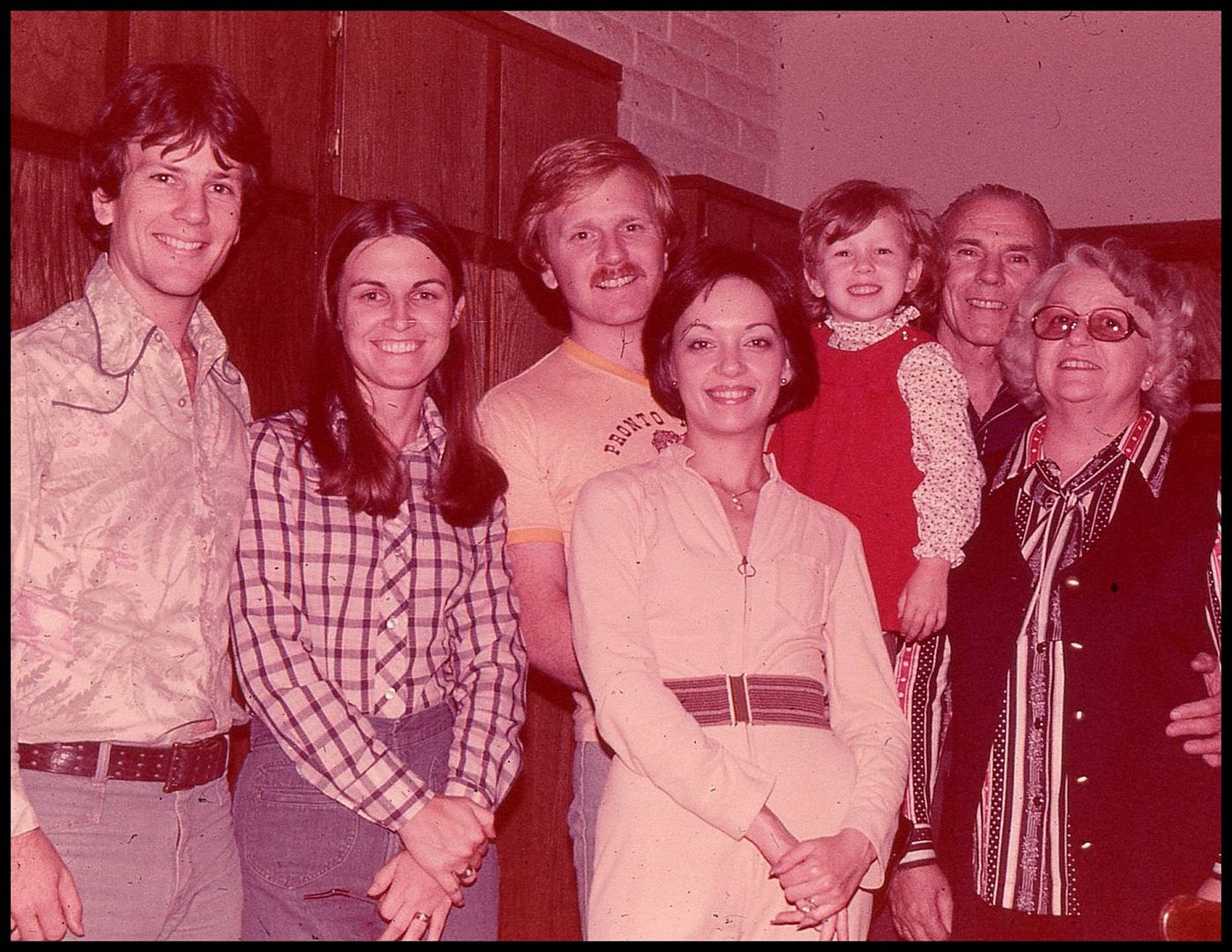
Early in our marriage with Greg’s side of the family before we had children.
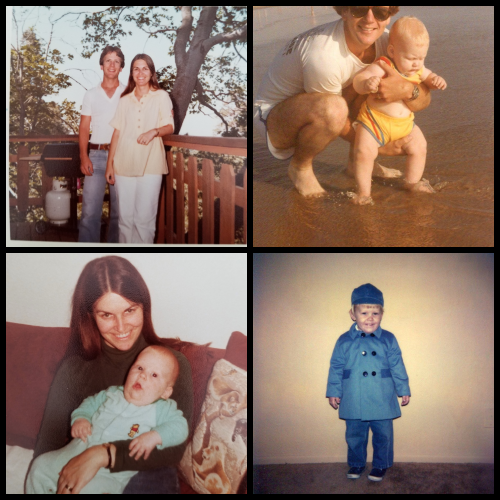
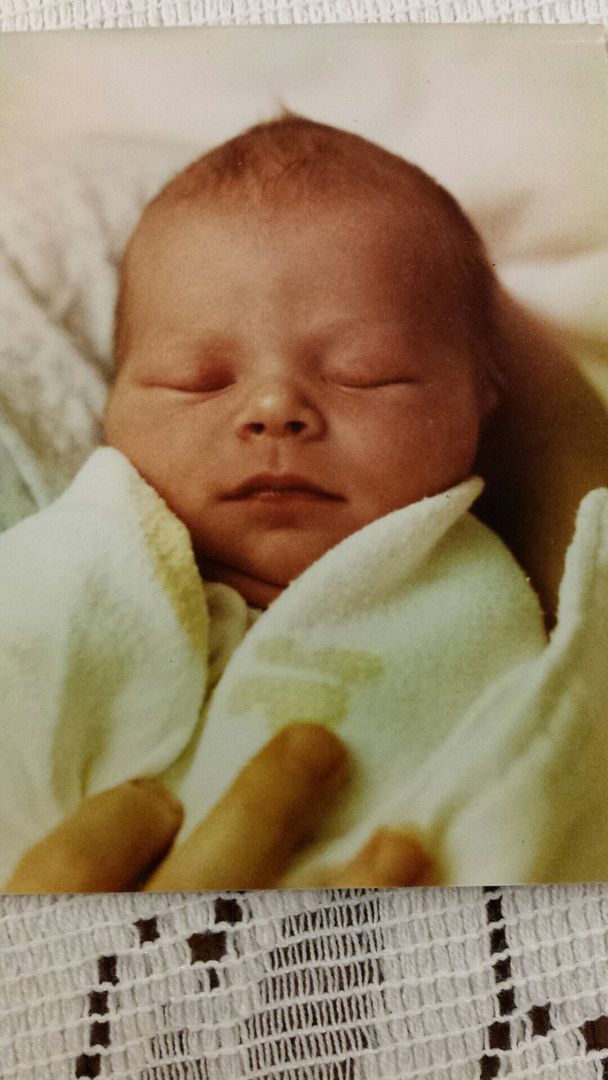
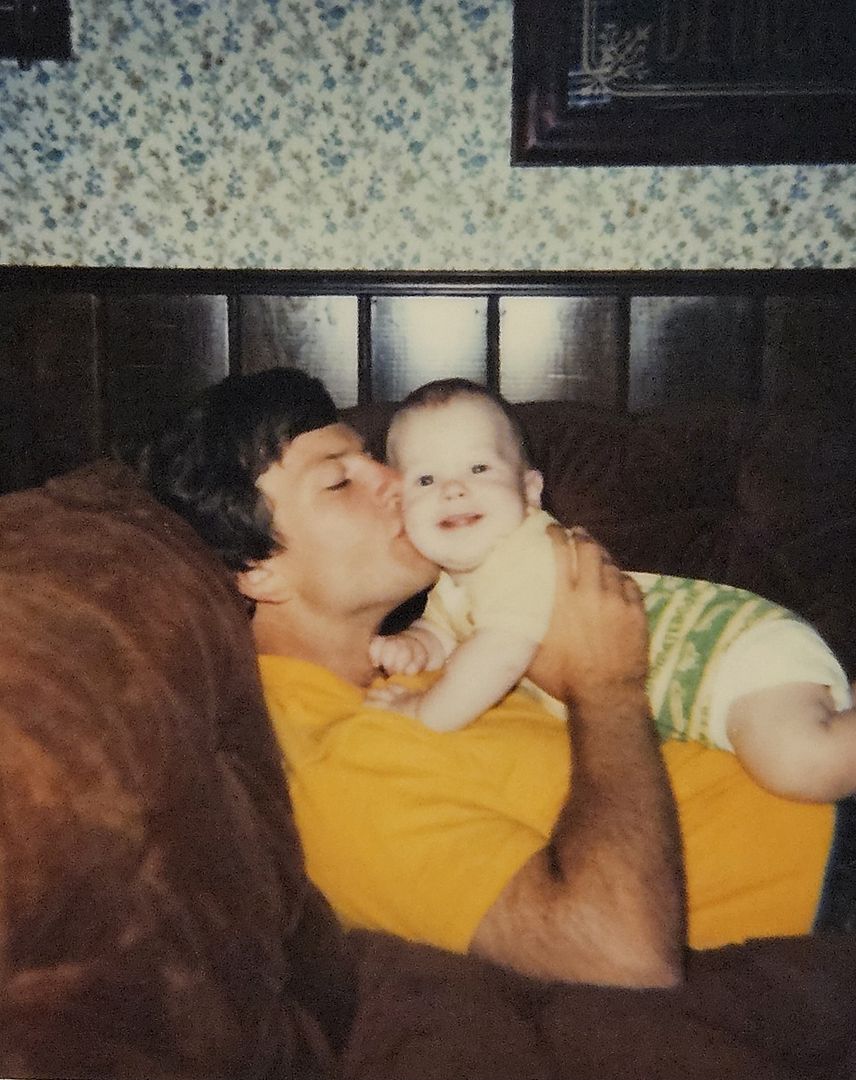
My first pregnancy and our first son, Joshua.
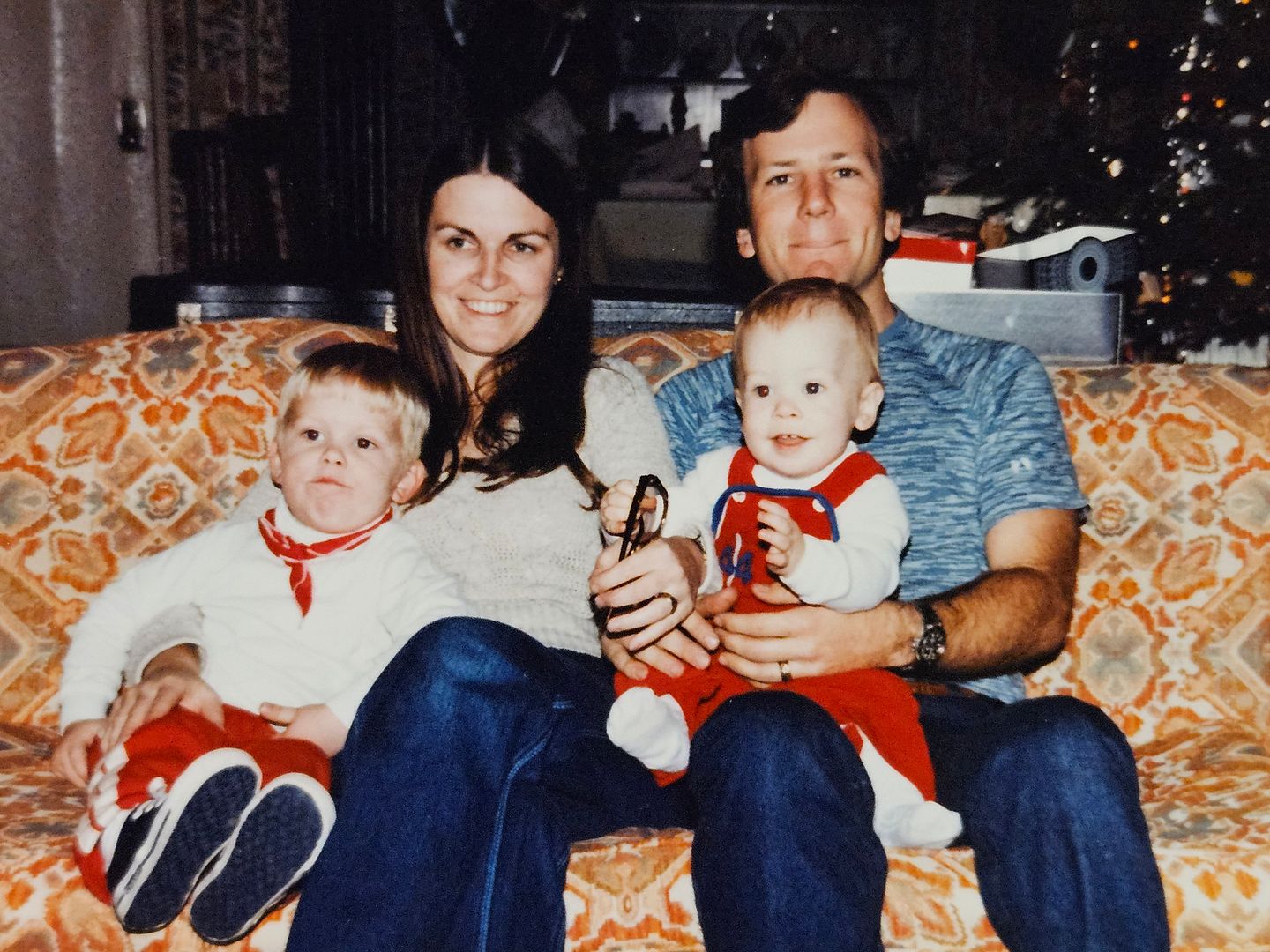
Almost 2 years to the day after Josh was born, our second son, Daniel, was born.
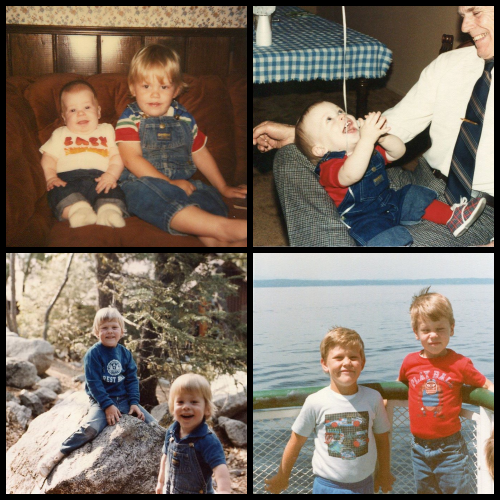
Our boys were born while we lived in our second home in Huntington Beach.
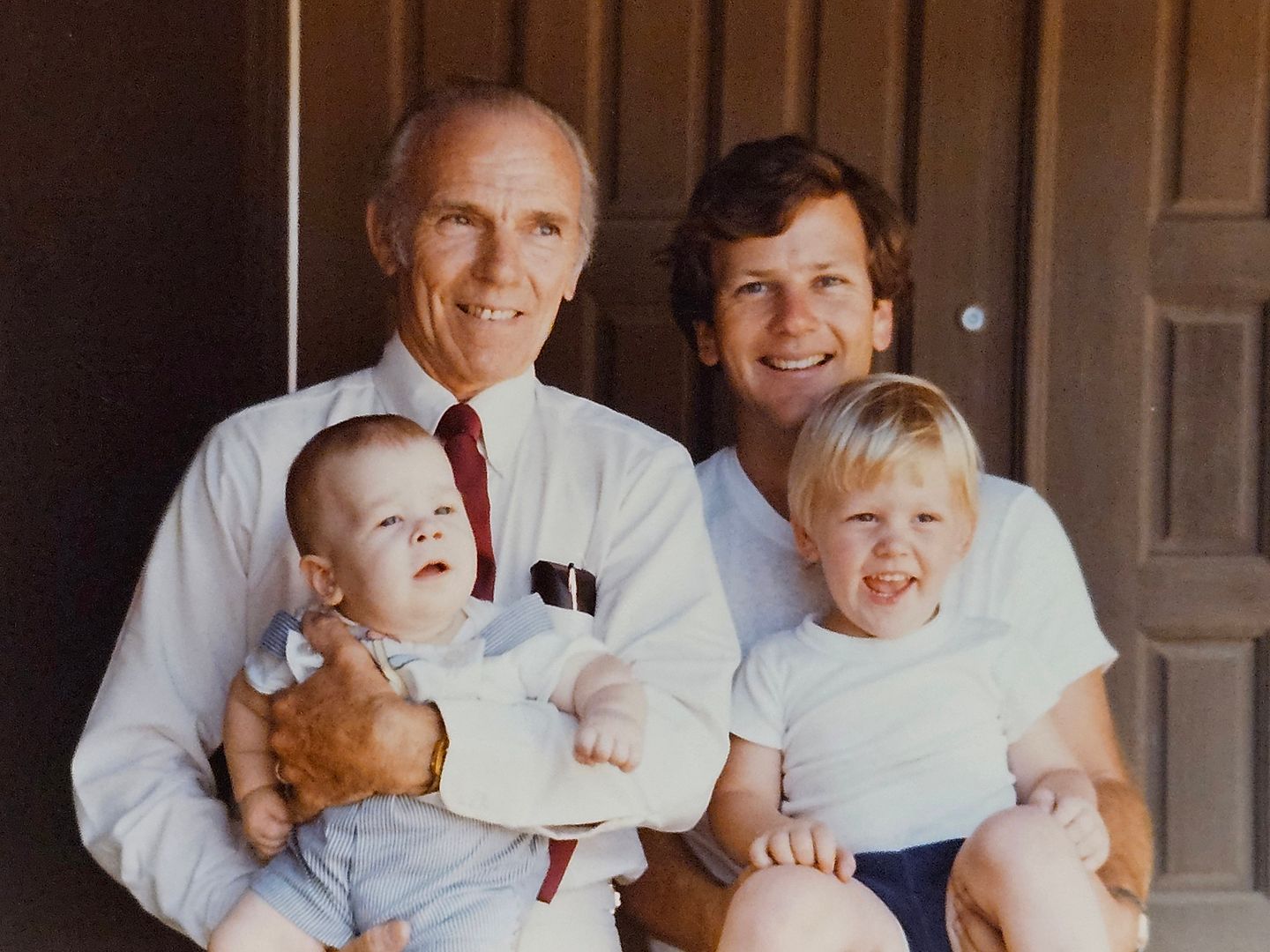
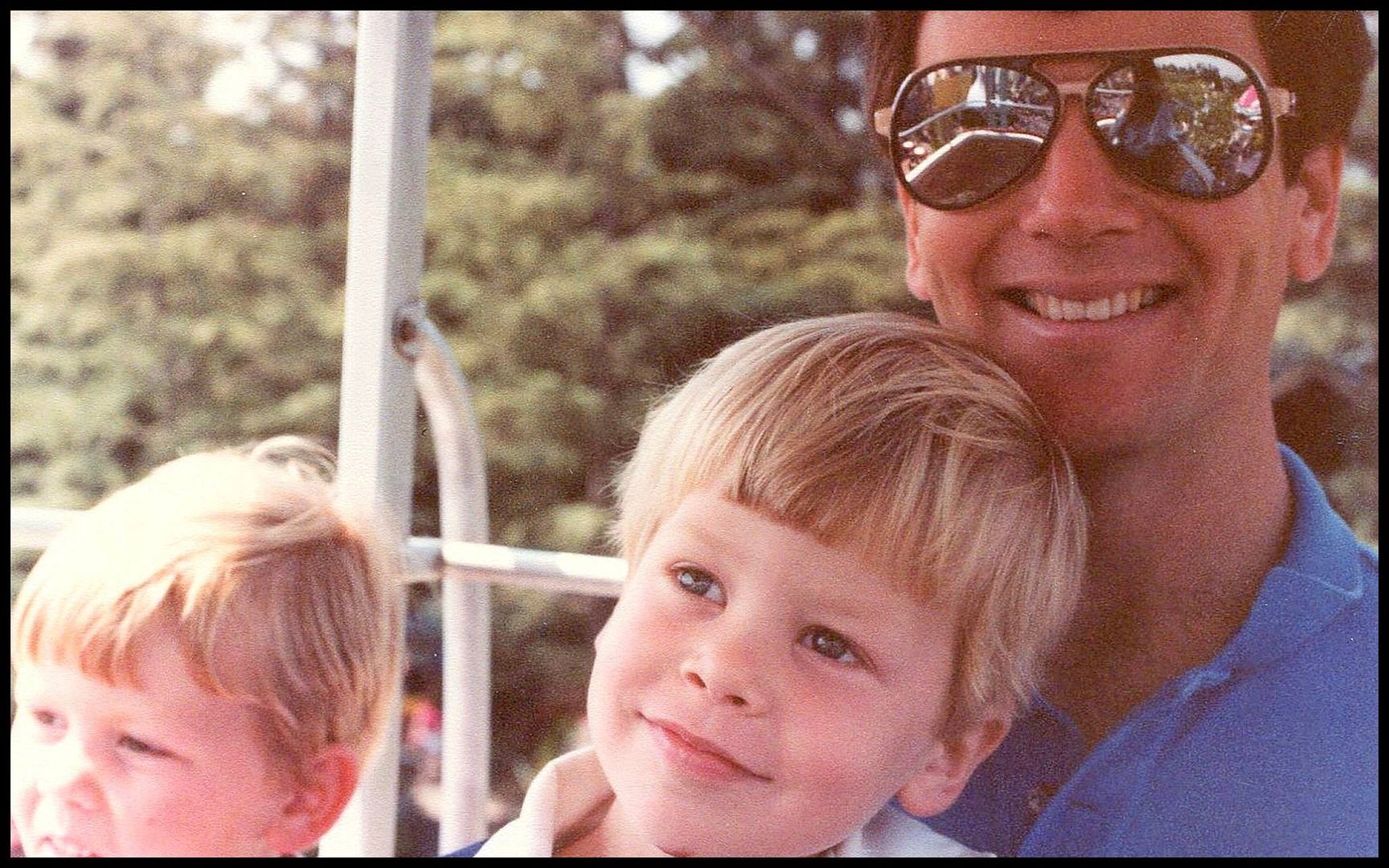
Three generations of Bayles Boys!
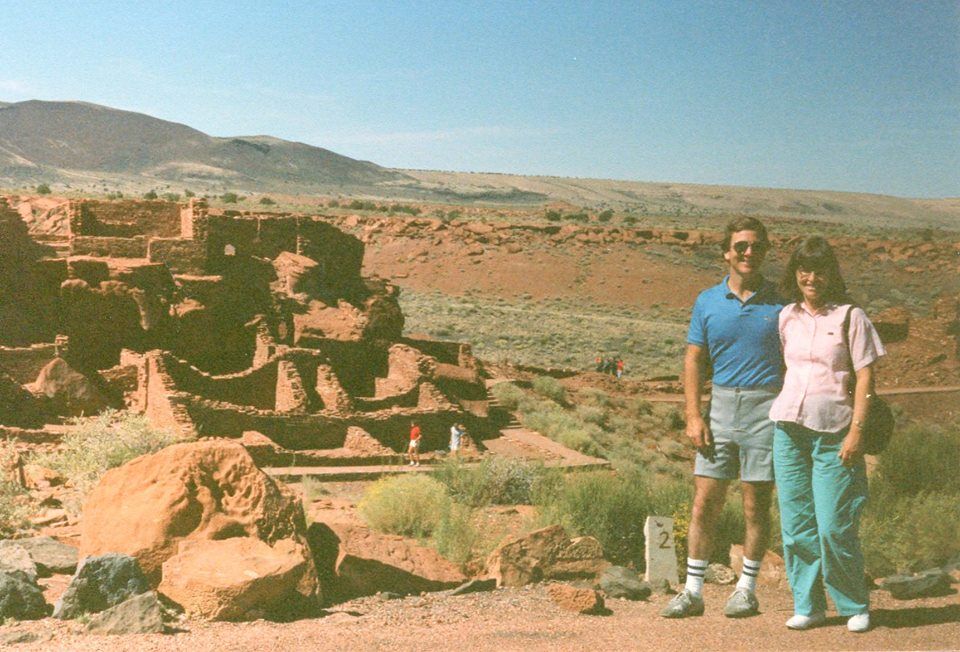
1985 in Arizona on a bicycling trip. I was pregnant with Katie.
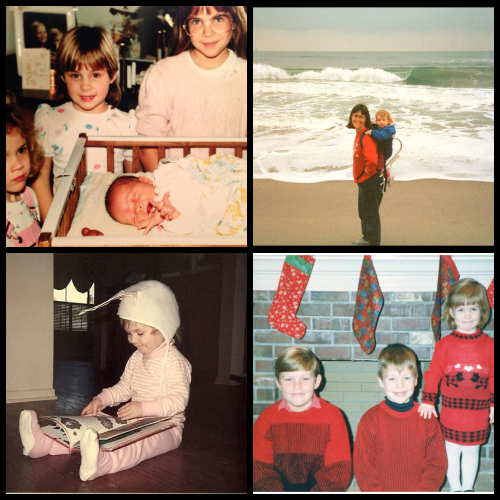
Our sweet surprise, Katie, was born in 1985.
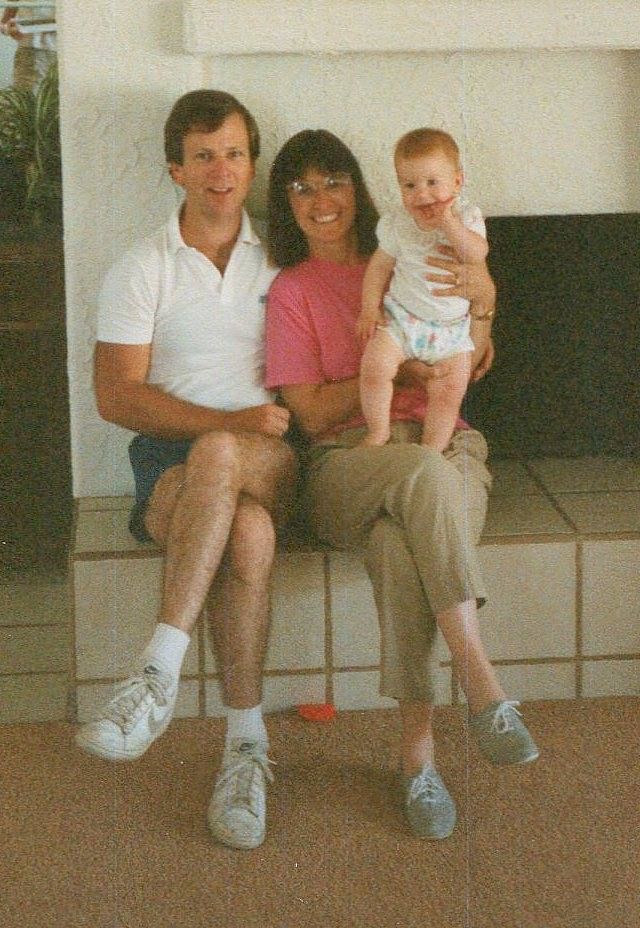
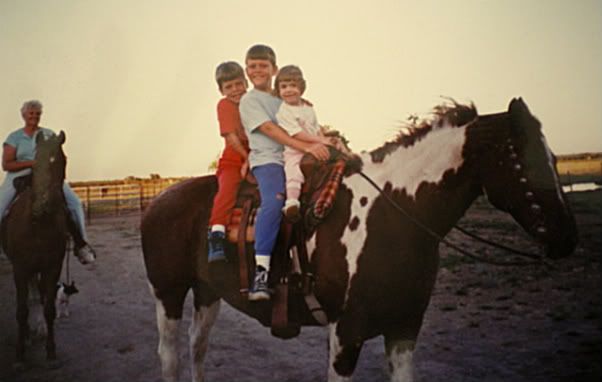
On our move from California to Washington state we stopped in Yuba City to drop off Greg’s mom Verna who would join us later in our home in Bothell. Aunt Carol supervised our three on the horse.
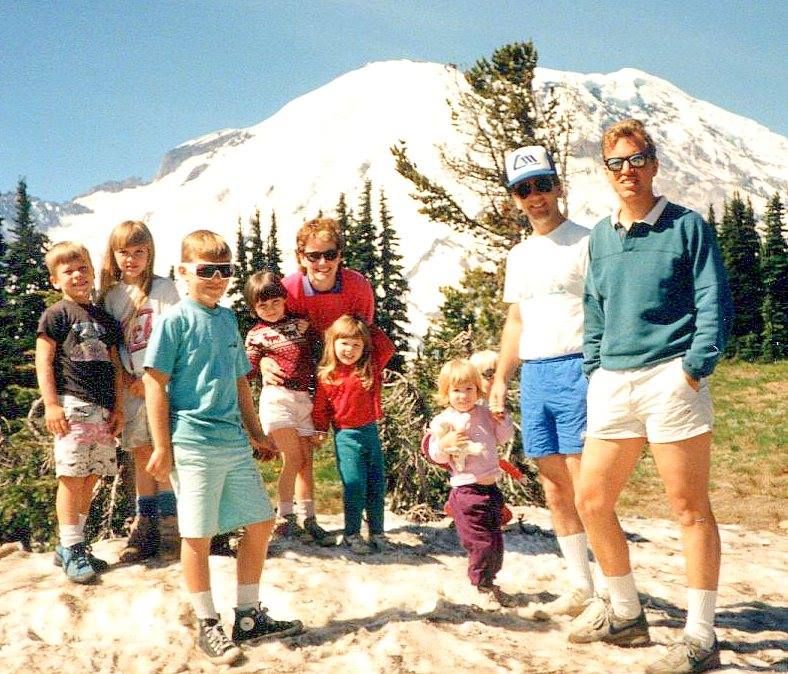
Our first camping trip after we moved to Washington State with our friends who were a big part of the motivation for our move. Rainier in the background.
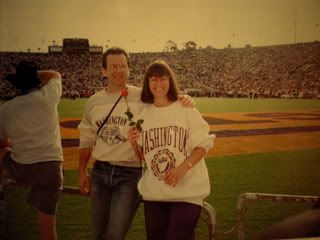
The University of Washington years. We were able to get tickets to the Rose Bowl Championship game in 1992.
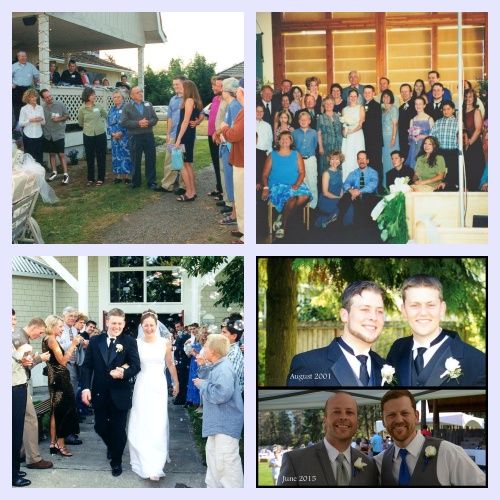
Josh and Laura’s wedding in 2001
Edinburgh 2006
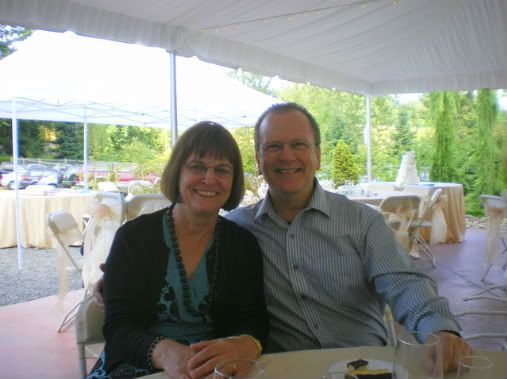
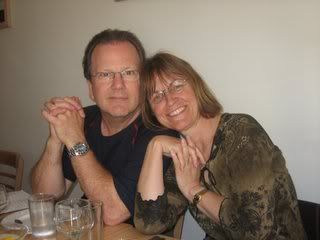
2008
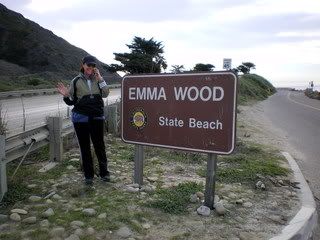
From 2007-to early 2010 Greg and I walked the shore of Emma Wood State Beach every Saturday morning when we were living in Camarillo.
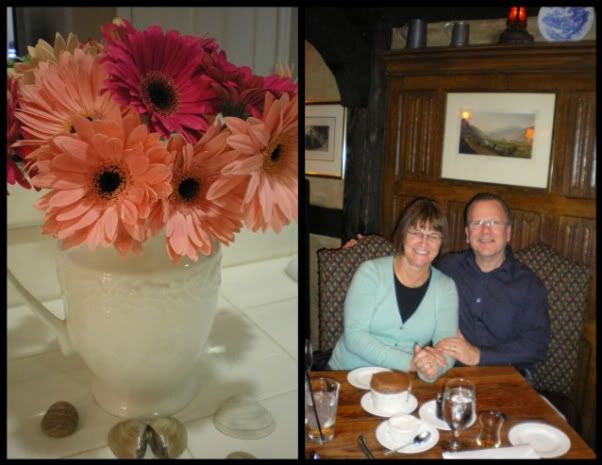
My birthday in 2009 at Tam O’Shanter in Los Angeles.
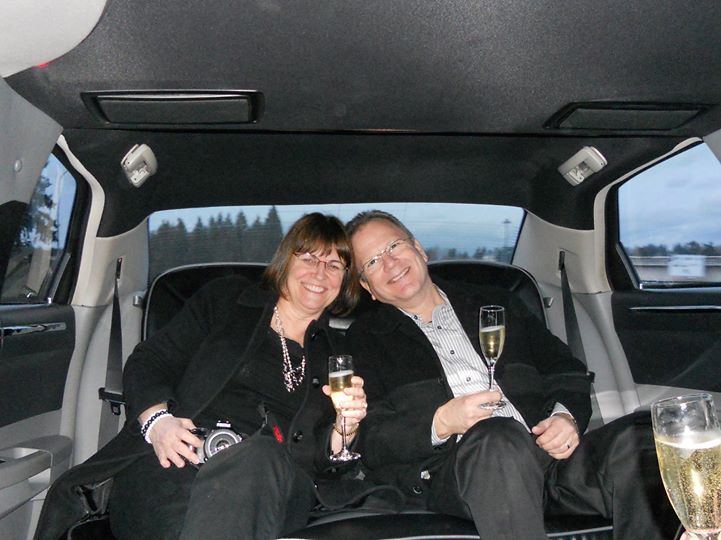
My 60th birthday in 2011.
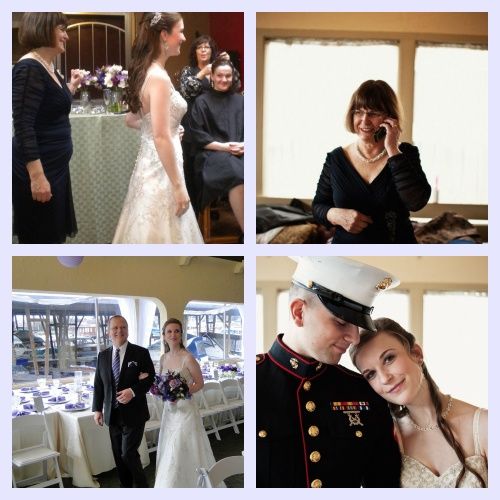
Katie’s wedding in 2012.
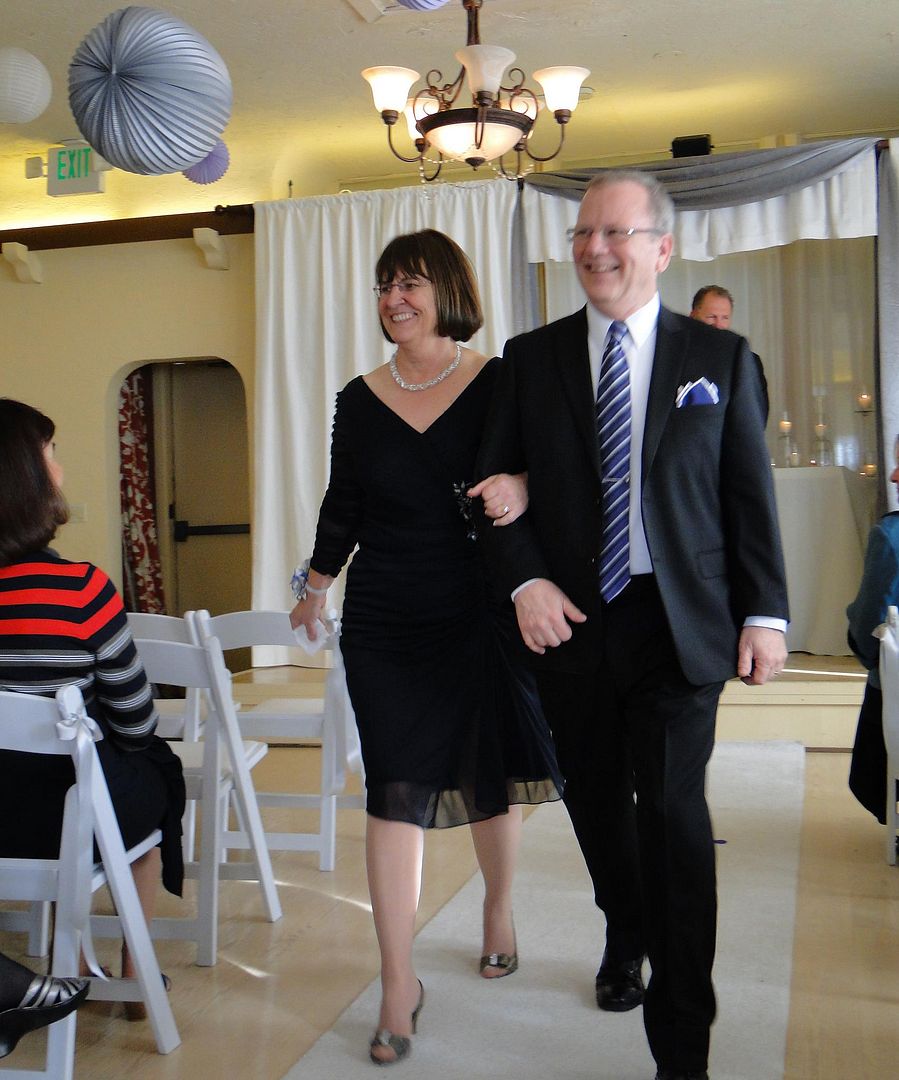
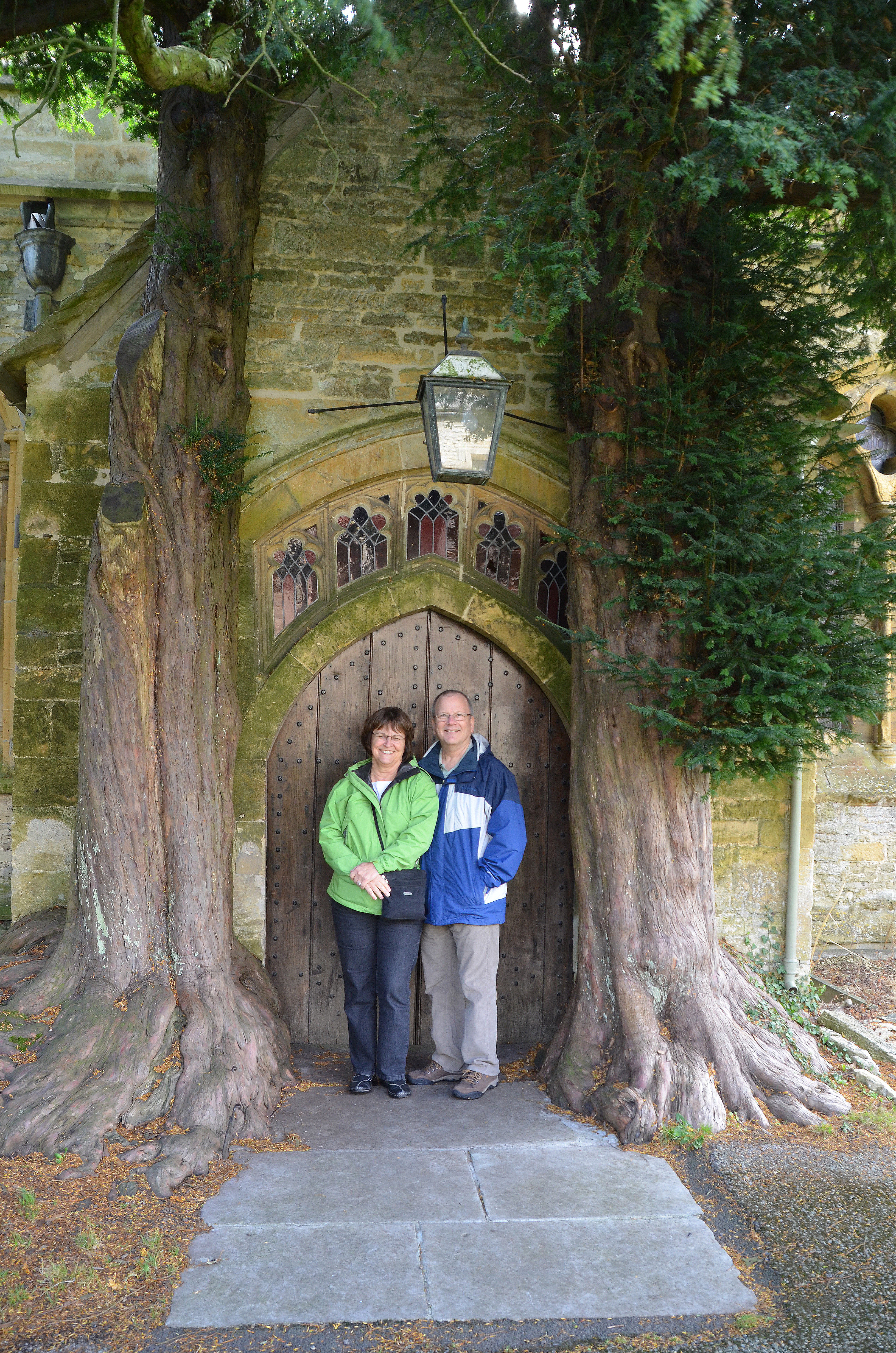
England 2013
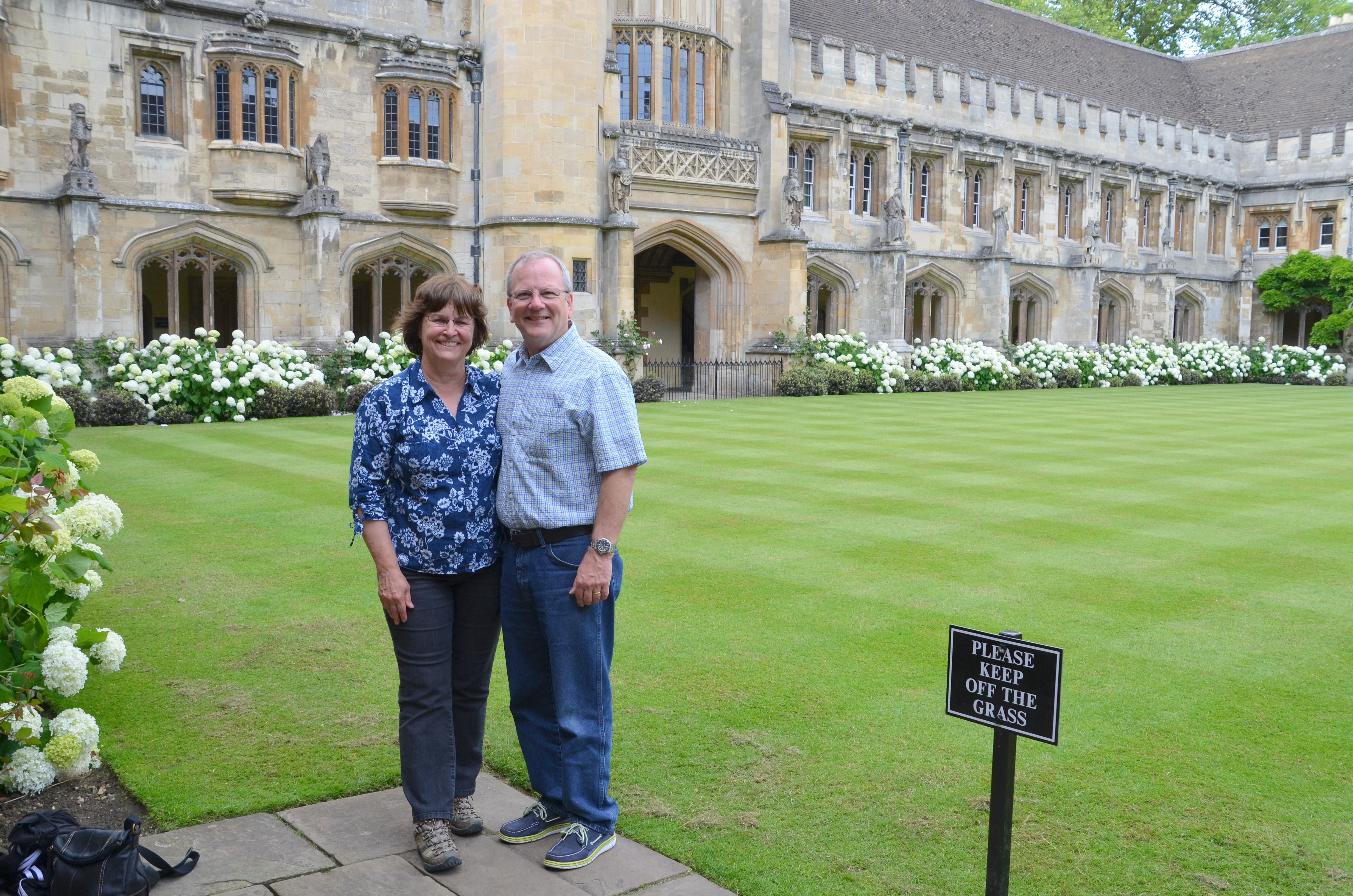
England in 2014 for our 40th Anniversary
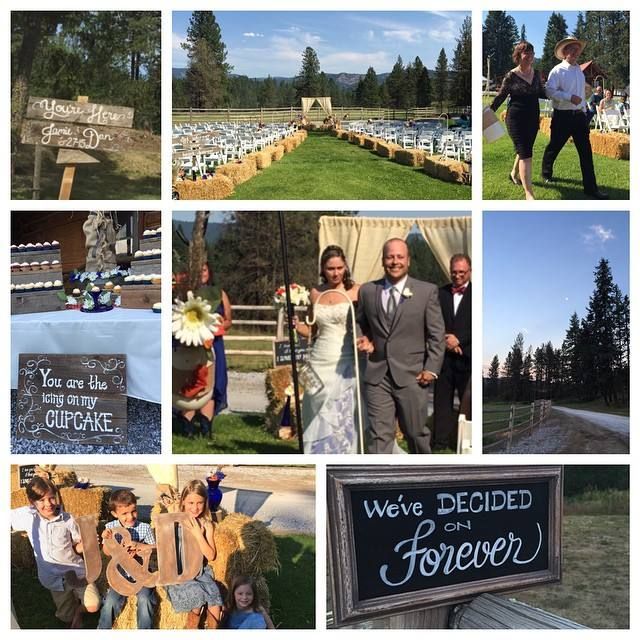
Dan and Jamie 2015
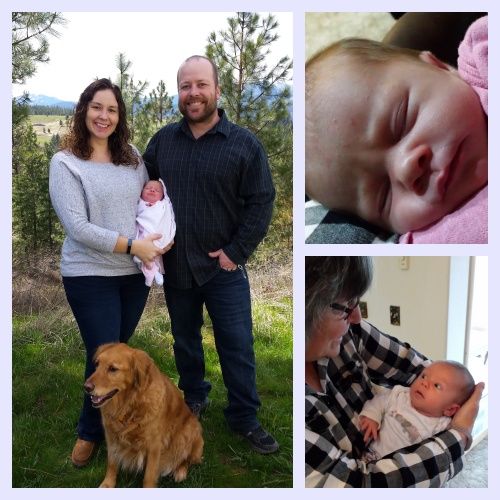
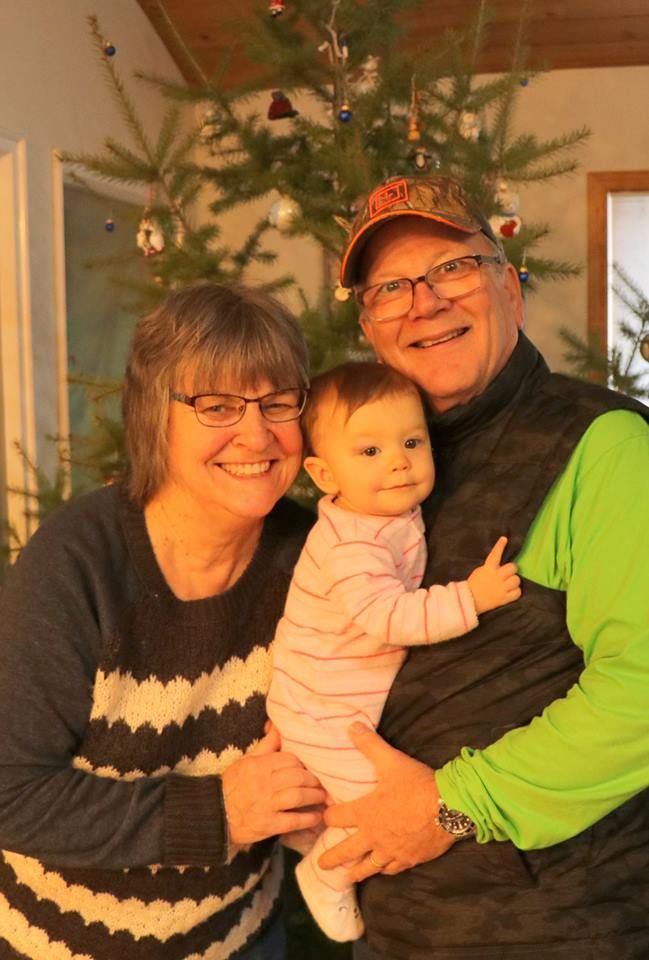
First granddaughter
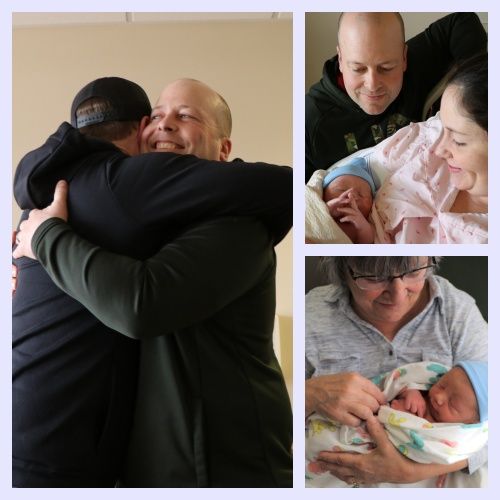
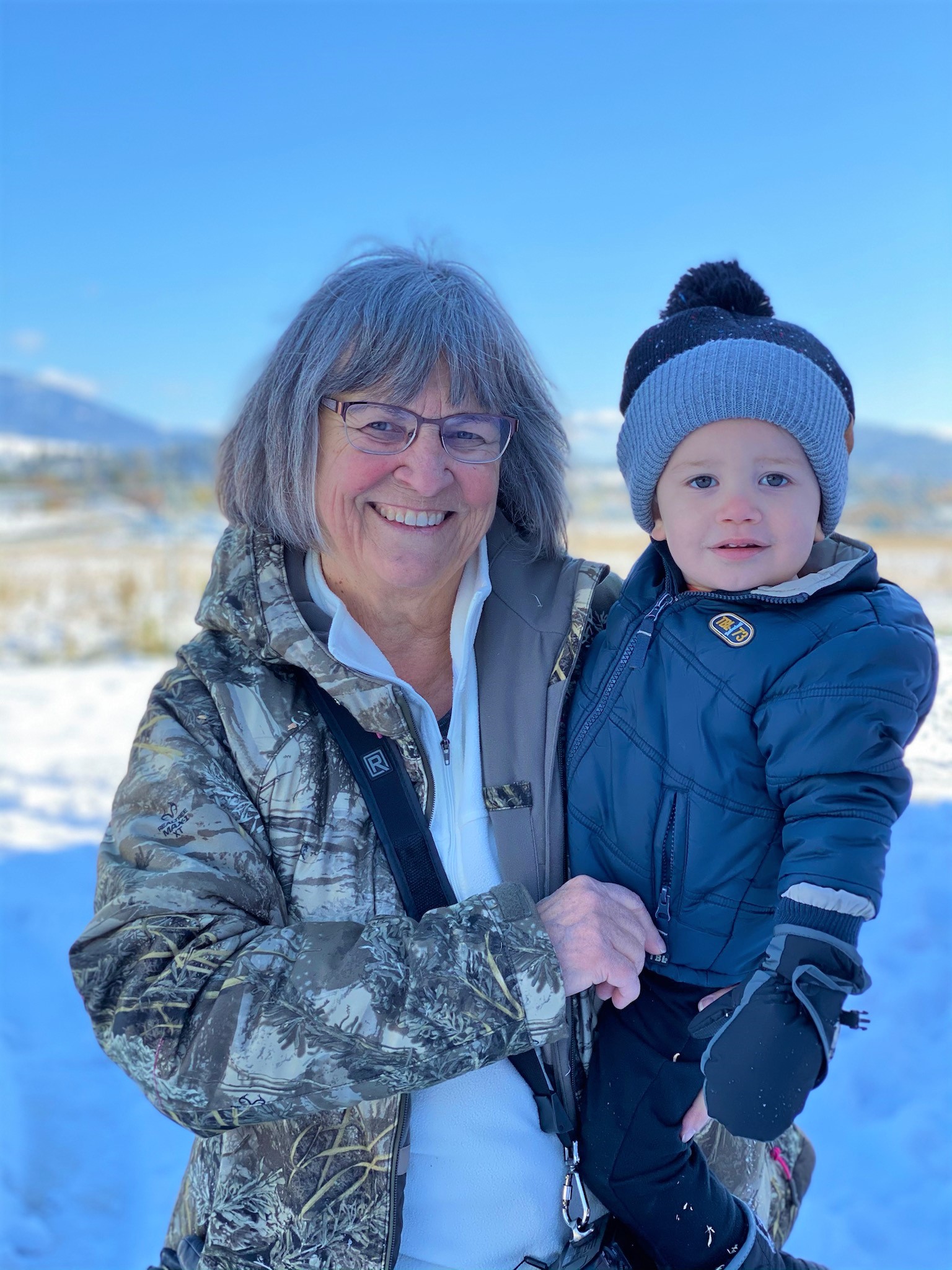
First Grandson
We’ve walked together as man and wife for 50 years. We lived in Los Angeles in 1974-75, Huntington Beach 1975-1984, and Ventura 1984-1988 in California. We moved to Washington State in 1988 and lived in Bothell 1988-1997, Kirkland 1997-1998, Kenmore 1998-2018 and now Colville since 2018. We lived temporarily in Camarillo, California from 2006-2010 while still owning our home in Kenmore.

I was a file clerk when we got married and then a school teacher until Josh was born. Greg was a painting contractor with his dad when we got married. When our sons were young Greg got a job with an aggregate company which prompted our move to Ventura where he ran heavy equipment in a quarry. Katie was born in Ventura and Greg was encouraged to finish his education and he decided to take some science courses to see if Pharmacy would be a good fit for him.

We moved to Washington State so he could finish his schooling at the University of Washington and then apply to Pharmacy school. While Greg was in school in Seattle I started a cleaning business for homes during the day and a dental and medical office at night. He finished his courses in 1992 but went on to a year of residency at Overlake Hospital in Bellevue before moving into the Biotec industry dispensing medical information on therapies or treatments that the companies he worked for discovered. One of the big names you might be familiar with is Enbrel. After his residency was over I retired from the cleaning business.

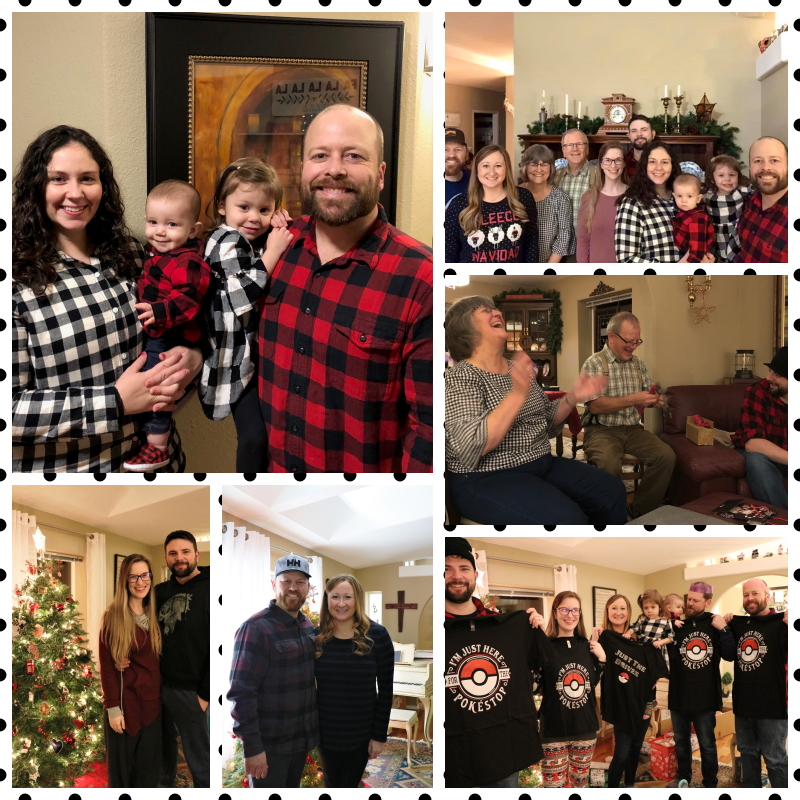
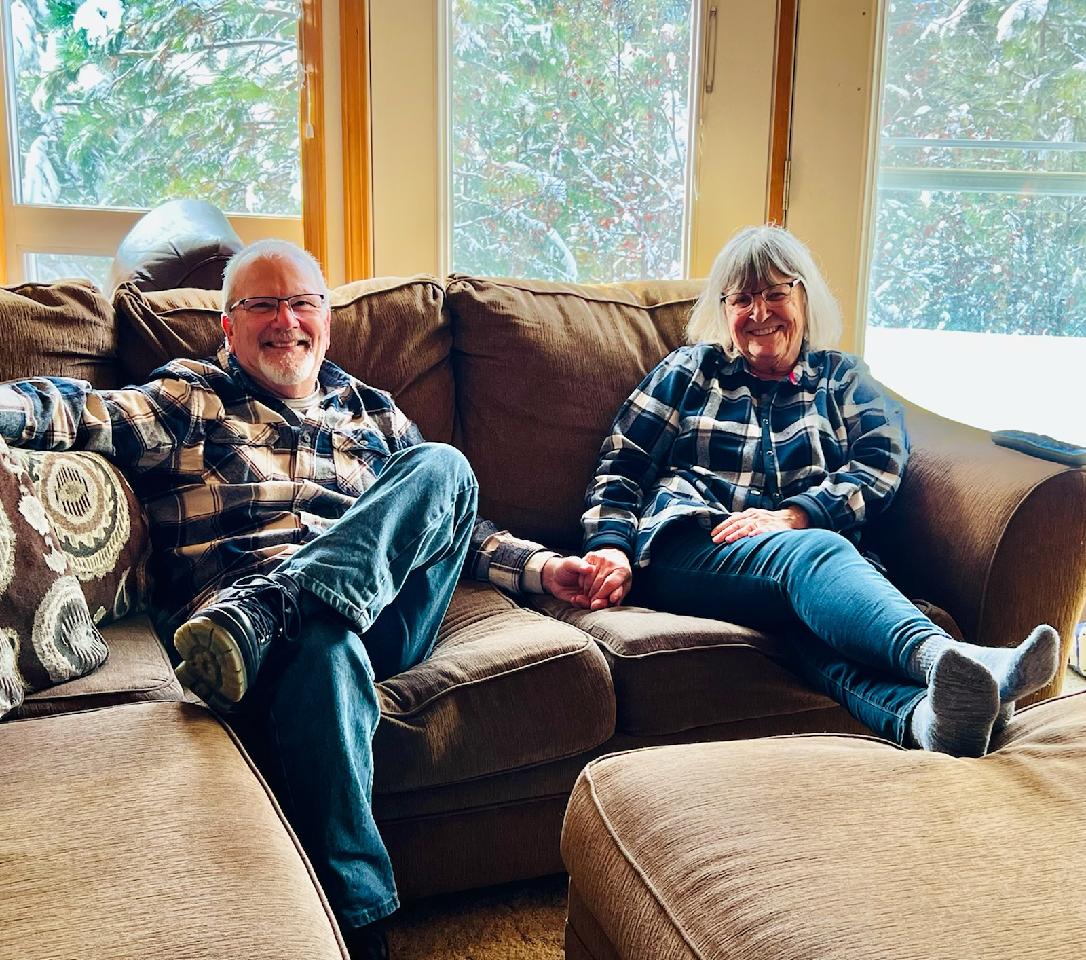
I homeschooled Katie for a couple years and when she went back to public school in 7th grade, I substitute taught for a few years.  Greg continued in the Biotec realm until he retired in 2019. We are happily retired in the country in the small town of Colville with Dan, Jamie and our Grandchildren close by. Our ‘Coast’ kids have the freedom to visit us several times a year and we like to visit them, too.
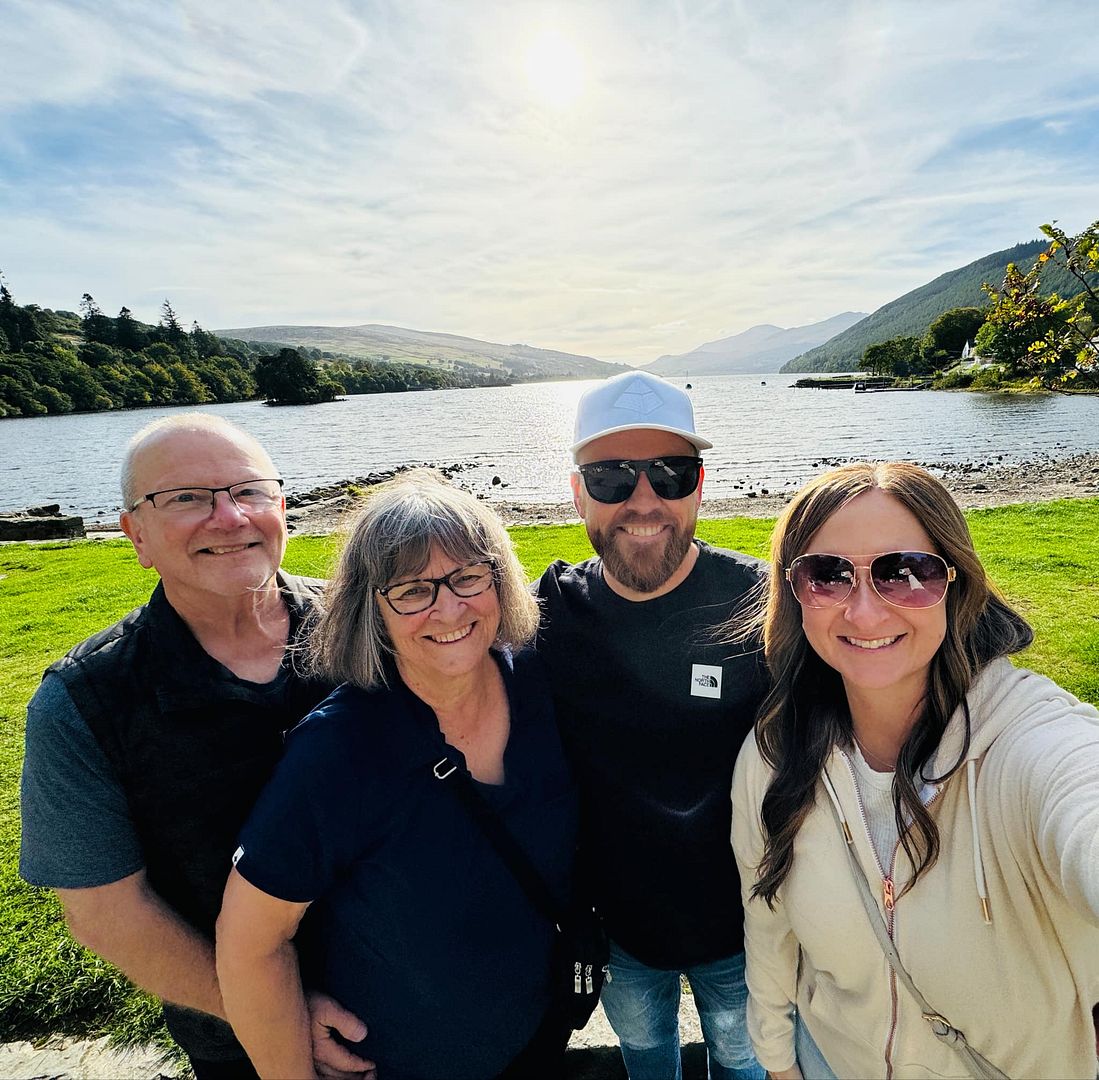
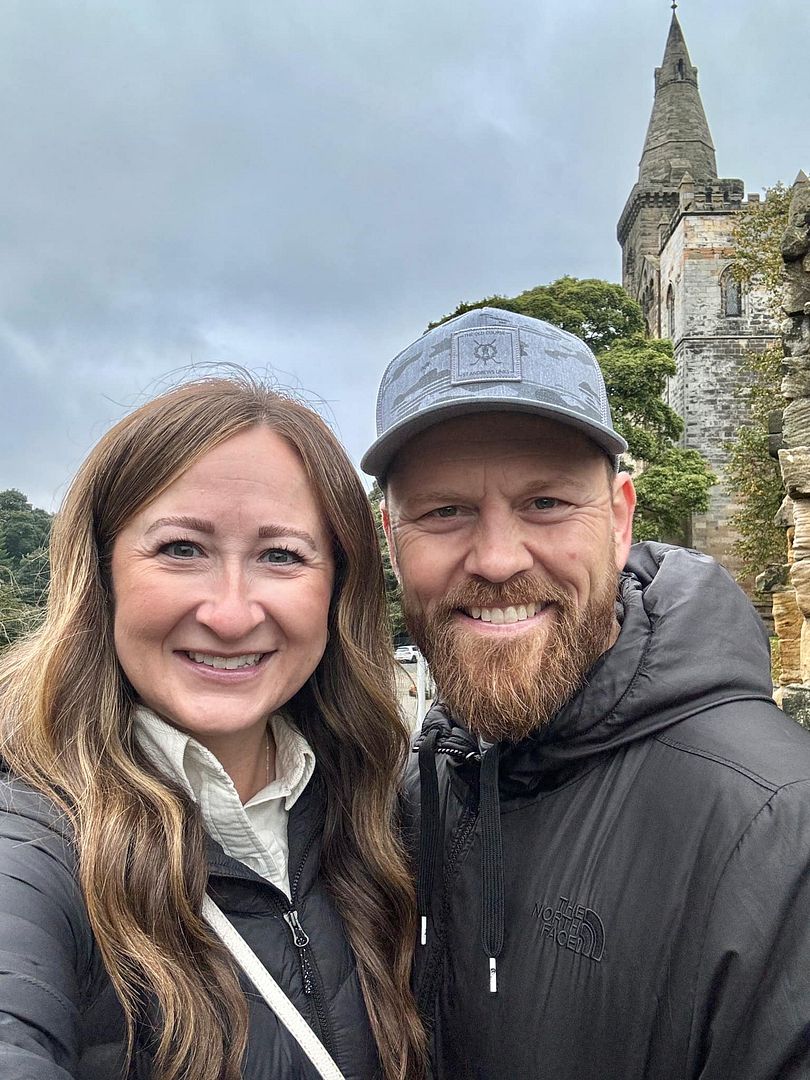
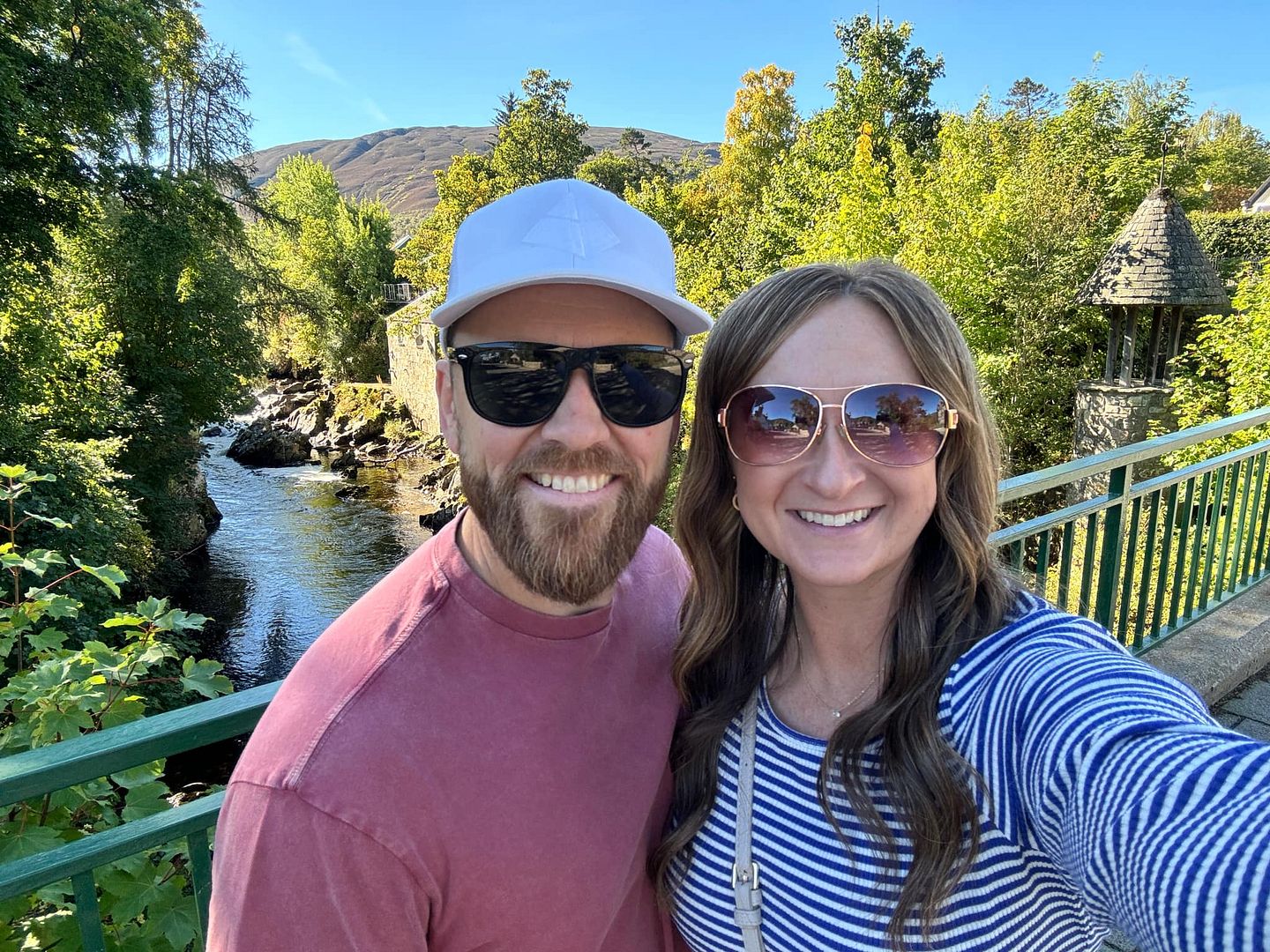
Here we are in Kenmore, Scotland with Josh and Laura giving a nod to Kenmore, Washington where we lived for 20 years.

This post is just scratching the surface of our 50 years of marriage and all the experiences and opportunities that God opened up to us. We were both Born Again Christians when we married and have been in the Sanctification process these past 50 years. Our life with Christ has progressed with some mountain tops and valleys but has always gone forward bit by bit as we choose obedience instead of our self-centered bents. Some of those bents are easier to identify than others. We’ve been members of Bible teaching churches all our years. Evangelical Free church in Huntington Beach, Bible Fellowship Church in Ventura, Sunrise Christian Fellowship in Seattle and Edmonds, Evangelical Free Church Conejo Valley,  Northshore Baptist Church in Kirkland, and now First Baptist Church Colville. We attend and we serve.

This post doesn’t cover any of the friends that God has surrounded us with who have sharpened us like iron sharpens iron. Friends who have helped us grow in the Lord. Friends that were by our side for so many life experiences. Friends that God graciously put in our lives. That will have to be another post.

As my dear old Pop would say we are so thankful to God for all He “did to us” these fifty years! Thank you God for what you did to us” was my pop’s prayer. Thank you, LORD God Almighty for bringing us together in our marriage covenant. You have given us peace and joy through the hard times and good times. You continue to lay your hand upon us and lead us beside still waters.
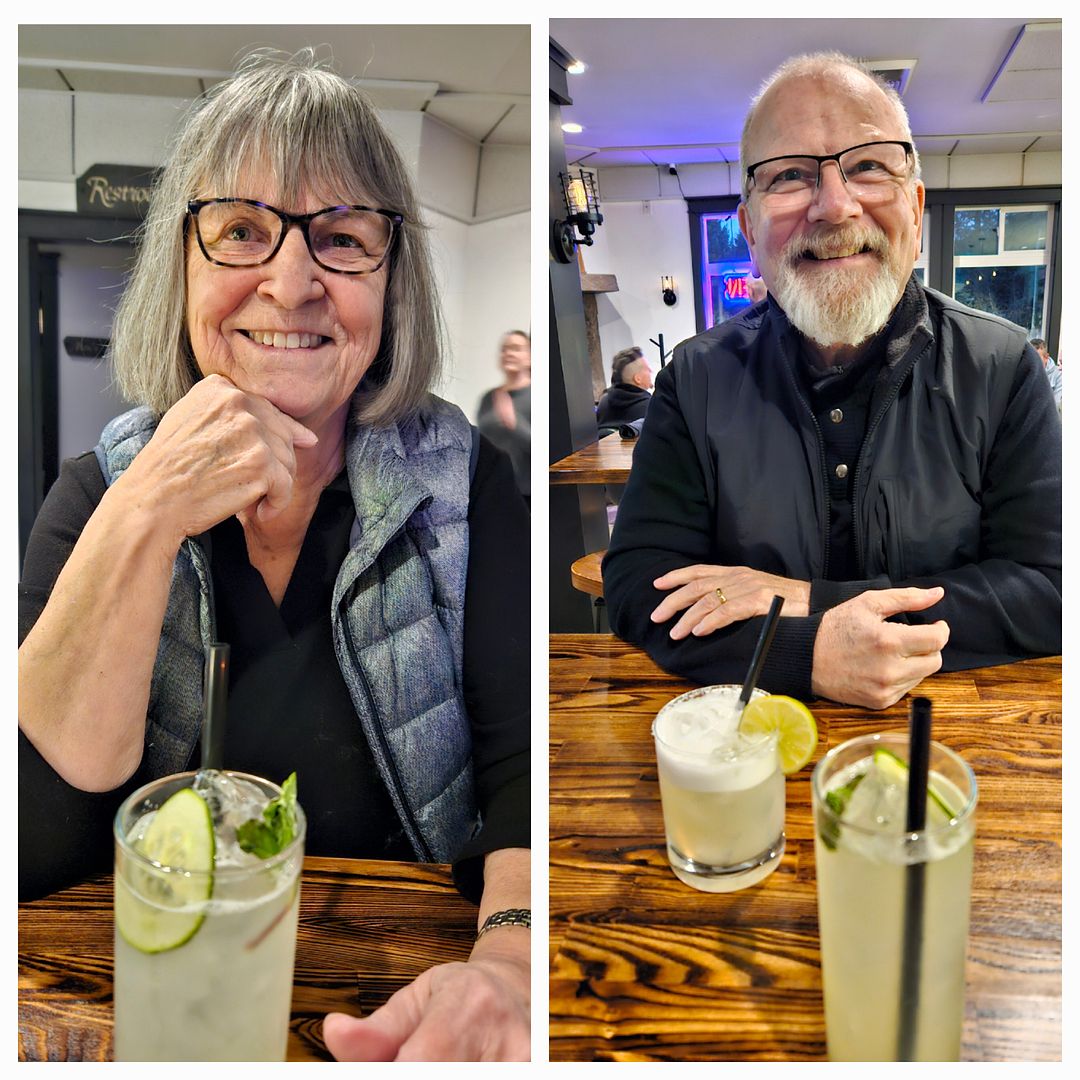
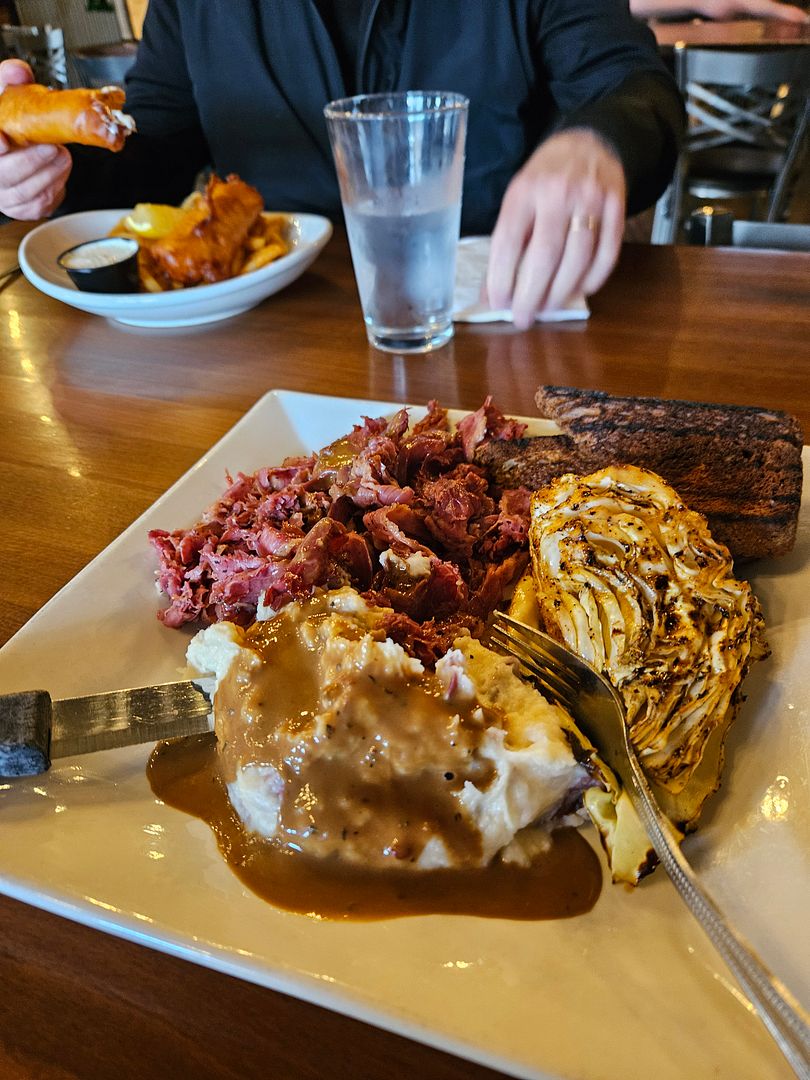
We already had a wonderful anniversary celebration in Walla Walla with our family of ten but that doesn’t stop us from continuing our celebration today. We are having a small overnight getaway in Idaho to celebrate our actual day. The photo above is our celebration meal at Parallel 47, a restaurant in Hayden, Idaho. The food was so satisfying. After dinner we walked the Christmas lights boardwalk at the Coeur d’Alene Resort.
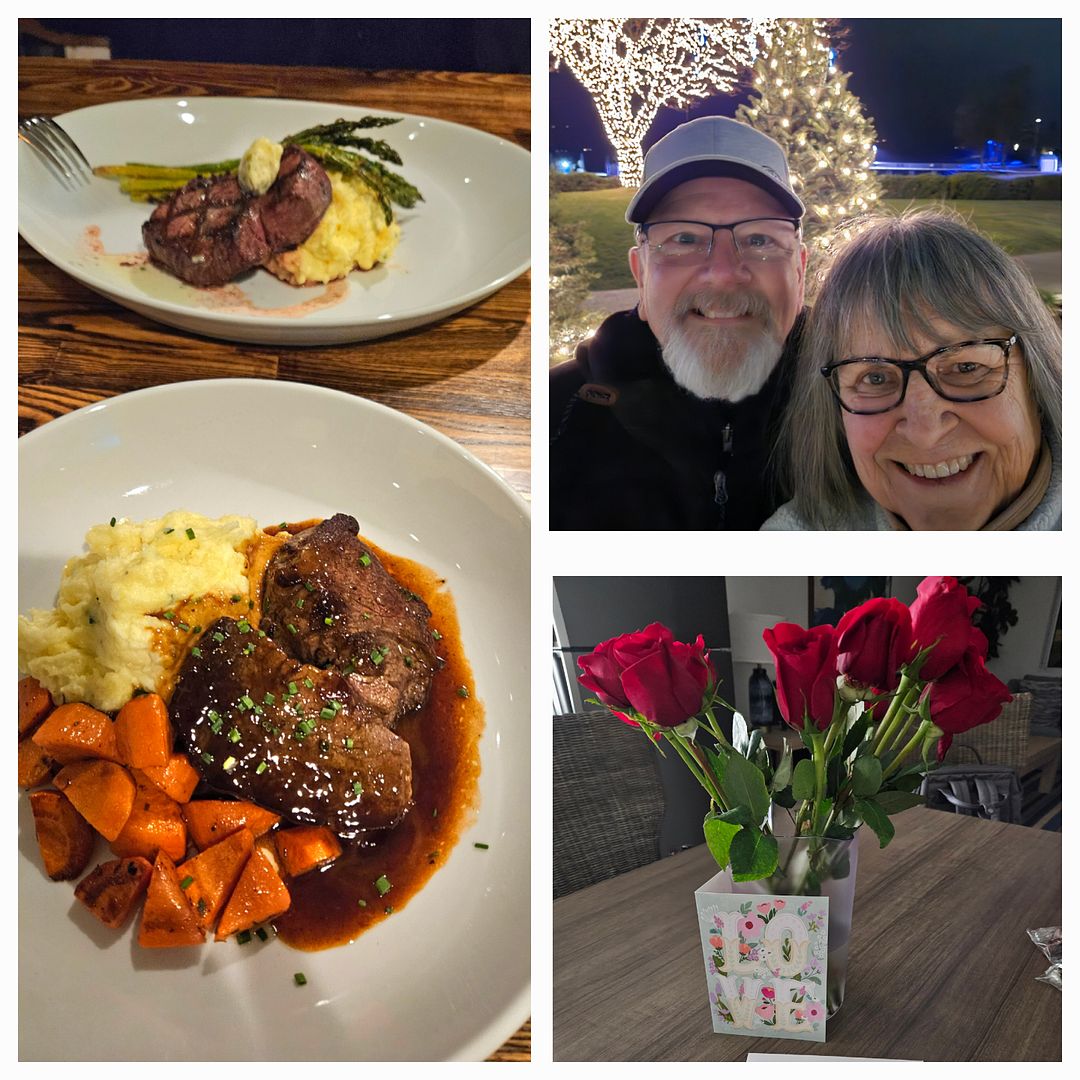
We trust God for the future of our marriage and thank Him for his lovingkindness and mercy in our individual lives and as husband and wife.

Thank you, Dear Readers, for making it to the end of this long post.
Scotland Travel Journal ~ Braemar

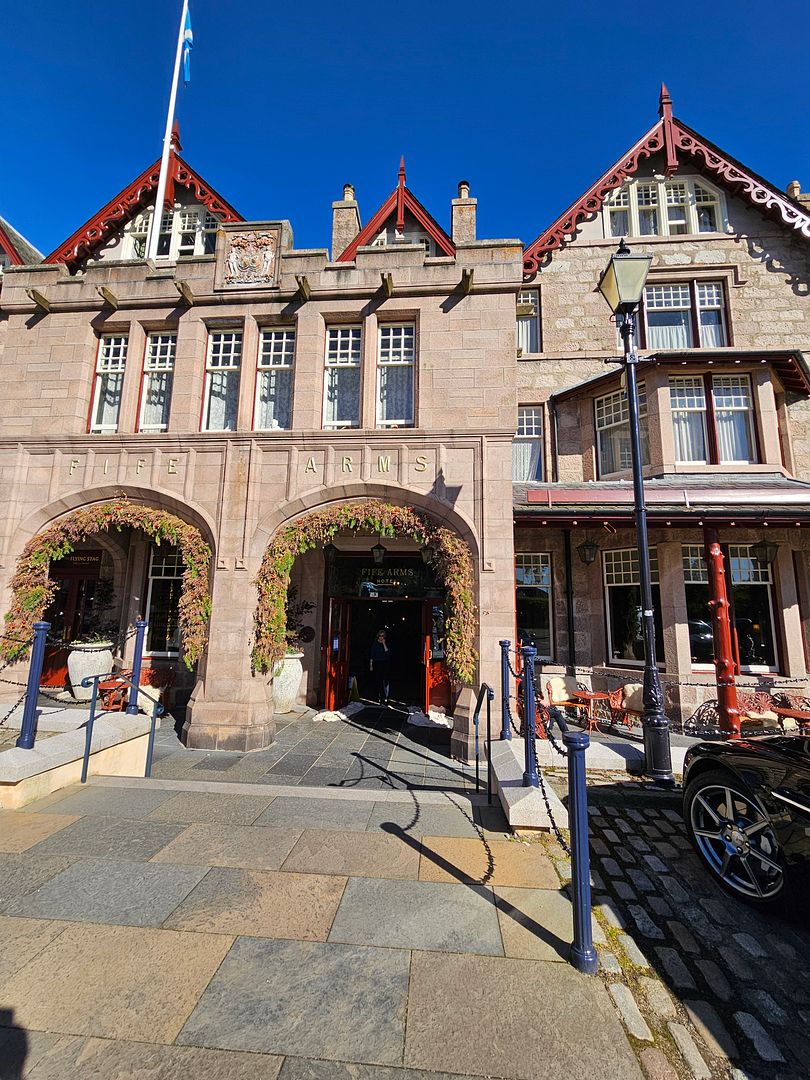
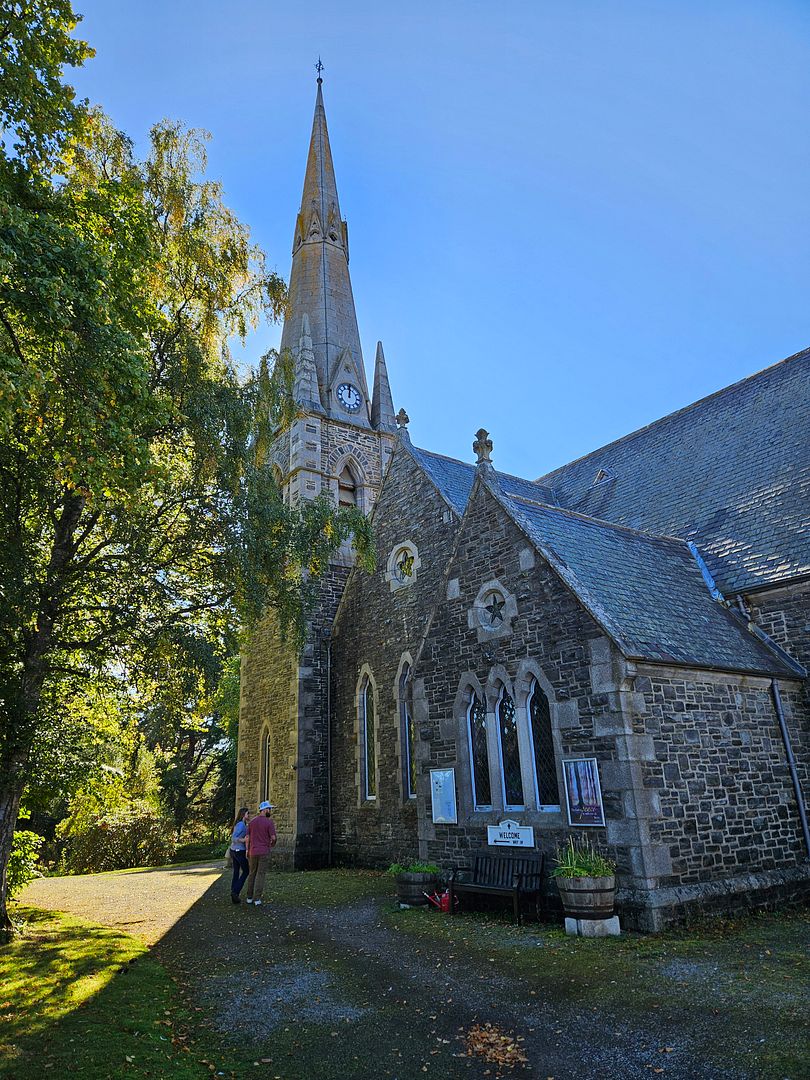
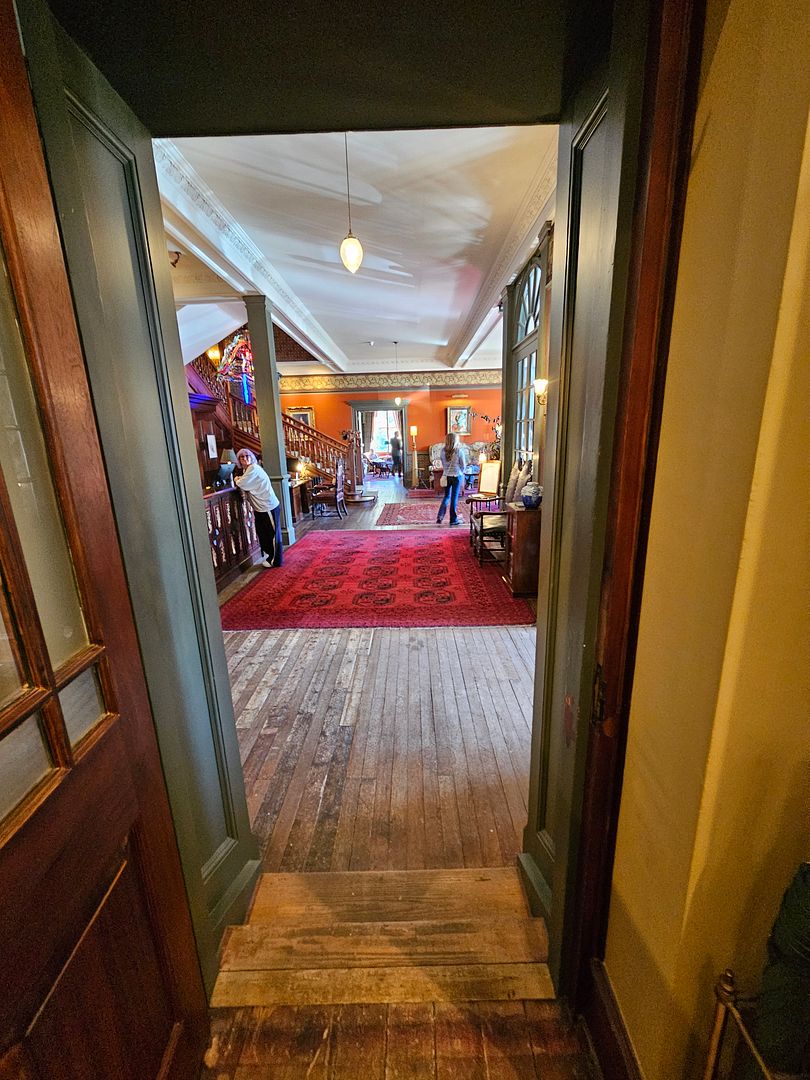
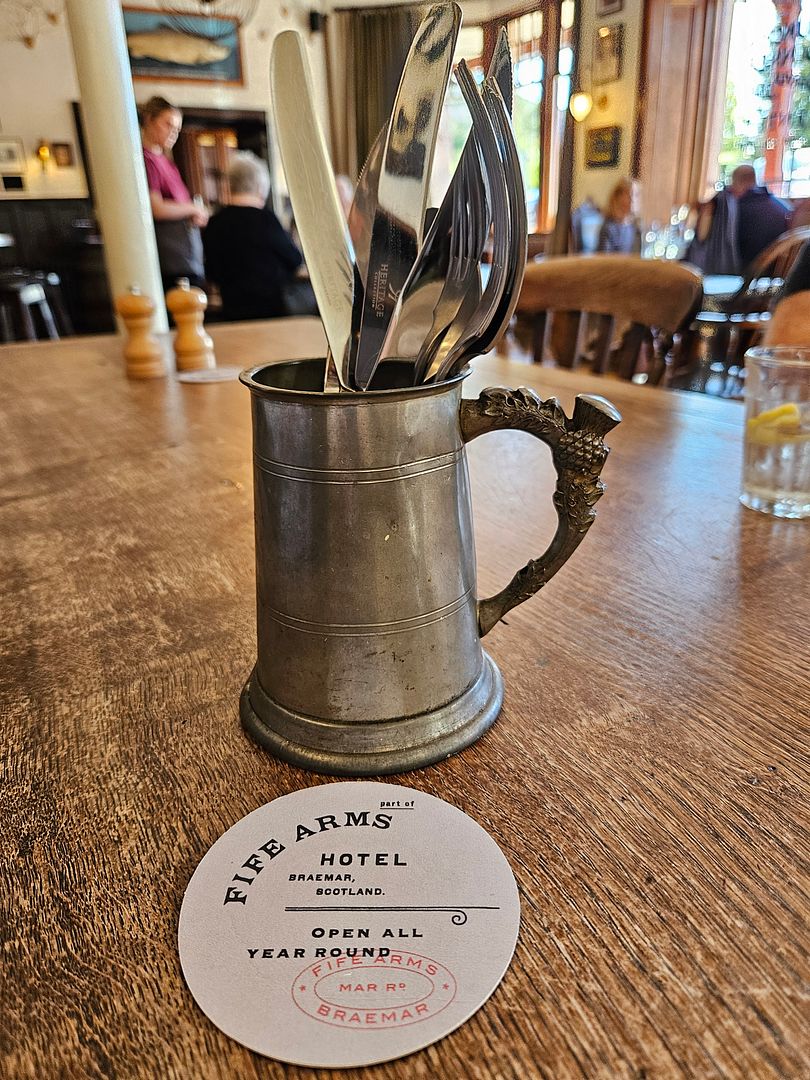
Continuing on our journey through the Cairngorms on Wednesday September 18th, our lunch stop was in Braemar. This was a very busy village with tourist buses and many visitors. We found a parking spot in front of the Fife Arms, a 5 star hotel in the Highlands.

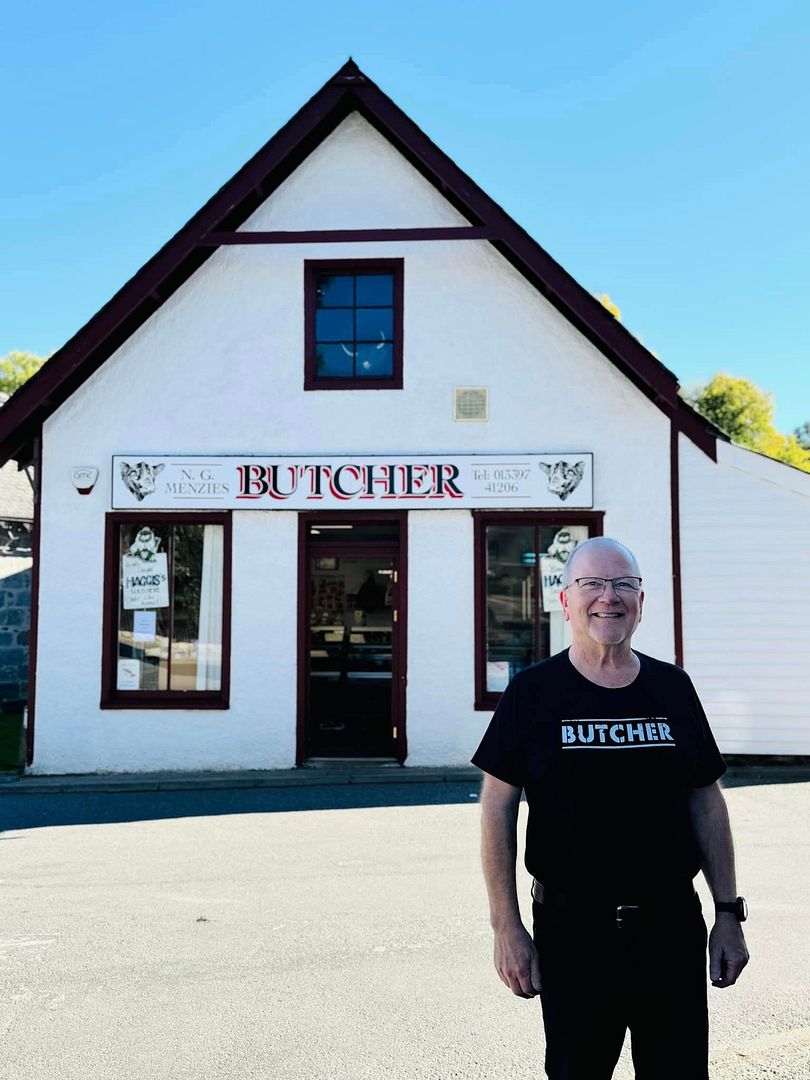
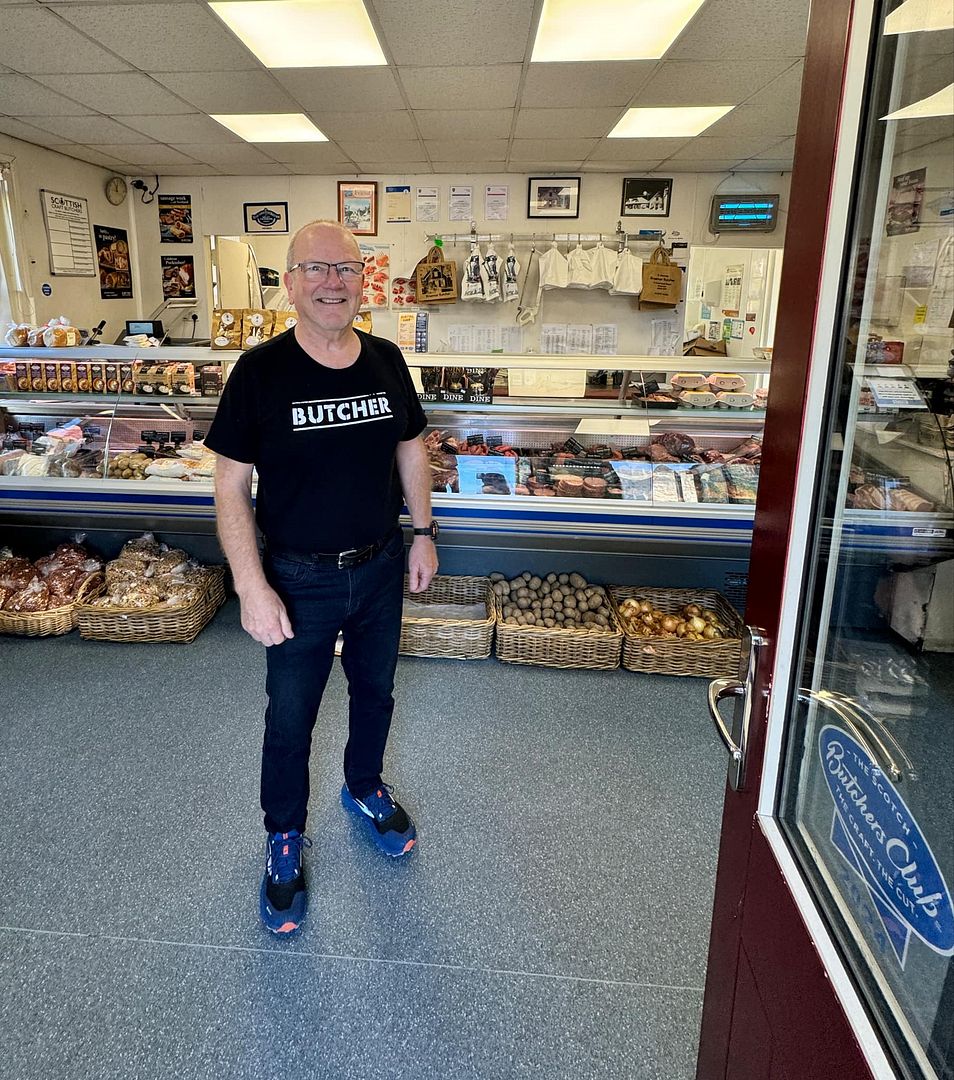
We were early for lunch so we walked about the village.

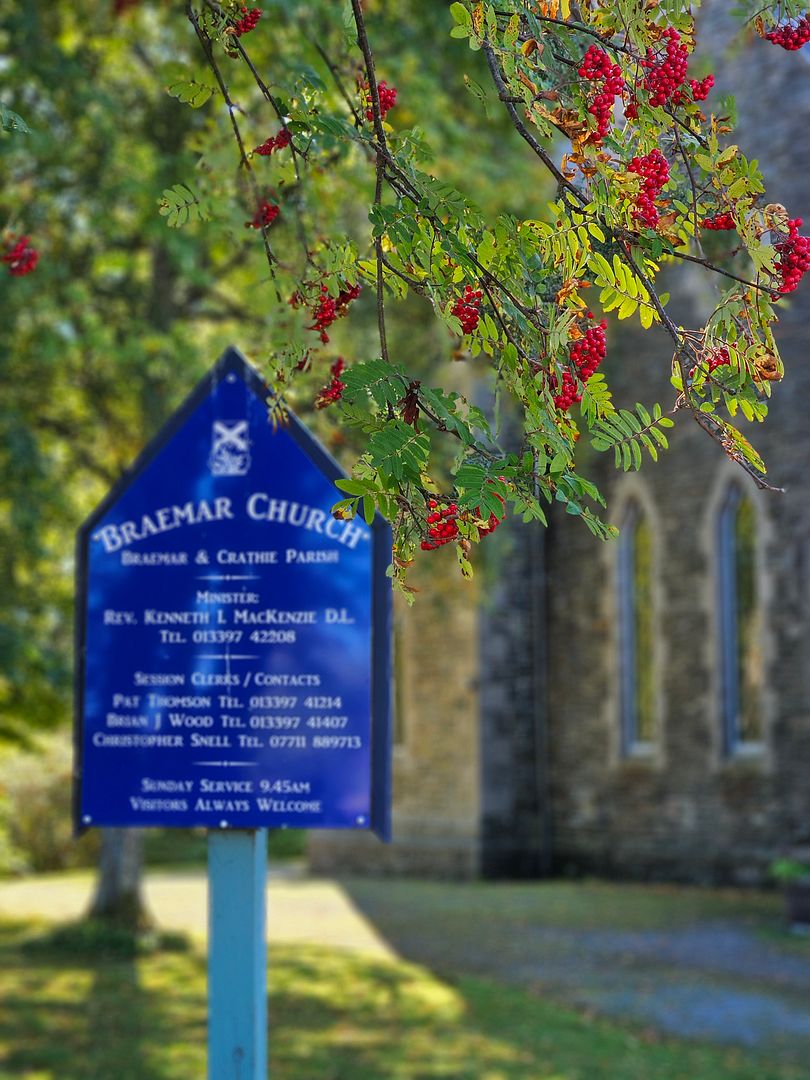
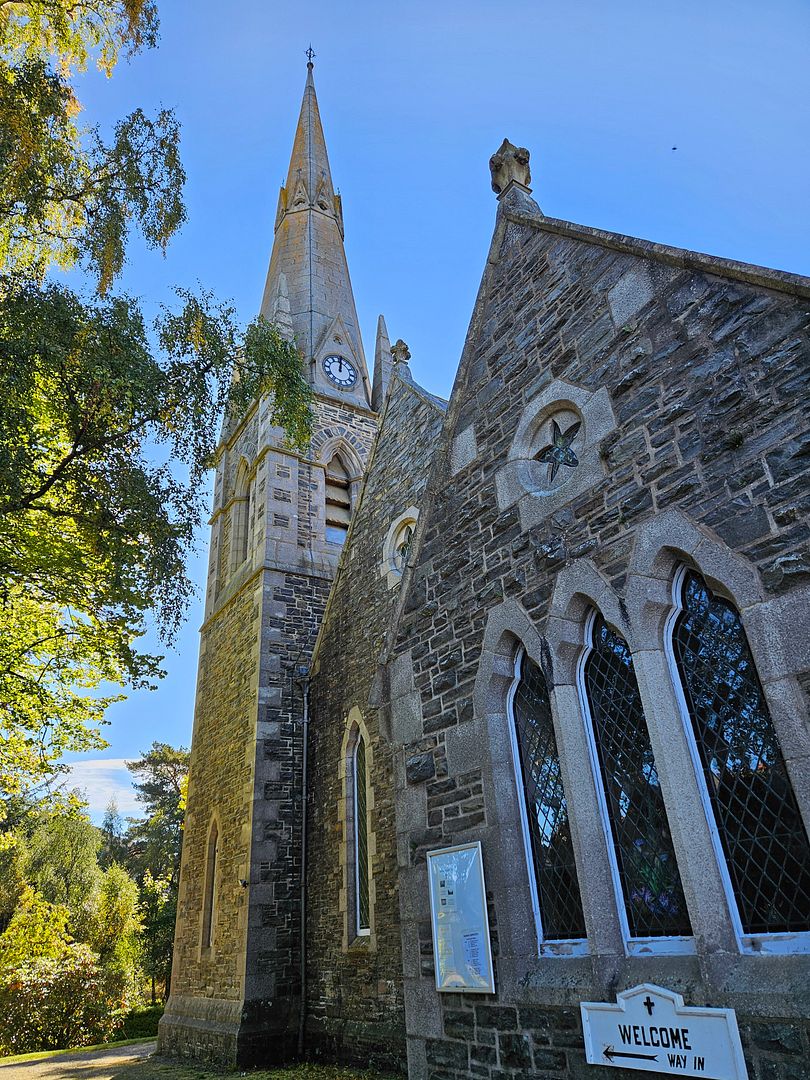
The Parish of Braemar and Crathie is one of the largest, highest and most remote in Scotland. It is set in the magnificent Cairngorms National Park, more or less equidistant from Aberdeen, Inverness and Perth, and on any given day the number of visitors to the area may exceed the resident population.

Christianity probably came to Deeside in the fifth century when monks from a monastery at Whithorn in Wigtonshire travelled throughout Scotland.
Later groups of missionaries came to the area from Northern Ireland and from Glasgow and after 400 years of work, by 900AD, Celtic Christianity was well established.

On August 17, 2019, Saturday, Queen Elizabeth II visited Braemar and Crathie Parish Church in Aberdeenshire. 

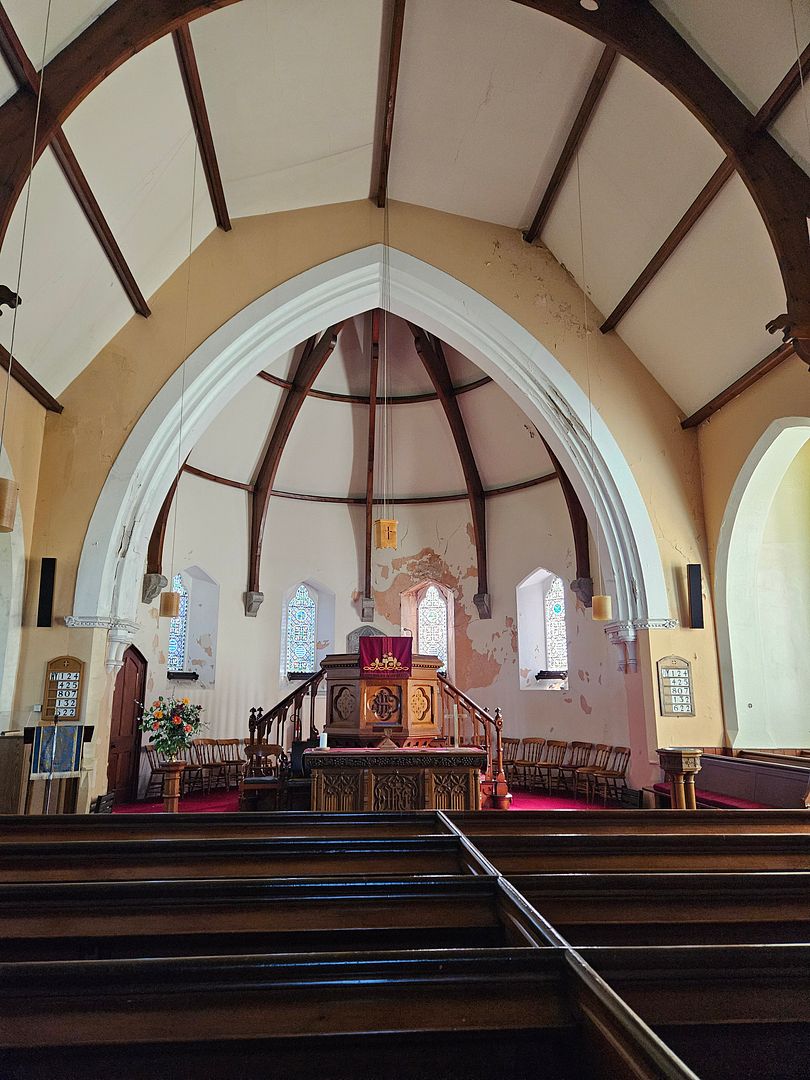
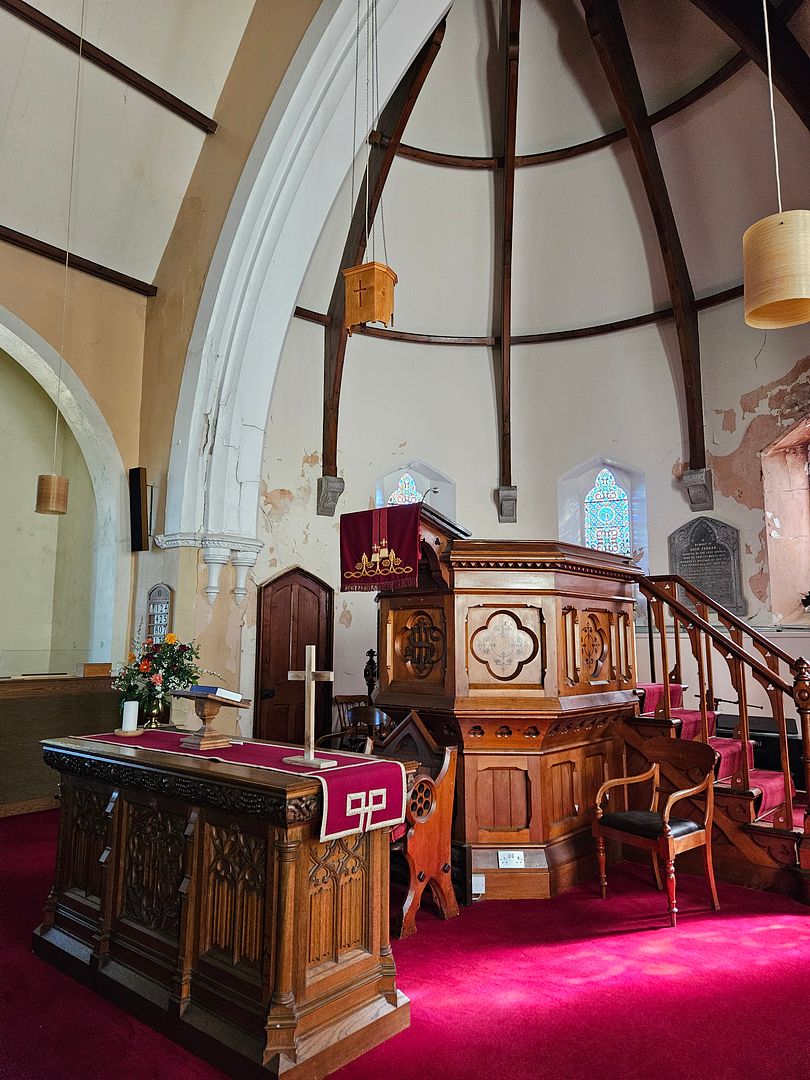
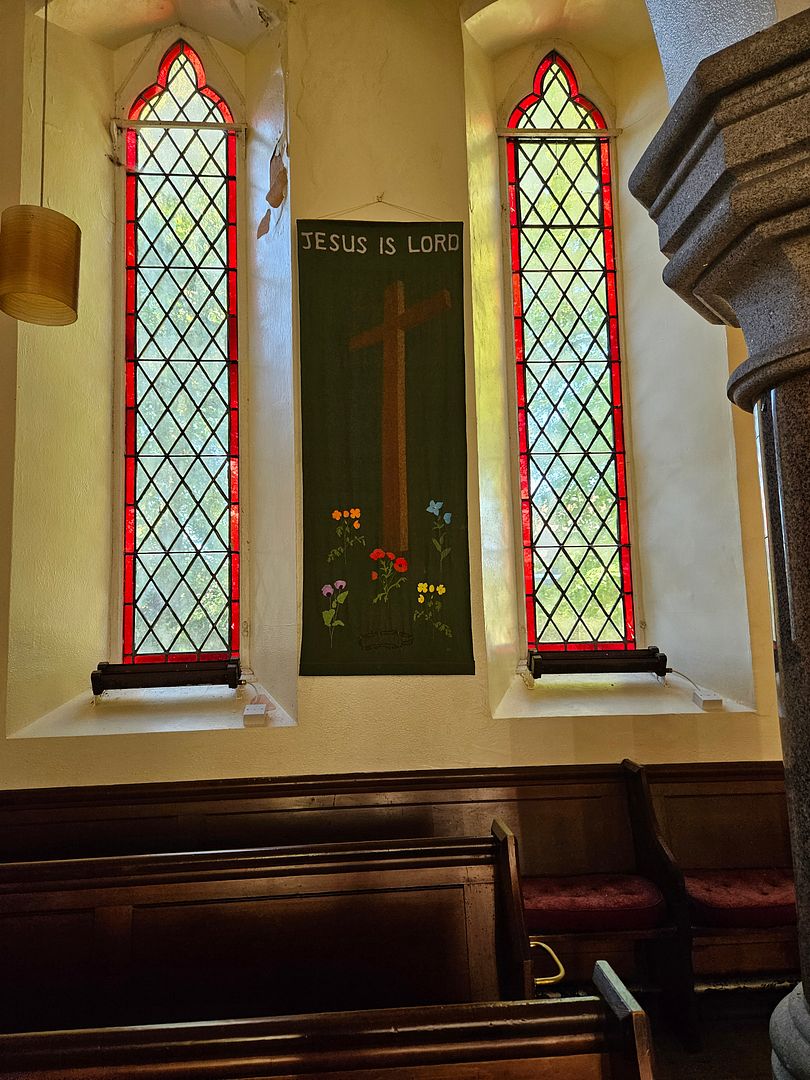
Braemar church is built in the shape of a cross with a very prominent pulpit which reflects the significance of the preaching of the word by its founders.

The communion Table is made of oak and came from the original Parish or East Church. The Font bears the inscription “One Lord, One Faith, One Baptism”.

There were several banners around the church. This one struck a chord with me.

It was easy to see that the church needs some repair work done.

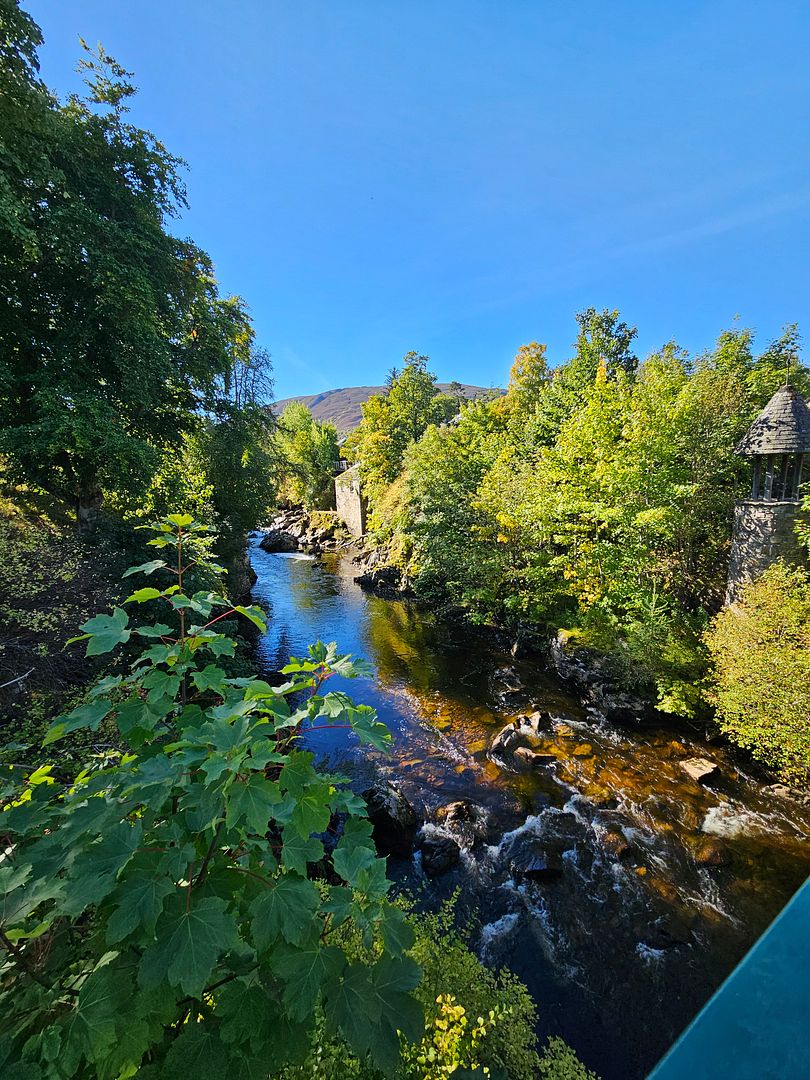
We crossed over the Clunie Water to see more of the village.

Laura saw this photo opportunity!

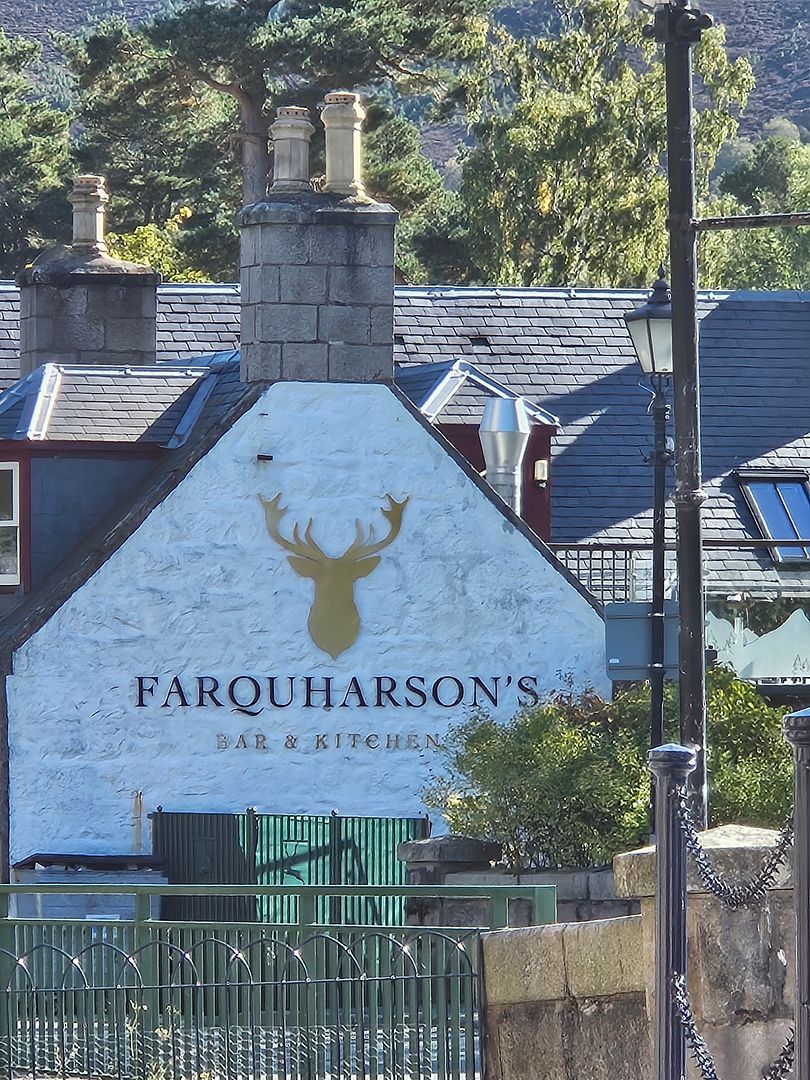
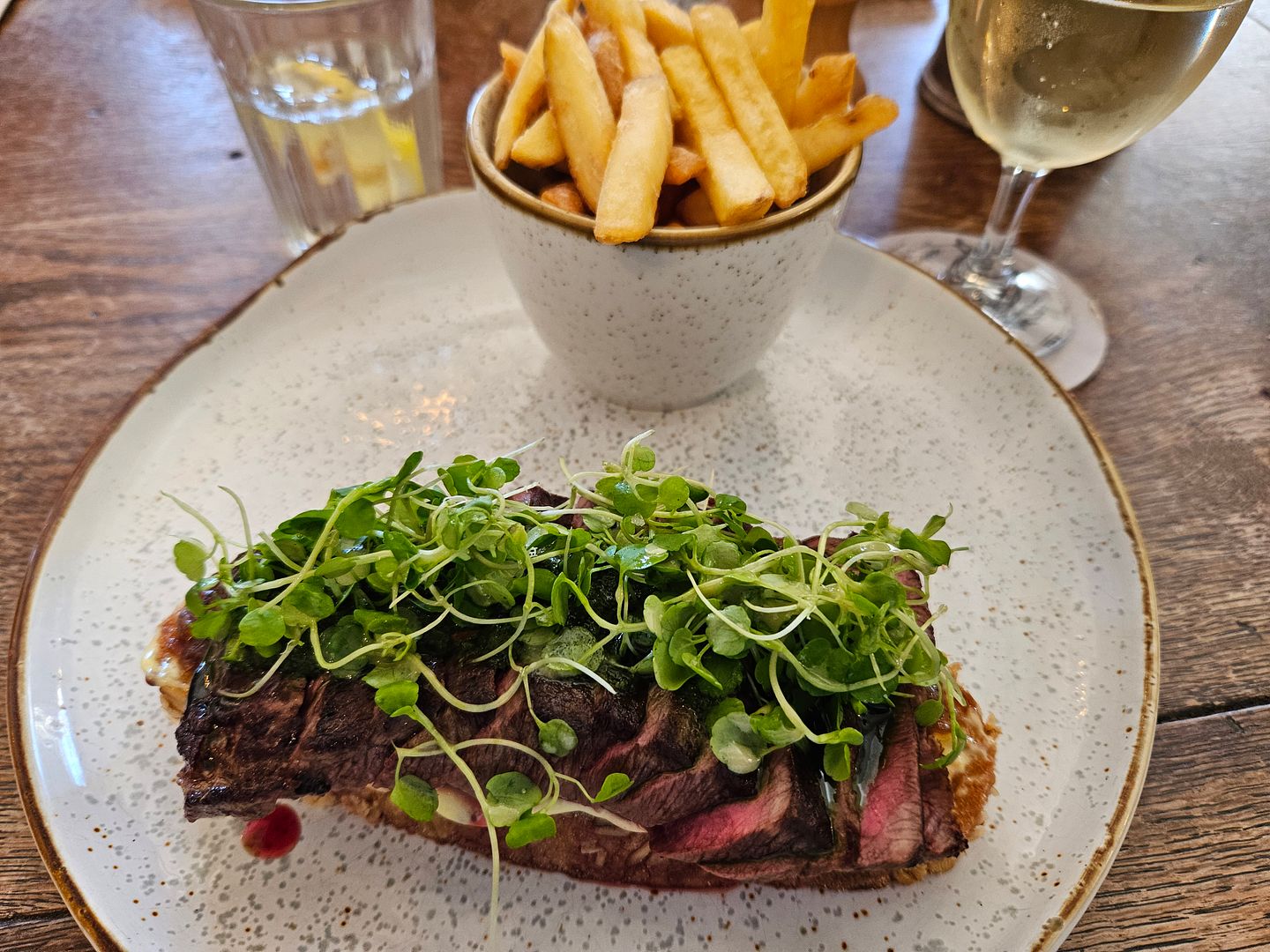
We planned on eating our lunch at The Fife Arms, a 19th-century hunting lodge on Clunie Water. This ornate hotel is a 2-minute walk from central Braemar, 15 minutes from Braemar Castle and 8.9 miles from Glenshee Ski Centre.

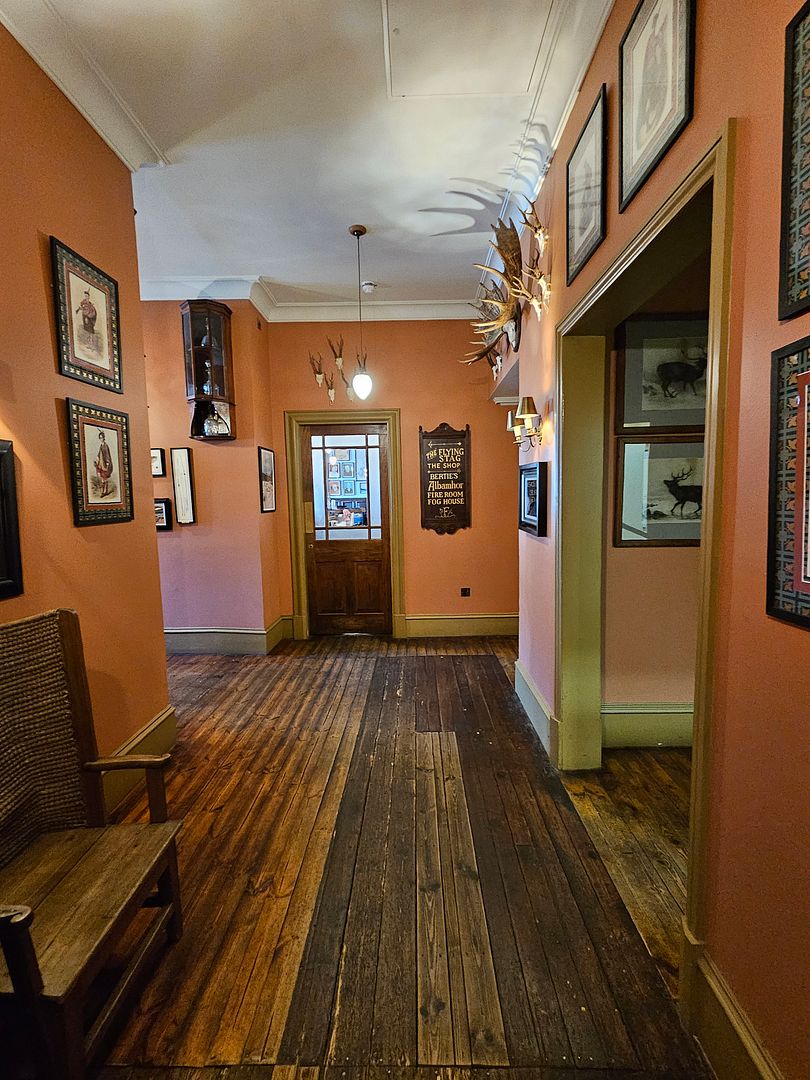
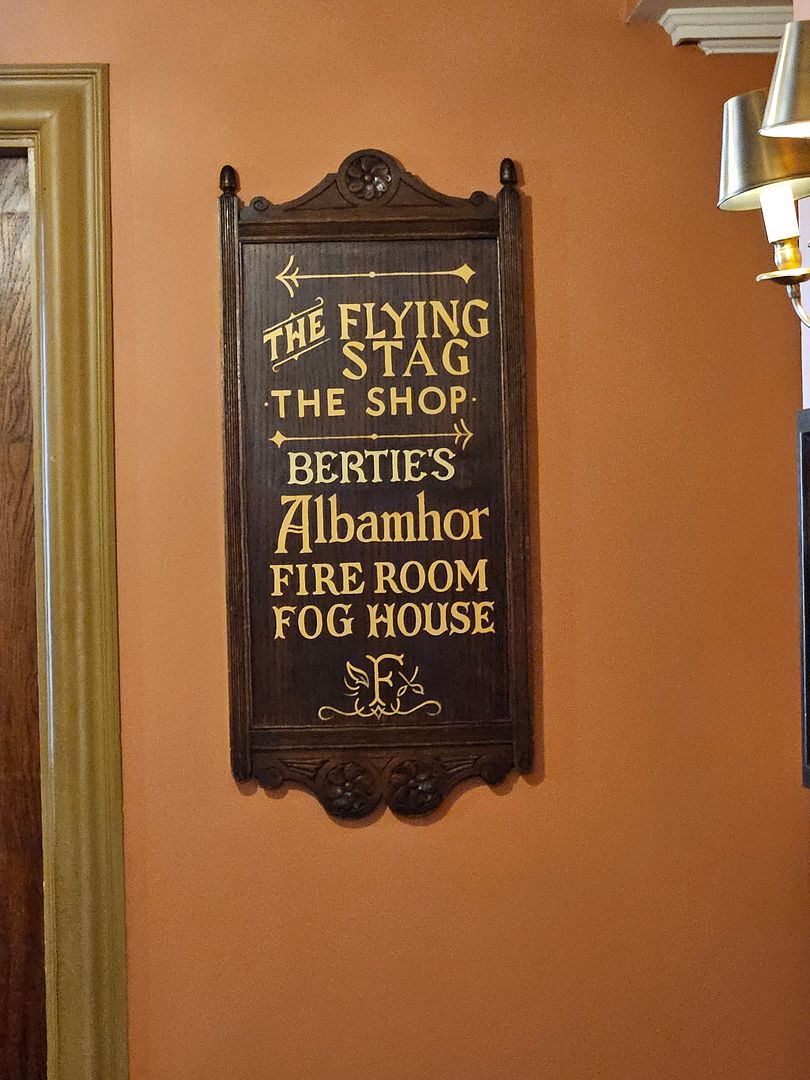
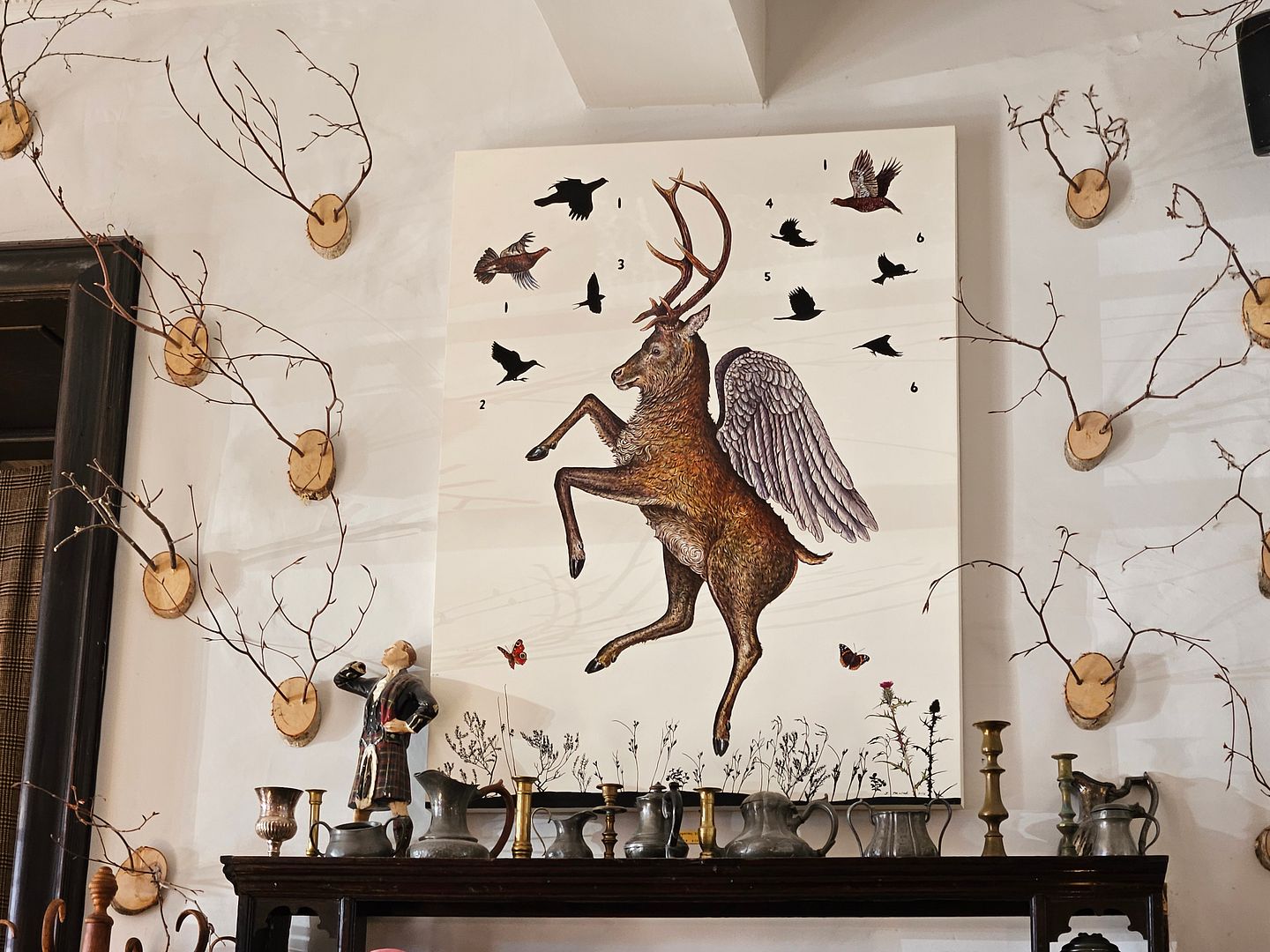
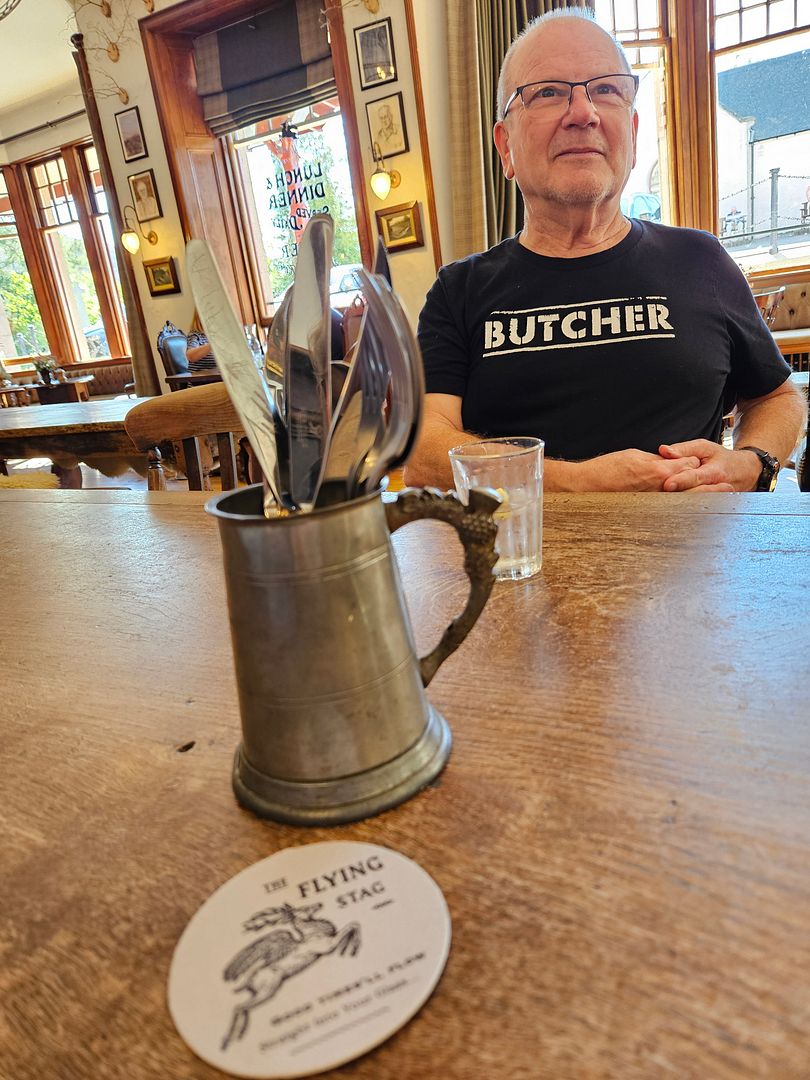
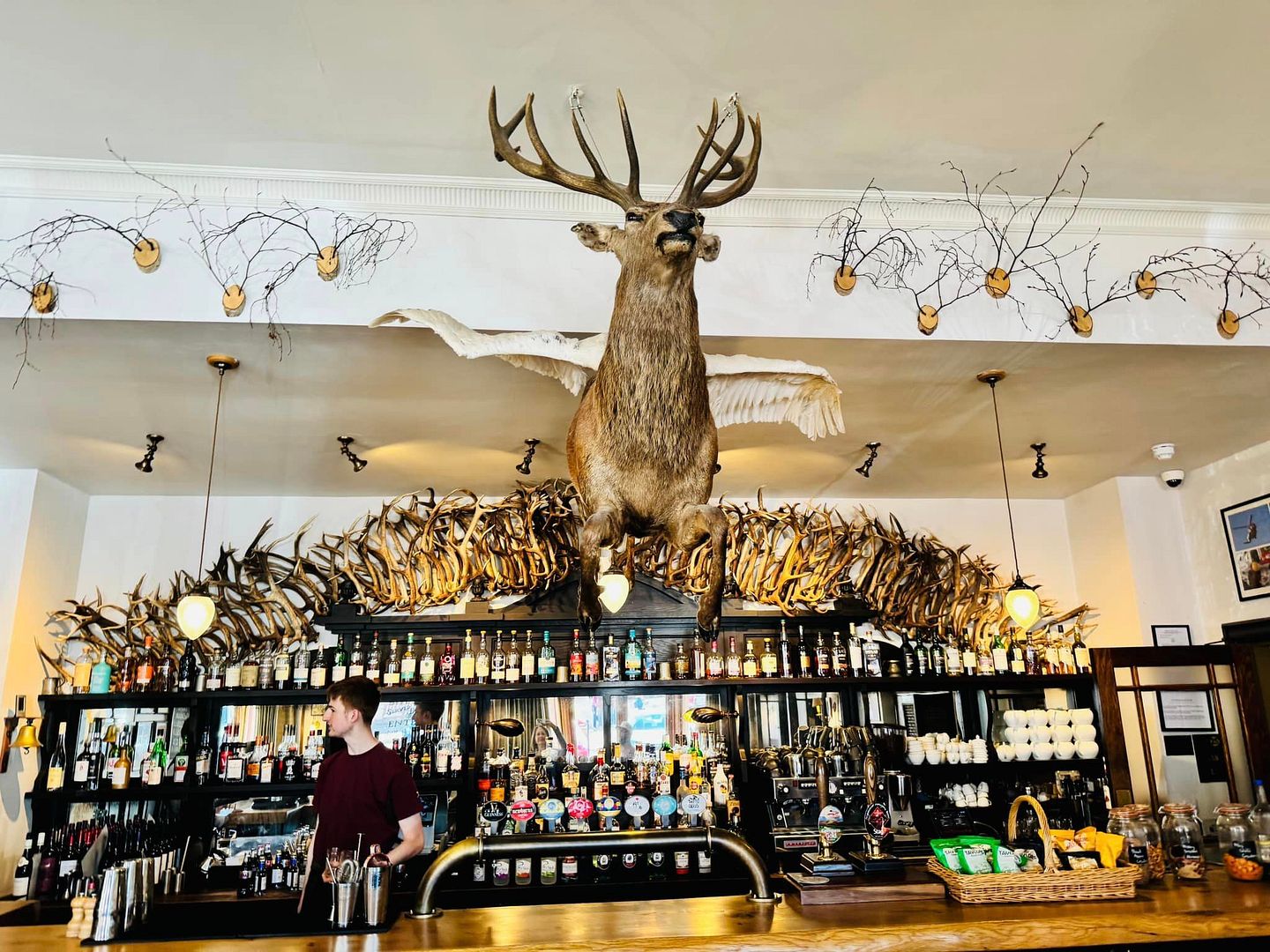
We waited for lunch service to begin at The Flying Stag and enjoyed our surroundings. On this very warm day air conditioning would have been appreciated. Windows were opened and we had some cooling.

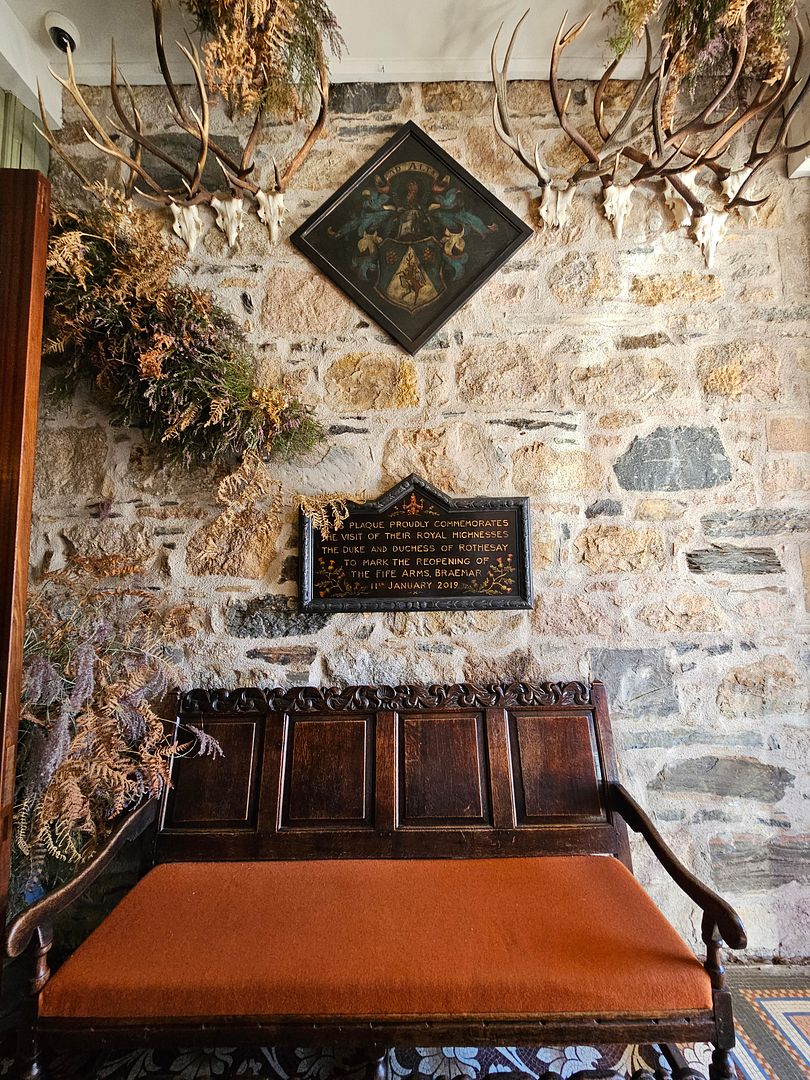
Remember my theme for the Cairngorms or the Highlands? Antlers abound everywhere we turn.

We couldn’t dilly dally here since we were on a quest to reach Dunnottar Castle on the North Sea before it closed for the day. After lunch we headed east from Braemar and passed the many acre Balmoral Estate with not a glimpse of the castle. The castle can be visited from April until the beginning of August. Leaving Braemar, we were only halfway done with our fun experiences for this day in the sunshine.

Our weather continued to be exceptional for our driving days for that we again were very thankful. We did reach the castle in time and there are many photos to share so this post will come to an end here.

Currently here in Colville we have experienced rainy days with some snow showing on the mountain tops around us. Hope all is well in your corner.

Scotland Travel Journal ~Holy Rude

The Church of Holy Rude in Stirling, Scotland is steeped in Scottish History. The church is Stirling’s oldest building after the castle. During the reign of Robert II (1371-1390), and altar to the Holy Rude was established, leading to the church being renamed as the Parish Church of the Holy Rude of the Burgh of Stirling. “Holy Rude” translates to Holy Cross.

From the brochure: This site, a focal point of faith and heritage, witnessed the worship of Mary, Queen of Scots, the crowning of her infant son King James VI and many significant events, including the Scottish Reformation and the Jacobite rising.

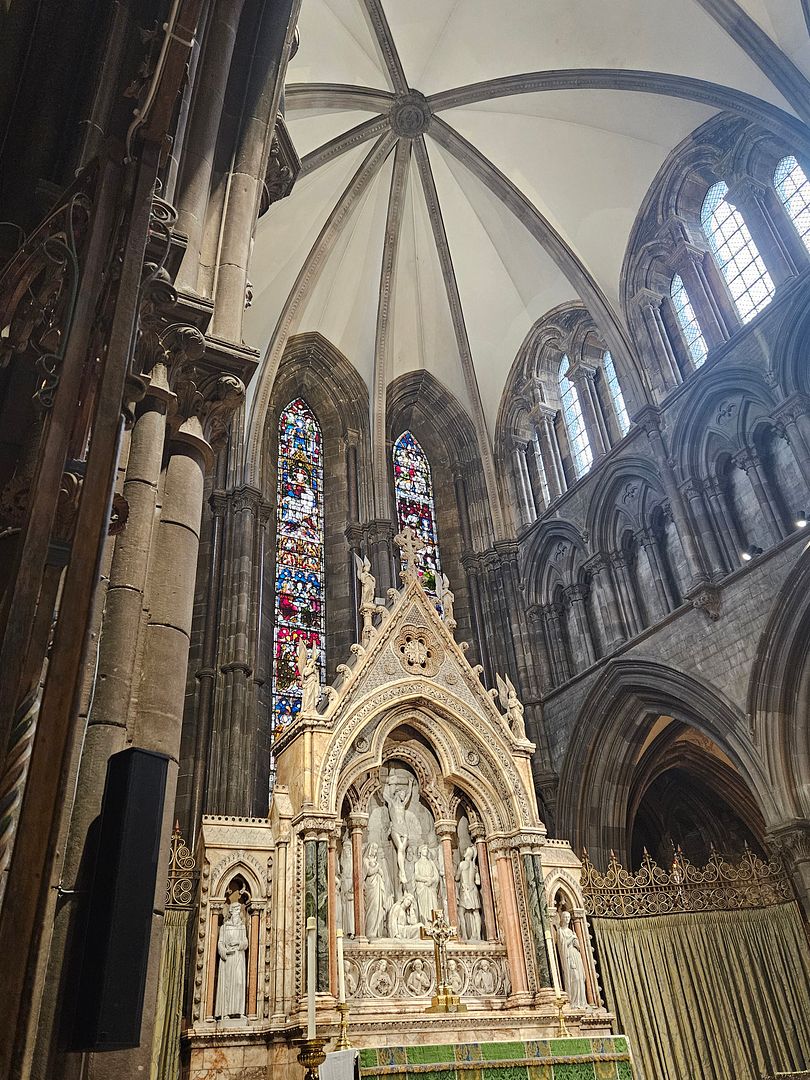
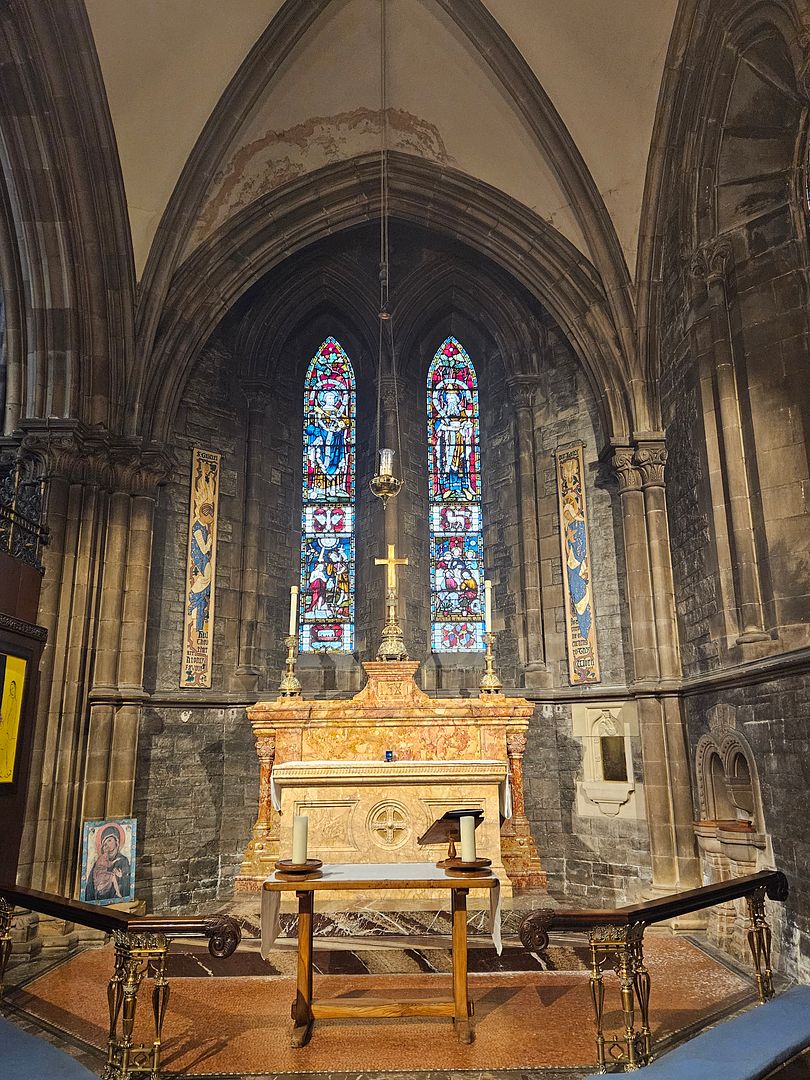
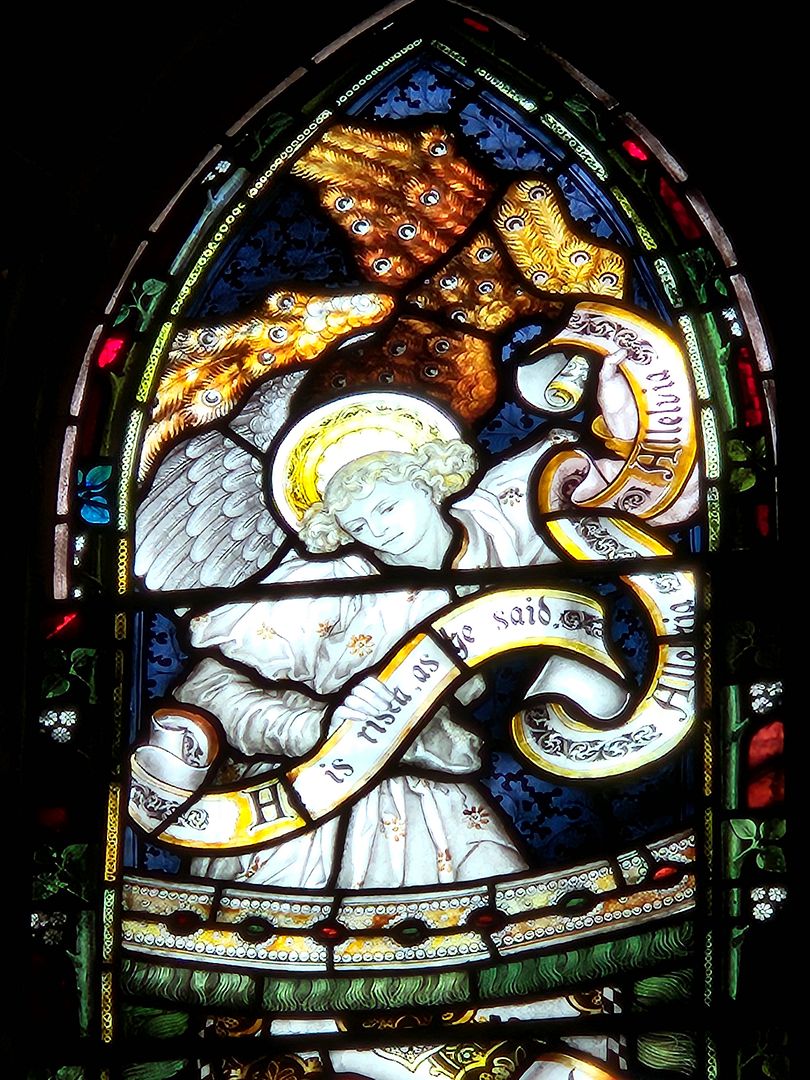
See that little stained glass window way at the top of arch. The Angel Window was installed in 1870 and the artist is unknown.

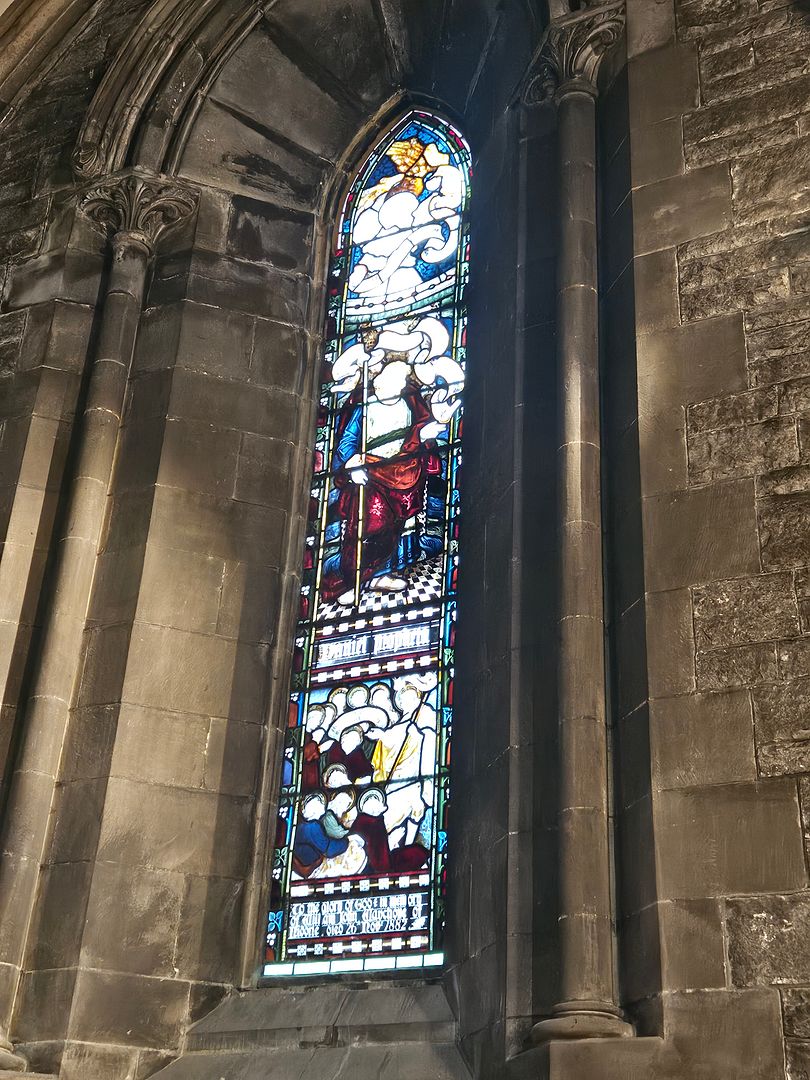
This window, above the Apse, is dedicated to John Cowane, founder of Cowane’s Hospital. The middle right depicts the last supper, the left shows the Sermon on the Mount, and the lower portion illustrates Matthew 25:35-40, reflecting the charitable intentions of Cowane. The Inscription read, “For I was hungry, and you gave me food.”

The coat of arms above the entrance to St. Andrew’s Chapel is a 17th century carving of the Royal Arms of Scotland recalling the era when Scottish royalty frequented the Church.

Mary, Queen of Scots: At nine months old, she was crowned Queen in Stirling Castle’s Chapel Royal after her father, James V, died. She spent much of her childhood in the castle and visited this church. After Mary’s abdication, her son was crowned King James VI of Scotland in the Church of the Holy Rude.

At her 13 month old son’s coronation, John Knox preached the sermon. For the first time the rites were Protestant and not Roman Catholic and the whole of the ceremony was made and done in the Scottish tongue and not Latin.

This is the oldest surviving church in Scotland that witnessed a coronation.


John Knox, A figurehead of the reformation in Scotland. Reverend James Guthrie was another prominent Scottish minister during the Covenanting era. His convictions led to the division of the Church’s congregation in the 17th century.

The Church has seen its share of conflict over the centuries.  During the religious and political troubles of the 17th Century, the Church was divided in 2 and had a wall built to create 2 separate churches – the East and the West.  The minister whose activities led to this division, James Guthrie, was hanged for high treason in 1661, and the 2 parts of the church were finally re-united in 1935.

During Cromwell’s uprising, General Monk set up his guns on the Church tower in 1651 for the last successful attack on Stirling Castle.  The Church walls bear the scars of musket shot and cannon-fire from this and other conflicts, including the Jacobite uprising of 1746. The battle scarred walls are indeed a testament to the skills of the stone masons and craftsmen of the past.

King Robert the Bruce

This window was created in memory of the Argylls of WWI and it was fitting for it to be in the Church of the Holy Rude because the regiment had strong ties to this church. This window depicts a Highland soldier surrounded by poppies and figures from the regimental cap badge. Thousands lost their lives in World War I. This window was dedicated in 2016.

The current windows date from the 19th century.

We left the church and walked down into town needing a little snack before we made our way to the Wallace Monument which will be another post. Sunday the 15th of September was a full day of history for us!
Thanks for traveling along with us on this day that we connected more dots about John Knox and the Scottish Reformation and Covenantors in Scotland. We took in Stirling in one day but you could easily spend a few more days soaking it all in.

Scotland Travel Journal ~Glasgow Cathedral

We made it all the way home on Thursday the 26th of September. We fly out of Seatac Airport (Seattle) which is a good five to six hour drive from our home in Colville. Since we were traveling with Josh and Laura we find it easier to drive to their home the day before our flights and drive and park at the airport with them. Our flight home from Scotland arrived Tuesday evening and we would be in no good shape to then drive the 6 hours home so we spend another night at Josh and Laura’s before we attempt our final drive home. There were dust storms predicted on our route home for Wednesday so we put off our travels home for one more day and had a very nice drive with great weather conditions on Thursday. Taking the extra day made it possible for us to see Katie and Andrew, too, which was good.

Looking back I see that I covered our flight and arrival to Scotland well here. I even had the energy to post a few details on our first full day which was Saturday the 14th of September here. From here on out in Scotland the days were full of activity and I had no energy to put words together or match those words up with photos. Our internet connections were slower and slower, too. Some of our days and the events and experiences we had deserve a post all to themselves. I might be done with my Scotland Travel Journal by November!!

Our lodgings in Glasgow were at Native Glasgow. The central location worked well for us.

A photo for any Dr. Who fans out there.

On Saturday September 14th we had breakfast reservations at The Ivy for 8:30 and their webpage said we should dress ‘smart’. We dressed as smart as we could and walked over to the restaurant which was very close to our hotel. It was a wet and drizzly beginning to the day.

After breakfast we walked over to George Square to catch a hop on hop off bus.

George Square is named after King George III. Laid out in 1781, today Glasgow Square is home to the headquarters of Glasgow City Council, and showcases an important collection of statues and monuments, including those dedicated to famous scots such as Robert Burns, James Watt, Sir Robert Peel and Sir Walter Scott. It is also the square where people gather for major events and to let their voices be heard, aka protest.
Our first hop off spot was St. Mungo’s Cathedral (Glasgow Cathedral).
This medieval cathedral is thought to have been built on the site of St Kentigern’s tomb and marks the birthplace of the city of Glasgow.

My people looking up in awe of this amazing structure.

One of my interests in this trip to Scotland was gleaning information connected to the Reformation and the Covenantors of Scotland like John Knox, George Wishart, Patrick Hamilton, The Two Margarets, Jenny Geddes, and others. We would learn much about the early martyrs of the church throughout our stops in Scotland.

This stone reads…

“Here lies the corps of Robert Bunton, John Hart, Robert Scot, Matthew Patoun, John Richmond, James Johnston, Archibald Stewart, James Winning, John Main, who suffered at the cross of Glasgow, for their testimony to the covenants and work of reformation, because they durst not own the authority of the then tyrants, destroying the same, betwixt 1666 and, and 1688.

Years sixty six, and eighty four,
Did send their souls home into glore,
Whose bodies here interred ly,
Then sacrific’d to tyrrany;
To covenants and reformation,
‘Cause they adheared in their station,
These nine, with others in this yard,
Whose heads and bodies were not spar’d,
Their testimonies, foes to bury,
Caus’d beat the drums then in great fury
They’ll know at resurrection day,
To murder saints was no sweet play.


I love the eagle lecterns in the United Kingdom.

The Unicorn and the Lion (Scotland and England), the Thistle and the Rose.

We looked up a lot but it was also good to look down on the amazing floors.

Stand Sure is the inscription on the Sword.

The Crypt of St. Mungo’s was another layer of amazing architecture.


The weather outside improved and we decided to make the journey up behind the cathedral to view the Necropolis and specifically the monument to John Knox.

This is already way too long of a post and I will save the Necropolis for another day. Thank you so much for journeying along with us on this most amazing experience we enjoyed. Thank you to Laura for sharing all her photos with me. All my posts will be a mix of both her photos and mine.

Thanks be to God for His amazing goodness to us in our travels.


Saturday September 14th Postcards

Breakfast at The Ivy

Glasgow Cathedral

The Necropolis

Celtic Park for the Celtic v. Hearts Game

Dinner at the Ox and Finch to close out our day.

Tomorrow, Sunday, we travel to Stirling.

In the future I will share more photos from this busy and satisfying day. God is good to us!

Church of God, Beloved and Chosen ~ Hymn

Church of God, Beloved and Chosen

Church of God, be­loved and chos­en,
Church of God, for whom He died,
Claim thy gifts, and praise the Giv­er,
Ye are washed and sanc­ti­fied
Sanctified by God the Fa­ther,
And by Je­sus Christ His Son,
And by God the Ho­ly Spir­it,
Holy, ho­ly, Three in One.

By His will He sanc­ti­fi­eth,
By the Spir­it’s pow­er with­in;
By the lov­ing hand that chast­en­eth
Fruits of right­eous­ness to win;
By His truth and by His pro­mise;
By the Word, His gift un­priced;
By His own blood, and by un­ion
With the ris­en life of Christ.
Holiness by faith in Je­sus,
Not by ef­fort of thine own,
Sin’s do­min­ion crushed and brok­en,
By the pow­er of grace alone;
God’s own ho­li­ness with­in Thee,
His own beau­ty on Thy brow;
This shall be thy pil­grim bright­ness,
This thy bless­èd por­tion now.
He will sanc­ti­fy thee whol­ly;
Body, spir­it, soul shall be
Blameless til thy Sav­ior’s com­ing,
In His glo­ri­ous ma­jes­ty.
He hath per­fect­ed for ev­er
Those whom He hath sanc­ti­fied;
Spotless, glo­ri­ous, and ho­ly,
Is the Church, His chos­en bride.

Words: Francis Havergal, 1873.