Ruby Tuesday ~ Los Olivos

Welcome to Ruby Tuesday where you’ll see a little or a lot of red. Make sure and visit our gracious hostess Mary at The Work of the Poet to see more Ruby or to join in the fun. My Ruby this week is from Los Olivos in the Santa Ynez Valley known for it’s ranches and wineries.


I took these photos in a sculpture garden in the middle of town. (I think eclectic is a good description)

Los Olivos is noted for its eclectic art galleries, wine tasting, unique shopping, epicurean restaurant opportunities, antiques and generally friendly populace.

Many of the downtown and residential buildings date back one-hundred years when Los Olivos was served by a stage line and the Pacific Coast Railway. Our historical ambiance is preserved by a Victorian architectural overlay.
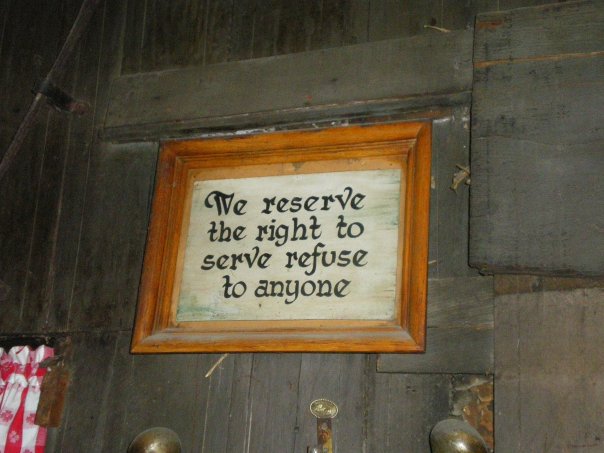
This cafe was closed the day we were there. I love how the sign says “Shut” instead of closed.
To see more Ruby head over to the Work of the Poet.
Photobucket is holding all my photos I stored with them from 2007-2015 hostage unless I pay them a lot of money. I’m slowly cleaning up many posts from this time period and deleting their ugly grey and black boxes with a ransom request. Such a time consuming bother.

San Francisco ~ Saints Peter and Paul Church

There was so much to share from my extended weekend in San Francisco in December and then Christmas took over as it should. Now that life is a little slower I’ll share another beautiful church I visited.

The present church, with its twin lofty spires that soar 191 feet into the sky, was completed in 1924. For over a century, the church of SS. Peter and Paul has served parishioners, charmed the numerous tourists who visit it daily, and has been an inspiration to the members of the North Beach community. A ribbon of verse from Dante’s “Paradiso” spans the facade and translates:

 “The glory of Him who moves all things
penetrates and glows throughout the universe.”

This mosaic inscription placed just above the three entrances to the church connects the four large pillars upon which rest the symbols of the four Evangelists: Matthew (An angel), Mark (A lion), Luke (An ox) and John (An eagle). Original plans, regrettably laid away to rest, called for spectacular outdoor mosaics covering the entire facade. The twin spires (191 feet) have become a landmark in the area. The church is 100 feet wide and 160 feet long. The magnificent rose window measures fourteen feet in diameter.


Photobucket is holding all my photos from 2007 to 2015 hostage and has replaced them all with ugly black and grey boxes asking for a ransom to have them re-published. Such a frustrating bother as I go through each post to delete the ugly boxes.

The 1967 Rose Bowl Game

I have been to two Rose Bowl games in my life. The first one was in 1967. A boyfriend I had broken up with invited me to go to the USC vs. Purdue game and I said yes. I was and am a big sports fan. Sad for the young man, it was the game I was interested in and not him. Some of us in Southern California are not huge USC fans in fact we always cheer on whoever is playing them. I was pleased as punch at the exciting close game and that Purdue won! These days I’m a huge soccer fan!

1967 Rose Bowl
(Purdue 14 – USC 13)

Purdue capped its first nine-win season with a hard-fought 14-13 victory over USC. A pair of touchdowns by fullback Perry Williams and a last-second interception of an attempted two-point conversion by defensive back George Catavolos secured the victory for the Boilermakers. Purdue finished the season 9-2 and tied for 1st place in the Big Ten.


The last Rose Bowl game I attended was in 1992. Dear was finishing up his mid-life career change in Pharmacy School at the University of Washington so we scored some student tickets to the Washington ~ Michigan game. Those were wonderful football years for the Huskies and it was fun to be able to attend several of the games. It was a little odd for us older folks to be sitting in the middle of the student section, though. We’d always ask the kids behind us if they could hold their liquor. We didn’t want them losing their alcohol on our heads :0)! They would always look at us and with slurred speech say “Oh don’t worry ma’am, we can hold our liquor”

What a dismal year in sports good ole Washington has endured this year. We are looking ahead to better years. I’m so excited that Seattle now has their very own MLS team, The Seattle Sounders. Here’s hoping they’ll pull us out of the humdrums…

Photobucket is holding all my photos from 2007 to 2015 hostage and has replaced them all with ugly black and grey boxes asking for a ransom to have them re-published. Such a frustrating bother as I go through each post to delete the ugly boxes.

San Francisco ~ Grace Cathedral


Today I’m sharing my outside shots of Grace Cathedral. I will show my inside shots later.

Grace Cathedral is descended from the historic Grace Church, built in the Gold Rush year of 1849, and the imposing structure on the corner of California and Stockton streets that was destroyed in the 1906 earthquake and fire. San Francisco’s Crocker family gave their Nob Hill porperty, destroyed by the fire, for the building of a new cathedral.

Work began on this structure in 1928. Designed in the French Gothic style by Lewis Hobart, it was completed in 1964.

Famed for its Ghiberti doors, labyrinths, stained glass, the cathedral has become an internationally-known place of pilgrimage.

The Doors of Paradise are considered by many to be the first and greatest masterpiece of Italian Renaissance. The magnum opus of Florentine sculptor Lorenzo Ghiberti (1378-1455), the doors were made for the Baptistery of Florence Cathedral (the Duomo) and told the story of the Old and New Testaments. Grace Cathedral’s doors were made from the same molds – which were later destroyed – used for the originals.


I was also impressed with several of the other doors into the cathedral and wanted to show you them, too.


One of my special treats the day I visited the Cathedral was a small orchestra practicing for a Christmas concert. It was just so beautiful to walk around the inside of the cathedral being serenaded with beautiful music that inspired me to praise God for all the wonder available to us…

Photobucket is holding all my photos from 2007 to 2015 hostage and has replaced them all with ugly black and grey boxes asking for a ransom to have them re-published. Such a frustrating bother.

San Francisco


I have so many photos I want to share from my 3 days in San Francisco. I’ll be choosing several over the next few days and will have a few San Francisco Posts. These are three collages I have already…


Our first day Dear and I met up at Johnny Foley’s for a pint and some great Lamb Sliders! Then we walked all about the town and ended up on the Trolley car. That’s our great trolley car driver! The roof shot is from the Ferry Building at the end of Market Street. It has lots of great specialty and gourmet shops housed in the building.


This is Saints Peter and Paul Church in the Italian Section of San Francisco. Since the Italians who came to North Beach in the 1870’s were primarily fishermen, it became known as “the Church of the Fishermen,” and yearly processions to bless the fishing fleet still start out here. I have more photos from the inside of this beautiful church to share later.

Photobucket is holding all my photos from 2007 to 2015 hostage and has replaced them all with ugly black and grey boxes asking for a ransom to have them re-published. Such a frustrating bother.

Married Molokan Women


This is a photo taken in Mexico sometime in the late 40’s I think. A Molokan Community was established in Baja California years ago. This shows the typical Molokan outfit that married Molokan women wear to Church functions then and now. The head coverings are called a Kasinka. If you visited a Molokan church today you’d see this exact look that the women are sporting here. I think it’s a wonderful photo and wanted to add it to my Molokan Posts. My other posts besides my Russian Recipes can be found here and here. If anyone out there knows who these ladies are just leave a comment and let me know. Most of my immediate family left the Molokan church in the 60’s. I left well before I’d have to wear this outfit and I never intended to marry a Molokan so I never was in the position to have to wear it…

Photobucket is holding all my photos from 2007-2015 hostage and demanding a ransom for me to access them. I’m slowly cleaning up many of my posts where PB have added ugly black and grey boxes where my photos used to be. So frustrating!

Pink Saturday ~ My Babushka Vera

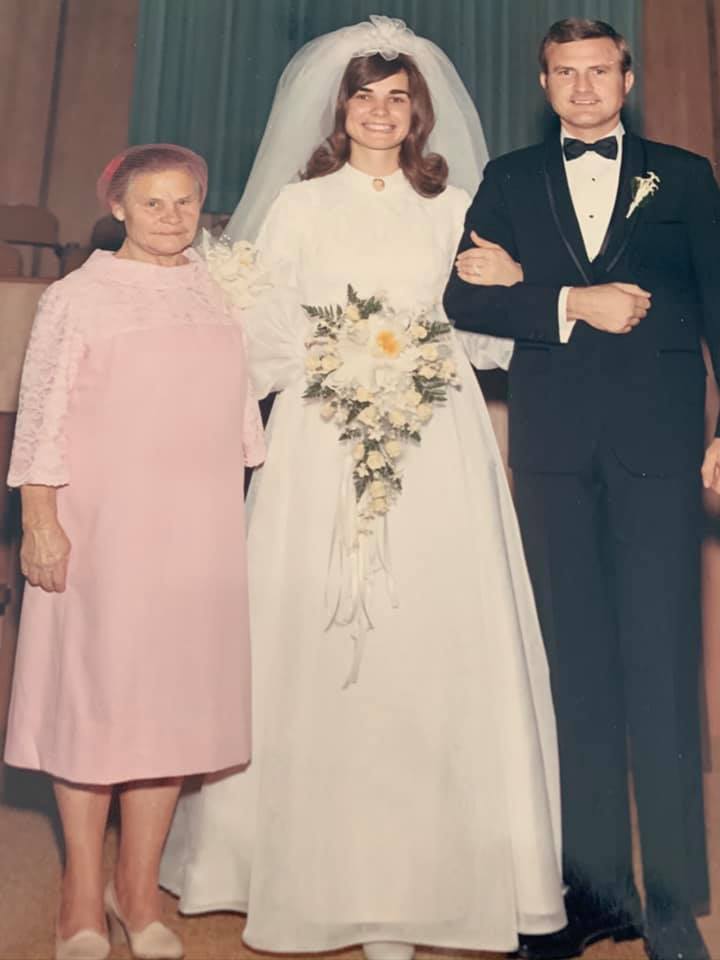
This is my Maternal Grandmother at my sister Vera’s wedding in 1969. She looks so sweet in pink! I really loved my grandmother. She only had one hand. One of her arms was amputated from her elbow down when she was young. She immigrated to the U.S.A. alone without my grandfather who was murdered in Iran in the late 40’s. She did more with her one hand than a lot of people do with two. Her embroidery was amazing. My Babushka Vera died in March of 1980. She was a Godly woman who prayed for all her grandchildren and for all her grandchildren’s future spouses. I am so looking forward to seeing her in heaven.

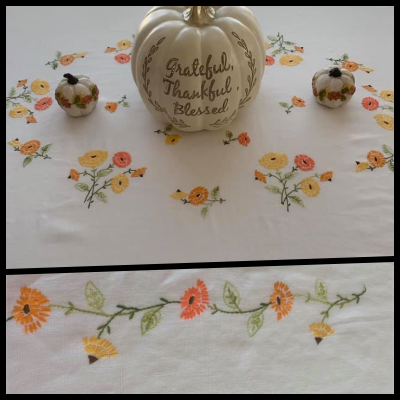
The tablecloth above was the cloth she embroidered for our sister Vera as a wedding gift.

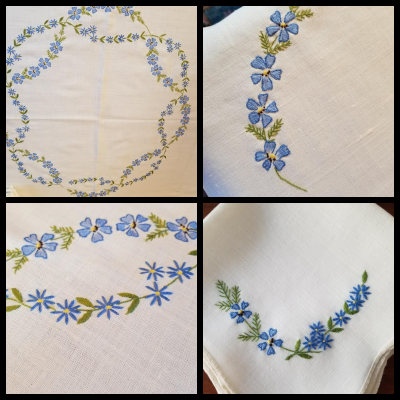
This is a tablecloth and napkins my babushka embroidered for us as a wedding gift. In keeping with the Pink Saturday theme here’s another tablecloth I have that she embroidered.


For more Pinkness visit Beverly at How Sweet the Sound.

Photobucket is holding all my photos from 2007-2015 hostage and demanding a ransom for me to access them. I’m slowly cleaning up many of my posts where PB have added ugly black and grey boxes where my photos used to be. So frustrating!

Cold Springs Tavern ~ Santa Barbara


Dear and I decided to escape the heat and drive north to Santa Barbara to have breakfast and a walk. We drove up to the top of San Marcos Pass and started down into the Santa Ynez Valley to stop at the Cold Springs Tavern for breakfast. It was so refreshing to have it cool enough that the tavern had a wood fire going.


History of the Tavern

Over one hundred twenty years ago, dusty stagecoaches stopped here at what was then known as “Cold Spring Relay Station” to change teams of horses and allow travelers to rest at this stagecoach stop and enjoy one of the most delicious meals in the Old West.

The Tavern was purchased in 1941 by Adelaide Ovington and her daughter, Audrey. Today the tavern is still a “rest stop” though now the travelers arrive in more modern coaches to enjoy the food and refreshment.

After breakfast we drove further on Stagecoach Road and got some great views of the Cold Springs Arch Bridge and the Santa Ynez Valley.


Then we headed back to Santa Barbara for a walk along the beach and a bird refuge. I’ll post my beach and bird photos another time. Hope you all are having a nice weekend.

Photobucket is holding all my photos from 2007-2015 hostage demanding a ransom that I can’t afford. So frustrating as I try to clean up my posts and delete their ugly squares of black and grey off my blog posts!

Round Robin Challenge ~ Your Hometown

Our Round Robin Challenge is to

 Photograph Your Hometown!

Grab your camera and show off the sights, sounds and flavors of your locale. One photo or a whole spread. Lets see your town and your favorite spots.

 ~Welcome to The City of Camarillo, California

Located in Ventura County California, the City of Camarillo (pronounced cam-a-ree-oh) straddles the 101 freeway about 50 miles Northwest of Los Angeles and 40 miles South of Santa Barbara in a coastal valley 10 miles from the Pacific Ocean at Point Mugu. In a semi-rural setting, the surrounding farmland is some of the most productive to be found anywhere, yielding up to three crops per year.

The Camarillo Ranch was originally a 10,000 acre Spanish land grant created in 1837, patented to Gabriel Ruiz in 1866, then purchased by Juan Camarillo in 1875. His son Adolfo built the Queen Anne Victorian home in 1892. Later the barn and stables were added to support the agricultural work and house the renowned Camarillo White Horses. Today the ranch is owned by the City of Camarillo and operated by the non profit Camarillo Ranch Foundation.

The historic land upon which the Camarillo Ranch now sits was a part of the original Rancho Calleguas, one of the last Mexican land grants (9,998.29 acres). It was given by Governor Alvarado to Jose Pedro Ruiz in 1847. Juan Camarillo (1812-1880) obtained the rancho from the Ruiz family in 1875. Juan was a member of the Hijar-Padres Expedition to California in 1834. He settled in Ventura in 1857. Following Juan’s death in 1880, Adolfo Camarillo, his oldest son, took over the ranch operations. He was 16 at the time. During next 68 years, Adolfo operated the Camarillo Ranch, changing the operations from mostly cattle to crops. He was a leading innovator bringing in lima beans, plus barley, corn, alfalfa, walnuts, and citrus.

Adolfo (1864-1958) married Isabel Menchaca (1861-1936) in 1888 and they moved into an adobe home on the Ranch, which was later destroyed by fire. They had seven children. In 1890, with the help of two Chumash Indian boys, he planted two rows of eucalyptus trees. The trees arched across Highway 101 in Camarillo for many years. Some of the trees still line the north side of the freeway. Adolfo also employed a number of Chumash Indians on the Ranch. [the first collage at the top of the page shows Adolfo Camarillo on one of his famous White Horses. You can read about these famous horses here]

The Camarillo House was built in 1892 by Adolfo and others using the services of Architects Franklin Ward and Herman Anlauf This three-story, 14-room home was built in the Victorian Queen Anne style.

Adolfo’s younger brother, Juan (1867-1935) later donated land for St. Mary Magdalen Chapel (completed in 1914) and St. John’s Seminary (completed in 1939), both prominent in Camarillo history. Juan chose not to stay at the Ranch and lived and worked in Ventura and Buenos Aires

We have only lived in our condo in Camarillo for two years. We have our established home in the state of Washington. Although we weren’t overjoyed about returning to Southern California, we feel blessed to be able to live in Camarillo in the interim. Camarillo is a lovely area with close proximity to the Santa Monica Mountain Recreational Area and Pt. Mugu State Park and Recreational Area.

Camarillo has wonderful access to fresh farm produce and we have a farmers market year round on Saturday mornings. We have several good restaurants in town and one of our local favorites is El Tecolote. We enjoy Mexican food and we have many options for that in Southern California. Our Friends of the Library bookstore is one of the best I’ve ever been in.

I hope you have enjoyed my little tour of my hometown. To see more Hometowns click here.
ABC Wednesday ~ Mary Magdalen Church, Camarillo

M is for St. Mary Magdalen Church in Camarillo, California

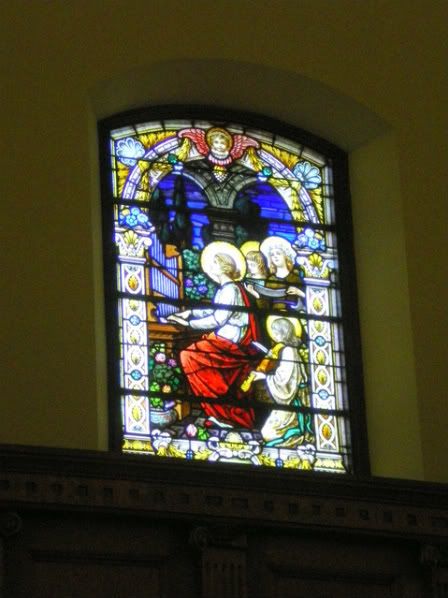
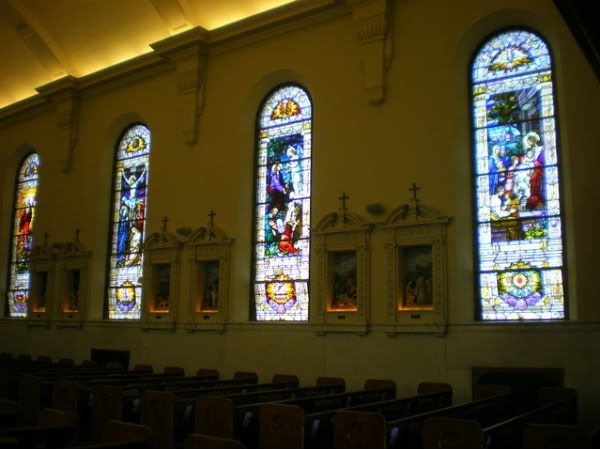
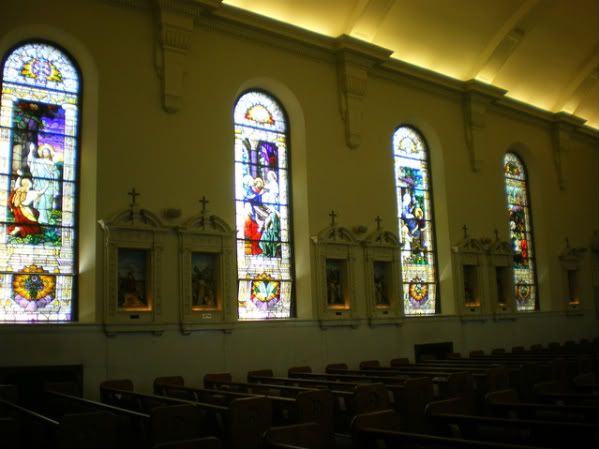
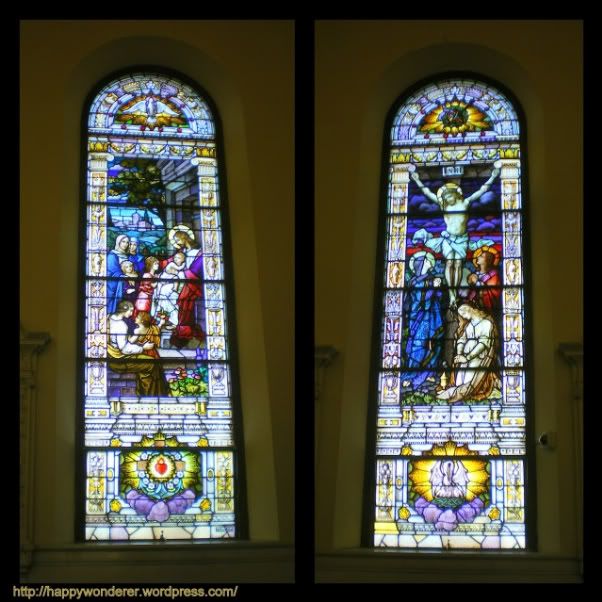
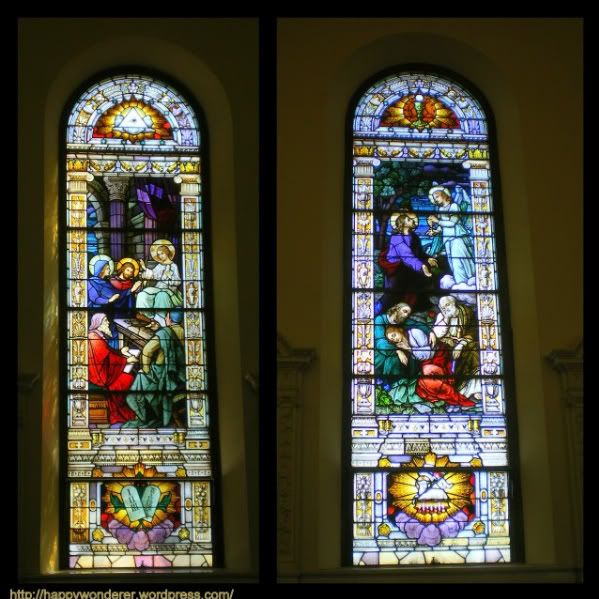
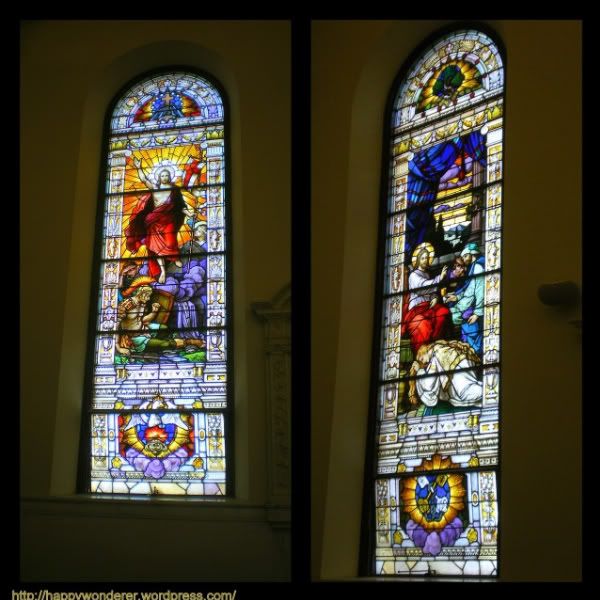
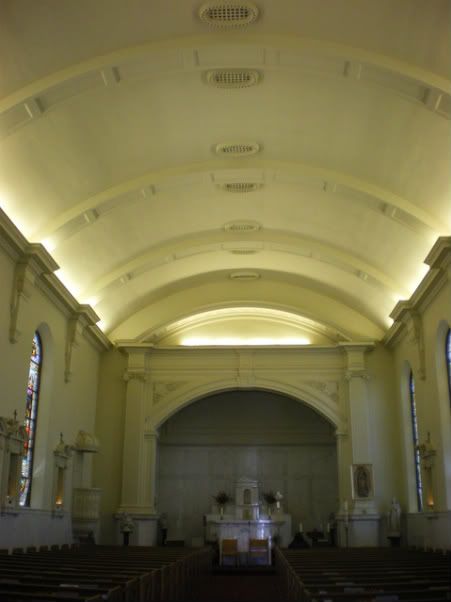
In my Sky Watch #10 Post I mentioned that I was trying to get inside St. Mary Magdalen Church in Camarillo to see their historic stained glass windows. A few Sundays ago we went to the church grounds to buy some home made Mexican food at a fiesta they were putting on as a fund raiser. While there I was thrilled to see the church doors open and I went inside and was able to finally see and take pictures of these amazing works of art.

Here is an excerpt written in a historical site about the windows.

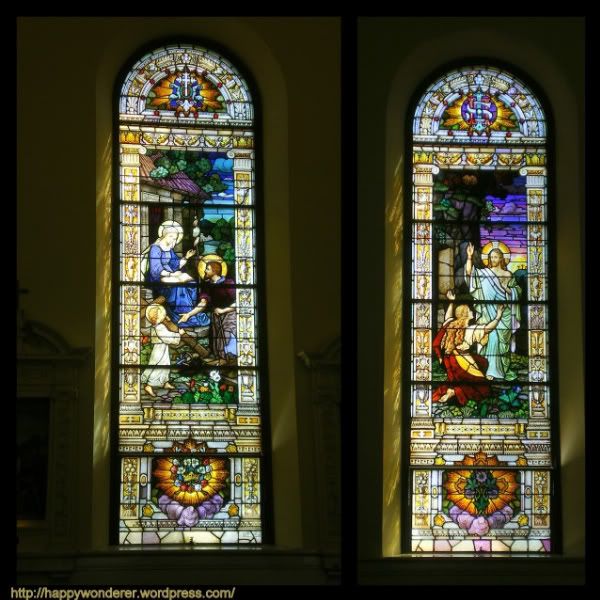
“The most notable chapel fixtures were its magnificent 13 stained glass windows.  These azure, crimson, green, and gold windows tell a double story — one of the life of Christ, the other of a world at war.

While on a trip to Europe, Juan Camarillo selected the windows in Munich, Germany. The year was 1913 and the early rumbles of the continent gathering its strength for conflict were growing with each passing day. Somewhere between the studios of glass-blower F. X. Zettler of Munich and the church on a hilltop in faraway Camarillo, the stained glass windows were lost. Zettler’s name can be seen at the bottom of the windows depicting the Holy Family (east side) and Christ with the children (west side). Despite the best efforts of the Camarillo family through consuls and ambassadors, the windows appeared lost forever. Mrs. Carmen Camarillo Jones recalled that her uncle Juan feared they were at the bottom of the sea. One day a letter arrived from a German official. This official in Munich had been noticing several large crates staked outside a building with Juan’s name on them. He had written Juan several letters and finally one got through at the end of Word War 1. Much to the joy and relief of everyone, the lost windows had been found. However, it was a painfully slow and long trek to Los Angeles, and then on to Camarillo, before they were finally installed in the thick brick and plastered chapel walls in 1919.”

After I had been in the church for about 5 minutes the caretaker came in and closed the doors behind me I figured my time inside was over.

To see more of the outside of this historical church click here.

For more ABC posts on the letter M visit the ABC Blog.