Scotland Travel Journal ~Edinburgh Reformation Tour 2

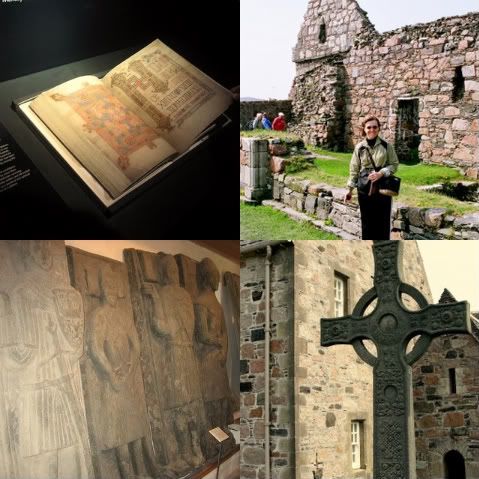
From Grassmarket, Jimmy took us to The National Museum of Scotland and to the National Library where we saw more artifacts and information about the Covenanters and The Reformation.

This printed satin banner, known as the ‘Thrissels Banner’, dates from 1640. The text on the banner was written by Thomas Cunynghame. It expresses opposition to the Crown and to the contemporary policy of religious anglicization.

On the left is the ‘staff’ of the banner, shown as a sword with a crowned thistle and bible at either end.

John Knox is a notable figure in Scotland’s history and in Christendom.

Jenny Geddes chair of which I was very interested. I’ll share more about it with a photo from St. Giles Cathedral in another post.

From the museum and library we made our way to Greyfriars Kirkyard.


If you venture down to Greyfriars’ Kirk graveyard, which these days sees hordes of Harry Potter devotees brandishing their wands and reciting Potterite spells, you will find a large monument at the bottom right of this fascinating corner of Edinburgh. The monument towers above you and recalls the Covenanting struggle. The monument, first erected in 1706, then rebuilt in its 1771 version, has undergone restoration work up until recent times.

The Martyr’s Monument.

Halt passenger, take heed what you do see…’ The text then outlines the Covenanters’ cause ‘Gainst perjury, resisting unto blood: Adhering to the Covenants and Laws, their lives were sacrific’d unto the lust of Prelatiffs [bishops] abjur’d …’. The words ‘CHRIST their KING’ is deliberately written in large letters, designating their struggle against tyrant kings who wanted absolute power over Church and State. At the bottom of the monument, it states that ‘one way or other [were] Murdered and Destroyed for the same Cause, about Eighteen thousand of whom were execute at Edinburgh, about one hundred of Noblemen, Gentlemen, Ministers and others, noble martyrs for JESUS CHRIST.

We heard about the Reverend Alexander Henderson at this site of his burial.

He was one of Scotland’s greatest Covenanter Ministers.

He died in Edinburgh in 1646 and was buried in Greyfriars kirkyard. He had been behind almost every important development in the Covenanting movement since 1637. At the General Assembly the following year, Baillie declared that Henderson ‘ought to be accounted by us and posterity, the fairest ornament, after John Knox, of incomparable memory, that ever the church of Scotland did enjoy.

Click on his name above to read more about the history of this ‘fairest ornament’.

THE COVENANTERS’ PRISON
Behind these gates lies part of the southern section of Greyfriars Kirkyard which was used in 1679 as a prison for over one thousand supporters of the National Covenant who had been defeated by Government forces at the battle of Bothwell Brig on 22 June. For over four months these men were held here without any shelter, each man being allowed 4 ounces of bread a day. Kindly citizens were sometimes able to give them more food.

Some of the prisoners died here, some were tried and executed for treason, some escaped, and some were freed after signing a bond of loyalty to the Crown. All those who were persecuted and died for their support of the National Covenant in the reigns of Charles II and James VII are commemorated by the Martyrs’ Memorial on the north-eastern wall of the kirkyard. The Covenant, which was first signed in Greyfriars Kirk in 1638, promised to defend Presbyterianism from intervention by the Crown.

Jimmy our tour guide, was so knowledgeable and we were in awe of all that we were learning on this tour.

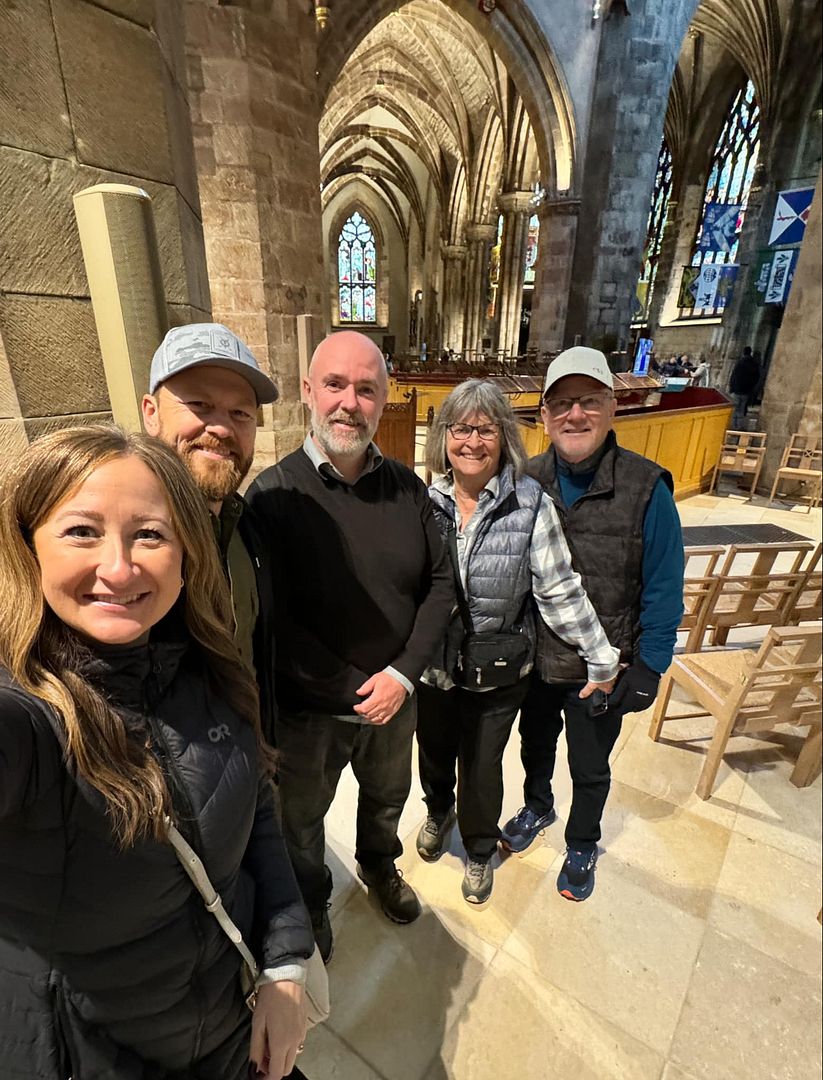
Our last stop with Jimmy would be St. Giles Cathedral. Such a fitting end to this amazing tour of the Covenanters in Edinburgh. It was a humbling experience.

That will be another post.

Scotland Travel Journal ~ Edinburgh Reformation Tour 1

Monday September 23rd was our last full day in Edinburgh and Scotland. This would be a day filled with walking and stairs and information. We were thankful on this morning that Greg was well enough to walk and not miss our special tour.

We took the Lady Stair’s Close to get up to the Royal Mile. We stopped to take some photos outside the Writer’s Museum.

Early on the Royal Mile there were fewer folk milling about. That would change soon.

We scheduled a private Scottish Reformation Tour on this day.

I included the link above. We were to meet Jimmy at 9am in front of St. Giles Cathedral.

Soon we saw who we assumed was Jimmy and he came right to us assuming we were his clients for the morning.

St. Giles was not open to the public yet on this particular morning so Jimmy took us around to the parking lot between St. Giles and The Supreme Court building. We would visit the inside of the cathedral at the end of our tour.

It looked to Jimmy’s keen eye that something was going on in the Supreme Court building so he managed to gain us access into the hall outside the courtroom.

It was quite fascinating to see all the ‘big wigs’ standing around and some pacing back and forth the length of the room discussing their cases.

Back outside we were on the search for parking space #23.

Here at space number 23 in the car park is approximately where John Knox is buried!

The Scottish Reformation leader’s grave was paved over and is now a parking lot. The stone inscription reads;

‘The Above Stone Marks

the Approximate

Site of the Burial

In St. Giles Graveyard

Of John Knox

The Great Scottish Divine

Who Died 24th November 1572′

It’s said that Knox wanted to be buried within 20 feet of Saint Giles, so he was laid to rest right outside the church in what was once a proper graveyard. However, the site has since been tarmacked over and is now a functioning parking lot. A plaque in parking space number 23 marks the approximate location of his now-lost grave.

Knox was a 16th-century preacher who commanded that his people be able to read the Bible in their own language. He was a key figure in turning a nation of Catholics into one of Protestants. His fire and brimstone sermons and teachings often put him at odds with the Catholic Mary, Queen of Scots.

On our walk to Victoria street we came across this Famous Heart.

The Heart of Midlothian is both a historic mosaic dating to the Middle Ages and a landmark that denotes the location of Edinburgh’s Old Tolbooth administrative building. Locals often spit on the sign as a good luck charm, a tradition that has morphed from its original meaning of disdain for the many executions that took place at this site over the years. The Heart of Midlothian F.C., the local soccer club, takes its name from the mosaic and the Old Tolbooth.

The Heart was installed as part of a replacement building to the Old Tolbooth in 1561, and after this second building was demolished in 1817, the Heart was all that remained. It has been an inspiration for the writings of Sir Walter Scott and has become an iconic part of the city’s culture and historic identity – even if many now don’t remember its true origins.

FYI: Tolbooth is a Scottish term that refers to a townhall, jail or guildhall where tolls are collected.

From here we walked down Victoria Street to Grassmarket.

Victoria Street is said to be an inspiration for Diagon Alley in the Harry Potter books but J.K. Rowling denies that it is. Nonetheless fans flock here and stand in line to get in the museum on this colorful street.

This is where the ‘meat’ of our Reformation Tour began as we were told that this was the route that martyrs would take from their sentencing in the courts above then down Victoria Street to the public gallows. Once we reached Grassmarket we stood around this monument to Martyrs and Covenanters who lost their lives at this spot for their faith.

The Grassmarket is an wide open street on the south side of Edinburgh’s Old Town. The city had the public gallows there, and many Covenanters were executed during the Covenanting period.

A circular memorial, erected by public subscription in 1937, marks the site, and an adjoining plaque lists the names of the many Covenanters who were hanged there.

In a recent renovation of the locality, a representation of the gallows’ shadow was made on the ground using different coloured stone, as seen in the picture to the left.

Our tour continued from here. We made stops at Greyfriars Kirkyard, The National Museum, The National Library and St. Giles Cathedral.

At this stage in January, many months later, I’m not sure of the order of those stops! Travel failure in not writing a journal while on our trip. I’ll put it down to the fact that our days were so full we didn’t have a lot of down time in the evenings.

Hello to February. I was hoping to have our Scotland Journal Posts done by the end of January but it will take a few days into February to accomplish that.

Scotland Travel Journal ~ Edinburgh Castle 4

Josh and Laura toured Edinburgh Castle on Sunday the 22nd of September. Laura shared her photos with me.


From this view of Edinburgh that Laura captured at the top of the castle walls you can see the Church I was visiting while they were in the castle, The Parish church of St. Cuthbert. Further in the distance the three spires you see are from St. Mary’s Episcopal Cathedral that we visited later in the afternoon.


The castle is a worthwhile place to visit for any first timers to Edinburgh. You can read about the history of the castle here.

My next few posts will be from our last full day in Edinburgh. We had a private tour in the morning and continued to walk our legs off in the afternoon!

Back to the present: Today is the last day of January and in our little corner of the world we are getting some light snowfall. Hope all is well in your corner!

Scotland Travel Journal ~ Edinburgh

On Saturday September 21, 2024 we left Dunfermline to Stirling to turn in our car rental. That went well and the car agency dropped us off with our luggage to the Stirling train station. We bought our tickets for the ride from Stirling to Edinburgh which were very reasonable. While we waited for the train to arrive we played a game of Phase 10.

When our departure time was close we waited on the platform.

Safely on board for the ride to Waverly Station in Edinburgh.

It was raining lightly when we got to Edinburgh so we got a taxi for our short ride to the apartment we rented. This choice by me turned out to be my least favorite of the trip and it was a space that just felt like it closed in on you. The instructions for retrieving our keys for our unit was easy enough and we got somewhat settled and headed out to catch a hop on hop off bus to get an overview of Edinburgh. In retrospect we could have ditched this idea and just found a nice pub to eat a meal in.

Standing proudly in Princes Street Gardens, the Scott Monument is one of the most iconic Edinburgh landmarks, a must-visit for tourists and locals alike. Dedicated to Sir Walter Scott, it is one of the largest monuments to a writer anywhere in the world.

A glimpse of Edinburgh Castle.

The hop on hop off was a bit of a fiasco as our original bus had a malfunction and we had to wait on the street for a new bus and then it went downhill from there. Greg became more ill with the malady I had gotten over and he was shivering and he could not get warm. We got off the bus at the end of it’s cycle and looked for someplace warm to eat. The Pub recommended to us was full to the gills so as we wandered back towards our apartment we popped into the Hawksmoor without any reservations but they found us a table. We ordered hot tea for Greg right off. That was helpful. We had a decent meal and turned in for the night.

Sunday was a nicer day for three of us but Greg stayed in bed all day working on getting better for our last full day in Edinburgh on Monday.

I’ll save Sunday’s and Monday’s adventures for more cheery posts soon.

Scotland Travel Journal ~ Dunfermline 3

On September 21st which was a Saturday and our journey from St. Andrews to Edinburgh we stopped to visit the Dunfermline Abbey and Palace. Although I’ve posted the exterior and interior of the Abbey already we toured the palace grounds first on this day. The kiosk to pay for our visit was located in the palace ruins area. This part of our visit involved going up and down different elevations within and along the ruins of palace.

In the cellars with some great acoustics we had an impromptu moment of worship as Laura began to sing ‘Praise God From Whom All Blessings Flow’. We all joined in and it was a sweet time together.

Praise God from whom all blessings flow, praise Him all creatures here below, praise Him above ye heavenly hosts, praise Father, Son and Holy Ghost, Amen.

The Abbey was obliged to offer hospitality to pilgrims and to other travelers whether rich or poor. The guest house was built here in the 1200’s and later became part of the royal palace. 

Not all overnight visitors would stay in this guest house; those of lower social rank would be given beds in nearby hostels. Because Queen Margaret founded the monastery and later monarchs chose to stay here, what you see is frequent alterations and additions to provide comfortable royal apartments. 

After the union of the crowns of Scotland and England in 1603, these buildings were abandoned and robbed of stone leaving the spectacular south wall with its windows overlooking the glen.

St. Benedict required the abbot dine with all visitors to the abbey. ‘Let the abbots table always be with guests and travellers’, he directed. However, when nobles knocked on the door, the abbot probably arranged for poorer pilgrims to eat elsewhere, while he enjoyed lavish feasts with his high-ranking guests.

This was such a worthwhile stop on our way back to Stirling to drop off our rental car and take a train to Edinburgh for the last few days of our Scotland Trip. Our sunshiny days were behind us.

Back to the present:

Today, January 20, 2025, in the United States is the inauguration of our 47th President, Donald J. Trump. We will be watching the ceremony. We hope for the best for our country and it’s people and our world. For us as believers, the very best is yet to come and it’s not happening here. In the meantime, we pray, we hope for the best, and we remain good citizens of our country doing our part as citizens. We acknowledge that we are not in control of the world and what is happening around the world but we know the One who is in control and who holds our world together.

As the song resounds, ‘This World is not my home I’m just a passing through, my treasures are laid up somewhere beyond the blue, the angels beckon me from heaven’s open door, and I can’t feel at home in this world anymore.’

Scotland Travel Journal ~ Dunfermline

On Saturday the 21st of September after our breakfast at Pinewood Country House we packed up and started our travels to return our rental car in Stirling with a stop on the way to visit Dunfermline Abbey and Palace.

We took many photos here and the history was more than we could take in on our visit. Here’s a link to some of the history for those of you who are interested. 

I got the following information from the Visit the Abbey site.

Dunfermline Abbey sits at the heart of Dunfermline, Scotland’s ancient capital. Dunfermline lies thirty minutes from the centre of Edinburgh, across the spectacular Forth Bridges. Dunfermline`s royal and monastic past dominates a town whose lifeblood is history. Dunfermline Abbey is the final resting place of King Robert the Bruce and the post-Iona burial site of the Kings and Queens of Scotland.

The tomb of King Robert the Bruce and many other royal and historical associations attracts tens of thousands of visitors each year.
I’ll have the outdoor photos of the Abbey today and post the interior of the church  and the Palace ruins on another day.

Robert the Bruce is one of the most memorable kings of Scotland, reigning from 1306 to 1329. He was a nobleman from the south west of the country, most famous for his victory at the Battle of Bannockburn and gaining his nation’s crown and independence with the Declaration of Arbroath in the early 14th century.

Robert I, known as Robert the Bruce, was the king of the Scots who secured Scotland’s independence from England.


This docent offered up a lot of history and folklore which was fun.


When we stopped here on our way to Stirling it took a short time to find an appropriate parking spot. Once we did the rest of our time was spent in awe of this place. More to come.

Thanks for following along.

Scotland Travel Journal~ St. Andrews #3

On Friday the 20th of September 2024 after our time at St. Andrews castle we got some back lane directions to get to North Street.

Butts Wynd Lane

The lane took us by some of the University of St. Andrews buildings with this beautiful St. Salvatores quad.

We were hoping to be able to get inside Saint Salvatore’s Chapel but were disappointed to find a private event going on with no entry for us.

We walked by along North Street and could tell this was a beautiful chapel. I found this youtube and the gal who took the video does show the interior of the chapel with added information and history. She shows the spot where Patrick Hamilton a Presbyterian Reformer was martyred in the video, also.

Our next stop was the Northpoint Cafe made famous by Prince William and Kate. We made it in time to have some refreshments before it closed.

Back on the streets we wound our way to the ruins of St. Andrews Cathedral and St. Rules Tower


Our feet and our backs were complaining at the end of this afternoon. The grounds were in the process of closing just as we arrived so before they locked the gate, Laura and I went in. I kept the gatekeeper occupied with questions and conversation while Laura walked about the ruins taking photos.

St Andrews Cathedral was Scotland’s largest cathedral. It took nearly 150 years to build and was consecrated in 1318 by Robert the Bruce. An ill-fated building, it suffered damage from fires and storms, but the Religious Reformation of 1559 was the most damaging event of all. Following an anti-Papal sermon by John Knox, his congregation went to the Cathedral and destroyed its symbols of Roman Catholicism. Further attacks led to the Cathedral being closed and the friars expelled. 


On the site of St Andrews Cathedral, there was originally St Rule’s Church, which belonged to a community of Augustinian Canons who had the adjoining building as their living quarters. Nowadays, only the Tower remains, and at 30 meters high, it provides the best panoramic views across St Andrews. 

The tower is generally accessible to climb and see great views but we arrived too late in the day for that.

There is also a museum on this site but, you guessed it, the museum was closed by the time we reached this site.

You can find more information here.

When we couldn’t hold the gatekeeper off any longer we left the grounds and let him lock the gate. We walked back to where our vehicle was parked along the University lanes with one more stop in mind before we left St. Andrews.

Well of course we needed a photo of our Gregory right at this spot!

Before we left to Scotland we watched Chariots of Fire knowing we would be close to the beach where the famous opening to the movie was filmed. We wanted to re-enact that opening.

Eric Liddell: I believe God made me for a purpose – but He also made me fast. And when I run, I feel His pleasure.

“I have no formula for winning the race. Everyone runs in her own way, or his own way. And where does the power come from, to see the race to its end? From within. Jesus said, ‘Behold, the Kingdom of God is within you. If with all your hearts, you truly seek me, you shall ever surely find me.’ If you commit yourself to the love of Christ, then that is how you run a straight race.” ~ Eric Liddell

We were pleased with the results. We have videos but unfortunately I can’t find a way to post that on my blog. We were cracking ourselves up and amazed our feet allowed this last event of the day. When we got back to our car, it was decided we needed to find some takeaway or purchase something we could pop in the oven for dinner. Take away did not materialize so we stopped at M&S and found some savoury pies and some desserts, too.

Laura’s watch clocked us at 21,797 steps with 29 stairway climbs, too. Yikes.

Food heated and feet up for the rest of the evening!! Cheers!

After breakfast on Saturday we would start our journey back to Stirling to drop off our rental car and take a train to Edinburgh for the last leg of our trip.

Scotland Travel Journal ~St. Andrews #2

I do hope my old brain can go back and capture the rest of our Scotland travels and get them posted before the end of January!

After our time at the ‘links’ on Friday September 20th, we found out more of what St. Andrews is famous for. We would also intersect our interest in John Knox and the Reformers that we were introduced to in Glasgow and Stirling. We did not have an extended time to see the rest of St. Andrews but we fit in what we could. Fair warning, this will be a long post.

We walked along The Scores to get to the ruins of St. Andrews Castle.

Along our route we passed the restored statue of St. Andrew, the patron saint of Scotland, outside the Wardlow Museum.

Entering the Castle grounds we paid and then walked through the history presentation before heading out to the castle ruins.

I’ll add some of the history of the castle that pertains to the Reformers and namely George Wishart and John Knox. I’ll add another link for those of you who might be interested in more history.

During the tenth and eleventh centuries the church of Scotland seems to have fallen out of step with mainstream developments in the European church. However, St. Margaret, a Saxon princess who married King Malcolm III in about 1070, started a process which was to reverse this trend. In particular she established a Benedictine Priory in Dunfermline, and encouraged pilgrimage to St. Andrews. Her sons were able to do even more to help the church in the process of renewal. At St. Andrews the most important changes were introduced by Bishop Robert who was appointed by St. Margaret’s third son, Alexander the I, in 1123. It is likely that Robert built much of St. Rule’s church as his cathedral sometime after his consecration in 1127; the tower and chancel of this church still stand in the grounds of the larger cathedral which eventually replaced it. Despite opposition from existing clergy of St. Andrews, Bishop Roberts also introduced a chapter of Augustinian canons to serve the cathedral in the 1140’s.

It would be a mistake to think of the Bishop in terms of his religious power; churchmen in Scotland were far more than spiritual leaders; they were often major players on the political stage, and frequently acted as military leaders too.

The Siege of 1546

The clash of new Protestant ideas and the traditional Catholic religion was not a peaceful one in Scotland. The hierarchy of the established Catholic church was determined to stamp out the Protestant Reformation by any means necessary.

In March 1546 a Lutheran preacher named George Wishart was imprisoned in the Sea Tower, and then burned at the stake in front of St Andrews Castle, a spot now marked by a simple design of paving bricks spelling out his initials. When I visited, a car was parked partly over the memorial bricks, the driver oblivious that they were parking on the spot where a man died in flames.

Taken from here where you can read more of the history. 

We missed seeing the spot marked in front of the castle where Wishart was martyred but I’m adding it here.

Wishart’s execution was ordered and witnessed by the powerful Archbishop of St Andrews, Cardinal David Beaton, nephew of the earlier Archbishop James Beaton. But Cardinal Beaton’s triumph was shortlived.

A band of Wishart’s supporters, prominent local lairds, snuck into the castle dressed as stonemasons. They took the castle garrison by complete surprise, murdered Archbishop Beaton, and hung his naked body from a window high in the castle tower. They then occupied the castle and proceeded to form the first Protestant congregation in the country. Together they hoped to hold the castle against troops led by the Regent, the Earl of Arran.

The occupation of St Andrews Castle and the killing of the Archbishop acted as a clarion call to Protestant reformers, who flocked to St Andrews. Among the reformers who came to support the Protestant uprising was John Knox, who was allowed to enter the castle under a temporary truce, and act as a preacher to the occupiers.

John Knox was a slave on a French galley for two years!

The lighting on this was not good but it reads;

The Reformation at St. Andrews

After several years of travel John Knox returned to St. Andrews 1559 during the political and religious upheavals of the Scottish Reformation. Protestants like Knox, who wished to abolish papal authority and reform the church received backing from powerful groups opposed to Scotland’s pro French regent, Mary of Guise, who had replaced the Earl of Arran in 1554. Military skirmishing between the Regent and her opponents led to prolonged uncertainty: this resolved in favour of the Reformers who enjoyed English support in 1560.

Knox preached passionately in several towns; and after a powerful sermon in St. Andrews on 11th June 1559 altars, images, statues and tombs were destroyed in a burst of furious popular enthusiasm encouraged by the “Protestant Lords”. The cathedral itself remained standing but was stripped of its furnishings, and was soon abandoned as a place of worship.

From this spot at the castle ruins you can see St. Andrews Cathedral ruins in the distance. We would have a short visit there before they closed the grounds.

On leaving the castle we asked for directions to get to our next stop which included walking along Butts Wind to North St. along side of University of St. Andrews.

More from St. Andrews soon.

Christmas Party Travels

Our annual Mennonite Girls Can Cook Christmas Party for the B.C. girls and me was graciously hosted by Bev and her husband. We traveled up north and across the border to Abbotsford on Monday afternoon. Greg and I stopped at Anneliese’s home to drop off our luggage and for our ride to Chilliwack for our celebration.

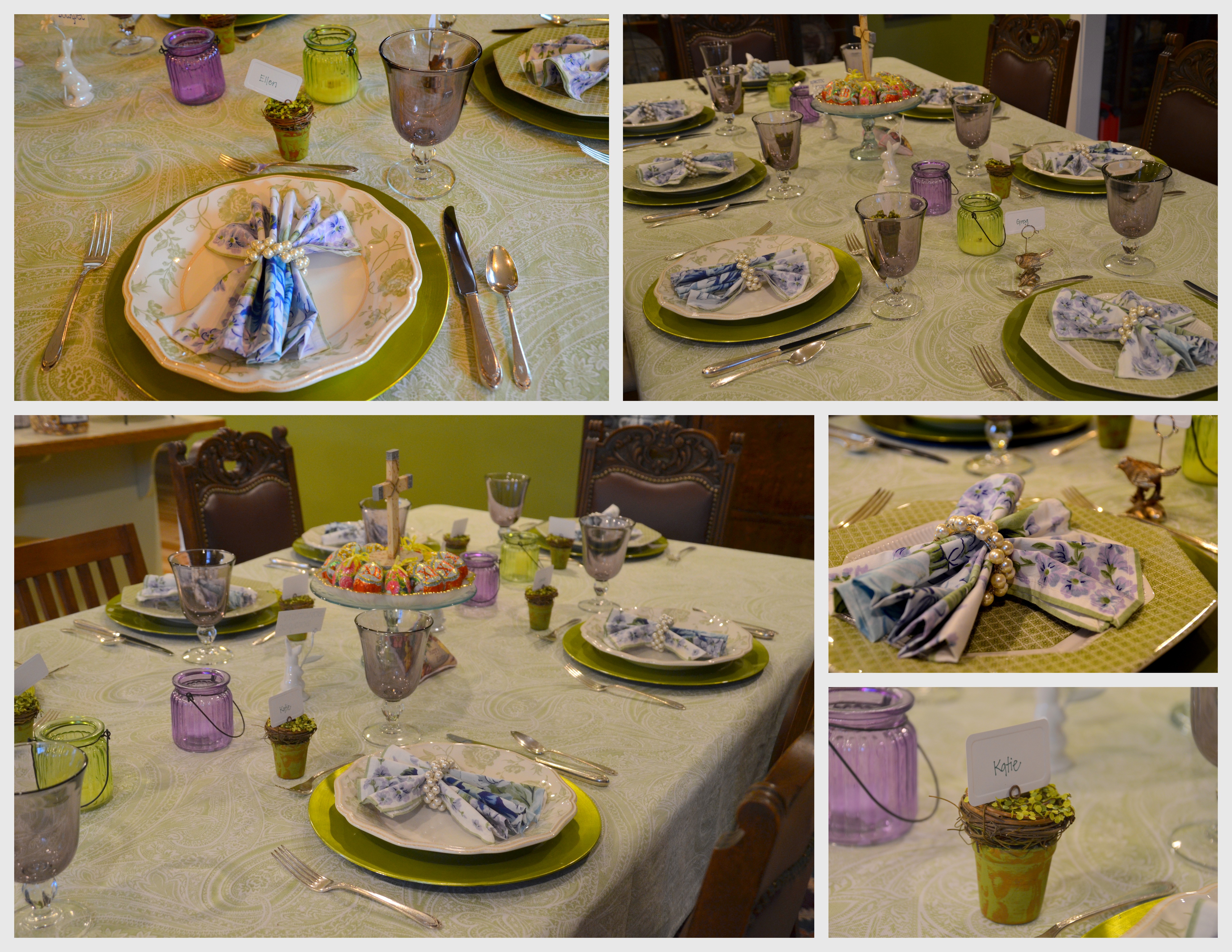
Bev set a beautiful table with place cards to guide us to our seats for the meal.

Photos were few and far between but I pieced some together to give us some visual memories.

We sang ‘Praise God From Whom all Blessings Flow’ at the beginning of our meal.

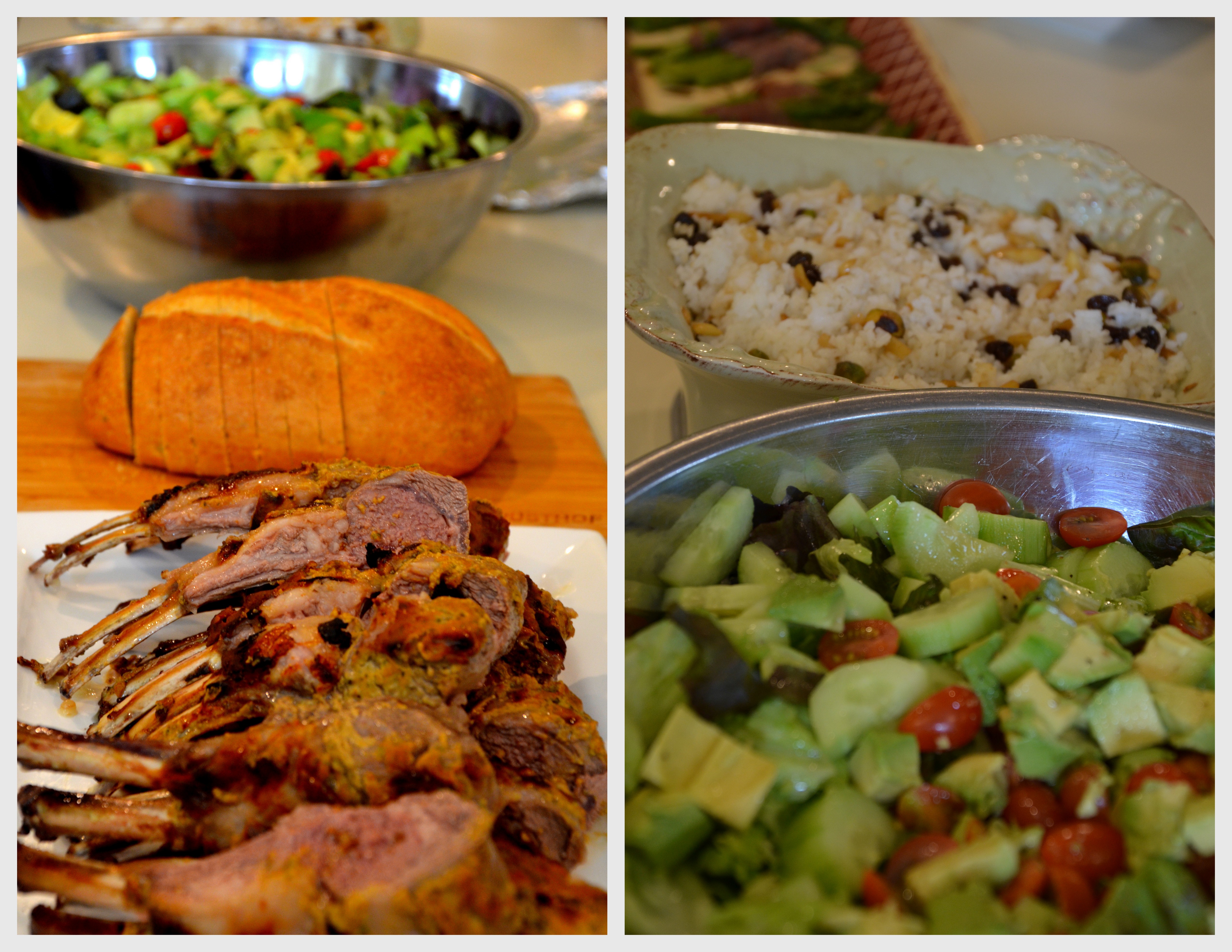
Soup was made by Judy, Salad by Kathy (oops no photo), assorted buns by Lovella, Potatoes by Marg, roasted vegetables by Anneliese, Meat cooked to perfection by Harv and Bev, dessert by Julie (no photo) but the memories of it make my mouth water.

The girls escaped to the living room after the main meal and before dessert for our gift exchange. After some good exchanges of gifts and conversation we regrouped at the table for dessert. We made it back to our hosts home for the night several hours after our usual bed time full and happy.

Sunrise in Abbotsford on Tuesday morning was beautiful. Anneliese made a lovely breakfast for us before we headed back across the line to the states. We chose to travel highway 9 for a distance before we connected up again on the interstate.

We made some stops in Washington and enjoyed lunch at our old Mexican favorite in Kirkland. Had a relaxing afternoon and evening at our kids’ home. Early on Wednesday morning we left for our final leg home.

Snoqualmie pass was in good shape for traveling. We didn’t have rain and our visibility was excellent until we reached the Ryegrass Safety Rest area.

Thankfully the dense fog only lasted for a few miles and we had clear skies the rest of our way home. We are always thankful to God for safe travels.

While we were in Western Washington this little guy broke his first board at Tae kwon do!

Breathing a sigh of relief to be done with our December travels and now getting caught up with what needs to be accomplished before Christmas day. First on the list is our Christmas cards. I was so surprised to walk right up to the counter at the post office to buy some stamps. Hopefully I’ll complete the cards today while listening to Christmas CD’s.

God rest ye merry gentlemenLet nothing you dismayRemember Christ our SaviorWas born on Christmas DayTo save us all from Satan’s pow’rWhen we were gone astrayOh tidings of comfort and joyComfort and joyOh tidings of comfort and joy

Wishing you comfort and joy as you prepare.

On the Road Hodgepodge

A few photos from Christmas past.

Thank you, Joyce, for the Wednesday Hodgepodge questions each week.

1. What’s one task you’d like a little Christmas elf to sneak in and take care of tonite? 

I would love for a little elf to come in and address all my Christmas cards!

2. What’s your biggest challenge during the holidays? 

Writing our Christmas letter is harder some years than others. Once the letter is written, the cards are addressed, and the envelopes are taken to the post office and dropped down the slot I feel a load off!

3. Are you a cookie baker this time of year? If your year had to be summed up in the shape of a cookie cutter what shape would it be? 

Cookies are not something that get baked every year. This year I hope to make some cookies for our Children’s play/musical coming up soon. My cookie cutter shape for 2024 would be thistle in honor of our trip to Scotland.
4. Santa likes milk with his cookies. Do you like milk? What kind of milk is on tap in your house? (whole, 2%, skim, almond, oat, etc). What’s the last thing you made that called for milk? 

I like milk but I can’t have too much of it as it doesn’t sit well with me. We typically have 2% on hand. Cereal is the last thing I enjoyed with milk, not something I made but something I put together.
5. Share one favorite line from a Christmas carol or holiday tune? 
O come to my heart, Lord Jesus, There is room in my heart for Thee.
and

O come. let us adore Him, Christ the Lord!

And there are so many more!

6. Insert your own random thought here. 

We are on the road again today, on our way back home from the westside of the Cascades. We were in Canada on Monday and overnight into Tuesday. Lots of time in our vehicle. I will be late in visiting Hodgepodgers. In Canada we enjoyed time with the B.C. Mennonite Girls Can Cook. More photos of our time to come later but here is a preview of some of the food we enjoyed.