Photo Hunters ~ Glass


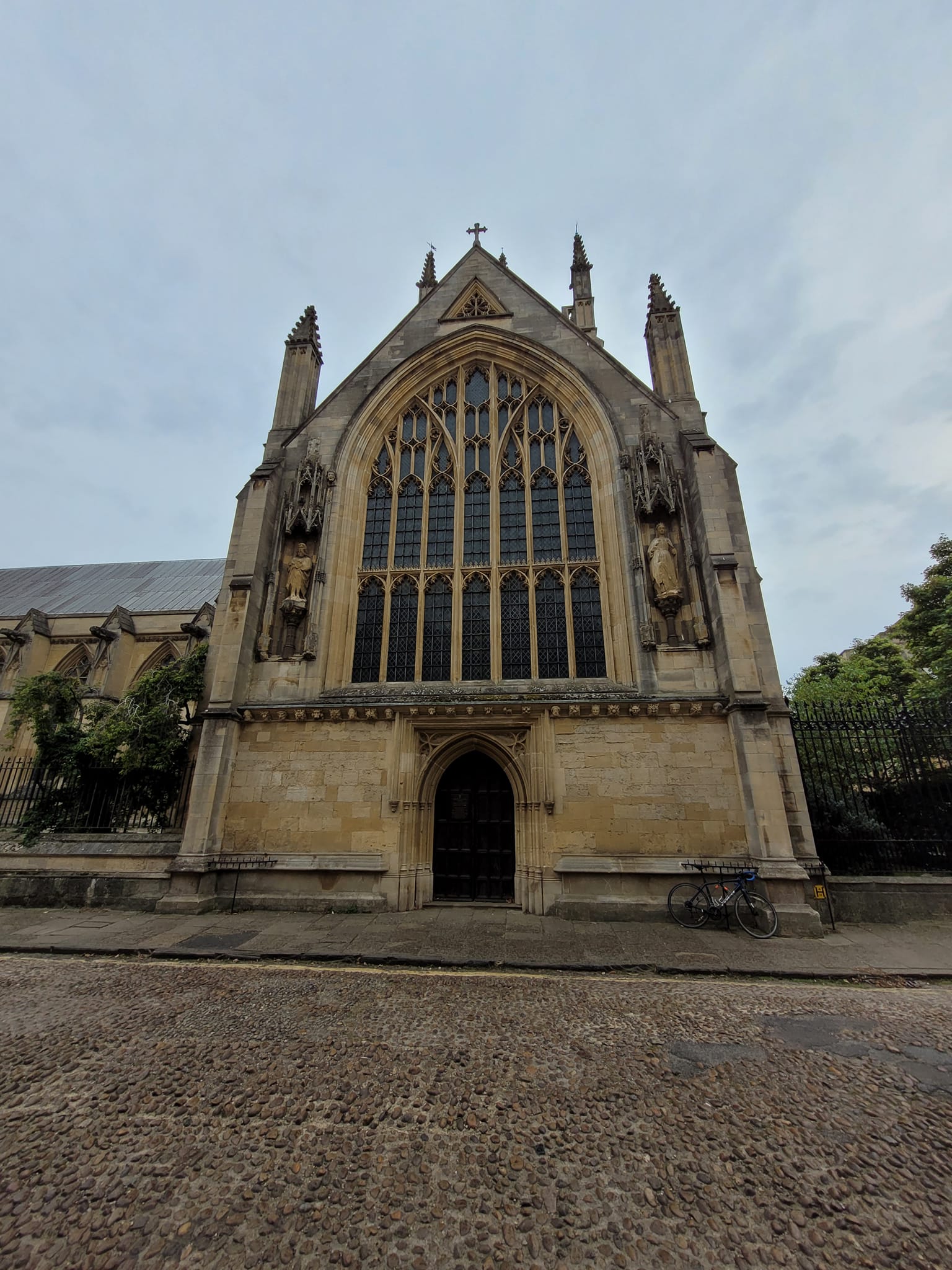
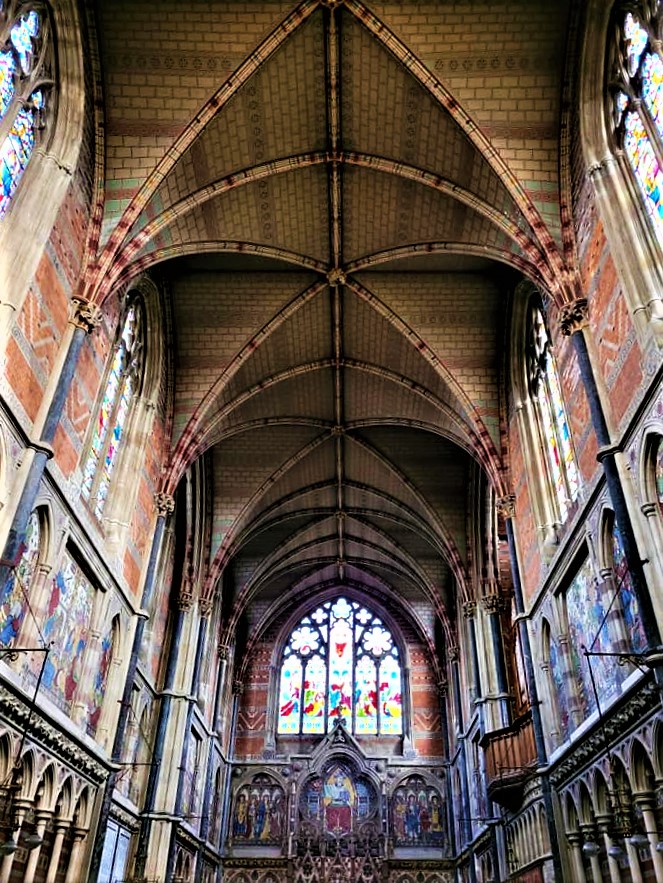
A stained glass window at St. Mary’s church in Painswick, Gloucestire, England. This church is known for its 99 Yew trees.
 

This is St. Mary’s with some of the Yew trees…

For more Photo Hunters click over to tnchick.

Photobucket is holding all my photos from 2007-2015 hostage and they have blacked them all out. I’m slowly working at restoring my posts without their help. Such a tiresome bother!

WFW ~ Psalm 20:7


Psalm 20:7 ~

“Some trust in chariots and some in horses, but we trust in the name of the Lord our God.”

For more Word Filled Wednesday head over to 160 Acre Woods.

Photobucket is holding all my photos from 2007-2015 hostage and they have blacked them all out. I’m slowly working at restoring my posts without their help. Such a tiresome bother!

I is for Iona ~

It’s time for ABC Wednesday and this week we are on the letter I.

Come with me to the Isle of Iona in the Hebrides.


We traveled from the town of Oban on the western coast of Scotland by ferry to the Island of Mull and then we boarded a bus to travel down the Island to take a small ferry to the small Isle of Iona.


This little Isle is rich in history and beauty.


History of Iona

St. Columba, an Irish scholar, soldier, priest, and founder of monasteries, got into a small war over the possession of an illegally copied Psalm book. Victorious but sickened by the bloodshed, Columba left Ireland, vowing never to return. According to legend, the first bit of land out of sight of his homeland was Iona. He stopped here in 563 and established the abbey.

Columba’s monastic community flourished, and Iona became the center of Celtic Christianity. Iona missionaries spread the gospel through Scotland and North England, while scholarly monks established Iona as a center of art and learning. The Book of Kells – perhaps the finest piece of art from “Dark Ages” Europe – was probably made on Iona in the eighth century. The island was so important that it was the legendary burial place for ancient Scottish and even Scandinavian kings (including Shakespeare’s Macbeth).

Slowly the importance of Iona ebbed. Vikings massacred 68 monks in 806. Fearing more raids, the monks evacuated most of Iona’s treasures (including the Book of Kells, which is now in Dublin) to Ireland. Much later, with the Reformation, the abbey was abandoned, and most of its finely carved crosses were destroyed. In the 17th century, locals used the abbey only as a handy quarry for other building projects.

Iona’s population peaked at about 500 in the 1830’s. In the 1840’s a potato famine hit. In the 1850’s a third of the islanders emigrated to Canada and Australia. By 1900 the population was down to 210, and today it’s only around 100.

But in our generation a new religious community has given the abbey new life. The Iona community is an ecumenical gathering of men and women who seek new ways of living the Gospel in today’s world, with focus on worship, peace, and justice issues, and reconciliation.

The island is car free. While the present  abbey, nunnery, and graveyard go back to the 13th century, much of what you see today was rebuilt in the 19th century.

ht: history and other information taken from Rick Steves’ Great Britain

For more ABC Wednesday go see Mrs. Nesbitt.

Photobucket is holding all my photos from 2007-2015 hostage. I’m working on updating my blog posts very slowly.

Know and Tell Friday ~ March 7th


Here are the questions for this week’s Know and Tell from To Know Him.

Question 1
I have been blogging for a year this month, so my question is what made you start your blog?

As of March 3rd of this year my blog is one year old. I started my blog because my brother made me. I was emailing people all the same sort of stuff he thought would be great on a blog. He had a blog already that I was commenting on. I was apprehensive because I didn’t know if I could handle the technology. Baby steps and a year under my belt and a lot of what I was afraid of isn’t scary anymore. There is still a lot for me to learn.


Question 2
Do you speak another language? If so, why or how did you learn it? ~
My first language was Russian. My parents are Russian immigrants and they came to the U.S. in 1947. I was born in 1951. I had 3 older siblings that paved the way for me to learn English. Sorry to say that my Russian is quite dismal. I can read it and I understand more than I can speak. I took Spanish in high school and really didn’t retain much of that language either.
~
~Question 3
Morning person, or night owl (or somewhere in between)?
Nowadays I’m more of a morning person. Many nights I’m in bed by 9:00 P.M. and then wide awake at 5:00 A.M.
 ~
Question 4
Do you exercise on a regular basis?  
I’m glad you asked this question now because I walk for at least an hour a day except for Sunday. This is my primary exercize. I’ve come to realize that at my age this is the only way to keep the numbers on the scale from creeping up…


Bonus Questions
Question 5
If money were not an object what is one thing you would like to do for another person?  ~
Take my children to Ireland and Great Britain and pay all their home and vacation expenses while we were away.
~
Question 6
What is one of your favorite attributes of our Lord God? ~
God’s sovereignty is very important to me. He is the one that is in control and it’s not up to me. That really gives me peace and freedom when I screw up like I’m bound to do!
~
Question 7
Have you ever thought about adoption or foster care?
Every time I’ve thought about either of these I have not  had a positive response to make the leap.
~

To see more Know and Tell answers click here.

Britain with Lewis, Tolkien, Austen and (Monty Python!)

For our daughter Katie’s high school graduation in 2004, “Dear” and I took her to Great Britain. Katie is a reader, a learner, a writer, a poet and an artist. We asked her what she’d want to see and she came up with the brilliant idea of following some of her favorites around the Isle! The following is a photo log of our trip that we can highly recommend to all lovers of Hobbits, Inklings, Literary Giants, 19th Century England, Harry Potter, and wacky Holy Grail enthusiasts!

The Eagle and Child (The Bird and Baby) Oxford

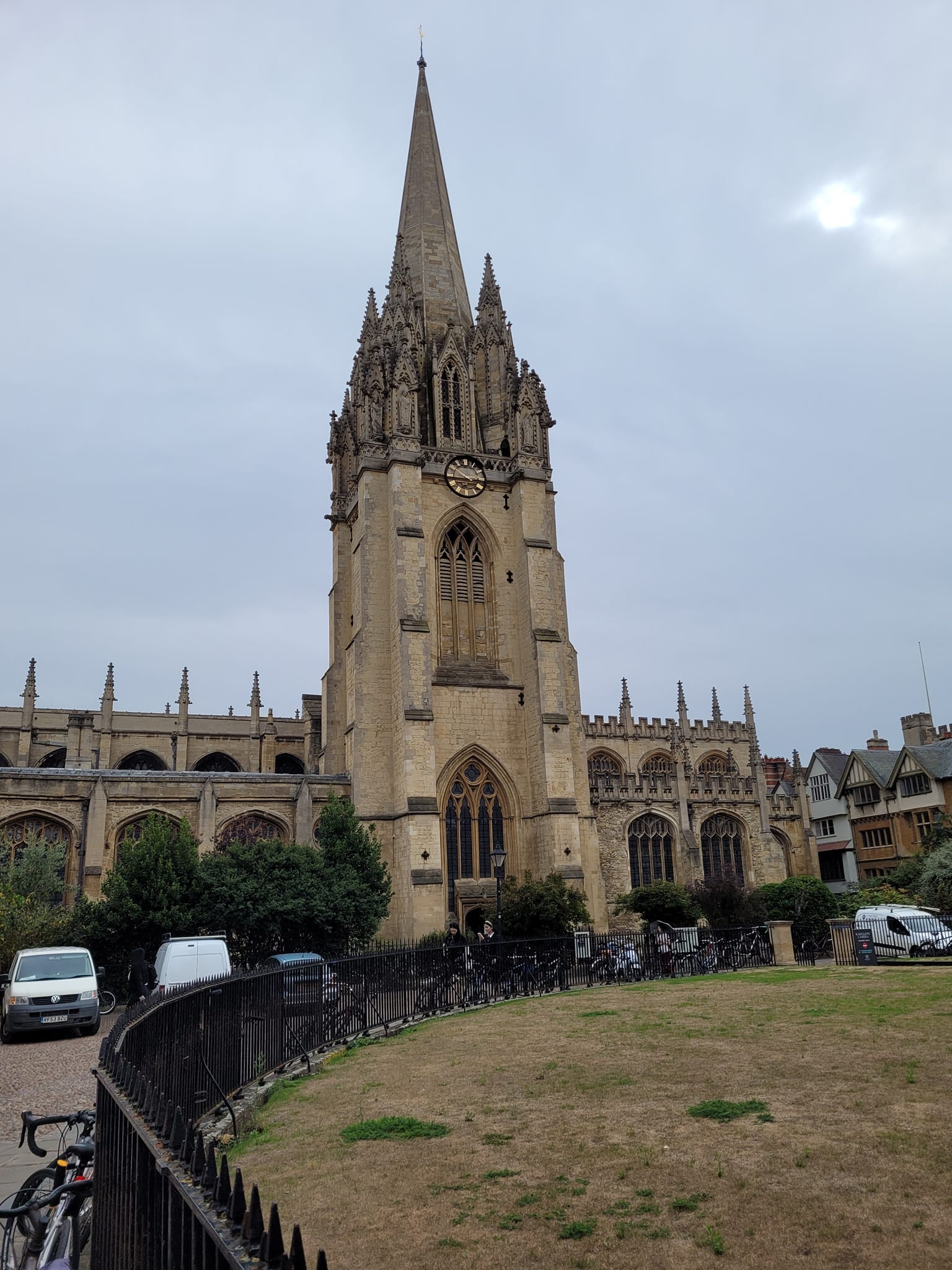
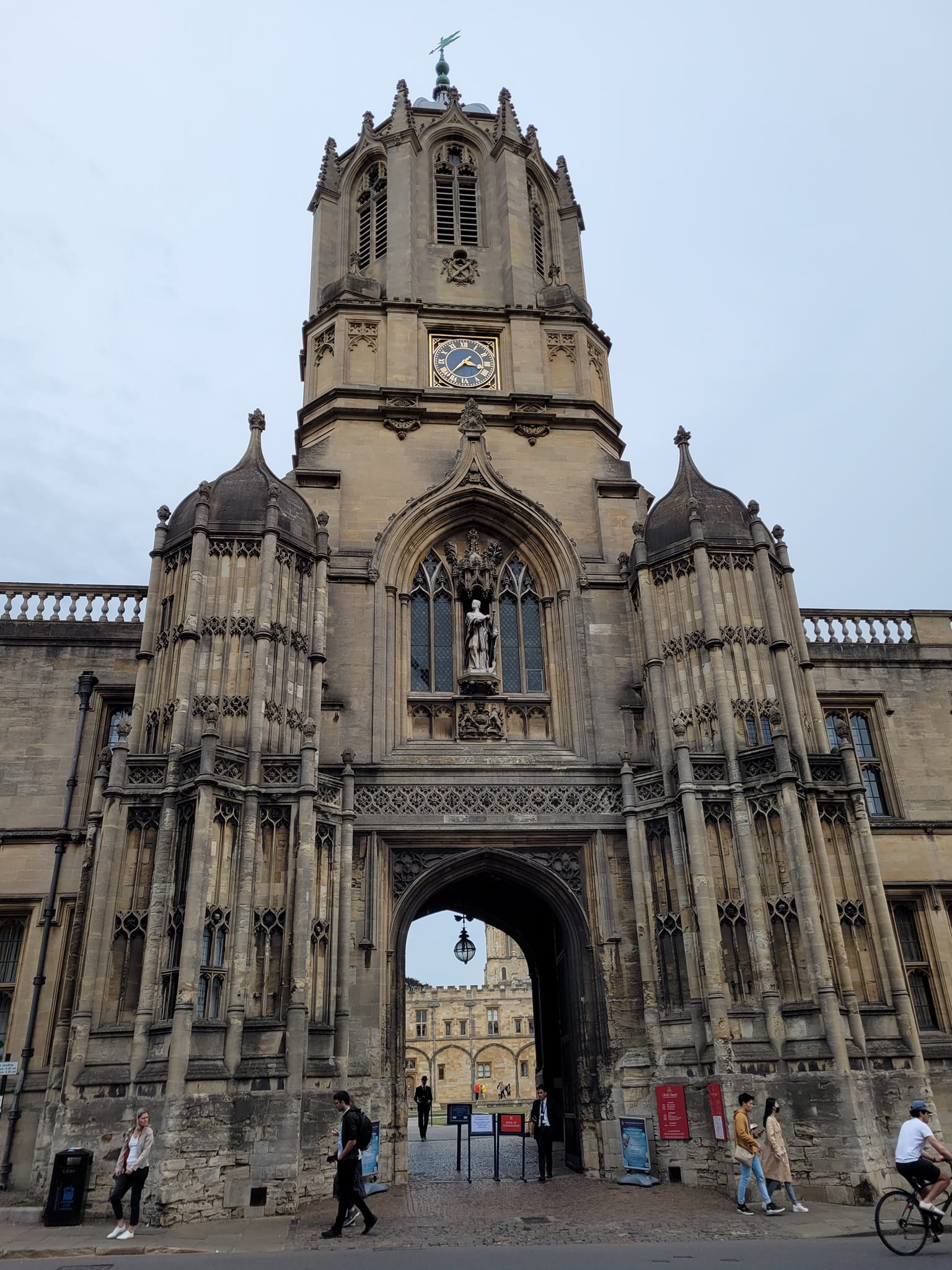
We set out from our first B & B base in Cheltenham to tour Oxford. Our first stop was The Eagle and Child (The Bird and the Baby) where the Inklings would meet and discuss their current writings, thoughts, etc.

The pictures on the wall are of C. S. Lewis, Tolkien, and other Inklings, plus letters, etc. We had a bite to eat and a pint was raised to toast our respected authors! “It comes in pints?”

Addison’s Walk

“Dear” and Katie on Addison’s Walk. This is on the grounds of Magdalan College (pronounced Maudlin) where Tolkien and Lewis would walk and have long conversations, after which C. S. Lewis was converted to Christianity. We found it, walked it and reflected on the beauty and wonder of it all!

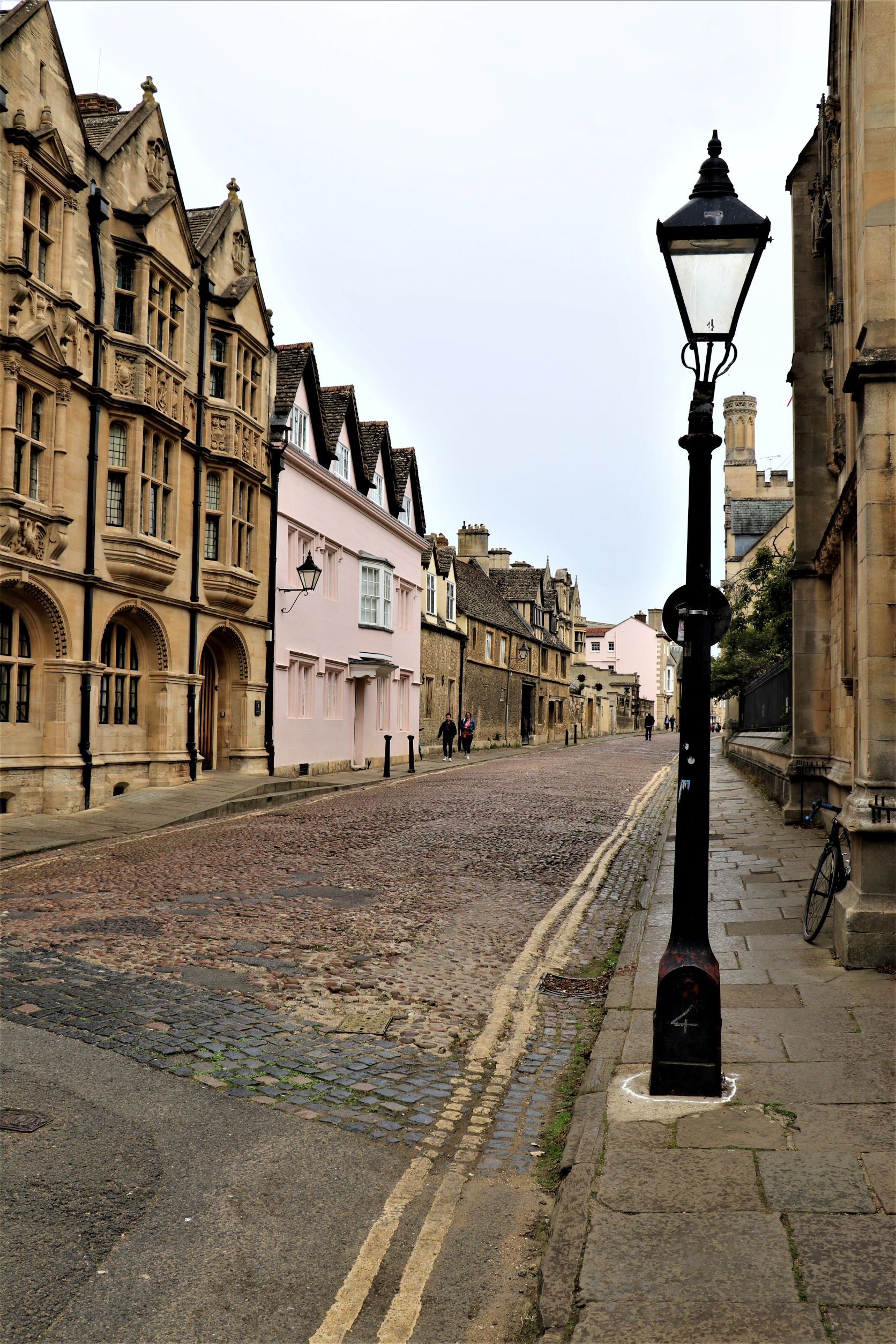
Tolkien lived at 21 Merton St. after his wife died in 1971.

Katie would not let us leave Oxford till we found Tolkien’s grave. This was no small feat! Here we are at Wolvercote Cemetery in North Oxford at the graveside where he and his wife are buried. His son is buried here, also.  Katie left a note in Elvish, (yes, she learned to write and speak Tolkien’s Elvish).

EDITH MARY TOLKIEN
LUTHIEN
1889 – 1971
JOHN RONALD
REUEL TOLKIEN
BEREN
1892 – 1973

Buckley

Our next excursion took us in search of Hobbits in the Cotswolds. This is the little village of Buckley. While in the Cotswolds we also visited the Hidcote Garden which we highly recommend. We were here in April so gardens were not in their prime. If you get a Heritage pass this garden is part of the deal along with some of the castles and other sights we visited.

Hidcote Manor Garden

We next concentrated on Jane Austen. Our first excursion on this theme took us to Bath. We walked around the city finding the places she stayed and where some of the social gatherings happened in her books. Our prior research and guidebooks explained where these sights were. We imagined being at a dance or performance in these grand halls. We toured the Roman baths, Bath Abbey, and Number One on the Royal Crescent where Austen lived while in Bath. Two of her novels are set in Bath. On a side trip we visited Gloucester Cathedral where parts of Harry Potter movies were filmed.

Jane Austen Center, Bath

We left our first B & B in Cheltenham and headed Northeast to our second B & B in Sheffield. Although Sheffield wasn’t a comfy, cozy, little town it gave us good access to continue following Austen haunts. (I’d definitely pick some place more quaint to stay the next time we tour this area). The photo below is of Chatsworth House. The house Jane Austen based Darcy’s family home after. The new Pride and Prejudice movie actually filmed segments here. We were here in 2004 before the new film.  The estate was quite breathtaking. The small village of Bakewell close by was very reminiscent of  Lambton where Jane and her Aunt and Uncle stayed in Derbyshire.

Chatsworth House (Pemberley House)

“Every disposition of the ground was good; and Elizabeth looked on the whole scene — the river, the trees scattered on its banks, and the winding of the valley, as far as she could trace it — with delight.”

Bakewell (Lambton)

From Sheffield we continued North and a little East to the wonderful walled city of York. We dropped our rental car off here because you do not need a car in this compact city and from here we were taking a train to Edinburgh. We had the coolest walking tour book of this city and we were able to see a lot of things we would have missed without it. York Minster is a beautiful  Gothic Cathedral and we would recommend attending Evensong there.

From York we traveled by train north to Edinburgh. We arrived in Edinburgh found our self catering flat we rented and toured Edinburgh Castle and as much of Edinburgh our tired bodies could endure. We ate at a nice pub where Katie says she had the best hamburger she’s ever eaten.

Edinburgh Castle

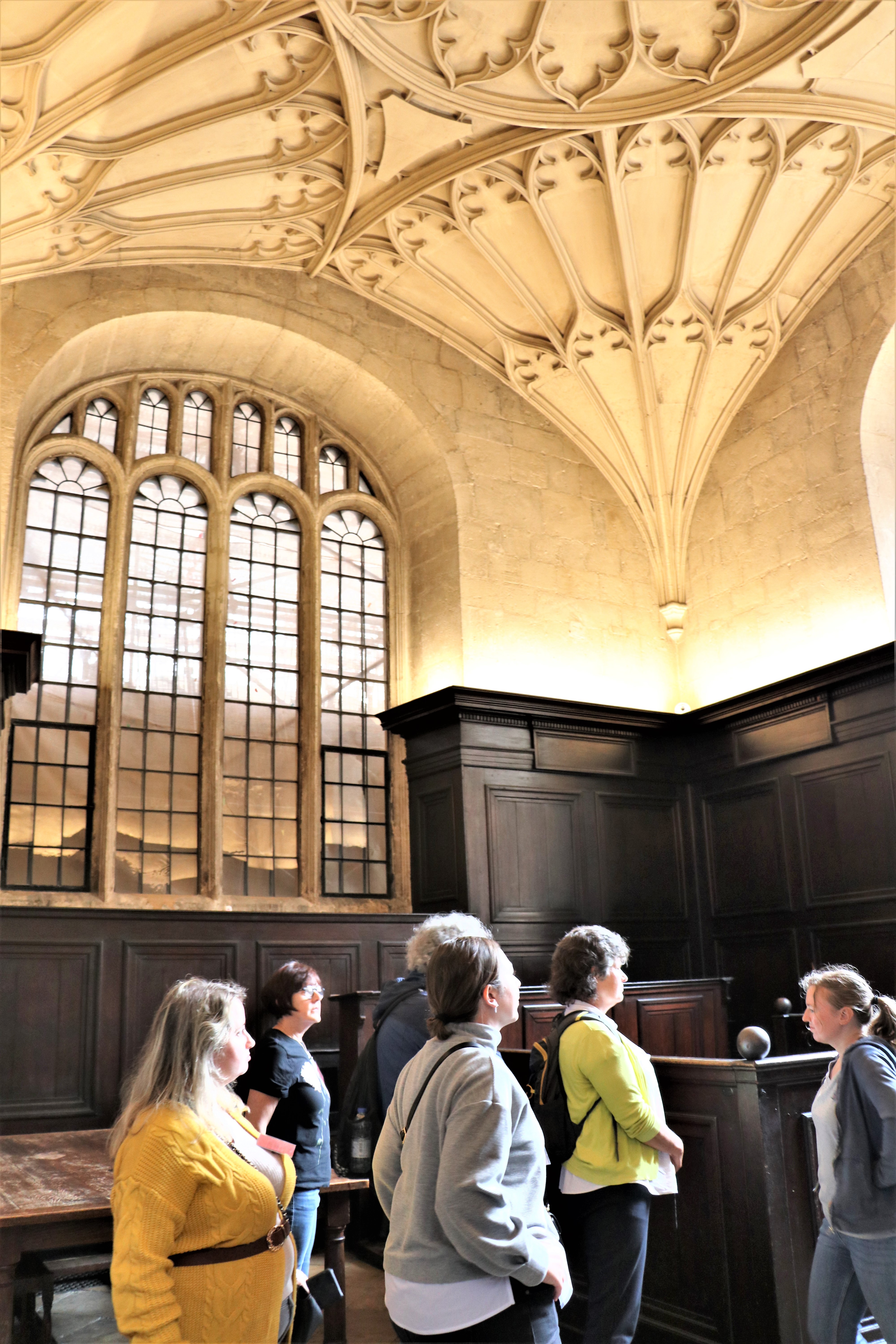
 Our main side trip from Edinburgh was by bus to Stirling with a connecting bus to the little town of Doune where you’ll find Castle Doune. Castle Doune is the sight of some of the filming of Monty Python and the Holy Grail. This was a must stop for our daughter Katie. We were the only people at the castle (it was part of our Heritage Pass). To those of you who are familiar with this film you are handed coconut shells to walk around the grounds with. We were throwing out lines from the movie (Run Away, run away!) and making horse clip clop noises (with the coconut shells). They even take a picture of you here and post it on the official web page for Castle Doune and Monty Python and the Holy Grail. Hilarious fun. Back in Edinburgh we were given bad directions to the Elephant Cafe and never found it. So our Harry Potter sightings had to be confined to the outside of Bodleian Library (Oxford) and the outside of Gloucester Cathedral (Gloucester) where filming took place.

Castle Doune

From Edinburgh we took a train straight to London. We were finishing our trip here with so much to see. We walked our feet off. We went to the National Gallery, Westminster Abbey, St. Paul’s Cathedral, The Tower of London (photo), and so much more. We were here for the Queen’s 80th birthday and got to hear and see the cannons speak 80 times! One of my favorite sites in London is the British Library and their Greatest Treasures Room. You’ll see the Gutenberg Bible, Magna Carta, many incredible Sacred Texts, Literary Manuscripts by Austen, Bronte’, Chaucer, etc. Music on loan from the Beatles.  A must see when you’re in London. We included a trip to the theater to see Les Miserables. London was a wonderful culmination to a great tour of Great Britain.

The Tower of London and Tower Bridge

Here’s the main contributor and researcher for our marvelous literary tour of Great Britain.

Katie, our Seattle Girl.