Nadyezhda’s (Надежда) Kulich (Paska)

This is a historic post that I will probably repost every year during one of the days leading up to Easter. Easter shares the rank with Christmas as my favorite holiday of the year. My winter favorite and my Spring favorite. Easter has more ‘dear to me’ food traditions. Our mom Nadyezhda (Nadia) passed these recipes to us with tweaks along the way. Nadia or Nadya (Надя, accent on first syllable) is the diminutive form of the full name Nadyezhda (Надежда), meaning “hope” and derived from Old Church Slavonic.
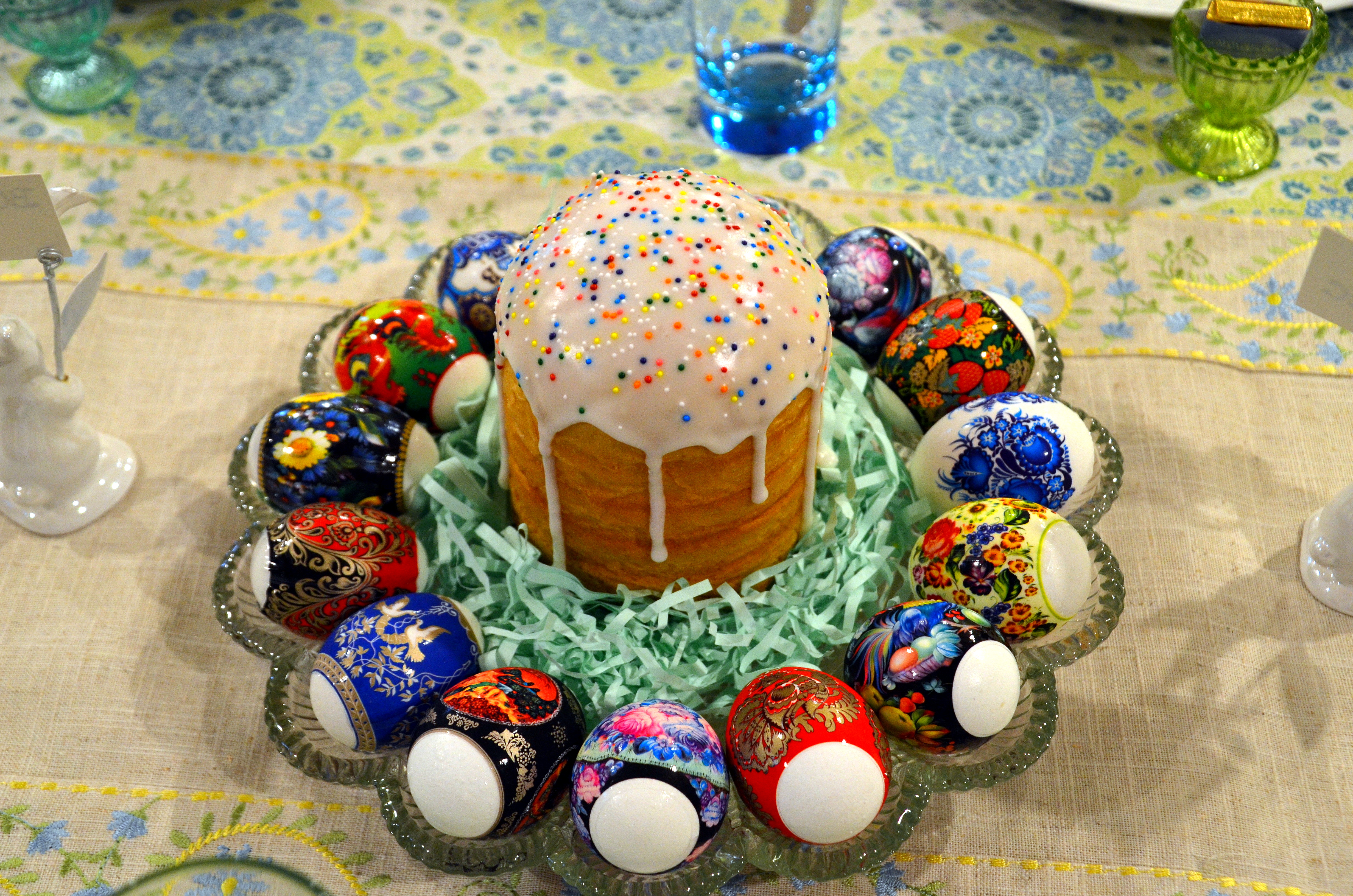
easter 2016 047

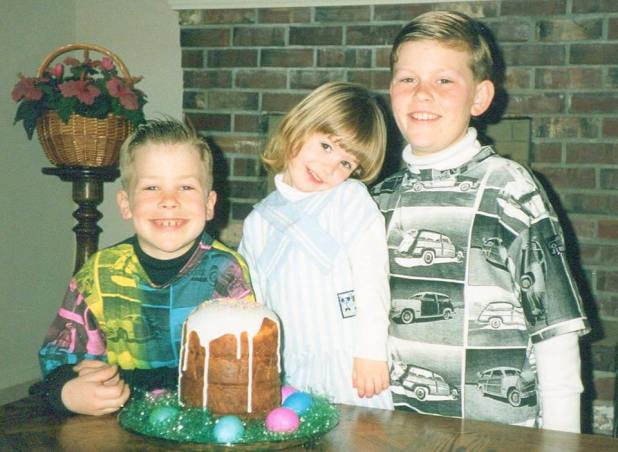
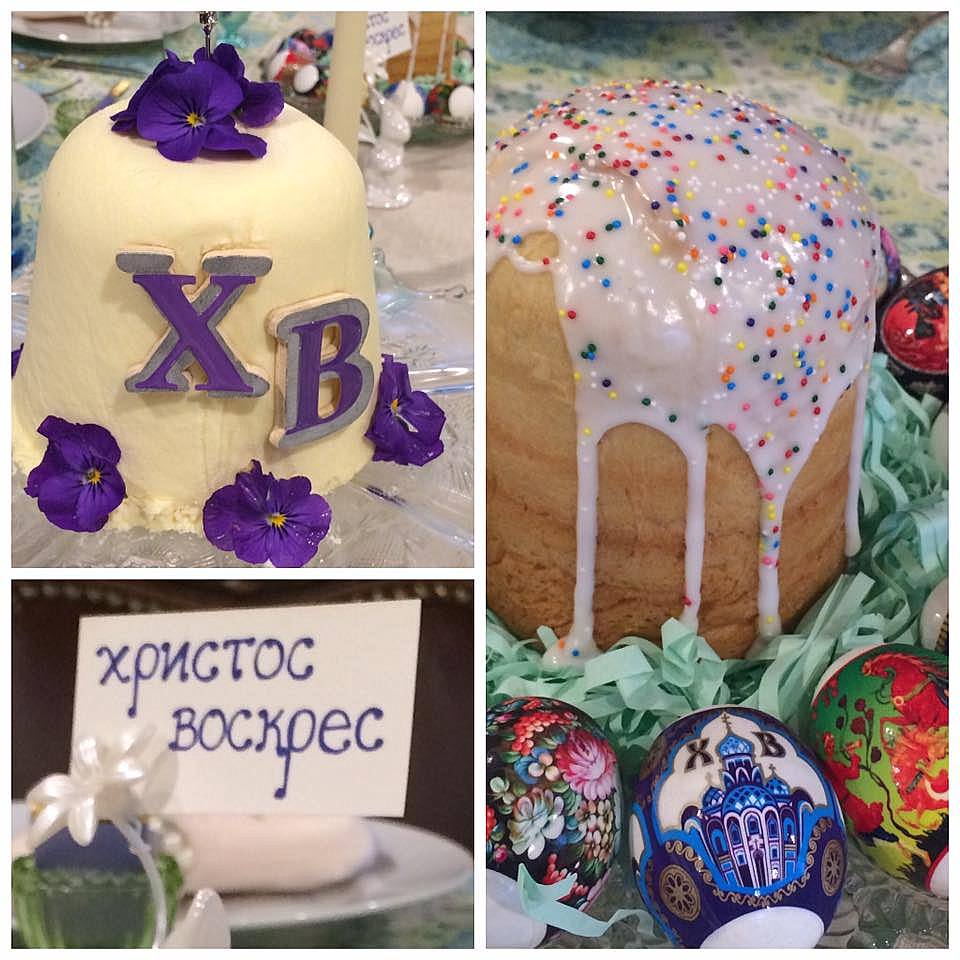
What many of you call Paska we call Kulich. This is my mom’s Russian Easter Bread Recipe that I quartered because the amount she would make is quite daunting for me. We have cut it in half in years past. What you need to know about my mom and recipes is that she ends up tweaking them from year to year so this recipe is for her Kulich from 2001. I have a 2009 and 2012 recipe, too. This one was easier to quarter. Here’s the link to the original. My dear mom passed away from this earth in September of 2013 so I cherish her tweaked recipes.

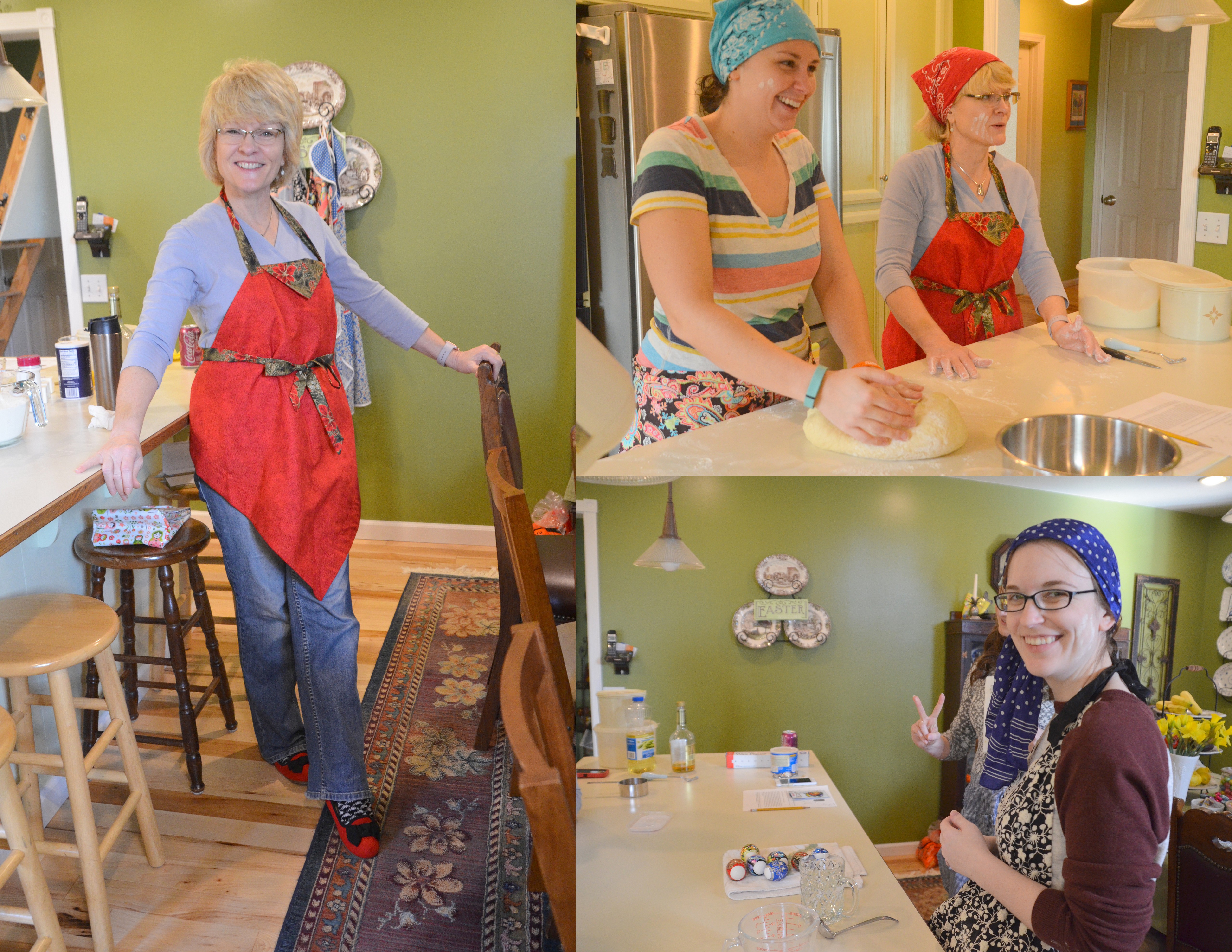
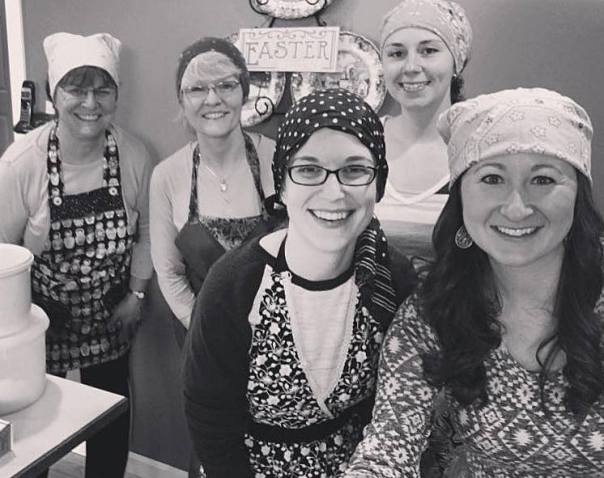
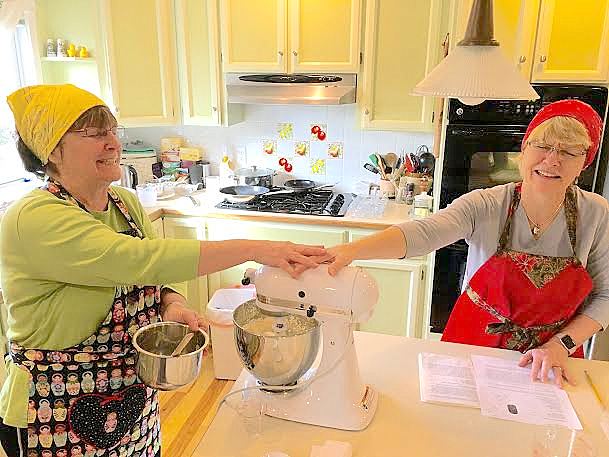
I will post her recipe every year about a week before Easter for inspiration. We like it fresh so many years we bake it on the day in between Good Friday and Easter. This is not a recipe that I would attempt on my own. In my mind it calls for company enjoying the process together, like this group of loved ones in 2016.
12670500_10209025541021643_6688122367162299089_n

It’s always good to pray over your dough!

Kulich

Ingredients:

  • 2 packets rapid rise yeast
    1/4 cup lukewarm water
    1/4 cup lukewarm milk
    1 teaspoon sugar
  • 4 egg yolks
    1 egg
    1-1/4 cups sugar
    3/4 cup butter
    1 cup whipping cream
    1 cup half and half
    1/2 ounce apricot brandy
    1-1/2 teaspoons powdered vanilla
    1 teaspoon salt
    Zest of half a lemon
    About 2-1/2 pounds of flour, sifted (about 7 cups)
    Vegetable oil to coat the rising dough
  • 6 to 7 one pound or two pound cans for baking. You can use loaf pans or large muffin tins if you don’t have the cans to bake them in

Method:

Add yeast to the lukewarm water and milk and sugar in a stainless steel bowl making sure the liquids are lukewarm. Let this mixture dissolve and sit.

Beat the egg yolks and egg together.
Cream the butter and sugar in the large bowl of a stand-up mixer.
Add the eggs to the butter and sugar mixture slowly mixing to combine and then beat to incorporate well.

Mix the half and half with the whipping cream and heat until lukewarm, not hot, and slowly incorporate into the creamed mixture.
Mix in the vanilla and brandy.
Add the yeast mixture and the salt and beat with a mixer.
Continue beating and add the lemon zest.
Continue beating and add the sifted flour about a cup at a time.
Once you cannot beat the dough any longer using the mixer, put the dough on a floured surface and start incorporating the remaining flour by kneading the dough.
The dough should be kneaded very well, approximately 10 minutes.
You should knead the dough until you can cut it with a knife and it is smooth without any holes.
Place the dough in a stainless steel bowl.

Take some oil and pour a little on the dough and spread it all over the dough making sure to turn the dough so it is coated evenly.
Cover with plastic wrap right on the dough and a dish towel on top of that.
Place in a warm place away from drafts to rise.

(My sister usually puts it into the oven that has been warmed slightly).

It is now time to prepare the coffee cans (1 lb. and 2 lb. cans are the best)

Cut circles the size of the bottom of the cans out of wax paper. You will need four circles per can. Make sure the cans are well greased. Put the 4 circles in the bottom of the cans.

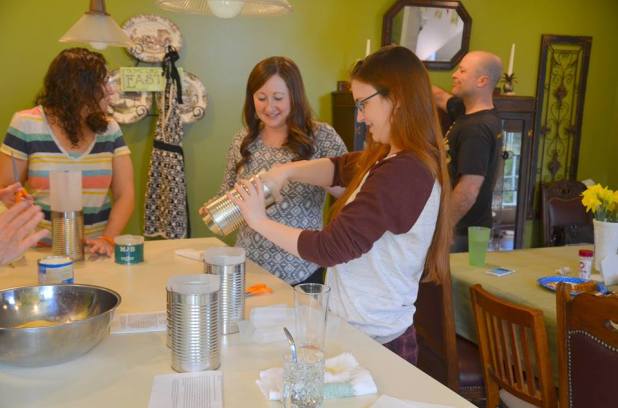
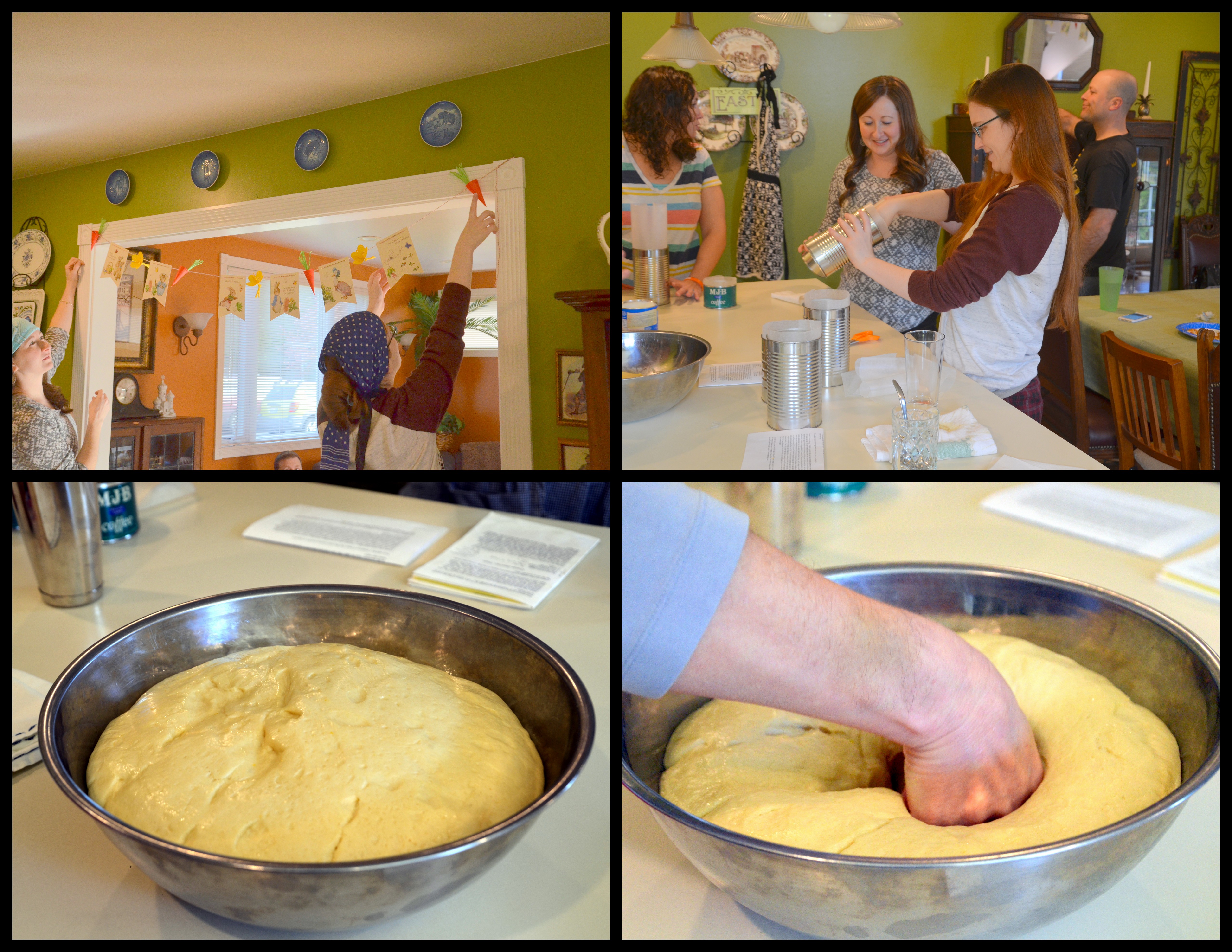
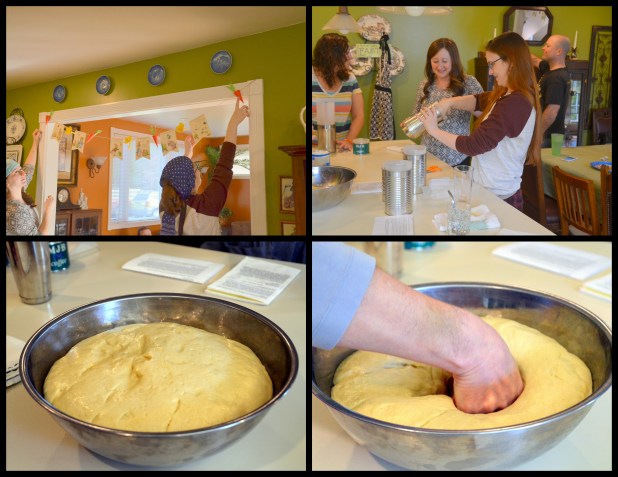
Use a empty and clean coffee can like the ones above. If there is a label make sure to take it off. If the can has a lip at the top you’ll need to use a can opener to cut the lip off the can. I hope these pictures will make the process easier to understand.

After putting the circles in the bottoms of the cans, cut sheets of wax paper long enough to line the sides of the can and tall enough to be 2″ above the rim of the can. Use Crisco to seal the ends of the paper.
Back to the dough…

When the dough has doubled in size, punch it down and turn it over.
Let it rise a second time until it doubles in size. Punch it down again.
Now the dough is ready to put into the prepared cans.
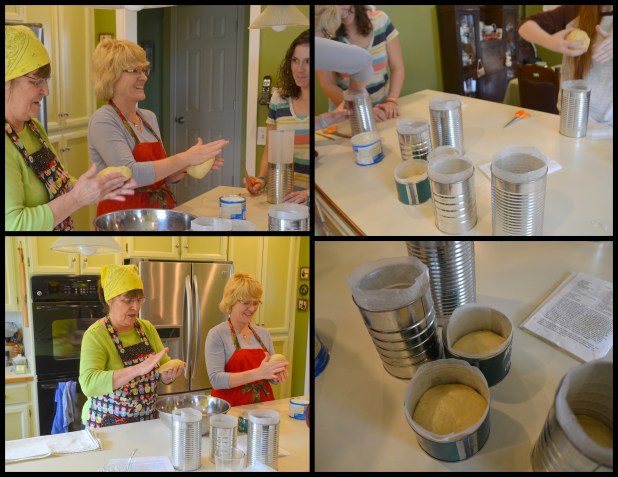
You will take a portion of dough about 1/3 the size of the can. Knead it and form it into a smooth ball that you can easily drop into the can.

Let the dough rise again inside the can until it is at least double in size.

Bake in a 350 degree oven until golden brown on top.(approximately 30 minutes or more depending on your oven.)

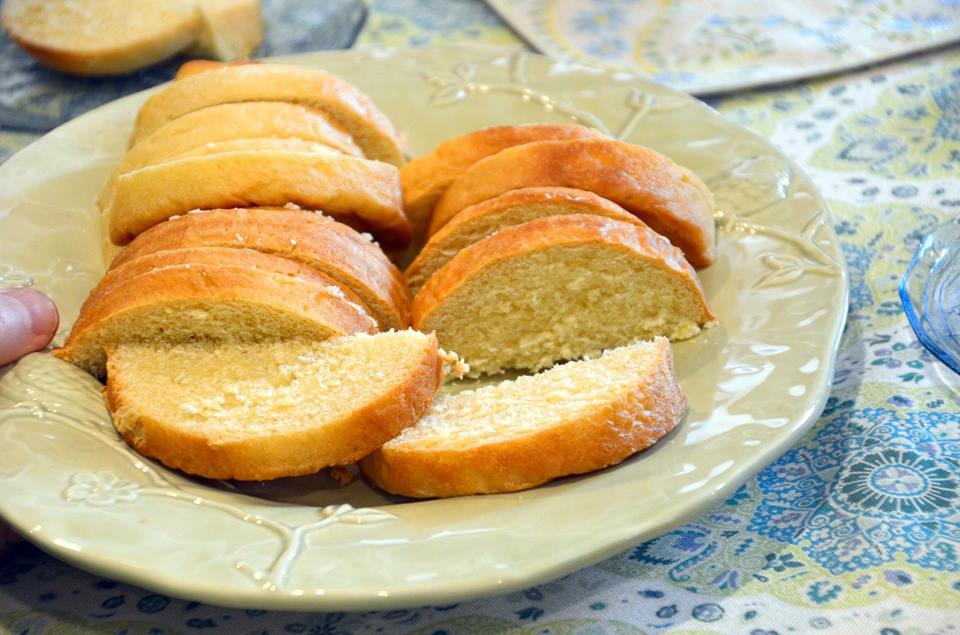
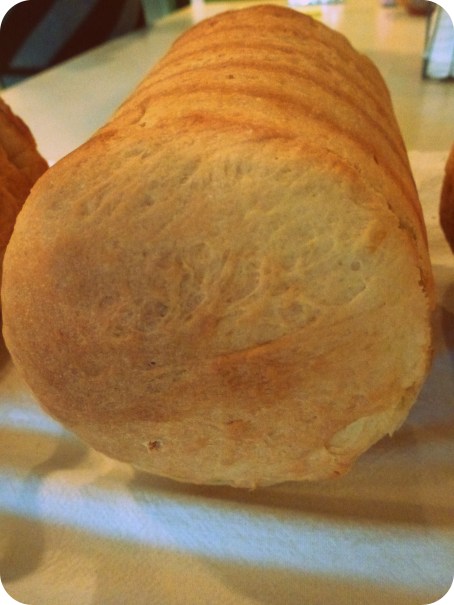
Let them cool slightly in the cans. Remove them from the cans and then cool completely standing up. Some people cool them on their sides turning them often to keep their shape. We found this time that they cool just fine and keep their shape standing up so we didn’t bother with that step!

This recipe yielded 7 loaves.
P1010130

To go with this bread my mom always made a wonderful sweet cheese topping that is formed in a mold in different shapes.  I’m adding the recipe here.

paska class 005

 Seernaya Paska

Ingredients:

18 – hard boiled eggs /
3 pounds Farmers cheese /a dry curd cheese like a dry cottage cheese can be substituted.
1 pint whipping cream /
3 cubes unsalted butter (12 oz.) /
3 cups sugar /

Press the Farmers cheese through a sieve. (This is the hardest part of the recipe) If you find a very small curd cheese you won’t have to do this to the cheese. I usually use a wooden spoon and press it through a wire strainer a little at a time. Separate the egg yolks from the whites. (You will not be using the whites).

Press the egg yolks through the sieve. Cream the sugar and butter together. Beat in the egg yolks. Beat in the cheese. Add whipping cream and mix well. You will place the mixture into a strainer lined with about 3 layers of cheesecloth. You will need enough cheesecloth to wrap up and over the top of the cheese. Place the cheese mixture into the cheese cloth lined strainer, or flower pot with holes in the bottom. Bring the ends of the cheese cloth up and tie the ends on top of the cheese in a knot. Place the sieve or flower pot into a larger bowl suspended with enough room for the cheese to drain without sitting in the drained liquid. Place a plate on top of the cheese an place a heavy rock, brick, or other weight on top of the plate. Refrigerate over night.

This recipe is enough to feed an army. If you don’t have to feed an army here’s a scaled down version :0)

If you just want a normal amount, cut the recipe in thirds. (6 cooked egg yolks, 1-lb. cheese, 2/3 cup whipping cream, 1 cube butter and 1 cup sugar.) Enjoy!

Farmers Cheese or Hoop Cheese can be hard to find. There are Russian-Ukrainian delis that sell a dry curd cottage type cheese that will work. If you can find a dry cottage cheese at the grocers that will work too.

I found a site online that sells the cheese that I use for this yummy spread.

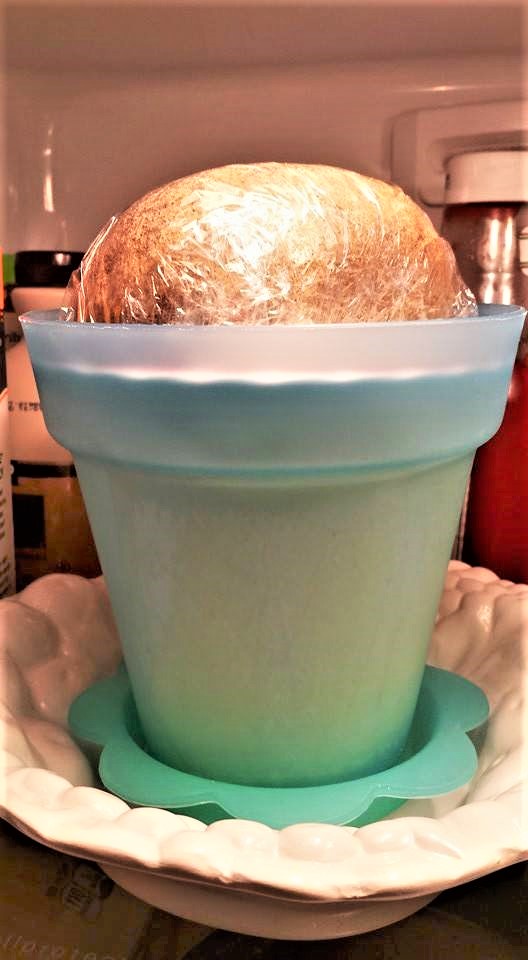
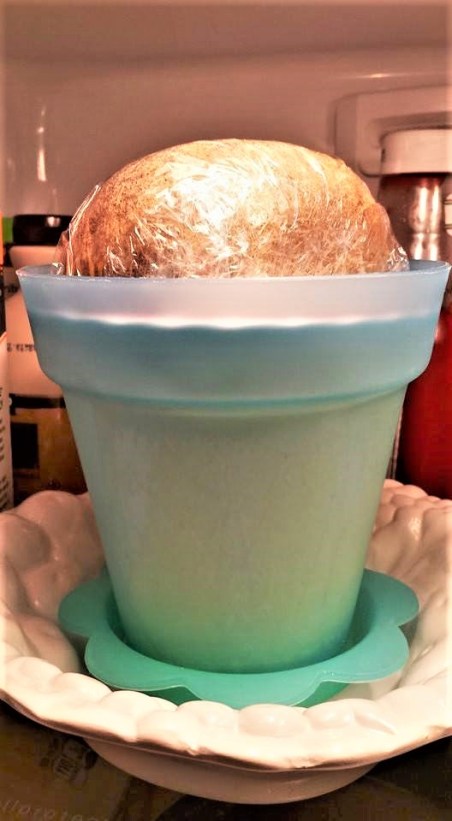
The cheese spread in the flower pot in the refrigerator with the stone on top to help release as much liquid as possible.

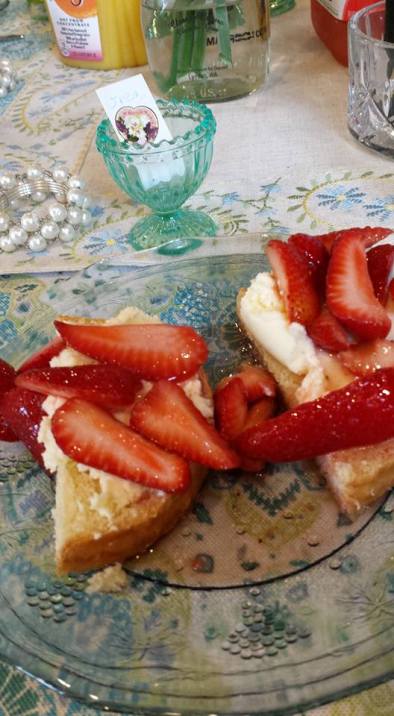
We like to serve the kulich with the spread and strawberries.

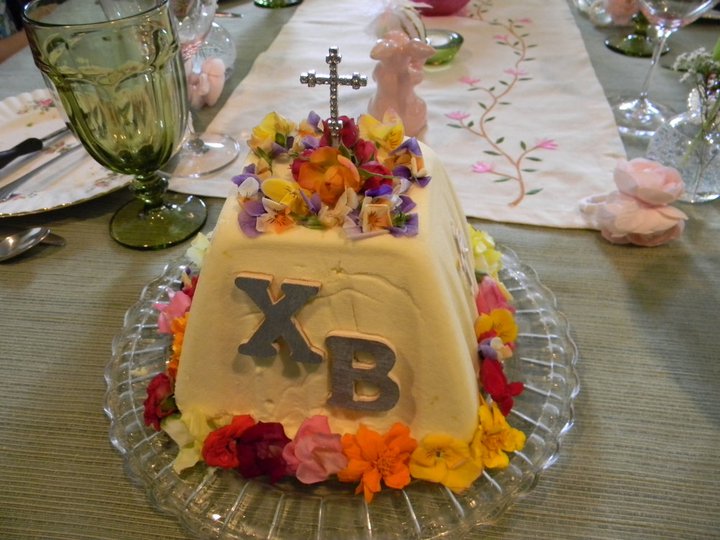
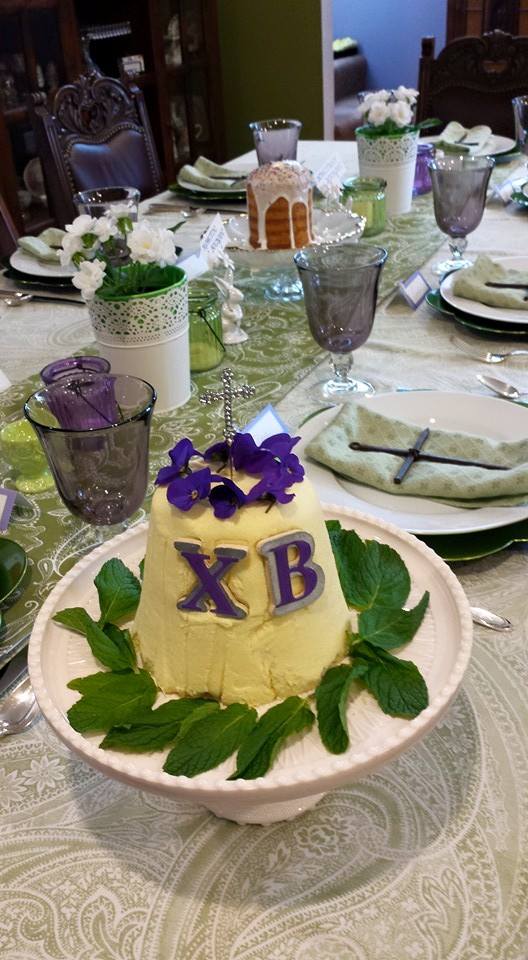
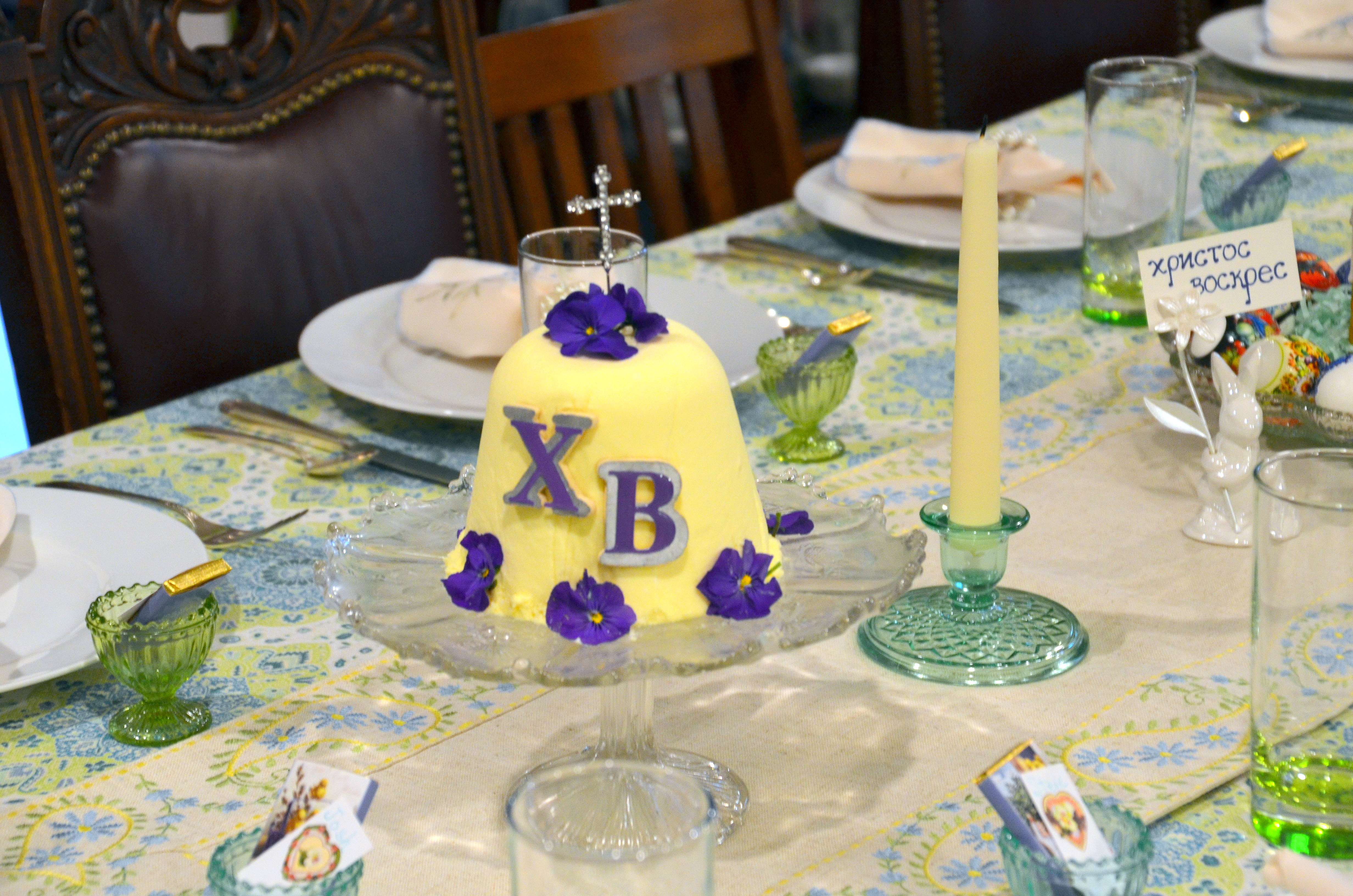
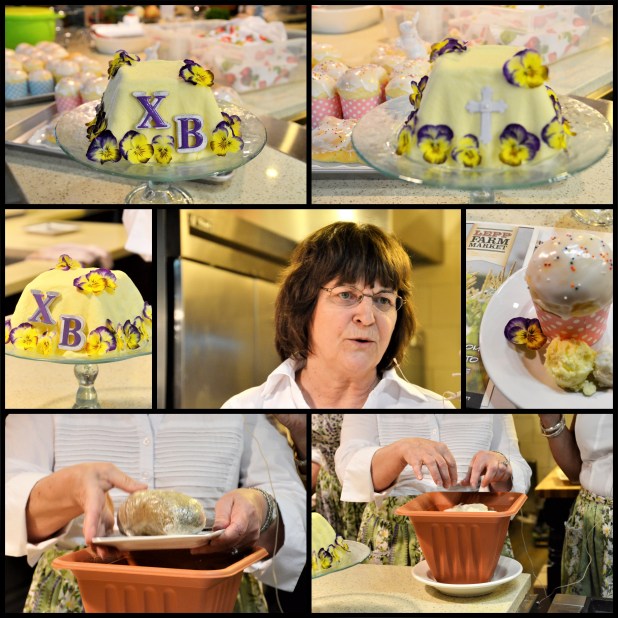
When the Mennonite Girls Can Cook had a Paska demonstration at Lepp Market in Abbotsford I brought a completed Seernaya Paska, sweet cheese spread molded from home since it has to sit in the refrigerator having all the liquid pressed out for at least 24 hours. I plated it and showed one of the flower pots I use to mold the cheese and the heavy stone wrapped in plastic wrap to weight the cheese and force the liquid out. We used fresh viola blossoms to decorate it. I made an error in the pronunciation of this dish in our first cookbook. It is called seernaya paska not seerney paska . I’ve always had a hard time with my Russian. I’ve found these plastic flower pots work well to mold the cheese. Make sure you add holes in the bottom of the pot so the liquid can escape easily.

easter 2016 038

This blast from the past was probably our first Easter in Washington State, 1989.

2014-03-027

True Confessions: I have not attempted to make Kulich here in Colville. I have made Seernaya Paska to go with Kulich that I purchased at Kiev Market in Spokane. The market Kulich was only good for decorating the table. It does not compare to our mom’s recipe.

Are you preparing for Easter?

Pelemeni ~ Russian Dumplings

Pelemeni (Russian Version of Ravioli/Dumplings)

Filling:

  • 1/2 pound ground chicken
  • 1/2 pound ground veal, or lamb, or beef
  • 1 medium onion grated
  • 1 teaspoon salt
  • 1/2 teaspoon pepper

Dough:

  • 2 cups sifted flour
  • Pinch of Salt
  • 1 egg
  • 1/3 cup water

Filling:

  1. Combine the two meats with onion.
  2. Add seasonings, mix well and set aside.

Prepare Dough:

  1. In a small mixing bowl, sift the flour and a pinch of salt.
  2. Lightly beat the egg with the water.
  3. Make a nest in the flour.
  4. Add the egg with water into the nest.
  5. Work the flour into the egg and mix.
  6. Knead to a rather dry dough.
  7. Use more flour if needed.
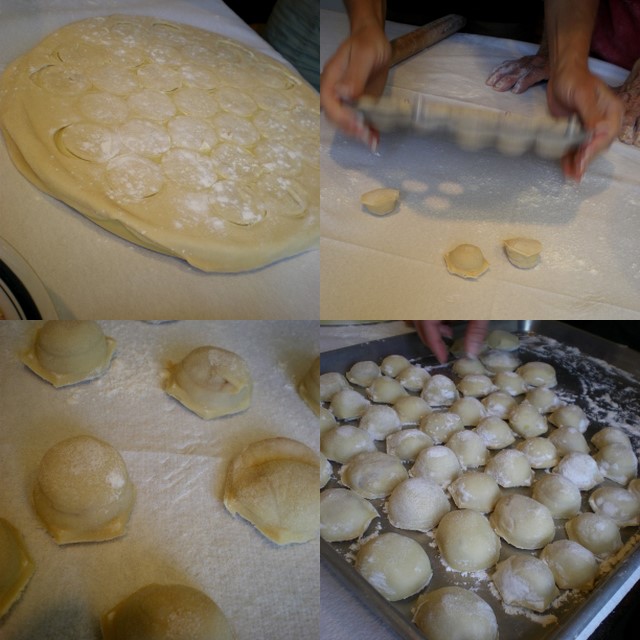
  8. Roll dough very thin.
  9. If you don’t have a mold cut the dough into 2″ circles.
  10. Put a small ball of filling (about 1/2 tsp) onto each circle and fold over and pinch edges making a half-moon shape.
  11. Now bring each corner of the moon shape together and pinch together.
  12. At this stage you can freeze them, or you can go on to the next step.
  13. Bring your favorite broth to a boil.
  14. Add the Pelemeny to the boiling broth.
  15. When they are done they will surface like doughnuts.
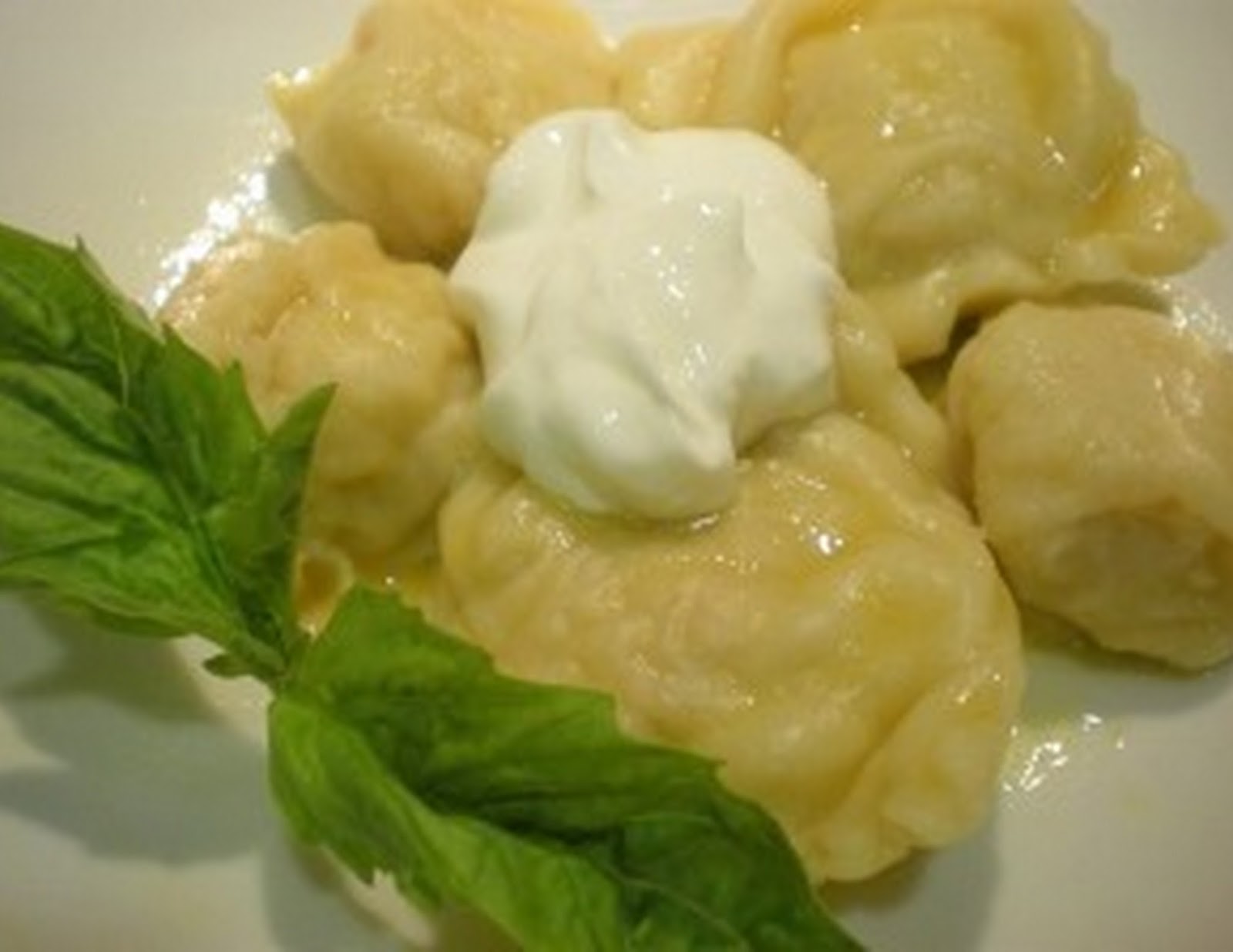
  16. You can serve them with the broth like a soup or you can have them plain with some sour cream.
  17. This recipe should feed 4-6 people.

Tip: If you are going to freeze them place them on a parchment lined cookie sheet and freeze partially before putting them in a freezer bag so they don’t stick together.

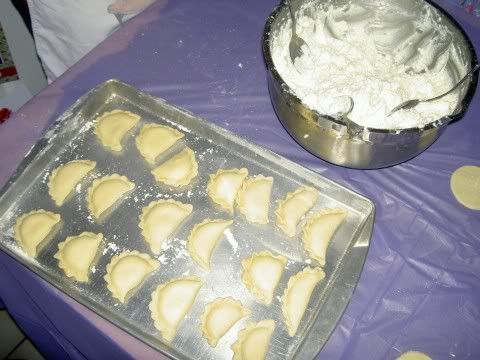
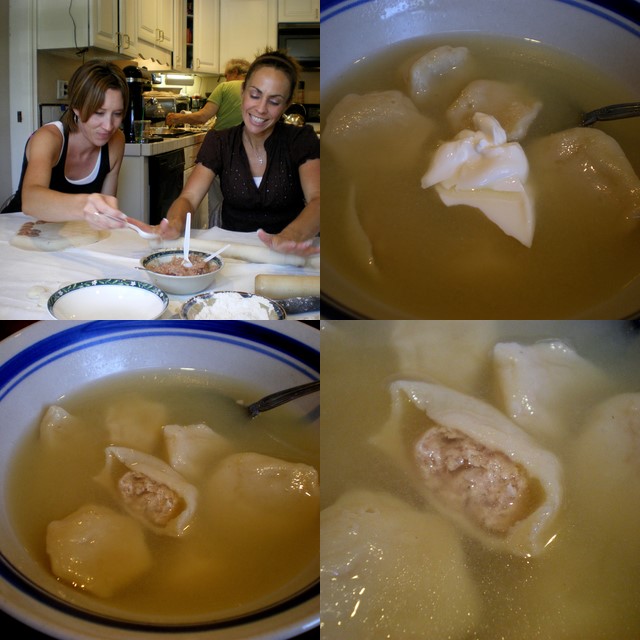
Making Pelemeni with my family which you can call Russian dumplings.


These are filled with a combination of ground chicken, lamb or beef.

This family cooking day happened several years ago while Dear and I were living in Camarillo for a few years because of his work. We gathered at my sister Vera’s home in Huntington Beach. This was probably sometime in 2008 or 2009.

It is fun to do this kind of cooking when my family can gather together. Nowadays I make a special trip to Kiev Market in Spokane and buy them packaged and frozen and ready to enjoy.

We enjoy them in a non-traditional way in a soup broth with chopped spinach in the broth along with the dumplings and served with chopped hard boiled eggs and a dollop of sour cream.

First Weekend in January

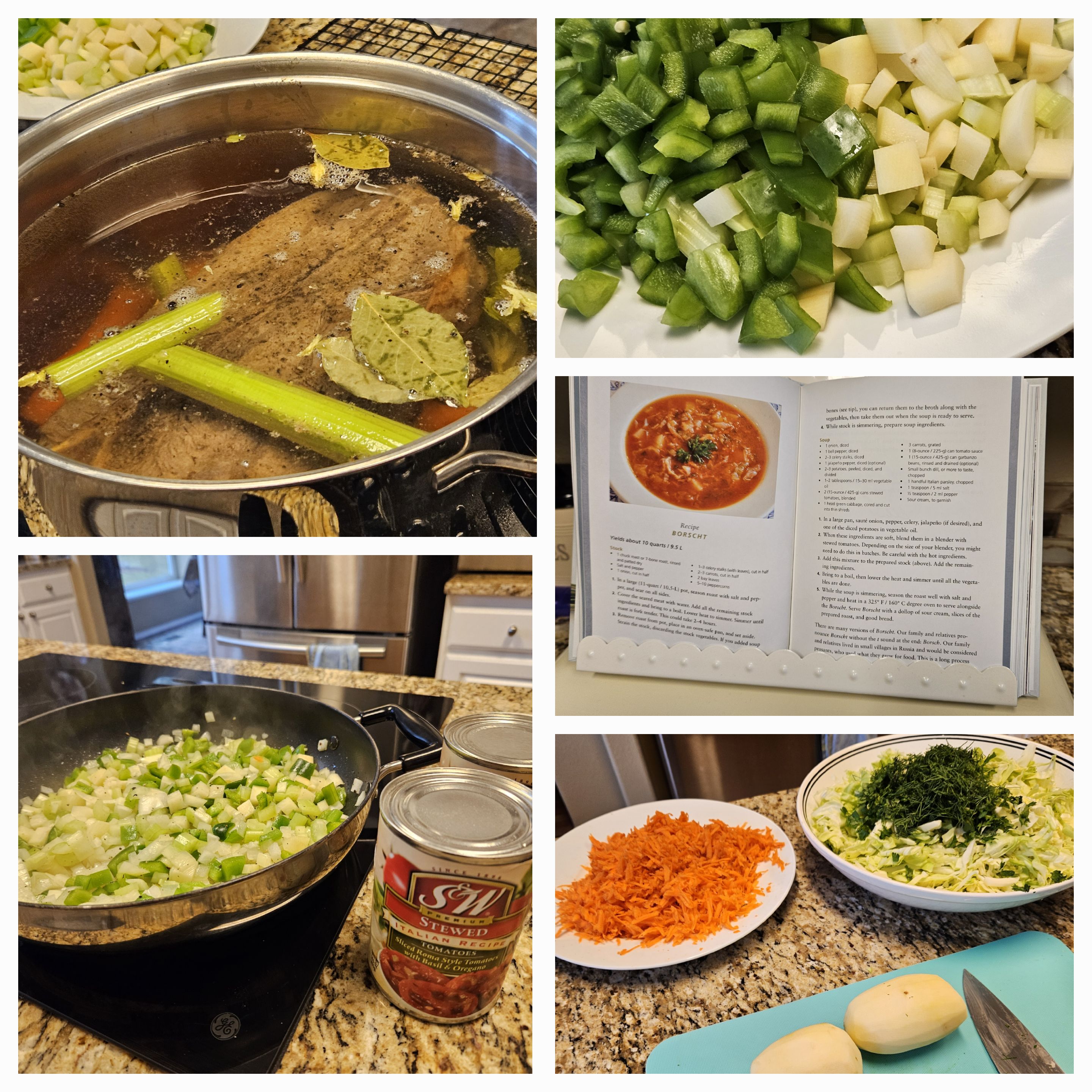
The first weekend in 2024 proved to be a busy one. On Friday we enjoyed a last minute open house at the home of our friends and met some of their neighbors. On Saturday a big pot of borsch was cooked from scratch with broth from a seven bone roast. A few quarts of borsch will be shared this week. One small pot was delivered to our neighbor.

On Saturday evening we attended a Karaoke party for a friend from church who turned 50. We met another couple from our community and had a nice time getting to know each other. There have been lots of predictions of snow that didn’t materialize until Sunday in the wee hours. We woke up to a pretty blanketed landscape.

The following collage is photos of our ride into church on Sunday morning. Our series in Colossians continues to be excellent.

We didn’t have anymore snow on Sunday but they are threatening us with more starting Monday Evening into Tuesday. Time will tell if they are right.

Nadezda’s Kulich ~ My Mom’s Russian Easter Bread

easter 2016 047

What many of you call Paska we call Kulich. This is my mom’s Russian Easter Bread Recipe that I quartered because the amount she would make is quite daunting for me. We have cut it in half in years past. What you need to know about my mom and recipes is that she ends up tweaking them from year to year so this recipe is for her Kulich from 2001. I have a 2009 and 2012 recipe, too. This one was easier to quarter. Here’s the link to the original. My dear mom passed away from this earth in September of 2013 so I cherish her tweaked recipes.

I will post her recipe every year about a week before Easter for inspiration. We like it fresh so many years we bake it on the day in between Good Friday and Easter. This is not a recipe that I would attempt on my own. In my mind it calls for company enjoying the process together, like this group of loved ones in 2016.

12670500_10209025541021643_6688122367162299089_n

It’s always good to pray over your dough!

Kulich

Ingredients:

  • 2 packets rapid rise yeast
    1/4 cup lukewarm water
    1/4 cup lukewarm milk
    1 teaspoon sugar
  • 4 egg yolks
    1 egg
    1-1/4 cups sugar
    3/4 cup butter
    1 cup whipping cream
    1 cup half and half
    1/2 ounce apricot brandy
    1-1/2 teaspoons powdered vanilla
    1 teaspoon salt
    Zest of half a lemon
    About 2-1/2 pounds of flour, sifted (about 7 cups)
    Vegetable oil to coat the rising dough
  • 6 to 7 one pound or two pound cans for baking. You can use loaf pans or large muffin tins if you don’t have the cans to bake them in

Method:

Add yeast to the lukewarm water and milk and sugar in a stainless steel bowl making sure the liquids are lukewarm. Let this mixture dissolve and sit.

Beat the egg yolks and egg together.
Cream the butter and sugar in the large bowl of a stand-up mixer.
Add the eggs to the butter and sugar mixture slowly mixing to combine and then beat to incorporate well.Mix the half and half with the whipping cream and heat until lukewarm, not hot, and slowly incorporate into the creamed mixture.
Mix in the vanilla and brandy.
Add the yeast mixture and the salt and beat with a mixer.
Continue beating and add the lemon zest.
Continue beating and add the sifted flour about a cup at a time.
Once you cannot beat the dough any longer using the mixer, put the dough on a floured surface and start incorporating the remaining flour by kneading the dough.
The dough should be kneaded very well, approximately 10 minutes.
You should knead the dough until you can cut it with a knife and it is smooth without any holes.
Place the dough in a stainless steel bowl. Take some oil and pour a little on the dough and spread it all over the dough making sure to turn the dough so it is coated evenly.
Cover with plastic wrap right on the dough and a dish towel on top of that.
Place in a warm place away from drafts to rise.

(My sister usually puts it into the oven that has been warmed slightly).

It is now time to prepare the coffee cans (1 lb. and 2 lb. cans are the best) Cut circles the size of the bottom of the cans out of wax paper. You will need four circles per can. Make sure the cans are well greased. Put the 4 circles in the bottom of the cans.

Use a empty and clean coffee can like the ones above. If there is a label make sure to take it off. If the can has a lip at the top you’ll need to use a can opener to cut the lip off the can. I hope these pictures will make the process easier to understand.

After putting the circles in the bottoms of the cans, cut sheets of wax paper long enough to line the sides of the can and tall enough to be 2″ above the rim of the can. Use Crisco to seal the ends of the paper.

Back to the dough…

When the dough has doubled in size, punch it down and turn it over.
Let it rise a second time until it doubles in size. Punch it down again.
Now the dough is ready to put into the prepared cans.
You will take a portion of dough about 1/3 the size of the can. Knead it and form it into a smooth ball that you can easily drop into the can.

Let the dough rise again inside the can until it is at least double in size.

Bake in a 350 degree oven until golden brown on top.(approximately 30 minutes or more depending on your oven.)

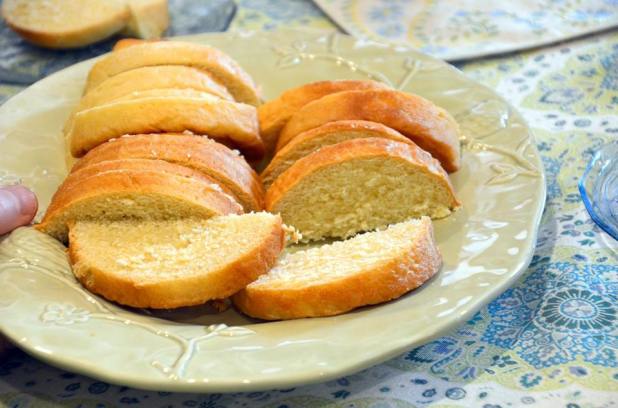
Let them cool slightly in the cans. Remove them from the cans and then cool completely standing up. Some people cool them on their sides turning them often to keep their shape. We found this time that they cool just fine and keep their shape standing up so we didn’t bother with that step!

This recipe yielded 7 loaves.
P1010130

To go with this bread my mom always made a wonderful sweet cheese topping that is formed in a mold in different shapes.  I’m adding the recipe here.

paska class 005

 Seernaya Paska

Ingredients:

18 – hard boiled eggs /
3 pounds Farmers cheese /a dry curd cheese like a dry cottage cheese can be substituted.
1 pint whipping cream /
3 cubes unsalted butter (12 oz.) /
3 cups sugar /

Press the Farmers cheese through a sieve. (This is the hardest part of the recipe) If you find a very small curd cheese you won’t have to do this to the cheese. I usually use a wooden spoon and press it through a wire strainer a little at a time. Separate the egg yolks from the whites. (You will not be using the whites).

Press the egg yolks through the sieve. Cream the sugar and butter together. Beat in the egg yolks. Beat in the cheese. Add whipping cream and mix well. You will place the mixture into a strainer lined with about 3 layers of cheesecloth. You will need enough cheesecloth to wrap up and over the top of the cheese. Place the cheese mixture into the cheese cloth lined strainer, or flower pot with holes in the bottom. Bring the ends of the cheese cloth up and tie the ends on top of the cheese in a knot. Place the sieve or flower pot into a larger bowl suspended with enough room for the cheese to drain without sitting in the drained liquid. Place a plate on top of the cheese an place a heavy rock, brick, or other weight on top of the plate. Refrigerate over night.

This recipe is enough to feed an army. If you don’t have to feed an army here’s a scaled down version :0)

If you just want a normal amount, cut the recipe in thirds. (6 cooked egg yolks, 1-lb. cheese, 2/3 cup whipping cream, 1 cube butter and 1 cup sugar.) Enjoy!

Farmers Cheese or Hoop Cheese can be hard to find. There are Russian-Ukrainian delis that sell a dry curd cottage type cheese that will work. If you can find a dry cottage cheese at the grocers that will work too.
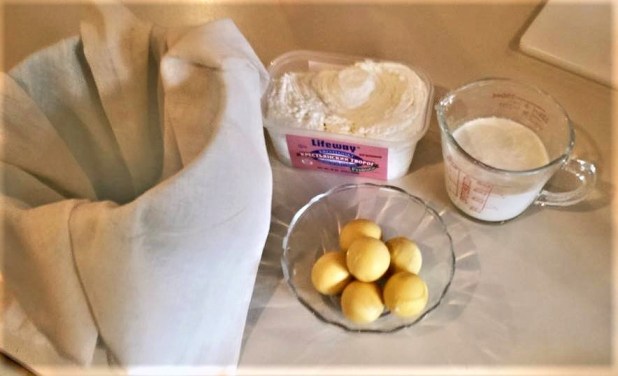
I found a site online that sells the cheese that I use for this yummy spread.
The cheese spread in the flower pot in the refrigerator with the stone on top to help release as much liquid as possible.

We like to serve the kulich with the spread and strawberries.
When the Mennonite Girls Can Cook had a Paska demonstration at Lepp Market in Abbotsford I brought a completed Seernaya Paska, sweet cheese spread molded from home since it has to sit in the refrigerator having all the liquid pressed out for at least 24 hours. I plated it and showed one of the flower pots I use to mold the cheese and the heavy stone wrapped in plastic wrap to weight the cheese and force the liquid out. We used fresh viola blossoms to decorate it. I made an error in the pronunciation of this dish in our first cookbook. It is called seernaya paska not seerney paska . I’ve always had a hard time with my Russian. I’ve found these plastic flower pots work well to mold the cheese. Make sure you add holes in the bottom of the pot so the liquid can escape easily.

easter 2016 038

This blast from the past was probably our first Easter in Washington State, 1989.

2014-03-027

True Confessions: I have not attempted to make Kulich here in Colville. I have made Seernaya Paska to go with Kulich I purchased at Kiev Market in Spokane. The market Kulich does not compare to our mom’s recipe.

Are you preparing for Easter?

Memories Hodgepodge


borsch-snoqualmie-001

It’s Wednesday and that means Jo From This Side of the Pond is asking questions for us to answer. Thank you Joyce!

1. What’s something that makes you feel stressed? How do you cope? 

Confrontation makes me stressed. If I can I walk away, I do. One of my coping mechanisms is to avoid it altogether. That’s okay unless I’m the cause for the need of the confrontation. Asking for forgiveness is a good solution. There are other situations where being a peacemaker is the solution.

2. What’s a food you eat that evokes a memory? Explain. 

Borsch (Borscht) evokes lots of memories of growing up. I hated it when I was little. The cabbage was not a pleasant texture to my palate. Having to sit at the table until I finished my bowl is not a good memory. I sat there for what seems hours after everyone else left the table. My solution was rebellious and I suffered for it by the reprimanding from my mom. While I was alone in the kitchen I decided the solution to my problem was to pour my bowl back in the pot. This would have worked except for the fact that I had soaked lots of bread in the bowl of soup. It was clear to my mom that I dumped my bowl of soup back in the pot. Oye, was I in trouble!

I love borsch now! Here’s our mom’s recipe.

3. This week’s Hodgepodge lands on National Visit Your Relatives Day. Will you celebrate by visiting a relative? If so is travel involved? Geographically, who is your nearest relative (not counting those living in your own house)?

No, I will not be visiting a relative. Our nearest relatives live 8 miles away from us. They are enjoying sunshine elsewhere right now. I will travel to their property to water the garden and maybe check the chicken coop for eggs. Our other relatives (children, siblings, aunts, nieces, nephews, cousins) live in Western Washington, California, Colorado, Texas, North Carolina, New York, Illinois, Florida and Israel. Dear and my parents, grandparents, uncles and all but one aunt are deceased.

I will see some of our California relatives and friends when I travel to Southern California for a Memorial Service in June.

4. What’s your most frequently used emoji?

Probably a heart or smiley face.

Do you make more phone calls, send more emails, or mainly text to communicate with friends and family? 

It used to be phone calls and emails but now it’s mainly text. Phone calls are few and far between because our country connections are dismal.

5. Tell us the story behind a favorite piece of furniture. 

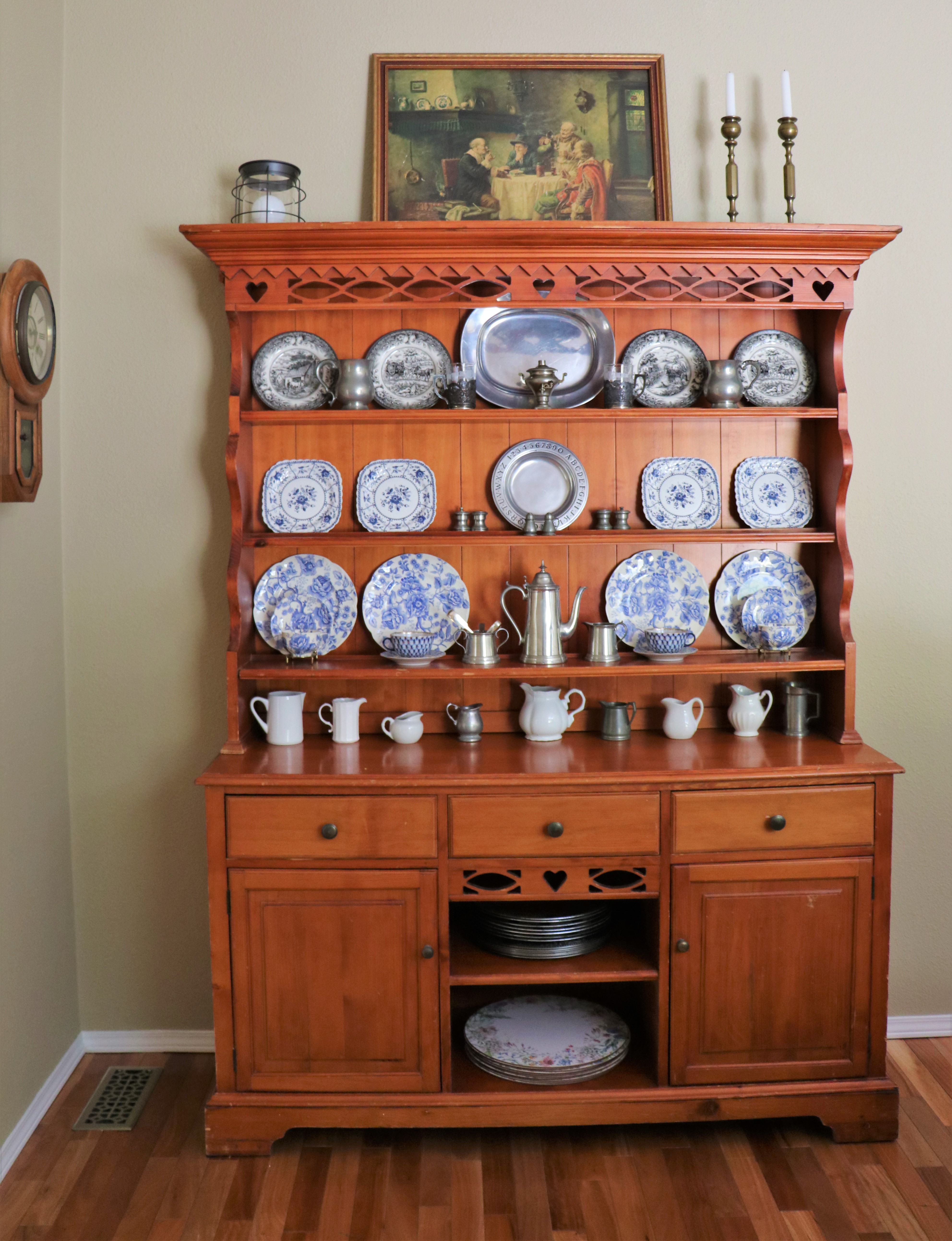
We have an eclectic collection of furniture with lots of stories behind them but one of our newer purchases of an old piece is my current favorite. I wrote about it here.

6. Insert your own random thought here. 

It’s Ice Cream weather for these two! Love seeing their faces via texts!

A Bright Hodgepodge

It’s time again for Wednesday Hodgepodge. Thank you Jo From This Side of the Pond for asking the questions.

1. What do you never get tired of? 

A beautiful sunny and puffy cloud filled day.

2. My mother made the best ________________________________. 

So many things that she made were the best but I’ll choose her blintzes.

You can see our mom’s recipe and process that we learned and copied here.

3. What machine or appliance in your home aggravates you the most? Why? 

If my machines and appliances are working I’m happy for that!  That said, the oven we have in this home has a loud fan that is annoying. That is something new that we haven’t experienced with other ovens we’ve had in other homes.

4. What are three things that brighten up your day when they happen? 

An unexpected card or letter in the mail always brightens my day. A surprise visit from our kids. A photo messaged to us of our grandchildren.

5. Thursday (May 12) is National Limerick Day…write a limerick about relating to spring weather, spring blooms, or a spring event (five lines, the first two lines rhyme with the fifth line, the third and fourth lines rhyme together)

May brings with it much to discover
With growth and color to uncover
But do not neglect
and do not forget
To love and honor your Mother

and here’s another one that’s a life lesson and not just Spring related…

There is an old Book that is treasured
With worth and wisdom unmeasured
Stick to it’s truth
And value it’s worth
Or your life will be tragically severed

6. Insert your own random thought here. 

It was so good to catch up with family and friends on the Westside of the mountains over Mother’s Day weekend.

Nadia’s Kulich and Seernaya Paska

What many of you call Paska we call Kulich. This is my mom’s Russian Easter Bread Recipe that I quartered because the amount she would make is quite daunting for me. We have cut it in half in years past. Now what you need to know about my mom and recipes is that she ends up tweaking them from year to year so this recipe is for her Kulich from 2001. I have a 2009 and 2012 recipe, too. This one was easier to quarter. Here’s the link to the original. My dear mom passed away from this earth in September of 2013 so I cherish her tweaked recipes.

Ingredients:

2 packets rapid rise yeast
1/4 cup lukewarm water
1/4 cup lukewarm milk
1 teaspoon sugar

4 egg yolks
1 egg
1-1/4 cups sugar
3/4 cup butter
1 cup whipping cream
1 cup half and half
1/2 ounce apricot brandy
1-1/2 teaspoons powdered vanilla
1 teaspoon salt
Zest of half a lemon
About 2-1/2 pounds of flour, sifted (about 7 cups)
Vegetable oil to coat the rising dough

6 to 7 one pound or two pound cans for baking. You can use loaf pans or large muffin tins if you don’t have the cans to bake them in.

Add yeast to the lukewarm water and milk and sugar in a stainless steel bowl. Make sure the liquids are lukewarm. Let this mixture dissolve and sit.

Beat the egg yolks and egg together.
Cream the butter and sugar in the large bowl of a stand-up mixer.
Add the eggs to the butter and sugar mixture slowly mixing to combine and then beat to incorporate well.
Mix the half and half with the whipping cream and heat until lukewarm, not hot, and slowly incorporate into the creamed mixture.
Mix in the vanilla and brandy.
Add the yeast mixture and the salt and beat with a mixer.
Continue beating and add the lemon zest.
Continue beating and add the sifted flour about a cup at a time.
Once you cannot beat the dough any longer using the mixer, put the dough on a floured surface and start incorporating the remaining flour by kneading the dough.
The dough should be kneaded very well, approximately 10 minutes.
You should knead the dough until you can cut it with a knife and it is smooth without any holes.
Place the dough in a stainless steel bowl. Take some oil and pour a little on the dough and spread it all over the dough. Make sure to turn the dough so it is coated evenly.
Cover with plastic wrap right on the dough and a dish towel on top of that.
Place in a warm place away from drafts to rise. (My sister usually puts it into the oven that has been warmed slightly.

It is now time to prepare the coffee cans (1 lb. and 2 lb. cans are the best) Cut circles the size of the bottom of the cans out of wax paper. You will need four circles per can. Make sure the cans are well greased. Put the 4 circles in the bottom of the cans.

Use a empty and clean coffee can like the ones above. If there is a label make sure to take it off. If the can has a lip at the top you’ll need to use a can opener to cut the lip off the can. I hope these pictures will make the process easier to understand.

Cut sheets of wax paper long enough to line the sides of the can and tall enough to be 2″ above the rim of the can. Use Crisco to seal the ends of the paper.

When the dough has doubled in size, punch it down and turn it over.
Let it rise a second time until it doubles in size. Punch it down again.
Now the dough is ready to put into the prepared cans.
You will take a portion of dough about 1/3 the size of the can. Knead it and form it into a smooth ball that you can easily drop into the can.

Let the dough rise again inside the can until it is at least double in size.

Bake in a 350 degree oven until golden brown on top.(approximately 30 minutes or more depending on your oven.)

Let them cool slightly in the cans. Remove them from the cans and then cool completely standing up. Some people cool them on their sides turning them often to keep their shape. We found this time that they cool just fine and keep their shape standing up so we didn’t bother with that step!

P1010130

To go with this bread my mom always makes a wonderful sweet cheese topping that is formed in a mold in different shapes. For my mom’s Sernaya Paska (cheese spread) recipe click here. I’m adding the recipe here.

paska class 005

 Seernaya Paska (Сырная пасха)

Ingredients:

18 – hard boiled eggs /
3 pounds Farmers cheese /a dry curd cheese like a dry cottage cheese can be substituted.
1 pint whipping cream /
3 cubes unsalted butter (12 oz.) /
3 cups sugar /

Press the Farmers cheese through a sieve. (This is the hardest part of the recipe) If you find a very small curd cheese you won’t have to do this to the cheese. I usually use a wooden spoon and press it through a wire strainer a little at a time. Separate the egg yolks from the whites. (You will not be using the whites).

Press the egg yolks through the sieve. Cream the sugar and butter together. Beat in the egg yolks. Beat in the cheese. Add whipping cream and mix well. You will place the mixture into a strainer lined with about 3 layers of cheesecloth. You will need enough cheesecloth to wrap up and over the top of the cheese. Place the cheese mixture into the cheese cloth lined strainer. Bring the ends of the cheese cloth up and tie the ends on top of the cheese in a knot. Place the sieve into a larger bowl suspended with enough room for the cheese to drain without sitting in the drained liquid. Place a plate on top of the cheese an place a heavy rock, brick, or other weight on top of the plate. Refrigerate over night.

So far no one in my family has one of these so ours looks like a dome because of the sieve we use to drain it in like in the photo at the top of the post. You could use a flower pot and get more of a domed effect. I’ll have to make it this year and take some photos of the paska in a nicer shape. Here’s an older wooden version of a mold.

This recipe is enough to feed an army. If you don’t have to feed an army here’s a scaled down version :0)

If you just want a normal amount, cut the recipe in thirds. (6 cooked egg yolks, 1-lb. cheese, 2/3 cup whipping cream, 1 cube butter and 1 cup sugar. Enjoy!

Farmers Cheese or Hoop Cheese can be hard to find. There are Russian delis that sell a dry curd cottage type cheese that will work. If you can find a dry cottage cheese at the grocers that will work too.

We like to serve the kulich with the spread and strawberries.
This blast from the past was probably our first Easter in Washington State, 1989.

2014-03-027

I’m not sure if I’ll be trying this Kulich/Paska recipe quartered at the end of this week. I’ll let you know if I do and how many coffee can shaped loaves it makes. We got seven loaves out of this recipe although we shorted some of the cans.

Are you preparing for Easter?
Vinegrette ~ Russian Potato Salad

Although the Russian name for this salad is Vinegrette it shouldn’t be confused with the salad dressings called Vinaigrette. This was a traditional salad that we enjoyed growing up. It could be our version of potato salad. I’m sharing an easier version using canned beets but you can also cook and julienne your own beets. The photo is my sister Lana’s.

Ingredients:

  • 2 cans (15oz.) julienne beets (partly drained)
  • 2 cans (15oz.) kidney beans (drained well)
  • 3/4 – 1 cup sauerkraut (drained and squeezed)
  • 3 boiled potatoes
  • 3 large kosher dill pickles, diced
  • 1/4 onion, grated
  • vegetable oil
  • salt and pepper to taste
  • pickle juice from the jarred dill pickles

Method:

  1. Dice potatoes while warm then salt and coat with oil and chill.
  2. Once the potatoes are chilled add the remaining ingredients and toss to combine, add enough pickle juice to taste.
  3. Chill until ready to serve.
  4. Serves 8-16

Our family prefers using the Clausen Dill Pickles found in the refrigerator section. You will find some versions of this Russian salad using carrots and not kidney beans. This is the version our family has always enjoyed.

I’m making this salad for an event here on Sunday for our vegetarian friends who will be attending.

Taking Time for the Hodgepodge

This past weekend we celebrated Addy’s 5th birthday on Saturday and my belated birthday on Sunday since our whole family was together. Addy loaned me her birthday crown for my celebration. She’s wearing her queenly outfit that her Granny bought her for her birthday. Her favorite color right now is yellow.

Jo From This Side of the Pond has some timely questions for the Hodgpodge this week. Click over to join in the fun.

1. What’s something you never seem to have enough time for? 

Being retired, I have a lot of time to do a lot of things. It’s a lie that convinces me I don’t have time. It’s an excuse. Getting my heart behind something I need to do is the struggle. The thing that is the biggest struggle for me is consistency with exercise. I should be getting my heart rate up everyday with a 30 minute cardio workout. That ‘not enough time’ excuse is really time I wasted away doing something else that isn’t as important.

I’ve done a simple exercise in the past to show just how much I can accomplish in 15-20 minutes time. Set a timer for 15 or 20 minutes and get after a task you have been putting off. You’ll be amazed at how much you can accomplish in that time. Do that once an hour for 8 hours in a day and you’ll really be impressed with your accomplishments.

2. If you could turn back time and relive just one day in your life, which day would you choose and why? 

Truthfully I wouldn’t want to relive any day just as it was. I’d want to go back with what I know now and improve on the day by being totally there, relaxed, aware of what was going on around me, engaged and content.

3. Something you enjoy making that takes a long time to prepare/cook? 

Blintzes or what some call crepes. First we make the blintzes and then we fill them, roll them with either savory or sweet fillings and bake them to enjoy, with a crowd.

You can see the process and recipe by clicking here.

4. A time recently where you needed/gave yourself a ‘time out’? How do you do that? 

I give myself a ‘time out’ at least once a week. I choose a day that is event free and stay in my robe for most of the morning. When there isn’t a scheduled event in a day it is a most relaxing day for me even if I end up doing a project or two or three with no time limits or deadlines.

5. Something you’ve done recently that you’d describe as a ‘good time’? 

This past weekend all of our kids were together and that’s always a good time. We ate together, partied together, went to church together, listened to each other commiserating with one another, laughed together, and prayed everyone back home safely.

6. Insert your own random thought here. 

Our dear granddaughter Addy turned 5 this past weekend and we celebrated her with a wonderful Tea Party that her mom put together.

Addy’s mommy made the cake and in the next photo you’ll see the teapot pinata she made with Addy getting the first blows in to try and break it open for all the treats that were inside!

Full Tea Party post is here.

Happy Hodgepodge everyone. Thank you for taking the time to stop by and scroll through my post. I appreciate it!


Apple Pirog

In the Russian community I grew up in we called our sweet and savory sheets of yeast dough baked and filled with fruit or cabbage or meat, Pirog пиро́г (make sure to roll the r when you pronounce it).

This recipe will make enough dough for 2 small cookie sheet sized pastries. You can cut the recipe in half if you aren’t feeding a crowd or giving some away.

Dough Ingredients:

1/2 cup warm water
2 packages yeast (each packet is approx. 2-1/4 teaspoons yeast)
1 tablespoon sugar
2 cups sour cream
1/2 cup soft butter
1 cup sugar
2 eggs
2 teaspoons salt
Approx. 6 cups flour

Method:

Preheat oven to 350 degrees.
Dissolve yeast in warm water with the 1 tablespoon sugar.
Warm the sour cream carefully to lukewarm.
Mix the sour cream, butter, sugar, eggs, salt, and yeast mixture.
Start adding the flour 1 cup at a time till all mixed in and your dough comes away from the bowl and starts to form a ball. You might need a little more than 6 cups of flour.
Knead the dough on a floured surface.
Place the dough in a bowl in a warm place away from draft and let it rise twice punching in between rises, this could take up to 2 hours.
Divide the dough in half. Work with one half at a time if you are filling 2 small cookie sheets.
On a floured board or surface roll the dough out to the size of your small cookie sheet (approx. 15-1/2 x 10-1/2 x 1) The dough should be 1/4-1/2 inch thickness.
Carefully transfer the dough to the prepared cookie sheet (greased) and pat the dough down to fit to the edges and up the edges.
Fill the prepared dough with your choice of filling.
Bake in 350 degree oven for 40 minutes or until dough is a golden brown.
Cool before cutting in small portions and serving.

Filling:
4 cups fruit – fresh, previously frozen, or canned
1 cup sugar
4 Tablespoons corn starch

Bring all the ingredients to a boil and then let cool before spreading evenly over the dough.
I added nuts on top of the filling but that is optional.
I used apple slices that I chopped into bite sized pieces.
*This filling recipe was enough for one cookie sheet of the dough. Double it if making 2 cookie sheets.

*If your canned fruit has sugar added you could omit the 1 cup of sugar and just add the corn starch.


I had some roasted pecans and decided to sprinkle them on top before baking the Pirog пиро́г.

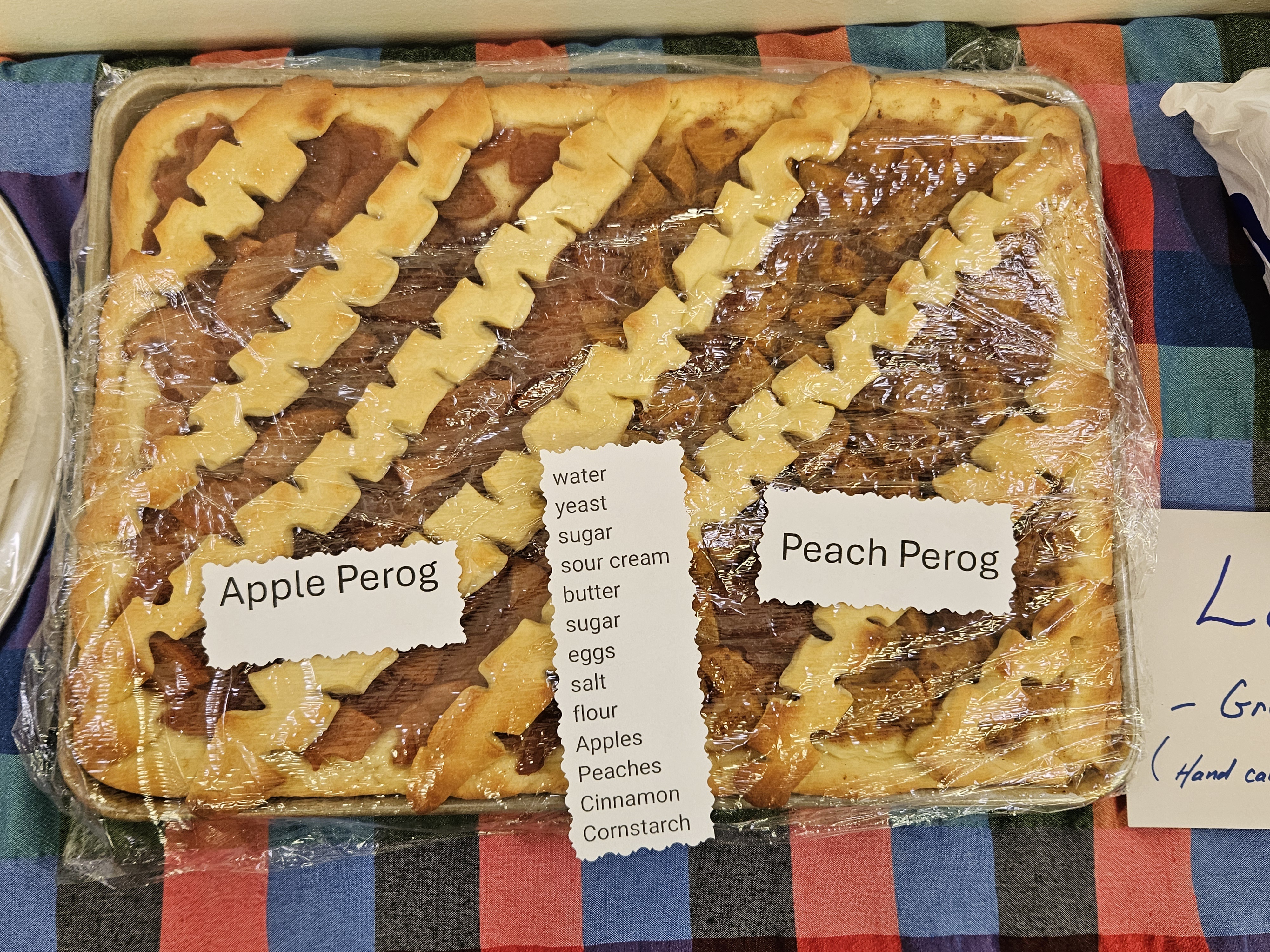
 The finished product. I’m a novice at baking with yeast doughs and kneading dough but slowly but surely I’m practicing my way into a comfort zone to try these recipes my mom made for larger gatherings. I’ll share some of her savory Pirog recipes in the future using a slightly different dough recipe. My mom’s Pirog usually had another layer of dough on top of the filling that was pinched to the bottom layer of dough. Then you would cut decorative slits on the upper dough before baking. She also made more decorative tops like you would on a pie with zig zag designs. 

I’m sorry that I never took photos of our mom’s creations.

My sister Vera sent me this photo of her pirog that she added the top to. Thank you Vera! This sheet pie/pirog was made with Apricot filling. Vera also made the apricot filling.