Walking Tour in Great Britain~Wales~Lakes~Scotland~York

In May of 2006 “Dear” and I traveled to Great Britain with 4 of our best friends. Our travel itinerary arranger was Jody and she did a fantastic job finding lovely non-smoking B & B’s with parking and good food. She also made the arrangements for a 7 passenger van that we used for the trip. It was a tight fit with 6 of us and luggage, but we managed. We all just packed one bag that we carried on the plane. (This was before liquids were not allowed anymore in carry-ons). So here’s a short explanation with pictures of our tour.

I’ll be your tour guide. The picture below is of “Dear” and I taken in Edinburgh at a Turkish restaurant.

We flew into Manchester Airport, picked up our van, and headed West to Wales. Our first B & B was in Conwy. The grounds of our B & B shared the castle walls. This was the view from our bedroom window.

The day after we arrived we tried to climb Mt. Snowden, the highest Peak in England and Wales. The day was very blustery and we were literally blown around on the upper part of the mountain and never made it to the top.

This is a Stile (steps for scaling a wall or fence). We felt like we were in a Jane Austen novel. The trail was very rocky, there was loose and fixed shale. It was uneven and very steep which made it hard on the ankles and knees.

Jan and I were happy to turn back half-way up but “Dear”, Bob and Jody made it further up till the wind got to be too much. Dave had an injury shortly before we left on this trip so he could not join us on the more strenuous hikes.

See the shale on the trail?

After that grueling hike this was our first pain killer of choice.

Then we were rewarded for such a heroic attempt by eating out at Bistro Conwy one of the highlights of our trip.

Dave the primo photographer and Jody at Bistro Conwy.

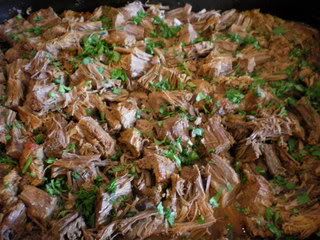
“Dear” and I shared the Welsh Lamb Shoulder. Oh my gosh, good to the last drop in a tasty reduced sauce.

On our 3rd day we headed north to the Lake District. We stayed at Hollows Farm, a 17th century National Trust owned farm outside of Keswick in the Borrowdale Valley along Derwent River. We were literally on the path of many wonderful walking trails. It is here that I heard my first Cuckoo Bird. They actually sing “coo coo, coo coo!”

The farm is in the background.

This was lambing season and it was so much fun to see all the little lambs frolicking about. The walks along River Derwent were wonderful. We went through kissing gates and over stone bridges.

Beatrix Potter’s Derwentwater and trails around this area are the inspiration for some of her books.

Jody, Jan and Bob made it to the top of the Catsbells overlooking Derwentwater.

We checked out of Hollows Farm on a Sunday and  found a little church to go to in Keswick and had some food for our Souls before we continued North to Oban, Scotland.

 In Oban we stayed at a waterfront B & B for two nights.

Our B & B is the fourth one from the left

From Oban we took a ferry to the Isle of Mull. We crossed Mull via tour bus to get to a smaller ferry that took us to the Isle of Iona. We were all so happy we followed through on plans to come to this Isle. Mull and Iona are part of the Inner Hebrides Islands. The Isle was full of history about the Book of Kells, Columba, Viking raids and the advancement of Christianity into Scotland and beyond. So much amazing history on such a small isle!

On our final morning in Oban we toured the Oban Distillery and tasted Scotch. Even though it was quality stuff only one of us truly appreciated the taste of it. We all appreciated the history and being shown the process.

We now drove Southeast across Scotland to our next stop Edinburgh.

With the help of knowledgeable staff at the Starbucks in Edinburgh we managed to find the Elephant house. This is where J.K. Rowling is said to have mulled over a cup of coffee while writing her first Harry Potter novel.

This is our B & B in Edinburgh . It is here that we experienced our first taste of Haggis, it really was quite nice. We relied heavily on the bus system here and that worked well for us.

From Edinburgh we drove to York which would be the end of the trail for “Dear and I”. Dave, Jody, Bob, and Jan would continue on from York to Bath and London.

York has wonderful cobblestone streets and narrow passageways to explore. Our B & B was just a few blocks outside the city walls and we enjoyed seeing most of York. The free guided tour was worth it, rich with history and information.

One of the highlights of our trip was our ongoing quest to find the best Sticky Toffee Pudding in Great Britain. If you have never tried this wonderful dessert you have truly missed a gastronomical delight!

From York “Dear”and I walked to the train station and boarded a train that took us straight to Manchester Airport. We exited the train took the escalator and were in the airport, fantastic! Here are the three couples who walked, prayed, ate, conversed, drank, hiked, and discovered so many wonderful sights together.

Bob and Jan in Keswick

Dave and Jody (the master planner) in Oban

Ellen and “Dear” in Conwy

The Three Amigas

The three of us have been walking together on Saturdays in Seattle for a few years now. We walk 6 miles and we talk and keep each other accountable. We try to be real and speak the truth into each other. We confess to each other and love each other, deeply. What a blessing God has given us in this friendship. When I’m in California I miss my girls!

Golubtzi with Smetana (Stuffed Cabbage with Sour Cream Sauce)

Nadejda’s Golubtzi with Smetana (Stuffed Cabbage Rolls with Sour Cream Sauce)


This is a recipe from my mom that my sister Vera has tweaked and published. My mom is always updating her recipes and just when we think we have them down she adds a little twist, always trying to improve the taste. If you are a Russian who has strayed away from home and good home cooking try this and be ready to be taken back in time! Any Russian Molokans or Russian Baptists out there who are looking for long lost recipes I’ll be posting some over the next several weeks. As always there are several varieties to this recipe and others depending on where in Russia your family is from, etc. I have to include a disclaimer here, my mother (the Russian Baptist) would never serve these with vodka. I added that to the picture to make it authentically Russian! It’s actually a souvenir brought straight from Russia. The great thing about this post and picture is that I planned to post this recipe for Golubtzi tonight and when I was at my mom and dads today my mom sent her Golubtzi home with me for “Dear” and I for dinner. I’m sitting here at my computer ready to hit the publish button with a bowl full of Golubtzi. So yum, yum the post has come full circle!

2 lbs. Hamburger
1 – 1/2 cup cooked rice (1/2 cup uncooked)
1/2 onion grated
1-1/2 teaspoon salt
1/4 teaspoon pepper
1 Tablespoon chopped parsley
1 can tomato soup
1 8oz. can tomato sauce
2 Tablespoons ketchup
1 onion chopped
1-1/2 cup sour cream
2 cups water
1 head cabbage

Core cabbage. You can carefully separate leaves or cook the cabbage whole. Boil in water until soft and pliable. Combine first 6 ingredients. Place about 1/3 Cup of the hamburger mixture onto a cabbage leaf and fold over the edges and roll up. Place in a baking dish. We use standard glass pyrex or other rectangular baking dishes to bake them in.


Fry the onion in oil until it is translucent. Add soup, sauce, ketchup and water. Stir until well mixed. Bring to a boil. Add a little of sauce to the sour cream to temper it, then add the sour cream mixture to the sauce. Pour the sauce over the cabbage rolls. Bake in 350 degree oven for approximately 1-1/2 hours.

You can eat these as a complete meal or add whatever side dish you might enjoy in combination with the Golubtzi. Yum my mouth is watering. Some extra tips included below to make the rolling process easier.

Shave the larger veins on the smaller leaves of cabbage so they’ll roll easier.


Yes, you can stuff peppers, too. We usually use green peppers.


Don’t forget to put a dish of Sour Cream (Smetana) on the table so you can add another dollop to your serving. Russians aren’t afraid of sour cream. That red pepper up there would look tastier with a dollop of smetana on it!

NEWSFLASH: Now if you want some easy dinner recipes go to Rebecca’s site where she’s hosting a recipe round-up.


Kulich – Russian Easter Bread

My mother makes Kulich (Russian Easter Bread) and Sernaya Paska (a yummy sweet cheese, cream spread) every Easter. The white pyramid looking thing with the cross on it is the Sernaya Paska. I don’t have a special mold so mine looks like a rounded dome. I’m including a recipe for the spread and a link to a recipe for Kulich. We eat the bread with the paska or slather it with sour-cream. My mom’s is the best and we’ve documented how she makes it and hopefully we’ll continue the tradition. You use empty, clean, 1 or 2 lb. coffee tins to bake the bread in.

Update for Easter 2008 ~ I’ll be adding my mother’s recipe for Kulich before Easter this year. Click here for the recipe.

Sernaya Paska

Ingredients:   18 – hard boiled eggs / 3 pounds Farmers cheese / 1 pint whipping cream / 3 cubes unsalted butter (12 oz.) / 3 cups sugar /

Press the Farmers cheese through a sieve. (This is the hardest part of the recipe) I usually use a wooden spoon and press it through a wire strainer a little at a time. Separate the egg yolks from the whites. (You will not be using the whites). Press the egg yolks through the sieve. Cream the sugar and butter together. Beat in the egg yolks. Beat in the cheese. Add whipping cream and mix well. You will place the mixture into a strainer lined with about 3 layers of cheesecloth. You will need enough cheesecloth to wrap up and over the top of the cheese. Place the cheese mixture into the cheese cloth lined strainer. Bring the ends of the cheese cloth up and tie the ends on top of the cheese in a knot. Place the sieve into a larger bowl suspended with enough room for the cheese to drain without sitting in the drained liquid. Place a plate on top of the cheese an place a heavy rock, brick, or other weight on top of the plate. Refrigerate over night.

Update #1: I used a plastic flower pot for my Seerney Paska and added more holes to the bottom. I got the shape I wanted and it drained well.

New tip: Use a potato ricer instead of a wire strainer for the egg yolks.

Update #2: This Sernaya Paska recipe is for a huge amount (enough for my huge extended family). If you just want a normal amount, cut the recipe in thirds. (6 cooked egg yolks, 1-lb. cheese, 2/3 cup whipping cream, 1 cube butter and 1 cup sugar. Enjoy!

Tip #2: If you don’t get around to baking Kulich you can substitute a good Panettone for the bread. Hard to find this time of year because most stores stock it at Christmas, not Easter. If you are fortunate to have a Italian food store near you they seem to stock it year round. I bought the most plain one I could find (not easy) It had raisens and candied orange and lemon bits in it. It was a good substitute nevertheless!

ht: Vera Titov/Nadia Bagdanov ~ recipe for Sernaya Paska

St. Patrick and Corned Beef


Top of the mornin’ to ye!
Hope you have a great day. Remember the wearin’ o’ the green!  LNB

Who Was St. Patrick?

St. Patrick, the patron saint of Ireland, is one of Christianity’s most widely known figures. But for all his celebrity, his life remains somewhat of a mystery. Many of the stories traditionally associated with St. Patrick, including the famous account of his banishing all the snakes from Ireland, are false, the products of hundreds of years of exaggerated storytelling.

Taken Prisoner By Irish Raiders
It is known that St. Patrick was born in Britain to wealthy parents near the end of the fourth century. He is believed to have died on March 17, around 460 A.D. Although his father was a Christian deacon, it has been suggested that he probably took on the role because of tax incentives and there is no evidence that Patrick came from a particularly religious family. At the age of sixteen, Patrick was taken prisoner by a group of Irish raiders who were attacking his family’s estate. They transported him to Ireland where he spent six years in captivity. (There is some dispute over where this captivity took place. Although many believe he was taken to live in Mount Slemish in County Antrim, it is more likely that he was held in County Mayo near Killala.) During this time, he worked as a shepherd, outdoors and away from people. Lonely and afraid, he turned to his religion for solace, becoming a devout Christian. (It is also believed that Patrick first began to dream of converting the Irish people to Christianity during his captivity.)

Guided By Visions
After more than six years as a prisoner, Patrick escaped. According to his writing, a voice-which he believed to be God’s-spoke to him in a dream, telling him it was time to leave Ireland.

To do so, Patrick walked nearly 200 miles from County Mayo, where it is believed he was held, to the Irish coast. After escaping to Britain, Patrick reported that he experienced a second revelation-an angel in a dream tells him to return to Ireland as a missionary. Soon after, Patrick began religious training, a course of study that lasted more than fifteen years. After his ordination as a priest, he was sent to Ireland with a dual mission-to minister to Christians already living in Ireland and to begin to convert the Irish. (Interestingly, this mission contradicts the widely held notion that Patrick introduced Christianity to Ireland.)

Bonfires and Crosses
Familiar with the Irish language and culture, Patrick chose to incorporate traditional ritual into his lessons of Christianity instead of attempting to eradicate native Irish beliefs. For instance, he used bonfires to celebrate Easter since the Irish were used to honoring their gods with fire. He also superimposed a sun, a powerful Irish symbol, onto the Christian cross to create what is now called a Celtic cross, so that veneration of the symbol would seem more natural to the Irish. (Although there were a small number of Christians on the island when Patrick arrived, most Irish practiced a nature-based pagan religion. The Irish culture centered around a rich tradition of oral legend and myth. When this is considered, it is no surprise that the story of Patrick’s life became exaggerated over the centuries-spinning exciting tales to remember history has always been a part of the Irish way of life.)

CORNED BEEF AND CABBAGE

5 pounds corned brisket of beef
6 peppercorns, or packaged pickling spices
3 carrots, peeled and quartered
3 onions, peeled and quartered
1 medium-sized green cabbage, quartered or cut in wedges
Melted butter (about 4 tablespoons)

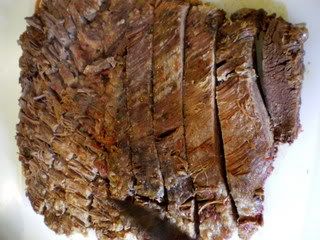
Place the corned beef in water to cover with the peppercorns or mixed pickling spices (in supermarkets, these often come packaged with the corned beef). Cover the pot or kettle, bring to a boil, reduce heat and simmer 5 hours or until tender, skimming occasionally. During the last hour, add the carrots and onions and cover again. During the last 15 minutes, add the cabbage. Transfer meat and vegetables to a platter and brush the vegetables with the melted butter. Serve with boiled parsley potatoes, cooked separately. (The stock can be saved to add to a pot roast or stew instead of other liquid.)


Pear Soup

I love children’s books. During my last visit to the L.A. area I braved the Camarillo Goodwill store (Goodwill’s in So. Cal. are not as nice as the Seattle stores). I bought Everything on a Waffle by Polly Horvath for 49 cents. It’s a story about Primrose, who’s parents are lost at sea. At the end of each chapter there are recipes. I’ll be including a few of these recipes on my blog so I don’t forget about them. This first one is more of a fall recipe. It really sounds good. I’m copying it just as it is written in Primrose’s words by author Polly Horvath;

Pear Soup

“Miss Bowser invented this recipe. Neither one of us wanted to ask Miss Honeycut for one. Put 4 cups of chicken broth and 1 cup of white wine in a big pot. Peel and core 6 pears and poach them in the chicken broth and wine until soft. Puree. Add 1 cup of crumbled Stilton cheese and 1 cup of grated Gruyere cheese. Stir at low heat until the cheese is melted. Serve garnished with garlic croutons.”

Enjoy,

Ellen