Rathdrum, Idaho

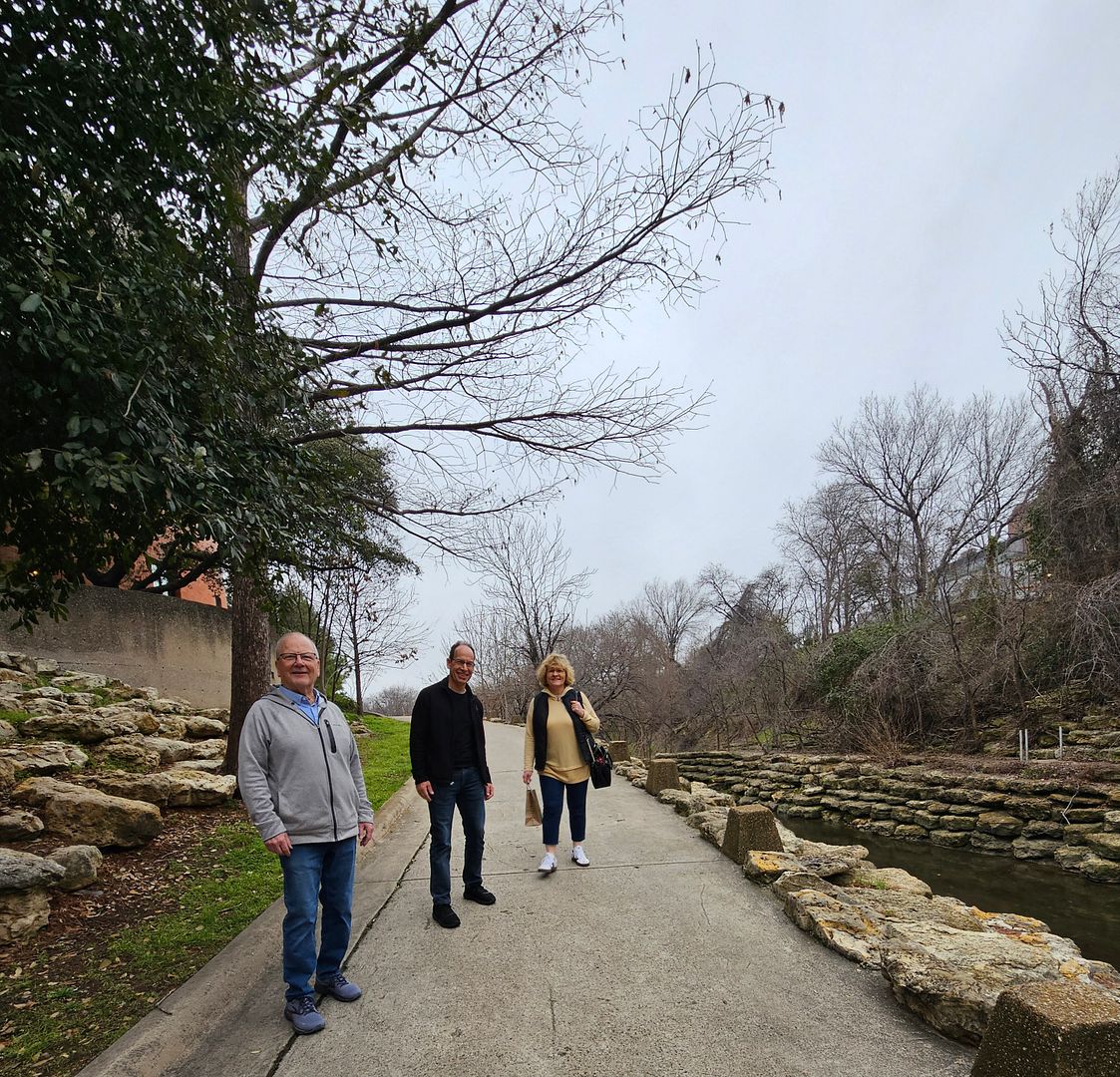
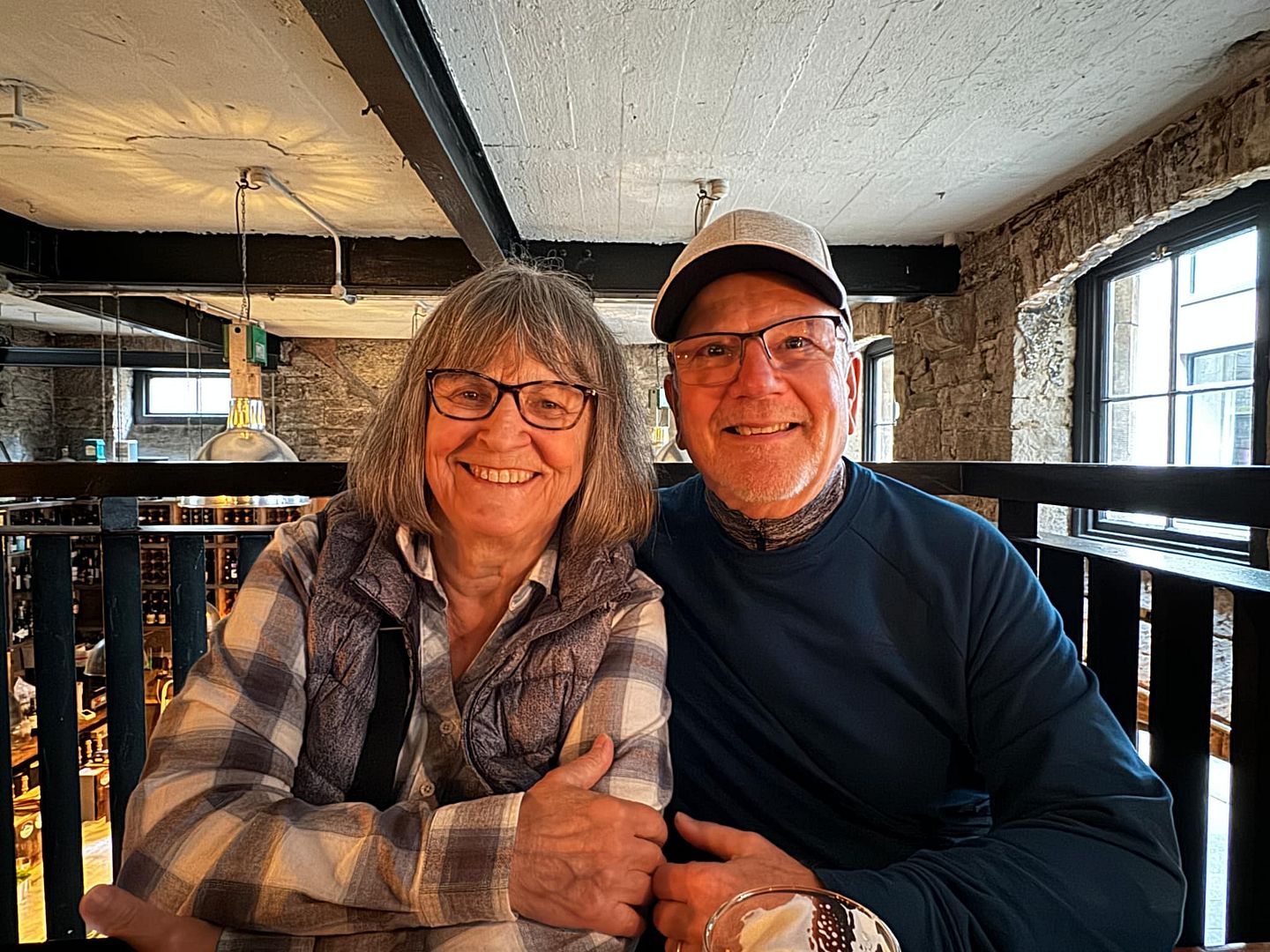
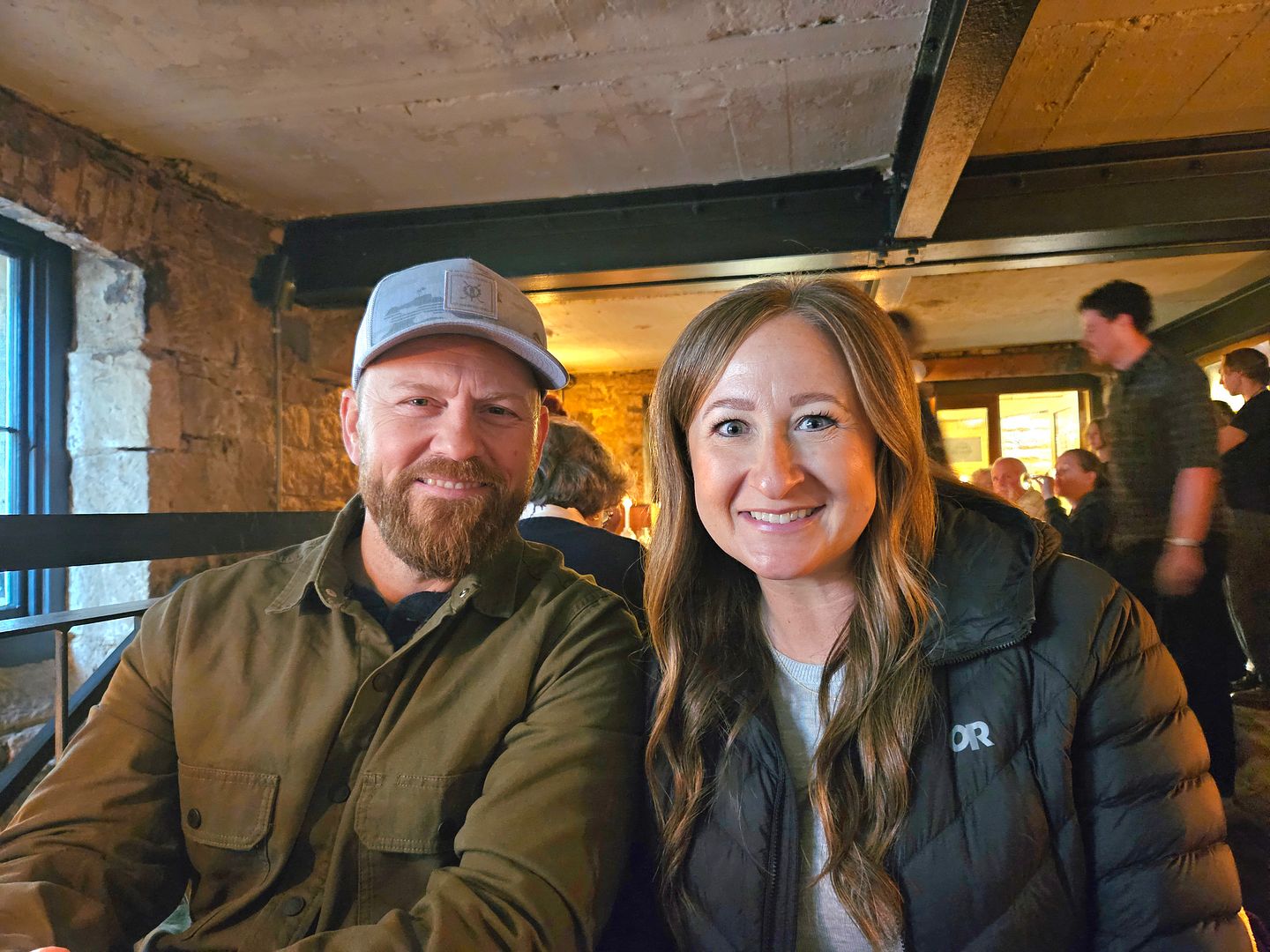
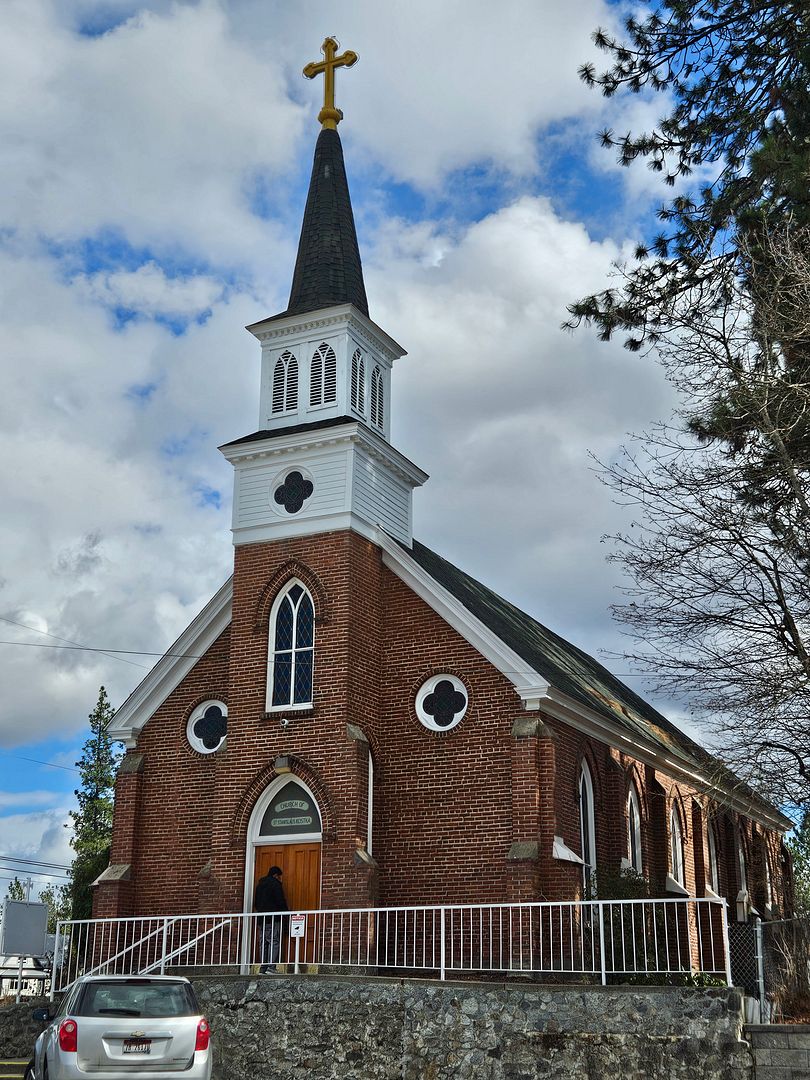
On the way to our getaway in Coeur d’Alene to celebrate my birthday we made a stop in Rathdrum for our lunch. While we were in The Westwood Brewery for our meal we read some interesting history which included this church that is the oldest brick church in Idaho. After lunch we drove by the church for a photoshoot.

Settled in 1861, the City of Rathdrum is located in the Pandhandle of Northern Idaho, 12 miles northwest of Coeur d’Alene, Idaho and 25 miles east of Spokane, Washington.  In the late 1860’s, a pony express relay station was established in Rathdrum and in 1882, the first Northern Pacific rail line was laid allowing ore from the Silver Valley to be shipped by rail to the mills.

Rathdrum is one of the oldest towns in North Idaho. From the beginning, Rathdrum has been an important crossroads, the Indians referred to the area as the “Great Road of the Flatheads.” Hudson Bay and Pacific Fur trading companies traversed the Rathdrum Prairie in the early 1800’s, followed by the Jesuit missionaries in the 1840s. Originally named “Westwood” after Charles Wesley Wood, local pony express rider, rancher and land developer, the city became the County seat for Kootenai County in 1881. In 1908, electors voted the County seat to Coeur d’Alene. In the late 1800s, the city’s name was changed from Westwood to Rathdrum after Rathdroma, Ireland, the birthplace of a local businessman.

Present day Rathdrum is a thriving community of 6,500.  In spite of three major fires, the earliest in 1884 and the last in 1924, many historical buildings still stand including Saint Stanislaus Church, the oldest brick church in the state of Idaho.

I thought it was fun to have our St. Patrick’s Day meal in a town named after a town in Ireland.

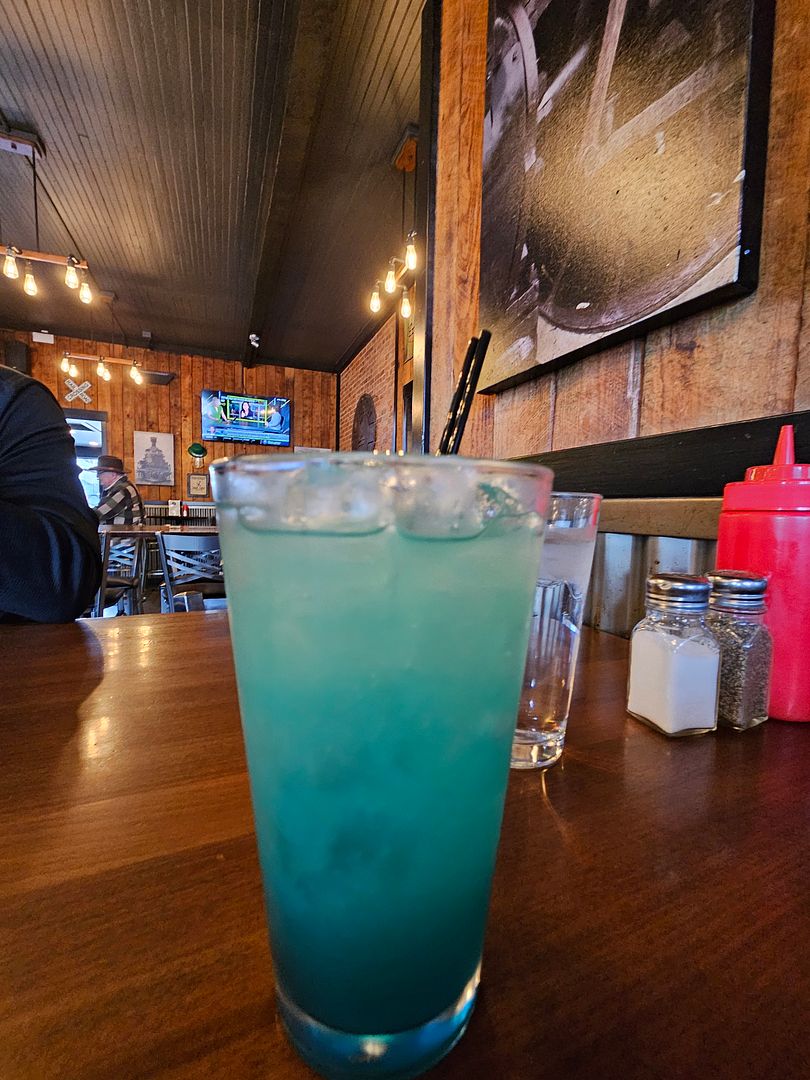
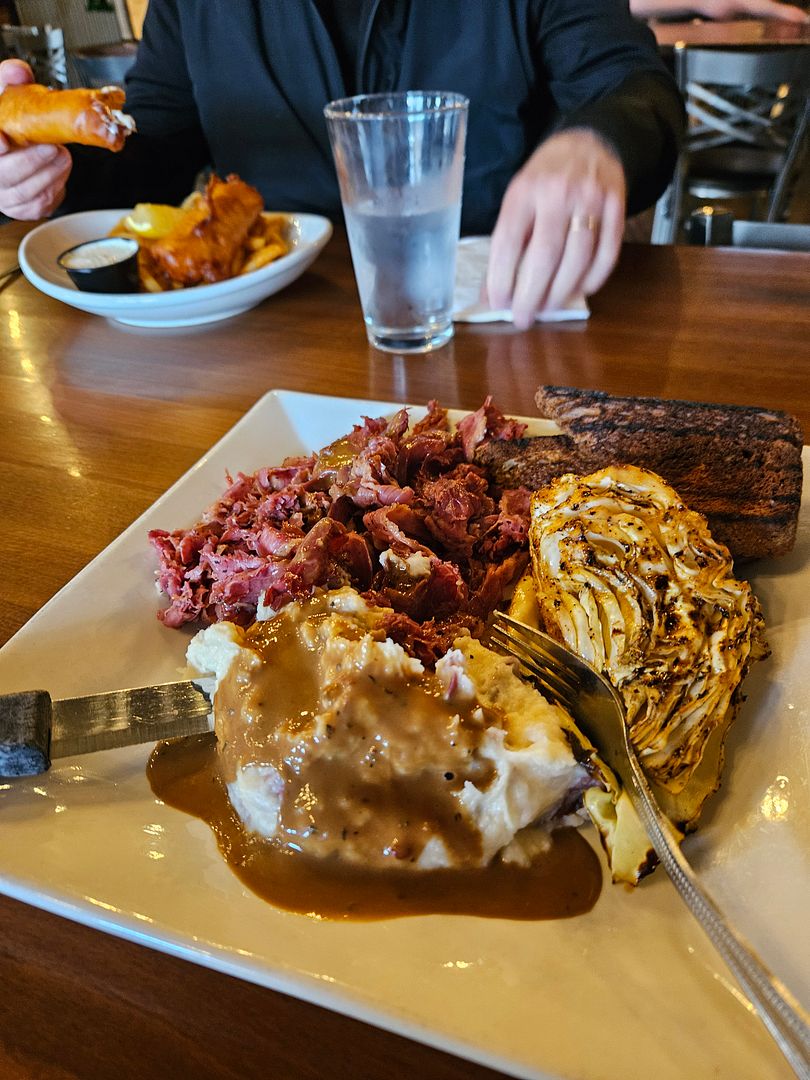
The restaurant’s version of corned beef and cabbage with mashed potatoes, gravy and rye bread. Greg ordered the fish and chips. My mocktail was a March special. Blue Curacao with pineapple juice and sprite.

After lunch we drove a few miles to Coeur d’Alene stopping at UGM Thrift store before we checked into our Inn. More about our Inn in another post.

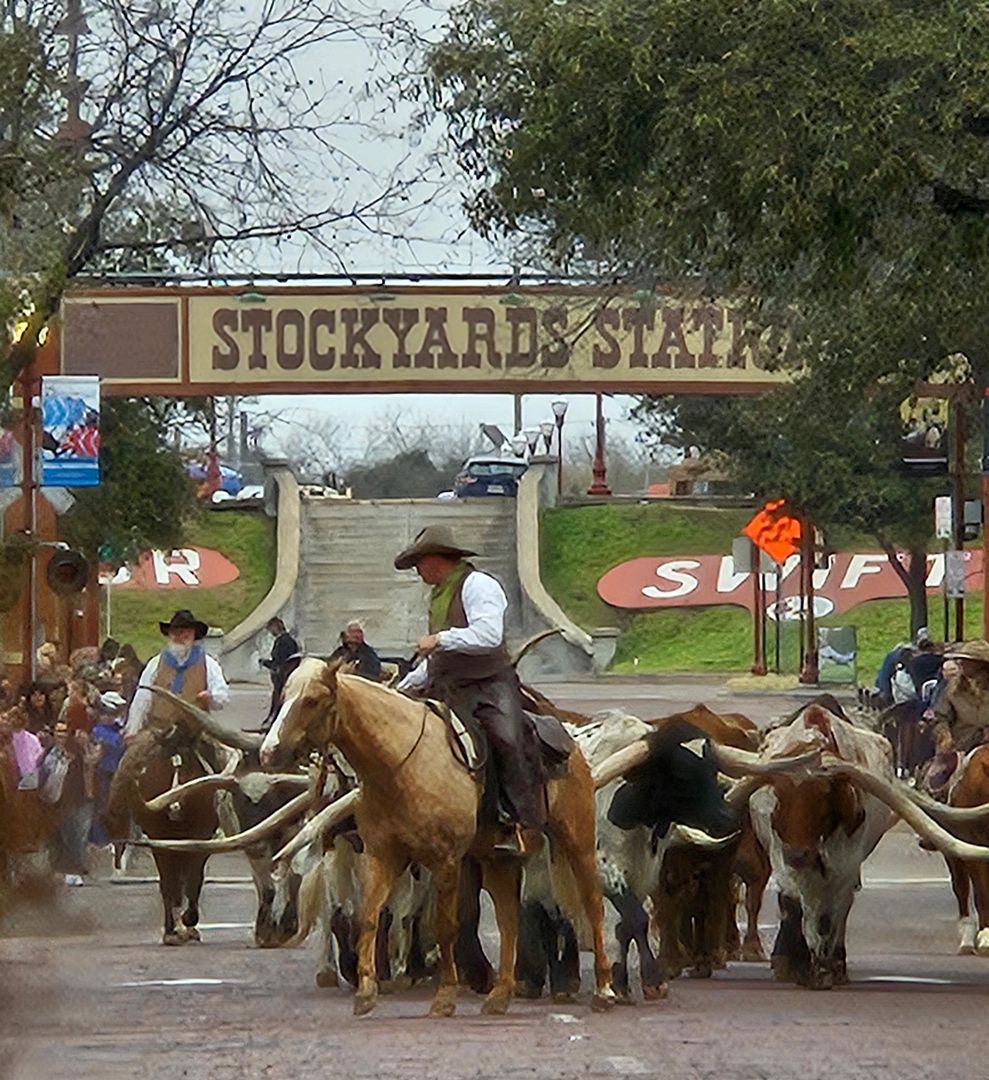
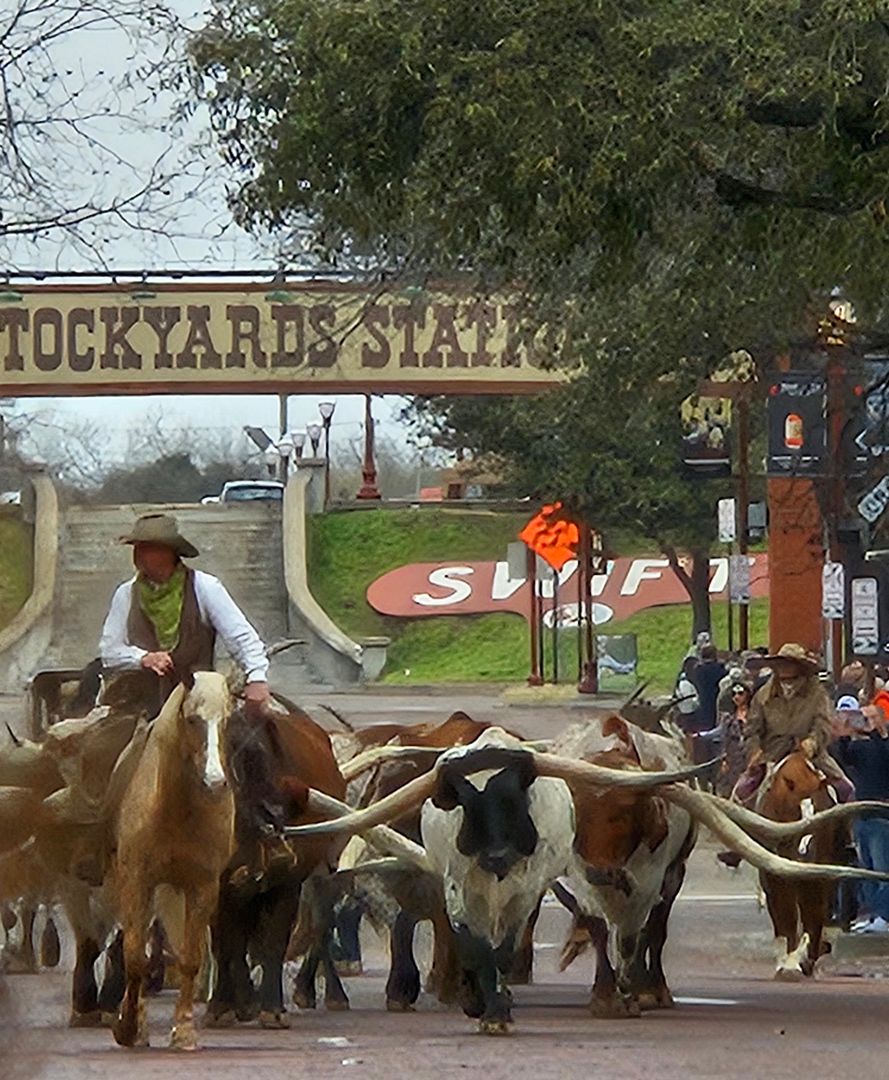
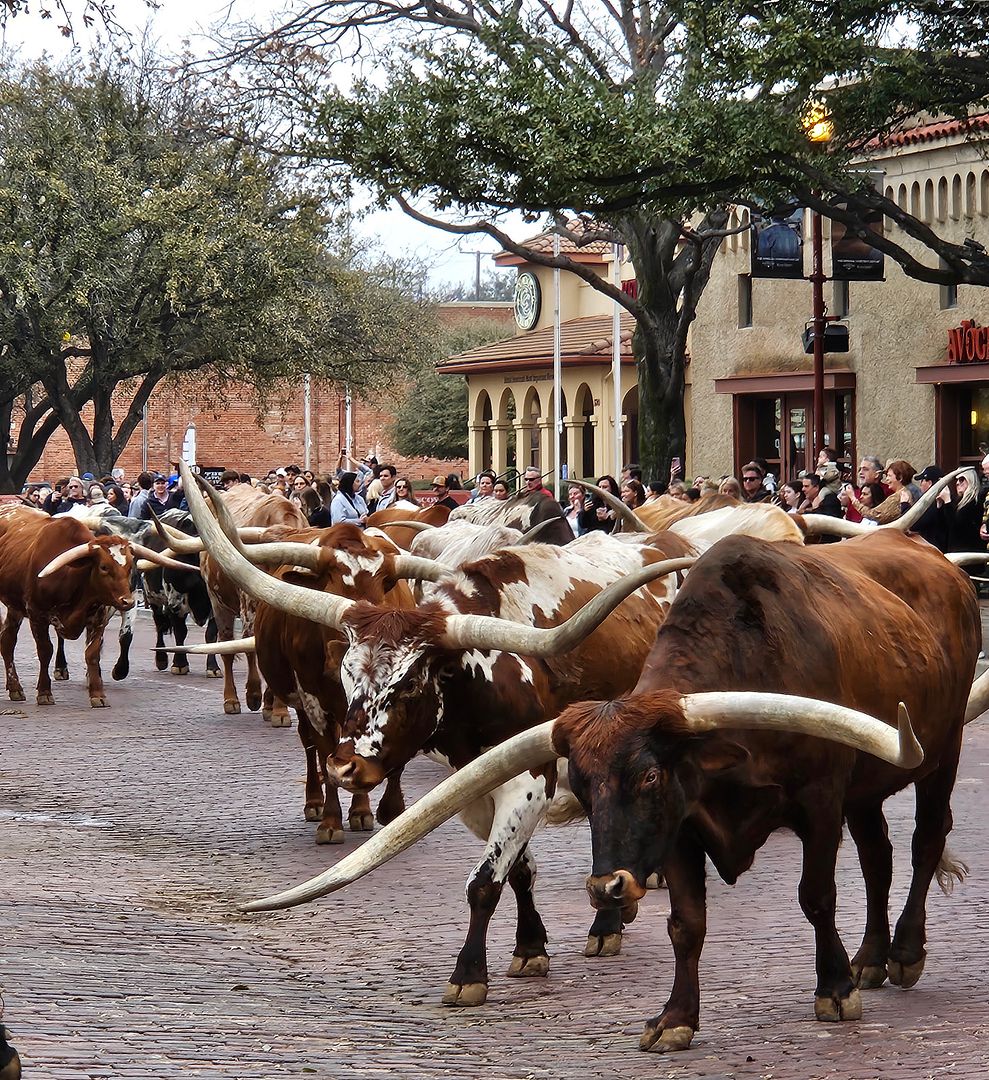
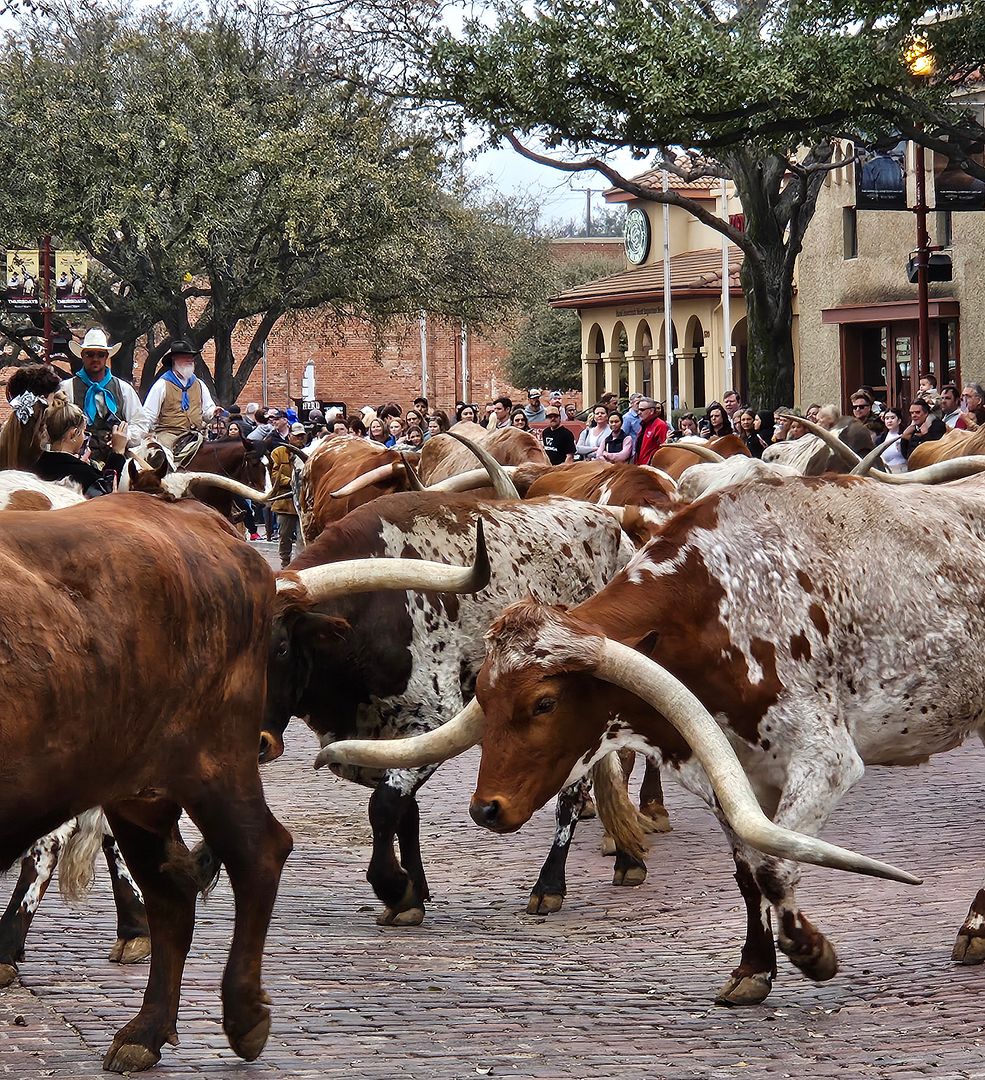
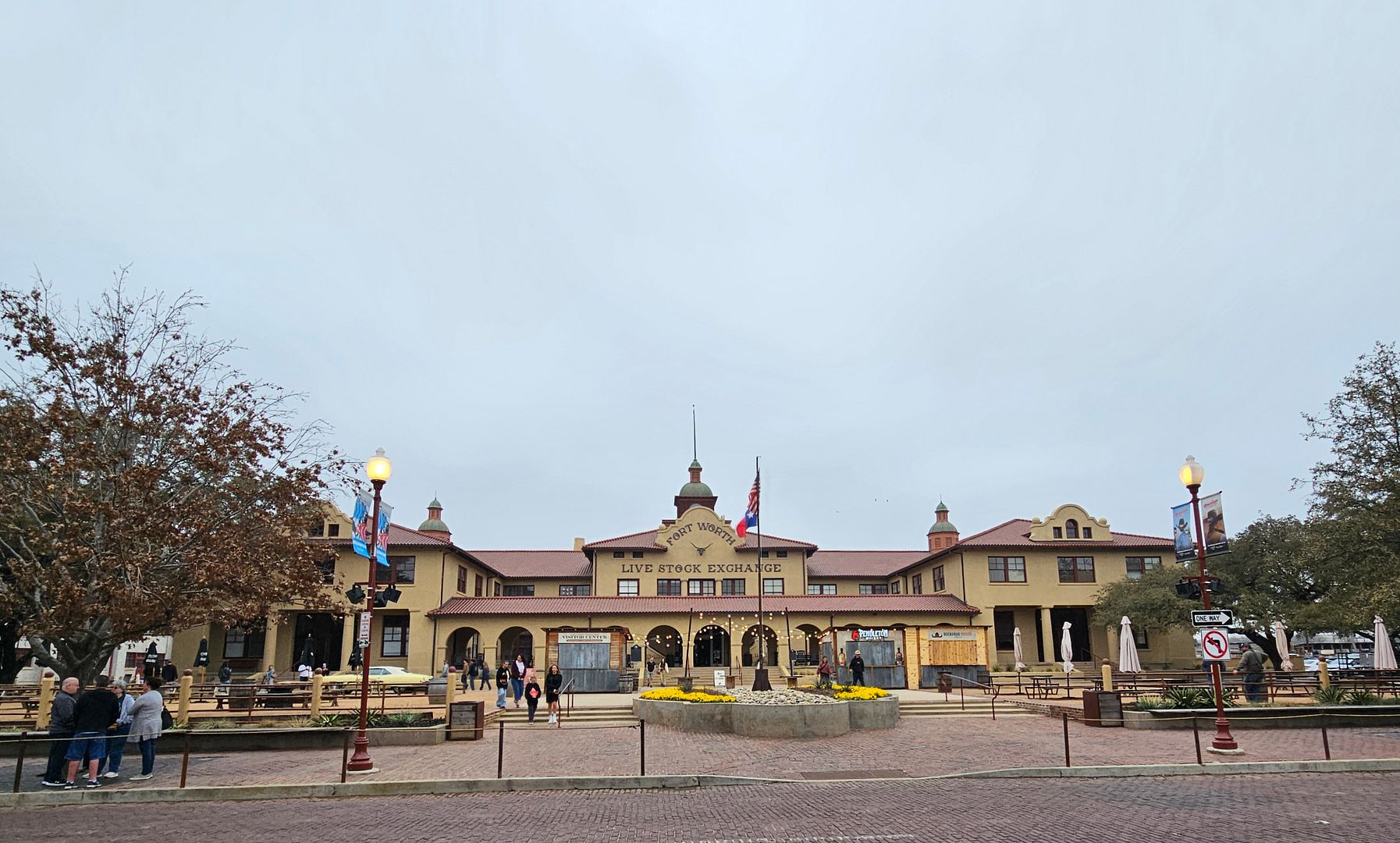
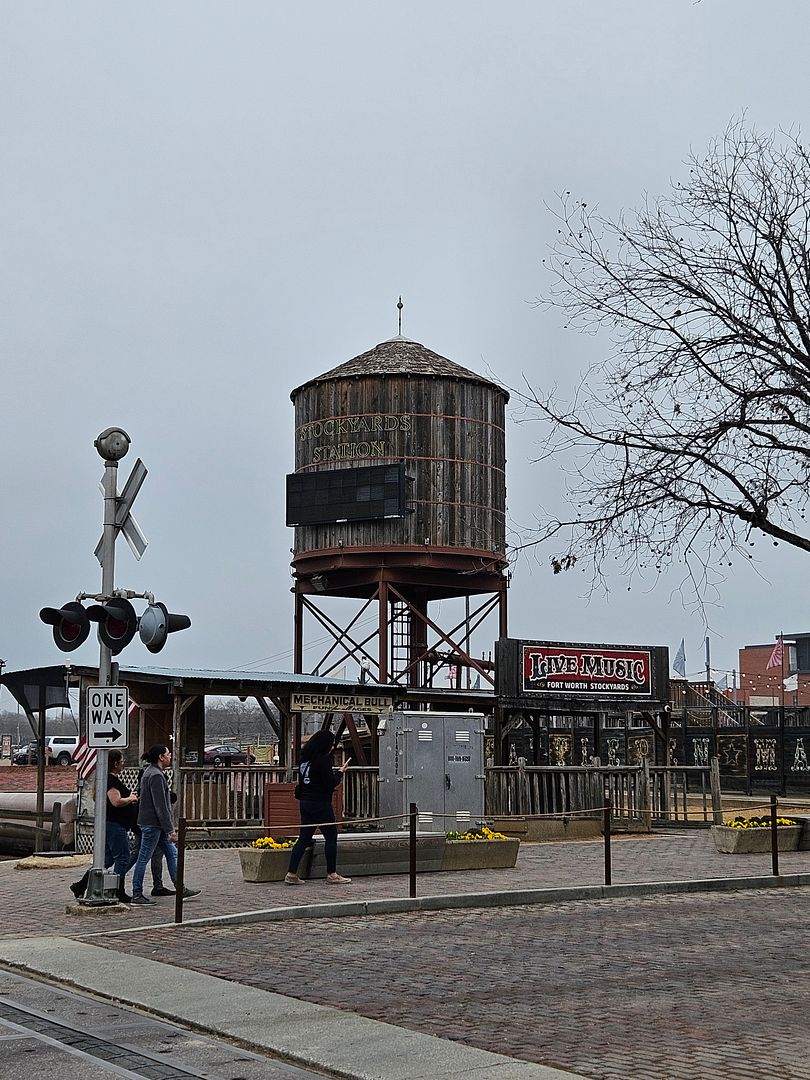
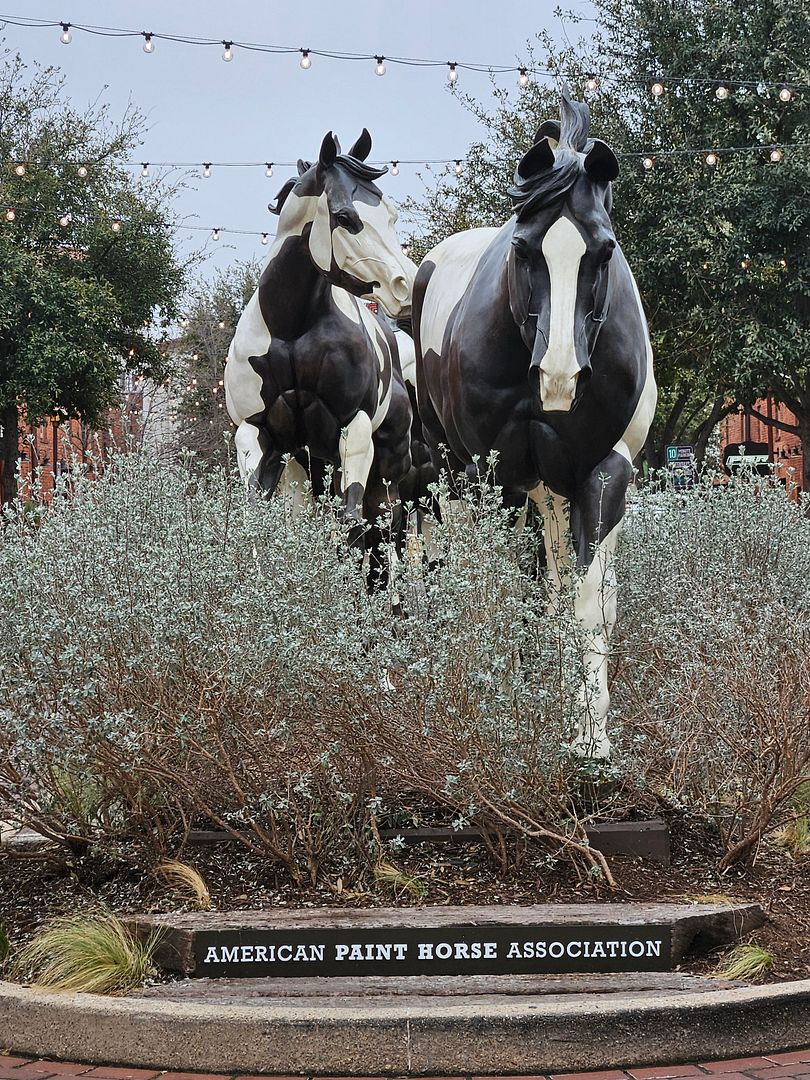
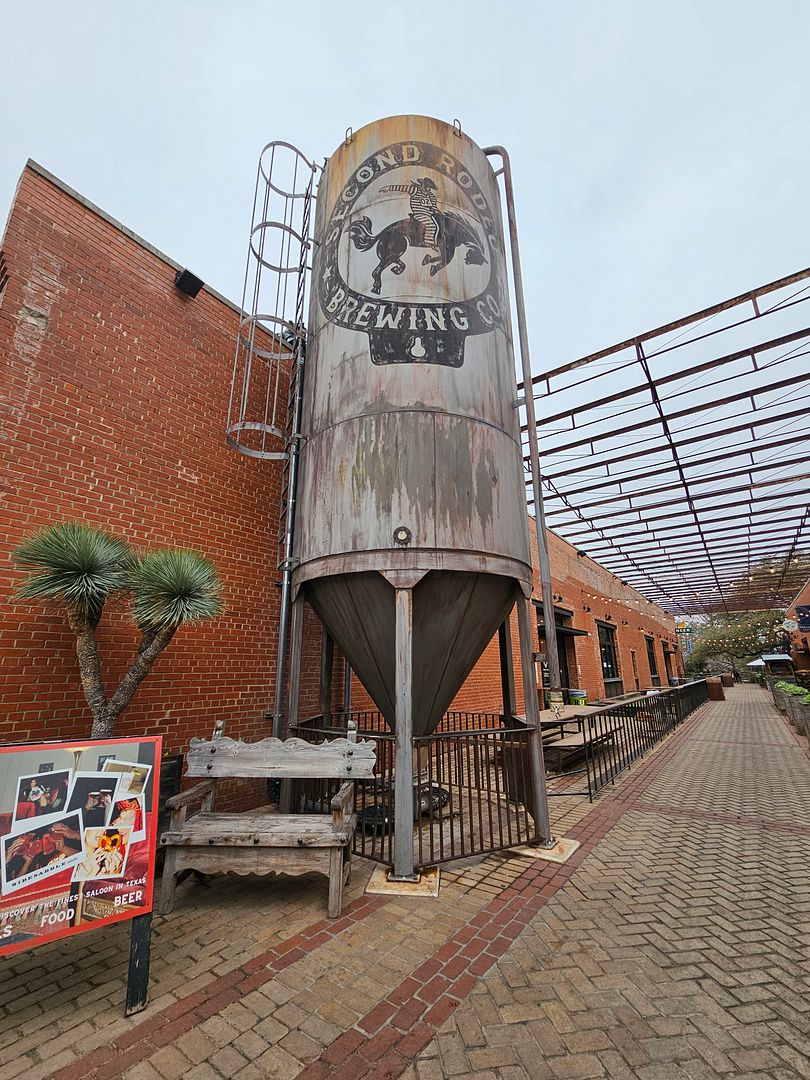
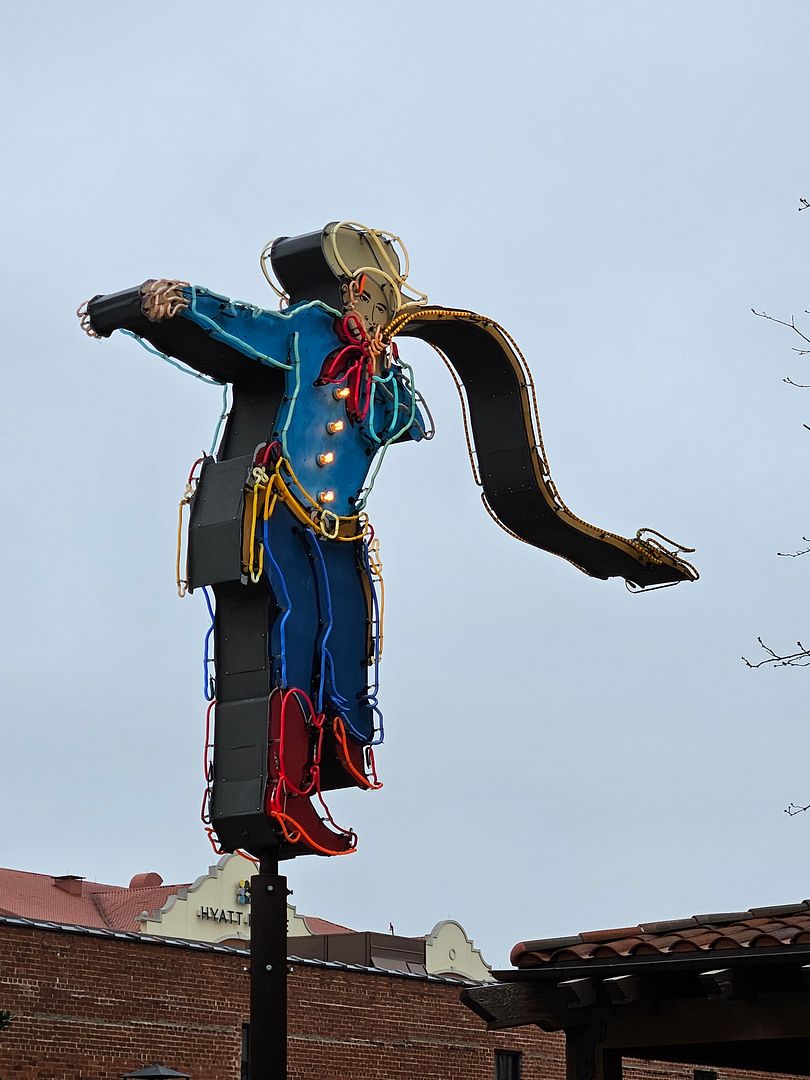
The Stockyards

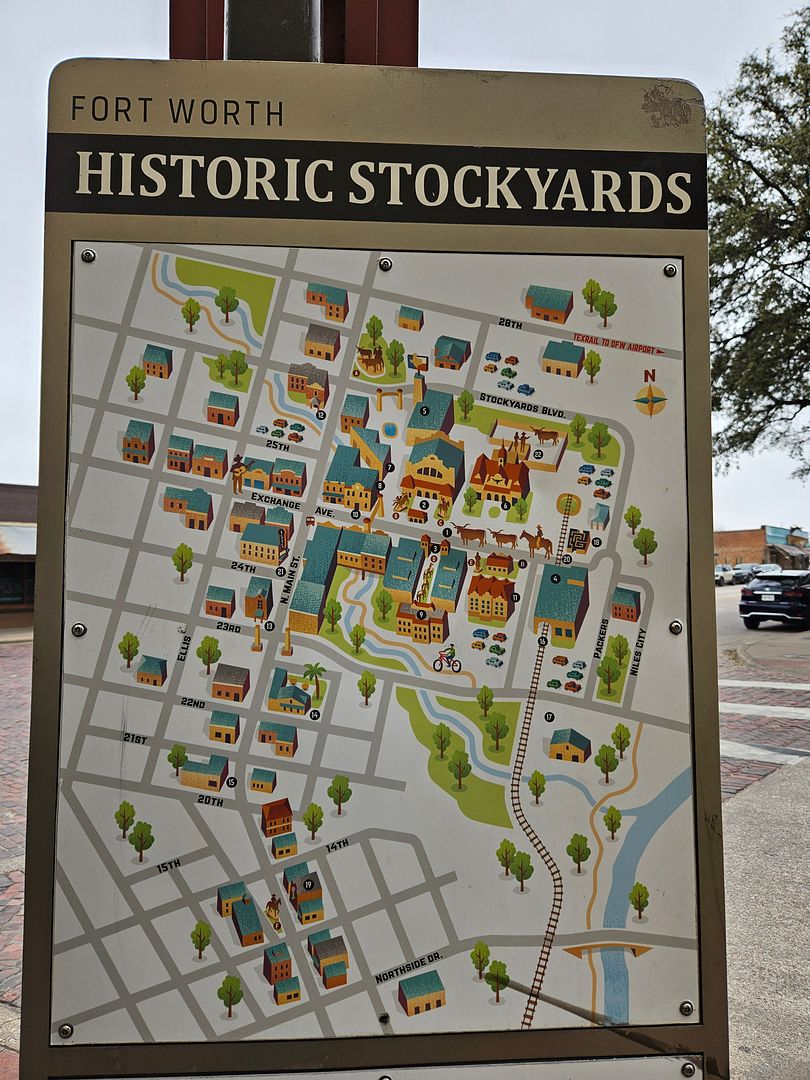
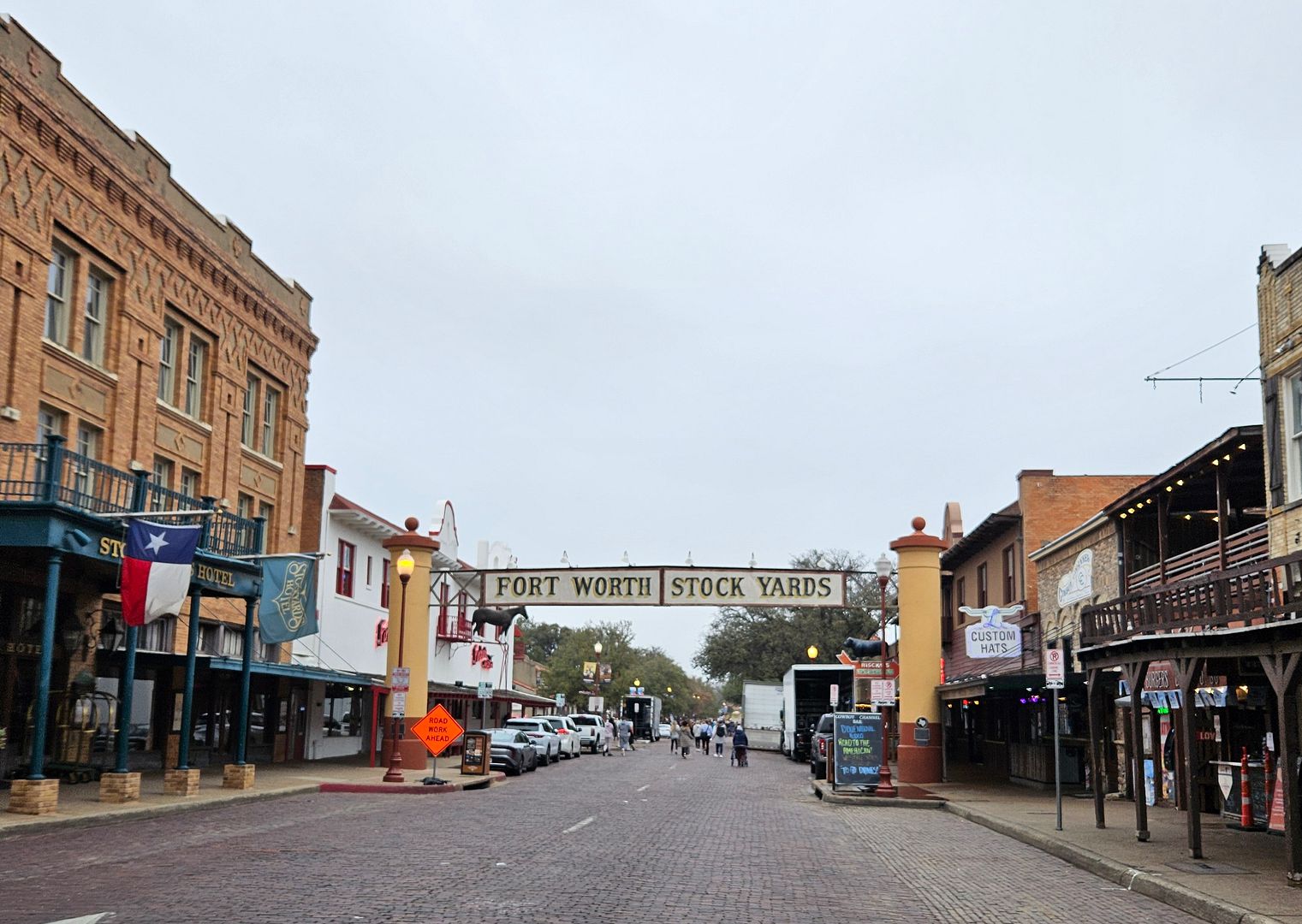
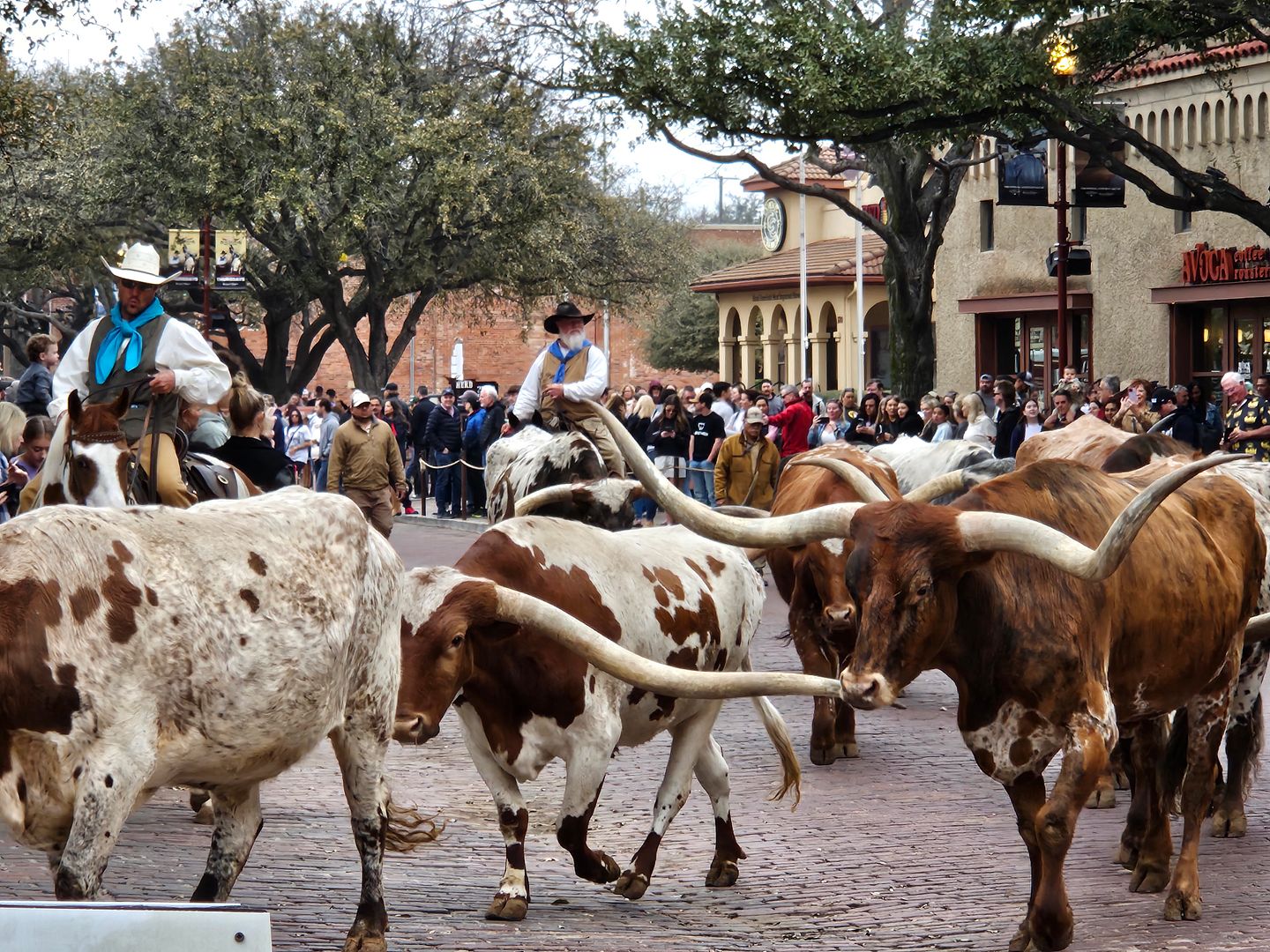
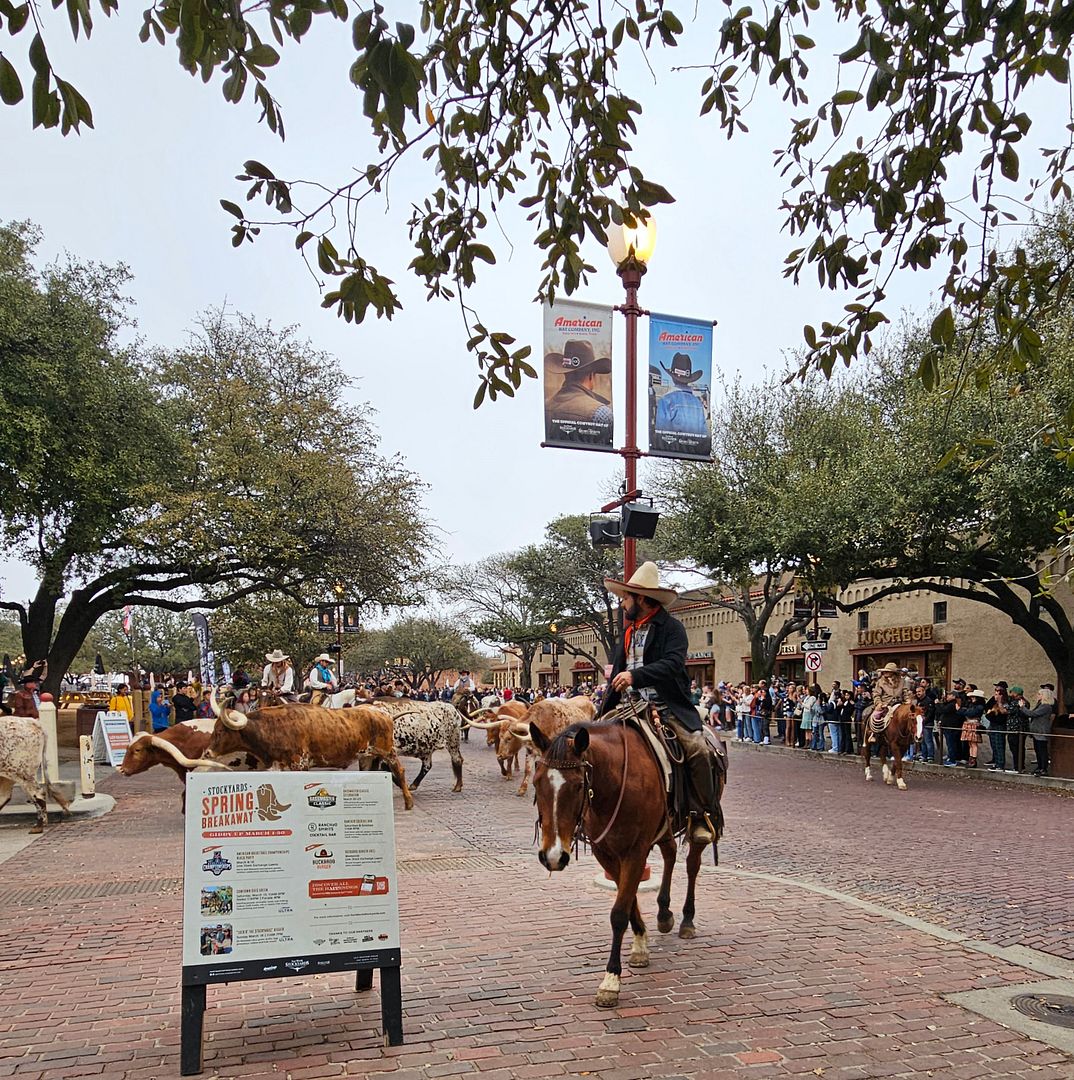
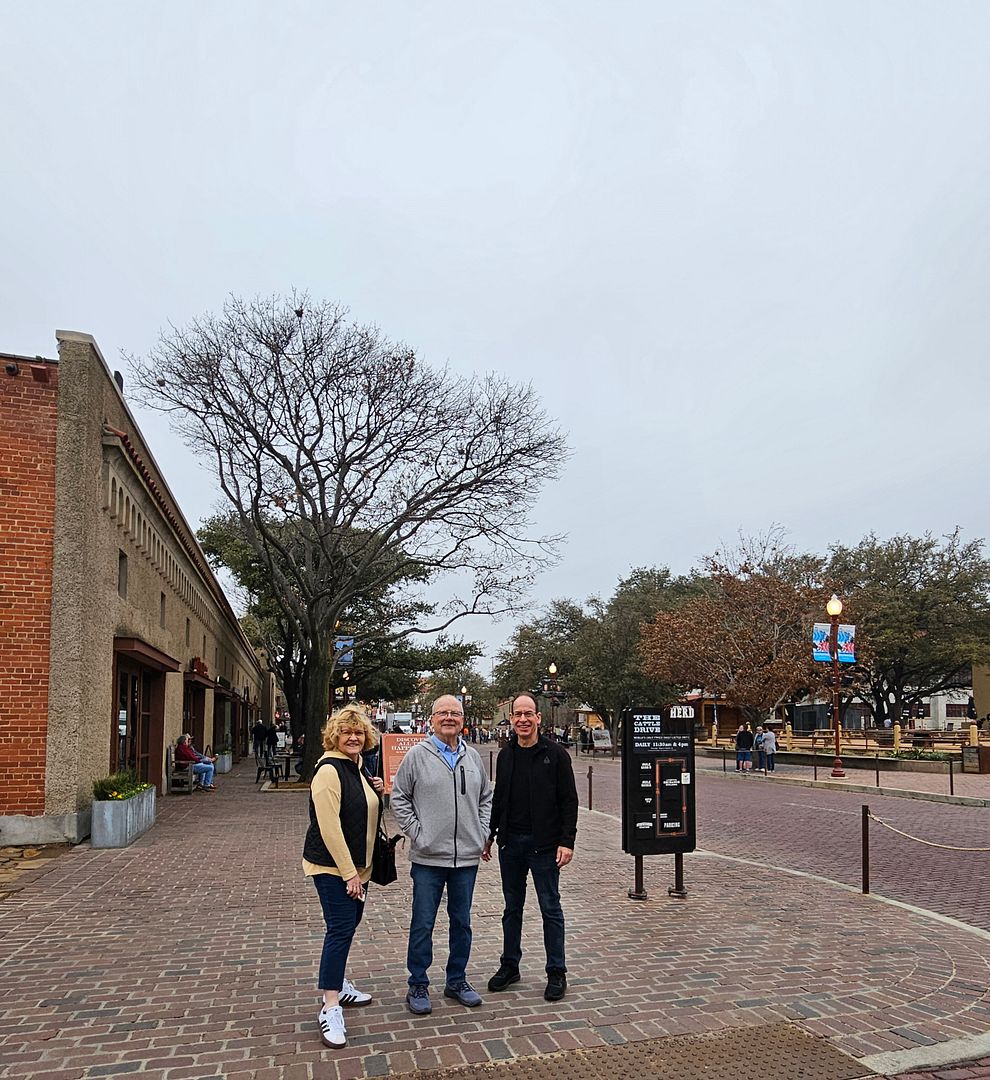
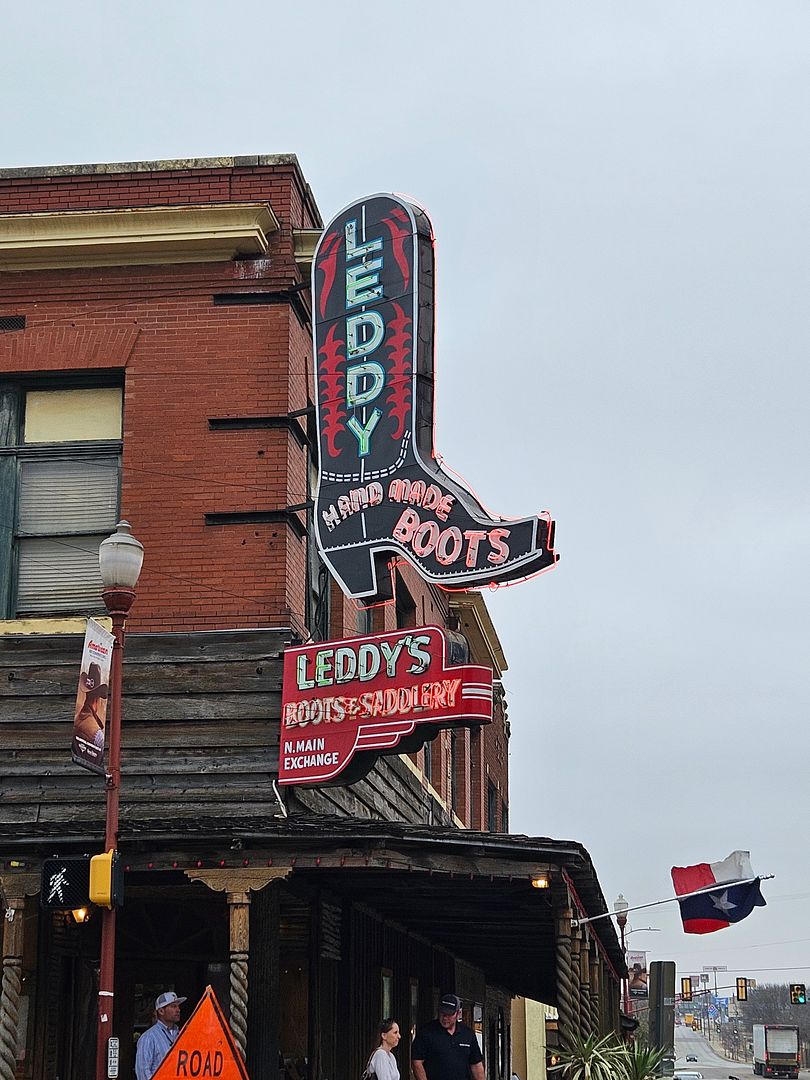
The plan for our Monday in Texas was to visit the Fort Worth Stockyards. Steve dropped us off close to Exchange Avenue where the cattle drive would take place at 11:30 A.M. While he looked for a parking spot we moseyed over to find our spot in the crowds waiting to see the cattle drive. This happens twice a day.


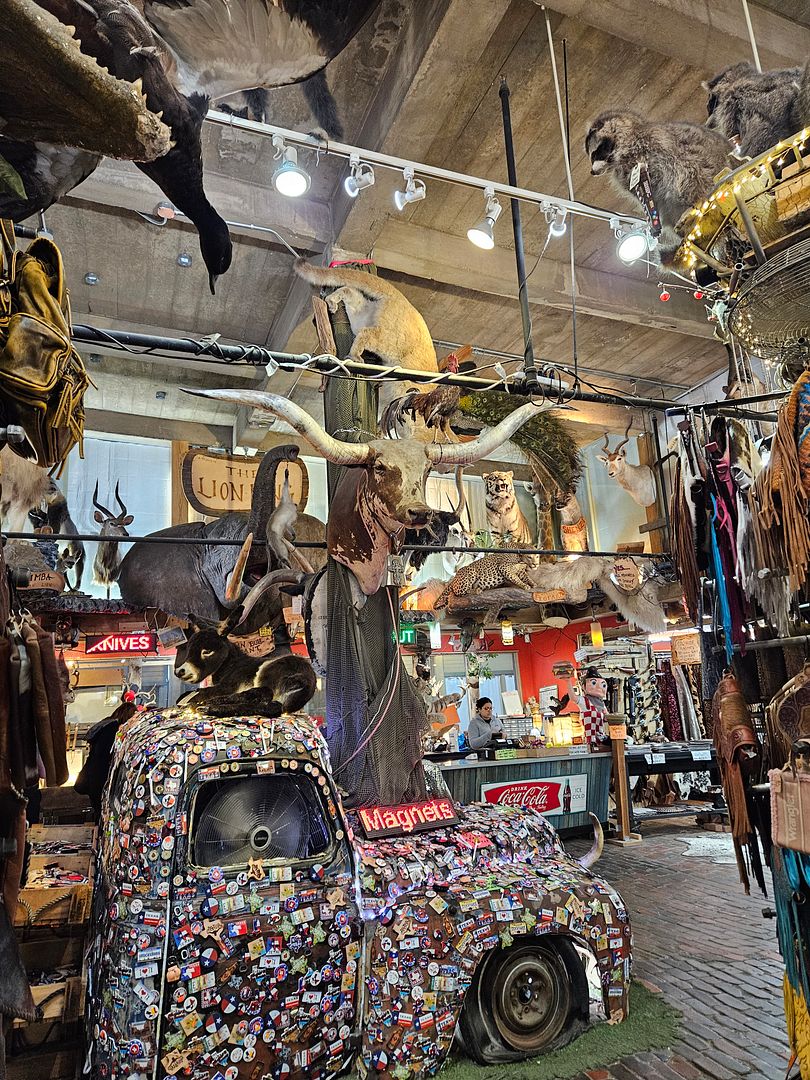
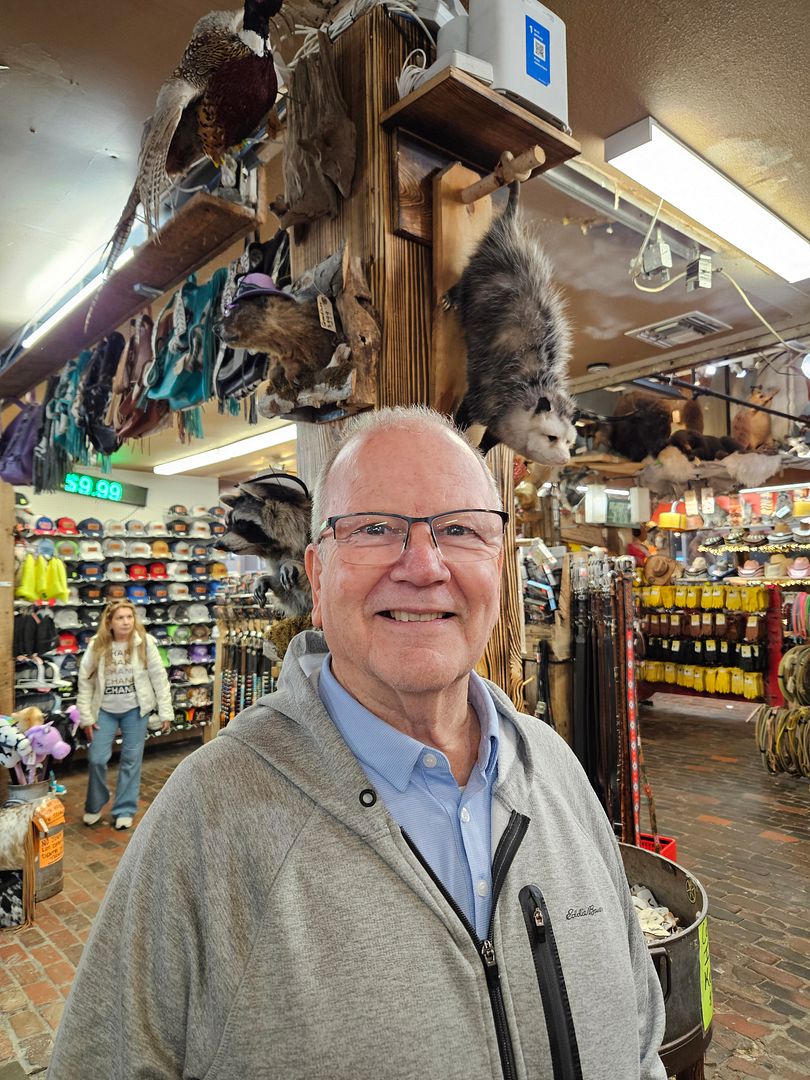
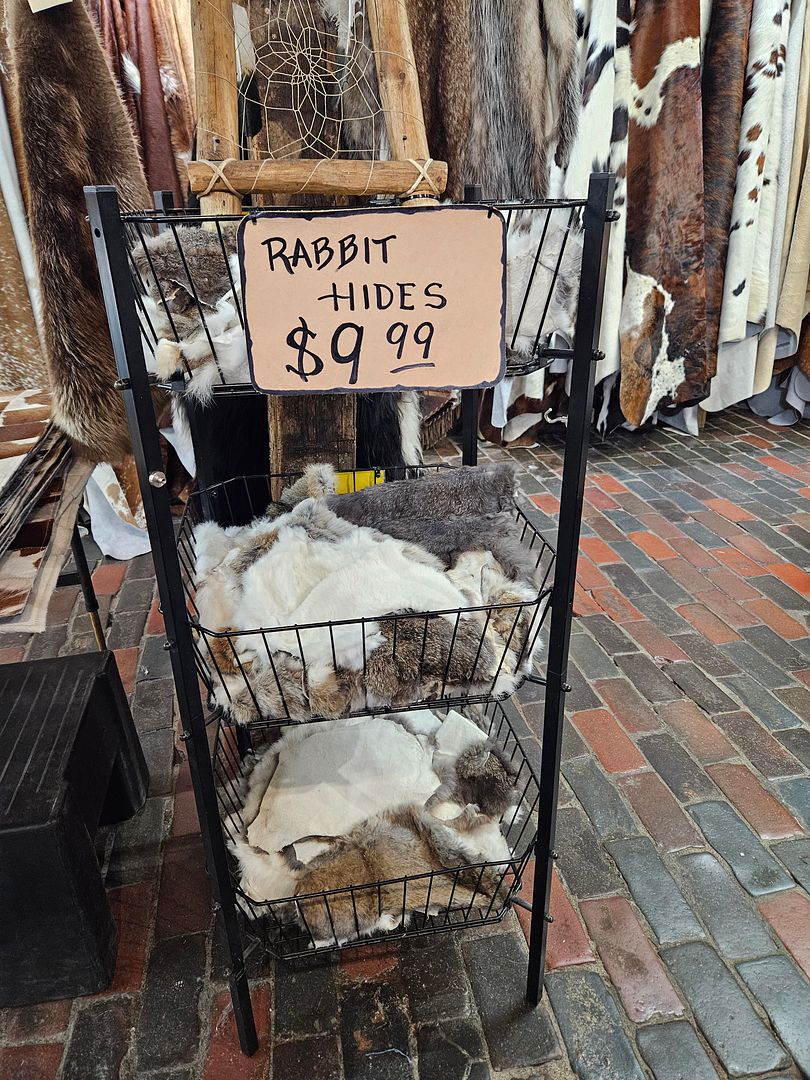
The crowds dispersed and we poked into a few shops to see the western ware.

Everything a tourist might need to take home for a souvenir.

We started looking for a likely spot for our lunch rendezvous with our brother Leonard. He was driving out after a couple of meetings to enjoy lunch with us.

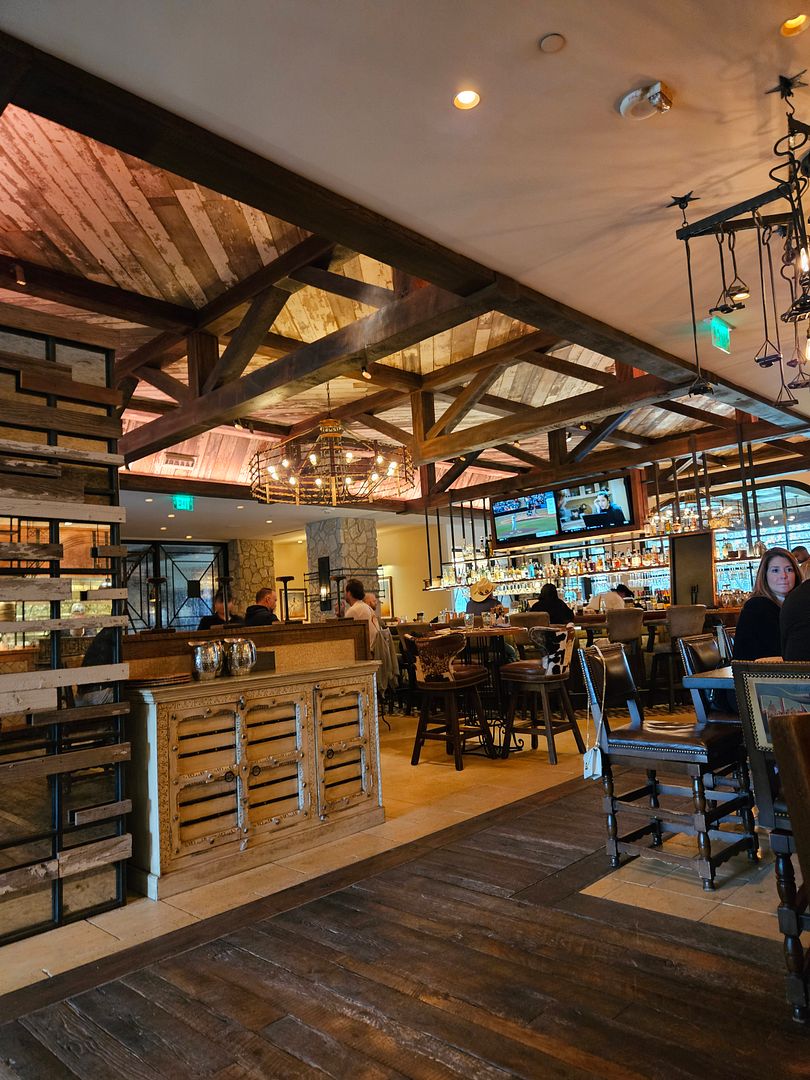
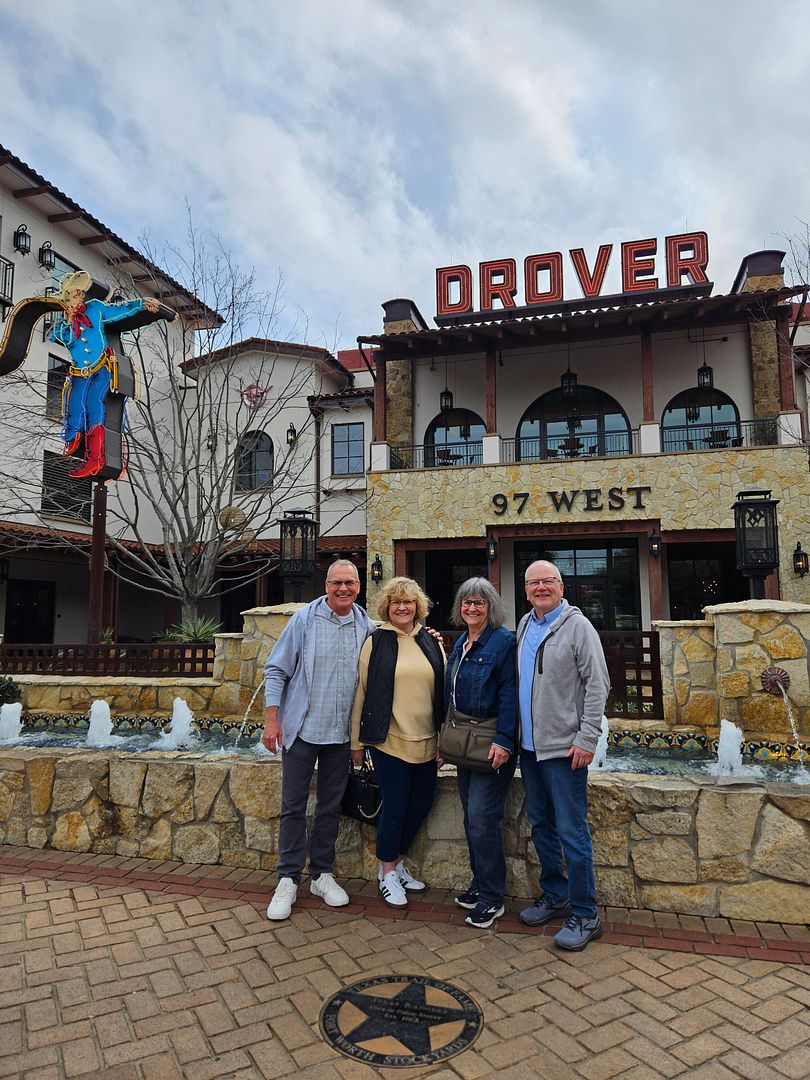
We made reservations at Hotel Drover’s 97 West Kitchen and Bar.

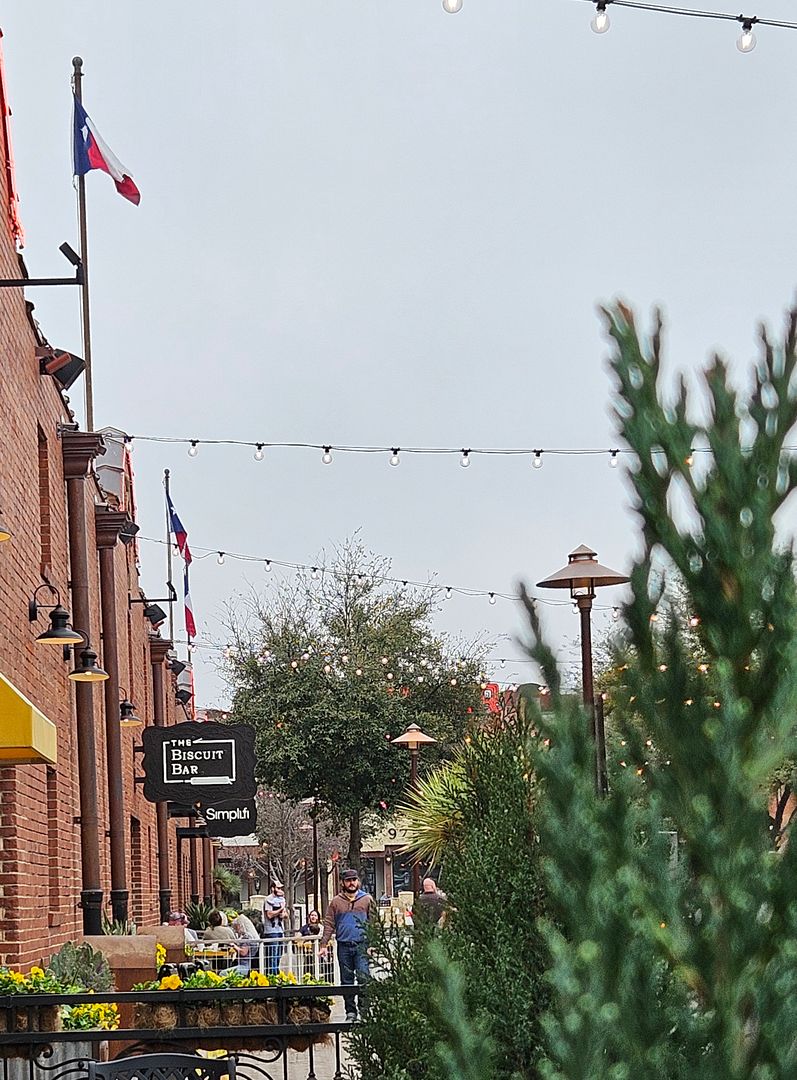
We had time to walk and do a little more shopping before Leonard met up with us at the restaurant.

We enjoyed the ambiance of the restaurant and had great service.

Full and satisfied with plans to eat again at dinnertime we made our way to our cars and headed back into Dallas and Flower Mound.

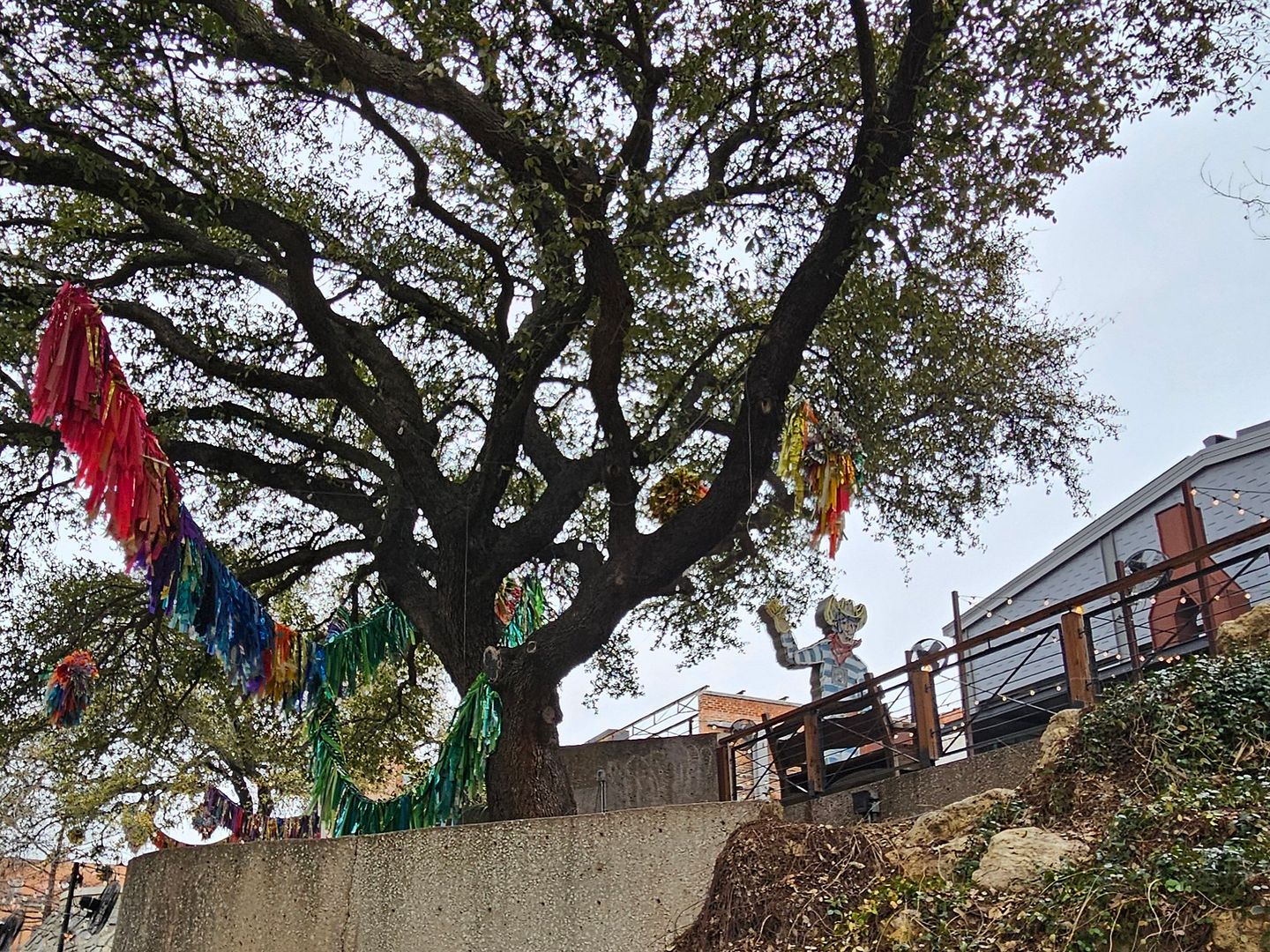
If you have never been we recommend the Historic Stockyards at Forth Worth for a visit. I’m glad we were able to visit on a cool day that started misty and improved for our visit.

Scotland Travel Journal ~Finale

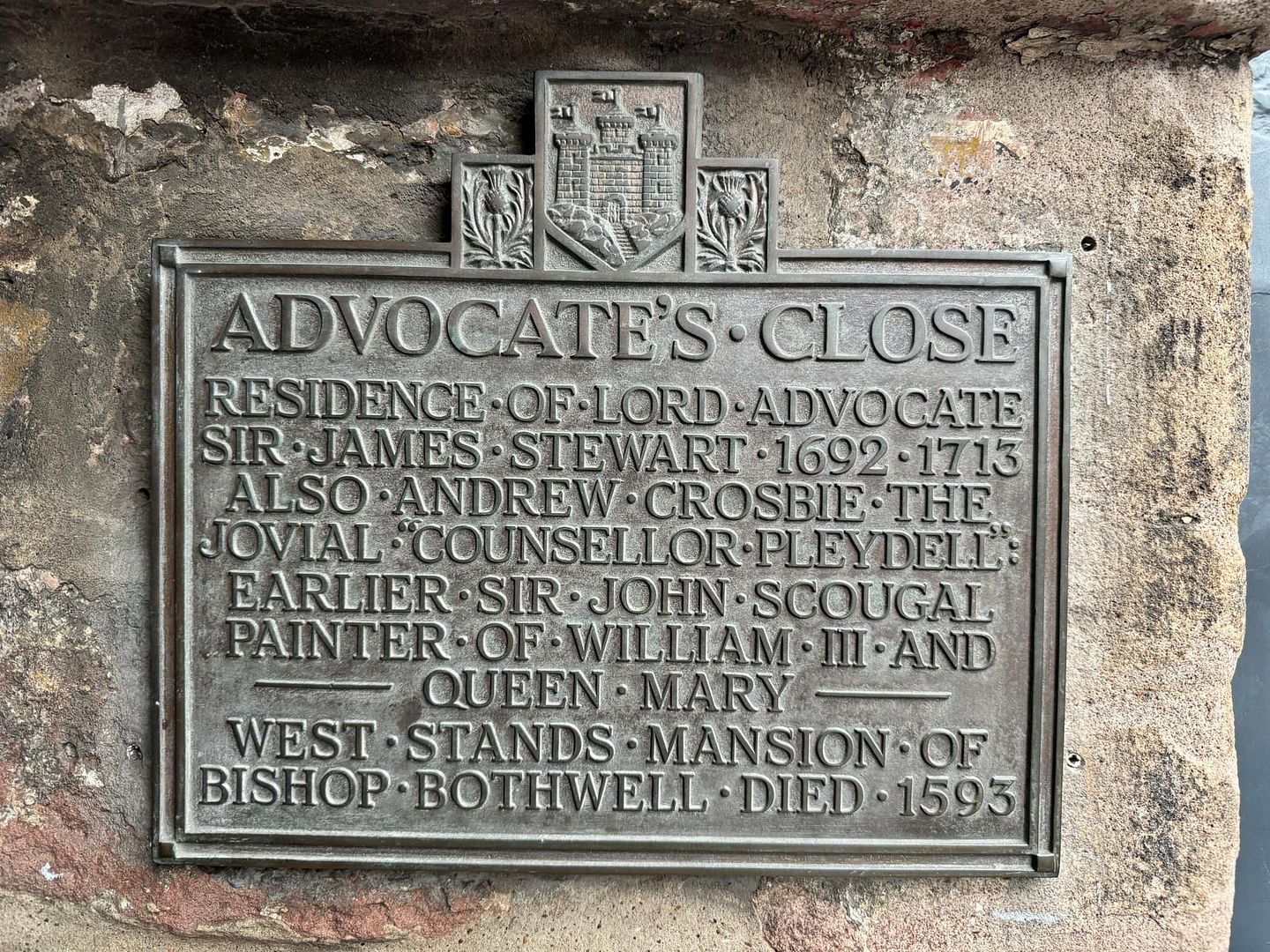
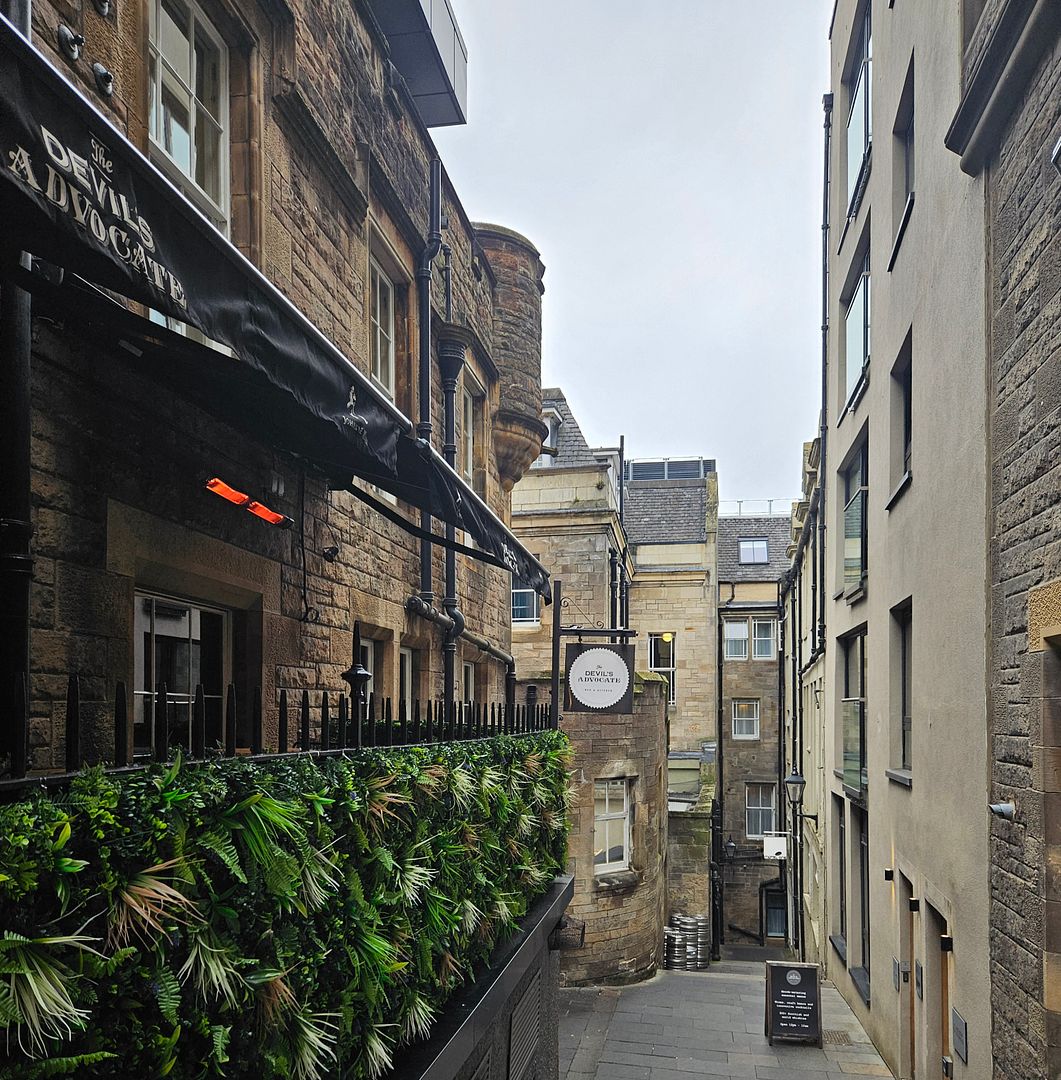
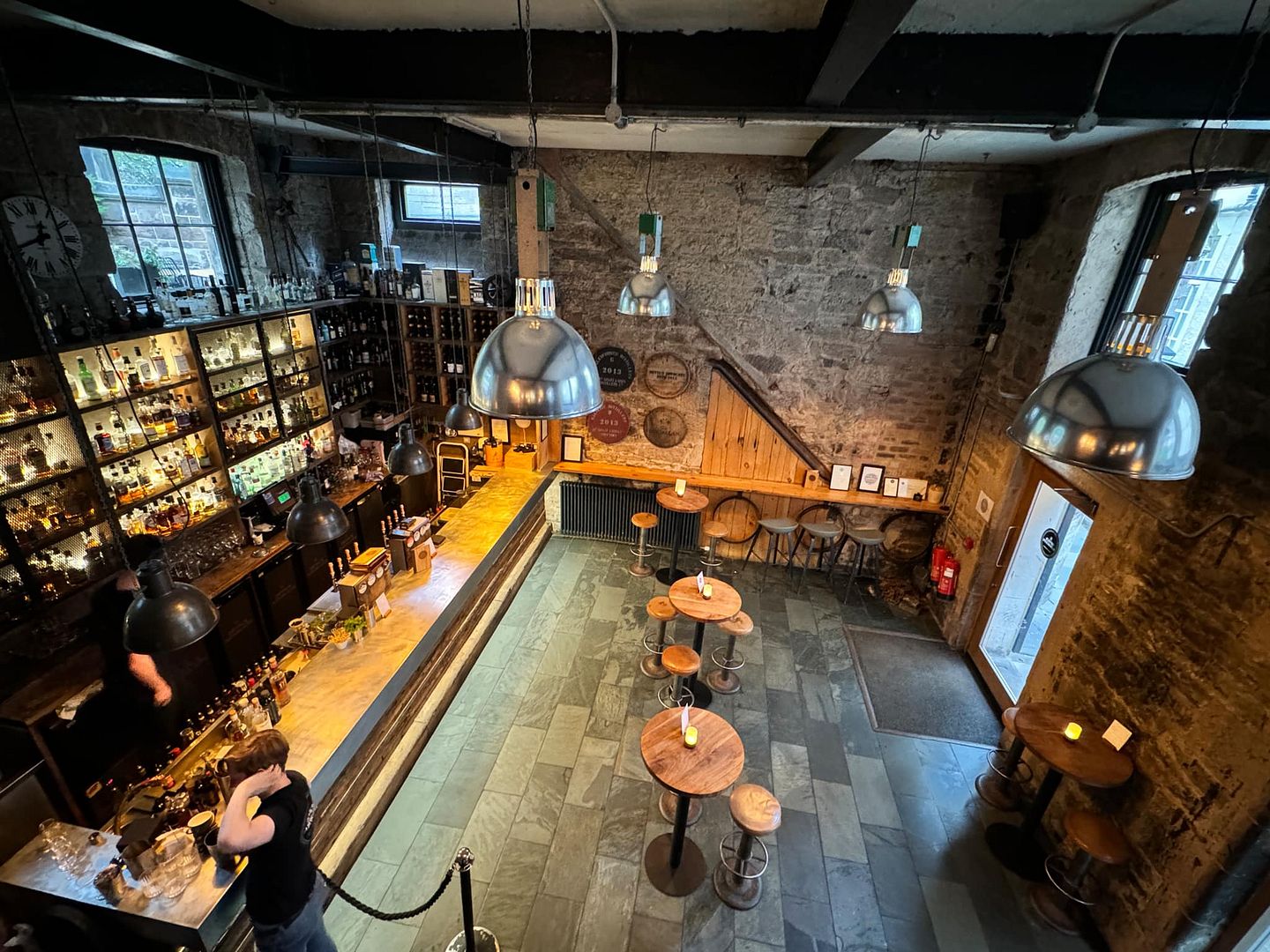
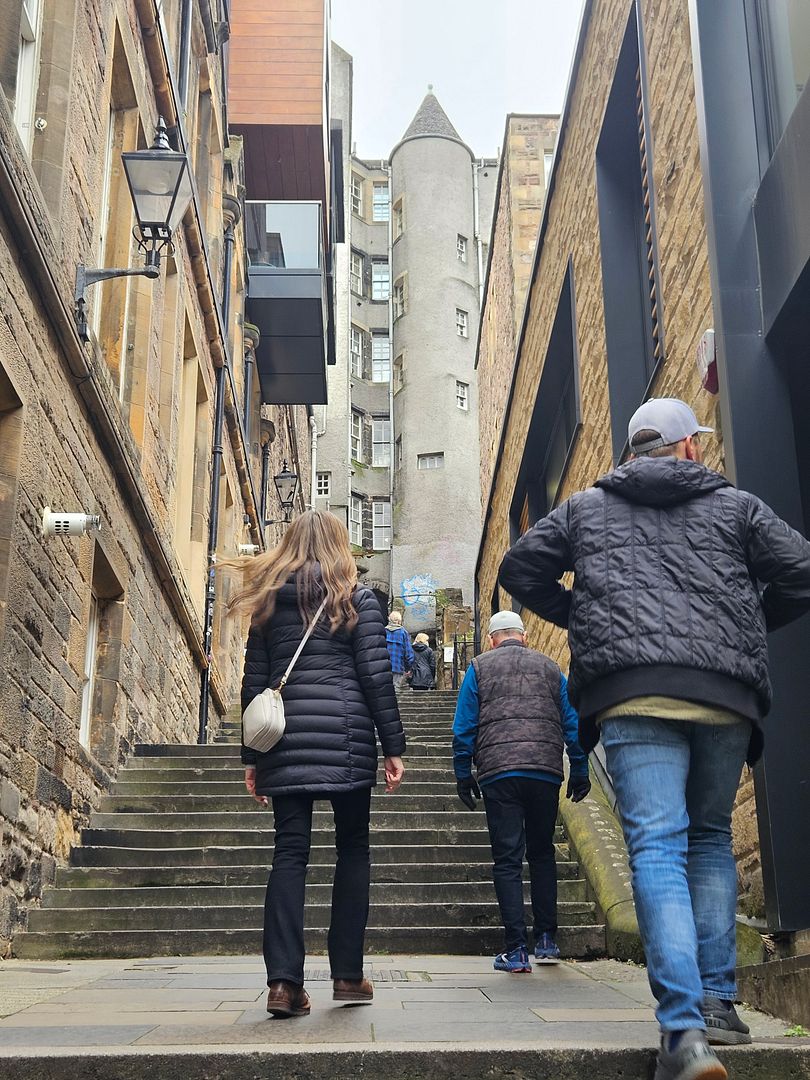
After our wonderful tour with Jimmy on Monday September 23rd we were ready for lunch. We took the steps down Advocate’s Close and found the Devil’s Advocate.

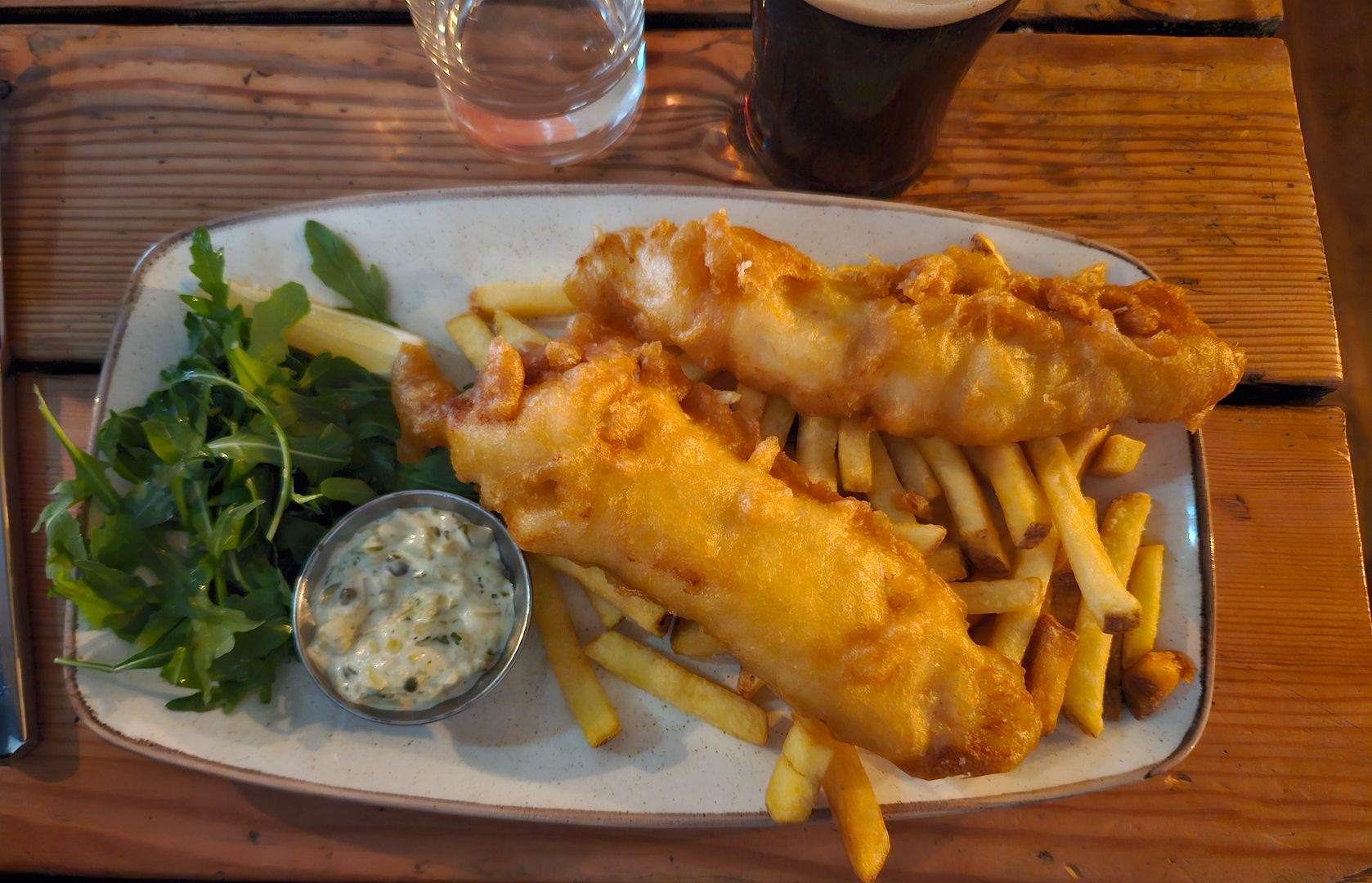
Fish and Chips one more time before we left Scotland.

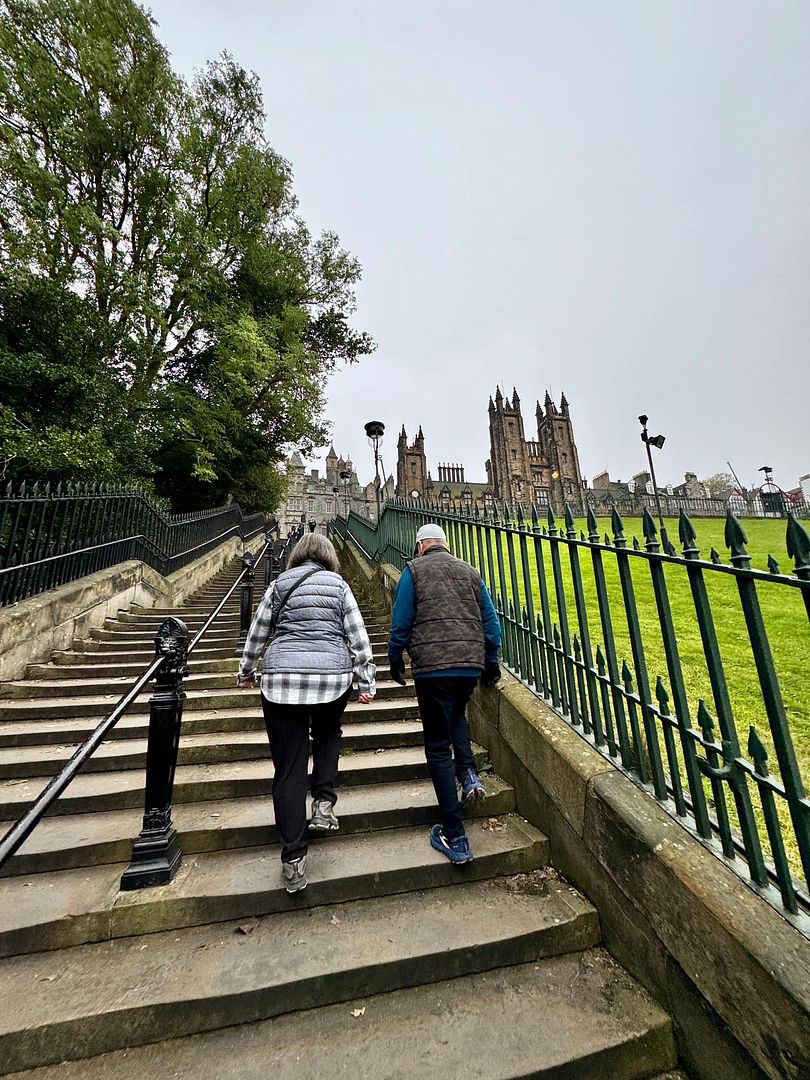
After our lunch we could face the stairs to go back up Advocate’s Close to the Royal Mile.

Our destination would be Holyrood Palace which is at the opposite end of the Royal Mile from Edinburgh Castle.

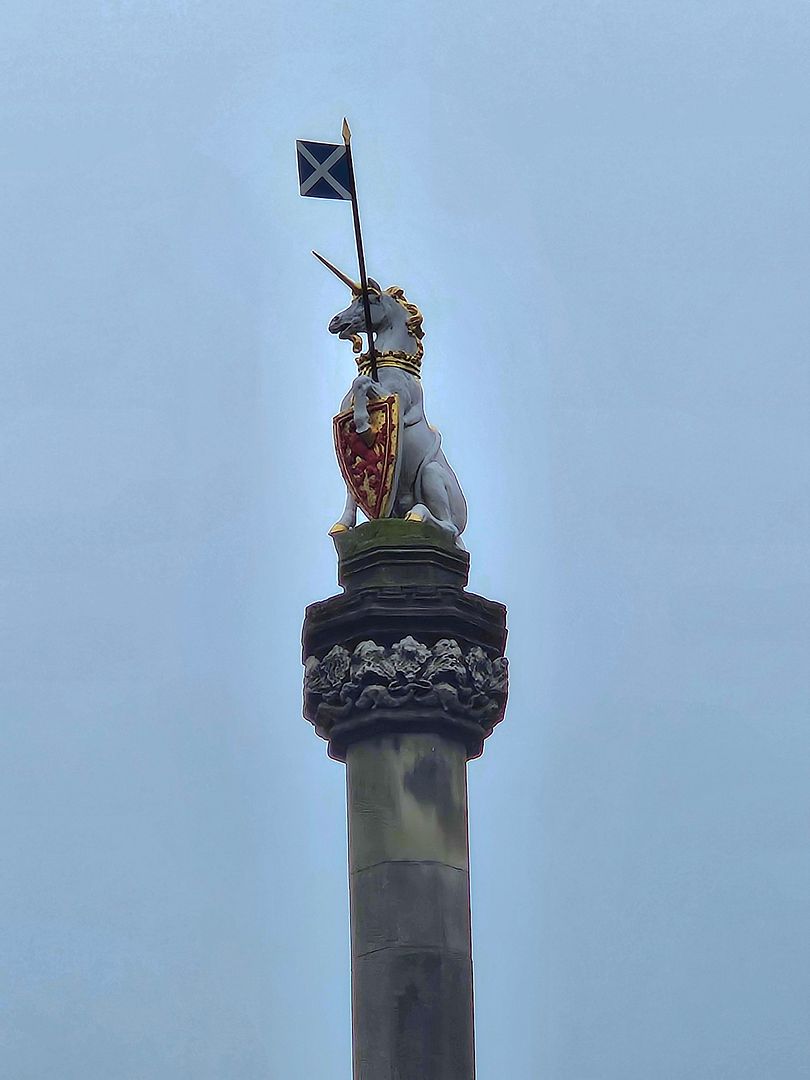
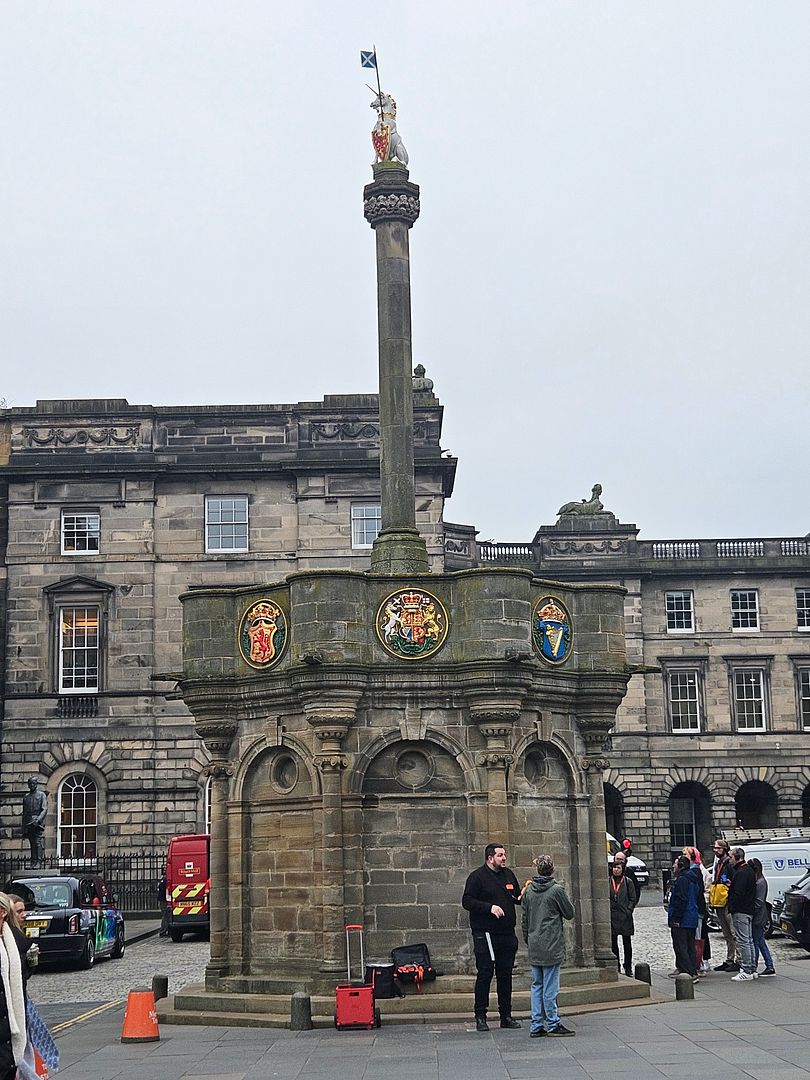
Located on the Royal Mile, the Mercat Cross holds a prominent position within the Old Town. Its proximity to other historic sites, including St Giles’ Cathedral and the Museum of Edinburgh, places it at the heart of Edinburgh’s cultural and civic life.

The Mercat Cross holds significant cultural importance in Edinburgh’s history. It was not merely a market hub, but also the focal point of civic gatherings and proclamations. Its distinctive octagonal structure, adorned with a unicorn and the royal coat of arms, reflects the intersection of commerce and monarchy in medieval Edinburgh.

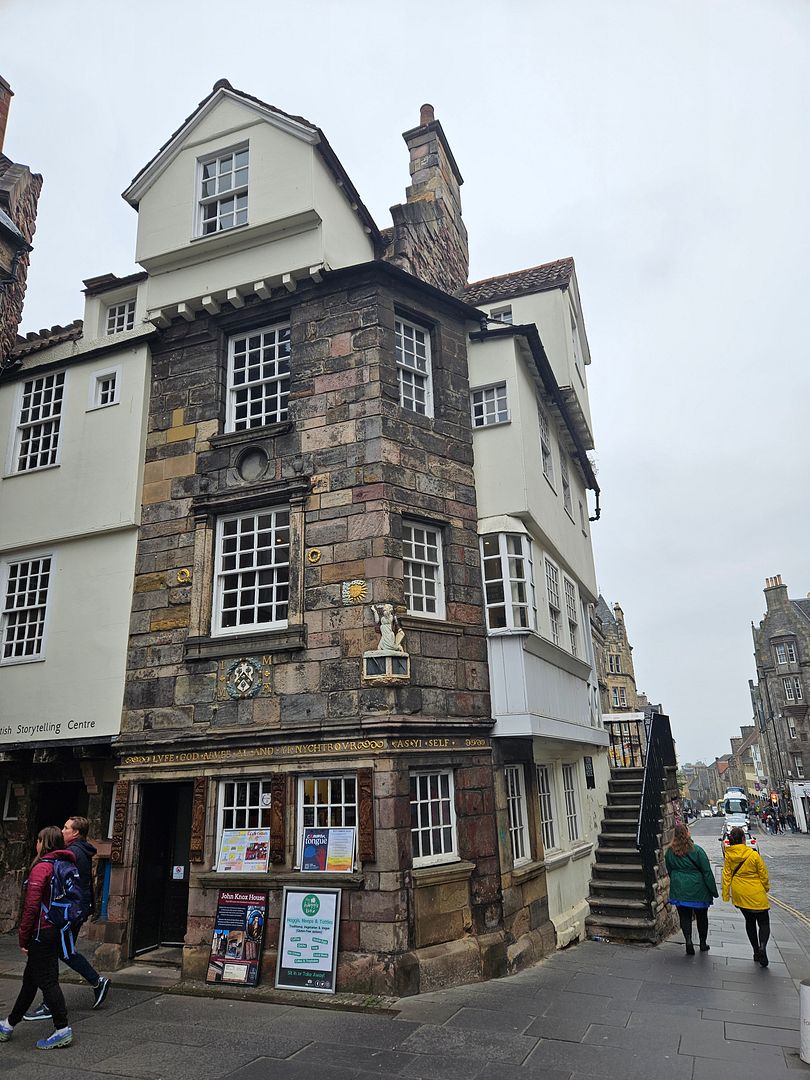
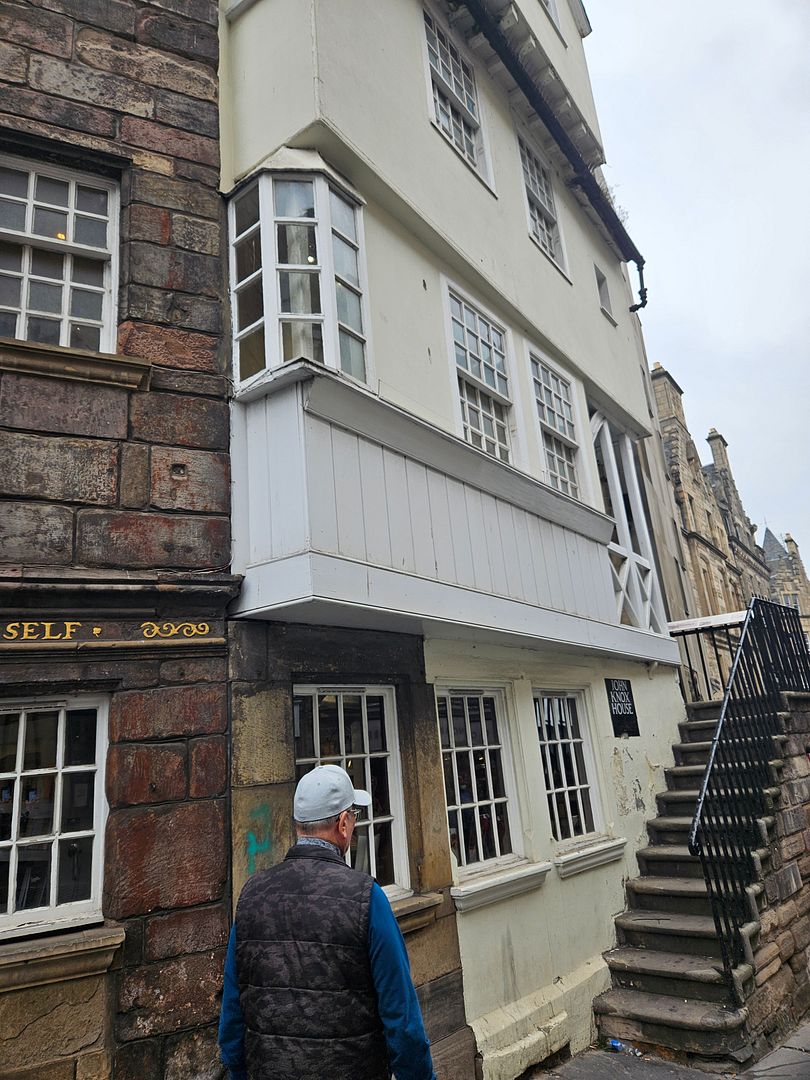
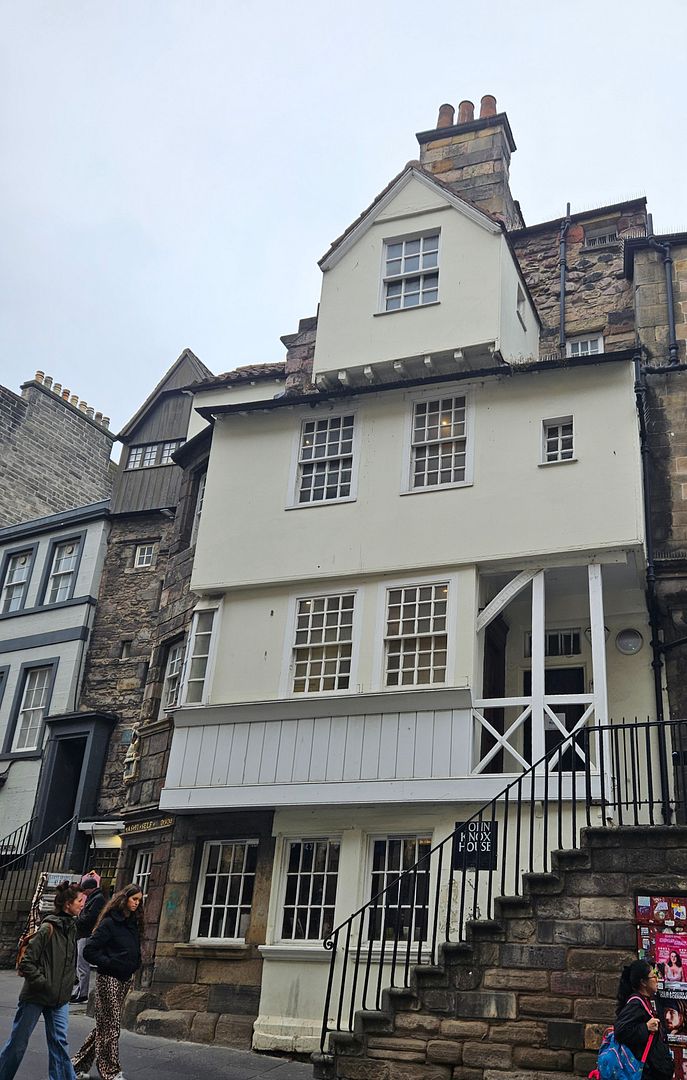
The John Knox House is on the Royal Mile.

John Knox’s House dates from the 15th century and has been largely unaltered since the 1550’s when the Mosman family, Goldsmiths to Mary Queen of Scots, remodeled the house. John Knox, leader of the Scottish Reformation and founder of the Presbyterian Church, only lived here for a short period before his death in 1572.

The ground and first floors of the house are presented as a museum about John Knox, the evolution of the Protestant faith in Scotland, and the conflict between John Knox and Mary Queen of Scots. There are a few audio commentaries and lots of written information to read.

On the second floor of the house, you see a wood-paneled apartment that is preserved in the state that John Knox would have known. This is the most interesting part of the house.

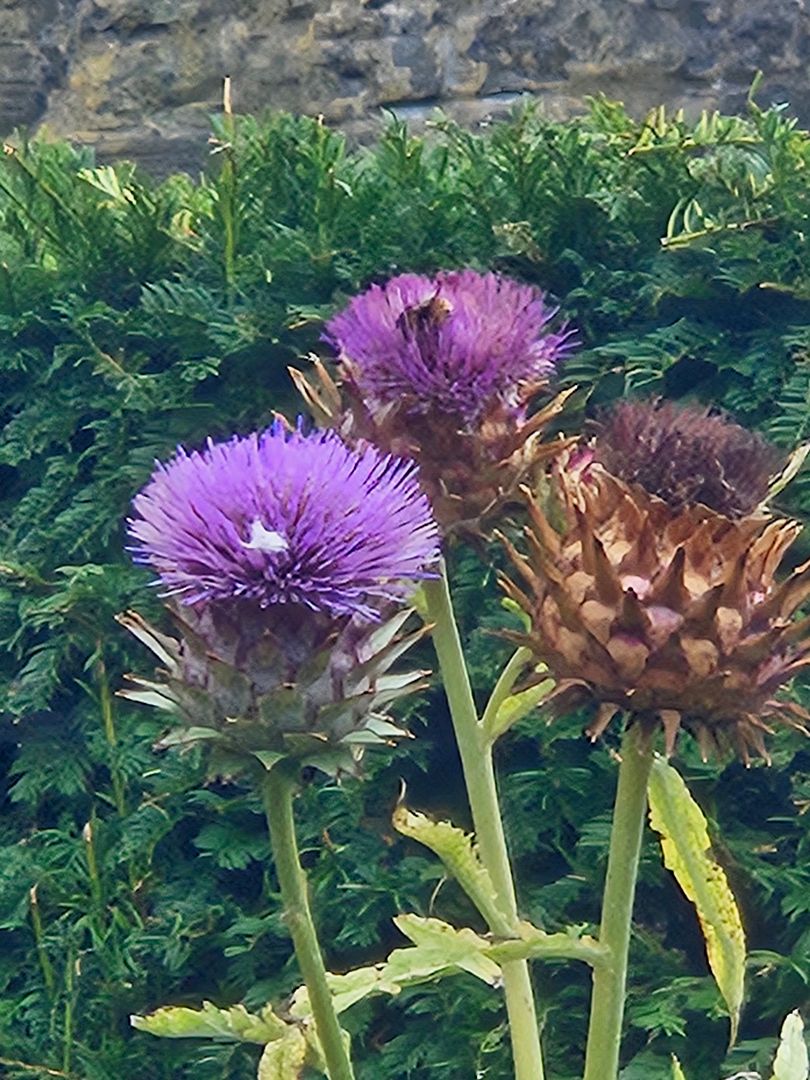
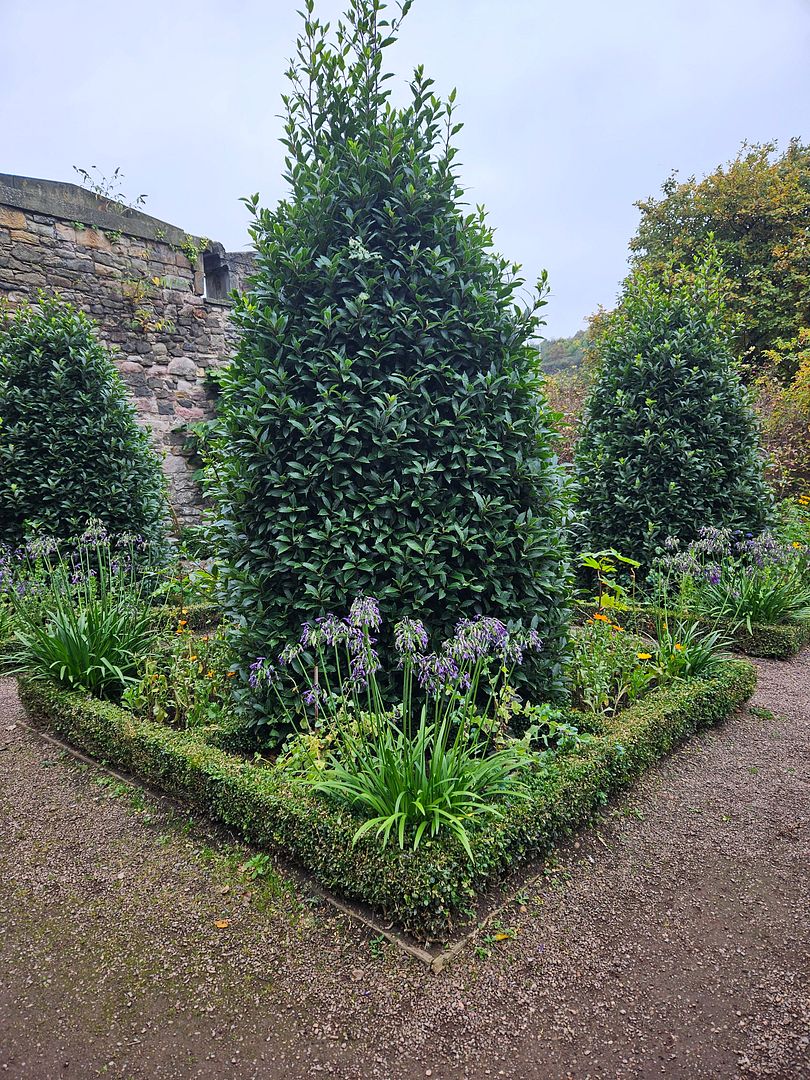
We found the Secret Garden through an archway along the Royal Mile and had to take a photo of the Thistle

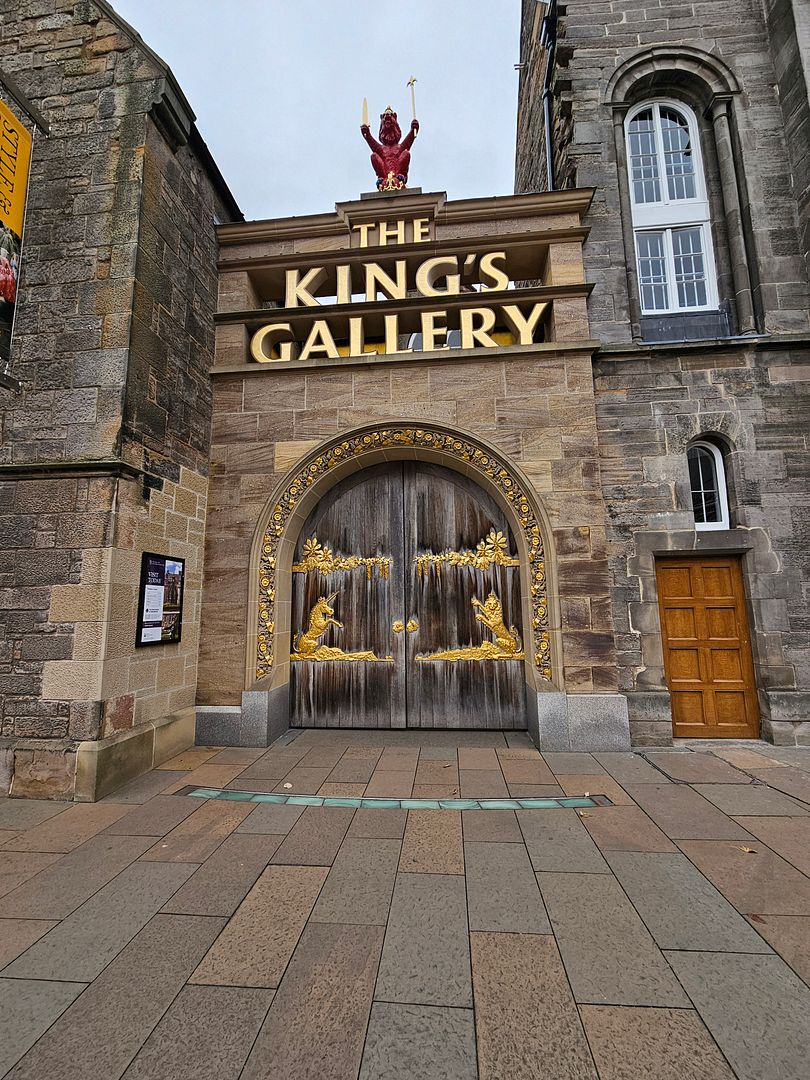
After the garden we finally were at the end of the Royal Mile at Holyrood Palace.

Holyrood Abbey was founded by David I, King of Scots in 1128, and Holyrood Palace has served as the principal residence of the Kings and Queens of Scots since the 15th century. Queen Elizabeth II spent one week in residence at Holyrood Palace at the beginning of each summer, where she carried out a range of official engagements and ceremonies

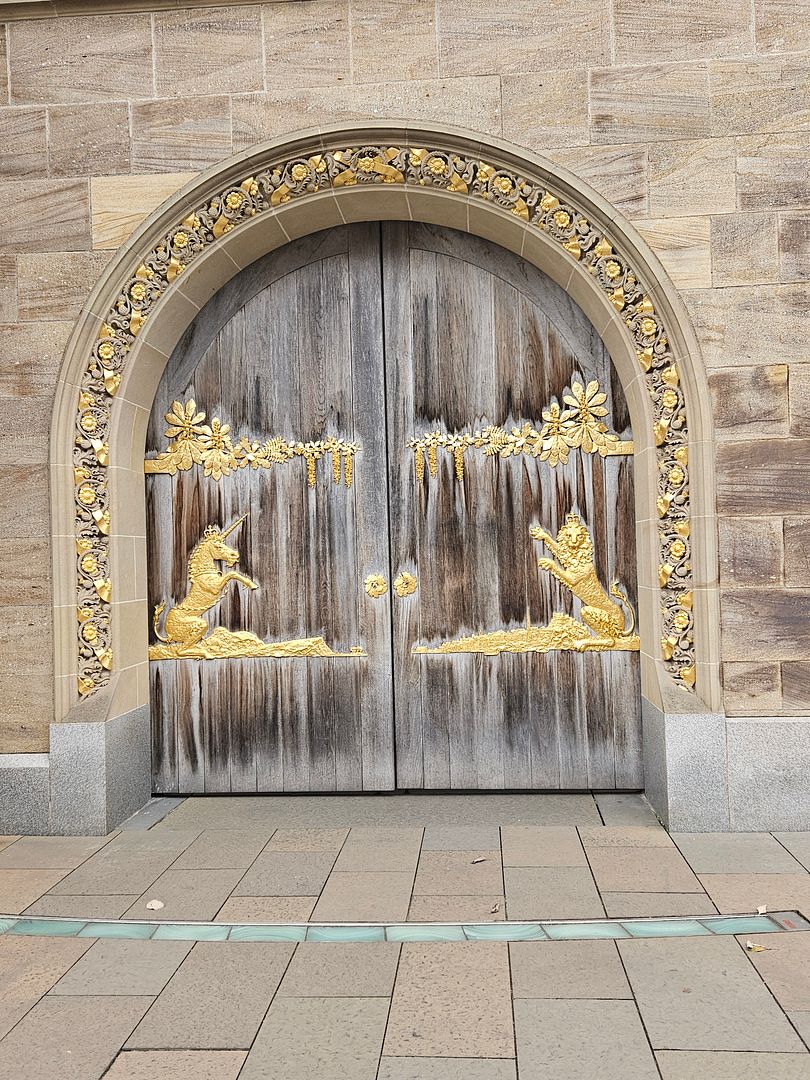
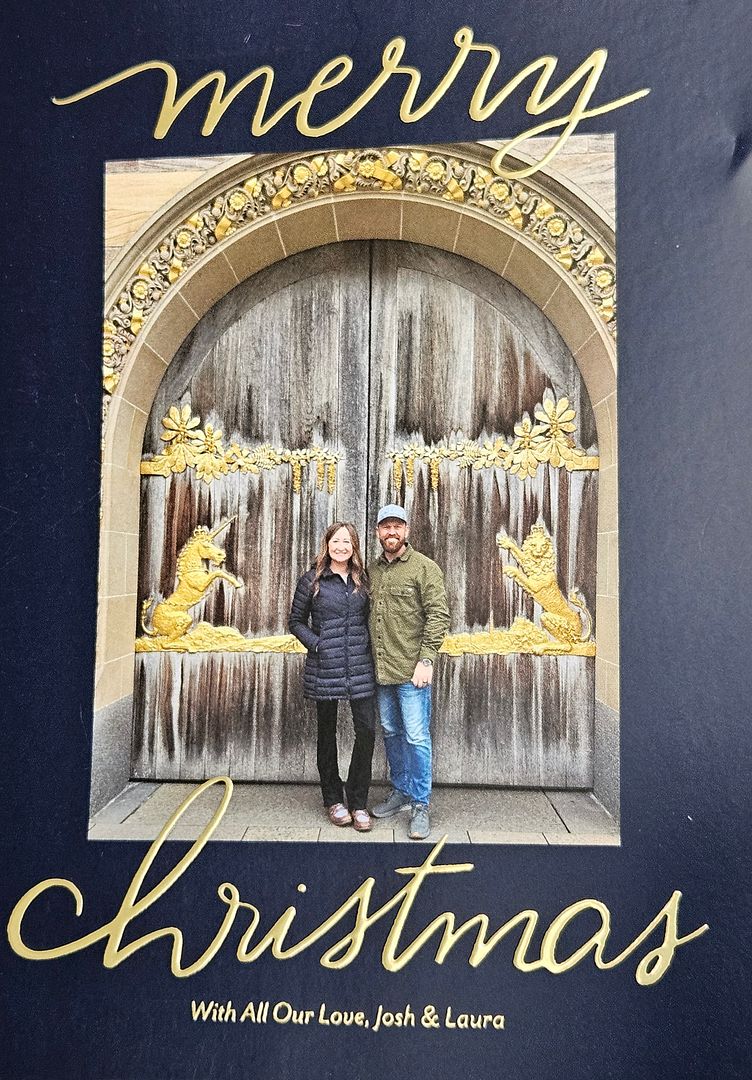
This beautiful doorway was a perfect photo op and it became Josh and Laura’s Christmas card.

We bought some souvenirs in the shop at Holyrood.

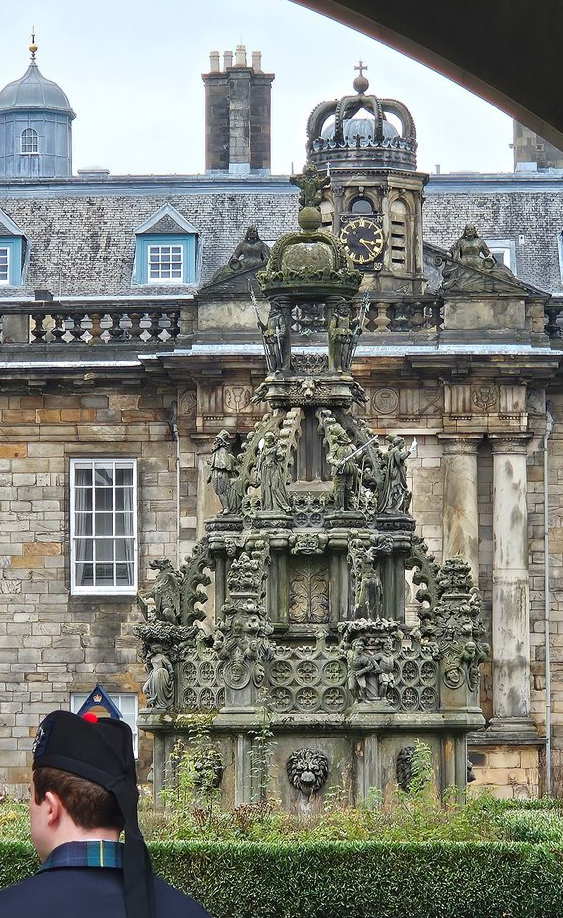
The Palace of Holyroodhouse Fountain

The Palace of Holyroodhouse, commonly referred to as Holyrood Palace, is the official residence of the monarch in Scotland. The palace stands at the bottom of the Royal Mile in Edinburgh, at the opposite end to Edinburgh Castle. Holyrood Palace is the setting for state ceremonies and official entertaining.

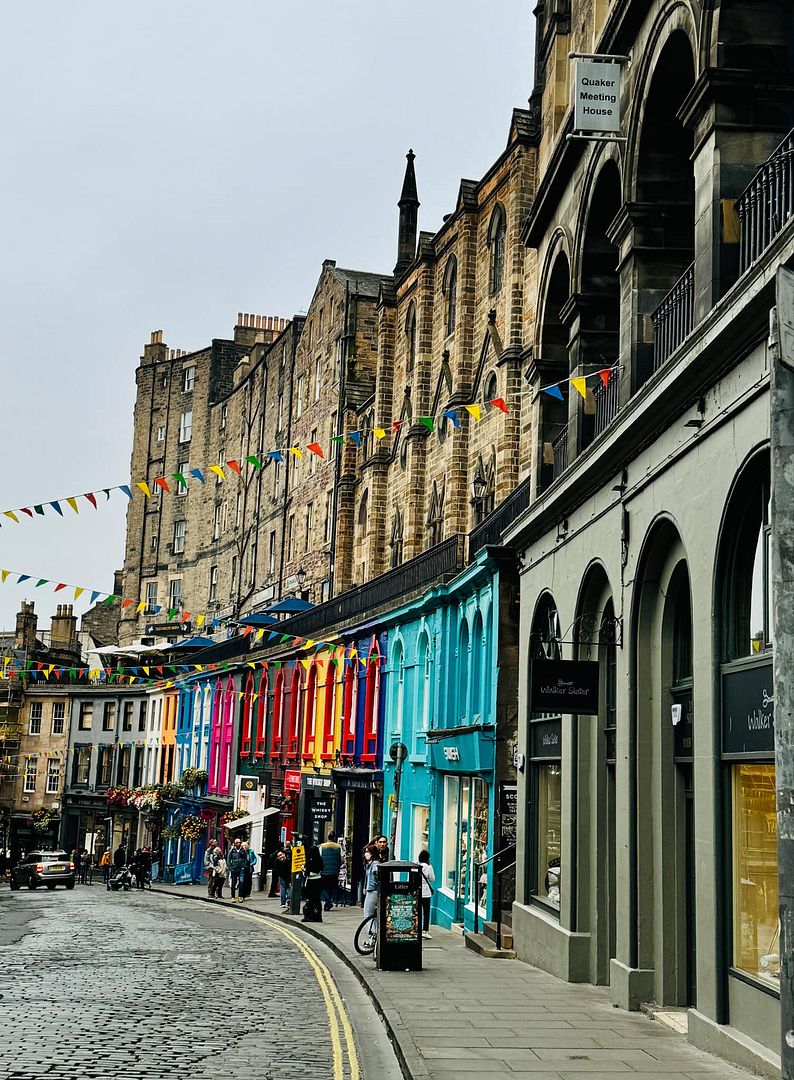
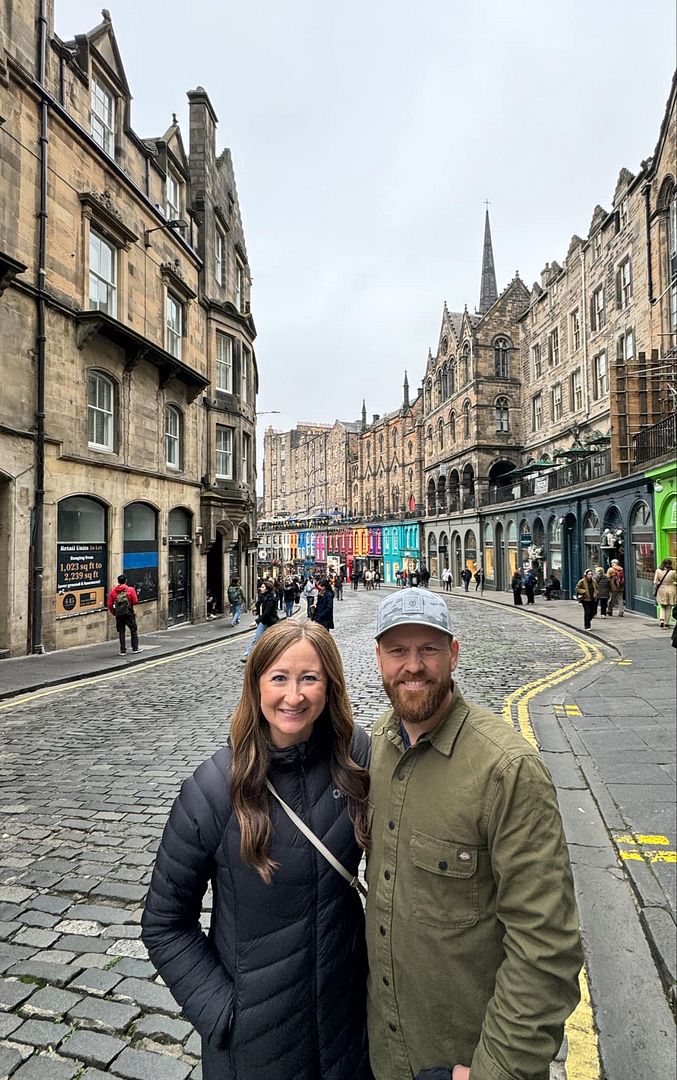
We walked back along different roads to Grassmarket and then up Victoria Street.

Looking down Victoria Street.

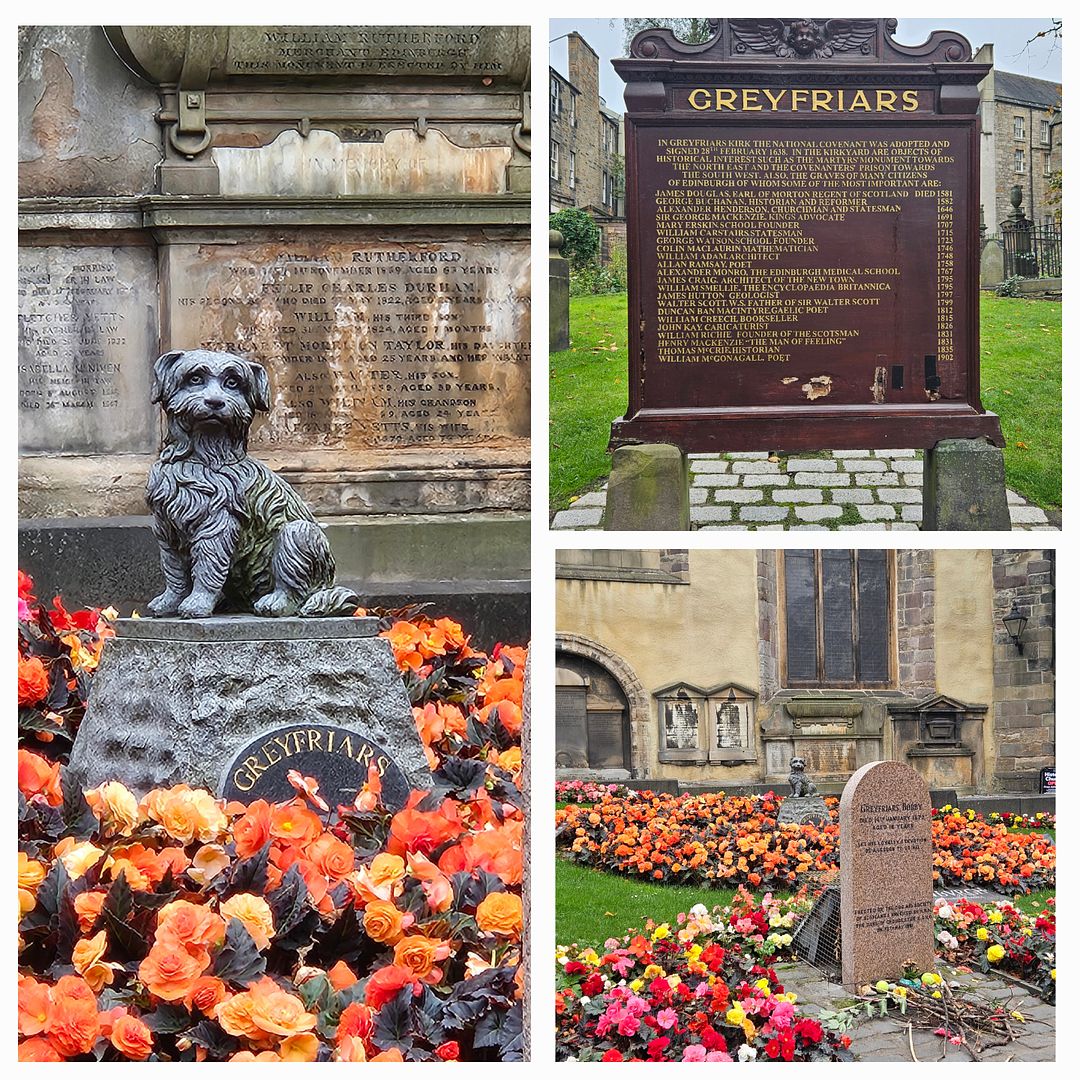
Since this is the last of my posts from Scotland I wanted to add Greyfriars Bobby in the Kirk. We saw this spot earlier in this day. Do you know the story behind Greyfriars Bobby or have you seen the old movie?

Our last full day in Scotland was another record breaking steps day. Goodnight to Monday September 23rd.

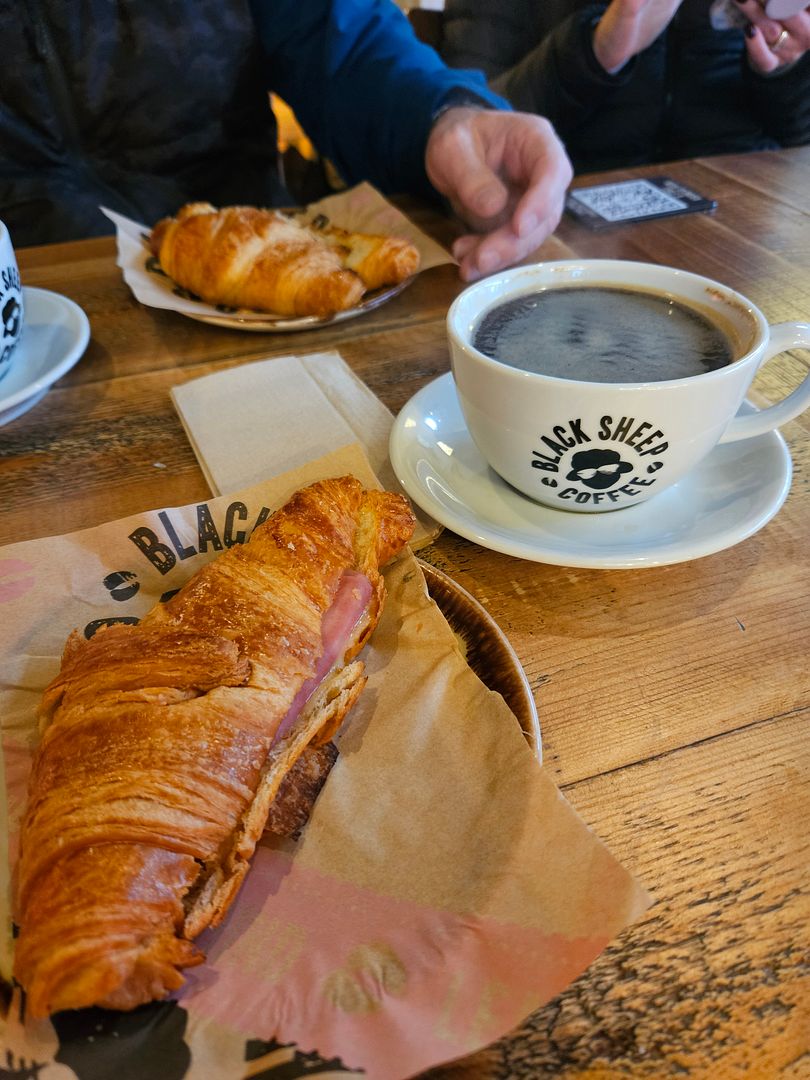
On Tuesday September 24th we had coffee and breakfast snacks at the Black Sheep before we checked out and called an uber to take us to the airport for our flights home.

We loved our time and what we experienced in Bonnie Scotland. Cheerio.

Scotland Travel Journal ~Edinburgh Reformation Tour 2

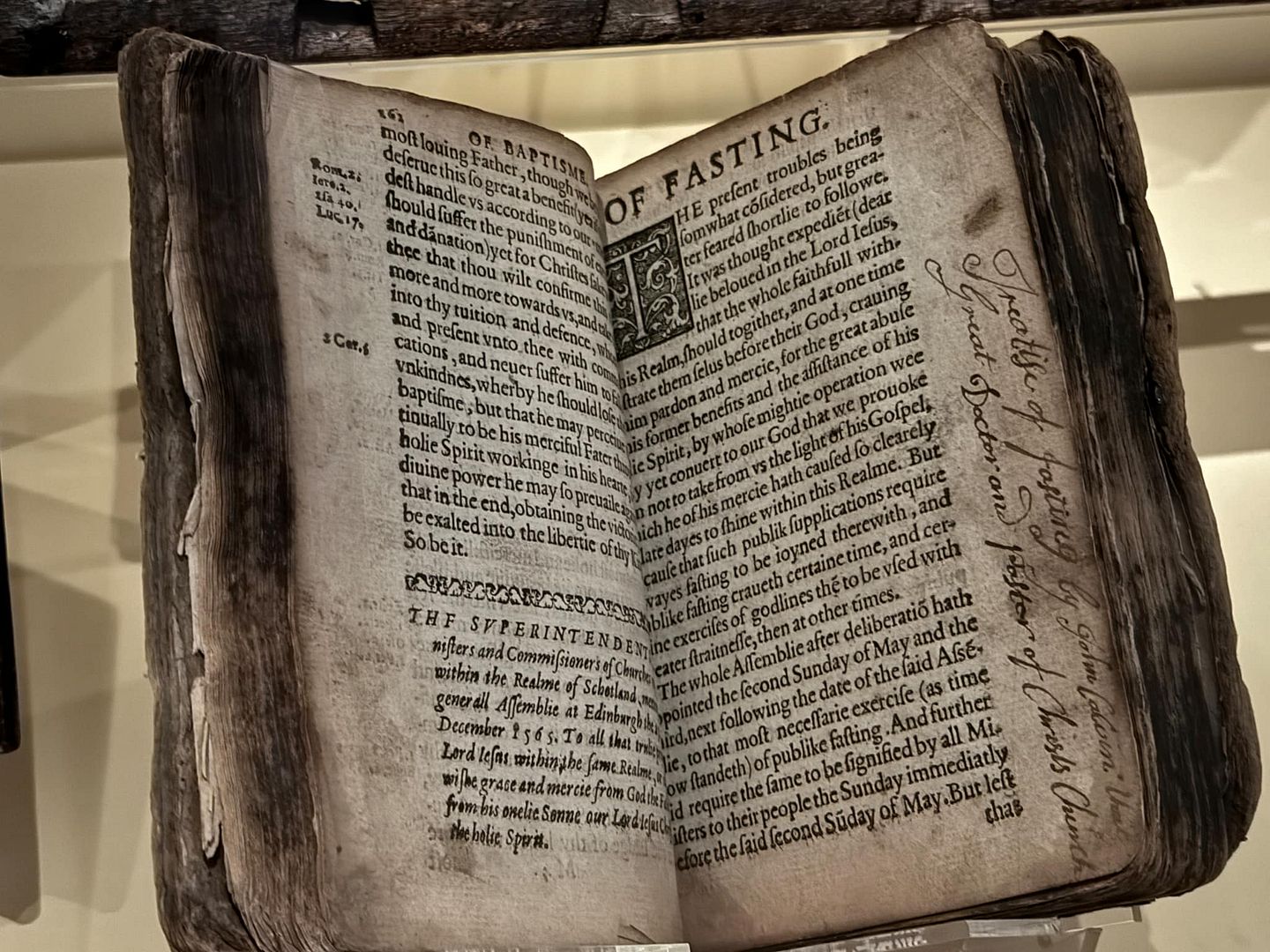
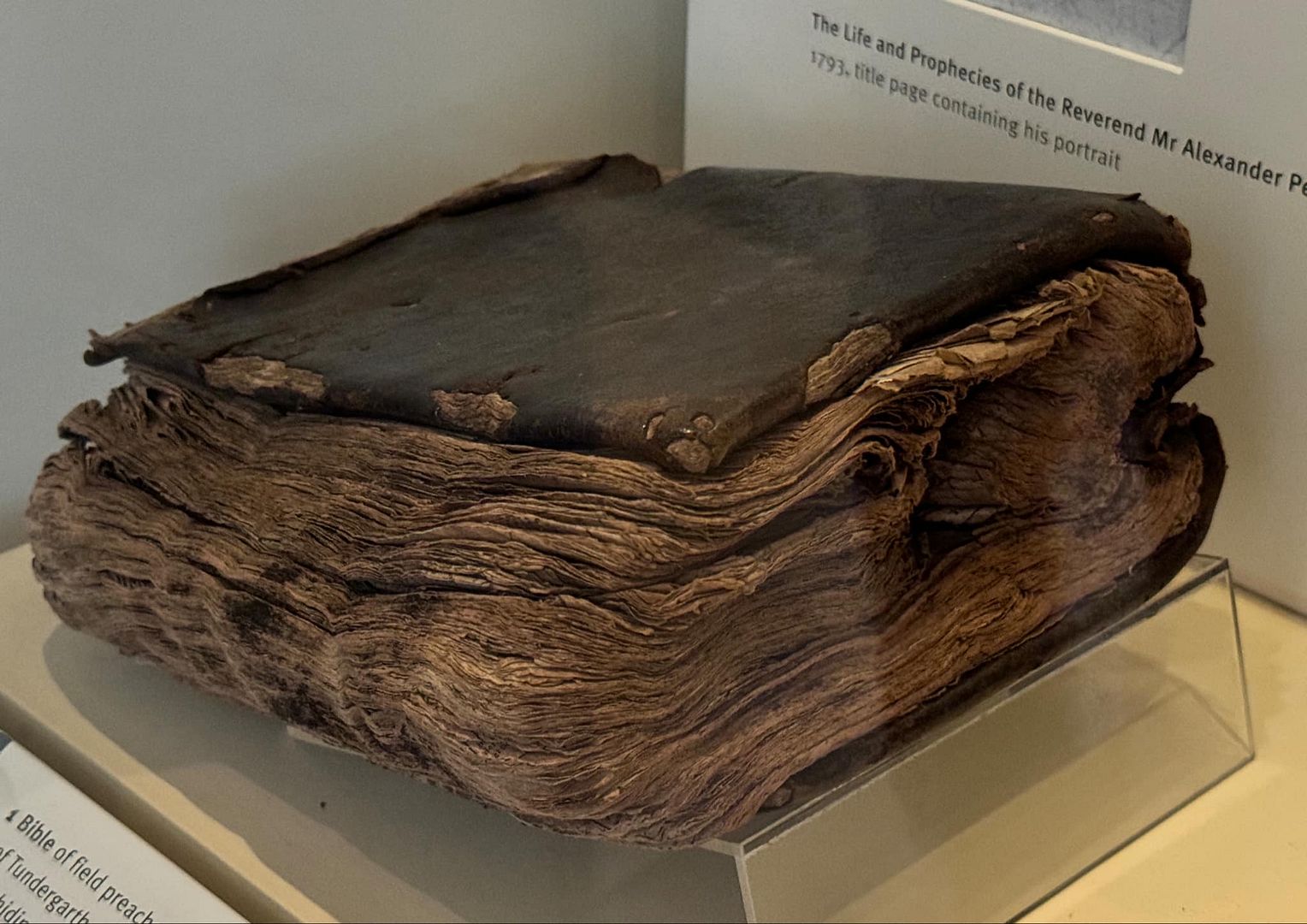
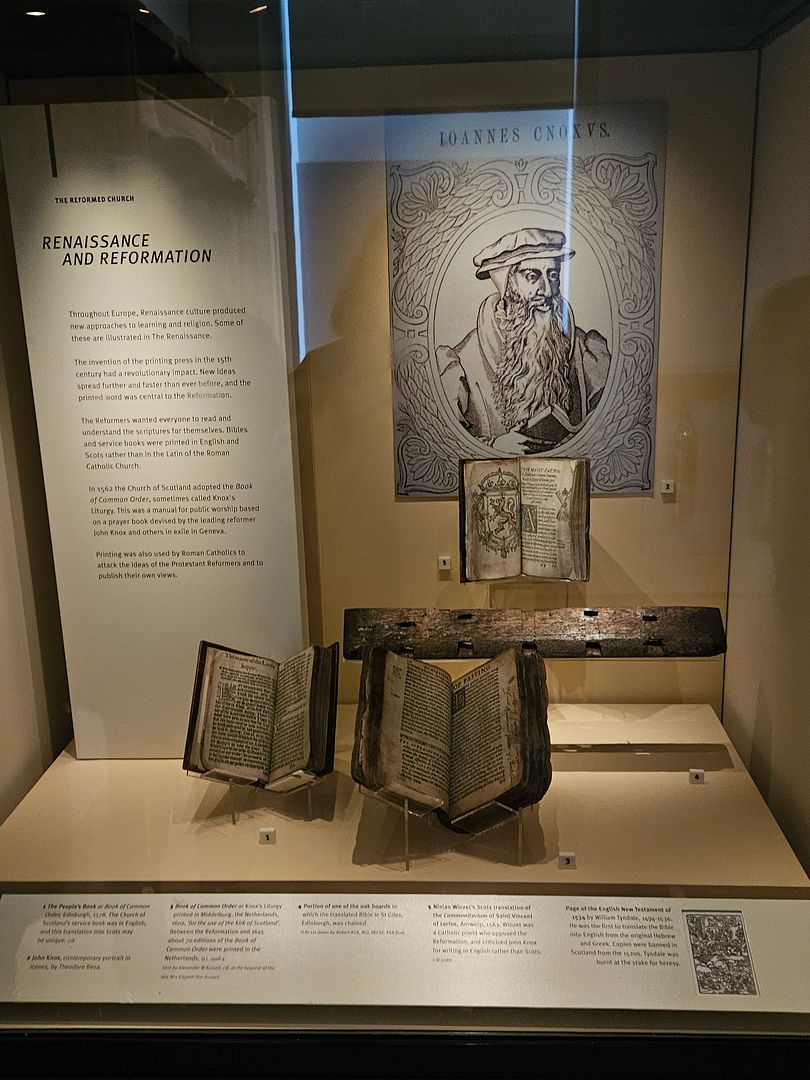
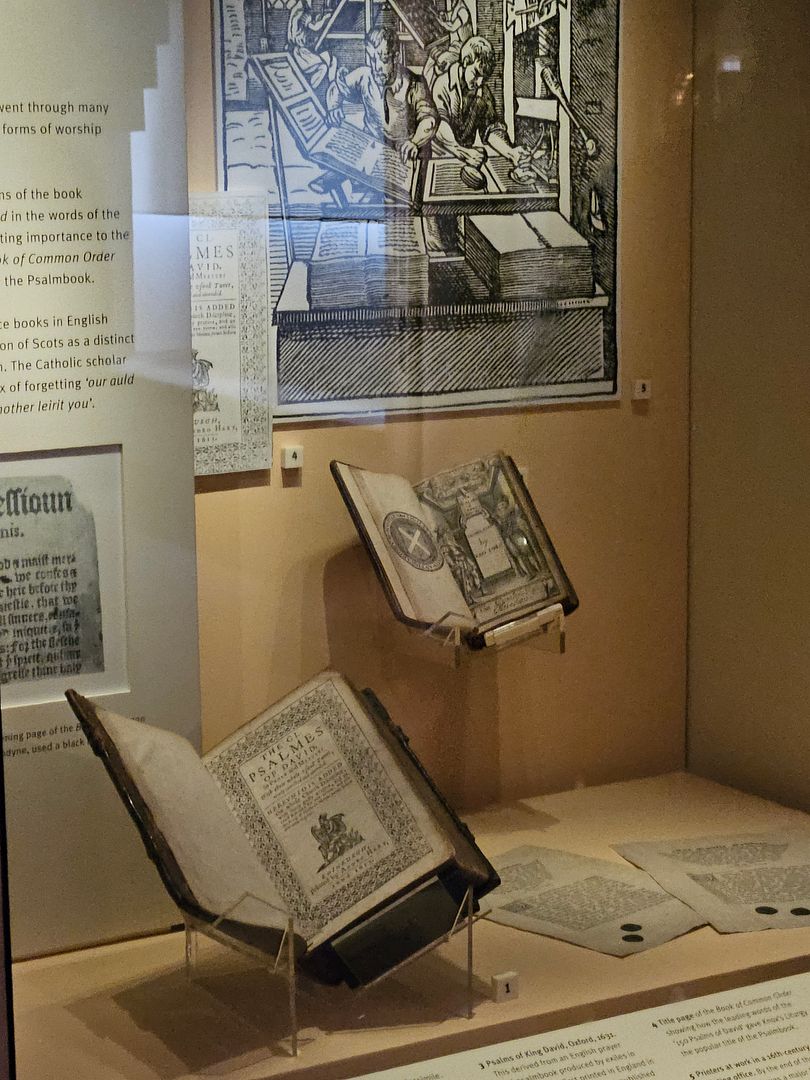
From Grassmarket, Jimmy took us to The National Museum of Scotland and to the National Library where we saw more artifacts and information about the Covenanters and The Reformation.

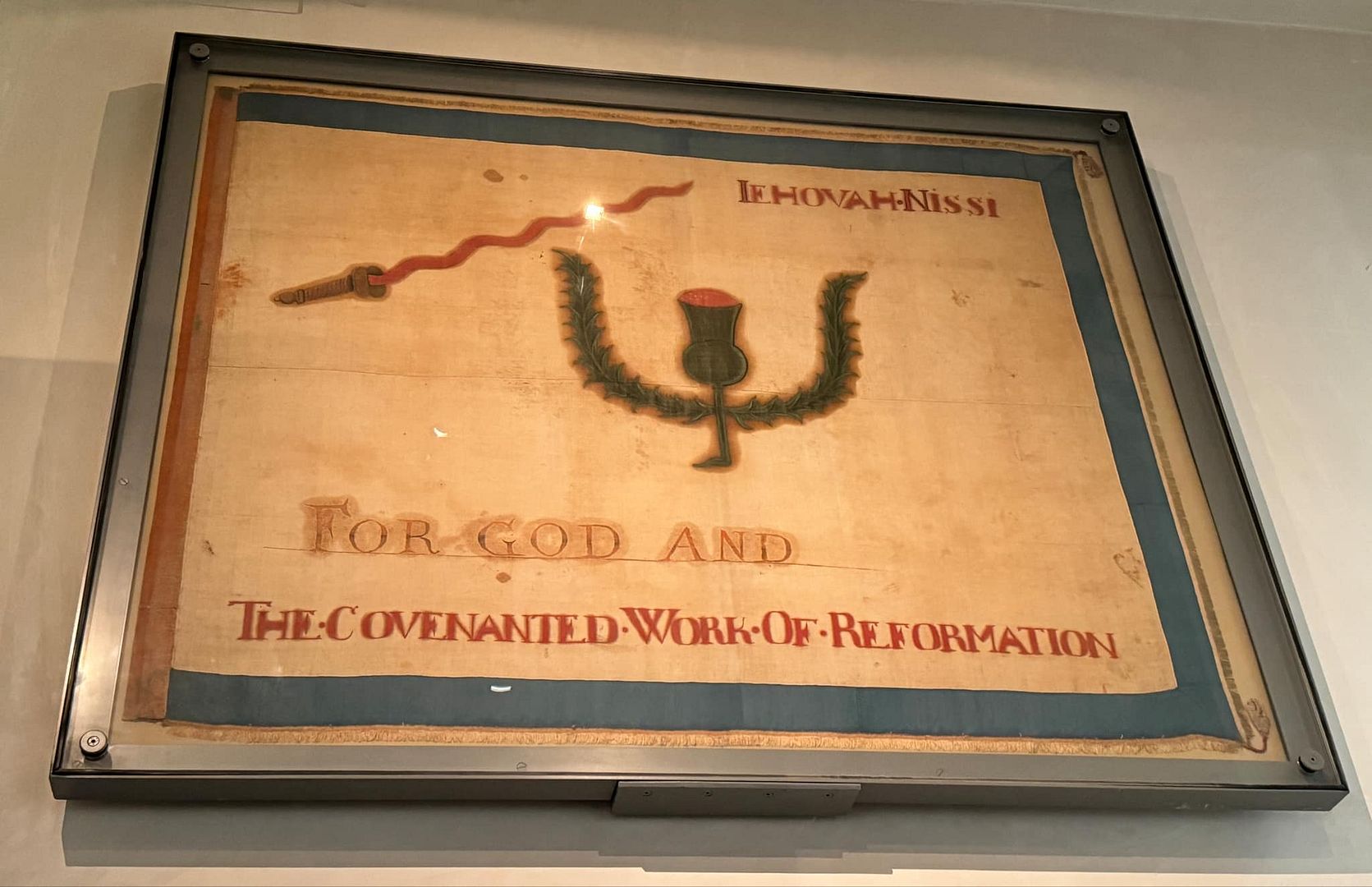
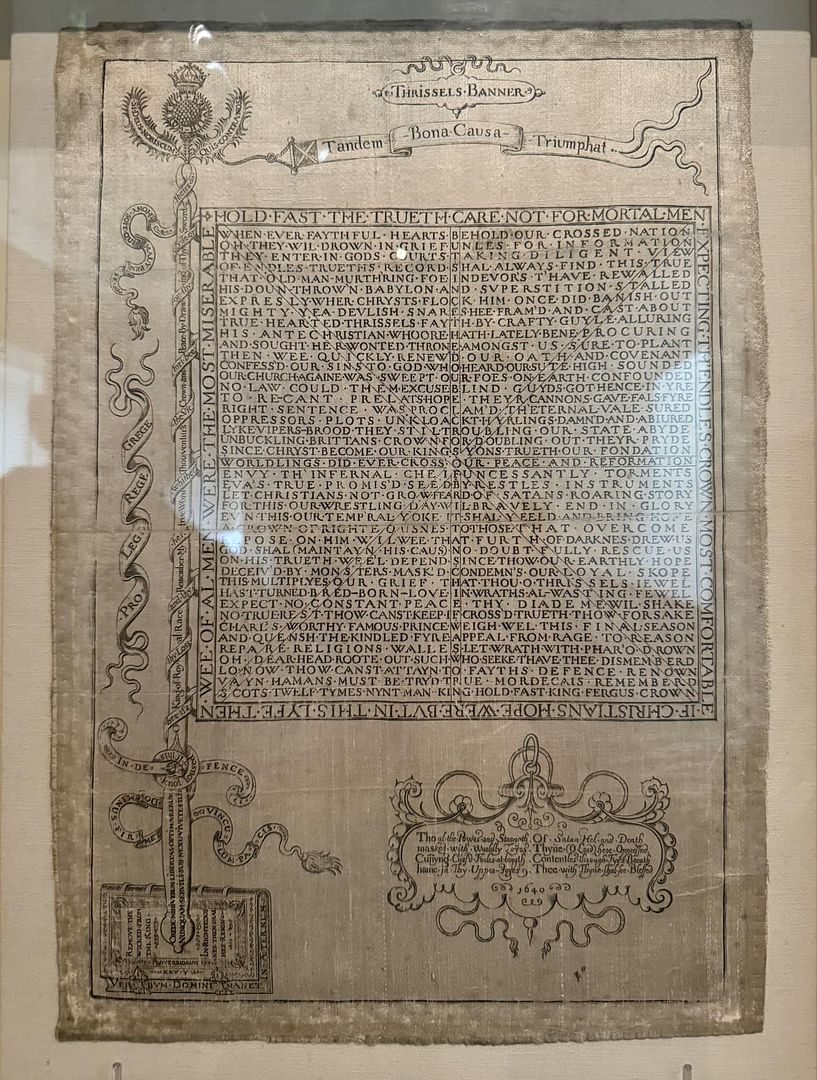
This printed satin banner, known as the ‘Thrissels Banner’, dates from 1640. The text on the banner was written by Thomas Cunynghame. It expresses opposition to the Crown and to the contemporary policy of religious anglicization.

On the left is the ‘staff’ of the banner, shown as a sword with a crowned thistle and bible at either end.

John Knox is a notable figure in Scotland’s history and in Christendom.

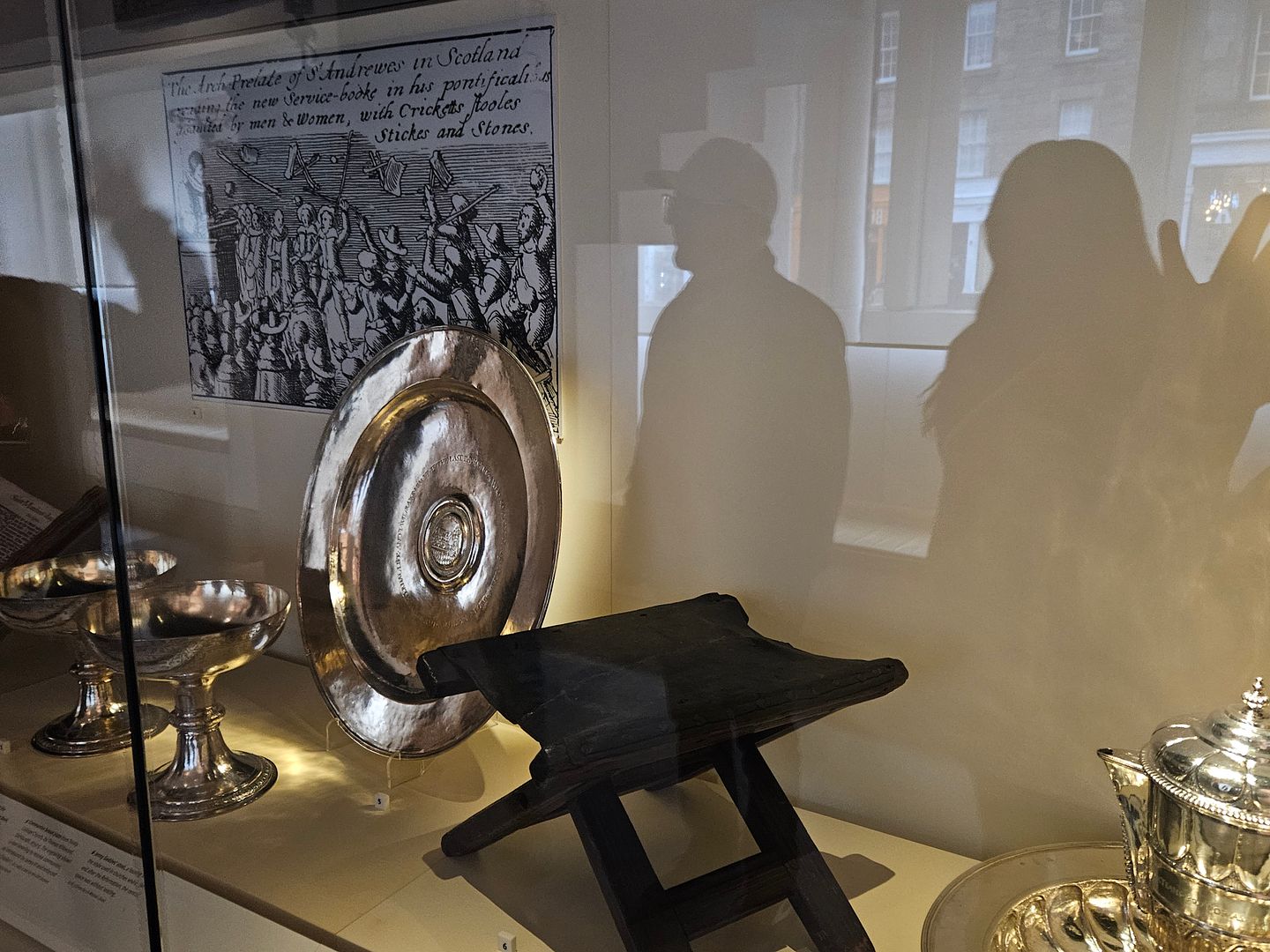
Jenny Geddes chair of which I was very interested. I’ll share more about it with a photo from St. Giles Cathedral in another post.

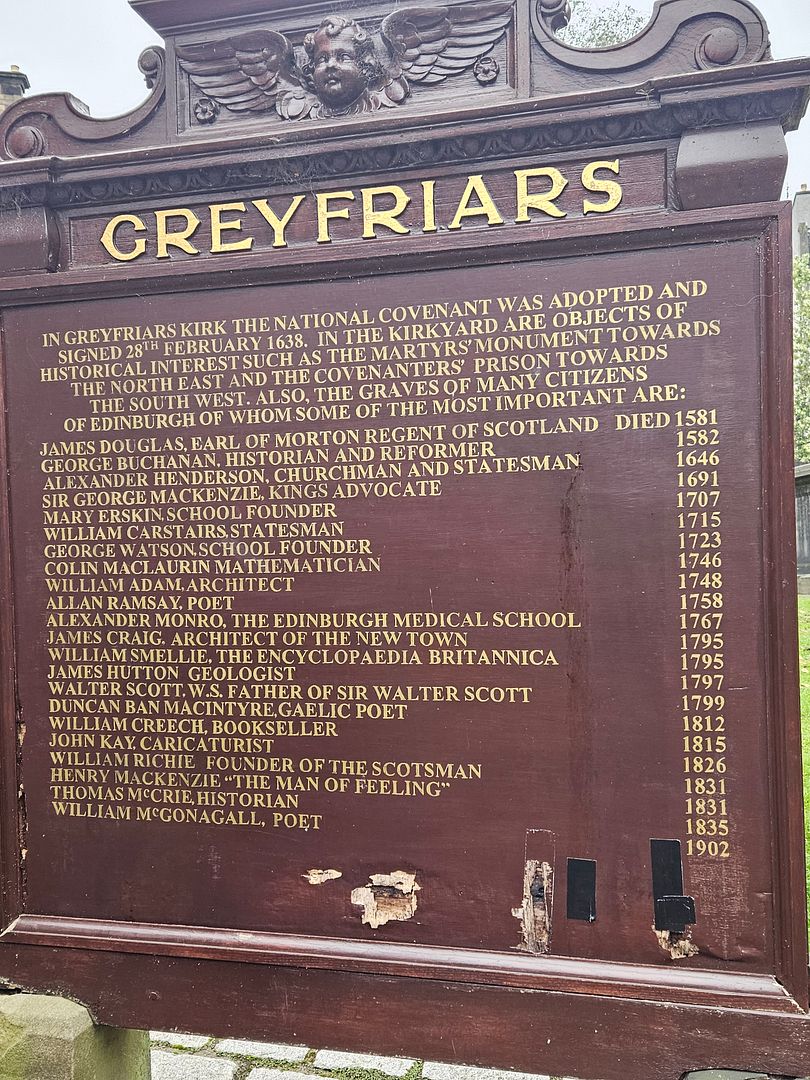
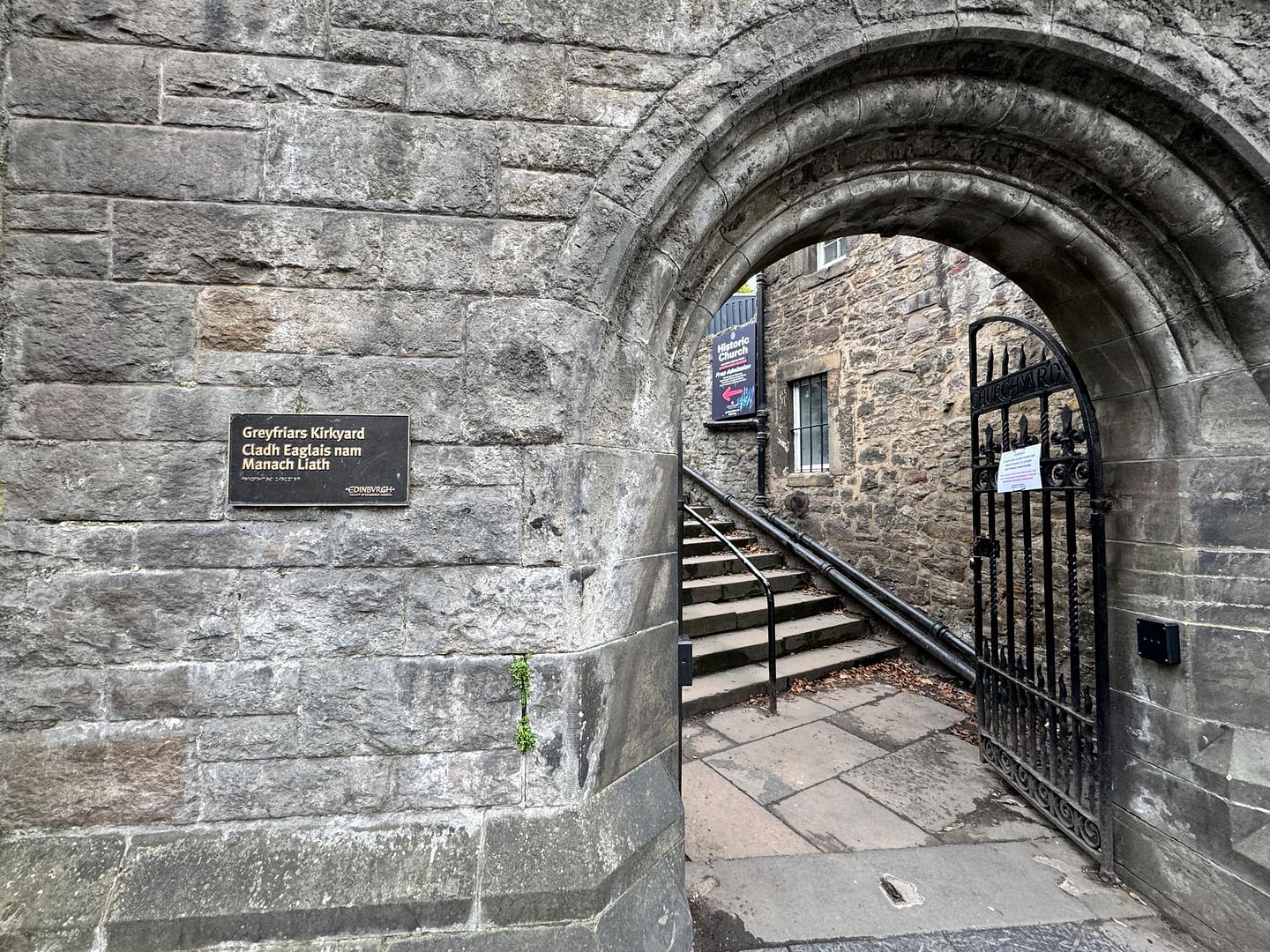
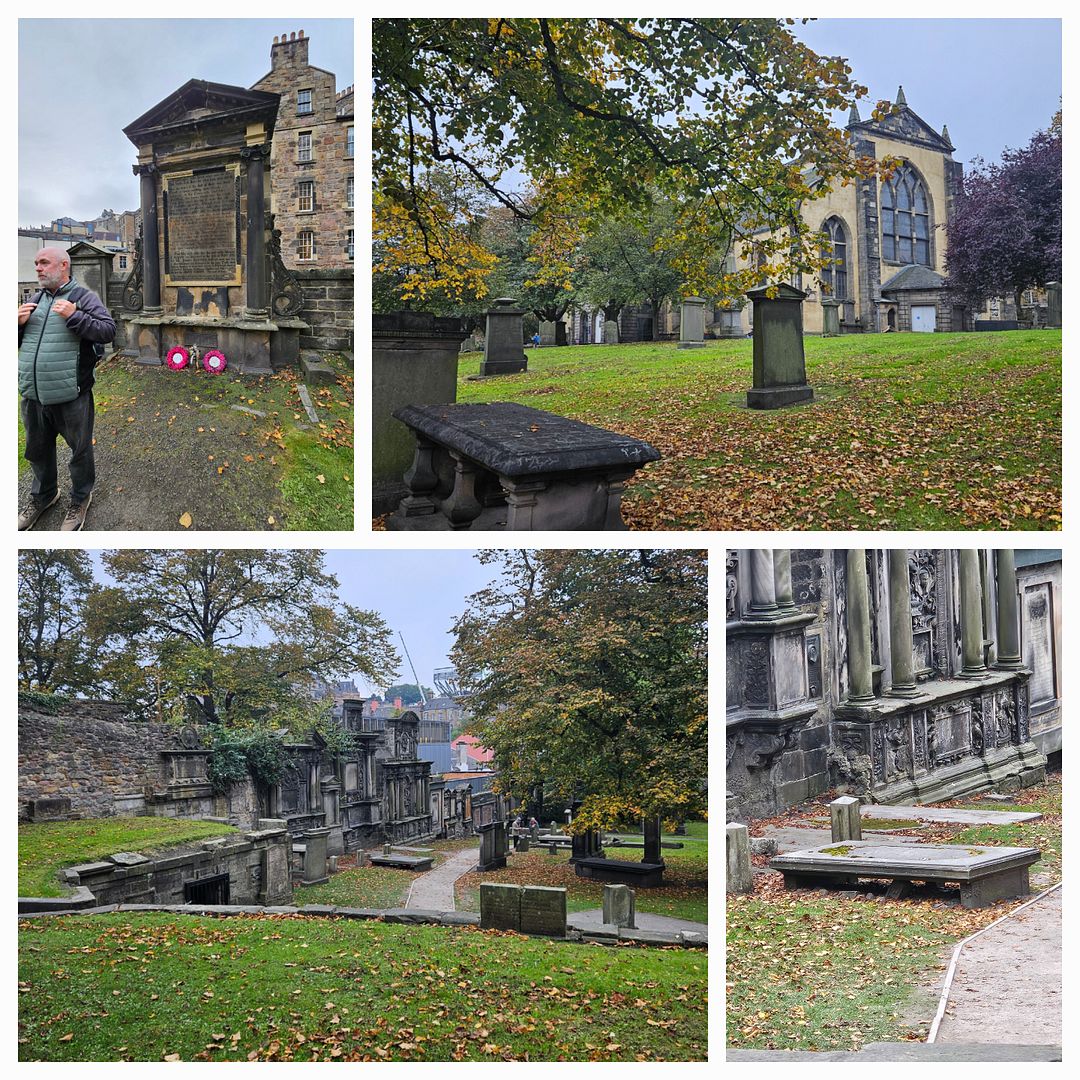
From the museum and library we made our way to Greyfriars Kirkyard.


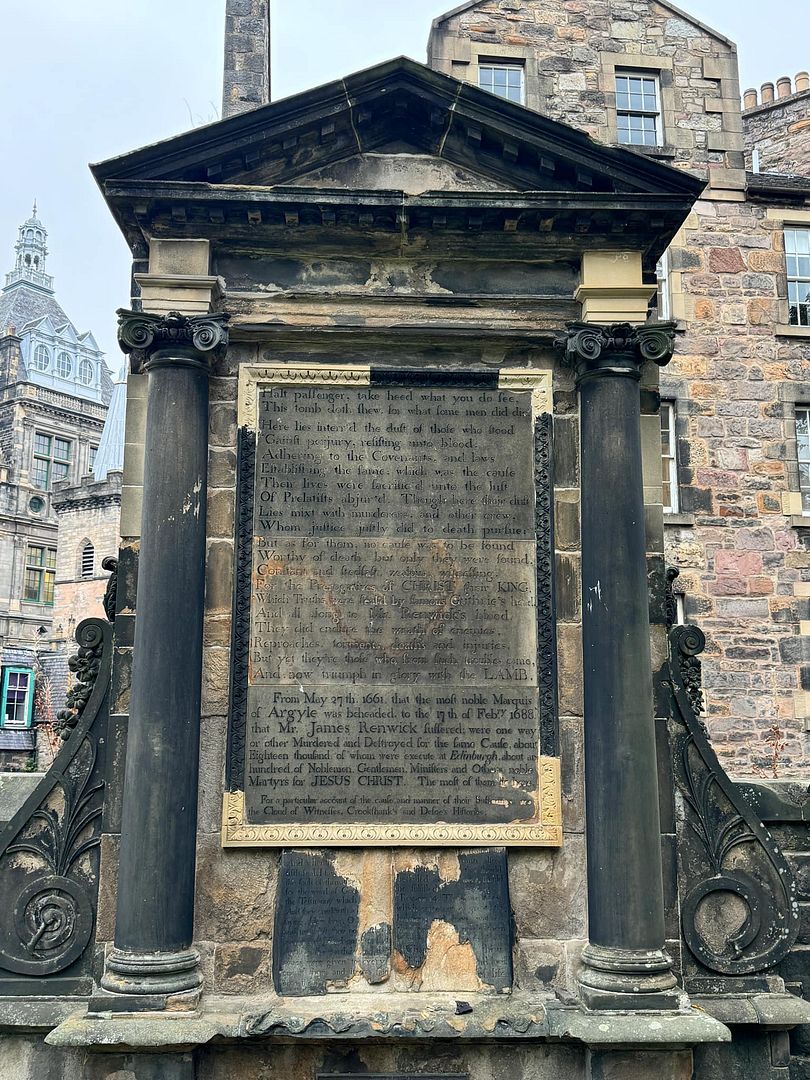
If you venture down to Greyfriars’ Kirk graveyard, which these days sees hordes of Harry Potter devotees brandishing their wands and reciting Potterite spells, you will find a large monument at the bottom right of this fascinating corner of Edinburgh. The monument towers above you and recalls the Covenanting struggle. The monument, first erected in 1706, then rebuilt in its 1771 version, has undergone restoration work up until recent times.

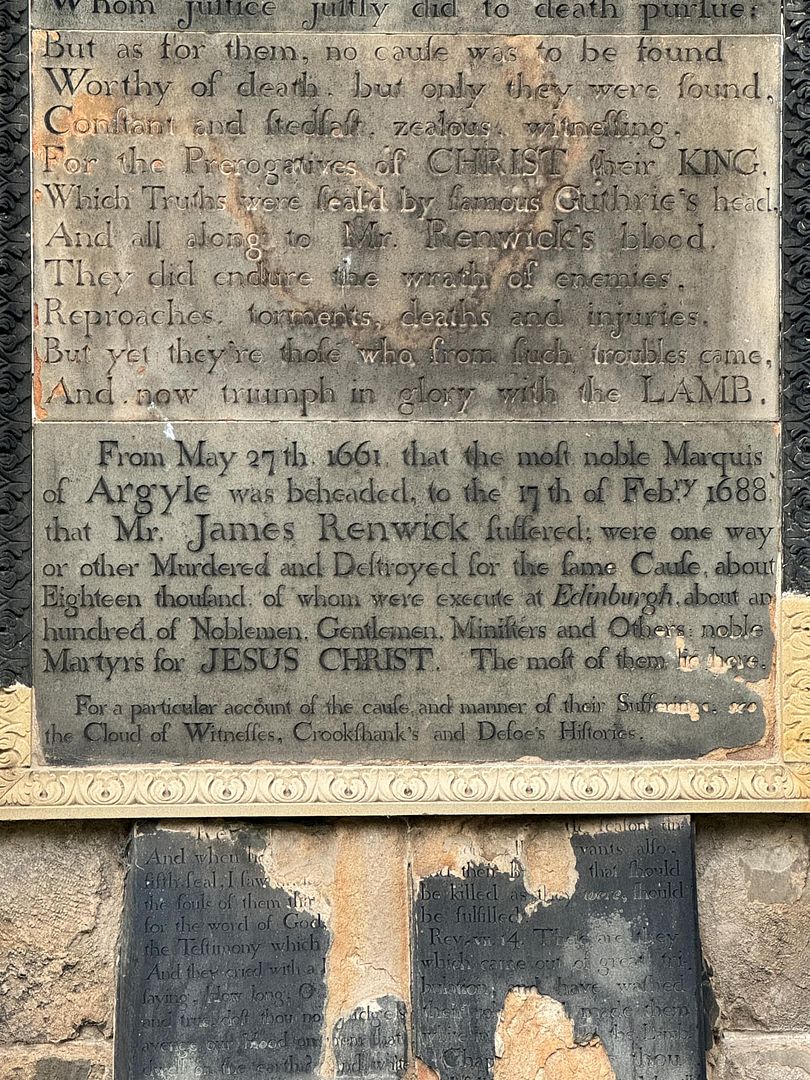
The Martyr’s Monument.

Halt passenger, take heed what you do see…’ The text then outlines the Covenanters’ cause ‘Gainst perjury, resisting unto blood: Adhering to the Covenants and Laws, their lives were sacrific’d unto the lust of Prelatiffs [bishops] abjur’d …’. The words ‘CHRIST their KING’ is deliberately written in large letters, designating their struggle against tyrant kings who wanted absolute power over Church and State. At the bottom of the monument, it states that ‘one way or other [were] Murdered and Destroyed for the same Cause, about Eighteen thousand of whom were execute at Edinburgh, about one hundred of Noblemen, Gentlemen, Ministers and others, noble martyrs for JESUS CHRIST.

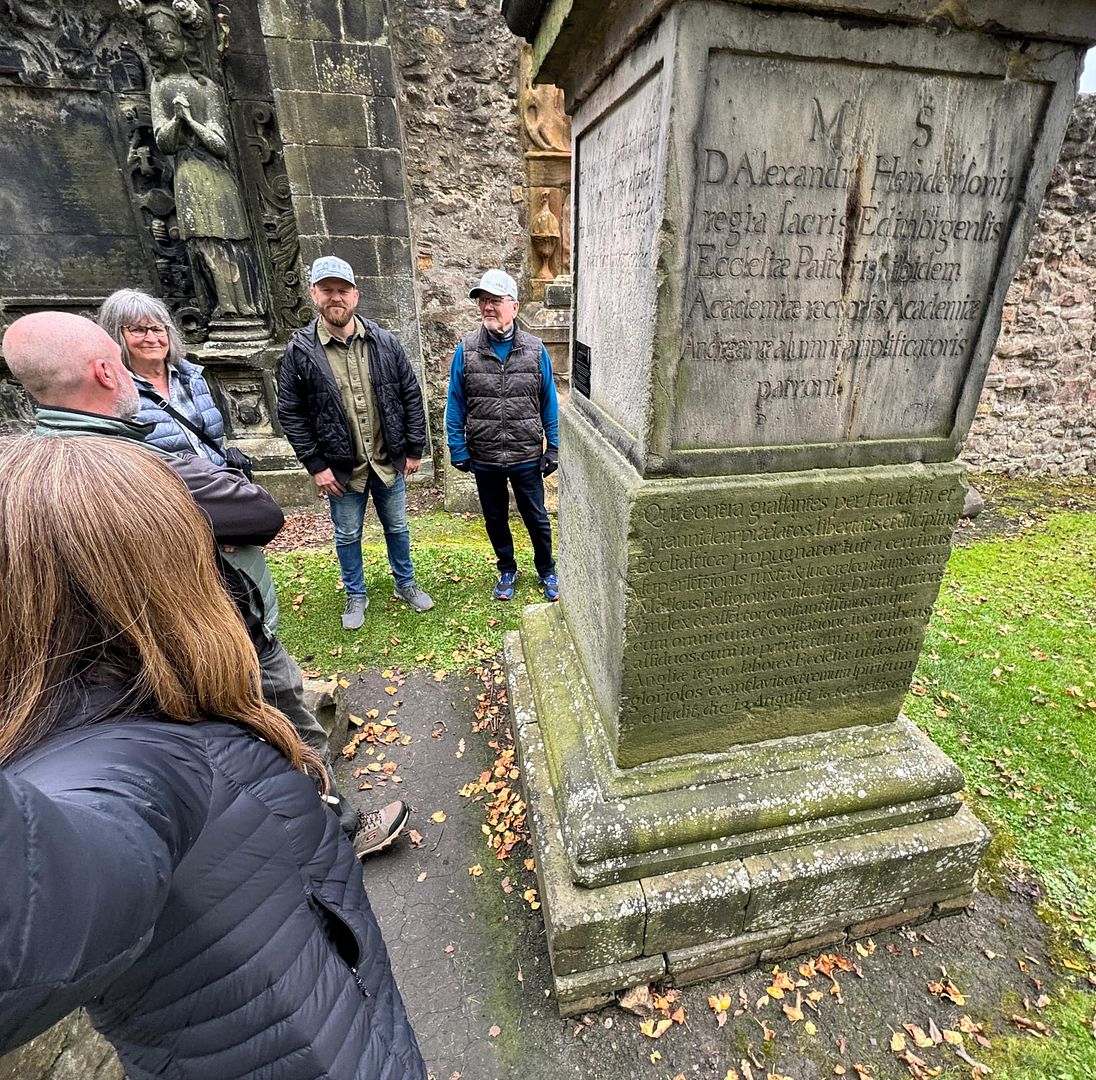
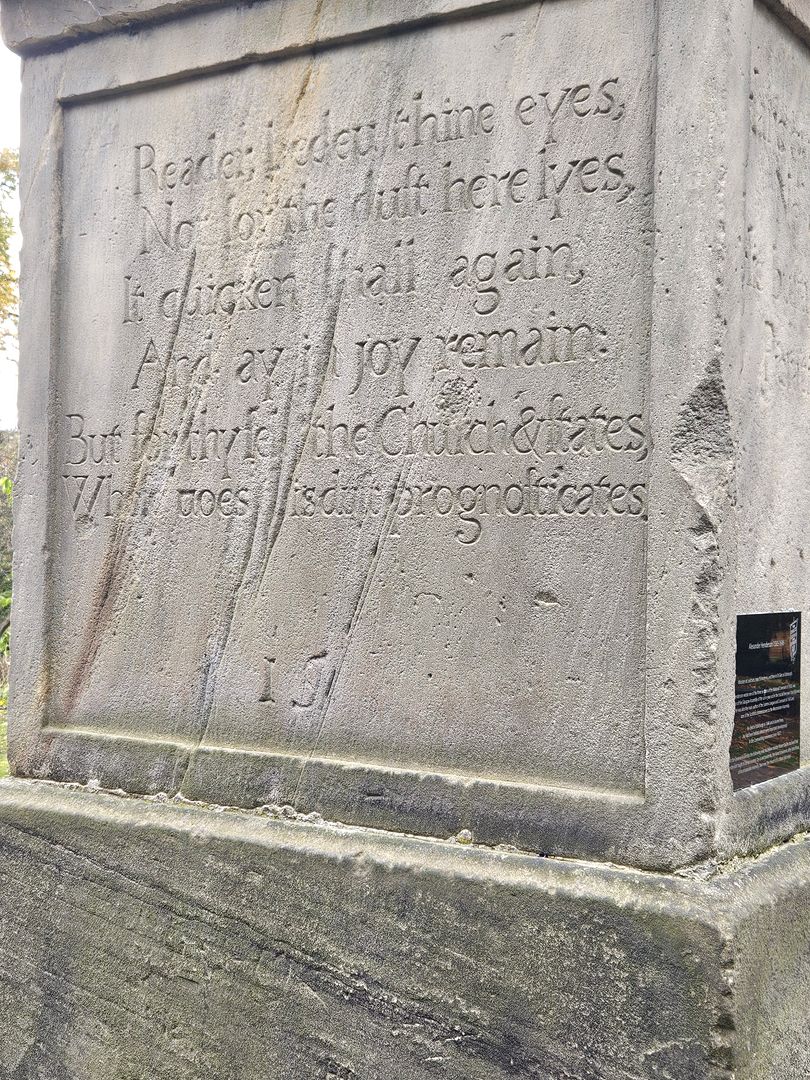
We heard about the Reverend Alexander Henderson at this site of his burial.

He was one of Scotland’s greatest Covenanter Ministers.

He died in Edinburgh in 1646 and was buried in Greyfriars kirkyard. He had been behind almost every important development in the Covenanting movement since 1637. At the General Assembly the following year, Baillie declared that Henderson ‘ought to be accounted by us and posterity, the fairest ornament, after John Knox, of incomparable memory, that ever the church of Scotland did enjoy.

Click on his name above to read more about the history of this ‘fairest ornament’.

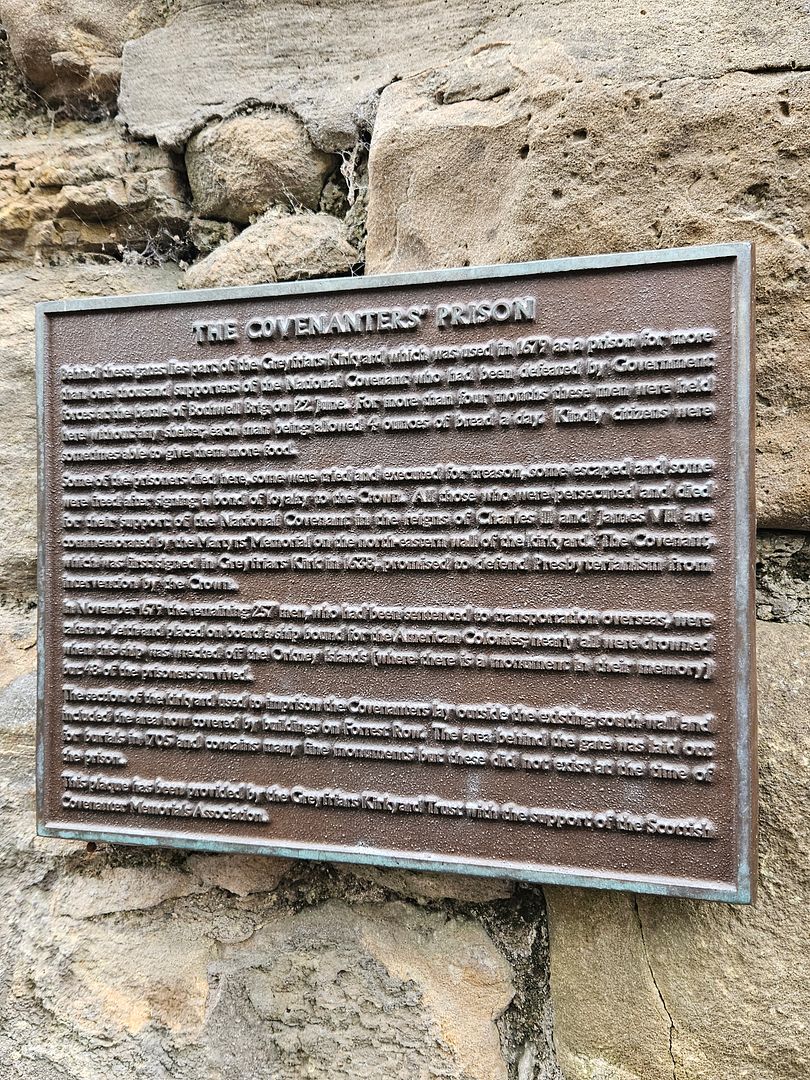
THE COVENANTERS’ PRISON
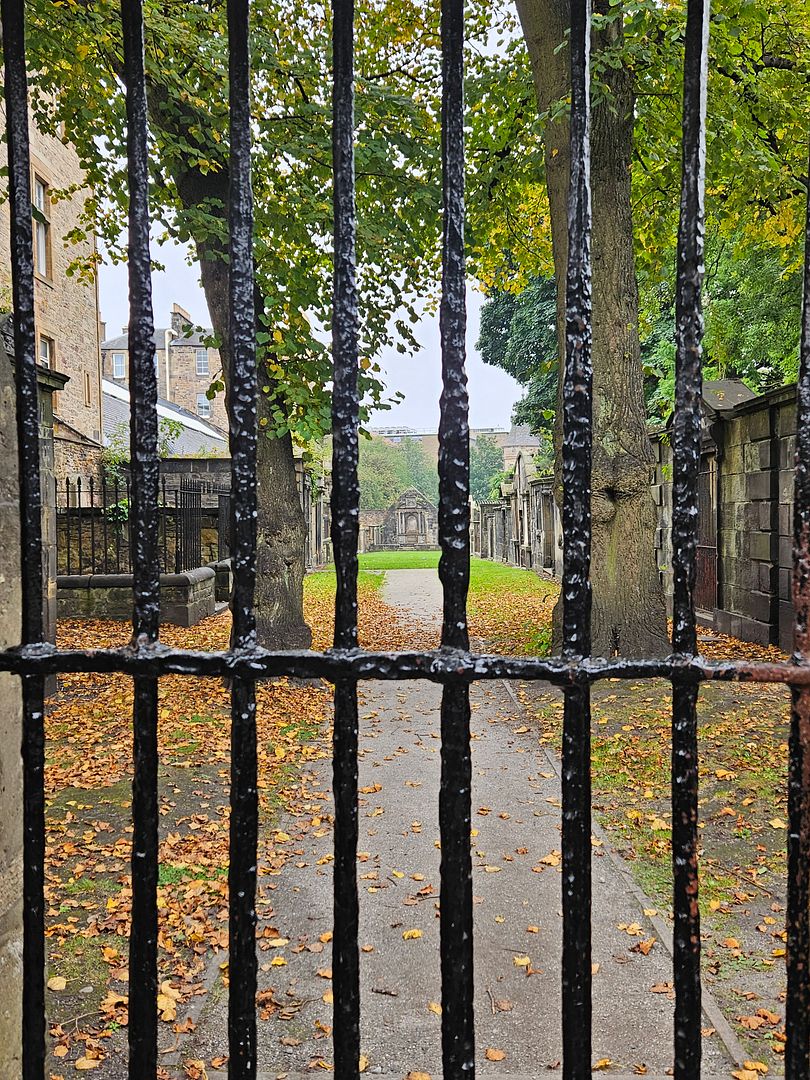
Behind these gates lies part of the southern section of Greyfriars Kirkyard which was used in 1679 as a prison for over one thousand supporters of the National Covenant who had been defeated by Government forces at the battle of Bothwell Brig on 22 June. For over four months these men were held here without any shelter, each man being allowed 4 ounces of bread a day. Kindly citizens were sometimes able to give them more food.

Some of the prisoners died here, some were tried and executed for treason, some escaped, and some were freed after signing a bond of loyalty to the Crown. All those who were persecuted and died for their support of the National Covenant in the reigns of Charles II and James VII are commemorated by the Martyrs’ Memorial on the north-eastern wall of the kirkyard. The Covenant, which was first signed in Greyfriars Kirk in 1638, promised to defend Presbyterianism from intervention by the Crown.

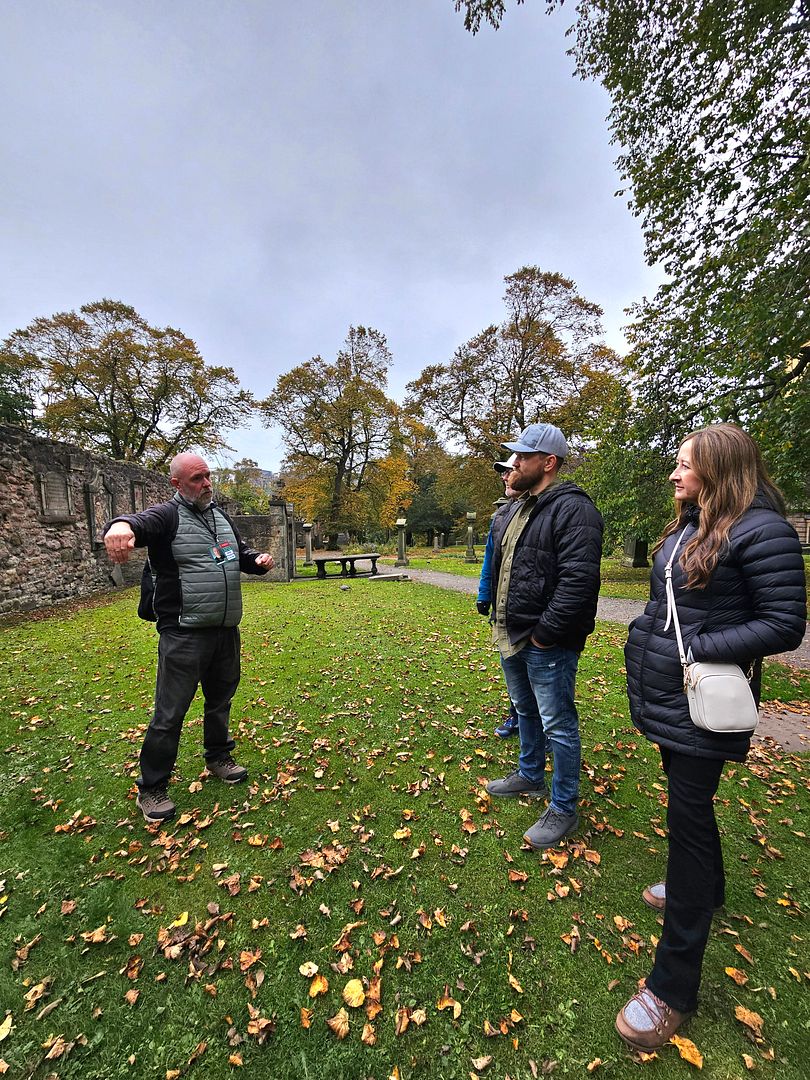
Jimmy our tour guide, was so knowledgeable and we were in awe of all that we were learning on this tour.

Our last stop with Jimmy would be St. Giles Cathedral. Such a fitting end to this amazing tour of the Covenanters in Edinburgh. It was a humbling experience.

That will be another post.

Scotland Travel Journal ~ Edinburgh Reformation Tour 1

Monday September 23rd was our last full day in Edinburgh and Scotland. This would be a day filled with walking and stairs and information. We were thankful on this morning that Greg was well enough to walk and not miss our special tour.
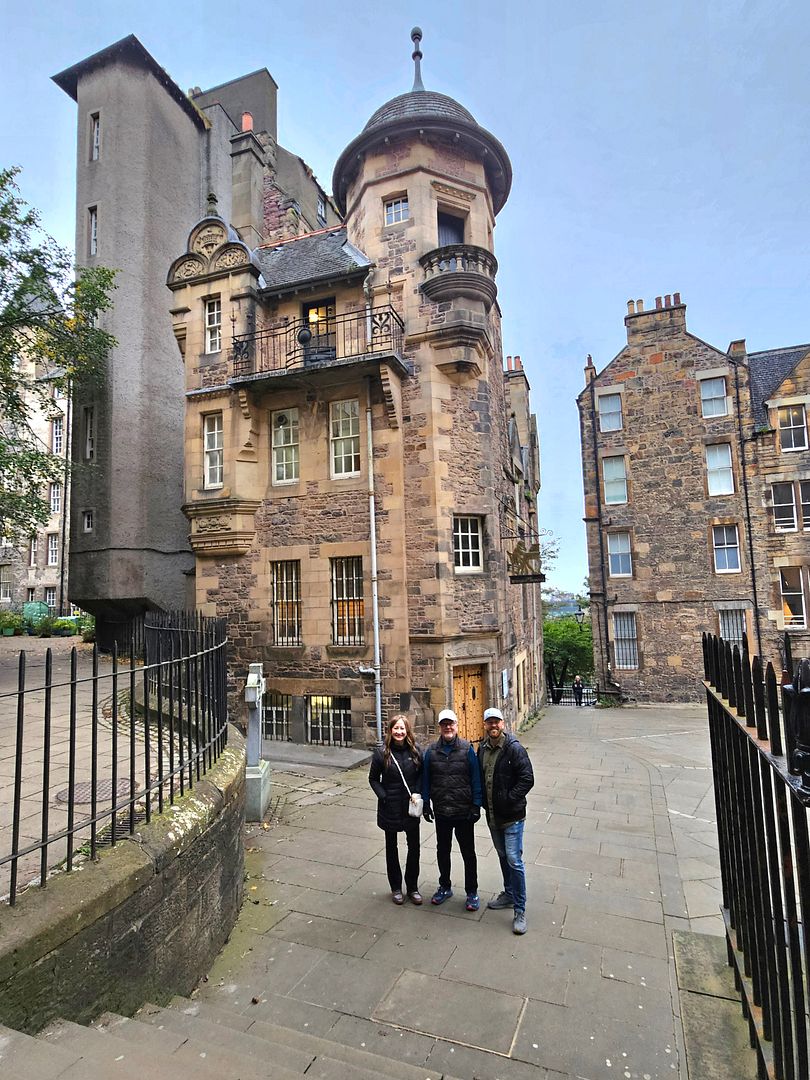
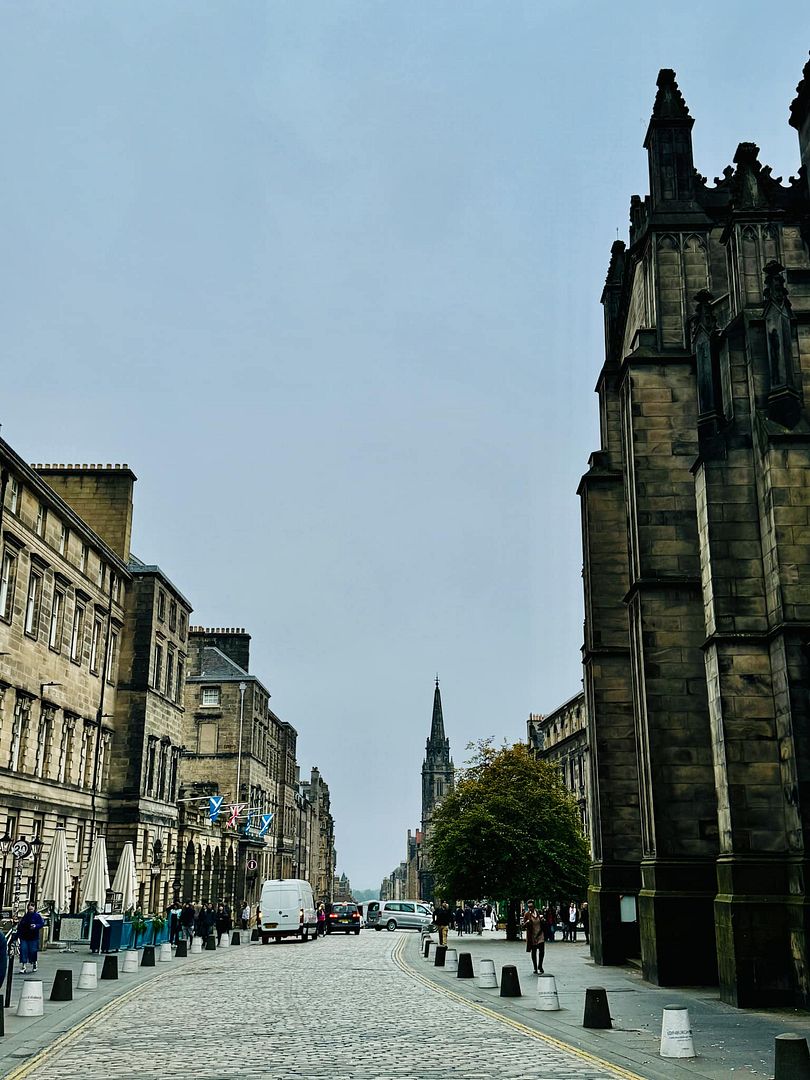
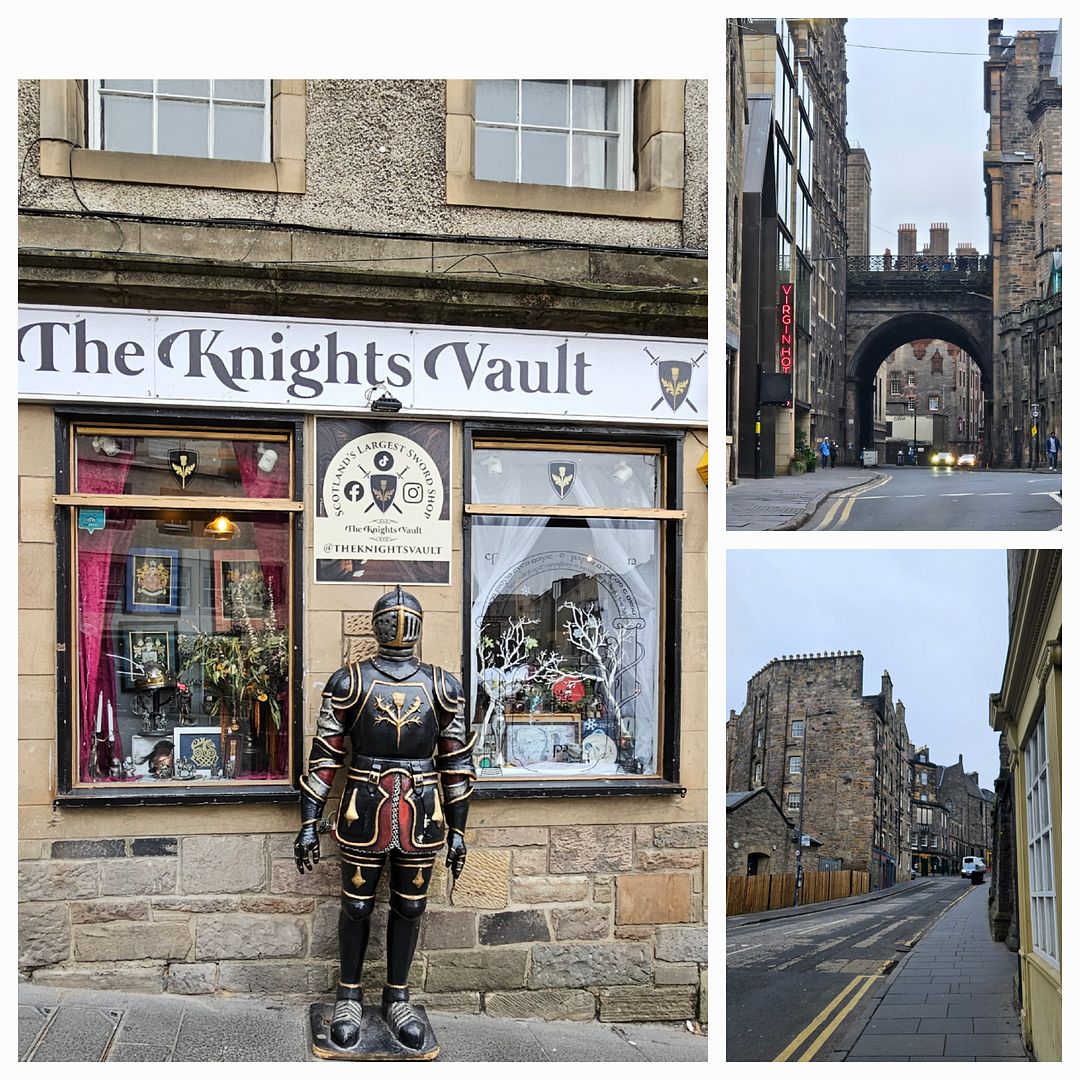
We took the Lady Stair’s Close to get up to the Royal Mile. We stopped to take some photos outside the Writer’s Museum.
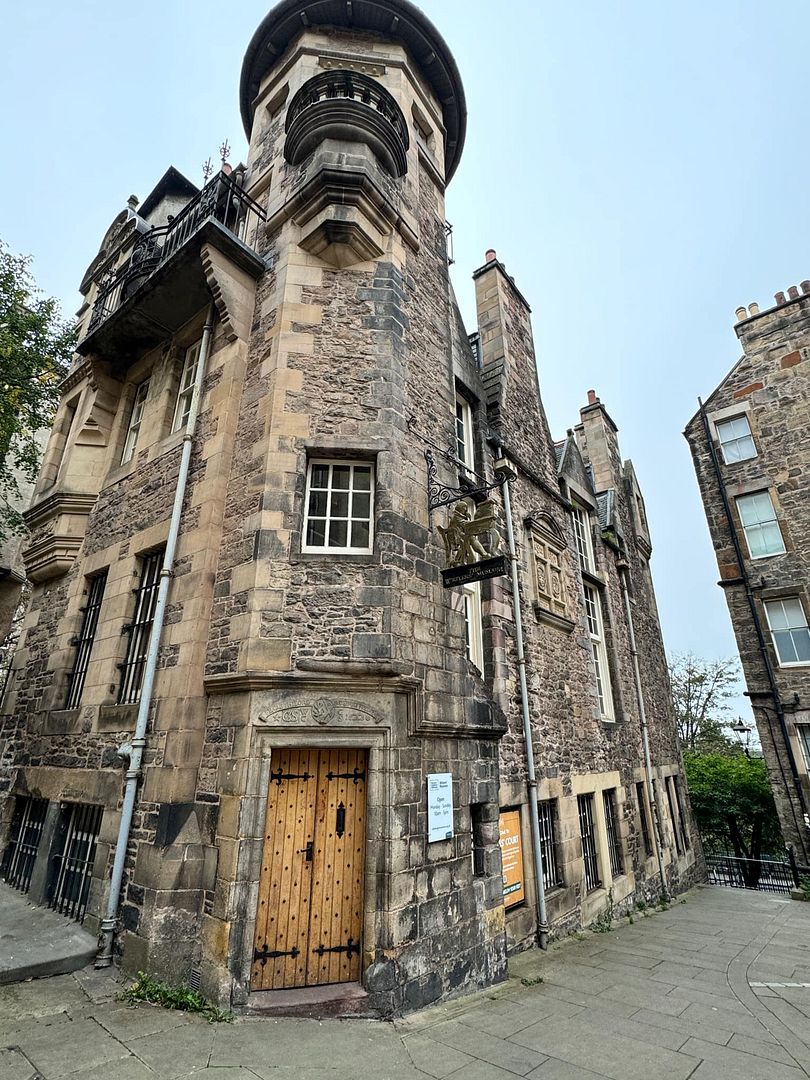
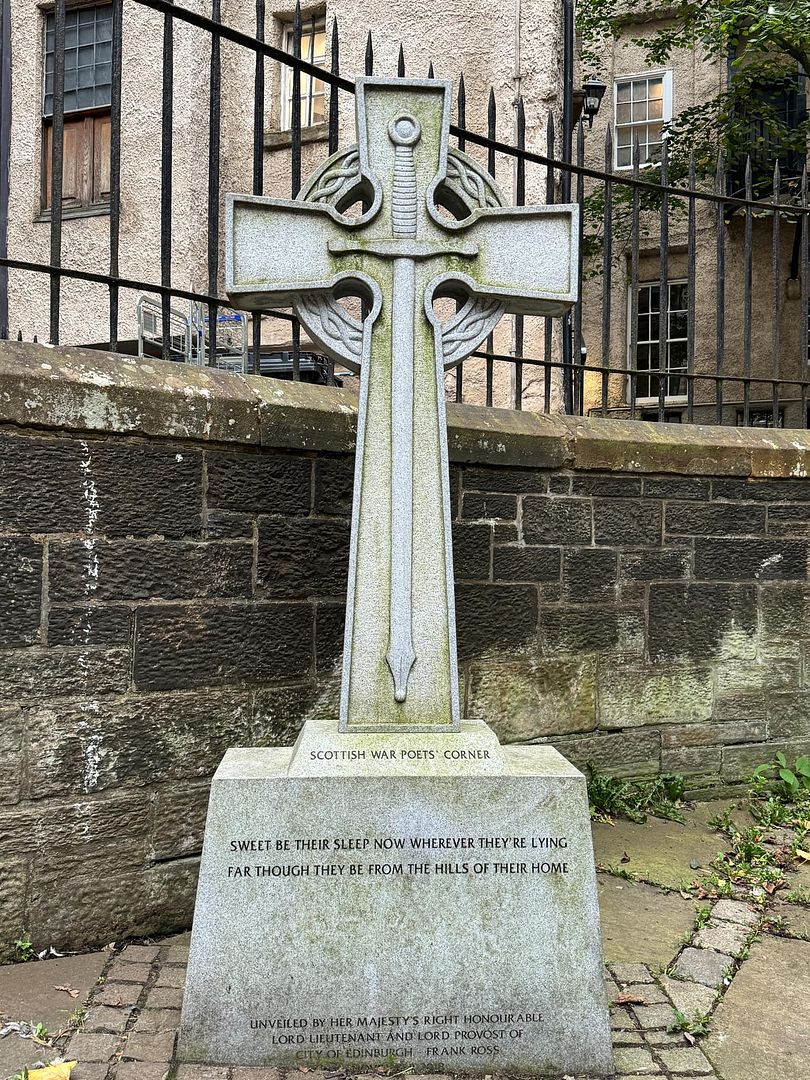
Early on the Royal Mile there were fewer folk milling about. That would change soon.
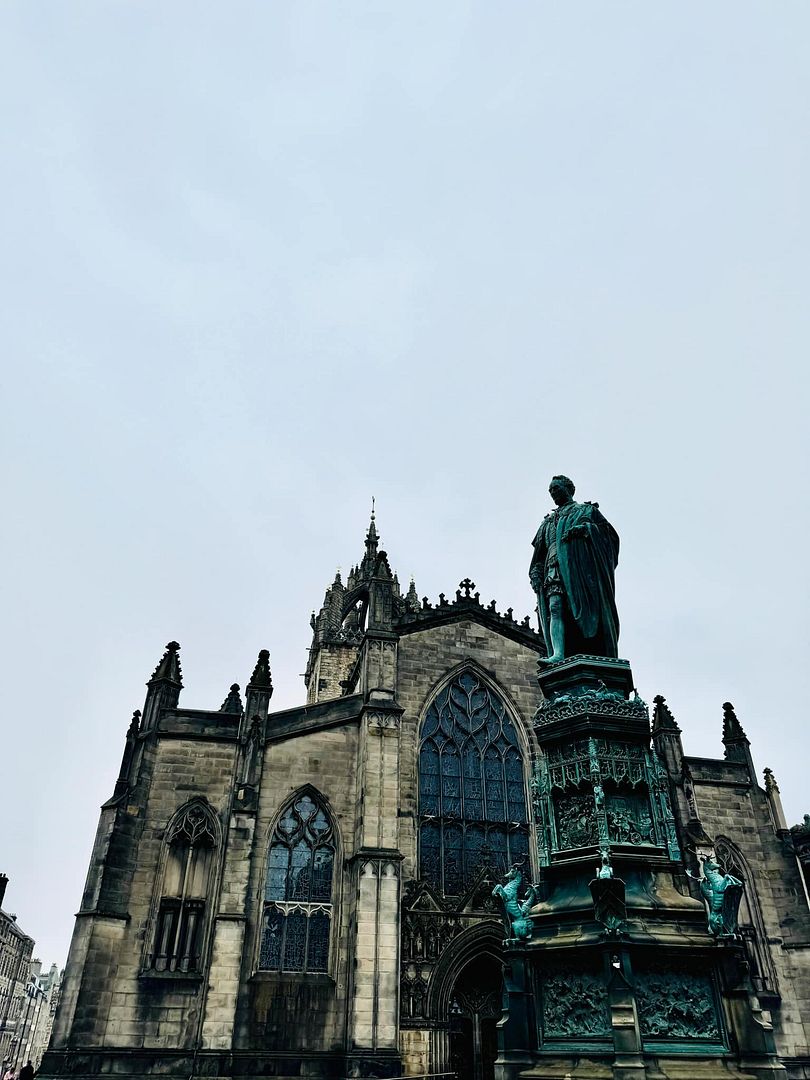
We scheduled a private Scottish Reformation Tour on this day.

I included the link above. We were to meet Jimmy at 9am in front of St. Giles Cathedral.
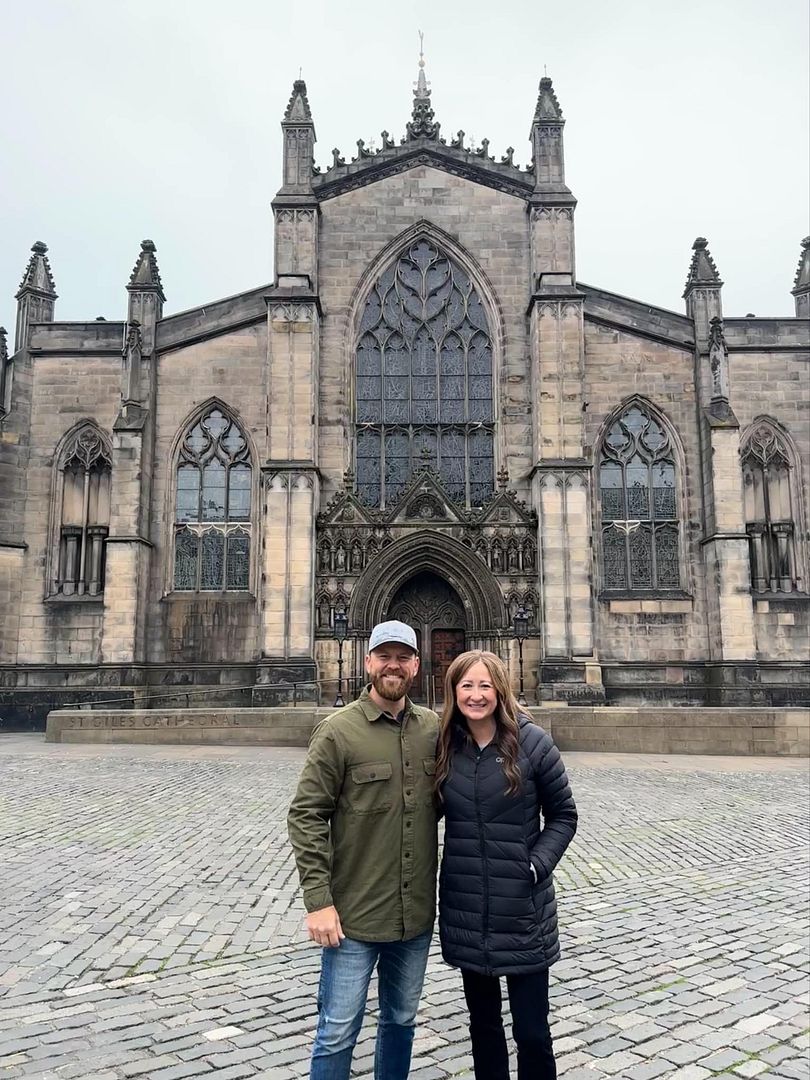
Soon we saw who we assumed was Jimmy and he came right to us assuming we were his clients for the morning.
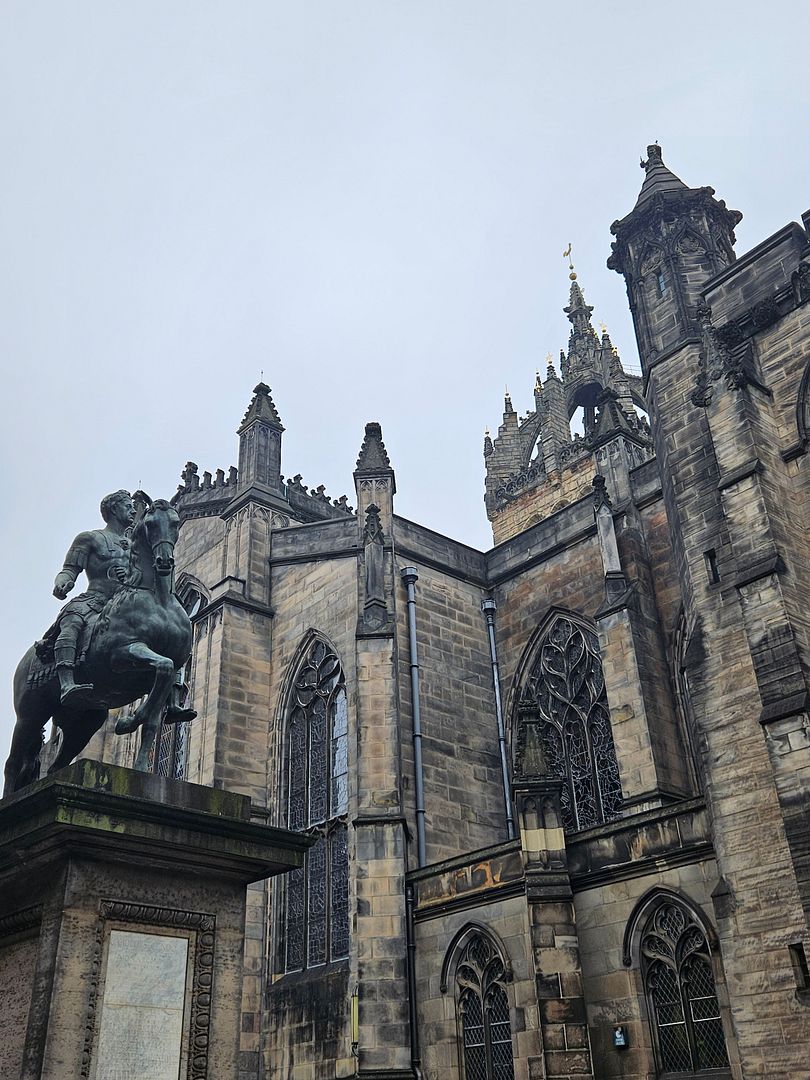
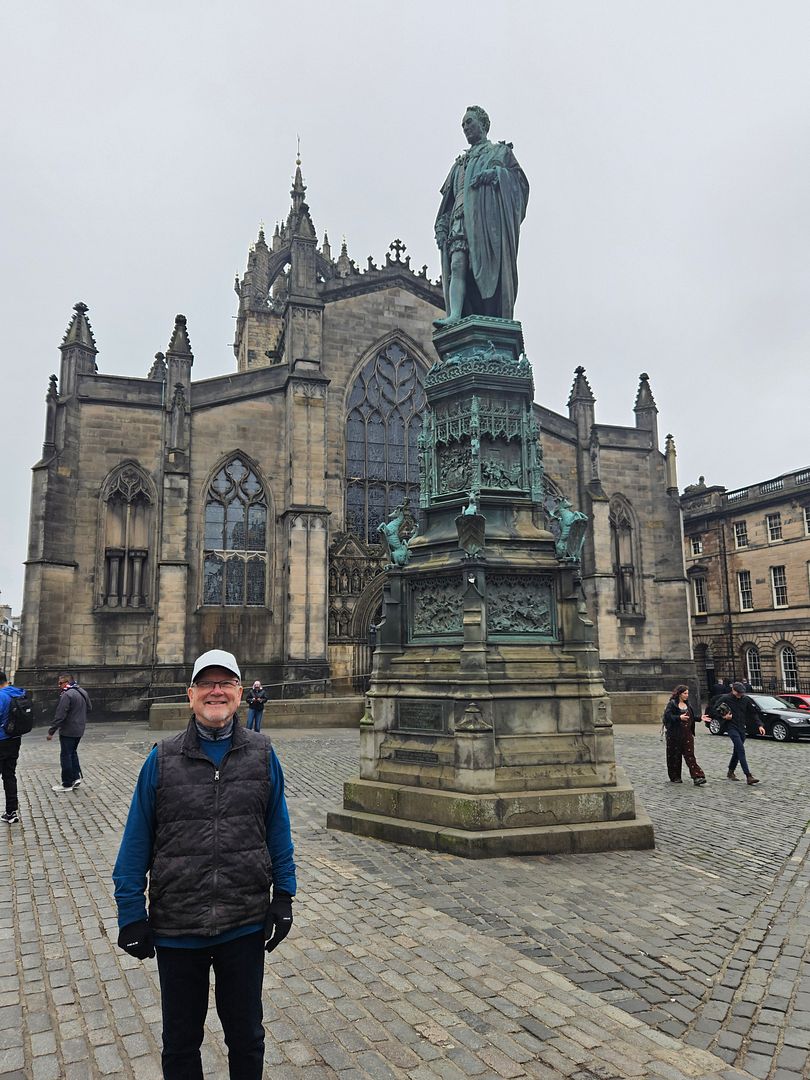
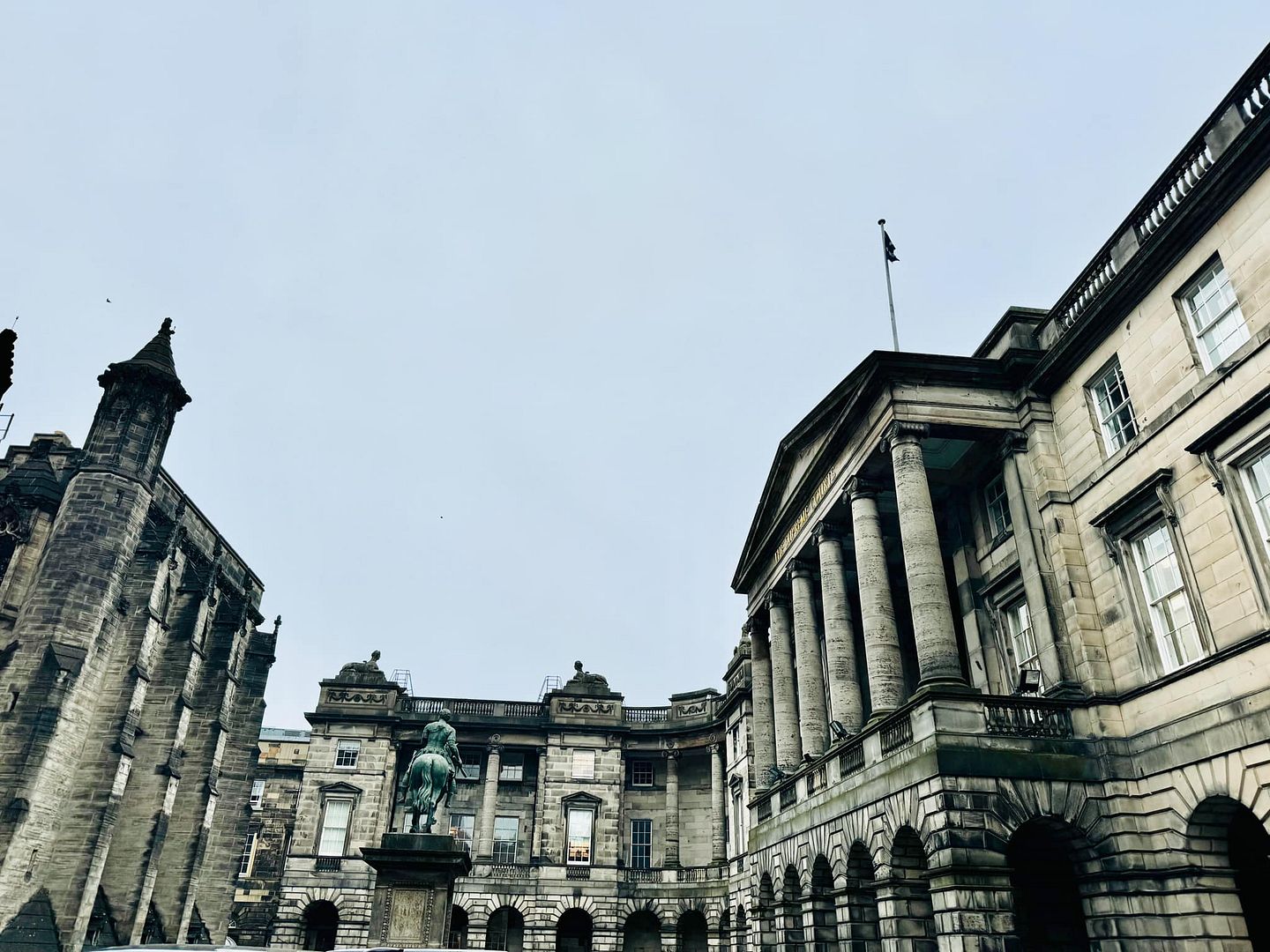
St. Giles was not open to the public yet on this particular morning so Jimmy took us around to the parking lot between St. Giles and The Supreme Court building. We would visit the inside of the cathedral at the end of our tour.

It looked to Jimmy’s keen eye that something was going on in the Supreme Court building so he managed to gain us access into the hall outside the courtroom.
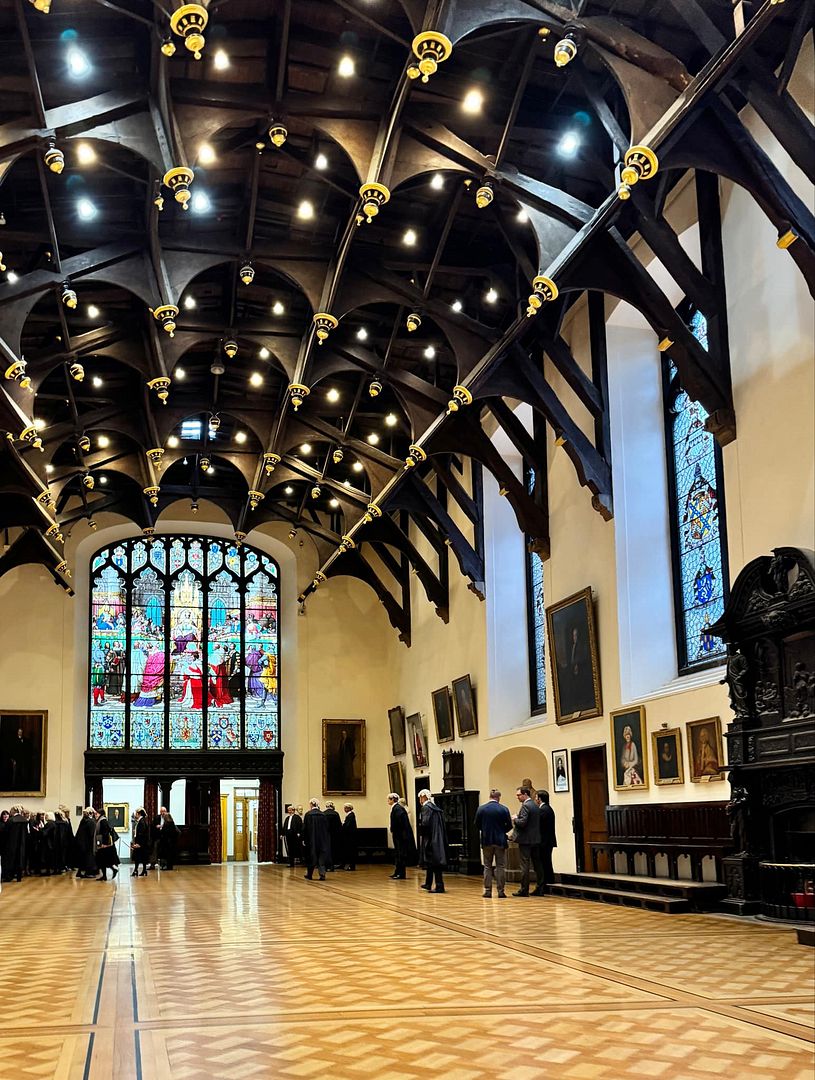
It was quite fascinating to see all the ‘big wigs’ standing around and some pacing back and forth the length of the room discussing their cases.

Back outside we were on the search for parking space #23.
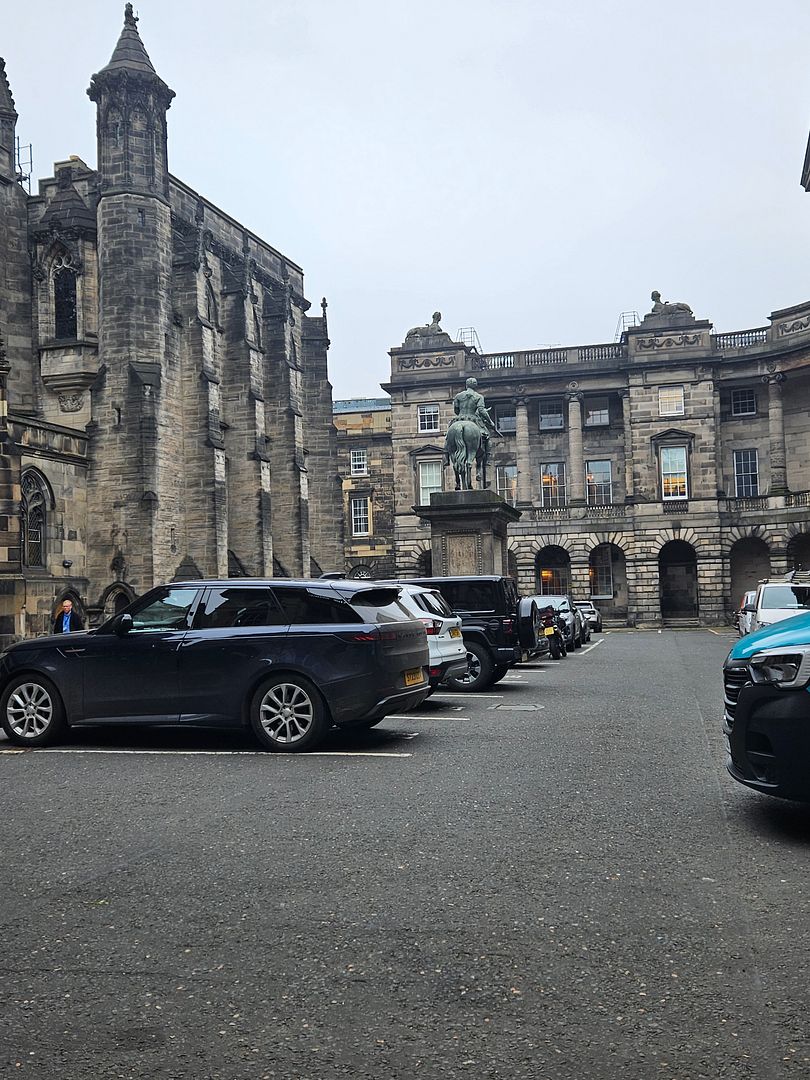
Here at space number 23 in the car park is approximately where John Knox is buried!
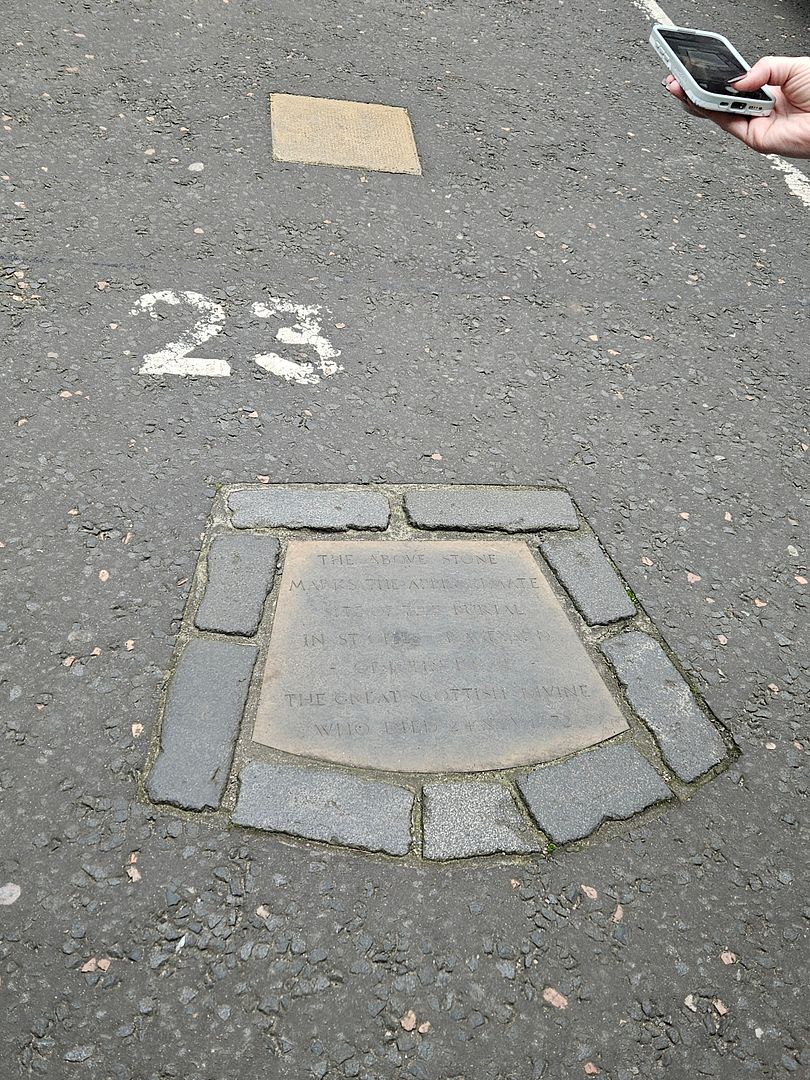
The Scottish Reformation leader’s grave was paved over and is now a parking lot. The stone inscription reads;

‘The Above Stone Marks

the Approximate

Site of the Burial

In St. Giles Graveyard

Of John Knox

The Great Scottish Divine

Who Died 24th November 1572′

It’s said that Knox wanted to be buried within 20 feet of Saint Giles, so he was laid to rest right outside the church in what was once a proper graveyard. However, the site has since been tarmacked over and is now a functioning parking lot. A plaque in parking space number 23 marks the approximate location of his now-lost grave.

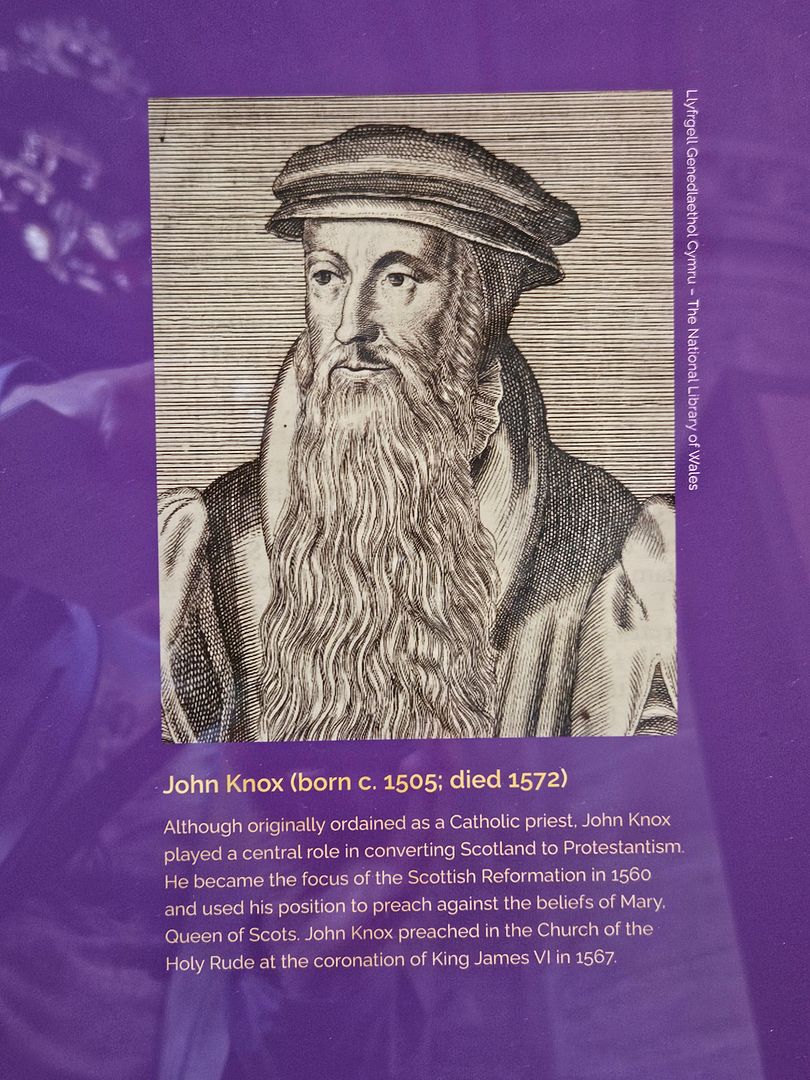
Knox was a 16th-century preacher who commanded that his people be able to read the Bible in their own language. He was a key figure in turning a nation of Catholics into one of Protestants. His fire and brimstone sermons and teachings often put him at odds with the Catholic Mary, Queen of Scots.
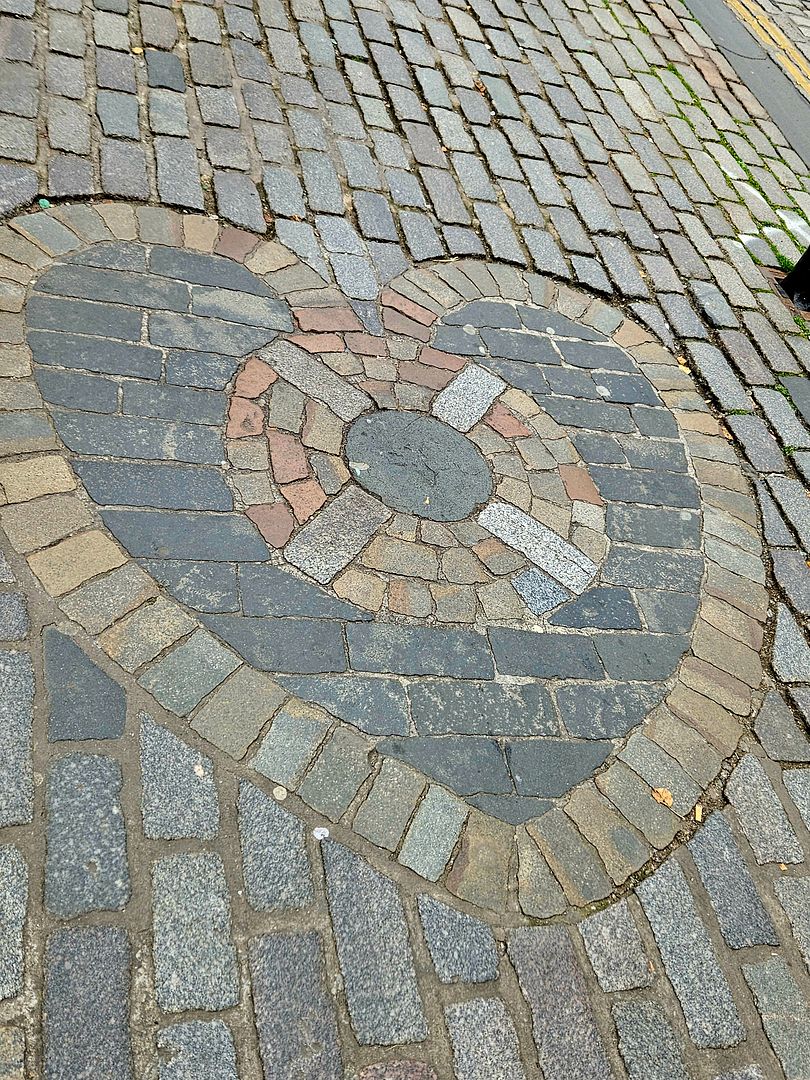
On our walk to Victoria street we came across this Famous Heart.

The Heart of Midlothian is both a historic mosaic dating to the Middle Ages and a landmark that denotes the location of Edinburgh’s Old Tolbooth administrative building. Locals often spit on the sign as a good luck charm, a tradition that has morphed from its original meaning of disdain for the many executions that took place at this site over the years. The Heart of Midlothian F.C., the local soccer club, takes its name from the mosaic and the Old Tolbooth.

The Heart was installed as part of a replacement building to the Old Tolbooth in 1561, and after this second building was demolished in 1817, the Heart was all that remained. It has been an inspiration for the writings of Sir Walter Scott and has become an iconic part of the city’s culture and historic identity – even if many now don’t remember its true origins.

FYI: Tolbooth is a Scottish term that refers to a townhall, jail or guildhall where tolls are collected.

From here we walked down Victoria Street to Grassmarket.

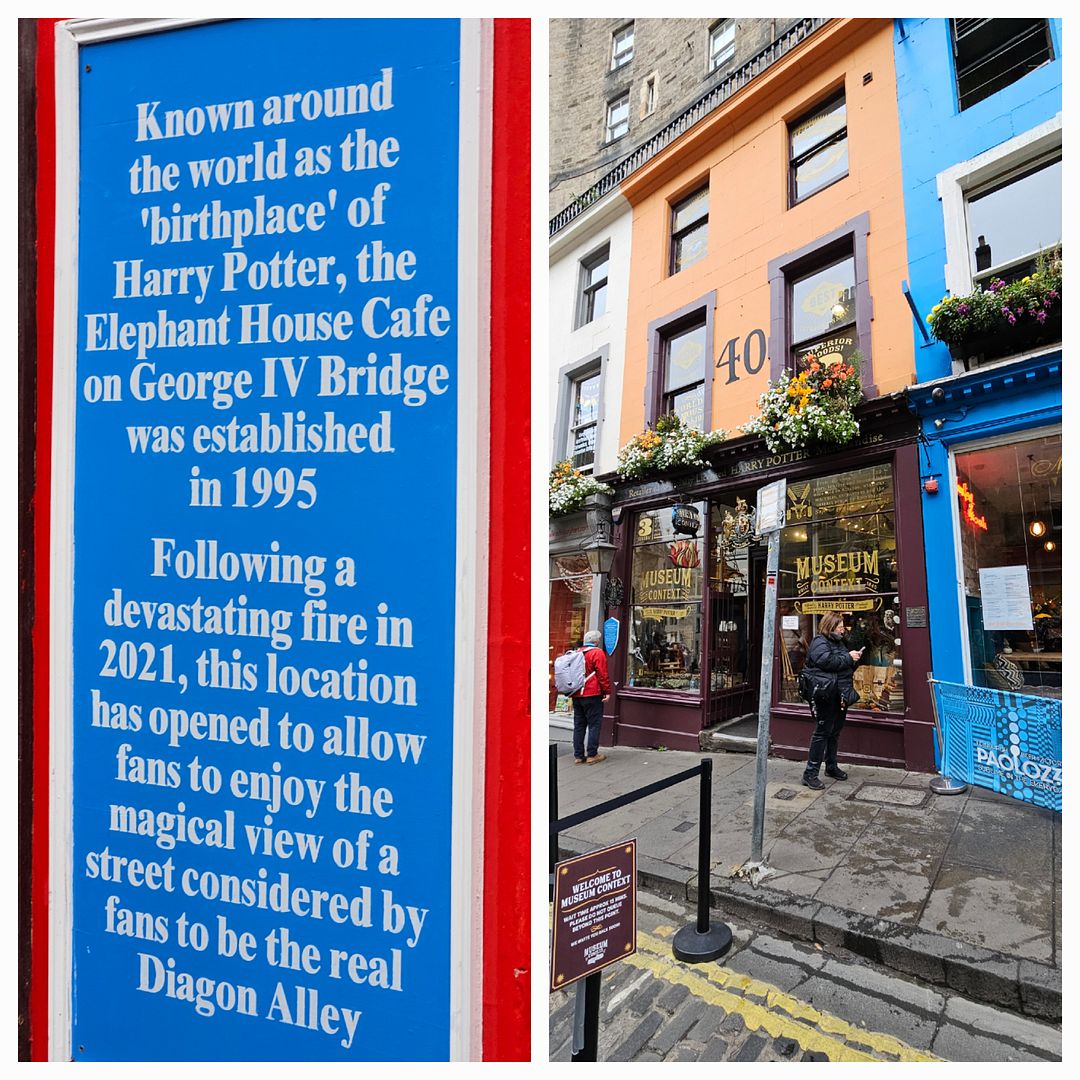
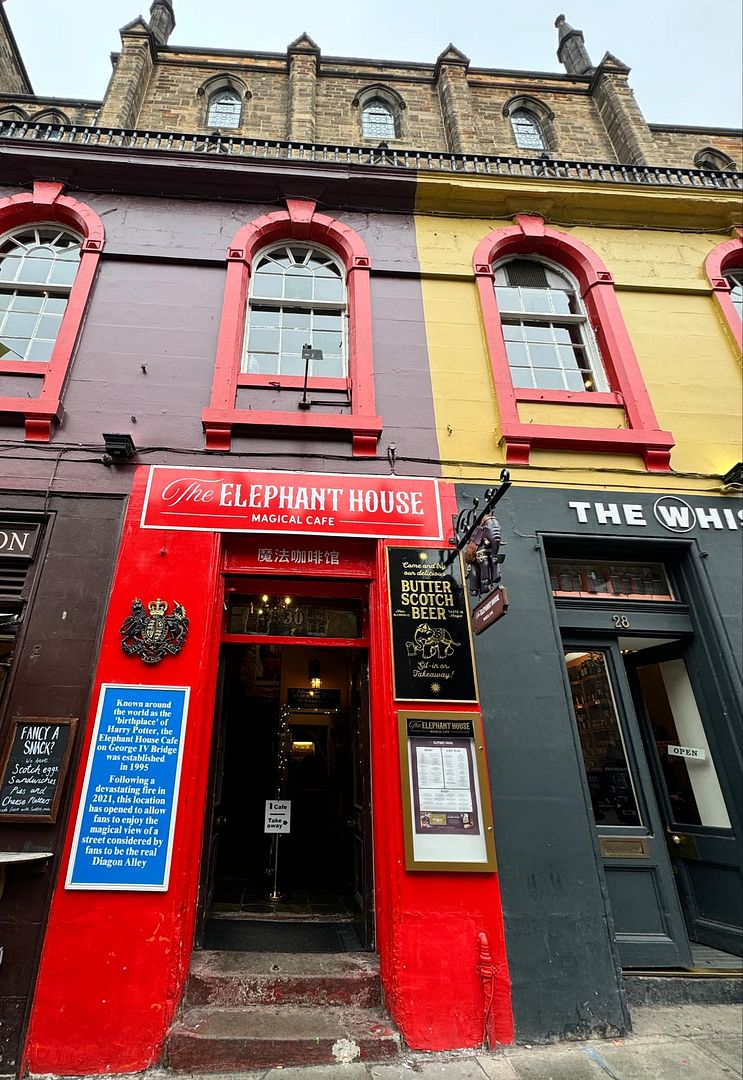
Victoria Street is said to be an inspiration for Diagon Alley in the Harry Potter books but J.K. Rowling denies that it is. Nonetheless fans flock here and stand in line to get in the museum on this colorful street.
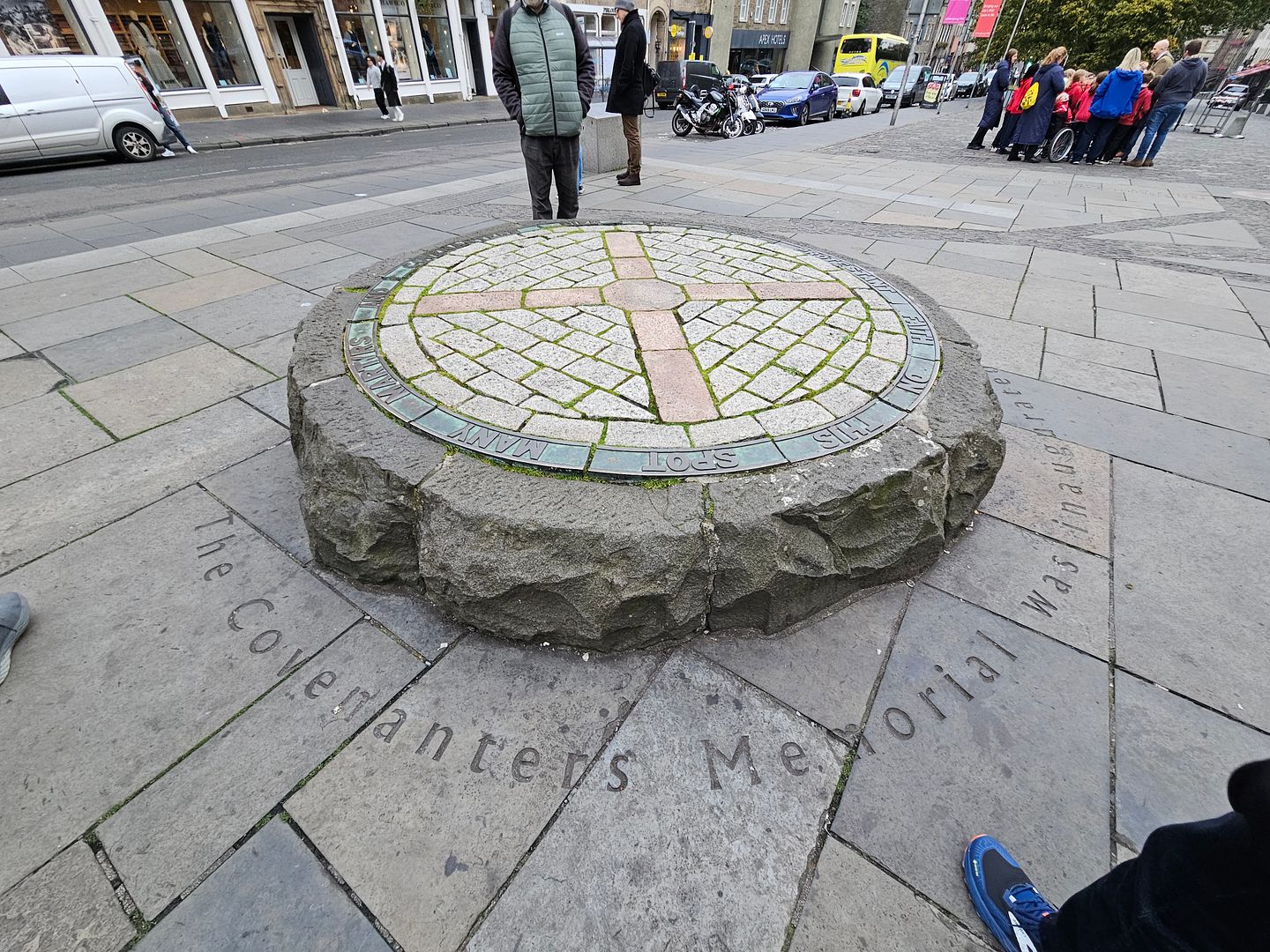
This is where the ‘meat’ of our Reformation Tour began as we were told that this was the route that martyrs would take from their sentencing in the courts above then down Victoria Street to the public gallows. Once we reached Grassmarket we stood around this monument to Martyrs and Covenanters who lost their lives at this spot for their faith.
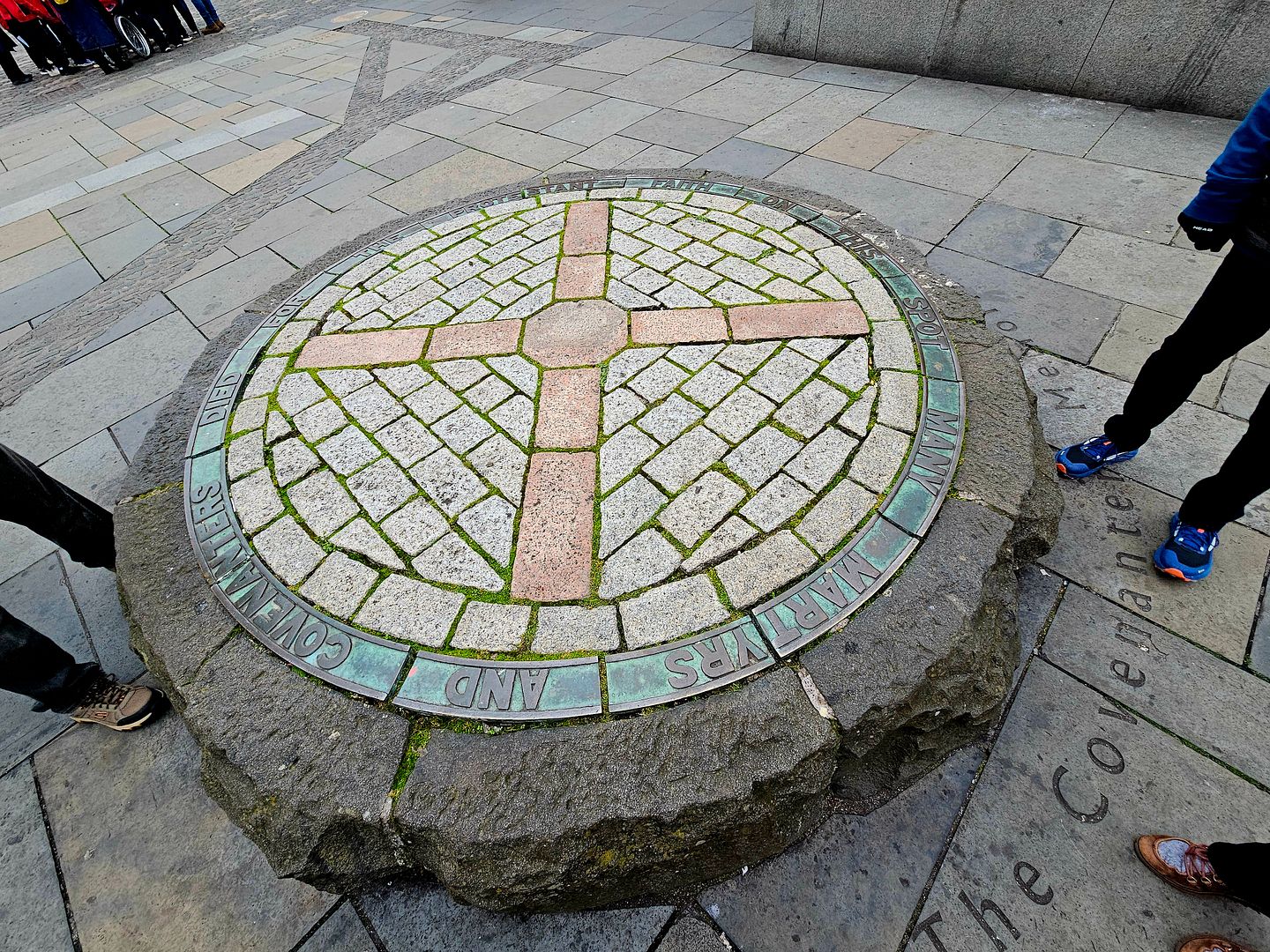
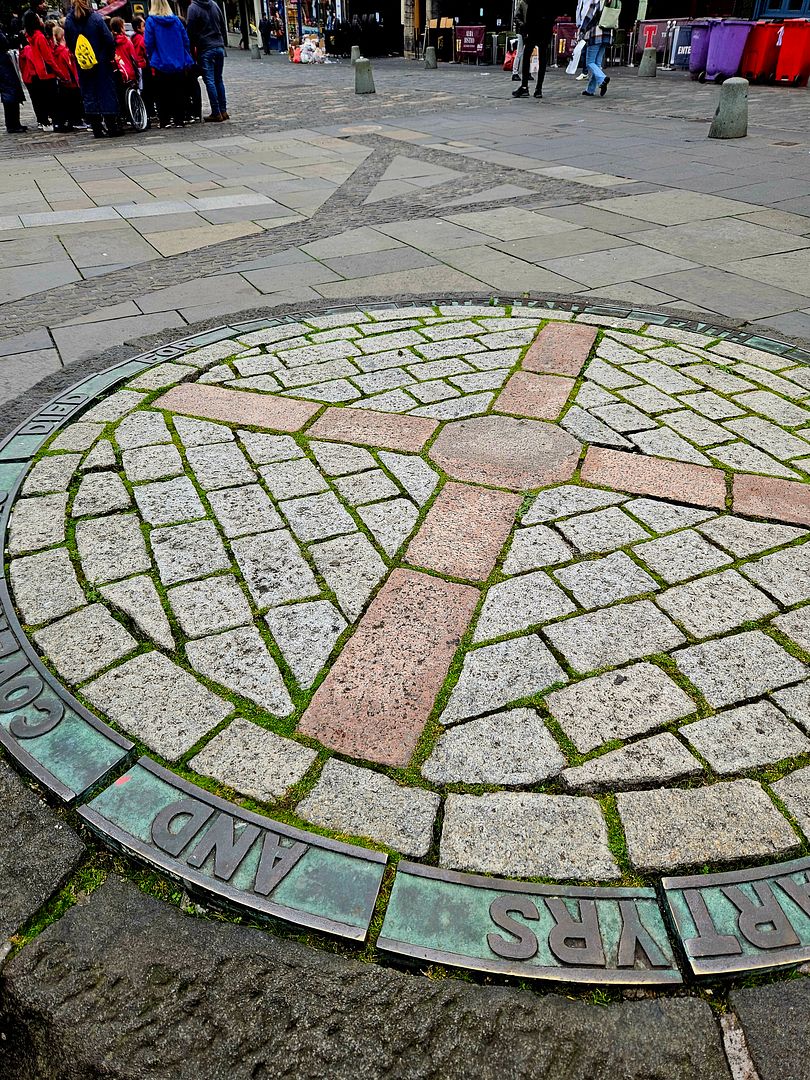
The Grassmarket is an wide open street on the south side of Edinburgh’s Old Town. The city had the public gallows there, and many Covenanters were executed during the Covenanting period.

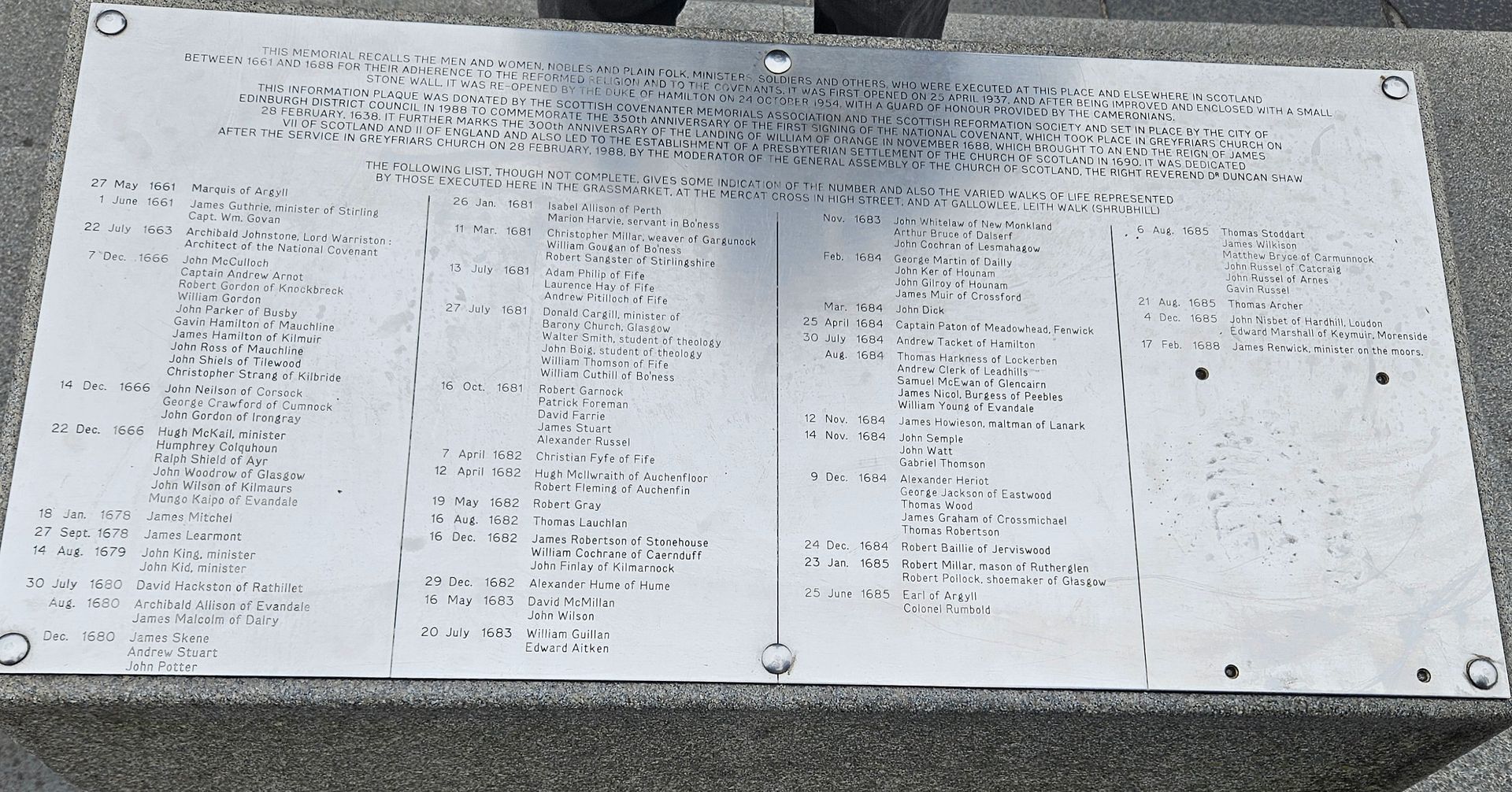
A circular memorial, erected by public subscription in 1937, marks the site, and an adjoining plaque lists the names of the many Covenanters who were hanged there.

In a recent renovation of the locality, a representation of the gallows’ shadow was made on the ground using different coloured stone, as seen in the picture to the left.
Our tour continued from here. We made stops at Greyfriars Kirkyard, The National Museum, The National Library and St. Giles Cathedral.

At this stage in January, many months later, I’m not sure of the order of those stops! Travel failure in not writing a journal while on our trip. I’ll put it down to the fact that our days were so full we didn’t have a lot of down time in the evenings.

Hello to February. I was hoping to have our Scotland Journal Posts done by the end of January but it will take a few days into February to accomplish that.
Scotland Travel Journal ~ Dunfermline 3

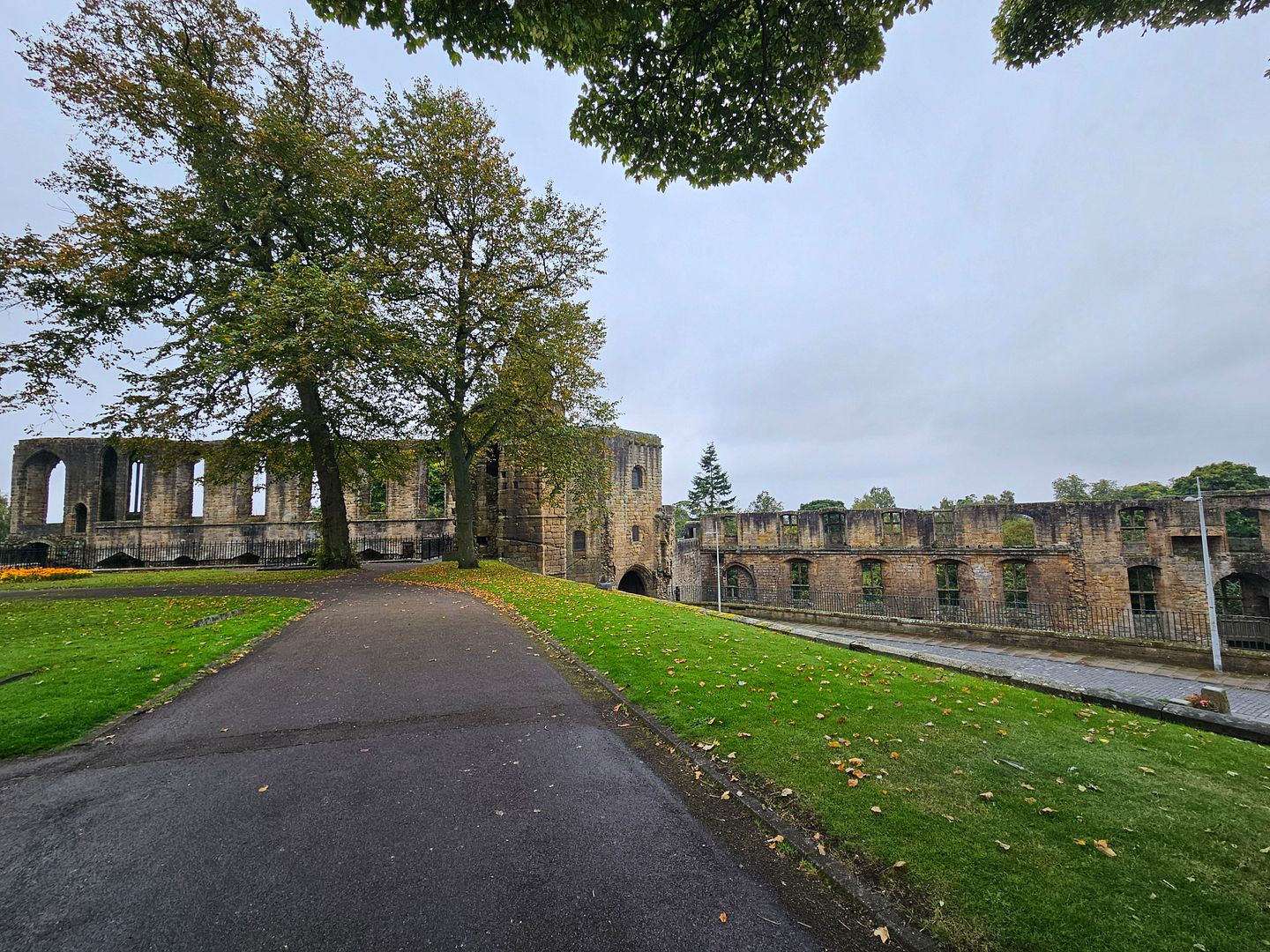
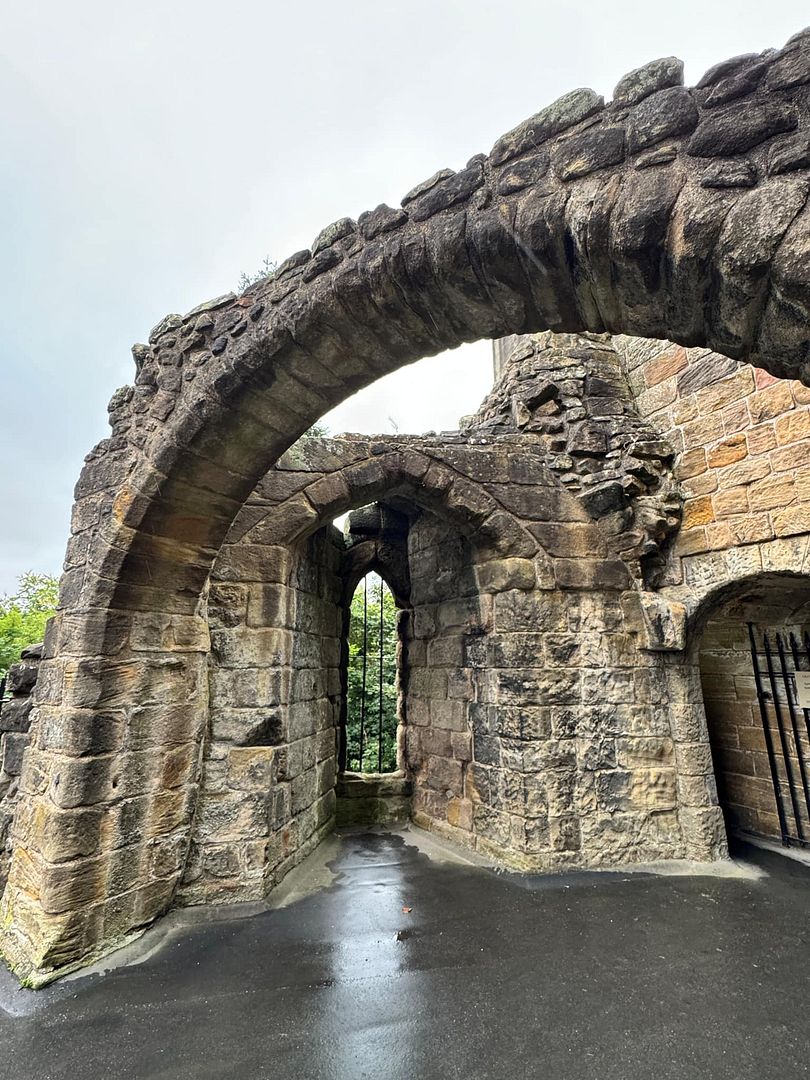
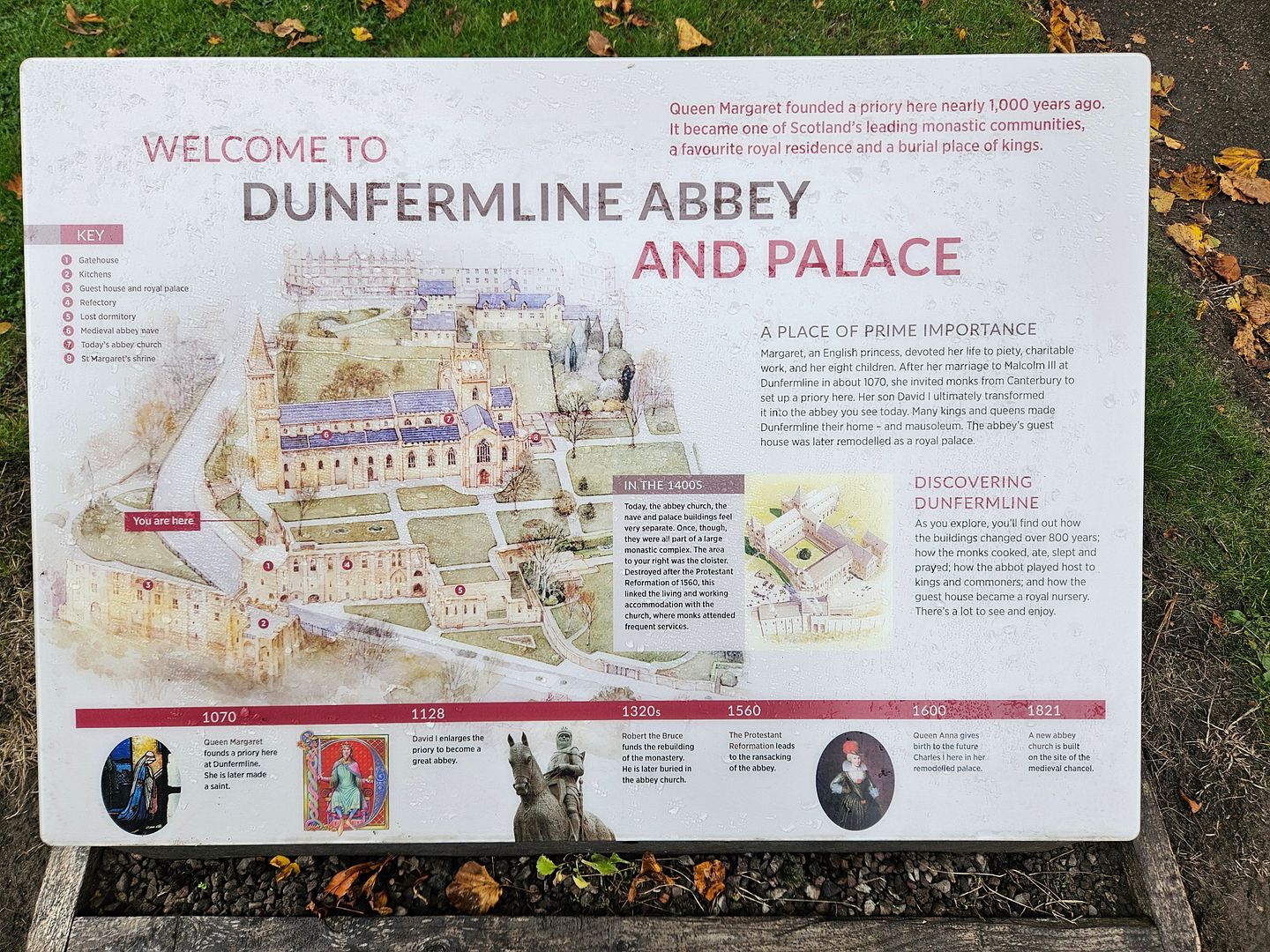
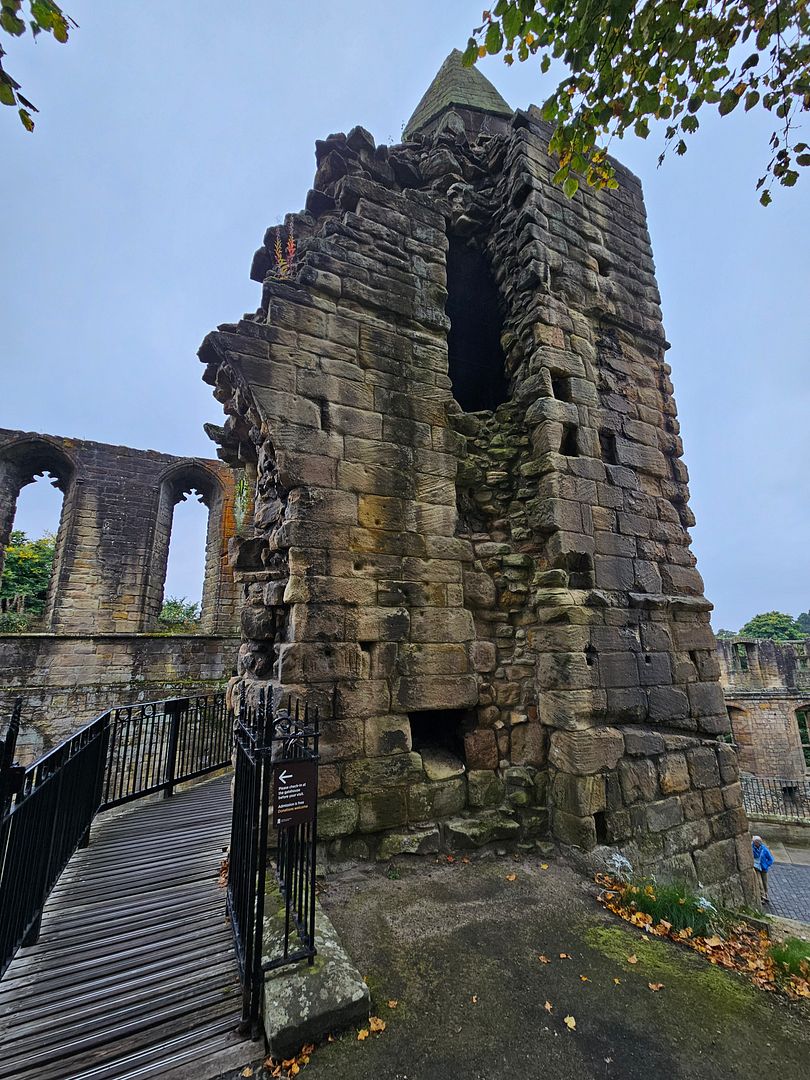
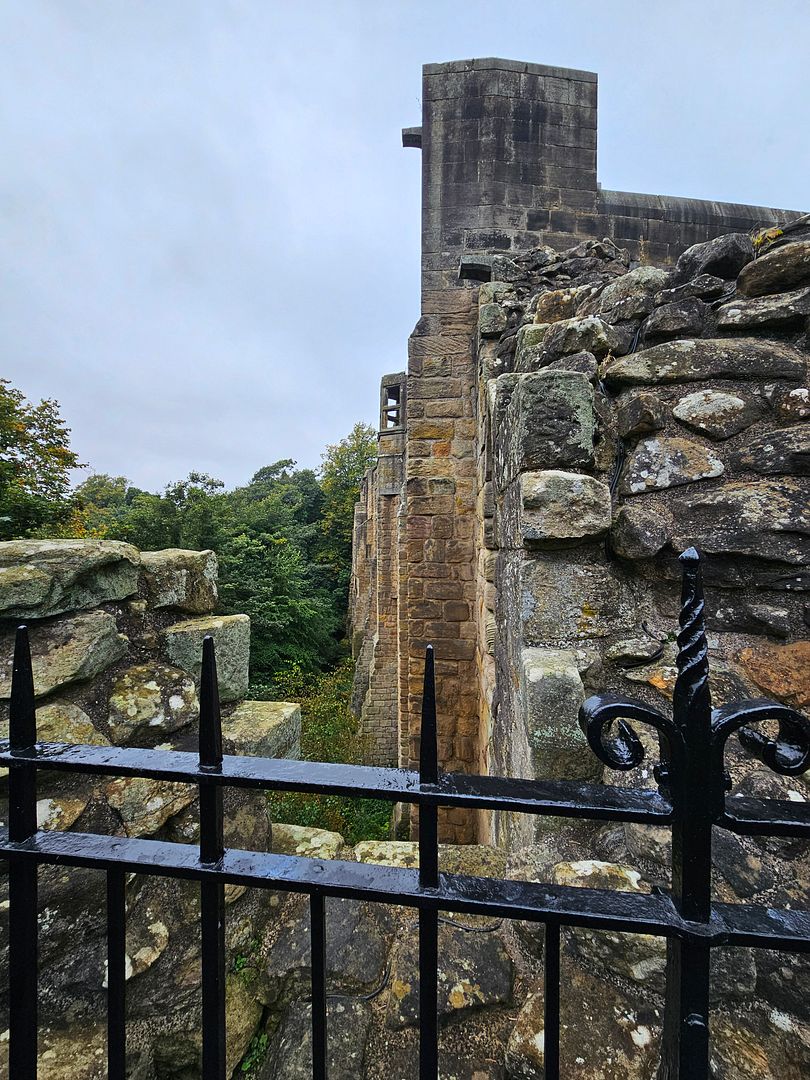
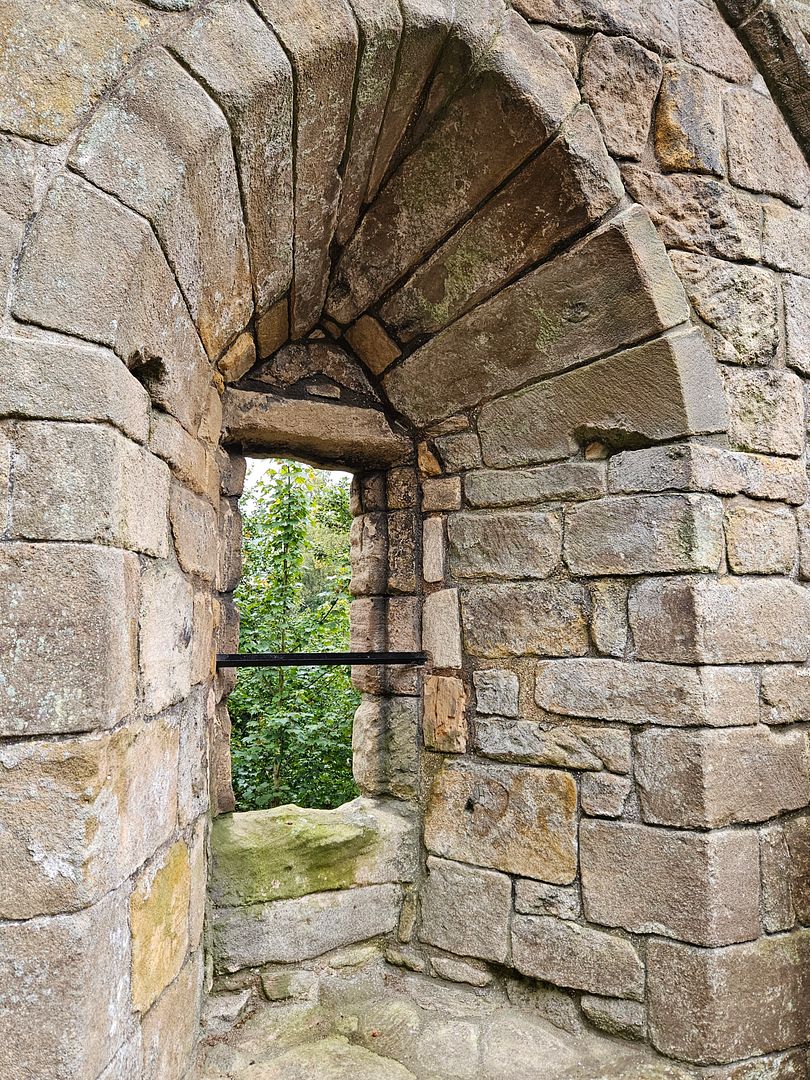
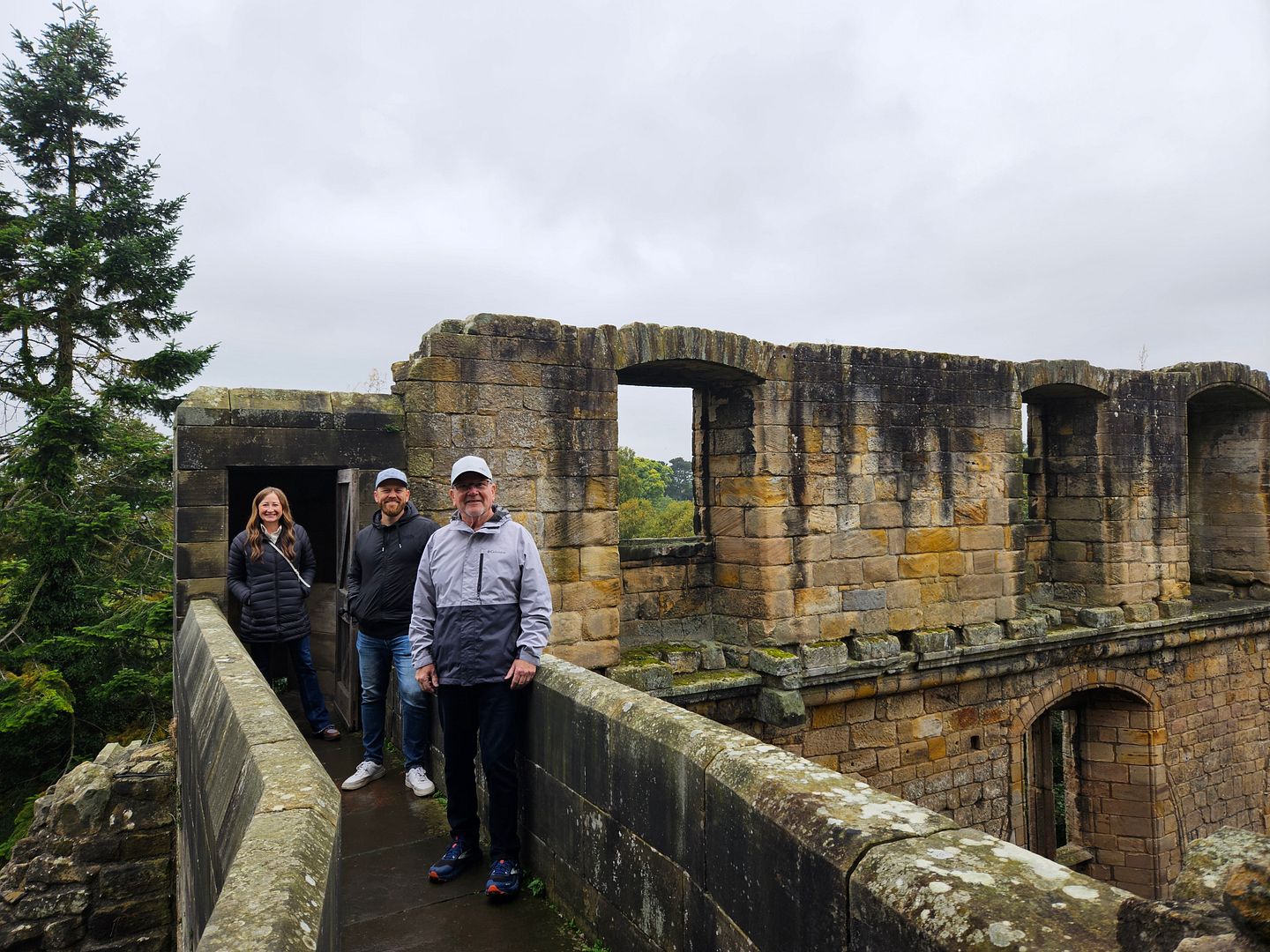
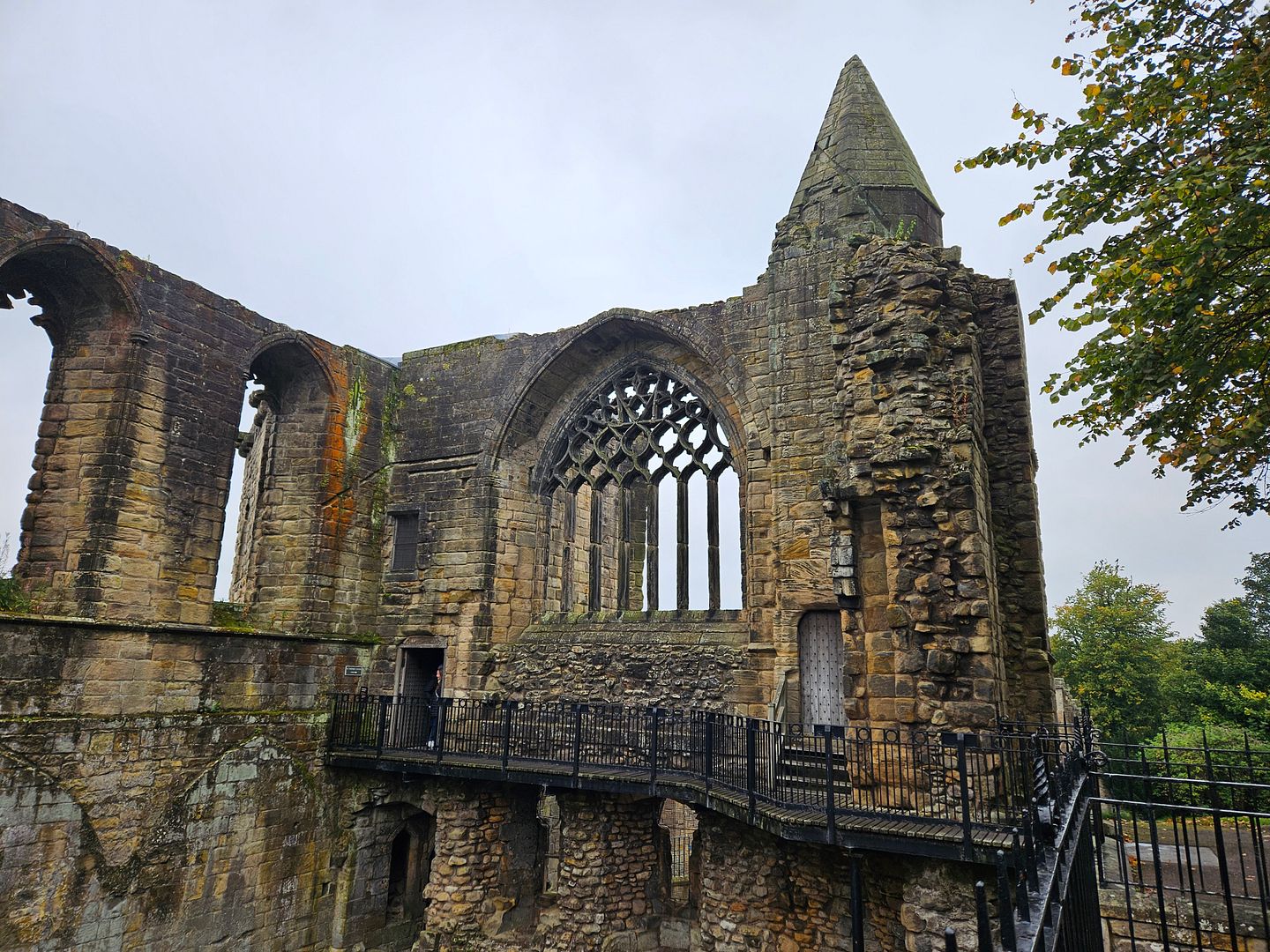
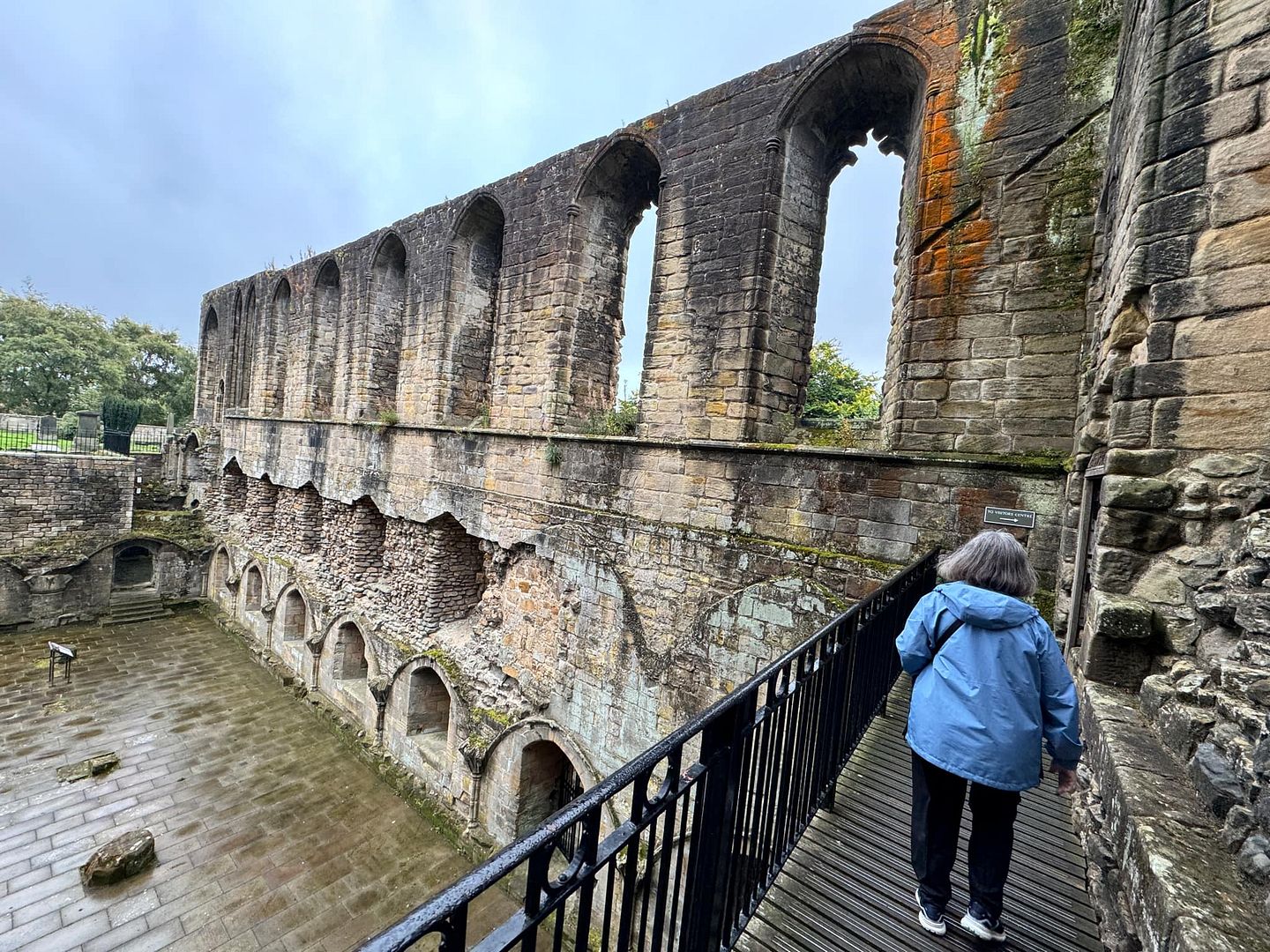
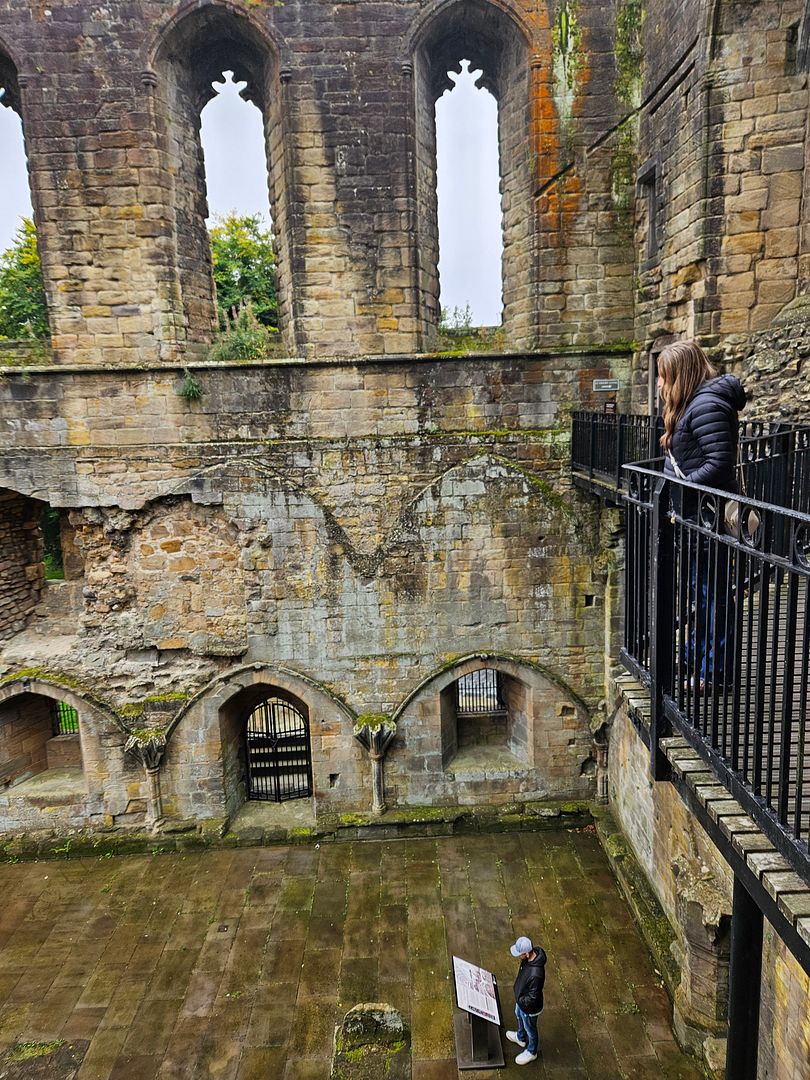
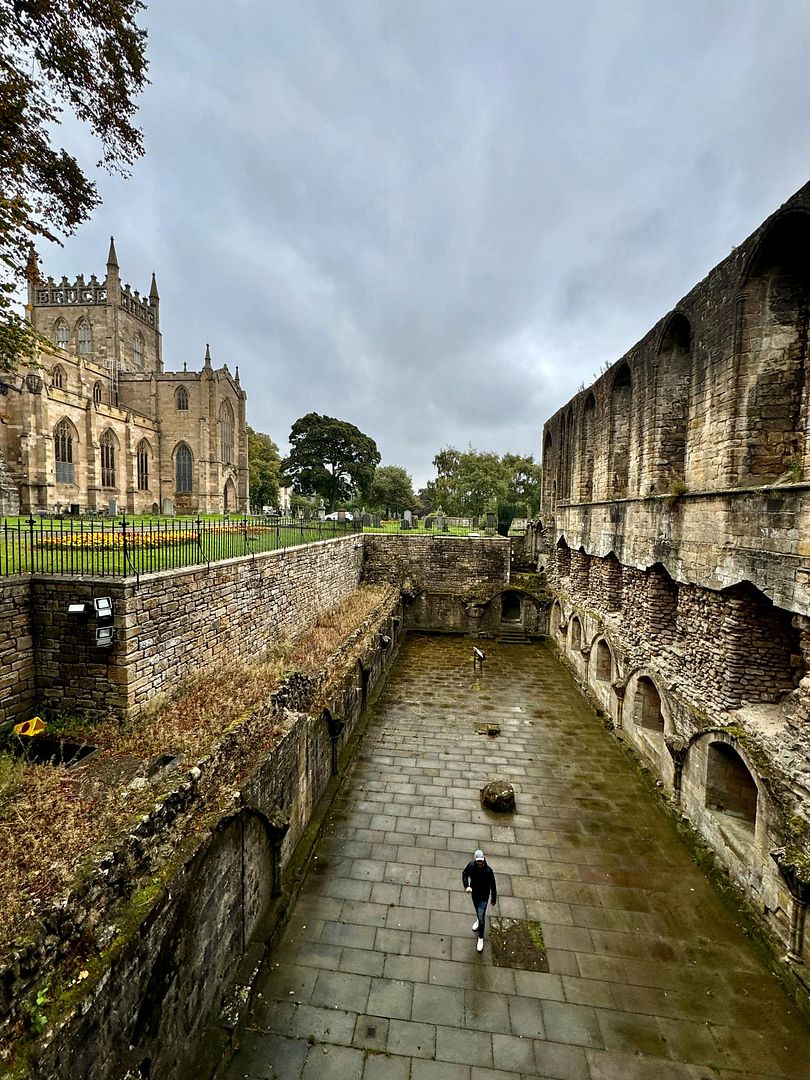
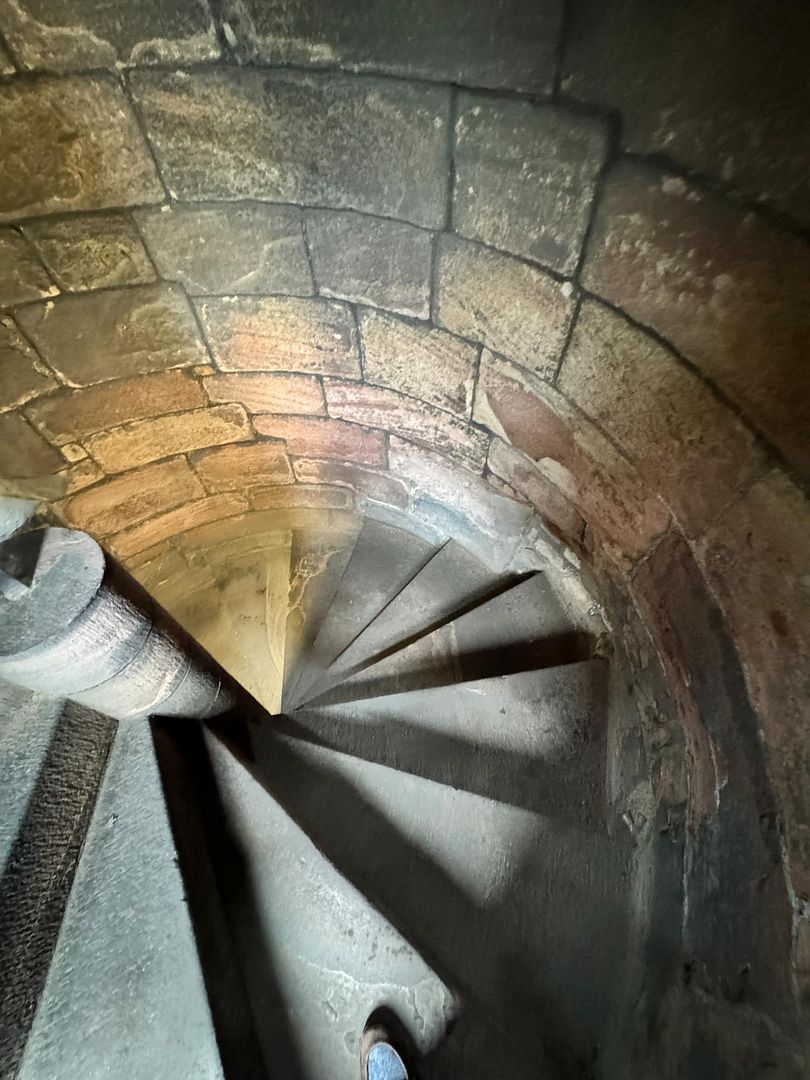
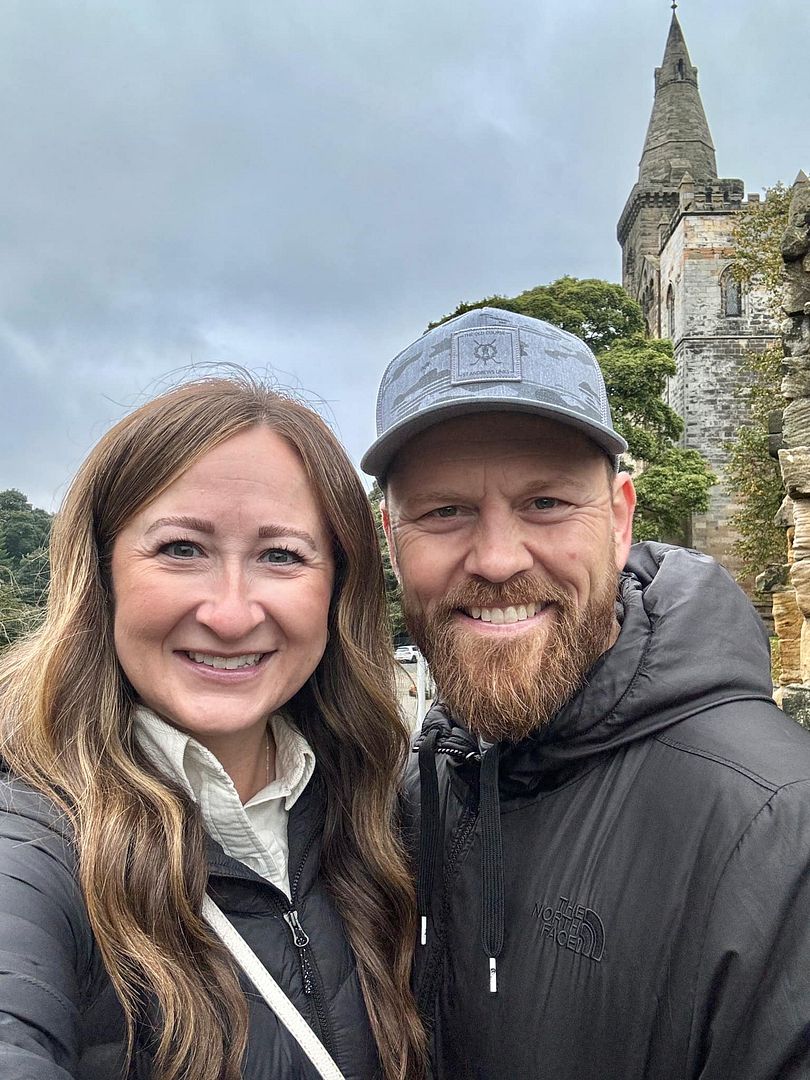
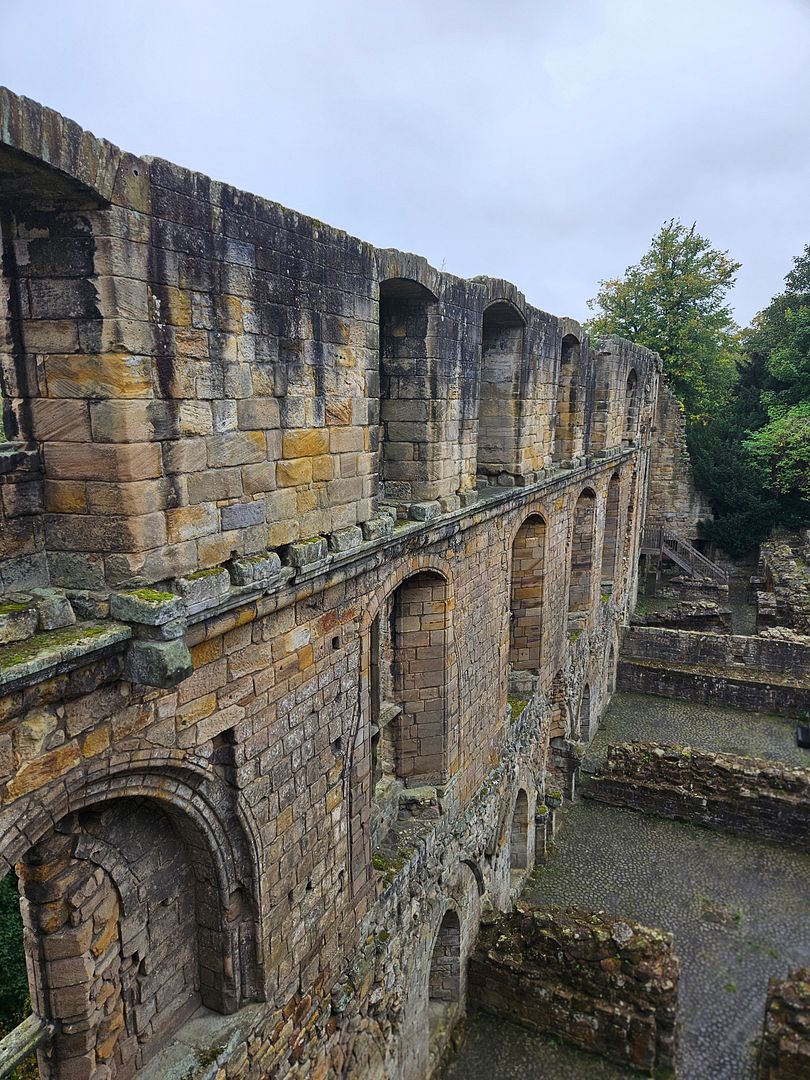
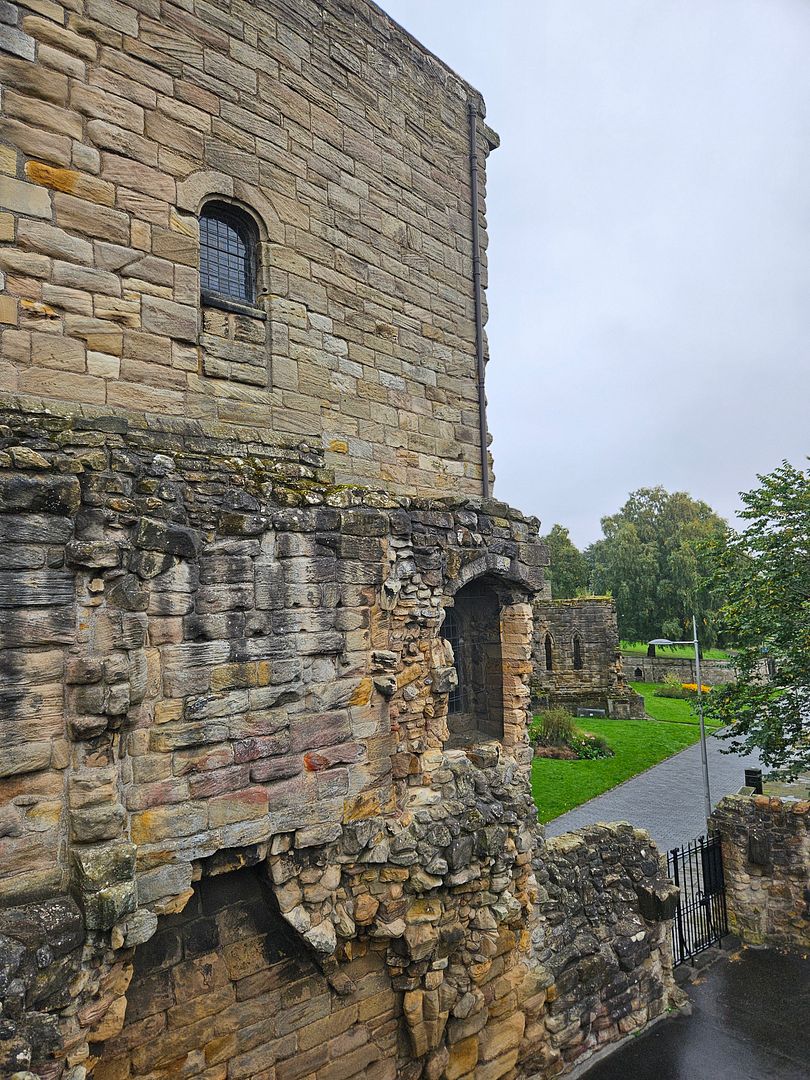
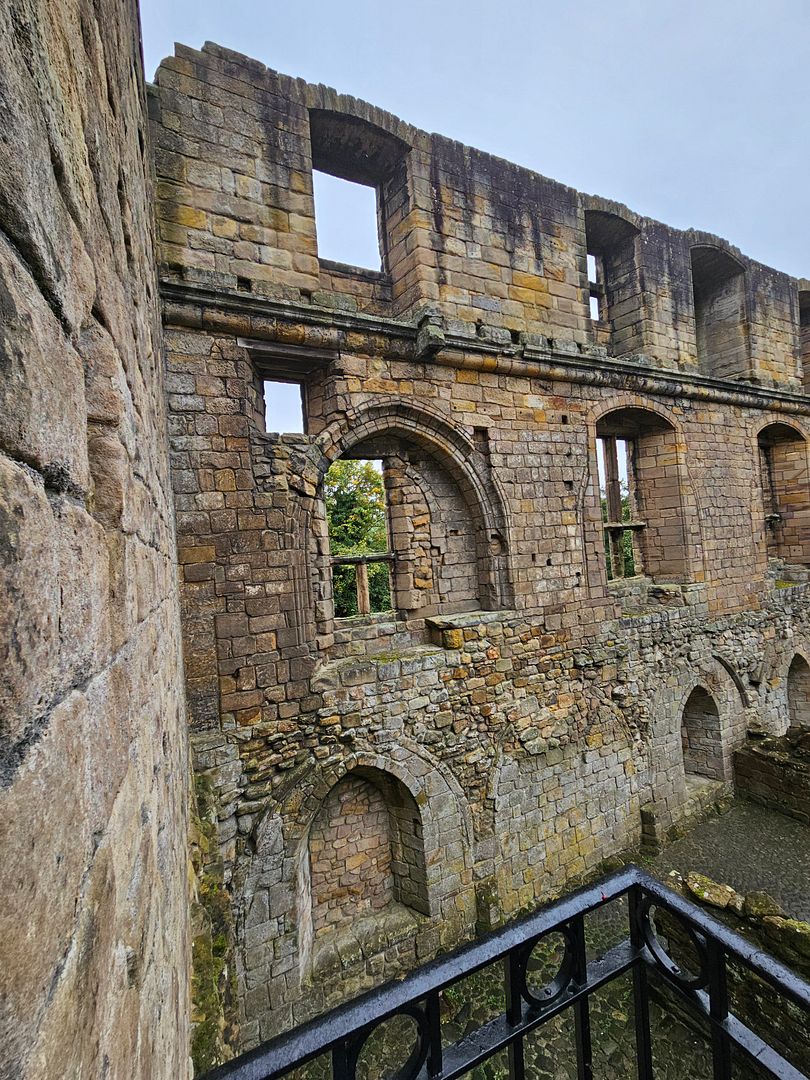
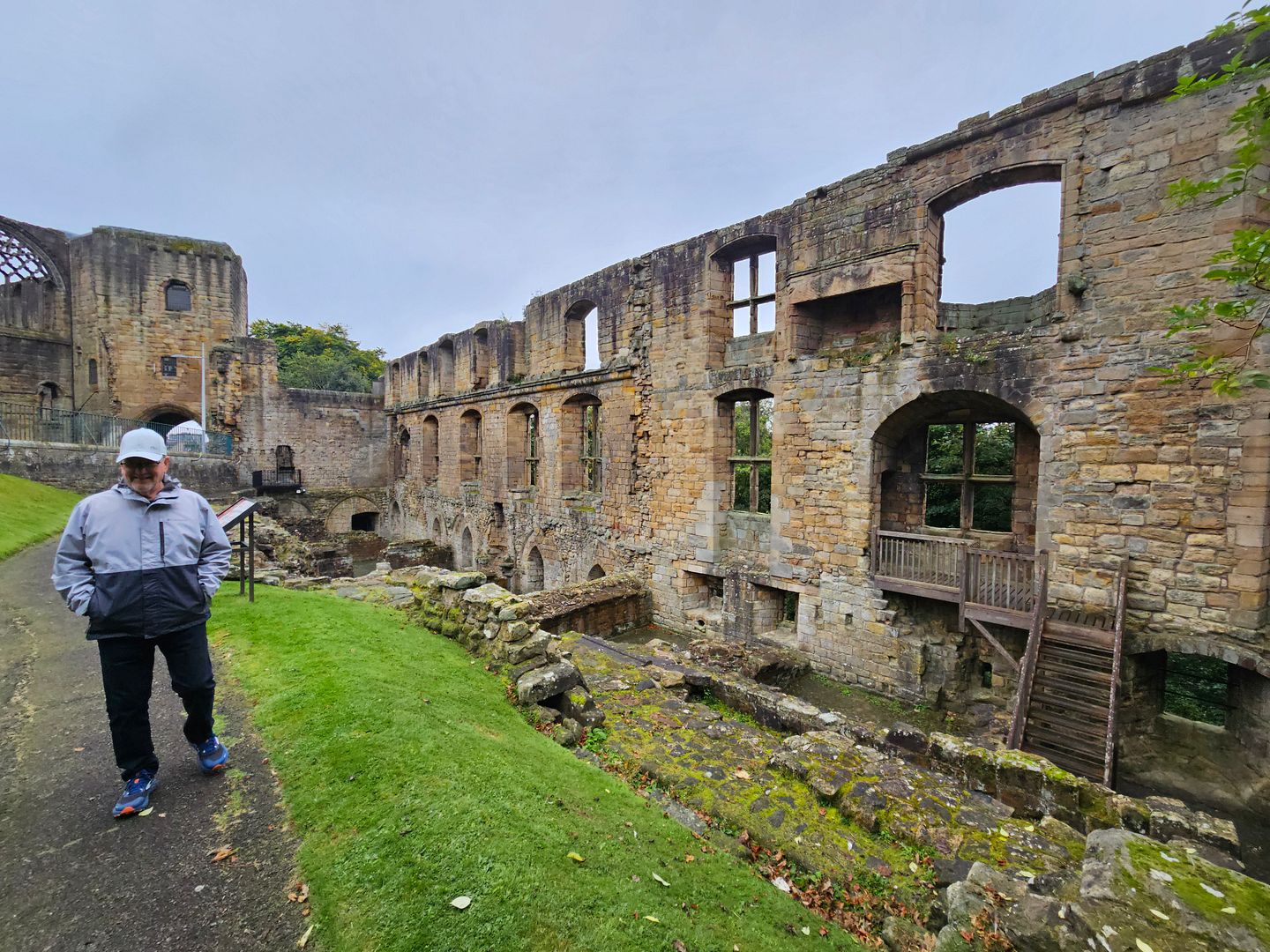
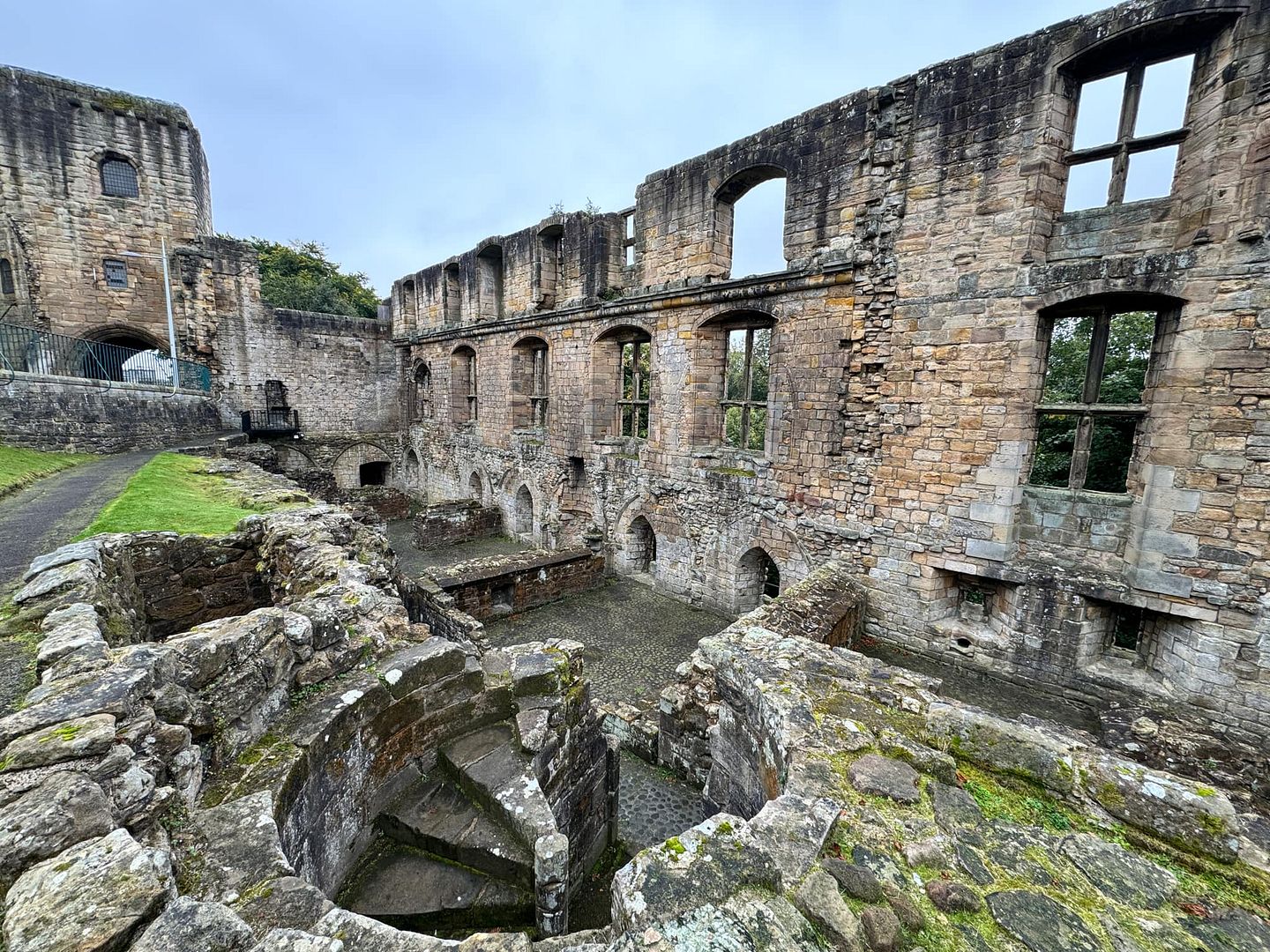
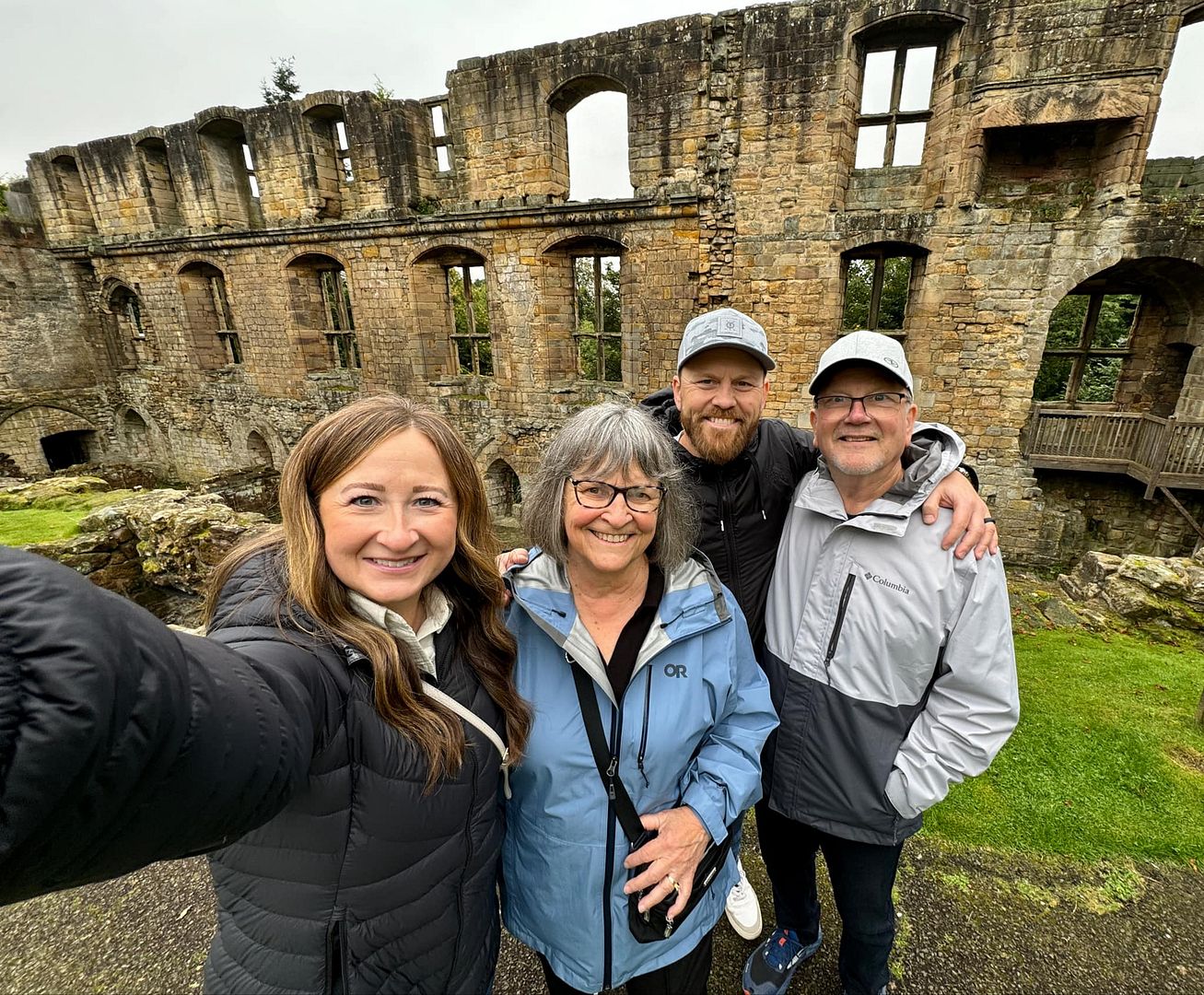
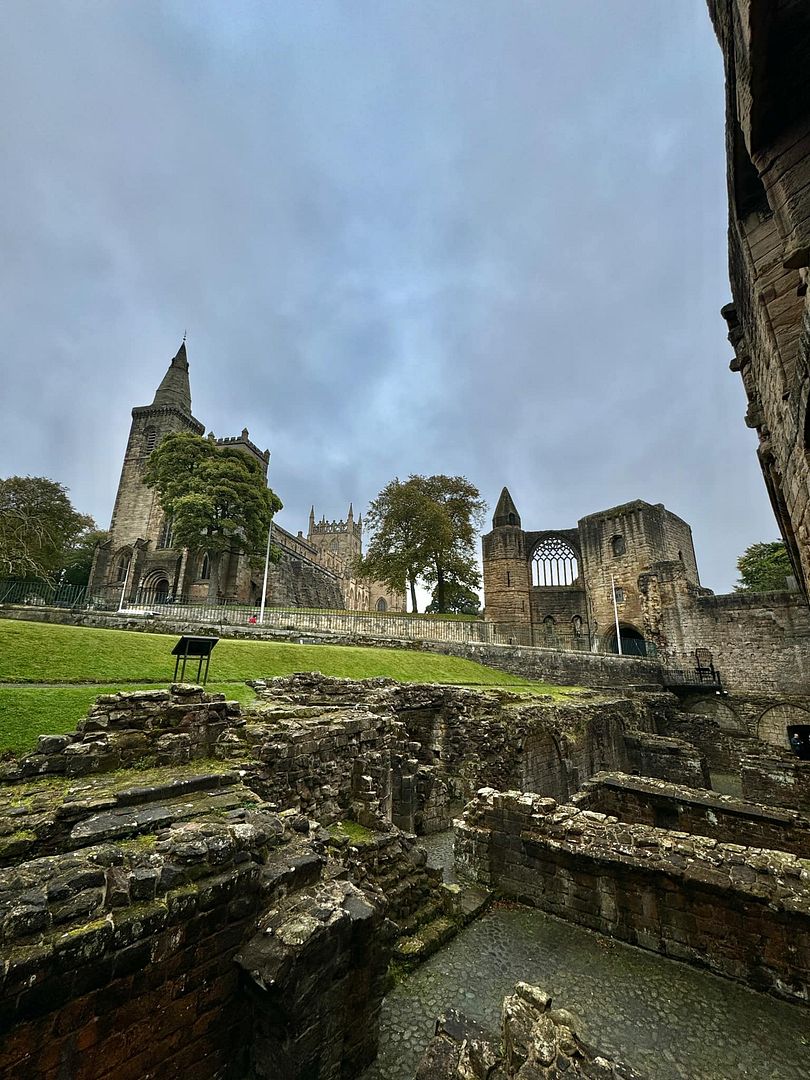
On September 21st which was a Saturday and our journey from St. Andrews to Edinburgh we stopped to visit the Dunfermline Abbey and Palace. Although I’ve posted the exterior and interior of the Abbey already we toured the palace grounds first on this day. The kiosk to pay for our visit was located in the palace ruins area. This part of our visit involved going up and down different elevations within and along the ruins of palace.

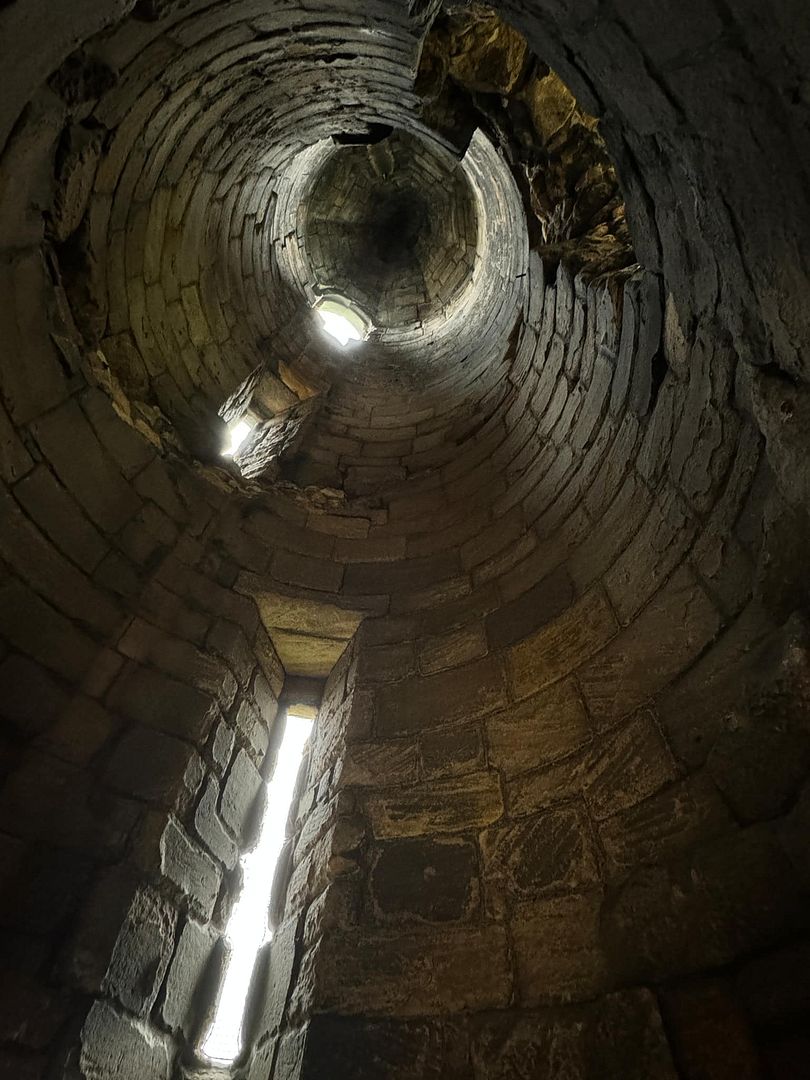
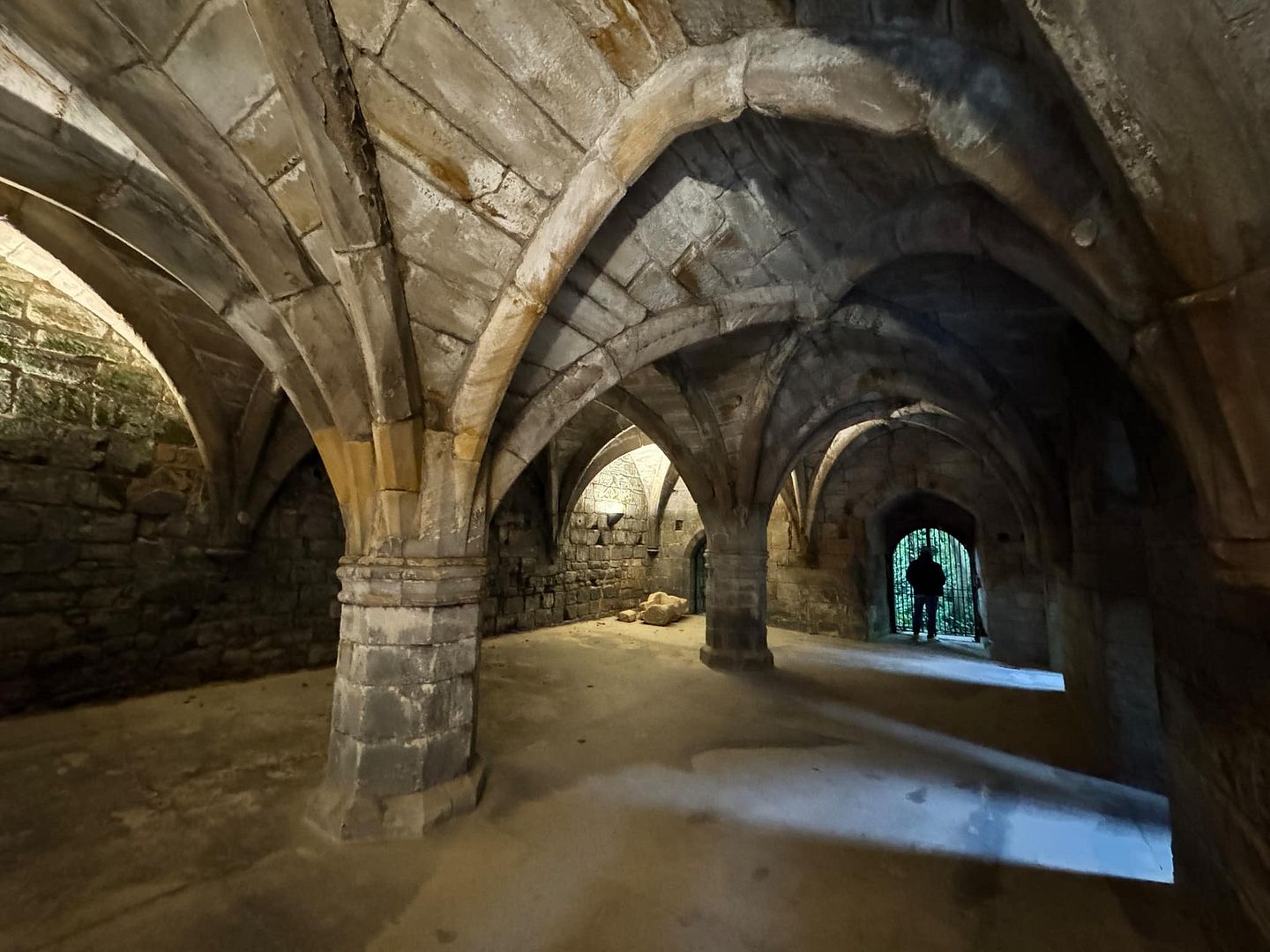
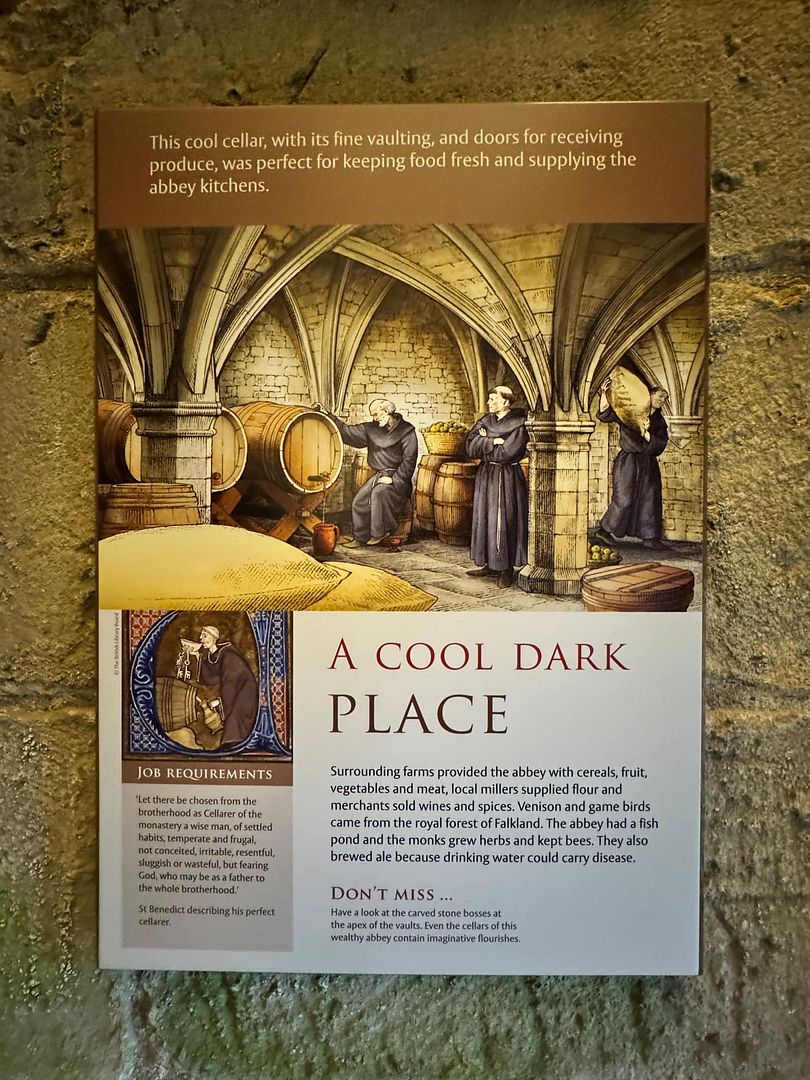
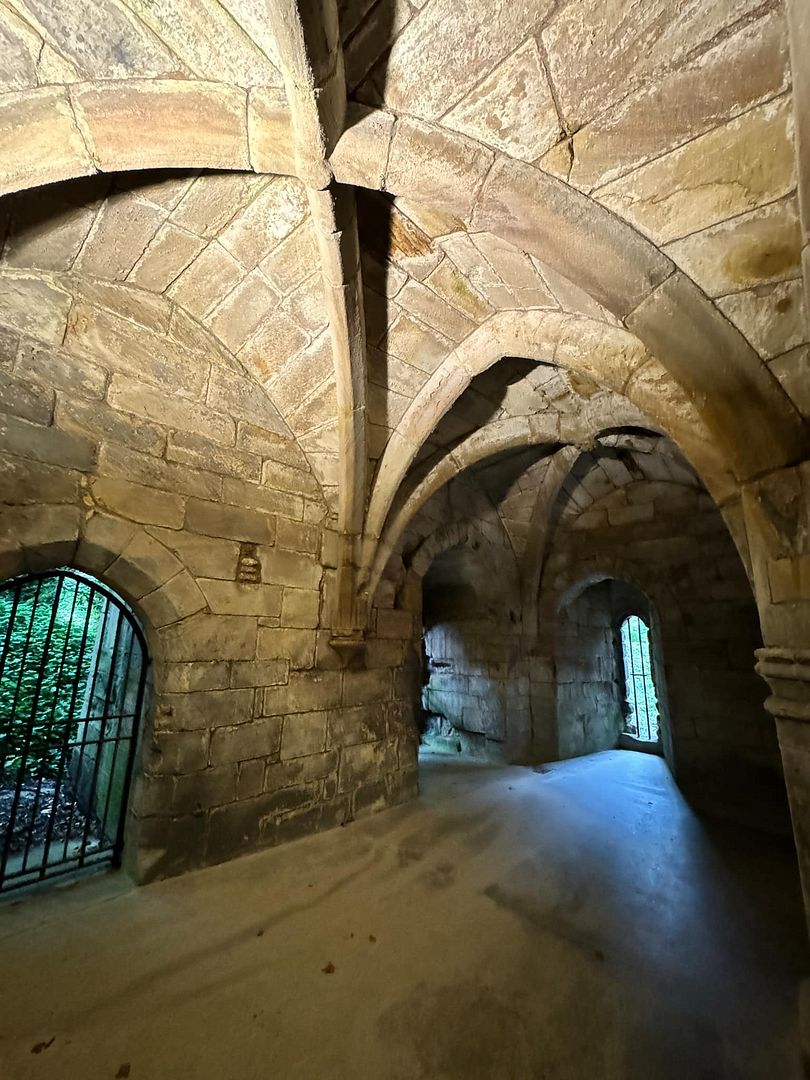
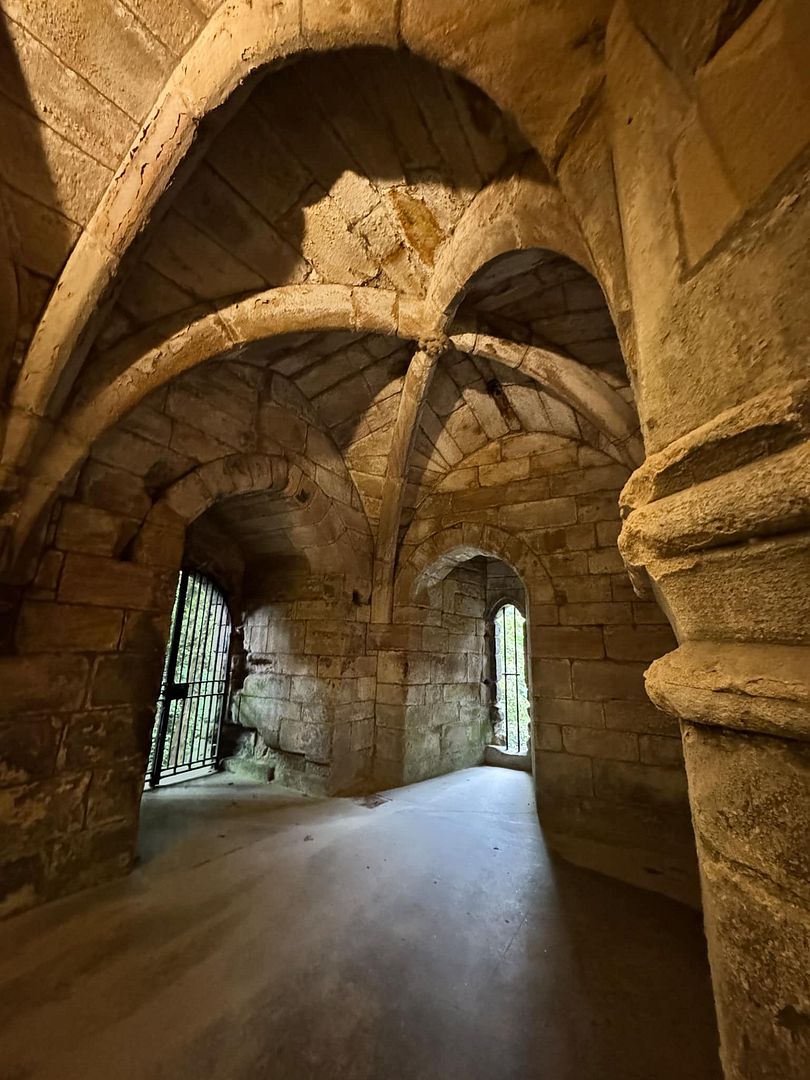
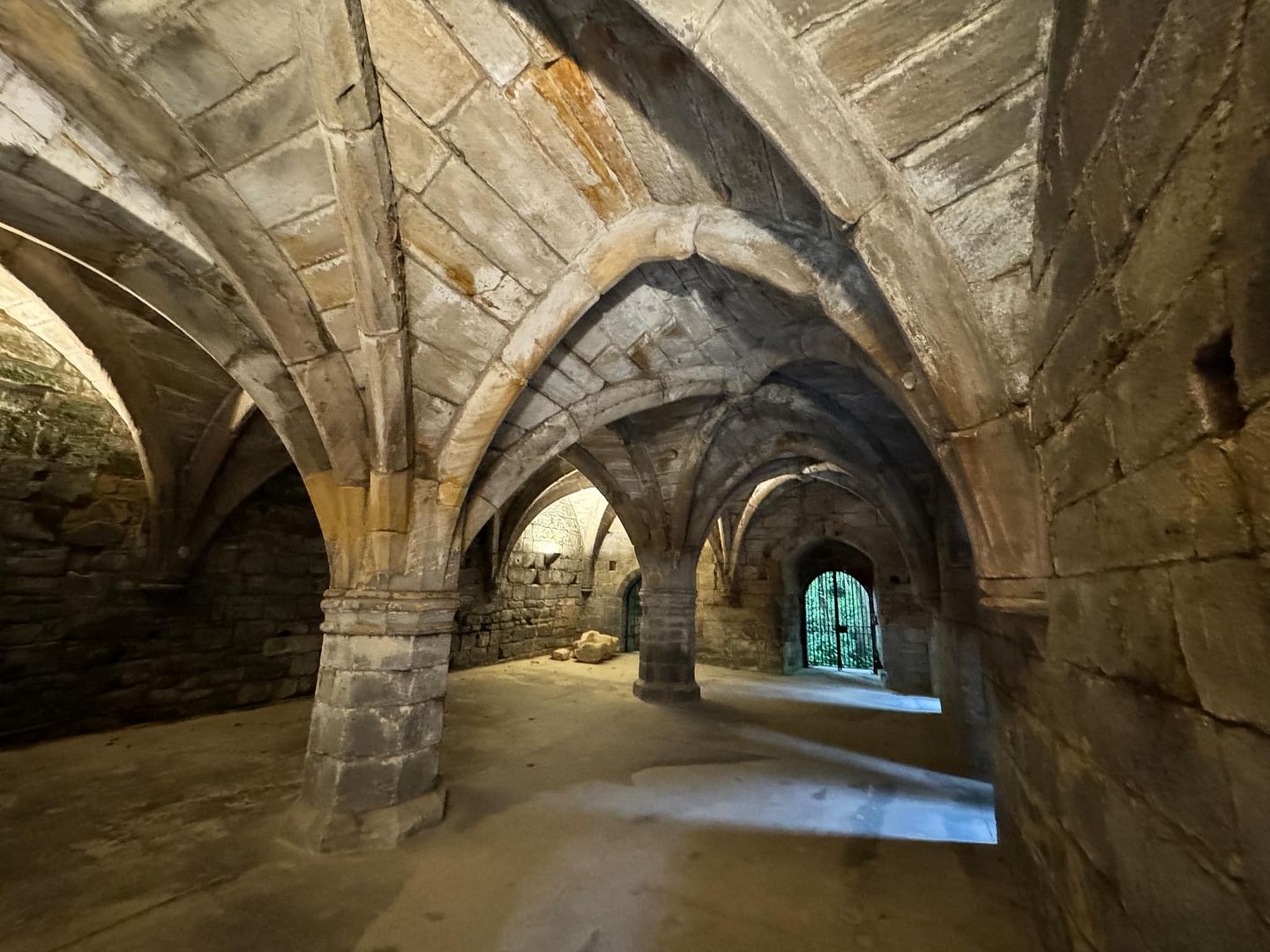
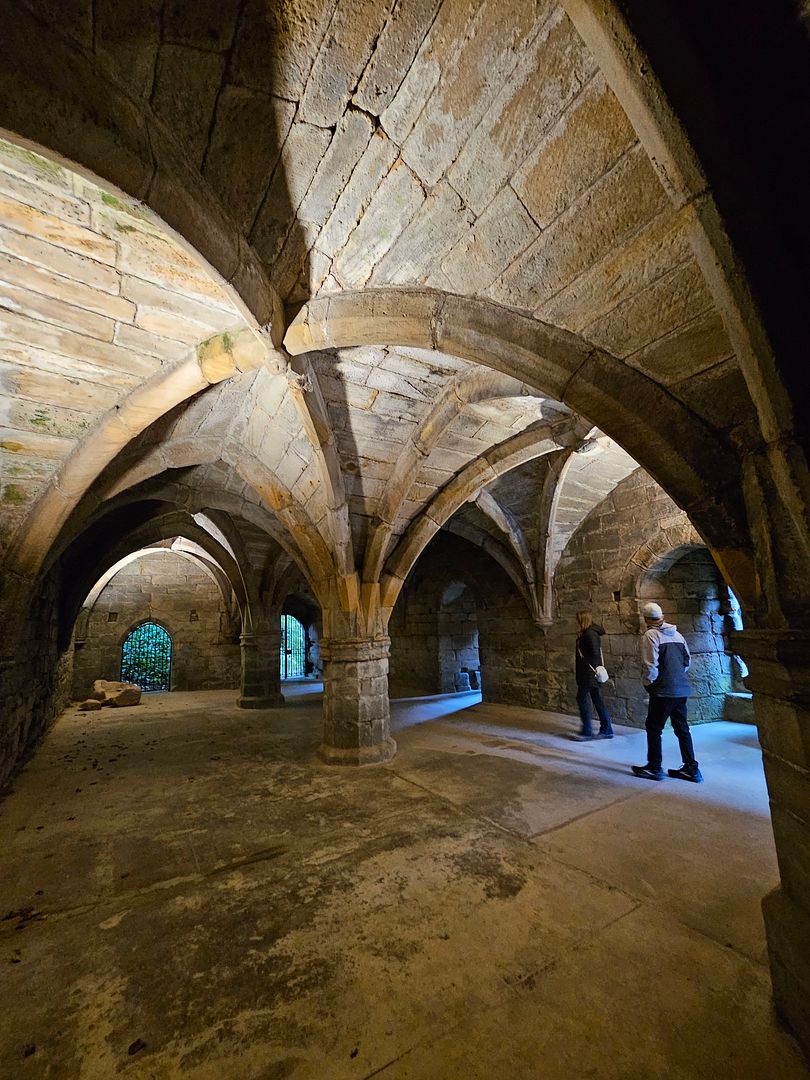
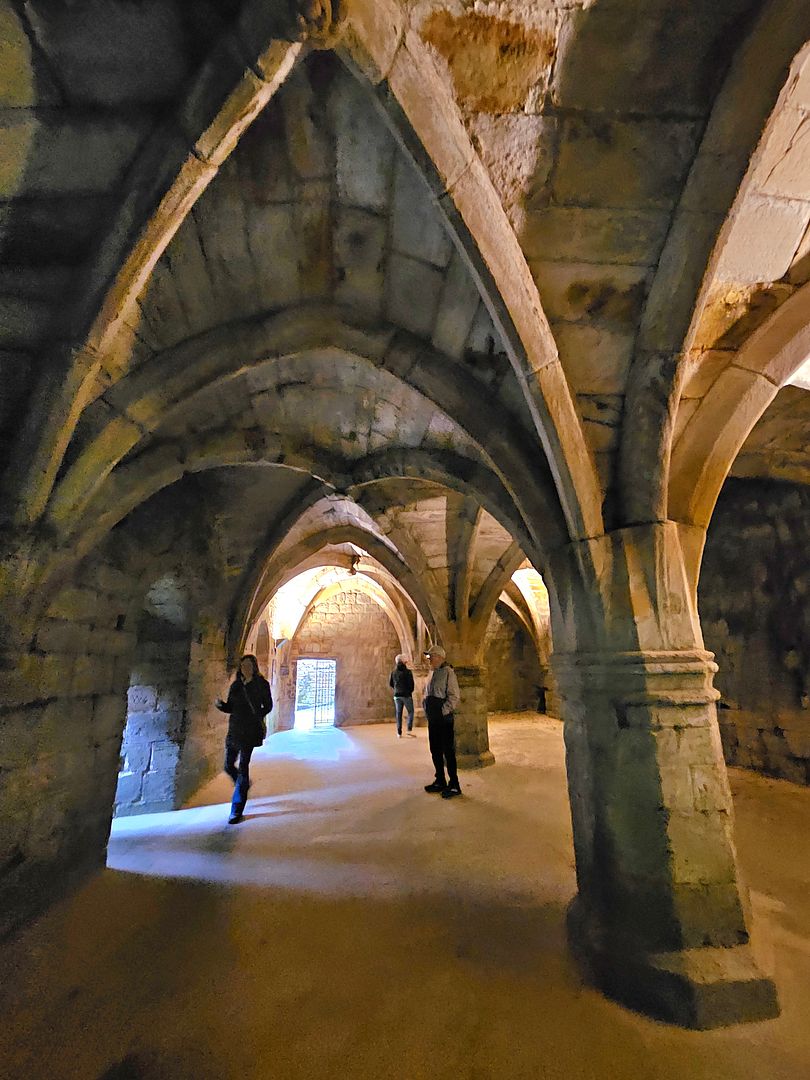
In the cellars with some great acoustics we had an impromptu moment of worship as Laura began to sing ‘Praise God From Whom All Blessings Flow’. We all joined in and it was a sweet time together.

Praise God from whom all blessings flow, praise Him all creatures here below, praise Him above ye heavenly hosts, praise Father, Son and Holy Ghost, Amen.

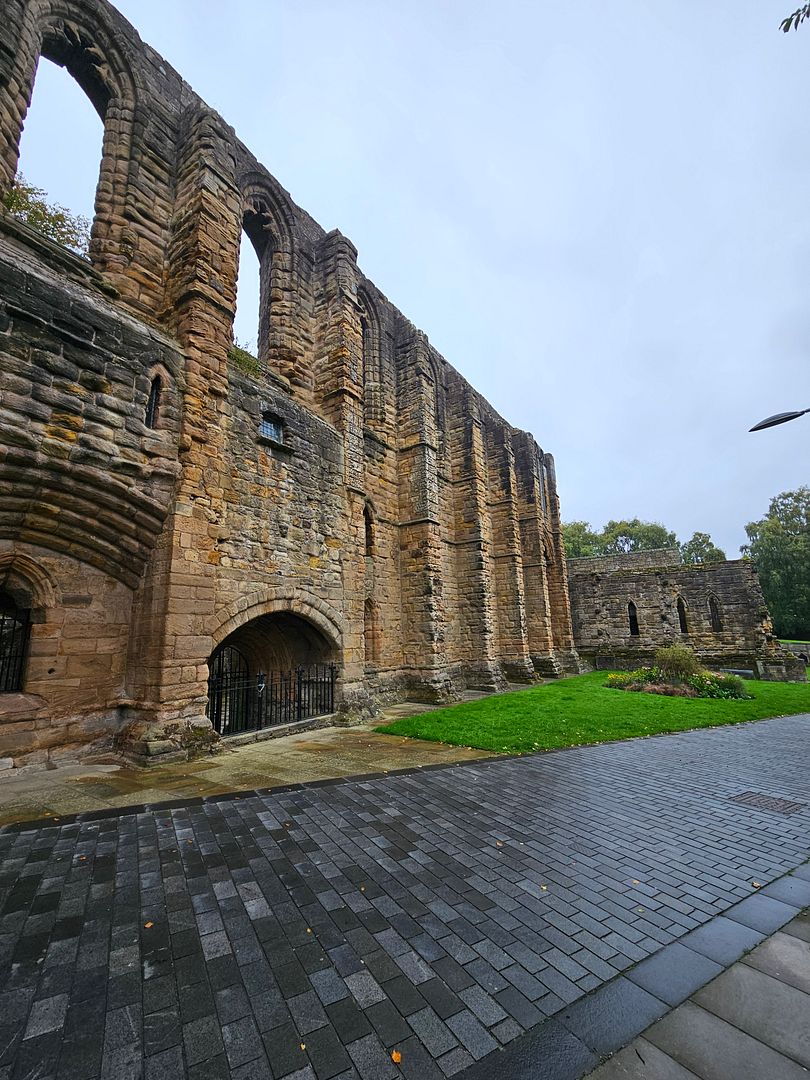
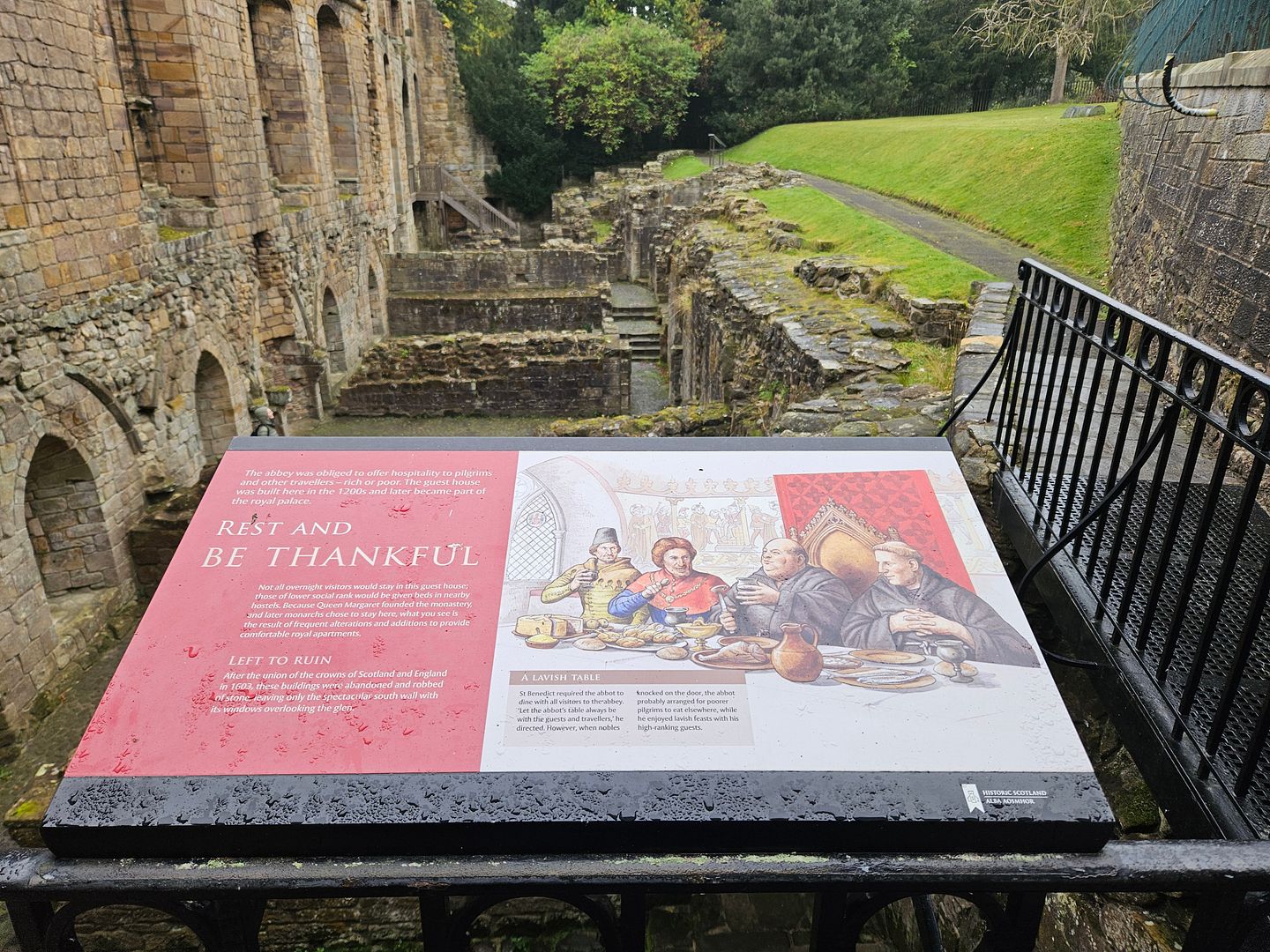
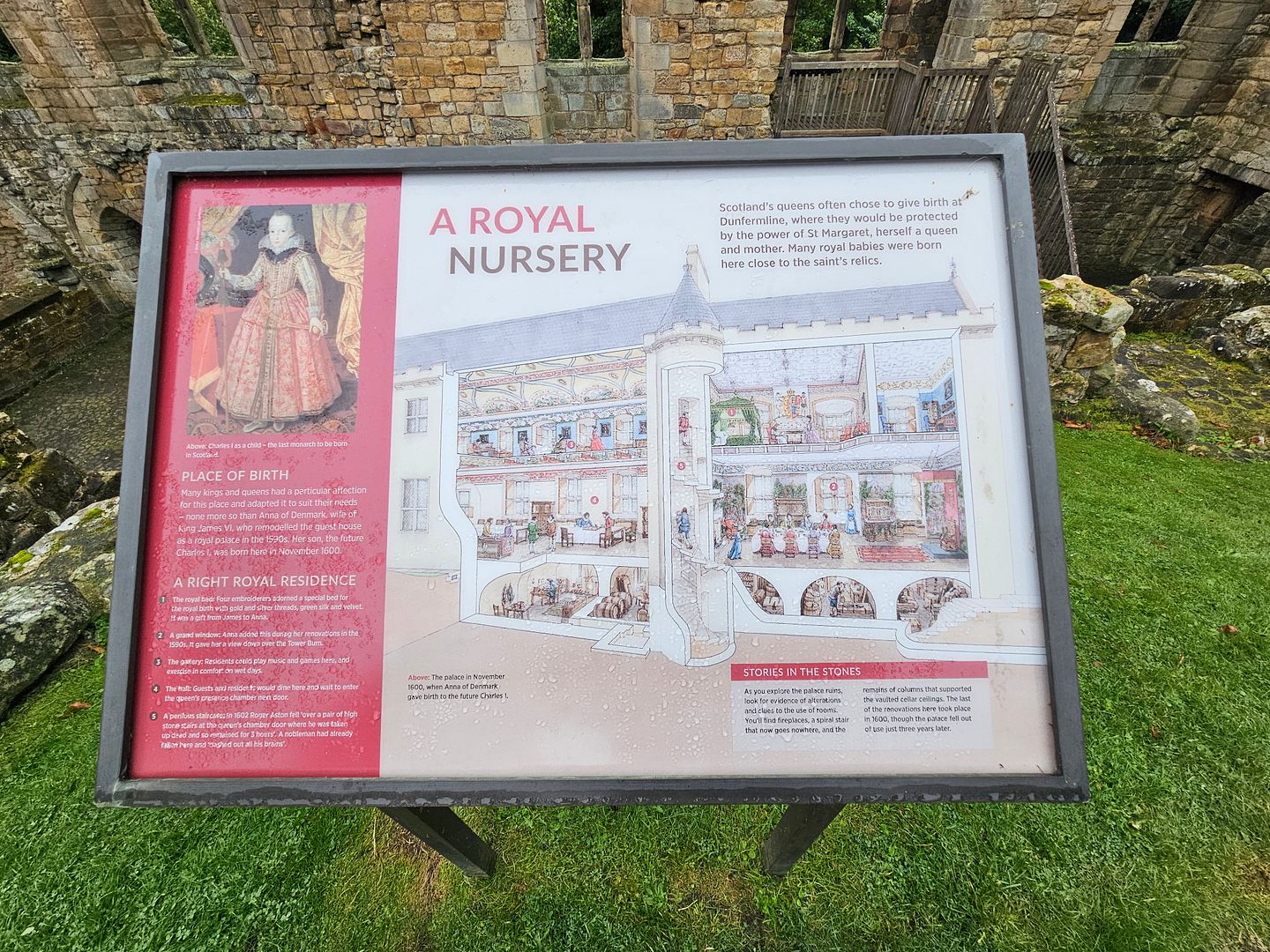
The Abbey was obliged to offer hospitality to pilgrims and to other travelers whether rich or poor. The guest house was built here in the 1200’s and later became part of the royal palace. 

Not all overnight visitors would stay in this guest house; those of lower social rank would be given beds in nearby hostels. Because Queen Margaret founded the monastery and later monarchs chose to stay here, what you see is frequent alterations and additions to provide comfortable royal apartments. 

After the union of the crowns of Scotland and England in 1603, these buildings were abandoned and robbed of stone leaving the spectacular south wall with its windows overlooking the glen.

St. Benedict required the abbot dine with all visitors to the abbey. ‘Let the abbots table always be with guests and travellers’, he directed. However, when nobles knocked on the door, the abbot probably arranged for poorer pilgrims to eat elsewhere, while he enjoyed lavish feasts with his high-ranking guests.

This was such a worthwhile stop on our way back to Stirling to drop off our rental car and take a train to Edinburgh for the last few days of our Scotland Trip. Our sunshiny days were behind us.

Back to the present:

Today, January 20, 2025, in the United States is the inauguration of our 47th President, Donald J. Trump. We will be watching the ceremony. We hope for the best for our country and it’s people and our world. For us as believers, the very best is yet to come and it’s not happening here. In the meantime, we pray, we hope for the best, and we remain good citizens of our country doing our part as citizens. We acknowledge that we are not in control of the world and what is happening around the world but we know the One who is in control and who holds our world together.

As the song resounds, ‘This World is not my home I’m just a passing through, my treasures are laid up somewhere beyond the blue, the angels beckon me from heaven’s open door, and I can’t feel at home in this world anymore.’

Scotland Travel Journal ~ Dunfermline 2

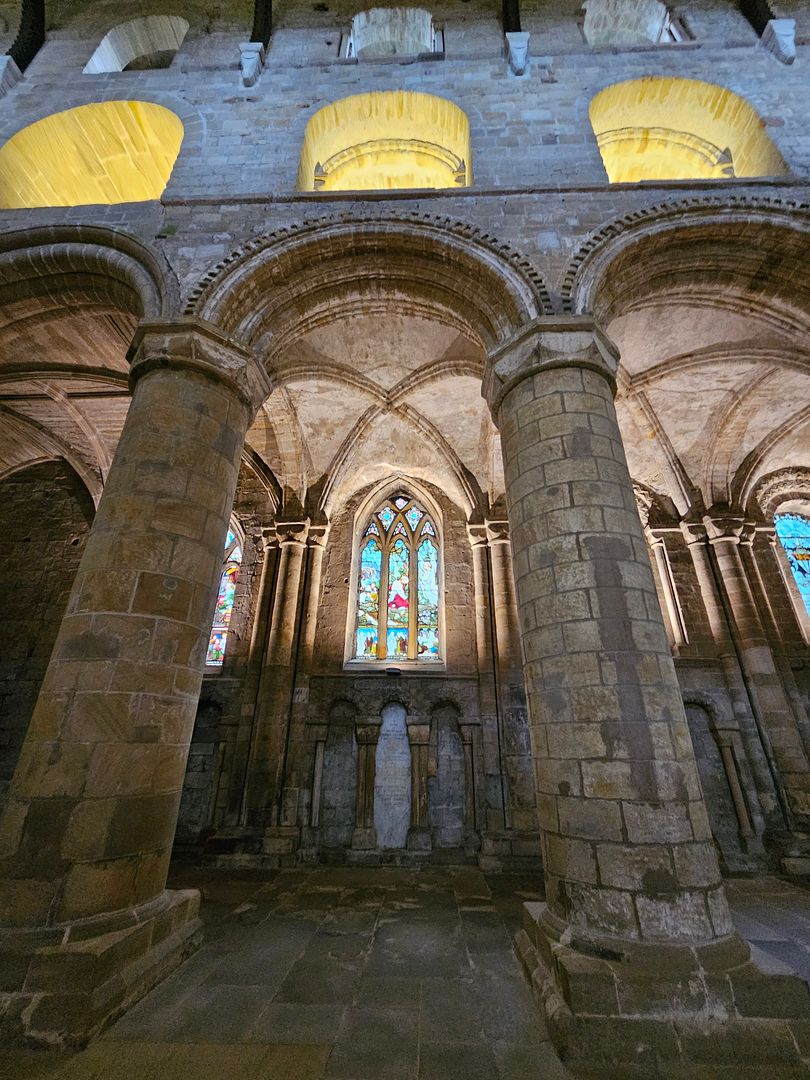
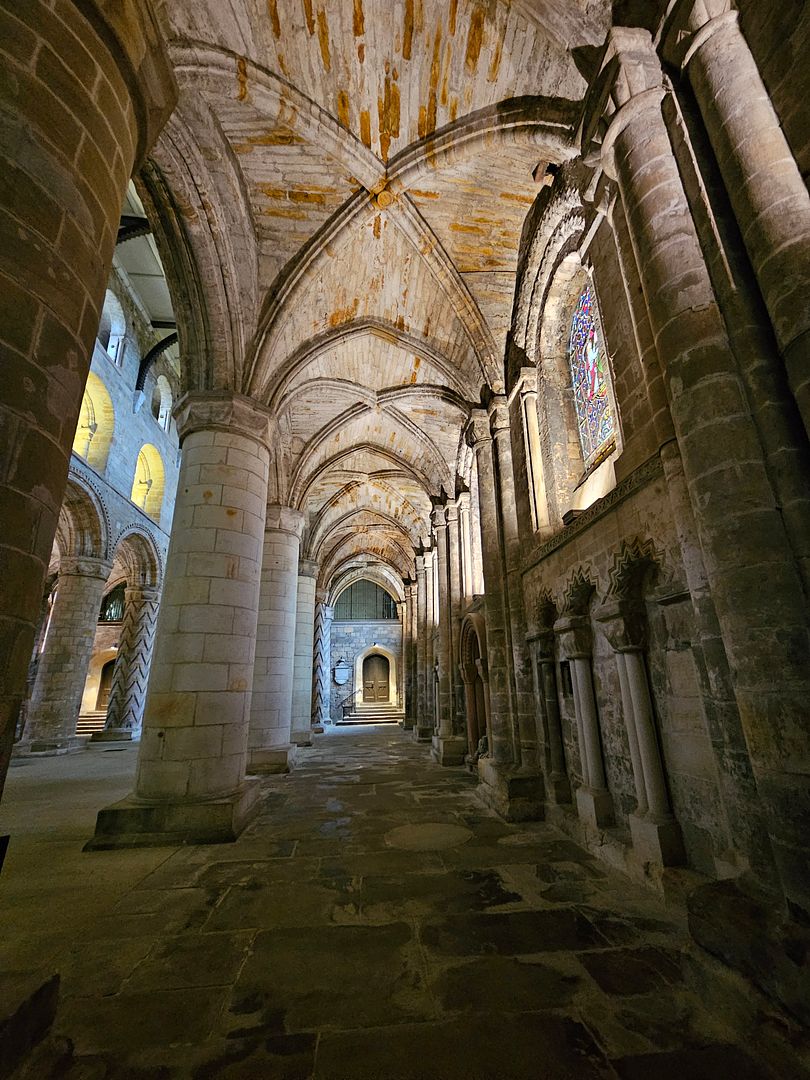
The Old Church
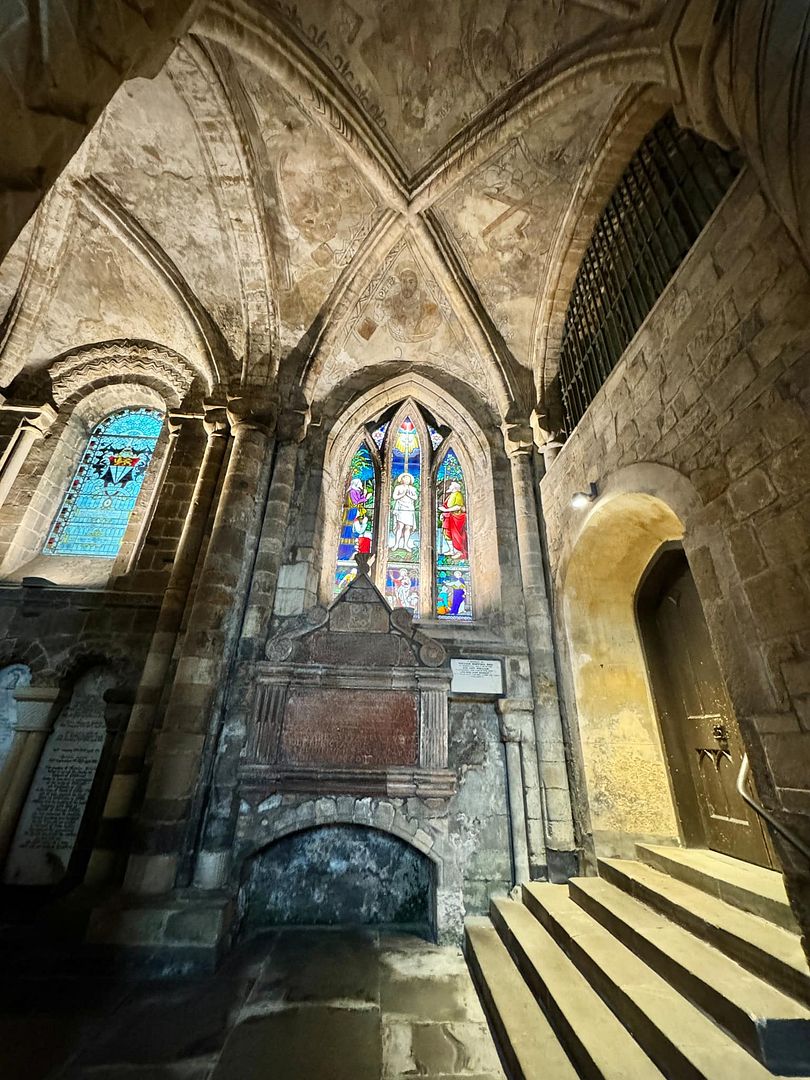
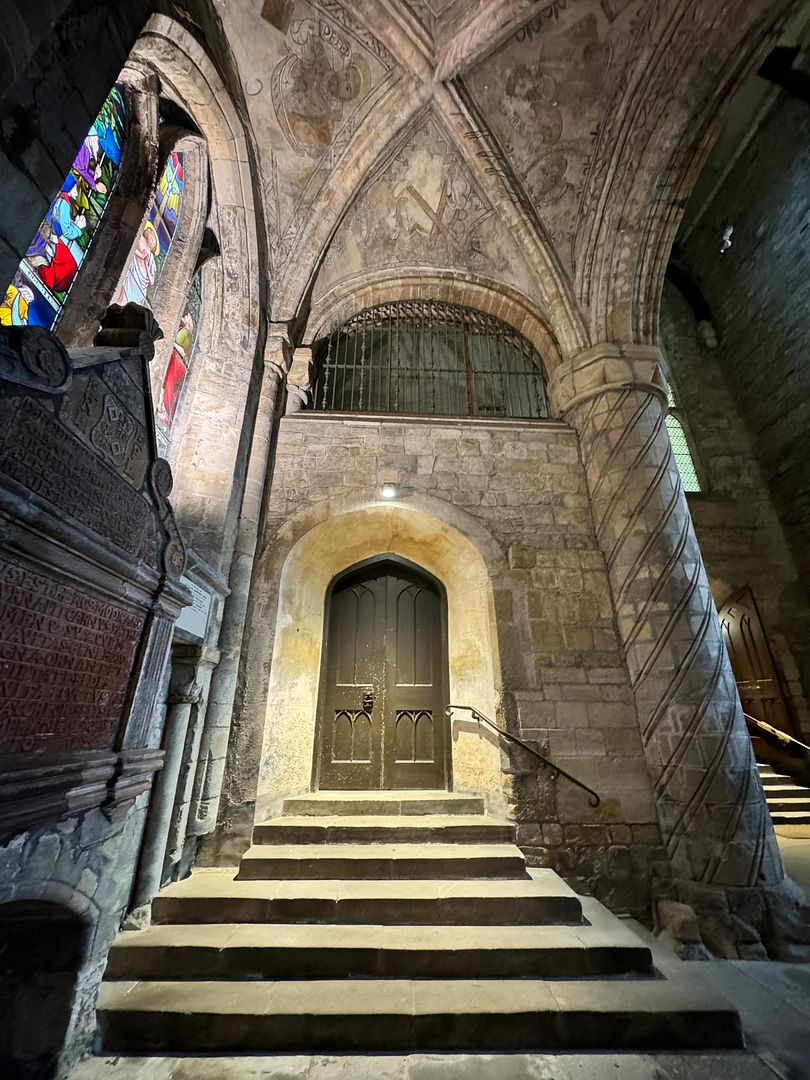
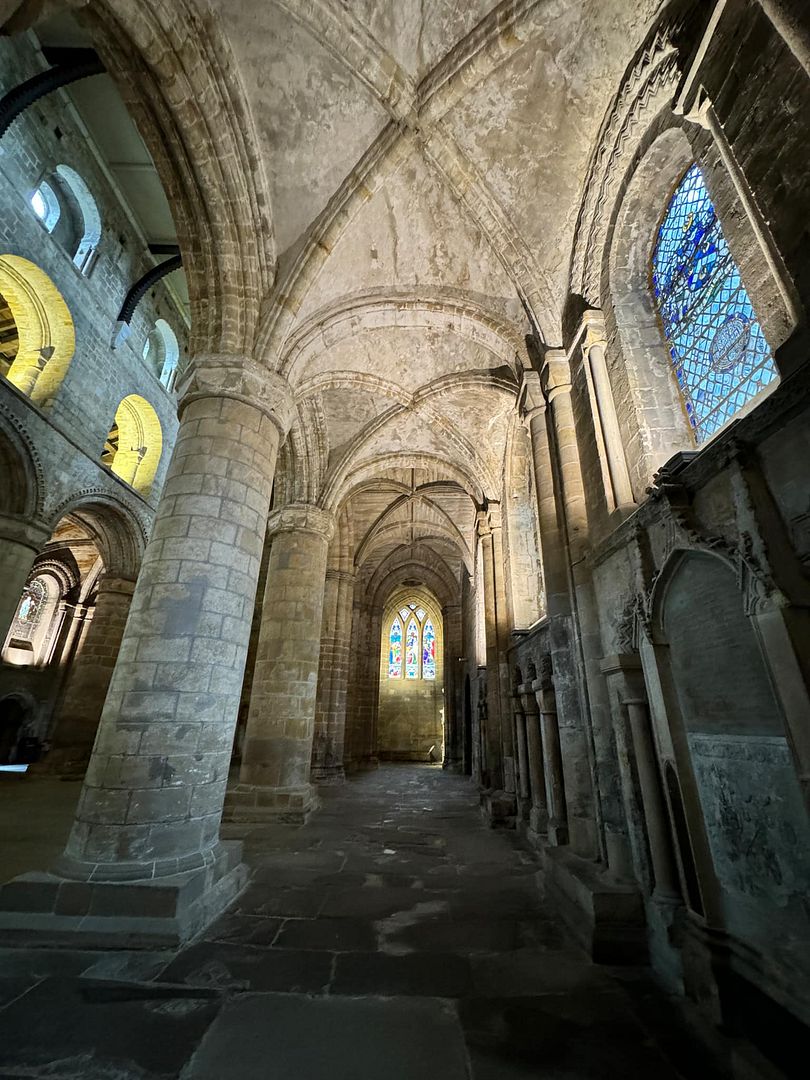
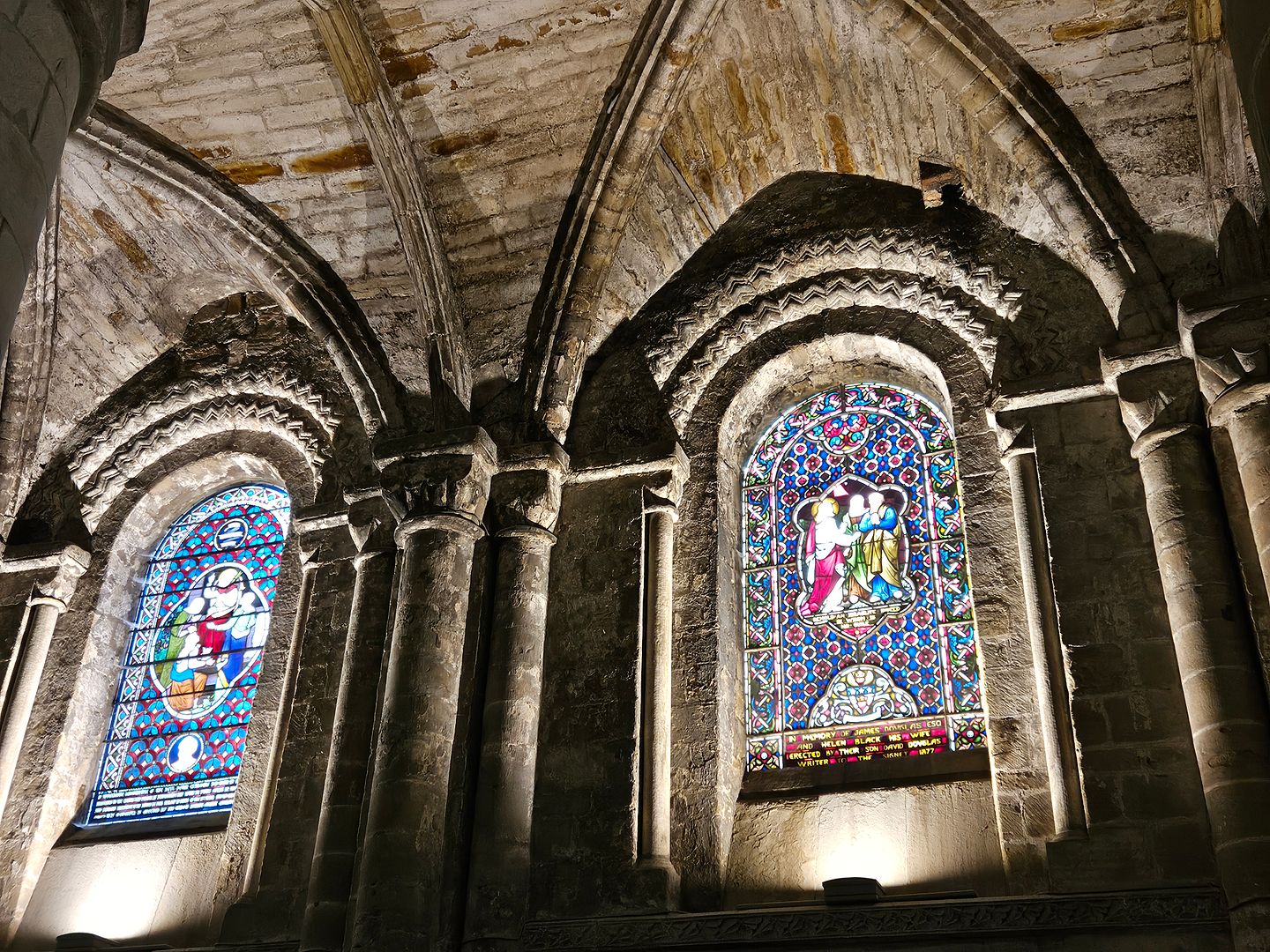
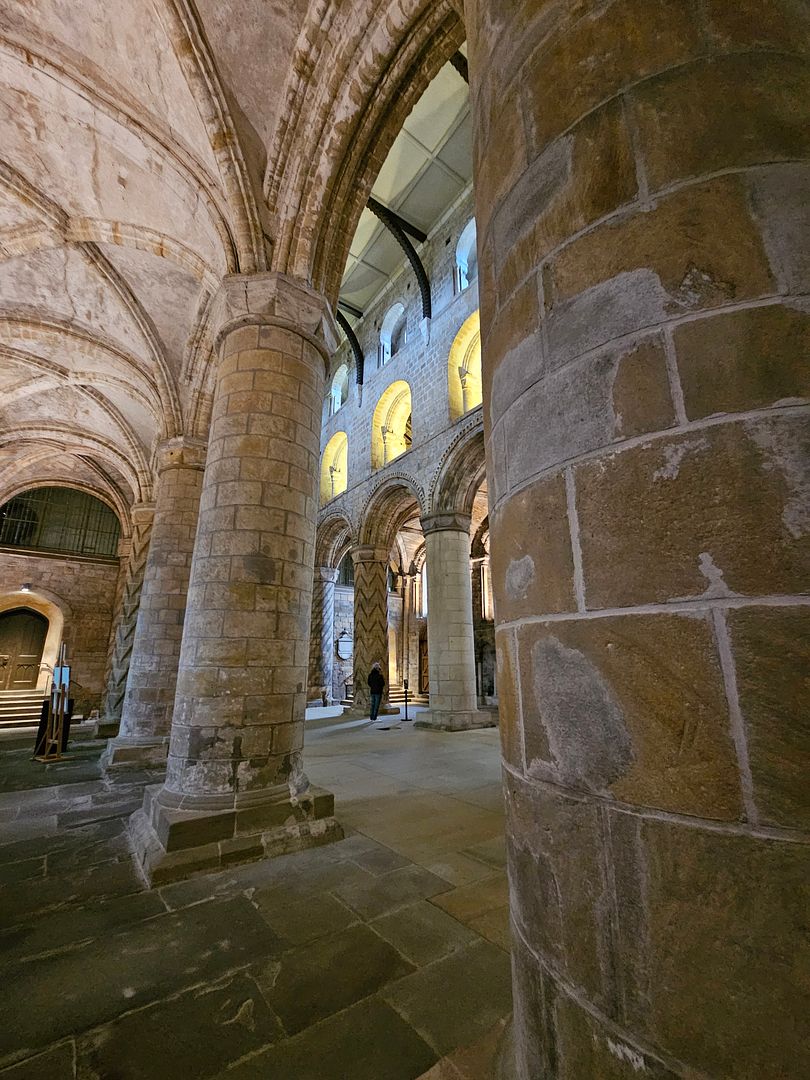
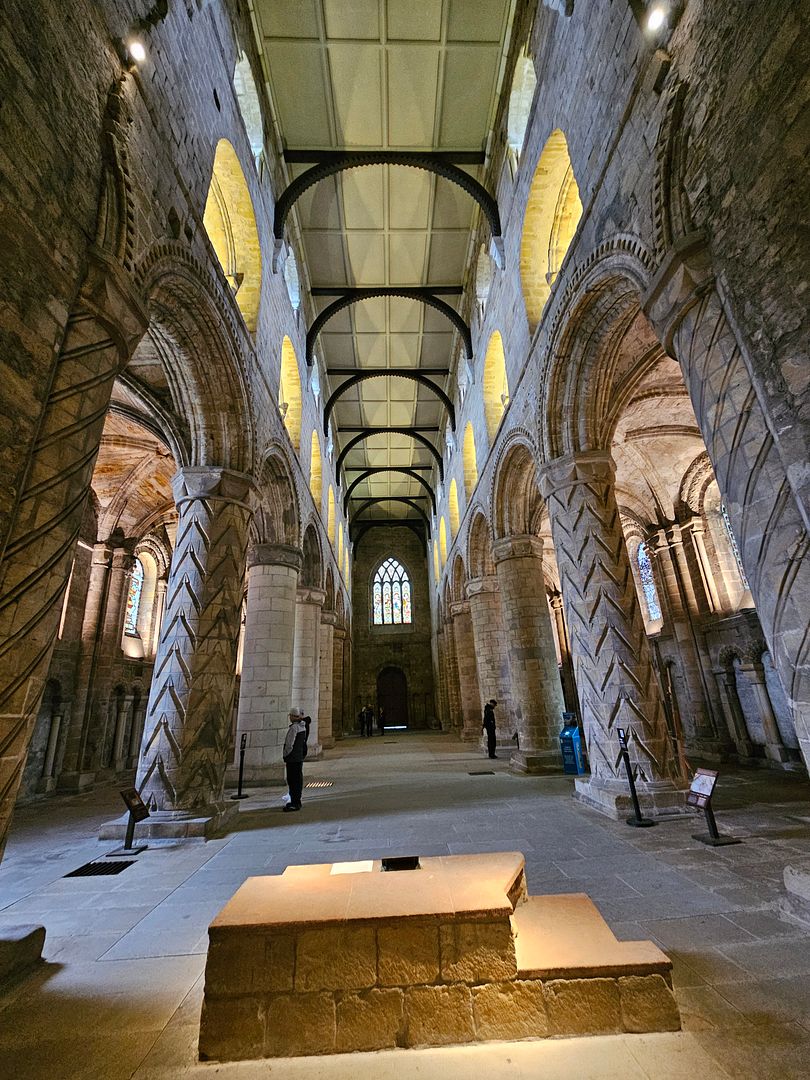
The former nave of the abbey church, erected by David I over the original church founded by his mother, Queen Margaret. The Old Church is the only significant remain of the 1147 abbey, and is a wonderful example of Romanesque architecture, with huge, rounded pillars, two carved with striking zigzag patterns.

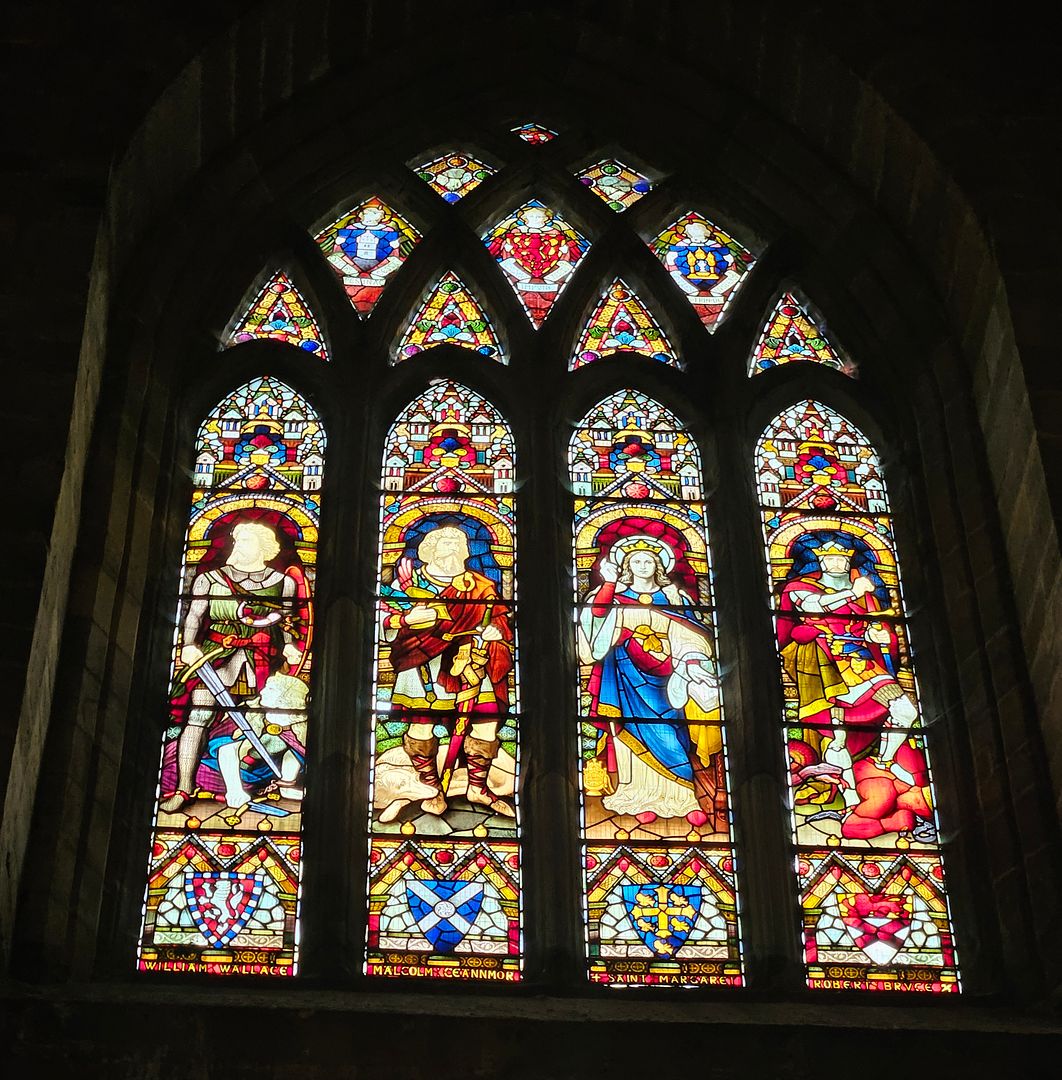
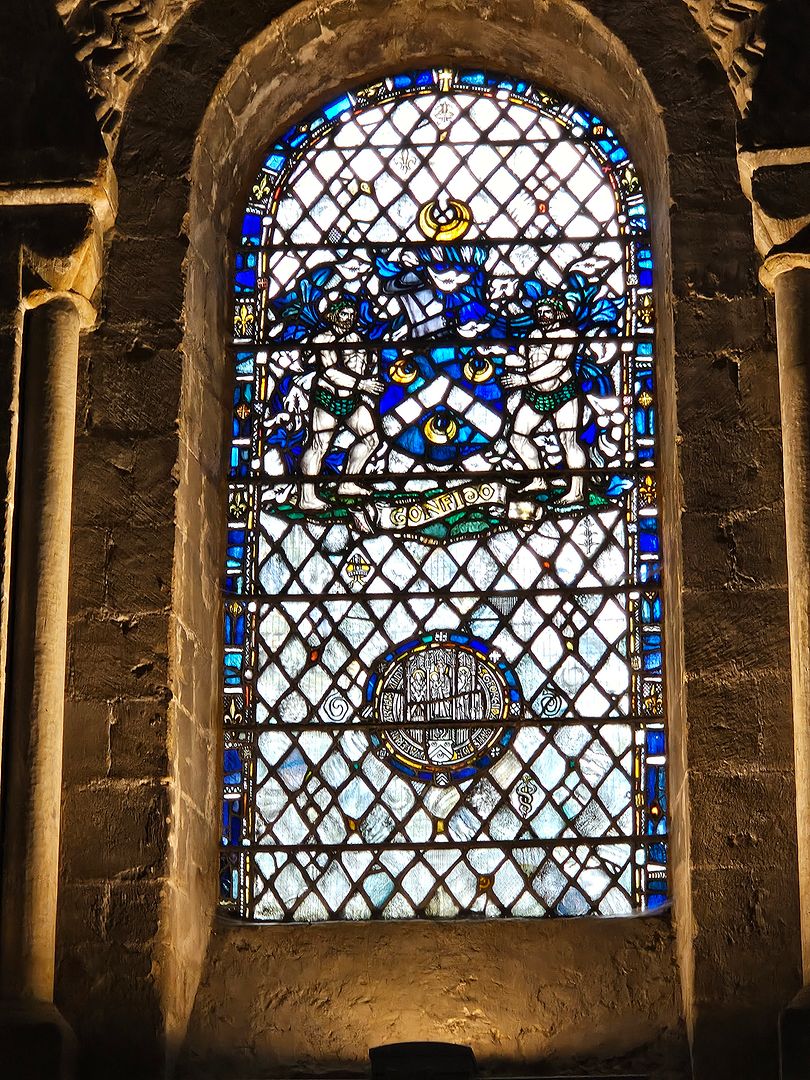
Carnegie Historical Window in Dunfermline Abbey. Left to right: William Wallace, Malcolm III, Queen Margaret and Robert the Bruce.

In 1881, when Andrew Carnegie returned to Dunfermline with his mother Margaret to lay the foundation stone of the world’s first purpose-built Carnegie library, a thought came to mind to offer to the Abbey a commemorative stained glass window of his own design.

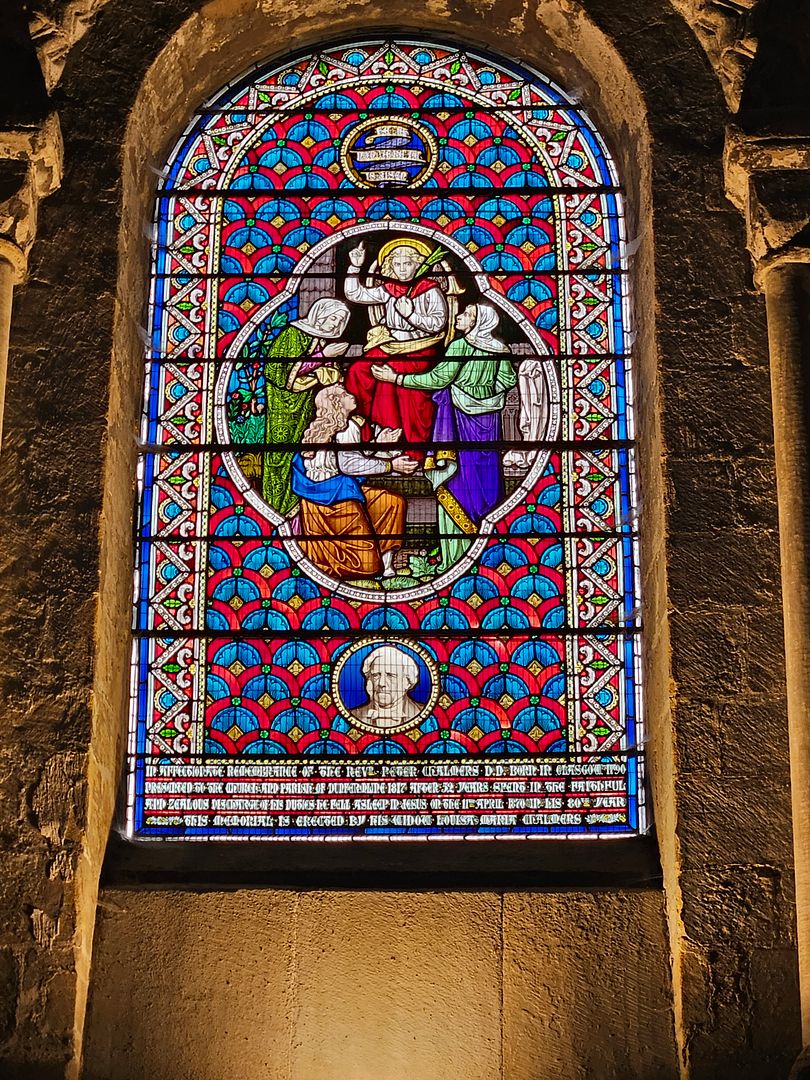
Reverend Doctor Peter Chalmers, 1790-1870

by Dr. Jean Barclay

Peter Chalmers, minister of the Church of Scotland and local historian, was born in Glasgow on September 19th 1790 the only son of Alexander Chalmers, cloth merchant, and his wife Marion Bald.  At the age of sixteen, having done well at school, he went to the University of Glasgow, gaining an MA (or AM) in 1808 and decided to enter the ministry.  He was licensed to preach by the Presbytery of Glasgow in September 1814 and became assistant to the well-known evangelist Rev. Thomas Chalmers (no relation) at St. George`s (Tron) Church. In July 1817 Peter Chalmers was ordained to the Second Charge (or ministry) at Dunfermline Abbey. He arrived just before the removal of the ruins of the old monastic church and the erection of the New Abbey Church on its site in 1818-21 and gave the last sermon in the Auld Kirk in the nave and the first in the New Church. In 1836, on the death of the Rev. Allan MacLean, Chalmers was promoted to the First Charge of the Abbey.

It was not easy to research the stained glass windows in the Abbey and newer section of the church.

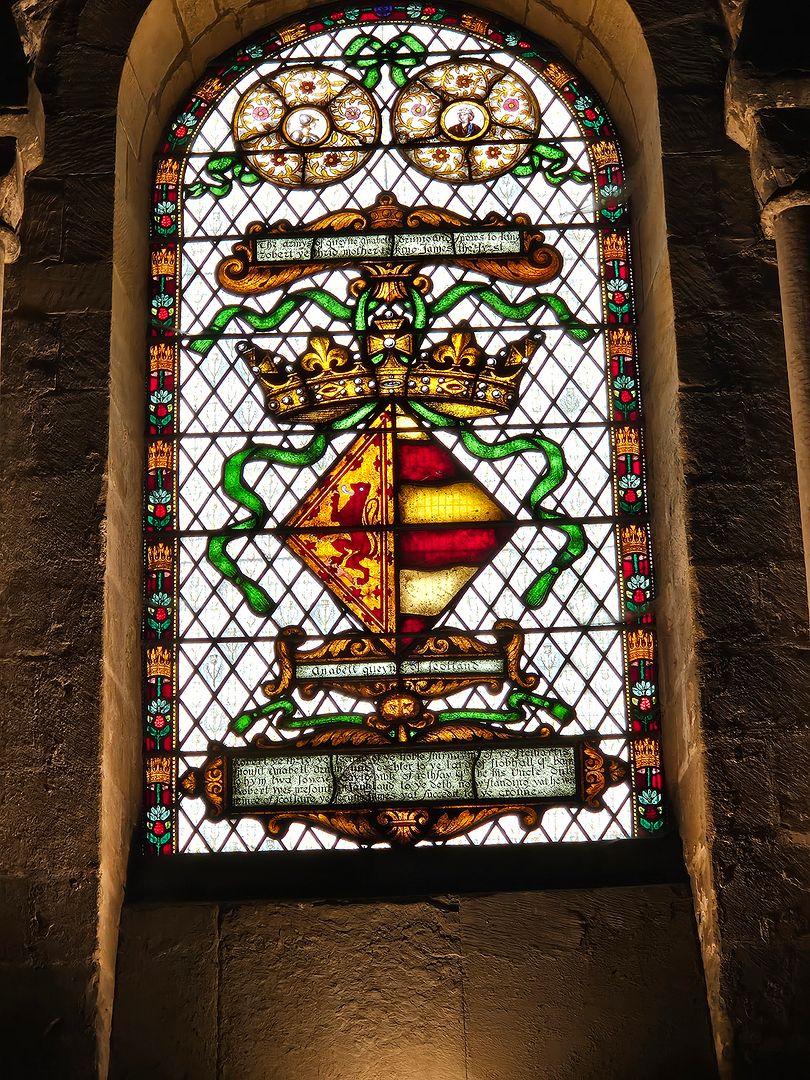
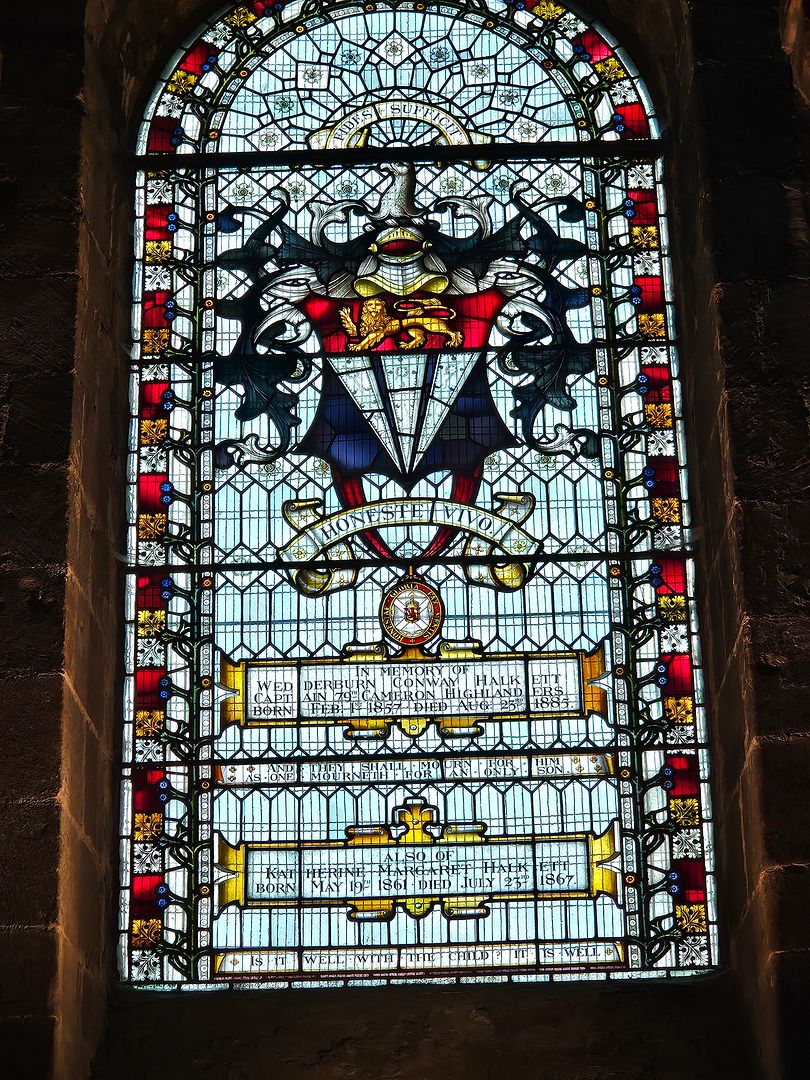
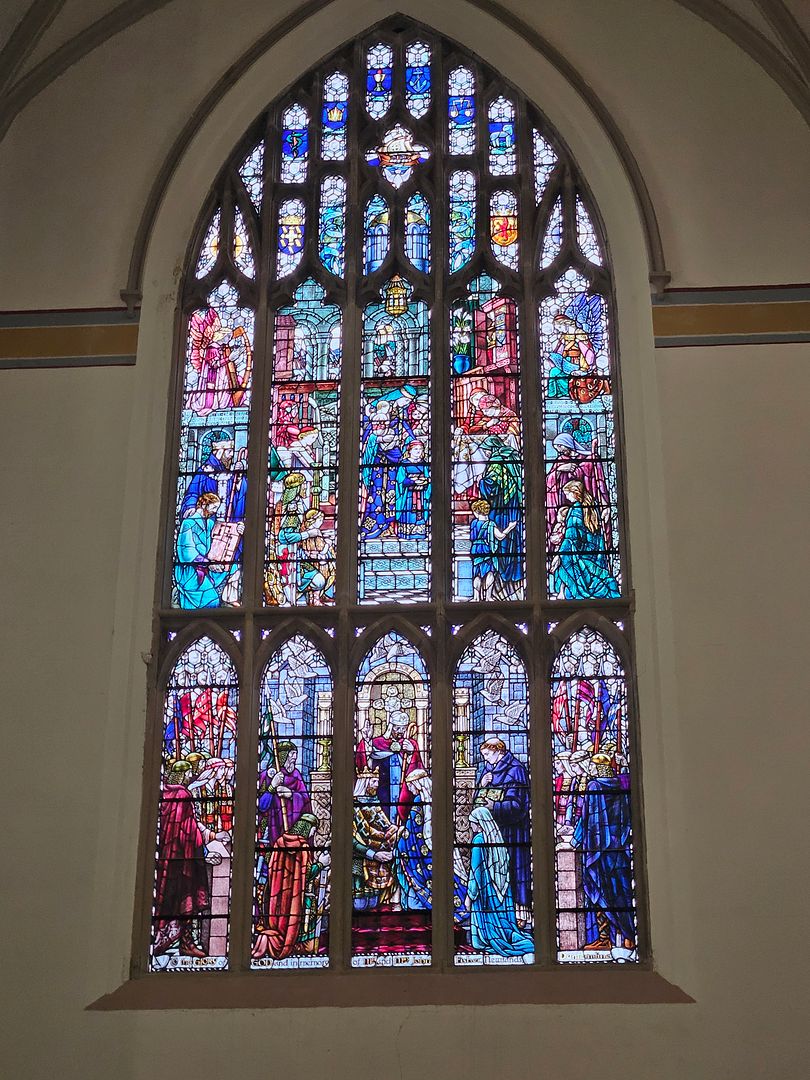
Armorial window
of
Annabella Drummond Queen of Robert III of Scotland .

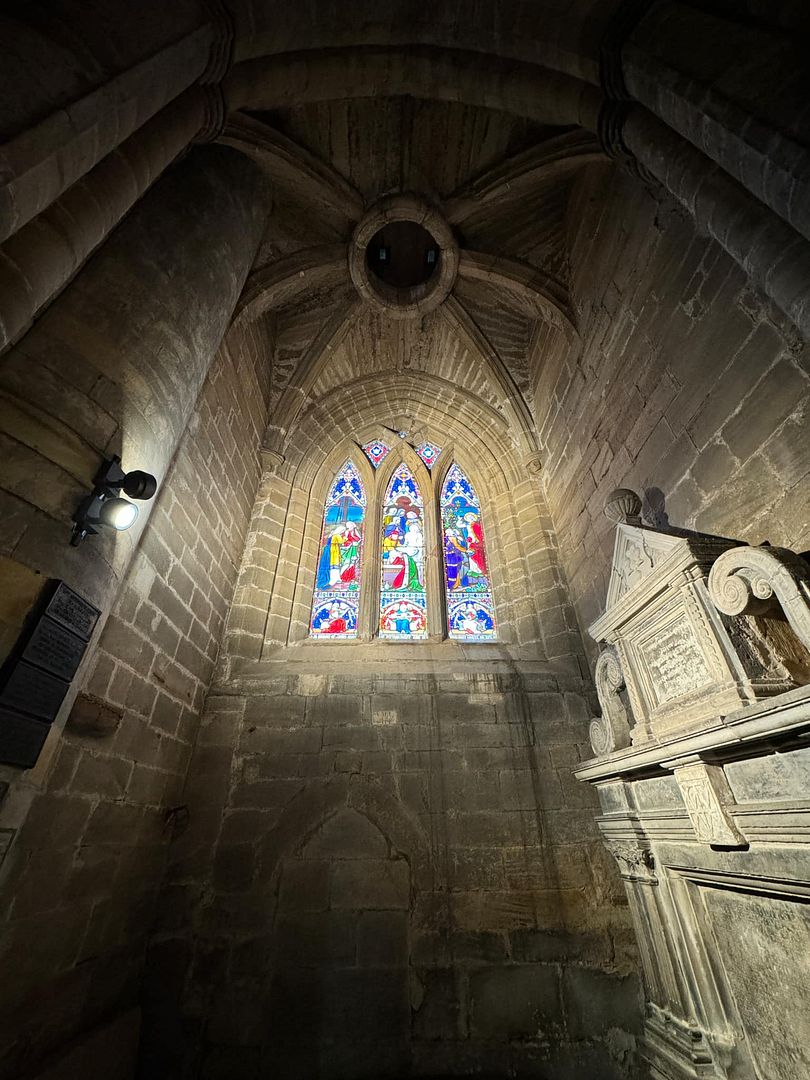
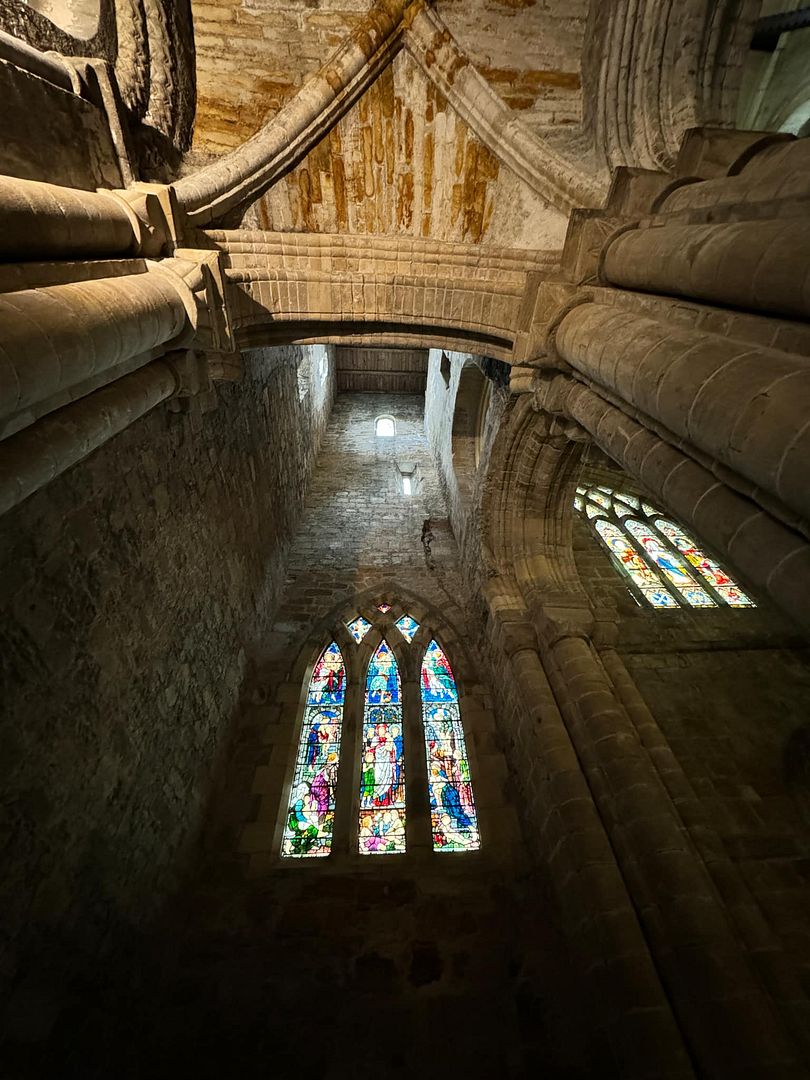
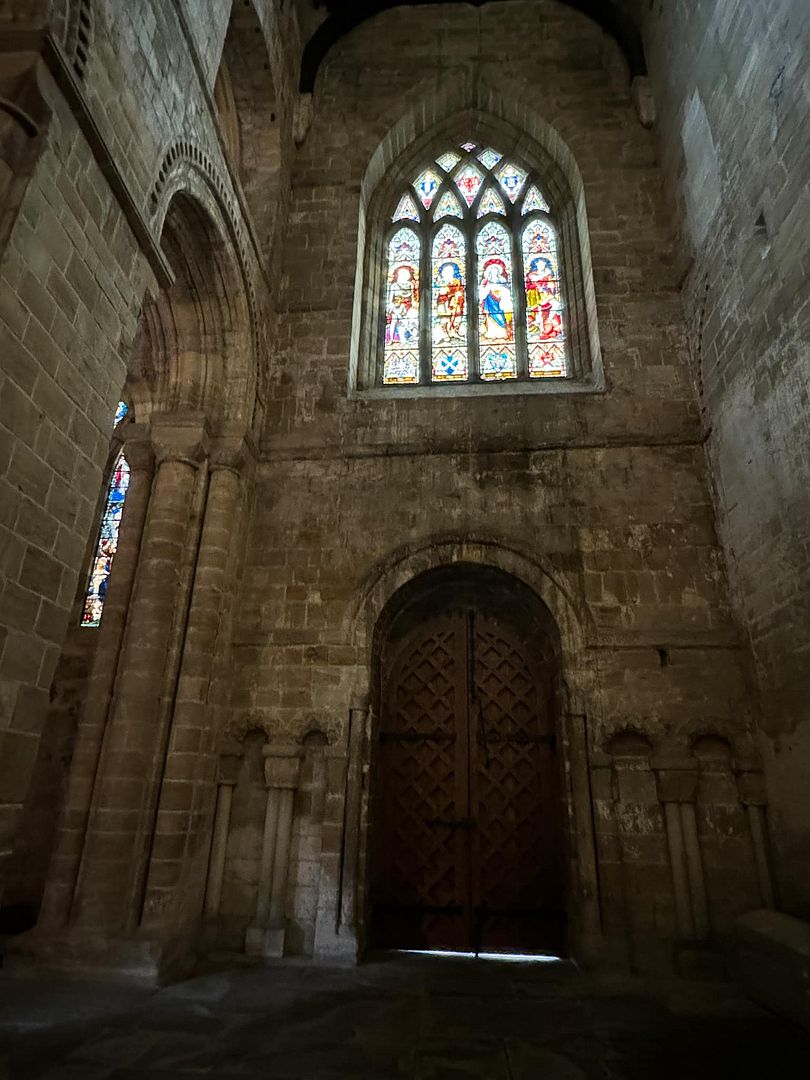
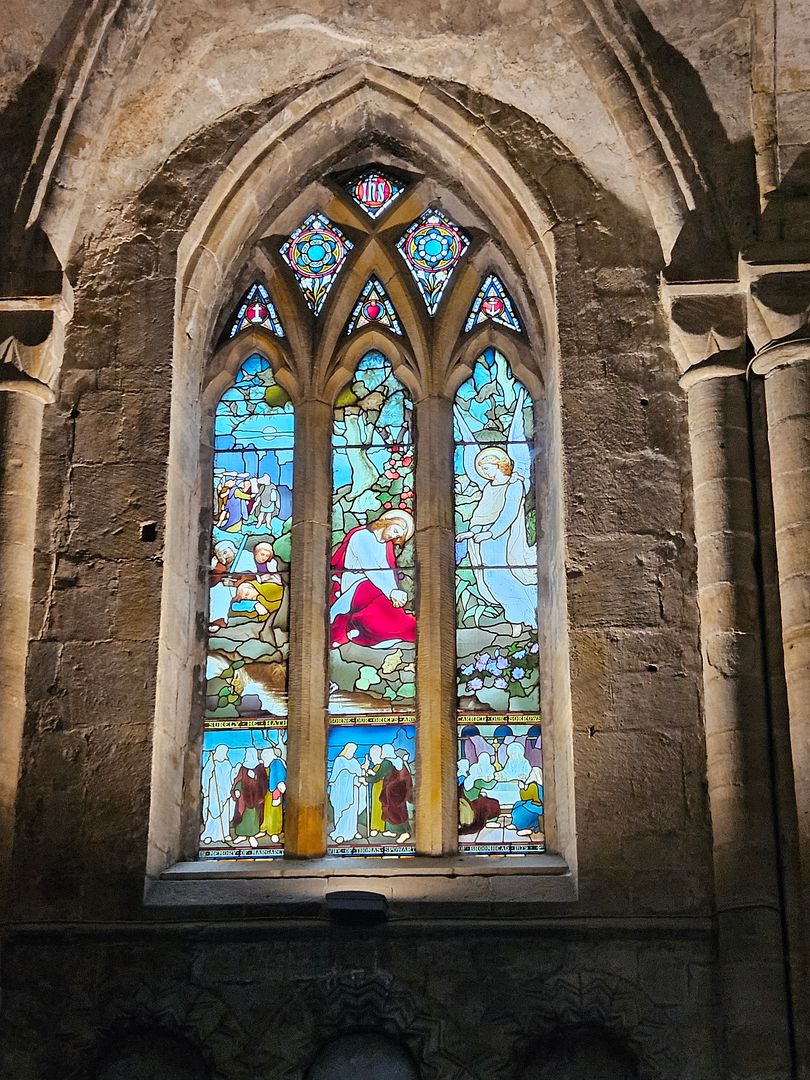
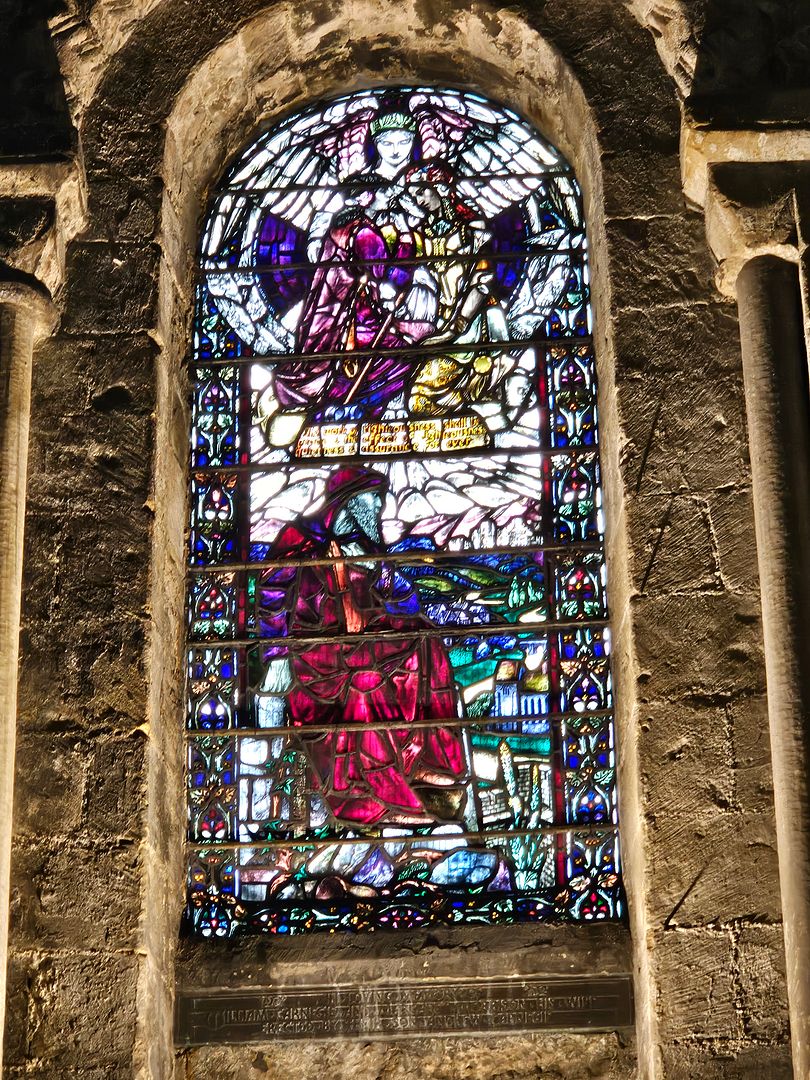
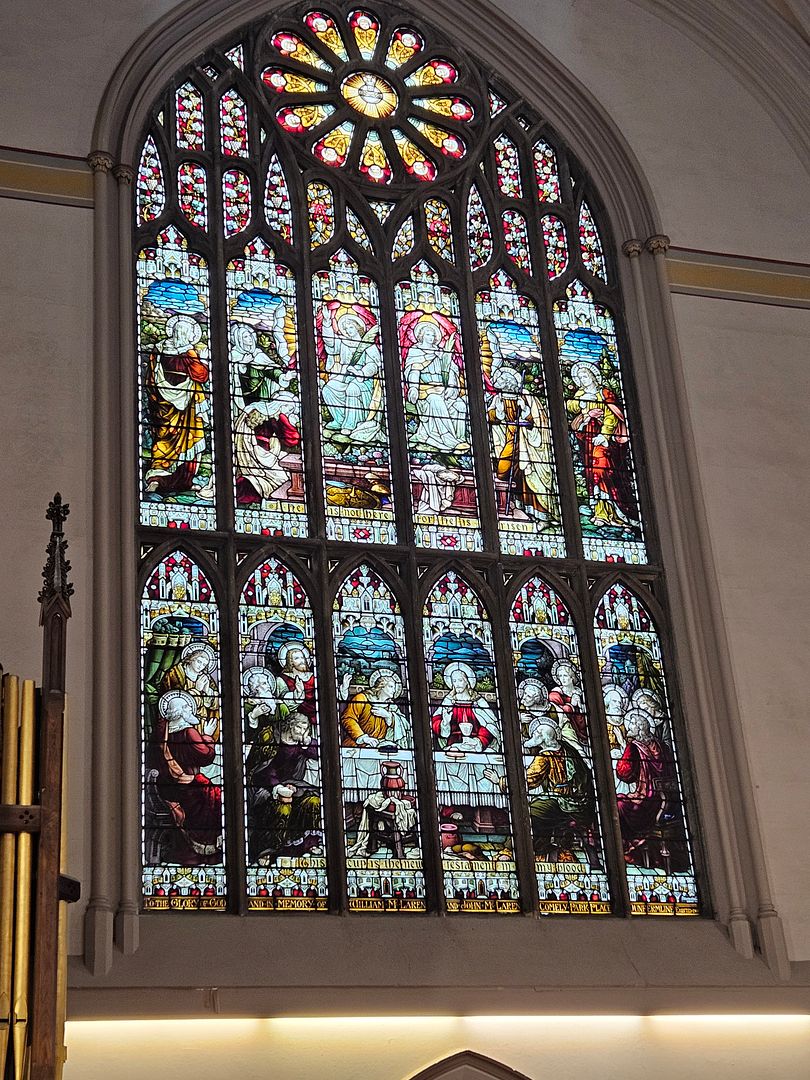
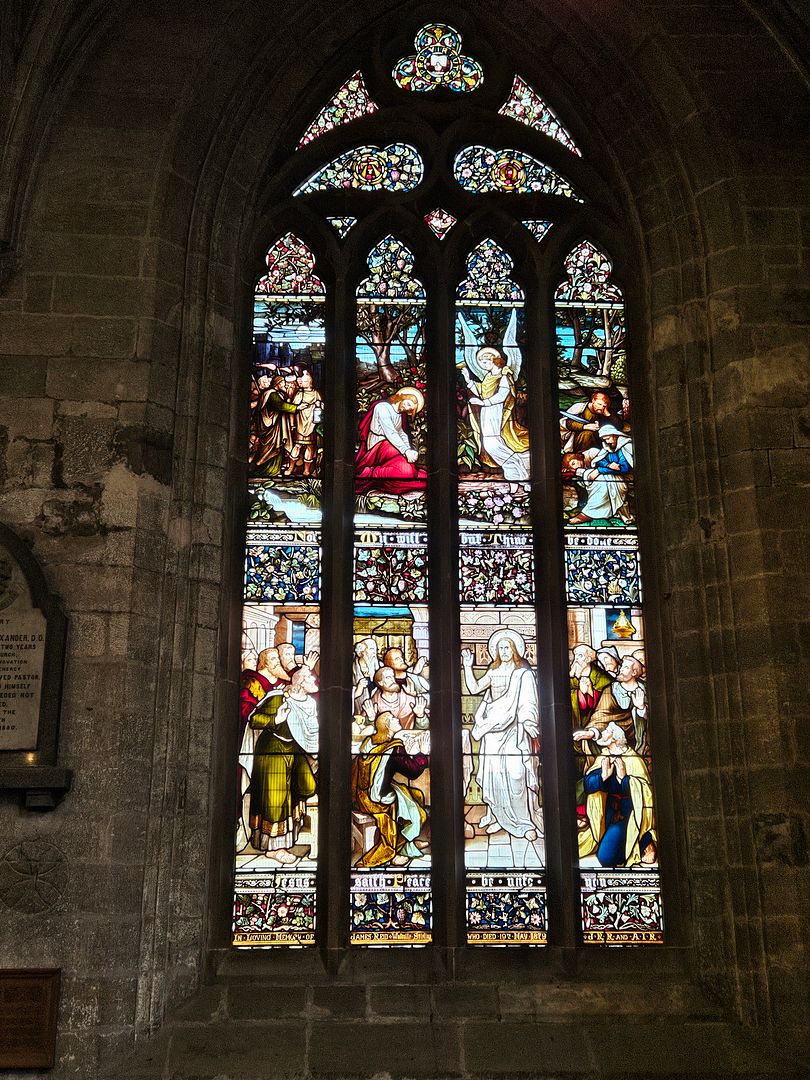
The McLaren Window – Dunfermline Abbey, featuring scenes from the Last Supper and the Resurrection. This stained glass window was erected in 1904 to honour two local brothers William and John McLaren, who stipulated that their own faces should be reproduced among the disciples. Below the Last Supper Window a quote states, ‘This cup is the New Testament in my Blood.’

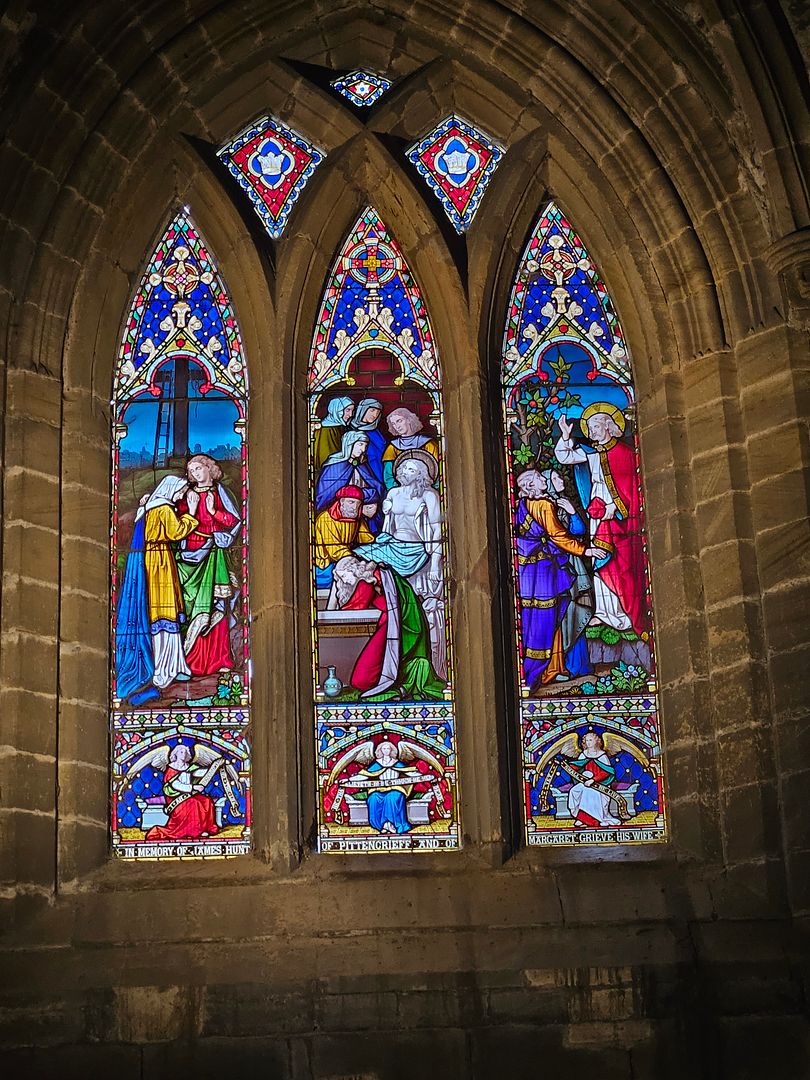
In the Resurrection Window, Mary Magdalene can be seen kneeling alongside the two Mary’s above a quote that states: ‘He is not here, for he is risen.’ To the right of Mary Magdalene are weapons and armour belonging to a Roman Soldier, including what appears to be the ‘Holy Lance’ otherwise known as the ‘Spear of Destiny…’

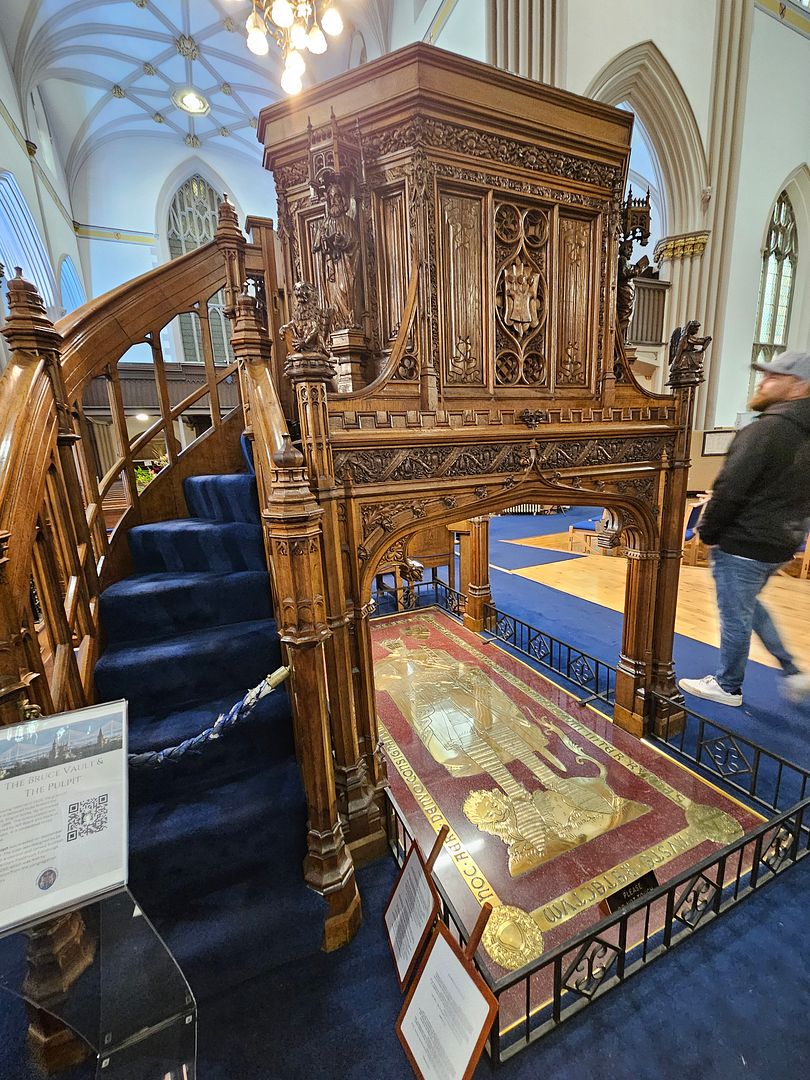
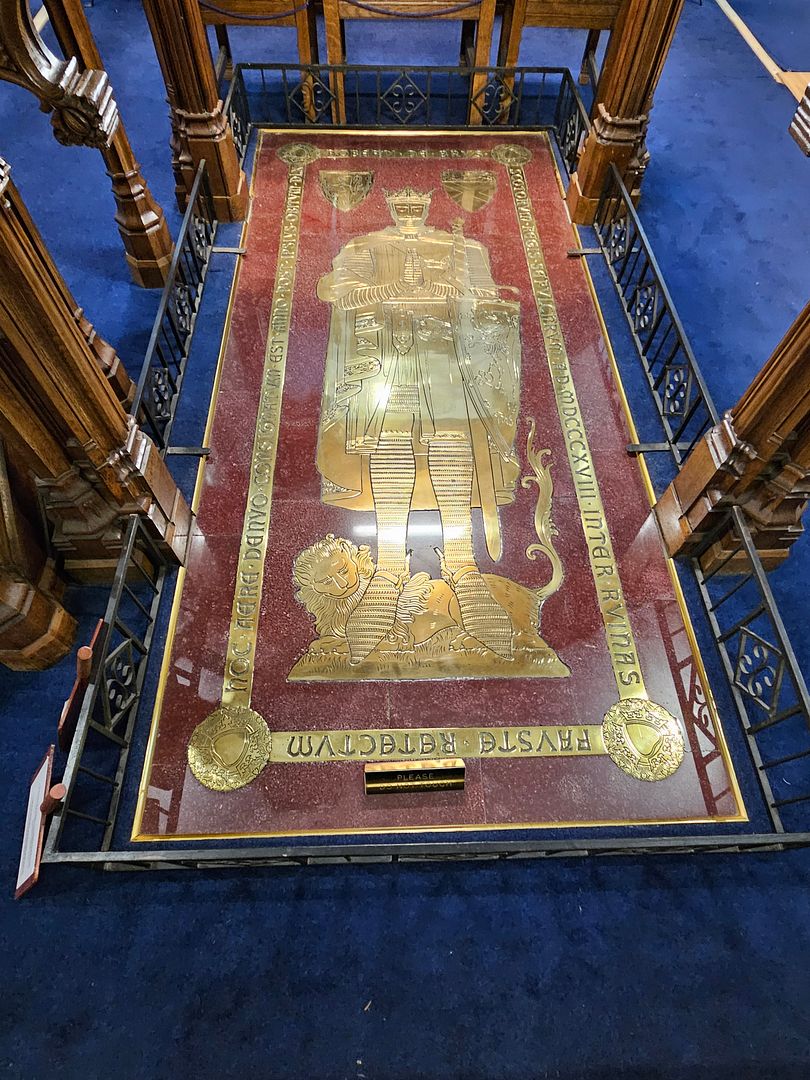
The chancel is such a contrast to the empty, echoing nave; the grave of Robert the Bruce is striking, but it is rather oddly tucked under the pulpit, surrounded by Victorian woodwork, so it isn’t the easiest thing to see closely.

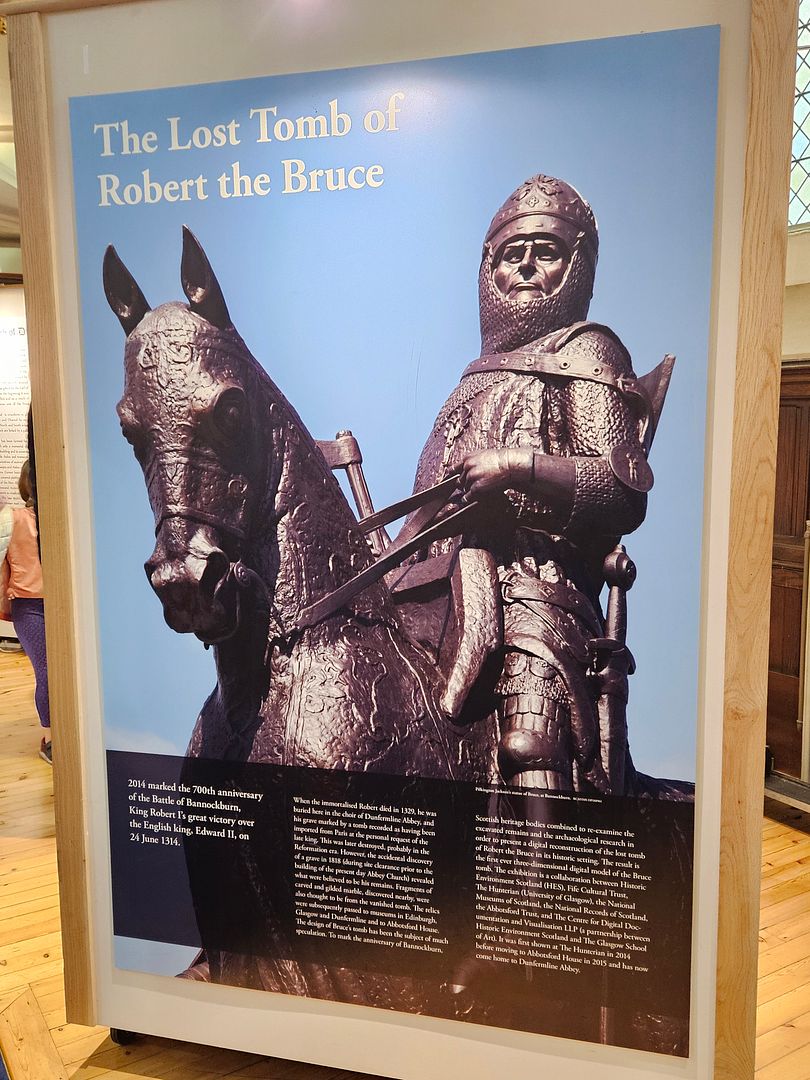
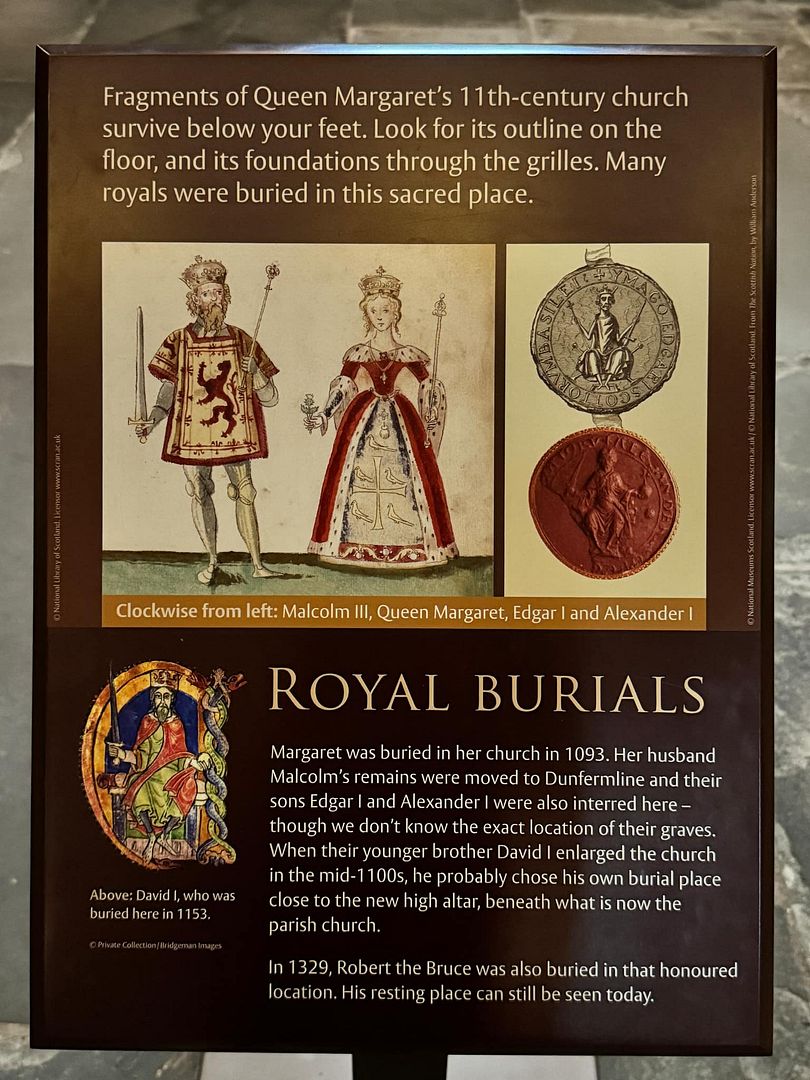
Robert the Bruce was buried, in 1329, in the choir, now the site of the present parish church. Bruce’s heart rests in Melrose, but his bones lie in Dunfermline Abbey, where (after the discovery of the skeleton in 1818) they were reinterred with fitting pomp below the pulpit of the New church. In 1891, the pulpit was moved back and a monumental brass inserted in the floor to indicate the royal vault.


When and if I find more information about some of the windows we photographed I’ll add the information to this post.

On this Saturday the 21st of September we also toured the remains of the castle which will be another post.

It’s always after the fact that I learn so much more about the places we visited. One of the things I didn’t know about Dunfermline is that Andrew Carnegie was born in Dunfermline and the Andrew Carnegie Galleries and Library are in the town.

Back to the present: We are moving into the Martin Luther King Jr. weekend with many folks getting Monday as a holiday in the USA to honor the memory of him. Hope you all have a good weekend.

Scotland Travel Journal~ St. Andrews #3

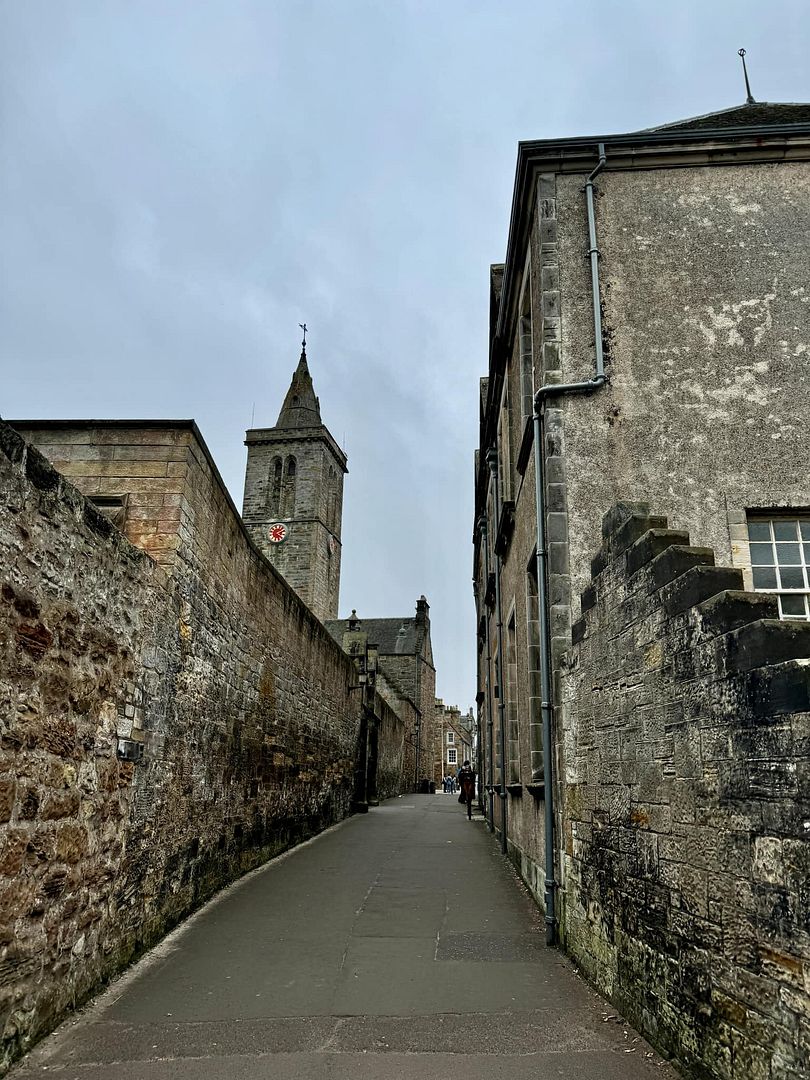
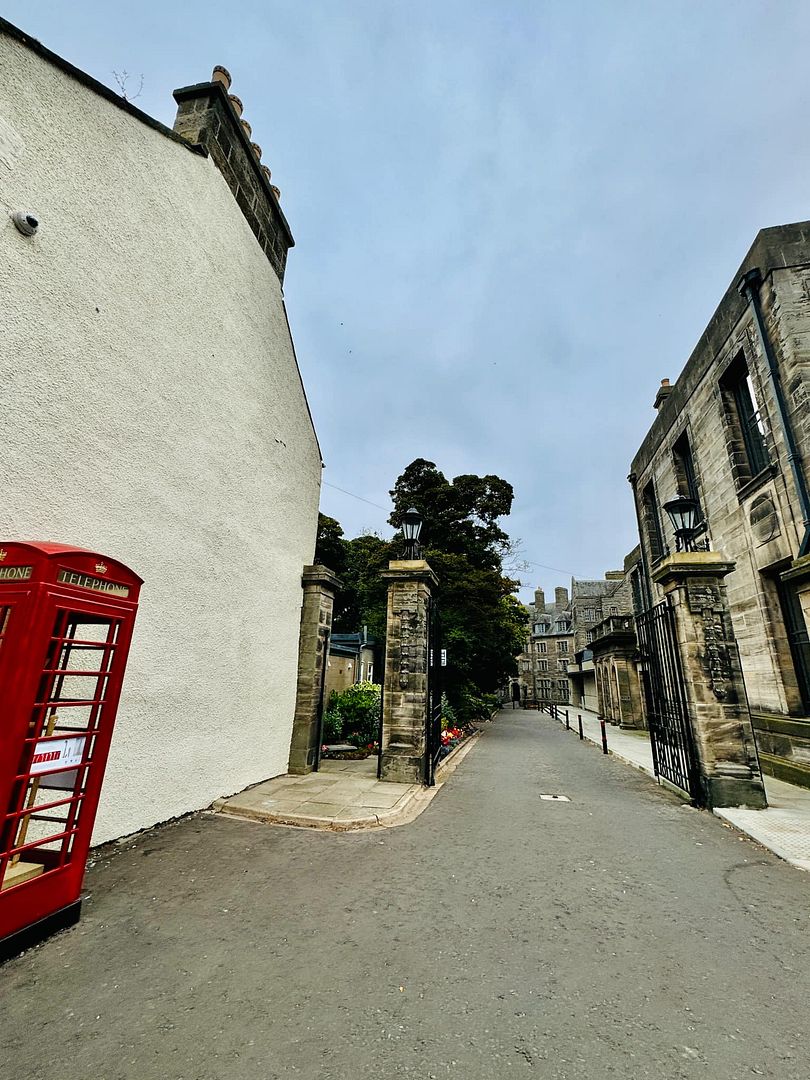
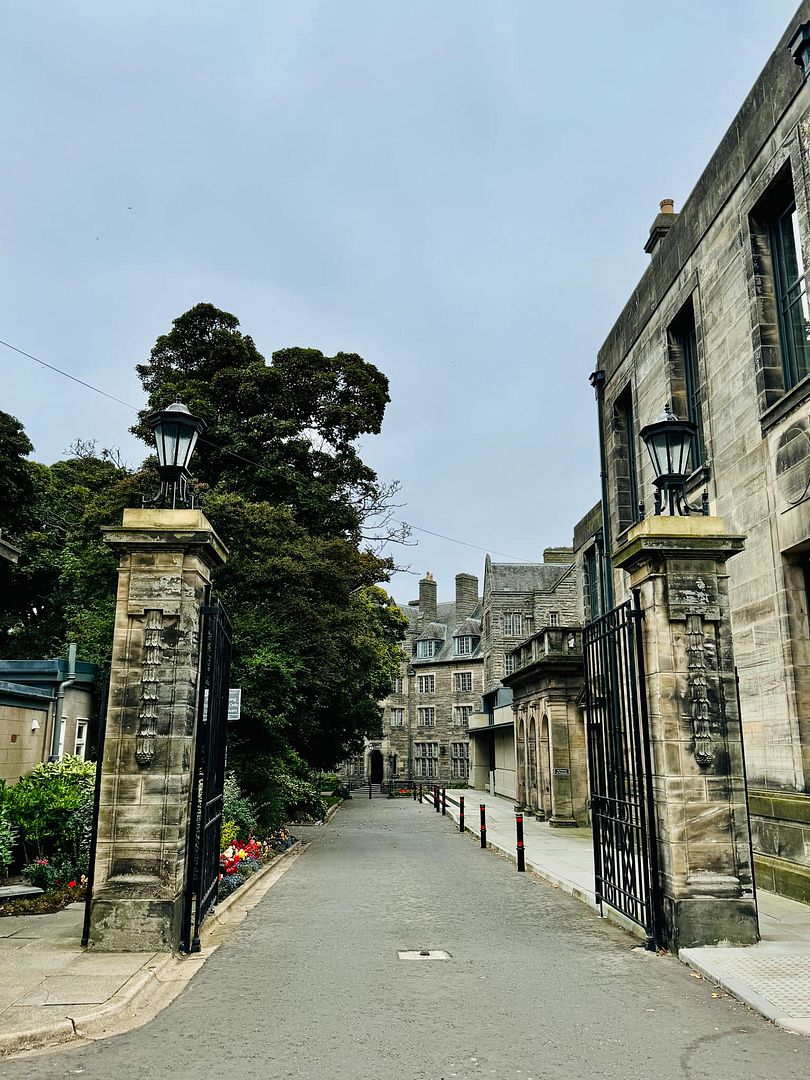
On Friday the 20th of September 2024 after our time at St. Andrews castle we got some back lane directions to get to North Street.

Butts Wynd Lane

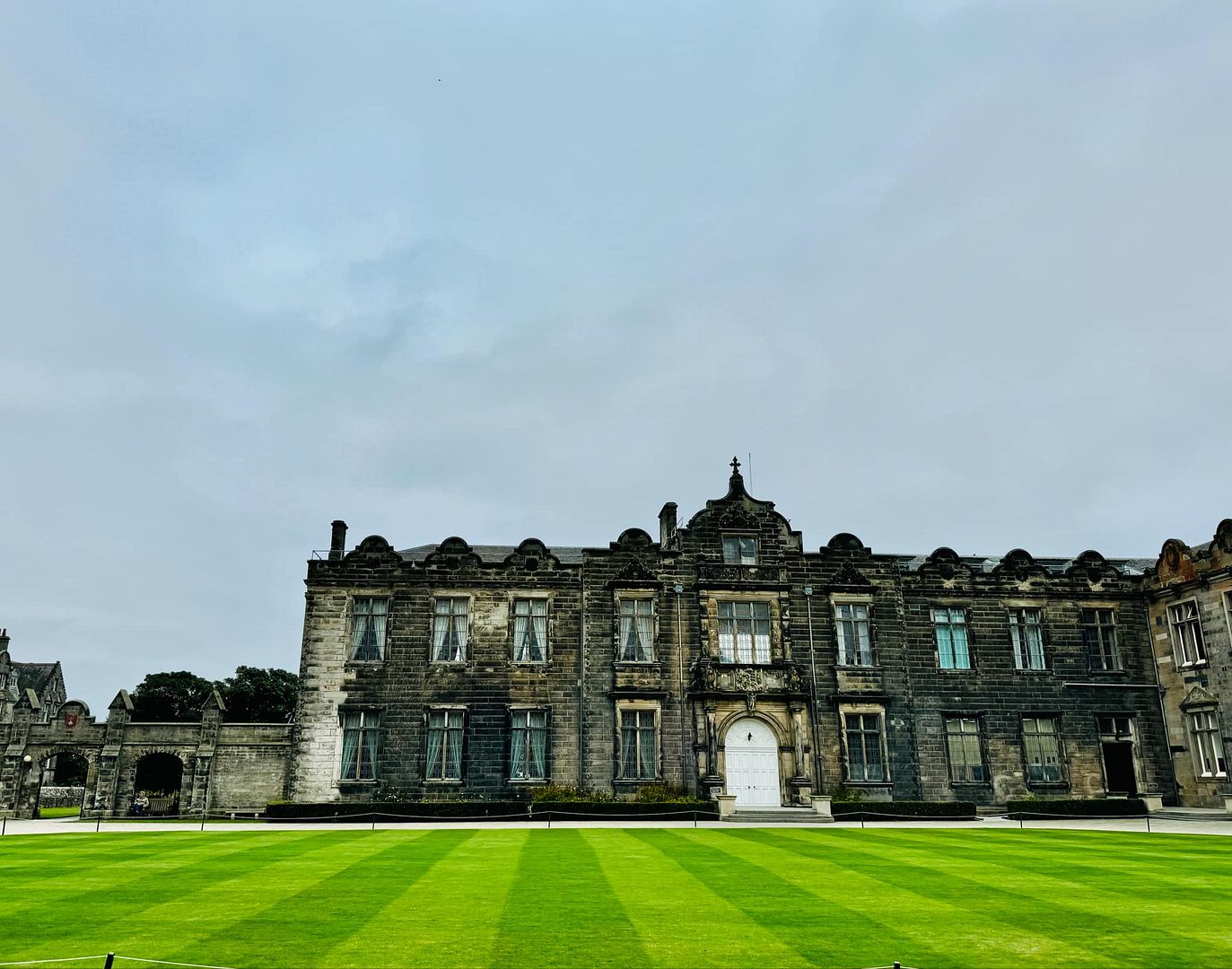
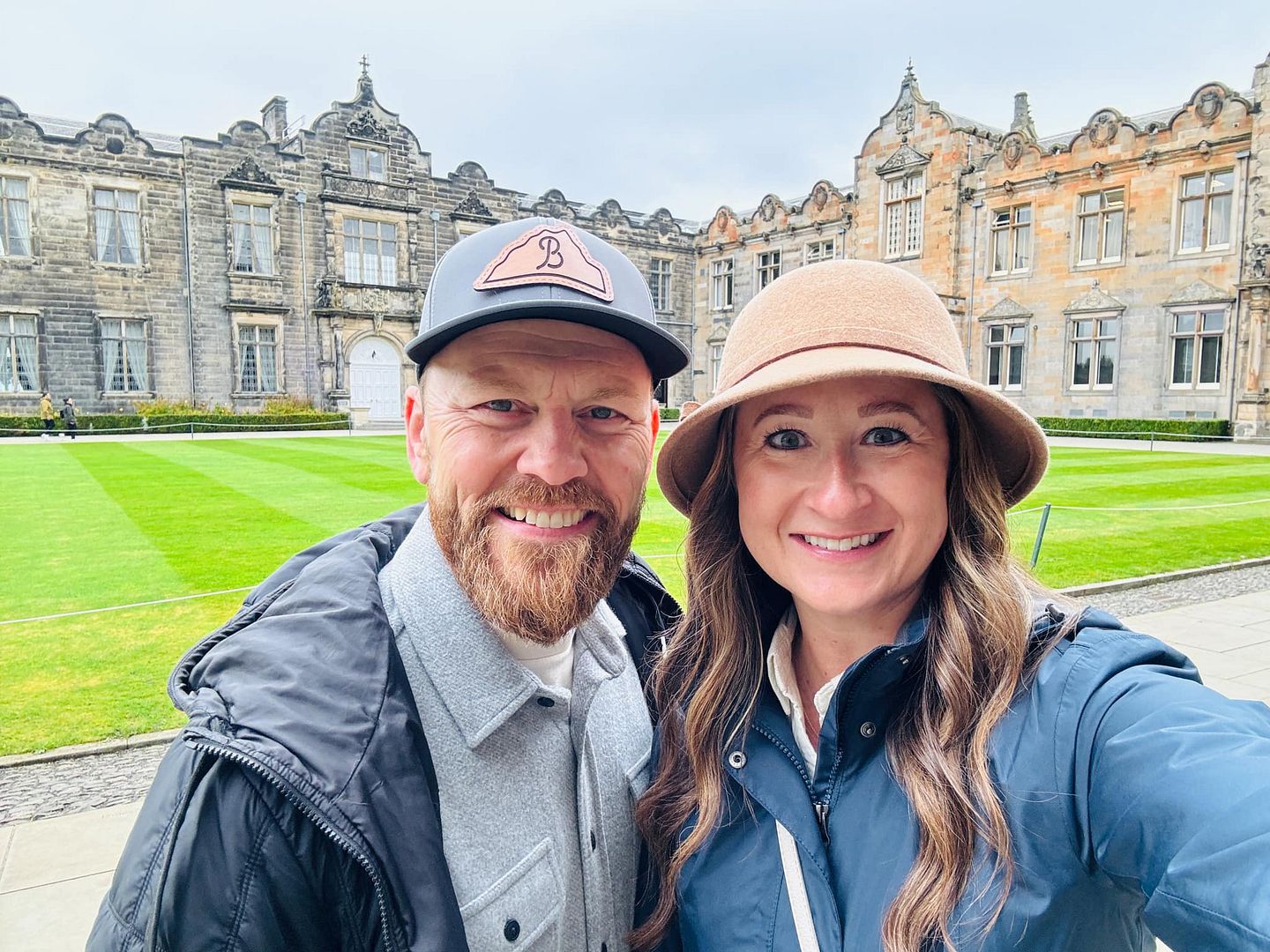
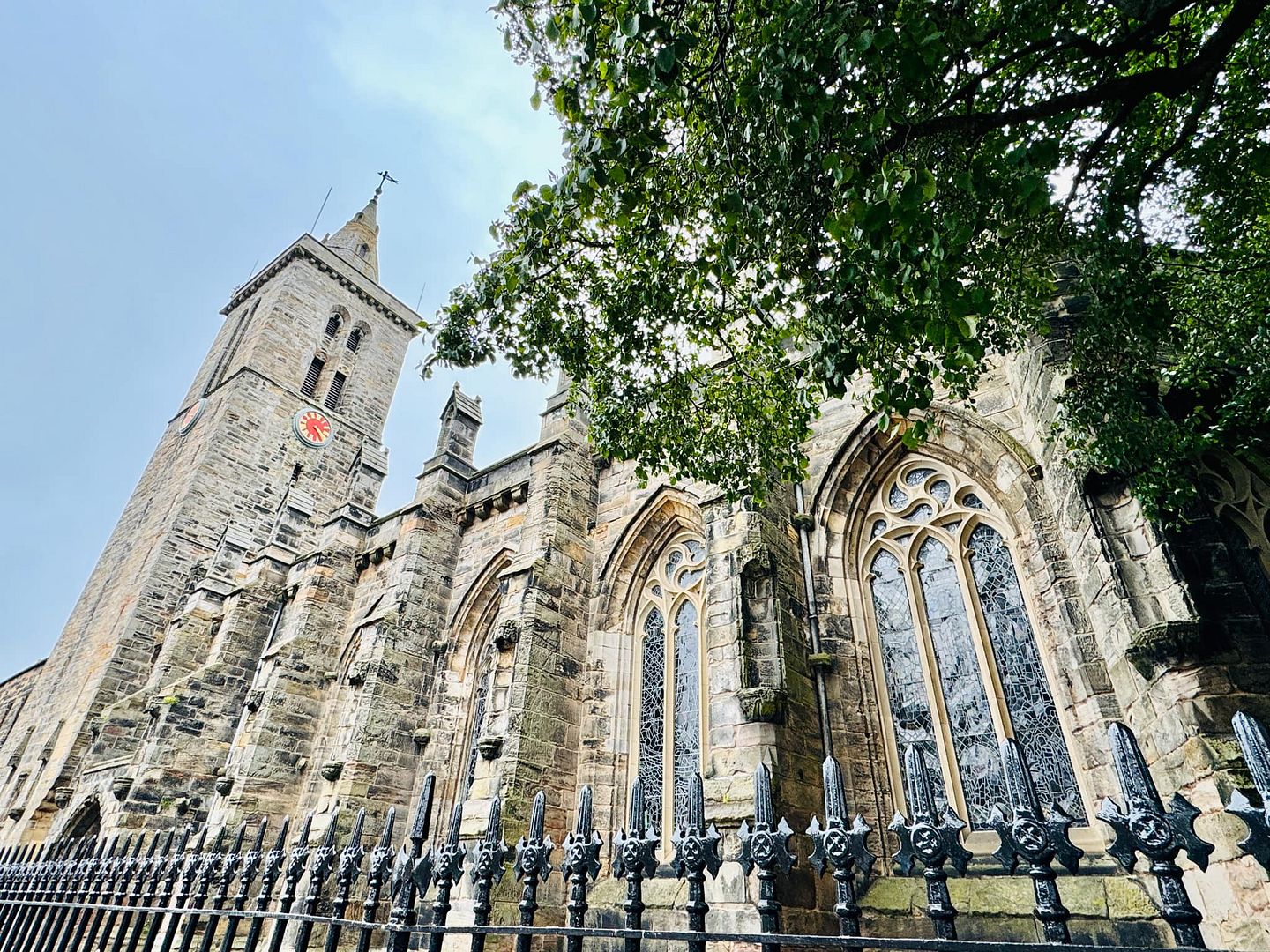
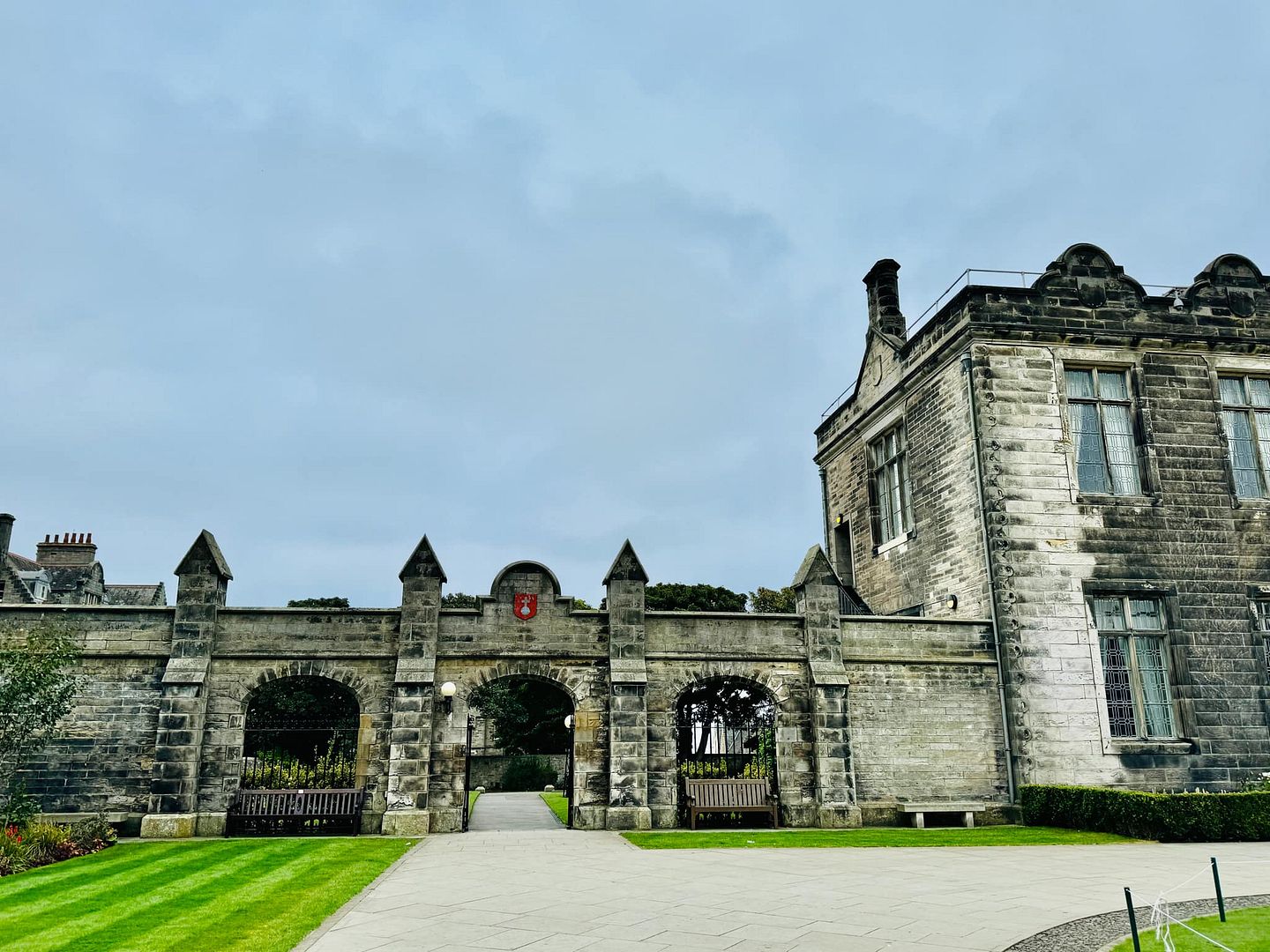
The lane took us by some of the University of St. Andrews buildings with this beautiful St. Salvatores quad.

We were hoping to be able to get inside Saint Salvatore’s Chapel but were disappointed to find a private event going on with no entry for us.

We walked by along North Street and could tell this was a beautiful chapel. I found this youtube and the gal who took the video does show the interior of the chapel with added information and history. She shows the spot where Patrick Hamilton a Presbyterian Reformer was martyred in the video, also.

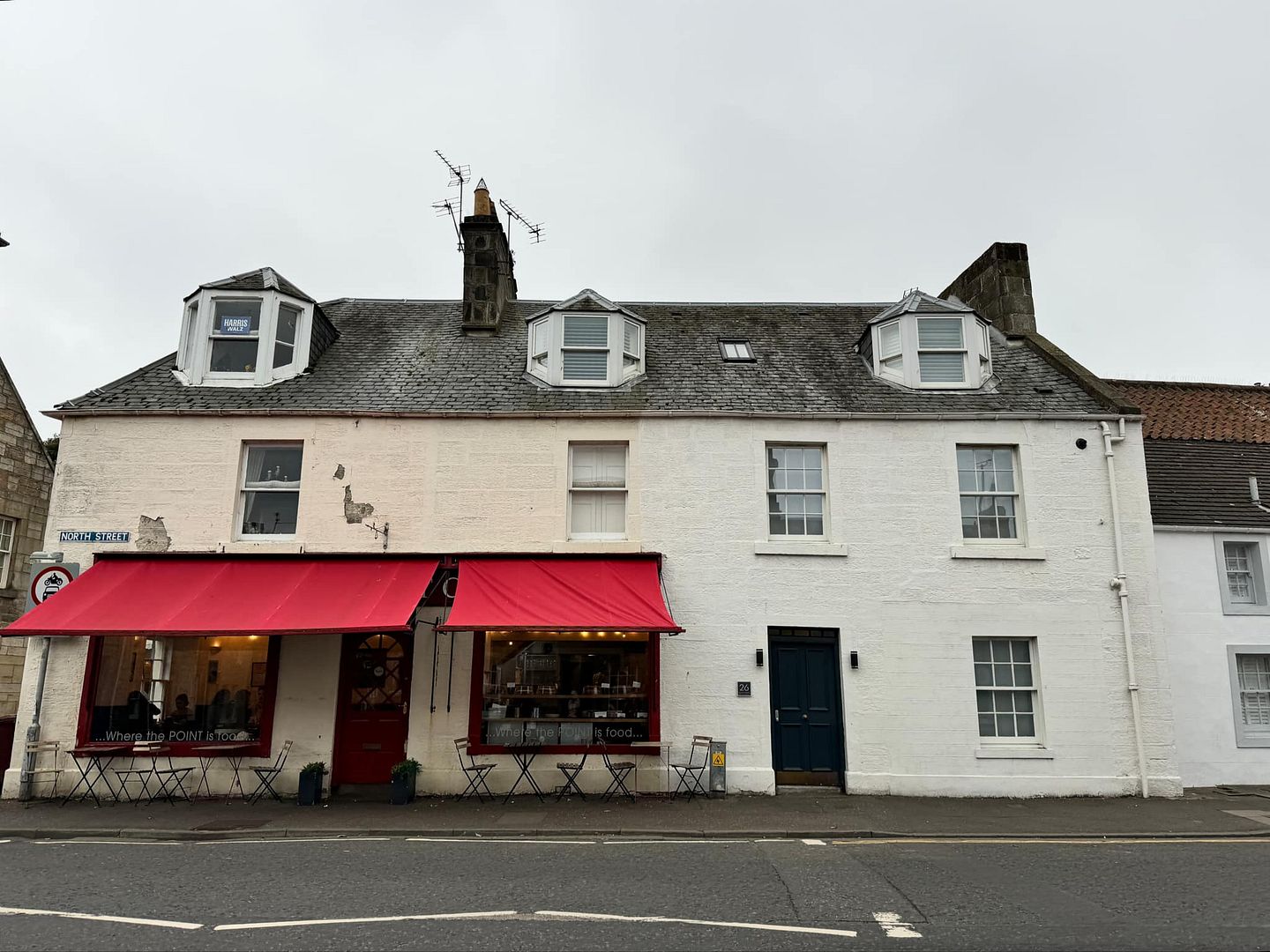
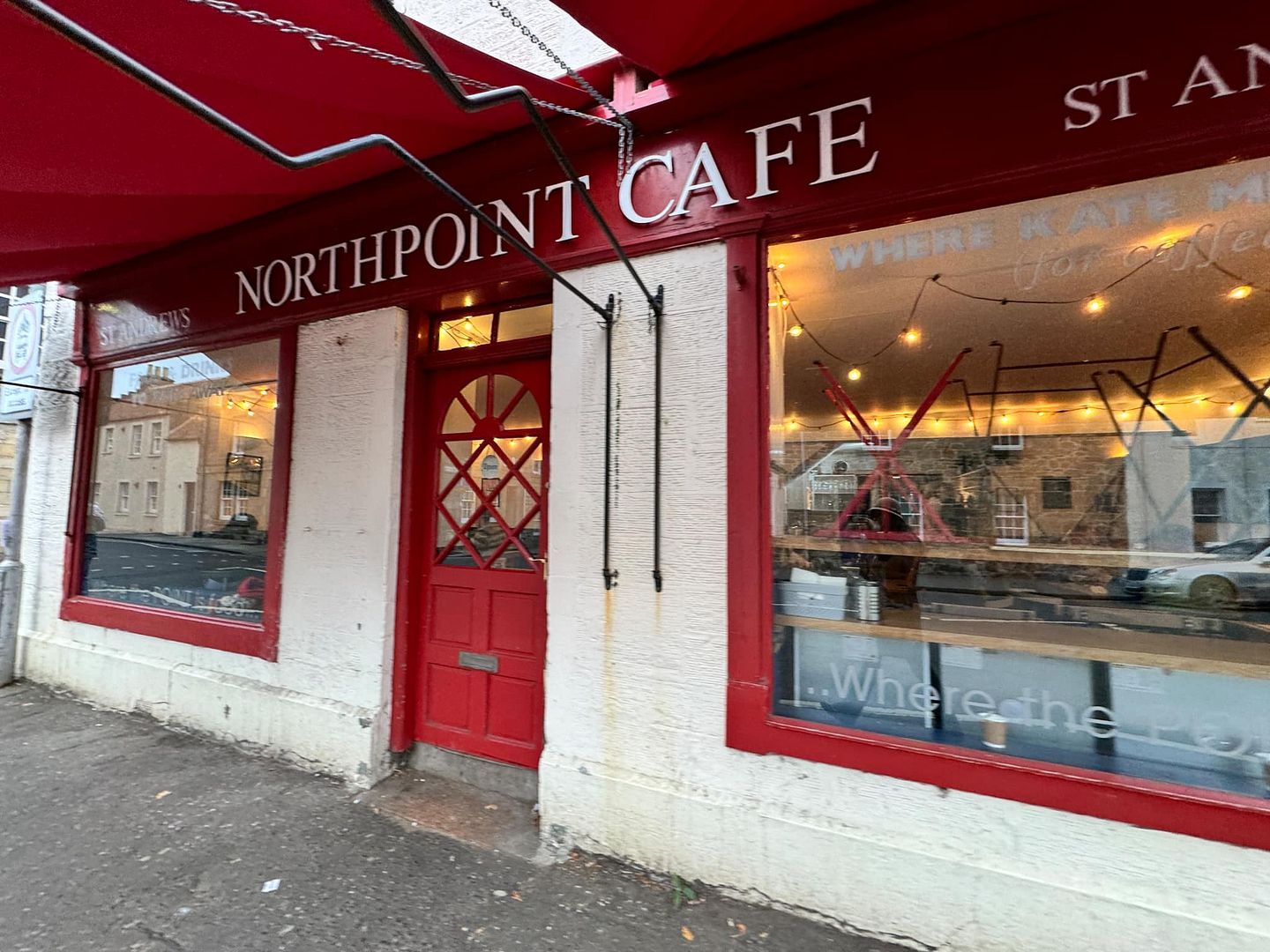
Our next stop was the Northpoint Cafe made famous by Prince William and Kate. We made it in time to have some refreshments before it closed.

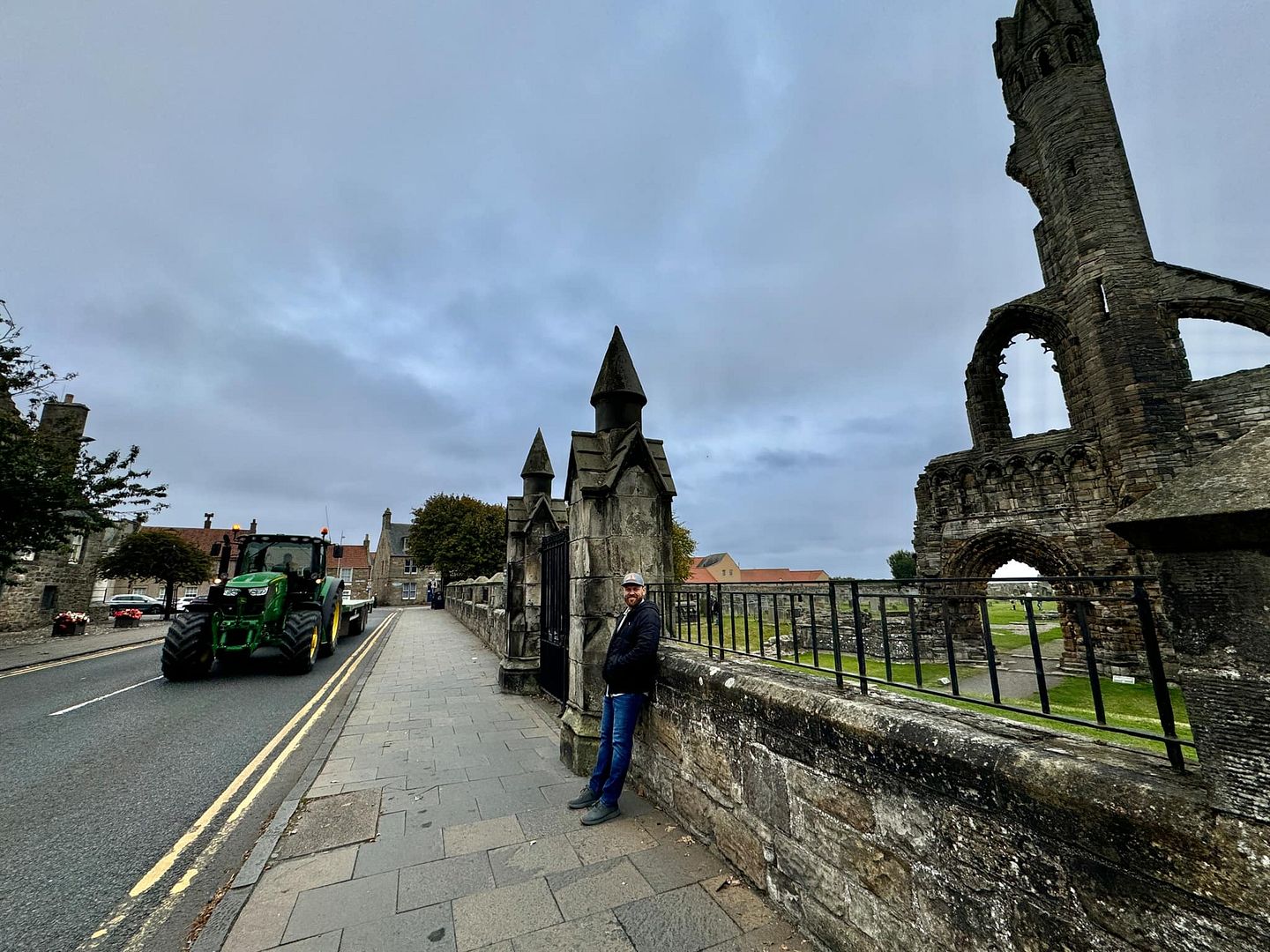
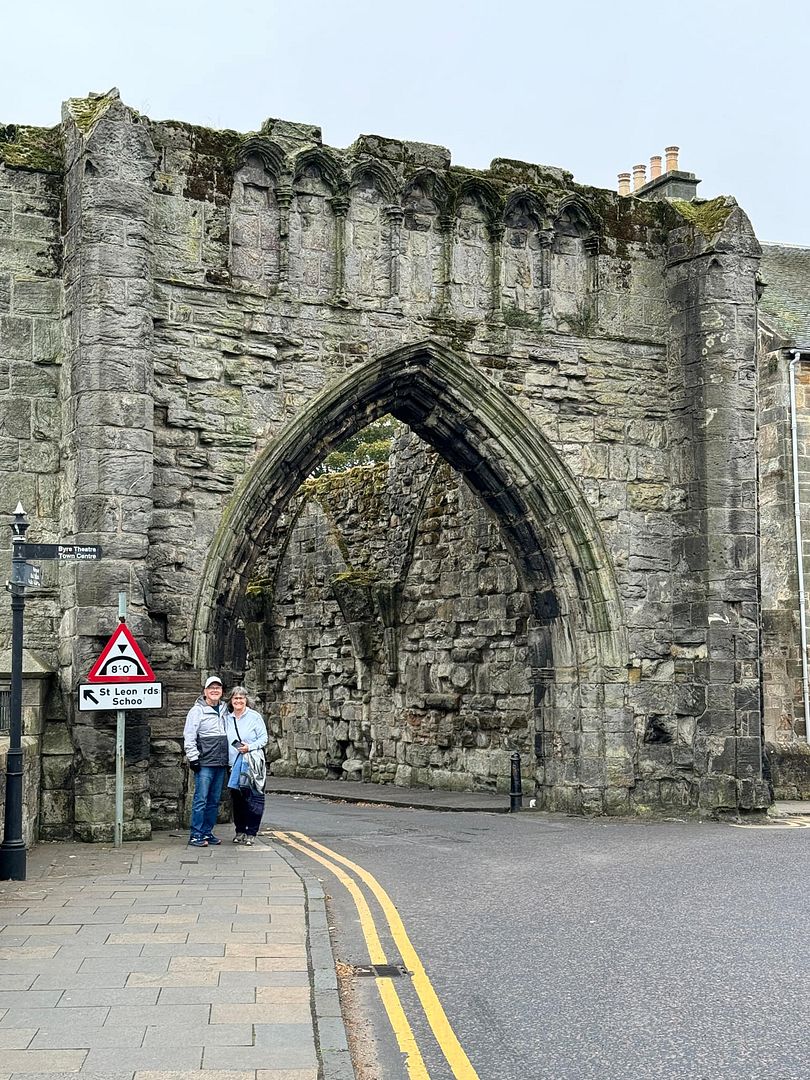
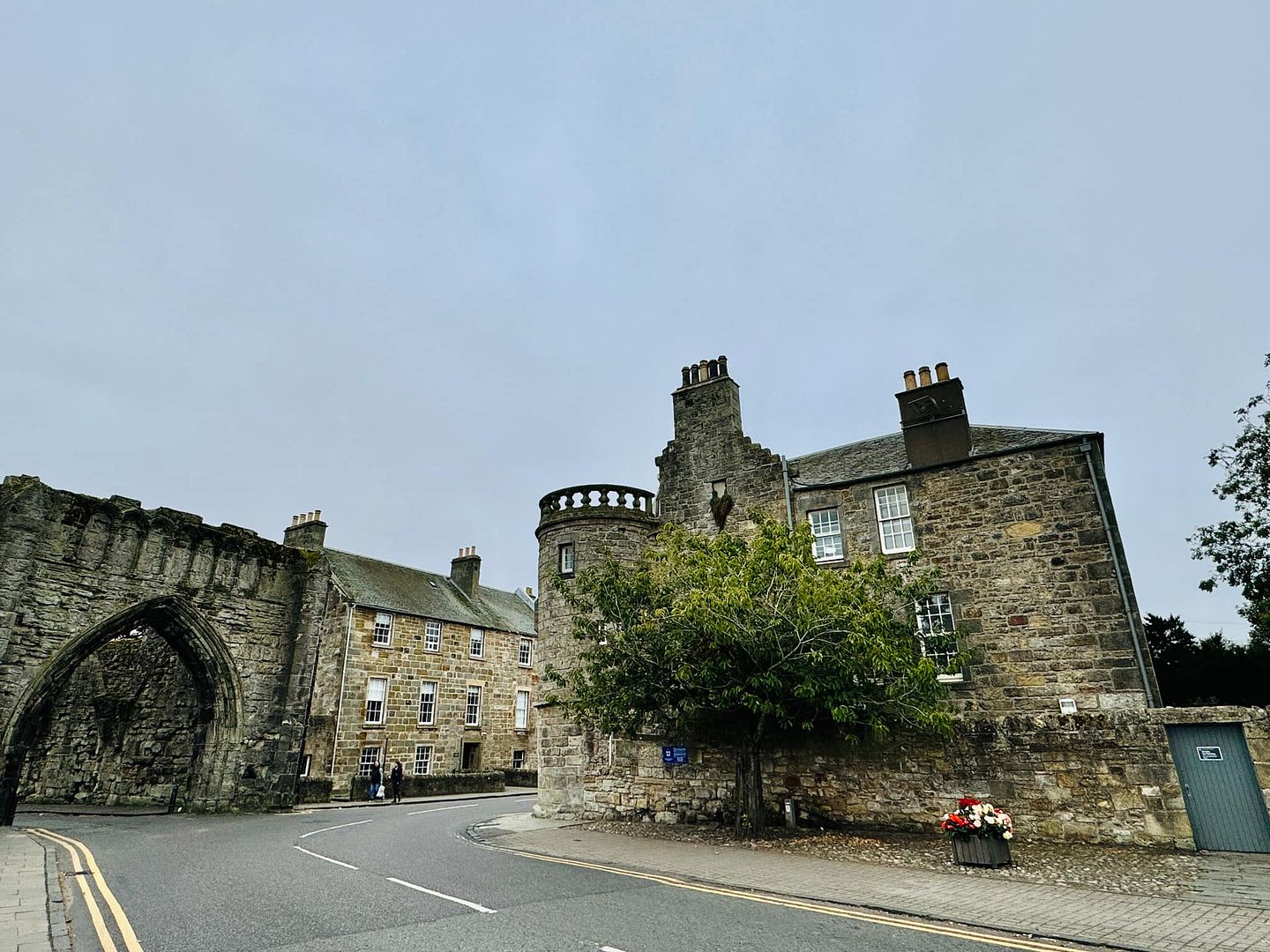
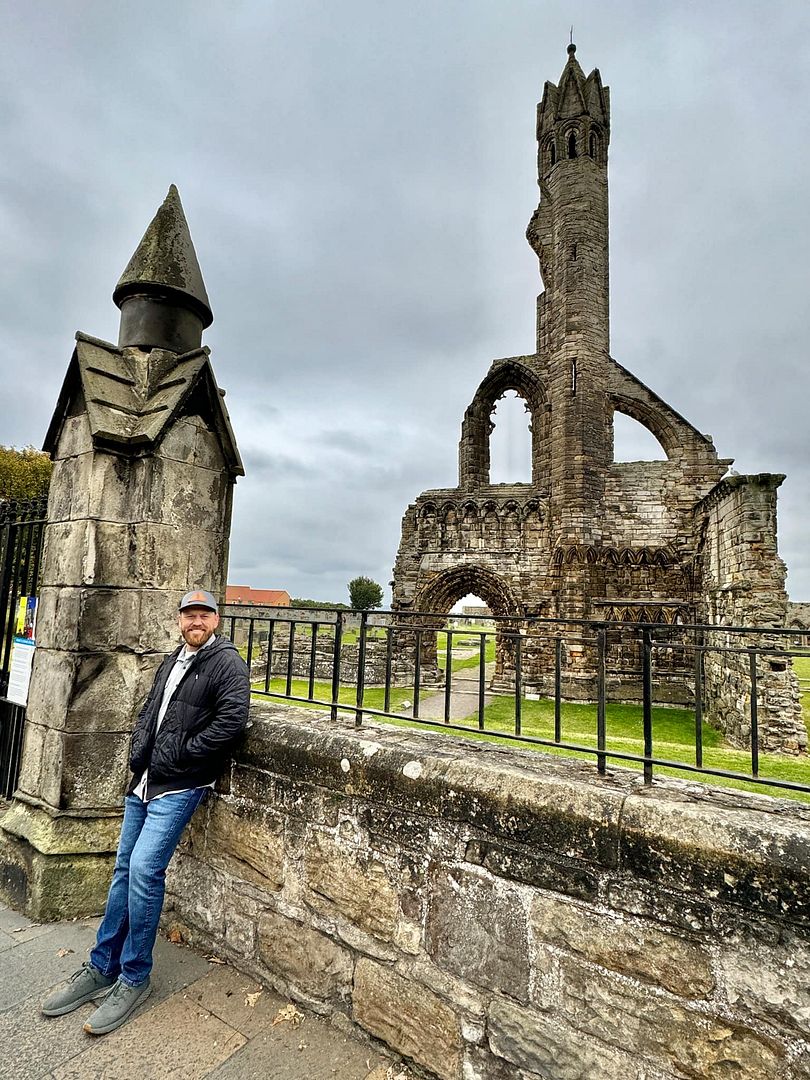
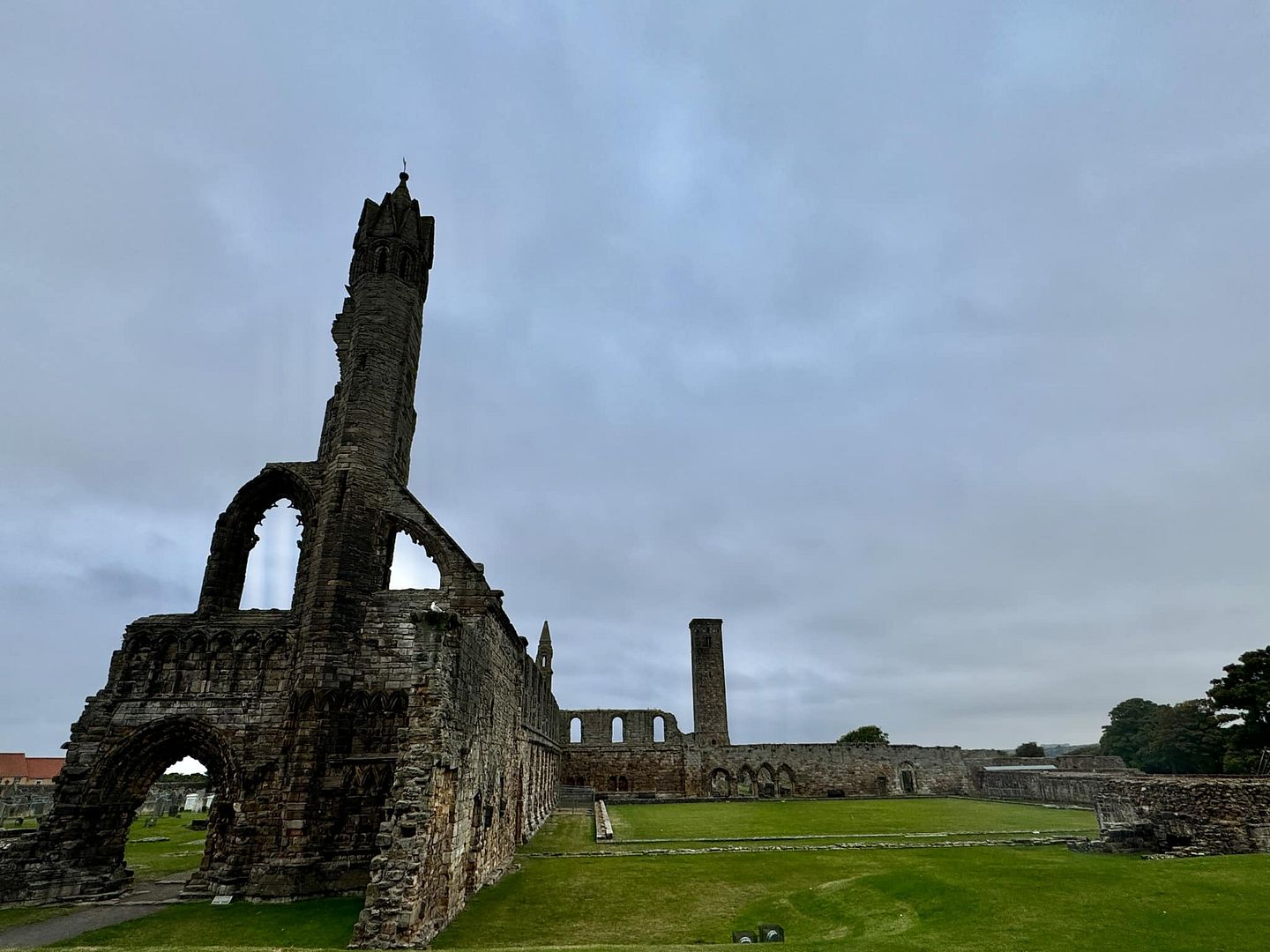
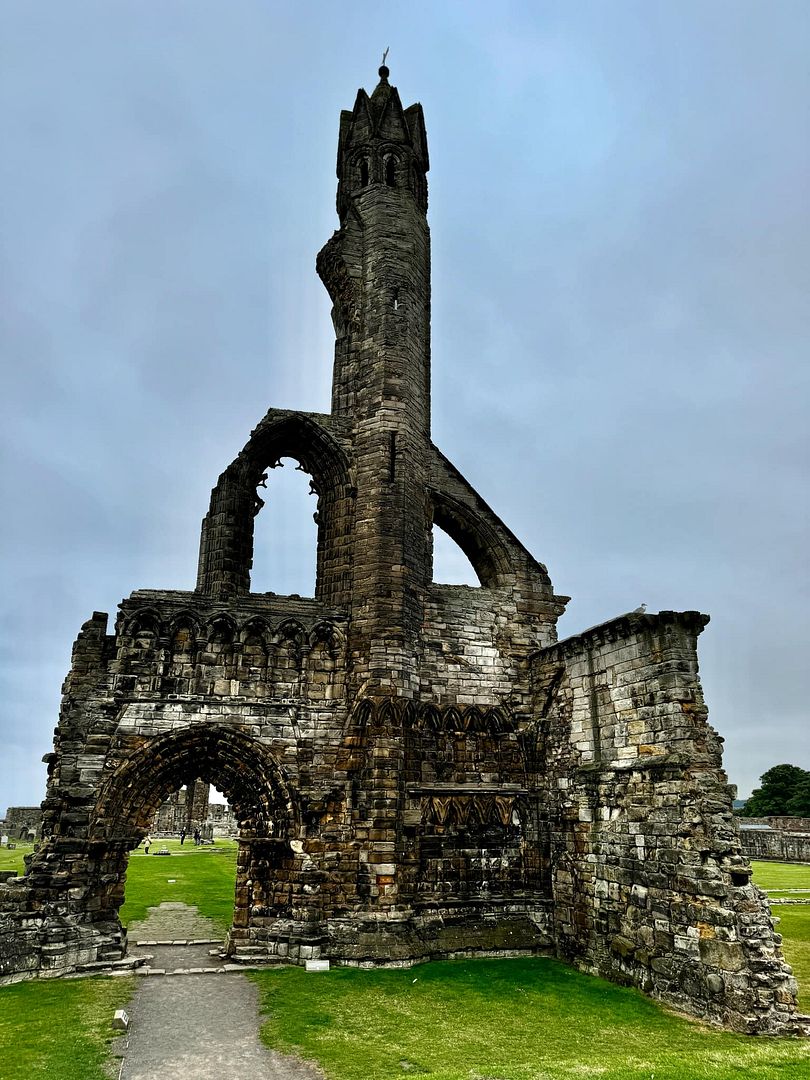
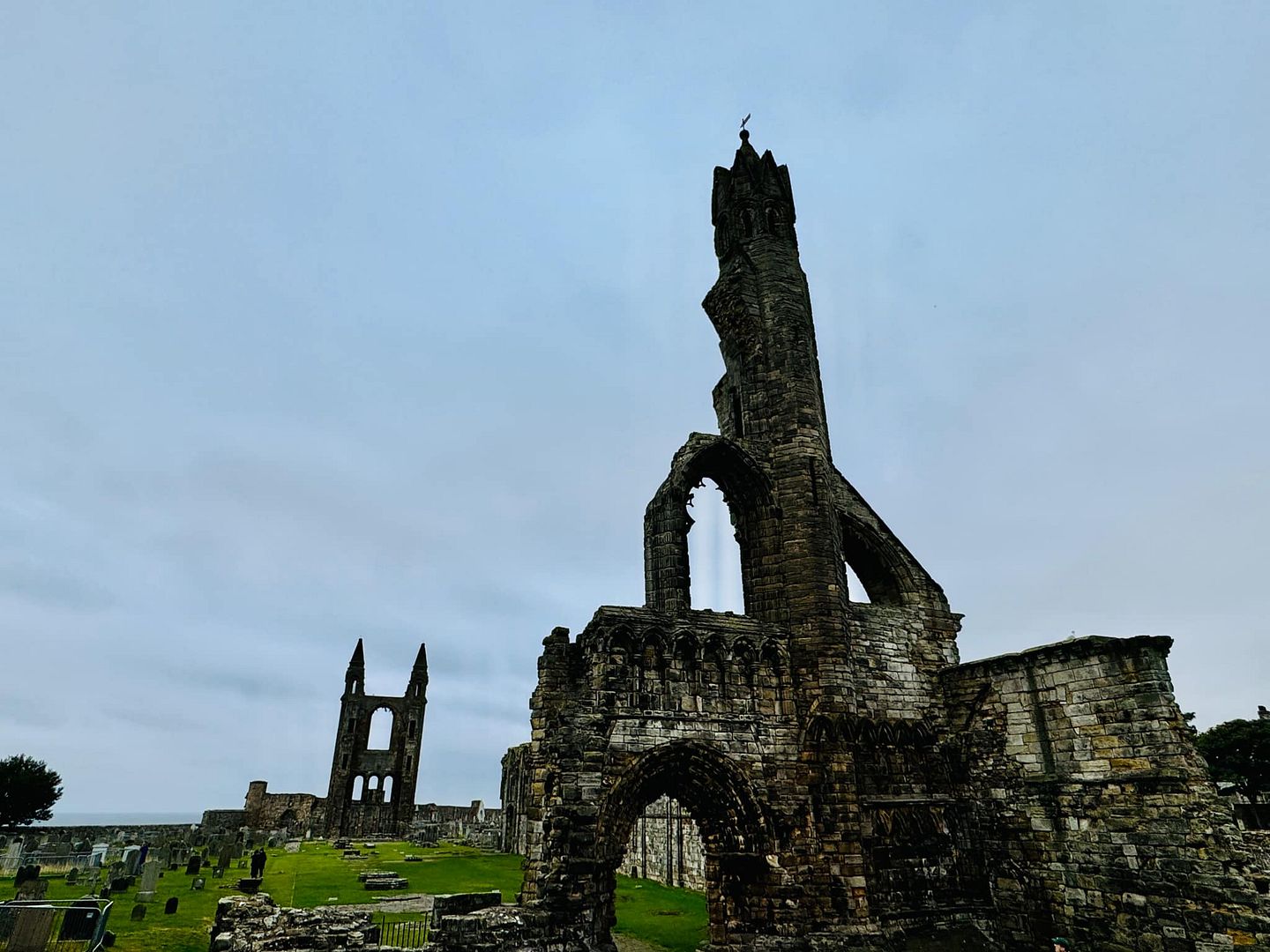
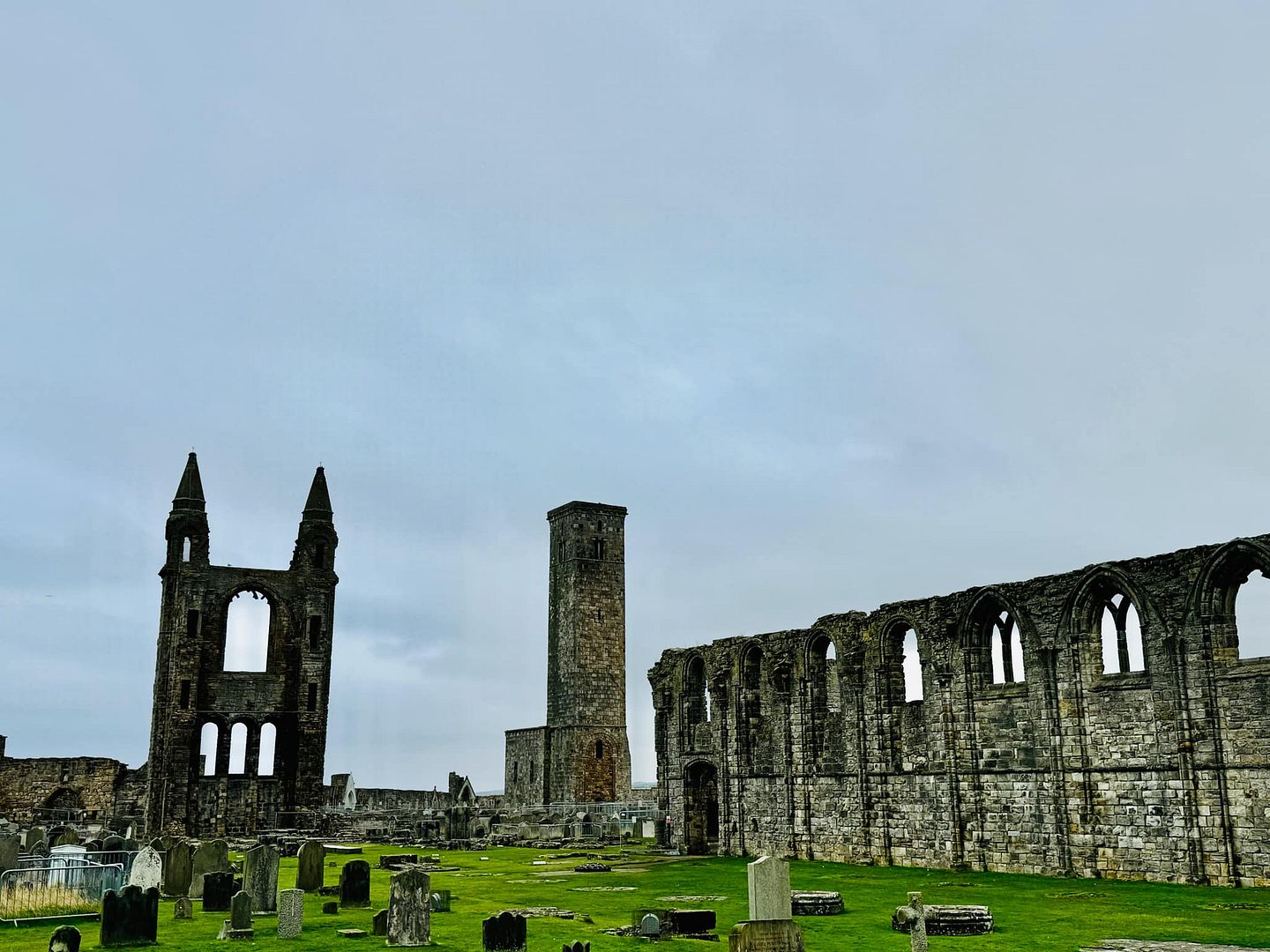
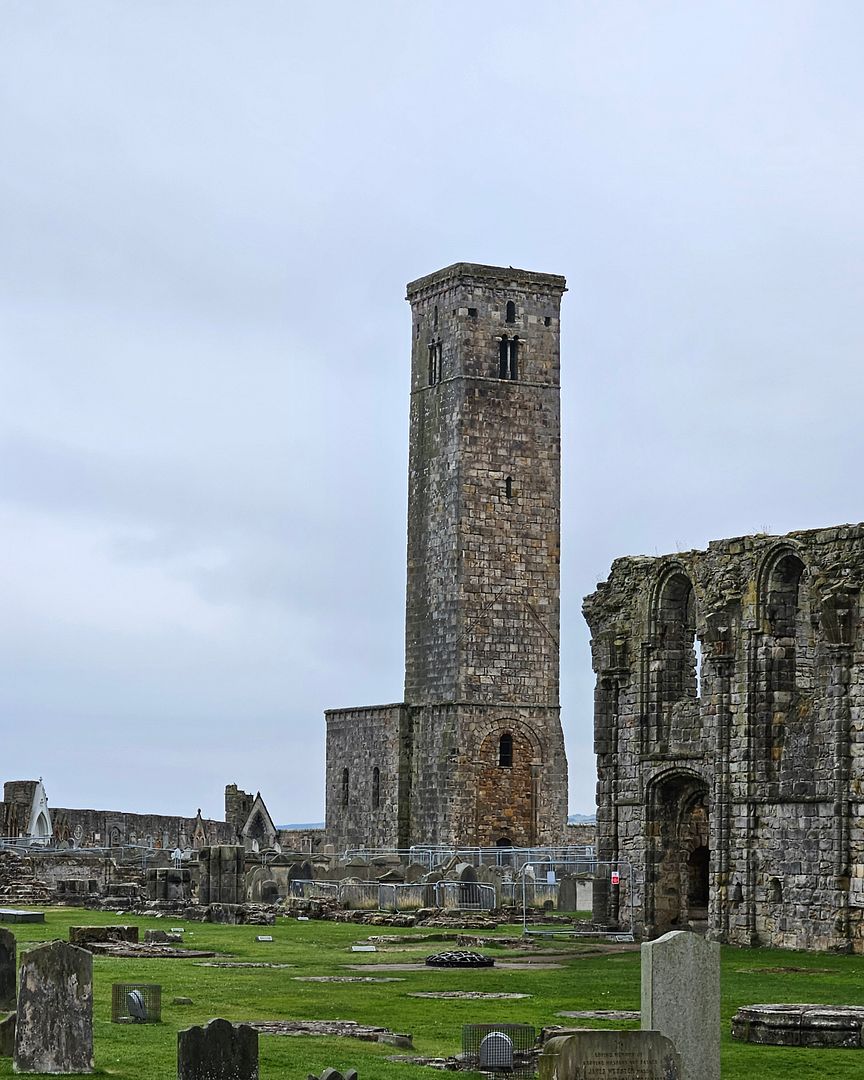
Back on the streets we wound our way to the ruins of St. Andrews Cathedral and St. Rules Tower


Our feet and our backs were complaining at the end of this afternoon. The grounds were in the process of closing just as we arrived so before they locked the gate, Laura and I went in. I kept the gatekeeper occupied with questions and conversation while Laura walked about the ruins taking photos.

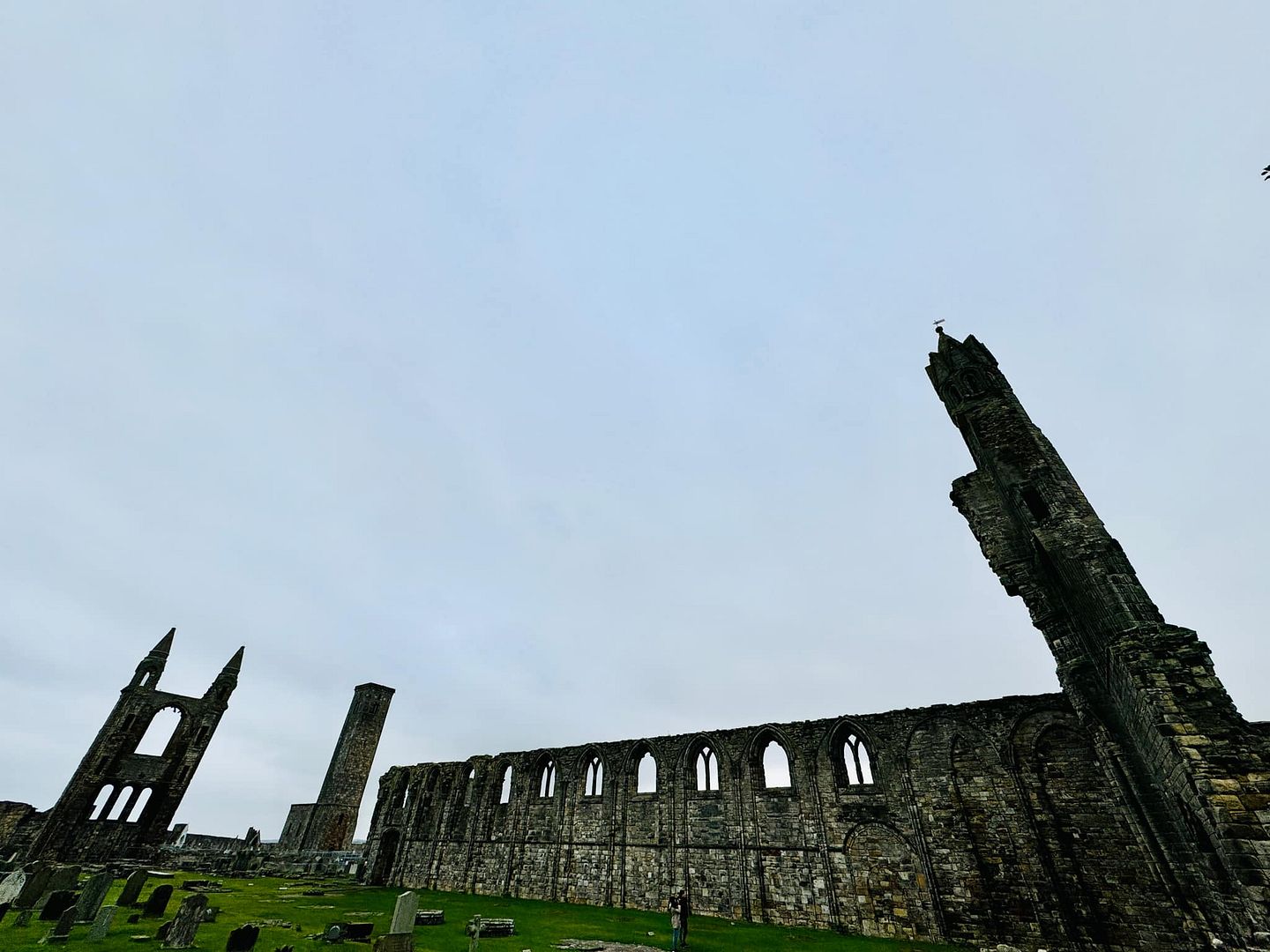
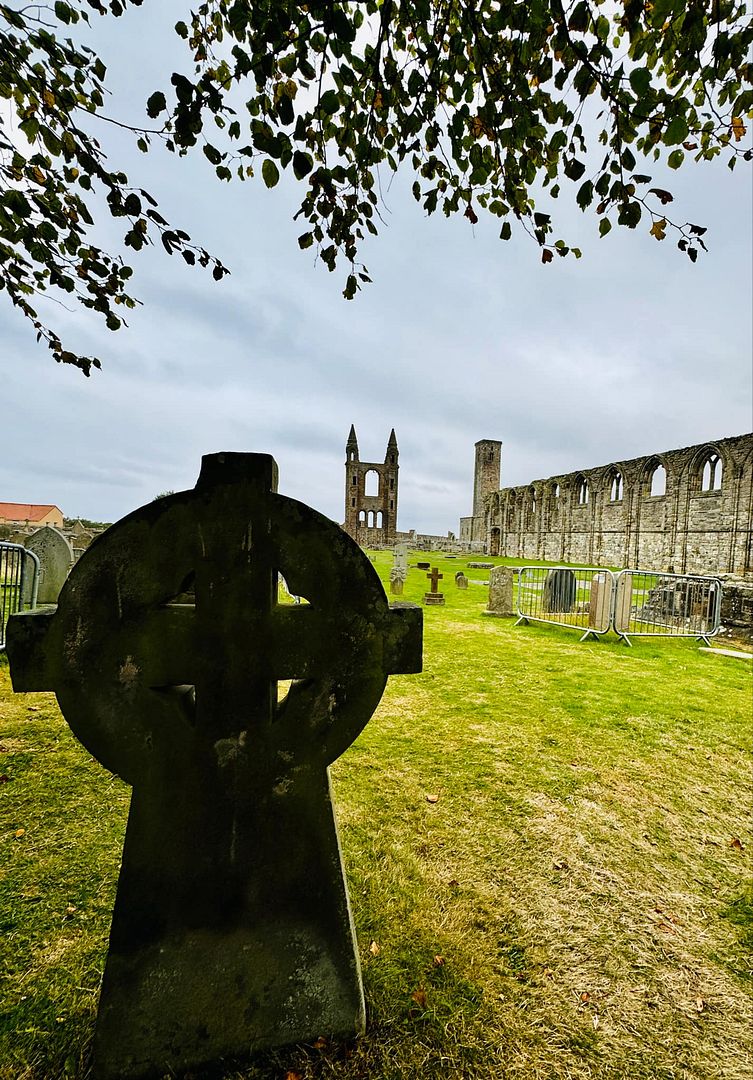
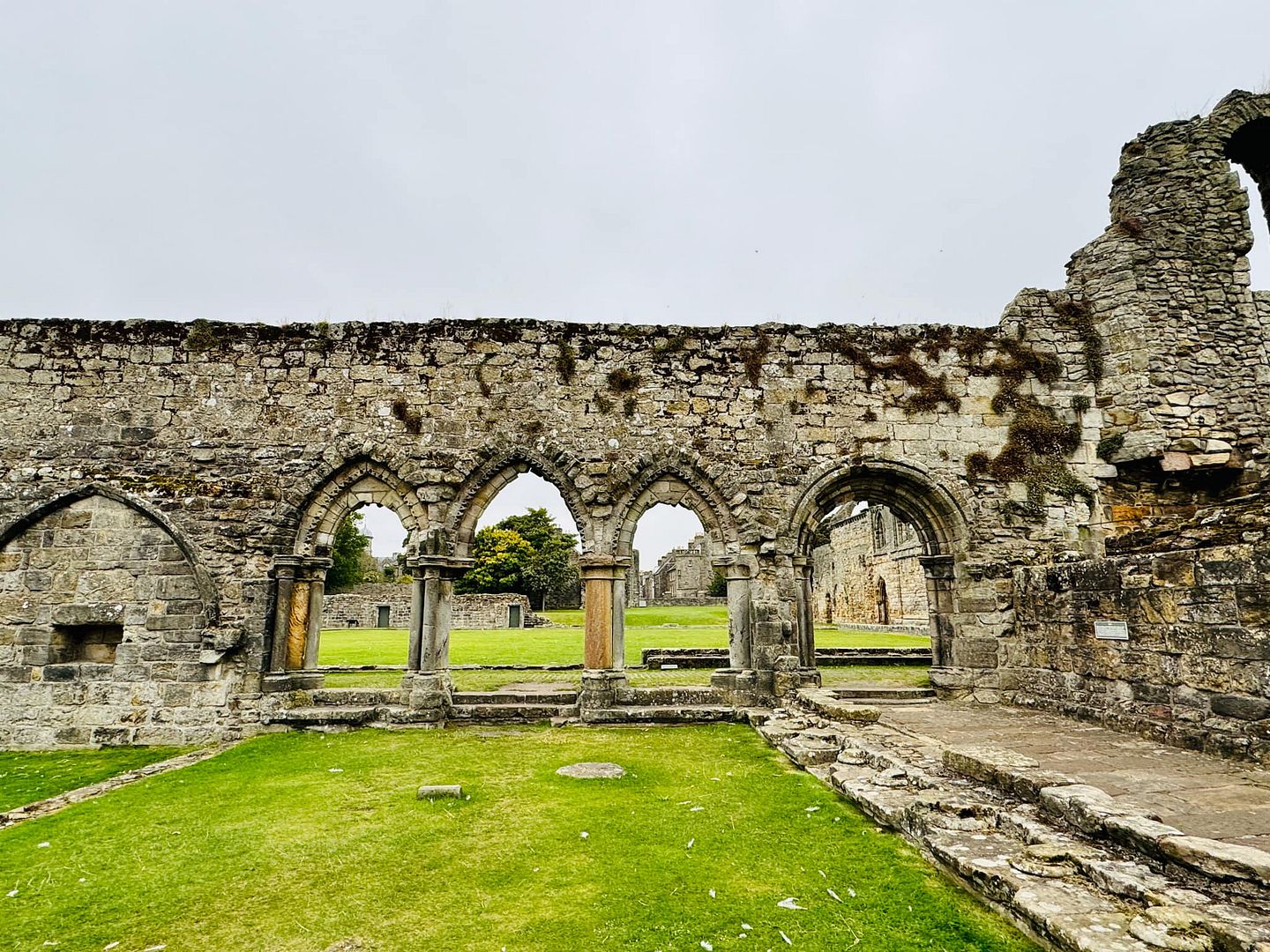
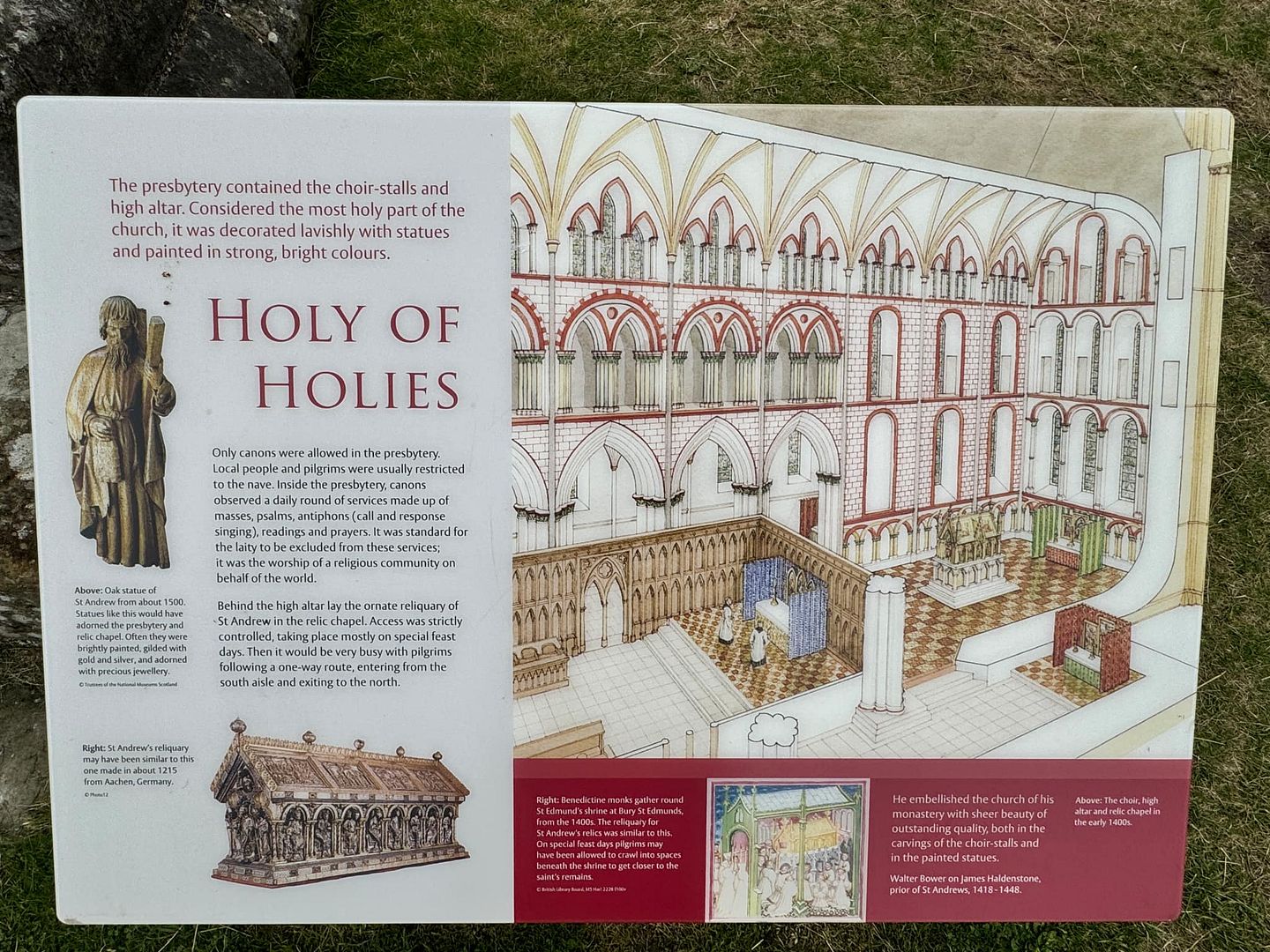
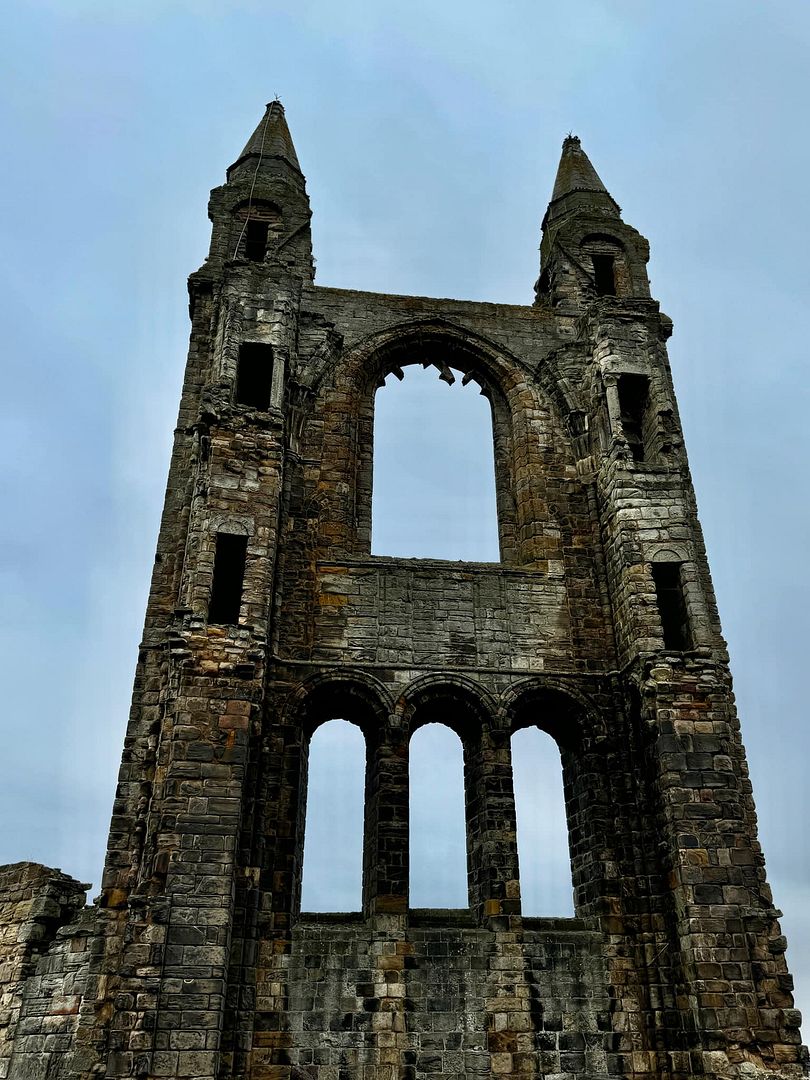
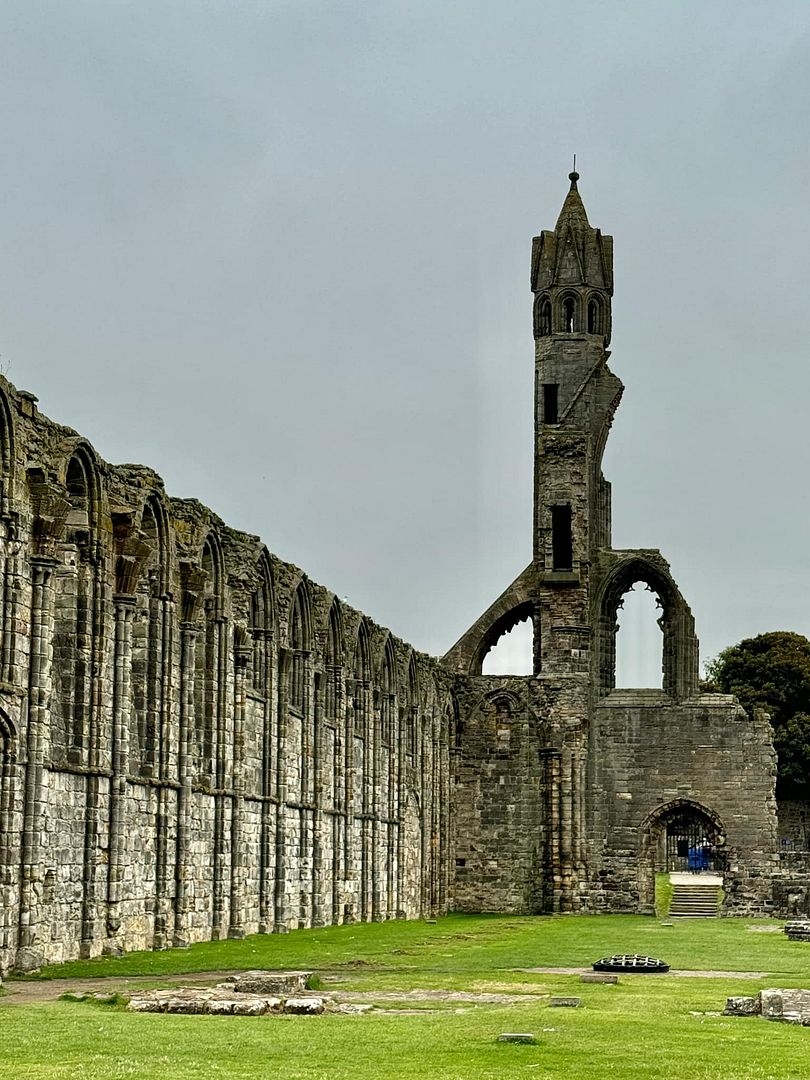
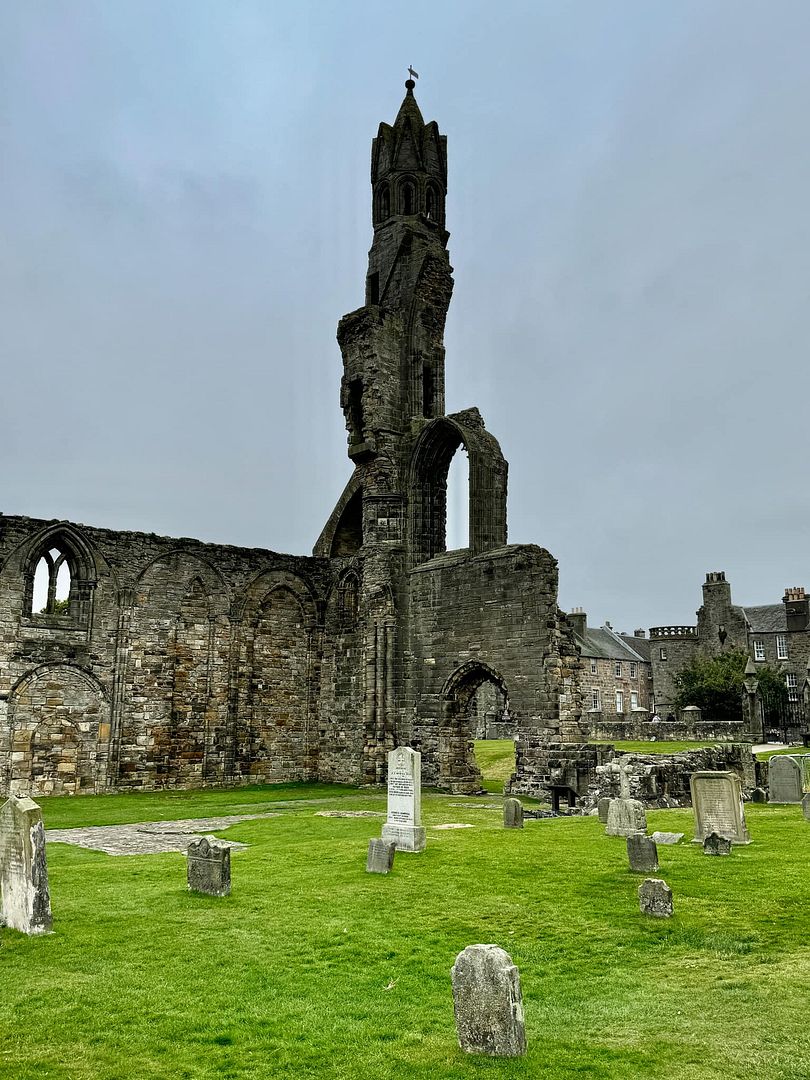
St Andrews Cathedral was Scotland’s largest cathedral. It took nearly 150 years to build and was consecrated in 1318 by Robert the Bruce. An ill-fated building, it suffered damage from fires and storms, but the Religious Reformation of 1559 was the most damaging event of all. Following an anti-Papal sermon by John Knox, his congregation went to the Cathedral and destroyed its symbols of Roman Catholicism. Further attacks led to the Cathedral being closed and the friars expelled. 


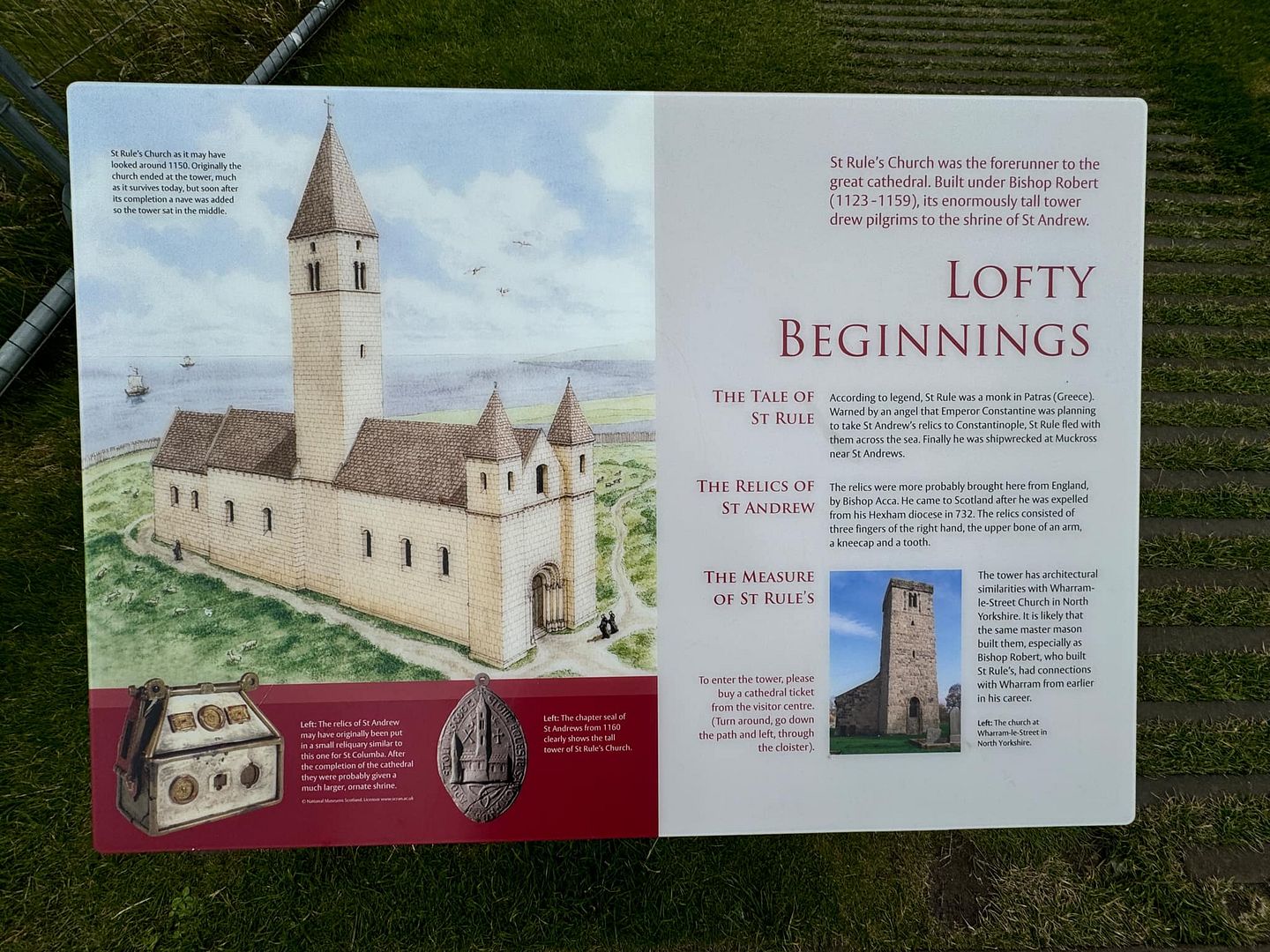
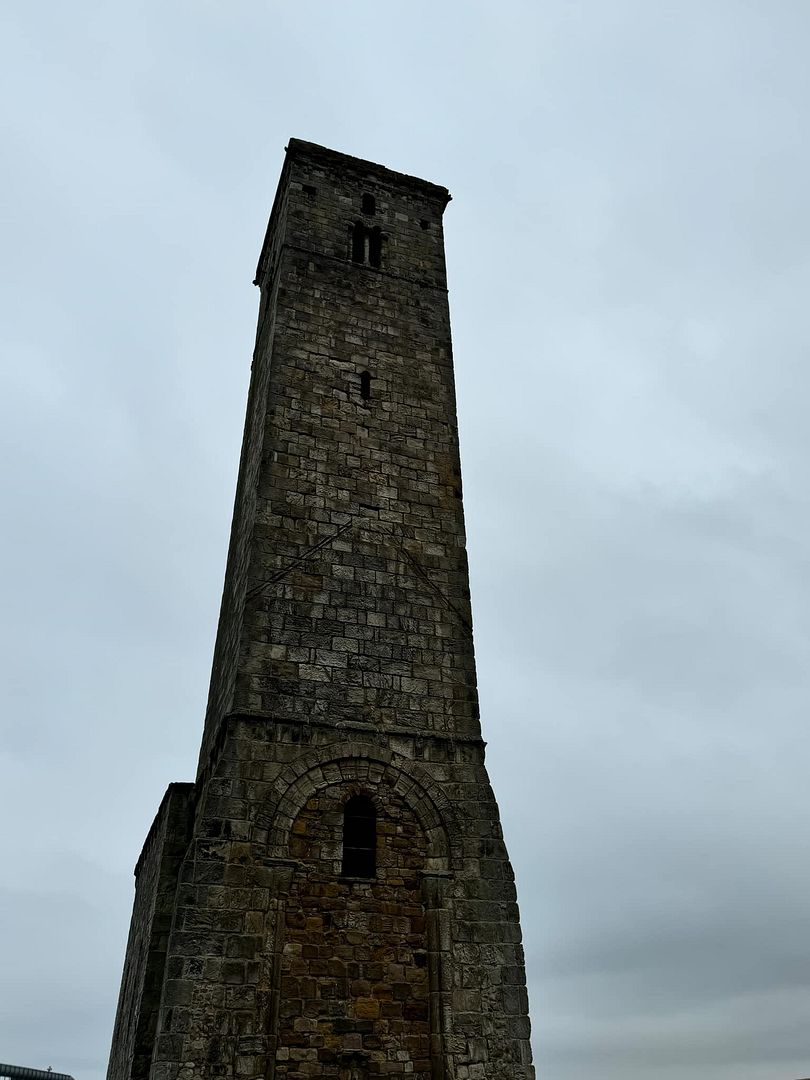
On the site of St Andrews Cathedral, there was originally St Rule’s Church, which belonged to a community of Augustinian Canons who had the adjoining building as their living quarters. Nowadays, only the Tower remains, and at 30 meters high, it provides the best panoramic views across St Andrews. 

The tower is generally accessible to climb and see great views but we arrived too late in the day for that.
There is also a museum on this site but, you guessed it, the museum was closed by the time we reached this site.

You can find more information here.

When we couldn’t hold the gatekeeper off any longer we left the grounds and let him lock the gate. We walked back to where our vehicle was parked along the University lanes with one more stop in mind before we left St. Andrews.
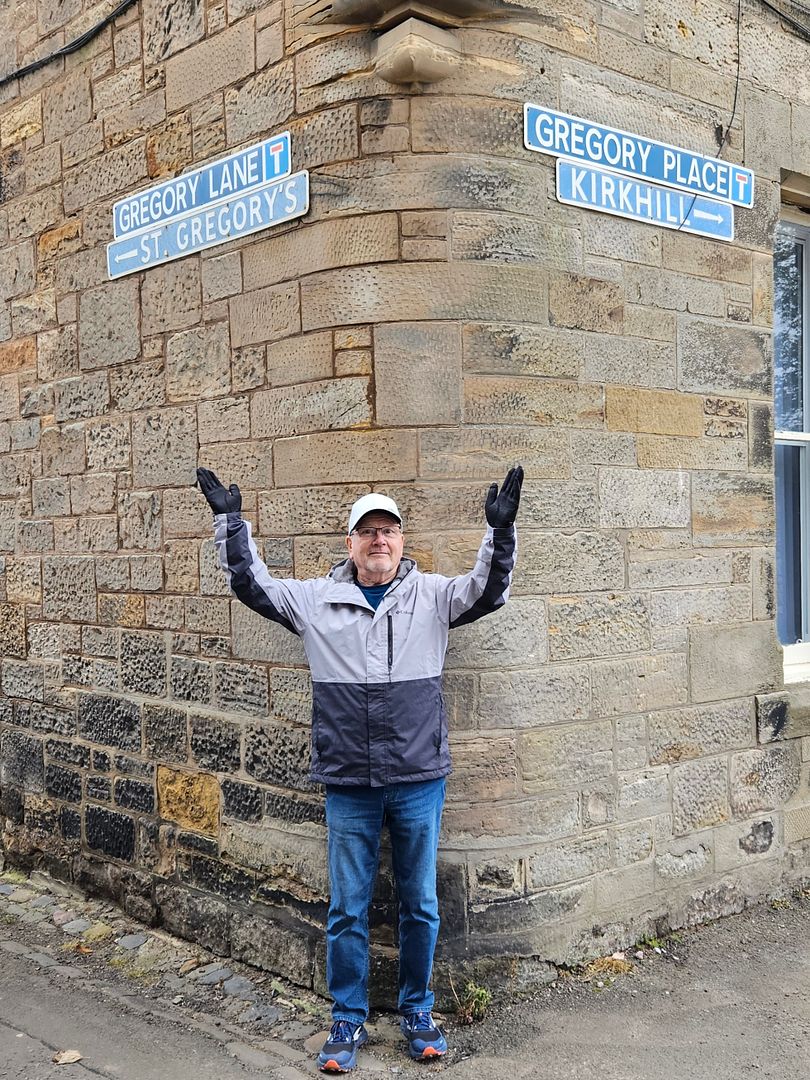
Well of course we needed a photo of our Gregory right at this spot!

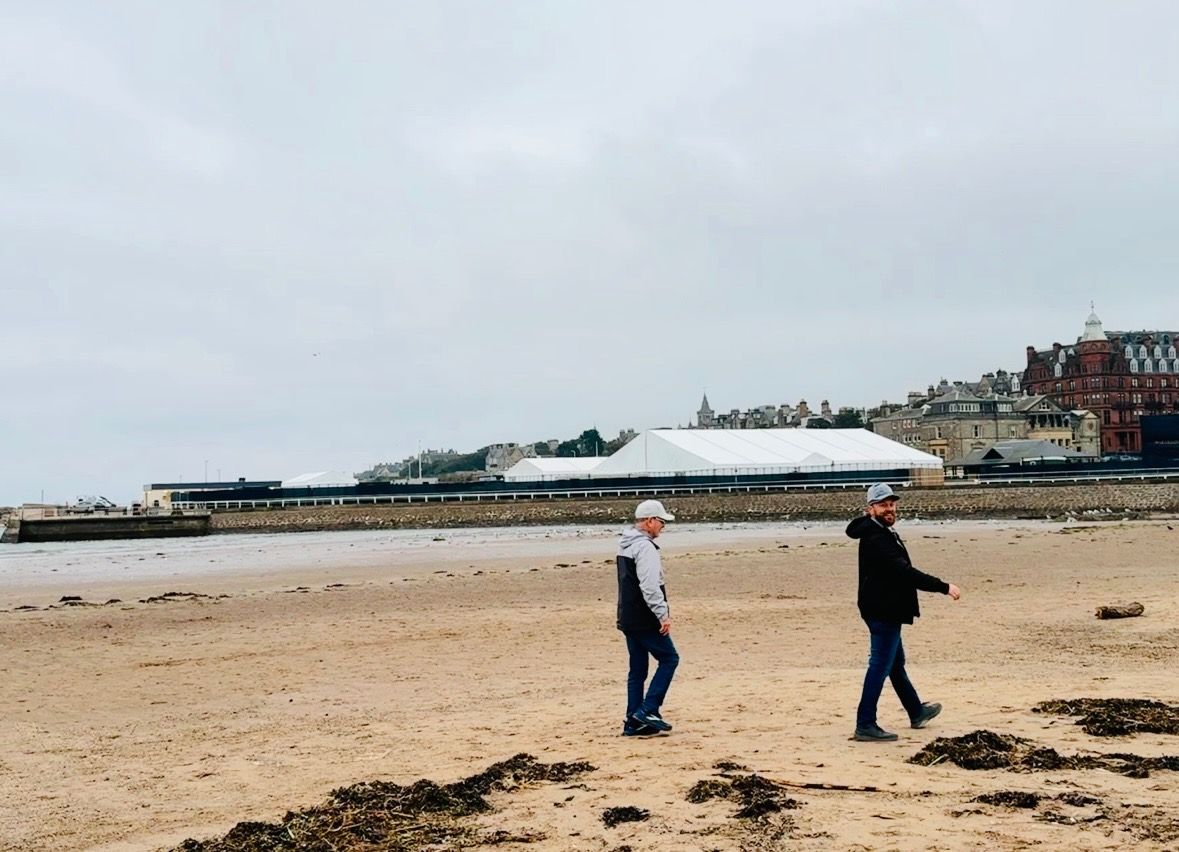
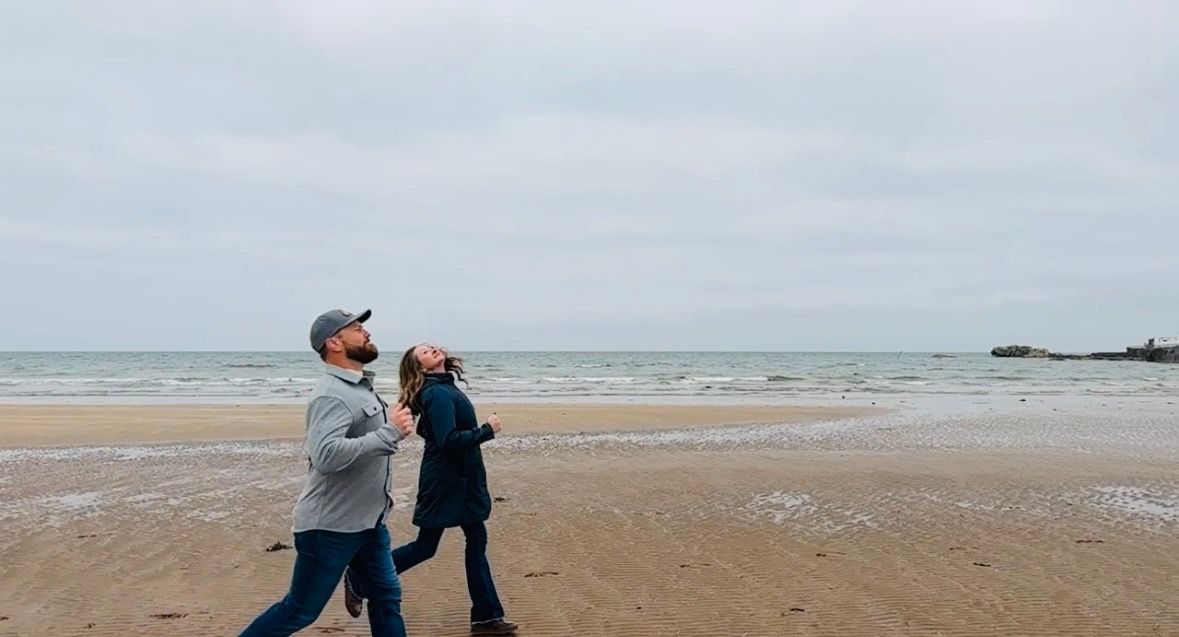
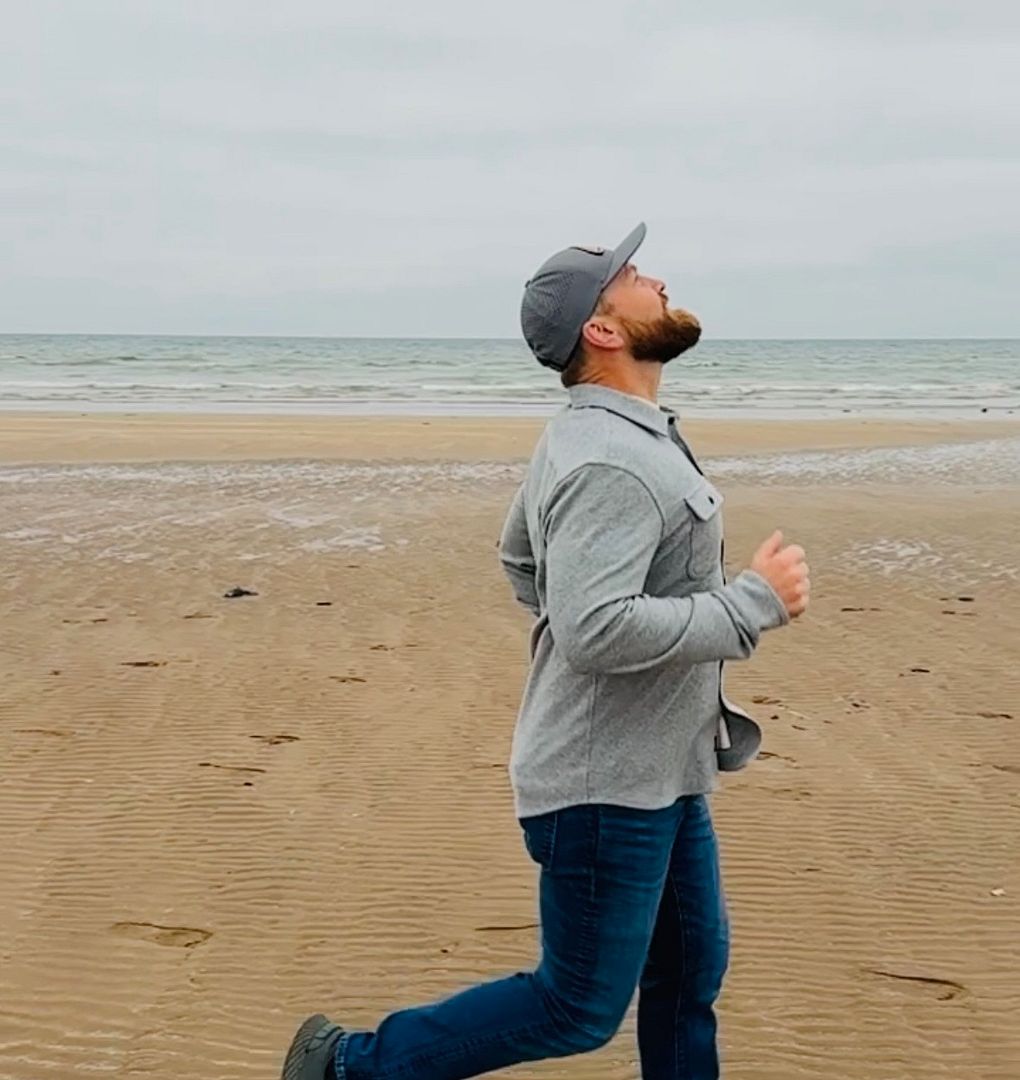
Before we left to Scotland we watched Chariots of Fire knowing we would be close to the beach where the famous opening to the movie was filmed. We wanted to re-enact that opening.

Eric Liddell: I believe God made me for a purpose – but He also made me fast. And when I run, I feel His pleasure.
“I have no formula for winning the race. Everyone runs in her own way, or his own way. And where does the power come from, to see the race to its end? From within. Jesus said, ‘Behold, the Kingdom of God is within you. If with all your hearts, you truly seek me, you shall ever surely find me.’ If you commit yourself to the love of Christ, then that is how you run a straight race.” ~ Eric Liddell

We were pleased with the results. We have videos but unfortunately I can’t find a way to post that on my blog. We were cracking ourselves up and amazed our feet allowed this last event of the day. When we got back to our car, it was decided we needed to find some takeaway or purchase something we could pop in the oven for dinner. Take away did not materialize so we stopped at M&S and found some savoury pies and some desserts, too.

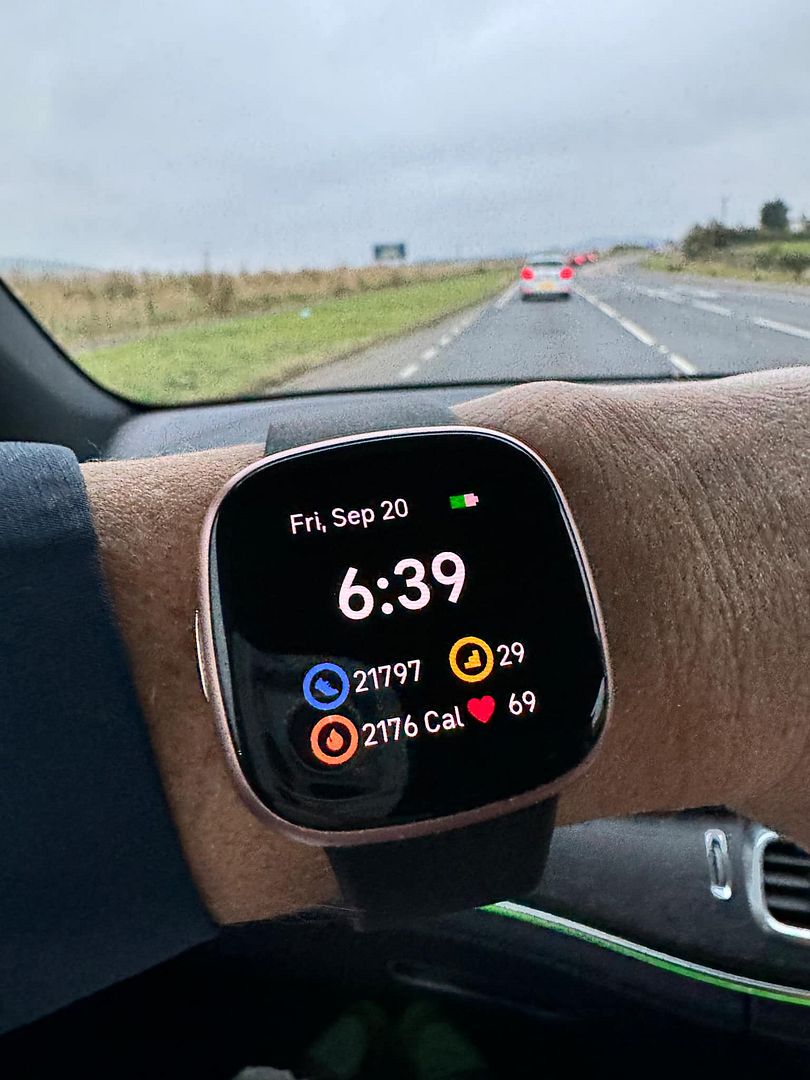
Laura’s watch clocked us at 21,797 steps with 29 stairway climbs, too. Yikes.

Food heated and feet up for the rest of the evening!! Cheers!

After breakfast on Saturday we would start our journey back to Stirling to drop off our rental car and take a train to Edinburgh for the last leg of our trip.

Scotland Travel Journal ~ Wallace Monument

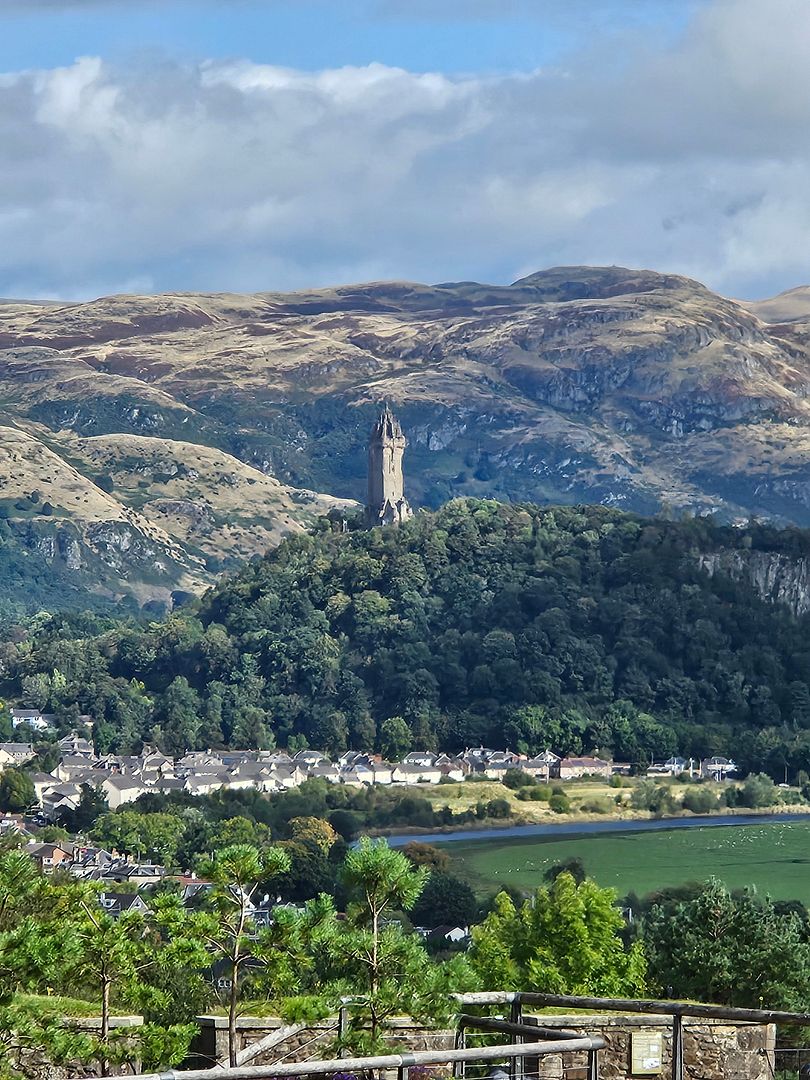
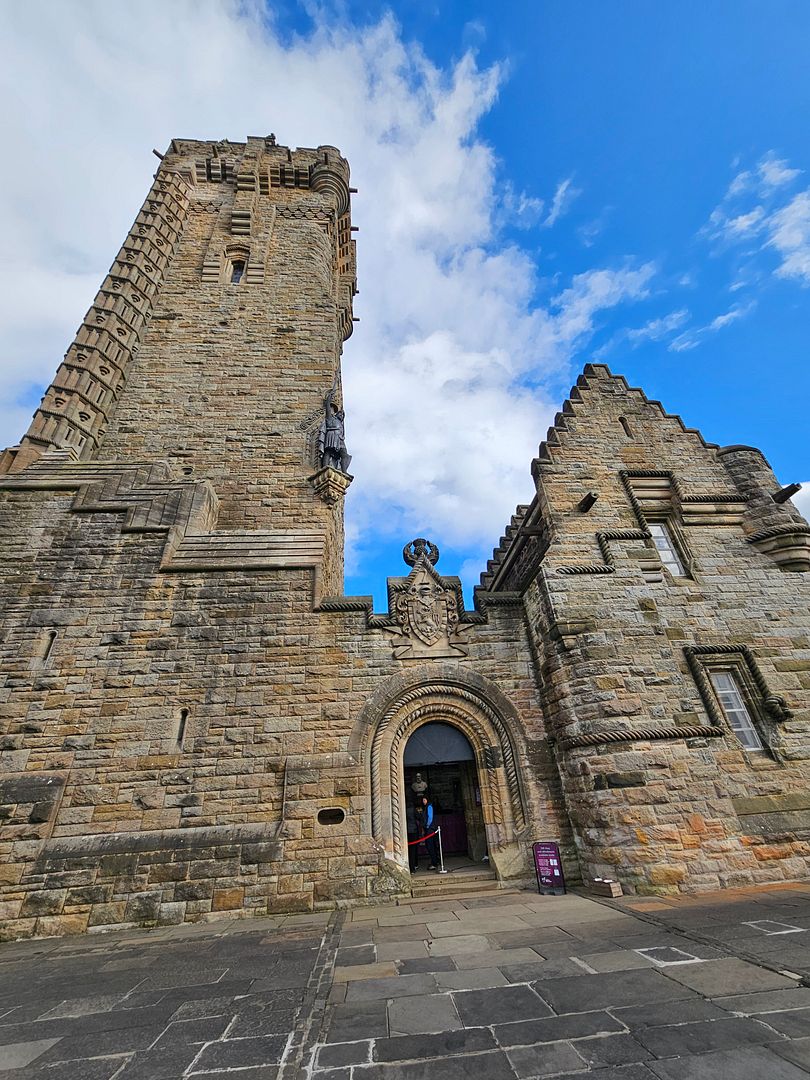
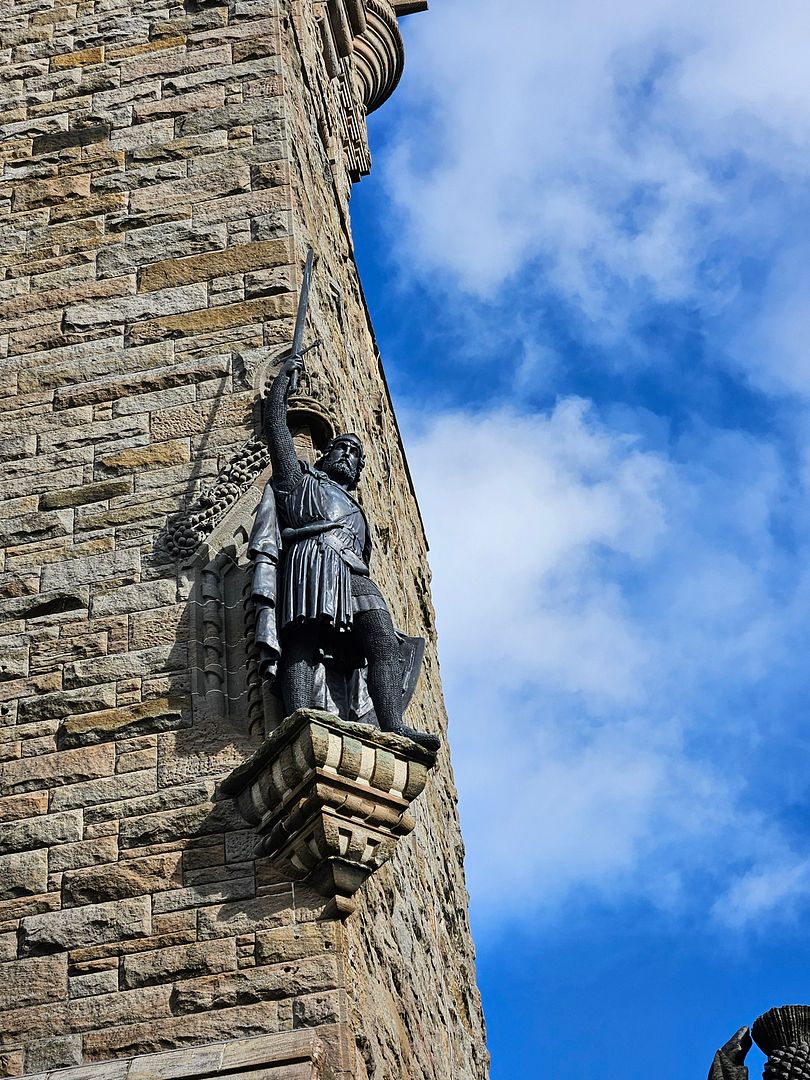
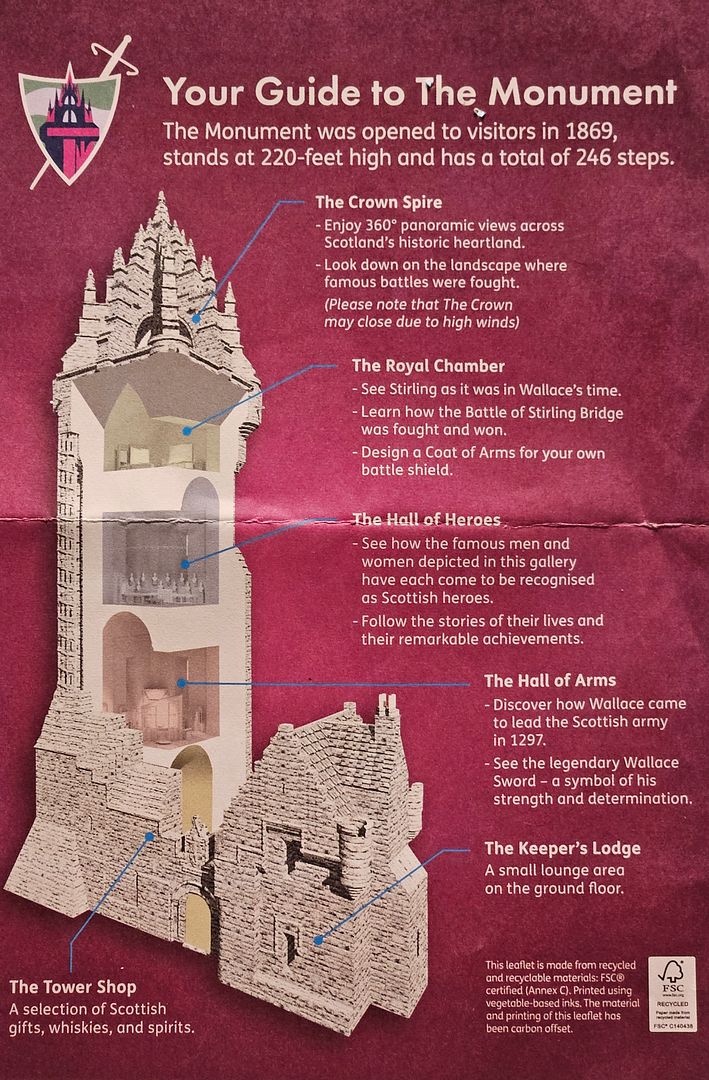
On Sunday the 15th of September our sight seeing would end at the Wallace Monument. We could see it in the distance and were hoping for a tourist bus to take us there. We walked down into the center of town and stopped for a coffee and a snack before we found out that the Tourist bus had ceased operation at the end of August.

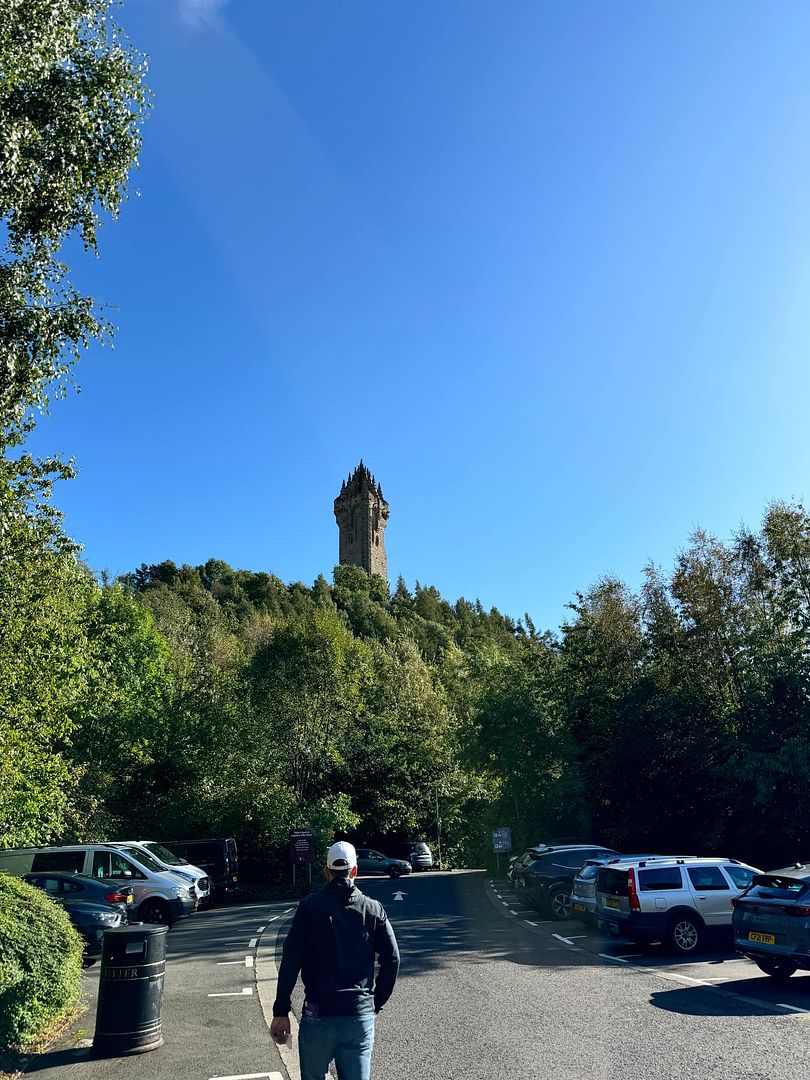
At the central bus stop in town Josh found out from a bus driver that we could take the #10 bus and it would get us up to the monument. After many stops along the route we were dropped off right at the parking lot for the Monument. We opted to wait for the mini shuttle van to take us from the parking lot up to the Monument.

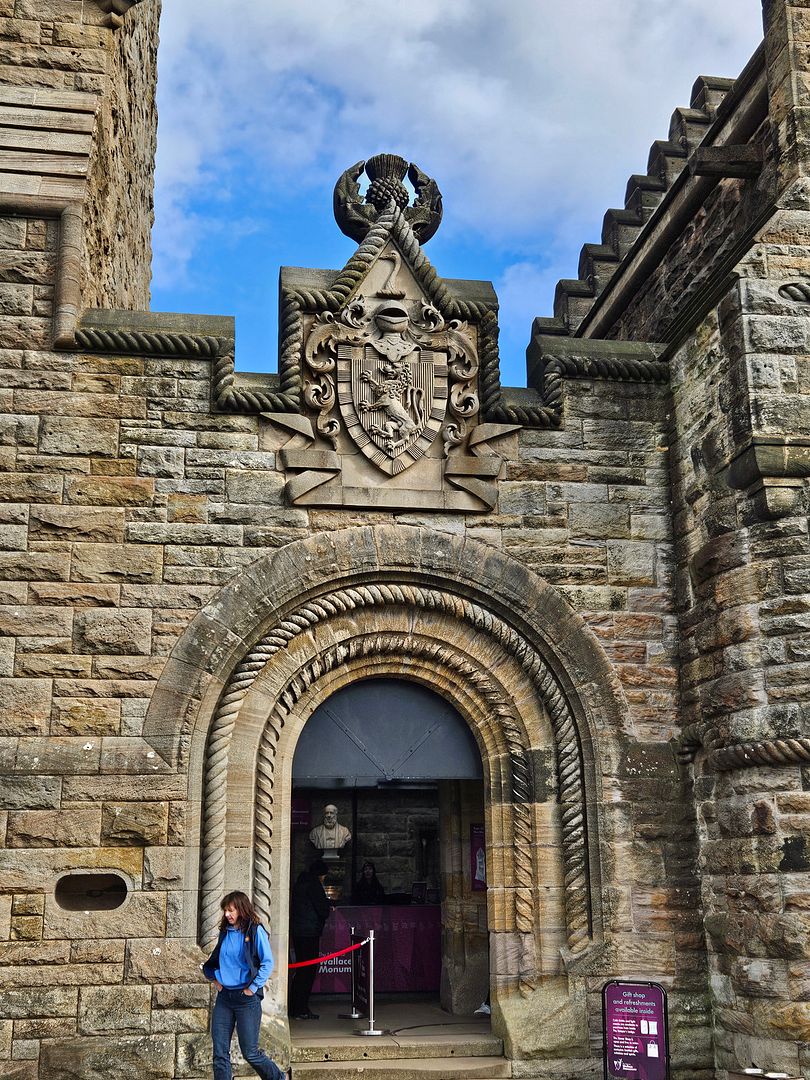
We ventured inside and bought our tickets for the climb.

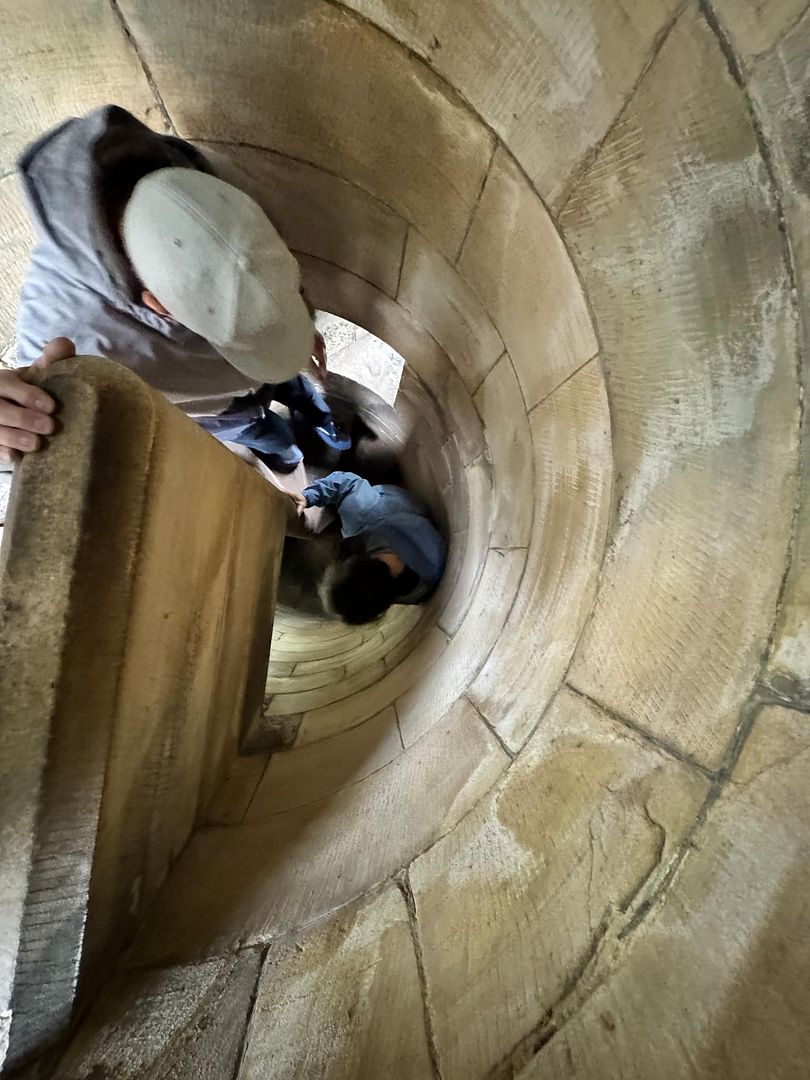
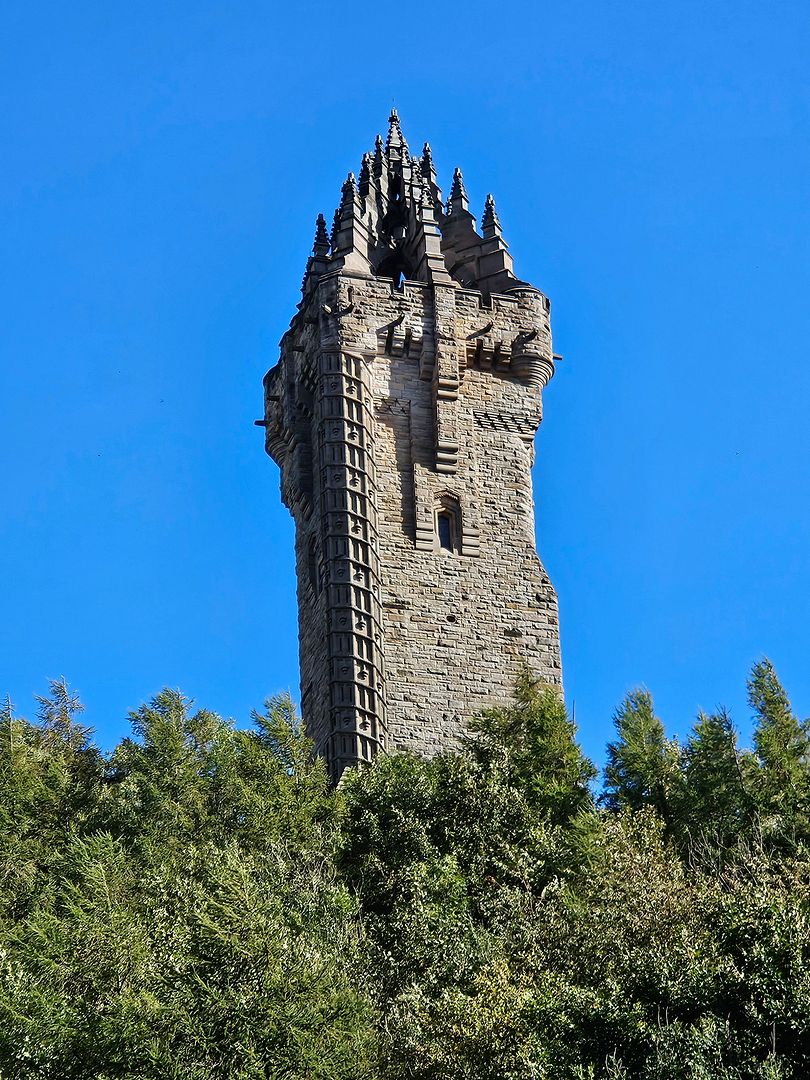
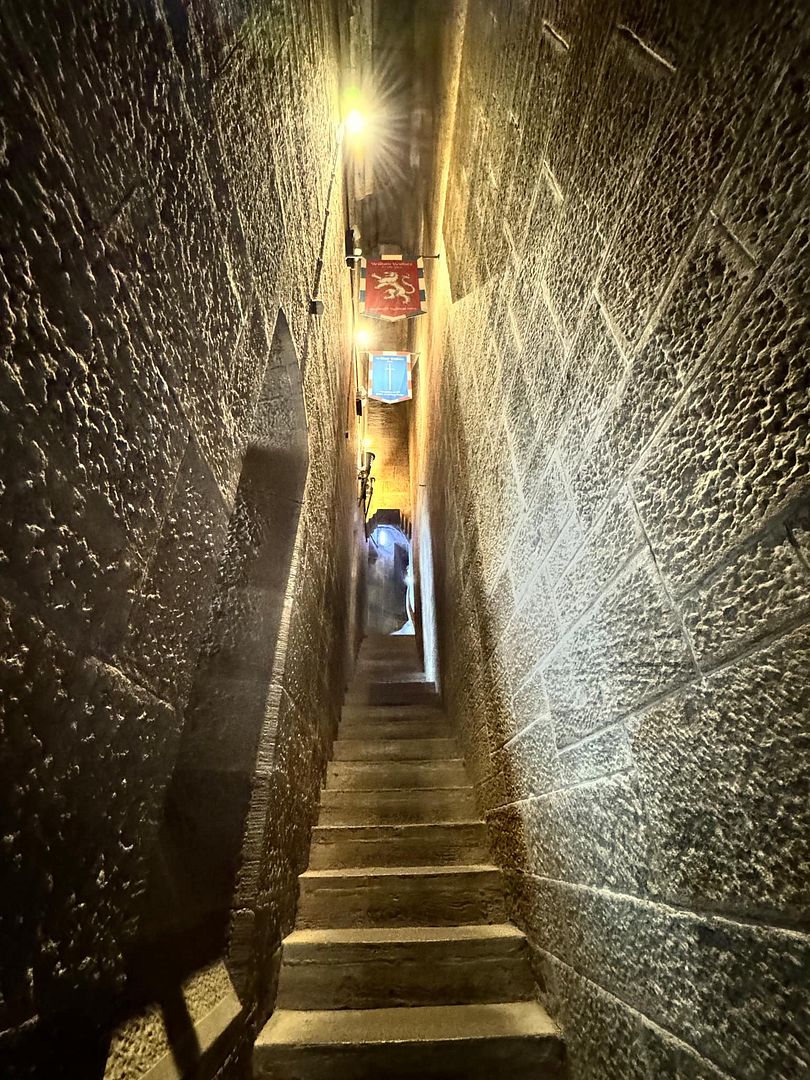
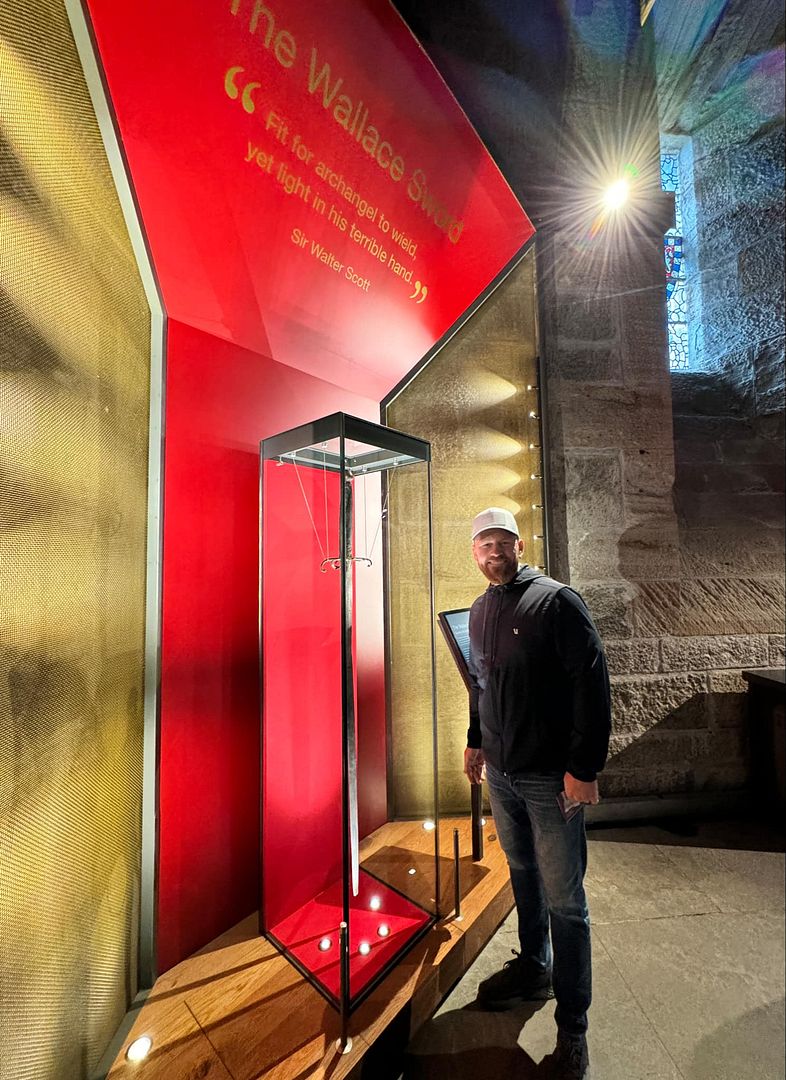
Greg and I made it to the Hall of Arms. Josh and Laura made it all the way to the top, 246 steps, in a narrow winding staircase!

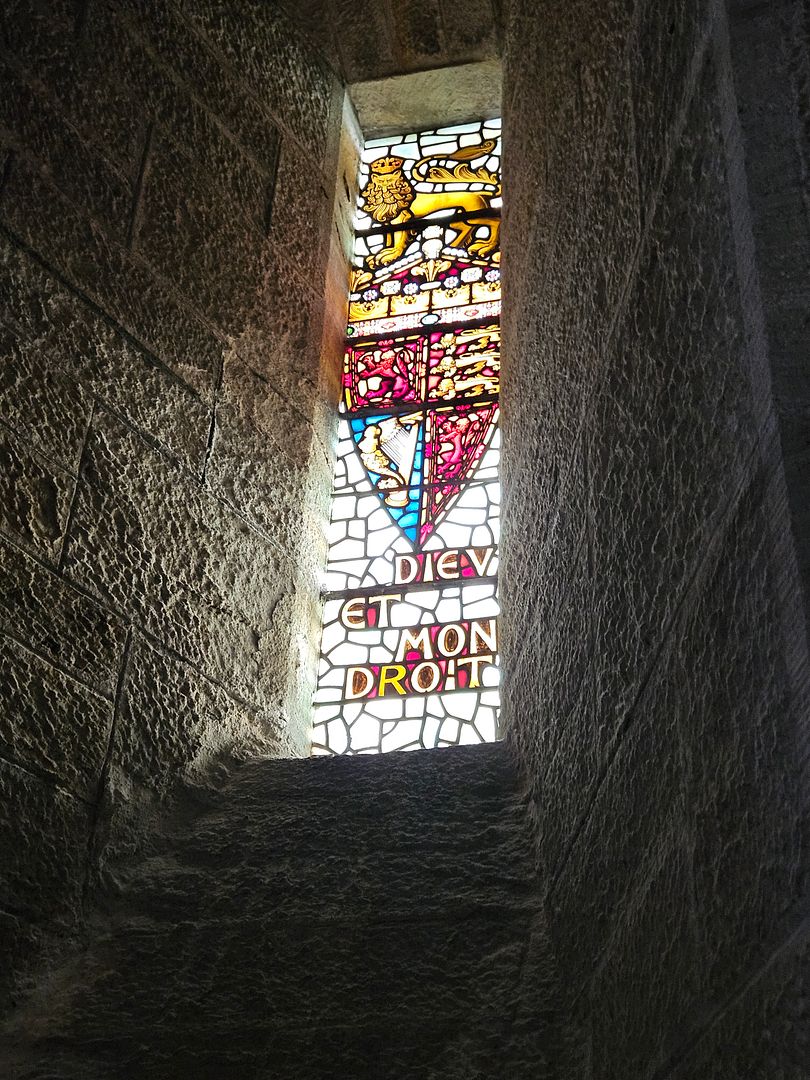
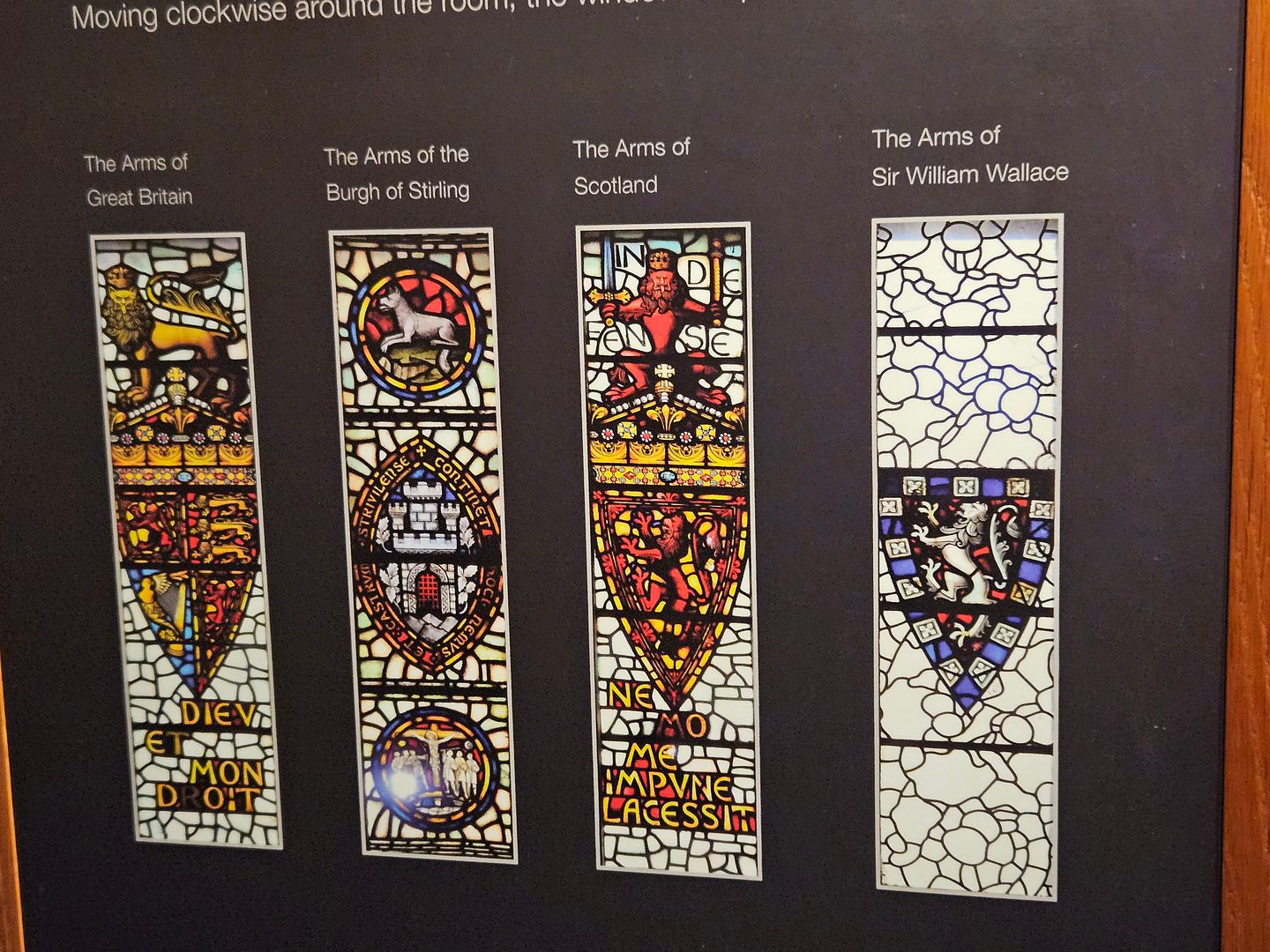
The Arms of Great Britain

We all made it to the Hall of Arms and watched the video available.

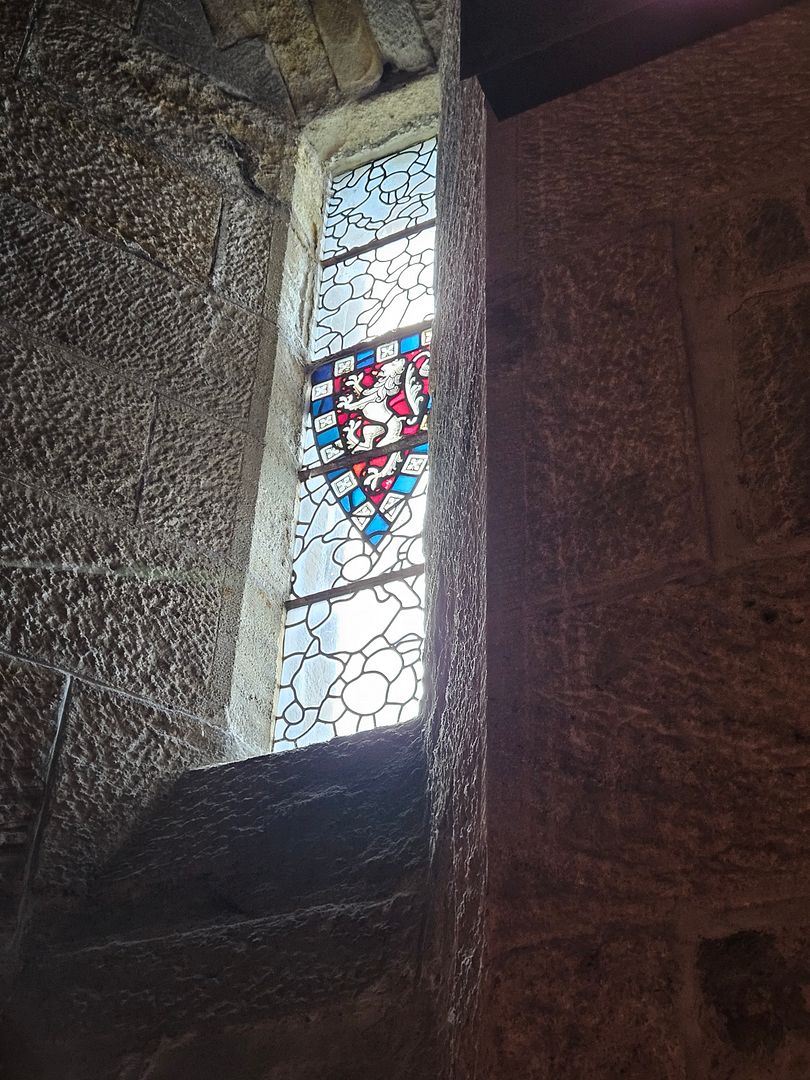
The Arms of Sir William Wallace.

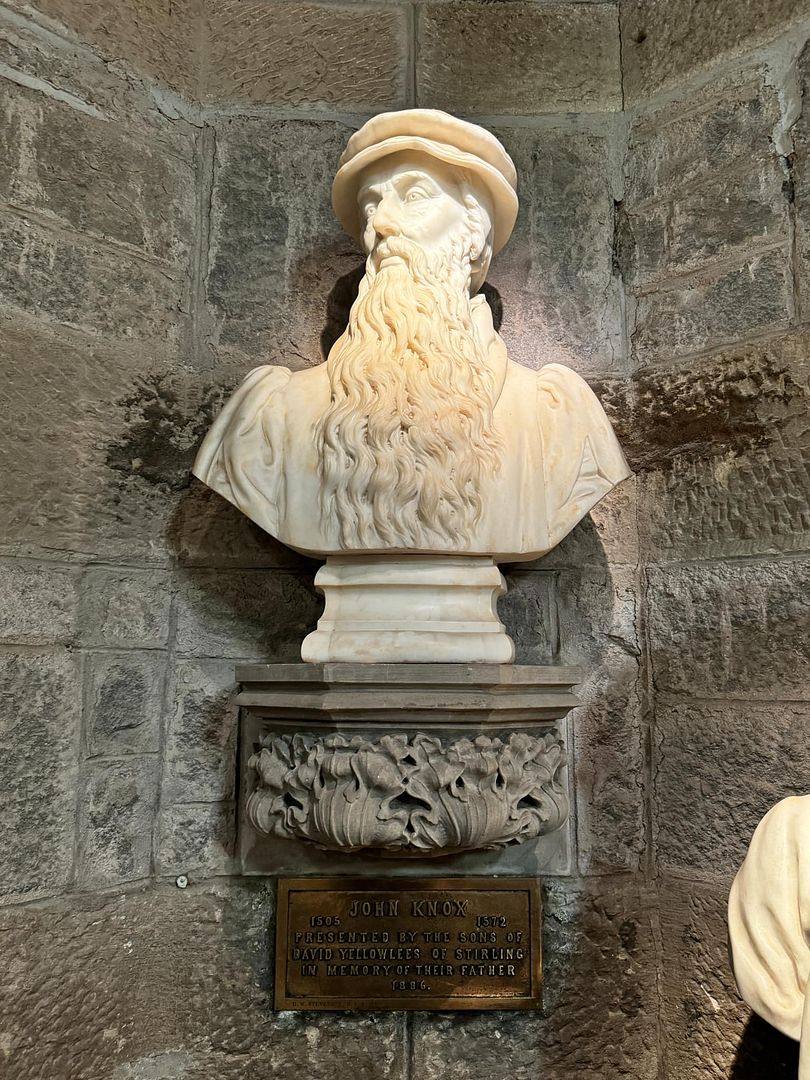
In the hall of heroes Laura and Josh spotted one of our heroes on this trip, John Knox.

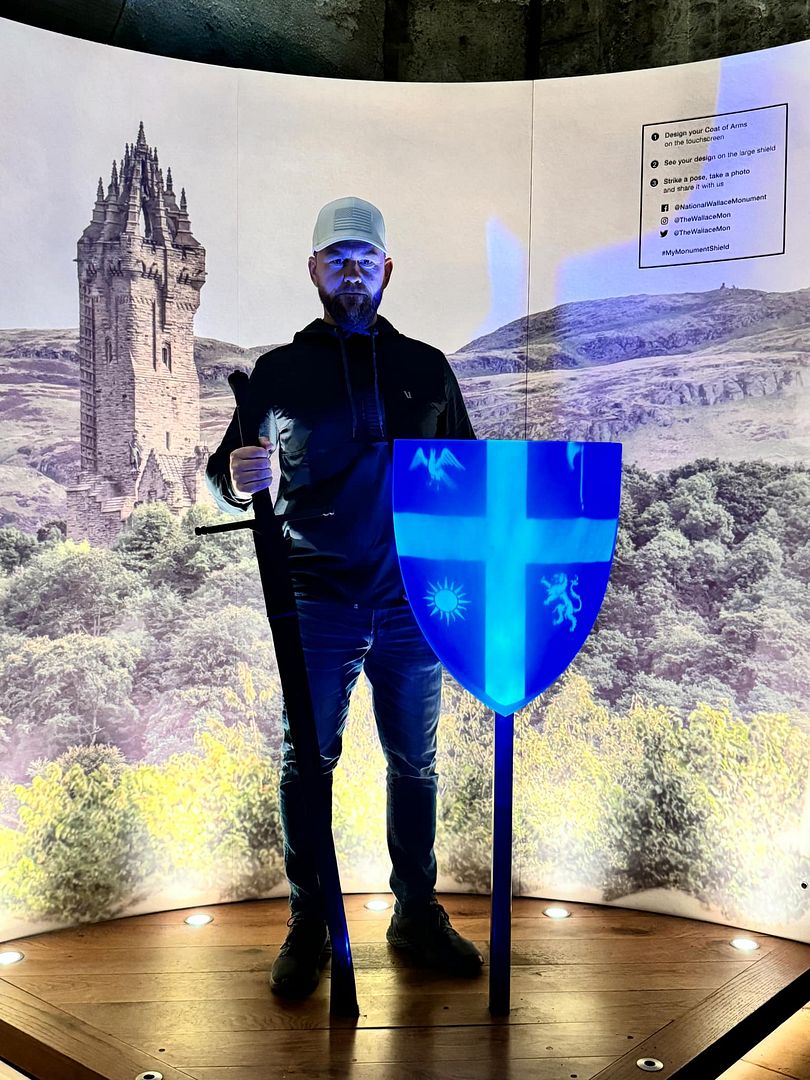
At the Royal Chamber you could design your own coat of arms for your battle shield.

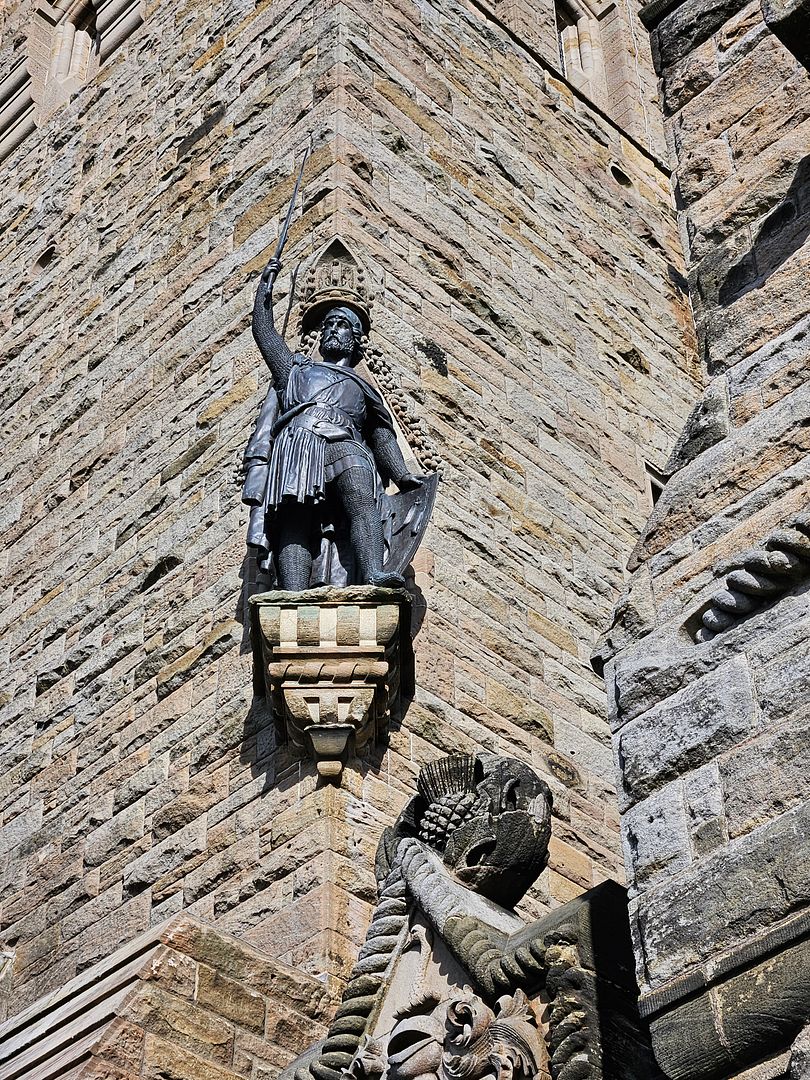
Find out about William Wallace here.

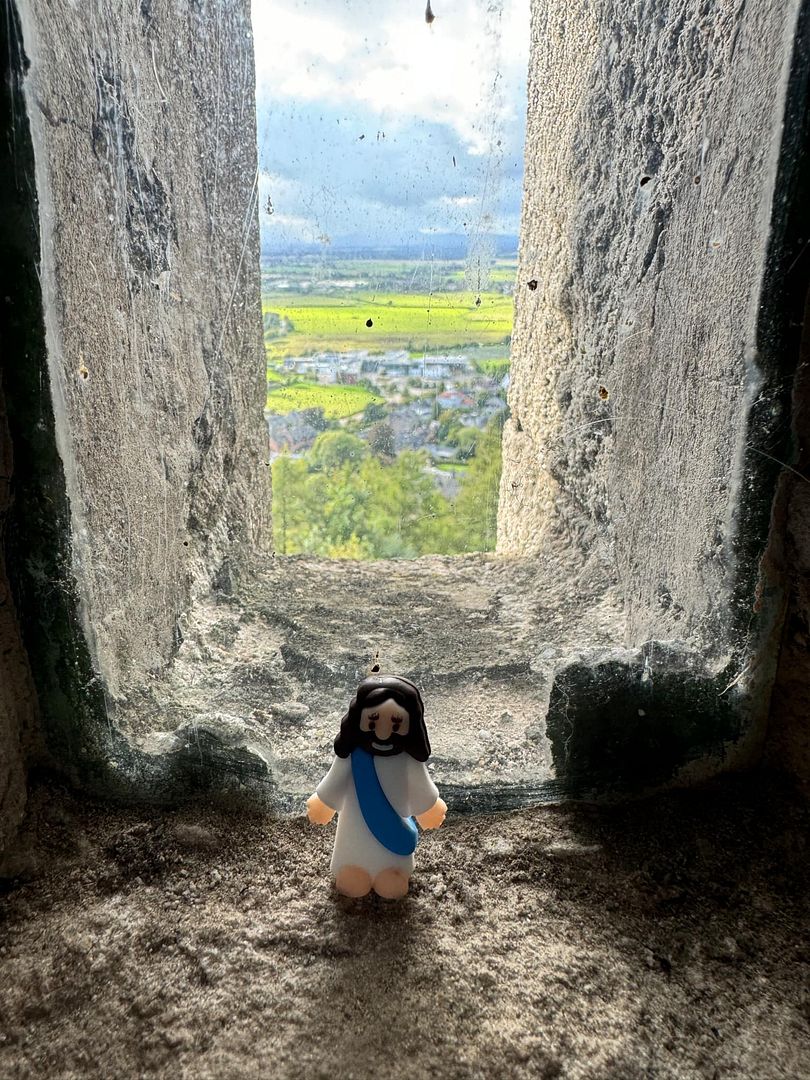
Laura found this little figurine along the way.

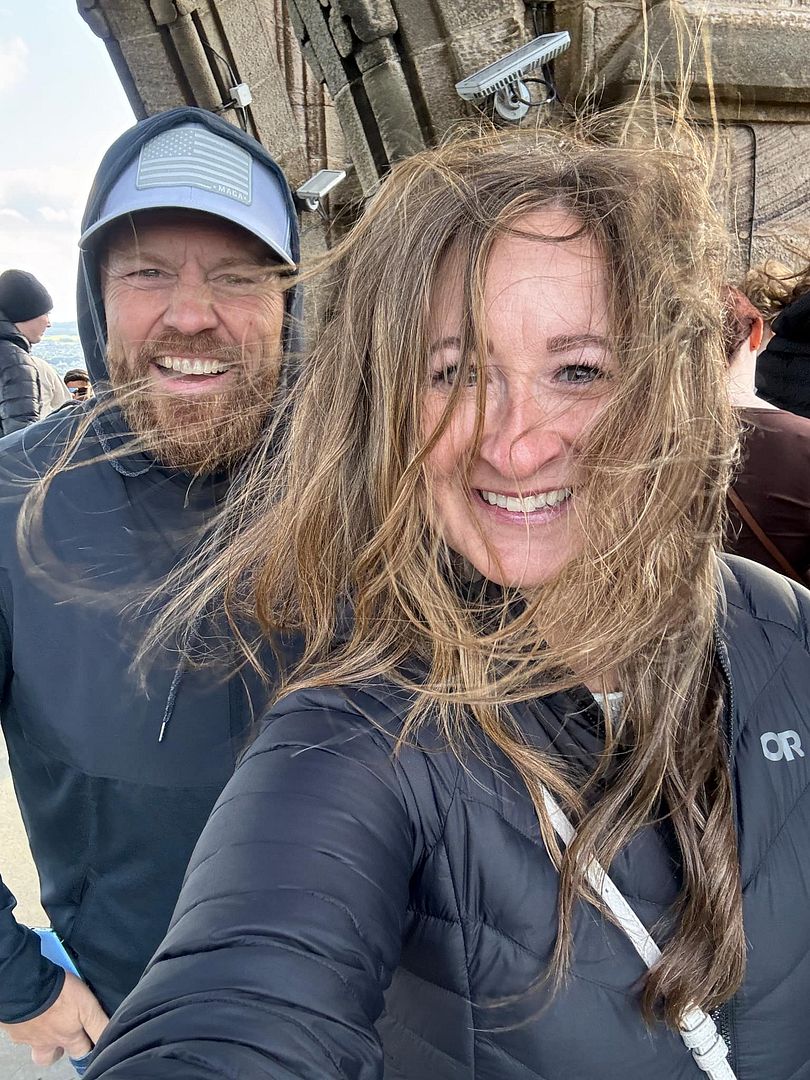
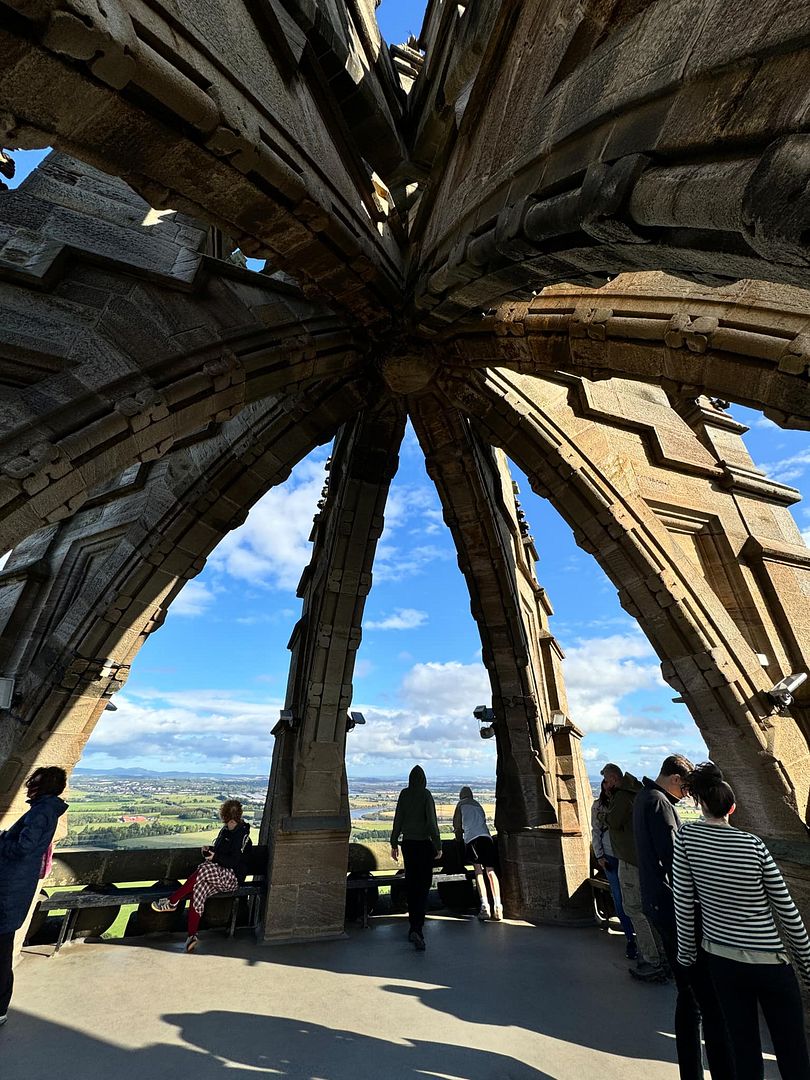
It was very windy at the top.

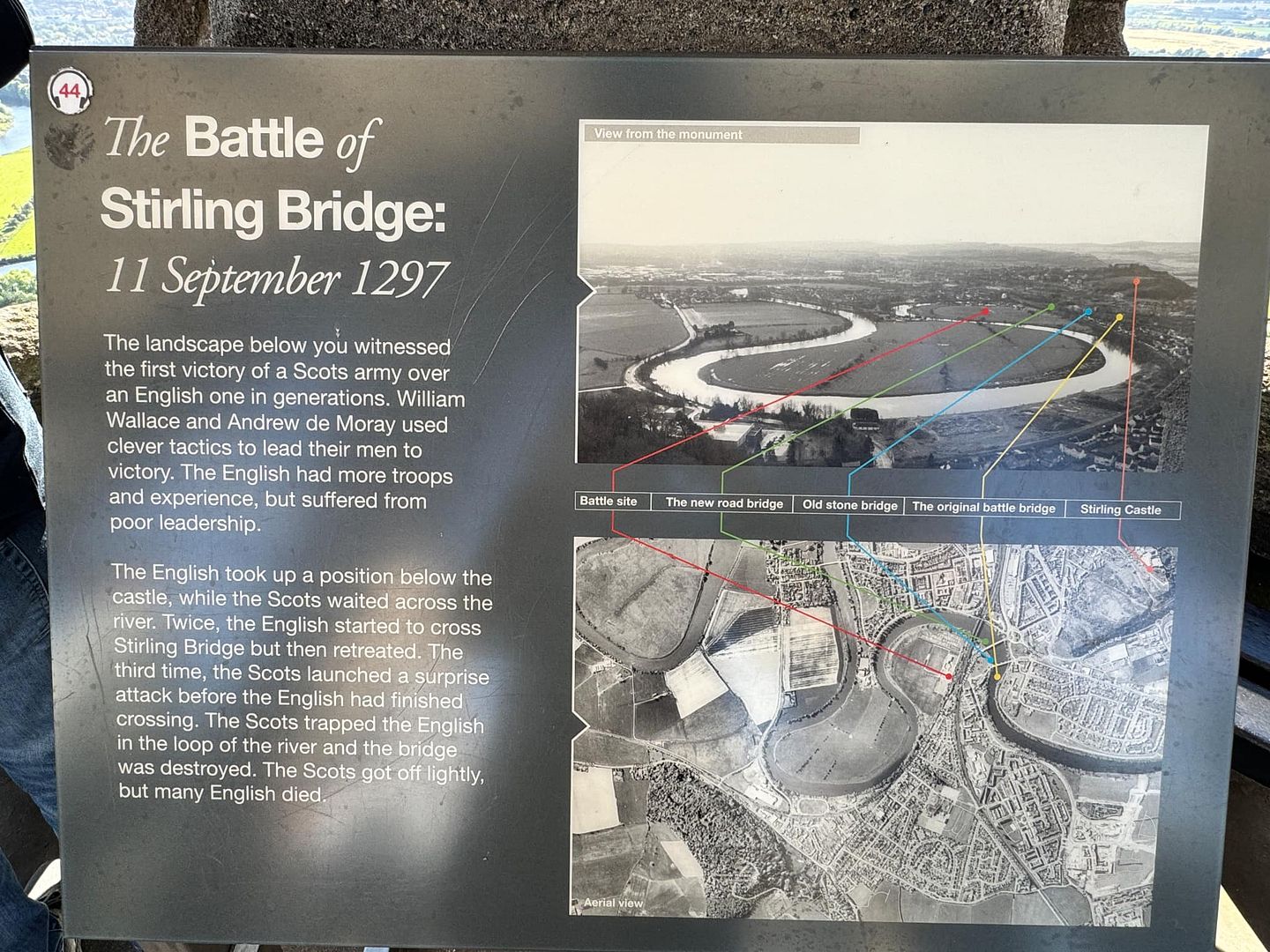
You can read the historical account of this battle and the history of this time here.

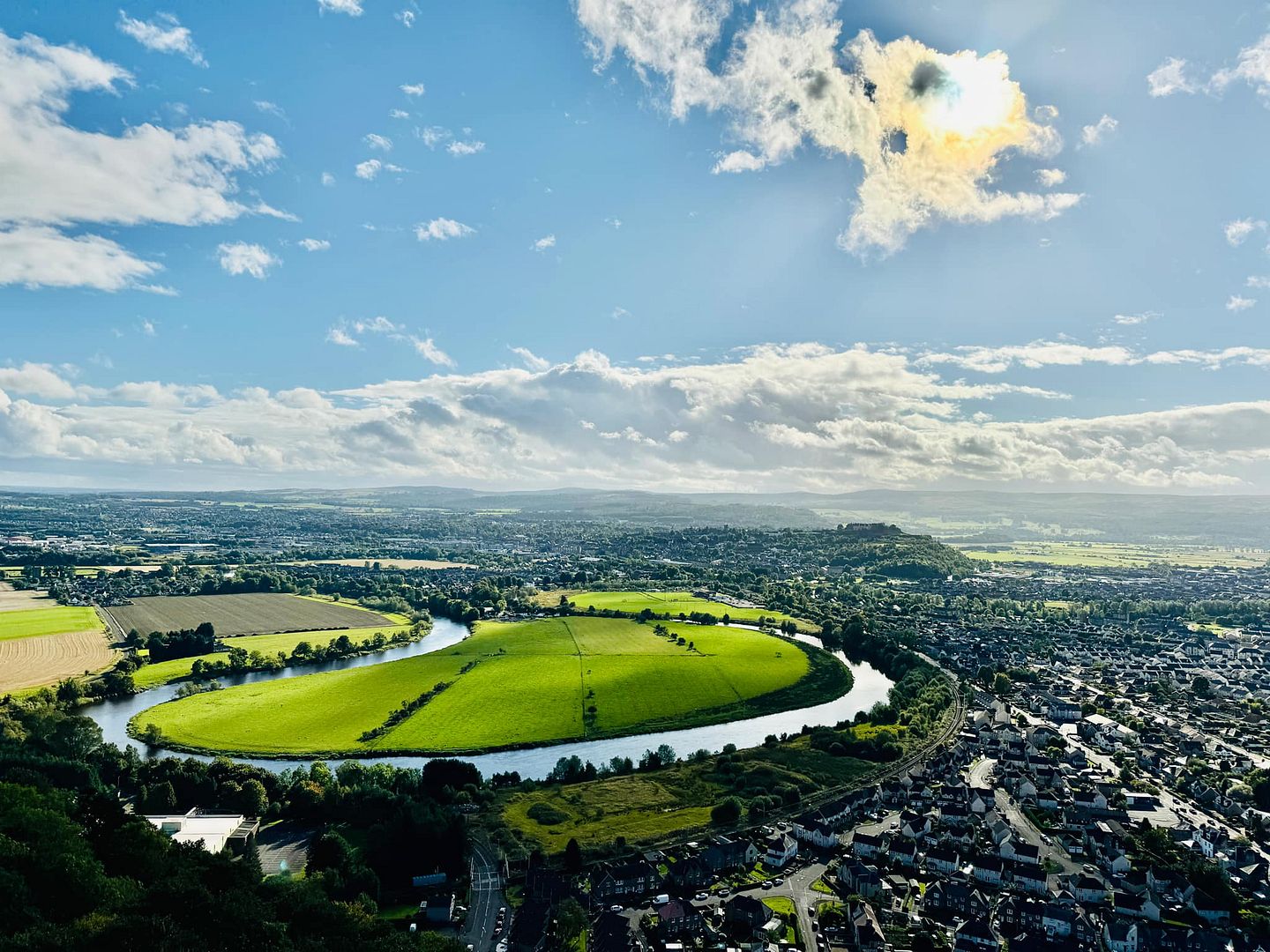
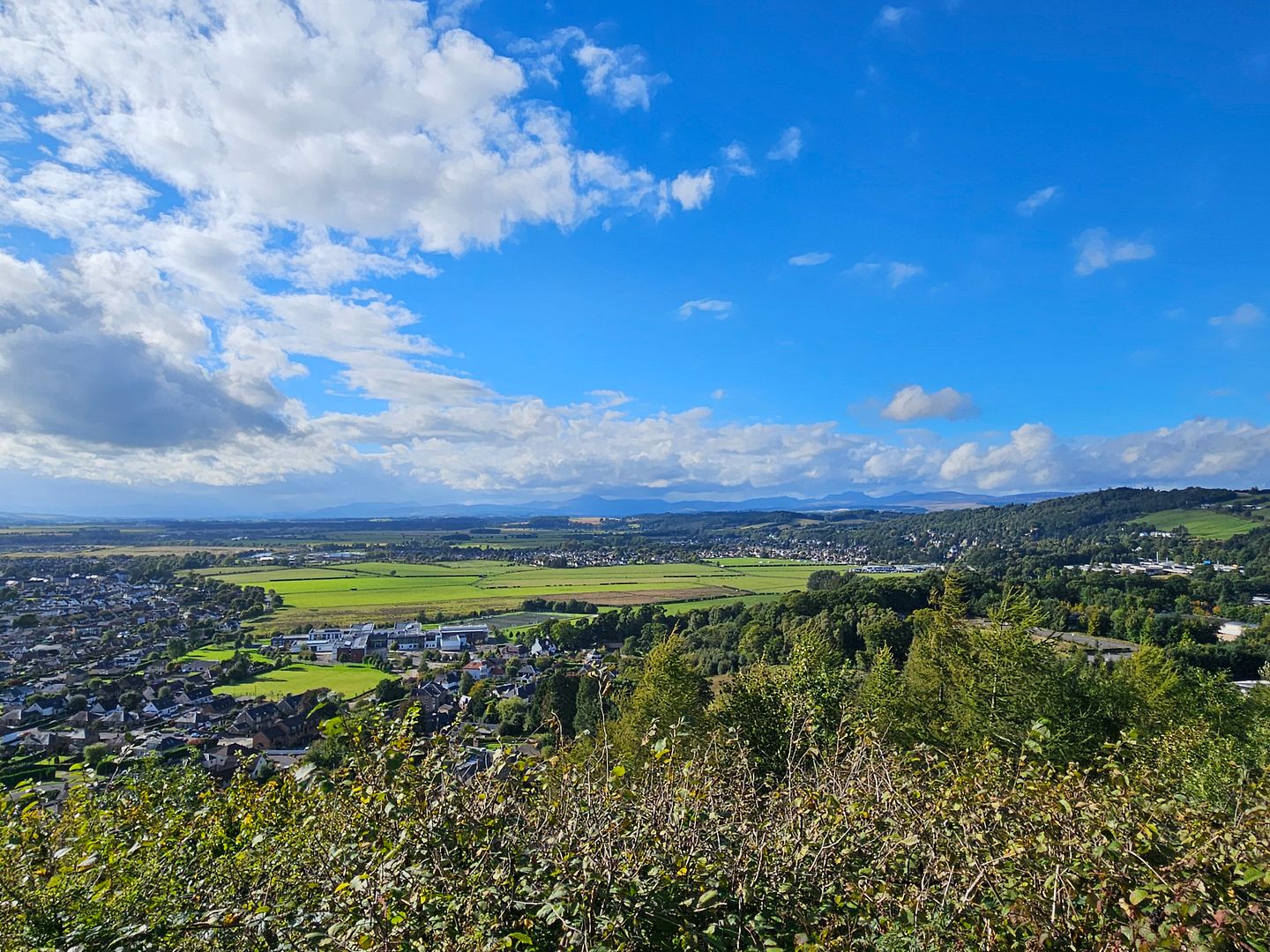
We were blessed with spectacular views on this beautiful day.

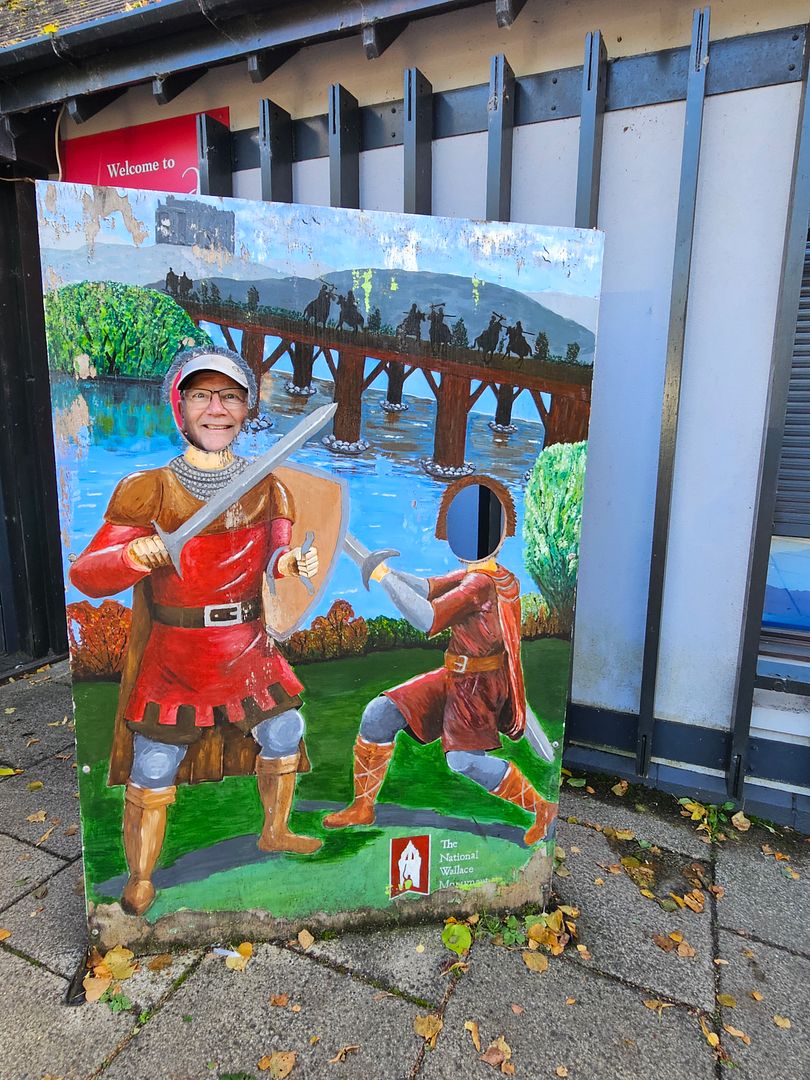
We took the tram down to the cafe and gift shop and I talked Greg into letting me photo him at the taking of Stirling bridge photo op. Josh and Laura made it down the 246 steps and took one of the last shuttles back down to the parking lot. We had ordered a taxi that arrived soon after. The taxi took us back to our lodging for the night and we finally checked into our rooms. We were surprised that the taxi ride cost us less than the bus. We had a dinner reservation at 6:00 so we freshened up and got ready to walk to the restaurant.

I’ll save our photos into town, dinner, and our Inn for another post.

Scotland Travel Journal ~Holy Rude

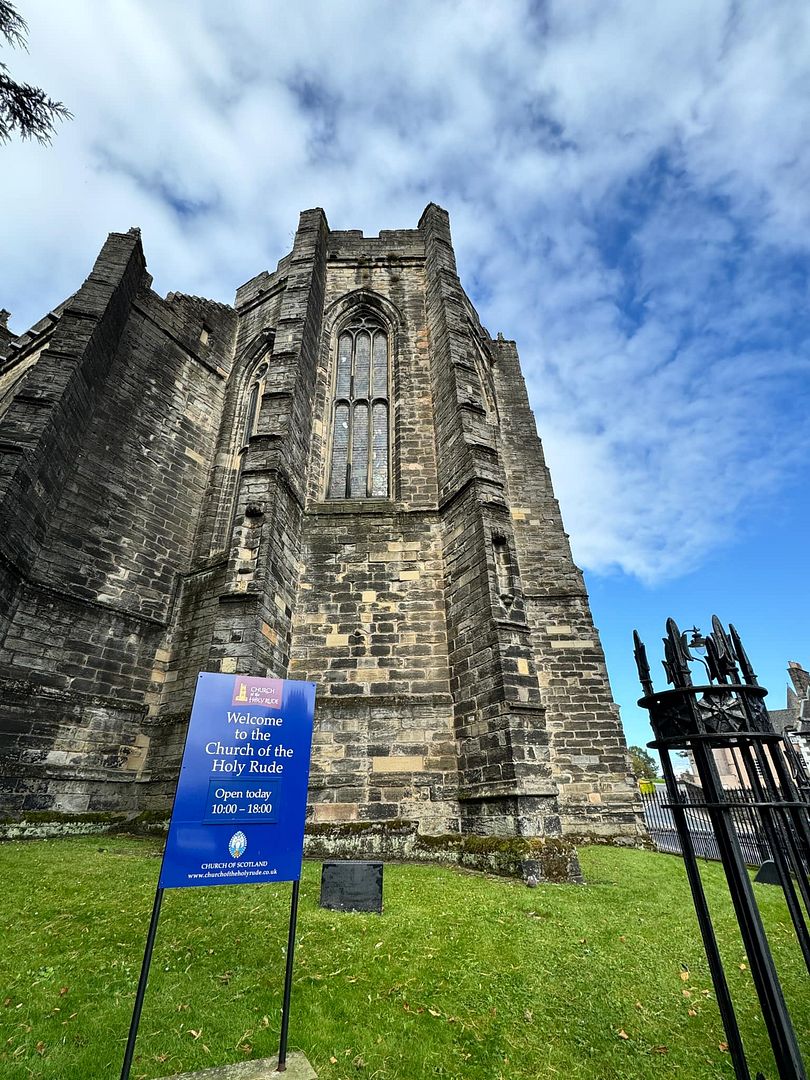
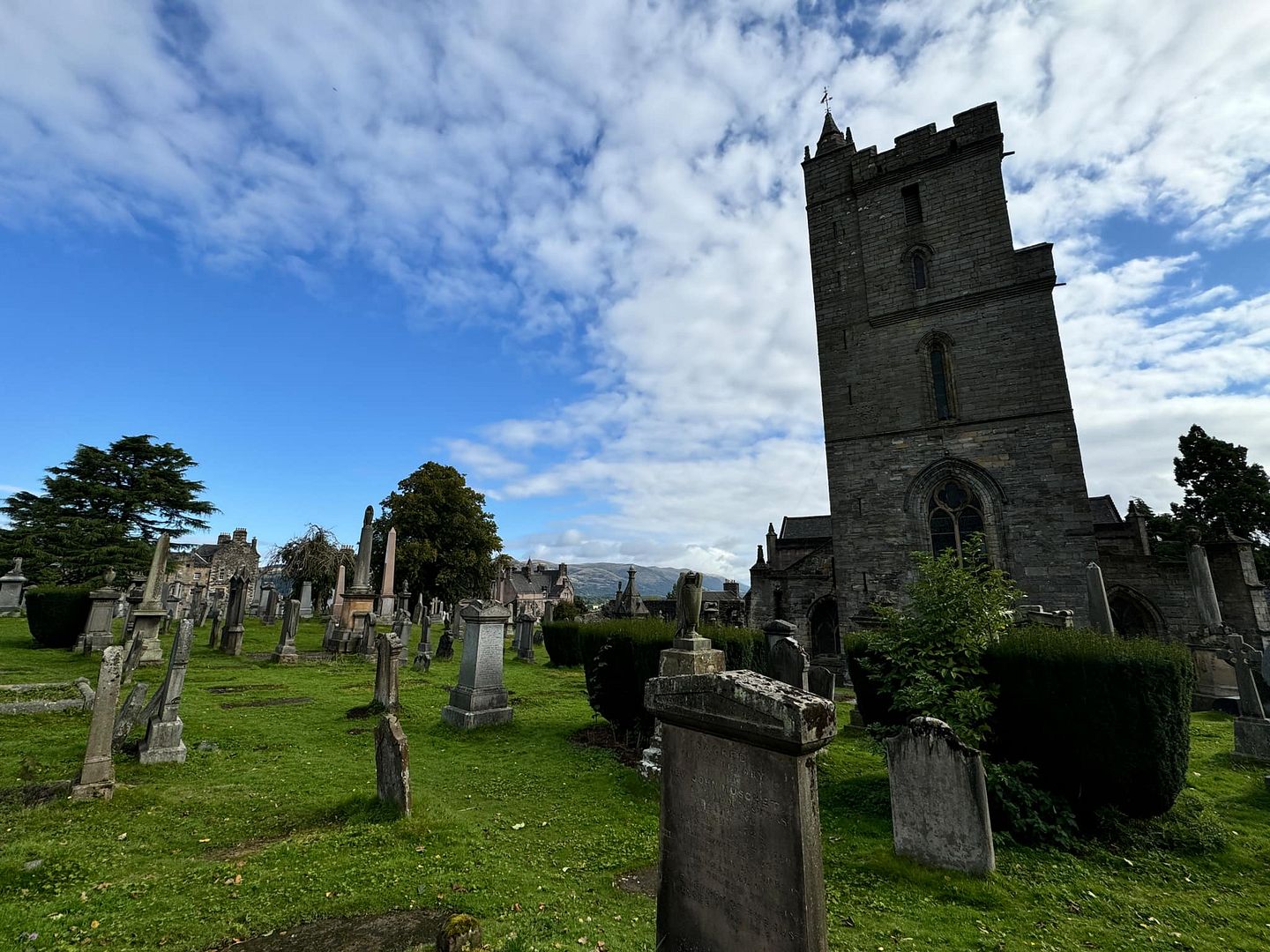
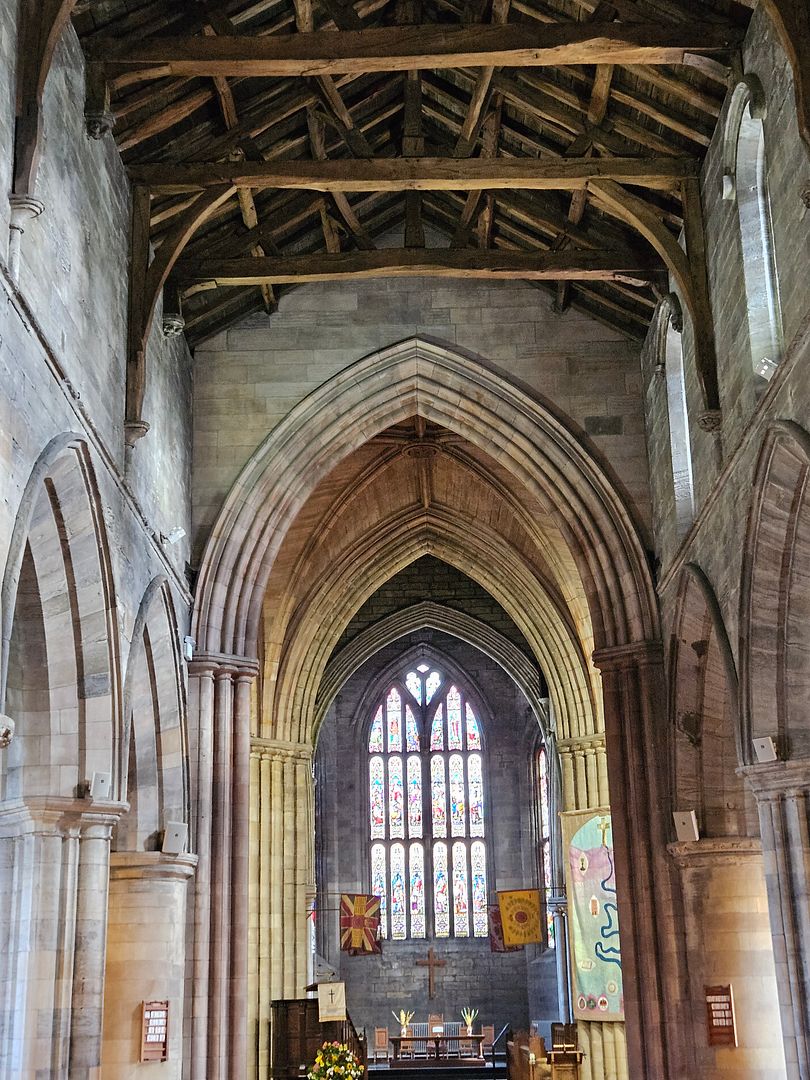
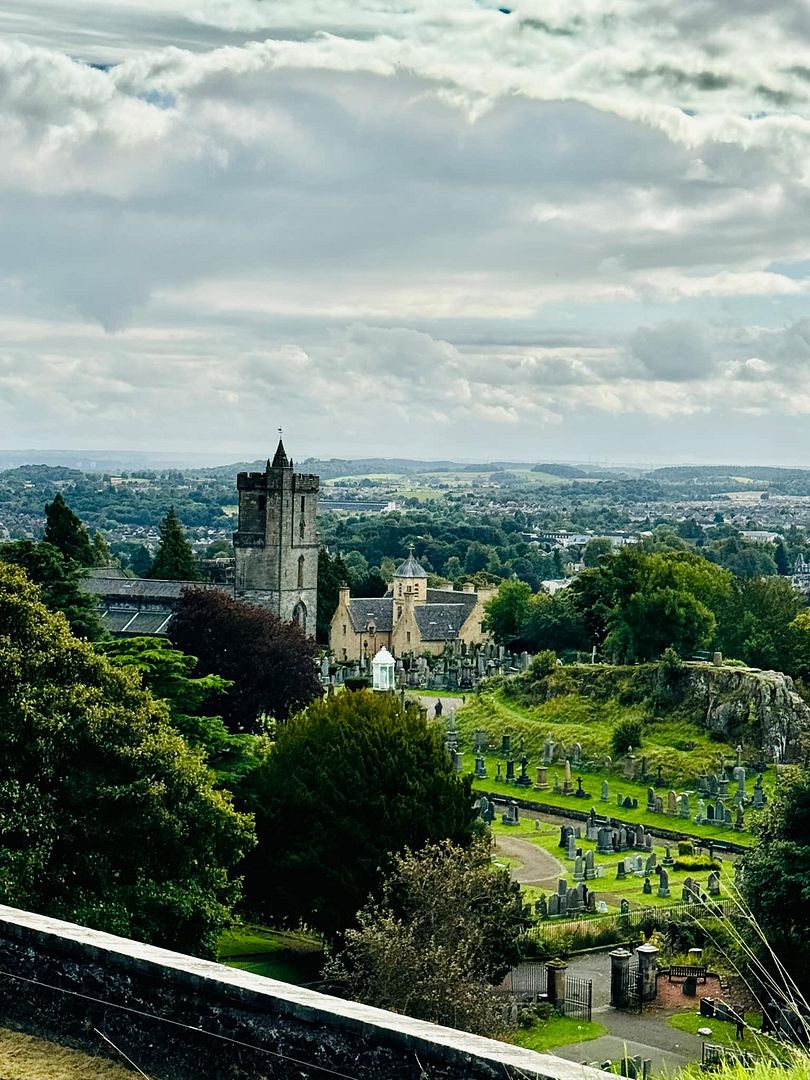
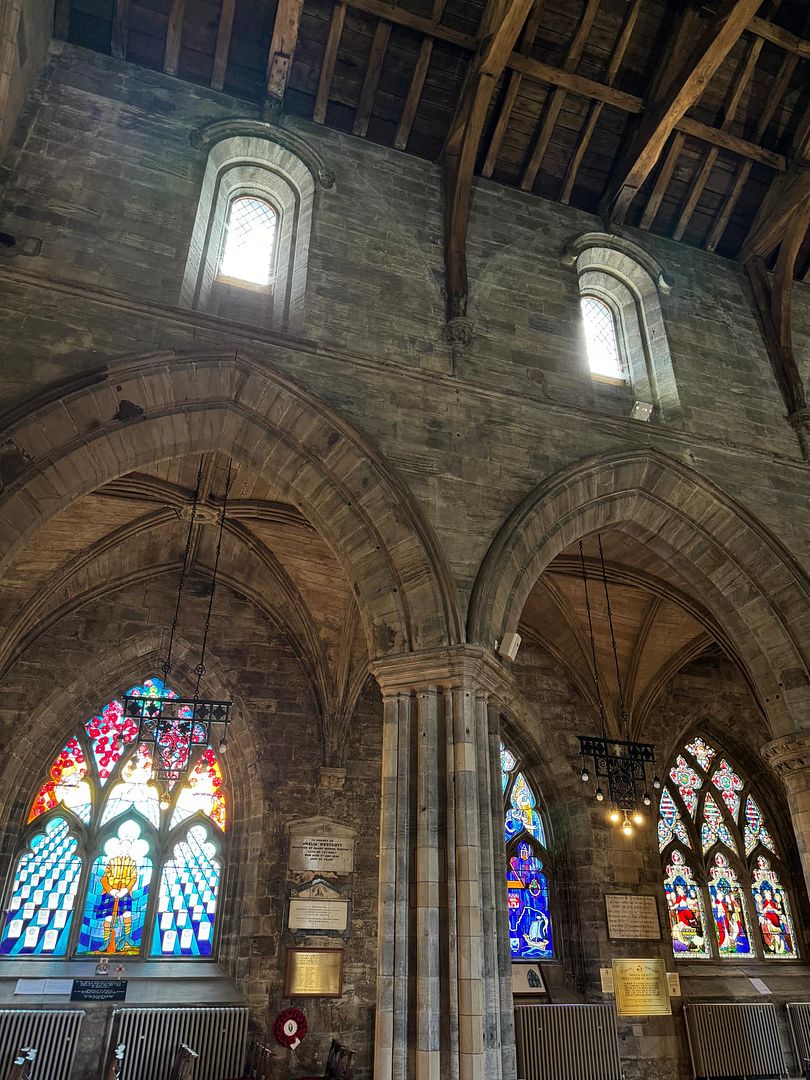
The Church of Holy Rude in Stirling, Scotland is steeped in Scottish History. The church is Stirling’s oldest building after the castle. During the reign of Robert II (1371-1390), and altar to the Holy Rude was established, leading to the church being renamed as the Parish Church of the Holy Rude of the Burgh of Stirling. “Holy Rude” translates to Holy Cross.

From the brochure: This site, a focal point of faith and heritage, witnessed the worship of Mary, Queen of Scots, the crowning of her infant son King James VI and many significant events, including the Scottish Reformation and the Jacobite rising.

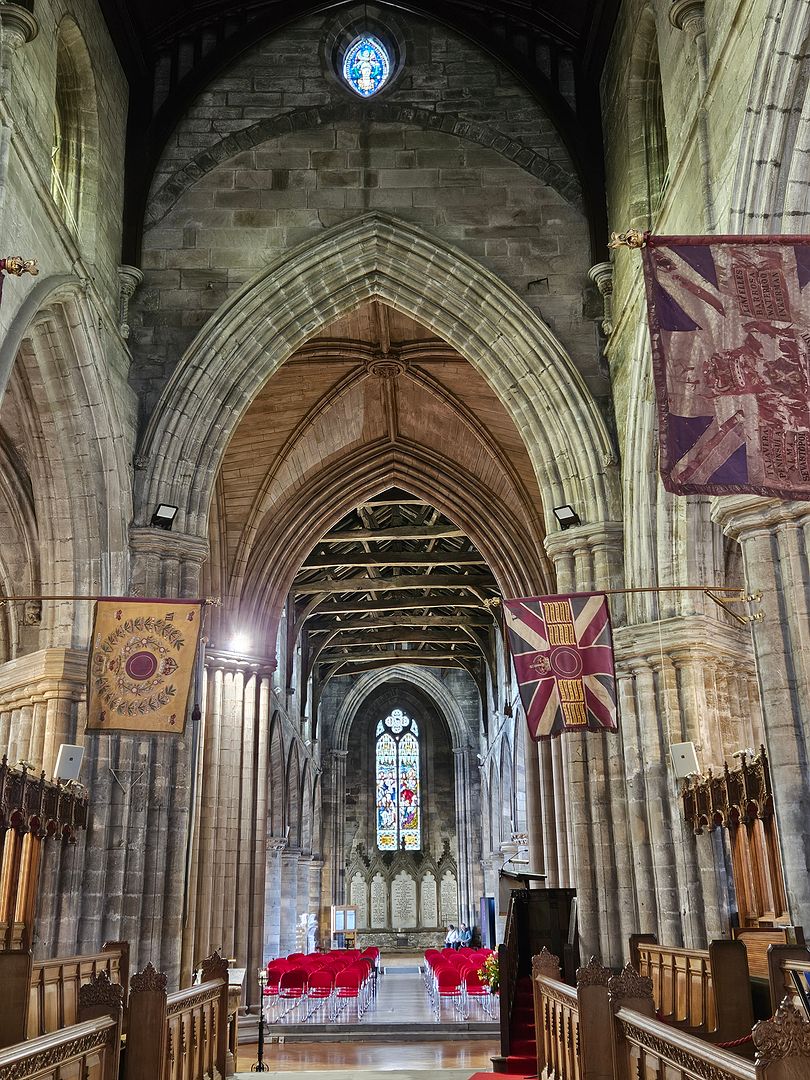
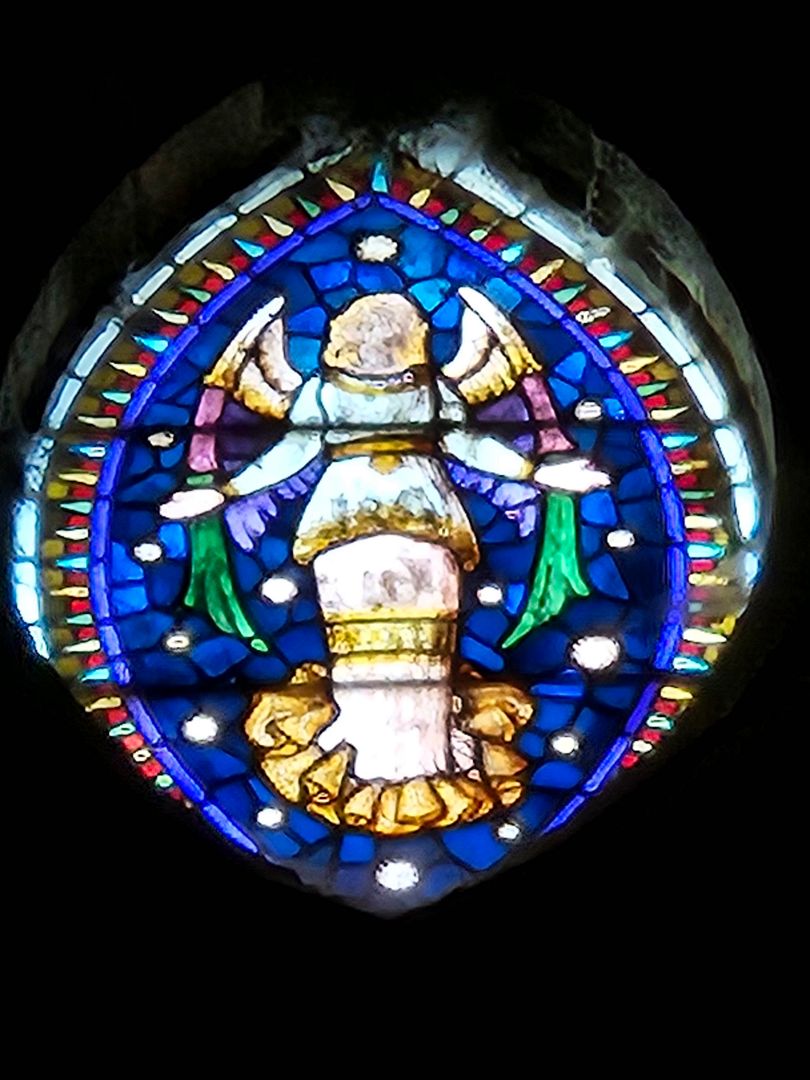
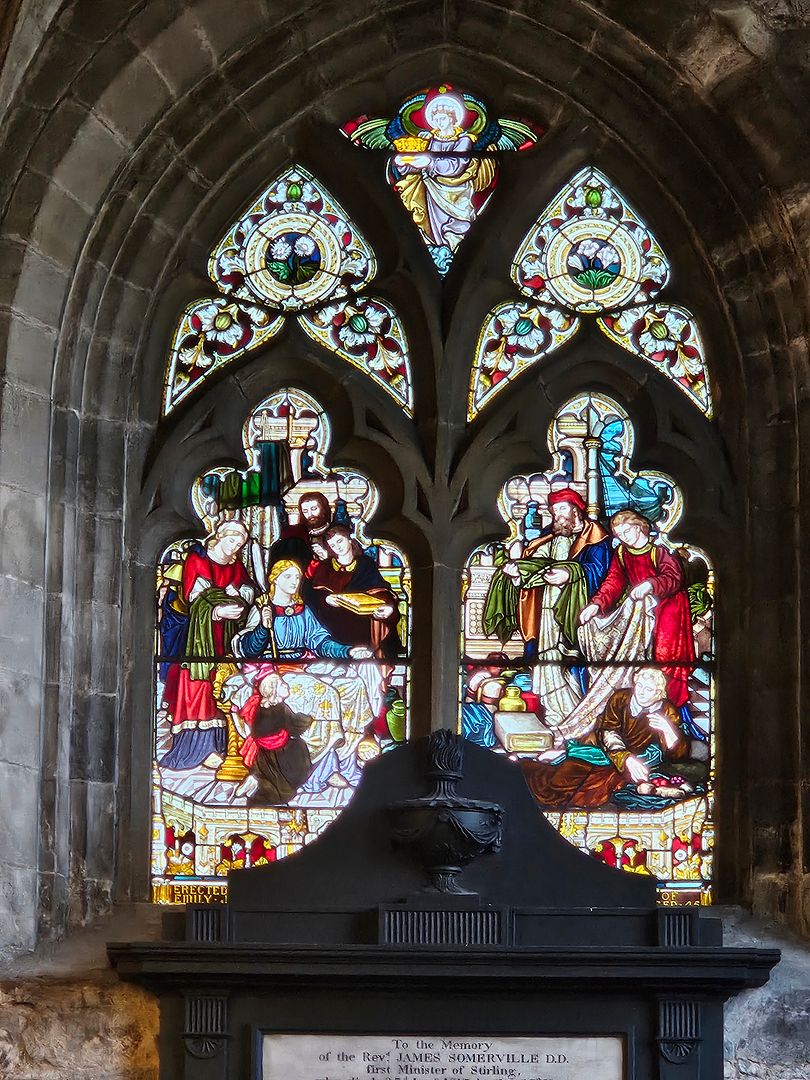
See that little stained glass window way at the top of arch. The Angel Window was installed in 1870 and the artist is unknown.

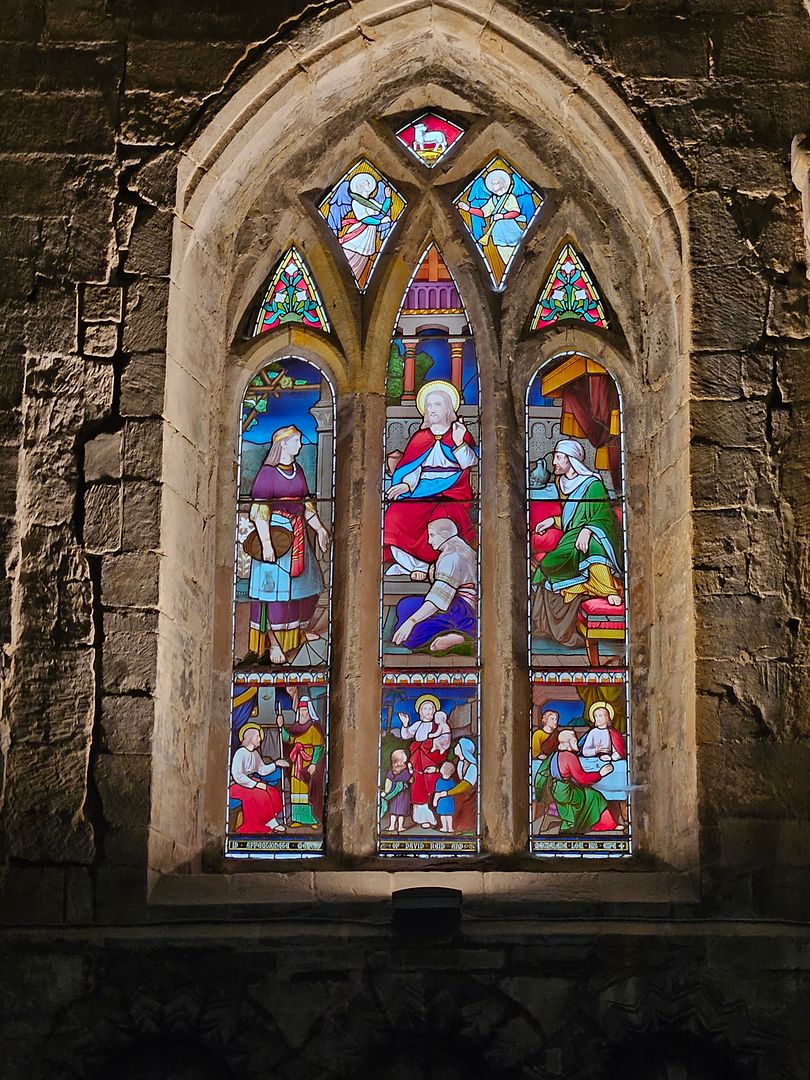
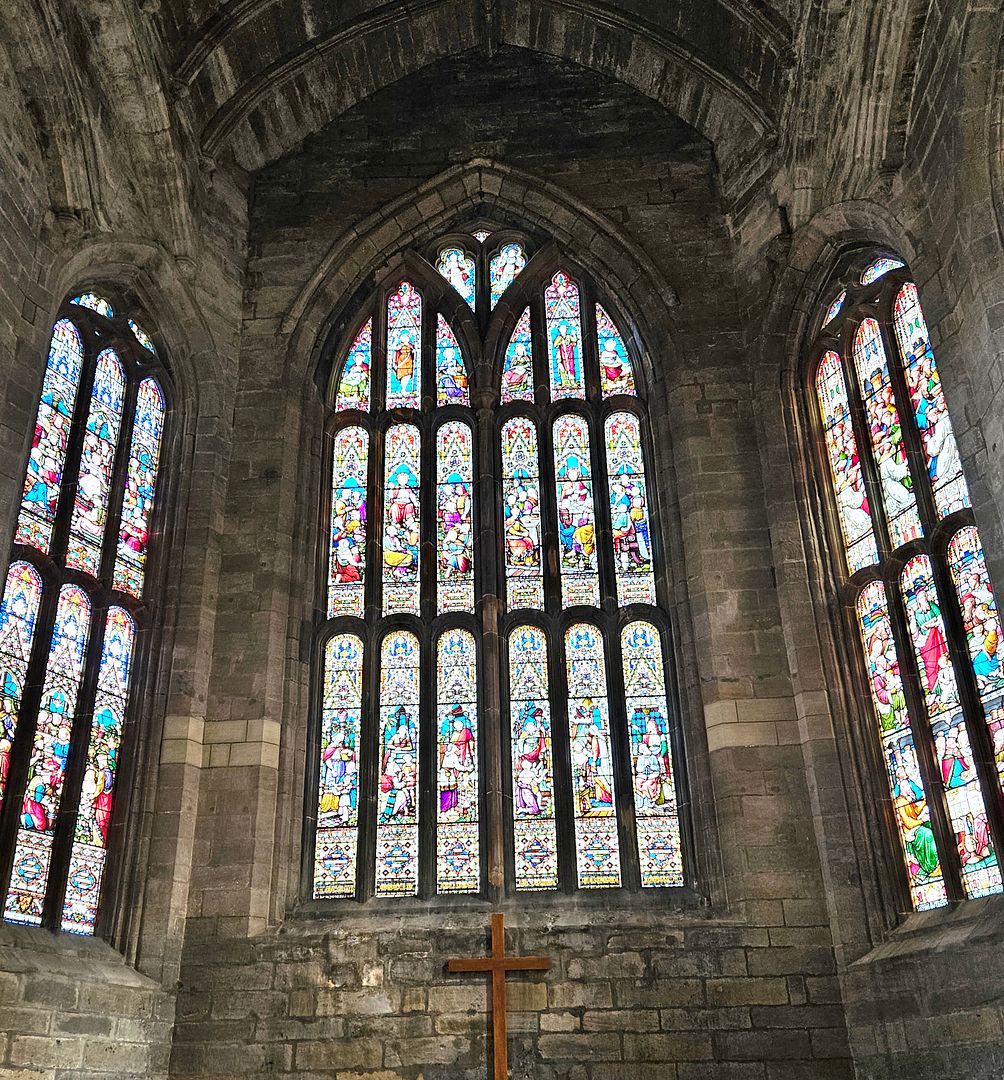
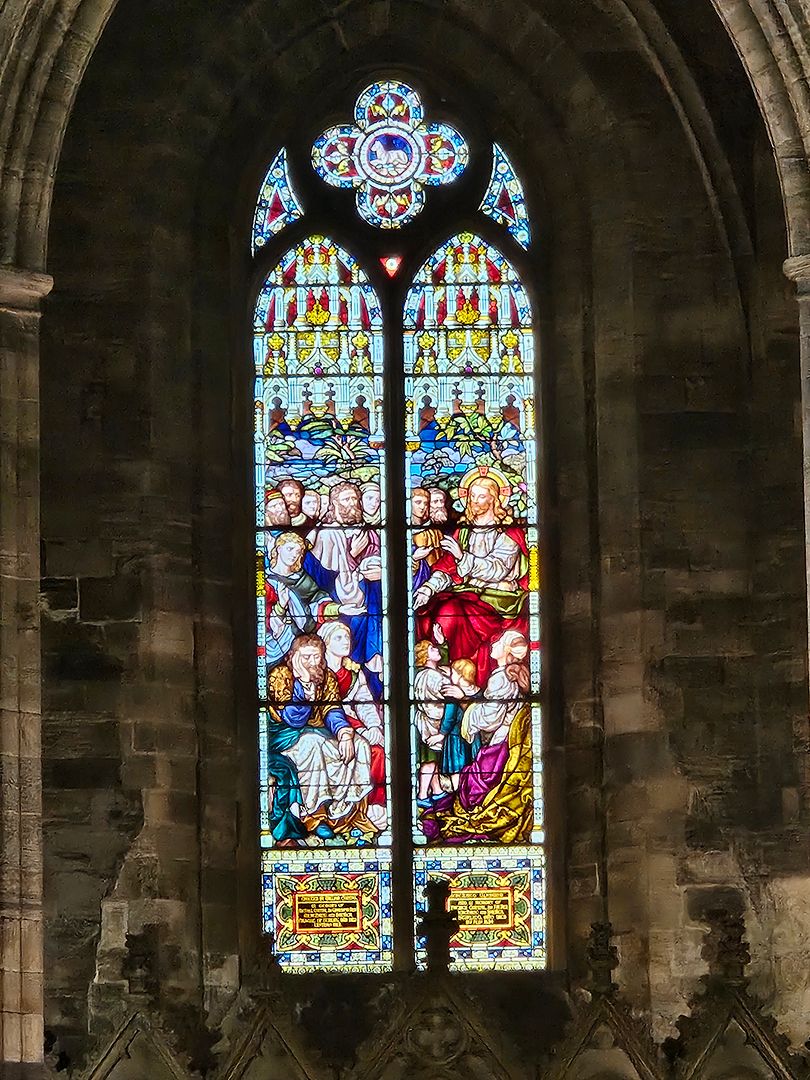
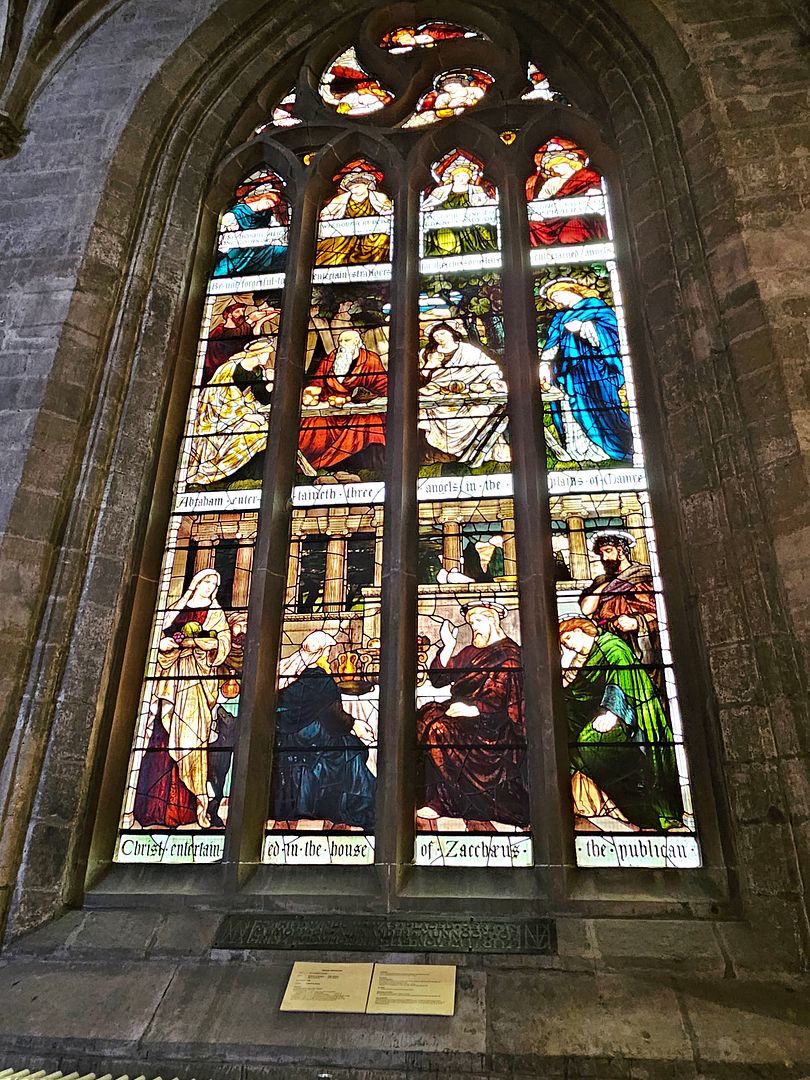
This window, above the Apse, is dedicated to John Cowane, founder of Cowane’s Hospital. The middle right depicts the last supper, the left shows the Sermon on the Mount, and the lower portion illustrates Matthew 25:35-40, reflecting the charitable intentions of Cowane. The Inscription read, “For I was hungry, and you gave me food.”

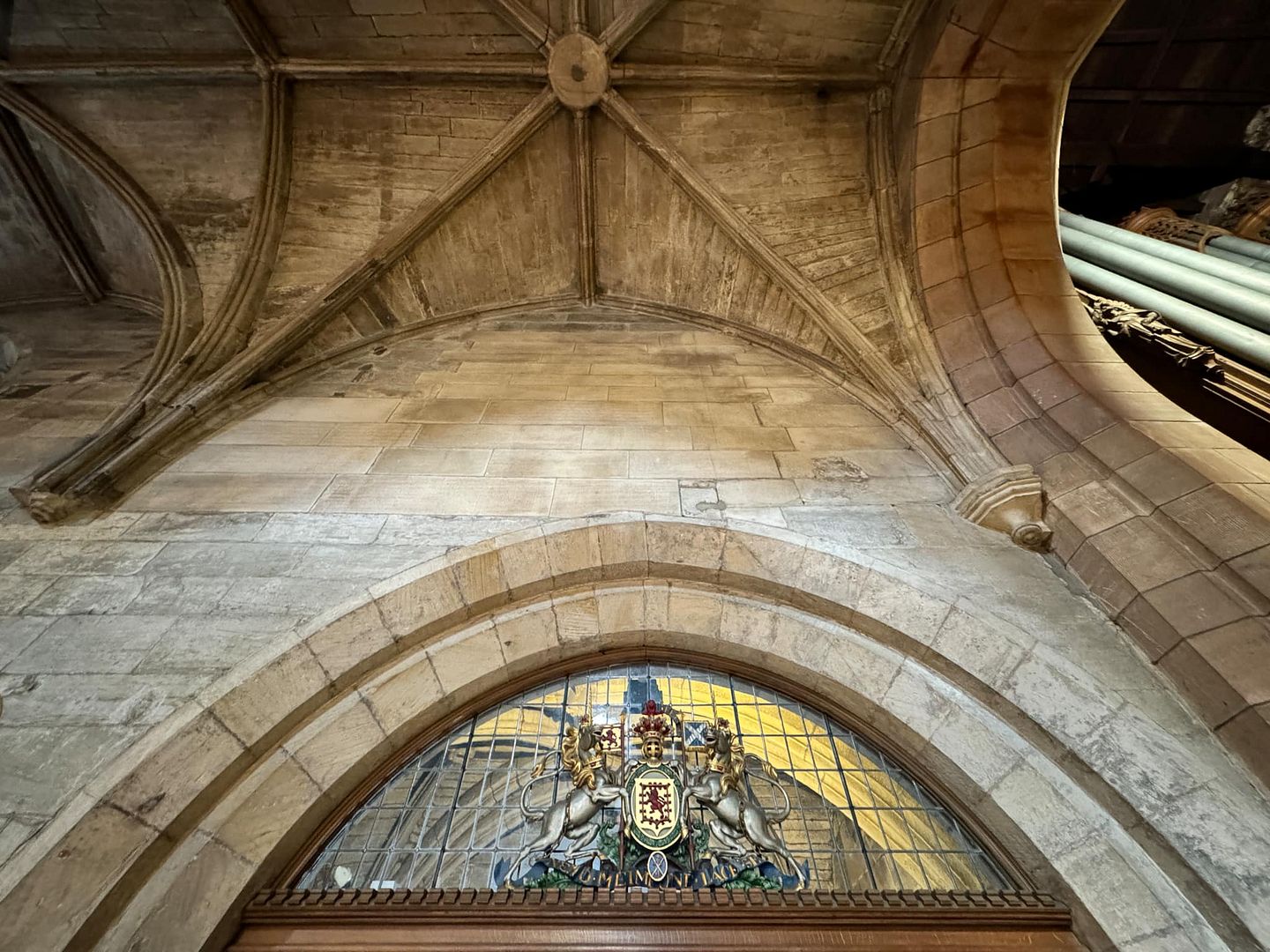
The coat of arms above the entrance to St. Andrew’s Chapel is a 17th century carving of the Royal Arms of Scotland recalling the era when Scottish royalty frequented the Church.

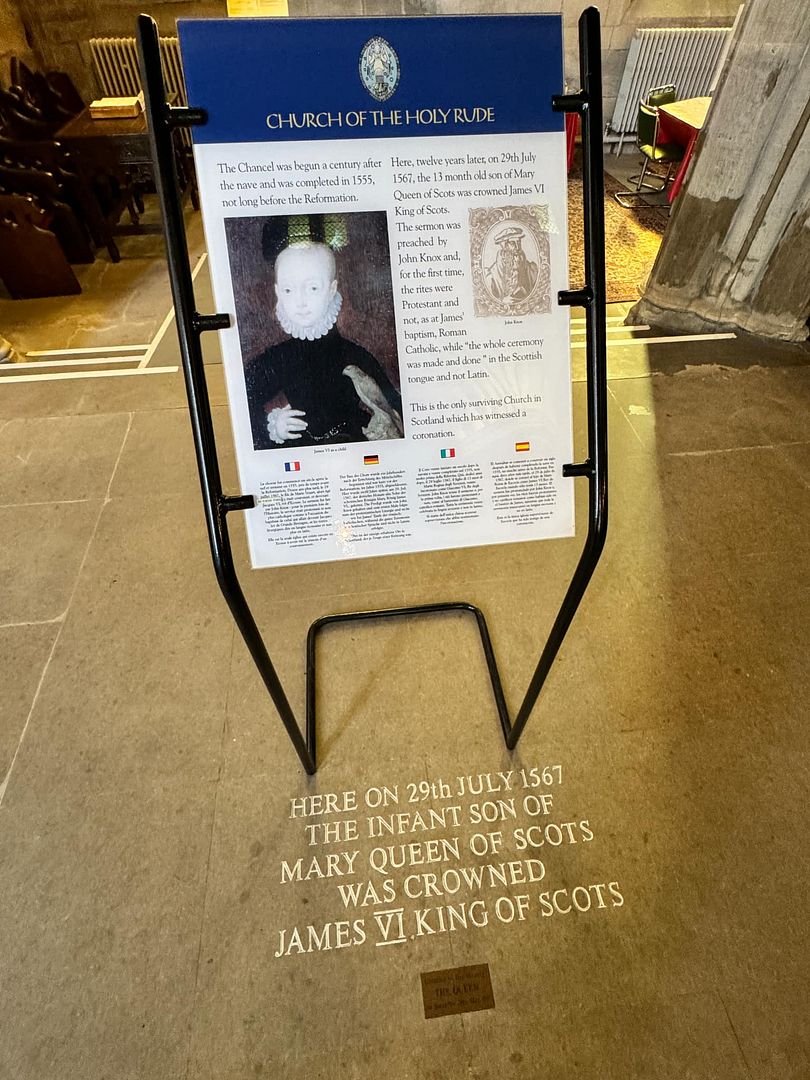
Mary, Queen of Scots: At nine months old, she was crowned Queen in Stirling Castle’s Chapel Royal after her father, James V, died. She spent much of her childhood in the castle and visited this church. After Mary’s abdication, her son was crowned King James VI of Scotland in the Church of the Holy Rude.

At her 13 month old son’s coronation, John Knox preached the sermon. For the first time the rites were Protestant and not Roman Catholic and the whole of the ceremony was made and done in the Scottish tongue and not Latin.

This is the oldest surviving church in Scotland that witnessed a coronation.


John Knox, A figurehead of the reformation in Scotland. Reverend James Guthrie was another prominent Scottish minister during the Covenanting era. His convictions led to the division of the Church’s congregation in the 17th century.

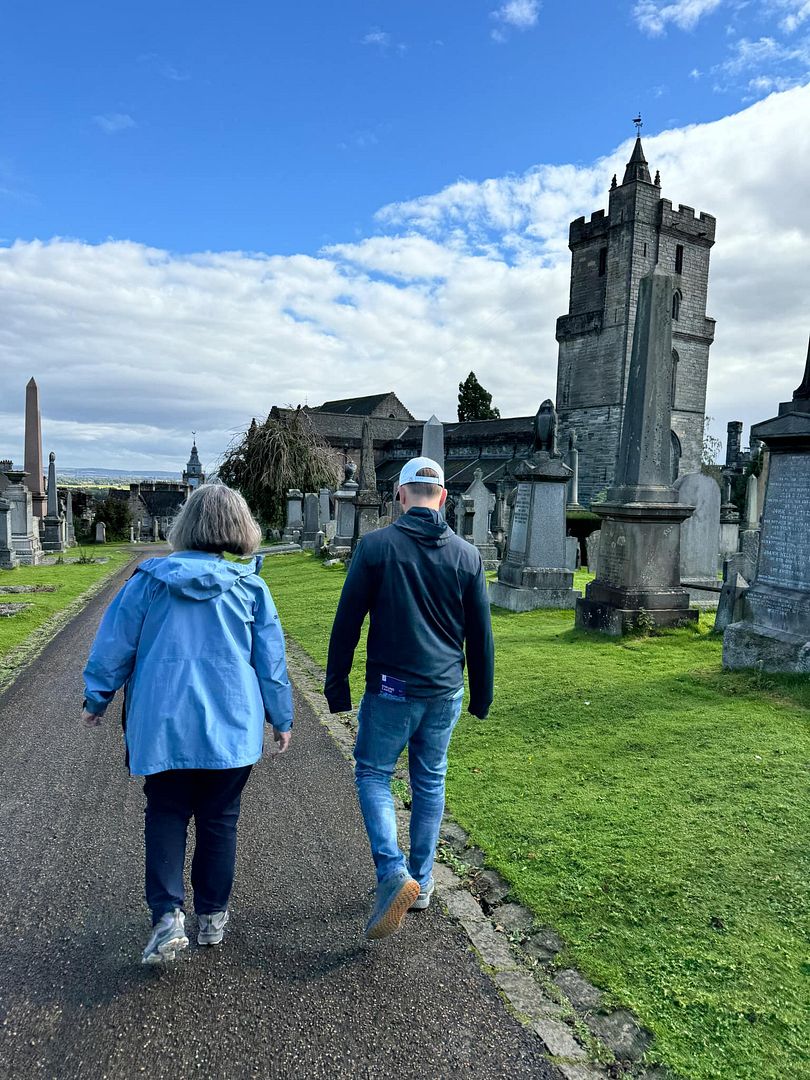
The Church has seen its share of conflict over the centuries.  During the religious and political troubles of the 17th Century, the Church was divided in 2 and had a wall built to create 2 separate churches – the East and the West.  The minister whose activities led to this division, James Guthrie, was hanged for high treason in 1661, and the 2 parts of the church were finally re-united in 1935.

During Cromwell’s uprising, General Monk set up his guns on the Church tower in 1651 for the last successful attack on Stirling Castle.  The Church walls bear the scars of musket shot and cannon-fire from this and other conflicts, including the Jacobite uprising of 1746. The battle scarred walls are indeed a testament to the skills of the stone masons and craftsmen of the past.

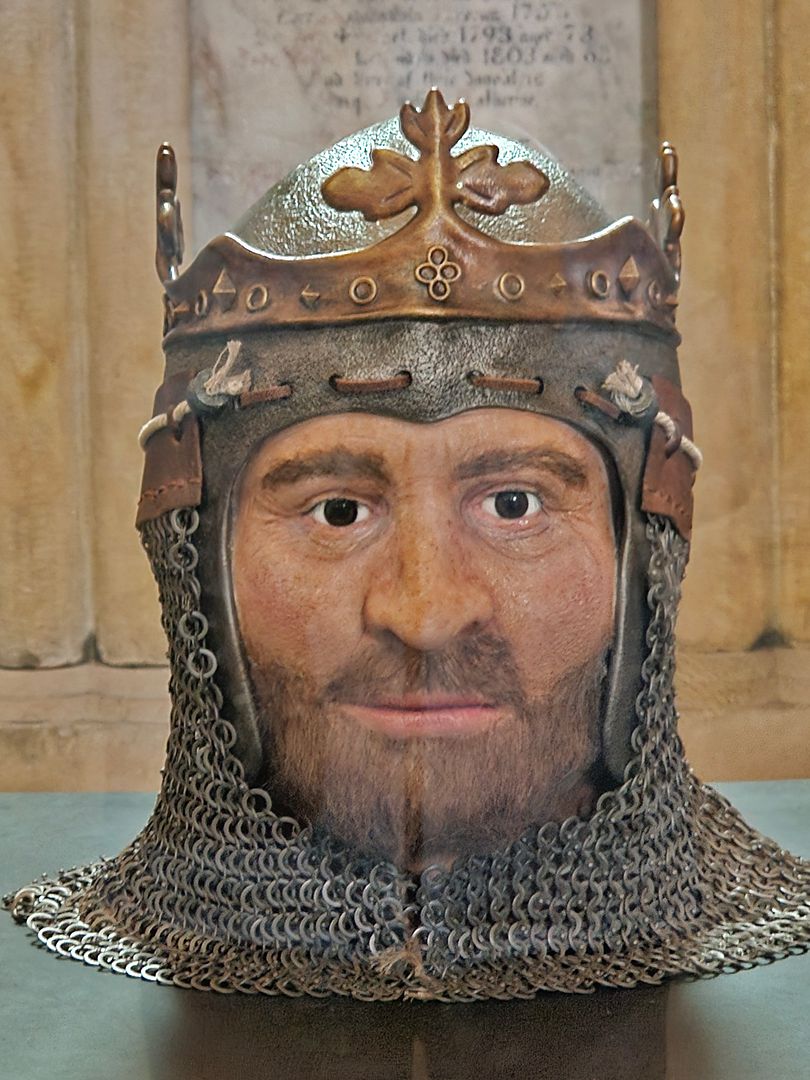
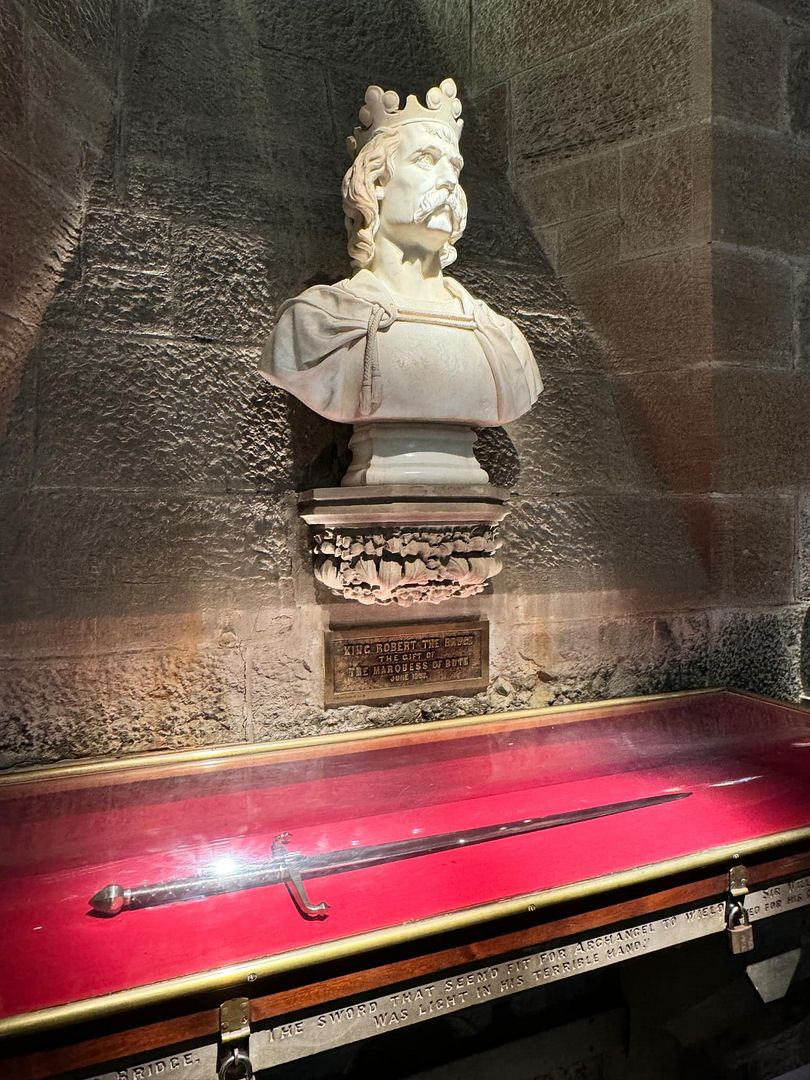
King Robert the Bruce

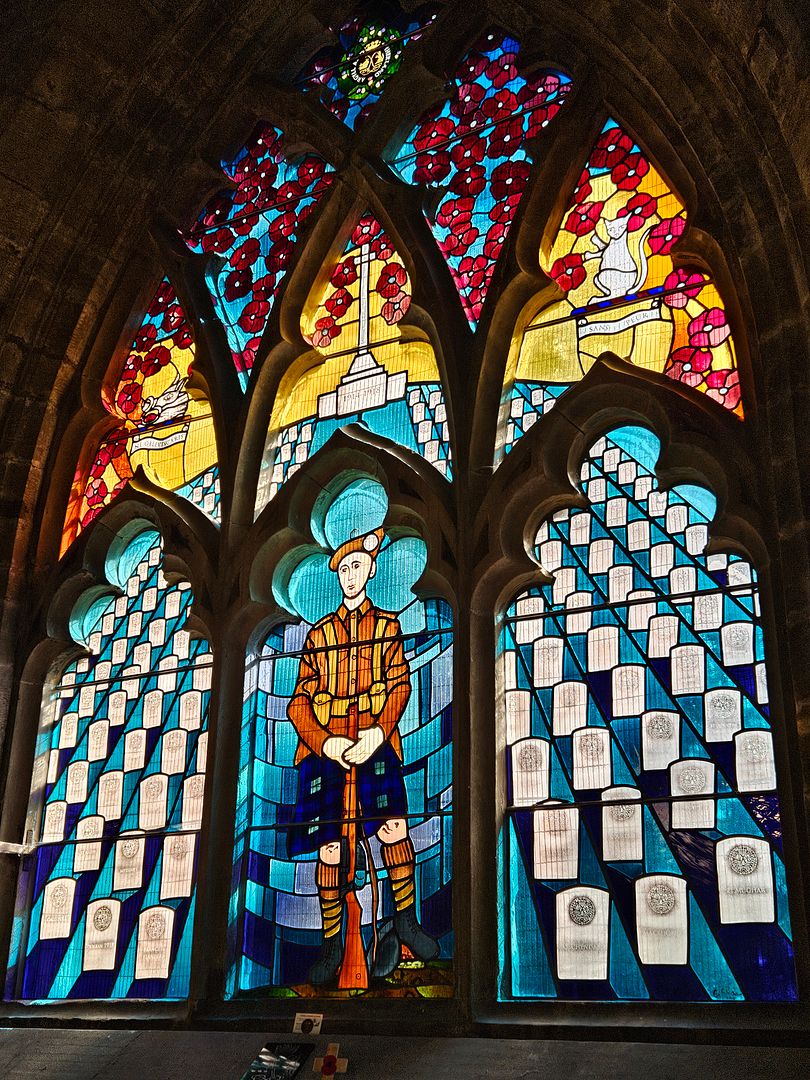
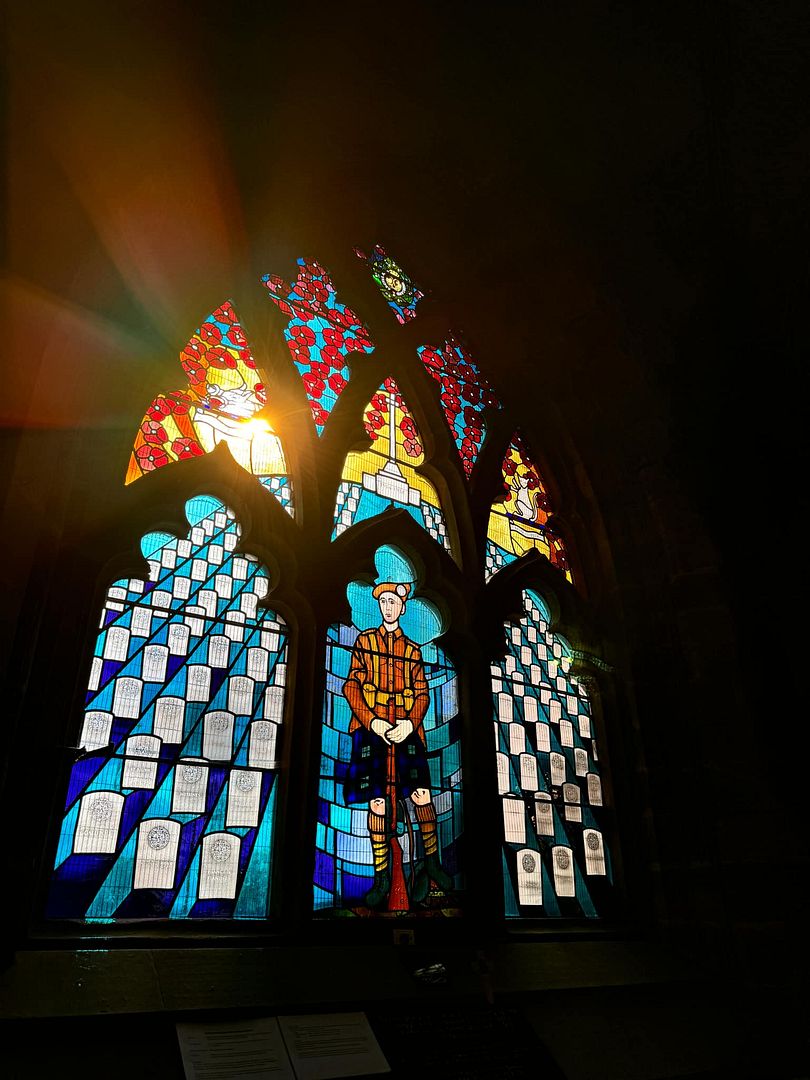
This window was created in memory of the Argylls of WWI and it was fitting for it to be in the Church of the Holy Rude because the regiment had strong ties to this church. This window depicts a Highland soldier surrounded by poppies and figures from the regimental cap badge. Thousands lost their lives in World War I. This window was dedicated in 2016.

The current windows date from the 19th century.

We left the church and walked down into town needing a little snack before we made our way to the Wallace Monument which will be another post. Sunday the 15th of September was a full day of history for us!

Thanks for traveling along with us on this day that we connected more dots about John Knox and the Scottish Reformation and Covenantors in Scotland. We took in Stirling in one day but you could easily spend a few more days soaking it all in.