Scotland Travel Journal ~ Edinburgh Reformation Tour 1

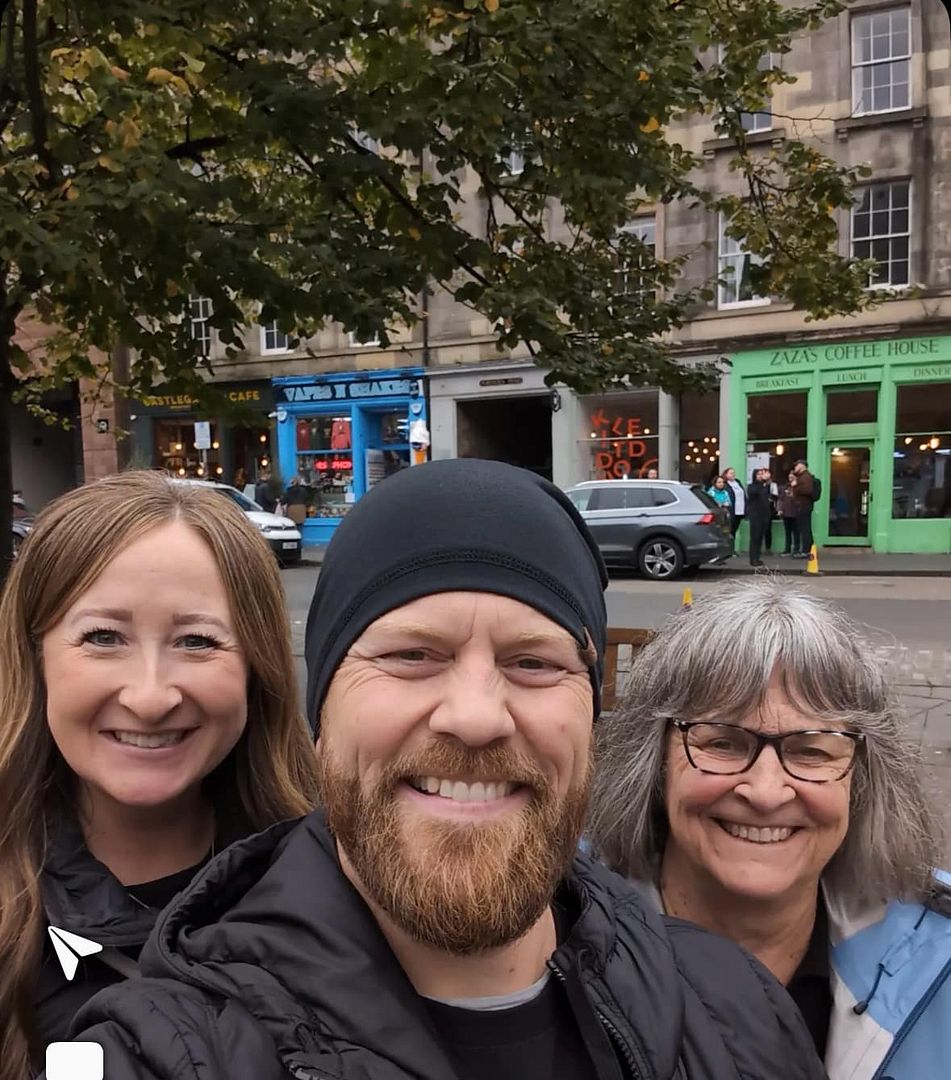
Monday September 23rd was our last full day in Edinburgh and Scotland. This would be a day filled with walking and stairs and information. We were thankful on this morning that Greg was well enough to walk and not miss our special tour.
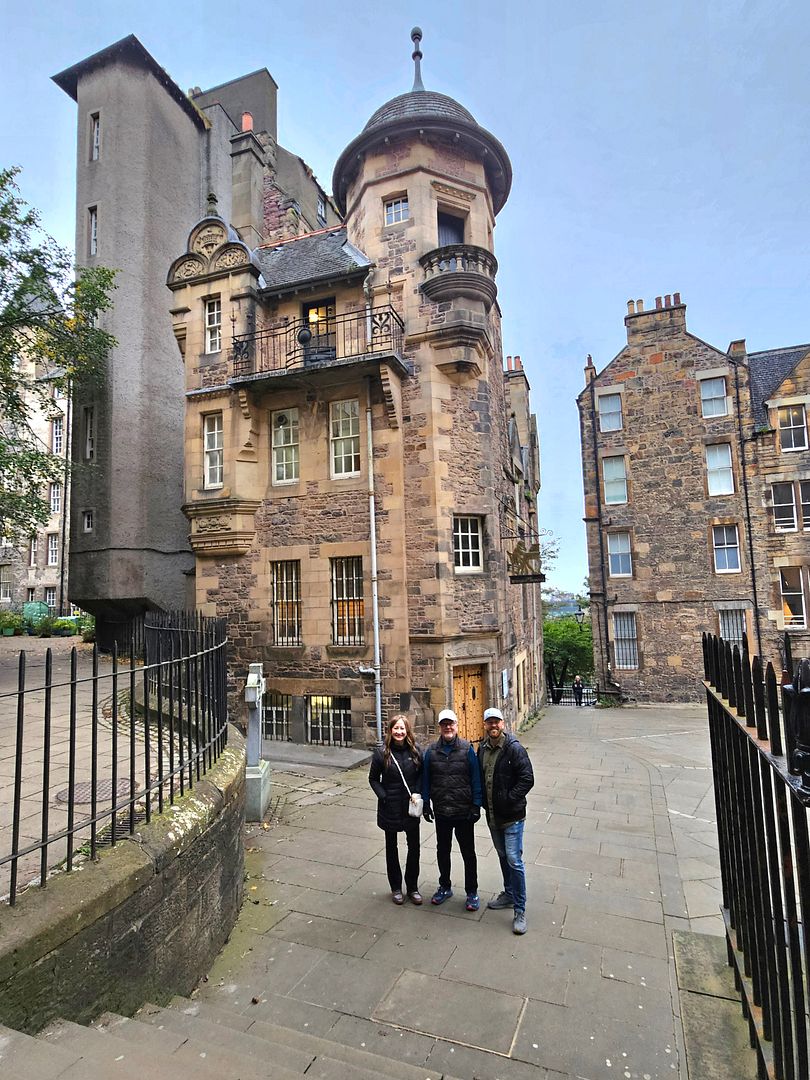
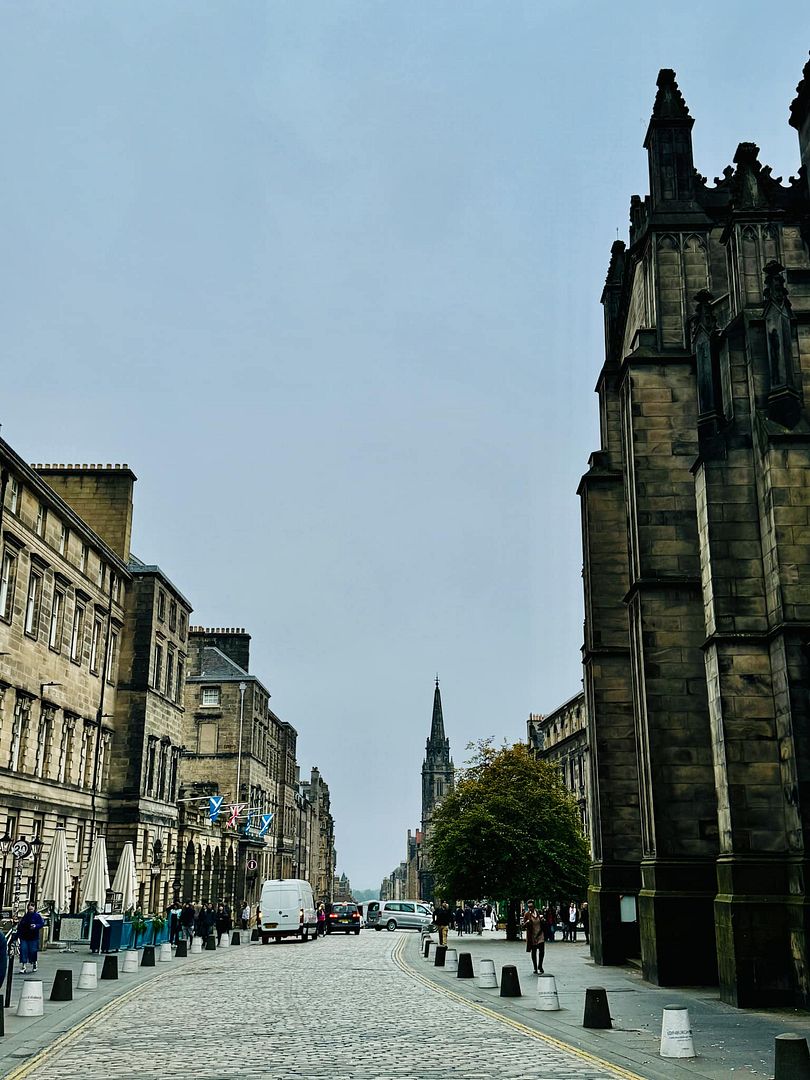
We took the Lady Stair’s Close to get up to the Royal Mile. We stopped to take some photos outside the Writer’s Museum.
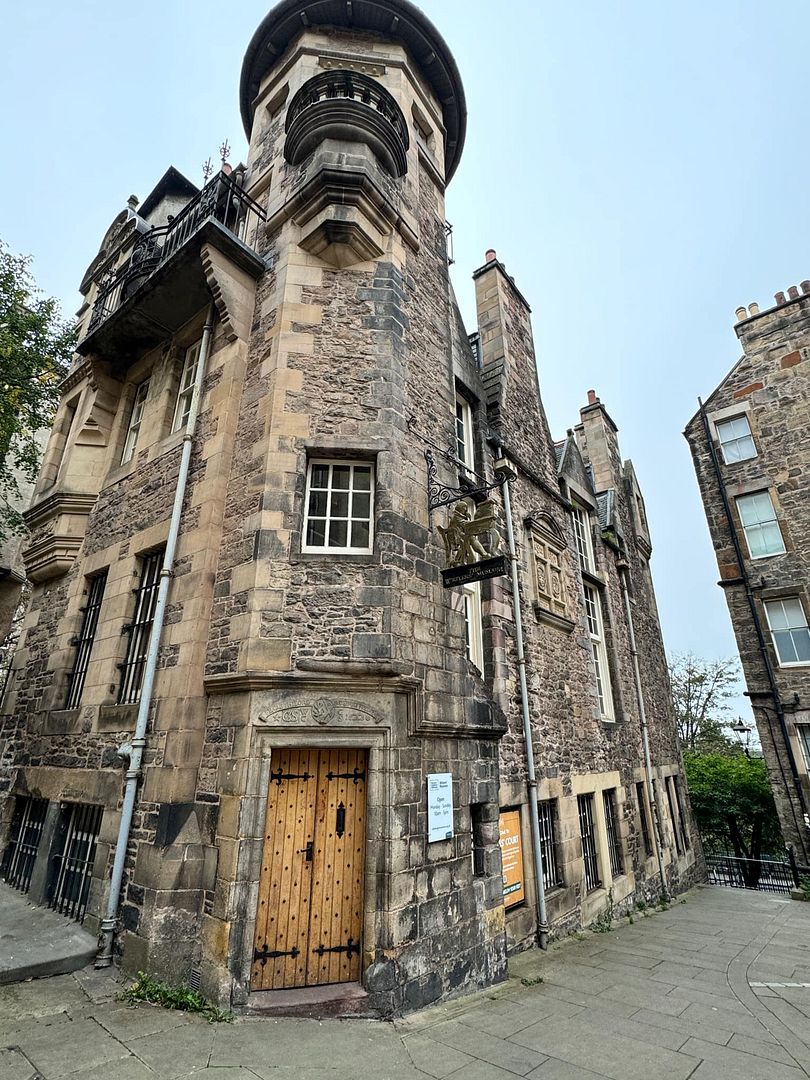
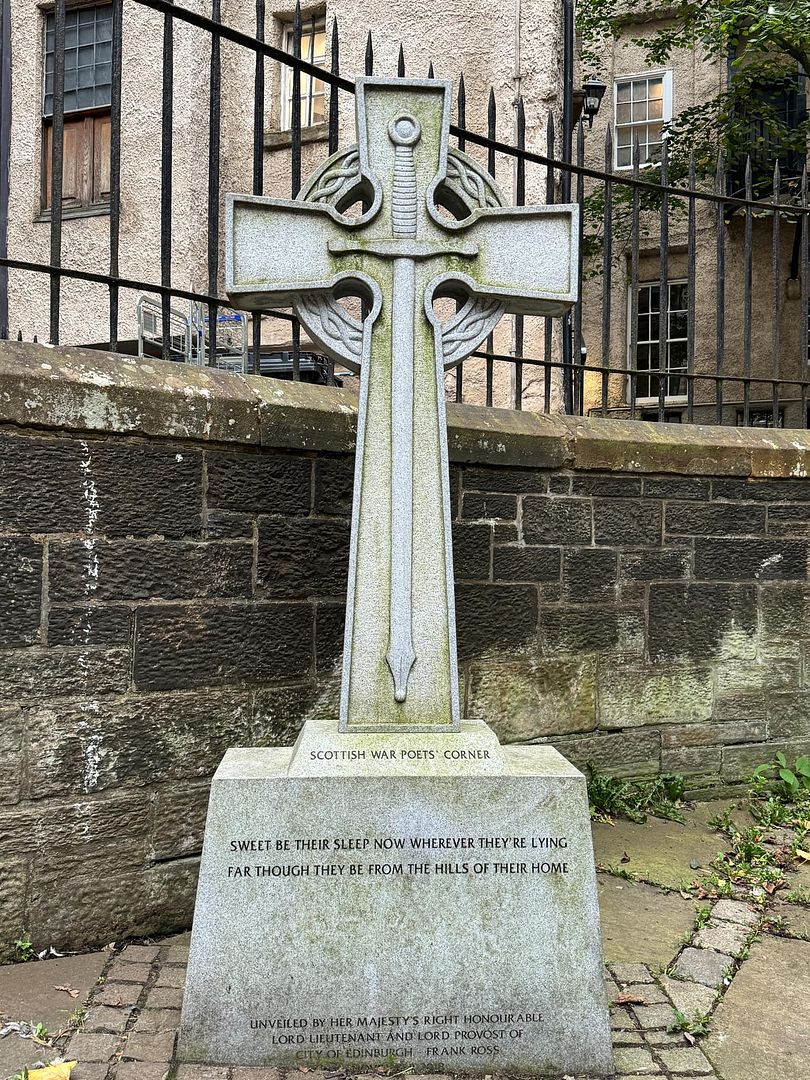
Early on the Royal Mile there were fewer folk milling about. That would change soon.
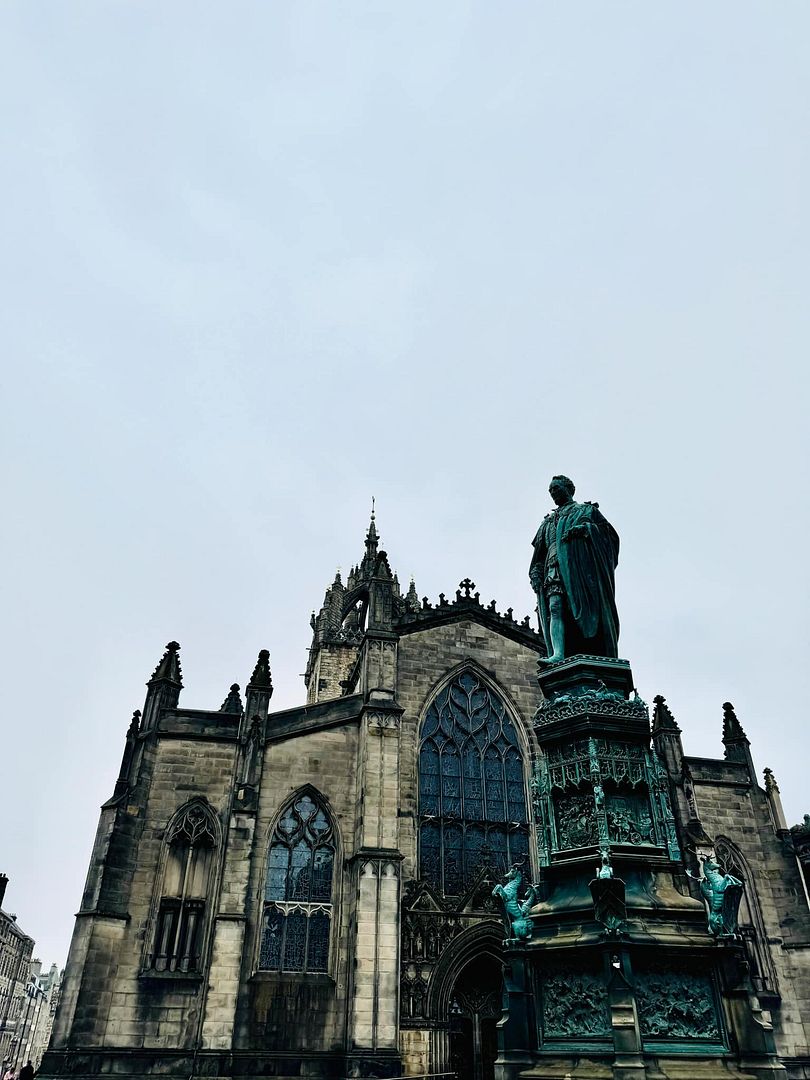
We scheduled a private Scottish Reformation Tour on this day.

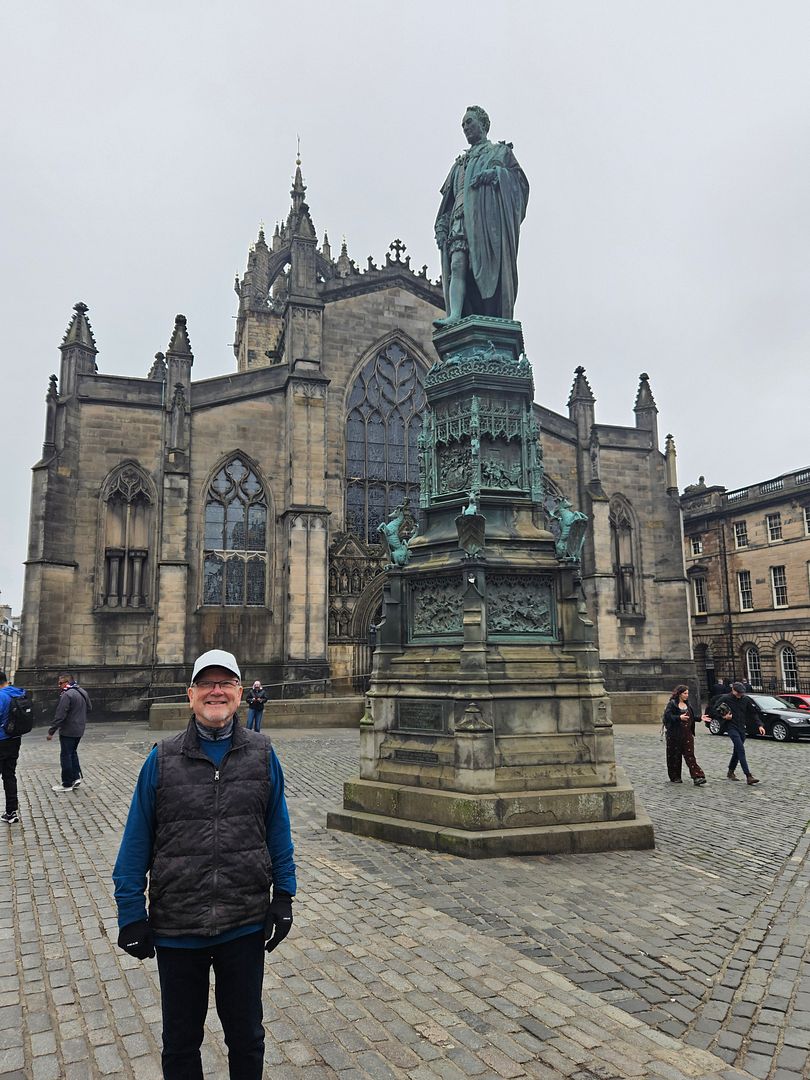
I included the link above. We were to meet Jimmy at 9am in front of St. Giles Cathedral.
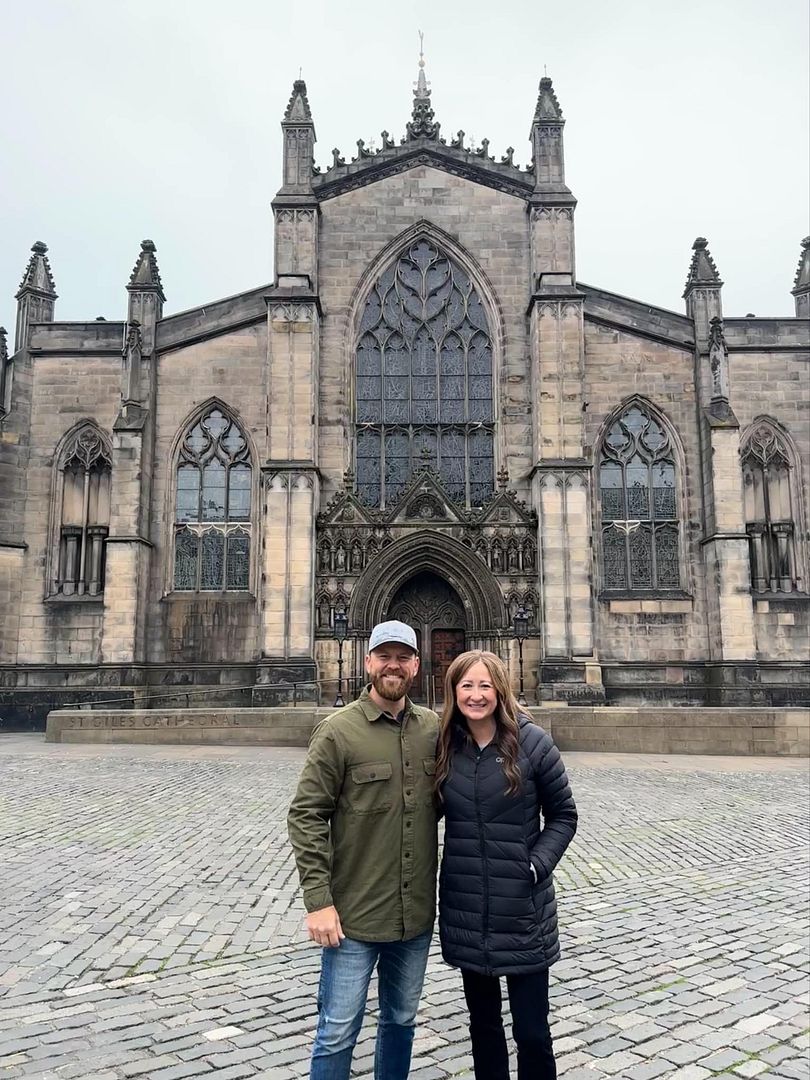
Soon we saw who we assumed was Jimmy and he came right to us assuming we were his clients for the morning.
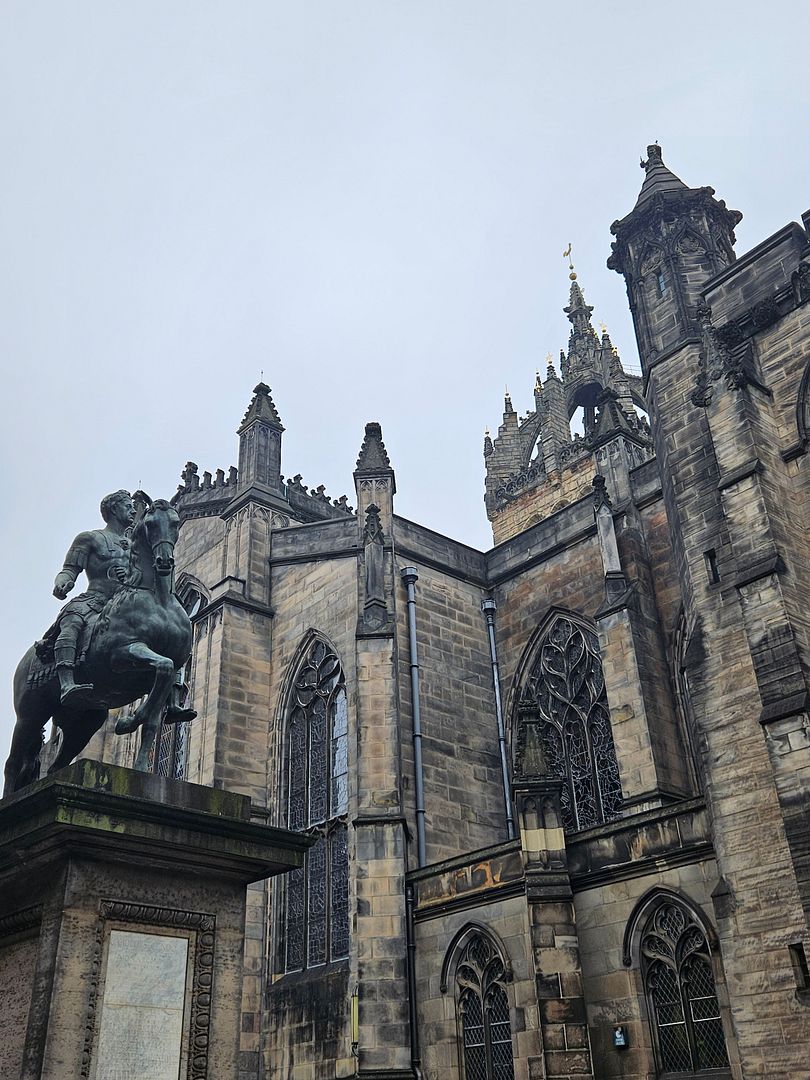
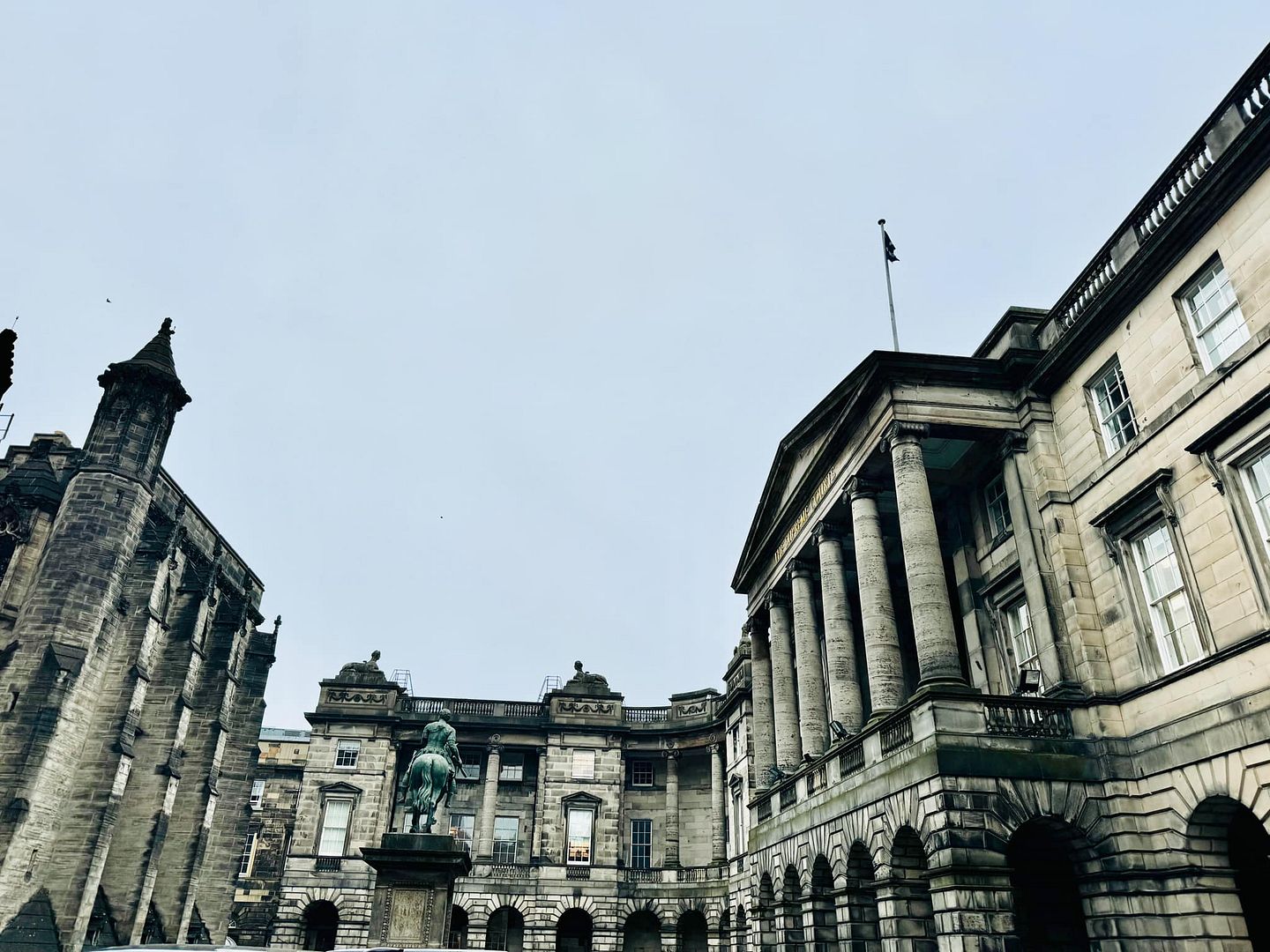
St. Giles was not open to the public yet on this particular morning so Jimmy took us around to the parking lot between St. Giles and The Supreme Court building. We would visit the inside of the cathedral at the end of our tour.

It looked to Jimmy’s keen eye that something was going on in the Supreme Court building so he managed to gain us access into the hall outside the courtroom.
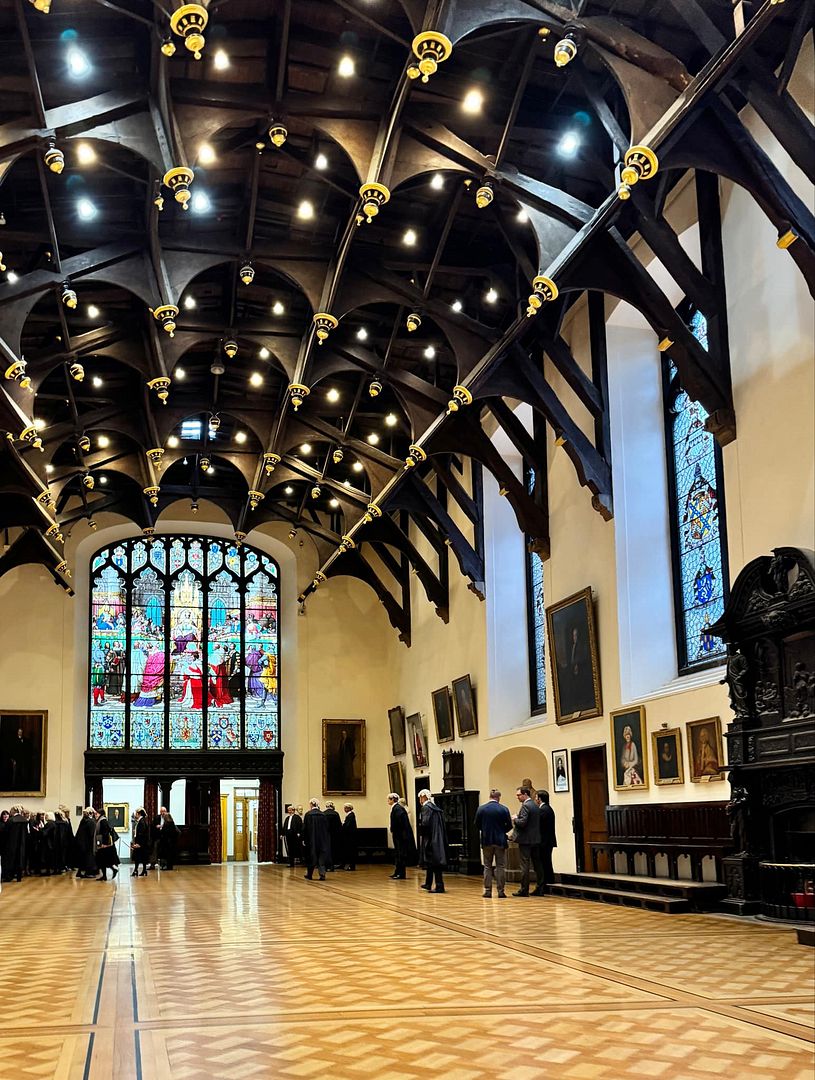
It was quite fascinating to see all the ‘big wigs’ standing around and some pacing back and forth the length of the room discussing their cases.

Back outside we were on the search for parking space #23.
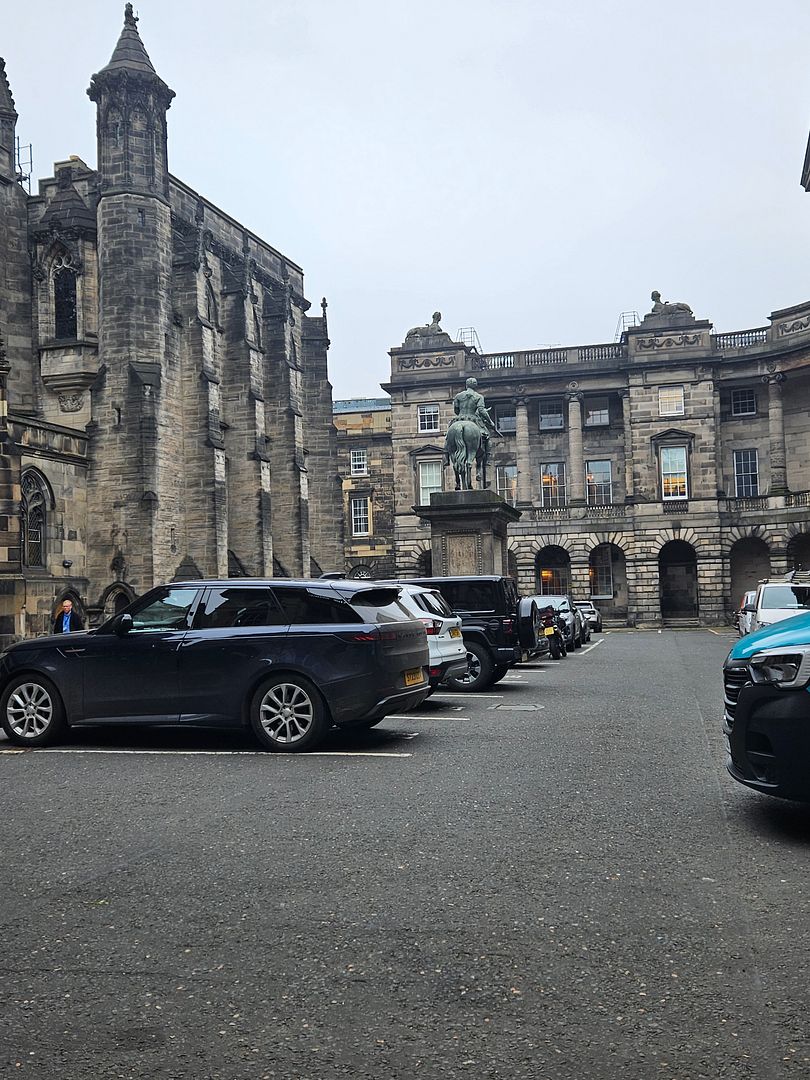
Here at space number 23 in the car park is approximately where John Knox is buried!
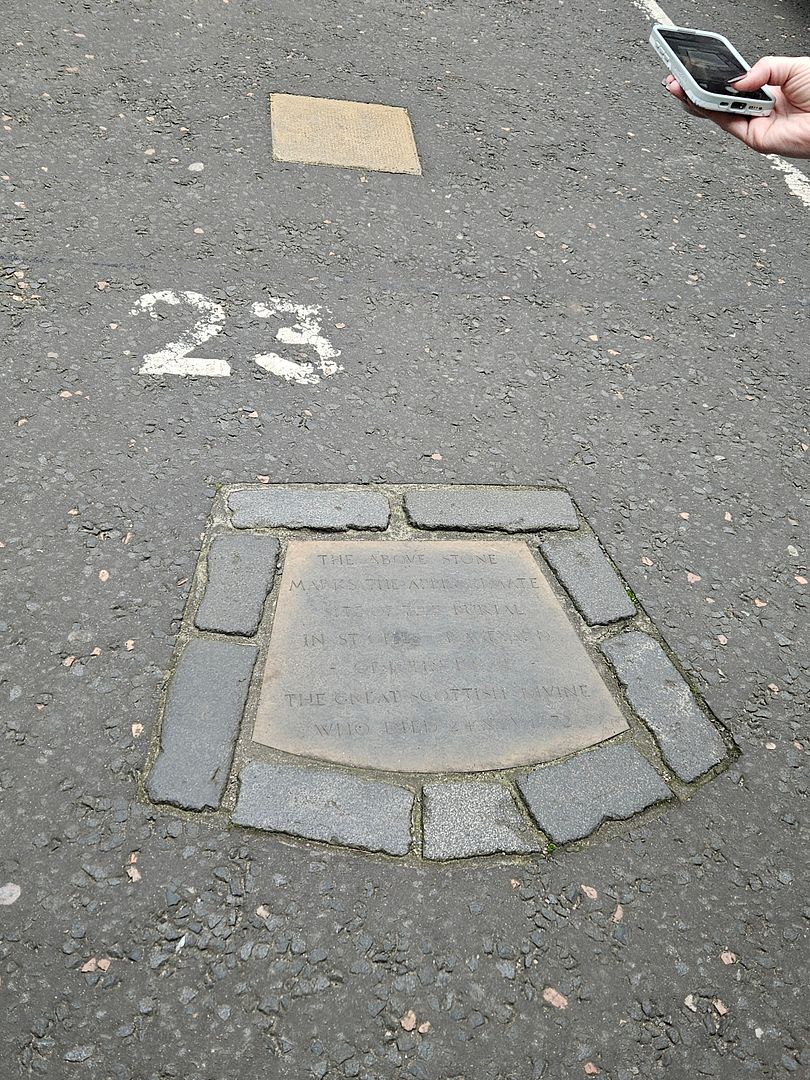
The Scottish Reformation leader’s grave was paved over and is now a parking lot. The stone inscription reads;

‘The Above Stone Marks

the Approximate

Site of the Burial

In St. Giles Graveyard

Of John Knox

The Great Scottish Divine

Who Died 24th November 1572′

It’s said that Knox wanted to be buried within 20 feet of Saint Giles, so he was laid to rest right outside the church in what was once a proper graveyard. However, the site has since been tarmacked over and is now a functioning parking lot. A plaque in parking space number 23 marks the approximate location of his now-lost grave.

Knox was a 16th-century preacher who commanded that his people be able to read the Bible in their own language. He was a key figure in turning a nation of Catholics into one of Protestants. His fire and brimstone sermons and teachings often put him at odds with the Catholic Mary, Queen of Scots.
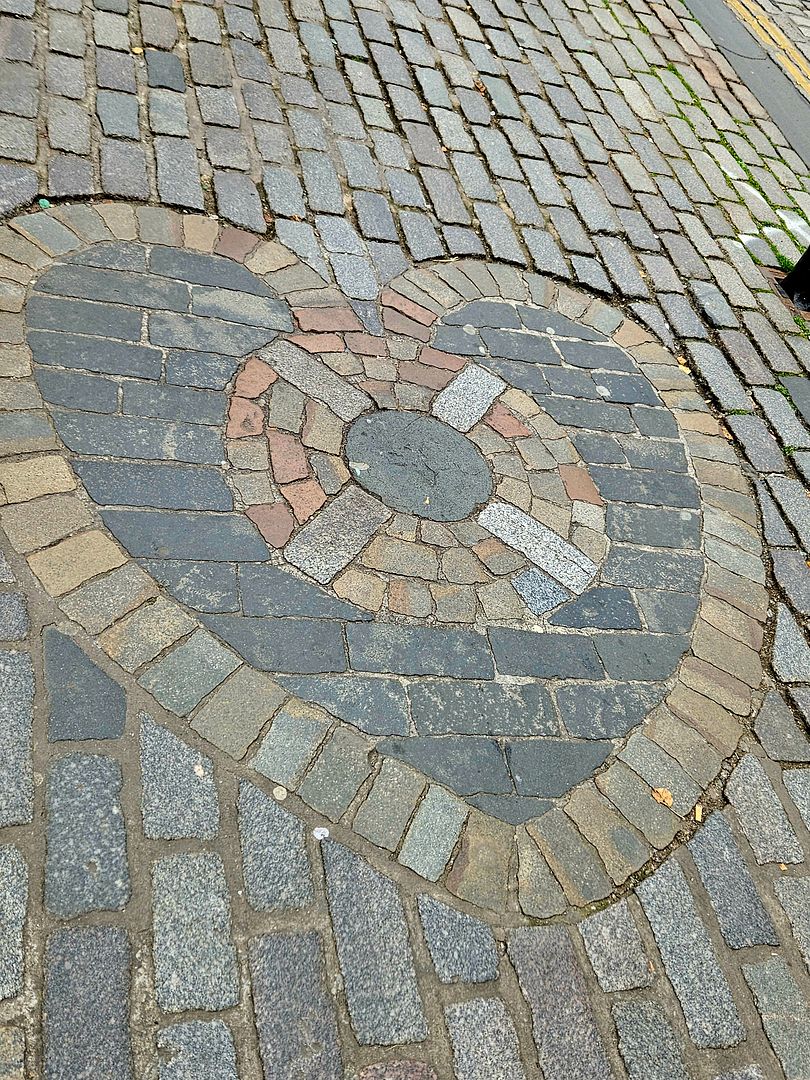
On our walk to Victoria street we came across this Famous Heart.

The Heart of Midlothian is both a historic mosaic dating to the Middle Ages and a landmark that denotes the location of Edinburgh’s Old Tolbooth administrative building. Locals often spit on the sign as a good luck charm, a tradition that has morphed from its original meaning of disdain for the many executions that took place at this site over the years. The Heart of Midlothian F.C., the local soccer club, takes its name from the mosaic and the Old Tolbooth.

The Heart was installed as part of a replacement building to the Old Tolbooth in 1561, and after this second building was demolished in 1817, the Heart was all that remained. It has been an inspiration for the writings of Sir Walter Scott and has become an iconic part of the city’s culture and historic identity – even if many now don’t remember its true origins.

FYI: Tolbooth is a Scottish term that refers to a townhall, jail or guildhall where tolls are collected.

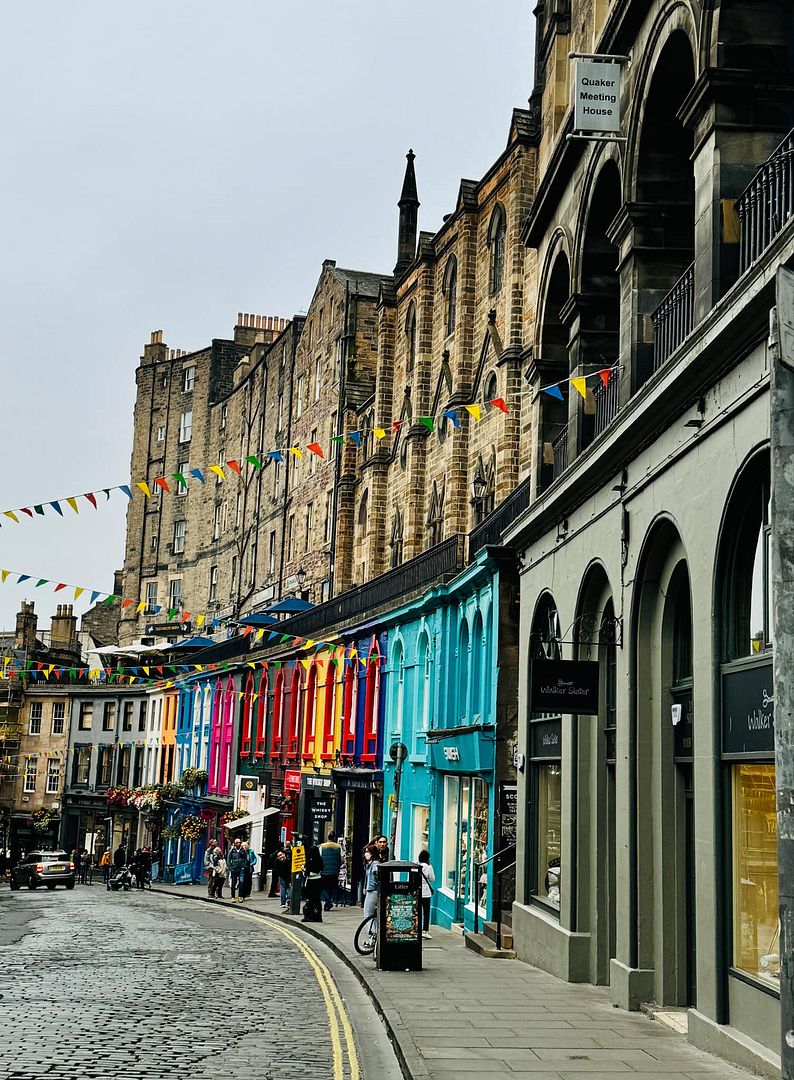
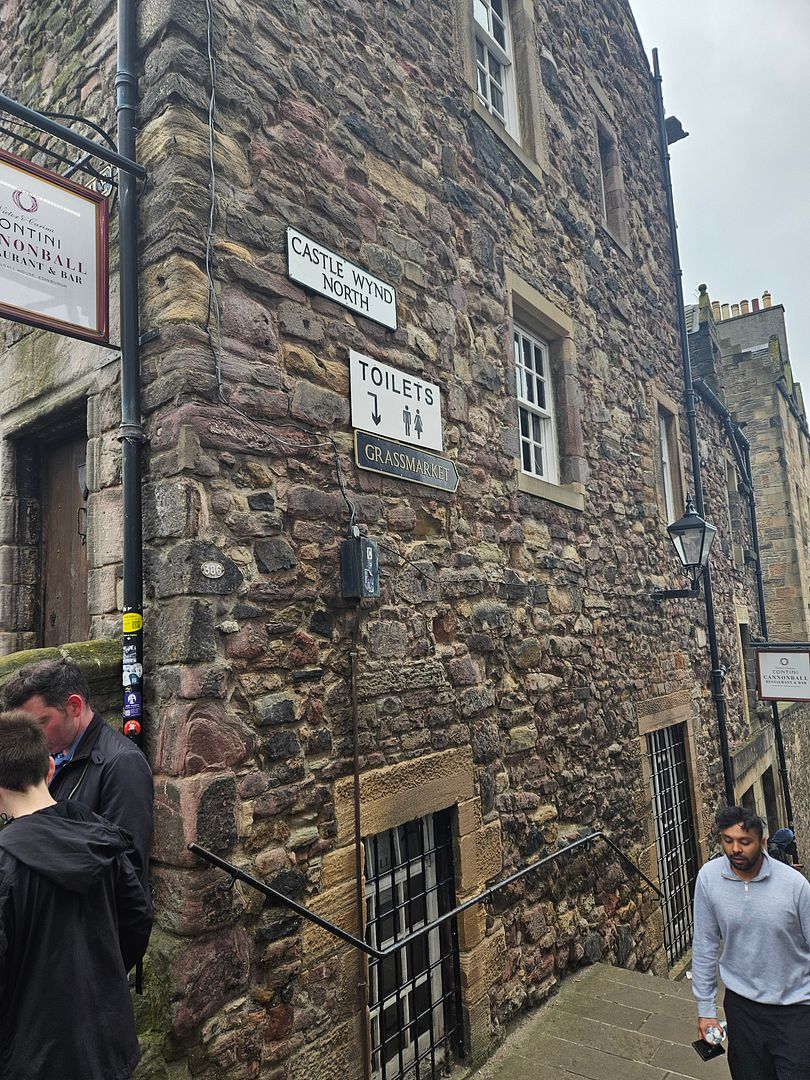
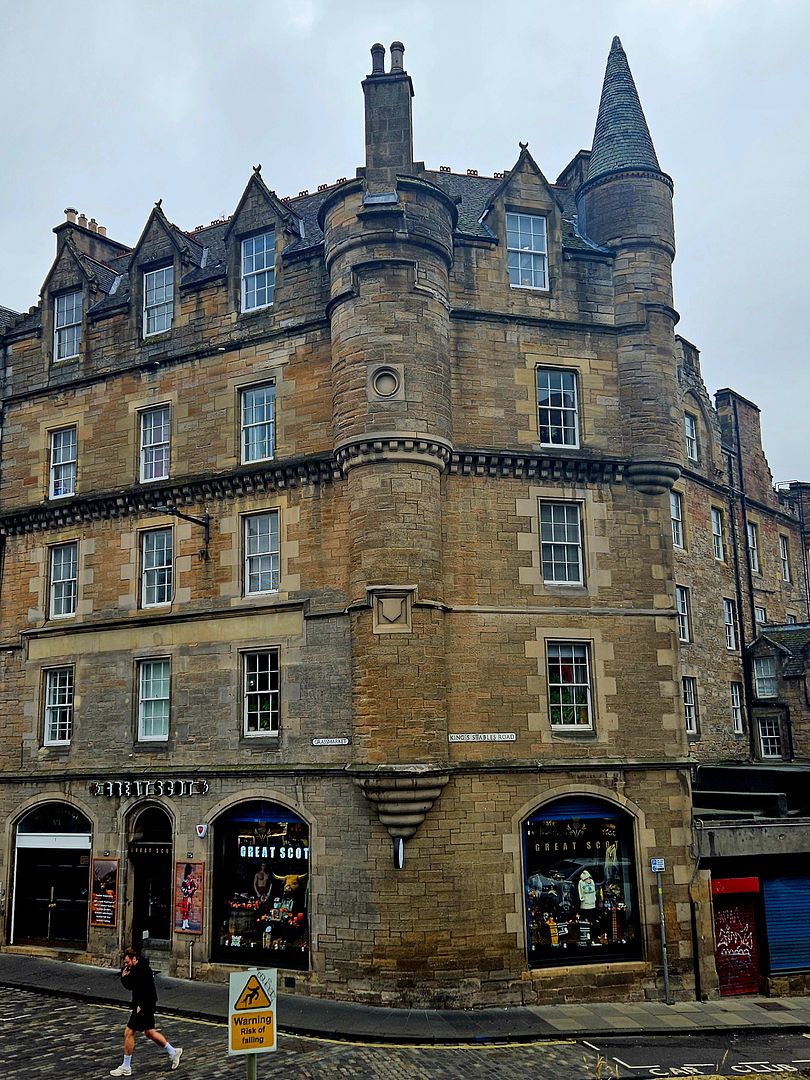
From here we walked down Victoria Street to Grassmarket.

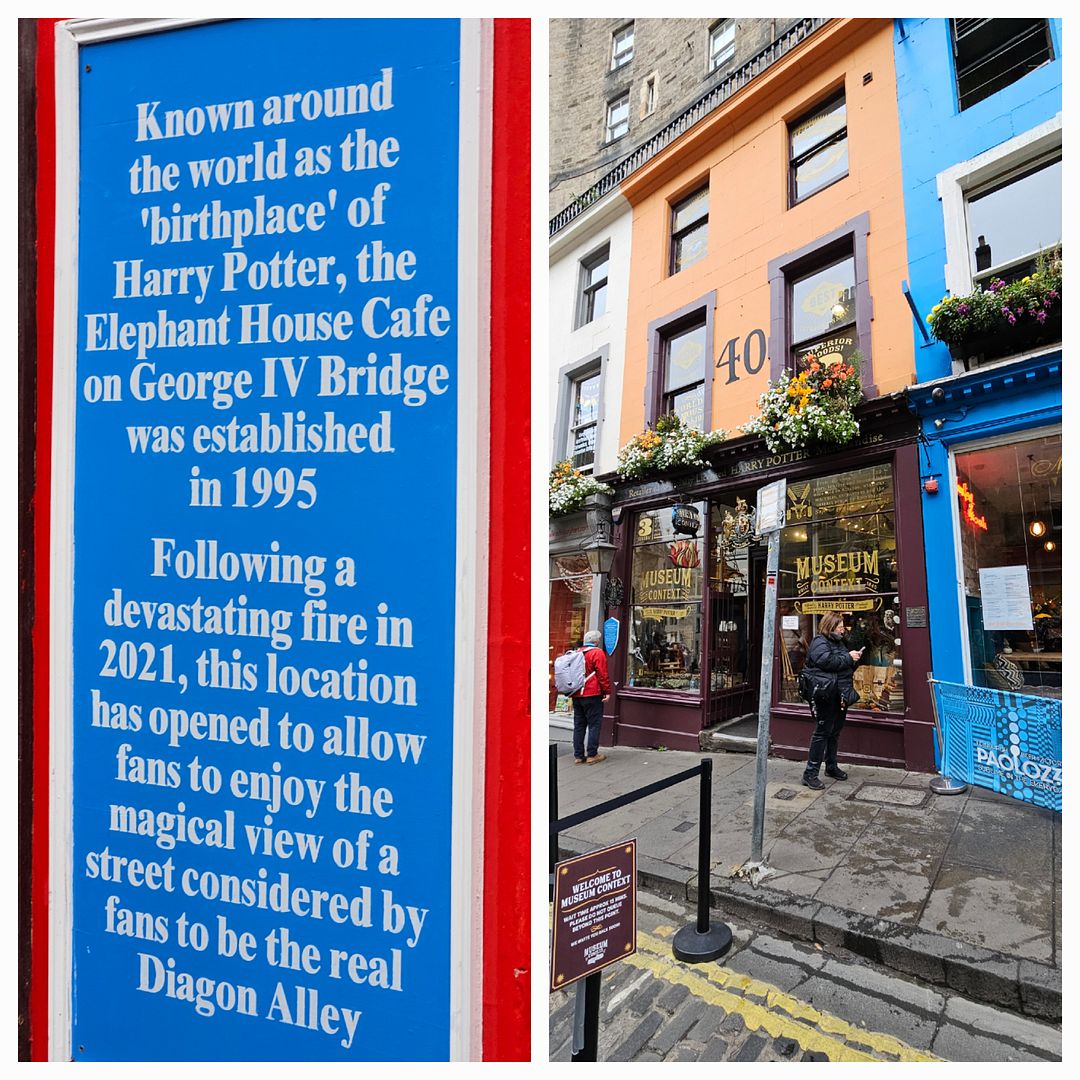
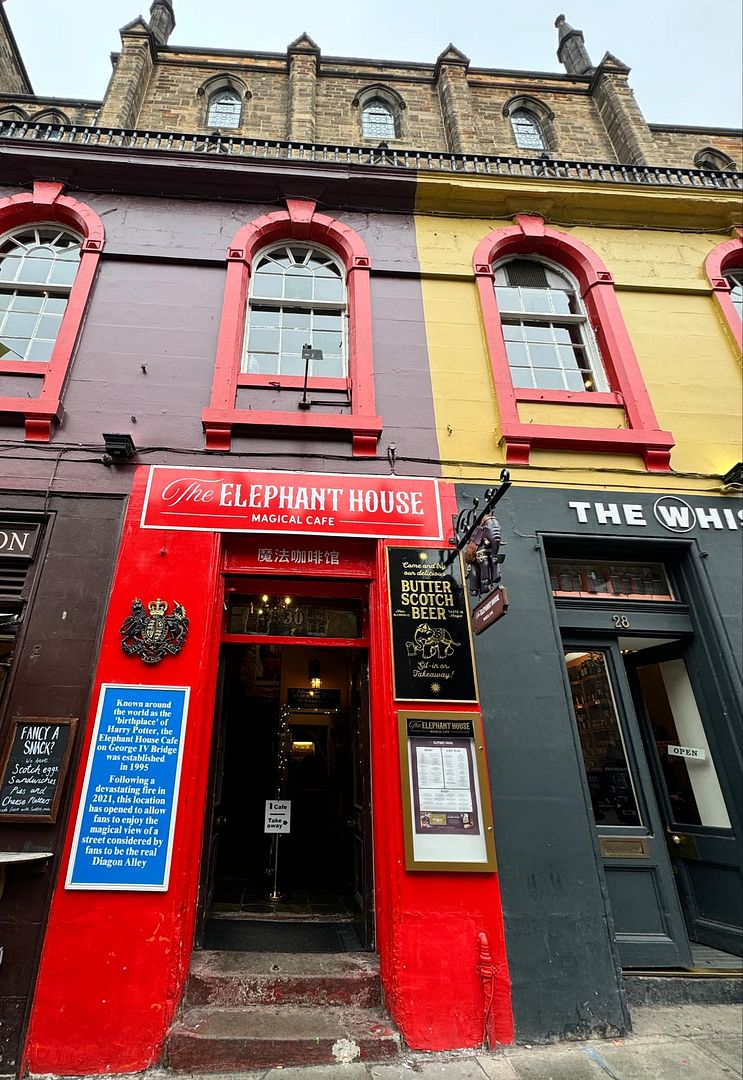
Victoria Street is said to be an inspiration for Diagon Alley in the Harry Potter books but J.K. Rowling denies that it is. Nonetheless fans flock here and stand in line to get in the museum on this colorful street.
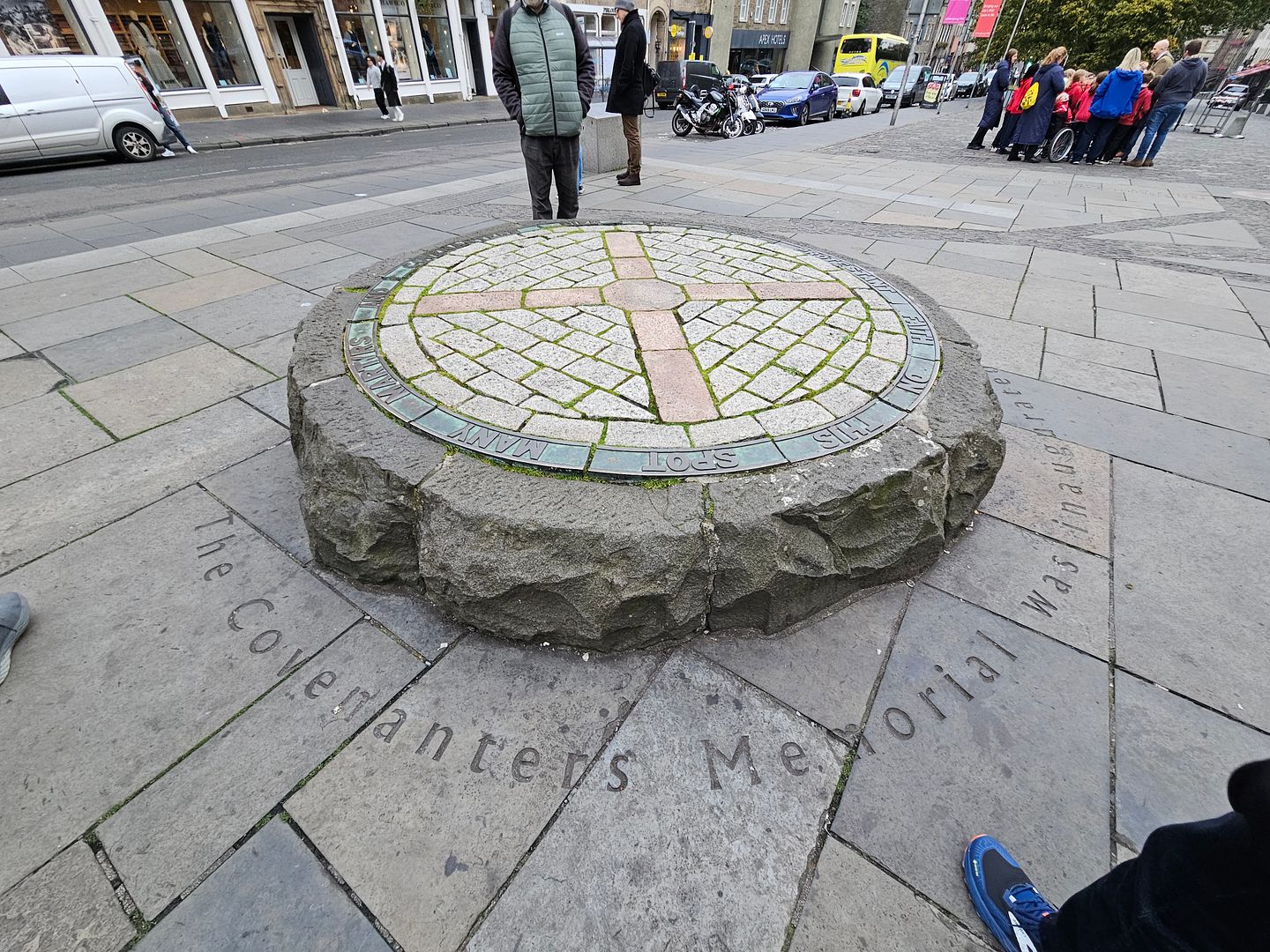
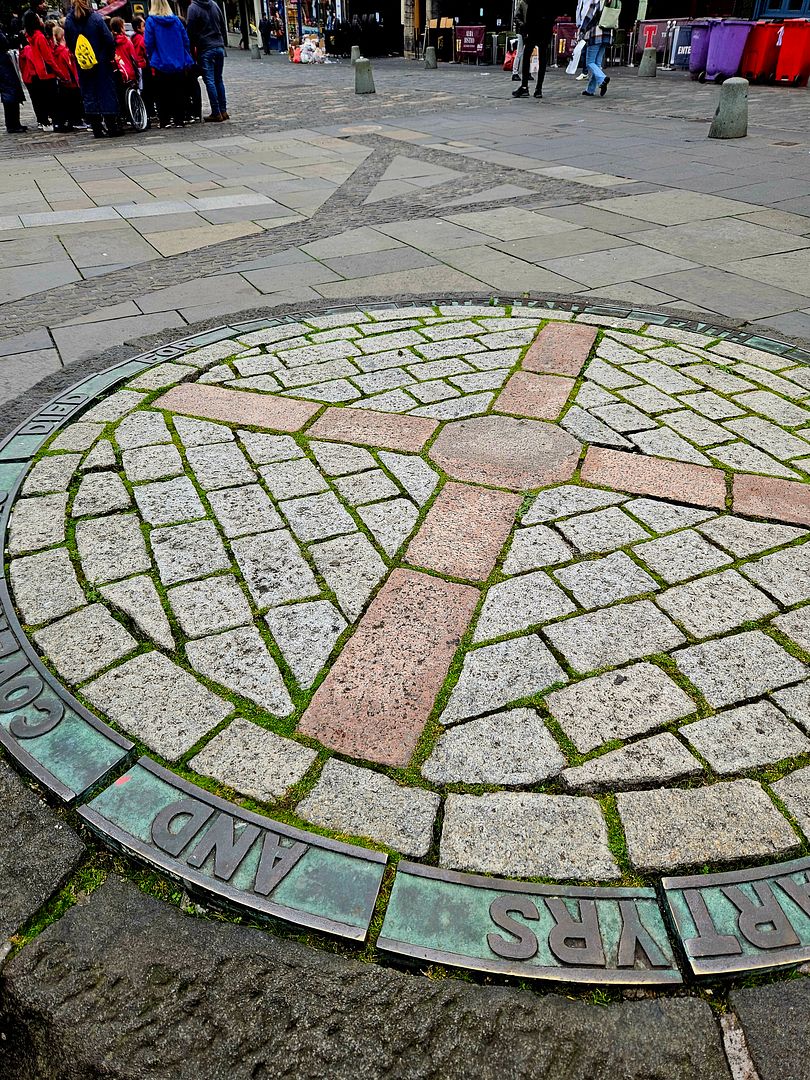
This is where the ‘meat’ of our Reformation Tour began as we were told that this was the route that martyrs would take from their sentencing in the courts above then down Victoria Street to the public gallows. Once we reached Grassmarket we stood around this monument to Martyrs and Covenanters who lost their lives at this spot for their faith.
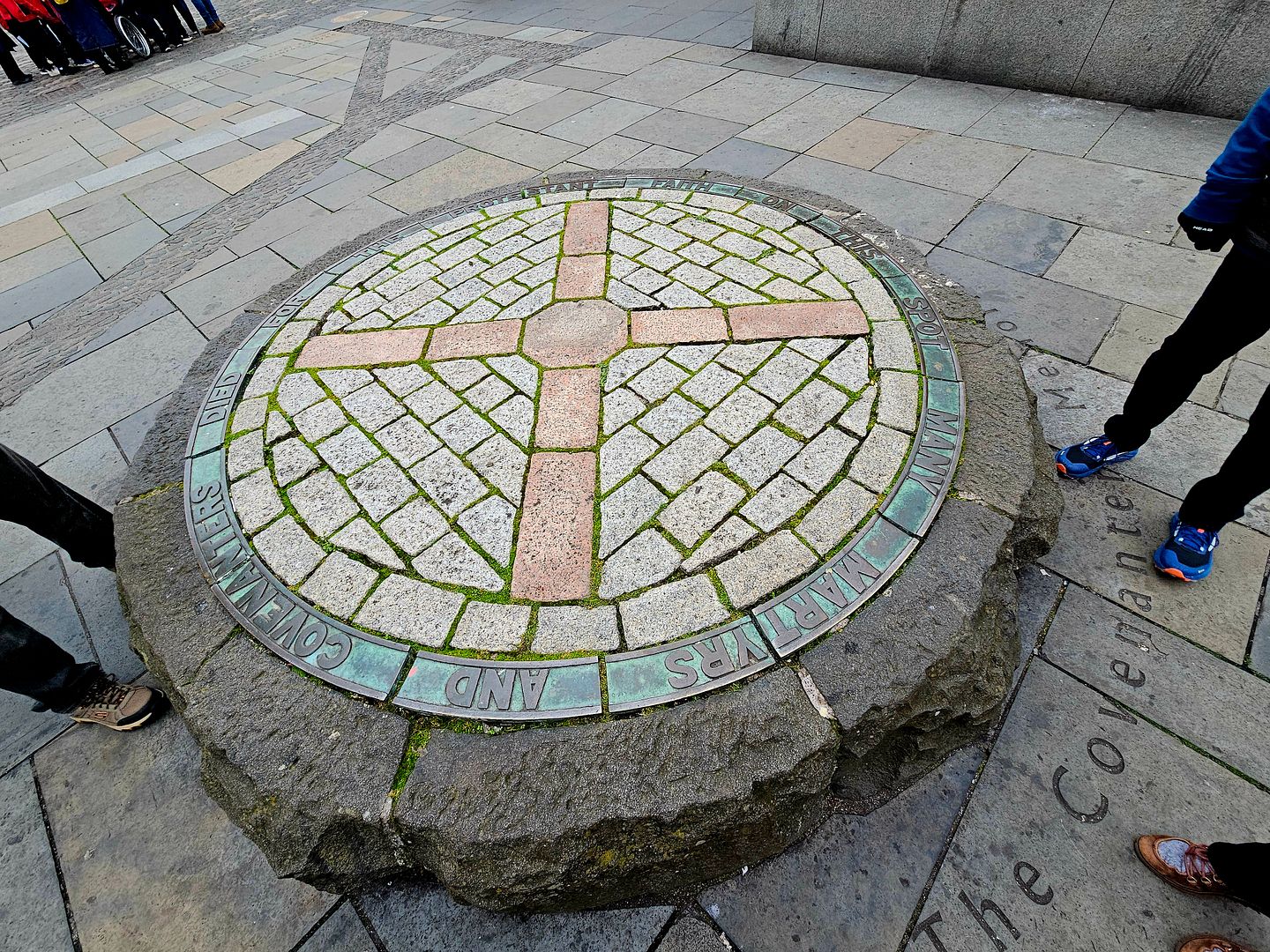
The Grassmarket is an wide open street on the south side of Edinburgh’s Old Town. The city had the public gallows there, and many Covenanters were executed during the Covenanting period.

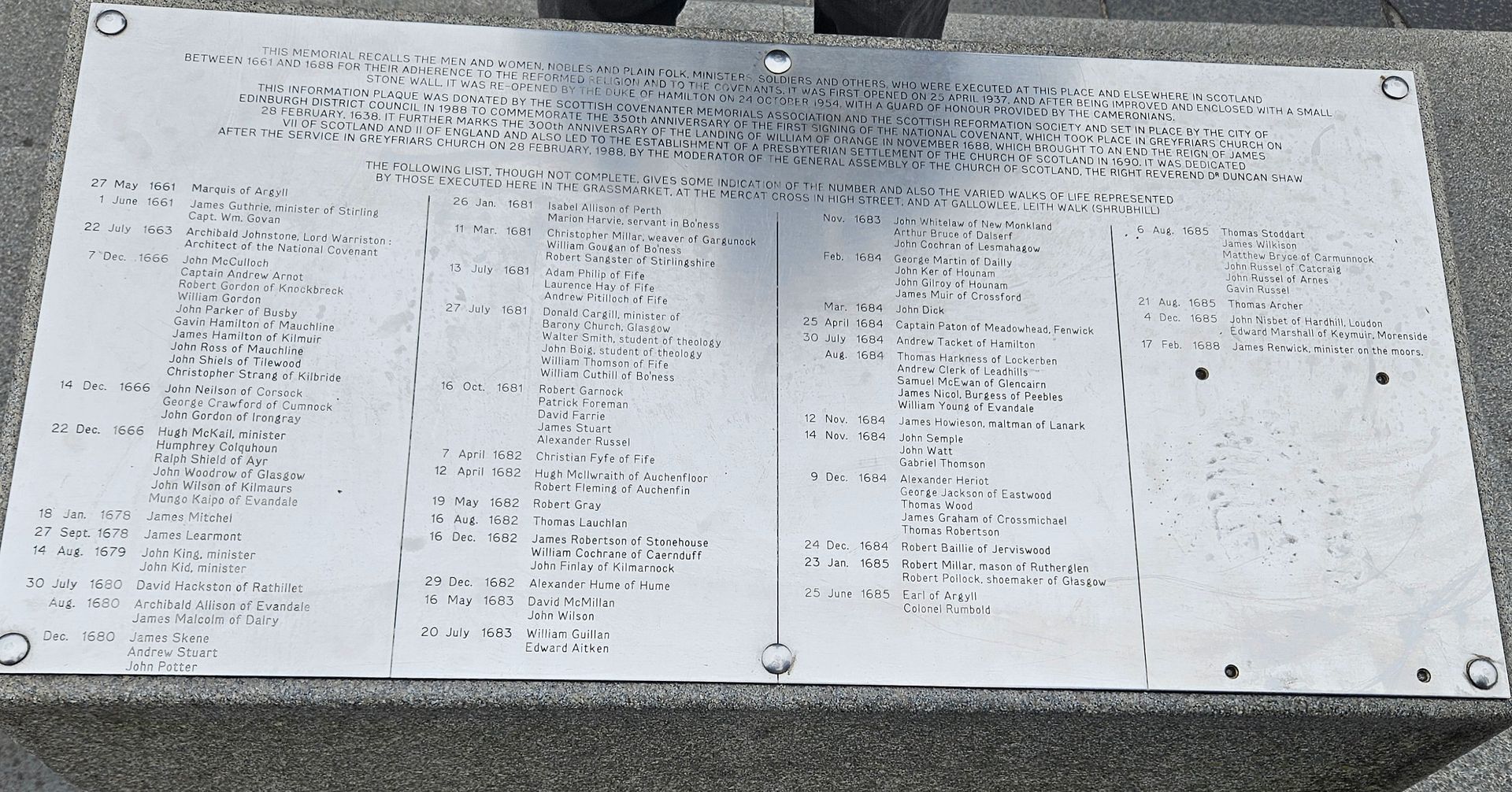
A circular memorial, erected by public subscription in 1937, marks the site, and an adjoining plaque lists the names of the many Covenanters who were hanged there.

In a recent renovation of the locality, a representation of the gallows’ shadow was made on the ground using different coloured stone, as seen in the picture to the left.
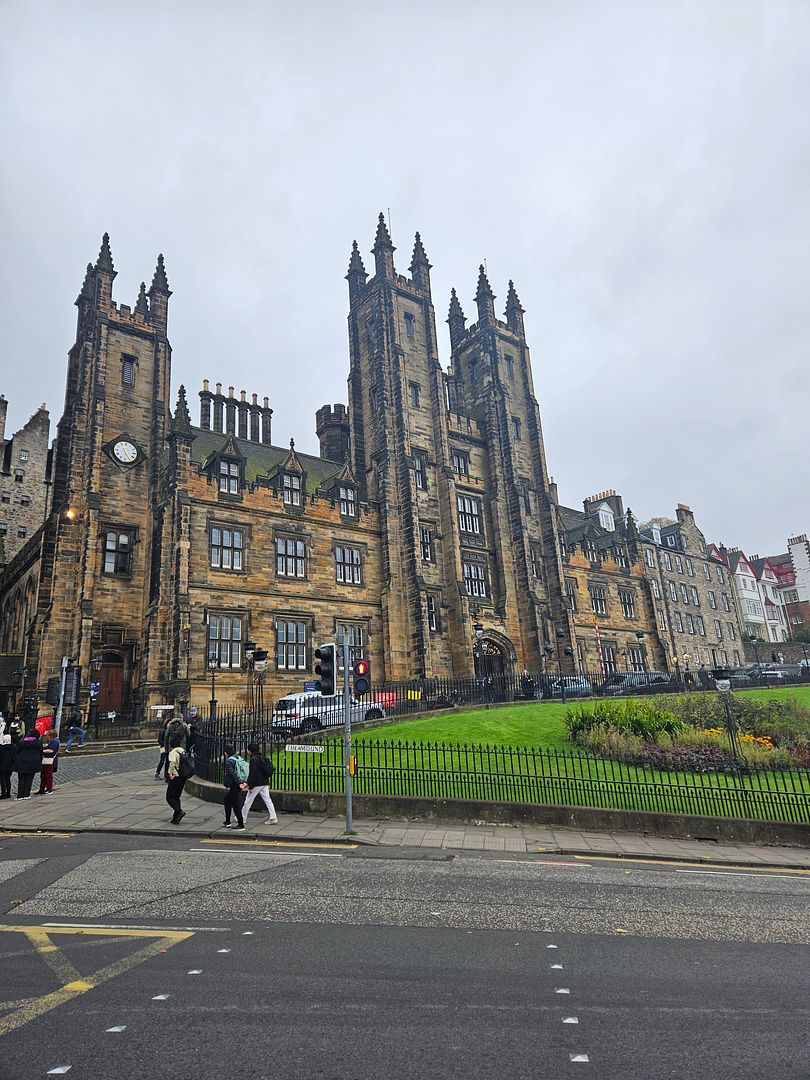
Our tour continued from here. We made stops at Greyfriars Kirkyard, The National Museum, The National Library and St. Giles Cathedral.

At this stage in January, many months later, I’m not sure of the order of those stops! Travel failure in not writing a journal while on our trip. I’ll put it down to the fact that our days were so full we didn’t have a lot of down time in the evenings.

Hello to February. I was hoping to have our Scotland Journal Posts done by the end of January but it will take a few days into February to accomplish that.
Scotland Travel Journal ~ Edinburgh 2

On Sunday September 22nd we would have an eye full of amazing sights to see but first, coffee!

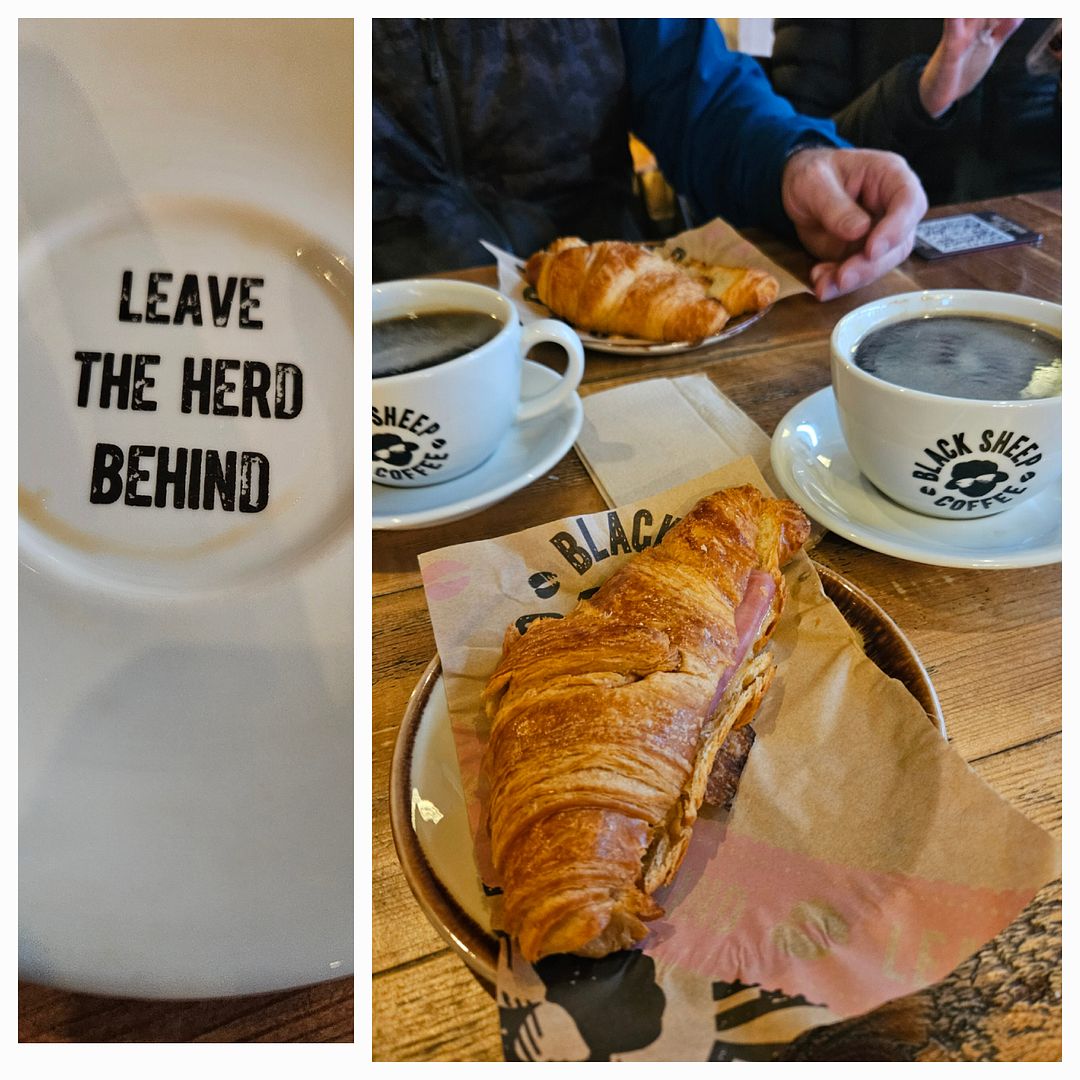
The Black Sheep was just around the corner from our apartment and we started our mornings there.

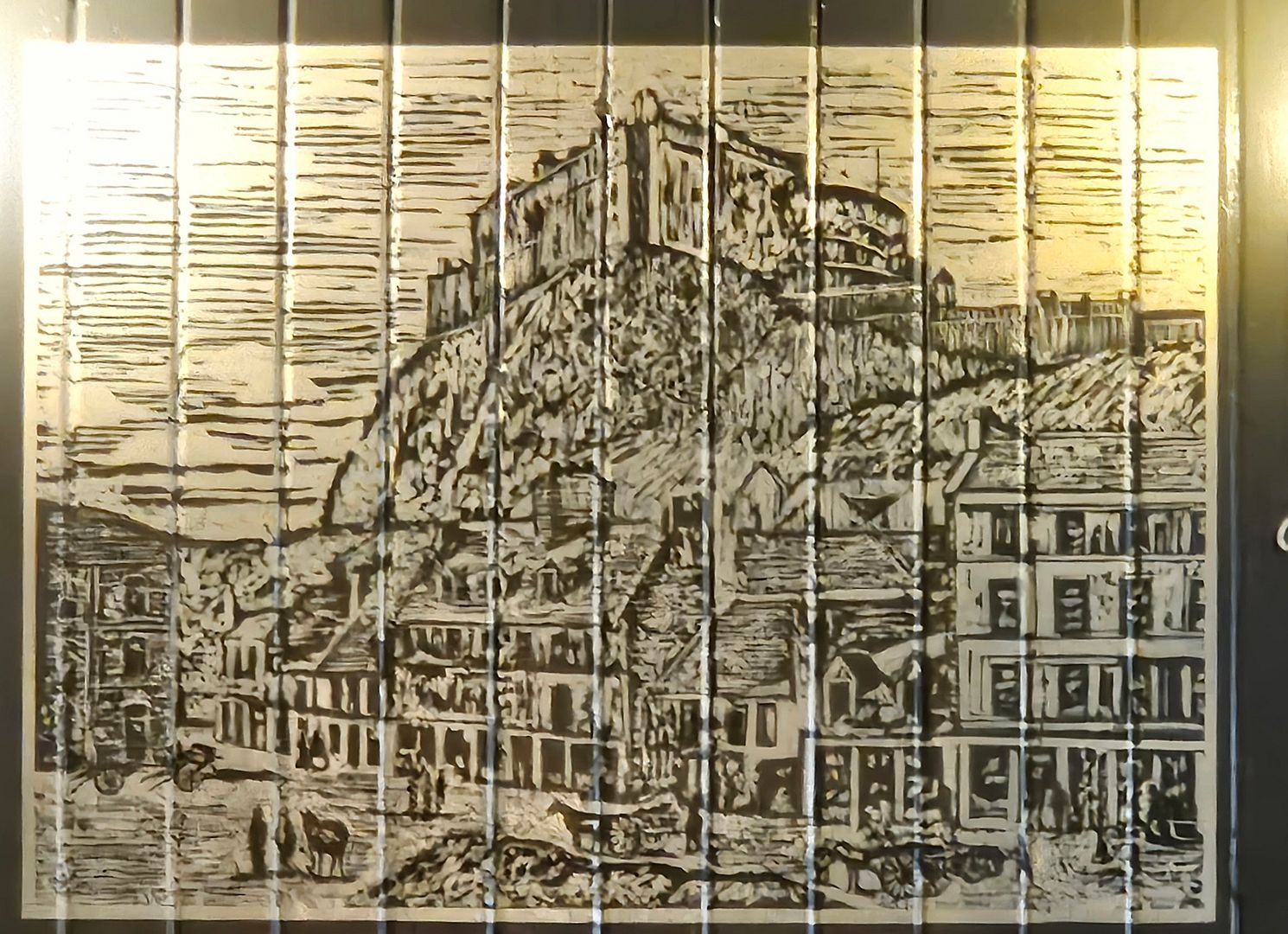
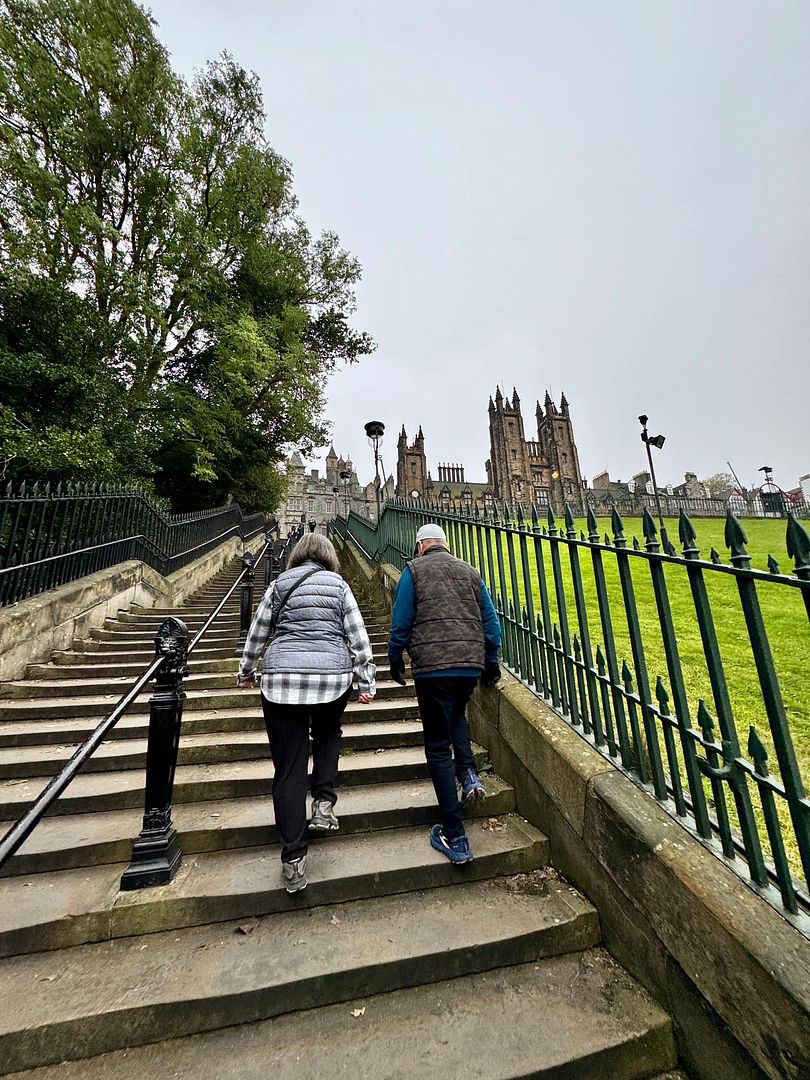
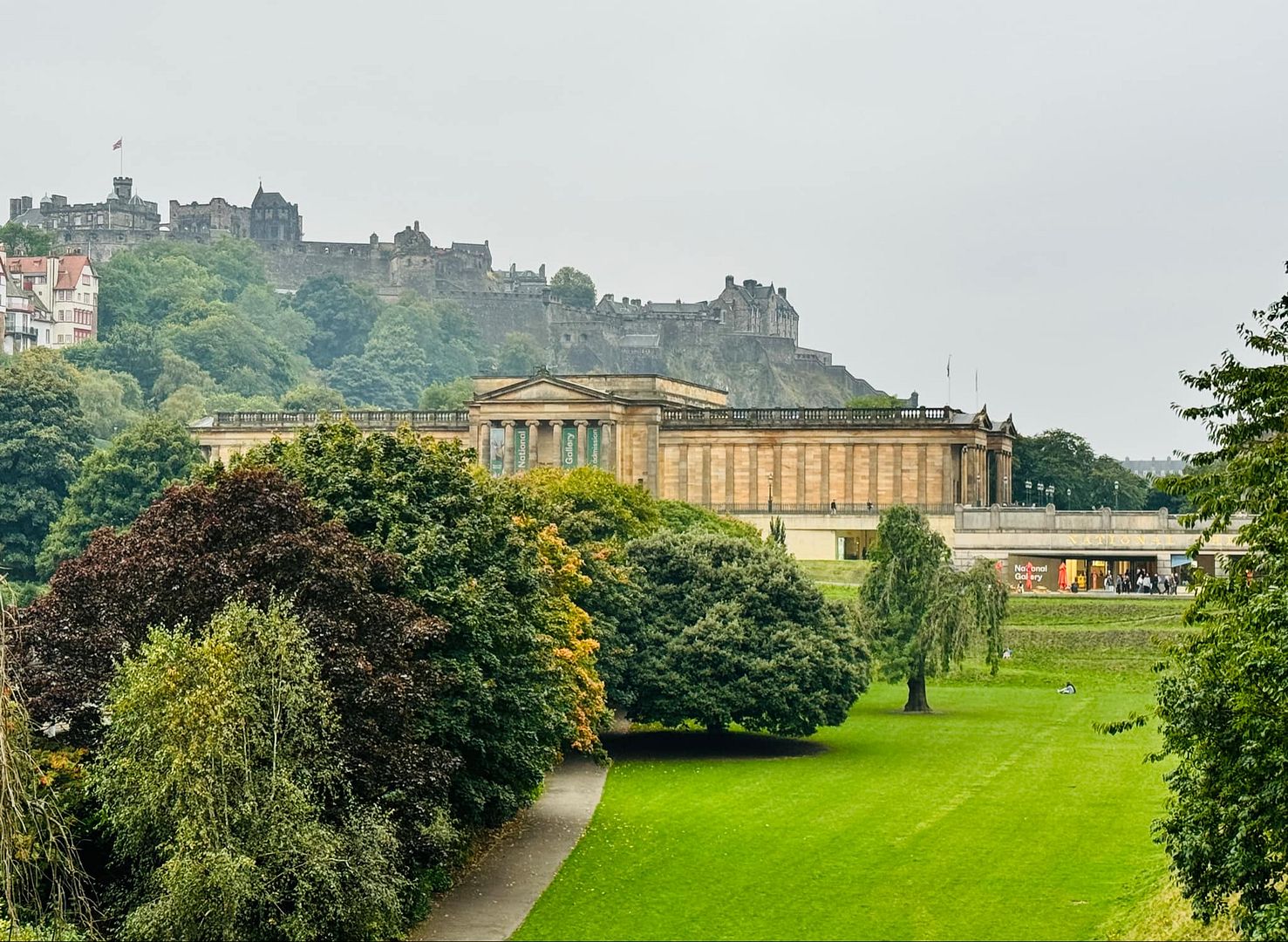
Edinburgh has so much history and so much to see. We saw as much as we could in our 2 full days there. I’ll have a few posts to cover everything. Our apartment was positioned well for getting around Edinburgh. We made our way across the Mound and up many stairs to reach the Royal Mile and Edinburgh Castle. The Mound is the elevated walkway above Princess Gardens that you can see in the distance. On the Mound you walk past the National Gallery of Scotland and the Royal Scottish Academy. It was another day of overcast weather with little or no sunshine.

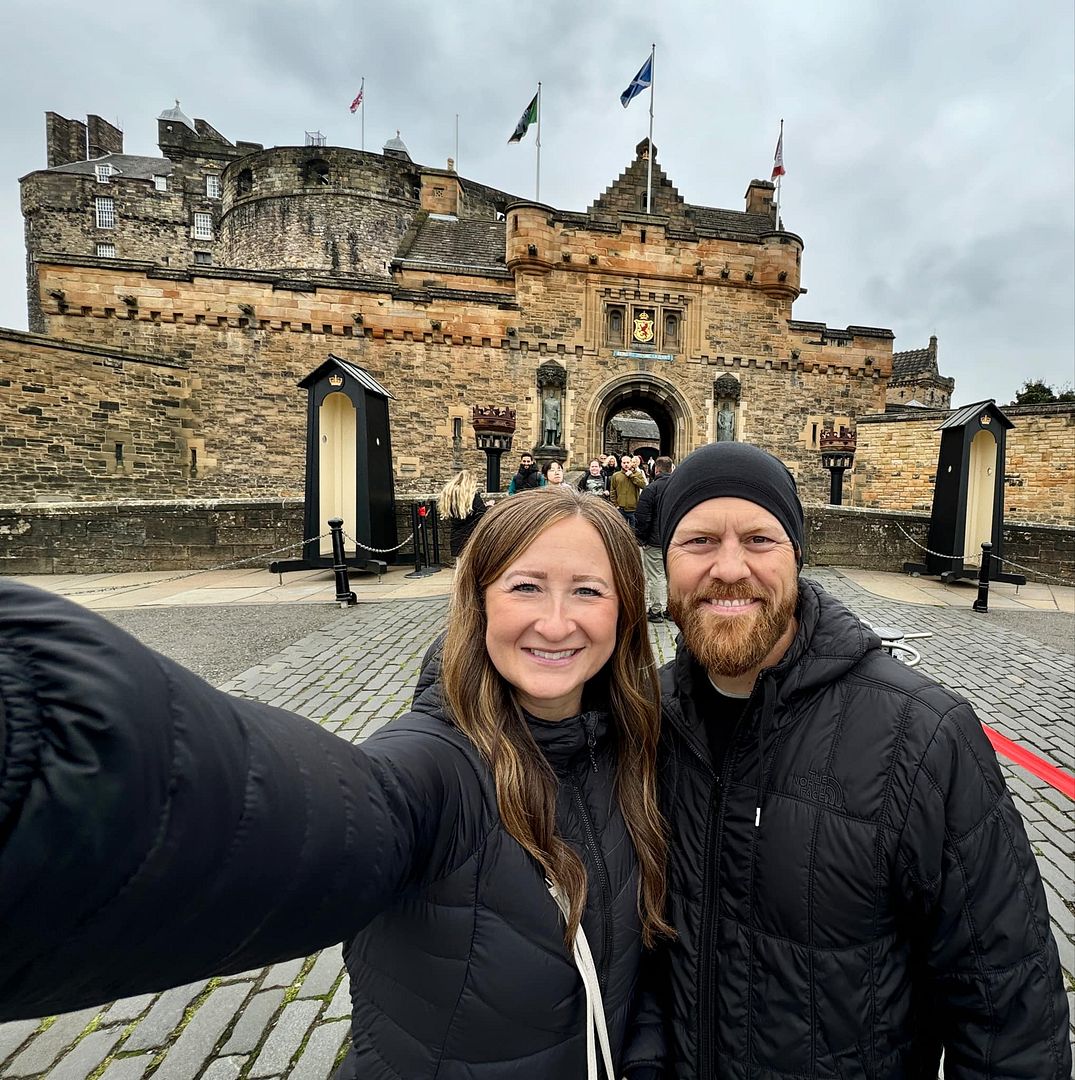
Josh and Laura had tickets for the Castle and my plan was to head down to Grassmarket and see what I could see, solo. Back in 2004 we toured the castle with our daughter, Katie, so I didn’t need to spend the money to see it again. This was Josh and Laura’s first trip to Scotland so the Castle was a priority. When they completed their Castle tour we would meet up. Greg spent this day in bed working on getting better.

I left Josh and Laura at the entrance to the castle and headed down two separate flights of stairs to get to the Grassmarket area of Edinburgh.

I spent my time this morning below the castle.

If I was to visit Edinburgh again, I would choose lodging in the Grassmarket area of Edinburgh.

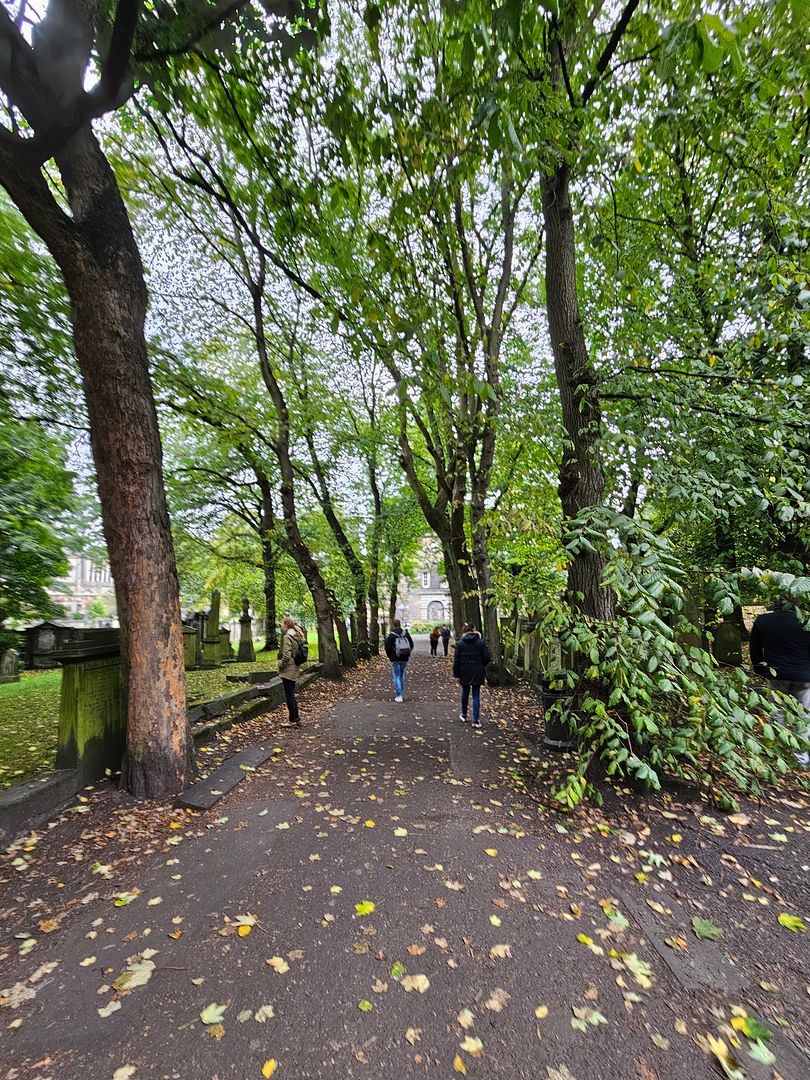
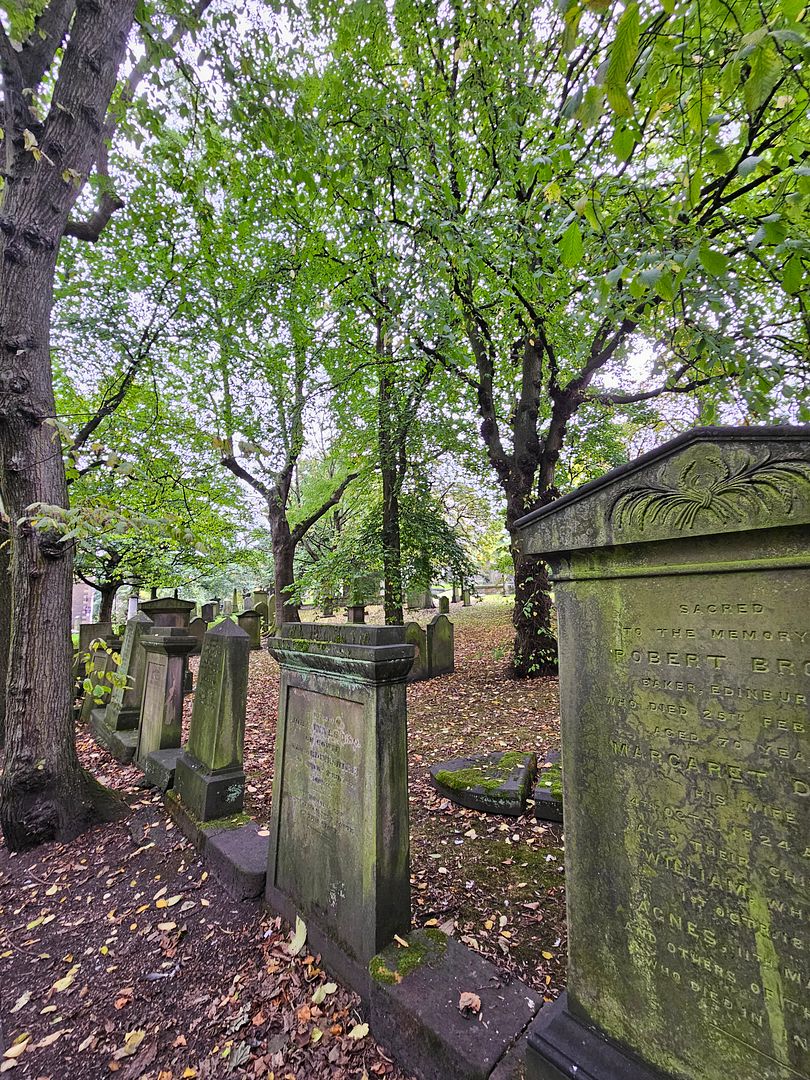
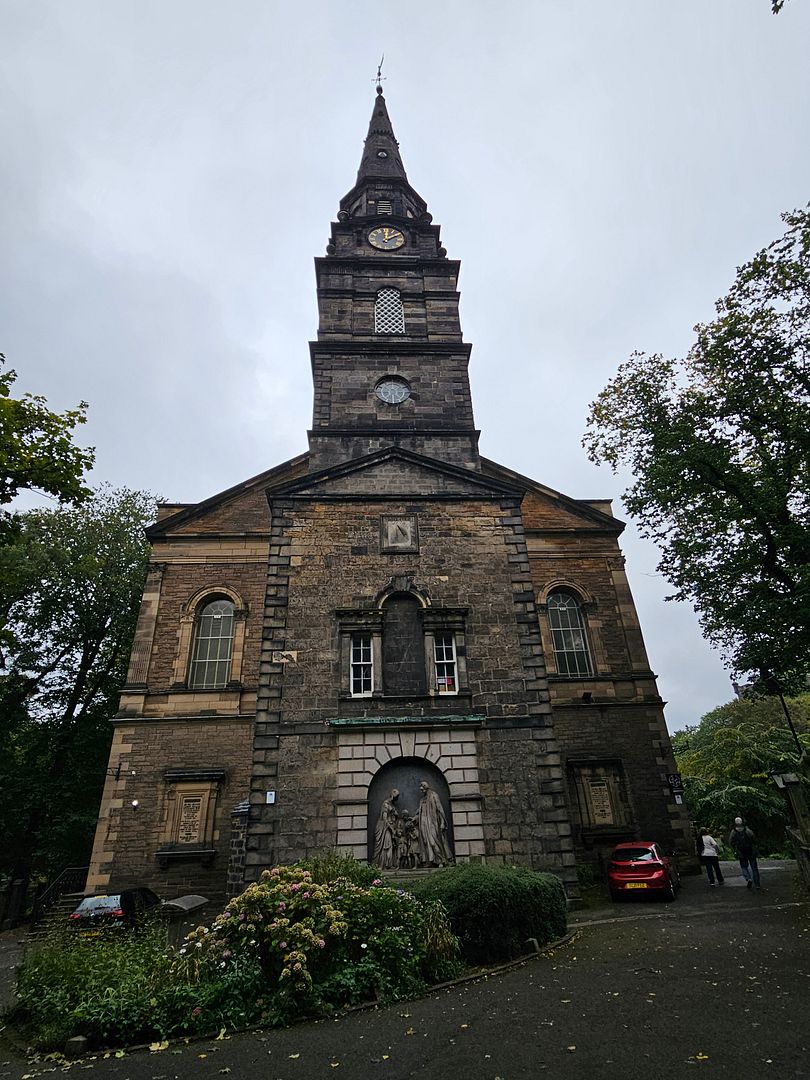
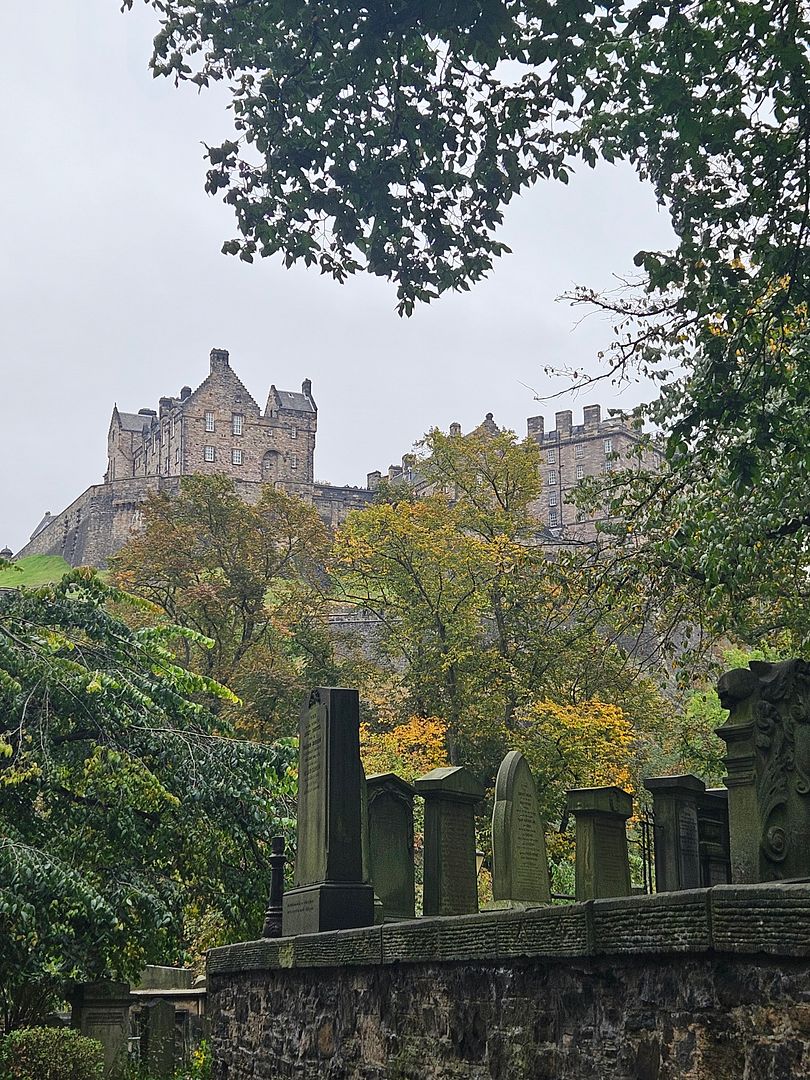
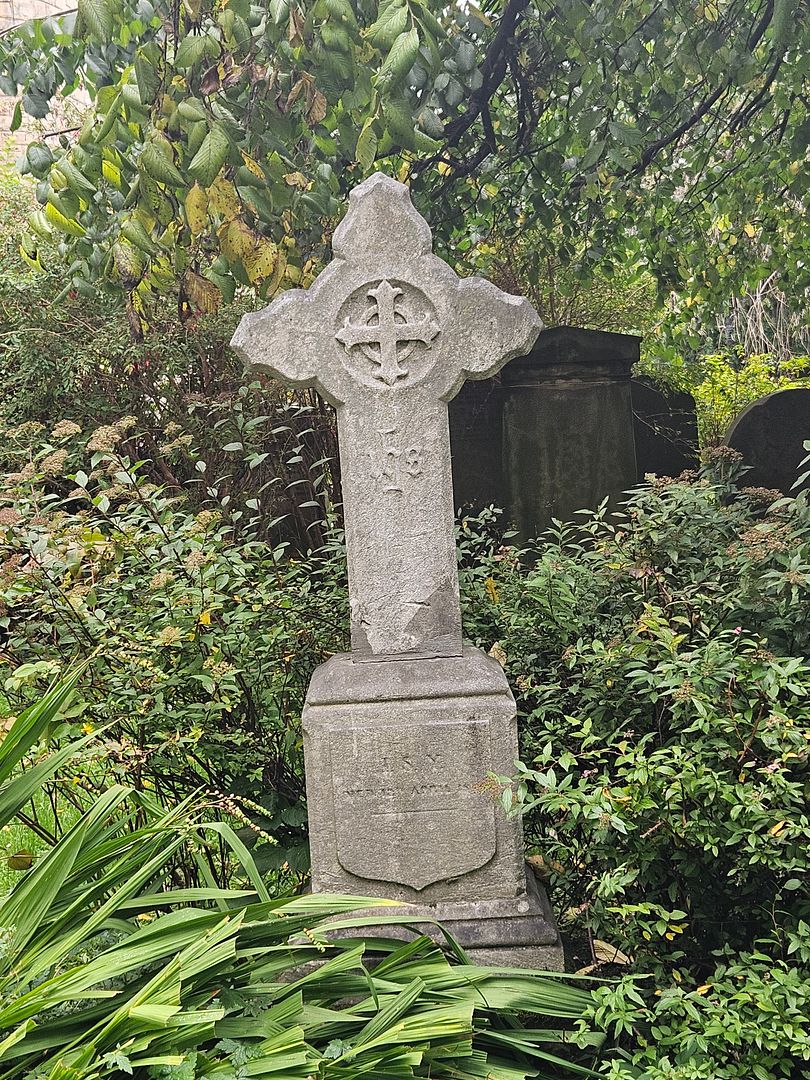
Walking along King’s Stables Road I entered the cemetery adjacent to The Parish Church of St. Cuthbert.
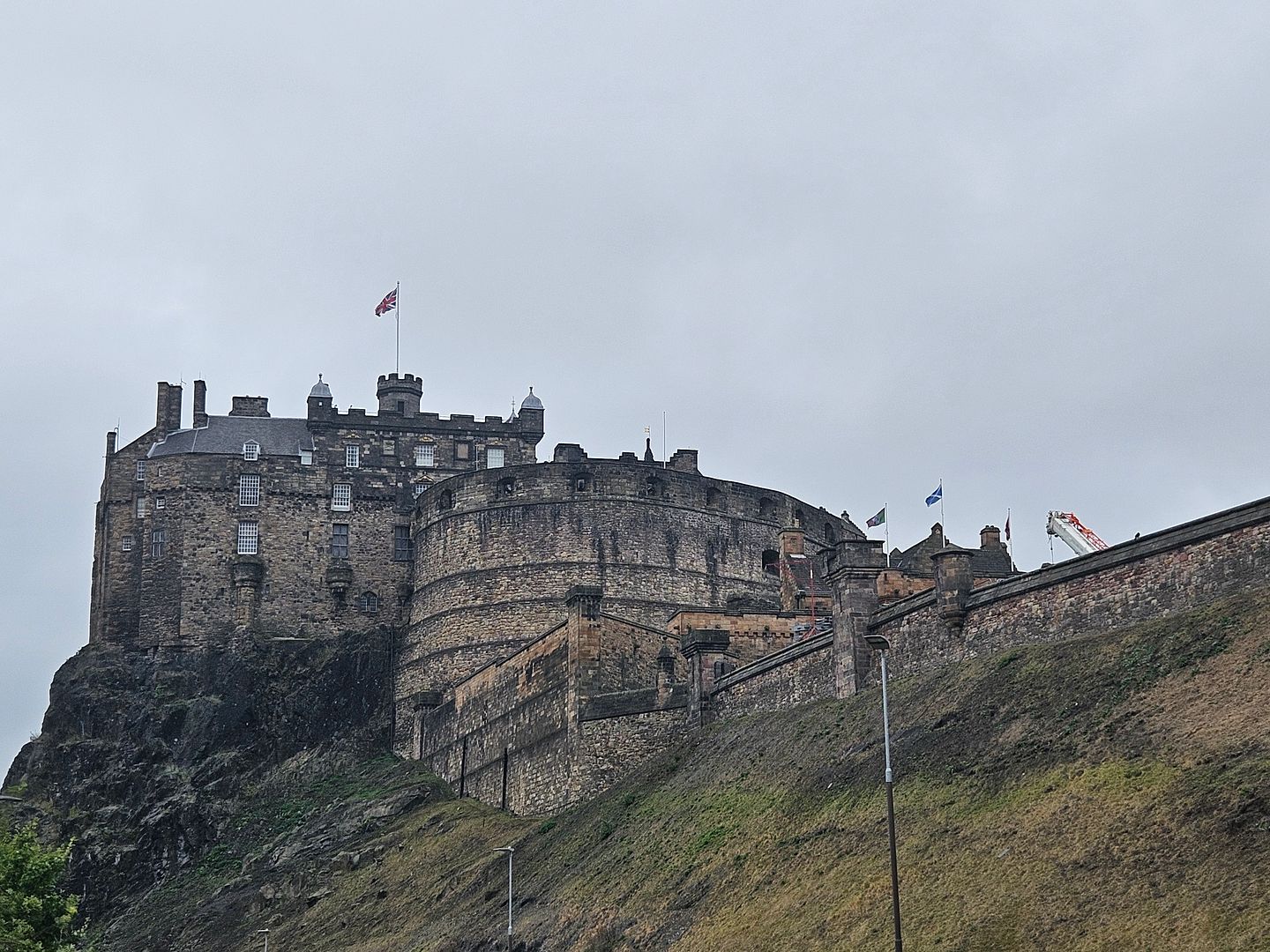
Looking up from St. Cuthbert I had a different view of the castle.

From here I went into the church and was greeted kindly and given a brochure with some history of the church. I asked if I could take photos and was granted enthusiastic permission. Information I’m sharing is from the brochure.

Tradition tells us that the Celtic missionary, Cuthbert, preached from this spot in the 7th century and established the first church here. Since then there have been at least seven buildings on the same site. By the late 19th century the people of St. Cuthbert’s wanted to rebuild their 18th century “God-box”, a very plain building. In 1894 the present building designed by architect Hippolyte Blanc, was opened and has been in constant use ever since.

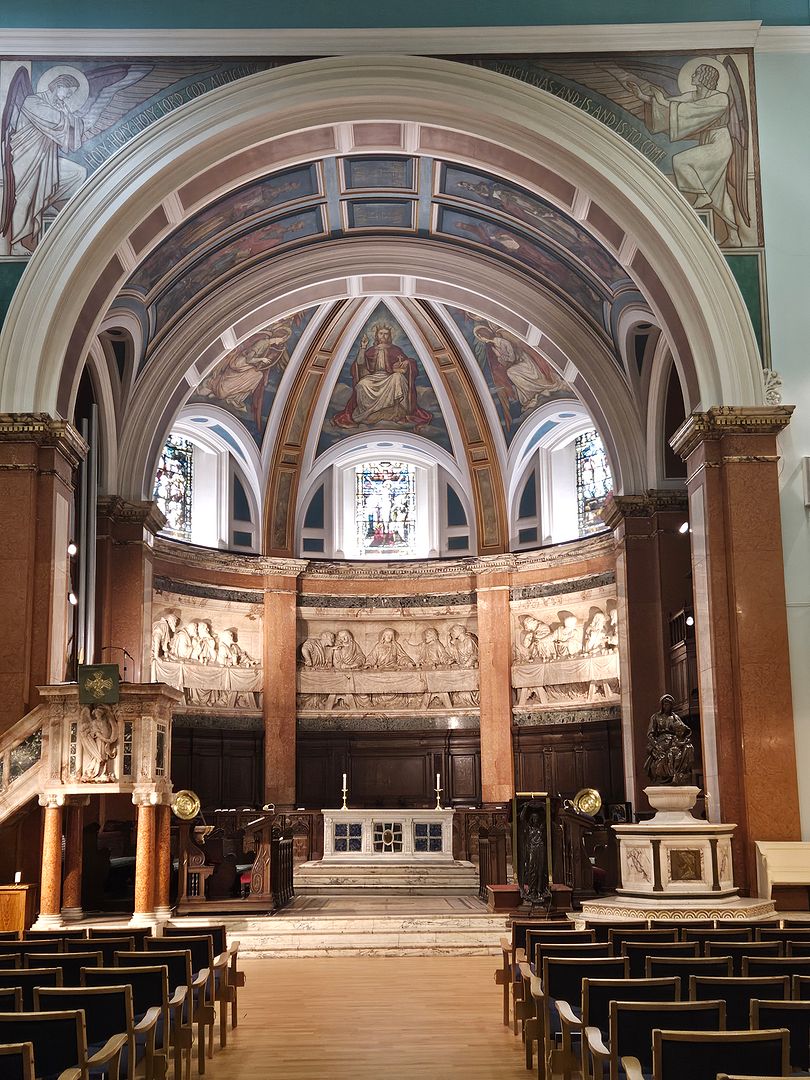
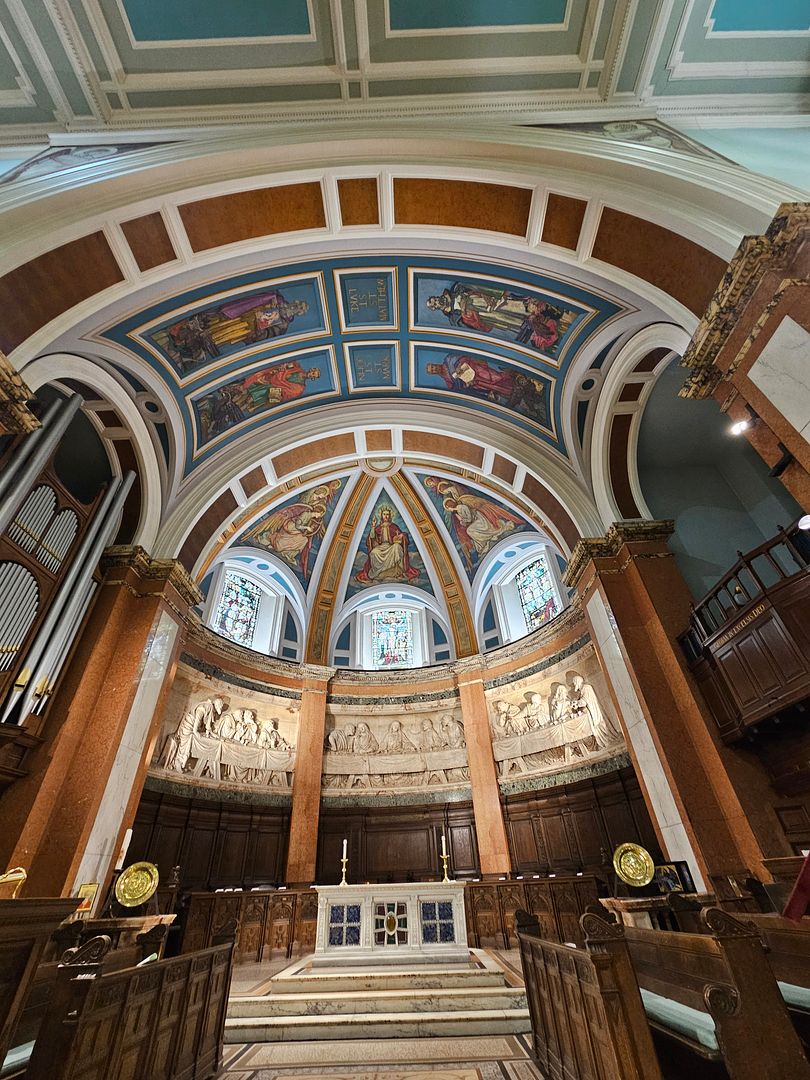
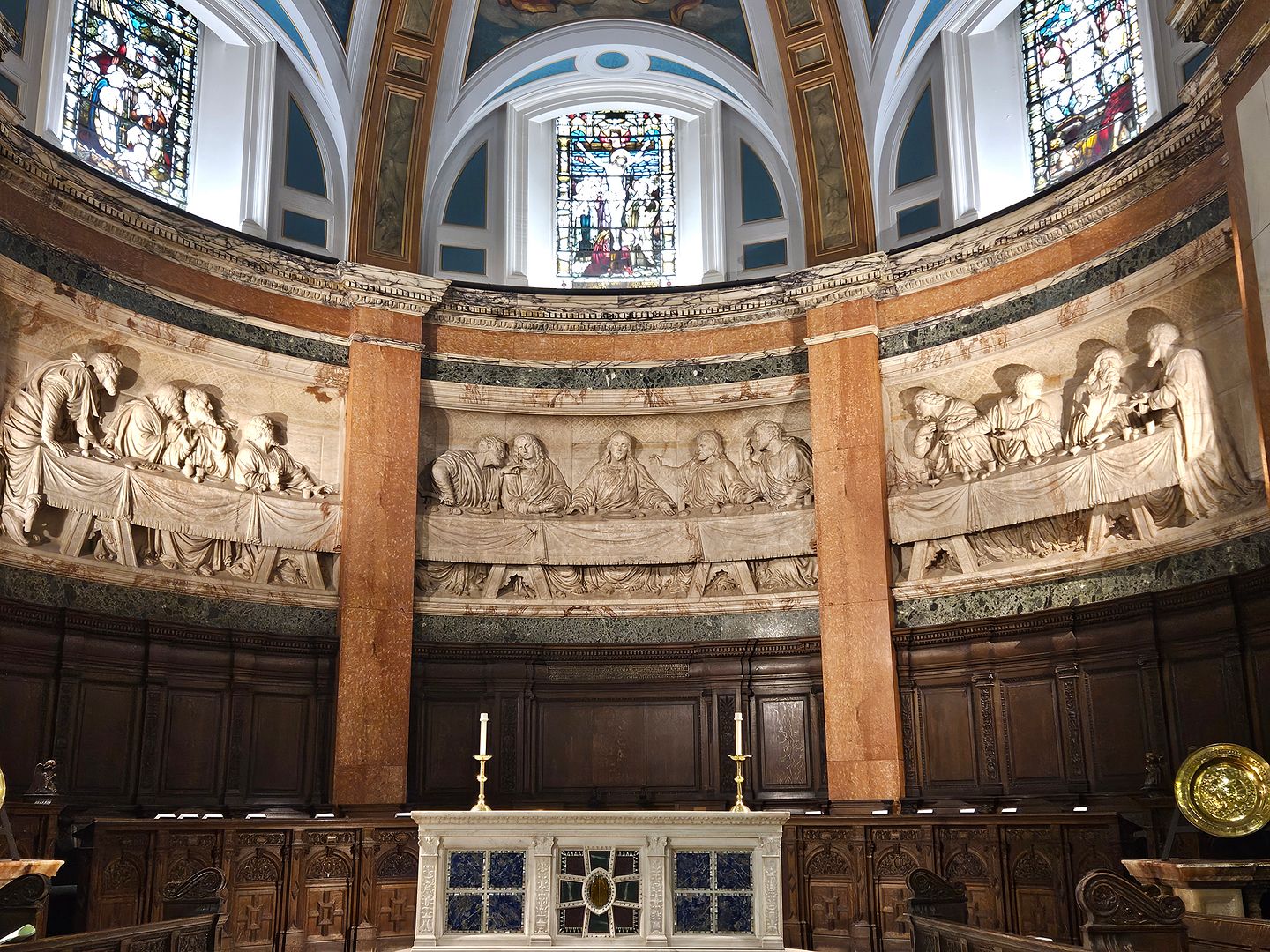
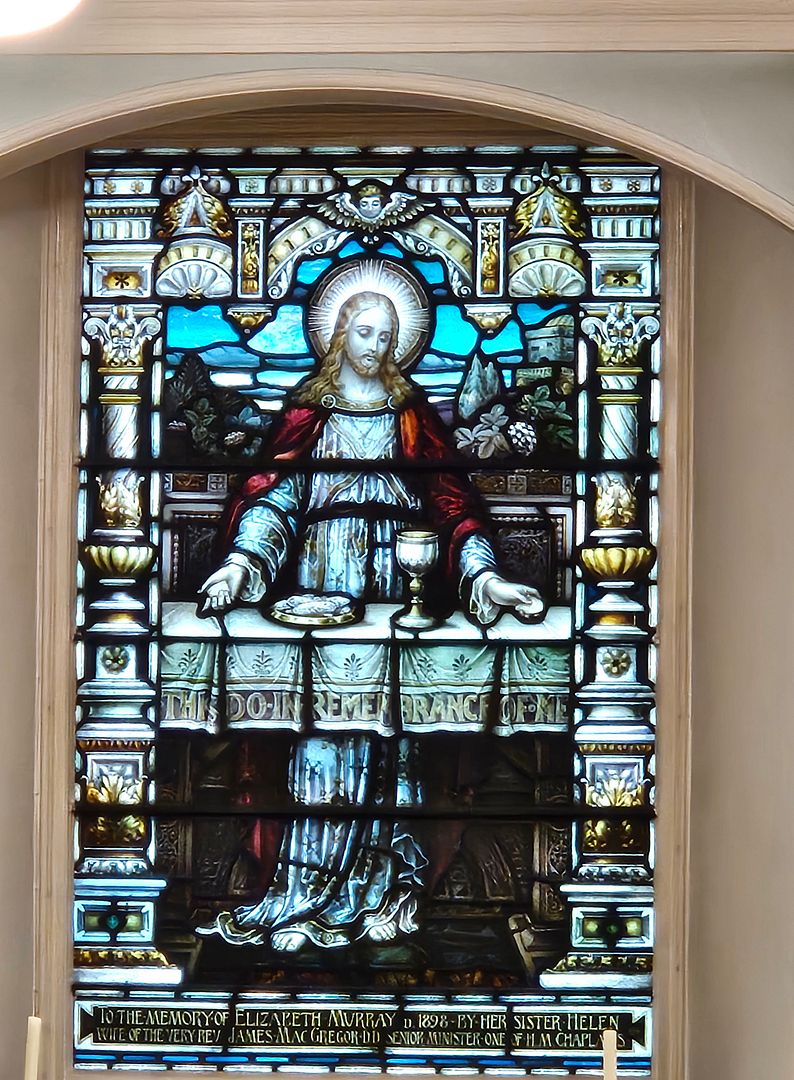
The Apse: In 1906 the Minister of the day, Dr. James Macgregor, celebrated 50 years of ministry. To commemorate this occasion Dr. Macgregor commissioned the alabaster frieze on the wall of the apse. It features Jesus and His disciples and the design is based on The Last Supper by Leonardo da Vinci. From left to right the characters are Bartholomew, James the Less, Andrew, Judas, Peter, John, Jesus, James, Thomas, Philip, Matthew, Thaddeus and Simon.

To the left of the apse is the pulpit. It is thought that the earliest church was probably built on the spot where the pulpit stands today. Under the pulpit is the foundation stone of the building along with a time capsule containing documents and artefacts of the 1890’s, including photographs, coins, newspapers, and copies of the Minister’s sermons.


The Communion Table is made from alabaster and marble, mostly Italian, green and Egyptian. The middle of the Communion Table shows the cross of St. Cuthbert which can be seen in the decor in other parts of the building.

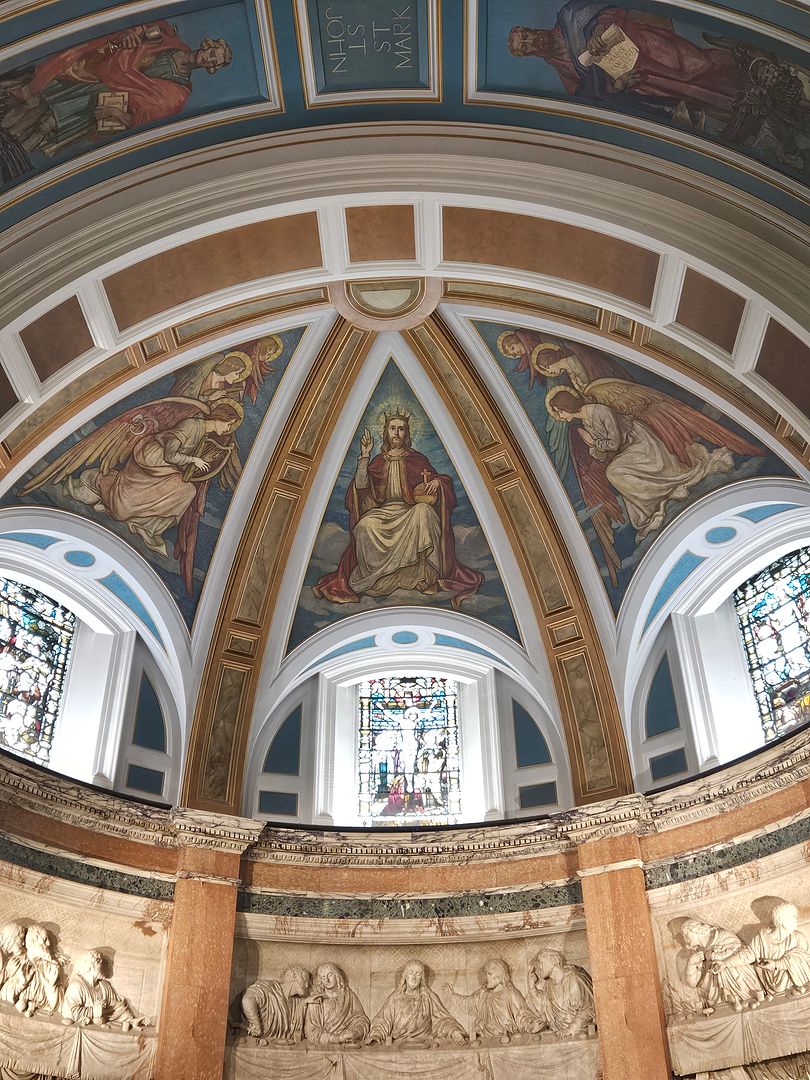
The Exalted Christ with His angels on either side of Him was the first of the murals painted by Robert Hope RSA. In 1928 Professor Gerald E. Moira of Edinburgh College of Art painted the four apostles. Then in 1933 the angels on the spandrels at either side of the chancel area were painted by John Duncan RSA, RSW. The angels are seen worshipping God in two different ways. The one on the left is quietly praying to the spirit within, while on the right, the angel with raised hands and head worships joyfully, radiantly!

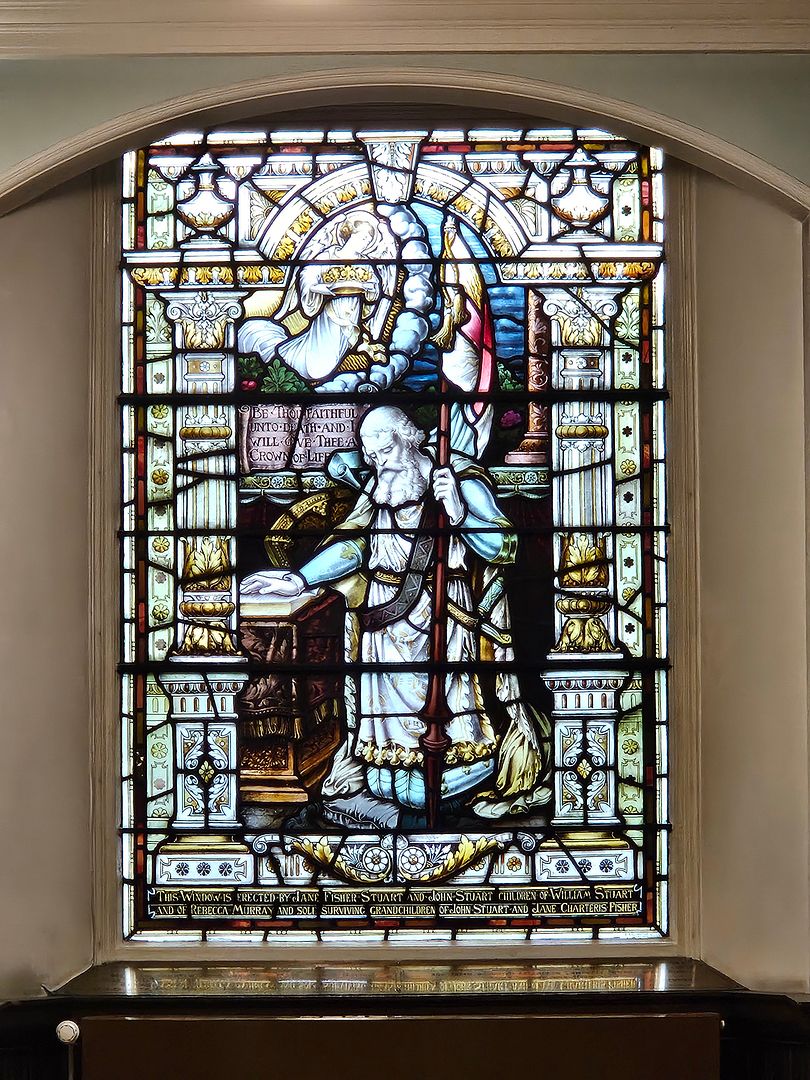
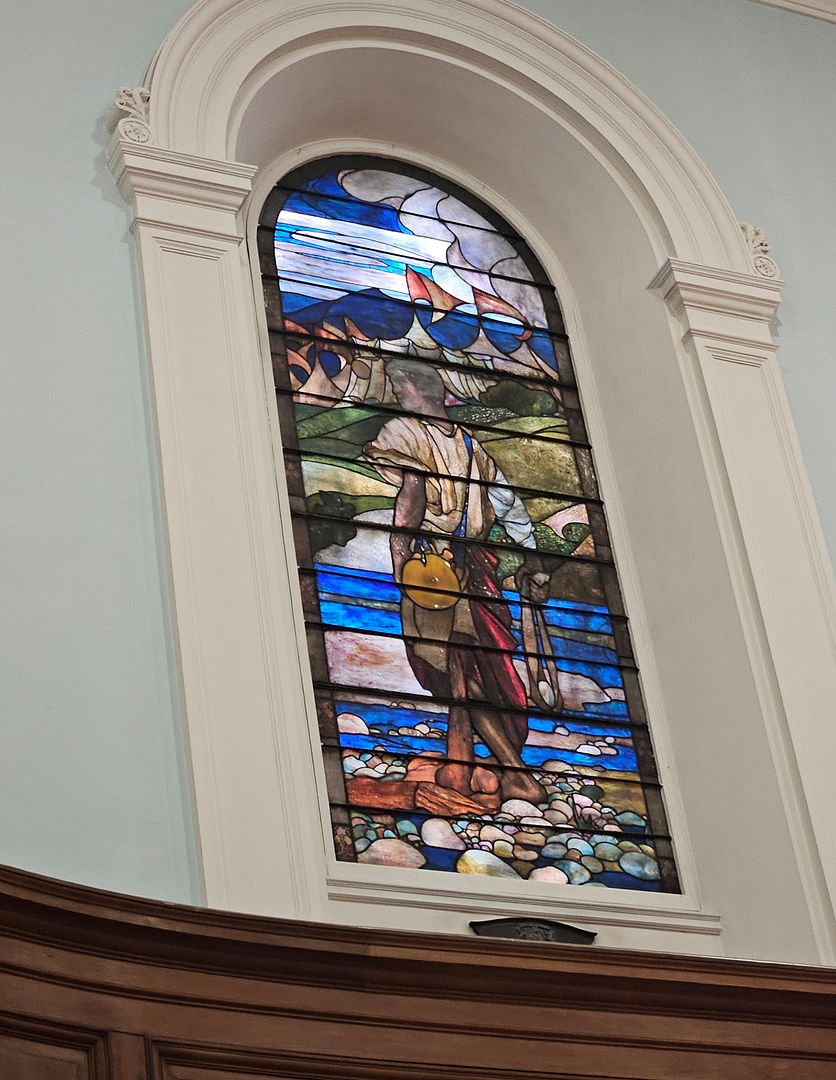
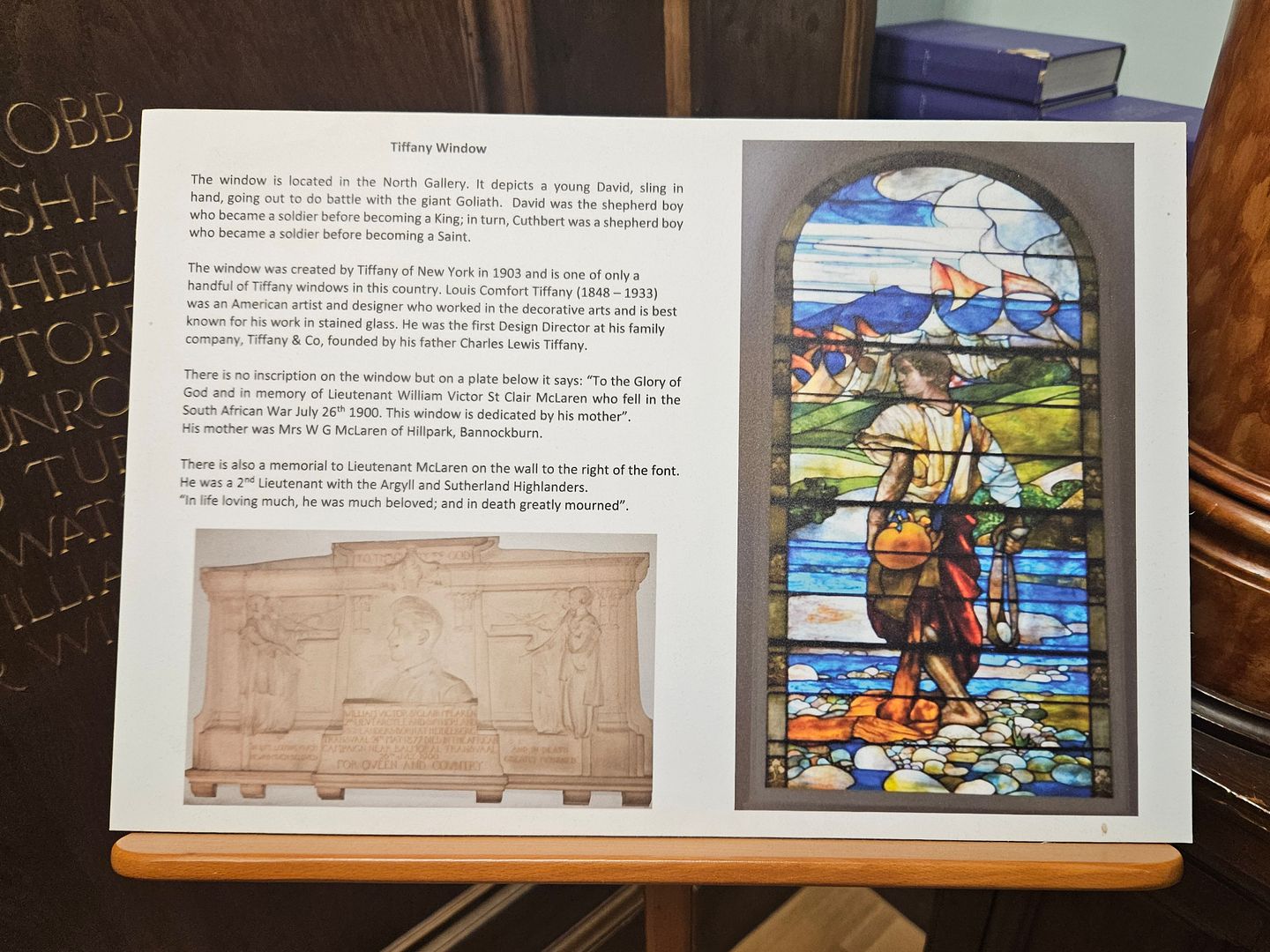
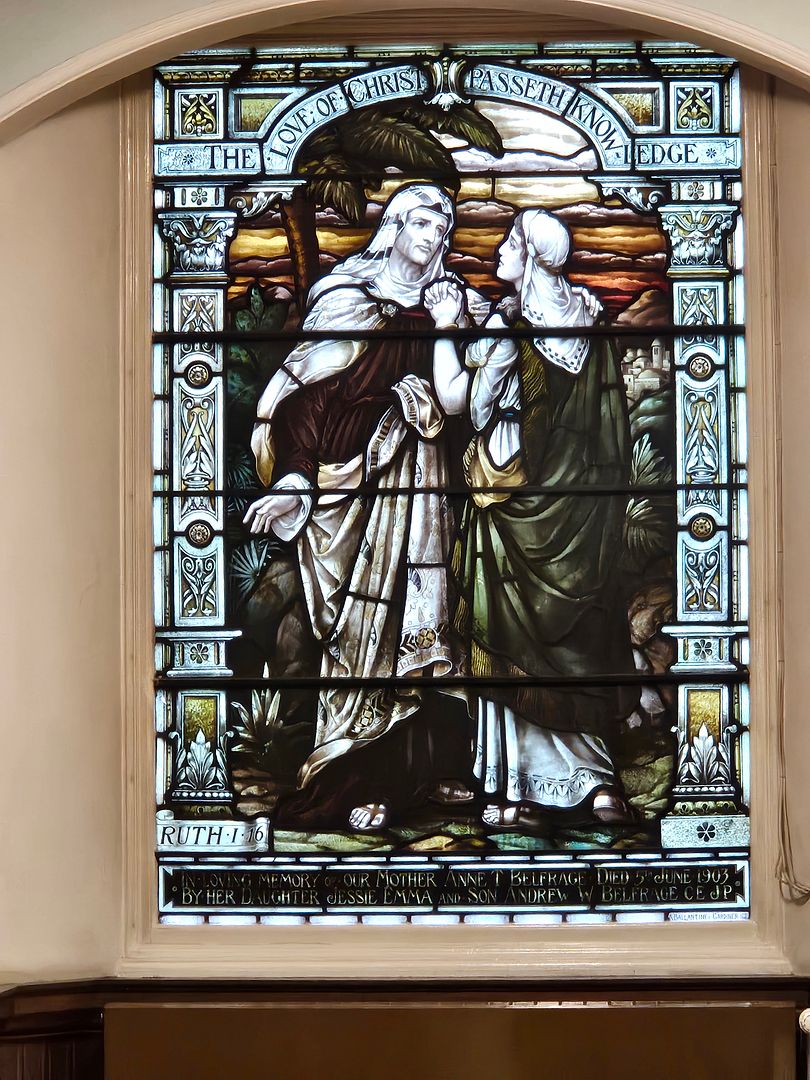
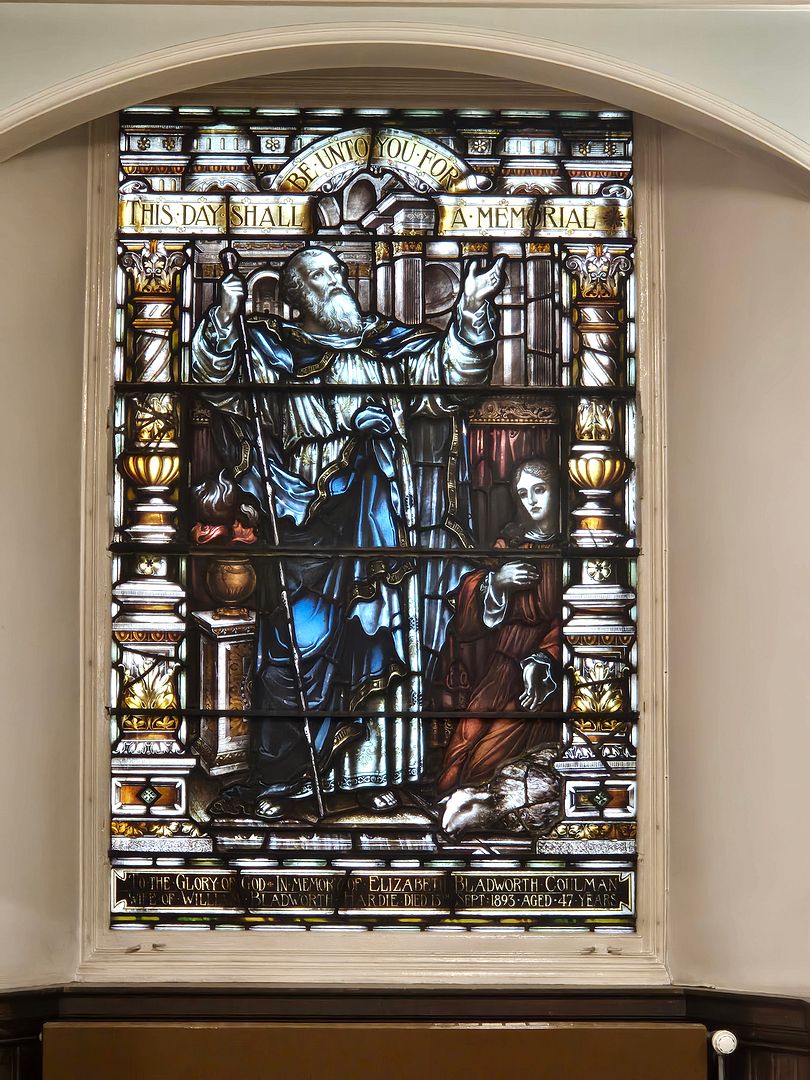
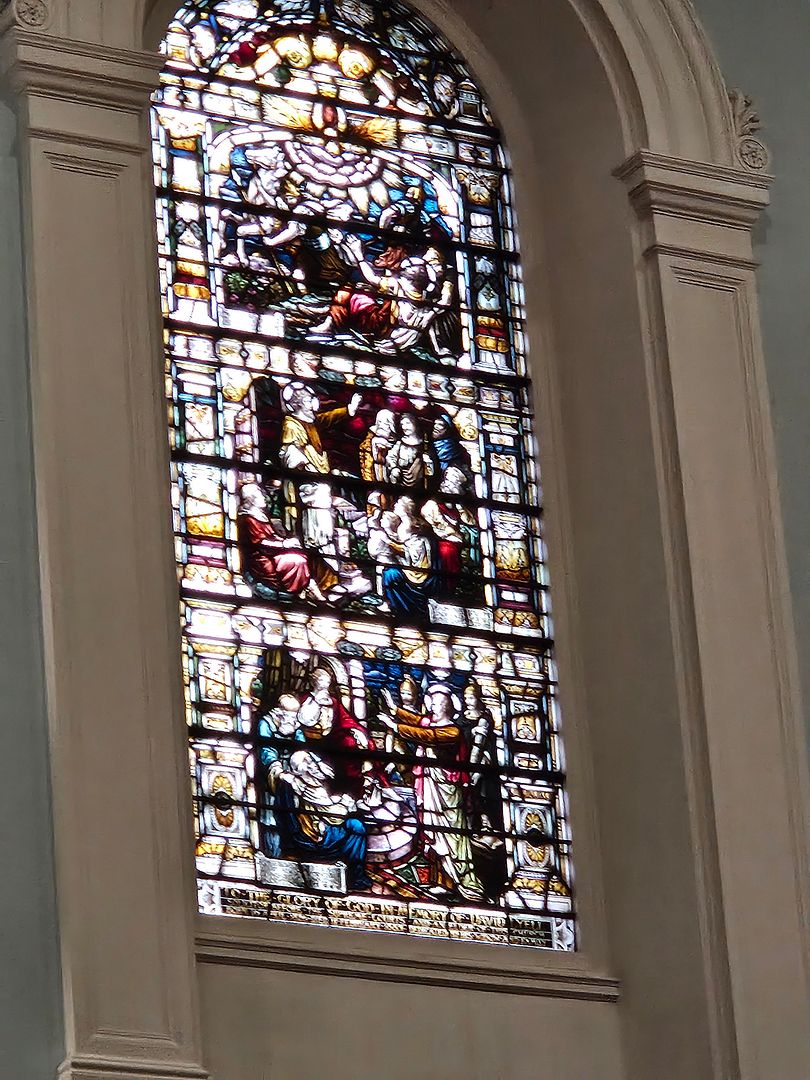
The windows on the left of the church depict stories from the Old Testament and on the right the New Testament. Upstairs on the North side you will see a young David, sling in hand, going out to meet the giant Goliath. This window was created by Tiffany of New York in 1903 and is one of only five Tiffany windows in Britain.

When I was done at St. Cuthbert’s I strolled back to Grassmarket to wait for Josh and Laura.

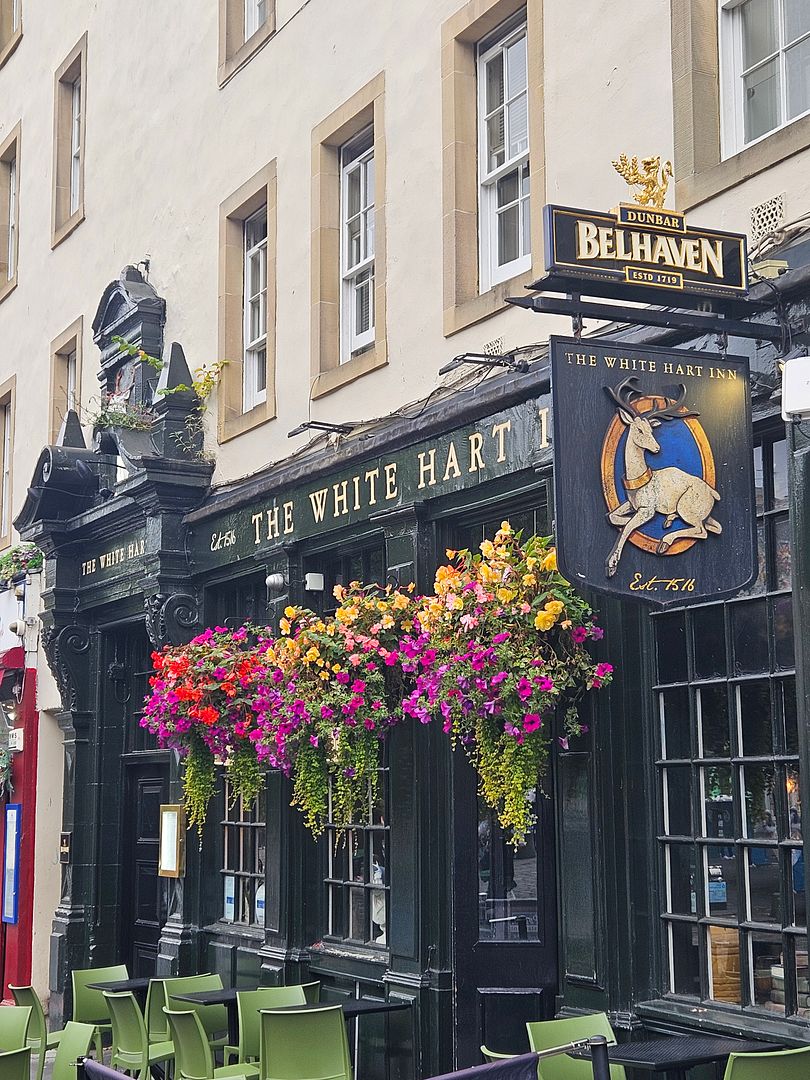
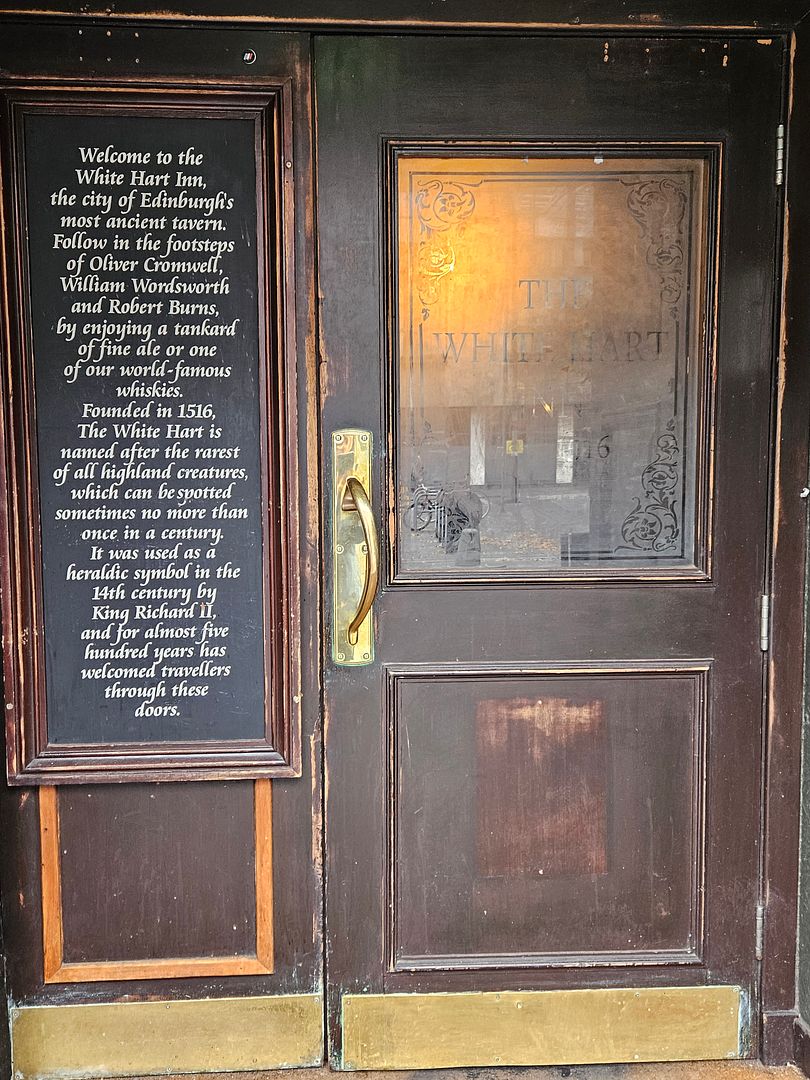
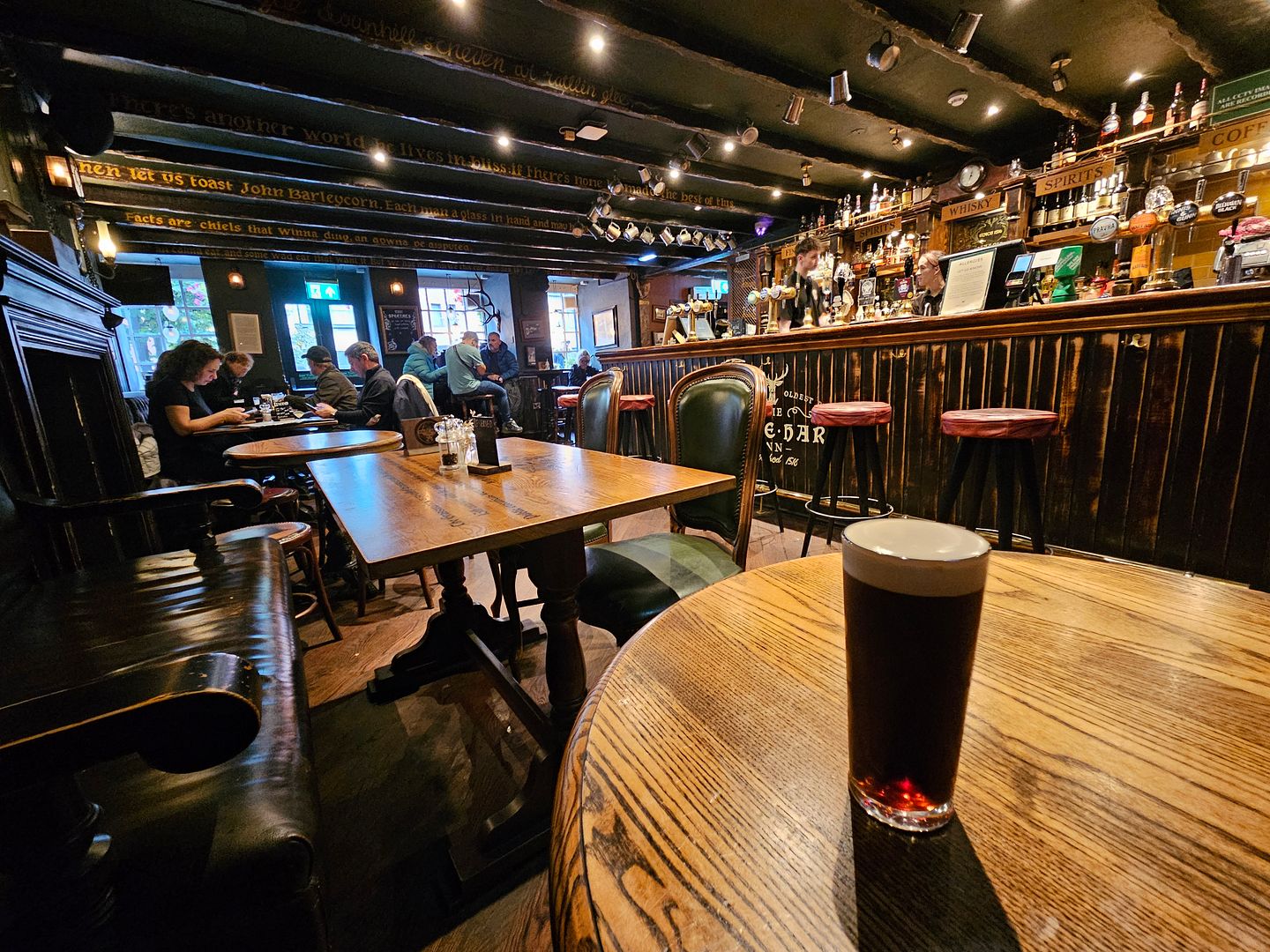
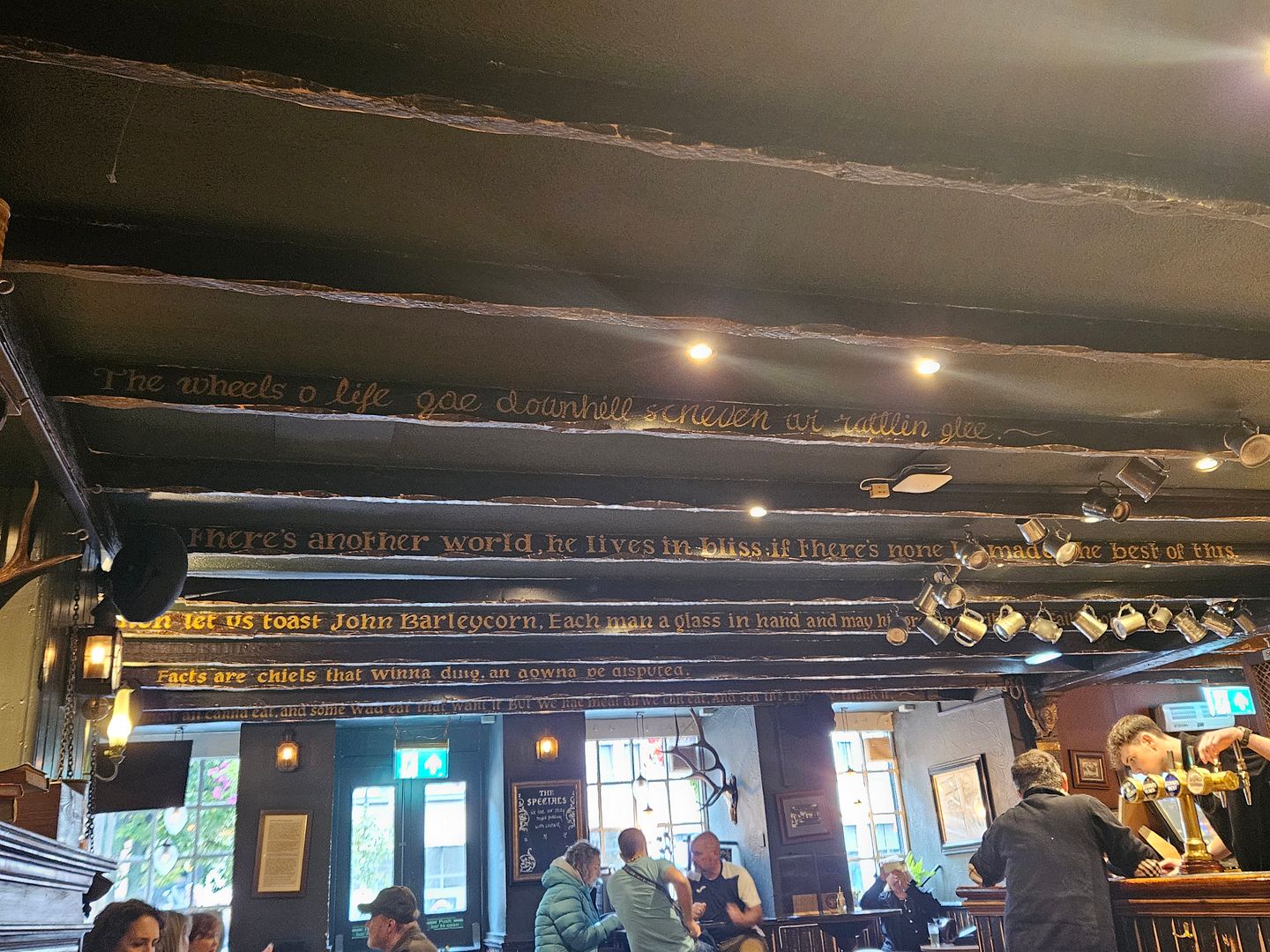
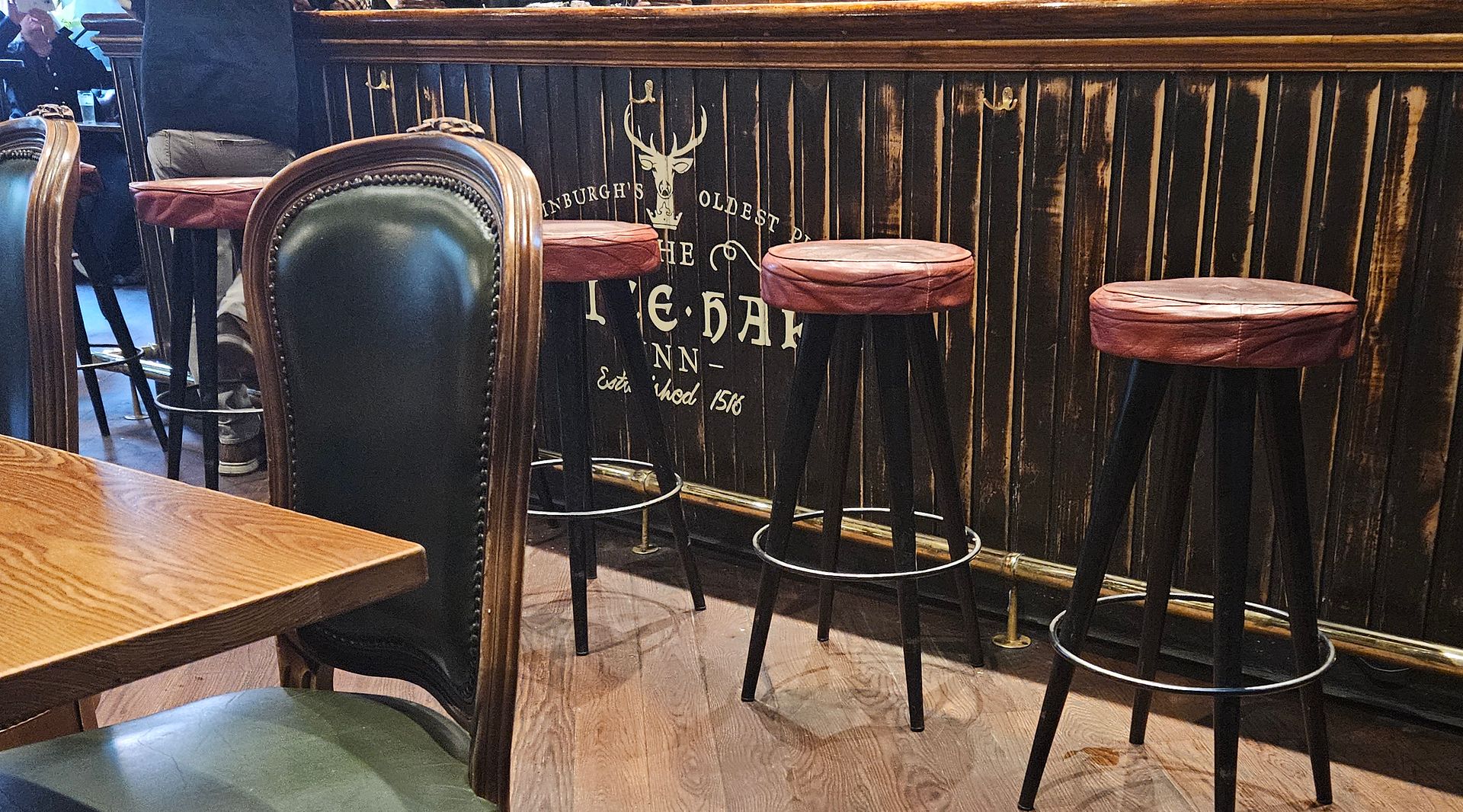
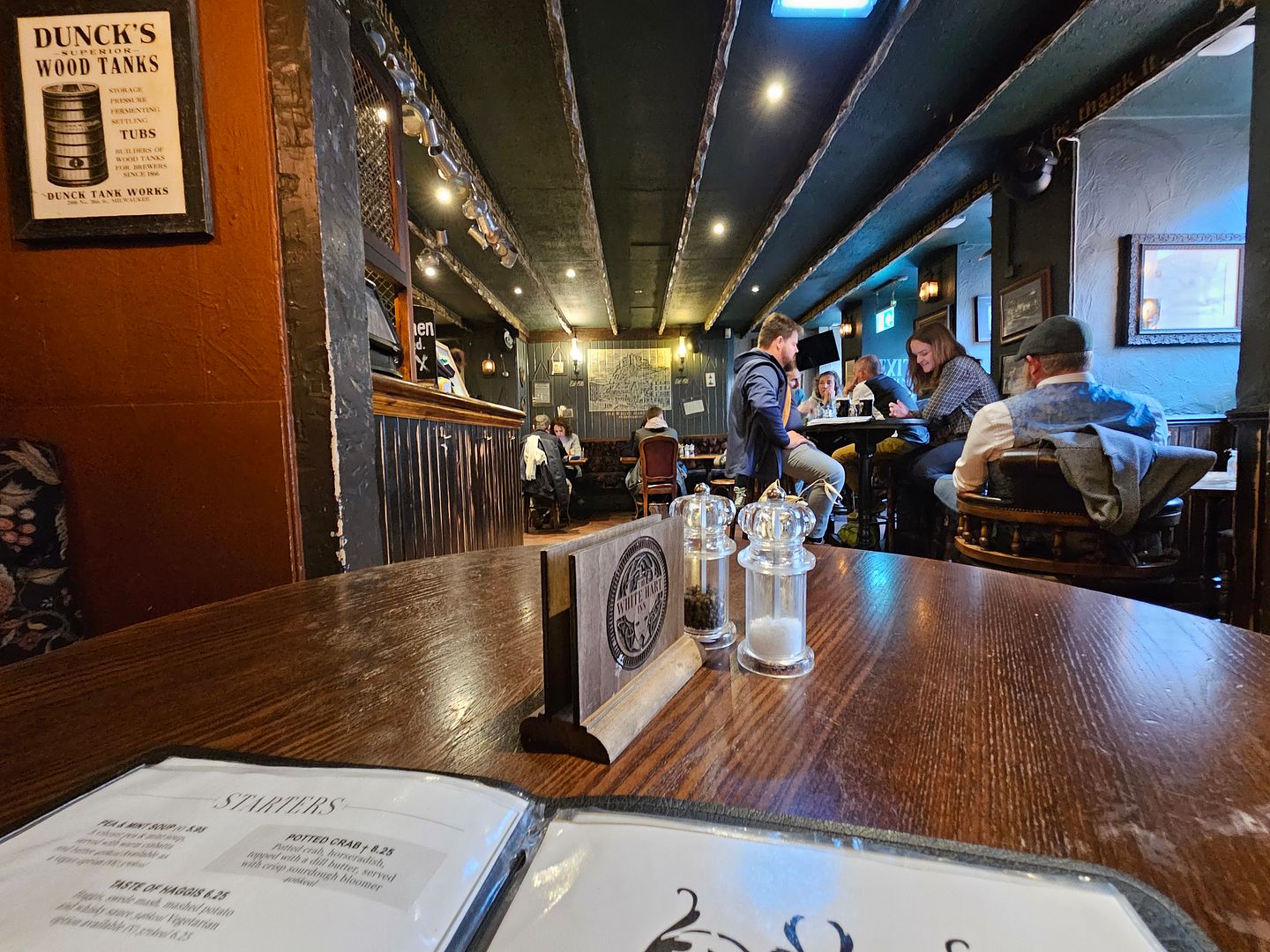
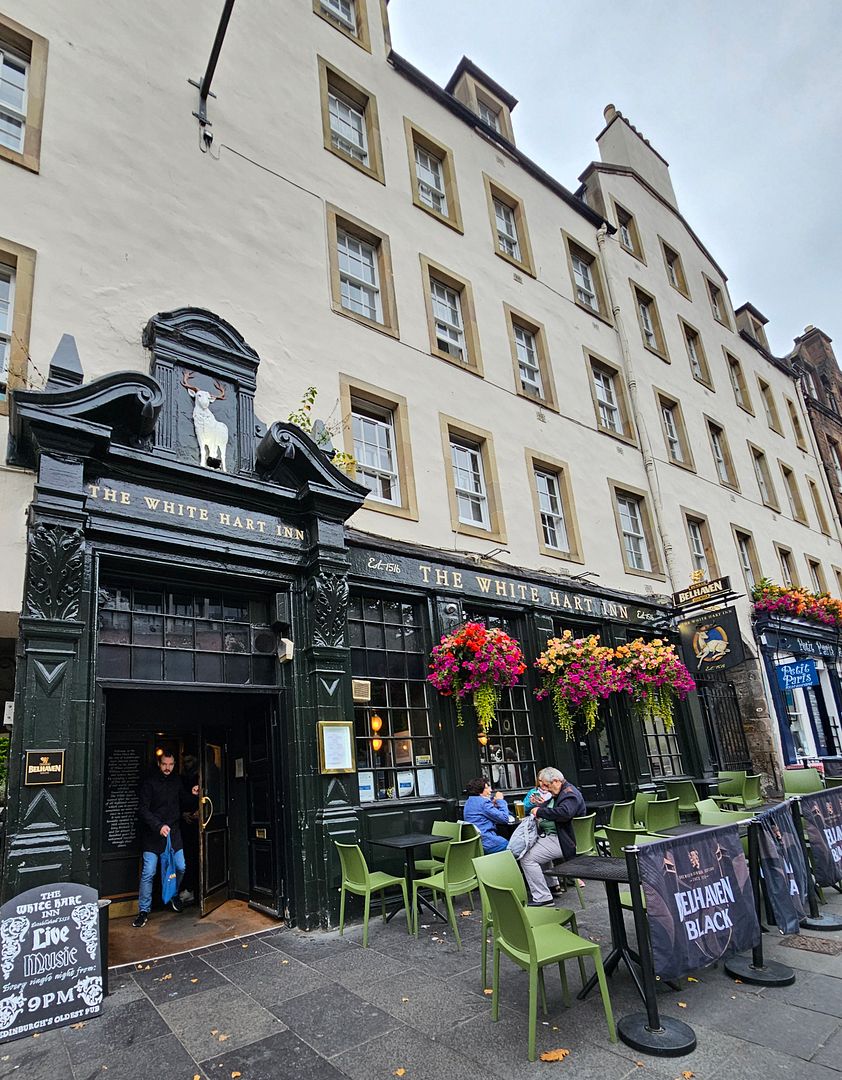
I waited at the White Hart Inn, Edinburgh’s most ancient tavern.

Follow in the footsteps of Oliver Cromwell, William Wordsworth and Robert Burns by enjoying a tankard of fine ale or one of our world-famous whiskies. Founded in 1516, The White Hart is named after the rarest of all Highland creatures, which can be spotted sometimes no more than once in a century. It was used as a heraldic symbol in the 14th century by King Richard II, and for almost five hundred years has welcomed travellers through these doors.

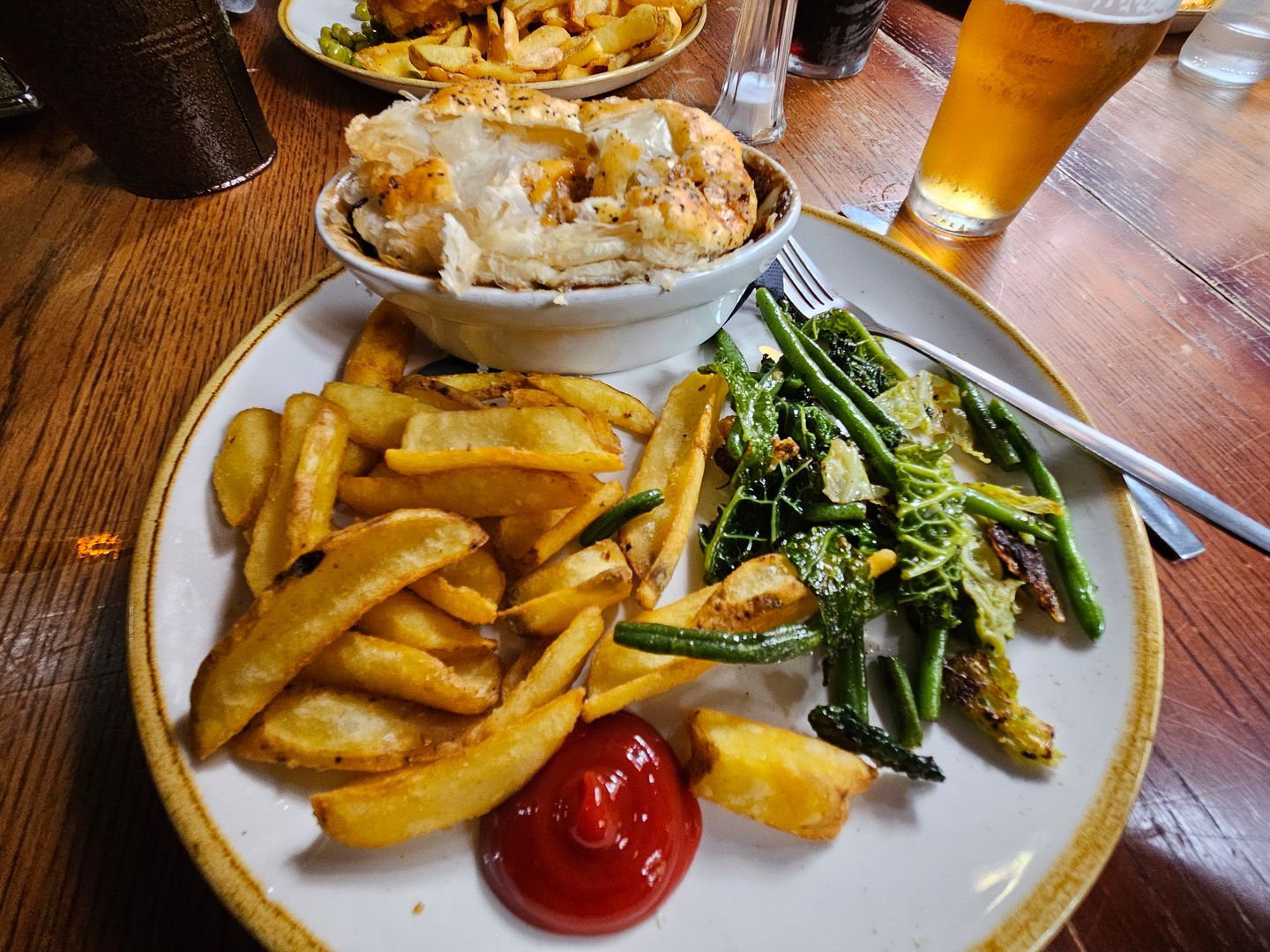
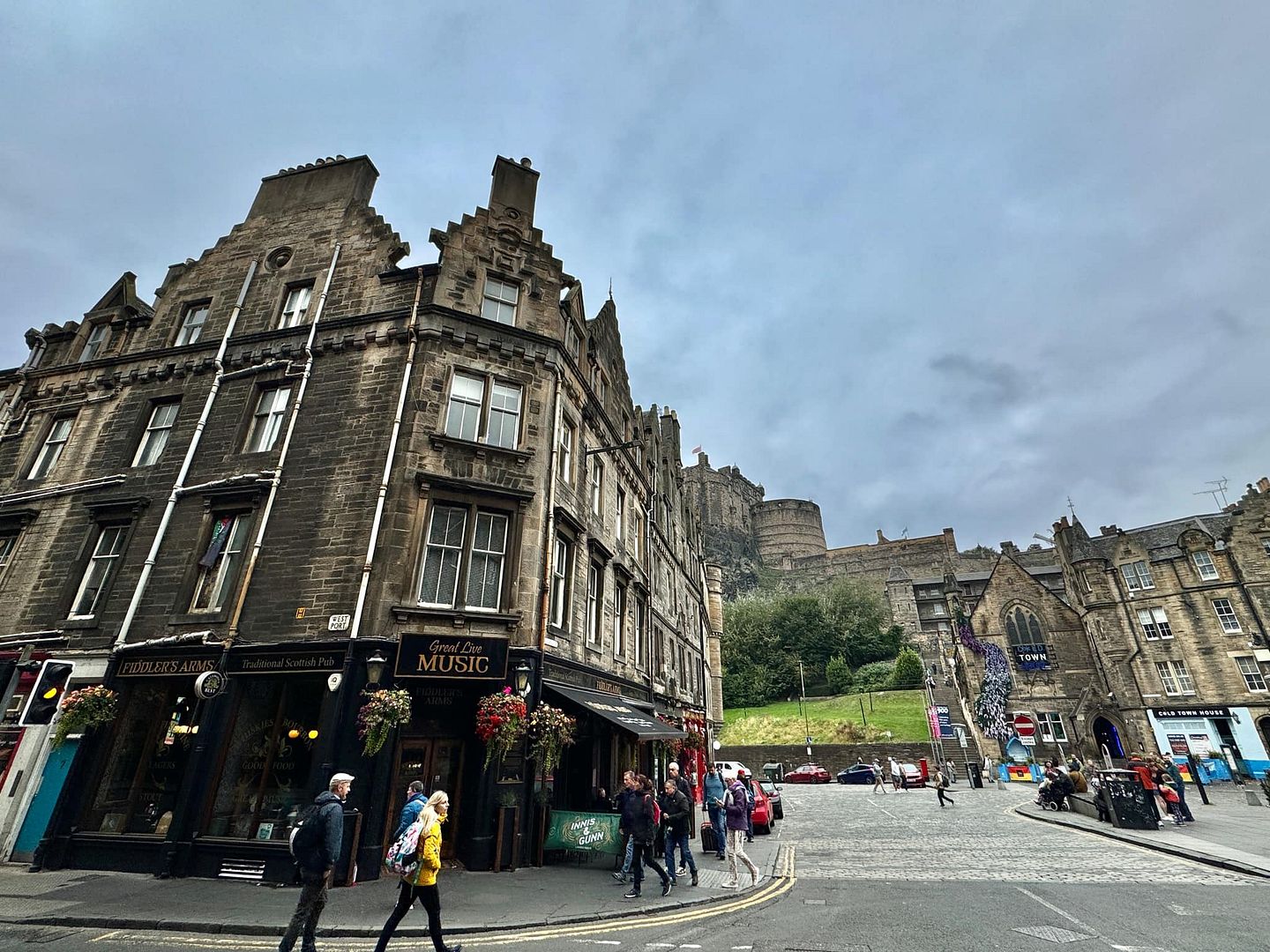
The food choices here were not hitting the spot for us so when Josh and Laura met up with me after their castle experience we found a table at the Fiddler’s Arms.

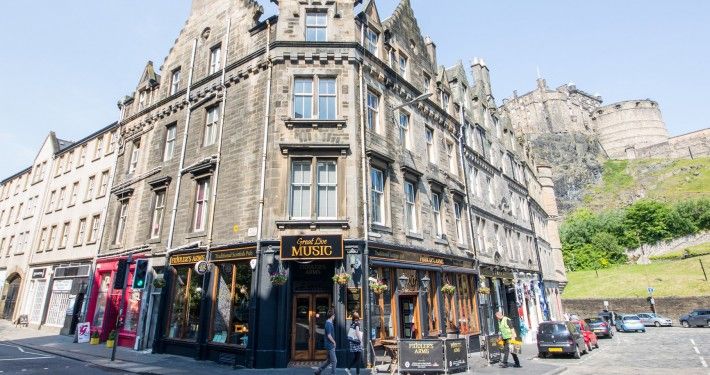
This image above is from The Fiddler’s Arms webpage. You can see what a sunny day would look like in the shadow of the castle. Below is what the atmosphere was like when we were here.

After lunch we popped into a couple of shops, took some photos and then we got an Uber to take us to St. Mary’s Episcopal Church to enjoy evensong which was due to begin at 3:30 on this Sunday. That will have to be another post.