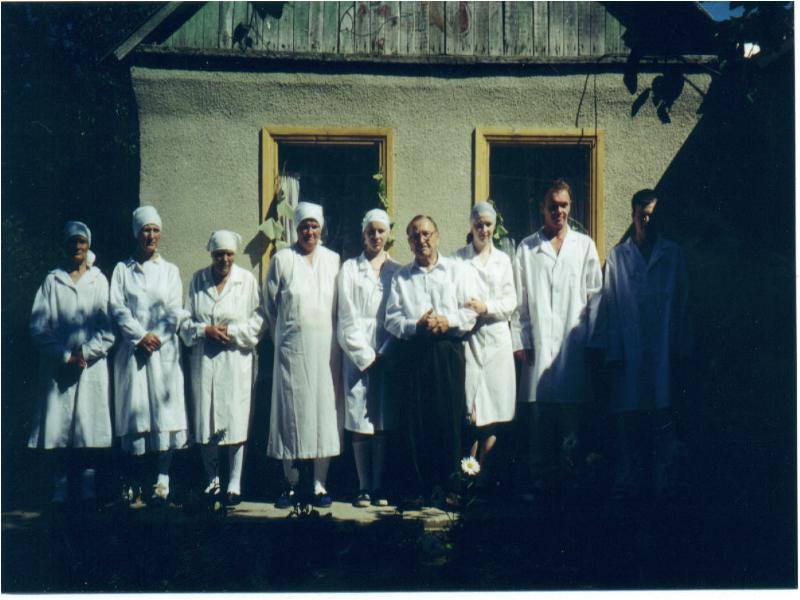
You’re 74, your wife is 73, you’re retired, what do you do? My parents, Moisi and Nadia decided to sell their house, many of their household possessions and move to Russia to start a Bible study ministry in a small village near Rostov-on-Don. They filed for a one year visitor’s visa and left with suitcases full of Bible study materials on May 6, 1997. They set up shop in a four-room home with no indoor plumbing. My dad is not an ordained minister. His experience comes from many years of following Christ sincerely, Bible study, service for the Lord, sincere love for God and God’s people. My mother loves God, loves my father, and loves to cook. They work together beautifully.
My parents were both born in Russia. When young, (1932), their families separately escaped out of Russia into Iran. They lived in and near Tehran, where they met and were married. My oldest sister was born there. My dad was not a believer when he married my mom. She was a believer and the daughter of a Baptist minister. Shortly after WWII they applied for and received permission to immigrate to the U.S.A. After customs and registering in New York they traveled to Los Angeles, where relatives set them up with shelter and work. Two more of my older siblings, myself, and four younger siblings were born to my parents. Twenty years into their marriage my dad accepted the call from God to follow His son Jesus as his Savior. This took place at the Billy Graham Crusade at the Los Angeles Coliseum in 1963.
 This is a photo of all my brothers and sisters at my sister Kathy’s wedding in 1974 along with my brother-in-law Len, his brother in-law as best man and Dear is in the photo, too.
My parents have faithfully followed the Lord in word and deed. On trips to Russia earlier in the 1990’s they felt the need of the lost sheep in this spiritually poor country. While visiting relatives they led a cousin to the Lord. She begged my parents to come and teach her the Bible. My parents prayed, listened, and felt it was time for them to go for longer than a 2-month visit.
A Bible study turned into a small church that met in my parents’ rental home. Up to 15 women started coming to church on Sunday. No men. They did not anticipate the response they’d get from the children in the village. Forty children came for Sunday School.
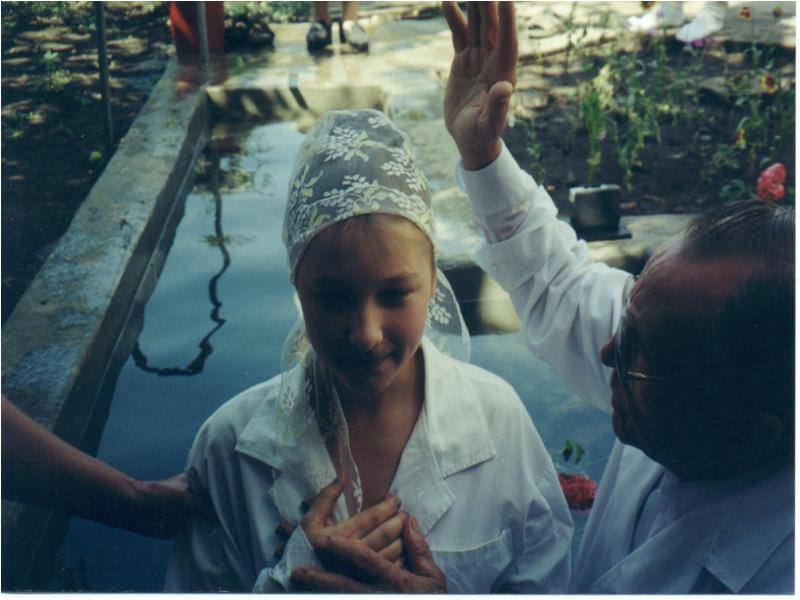
Many of the children came faithfully each week even though their parents did not come. Some of the fathers ridiculed their children for going. The Sunday School Christmas program brought out a lot of parents. Same for Easter programs. God kept opening doors for the men to hear the gospel, too. My dad was asked to speak at funerals where he always preached the Gospel, the Lord works in mysterious ways. At the end of their first year there were several new believers. My parents had to leave Russia in the Spring. Eight women wanted to be baptized before my father left. The lake was frozen and there was no baptistery in the village. The women insisted my dad baptize them in the largest bathtub in the village!
 My parents came home to the States in May of 1998. They had their medical exams and my mother was diagnosed with Breast Cancer. She had surgery to remove a cancerous lump and had radiation treatments for 6 weeks. She recovered well enough to encourage my father to make arrangements for another one year visa. They returned to Russia in October of 1998. They had a great reception on their return and their mission there was confirmed. They bought the house they were renting and turned it into a church with their small living quarters.
 They built an outdoor baptistery on the church grounds.
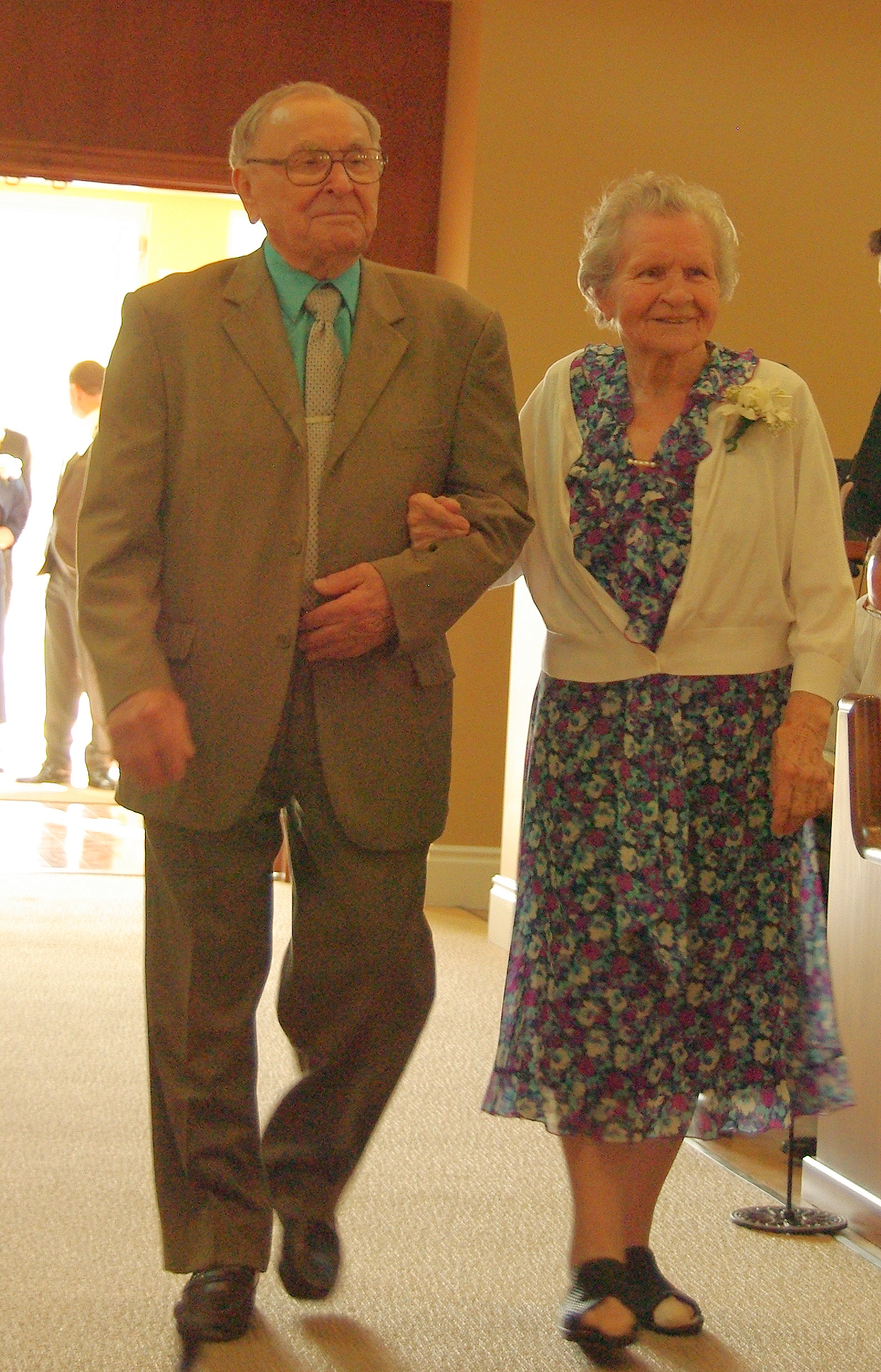
 They have gone back for a few months at a time since 1999. Their final trip was just last year. They went to encourage the existing church and make arrangements for a visiting pastor from a neighboring larger city to come in and teach this small group of believers. My parents turn 84 and 83 this year.
Comparing my folks from this 1999 photo in Russia with their 1997 photo above you can see the toll their two years of service, cancer (prostate and breast), and age have taken on them. They do not have any regrets for the time and sacrifice their service in Russia cost them. They are now living in a Senior apartment continuing in service for their Lord.
I leave you with this song, Remind Me, by Aaron Spiro and Carlo Furlan as a fitting close to this story of my parents.
Remind Me
When I’m old, remind me not to get stuck in my ways
When I’m old, remind me not to sit around day after day
’cause there’s a race to run that doesn’t finish at sixty
And I’m not giving up till I’m safe in your armsWhen I’m old, let me bring glory to your super name
When I’m old, remind me not to take your grace in vainWhen I’m old, remind me who and what I’m livin’ for
When I’m old, remind me not to hide away and double lock my doorI’ll rest in heaven, retire there. Let me run for Jesus ’till I get there.
Moisi (Moses) and Nadia have certainly lived their lives for Jesus and they haven’t stopped yet!
ht: I Am, I Am, Kickin’ the Sky / Aaron Spiro & Carlo Furlan