Thinking of Retiring?

You’re 74, your wife is 73, you’re retired, what do you do? My parents, Moisi and Nadia decided to sell their house, many of their household possessions and move to Russia to start a Bible study ministry in a small village near Rostov-on-Don. They filed for a one year visitor’s visa and left with suitcases full of Bible study materials on May 6, 1997. They set up shop in a four-room home with no indoor plumbing. My dad is not an ordained minister. His experience comes from many years of following Christ sincerely, Bible study, service for the Lord, sincere love for God and God’s people. My mother loves God, loves my father, and loves to cook. They work together beautifully.

My parents were both born in Russia. When young, (1932), their families separately escaped out of Russia into Iran. They lived in and near Tehran, where they met and were married. My oldest sister was born there. My dad was not a believer when he married my mom. She was a believer and the daughter of a Baptist minister. Shortly after WWII they applied for and received permission to immigrate to the U.S.A. After customs and registering in New York they traveled to Los Angeles, where relatives set them up with shelter and work. Two more of my older siblings, myself, and four younger siblings were born to my parents. Twenty years into their marriage my dad accepted the call from God to follow His son Jesus as his Savior. This took place at the Billy Graham Crusade at the Los Angeles Coliseum in 1963.

This is a photo of all my brothers and sisters at my sister Kathy’s wedding in 1974 along with my brother-in-law Len, his brother in-law as best man and Dear is in the photo, too.

My parents have faithfully followed the Lord in word and deed. On trips to Russia earlier in the 1990’s they felt the need of the lost sheep in this spiritually poor country. While visiting relatives they led a cousin to the Lord. She begged my parents to come and teach her the Bible. My parents prayed, listened, and felt it was time for them to go for longer than a 2-month visit.

A Bible study turned into a small church that met in my parents’ rental home. Up to 15 women started coming to church on Sunday. No men. They did not anticipate the response they’d get from the children in the village. Forty children came for Sunday School.

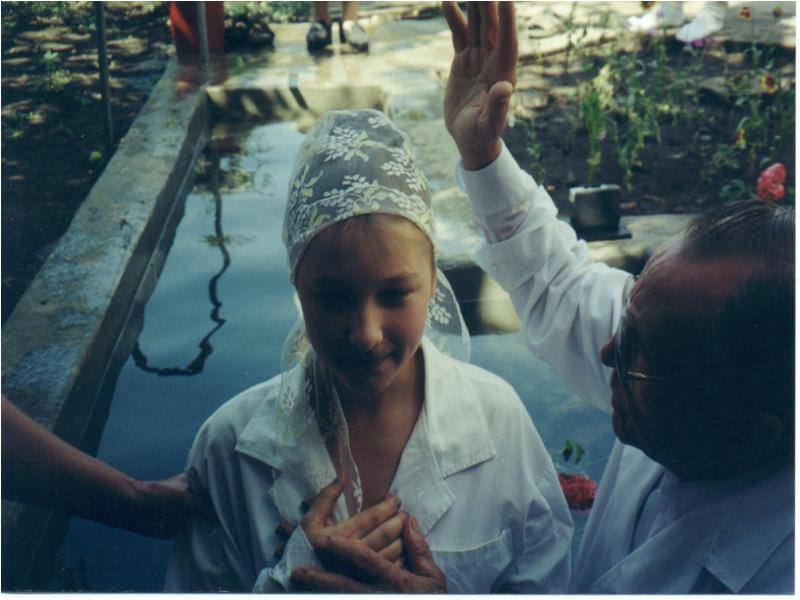
Many of the children came faithfully each week even though their parents did not come. Some of the fathers ridiculed their children for going. The Sunday School Christmas program brought out a lot of parents. Same for Easter programs. God kept opening doors for the men to hear the gospel, too. My dad was asked to speak at funerals where he always preached the Gospel, the Lord works in mysterious ways. At the end of their first year there were several new believers. My parents had to leave Russia in the Spring. Eight women wanted to be baptized before my father left. The lake was frozen and there was no baptistery in the village. The women insisted my dad baptize them in the largest bathtub in the village!

My parents came home to the States in May of 1998. They had their medical exams and my mother was diagnosed with Breast Cancer. She had surgery to remove a cancerous lump and had radiation treatments for 6 weeks. She recovered well enough to encourage my father to make arrangements for another one year visa. They returned to Russia in October of 1998. They had a great reception on their return and their mission there was confirmed. They bought the house they were renting and turned it into a church with their small living quarters.

They built an outdoor baptistery on the church grounds.

They have gone back for a few months at a time since 1999.  Their final trip was just last year. They went to  encourage the existing church and make arrangements for a visiting pastor from a neighboring larger city to come in and teach this small group of believers. My parents turn 84 and 83 this year.

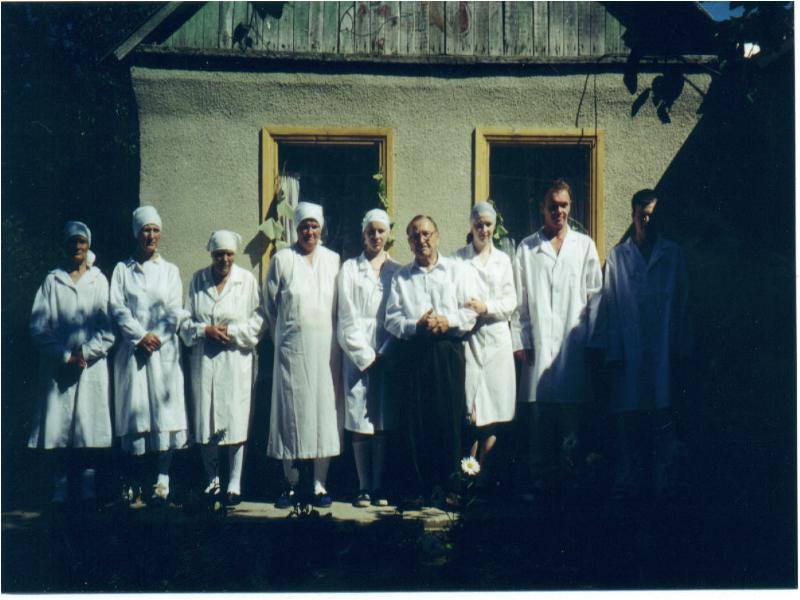
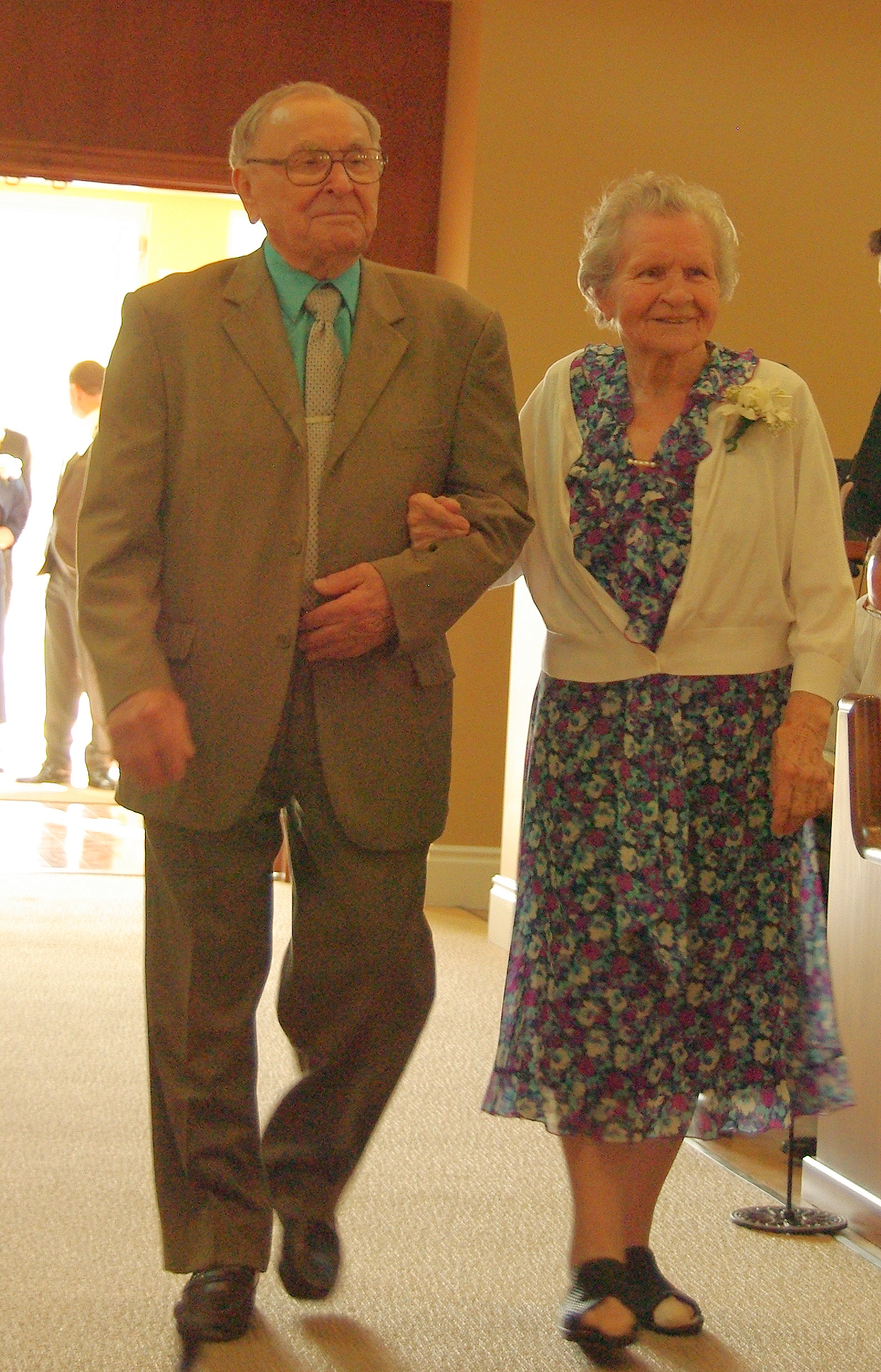
Comparing my folks from this 1999 photo in Russia with their 1997 photo above you can see the toll their two years of service, cancer (prostate and breast), and age have taken on them. They do not have any regrets for the time and sacrifice their service in Russia cost them. They are now living in a Senior apartment continuing in service for their Lord.

I leave you with this song, Remind Me, by Aaron Spiro and Carlo Furlan as a fitting close to this story of my parents.

Remind Me

When I’m old, remind me not to get stuck in my ways
When I’m old, remind me not to sit around day after day
’cause there’s a race to run that doesn’t finish at sixty
And I’m not giving up till I’m safe in your arms

When I’m old, let me bring glory to your super name
When I’m old, remind me not to take your grace in vain

When I’m old, remind me who and what I’m livin’ for
When I’m old, remind me not to hide away and double lock my door

I’ll rest in heaven, retire there. Let me run for Jesus ’till I get there.

Moisi (Moses) and Nadia have certainly lived their lives for Jesus and they haven’t stopped yet!

ht:  I Am, I Am, Kickin’ the Sky / Aaron Spiro & Carlo Furlan

Kulich – Russian Easter Bread

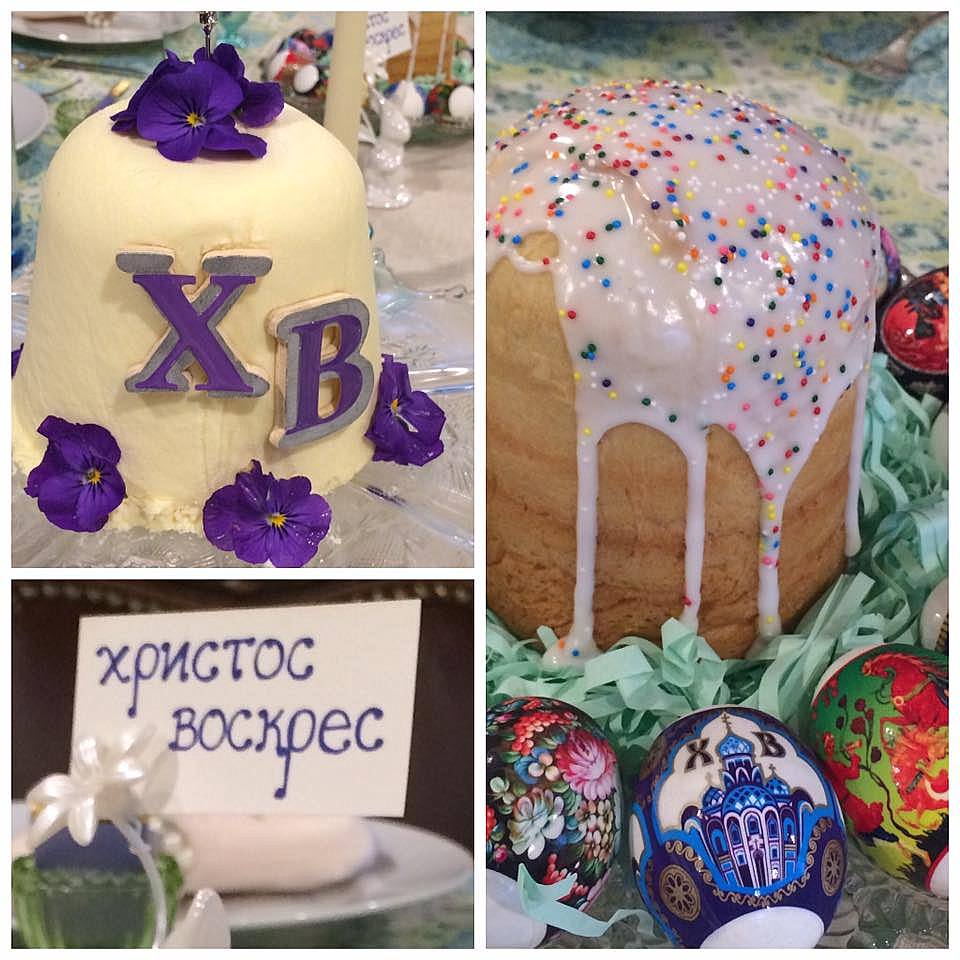
My mother makes Kulich (Russian Easter Bread) and Sernaya Paska (a yummy sweet cheese, cream spread) every Easter. The white pyramid looking thing with the cross on it is the Sernaya Paska. I don’t have a special mold so mine looks like a rounded dome. I’m including a recipe for the spread and a link to a recipe for Kulich. We eat the bread with the paska or slather it with sour-cream. My mom’s is the best and we’ve documented how she makes it and hopefully we’ll continue the tradition. You use empty, clean, 1 or 2 lb. coffee tins to bake the bread in.

Update for Easter 2008 ~ I’ll be adding my mother’s recipe for Kulich before Easter this year. Click here for the recipe.

Sernaya Paska

Ingredients:   18 – hard boiled eggs / 3 pounds Farmers cheese / 1 pint whipping cream / 3 cubes unsalted butter (12 oz.) / 3 cups sugar /

Press the Farmers cheese through a sieve. (This is the hardest part of the recipe) I usually use a wooden spoon and press it through a wire strainer a little at a time. Separate the egg yolks from the whites. (You will not be using the whites). Press the egg yolks through the sieve. Cream the sugar and butter together. Beat in the egg yolks. Beat in the cheese. Add whipping cream and mix well. You will place the mixture into a strainer lined with about 3 layers of cheesecloth. You will need enough cheesecloth to wrap up and over the top of the cheese. Place the cheese mixture into the cheese cloth lined strainer. Bring the ends of the cheese cloth up and tie the ends on top of the cheese in a knot. Place the sieve into a larger bowl suspended with enough room for the cheese to drain without sitting in the drained liquid. Place a plate on top of the cheese an place a heavy rock, brick, or other weight on top of the plate. Refrigerate over night.

Update #1: I used a plastic flower pot for my Seerney Paska and added more holes to the bottom. I got the shape I wanted and it drained well.

New tip: Use a potato ricer instead of a wire strainer for the egg yolks.

Update #2: This Sernaya Paska recipe is for a huge amount (enough for my huge extended family). If you just want a normal amount, cut the recipe in thirds. (6 cooked egg yolks, 1-lb. cheese, 2/3 cup whipping cream, 1 cube butter and 1 cup sugar. Enjoy!

Tip #2: If you don’t get around to baking Kulich you can substitute a good Panettone for the bread. Hard to find this time of year because most stores stock it at Christmas, not Easter. If you are fortunate to have a Italian food store near you they seem to stock it year round. I bought the most plain one I could find (not easy) It had raisens and candied orange and lemon bits in it. It was a good substitute nevertheless!

ht: Vera Titov/Nadia Bagdanov ~ recipe for Sernaya Paska

Molokan Cemetery


By HUGO MARTIN
TIMES STAFF WRITER

Photos by AL SEIB / Los Angeles Times
Women in traditional dresses wander through the Russian Molokan Cemetery after attending the funeral of an elderly church member.
Danny Kanavalov and son Josh, of Bakersfield, walk through the graves at the Russian Molokan Cemetery in the City of Commerce.
EIGHTY-FOUR-YEAR-OLD Shasha Tolmachoff lives in Glendale, Ariz., but plans that when she dies, she will be buried in the City of Commerce, in the same dusty parcel where generations of Russian Molokans including her parents and in-laws have been laid to rest.
“It’s very comforting to be with them,” said the retired homemaker as she walked gingerly around the tightly packed tombstones at the Russian Molokan Cemetery on Slauson Avenue after attending the funeral of an elderly church member.
Tolmachoff is a member of a little-known Christian sect that broke away from the Russian Orthodox Church in the 1600s. About 60% of America’s church-going Molokans–about 3,000 people–live in Los Angeles. [Descendants of Molokans in LA County number over 20,000]. Molokan Since 1941, most of them have been burying their ancestors at the Slauson cemetery, sandwiched between a paper factory and a warehouse.
The 14-acre graveyard has about 2,500 graves and space for thousands more, free to dues-paying church members. Two smaller Molokan cemeteries in East Los Angeles are too small or too full to absorb many more graves.
In recent years, as commercial development has surrounded the Slauson cemetery and vacant land in Commerce has become scarce, banks and real estate firms have clamored to buy and develop the cemetery or its vacant 10 acres for nearly a half-million dollars an acre.
But the six Molokan churches that own the property have rejected all offers outright.
“If our people have put our blood, sweat and tears into this land, why move?” said Alex Goosseff”

Yesterday I posted a description of the Molokan religion.  I was raised in this community. My grandparents and other relatives are buried at this cemetery. In high school I chose to leave this religion because of some of their beliefs. The outfits you see on these ladies are what is worn by married women to church services, weddings, and funerals. Molokans wear pastels or white garments for their gatherings. No black or bright colors.

Molokans (Milk Drinkers)


 The following post on Molokans is a combination of material I copied from The Molokan Homepage, Wikipedia, and my own observations and additions about my families experience in the Molokan Church. I am italicizing my entries. This is a long post so I will shorten what appears on the post page and give you the option to continue reading more if you’d like. I’m organizing this material so my children and I have a better understanding of the history of Molokans and what we were brought out of by the grace of God. Tomorrow I’m posting an LA Times article on the Molokan Cemetery where my paternal grandparents and other relatives are buried.

 The Molokans (Russian: Молока́не) are a “Biblically-based” religious movement, among Russian peasants (serfs), who broke away from the Russian Orthodox Church in the 1550s. Molokans denied the Czar’s divine right to rule and rejected icons, Orthodox fasts, military service, the eating of unclean foods, and other practices, including water baptism. They also rejected the traditional beliefs (held by Roman Catholic, Protestant, and Orthodox Christians) in the Trinity, the veneration of religious icons, worship in cathedrals, the adherence toward saintly holidays, and the decisions of Synods and Ecumenical Councils.

 The Molokans also called “milk drinkers” were persecuted by their countrymen and government, and were exiled to a remote area of Russia (Transcaucasia), where they lived and prospered for several generations. In 1833, there was a reported outpouring of the Holy Spirit upon a number of Molokans in the Transcaucasus region. This created a schism between Constants and the newly evolved Jumpers and Leapers. With what the Molokans believed to be an additional manifestation of the Holy Spirit, this new smaller sect began a revival with intense zeal and reported miracles that purportedly rivaled that of Christ’s Apostles. Condemnation from the Constant sect lead to betrayals and imprisonment for many of the Jumpers and Leapers, now called New Israelites by their anointed leader Maxim Rudometkin. Maxim Rudometkin, while he was in prison, wrote a spiritual book that was smuggled out by close friends and relatives who came to visit him that later become the basis for a sub-sect of the Molokan faith. This book, used as a companion to the Holy Bible, is known as the Book of Spirit and Life. Molokans who accepted this book and who followed Maxim’s interpretations of the Bible are known as Maximisti, which make up most of the Jumper and Leapers sect. (This was the group my family was a part of. Maxim classified them as the New Israelites, the new chosen ones). (more…)

St. Patrick and Corned Beef


Top of the mornin’ to ye!
Hope you have a great day. Remember the wearin’ o’ the green!  LNB

Who Was St. Patrick?

St. Patrick, the patron saint of Ireland, is one of Christianity’s most widely known figures. But for all his celebrity, his life remains somewhat of a mystery. Many of the stories traditionally associated with St. Patrick, including the famous account of his banishing all the snakes from Ireland, are false, the products of hundreds of years of exaggerated storytelling.

Taken Prisoner By Irish Raiders
It is known that St. Patrick was born in Britain to wealthy parents near the end of the fourth century. He is believed to have died on March 17, around 460 A.D. Although his father was a Christian deacon, it has been suggested that he probably took on the role because of tax incentives and there is no evidence that Patrick came from a particularly religious family. At the age of sixteen, Patrick was taken prisoner by a group of Irish raiders who were attacking his family’s estate. They transported him to Ireland where he spent six years in captivity. (There is some dispute over where this captivity took place. Although many believe he was taken to live in Mount Slemish in County Antrim, it is more likely that he was held in County Mayo near Killala.) During this time, he worked as a shepherd, outdoors and away from people. Lonely and afraid, he turned to his religion for solace, becoming a devout Christian. (It is also believed that Patrick first began to dream of converting the Irish people to Christianity during his captivity.)

Guided By Visions
After more than six years as a prisoner, Patrick escaped. According to his writing, a voice-which he believed to be God’s-spoke to him in a dream, telling him it was time to leave Ireland.

To do so, Patrick walked nearly 200 miles from County Mayo, where it is believed he was held, to the Irish coast. After escaping to Britain, Patrick reported that he experienced a second revelation-an angel in a dream tells him to return to Ireland as a missionary. Soon after, Patrick began religious training, a course of study that lasted more than fifteen years. After his ordination as a priest, he was sent to Ireland with a dual mission-to minister to Christians already living in Ireland and to begin to convert the Irish. (Interestingly, this mission contradicts the widely held notion that Patrick introduced Christianity to Ireland.)

Bonfires and Crosses
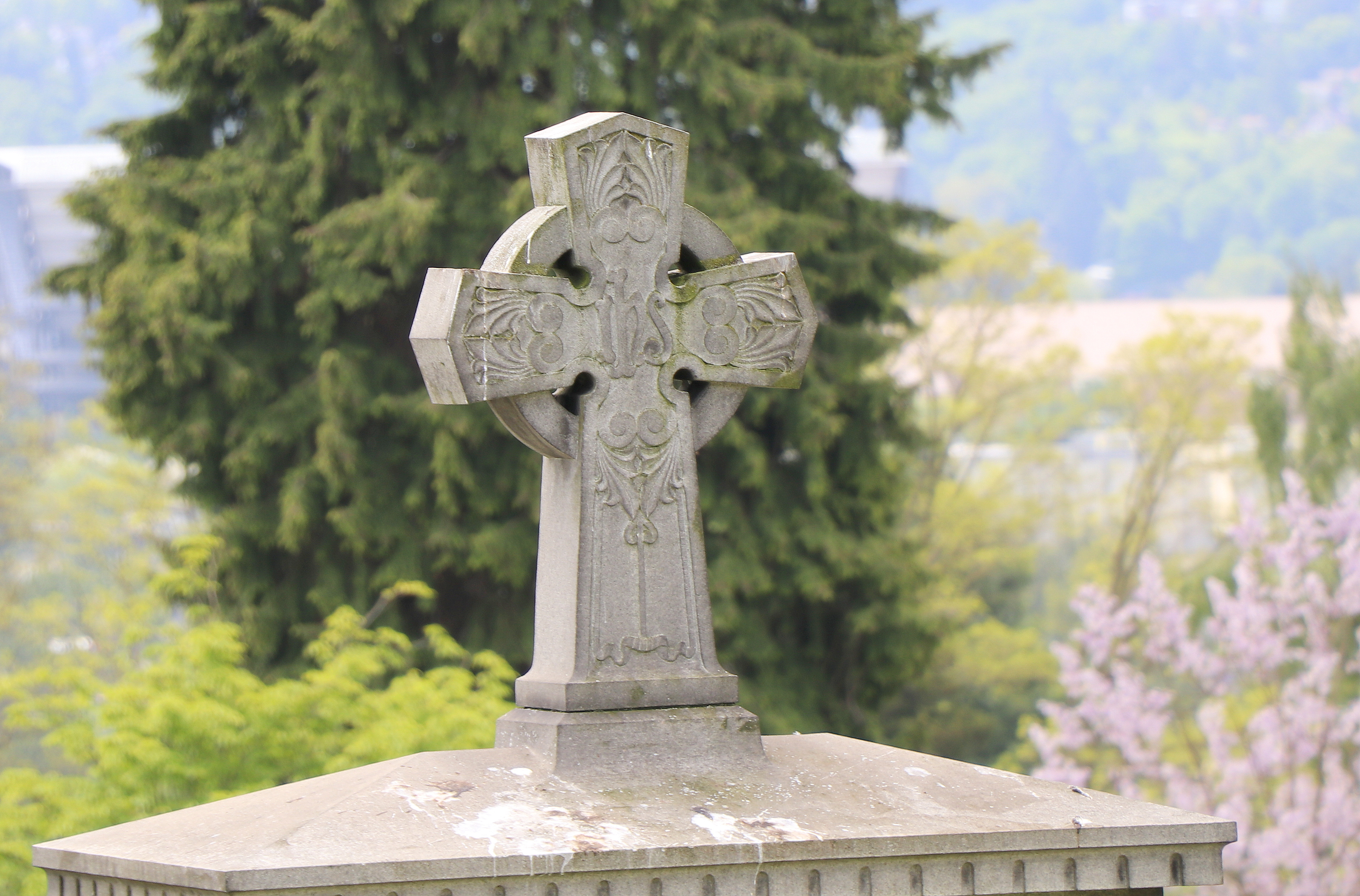
Familiar with the Irish language and culture, Patrick chose to incorporate traditional ritual into his lessons of Christianity instead of attempting to eradicate native Irish beliefs. For instance, he used bonfires to celebrate Easter since the Irish were used to honoring their gods with fire. He also superimposed a sun, a powerful Irish symbol, onto the Christian cross to create what is now called a Celtic cross, so that veneration of the symbol would seem more natural to the Irish. (Although there were a small number of Christians on the island when Patrick arrived, most Irish practiced a nature-based pagan religion. The Irish culture centered around a rich tradition of oral legend and myth. When this is considered, it is no surprise that the story of Patrick’s life became exaggerated over the centuries-spinning exciting tales to remember history has always been a part of the Irish way of life.)

CORNED BEEF AND CABBAGE

5 pounds corned brisket of beef
6 peppercorns, or packaged pickling spices
3 carrots, peeled and quartered
3 onions, peeled and quartered
1 medium-sized green cabbage, quartered or cut in wedges
Melted butter (about 4 tablespoons)

Place the corned beef in water to cover with the peppercorns or mixed pickling spices (in supermarkets, these often come packaged with the corned beef). Cover the pot or kettle, bring to a boil, reduce heat and simmer 5 hours or until tender, skimming occasionally. During the last hour, add the carrots and onions and cover again. During the last 15 minutes, add the cabbage. Transfer meat and vegetables to a platter and brush the vegetables with the melted butter. Serve with boiled parsley potatoes, cooked separately. (The stock can be saved to add to a pot roast or stew instead of other liquid.)