My Testimony and a John Newton Hymn

HUME LAKE CHRISTIAN CAMP

Ellen’s simple version of her testimony, March 29th, 2007

I accepted Christ (was spiritually born) in the summer of 1963 at Hume Lake Christian Camp. I was a reluctant, stubborn, proud, follower of Jesus for many years. Similar to the birth process, I was comfortable in the womb (when God was calling me), but at birth when I had to get up and walk down an aisle and be singled out I howled like a baby. (Why do they say down the aisle instead of up the aisle?) I thank God He didn’t throw me back! I was a colicky baby. I fussed when anyone called attention to my bad attitudes, stubbornness, sin. I became more of a pharisee than a lover of God and my neighbor. I had my moments of obedience and peace. I had a long way to go and still do in the sanctification process. It has dawned on me what an amazing thing Christ did for me and the dirty rotten sinner I am. I still need to go deeper in this reality. I’m so glad God keeps after me. If my memory serves me correctly I cooperated more in the sanctification process after my baptism in high school. I’ve had periods of growth and periods of “being asleep in my faith”. BUT – GOD IS FAITHFUL and His promises are true. I want to follow Him for the rest of my life. Every day I want to say, thank you for saving me, I’m yours Lord. Every day I want to seek Him. More and more, I’m looking forward to seeing Him “face to face”.

I read this classic hymn by John Newton (In Evil Long I Took Delight) in Living the Cross Centered Life by C.J. Mahaney and felt it appropriate to include with my testimony.

In evil long I took delight
Unawed by shame or fear;
Till a new object struck my sight
And stopped my wild career.
I saw one hanging on a tree
In agonies and blood;
Who fixed his languid eyes on me
As near his cross I stood.
Sure never till my latest breath
Can I forget that look;
It seemed to charge me with his death
Though not a word he spoke.
My conscience felt and owned the guilt
And plunged me in despair;
I saw my sins his blood had spilt
And helped to nail him there.
Alas, I knew now what I did
But now my tears are vain;
Where shall my trembling soul be hid?
For I the Lord have slain.
A second look he gave which said
“I freely all forgive;
This blood is for thy ransom paid
I died that thou mayest live.”
Thus while his death my sin displays
In all its blackest hue;
Such is the mystery of grace,
It seals my pardon too.
With pleasing grief and mournful joy
My spirit now is filled;
That I should such a life destroy
Yet live by him I killed.

Olney Hymns, Book 2: On Occasional Subjects (London: W. Oliver, 1779).

Be Beautiful

I decided to respond to the “Carnival of Beauty” challenge to post something on “The Beauty of Being Made in the Image of God”.  I ran to several good sources I know. The first excerpts come from R.C. Sproul in his book, Now That’s a Good Question, and a couple articles in His Tabletalk Magazine. The last contribution comes from my brother’s blog, The Temple.

R.C. Sproul – Now That’s a Good Question

The basic call to a person in this world is to be a reflection of the character of God. That’s what it means to be created in the Image of God. Long before the Sermon on the Mount, God required the people of Israel to reflect his character when he said to them, “Be holy even as I am holy.” He set them apart to be holy ones. The New Testament word for that is saints.

From Tabletalk June 2003 – Imago Dei – Sproul

An image cannot reflect something utterly dissimilar to it. Rather, an image is a likeness of something beyond itself. It is not the original, but it mirrors the original.

…That we bear the image of the God of glory is an unspeakable blessing. But with this elevated status comes a weighty responsibility. We were made to glorify God – to reflect the character of God and that duty comes with a divine mandate “You shall be holy, for I The Lord your God am holy” (Lev. 19:2)

” Thinking God’s Thoughts”  – Wayne Kenyon

Among created things, human beings are unique, for they are made in the image of God. As rational creatures, we are able to know God and , in a finite manner, think like Him.

For this reason, we have the great privilege of thinking God’s thoughts after Him. Also, as volitional creatures, we are able to reflect His excellencies in the manner in which we live and exercise dominion. This is our great responsibility.

…All of creation is also “for him”. With man’s great privilege to think God’s thoughts after Him comes the responsibility to take that which we receive and give it back to God in an act of worship. The God who is knowledge is worshipped by our knowing Him. The pursuit of knowledge is good. The only wise God is worshipped when His creatures are wise. This is done when we have the noblest of ends (i.e.,God Himself) and employ the most effective means of exercising dominion over His world. The God who is love is glorified when appreciative love for God is the motive from which we act. The God who is truth is worshipped when we “practice the truth” (I John: 1:6). God is worshipped when we model our lives after Him in loving obedience.

Finally from Steve at The Temple, a post on holiness. I’m including this because it personalizes holiness so well for me. Is what I’m doing the beautiful thing, the holy thing? Am I reflecting God’s image in me? Now in Steve’s words:

I wrote this in my journal some time ago:

“Holiness is doing something beautiful as opposed to not doing something ugly.”

I chose the words beautiful and ugly purposefully because they are not usually used in conjunction with holy behavior, and yet I think that they are wholly appropriate, and challenging. We are much more attracted to behaving beautifully, which may be defined as the most good. Beautiful is related to a word much closer to holiness: beatific. Being holy, being a holder of beauty. I like that correlation, it is an inspirational definition.

This perspective also hits the core issue in successful Christian living. What God wants from us is not simply the absence of evil acts, not even that we stop wanting to do bad things. God wants us to love to do the beautiful thing, the holy thing, the right thing. With regard to our speech, that is also the goal. So many of us, self included, have seen it as a matter of Christian freedom to use an occasional “strong” term, that was ultimately ugly. I am striving now to have only things of beauty as my expression in life, to the glory of the Beautiful One.

Be beautiful.

ht: Tabletalk from Ligonier Ministries and R.C. Sproul – June 2003

Come, Holy Spirit, heav’nly Dove

From Jan Karon’s, Light from Heaven:


Come, Holy Spirit, heav’nly Dove

With all thy quick’ning powers

Kindle a flame of sacred love

In these cold hearts of ours.

See how we trifle here below

Fond of these earthly toys

Our souls, how heavily they go

To reach eternal joys.

In vain we tune our formal songs

In vain we strive to rise

Hosannas languish on our tongue

And our devotion dies.

Come, Holy Spirit, heav’nly Dove

With all thy quick’ning powers

Come, shed abroad a Savior’s love

And that shall kindle ours.


Walking Song

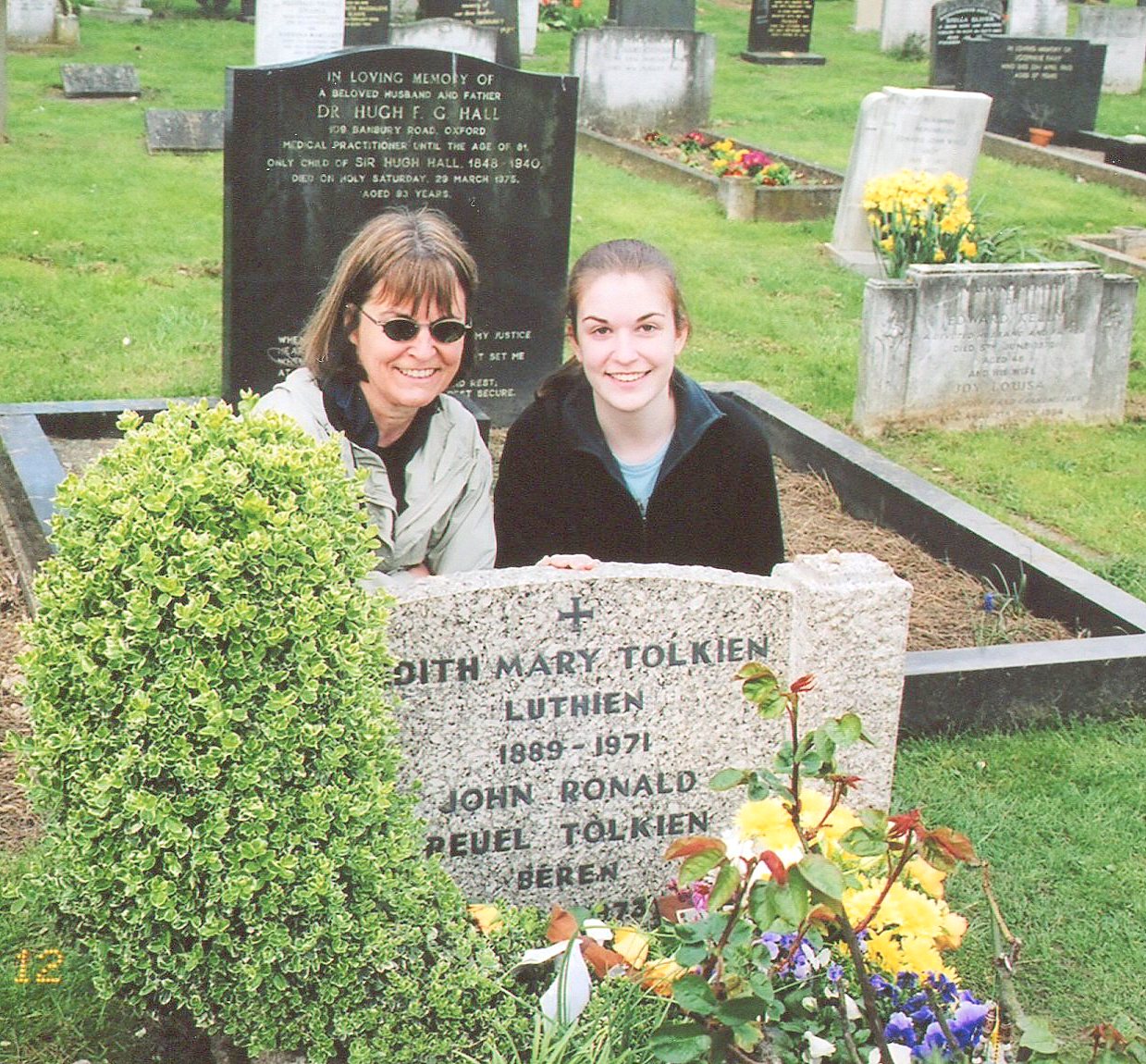
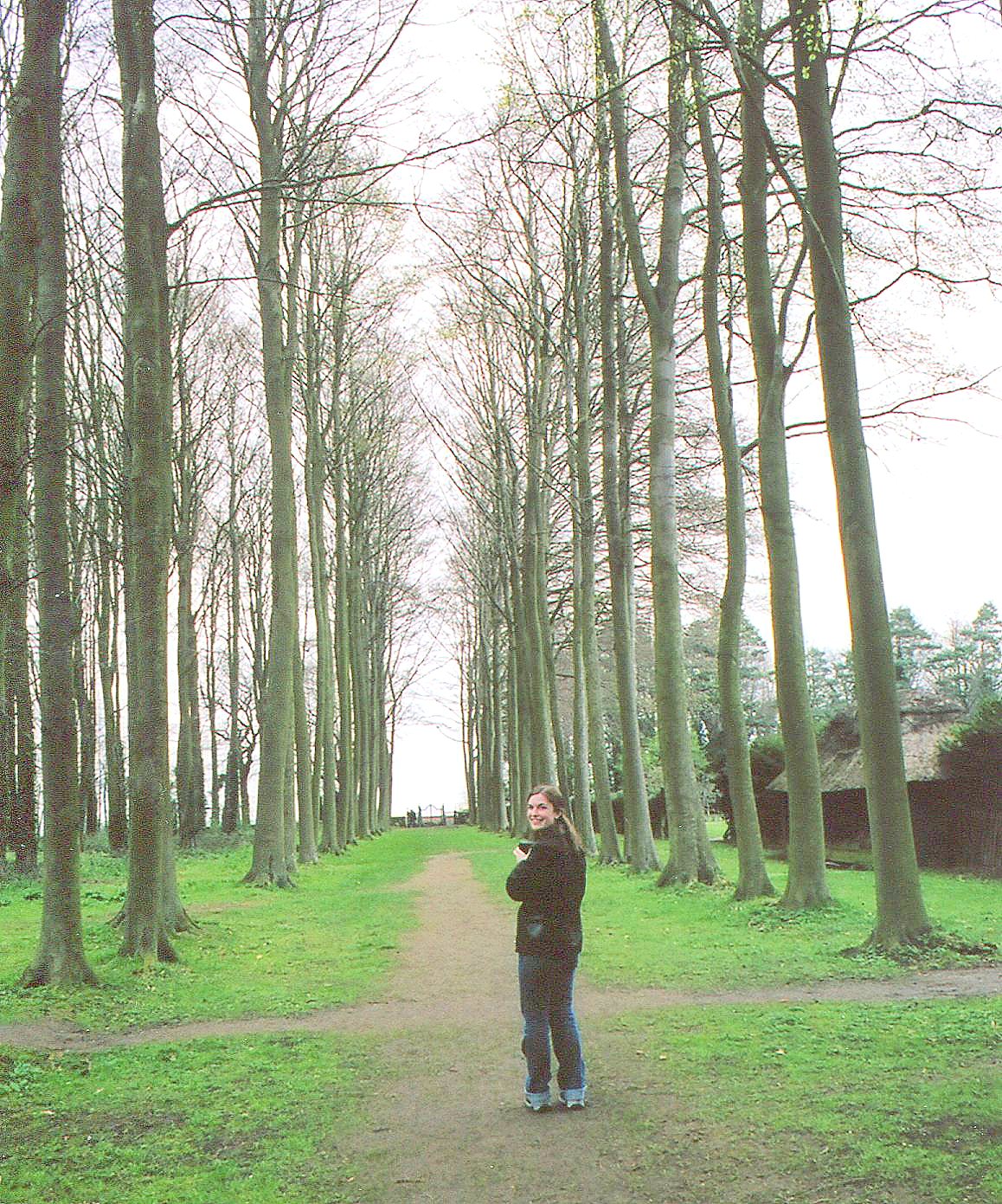
Today the girls and I will be dodging Nazgul cyclists while we walk our trail. Look! I think that’s the Trinity tree! “There and back again” is 6 miles for us.

From J.R.R. Tolkien’s Lord of the Rings

Upon the hearth the fire is red,
Beneath the roof there is a bed;
But not yet weary are our feet,
Still round the corner we may meet

A sudden tree or standing stone
That none have seen but we alone.
Tree and flower and leaf and grass,
Let them pass! Let them pass!

Hill and water under sky
Pass them by! Pass them by!
Still round the corner there may wait
A new road or a secret gate,

And though we pass them by today,
Tomorrow we may come this way
And take the hidden paths that run
Towards the Moon or to the Sun.

Apple, thorn, and nut and sloe,
Let them go! Let them go!
Sand and stone and pool and dell,
Fare you well! Fare you well!

Home is behind, the world ahead,
And there are many paths to tread
Through shadows to the edge of night,
Until the stars are all alight.

Then world behind and home ahead,
We’ll wander back to home and bed.
Mist and twilight, cloud and shade,
Away shall fade! Away shall fade!

Fire and lamp and meat and bread,
And then to bed! And then to bed!

Spring Reading Challenge


I’m joining the fray over at Callapidder Days  for the Spring Reading Challenge. Here’s my list of books I’d like to read/re-read.

Clouds of Witness  by Dorothy L. Sayers,  “One of the greatest mystery story writers of this century.”-L.A. Times   

The Screwtape Letters  by C.S. Lewis,   “My dear Wormwood,…”

The Treasure Principle  by Randy Alcorn,  “This book is about the joy of giving”

When People are Big and God is Small by Edward T. Welch,   (Overcoming Peer Pressure, Codependency, and the Fear of Man)

Byzantium by Stephen Lawhead,  An Irish Monk, Aidan, accompanies a gift, the Book of Kells to Byzantium. (Fantasy)

Oops! I forgot I’ll need to read Harry Potter and the Half Blood Prince by J.K. Rowling so I’m ready for book #7.

Just for the record I’m finishing Practical Christianity by William Wilberforce, and Living the Cross Centered Life by C.J. Mahaney before I move on to the rest.

Update: You can find my book reviews here;

https://happywonderer.wordpress.com/2007/04/04/spring-reading-challenge-book-reviews/

https://happywonderer.wordpress.com/2007/04/11/spring-reading-challenge-book-reviews-2/

https://happywonderer.wordpress.com/2007/05/08/book-reviews-byzantium-and-the-treasure-principle/

Let the reading continue!   LNB

Nothing New Under the Sun

The more you read, especially the Bible, the more you find out that phrases and concepts that seem new really go way back to another time or another author. Take the following quote from Tolkien’s, The Lord of the Rings, that “dear” just read to me:

“Ever he would search and would question us above all else concerning the Great Battle that was fought upon Dagorlad in the beginning of Gondor, when He whom we do not name was overthrown.”

Does that ring a bell my fellow Harry Potter fans?

Two other phrases that are in the Bible and used in recent movies, songs, etc.

In 1 Samuel 14:7 Jonathon’s armor-bearer says “Go ahead; I am with you heart and soul.” Are any of you singing a tune after reading that. (I think I’m dating myself here)

“Mene, Mene, Tekel, Parsin” ” Tekel, you have been weighed in the balances and found wanting;” Daniel 5:27

This phrase was used in the movie “A Knight’s Tale”

Any others you can think of?

Blessings, LNB

Walkie Talkie


John Piper, The Pleasures of God

“Prayer is the walkie talkie on the battlefield of the world. It calls on God for courage (Eph. 6:19). It calls in for troop deployment and target location (Acts 13: 1-3). It calls in for protection and air cover (Matt. 6:13; Luke 21:36). It calls in for fire power to blast open a way for the Word (Col. 4:3). It calls in for the miracle of healing for the wounded soldiers (James 5:16). It calls in for supplies for the forces (Matt. 6:11; Phil. 4:6). And it calls in for needed reinforcements (Matt. 9:38). This is the place of prayer – on the battlefield of the world. It is a wartime walkie talkie for spiritual warfare, not a domestic intercom to increase comforts of the saints. And one of the reasons it malfunctions in the hands of so many Christian soldiers is that they have gone AWOL.”

Between Heaven and Earth: Prayers and Reflections that Celebrate an Intimate God. Copyright 1997 by Ken Gire.

ht: http://www.mobilitypr.com/bloggraffix/scr536.jpg

Magic Charm or The Lord?

Here’s more from Real Christianity by William Wilberforce  (revised and updated by Bob Beltz):

“Let us apply these things to our own lives. Have we cast ourselves completely on the grace of God and the work of Christ? Do we consider these the only source of hope in life? Are we progressing in our affection for the Lord and taking advantage of all resources provided by Him to deepen our love? I think we should bow humbly before the throne of God in prayer and seek the pardon and grace given to us by Jesus. I think we should ask God to create in us a spirit of true repentance and undivided faith in Jesus Christ. I think we should continually strive in these things so that we are not satisfied until we love Him fully. I think we should pray that we would be filled with joy and peace and hope through the work of the Holy Spirit in our lives. I think we should diligently study the Bible so that our affection is rooted and rational. As we meditate on the passion of the Lord and as we worship Him in prayer and praise, we should attempt to practice the presence of Jesus continually.

It makes no sense to take the name of Christian and not cling to Christ. Jesus is not some magic charm to wear like a piece of jewelry we think will give us good luck. He is the Lord. His name is to be written in our hearts in such a powerful way that it creates within us a profound experience of His peace and a heart that is filled with His praise.”

I’m finding this read pretty convicting but real good!  Ellen B.

Wilberforce on Real Christianity

I’ve begun reading Real Christianity (A Paraphrase in Modern English of A Practical View of the Prevailing Religious System of Professed  Christians in the Higher and Middle Classes in This Country, Contrasted with Real Christianity. Published in 1797. by William Wilberforce, Esq. Member of Parliament for the County of York – Revised and Updated by Dr. Bob Beltz (Regal From Gospel Light, Ventura, Ca., USA)

In 1797 long descriptive titles for books were in vogue. I’m amazed how up to date the issues of Wilberforce’s day are. I’m posting the following from the book. I’m finding it’s one of those books where I want to share every other paragraph! The following is from the first chapter titled, The State of Contemporary Christianity (Cultural Christianity, What the Bible Says, the Problem of Ignorance)

“Understanding Christianity is not something that comes without effort. Almost every example in the natural world teaches us this principle. The very way we must exert effort to enjoy all the good things God has provided illustrates this lesson. No one expects to reach the heights of success in education, the arts, finance or athletics without a great deal of hard work and perseverance. We often use the expression “You have to really want it!” Growing in our faith requires the same. Christianity is based on a revelation from God that is filled with information that the natural mind could never have imagined. The wealth of this knowledge will never be mastered without diligent effort.

Carefully studying the Bible will reveal to us our own ignorance of these things. It will challenge us to reject a superficial understanding of Christianity and impress on us that it is imperative not to simply be religious or moral, but also to master the Bible intellectually, integrate its principles into our lives morally, and put into action what we have learned practically.

The Bible is one of God’s greatest gifts to humanity. It tells us of the greatest gift that men and women have longed for through-out the ages and of which the prophets spoke about for centuries. When Jesus finally came, His arrival was hailed by the angelic host with the exclamation, “Glory to God in the highest, and on earth peace to men on whom his favor rests” (Luke 2:14). How can you measure the value of the good news of Christ? It is spoken of in the Bible as light in the darkness, freedom from slavery and life from death. Look at how much the Early Church valued the message. They received it with great joy and overflowing gratitude.

Surely all these things should help us come to terms with the inexpressible value of true faith. The greatest gift of God is often either rejected outright or treated as if it is of little worth. But if we really began to study the Bible, we would be impressed with the proper value of the gift.”