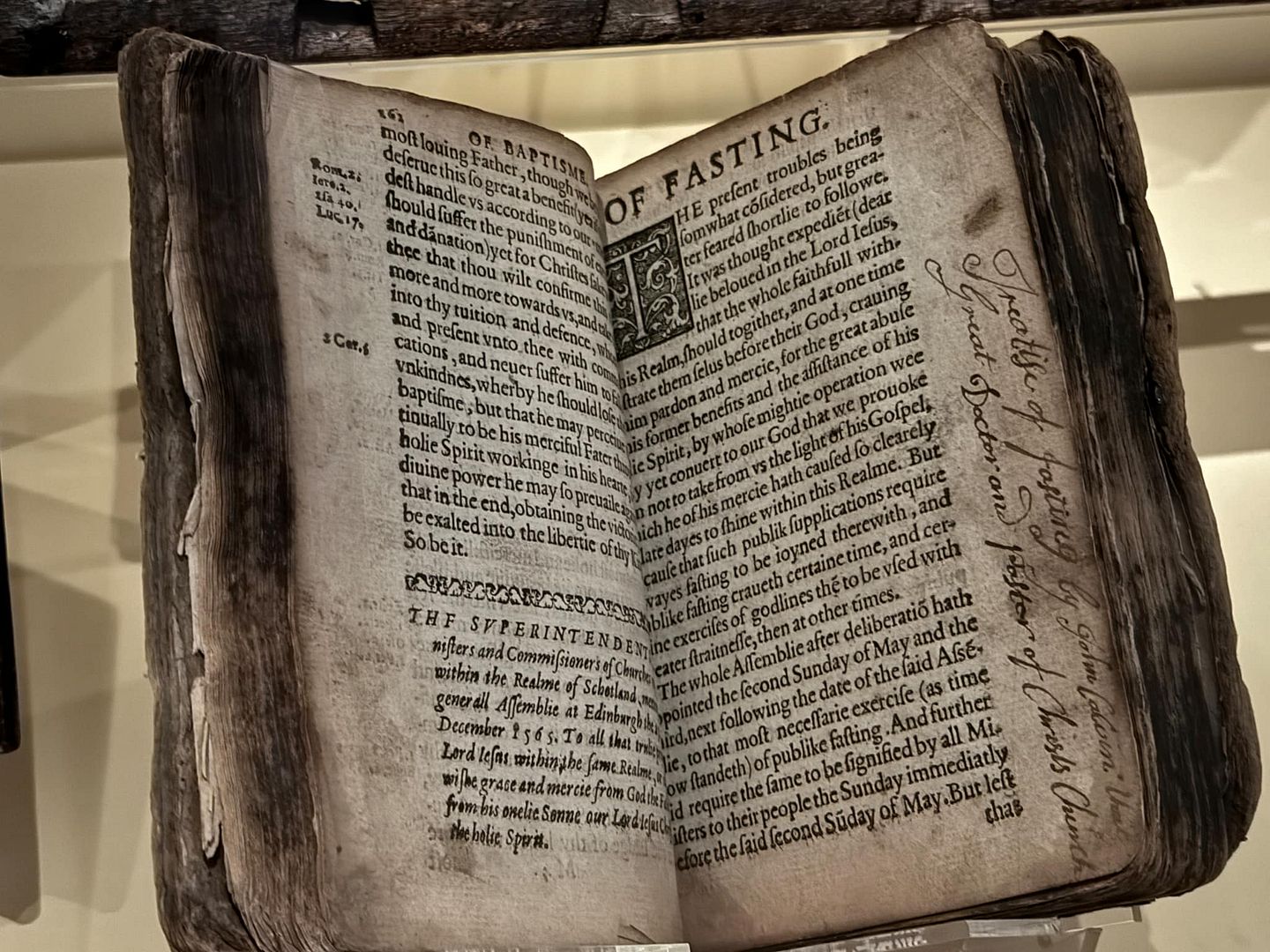
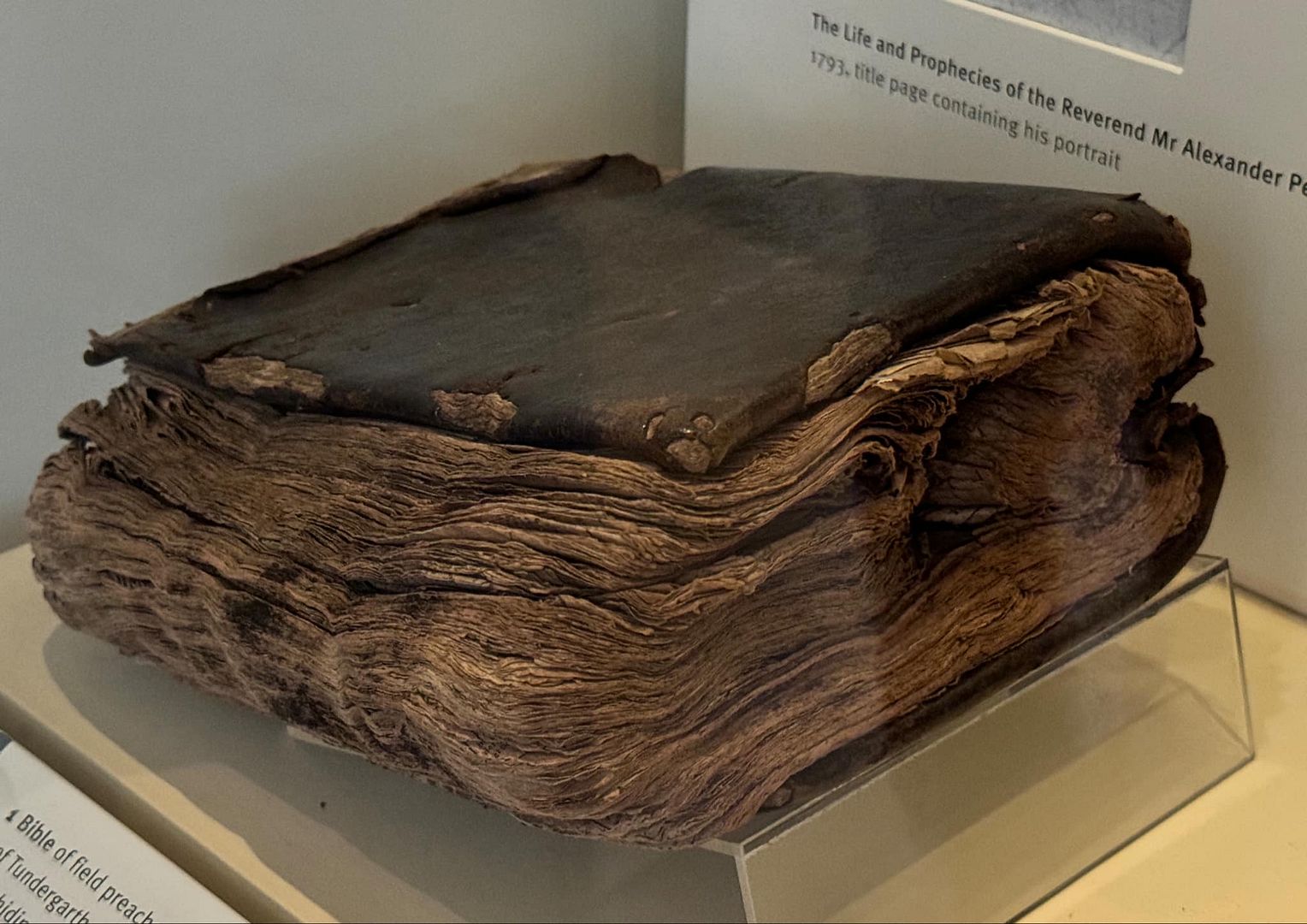
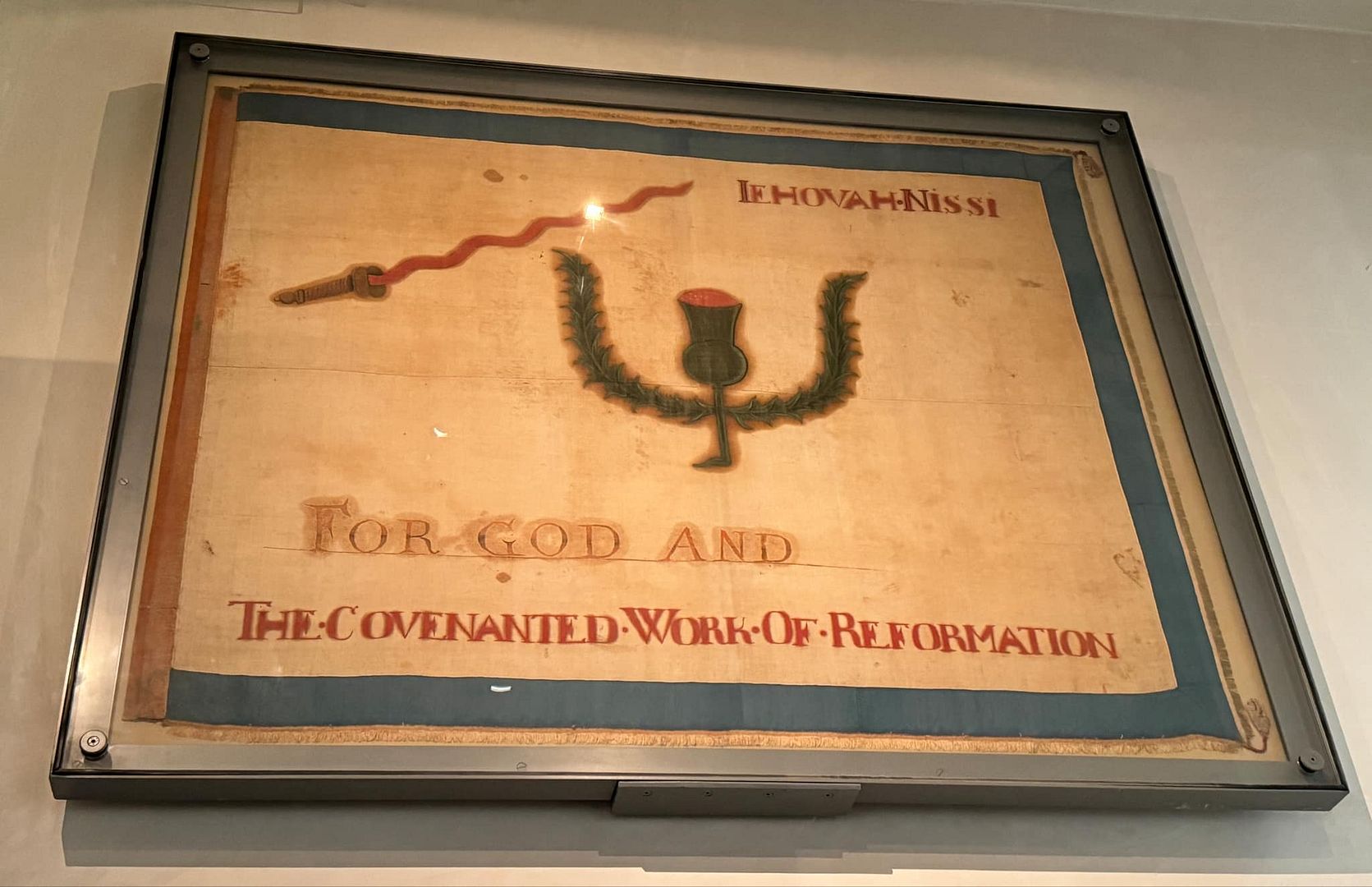
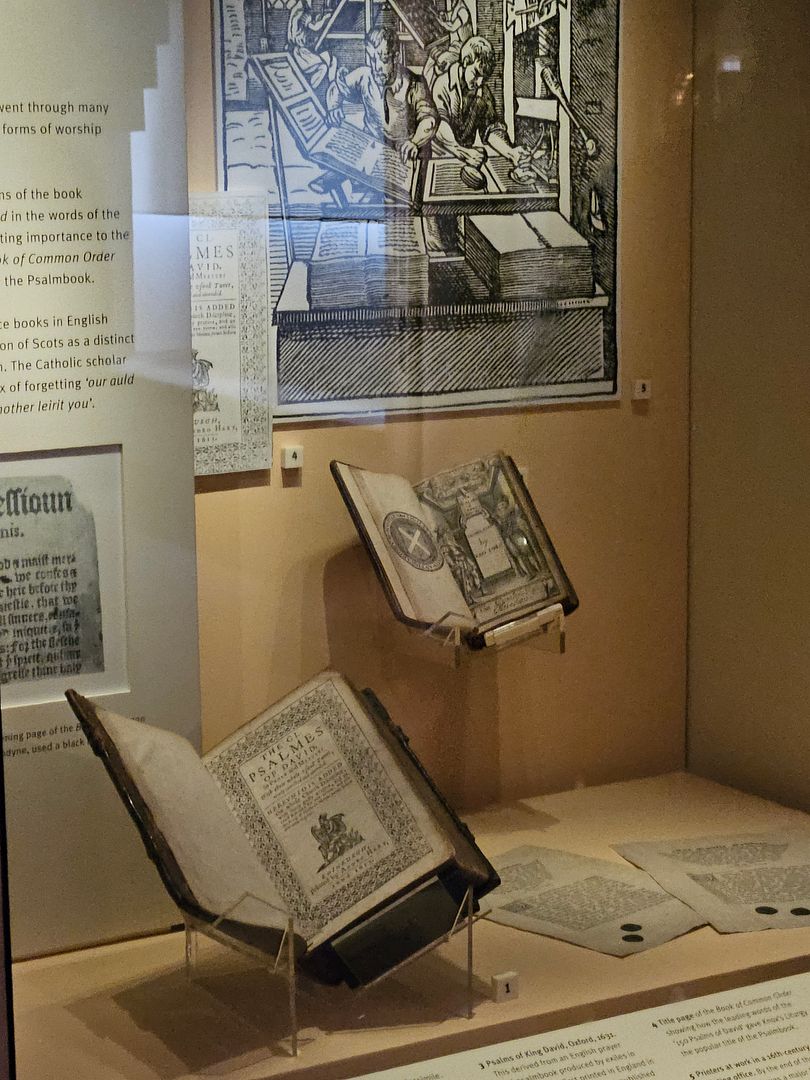
From Grassmarket, Jimmy took us to The National Museum of Scotland and to the National Library where we saw more artifacts and information about the Covenanters and The Reformation.
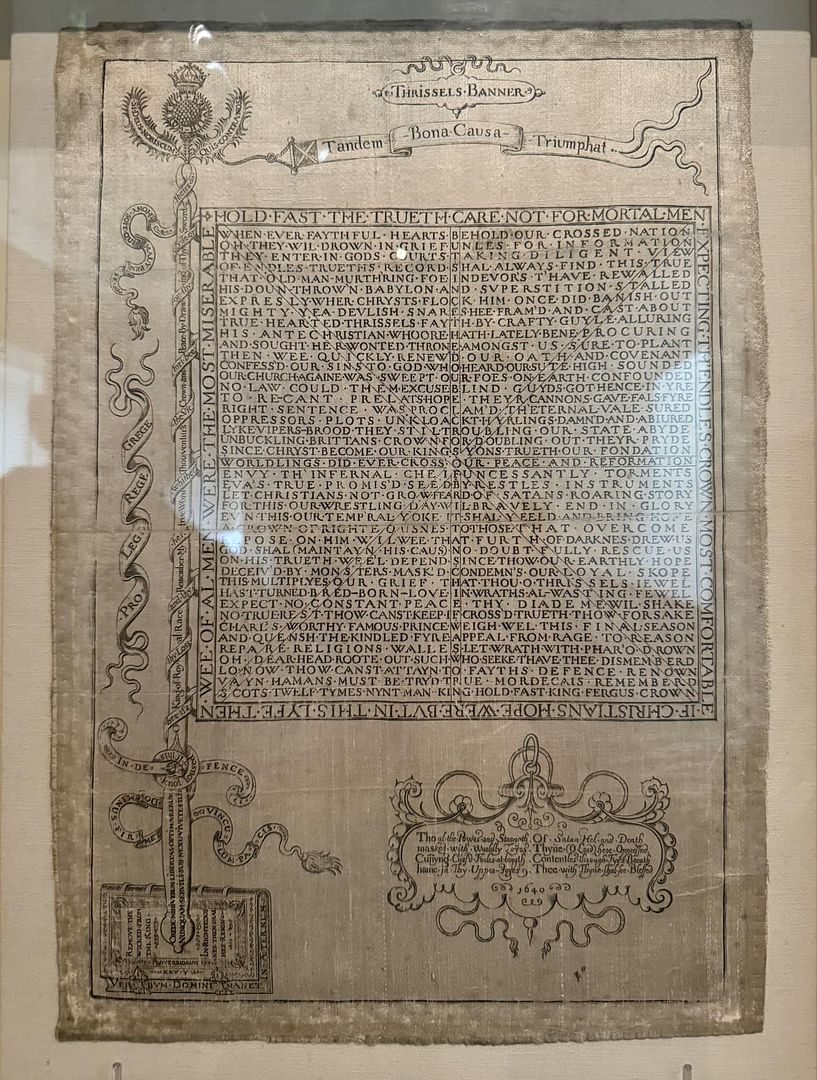
This printed satin banner, known as the ‘Thrissels Banner’, dates from 1640. The text on the banner was written by Thomas Cunynghame. It expresses opposition to the Crown and to the contemporary policy of religious anglicization.
On the left is the ‘staff’ of the banner, shown as a sword with a crowned thistle and bible at either end.
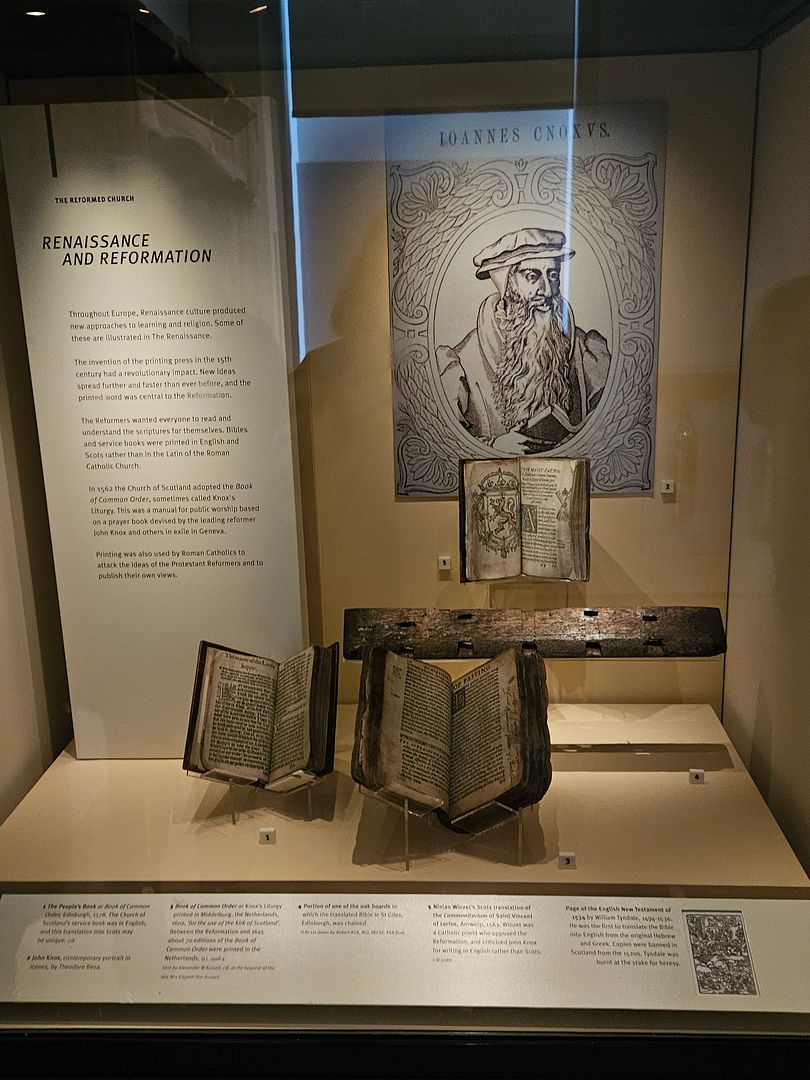
John Knox is a notable figure in Scotland’s history and in Christendom.
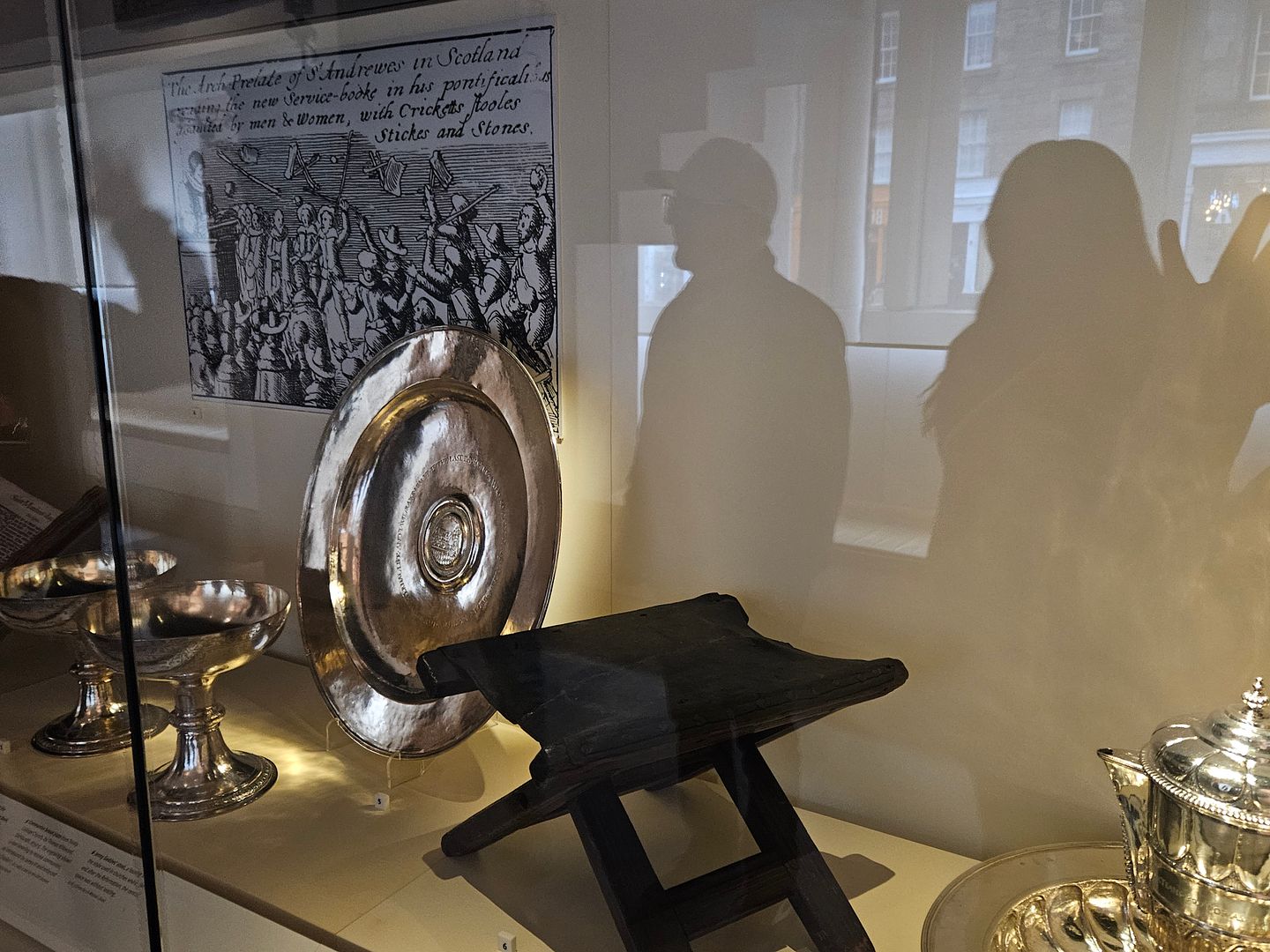
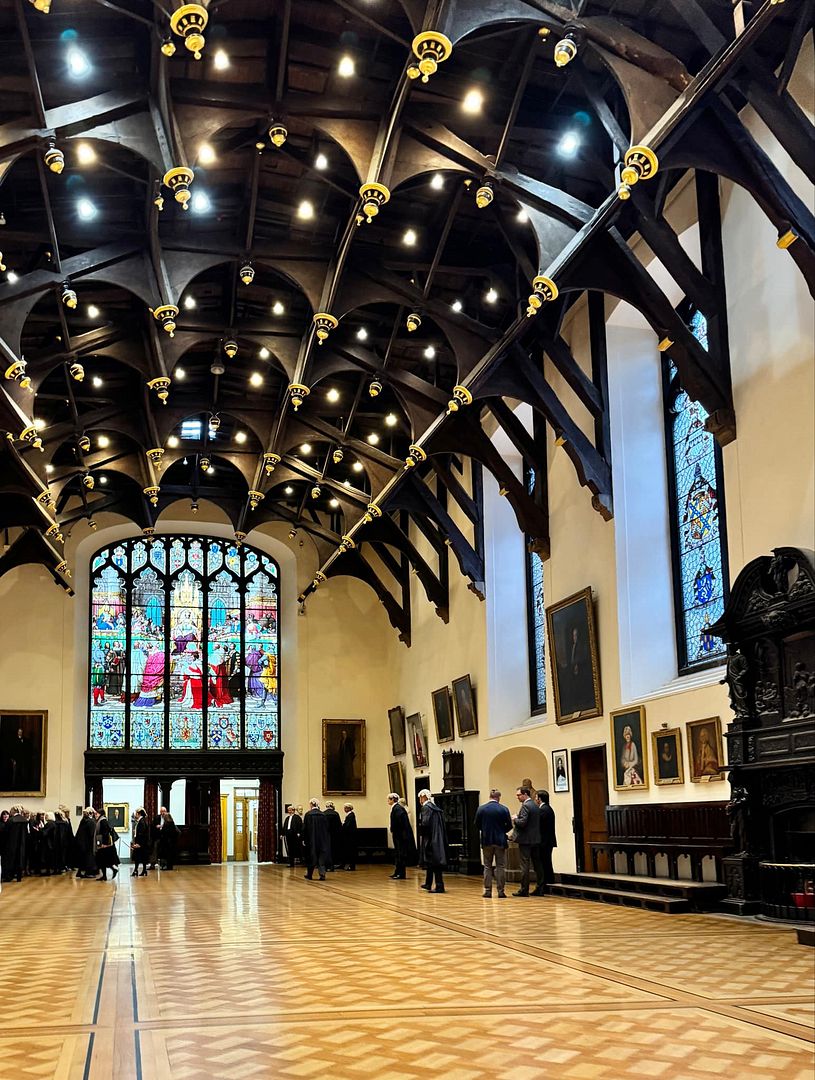
Jenny Geddes chair of which I was very interested. I’ll share more about it with a photo from St. Giles Cathedral in another post.
From the museum and library we made our way to Greyfriars Kirkyard.
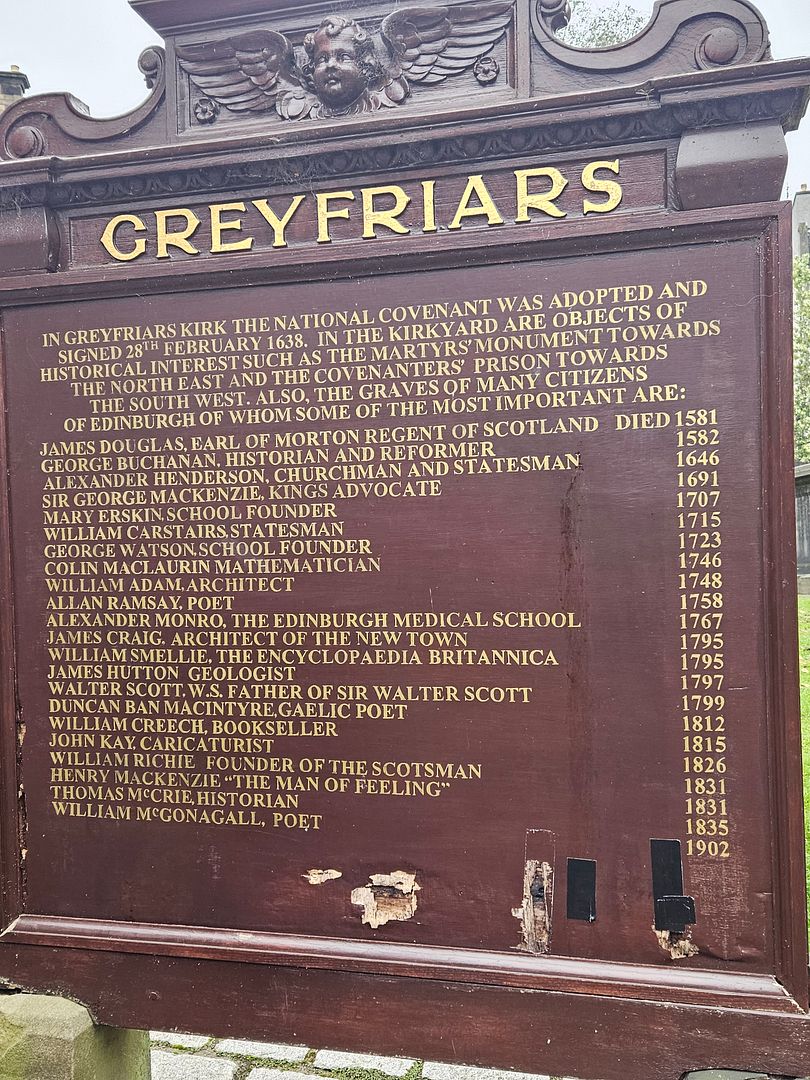
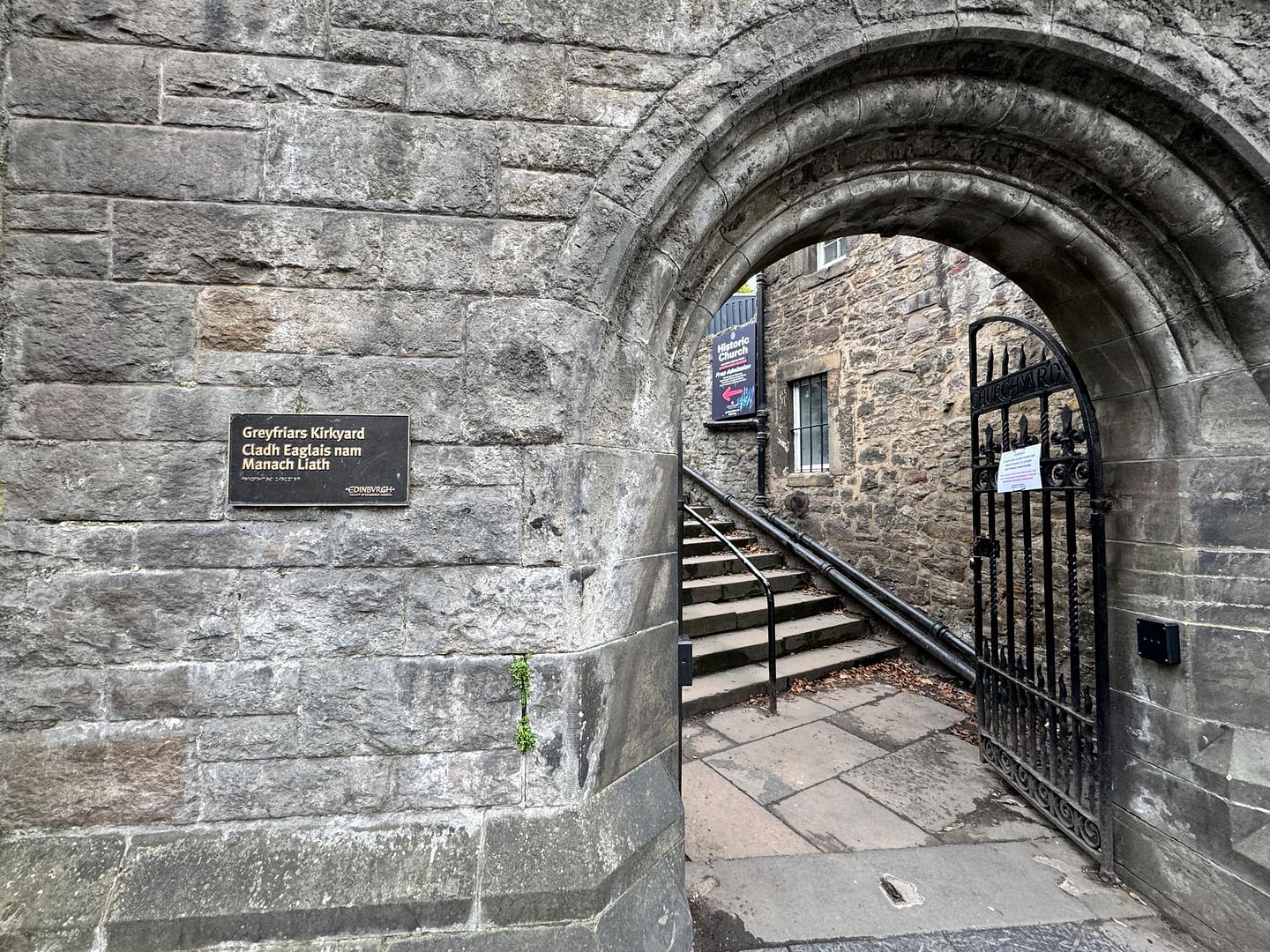
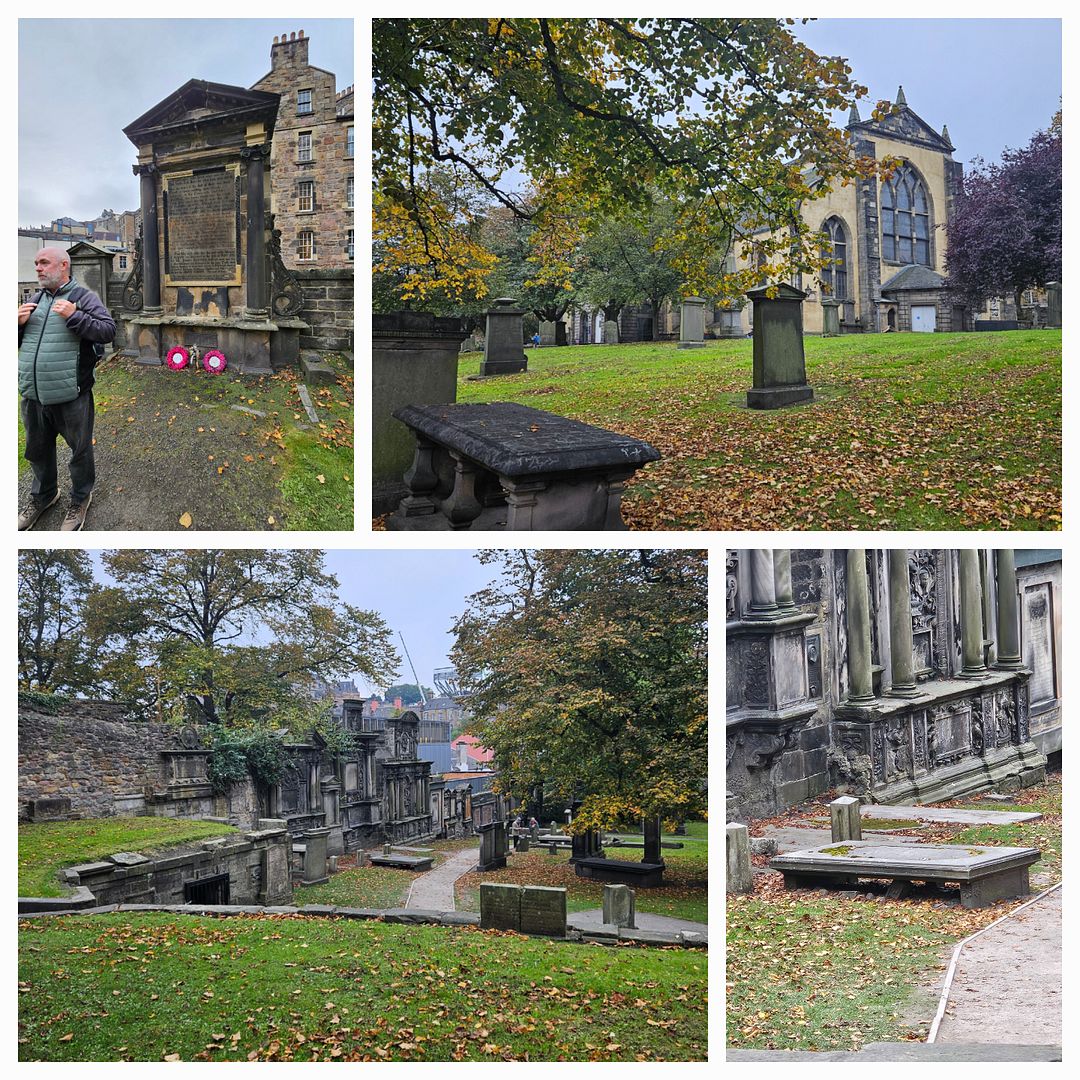
If you venture down to Greyfriars’ Kirk graveyard, which these days sees hordes of Harry Potter devotees brandishing their wands and reciting Potterite spells, you will find a large monument at the bottom right of this fascinating corner of Edinburgh. The monument towers above you and recalls the Covenanting struggle. The monument, first erected in 1706, then rebuilt in its 1771 version, has undergone restoration work up until recent times.
The Martyr’s Monument.
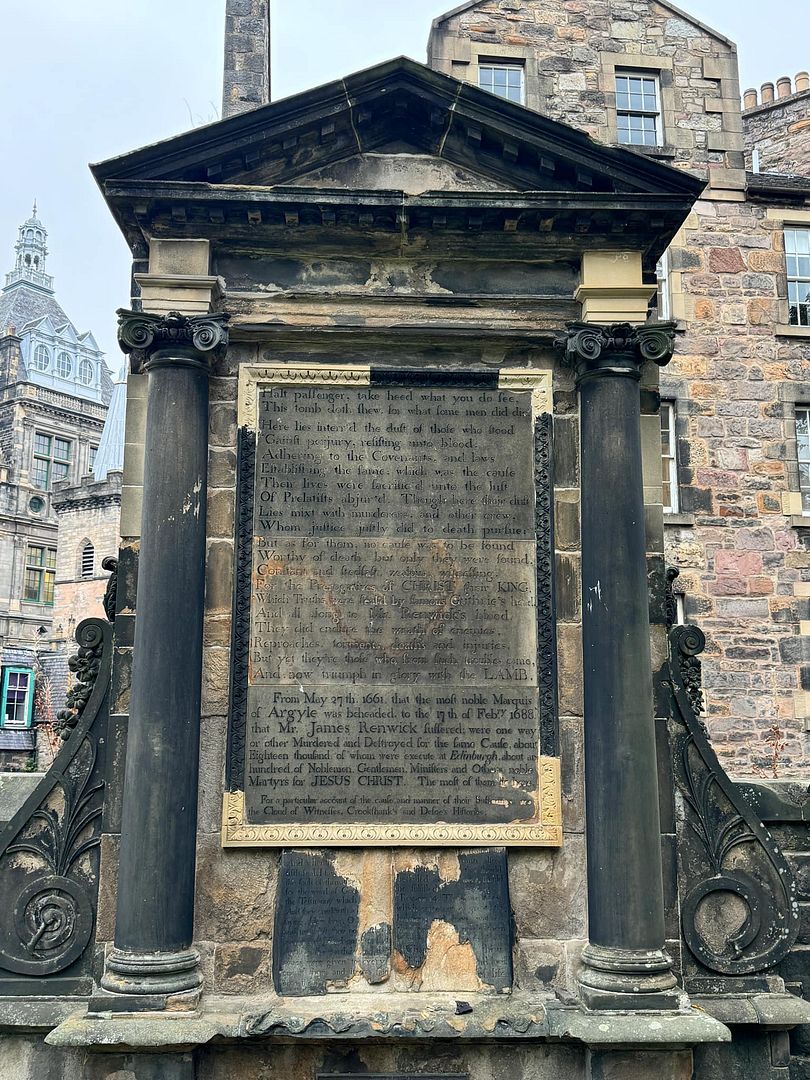
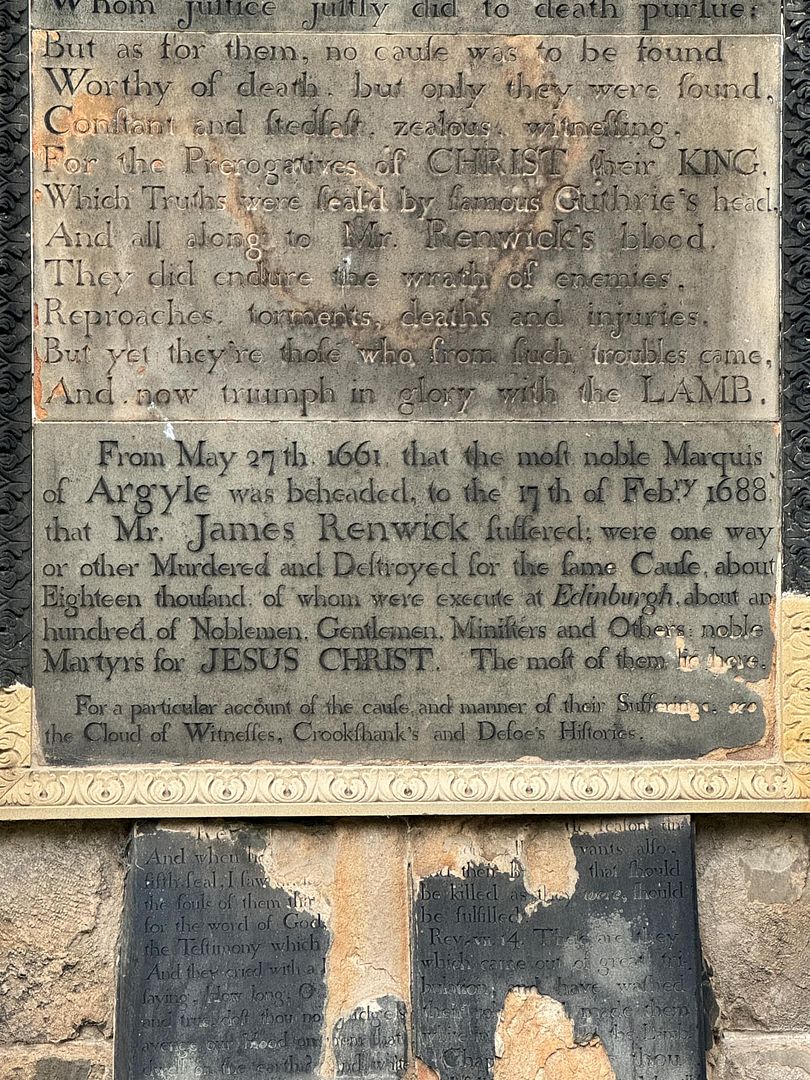
‘Halt passenger, take heed what you do see…’ The text then outlines the Covenanters’ cause ‘Gainst perjury, resisting unto blood: Adhering to the Covenants and Laws, their lives were sacrific’d unto the lust of Prelatiffs [bishops] abjur’d …’. The words ‘CHRIST their KING’ is deliberately written in large letters, designating their struggle against tyrant kings who wanted absolute power over Church and State. At the bottom of the monument, it states that ‘one way or other [were] Murdered and Destroyed for the same Cause, about Eighteen thousand of whom were execute at Edinburgh, about one hundred of Noblemen, Gentlemen, Ministers and others, noble martyrs for JESUS CHRIST.’
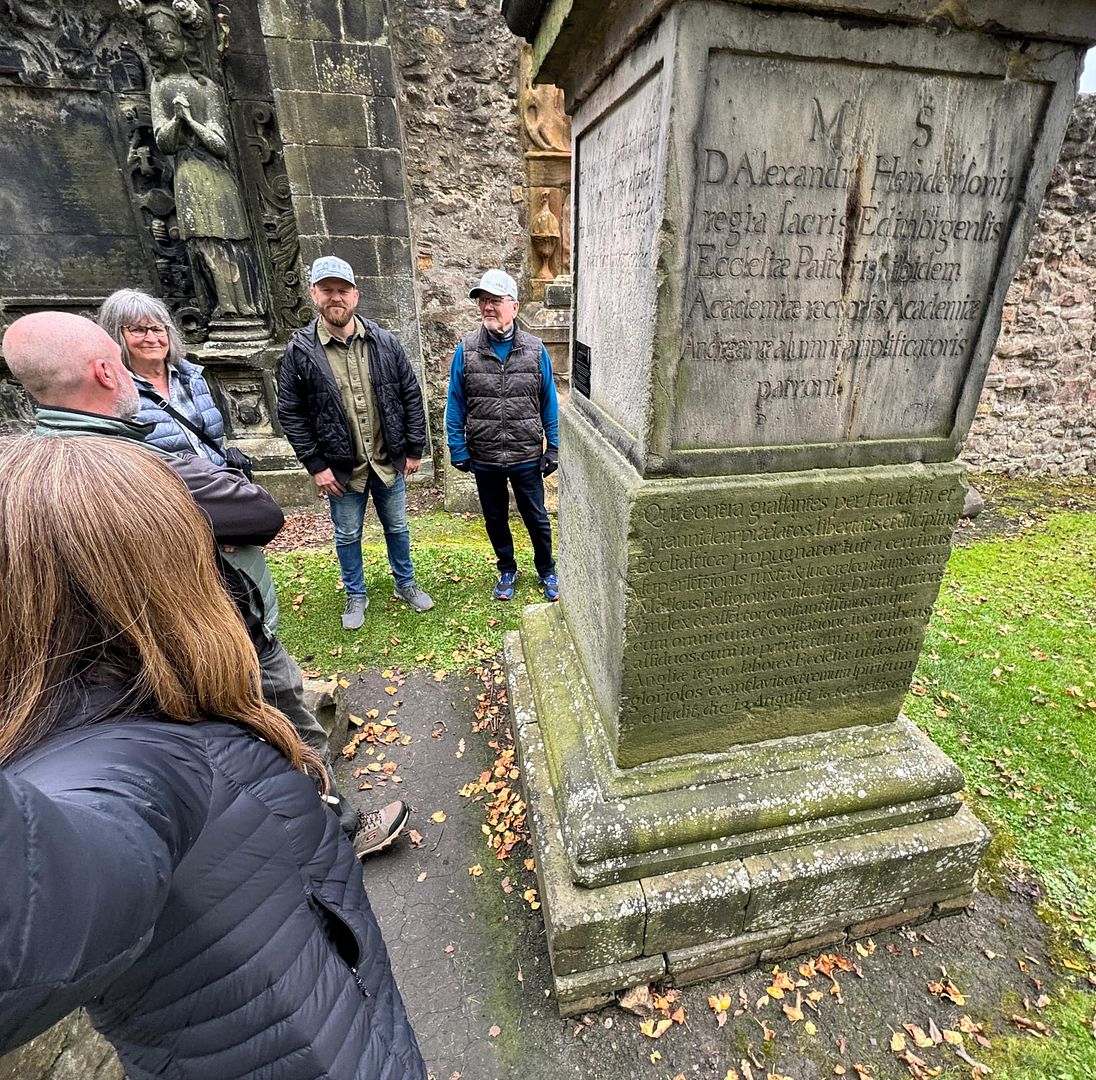
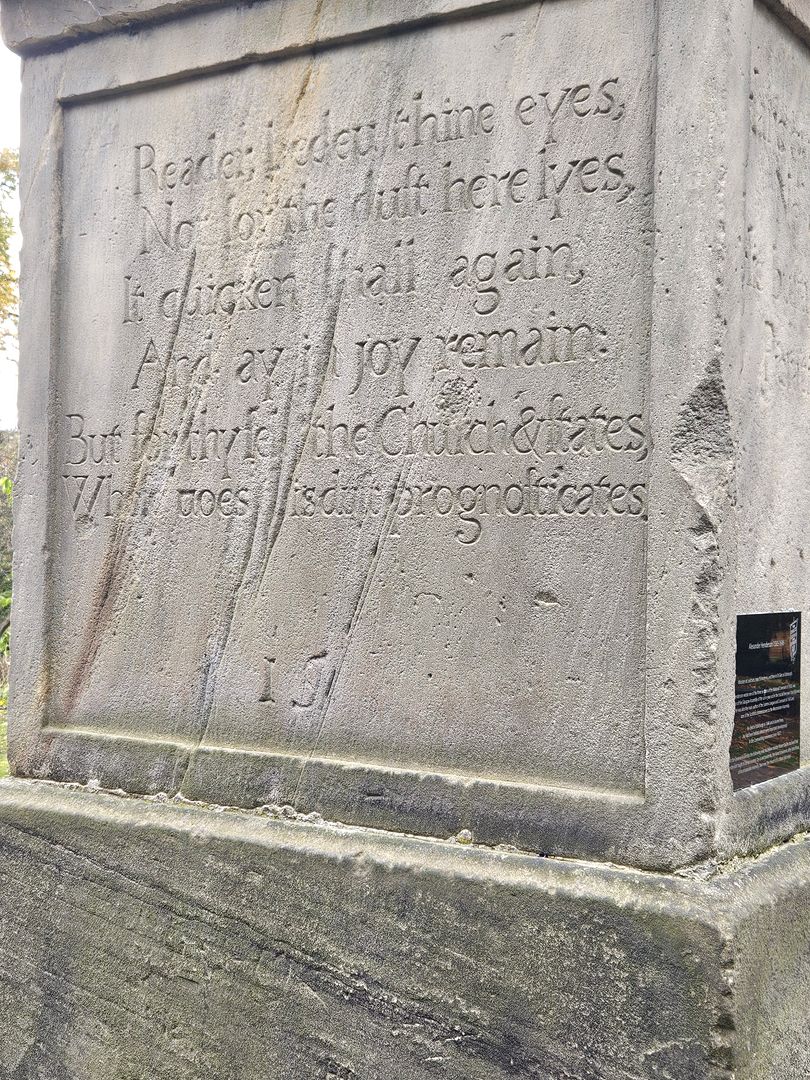
We heard about the Reverend Alexander Henderson at this site of his burial.
He was one of Scotland’s greatest Covenanter Ministers.
He died in Edinburgh in 1646 and was buried in Greyfriars kirkyard. He had been behind almost every important development in the Covenanting movement since 1637. At the General Assembly the following year, Baillie declared that Henderson ‘ought to be accounted by us and posterity, the fairest ornament, after John Knox, of incomparable memory, that ever the church of Scotland did enjoy.
Click on his name above to read more about the history of this ‘fairest ornament’.
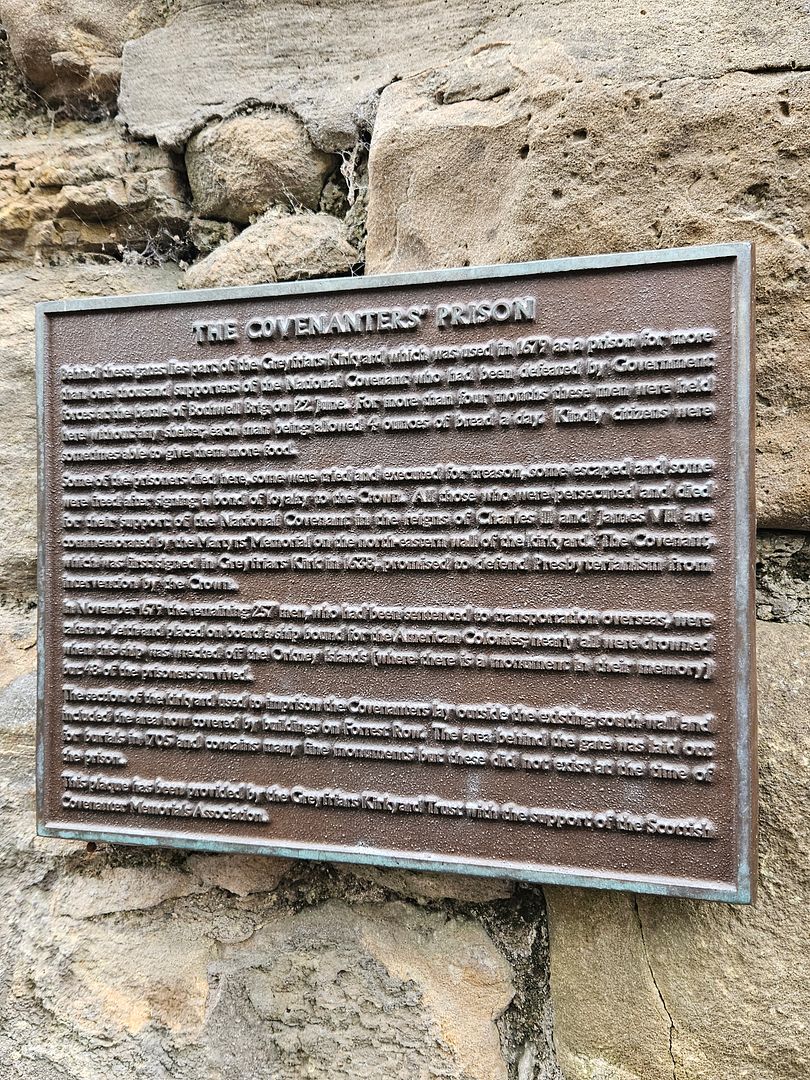
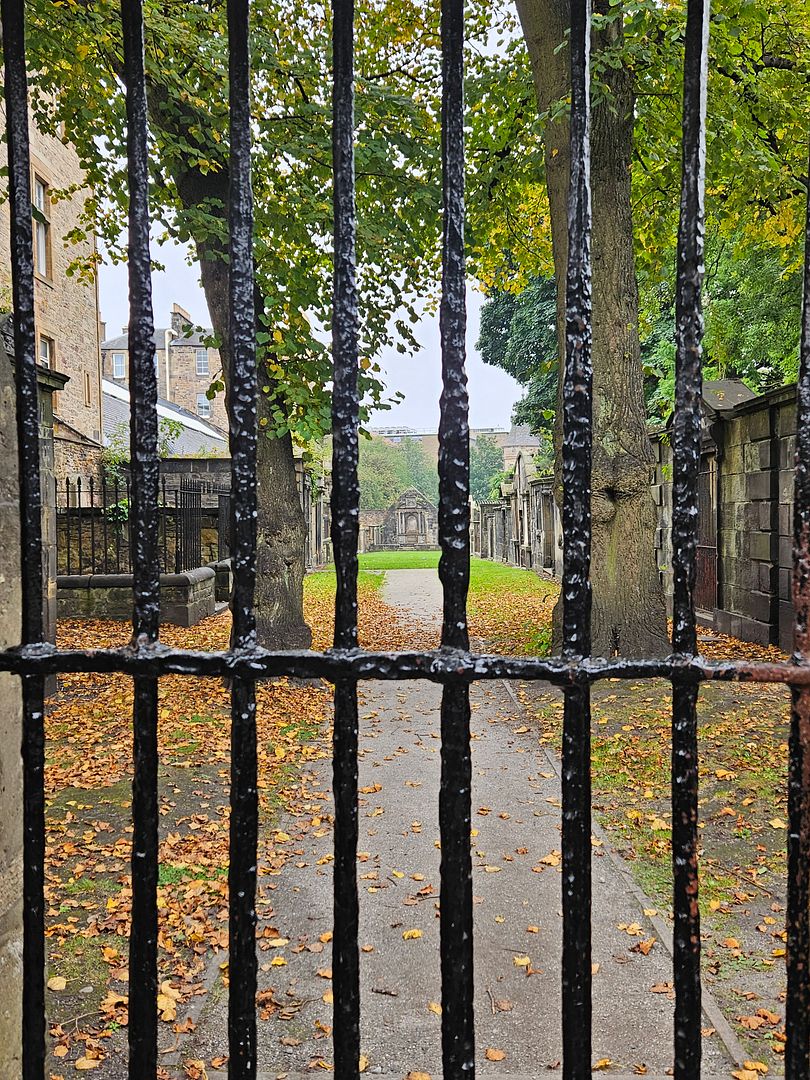
THE COVENANTERS’ PRISON
Behind these gates lies part of the southern section of Greyfriars Kirkyard which was used in 1679 as a prison for over one thousand supporters of the National Covenant who had been defeated by Government forces at the battle of Bothwell Brig on 22 June. For over four months these men were held here without any shelter, each man being allowed 4 ounces of bread a day. Kindly citizens were sometimes able to give them more food.
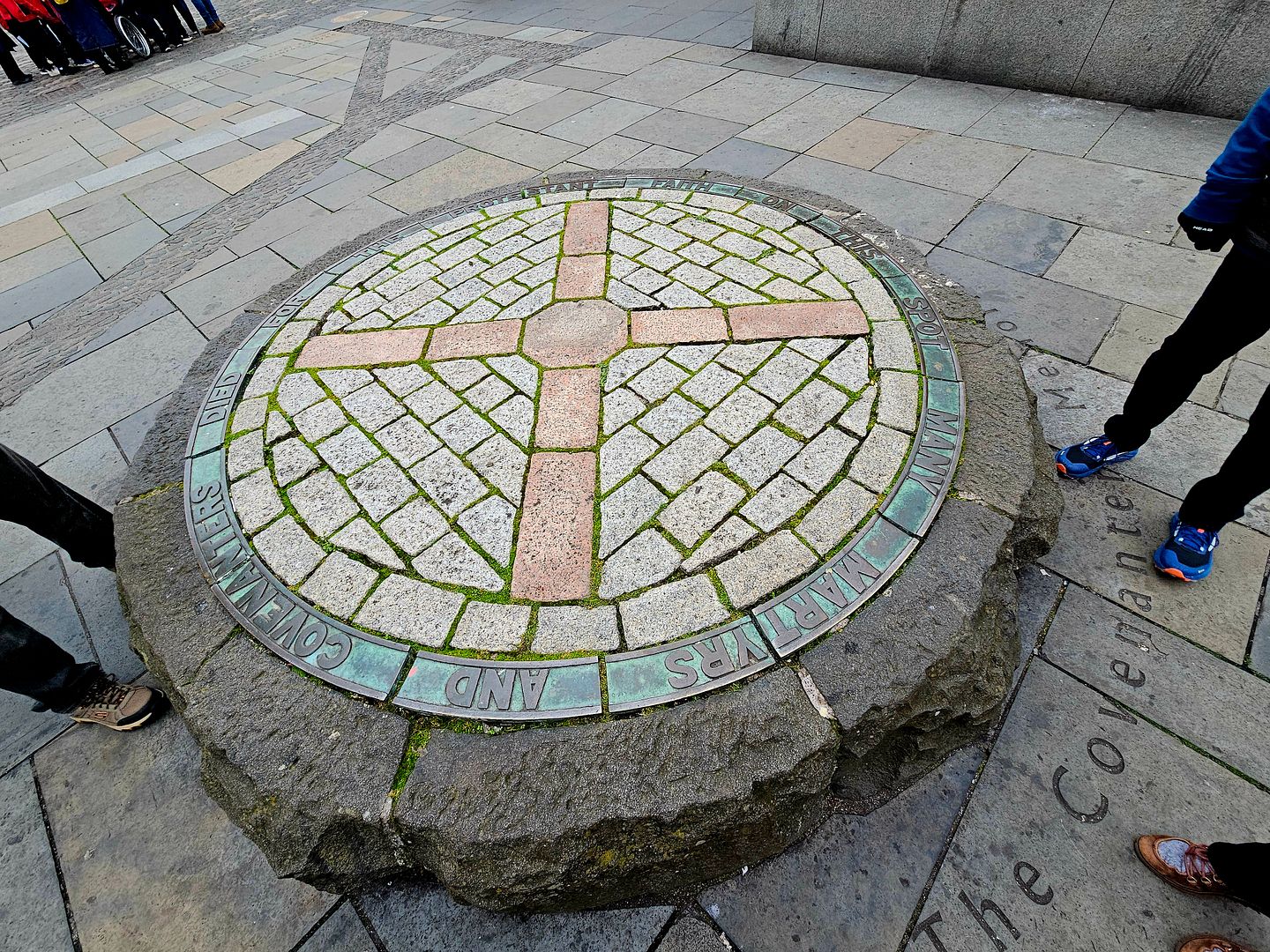
Some of the prisoners died here, some were tried and executed for treason, some escaped, and some were freed after signing a bond of loyalty to the Crown. All those who were persecuted and died for their support of the National Covenant in the reigns of Charles II and James VII are commemorated by the Martyrs’ Memorial on the north-eastern wall of the kirkyard. The Covenant, which was first signed in Greyfriars Kirk in 1638, promised to defend Presbyterianism from intervention by the Crown.
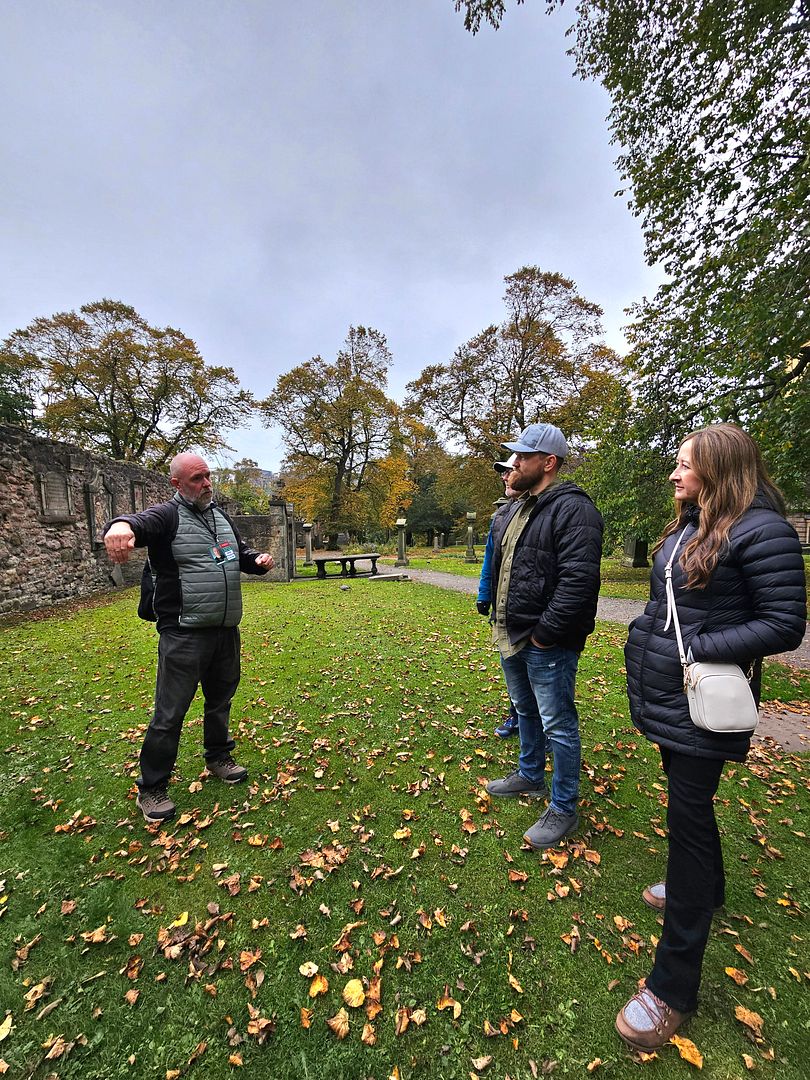
Jimmy our tour guide, was so knowledgeable and we were in awe of all that we were learning on this tour.
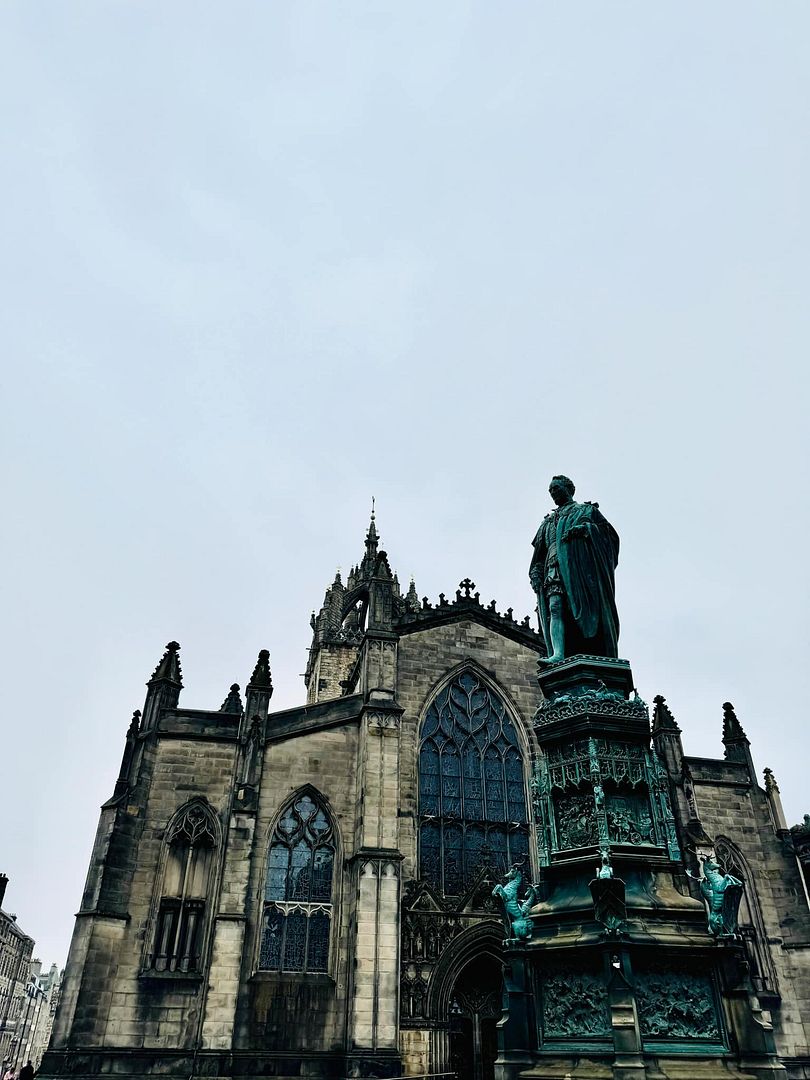
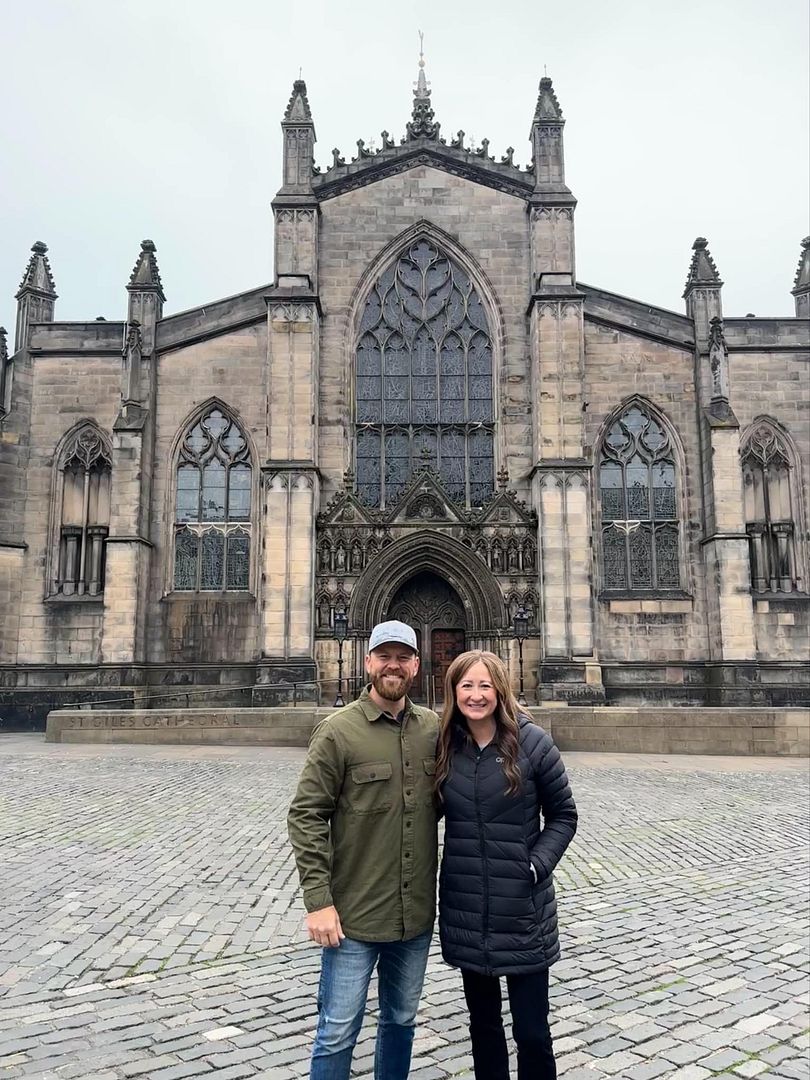
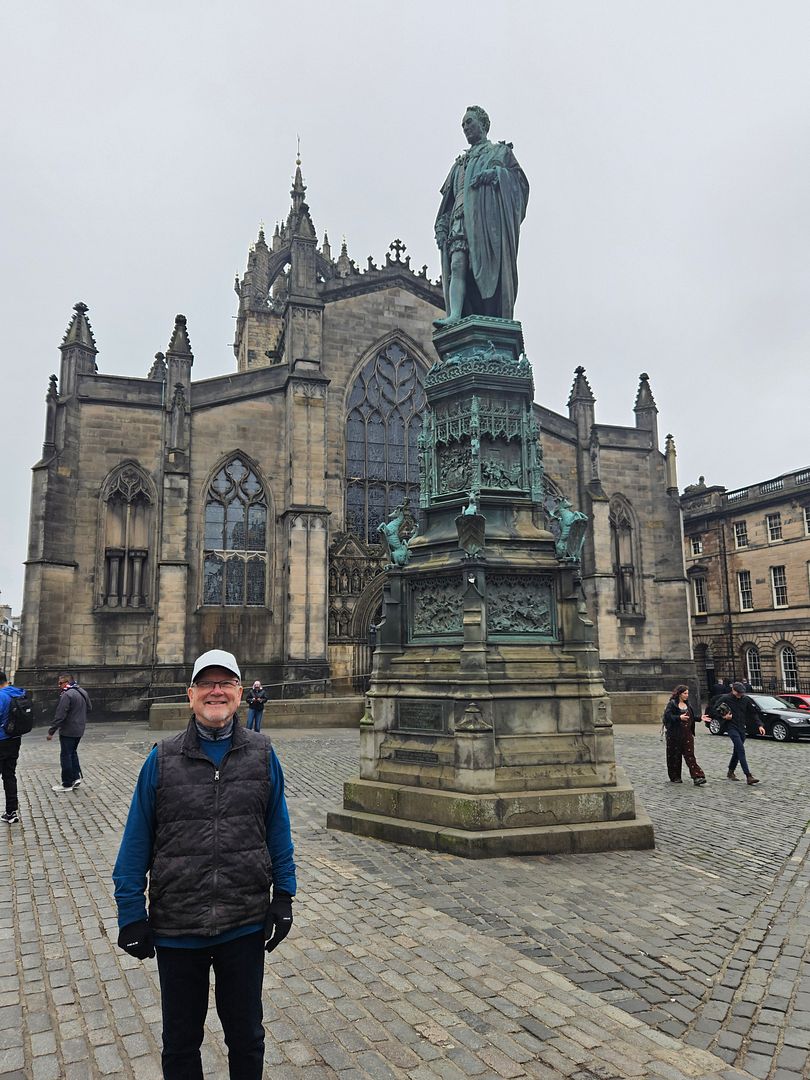
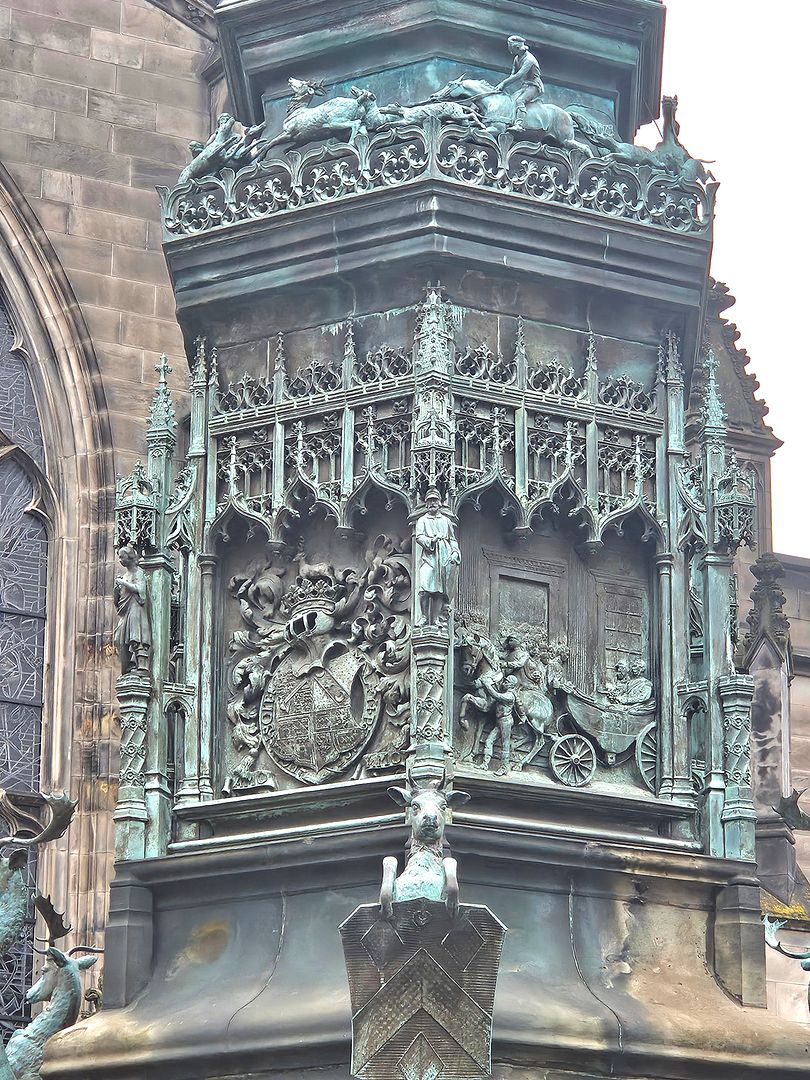
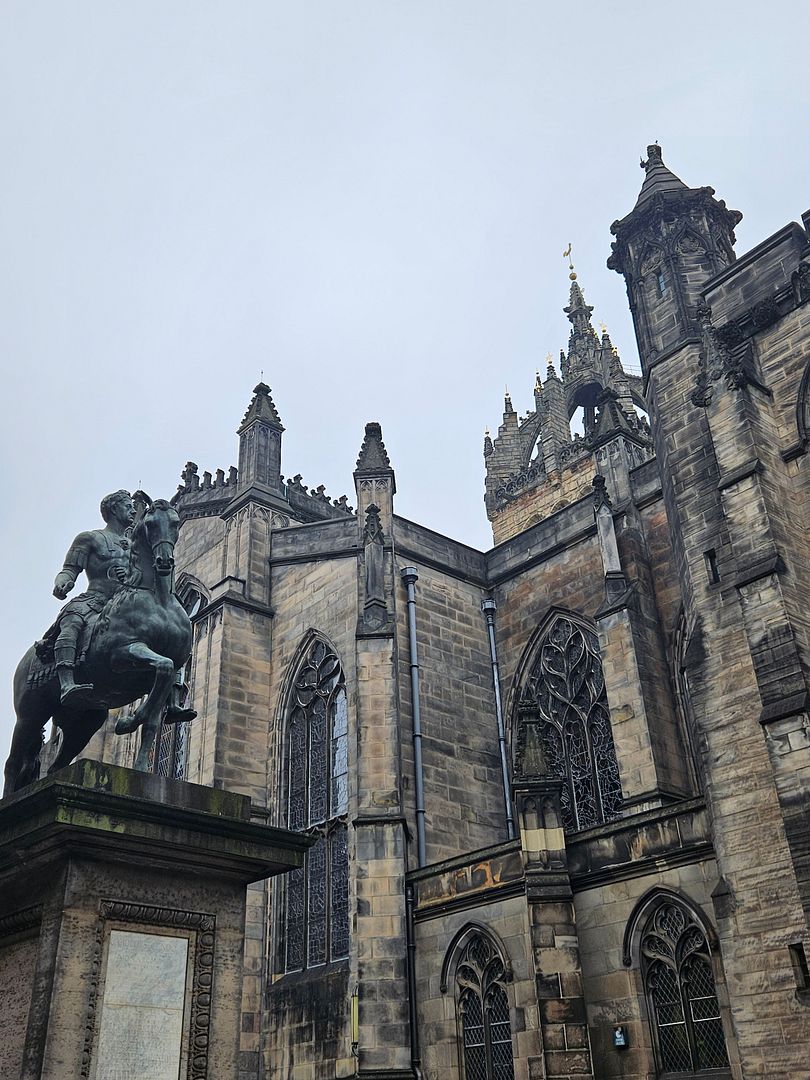
Our last stop with Jimmy would be St. Giles Cathedral. Such a fitting end to this amazing tour of the Covenanters in Edinburgh. It was a humbling experience.
That will be another post.
 The Happy Wonderer ~ ellen b.