This is a historic post that I will probably repost every year during one of the days leading up to Easter. Easter shares the rank with Christmas as my favorite holiday of the year. My winter favorite and my Spring favorite. Easter has more ‘dear to me’ food traditions. Our mom Nadyezhda (Nadia) passed these recipes to us with tweaks along the way. Nadia or Nadya (Надя, accent on first syllable) is the diminutive form of the full name Nadyezhda (Надежда), meaning “hope” and derived from Old Church Slavonic.
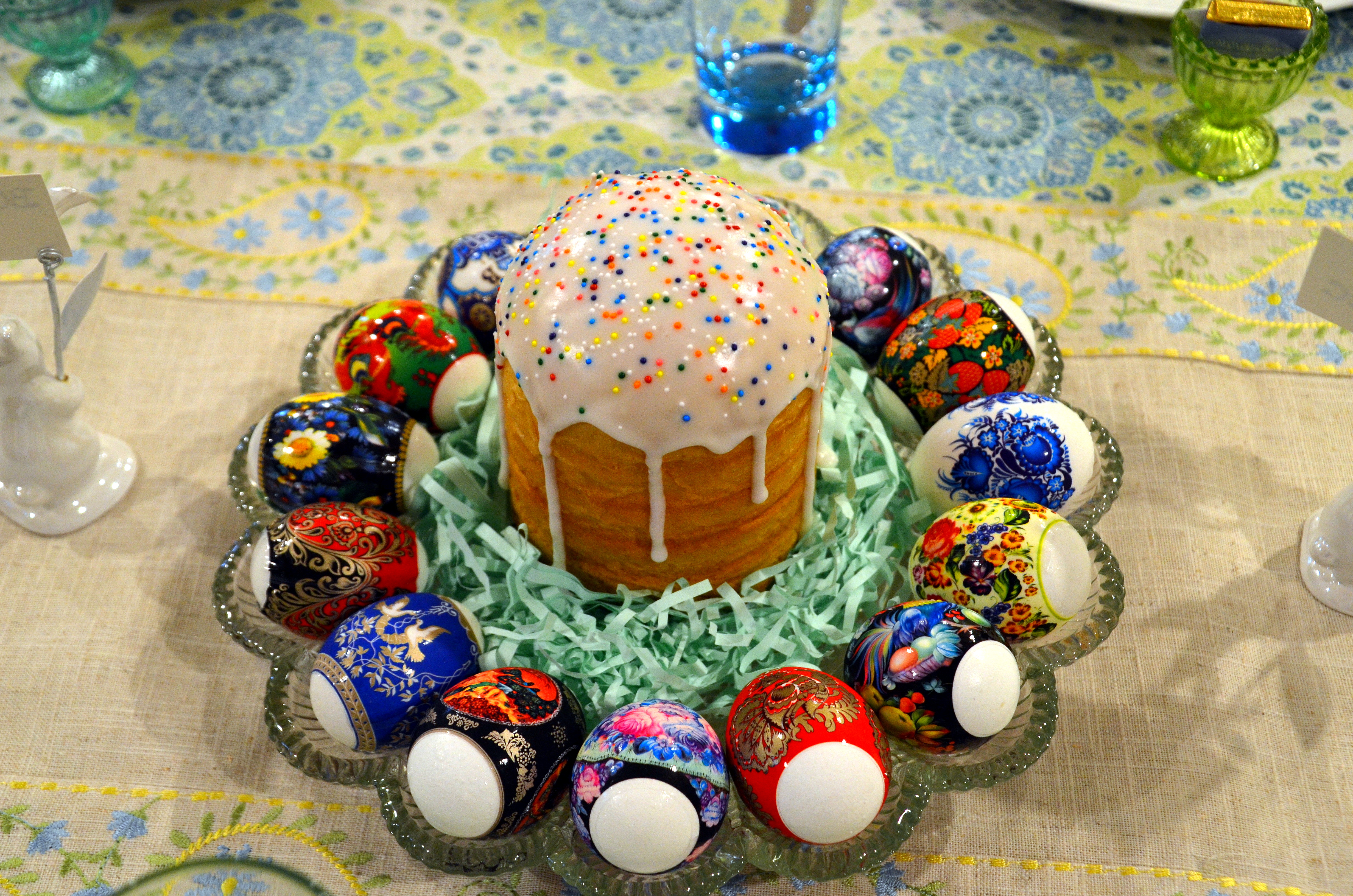


Paska is a slightly sweet Easter yeast bread that is traditional in the Ukraine and Russia. My Russian relatives call this bread Kulich. My mother and relatives always made dozens of loaves in the cylindrical shape using coffee cans or large juice cans.
What many of you call Paska we call Kulich. This is my mom’s Russian Easter Bread Recipe that I quartered because the amount she would make is quite daunting for me. We have cut it in half in years past. What you need to know about my mom and recipes is that she ends up tweaking them from year to year so this recipe is for her Kulich from 2001. I have a 2009 and 2012 recipe, too. This one was easier to quarter. Here’s the link to the original. My dear mom passed away from this earth in September of 2013 so I cherish her tweaked recipes.
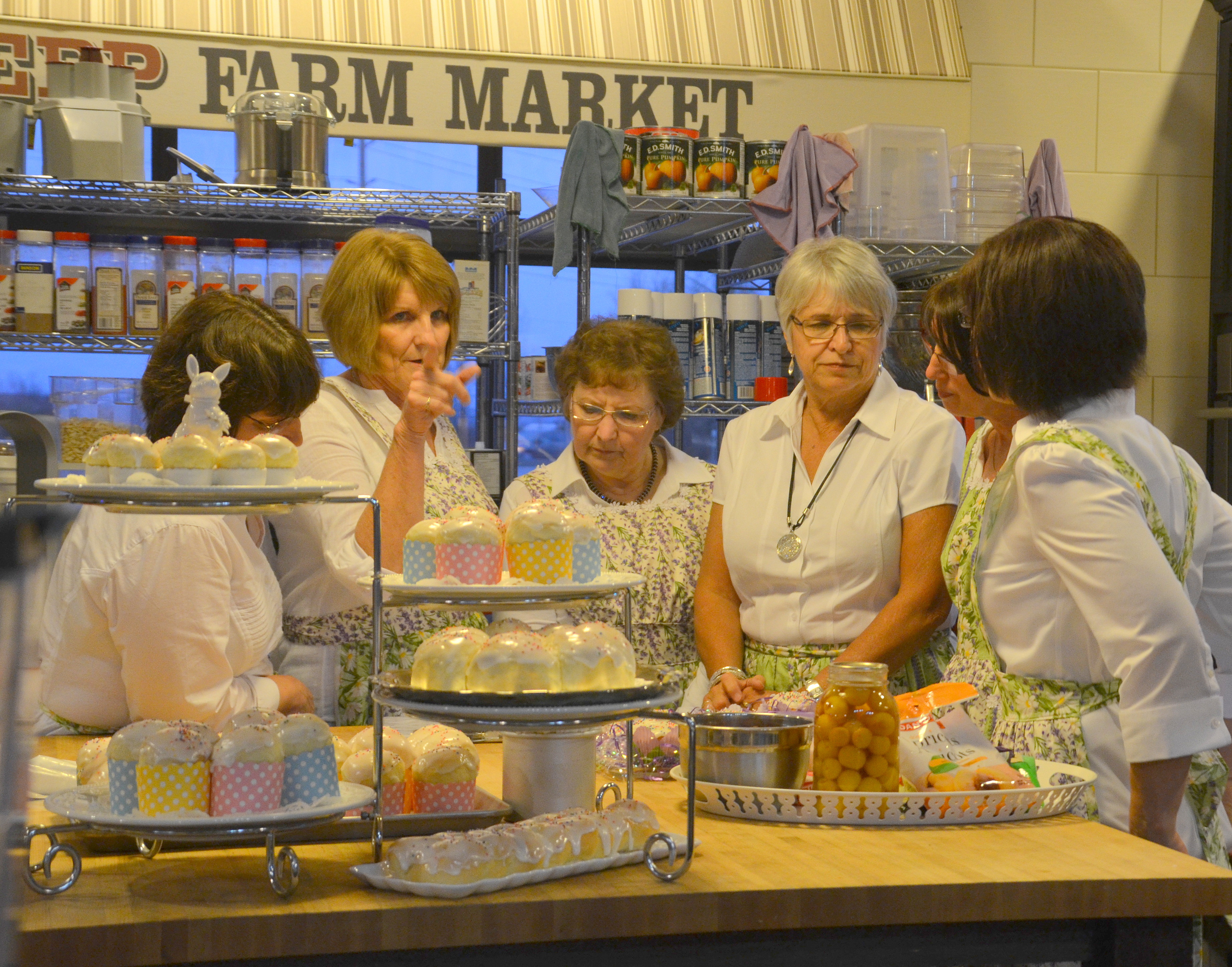
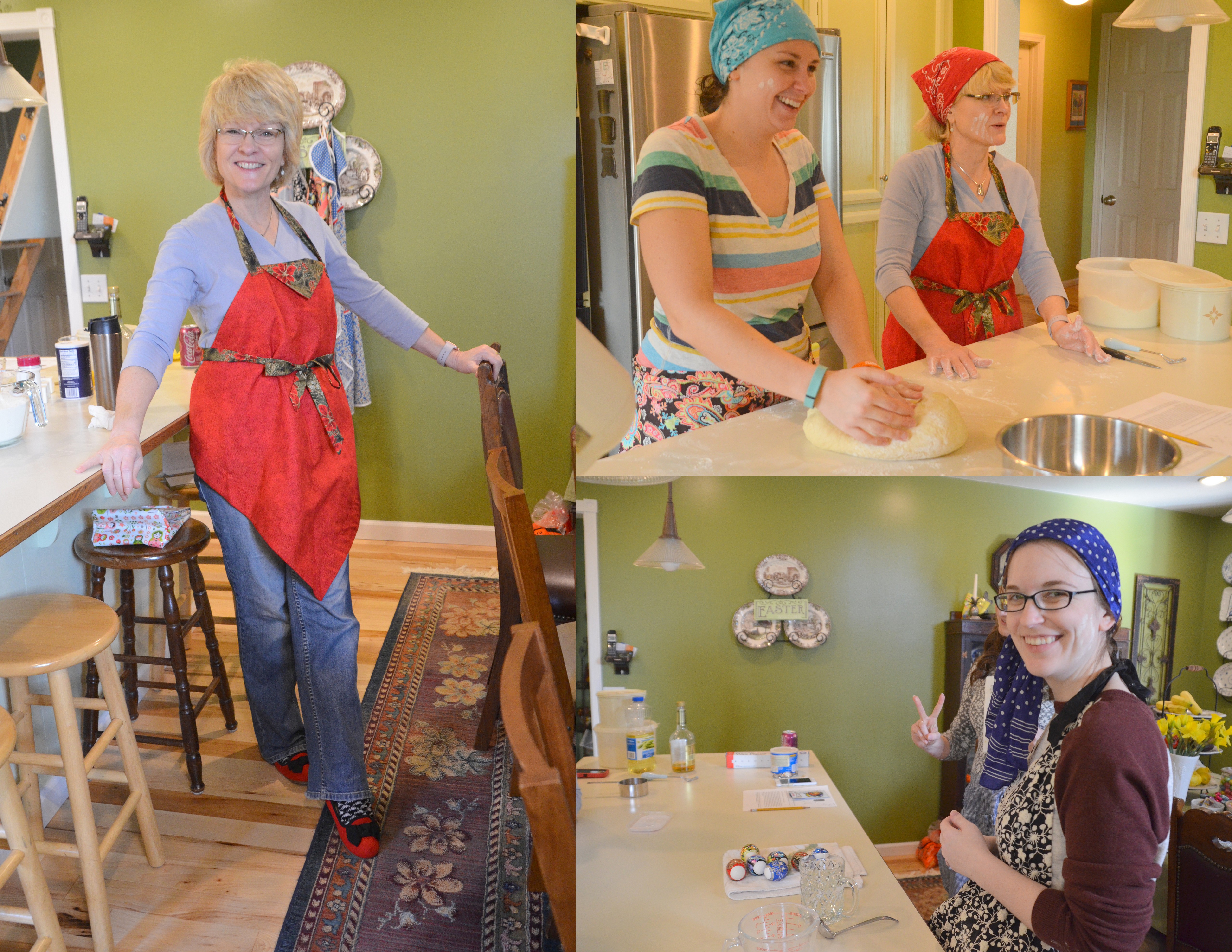
I will post her recipe every year about a week before Easter for inspiration. We like it fresh so many years we bake it on the day in between Good Friday and Easter. This is not a recipe that I would attempt on my own. In my mind it calls for company enjoying the process together, like this group of loved ones in 2016.

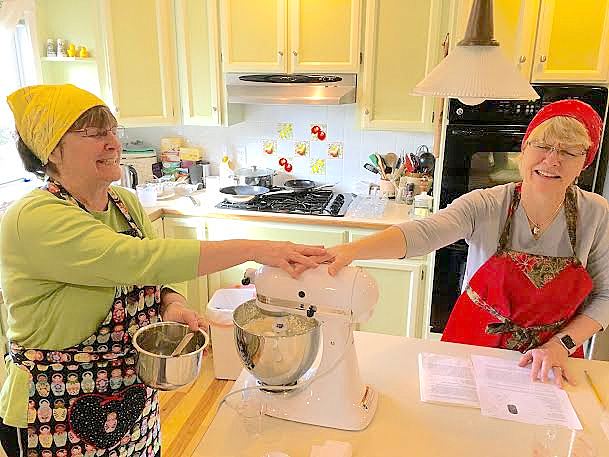
It’s always good to pray over your dough!
Kulich
Ingredients:
- 2 packets rapid rise yeast
1/4 cup lukewarm water
1/4 cup lukewarm milk
1 teaspoon sugar - 4 egg yolks
1 egg
1-1/4 cups sugar
3/4 cup butter
1 cup whipping cream
1 cup half and half
1/2 ounce apricot brandy
1-1/2 teaspoons powdered vanilla
1 teaspoon salt
Zest of half a lemon
About 2-1/2 pounds of flour, sifted (about 7 cups)
Vegetable oil to coat the rising dough - 6 to 7 one pound or two pound cans for baking. You can use loaf pans or large muffin tins if you don’t have the cans to bake them in
Method:
Add yeast to the lukewarm water and milk and sugar in a stainless steel bowl making sure the liquids are lukewarm. Let this mixture dissolve and sit.
Beat the egg yolks and egg together.
Cream the butter and sugar in the large bowl of a stand-up mixer.
Add the eggs to the butter and sugar mixture slowly mixing to combine and then beat to incorporate well.
Mix the half and half with the whipping cream and heat until lukewarm, not hot, and slowly incorporate into the creamed mixture.
Mix in the vanilla and brandy.
Add the yeast mixture and the salt and beat with a mixer.
Continue beating and add the lemon zest.
Continue beating and add the sifted flour about a cup at a time.
Once you cannot beat the dough any longer using the mixer, put the dough on a floured surface and start incorporating the remaining flour by kneading the dough.
The dough should be kneaded very well, approximately 10 minutes.
You should knead the dough until you can cut it with a knife and it is smooth without any holes.
Place the dough in a stainless steel bowl.
Take some oil and pour a little on the dough and spread it all over the dough making sure to turn the dough so it is coated evenly.
Cover with plastic wrap right on the dough and a dish towel on top of that.
Place in a warm place away from drafts to rise.
(My sister usually puts it into the oven that has been warmed slightly).
It is now time to prepare the coffee cans (1 lb. and 2 lb. cans are the best)
Cut circles the size of the bottom of the cans out of wax paper. You will need four circles per can. Make sure the cans are well greased. Put the 4 circles in the bottom of the cans.

Use a empty and clean coffee can like the ones above. If there is a label make sure to take it off. If the can has a lip at the top you’ll need to use a can opener to cut the lip off the can. I hope these pictures will make the process easier to understand.
After putting the circles in the bottoms of the cans, cut sheets of wax paper long enough to line the sides of the can and tall enough to be 2″ above the rim of the can. Use Crisco to seal the ends of the paper.
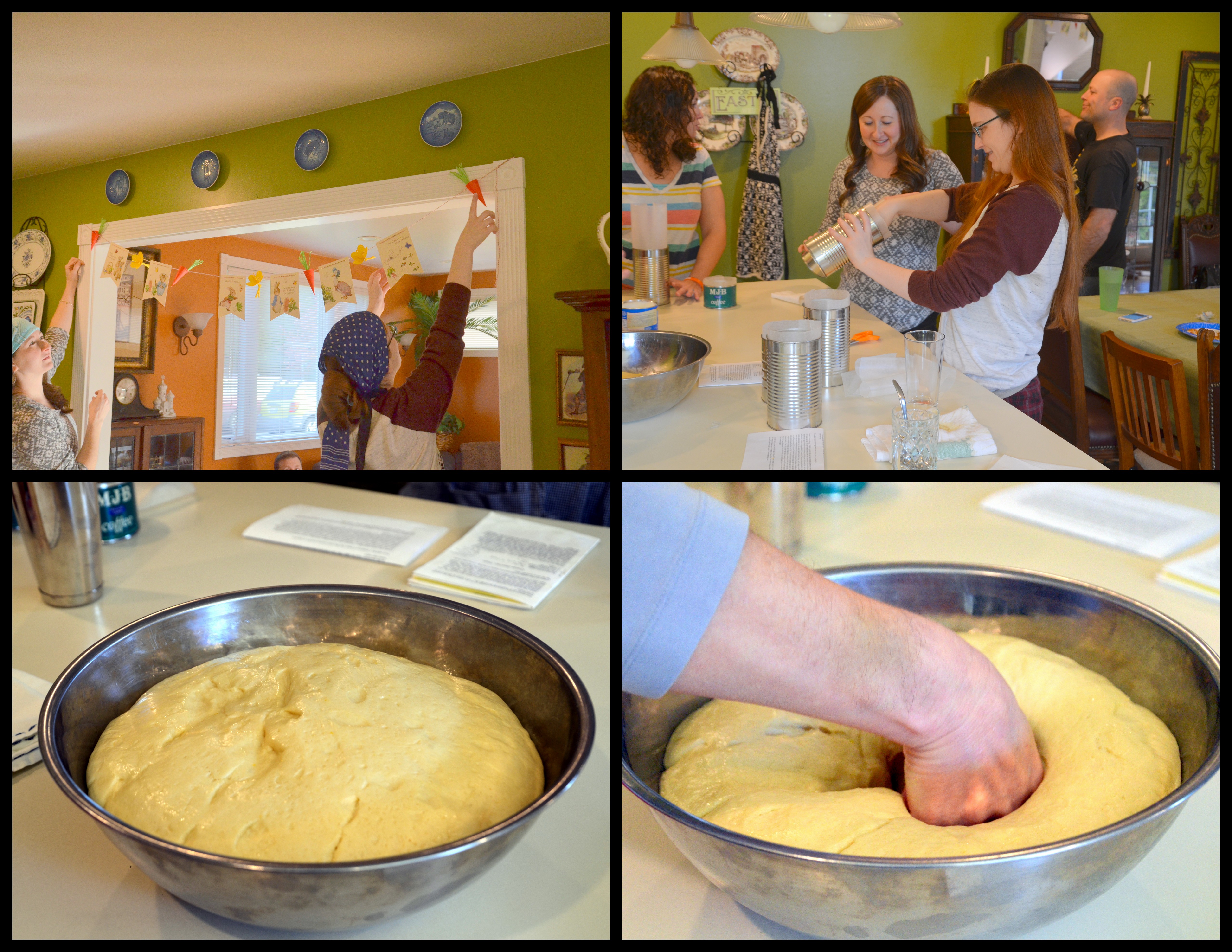

Back to the dough…
When the dough has doubled in size, punch it down and turn it over.
Let it rise a second time until it doubles in size. Punch it down again.
Now the dough is ready to put into the prepared cans.
You will take a portion of dough about 1/3 the size of the can. Knead it and form it into a smooth ball that you can easily drop into the can.
Let the dough rise again inside the can until it is at least double in size.
Bake in a 350 degree oven until golden brown on top.(approximately 30 minutes or more depending on your oven.)
Let them cool slightly in the cans. Remove them from the cans and then cool completely standing up. Some people cool them on their sides turning them often to keep their shape. We found this time that they cool just fine and keep their shape standing up so we didn’t bother with that step!
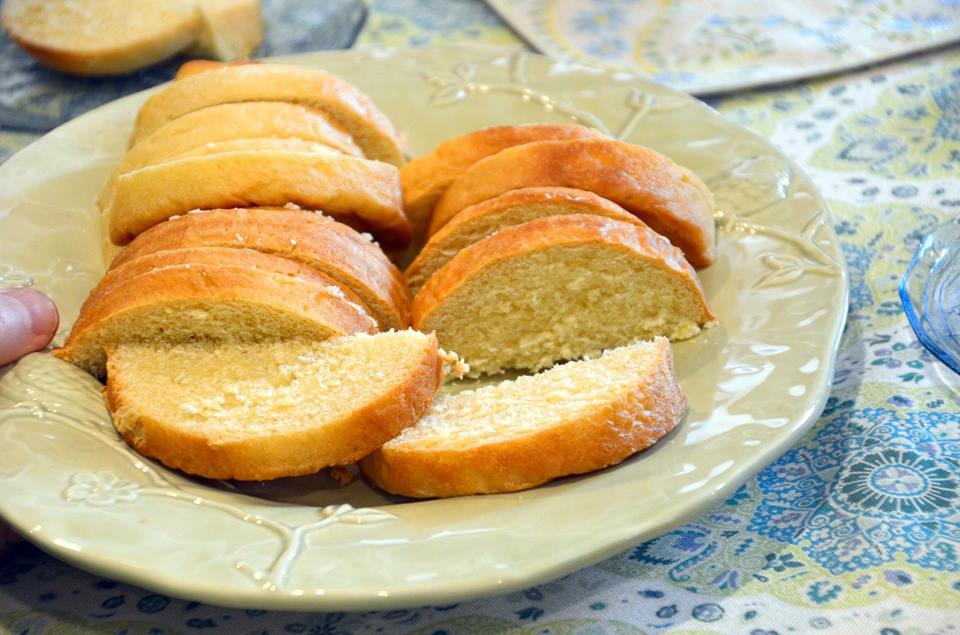
This recipe yielded 7 loaves.

To go with this bread my mom always made a wonderful sweet cheese topping that is formed in a mold in different shapes. I’m adding the recipe here.
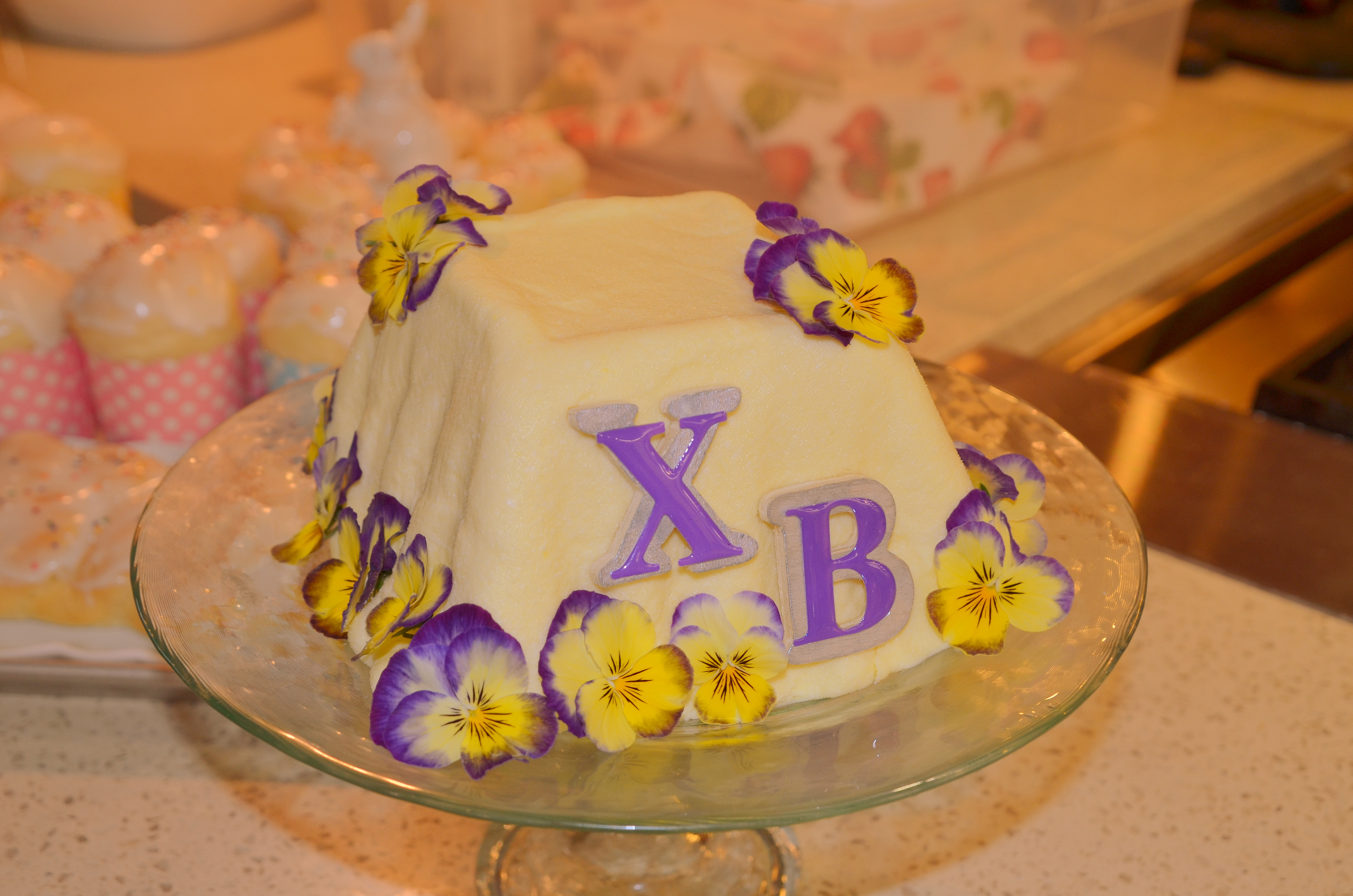
Seernaya Paska
Ingredients:
18 – hard boiled eggs /
3 pounds Farmers cheese /a dry curd cheese like a dry cottage cheese can be substituted.
1 pint whipping cream /
3 cubes unsalted butter (12 oz.) /
3 cups sugar /
Press the Farmers cheese through a sieve. (This is the hardest part of the recipe) If you find a very small curd cheese you won’t have to do this to the cheese. I usually use a wooden spoon and press it through a wire strainer a little at a time. Separate the egg yolks from the whites. (You will not be using the whites).
Press the egg yolks through the sieve. Cream the sugar and butter together. Beat in the egg yolks. Beat in the cheese. Add whipping cream and mix well. You will place the mixture into a strainer lined with about 3 layers of cheesecloth. You will need enough cheesecloth to wrap up and over the top of the cheese. Place the cheese mixture into the cheese cloth lined strainer, or flower pot with holes in the bottom. Bring the ends of the cheese cloth up and tie the ends on top of the cheese in a knot. Place the sieve or flower pot into a larger bowl suspended with enough room for the cheese to drain without sitting in the drained liquid. Place a plate on top of the cheese an place a heavy rock, brick, or other weight on top of the plate. Refrigerate over night.
This recipe is enough to feed an army. If you don’t have to feed an army here’s a scaled down version :0)
If you just want a normal amount, cut the recipe in thirds. (6 cooked egg yolks, 1-lb. cheese, 2/3 cup whipping cream, 1 cube butter and 1 cup sugar.) Enjoy!
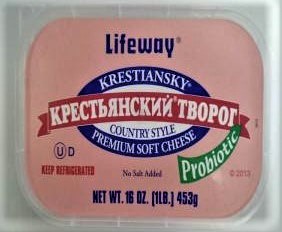
Farmers Cheese or Hoop Cheese can be hard to find. There are Russian-Ukrainian delis that sell a dry curd cottage type cheese that will work. If you can find a dry cottage cheese at the grocers that will work too.

I found a site online that sells the cheese that I use for this yummy spread.
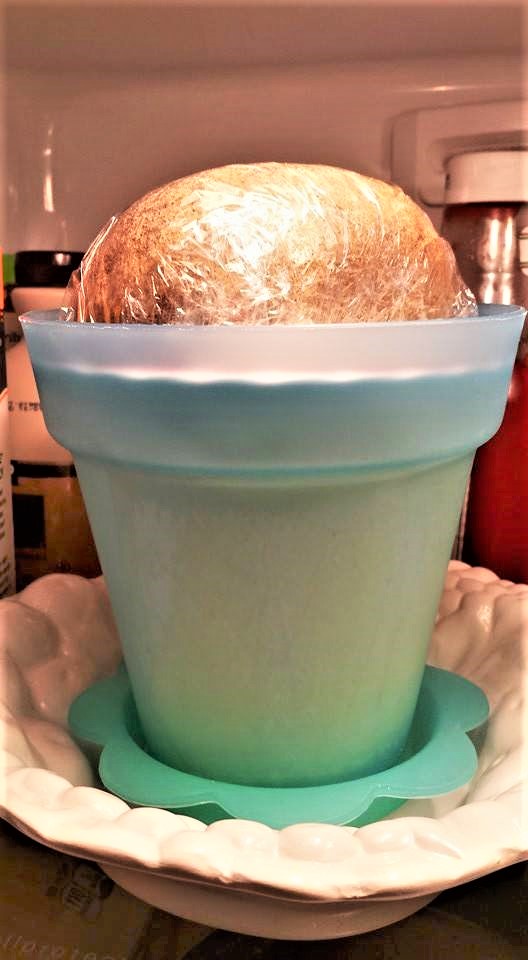
The cheese spread in the flower pot in the refrigerator with the stone on top to help release as much liquid as possible.
We like to serve the kulich with the spread and strawberries.


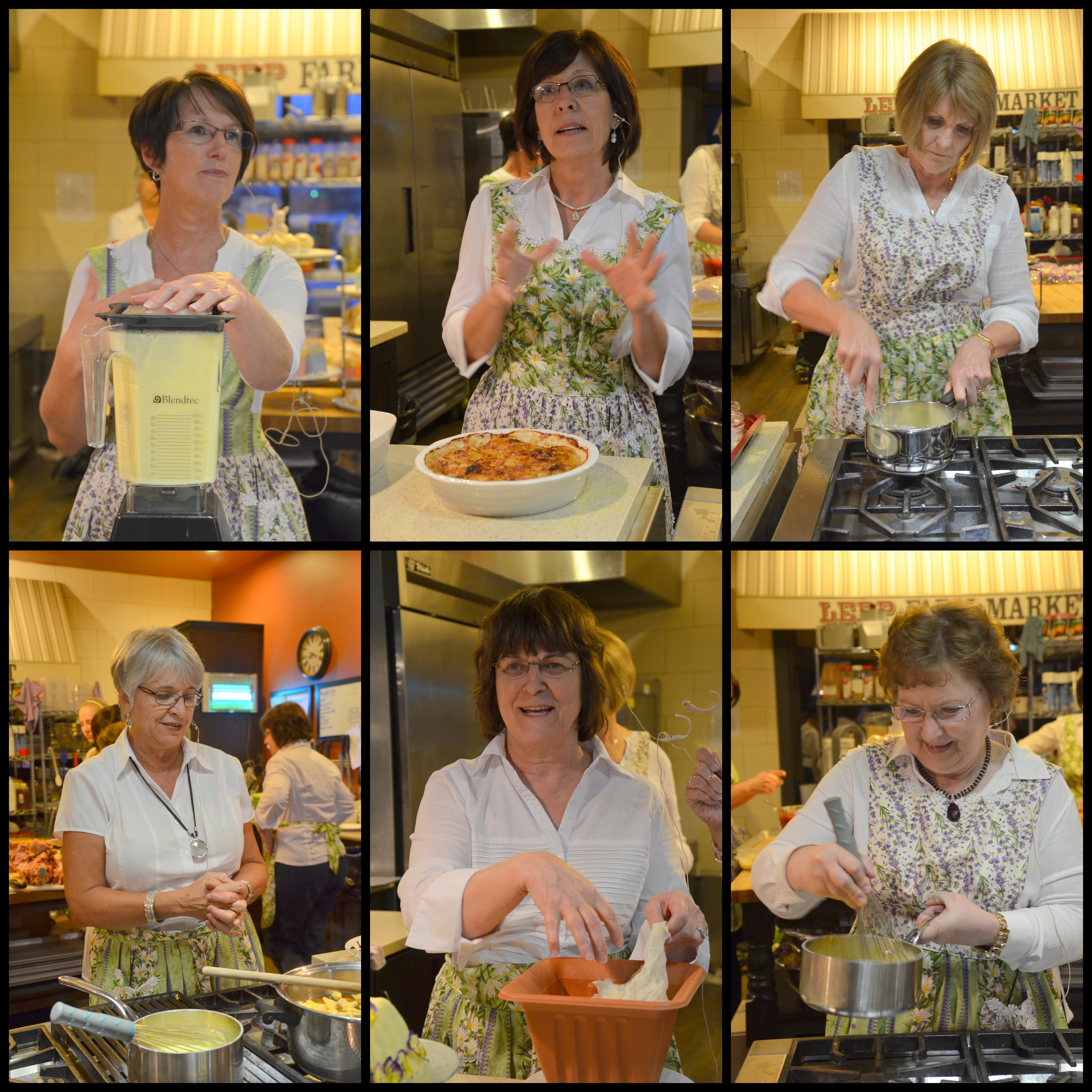
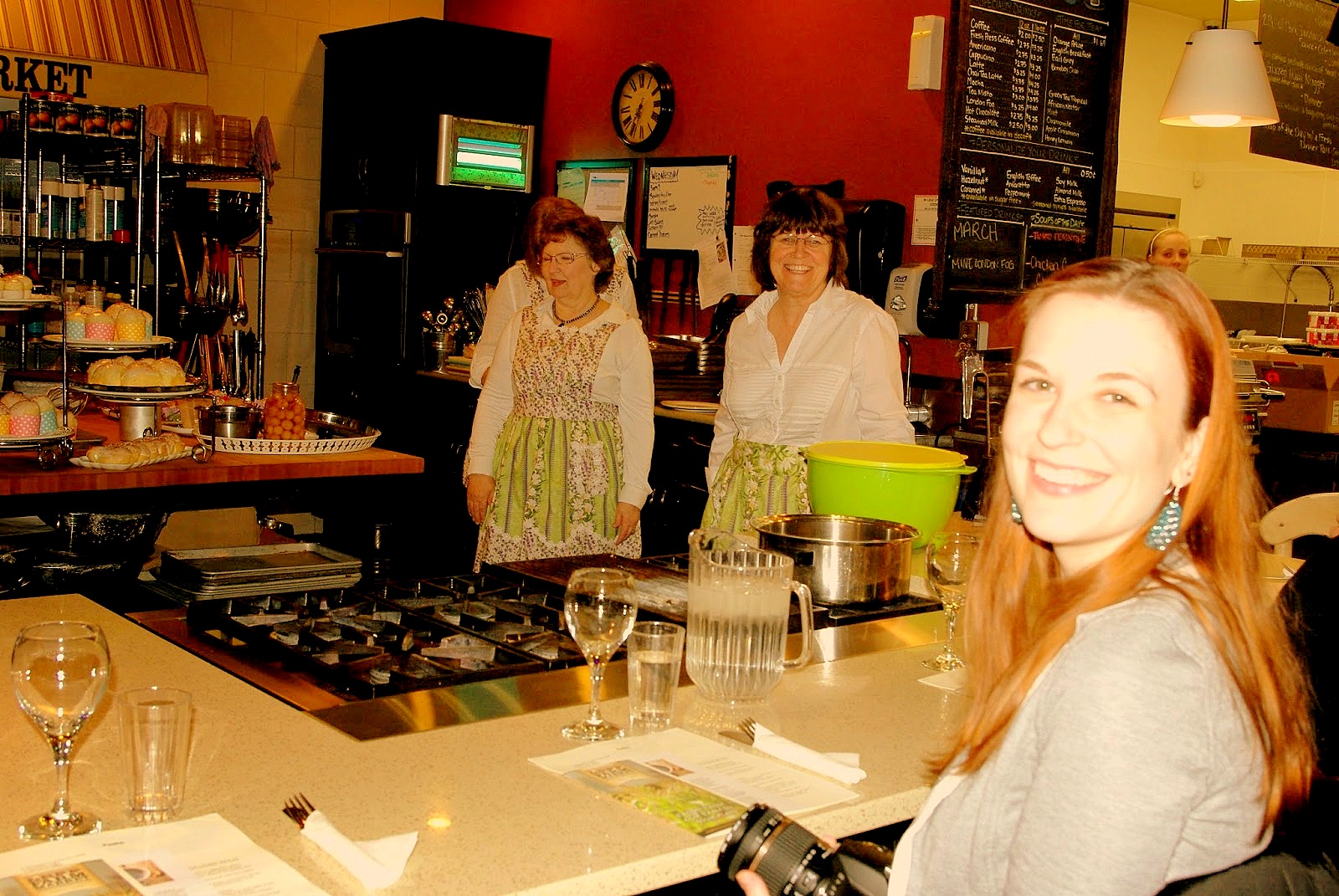
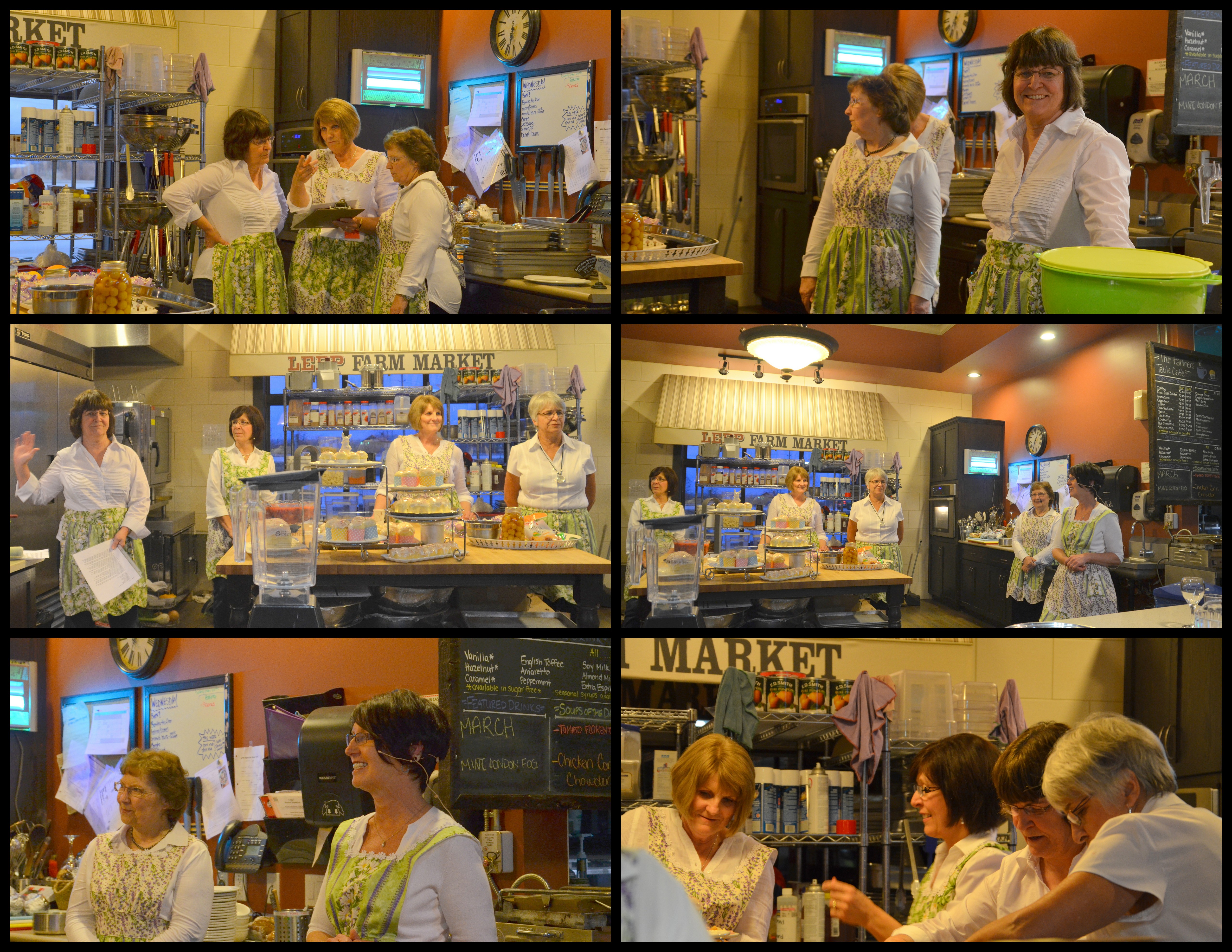
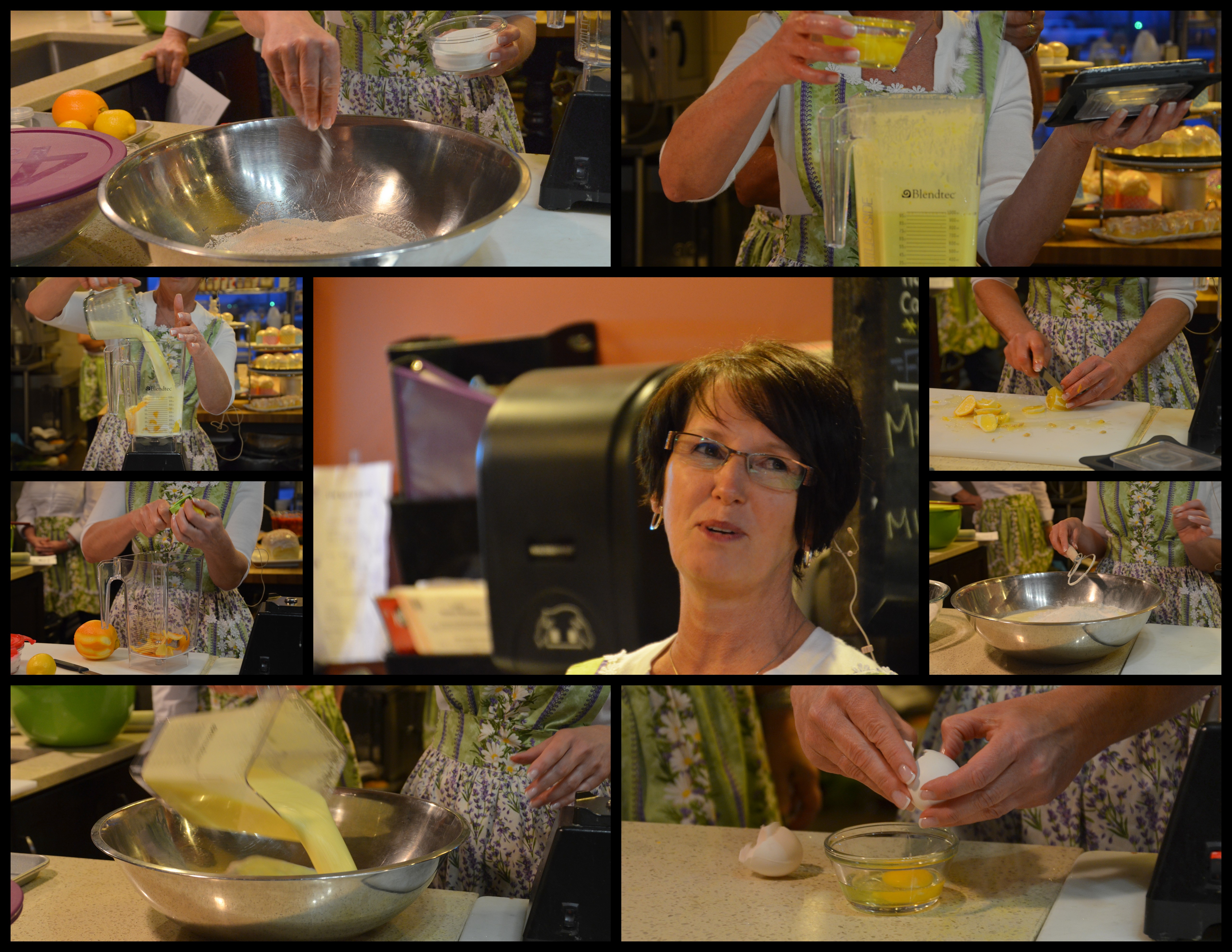
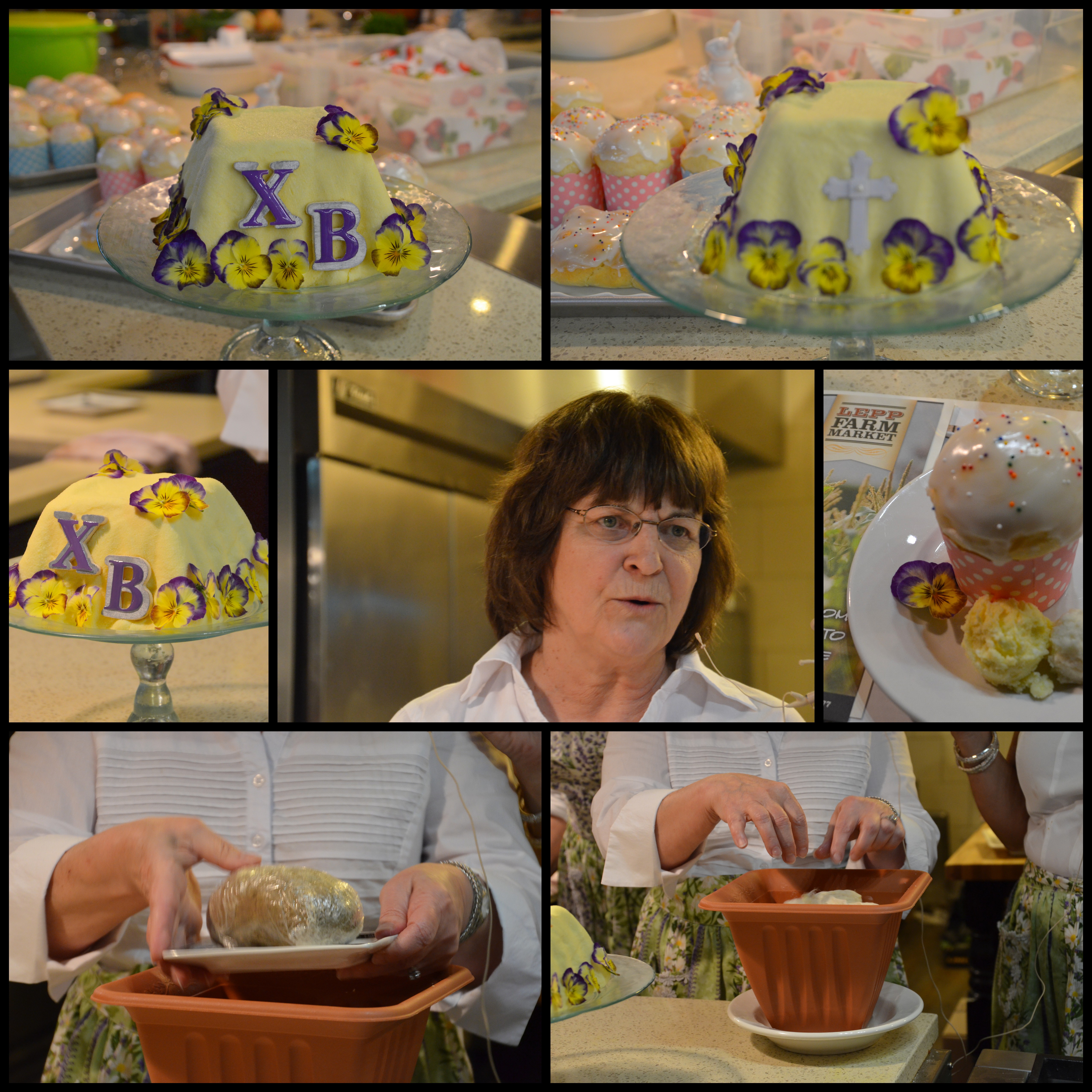
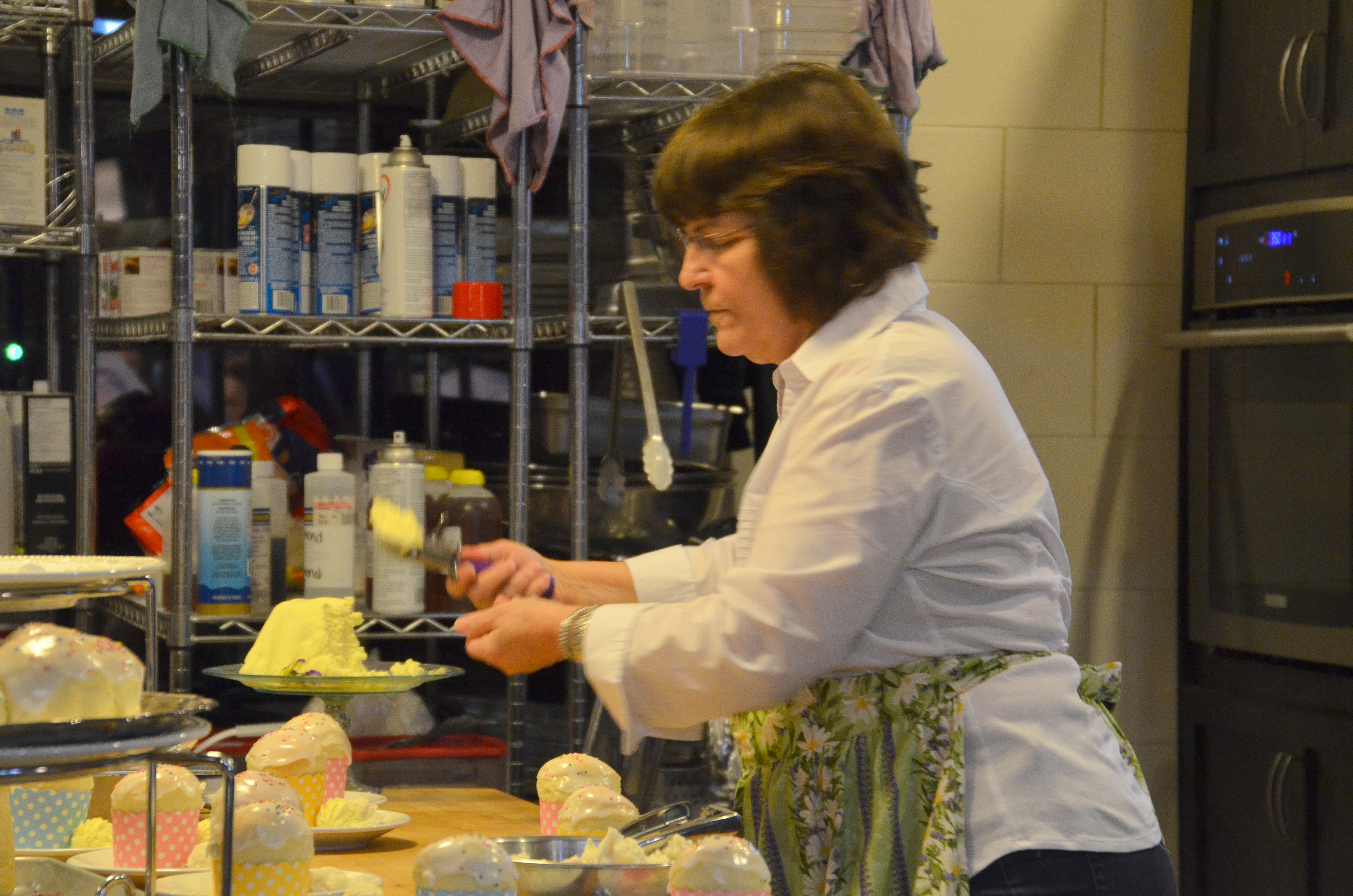
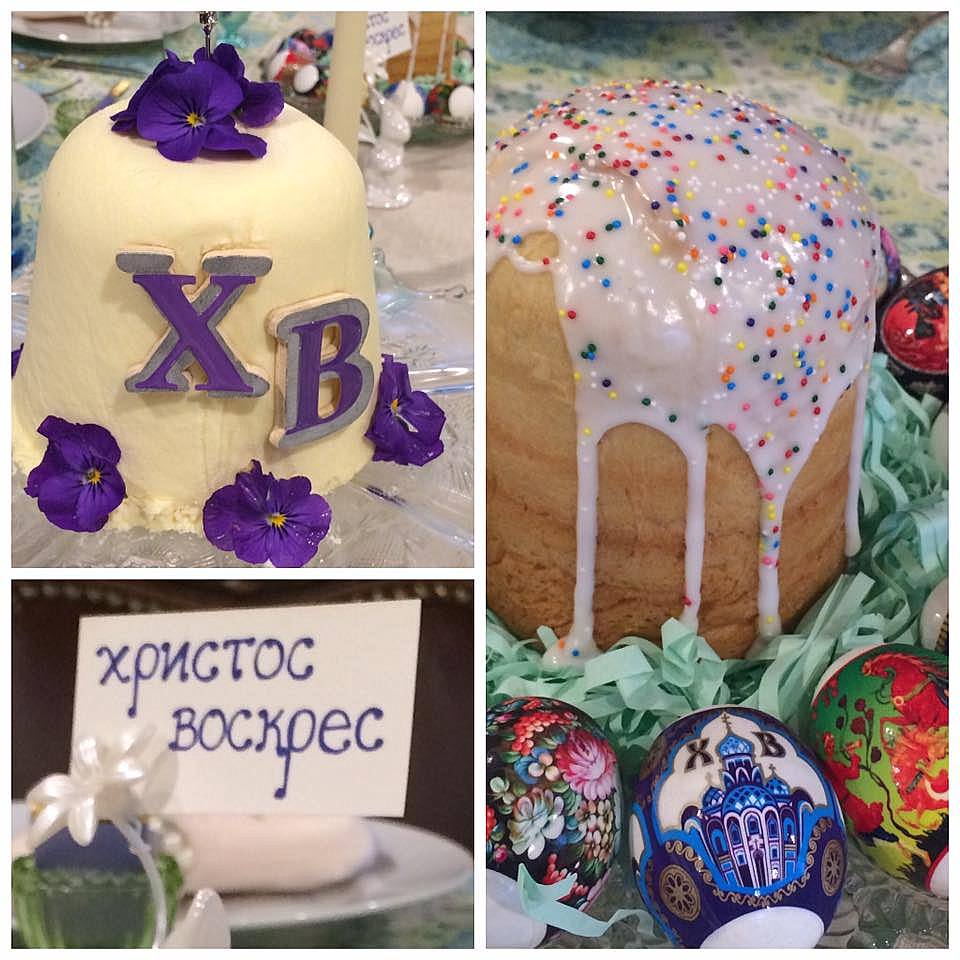
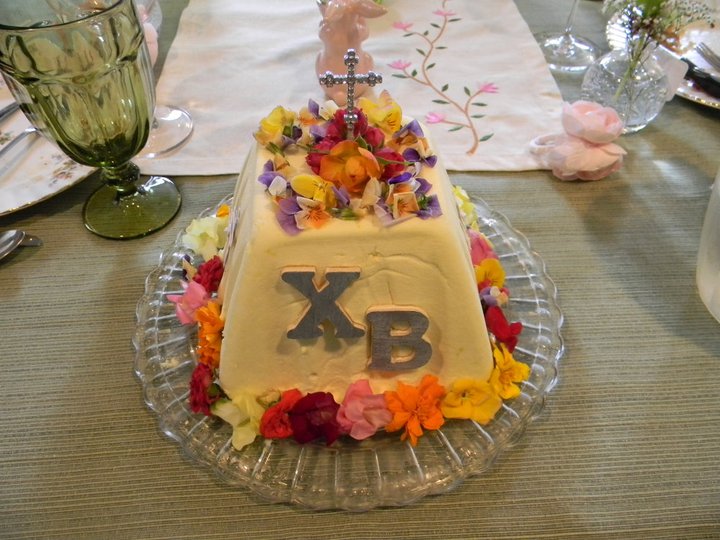
When the Mennonite Girls Can Cook had a Paska demonstration at Lepp Market in Abbotsford I brought a completed Seernaya Paska, sweet cheese spread molded from home since it has to sit in the refrigerator having all the liquid pressed out for at least 24 hours. I plated it and showed one of the flower pots I use to mold the cheese and the heavy stone wrapped in plastic wrap to weight the cheese and force the liquid out. We used fresh viola blossoms to decorate it.
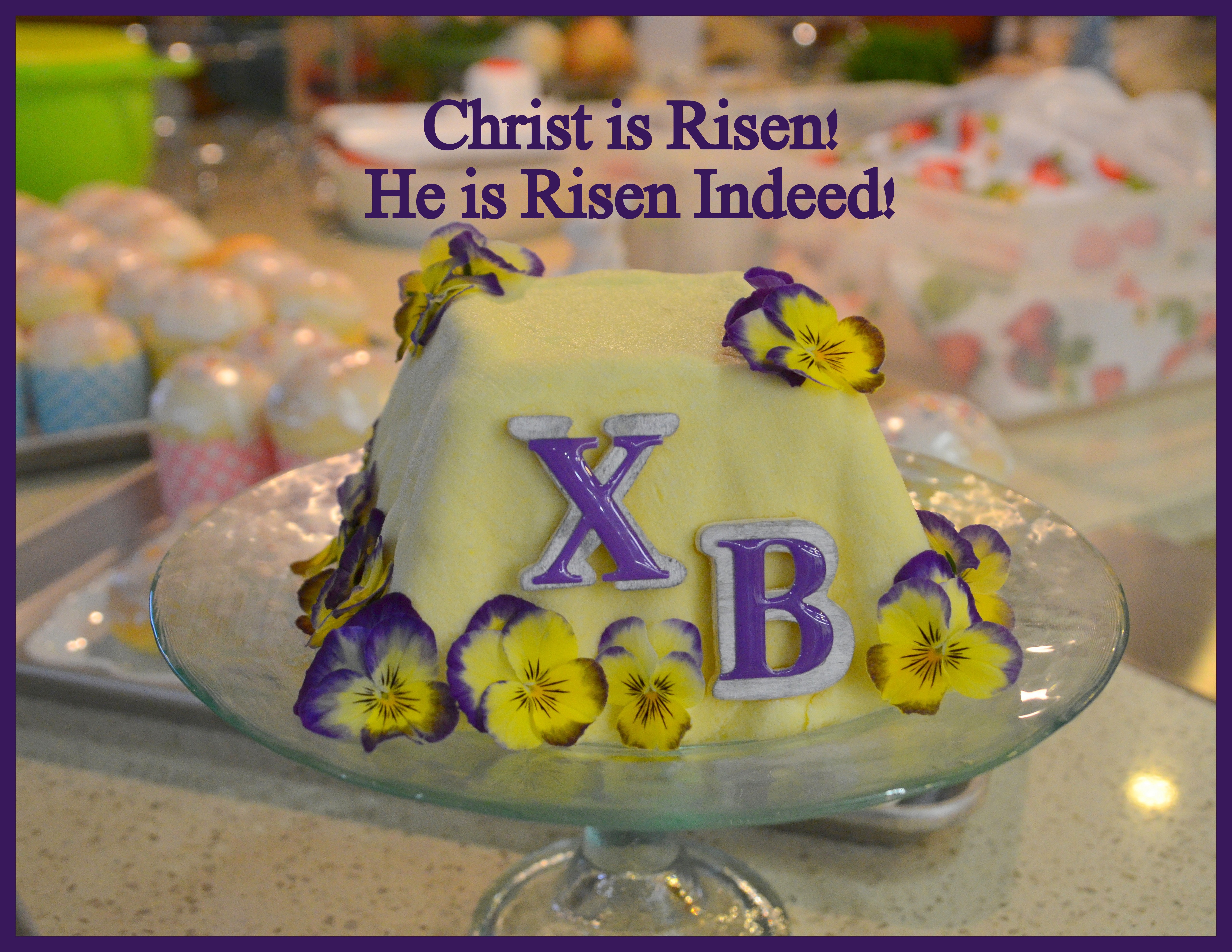
Because the class was all about Easter I have to explain what the X and B on my Russian Sweet Cheese Spread is all about. On Easter the greeting that we always express to one another is
Christos Voskress! Voistinu Voskress!
Христос Воскрес!
Воистину воскрес!
Christ is Risen!
Truly He is Risen!
So the X (the first letter of Christ in Russian) stands for Christ and the B (the first letter of risen in Russian) stands for Risen, Christ is Risen. This is what Easter is all about.
I made an error in the pronunciation of this dish in our first cookbook. It is called seernaya paska not seerney paska . I’ve always had a hard time with my Russian. I’ve found these plastic flower pots work well to mold the cheese. Make sure you add holes in the bottom of the pot so the liquid can escape easily.
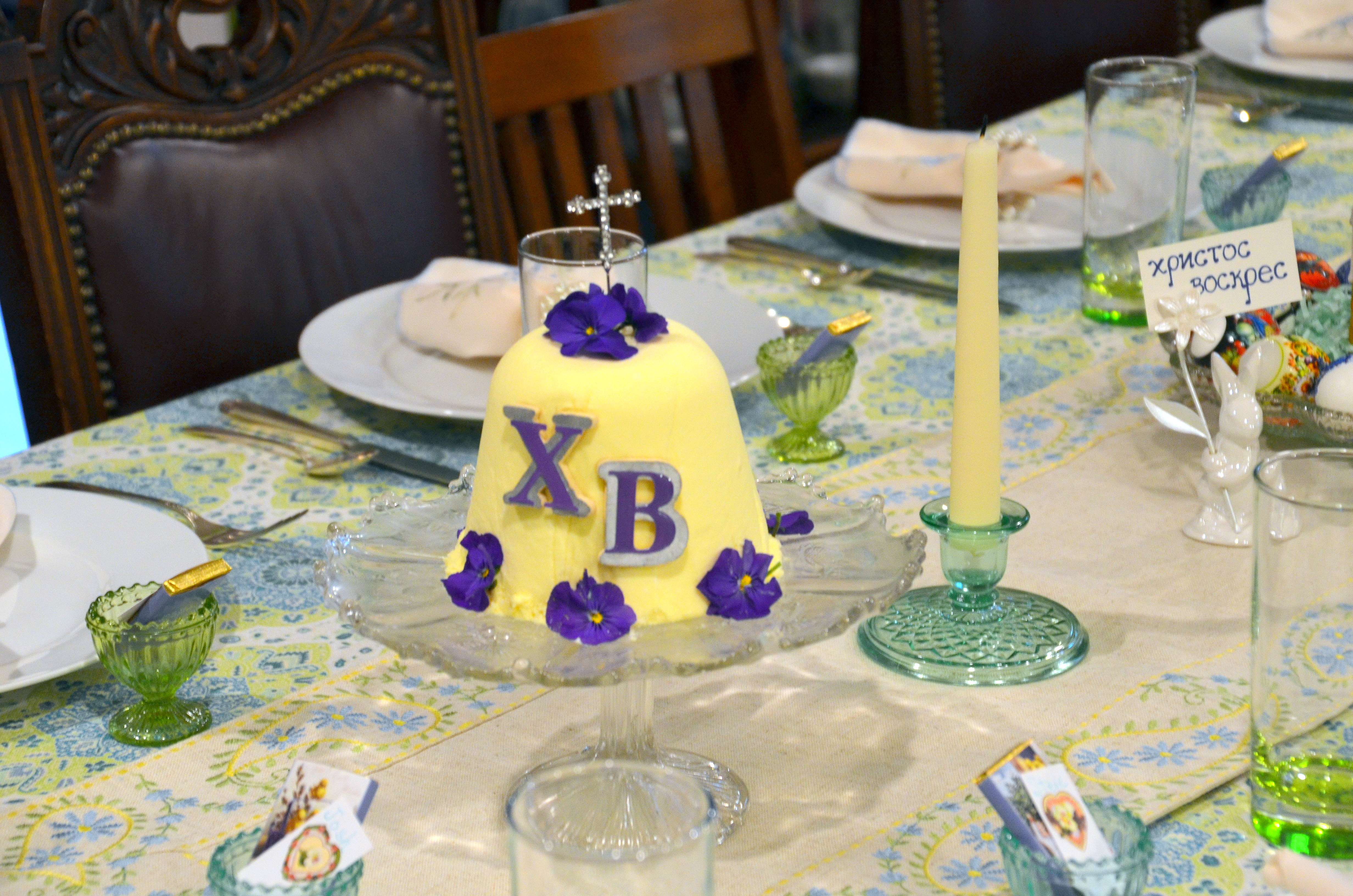
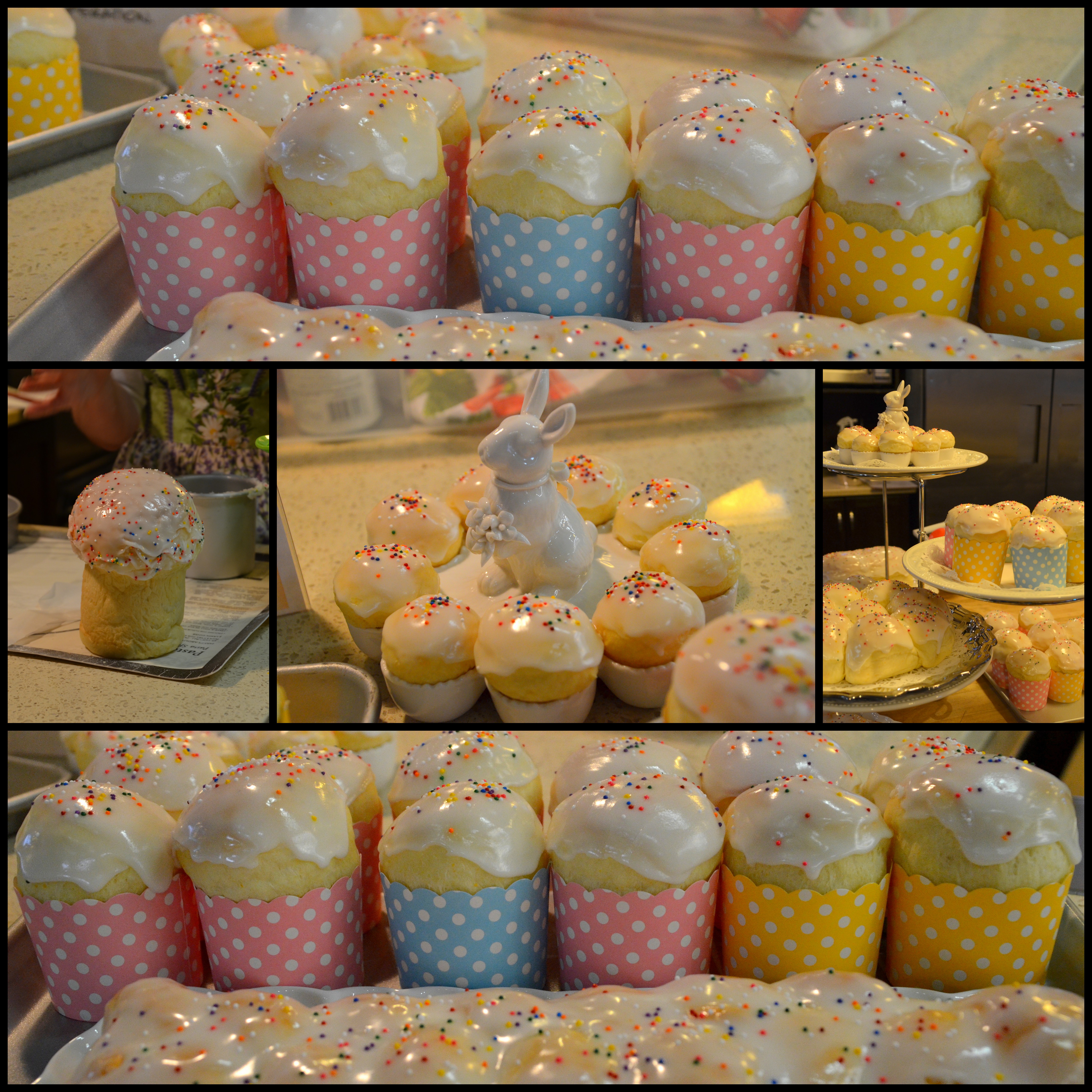
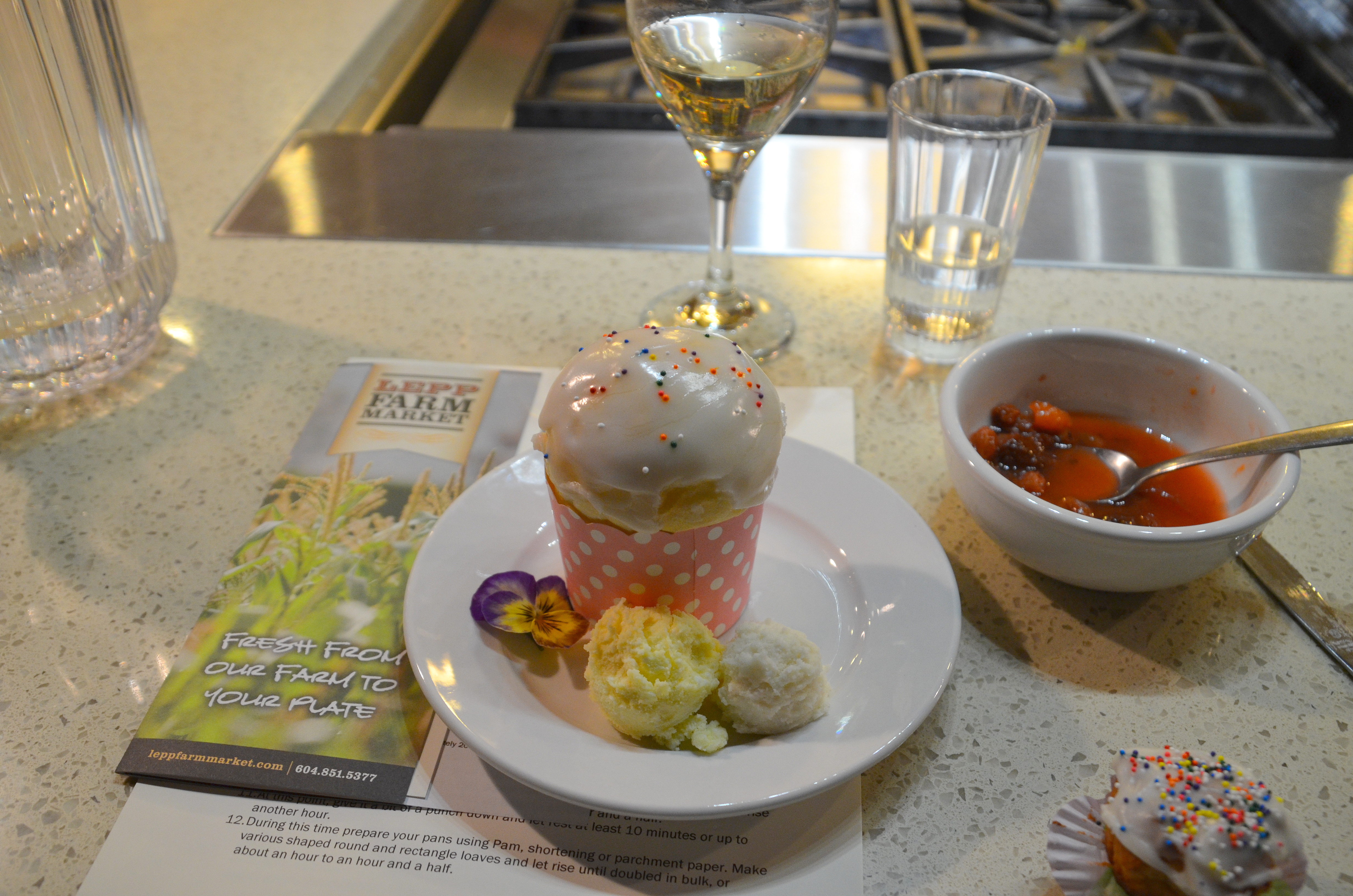
You do not need old coffee cans to make Kulich/Paska. This next photo shows individual sized portions using paper baking cups that were baked for our cooking class at Lepp Farm Market years ago.


This blast from the past was probably our first Easter in Washington State, 1989.
True Confessions: I have not attempted to make Kulich here in Colville. I have made Seernaya Paska to go with Kulich that I purchased at Kiev Market in Spokane. The market Kulich was only good for decorating the table. It does not compare to our mom’s recipe.
Are you preparing for Easter?