Scotland Travel Journal ~ Edinburgh Reformation Tour 1

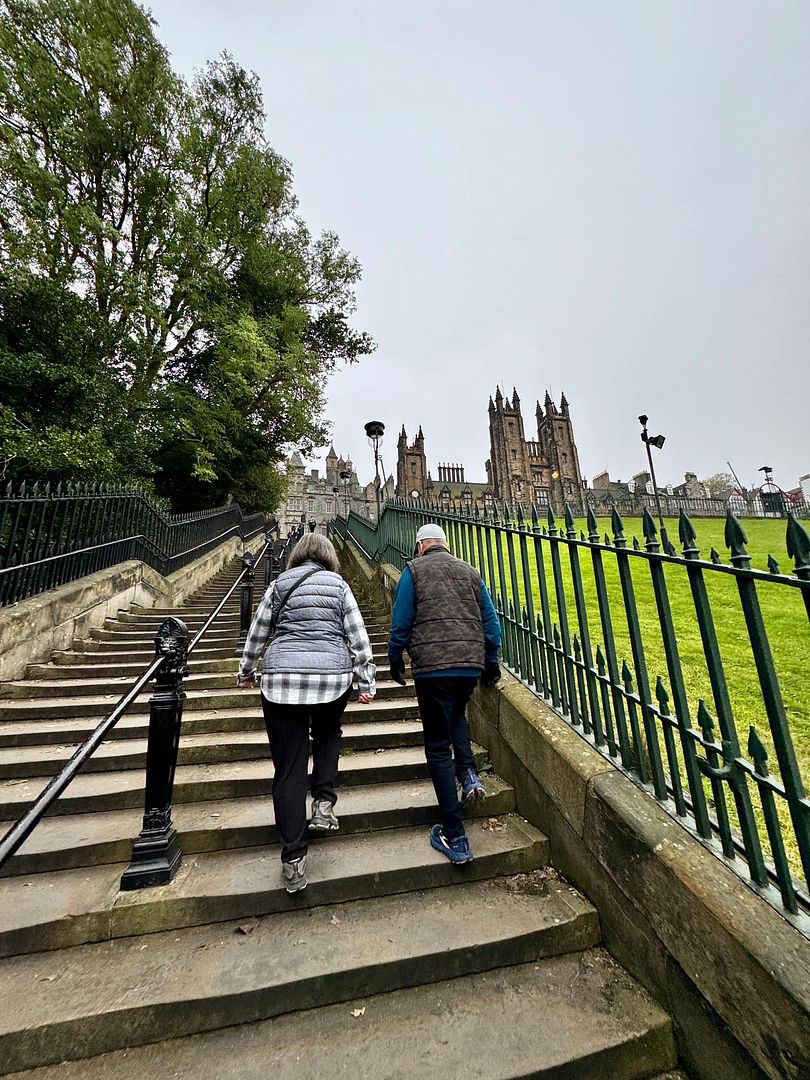
Monday September 23rd was our last full day in Edinburgh and Scotland. This would be a day filled with walking and stairs and information. We were thankful on this morning that Greg was well enough to walk and not miss our special tour.
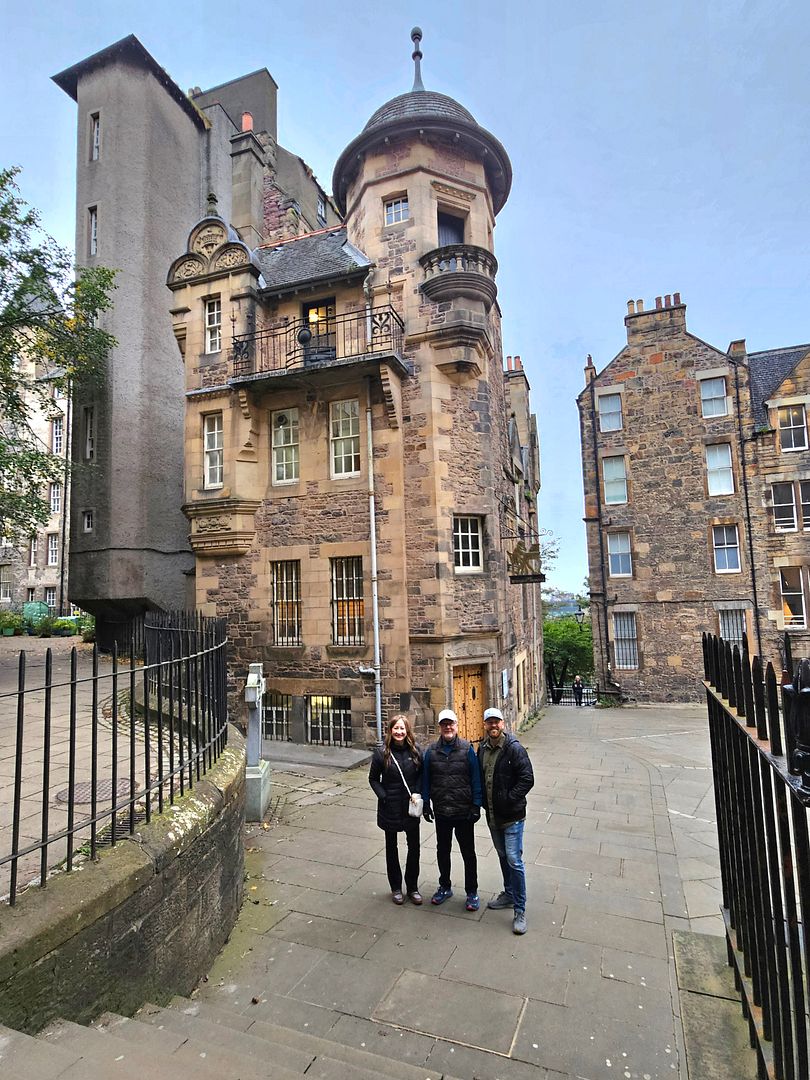
We took the Lady Stair’s Close to get up to the Royal Mile. We stopped to take some photos outside the Writer’s Museum.
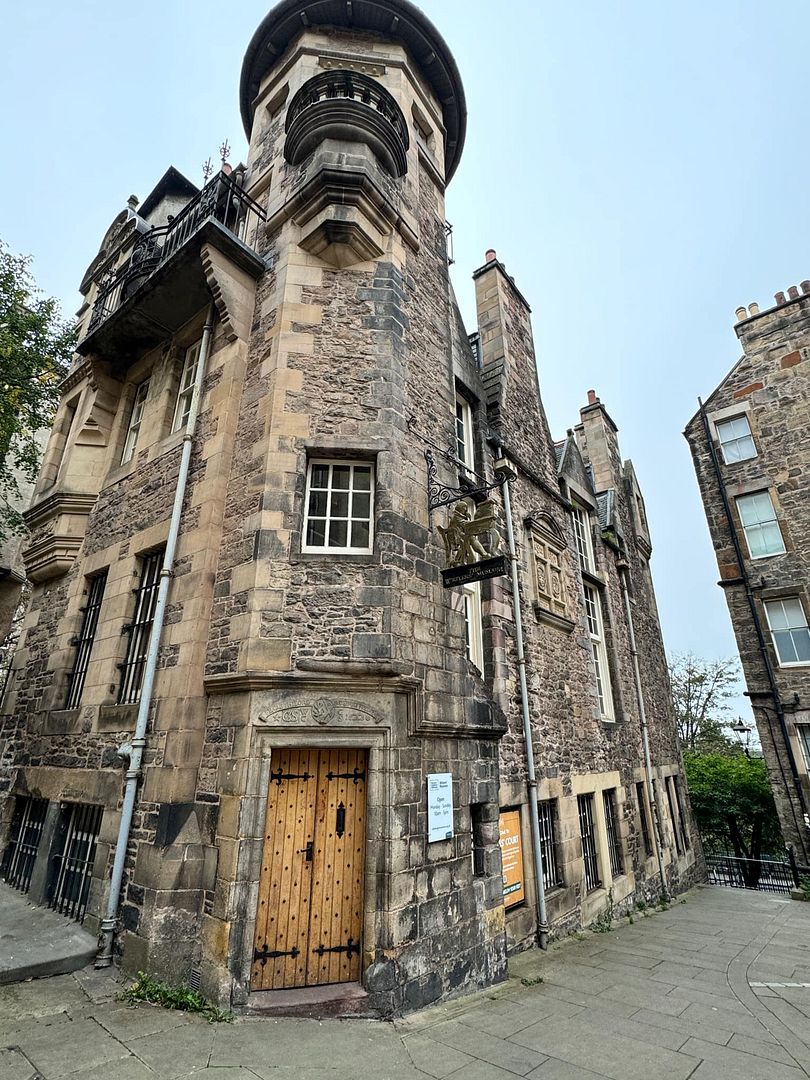
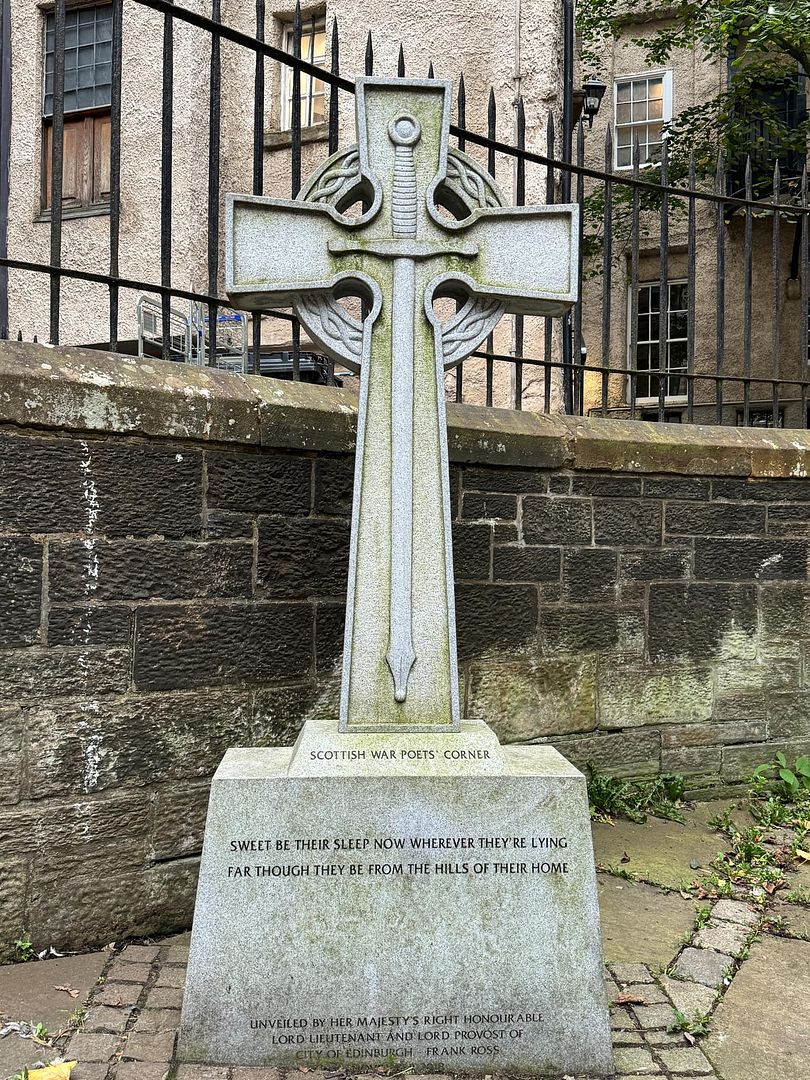
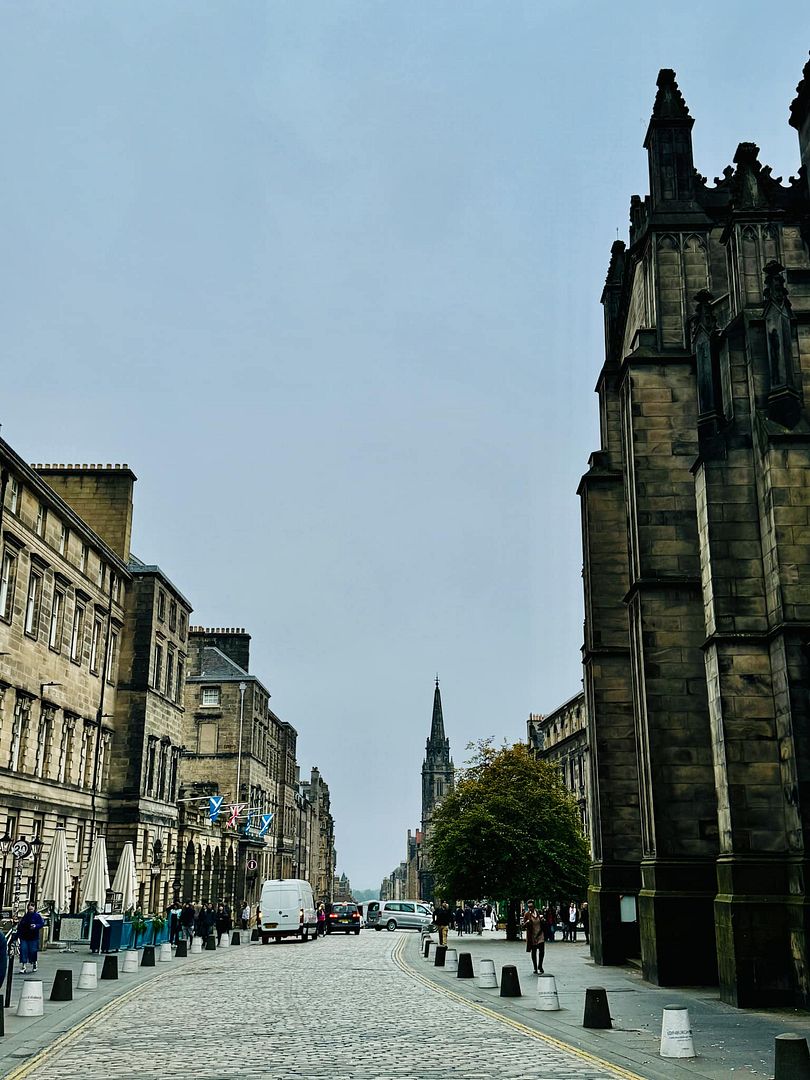
Early on the Royal Mile there were fewer folk milling about. That would change soon.
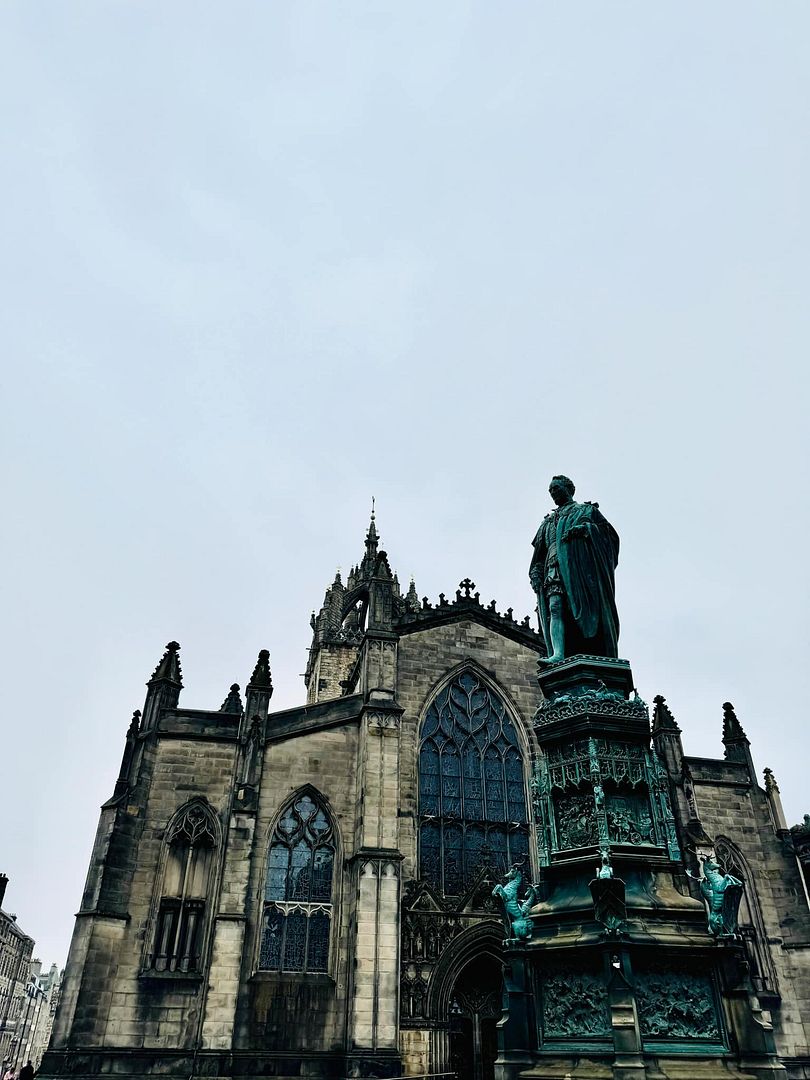
We scheduled a private Scottish Reformation Tour on this day.

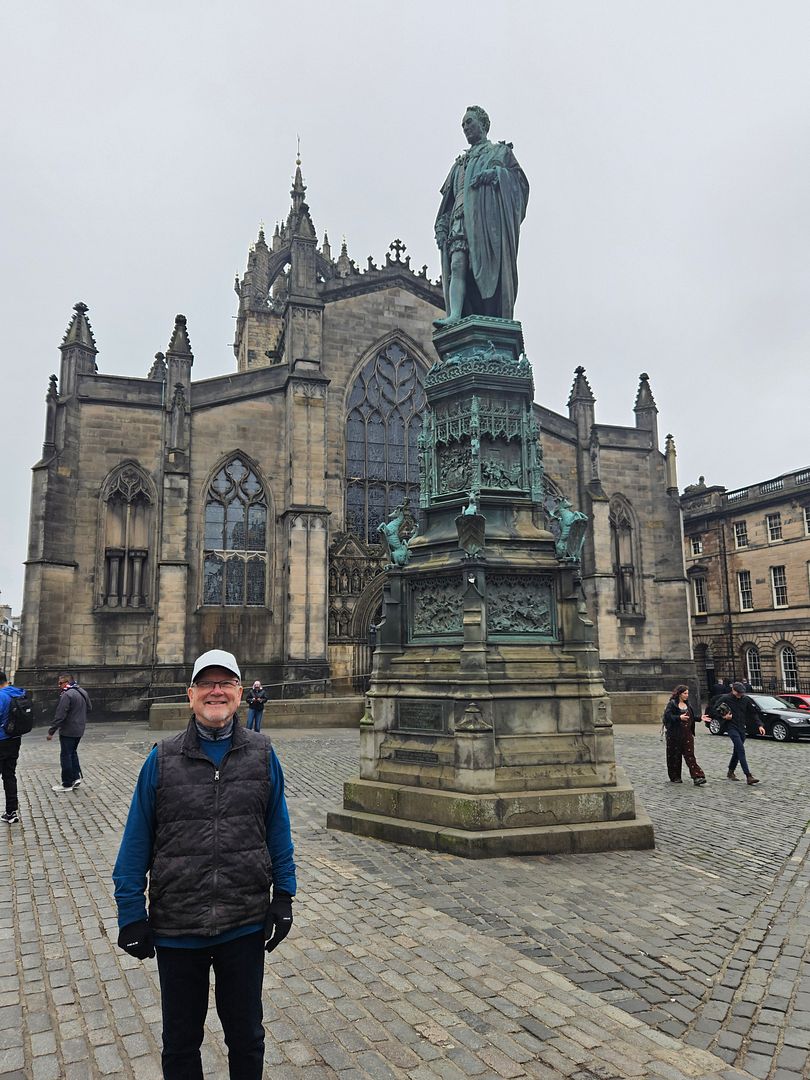
I included the link above. We were to meet Jimmy at 9am in front of St. Giles Cathedral.
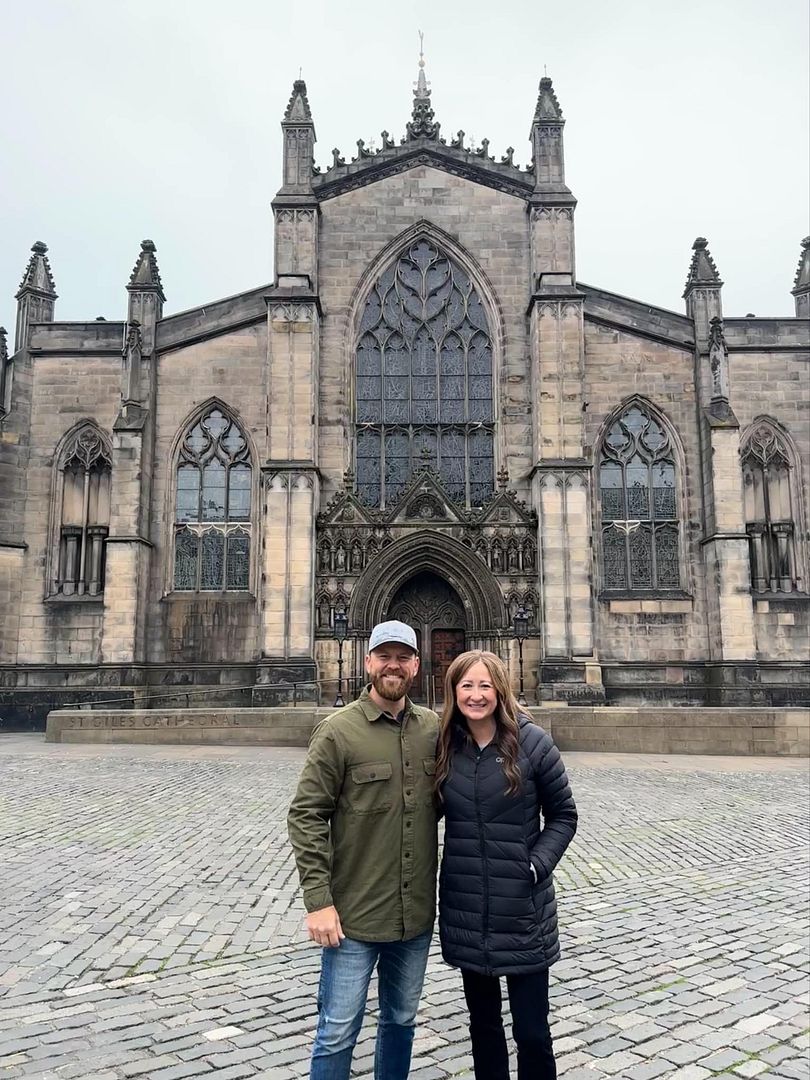
Soon we saw who we assumed was Jimmy and he came right to us assuming we were his clients for the morning.
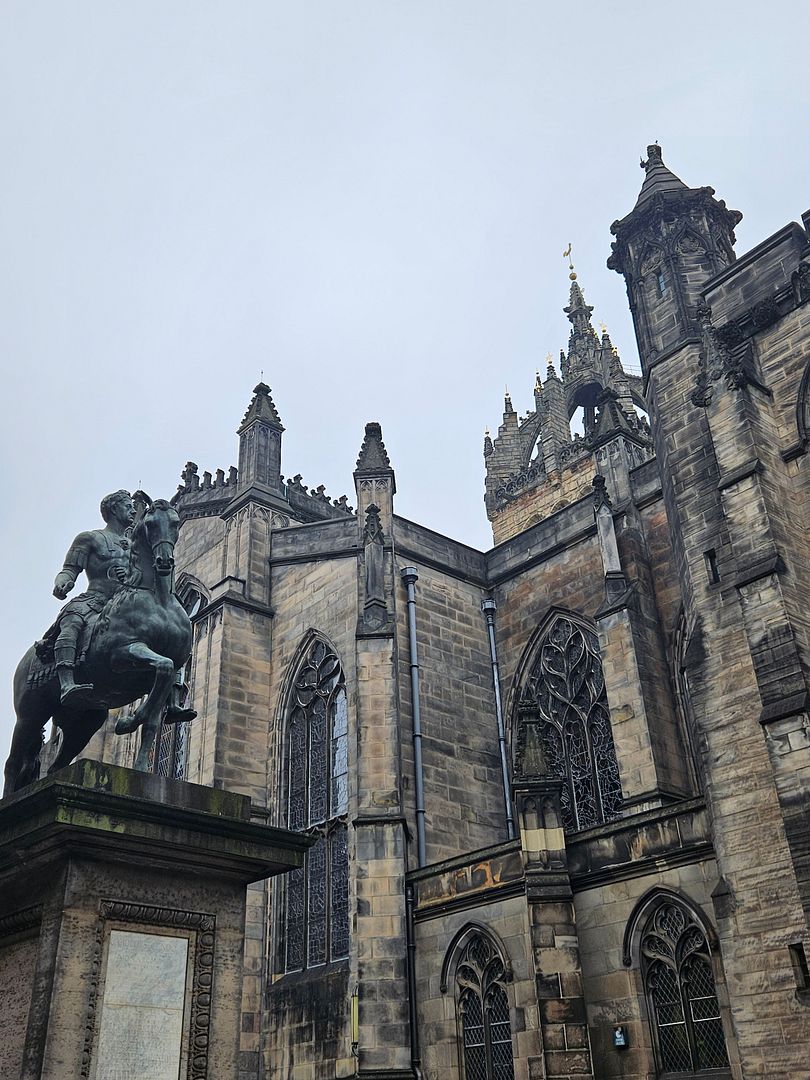
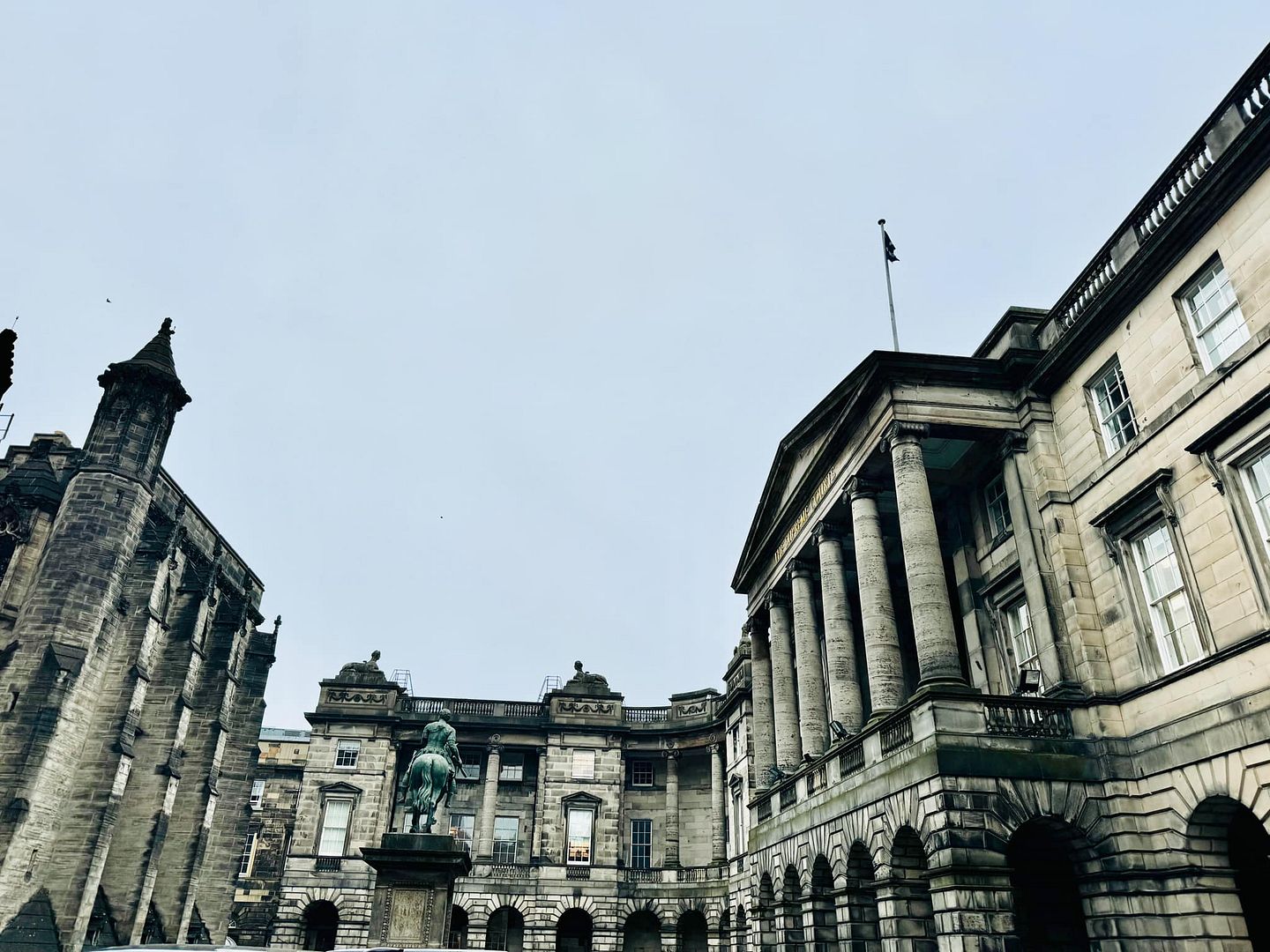
St. Giles was not open to the public yet on this particular morning so Jimmy took us around to the parking lot between St. Giles and The Supreme Court building. We would visit the inside of the cathedral at the end of our tour.

It looked to Jimmy’s keen eye that something was going on in the Supreme Court building so he managed to gain us access into the hall outside the courtroom.
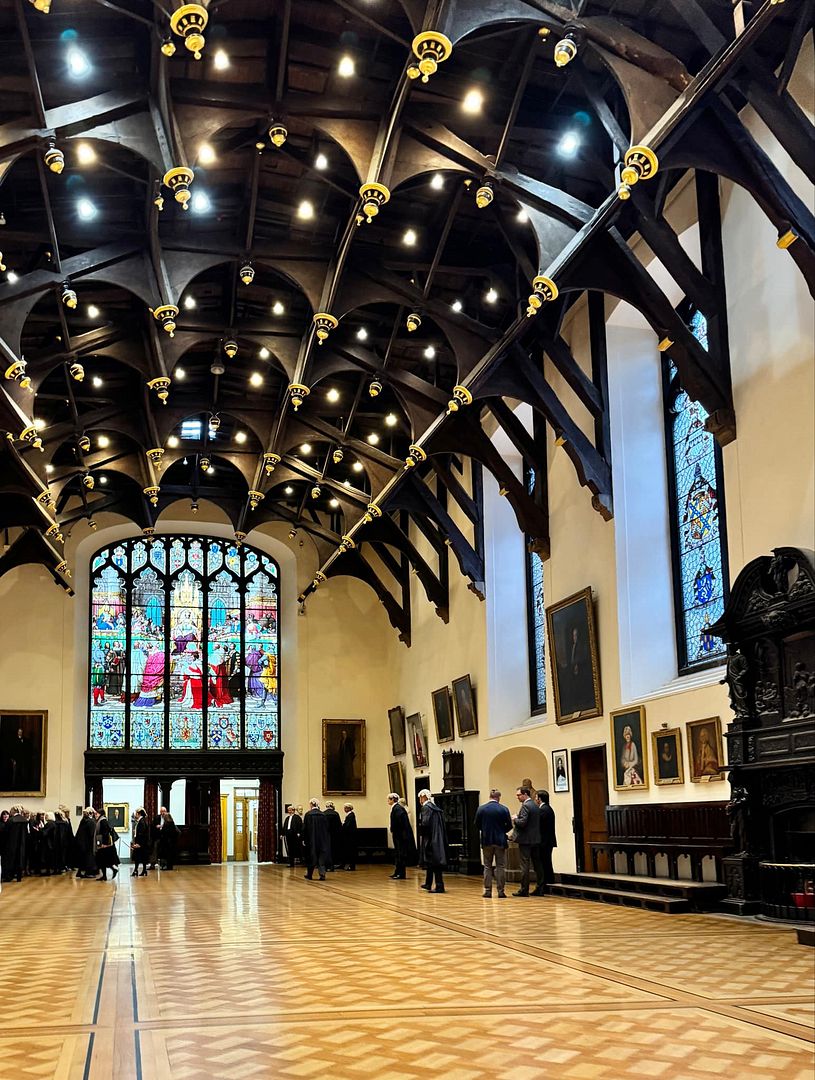
It was quite fascinating to see all the ‘big wigs’ standing around and some pacing back and forth the length of the room discussing their cases.

Back outside we were on the search for parking space #23.
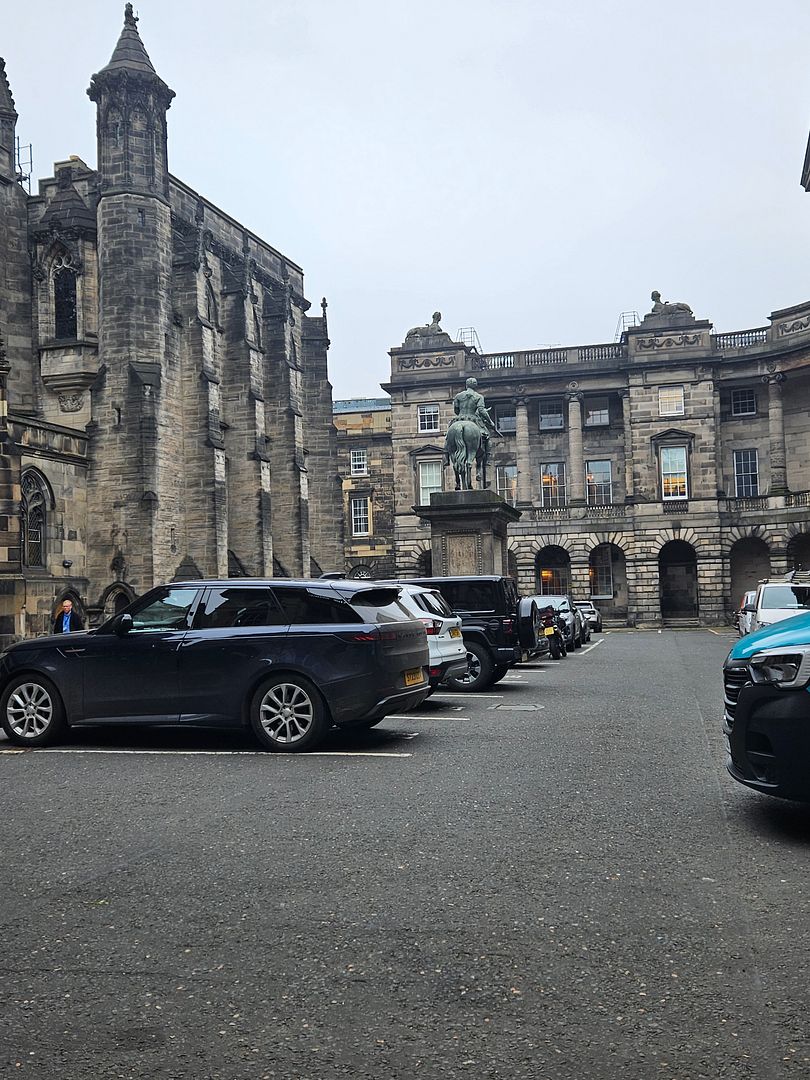
Here at space number 23 in the car park is approximately where John Knox is buried!
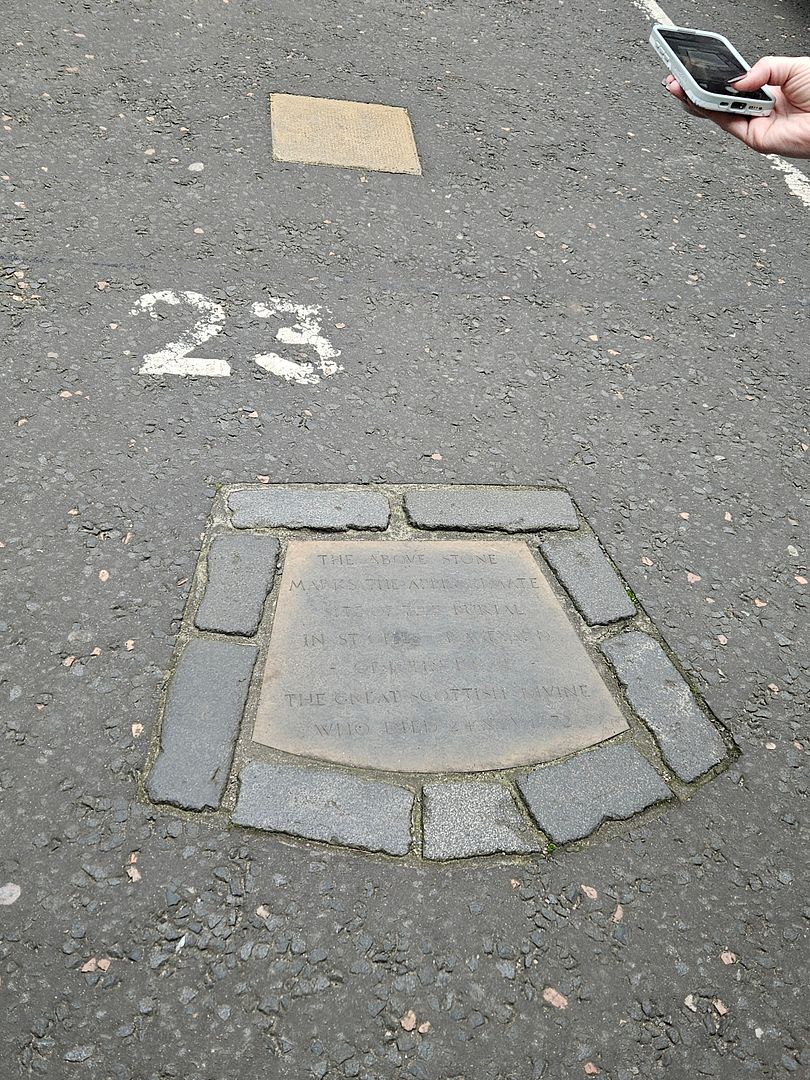
The Scottish Reformation leader’s grave was paved over and is now a parking lot. The stone inscription reads;

‘The Above Stone Marks

the Approximate

Site of the Burial

In St. Giles Graveyard

Of John Knox

The Great Scottish Divine

Who Died 24th November 1572′

It’s said that Knox wanted to be buried within 20 feet of Saint Giles, so he was laid to rest right outside the church in what was once a proper graveyard. However, the site has since been tarmacked over and is now a functioning parking lot. A plaque in parking space number 23 marks the approximate location of his now-lost grave.

Knox was a 16th-century preacher who commanded that his people be able to read the Bible in their own language. He was a key figure in turning a nation of Catholics into one of Protestants. His fire and brimstone sermons and teachings often put him at odds with the Catholic Mary, Queen of Scots.
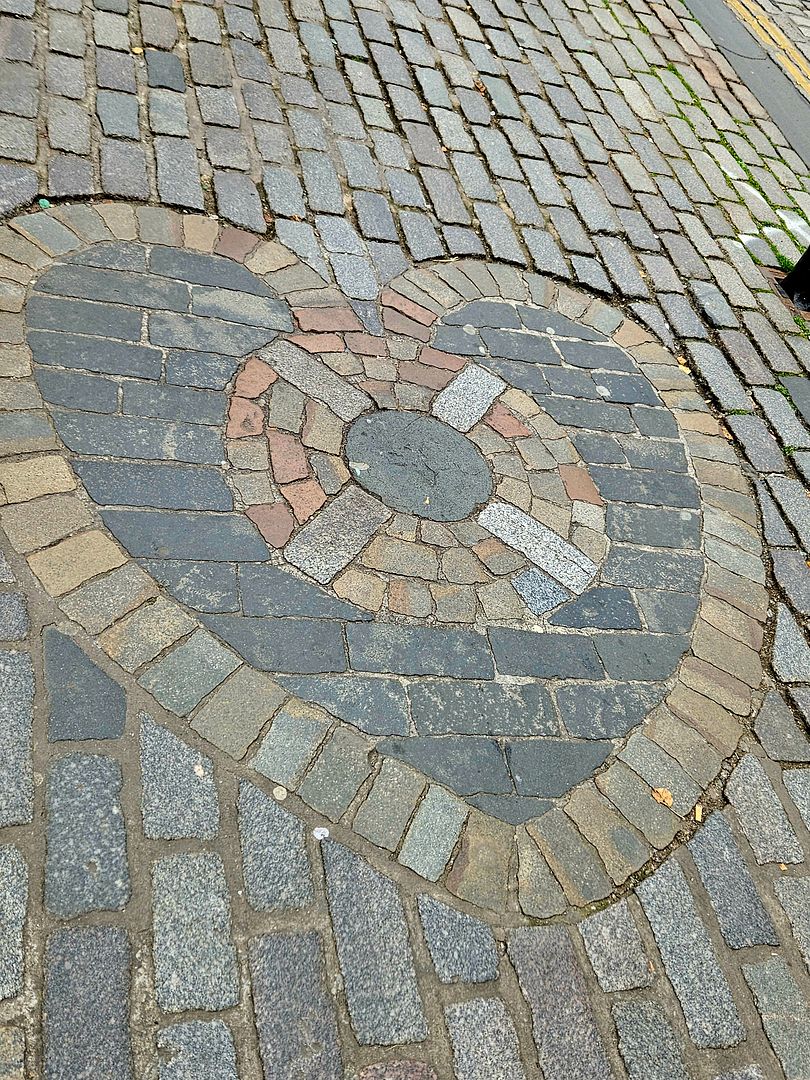
On our walk to Victoria street we came across this Famous Heart.

The Heart of Midlothian is both a historic mosaic dating to the Middle Ages and a landmark that denotes the location of Edinburgh’s Old Tolbooth administrative building. Locals often spit on the sign as a good luck charm, a tradition that has morphed from its original meaning of disdain for the many executions that took place at this site over the years. The Heart of Midlothian F.C., the local soccer club, takes its name from the mosaic and the Old Tolbooth.

The Heart was installed as part of a replacement building to the Old Tolbooth in 1561, and after this second building was demolished in 1817, the Heart was all that remained. It has been an inspiration for the writings of Sir Walter Scott and has become an iconic part of the city’s culture and historic identity – even if many now don’t remember its true origins.

FYI: Tolbooth is a Scottish term that refers to a townhall, jail or guildhall where tolls are collected.

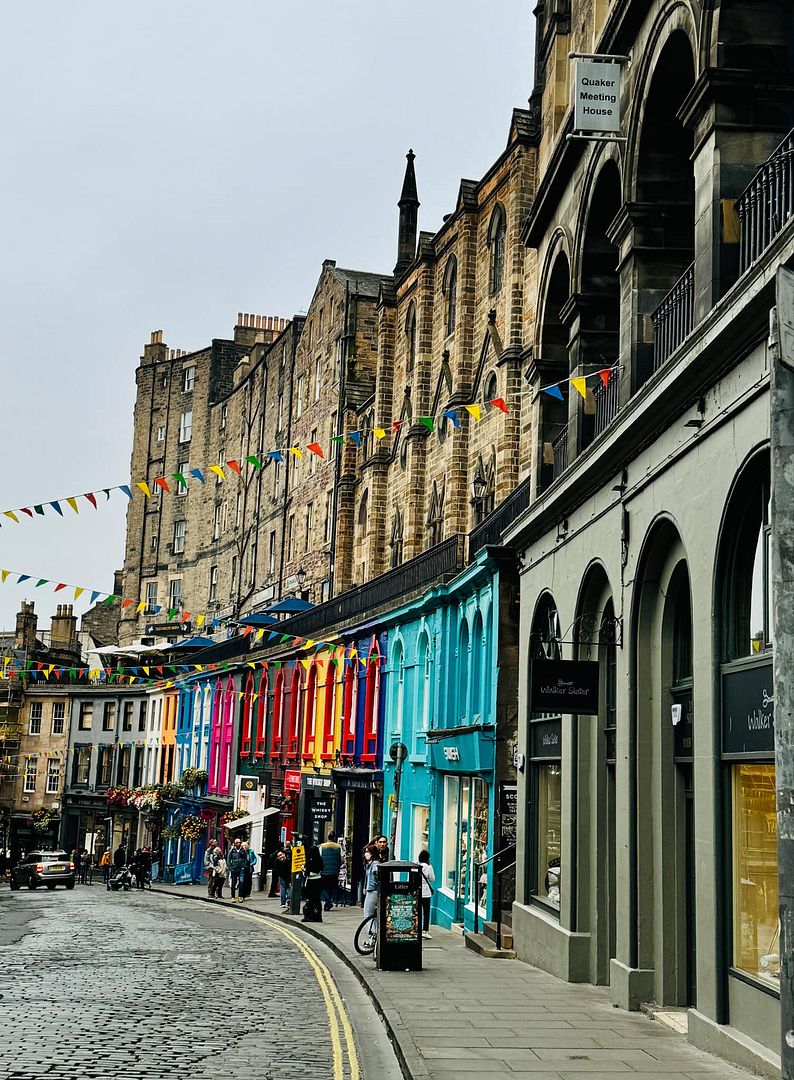
From here we walked down Victoria Street to Grassmarket.

Victoria Street is said to be an inspiration for Diagon Alley in the Harry Potter books but J.K. Rowling denies that it is. Nonetheless fans flock here and stand in line to get in the museum on this colorful street.
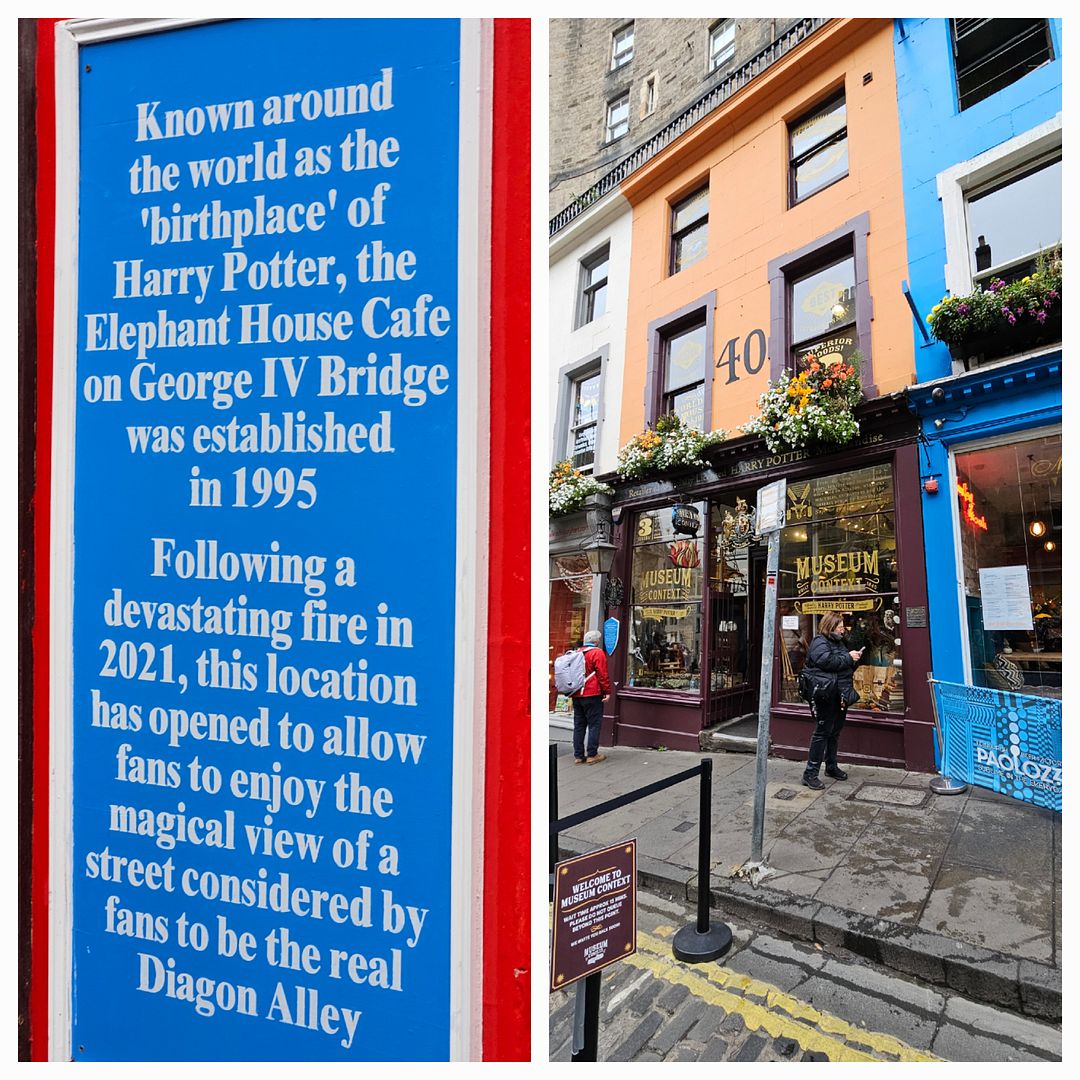
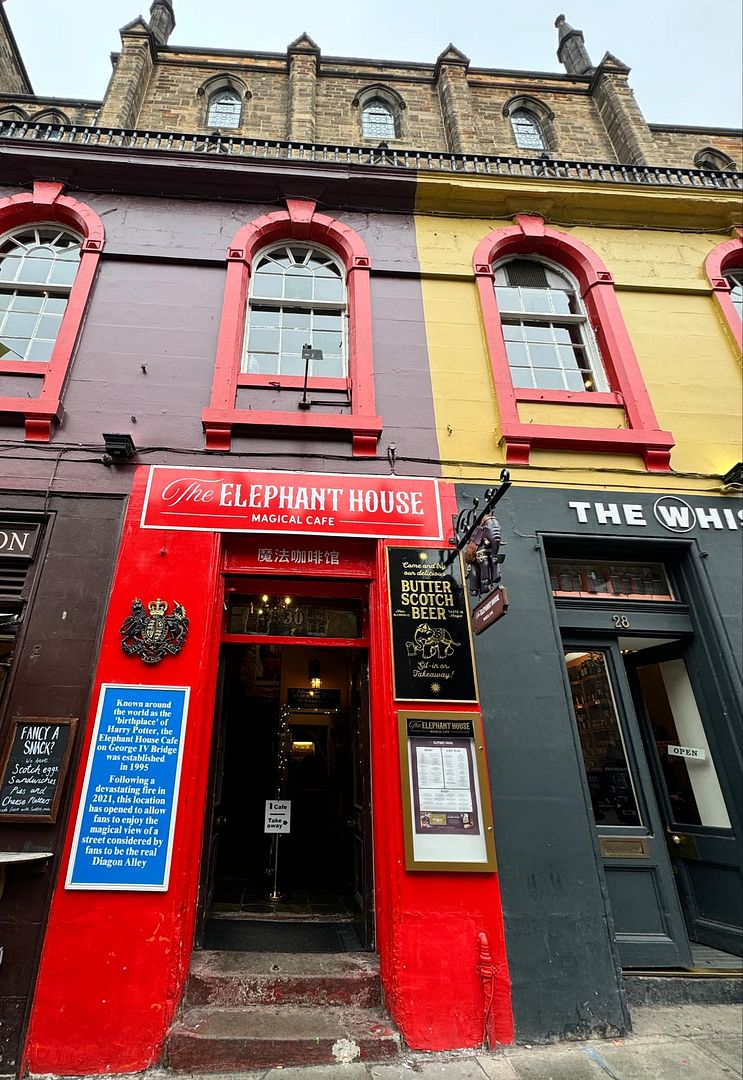
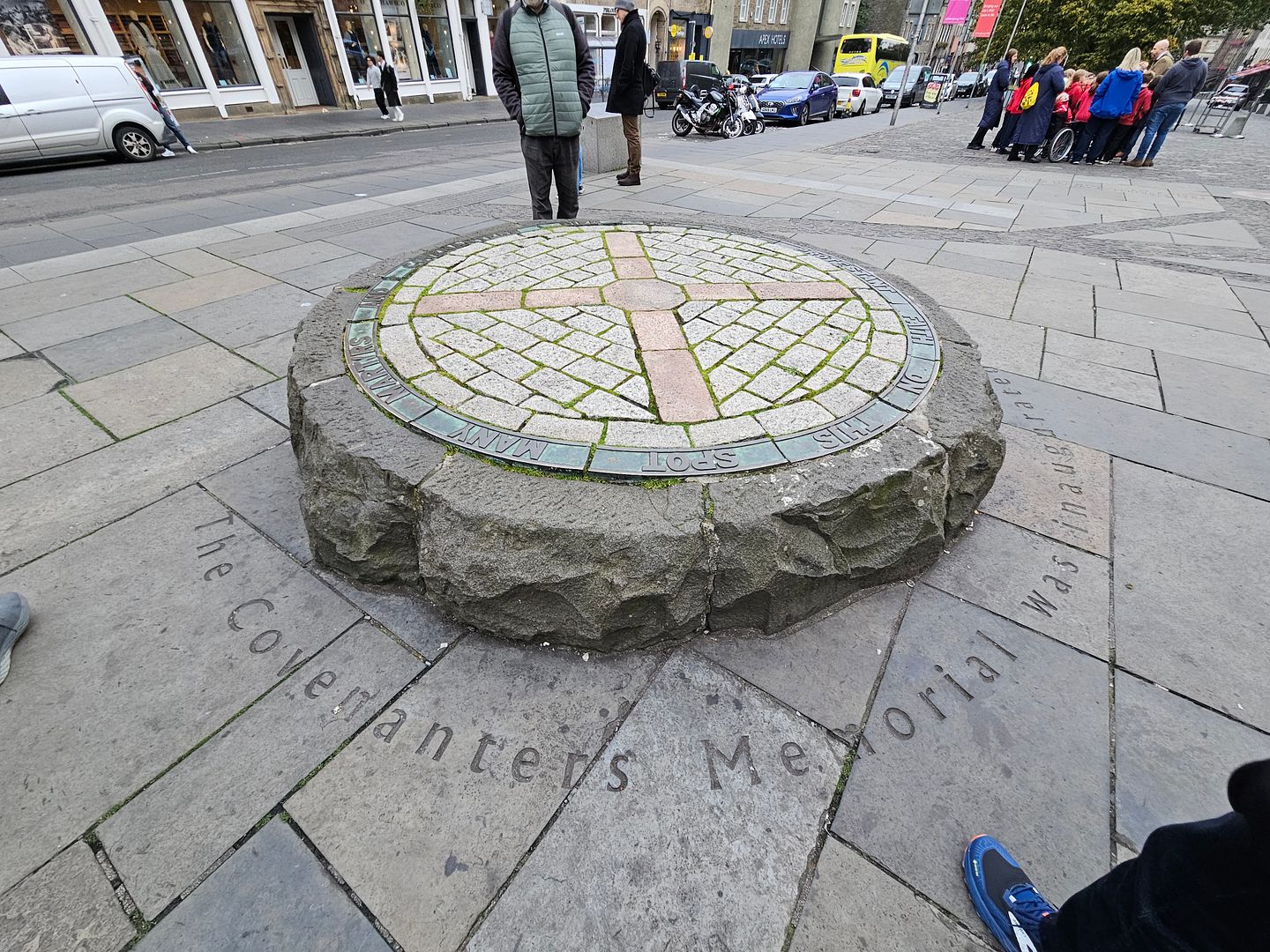
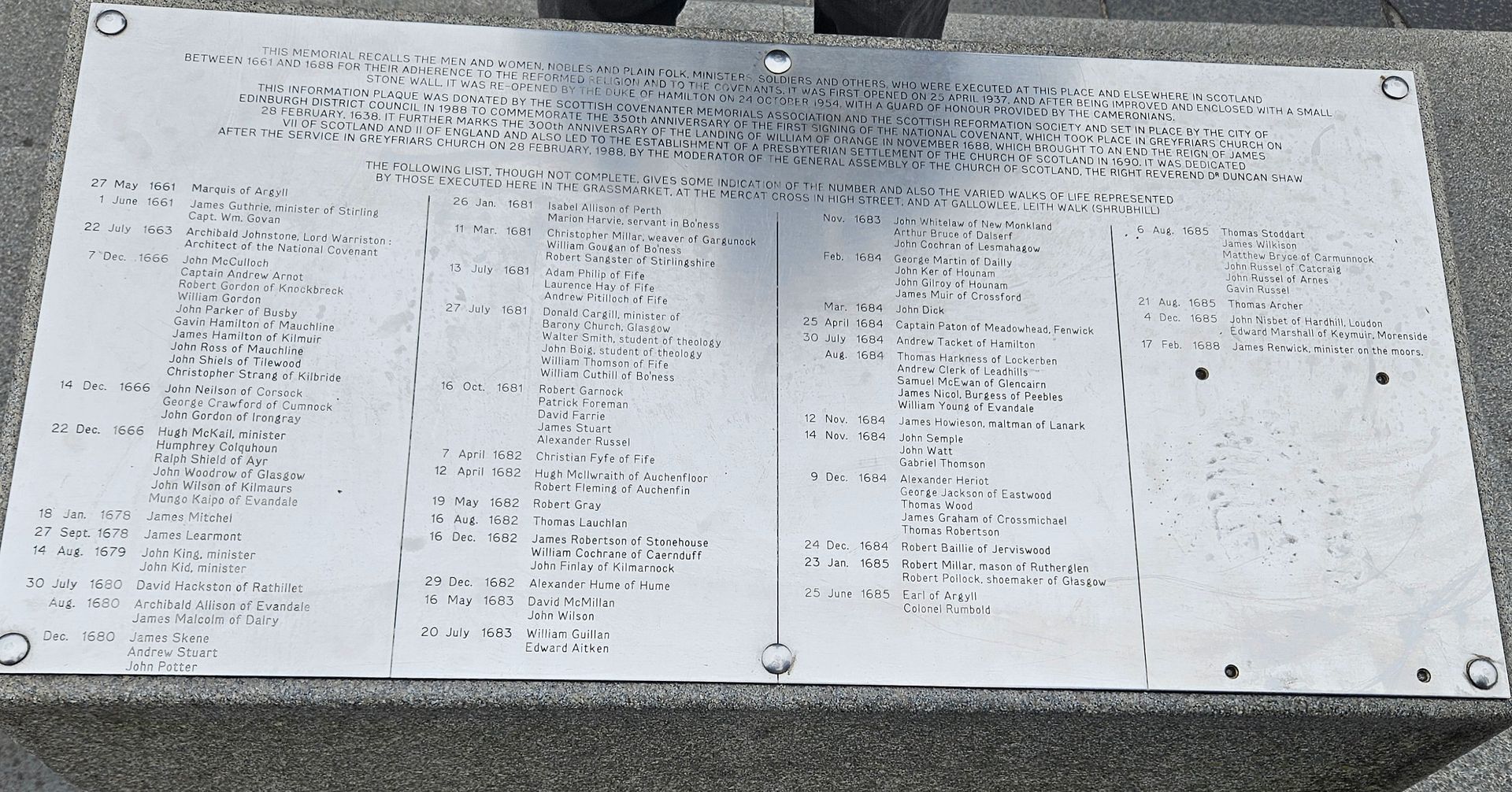
This is where the ‘meat’ of our Reformation Tour began as we were told that this was the route that martyrs would take from their sentencing in the courts above then down Victoria Street to the public gallows. Once we reached Grassmarket we stood around this monument to Martyrs and Covenanters who lost their lives at this spot for their faith.
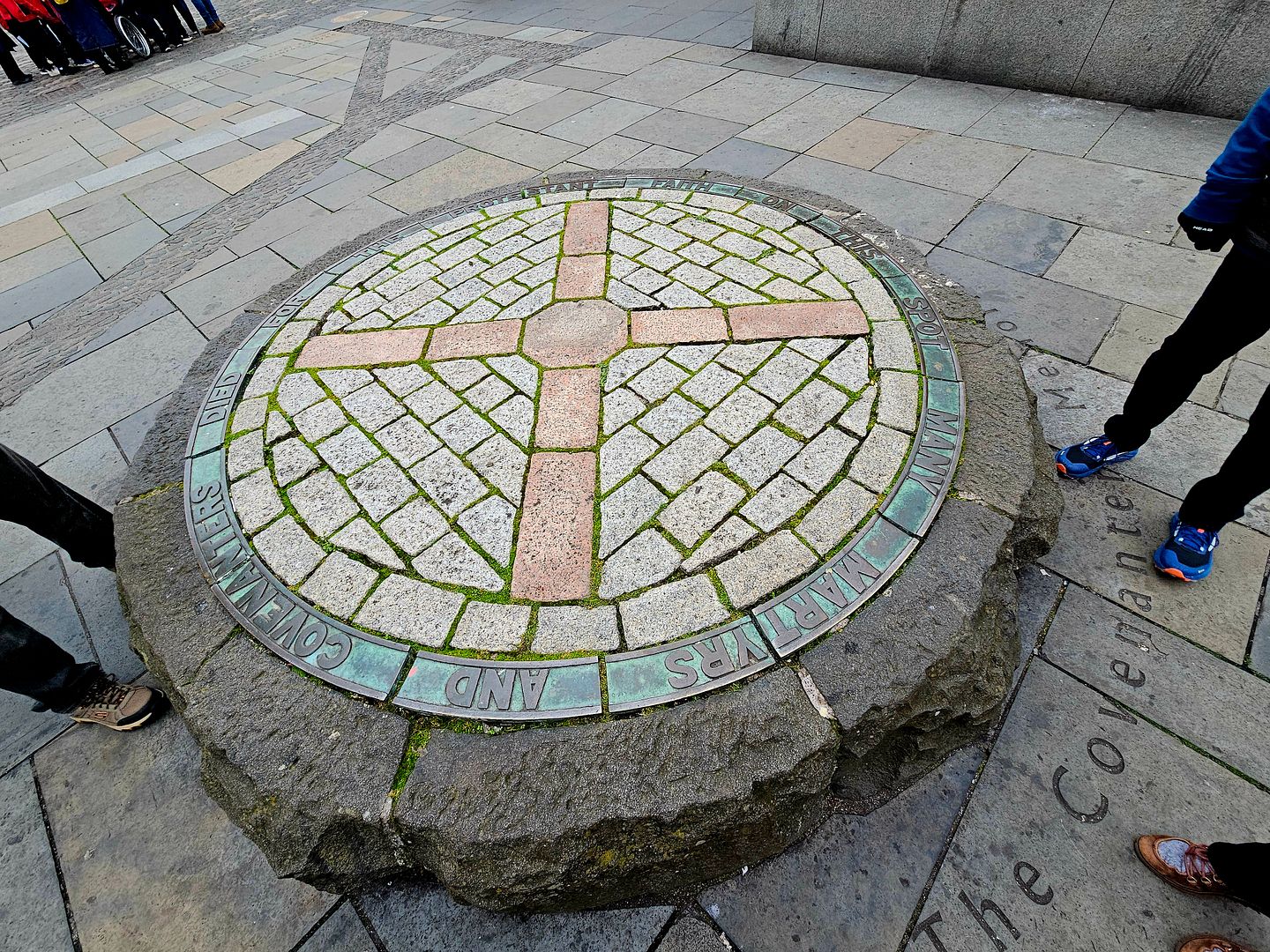
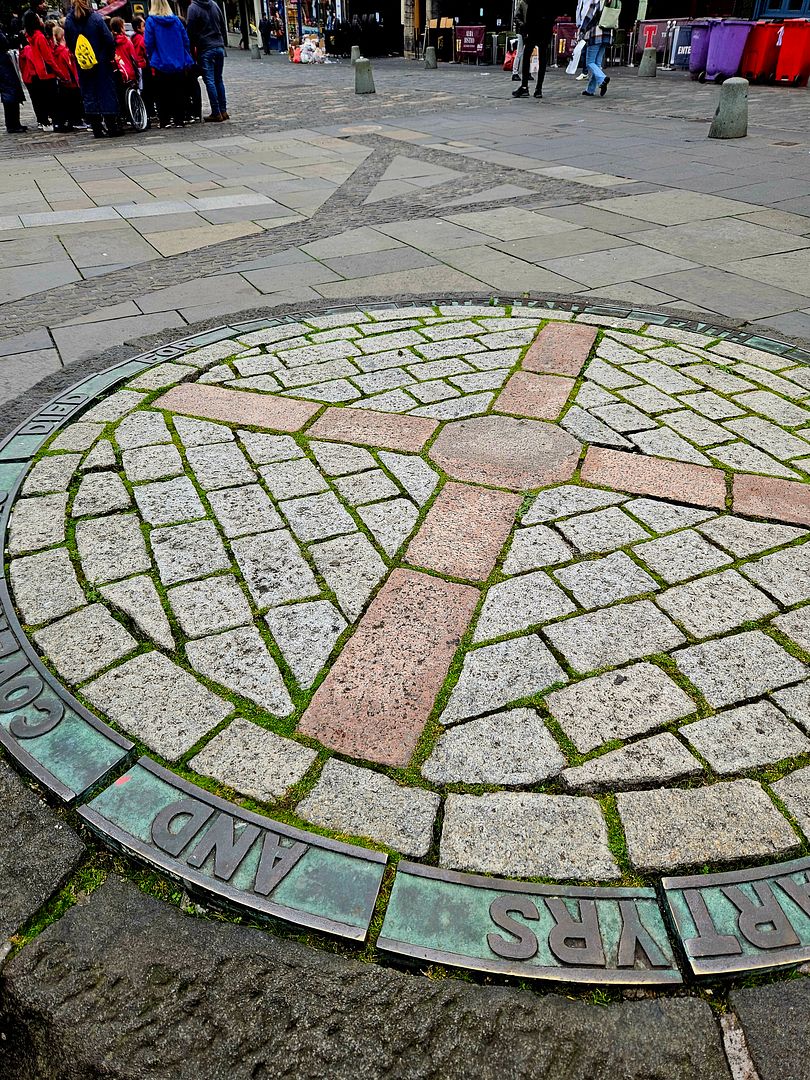
The Grassmarket is an wide open street on the south side of Edinburgh’s Old Town. The city had the public gallows there, and many Covenanters were executed during the Covenanting period.

A circular memorial, erected by public subscription in 1937, marks the site, and an adjoining plaque lists the names of the many Covenanters who were hanged there.

In a recent renovation of the locality, a representation of the gallows’ shadow was made on the ground using different coloured stone, as seen in the picture to the left.
Our tour continued from here. We made stops at Greyfriars Kirkyard, The National Museum, The National Library and St. Giles Cathedral.

At this stage in January, many months later, I’m not sure of the order of those stops! Travel failure in not writing a journal while on our trip. I’ll put it down to the fact that our days were so full we didn’t have a lot of down time in the evenings.

Hello to February. I was hoping to have our Scotland Journal Posts done by the end of January but it will take a few days into February to accomplish that.
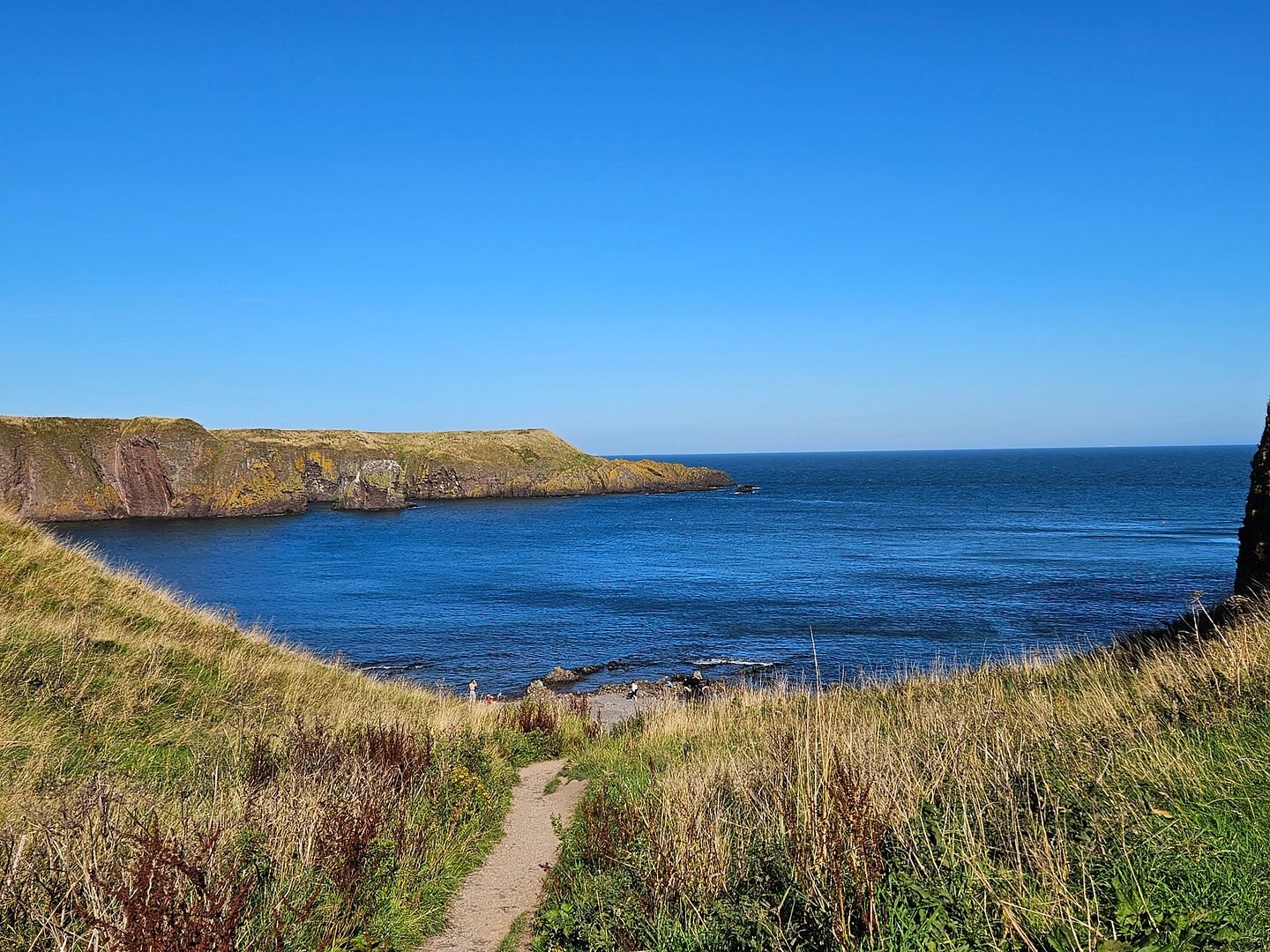
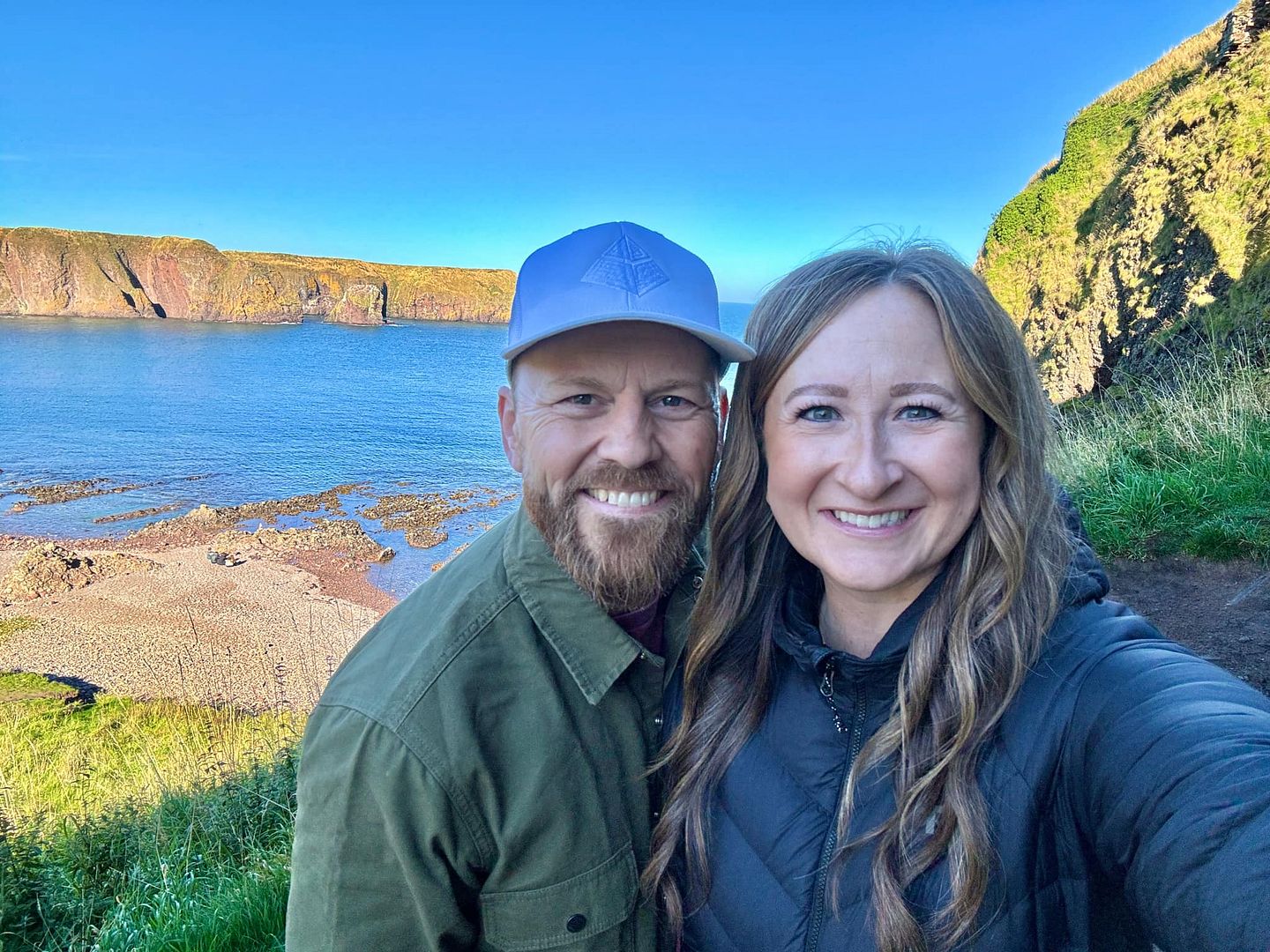
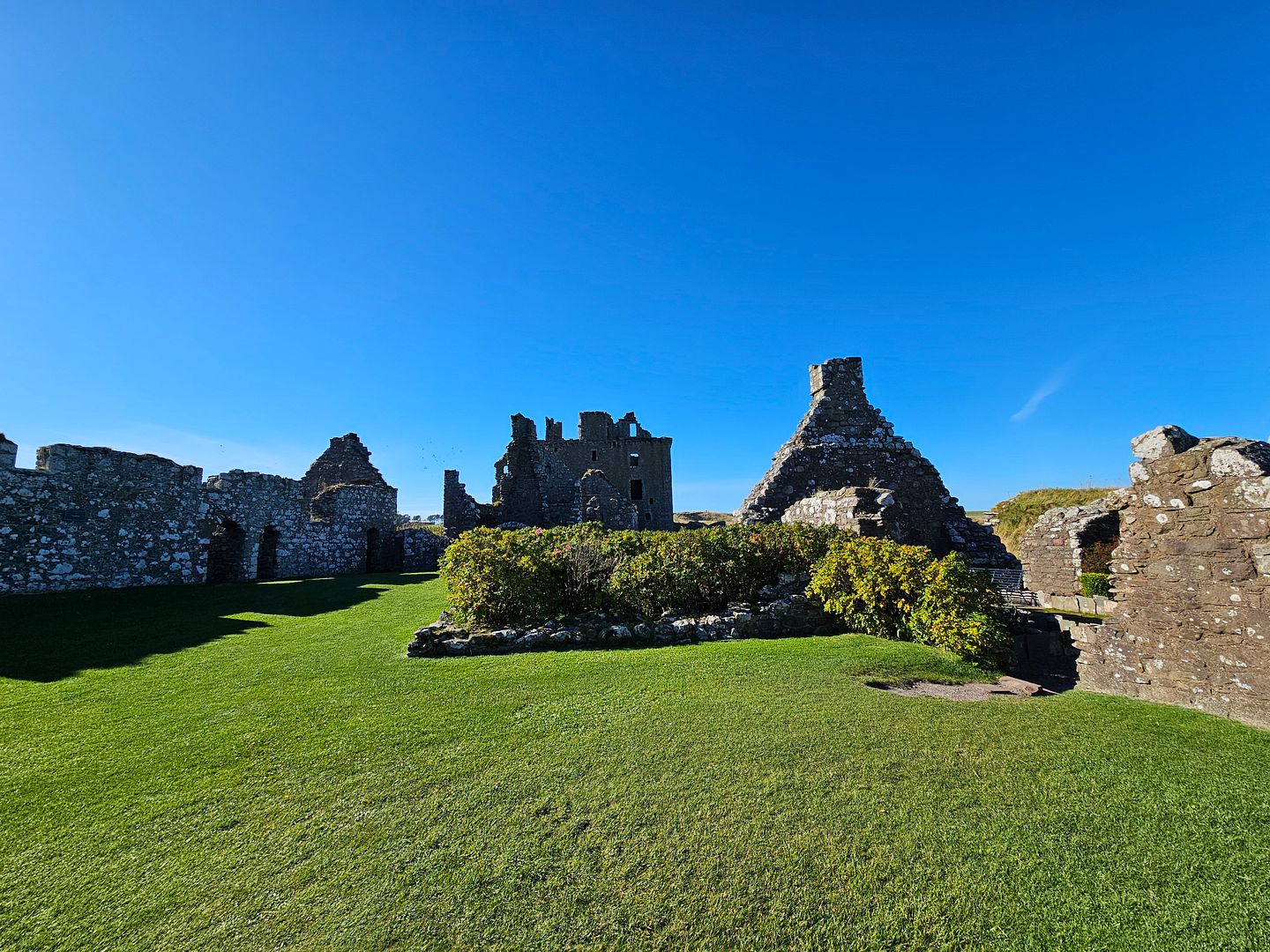
Scotland Travel Journal ~ Dunnottar

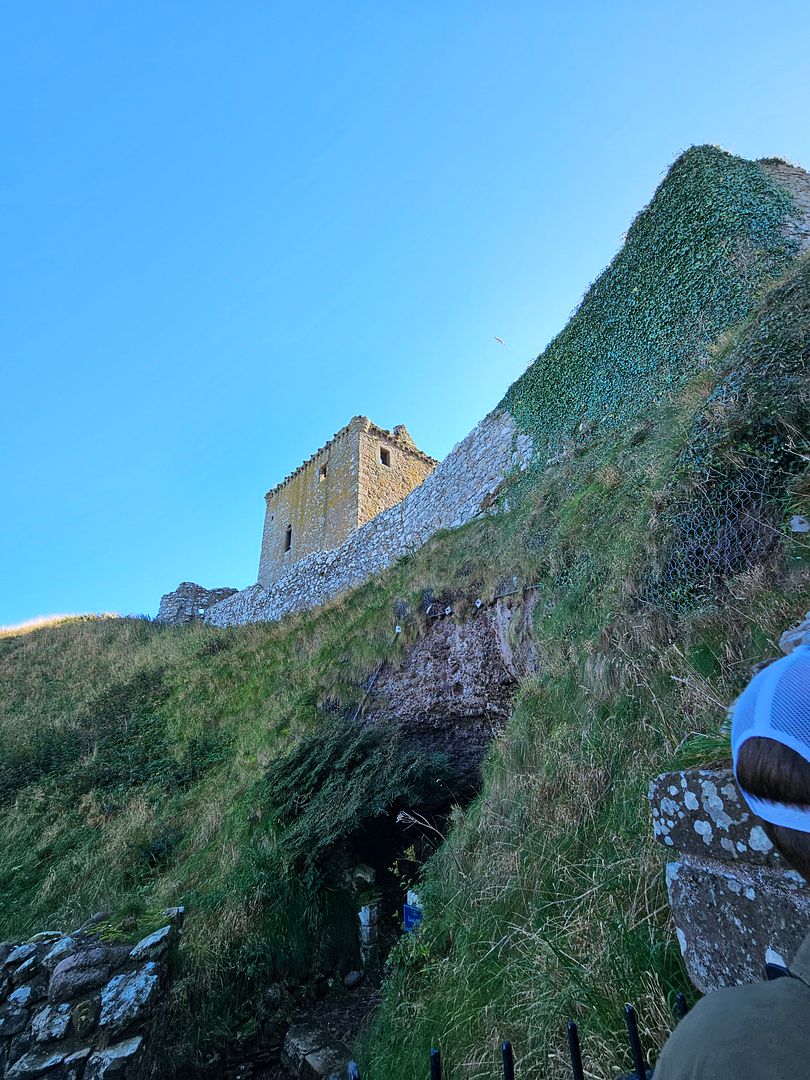
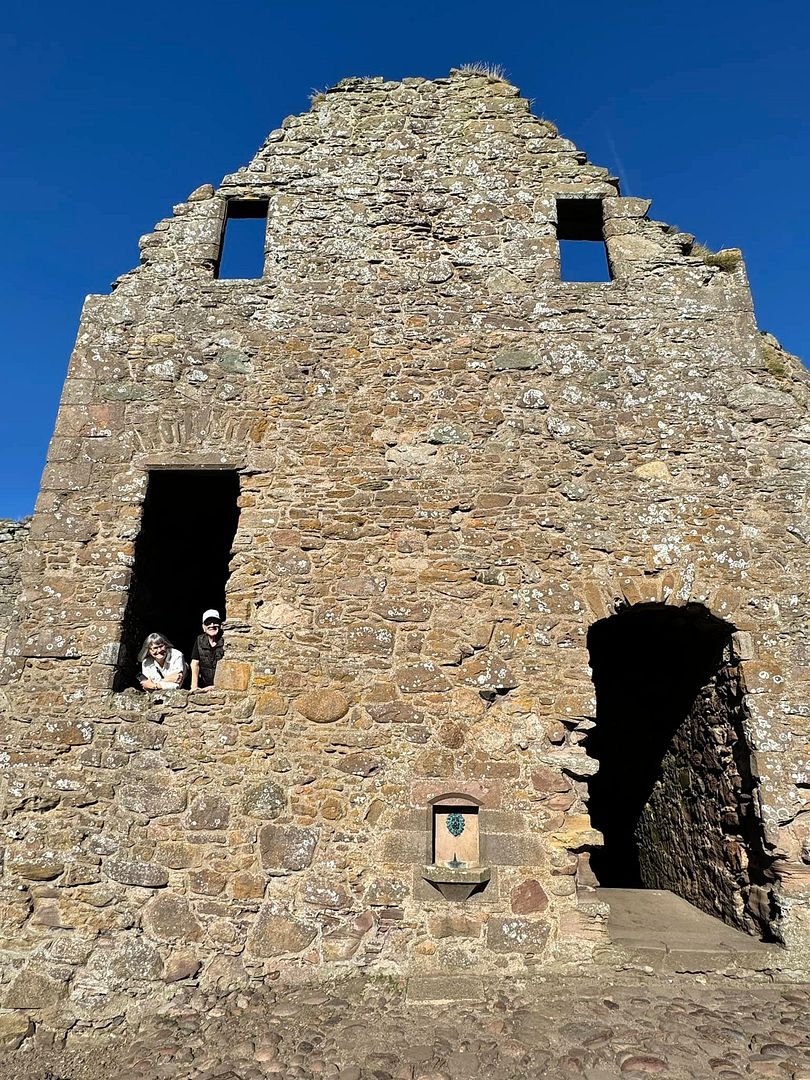
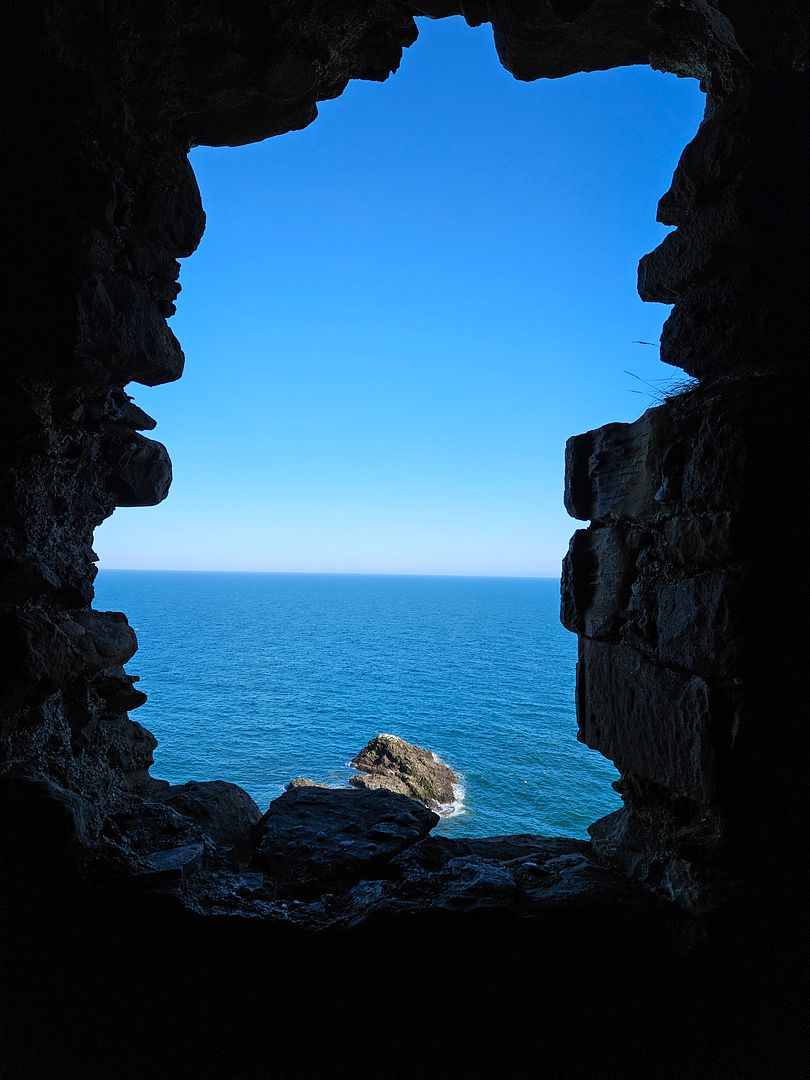
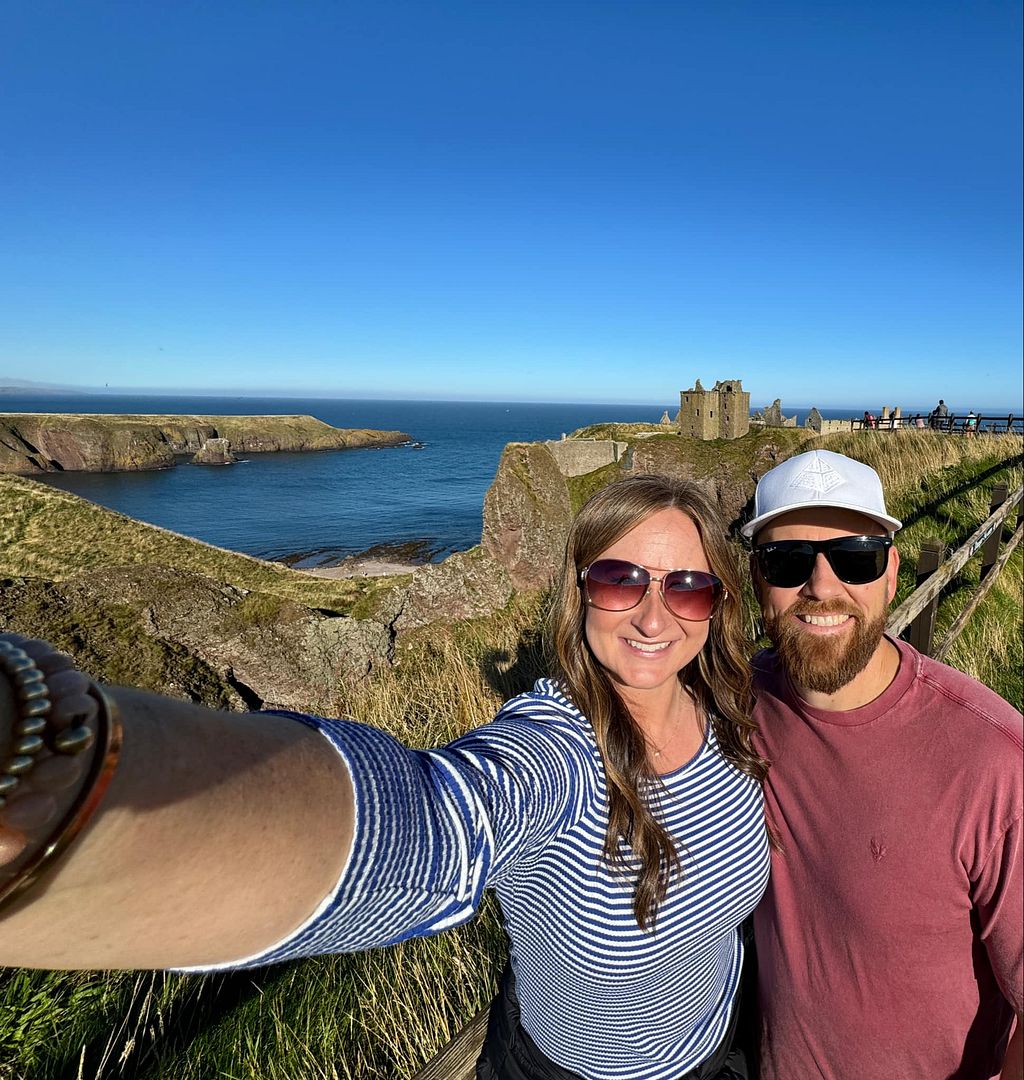
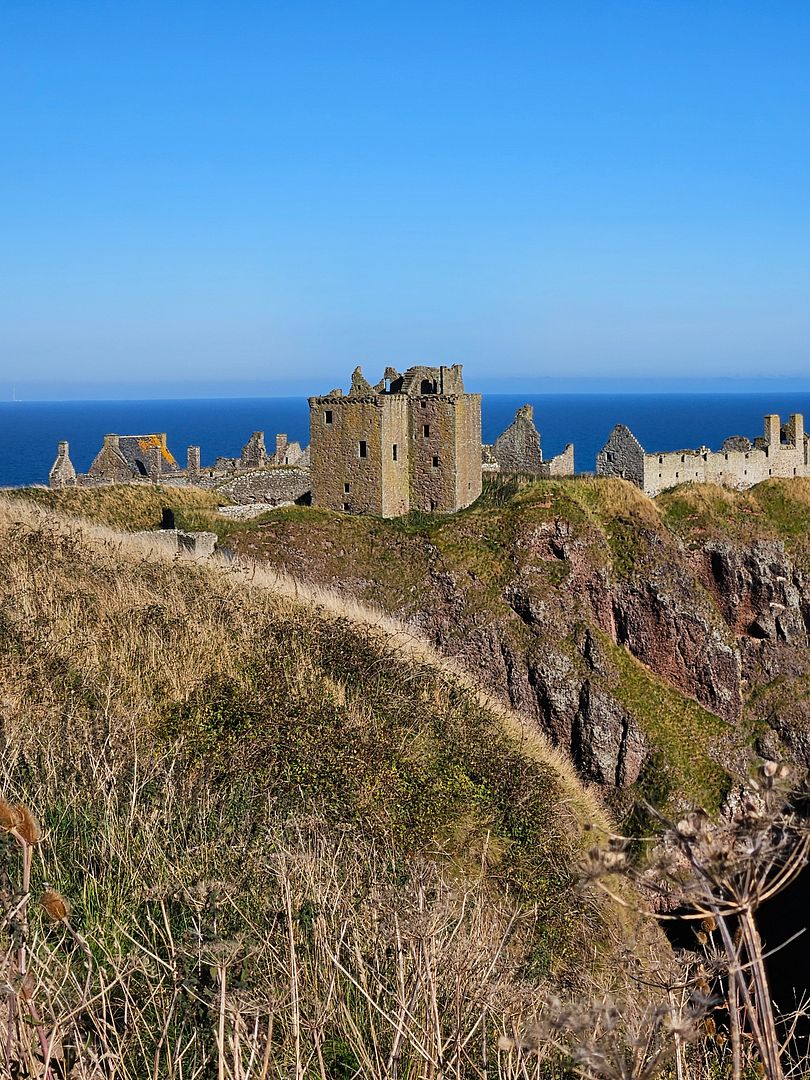
After lunch at the Flying Stag in Braemar we continued east on the A93 to a slugroad for a coastal route that would take us to Dunnottar Castle. GPS is a wonderful thing.

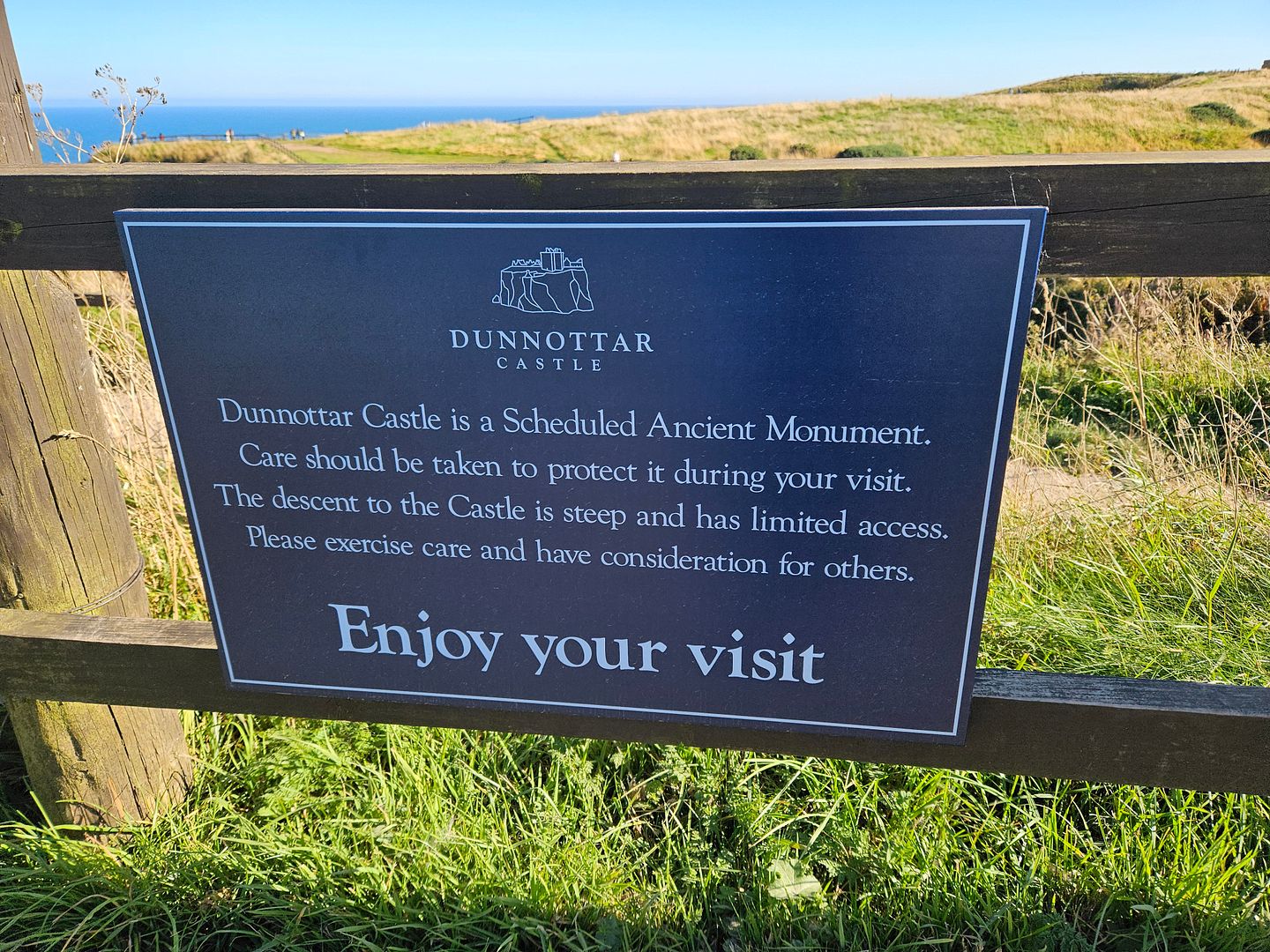
The history of Dunnottar castle can be found here. I also found more of it’s history here that I’ve quoted below.

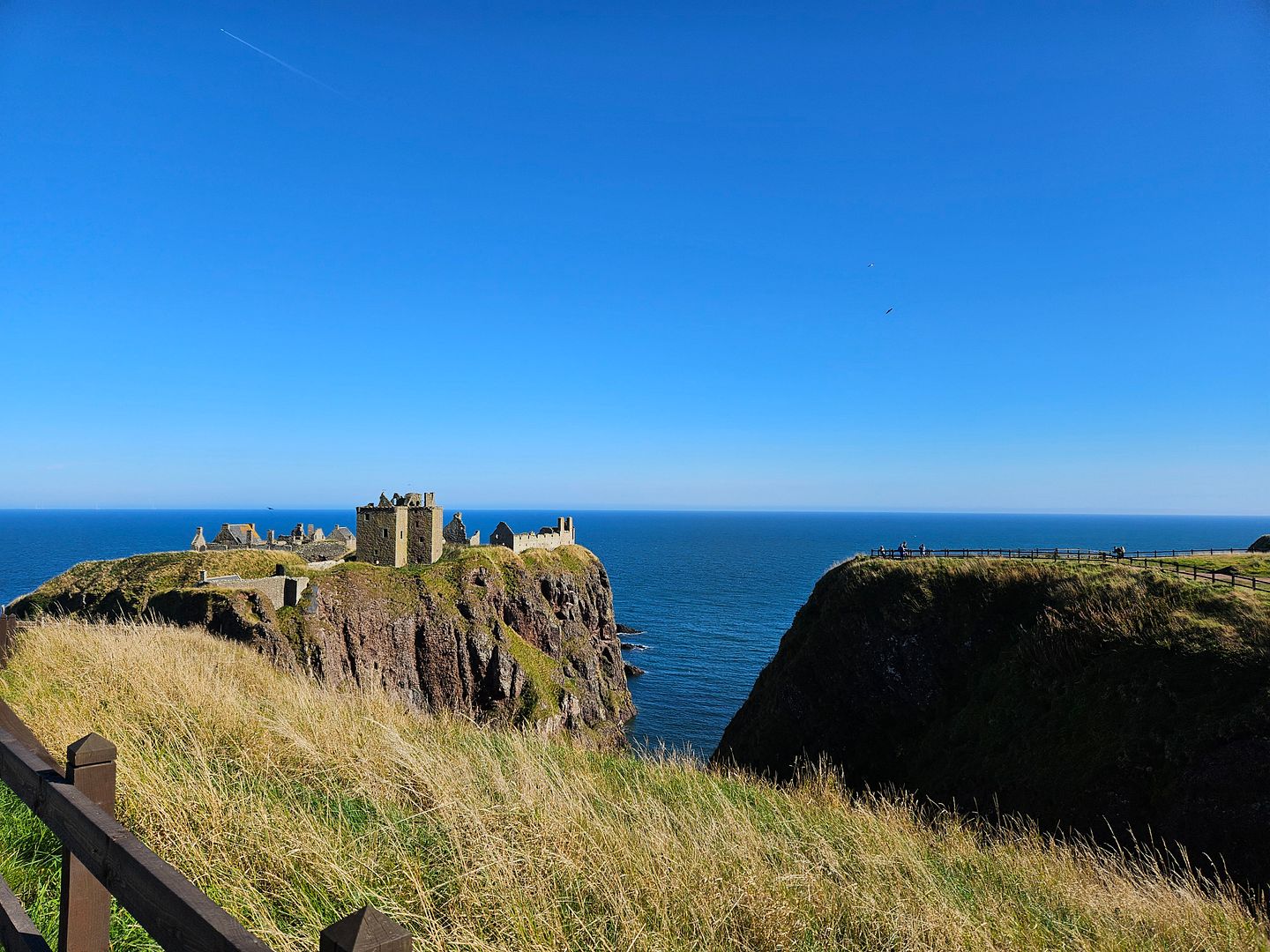
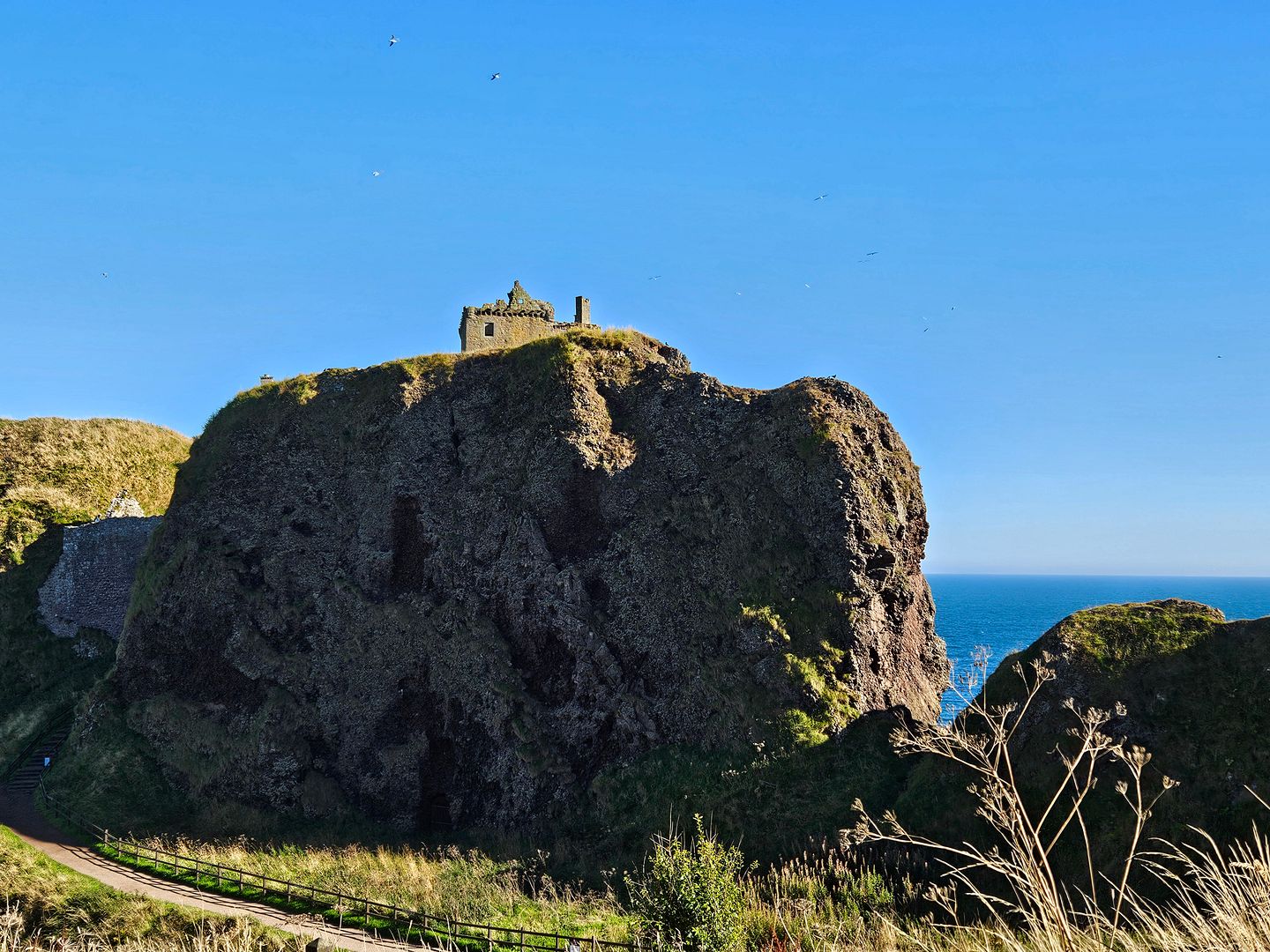
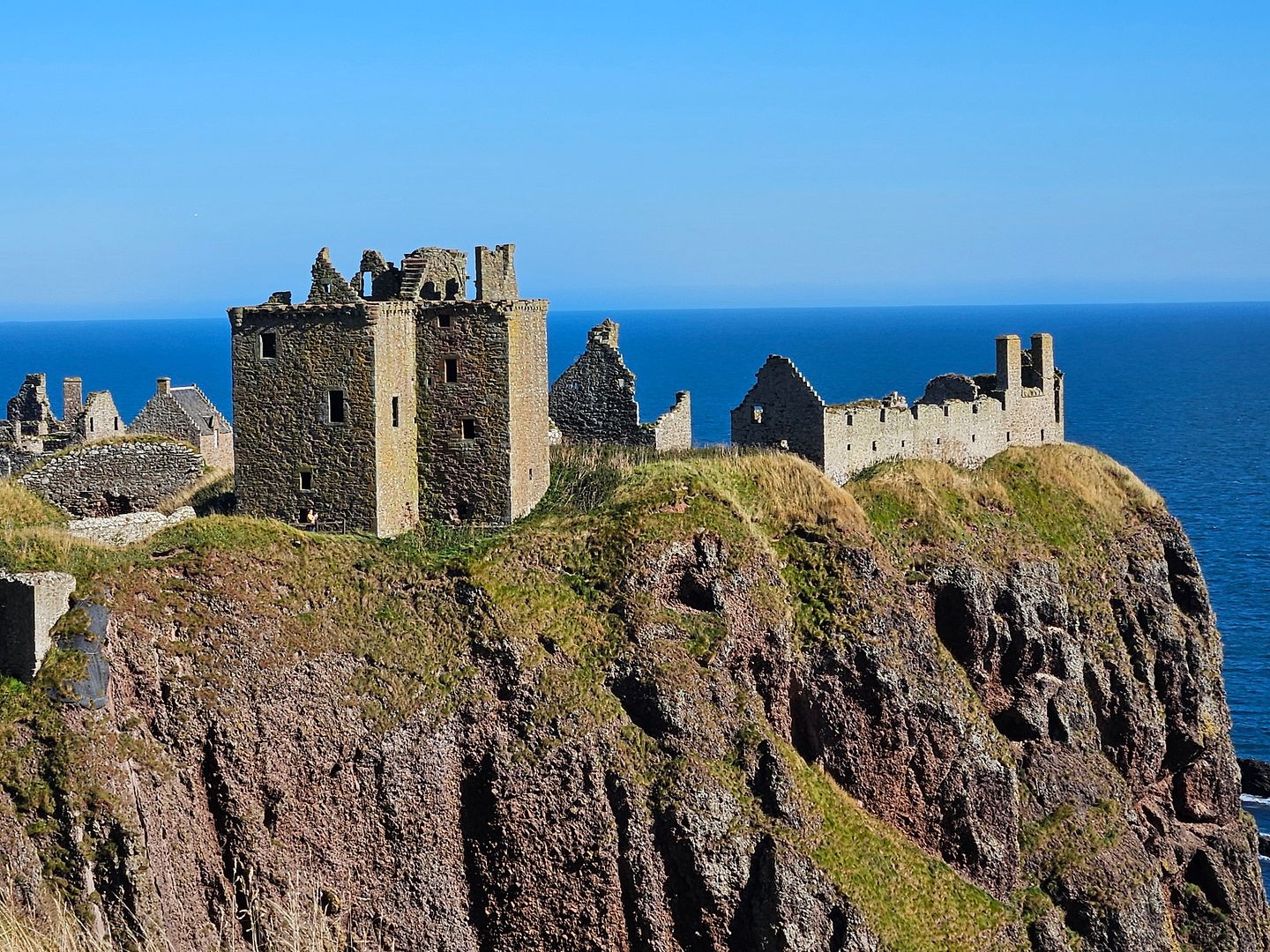
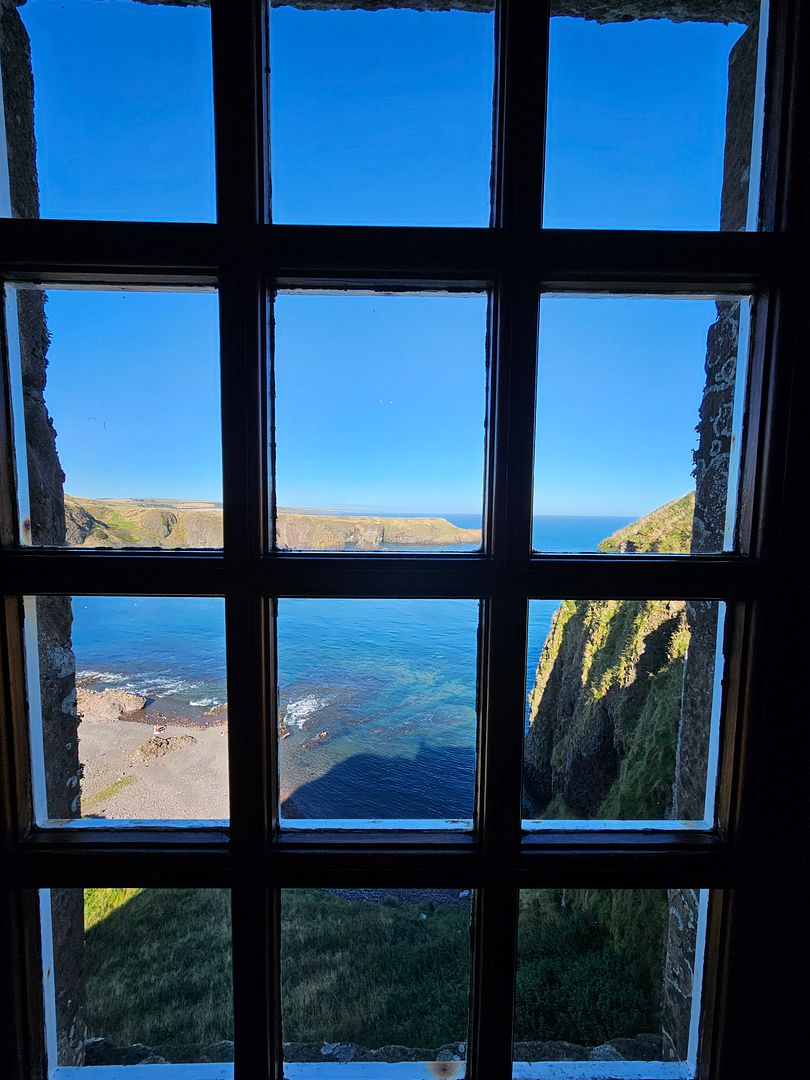
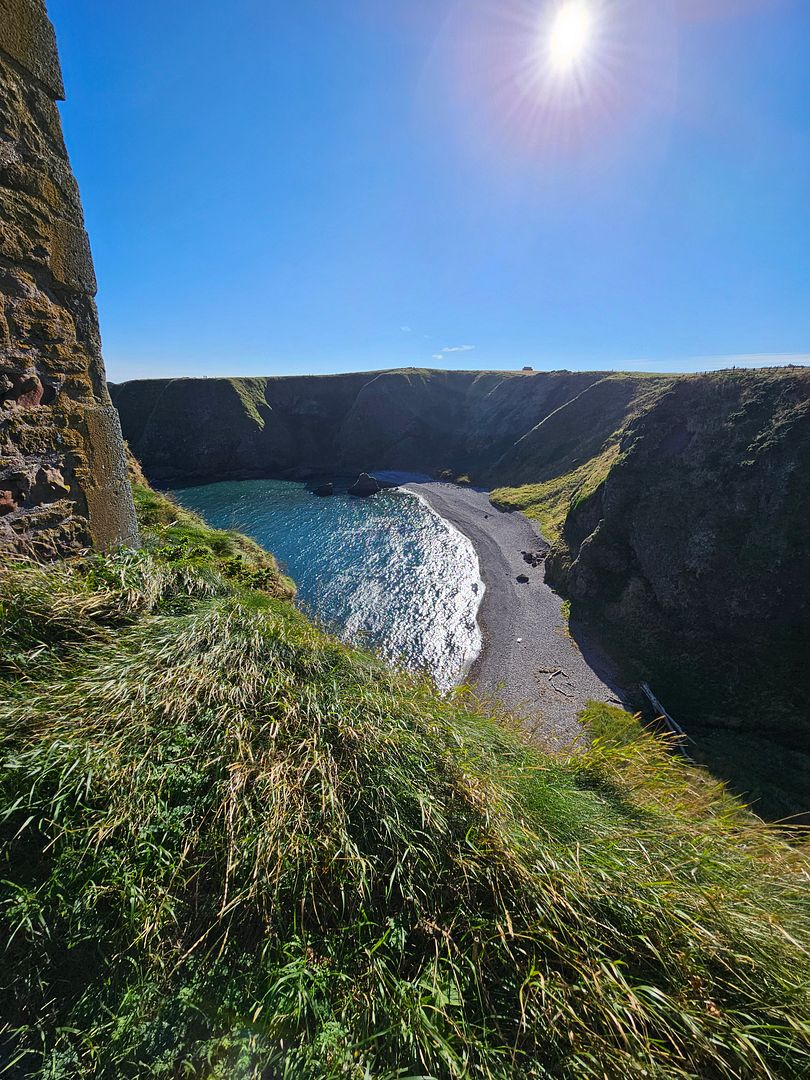
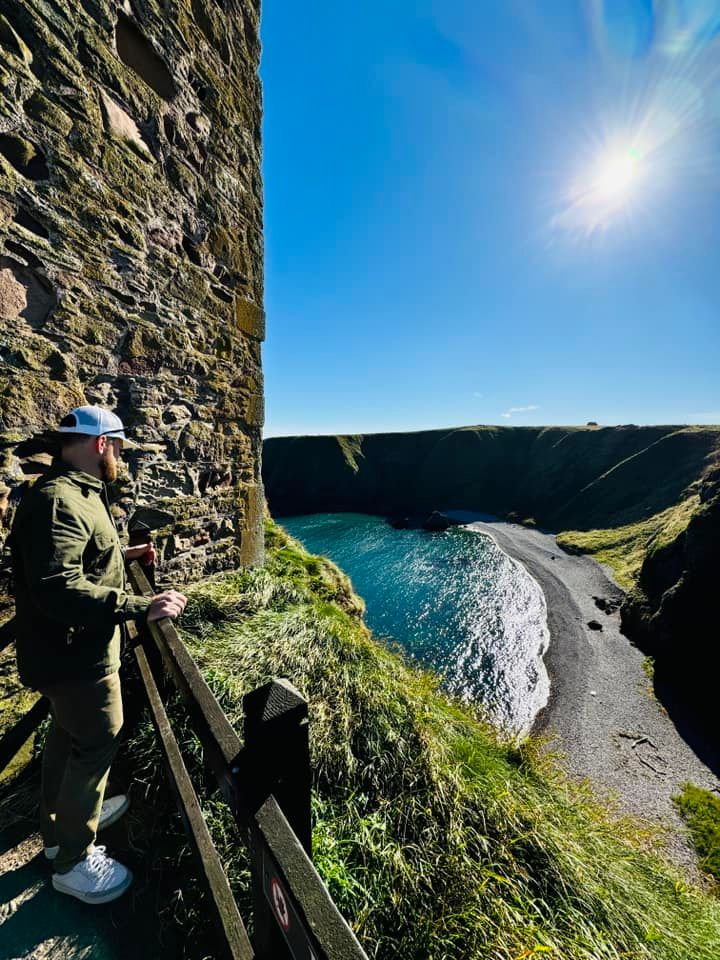
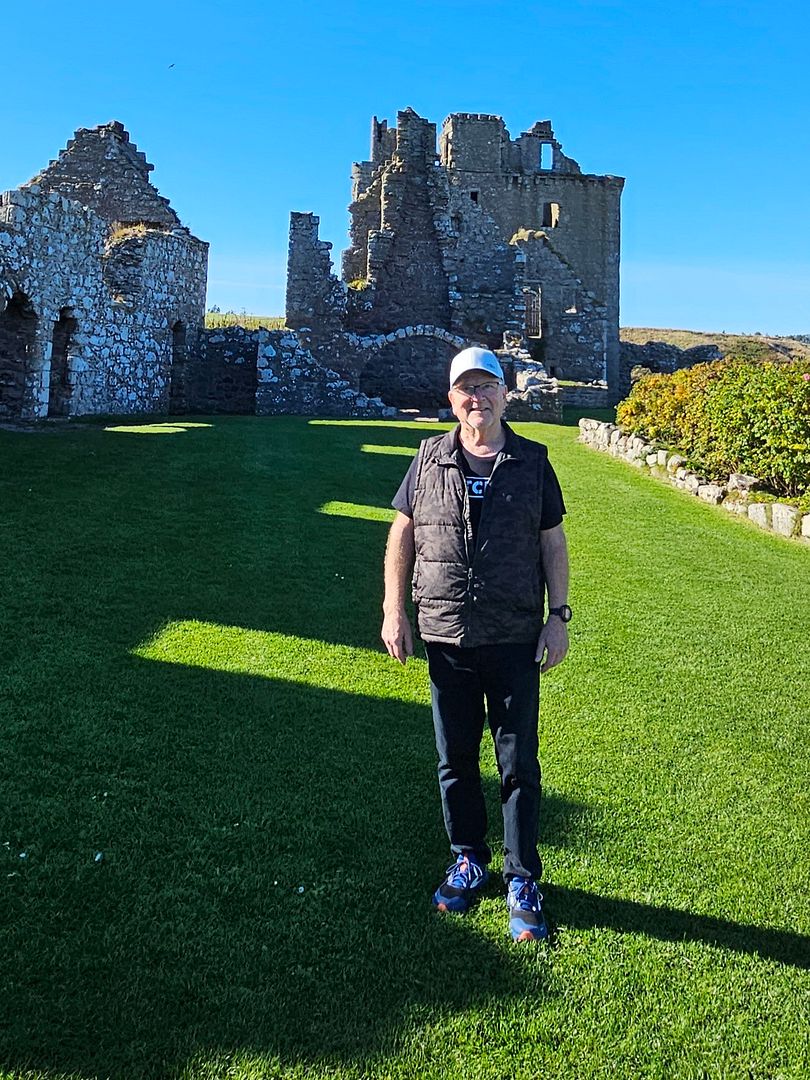
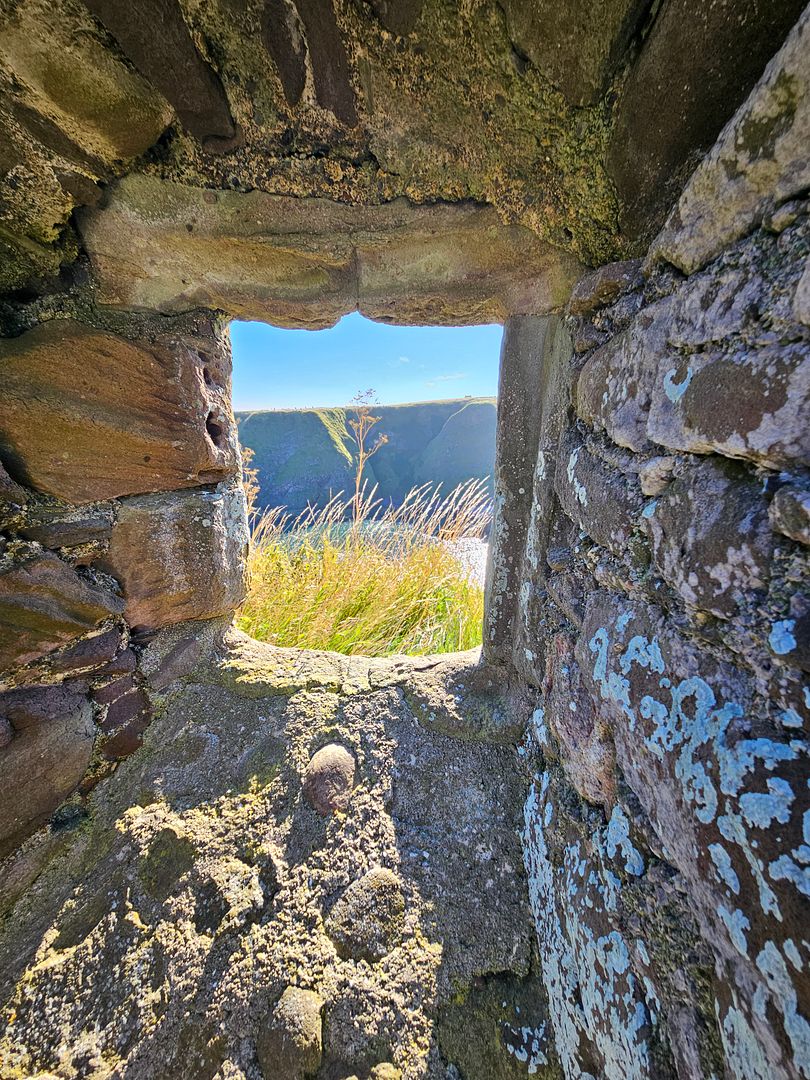
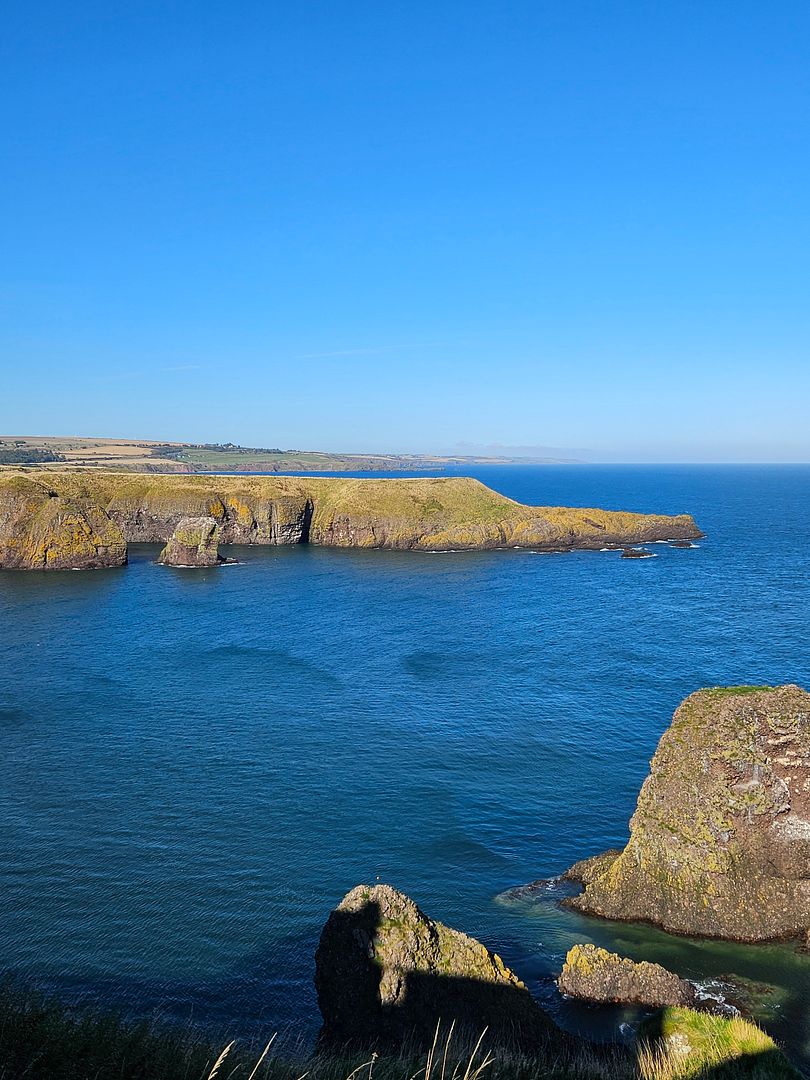
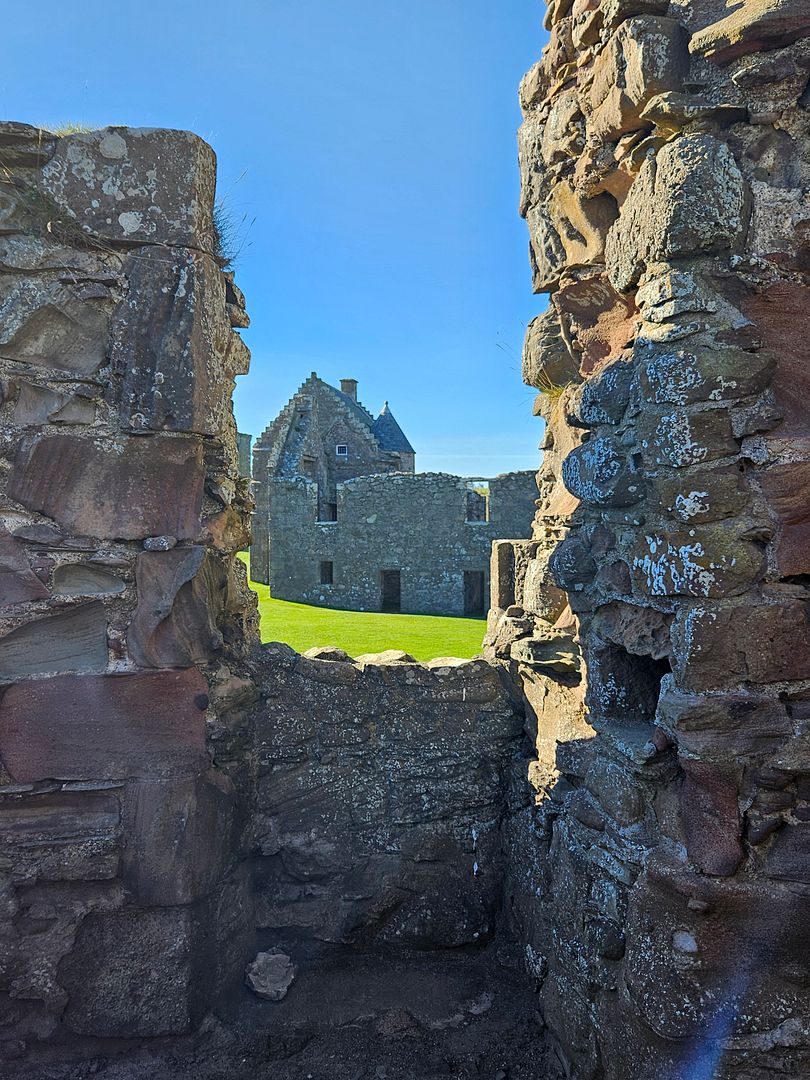
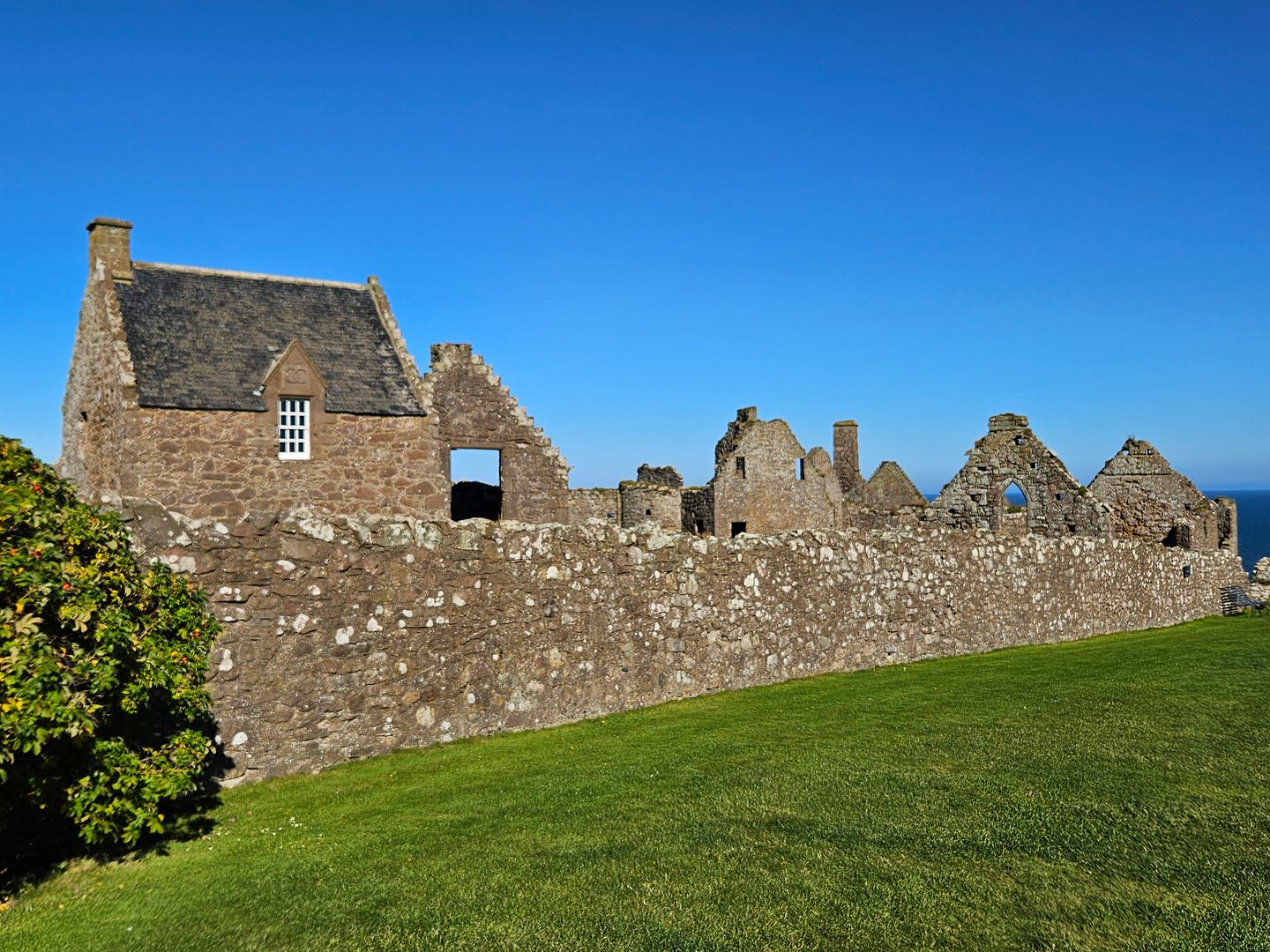
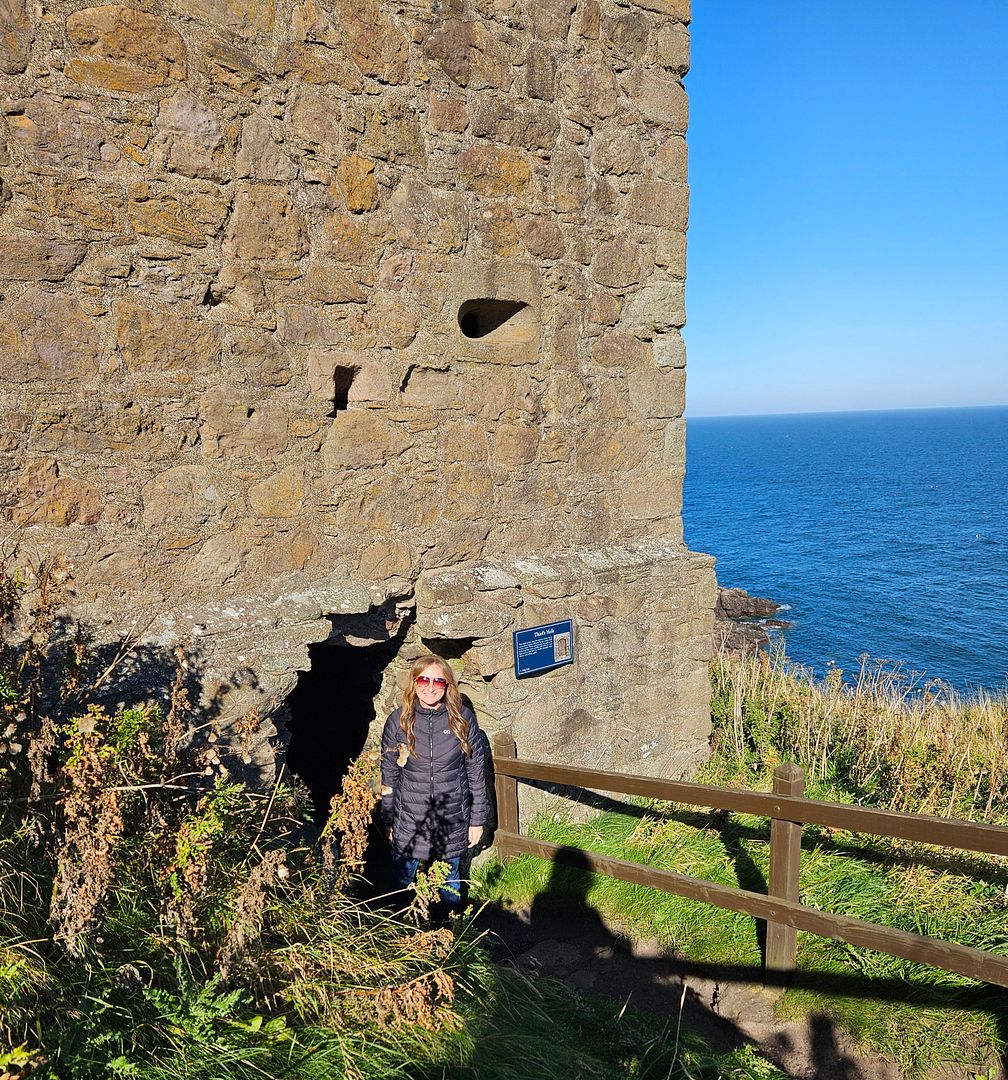
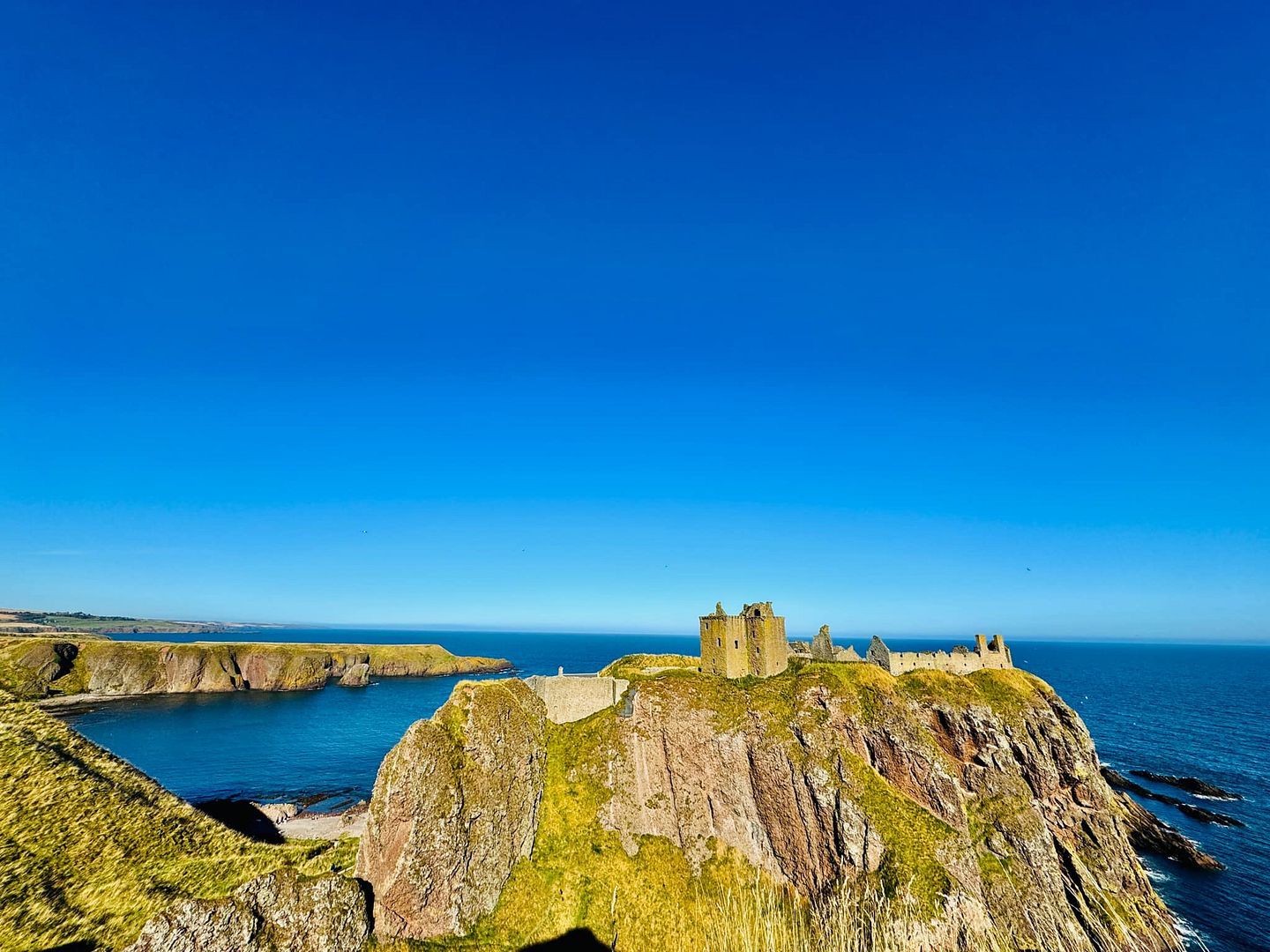
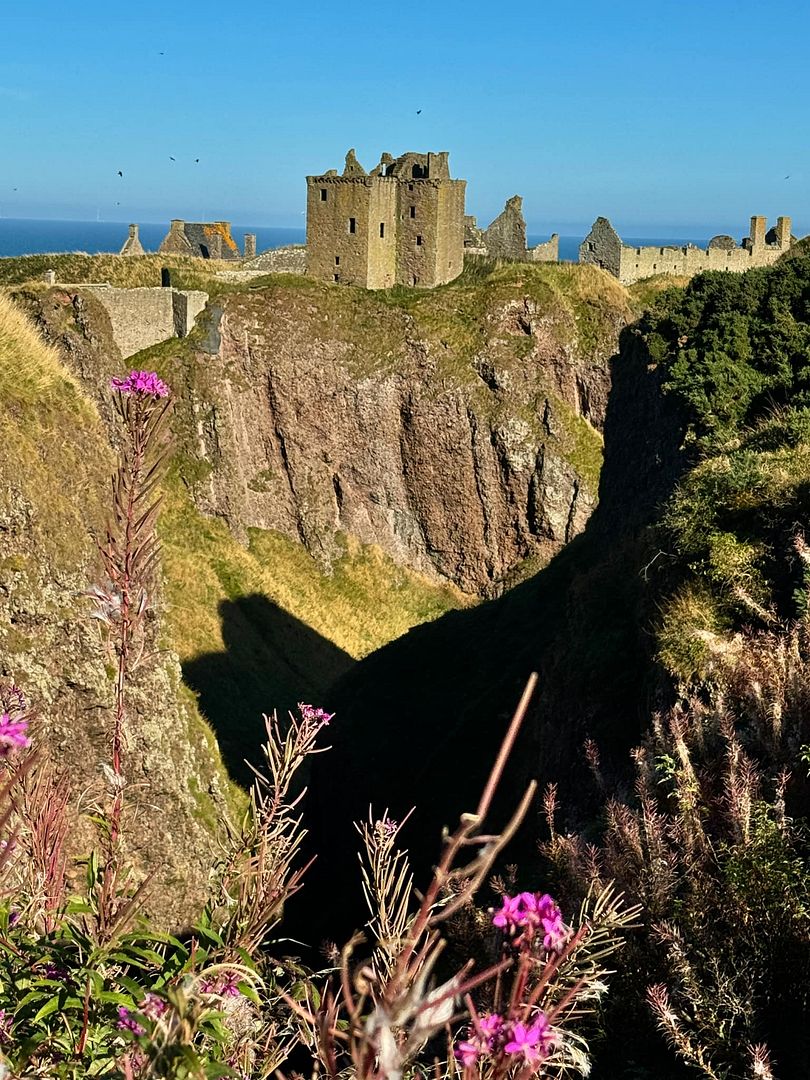
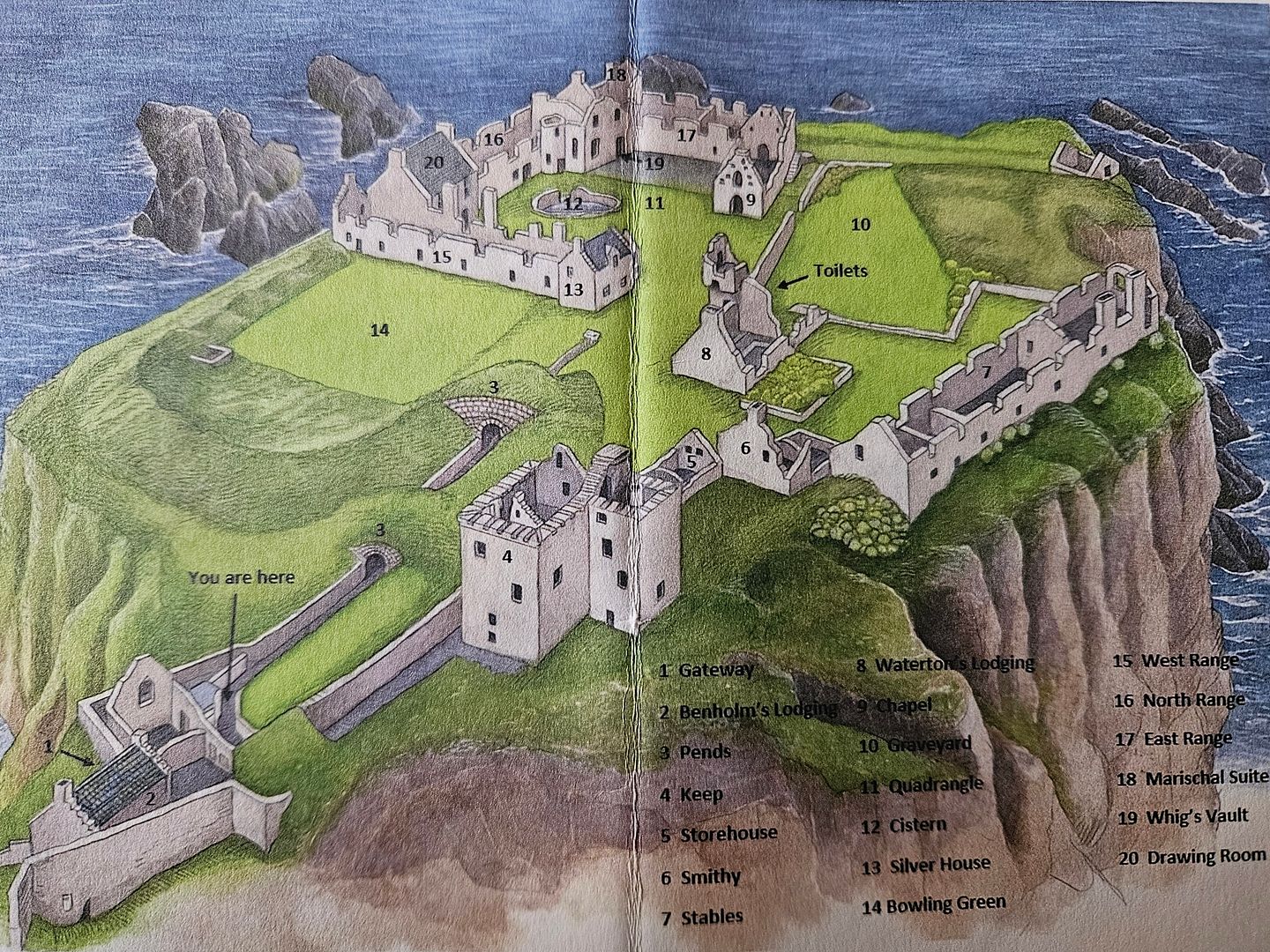
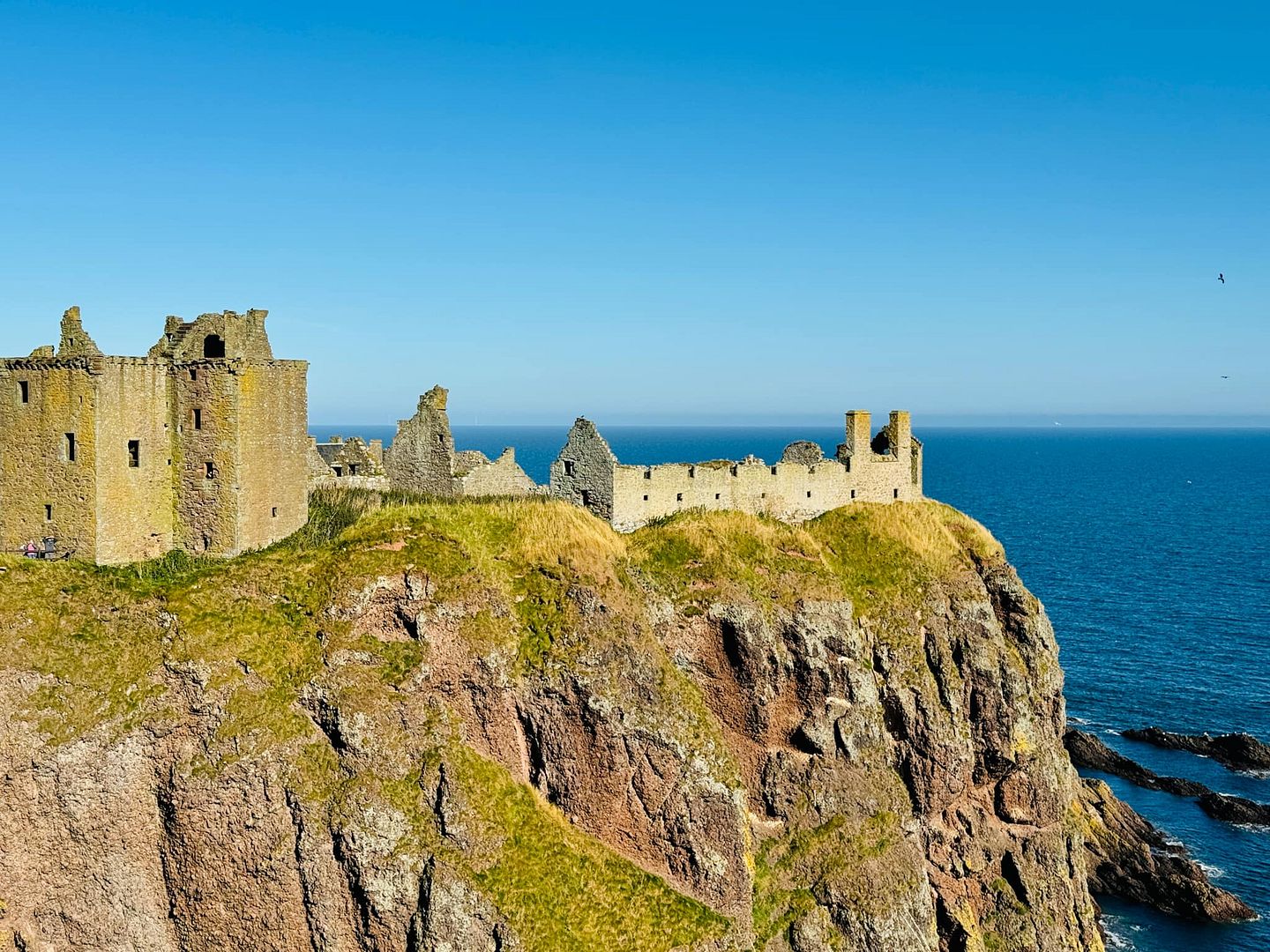
Perched atop a 160 foot rock and surrounded on three sides by the North Sea, these dramatic and evocative cliff-top ruins were once an impregnable fortress of the Earls Marischal, once one of the most powerful families in Scotland.

Scotland has some magnificently located castles. Think no further than Stirling Castle or Edinburgh Castle, both built on top of rocks that allow them to dominate the landscape for miles around. But if we had to pick just one to trust with our lives in a time of great danger then it would without any doubt be Dunnottar Castle. No other Scottish castle comes close in terms of a sense of sheer brooding impregnability. This is a castle which looks across to the nearby coastal cliffs and whose presence, even today, conveys a very simply message: “Don’t mess with me.”

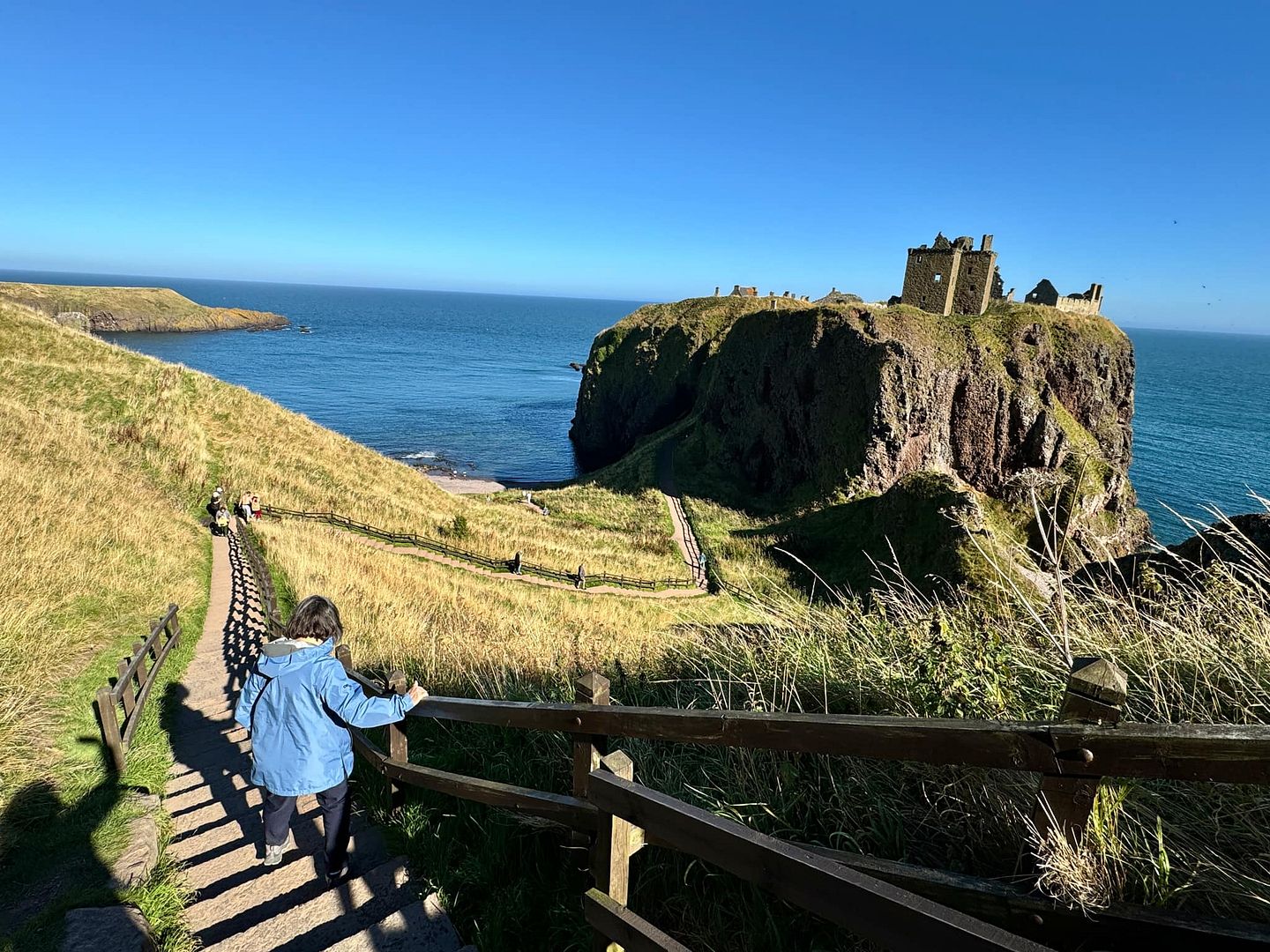
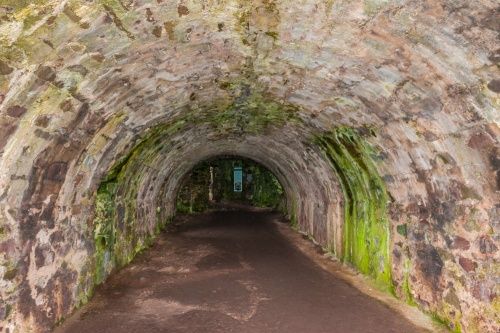
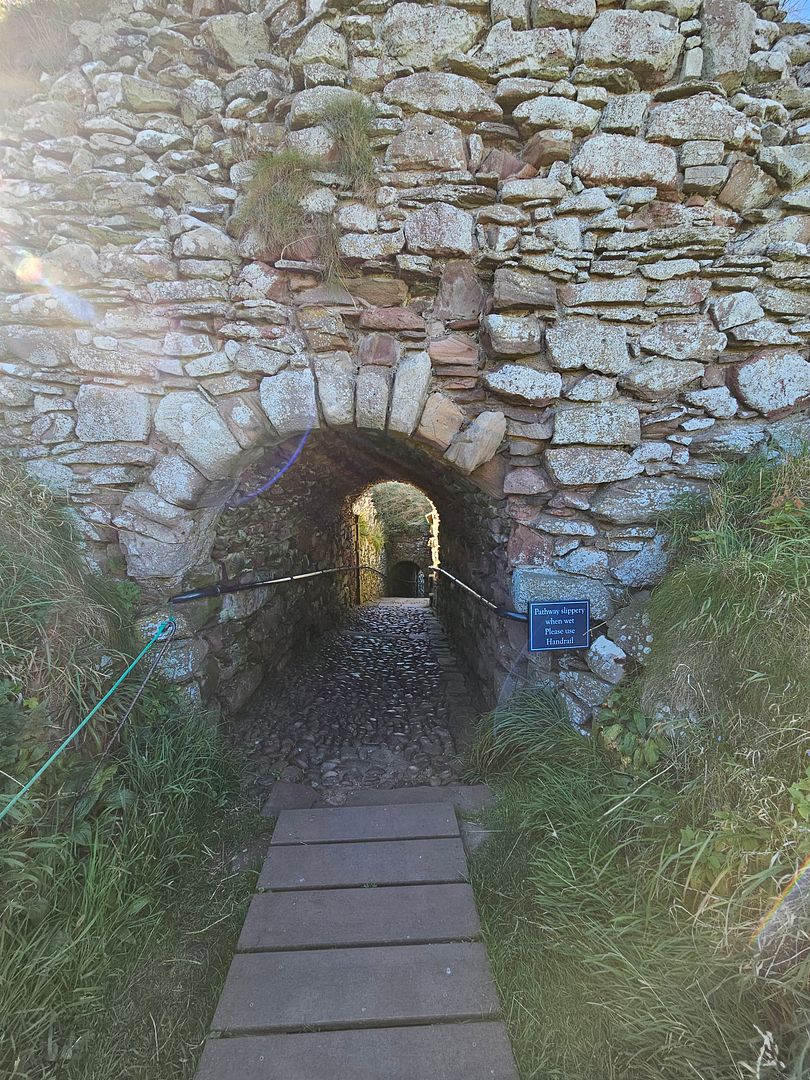
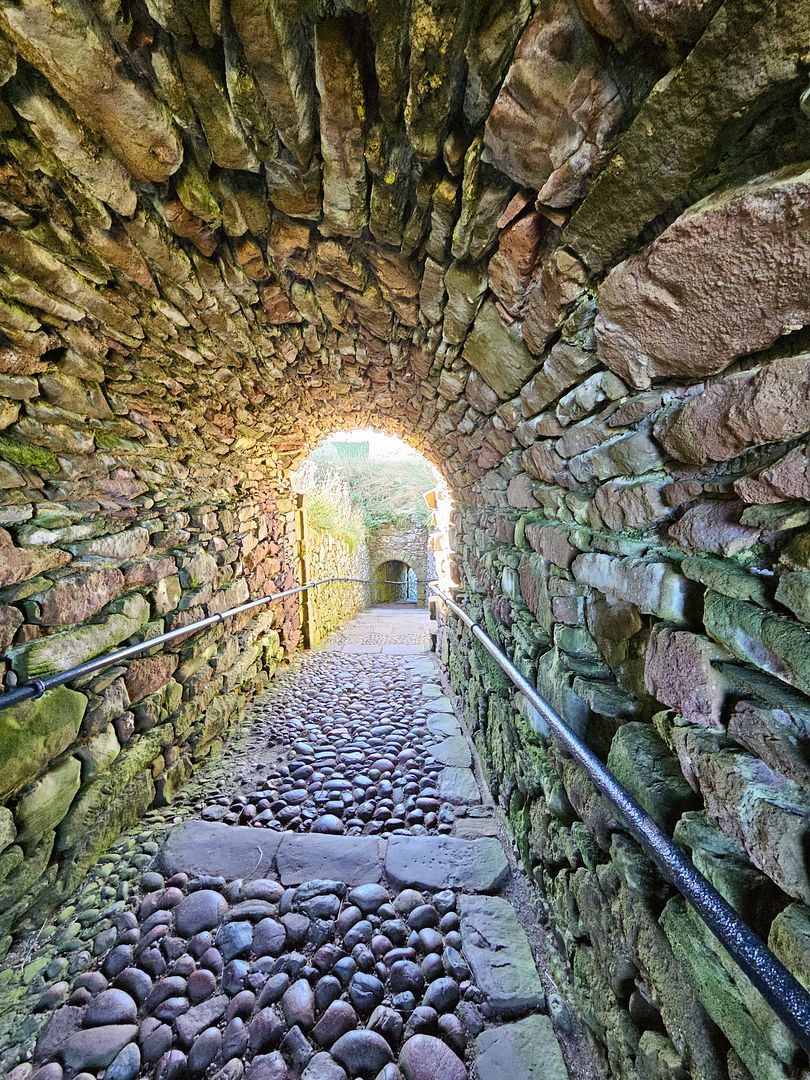
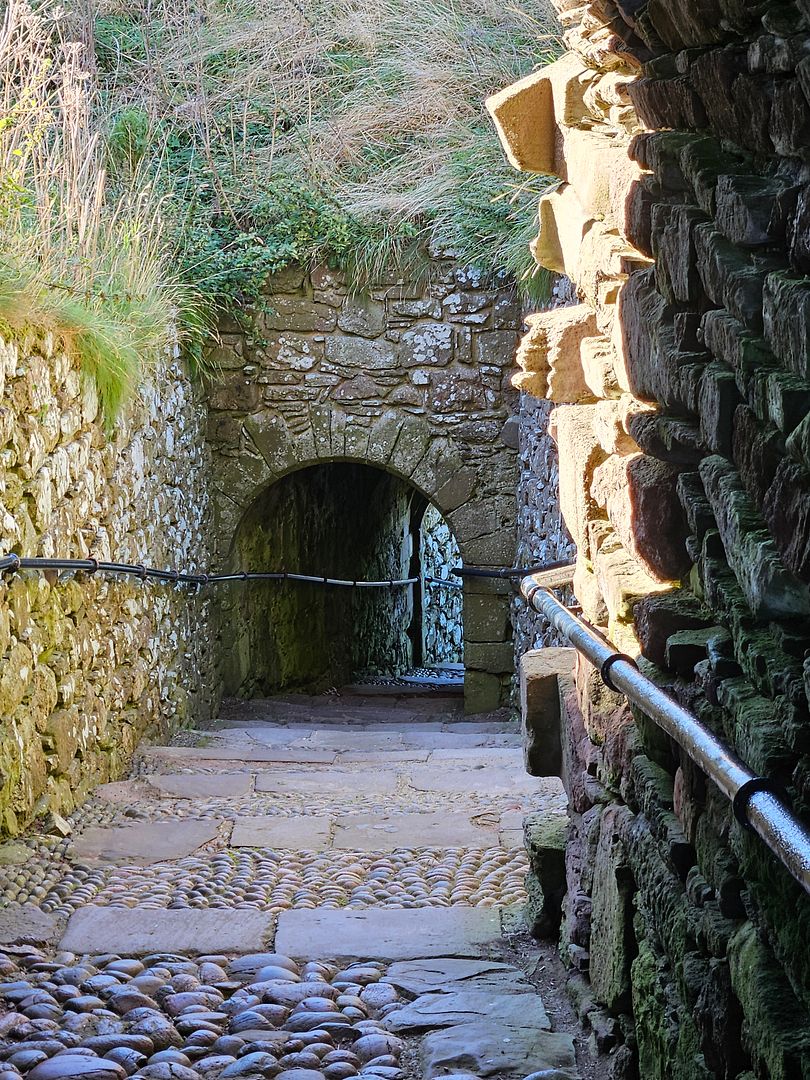
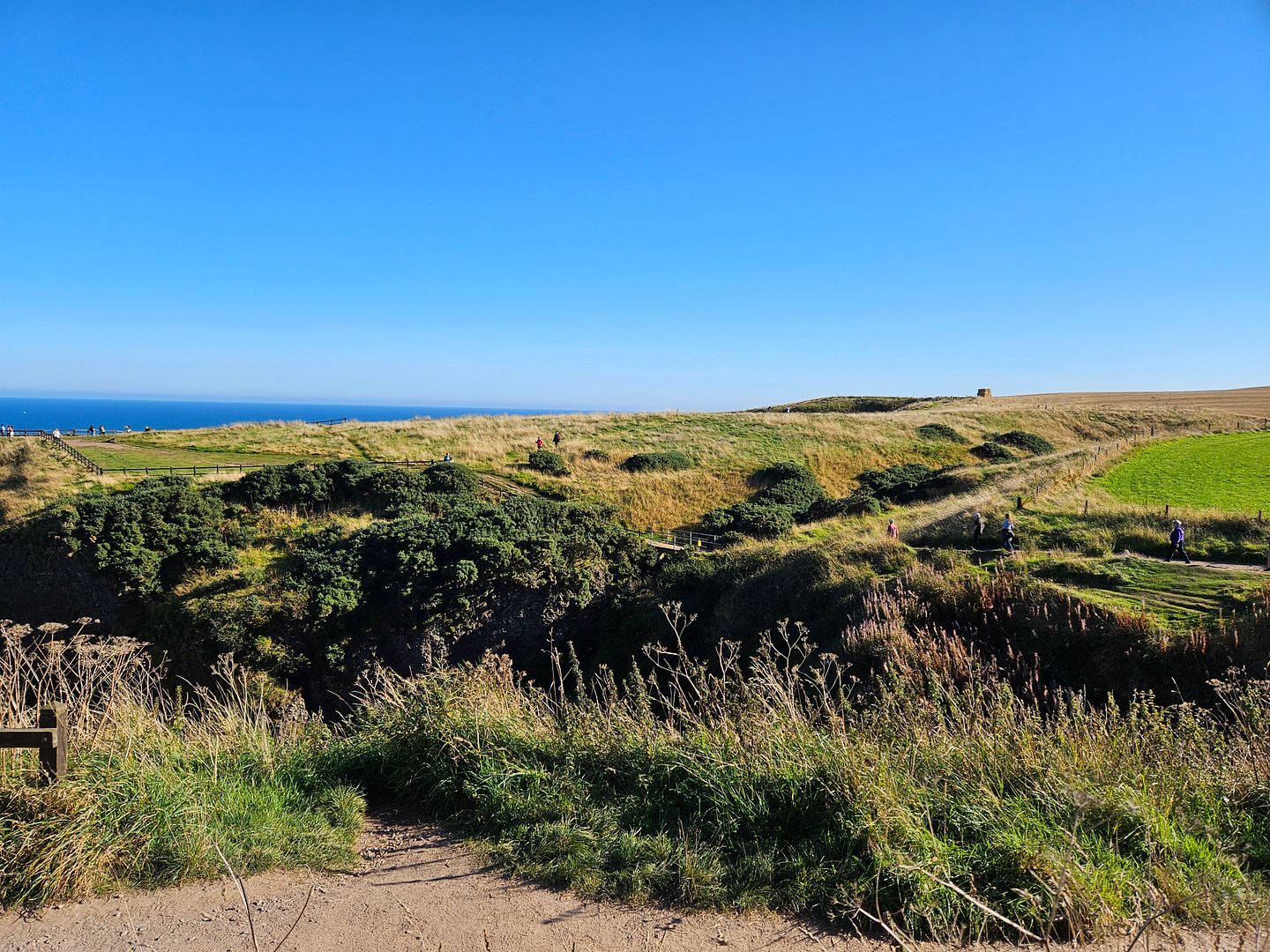
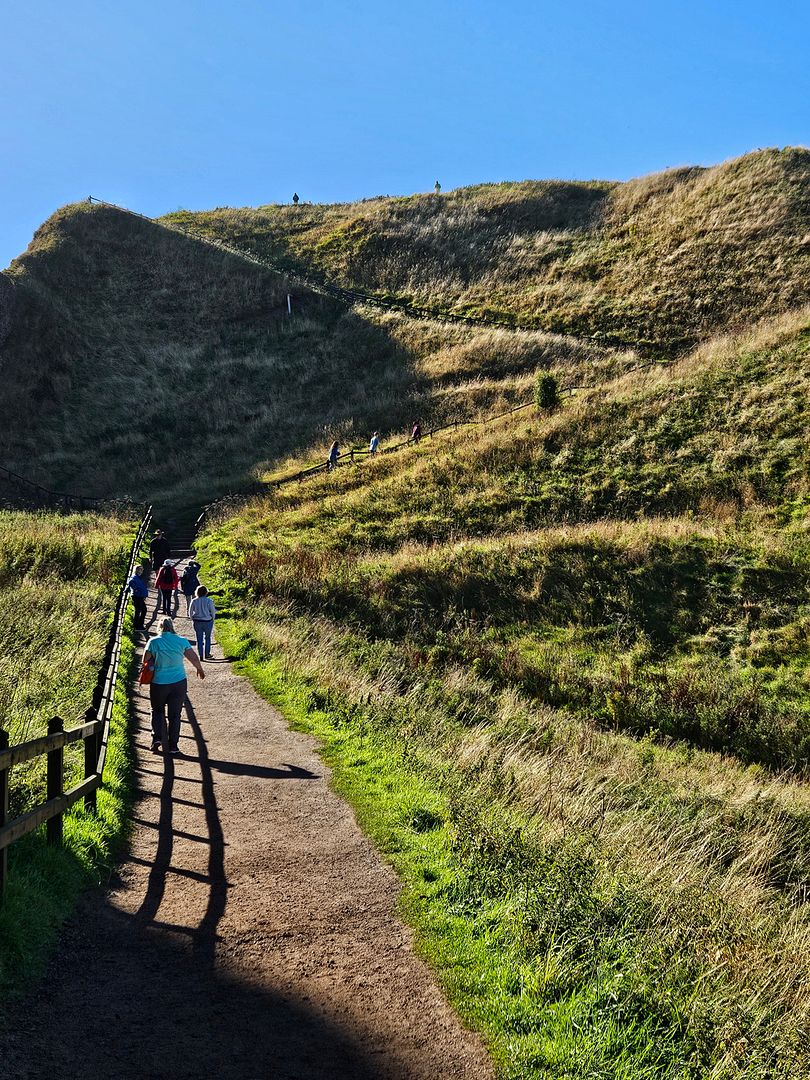
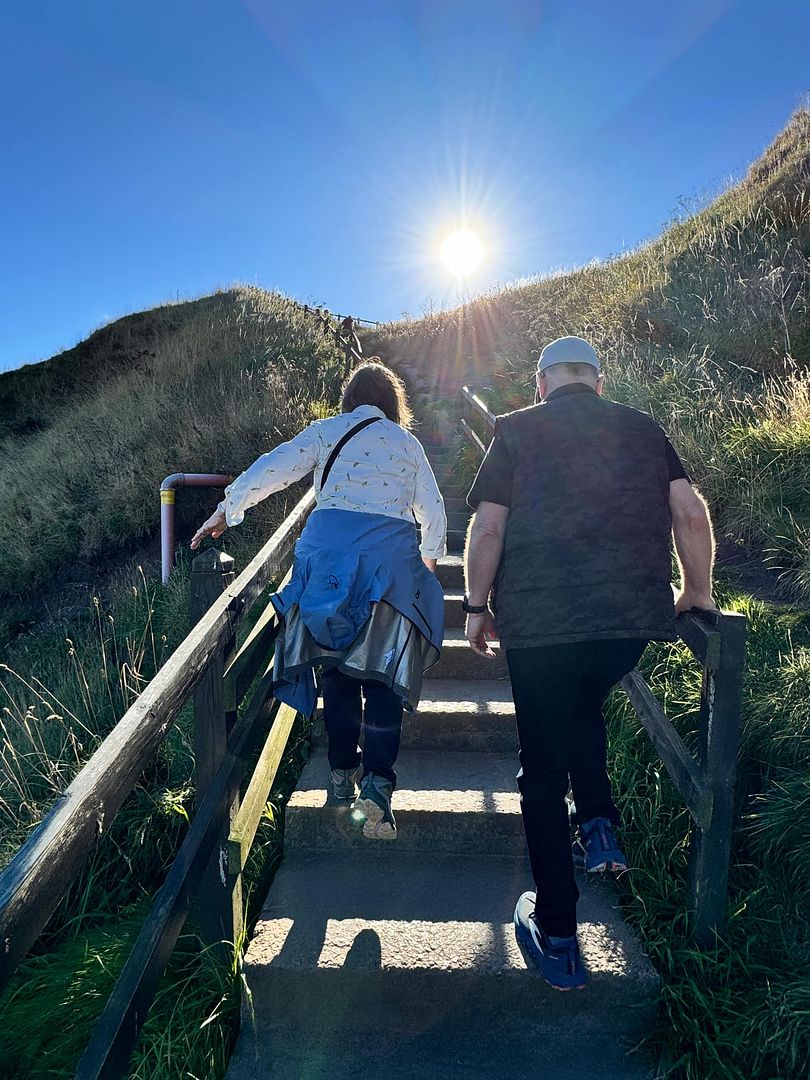
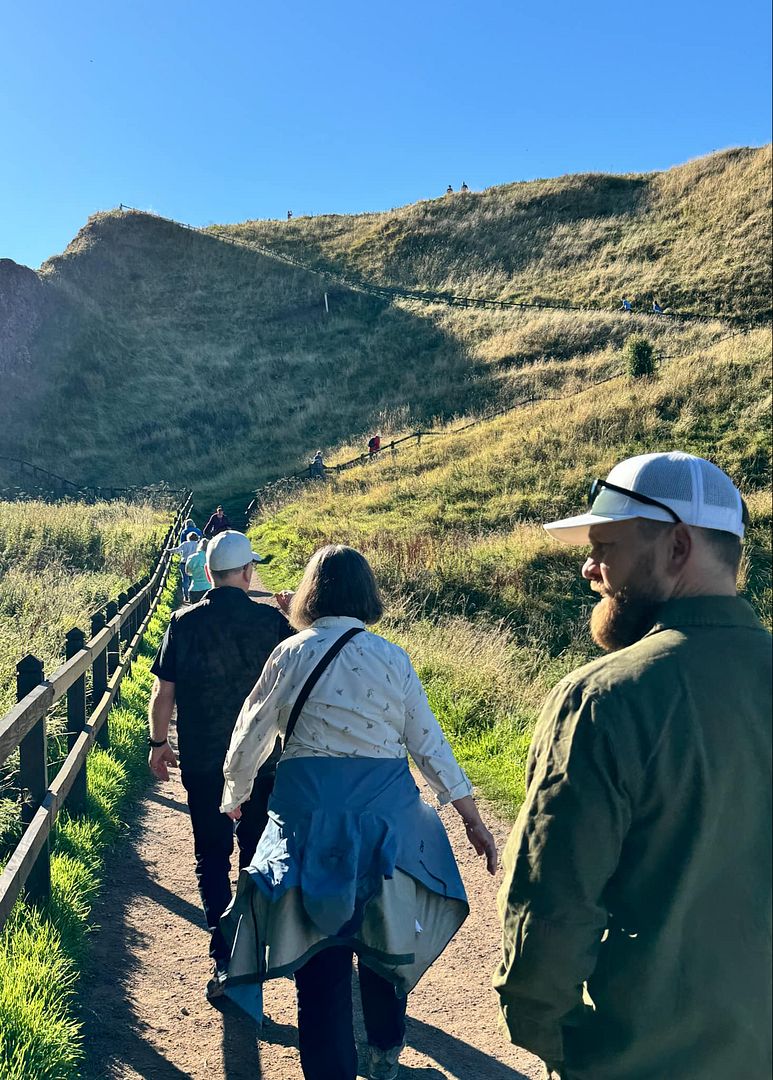
At this point we could see we would have a long downward descent before we reached a steep climb to get to the castle grounds!

Down, down, down and then soon we’d be going up again!

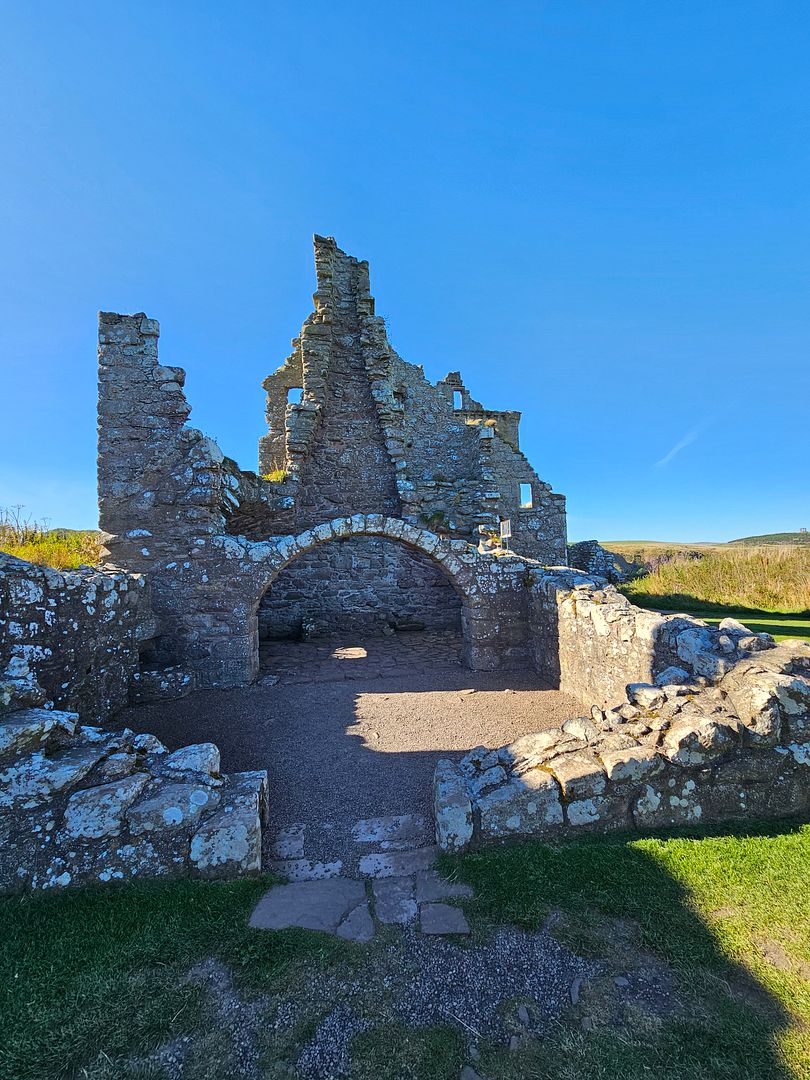
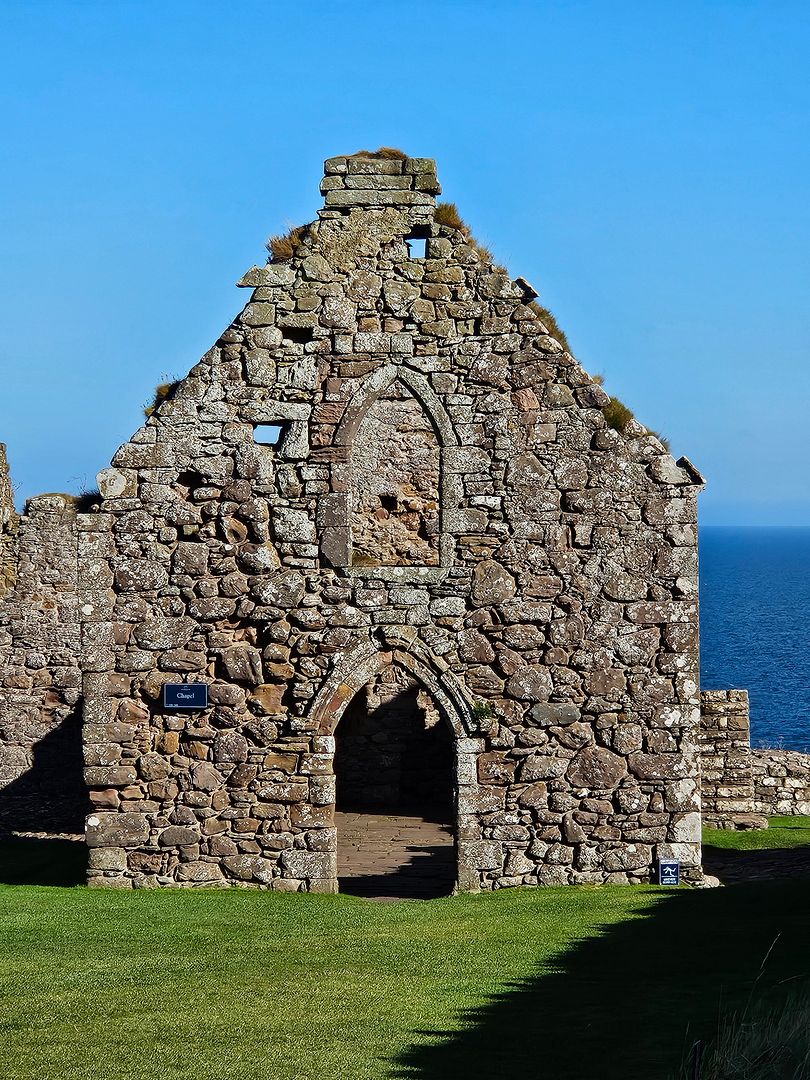
Given Dunnottar’s obvious defensive qualities, it is no surprise to find that it has been home to fortifications of one sort or another for most of the past two thousand years and probably much longer. The very name “dun” is Pictish for fort and it is believed that St Ninian came to Dunnottar in the late 400s, converting the Picts to Christianity and founding a chapel here.

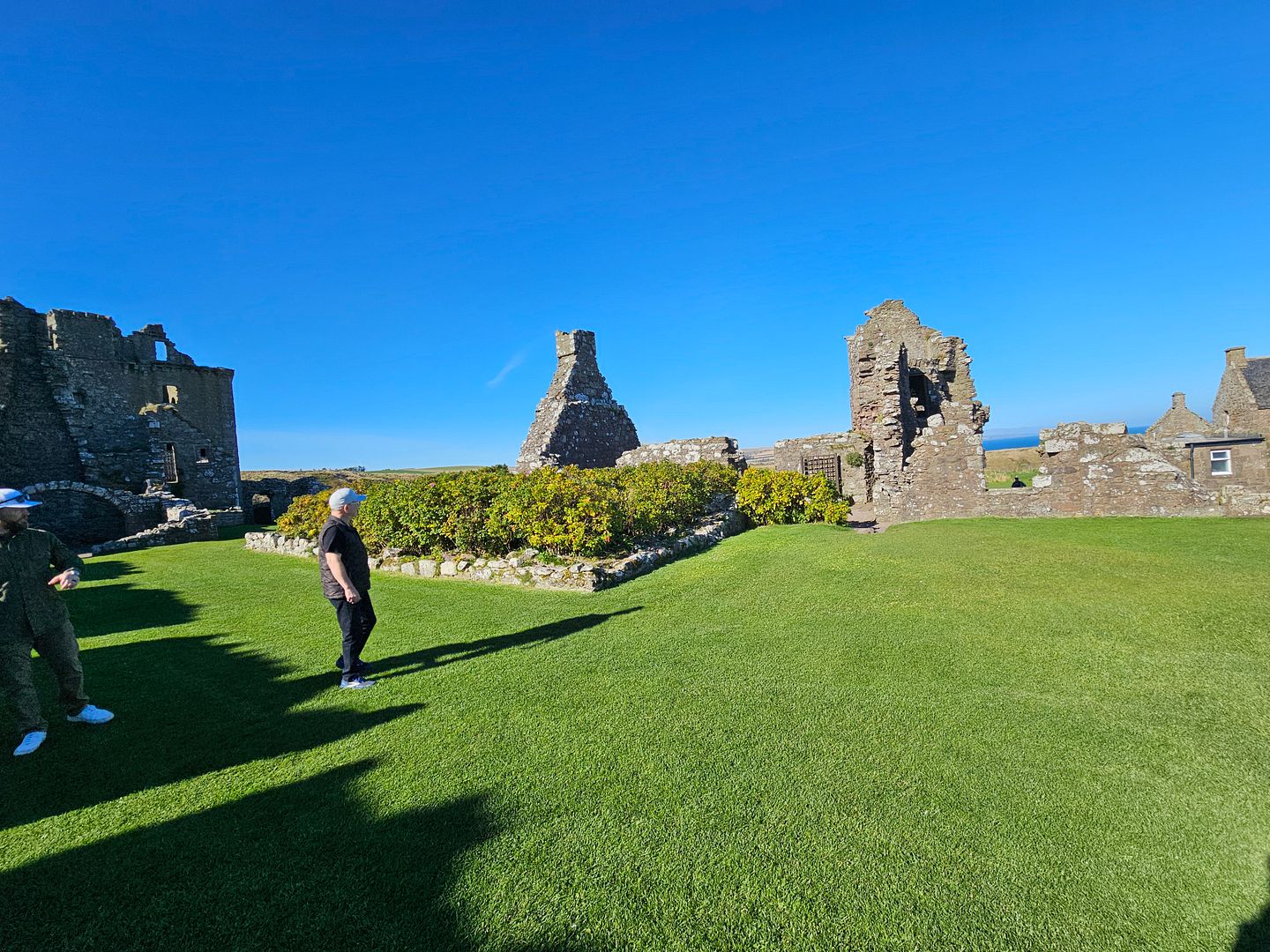
In 1715 the tenth Earl Marischal backed the losing side in the Jacobite uprising and was condemned for treason. His estates were forfeited and Dunnottar Castle was sold to the York Building Company, who removed everything that was transportable and usable. The difficulty in accessing the castle probably saved it yet again: it seems likely that if it had been readily reachable by cart, far more of the structure would have been demolished and taken away.

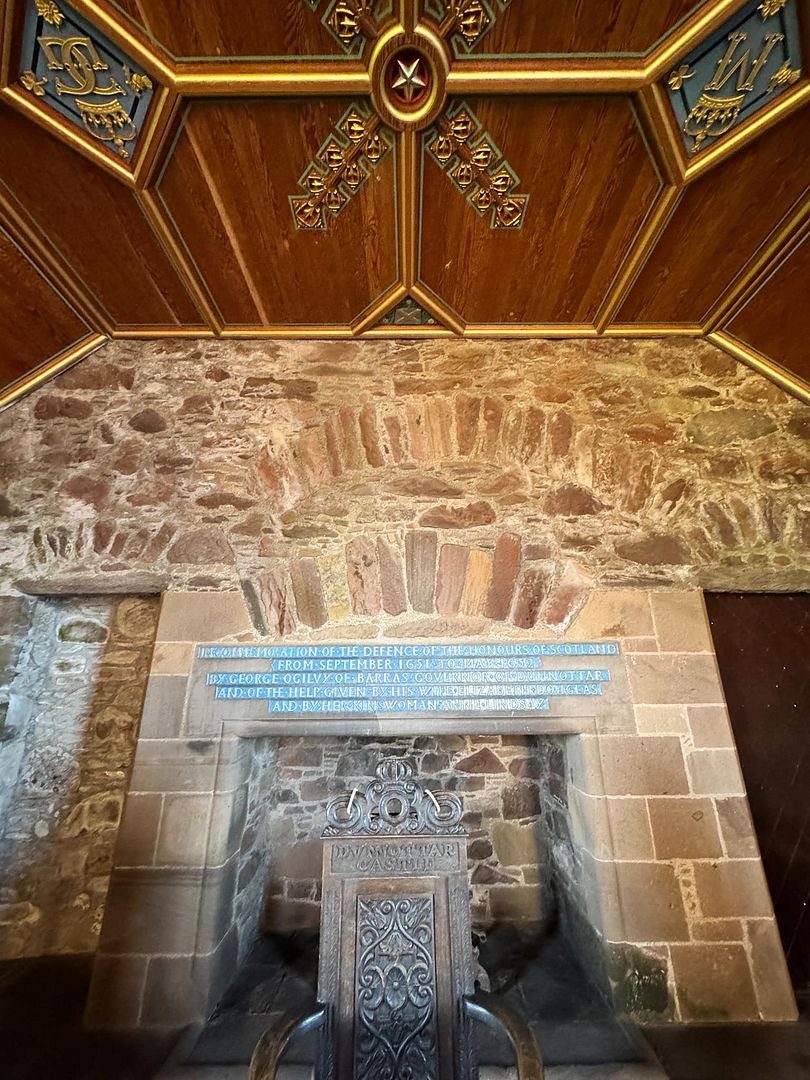
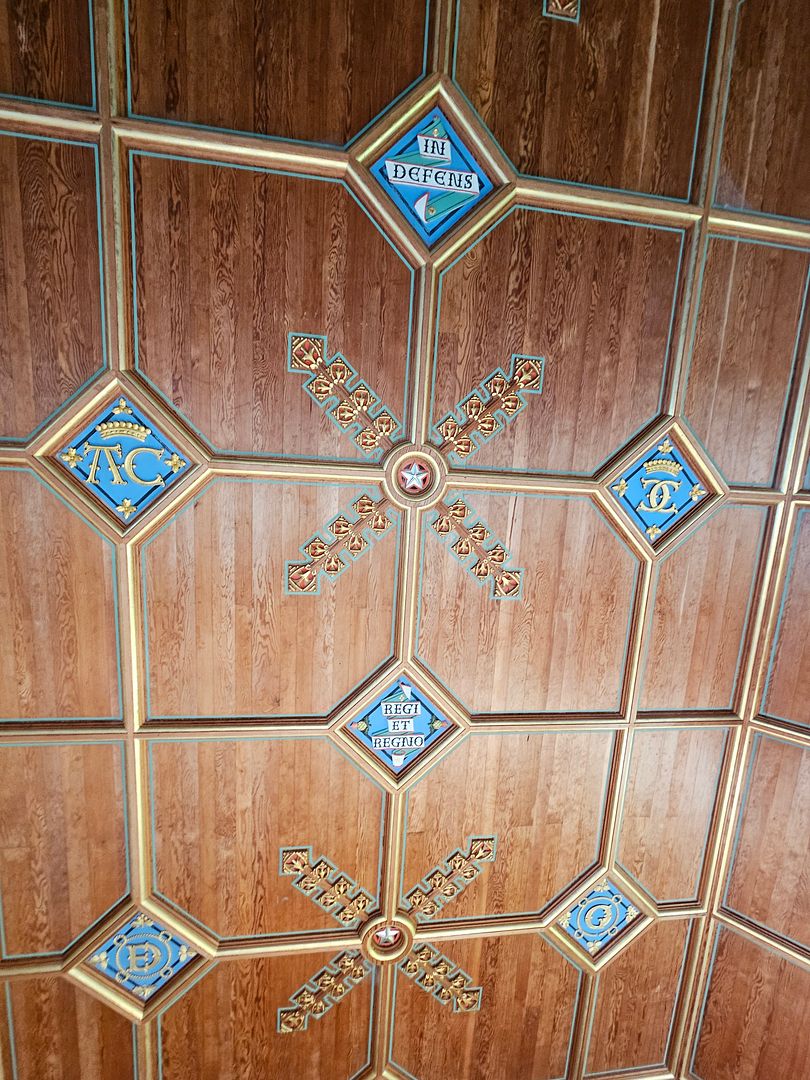
The drawing room was restored in the 1920’s.

Dunnottar’s darkest moment came in May 1685 when 167 Covenanter prisoners, 122 men and 45 women, were locked in the Whig’s Vault below one of the buildings in the Quadrangle. Some died of starvation and disease, while others were killed after trying to escape. The survivors were transported to the colonies as slaves (where most died of fever) after two months in the castle.

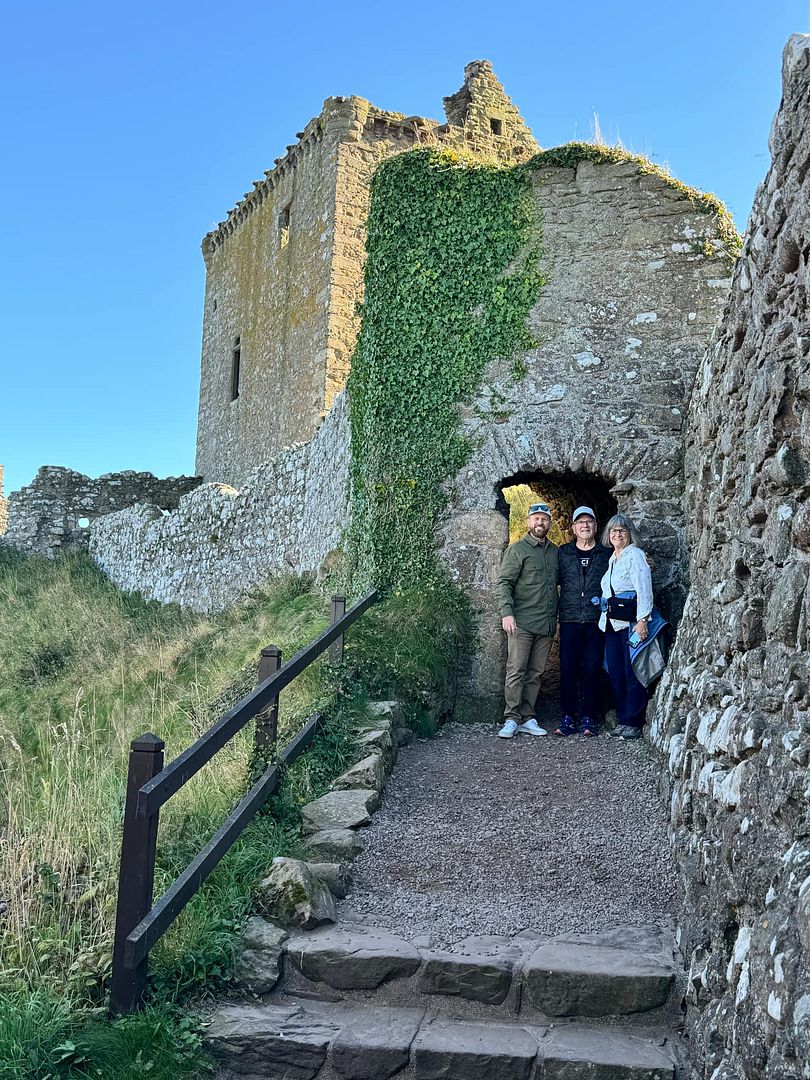
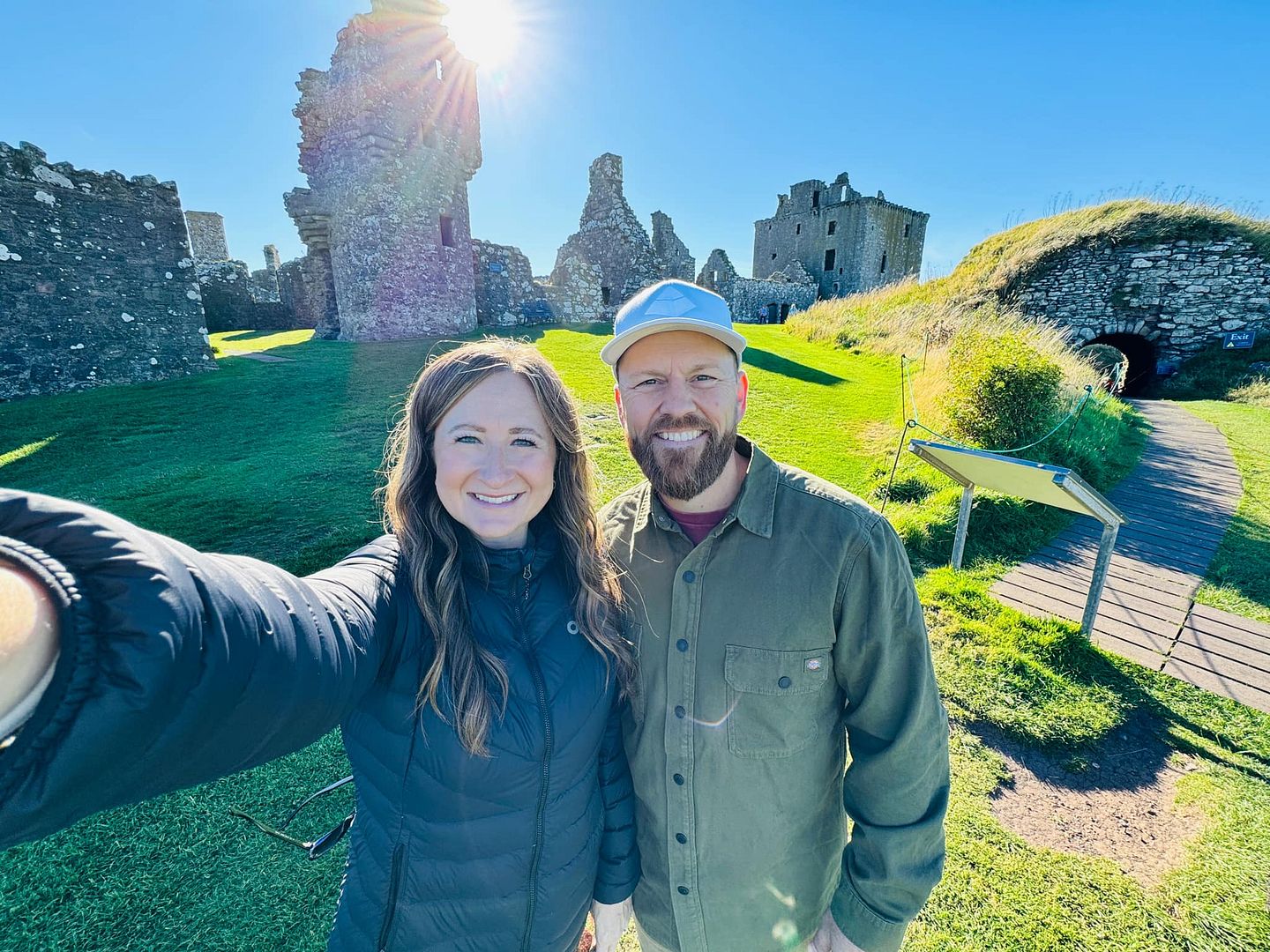
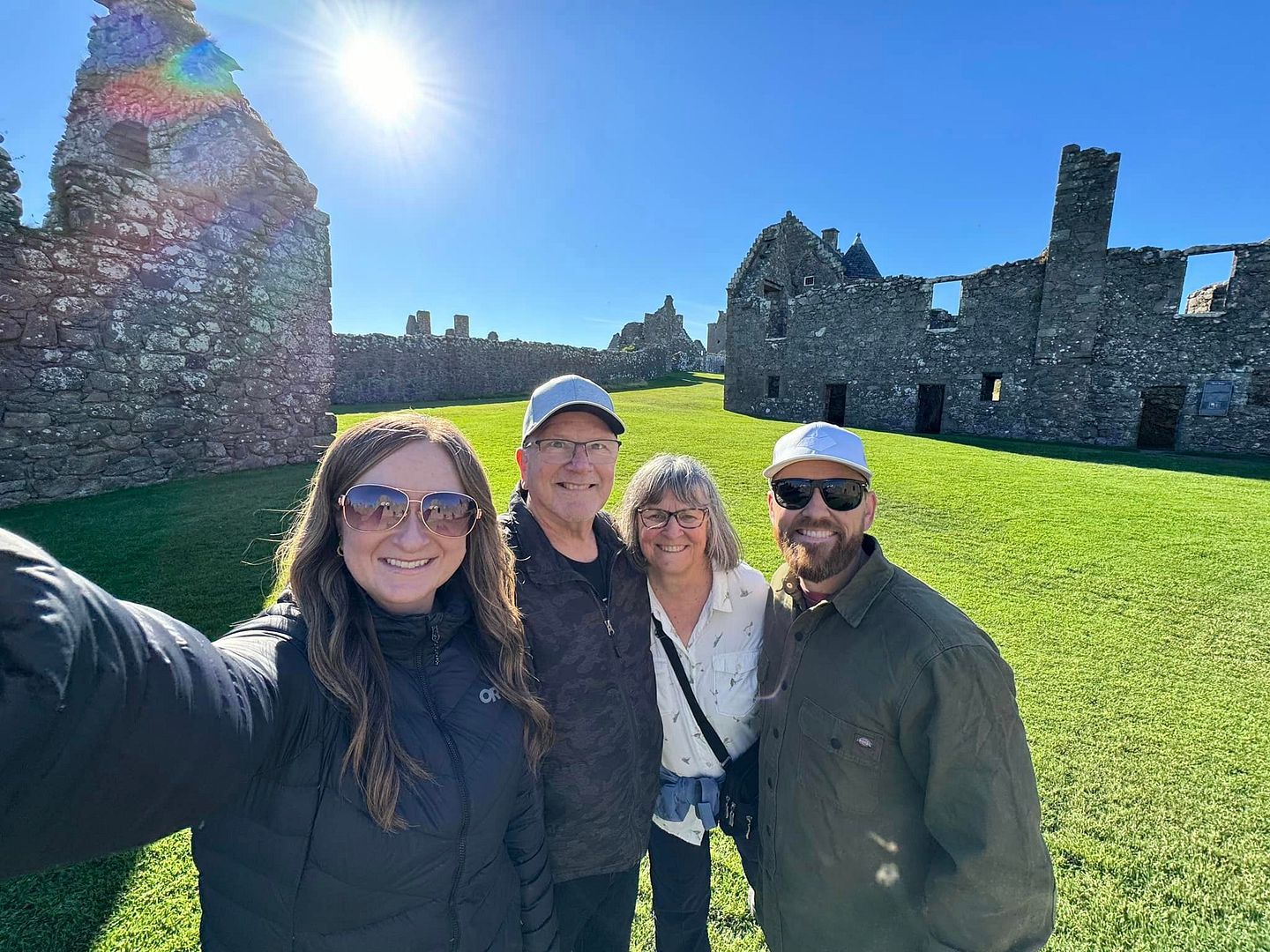
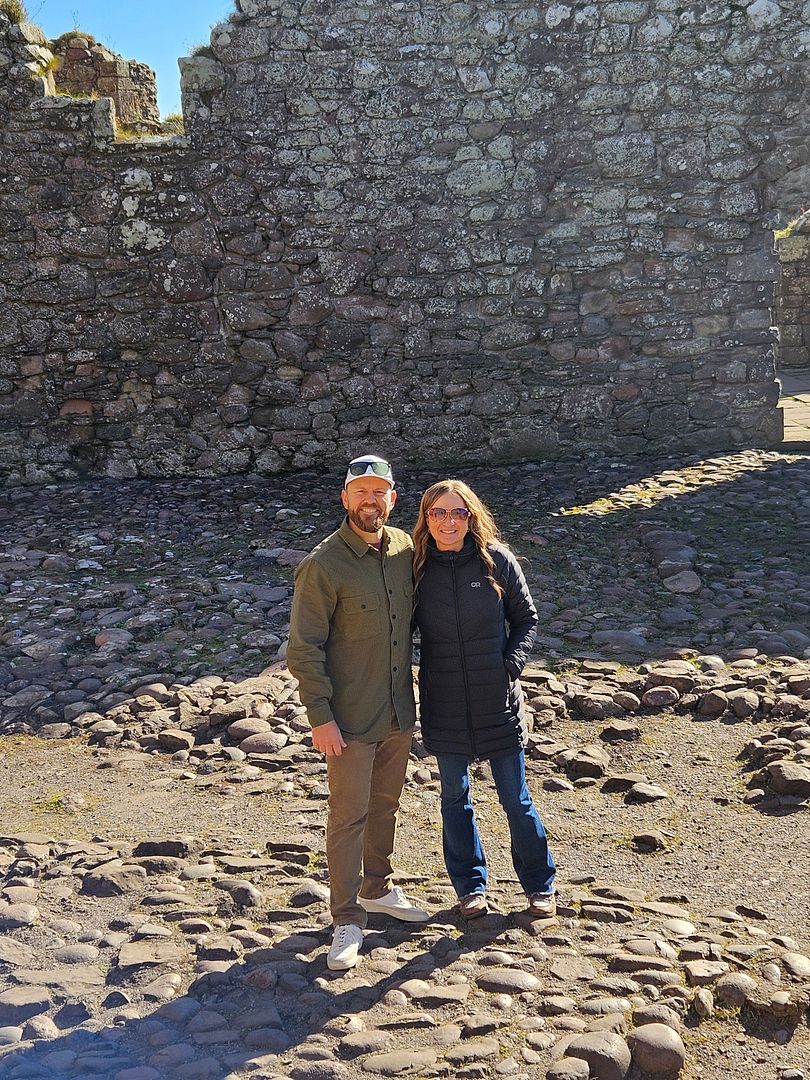
We made it with time to spare before closing. Thank you, Lord, for our timing, the weather and the strength to walk and climb and descend all the stairs!

We headed a little south along the coast to find our B&B for the night, to check in and get a recommendation for dinner. The day wasn’t over…

Scotland Travel Journal ~Glasgow Cathedral

We made it all the way home on Thursday the 26th of September. We fly out of Seatac Airport (Seattle) which is a good five to six hour drive from our home in Colville. Since we were traveling with Josh and Laura we find it easier to drive to their home the day before our flights and drive and park at the airport with them. Our flight home from Scotland arrived Tuesday evening and we would be in no good shape to then drive the 6 hours home so we spend another night at Josh and Laura’s before we attempt our final drive home. There were dust storms predicted on our route home for Wednesday so we put off our travels home for one more day and had a very nice drive with great weather conditions on Thursday. Taking the extra day made it possible for us to see Katie and Andrew, too, which was good.

Looking back I see that I covered our flight and arrival to Scotland well here. I even had the energy to post a few details on our first full day which was Saturday the 14th of September here. From here on out in Scotland the days were full of activity and I had no energy to put words together or match those words up with photos. Our internet connections were slower and slower, too. Some of our days and the events and experiences we had deserve a post all to themselves. I might be done with my Scotland Travel Journal by November!!

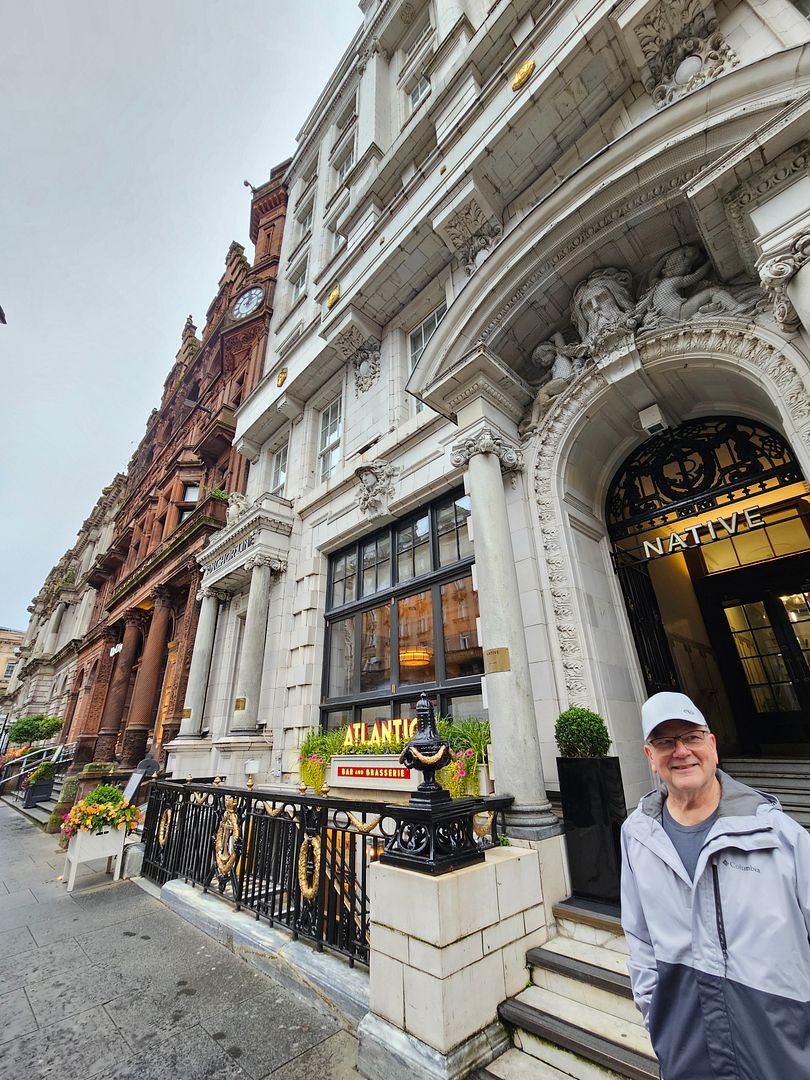
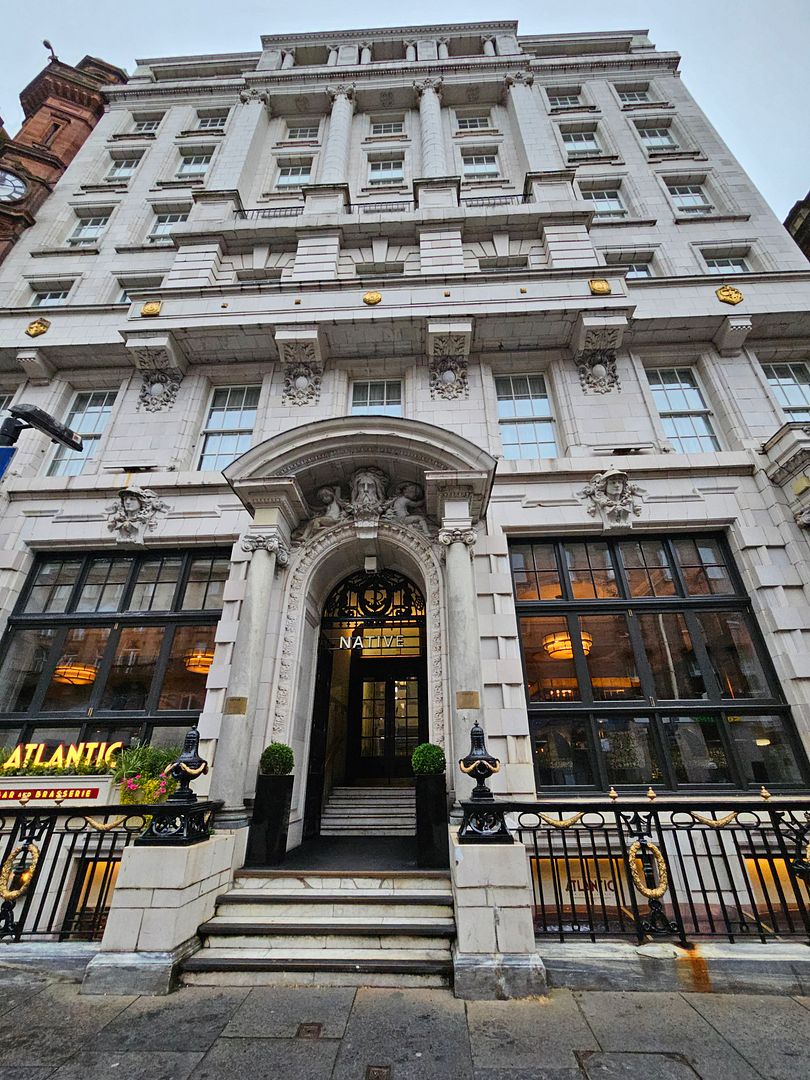
Our lodgings in Glasgow were at Native Glasgow. The central location worked well for us.

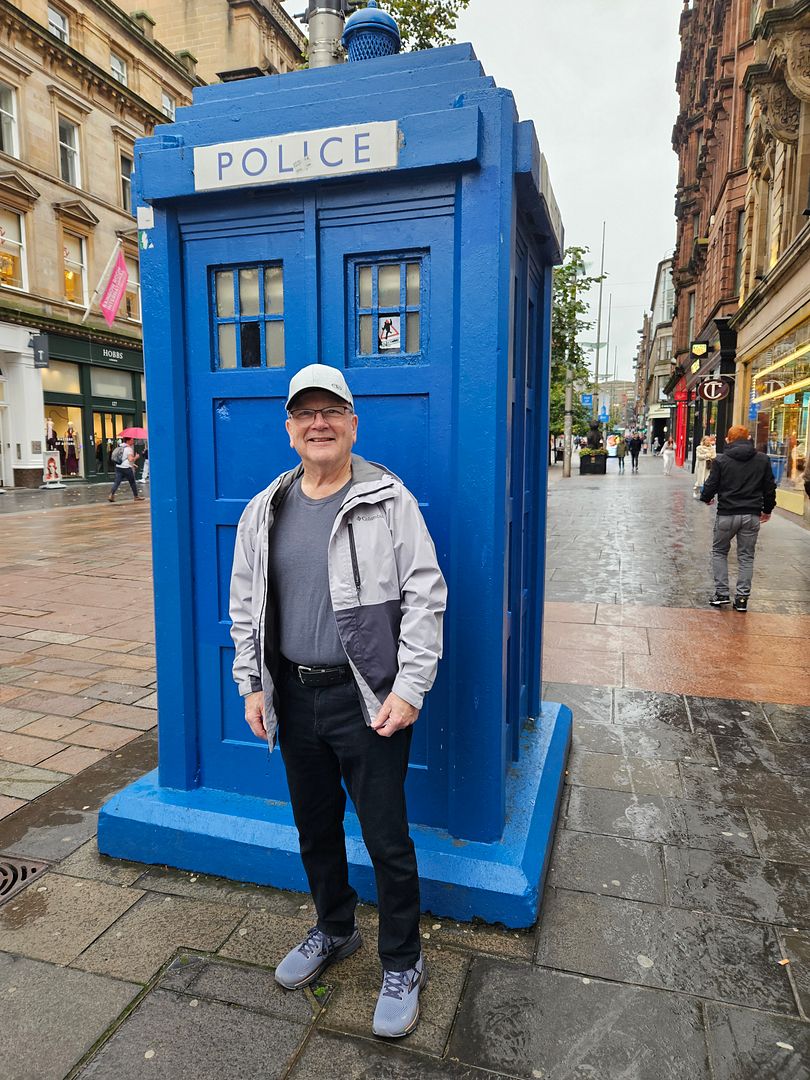
A photo for any Dr. Who fans out there.

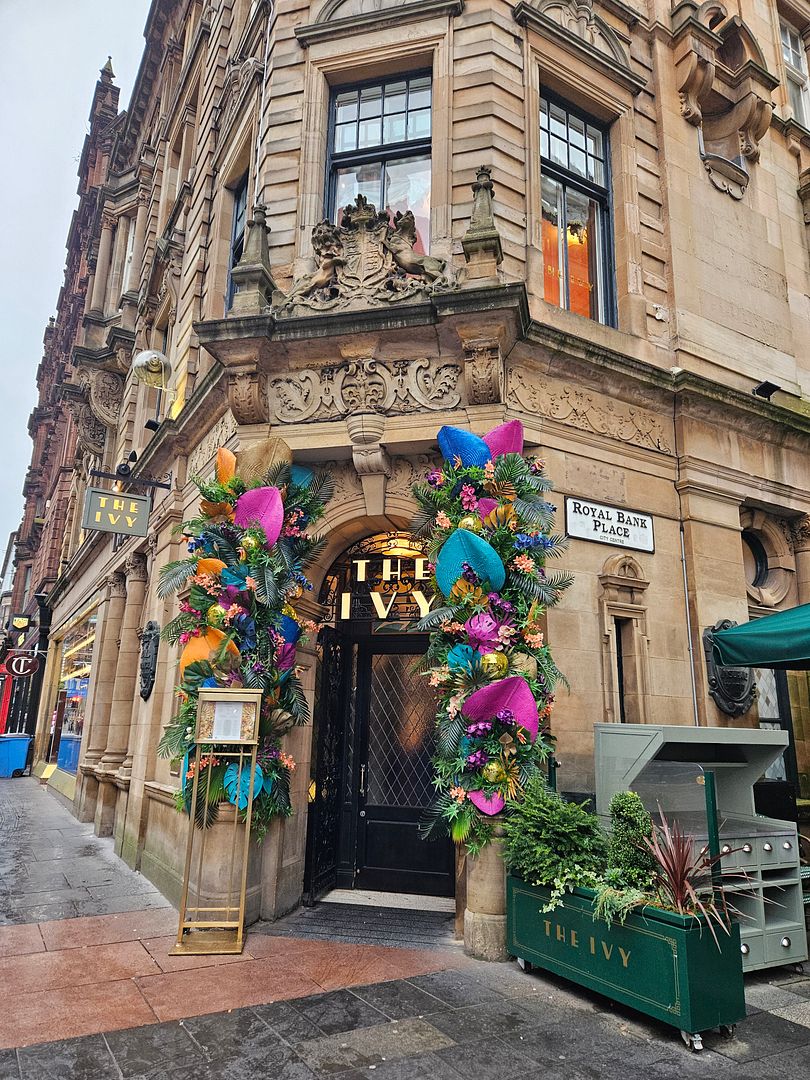
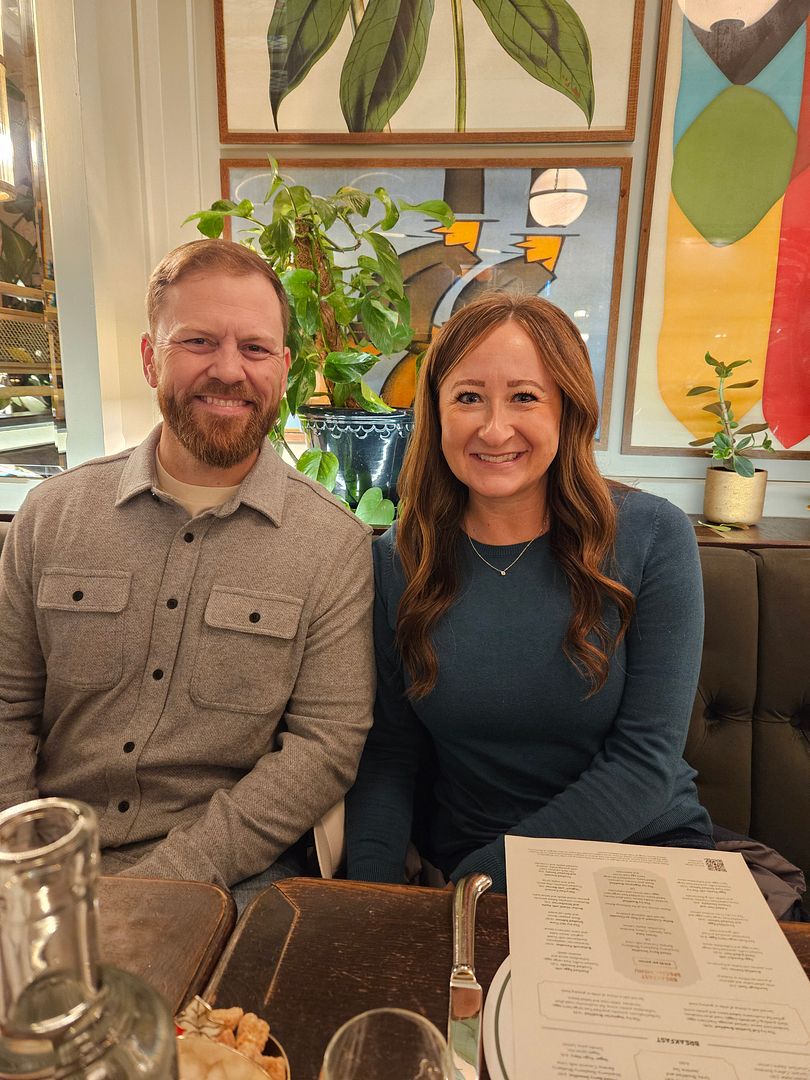
On Saturday September 14th we had breakfast reservations at The Ivy for 8:30 and their webpage said we should dress ‘smart’. We dressed as smart as we could and walked over to the restaurant which was very close to our hotel. It was a wet and drizzly beginning to the day.

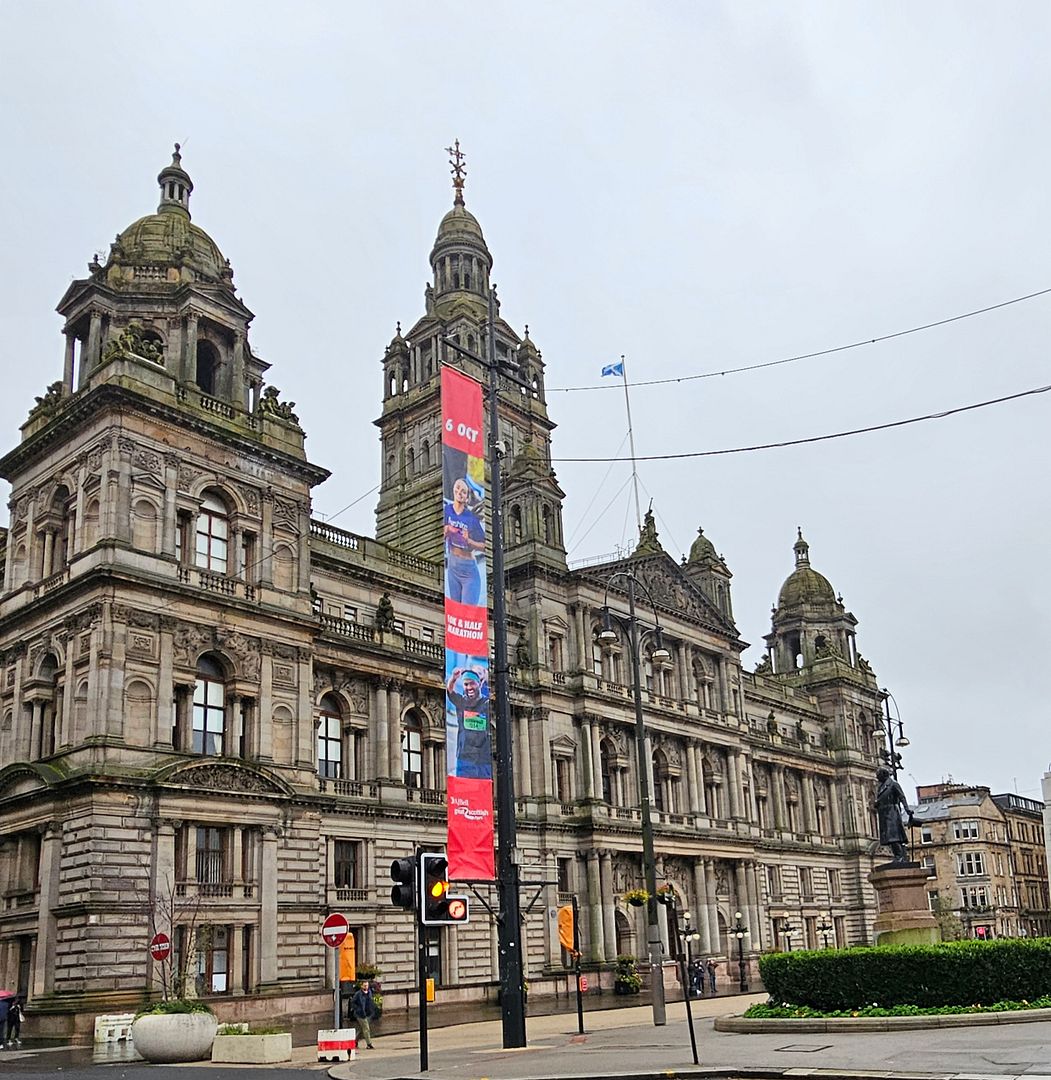
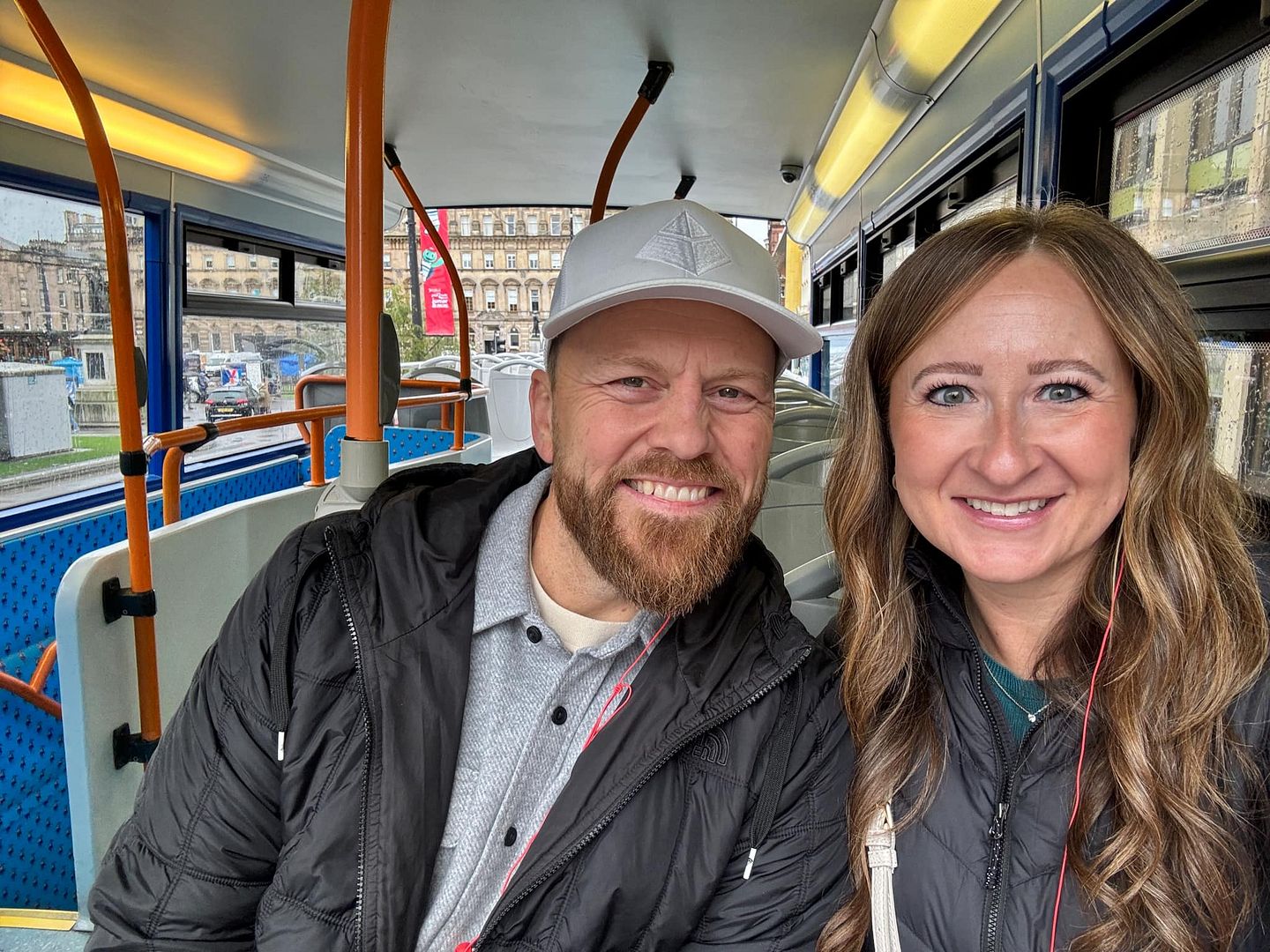
After breakfast we walked over to George Square to catch a hop on hop off bus.

George Square is named after King George III. Laid out in 1781, today Glasgow Square is home to the headquarters of Glasgow City Council, and showcases an important collection of statues and monuments, including those dedicated to famous scots such as Robert Burns, James Watt, Sir Robert Peel and Sir Walter Scott. It is also the square where people gather for major events and to let their voices be heard, aka protest.
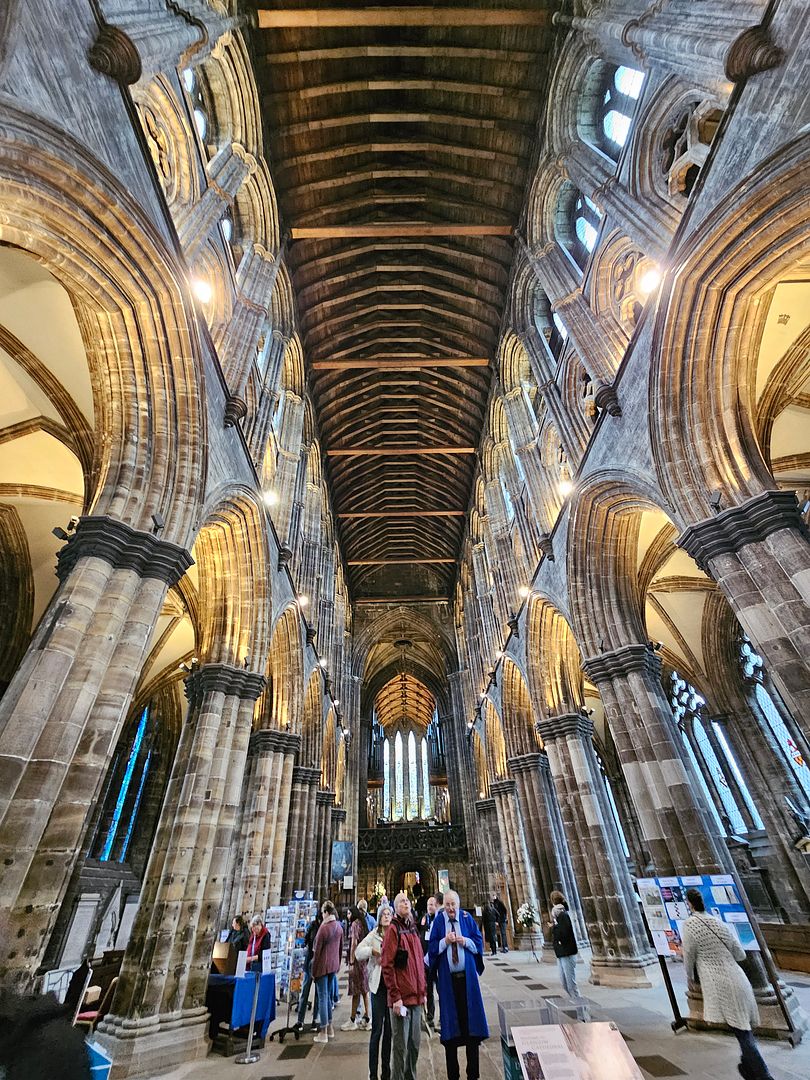
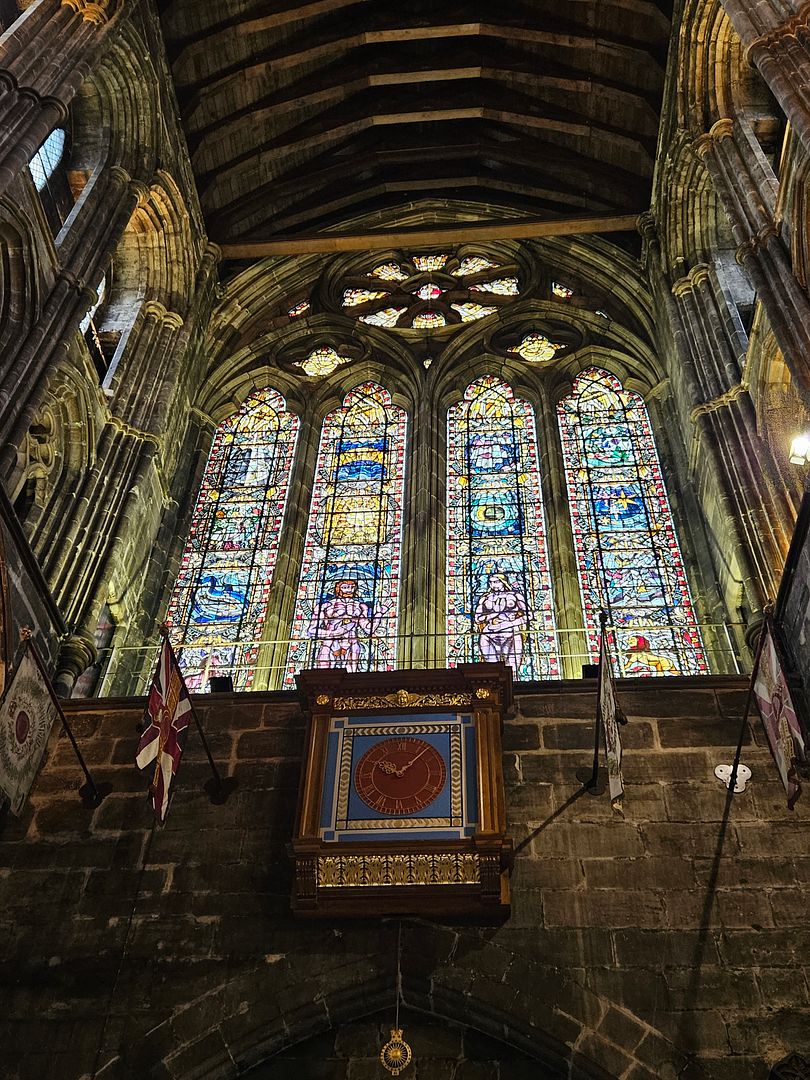
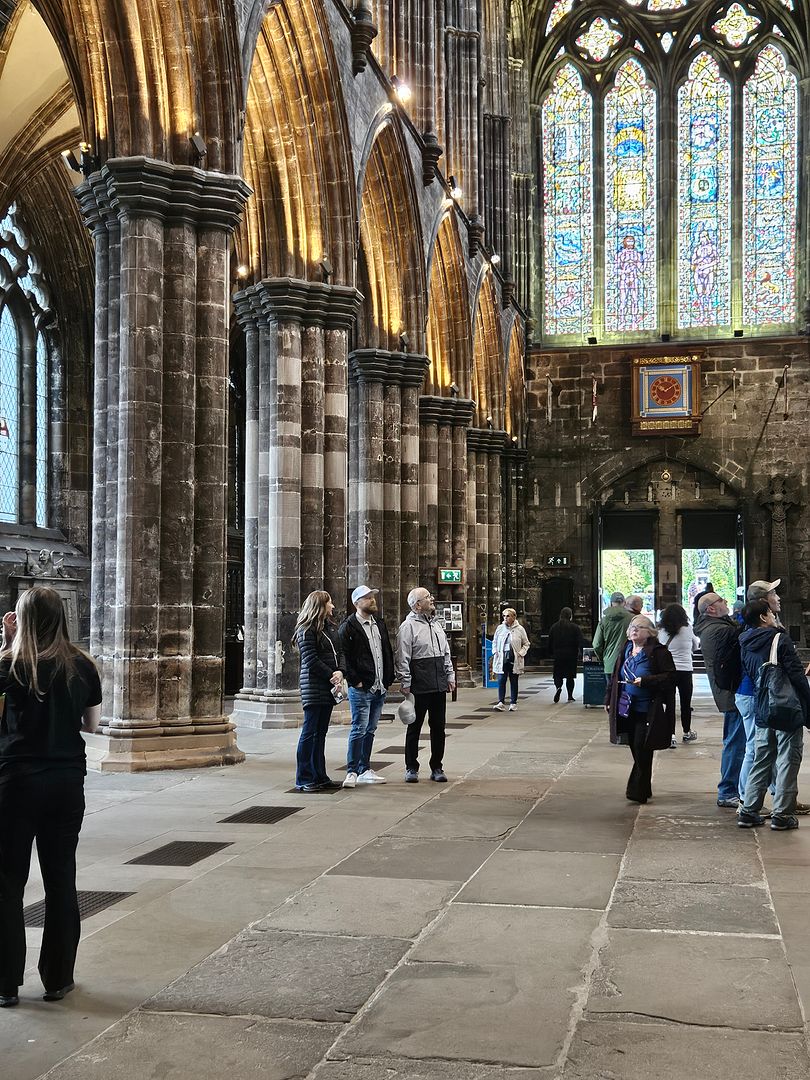
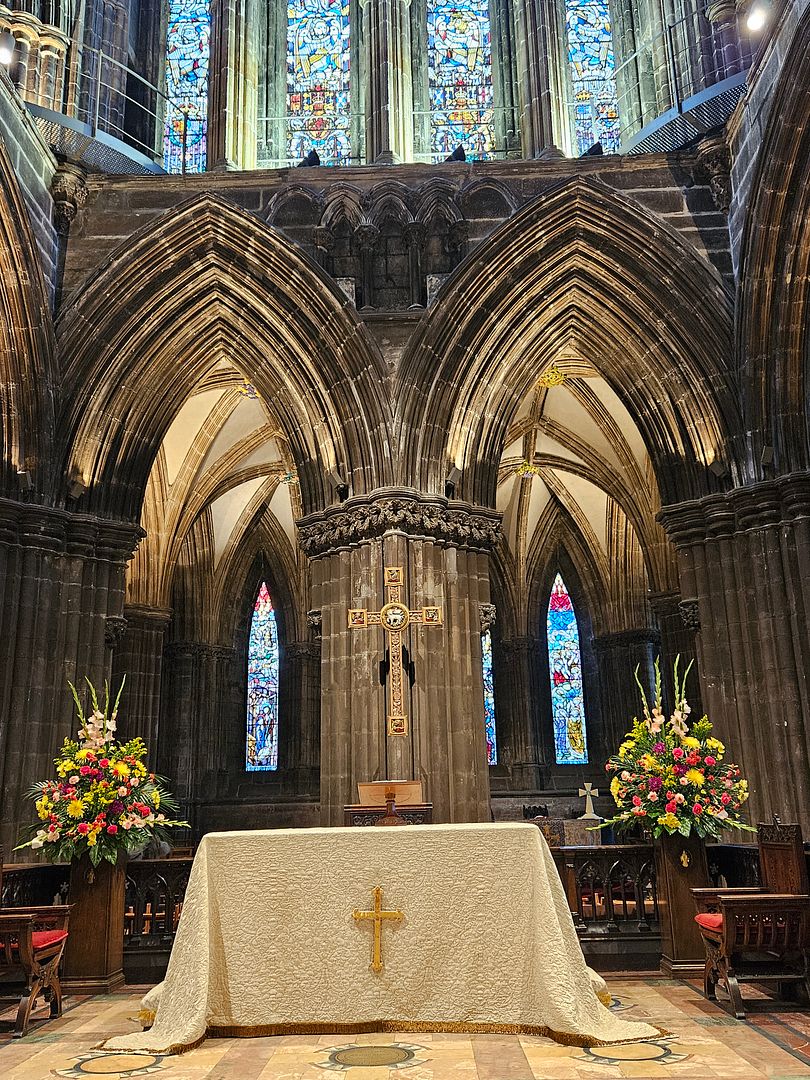
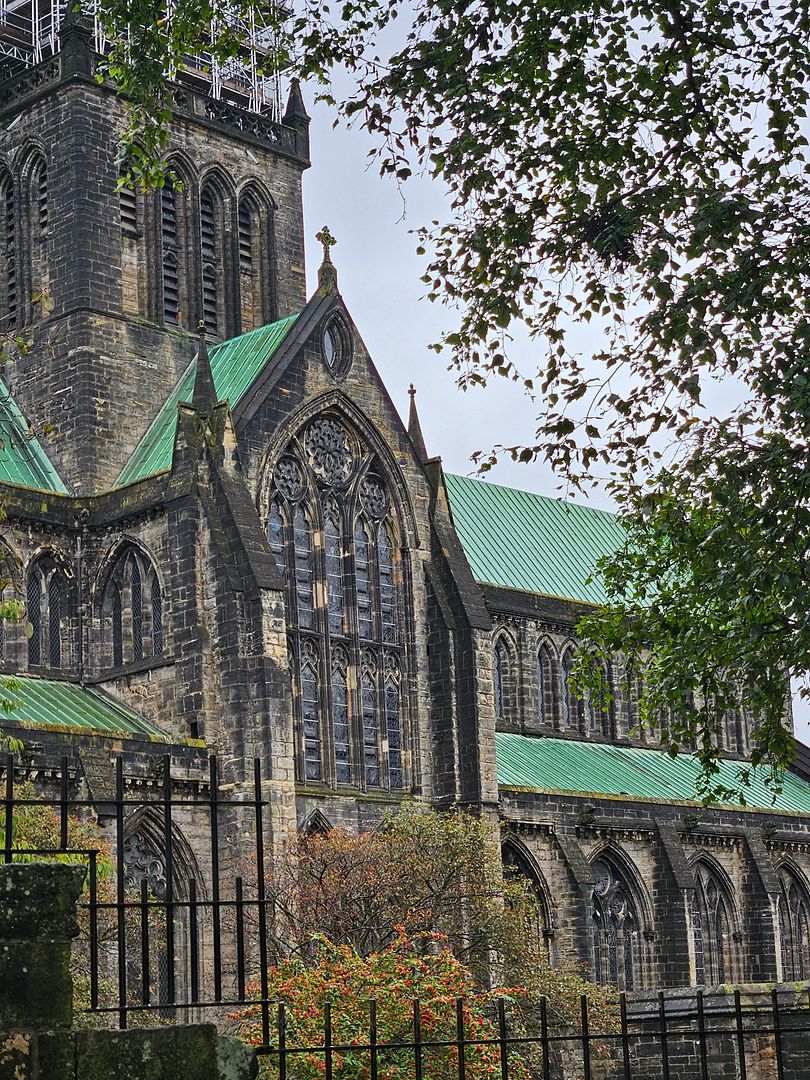
Our first hop off spot was St. Mungo’s Cathedral (Glasgow Cathedral).

This medieval cathedral is thought to have been built on the site of St Kentigern’s tomb and marks the birthplace of the city of Glasgow.

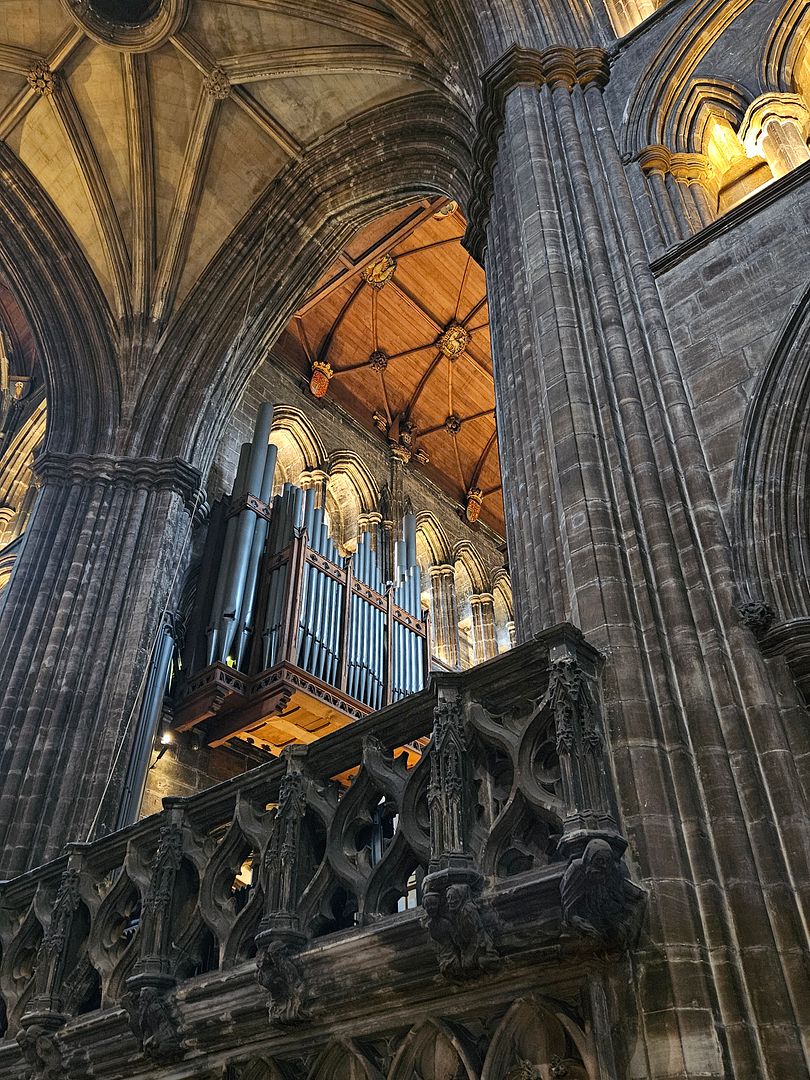
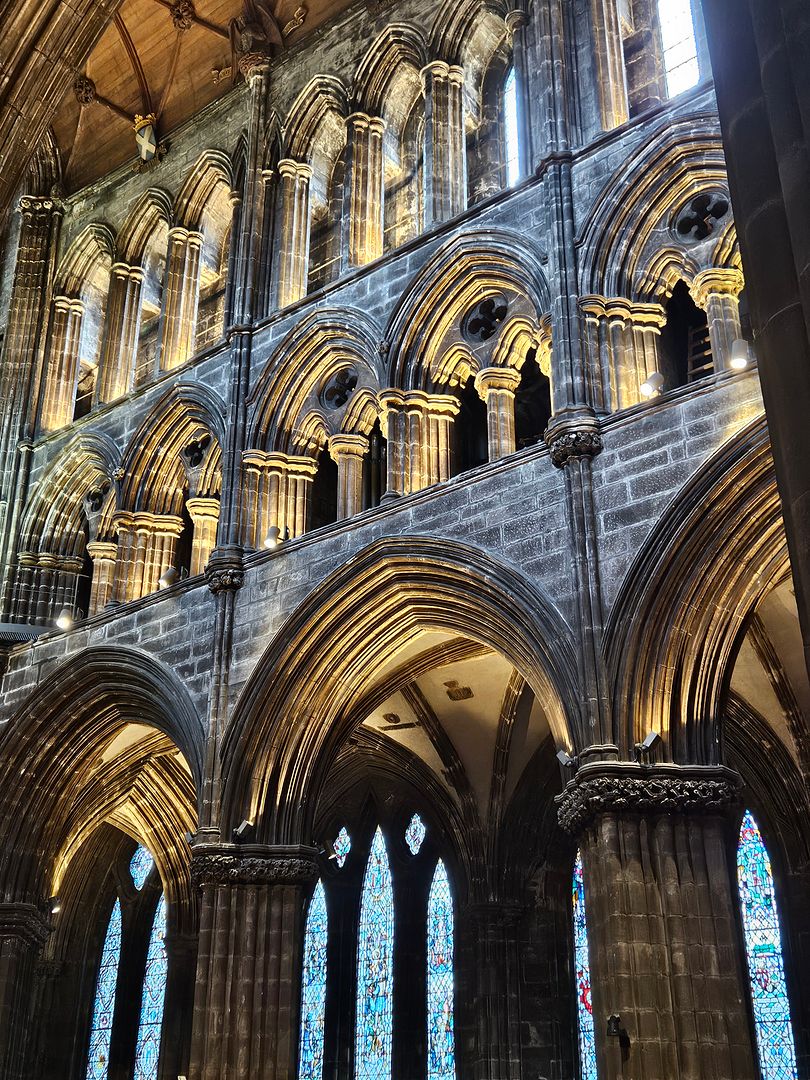
My people looking up in awe of this amazing structure.

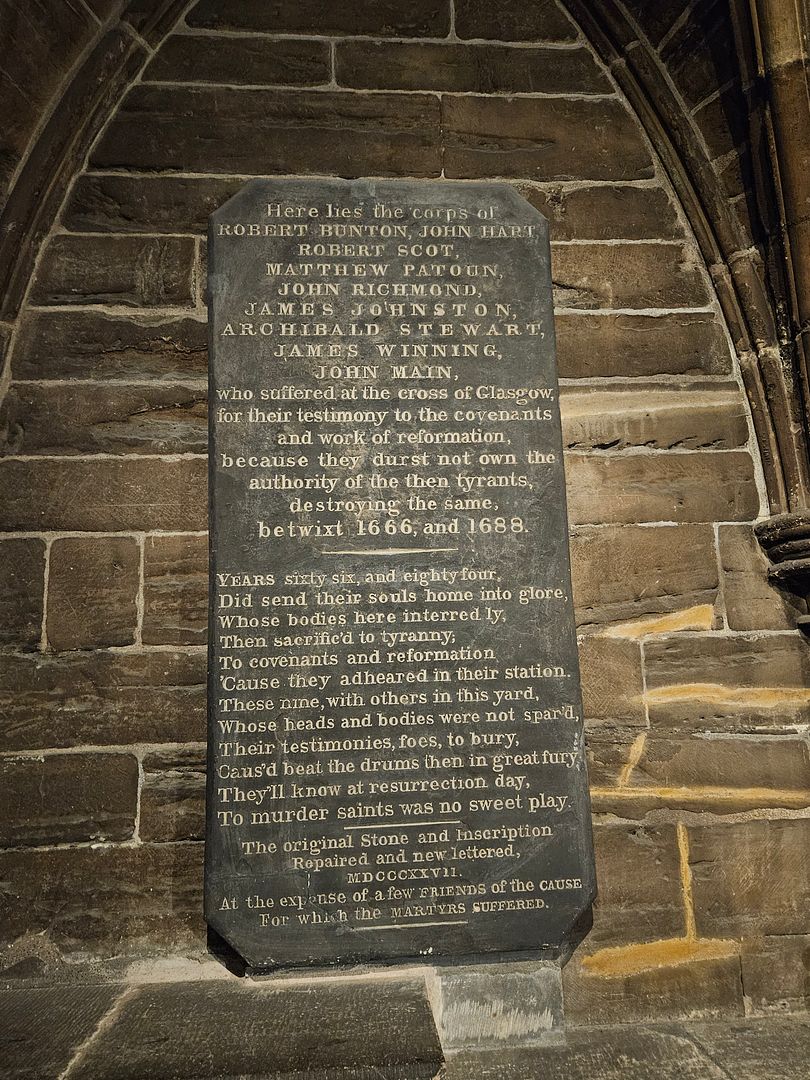
One of my interests in this trip to Scotland was gleaning information connected to the Reformation and the Covenantors of Scotland like John Knox, George Wishart, Patrick Hamilton, The Two Margarets, Jenny Geddes, and others. We would learn much about the early martyrs of the church throughout our stops in Scotland.

This stone reads…

“Here lies the corps of Robert Bunton, John Hart, Robert Scot, Matthew Patoun, John Richmond, James Johnston, Archibald Stewart, James Winning, John Main, who suffered at the cross of Glasgow, for their testimony to the covenants and work of reformation, because they durst not own the authority of the then tyrants, destroying the same, betwixt 1666 and, and 1688.

Years sixty six, and eighty four,
Did send their souls home into glore,
Whose bodies here interred ly,
Then sacrific’d to tyrrany;
To covenants and reformation,
‘Cause they adheared in their station,
These nine, with others in this yard,
Whose heads and bodies were not spar’d,
Their testimonies, foes to bury,
Caus’d beat the drums then in great fury
They’ll know at resurrection day,
To murder saints was no sweet play.


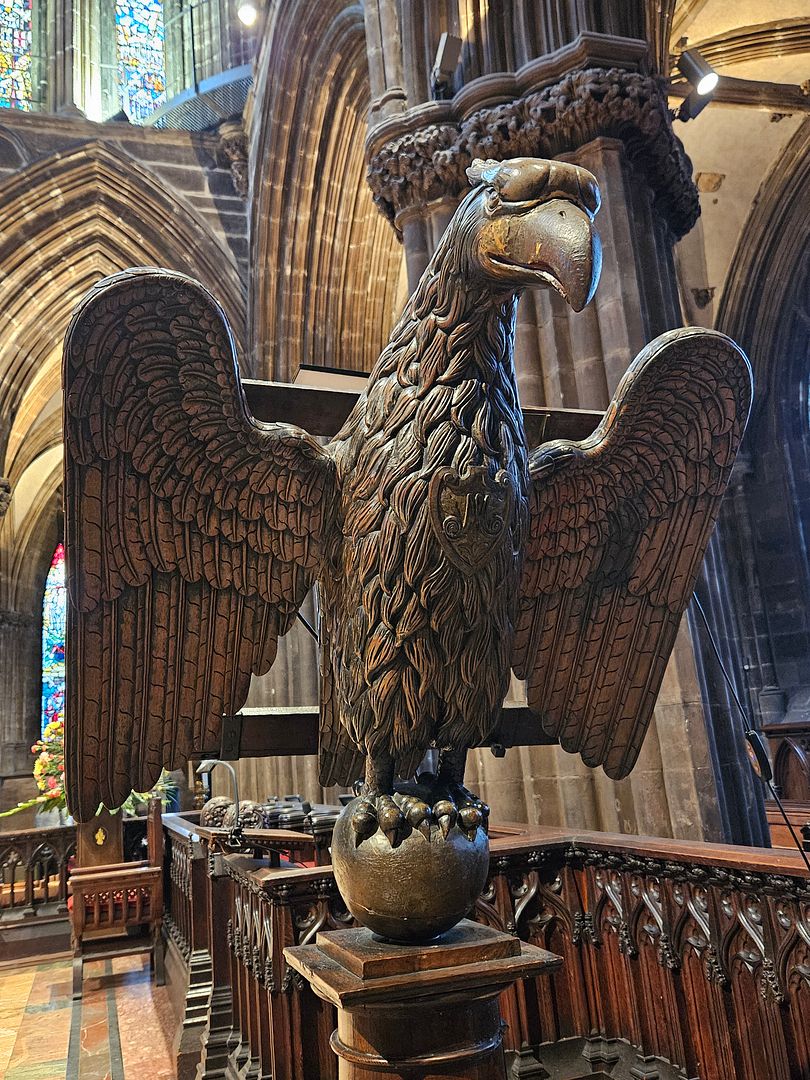
I love the eagle lecterns in the United Kingdom.

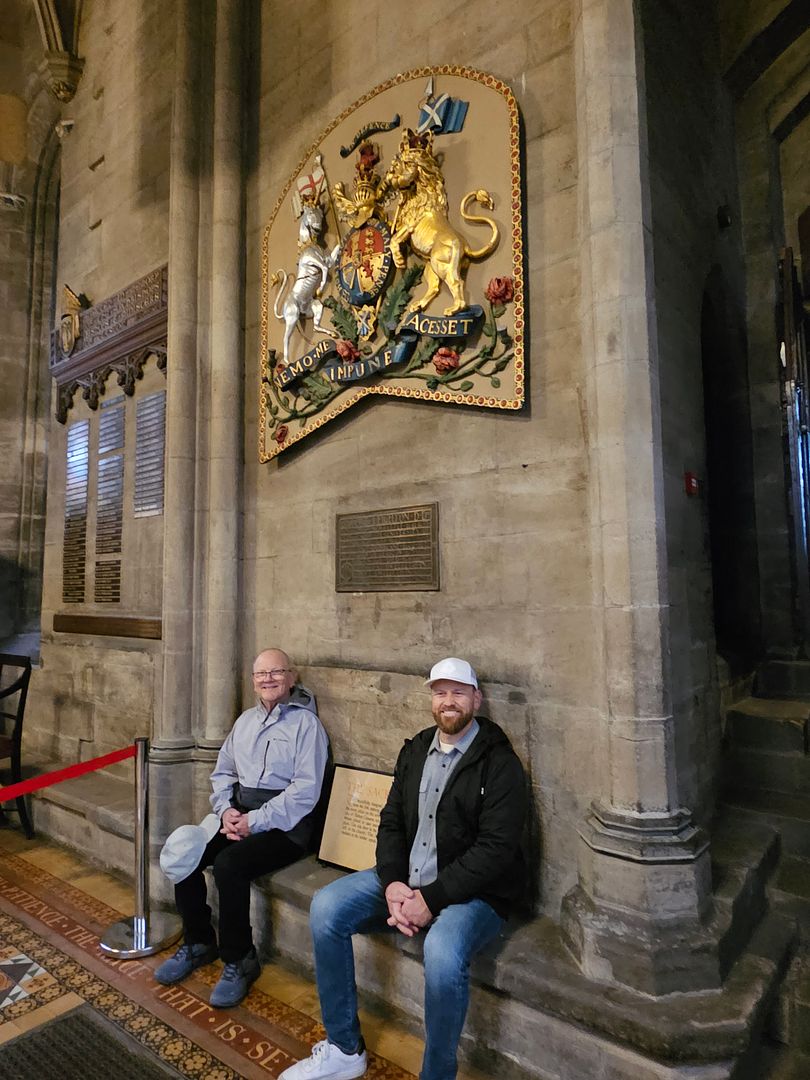
The Unicorn and the Lion (Scotland and England), the Thistle and the Rose.

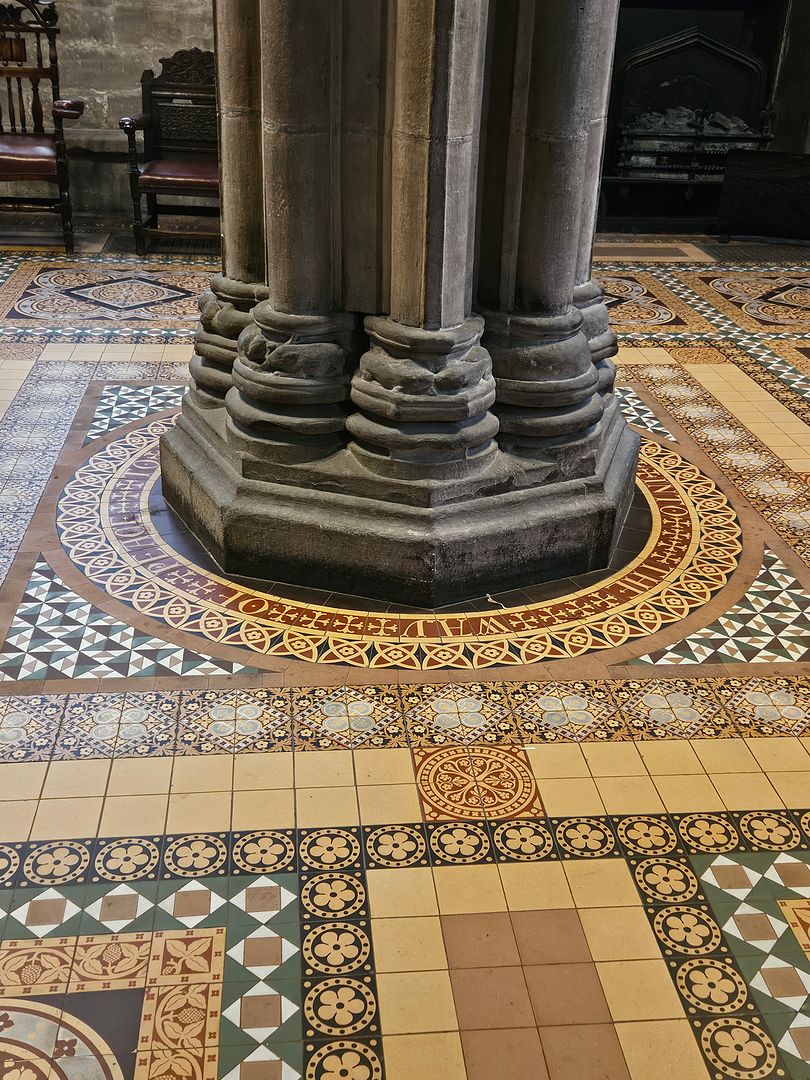
We looked up a lot but it was also good to look down on the amazing floors.

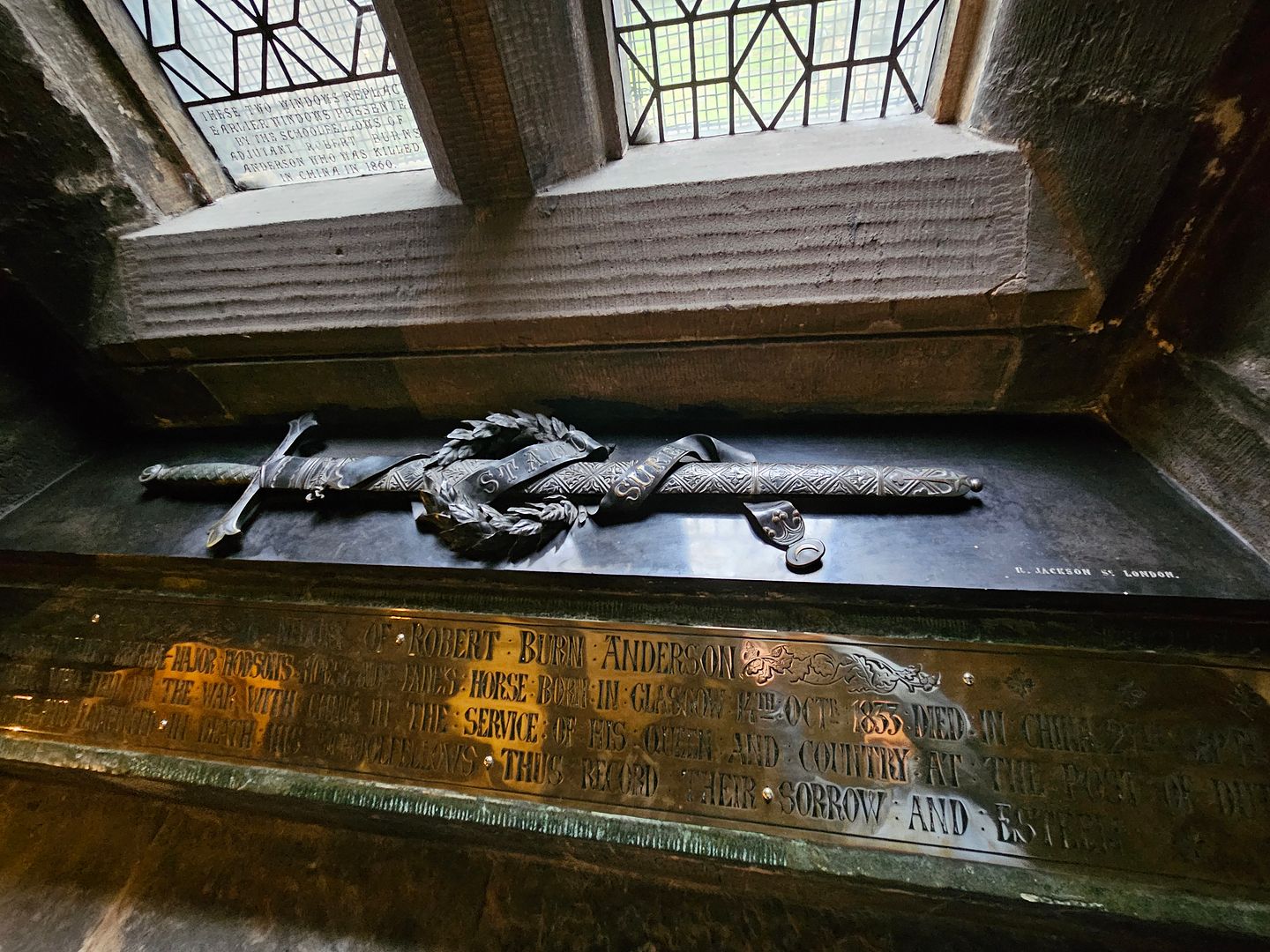
Stand Sure is the inscription on the Sword.

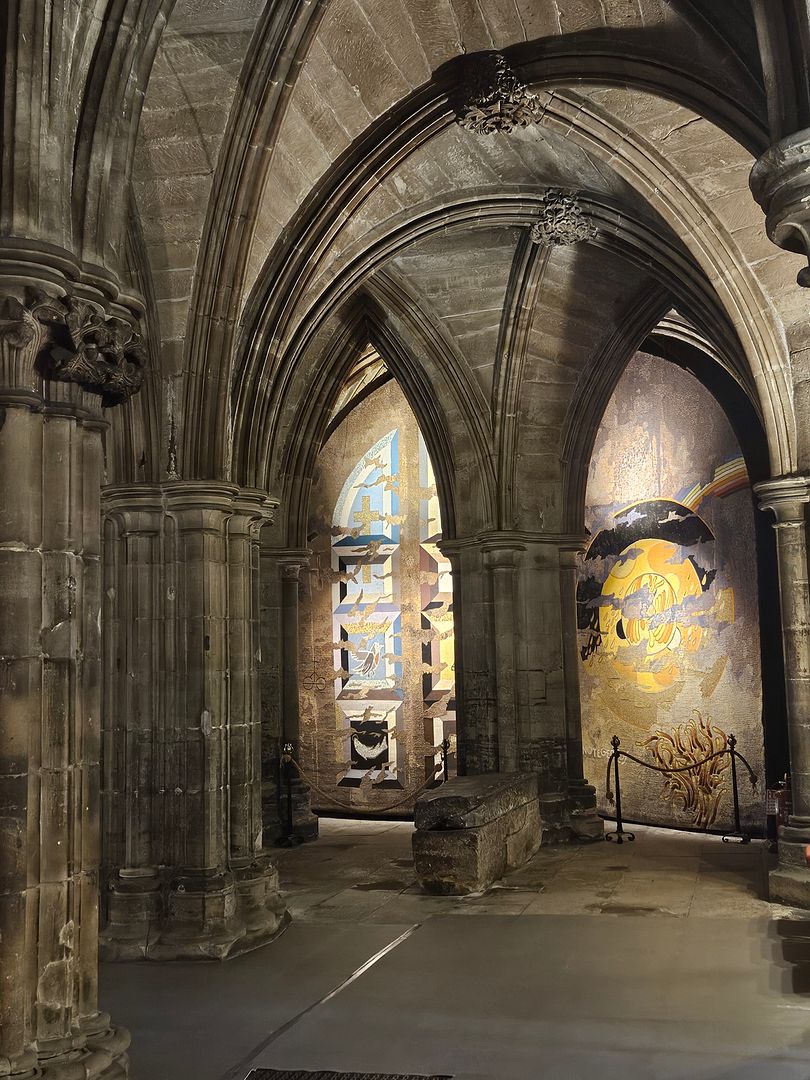
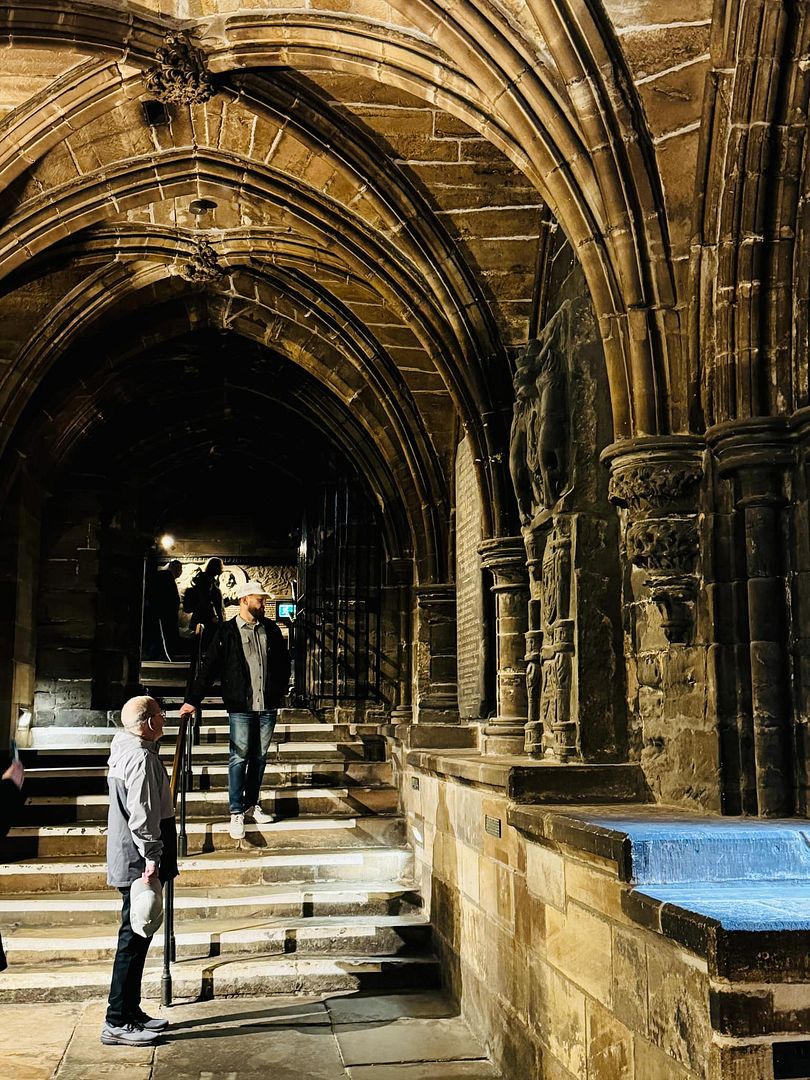
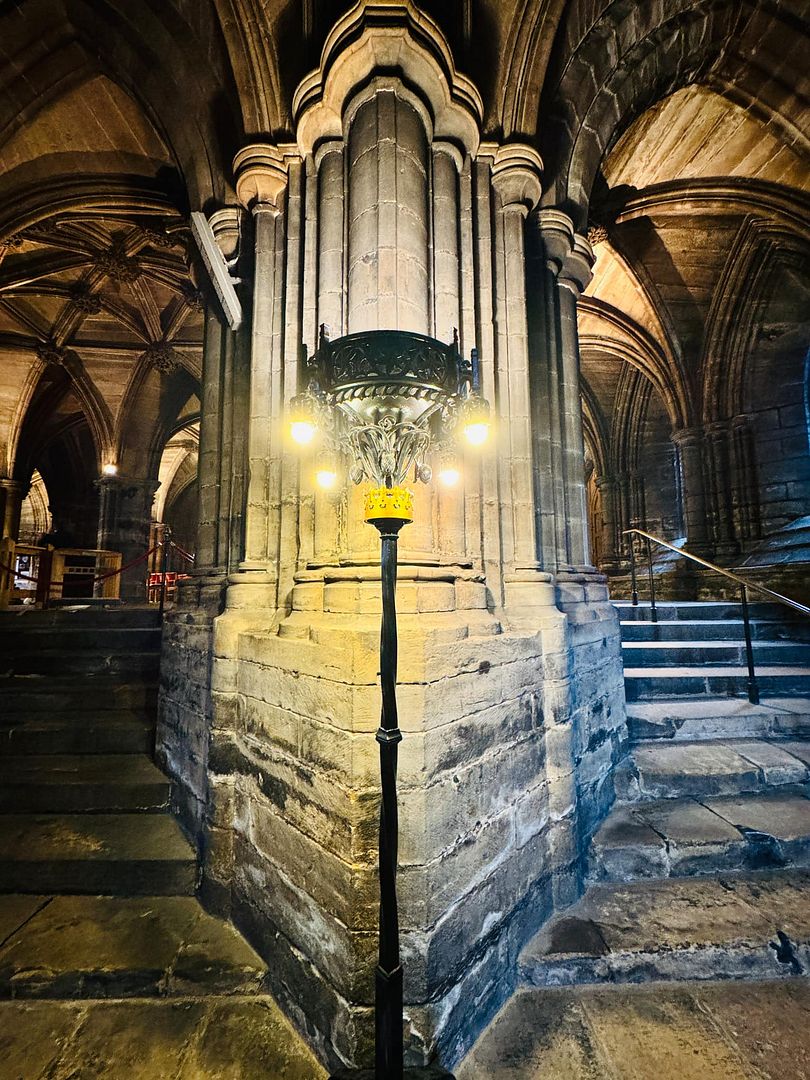
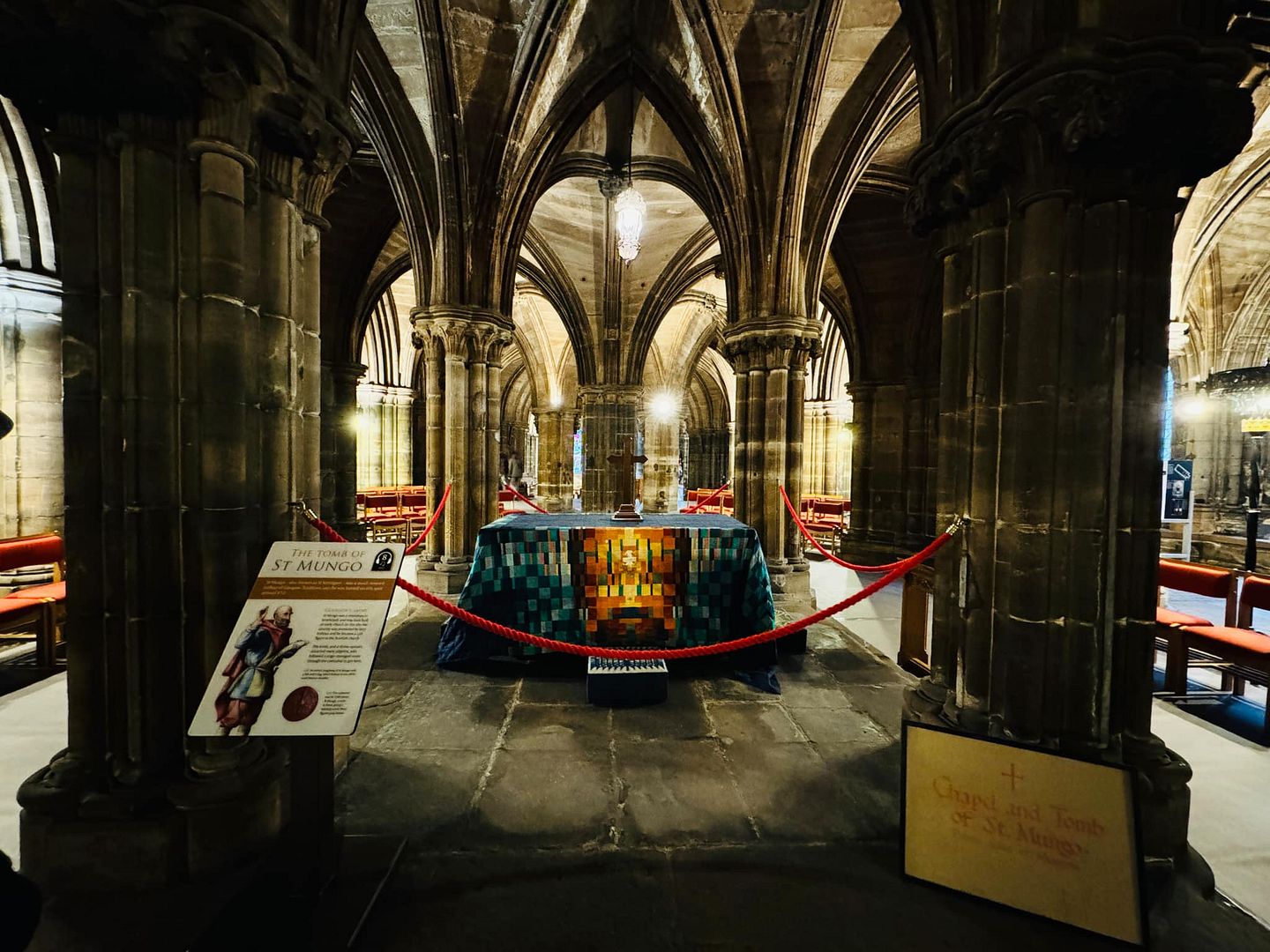
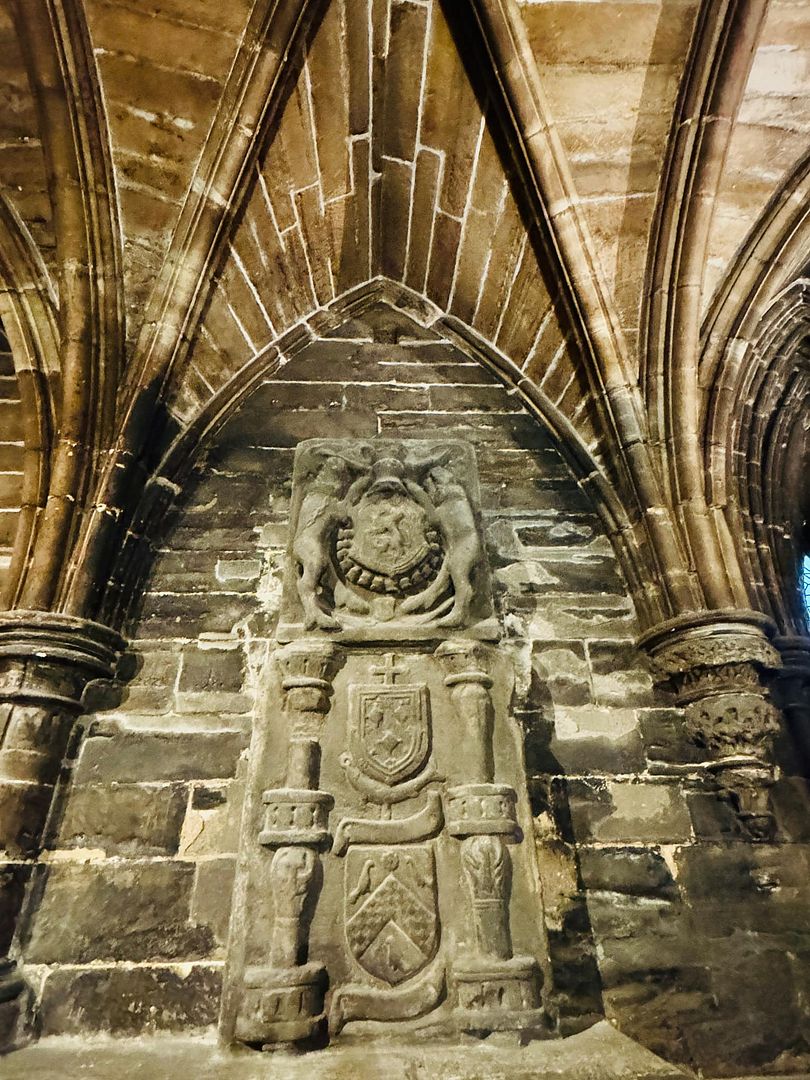
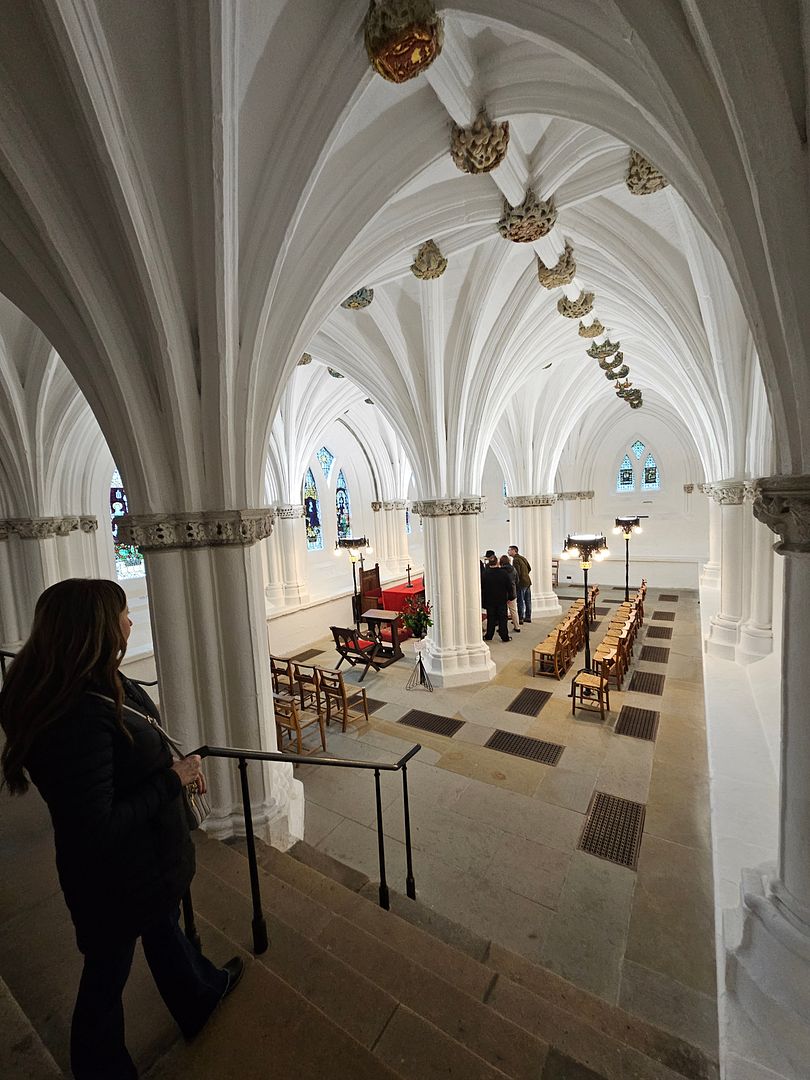
The Crypt of St. Mungo’s was another layer of amazing architecture.


The weather outside improved and we decided to make the journey up behind the cathedral to view the Necropolis and specifically the monument to John Knox.

This is already way too long of a post and I will save the Necropolis for another day. Thank you so much for journeying along with us on this most amazing experience we enjoyed. Thank you to Laura for sharing all her photos with me. All my posts will be a mix of both her photos and mine.

Thanks be to God for His amazing goodness to us in our travels.