
Continuing my travel log of our 6th day in the United Kingdom. Our 6th day, Wednesday September 20th took us into the Yorkshire Dales. Our trusty driver, Josh, kept us on track and gave us confidence on the lanes and highways.
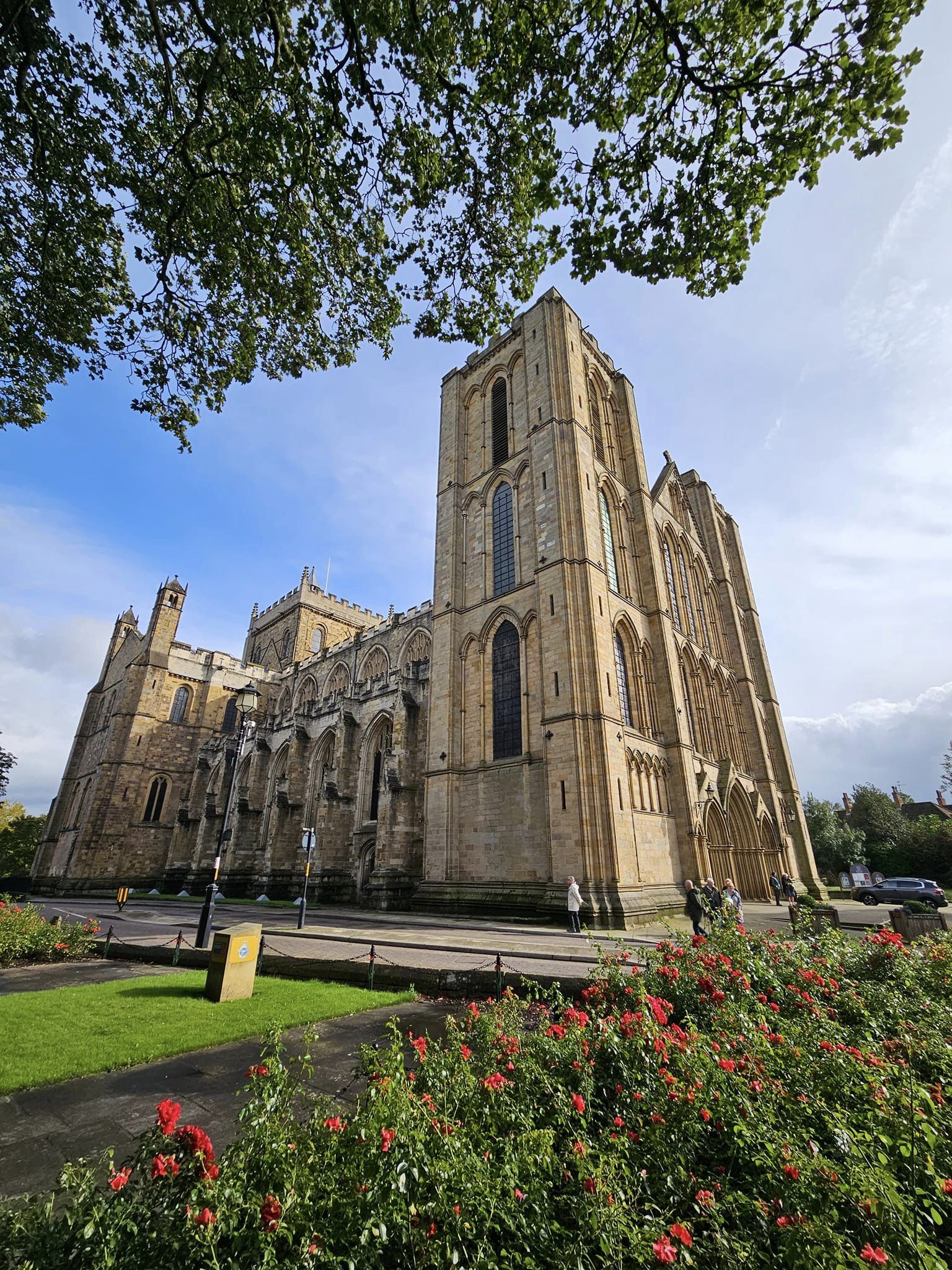
Our route on this day took us northwest with our first stop in Ripon and continuing on through the picturesque village of Pateley Bridge before arriving at our destination for the a couple nights in Grassington which was only 50 miles from York.
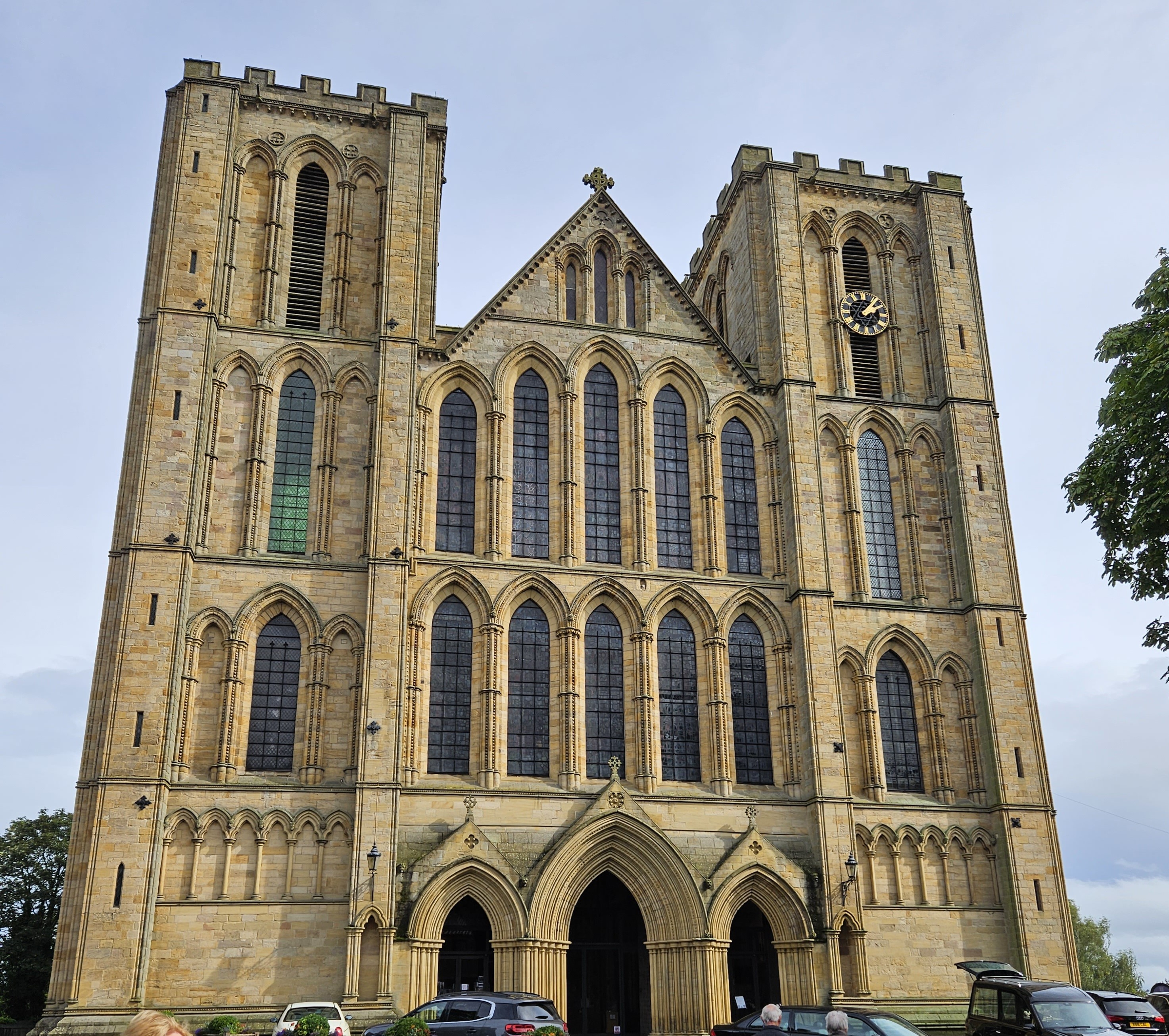
After our lunch at the Silva Bells we walked across the street to the cathedral. There was a funeral in progress so we waited a short time for the friends of the deceased to leave the cathedral. Once inside we met a very helpful volunteer of the Cathedral. We discussed the expense of maintaining these beautiful cathedrals.
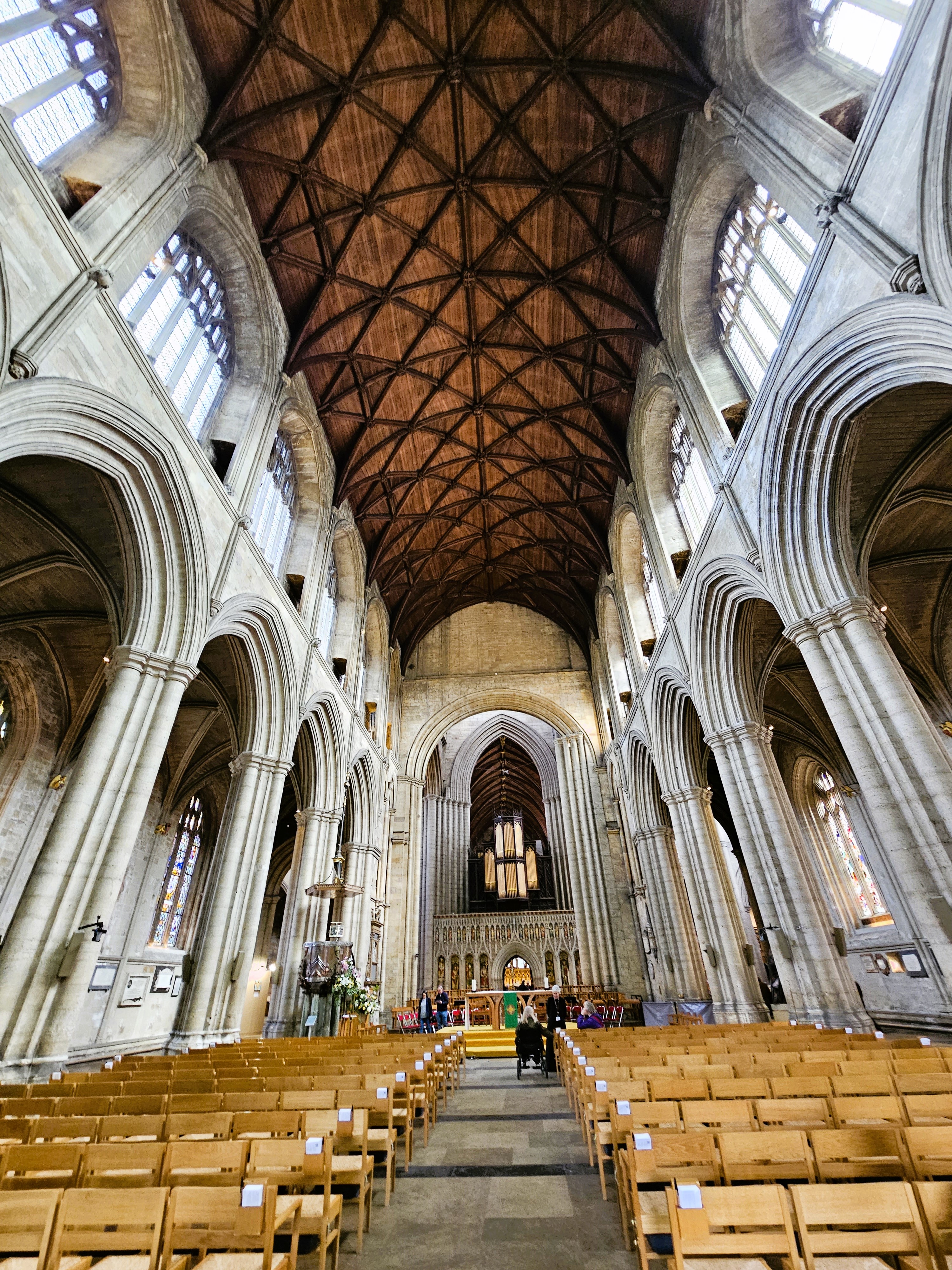
The typical cathedral contains a narthex at the entrance, three aisles with the central being the nave, a transept that gives the church its cross shape, an open choir where the nave and transept meet, and an apse at the far end of the nave, containing the altar.
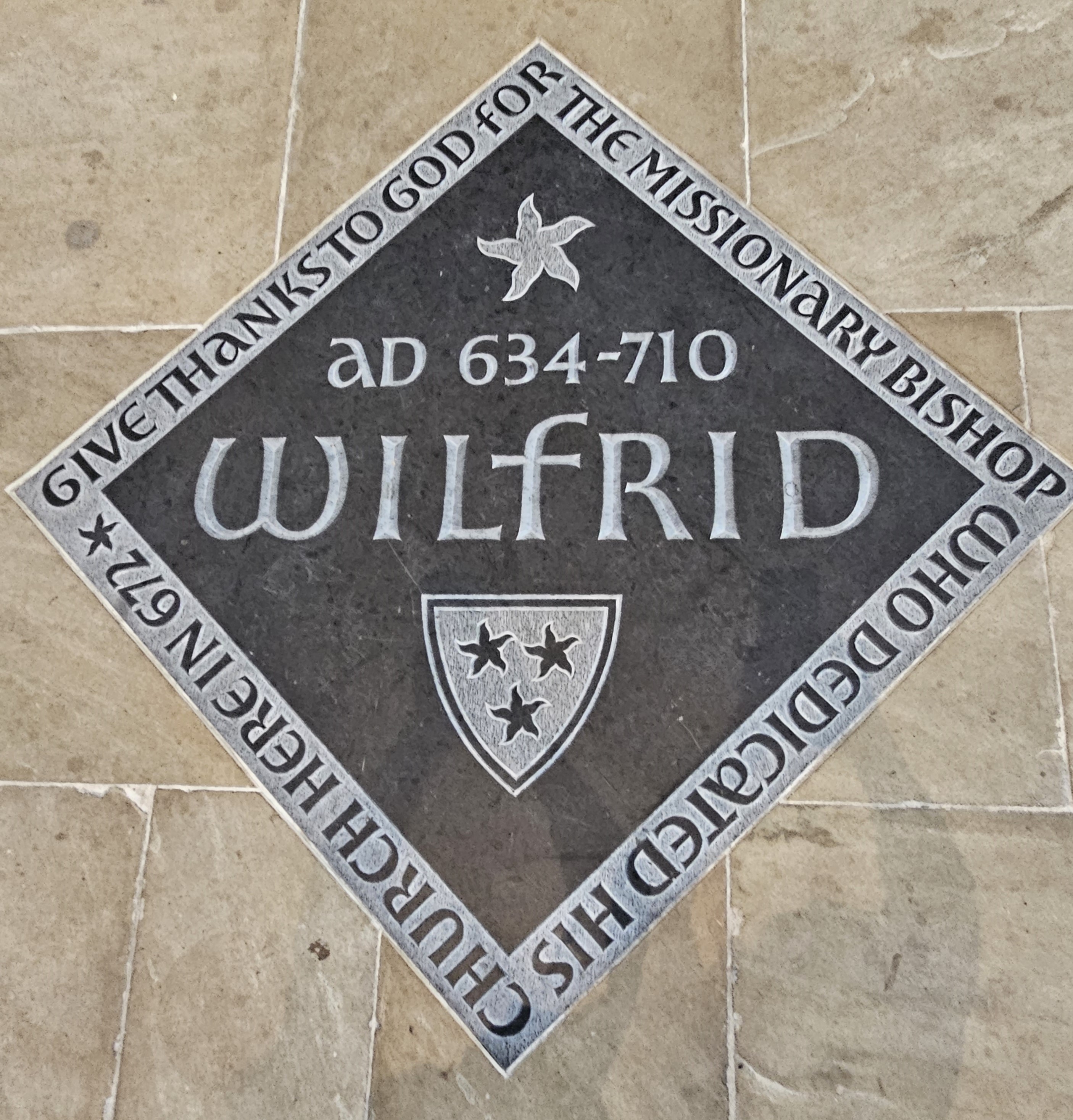
The present church was founded by Saint Wilfrid and dedicated in 672, although it has been rebuilt several times since. The ancient Saxon crypt – one of the oldest in the country – is the only part of Wilfrid’s original church that remains to this day.
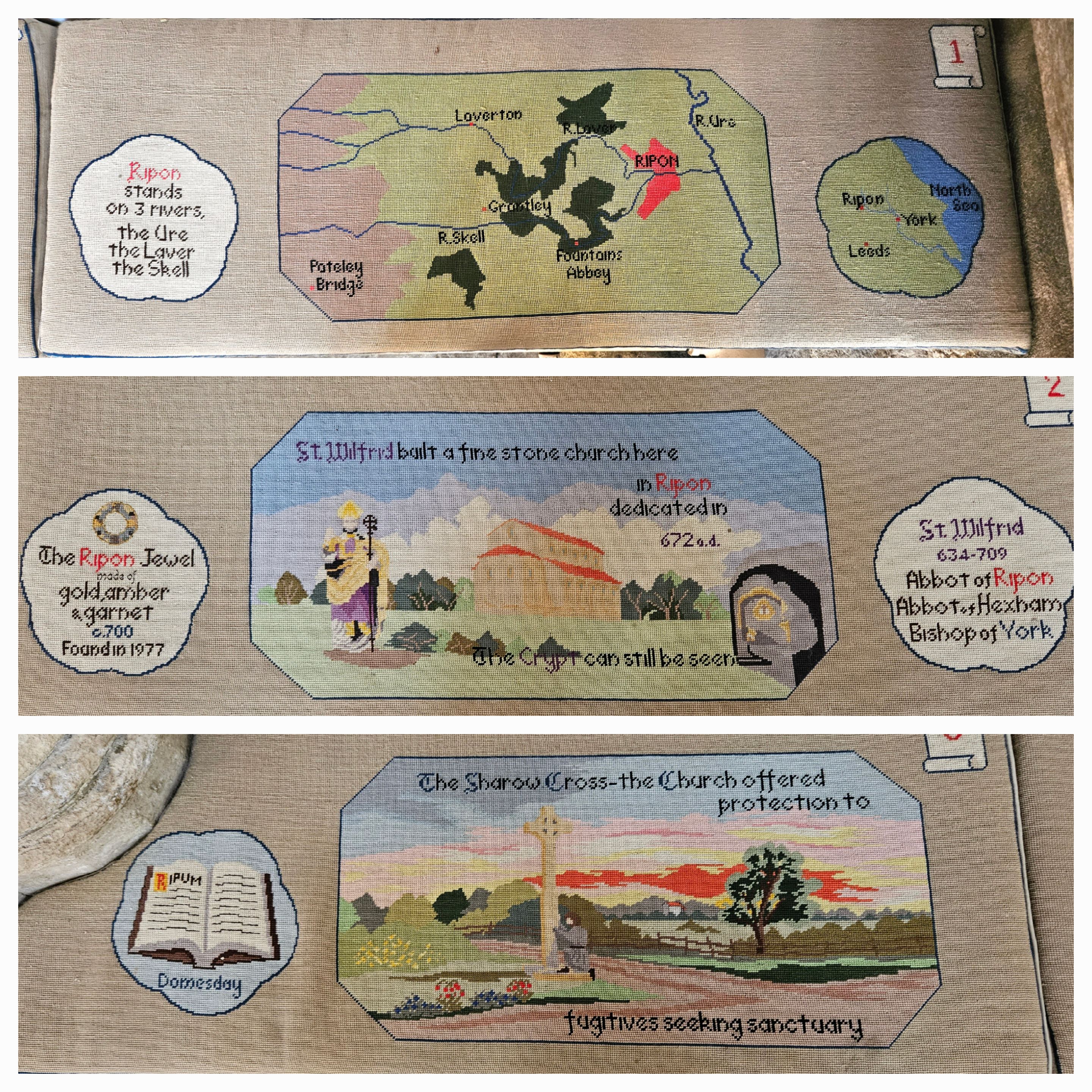
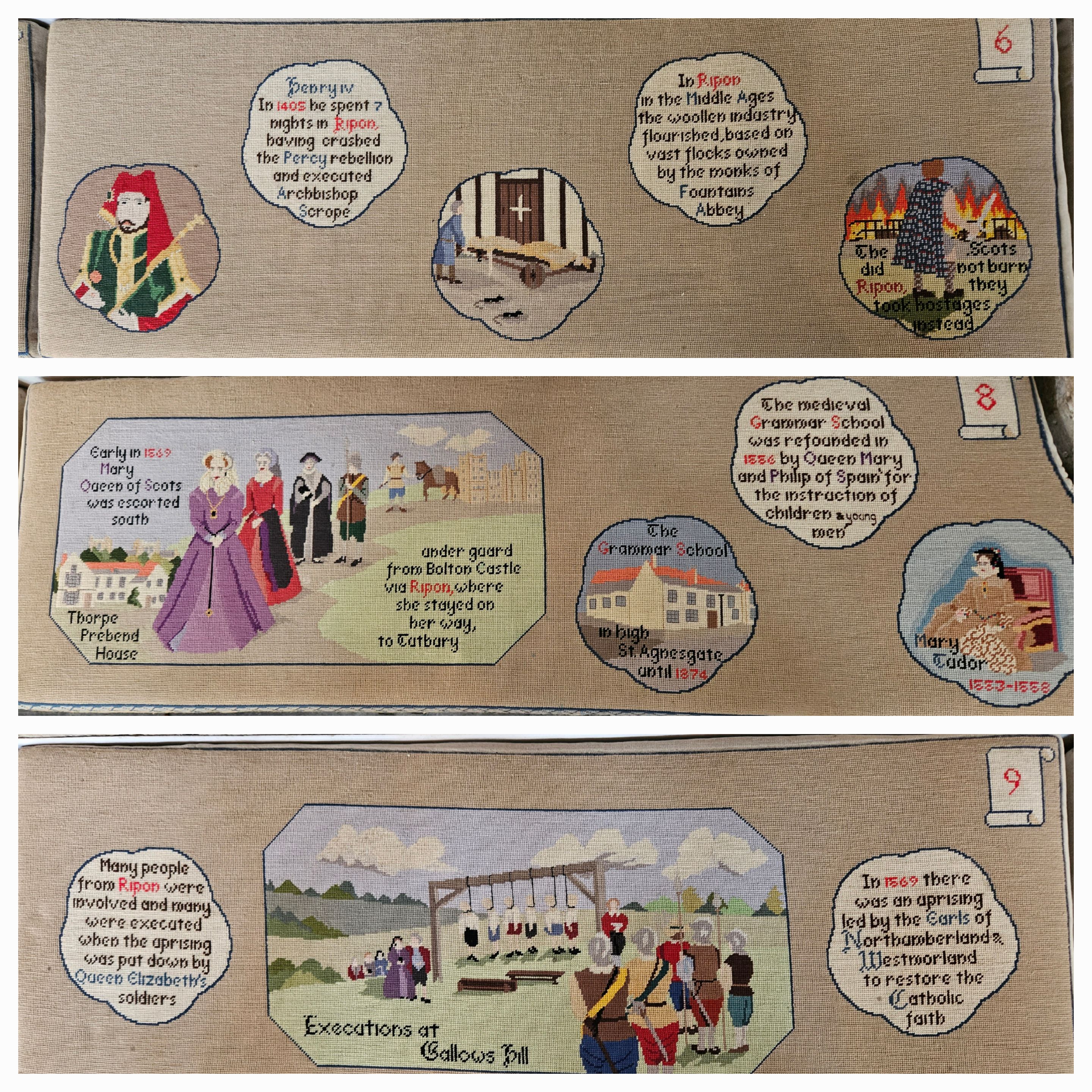
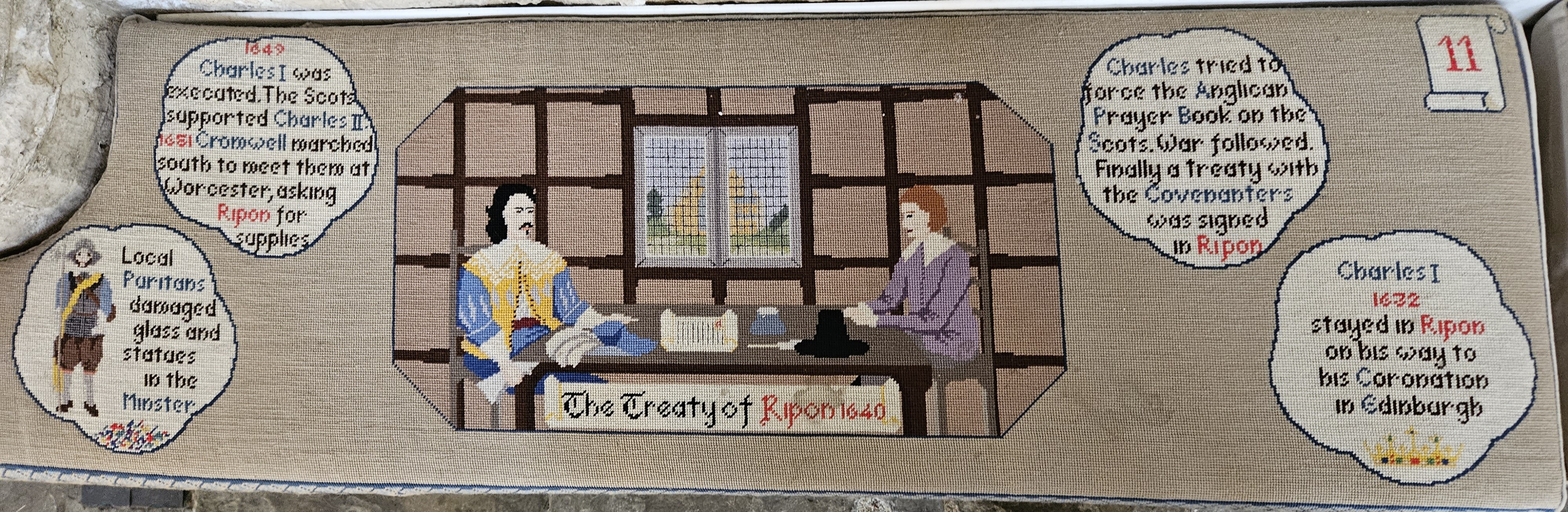
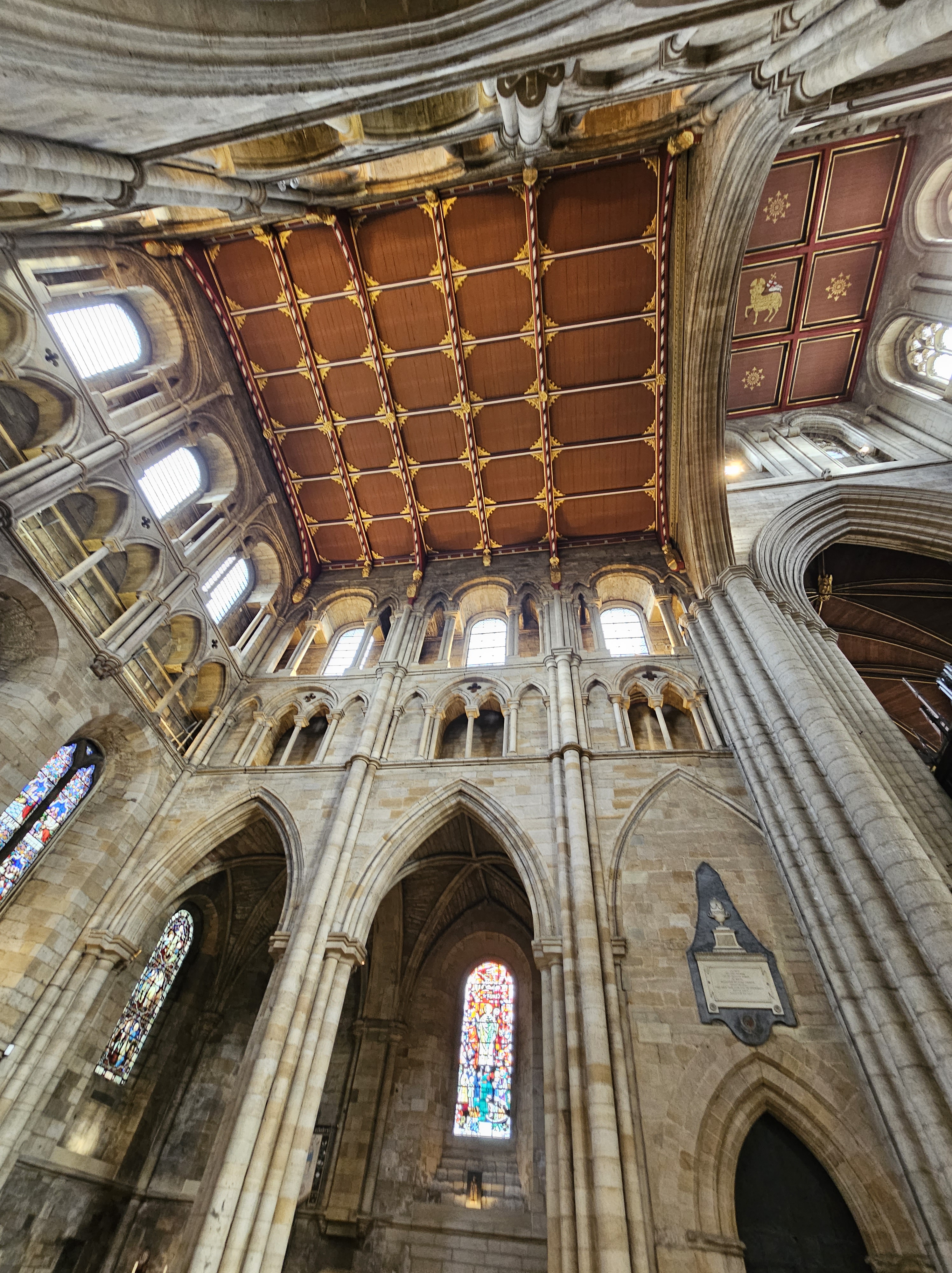
These amazing needlepoint cushions that lined the stone benches on the outer walls represent a piece of the history of this area of Yorkshire and the history of Ripon and the Cathedral. They were created as a commemorative project celebrating the 2000 Millennium.
Let us test and examine our ways, and return to the LORD! Let us lift up our hearts and hands to God in heaven. Lamentations 3:40-41
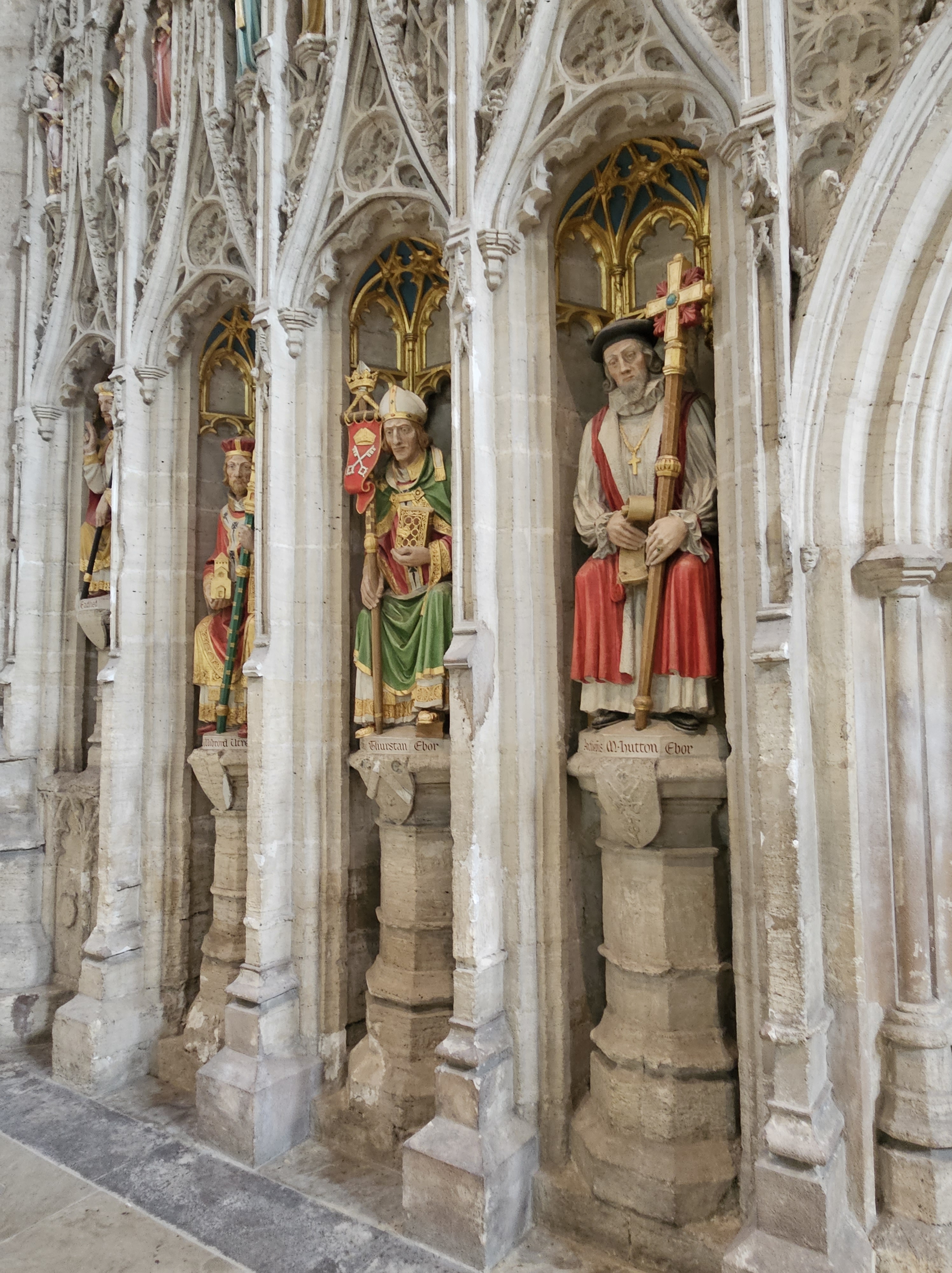
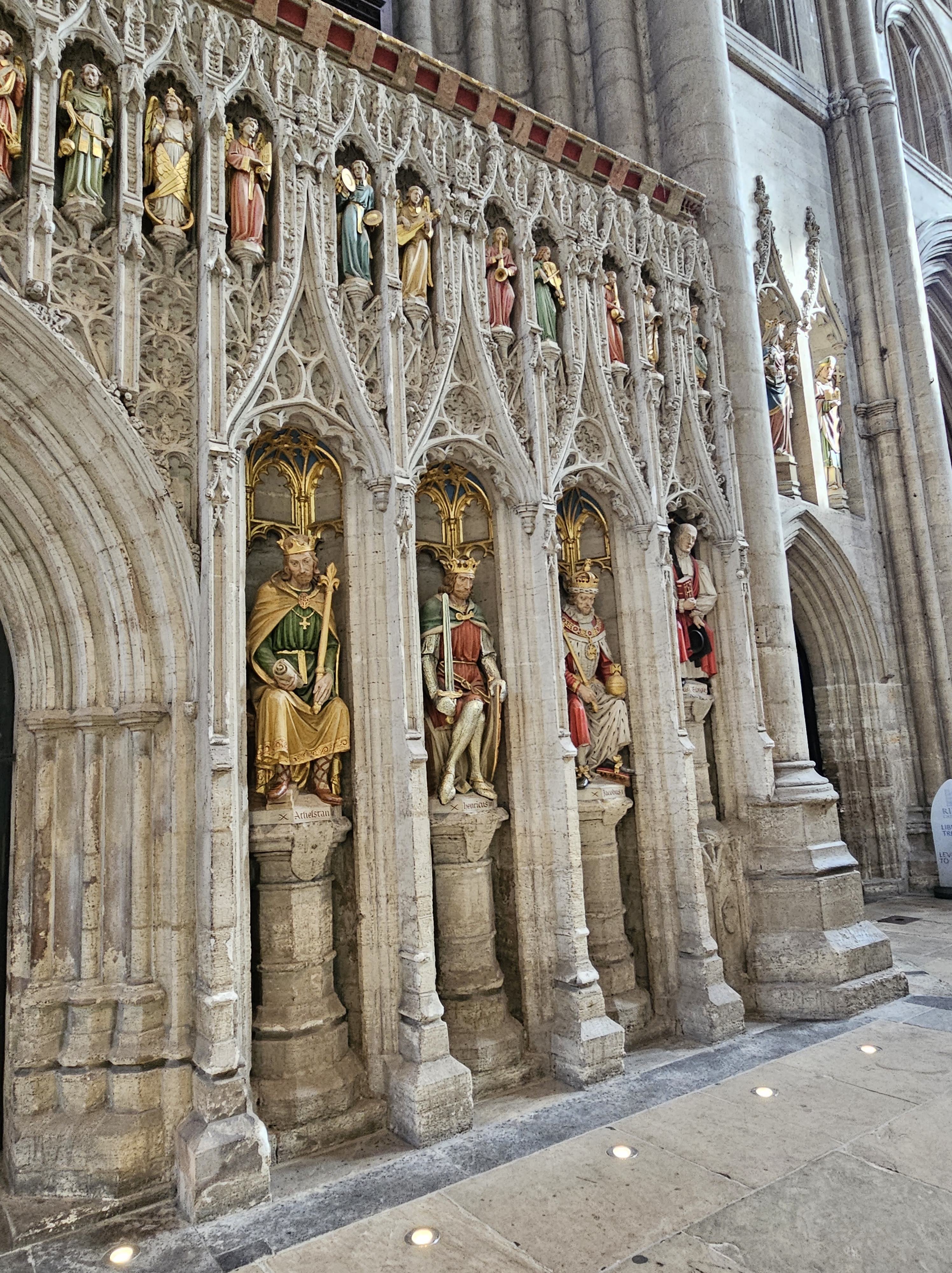
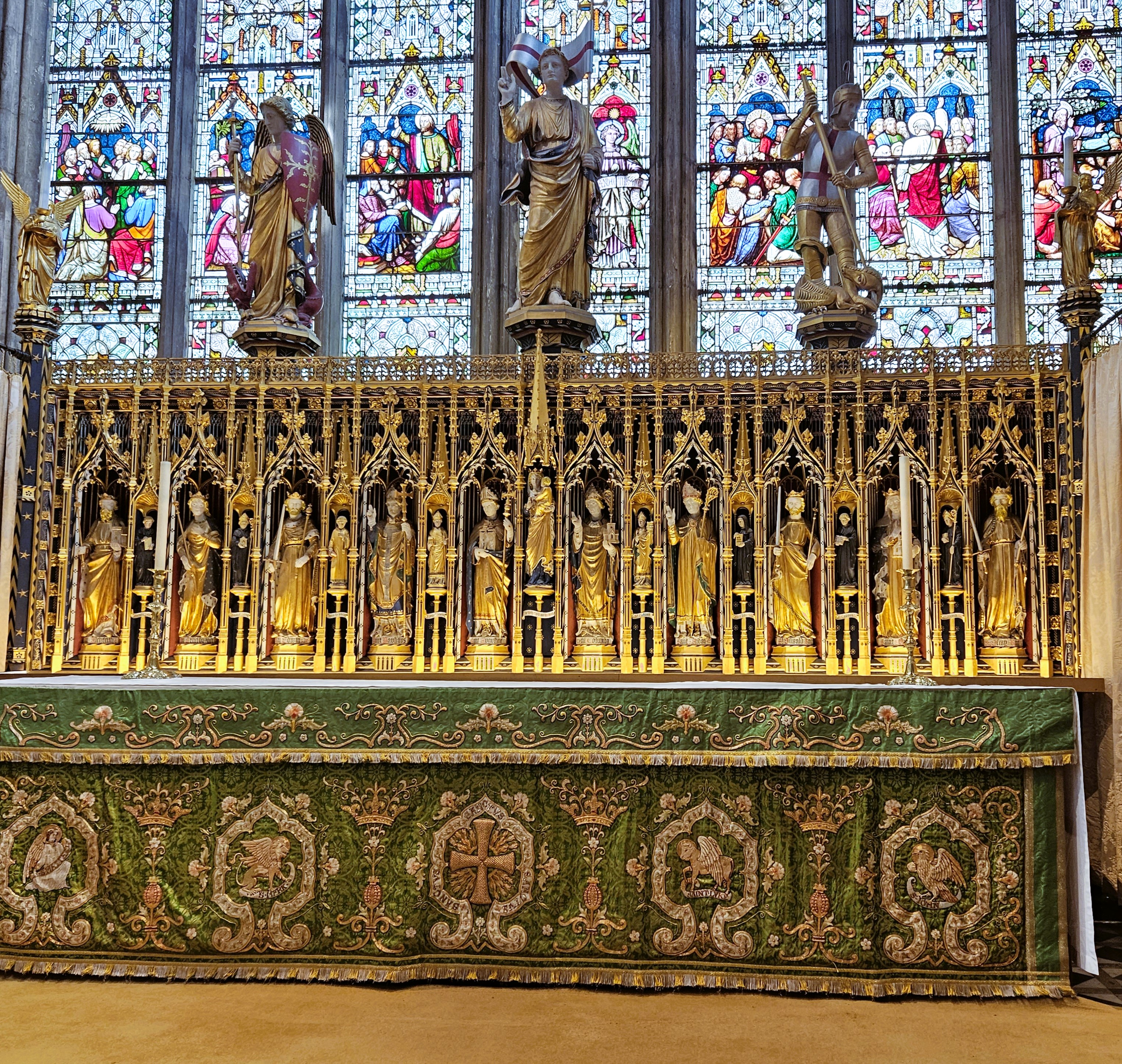
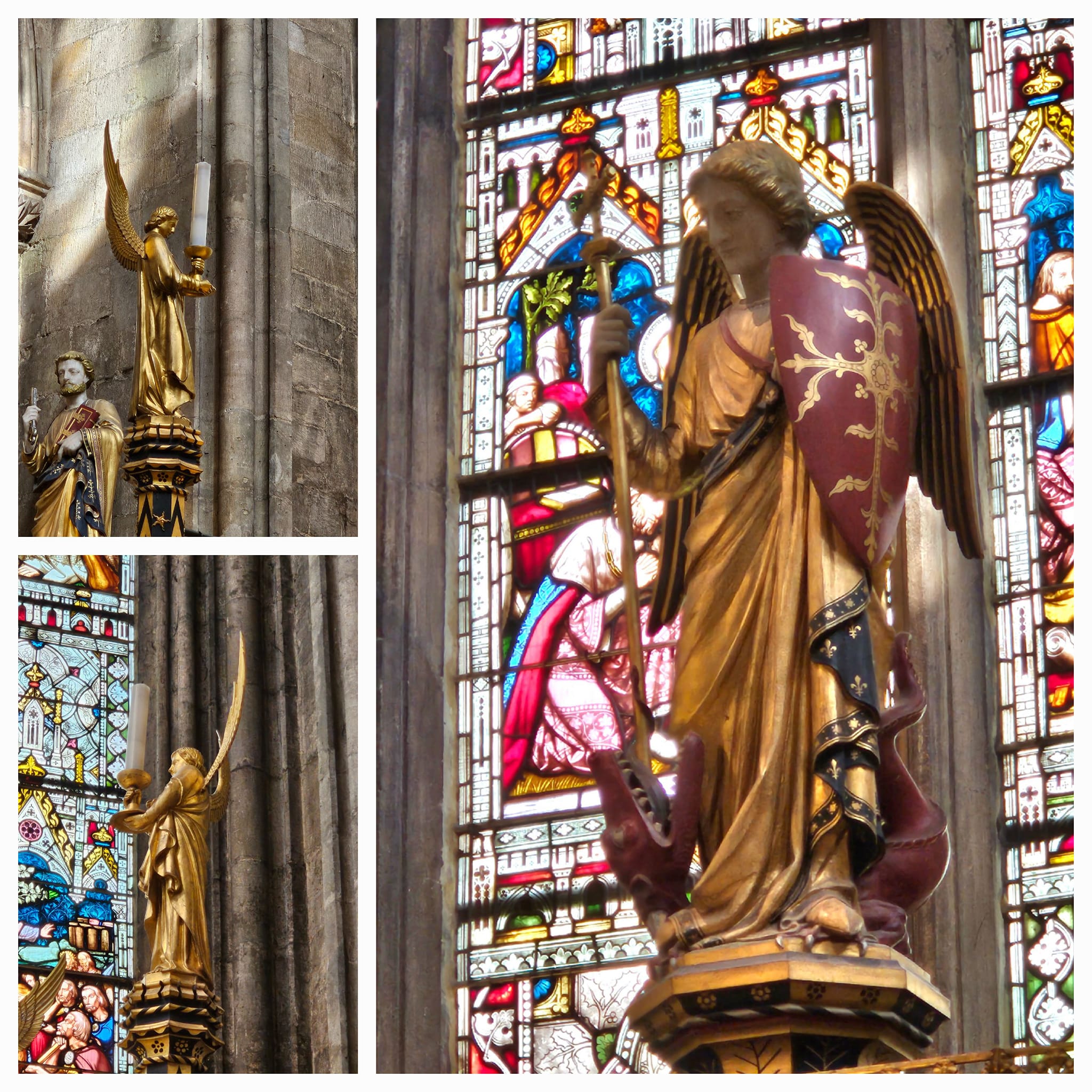
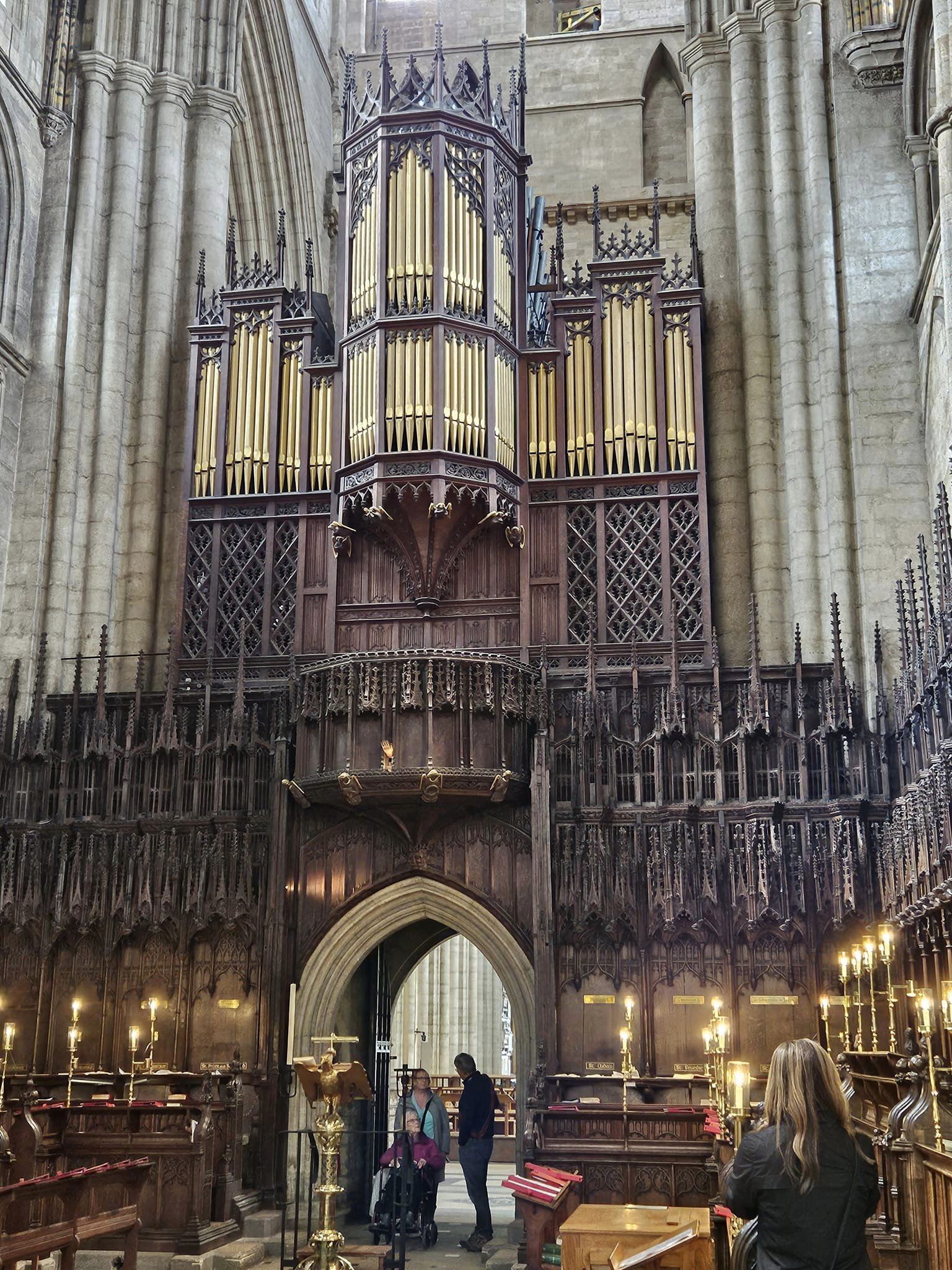
The choir screen, (pictured above) features eight carved and painted kings in canopied niches flanking a central doorway into the choir, with another 24 statues in niches above the doorway arch. The screen, which dates to the fifteenth century, is 8 feet thick. Although the screen is medieval, the statues are Victorian, and represent both kings, bishops, and saints who played a part in the history of the cathedral.
To read more about Ripon Cathedral visit Mike from ‘A Bit About Britain’ and his Introduction to Ripon Cathedral.
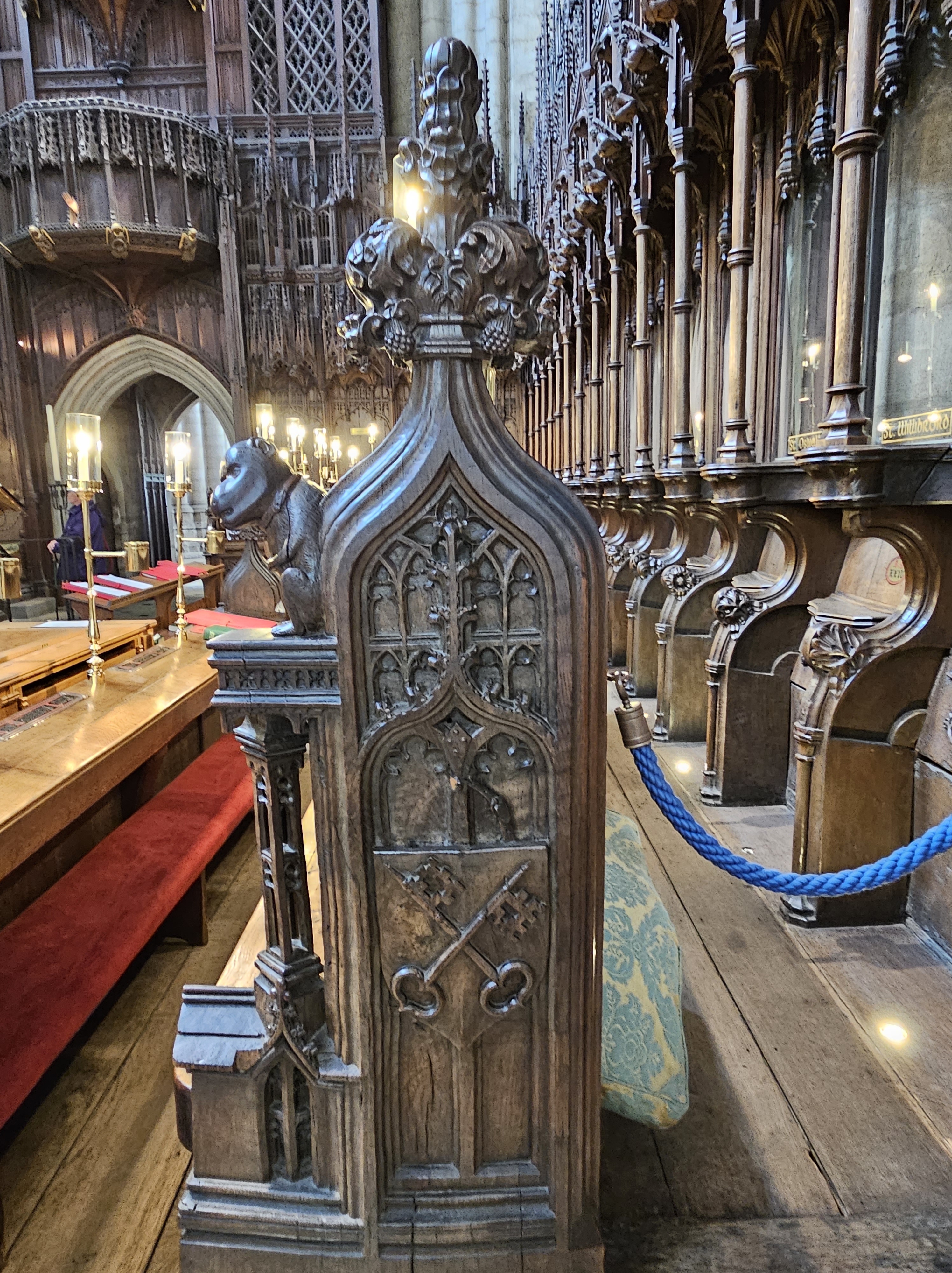
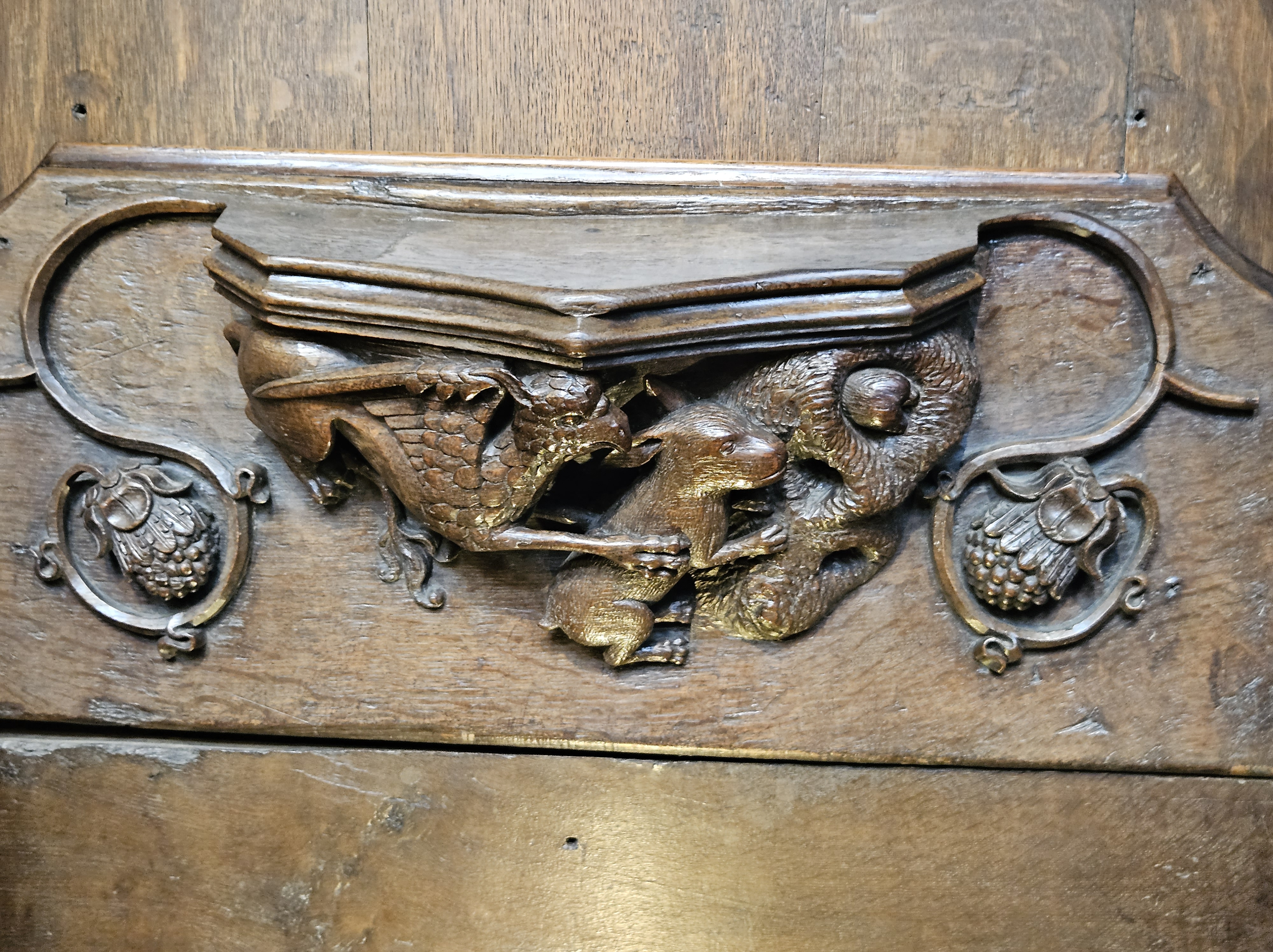
The superb intricate carving of the oak choir stalls which were completed in 1494 by Ripon woodcarvers, they are amongst most famous and finest choir stalls in the country. The cathedral also has many other interesting features, including the late fifteenth century misericords – the carvings on the back of the choir stall seats which are superlative surviving examples of medieval craftsmanship. Many of these, including the misericord of a griffon chasing a rabbit down a rabbit hole, are thought to have inspired Charles Lutwidge Dodgson, more famously known as Lewis Carroll, the author of Alice’s Adventures in Wonderland, whose father became a residentiary canon of the Cathedral in 1852.
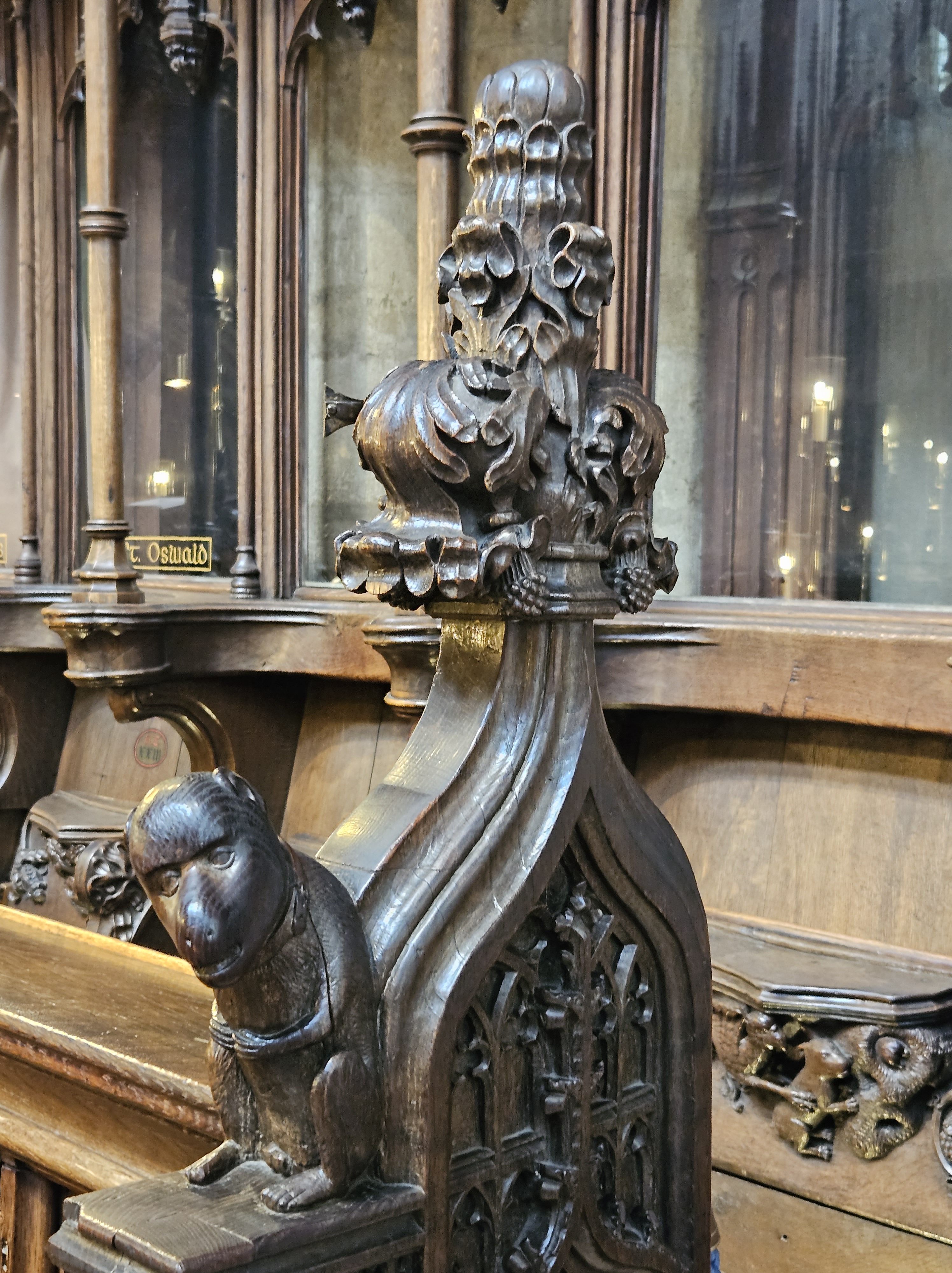
A monkey (perhaps a baboon?) decorating a bench end in the choir of Ripon Cathedral. The choir stalls date from the 1490s with later repairs making good damage caused when a spire over the crossing tower collapsed into the choir in 1660.
The choir stalls had these curious little shelves with carvings underneath. I found a description of what they were called and what they were for.
The term misericord translates from the Latin as ‘mercy seat’, and that’s precisely what it was; a small ledge, or seat, attached to the underside of a pew or choir seat, to provide a merciful and very welcome place for clergy to rest during long periods of standing during lengthy medieval sermons.
Misericords were often elaborately carved, and it is these carvings that make studying them so fascinating. The carvings might be of mythological creatures, religious symbols, grotesque beasts, Green Men, and a wide variety of other unusual and striking symbols.
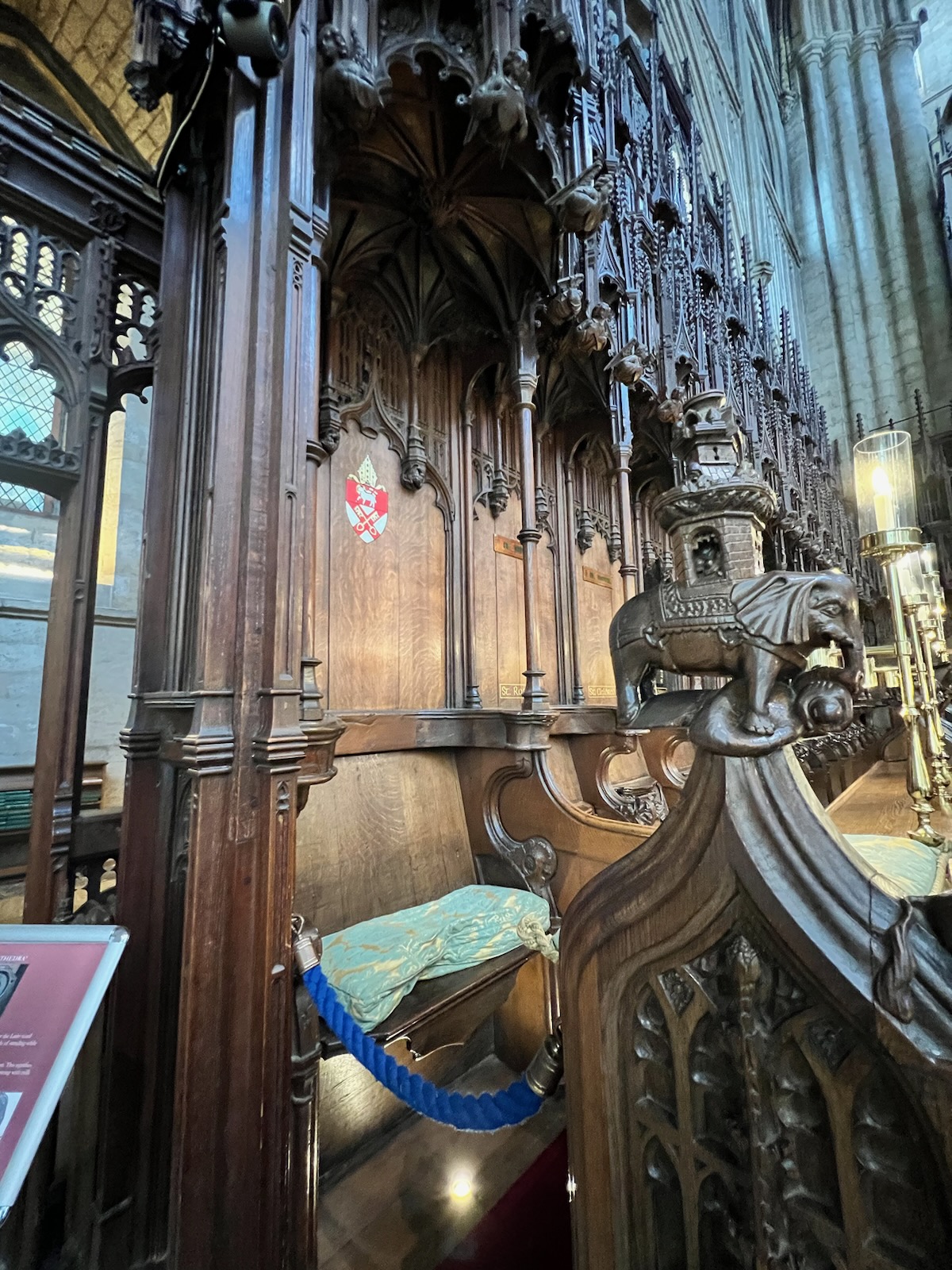
Here is the Bishop’s Seat or ‘Cathedra’ and here is the carving under the seat that Laura was able to capture. She had to take the photo ‘blind’ by getting her phone under the seat and hoping she captured it.
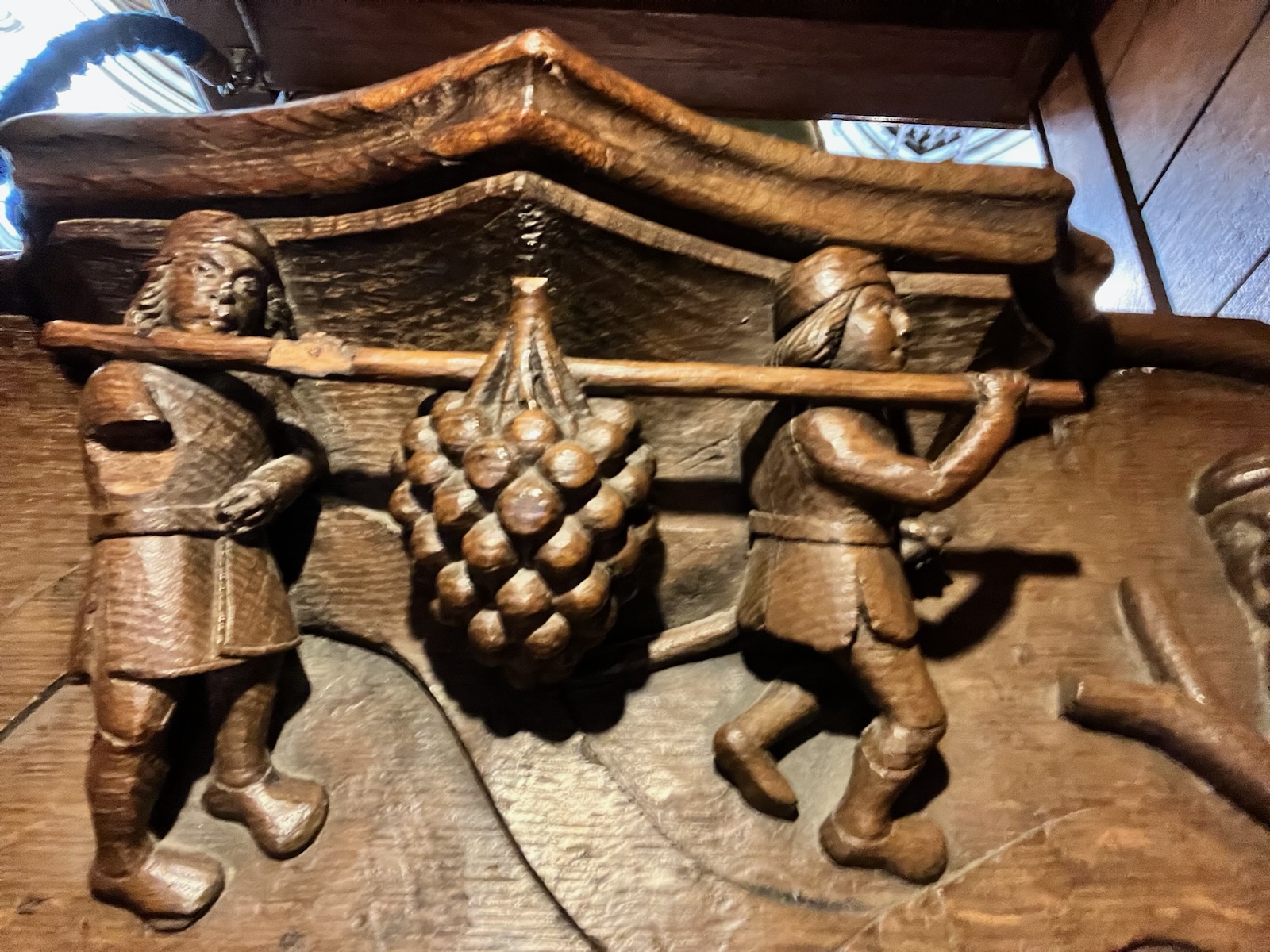
A description was given on a placard beside the Bishop’s seat.
“The Two men in the centre are Joshua and Caleb, figures in the Bible, carrying a bunch of grapes between them. This signifies the ‘promised land’, a place that is special to Christians. In the Bible they are about to explain that it is a land flowing with milk and honey. Ex. 3:17”
I found this description to be curious in it’s wording because we are in a cathedral where you would expect knowledge of the Bible and these central figures in the Old Testament and Bible in general to be more familiar.
The account of the spies sent to learn about the land of Canaan, this ‘promised land’, and the fact that Caleb and Joshua were the only two who brought back a good report can be found in Numbers 13.
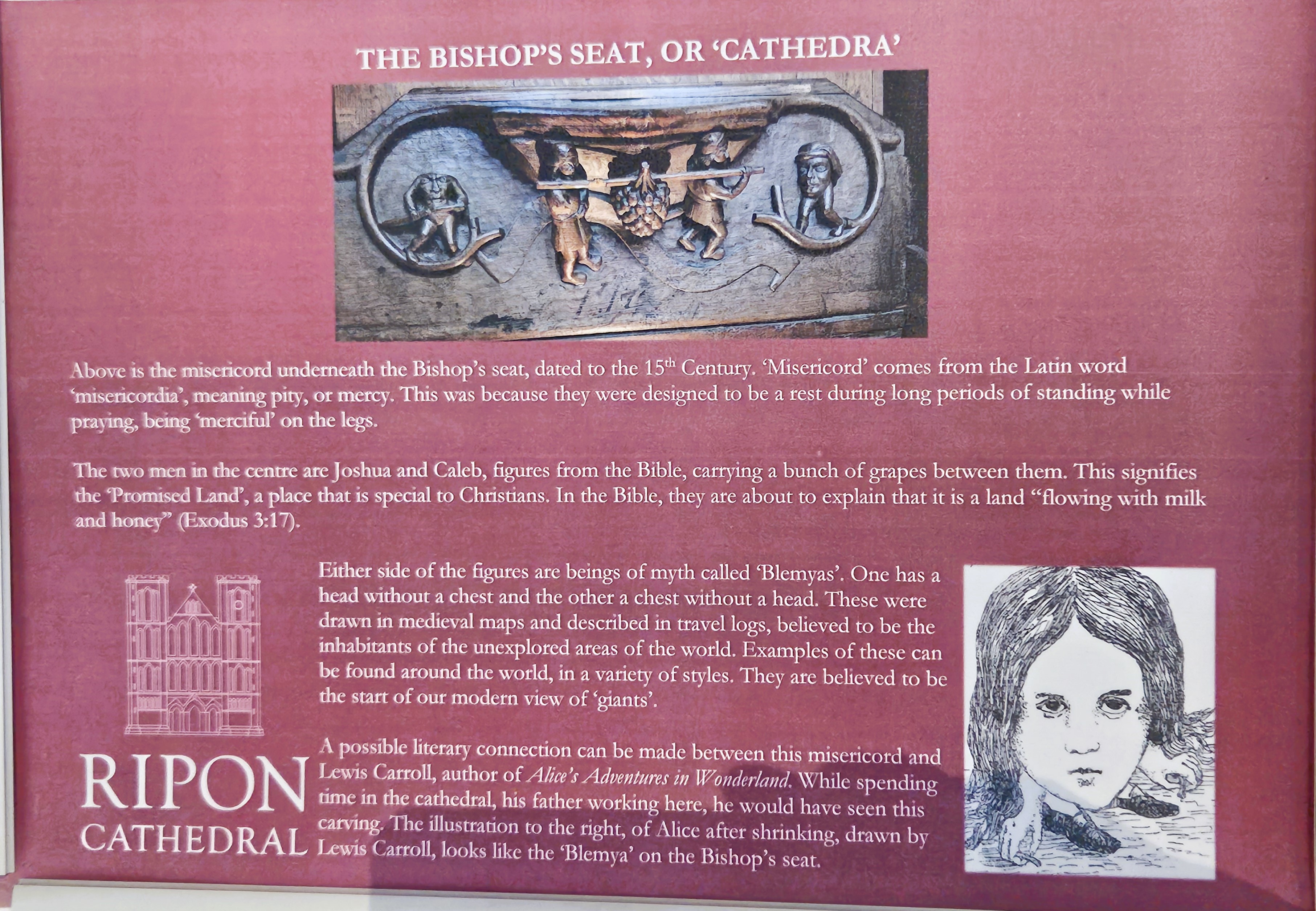
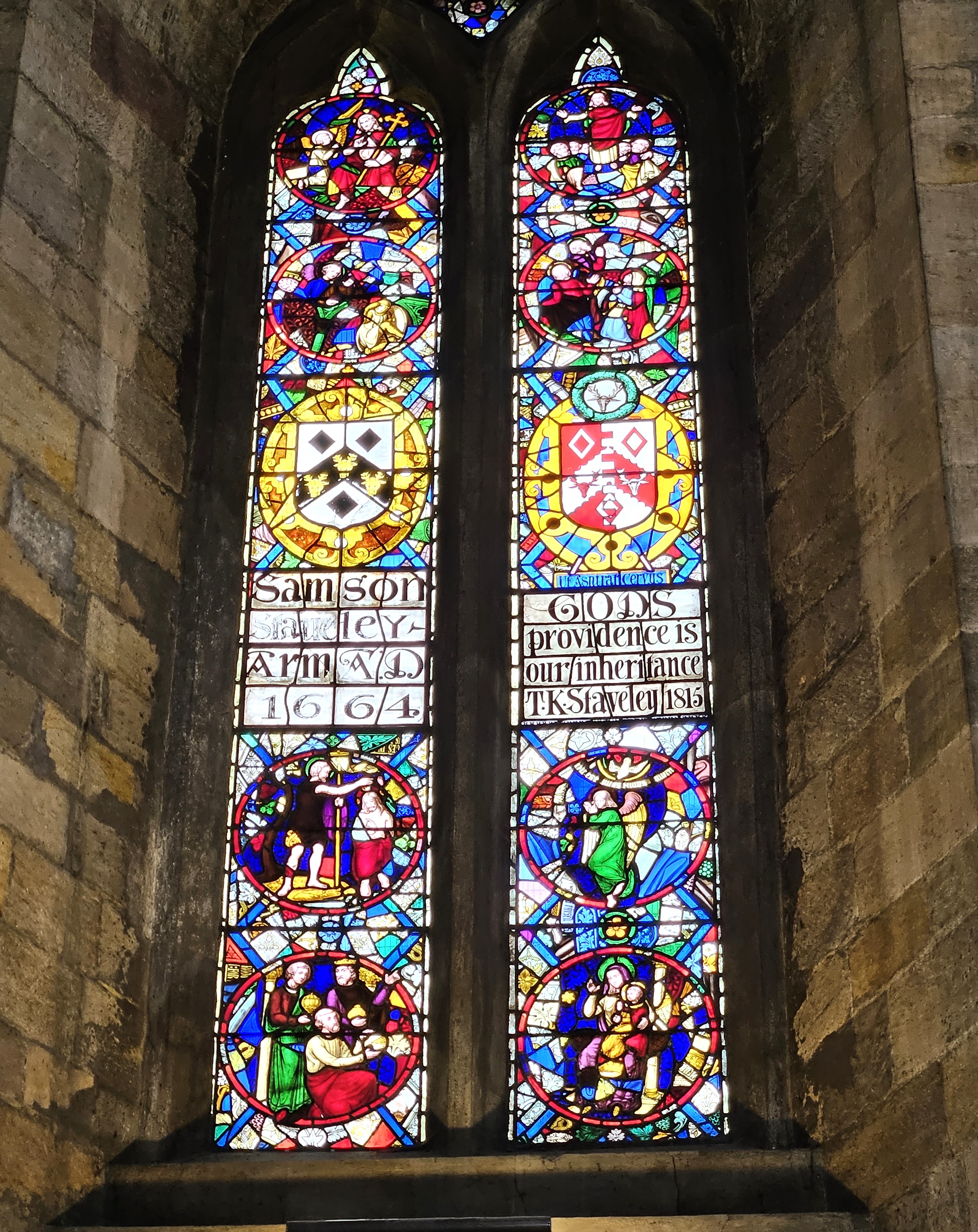
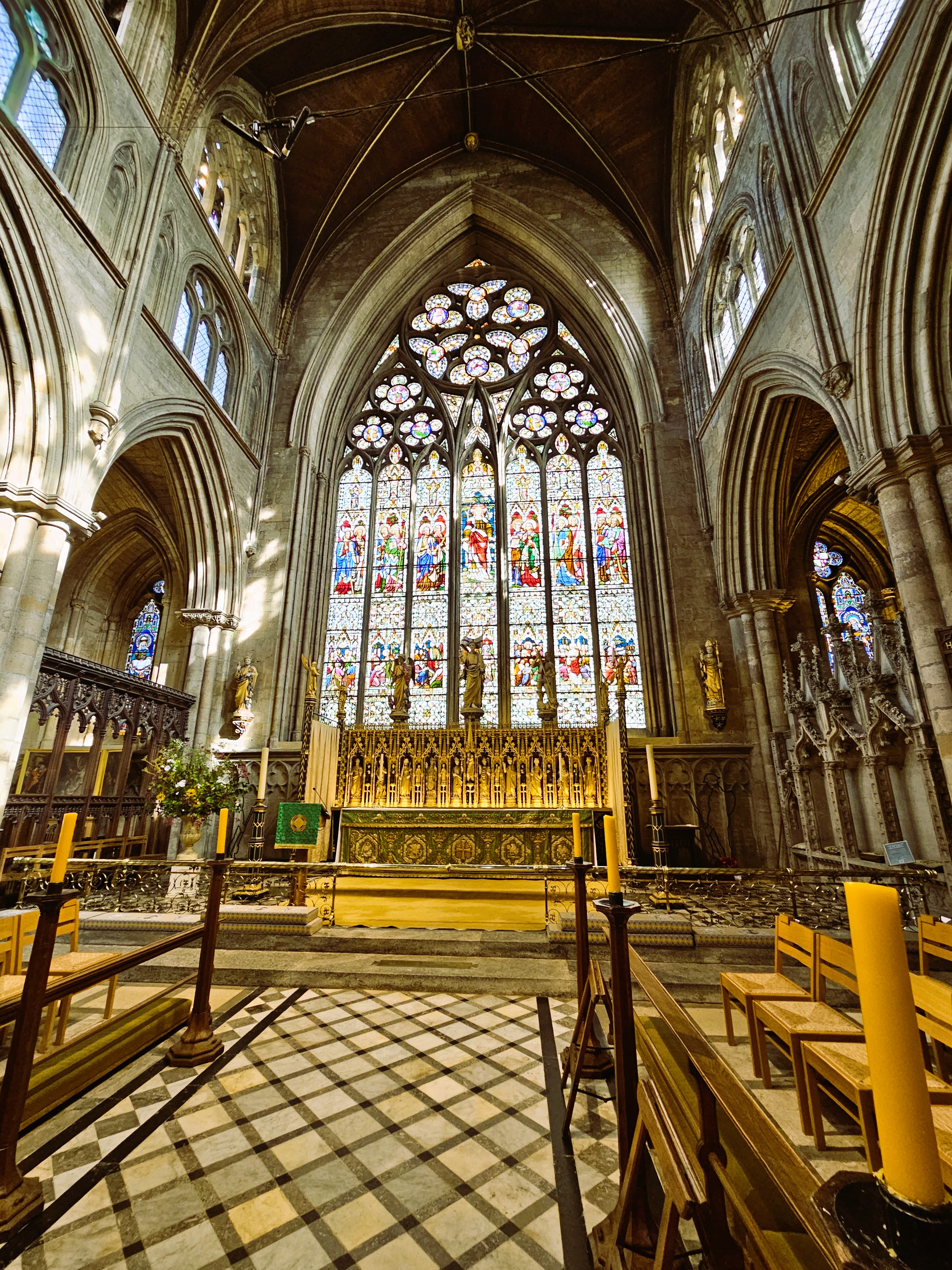
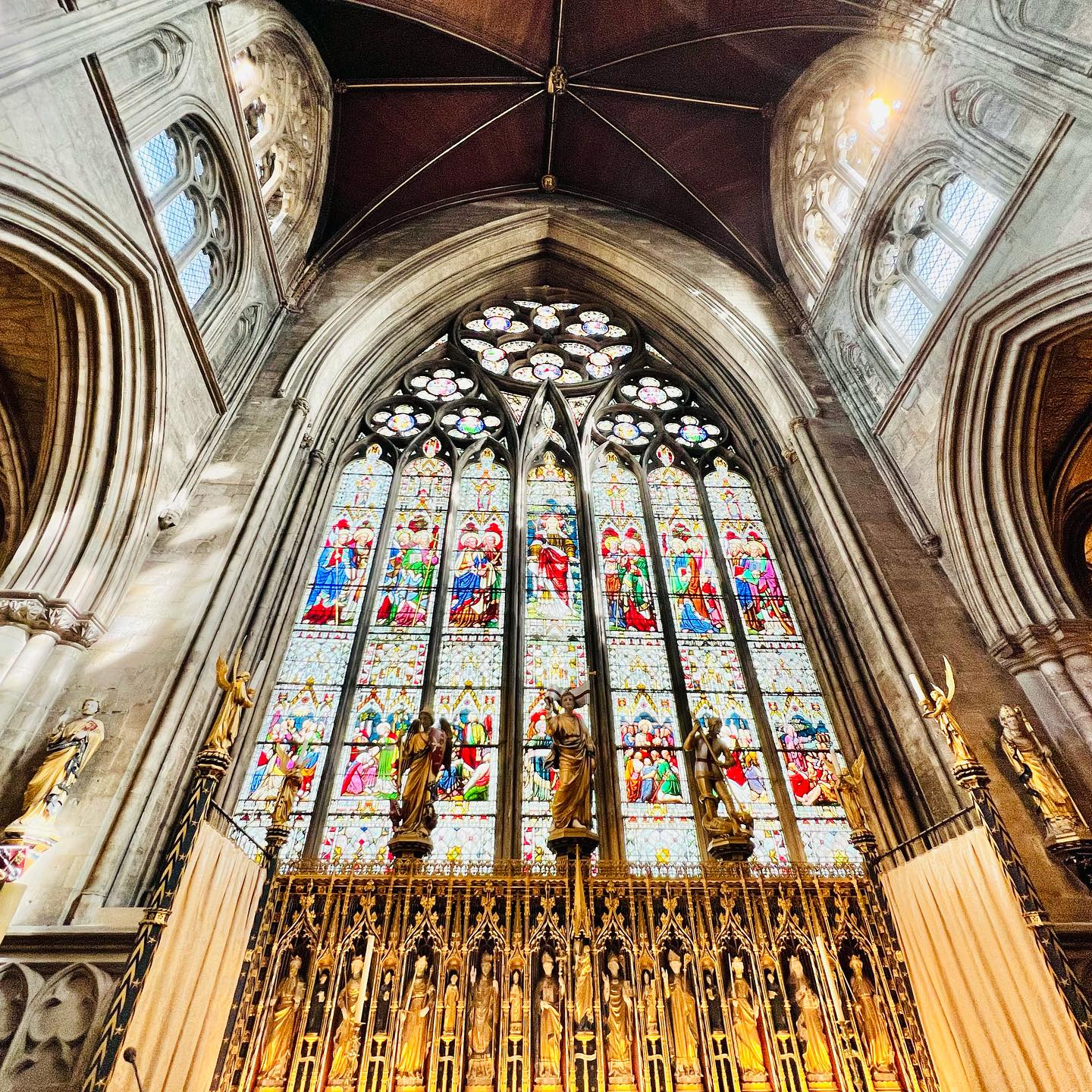
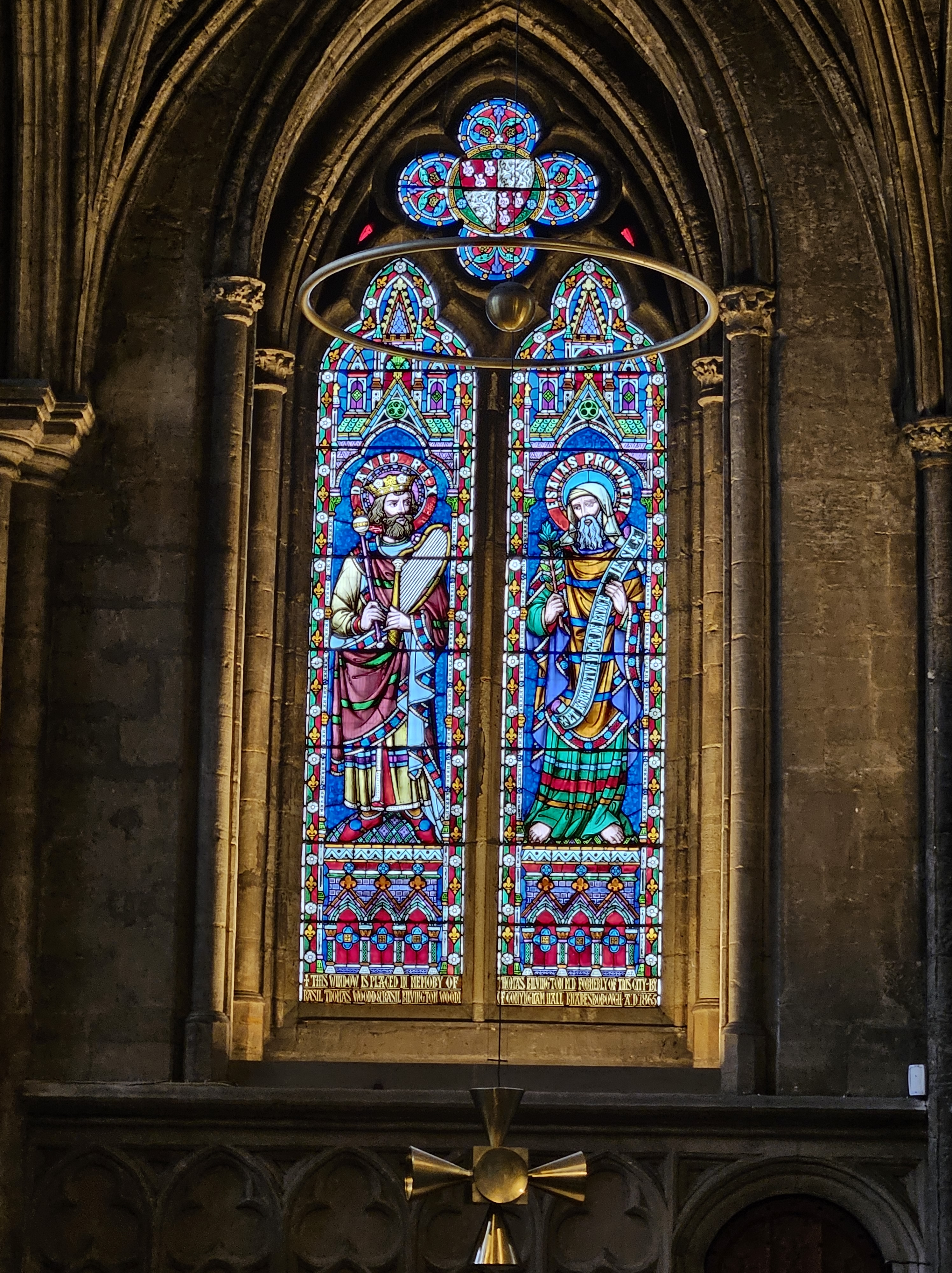
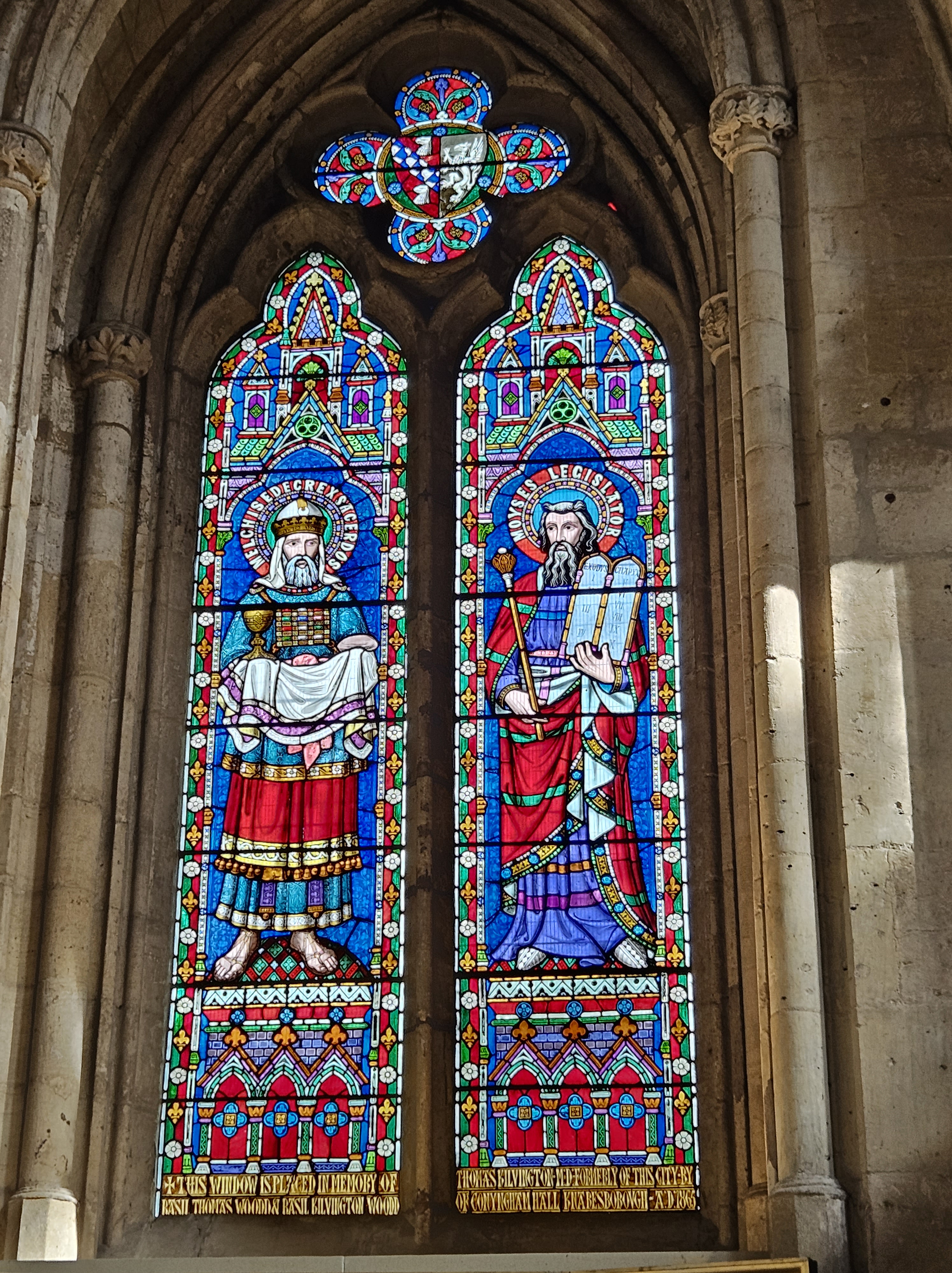
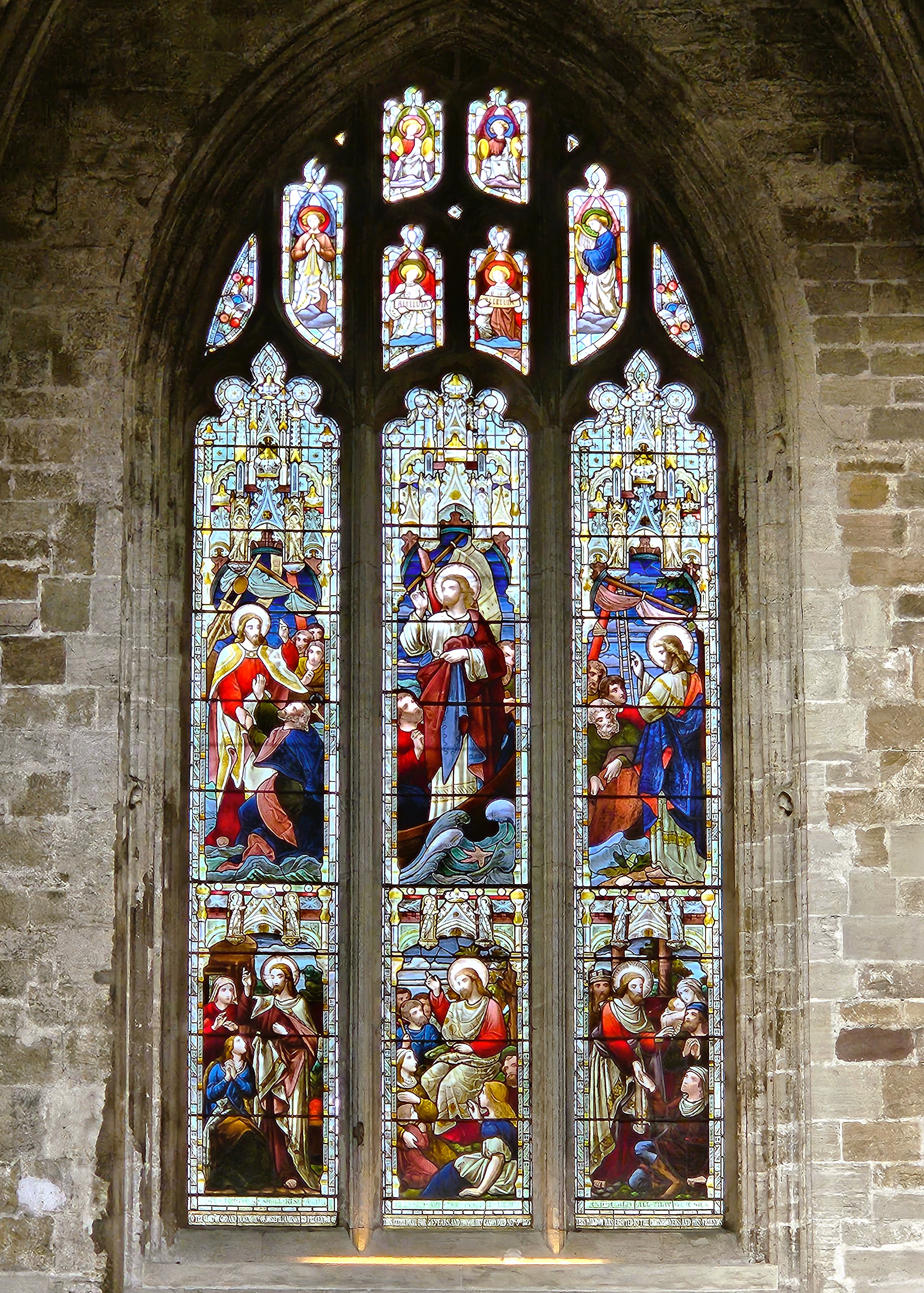
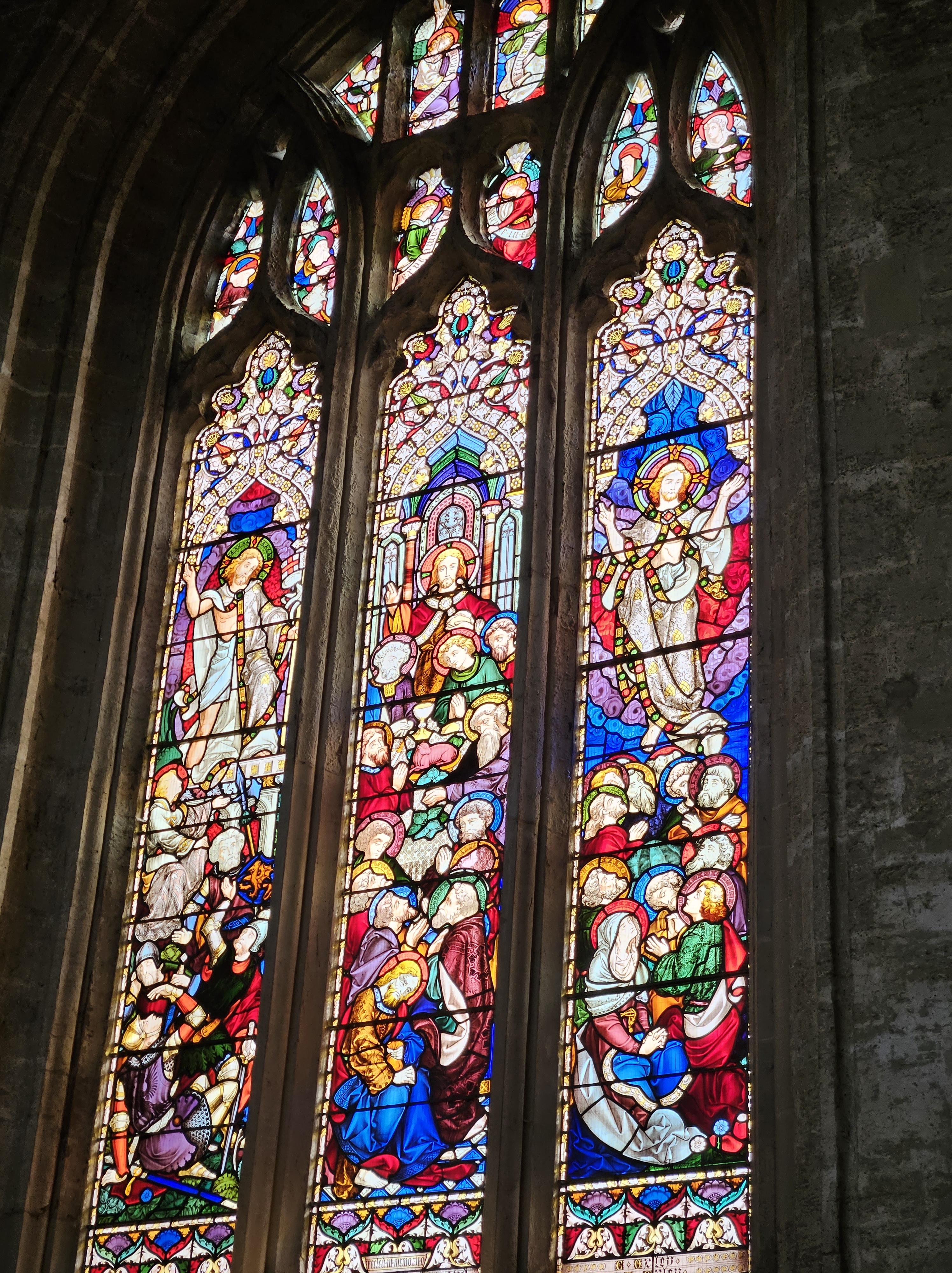
The stained glass windows were exceptional. ‘God’s Providence is our Inheritance’

As I gather more history about Ripon Cathedral I will add it to my post.
What a treat to be able to walk through and marvel at all the amazing architecture and artistry in the carvings and stained glass. We love how the architecture is meant to draw your eyes upward.
We were happy that we included this stop on our journey to Grassington. That will be my next post to complete Day Six of our travels.
 The Happy Wonderer ~ ellen b.