On Sunday, March 1st, after another delicious breakfast at our hotel, The Matilde Palace, we packed up our belongings and left our suitcases outside our hotel room door to be collected by AmaWaterways. They would be curried to the boat and deposited in our room onboard. We would board AmaMagna later on this Sunday for the beginning of our cruise on the Danube.
But first, we had another walk ahead of us to the Jewish District in Budapest to visit the Dohany Street Synagogue.
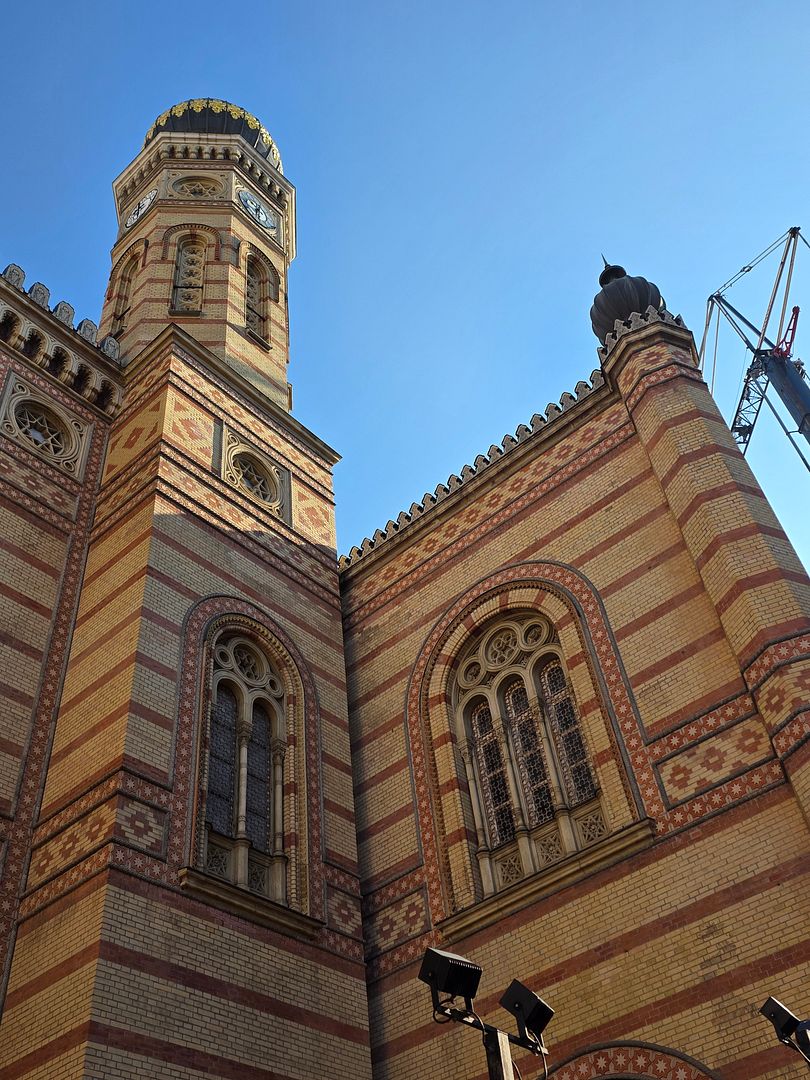
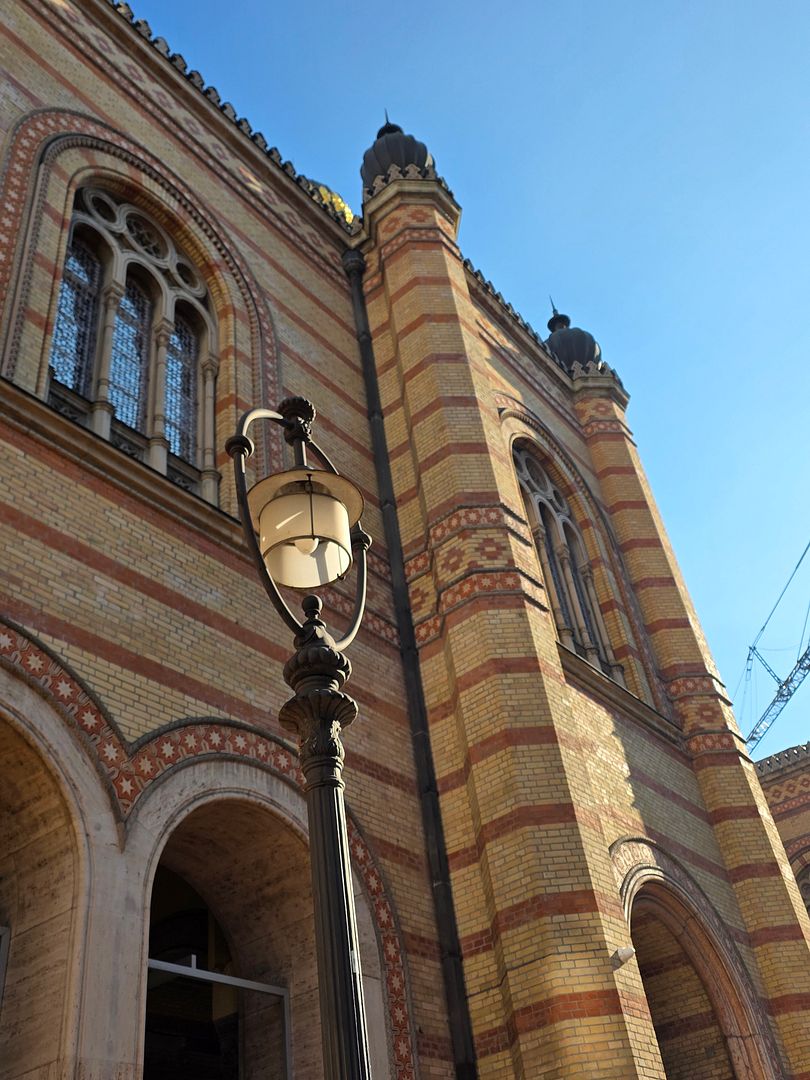
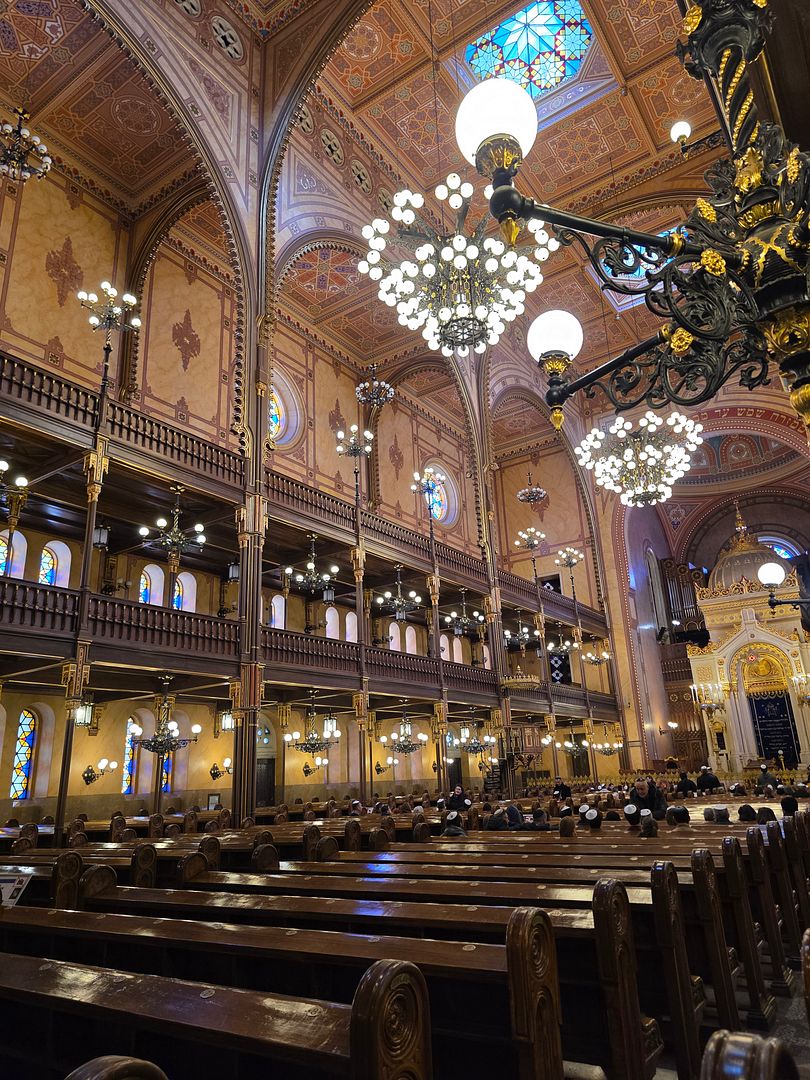
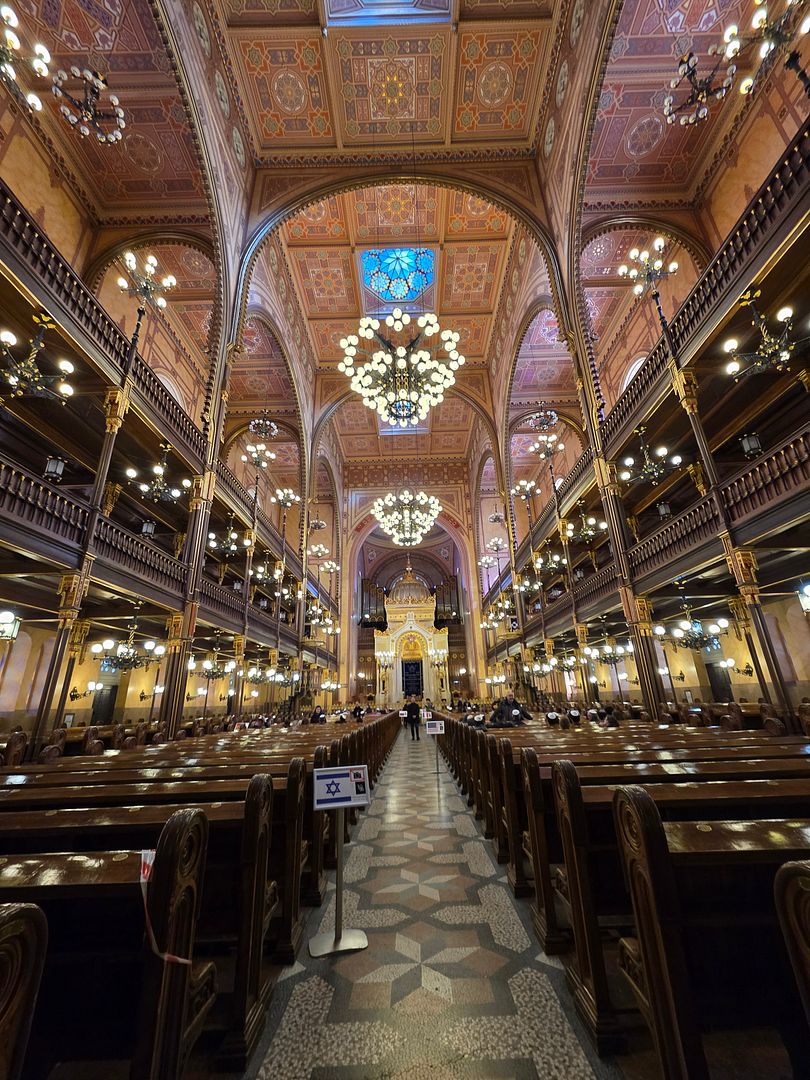
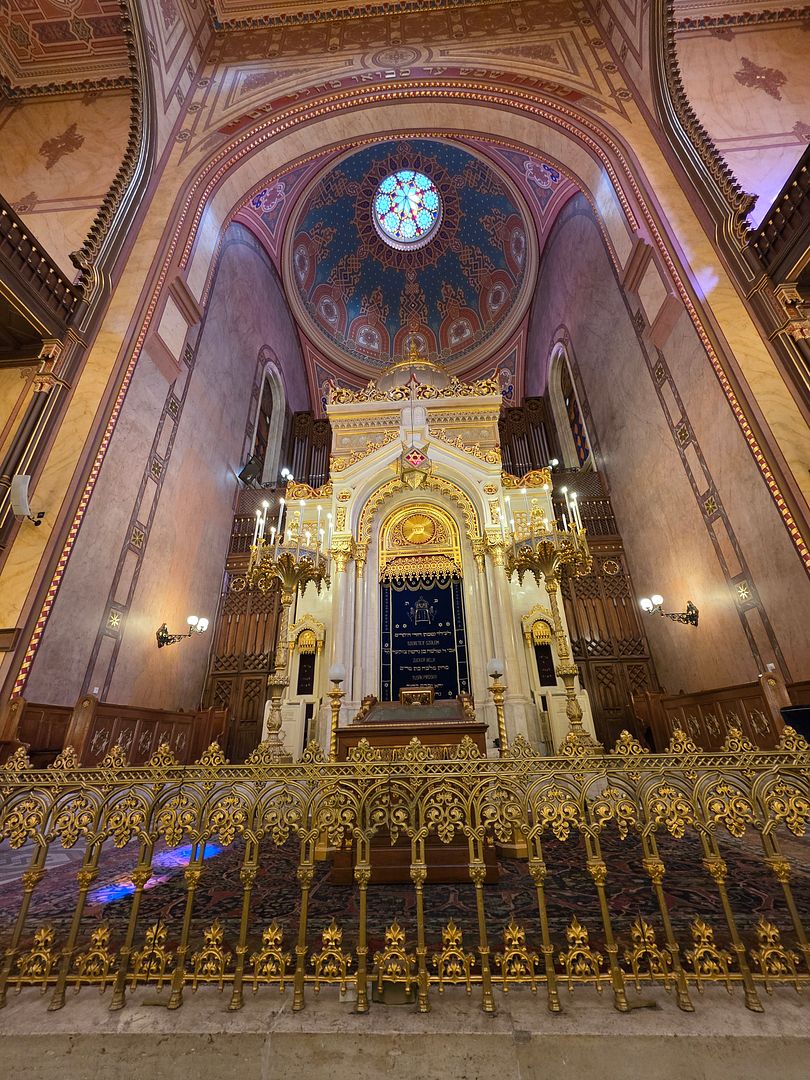
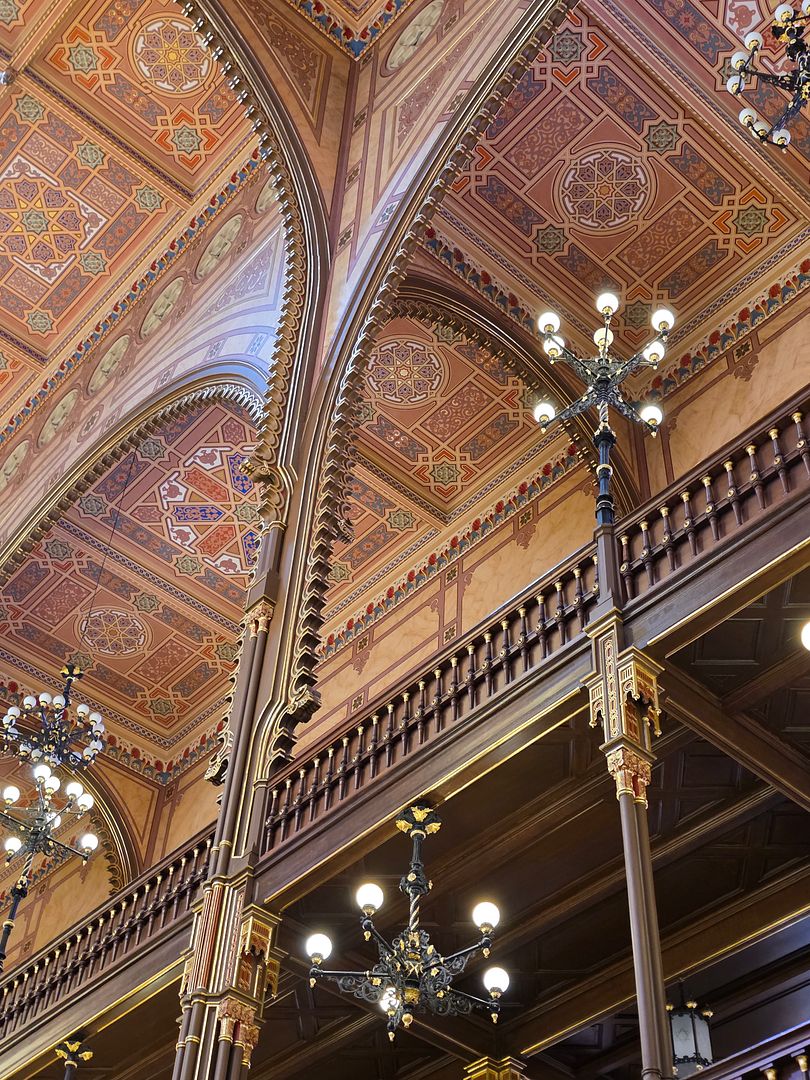
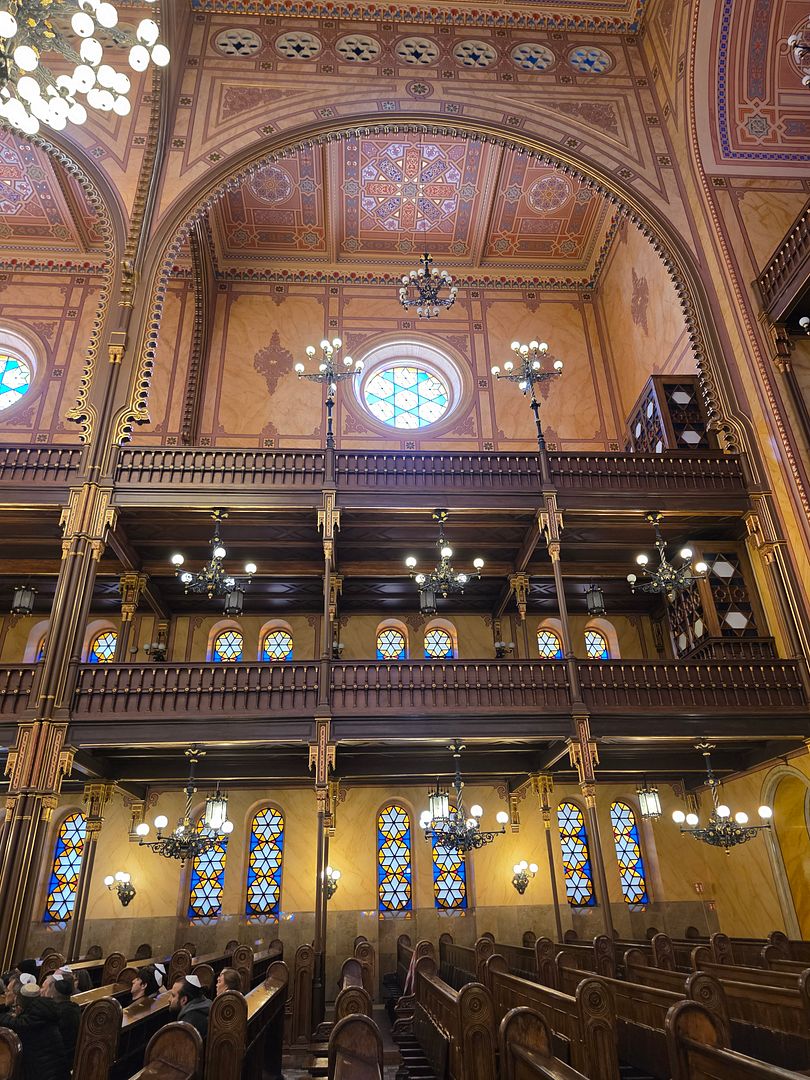
The Dohány Street synagogue is one of Budapest’s touristic highlights as it is the largest synagogue in Europe and the second largest in the world. The synagogue was built in 1859 in the Moorish style and it can seat 3000 people. Its huge size demonstrates the significance and the high economic and cultural standards of the Budapest Jewry of the age.
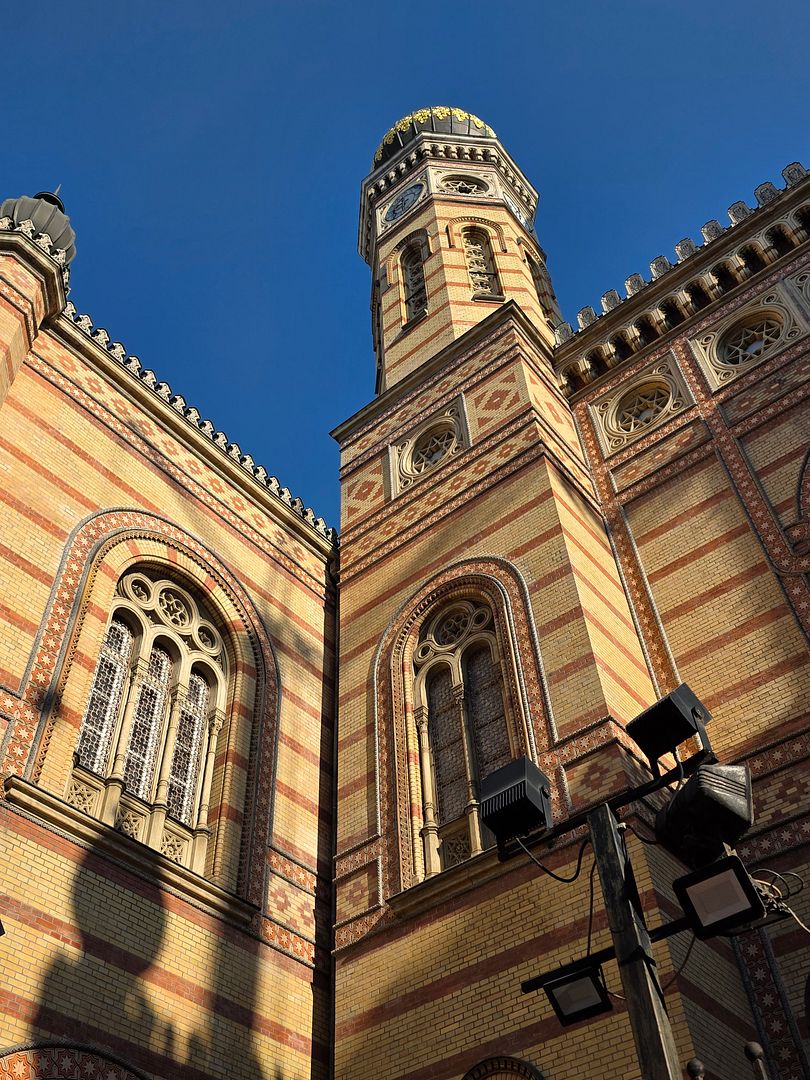
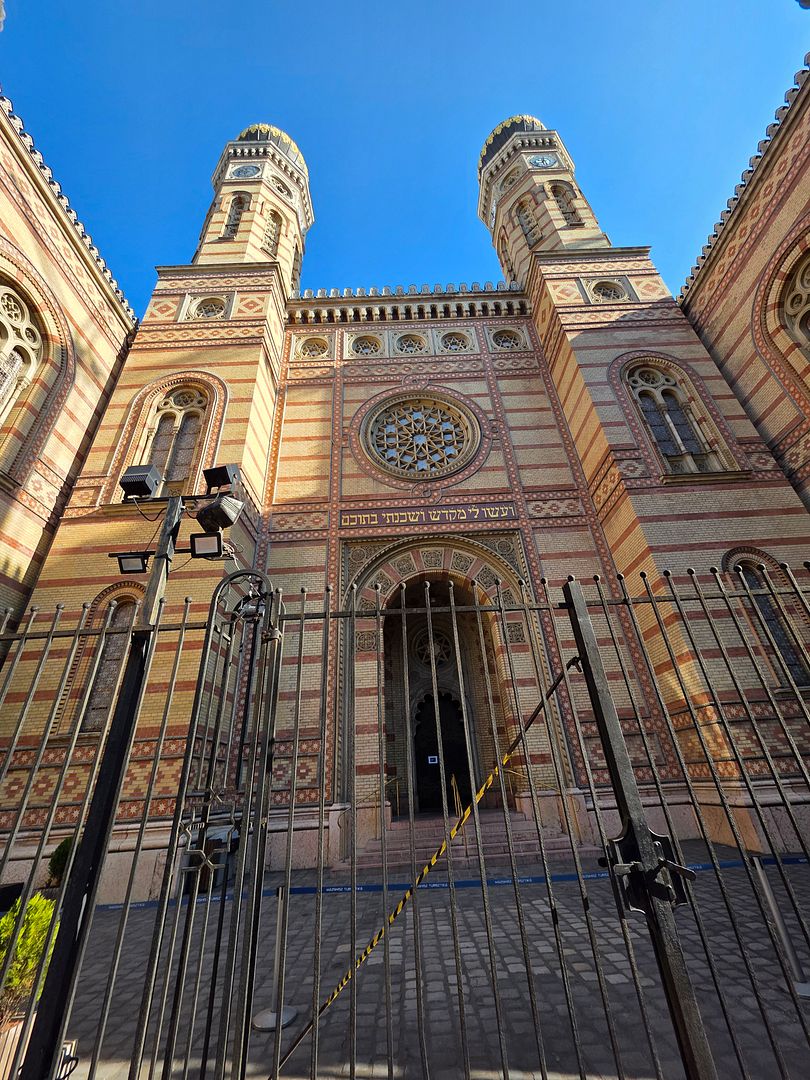
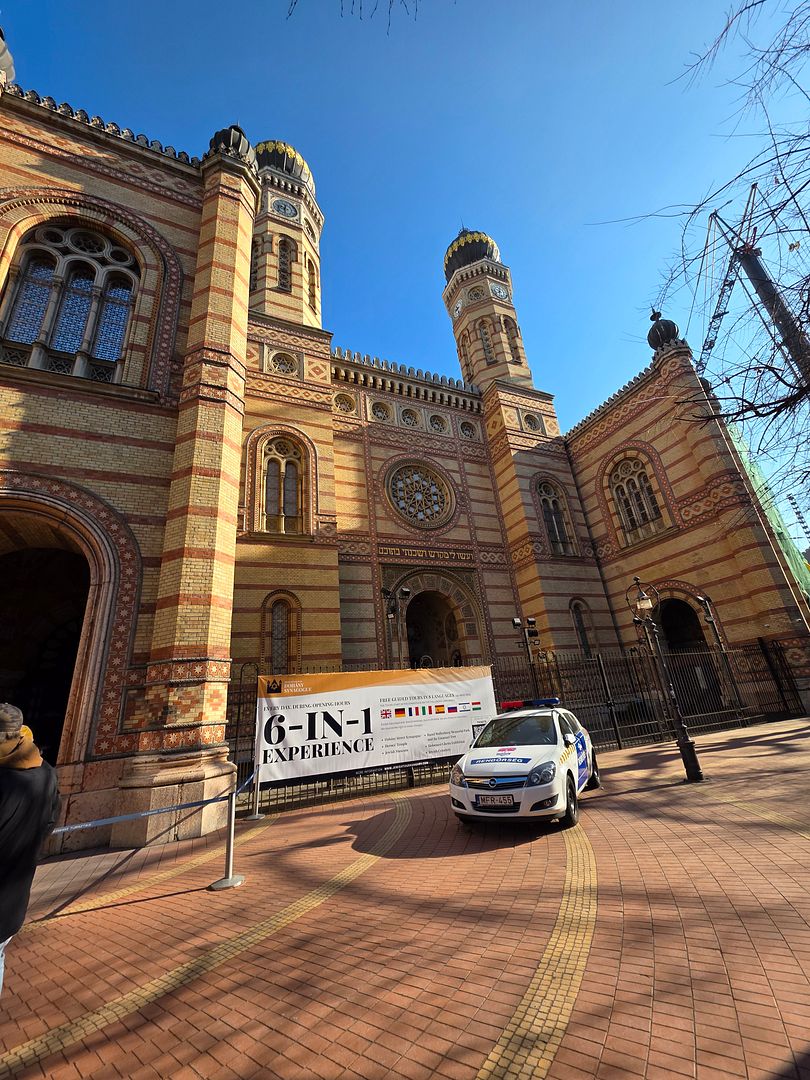
It was another beautiful winter day in Budapest.
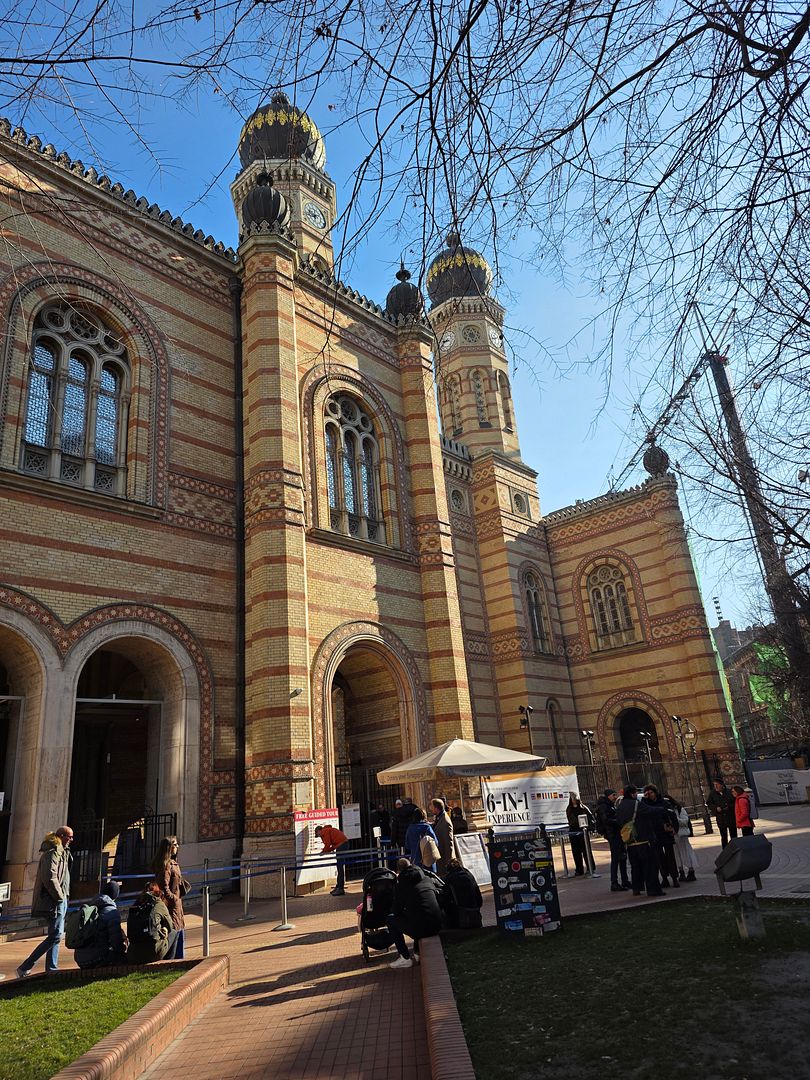
After we purchased our tickets for entry we had to go through security. This was the only place we visited on our entire time in Europe and England where we had to do this. I wasn’t surprised of this added security as the history of antisemitism around the world seems to be continuous.
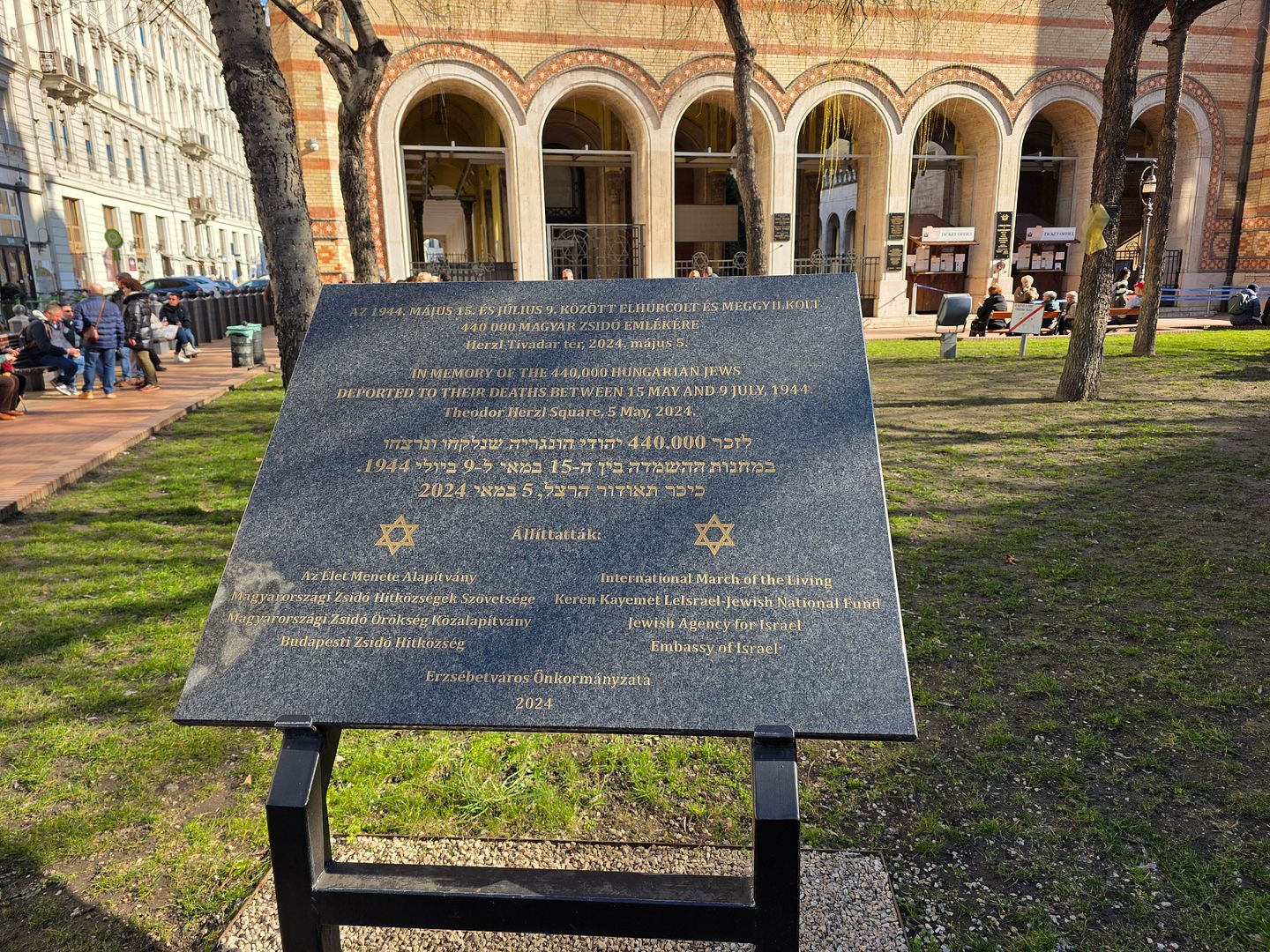
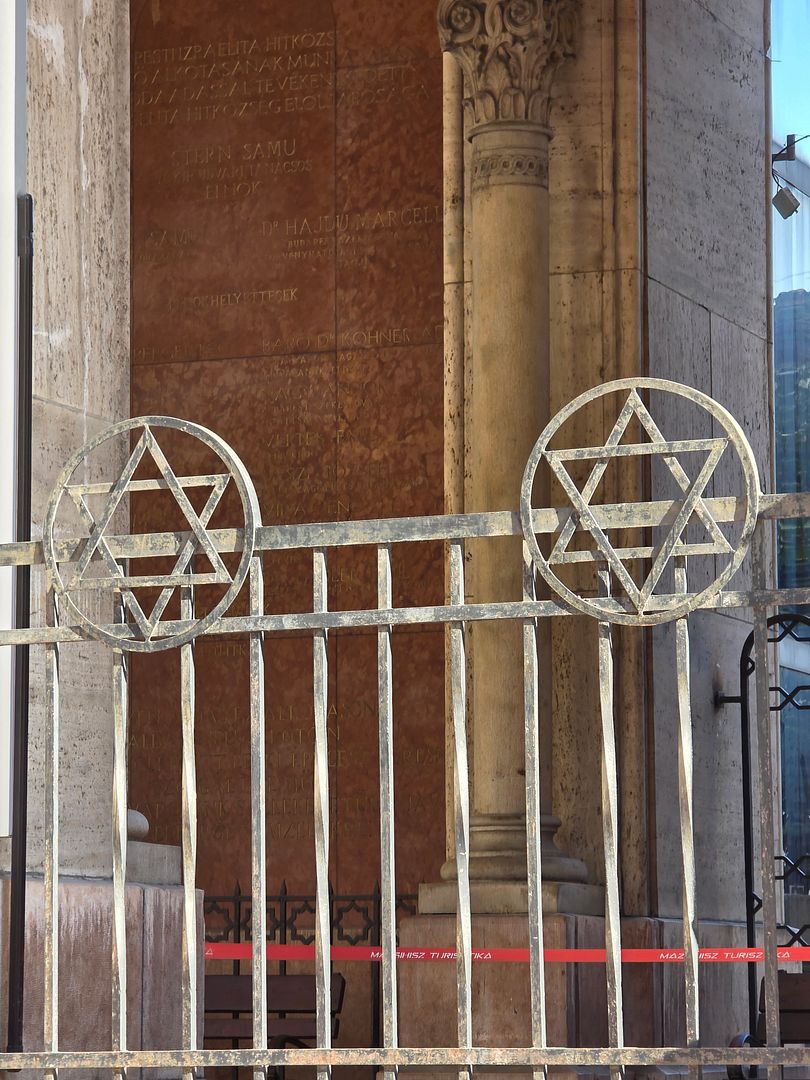
The plaque and memorial reads; In memory of the 440,000 Hungarian Jews deported to their deaths between 15th May and 9th July 1944. Theodor Herzel Square, 5 May, 2024.
That is sobering and brings such sadness.
We got to the synagogue early and waited for it to open to visitors.
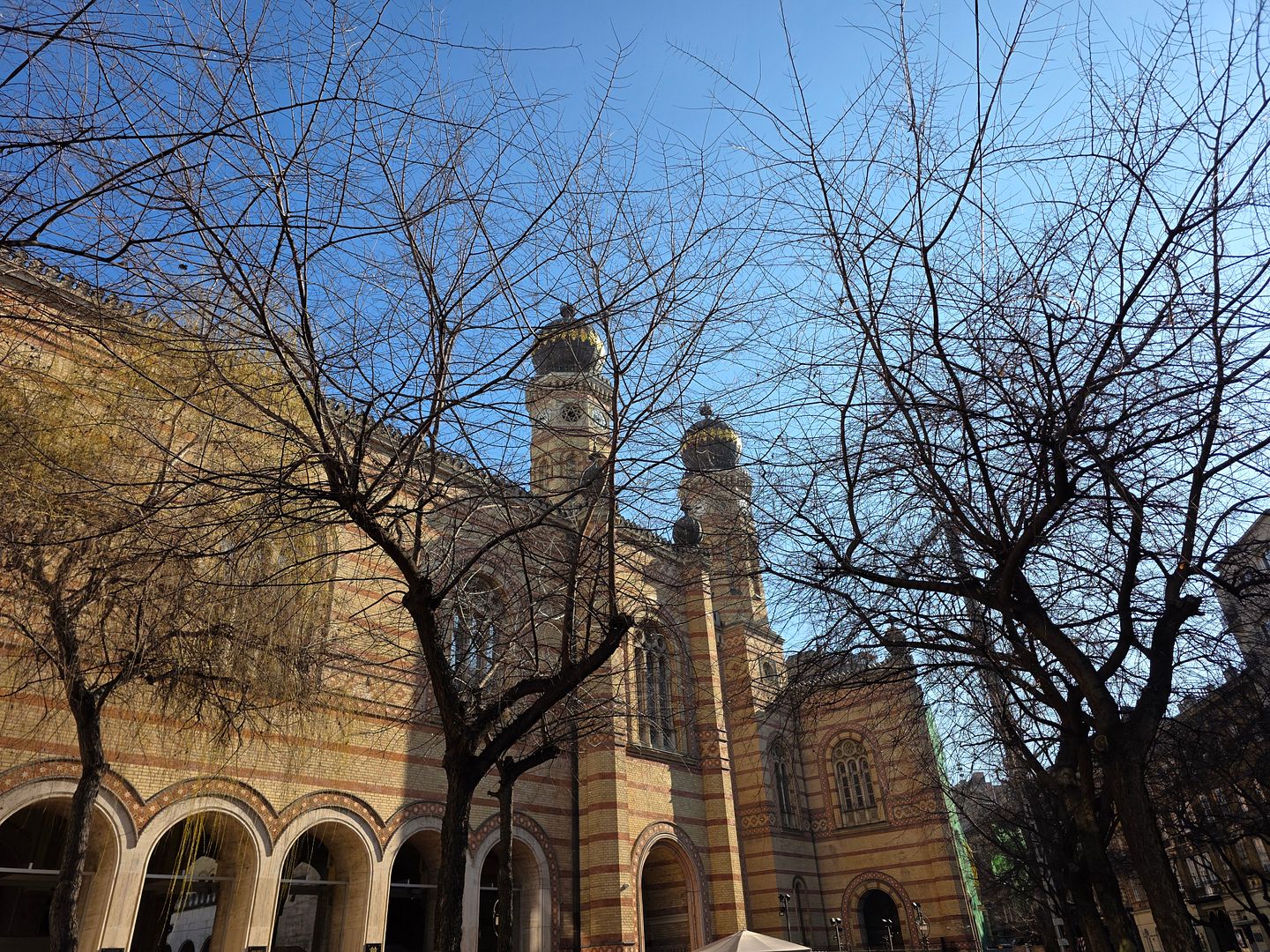
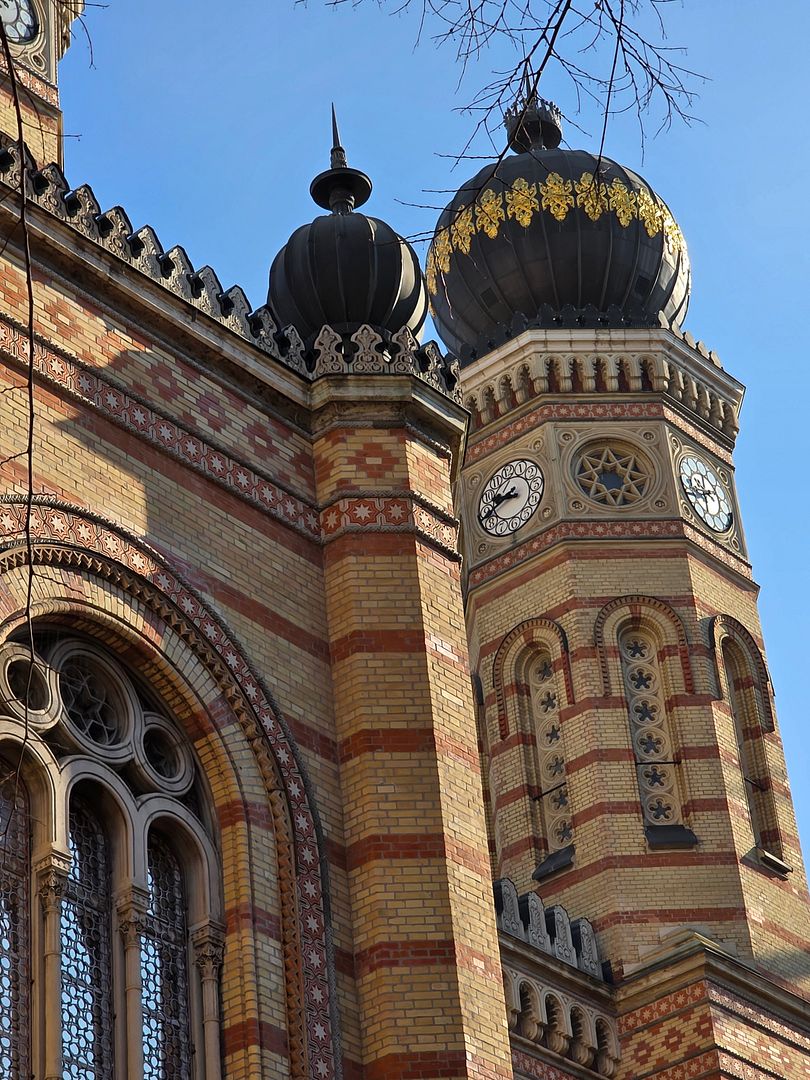
The temple was designed by Ludwig Förster (1797-1863), a German architect, professor of the Vienna Academy. The clerk of works was the architect Ignác Wechselmann (1828-1903) who later bequeathed his entire wealth to the Institute of the Blind. After Förster left, Frigyes Feszl, the famous architect of the Budapest Vigadó designed the temple’s inner sanctum. The official consecration of the synagogue took place on 6 September 1859.
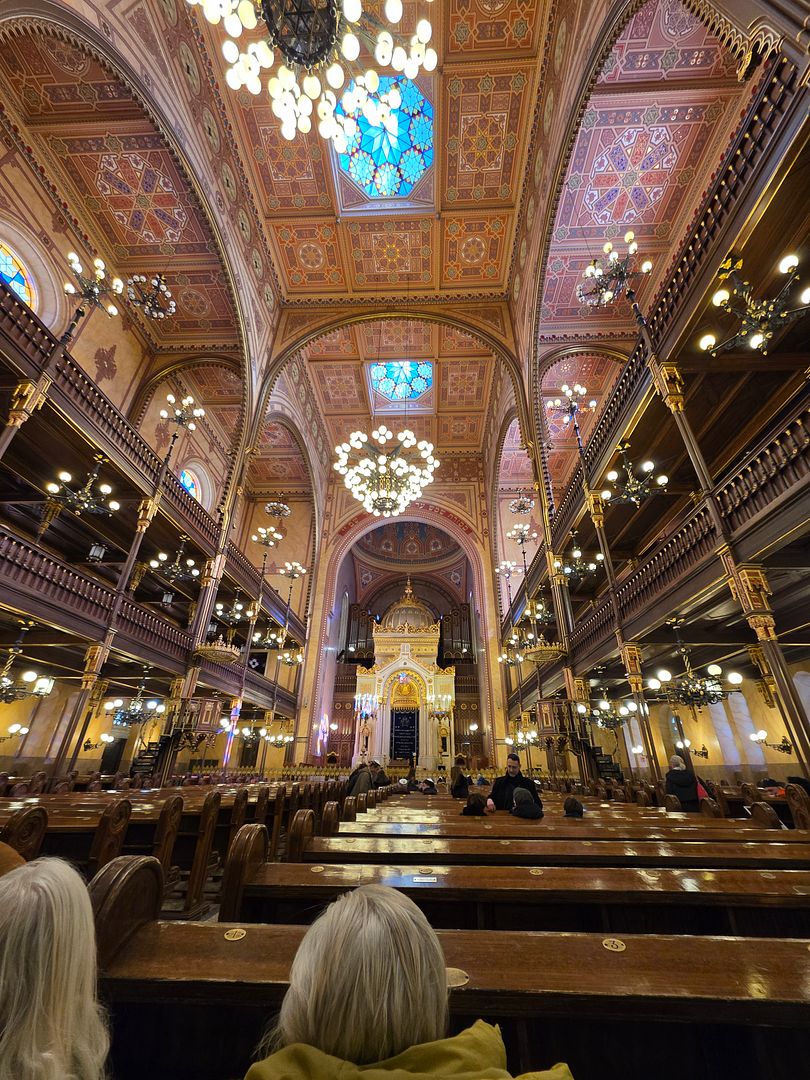
The interior of the synagogue is 1200 square metres, the towers are 44 metres high. There are 1497 seats for men downstairs and 1472 for women in the galleries, altogether the seating capacity of the flat-ceilinged inner space is nearly 3000 people.
The Synagogue is the temple of the Neolog Jewry. It was built in Budapest’s former Jewish quarter where many people of the Jewish faith still reside today.
The building is a holy place!
- The building and the cemetery are holy places. Please comport yourself accordingly.
- Men are forbidden to enter the synagogue without covering their heads. If you have a hat or cap, please put it on. After ticket validation you will be given a kippah at the entrance that you have to wear in the complex at all times.
- Entry will be denied if you wear clothes inappropriate for a temple (e.g. sleeveless tops, short skirts or shorts). In such cases the ticket inspectors of the Synagogue will not grant you entry. Tickets are valid for 2 days. Clothing items can be purchased from the ticket inspectors.
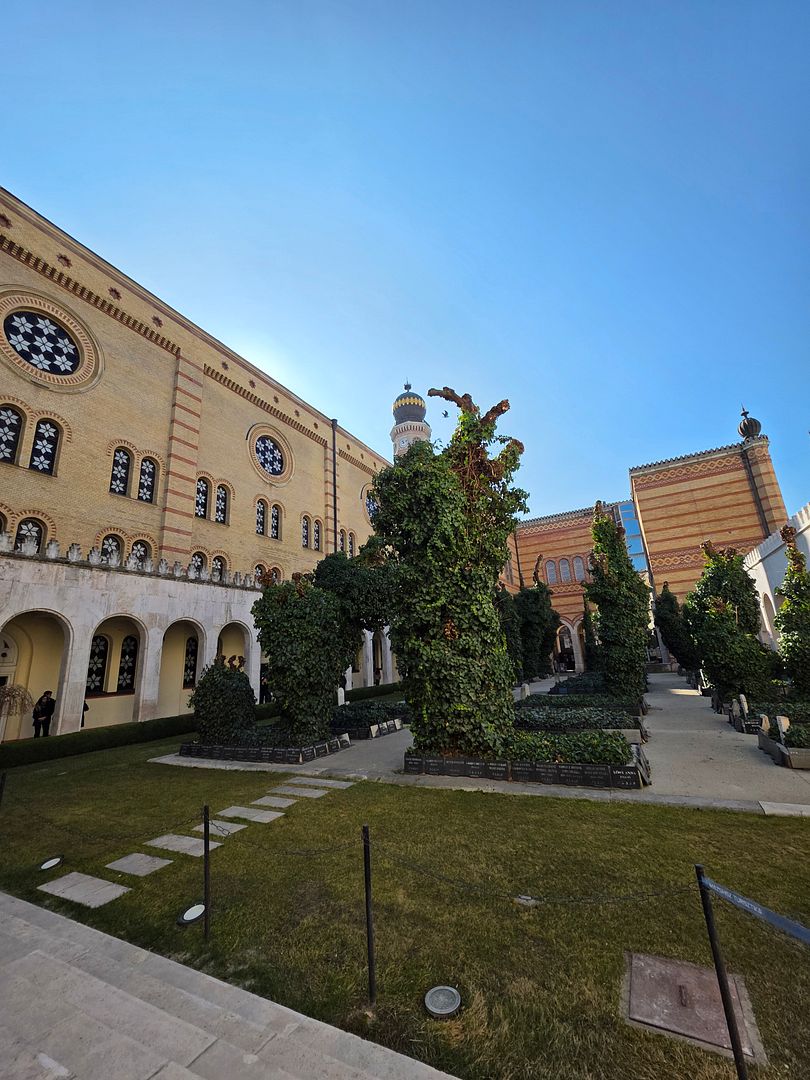
The memory of the Holocaust is strongly connected to the old Jewish quarter where the Synagogue is situated. Dohány Street constituted the border to the ghetto during World War II. The area which was planned as a garden is the burial place of nearly 2600 Jewish people who perished during the Holocaust.
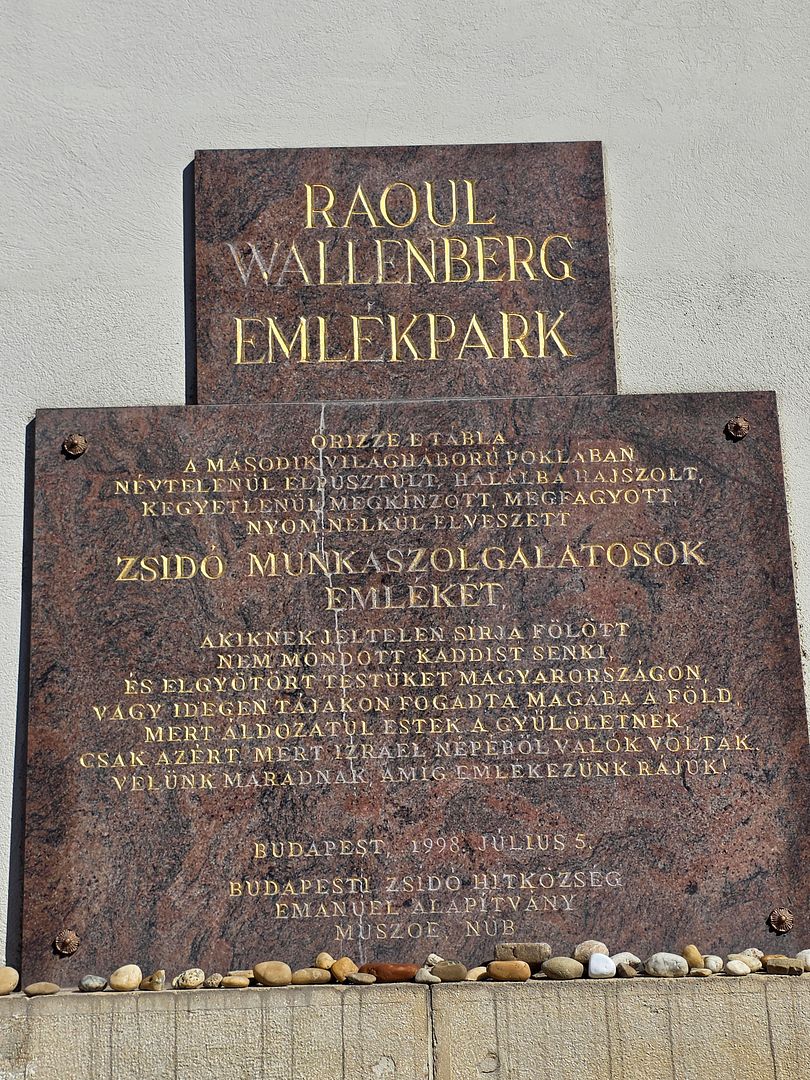
Raoul Wallenberg was a Swedish architect, businessman, diplomat, and humanitarian. He saved thousands of Jews in German-occupied Hungary during the Holocaust from German Nazis and Hungarian fascists during the later stages of World War II.
According to Jewish tradition it is our duty to remember. To remember our martyrs and those non-Jewish people who did not fear for their lives but helped Jews during the holocaust, saving theirs.
The Emmanuel memorial tree was envisioned by Tony Curtis and completed by the sculptor Imre Varga. You can find memorial plaques of Hungarian and other nationality rescuers of Jewish people in the memorial park.
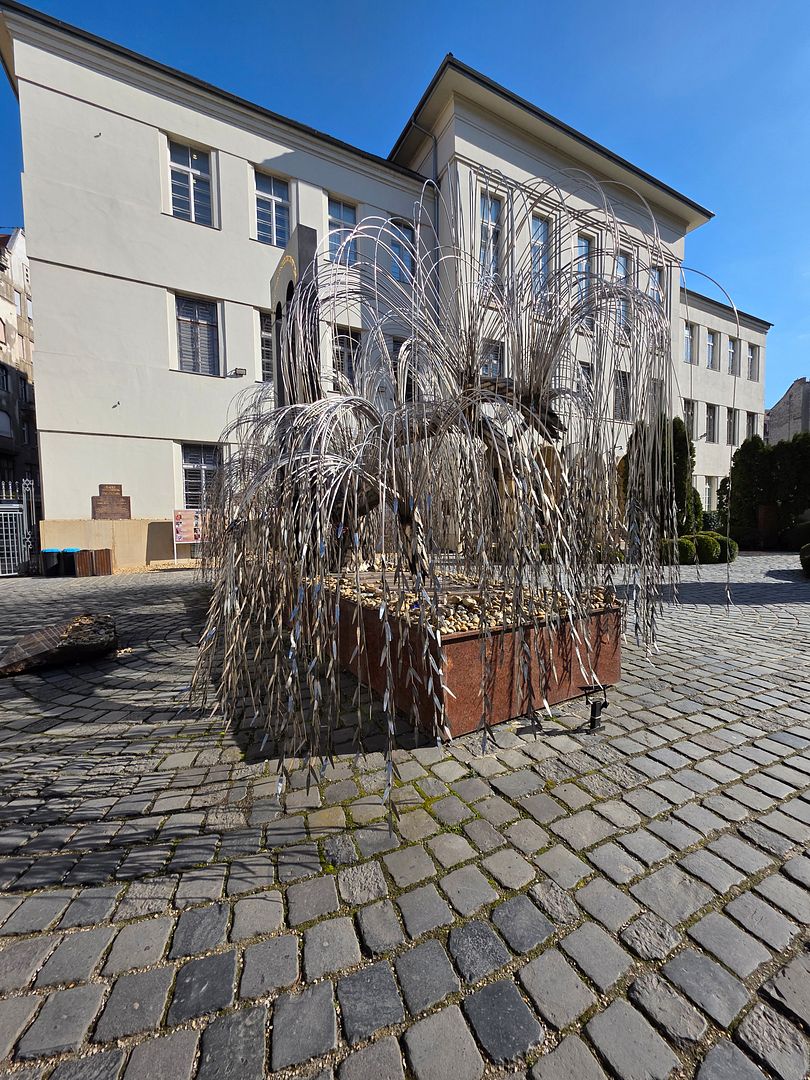
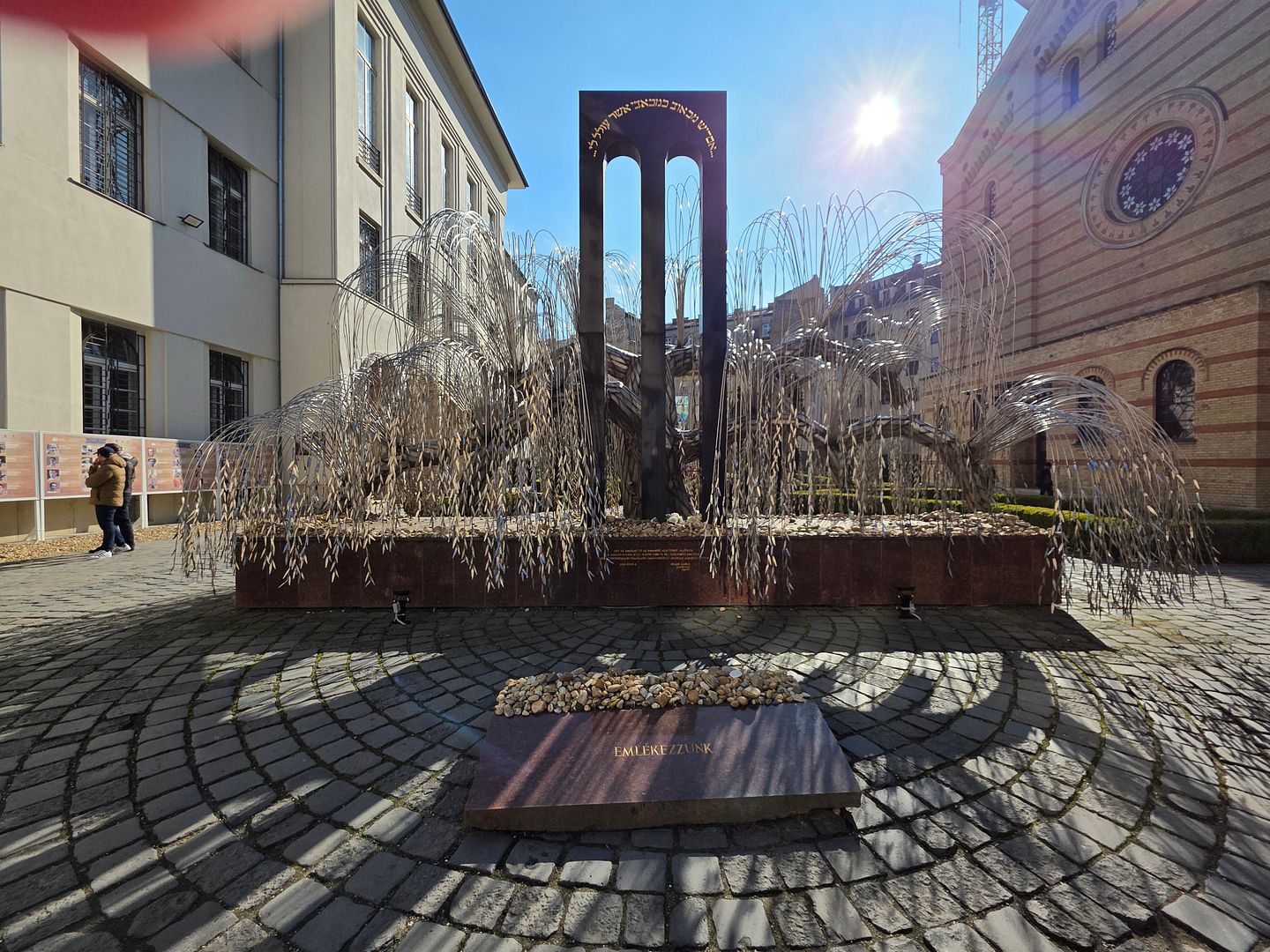
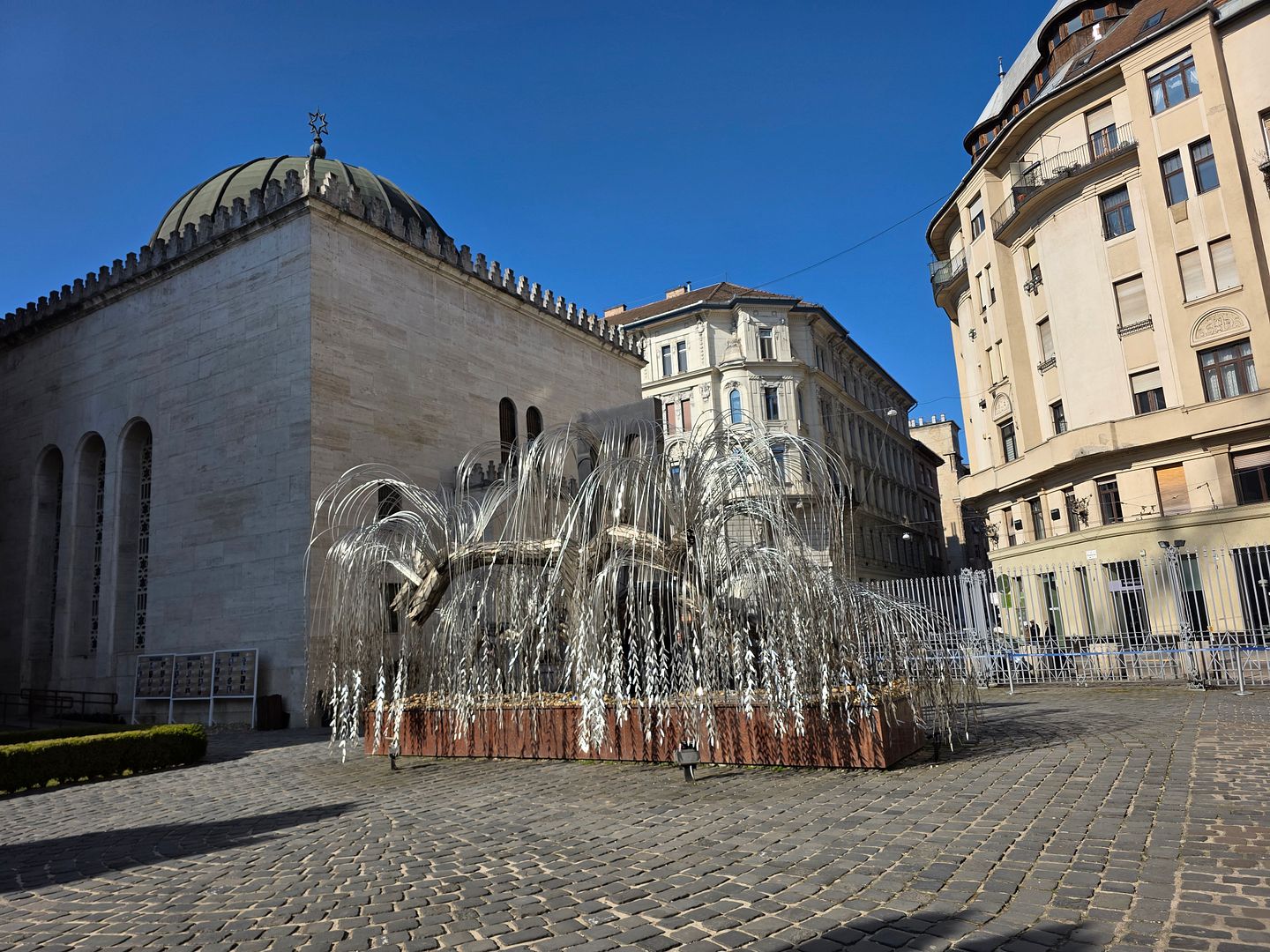
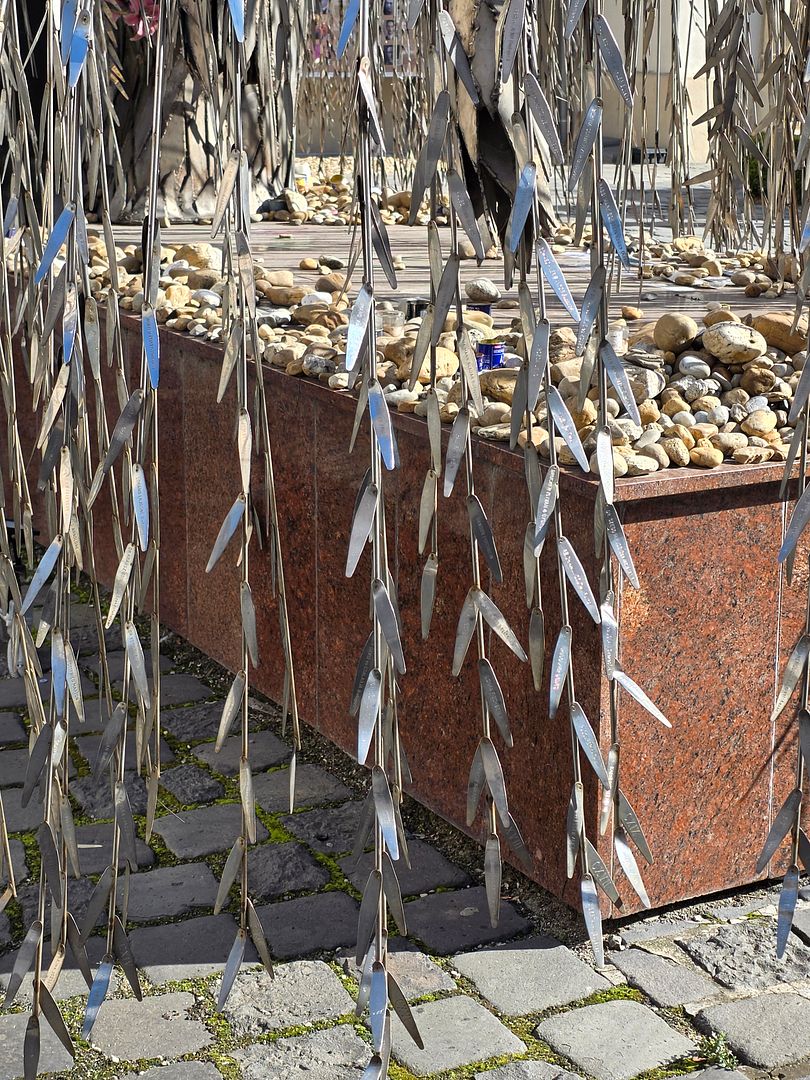
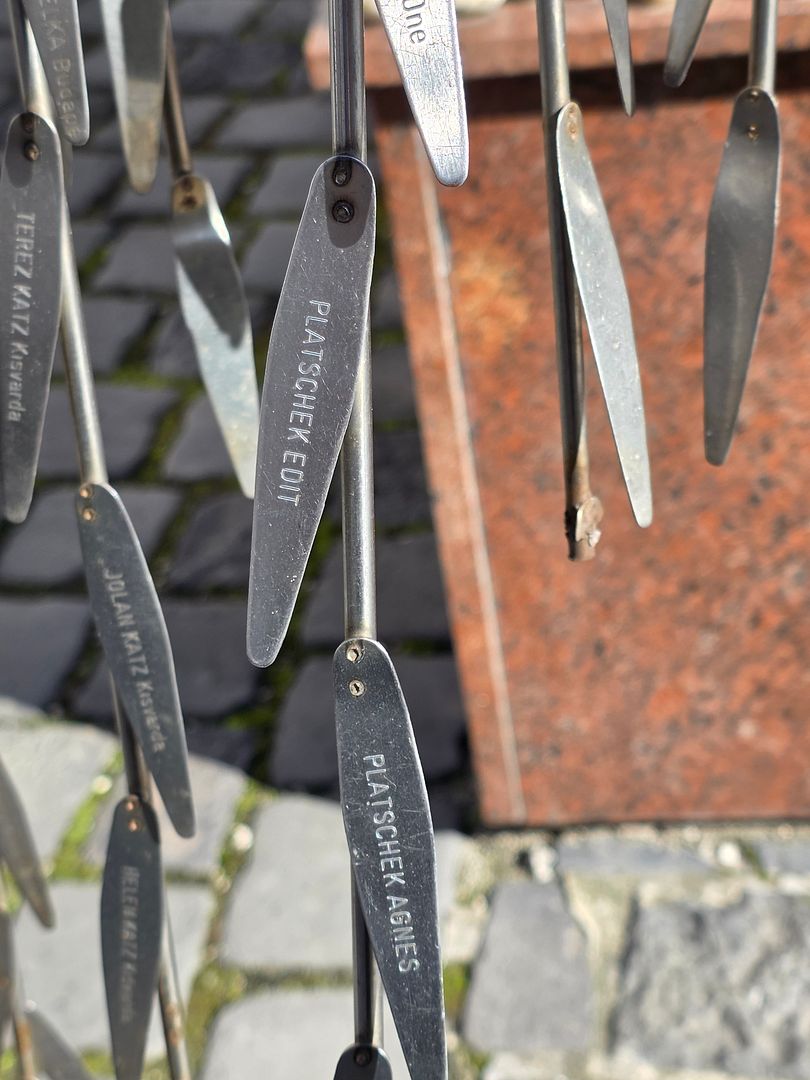
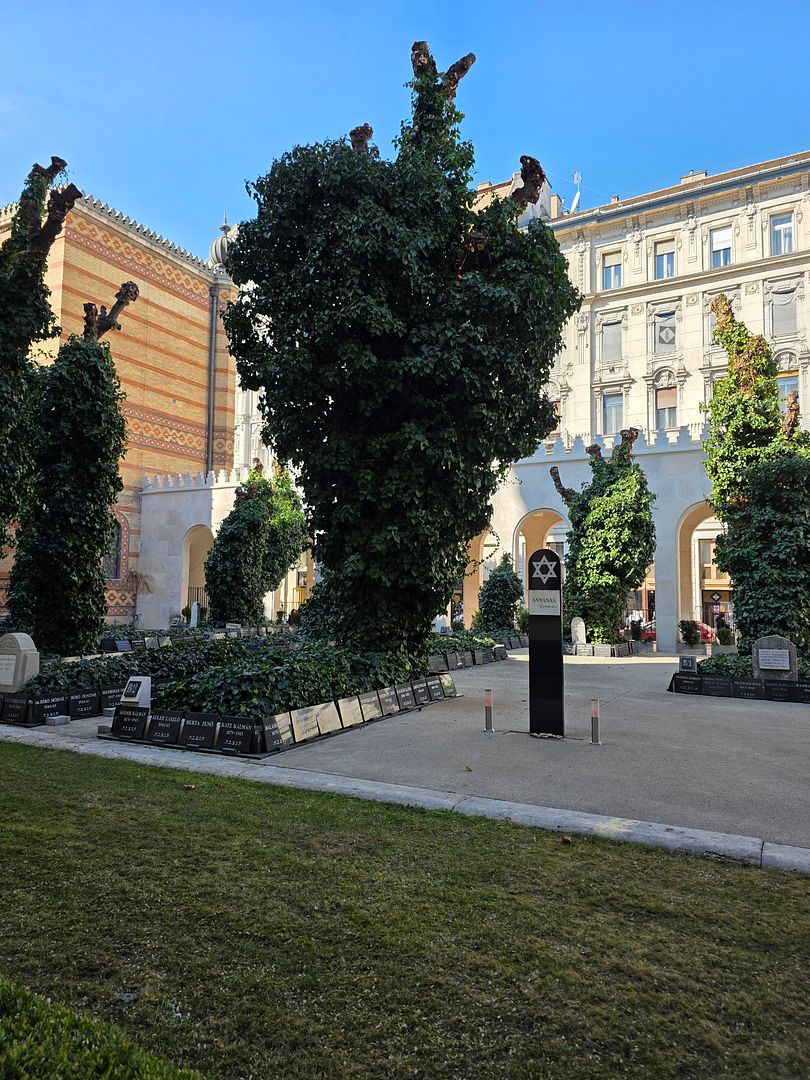
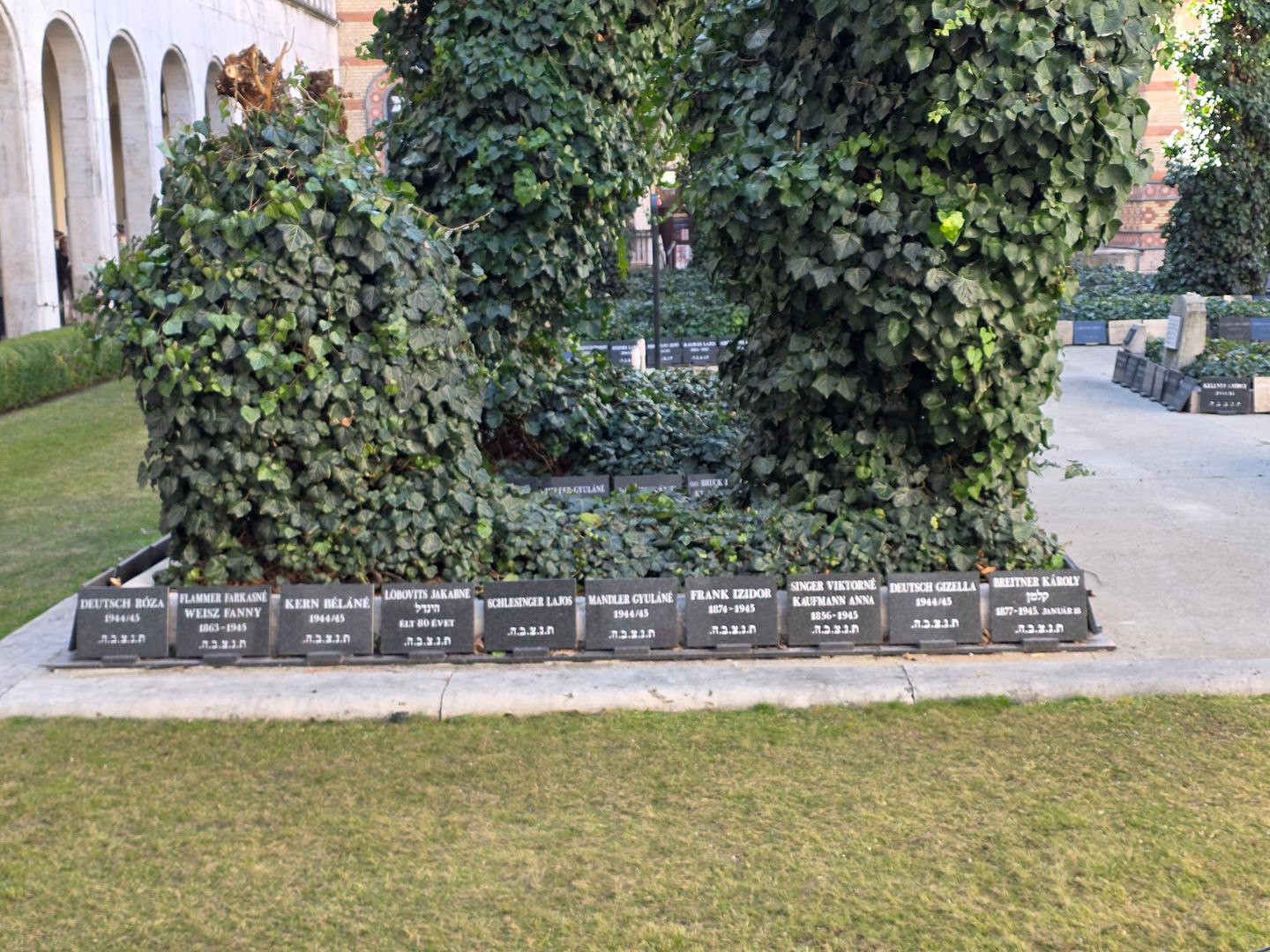
The cemetery in the synagogue’s yard is of particular significance as it is not usual in Jewish customs to situate cemeteries next to synagogues. The cemetery overlooking Wesselényi Street, however, was created during World War II, out of necessity.
When the ghetto was liberated on 18 January 1945, thousands of unburied corpses were lying in the streets, more than 3000 dead bodies were found on Klauzál Square alone. 1140 known and 1170 unknown martyrs were buried in 24 common graves in the yard of the Synagogue.
My information comes from the Synagogues website and from our Tour guide who was a practicing Jew from this Temple.
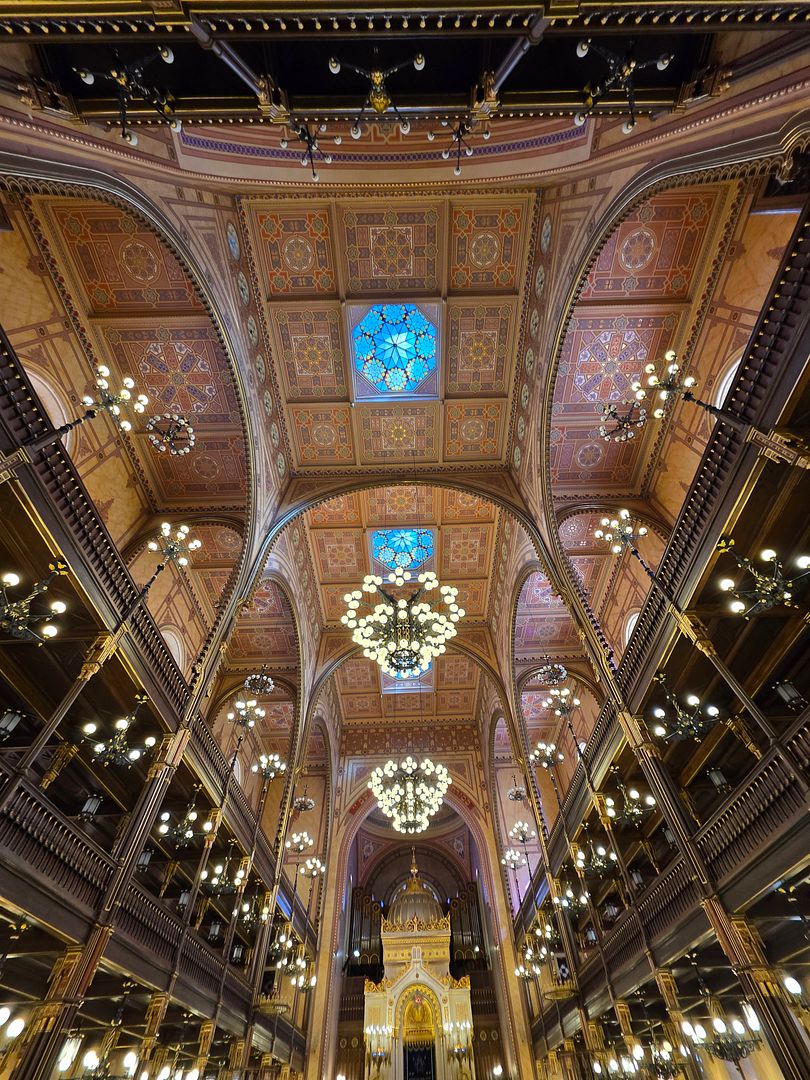
I was surprised by the interior of the Temple and especially the presence of an organ.
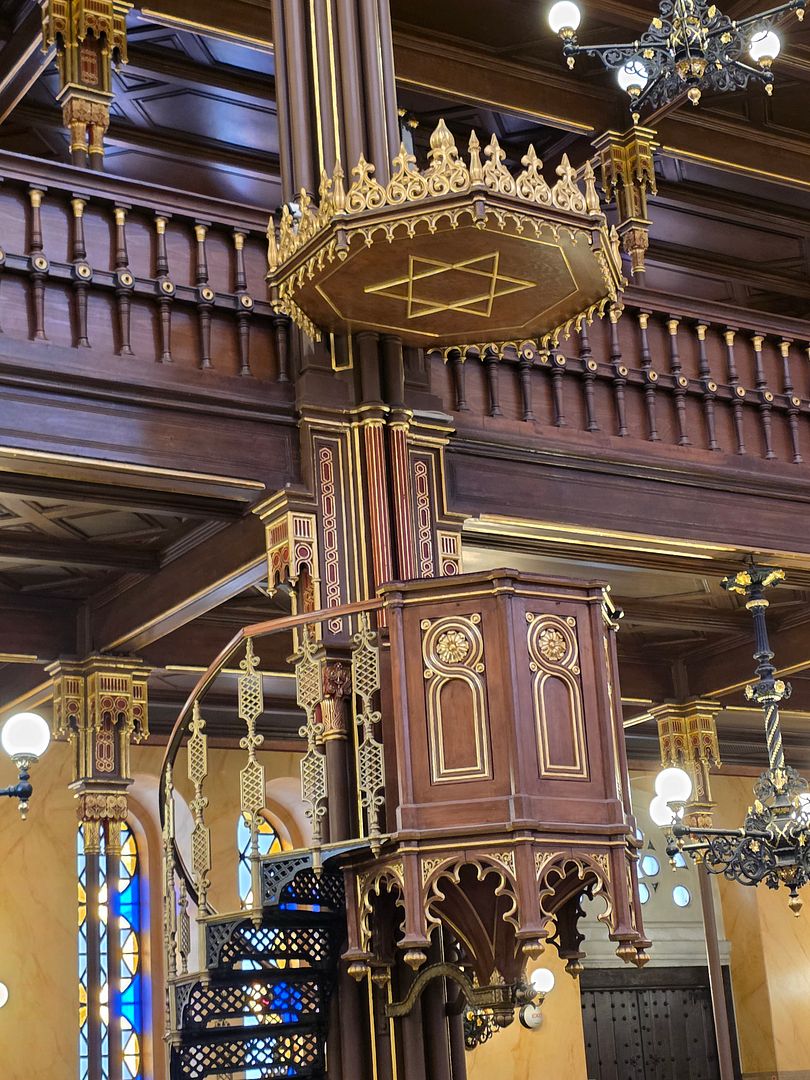
Unlike traditional, intimate synagogues, the Dohány is vast and longitudinal, resembling a Christian cathedral. It features a large, decorated ark and a massive organ designed to be played by non-Jews on the Sabbath.
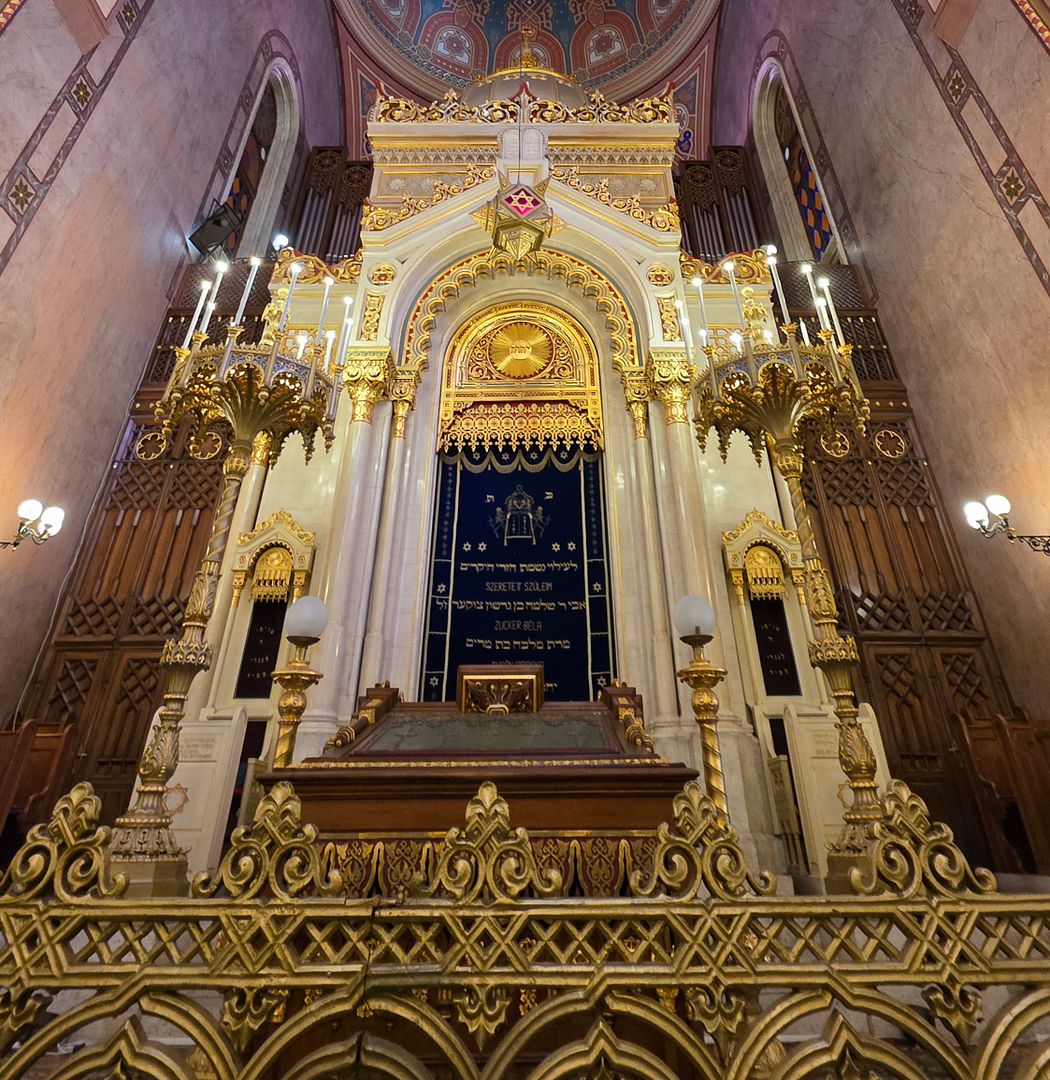
I will save the Jewish Museum and the Heroes Temple for another post.
Back to the Present:
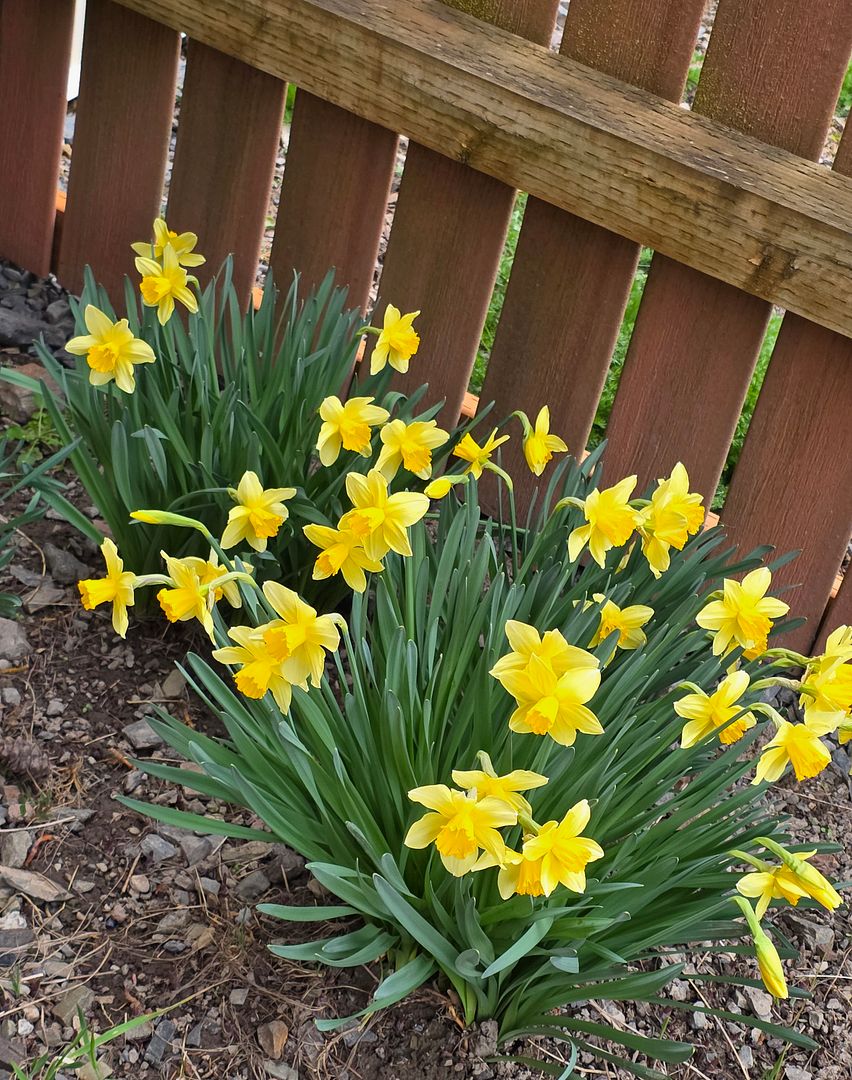
We are still experiencing freezing temps in the early hours. More blooms have opened up on our daffodils.
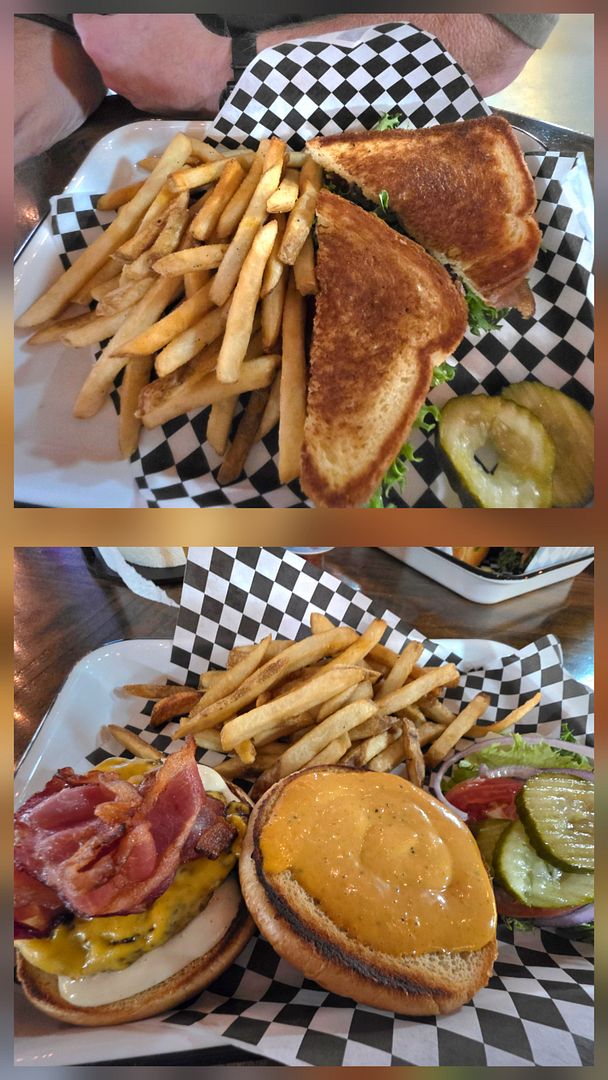
In our neck of the woods it is always a treat to have a new eatery open up. This month Buck 25 Roadhouse in Kettle Falls opened up. We decided to try lunch there after our church workday this past Saturday. We were pleased with the atmosphere and the light and friendly new spot to enjoy good food.
Yesterday was Palm Sunday and our service was good with a sermon from 1st John. This is the beginning of Holy Week culminating with Resurrection Sunday. It is a special week for Christians around the world. We are looking forward to our Good Friday Service and Resurrection Sunday service. Easter preparations are commencing here.
 The Happy Wonderer ~ ellen b.