A Bold Hodgepodge

img316

It is time again for Wednesday Hodgepodge. A good distraction this week! Thank you, Jo.

1. What is one good thing you often take for granted? 

There are so many good things I take for granted. Electricity is something that comes to mind especially this time of year. At our country bungalow, electricity is the power source for everything including the pump on the well. If it goes out, besides lights and heat and hot water, we don’t have water any running water.

2. What’s the boldest piece of clothing in your wardrobe? 

My bold days are long behind me. I had to go look and see what I’d consider the boldest. I’ve got nothing for you unless black is bold!

3. Do you think common interests or common values are the key to people getting along? Elaborate. 

Even with common interests or common values people will clash. Those aren’t the key to getting along. Pride and selfishness are strong in our post Adam world. This verse is one that can help me if…I stop and consider it.

“Do nothing from selfish ambition or conceit, but in humility count others more significant than yourselves. Let each of you look not only to his own interests, but also to the interests of others.” Philippians 2:3-4

That doesn’t mean I’ll condone values that go against the clear teachings of the Bible just for the sake of getting along.

4. November 6 is National Nacho Day…do you like nachos? How do you like yours? Do you make them at home or only order out? 

Nachos are not generally on my radar. We never order them at a restaurant. Once in a great while when a snack is on his mind and there is nothing else, Greg will make a quick small plate of them in the microwave.

5. Have you spent any time in Washington D.C.?  If so what did you think? If not, is that a place you’d like to visit? What do you think about politics as a career choice? 

img315

I have been to Washington D.C. twice in my life, once when I was in college and then in May of 2011. In the 70’s the average citizen could be trusted to get closer to the building. My best friend, Heidi, and me in the summer of 1971 in the photo above.

This Ecuadorian mother insisted on being in the picture with me far from the Whitehouse in 2011. Her son finally persuaded her to step away so he could snap a solo photo of me, too.

I really enjoyed my visit to D.C. in 2011. There is so much to see and do. The monuments, the museums, the National Cathedral, Arlington National Cemetery. It is rich with history and worthy of a good visit.

Politics as a career choice has made a lot of people rich and unpopular. We still need good people as leaders and I hope we have a pendulum swing from the status quo.

6. Insert your own random thought here. 

The Korean War Memorial was one of the most stirring for me. He’s looking right at me…

In this Temple

As in the hearts of the people

For Whom he saved the union

The Memory of Abraham Lincoln

Is Enshrined Forever

On the left is a tucked away staircase in the crypt of the National Cathedral in Washington D.C. On the right is a painting we own that was painted by a friend of ours. We knew she was inspired by this scene and when we visited the cathedral we were on a quest to find it. It was a joy to see the original. It makes us enjoy our painting even more.

Thank you to everyone who visits today.

Scotland Travel Journal ~ Blair Castle and Gardens

From the Queen’s View we headed back to the A-9 for our second stop of the day, Blair Castle and Gardens. Blair Castle was our only white castle on this trip. We were still marveling at our wonderful weather on this Tuesday in September, the 17th. Atholl Estates is one of Scotland’s best-known Highland estates. Its history dates back to the 13th century, but throughout the ages, it has adapted to the times.

750 years of history, in the heart of the Scottish Highlands.

If I was going to pick a theme for the Cairngorms and for Scottish castles I would say antlers!

Over 19 generations, the Stewarts and Murrays of Atholl have backed winners and losers, fallen in and out of political favour, won battles and lost them. They have almost all, in one way or another, left their mark on Blair Castle.

The story will take you from Mary, Queen of Scots to the Civil War, and from the Act of Union to the Jacobite cause and the battle of Culloden, and from the Isle of Man to Queen Victoria’s love affair with the Scottish Highlands and her presentation of colours to the Atholl Highlanders.

Blair Castle has been the home of the Atholl family for over seven centuries. The castle has had a diverse history, witnessing both turbulent and peaceful times, enlarged and adapted over 750 years. Home to politicians, soldiers, agriculturalists and entrepreneurs, the family history is brought to life against a backdrop of fine 18th century interiors and Scots Baronial architecture, in 30 rooms.

Did you know there is a language of the Fan?

After our self guided tour of the interior of the castle we headed out to walk to the gardens. While outside we enjoyed a couple of Scottish Highland treats, a bagpiper and Highland Coos!

Laura managed to capture this shot of the Coos tongue in it’s nose!!

From the castle and the coos we drove a short distance up the A9 to have the ultimate Highland shopping experience at House of Bruar. That stop and the rest of our evening will be another post.

Jumping to the present:

Remember Remember the Fifth of November holds a different meaning in our house. It’s not about Guy Fawkes but it is about Greg. Today marks 2 years since his stroke. We thank God for His providence and how well Greg is doing since that day.

Scotland Travel Journal ~ The Queen’s View Pitlochry

After we had a bountiful buffet breakfast at our Inn on Tuesday the 17th of September, we set out to enjoy a famous view, castle, and epic shopping experience. First stop was The Queen’s View. I copied the following description.

A short drive from Pitlochry, along a winding tree-lined road, hugging the River Tummel, lies the Queen’ s View. This famous vantage point looks out over one of the most iconic panoramas in Scotland, directly to the west along Loch Tummel from where, on a clear day, you can sometimes see the mountains surrounding Glencoe by the West Coast. A popular destination since Victorian times, it is often thought that the location was named after Queen Victoria who did, in fact, visit in 1866 . However, it is more widely believed to have been named after Queen Isabella the 14th century wife of Robert the Bruce who used the spot as a resting place on her travels


Our next stop on this day would be Blair Castle and Gardens where we had two wishes come true.

Do you have a favorite View?

Hello November! That was a quick October…

Reformation Day

I’m changing up my regular Thursday Truth for Today post since it is Reformation Day.

Reformation Day is a public holiday in five states in Germany on October 31 each year to remember the religious Reformation in Europe. It commemorates when German monk and theologian Martin Luther’s proposals were nailed on the doors of a church in 1517. This event was the start of religious and social changes in Europe.

I’ll share a little information on a few Reformers we learned about in Scotland on our recent trip and some others I’ve been reading about this month.

Five hundred years ago, a lowly German priest walked up to the church door in Wittenberg and posted a document that altered the course of history. Martin Luther’s bold stand ignited the Reformation, but he wasn’t alone. The Reformation was a movement of many heroes, known and unknown, who shaped history.

The Morning Star of the Reformation, John Wycliffe (1330-1384).

His most important contribution, the Wycliffe Bible. Wycliffe called for the Bible to be translated into English. According to Roman Catholic law, translating the Bible into a vulgar, common language was a heresy punishable by death. It is almost impossible to imagine why a church would want to keep God’s word from people, unless that church wanted to hold power over the people. Wycliffe was more convinced of the power of the word of God than the power wielded by the papal office. Consequently, he and a group of colleagues committed themselves to making the word of God available. His efforts in translating, copying, and proclaiming the Bible in English were driven by a singular motive, expressed by Wycliffe this way: “It helps Christian men to study the Gospel in that tongue which they know best.”

Wycliffe would be pleased to hear of the work of Bible translation has continued in his name.

When we lived in Huntington Beach from 1975-1984 we attended Huntington Beach EVFree church and shared the Wycliffe Bible Translators office space on Sundays for extra Sunday School rooms. We also shared the parking lot. They are no longer at that location in Huntington Beach.

Here’s some history about Wycliffe Bible Translators:

In 1917 a missionary named William Cameron Townsend went to Guatemala to sell Spanish Bibles. But he was shocked when many people couldn’t understand the books. They spoke Cakchiquel, a language without a Bible. Cam believed everyone should understand the Bible, so he started a linguistics school (the Summer Institute of Linguistics, known today as SIL) that trained people to do Bible translation. The work continued to grow, and in 1942 Cam officially founded Wycliffe Bible Translators.

Over the following decades, Wycliffe celebrated many milestones — from the first translation completed in 1951, all the way to the 500th translation completed in 2000. Around the same time, Wycliffe adopted a new challenge — a goal of seeing a Bible translation project started in every language still needing one by 2025.

Latimer

Bishops Hugh Latimer and Nicholas Ridley are fastened together in history primarily because they were fastened to the same stake on October 16, 1555, on the north side of Oxford. But Latimer and Ridley share more than a martyrdom. The bishops also join each other on the list of England’s most influential Reformers — men and women whose allegiance to Scripture and the glory of Christ transformed England from a Catholic kingdom to a lighthouse of Reformation.

Ridley

Two men stood back to back at the stake.  As a large crowd watched, a heavy chain was passed around their waists to hold them fast.  A fagot was kindled.  At the sight of the flame, the older of the two men gave utterance to the noblest and shortest sermon he ever gave in his long life of preaching.  “Be of good comfort, Master Ridley, and play the man.  We shall this day light such a candle by God’s grace in England as I trust shall never be put out.”

These lines have become among the most famous lines in English church history.  The chain that bound Latimer and Ridley together on that morning of October 16, 1555, has continued to bind them together in the common mind.  Today, it is almost impossible to think of Latimer without also thinking of Ridley.

This is the spot on Broad Street in Oxford where Ridley and Latimer were burned at the stake.

I could go on and on. We owe so much to these Reformers.

Tyndale

For the first time ever in history, the Greek New Testament was translated into English. Before his martyrdom in 1536, Tyndale would go on to translate into clear, common English not only the New Testament but also the Pentateuch, Joshua to 2 Chronicles, and Jonah. All this material became the basis of the Great Bible issued by Miles Coverdale in England in 1539 and the basis for the Geneva Bible published in 1557 — “the Bible of the nation,” which sold over a million copies between 1560 and 1640.

“We don’t want to forget him because every time you pick up your Bible, you have a debt to pay to William Tyndale.” John MacArthur

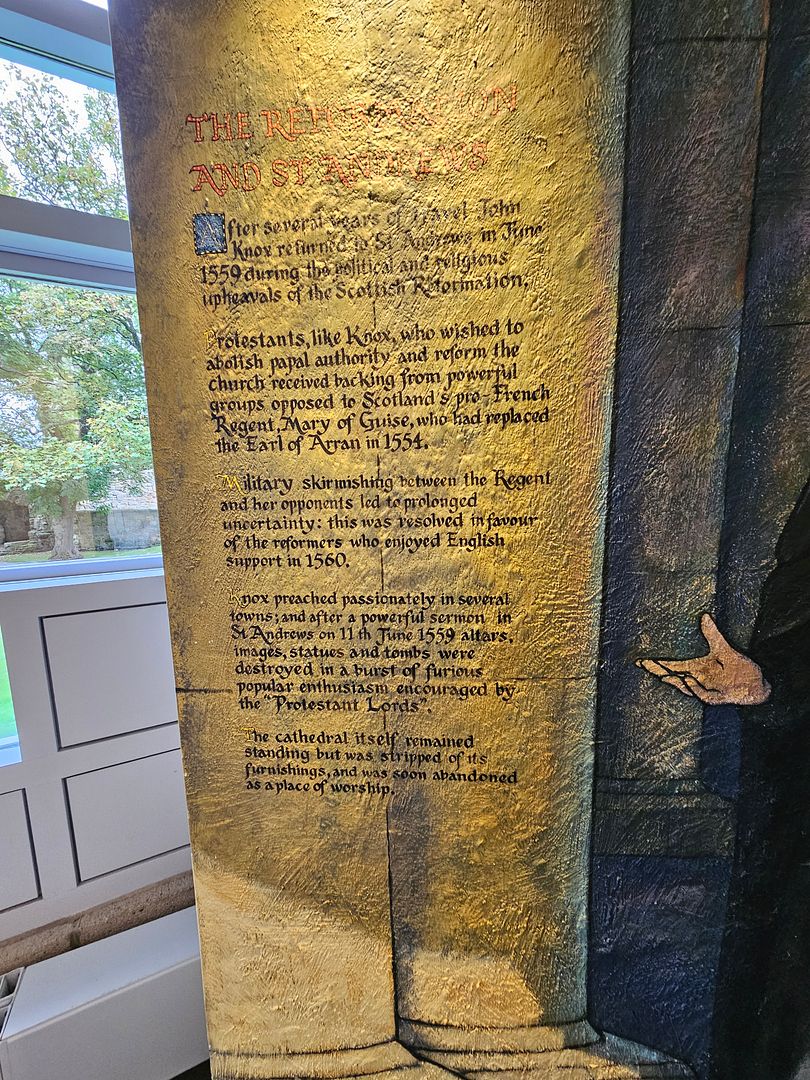
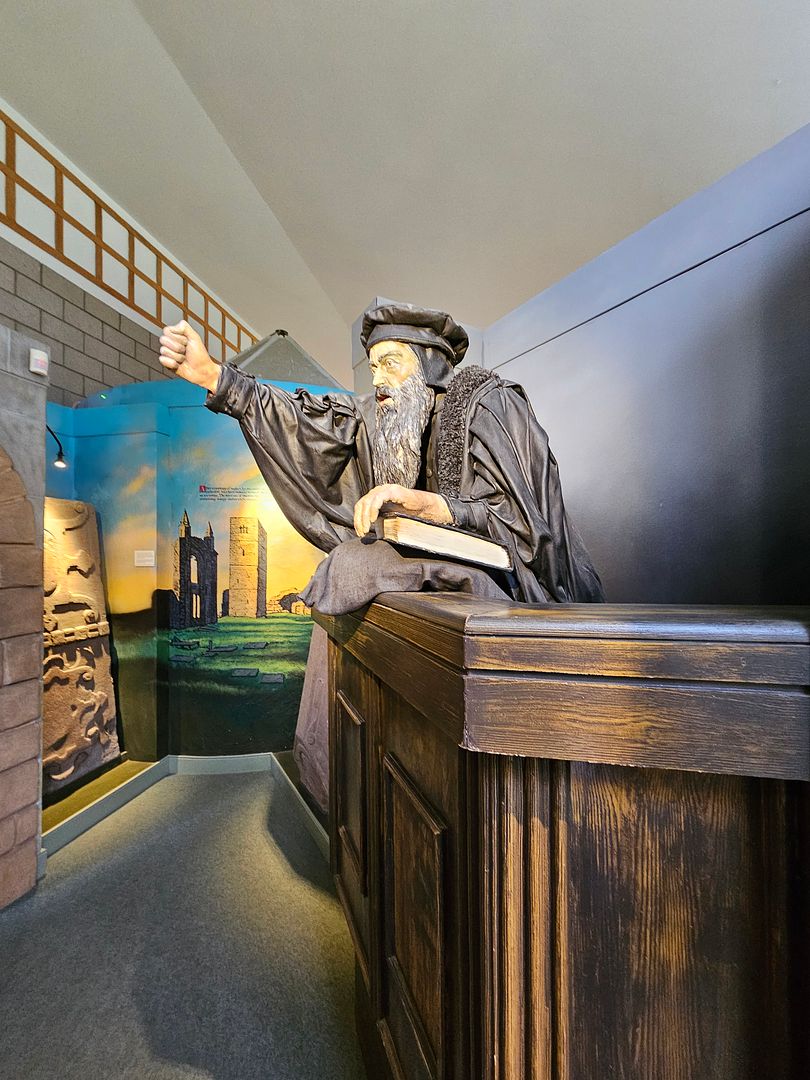
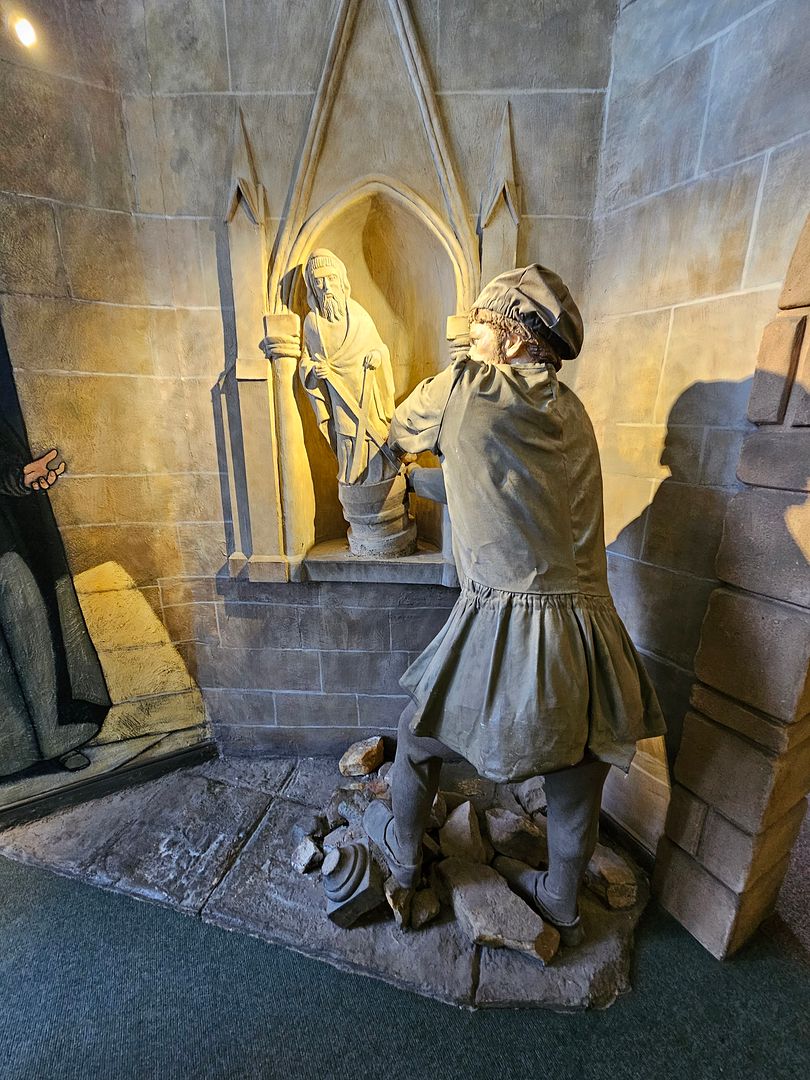
I’ll be highlighting John Knox in my continuing posts about our time in Scotland instead of here. Some other reformers I’ve enjoyed reading about are; Zwingli, Lady Jane Grey, John Calvin, Jan Hus and several others.

Personally I’m so thankful to all the Reformers who made translating the Bible into English a priority in their lives no matter what the cost. I’m also thankful to preachers and shepherds of God’s Word who faithfully exegete the Bible today. I’m humbled to look at our stacks of Bibles when reading how 500 years ago the common man or woman could not hold a Bible in their hand or read one. Also humbled that there were those who were killed for owning a translated Bible that they could finally read for themselves.

Scotland Travel Journal ~Kenmore, Aberfeldy and Pitlochry

After indulging at the Highland Chocolatier we headed further out southeast from the A9 along A827 through Aberfeldy to the little Village of Kenmore. This post finishes off our Monday September 16th travels.

We lived in Kenmore, Washington for 20 years. Laura and her family lived in Kenmore for many years, too. We wanted to connect our Kenmore to this Kenmore in Scotland. Kenmore near Aberfeldy Scotland is on Loch Tay.

This photo above is from a walking trail that runs through Kenmore, Washington. Kenmore is located at the top of Lake Washington (Loch Washington) and is about 14 miles from Seattle, Washington.

The photo below is from Kenmore, Scotland.

Beautifully situated on Loch Tay.

We had a short walk about the little village.

Farewell to Kenmore Aberfeldy Scotland.

Laura spotted some castles along the way that would have been fun to explore but it was after visiting hours.

Driving back through Aberfeldy on Kenmore Street.

Further along the road we decided to pull into Dewar’s Aberfeldy Distillers.

I have a travel tip for you. Even if you do not enjoy whisky, the distilleries are a great stop to stretch your legs and use the facilities which are mostly labeled Toilets here in Scotland and England. We found the toilets at the distilleries were always clean and nice.

More scenery on our way to Pitlochry where we would be staying for two nights.

After we checked into our rooms at the hotel we walked to the Pitlochry Dam and Fish ladder on our way to dinner in town. We were impressed with the views but there was nothing happening in the fish ladders. The river Tummel runs along Pitlochry.


We walked a little further to the Old Mill for our evening meal.

Our after dinner sunset walk to the hotel along the main road through Pitlochry was lovely.

We were ready for a good rest before we set out for more adventures on Tuesday.

Hats off to Josh for his first day of driving in Scotland and thanks be to God for our traveling mercies and blue skies!

Scotland Travel Journal ~Stirling Finale

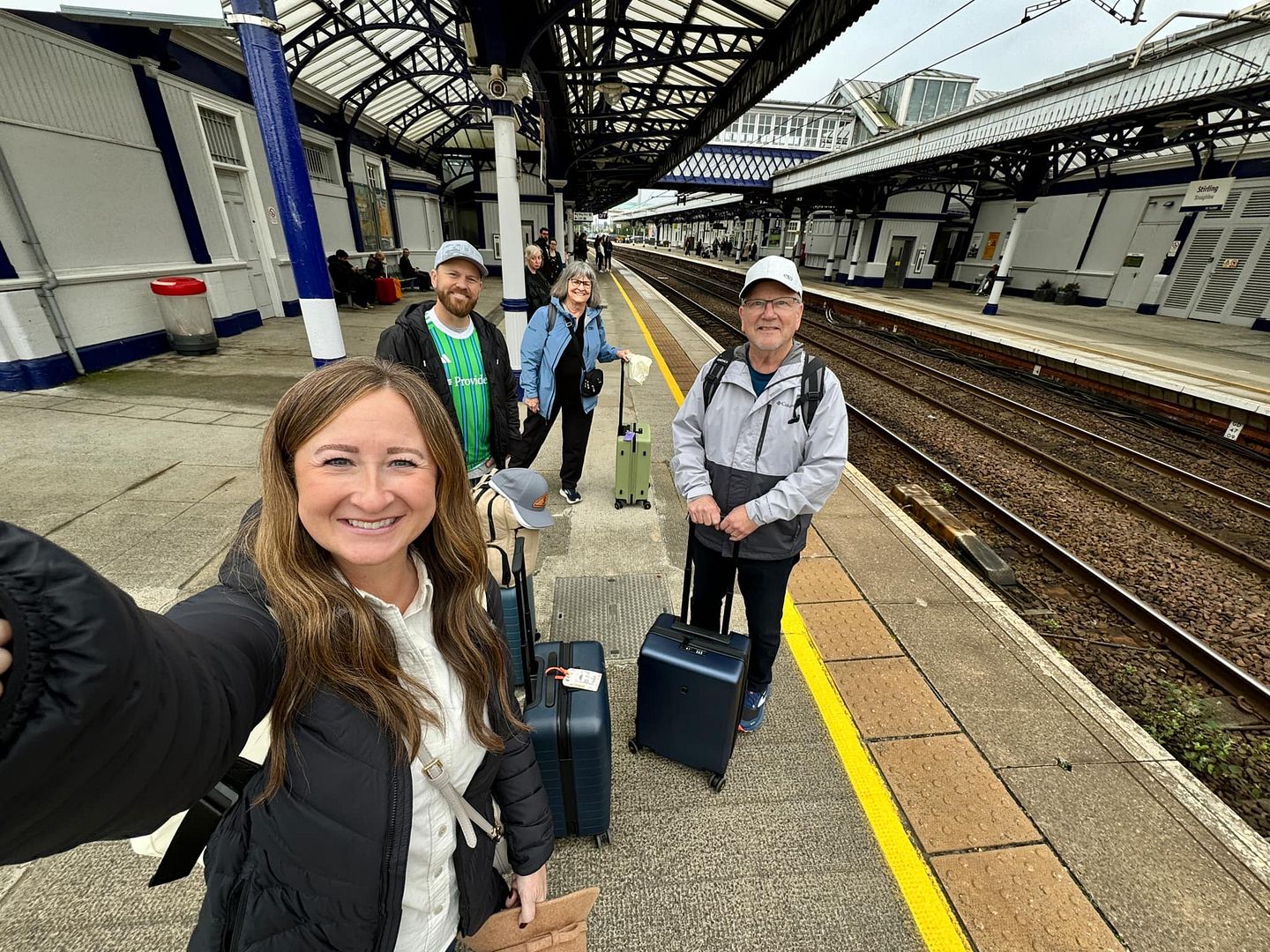
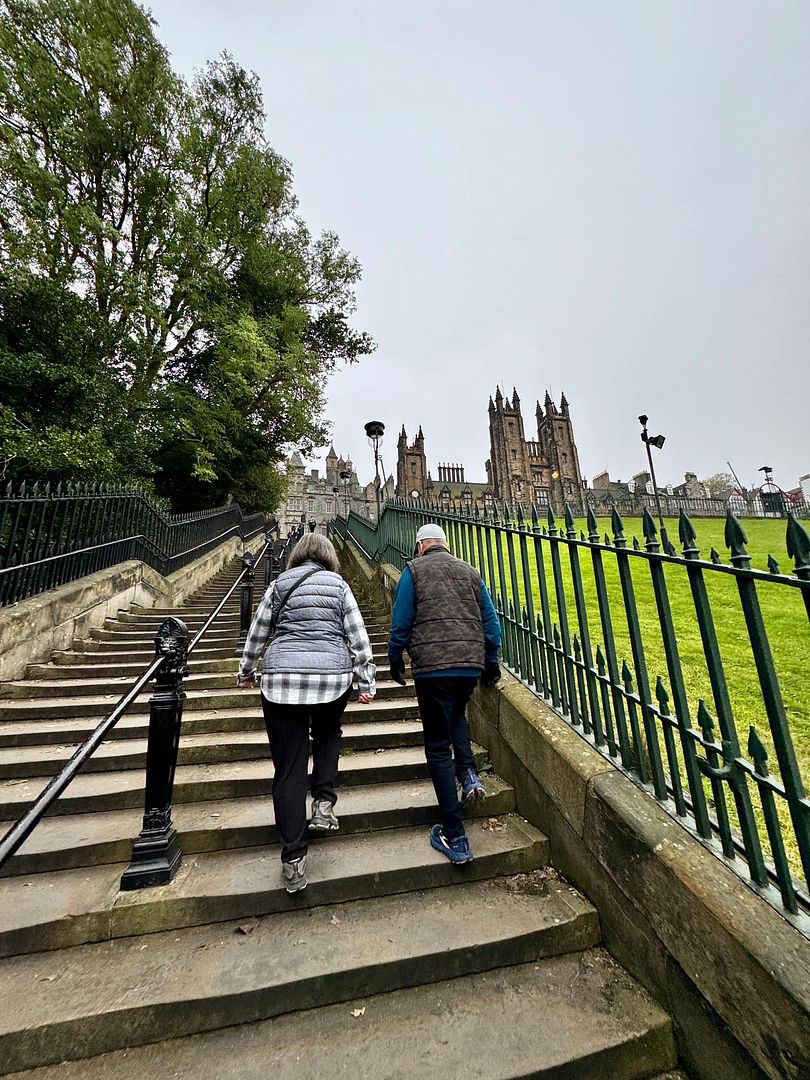
The Victoria Arms was our lodging choice for Stirling. We dropped our luggage off here in the morning and when we returned after 5pm our luggage was in our rooms for the night.

After we freshened up we entered our Restaurant destination into one of our phones and started our walk to dinner.

Rob Roy McGregor (1631-1734). On our way to dinner we came across this statue of notorious Scottish outlaw Rob Roy, who joined the Jacobite rising of 1689 with his father when he was just 18 years old. His father was jailed for treason for two years. When he was finally released, his wife, and Rob Roy’s mother, had passed away. Rob Roy hid out in the Highlands under the patronage of John Campbell, the 2nd Duke of Argyll, and he built a house in Glen Shira. His fortunes began to rise again as he became a cattleman, but he lost all of his money and cattle due to a duplicitous chief herder and was declared an outlaw, his family thrown out of their house which was then burnt down on the orders of his principal creditor, James Graham, 1st Duke of Montrose. This began a blood feud between the two which lasted until 1722, when Rob Roy was forced to surrender and was imprisoned until 1727. He was released in part because of the success of Daniel Defoe’s biography of Rob Roy, The Highland Rogue, and he died in 1734.

We made it to Brea.

We all enjoyed our choices for dinner and dessert!

Laura found some interesting signs in the facilities…

and…

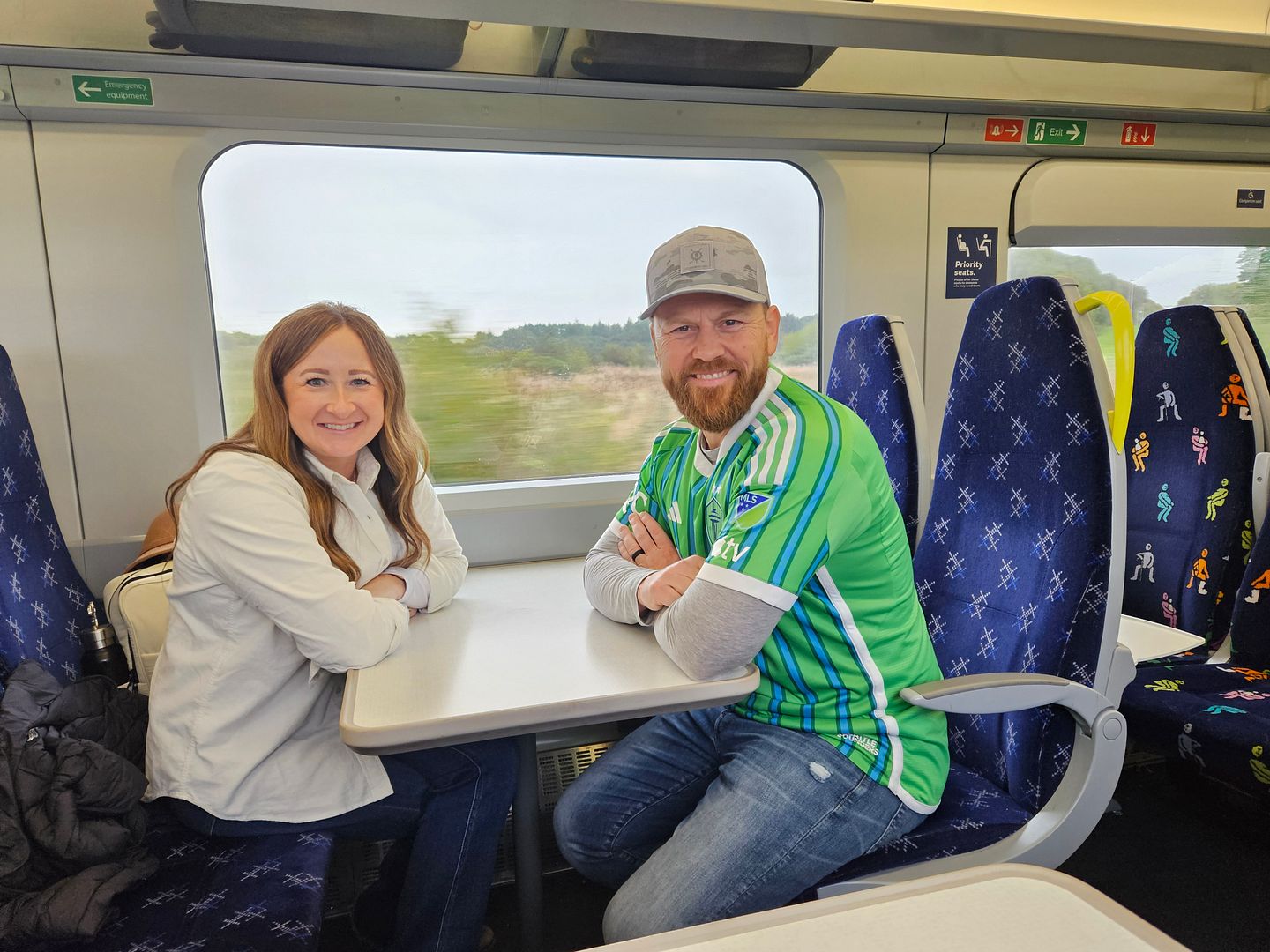
We enjoyed conversation with the mom and adult daughter seated next to us who happened to be from the United States, too. The mom enhanced our conversation by complementing a subtle feature on Josh’s hat.
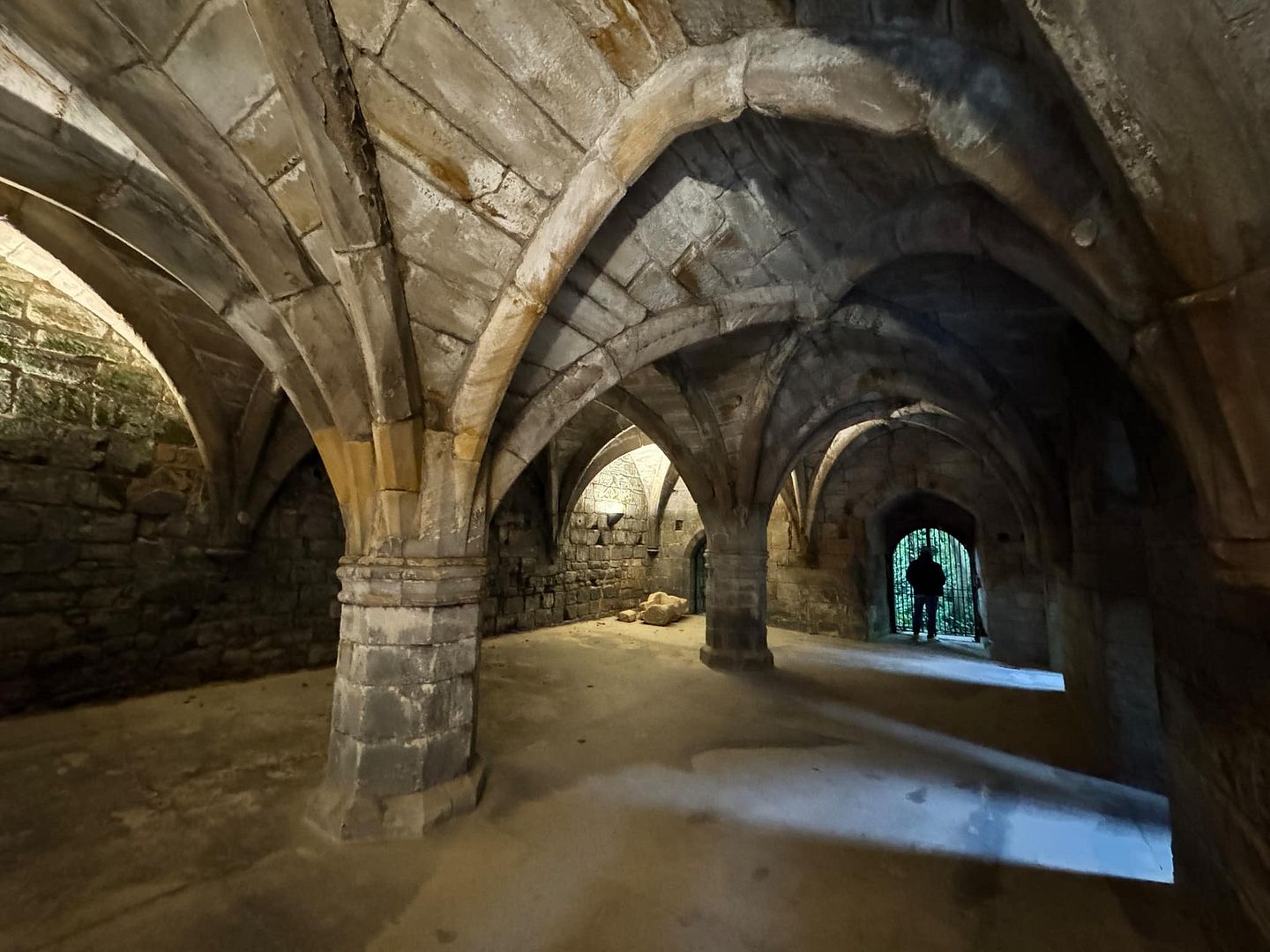
We had a lovely walk back to our lodgings in the moonlight. We retired to our rooms for a much needed rest. Sunday September 15th was complete.

On Monday the 16th of September we enjoyed our breakfast at Victoria Arms before we packed up and ordered a taxi to take us to Enterprise Car Rental Agency in Stirling.

Looks like another beautiful day, Thank You LORD!

Scotland Travel Journal ~ Wallace Monument

On Sunday the 15th of September our sight seeing would end at the Wallace Monument. We could see it in the distance and were hoping for a tourist bus to take us there. We walked down into the center of town and stopped for a coffee and a snack before we found out that the Tourist bus had ceased operation at the end of August.

At the central bus stop in town Josh found out from a bus driver that we could take the #10 bus and it would get us up to the monument. After many stops along the route we were dropped off right at the parking lot for the Monument. We opted to wait for the mini shuttle van to take us from the parking lot up to the Monument.

We ventured inside and bought our tickets for the climb.

Greg and I made it to the Hall of Arms. Josh and Laura made it all the way to the top, 246 steps, in a narrow winding staircase!

The Arms of Great Britain

We all made it to the Hall of Arms and watched the video available.

The Arms of Sir William Wallace.

In the hall of heroes Laura and Josh spotted one of our heroes on this trip, John Knox.

At the Royal Chamber you could design your own coat of arms for your battle shield.

Find out about William Wallace here.

Laura found this little figurine along the way.

It was very windy at the top.

You can read the historical account of this battle and the history of this time here.

We were blessed with spectacular views on this beautiful day.

We took the tram down to the cafe and gift shop and I talked Greg into letting me photo him at the taking of Stirling bridge photo op. Josh and Laura made it down the 246 steps and took one of the last shuttles back down to the parking lot. We had ordered a taxi that arrived soon after. The taxi took us back to our lodging for the night and we finally checked into our rooms. We were surprised that the taxi ride cost us less than the bus. We had a dinner reservation at 6:00 so we freshened up and got ready to walk to the restaurant.

I’ll save our photos into town, dinner, and our Inn for another post.

Scotland Travel Journal ~Holy Rude

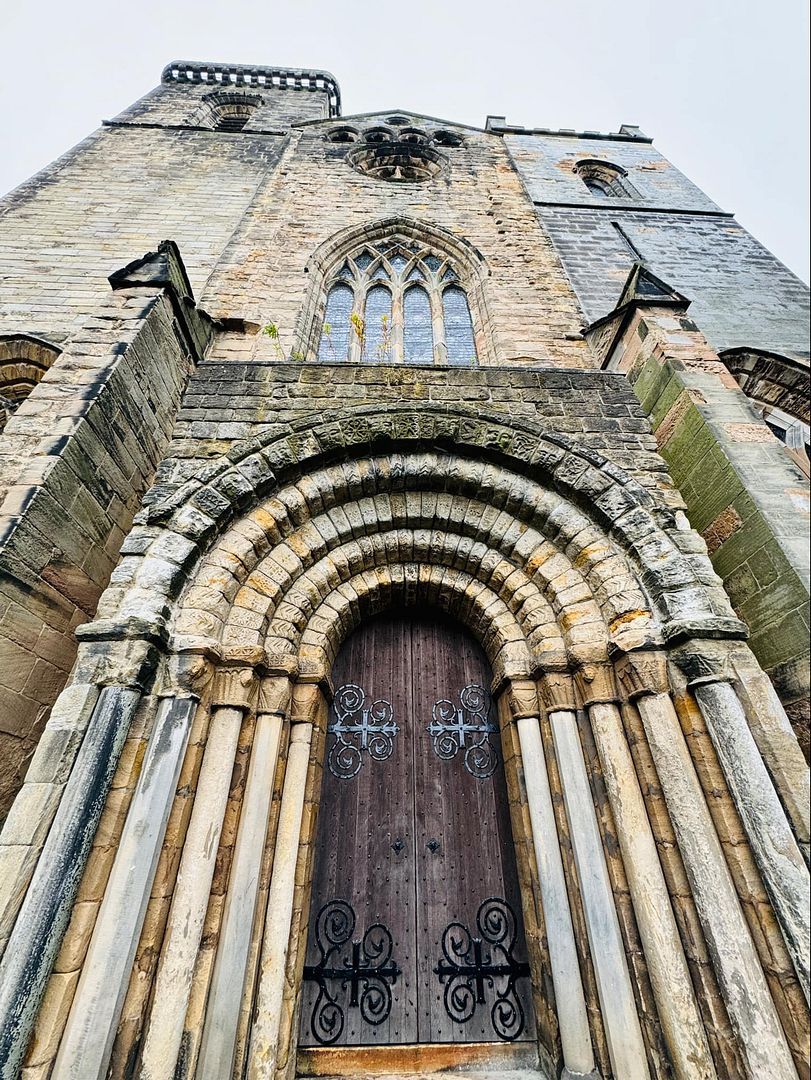
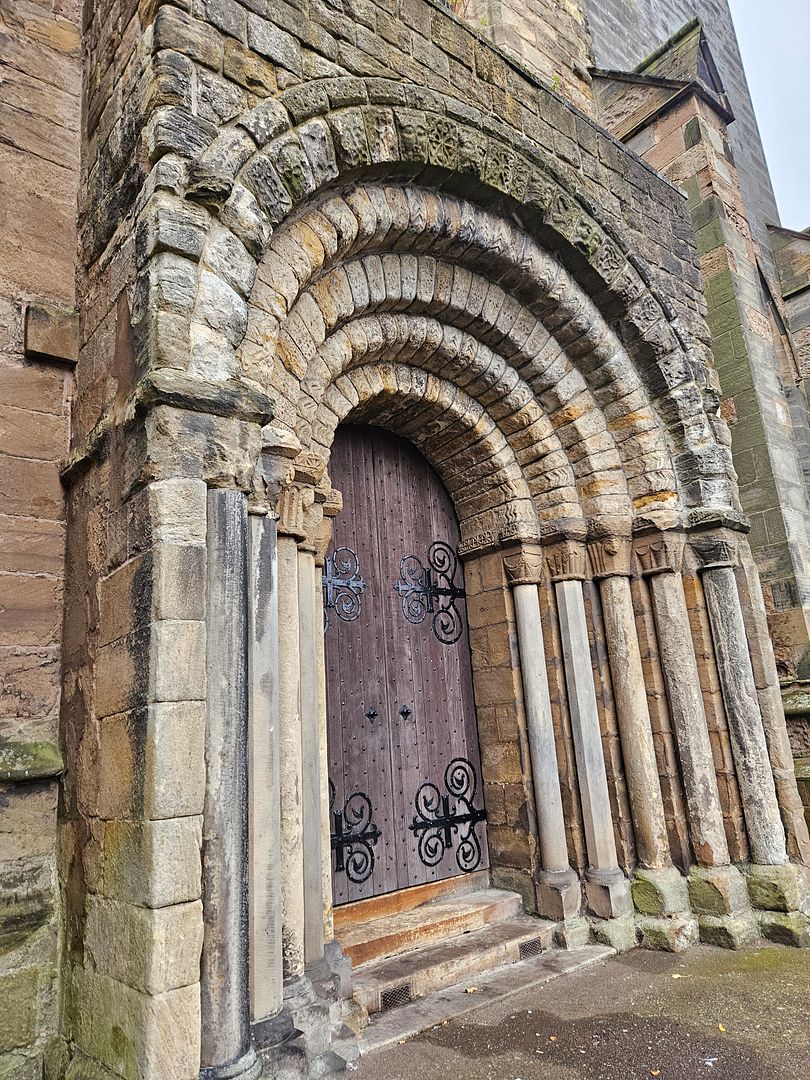
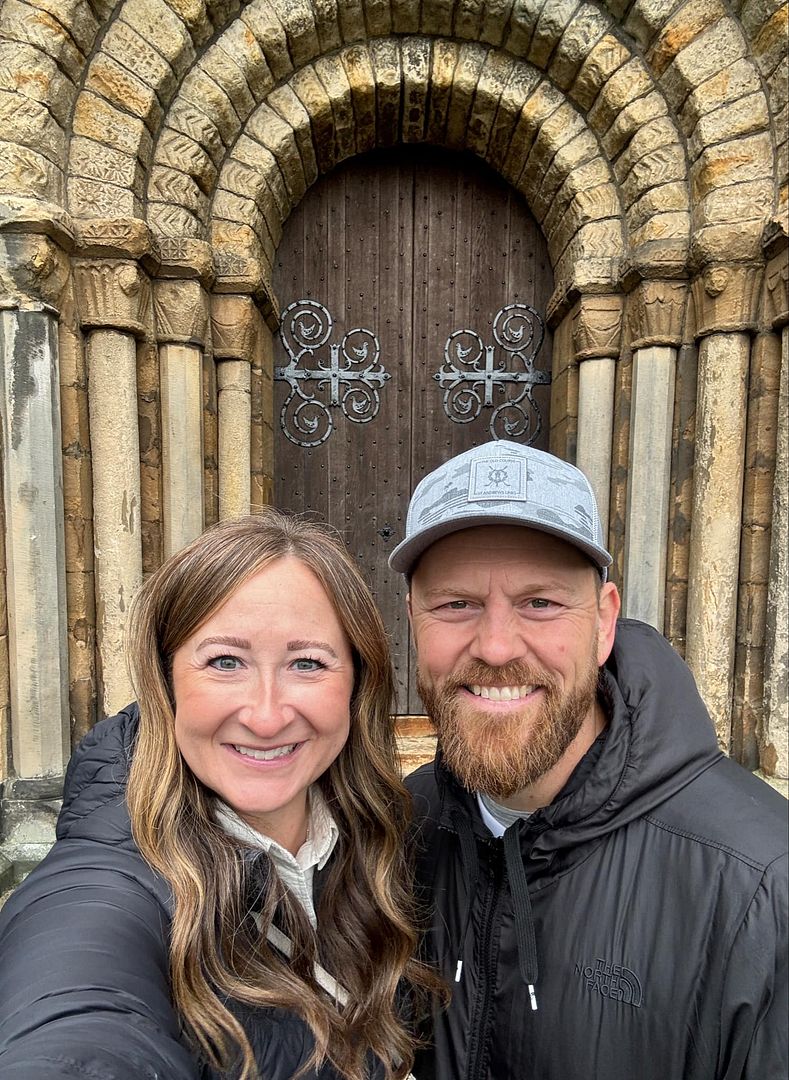
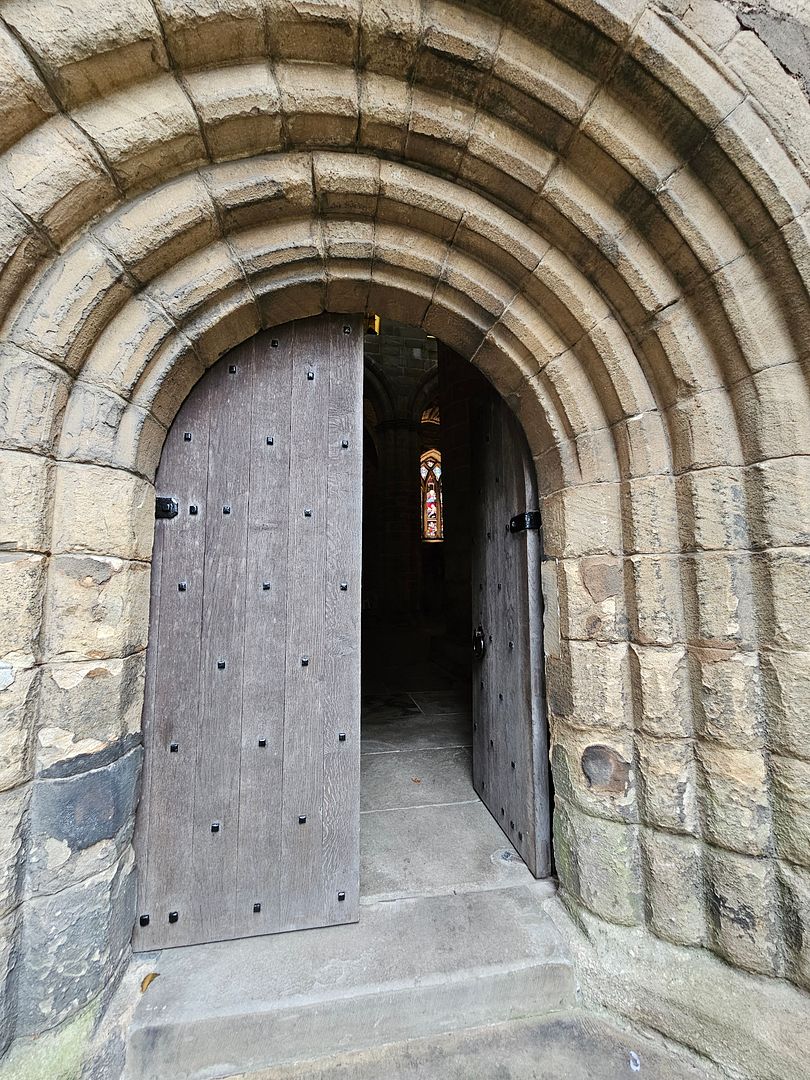
The Church of Holy Rude in Stirling, Scotland is steeped in Scottish History. The church is Stirling’s oldest building after the castle. During the reign of Robert II (1371-1390), and altar to the Holy Rude was established, leading to the church being renamed as the Parish Church of the Holy Rude of the Burgh of Stirling. “Holy Rude” translates to Holy Cross.

From the brochure: This site, a focal point of faith and heritage, witnessed the worship of Mary, Queen of Scots, the crowning of her infant son King James VI and many significant events, including the Scottish Reformation and the Jacobite rising.

See that little stained glass window way at the top of arch. The Angel Window was installed in 1870 and the artist is unknown.

This window, above the Apse, is dedicated to John Cowane, founder of Cowane’s Hospital. The middle right depicts the last supper, the left shows the Sermon on the Mount, and the lower portion illustrates Matthew 25:35-40, reflecting the charitable intentions of Cowane. The Inscription read, “For I was hungry, and you gave me food.”

The coat of arms above the entrance to St. Andrew’s Chapel is a 17th century carving of the Royal Arms of Scotland recalling the era when Scottish royalty frequented the Church.

Mary, Queen of Scots: At nine months old, she was crowned Queen in Stirling Castle’s Chapel Royal after her father, James V, died. She spent much of her childhood in the castle and visited this church. After Mary’s abdication, her son was crowned King James VI of Scotland in the Church of the Holy Rude.

At her 13 month old son’s coronation, John Knox preached the sermon. For the first time the rites were Protestant and not Roman Catholic and the whole of the ceremony was made and done in the Scottish tongue and not Latin.

This is the oldest surviving church in Scotland that witnessed a coronation.


John Knox, A figurehead of the reformation in Scotland. Reverend James Guthrie was another prominent Scottish minister during the Covenanting era. His convictions led to the division of the Church’s congregation in the 17th century.

The Church has seen its share of conflict over the centuries.  During the religious and political troubles of the 17th Century, the Church was divided in 2 and had a wall built to create 2 separate churches – the East and the West.  The minister whose activities led to this division, James Guthrie, was hanged for high treason in 1661, and the 2 parts of the church were finally re-united in 1935.

During Cromwell’s uprising, General Monk set up his guns on the Church tower in 1651 for the last successful attack on Stirling Castle.  The Church walls bear the scars of musket shot and cannon-fire from this and other conflicts, including the Jacobite uprising of 1746. The battle scarred walls are indeed a testament to the skills of the stone masons and craftsmen of the past.

King Robert the Bruce

This window was created in memory of the Argylls of WWI and it was fitting for it to be in the Church of the Holy Rude because the regiment had strong ties to this church. This window depicts a Highland soldier surrounded by poppies and figures from the regimental cap badge. Thousands lost their lives in World War I. This window was dedicated in 2016.

The current windows date from the 19th century.

We left the church and walked down into town needing a little snack before we made our way to the Wallace Monument which will be another post. Sunday the 15th of September was a full day of history for us!

Thanks for traveling along with us on this day that we connected more dots about John Knox and the Scottish Reformation and Covenantors in Scotland. We took in Stirling in one day but you could easily spend a few more days soaking it all in.

Scotland Travel Journal ~ Stirling Castle

Stirling Castle was first mentioned around 1110, and many royal dramas unfolded here. Until the Union of the Crowns in 1603, almost every Scottish monarch had either lived in the castle, or been crowned or died here.

The castle’s long, turbulent history features:

  • William Wallace
  • Robert the Bruce
  • Mary Queen of Scots
  • Bonnie Prince Charlie

Stirling Castle is a complex monument of diverse buildings and spaces added over the centuries.

In this shot we can see the William Wallace Monument in the distance. We would travel there after we explored The Church of the Holy Rude.

From high on a volcanic outcrop, the castle guarded the lowest crossing point of the River Forth for centuries. Today it remains a great symbol of Scottish independence and national pride.

At the castle’s heart is the Inner Close, a square formed of the principal buildings for royal occupation.


Our tour guide, Joanie! She was excellent and kept us entertained and laughing.

A statute of Robert the Bruce, designed by George Cruikshank and sculpted by Andrew Currie in 1876-77. The carved stone statue stands on a square stone pedestal and depicts the king as a tall chain mailed figure resting his hand on the pommel of his sword. At the feet and to the rear of the king is his shield and axe.

From the castle we went down hill to the Church of the Holy Rude to take a look inside.

There is so much history and conflict associated with this castle and area. Here is a link to more information.

Scotland Travel Journal ~ Stirling ~Margaret Wilson

We arrived at our lodging before we could check into our rooms and left our luggage before we walked uphill to Church of Holy Rude and their Kirk on the way to Stirling Castle. We had been given outdated information that there was a tourism bus available in Stirling but that service had ended in August. It was good we didn’t wait at one of the stops that were advertised.

We were so very thankful for a beautiful sun filled day to start our Stirling adventures!

“Stirling, where every walk seems to be uphill.”

We made it to the Church of the Holy Rude while a service was going on so we planned our look inside for after our time at the castle. My main interest was the Kirk Churchyard and the memorials to Margaret Wilson and other Martyrs.

Wigtown Martyrs Monument

 A large and ornate memorial to Margaret Wilson, one of the Wigtown Martyrs, is located on the shoulder of Ladies’ Rock in the Mar Place Cemetery. The statue shows the martyr in the act of reading the Scriptures, with her younger sister Agnes by her side. A lamb rests at their feet, and over both is a guardian angel. The statue is covered with an ornate cupola and glazing. The statue was erected in 1859 and was the work of Handyside Ritchie. Originally, the statue was open to the elements, but in 1867 an ornate cast iron frame and glass cupola was raised over it, making it one of the most distinctive monuments in Stirling, if not the whole of Scotland. The cupola was designed by John Thomas Rochead (1814-1878), who is better known for his design for the Wallace Monument on Abbey Craig. The frame was cast at the Sun Foundry in Glasgow, and when it was added, a marble lamb that lay at the feet of Margaret, had to be removed. The cost of the monument was financed by William Drummond, of the Drummond Tract Enterprise. Margaret Wilson was one of the Wigtown martyrs, two women who were drowned in the rising Solway Tide on 11 May 1685. They were both Covenanters, and the other martyr, Margaret MacLachlan, was a woman in her sixties. Drummond had a great love of the Presbyterian martyrs, and erected other memorials to them and other ministers in Stirling, including statues of Rev James Renwick, Rev Ebenezer Erskine, Rev John Knox and the Star Pyramid.

The words around the top of the monument are ‘Christ~In Us~Lord ~Jesus ~King~ Judge~ Saviour. I think there was one other that I couldn’t see well.

ny ¤ Ω

MARGARET

VIRGIN MARTYR OF THE OCEAN WAVE,

WITH HER LIKE–MINDED SISTER

AGNES

“LOVE MANY WATERS CANNOT QUENCH” – GOD SAVES

HIS CHASTE IMPEARLED ONE! IN COVENANT TRUE.

O SCOTIA’S DAUGHTERS! EARNEST SCAN THE PAGE”

AND PRIZE THIS FLOWER OF GRACE BLOOD – BOUGHT FOR YOU.

PSALMS IX. XIX.

REV XXII.   13 – 21

I wore my ‘Margaret’ t-shirt that I ordered from The Essential Church Movie. The story of the Margaret’s and Jenny Geddes really inspired me. More about Jenny in a future post from Edinburgh. This monument to Margaret Wilson is many miles from Wigtown, where the actual drownings happened.

A detailed history of the Solway Martyrs can be read here. Another account can be read here.

When the now limp form of the first Margaret was being tossed about by the swirling tide, the waters began to engulf Margaret Wilson. Her lips were not silent. First she sang the stirring words of Psalm 25.

My sins and faults of youth
Do thou, O Lord, forget:
After thy mercy think on me,
And for thy goodness great.
God good and upright is:
The way he’ll sinners show;
The meek in judgment he will guide
And make his path to know.
And, upon finishing this Psalm, she quoted the words of Romans 8:

“Who shall separate us from the love of Christ? Shall tribulation, or distress, or persecution, or famine, or nakedness, or danger, or sword? As it is written, “For your sake we are being killed all the day long; we are regarded as sheep to be slaughtered.” No, in all these things we are more than conquerors through him who loved us. For I am sure that neither death nor life, nor angels nor rulers, nor things present nor things to com, nor powers, nor height nor depth, nor anything else in all creation, will be able to separate us from the love of God in Christ Jesus our Lord.”
These stories make me wonder how I should stand for the Truth. I trust if ever I have to, God will provide all I need to Stand.

Other monuments to John Knox, Alex Henderson and Andrew Melville, early Reformers in Scotland.

We moved onward and upward to Stirling Castle and that will be another post.