Be Beautiful

I decided to respond to the “Carnival of Beauty” challenge to post something on “The Beauty of Being Made in the Image of God”.  I ran to several good sources I know. The first excerpts come from R.C. Sproul in his book, Now That’s a Good Question, and a couple articles in His Tabletalk Magazine. The last contribution comes from my brother’s blog, The Temple.

R.C. Sproul – Now That’s a Good Question

The basic call to a person in this world is to be a reflection of the character of God. That’s what it means to be created in the Image of God. Long before the Sermon on the Mount, God required the people of Israel to reflect his character when he said to them, “Be holy even as I am holy.” He set them apart to be holy ones. The New Testament word for that is saints.

From Tabletalk June 2003 – Imago Dei – Sproul

An image cannot reflect something utterly dissimilar to it. Rather, an image is a likeness of something beyond itself. It is not the original, but it mirrors the original.

…That we bear the image of the God of glory is an unspeakable blessing. But with this elevated status comes a weighty responsibility. We were made to glorify God – to reflect the character of God and that duty comes with a divine mandate “You shall be holy, for I The Lord your God am holy” (Lev. 19:2)

” Thinking God’s Thoughts”  – Wayne Kenyon

Among created things, human beings are unique, for they are made in the image of God. As rational creatures, we are able to know God and , in a finite manner, think like Him.

For this reason, we have the great privilege of thinking God’s thoughts after Him. Also, as volitional creatures, we are able to reflect His excellencies in the manner in which we live and exercise dominion. This is our great responsibility.

…All of creation is also “for him”. With man’s great privilege to think God’s thoughts after Him comes the responsibility to take that which we receive and give it back to God in an act of worship. The God who is knowledge is worshipped by our knowing Him. The pursuit of knowledge is good. The only wise God is worshipped when His creatures are wise. This is done when we have the noblest of ends (i.e.,God Himself) and employ the most effective means of exercising dominion over His world. The God who is love is glorified when appreciative love for God is the motive from which we act. The God who is truth is worshipped when we “practice the truth” (I John: 1:6). God is worshipped when we model our lives after Him in loving obedience.

Finally from Steve at The Temple, a post on holiness. I’m including this because it personalizes holiness so well for me. Is what I’m doing the beautiful thing, the holy thing? Am I reflecting God’s image in me? Now in Steve’s words:

I wrote this in my journal some time ago:

“Holiness is doing something beautiful as opposed to not doing something ugly.”

I chose the words beautiful and ugly purposefully because they are not usually used in conjunction with holy behavior, and yet I think that they are wholly appropriate, and challenging. We are much more attracted to behaving beautifully, which may be defined as the most good. Beautiful is related to a word much closer to holiness: beatific. Being holy, being a holder of beauty. I like that correlation, it is an inspirational definition.

This perspective also hits the core issue in successful Christian living. What God wants from us is not simply the absence of evil acts, not even that we stop wanting to do bad things. God wants us to love to do the beautiful thing, the holy thing, the right thing. With regard to our speech, that is also the goal. So many of us, self included, have seen it as a matter of Christian freedom to use an occasional “strong” term, that was ultimately ugly. I am striving now to have only things of beauty as my expression in life, to the glory of the Beautiful One.

Be beautiful.

ht: Tabletalk from Ligonier Ministries and R.C. Sproul – June 2003

Walkie Talkie


John Piper, The Pleasures of God

“Prayer is the walkie talkie on the battlefield of the world. It calls on God for courage (Eph. 6:19). It calls in for troop deployment and target location (Acts 13: 1-3). It calls in for protection and air cover (Matt. 6:13; Luke 21:36). It calls in for fire power to blast open a way for the Word (Col. 4:3). It calls in for the miracle of healing for the wounded soldiers (James 5:16). It calls in for supplies for the forces (Matt. 6:11; Phil. 4:6). And it calls in for needed reinforcements (Matt. 9:38). This is the place of prayer – on the battlefield of the world. It is a wartime walkie talkie for spiritual warfare, not a domestic intercom to increase comforts of the saints. And one of the reasons it malfunctions in the hands of so many Christian soldiers is that they have gone AWOL.”

Between Heaven and Earth: Prayers and Reflections that Celebrate an Intimate God. Copyright 1997 by Ken Gire.

Take Every Thought Captive


I borrowed this photo from my sister Lana’s blog,  Above the Clouds. She wrote about how Bible Study can be illustrated with these Matryoshka dolls. I’m paraphrasing but the idea is that there is always more to find, deeper to go. I’m going to use this illustration in how God has been going into my mind, revealing thoughts that need to be captured for Him. Thoughts within thoughts within thoughts.

A few years ago I started to memorize Romans 12:1-3. This proved to be a mind changing experience for me. God began working on me in regards to my mind. He showed me wrong (sinful) patterns of thought that I entertained in my mind. He started with obvious big bad thoughts “the big outer doll”, if you will. Then He opened up doll after doll to show me how the wickedness in my mind was infecting my heart.  These thought patterns, fantasies, scenarios, rebuttals, defenses, gave me bad attitudes toward loved ones and wrong justifications about my behaviour. I knew God wanted me to say no to them. He showed me with practice in obedience to say no each time the same patterns would force their way into my mind. I had to say no a lot before some would desist! This was revolutionary for me. Mind you, we still have many more dolls to work on. Just look at all of them in that photo! 🙂 Sometimes I even try to put the same dolls back together. I am looking forward to the day that I’ll meet my Savior “face to face” by His grace with the last solid doll in my hand!

The gals over at Titus 2 Talk blog posted a great quote from a book about Susannah Spurgeon that gave me further hope in this mind struggle.

“The God who can understand your thoughts ‘afar off’ has the power to restrain them; no, more than that; before they reach you, while they are yet distant and unexpressed, he will purify and cleanse them, so that they shall enter your heart as angel whispers, and pass your lips only as words of love and blessing.”

I with Susannah want to be brave enough to pray, “Dear Master, I make your servant David’s prayer my own and say ‘Search me O God and know my heart, try me and know my thoughts, and see if there be any wicked way in me, and lead me in the way everlasting.”

Here are some passages to consider: Romans 12:1-3; Colossians 3:2; Psalm 26:2; Is. 26:3; Mt. 22:37; Rom. 8:5-7; Phil. 2:5

ht: http://www.cse.ucd.edu/~saul/images/matryoshka.jpg /

One Anothers

We just finished a great study in home group about all the “one anothers” in the Bible. I recommend this easy study to any of you to do at home or in a study group. Grab your concordances and search and find all the ways we are suppose to behave in our community. I’m including one great passage from Colossians that covers a few and suggestions for what to look for. Enjoy!

Colossians 3:12-17 (NIV)

“Therefore, as God’s chosen people, holy and dearly loved, clothe yourselves with compassion, kindness, humility, gentleness and patience. Bear with each other and forgive whatever grievances  you may have against one another. Forgive as the Lord forgave you. And over all these virtues put on love, which binds them all together in perfect unity.

Let the peace of Christ rule in your hearts, since as members of one body you were called to peace. And be thankful. Let the word of Christ dwell in you richly as you teach and admonish one another with all wisdom, and as you sing psalms, hymns and spiritual songs with gratitude in your hearts to God. And whatever you do, whether in word or deed, do it all in the name of the Lord Jesus, giving thanks to God the Father through him.”

Here are some helpful descriptions of some of these virtues; (taken from The Reformation Bible, ESV, R.C. Sproul – general Editor)

Kindness: Readiness to do good, even when it may be undeserved (Rom 2:4; Titus 3:4).

Compassion: An emotional, caring relationship with those whose lives are hurt and broken (Matt. 9:36; 14:14; Rom. 12:1).

Humility: A posture of lowliness and servanthood (Mark 10;45; Phil. 2:1-11).

Meekness: Or, “gentleness” in offering help, a non-coercive approach to encouraging change in others’ lives (Matt. 11:29; 2 Cor. 10:1; Gal. 6:1; 2 Tim. 2:25).

Patience: Willingness to take the long view in face of human frailty (Rom. 2:4; 1 Tim. 1:16).

Here’s a non-exhaustive list of the “one anothers” to look for; love one another, serve one another, accept one another, forgive one another, comfort one another, encourage one another, care for one another.

My challenge to you in researching these and more is to find the 2 one anothers in the New Testament (maybe there are more than two) that are in the negative (the do not’s to one another).

Go and do and be blessed all you anothers!

Ellen

Wilberforce on Real Christianity

I’ve begun reading Real Christianity (A Paraphrase in Modern English of A Practical View of the Prevailing Religious System of Professed  Christians in the Higher and Middle Classes in This Country, Contrasted with Real Christianity. Published in 1797. by William Wilberforce, Esq. Member of Parliament for the County of York – Revised and Updated by Dr. Bob Beltz (Regal From Gospel Light, Ventura, Ca., USA)

In 1797 long descriptive titles for books were in vogue. I’m amazed how up to date the issues of Wilberforce’s day are. I’m posting the following from the book. I’m finding it’s one of those books where I want to share every other paragraph! The following is from the first chapter titled, The State of Contemporary Christianity (Cultural Christianity, What the Bible Says, the Problem of Ignorance)

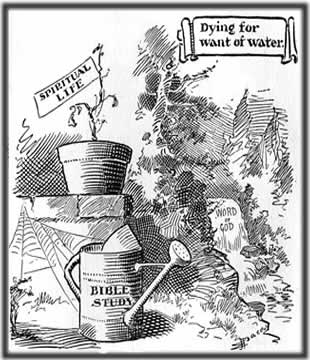
“Understanding Christianity is not something that comes without effort. Almost every example in the natural world teaches us this principle. The very way we must exert effort to enjoy all the good things God has provided illustrates this lesson. No one expects to reach the heights of success in education, the arts, finance or athletics without a great deal of hard work and perseverance. We often use the expression “You have to really want it!” Growing in our faith requires the same. Christianity is based on a revelation from God that is filled with information that the natural mind could never have imagined. The wealth of this knowledge will never be mastered without diligent effort.

Carefully studying the Bible will reveal to us our own ignorance of these things. It will challenge us to reject a superficial understanding of Christianity and impress on us that it is imperative not to simply be religious or moral, but also to master the Bible intellectually, integrate its principles into our lives morally, and put into action what we have learned practically.

The Bible is one of God’s greatest gifts to humanity. It tells us of the greatest gift that men and women have longed for through-out the ages and of which the prophets spoke about for centuries. When Jesus finally came, His arrival was hailed by the angelic host with the exclamation, “Glory to God in the highest, and on earth peace to men on whom his favor rests” (Luke 2:14). How can you measure the value of the good news of Christ? It is spoken of in the Bible as light in the darkness, freedom from slavery and life from death. Look at how much the Early Church valued the message. They received it with great joy and overflowing gratitude.

Surely all these things should help us come to terms with the inexpressible value of true faith. The greatest gift of God is often either rejected outright or treated as if it is of little worth. But if we really began to study the Bible, we would be impressed with the proper value of the gift.”