Scotland Travel Journal ~ Dunfermline 2

The Old Church
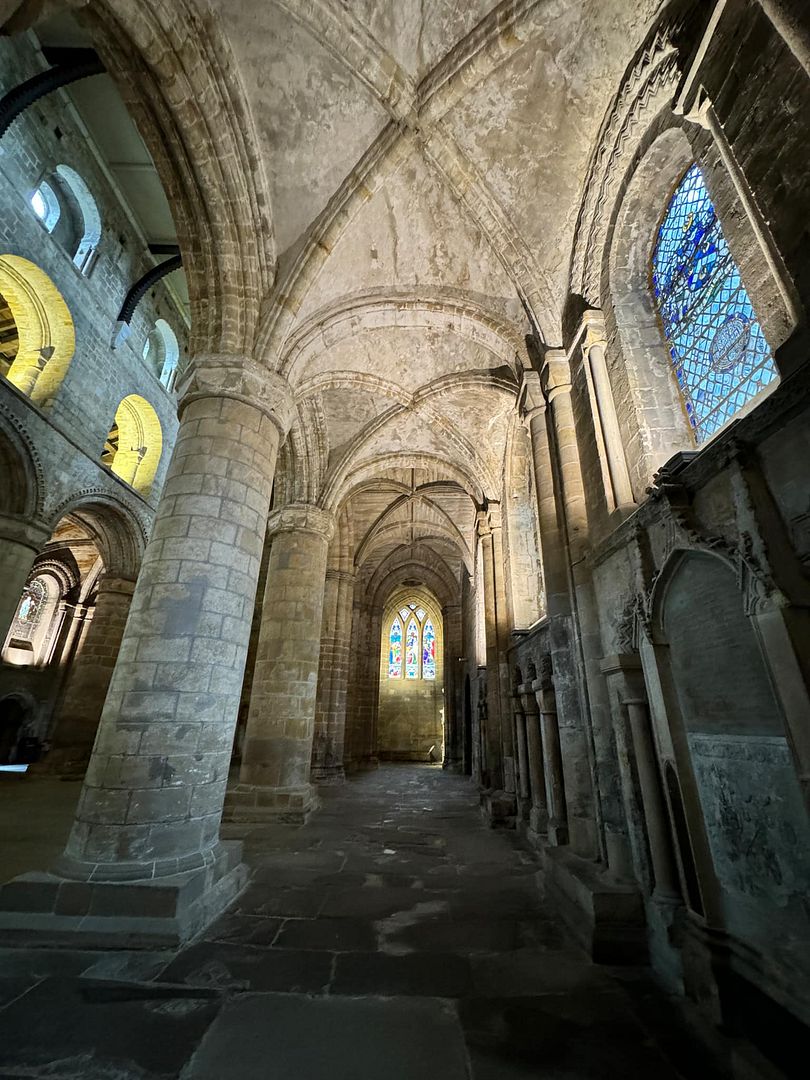
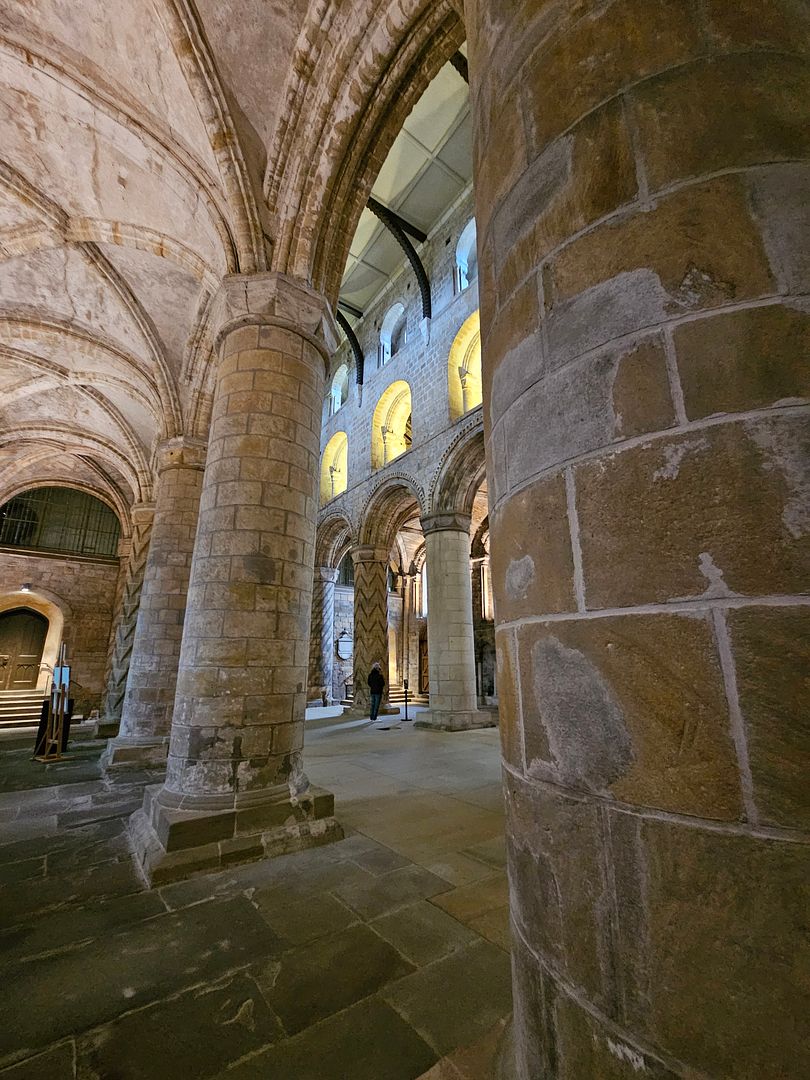
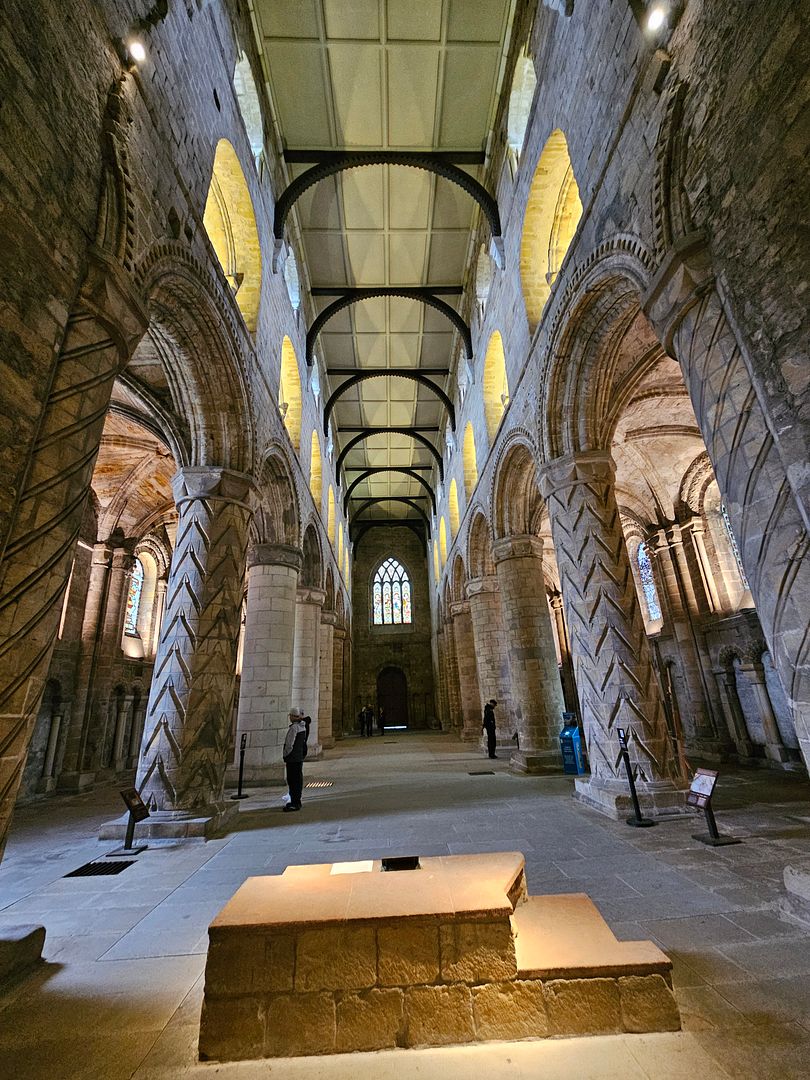
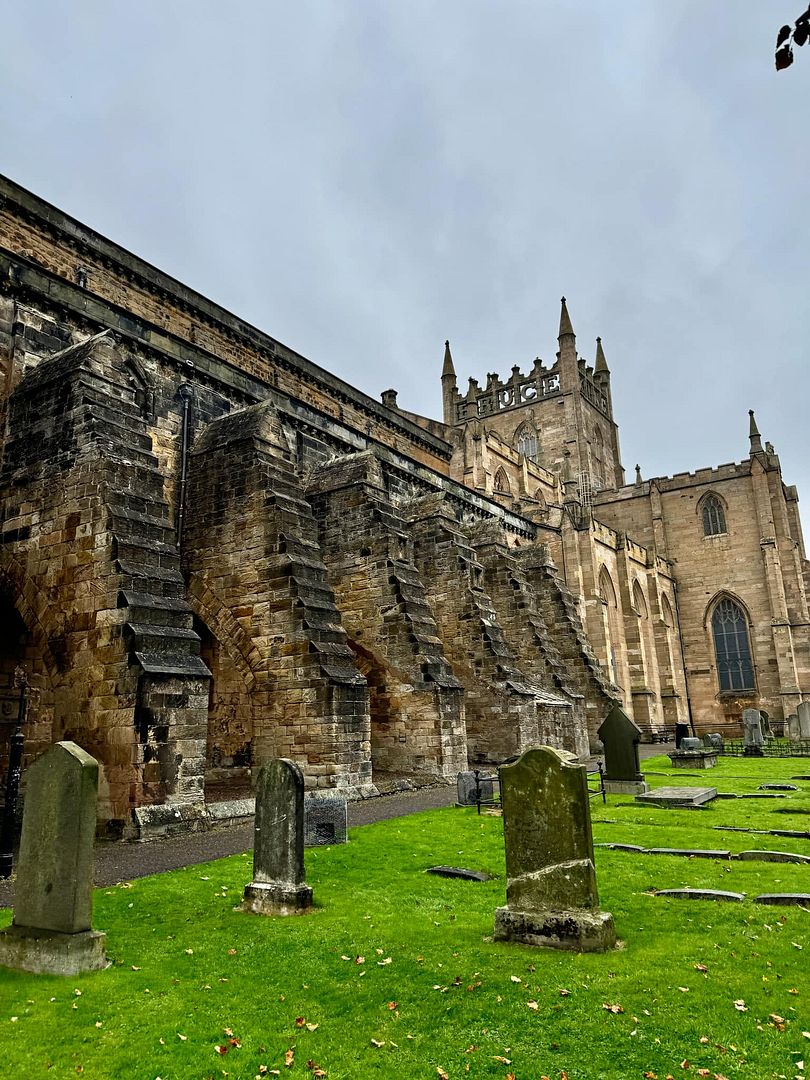
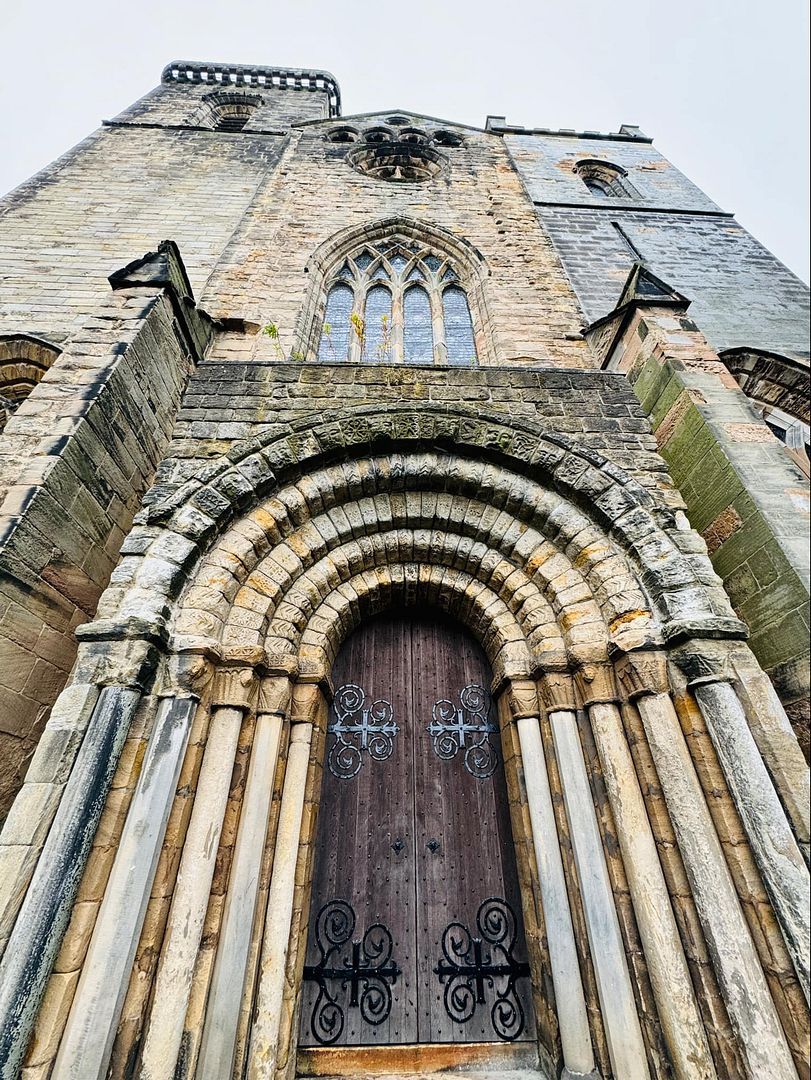
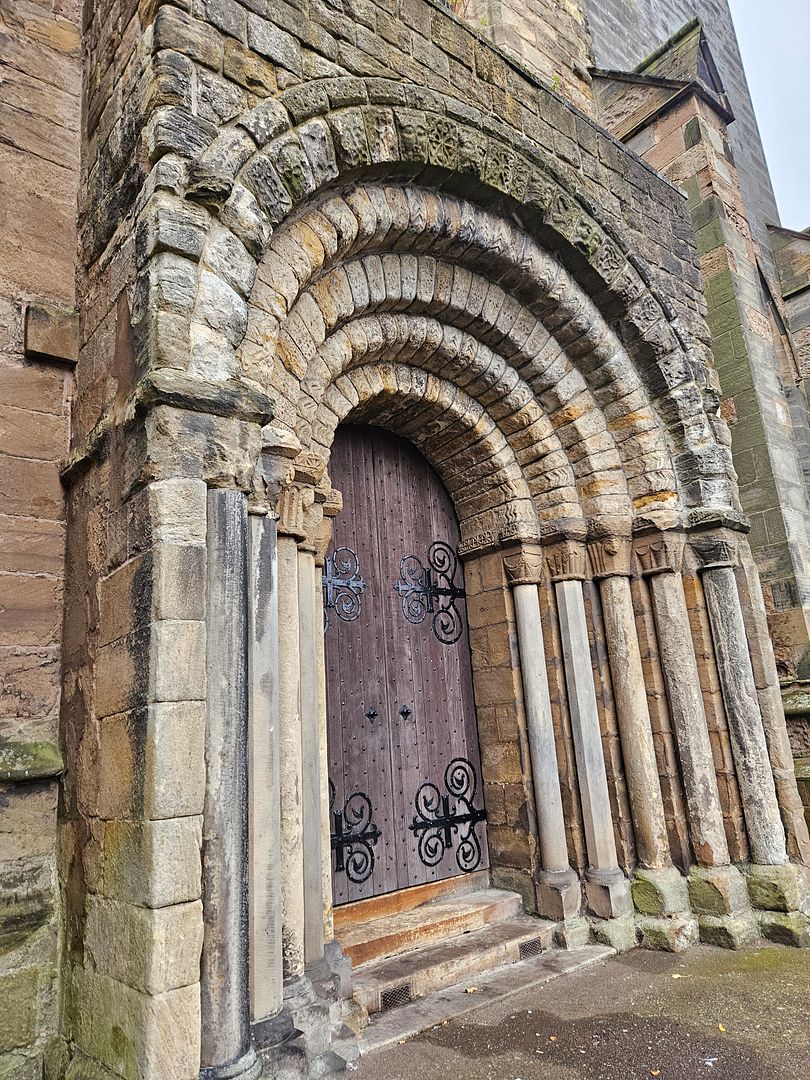
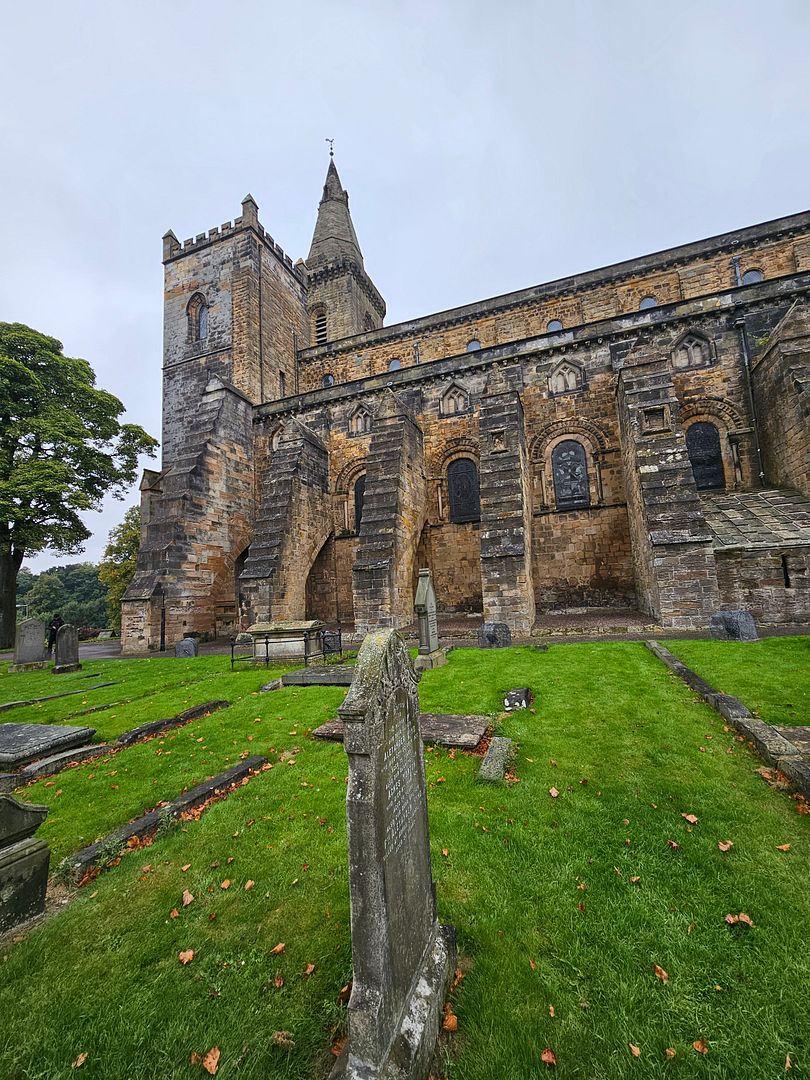
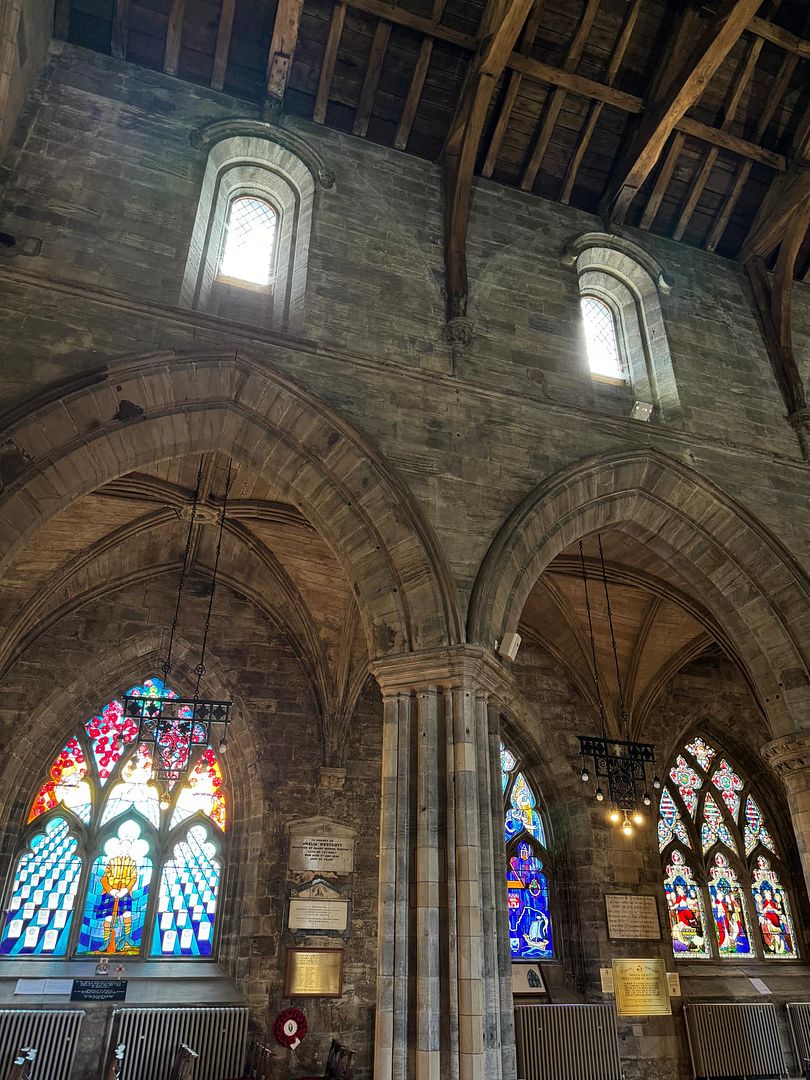
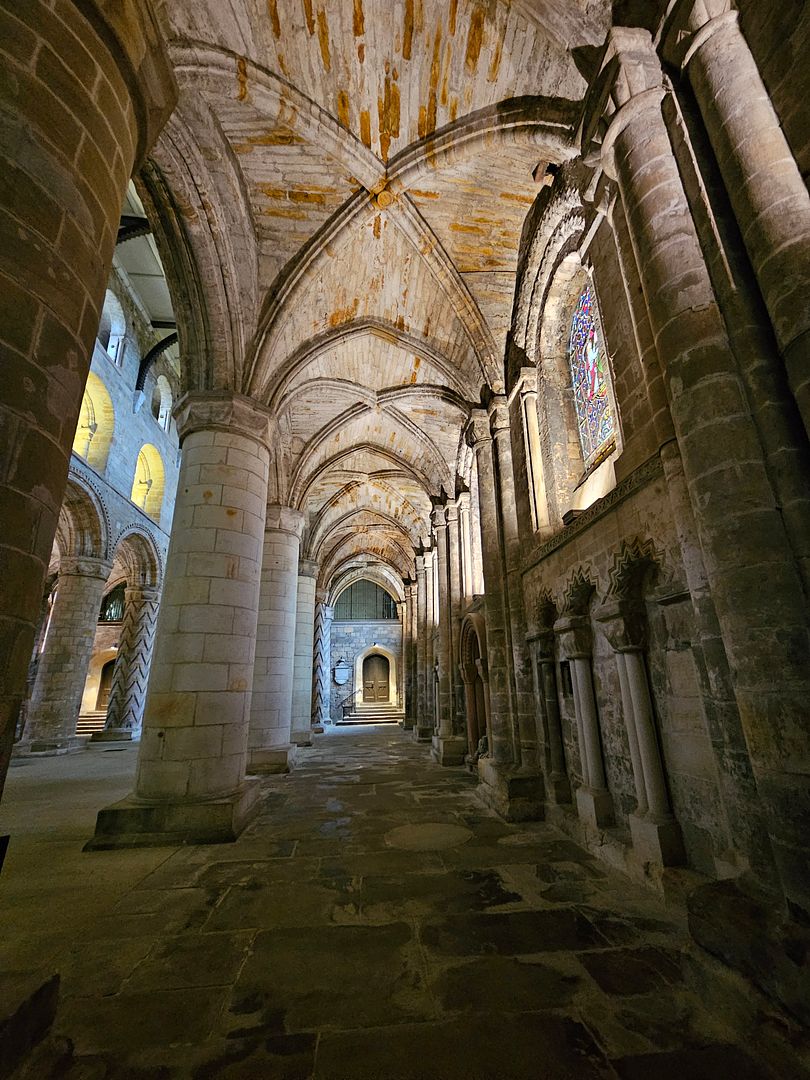
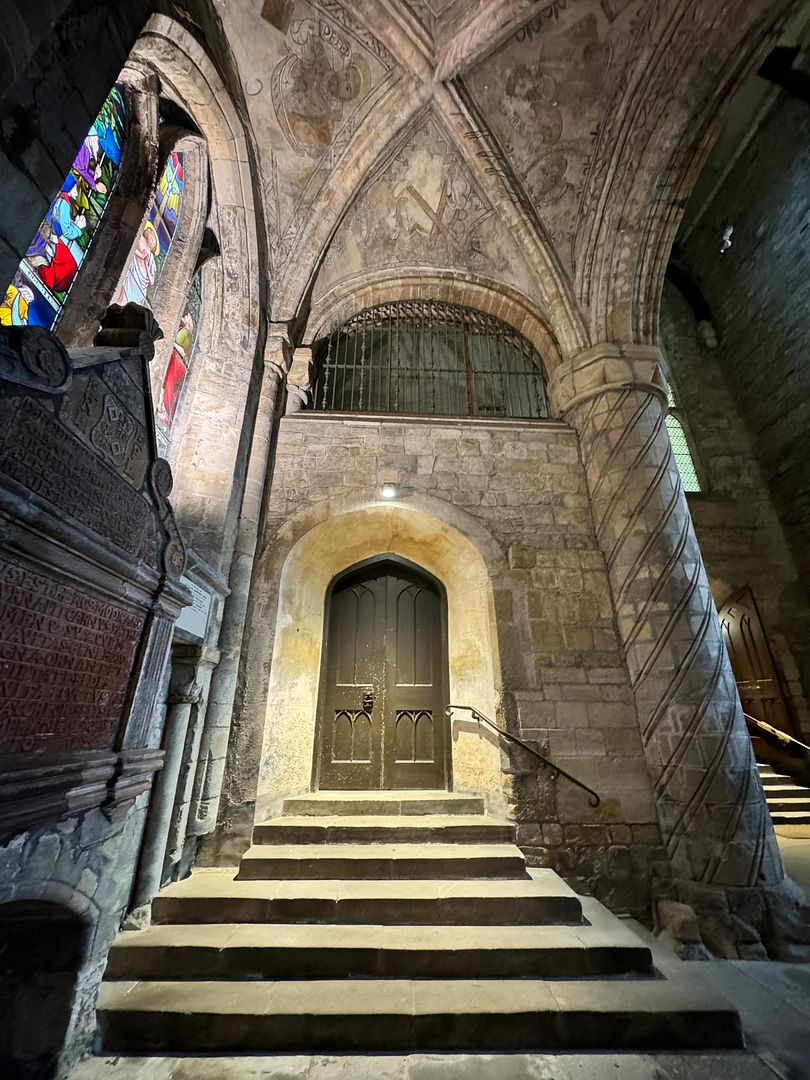
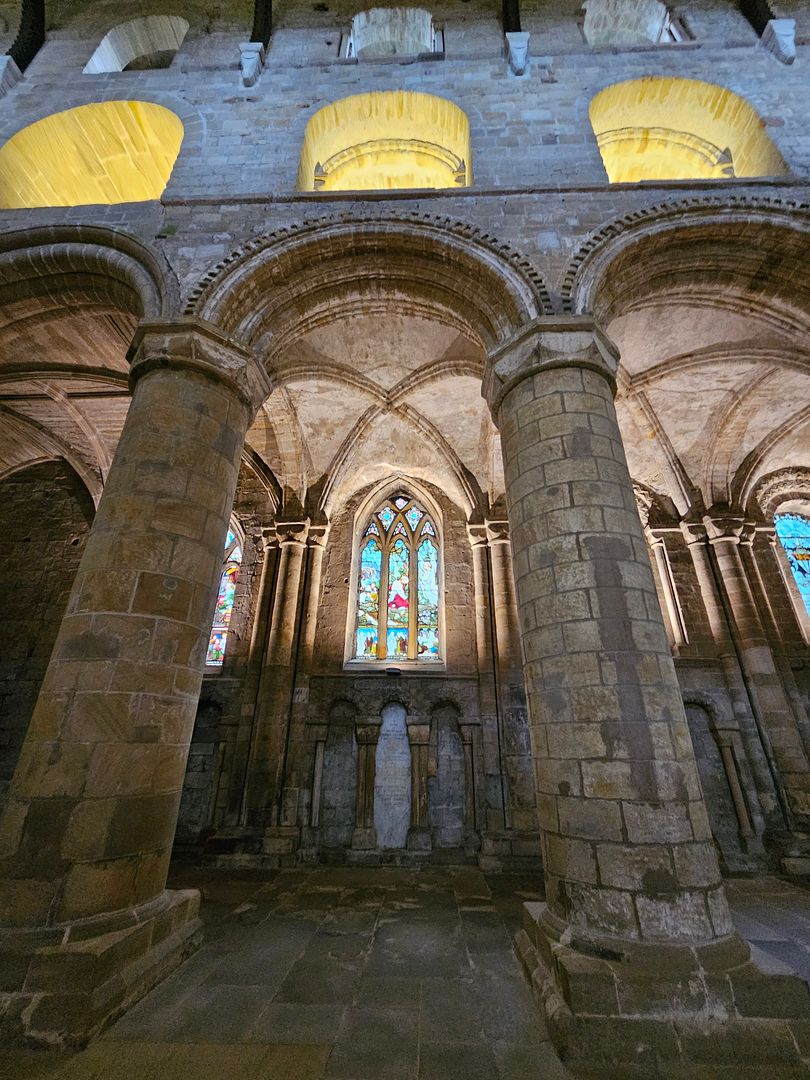
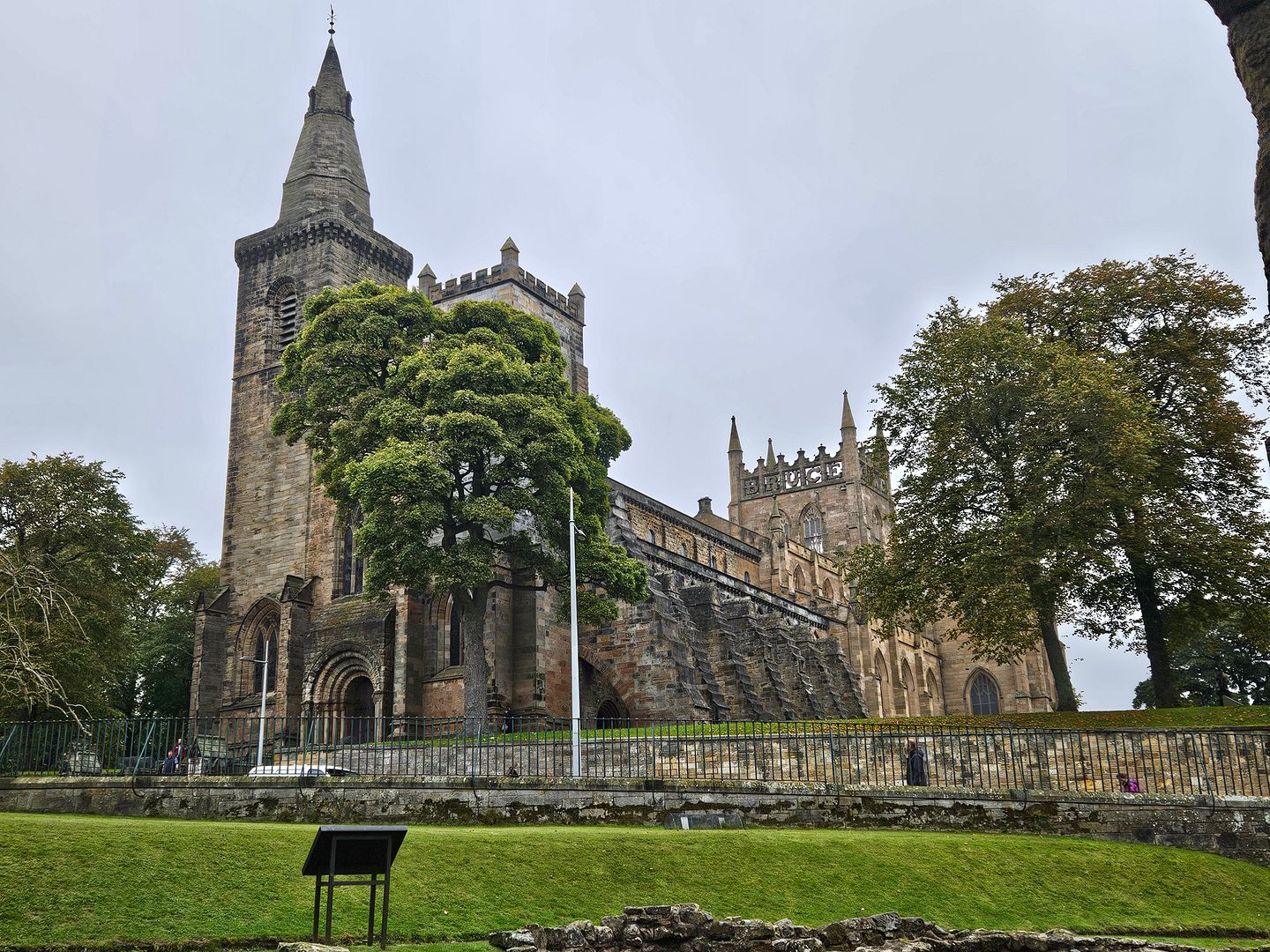
The former nave of the abbey church, erected by David I over the original church founded by his mother, Queen Margaret. The Old Church is the only significant remain of the 1147 abbey, and is a wonderful example of Romanesque architecture, with huge, rounded pillars, two carved with striking zigzag patterns.
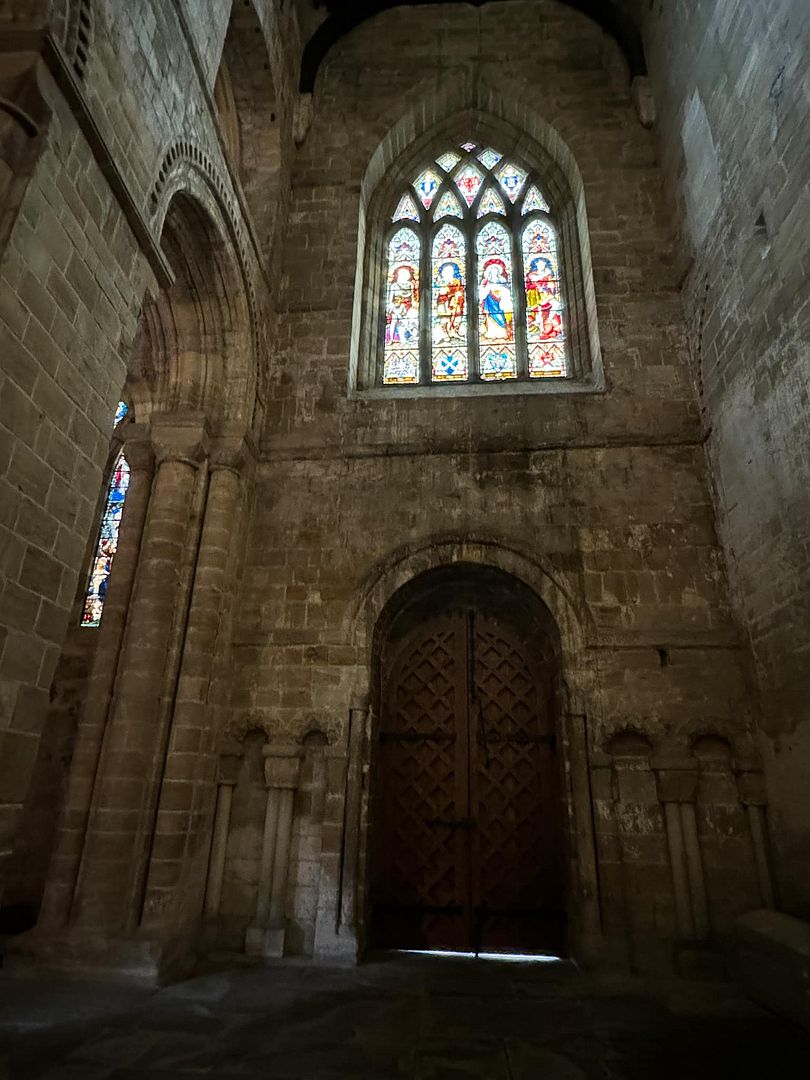
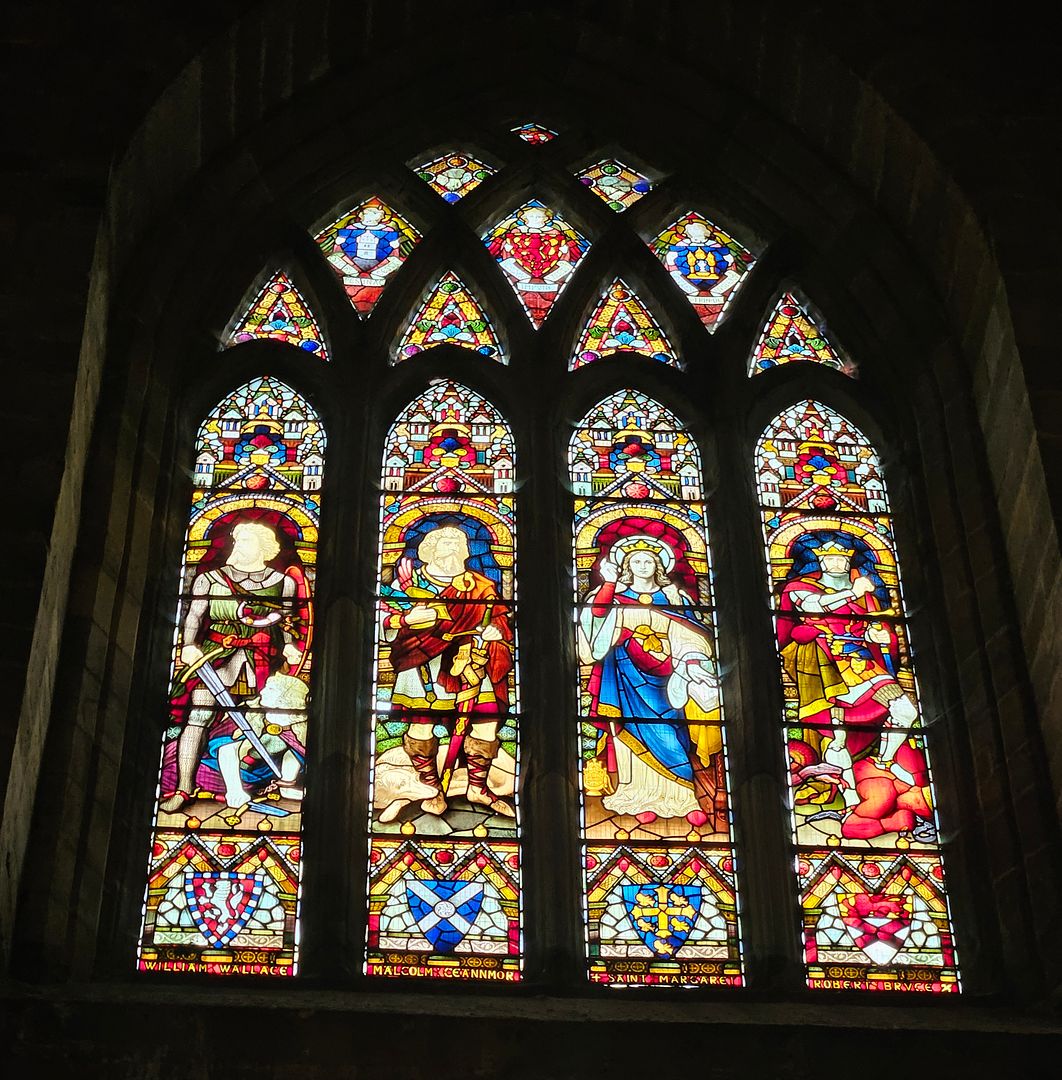
Carnegie Historical Window in Dunfermline Abbey. Left to right: William Wallace, Malcolm III, Queen Margaret and Robert the Bruce.

In 1881, when Andrew Carnegie returned to Dunfermline with his mother Margaret to lay the foundation stone of the world’s first purpose-built Carnegie library, a thought came to mind to offer to the Abbey a commemorative stained glass window of his own design.
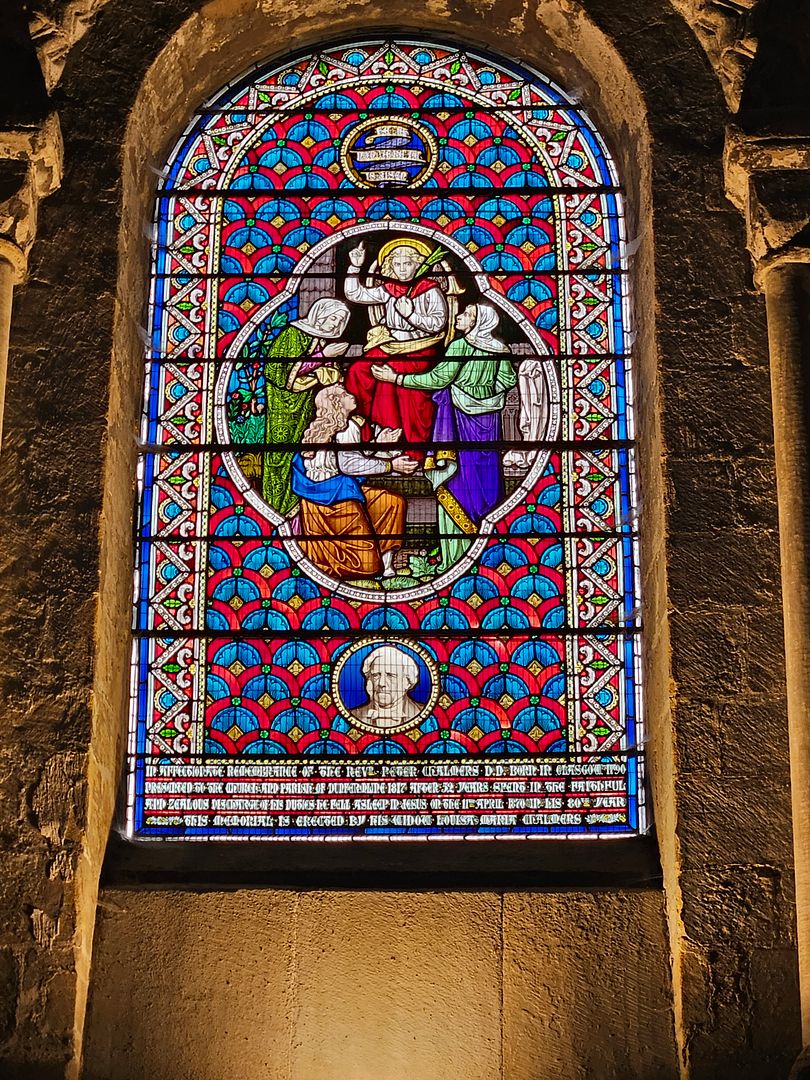
Reverend Doctor Peter Chalmers, 1790-1870

by Dr. Jean Barclay

Peter Chalmers, minister of the Church of Scotland and local historian, was born in Glasgow on September 19th 1790 the only son of Alexander Chalmers, cloth merchant, and his wife Marion Bald.  At the age of sixteen, having done well at school, he went to the University of Glasgow, gaining an MA (or AM) in 1808 and decided to enter the ministry.  He was licensed to preach by the Presbytery of Glasgow in September 1814 and became assistant to the well-known evangelist Rev. Thomas Chalmers (no relation) at St. George`s (Tron) Church. In July 1817 Peter Chalmers was ordained to the Second Charge (or ministry) at Dunfermline Abbey. He arrived just before the removal of the ruins of the old monastic church and the erection of the New Abbey Church on its site in 1818-21 and gave the last sermon in the Auld Kirk in the nave and the first in the New Church. In 1836, on the death of the Rev. Allan MacLean, Chalmers was promoted to the First Charge of the Abbey.
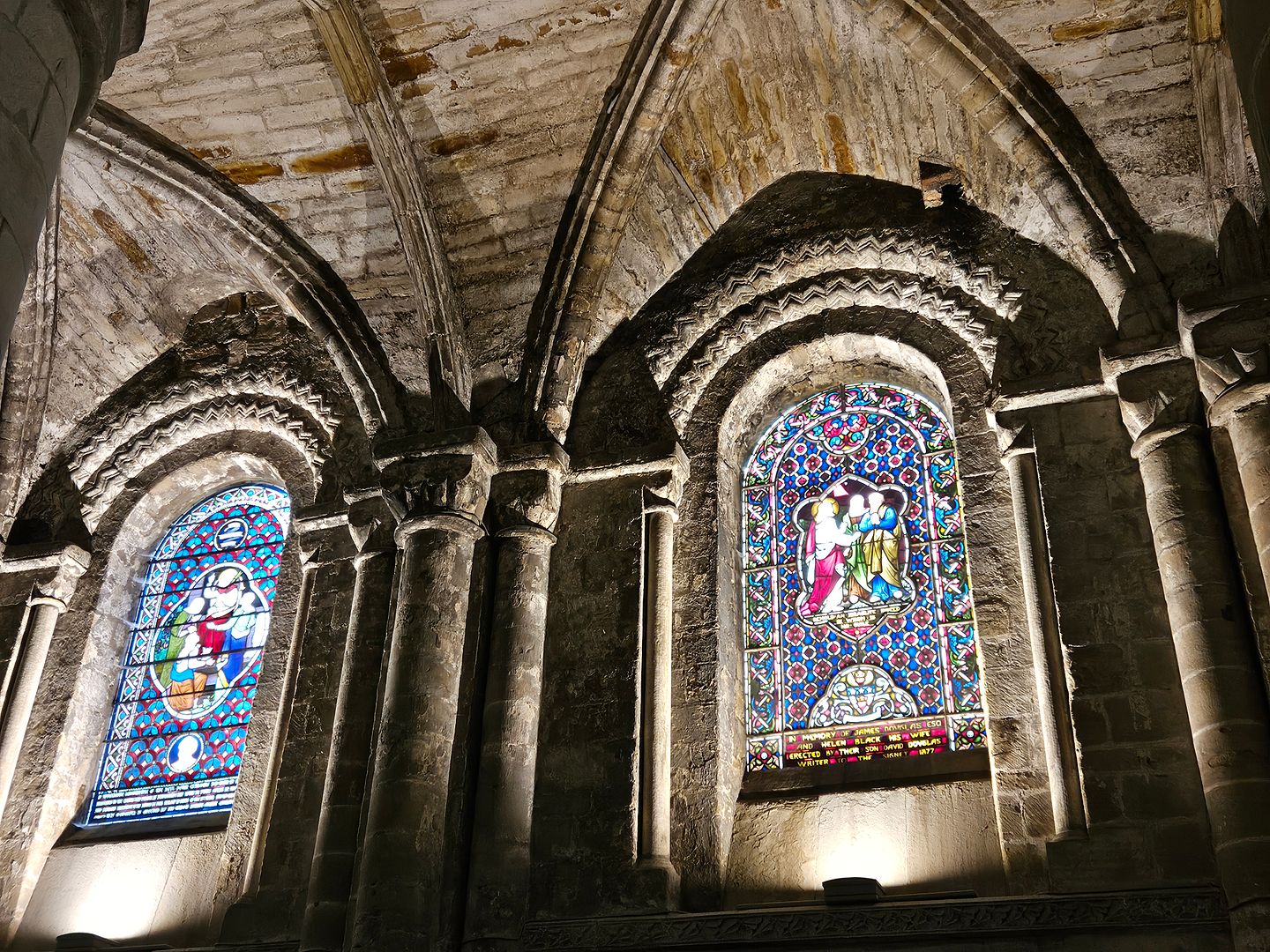
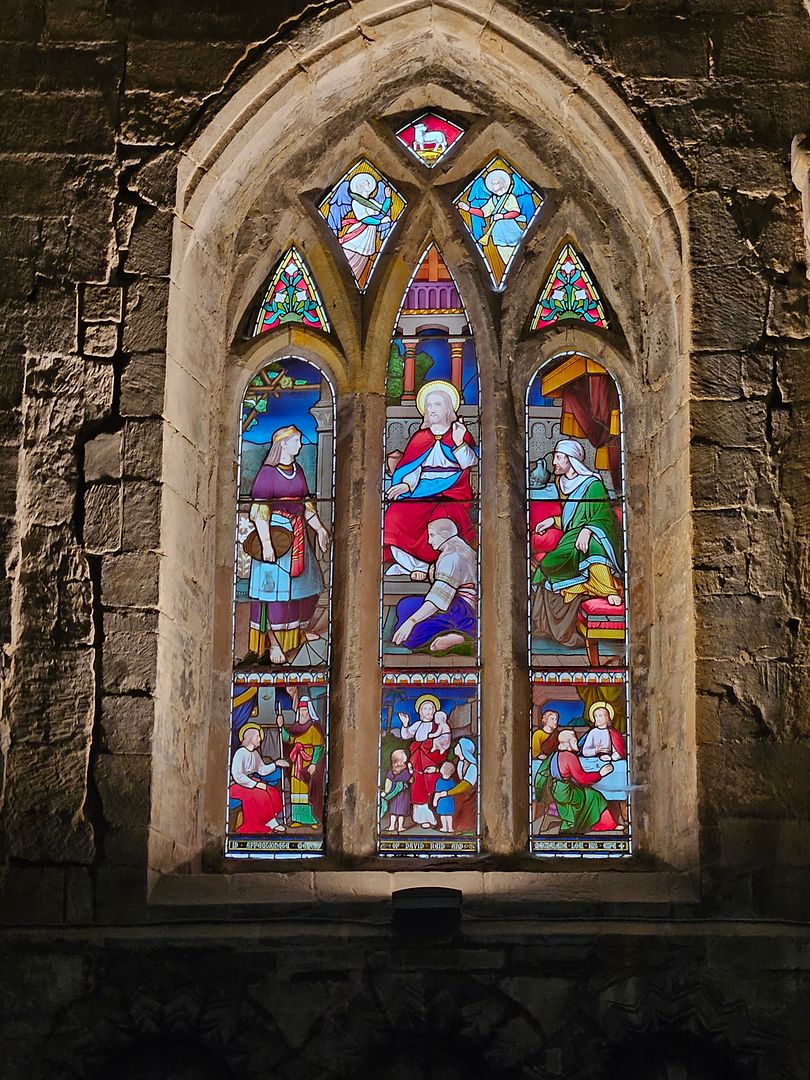
It was not easy to research the stained glass windows in the Abbey and newer section of the church.
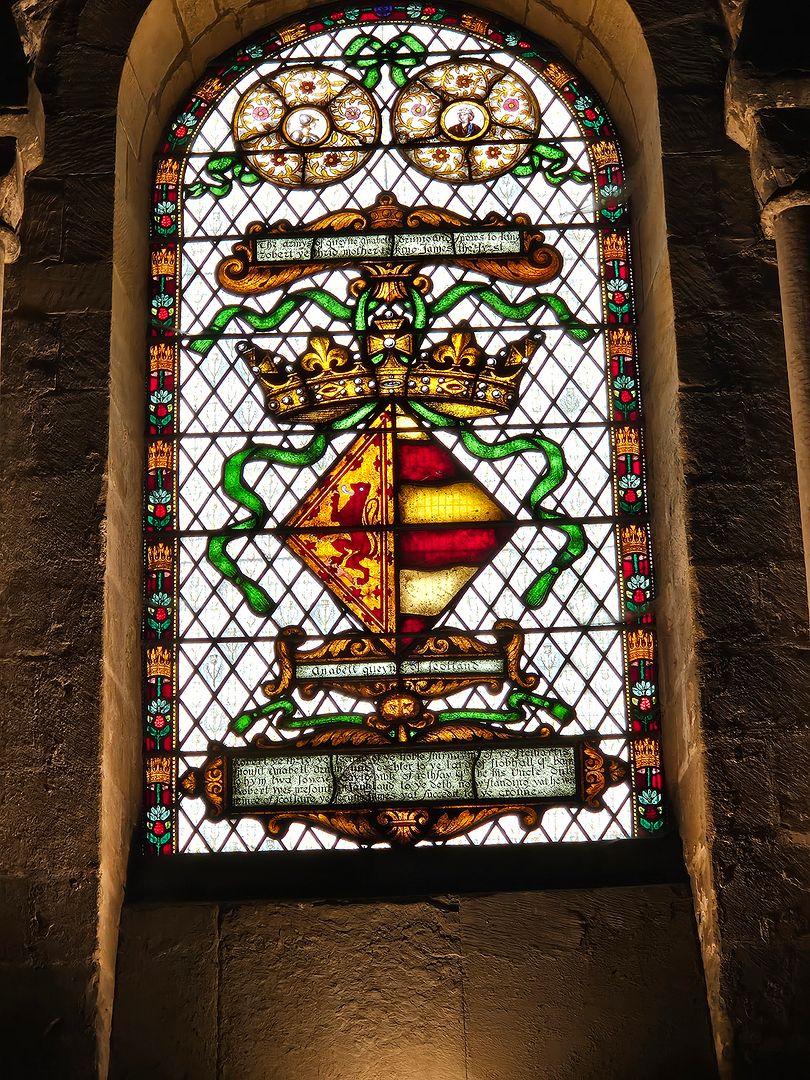
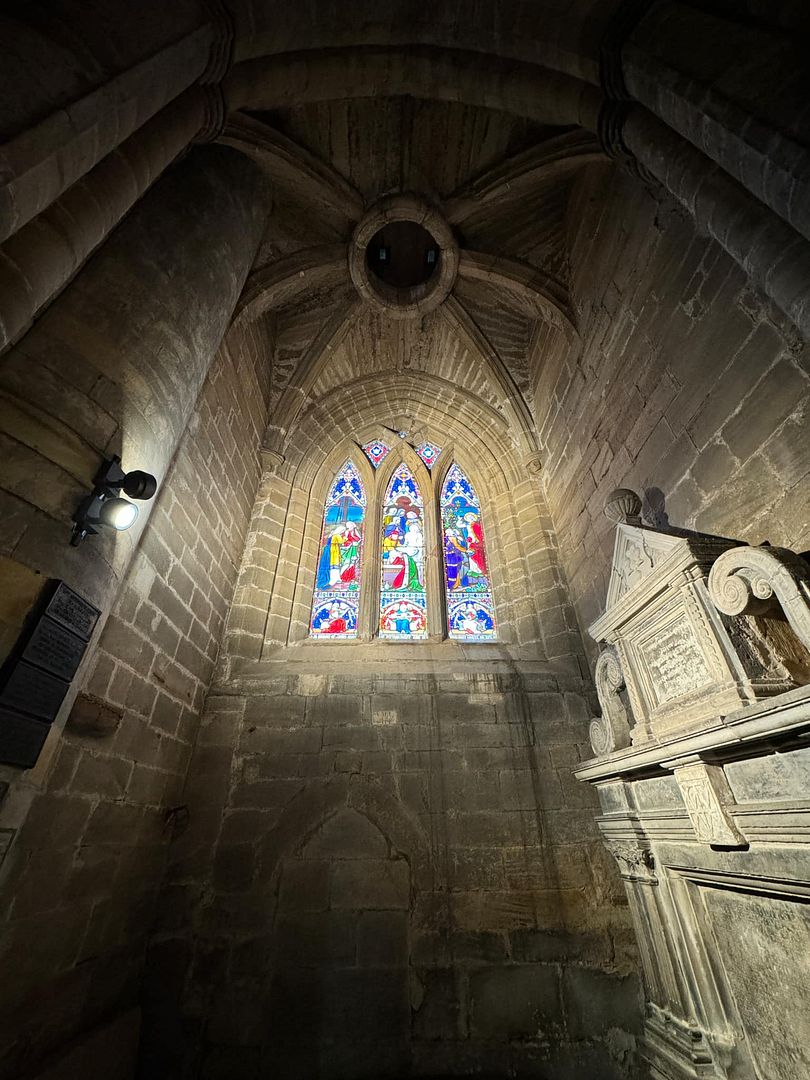
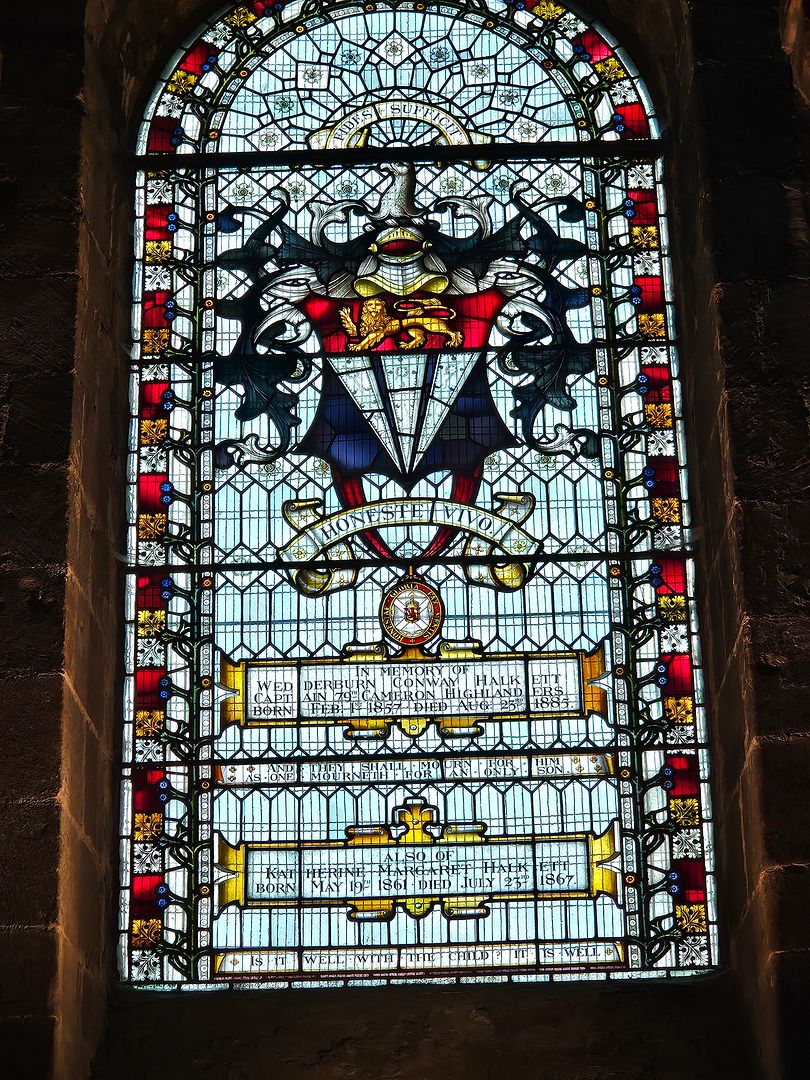
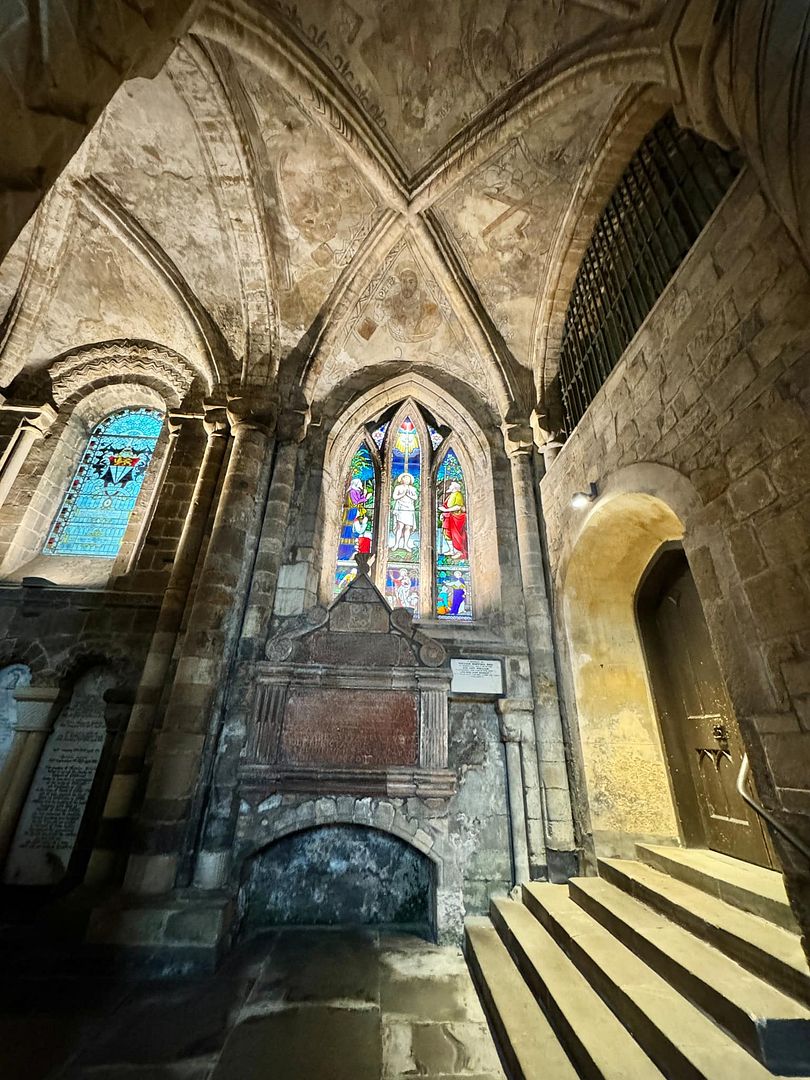
Armorial window
of
Annabella Drummond Queen of Robert III of Scotland .
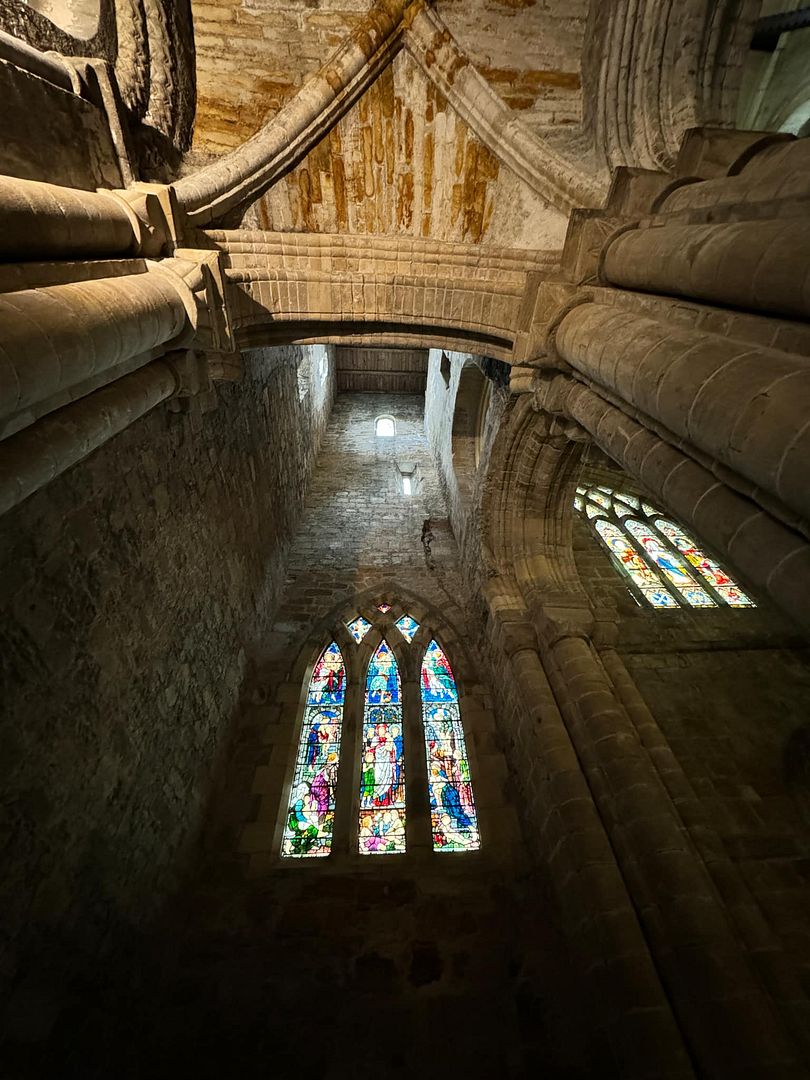
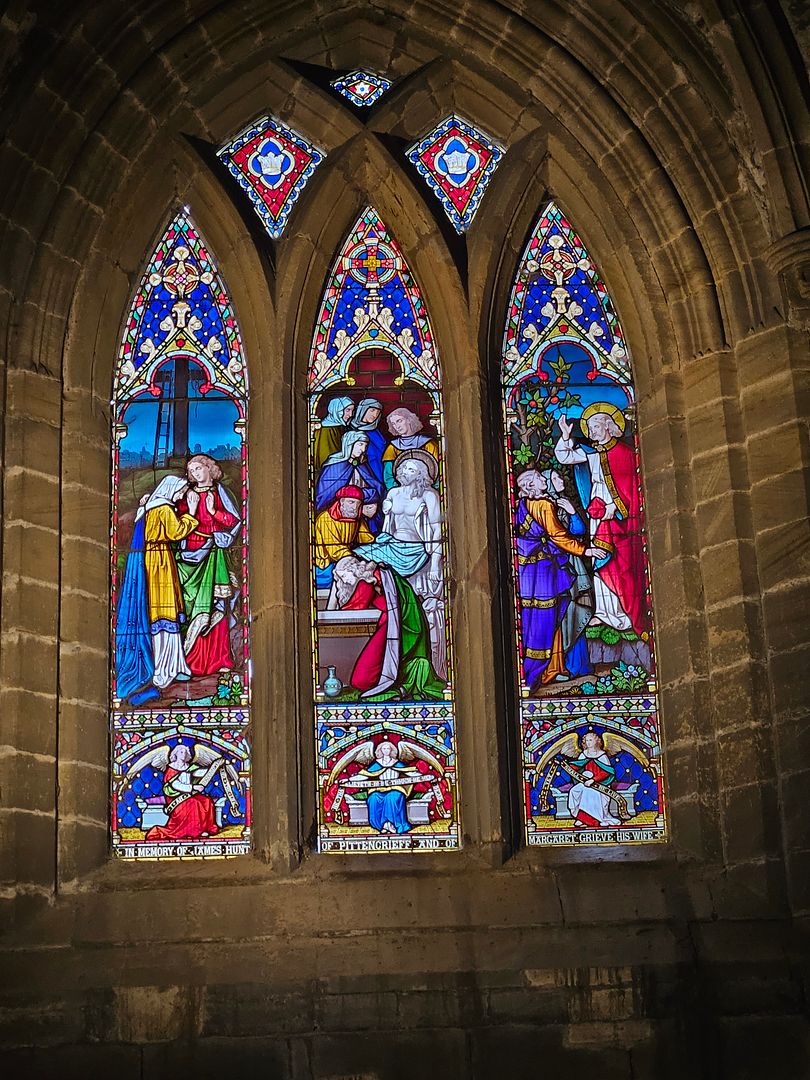
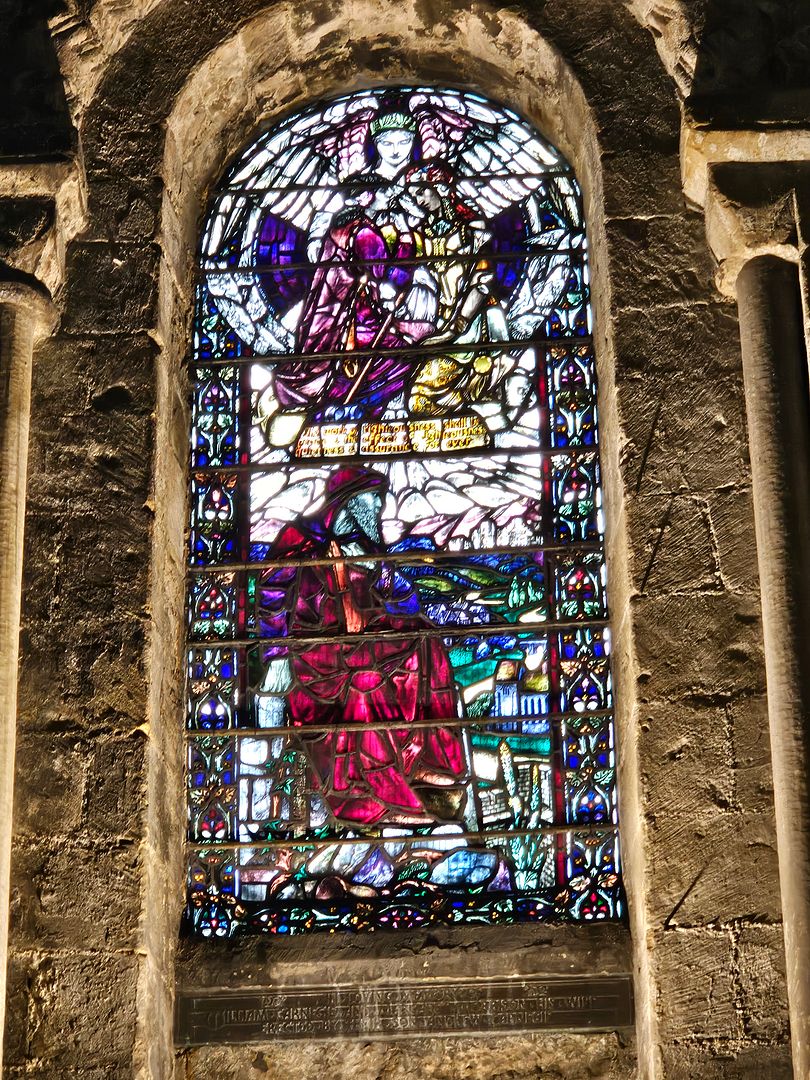
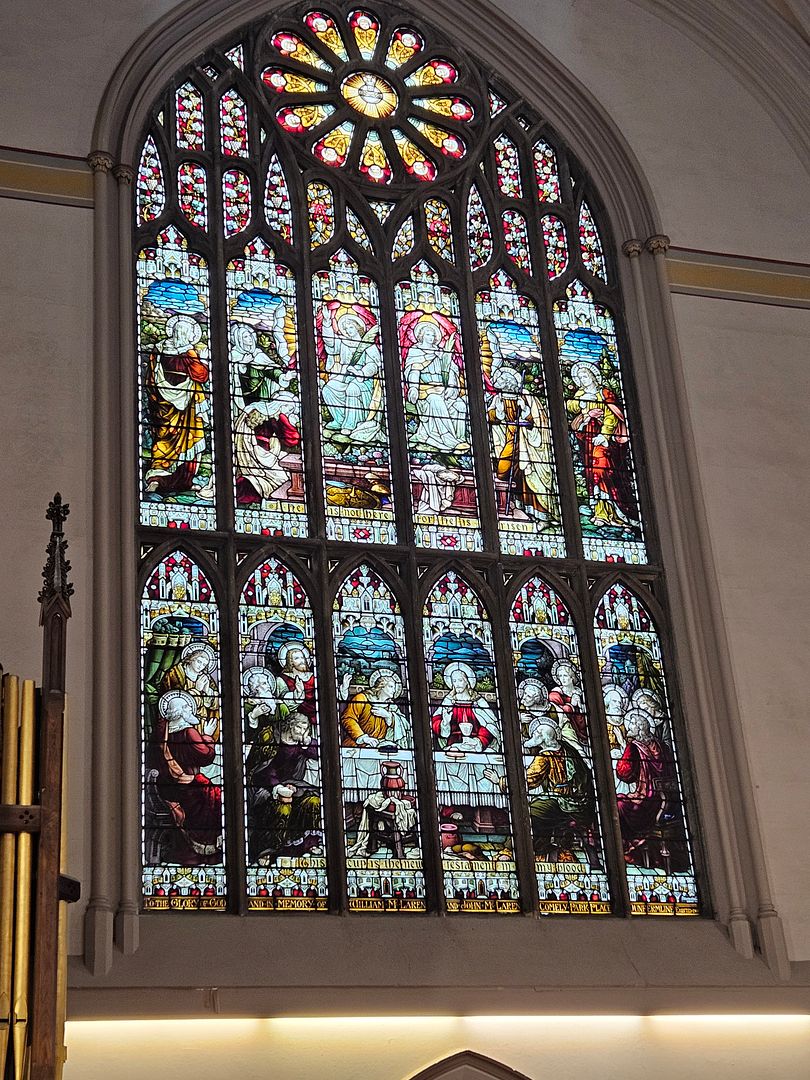
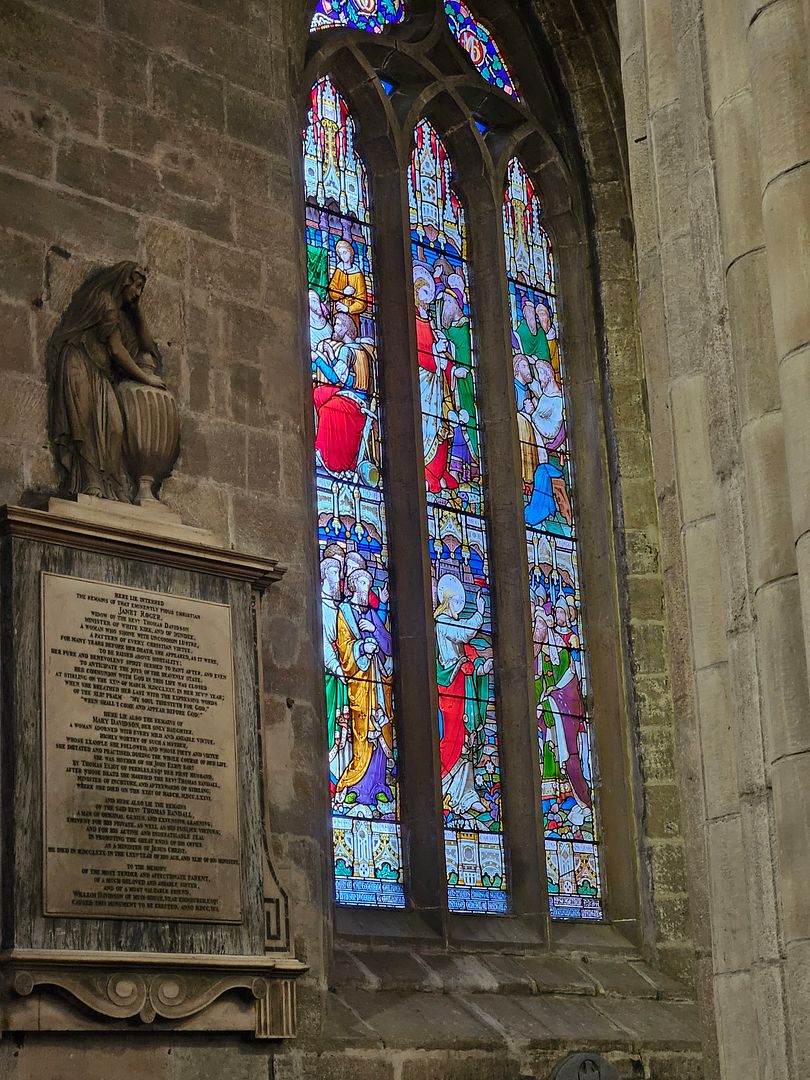
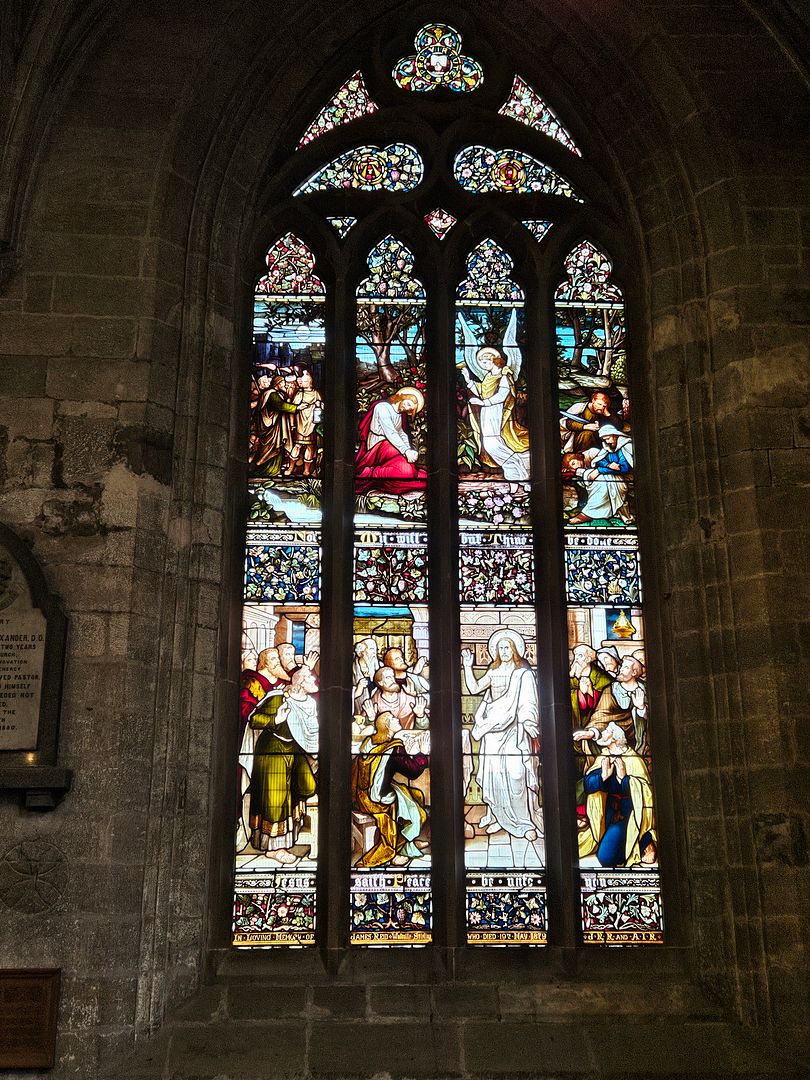
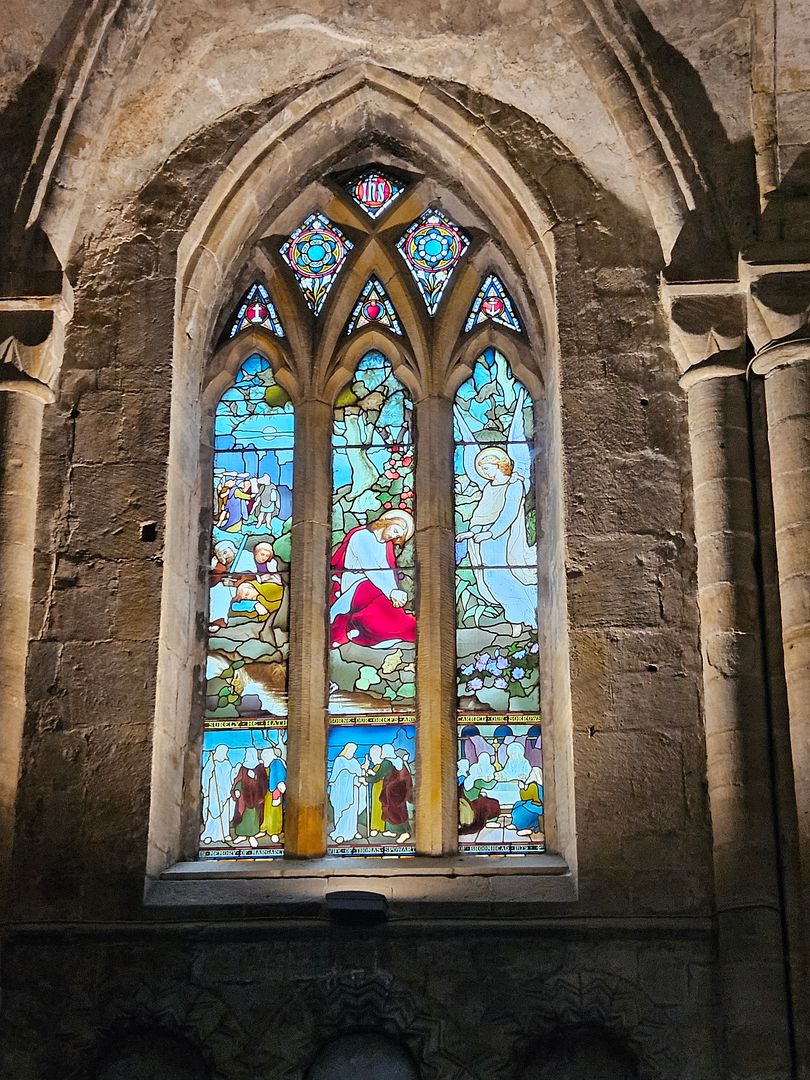
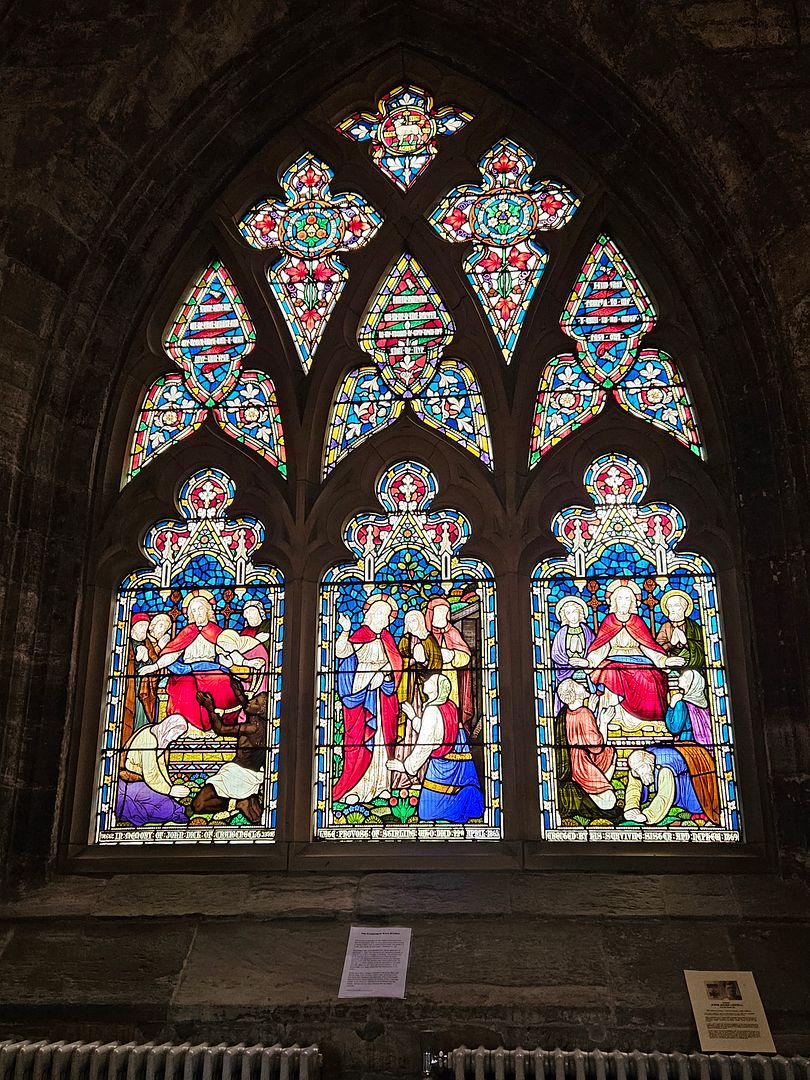
The McLaren Window – Dunfermline Abbey, featuring scenes from the Last Supper and the Resurrection. This stained glass window was erected in 1904 to honour two local brothers William and John McLaren, who stipulated that their own faces should be reproduced among the disciples. Below the Last Supper Window a quote states, ‘This cup is the New Testament in my Blood.’

In the Resurrection Window, Mary Magdalene can be seen kneeling alongside the two Mary’s above a quote that states: ‘He is not here, for he is risen.’ To the right of Mary Magdalene are weapons and armour belonging to a Roman Soldier, including what appears to be the ‘Holy Lance’ otherwise known as the ‘Spear of Destiny…’
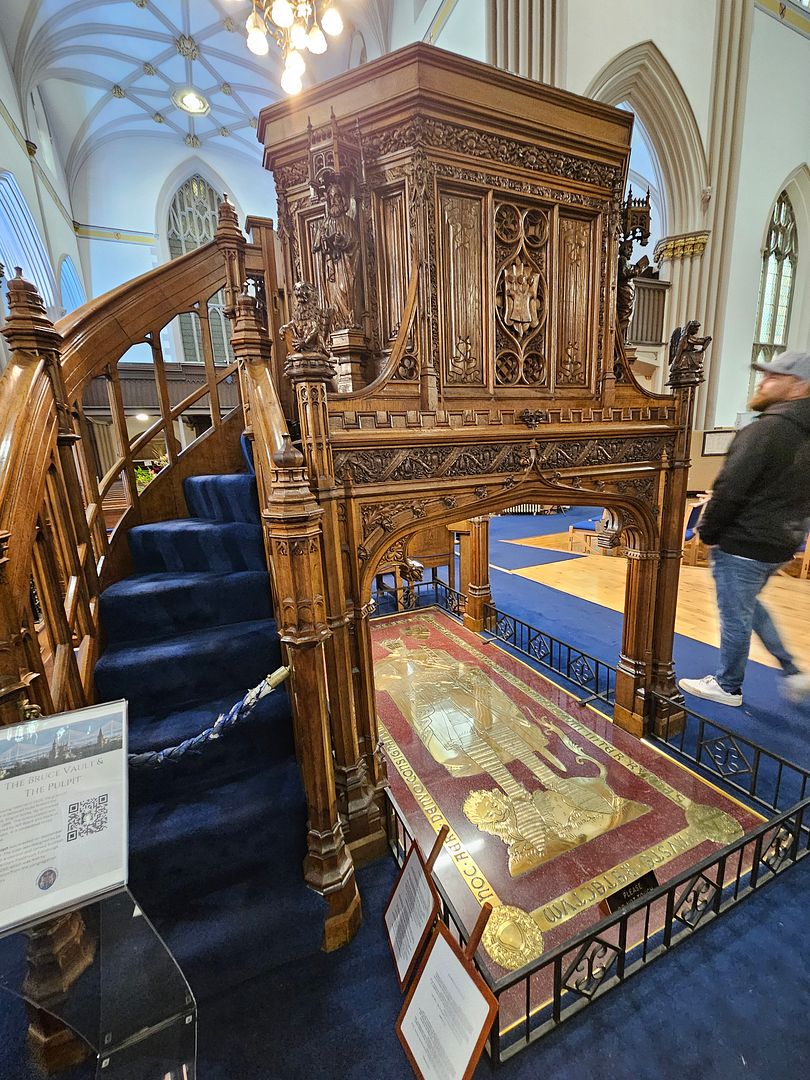
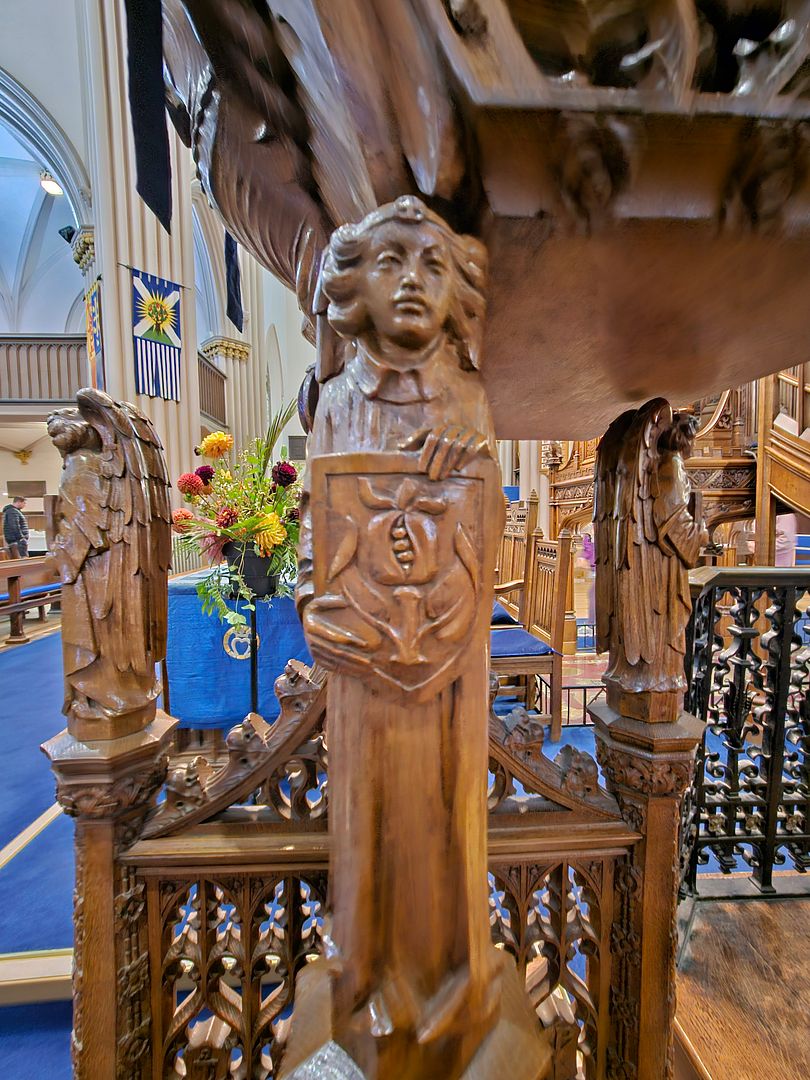
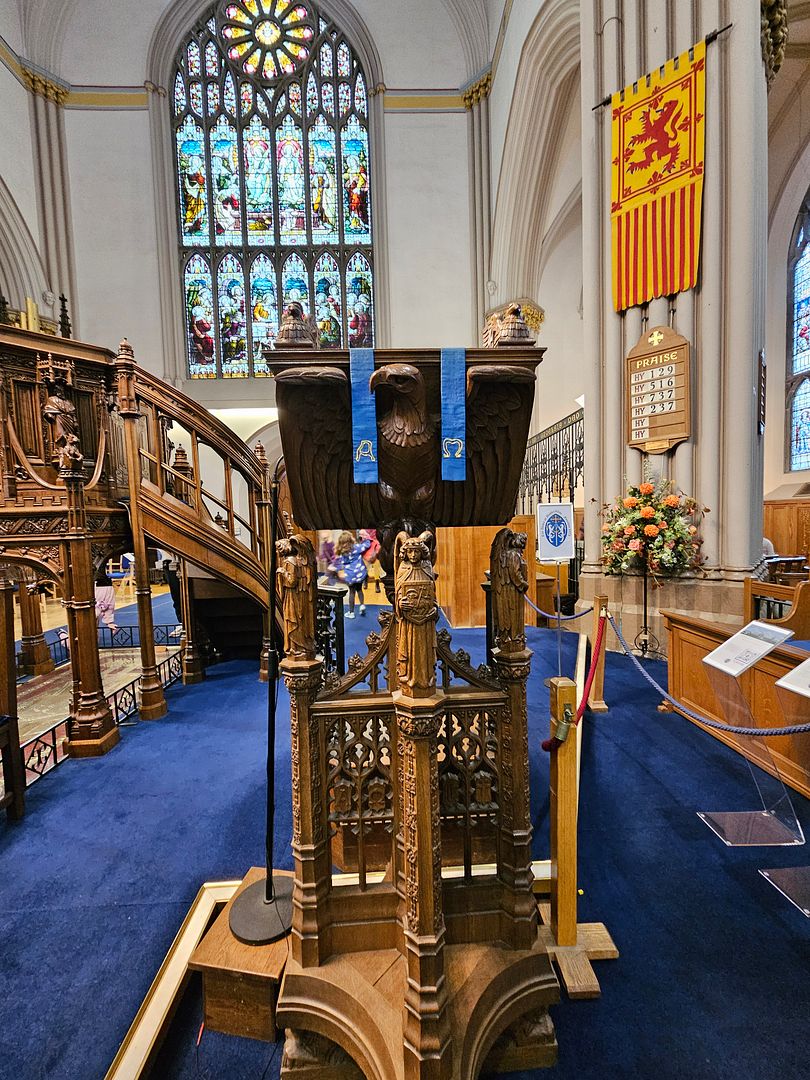
The chancel is such a contrast to the empty, echoing nave; the grave of Robert the Bruce is striking, but it is rather oddly tucked under the pulpit, surrounded by Victorian woodwork, so it isn’t the easiest thing to see closely.
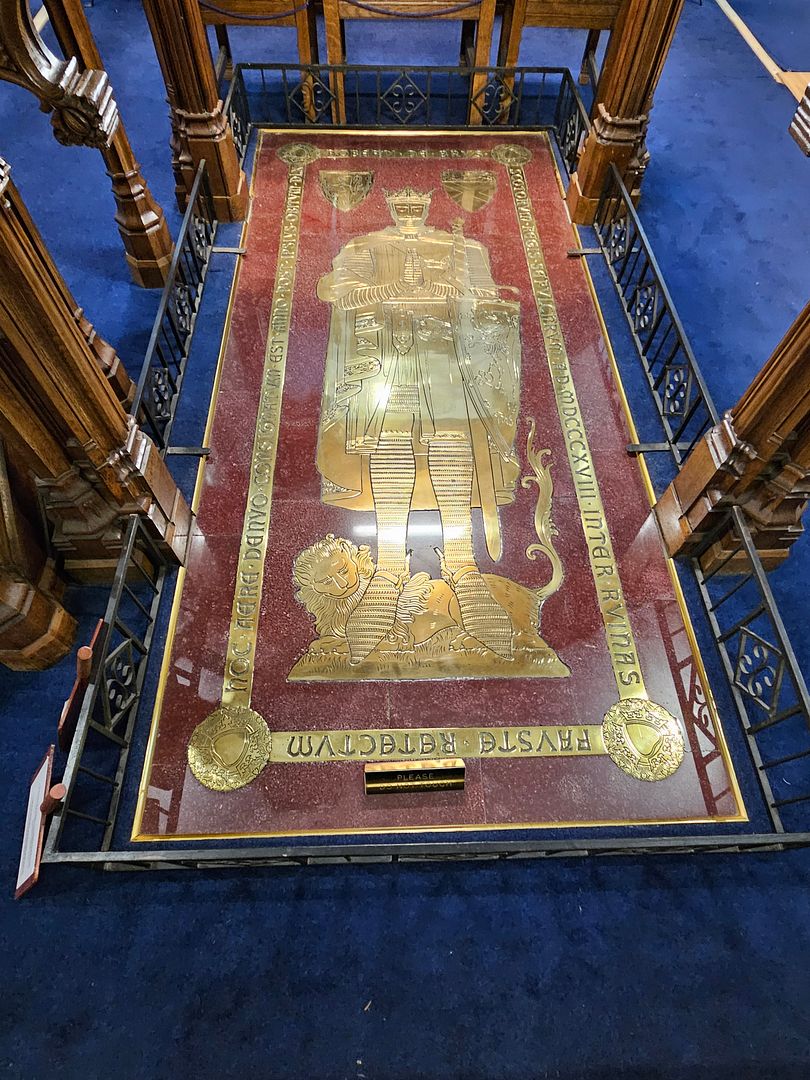
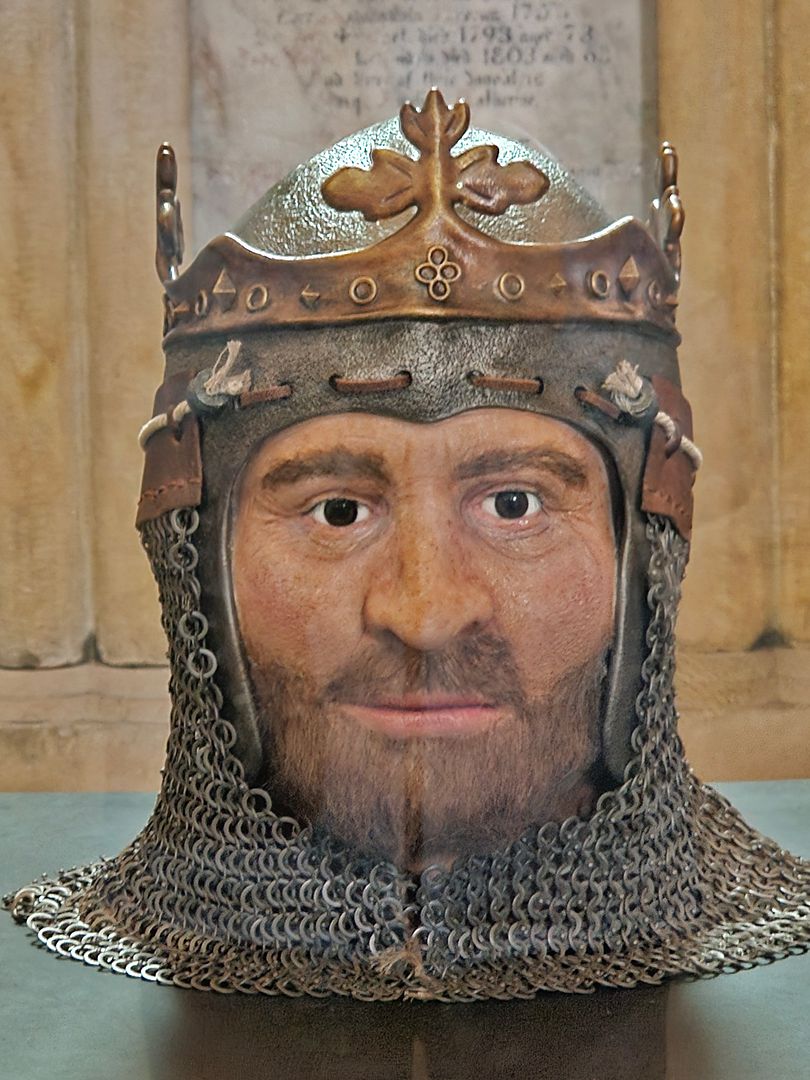
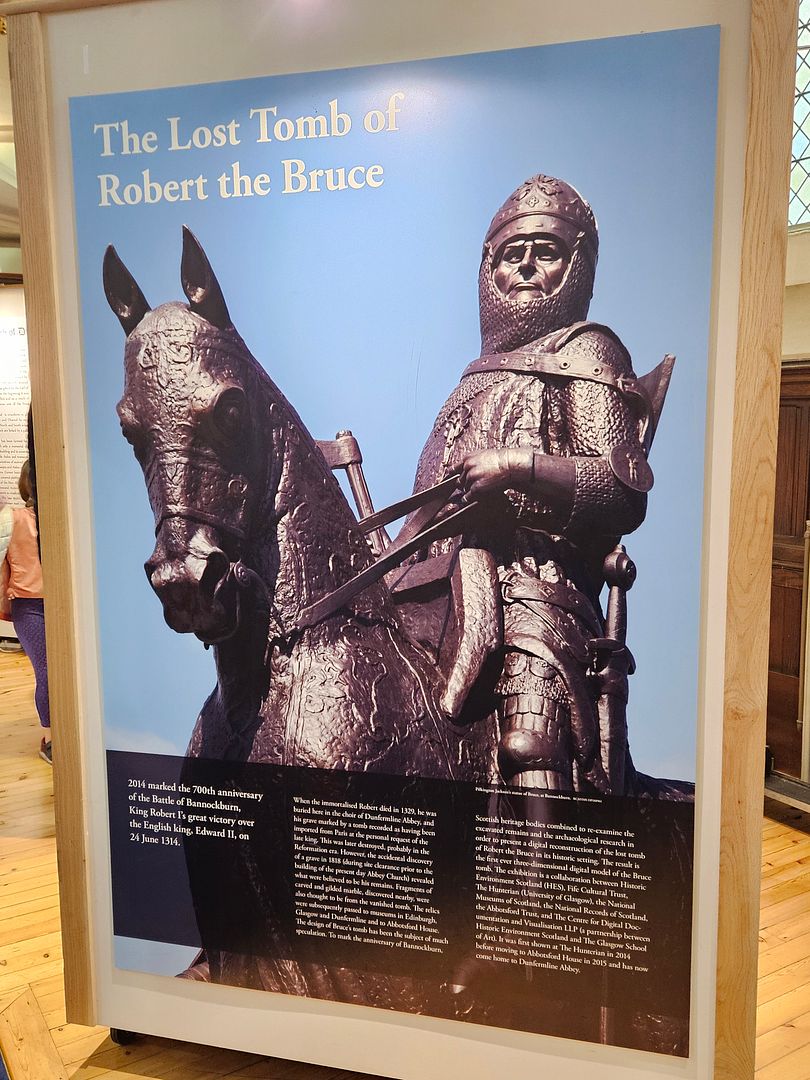
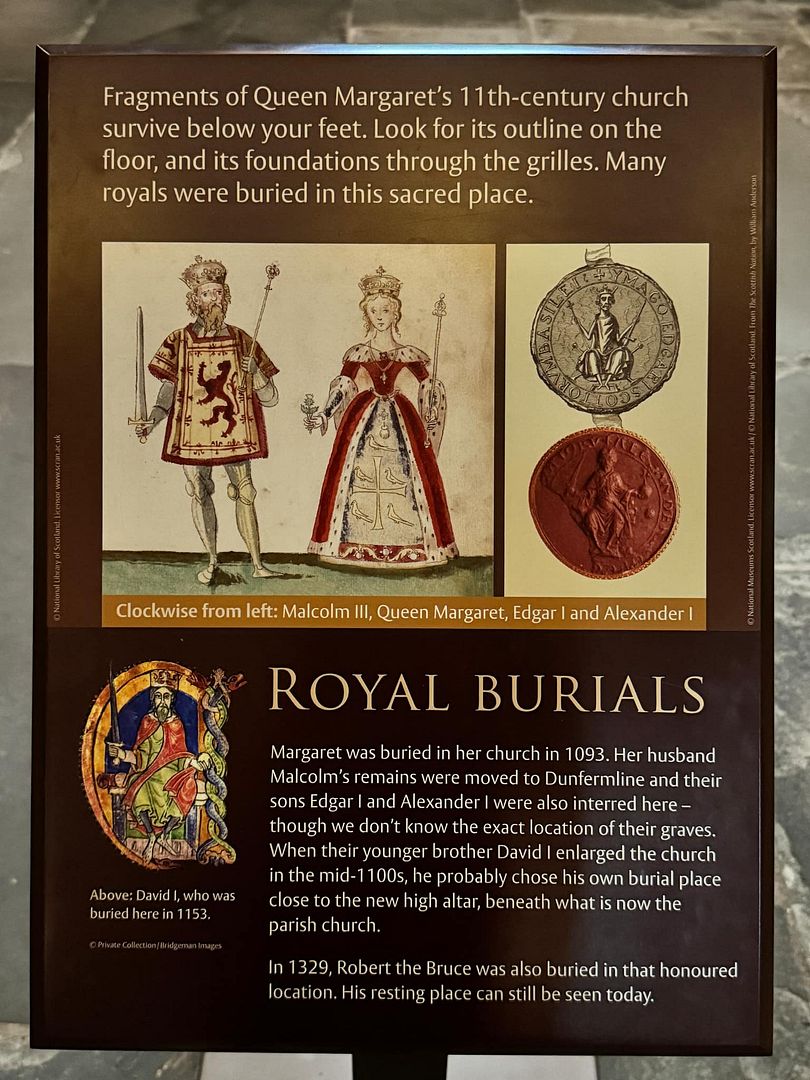
Robert the Bruce was buried, in 1329, in the choir, now the site of the present parish church. Bruce’s heart rests in Melrose, but his bones lie in Dunfermline Abbey, where (after the discovery of the skeleton in 1818) they were reinterred with fitting pomp below the pulpit of the New church. In 1891, the pulpit was moved back and a monumental brass inserted in the floor to indicate the royal vault.
 

When and if I find more information about some of the windows we photographed I’ll add the information to this post.

On this Saturday the 21st of September we also toured the remains of the castle which will be another post.

It’s always after the fact that I learn so much more about the places we visited. One of the things I didn’t know about Dunfermline is that Andrew Carnegie was born in Dunfermline and the Andrew Carnegie Galleries and Library are in the town.

Back to the present: We are moving into the Martin Luther King Jr. weekend with many folks getting Monday as a holiday in the USA to honor the memory of him. Hope you all have a good weekend.
Scotland Travel Journal ~ Dunfermline

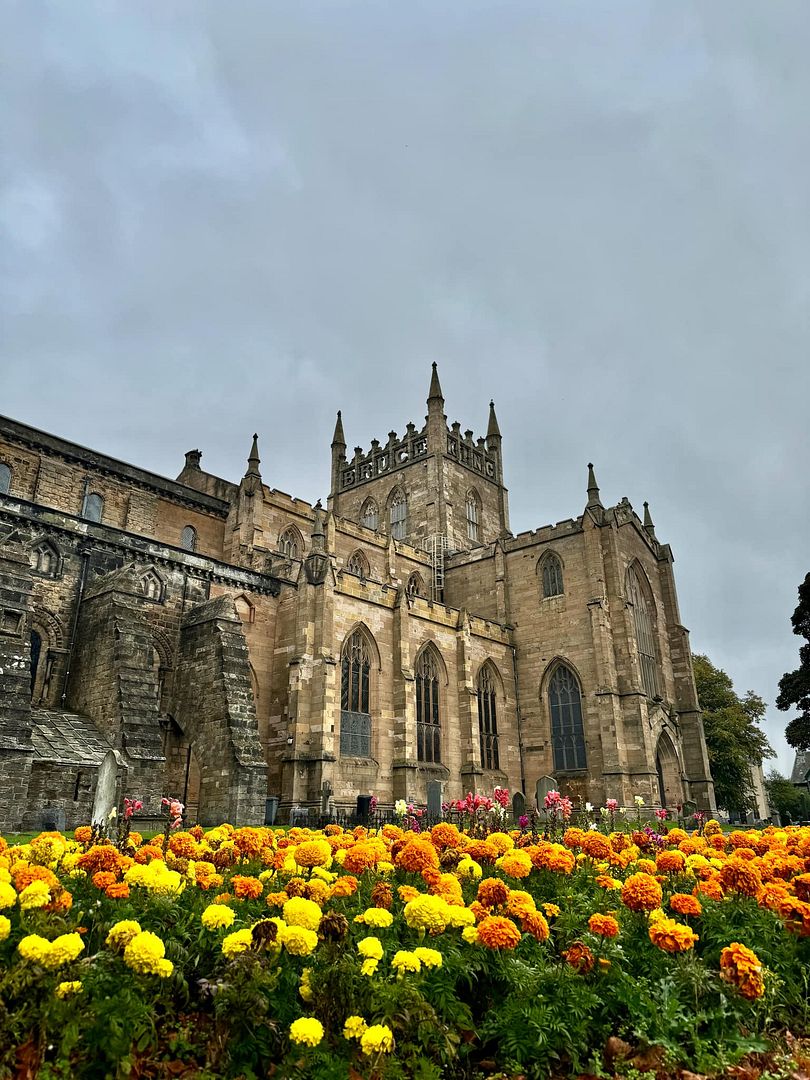
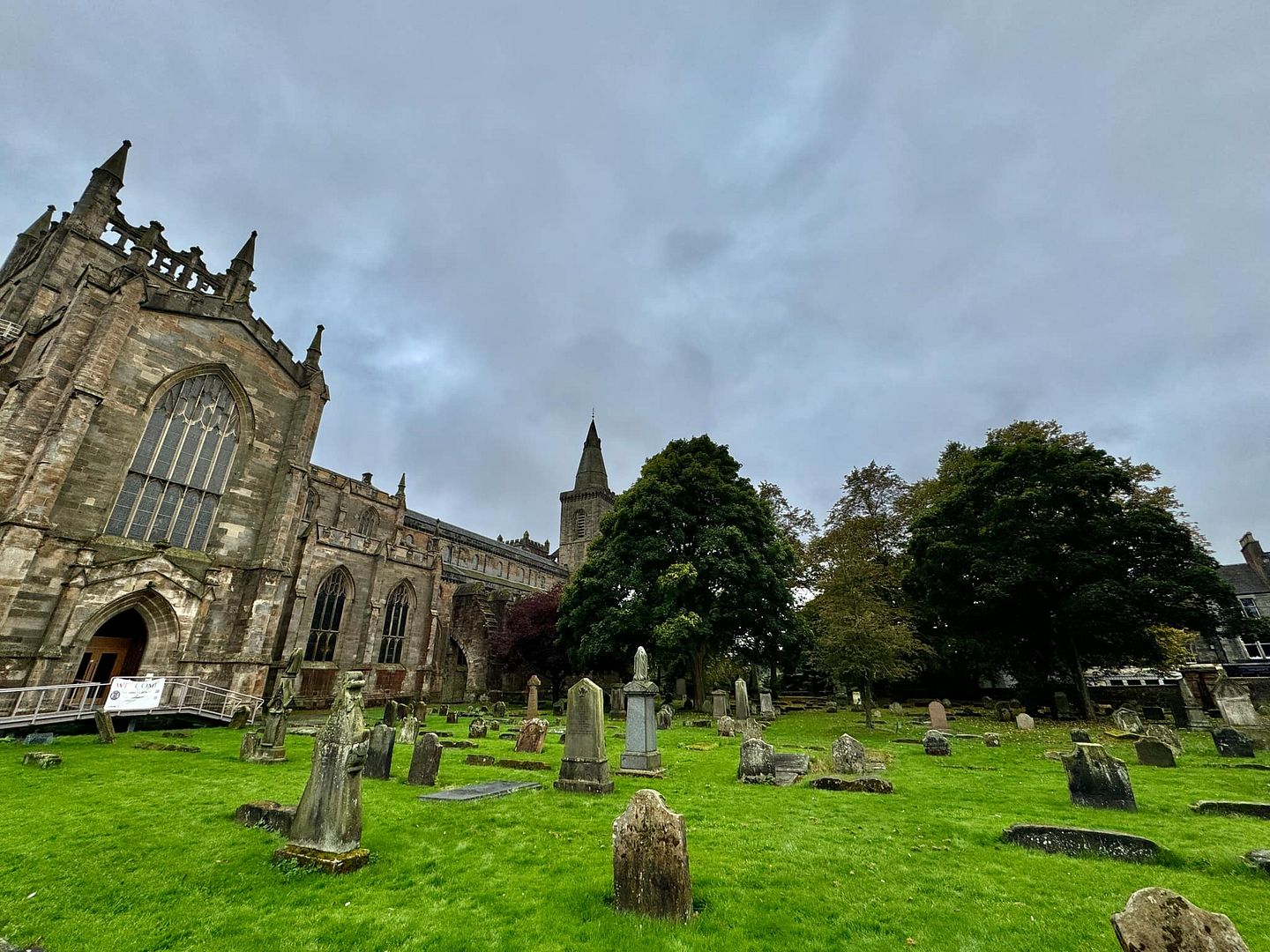
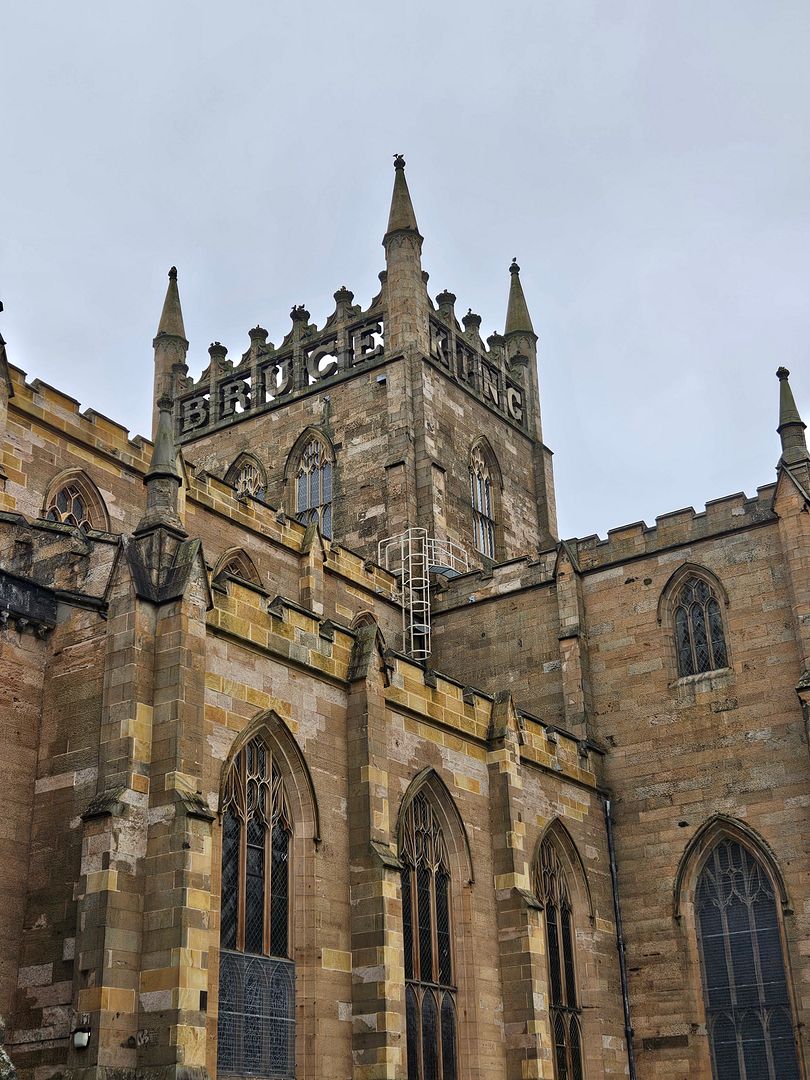
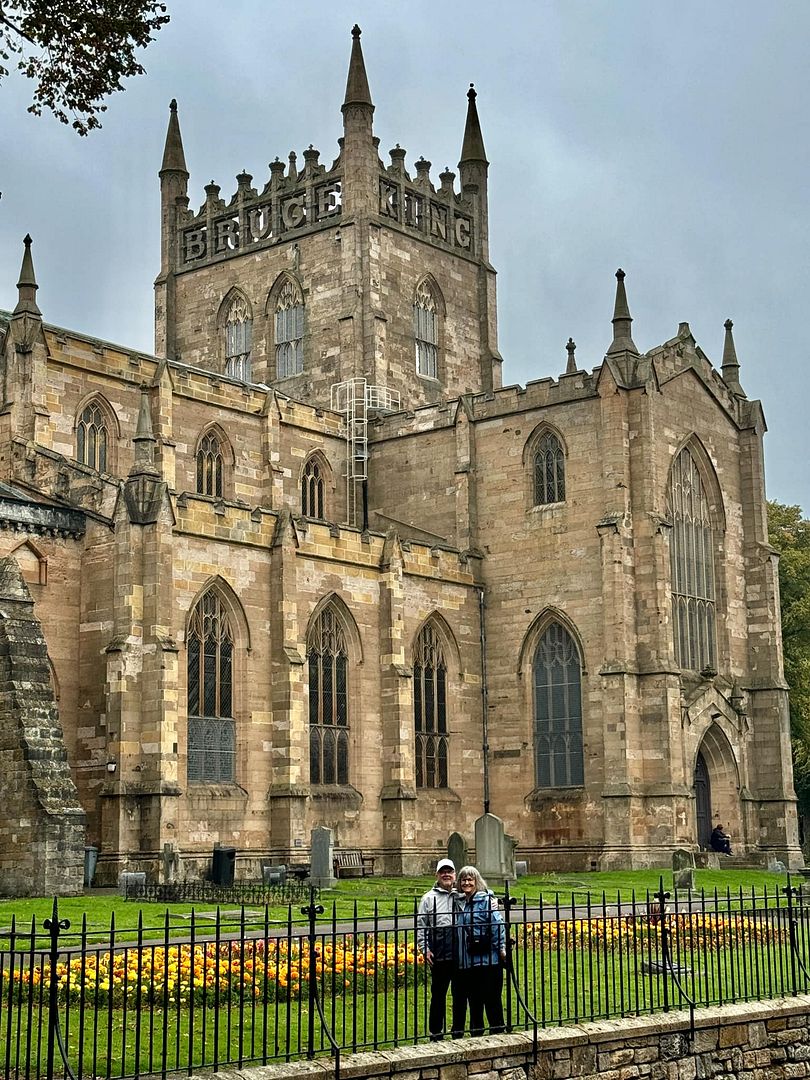
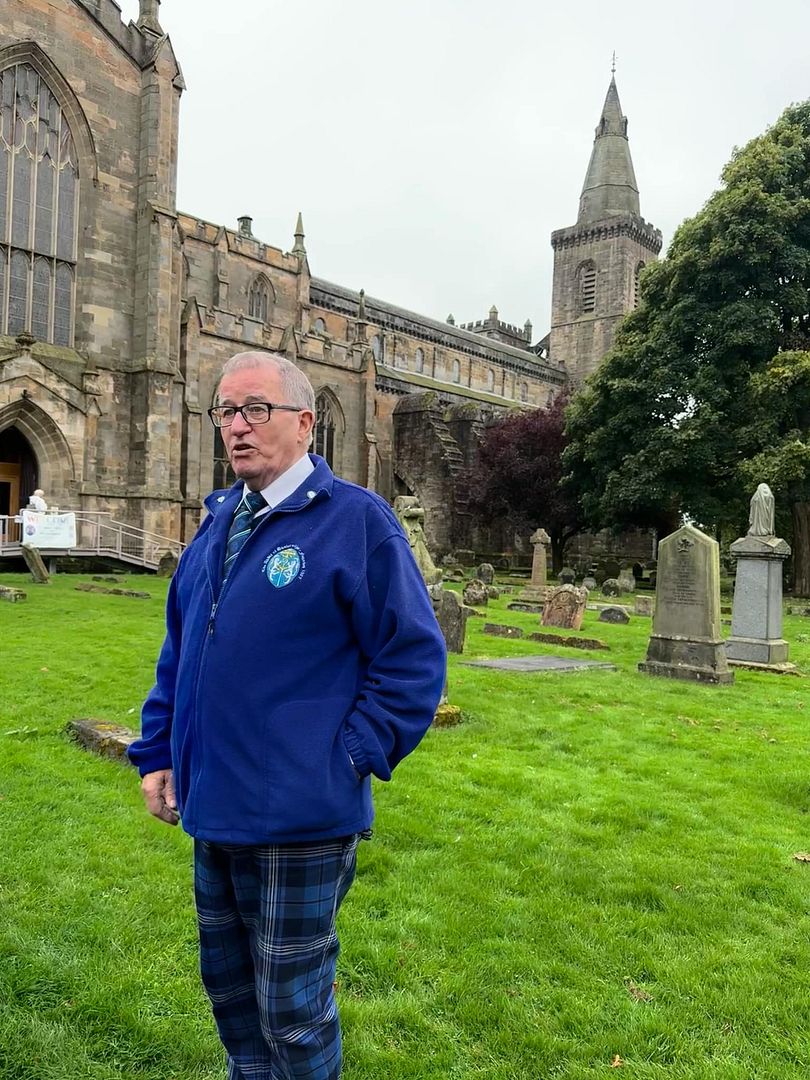
On Saturday the 21st of September after our breakfast at Pinewood Country House we packed up and started our travels to return our rental car in Stirling with a stop on the way to visit Dunfermline Abbey and Palace.

We took many photos here and the history was more than we could take in on our visit. Here’s a link to some of the history for those of you who are interested. 

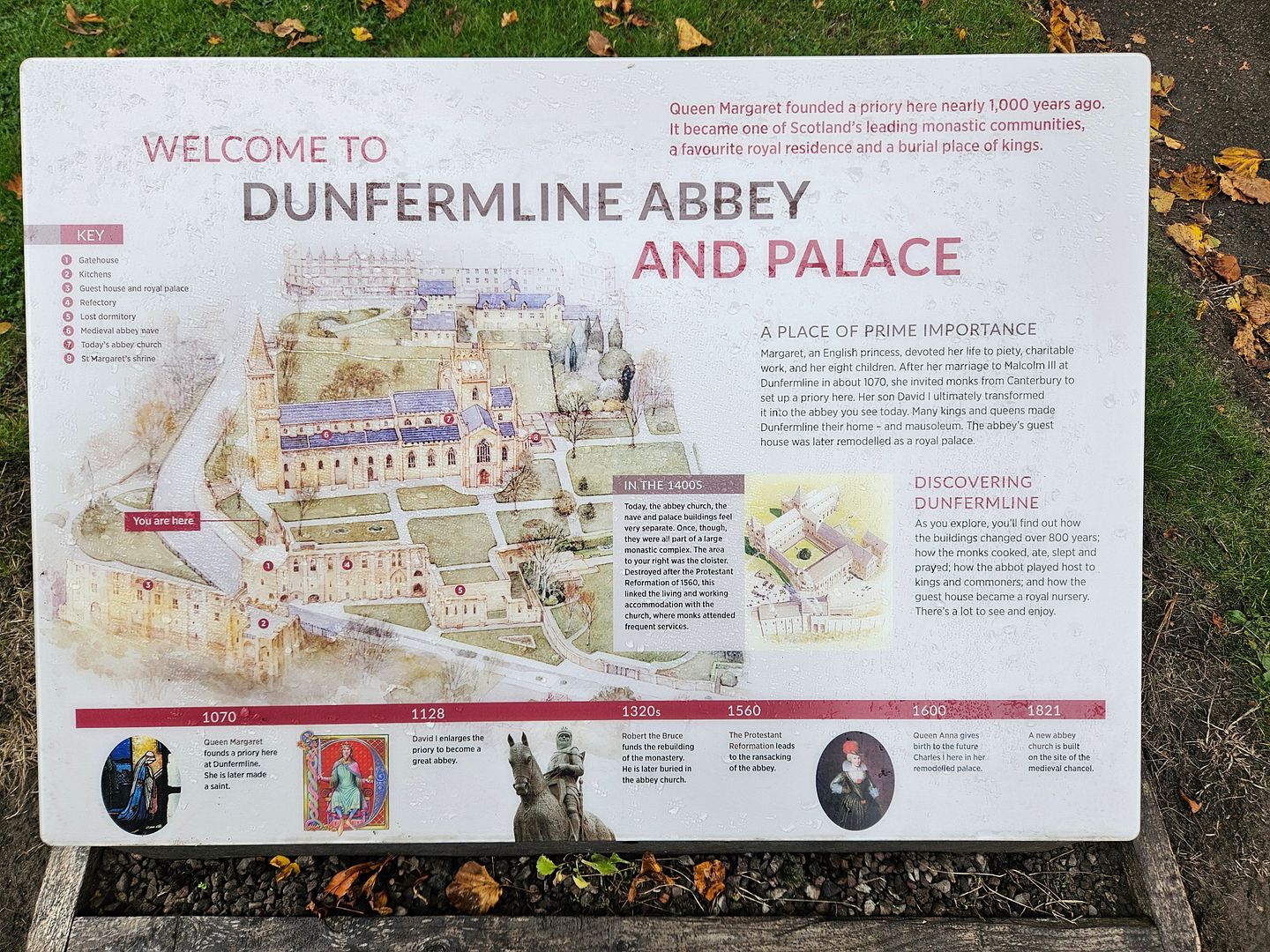
I got the following information from the Visit the Abbey site.

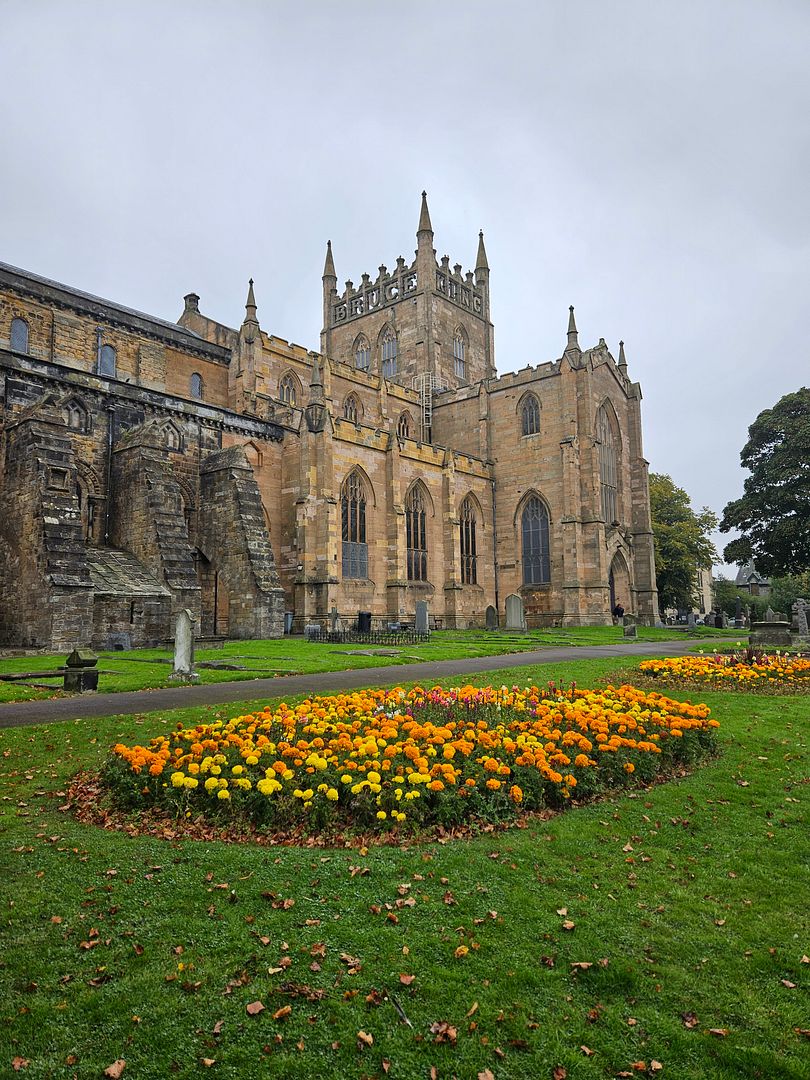
Dunfermline Abbey sits at the heart of Dunfermline, Scotland’s ancient capital. Dunfermline lies thirty minutes from the centre of Edinburgh, across the spectacular Forth Bridges. Dunfermline`s royal and monastic past dominates a town whose lifeblood is history. Dunfermline Abbey is the final resting place of King Robert the Bruce and the post-Iona burial site of the Kings and Queens of Scotland.
The tomb of King Robert the Bruce and many other royal and historical associations attracts tens of thousands of visitors each year.

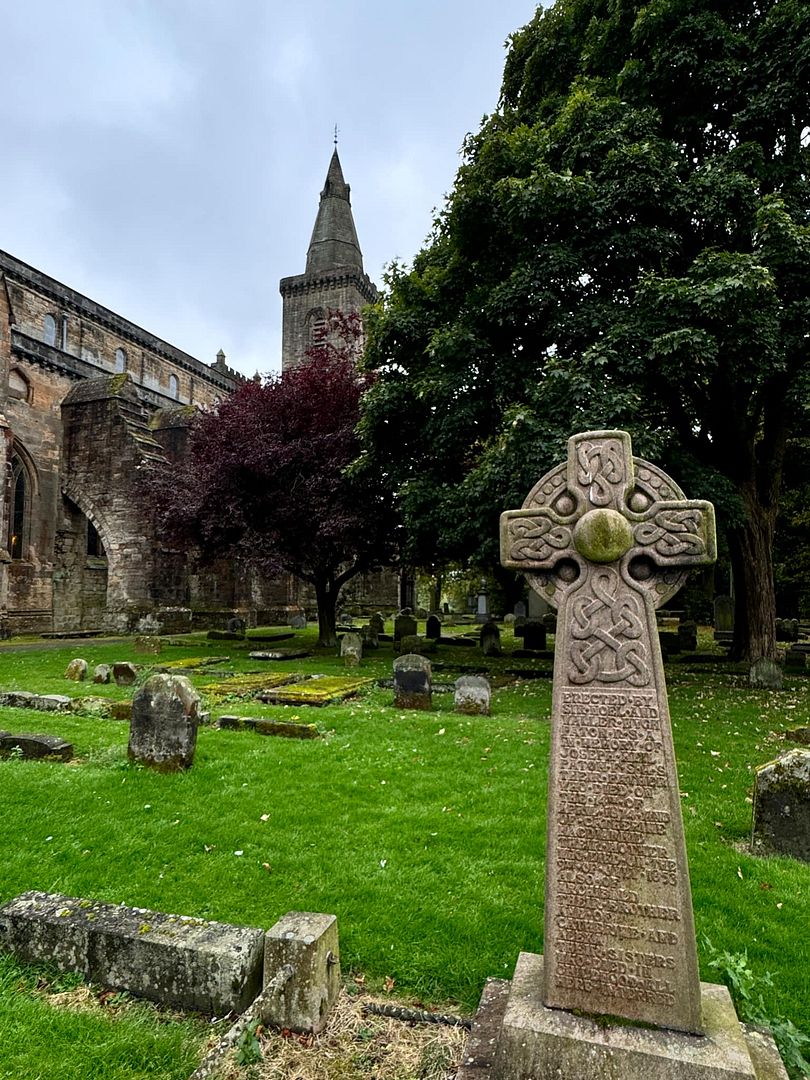
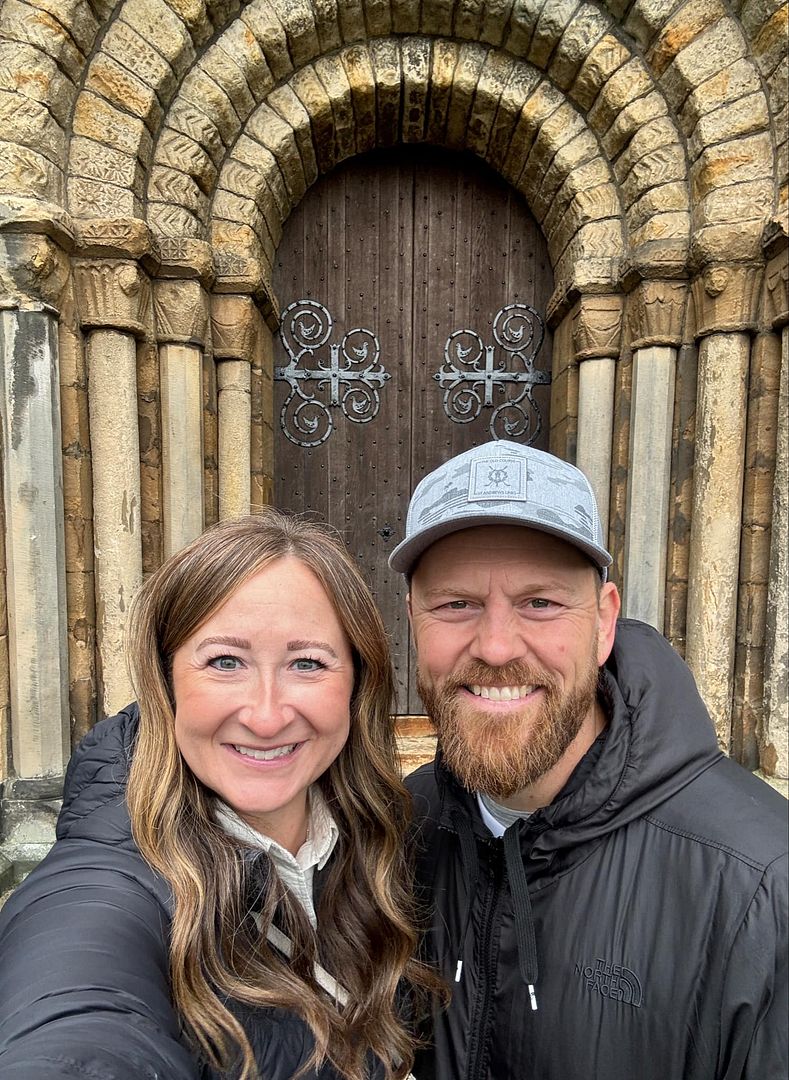
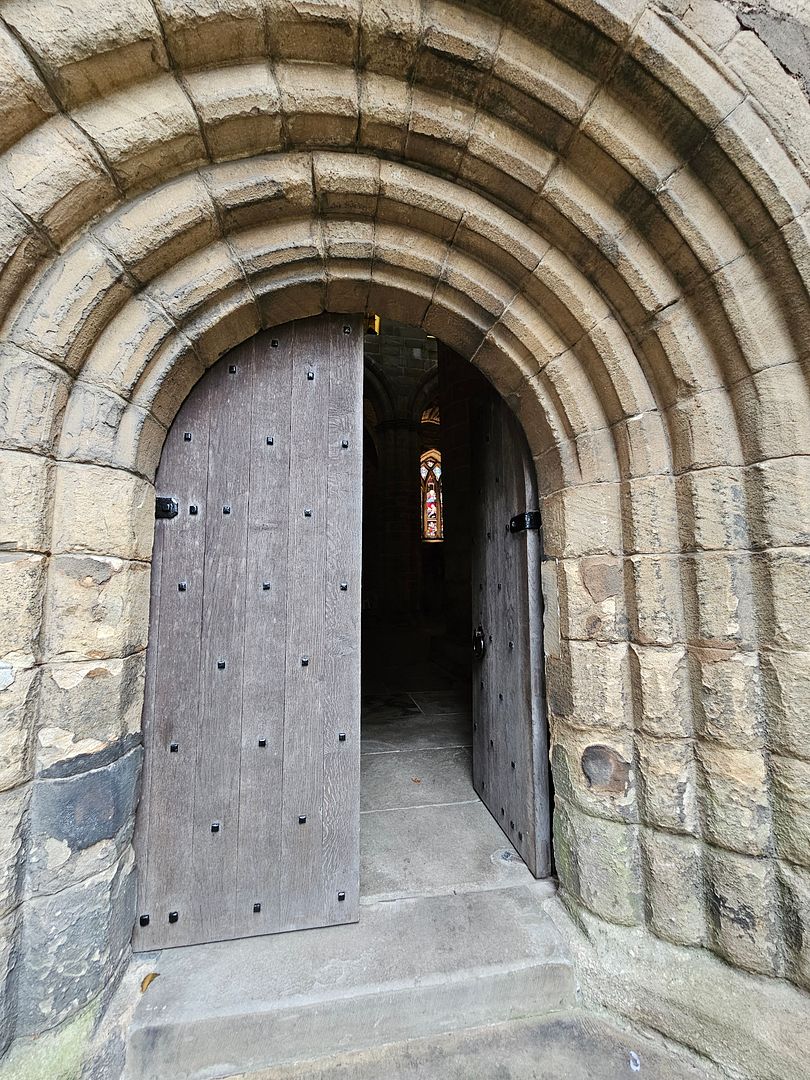
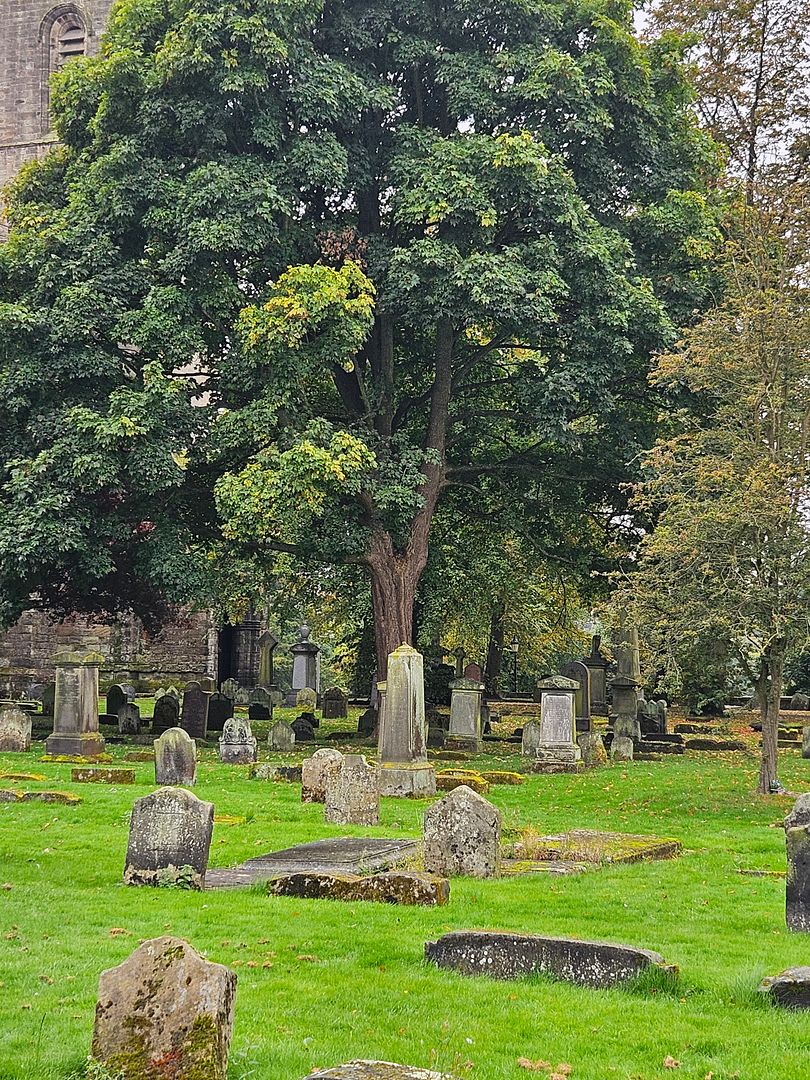
I’ll have the outdoor photos of the Abbey today and post the interior of the church  and the Palace ruins on another day.

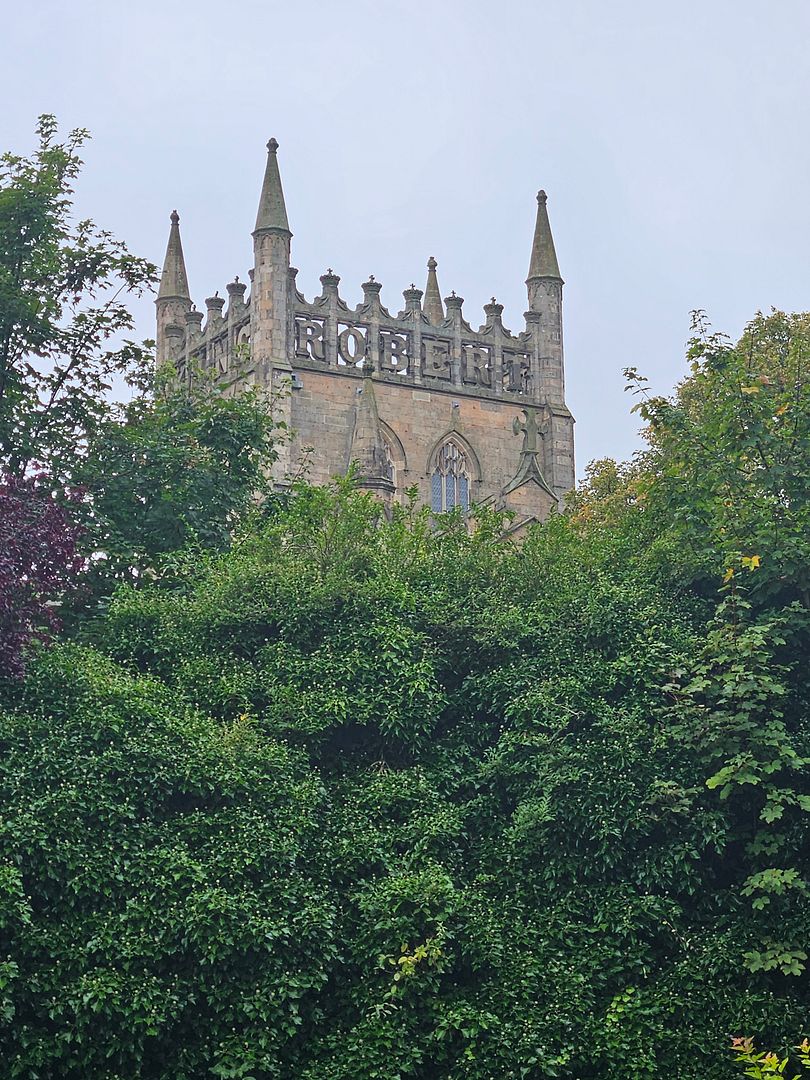
Robert the Bruce is one of the most memorable kings of Scotland, reigning from 1306 to 1329. He was a nobleman from the south west of the country, most famous for his victory at the Battle of Bannockburn and gaining his nation’s crown and independence with the Declaration of Arbroath in the early 14th century.

Robert I, known as Robert the Bruce, was the king of the Scots who secured Scotland’s independence from England.
 

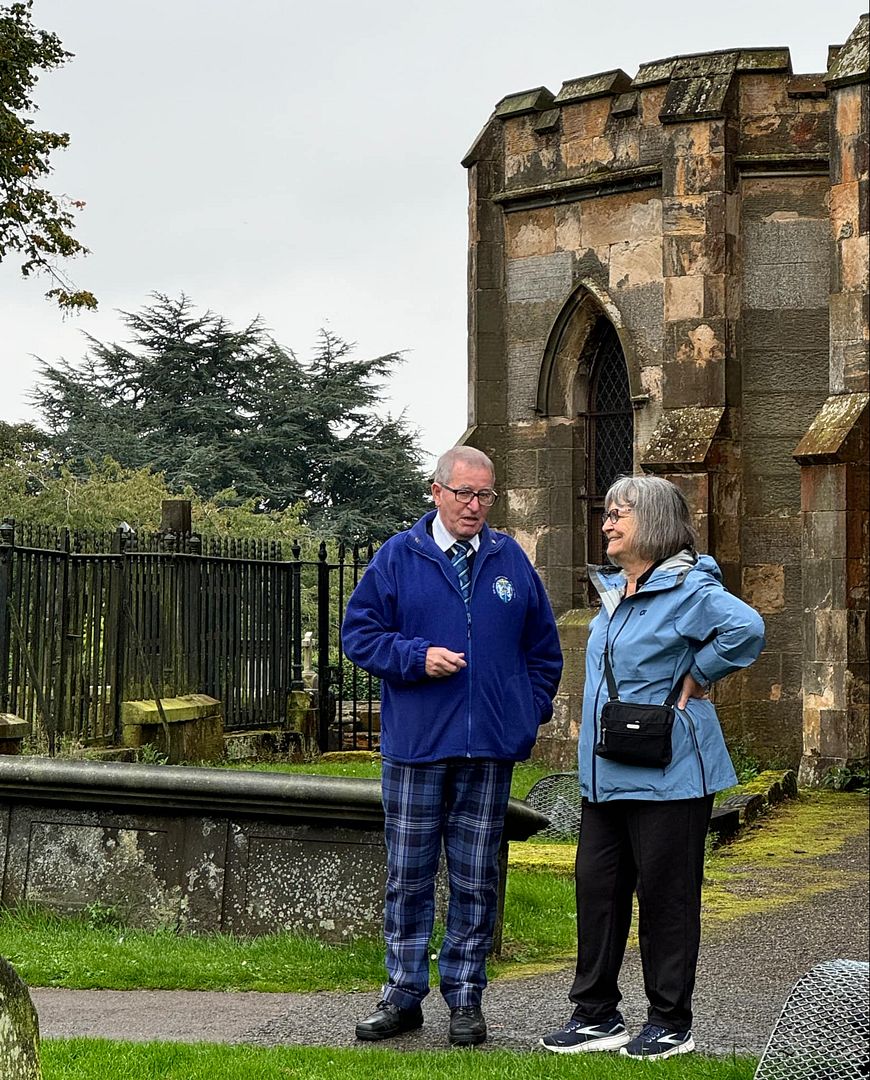
This docent offered up a lot of history and folklore which was fun.
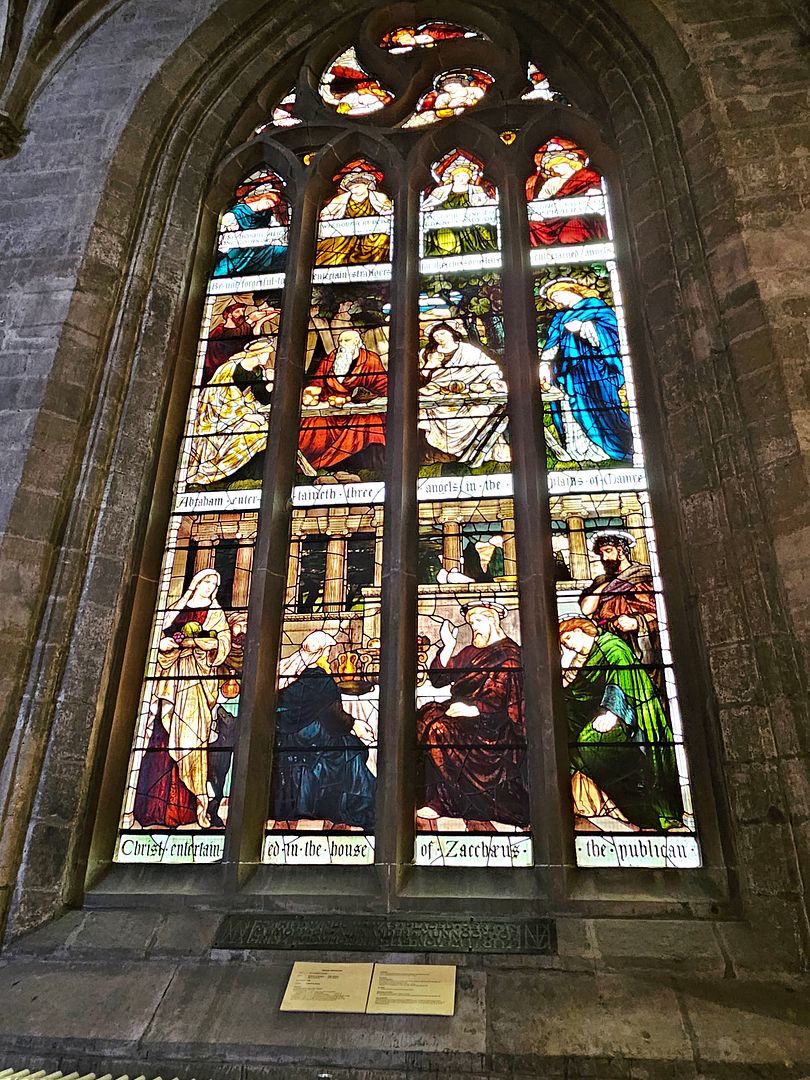
 

When we stopped here on our way to Stirling it took a short time to find an appropriate parking spot. Once we did the rest of our time was spent in awe of this place. More to come.

Thanks for following along.

Scotland Travel Journal ~Holy Rude

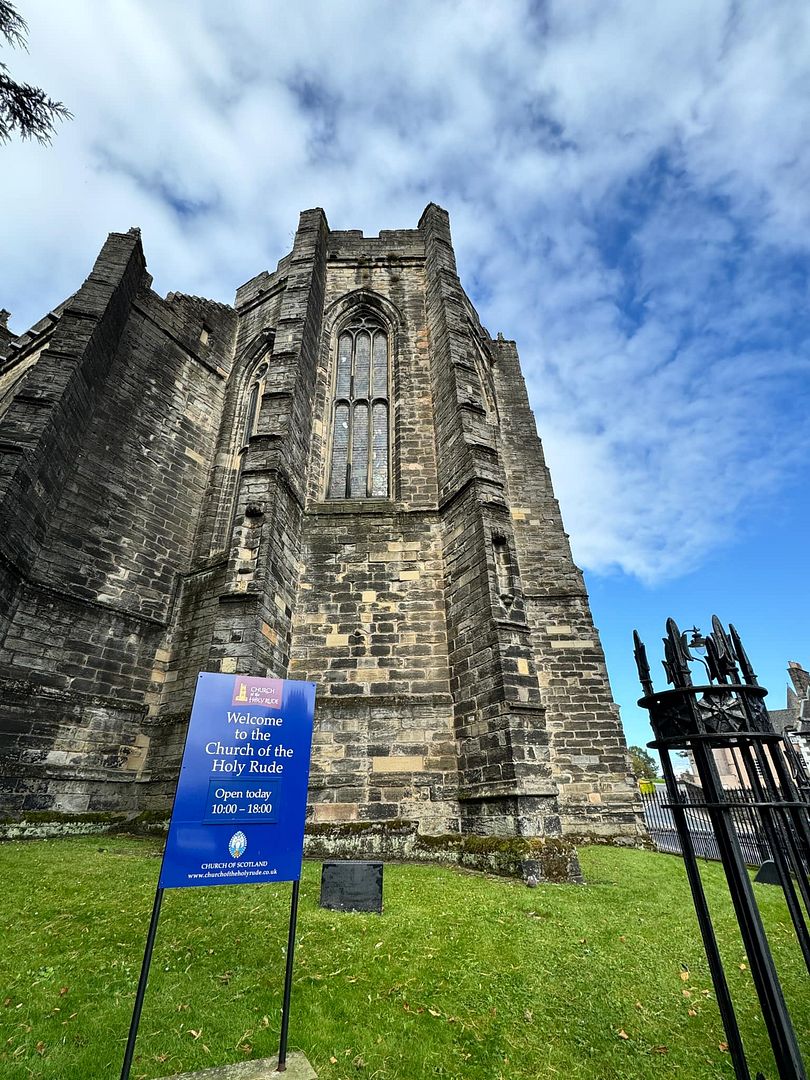
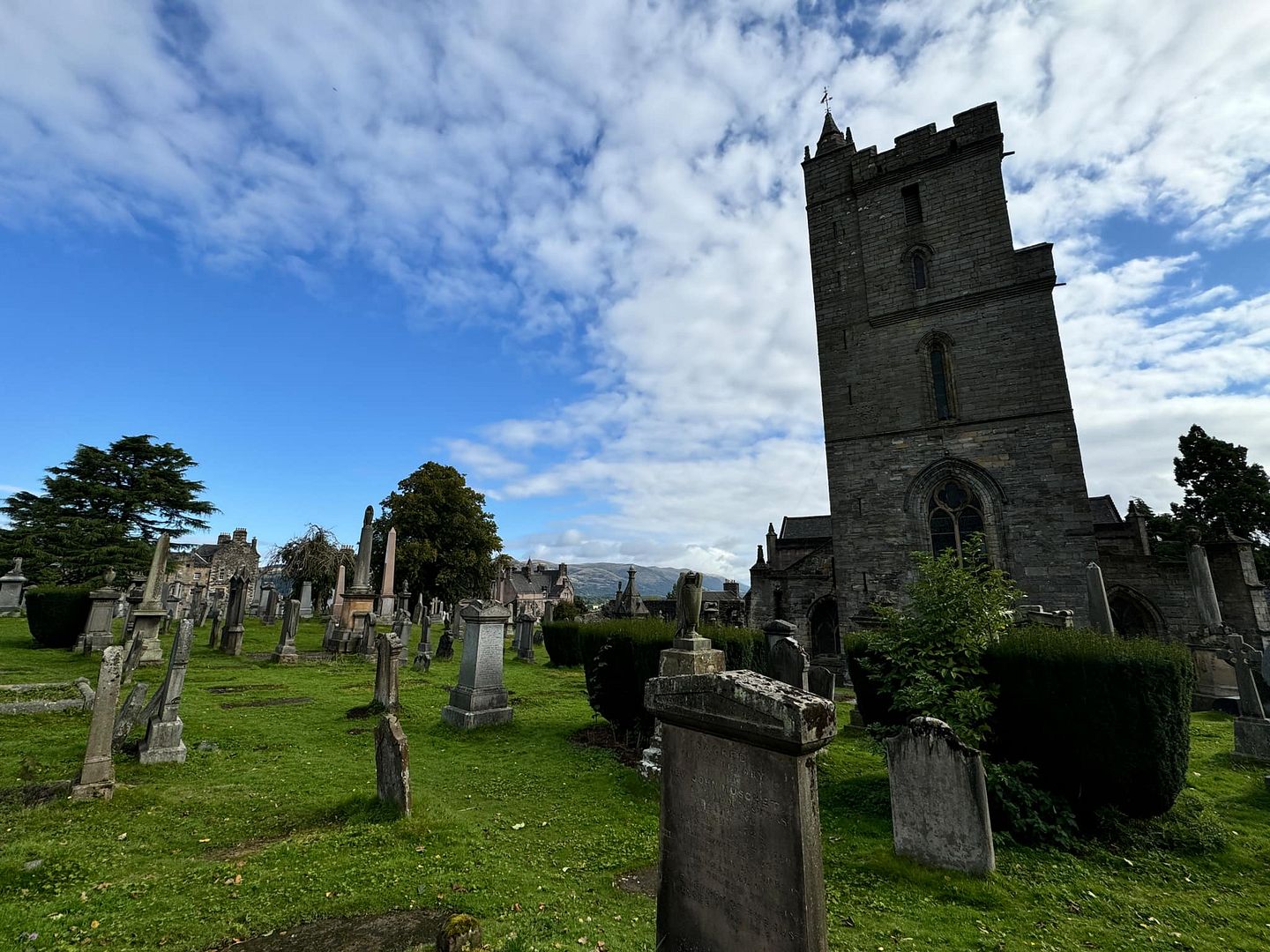
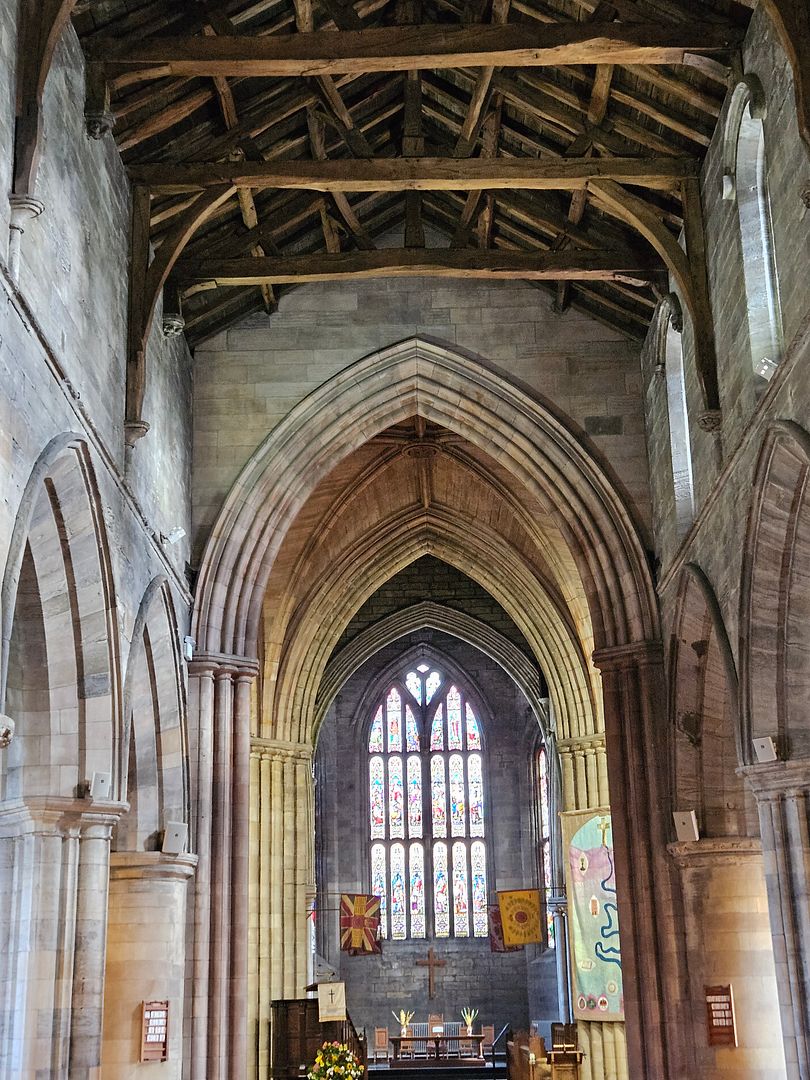
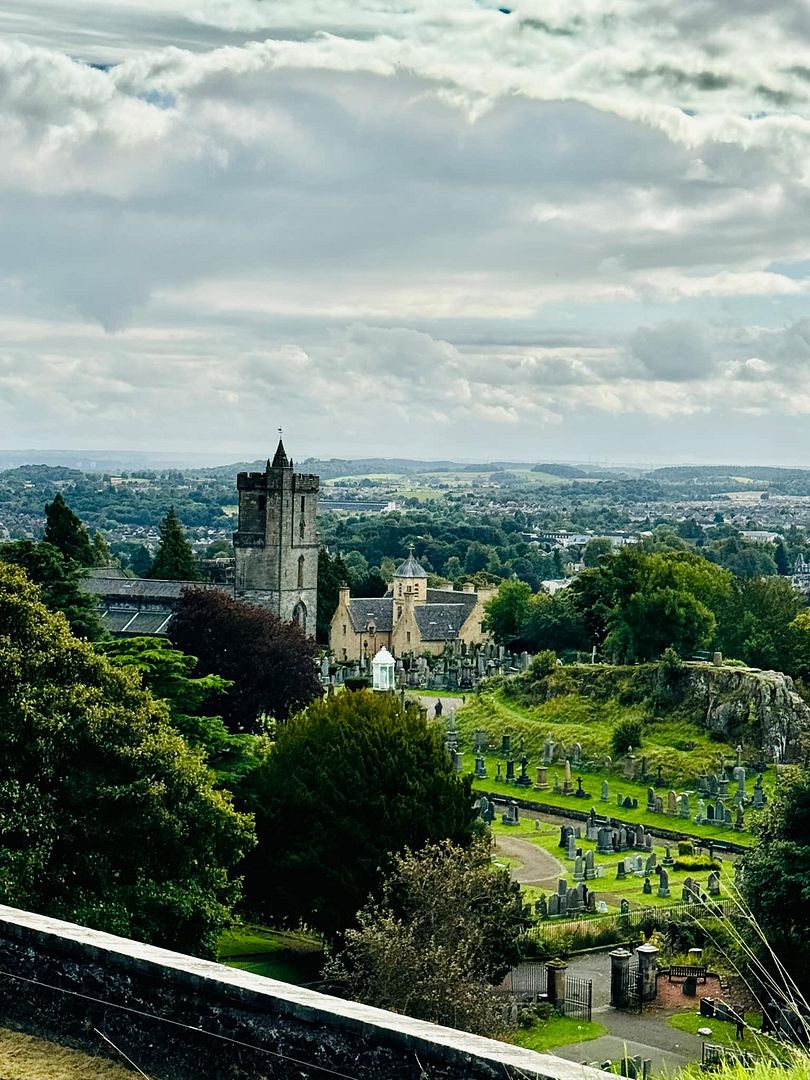
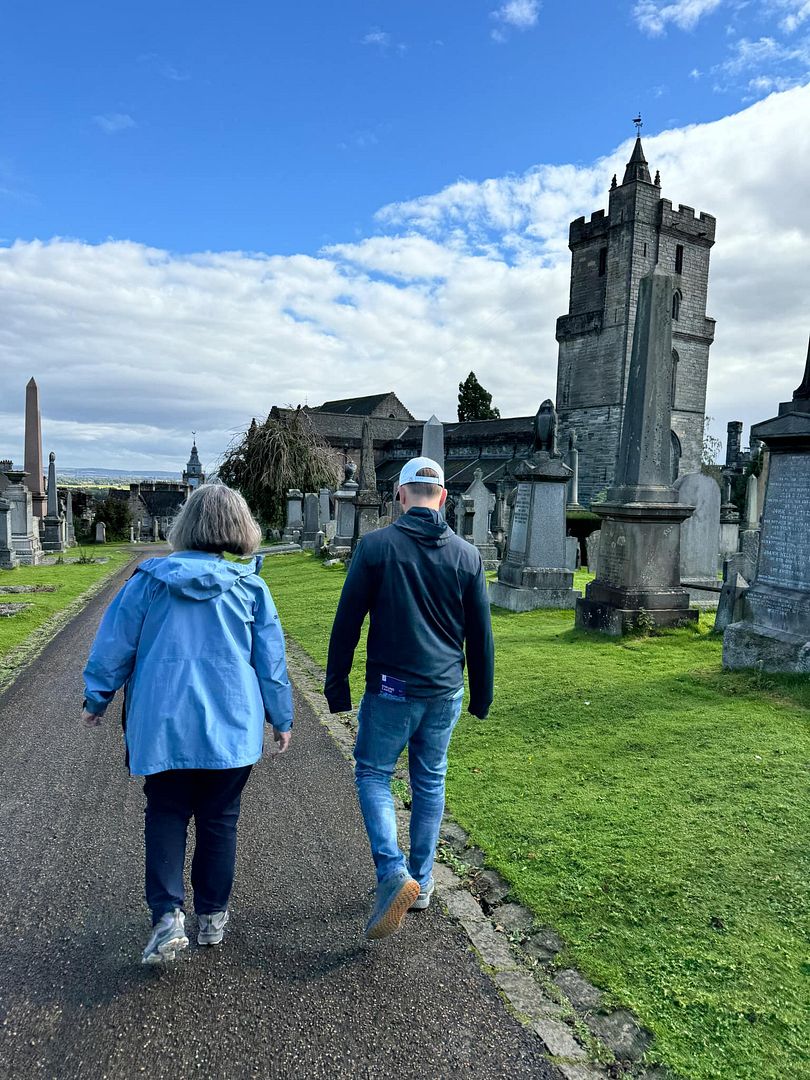
The Church of Holy Rude in Stirling, Scotland is steeped in Scottish History. The church is Stirling’s oldest building after the castle. During the reign of Robert II (1371-1390), and altar to the Holy Rude was established, leading to the church being renamed as the Parish Church of the Holy Rude of the Burgh of Stirling. “Holy Rude” translates to Holy Cross.

From the brochure: This site, a focal point of faith and heritage, witnessed the worship of Mary, Queen of Scots, the crowning of her infant son King James VI and many significant events, including the Scottish Reformation and the Jacobite rising.

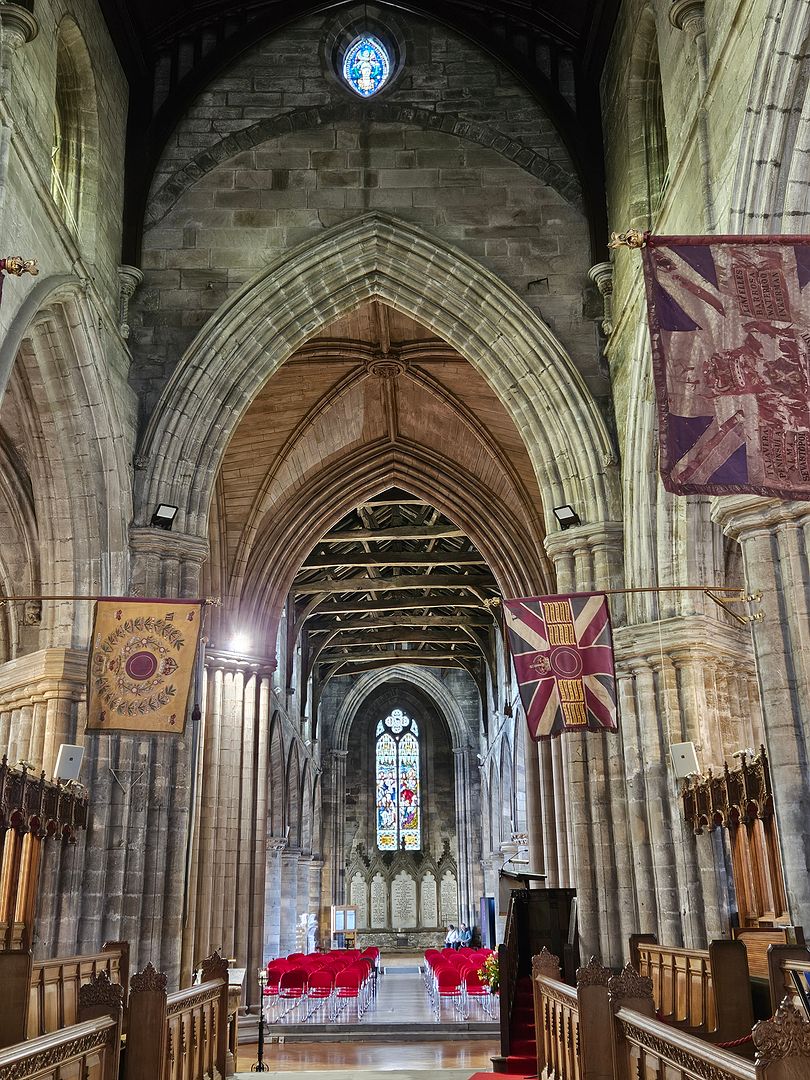
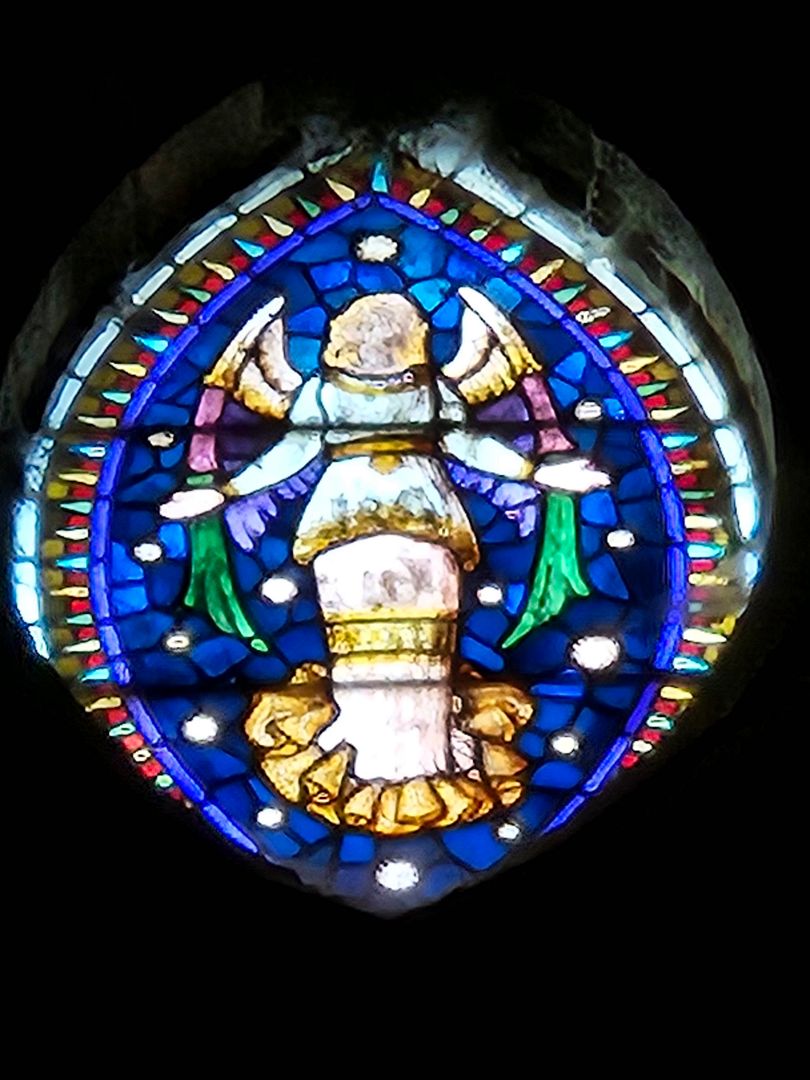
See that little stained glass window way at the top of arch. The Angel Window was installed in 1870 and the artist is unknown.

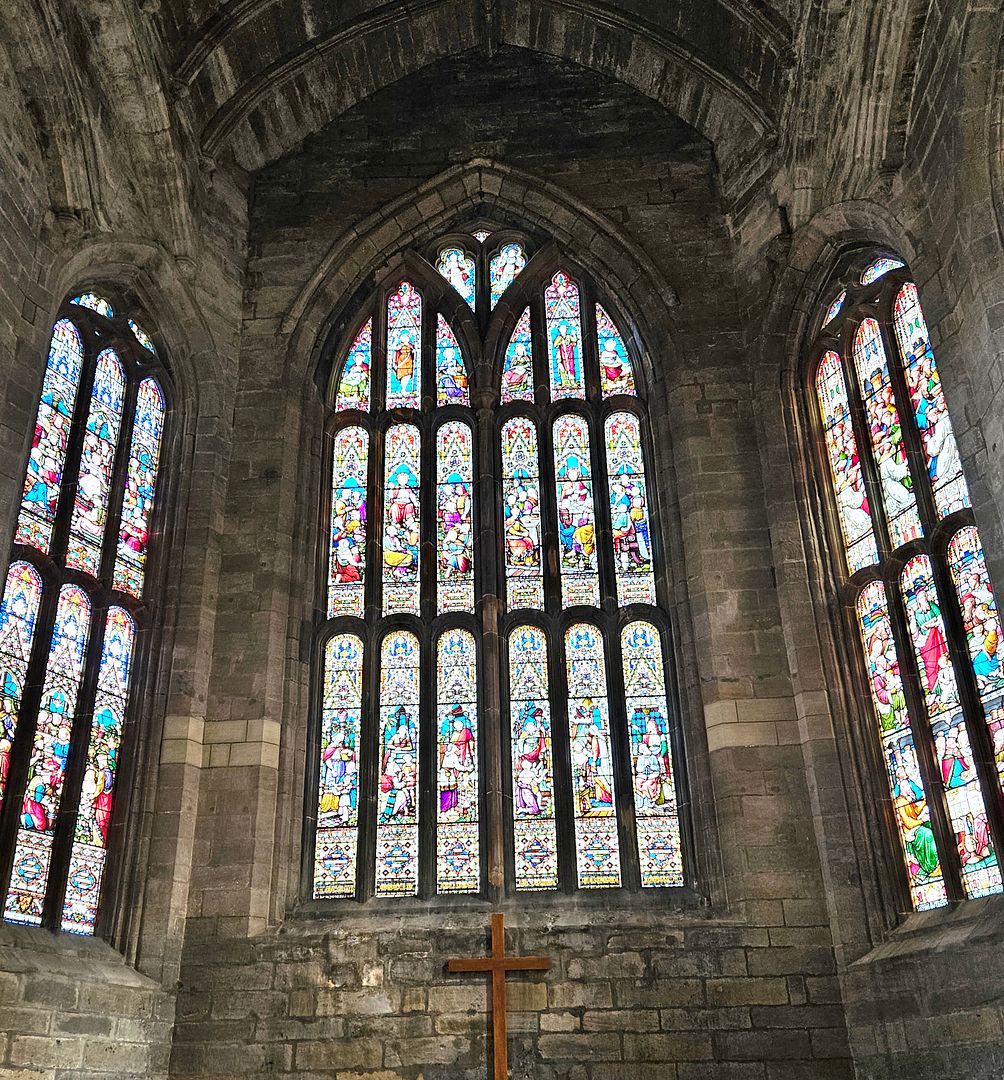
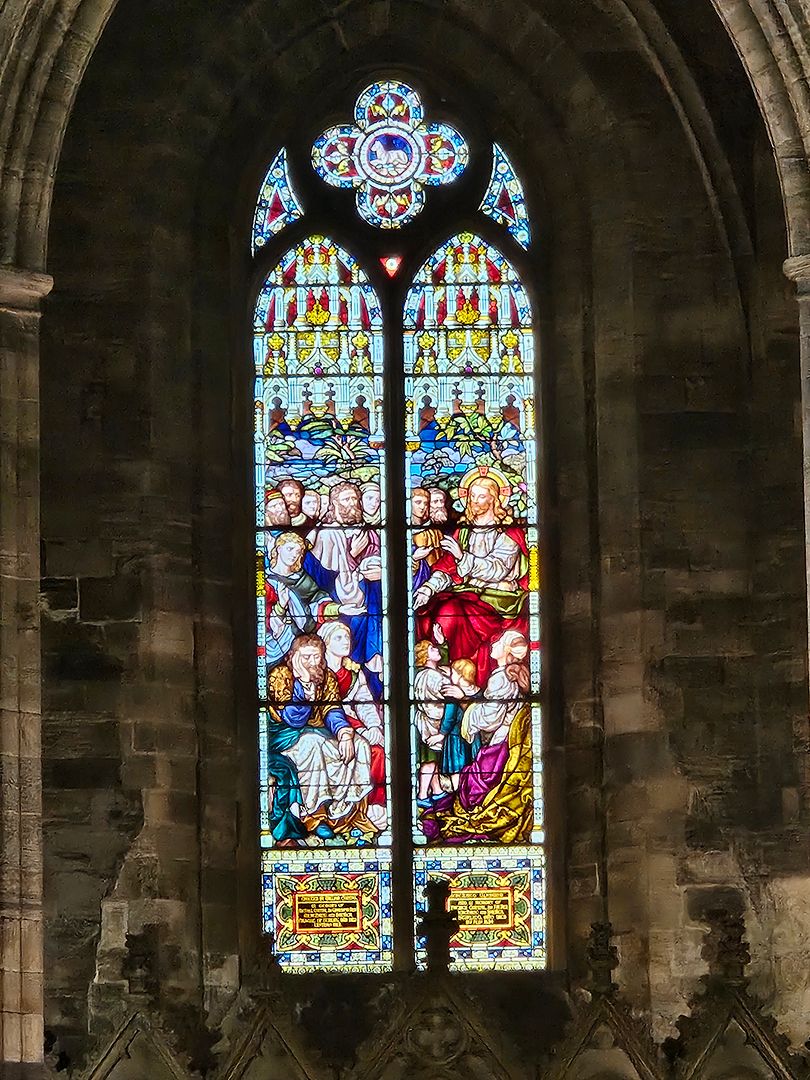
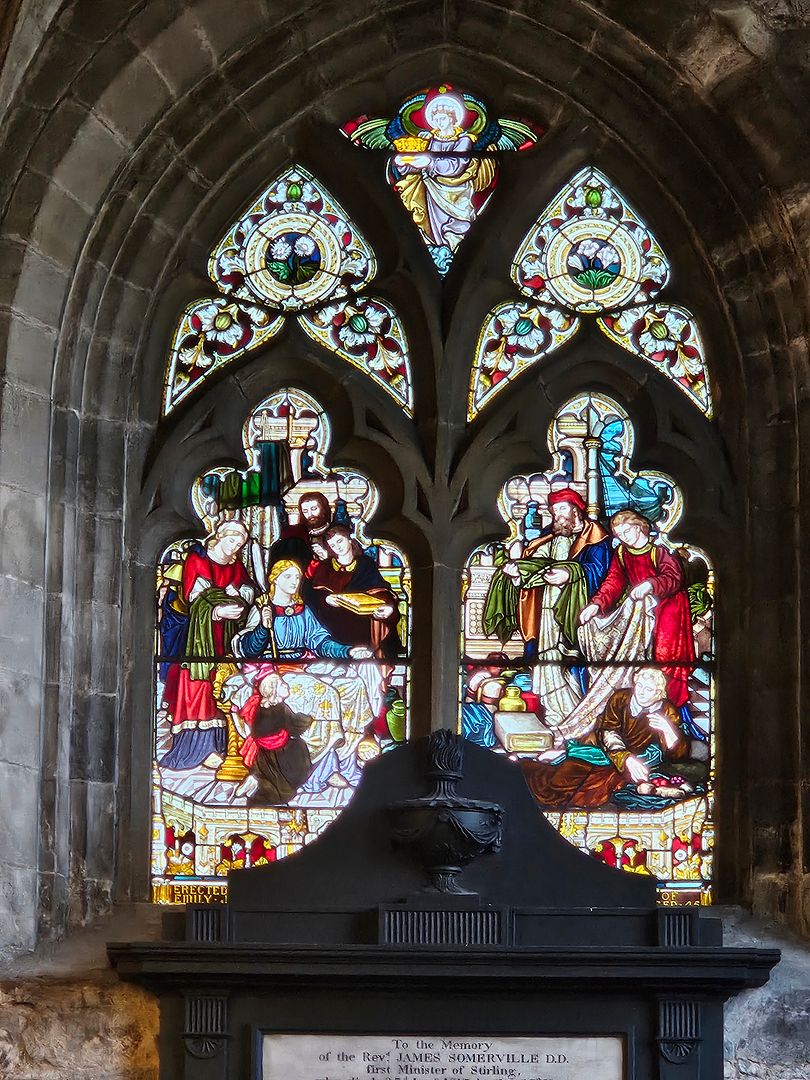
This window, above the Apse, is dedicated to John Cowane, founder of Cowane’s Hospital. The middle right depicts the last supper, the left shows the Sermon on the Mount, and the lower portion illustrates Matthew 25:35-40, reflecting the charitable intentions of Cowane. The Inscription read, “For I was hungry, and you gave me food.”

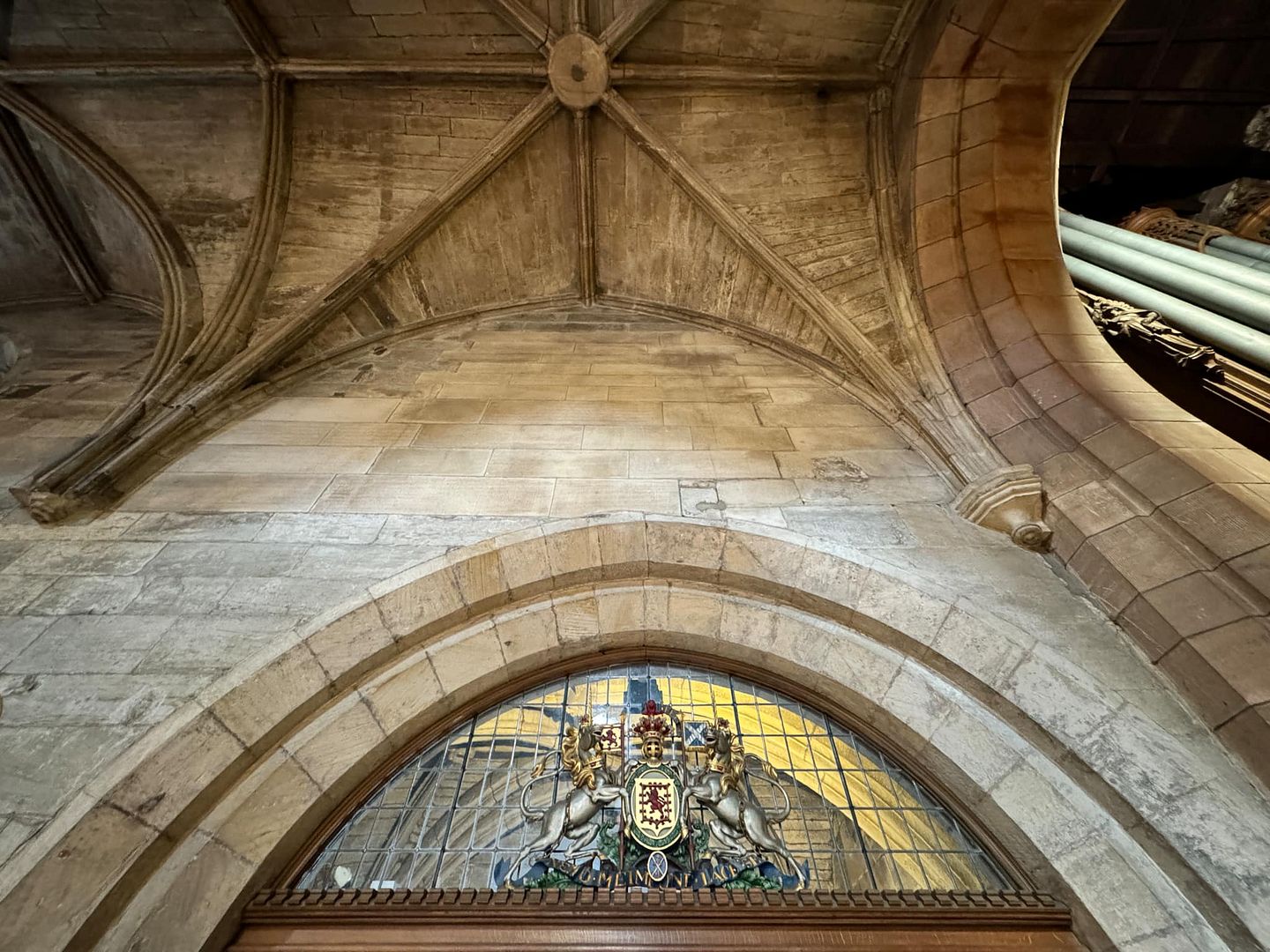
The coat of arms above the entrance to St. Andrew’s Chapel is a 17th century carving of the Royal Arms of Scotland recalling the era when Scottish royalty frequented the Church.

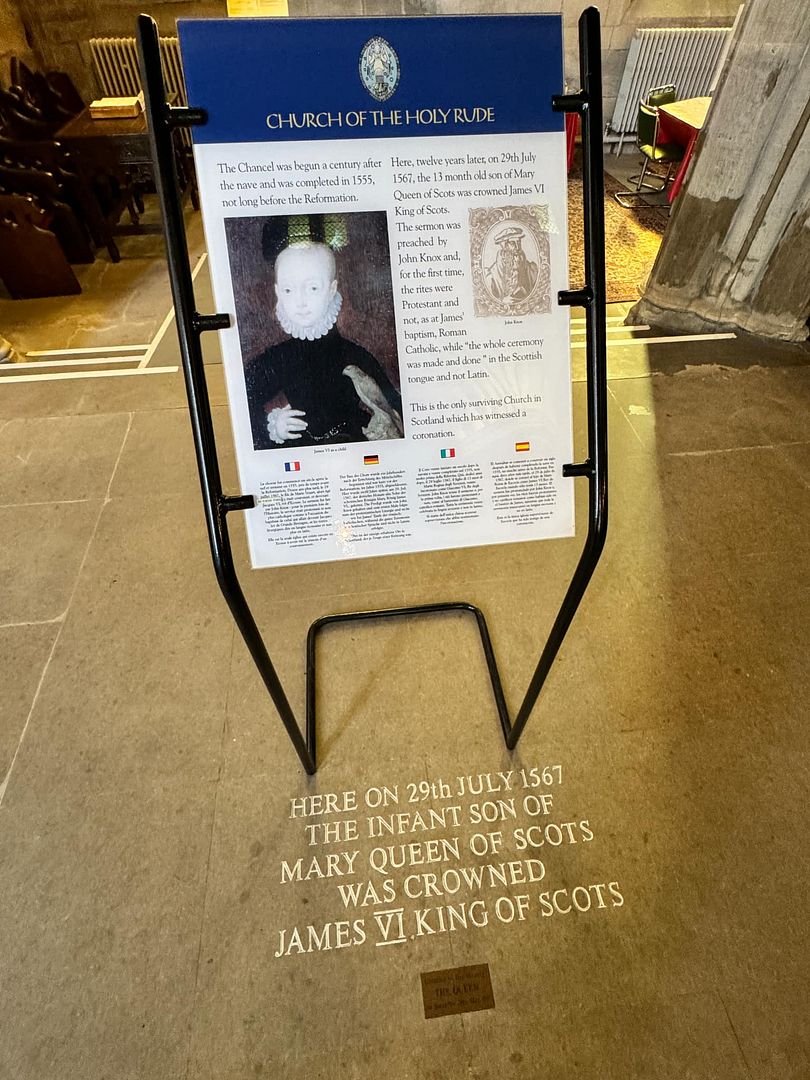
Mary, Queen of Scots: At nine months old, she was crowned Queen in Stirling Castle’s Chapel Royal after her father, James V, died. She spent much of her childhood in the castle and visited this church. After Mary’s abdication, her son was crowned King James VI of Scotland in the Church of the Holy Rude.

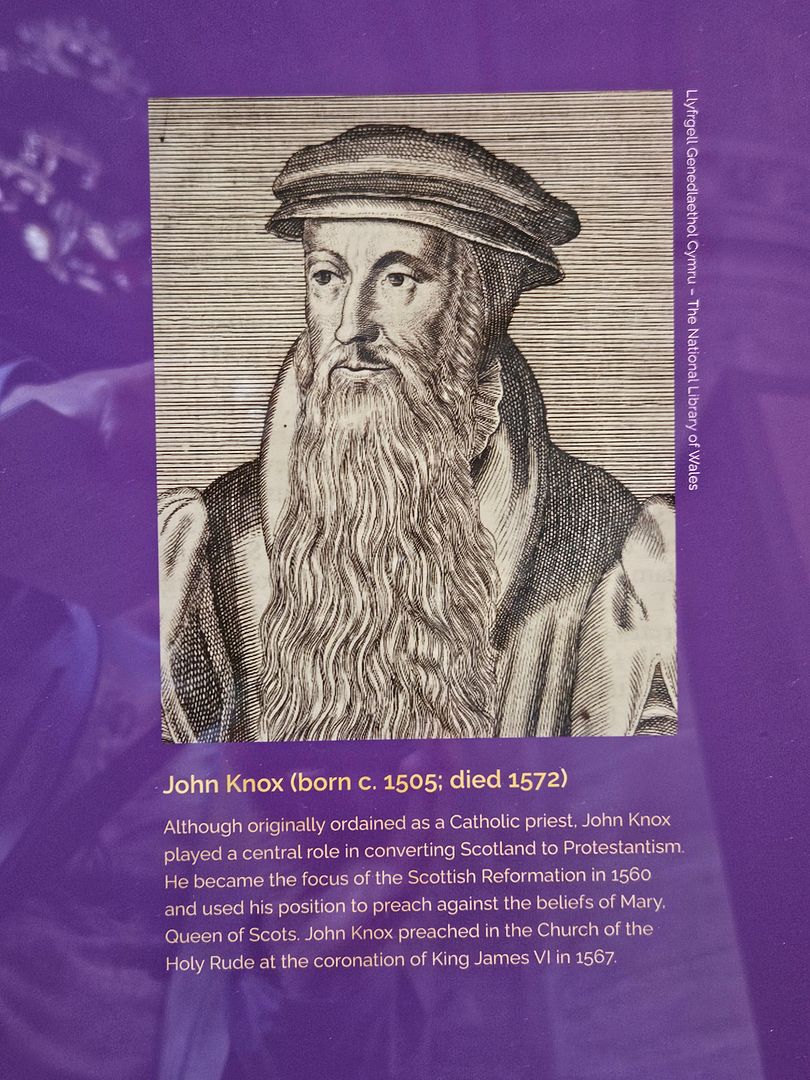
At her 13 month old son’s coronation, John Knox preached the sermon. For the first time the rites were Protestant and not Roman Catholic and the whole of the ceremony was made and done in the Scottish tongue and not Latin.

This is the oldest surviving church in Scotland that witnessed a coronation.


John Knox, A figurehead of the reformation in Scotland. Reverend James Guthrie was another prominent Scottish minister during the Covenanting era. His convictions led to the division of the Church’s congregation in the 17th century.

The Church has seen its share of conflict over the centuries.  During the religious and political troubles of the 17th Century, the Church was divided in 2 and had a wall built to create 2 separate churches – the East and the West.  The minister whose activities led to this division, James Guthrie, was hanged for high treason in 1661, and the 2 parts of the church were finally re-united in 1935.

During Cromwell’s uprising, General Monk set up his guns on the Church tower in 1651 for the last successful attack on Stirling Castle.  The Church walls bear the scars of musket shot and cannon-fire from this and other conflicts, including the Jacobite uprising of 1746. The battle scarred walls are indeed a testament to the skills of the stone masons and craftsmen of the past.

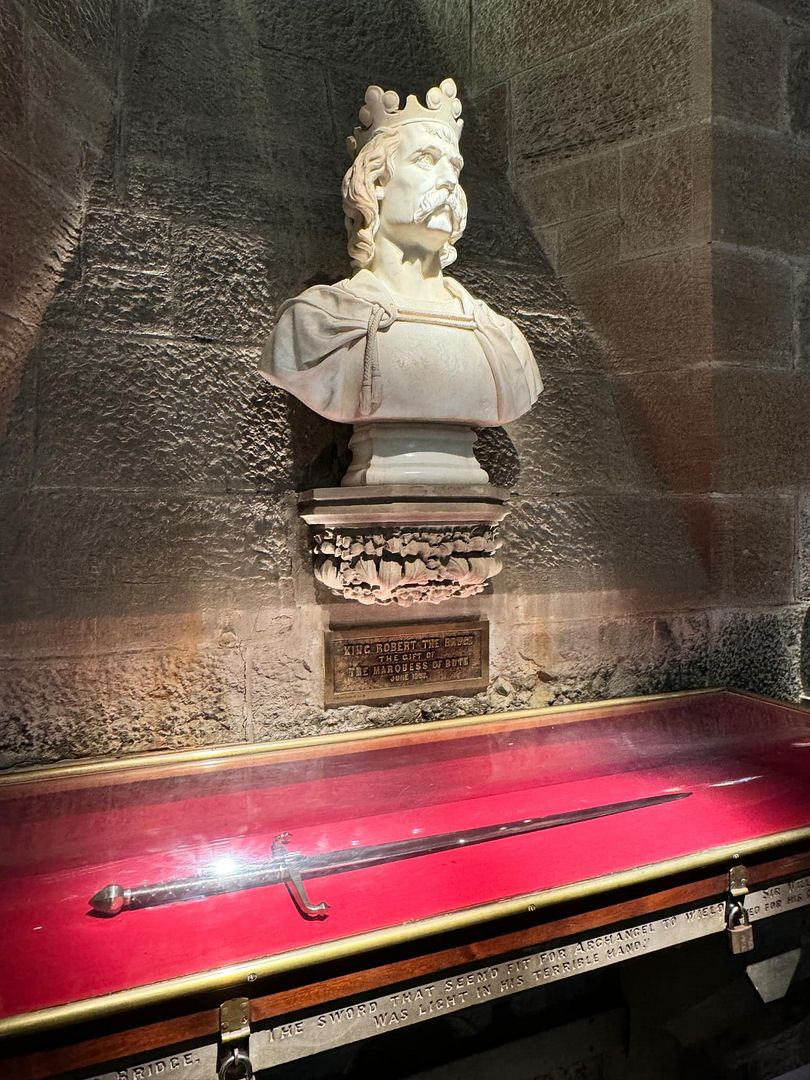
King Robert the Bruce

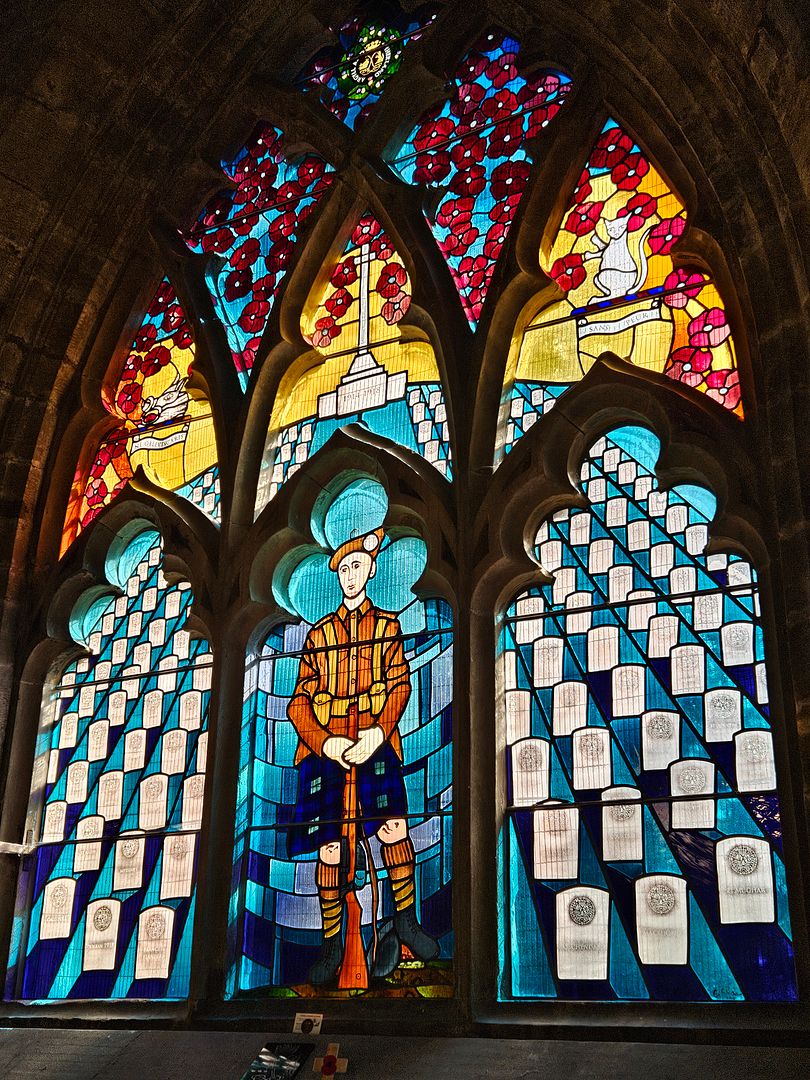
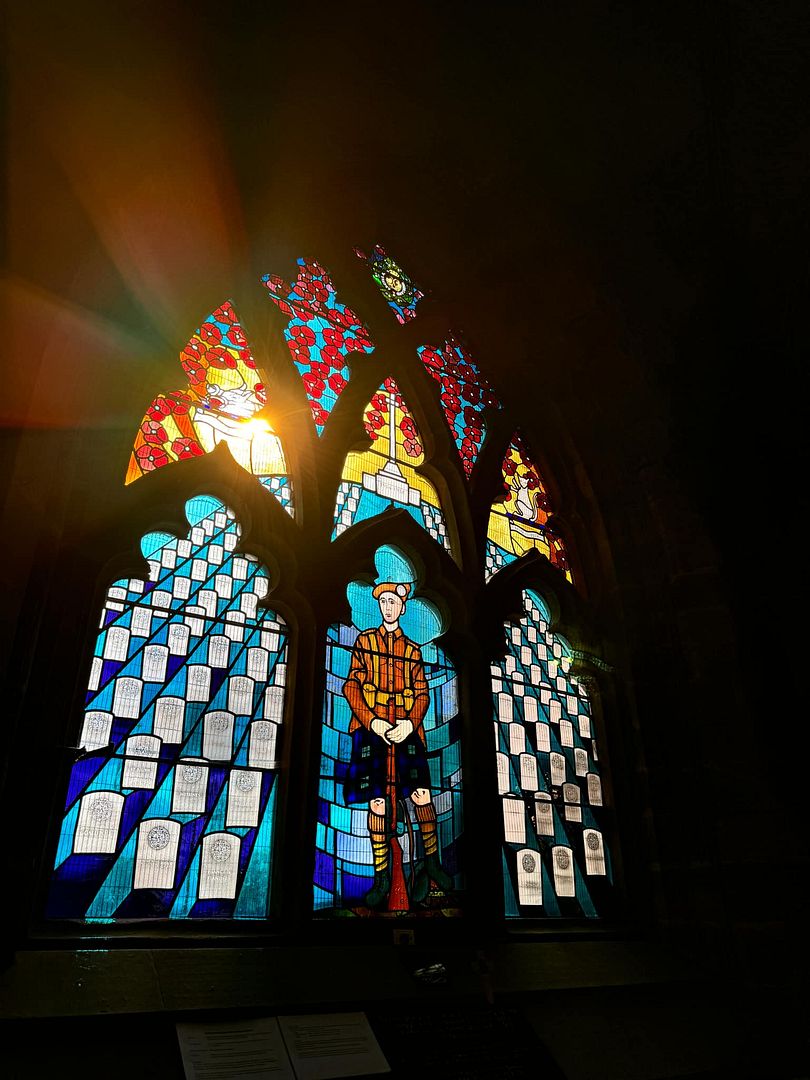
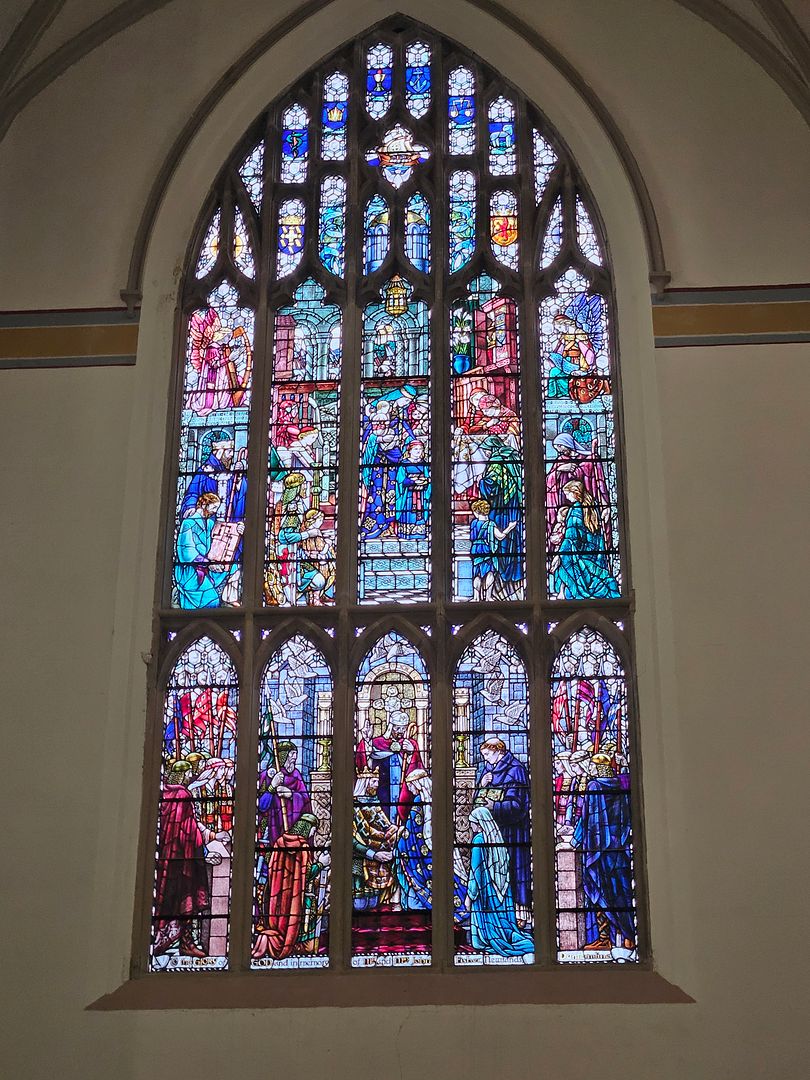
This window was created in memory of the Argylls of WWI and it was fitting for it to be in the Church of the Holy Rude because the regiment had strong ties to this church. This window depicts a Highland soldier surrounded by poppies and figures from the regimental cap badge. Thousands lost their lives in World War I. This window was dedicated in 2016.

The current windows date from the 19th century.

We left the church and walked down into town needing a little snack before we made our way to the Wallace Monument which will be another post. Sunday the 15th of September was a full day of history for us!

Thanks for traveling along with us on this day that we connected more dots about John Knox and the Scottish Reformation and Covenantors in Scotland. We took in Stirling in one day but you could easily spend a few more days soaking it all in.