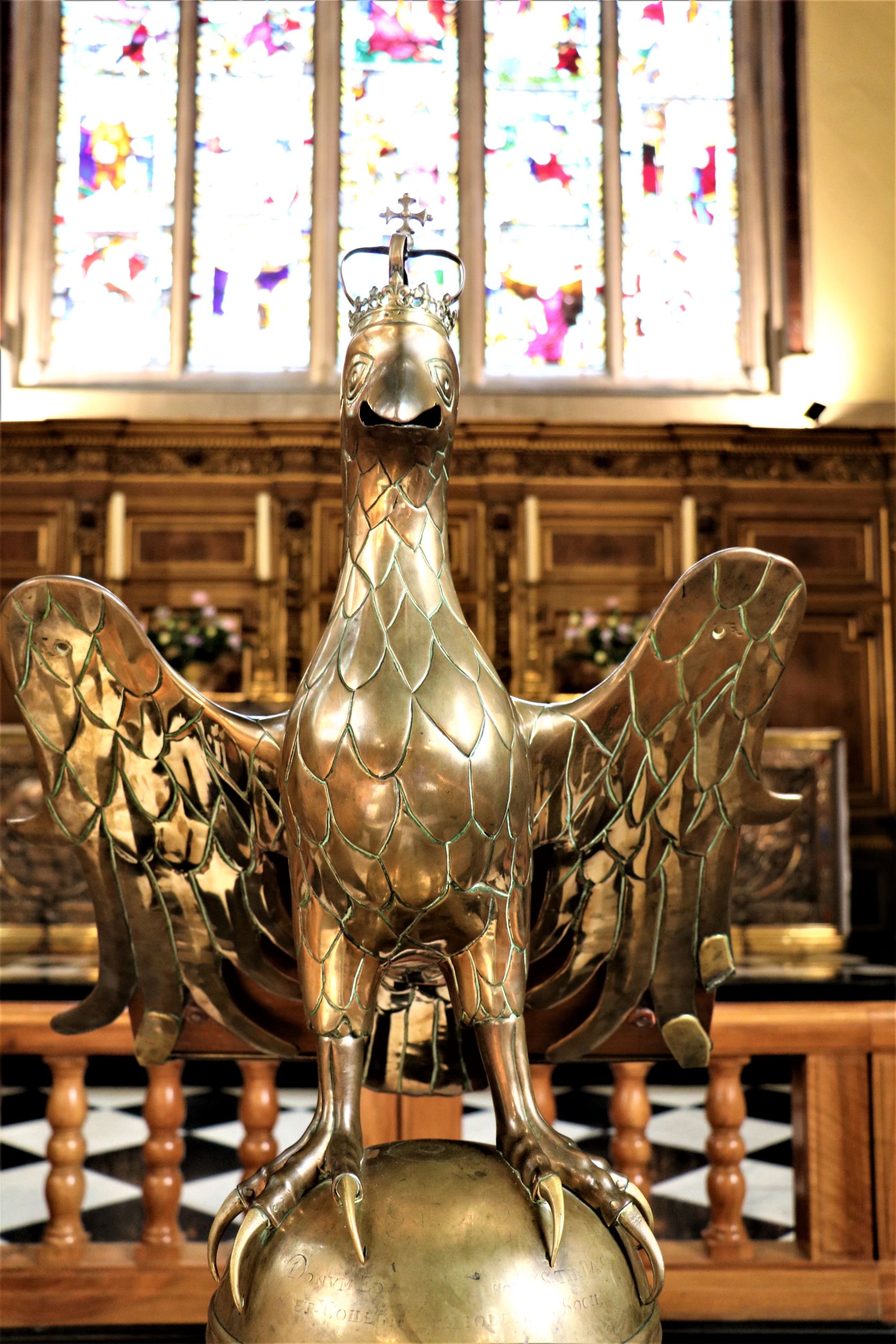
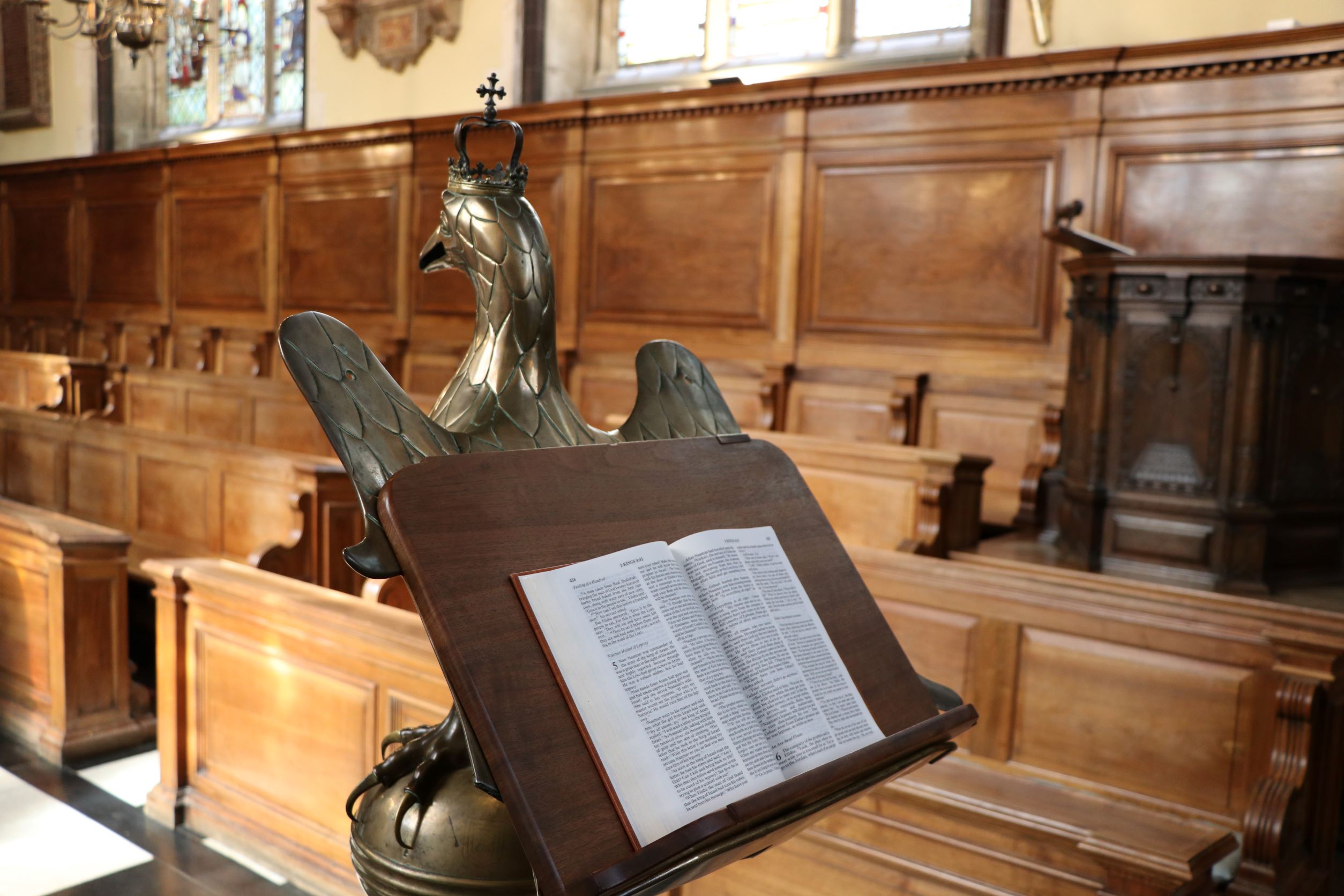
The Eagle Lectern

The symbolism of the eagle derived from the belief that the bird was capable of staring into the sun and that Christians similarly were able to gaze unflinchingly at the revelation of the divine word. Alternatively, the eagle was believed to be the bird that flew highest in the sky and was therefore closest to heaven, and symbolized the carrying of the word of God to the four corners of the world.
The eagle is the symbol used to depict John the Apostle, whose writing most clearly witnesses the light and divinity of Christ. In art, John, as the author of the Gospel, is often depicted with an eagle, which symbolizes the height to which he rose in the first chapter of his gospel. The eagle came to represent the inspiration of the gospels.
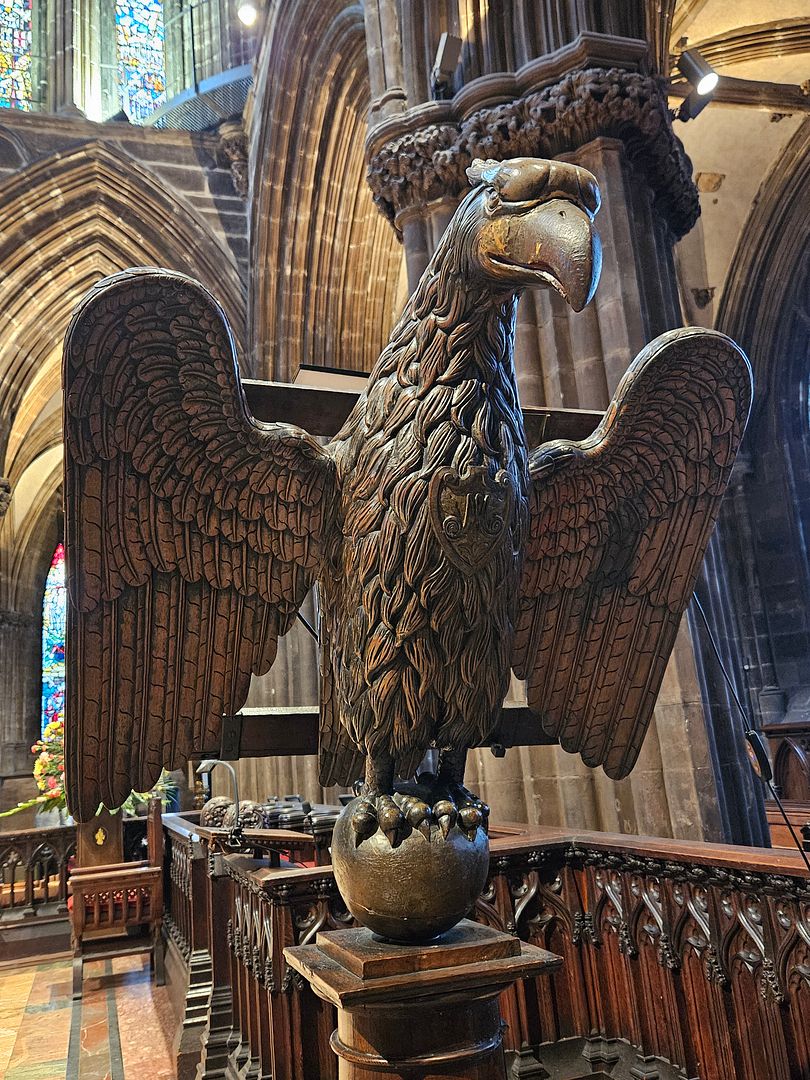
Eagle Lectern at Glasgow Cathedral
Balliol College, Oxford.

THE FLYING eagle is the symbol of John the Evangelist (see Revelation, ch 4, v 7) who proclaimed Christ as ‘the Word of God’ at the beginning of his Gospel. The flying eagle is thus a suitable emblem from which God’s word is read, reaching to the ends of the earth.
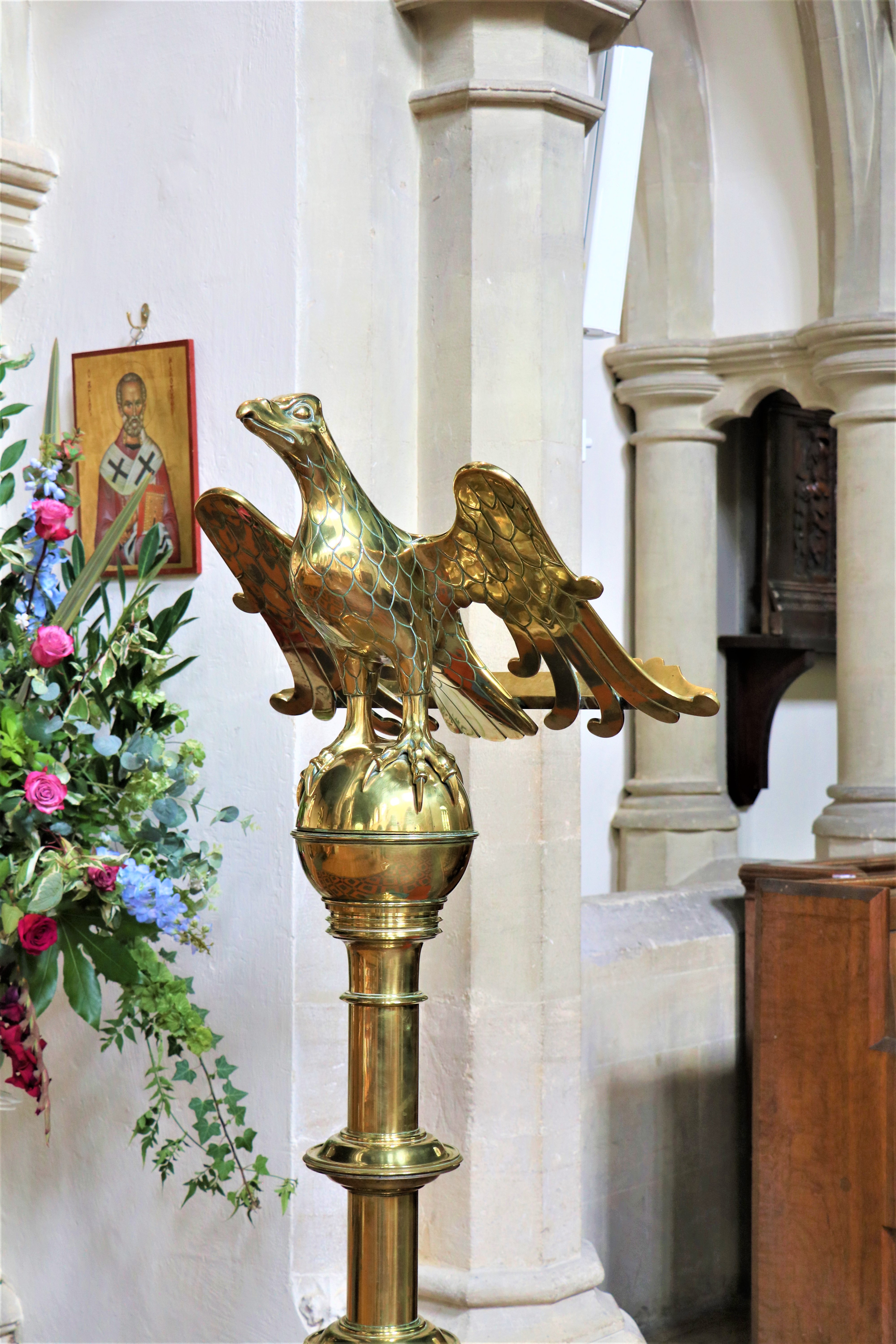
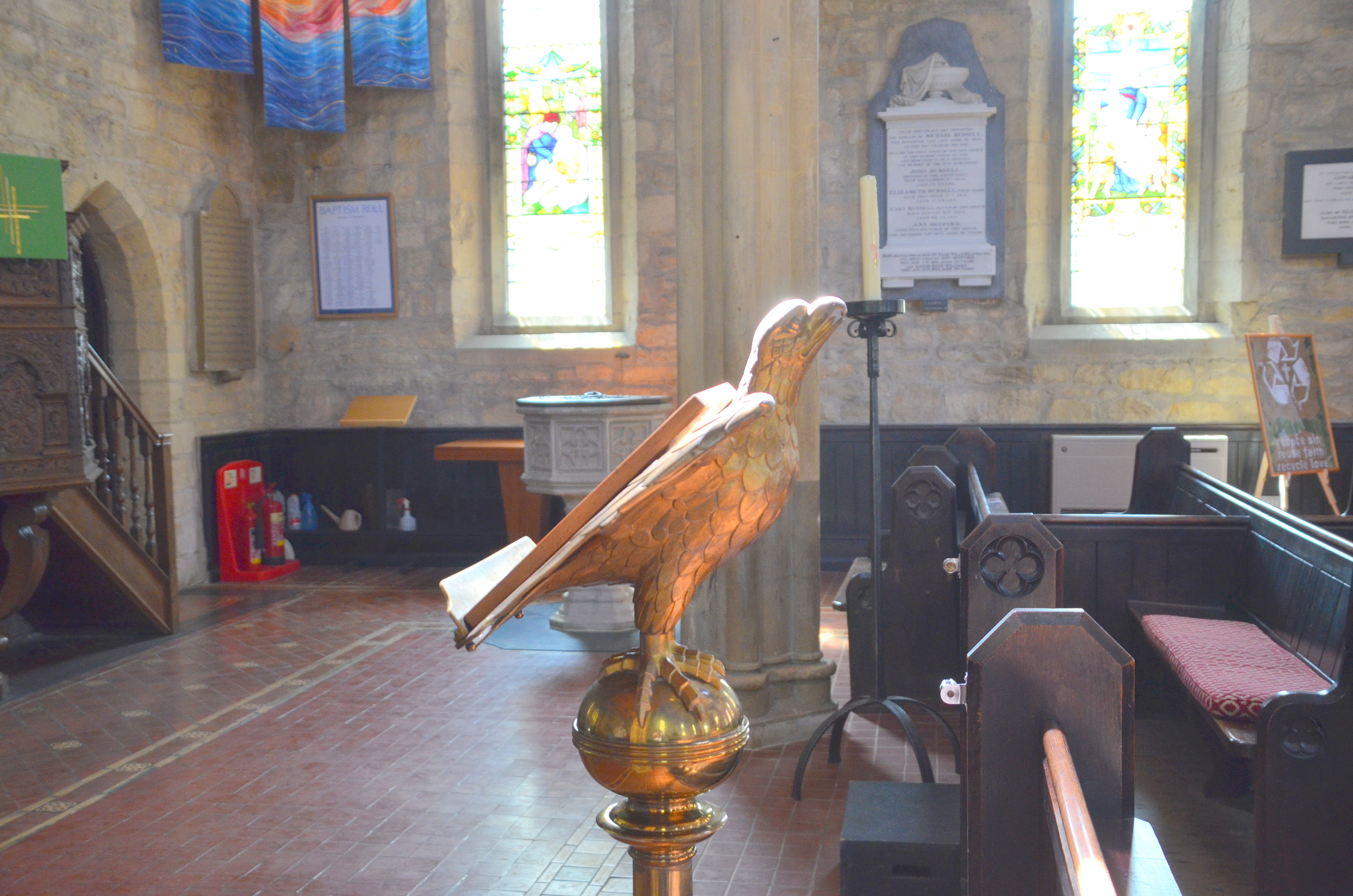
St. Mary Magdalene Church in Woodstock
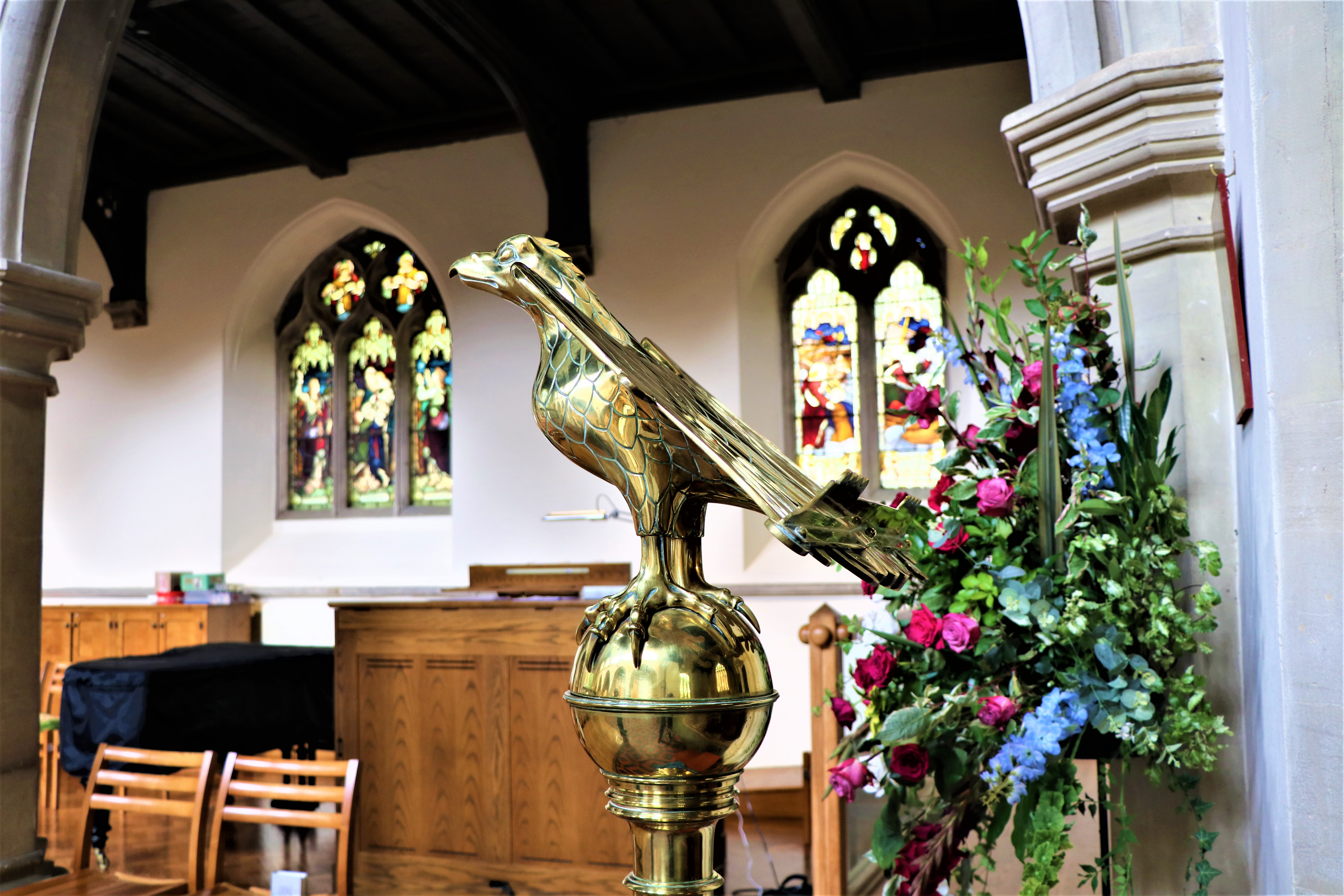
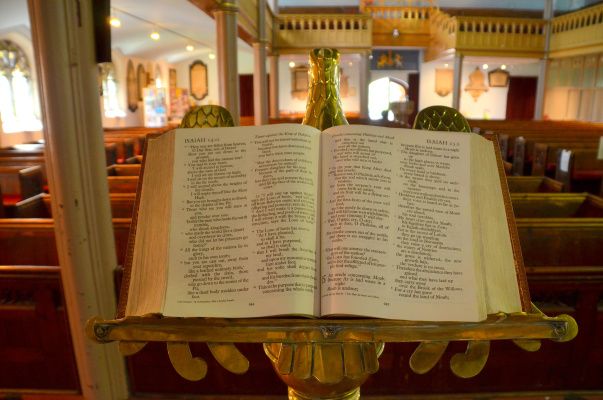
Broadway Day 7 034

St. Michael and All Angels Church in Broadway (Cotswolds)

We were intrigued with these ornate Eagle lecterns that we saw in most of the churches and cathedrals we visited in England. That is why I researched to see the significance of this design.

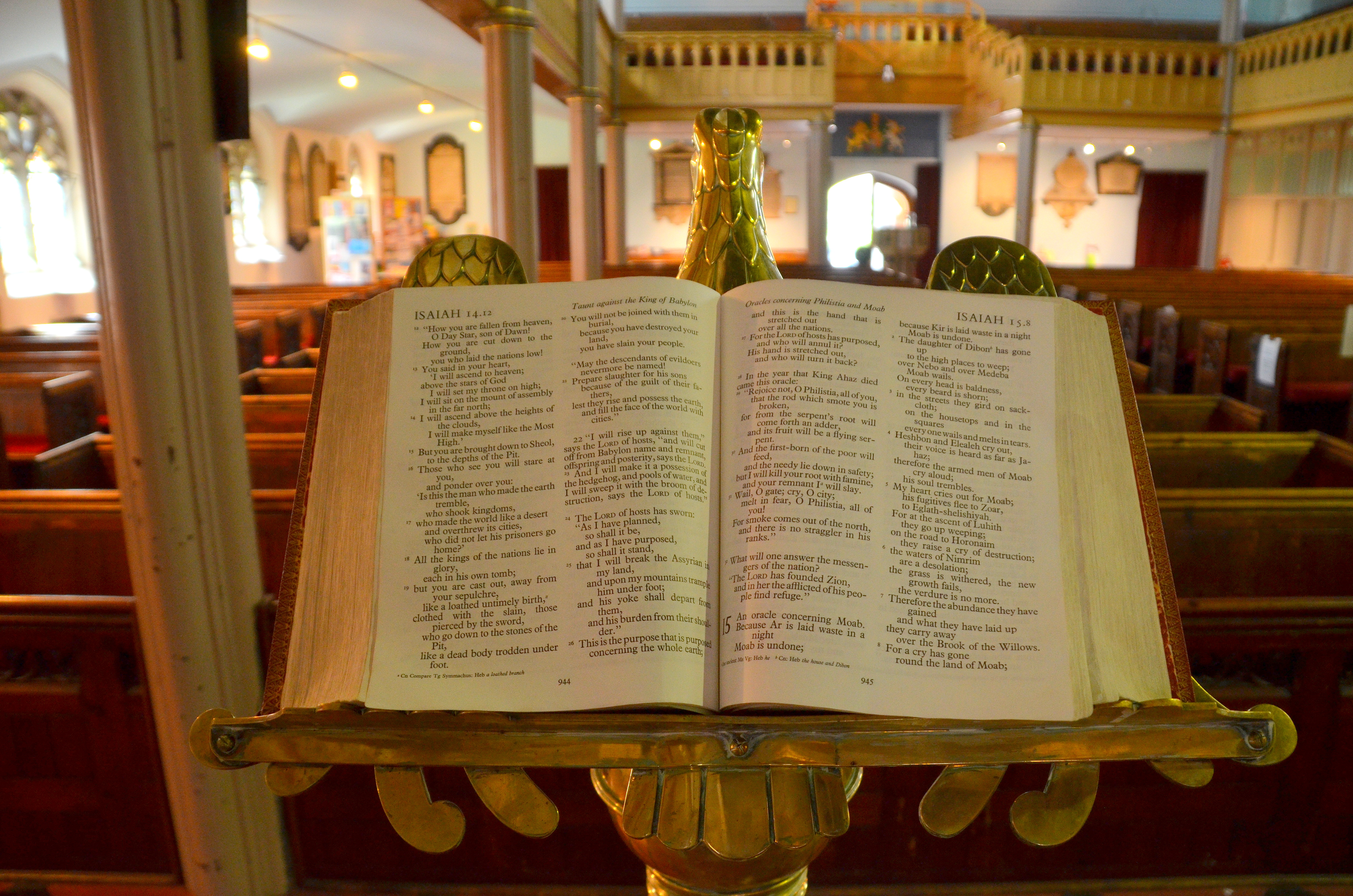
The lectern stands as the location from which Christian Biblical lessons are given. Lecterns hold the Bible in place as the church leader reads various passages from it. Lecterns in the shape of an eagle hold special value within churches.

Eagle lecterns date back to early church history. Some of the earliest examples of church lecterns that are still in existence date back to the 13th century, such as the lectern located within All Saints’ Parish Church in Bedfordshire, England.

The eagle is the symbol used to depict John the Apostle, whose writing is said to most clearly witness the light and divinity of Christ.

Another reason for eagle-shaped lecterns lies in its symbolizing the word of God being read from the lectern and soaring its way to the ears of the churchgoers.
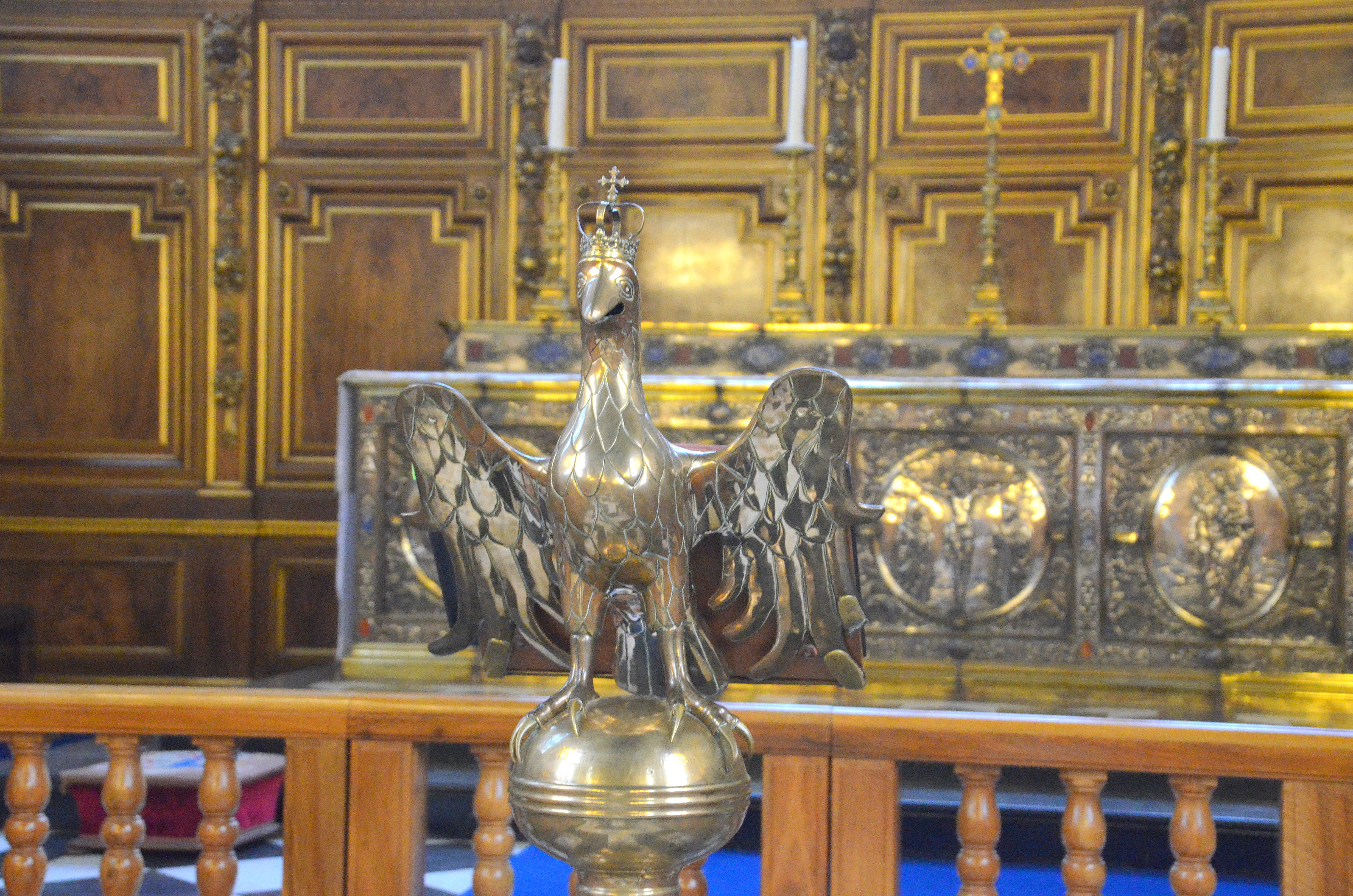
Oxford
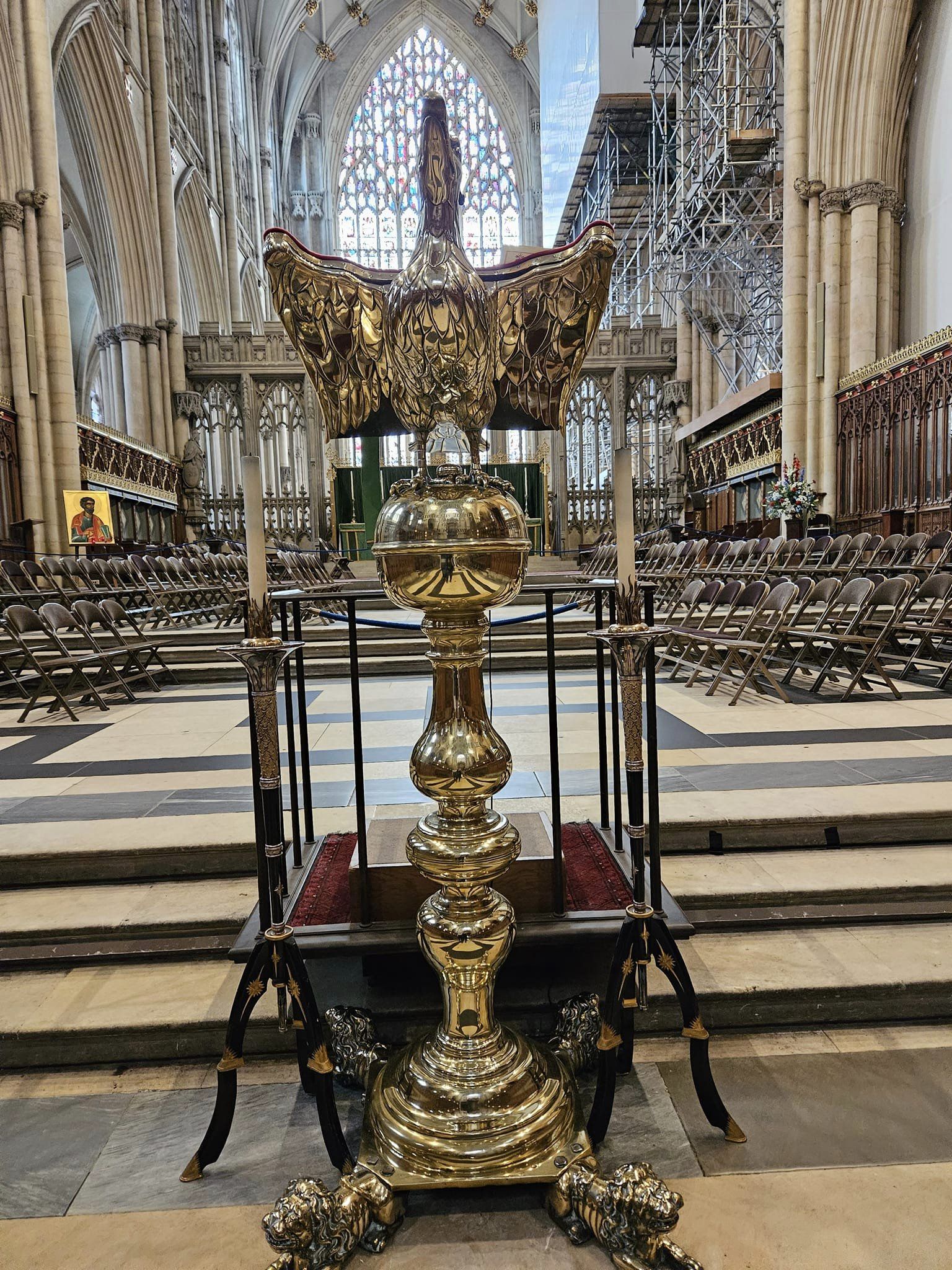
York Minster

What a blessing it has been to be able to visit so many of these beautiful chapels and cathedrals and learn the history and inspiration behind the Eagle Lectern. But how much more amazing is it that we can hold the Word of God in our hands and read it and learn from it and grow in wisdom and grace.

Psalm 19:7-11

The law of the Lord is perfect,
    reviving the soul;
the testimony of the Lord is sure,
    making wise the simple;
the precepts of the Lord are right,
    rejoicing the heart;
the commandment of the Lord is pure,
    enlightening the eyes;
the fear of the Lord is clean,
    enduring forever;
the rules of the Lord are true,
    and righteous altogether.
10 More to be desired are they than gold,
    even much fine gold;
sweeter also than honey
    and drippings of the honeycomb.
11 Moreover, by them is your servant warned;
    in keeping them there is great reward.

I’m adding a quote from one of my favorite pastors who inspired me to love God’s Word because of His love for all of God’s Word and his faithful preaching of the Word.

“It is the power of the Word that saves. It is the power of the Word that sanctifies. It provides doctrine. It reproves error and sin. It sets upright and then trains in the path of righteousness.” ~John MacArthur
Scotland Travel Journal ~Glasgow Cathedral

We made it all the way home on Thursday the 26th of September. We fly out of Seatac Airport (Seattle) which is a good five to six hour drive from our home in Colville. Since we were traveling with Josh and Laura we find it easier to drive to their home the day before our flights and drive and park at the airport with them. Our flight home from Scotland arrived Tuesday evening and we would be in no good shape to then drive the 6 hours home so we spend another night at Josh and Laura’s before we attempt our final drive home. There were dust storms predicted on our route home for Wednesday so we put off our travels home for one more day and had a very nice drive with great weather conditions on Thursday. Taking the extra day made it possible for us to see Katie and Andrew, too, which was good.
Looking back I see that I covered our flight and arrival to Scotland well here. I even had the energy to post a few details on our first full day which was Saturday the 14th of September here. From here on out in Scotland the days were full of activity and I had no energy to put words together or match those words up with photos. Our internet connections were slower and slower, too. Some of our days and the events and experiences we had deserve a post all to themselves. I might be done with my Scotland Travel Journal by November!!

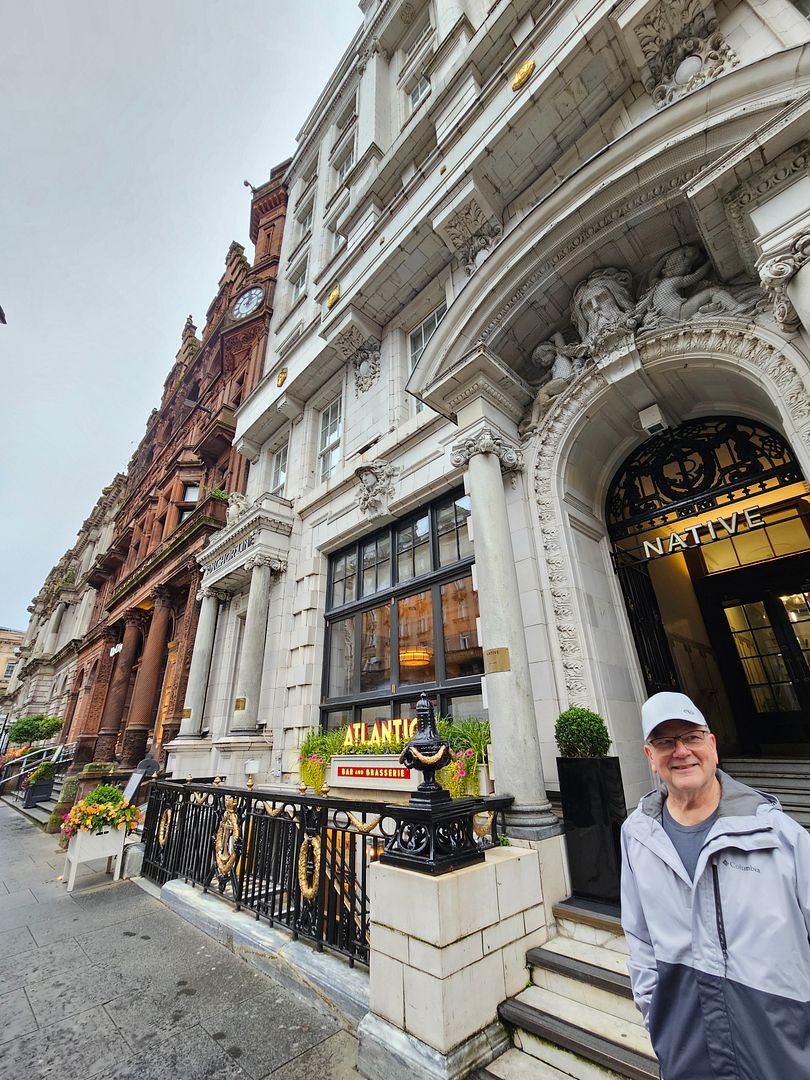
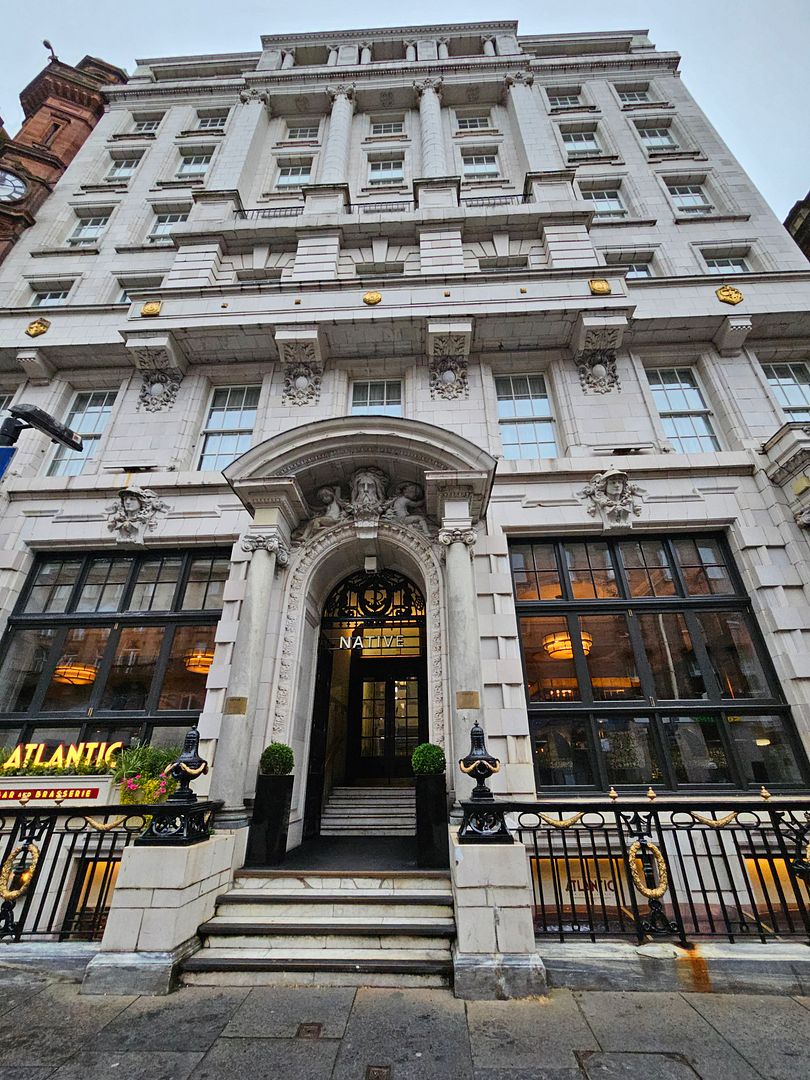
Our lodgings in Glasgow were at Native Glasgow. The central location worked well for us.

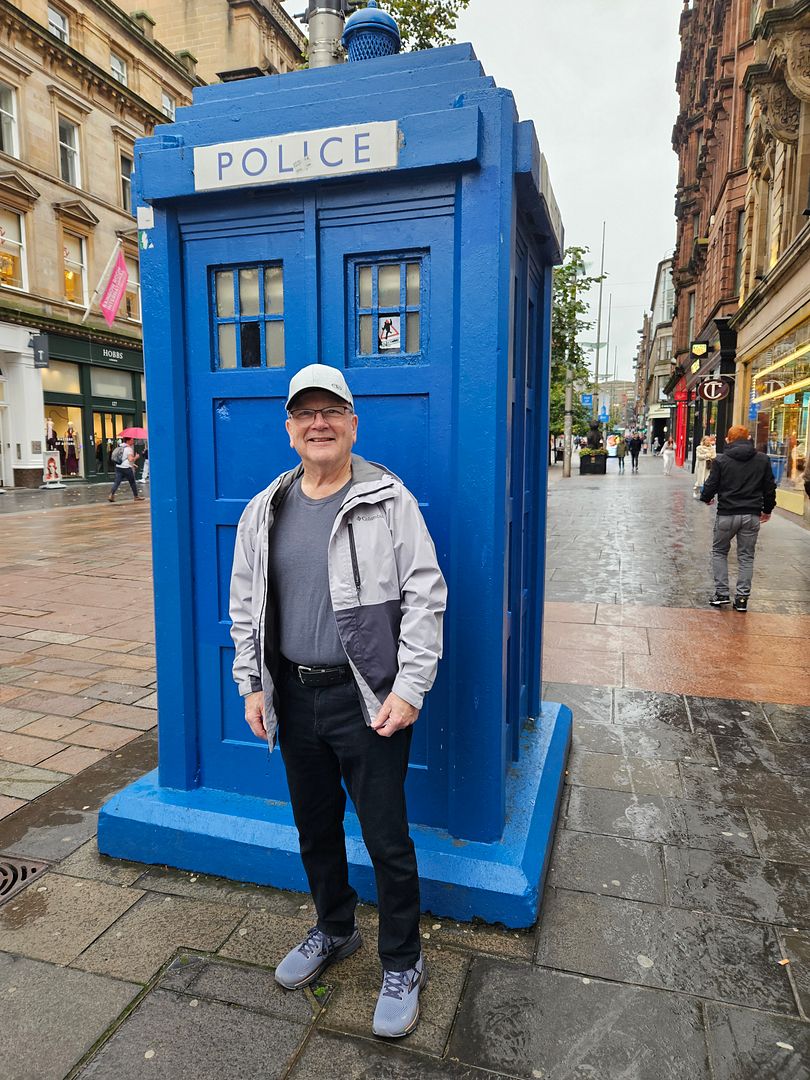
A photo for any Dr. Who fans out there.

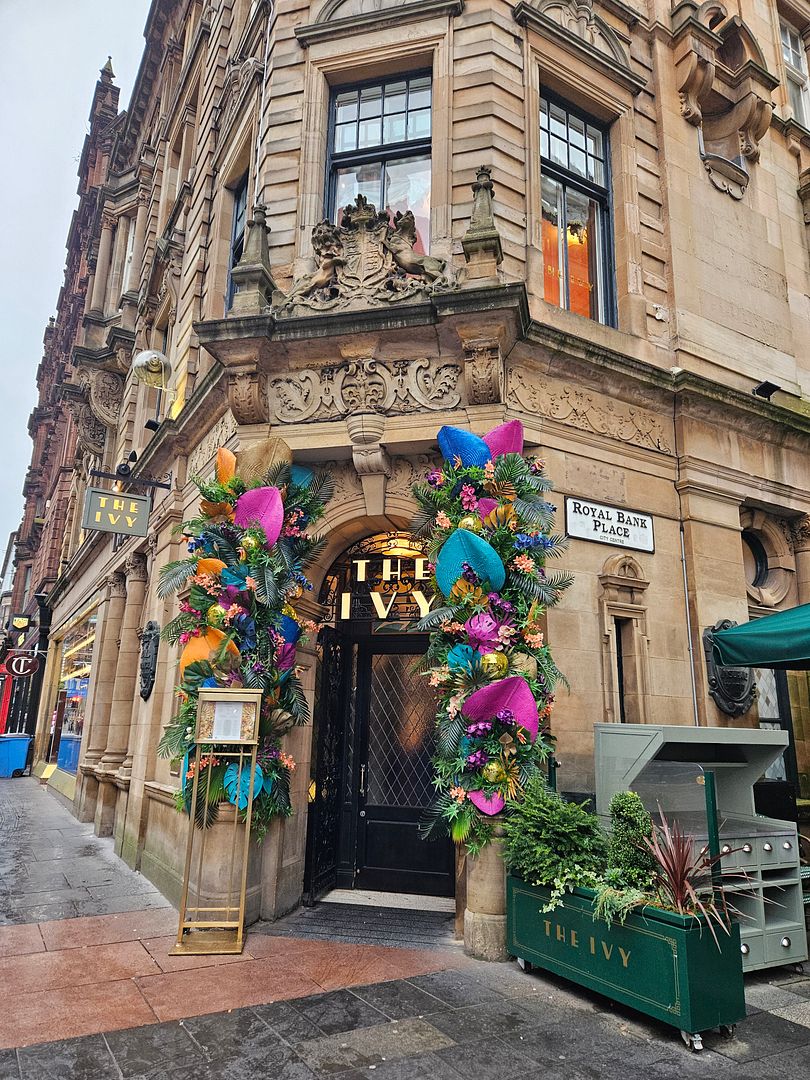
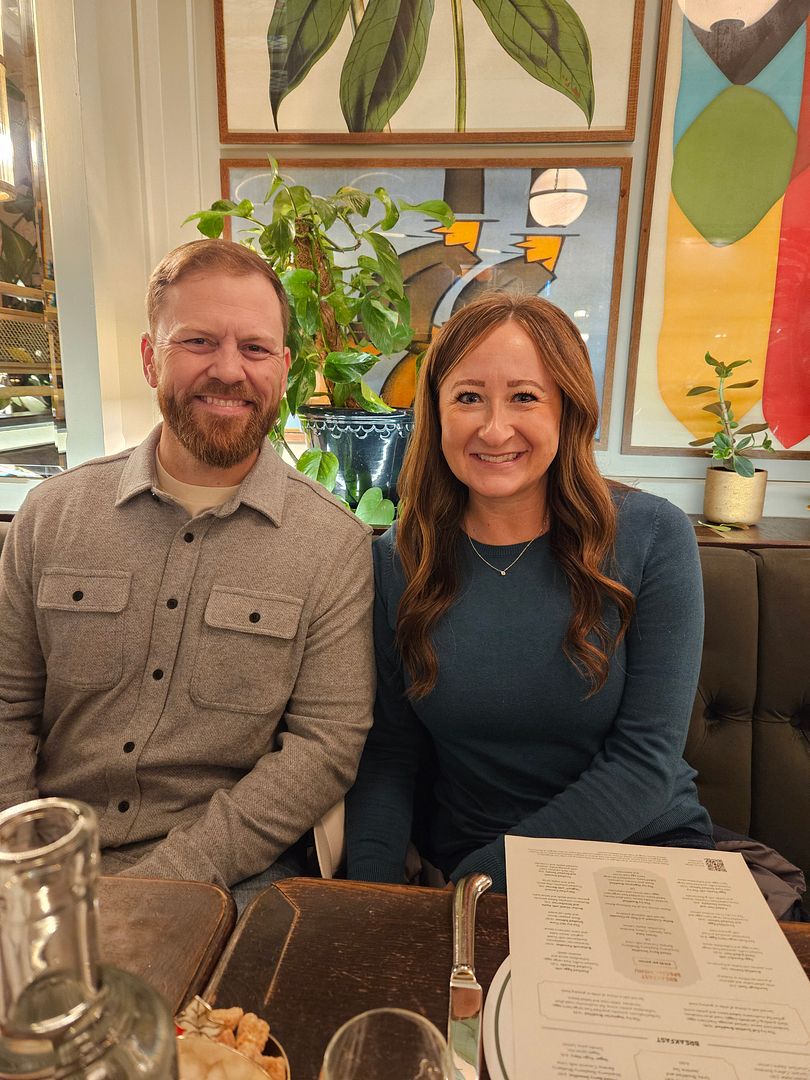
On Saturday September 14th we had breakfast reservations at The Ivy for 8:30 and their webpage said we should dress ‘smart’. We dressed as smart as we could and walked over to the restaurant which was very close to our hotel. It was a wet and drizzly beginning to the day.

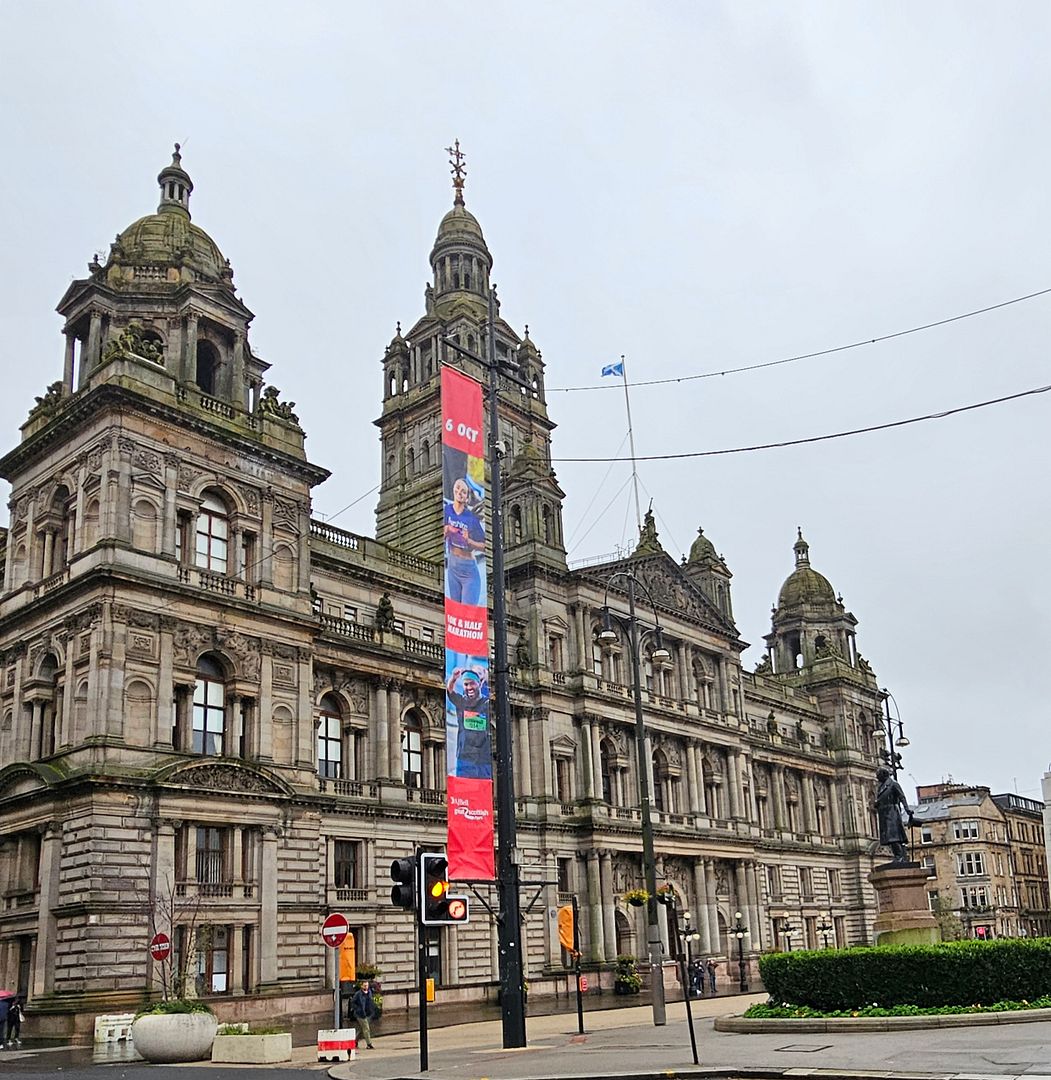
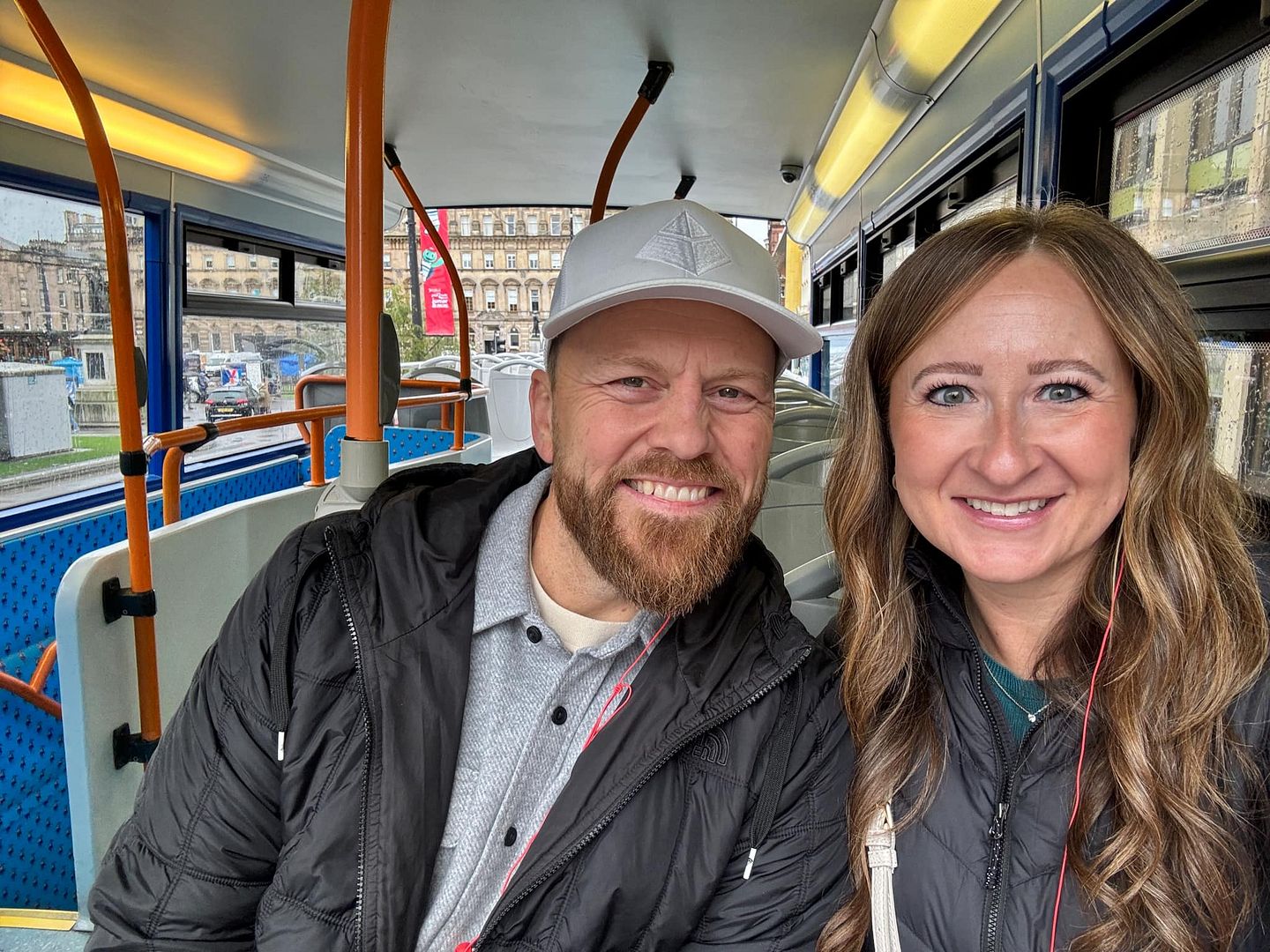
After breakfast we walked over to George Square to catch a hop on hop off bus.

George Square is named after King George III. Laid out in 1781, today Glasgow Square is home to the headquarters of Glasgow City Council, and showcases an important collection of statues and monuments, including those dedicated to famous scots such as Robert Burns, James Watt, Sir Robert Peel and Sir Walter Scott. It is also the square where people gather for major events and to let their voices be heard, aka protest.

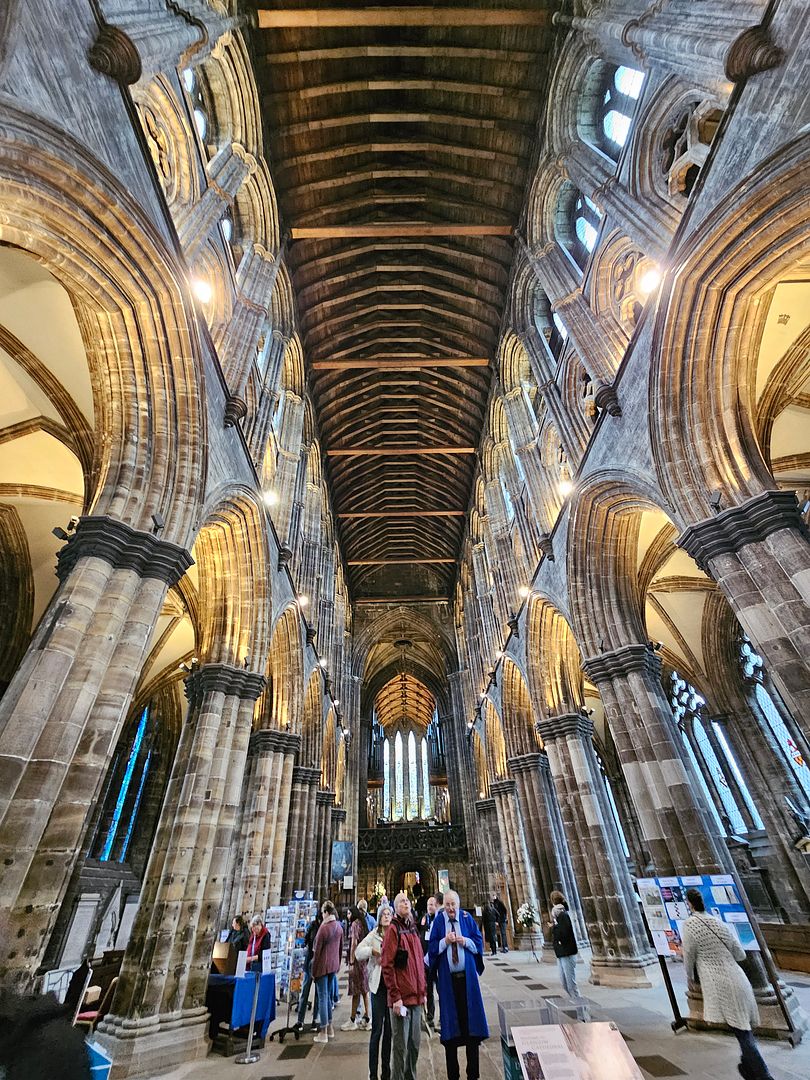
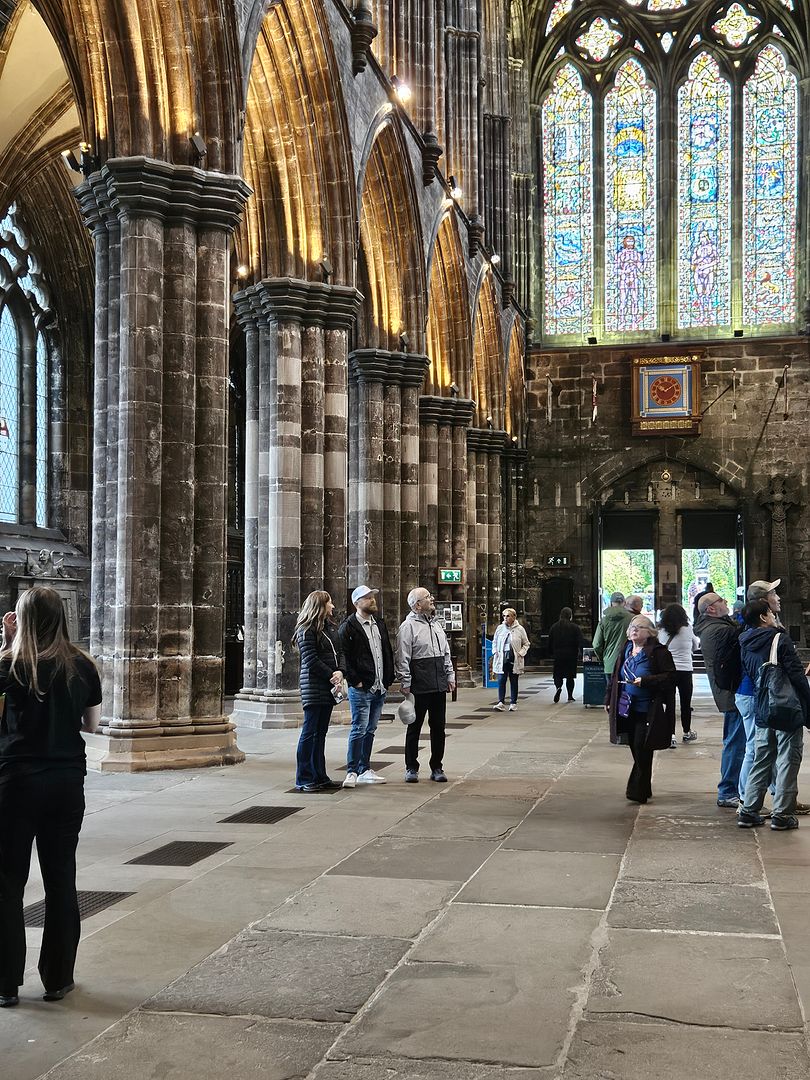
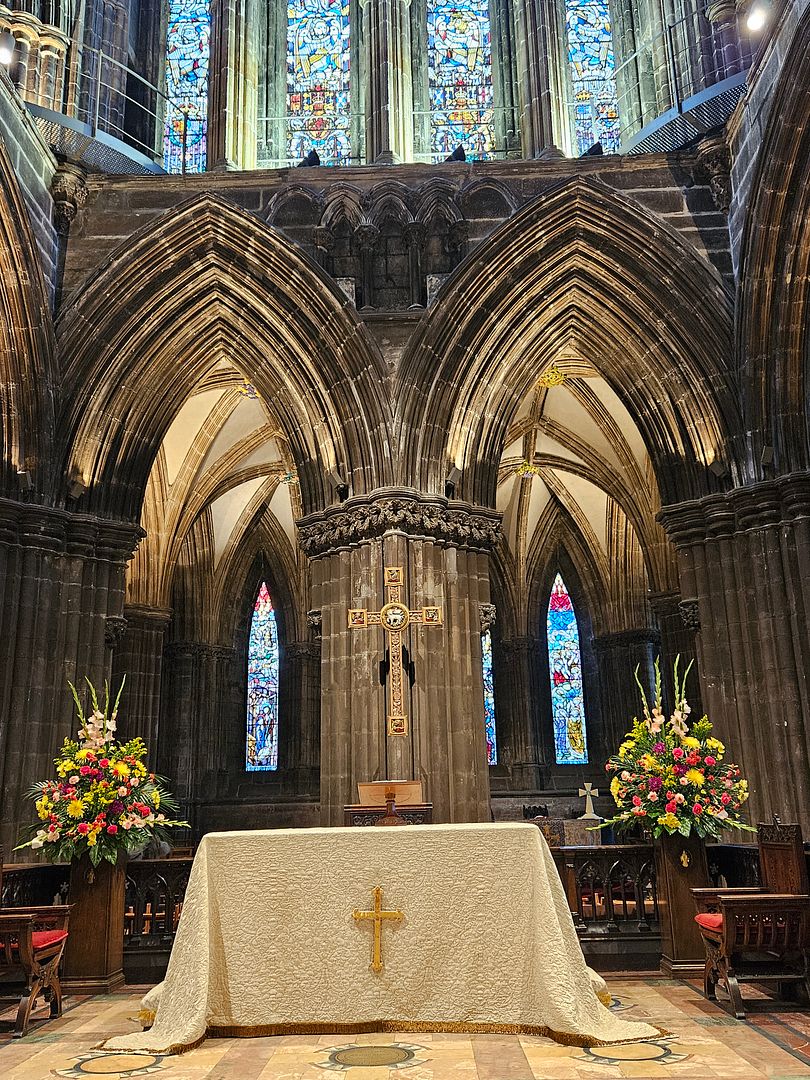
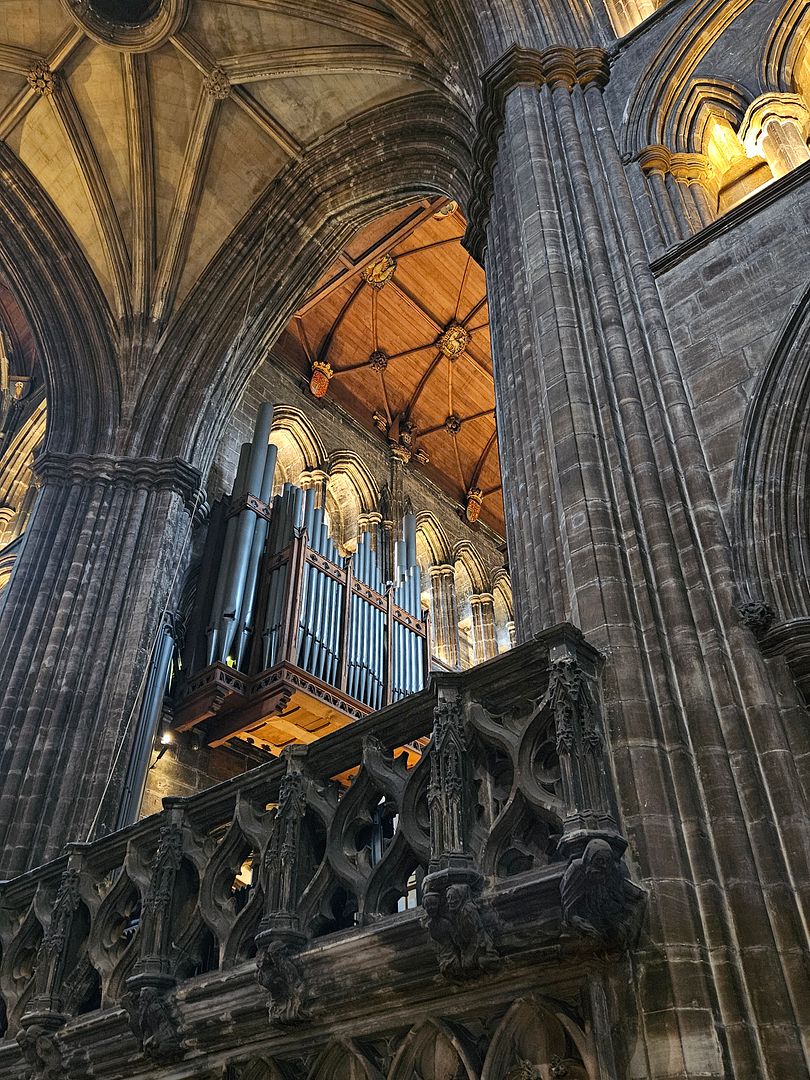
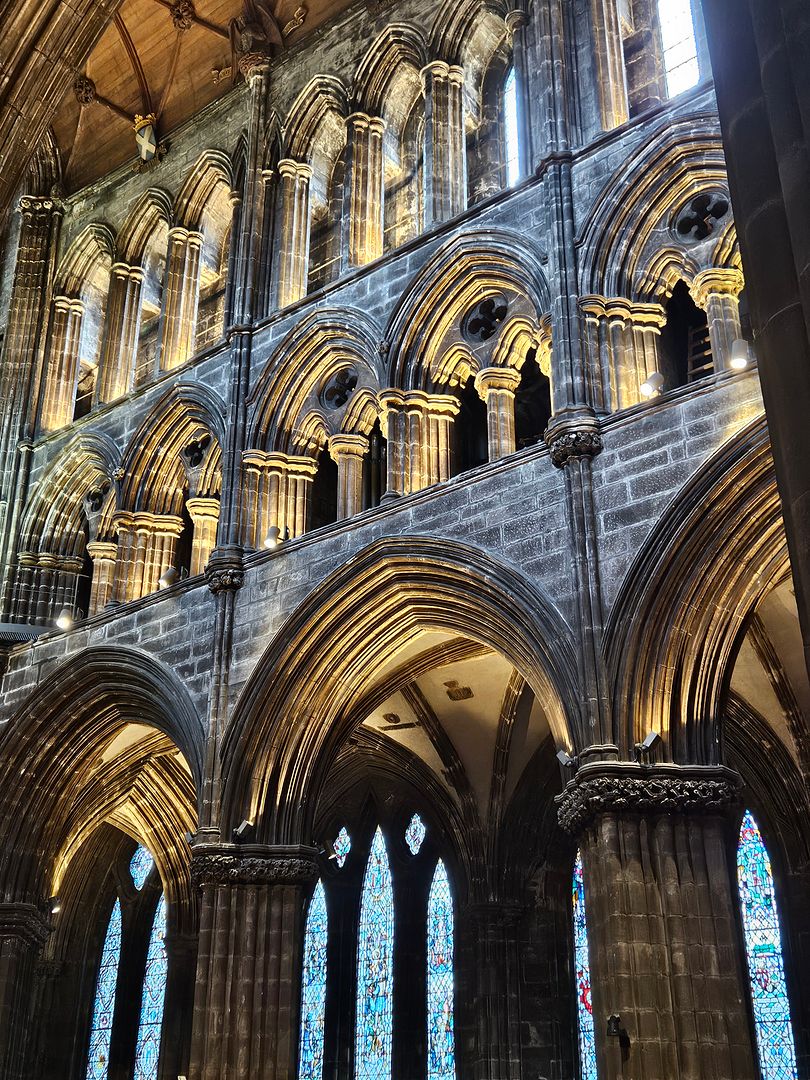
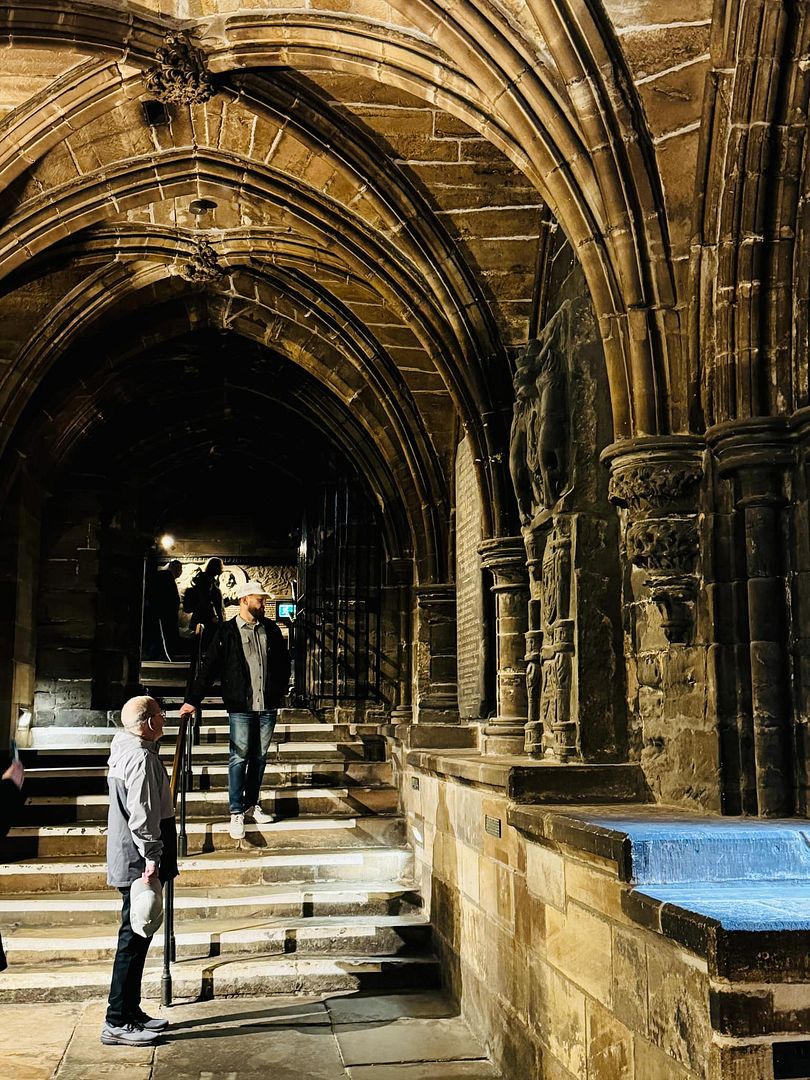
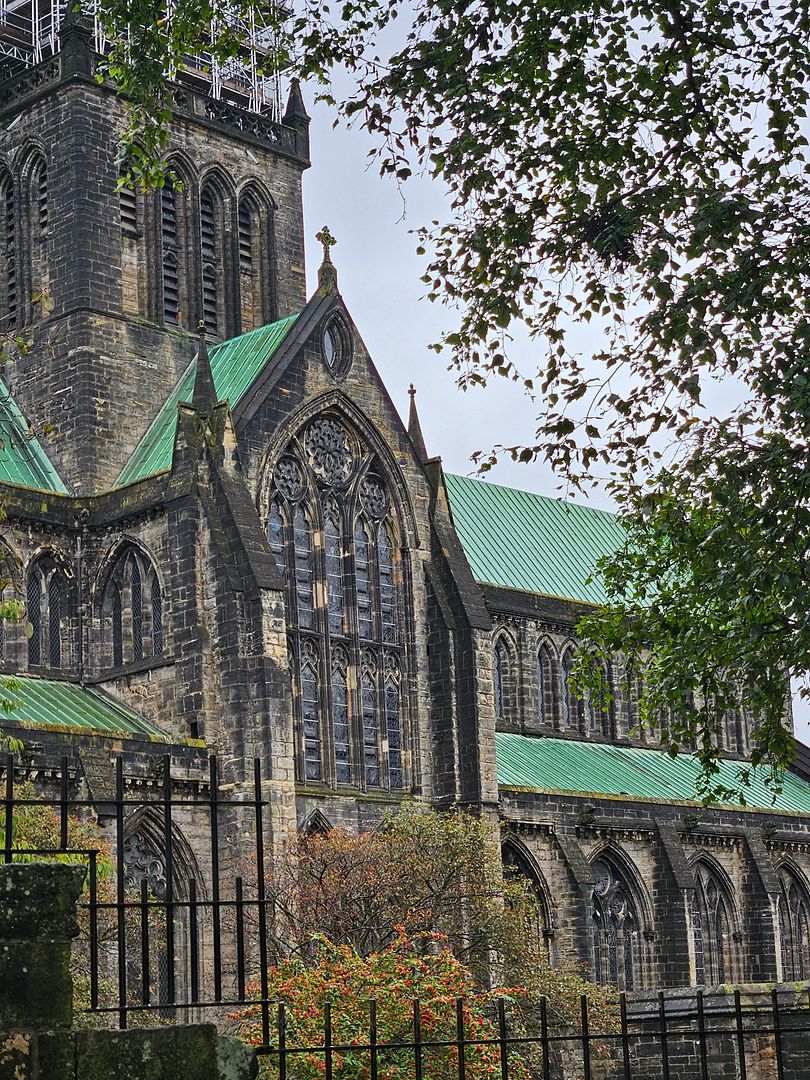
Our first hop off spot was St. Mungo’s Cathedral (Glasgow Cathedral).

This medieval cathedral is thought to have been built on the site of St Kentigern’s tomb and marks the birthplace of the city of Glasgow.

My people looking up in awe of this amazing structure.

One of my interests in this trip to Scotland was gleaning information connected to the Reformation and the Covenantors of Scotland like John Knox, George Wishart, Patrick Hamilton, The Two Margarets, Jenny Geddes, and others. We would learn much about the early martyrs of the church throughout our stops in Scotland.

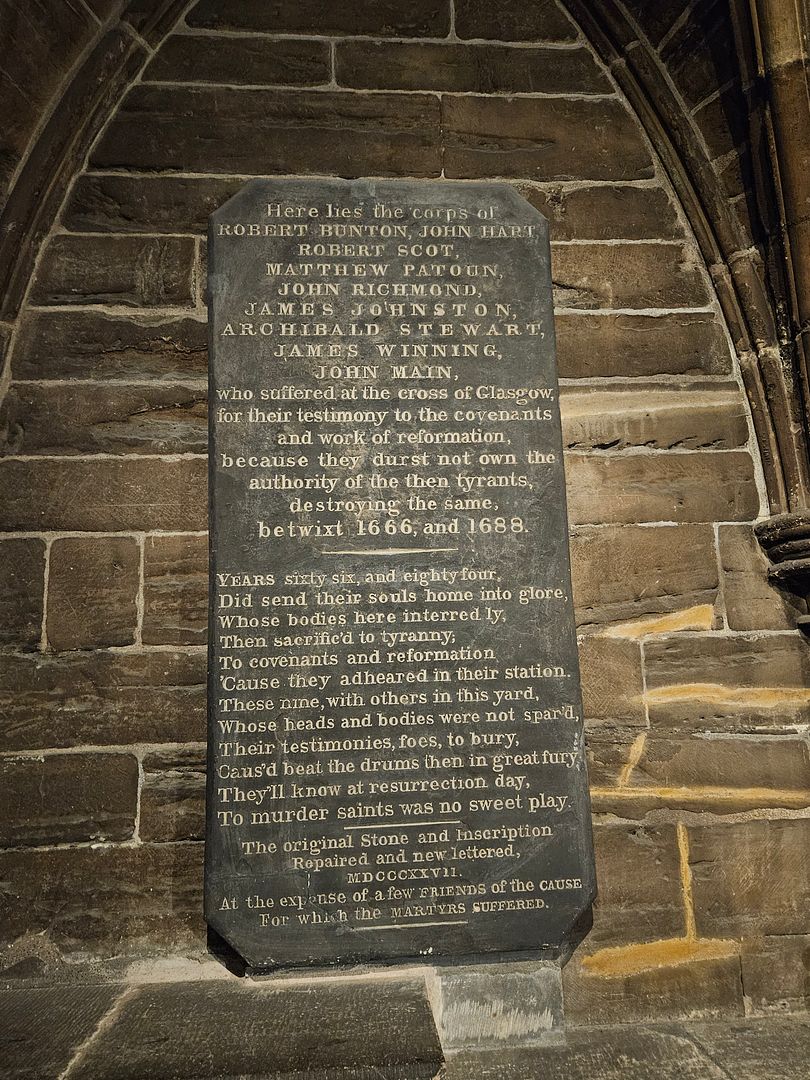
This stone reads…

“Here lies the corps of Robert Bunton, John Hart, Robert Scot, Matthew Patoun, John Richmond, James Johnston, Archibald Stewart, James Winning, John Main, who suffered at the cross of Glasgow, for their testimony to the covenants and work of reformation, because they durst not own the authority of the then tyrants, destroying the same, betwixt 1666 and, and 1688.

Years sixty six, and eighty four,
Did send their souls home into glore,
Whose bodies here interred ly,
Then sacrific’d to tyrrany;
To covenants and reformation,
‘Cause they adheared in their station,
These nine, with others in this yard,
Whose heads and bodies were not spar’d,
Their testimonies, foes to bury,
Caus’d beat the drums then in great fury
They’ll know at resurrection day,
To murder saints was no sweet play.


I love the eagle lecterns in the United Kingdom.

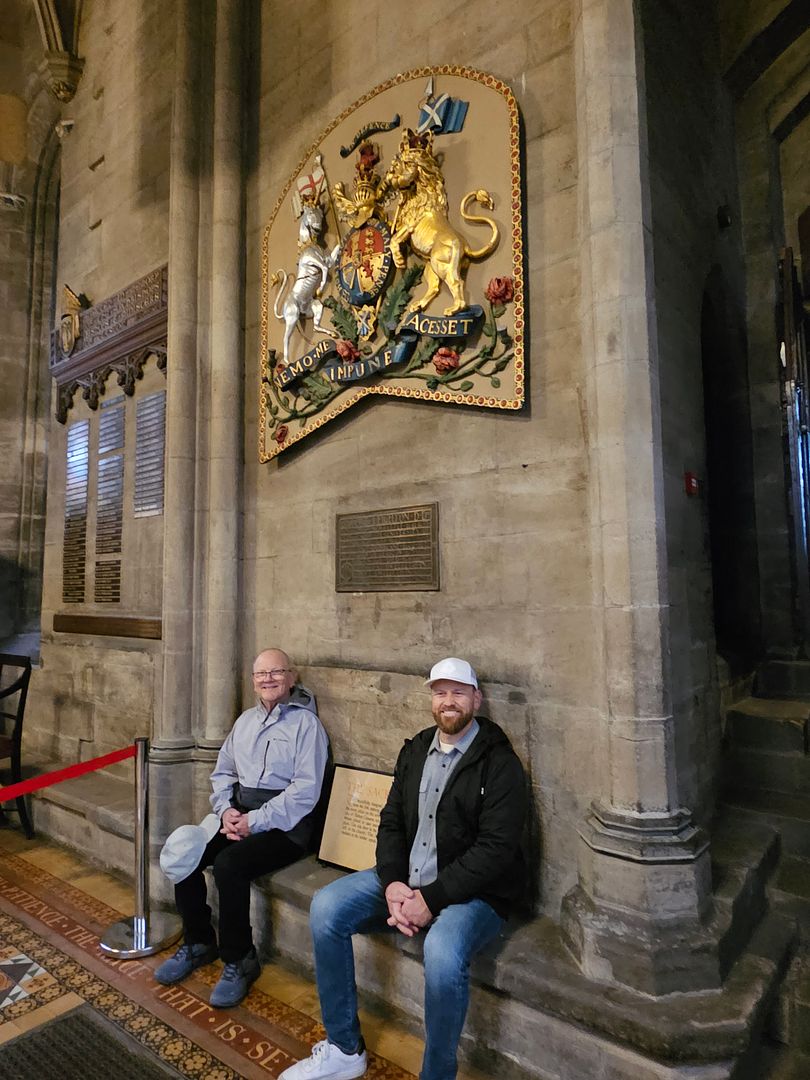
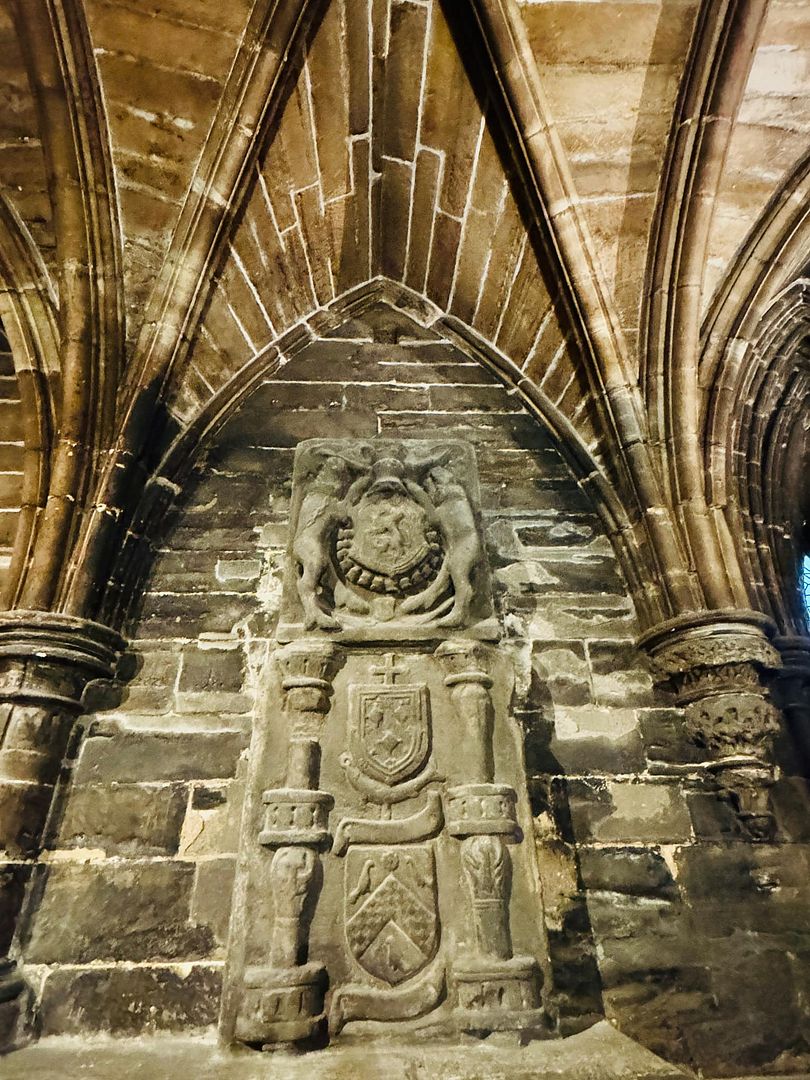
The Unicorn and the Lion (Scotland and England), the Thistle and the Rose.

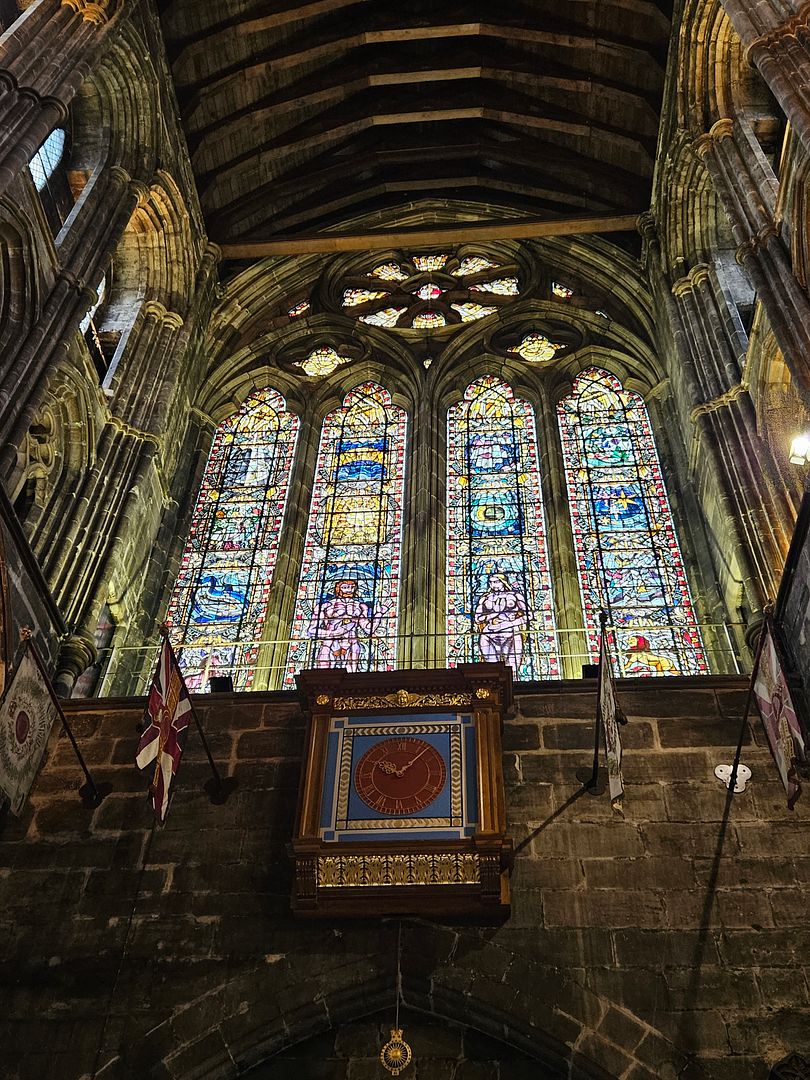
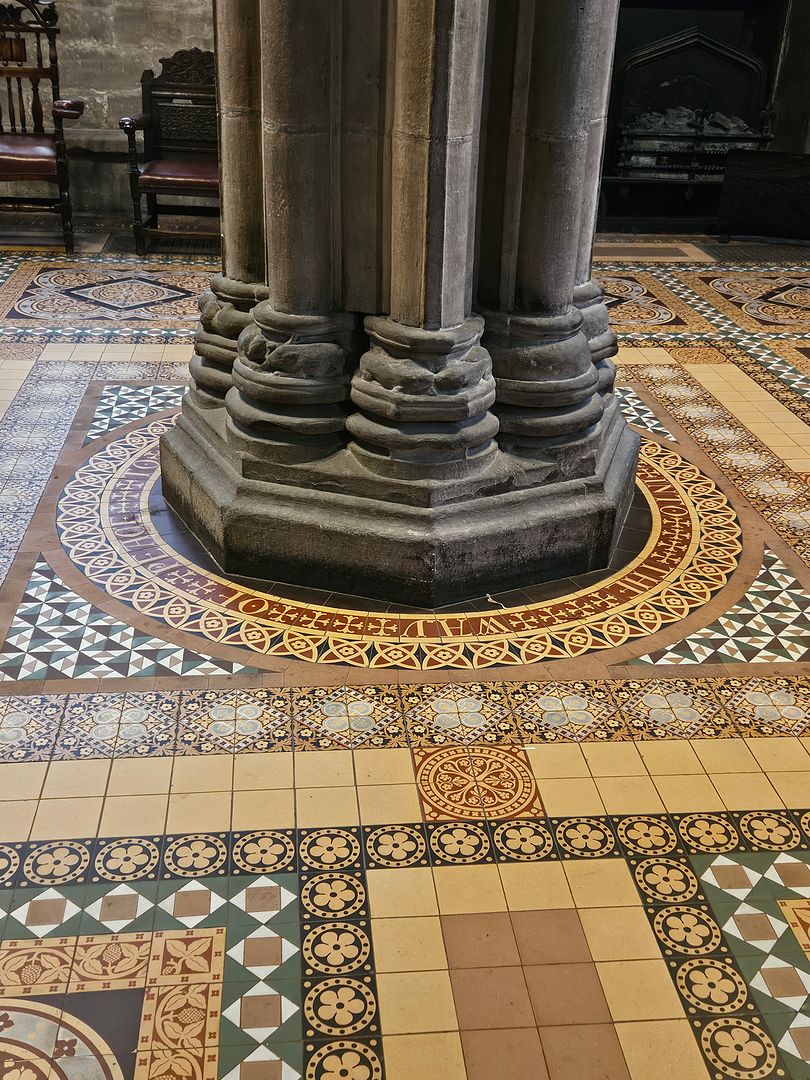
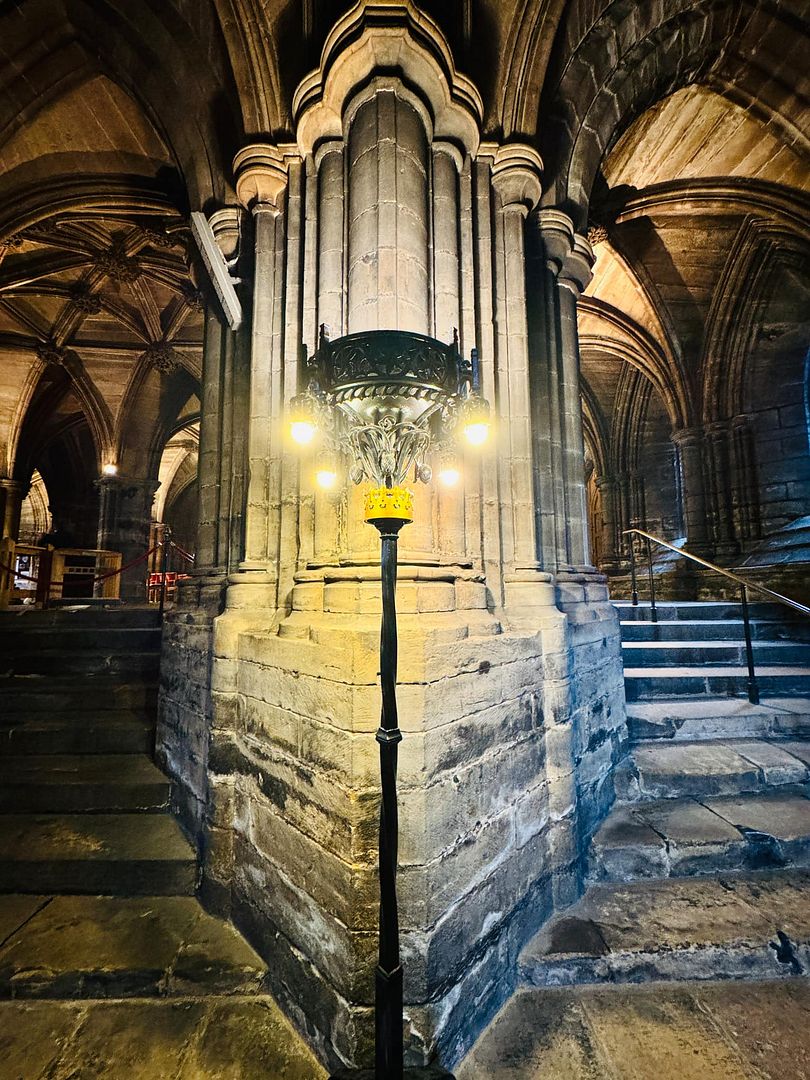
We looked up a lot but it was also good to look down on the amazing floors.

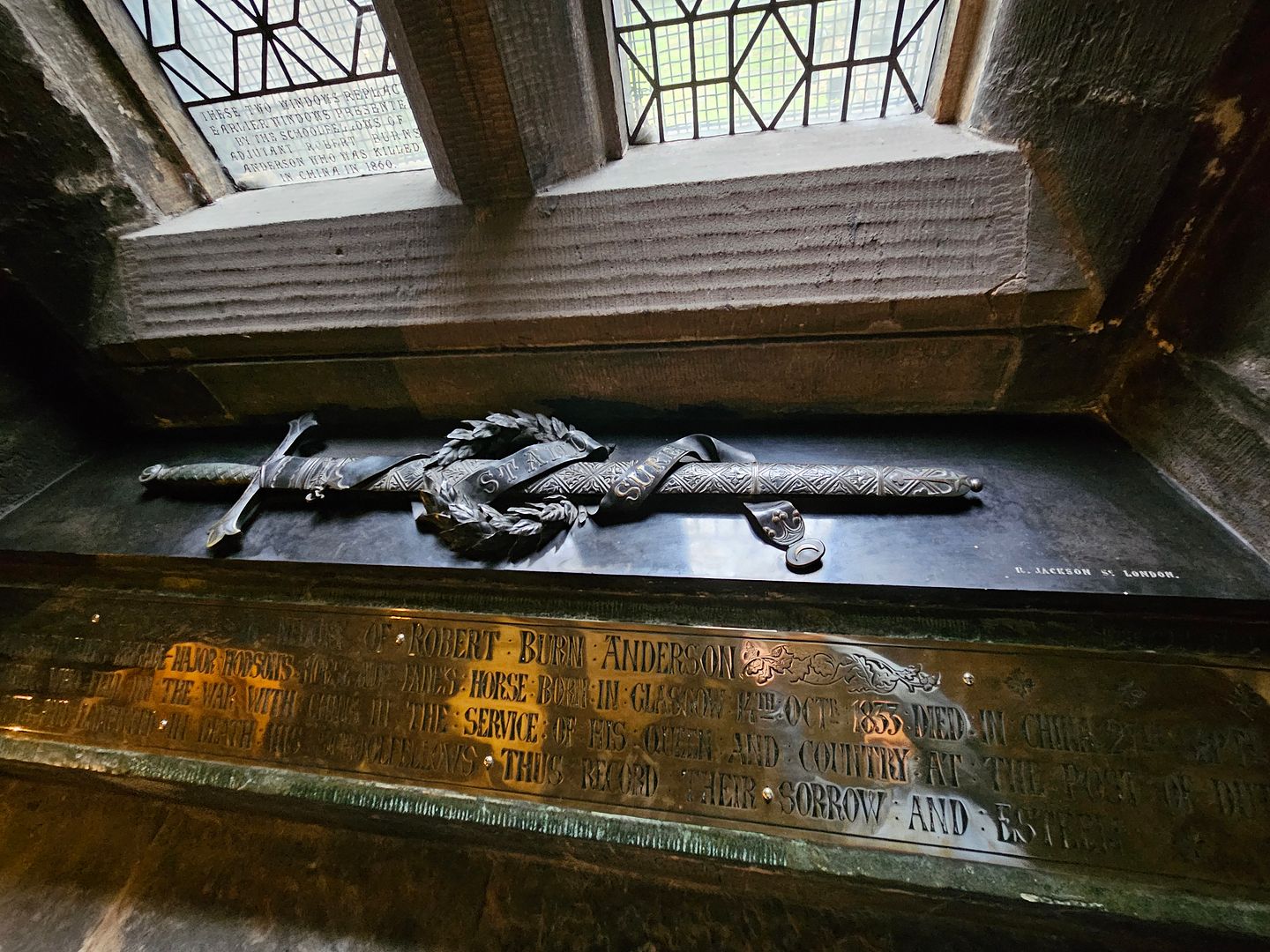
Stand Sure is the inscription on the Sword.

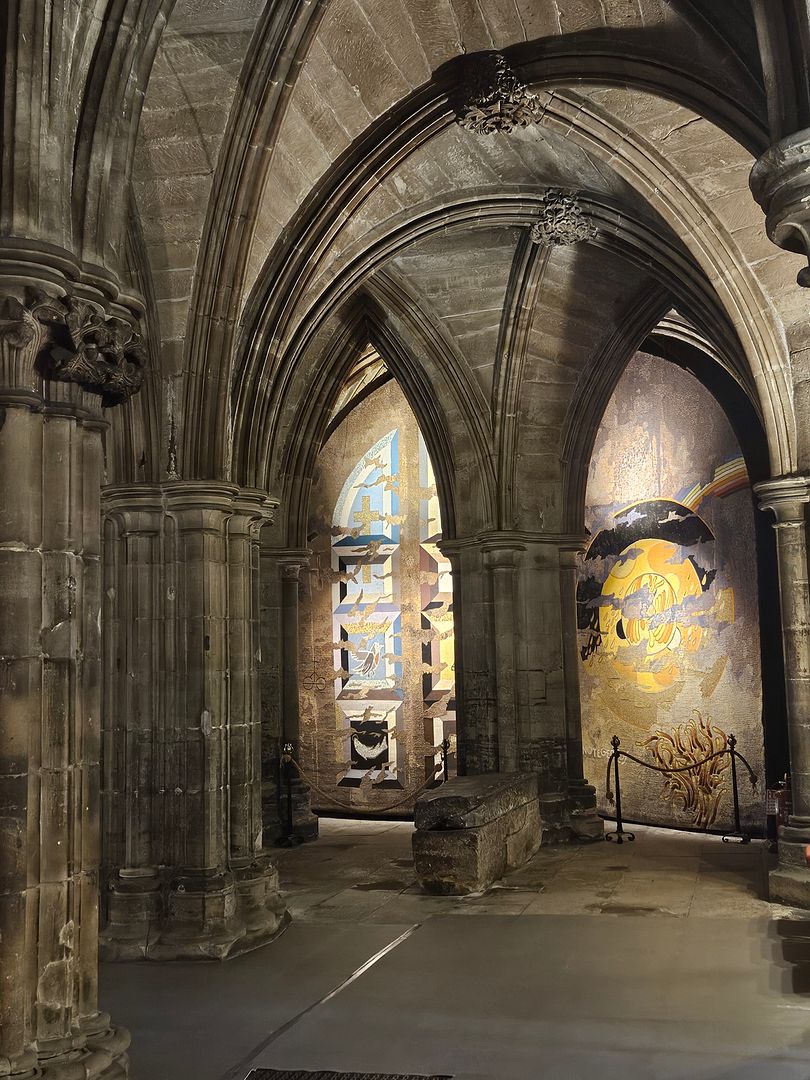
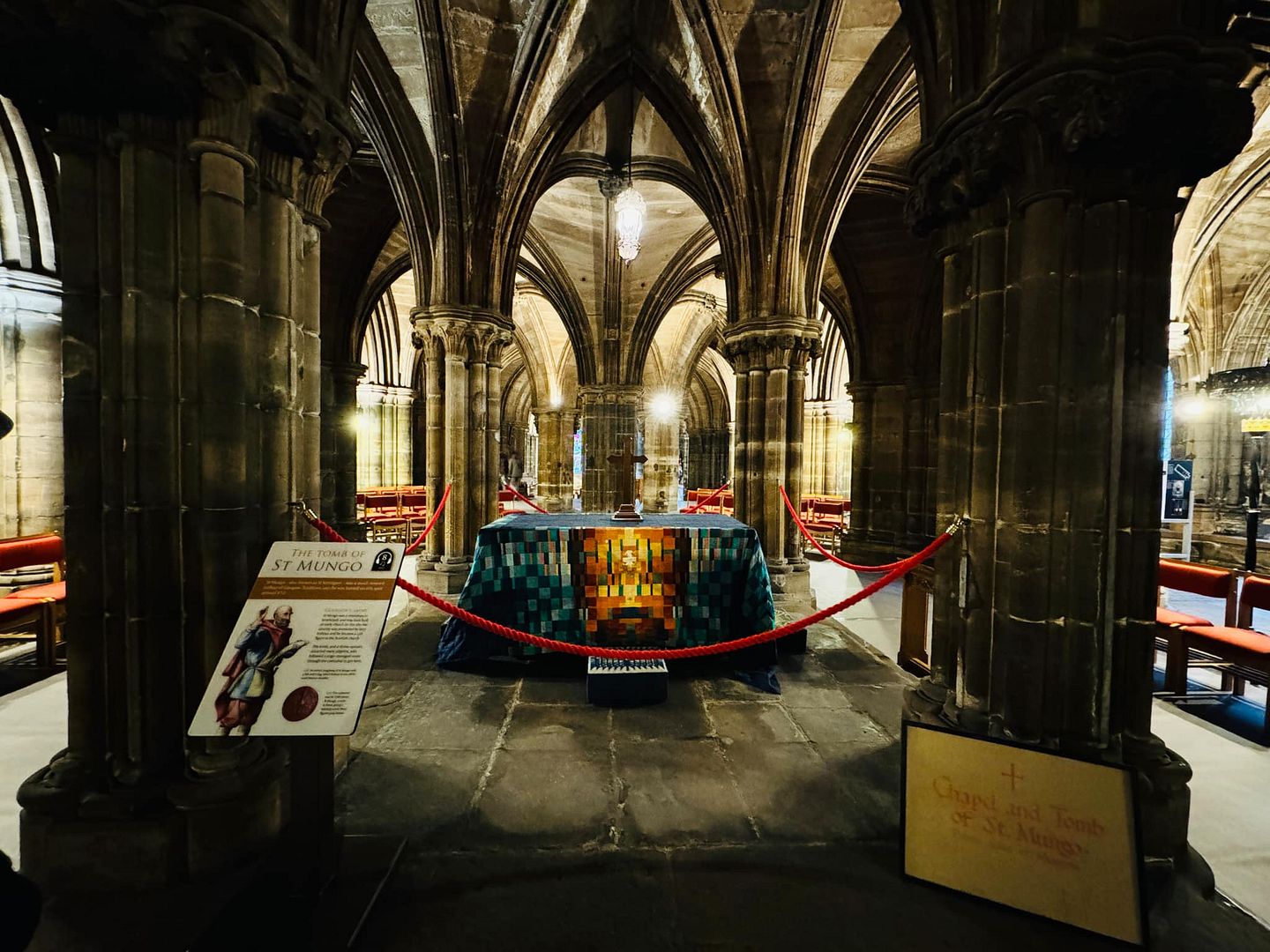
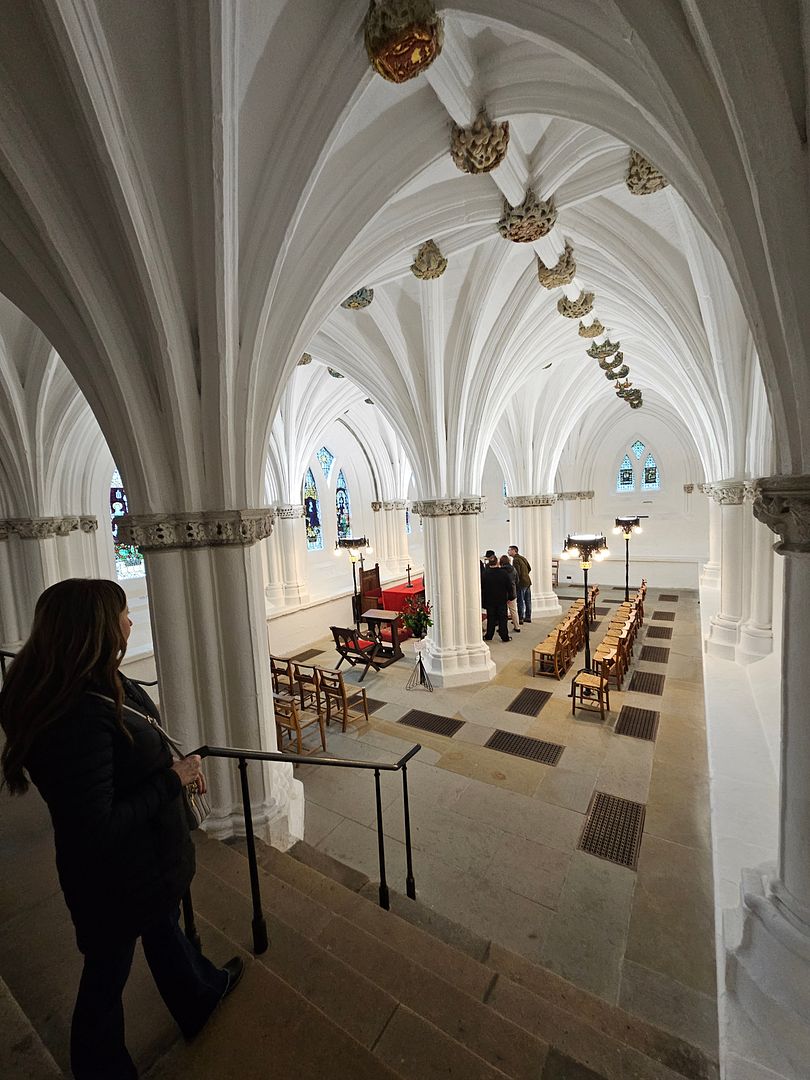
The Crypt of St. Mungo’s was another layer of amazing architecture.


The weather outside improved and we decided to make the journey up behind the cathedral to view the Necropolis and specifically the monument to John Knox.

This is already way too long of a post and I will save the Necropolis for another day. Thank you so much for journeying along with us on this most amazing experience we enjoyed. Thank you to Laura for sharing all her photos with me. All my posts will be a mix of both her photos and mine.

Thanks be to God for His amazing goodness to us in our travels.


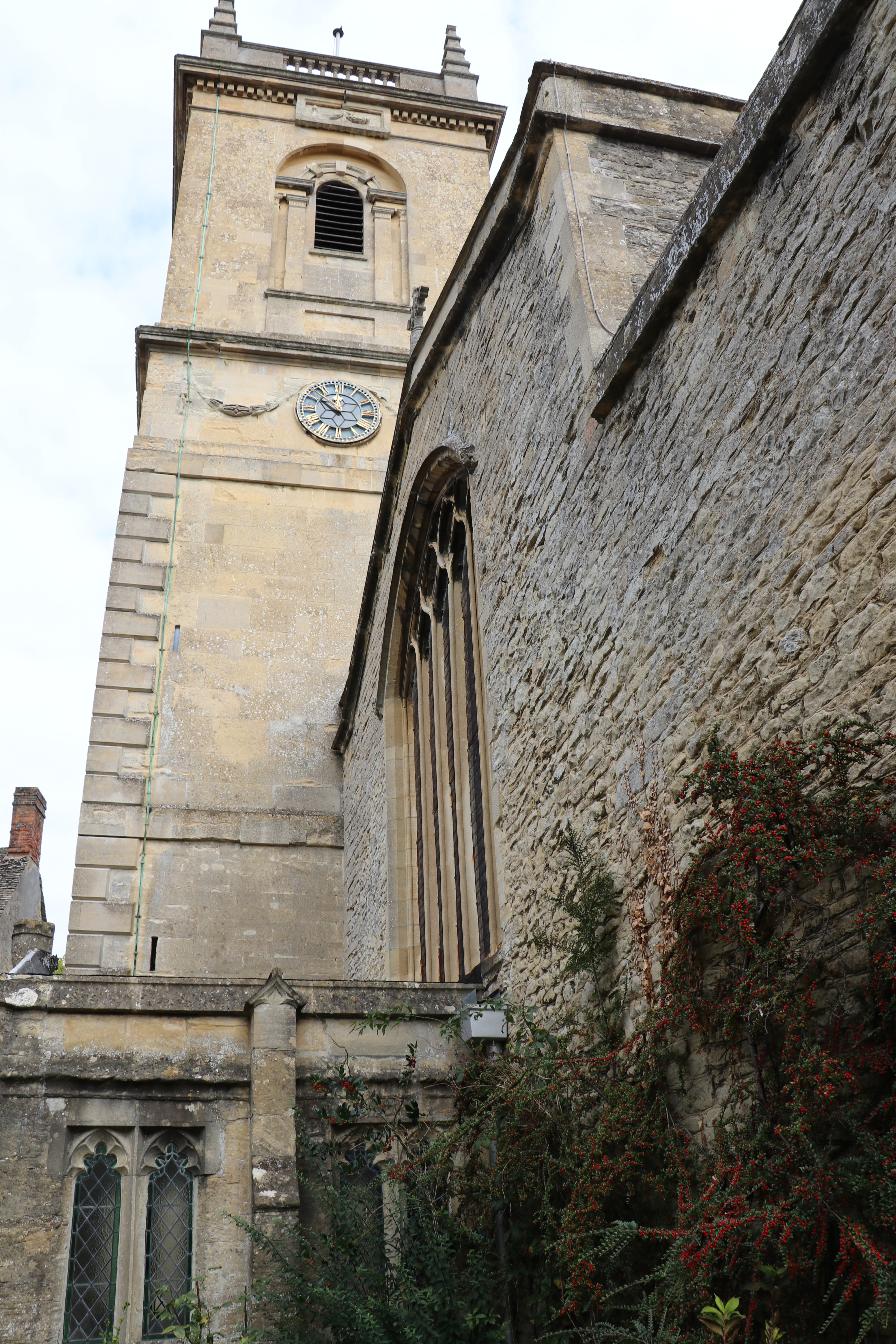
St. Mary Magdalene Church ~ Woodstock

Much history of the church and of the photos I’m sharing can be found here.

The church was built during the reign of Henry II (1154-1189) as a chapel of ease so that local people, including members of the royal court, did not have to travel to the parish church at nearby Bladon to worship.

Later in the 13th century the church was enlarged and a bell tower and burial ground were added.

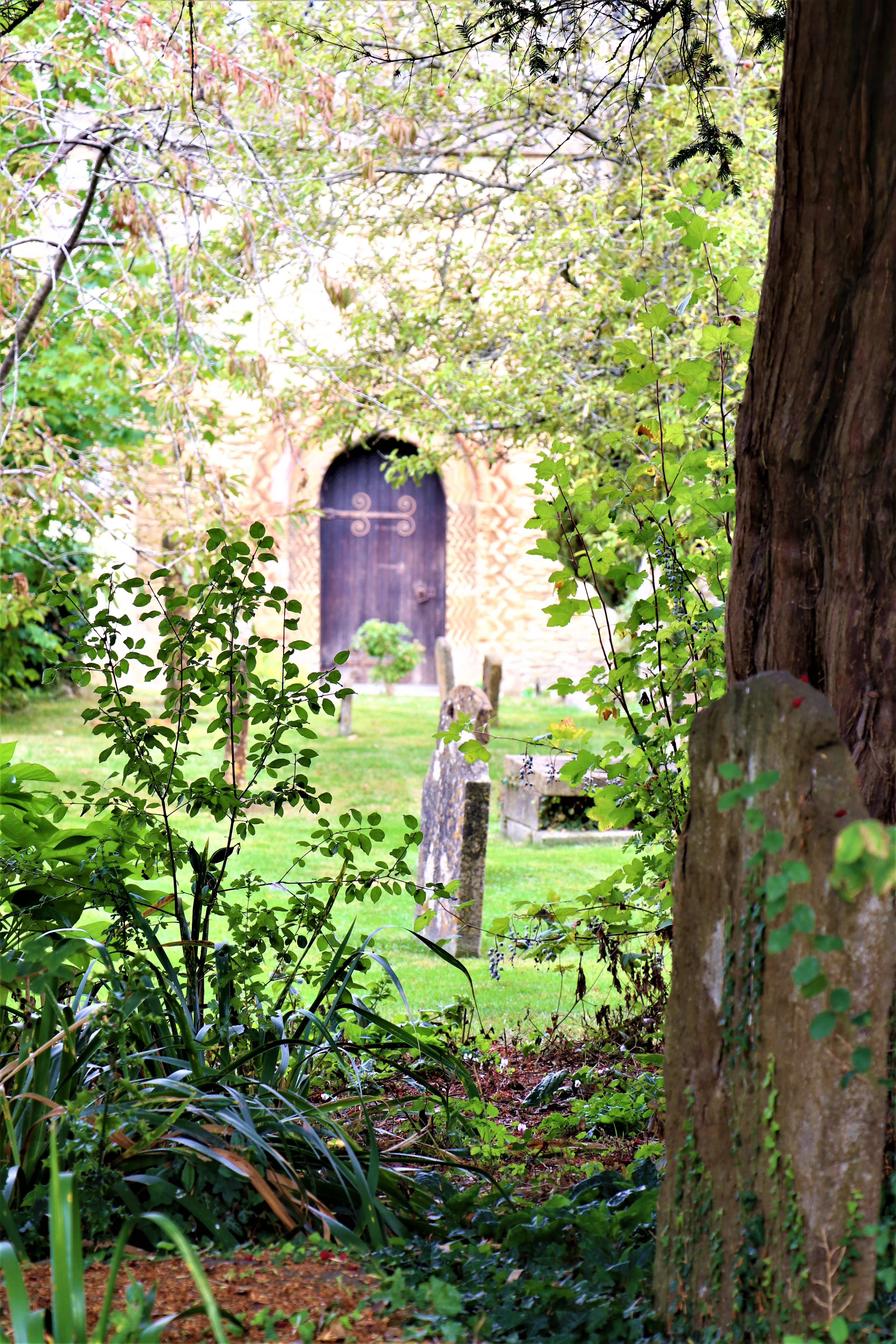
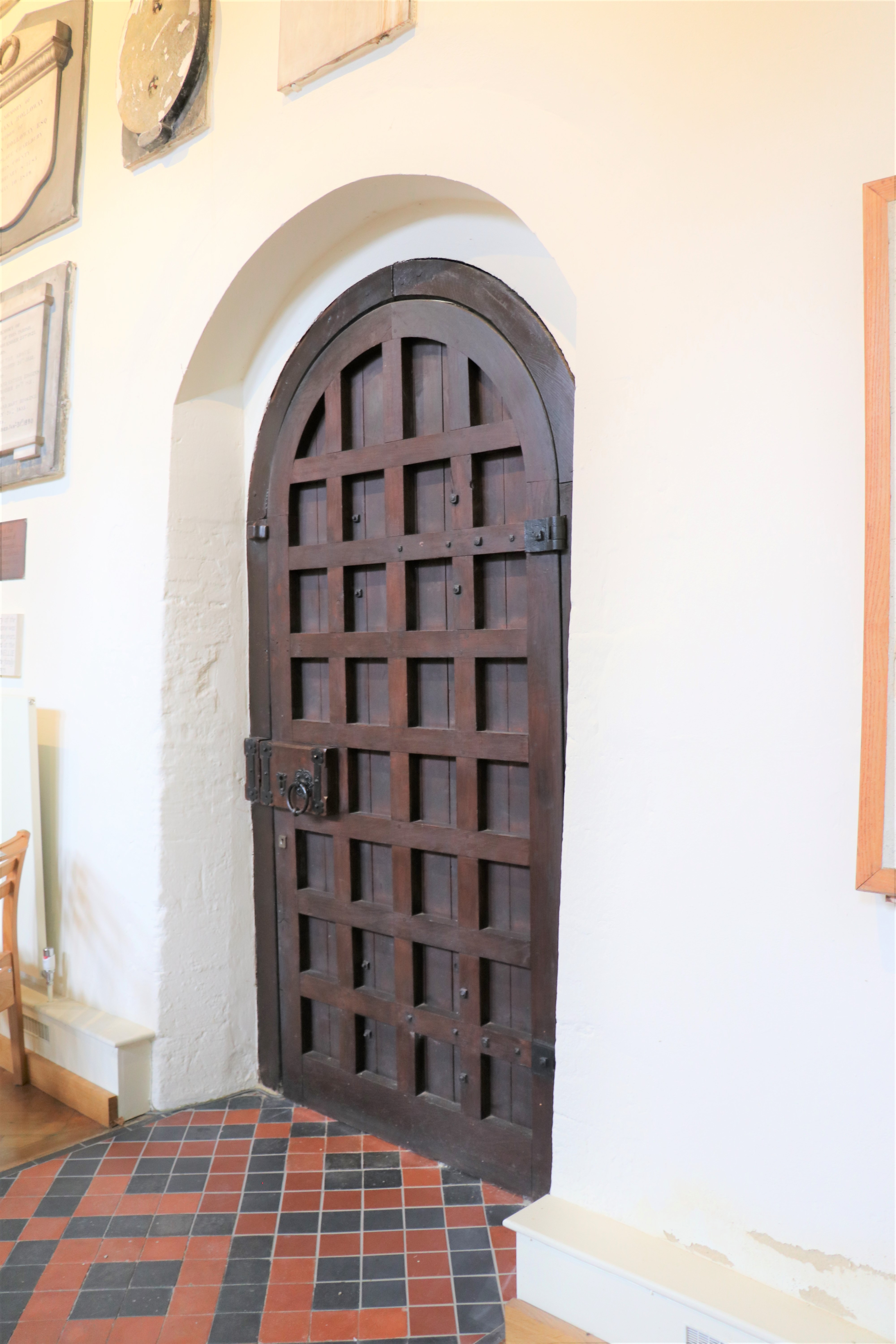
The only parts of that original chapel of ease to survive are a section on the south nave wall and a beautifully carved round-headed 12th-century doorway set into the south wall. The doorway is carved with two orders of traditional Norman zig-zag pattern separated by moulding. Unusually, the zig-zag carving extends all the way to the ground.

The above photo is of that ancient door from the outside and below from the inside.

Separating the church porch from the nave is a wooden screen, carved in the early 16th century. The screen was originally installed in the traditional place between the nave and chancel, but was moved to the west end of the nave in 1999 to make the high altar more easily visible.

This flying eagle lectern is like several others I’ve seen in churches in Great Britain. I think they are so cool.

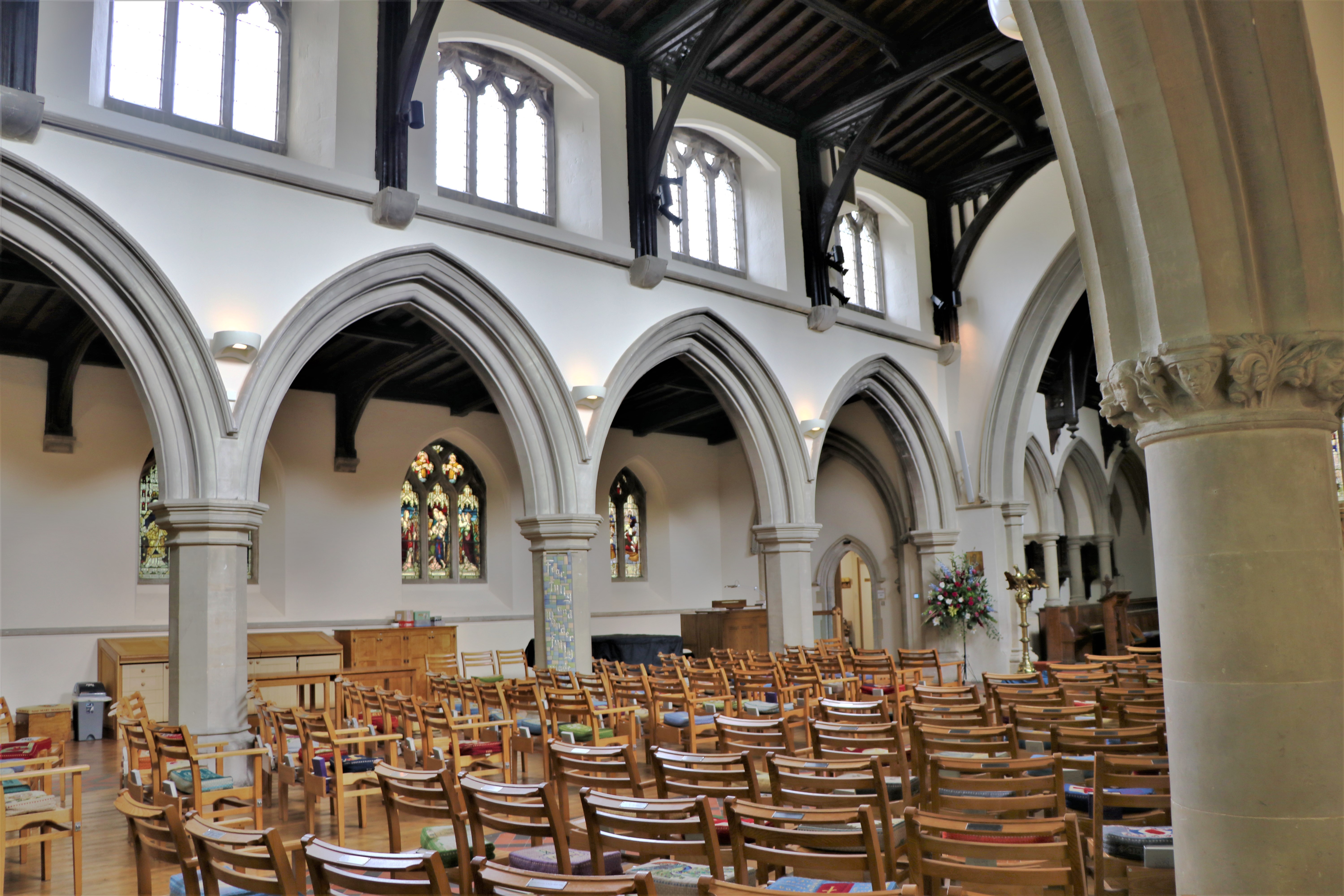
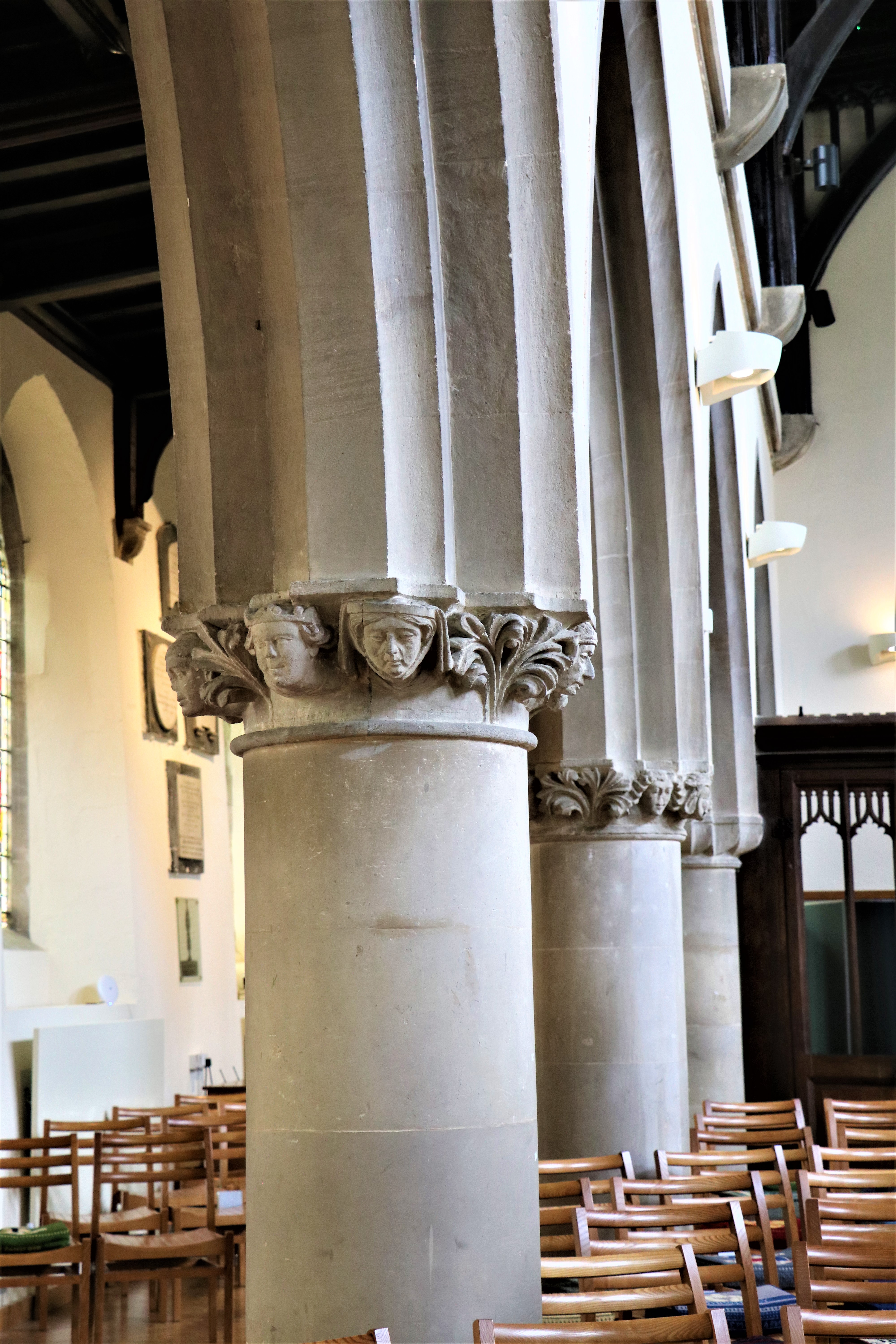
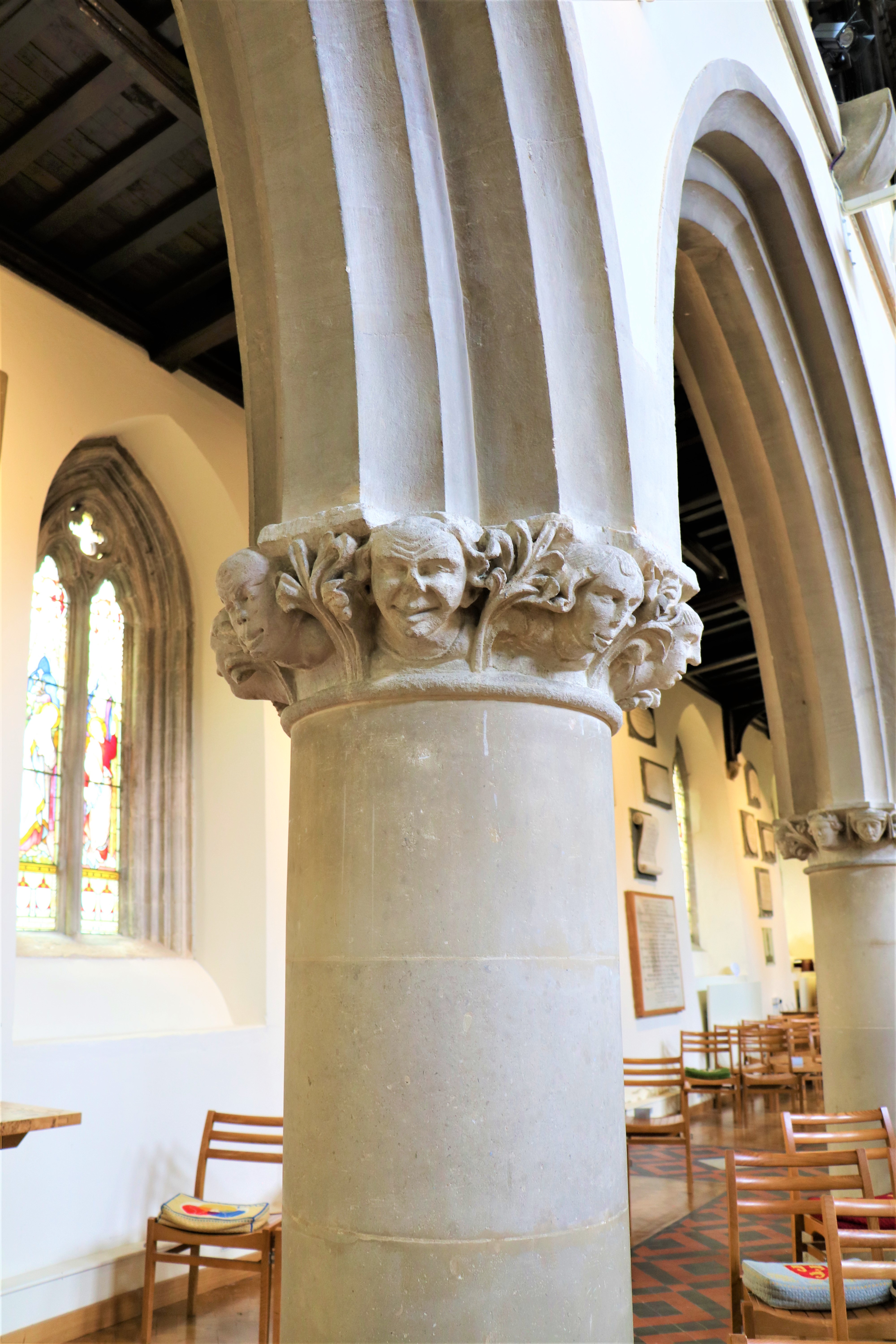
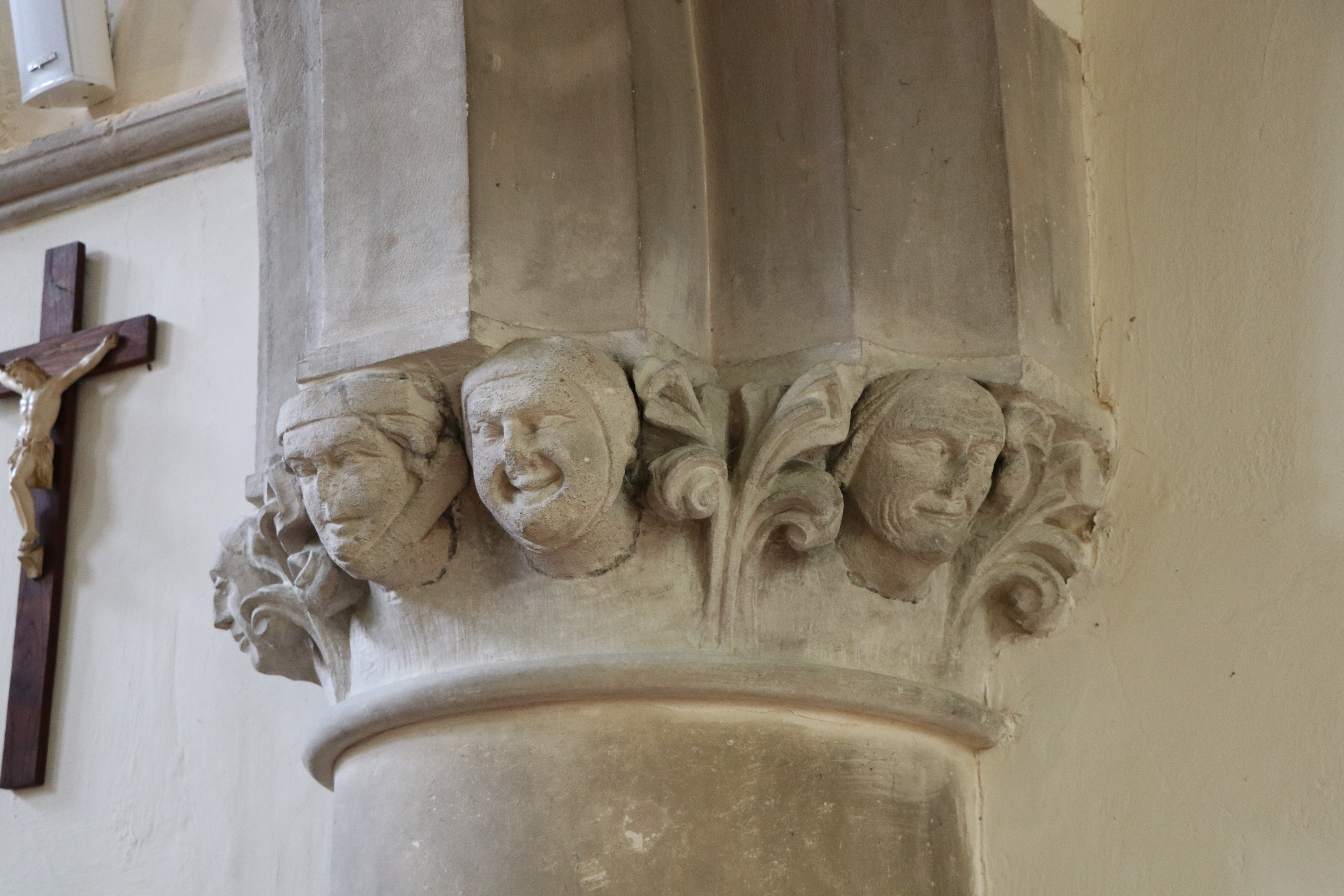
The superb column capitals on the south nave arcade are one of the church’s best features. There are 23 carved heads incorporated into the design of the capitals, interspersed with foliage.

Each capital is different and the heads are all unique.

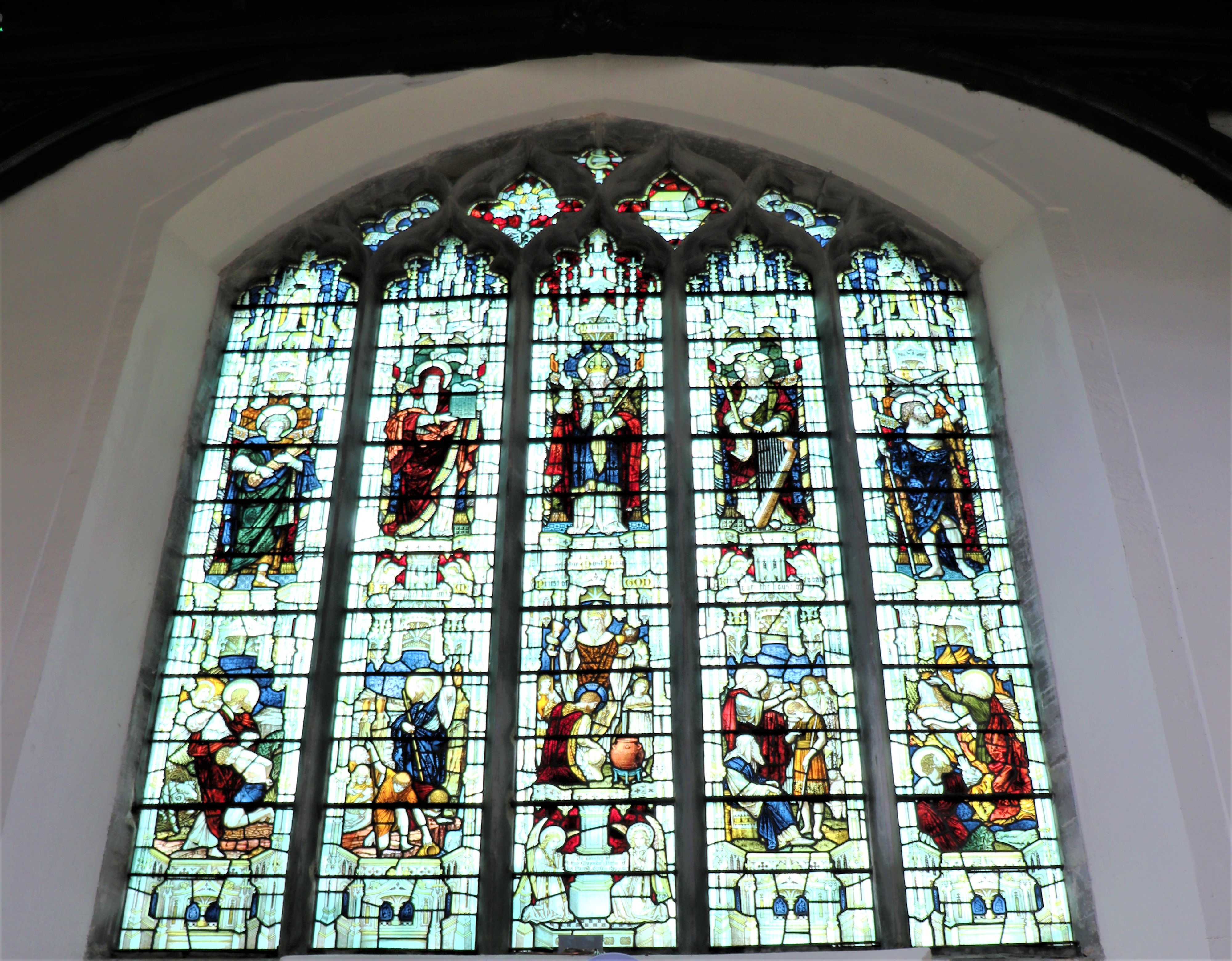
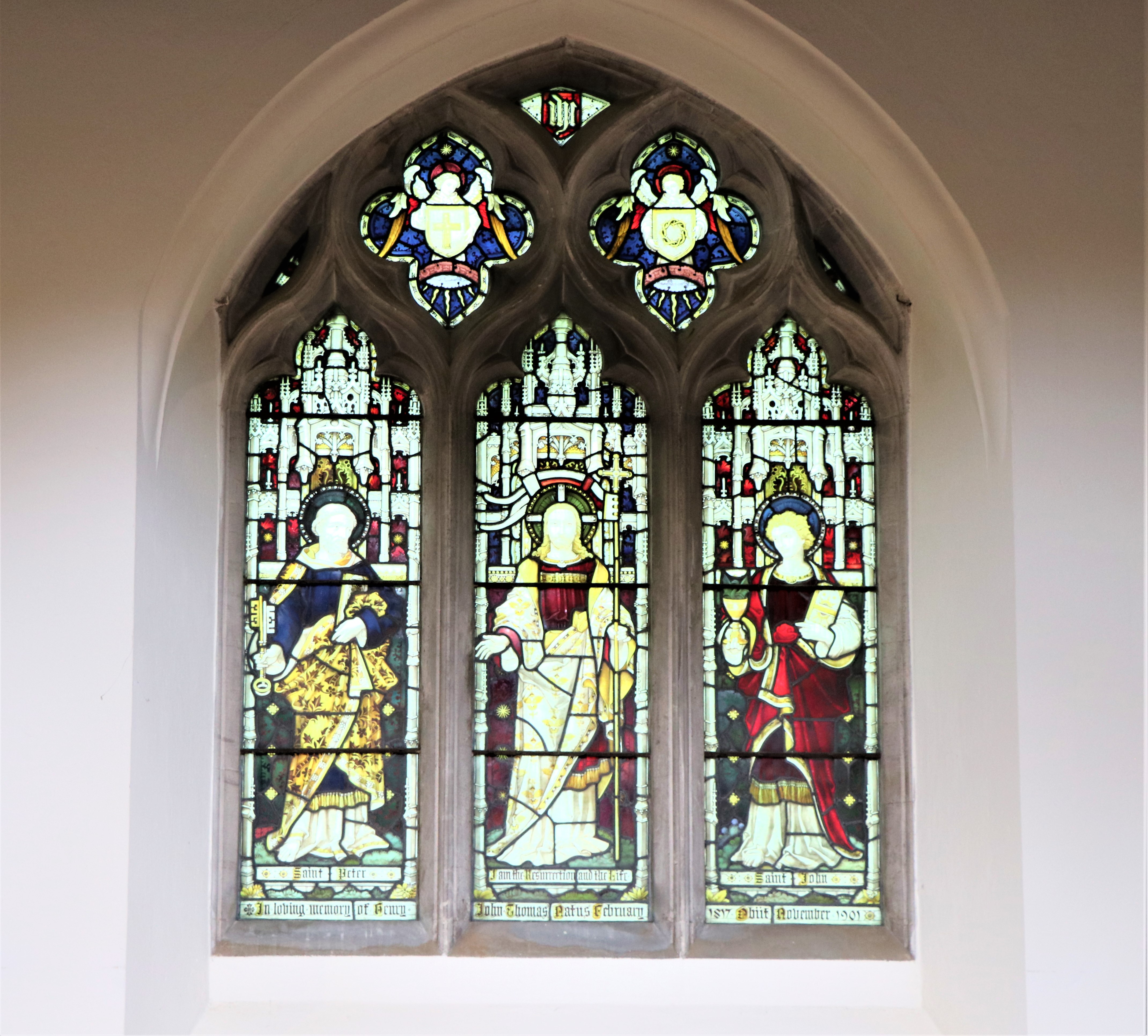
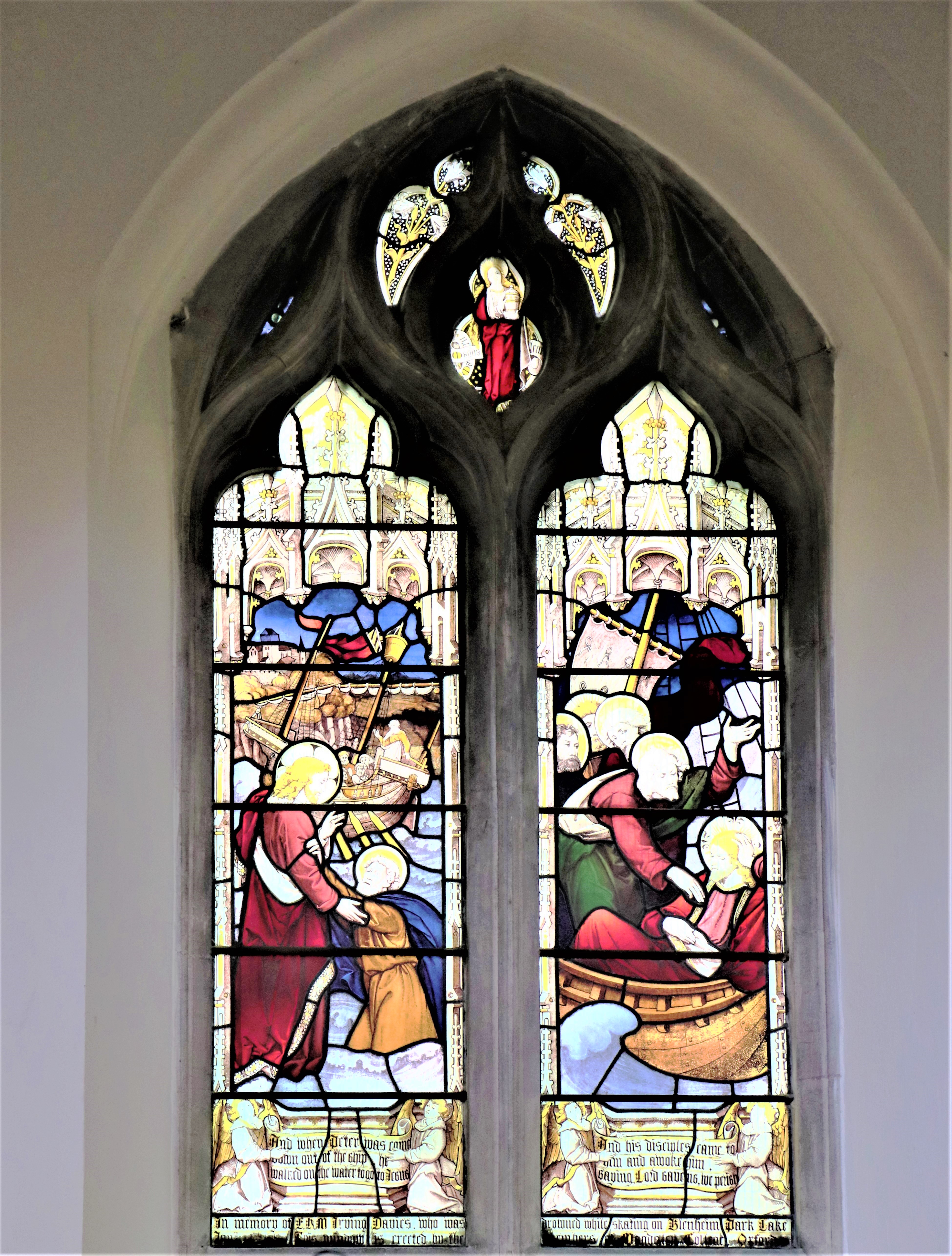
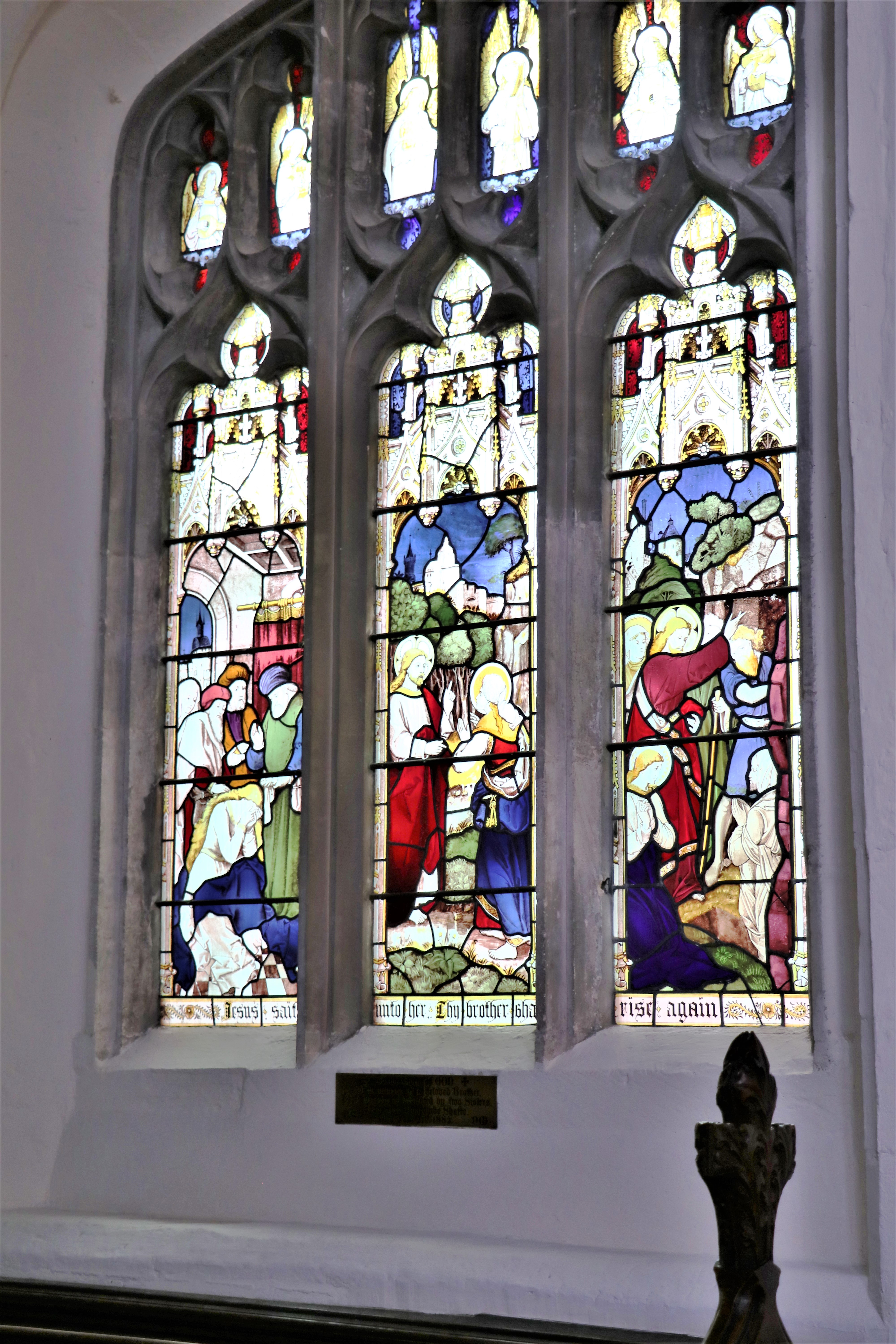
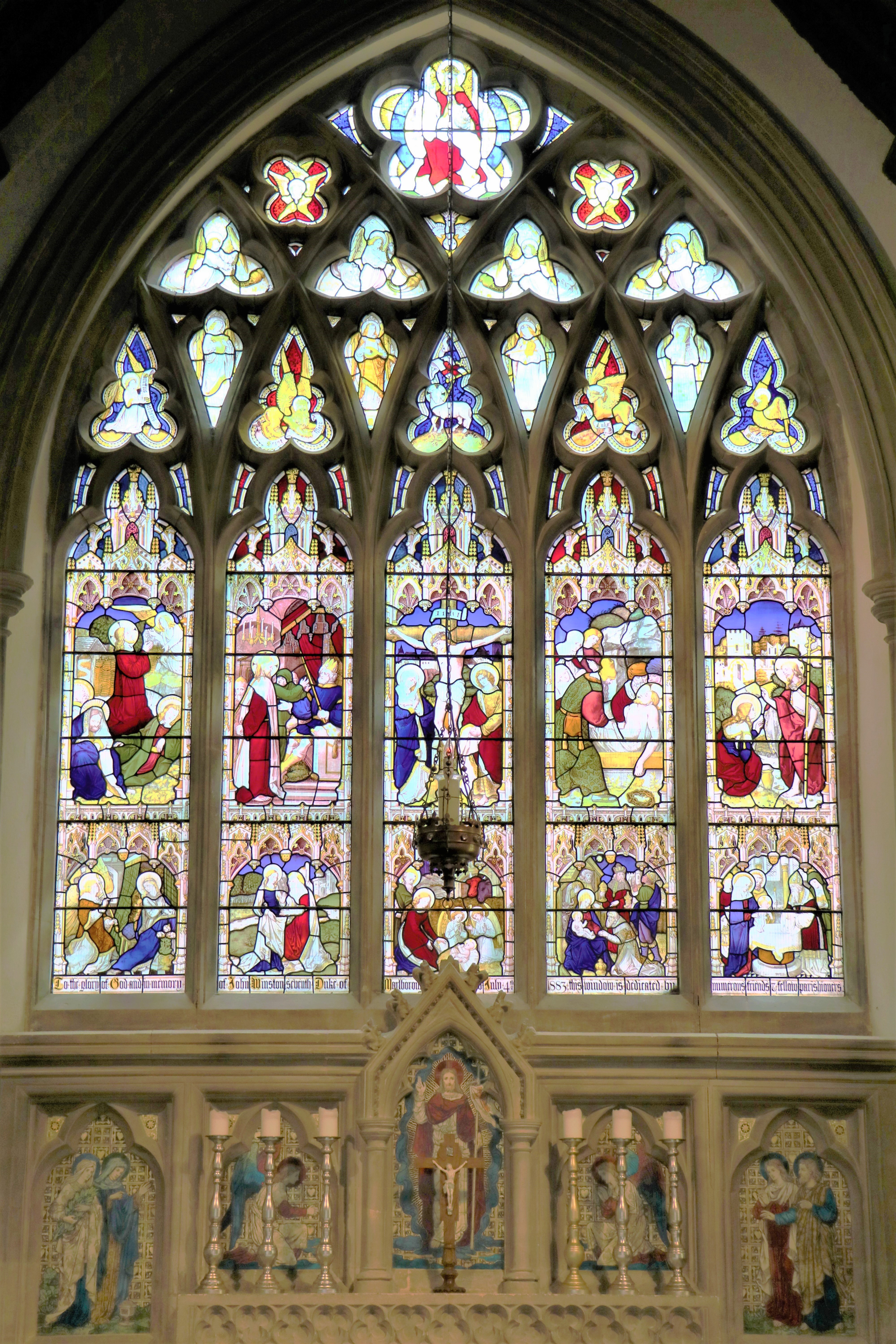
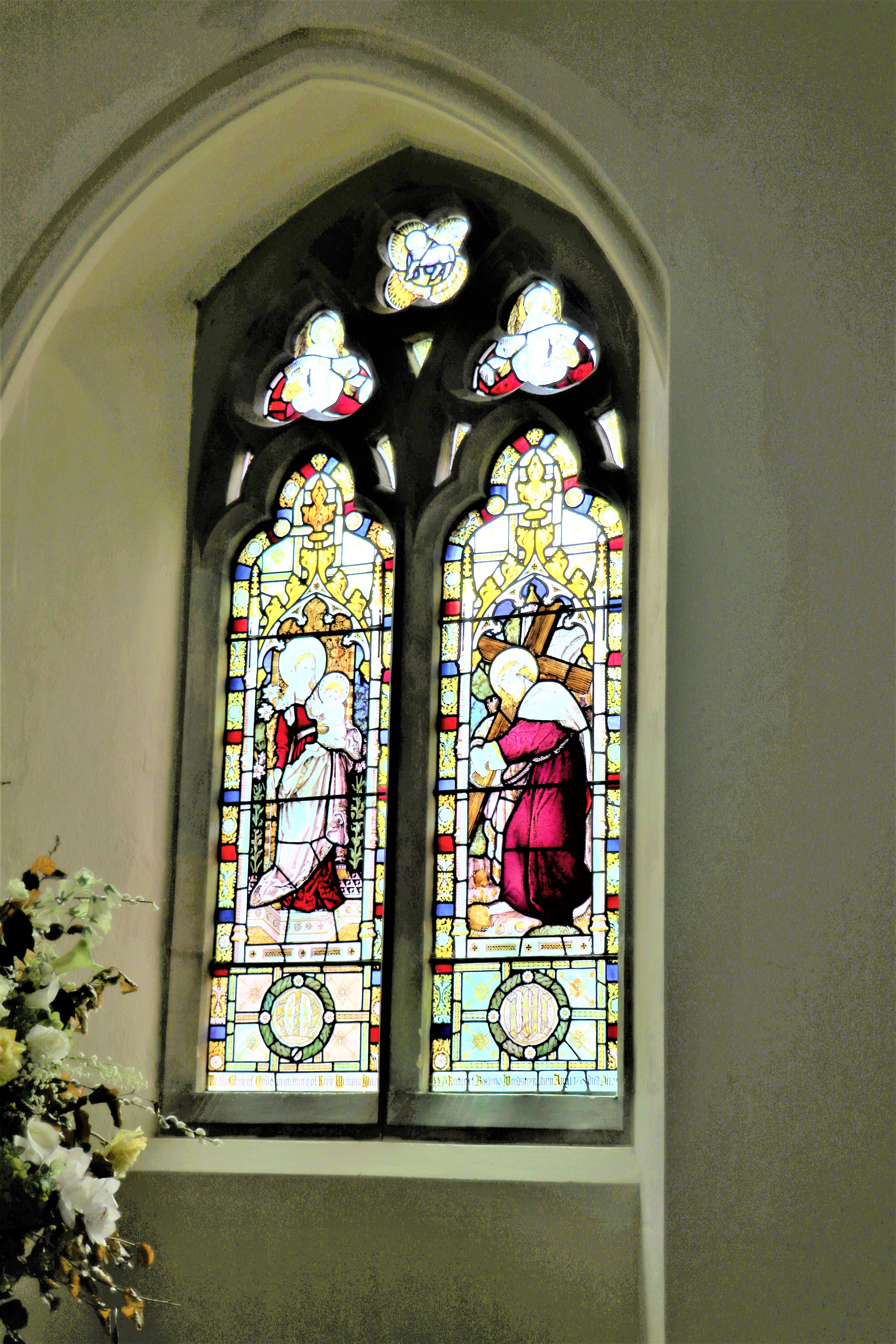
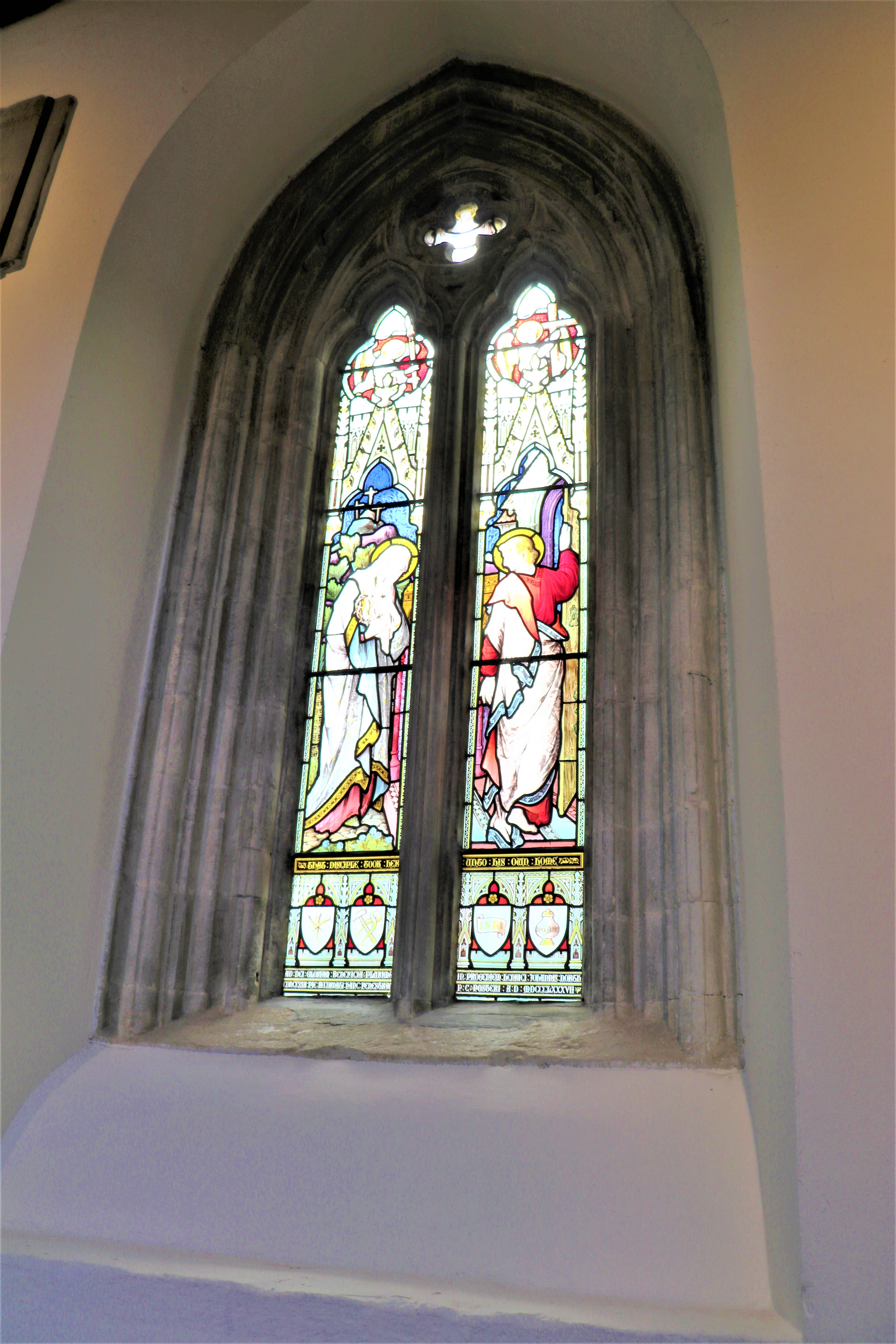
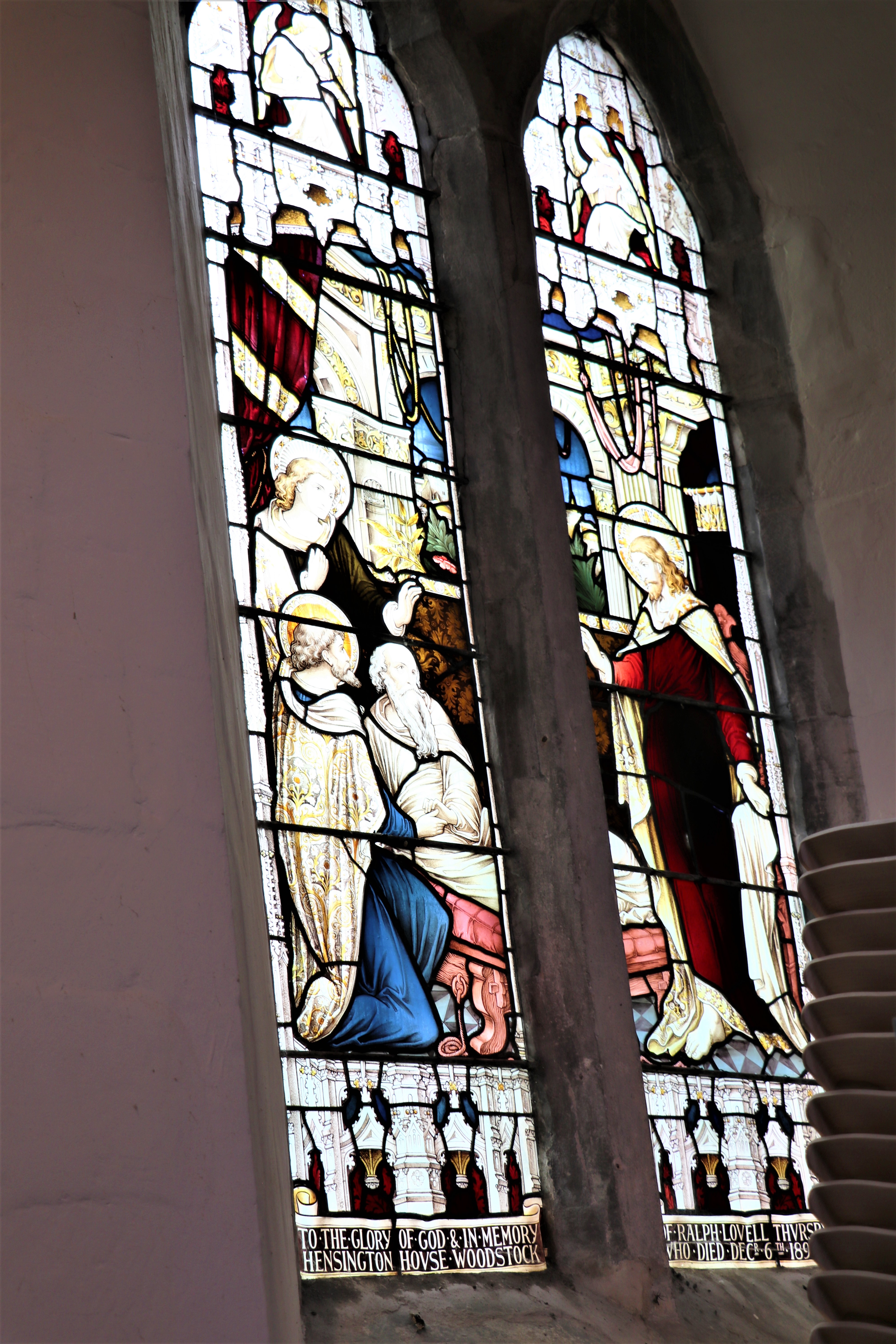
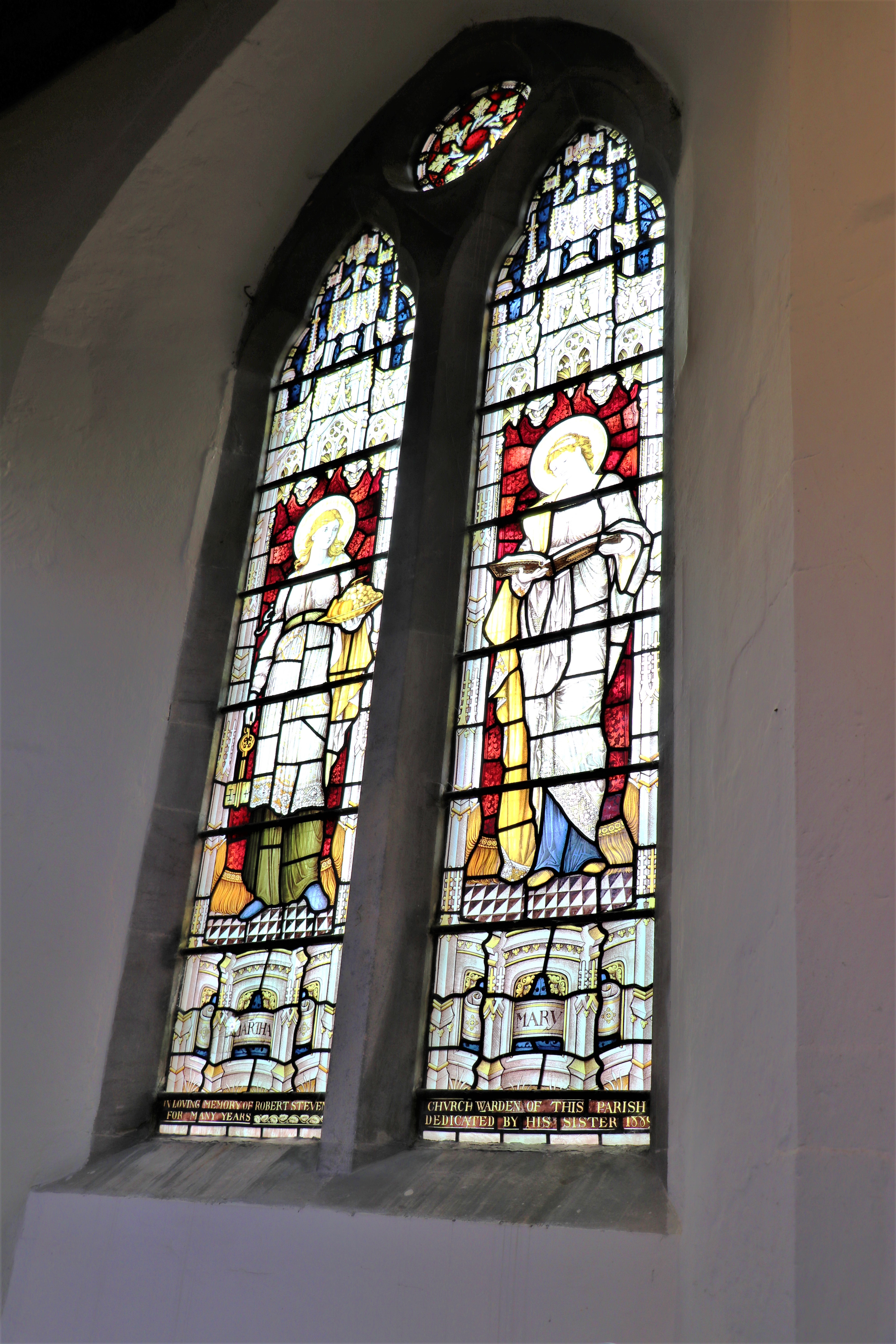
All of the stained glass is Victorian.

The angels at the top have banners that read: Let us love one another ~ For love is of God.

Jesus saith unto her, Thy brother shall rise again.

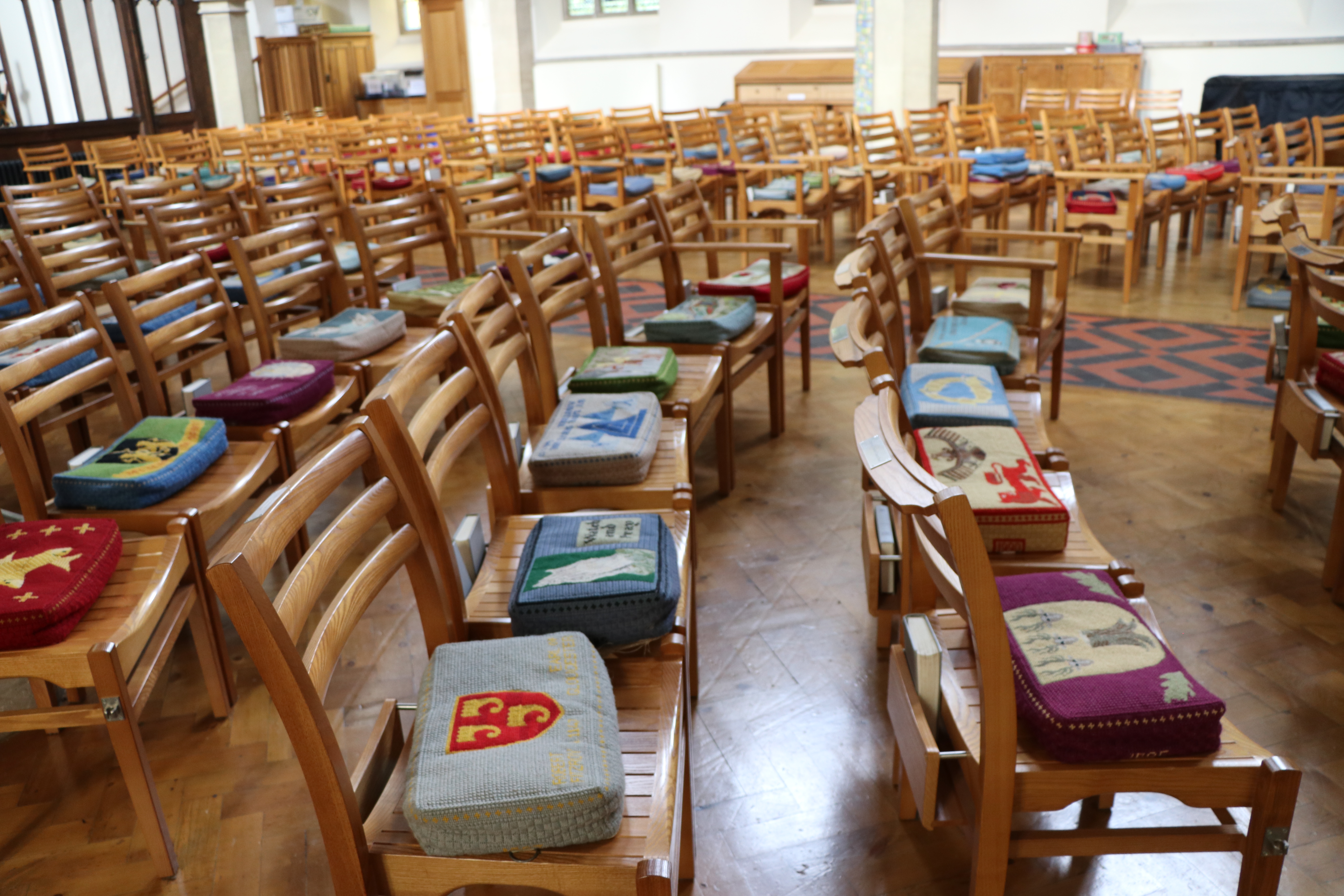
Over 200 kneelers are in this church of which I photographed quite a few. That will be another post.

Inching along to complete posts about our last few days in Oxfordshire in September of 2022.

Back to the present here in the U. S. of A. Yesterday, Friday February 10th, we traveled to Spokane to do some shopping at places we do not have here in Colville. After our stops at Home Depot, T.J.Maxx, Costco, Hobby Lobby, and Trader Joe’s we tried a new to us Chinese Restaurant called the Red Dragon. We had the best Hot and Sour soup and some good potstickers. After we ate we made one more stop at Fred Meyer before we headed home.

Happy Saturday to you.

Lord, Speak to Me ~ Hymn


Lord, Speak to Me

Lord, speak to me that I may speak
In living echoes of Thy tone;
As Thou has sought, so let me seek
Thine erring children lost and lone.

O lead me, Lord, that I may lead
The wandering and the wavering feet;
O feed me, Lord, that I may feed
Thy hungering ones with manna sweet.

O strengthen me, that while I stand
Firm on the rock, and strong in Thee,
I may stretch out a loving hand
To wrestlers with the troubled sea.

O teach me, Lord, that I may teach
The precious things Thou dost impart;
And wing my words, that they may reach
The hidden depths of many a heart.

O give Thine own sweet rest to me,
That I may speak with soothing power
A word in season, as from Thee,
To weary ones in needful hour.

O fill me with Thy fullness, Lord,
Until my very heart overflow
In kindling thought and glowing word,
Thy love to tell, Thy praise to show.

O use me, Lord, use even me,
Just as Thou wilt, and when, and where,
Until Thy blessèd face I see,
Thy rest, Thy joy, Thy glory share.

Words: Frances R. Havergal, 1872.

The lectern stands as the location from which Christian Biblical lessons are given. Lecterns hold the Bible in place as the church leader reads various passages from it. Lecterns in the shape of an eagle hold special value within churches.

Eagle lecterns date back to early church history. Some of the earliest examples of church lecterns that are still in existence date back to the 13th century, such as the lectern located within All Saints’ Parish Church in Bedfordshire, England.

The eagle is the symbol used to depict John the Apostle, whose writing is said to most clearly witness the light and divinity of Christ.

Another reason for eagle-shaped lecterns lies in its symbolizing the word of God being read from the lectern and soaring its way to the ears of the churchgoers.

The Old Book Stands ~ Hymn

The Thames 106

The Old Book Stands

From the Word of God light is shining brightly out
O’er life’s ocean, tempest driv’n,
Guiding past the rocks and the hidden shoals of doubt
To the blissful port of Heav’n.

Refrain

The old Book stands! O yes, it stands!
Firm as a rock ’mid shifting sands!
Billows may run high, tempests sweep the sky;
Firmly the old Book stands!

All its promises are more precious, far, than gold,
Or than pearls from deepest sea;
Whosoever will is the truth it doth unfold,
Precious truth for you and me.

Refrain

In this precious Book is the dear old story told,
Of the Savior and His love;
And with joy we read of the streets of purest gold,
The Jerusalem above.

Refrain

Precious Book of life, let us treasure each command,
Heeding every precept giv’n,
Till the strife is o’er and victorious we stand
With the blood washed throng in Heav’n.

Refrain

Words: John H. Yates, circa 1898.

The grass withers, the flower fades, but the word of our God will stand forever. Isaiah 40:8

The Old Book Stands ~ Hymn

The Thames 106

The Old Book Stands

From the Word of God light is shining brightly out
O’er life’s ocean, tempest driv’n,
Guiding past the rocks and the hidden shoals of doubt
To the blissful port of Heav’n.

Refrain

The old Book stands! O yes, it stands!
Firm as a rock ’mid shifting sands!
Billows may run high, tempests sweep the sky;
Firmly the old Book stands!

All its promises are more precious, far, than gold,
Or than pearls from deepest sea;
Whosoever will is the truth it doth unfold,
Precious truth for you and me.

Refrain

In this precious Book is the dear old story told,
Of the Savior and His love;
And with joy we read of the streets of purest gold,
The Jerusalem above.

Refrain

Precious Book of life, let us treasure each command,
Heeding every precept giv’n,
Till the strife is o’er and victorious we stand
With the blood washed throng in Heav’n.

Refrain

Words: John H. Yates, circa 1898.

The grass withers, the flower fades, but the word of our God will stand forever. Isaiah 40:8