I do hope my old brain can go back and capture the rest of our Scotland travels and get them posted before the end of January!
After our time at the ‘links’ on Friday September 20th, we found out more of what St. Andrews is famous for. We would also intersect our interest in John Knox and the Reformers that we were introduced to in Glasgow and Stirling. We did not have an extended time to see the rest of St. Andrews but we fit in what we could. Fair warning, this will be a long post.
We walked along The Scores to get to the ruins of St. Andrews Castle.
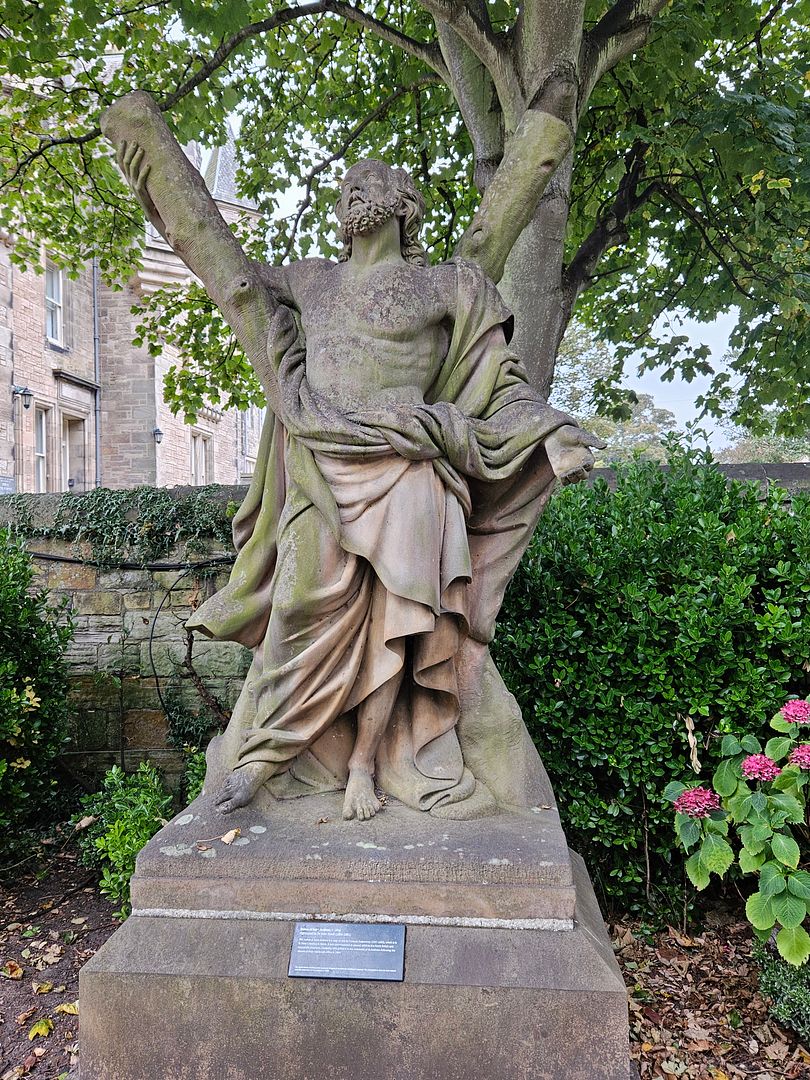
Along our route we passed the restored statue of St. Andrew, the patron saint of Scotland, outside the Wardlow Museum.
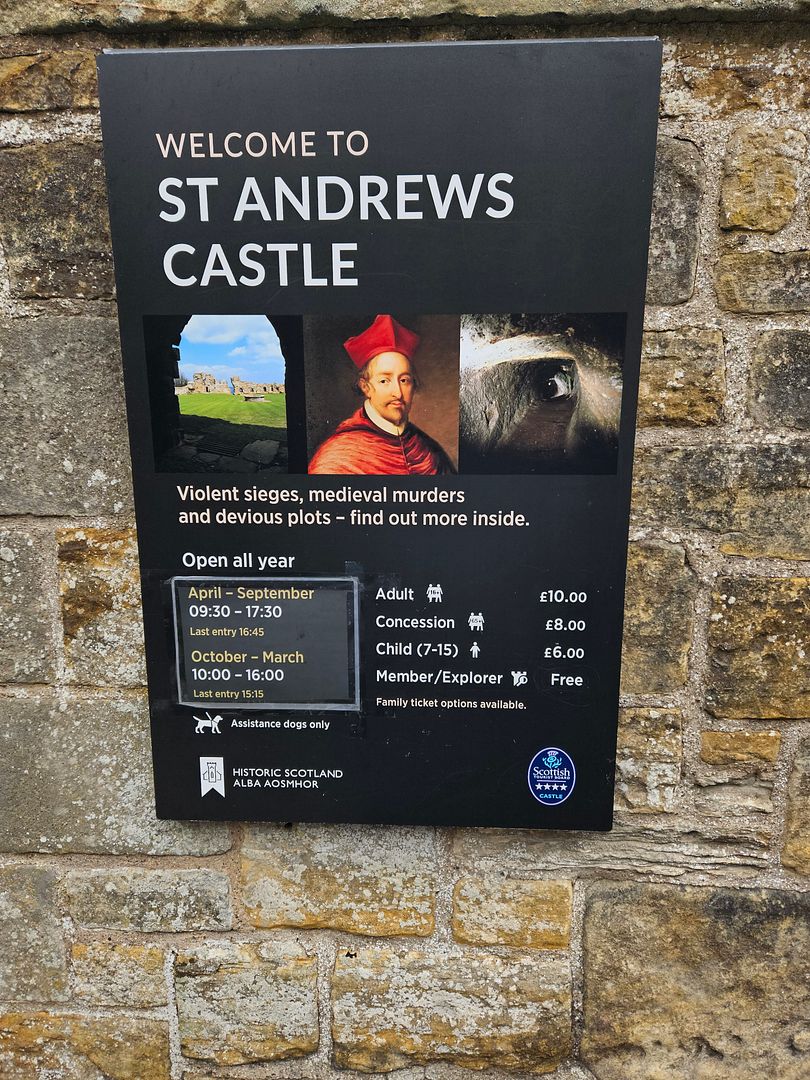
Entering the Castle grounds we paid and then walked through the history presentation before heading out to the castle ruins.
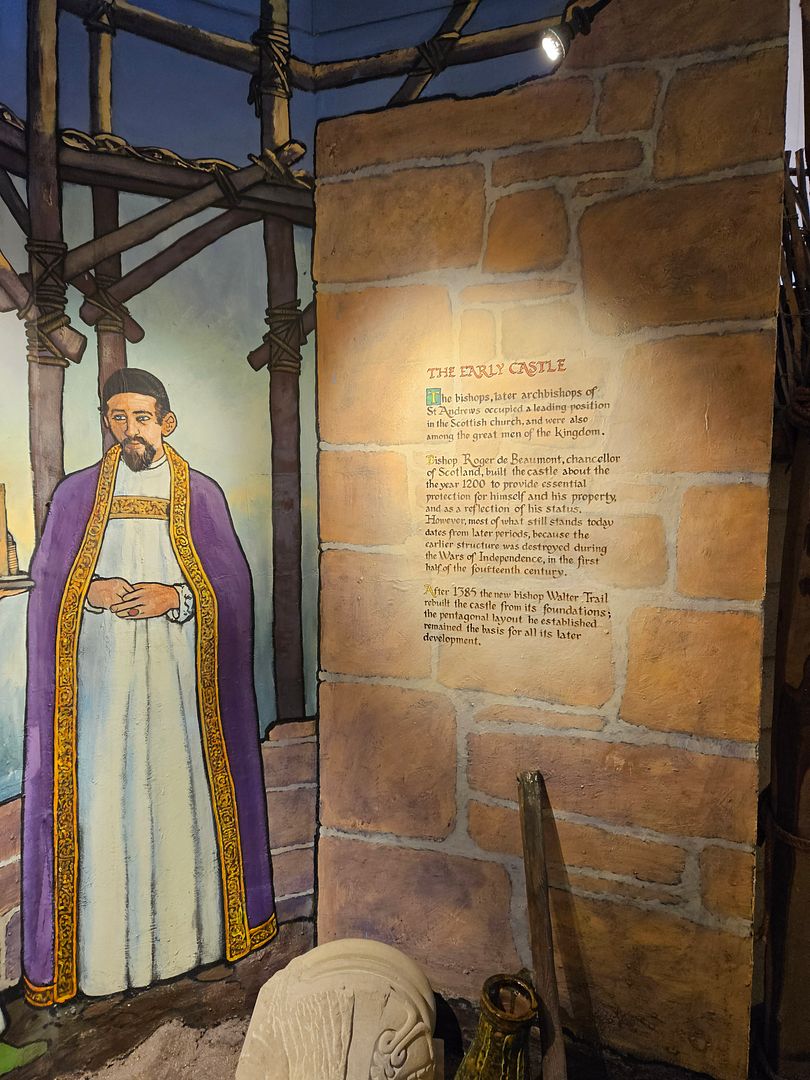
I’ll add some of the history of the castle that pertains to the Reformers and namely George Wishart and John Knox. I’ll add another link for those of you who might be interested in more history.
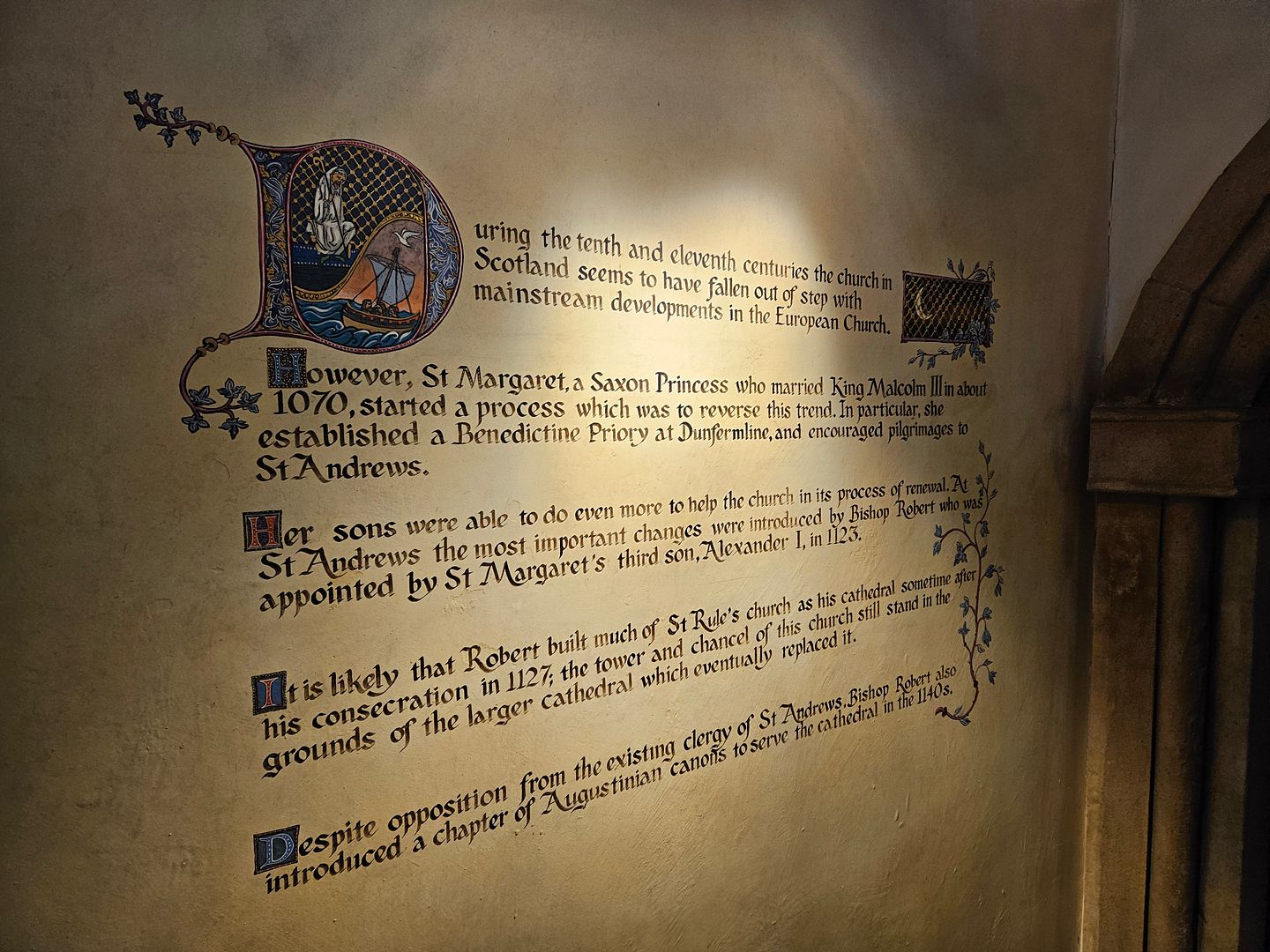
During the tenth and eleventh centuries the church of Scotland seems to have fallen out of step with mainstream developments in the European church. However, St. Margaret, a Saxon princess who married King Malcolm III in about 1070, started a process which was to reverse this trend. In particular she established a Benedictine Priory in Dunfermline, and encouraged pilgrimage to St. Andrews. Her sons were able to do even more to help the church in the process of renewal. At St. Andrews the most important changes were introduced by Bishop Robert who was appointed by St. Margaret’s third son, Alexander the I, in 1123. It is likely that Robert built much of St. Rule’s church as his cathedral sometime after his consecration in 1127; the tower and chancel of this church still stand in the grounds of the larger cathedral which eventually replaced it. Despite opposition from existing clergy of St. Andrews, Bishop Roberts also introduced a chapter of Augustinian canons to serve the cathedral in the 1140’s.
It would be a mistake to think of the Bishop in terms of his religious power; churchmen in Scotland were far more than spiritual leaders; they were often major players on the political stage, and frequently acted as military leaders too.
The Siege of 1546
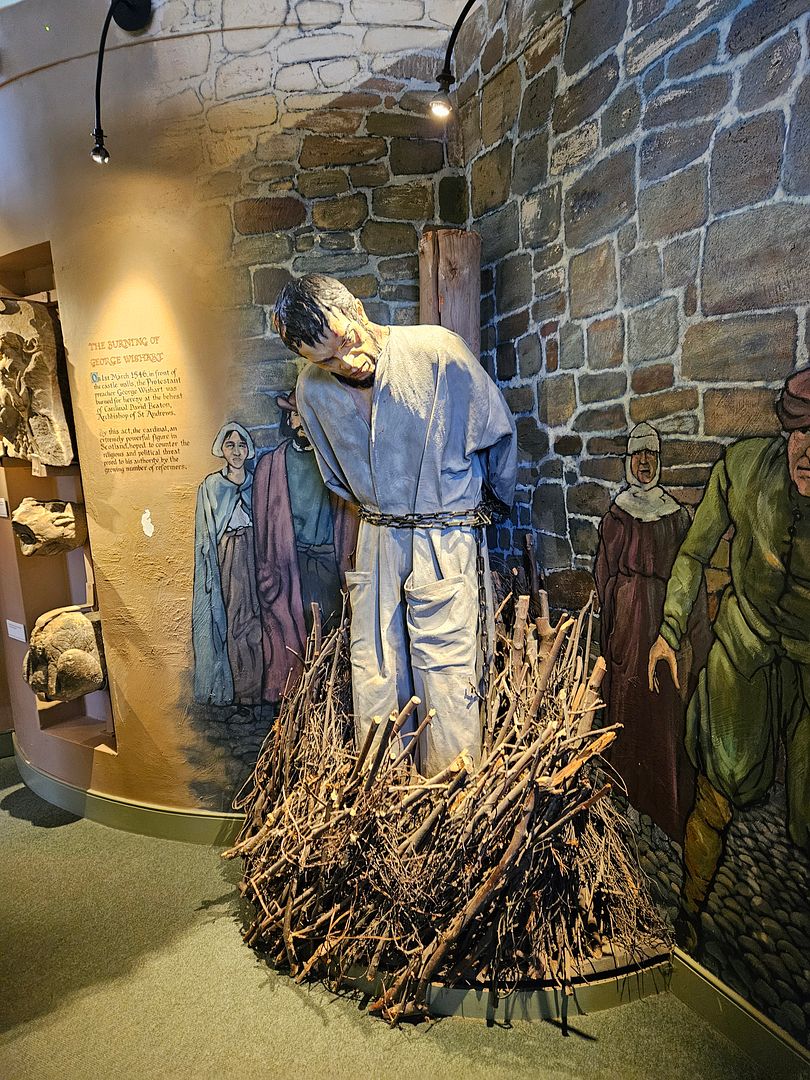
The clash of new Protestant ideas and the traditional Catholic religion was not a peaceful one in Scotland. The hierarchy of the established Catholic church was determined to stamp out the Protestant Reformation by any means necessary.
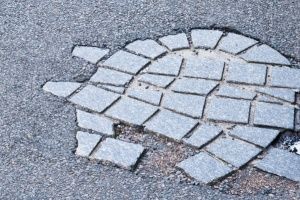
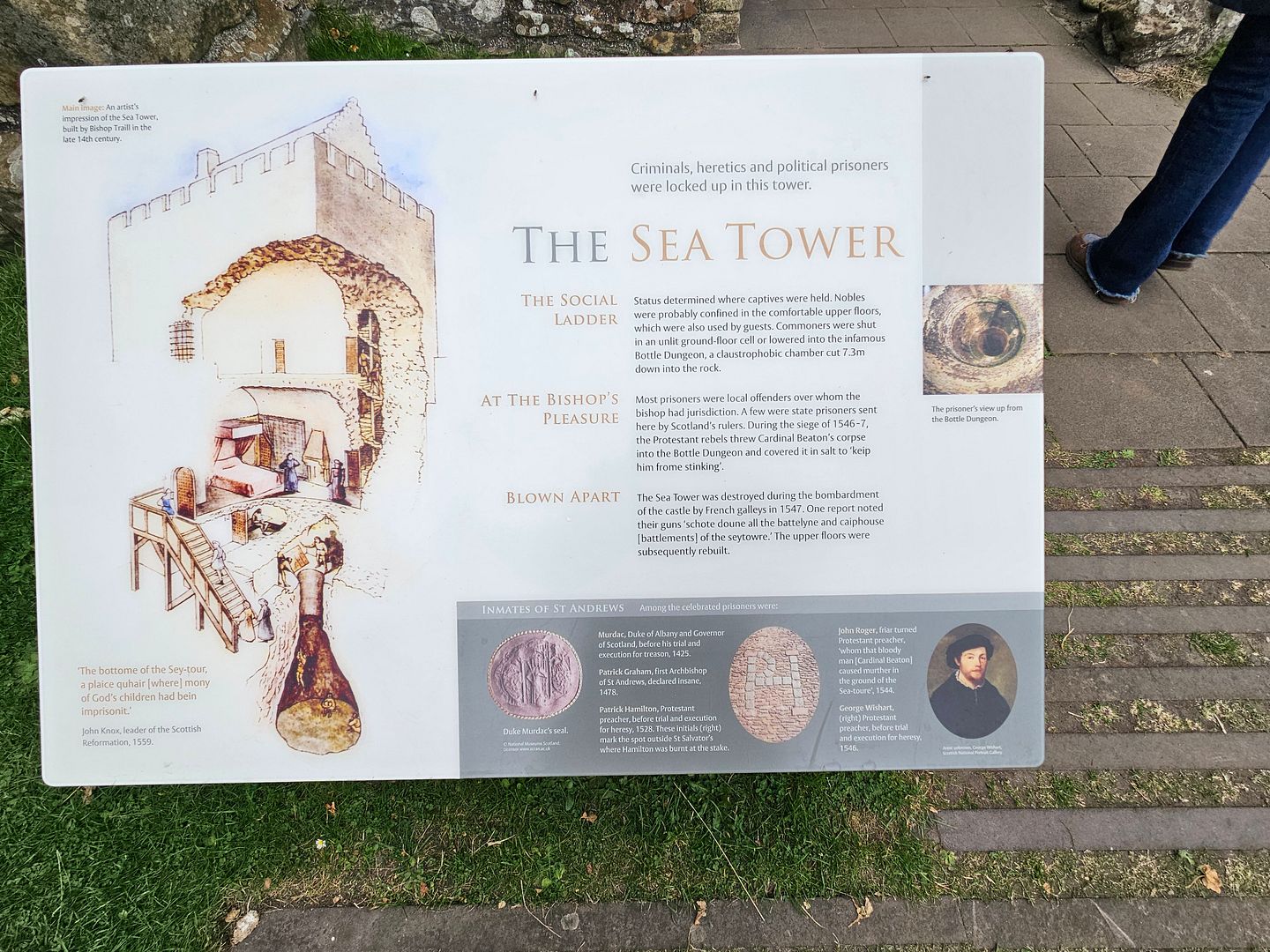
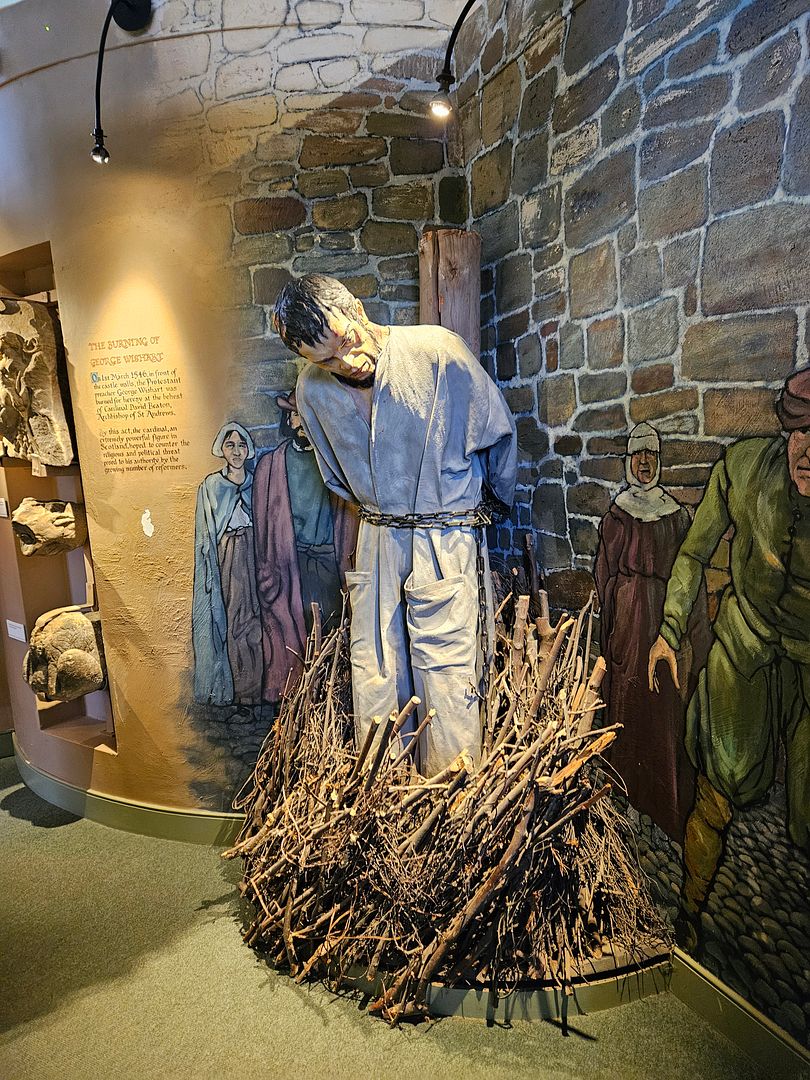
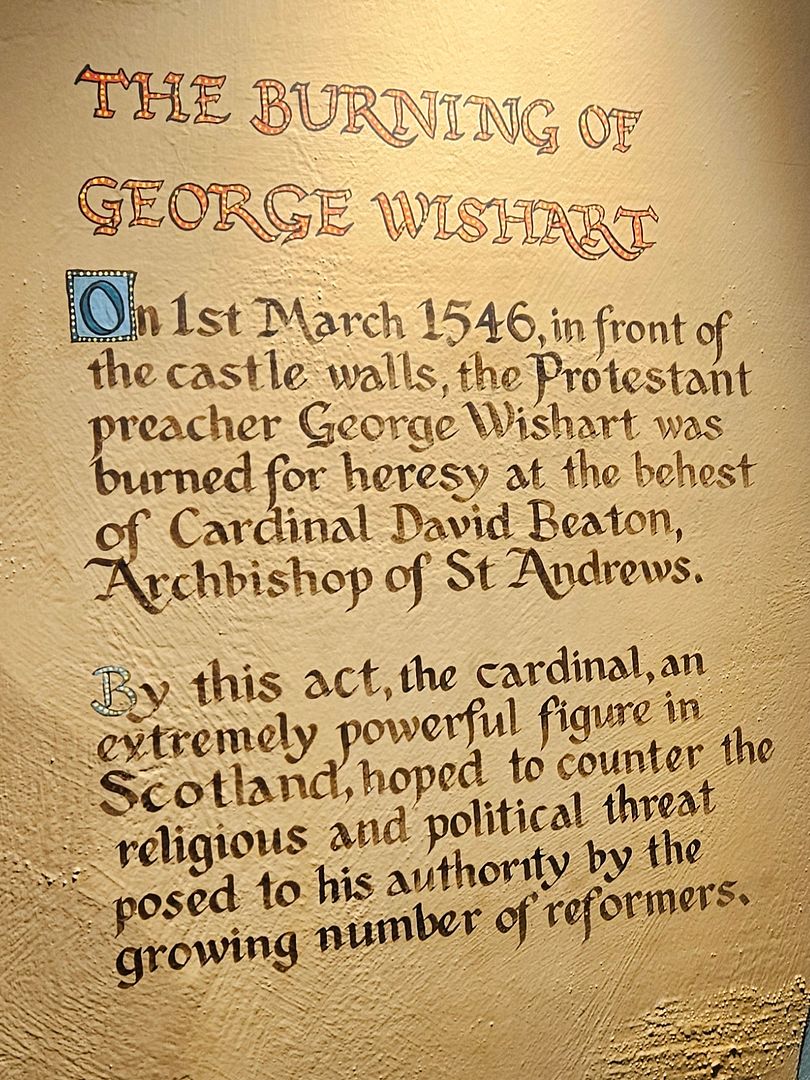
In March 1546 a Lutheran preacher named George Wishart was imprisoned in the Sea Tower, and then burned at the stake in front of St Andrews Castle, a spot now marked by a simple design of paving bricks spelling out his initials. When I visited, a car was parked partly over the memorial bricks, the driver oblivious that they were parking on the spot where a man died in flames.
Taken from here where you can read more of the history.
We missed seeing the spot marked in front of the castle where Wishart was martyred but I’m adding it here.
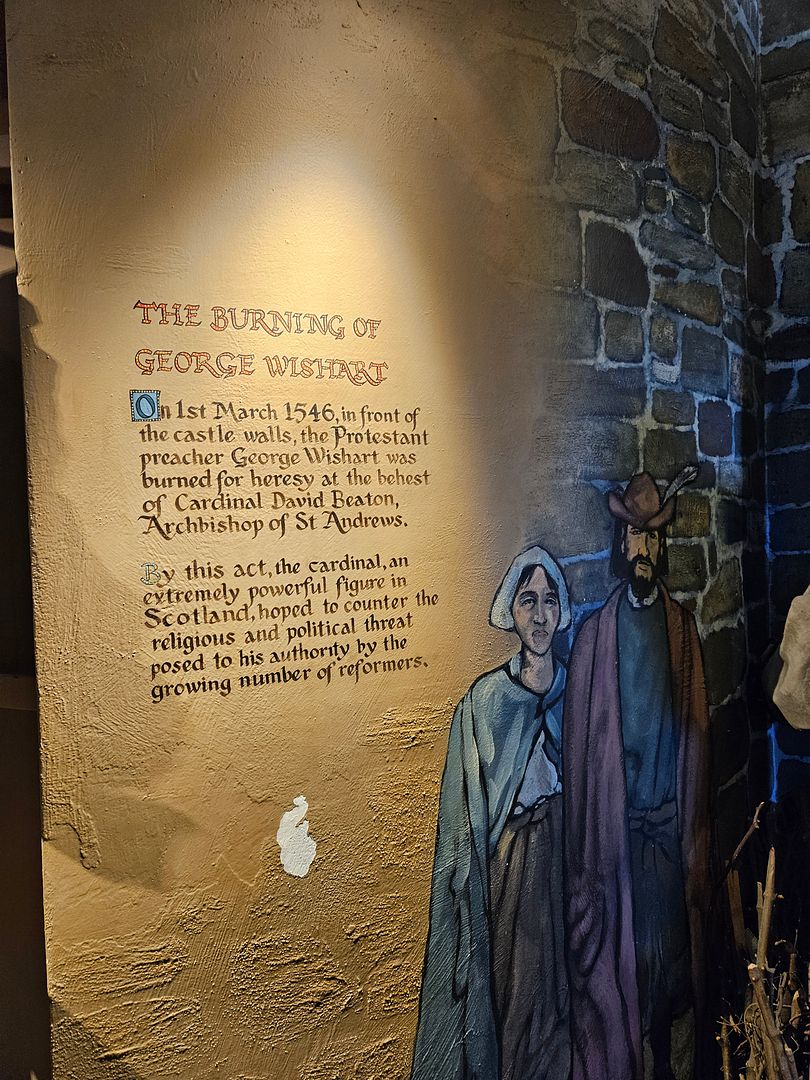
Wishart’s execution was ordered and witnessed by the powerful Archbishop of St Andrews, Cardinal David Beaton, nephew of the earlier Archbishop James Beaton. But Cardinal Beaton’s triumph was shortlived.
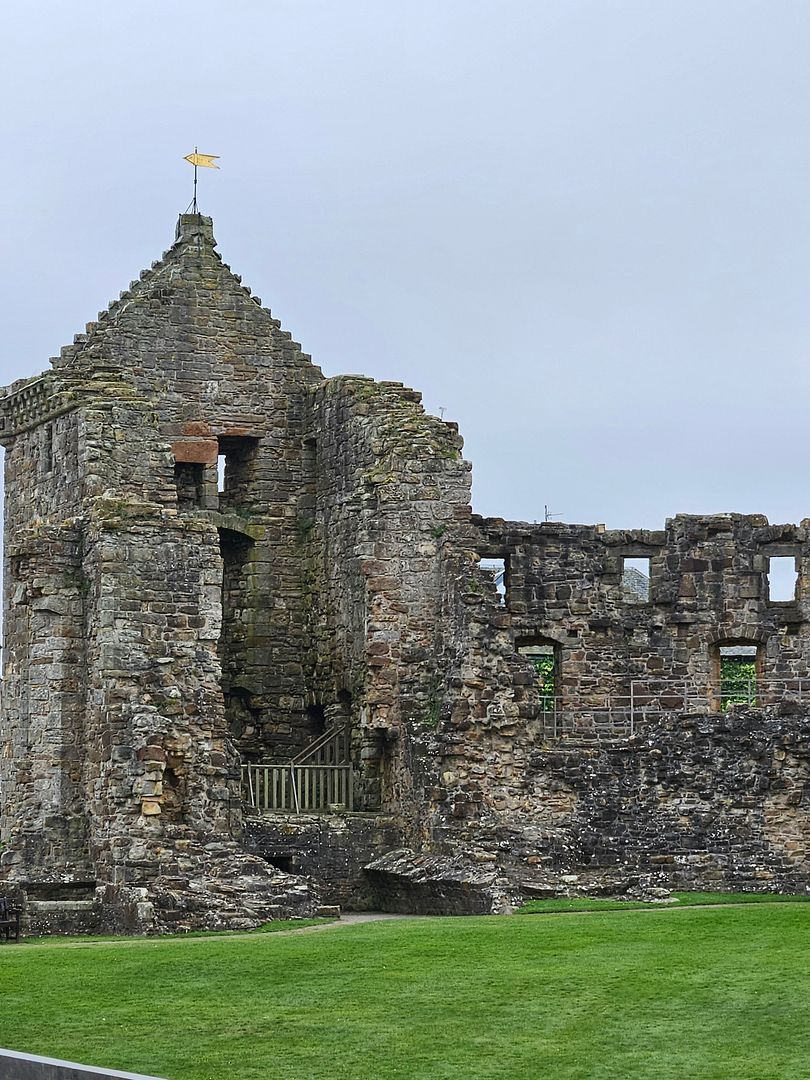
A band of Wishart’s supporters, prominent local lairds, snuck into the castle dressed as stonemasons. They took the castle garrison by complete surprise, murdered Archbishop Beaton, and hung his naked body from a window high in the castle tower. They then occupied the castle and proceeded to form the first Protestant congregation in the country. Together they hoped to hold the castle against troops led by the Regent, the Earl of Arran.
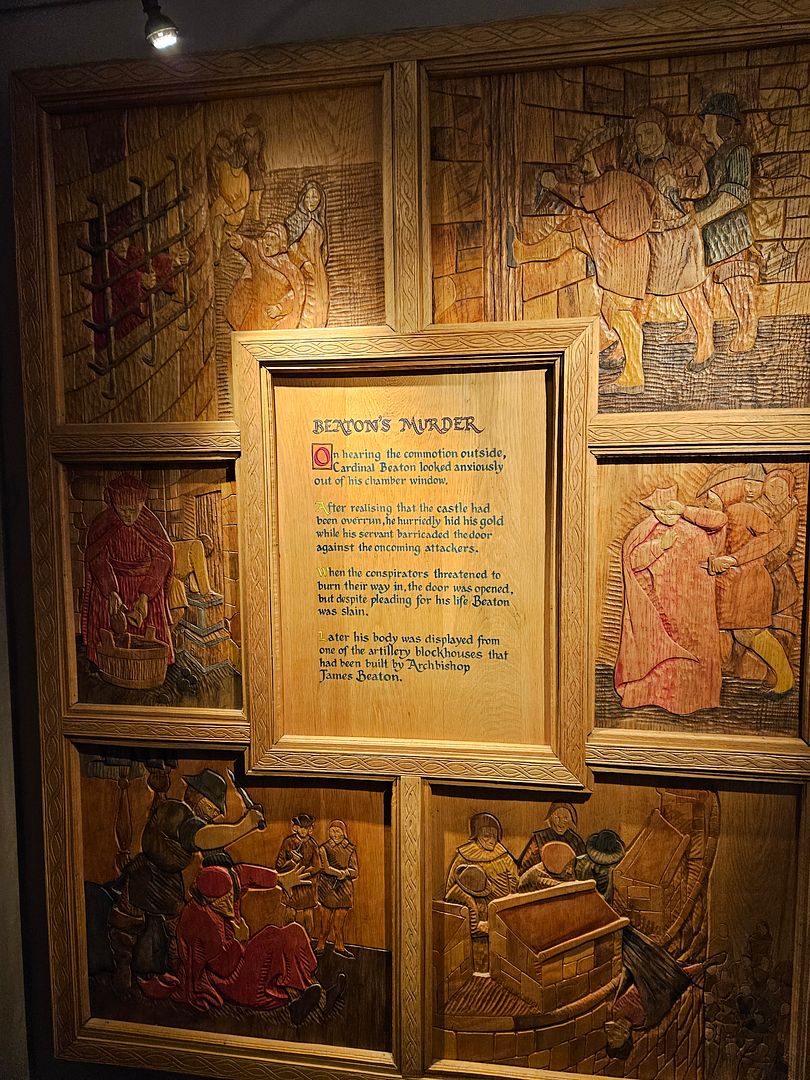
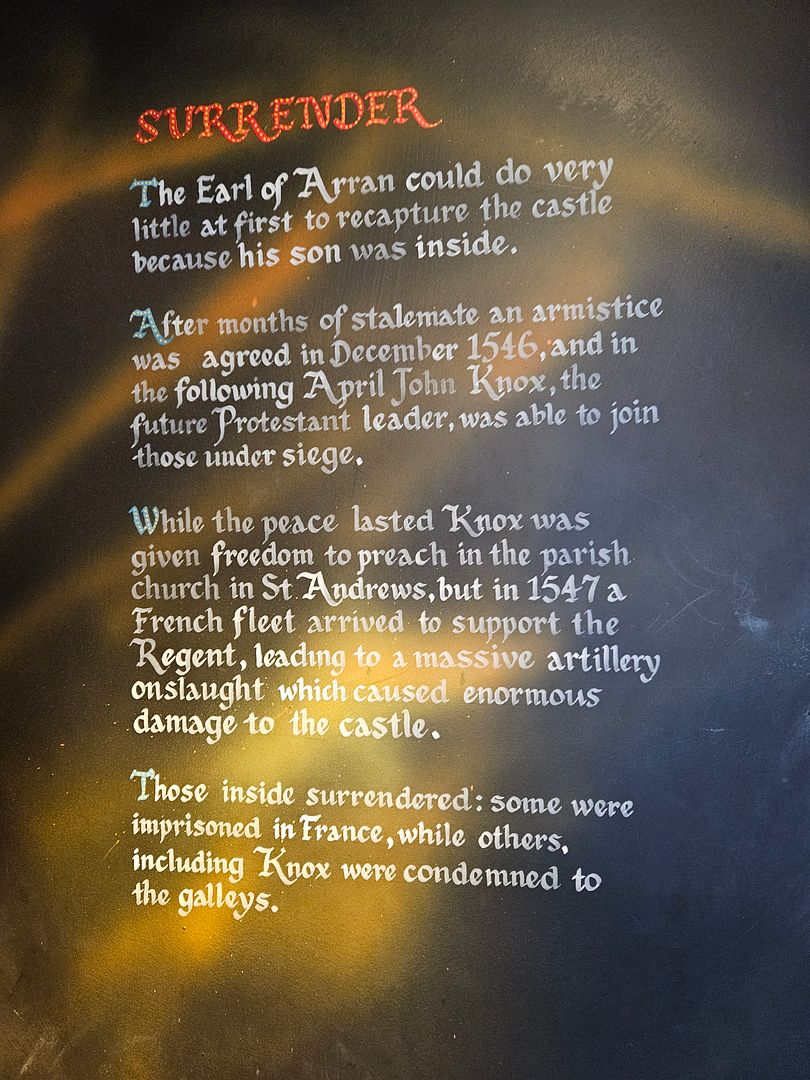
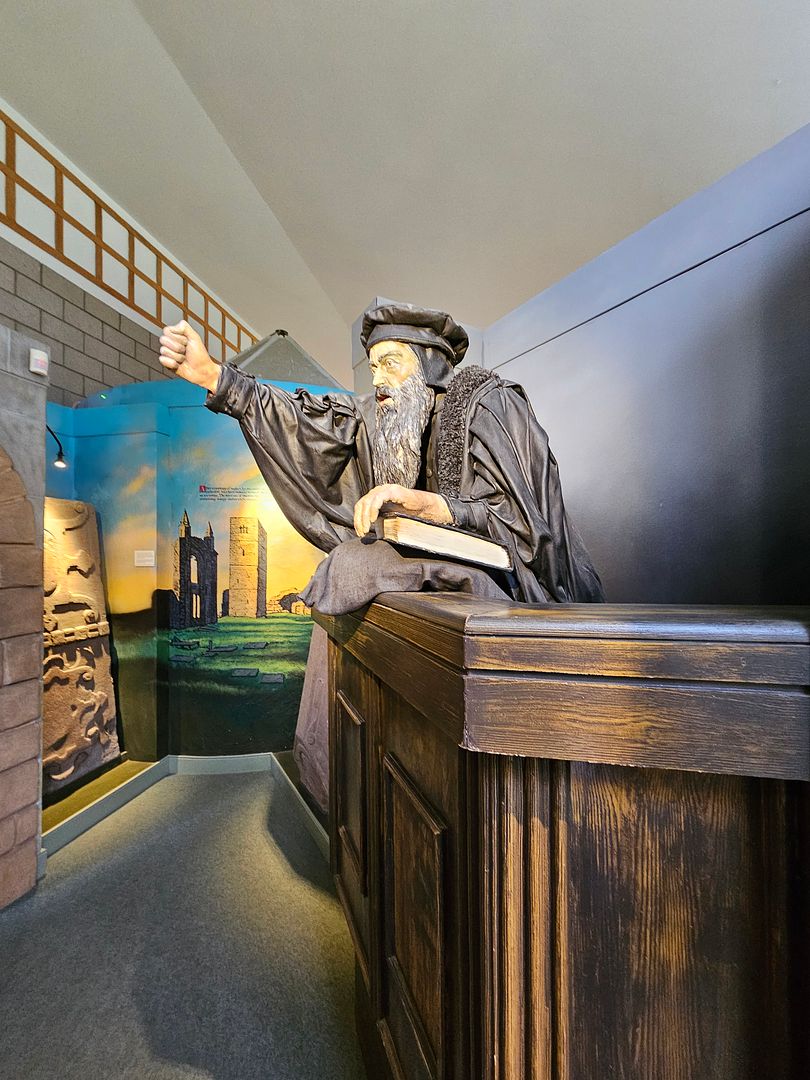
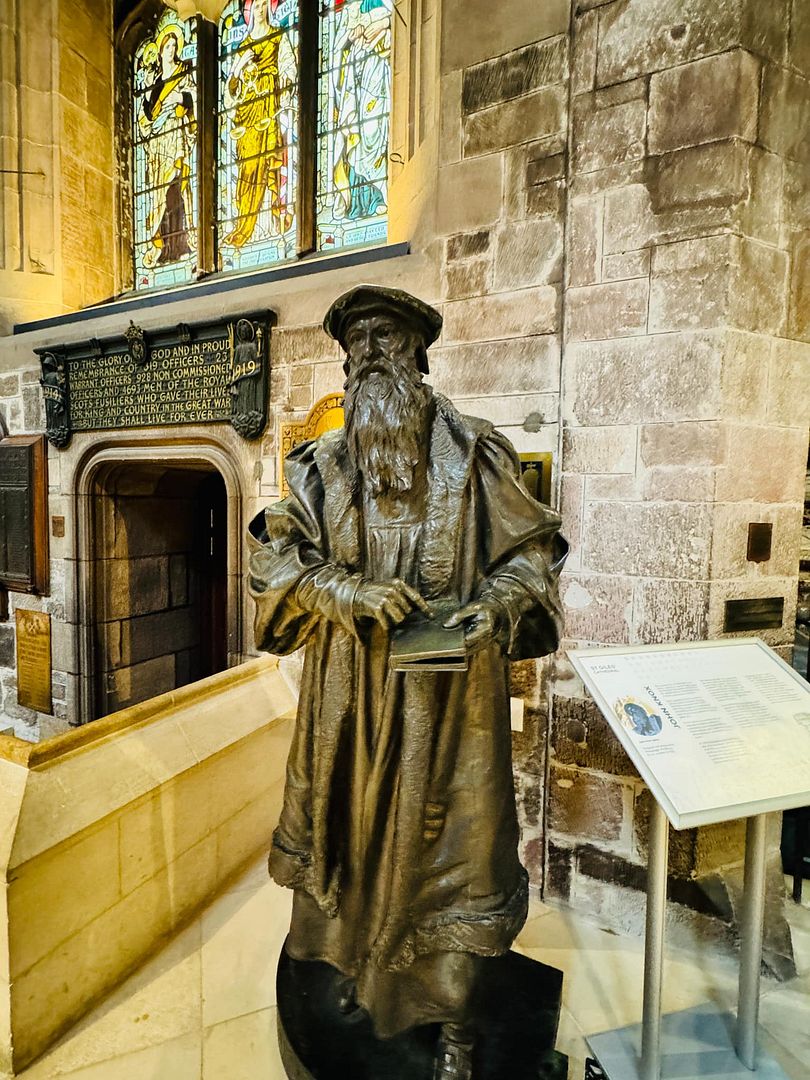
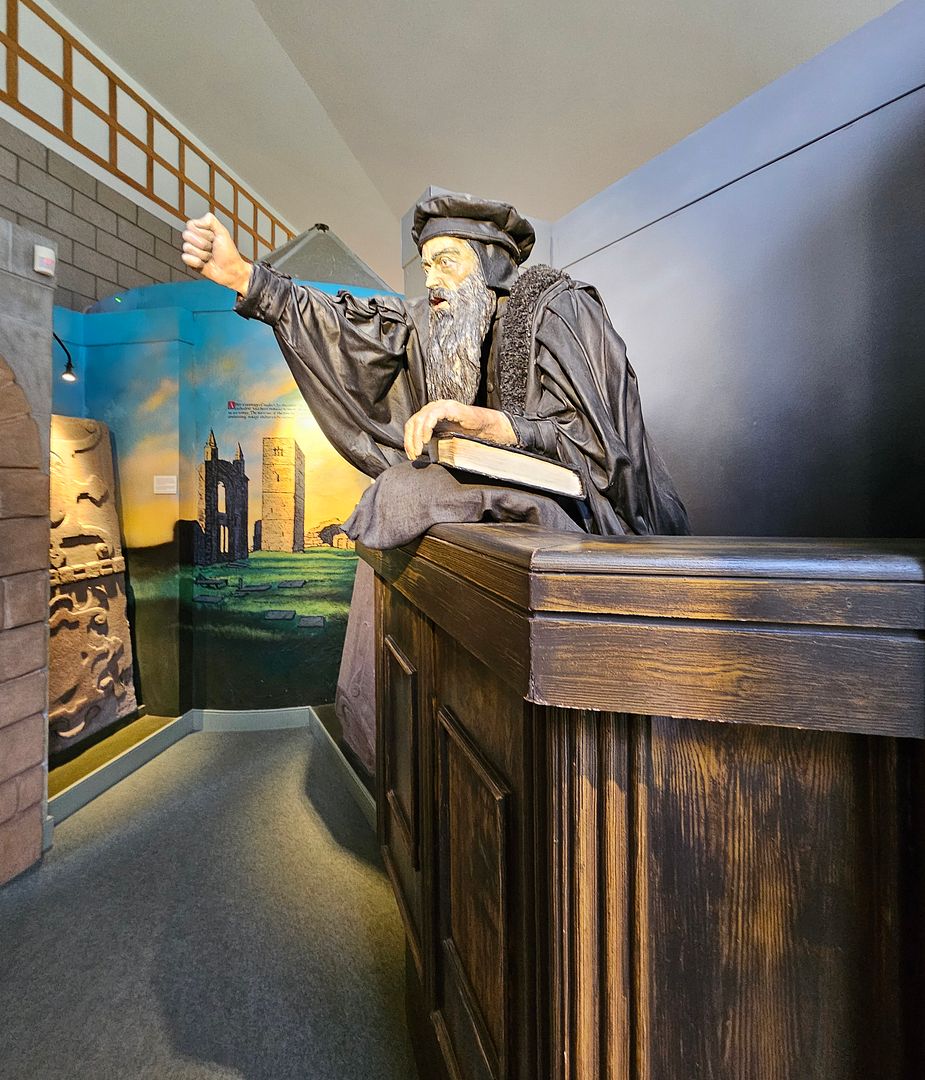
The occupation of St Andrews Castle and the killing of the Archbishop acted as a clarion call to Protestant reformers, who flocked to St Andrews. Among the reformers who came to support the Protestant uprising was John Knox, who was allowed to enter the castle under a temporary truce, and act as a preacher to the occupiers.
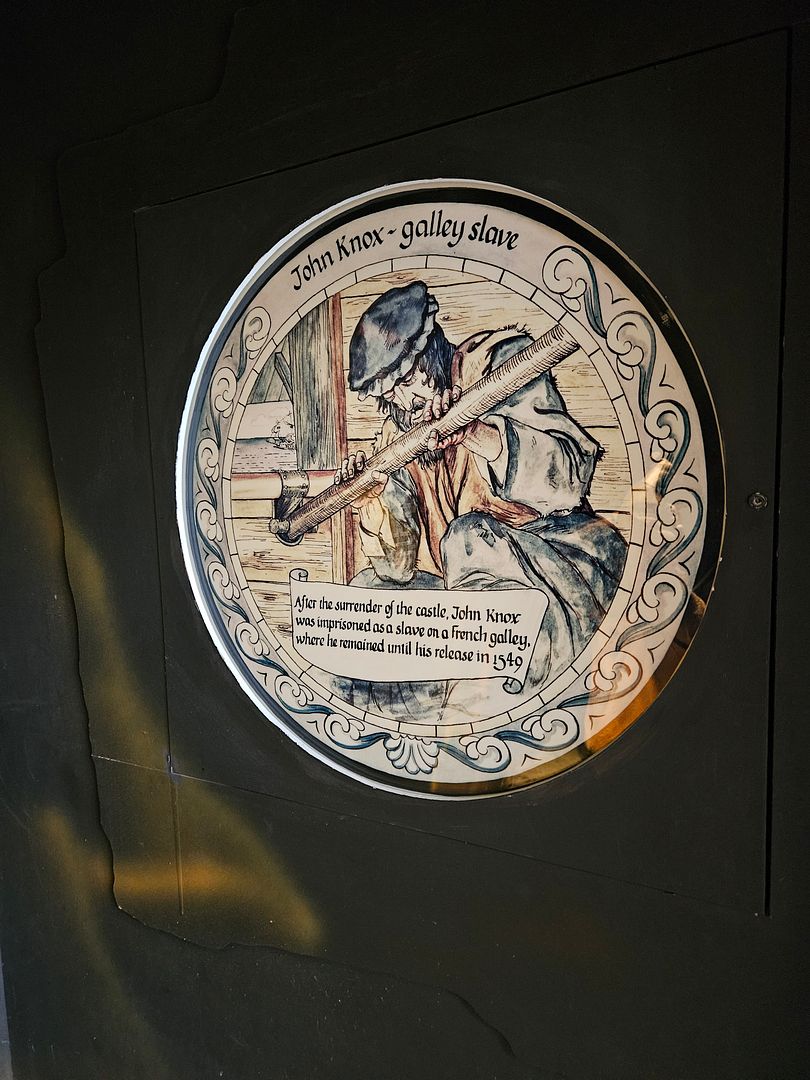
John Knox was a slave on a French galley for two years!
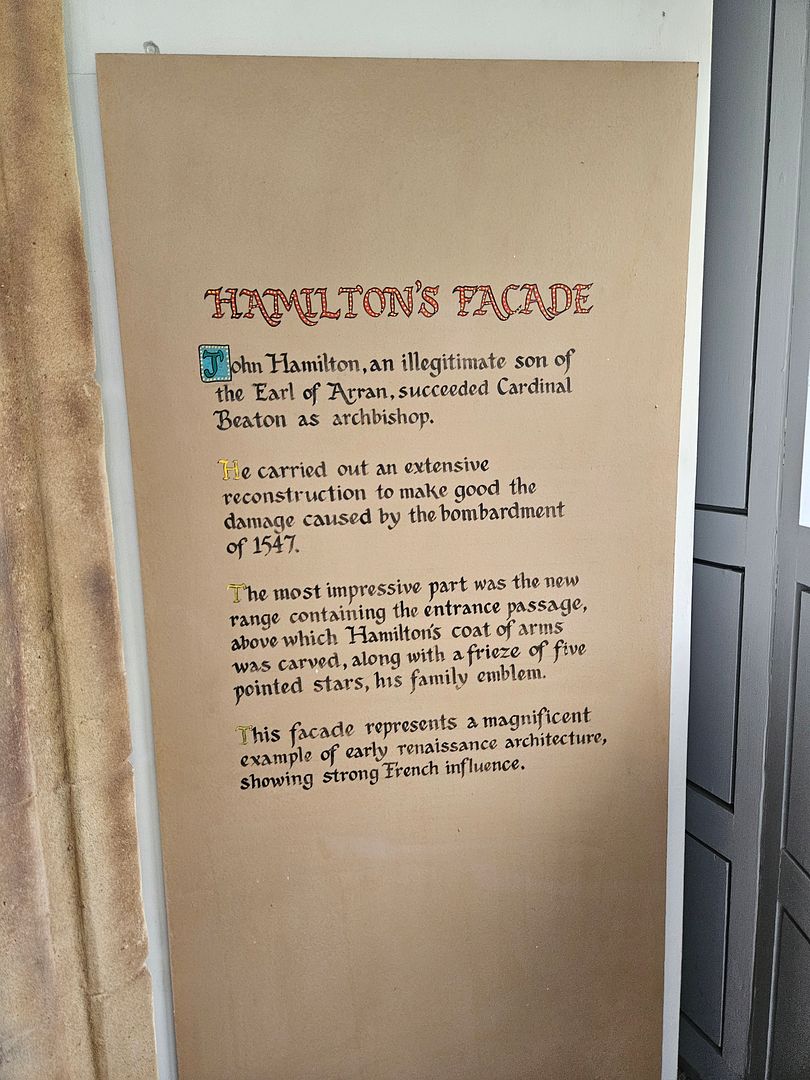
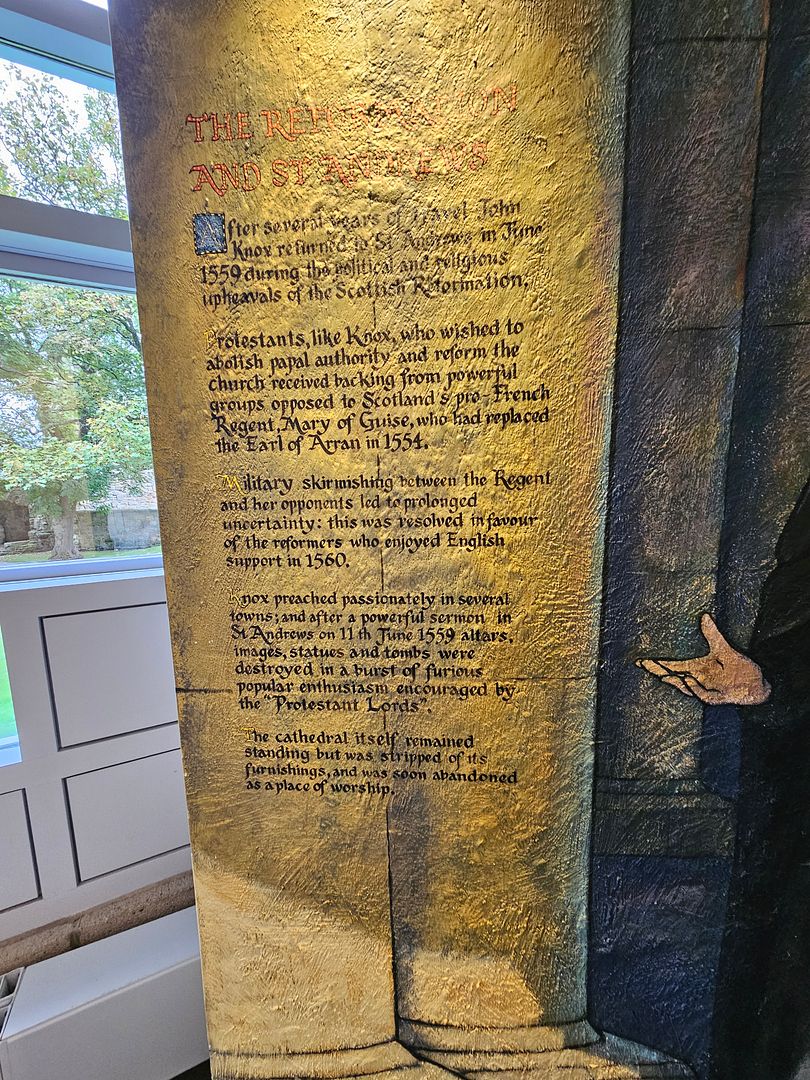
The lighting on this was not good but it reads;
The Reformation at St. Andrews
After several years of travel John Knox returned to St. Andrews 1559 during the political and religious upheavals of the Scottish Reformation. Protestants like Knox, who wished to abolish papal authority and reform the church received backing from powerful groups opposed to Scotland’s pro French regent, Mary of Guise, who had replaced the Earl of Arran in 1554. Military skirmishing between the Regent and her opponents led to prolonged uncertainty: this resolved in favour of the Reformers who enjoyed English support in 1560.
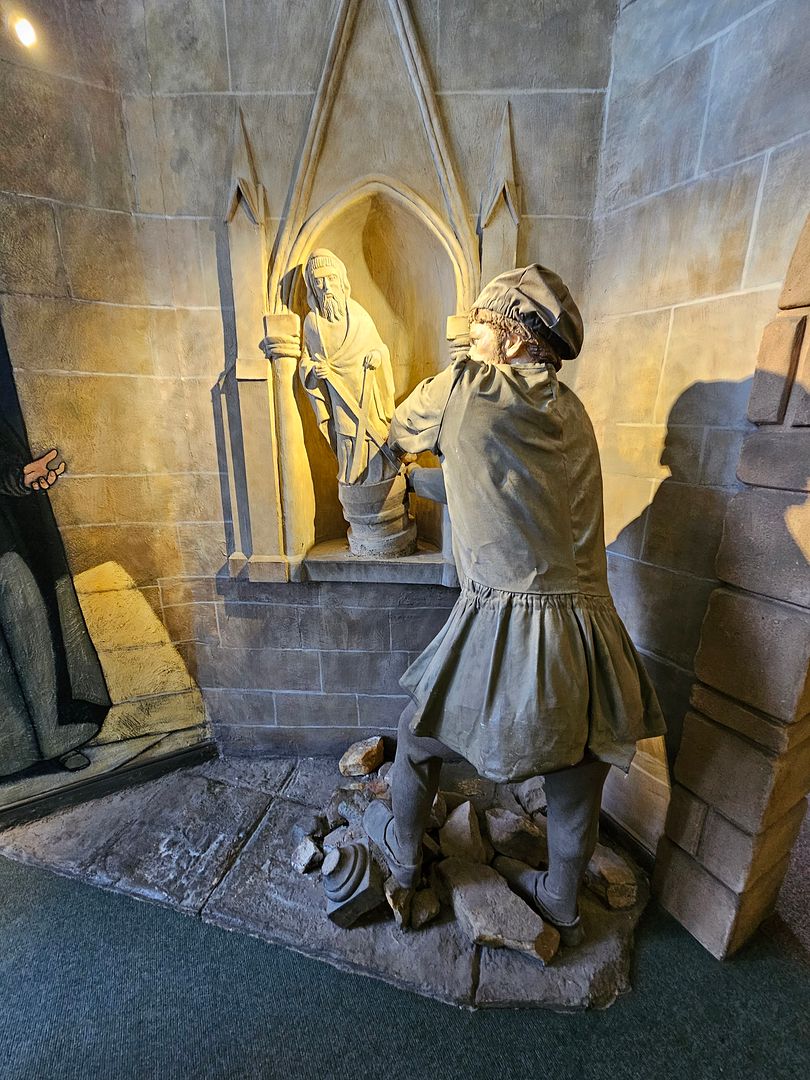
Knox preached passionately in several towns; and after a powerful sermon in St. Andrews on 11th June 1559 altars, images, statues and tombs were destroyed in a burst of furious popular enthusiasm encouraged by the “Protestant Lords”. The cathedral itself remained standing but was stripped of its furnishings, and was soon abandoned as a place of worship.
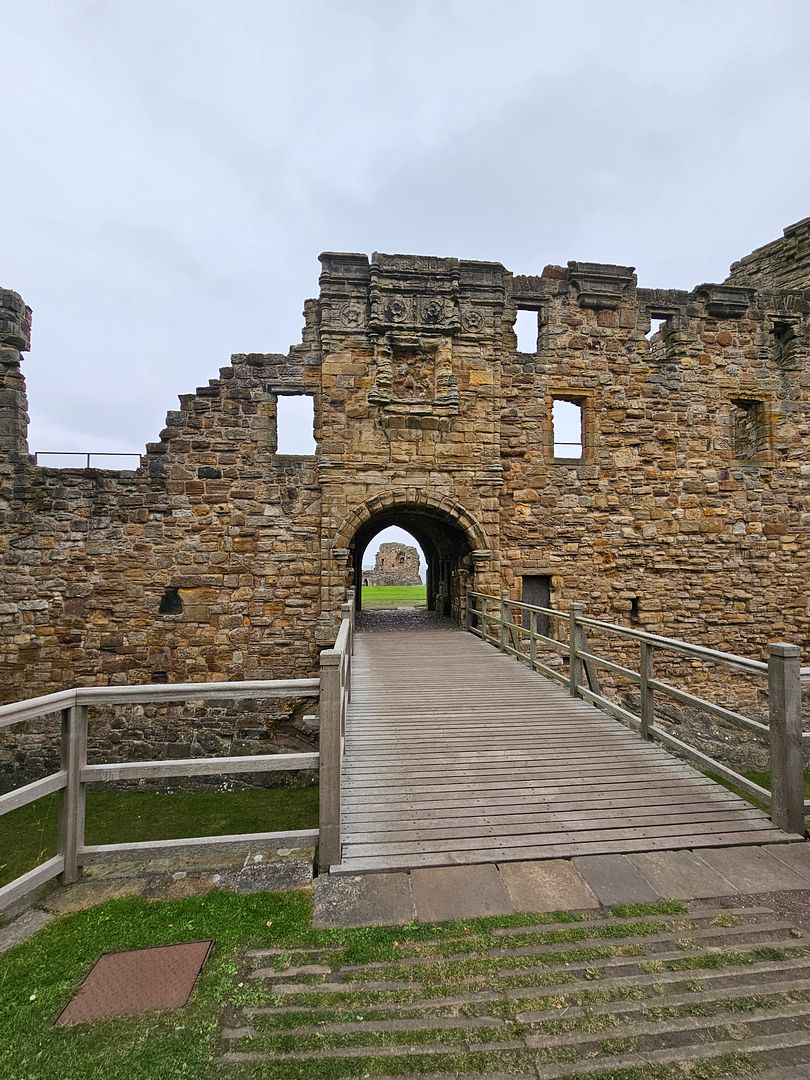
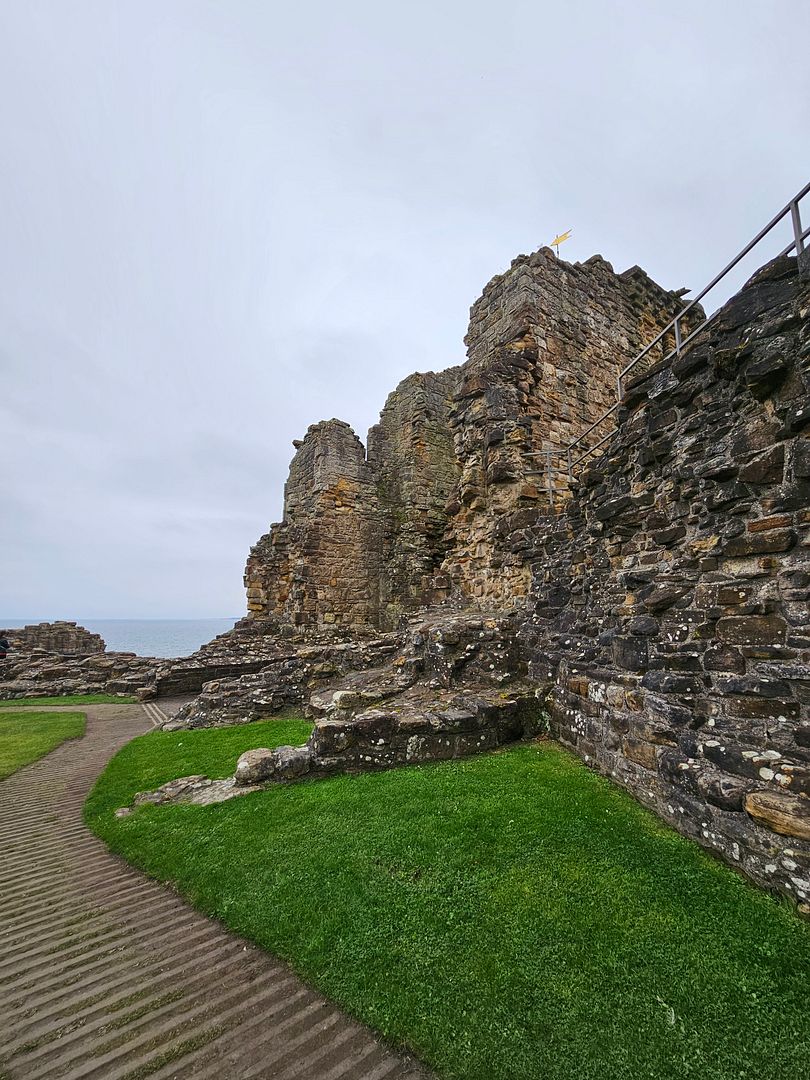
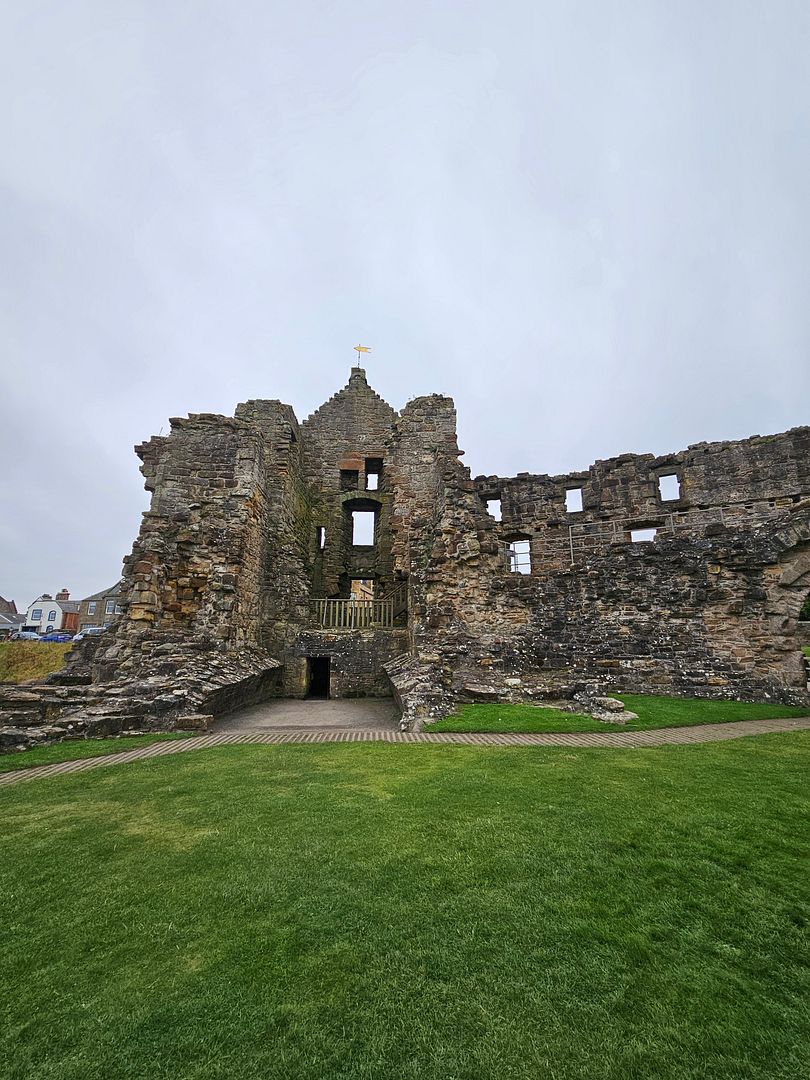
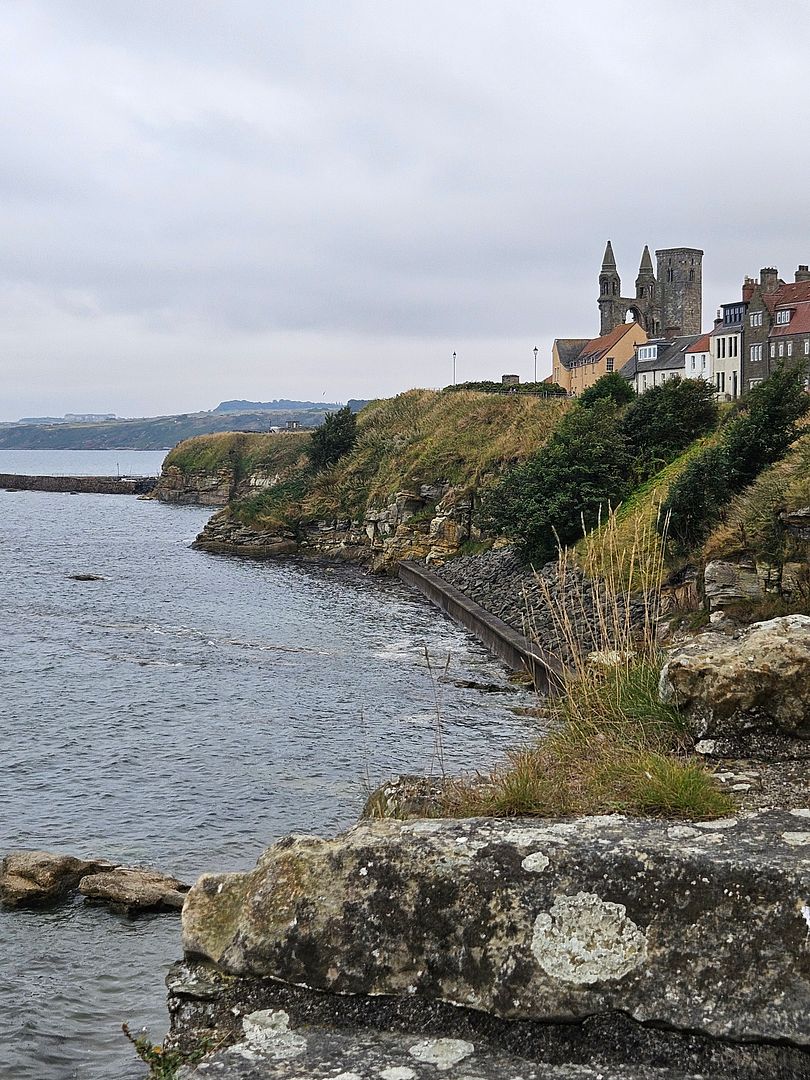
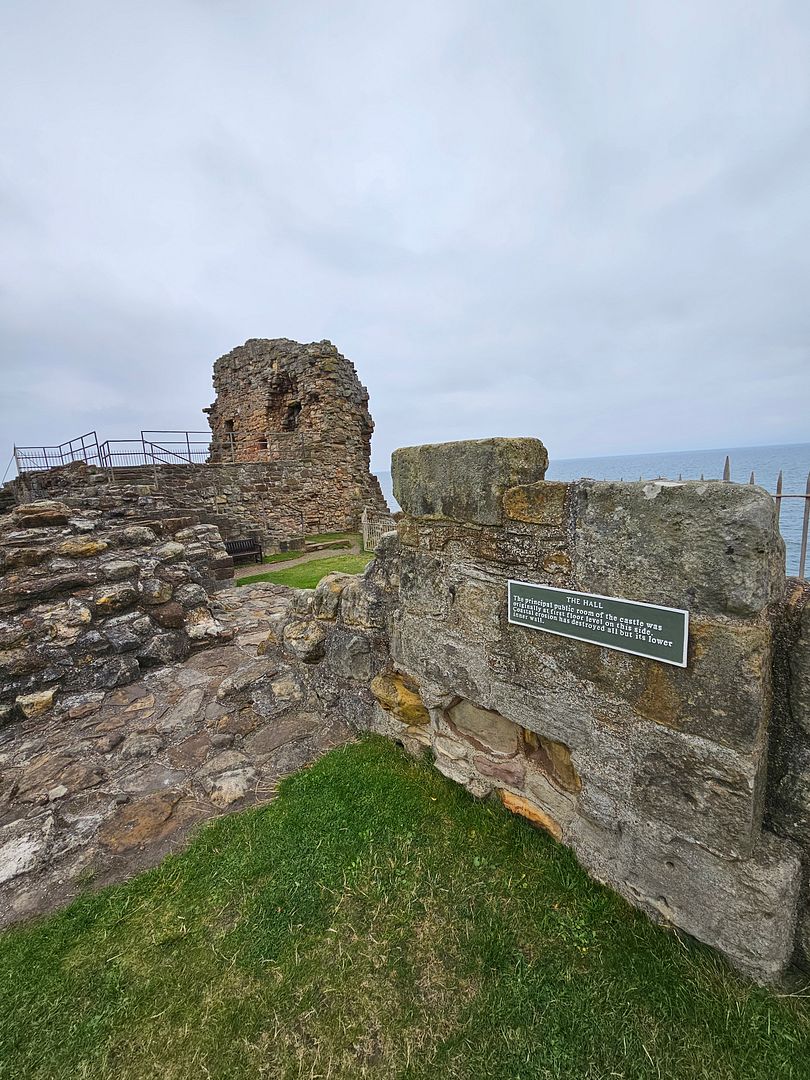
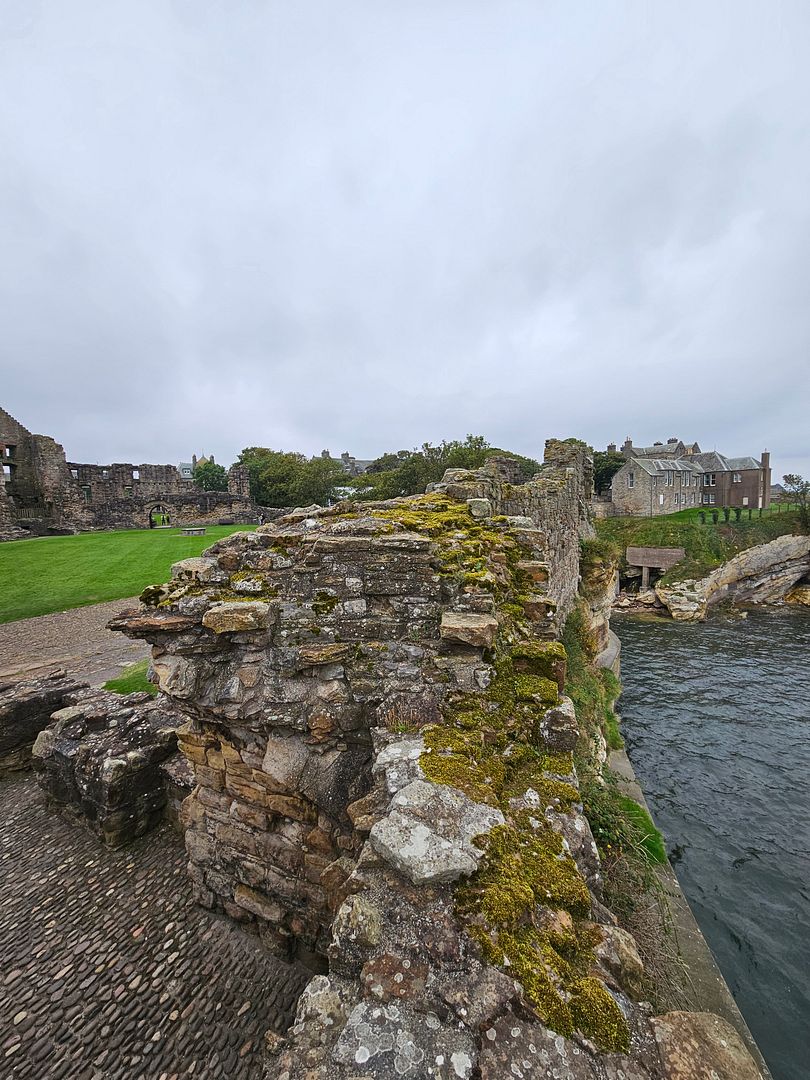
From this spot at the castle ruins you can see St. Andrews Cathedral ruins in the distance. We would have a short visit there before they closed the grounds.
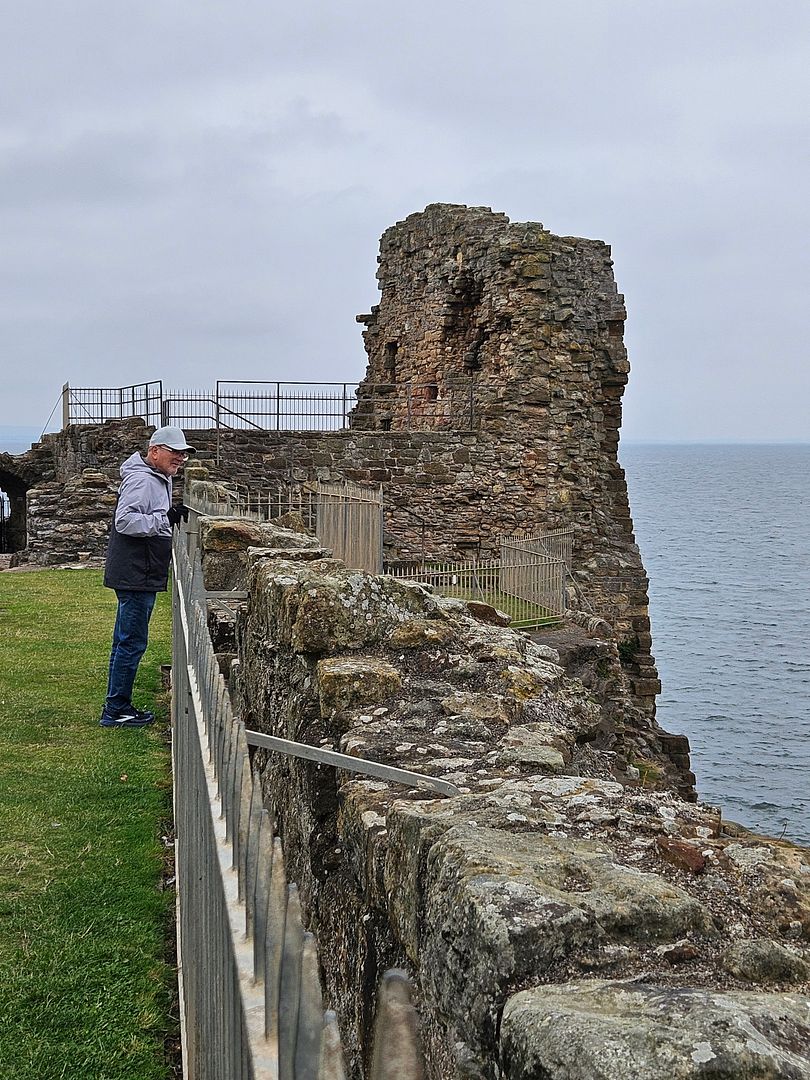
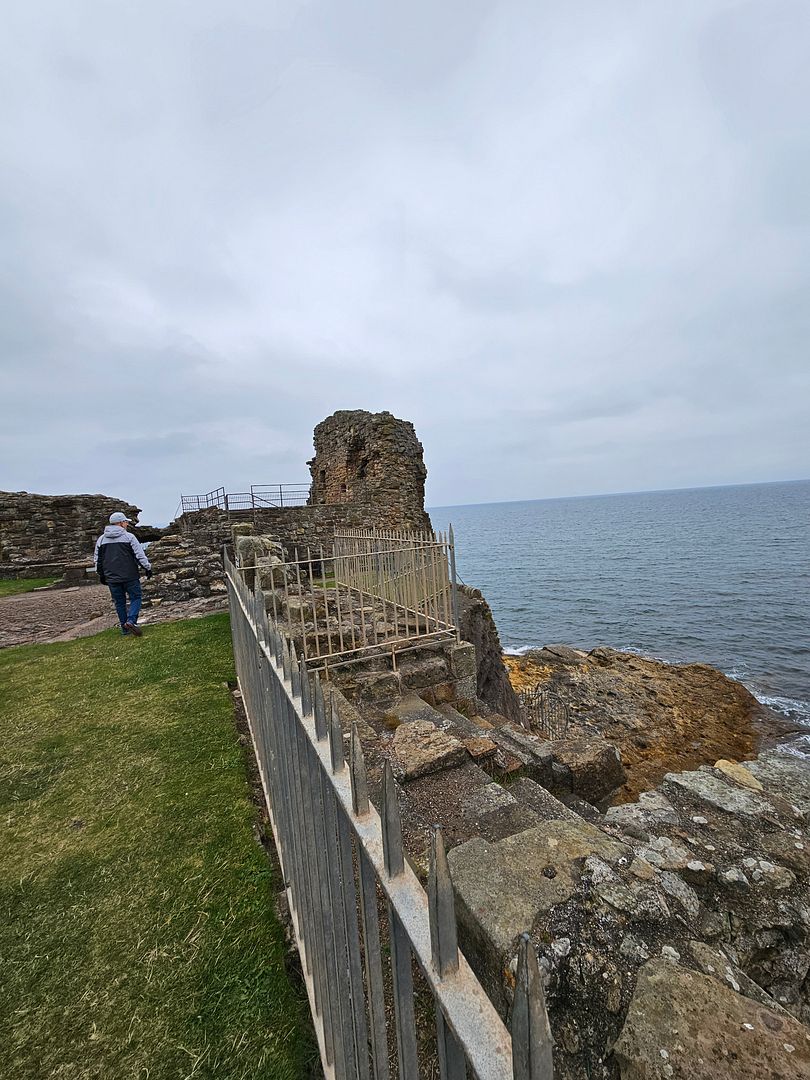
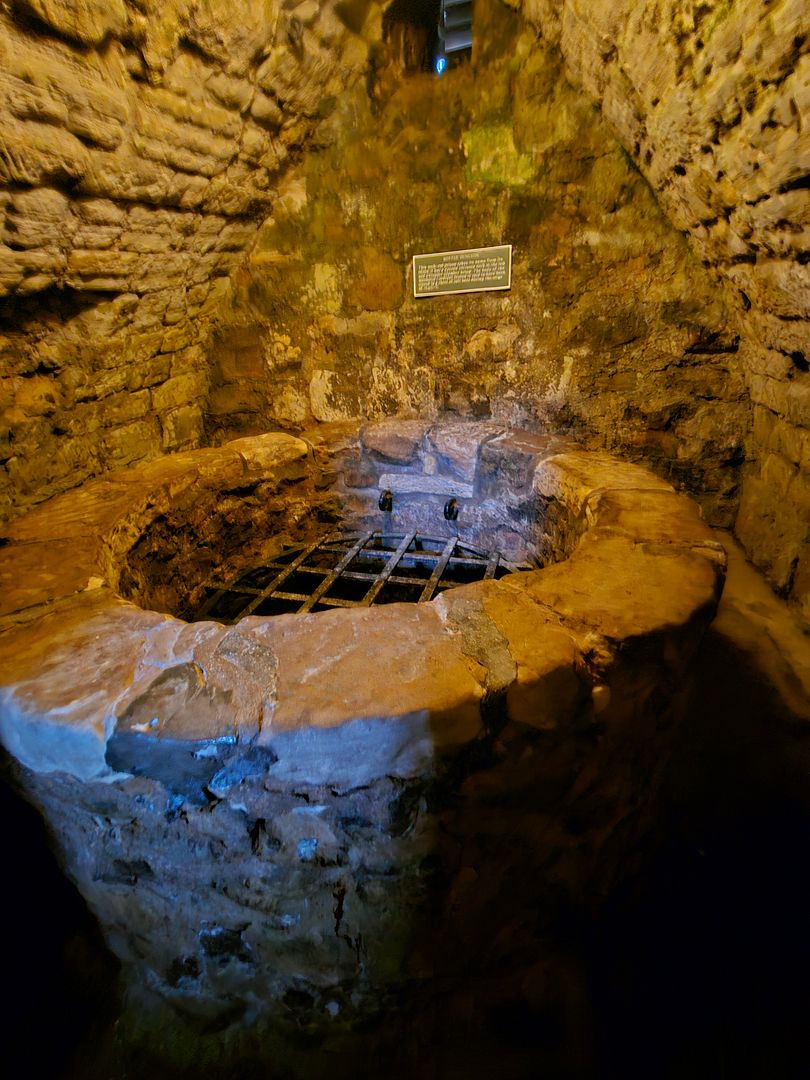
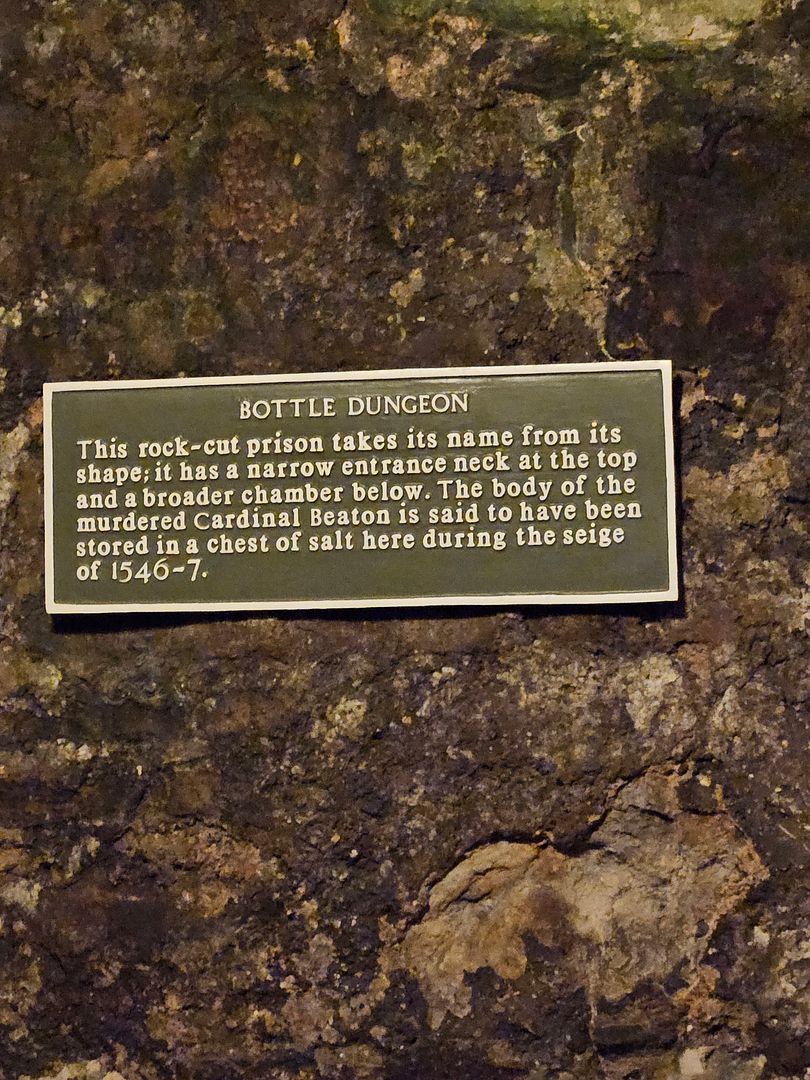
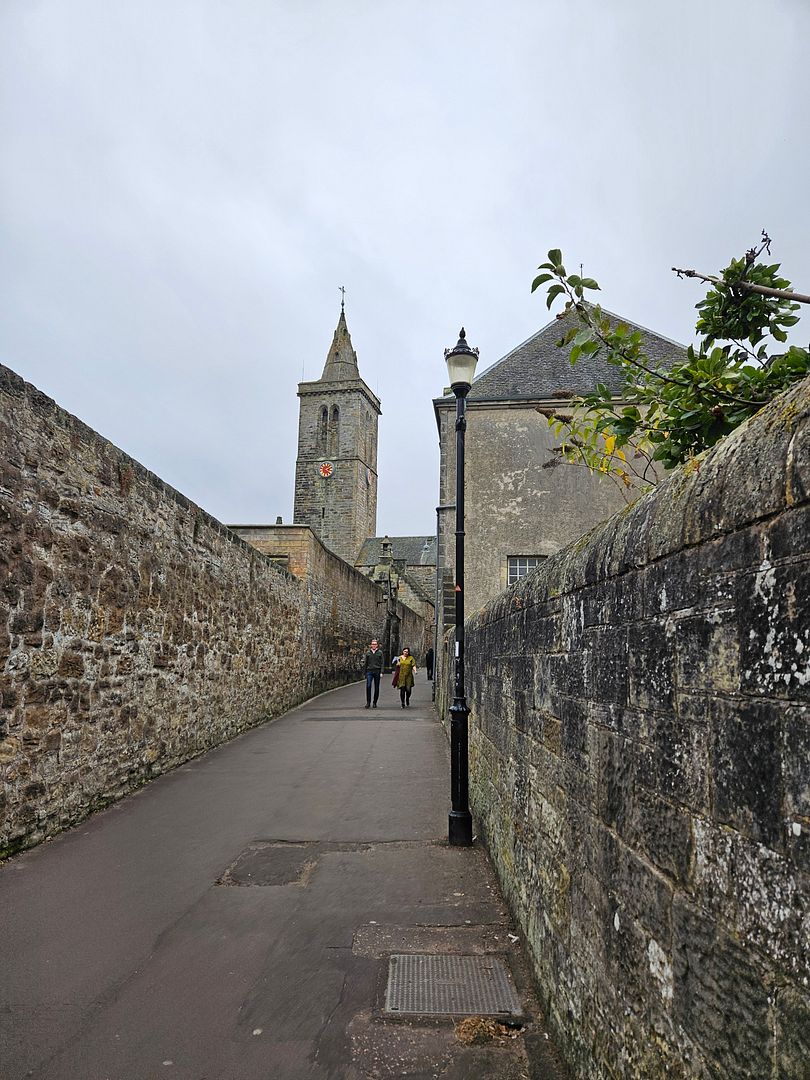
On leaving the castle we asked for directions to get to our next stop which included walking along Butts Wind to North St. along side of University of St. Andrews.
More from St. Andrews soon.
 The Happy Wonderer ~ ellen b.