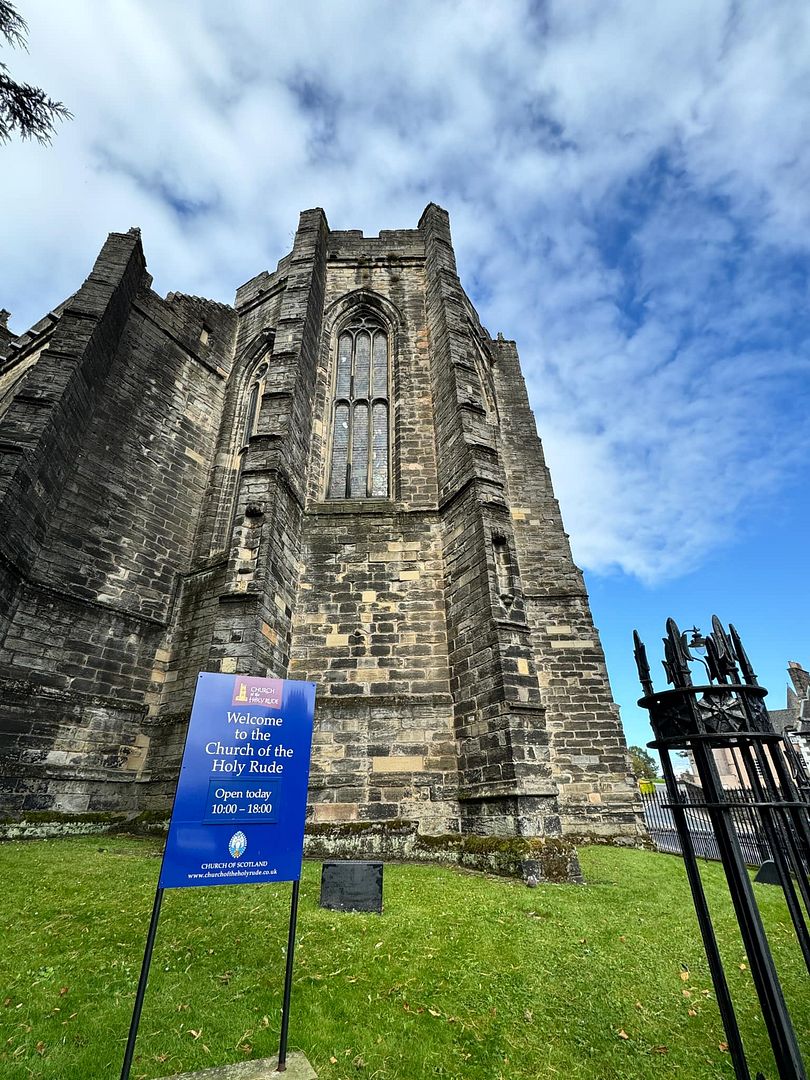
The Church of Holy Rude in Stirling, Scotland is steeped in Scottish History. The church is Stirling’s oldest building after the castle. During the reign of Robert II (1371-1390), and altar to the Holy Rude was established, leading to the church being renamed as the Parish Church of the Holy Rude of the Burgh of Stirling. “Holy Rude” translates to Holy Cross.
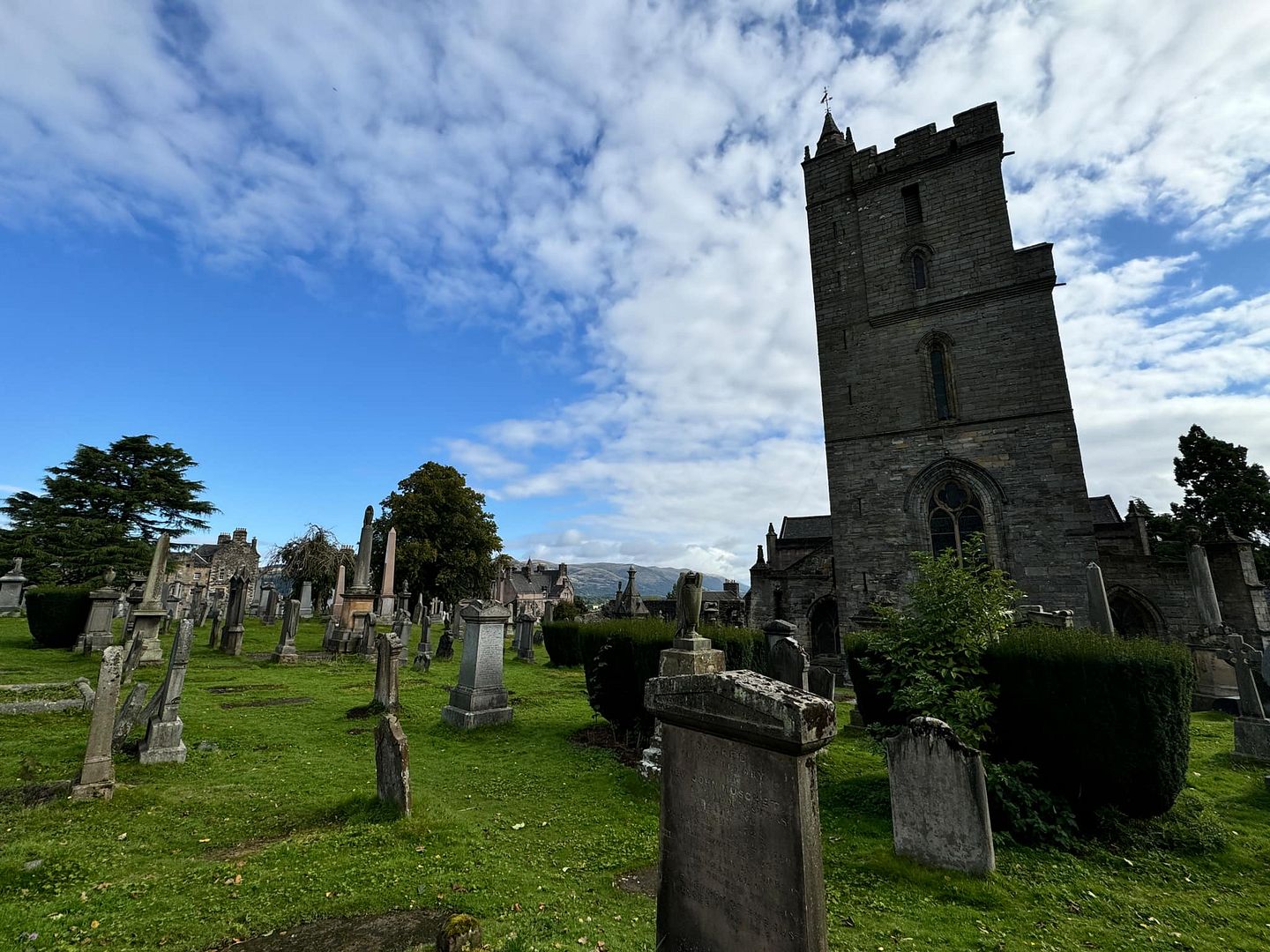
From the brochure: This site, a focal point of faith and heritage, witnessed the worship of Mary, Queen of Scots, the crowning of her infant son King James VI and many significant events, including the Scottish Reformation and the Jacobite rising.
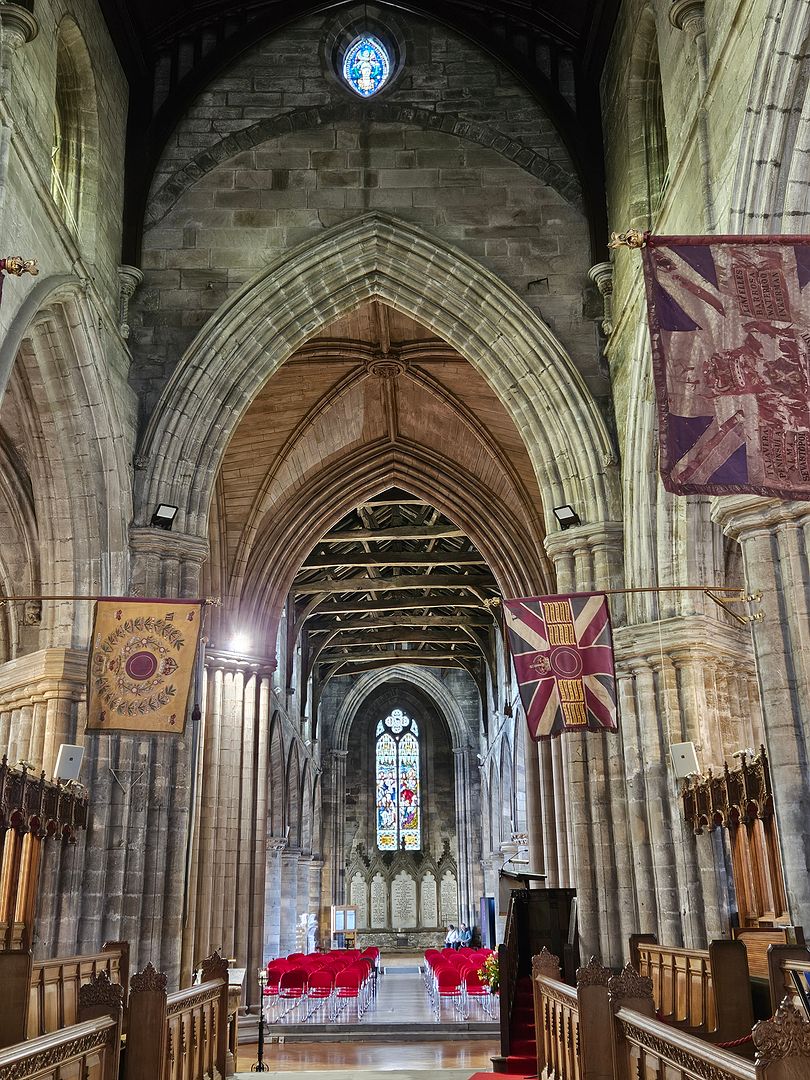
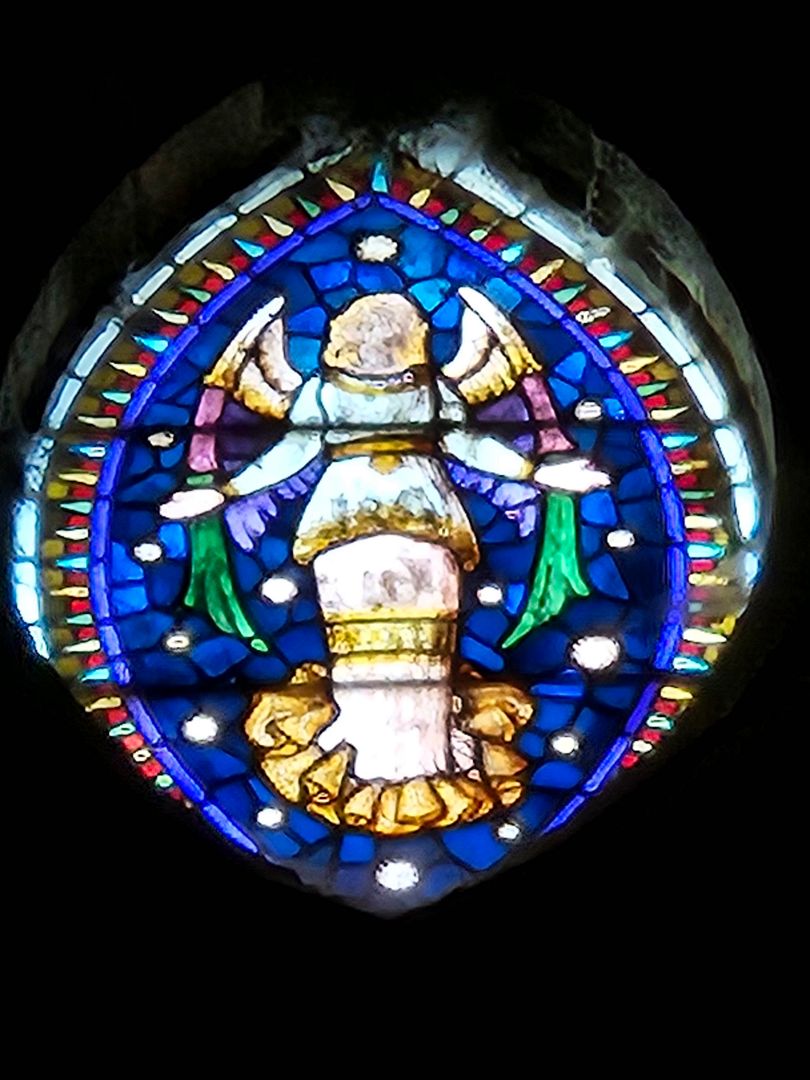
See that little stained glass window way at the top of arch. The Angel Window was installed in 1870 and the artist is unknown.
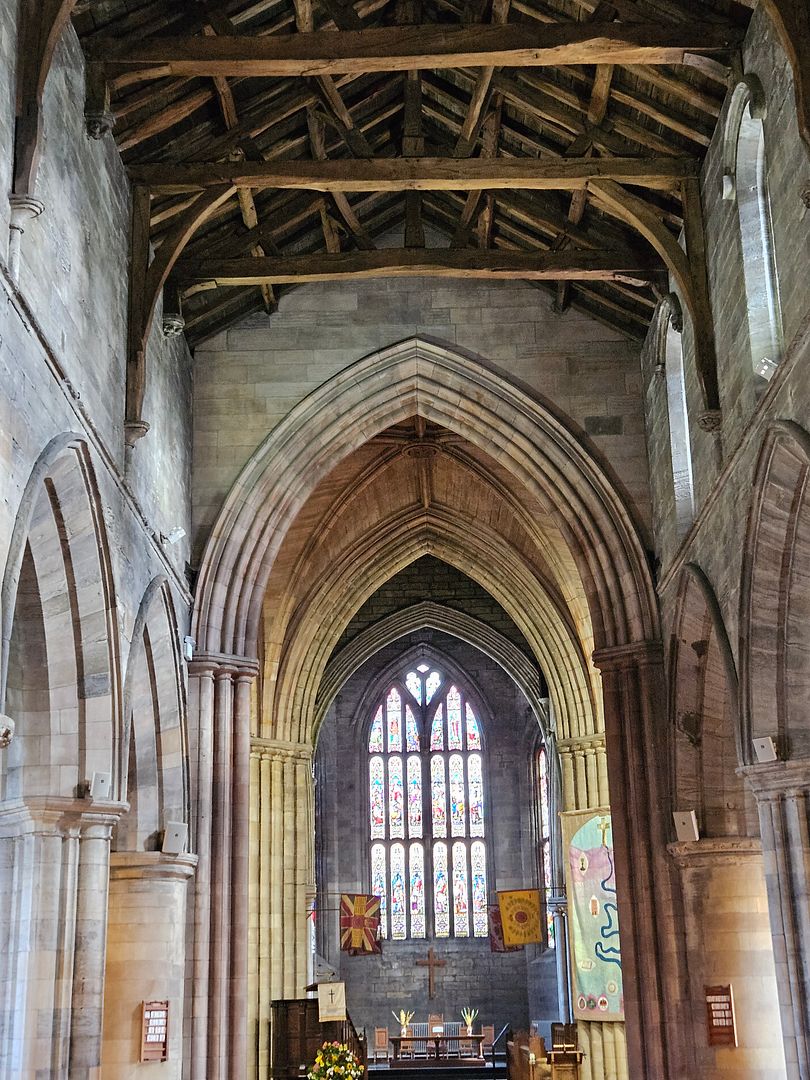
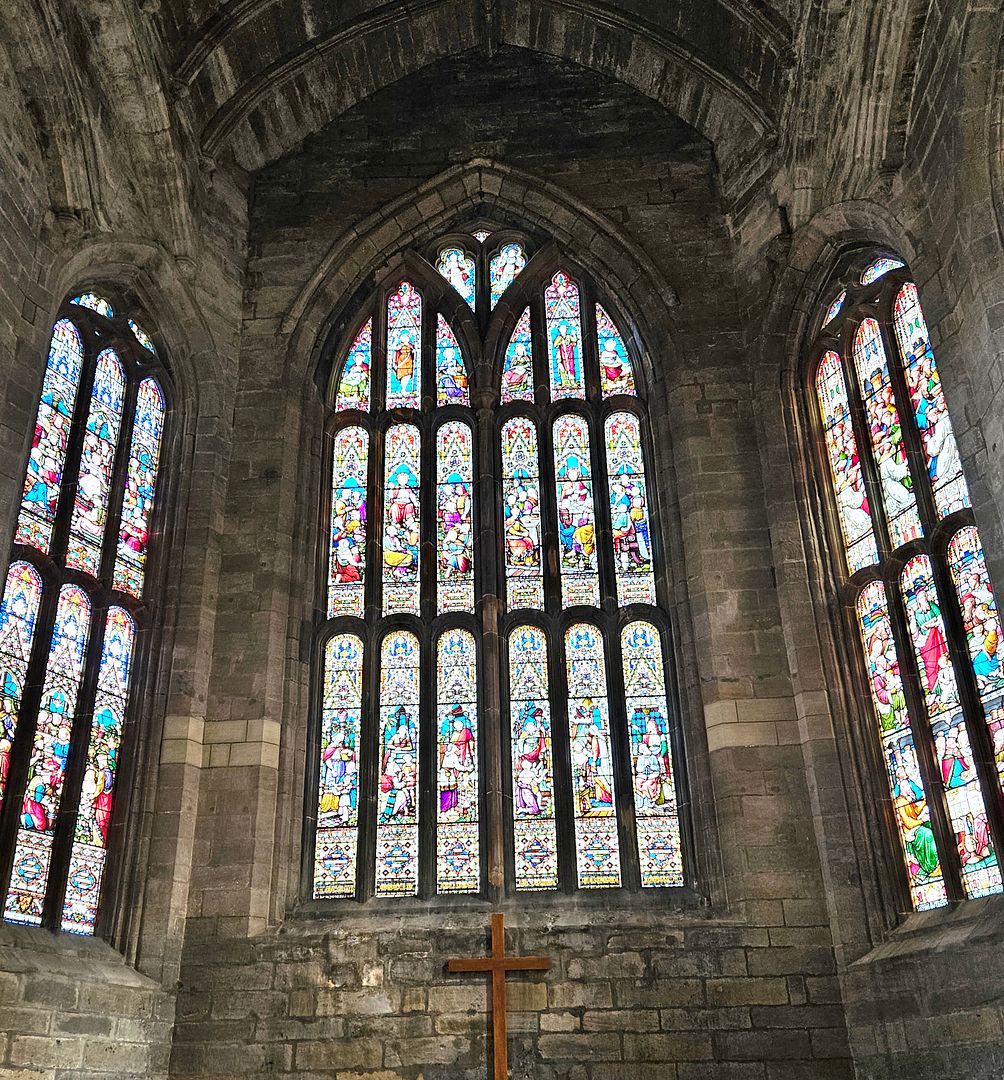
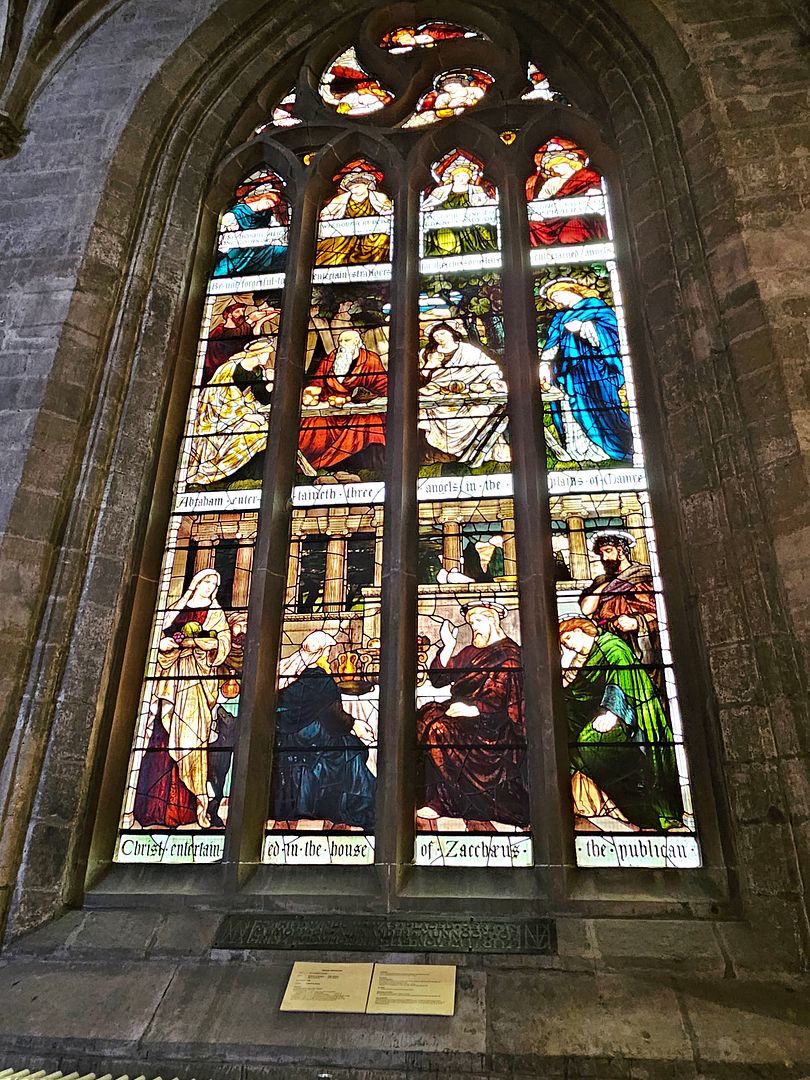
This window, above the Apse, is dedicated to John Cowane, founder of Cowane’s Hospital. The middle right depicts the last supper, the left shows the Sermon on the Mount, and the lower portion illustrates Matthew 25:35-40, reflecting the charitable intentions of Cowane. The Inscription read, “For I was hungry, and you gave me food.”
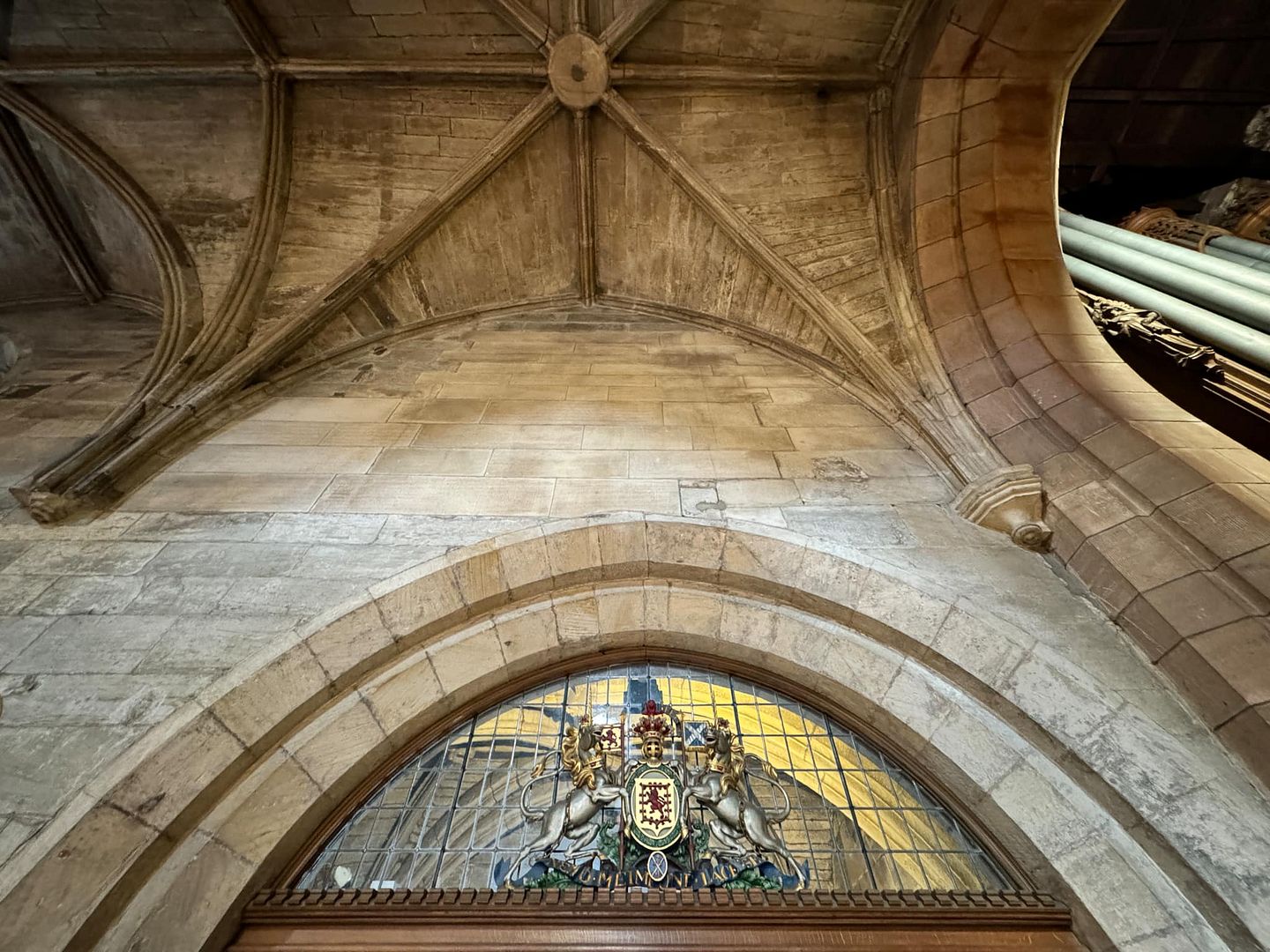
The coat of arms above the entrance to St. Andrew’s Chapel is a 17th century carving of the Royal Arms of Scotland recalling the era when Scottish royalty frequented the Church.
Mary, Queen of Scots: At nine months old, she was crowned Queen in Stirling Castle’s Chapel Royal after her father, James V, died. She spent much of her childhood in the castle and visited this church. After Mary’s abdication, her son was crowned King James VI of Scotland in the Church of the Holy Rude.
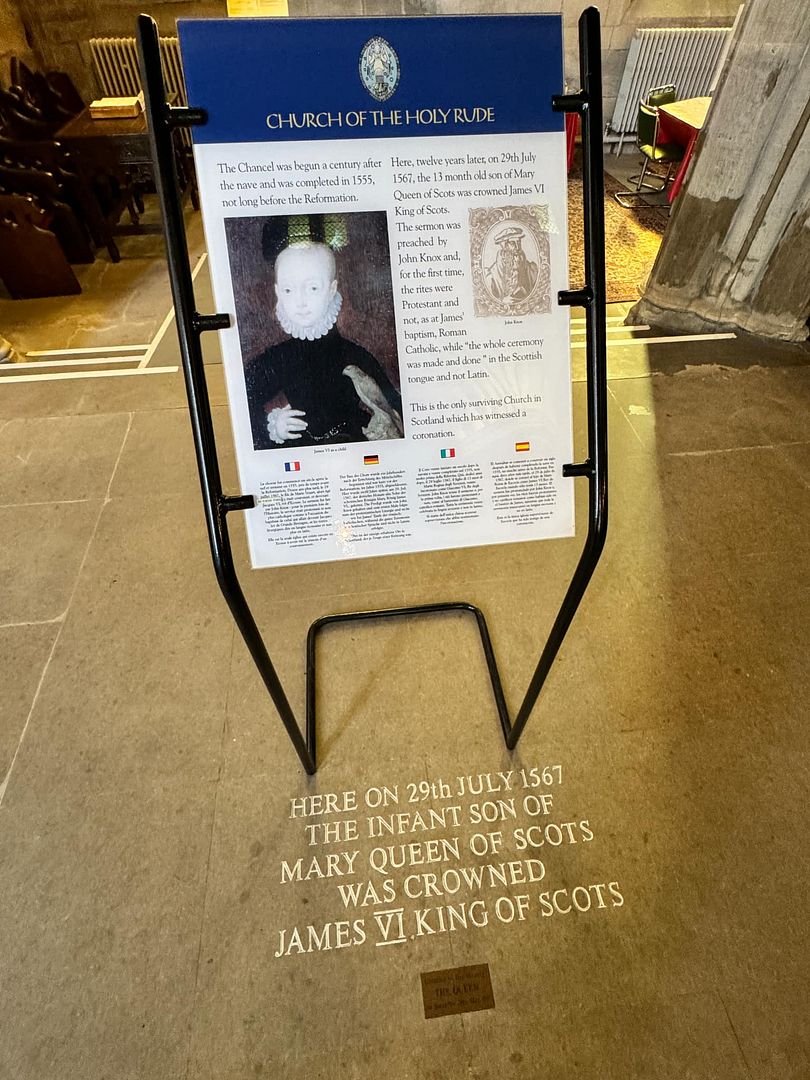
At her 13 month old son’s coronation, John Knox preached the sermon. For the first time the rites were Protestant and not Roman Catholic and the whole of the ceremony was made and done in the Scottish tongue and not Latin.
This is the oldest surviving church in Scotland that witnessed a coronation.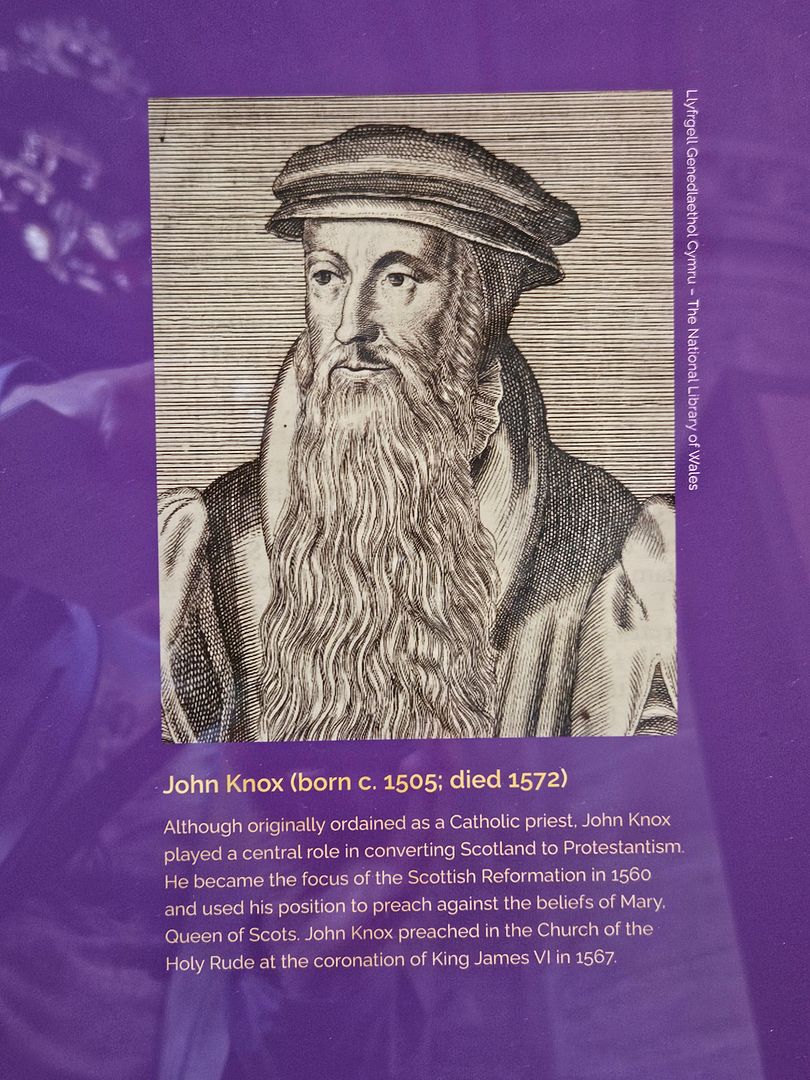
John Knox, A figurehead of the reformation in Scotland. Reverend James Guthrie was another prominent Scottish minister during the Covenanting era. His convictions led to the division of the Church’s congregation in the 17th century.
The Church has seen its share of conflict over the centuries. During the religious and political troubles of the 17th Century, the Church was divided in 2 and had a wall built to create 2 separate churches – the East and the West. The minister whose activities led to this division, James Guthrie, was hanged for high treason in 1661, and the 2 parts of the church were finally re-united in 1935.
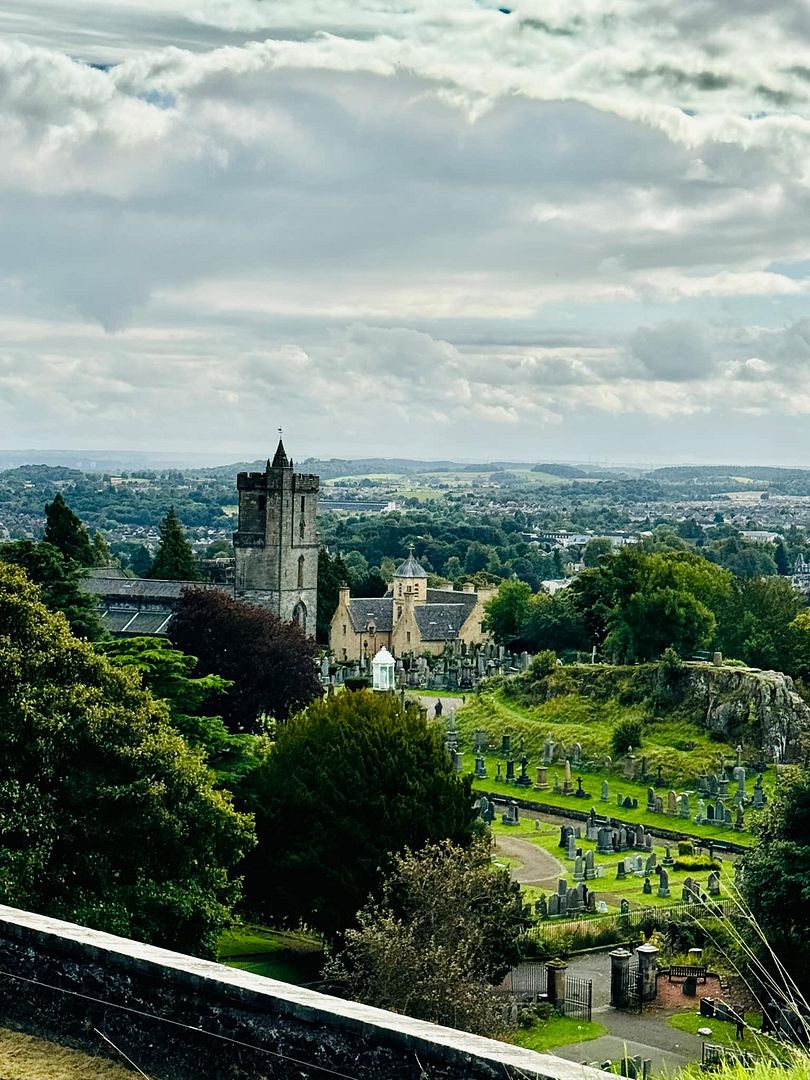
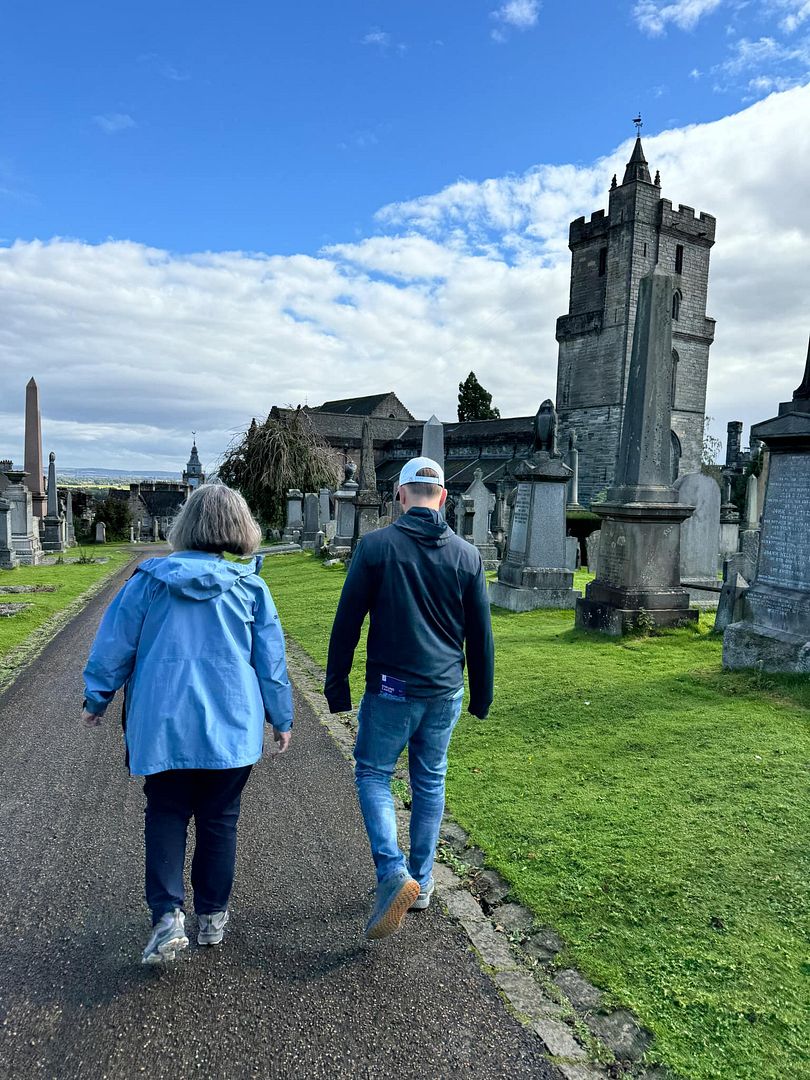
During Cromwell’s uprising, General Monk set up his guns on the Church tower in 1651 for the last successful attack on Stirling Castle. The Church walls bear the scars of musket shot and cannon-fire from this and other conflicts, including the Jacobite uprising of 1746. The battle scarred walls are indeed a testament to the skills of the stone masons and craftsmen of the past.
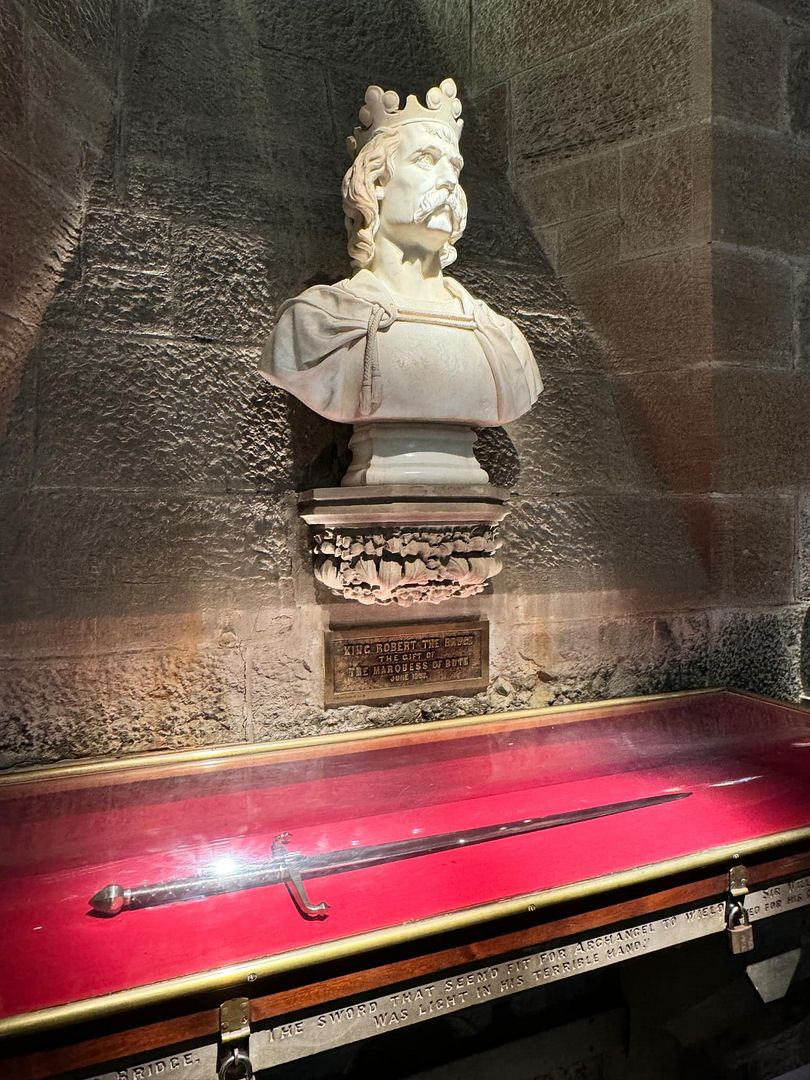
King Robert the Bruce
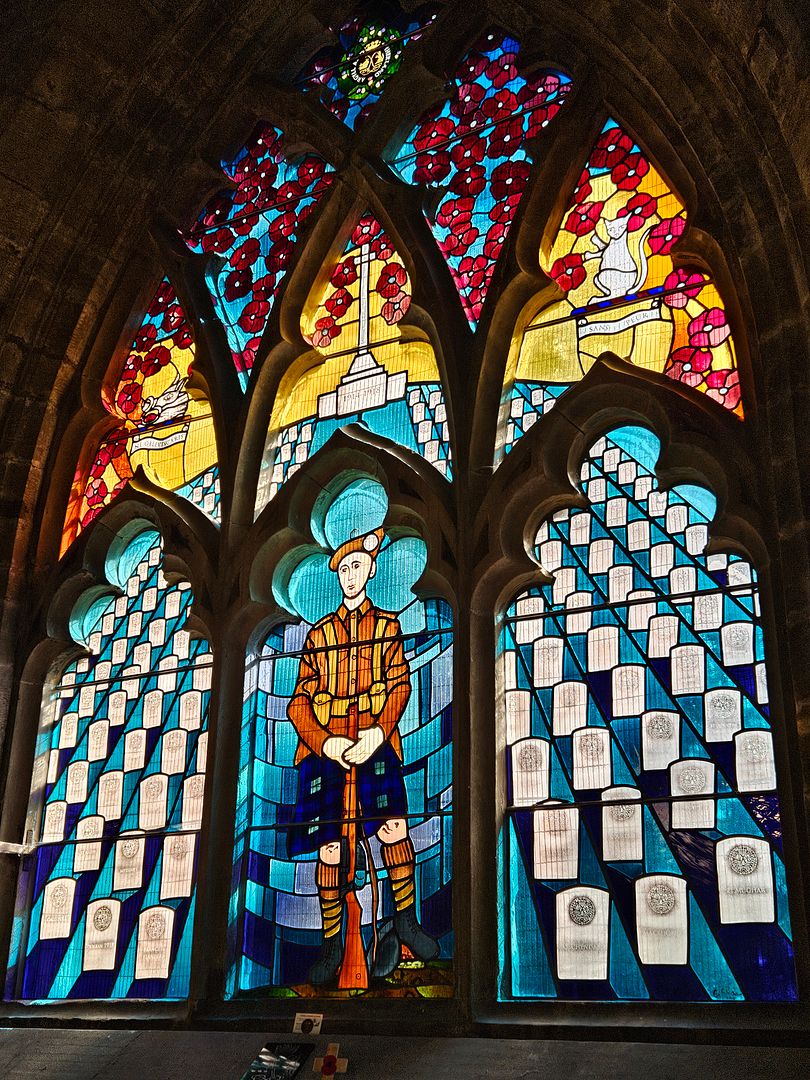
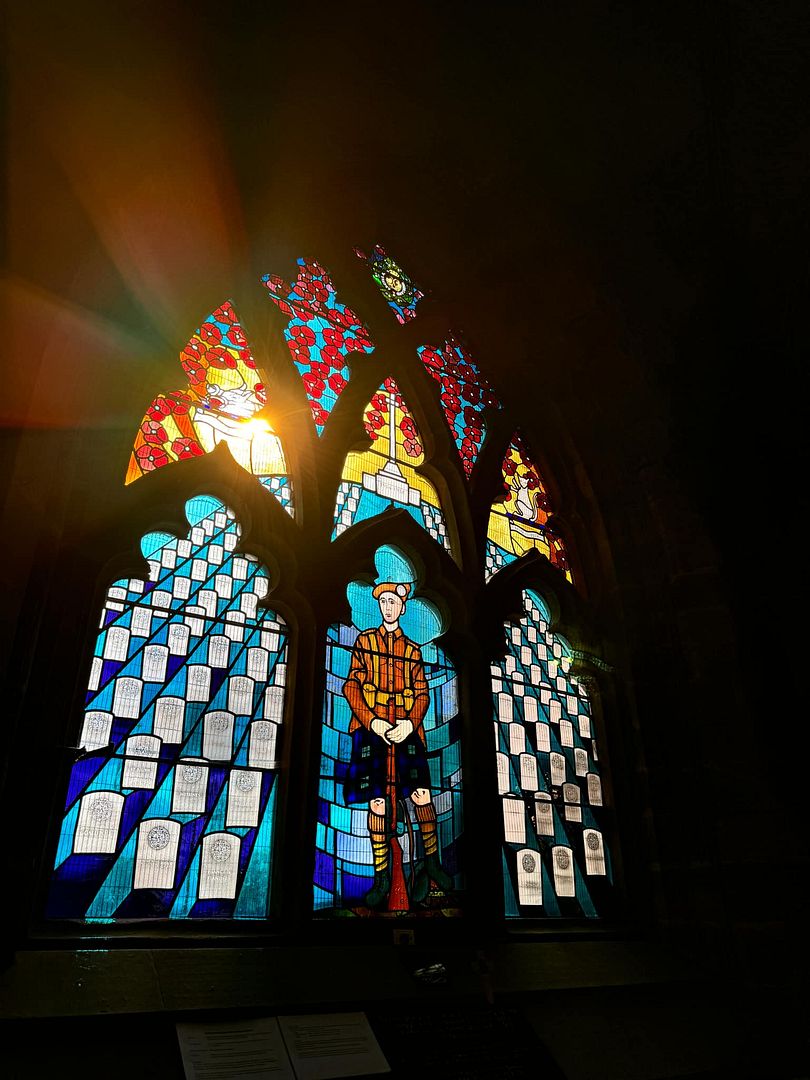
This window was created in memory of the Argylls of WWI and it was fitting for it to be in the Church of the Holy Rude because the regiment had strong ties to this church. This window depicts a Highland soldier surrounded by poppies and figures from the regimental cap badge. Thousands lost their lives in World War I. This window was dedicated in 2016.
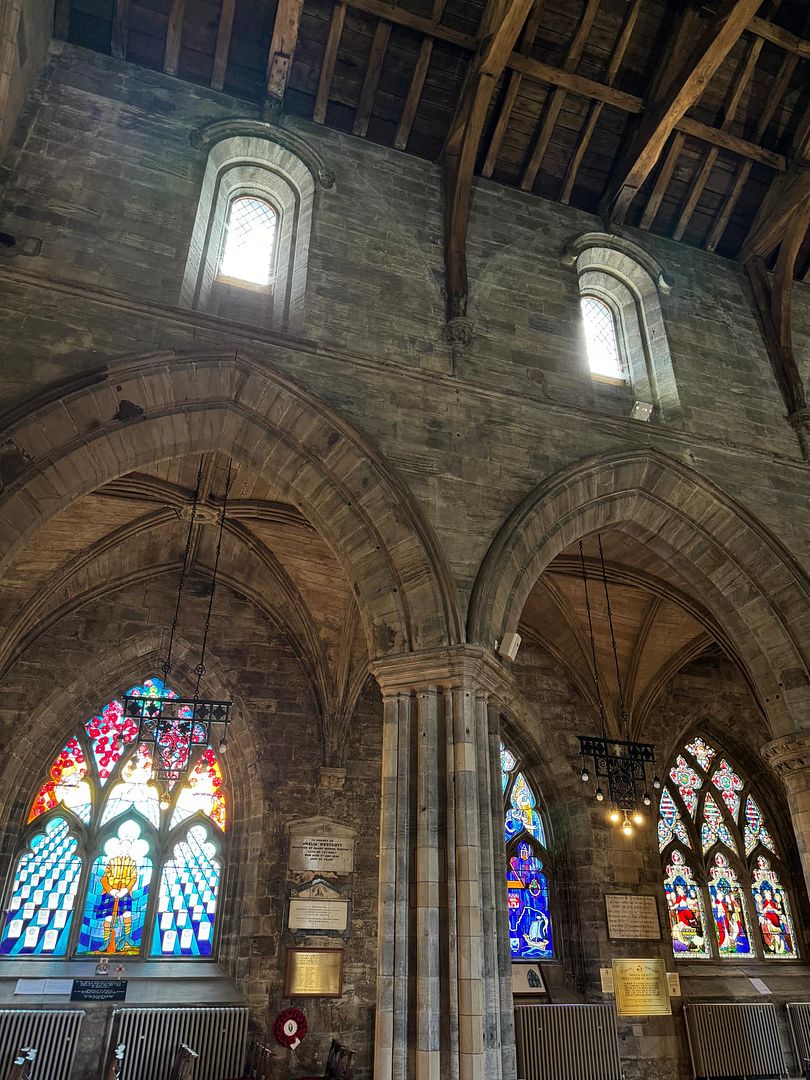
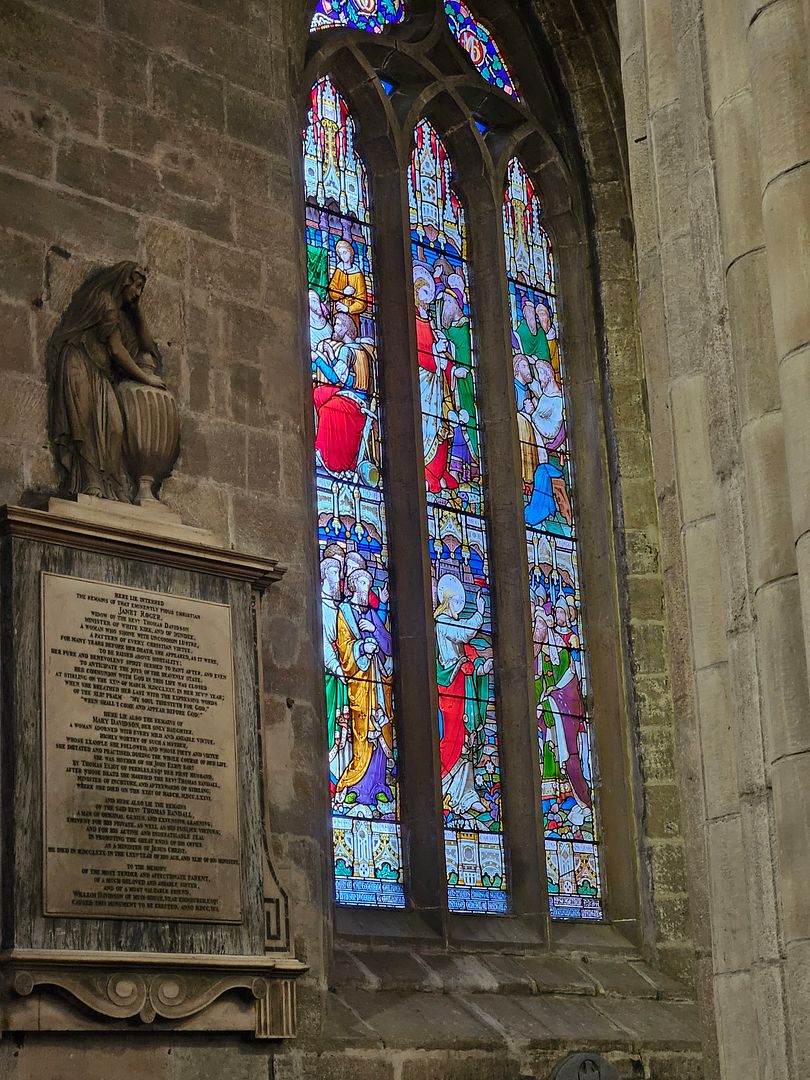
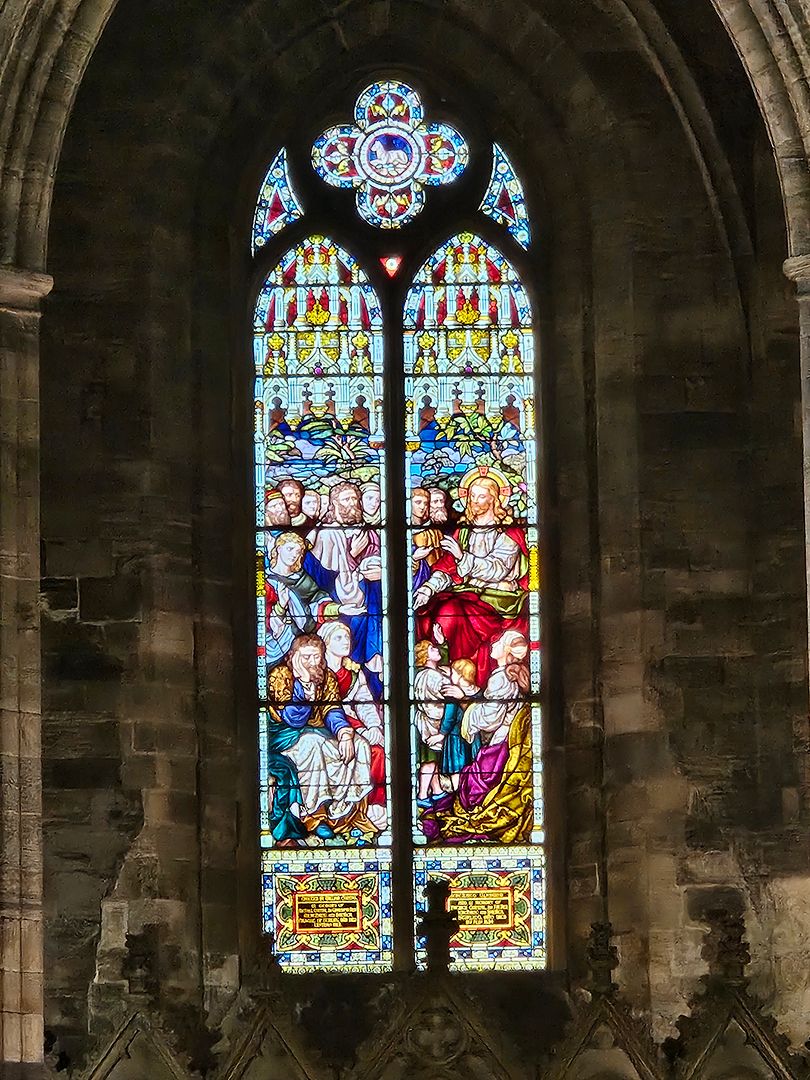
The current windows date from the 19th century.
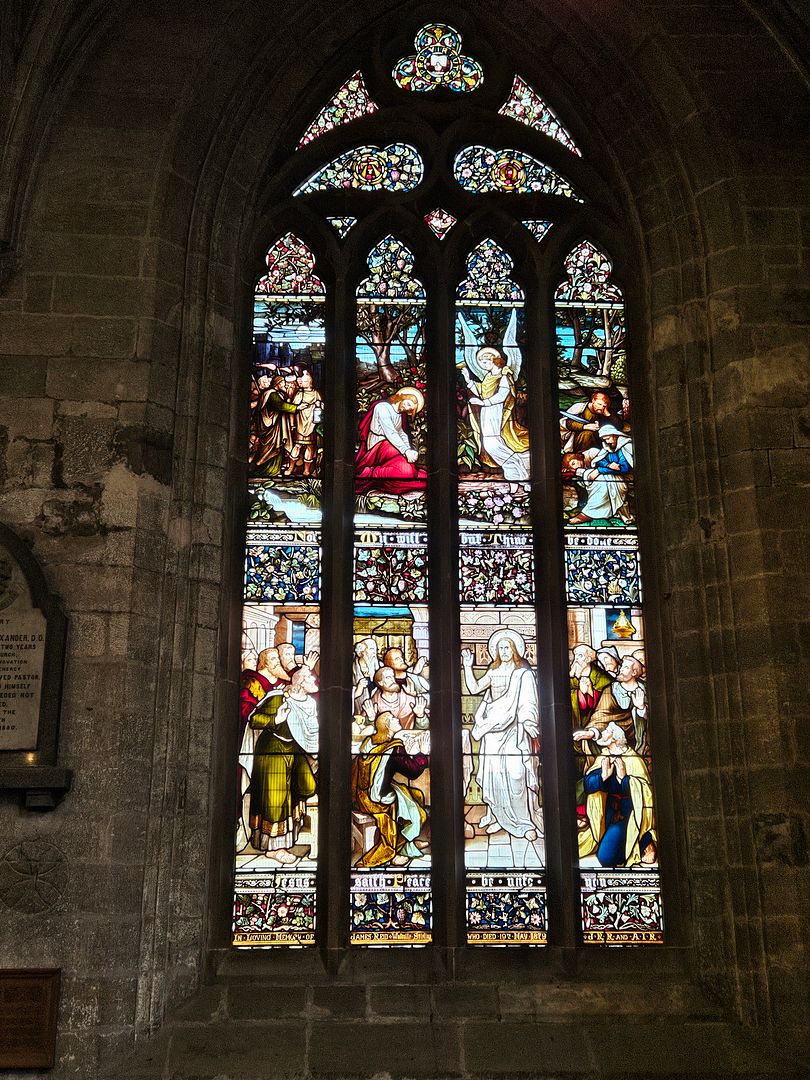
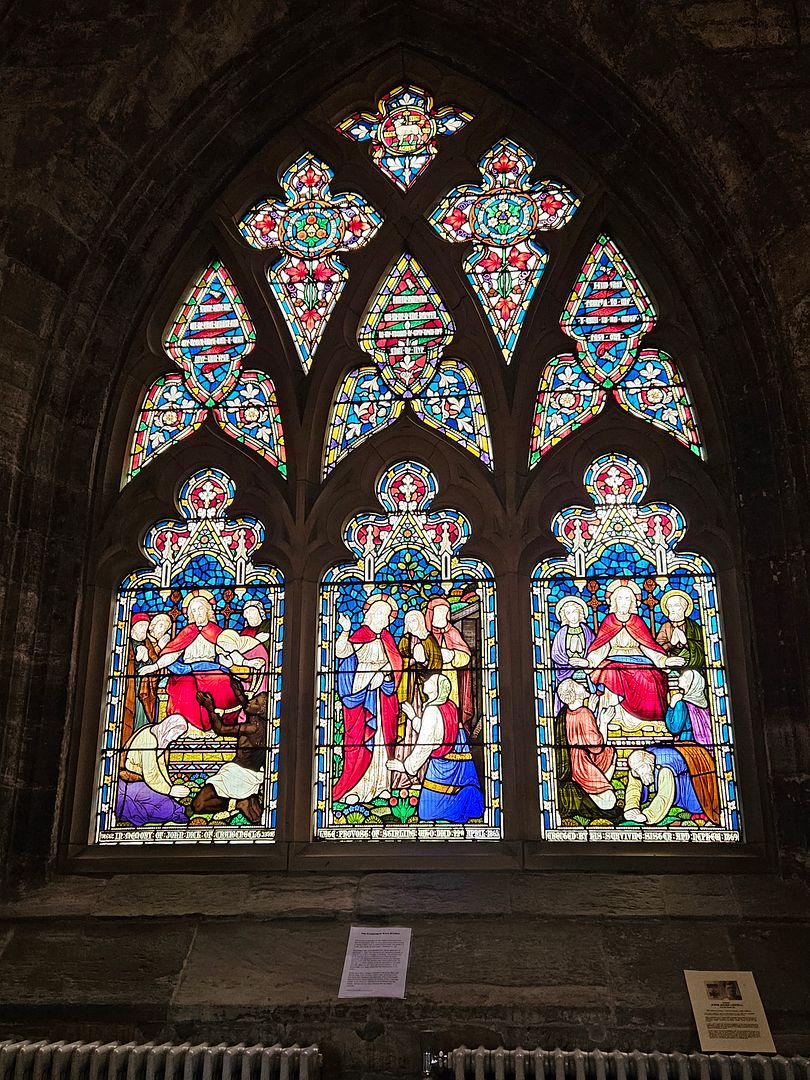
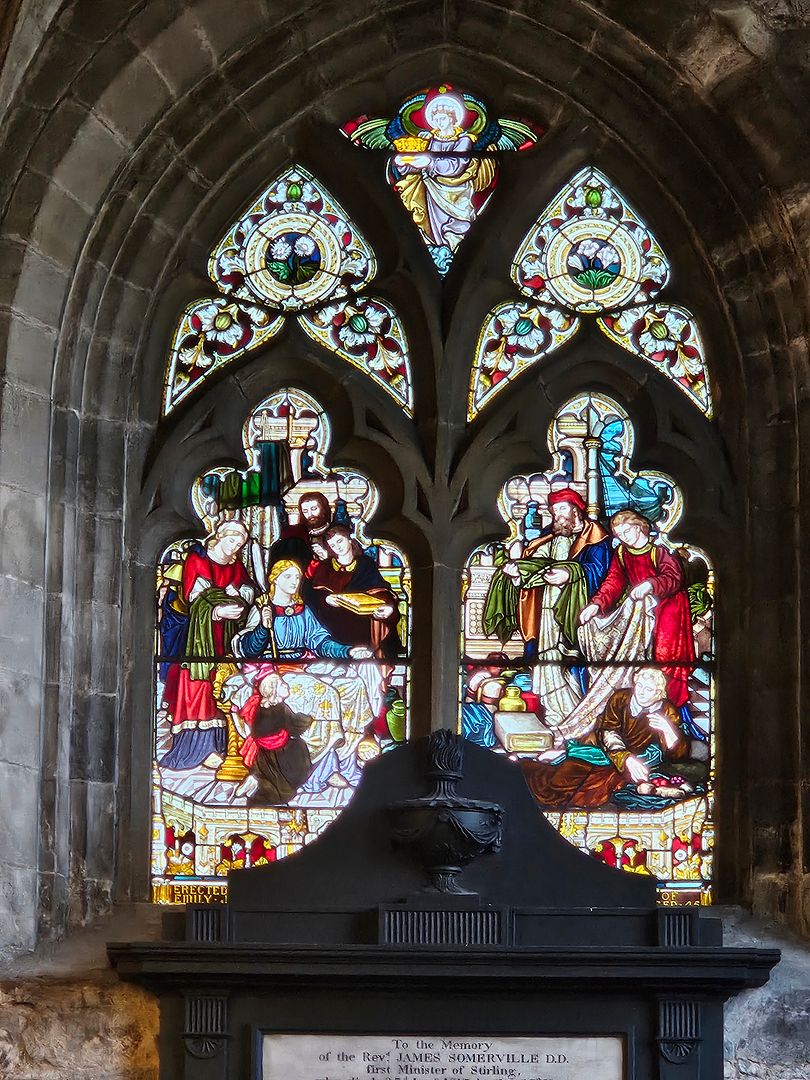
We left the church and walked down into town needing a little snack before we made our way to the Wallace Monument which will be another post. Sunday the 15th of September was a full day of history for us!
Thanks for traveling along with us on this day that we connected more dots about John Knox and the Scottish Reformation and Covenantors in Scotland. We took in Stirling in one day but you could easily spend a few more days soaking it all in.
 The Happy Wonderer ~ ellen b.