After lunch at the Flying Stag in Braemar we continued east on the A93 to a slugroad for a coastal route that would take us to Dunnottar Castle. GPS is a wonderful thing.
The history of Dunnottar castle can be found here. I also found more of it’s history here that I’ve quoted below.
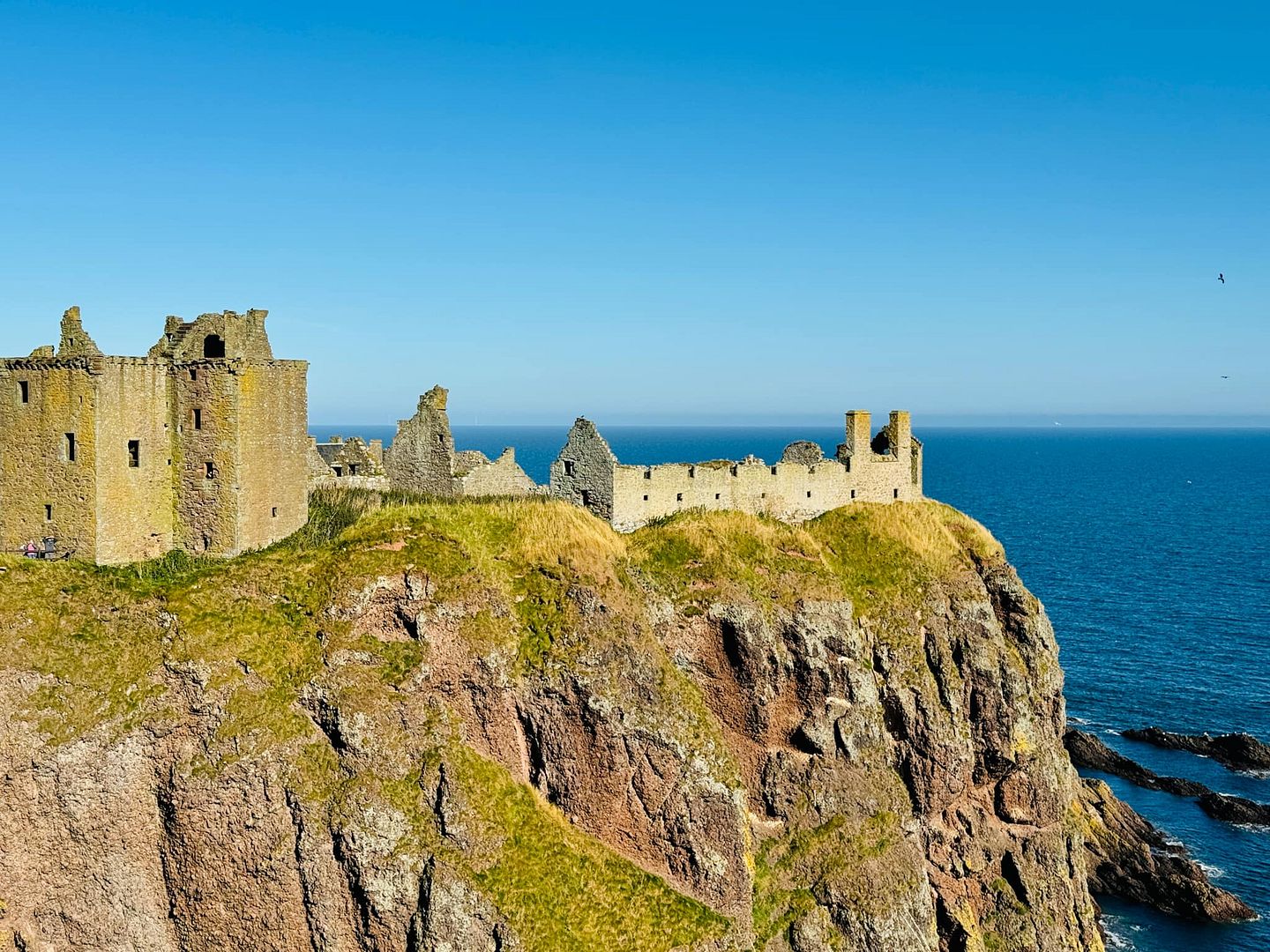
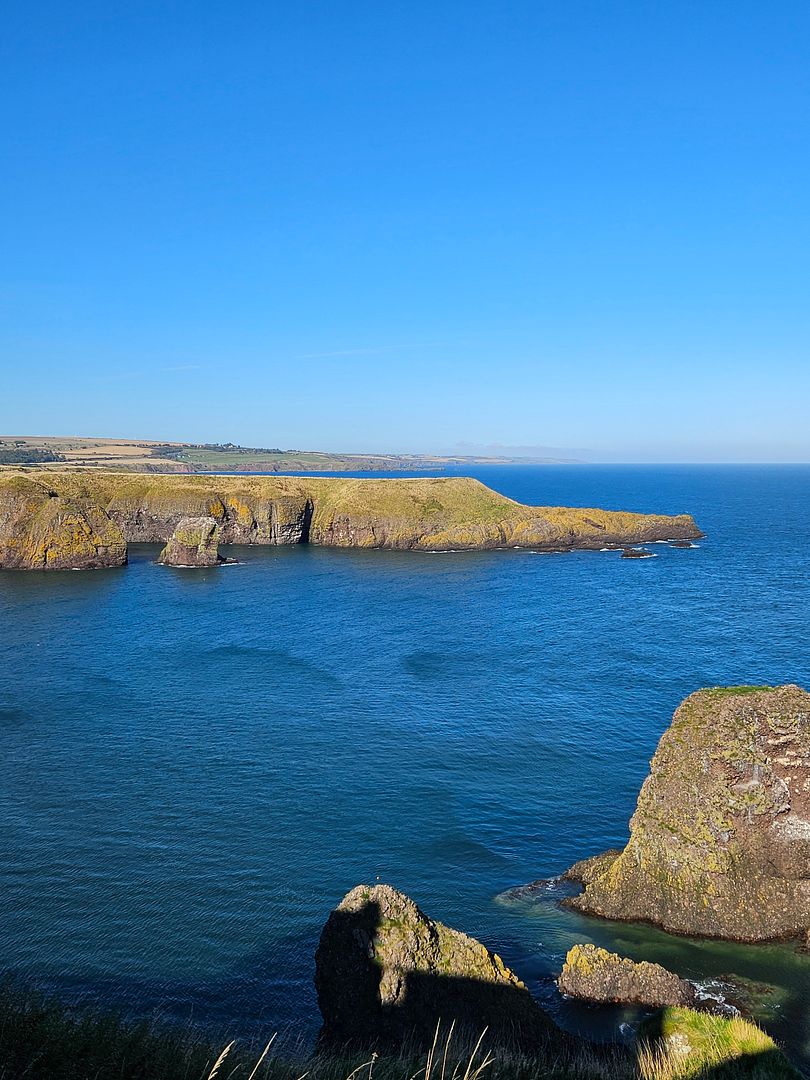
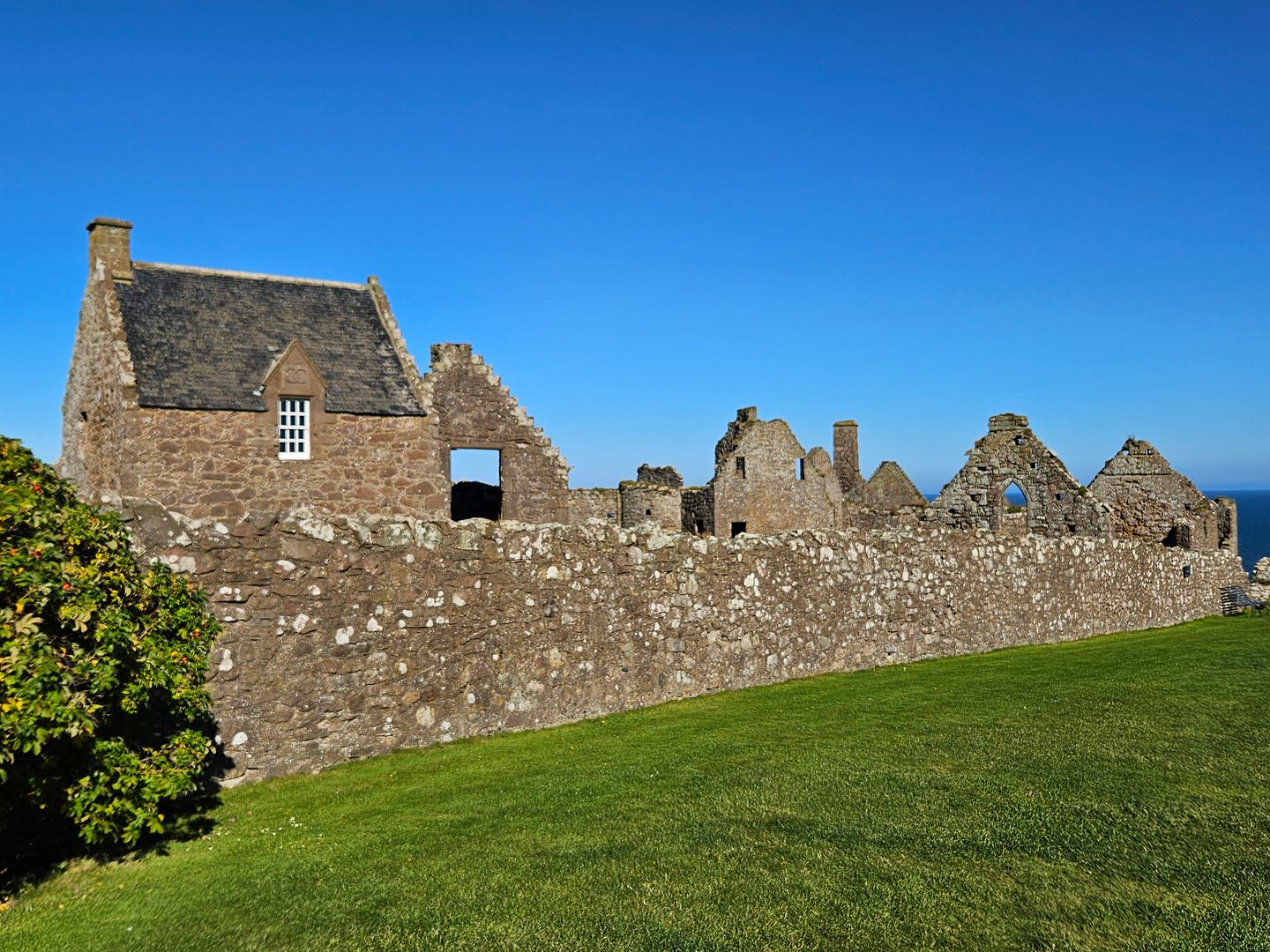
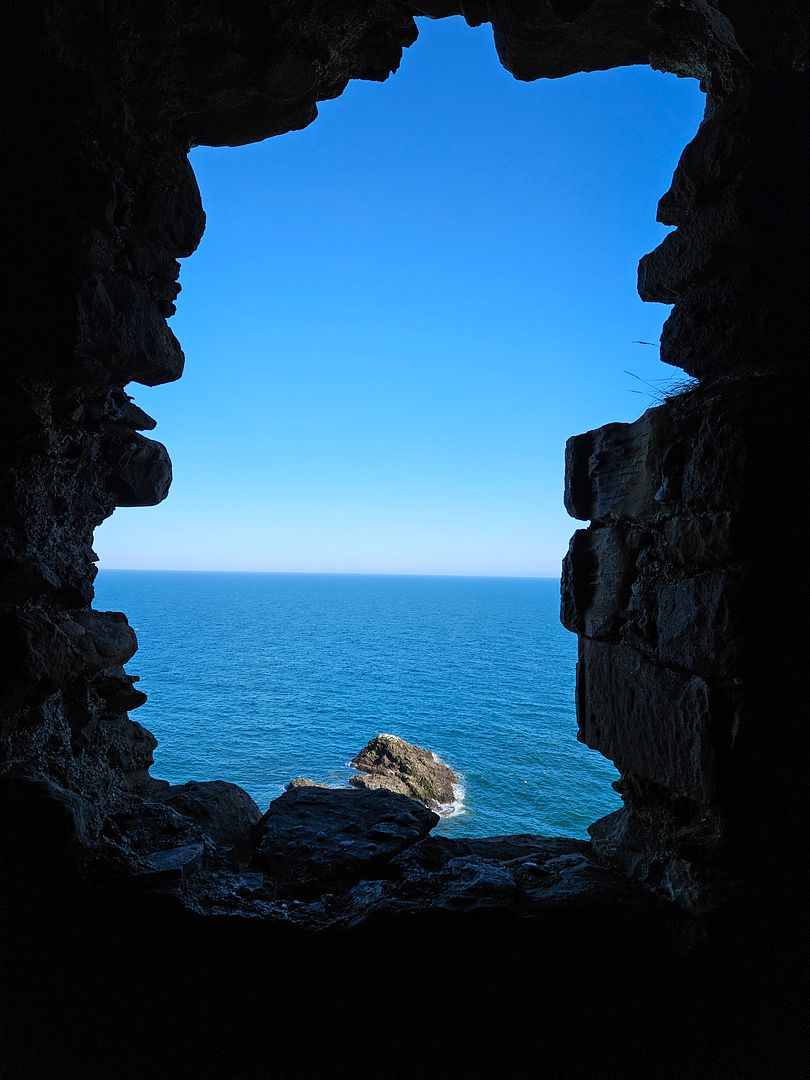
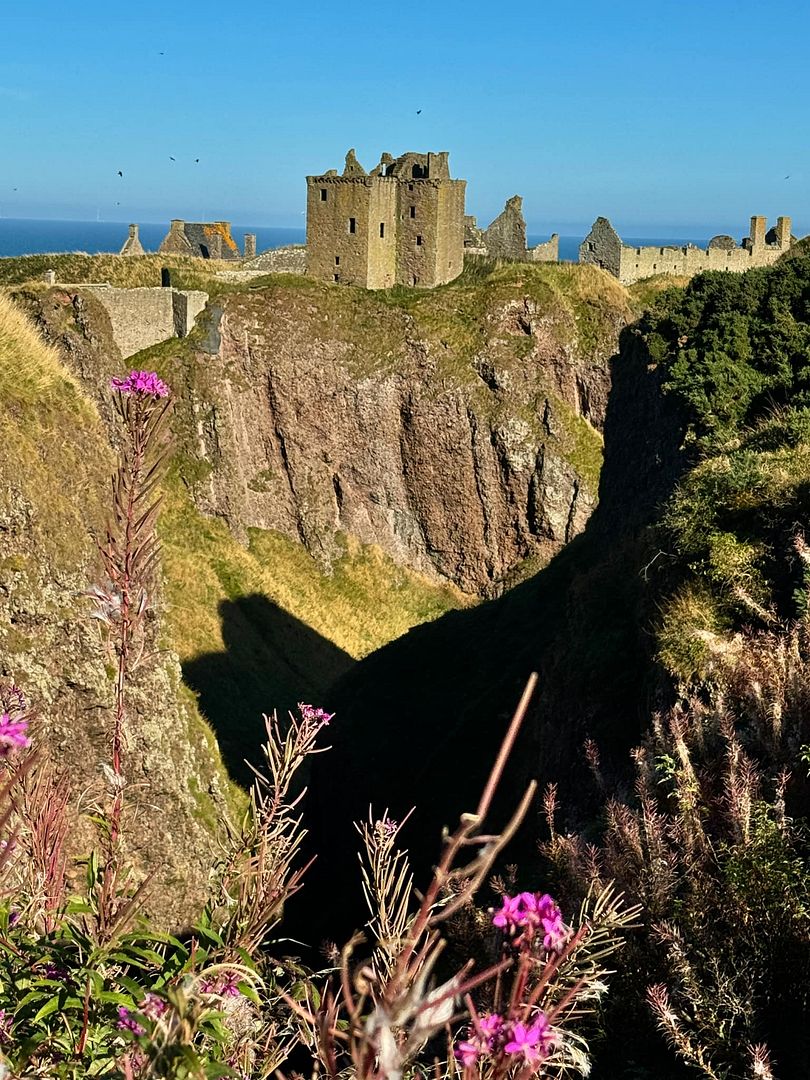
Perched atop a 160 foot rock and surrounded on three sides by the North Sea, these dramatic and evocative cliff-top ruins were once an impregnable fortress of the Earls Marischal, once one of the most powerful families in Scotland.
Scotland has some magnificently located castles. Think no further than Stirling Castle or Edinburgh Castle, both built on top of rocks that allow them to dominate the landscape for miles around. But if we had to pick just one to trust with our lives in a time of great danger then it would without any doubt be Dunnottar Castle. No other Scottish castle comes close in terms of a sense of sheer brooding impregnability. This is a castle which looks across to the nearby coastal cliffs and whose presence, even today, conveys a very simply message: “Don’t mess with me.”
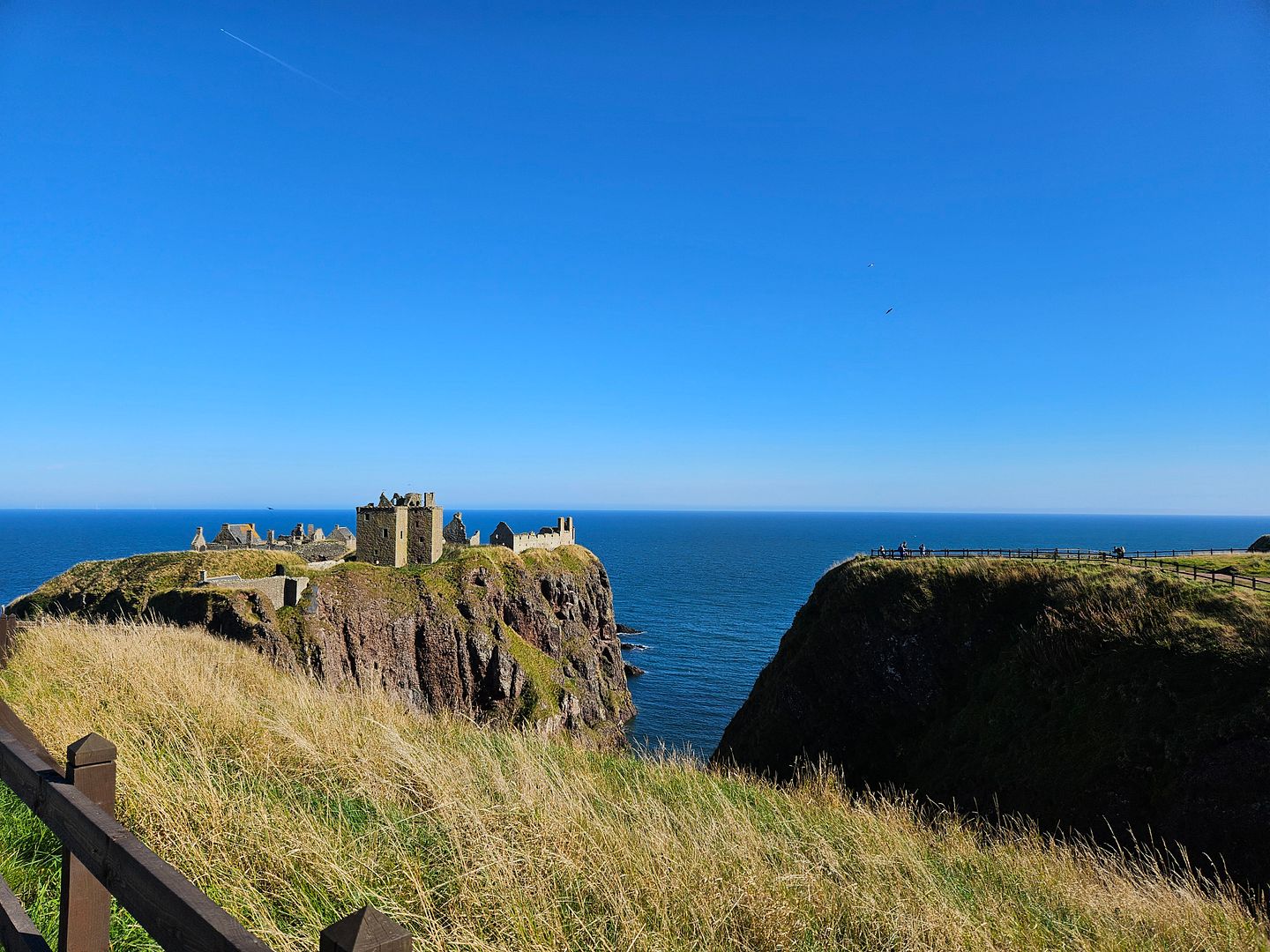
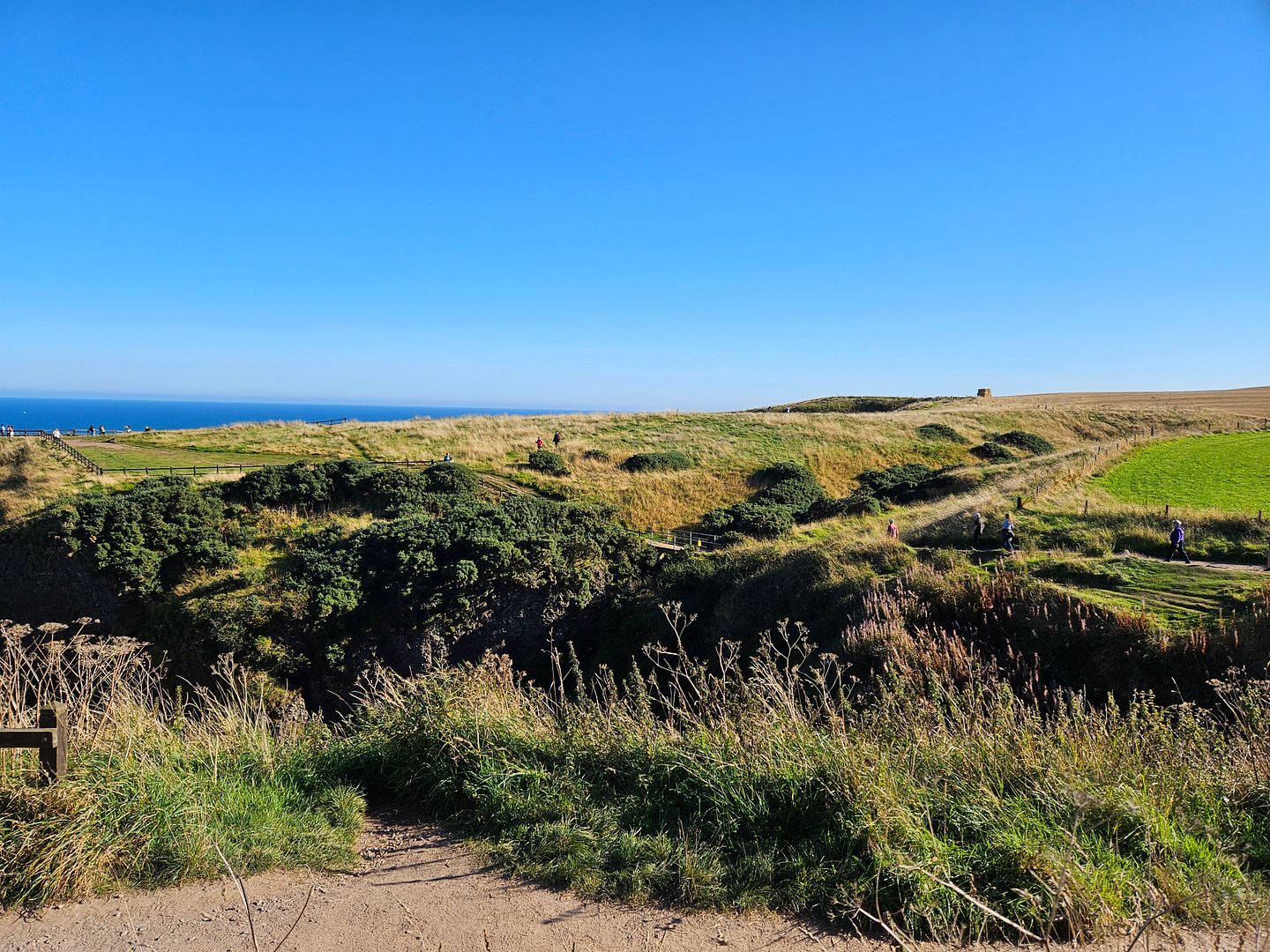
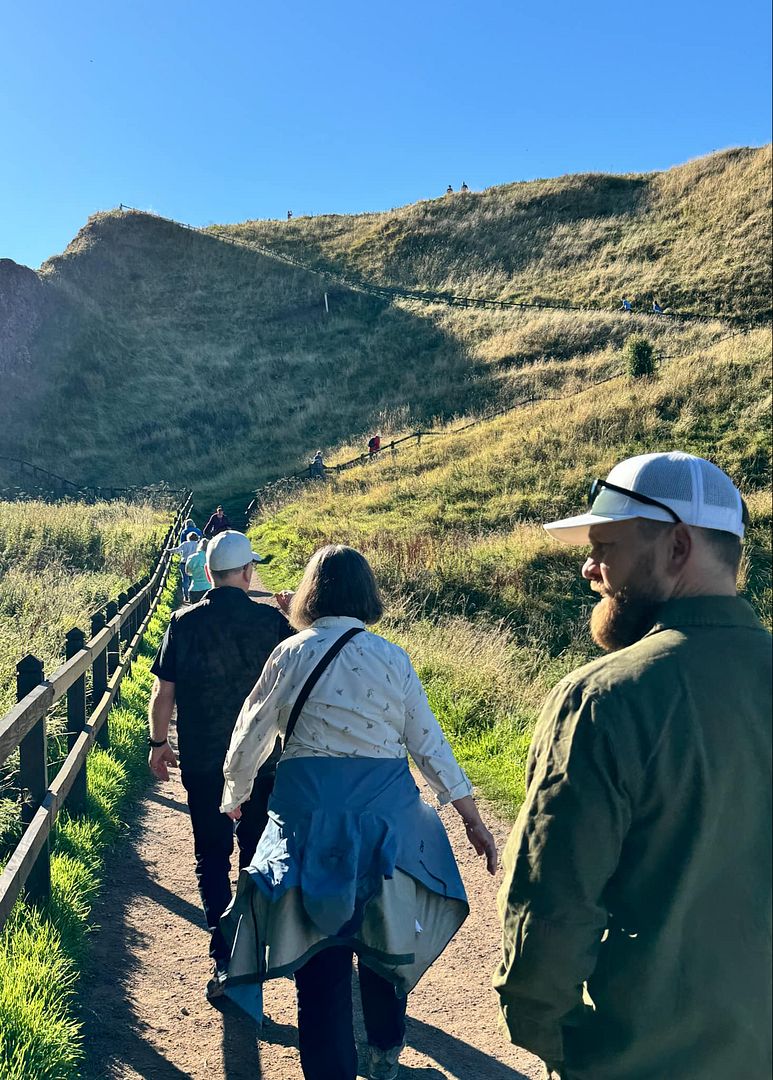
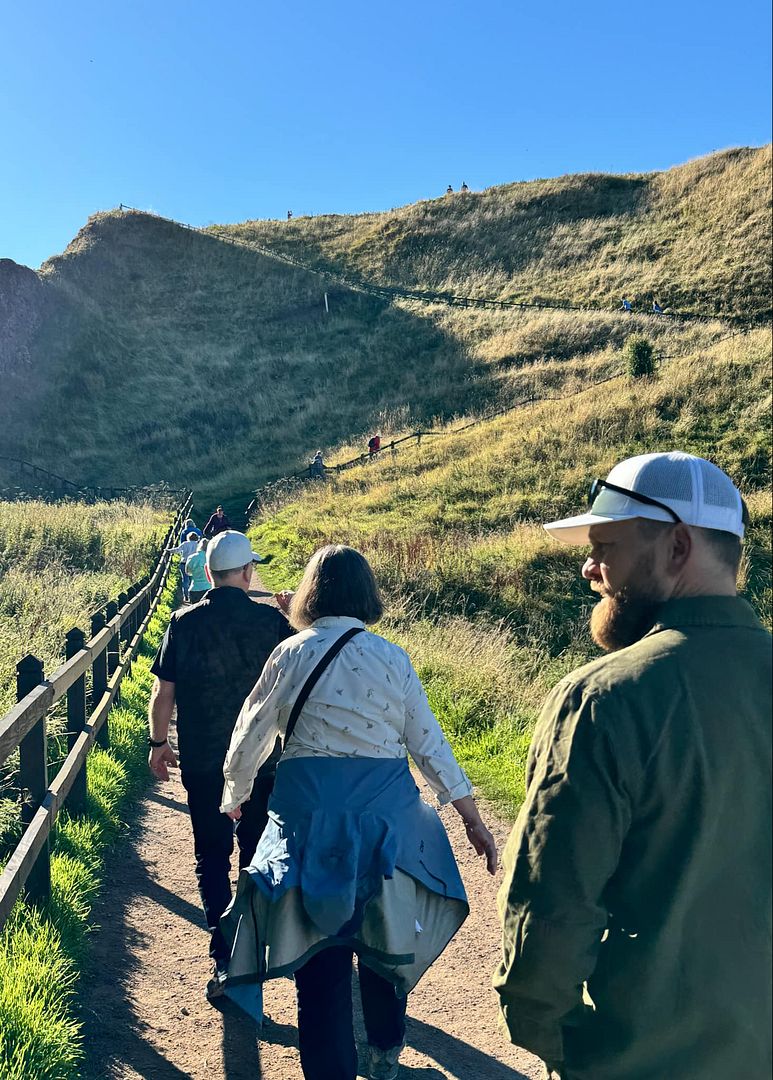
At this point we could see we would have a long downward descent before we reached a steep climb to get to the castle grounds!
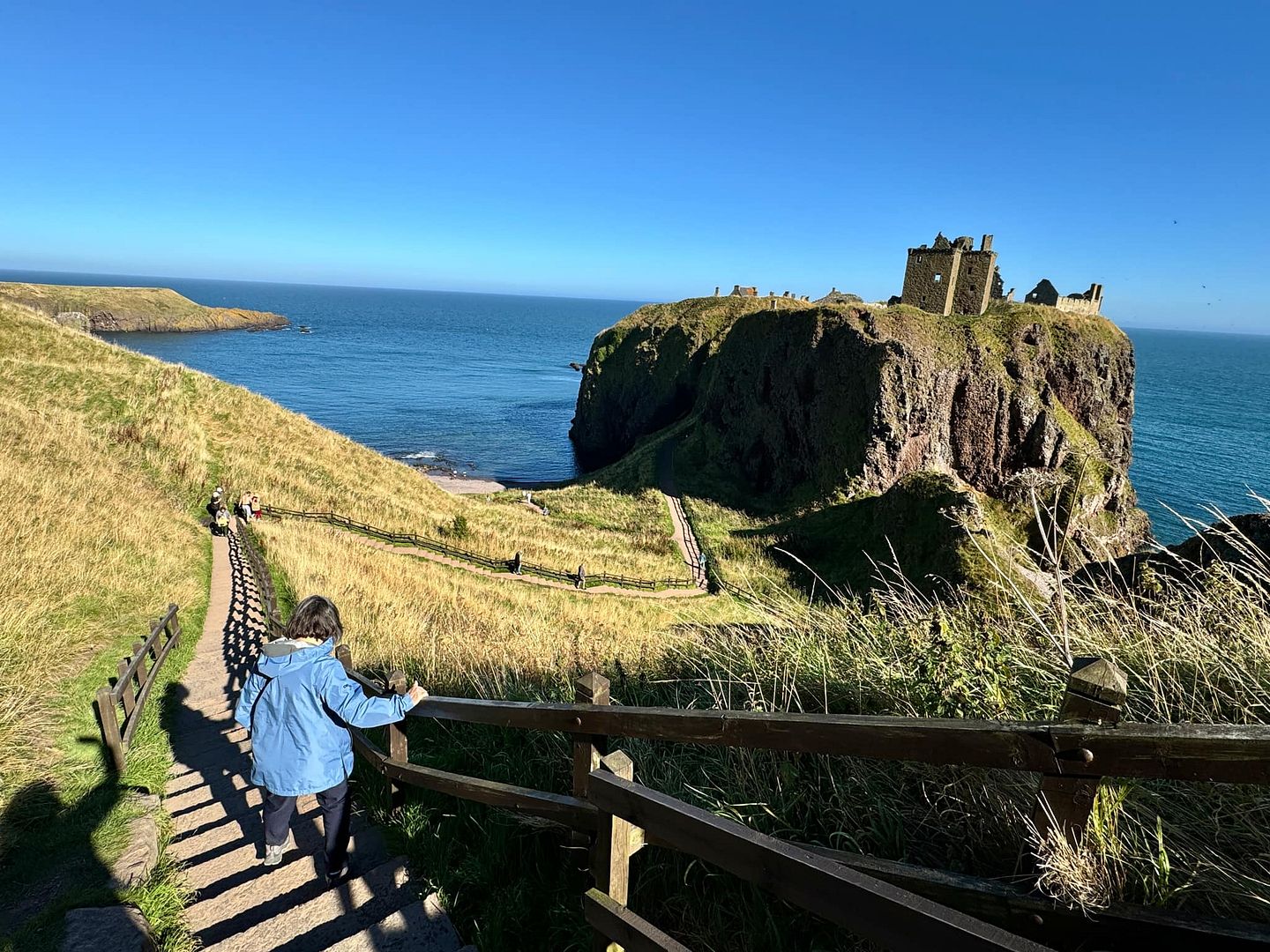
Down, down, down and then soon we’d be going up again!
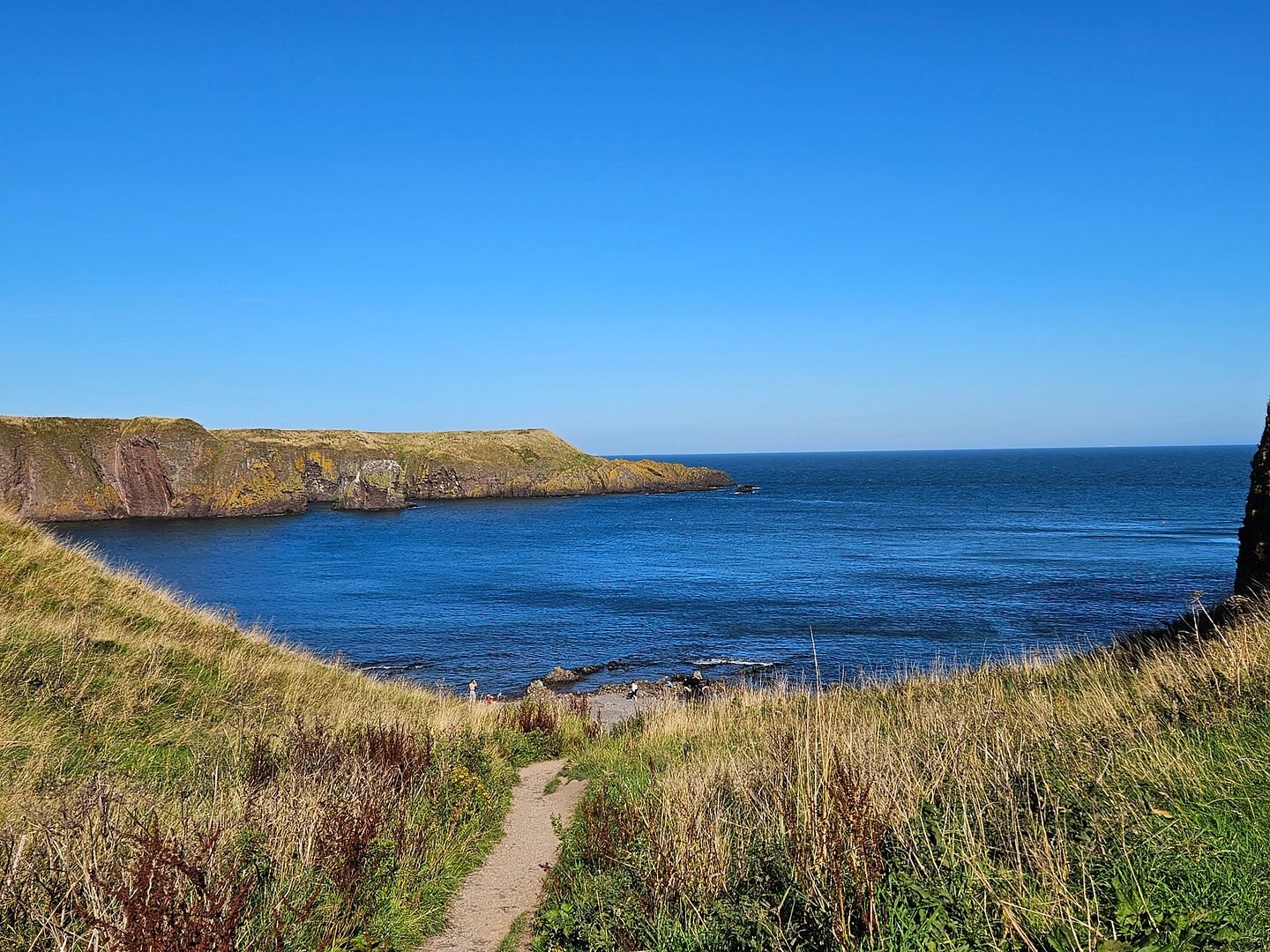
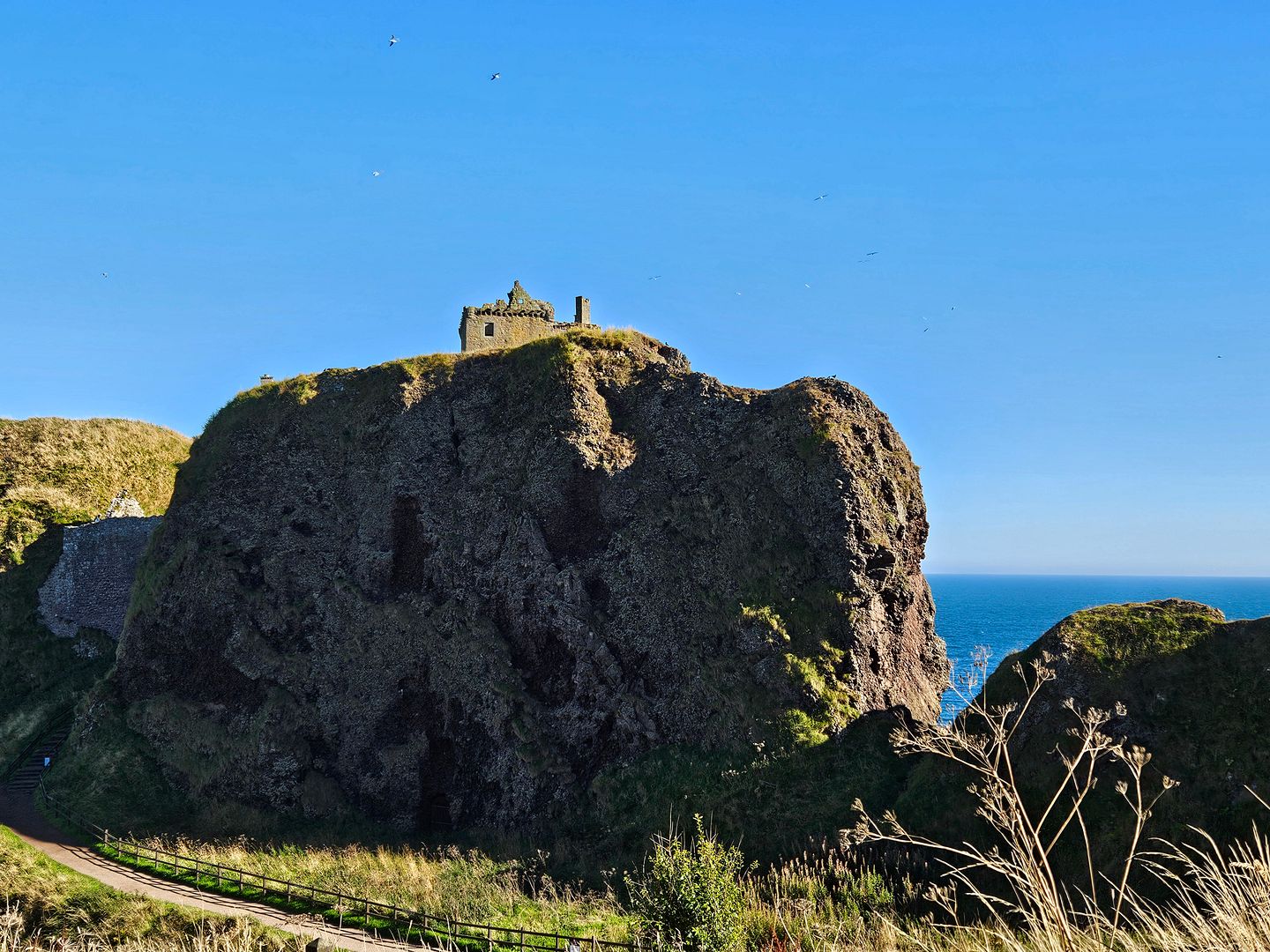
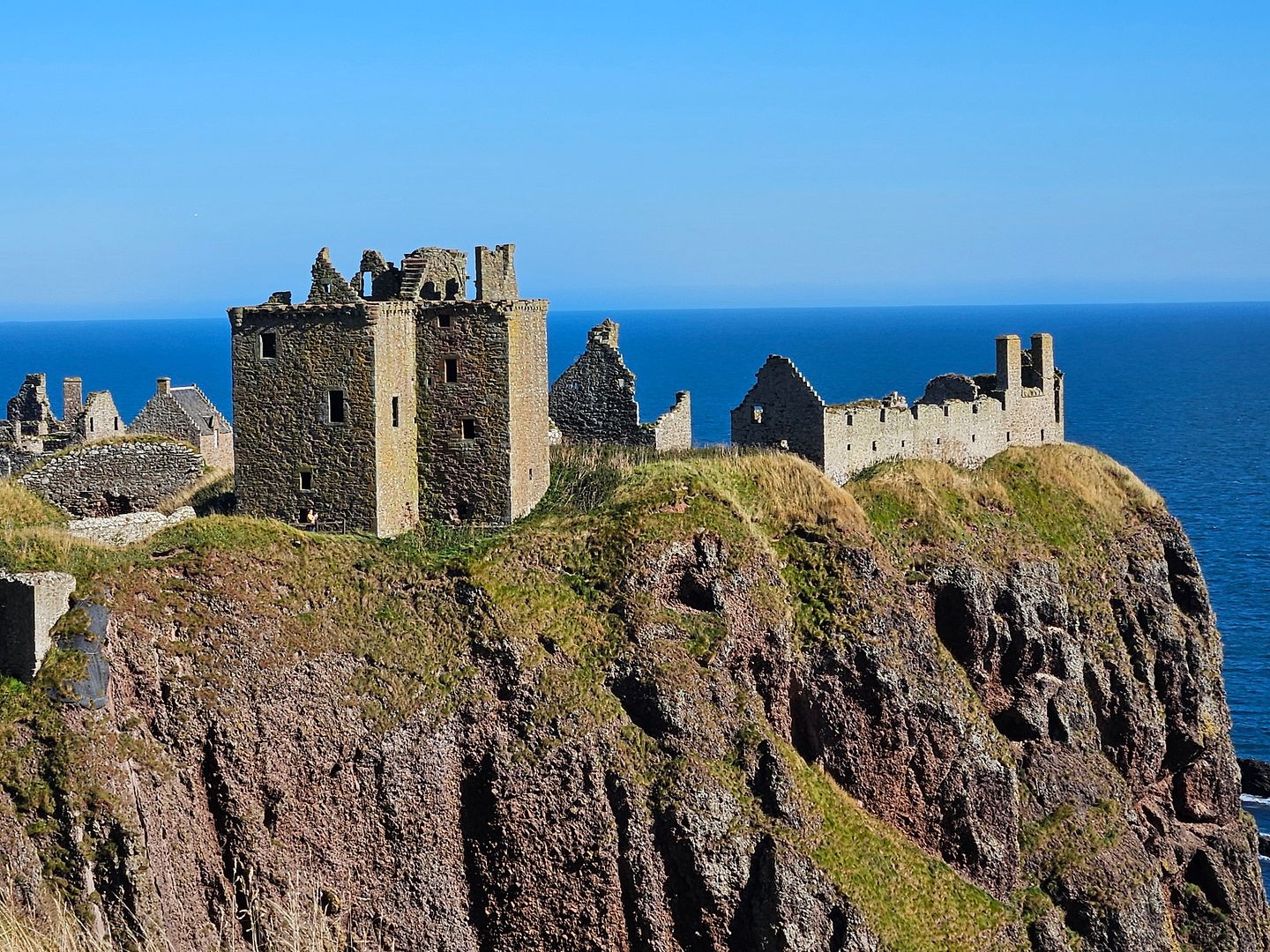
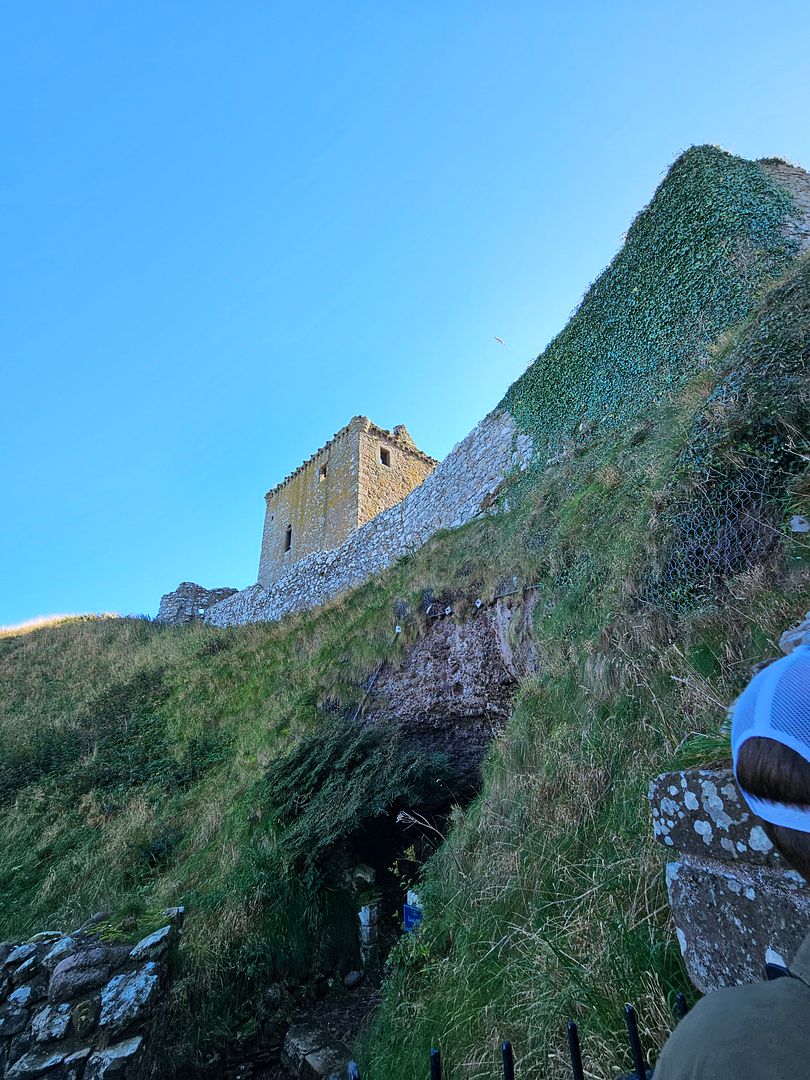
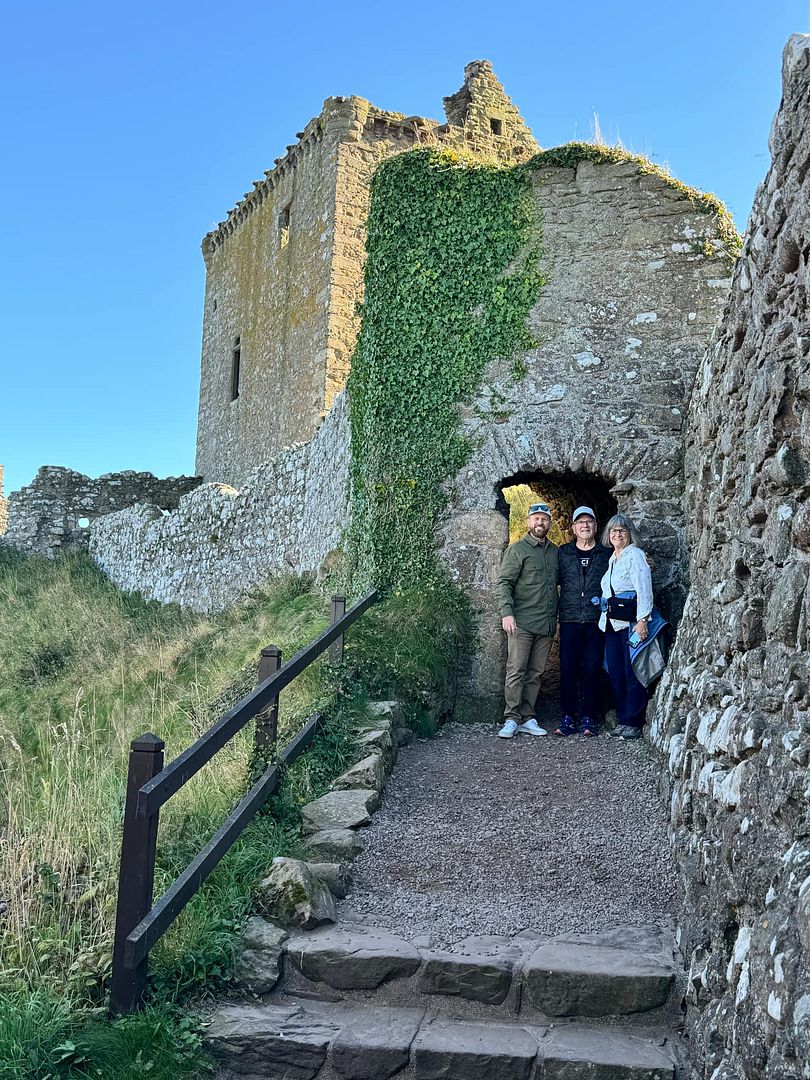
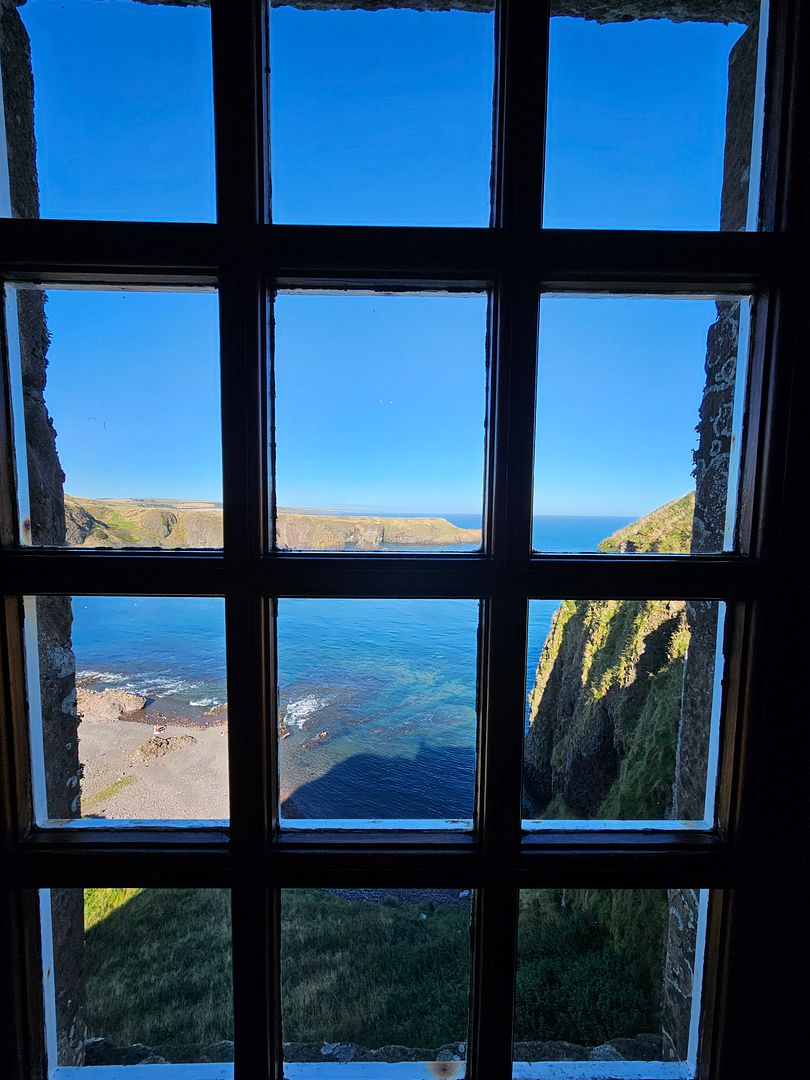
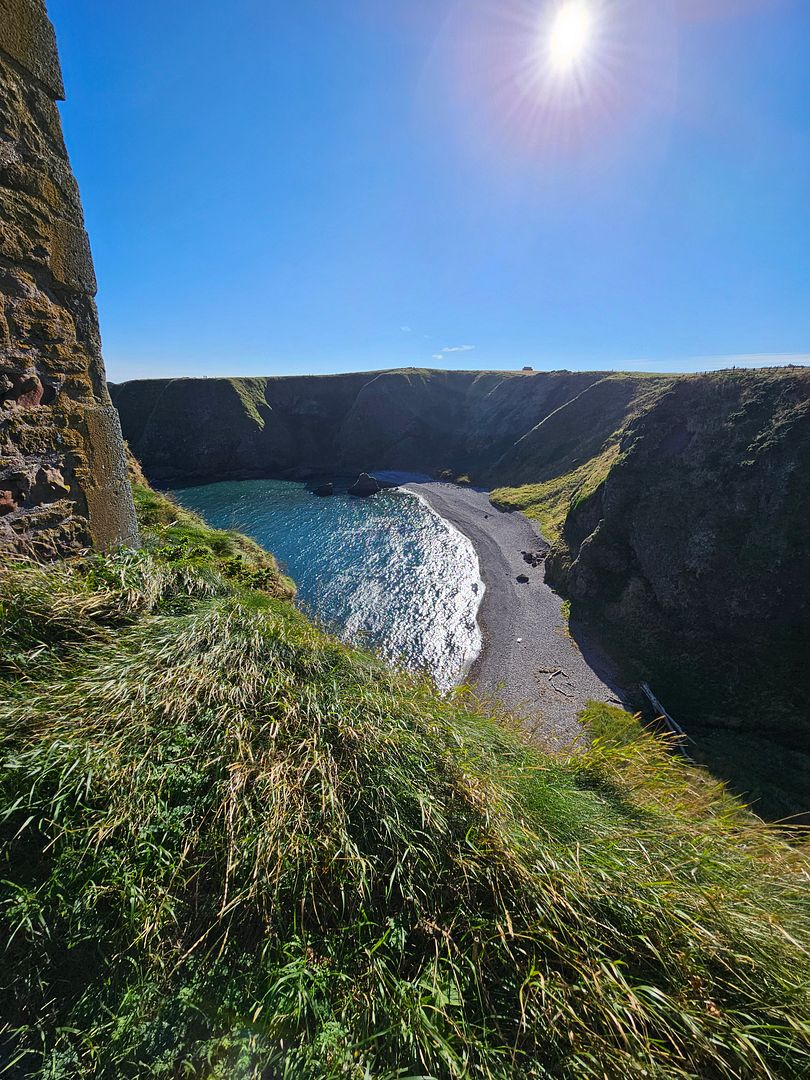
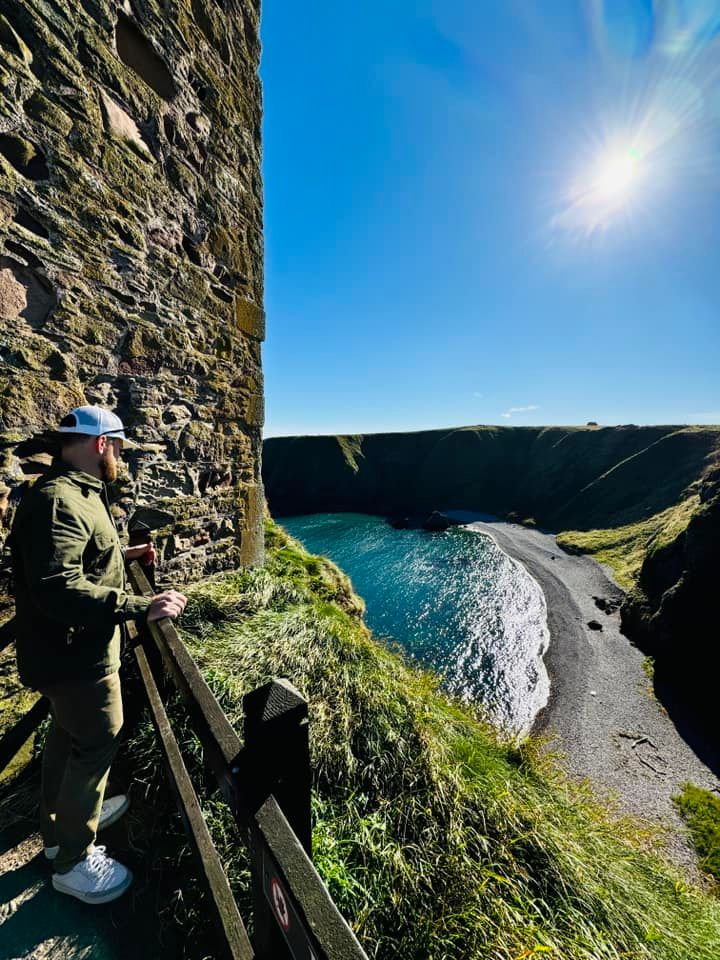
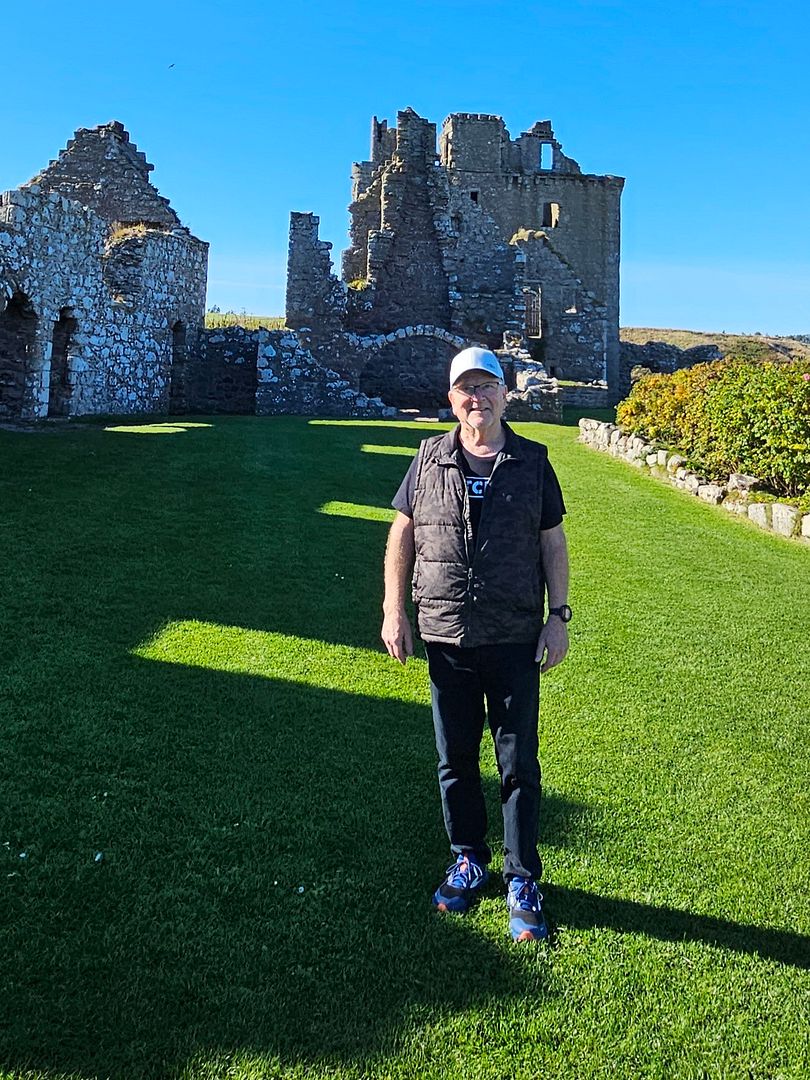
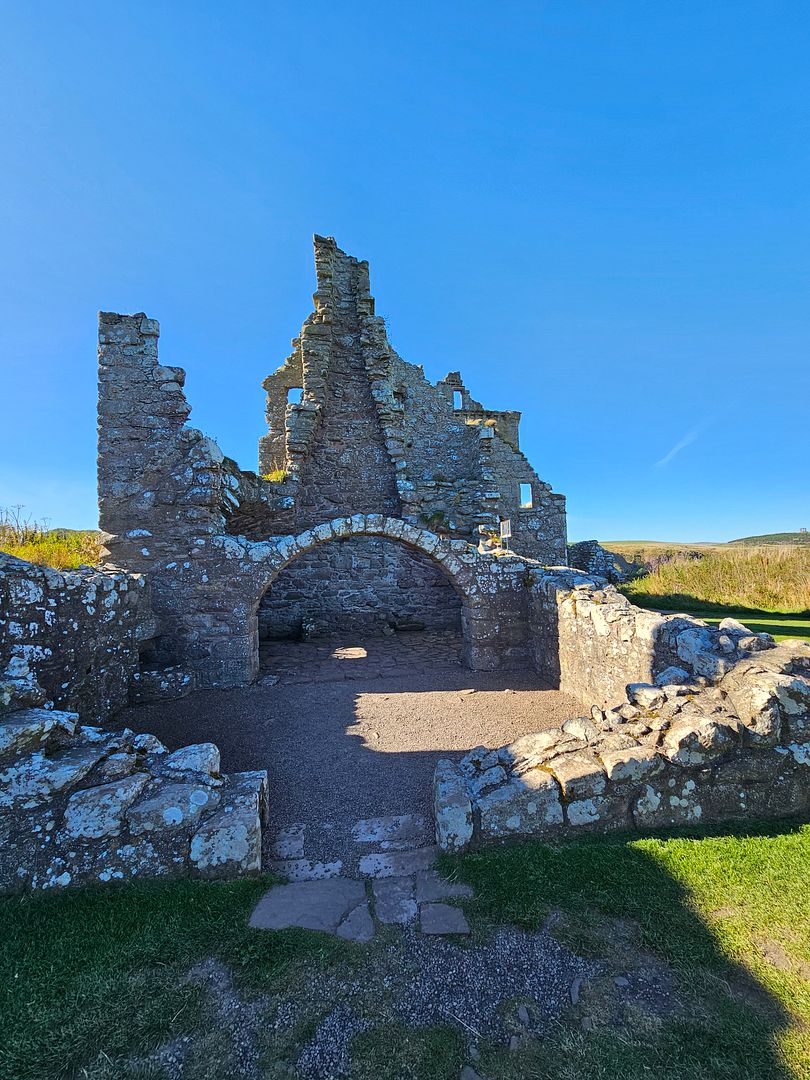
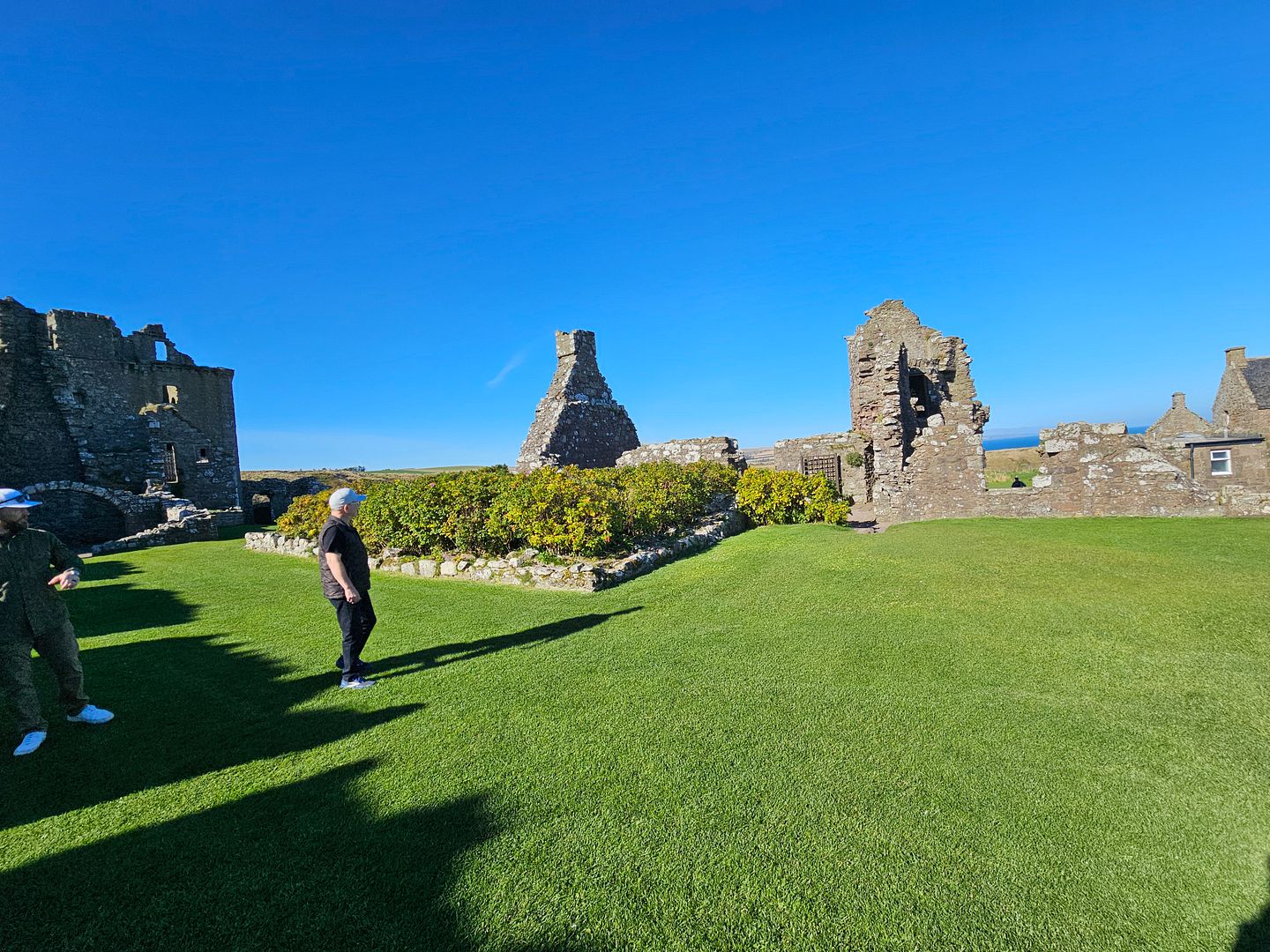
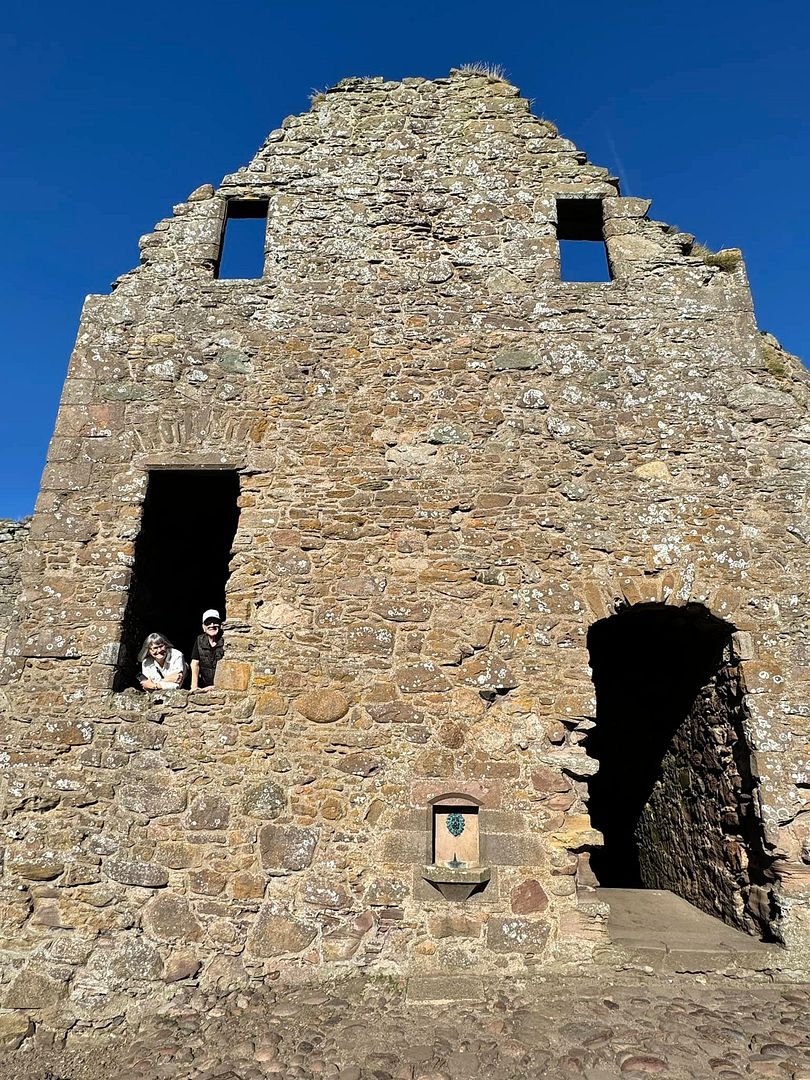
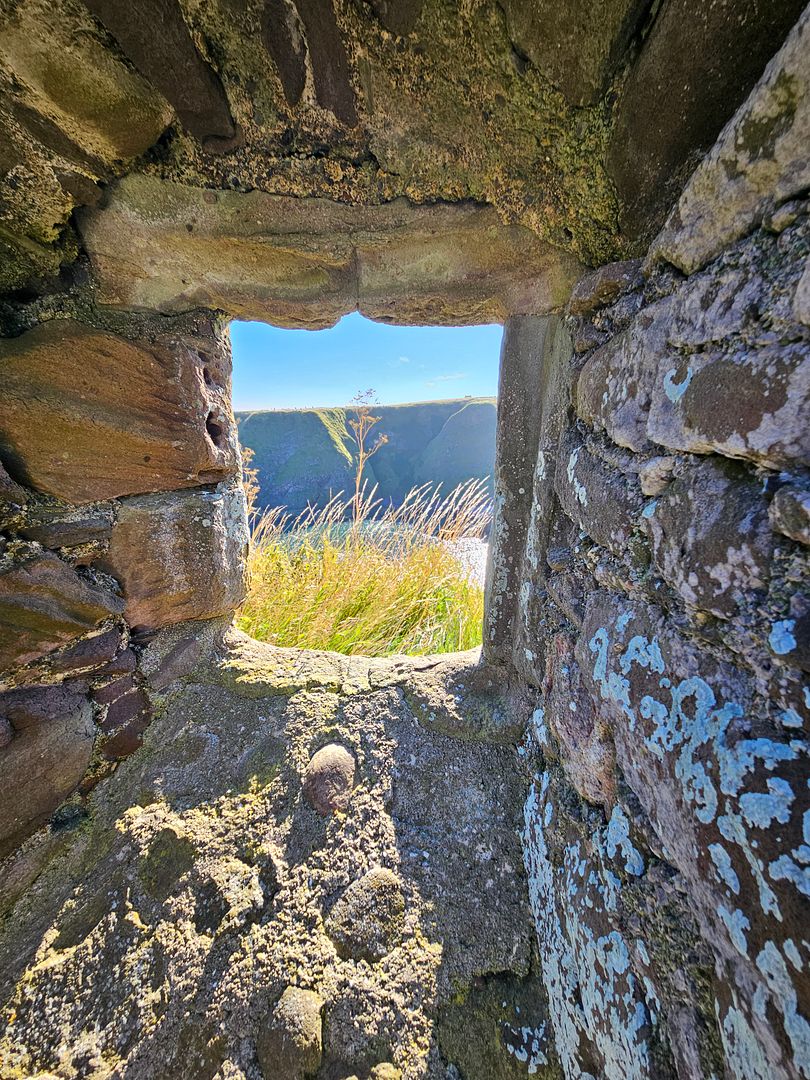
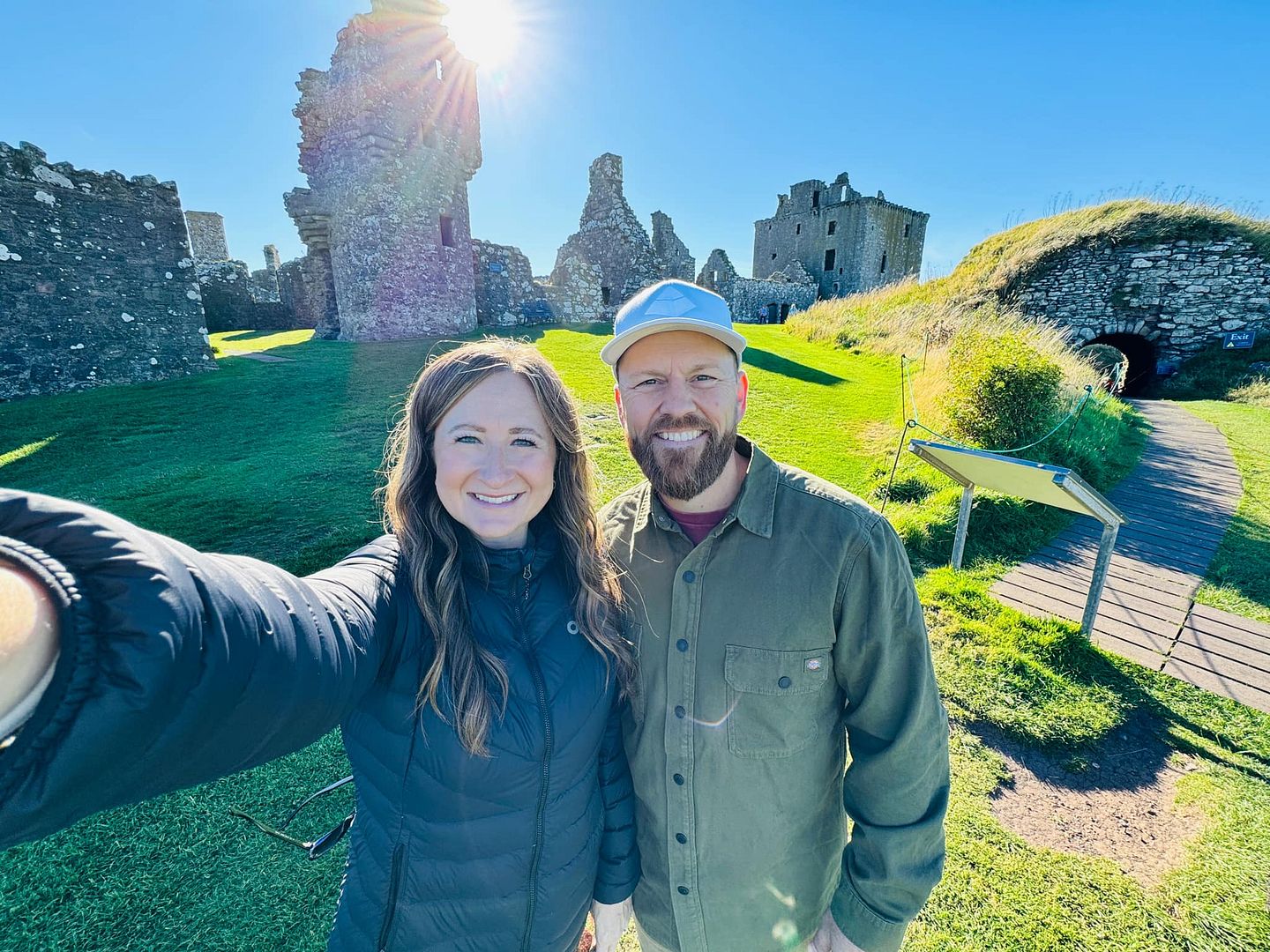
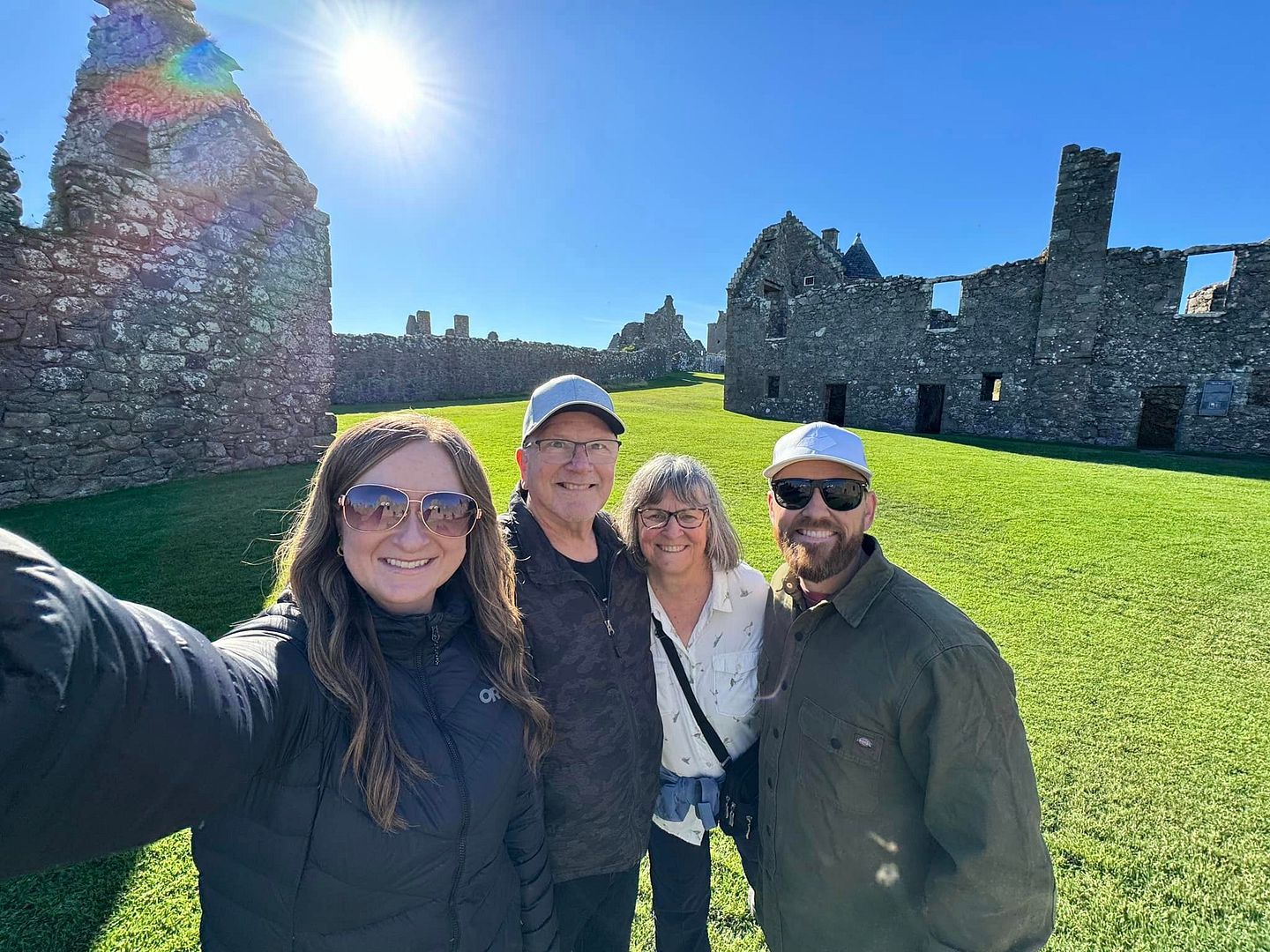
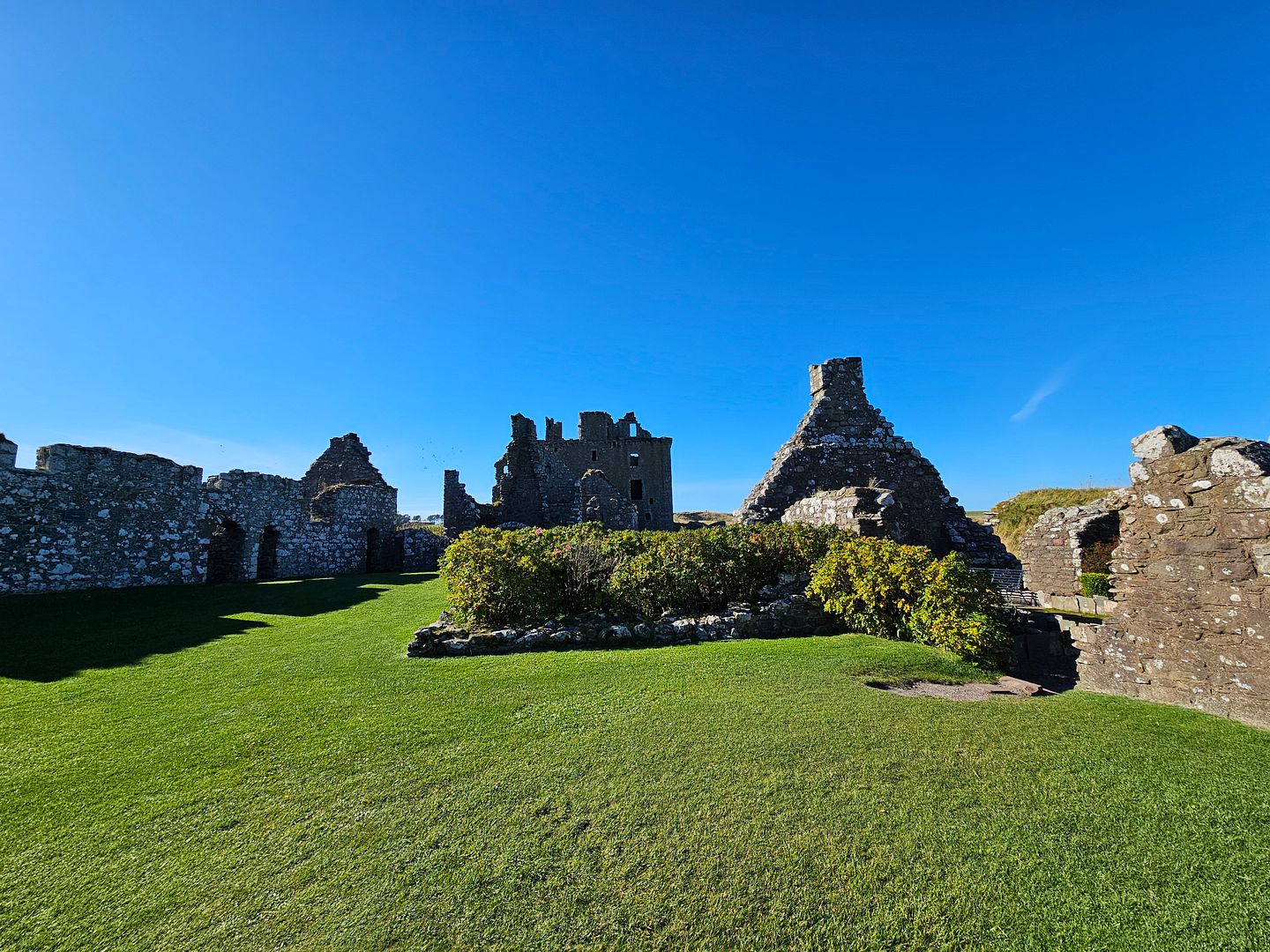
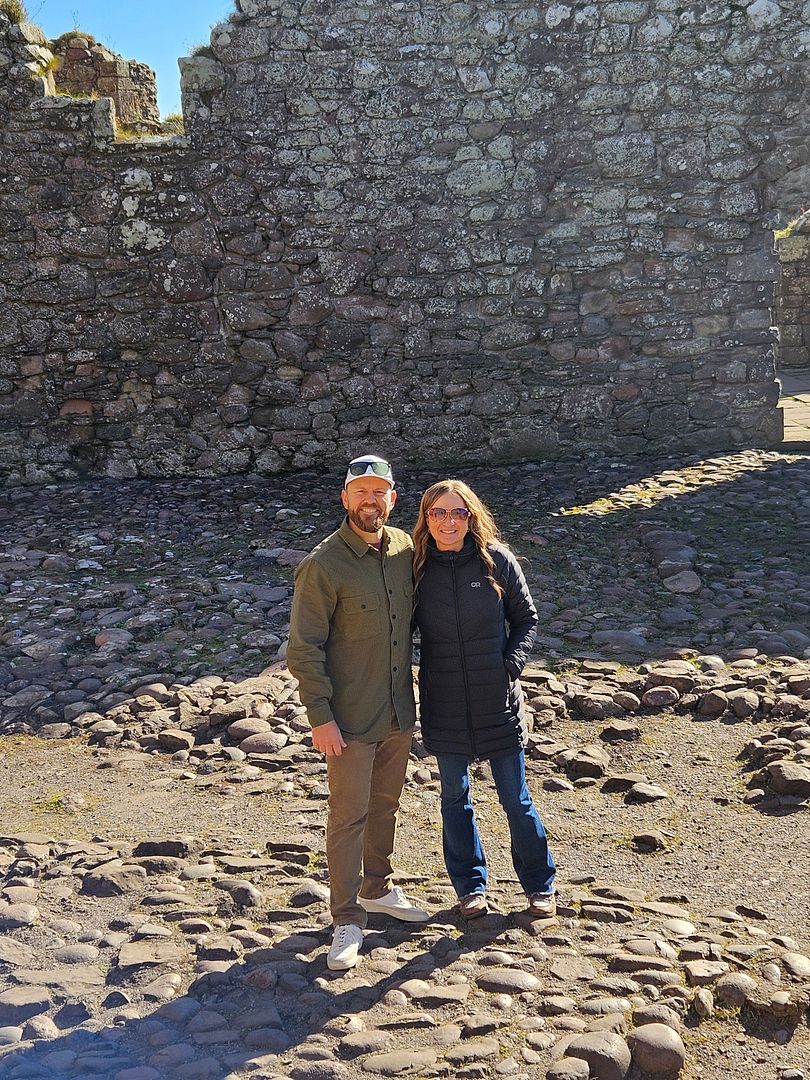
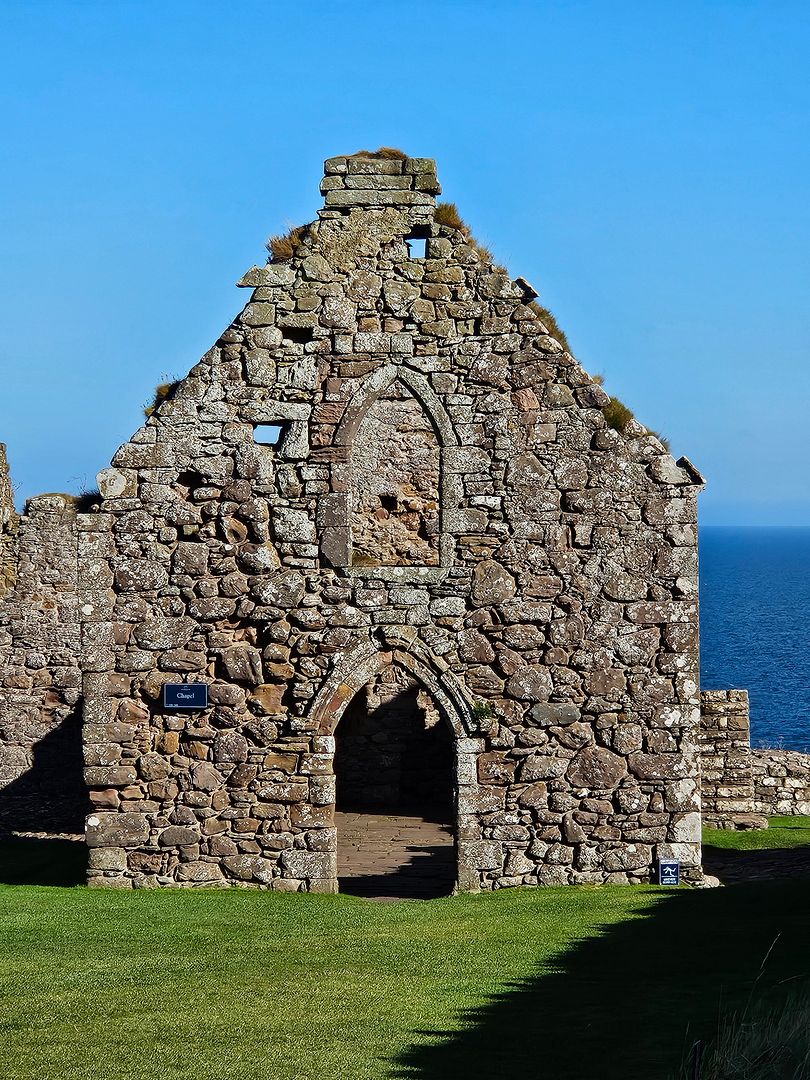
Given Dunnottar’s obvious defensive qualities, it is no surprise to find that it has been home to fortifications of one sort or another for most of the past two thousand years and probably much longer. The very name “dun” is Pictish for fort and it is believed that St Ninian came to Dunnottar in the late 400s, converting the Picts to Christianity and founding a chapel here.
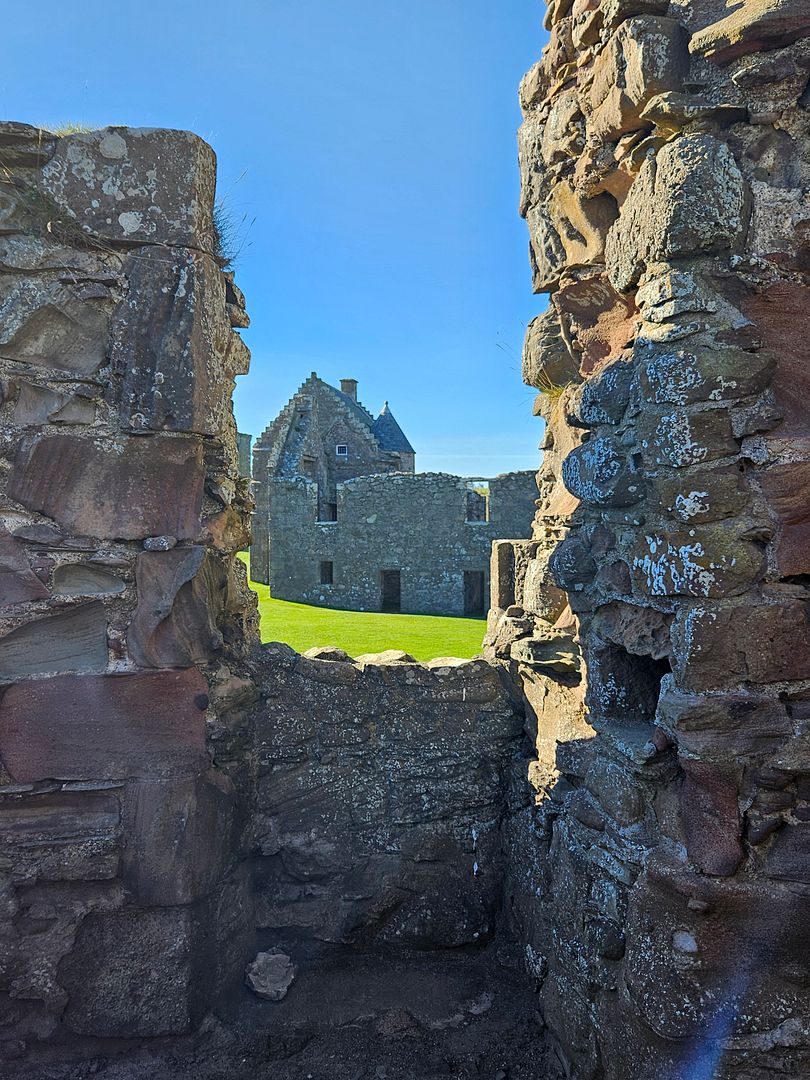
In 1715 the tenth Earl Marischal backed the losing side in the Jacobite uprising and was condemned for treason. His estates were forfeited and Dunnottar Castle was sold to the York Building Company, who removed everything that was transportable and usable. The difficulty in accessing the castle probably saved it yet again: it seems likely that if it had been readily reachable by cart, far more of the structure would have been demolished and taken away.
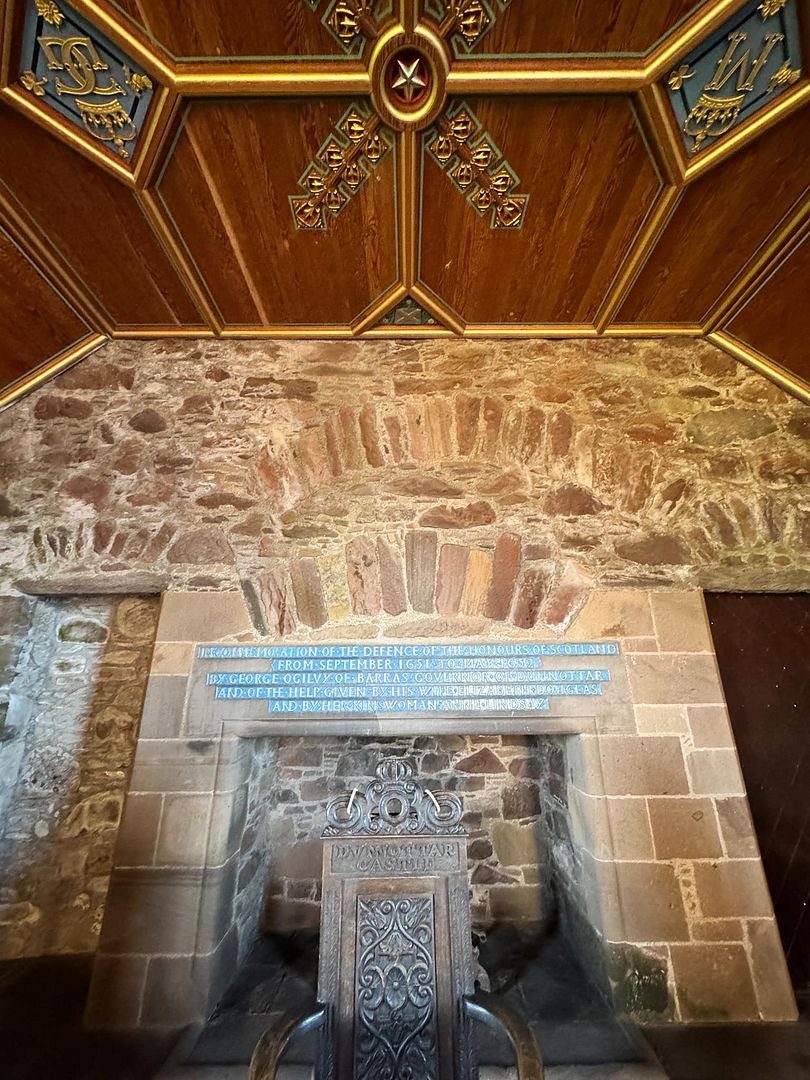
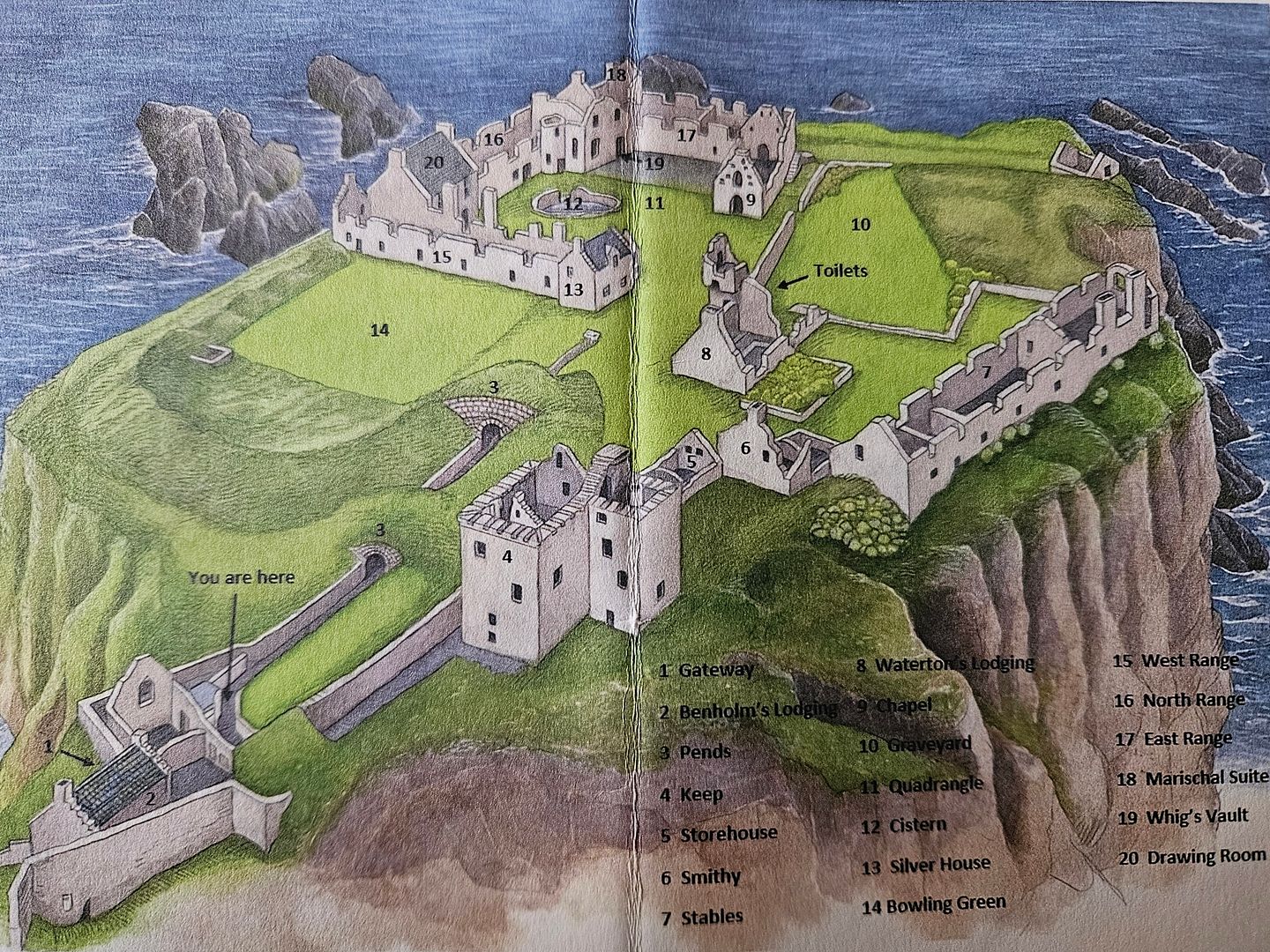
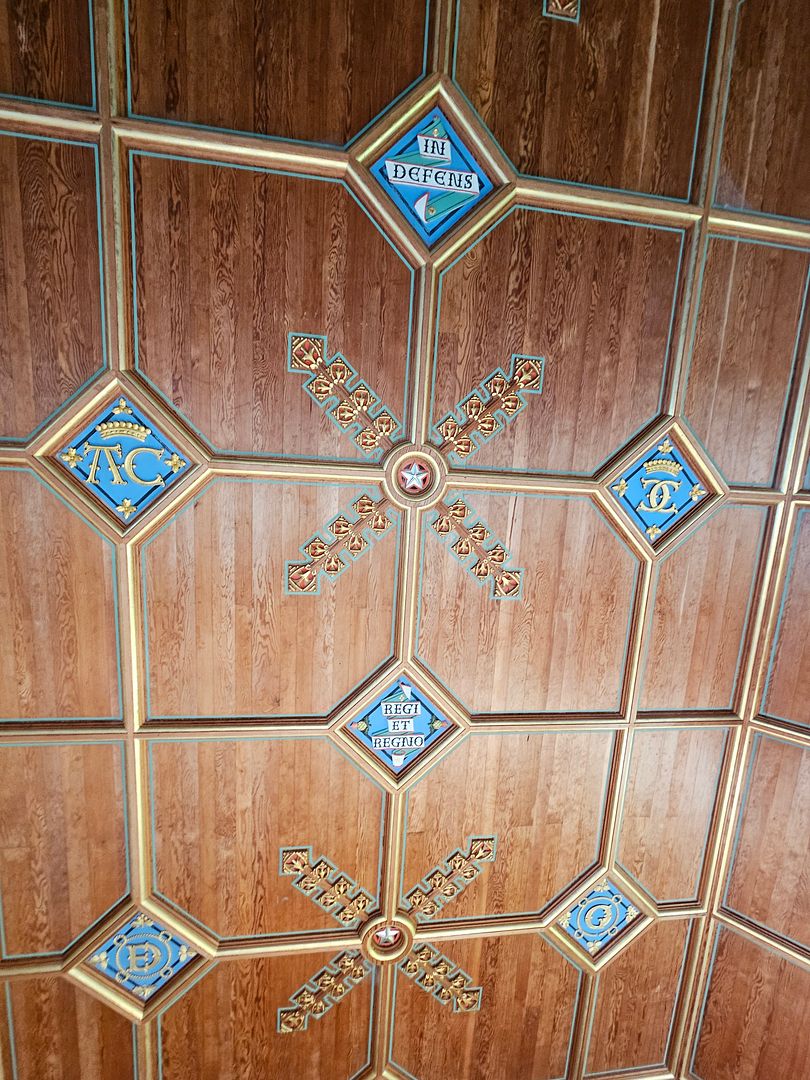
The drawing room was restored in the 1920’s.
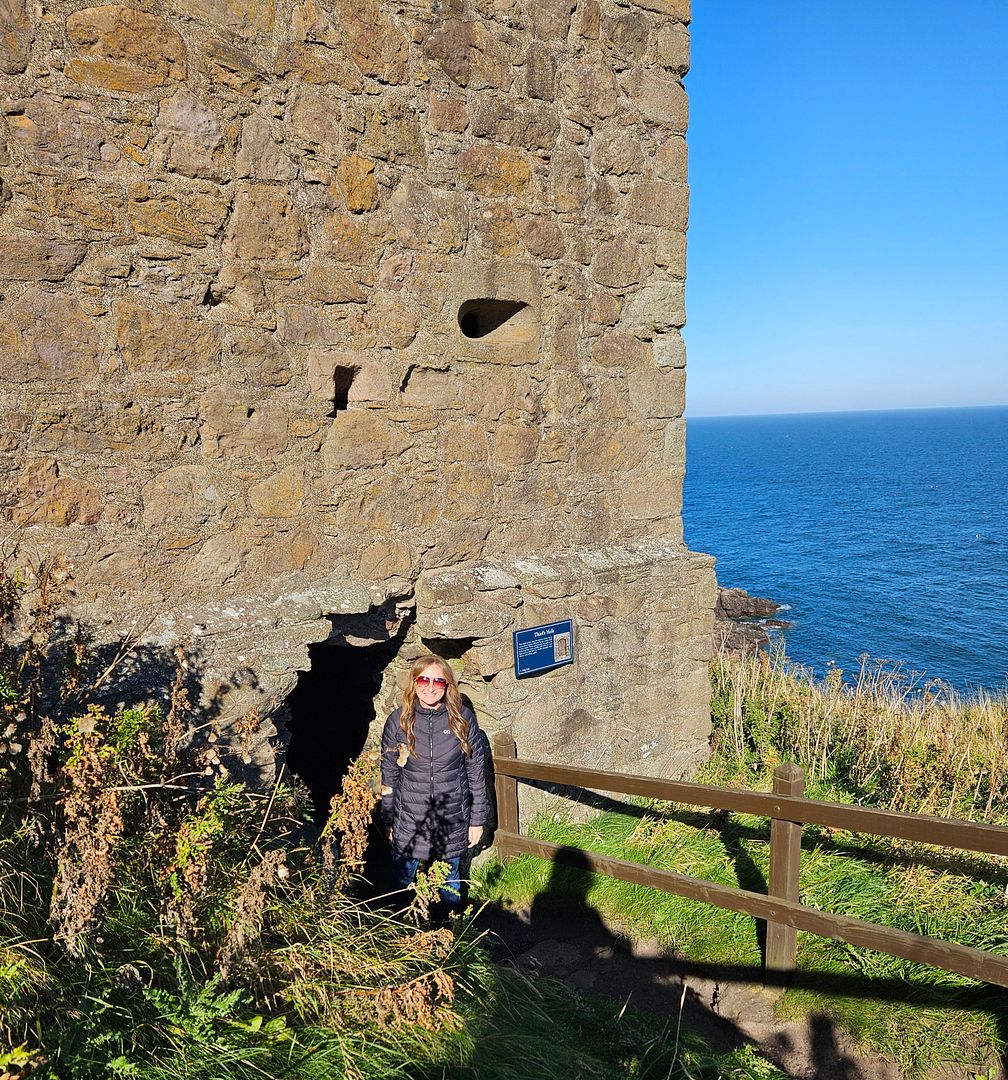
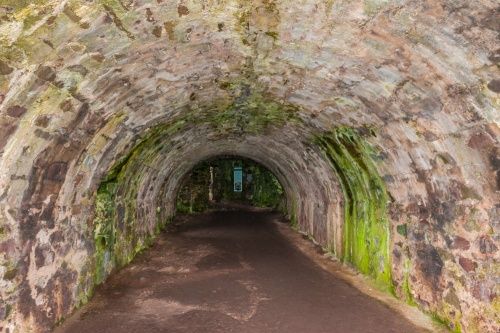
Dunnottar’s darkest moment came in May 1685 when 167 Covenanter prisoners, 122 men and 45 women, were locked in the Whig’s Vault below one of the buildings in the Quadrangle. Some died of starvation and disease, while others were killed after trying to escape. The survivors were transported to the colonies as slaves (where most died of fever) after two months in the castle.
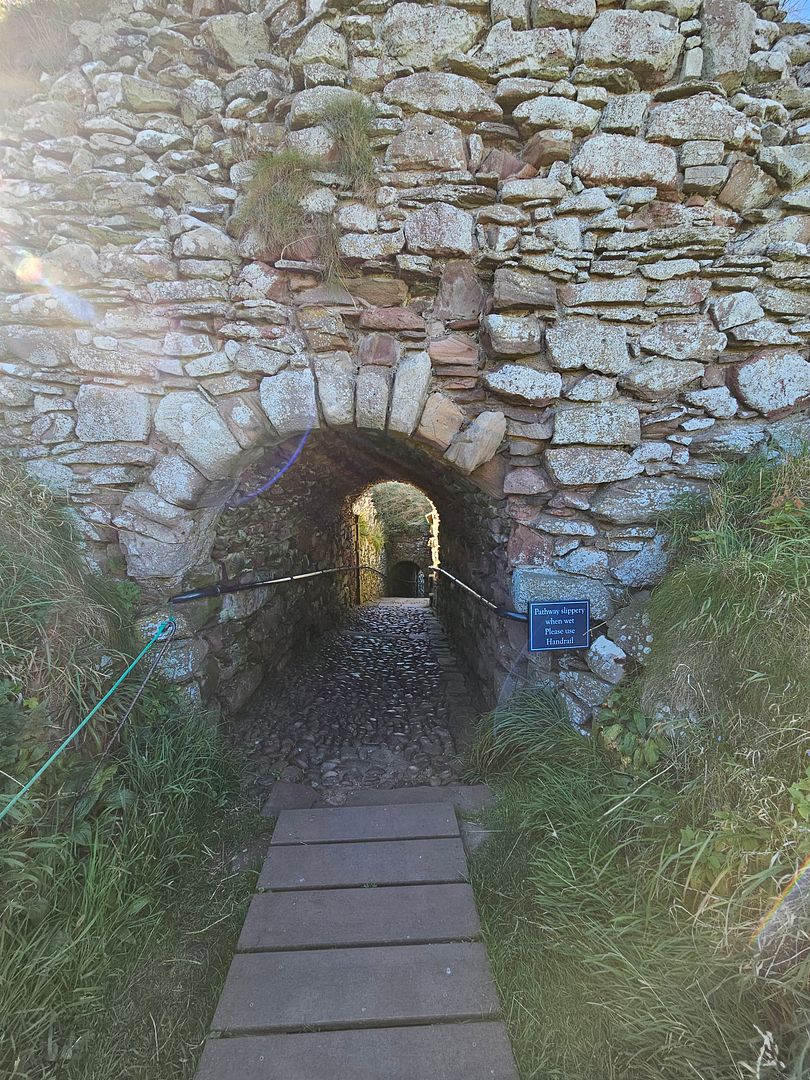
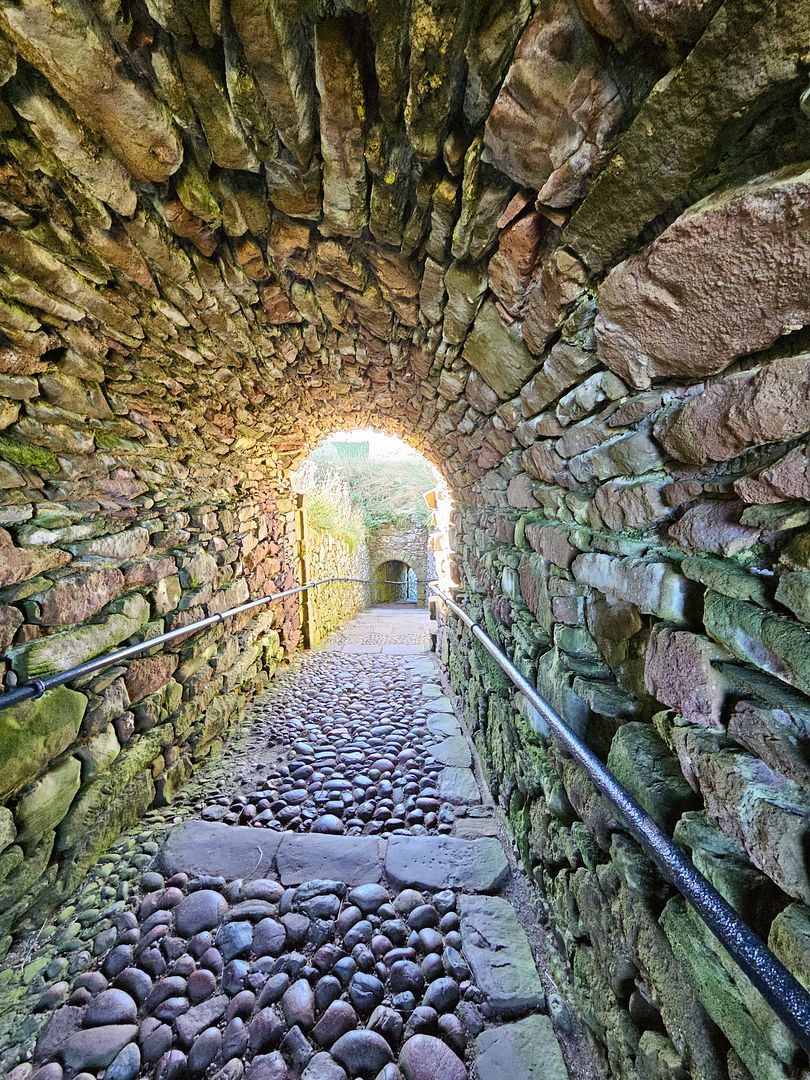
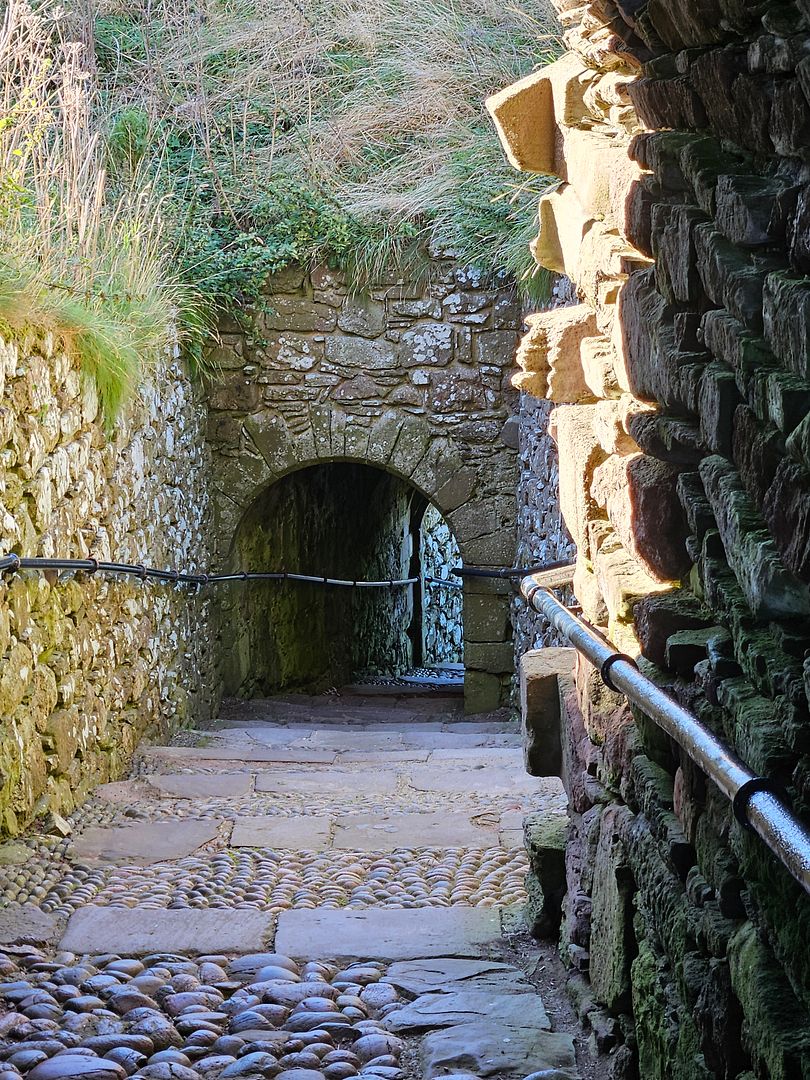
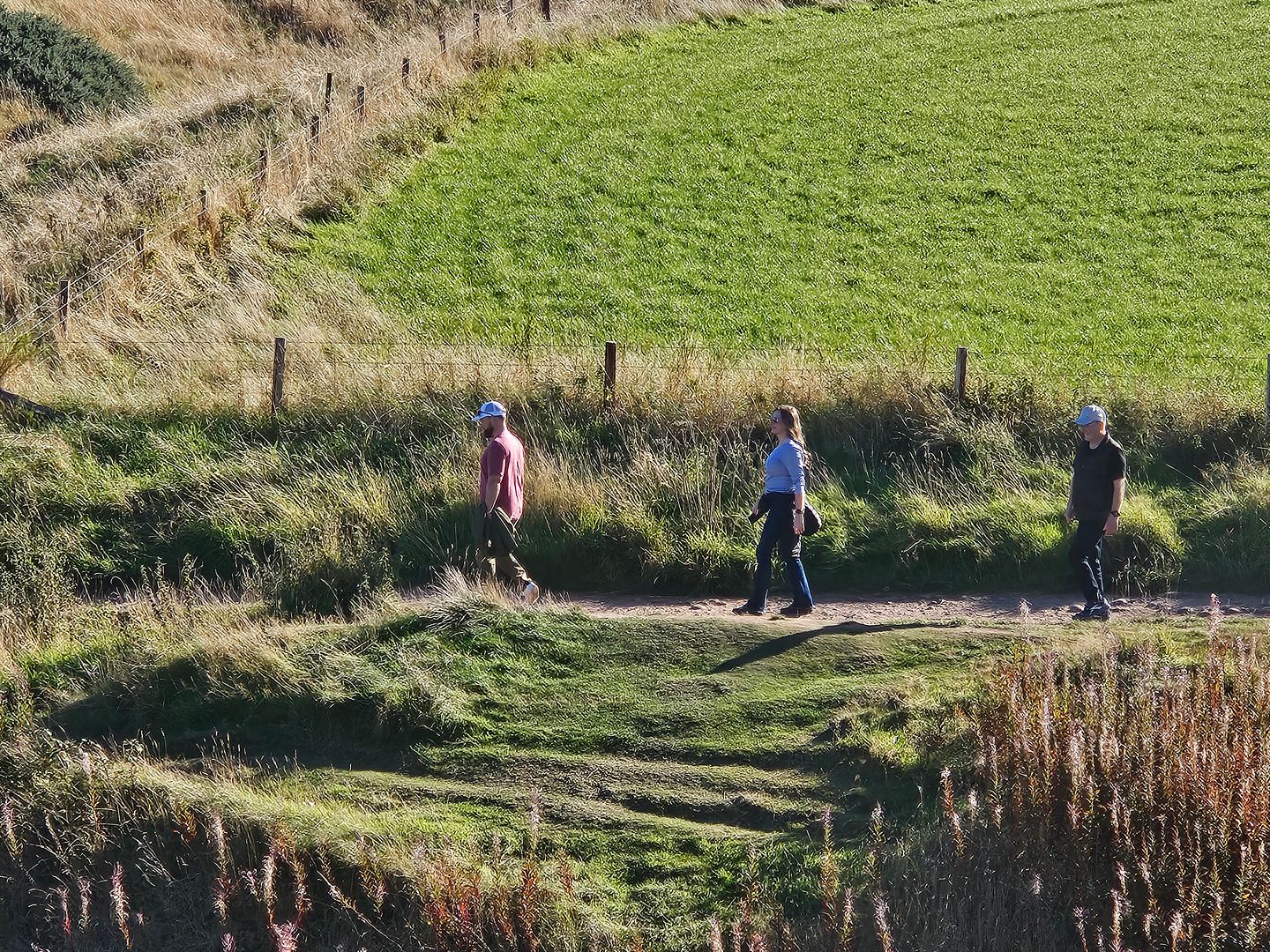
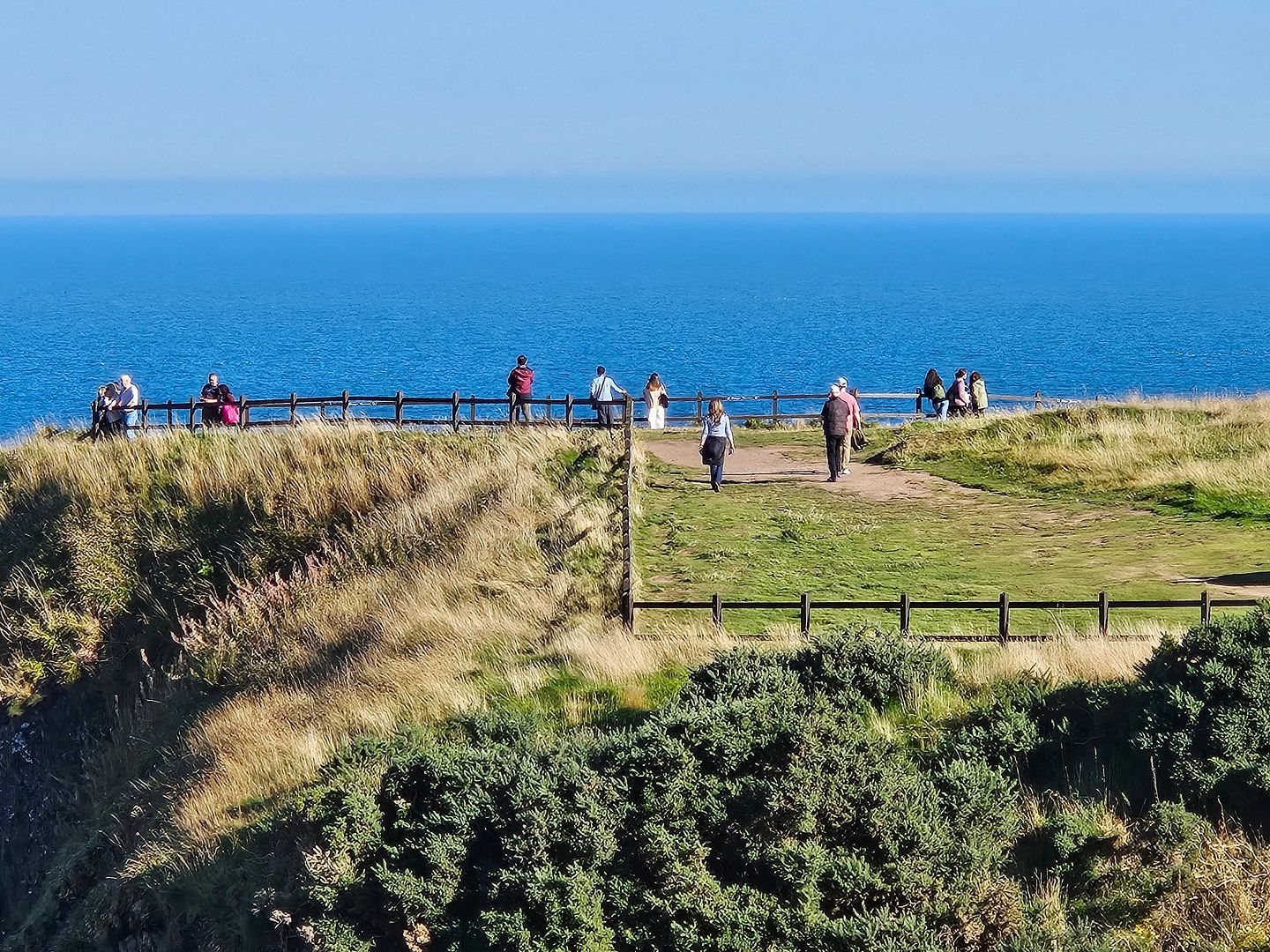
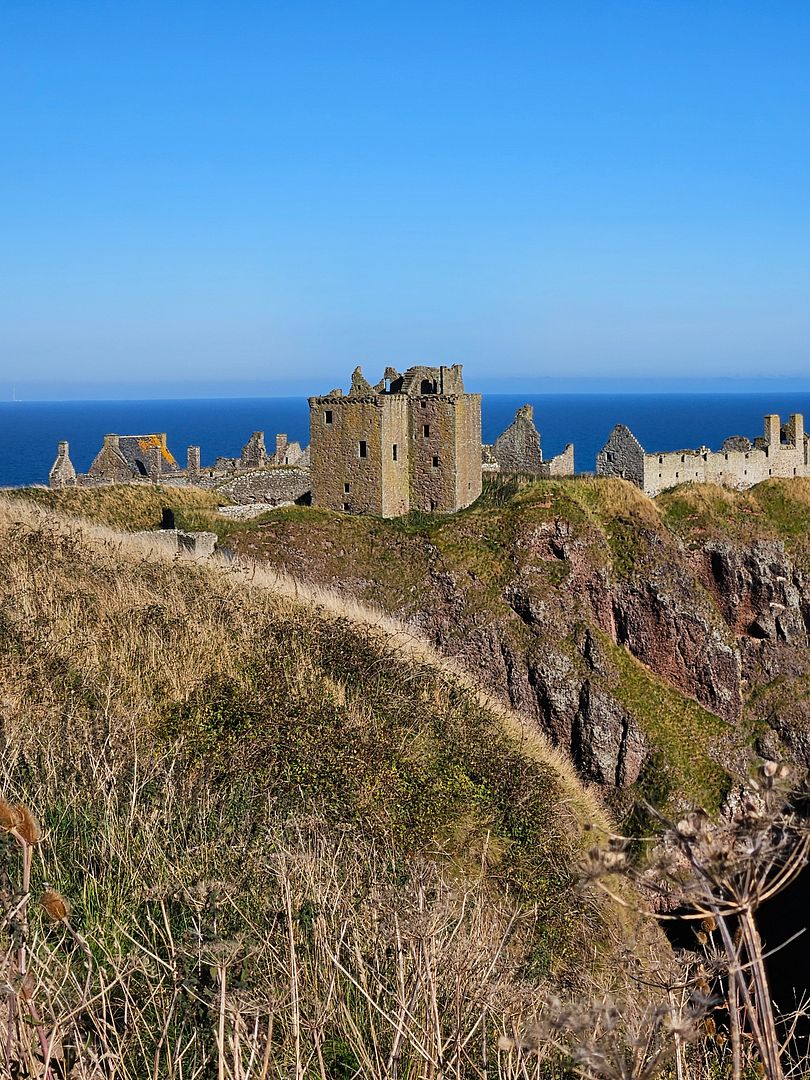
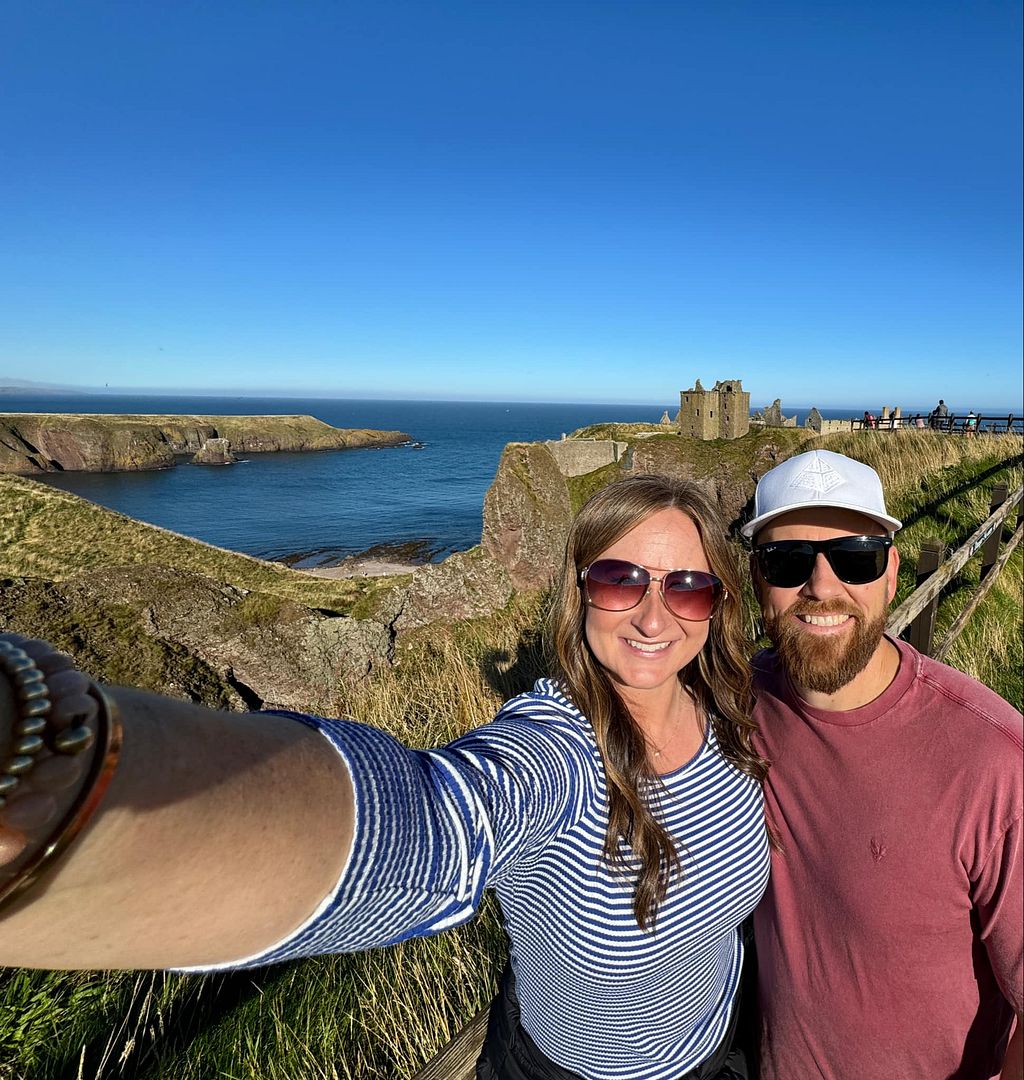
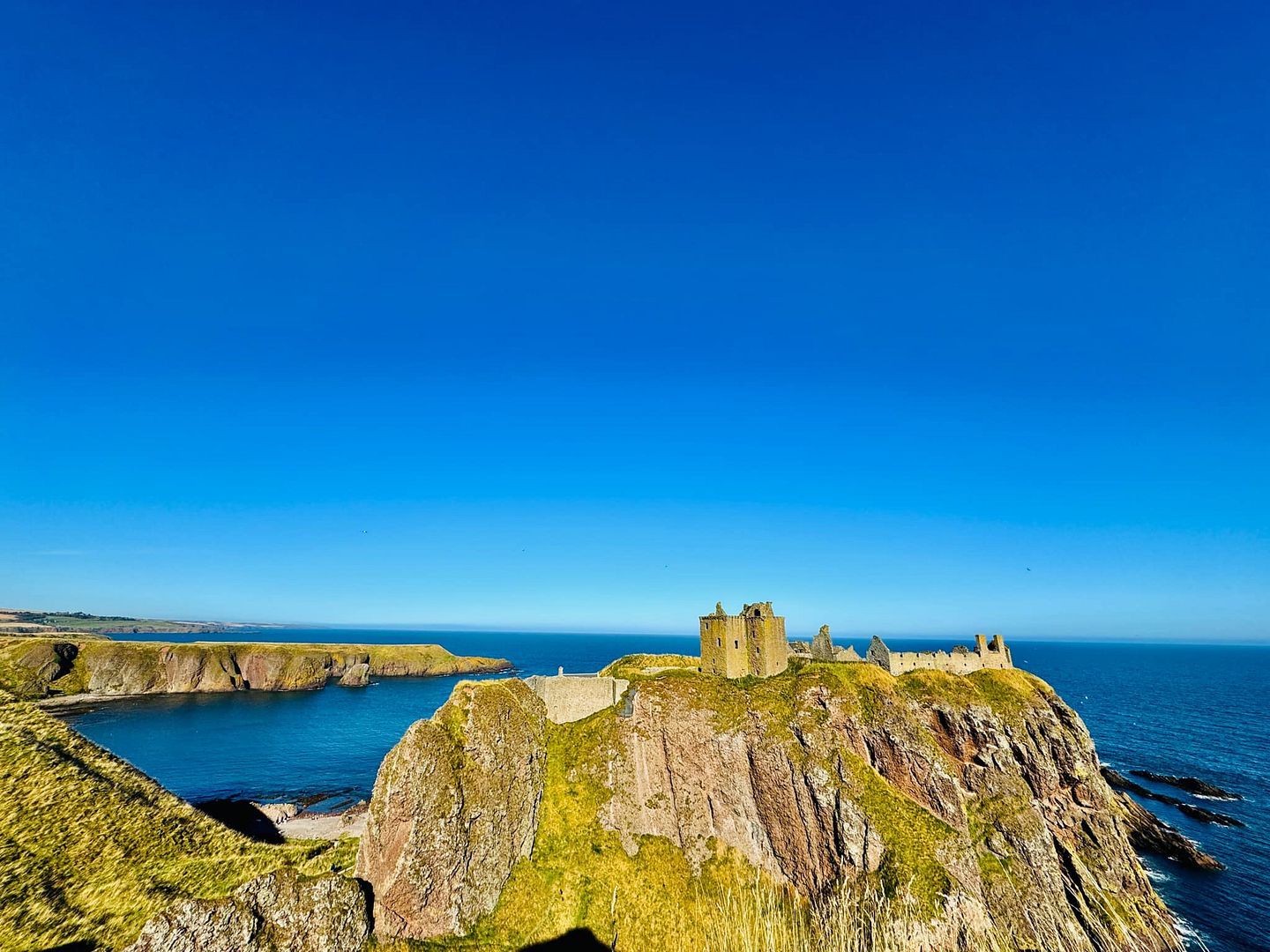
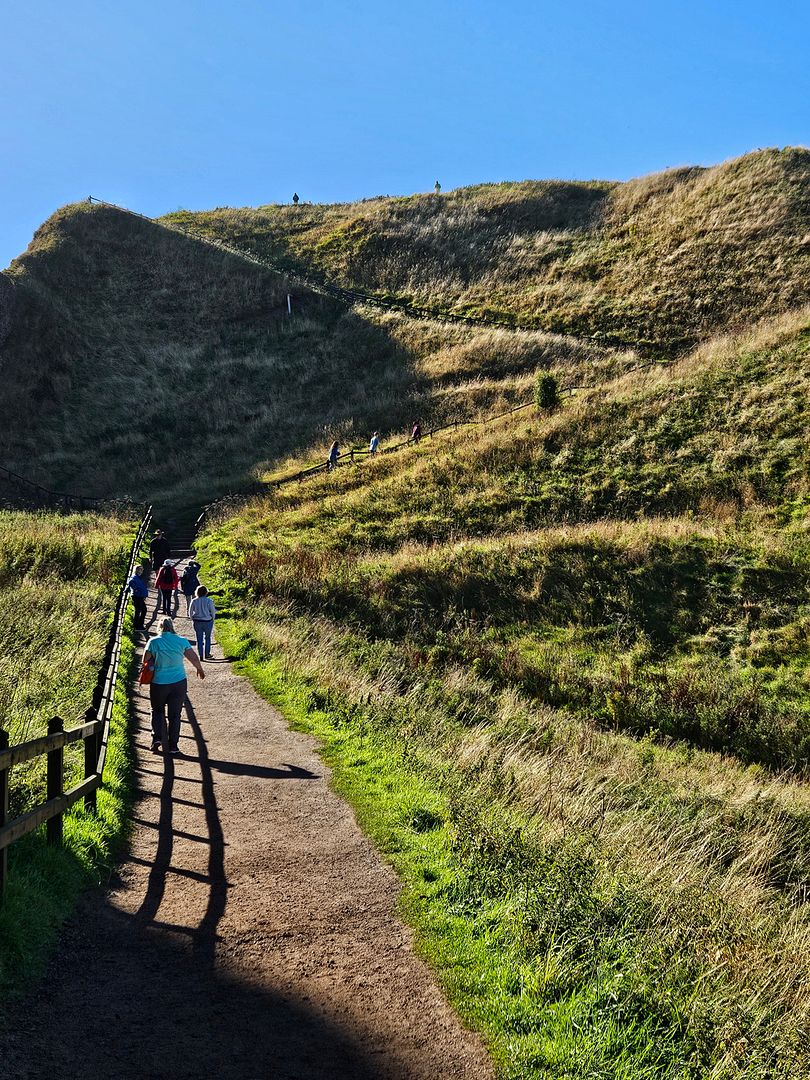
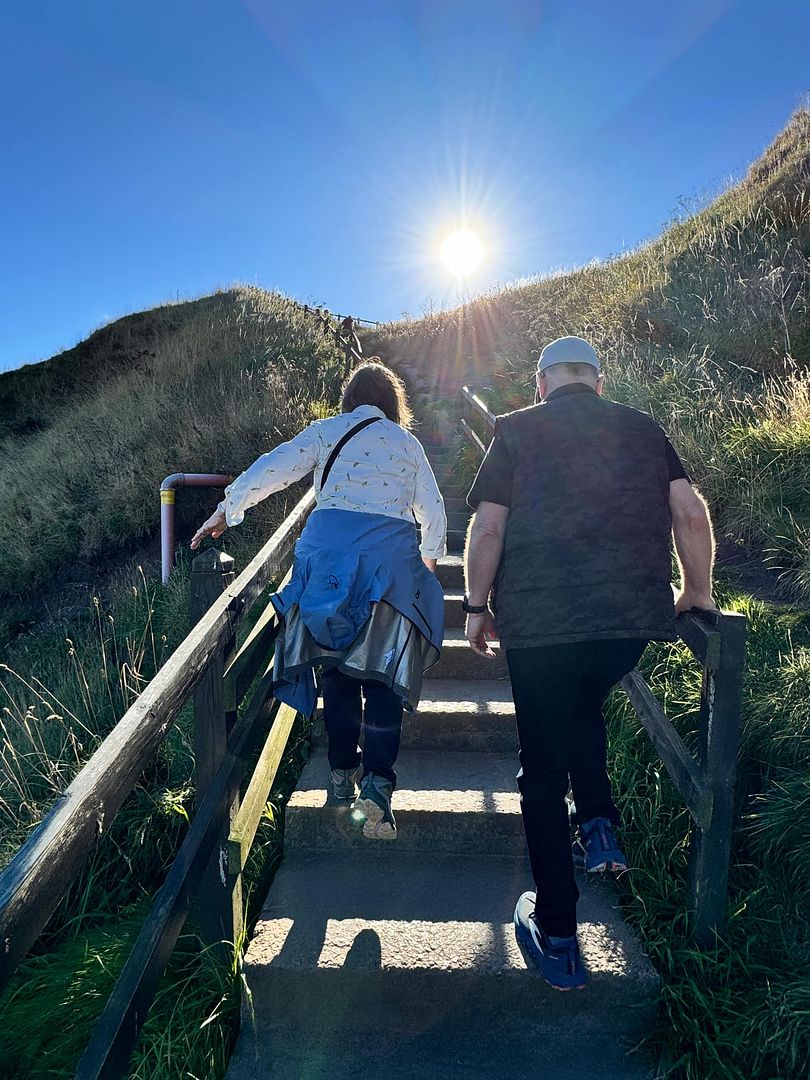
We made it with time to spare before closing. Thank you, Lord, for our timing, the weather and the strength to walk and climb and descend all the stairs!
We headed a little south along the coast to find our B&B for the night, to check in and get a recommendation for dinner. The day wasn’t over…
 The Happy Wonderer ~ ellen b.